Το ενδεχόμενο ενός άμεσου θερμού επεισοδίου στο Αιγαίο είναι πλέον σφόδρα πιθανό. Κάποιοι ίσως ακόμη βαυκαλίζονται με διάφορες παρερμηνείες, αλλά είναι εκτός τόπου και χρόνου. Το έθνος, ο απανταχού της γης Ελληνισμός, σύσσωμος και ομόψυχος να απαντήσει στην απειλή.
Καθήκον μας πρώτον, η συνειδητοποίηση της πραγματικότητας που είναι σοβαρότερη από σοβαρή! Χιλιομαρτυρημένη αλήθεια, «αν θέλεις ειρήνη, να προετοιμάζεσαι για πόλεμο». Si vis pacem para bellum (Βεγέτιος).
Τουρκικά ποσοτικά πλεονεκτήματα εξουδετερώνονται με ελληνικά ποιοτικά, αν υπερβούμε ηγεσίες και λαός το εγγενές φοβικό σύνδρομο και την ηττοπάθεια που μας κατατρύχει. Αείποτε ιδεοληπτική η πεποίθηση ότι μια ένοπλη αναμέτρησή μας είναι τάχα καταδικασμένη. Αν αυτοί που απελευθέρωσαν, ή μεγάλωσαν την Ελλάδα διακατέχονταν από αυτό το αίσθημα, θα ήμασταν ακόμη ραγιάδες!
Ασφαλώς το κράτος, λόγω των εγκληματικών μνημονίων, είναι αδύνατο να ανταποκριθεί στις οικονομικές απαιτήσεις της συγκυρίας. Το βάρος θα το σηκώσει το Έθνος, όπως το είχε πράξει τότε στην ηρωική προέλαση τού 1910-20 περιάγοντας την Οθωμανική αυτοκρατορία στο χείλος της καταστροφής.
Να ξεσηκώσουμε την Ομογένειά μας στα τέσσερα σημεία του ορίζοντος, αρχίζοντας από τους Ελληνοαμερικανούς, που με το πολιτικό τους χρήμα και τις προσωπικές διασυνδέσεις τους επηρεάζουν τα αμερικανικά κέντρα αποφάσεων. Παρότρυνση να μιμηθούν τους Μεγάλους Ευεργέτες του Γένους, που συναγωνίσθηκαν μεταξύ τους σε ανάλογη κρίσιμη περίοδο του Ελληνισμού, ποιος θα πρωτοβοηθήσει την πατρίδα. Να εντοπίσουμε τάχιστα συγκεκριμένους «πολιορκητικούς κριούς», ικανούς να εμπνεύσουν και να ενθουσιάσουν και τους άλλους.
Επείγει μία Διακομματική Επιτροπή από στελέχη που πιστεύουν στη σοβαρότητα της αποστολής, να μεταβεί «χθες» στις Η.Π.Α. Στόχος της η δραστηριοποίηση των Ομογενών προς δύο κατευθύνσεις: α) την προσωπική συνεισφορά τους, β) την παρέμβασή τους στους αξιωματούχους της νεάς αμερικανικής αντμινιστρέισιον, πριν τους προσεταιριστούν ανθελληνικά λόμπι (τουρκικό, αλβανικό κ.λπ.). Επείγει η συγκρότηση μόνιμου ενδοαμερικανικού Ελληνικού Μηχανισμού επηρεασμού των αμερικανικών κέντρων. Έκκληση σε συναγερμό των απανταχού της γης Πανελλήνων. Θα ανταποκριθούν, αρκεί η πρωτοβουλία να γίνει υπερκομματικά, με υπευθυνότητα και σοβαρότητα.
Ούτε απλή υποψία για τους στρατιωτικούς εκβιασμούς από Τουρκία έχει περάσει τον Ατλαντικό. Προς Ομογενείς και τα διεθνή φόρα να φτάσει τάχιστα το αποδεικτικό υλικό των νεοοθωμανικών λεονταρισμών.
Ώρα να συνειδητοποιήσουμε ότι ανάσχεση του τουρκικού επεκτατισμού με διάλογο με τον επιδρομέα δεν γίνεται. Απαιτείται αποτρεπτική στρατηγική ισχύος και πολιτικοδιπλωματική δράση ικανή να τον πειθαναγκάσει να τα «μαζέψει». Το προειδοποίησε ο πρωτομάρτυρας της Ελευθερίας μας Ρήγας Βελεστινλής:
«Τα έθνη που δεν μας ψηφούν/ Πατρίδα, Γένος, ονειδούν/ ας ίδωσιν ανδρείαν/ και ας λάβωσι δειλίαν».
Ανάλογη πρωτοβουλία να αναληφθεί ταυτόχρονα προς Ρωσία.
Ένα συγκλονιστικό γεγονός εθνικών διαστάσεων όπως η σκαιά τουρκική απειλή πρέπει να δράσει αφυπνιστικά και ενοποιητικά για τον όλο Ελληνισμό.
Και μη λησμονούμε ποτέ τον πολλαπλασιαστή της ισχύος μας, το ΦΡΟΝΗΜΑ.
Οκτώβριος 2007. Το τελευταίο ταξίδι στην Κίνα με δημοσιογραφική αποστολή. Παρακολούθησα για ΤΟ ΒΗΜΑ και ΤΑ ΝΕΑ το 17ο Συνέδριο του Κομμουνιστικού Κόμματος…
Η μεγάλη έκπληξη, που σηματοδοτούσε την απόλυτη σύζευξη της κομμουνιστικής διακυβέρνησης με την καπιταλιστική ανάπτυξη, ήταν μια απαστράπτουσα Rolls Royce, με οδηγό με στολή και κασκέτο που θύμιζε εικόνα Αγγλων αριστοκρατών…
Από το πίσω κάθισμα βγήκε νεαρά κυρία με ταγιέρ επώνυμου Γάλλου μόδιστρου.Στο πέτο φορούσε την κονκάρδα του Συνέδρου: «Δεν βλέπω δήλωσε στους δημοσιογράφους-καμία αντίφαση στο να έχω Rolls Royce και να είμαι μέλος του Κόμματος»!
Το όνομα της Chen Allian. Αρχισε την καριέρα της από οδηγός φορτηγού. Με κάποιες γρήγορες σπουδές στη διαχείριση επιχειρήσεων και με ένα δάνειο 60.000 δολαρίων νοίκιασε το 1994 ένα εγκαταλελειμμένο Εργοστάσιο και έστησε μια μικρή επιχείρηση για ζάντες αλουμινίου για αυτοκίνητα…
Σε δέκα χρόνια αύξησε κατακόρυφα την παραγωγή με εξαγωγές στην Ευρώπη, στις ΗΠΑ και στην Ιαπωνία. Πελάτες Ford, Toyta, και General Motors…
Ακόμη ένας επιχειρηματίας με τη σημαία του κόμματος στο πολυτελές αυτοκίνητο δηλώνει υπερήφανος διότι θα «συστηθεί στο Συνέδριο ως ιδιώτης επιχειρηματίας». Και προσθέτει: «Συνεχίζω να ορκίζομαι στο Κόμμα»…
Το 2002 ο ηγέτης του Κόμματος είχε διαπιστώσει ότι η πανίσχυρη «νέα κοινωνική τάξη» είχε φτάσει στα εκατό εκατομμύρια και ήταν πολλαπλάσια των οργανωμένων μελών του Κόμματος. Ηταν η τάξη που παρήγε τότε το 1/3 του ΑΕΠ και άνοιγε κάθε χρόνο 6.000.000 θέσεις εργασίας…
Ανοιξε το Κόμμα στους επιχειρηματίες με δικαίωμα συμμετοχής και στην Κεντρική Επιτροπή. Ο πρώτος που άσκησε αυτό το δικαίωμα και εξελέγη ήταν Λιανγκ Γουενγκέν, ο πλουσιότερος Κινέζος με περιουσία άνω των 9 δις δολαρίων!
Δύο, όμως, μεγάλα προβλήματα, που συνδέονται με τον Καπιταλισμό, και κυριάρχησαν σε εκείνο το Συνέδριο, όχι μόνο παραμένουν άλυτα, αλλά αποτελούν απειλή για το ιδιόρρυθμο καθεστώς της Κίνας: Είναι η διαφθορά μέσα στο Κόμμα και το εισοδηματικό χάσμα μεταξύ των ολίγων και των πολλών.
A decade haunted by mass poverty, violent extremism and world war gives us one crucial advantage: the chance to learn the era’s lessons and avoid its mistakes
Even to mention the 1930s is to evoke the period when human civilisation entered its darkest, bloodiest chapter. No case needs to be argued; just to name the decade is enough. It is a byword for mass poverty, violent extremism and the gathering storm of world war. “The 1930s” is not so much a label for a period of time than it is rhetorical shorthand – a two-word warning from history.
Witness the impact of an otherwise boilerplate broadcast by the Prince of Wales last December that made headlines: “Prince Charles warns of return to the ‘dark days of the 1930s’ in Thought for the Day message.” Or consider the reflex response to reports that Donald Trump was to maintain his own private security force even once he had reached the White House. The Nobel prize-winning economist Paul Krugman’s tweet was typical: “That 1930s show returns.”
Italy’s fascist leader Benito Mussolini. Photograph: Mondadori via Getty Images
Because that decade was scarred by multiple evils, the phrase can be used to conjure up serial spectres. It has an international meaning, with a vocabulary that centres on Hitler and Nazism and the failure to resist them: from brownshirts and Goebbels to appeasement, Munich and Chamberlain. And it has a domestic meaning, with a lexicon and imagery that refers to the Great Depression: the dust bowl, soup kitchens, the dole queue and Jarrow. It was this second association that gave such power to a statement from the usually dry Office for Budget Responsibility, following then-chancellor George Osborne’s autumn statement in 2014. The OBR warned that public spending would be at its lowest level since the 1930s; the political damage was enormous and instant.
In recent months, the 1930s have been invoked more than ever, not to describe some faraway menace but to warn of shifts under way in both Europe and the United States. The surge of populist, nationalist movements in Europe, and their apparent counterpart in the US, has stirred unhappy memories and has, perhaps inevitably, had commentators and others reaching for the historical yardstick to see if today measures up to 80 years ago.
Why is it the 1930s to which we return, again and again? For some sceptics, the answer is obvious: it’s the only history anybody knows. According to this jaundiced view of the British school curriculum, Hitler and Nazis long ago displaced Tudors and Stuarts as the core, compulsory subjects of the past. When we fumble in the dark for a historical precedent, our hands keep reaching for the 30s because they at least come with a little light.
The more generous explanation centres on the fact that that period, taken together with the first half of the 1940s, represents a kind of nadir in human affairs. The Depression was, as Larry Elliott wrote last week, “the biggest setback to the global economy since the dawn of the modern industrial age”, leaving 34 million Americans with no income. The hyperinflation experienced in Germany – when a thief would steal a laundry-basket full of cash, chucking away the money in order to keep the more valuable basket – is the stuff of legend. And the Depression paved the way for history’s bloodiest conflict, the second world war which left, by some estimates, a mind-numbing 60 million people dead. At its centre was the Holocaust, the industrialised slaughter of 6 million Jews by the Nazis: an attempt at the annihilation of an entire people.
The march by the British Union of Fascists through London’s East End that led to the battle of Cable Street, 4 October 1936. Photograph: Derek Berwin/Getty Images
In these multiple ways, then, the 1930s function as a historical rock bottom, a demonstration of how low humanity can descend. The decade’s illustrative power as a moral ultimate accounts for why it is deployed so fervently and so often.
Less abstractly, if we keep returning to that period, it’s partly because it can justifiably claim to be the foundation stone of our modern world. The international and economic architecture that still stands today – even if it currently looks shaky and threatened – was built in reaction to the havoc wreaked in the 30s and immediately afterwards. The United Nations, the European Union, the International Monetary Fund, Bretton Woods: these were all born of a resolve not to repeat the mistakes of the 30s, whether those mistakes be rampant nationalism or beggar-my-neighbour protectionism. The world of 2017 is shaped by the trauma of the 1930s.
One telling, human illustration came in recent global polling for the Journal of Democracy, which showed an alarming decline in the number of people who believed it was “essential” to live in a democracy. From Sweden to the US, from Britain to Australia, only one in four of those born in the 1980s regarded democracy as essential. Among those born in the 1930s, the figure was at or above 75%. Put another way, those who were born into the hurricane have no desire to feel its wrath again.
Most of these dynamics are long established, but now there is another element at work. As the 30s move from living memory into history, as the hurricane moves further away, so what had once seemed solid and fixed – specifically, the view that that was an era of great suffering and pain, whose enduring value is as an eternal warning – becomes contested, even upended.
Witness the remarks of Steve Bannon, chief strategist in Donald Trump’s White House and the former chairman of the far-right Breitbart website. In an interview with the Hollywood Reporter, Bannon promised that the Trump era would be “as exciting as the 1930s”. (In the same interview, he said “Darkness is good” – citing Satan, Darth Vader and Dick Cheney as examples.)
Aviator Charles Lindbergh personified the pre-war America First movement. Photograph: AP
“Exciting” is not how the 1930s are usually remembered, but Bannon did not choose his words by accident. He is widely credited with the authorship of Trump’s inaugural address, which twice used the slogan “America first”. That phrase has long been off-limits in US discourse, because it was the name of the movement – packed with nativists and antisemites, and personified by the celebrity aviator Charles Lindbergh – that sought to keep the US out of the war against Nazi Germany and to make an accommodation with Hitler. Bannon, who considers himself a student of history, will be fully aware of that 1930s association – but embraced it anyway.
Russian philosopher Ivan Ilyin
That makes him an outlier in the US, but one with powerful allies beyond America’s shores. Timothy Snyder, professor of history at Yale and the author of On Tyranny: Twenty Lessons from the Twentieth Century, notes that European nationalists are also keen to overturn the previously consensual view of the 30s as a period of shame, never to be repeated. Snyder mentions Hungary’s prime minister, Viktor Orbán, who avowedly seeks the creation of an “illiberal” state, and who, says Snyder, “looks fondly on that period as one of healthy national consciousness”.
The more arresting example is, perhaps inevitably, Vladimir Putin. Snyder notes Putin’s energetic rehabilitation of Ivan Ilyin, a philosopher of Russian fascism influential eight decades ago. Putin has exhumed Ilyin both metaphorically and literally, digging up and moving his remains from Switzerland to Russia.
Among other things, Ilyin wrote that individuality was evil; that the “variety of human beings” represented a failure of God to complete creation; that what mattered was not individual people but the “living totality” of the nation; that Hitler and Mussolini were exemplary leaders who were saving Europe by dissolving democracy; and that fascist holy Russia ought to be governed by a “national dictator”. Ilyin spent the 30s exiled from the Soviet Union, but Putin has brought him back, quoting him in his speeches and laying flowers on his grave.
Still, Putin, Orbán and Bannon apart, when most people compare the current situation to that of the 1930s, they don’t mean it as a compliment. And the parallel has felt irresistible, so that when Trump first imposed his travel ban, for example, the instant comparison was with the door being closed to refugees from Nazi Germany in the 30s. (Theresa May was on the receiving end of the same comparison when she quietly closed off the Dubs route to child refugees from Syria.)
When Trump attacked the media as purveyors of “fake news”, the ready parallel was Hitler’s slamming of the newspapers as the Lügenpresse, the lying press (a term used by today’s German far right). When the Daily Mail branded a panel of high court judges “enemies of the people”, for their ruling that parliament needed to be consulted on Brexit, those who were outraged by the phrase turned to their collected works of European history, looking for the chapters on the 1930s.
The Great Depression
So the reflex is well-honed. But is it sound? Does any comparison of today and the 1930s hold up?
The starting point is surely economic, not least because the one thing everyone knows about the 30s – and which is common to both the US and European experiences of that decade – is the Great Depression. The current convulsions can be traced back to the crash of 2008, but the impact of that event and the shock that defined the 30s are not an even match. When discussing our own time, Krugman speaks instead of the Great Recession: a huge and shaping event, but one whose impact – measured, for example, in terms of mass unemployment – is not on the same scale. US joblessness reached 25% in the 1930s; even in the depths of 2009 it never broke the 10% barrier.
The political sphere reveals another mismatch between then and now. The 30s were characterised by ultra-nationalist and fascist movements seizing power in leading nations: Germany, Italy and Spain most obviously. The world is waiting nervously for the result of France’s presidential election in May: victory for Marine Le Pen would be seized on as the clearest proof yet that the spirit of the 30s is resurgent.
There is similar apprehension that Geert Wilders – who speaks of ridding the country of “Moroccan scum” – has led the polls ahead of Holland’s general election on Wednesday. And plenty of liberals will be perfectly content for the Christian Democrat Angela Merkel to prevail over her Social Democratic rival, Martin Schulz, just so long as the far-right Alternative für Deutschland makes no ground. Still, so far and as things stand, in Europe only Hungary and Poland have governments that seem doctrinally akin to those that flourished in the 30s.
German chancellor Adolf Hitler amid huge crowds at a rally to mark the Bückeberg Harvest Festival on 1 October 1934. Photograph: Hulton Archive/Getty
That leaves the US, which dodged the bullet of fascistic rule in the 30s – although at times the success of the America First movement, which at its peak could count on more than 800,000 paid-up members, suggested such an outcome was far from impossible. (Hence the intended irony in the title of Sinclair Lewis’s 1935 novel, It Can’t Happen Here.)
Donald Trump has certainly had Americans reaching for their history textbooks, fearful that his admiration for strongmen, his contempt for restraints on executive authority, and his demonisation of minorities and foreigners means he marches in step with the demagogues of the 30s.
But even those most anxious about Trump still focus on the form the new presidency could take rather than the one it is already taking. David Frum, a speechwriter to George W Bush, wrote a much-noticed essay for the Atlantic titled, “How to build an autocracy”. It was billed as setting out “the playbook Donald Trump could use to set the country down a path towards illiberalism”. He was not arguing that Trump had already embarked on that route, just that he could (so long as the media came to heel and the public grew weary and worn down, shrugging in the face of obvious lies and persuaded that greater security was worth the price of lost freedoms).
Similarly, Trump has unloaded rhetorically on the free press – castigating them, Mail-style, as “enemies of the people” – but he has not closed down any newspapers. He meted out the same treatment via Twitter to a court that blocked his travel ban, rounding on the “so-called judge” – but he did eventually succumb to the courts’ verdict and withdrew his original executive order. He did not have the dissenting judges sacked or imprisoned; he has not moved to register or intern every Muslim citizen in the US; he has not suggested they wear identifying symbols.
These are crumbs of comfort; they are not intended to minimise the real danger Trump represents to the fundamental norms that underpin liberal democracy. Rather, the point is that we have not reached the 1930s yet. Those sounding the alarm are suggesting only that we may be travelling in that direction – which is bad enough.
A bomb-proofed cafe in Fleet Street, London. Photograph: The Manchester Guardian
Two further contrasts between now and the 1930s, one from each end of the sociological spectrum, are instructive. First, and particularly relevant to the US, is to ask: who is on the streets? In the 30s, much of the conflict was played out at ground level, with marchers and quasi-military forces duelling for control. The clashes of the Brownshirts with communists and socialists played a crucial part in the rise of the Nazis. (A turning point in the defeat of Oswald Mosley, Britain’s own little Hitler, came with his humbling in London’s East End, at the 1936 battle of Cable Street.)
But those taking to the streets today – so far – have tended to be opponents of the lurch towards extreme nationalism. In the US, anti-Trump movements – styling themselves, in a conscious nod to the 1930s, as “the resistance” – have filled city squares and plazas. The Women’s March led the way on the first day of the Trump presidency; then those protesters and others flocked to airports in huge numbers a week later, to obstruct the refugee ban. Those demonstrations have continued, and they supply an important contrast with 80 years ago. Back then, it was the fascists who were out first – and in force.
Snyder notes another key difference. “In the 1930s, all the stylish people were fascists: the film critics, the poets and so on.” He is speaking chiefly about Germany and Italy, and doubtless exaggerates to make his point, but he is right that today “most cultural figures tend to be against”. There are exceptions – Le Pen has her celebrity admirers, but Snyder speaks accurately when he says that now, in contrast with the 30s, there are “few who see fascism as a creative cultural force”.
Fear and loathing
So much for where the lines between then and now diverge. Where do they run in parallel?
The exercise is made complicated by the fact that ultra-nationalists are, so far, largely out of power where they ruled in the 30s – namely, Europe – and in power in the place where they were shut out in that decade, namely the US. It means that Trump has to be compared either to US movements that were strong but ultimately defeated, such as the America First Committee, or to those US figures who never governed on the national stage.
Louisiana strongman and scourge of judges, Huey Long. Photograph: Alamy
In that category stands Huey Long, the Louisiana strongmanwho ruled that state as a personal fiefdom (and who was widely seen as the inspiration for the White House dictator at the heart of the Lewis novel).
“He was immensely popular,” says Tony Badger, former professor of American history at the University of Cambridge. Long would engage in the personal abuse of his opponents, often deploying colourful language aimed at mocking their physical characteristics. The judges were a frequent Long target, to the extent that he hounded one out of office – with fateful consequences.
Long went over the heads of the hated press, communicating directly with the voters via a medium he could control completely. In Trump’s day, that is Twitter, but for Long it was the establishment of his own newspaper, the Louisiana Progress (later the American Progress) – which Long had delivered via the state’s highway patrol and which he commanded be printed on rough paper, so that, says Badger, “his constituents could use it in the toilet”.
All this was tolerated by Long’s devotees because they lapped up his message of economic populism, captured by the slogan: “Share Our Wealth”. Tellingly, that resonated not with the very poorest – who tended to vote for Roosevelt, just as those earning below $50,000 voted for Hillary Clinton in 2016 – but with “the men who had jobs or had just lost them, whose wages had eroded and who felt they had lost out and been left behind”. That description of Badger’s could apply just as well to the demographic that today sees Trump as its champion.
Long never made it to the White House. In 1935, one month after announcing his bid for the presidency, he was assassinated, shot by the son-in-law of the judge Long had sought to remove from the bench. It’s a useful reminder that, no matter how hate-filled and divided we consider US politics now, the 30s were full of their own fear and loathing.
“I welcome their hatred,” Roosevelt would say of his opponents on the right. Nativist xenophobia was intense, even if most immigration had come to a halt with legislation passed in the previous decade. Catholics from eastern Europe were the target of much of that suspicion, while Lindbergh and the America Firsters played on enduring antisemitism.
This, remember, was in the midst of the Great Depression, when one in four US workers was out of a job. And surely this is the crucial distinction between then and now, between the Long phenomenon and Trump. As Badger summarises: “There was a real crisis then, whereas Trump’s is manufactured.”
British prime minister Neville Chamberlain declares ‘Peace for our time’ after signing the Munich Agreement on 30 September 1938. Photograph: Central Press/Getty Images
And yet, scholars of the period are still hearing the insistent beep of their early warning systems. An immediate point of connection is globalisation, which is less novel than we might think. For Snyder, the 30s marked the collapse of the first globalisation, defined as an era in which a nation’s wealth becomes ever more dependent on exports. That pattern had been growing steadily more entrenched since the 1870s (just as the second globalisation took wing in the 1970s). Then, as now, it had spawned a corresponding ideology – a faith in liberal free trade as a global panacea – with, perhaps, the English philosopher Herbert Spencer in the role of the End of History essayist Francis Fukuyama. By the 1930s, and thanks to the Depression, that faith in globalisation’s ability to spread the wealth evenly had shattered. This time around, disillusionment has come a decade or so ahead of schedule.
The second loud alarm is clearly heard in the hostility to those deemed outsiders. Of course, the designated alien changes from generation to generation, but the impulse is the same: to see the family next door not as neighbours but as agents of some heinous worldwide scheme, designed to deprive you of peace, prosperity or what is rightfully yours. In 30s Europe, that was Jews. In 30s America, it was eastern Europeans and Jews. In today’s Europe, it’s Muslims. In America, it’s Muslims and Mexicans (with a nod from the so-called alt-right towards Jews). Then and now, the pattern is the same: an attempt to refashion the pain inflicted by globalisation and its discontents as the wilful act of a hated group of individuals. No need to grasp difficult, abstract questions of economic policy. We just need to banish that lot, over there.
The third warning sign, and it’s a necessary companion of the second, is a growing impatience with the rule of law and with democracy. “In the 1930s, many, perhaps even most, educated people had reached the conclusion that democracy was a spent force,” says Snyder. There were plenty of socialist intellectuals ready to profess their admiration for the efficiency of Soviet industrialisation under Stalin, just as rightwing thinkers were impressed by Hitler’s capacity for state action. In our own time, that generational plunge in the numbers regarding democracy as “essential” suggests a troubling echo.
Today’s European nationalists exhibit a similar impatience, especially with the rule of law: think of the Brexiters’ insistence that nothing can be allowed to impede “the will of the people”. As for Trump, it’s striking how very rarely he mentions democracy, still less praises it. “I alone can fix it” is his doctrine – the creed of the autocrat.
The geopolitical equivalent is a departure from, or even contempt for, the international rules-based system that has held since 1945 – in which trade, borders and the seas are loosely and imperfectly policed by multilateral institutions such as the UN, the EU and the World Trade Organisation. Admittedly, the international system was weaker to start with in the 30s, but it lay in pieces by the decade’s end: both Hitler and Stalin decided that the global rules no longer applied to them, that they could break them with impunity and get on with the business of empire-building.
If there’s a common thread linking 21st-century European nationalists to each other and to Trump, it is a similar, shared contempt for the structures that have bound together, and restrained, the principal world powers since the last war. Naturally, Le Pen and Wilders want to follow the Brexit lead and leave, or else break up, the EU. And, no less naturally, Trump supports them – as well as regarding Nato as “obsolete” and the UN as an encumbrance to US power (even if his subordinates rush to foreign capitals to say the opposite).
For historians of the period, the 1930s are always worthy of study because the decade proves that systems – including democratic republics – which had seemed solid and robust can collapse. That fate is possible, even in advanced, sophisticated societies. The warning never gets old.
But when we contemplate our forebears from eight decades ago, we should recall one crucial advantage we have over them. We have what they lacked. We have the memory of the 1930s. We can learn the period’s lessons and avoid its mistakes. Of course, cheap comparisons coarsen our collective conversation. But having a keen ear tuned to the echoes of a past that brought such horror? That is not just our right. It is surely our duty.
The escalating crisis between Turkey and the Netherlands is a startling example of how this year’s crucial election campaigns can flare into international incidents. The Dutch go to the polls this Wednesday for a parliamentary election seen as a bellwether for Europe’s political future, and all eyes are focused on far-right, Euroskeptic, anti-Islam populist Geert Wilders. Meanwhile, Turkey will hold a referendum next month on constitutional revisions that would scrap the country’s parliamentary system in favor of an executive presidency under the powerful President Recep Tayyip Erdogan. In their electoral bids, Erdogan and Wilders have found useful bogeymen in one another’s nations.
“The explanation for the Dutch-Turkish ‘crisis’ this weekend is pretty straightforward,” wrote Dutch political scientist Cas Mudde in a message to Today’s WorldView. “Both countries are currently engulfed in electoral campaigns that are dominated by authoritarian nativism.”
The drama started after two Turkish ministers were blocked from attending rallies in the Netherlands. The votes of the sizable Turkish diaspora in northern Europe may be key for Erdogan’s cause, and his loyalists were scheduled to hit the campaign trail in various European cities. Concerned about such rallies taking place so close to their own election day, the Dutch government barred Turkish Foreign Minister Mevlut Cavusoglu from landing in the Netherlands on Saturday.
When Betul Sayan Kaya, the Turkish minister for families, traveled by car from Germany to the Dutch city of Rotterdam, she was stopped by police outside the city’s Turkish consulate and barred from entering the building as crowds of Dutch Turks began to rally around the area. She was eventually given a police escort to the German border and flew back to Turkey in a private jet.
The scenes in Rotterdam fanned anger in both countries. Wilders, who anchors his politics in a rejection of Islam and Muslim immigration, mocked the protesters as anti-Dutch. “The Netherlands can see that these people are Turks, not Dutch. They have Dutch passports, but they don’t belong here,” he tweeted. He also jeered Kaya:
Turkish officials condemned the Dutch government’s actions as “fascism” and argued that Dutch Prime Minister Mark Rutte, a center-right politician who is seeking to head off the challenge posed by Wilders, was pandering to bigotry.
Tensions between Turkey and the European Union have been simmering for the past couple of years, with the two sides clashing over the Syrian refugee crisis and Europe’s supposed coddling of Kurdish separatists. In his polemics, Erdogan routinely nurtures a sense of grievance over Western hypocrisy and meddling.
“The West has thrown off its mask in the past days,” Erdogan said at a Sunday rally in Istanbul. “What we have seen is a clear manifestation of Islamophobia. I have said that I had thought Nazism was over, but that I was wrong. Nazism is alive in the West.” Erdogan had also hurled such accusations at Germany when its authorities decided to block certain Turkish rallies.
Ibrahim Kalin, Erdogan’s senior spokesman, reacted directly to Wilders’s tweets.
The spat may spiral even further: Turkish officials have promised retribution and may block the Dutch ambassador in Ankara, currently on leave, from returning. “Our Dutch counterparts have been told that this grave decision taken against Turkey and the Turkish community in the Netherlands will bear serious consequences in the diplomatic, political, economic and other fields of our relations,” read an emailed statement from Turkey’s Foreign Ministry.
Some pro-Erdogan protesters even gathered together and squeezed oranges — a reference to the Dutch — in symbolic fury and drank the juice.
“We’ve ended up in a bad movie,” Rutte complained. “The Turks have ramped this up themselves.”
Ahead of the elections, the Dutch prime minister has toed a tougher line on immigration, arguing that some Dutch Muslims have to work harder to integrate into Dutch society. He even published a full-page newspaper ad that warned migrants to “be normal or be gone.” Such rhetoric has seen Rutte claw ahead of Wilders and his far-right Party for Freedom in opinion polls, which had Wilders in the lead. (Wilders’s extremist politics and the fragmentation of the Dutch vote mean he’ll likely stay in the opposition even if his party wins first place.)
Ironically, although Turkish authorities comment angrily about the suppression of peaceful, democratic Turkish assemblies, critics contend that Erdogan’s referendum is a method for entrenching his authoritarian rule. After a failed coup attempt against Erdogan last summer, the Turkish government embarked on a widespread purge of the country’s bureaucracy and civil society. The dismembering of Turkey’s parliamentary system is seen as another dangerous step in the unraveling of democracy under Erdogan’s watch.
Still, there’s no guarantee that Erdogan’s “yes” camp will win — Turkish opinion polls, such as they are, suggest a neck-and-neck contest, with the country’s embittered and oft-divided opposition rallying against the president. So Erdogan, a moderate Islamist, is drawing from his time-tested nationalist playbook to win votes. One Turkish dissident tweeted a cartoon summing it all up:
The irony, of course, is that Wilders can point to the same incidents over the weekend and also hope for an electoral boost. The far-right politician has long inveighed against Erdogan — whom he calls a “dictator” — and the European leaders who supposedly appease him. Last week, Wilders staged a brief demonstration outside the Turkish embassy in The Hague, campaigning against the Turkish foreign minister’s visit. He stood in front of a banner that read: “Stay Away! This is our country.”
“When society is prompted to hate Muslims with xenophobic arguments, eventually they start to hate all ‘others,’ want more restrictions, more walls and more protectionism,” a Turkish columnist said in the Daily Sabah, a staunchly pro-Erdogan newspaper. “And that will bring the end of the union the Europeans spent decades building and establishing.”
That conclusion happens to be music to the ears of Wilders and his far-right supporters.
Ishaan Tharoor writes about foreign affairs for The Washington Post. He previously was a senior editor at TIME, based first in Hong Kong and later in New York.
Russian President Vladimir Putin enters the St. George Hall at the Grand Kremlin Palace at the Kremlin in Moscow, on December 12, 2013, to deliver an annual state of the nation address. (Mikhail Klimentyev/AFP/Getty Images)
One hundred years after the Russian Revolution, an emboldened Putin regime is embracing its czarist past. Could 1917 happen again?(Read this story in Russian here.)
Two Russian soldiers are posted on a mountaintop. One of them is looking through binoculars.
The first soldier asks the other, “Can you see Putin?”
“No, I can’t,” the second soldier shrugs.
“Nevertheless,” says the first soldier, “he exists.”
An old family friend named Olga is telling this joke as we walk along Litenyi Prospect in St. Petersburg in the starry glint of a Russian winter night. The traffic on the boulevards of 21st-century Putinstan is deafening—roaring buses, rambling trams, rusting Ladas, a Maybach here, a Bentley there—but in her mind’s memory, a child of the Soviet Union hears only her own small footsteps dashing up the solid stairs, Spokoynoy nochi, malyshi! (“Good Night, Little Ones!”) on the television, Babushka’s clucking hug.
“This is it,” Olga sighs, looking up. “Number 45.”
Granny Zinaida was a humble woman, her granddaughter says, who rose to the position of director of an institute of mathematics in this scarred old czarist capital after growing up along the bank of Mother Russia’s mightiest and most sacred river. Her daughter’s daughter, visiting there, literally became little Olga from the Volga. This was the Communist Manifesto made real: a descendant of unschooled peasants transformed into an educated Soviet citizen, preparing the next generation for their inevitable victory over the degenerate West.
May Day demonstation in St.Petersburg, Russia. (Alexander Petrosyan)
In St. Petersburg, the river-woman and her husband—he had been plucked from a training institute for cinematographers and told that the Party needed him to drive a tank instead—shared one stove and a cold-water bath with seven other families at Litenyi 45. Zinaida died in 1989, a faithful marcher on the socialist road to the end. “We were so happy that she did not live to see everything she believed in become destroyed,” Olga smiles. The eight-family apartment, she says, is now a rich burgher’s pied-à-terre. St. Petersburg, whose paradisiacal pastel facades often hide musty decay within, is one of Europe’s greatest treasuries of art and architecture. And now, what began here a century ago—the abdication and murder of a God-empowered czar and the slaughter of his children; the red-flagged overthrow of the czar’s overthrowers; decades of civil war and a century of siege, invasion, repression, disintegration and upheaval—is returning to haunt the living and the consecrated dead.
It has been precisely 100 years since Nicholas II, czar of all the Russias, abdicated from the throne that his ancestors had held for three centuries, his palaces surrounded by citizens crying “There is no bread!” Condemned in Soviet textbooks as “Nicholas the Bloody,” a bumbler whose personal command of Russian troops in the First World War caused the senseless death of millions, the last czar has been revivified by the regime of Vladimir Putin as a nationalist paragon, and canonized by the Russian Orthodox Church as a martyr, passion-bearer, saint, a symbol of unity and love of the Russian folk.
Fifty years ago, the Communist behemoth swelled with statal optimism, even as the market shelves lay bare. At Expo 67 in Montreal, the USSR’s soaring, glass-walled pavilion boasted of how the Soviet state was exploiting the resources of land, sea and sky “in the name of man, for the good of man.”
Fifty years later, National Geographic calls the state of the Russian soul “a hapless search for a uniting idea.” In place of Nicholas the Bloody, the Russian nation has repeatedly chosen Vladimir the Barebreasted—seizer of enclaves, annihilator of opponents, hacker of emails, hater of Hillary, fan (real or feigned) of U.S. President Donald Trump. If you’ve got the rubles, there is no shortage of bread. Or Bentleys.
It is at this moment that Russia and its president must address the legacy of 1917—the throngs in the streets waving red banners, dragging the emperor from his throne and pumping slugs into him and his kids. “The upcoming centennial of the 1917 revolution that toppled the czar and paved the way for Bolshevik rule promises to put the Kremlin in a tight spot,” predicts the (still-) independent Moscow Times. “At the same time, the Kremlin is unwilling to unequivocally condemn the events the revolution set in motion or its Soviet past.”
So a visitor travelling from St. Petersburg to the edge of Siberia and to Moscow wonders: how do Russians view their own revolutionary past, a century later? And, more relevant: could 1917 happen again in a renascent age of one-man rule?
“Here’s another one,” says Olga. Putin walks into the canteen at the State Duma with three other politicians: Mironov, Gryzlov and Volodin.
“I’ll have the steak,” Putin says.
“And vegetables?” asks the waitress.
“They’ll have the steak as well.”
Czar Nicholas II of Russia with his family. (Mondadori Portfolio/Getty Images)
The Rembrandt Room at the Hermitage State Museum, the world’s greatest repository of art.
Guide Yelena Soromakha has been working here for 37 years. The joint is infested with masterpieces; right next door is a harem of gambolling Rubens nudes.
“Russia today is a presidential republic,” Soromakha is saying, pausing in front of Rembrandt’s Return of the Prodigal Son. “So far, I don’t see anyone who could compete with Putin, and I’m not saying that because I like Putin.”
“Russia is a big country. It is very hard to organize. Perhaps we need a different kind of organizational structure, but so far we have known only two: empire and dictatorship.”
We slide into the Winter Palace, in 1917 the hovel of the doomed dynasty. Legions of Chinese swarm the corridors, their ennui reflected in porcelain and malachite.
“The end of the Romanovs was absolutely terrible,” Soromakha says. “They didn’t know they were going to be executed. They thought they would be only evacuated. The plan was for each soldier to shoot only certain people, but they all started shooting Nicholas instead. Little Prince Alexei was seated in his chair, and his sisters gathered around him to protect him. “The little prince was killed with bayonets.”
We enter the room where the cabinet of Alexander Kerensky, the small-d democrat who took control of the government after Nicholas packed it in, was meeting when, according to a Soviet-era plaque still on display, “Red Guards, soldiers and sailors stormed the Winter Palace and arrested the counter-revolutionary bourgeois temporary government.” Lenin took power a few days later. The palace was turned into an orphanage, a school for cavalry officers and a movie theatre. Kerensky wound up as a professor at Stanford.
From the window, we can see the monumental archway through which—signalled by a cannon blast from the cruiser Aurora in the Neva River—the vanguard of the Bolsheviks swarmed a century ago. “This was the end of Russian democracy,” Soromakha says. “It happens all the time. People have good expectations and they don’t turn out.”
“The end of Russian democracy forever?” she is asked. She wiggles her hand.
“Compared to Stalin’s time, what we have now is democracy,” she says.
On board the Aurora, which has been preserved as a floating museum, one treads the same boards that have been walked by Nicholas the Bloody and Putin in their turn. A dozen junior officers are studying exhibits pertaining to the ship’s illustrious career.
“Is it time for another revolution?” a visitor asks one of the seamen, rather cheekily.
“Well, it has been 100 years,” he replies.
“Is it good to have a revolution every 100 years?”
“In this country, maybe even more often,” says the naval officer.
A yellow taxi en route to the campus of St. Petersburg State University.
“I don’t have a lot of information about Trump, but I hate Hillary Clinton on an organic level,” the driver is saying. “What I don’t understand is why, when half of the people vote for one candidate, the other half do not accept the results. Trump was the candidate of the working people—not just those who work in factories, but those who actually work. Clinton was the candidate of people who receive. And of a lot of big black people who play basketball.”
“Is Putin the new Czar Vladimir the Great?” the hackie is asked.
“I think rather not,” he answers. “The powers of the president are limited. But he will serve until he is dead. Or until he gets shot by his ‘friends.’ ”
On the sixth floor at St. Pete State await the distinguished professors Sergei Korkonosenko, head of the department of journalism and mass communications, and Gennady Zhirkov.
“I was recently at Tsarskoye Selo,” (“Czar’s Village,” the Romanovs’ bucolic retreat) Korkonosenko reports, “and the guide was standing by a portrait of Nicholas II and repeating all the stereotypes: ‘He was very kind. He loved his children. They cleared the snow around the palace themselves.’ There is a war on, the empire is crumbling, and he’s shovelling snow?”
“Is it possible that we could overthrow the current regime?” Korkonosenko muses. “In order to answer that question, we need to know: what are the prerequisites of any revolution? One, the current leader would have to be one whom the people of Russia do not accept. However, his approval ratings are quite high. Two, there would have to be fighting within the elites, but we don’t see that right now, either. Putin’s party will stay in power in the next election. And three, there could be a political disaster such as Nicholas faced in the First World War. But right now, Russia acts as a winner!”
There is another crucial difference between 1917 and 2017, Korkonosenko notes: “The emperor’s power was derived from the myth of divine origin. Our current president’s power does not come from God.”
“There are two circumstances that must be considered,” says his colleague Zhirkov. “Russia is a vast territory, which means there must be a centralized power. Otherwise, all the outer territories will scatter. The second is that Europe has always been suspicious of Russia. So there is a tendency to resist this through autocratic power. The trend toward dictatorship is possible, and that continues today.”
“Your people should be happy,” says Korkonosenko to this American-born reporter. “You’ve never had a dictatorship. And you’re afraid of Trump?”
Behind the educators is a large wall map of Mother Russia and its vassal neighbours. Abkhazia and South Ossetia, two tiny fragments of the post-Soviet Republic of Georgia that were liberated by Putin by blitzkrieg in 2008 stand out in crimson like kidney beans. But Crimea, seized three summers ago, remains as pink as the rest of Ukraine.
“Why isn’t Crimea shown as an integral part of Russia?” one wonders.
“The government does not give us money for a new map every time the map changes,” the distinguished professor says, smiling.
Bus filled with actors while filming in St. Petersburg, Russia, February 2017. (Alexander Petrosyn)
A musty apartment across town, filled with ancient tomes, an old piano and leather suitcases.
Fyodor Dostoyevsky the fourth comes hurtling into the room.
Dostoyevsky is six years old. He proudly, loudly counts to 10 in English and vaults into his grandfather’s lap. The grandfather is Dimitri Dostoyevsky, former streetcar driver, gem cutter and laboratory worker, and, in his 70s, the eager heir to the great writer’s legacy. Who would come to St. Petersburg and not want to meet a real Dostoyevsky?
“I am a monarchist,” Dmitri says. “I have now come to understand that monarchic autocracy is the best way for Russia—and I mean without parliament! That is why I do not accept either the February Revolution or the October Revolution. I am a descendant of nobility on both sides. The czar is the father of us all.”
Dmitri Dostoyevsky has met Putin. “I looked into his eyes,” he says, reprising George W. Bush’s famous gaze, “and I saw a very nice tone. But I did not see a czar. The czar was prepared from birth for his role. Putin was KGB.”
“None of my monarchist friends perceive Putin as a monarch, although the instinctive feeling of Russians might be to see him in that way. As was said, ‘In heaven, God. On Earth, the czar.’ So far, Russia does not reject him. He gets high ratings. After our previous leaders, he looks good. In 2018, I personally will vote for Vladimir Putin.”
Recently, there was that other election across the pond.
“Sometimes, I couldn’t tell if it was we who were choosing between Clinton and Trump or if it was the Americans,” says Dostoyevsky. “Our TV was showing nothing but that from morning to night. We knew Clinton from before. We never could have gotten along with her. I am a monarchist. I am a conservative. I would have voted for Trump.”
The Church on the Blood in Yekaterinburg, Russia. (Antonino Savojardo)
“We Russians are afraid to look to the future,” Anton the IT guy is saying in the basement of the church.
Reverent chanting is coming from the chapel; a choir of angelic sopranos softly trills. It is the Church on the Blood in the Name of All Saints Resplendent in the Russian Land, in the city of Yekaterinburg, in a wide pass through the Ural Mountains, on the western verge of Siberia. Yekaterinburg is the fourth-biggest metropolis in the world’s largest country, a surprisingly appealing riverside city of museums, memorials and ultra-modern glass-and-steel skyscrapers, not to mention the titanic smokestacks of one of the largest heavy-machinery factories on Earth. There are minerals and money here.
Outside the church, the temperature is minus 31 degrees Celsius. Inside, a long skein of bundled worshippers pad toward the altar, which has received, for temporary display, an icon of the Holy Virgin from Kiev, 2,000 km to the west.
“We’re afraid of the future, so we look to the past,” our companion says. “There are only two dates that we can all agree on: May 9, 1945, and April 12, 1961.” These were the surrender of Nazi Germany and the launch of cosmonaut Yuri Gagarin. “We are still searching for our national idea,” says Anton.
The Church on the Blood in the Name of All Saints Resplendent in the Russian Land is a whitewashed cathedral with golden onion-domes that was erected in the 1990s on the site of the mining engineer’s mansion where Czar Nicholas II, Czarina Alexandra, Czarevich Alexei and Princesses Tatiana, Olga, Maria and Anastasia were massacred by Bolshevik gunmen on a summer midnight during the Red-White civil war, having been trundled to the Urals for safekeeping.
It was July 17, 1918. At the gold-domed church, icons of the royal seven receive their own adoration. (“The worshipping began since the day of their martyrdom, though hidden as persecuted by the regime,” notes the guidebook.)
“This is not a religious building,” Anton sniffs. “This is a political monument. If people want to go to church, there are many other churches.”
A gigantic prelate in jet-black robes erupts into a meeting room: Father Maxim. He is a former super-heavyweight karate champion who believes that Nicholas II “was one of the greatest sovereigns of our century, maybe the greatest one; an example for the world.”
“The first revolutionary was the Devil,” Father Maxim says. The events of 1917, he avows (he is not alone in this) were instigated not by a lack of bread in the shops of St. Petersburg but by the mendacious intervention of the British ambassador. Just as many Americans espy the evil hand of Russia in the 2016 election results, many Russians believe, as Father Maxim puts it, that “the aim of the West is one—to weaken Russia.”
“The main plus of monarchy is that it is impossible to influence power with money,” he says.
“Is Russia a Christian nation today?” he is asked.
“Pity, no,” he answers. But he asserts that, in Putin’s domain, “the level of freedom is higher than in Finland or Germany.”
“But does Putin have the power to take away that freedom?” one wonders.
“It doesn’t just depend on Putin, as you believe in the West,” says the Orthodox priest. “Anyone who says this does not understand the nature of freedom. The real freedom is inside us. It only depends on how much we are enslaved by sin.”
After they were shot and bayoneted in the basement of the house that stood where the Church on the Blood now has risen, the remains of the Romanovs were removed by truck in the middle of the night to an abandoned mine shaft 20 km outside Yekaterinburg. There, in the immemorial Russian forest of birch and pine, they were doused with acid, set on fire and heaved into a pit.
At the same haunted site now—it is called Ganina Yama—a pious local industrialist has donated enough money for the construction of seven separate chapels, one for each of the martyred royals, and a monastery to prepare the next generation of Father Maxims.
Each July 17, more than 50,000 pilgrims walk overnight from the Church on the Blood to Ganina Yama to recapitulate the Romanovs’ final journey. This, also, is 21st-century Russia; it is not just hacking John Podesta and riding horses shirtless.
A woman named Yelena Kostina leads us around the site. In school, she says, “we knew the czar only as Nicholas the Bloody, and we were taught that the empire was on the verge of collapse because of the Romanovs’ misrule. But now I have a great pity in my heart because of what happened to that family, and what happened to my country. I feel pity to the Reds and the Whites, to all sides, because there is no right or wrong, only the will of God.”
Thirty years ago-—“at a time when we could talk of God only in our kitchens”—Yelena’s five-year-old son became ill with meningitis. She remembered the 11-year-old hemophiliac Czarevich Alexei, who was provided a chair and a pillow to sit on in the execution chamber. “I looked into my son’s eyes—as if into Prince Alexei’s eyes—and I saw the eyes of death,” she says. “That is when I became a Christian.”
Her son recovered.
Pilgrims visit a statue of Czar Nicholas II at the Ganina Yama monastery. (Antonino Savojardo)
In the modern Russian consciousness, the city of Yekaterinburg is associated with seven martyrs—the royal Romanovs—and one pariah: Boris Yeltsin. This is the hometown of the bulbous, bibulous, white-haired ex-Communist who became, after a fashion, Russia’s first authentic, democratically elected chief executive, and who, failing physically at the dawn of the new century, bestowed the presidency upon Putin with the fateful, plaintive moan, “Take care of Russia.”
It was Yeltsin, as Party chief of Yekaterinburg, who fulfilled Moscow’s orders to demolish the Romanov death house. It was Yeltsin who stared down the gun-barrels of his opponents during a coup attempt in 1991. It is Yeltsin whom most Russians still blame for the economic catastrophe of the ’90s. And it is Yeltsin whose deconstruction of the USSR itself is what Olga from the Volga is thankful her red-eyed grandmother did not live to see. (Putin has called it “the greatest geopolitical catastrophe of the 20th century.”)
Now, on the bank of the frozen Iset River, suddenly: the brand-new Boris Yeltsin Presidential Museum, the first (and so far only) such edifice in the country, designed by the folks who erected Bill Clinton’s museum and library in Little Rock, Ark., and jammed, on a midwinter Saturday, with thousands of Russians old and young, almost all of whom hate the late Yeltsin like a dog hates cats.
“Some people adore that time,” says the museum’s 33-year-old architect and deputy executive director, Dmitri Pushmin. “But most people reject it. We should try to explain what those times were. The new Russia is not the czarist Russian empire. It is not Soviet Russia. It is a new state, and Boris Yeltsin established it.”
The museum offers an absolutely stunning—if one-sided—elaboration of the collapse of the moribund, malevolent USSR, with the native son at the centre of events. The galleries wind through the political, economic and social upheavals of Yeltsin’s presidency—the brutal war in Chechnya; the legalization of rock ’n’ roll—and deposit a visitor into a chamber called the Hall of Freedoms.
“Russia is completely different now compared to 1987,” Pushmin says. “We have a constitution. We have a legislature. We have freedom of enterprise. We can travel abroad. We have elections with a choice of several different candidates. Thirty-five years ago, we had only one name on the ballot. In 2018, there will be several.”
But only one of those names, of course, will win. “Are these freedoms under attack by Vladimir Putin?” the architect is asked.
“Sometimes, of course they are,” he replies.
A few months ago, the prominent film director Nikita Michalkov charged that the Yeltsin museum, with its promotion of so-called “freedoms,” was injecting “poison” into the veins of Russia’s children and facilitating the “collapse of the country,” an event that “is the dream of the world community.”
A Muslim leader named Ismail Berdiyev, a key figure in President Putin’s outreach to minorities, went a step further and suggested that the museum “be blown to hell.”
“When people say that your museum should be blown up, how do you respond?” architect Pushmin is asked.
“When people say something like that,” he sighs, “they are using the freedom they were granted in the ’90s.”
Former Russian economy minister Andrei Nechayev (centre) gives a tour at the Boris Yeltsin Presidential Centre. (Donat Sorokin/TASS/Getty Images)
In 2014, Mikhail Zygar, the thirtysomething editor of TV Rain, the last surviving independent television network in Putin’s Russia, received the International Press Freedom Award from the Committee to Protect Journalists. By then, he had emerged as a truth-teller in a swamp of alternative facts, presaging the role that honest reporters would soon play in Donald Trump’s White House.
By then, alas (and of course) TV Rain had been dumped—on the orders of guess who?—from every cable provider in the country and had been prohibited from selling advertising.
“That cost us 90 per cent of our audience in one day,” Zygar says now at a fashionable café across the street from the Moscow Circus. He has forsaken TV Rain for a seemingly less tendentious project—the centennial of the Russian Revolution—more correctly, the Revolutions—which he is chronicling online at Project1917.com from original letters, diaries, books and newspaper dispatches, all of them unfiltered through the charcoal of modern politics.
“In Russia, all history is politicized, all history is propagandized; it only tells us that the figure of the ruler is sacred,” Zygar says. “The history of 1917 needs to be known. The tragedy of 1917 needs to be known. People think that our history was only the history of czars, rulers and presidents. People think that the 19th century was just a series of numbers: Alexander the First, Alexander the Second, Nicholas the First, Alexander the Third, and that civil society cannot change anything.”
So there is a subliminal method to this centennial data dump—that the people do have power; that the overthrow of Nicholas II was not, “as the official version has it, that the February Revolution was paid for by the British and the October Revolution was paid for by the Germans,” says Zygar. “The truth is, the February Revolution was a true revolution, and the October Revolution was made by a gang of terrorists.”
“Aren’t you dancing around saying that it is time for another true revolution?” Zygar is asked.
“No no no no no!” he retorts. “I’ve already been labelled the ‘head of the opposition TV channel’—I don’t have to dance around anything. This project is not about ‘Look, little children, Putin is a czar and we need to repeat 1917.’ ”
Donald Trump, Zygar says, gives the Russian government precisely what they crave—immoral equivalence. “They feel that those Western politicians who used to lecture us about human rights are cheaters,” he says of the Putinists. “They prefer pragmatic guys who don’t pretend to be saints. When Trump said, ‘Do you think our country’s so innocent?’ Putin couldn’t have said it better himself. Soviet propaganda used to be: ‘We are right and they are wrong.’ Today, it is: ‘We are all bastards. Our elections are rigged, and their elections are rigged. Our cops are bad, but their police kill innocent black people.’ ”
Putin was president of Russia when 2017 began. He will be president of Russia when 2017 ends. “At present, the regime is authoritarian,” says Yegor Isaev, a lecturer at the Moscow School of Social and Economic Sciences at yet another trendy tea shoppe near the Kremlin walls. “But in 2035, that regime might change.”
“Right now,” Isaev says, “there is an overwhelming fear of the country falling apart, a fear that goes back to Yeltsin’s time, to the 1990s, when the country did fall apart. That’s why it is still so difficult to talk about 1917, because that was a time of division, and the government needs to present a narrative that unites the nation.”
“Hush… hush… tomorrow is a new day,” the hostess would coo to close each episode of Good Night Little Ones on the little television in Olga’s grandmother’s apartment on Litenyi Prospect.
And so it is with the rising generations of Putin’s Russia, a century after a god-given czar was dethroned, and buried and burned.
“I understand that talking to power in the streets is impossible today,” Isaev says. And so the malyshi wait for their hour to come.
March of Dissent in St. Petersburg, Russia, April 2007. (Alexander Petrosyan)
There is one final question, to be asked of one of modern Russia’s most revered and irreverent writers—the playwright and historian Edvard Radzinsky. We are in his flat in an old Soviet housing bloc in uptown Moscow, a spacious warren overladen with books—many of them written by him—whose parquet floors have not been polished in many, many years.
At 80, Radzinsky, who once had nine of his plays being staged in Moscow at the same time, bursts with fervour, arms waving, dyed hair flying, so short of time. He talks of how Putin “wears a czar’s clothing,” how the weakness of Barack Obama emboldened the Russian autocrat, how “today, it is useless to speak the truth in either of our countries.”
This stops the reverie. A visitor asks, “Why did they have to shoot the children?”
When Yeltsin opened the secret Soviet archives in 1991, Radzinsky was the first outsider in more than 70 years to see the Yekaterinburg files. “It was fantastical, incredible; that night came alive in my eyes,” he remembers.
“Why did they have to shoot the children?”
To answer this, he quotes from Dostoyevsky—not the streetcar driver or the six-year-old, but from The Brothers Karamazov. There is a passage, he says, in which one brother asks the other if he would torture a single child to ensure a happier world.
This is the paragraph:
“Imagine that you are creating a fabric of human destiny with the object of making men happy in the end, giving them peace and rest at last, but that it was essential and inevitable to torture to death only one tiny creature—that baby beating its breast with its fist, for instance—and to found that edifice on its unavenged tears, would you consent to be the architect on those conditions? Tell me, and tell the truth. ‘No, I wouldn’t consent,’ said Alyosha softly.”
“To this question,” Radzinsky says, “the Bolsheviks answered yes.”
He closes his eyes and sees the little Prince Alexei on his pillow, in his chair. “When the girls rush to protect him, trying to stop the bullets with their hands, this was a vision of the concentration camps, of all the horrors to come,” he says. “Everything that is built on blood is built on sand, and when the wind starts blowing, the building will fall, as it is said in the Bible. I wrote that myself in the ’70s—this building will fall. And it did.
“Do not focus on ‘Putin is so strong.’ Stalin was stronger. In Russia, you need to live a long life. Whatever is happening, it is only the beginning.”
Reporter: Allen Abel Editors: Alison Uncles, Colin Campbell Art director: Stephen Gregory Director of Photography: Liz Sullivan Contributing photo editor: Sarah Palmer Digital producers: Adrian Lee and Nick Taylor-Vaisey Published: March 7, 2017
In many conversations and encounters I had over the years with former Turkish Prime Minister Ahmet Davutoglu, he emphatically echoed his boss President Erdogan’s grandiose vision.
The vision was that by 2023 — the 100th anniversary of the Turkish Republic — Turkey will become as powerful and influential as the Ottoman Empire was during its heyday.
Under the best of circumstances, Turkey cannot realize Erdogan’s far-fetched dream.
Had he stayed the course, however, with the socio-political and judiciary reforms and economic developments that he put in motion during his first nine years in power, Turkey could have become a major player on the global stage and a regional powerhouse.
Erdogan undermined his country’s potential
Sadly, Erdogan abandoned much of the impressive democratic reforms he championed. Instead, he embarked upon a systematic Islamization of the country while dismantling the pillars of democracy.
In the process, Erdogan amassed unprecedented powers and transformed Turkey from a democratic to an autocratic country. He has ensured that he has the last word on all matters of state.
Democracy? Just for show
In retrospect, it appears that Erdogan had never committed himself to a democratic form of government. The reforms he undertook during his first nine years in power were largely induced by the European Union’s requirements from any country seeking membership.
But underneath that reformist skin, he exploited it all as a means by which to propel himself toward his ultimate goal.
A quote attributed to him in 1999 describes precisely what his real intentions were from the day he rose to power. “Democracy” he said, “is like a bus, when you arrive at your destination, you step off.”
Polar opposite as the role model
His role model is Mustafa Kemal Atatürk (meaning “Father of the Turks,”) who founded the Turkish Republic in 1923. Both share similar personal attributes (including amazing degrees of personal vanity) as they sought to lead the nation with an iron fist while disregarding any separation of power.
However, Atatürk was determined to establish a Westernized secular democratic state while Erdogan went in the opposite direction.
Erdogan presents himself as one who leads with determination and purpose, generating power from his popular support. His ultimate goal is to seek to replace Atatürk.
With the new amendments to the constitution, if passed, he will be endowed with powers even greater than Atatürk ever held.
A great schemer
With his growing popularity and most impressive economic growth, Erdogan successfully created the status of a strong and resolute leader—the new “father” of a new Turkish Republic.
He has artfully managed to penetrate the consciousness of the Turkish public while using Islam as the undisputed pathway that will lead Turkey to greatness.
He is determined to preside at the 100th anniversary of the Turkish Republic over a powerful nation that, according to his daydream, will rank among the top ten largest global economies and that extends its influence East and West, akin to the prodigious influence that the Ottoman Empire enjoyed.
Sultan-like power, but no empire to speak of
To realize his grand vision, Erdogan took several measures to consolidate his absolute power.
Remove the friends
First, clearing the way: Erdogan embarked on the complete marginalization or elimination of anyone, in and outside the ruling AK Party, that challenged his authority or advanced new ideas for solving the country’s problems.
Those who did not support his policies and dared to question his judgment were not spared. He resorted to conspiracy theories, accusing his political opponents of being enemies of the state aiming to topple his government.
That move was designed to realize his vision for the country, analogous to the influence and outreach of the Ottoman Empire.
It also did not help that Davutoglu, a political scientist by training, was reluctant to support Erdogan’s constitutional amendments that will grant the president sweeping and unprecedented powers.
Create a blame game
Second, the need for a culprit: Erdogan needed a scapegoat to blame for any of his shortcomings. He found the Gülen movement to be the perfect foil. Focusing so much attention on it provided him with the cover to overshadow the massive corruption that has swept his government.
In addition, this move also provided him with the “justification” to crack down on many social, political and institutional entities. Erdogan relentlessly silenced the media, controlled the judiciary and subordinated the military.
The aftermath of the attempted military coup in July 2016 gave him the ammunition to conduct a society-wide witch hunt. He purged tens of thousands of people from academia, civil society, judiciary, military and the internal security apparatus.
This has allowed him to assume total control of all departments in the government and private sector. He described his purge as a necessary evil to cleanse the public of the “cancer” that has gripped the country.
In so doing, he ensured that the political system revolves around the presidency, leaving him completely unchallenged to pursue his imperial dream to resurrect the stature of the Ottoman Empire as the country prepares to vote in the constitutional referendum on April 16.
Grandiose and pompous, like any bad Sultan
Third, the creation of Ottoman symbolism: To project his grandiose vision, Erdogan needed to instill Ottoman images into the public consciousness. This includes the building of a 1,100-room ‘White Palace’ as his residence at a prohibitive cost to taxpayers.
His most recent project was the Çamlica Mosque, the now-largest mosque in Istanbul, standing on the eponymous hill that overlooks the entire city.
Recently, Erdogan started the construction of another mosque in Taksim Square — once the site of the fiercest protests against Erdogan in his career — in the style of the Ottoman era.
Erdogan has even instructed that the national anthem be played on modified drums and brass instruments to make the music sound as if it were being played by bands of the Ottoman period.
His purpose is to indoctrinate the public in a subliminal way to his perspective of the glorious Ottoman period.
The man who tries to get little deals, if any
Fourth, foreign policy assertiveness: Under Erdogan, Turkey has become increasingly assertive and forceful in the region.
In Cyprus, he is determined to strike a deal largely on his terms. In Iraq, he placed Turkish troops over the objections of the Iraqi government to maintain his ruthless war against the Kurds.
In Syria, he allowed thousands of foreign fighters, including many who have joined ISIS, to cross the border to strengthen the anti-Assad fight.
He deemed that useful in fighting the Syrian Kurds and preventing them from establishing their own autonomous rule. Erdogan’s not so unreasonable fear is that that the Turkish Kurds would also demand autonomous rule of their own.
Erdogan further promoted the policy of “zero problem with neighbors.” In case you wonder about his track record on this glorious policy pronouncement, Turkey presently has problems with just about every single one of its neighbors.
Never mind that any prospects for a possible EU membership are completely diminished. Unperturbed, Erdogan likes to claim that Turkey enjoys good relations internationally.
Erdogan still uses Turkey’s membership in NATO as a sign of greatness (even though it itches him to move beyond NATO, in Russia’s direction).
The fact that Turkey has the second-largest number of ground troops in NATO reinforces his illusion that Ankara enjoys unrivaled military prowess in the region and commands the respect and attention of the international community that the Ottoman Empire was accorded.
Religion vs. the economy
Fifth, promoting Islam as a powerful tool: Erdogan is also using Sunni Islam to promote the country as a republic with Islamic ideals supported by a loyal state apparatus.
He portrays himself as the leader of the Sunni world that would restore the Ottoman era of influence, while cementing his authoritarian rule at home in the form of a neo-Sultan.
Mustafa Akyol, a Turkish analyst of politics and culture and author of the new book The Islamic Jesus, says that “political propaganda is in your face every day, every single moment. If you turn on TV, if you open newspapers…”
Mission failed
Former Prime Minister Davutoglu said in 2015 that Turkey “will re-found the Ottoman state.” Although Davutoglu was fired, he—like most Turkish officials—depicts the government as the rightful heir of the Ottoman legacy.
To that end, Erdogan uses Islam as the unifying theme that would propel Turkey to the greatness that the Ottoman Empire enjoyed.
In fact, Turkish religious leaders have always thought of themselves as the standard-bearer of Islamic civilization, and though this failed with the collapse of the Ottoman Empire, to them it must now be corrected.
As they would have it, “Turks once again should lead the ummah (Islamic community) as the new Ottomans.”
What could have been
Sadly, Erdogan, who is still seen as a hero by nearly half of the Turkish population, is leading the country on a treacherous path.
Turkey and its people have the resources, creativity and institutions to make Turkey a significant power. Erdogan, who demonstrated an uncanny ability to harness his country’s natural and human resources, could have made Turkey such a power on the global stage.
Indeed, Erdogan could have been the Atatürk of the new era had he simply continued with his historic reforms while protecting the rights of every individual and creating a real model of Islamic democracy.
Too ambitious a plan
The collapse of the Ottoman Empire was largely precipitated, among other things, by its internal political decadence, the arbitrary exercising of power and gross violations of human rights that dramatically eroded the foundation on which the empire was built.
In whichever form Erdogan wants to resurrect the Ottoman Empire, he will fail because no country can survive, let alone become great, as long as the government walks on the backs of the people and stifles their freedom to act, speak, and dream.
There is where the greatness of any nation rests and endures—the Ottoman Empire never provided a model worthy of such emulation.
I wrote a book about autocrats’ design tastes. The U.S. president would fit right in.
Every good brand needs a theme and an aesthetic, and President Donald Trump has spent decades cultivating both. The theme is success, wealth, winning, and the aesthetic is bright, brassy, loud—or, depending whom you ask, gaudy and fake. In person, the Trump look is that distinctive hair, oversize suits (apparently from the expensive Italian clothier Brioni) and long, shiny red ties. Architecturally, it’s gilt and mirrors, as in his famous marble-and-gold Trump Tower apartment, photographed many times over the years, with its canopy beds, fresco-style ceilings and colossal chandeliers.
Trump’s design aesthetic is fascinatingly out of line with America’s past and present. If you doubt it, note that the interiors of the apartments his company actually sells bear no resemblance to the one he lives in. But that doesn’t mean his taste comes from nowhere. At one level, it’s aspirational, meant to project the wealth so many citizens can only dream of. But it also has important parallels—not with Italian Renaissance or French baroque, where its flourishes come from, but with something more recent. The best aesthetic descriptor of Trump’s look, I’d argue, is dictator style.
A decade ago, I published a book on exactly that topic: Fascinated by the question of what makes dictators’ houses so recognizably similar, I spent months poring over pictures—from across the continents, from the end of the 19th century to the beginning of the 21st—and trying to pick out the features they had in common and what those features said about their occupants. I ended up with 16 case studies—strongmen from Mexico’s Porfirio Díaz to Serbia’s Slobodan Milosevic—and most of them, I concluded, obeyed 10 defining “dictator chic” rules.
The first: Go big. Dictators’ building projects are almost always ludicrously overscaled. In the 1980s, the seriously short Nicolae Ceausescu, Romania’s longtime president, and his wife, Elena, started building what was to become one of the largest government buildings in the world. They called it the “People’s Palace,” and they knocked down a good chunk of old Bucharest to make room for it. There was a huge, impressive yet hideous facade and, inside, quite intimidatingly large public rooms. The Ceausescus were executed before the building was finished, and even today, it reportedly is mostly empty—too large for an entire country to fill.
The second rule of the dictator look is all about “repro.” Dictators might work in the grand styles of earlier centuries, but they don’t usually use old materials and furniture. Everything is brand spanking new. Old styles add gravitas, but antiques themselves are too faded and shabby. You’ll find repro-looking detailing and furniture across the board in dictators’ houses—from Middle Easterners like Muammar Qadhafi to the Central African “emperor” Jean-Bédel Bokassa, who preferred a Napoleonic look. The English decorator Nicky Haslam has dubbed this style “Louis the Hotel”—ever crisp and shiny.
This leads to the third rule: Think French. There may never have been an interior style quite as lavish as 18th-century France—a look that allows for deep, curvy marble chimney-pieces, chairs covered in gilding and furniture slathered with ormolu. Visit just about any Arab grandee—in Saudi Arabia, Bahrain, Qatar or Dubai—and he’ll be sitting in a new “French” gold chair. Sometimes dictators pull from other places and eras—Roman, Palladian/classical and more—but French can always be counted on to say “money” faster and louder than the subtler English antique look.
Aside from France, dictators often seem to draw from hotels (rule No. 4), perhaps the grandest ones they saw at a young age. Hotels often put all their status cues up front in reception areas and big public rooms, offering obvious ideas to would-be dictators who came from modest backgrounds as rebels or soldiers. I reckon Saddam Hussein saw that early Hilton look as the good-life template for the estimated 65 palaces and other compounds—mostly hideous—he ended up with.
Then, there are the materials—rules 5, 6 and 7. “If I’ve only got one life,” most dictators seem to think, “let me live it surrounded by gold.” When you have all of your country’s resources at your disposal, why not? Gold furniture, gold wall decorations, columns with gold capitals, gold taps. Bright gold, fake gold, shiny alloys for functional metalwork. Viktor Yanukovych, the recently deposed pro-Russian leader of Ukraine, lived in a positive blizzard of gold, which was revealed to a waiting world when he was ousted in the country’s 2014 revolution.
After gold comes glass—the better to reflect one’s abundant opulence. Shiny surfaces, giant chandeliers with glass droplets and giant mirrors with—you guessed it—more gold in the frames. And after glass is marble—floors, walls, tabletops, every square inch of the bathrooms. New, shiny marble, of course, not the worn, old stuff or the modern architect’s “honed” kind. Bonus points for bright tones—liver-colored, green, pink or black with gold figuring—not the pale gray or white utilitarian sort. The colorful falcon surrounding the door in one of Saddam’s palaces, for instance, was made from a range of exotic marbles, yet so badly executed that the bird looked cartoonish.
Rules No. 8-10 are about decorations and ornaments. When it comes to art, dictators, given a choice, prefer big and bright 19th-century potboilers, or their modern equivalents, to Old Masters (too dark and grim) and to contemporary or abstract art (too ugly and pointless). Dictators also like known-value items—things that people will understand instantly, aka brands. If you’ve got Lamborghinis and Ferraris out front, you want the equivalent inside: Aubusson carpets (new copies, of course), Chinese Ming vases (ditto) and bright Versace-style fabrics. Of course, the cult of personality needs iconography, too, and that means pictures of yourself. A trick that dictators have pinched from the old aristocratic world is getting themselves painted, life-size or bigger, in grandiose situations, imperial get-ups or heroic endeavors, and hanging these pictorial hagiographies so that they dominate entryways or key rooms. Adolf Hitler’s pallid face emerged from the dark background of a portrait he owned; Imelda Marcos had a painting of herself rising from the waves, a long way after Botticelli; and Elena Ceausescu apparently displayed a picture of herself graduating from university—though she never did.
There’s a whole range of accessories that dictators are particularly fond of: heroic beasts, wildly macho creatures like lions and eagles, the stuff of legends and heraldry rendered in precious metals, with jeweled eyes, looking quite steroidally aggressive. See Qadhafi’s gilded metal eagle; glory in the surreally stuffed big cats in Josip Broz Tito’s sitting room. Heroic beasts symbolize one’s own bare-chested alpha-ness, the ability to wrestle a bear to the ground.
If all of this sounds excessive, even fantastical, remember, these homes don’t exist to express personal collecting passions or evolved tastes. (“If a reason to invade Iraq was wanted,” the American political satirist P.J. O’Rourke once wrote, describing Saddam’s chandeliers, “felony interior decorating would have done.”) Dictators can’t understand why anyone would go for the genially scaled-back charm of Western Old Money houses in Cambridge, England, or Cambridge, Massachusetts. Why have old when you can have new, matte when you can have shiny, small when you can have huge? There is no subtlety or understatement, let alone irony.
The whole point is that dictators’ homes aren’t for one’s family, friends or private self; they’re not a refuge from the world or the job. Dictators’ homes, in fact, are the job—a place to do business, harangue people and settle scores, all while one’s entourage stays nearby. They are an architectural and artistic means of establishing the power of the occupants, of intimidating and impressing any visitor.
***
After my book Dictator Style came out, friends and editors would call me to alert me to the latest tranche of pictures to be released: unverified photos of Robert Mugabe’s plutocratic-looking house in Zimbabwe, the sacked Qadhafi compound in Tripoli and the Yanukovych palace in Kiev. Each time, I felt as if I could predict every last chair cover and golden heroic beast. Come on, I’d think, surprise me!
Then, in late 2015, I came across a set of pictures with no identifying text. They appeared to show a gigantic apartment in what looked, from the windows, very much like New York. But I know Manhattan and its sophisticated style pretty well, and at first glance, you would think the place didn’t belong to an American but to a Russian oligarch, or possibly a Saudi prince with a second home in the United States. There were overscaled rooms, and obviously incorrect-looking historical detailing and proportions. The home had lots of gilded French furniture and the strange impersonal look of a hotel lobby, with chairs and sofas placed uncomfortably far from one another. There were masses of gold; there were the usual huge chandeliers, branded relics of famous sportsmen like Muhammad Ali, and mushroom-colored marble floors. There was relatively little in the way of paintings, but otherwise, the place reeked of dictator chic.
As it turned out, this familiar yet unfamiliar apartment—a familiar style to me by then, but in an unlikely location—belonged to Donald Trump, who by then was running for president. This was the penthouse of the potential leader of the free world. The design work, I have since learned, was started by the late Angelo Donghia, a decorator better known for a chic Manhattan look. But the substantive current design had been done by one Henry Conversano, who designed extensively—and perhaps unsurprisingly—for casinos. No matter how you looked at it, the main thing this apartment said was, “I am tremendously rich and unthinkably powerful.” This was the visual language of public, not private, space. It was the language of the Eastern European and Middle Eastern nouveau riche.
Why does all of this matter? Domestic interiors reveal how people want to be seen. But they also reveal something about the owners’ inner lives, their cultural reference points and how they relate to other people. With its marble-inlaid dining table, painted ceilings and gold flourishes quite literally everywhere, Trump’s aesthetic puts him more in the visual tradition of Turkmenistan President Saparmurat Niyazov, who erected a massive rotating golden statue of himself in Ashgabat, than the self-effacing gray-suited conventions of Western democratic leaders. Atop Trump Tower, Trump’s apartment projects a kind of power that bypasses all the boring checks and balances of collaboration and mutual responsibility and first-among-equals. It is about a single dominant personality.
This, of course, is a startlingly un-American idea. The Trump look is miles from the architectural tradition of Washington, D.C., a city kept deliberately low-rise in its center, and whose neoclassical public buildings evoke stability and trustworthiness through their restraint. From the White House to the monuments, the American capital was designed to avoid Europe’s autocratic excesses, projecting a message of simplicity, democracy and egalitarianism—precisely the opposite of the new brand in town.
Για την κατάρρευση αρκεί η μη έγκαιρη αξιολόγηση. Για προκοπή, οι προϋποθέσεις είναι πολλές. Αυτό που αντιλαμβανόμαστε δεν εκφράζεται στο δημόσιο διάλογο, στην αντιπαράθεση αρμοδίων και αδαών ειδημόνων που συρρικνώνουν την έννοια της ανάπτυξης σε απλό δημοσιονομικό στόχο. Παράγουν θόρυβο, άγχος και ένταση χωρίς σχέδιο ευημερίας. Φέρουν οσμή καταστροφής χωρίς δημιουργικό σκέλος.
Η σωρευτική υποχώρηση του ΑΕΠ δεν αποτυπώνει την απόσταση που μας χωρίζει από την προηγούμενη κατάσταση. Ακόμη και η επίτευξη σκληρών δημοσιονομικών επιδόσεων, ο περιορισμός της φοροδιαφυγής, η ευχερέστερη χρηματοδότηση των επιχειρήσεων και κάποιοι θετικοί ρυθμοί αύξησης του ΑΕΠ θα αποδειχθούν συγκυριακοί και δεν θα μας επαναφέρουν στο παρελθόν. Δεν θα είναι αποτέλεσμα ανάπτυξης, διαρθρωτικών βελτιώσεων ή αποζημίωση για τις μεταρρυθμιστικές οδύνες. Θα οφείλονται κυρίως στην εκποίηση πλούτου, την ανάλωση αποθεμάτων, την απαξίωση παραγωγικών υποδομών και τη μειωμένη αμοιβή της εργασίας.
Το τεχνολογικό χάσμα έχει διευρυνθεί, τα προϊόντα εκτοπίζονται από τις αγορές, οι νέες ειδικότητες και το καινοτομικό δυναμικό μας εγκαταλείπουν, το ίδιο και η διάθεση για ανάληψη επιχειρηματικού κινδύνου. Ανάπτυξη και μάλιστα χωρίς σχέδια και εμπιστοσύνη στους θεσμούς δεν υπάρχει. Ο τουρισμός, η ναυτιλία και ορισμένες υγιείς νησίδες βελτιωμένης απόδοσης θα φανούν πεπερασμένες και ευάλωτες στις διεθνείς διακυμάνσεις.
Η επόμενη μέρα της Ελλάδας, ούτως ή άλλως, ελάχιστα θα μοιάζει με ότι γνωρίσαμε. Αυτό σημαίνει ότι, όταν κάποτε στο μέλλον κατακτήσουμε διατηρήσιμους ρυθμούς πραγματικής ανάπτυξης, θα αναδυθούν νέες ομάδες οικονομικών θυμάτων. Άλλη η ασυμμετρία της κατάρρευσης κι άλλη η ασυμμετρία της ανάπτυξης. Θα χαθούν εκ νέου επαγγέλματα, θα χαθούν δραστηριότητες και θα αναθεωρηθούν οικονομικές και κοινωνικές αξίες. Κι εδώ αποκτά ιδιαίτερη σημασία, πέρα από τη στεγνή τεχνοκρατική προσέγγιση, η έμπνευση των φιλοσόφων, κοινωνιολόγων, ψυχολόγων, καλλιτεχνών, ποιητών και όλων αυτών που οι πολιτικοί οφείλουν να αφουγκράζονται προτού διαμορφώσουν πρόταση για την Ελλάδα.
Ας διακινδυνεύσω ορισμένες προβλέψεις:
Η βίαιη έκφραση της ανθρωπιστικής κρίσης επίκειται καθώς η δυναμική της ανισότητας ενισχύεται από τη φορολογική πολιτική και τα αναπτυξιακά προσχήματα, αποσυντίθεται το κοινωνικό κράτος και απαξιώνονται οι θεσμοί,
Η επιτακτική ανάγκη προσέλκυσης επενδύσεων σε συνδυασμό με την υψηλή ανεργία θα συμβάλλουν στην κατάργηση περισσότερων κοινωνικών κεκτημένων στο άμεσο μέλλον ενώ, μακροπρόθεσμα θα δημιουργηθούν ευνοϊκές συνθήκες για τη σύνδεση της αμοιβής με την παραγωγικότητα και για την απασχόληση μεταναστών,
Θα παραμεριστούν δογματικές αντιλήψεις που αφορούν σε κρίσιμους τομείς όπως η παιδεία και η σχέση των πανεπιστημίων με τις παραγωγικές τάξεις, η χρηματοδότηση της έρευνας, και η λειτουργία ξένων πανεπιστημιακών ιδρυμάτων,
Η τραπεζική πίστη θα συνδεθεί περισσότερο με τις επιχειρηματικές προοπτικές και λιγότερο με τις ακίνητες εγγυήσεις,
Η αναμόρφωση του κοινωνικού κράτους θα συνδυαστεί με μεταφορά πόρων περίθαλψης προς όφελος της πρόληψης ενώ ορισμένες από τις κρίσιμες προνοιακές δραστηριότητες θ ανατεθούν στην ιδιωτική πρωτοβουλία,
Η αναπόφευκτη εξωστρέφεια και η ανάπτυξη νέων υπηρεσιών θα συμβάλλουν στην επιταχυνόμενη απώλεια χαρακτηριστικών της ταυτότητάς μας ενώ παραλλήλως θα αναδεικνύεται μια τουριστική-γραφική άποψη της ελληνικότητας,
Η δημογραφική εξέλιξη θα συγκρατήσει περαιτέρω τη ροπή προς τη νεωτερικότητα και θα ενισχύσει τον συντηρητισμό,
Καθώς θα συνειδητοποιούμε ότι ελάχιστα πλέον εξουσιάζουμε την Ελλάδα αλλά και τις ζωές μας, θα θέτουμε υπό κλιμακούμενη αμφισβήτηση όχι μόνον τις επιπόλαιες επιλογές που μας βαρύνουν αλλά και διαχρονικές αξίες που παραβιάσαμε θαμπωμένοι από τον δανεικό υπερκαταναλωτισμό και τη συνεπακόλουθη αλαζονεία.
Μια άλλη γενιά θα διεκδικήσει για τις ζωές όσων από εμάς προλάβουμε καθώς θα συνεχίζουμε να δυστροπούμε και να δυσπιστούμε στο άκουσμα της αλήθειας.
Πρόταση: όσοι πραγματικά θέλουν να ενημερωθούν για την πορεία της οικονομίας, ας μελετήσουν τις Εκθέσεις του Γραφείου του Προυπολογισμού στο Κοινοβούλιο. Μακάρι και οι βουλευτές.
After years of ups and downs, how Trump proceeds in the coming days with Gulen and Syria will set the tone for the relationship going forward
It is not yet clear what kind of a relationship the new American administration will establish with the Islamic world and the Middle East.
Most recent analyses on how the US’s regional policy will shape up are mere speculation based on the biography of incoming appointees. There are also big questions about how the US will now work with Russia, China and Europe.
The crises caused by the previous administration’s political apathy and indecisive pacifism have reached a critical point
However, the uncertainty over how the new administration’s Middle East and European policies will evolve is not a neutral situation. On the contrary, the crises caused by the previous administration’s political apathy and indecisive pacifism have reached a critical point. Turkish-American relations sit on this very fault line.
Responsible, bilateral steps taken quickly could move relations into a positive direction while unstable and insufficient measures may simply compound the problems caused by the previous US administration.
Almost all the peaks and troughs of the Turkish-American ties during the Obama years stem from the radical changes in the practical, political, diplomatic, and military steps of Washington’s own making.
Former US President George Bush announcing the end of US combat operations in Iraq in 2003 (AFP)
The current Turkish leadership has been in place since 2002 and worked with both Bush and Obama. More so than other US allies, Turkey has worked very closely with the US in problem areas. In 2003, the AK Party government rejected the Bush administration’s offer to invade Iraq. Despite these circumstances, it was still able to work with the Bush administration for another six years.
The same leadership in Ankara survived eight years of ups and downs with the Obama administration that opposed the occupation of Iraq. Now the Trump administration has to manage issues with yet again the same Turkish leadership. Continuity in Turkey may be an advantage for both the US and Turkey.
From radical interventionism to radical pacifism
Relations between the US and Turkey should be seen not only through a 9/11 prism, but at the post-Iraqi invasion period which provides a rich background to analyse diplomatic ties. From 9/11 to 11/9, Trump’s election as president, this relationship has faced many great challenges and opportunities.
In both periods, extreme tendencies and decisions could not be prevented. The Bush administration made radical decisions to invade Afghanistan and Iraq. As a result, a political tsunami engulfed the Middle East and North Africa.
The Obama administration attempted to repair the harm Bush had caused by working on America’s image. Obama’s radicalism was rhetorical, calling for democracy and change in the region. His key 2009 speech in Cairo was perceived as backing for the Arab Spring and, indeed, it was a call for change, meaning change in government.
The most legitimate and bloodless way to accomplishing this change was through the ballot box. In 2012, Egypt accomplished just that. But when Sisi took power in 2013, Egypt was left alone. Washington was not even able to call a bloody coup a coup.
Obama meets with President-elect Donald Trump 28 December 2016 (CNN)
Obama’s red line on Syria regarding the use of chemical weapons was violated by the Assad regime, but the violation was ignored. These decisions and the deep crises that resulted from them were as radical as the decisions to invade Afghanistan and Iraq – and they stopped Turkey from developing rational relations with the Middle East and Europe.
The most important decision the new US administration now faces is how – and if – to rationalise the decisions of the previous administrations over the last 15 years. During that time, the US vacillated from radical interventionism to radical pacifism. Establishing an equilibrium between those two extremes is a high priority.
A very full agenda
There are other pressing issues that will be on the Trump administration’s agenda – America’s view of Europe, the nature of its relations with the Islamic world, and whether it will open a new page with Russia, to name a few.
And also issues that will not only deeply affect the region, but will also have global repercussions: whether to pursue a rational and just policy towards Israeli occupation or not, move the US embassy to Jerusalem or declare the Muslim Brotherhood a terrorist organisation.
Then there are three issues critical to the Turkish relations with the US: Iraq, Syria, and the Fetullah Gulen Terror Organisation (FETO).
Starting from the invasion of Iraq to the country’s 2010 elections, which established a tacit and unnamed American-Iranian order in Iraq, Turkey remained critical of all approaches that the US put forward. The transformation of Iraq into a sectarian-ethnic entity was a mistake as grave as the invasion itself, and has led to major internal chaos and fighting culminating in emergence of the Islamic State (IS) group and IS-like groups, and the loss of life of hundreds of thousands of Iraqis.
More than 300 people were killed in the bombing in Baghdad’s Karrada neighbourhood on 3 July 2016 (Reuters)
Day by day after the invasion, Iraq moved away from any sense of normality in the wake of acute turmoil. In the post-2010 period, as the US administration denied the Iraqiyya movement the space it deserved as a result of elections, greater chaos in Iraq became inevitable.
The Iraqi crisis of the past 37 years has become the womb for many of today’s regional and global security issues and repeating post-2010 mistakes will only give birth to more crises. Ankara-Washington cooperation is needed in order to stop the 40-year long instability in Iraq and ensure lasting results in the fight against IS.
The patronising and ethnic-sectarian approach of Baghdad governments operating out of the green zone has not re-established order in Iraq, but instead has fed chaos and confrontation in Iraq as the US looks on. Taking a different approach in itself could constitute a solid beginning for both the region and Turkey-American relations.
American missteps in Syria
If left to the American administration, Syria could even have been part of the invasion wave in 2003. Although the idea was kept alive, no action followed.
But interestingly, once the probability of toppling the Assad regime emerged, the Americans left the Syrians who wanted change to their own devices, just as they had left the other Arab Spring countries. The US administration, which was in quite a cooperative and effective working relationship with Turkey, slipped into a deep state of indecision and absence of policy.
It is now engraved in everyone’s mind that the minimal cost for demanding change in the region was Egypt, while the maximum cost was Syria
The preferences of the Obama administration were as radical as the previous administrations’ move to invade Afghanistan and Iraq. His decision to give a green light to the coup against the first elected government in Egypt was at least as radical as those of the Bush administration. Chemical weapons were used in Syria at the same time as the Rabaa massacres in Cairo. It is now engraved in everyone’s mind that the minimal cost for demanding change in the region was Egypt, while the maximum cost was Syria.
From this point on, the Syrian crisis evolved into three crises. The first is the proxy wars, including the terror organisations, battling it out in Syria, the second is the globalisation of the terrorism issue, and the third is the refugee crisis. Turkey is directly in the firing line of all three.
Kurdish fighters clashes with Islamic State militants on the outskirts of Hasakeh on 30 June 2015 (AFP)
Turkey is on the same page with the US on the fight against IS and the global fight against terrorism; no problem thus far with that. The major conflict between Turkey and the US is over Washington’s approach to fighting against the terror organisations in Syria. The US wishes to continue its support for one of the two terror organisations conducting operations in Turkey, and hopes that Turkey will watch this silently.
First, Washington’s cooperation with the Democratic Union Party (PYD) which conducts terror and suicide bombing attacks in Turkey, is not only unacceptable, but also unsustainable. Even as the PYD refuses to deny that it is part of the Kurdistan Workers’ Party (PKK) terror organisation, America’s insistence on not listing the PYD as a terror organisation is not justifiable, and cannot be maintained indefinitely.
To maintain this stance, the tale of PYD’s fight against IS is all too often told, tiring everyone. The most important change the new US administration can bring about should be the rationalisation of the radical and marginal foreign policy decisions of the previous administration. Foremost of these decisions must be a speedy severance of relations with the PYD which simultaneously flirts with Iran, Russia, and the Assad regime.
Extradite Gulen – or else
Finally, the US continues to harbour the leader of the terror organisation that perpetrated the bloody coup attempt in Turkey last July. This is how the Turkish people sees it. As a result, America’s image in Turkey is at an all-time historic low.
America has not taken a single serious step in the past seven months against the FETO organisation that attempted the coup; this multiplies the number of conspiracy theories about the US in Turkey and the crisis in the relations between the two countries deepens further.
To refer the FETO issue to the courts is a non-starter for the people of Turkey. Continued US residency for the leadership of a terror organisation responsible for killing hundreds and wounding thousands of unarmed civilians is simply inexplicable in terms of diplomatic relations, international law, and the binding extradition agreement between the two countries.
The American administration must, without further delay, detain and surrender to Turkey the leader Fetullah Gulen and the administration of the terror organisation.
Following the coup attempt, all American authorities were provided information and evidence of Gulen’s involvement, and a demand for extradition was officially filed. It is highly probable that while the American administration lingers and fails to take steps with regard to FETO, serious problems will emerge in many areas of common concern, cooperation in the fight against terrorism being chief among them.
It is expected that the new US administration’s line on FETO and Syria will become clear in the coming days. In both of these matters, cooperating with Turkey must be not only Turkey’s wish, but also Washington’s rational preference. Anything else will be a deviation that will harm relations irreparably.
Taha Ozhan
– Taha Ozhan is a member of Turkish Parliament and chairman of Foreign Affairs Committee. He is an academic and writer. Ozhan holds a PhD in Politics and International Relations. He frequently comments and writes for international media. His latest book is Turkey and the crisis of Sykes-Picot Order (2015).
The views expressed in this article belong to the author and do not necessarily reflect the editorial policy of Middle East Eye.
Photo: Supporters of Turkish President Recep Tayip Erdogan rally outside the White House in Washington, DC in July 2016 after the attempted coup (AFP)
Six months into Operation Euphrates, Turkey is getting deeper into a conflict and losing friends and allies along the way
It’s been over six months since Turkey launched its foray into Syria, Operation Euphrates Shield. Examining the developments, one cannot help but conclude that from a political, tactical and operational perspective, Ankara’s intervention has been quite the failure.
Turkey’s eyes are larger than its stomach, but so far its battleground effectiveness has been lacklustre at best. Meanwhile, diplomatically, it has been outmanoeuvred
From the outset, there was confusion about the operation’s aims and objectives. First, it was to maintain Turkey’s border security by confronting the so-called Islamic State (IS). It also sought to prevent the Kurdish Democratic Union Party (PYD) and its associated fighting forces the People’s Protection Units (PYG) – which Ankara claims is the Syrian branch of the Kurdistan Workers Party (PKK) – from setting up a corridor in northern Syria. (The YPG is the dominant force in the US-backed Syrian Democratic Forces (SDF), which is fighting IS in northern Syria.)
However, after just a couple of weeks of fighting, Turkish President Recep Tayyip Erdogan declared that Turkey’s aims were actually to overthrow Syrian President Bashar al-Assad. This, of course, raised an eyebrow for the Syrian dictator’s international bestie, Russian President Vladimir Putin. Soon Ankara was obliged to back-pedal and clarify that the operation was against “only terror organisations”.
But Ankara continues to change the goalposts. Fresh after its long drawn-out battle for the city of al-Bab, Turkey is currently spoiling for a fight against IS’s main base in Raqqa, while also setting its sights on the Kurdish-held city of Manbij with clashes already reported.
Clearly, Turkey’s eyes are larger than its stomach, but so far its battleground effectiveness has been lacklustre at best. Meanwhile, diplomatically, it has been outmanoeuvred.
Slow and costly advance
Back in August and September 2016, Turkish forces in Syria were doing OK. Together with its Syrian brigades, Turkish forces captured the border town of Jarabulus from IS and were soon taking surrounding villages held by both IS and the SDF. It went downhill from there.
It took Turkey 16 weeks to fully capture a city with a population with a mere 65,000
Following its approach to the western part of the strategic city of al-Bab, Turkish-backed forces were either repelled or held back by IS’s fierce resistance or the SDF who were also trying to drive IS out.
When Ankara was finally able to penetrate the city from the north, it received no support from the US or other coalition forces. It took Turkey 16 weeks to fully capture a city with a population with a mere 65,000.
Murside Uslu (C), mother of Mahmut Uslu, one of five Turkish soldiers killed on 7 February, in an attack by IS militants around the Syrian town al-Bab, at his funeral ceremony in Ankara, on 9 February 2017 (AFP)
This also came with a significant human toll. Scores of Turkish soldiers have been killed and reports of fatalities are now a regular occurrence. Meanwhile, casualties among the multiple factions that Ankara supports such as the Free Syrian Army are in the many hundreds.
In one incident alone in December 2016, IS killed 16 Turkish soldiers in al-Bab. Meanwhile, also in December, the terror group released a video that purported to show two Turkish soldiers being burned to death while in chains. Unwilling to confirm the veracity of the reports (although admitting that two soldiers had gone missing), Turkish authorities simply issued a news blackout and a temporary ban on social media instead.
Scores of Turkish soldiers, hundreds of FSA rebels and hundreds of civilians have been killed during Operation Euphrates Shield
There have also been scores of civilian deaths. In early January, the Syrian Observatory for Human Rights (SOHR) estimated that 292 civilians had been killed by Turkish fire since the start of the operation and hundreds more when factoring civilian deaths at the hands of Turkey’s Syrian clients.
Dividing anti-IS forces
From the position of the anti-IS coalition, Turkey’s advances have brought little gain seeing that many of the towns and villages captured were already in the hands of Kurdish anti-Islamic State forces. If anything, by fighting the PYD, Turkey has contributed to divisions within the coalition, pushing the battle effective Syrian Kurds towards Russia.
While Turkey might wish to sideline the group because of its alleged links to the PKK, the fact remains that the PYD is a Syrian actor which will have an interest in the future of Syria
Indeed, while Turkey looks to launch an operation to take Manbij, the PYD managed to outsmart Ankara by threatening to simply hand over the city to Assad, preventing Turkey from making a large-scale incursion else face the wrath of Putin.
What is more, the PYD represents a domestic Syrian fighting force with a stake in the country’s future. While Turkey might wish to sideline the group because of its alleged links to the PKK, the fact remains that the PYD is a Syrian actor which will have an interest in the future of Syria especially once the guns fall silent.
Fighter takes part in a obligatory nine-month training in nothern Syria led by the YPG, the military arm of the PYD (AFP)
Marginalising the group will only lead to problems in the rebuilding the Syrian state in the future, regardless who is in charge. No wonder US Lieutenant General Stephen Townsend, the top US commander in Syria and Iraq, angered Ankara by stating that the YPG poses no threat to Turkey. He needs the group on side.
Quite frankly, apart for a very small buffer in the north of Syria, Turkey’s intervention has not seen any real tangible results. The PYD is still strong and the international community is loath to see Ankara involved in the forthcoming Raqqa operation against the Islamic State.
If anything, Turkey’s is now in a more vulnerable position diplomatically and is viewed with increasing suspicion by its traditional allies. Turkey chose to become an actor in the worst civil war the Middle East has ever seen, and the decision was a bad one.
Simon A Waldman
– Simon A Waldman is visiting fellow at King’s College London and the co-author of the recently published, “The New Turkey and Its Discontents.” He tweets @simonwaldman1
The views expressed in this article belong to the author and do not necessarily reflect the editorial policy of Middle East Eye.
Photo: People drive through a damaged neighbourhood in the northern Syrian town of al-Bab, Syria on 8 March 2017 (Reuters)
Turkey’s armed forces are reportedly unhappy with the AKP’s post-coup purge. But if they are planning a coup, Erdogan is ready
On 25 February, the flagship Turkish newspaper Hurriyet published a controversial article with the headline “Unease at the military headquarters”, implying serious discontent among the country’s armed forces.
There is a widespread perception that the newspaper and its piece portend the imminent intervention of the army into Turkey’s political life
The army, the article hinted, is disturbed because of the ruling Justice and Development Party’s policies since the coup attempt last July and also unhappy with a recent resolution allowing female officers to wear headscarves.
The government was infuriated after the piece ran and President Erdogan – flanked by Chief of Staff General Hulusi Akar who was only recently in Mecca praying with the president – slammed the article as “rude and shameless”.
“I know that this is your [Hurriyet] old habits, but know this: you’ve become part of the past,” he said.
Last August, Erdogan and Akar shake hands during a rally in protest against the 15 July coup attempt (AFP)
Erdogan also took time to confront those in the secular elite, infuriated that the army chief – and, in their minds, custodian of Turkey’s secular identity – would reconcile with a president who they see as creating a new Ottoman empire. he made it clear that it was entirely normal for the chief of the military to accompany the president overseas.
Immediately after Erdogan promised to prosecute the paper for the publishing the piece, Sedat Ergin, Hurriyet‘s editor-in-chief, was reportedly fired by the media group mogul Aydin Dogan and replaced with the former editor-in-chief of the Turkish daily Milliyet, Fikret Bila.
Old habits?
Shameless or not, there is a widespread perception that the newspaper and its piece portend the imminent intervention of the army into Turkey’s political life. Hurriyet, owned by Dogan media group, takes a secular and liberal position on most political issues in Turkey and has been very critical of Erdogan.
Of course, it’s not the first time that it has published a controversial article or headlines: in 2015, one of the newspaper’s story about Egypt’s deposed president Mohamed Morsi’s death sentence ran with a photo of Erdogan under the headline “He’s won the election with 52% and they sentenced him to death”, referring to Erdogan’s election as president in 2014 with 52 percent of the votes.
It’s well-established that the Turkish Armed Forces (TAF) presents itself as the guardian of the state’s Kemalist ideology. However, its influence over the Turkish political milieu has waned because of its failure to run the country after recurring coups. Since 1960, the army has carried out four coups (1960, 1971, 1980 and 1997) that removed elected governments.
The most remarkable change since the 15 July coup has been the increase in the government’s control of the armed forces
In the past, parts of the Turkish political spectrum used to support these coups, but last July, the Turkish populace was uniformly averse to the putsch attempt.
The 15 July coup attempt was a humiliation for the TAF. The government’s official narrative is that the military was colonised by the Gulenist Terror Organisation that was about to seize state power. Immediately after foiling the coup, the government embarked on an all-embracing purge to reshuffle the military and other civil service bodies.
Soldiers stand guard outside a Turkish courtroom during the trial of two commanders for their role in the July 2015 coup attempt (AFP)
The Turkish military has been undergoing a wide-ranging restructuring process. The most remarkable change has been the increase in the government’s control of the armed forces.
It has, for example, ended the General Staff’s authority over military schools and given the responsibility to the Ministry of Education. It has also granted the full control over the gendarmerie to the Ministry of Interior and transferred the entire army under the control of the Ministry of Defence.
Reset the clock
All these changes will be enhanced even further if the constitutional referendum is endorsed by more than 50 percent of Turkish voters on 16 April. The proposed reforms will reset the clock on Turkey’s entire political system.
The presidency would be completely transformed from a merely ceremonial role to a more powerful executive position where the president becomes the head of the state, the government and the ruling party.
The proposal comes in the shadow of the violent coup attempt that was about to unseat Erdogan and also at a time when Turkey is waging a three-fronted war against Gulenists, the Kurdistan Workers’ Party (PKK) and the Islamic State (IS) group.
Referendum enthusiasts argue that, as a strong president with full power, Erdogan would be able to effectively confront this broad array of internal and external security threats.
However, opponents believe that the suggested reforms put too much authority in the hands of a man who has progressively demonstrated authoritarian propensities. Critics also argue that holding the referendum during a state of emergency has precluded opposition parties from freely campaigning against the changes.
Ironically, Erdogan is already being criticised for his use of authority with the anti-terrorism campaigns against pro-Kurdish terrorist party PKK and its branches in Syria, the cessation and seizure of media outlets and the wide-scale purge that followed the failed coup attempt. But these are acts of a strong democratically-elected president protecting his country’s national security and taking measures that any other president under the same circumstances wouldn’t hesitate to make.
Coup-proofing?
I’m not a big fan of conspiracy theory, but I really find it difficult to understand how the Russians, Americans, the Syrian regime and the Kurdish militias somehow managed to unite against Turkey’s Manbij offensive.
Shockingly, Turkish Prime Minister Binali Yildirim recently said that “It makes no sense to embark on an offensive in Manbij without cooperating with Russia and the United States.”
The SDF’s handover to the Syrian government was undoubtedly a malicious plot to embroil Turkey in a dirty quagmire just before the fateful referendum vote
His comments stood in blatant contrast to fiery statements of the Turkish foreign minister, Mevlut Cavusoglu, who said that the Turkish army won’t hesitate to bombard the US-backed Syrian Democratic Forces in Manbij if they don’t withdraw.
This week, following Cavusoglu’s comments, the top generals of the Turkish, Russian and US militaries met in the Turkish city of Antalya to discuss their next steps in the fight against IS in Syria.
Just think for a second if Turkey insisted to go all the way to Manbij only to find itself fighting Kurdish militias and Assad forces who recently managed to gain a strong footprint in the city after SDF handed over parts of the city. The SDF’s handover to the Syrian government was undoubtedly a malicious plot to embroil Turkey in a dirty quagmire just before the fateful referendum vote.
Manbij Military Council forces, part of the US-backed Syrian Democratic Forces (SDF), prepare to head to the frontlines on the outskirts of the northern Syrian town of Manbij on 3 March 2017 (AFP)
Diplomatic tensions have also intensified between Turkey and Iran after the two countries exchanged barbs over their roles in the Syrian war and the Middle East.
On a third front, a war of words between Turkish and German diplomats kicked off last week after German officials banned Turkish Justice Minister Bekir Bozdag from holding a rally in Germany.
Put all of these pieces together and one legitimately has the right to think that they are not hit-or-miss. They all serve one main propaganda goal: Turkey is losing in Europe and in the region in an attempt to pave the way not necessarily for a military coup, but rather for a soft coup if Turks vote against the strong presidency in April.
Erdogan finds himself on the horns of a dilemma. Either he shows tolerance and leniency to bloody putchists, terrorists and conspirators against his country in order to placate his enemies and reduce hostilities, or legally and legitimately beats them with an iron fist by fortifying the presidential system with the referendum and, regionally, gets involved in political solutions to turbulence in neighbouring countries. By doing the latter, Erdogan makes sure that any pending coups or coup aftershocks are limited.
For now, as long as Erdogan continues with his proactive regional policy in Syria, his search for economic substitutes to the European Union in Asia and Africa and his participation in alternative regional and international coalitions, he will continue his walk in the minefield.
– Ahmed al-Burai is a lecturer at Istanbul Aydin University. He worked with BBC World Service Trust and LA Times in Gaza. He is currently based in Istanbul and mainly interested in the Middle East issues. You can follow him on Twitter @ahmedalburai1
The views expressed in this article belong to the author and do not necessarily reflect the editorial policy of Middle East Eye.
Image: Turkish President Recep Tayyip Erdogan salutes the crowd during a rally with the Turkey Youth Club Federation on 7 March 2017, in Ankara, as part of his campaign for a ‘Yes’ vote in an April 16 constitutional referendum aimed at expanding his powers (AFP)
Les Pays-Bas ont expulsé la ministre turque de la Famille. Après l’interdiction d’atterrir de Mevlüt Cavusoglu, Ankara a évoqué des “vestiges du nazisme”.
Le climat se tend entre la Turquie et les Pays-Bas. Quelques heures après avoir empêché la venue du chef de la diplomatie turque qui devait assister dans la ville portuaire à un meeting de soutien au président Erdogan, les Pays-Bas ont expulsé la ministre turque de la Famille, en visite à Rotterdam. En réaction à l’interdiction faite samedi matin à l’avion du ministre turc des Affaires étrangères Mevlüt Cavusoglu de se poser sur le sol néerlandais, Ankara a bouclé ambassade et consulat néerlandais, qualifiant la décision de La Haye de « vestiges du nazisme ».
Le président turc Recep Tayyip Erdogan a dénoncé dimanche un comportement rappelant « le nazisme et le fascisme » après le refoulement d’une ministre turque par les Pays-Bas, affirmant que ce pays en « paiera le prix ». Dans une allocution à Istanbul, Recep Tayyip Erdogan a affirmé que le traitement réservé à sa ministre et d’autres responsables turcs en Europe traduisait une montée « du racisme et du fascisme ». « Les Pays-Bas paieront le prix », a-t-il ajouté. Recep Tayyip Erdogan a en revanche remercié la France pour avoir autorisé une visite de son chef de la diplomatie Mevlüt Cavusoglu. « La France n’est pas tombée dans ce piège », a-t-il dit. Le ministre turc des Affaires étrangères a, en revanche, pu atterrir samedi soir dans l’est de la France, à Metz, pour participer à un meeting à l’invitation de la branche lorraine de l’Union des démocrates turcs européens (UETD), qui organise des meetings électoraux pour le parti AKP du président Erdogan.
Tensions
De son côté, le Premier ministre danois Lars Løkke Rasmussen a « proposé » à son homologue turc Binali Yildirim de reporter une visite au Danemark prévue fin mars en raison de « l’escalade » entre Ankara et les Pays-Bas. « Une telle visite ne pourrait se tenir en faisant abstraction des attaques actuelles de la Turquie contre les Pays-Bas. J’ai donc proposé à mon collègue turc de reporter notre rencontre », a écrit le chef du gouvernement danois dans un communiqué.
Dimanche 12 mars, des manifestants ont également arraché le drapeau néerlandais au consulat des Pays-Bas à Istanbul, selon une journaliste de l’AFP sur place. Les manifestants ont remplacé le drapeau néerlandais par le drapeau turc.
Une ministre reconduite à la frontière
À Rotterdam, la ministre turque de la Famille, Fatma Betül Sayan Kaya, arrivée par la route de Düsseldorf (Allemagne) samedi soir, a été empêchée dans le consulat par la police, qui l’a reconduite à la frontière dans la nuit. Sa venue a été qualifiée d’« irresponsable » par le gouvernement néerlandais. « Nous avions fait savoir de manière répétée que Fatma Betül Sayan Kaya n’était pas la bienvenue aux Pays-Bas […], mais elle a quand même décidé de faire le voyage », a déploré le gouvernement dans un communiqué.
La ministre « a été expulsée vers le pays d’où elle était venue », a déclaré le maire de Rotterdam, Ahmed Aboutaleb. Après plusieurs heures de négociations, il s’était révélé « impossible de trouver une solution », a-t-il dit. « Je ne partirai pas tant que l’on ne m’aura pas permis de rencontrer nos concitoyens, ne serait-ce que pour cinq minutes », avait déclaré la ministre.
Tensions
Près d’un millier de manifestants munis de drapeaux turcs s’étaient rassemblés dans la soirée près du consulat de Turquie à Rotterdam, avant d’être dispersés par les policiers à l’aide de canons à eau. La visite de Mevlüt Cavusoglu à Rotterdam nourrissait les tensions entre les deux pays depuis plusieurs jours, La Haye refusant de cautionner une visite gouvernementale destinée à « mener une campagne politique pour un référendum ».
Dans l’après-midi, le président Erdogan a réagi en évoquant des « vestiges du nazisme ». Des propos qualifiés de « fous » et « déplacés » par le Premier ministre néerlandais Mark Rutte. Quelques heures après le refus de La Haye d’accueillir Mevlüt Cavusoglu, Ankara a annoncé avoir bloqué les accès à l’ambassade des Pays-Bas à Ankara et au consulat du royaume à Istanbul pour « raisons de sécurité ». « Les résidences du chargé d’affaires de l’ambassade et du consul sont soumises au même traitement », ont précisé des responsables du ministère turc des Affaires étrangères sous le couvert de l’anonymat.
Un rassemblement annulé
À Istanbul, un millier de personnes environ se sont rassemblées devant le consulat des Pays-Bas, scandant des slogans en soutien à Recep Tayyip Erdogan, a constaté un journaliste. Selon des images de la chaîne NTV, des manifestants ont jeté des œufs et des oranges sur l’ambassade néerlandaise à Ankara. Mevlüt Cavusoglu devait également participer dimanche à un rassemblement à Zurich, mais la rencontre a été annulée à la suite du refus de l’hôtel où elle devait avoir lieu, selon la Radio-télévision suisse (RTS).
Le ministre turc avait défié samedi matin les avertissements des autorités néerlandaises en maintenant sa visite prévue à Rotterdam et en les menaçant de « lourdes sanctions » si elles l’empêchaient de venir. Le gouvernement néerlandais avait fait savoir jeudi son opposition à cette visite, et le meeting avait été annulé dès mercredi par le maire de Rotterdam – au motif de l’indisponibilité du gérant de la salle.
« Pratiques nazies »
Le ministère turc des Affaires étrangères a convoqué le chargé d’affaires néerlandais à Ankara et lui a signifié que la Turquie « ne souhaite pas que l’ambassadeur néerlandais, actuellement hors du pays, revienne au travail avant quelque temps ». L’exécutif turc misait sur sa campagne en Europe pour toucher la diaspora. Près de 400 000 personnes d’origine turque vivent aux Pays-Bas.
La crise entre les Pays-Bas et la Turquie survient à quelques jours du scrutin législatif néerlandais mercredi, au terme d’une campagne où l’islam a été un thème majeur. Le parti du député anti-islam Geert Wilders est donné en deuxième place par les derniers sondages. La campagne pro-Erdogan en Europe a également provoqué des tensions avec l’Allemagne, plusieurs villes allemandes ayant annulé des rassemblements pro-Erdogan. Le président turc a accusé le 5 mars l’Allemagne de « pratiques nazies », des propos qui ont suscité la colère à Berlin et à Bruxelles.


 Του ΣΤΕΛΙΟΥ ΠΑΠΑΘΕΜΕΛΗ*
 του Γιώργου Ρωμαίου 13 Μαρ 2017
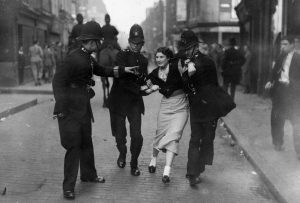


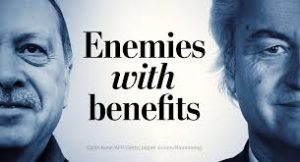 By


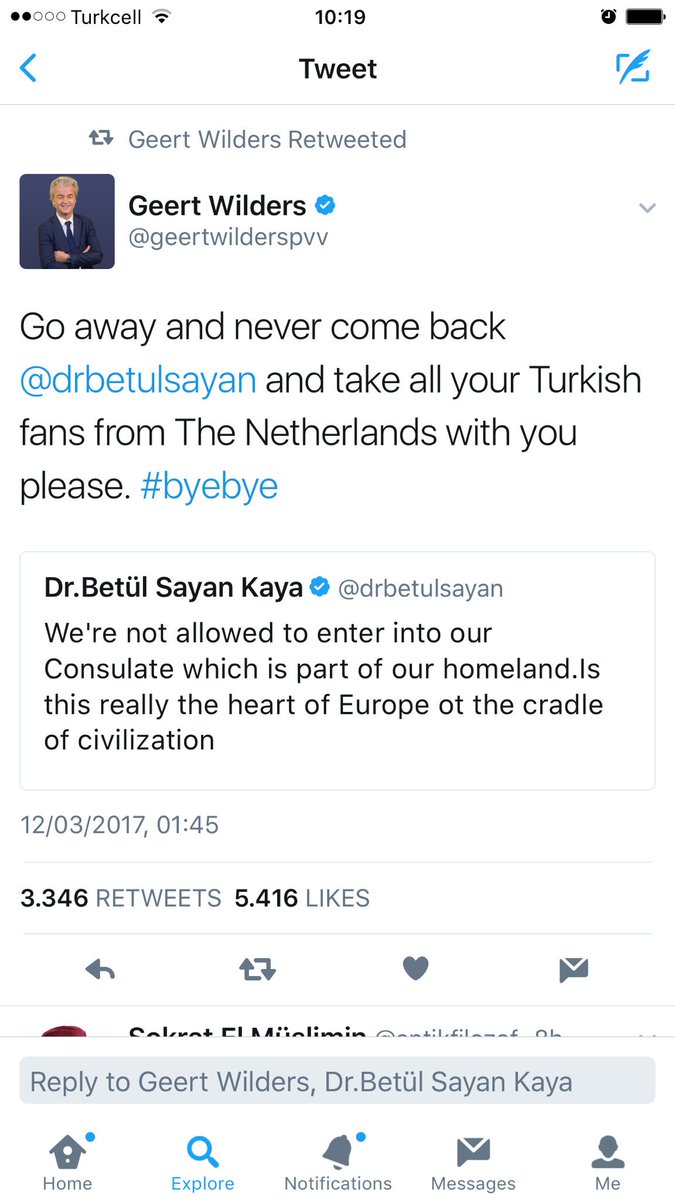


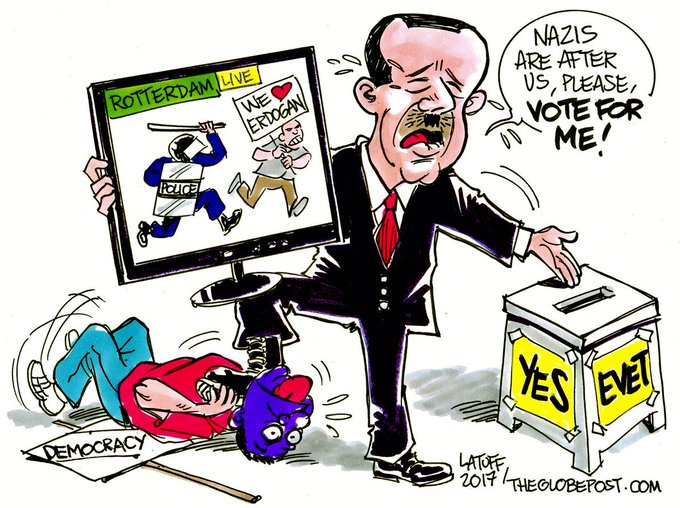


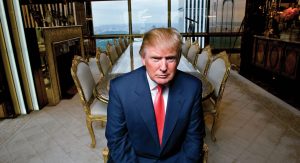 I wrote a book about autocrats’ design tastes. The U.S. president would fit right in.

 Του Δημήτρη Πεπελάση 12 ΜΑΡΤΙΟΥ 2017
 Για την κατάρρευση αρκεί η μη έγκαιρη αξιολόγηση. Για προκοπή, οι προϋποθέσεις είναι πολλές. Αυτό που αντιλαμβανόμαστε δεν εκφράζεται στο δημόσιο διάλογο, στην αντιπαράθεση αρμοδίων και αδαών ειδημόνων που συρρικνώνουν την έννοια της ανάπτυξης σε απλό δημοσιονομικό στόχο. Παράγουν θόρυβο, άγχος και ένταση χωρίς σχέδιο ευημερίας. Φέρουν οσμή καταστροφής χωρίς δημιουργικό σκέλος.

 Former US President George Bush announcing the end of US combat operations in Iraq in 2003 (AFP)
 Obama meets with President-elect Donald Trump 28 December 2016 (CNN)
 More than 300 people were killed in the bombing in Baghdad’s Karrada neighbourhood on 3 July 2016 (Reuters)
 Kurdish fighters clashes with Islamic State militants on the outskirts of Hasakeh on 30 June 2015 (AFP)

 Murside Uslu (C), mother of Mahmut Uslu, one of five Turkish soldiers killed on 7 February, in an attack by IS militants around the Syrian town al-Bab, at his funeral ceremony in Ankara, on 9 February 2017 (AFP)
 Fighter takes part in a obligatory nine-month training in nothern Syria led by the YPG, the military arm of the PYD (AFP)


 Soldiers stand guard outside a Turkish courtroom during the trial of two commanders for their role in the July 2015 coup attempt (AFP)
 Manbij Military Council forces, part of the US-backed Syrian Democratic Forces (SDF), prepare to head to the frontlines on the outskirts of the northern Syrian town of Manbij on 3 March 2017 (AFP)
