PREFACE
China has become a global power, but there is too little debate about how this has happened and what it means. Many argue that China exports its developmental model and imposes it on other countries. But Chinese players also extend their influence by working through local actors and institutions while adapting and assimilating local and traditional forms, norms, and practices.
With a generous multiyear grant from the Ford Foundation, Carnegie has launched an innovative body of research on Chinese engagement strategies in seven regions of the world—Africa, Central Asia, Latin America, the Middle East and North Africa, the Pacific, South Asia, and Southeast Asia. Through a mix of research and strategic convening, this project explores these complex dynamics, including the ways Chinese firms are adapting to local labor laws in Latin America, Chinese banks and funds are exploring traditional Islamic financial and credit products in Southeast Asia and the Middle East, and Chinese actors are helping local workers upgrade their skills in Central Asia. These adaptive Chinese strategies that accommodate and work within local realities are mostly ignored by Western policymakers in particular.
Ultimately, the project aims to significantly broaden understanding and debate about China’s role in the world and to generate innovative policy ideas. These could enable local players to better channel Chinese energies to support their societies and economies; provide lessons for Western engagement around the world, especially in developing countries; help China’s own policy community learn from the diversity of Chinese experience; and potentially reduce frictions.
Evan A. Feigenbaum
Vice President for Studies, Carnegie Endowment for International Peace
SUMMARY
Chinese players have localized their strategies to improve China’s image in Turkey in recent years. Although China and Turkey have long maintained friendly relations at the official level, Turkish people remained notably skeptical of China throughout the 2000s. Indeed, Turkey’s unfavorable public opinion has been a constant headache for China, whose propaganda outlets in the country produce little Turkish language content that actually resonates with domestic audiences. Turkey also has few explicitly pro-China voices and no sizable overseas Chinese community, which has made positive public relations into an uphill battle for Beijing.
But having acknowledged these weaknesses in recent years, the Chinese regime has opted for strategies that aim at building a new synergy with local actors in the Turkish mediasphere.
Beijing has adapted to the local rules of Turkish media and sought new opportunities to elevate China’s image in Turkey by leveraging its friendly ties with Ankara. The Turkish government, which exerts substantial influence over domestic media, has provided new platforms for China to realize its soft power goals within a largely polarized setting with little press freedom. In this context, Turkey’s progovernment newspapers have published “advertorials” celebrating the achievements of the Chinese Communist Party. Similarly, journalists from Turkey’s state-owned Anadolu Agency have participated in Chinese-sponsored press tours to Xinjiang, where Beijing has sought to undercut the Turkish narrative around abuses against the Uyghurs. On the other end of Turkey’s polarized ideological spectrum, China has also appealed to left-wing opposition groups through its narratives, which emphasize the country’s anti-imperialist credentials. Such messaging strategies may already have produced some results in Turkey, as the most recent opinion polls reflect a gradual increase in the number of Turkish citizens who perceive China as a potential partner.
INTRODUCTION
Much of the story of Sino-Turkish relations has a familiar ring. A developing country—in this case, Turkey—comes to acknowledge China’s rise, develops relations with it, seeks to leverage opportunities such as investment, and even joins newly established international organizations sponsored by Beijing. Like many other countries, Turkey’s engagement with China is driven primarily by economic pragmatism, but geopolitics has also become important in recent years.
Çağdaş Üngör
Çağdaş Üngör teaches at Marmara University’s Department of Political Science and International Relations in Istanbul. Üngör received her Ph.D. degree from the State University of New York at Binghamton, with a dissertation examining China’s external propaganda activities during the Maoist decades. Üngör contributes to various Turkish journals and newspapers on China-related topics and Sino-Turkish relations. Her academic publications include the edited volumes Turkey in the Cold War: Ideology and Culture (Palgrave-Macmillan, 2013, with Cangül Örnek) and New Horizons in Asia-Pacific Studies (Asya Pasifik Çalışmalarında Yeni Ufuklar, Küre Yayınları, 2020).
Ever since Ankara signed a strategic partnership treaty with China in 2010, Turkish officials have been eager to facilitate interactions with Asia’s largest economy.1 Turkey’s principal motivation is to attract investment dollars from China to stimulate the Turkish economy, including through Beijing’s Belt and Road Initiative (BRI)—a multibillion-dollar infrastructure project launched by Chinese President Xi Jinping in 2013, joined by Turkey two years later. Securing Chinese funding for its controversial Canal Istanbul project remains a particularly important goal for the Turkish government.2 Likewise, China-Turkey financial transactions, including currency swap deals,3 are crucially important for Ankara to alleviate the worst outcomes of its ongoing economic crisis.
But economic pragmatism is only part of the story. Turkish officials have also come to view Beijing as a useful geopolitical hedge against Western pressure. Although Turkey has long been a member of the North Atlantic Treaty Organization (NATO) and a candidate for the European Union (EU), the last decade has witnessed growing skepticism in the country toward the West under the government of President Recep Tayyip Erdoğan. The transatlantic West is constantly attacked in the Turkish media as an antagonist to Ankara on various issues, ranging from the Syrian civil war to the dispute over eastern Mediterannean Sea reserves. Turkey’s anti-Western stance has redoubled since the coup attempt on July 15, 2016, an event that Turkey’s ruling elites have largely come to understand as a U.S.-sponsored plot. At the same time, Russia and China have increasingly gained respect in Turkey, not least because Moscow and Beijing parted with the West by throwing their explicit support behind Erdoğan’s ruling Justice and Development Party (Adalet ve Kalkınma Partisi, or AKP).4
In a broad sense, Ankara favorably views China’s potential to check U.S. power—and to leverage that new balance in Turkey’s interest. In 2013 and 2016, Erdoğan expressed Turkey’s willingness to join the Shanghai Cooperation Organization,5 a security organization that is often dubbed in global media as a “rival to NATO.”6 In recent years, Sino-Turkish cooperation has expanded into areas that reflect more than the economic and commercial basis of their bilateral relationship—most notably, media and public opinion,7 judicial matters,8 and policing.9 Likewise, during the COVID-19 crisis, the Turkish government elected to buy a China-made vaccine, a step that was interpreted at home and abroad as a further sign of Ankara’s Eurasianist (or Avrasyacı) leanings. To enable this broadened collaboration, Turkey has toned down its previous criticisms of the human rights situation in China’s autonomous Xinjiang region, even as the plight of Turkic-speaking ethnic Uyghurs has deteriorated after the introduction of detention centers in 2017.
But it has not been easy to transfer the favorable state of official Sino-Turkish ties into the public opinion sphere. While many mass publics across the Middle East have embraced China as a friendly country, Turkish people remain notably skeptical of China for a complex set of reasons. In fact, the unfavorable media coverage on China-related matters in Turkey has been a constant headache for Beijing.10 In the COVID-19 vaccine case, for example, intense debate raged among the Turkish public over the decision to buy a Chinese vaccine instead of a Western-produced mRNA vaccine.11 Concerns over the quality and efficacy of Sinovac demonstrated that the weakest link in Sino-Turkish relations remains the unfavorable opinion of China among the Turkish public writ large.
To combat anti-China sentiment, Beijing has prioritized media engagement to influence Turkish public opinion. But Chinese propaganda has proven weak in the Turkish context, and the absence of explicitly pro-China voices in Turkey has not made engagement any easier for the Chinese regime. Today, there is really only one organized and politically salient source of support for China in Turkey—the Patriotic Party (Vatan Partisi), a left-wing party that is broadly against NATO and the United States and in support of Moscow and Beijing.
This paper explores how Beijing and its proxies have sought to alter this state of affairs through a more localized strategy. By adapting to the local rules of Turkish media and seeking new opportunities to elevate China’s image, Beijing has sought to establish a new synergy in Turkey’s public sphere. Promoting a synergy with local players has begun to pay dividends as most recent Turkish opinion polls reflect a gradual increase in the number of Turkish citizens who perceive China as a potential partner.12
China has developed better access to Turkey’s conventional media primarily by leveraging its favorable ties to the Turkish government, which has undue influence in Turkey’s domestic media sphere. Casting Chinese narratives in a better light in Turkey also serves Ankara’s best interests because some of the Sino-Turkish cooperation schemes facilitated by the governing People’s Alliance (Cumhur İttifakı) face bitter domestic criticism. The convergence between the interests of the Turkish ruling elite and China to improve the country’s image in Turkey has created more opportunities for the Chinese diplomatic corps to appear on Turkish TV. Published “advertorials”—publicity pieces masquerading as news or opinion items—in Turkey’s progovernment newspapers celebrate the achievements of the Chinese Communist Party (CCP). Similarly, journalists from Turkey’s state-owned Anadolu Agency have participated in Chinese-sponsored press tours to Xinjiang, where Beijing has sought to undercut the Turkish narrative around abuses against the Uyghurs.
But leaning on the Turkish government is just one piece of a broadened and localized Chinese media strategy. At the other end of Turkey’s polarized political spectrum, Chinese narratives also appeal to the country’s left-wing intellectuals thanks to China’s ideological credentials. Unlike the Turkish government, which views China more from a pragmatic lens, some segments in Turkey’s secular opposition embrace China for its anti-U.S. and anti-imperialist rhetoric. Leveraging localization strategies to court this group presents a unique opportunity for China to capture all elements of the Turkish media spectrum. And Beijing is working toward this goal as a hedge against possible political sea change, which could come after Turkey holds general elections in June 2023.
The next sections of this paper explore the roots of the Turkish public’s skepticism toward China and Chinese messaging, the localized Turkish media landscape, and Beijing’s strategy of alleviating anti-Chinese sentiment through Turkish-language programming and messaging aimed at a specifically Turkish audience.
CHINA’S PUBLIC RELATIONS HEADACHE IN TURKEY
China’s double-digit economic growth in the decades following Deng Xiaoping’s shift in 1978 to policies of reform and opening up has been attractive to many around the world—including parts of the Turkish public. Not surprisingly, the CCP has worked hard to leverage this economic success in an effort to improve Beijing’s image abroad. Xi Jinping, who rose to power in 2012, has put an even greater emphasis on “telling China’s story well.”13 China’s soft-power tool kit today includes conventional and digital media, the use of cultural institutions for exchanges, diplomatic platforms, and the public relations effects of huge-scale investment projects such as the BRI.14 Most of the soft-power tools China employs to win hearts and minds across the world are also relevant in the Turkish context, whether it is a Confucius Institute—a Communist Party–sponsored educational exchange platform—or the local branch of China Radio International.
Particular weaknesses, however, have kneecapped China’s propaganda establishment from achieving its desired results in Turkey, despite favorable Sino-Turkish relations at the official level. First and foremost, the Turkish public’s negative perception of China has created an unfavorable media environment, which poses high hurdles to Chinese messaging. Indeed, Turkish public opinion polls suggest that neither China’s miraculous economic growth nor its public diplomacy initiatives have substantially improved the country’s image in Turkey in recent decades. To the contrary, Pew Research Center polls conducted in Turkey from 2005 to 2019 found that at least 60 percent of the Turkish public has remained skeptical of China.15 An August 2020 survey conducted by Istanbul Ekonomi Araştırma stated that 61.3 percent of the Turkish public views China either “unfavorably” or “very unfavorably,” as opposed to just 10.6 percent that considers it a friendly country.16 More recently, a survey conducted by the Center for Turkish Studies at Istanbul’s Kadir Has University concluded that only 27 percent of the Turkish public views China positively.17
This rampant hostility begs greater scrutiny. Given that Turkey and China had minimal interactions for most of the twentieth century, why is the Turkish public so disproportionately adverse to China? The roots and dynamics of anti-China sentiment among Turks are underexplored in scholarly studies. But it is clear that a number of factors are, in a loose sense, helping to drive this negativity.18 One is the impact of nationalist historiography in Turkey. Another is the historical legacy of the Cold War, when China and Turkey stood at the opposite ends of the ideological spectrum. A third involves popular cultural stereotypes in Turkey surrounding China. A fourth involves the Xinjiang issue, due to sympathy among Turks for Turkic-speaking Uyghurs.19
Unlike in many Western countries, China’s one-party rule and authoritarian politics are not a matter of substantial debate in Turkey, which itself has had a rather troubled democratic experience since the early twentieth century. Xinjiang (more commonly known in Turkey as East Turkistan, or Doğu Türkistan) is the only significant political issue related to China that has been on the Turkish public agenda. The plight of the Uyghurs in Xinjiang has been a sensitive issue for decades in Turkey, both among Muslim conservatives and secular Turkish nationalists. Whereas Turkish nationalists emphasize the Uyghurs’ Turkic identity, Islamic groups often take issue with the restrictions over Uyghurs’ religious freedoms in China. This sensitivity had reached its zenith in 2009, when Erdoğan, then serving as Turkey’s prime minister, referred to violence in Xinjiang’s capital Urumqi as being “almost a genocide,” causing a diplomatic crisis between Ankara and Beijing.20
Although Ankara has kept a low profile on the East Turkistan question since then, Xinjiang continues to receive substantial media attention in Turkey and the issue still causes occasional Sino-Turkish crises. In 2015, street demonstrations in Istanbul over the Xinjiang issue allegedly resulted in an ultranationalist mob assaulting a group of South Korean tourists, who were mistaken by the mob as Chinese.21 In 2021, another crisis erupted when Meral Akşener, leader of the nationalist Good Party (İyi Parti), and Ankara’s nationalist mayor Mansur Yavaş used their social media accounts to commemorate the Baren Township Massacre, an April 1990 conflict between Uyghurs and Chinese government forces.22 After the Chinese Embassy in Ankara responded contentiously on Twitter,23 the Chinese ambassador was summoned to the Turkish Foreign Ministry. The incident caused a social uproar in Turkey, although it did not inflict lasting damage on official ties.
These notions of pan-Turkic ethnic solidarity anchored by shared Islamic faith help to explain the Turkish public’s sensitivity over the Xinjiang issue. They are also crucial to understand the anti-China sentiment at large in Turkey. Turkish historiography in the early republican period, which places a particular emphasis on Turks’ secular roots in premodern Central Asia,24 is a key ingredient in shaping popular views of China in Turkey. Turkish history textbooks often place emphasis on the clashes between nomadic Turkic tribes and the sedentary Chinese civilization.25 Sinologists in Turkey refer to the Great Wall of China as a political, if not a military, barrier between the Chinese and Turks, alongside Mongols and Huns.26 The conviction that China built this wall against “Turks” is embraced today even at the top echelons of Turkey’s right-wing political parties.27
These ideas have their offshoots in popular culture. In the 1960s and 1970s, the Turkish movie industry produced several works, most prominently the Tarkan and Karaoğlan series, that capitalized on the idea of China as an ancient enemy.28 Anti-China sentiment in Turkey also emanates from literary fiction in the same historical vein, which can be traced back to the writings of ultranationalist intellectual Nihal Atsız in the 1940s.29 While his narratives on the so-called golden age of a nomadic Turkish past are not held in high esteem among contemporary Turkish literary circles, they still have their popular adherents today. Recent examples of this genre continue to cast Chinese characters in a negative light.30
An equally important factor in shaping ongoing anti-China sentiment in Turkey is the legacy of the Cold War. Having placed Turkey and China at opposite ends of the ideological spectrum, the Cold War became a modern source of enmity between Turkey and China. Soldiers from the two countries even fought briefly, as Turkey sent a brigade to Korea to serve under the UN command between 1950 and 1953. Turkey’s involvement in the Korean War cemented China’s status as an enemy for years thereafter.31 Another source of enmity is China’s atheism, which remain antithetical to the beliefs of many in the Turkish public, whose voting preferences have generally skewed conservative since the 1980s. Beijing’s stance against religion has long been frowned upon by Turkey’s Muslim authors, who use very strong and unequivocal language in their books.32 Turkey’s conservative human rights organizations, likewise, were very critical of restrictions over Uyghurs’ Islamic religious practices until recent years.33 Some Muslim clerics in Turkey even hinted at the possibility that the Chinese may be the so-called yajuc majuc—the tribe that will bring destruction to humanity according to the Quran.34
Whereas nationalist and conservative groups have their distinct repertoire, cultural stereotypes about China are not exclusive to any political group in Turkey.35 China is often presented in the Turkish media as an exotic land with strange or absurd qualities, heightening perceptions that this country is wholly different from Turkey.36 A new study on “sourtimes” (ekşisözlük)—a popular digital platform among urban, educated Turkish youth—demonstrates that China-related entries often end up verging on racist hate speech.37 Pejoratives used to describe Chinese people on this popular platform include “merciless,” “cunning,” “dangerous,” and “untrustworthy.” Even China’s world-renowned cuisine has been a target of criticism, insult, or ridicule in Turkey. During the COVID-19 crisis, degradation of Chinese food became even more commonplace. Turkish media often depicted scenes from animal wet markets in China—the suspected origin of the coronavirus—to define Chinese food more generally.38 One survey conducted by Kadir Has University in April 2020 found that 41.3 percent of Turkish respondents believed that “Chinese eating habits and food preferences” were to blame for the coronavirus pandemic.39 Even progovernment columnists felt free to use deragotary phrases and racist imagery to mock China during this time.40 Another common racist trope is the rampant use of physical characteristics to describe Asian people, including the Chinese, in popular Turkish media. Such terms are used by Turkish journalists or columnists with impunity and without concern for backlash from their readers.41 Physical discrimination against Chinese tourists and residents in Turkey has become more commonplace during the COVID-19 crisis.42
CHINA’S EVOLVING MEDIA STRATEGY
China’s poor image in Turkey has long been a source of concern for Beijing.43 Although the CCP regime worked to overcome these hurdles, its ability to reach Turkish audiences has effectively been limited until recently. In this context, China has worked hard to adapt its strategy, leverage local media, and improve its standing with a deeply skeptical Turkish public. Beijing has been forced to throw out the standard playbook it used in Turkey to conform to the unique local context, seeking to persuade and enlist local actors—from both poles of the Turkish political spectrum—to carry its torch.
CHINA’S LIMITED TURKISH-LANGUAGE PROPAGANDA
China’s global propaganda media today is multifaceted, technologically savvy, and often locally tailored.44 Yet Chinese media offers little Turkish language content, even though most Turks speak only their native tongue.45 China Global Television Network (CGTN), for instance, has broadcasts in English, Arabic, French, Spanish, and Russian but not in Turkish. Although this network’s news content reaches most Middle Eastern countries in Arabic—and is geared toward African audiences46—CGTN does not have a Turkish version.
CGTN is just the beginning of the problem. Turkish language content is also lacking in other Chinese media, including major newspapers such as Global Times, China Daily, and People’s Daily. This leaves just two outlets, the official Xinhua News Agency and China Radio International (CRI), as the only Chinese media that can reach Turkish audiences in their own language.47
These shortcomings in China’s propaganda machine are precisely the reason that Beijing is now assertively developing new strategies to engage with local actors in Turkey. To be sure, Beijing is no newcomer to the game of propaganda and persuasion in Turkey. One of the two Turkish-language Chinese outlets, CRI (originally dubbed Radio Peking), started its Turkish broadcasts in 1957. Its Cold War–era programming reached only a miniscule audience in Turkey due to the highly ideological nature of its content and Turkey’s antagonistic relationship with Mao Zedong’s China.48 Today’s CRI is undoubtedly more entertaining than its Mao-era counterpart, with news and pop music broadcast via Turkey’s FM band as well as digital platforms throughout the country. But this, in itself, does not automatically translate into efficacy—much less popularity. If social media following is an indication of receptivity, Chinese radio’s reach in Turkey pales in comparison to its Western and even Russian counterparts. Based on Twitter data from October 2022, CRI Türkçe (@CRI_Turkish) had just 87,300 followers, compared to BBC News Türkçe’s (@bbcturkce) 4.2 million and Sputnik Türkiye’s (@sputnik_TR) 1 million followers. The Turkish branch of China’s official Xinhua News Agency is even less popular by these indicators, with a mere 11,500 followers as of October 2022 on its official Twitter account (@XHTurkey), compared to 5.3 million people following CNN Türk (@cnnturk).
In the last decade, China has made several attempts to engage domestic actors in the Turkish media field and produce its own Turkey-oriented content locally.49 It is difficult to measure precisely just how successful such attempts have been in terms of penetrating the Turkish audience en masse, but China’s attempts to expand its media network in Turkey in recent years is noteworthy. This was mostly done through the signing of cooperation agreements with local producers. Yön Radyo, which broadcast pro-China news items tailored toward the Turkish audience, is a case in point.50
Other attempts include the establishment of a Turkish branch for the GB Times media company, which took on the responsibility of CRI’s local operation.51 In 2014, the Chinese Foreign Ministry announced the launch of CTV, a Turkish language TV channel, which was promoted as a “media bridge” between the two countries.52 Despite the publicity, however, this experiment proved to be short lived with only largely obscure digital platforms remaining.53 On the print media front, Beijing’s propaganda magazine China Today launched its trimonthly Turkish version in 2012, thanks to a deal with the progovernment Turkuvaz Media Group.54 Another journal, Modern Silk Road (Modern İpek Yolu), started publication in 2017 under the guidance of the left-wing publication house, Kırmızı Kedi.55
But local language content has not been the only barrier to Chinese messaging. The Turkish context presented other obstacles to China in the realm of soft power. For example, unlike in most Western and Southeast Asian countries, Turkey does not have a sizeable overseas Chinese community, which, in other contexts, may act as a cultural intermediary between the host country and mainland China.56 Based on the Turkish Statistical Institute’s Address Based Population Registration System in 2020, Turkey hosts only 18,740 Chinese residents, a tiny community within the 1.3 million foreigners registered in this database.57 Likewise, none of the Turkish urban centers has a Chinatown area where locals can experience Chinese cultural life firsthand, from Chinese cuisine to calligraphy. Turkey also lacks any well-known public figure, professional role model, or celebrity from an ethnically Chinese background. This is in striking contrast to other East Asian countries that have produced social media phenomena in Turkey, like the Japanese student Yoshi (on Twitter @YoshiEnomoto_) and South Korean actor Chaby Han (on Twitter @chabyhan), who are well-known among the Turkish youth. Even in Israel, as explored in another paper in this series, a figure who calls himself “Chinese Itzik” is cherished as a cultural icon by many Israelis.58
Confucius Institutes in Turkey have not been of much help to Beijing either. Most commonly known for their Mandarin language teaching, these organizations have served a broader purpose of extending Chinese soft power since their advent in 2004. Stretched across some 100 countries today, Confucius Institutes and classrooms are particularly popular in the Global South, including in several Middle Eastern countries.59 Although Turkey has four Confucius Institute branches in Ankara and Istanbul,60 their influence in the public domain remains minimal. Confucius Institutes in Turkey offer Chinese courses at their host universities for degree students as well as the general public. While they occasionally organize academic conferences and other events, their impact is often limited to college campuses in Istanbul and Ankara.61 They do serve an important function in sponsoring native Turkish teachers of Mandarin language and organizing language proficiency exams, yet their role in elevating China’s national image among Turks is quite negligible.
Similar things can be said about China’s diplomatic outposts in Turkey. Their official websites, which only sometimes use the Turkish language for embassy and consulate content, hardly attract readers as a source of information about China.62 Their social media followings lag as a result, indicating that fewer Turks are interested in messages released by China’s embassy in Ankara compared, for instance, to its U.S. counterpart.63
WORKING “À LA TURCA” WITH LOCAL ACTORS
Given the broader backdrop of unfavorable Turkish public opinion on China and the weakness of Beijing’s own propaganda apparatus in Turkey, the CCP regime has been compelled to gradually acknowledge the significance of local actors in Turkey. Beijing has come to understand that elevating China’s image in Turkey will depend mostly on cooperation with local media actors, who—for one reason or another—may share China’s values or agenda. Now, it is leaning on them, rather than on Chinese players, in an attempt to alter this situation.
Until recently, there were very few political and social groups in Turkey receptive to Chinese messaging. The nationalist left-wing politician Doğu Perinçek’s Patriotic Party has historically been the only explicitly pro-China group in the country. Often called by the title of its journal, Aydınlık, this group has its roots in the 1968 student movement and is famous for its previous Maoist orientation. Today, Perinçek is an ardent supporter of Turkey’s Eurasianist foreign policy,64 as well as a defender of Chinese domestic and foreign policies, including controversial stances on the Uyghur issue. Although the Aydınlık group is well known in Turkey—and Perinçek enjoys media attention disproportionate to his small voting base—it is clear that the Patriotic Party’s tiny constituency has been unable to single-handedly sway public opinion on China.65 Having access to newspapers like Hürriyet and Sabah, which have a hundred times more circulation than Aydınlık, is a noteworthy step forward for China.66 In hopes of reaching a wider audience in Turkey, Beijing has adjusted and adapted its strategy—in part by leveraging favorable relations between Chinese and Turkish officials thanks to economic cooperation.
In Turkey, domestic political polarization between the ruling People’s Alliance (Cumhur İttifakı) and the coalition of opposition parties, the Nation Alliance (Millet İttifakı), underpins the local mediasphere. In its current state, the Turkish government is able to dictate the editorial line in much of the conventional media through a number of legal, political, and economic tools.67 Not surprisingly, in Reporters Without Borders’ 2022 World Press Freedom Index, Turkey ranked 149 out of 180 countries.68 In such a restrictive media environment, it is much easier for Beijing to leverage its amicable ties with the government and official players in Ankara to improve its soft power prospects in the country.
Whereas Turkey’s ruling government views Western media through a highly critical lens, Chinese news outlets, which appear relatively harmless (if not also obscure), are rarely targeted by conservative and nationalist circles. In 2019, a controversial report examining the local branches of foreign media outlets in Turkey (labeled “appendages” or uzantılar) praised CRI for maintaining its impartial stance on sensitive topics, such as the Kurdish issue or Turkey’s Syria policy.69
China’s new media strategy in Turkey contains multitudes. First and most important, Beijing has stressed business cooperation in its outreach to Ankara. Sino-Turkish economic ties and investment opportunities are a crucial factor in bilateral relations, and they have become central to China-driven media narratives. Influenced by a sympathetic government in Ankara, BRI projects in Turkey, for instance, often receive favorable coverage.70 Progovernment think tanks point to the importance of cooperating with China, particularly over financial assistance and investment opportunities, against the “unilateral, spoiled and patronizing attitude employed by the US.”71 There is a visible attempt to downplay the significance of the Sino-Turkish trade deficit, which stood at $28.5 billion in 2021.72 Whereas Turkish media presented the country’s trade deficit with China as a major problem in the early 2000s, there is a visible attempt to sugarcoat this gap in today’s media.73 Progovernment think tanks explicitly advise against “scapegoating China for flooding the Turkish market with its cheap and low quality goods” and emphasize the positive prospects in relations.74 It is clear that this messaging has evolved alongside Turkey’s own official priorities.
The Chinese private sector also contributes to the positive atmosphere that both Chinese and Turkish government officials hope to cultivate. Huawei, the Chinese telecommunications giant that is poised to build Turkey’s 5G network in coming years,75 has more followers on its Turkish social media than the Chinese embassy in Ankara.76 Turkey’s official news agency, Anadolu, as well as the state-run Information and Communication Technologies Authority (Bilgi Teknolojileri ve İletişim Kurumu) both advertise Huawei’s corporate social responsibility projects in Turkey.77 Likewise, Turkey’s Directorate of Communications (İletişim Başkanlığı) under Fahrettin Altun is an important government outlet for facilitating Sino-Turkish exchanges.78 In January 2020, Altun shared a Chinese-language promotional video about Turkey’s Canal Istanbul project from his own social media account.79
Another strategy that Beijing has leaned on more heavily in recent years is the use of local Turkish media outlets to propagate China’s economic achievements and diplomatic goals. The most important challenge in crafting a positive narrative is certainly the Xinjiang issue, which, despite the friendly Sino-Turkish ties, remains a thorny item. Even as Ankara has substantially toned down its criticisms of Chinese policy, which is appreciated by the Chinese side as a policy of “strategic silence,”80 sensitivities on the plight of Uyghur Muslims persist in Turkey. And Beijing is working to improve its own image relating to the Xinjiang issue in Turkey through several new mechanisms.81
In an effort to capitalize on the new atmosphere created by the favorable official ties between Ankara and Beijing, China has invited Turkish outlets on official press tours to Xinjiang, where Beijing attempts to showcase its alternative narrative and obfuscate mistreatment of the Uyghurs. Members of the official Anadolu Agency, progovernment press, and mainstream media organizations joined these visits.82 In 2019, several Turkish journalists were cited in Chinese official media for praising Beijing’s efforts to reduce poverty and safeguard minorities in Xinjiang.83 Columnists from Turkey’s mainstream and government newspapers who participated in these tours wrote several pieces in Turkish. Muharrem Sarıkaya of Habertürk, for instance, wrapped his story on China’s successful counterterrorism measures in Xinjiang around the favorable prospects of Sino-Turkish relations.84 Although this kind of press is not likely to make drastic changes in Turkish public opinion regarding this matter, these journalistic detours from the usual “East Turkistan” narrative in Turkey are still noteworthy.
Another strategy that Beijing has leaned on more heavily in recent years is the use of local Turkish media outlets to propagate Beijing’s economic achievements and diplomatic goals. Major newspapers such as Hürriyet, Sabah, and Cumhuriyet have published several full-page advertorials praising China, making the country a favorite new customer for the commercial side of Turkey’s key media outlets.85 Headlines celebrating the CCP’s anniversary or promoting the 2022 Beijing Winter Olympics have also appeared in the Turkish media—spurred, no doubt, by the friendly state of Sino-Turkish official relations. Support from Ankara makes these commercial media deals possible; considering the poor state of Turkey’s relations with the West, an analogous full-page advertorial praising any Western government seems completely unthinkable today.
By paying for advertorials in Turkey’s mainstream, progovernment, and left-wing newspapers, China has been able to access a far vaster audience than the explicitly pro-China Patriotic Party could ever deliver. For example, Beijing used Sabah to praise the CCP’s accomplishments on the party’s one hundredth anniversary,86 which was unprecedented for a progovernment Turkish outlet. Other advertorials have covered topics like the optimistic prospects for Turkish exports to China or the achievements of Chinese technology companies such as Huawei in Turkey.87 This strategy of localization is likely to pay dividends because Turkey’s conservative and nationalist masses have, as noted above, never had much appreciation for China. Paid content in local mainstream media and progovernment outlets offers Beijing a fresh opportunity to reach these audiences. And such advertorials can often appear to ordinary Turkish readers as if they are regular news items.88
The coronavirus pandemic presented another opportunity for Beijing. When Ankara elected to buy China-made Sinovac Biotech vaccines, it prompted a firestorm of controversy, triggered by a general distrust of China-made goods, as well as Sinovac’s delivery problems and poor efficacy ratings.89 Turkey’s progovernment media—understanding that increasing trust in China-made goods would help increase trust in Turkey’s Ministry of Health—took it upon themselves to promote Sinovac’s product at home. Turkey’s government now had another incentive to promote pro-Chinese messaging—and with Ankara on the defensive, Beijing learned to leverage its position to cast China in a better light. This helped China make inroads into Turkey’s mainstream media during a strictly domestic political controversy.
During the COVID-19 crisis, Cui Wei, China’s consul general in Istanbul, frequently appeared on live TV broadcasts and answered pandemic-related questions with his fluent Turkish.90 To a lesser extent, the chargé d’affaires of the Chinese Embassy in Ankara, Cheng Weihua, also appeared on TV to offer his comments on China’s COVID-19 response. A number of mainstream and progovernment Turkish media outlets put a positive spin on China-related news during the pandemic, such as broadcasting news items asking, “How did China stop the coronavirus?”91 One piece published by Turkey’s official Anadolu Agency belittled Western claims of Chinese public health neglect, case underreporting, government repression, and pandemic mismanagement as overly exaggerated.92 Other officially backed stories praised the technological surveillance mechanisms employed in China to curb the spread of the disease—in stark contrast to Western media accounts that often portrayed these methods as dystopian or authoritarian.93
At the other pole of Turkey’s political spectrum, left-leaning opposition groups favorable to China have become more salient during the COVID-19 crisis. These groups, which range from former Maoist and current Eurasianist circles to orthodox Marxists and Kemalist republicans, are attracted to China for its secular state structure, Marxist-Leninist origin, and anti-imperialist discourse. That means they also are more inclined to accept Chinese messaging. During the pandemic, China’s so-called zero-COVID approach appealed most to Turkey’s left-wing intellectuals and journalists, including Gündüz Vassaf, a well-known Turkish writer and academic, whose take on the global pandemic was simply put as: “The East won with society, the West lost with individual.”94
Throughout the spring of 2020, Turkish left-wing media published many pieces praising China’s response to the public health crisis.95 Not surprisingly, Doğu Perinçek and the Aydınlık journal were among the loudest voices—but they were not alone.96 Mehmet Ali Güller, a columnist in Cumhuriyet and the founder of the Kırmızı Kedi publishing house, likewise praised China’s harsh quarantine measures. In one piece, Güller juxtaposed Chinese socialism against Western capitalism—and praised the former for prioritizing people’s health over economic interests while blaming the latter for the enormous death toll in Britain and the United States.97 Turkey’s Marxist media outlet BirGün praised Chinese diplomats on TV for highlighting the “humane” aspect of the health crisis vis-à-vis Turkish journalists who were more interested in death figures.98
Perhaps the most significant sign of camaraderie between China and the Turkish opposition media during the COVID-19 pandemic was a popular meme: “Atatürk paid for it.”99 According to the story, China refused to accept payment for a shipment of 2 million COVID-19 test kits that arrived in March 2020 in order to thank Turkey for the medical aid it sent to China during a 1938 cholera outbreak.100 This phrase—which was based on a falsehood101—spread like wildfire over Turkish social media. Backed by some of Turkey’s well-known journalists and academics, the “Atatürk paid for it” trend became one of the most memorable memes of the pandemic era in Turkey.102 Although not invented or spread by China’s propaganda establishment, this story boosted China’s standing by giving it undue credit while flattering millions of Kemalist-leaning Turks.
LESSONS LEARNED
The last decade has witnessed China’s growing media outreach across the world. There is evidence that this effort created a more favorable public opinion environment for Beijing, particularly in the developing world.103 Although several countries in the Middle East have positive views on China today, Turkish public remained skeptical of China. The weakness of China’s own propaganda outlets, most of which do not produce content in Turkish, contributed to this problem. As a result, the Chinese regime opted for new strategies that sought to engage local actors in Turkey, an approach that today renders the input from the Turkish government and various intellectual circles crucial to realize China’s soft power goals in the country.
The first major lesson coming out of this experience, therefore, demonstrates the significance of local agency, even when there is a huge power asymmetry between China and other actors. Although China had many means and sources at its disposal, its linear and top-down approach did not produce much result in the case of Turkey. The Turkish case shows that Chinese propaganda and public diplomacy work much better when they are assisted by local people and institutions. Chinese narratives, in other words, do not fall on deaf ears only if there is a reason in the local setting to hear them. The most important actor here undoubtedly is the Turkish government, which provided new platforms for China to improve its image in Turkey’s largely polarized media environment with little freedom of press. By leveraging its ties to Ankara, China has gained more ability to ensure favorable treatment in progovernment outlets. Turkey’s ruling People’s Alliance also had a stake here. The debate on the so-called Chinese vaccine demonstrated clearly that the long-term sustainability of Sino-Turkish cooperation requires immediate improvements to China’s image in Turkey.
Given the multifaceted sources of Turkey’s anti-China sentiment, it is clear that these new strategies will not create dramatic change overnight. Neither can they completely eliminate the discontent in Turkey relating to the CCP regime’s grave human rights abuses in the Xinjiang autonomous region. Nevertheless, there is some evidence indicating slow and incremental progress on China’s part, suggesting that Beijing’s localized strategies may have already moved the needle. According to Kadir Has University’s Research on Public Perceptions of Turkish Foreign Policy survey results, for instance, there was an increase in the number of Turkish people who consider China as a potential partner from 2019 to 2021.104 Turkey also has a more favorable public opinion on China compared to many of its Western allies. A poll conducted by the German Marshall Fund in 2021 demonstrated that 34 percent of Turkish respondents viewed China’s “influence in global affairs” either positively or very positively.105 Likewise, Turkey has the lowest score among a group of transatlantic countries in its support for tougher policies on China, in a number of topics ranging from climate to cybersecurity to human rights to trade.106
A final lesson learned from the Chinese experience in Turkey is, perhaps paradoxically, one about the popular impact of anti-American sentiment. In Turkey, although the regular Chinese soft power toolbox—its official media, traditional cuisine, or Confucius Institutes—does not raise much interest, China’s promise to balance U.S. power is attractive to many. While Turkey’s anti-China sentiment is deep and multifaceted, the Turkish public has long embraced an even stronger anti-Americanism that cuts across ideological divisions in the country. If Erdoğan’s government appreciates China due to its own power struggles and diplomatic hurdles with the West, Turkey’s secular opposition admires China because of its anti-imperialist credentials. China’s image in Turkey may be far from ideal, but Beijing is still ranked well below Washington in any public opinion poll about external threat perceptions.107 China’s local appeal, therefore, may have more to do with the country’s global status vis-à-vis the United States in the future rather than its concrete soft power strategies in Turkey.
NOTES
1 Ziya Öniş and Maimaiti Yalikun, “Emerging Partnership in a Post-Western World? The Political Economy of China-Turkey Relations,”Southeast European and Balkan Studies 21, 2021, 507–529, https://doi.org/10.1080/14683857.2021.1981624.
2 Canal Istanbul is an alternative corridor to the Bosphorus Strait, which connects the Black Sea and the Sea of Marmara. See Sinan Tavşan, “Eyeing Chinese Investment, Turkey Kicks Off Canal Istanbul Project,”Nikkei Asia, June 28, 2021, https://asia.nikkei.com/Politics/International-relations/Eyeing-Chinese-investment-Turkey-kicks-off-Canal-Istanbul-project.
3 Gökhan Ergocun, “Central Banks of Turkey, China Expand Swap Agreement,”Anadolu Agency, June 16, 2021, https://www.aa.com.tr/en/economy/central-banks-of-turkey-china-expand-swap-agreement/2275566.
4 Çağdaş Üngör, “Heading Towards the East? Sino-Turkish Relations After the July 15 Coup Attempt,” in Emre Erşen and Seçkin Köstem (eds.),Turkey’s Pivot to Eurasia: Geopolitics and Foreign Policy in a Changing World Order (New York: Routledge, 2019), 64–78.
5 Lina Wang, “Will Turkey Join the Shanghai Cooperation Organization Instead of the EU?,” Diplomat, November 24, 2016, https://thediplomat.com/2016/11/will-turkey-join-the-shanghai-cooperation-organization-instead-of-the-eu; and Nazlan Ertan, “Why Erdogan’s Shanghai Ambitions Are Risky Business,”Al-Monitor, September 20, 2022, https://www.al-monitor.com/originals/2022/09/why-erdogans-shanghai-ambitions-are-risky-business.
6 Richard Weitz, “China-Russia’s anti-NATO?,” Diplomat, July 4, 2012, https://thediplomat.com/2012/07/is-the-shanghai-cooperation-org-stuck-in-neutral, Aslı Aydıntaşbaş, Marie Dumoulin, Ellie Geranmayeh, and Janka Oertel, “Rogue NATO: The New Face of the Shanghai Cooperation Organization,” European Council on Foreign Relations, September 16, 2022, https://ecfr.eu/article/rogue-nato-the-new-face-of-the-shanghai-cooperation-organisation.
7 Turkey and China signed an agreement to fight disinformation and propaganda together. See Havva Kara Aydın, “Turkey, China to Fight Propaganda,” Anadolu Agency, November 6, 2019, https://www.aa.com.tr/en/asia-pacific/turkey-china-to-fight-propaganda/1637729.
8 Çin Halk Cumhuriyeti 2018 Yılı Türk Hakimler Semineri (People’s Republic of China seminar of Turkish judges in the Year 2018), Hakimler ve Savcılar Kurulu (Council of Judges and Prosecutors), https://www.hsk.gov.tr/cin-halk-cumhuriyeti-2018-yili-turk-h-kimler-semineri.
9 Türkiye Polis Akademisi ve Çin Ulusal Polis Üniversitesi arasında İşbirliği Anlaşması İmza Töreni (Signing ceremony of the cooperation agreement between Turkish Police Academy and the National Police University of China), Turkish National Police Academy, July 31, 2018, https://www.pa.edu.tr/turkiye-polis-akademisi-ve-cin-ulusal-polis-universitesi-arasinda-isbirligi-anlasmasi-imza-toreni-haberler.html.
10 See Yang Chen, “Developments in China–Turkey Relations: A View From China,”Critical Sociology, 2019, 6, https://doi.org/10.1177/0896920519885001.
11 Çağdaş Üngör, “The ‘Chinese Vaccine’ and Its Discontents: Turkey’s Public Debate on Sinovac During the COVID Crisis,” Middle East Institute, September 6, 2022, https://www.mei.edu/publications/chinese-vaccine-and-turkeys-public-debate.
12 See, for instance, the linear rise in the number of surveyors who view China as a country that Turkey should cooperate with. In 2018, only 4.8 percent believed that Turkey should increase its cooperation with China. This percentage rose to 10.4 in 2019, 11.8 in 2020, and 23.0 in 2021. See Mustafa Aydın et al., Türk Dış politikası Kamuoyu Algıları Araştırması-2021 (Research on public perceptions of Turkish foreign policy-2021), Türkiye Çalışmaları Grubu, Kadir Has University, June 15, 2021, 42, https://www.khas.edu.tr/sites/khas.edu.tr/files/inline-files/TDPA2021_KHAS_WEBRAPOR-BASIN_08062021.pdf.
13 Renee Di Resta, Carly Miller, Vanessa Molter, John Pomfret, and Glenn Tiffert, “Telling China’s Story: The Chinese Communist Party’s Campaign to Shape Global Narratives,” Stanford Internet Observatory Cyber Policy Center, Freeman Spogli Institute for International Studies, Stanford University, and Hoover Institution, 2020, https://fsi.stanford.edu/publication/telling-chinas-story.
14 Seng In Chan and Weiqing Song, “Telling the China Story Well: A Discursive Approach to the Analysis of Chinese Foreign Policy in the “Belt and Road” Initiative,”Chinese Political Science Review 5 (2020): 417–437, https://doi.org/10.1007/s41111-020-00146-1.
15 See “Global Indicators Database, Turkey: Opinion of China,” Pew Research Center, accessed October 23, 2022, https://www.pewresearch.org/global/database/indicator/24/country/TR.
16 See “Toplumun Çin’e Bakışı” (Society’s view toward China), Türkiye Raporu, August 31, 2020, https://turkiyeraporu.com/arastirma/toplumun-cine-bakis-acisi-1882.
17 See “Türkiye’nin Dostu olan Ülkeler” (Countries which are Friendly to Turkey) in Mustafa Aydın et al., Türk Dış Politikası Kamuoyu Algıları Araştırması-2021 (Public Perceptions on Turkish Foreign Policy Survey-2021).
18 See Çağdaş Üngör, “Türkiye’de Çin Karşıtlığının Dinamikleri Üzerine Bazı Düşünceler” (A few thoughts on the dynamics of anti-Chinese sentiment in Turkey), Türkiye 2. Çin Çalışmaları Konferansı, April 17, 2017, Ankara.
19 Ibid.
20 Although the Turkish Ministry of Foreign Affairs attempted to soften the situation by declaring that the Turkish government “had no intention of interfering with China’s domestic affairs,” Erdoğan’s remarks did not go unnoticed in China. See “Erdoğan: Adeta bir Soykırım” (Almost a genocide), Milliyet, July 11, 2009, https://www.milliyet.com.tr/dunya/erdogan-adeta-bir-soykirim-1116463; and Yitzhak Shichor, “Ethno-Diplomacy: The Uyghur Hitch in Sino-Turkish Relations,” Policy Studies 53, East West Center, 2009.
21 “Çinli sanıp Korelilere saldırdılar” (They attacked Koreans, assuming they are Chinese), Hürriyet, July 5, 2015, https://www.hurriyet.com.tr/gundem/cinli-sanip-korelilere-saldirdilar-29460272; Selin Girit, “China-Turkey Relationship Strained Over Uighurs,”BBC News, July 9, 2015, http://www.bbc.com/news/world-asia-china-33440998; Barbara Tasch, “Anti-China Sentiment Is Suddenly Sweeping Over Turkey,” Business Insider, July 21, 2015, http://www.businessinsider.com/china-turkey-uighurs-2015-7.
22 “Çin’den Meral Akşener ve Mansur Yavaş’a tepki” (China’s reaction to Meral Akşener and Mansur Yavaş), Sözcü, April 6, 2021, https://www.sozcu.com.tr/2021/dunya/cinden-meral-aksener-ve-mansur-yavasa-tepki-6357244; İlkay Güder, “Çin’in Ankara büyükelçisi Liu, Dışişleri Bakanlığına çağrıldı” (Liu, China’s ambassador in Ankara summoned to the Foreign Ministry), Anadolu Ajansı,April 6, 2021, https://www.aa.com.tr/tr/turkiye/cinin-ankara-buyukelcisi-liu-disisleri-bakanligina-cagrildi/2200102.
23 The original text of the tweet employed very strong language (in Turkish) condemning any effort aimed at compromising China’s territorial integrity and sovereignty. The Chinese Embassy’s Twitter account tagged Meral Akşener and Mensur Yavaş in person and mentioned China’s right to retailate. See Chinese Embassy (@ChinaEmbTurkiye), “Çin tarafı, herhangi bir kişi veya gücün Çin’in egemenliğine ve toprak bütünlüğüne herhangi bir şekilde meydan okumasına kararlılıkla karşı çıkmakta ve bunu şiddetle kınamaktadır. . . .,” Twitter, April 6, 2021, 6:26 a.m., https://twitter.com/ChinaEmbTurkey/status/1379379955042242562.
24 Fatih Yazıcı and Tercan Yıldırım, “History Teaching as a Nation-building Tool in the Early Republican Period in Turkey (1923–1938),” Paedagogica Historica 54, no. 4, 2018, 442–443, https://doi.org/10.1080/00309230.2017.1423363.
25 Sinan Ateş, Ayhan İncirli, Oğuzhan Karadeniz, and Mustafa Kapucubaşı, “Sosyal Bilgiler Ders Kitaplarında Eski Türkler: Türkiye ve Türkmenistan” (Ancient Turks in social science textbooks: Turkey and Turkmenistan), Uluslararası Sosyal Bilgilerde Yeni Yaklaşımlar Dergisi, 2018, 2(1), 76.
26 Bülent Okay, “Çin Seddi’nin Yapılış Nedeni Hakkında Değişik bir Görüş” (An alternative view on why the Great Wall of China was built), Belleten 57, no. 218, April 1993, 27–40.
27 See, for instance, the public statement by Mustafa Destici, the leader of the Great Unity Party (Büyük Birlik Partisi) to “declare war on China if necessary” in order to resolve the “East Turkistan” issue. See “Mustafa Destici: Gerekirse Çin’e savaş açarız” (Mustafa Destici: We will declare war on China if necessary), T24, February 25, 2021, https://t24.com.tr/haber/mustafa-destici-gerekirse-cin-e-savas-acariz,935367. Also see the statement of Muharrem Varlı, a member of Parliament from the far right Nationalist Action Party (Milliyetçi Hareket Partisi), expressing his hopes to build another Great Wall between Turks and Chinese in the future. “İnşallah, Türk Milleti Çin’e yeniden bir Çin Seddi yaptırmayı Allah nasip edecektir,” posted by Milliyetçi Hareket Partisi, from TBMM TV, December 19, 2019, available at https://www.youtube.com/watch?v=7cFl0V2mMvE.
28 Dilek Çakır, “Contextual Analysis of Nationalism Discourse in Turkish Historical Adventure Movies (1965–1980),” unpublished master’s thesis, Middle East Technical University, Ankara, 2019, 69.
29 Nihal Atsiz’s Bozkurtların Ölümü (1946) or Bozkurtlar Diriliyor (1949), for instance, focuses on the rise and fall of Göktürk states. See Jacob M. Landau, “Ultra-Nationalist Literature in the Turkish Republic: A Note on the Novels of Hüseyin Nihal Atsız,”Middle Eastern Studies 39, no. 2, April 2003, 204–210.
30 Hasan Erimez is a contemporary author who writes fiction in this genre under the following titles: Demirdağın Kurtları (Wolves of the Iron Mountain) (2015) and Kutlu Kağanlık (Glorious Khanate) (2016). His quite graphic description of Chinese traditions regarding the killing of Turks is noteworthy. See Hasan Erimez, Demirdağın Kurtları (Ötüken Yayınları, 2015), 11, available at https://www.otuken.com.tr/u/otuken/docs/demirkurt.pdf.
31 See Çağdaş Üngör, “Perceptions of China in the Turkish Korean War Narratives,” Turkish Studies 7, no.3, September 2006, 405–420.
32 See, for instance, Emine Şenlikoğlu, Çin İşkencesi (Chinese Torture)(Istanbul: Mektup Yayınları, 2007).
33 “Çin’e terkedilmiş bir kader: “Doğu Türkistan” (A destiny that is left in the hands of China: East Turkistan), İHH İnsani Yardım Vakfı (Humanitarian Relief Foundation), September 14, 2009, https://ihh.org.tr/haber/cine-terkedilmis-bir-kader-dogu-turkistan-415.
34 Cevat Akşit, “Cennete Götüren Yollar” (The Paths leading to Heaven), Milli Gazete, March 2, 2017,
http://www.milligazete.com.tr/cennete_goturen_yollar/prof_dr_cevat_aksit/kose_yazisi/33454.
35 Çağdaş Üngör, “Türkiye’de Çin Karşıtlığının Dinamikleri Üzerine Bazı Düşünceler.”
36 For a couple of examples, see “Çin’in garip yüzü” (China’s strange face), Milliyet, August 11, 2012, http://www.milliyet.com.tr/fotogaleri/46125-yasam-cin-in-garip-yuzu/1; “Çin’in tuhaf yarışması” (China’s weird contest), Posta, March 11, 2016, http://www.posta.com.tr/cinin-tuhaf-yarismasi-galerisi-331559-8; and “Çin’de yaşanan garip olaylar” (Strange events in China), Sözcü, July 31, 2015, https://www.sozcu.com.tr/2015/dunya/cinde-yasanan-garip-olaylar-2-897195/?_szc_galeri=1.
37 Çağla Pınar Tunçer, “Sosyal Medya ve Şiddet: Ekşi Sözlük’te Çinli algısı” (Social media and violence: Perceptions of the Chinese on sourtimes), İnsan ve İnsan 7, no. 25, summer 2020, 65–84.
38 For particular examples of the negative coverage on the Chinese cuisine in Turkish media from a wide ideological spectrum, see “Çinli bilim insanlarından corona virüsü açıklaması: Yılanlardan insanlara geçti” (Coronavirus explanation from Chinese scientists: It transmitted from snakes to people), Yeni Şafak, January 24, 2020, https://www.yenisafak.com/dunya/cinli-bilim-insanlarindan-corona-virusu-aciklamasi-corona-virus-nedir-insanlara-nasil-bulasti-3522948; “Ne Bulsa Yiyorlar! İşte Koronavirüsün Yayıldığı Pazar” (They eat whatever they find! Here is the market where coronavirus spread), A Haber, January 28, 2020, https://www.ahaber.com.tr/galeri/dunya/ne-bulsa-yiyorlar-iste-koronavirusun-yayildigi-pazar/6; and “Çin’de Hangi Egzotik ve Vahşi Hayvanlar Yeniyor?” (Which exotic and wild animals are eaten in China?), T24, January 29, 2020, https://t24.com.tr/foto-haber/cin-de-hangi-egzotik-ve-vahsi-hayvanlar-yeniyor,9330/4.
39 Mustafa Aydın, “Kim Korkar Covid-19’dan? Türkiye Kamuoyu Koronavirüs Algıları” (Who is afraid of Covid-19? Coronavirus Perceptions in Turkish Public Opinion), Perspektif, May 23, 2020, https://www.perspektif.online/kim-korkar-covid-19dan-turkiye-kamuoyu-koronavirus-algilari.
40 See, for instance, the articles written by Mehmet Barlas, a government pundit writing for the daily newspaper, Sabah: “Yemek yazarlarımız Çinli olmadıkları için çok şanslılar” (Our food writers are very lucky that they are not Chinese), Sabah, February 2, 2020, https://www.sabah.com.tr/yazarlar/barlas/2020/02/02/yemek-yazarlarimiz-cinli-olmadiklari-icin-cok-sanslilar; and “Çinliler kedileri ve köpekleri yemekten galiba artık vazgeçiyorlar” (Chinese will probably give up on eating cats and dogs from now on), Sabah,April 3, 2020, https://www.sabah.com.tr/yazarlar/barlas/2020/04/03/cinliler-kedileri-ve-kopekleri-yemekten-galiba-artik-vazgeciyorlar.
41 Hakan Çelik, “Çekik gözlüler!” (Slanty-eyed people!), Posta, July 9, 2015, http://www.posta.com.tr/cekik-gozluler-hakan-celik-yazisi-290427; and “Çinli saldırıları sonrası Türkiye’de yaşayan çekik gözlüler ne yapıyor?” (What are the slanty-eyed people in Turkey doing after the assualts on Chinese?), T24, July 12, 2015, http://t24.com.tr/haber/cinli-saldirilari-sonrasi-turkiyede-yasayan-cekik-gozluler-ne-yapiyor,302626.
42 See Aynur Tekin, “Türkiye’de yaşayan Çinliler: Bizi restoranlara ve otellere almıyorlar” (Chinese living in Turkey: They wouldn’t let us in the restaurants and hotels), Gazete Duvar, February 25, 2020, https://www.gazeteduvar.com.tr/gundem/2020/02/25/turkiyede-yasayan-cinliler-bizi-restoranlara-ve-otellere-almiyorlar. In late January 2020, a Chinese travelers’ group visit to the Mevlana Musueum in Konya was disrupted by the local public. On another occasion, two Chinese tourists were briefly quarantined in the Central Anatolian town of Aksaray. Tourism professionals noted that Turkish travelers were uncomfortable with the scene of Chinese tourists at hotels. See “Yakup Dinler: Çinli turisti gören tedirgin oluyor!” (The ones who comes across Chinese tourists feel uncomfortable), Turizm Günlüğü, January 29, 2020, https://www.turizmgunlugu.com/2020/01/29/yakup-dinler-cinli-turist-coronavirus; and “Çinli turisti gören vatandaş köşe bucak kaçıyor” (Citizens who see Chinese tourists are running a mile), Sözcü, January 30, 2020, https://www.sozcu.com.tr/2020/gundem/cinli-turisti-goren-vatandas-kose-bucak-kaciyor-5597795. Also see “Aksaray’da Çin vatandaşlarının Korona virüsü Taşıdıkları Şüphesi ile ilgili Açıklama” (Notice on the Chinese citizens suspected to have the Corona virus in Aksaray), Chinese Embassy in Ankara, January 28, 2020, http://tr.china-embassy.gov.cn/tur/lsfw/202001/t20200129_9618990.htm.
43 “China Sees Potential in Turkey But Lack of Trust Still a Problem,” Hürriyet Daily News, July 27, 2015, https://www.hurriyetdailynews.com/china-sees-potential-in-turkey-but-lack-of-trust-still-a-problem-85962; and “İmaj düzeltmek için Türkiye’ye geliyorlar” (They are coming to Turkey in order to fix their image), Dünya, April 24, 2014, https://www.dunya.com/ekonomi/imaj-duzeltmek-icin-turkiye039ye-geliyorlar-haberi-244877.
44 Available studies on Chinese propaganda suggest that Beijing uses different messaging in and outside of the mainland, as well as among different countries. See Samuel Brazys and Alexander Dukalskis, “China’s Message Machine,” Journal of Democracy 31, no. 4, October 2020, 59–73.
45 Foreign language acquisition in Turkey is not common. According to the English First (EF) English Proficiency Index, Turkey ranks 70 among a total of 112 countries. In the ten years following 2011, this index categorized Turkey either as a “low proficiency” country or a “very low proficiency” country. See “Turkey,” EF English Proficiency Index, accessed November 2, 2022, https://www.ef.com/wwen/epi/regions/europe/turkey.
46 Shaina Oppenheimer, “What Do Chinese Media Outlets Say About the Middle East? Depends Which Language You’re Reading,” Haaretz, February 11, 2021, https://www.haaretz.com/middle-east-news/.premium.MAGAZINE-what-does-chinese-media-say-about-the-mideast-depends-which-language-you-re-reading-1.9532023; and Iginio Gagliardone, “China as a Persuader: CCTV Africa’s First Steps in the African Mediasphere,” Ecquid Novi: African Journalism Studies34, no. 3, 2013, 25–40, https://doi.org/10.1080/02560054.2013.834835. China’s state-sponsored CCTV’s broadcasts to Africa, for instance, have substantial outreach in the continent.
47 See the official website of Xinhua Türkçe at http://www.xinhuanet.com/english/europe/turkey/latest.htm; and the Turkish version of China Radio International, CRI Türk, at https://criturk.com.
48 Çağdaş Üngör, “China Reaches Turkey? Radio Peking’s Turkish Language Broadcasts During the Cold War,”All Azimuth 1, no.1, July 2012, 1–33, https://doi.org/10.20991/allazimuth.167301.
49 See Veli Boztepe, “Bir Yumuşak Güç Kaynağı olarak Türkiye’deki Çin Medyası” (Chinese Media in Turkey as a source of soft power), Anadolu Üniversitesi Sosyal Bilimler Dergisi 16, no. 4, 2016, 93–110, https://doi.org/10.18037/ausbd.415561.
50 Yön Radyo offers several podcasts and programs on China-related matters. Recent examples include favorable accounts of the Chinese Communist Party’s 20th Party Congress and the Belt and Road Initiative. See https://yonradyo.com.tr/ (accessed October 19, 2022).
51 “GB Times Türkiye şubesi açıldı” (GB Times Turkey branch is opened), Anadolu Ajansı, January 28, 2013, https://www.aa.com.tr/tr/arsiv/gbtimes-turkiye-subesi-acildi-/280676.
52 “Türkiye’nin ilk Çin merkezli televizyon kanalı yayında” (Turkey’s first China-based television channel starts broadcasting), Cumhuriyet, October 25, 2014, https://www.cumhuriyet.com.tr/haber/turkiyenin-ilk-cin-merkezli-televizyon-kanali-yayinda-134147; and “Çin ve Türkiye arasında medya köprüsü” (A media bridge between China and Turkey), TUCEM, November 9, 2014, https://tucem.com.tr/2020/01/30/cin-ve-turkiye-arasinda-medya-koprusu.
53 One of these platforms is a Turkish language YouTube channel operating under the label CRI Türk. See CRITURK, Youtube account, https://www.youtube.com/user/chinatvturkish. CRI Türk also has a digital TV platform that broadcasts Chinese content with Turkish subtitles, available at https://criturk.tv.
54 The magazine is published by Turkuvaz Media Group, which also owns several progovernment outlets in Turkey, most notably Sabah and A Haber. See the advertisement for China Today on the corporation’s PR website: “Çin’e Açılan Kapı (A door opening to China),” Turkuvaz Reklam, http://www.turkuvazreklam.com.tr/yayin/dergiler/china-today.
55 See the official page for Modern Silk Road (Modern İpek Yolu Dergisi) magazine at the Kırmızı Kedi Publication House website, available at https://www.kirmizikedi.com/modern-ipek-yolu-dergisi.
56 Overseas Chinese communities have long been target audiences for Chinese foreign propaganda. See Anne-Marie Brady, “China’s Foreign Propaganda Machine,” Journal of Democracy 26, no. 4, October 2015, 52–53, https://doi.org/10.1353/jod.2015.0056.
57 This number probably includes ethnically Uyghur Chinese citizens as well. See “Vatandaşlık ülkesine göre yabancı nüfus,” Adrese Dayalı Nüfus Kayıt Sistemi Sonuçları, Türkiye İstatistik Kurumu, February 4, 2021,
https://data.tuik.gov.tr/Bulten/Index?p=Adrese-Dayali-Nufus-Kayit-Sistemi-Sonuclari-2020-37210.
58 Roie Yellinek, “How China Learned to Harness Israel’s Media and Booming Tech Scene,” Carnegie Endowment for International Peace, October 27, 2021, https://carnegieendowment.org/2021/10/27/how-china-learned-to-harness-israel-s-media-and-booming-tech-scene-pub-85653.
59 Roie Yellinek, Yossi Mann, and Udi Lebel, “Chinese Soft-Power in the Arab World—China’s Confucius Institutes as a Central Tool of Influence,” Comparative Strategy 39, no. 6, 2020, 517–534, https://doi.org/10.1080/01495933.2020.1826843.
60 Three of these institutions are located in Istanbul and one in Ankara. See Boğaziçi University Confucius Institute in Istanbul, http://www.confucius.boun.edu.tr/?lang=tr; Okan University in Istanbul, https://www.okan.edu.tr/en/ci/; Yeditepe University in Istanbul, https://confucius.yeditepe.edu.tr/en/about-us; and Middle East Technical University Confucius Institute, https://ci.metu.edu.tr/tr.
61 For a specific example, see the BRI conference organized by the Middle East Technical University’s Confucius Institute, “Perspectıves on the Belt and Road Initiative: Opportunities and Challenges for Exchange And Cooperation Between China and Turkey,” November 15, 2019, https://ci.metu.edu.tr/en/program.
62 The Chinese Embassy in Turkey does not maintain a fully translated Turkish-language web site. See the site that is partially in Turkish at “Çin Halk Cumhuriyeti Ankara Büyükelçiliği,” accessed November 2, 2022, http://tr.china-embassy.gov.cn/tur.
63 As of October 2022, Chinese Embassy in Ankara (@ChinaEmbTurkey) has 31,200 followers on Twitter as opposed to the American Embassy’s (@USEmbassyTurkey) 133,600.
64 For a detailed analysis of this topic, see Suat Kınıklıoğlu, “Eurasianism in Turkey,” SWP Research Paper 7, Berlin: March 2022, https://www.swp-berlin.org/publications/products/research_papers/2022RP07_EurasianismInTurkey.pdf.
65Aydınlık has a print edition that circulates around 1,700 copies, according to Medya Radar’s data from late September 2022, available at https://www.medyaradar.com/tirajlar. It should be noted here that the journal enjoys much wider publicity on digital platforms, with its Twitter account (@AydinlikGazete) followed by 303,300 people as of October 2022. This wide discrepancy probably owes to the general curiosity around Aydınlık’s sensational news rather than suggesting appreciation for the journal’s pro-China outlook.
66 Based on Medya Radar’s data from late September 2022, the circulation for Sabah newspaper is 190,000 and Hürriyet is almost 186,000, whereas Aydınlık had sold only 1,721 copies. See https://www.medyaradar.com/tirajlar, accessed October 22, 2022.
67 Murat Akser, “News Media Consolidation and Censorship in Turkey: From Liberal Ideals to Corporatist Realities,” Mediterranean Quarterly 29, no. 3, 2018, https://doi.org/10.1215/10474552-7003180; Bilge Yeşil, “Authoritarian Turn or Continuity? Governance of Media through Capture and Discipline in the AKP Era,” South European Society and Politics 23, no. 2, 2018, 239–257, https://doi.org/10.1080/13608746.2018.1487137.
68 World Press Freedom Index 2022, Reporters Without Borders, https://rsf.org/en/index.
69 This report was published by the progovernment think tank SETA. It was hotly debated in Turkey following its publication, because the report did not only analyze the content and editorial line of international media outlets but also commented on the specific social media messages posted by their employees in order to decipher their political orientation. See İsmail Çağlar, Kevser Hülya Akdemir, and Seca Toker, Uluslararası Medya Kuruluşlarının Türkiye Uzantıları (Appendages of International Media Organizations in Turkey) (Ankara: SETA, 2019), 160–166.
70 See Nurettin Akçay and Tang Qingye, “Turkey’s Perceptions of China’s Belt and Road Initiative (2013-2017): Media and Think-Tanks Discourse Analysis,” China Report 56, issue 2, 2020.
71 Translated by the author from its Turkish original. See Şerif Dilek, Büşra Zeynep Özdemir, and Deniz İstikbal, Asya Yüzyılında Çin-Türkiye Ekonomik İlişkileri (Sino-Turkish Economic Relations in the Asian Century) (İstanbul: SETA, 2019), 65.
72 “Türkiye-Çin Halk Cumhuriyeti Ekonomik İlişkileri” (Turkiye-People’s Republic of China Economic and Trade Relations), Republic of Türkiye Ministry of Foreign Affairs, https://www.mfa.gov.tr/turkey_s-commercial-and-economic-relations-with-china.en.mfa.
73 See, for instance, the piece published by the official Anadolu Agency, which puts emphasis on the incremental rise of Turkish exports to China and the growing number of Chinese tourists visiting Turkey. Fuat Kabakçı, “Türkiye-Çin ilişkileri birçok alanda gelişiyor,”Anadolu Ajansı,March 24, 2021, https://www.aa.com.tr/tr/ekonomi/turkiye-cin-iliskileri-bircok-alanda-gelisiyor/2186643.
74 Translated by the author from its Turkish original. See Altay Atlı and Sadık Ünay, Küreselleşme Sürecinde Türkiye-Çin Ekonomik İlişkileri (Turkish-Chinese Economic Relations in the Globalization Process) (Istanbul: SETA, Sayı 96, Haziran 2014), 22.
75 “Türk Telekom Signs MoU for 5G deal With Huawei,”Hürriyet Daily News, March 4, 2022, https://www.hurriyetdailynews.com/turk-telekom-signs-mou-for-5g-deal-with-huawei-171961.
76 As of October 2022, Huawei Türkiye (@HuaweiTurkiye) has 140,800 followers on Twitter as opposed to the Chinese Embassy’s 31,200 followers.
77 “Huawei ‘Gelecek için Tohumlar’ programı başladı” (Huawei’s “Seeds for the Future” program launched), Anadolu Agency, September 13, 2021, https://www.aa.com.tr/tr/sirkethaberleri/teknoloji/huawei-gelecek-icin-tohumlar-programi-basladi/667357; and “Gelecek için Tohumlar Projesi’nin Açılış Toplantısı Yapıldı” (The opening meeting of “seeds for the future” held), Bilgi Teknolojileri ve İletişim Kurumu (Information and Communication Technologies Authority), September 10, 2021, https://www.btk.gov.tr/haberler/gelecek-icin-tohumlar-projesi-nin-acilis-toplantisi-yapildi.
78 The directorate organizes panels and other forms of exchanges. See, for instance, “Cumhurbaşkanlığı İletişim Başkanlığı, Çin’de Türkiye paneli düzenledi” (Presidency of the Republic of Türkiye Directorate of Communication organizes a panel on Turkey in China), Directorate of Communication (İletişim Başkanlığı), https://www.iletisim.gov.tr/turkce/stratejik_iletisim_calismalari/detaylar/cumhurbaskanligi-iletisim-baskanligi-cinde-turkiye-paneli-duzenledi.
79 The tweet emphasizes Istanbul’s central location for maritime trade networks. See Fahrettin Altun(@fahrettinaltun), “作为世界海上贸易最重要中心之一的伊斯坦布尔,通过伊斯坦布尔运河项目将成为更加快速和实惠的贸易通道,” Twitter post, January 4, 2020, 3:29 p.m.,
https://twitter.com/fahrettinaltun/status/1213558175242297346.
80 See the interview with Hu Xijin, who was one of China’s top propagandists and the editor-in-chief of Global Times until his retirement in 2021: Tunç Akkoç, “Turkey Did Not Become a Tool of the Western Propaganda,”Aydınlık, December 21, 2019, https://www.aydinlik.com.tr/turkey-did-not-become-a-tool-of-the-western-propaganda-dunya-aralik-2019#4.
81 For a detailed analysis of China’s Xinjiang-related activities in Turkey, see Ondřej Klimeš, “The Xinjiang Crisis and Sino-Turkish Relations During the Pandemic: Part One,”China Brief 21,issue: 4, February 26, 2021,
https://jamestown.org/program/chinas-xinjiang-propaganda-and-united-front-work-in-turkey-part-two.
82 Murat Yılmaz, “Türk medya heyeti Çin’de” (Turkish media delegation is in China), Hürriyet, May 21, 2017, https://www.hurriyet.com.tr/yerel-haberler/ankara/turk-medya-heyeti-cinde-40464969; and “Çin’in Uygur gezilerine katılan Türk gazeteciler neler yazmıştı?” (What have the Turkish journalists who participated in China’s Uyghur trips written about?), Serbestiyet, August 24, 2020, https://serbestiyet.com/featured/cinin-uygur-gezilerine-katilan-turk-gazeteciler-neler-yazmisti-39766.
83 “Foreign Media Contingent Praises Xinjiang’s Development, Stability,” China Daily, January 18, 2019, http://www.chinadaily.com.cn/a/201901/18/WS5c412fd2a3106c65c34e533e.html.
84 Muharrem Sarıkaya, “İşte o eğitim merkezleri: O teknolojik devrimin çözemediği tek sorun” (Here are those training centers: The only problem that the technological revolution could not solve), Habertürk, November 17, 2019, https://www.haberturk.com/yazarlar/muharrem-sarikaya/2540983-iste-o-egitim-merkezleri-o-teknolojik-devrimin-cozemedigi-tek-sorun.
85 “Özel haber: Gazetelerin favori reklamvereni: Çin Halk Cumhuriyeti” (Special news item: Newspapers’ favorite advertiser: People’s Republic of China), Serbestiyet, June 5, 2021, https://serbestiyet.com/haberler/ozel-haber-gazetelerin-yeni-favori-reklamvereni-cin-halk-cumhuriyeti-61693.
86 This text was published by the Chinese ambassador himself, according to the embassy’s web page. See “Çin Komünist Partisi’nin 100 Yıllık Şanlı Tarihi ve Başarı Kodları” (Chinese Communist Party’s 100 years old glorious history and the codes for its success), Çin Halk Cumhuriyeti Ankara Büyükelçiliği, July 1, 2021,http://tr.china-embassy.gov.cn/tur/xwdt/202107/t20210714_8923294.htm.
87 “Çin yakınlaşıyor: İhracatta hedef büyüyor” (China is getting closer: Export targets are growing bigger), Sabah, August 4, 2021, https://www.sabah.com.tr/ekonomi/2021/08/04/cin-yakinlasiyor-ihracatta-hedef-buyuyor; and “Türkiye devlerin telefon üretim üssü oldu” (Turkey has become a telephone production base for the giants), Sabah, August 4, 2021, https://www.sabah.com.tr/ekonomi/2021/08/04/turkiye-devlerin-telefon-uretim-ussu-oldu#:~:text=Tuzla’da%2012%20bin%20metrekare,anlamda%20istihdama%20katk%C4%B1%20sunmas%C4%B1%20bekleniyor.
88 “Medya Ombudsmanı Faruk Bildirici, Sabah gazetesi okurlarını uyardı: 3 gündür 7. Sayfada örtülü Çin reklamı çıkıyor” (Media Ombudsman Faruk Bildirici warned Sabah newspaper’s readers: A covert China advertisement is issued on page 7 for the last 3 days), T24, August 4, 2021, https://t24.com.tr/haber/medya-ombudsmani-bildirici-sabah-gazetesi-okurlarini-uyardi-3-gundur-7-sayfada-ortulu-cin-reklami-cikiyor,969999.
89 Çağdaş Üngör, “The ‘Chinese Vaccine’ and Its Discontents: Turkey’s Public Debate on Sinovac During the COVID Crisis.”
90 See, for instance, “Çin koronavirüs aşısını buldu mu? Çin İstanbul Başkonsolosu anlatıyor” (Did China find the coronavirus vaccine? Chinese Consul-General in Istanbul explains), Açık ve Net, posted on Youtube by Habertürk TV, March 2, 2020, available at https://www.youtube.com/watch?v=pn1o5WZxwgI.
91 “Çin koronavirüsü nasıl durdurdu?” (How did China stop the coronavirus?), posted on Youtube by CNN Turk, March 27, 2020, availabke at https://www.youtube.com/watch?v=HoDiQpSvOIM.
92 Gülsüm İncekaya, “Çin’in koronavirüs salgınıyla ilgili verileri sakladığı iddiaları” (Claims that China has hidden evidence about the coronavirus pandemic), Anadolu Agency, April 8, 2020, https://www.aa.com.tr/tr/koronavirus/cinin-koronavirus-salginiyla-ilgili-verileri-sakladigi-iddialari-/1796896.
93 Verda Özer, “Çin Virüsü Yendi mi?” (Did China defeat the virus?), Milliyet, April 1, 2020, https://www.milliyet.com.tr/yazarlar/verda-ozer/cin-virusu-yendi-mi-6178576.
94 Vassaf explained Asia’s success in containing the pandemic with reference to the Confucian norms that prioritized society over the individual in places like China, Taiwan, and Singapore. See Kürşat Oğuz, “Doğu Toplumla Kazandı, Batı Bireyle Kaybetti” (The East won with society, the West lost with individual), Habertürk, March 30, 2020, https://www.haberturk.com/yazarlar/kursad-oguz/2628908-dogu-toplumla-kazandi-bati-bireyle-kaybetti.
95 See, for instance, Aytunç Erkin, “Çin sistemli ve örgütlü hareket etti: Koronaya karşı başarı kazandı” (China moved in a systematic and organized fashion: Achieved success against corona), Sözcü, March 17, 2020, https://www.sozcu.com.tr/2020/yazarlar/aytunc-erkin/cin-sistemli-ve-orgutlu-hareket-etti-koronaya-karsi-basari-kazandi-5683004; and Fan Xun, “Çin’in Salgınla Mücadelesi Nasıl Başarılı Oldu?” (How did China’s struggle against the pandemic become succesful?), Cumhuriyet, March 23, 2020, http://www.cumhuriyet.com.tr/yazarlar/olaylar-ve-gorusler/cinin-salginla-mucadelesi-nasil-basarili-oldu-1728860.
96 Doğu Perinçek, “Merhaba Kamuculuk 8–Çin’den Filizlenen Çözüm” (Hello Publicism 8 –Solution emerging out of China), Aydınlık, April 1, 2020, https://www.aydinlik.com.tr/haber/merhaba-kamuculuk-8-cin-den-filizlenen-cozum-204201-2.
97 Mehmet Ali Güller, “Karantina-Üretim Çelişkisi” (Contradiction between the quarantine and production), Cumhuriyet, April 20, 2020, https://www.cumhuriyet.com.tr/yazarlar/mehmet-ali-guller/karantina-uretim-celiskisi-1734030.
98 On March 3, 2020, BirGün newspaper’s official Twitter account shared the following item, which was retweeted 1,520 times and liked 8,598 times:
@BirGun_Gazetesi: “Habertürk anchorwoman Kübra Par: In fact, these are small numbers when you take China’s population into account. Chinese Consul-General in Istanbul, Cui Wei: These are not numbers, these are lives,” https://twitter.com/BirGun_Gazetesi/status/1234799265014259712. Translation provided by the author.
99 Çağdaş Üngör, “COVID-19 Krizi Işığında Çin Dış Propagandasının Dünü, Bugünü” (Past and present of the Chinese external propaganda in light of the COVID-19 crisis), Toplumsal Tarih, no. 323, November 2020.
100 “Çin 2 milyon virus kiti gönderdi, ücretini Atatürk ödedi dediler” (They said China sent 2 million virüs kits and the cost was covered by Atatürk), Yeni Çağ Gazetesi, March 22, 2020, https://www.yenicaggazetesi.com.tr/cin-2-milyon-virus-kiti-gonderdi-ucretini-ataturk-odedi-dediler-272607h.htm.
101 Health Minister Fahrettin Koca denied these allegations during a press conference on March 23, 2020, by stating that the Turkish side paid for all the Chinese test kits. See “Sağlık Bakanı Koca’dan Bilim Kurulu toplantısı ardından açıklama” (Remarks by the Health Minister Koca after the Scientific Board meeting), Halk TV, March 23, 2022, https://halktv.com.tr/gundem/saglik-bakani-kocadan-bilim-kurulu-toplantisi-ardindan-aciklama-421725h.
102 See, for instance, Tele1 TV’s Merdan Yanardağ’s comment on March 23, 2020, which was retweeted more than 4,500 times and liked by 19,400 people. @merdanyanardag: “In 1940, thanks to the vaccines sent by the Institute of Hygiene and Public Health, which was established by Atatürk in 1928, China was able to beat the cholera epidemic. Now, as a token of appreciation, China is sending coronavirus vaccines to Turkey . . .,” https://twitter.com/merdanyanardag/status/1241835889950707713. Translation by the author.
103 Catie Snow Bailard, “China in Africa: An Analysis of the Effect of Chinese Media Expansion on African Public Opinion,” International Journal of Press/Politics 21, no. 4, 2016, 446–471.
104 Based on this poll, while only 16.1 percent of Turks considered China a friendly country in 2019, this number rose to 27 percent in 2021. See Mustafa Aydın, Sinem Akgül Açıkmeşe, Mitat Çelikpala, Soli Özel, Cihan Dizdaroğlu ve Mustafa Gökcan Kösen, Türk Dış politikası Kamuoyu Algıları Araştırması-2019 (Research on public perceptions of Turkish foreign policy-2019), Türkiye Çalışmaları Merkezi, Kadir Has University, Istanbul, July 4, 2019, 27, https://www.khas.edu.tr/sites/khas.edu.tr/files/inline-files/CTRS-TDP-2019.pdf; and Mustafa Aydın et al., Türk Dış politikası Kamuoyu Algıları Araştırması-2021 (Research on public perceptions of Turkish foreign policy-2021), p. 40.
105 See “2021 Transatlantic Trends: Transatlantic Opinion on Global Challenges,” German Marshall Fund of the United States and Bertelsmann Foundation, August 2021, 30, https://www.gmfus.org/sites/default/files/2021-08/TT2021_Web_Version.pdf.
106 Ibid., 34.
107 According to Kadir Has University’s Research on Public Perceptions of Turkish Foreign Policy in 2019, the United States was viewed as a threat to Turkey by a great majority of surveyors (81.3 percent) as compared to China (41 percent). In the same survey’s 2021 version, these numbers are 54 percent for the United States and 18.9 percent for China, suggesting a lower threat perception but still with a wide discrepancy between two countries. See Mustafa Aydın et al., Türk Dış politikası Kamuoyu Algıları Araştırması-2019 (Research on Public Perceptions of Turkish Foreign Policy-2021), 28; and Mustafa Aydın et al., Türk Dış politikası Kamuoyu Algıları Araştırması-2021 (Research on public perceptions of Turkish foreign policy-2021), 41.
 Çağdaş Üngör
 teaches at Marmara University’s Department of Political Science and International Relations in Istanbul. Üngör received her Ph.D. degree from the State University of New York at Binghamton, with a dissertation examining China’s external propaganda activities during the Maoist decades. Üngör contributes to various Turkish journals and newspapers on China-related topics and Sino-Turkish relations. Her academic publications include the edited volumes Turkey in the Cold War: Ideology and Culture (Palgrave-Macmillan, 2013, with Cangül Örnek) and New Horizons in Asia-Pacific Studies (Asya Pasifik Çalışmalarında Yeni Ufuklar, Küre Yayınları, 2020).









 του Ιωάννη Ρεβύθη*


 Steven Feldstein
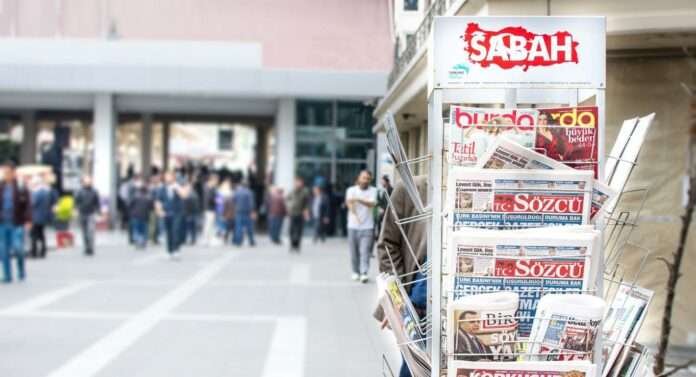

 By: Andrey Pertsev