

By Emil AvdalianiFebruary 1, 2021
BESA Center Perspectives Paper No. 1,910 February 1, 2021
EXECUTIVE SUMMARY: The Second Karabakh War changed the geopolitical landscape in the South Caucasus. Much has been written on Russia’s and Turkey’s gains, but Iran’s diminished position has gotten less attention. Though not involved in the military operations, Iran saw a steep decline in its geopolitical fortunes in the region as a result of the war.
In the wake of the Second Karabakh War, Iran now finds itself facing Turkey’s growing influence north of its border. Ankara gained a corridor through Armenian territory, potentially anchoring itself in the Caspian region. This will represent a major challenge for Iran, which (together with Russia) has viewed the Caspian region as within its sphere of influence.
Despite troublesome ties, Azerbaijan has served Iran as a transit country for the north-south transport corridor stretching from the Persian Gulf to the Baltic Sea. Increased Turkish economic influence, to say nothing of its enhanced military influence, will limit Iran’s ability to build closer ties with Baku.
Iran’s dilemma is also complicated by its wide-ranging interest in keeping good bilateral ties with Turkey. Ankara’s relationship with Tehran is complex and marked by periods of both collaboration and conflict over the Kurdish issue and in Syria.
In a way, the conclusion of the Karabakh war signals some positive trends for Tehran. The West failed to provide a diversified foreign policy toward the region, which allows an adaptation to the changing circumstances on the ground. The Western political retreat from the region suits Iran’s vision—but it also propels Turkey and Russia to fill the vacuum, which does not correspond to Iranian interests. Indeed, Ankara’s recent proposal to create a six-nation pact involving the South Caucasus states plus Russia, Turkey, and Iran is a sign of changing geopolitical trends that will not necessarily work in the Islamic regime’s favor.
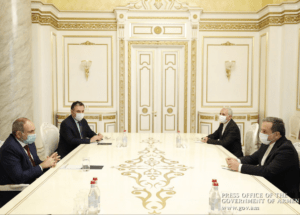
Iran’s unfavorable position was clearly visible on the diplomatic front. During the war, Seyed Abbas Araghchi, the regime’s deputy FM for political affairs, toured Baku, Moscow, Yerevan, and Ankara to help end the war. On November 4, Iran’s Supreme Leader Ayatollah Ali Khamenei stressed Iran’s support for the Araghchi peace plan, but with little result. Neither the belligerents nor Turkey or Russia expressed any interest in the plan.
The war also disrupted the equilibrium Tehran has been trying to uphold since the 1990s. The fear of a strong Azerbaijan and a weakened Armenia has been at the heart of Iran’s geopolitical vision—but the existing balance of power was no longer tenable, because the geopolitical landscape in the South Caucasus is no longer what it was at the time of the 1994 ceasefire. Turkish military and economic involvement in Azerbaijan has tipped the balance. Azerbaijan’s economic power, propelled by oil and gas revenues, also contributed to the changes. The status quo around Karabakh could no longer be sustained. The question for Iran was what could be done to secure its position.
In fact, Iran could do little to prevent the growth of Turkish influence. To keep Turkey at bay in the long run, Moscow (whose position largely dovetails with that of Ankara) and Tehran had to make sure Azerbaijan was rewarded for its military success with the return of lost territory. This could explain Iran’s changing rhetoric during the war. Over the course of the six weeks, Tehran sent four official representatives of the Supreme Leader to visit the north and stress that “Nagorno-Karabakh is part of Azerbaijan,” and that Baku has every right under Islamic law to seek to liberate occupied territory. On November 3, Khamenei said, “Azerbaijani lands occupied by Armenia should be liberated and returned to Azerbaijan.”
Beyond the Turkish factor, there is also the Russian factor. Some 2,000 Russian peacekeepers are now stationed in Nagorno-Karabakh. Their presence some 100 km from the Iranian border is another source of tension for Tehran, which will have to devote time, resources, and perhaps even troops to adjust to the new geopolitical reality.
This could mean a gradual elevation of the South Caucasus in Iranian foreign policy to almost the same level as other theaters, like, for instance, the Middle East. Iran’s policies toward the South Caucasus have been based more on geopolitical interests than on the ideological principles and rhetoric that permeate the Iranian leadership’s policies toward most of the Middle East. At times, a pragmatic realpolitik was mixed with elements of ideology, historical experience, and balance-of-power calculations, but overall this made the region less important for Iran’s calculus than other theaters of geopolitical tension.
It is still unclear what Azerbaijan’s victory will mean for Iran’s Azerbaijani minority. Complications for Tehran might ensue as ethnic Azerbaijanis living in Iran could be emboldened in their own nationalistic aspirations. The problematic ethnic situation was on display during the recent visit by Turkey’s president Recep Tayyip Erdoğan to Baku, which prompted Tehran to accuse Ankara of purposefully interfering in Iran’s internal affairs. (With that said, the potential threat of ethnic troubles is at times overstated by analysts. Pan-Turkic [pan-Azerbaijani] sentiments among the Azerbaijanis of Iran are effectively dealt with by the regime.)
A much larger potential problem for Iran is that Azerbaijan could be used as a jumping-off point for foreign powers to project influence into northern Iran. Beyond Turkey, Azerbaijan’s relations with the US have been of concern to Iran since before the 2020 war. Though Washington often criticizes Baku, the two countries’ interests converge on a number of issues. They work together to promote European energy security, expand trade and investment, and combat terrorism and transnational threats. Mercenaries from the American company Blackwater (now called Academi) trained Azerbaijan’s marines, and the US supplied vessels for the Azerbaijan navy.
A bigger fear for Tehran is the potential growth of Israeli influence—perhaps even a clandestine Israeli presence in Azerbaijan, as some western media sources have claimed. The Karabakh war showed how dependent Baku is on Israeli technology. In many ways this support was critical to its victory. Azerbaijan-Israel relations have advanced to such a level that reports have emerged about Baku trying to mediate tensions between Turkey and Israel. Baku and Jerusalem also share energy interests, and their mutual concerns about Iran are a powerful incentive. But it is unlikely that Baku will openly challenge Tehran’s interests. Clever diplomacy will be needed to navigate among Turkish, Israeli, and Iranian interests.
Iran is facing a new and different geopolitical configuration in the South Caucasus. It was left out of the negotiation process, and is witnessing a disruption of the balance of power in which Azerbaijan is much stronger and Armenia much weaker. Russia and Turkey managed to advance their military interests, and Iran now has to change its traditional calculus toward the region.
A large resource base will be needed if Iran is to halt the diminishment of its position and compete against the might of Russia, Turkey, and second-tier powers such as Israel. The prospects are not especially bright, as the Islamic Republic’s efforts to assert soft and economic power have often alienated the three South Caucasus states.
Emil Avdaliani teaches history and international relations at Tbilisi State University and Ilia State University. He has worked for various international consulting companies and currently publishes articles on military and political developments across the former Soviet space.

Emil Avdaliani specializes on former Soviet space and wider Eurasia with particular focus on Russia’s internal and foreign policy, relations with Iran, China, the EU and the US. He teaches history and international relations at Tbilisi State University and Ilia State University (Georgia). He has worked for various international consulting companies and regularly publishes various works with BESA on military and political developments across Eurasia. He can be reached at [email protected].

 Θανάσης Αργυράκης 01-02-2021









 της χώρας της, οι «Έλληνες άλλαξαν ξαφνικά προτεραιότητα. Ενώ διαπραγματευόμασταν για τις φρεγάτες, ξαφνικά μας ζήτησαν διαπραγματεύσεις για τα Rafale, πιεζόμενοι από τις τουρκικές απειλές». Αυτό είχε ως αναπόφευκτη αρνητική συνέπεια για κάποιες ελληνικές υπεργολαβικές επιχειρήσεις να μην μπορέσουν να συμμετάσχουν στην παραγωγή ορισμένων εξαρτημάτων (αξίας 600 εκατομ. ευρώ όπως οι ίδιοι υπολογίζουν) των εν λόγω αεριωθουμένων, εξ ου και η επιστολή διαμαρτυρίας που απέστειλε ο φορέας τους στον Έλληνα πρωθυπουργό, όπως διαβάσαμε πρόσφατα στον τύπο. Έτσι θετική επίπτωση στην ελληνική επιχειρηματικότητα, απασχόληση και συνδρομή στην ανάπτυξη εγχώριου αεροναυπηγικού κλάδου μάλλον δεν θα υπάρξει, λόγω της αγοράς των Rafale. Το ακριβώς αντίθετο θα συμβεί βέβαια στη Γαλλία, πέρα από τα 2,5 δις ευρώ που θα εισπράξει η χώρα. Ήτοι θα ενισχυθούν οι 3 κατασκευαστές των Rafale :
 αεροσκάφη της,

 του. «Ένας ρυθμός ενός Rafale τον μήνα, που αντιστοιχεί σε 7.000 θέσεις εργασίας, στη βιομηχανία της Dassault αλλά και σε περίπου 500 μικρομεσαίες που συνεργάζονται μαζί σας», υπενθύμισε η Florence Parly, αναφέρεται στο ρεπορτάζ του ηλεκτρονικού Le Monde και του Γαλλικού Πρακτορείου Ειδήσεων (AFP) στις 29-1-2021 με τίτλο : «Η Γαλλία παραγγέλνει 12 Rafale για να αντικαταστήσει εκείνα που πωλήθηκαν στην Ελλάδα» (La France commande 12 Rafale pour remplacer ceux vendus à la Grèce).
 τρόπος πληρωμής έχει ως εξής : 1,5 δις ευρώ για το 2021, 400 εκατομ. ευρώ ετησίως για το 2022 και 2023, 67 εκατομ. ευρώ το 2024 και 34 εκατομ. για το 2025, σύμφωνα με το σχετικό ρεπορτάζ της
 Για τον Διευθύνοντα Σύμβουλο της Dassault Aviation, Eric Trappier, «η εθνική παραγγελία σηματοδοτεί τη μακροπρόθεσμη δέσμευση των ενόπλων δυνάμεων υπέρ των αεροσκαφών μας και της δίνει πολύ ισχυρή αξιοπιστία στις εξαγωγές, οι οποίες με τη σειρά τους συμβάλλουν όλο και περισσότερο στη διατήρηση αυτής της δραστηριότητας». Το ποσό του προϋπολογισμού που δαπανήθηκε για αυτήν την αγορά δεν κοινοποιήθηκε. Θα χρηματοδοτηθεί κυρίως από τα έσοδα από την πώληση στην Αθήνα των 12 αεροπλάνων που θα αποσυρθούν από τον στόλο της Πολεμικής Αεροπορίας, τα οποία είναι «της τάξης των 400 εκατομμυρίων ευρώ», σύμφωνα με το γραφείο της υπουργού. Η τιμή ενός Rafale «πλήρως εξοπλισμένου είναι εκατό εκατομμύρια ευρώ», ανέφερε πρόσφατα ο Eric Trappier.
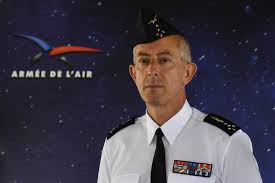
 ίδια τη Γαλλία] από την Dassault, δηλαδή το 2025», δήλωσε στην Agence France–Presse (AFP) ο αρχηγός της αεροπορίας και του διαστήματος, στρατηγός Philippe Lavigne. Τότε η πολεμική αεροπορία θα αριθμεί 129 Rafale και το ναυτικό 42.
