Αποκλίνουσες οι απόψεις αξιωματούχων της τράπεζας για τη νομισματική πολιτική.
ΤΖΑΝΑΣ ΡΑΝΤΟΟΥ, ΓΟΥΙΛΙΑΜ ΧΟΡΟΜΠΙΝ / BLOOMBERG
Η ενότητα της Ευρωπαϊκής Κεντρικής Τράπεζας με γνώμονα το μέγεθος των αυξήσεων στα επιτόκια κινδυνεύει να διαταραχθεί τους επόμενους μήνες. Οι αξιωματούχοι της έχουν αποκλίνουσες απόψεις σχετικά με τον αντίκτυπο που πιστεύουν ότι μπορεί να αντέξει η οικονομία υπό συνθήκες σοβαρής ενεργειακής κρίσης. Ακριβώς όπως η Ομοσπονδιακή Τράπεζα των ΗΠΑ παραμένει πλήρως επικεντρωμένη στην καταπολέμηση των αδάμαστων πληθωριστικών πιέσεων στη χώρα, έτσι και όσοι τάσσονται υπέρ μιας πολύ επιθετικής πολιτικής της ΕΚΤ εμφανίζονται εξίσου αποφασισμένοι να παρατείνουν την πιο δραστική νομισματική σύσφιγξη στην ιστορία της Ευρωζώνης έως το 2023. Οπερ σημαίνει πως οι αυξήσεις στο κόστος δανεισμού θα συμπληρωθούν με μια άμεση έναρξη της συρρίκνωσης ισολογισμού της ΕΚΤ, ύψους 8,8 τρισ. ευρώ. Εν τω μεταξύ, όλο και περισσότεροι συνάδελφοί τους και θιασώτες της ήπιας προσέγγισης ανησυχούν για τον αντίκτυπο μιας τέτοιας επιθετικότητας μετά τις μέχρι τώρα αυξήσεις των 125 μονάδων βάσης, υποδεικνύοντας πως υπάρχουν τριγμοί στην αποφασιστικότητα της ΕΚΤ. Και αυτό μπορεί να δυσχεραίνει ολοένα και περισσότερο τη συναίνεση, για την οποία επιμένει η πρόεδρος Κριστίν Λαγκάρντ. Μια τέτοια κρίση μπορεί κάλλιστα να αποκαλυφθεί, μόλις φθάσουν με τις αυξήσεις τους οι αξιωματούχοι σε ένα επίπεδο όπου το κόστος δανεισμού θεωρείται ότι έχει ουδέτερη επίδραση στην οικονομία, πιθανώς γύρω στον Δεκέμβριο.
«Πιθανότατα δεν θα σταματήσουμε να αυξάνουμε τα επιτόκια στα εν λόγω επίπεδα, αλλά θα εισέλθουμε σε μιαν άλλη φάση του ταξιδιού, όταν αυτό θα καταστεί πιο ευέλικτο και πιθανώς πιο αργό», δήλωσε ο διοικητής της Τράπεζας της Γαλλίας, Φρανσουά Βιλερουά ντε Γκαλό, σε ομιλία του στο Πανεπιστήμιο Κολούμπια στη Νέα Υόρκη την περασμένη εβδομάδα. Η αίσθηση πως η λήξη του 2022 συνιστά σημείο καμπής στη συζήτηση της ΕΚΤ, το οποίο εντόπισε ο Γάλλος, ο αυτοαποκαλούμενος πραγματιστής, ο οποίος απορρίπτει προσπάθεια να ενταχθεί στο ένα ή στο άλλο στρατόπεδο, αποτελεί κοινό θέμα προβληματισμού. Τα λεγόμενα «γεράκια», συμπεριλαμβανομένων του διοικητή της Τράπεζας της Ολλανδίας, Κλάας Κνοτ, και του Λετονού ομολόγου του Μάρτινς Κάζακς, εξέφρασαν παρόμοιες απόψεις, ενώ ορισμένοι συνάδελφοί τους φάνηκε να δείχνουν πως προτιμούν να συνεχιστούν οι ακόμη πιο δυναμικές κινήσεις. «Το διοικητικό συμβούλιο της ΕΚΤ δεν πρέπει να εγκαταλείψει πολύ σύντομα την προσπάθεια», τόνισε ο πρόεδρος της κεντρικής τράπεζας της Γερμανίας (Bundesbank), Γιοακίμ Νάγκελ, ενώ ο Σλοβάκος ομόλογός του Πέτερ Καζιμίρ υποστήριξε ότι «πρέπει να συνεχίσουμε να αντέχουμε». Αντίθετα, ο Ιταλός συνάδελφός τους Ιγνάσιο Βίσκο προειδοποίησε ότι το 2023 θα είναι «πολύ δύσκολο». Ο δε Πορτογάλος Μάριο Σεντένο υπογράμμισε ότι μπορεί να υπάρξει κόστος από την παράταση μιας τέτοιας επιθετικότητας σε περίοδο τεράστιας οικονομικής αβεβαιότητας. «Η χειρότερη περίπτωση για όλους μας είναι αν κάποια στιγμή χρειαστεί να παλινδρομήσουμε», είπε, εν κατακλείδι.
«Πρέπει να είμαστε πηγή σταθερότητας. Δεν μπορεί να θεωρηθούμε ότι δεν πάμε κάπου ή ότι κάποια στιγμή πρέπει να αναδιπλωθούμε».
Οι Ευρωπαίοι αξιωματούχοι στη σύνοδο ΔΝΤ – Παγκόσμιας Τράπεζας βρέθηκαν αντιμέτωποι με τις επιδεινούμενες προοπτικές για την οικονομία. Το ΔΝΤ αναθεώρησε προς τα κάτω τις εκτιμήσεις του για την ανάπτυξη της Ευρωζώνης το 2023 κατά περισσότερο από το ήμισυ, στο μόλις 0,5%. Στην περίπτωση δε της Γερμανίας και της Ιταλίας, θα υπάρξει ξεκάθαρη συρρίκνωση. Η πρόεδρος της ΕΚΤ, Κριστίν Λαγκάρντ, έχει δημοσίως δηλώσει ότι, παρά τη συναινετική εκτίμηση για το αντίθετο, η οικονομία της Ευρωζώνης δεν τελεί σε ύφεση. Ωστόσο, ο αντιπρόεδρος της Τράπεζας, Λουίς ντε Γκίντος, παραδέχθηκε πως είναι πιθανό σε μια τεχνική βάση να συμβεί κάτι τέτοιο.
Πριν από 50.000 χρόνια, σε ένα σπήλαιο της Σιβηρίας, ζούσε μια οικογένεια Νεάντερταλ, οι γυναίκες της οποίας μετακινούνταν περισσότερο από τους άνδρες: μια γενετική μελέτη που δόθηκε σήμερα στη δημοσιότητα δίνει το περίγραμμα της «κοινωνικής οργάνωσης» των μακρινών, εξαφανισμένων πλέον, εξαδέλφων του ανθρώπου.
Η αλληλούχιση του γονιδιώματος του Νεάντερταλ από τον Σουηδό Σβάντε Πάαμπο, που τιμήθηκε πρόσφατα με το Νόμπελ Ιατρικής, επέτρεψε να ιχνηλατηθεί η ιστορία αυτών των ανθρωπίδων που κατοικούσαν στη δυτική Ευρασία πριν από 430.000-40.000 χρόνια.
Χάρη στην αρχαιολογική έρευνα γνωρίζουμε σήμερα ότι ορισμένοι Νεάντερταλ έθαβαν τους νεκρούς τους, κατασκεύαζαν εργαλεία, ακόμη και στολίδια – καμία σχέση με την εικόνα των άξεστων πρωτόγονων που τους συνόδευε για χρόνια. Ξέρουμε όμως ελάχιστα για την κοινωνική δομή των ομάδων τους. Η γενετική αλληλούχιση μιας ολόκληρης ομάδας, η μεγαλύτερη που έχει γίνει ποτέ σε αυτούς τους ανθρωπίδες, δίνει μια μικρή εικόνα.
Η ιστορία διαδραματίζεται στη νότια Σιβηρία, στη Ρωσία, σε μια περιοχή πολύ γόνιμη σε ό,τι αφορά την έρευνα του αρχαίου DNA, αφού το κρύο βοηθά να συντηρηθούν τα εύθραυστα και πολύτιμα ίχνη του μακρινού παρελθόντος. Εκεί, στο ομώνυμο σπήλαιο, ανακαλύφθηκε το γονιδίωμα του ανθρώπου της Ντενίσοβα, ενός άλλου είδους εξαφανισμένου ανθρωπίδη, όπως υπενθυμίζει το Ινστιτούτο Εξελικτικής Ανθρωπολογίας Μαξ Πλανκ της Λειψίας, οι εργασίες του οποίου δημοσιεύονται στην επιστημονική επιθεώρηση Nature.
Σε απόσταση 100 χιλιομέτρων από εκεί βρίσκονται τα σπήλαια Σαγκίρσκαγια και Οκλαντνίκοφ, όπου ζούσαν οι Νεάντερταλ πριν από περίπου 54.000 χρόνια. Είχαν ήδη βρεθεί εκεί πολλά λείψανα, σε ένα και μόνο στρώμα εναπόθεσης, γεγονός που υποδήλωνε ότι οι «ένοικοι» των σπηλαίων έζησαν περίπου την ίδια περίοδο.
Πατέρας με κόρη, θεία κι ανιψιός
Για να το επαληθεύσουν οι επιστήμονες, έπρεπε να «μιλήσει» το DNA, μια εργασία εξαιρετικά λεπτή αφού δεν υπήρχαν ολόκληροι σκελετοί αλλά μόνο κάποια δόντια και διασκορπισμένα θραύσματα οστών.
«Αρχικά, έπρεπε να διαπιστώσουμε πόσα άτομα ήταν», εξήγησε στο Γαλλικό Πρακτορείο ο παλαιογενετιστής Στεφάν Πεϊρέν, ένας από τους βασικούς συγγραφείς της μελέτης. Η ομάδα του χρησιμοποίησε νέες τεχνικές με τις οποίες απομονώνεται και «συλλαμβάνεται» το αρχαίο, ανθρώπινο DNA, το οποίο συχνά μολύνεται από μικρόβια.
Ετυμηγορία: τα λείψανα ανήκαν σε 13 Νεάντερταλ, 7 άνδρες και 6 γυναίκες. Από αυτούς, οι 5 ήταν παιδιά και εφηβικής ηλικίας. Οι 11 βρέθηκαν όλοι στο σπήλαιο Σαγκίρσκαγια. Στο μιτοχονδριακό DNA, που μεταφέρεται από τη μητέρα, οι ερευνητές βρήκαν την ίδια γενετική παραλλαγή.
Τα γονίδια αποκάλυψαν επίσης τους στενούς συγγενικούς δεσμούς τους: ένας πατέρας και η έφηβη κόρη του, ένα νεαρό αγόρι και μια ενήλικη γυναίκα που μπορεί να ήταν εξαδέλφη, θεία ή γιαγιά του. Αποδείξεις ότι τα άτομα αυτά ανήκαν στην ίδια οικογένεια και έζησαν την ίδια περίοδο.
Χάρη στη γενετική «φτιάχνουμε μια συγκεκριμένη εικόνα του πώς μπορεί να ήταν μια κοινότητα Νεάντερταλ. Μου φαίνονται πολύ πιο ανθρώπινοι», σχολίασε ο Μπέντζαμιν Πέτερ, ο οποίος επέβλεπε τις έρευνες στο πλευρό του Σβάντε Πάαμπο.
Η εν λόγω ομάδα, που γενετικά ανήκει στους Νεάντερταλ της Δυτικής Ευρώπης, δεν είχε αναμιχθεί με άλλα είδη -τους Χόμο Σάπιενς ή τους Ντενίσοβαν- όπως άλλες ομάδες Νεάντερταλ, σε άλλες περιόδους.
Μια πατροτοπική κοινωνία
Η γενετική ποικιλομορφία των μελών της ομάδας ήταν ισχνή, ένδειξη της στενής συγγένειας εξ αίματος που είχαν μεταξύ τους αλλά και του γεγονότος ότι ζούσαν σε μικρές ομάδες 10-20 ατόμων – σημαντικά μικρότερες από εκείνες των Χόμο Σάπιενς.
Σύμφωνα με τον Στεφάν Πεϊρέν, οι ομάδες δεν ήταν εντελώς απομονωμένες μεταξύ τους. Χαρακτηριστικό είναι ότι οι γυναίκες είχαν την τάση να μετακινούνται από κοινότητα σε κοινότητα για να αναπαραχθούν ενώ οι άνδρες έμεναν στην αρχική φυλή τους. Αυτή η «πατροτοπική» λειτουργία της ομάδας, που ίσχυε επίσης και στους Σάπιενς, υποδηλώνεται από τη μικρότερη γενετική ποικιλομορφία των χρωμοσωμάτων Υ, που μεταφέρονται από τον πατέρα στο παιδί, σε αντίθεση με το μιτοχονδριακό DNA που προέρχεται αποκλειστικά από τη μητέρα.
Ο παλαιοανθρωπολόγος Αντουάν Μπαλζό, που δεν συμμετείχε σε αυτήν την μελέτη, υπενθύμισε ότι αυτού του είδους η κοινωνική οργάνωση είχε διαπιστωθεί και από την έρευνα των απολιθωμάτων στο σπήλαιο Ελ Σιντρόν της Ισπανίας, όμως το γενετικό υλικό σε εκείνη την περίπτωση δεν ήταν τόσο πλήρες.
Περισσότερο από το ήμισυ της αύξησης του παγκόσμιου πληθυσμού που προβλέπεται έως το 2050 θα συγκεντρωθεί σε μόλις οκτώ χώρες, κυρίως στην Αφρική, σύμφωνα με το The Economist: Κονγκό, Αίγυπτος, Αιθιοπία, Ινδία, Νιγηρία, Πακιστάν, Φιλιππίνες και Τανζανία. Η Νιγηρία θα έχει περισσότερους κατοίκους από την Ευρώπη και τις Ηνωμένες Πολιτείες. Στη φωτογραφία: Ισπανοί στρατιώτες και μέλη της Guardia Civil περιπολούν τον συνοριακό φράχτη του ισπανικού θύλακα της Θέουτα, στις 18 Μαΐου 2021, ενώ εκατοντάδες Αφρικανοί μετανάστες που επιδιώκουν να παραβιάσουν τα σύνορα στέκονται στην άλλη πλευρά, στο Μαρόκο. (Φωτό του Antonio Sempere/AFP via Getty Images)
Σε ολόκληρη την Ευρώπη θα γεννηθούν λιγότερα μωρά από ό,τι μόνο στη Νιγηρία.
Στην Ευρώπη, «με το ρυθμό που εξελίσσονται τα πράγματα, ο πληθυσμός θα έχει μειωθεί κατά το ήμισυ πριν από το 2070, και η ήπειρος κινδυνεύει να χάσει 400 εκατομμύρια κατοίκους μέχρι το 2100», σημείωσε ο Τζέιμς Πομερόι, οικονομολόγος στην κινεζική τράπεζα HSBC.
Η αύξηση του παγκόσμιου πληθυσμού έχει ήδη φτάσει στο χαμηλότερο ποσοστό από το 1950, και ο πληθυσμός της Ευρώπης θα συνεχίσει να συρρικνώνεται μέχρι το τέλος του αιώνα, σημείωσαν οι Financial Times, επικαλούμενοι την έκθεση των Ηνωμένων Εθνών για τις προοπτικές του παγκόσμιου πληθυσμού.
Ένα παράπλευρο ερώτημα είναι: πού;
Στα επόμενα τέσσερα λεπτά θα γεννηθούν 1000 παιδιά: 172 στην Ινδία, 103 στην Κίνα, 57 στη Νιγηρία, 47 στο Πακιστάν —αλλά μόνο 52 σε ολόκληρη την Ευρώπη.
Η Ινδία, τη χρονιά που έρχεται, αναμένεται να ξεπεράσει την Κίνα ως η πολυπληθέστερη χώρα του κόσμου. Η Ινδία θα είναι επίσης μουσουλμανική κατά το 20%, καθώς και η μεγαλύτερη ισλαμική κοινότητα στον κόσμο. Πώς θα επηρεάσει αυτή η δημογραφική τάση την εύθραυστη συνύπαρξη μεταξύ Μουσουλμάνων και Ινδουιστών;
Το 2021, ο πληθυσμός της Ευρώπης συρρικνώθηκε κατά 1,4 εκατομμύρια, σημείωσε δηλαδή τη μεγαλύτερη μείωση σε οποιαδήποτε ήπειρο από το 1950, όταν καταγράφηκαν για πρώτη φορά αυτοί οι δείκτες. Τα δύο τρίτα των ανθρώπων στον κόσμο ζουν σε μια χώρα όπου το ποσοστό γονιμότητας είναι χαμηλότερο από το ποσοστό αναπλήρωσης των 2,1 γεννήσεων ανά γυναίκα. Ο πληθυσμός της Κίνας προβλέπεται να μειωθεί κατά 6 εκατομμύρια ετησίως στα μέσα της δεκαετίας του 2040 και κατά 12 εκατομμύρια ετησίως μέχρι τα τέλη της δεκαετίας του 2050, γεγονός που αποτελεί τη μεγαλύτερη πτώση που έχει καταγραφεί ποτέ στην ιστορία μιας χώρας. Ο πληθυσμός της Κίνας θα μειωθεί κατά το ήμισυ τα επόμενα 45 χρόνια, καθιστώντας την, έτσι, μια πολύ γερασμένη χώρα: το ΑΕΠ της θα συρρικνωθεί όσο ποτέ πριν, και η κοινωνία θα πρέπει να διαχειριστεί έναν πληθυσμό που γερνάει, κατάσταση που δεν είχε αντιμετωπίσει ποτέ στο παρελθόν.
Η άνευ προηγουμένου γήρανση της Ιαπωνίας έχει τρομακτικό αντίκτυπο στον στρατό της. Από το 1994, ο αριθμός των νέων μεταξύ 18 και 26 ετών —ηλικία κατάταξης στο στρατό— μειώνεται. Μεταξύ 1994 και 2015, σημειώθηκε πτώση 11 εκατομμυρίων, ή 40%. «Η Ιαπωνία δεν έχει πλέον ανθρώπους για να πολεμήσουν», έγραψε το Forbes. Για πρώτη φορά, οι Ιάπωνες αγόρασαν περισσότερες πάνες για ενήλικες παρά για μωρά. Το ίδιο ισχύει και για τη Νότια Κορέα. «Η μείωση των γεννήσεων στη Νότια Κορέα έχει γίνει μια πρόκληση για την εθνική ασφάλεια», ανέφερε η Wall Street Journal το 2019.
«Λιγότεροι νέοι βρίσκονται σε ηλικία κατάταξης στο στρατό. Γι αυτό, οι αξιωματούχοι της Σεούλ είπαν ότι ο στρατός της Νότιας Κορέας θα συρρικνωθεί σε μισό εκατομμύριο μέχρι το 2022, από τις 600.000 που είναι συνολικά σήμερα».
«Η Ταϊβάν ζει από καιρό με την τρομακτική προοπτική μιας εισβολής από την Κίνα∙ ωστόσο, μια από τις μεγαλύτερες απειλές για την ασφάλειά της βρίσκεται στο εσωτερικό της: τα χαμηλότερα ποσοστά γεννήσεων στον κόσμο», σημείωσε η Telegraph. Η Ταϊβάν διεκδικεί σήμερα το χαμηλότερο ποσοστό γεννήσεων στον κόσμο. Μέχρι το 2050, θα έχει μόλις 20 εκατομμύρια κατοίκους, με τη μέση ηλικία τους να αυξάνεται στα 57 από 39 έτη που είναι σήμερα. Η Κίνα ίσως δεν θα χρειαστεί καν να εισβάλει σε αυτήν.
Η ίδια ύφεση αναμένεται και στην Ιταλία, όπου ο πληθυσμός θα μειωθεί κατά το ήμισυ σε 50 χρόνια. Φέτος, στην Ιταλία, 121.000 λιγότεροι μαθητές θα μπουν στο σχολείο από πέρυσι και 2.300 τάξεις θα εξαφανιστούν. Πέρυσι, υπήρχαν 100.000 λιγότεροι μαθητές και έκλεισαν 196 σχολεία. Το προηγούμενο έτος έκλεισαν 177 σχολεία και 124 το αμέσως προηγούμενο. Κάθε χρόνο η Ιταλία χάνει το 1-2% των μαθητών της. Από 7,4 εκατομμύρια μαθητές (τελευταία διαθέσιμα στοιχεία του 2021), ο αριθμός υποτίθεται ότι θα μειωθεί έως το 2034 στα 6 εκατομμύρια σε «κύματα» 110-120.000 λιγότερων μαθητών κάθε χρόνο. Τα τελευταία οκτώ χρόνια, σύμφωνα με στοιχεία που δημοσίευσε το υπουργείο, έκλεισαν 1.301 σχολεία, αντιπροσωπεύοντας το 13,3% από τα 9.769 σχολεία που εξακολουθούν να είναι ενεργά.
Αυτή η κρίση δεν αποτελεί πρόβλεψη, συμβαίνει αυτή τη στιγμή. Μέχρι το 2050, το 60% των Ιταλών δεν θα έχουν αδέρφια, αδερφές, ξαδέρφια, θείους ή θείες. Η ιταλική οικογένεια, με τον πατέρα να σερβίρει το κρασί και τη μητέρα τα ζυμαρικά σε ένα τραπέζι γεμάτο παππούδες, εγγόνια και δισέγγονα θα εξαφανιστεί, όπως οι δεινόσαυροι.
Η Υεμένη, από την άλλη, μια πτωχευμένη χώρα εν μέσω ενός τρομερού εμφυλίου πολέμου, θα παρουσιάσει αύξηση πληθυσμού διπλάσια από την Ιταλία.
Στη βορειοκεντρική αφρικανική περιοχή Σαχέλ, ο πληθυσμός αναμένεται να φθάσει τα 330 εκατομμύρια, επτά φορές τον πληθυσμό του 2000. Η Αίγυπτος θα φτάσει τα 190 εκατομμύρια. Η Αλγερία, από τα 42 εκατομμύρια σήμερα θα φτάσει στα 72 εκατομμύρια κατοίκους (οι περισσότεροι από τους οποίους πιθανότατα θα κατευθυνθούν προς την Ευρώπη). Το Μαρόκο θα αυξηθεί από 36 εκατομμύρια σε 43 εκατομμύρια.
Έτσι, η «γηραιά Ευρώπη» θα βρεθεί αντιμέτωπη με μια Βόρεια Αφρική 318 εκατομμυρίων κατοίκων, χωρίς να υπολογίζουμε αυτούς που κατοικούν κάτω από το τεράστιο υποσαχάρια οροπέδιο. Στη Γαλλία σήμερα, το 29,6% του πληθυσμού που ανήκουν στην ηλικιακή ομάδα 0-4 ετών είναι μη-ευρωπαϊκής καταγωγής, έναντι του 17,1% ηλικίας 18-24 ετών. Οι μη-Ευρωπαίοι αποτελούν επίσης το 18,8% ατόμων ηλικίας 40-44 ετών, το 7,6% ηλικίας 60-64 ετών και το 3,1% ατόμων άνω των 80 ετών, σύμφωνα με το Εθνικό Ινστιτούτο Στατιστικής, Insee. Το Ινστιτούτο εξέτασε επίσης πρόσφατα τις τρεις τελευταίες γενιές στη Γαλλία: το 16,2% όλων των παιδιών μεταξύ 0-4 ετών είναι παιδιά ή εγγόνια βορειοαφρικανικής καταγωγής. Το 7,3% είναι από την υπόλοιπη Αφρική και το 4% από την Ασία.
Το Ίδρυμα Ανοιχτής Κοινωνίας του Τζορτζ Σόρος, το οποίο παρέχει οικονομική υποστήριξη για τη μετανάστευση στις δυτικές χώρες, αποκάλυψε ήδη από το 2011 ότι στη Μασσαλία, τη δεύτερη μεγαλύτερη πόλη της Γαλλίας, «μεταξύ 30-40% του πληθυσμού είναι μουσουλμάνοι». Δεν είναι δύσκολο να υποθέσει κανείς ότι μέχρι τώρα, το συμβολικό όριο του 50% έχει ήδη ξεπεραστεί, ακόμα κι αν δεν υπάρχουν ακόμη επίσημες αναφορές. Το μηνιαίο Causeur δηλώνει ωμά: «Πολύ πάνω από το 50% του πληθυσμού της Μασσαλίας είναι Βορειοαφρικανοί και μαύροι Αφρικανοί».
Η Θέουτα και η Μελίγια, δύο ισπανικοί θύλακες στη μεσογειακή ακτή του Μαρόκου, αποτελούν το μόνο χερσαίο σύνορο μεταξύ της Ευρωπαϊκής Ένωσης και της Αφρικής. Στη Θέουτα, δύο παράλληλοι φράχτες ύψους έξι μέτρων καλυμμένοι με συρματόπλεγμα, εκτείνονται για οκτώ χιλιόμετρα κατά μήκος των συνόρων με το Μαρόκο. Στη Μελίγια, παρόμοιοι φράχτες διατρέχουν 12 χιλιόμετρα κατά μήκος των συνόρων. Δίχτυα, κάμερες, αισθητήρες θορύβου και κίνησης, προβολείς και θέσεις επιτήρησης βοηθούν στην παρακολούθησή του. Κάθε χρόνο, δεκάδες χιλιάδες μετανάστες, εκατοντάδες κάθε φορά, προσπαθούν να περάσουν τα φράγματα της Θέουτα και της Μελίγια. Σύμφωνα με την ισπανική εφημερίδα El Pais:
«Το 1887 υπήρχε μόνο ένας μουσουλμάνος εγγεγραμμένος στη Μελίγια, καταγόταν από την Καζαμπλάνκα και εργαζόταν ως υπηρέτης· σήμερα οι μουσουλμάνοι ξεπερνούν το 40% του πληθυσμού και πλησιάζουν την πλειοψηφία».
«Είμαστε ένα πρώτο παρατηρητήριο για το τι συμβαίνει σε άλλες πόλεις της Ευρώπης», δήλωσε ο Χεσούς Βίβας, πρόεδρος της Συνέλευσης της Θέουτα. Μια τοπική εφημερίδα ανέφερε:
«Μόνο στη Θέουτα, από τον Απρίλιο του 1960 μέχρι και σήμερα, το 49% του πληθυσμού είναι μουσουλμάνοι, ακόμα κι αν ο πραγματικός αριθμός είναι σημαντικά υψηλότερος. Θαύμα; Όχι, η ανικανότητα και η βλακεία της θυελλώδους διαδικασίας εθνικοποίησης ξεκίνησε μεταξύ του 1985 και 1990».
Σε 20-30 χρόνια, οι περισσότερες πόλεις της Ευρώπης θα μοιάζουν όπως η Θέουτα και η Μελίγια. Η Μελίγια είναι πλέον η πρώτη ισπανική πόλη που έχει ξεπεράσει το 50% του μουσουλμανικού πληθυσμού λόγω της μετανάστευσης, της οικογενειακής επανένωσης και του υψηλού ποσοστού γεννήσεων.
Αυτή η επέκταση είχε προβλεφθεί από τον Μπούτρος Μπούτρος-Γκάλι, τον πρώην γενικό γραμματέα του ΟΗΕ, ο οποίος ήταν Αιγύπτιος Κόπτης, και, στις 22 Μαΐου 2007, περιέγραψε την άποψή του για το μέλλον της Ευρώπης:
«Η άνευ προηγουμένου κατάρρευση του πληθυσμού της Ευρώπης και η επιταχυνόμενη γήρανσή της έρχονται σε αντίθεση με την πολύ ταχεία αύξηση του πληθυσμού στη νότια και ανατολική Μεσόγειο. Αυτό θα οδηγήσει σε πολύ οξείες ανισορροπίες! […] Η μετανάστευση χωρίς προφύλαξη κινδυνεύει να διαλύσει τις δυτικές κοινωνίες προκαλώντας πολύ σοβαρά προβλήματα (πολιτιστικό σοκ, νεο-αποικιακές δομές, ανεργία κ.λπ.)».
Το Πακιστάν θα γίνει ένα νέο καζάνι 403 εκατομμυρίων ανθρώπων, σχεδόν όσο ο πληθυσμός ολόκληρης της Ευρωπαϊκής Ένωσης (448 εκατομμύρια). Επίσης, η νεολαία θα πάει σε χώρες με κατάληξη –στάν που θα έχουν δημιουργηθεί ανά την Ευρώπη. Το Αφγανιστάν, μια από τις μεγαλύτερες γεωπολιτικές μαύρες τρύπες μετά την αποχώρηση των ΗΠΑ το περασμένο καλοκαίρι, θα διπλασιάσει τον πληθυσμό του φτάνοντας τα 64 εκατομμύρια.
Τι θα φτιάξει η Πολωνία για να κρατήσει έξω τις ανθρώπινες μάζες που θα πιέσουν στα εξωτερικά σύνορα της ΕΕ; Η Ανατολική Ευρώπη θα καταρρεύσει αποκτώντας μια τρομακτική εικόνα. Η Ρουμανία θα χάσει το 22% του πληθυσμού της, και θα ακολουθήσει η Μολδαβία (20%), η Λιθουανία (17%), η Κροατία (16%) και η Ουγγαρία (16%). Η Le Monde φωνάζει ότι σήμερα η κεντρική και ανατολική Ευρώπη «βρίσκονται αντιμέτωπες με την αγωνία της εξαφάνισης». Τα στοιχεία του ΟΗΕ είναι εντυπωσιακά:
«Η Βουλγαρία, η οποία έφτασε από 9 εκατομμύρια κατοίκους τη δεκαετία του 1990 σε 6,8 εκατομμύρια το 2022, θα μπορούσε να έχει μόνο 5,2 εκατομμύρια το 2050. Η Σερβία είχε 8 εκατομμύρια κατοίκους με την κατάρρευση του σιδηρού παραπετάσματος. Αυτή τη στιγμή έχει 7,2 εκατομμύρια και μπορεί να μειωθεί σε 5,8 εκατομμύρια σε τριάντα χρόνια. Την ίδια περίοδο, υπάρχει το ενδεχόμενο ο πληθυσμός της Λιθουανίας να πέσει κατακόρυφα από 3,8 εκατομμύρια σε 2,2 εκατομμύρια, ενώ της Λετονίας από 2,7 εκατομμύρια σε 1,4 εκατομμύρια».
Η Γερμανία όπως την ξέρουμε εξαφανίζεται, σύμφωνα με το Die Zeit: «22 εκατομμύρια άνθρωποι, ή περισσότερο από το ένα τέταρτο του πληθυσμού, είναι από άλλη χώρα ή έχουν γονείς γεννημένους εκτός Γερμανίας». Η Γερμανία είναι έτοιμη να γίνει μια «χώρα νόμιμης μετανάστευσης» αφού εδώ και πολύ καιρό υπήρξε de facto τέτοια χώρα —αλλά με σημαντικές πολιτικές και νομοθετικές τομές, σύμφωνα με τη Neue Zürcher Zeitung. Ο Κρίστιαν Ντόλεσαλ του κόμματος CSU κατήγγειλε το ανοιχτό σχέδιο μετανάστευσης της γερμανικής κυβέρνησης: «Αυτό θα καταστρέψει την Ευρώπη μακροπρόθεσμα», προειδοποίησε.
Ο διάσημος Γερμανός συγγραφέας Ούβε Τέλκαμπ επέκρινε επίσης τη μεταναστευτική πολιτική της χώρας του. «Παρόλο που σέβομαι τους άλλους πολιτισμούς, θα ήθελα να διατηρήσω τον δικό μου. Δεν θέλω να γίνω σαν τη Φρανκφούρτη», είπε στη Süddeutsche Zeitung, αναφερόμενος στη γερμανική πόλη, όπου η πλειοψηφία του πληθυσμού δεν αποτελείται πλέον από γηγενείς Γερμανούς. Στη Φρανκφούρτη, την πρώτη γερμανική πόλη όπου οι Γερμανοί έγιναν μειονότητα, το 15% του πληθυσμού είναι τουρκικής καταγωγής.
Ο δυτικός κόσμος έχει προσφέρει μεγαλύτερη ευημερία και άνεση σε περισσότερους πολίτες από οποιονδήποτε άλλο πολιτισμό στην ιστορία. Πρακτικά έχουμε κατακλυστεί από πόρους, αλλά ξεμένουμε από ανθρώπους, που αποτελούν τον μόνο πραγματικά απαραίτητο πόρο.
Η Ρωσία είναι το πιο προφανές παράδειγμα: είναι η μεγαλύτερη χώρα στη γη, είναι γεμάτη φυσικούς πόρους, ωστόσο πεθαίνει: ο πληθυσμός της μειώνεται καταστροφικά. Ο Βλαντιμίρ Πούτιν δεν θα είναι πλέον πρόεδρος της Ρωσίας όταν η χώρα του θα έχει χάσει περίπου 15 εκατομμύρια κατοίκους και το ένα τρίτο έως το μισό από αυτούς που θα απομείνουν θα είναι μουσουλμάνοι.
«Η Ρωσία φοβάται ότι θα εξαφανιστεί;» ήταν η ερώτηση που έκανε στην εβδομαδιαία εφημερίδα Le Point ο Μπρούνο Τερτρέ, ο λόγιος συγγραφέας του βιβλίου Le choc démographique (Το δημογραφικό σοκ) και αντιπρόεδρος του Ιδρύματος Στρατηγικών Ερευνών στο Παρίσι. «Πίσω από τη σύγκρουση με την Ουκρανία, κρύβεται η δημογραφική ανησυχία της Ρωσίας σχετικά με την αύξηση της μουσουλμανικής μετανάστευσης».
Ο Καμίλ Γκαλέεβ, ερευνητής στο Wilson Center που εδρεύει στην Ουάσιγκτον, δημοσίευσε πρόσφατα έναν χάρτη της Ρωσίας:
«Ας μιλήσουμε για τα ρωσικά δημογραφικά στοιχεία. Όπως μπορείτε να δείτε, τεράστιοι χώροι στη Σιβηρία και την ευρωπαϊκή Ρωσία ερημώνουν. Υπάρχουν δύο παράγοντες πίσω από αυτό. Πρώτον, η χαμηλή γεννητικότητα. Τα μόνα μέρη με φυσική ανάπτυξη είναι οι μουσουλμανικές περιοχές […].»
Το επίσημο ρωσικό ειδησεογραφικό πρακτορείο Pravda έθεσε το ίδιο ερώτημα: «Το Ισλάμ θα γίνει η κυρίαρχη θρησκεία της Ρωσίας έως το 2050;».
Ο Τζάνις Γκάρισονς, υπουργός Άμυνας της Λετονίας, μόλις ανέφερε στο Politico μεταξύ των πιθανών σεναρίων μετά την τελική πτώση του Πούτιν, «έναν εσωτερικό πόλεμο […] τη διάσπαση και τον κατακερματισμό της Ρωσίας, με θύλακες που ελέγχονται από πολιτοφυλακές και πολέμαρχους».
Σε αυτή την περίπτωση, το Ισλάμ θα έχει μια μοναδική ευκαιρία να εκπληρώσει το όνειρό του για ένα χαλιφάτο δημιουργώντας μια αδιάσπαστη αλυσίδα μουσουλμανικών οντοτήτων από το Πακιστάν και το Αφγανιστάν μέχρι τον Βόρειο Καύκασο και τον Βόλγα. Στο χειρότερο σενάριο, η κατάσταση θα μπορούσε να ξεφύγει από τον έλεγχο. Μετά την κατάρρευση της Σοβιετικής Ένωσης, τα όπλα μαζικής καταστροφής άρχισαν να εξαπλώνονται σε όλο τον κόσμο, θέτοντας απειλή για την ίδια την ανθρώπινη ύπαρξη. Κανείς δεν ξέρει τι θα συμβεί εάν ρωσικοί πύραυλοι και όπλα υψηλής τεχνολογίας πέσουν στα χέρια των «χαλίφηδων» ή των «εμίρηδων» των νέων ισλαμικών ρωσικών κρατών.
Μέχρι το 2050, περισσότερο από το ήμισυ της προβλεπόμενης αύξησης του παγκόσμιου πληθυσμού θα συγκεντρωθεί σε μόλις οκτώ χώρες, κυρίως στην Αφρική, σύμφωνα με το The Economist: Κονγκό, Αίγυπτος, Αιθιοπία, Ινδία, Νιγηρία, Πακιστάν, Φιλιππίνες και Τανζανία. Η Νιγηρία θα έχει περισσότερους κατοίκους από την Ευρώπη και τις Ηνωμένες Πολιτείες.
Επιπλέον, το Ισλάμ θα έχει ξεπεράσει τον Χριστιανισμό ως η μεγαλύτερη θρησκεία στον κόσμο. Ο ισλαμικός πληθυσμός της Ευρωπαϊκής Ένωσης, ανάλογα με τις μεταναστευτικές ροές, ενδεχομένως να φτάσει τα 75 εκατομμύρια μέσα σε μια γενιά —σαν μια ολόκληρη μουσουλμανική Γερμανία ή, αν προτιμά κανείς, σαν τη Δανία, την Αυστρία, την Ουγγαρία, την Ελλάδα, το Βέλγιο, την Ολλανδία, την Πορτογαλία και τη Σουηδία σε συνδυασμό. Αυτό ακούγεται καλύτερα;
«Δεν κατάφεραν να μας αλλάξουν. Εμείς θα τους αλλάξουμε», είπε ο Νορβηγός ιμάμης Μουλά Κρεκάρ στην εφημερίδα Dagbladet.
«Κοιτάξτε την ανάπτυξη του πληθυσμού στην Ευρώπη, όπου ο αριθμός των μουσουλμάνων αυξάνεται σαν τα κουνούπια. Κάθε γυναίκα της Δύσης στην ΕΕ γεννάει, κατά μέσο όρο, 1,4 παιδιά. Κάθε μουσουλμάνα στις ίδιες χώρες γεννάει 3,5 παιδιά. Μέχρι το 2050, το 30% του ευρωπαϊκού πληθυσμού θα είναι μουσουλμάνοι. […] Ο τρόπος σκέψης μας στο Ισλάμ έρχεται σε αντίθεση με τον δυτικό τρόπο σκέψης. Σήμερα, ο τρόπος σκέψης μας φαίνεται να είναι πιο δυνατός από τον δικό τους…».
Ήδη σήμερα, το Ισλάμ είναι η κορυφαία θρησκεία στις Βρυξέλλες.
«Η Γαλλία έχει κάνει συμφωνία με τους ισλαμιστές: στη Γαλλία κάποτε υπήρχαν 10 τζαμιά, σήμερα υπάρχουν 3.000 και η Αραβία και το Κατάρ χρηματοδοτούν τον εξισλαμισμό των προαστίων. Η γαλλική κυβέρνηση κατατροπώθηκε».
«Το Ισλάμ είναι μια αυξανόμενη κοινωνική δύναμη στη δεύτερη πόλη της Βρετανίας», γράφει ο τίτλος τού The Economist, αναφερόμενος στη δεύτερη μεγαλύτερη πόλη της Αγγλίας μετά το Λονδίνο, το Μπέρμιγχαμ, όπου ο μουεζίνης καλεί τους πιστούς σε προσευχή. Ένα μικρό πορτρέτο μιας κατακτημένης πόλης:
«Στα 200 τζαμιά της πόλης, οι μουσουλμάνοι έρχονται όχι μόνο για να προσευχηθούν, αλλά και για να αγοράσουν βιβλία, να λάβουν οδηγίες, να παντρευτούν, να χωρίσουν και να θάψουν τους νεκρούς τους. Κάθε χρόνο εκατοντάδες άνθρωποι πλησιάζουν το “συμβούλιο της Σαρία”, το οποίο διαχειρίζεται το οικογενειακό δίκαιο».
Όταν ξεκίνησε το ετήσιο Φεστιβάλ Eid του Μπέρμιγχαμ το 2012, το παρακολούθησαν 20.000 πιστοί. Το 2014 ήταν 40.000. Το 2015, 70.000. Το 2016, 90.000. Το 2017, 100.000. Το 2018, 140.000. Τότε, λόγω του Covid, σταμάτησαν όλες οι μεγάλες συγκεντρώσεις. Τώρα, όμως, ξαναρχίζουν.
Ο πληθυσμός του Μπέρμιγχαμ θα είναι σύντομα μουσουλμανικός κατά το ήμισυ. «Το 2018, οι μουσουλμάνοι στο Μπέρμιγχαμ ανήλθαν στο 27% του πληθυσμού», σημείωσε η Birmingham Mail. «Ο αριθμός των μουσουλμάνων αυξήθηκε από 21% που ήταν το 2011». Το Business Liveαποκάλυψε ότι ο αριθμός των μουσουλμάνων παιδιών στην πόλη έχει ξεπεράσει τον αριθμό των χριστιανών παιδιών:
«Εκτός από το Μπέρμιγχαμ, το Ισλάμ είναι τώρα η κυρίαρχη θρησκεία των παιδιών που κατοικούν στο Λέστερ, το Μπράντφορντ, το Λούτον, το Σλάου και στους δήμους του Λονδίνου, του Νιούχαμ, του Ρέντμπριτζ και του Τάουερ Χάμλετς».
Οι πρόσφατες συγκρούσεις μεταξύ Μουσουλμάνων και Ινδουιστών στο Λέστερ μεταφέρθηκαν τώρα σε άλλες βρετανικές πόλεις, συμπεριλαμβανομένου του Μπέρμιγχαμ, όπου ένας ινδουιστικός ναός δέχτηκε επίθεση με την ιαχή “Allahu Akbar” (Ο Αλλάχ είναι μεγάλος). Το δογματικό και θρησκευτικό μίσος «μπορεί να εξαπλωθεί σε ολόκληρη την Αγγλία». Οι συγκρούσεις μεταξύ Μουσουλμάνων και Ινδουιστών κατά τη γέννηση της Ινδίας και κατά τη διχοτόμηση με το Πακιστάν έχουν φτάσει πλέον στους πολυπολιτισμικούς θύλακες της Ευρώπης.
Σύμφωνα με τον Ούγγρο δημοσιογράφο Κάρολι Λοράν στην εφημερίδα Magyar Hirlap:
«Τα Ηνωμένα Έθνη υπολογίζουν ότι ο παγκόσμιος πληθυσμός θα φτάσει στο ανώτατο όριο των 11 δισεκατομμυρίων ανθρώπων το 2100, δηλαδή τρία δισεκατομμύρια περισσότερα από σήμερα. Η αύξηση θα προέλθει από την υποσαχάρια περιοχή. Ο ασιατικός πληθυσμός θα αλλάξει ελάχιστα. Ο πληθυσμός της βόρειας Αμερικής θα αυξηθεί κατά 120 εκατομμύρια, ενώ της Ευρωπαϊκής Ένωσης θα μειωθεί κατά 60 εκατομμύρια, λόγω της Πολωνίας, της Γερμανίας, της Ιταλίας και της Ισπανίας. Αν δεν καταφέρουμε να αλλάξουμε το ποσοστό των γεννήσεων της τάξης του 1,5 που χαρακτηρίζει την Ευρωπαϊκή Ένωση και παραμείνει η σημερινή μετανάστευση του 1 εκατομμυρίου ανθρώπων ετησίως, μέχρι το τέλος του αιώνα το ποσοστό του μουσουλμανικού πληθυσμού θα αγγίξει το 40% κατά μέσο όρο. Ορισμένες δυτικοευρωπαϊκές χώρες θα έχουν ήδη μουσουλμανική πλειοψηφία. Αν θέλουμε να αντικαταστήσουμε τον πτωτικό πληθυσμό με μετανάστες, θα χρειαστούμε 1,5 εκατ. μετανάστες το χρόνο και, μέχρι το τέλος του αιώνα, το 60% του πληθυσμού της Ευρωπαϊκής Ένωσης θα είναι μουσουλμάνοι».
Φαντασιωνόμαστε ότι η μετανάστευση με αυτόν τον ρυθμό θα μπορέσει να ενσωματωθεί ευχάριστα στις κοινωνίες υποδοχής και ότι οι μετανάστες θα γίνουν σαν εμάς; Ελπίζουμε ότι σύντομα οι Ευρωπαίοι θα αρχίσουν να κάνουν περισσότερα παιδιά όπως παλιά; Τι γίνεται αν κάνουμε λάθος και αυτές οι προβλέψεις γίνουν πραγματικότητα; Έχουμε παραιτηθεί από την εξαφάνιση του πολιτισμού μας;
Το 1996, ο Σάμουελ Χάντινγκτον έγραψε στο The Clash of Civilizations:
«Η ισορροπία δυνάμεων μεταξύ των διαφόρων πολιτισμών αλλάζει: η επιρροή της Δύσης μειώνεται, οι ασιατικοί πολιτισμοί αυξάνουν την οικονομική, στρατιωτική και πολιτική ισχύ τους· ο ισλαμικός κόσμος βιώνει μια δημογραφική έκρηξη με αποσταθεροποιητικές συνέπειες για τις μουσουλμανικές χώρες και τους γείτονές τους. Οι μη-δυτικοί πολιτισμοί γενικά επιβεβαιώνουν την αξία των δικών τους πολιτισμών».
«Τι αφήνεις πίσω σου;», αναρωτήθηκε ο Βρετανός πρωθυπουργός Τόνι Μπλερ.
Τα δημογραφικά στοιχεία, ανόητε.
«Ισχυρά δημογραφικά στοιχεία σημαίνουν ισχυρή εξουσία», συνοψίζει ο Νίκολας Έμπερσταντ, ο Αμερικανός πολιτικός οικονομολόγος στο Foreign Affairs. Όταν καταρρέουν τα δημογραφικά στοιχεία, καταρρέει και η εξουσία…
Ο Giulio Meotti, πολιτιστικός συντάκτης στην εφημερίδα Il Foglio, είναι ιταλός δημοσιογράφος και συγγραφέας
Όπως όλοι γνωρίζουμε, αυτήν την χρονική περίοδο και μέχρι το τέλος του 2022 συζητούνται στα κοινοβούλια των διαφόρων χωρών, όπως και της Γαλλίας, ένα από τα σημαντικότερα νομοσχέδια, δηλαδή ο προϋπολογισμός του 2023, χωρίς την έγκριση του οποίου ένα Κράτος δεν θα μπορεί να κάνει τις αναγκαίες πληρωμές του για τον επόμενο χρόνο, αναγκάζεται να εφαρμόσει τα περίφημα «δωδεκατημόρια» ή και να παραλύει… Ιδιαίτερα όταν μέσα στον γενικό προϋπολογισμό, συμπεριλαμβάνεται κι ο προϋπολογισμός της Κοινωνικής Ασφάλισης.
Όπως όλοι γνωρίζουμε επίσης, στις τελευταίες γαλλικές εκλογές του 2022 οι Γάλλοι ψηφοφόροι ξαναέδωσαν μεν την Προεδρία στον Εμμανιουέλ Μακρόν για άλλα 5 χρόνια, στέρησαν όμως από το συμμαχικό του σχήμα την απόλυτη πλειοψηφία στην γαλλική Εθνοσυνέλευση. Τουτέστιν, όταν τα κόμματα της αντιπολίτευσης συνασπίζονται εναντίον του, ένα νομοσχέδιο, όπως π.χ. ο προϋπολογισμός του 2023, δεν μπορεί να περάσει, εκτός κι αν η κυβέρνηση κάνει χρήση του άρθρου του ισχύοντος γαλλικού Συντάγματος 49.3. Κάτι που μάλλον θα κάνει σήμερα Τετάρτη 19-10-2022, τελευταία ημέρα εξέτασης του πρώτου μέρους του προϋπολογισμού του 2023.
Τι προβλέπει το άρθρο 49 παράγραφος 3 του γαλλικού Συντάγματος ;
Το άρθρο 49 παράγραφος 3 του Συντάγματος είναι μια Δαμόκλειος Σπάθη στη διάθεση της εκάστοτε κυβέρνησης έναντι της Εθνοσυνέλευσης. Περιλαμβάνεται στον ΚεφάλαιοV του Συντάγματος, υπό τον τίτλο «Σχέσεις Εθνοσυνέλευσης και Κυβέρνησης».
Έγκριση Νομοσχεδίου χωρίς ψηφοφορία ενάντια της πρότασης δυσπιστίας
Ιδού τι αναφέρει το άρθρο 49.3 : «Ο Πρωθυπουργός μπορεί, μετά από απόφαση από το Υπουργικό Συμβούλιο, να αναλάβει την ευθύνη της κυβέρνησης ενώπιον της Εθνοσυνέλευσης για την ψήφιση νομοσχεδίου για τα οικονομικά ή τη χρηματοδότηση της κοινωνικής ασφάλισης. Στην περίπτωση αυτή, το νομοσχέδιο αυτό θεωρείται εγκεκριμένο, εκτός αν ψηφιστεί μια πρόταση δυσπιστίας, που έχει κατατεθεί εντός του επόμενου εικοσιτετράωρου, με τις προϋποθέσεις που προβλέπονται στην προηγούμενη παράγραφο. Ο Πρωθυπουργός μπορεί, επιπλέον, να χρησιμοποιήσει τη διαδικασία αυτή και για άλλο νομοσχέδιο ή πρόταση νόμου ανά συνεδρία».
Συγκεκριμένα, πώς γίνεται αυτό στην πράξη ; Εναπόκειται στον Πρωθυπουργό να ενεργοποιήσει το 49.3. Κάτι που μάλλον θα κάνει σήμερα η Πρωθυπουργός Ελιζαμπέτ Μπορν. Οπότε η συζήτηση στην Εθνοσυνέλευση ενός νομοσχεδίου (εν προκειμένω του προϋπολογισμού του 2023) αναστέλλεται αμέσως. Με αυτό το εργαλείο, η κυβέρνηση αναλαμβάνει την ευθύνη της για ένα νομοσχέδιο, το οποίο εγκρίνεται χωρίς ψηφοφορία.
Όμωςσε αυτήν την περίπτωση, ηΕθνοσυνέλευσημπορείνααπαντήσειεγκρίνονταςμιαπρότασημομφής. Αυτή θα πρέπει να κατατεθεί εντός 24 ωρών από τη χρήση του 49.3 και να υπογραφεί από τουλάχιστον το ένα δέκατο των βουλευτών (δηλαδή 58 βουλευτές). Στη συνέχεια, πρέπει να εγκριθεί το επόμενο διήμερο, από τουλάχιστον 289 βουλευτές (που δεν διαθέτει σήμερα η αντιπολίτευση στο σύνολό της). Καταμετρώνται μόνο οι ψήφοι «υπέρ» της πρότασης δυσπιστίας. Εάν εγκριθεί η πρόταση δυσπιστίας, τότε ο Πρωθυπουργός υποχρεούται να υποβάλει την παραίτηση της κυβέρνησής του. Αλλά στην πραγματικότητα, αυτό το σενάριο δεν συνέβη ποτέ μέχρι τώρα.
Το άρθρο 49.3 χρησιμοποιήθηκε 87 φορές
Ιστορικά, αυτό το άρθρο έχει χρησιμοποιηθεί από τις κυβερνήσεις για:
Νακυβερνούν παρά την εύθραυστη πλειοψηφίατους στην Εθνοσυνέλευση.
Να επιταχύνουν την εξέταση ενός βαλτωμένου νομοσχεδίου και να αντιμετωπίζουν την παρεμπόδιση της αντιπολίτευσης.
Νααποφεύγουνμιαεσωκομματικήαντιπολίτευση που τις κάνει τη ζωή δύσκολη.
Η σχετική ιδέα των Γάλλων πατέρων του Συντάγματος ήταν νααποφεύγονταιοιαδιάκοπεςυπουργικέςκρίσειςπουείχανπαραλύσειτηνΤέταρτηγαλλικήΔημοκρατία (σήμεραβρισκόμαστεστην 5η). «Η πείρα οδήγησε στην πρόβλεψη, επιπλέον, μιας κάπως εξαιρετικής διάταξης για να εξασφαλιστεί, παρά τους ελιγμούς, η ψήφιση ενός απαραίτητου κειμένου», εξήγησε ο MichelDebré τον Αύγουστο του 1958 ενώπιον του Συμβουλίου της Επικρατείας.
Αλλά στη συνέχεια, αυτήηδιάταξηθεωρήθηκεωςυπερεξουσίαγιατηνκυβέρνησησεσχέσημετηνομοθετικήεξουσία. Το 2006, ο τότε πρώτος γραμματέας του Σοσιαλιστικού Κόμματος, Φρανσουά Ολάντ δήλωσε: «Το 49.3 είναι μια βαρβαρότητα. Το 49.3 είναι άρνηση της δημοκρατίας. Η συνταγματική μεταρρύθμιση του 2008 περιόρισε έτσι τη χρήση του 49.3 : σήμερα μπορεί να χρησιμοποιηθεί μόνο για ένα νομοσχέδιο ανά κοινοβουλευτική περίοδο, εξαιρουμένων των οικονομικών νομοσχεδίων ή των λογαριασμών χρηματοδότησης κοινωνικής ασφάλισης.
Από το 1958, το άρθρο 49.3 έχει χρησιμοποιηθεί 87 φορές, σύμφωνα με την καταμέτρηση του ιστότοπου Vie Publique. Το ρεκόρ χρήσης του κατέχει ο MichelRocard, ο οποίος είχε μόνο σχετική πλειοψηφία στην Εθνοσυνέλευση (όπως σήμερα και η Ελιζαμπέτ Μπορν) και το χρησιμοποίησε 28 φορές από το 1988 έως το 1991. Η τελευταία χρήση χρονολογείται από τον Φεβρουάριο του 2020, όταν ο ÉdouardPhilippe το ενεργοποίησε για να περάσει τη συνταξιοδοτική του μεταρρύθμιση. Ένα νομοσχέδιο που τελικά εγκαταλείφθηκε λόγω της υγειονομικής κρίσης.
Άλλη μια πολιτική κρίση λοιπόν στην Ευρώπη ;
Ίσως. Ίσως και όχι.
Θα το δούμε σύντομα.
ΥΓ: Στις 10μμ σήμερα το κανάλι της γαλλικής Εθνοσυνέλευσης μετέδωσε ότι η Πρωθυπουργός, Ελιζαμπέτ Μπόρν, ανακοίνωσε ότι προσφεύγει στο εν λόγω άρθρο για να εγκριθεί ο προϋπολογισμός του 2023. Όπως πιθανολογούσαμε στο σχετικό άρθρο παραπάνω.
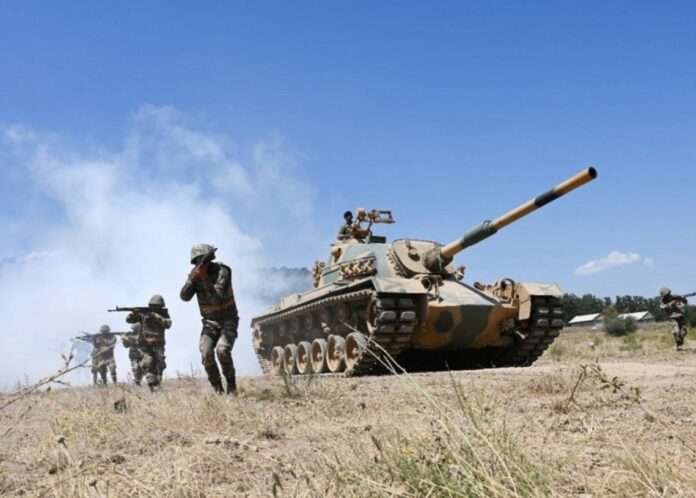
Turkish army tank and troops seen in a military exercise in August 2022.
Abdullah Bozkurt/Stockholm
The Turkish military’s main combat arm, the Land Forces (Kara Kuvvetleri), will have a hard time finding combat-ready troops to deploy in the event of a war and lacks much-needed military hardware to accomplish its mission.
A confidential Turkish military report obtained by Nordic Monitor revealed that military commanders are concerned about the deteriorating capabilities of the Land Forces, proposing remedies to address the problems that hamper the forces’ operational and logistical capabilities.
“We are having a hard time finding a combat-ready armored/mechanized brigade that we can send into battle. So our top priority as the Land Forces should be to find a solution to our need for combat troops,” the report warned.
The report anticipated that the Land Forces may be called on to deploy, albeit in a limited engagement, and project power along the border with Greece as well as during a conflict between Azerbaijan and Armenia. It predicted that instability in Syria and Iraq would continue and that some troops may be committed to creating a buffer zone there.
It also noted that NATO may further weigh in on Russia and demand that Turkey commit forces at various levels against the Russian threat, while the army may be asked to provide training programs for more foreign countries.
Considering that the demand to use land troops would likely increase in the future in the projected security outlook, the Land Forces must be able to modernize itself quickly to address shortages and solve problems to be able to accomplish such tasks, the report underlined.
It also sounded alarm bells over the lack of sophisticated military systems such as air missile defense units, precision guided and target acquirement systems and long range cruise missiles.
According to the report, the Land Forces is dealt a further blow with a lack of adequate manpower.
Turkish military report that details problems within the Land Forces:
“There is one fact that we can’t change. Conscripted soldiers do not meet the military needs of the Land Forces. It does not seem possible for this situation to change in the near, medium and long term,” the report said, adding, “On the contrary, the societal trends in the last twenty years, the shortening of the [obligatory] military service, which was done with political motives outside the involvement of the TAF [Turkish Armed Forces], and [introduction of] practices such as paid military service have worsened this outlook further.”
A significant part of the Land Forces is already committed to war-like engagements stemming from guarding the borders and the fight against terrorist groups, it noted. This hampers the army’s plans for restructuring and ties a significant number of troops to border patrol and counterterrorism operations.
It suggested that such tasks can be shifted to border police and law enforcement agencies such as the gendarmerie to free up troops for the Land Forces. Yet it warned that if such a shift were approved, the existing troops that were already committed to the fight against terrorism of deployed for border duty would most likely stay in their new units, thereby depriving the Land Forces of the manpower it needs.
The report admitted to the failure to complete the restructuring of troops in the Land Forces that was launched a decade ago, resulting in uncertainty among units and preventing needed investment in personnel and equipment. Small problems became huge issues when units that were the subject of debate for dissolution or restructuring hesitated to invest further to avoid waste.
Turkish Land Forces Air Defense Brigade in a military drill in October 2022.
The report proposed the overhaul of the 35 brigades the Land Forces has in addition to one stationed in the north of Cyprus. According to the proposal, 15 of these brigades – five commando brigades, four light armored brigades and six armored mechanized brigades — would be designed to be combat-ready at the highest level. They would be composed entirely of professional soldiers.
The commando brigades stationed in Bolu, Kayseri, Tunceli, Siirt and Hakkari were selected as targets in the report.
Another group of 15 brigades – four motorized and 11 armored mechanized units – would have the capability to be war-ready within one to three months. They would be manned by conscripts led by professional soldiers.
The rest of the brigades – five units — would be restructured to be mobilization brigades set to be ready for combat within three to six months. They would also be manned by conscripts.
The mobilization brigades would also serve as training hubs for foreign military personnel and help establish or restructure armies for countries such as Somalia and Libya that have requested assistance from Turkey. The report estimated that more countries would seek similar help from Turkey in the future, putting more strain on the Land Forces.
Turkish soldier is seen controlling an air defense unit during a military drill in June 2022.
According to the report, the idea of downsizing in the army with enhanced effectiveness and professional capabilities did not really work out the way the planners anticipated. Instead, manpower was reduced without boosting the effectiveness of Land Forces units.
There is no date on the report, but it is believed to be from around 2015 since it mentions that some of the proposed changes would be submitted to the Supreme Military Council meeting in the summer of 2015. It was drafted at the Land Forces Command level.
It is not clear how many changes have been made to the Land Forces since then, but the report provided a close look at the thinking in the Land Forces, which launched reforms with the idea of converting itself into a professional army in the 1990s.
Some of the projections for the security outlook in the report were realized. The Turkish army was deployed in Syria to create a buffer zone and expanded its presence in Iraq, while a limited military engagement in Libya during the civil war and the Caucasus during the Azerbaijani-Armenia conflict took place.
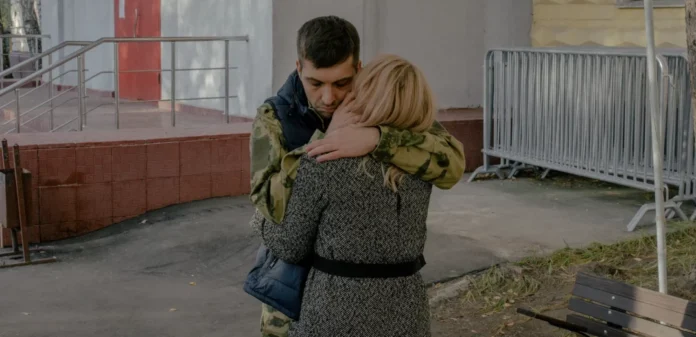
Τα απογεύματα της Παρασκευής στο Chop-Chop Barbershop, το πιο δημοφιλές κουρείο της ρωσικής πρωτεύουσας πριν μερικούς μήνες περίμεναν ουρές αντρών για να περιποιηθούν την κόμη τους. Την περασμένη εβδομάδα, όμως, μόνο μία καρέκλα ήταν κατειλημμένη.
«Συνήθως θα ήμασταν γεμάτοι τέτοια ώρα, αλλά περίπου οι μισοί πελάτες μας έχουν φύγει από τη χώρα», λέει στους New York Times, η Όλια, η υπεύθυνη του κομμωτηρίου.
Πολλοί από τους πελάτες μαζί με τους μισούς κουρείς επίσης- έχουν εγκαταλείψει τη Ρωσία για να αποφύγουν την απόφαση του Βλαντιμίρ Πούτιν να επιστρατεύσει εκατοντάδες χιλιάδες άνδρες στον πόλεμό του εναντίον της Ουκρανίας.
Πολλοί άνδρες μένουν στο σπίτι από φόβο μήπως τους παραδοθεί το έγγραφο της επιστράτευσης. Καθώς η Όλια έφτασε στη δουλειά την περασμένη Παρασκευή είδε τις αρχές σε κάθε μία από τις τέσσερις εξόδους του σταθμού του μετρό, να ελέγχουν έγγραφα. Ο σύντροφός της, ο οποίος ήταν κουρέας στο κομμωτήριο, έχει επίσης τραπεί σε φυγή και ο χωρισμός είναι βαρύς.
«Κάθε μέρα είναι δύσκολη», εξομολογείται εκείνη στην αμερικανική εφημερίδα και όπως και άλλες γυναίκες που αποτέλεσαν πηγές του ρεπορτάζ, δεν ήθελε να χρησιμοποιηθεί το επίθετό της, φοβούμενη τιμωρία. «Μου είναι δύσκολο να ξέρω τι να κάνω. Πάντα σχεδιάζαμε ως ζευγάρι».
Δεν είναι η μόνη. Ενώ υπάρχουν ακόμη πολλοί άνδρες σε μια πόλη 12 εκατομμυρίων κατοίκων, σε όλη την πρωτεύουσα η παρουσία τους έχει μειωθεί αισθητά -σε εστιατόρια, καφέ, στην κοινότητα των hipster και σε κοινωνικές συγκεντρώσεις όπως δείπνα και πάρτι.
Αυτό ισχύει ιδιαίτερα για τη διανόηση της πόλης, η οποία συχνά έχει διαθέσιμο εισόδημα και διαβατήρια για ταξίδια στο εξωτερικό.
Αρκετοί άντρες έφυγαν όταν ξέσπασε ο πόλεμος, αηδιασμένοι από την απόφαση του Πούτιν. Άλλοι που αντιτίθενται στο Κρεμλίνο ανοιχτά τράπηκαν σε φυγή επειδή φοβούνταν τη φυλάκιση ή την καταπίεση.
Αλλά η πλειοψηφία των ανδρών που έφυγαν τις τελευταίες εβδομάδες είτε κλήθηκαν να υπηρετήσουν στο στρατό, είτε ήθελαν να αποφύγουν το στρατό είτε ανησυχούσαν ότι η Ρωσία μπορεί να κλείσει τα σύνορα εάν ο κ. Πούτιν κήρυξε στρατιωτικό νόμο.
Κανείς δεν ξέρει ακριβώς πόσοι άνδρες έχουν αναχωρήσει από τότε που ο Πούτιν ανακοίνωσε αυτό που ονόμασε «μερική κινητοποίησή του». Αλλά εκατοντάδες χιλιάδες άνδρες έχουν φύγει. Ο Πούτιν δήλωσε την περασμένη εβδομάδα πως έστειλε στο μέτωπο περίπου 200.000 επίστρατους. Άλλοι τόσοι τουλάχιστον το έσκασαν για το γειτονικό Καζακστάν, στο οποίο οι Ρώσοι μπορούν να εισέλθουν χωρίς διαβατήριο. Δεκάδες χιλιάδες άλλοι έχουν καταφύγει στη Γεωργία, την Αρμενία, το Αζερμπαϊτζάν, το Ισραήλ, την Αργεντινή και τη Δυτική Ευρώπη.
«Νιώθω σαν να είμαστε μια χώρα γυναικών τώρα», είπε στους Τάιμς της Νέας Υόρκης η Στανισλάβα, μία 33χρονη φωτογράφος που σε ένα πάρτι γενεθλίων που πήγε πρόσφατα ήταν μόνο γυναίκες. «Έψαχνα για άντρες φίλους για να με βοηθήσουν να μετακινήσω κάποια έπιπλα και συνειδητοποίησα ότι σχεδόν όλοι είχαν φύγει».
Πολλές παντρεμένες γυναίκες παραμένουν στη Μόσχα, παρότι οι σύζυγοί τους είτε έγιναν πρόσφυγες είτε κατατάχθηκαν στο στρατό. «Οι φίλες μου και εγώ συναντιόμαστε για κρασί, μιλάμε και υποστηρίζουμε ο ένας τον άλλον, για να νιώσουμε ότι δεν είμαστε μόνοι», είπε η Λίζα, της οποίας ο σύζυγος, δικηγόρος μιας μεγάλης πολυεθνικής εταιρείας, έλαβε προ-ειδοποίηση αρκετές ημέρες πριν ο Πούτιν ανακοινώσει την επιστράτευση.
Παράτησε τη δουλειά του και διέφυγε σε μια χώρα της Δυτικής Ευρώπης, αλλά η Λίζα, 43 ετών, έμεινε πίσω επειδή η κόρη τους πηγαίνει σχολείο και όλοι οι παππούδες της είναι στη Ρωσία. Οι γυναίκες των οποίων οι σύζυγοι επιλέχθηκαν ως επίστρατοι υποφέρουν επίσης από μοναξιά, αλλά αυτό επισκιάζεται από τον φόβο ότι ο σύζυγός τους μπορεί να μην επιζήσει…
«Αυτοί οι άντρες είναι σαν παιχνίδια στα χέρια των παιδιών», είπε η 27χρονη Εκατερίνα, την ώρα που ο 25χρονος σύζυγός της, Βλαντιμίρ μάζευε τα πράγματά του στο διπλανό δωμάτιο για να φύγει για ένα στρατόπεδο εκπαίδευσης έξω από τη Μόσχα. «Είναι απλώς τροφή για τα κανόνια», λέει, δείχνοντας πως και οι ίδιοι οι Ρώσοι υποφέρουν από την τυραννία του “τσάρου”.
Δοκιμή βαλλιστικού πυραύλου, ενώ ο Καλίν επανήλθε για αποστρατιωτικοποίηση νησιών
Σε δοκιμαστική εκτόξευση βαλλιστικού πυραύλου με την ονομασία «Τayfun» προχώρησε η Αγκυρα σύμφωνα με τουρκικά ΜΜΕ, ενώ ο εκπρόσωπος της τουρκικής προεδρίας Ιμπραήμ Καλίν επέμεινε στις απειλές κατά της Ελλάδας, καθώς ζήτησε την απόσυρση όλων των στρατιωτικών δυνάμεων από τα νησιά, υποστηρίζοντας πως σε αντίθετη περίπτωση θα υπάρξουν συνέπειες.
ΚΩΝΣΤΑΝΤΙΝΟΥΠΟΛΗ – ΑΝΤΑΠΟΚΡΙΣΗ. Η Τουρκία πραγματοποίησε δοκιμαστική εκτόξευση βαλλιστικού πυραύλου μικρού βεληνεκούς πάνω από τη Μαύρη Θάλασσα, προκαλώντας την έκπληξη των στρατιωτικών αναλυτών για τις προθέσεις της Αγκυρας, ενώ ο εκπρόσωπος της τουρκικής προεδρίας Ιμπραήμ Καλίν ζήτησε την απόσυρση όλων των στρατιωτικών δυνάμεων από τα ελληνικά νησιά και απείλησε πως σε αντίθετη περίπτωση θα υπάρξουν συνέπειες.
Για την εκτόξευση του πυραύλου, που έχει την ονομασία «Τayfun», χρησιμοποιήθηκε μια κινητή πλατφόρμα κοντά στο λιμάνι της Ριζούντας, σύμφωνα με τα τουρκικά μέσα ενημέρωσης CNN Turk και A Haber. Η τουρκική αμυντική βιομηχανία η οποία επιβλέπει τα συγκεκριμένα οπλικά συστήματα δεν έκανε καμία ανακοίνωση για την εκτόξευση, ωστόσο τουρκικά πρακτορεία ειδήσεων μετέδωσαν σχετικές εικόνες. Το 2019, η Τουρκία παρέλαβε το ρωσικό αντιαεροπορικό σύστημα S-400. Λίγους μήνες μετά πραγματοποίησε δοκιμαστική βολή στις ακτές της Μαύρης Θάλασσας και τότε οι τουρκικές αρχές δεν είχαν κάνει καμία επίσημη ανακοίνωση, όμως τα τουρκικά μέσα ενημέρωσης είχαν μεταδώσει τις ειδήσεις και τις σχετικές εικόνες.
Εν τω μεταξύ, ο κ. Καλίν έθεσε το ζήτημα της αποστρατιωτικοποίησης των νησιών του Αιγαίου και απείλησε την Ελλάδα δηλώνοντας ότι «η αποστρατιωτικοποίηση των νησιών είναι ένα θέμα. Είναι αντίθετη με τις συνθήκες η αποστολή στρατιωτικού εξοπλισμού, συσκευών, εξοπλισμού κ.λπ. στα αποστρατιωτικοποιημένα νησιά. Το λέμε εδώ και χρόνια. Οποιαδήποτε άλλη ενέργεια εκτός από αυτό θα έχει συνέπεια. Το λέμε ανοιχτά στην ελληνική πλευρά. “Εχετε κάνει αυτά τα βήματα, αλλά δεν θα μείνουν χωρίς ανταπόδοση”».
Ο εκπρόσωπος της τουρκικής προεδρίας Ιμπραήμ Καλίν κατηγόρησε την Ελλάδα ότι είναι η πηγή της έντασης στο Αιγαίο. [A.P. Photo/Emrah Gurel]
Ο σύμβουλος του Τούρκου προέδρου δήλωσε πως «είναι αντίθετη με τις συνθήκες η αποστολή εξοπλισμού» στα νησιά και προειδοποίησε με «συνέπειες», ενώ υποστήριξε πως συζήτησε το θέμα με τον Τζέικ Σάλιβαν.
Ο εκπρόσωπος της τουρκικής προεδρίας, στη συνέντευξή του στο τηλεοπτικό δίκτυο A Haber, υποστήριξε πως στη συνομιλία του με τον σύμβουλο εθνικής ασφαλείας Τζέικ Σάλιβαν του είπε πως η Ελλάδα στρατιωτικοποιεί τα νησιά με αμερικανικά όπλα και πρόσθεσε ότι «το είπα και στη συνάντησή μας στην Κωνσταντινούπολη και στην τετ α τετ συνάντησή μας ότι προειδοποιήστε την ελληνική πλευρά. Μην επιτρέπετε να σας χρησιμοποιήσουν». Το είπαμε ξεκάθαρα αυτό. Είπαν επίσης ότι θα κάνουν βήματα. Οτι δεν είναι εμπλεκόμενο μέρος εκεί, ότι δεν είναι υπέρ της έντασης κ.λπ.».
Αυτό που προκάλεσε ιδιαίτερη εντύπωση είναι πως ο κ. Καλίν για τη μείωση της έντασης έθεσε ως όρο την ολική αποστρατιωτικοποίηση των ελληνικών νησιών. «Πηγή της έντασης είναι η ελληνική πλευρά. Η πλευρά που πρέπει να λάβει μέτρα για τη μείωση της έντασης είναι η ελληνική πλευρά. Για παράδειγμα, τα όπλα, τον εξοπλισμό, τα στρατεύματα, την αστυνομία, τις δυνάμεις ασφαλείας που έστειλαν σε αυτά τα αποστρατιωτικοποιημένα νησιά κ.λπ. Ας ξεκινήσουν με την απόσυρση αυτών», δήλωσε χαρακτηριστικά.
O υπουργός Αμυνας της Τουρκίας Χουλουσί Ακάρ σε δηλώσεις του στους Τούρκους δημοσιογράφους υποστήριξε πως «τα προβλήματα στο Αιγαίο μπορούν να επιλυθούν μέσω αμοιβαίων διαπραγματεύσεων. Ολοι πρέπει να γνωρίζουν ότι δεν θα επιτρέψουμε ένα τετελεσμένο γεγονός». Ο κ. Ακάρ εξέφρασε την επιθυμία του «δίκαιου διαμοιρασμού κάθε πλούτου».
Τα χαρακτηριστικά του «Tayfun»
Η επιτυχής δοκιμή βαλλιστικού πυραύλου εδάφους-επιφανείας μικρού βεληνεκούς με την ονομασία «Tayfun» σε πεδίο βολής στη Μαύρη Θάλασσα αποτελεί το τελευταίο δείγμα οπλικού συστήματος, που η τουρκική βιομηχανία «Roketsan» κατορθώνει να ολοκληρώσει και να θέσει στη διάθεση των τουρκικών ενόπλων δυνάμεων (ΤΕΔ). Με βάση τα στοιχεία που δόθηκαν από το Bloomberg, ο πύραυλος εκτοξεύθηκε από το αεροδρόμιο της Ριζούντας (γενέτειρα του Ρετζέπ Ταγίπ Ερντογάν στον Πόντο) και διήνυσε περίπου 560 χιλιόμετρα προτού βρει τον στόχο του στα ανοιχτά της Σινώπης. Ενας τέτοιος πύραυλος αποτελεί προφανή απειλή για τις υποδομές που διαθέτουν οι ελληνικές Ενοπλες Δυνάμεις, καθώς σχεδόν το σύνολο της εθνικής επικράτειας βρίσκεται εντός αυτής της εμβέλειας. Ο «Tayfun» είναι το τρίτο σε σειρά πυραυλικό σύστημα που κατασκευάζεται από τη «Roketsan». Τα τελευταία χρόνια (από το 2018 και έπειτα) ο ενδιάμεσης εμβέλειας «Bora» (280 χλμ.) έχει ήδη χρησιμοποιηθεί στη βόρεια Συρία. Και οι δύο έχουν αναπτυχθεί πάνω στην πλατφόρμα των J600 Yildirim (το πρώτο πυραυλικό σύστημα), με εμβέλεια περί τα 130 χιλιόμετρα, που χρησιμοποιούνται από τις ΤΕΔ ήδη από το 1998.
Over the past decade, global politics has been heavily shaped by apparently strong states whose leaders are not constrained by law or constitutional checks and balances. Russia and China both have argued that liberal democracy is in long-term decline, and that their brand of muscular authoritarian government is able to act decisively and get things done while their democratic rivals debate, dither, and fail to deliver on their promises. These two countries were the vanguard of a broader authoritarian wave that turned back democratic gains across the globe, from Myanmar to Tunisia to Hungary to El Salvador. Over the past year, though, it has become evident that there are key weaknesses at the core of these strong states.
The weaknesses are of two sorts. First, the concentration of power in the hands of a single leader at the top all but guarantees low-quality decision making, and over time will produce truly catastrophic consequences. Second, the absence of public discussion and debate in “strong” states, and of any mechanism of accountability, means that the leader’s support is shallow, and can erode at a moment’s notice.
Supporters of liberal democracy must not give in to a fatalism that tacitly accepts the Russian-Chinese line that such democracies are in inevitable decline. The long-term progress of modern institutions is neither linear nor automatic. Over the years, we have seen huge setbacks to the progress of liberal and democratic institutions, with the rise of fascism and communism in the 1930s, or the military coups and oil crises of the 1960s and ’70s. And yet, liberal democracy has endured and come back repeatedly, because the alternatives are so bad. People across varied cultures do not like living under dictatorship, and they value their individual freedom. No authoritarian government presents a society that is, in the long term, more attractive than liberal democracy, and could therefore be considered the goal or endpoint of historical progress. The millions of people voting with their feet—leaving poor, corrupt, or violent countries for life not in Russia, China, or Iran but in the liberal, democratic West—amply demonstrate this.
The philosopher Hegel coined the phrase the end of history to refer to the liberal state’s rise out of the French Revolution as the goal or direction toward which historical progress was trending. For many decades after that, Marxists would borrow from Hegel and assert that the true end of history would be a communist utopia. When I wrote an article in 1989 and a book in 1992 with this phrase in the title, I noted that the Marxist version was clearly wrong and that there didn’t seem to be a higher alternative to liberal democracy. We’ve seen frightening reversals to the progress of liberal democracy over the past 15 years, but setbacks do not mean that the underlying narrative is wrong. None of the proffered alternatives look like they’re doing any better.
The weaknesses of strong states have been on glaring display in Russia. President Vladimir Putin is the sole decision maker; even the former Soviet Union had a politburo where the party secretary had to vet policy ideas. We saw images of Putin sitting at the end of a long table with his defense and foreign ministers because of his fear of COVID; he was so isolated that he had no idea how strong Ukrainian national identity had become in recent years or how fierce a resistance his invasion would provoke. He similarly got no word of how deeply corruption and incompetence had taken root within his own military, how abysmally the modern weapons he had developed were working, or how poorly trained his own officer corps was.
The shallowness of his regime’s support was made evident by the rush to the borders of young Russian men when he announced his “partial” mobilization on September 21. Some 700,000 Russians have left for Georgia, Kazakhstan, Finland, and any other country that would take them, a far greater number than has actually been mobilized. Those who have been caught up by the conscription are being thrown directly into battle without adequate training or equipment, and are already showing up on the front as POWs or casualties. Putin’s legitimacy was based on a social contract that promised citizens stability and a modicum of prosperity in return for political passivity, but the regime has broken that deal and is feeling the consequences.
Putin’s bad decision making and shallow support have produced one of the biggest strategic blunders in living memory. Far from demonstrating its greatness and recovering its empire, Russia has become a global object of ridicule, and will endure further humiliations at the hands of Ukraine in the coming weeks. The entire Russian military position in the south of Ukraine is likely to collapse, and the Ukrainians have a real chance of liberating the Crimean Peninsula for the first time since 2014. These reversals have triggered a huge amount of finger-pointing in Moscow; the Kremlin is cracking down even harder on dissent. Whether Putin himself will be able to survive a Russian military defeat is an open question.
Something similar, if a bit less dramatic, has been going on in China. One of the hallmarks of Chinese authoritarianism in the period between Deng Xiaoping’s reforms in 1978 and Xi Jinping’s accession to power in 2013 was the degree to which it was institutionalized. Institutions mean that rulers have to follow rules and cannot do whatever they please. The Chinese Communist Party imposed many rules on itself: mandatory retirement ages for party cadres, strict meritocratic standards for recruitment and promotion, and above all a 10-year term limit for the party’s most-senior leadership. Deng Xiaoping established a system of collective leadership precisely to avoid the dominance of a single obsessive leader like Mao Zedong.
Much of this has been dismantled under Xi Jinping, who will receive the blessing of his party to remain on as paramount leader for a third five-year term at the 20th Party Congress. In place of collective leadership, China has moved to a personalistic system in which no other senior official can come close to challenging Xi.
This concentration of authority in one man has in turn led to poor decision making. The party has intervened in the economy, hobbling the tech sector by going after stars such as Alibaba and Tencent; forced Chinese farmers to plant money-losing staples in pursuit of agricultural self-sufficiency; and insisted on a zero-COVID strategy that keeps important parts of China under continuing lockdowns that have shaved points off of the country’s economic growth. China cannot easily reverse zero-COVID, because it has failed to buy effective vaccines and finds a large part of its elderly population vulnerable to the disease. What looked two years ago like a triumphant success in controlling COVID has turned into a prolonged debacle.
All of this comes on top of the failure of China’s underlying growth model, which relied on heavy state investment in real estate to keep the economy humming. Basic economics suggests this would lead to massive misallocation of resources, as has in fact happened. Go online and search for Chinese buildings being blown up, and you will see many videos of massive housing complexes being dynamited because there is no one to buy apartments in them.
These authoritarian failures are not limited to China. Iran has been rocked by weeks of protests following the death of Mahsa Amini at the hands of the morality police. Iran is in terrible shape: It faces a banking crisis, is running out of water, has seen big declines in agriculture, and is grappling with crippling international sanctions and isolation. Despite its pariah status, it has a well-educated population, in which women constitute a majority of university graduates. And yet the regime is led by a small group of old men with social attitudes several generations out of date. It is no wonder that the regime is now facing its greatest test of legitimacy. The only country that qualifies as even more poorly managed is one with another dictatorship, Venezuela, which has produced the world’s largest outflux of refugees over the past decade.
Celebrations of the rise of strong states and the decline of liberal democracy are thus very premature. Liberal democracy, precisely because it distributes power and relies on consent of the governed, is in much better shape globally than many people think. Despite recent gains by populist parties in Sweden and Italy, most countries in Europe still enjoy a strong degree of social consensus.
The big question mark remains, unfortunately, the United States. Some 30 to 35 percent of its voters continue to believe the false narrative that the 2020 presidential election was stolen, and the Republican Party has been taken over by Donald Trump’s MAGA followers, who are doing their best to put election deniers in positions of power around the country. This group does not represent a majority of the country but is likely to regain control of at least the House of Representatives this November, and possibly the presidency in 2024. The party’s putative leader, Trump, has fallen deeper and deeper into a conspiracy-fueled madness in which he believes that he could be immediately reinstated as president and that the country should criminally indict his presidential predecessors, including one who is already dead.
There is an intimate connection between the success of strong states abroad and populist politics at home. Politicians such as Marine Le Pen and Éric Zemmour in France, Viktor Orbán in Hungary, Matteo Salvini in Italy, and of course Trump in the U.S. have all expressed sympathy for Putin. They see in him a model for the kind of strongman rule they would like to exercise in their own country. He, in turn, is hoping that their rise will weaken Western support for Ukraine and save his flailing “special military operation.”
Liberal democracy will not make a comeback unless people are willing to struggle on its behalf. The problem is that many who grow up living in peaceful, prosperous liberal democracies begin to take their form of government for granted. Because they have never experienced an actual tyranny, they imagine that the democratically elected governments under which they live are themselves evil dictatorships conniving to take away their rights, whether that is the European Union or the administration in Washington. But reality has intervened. The Russian invasion of Ukraine constitutes a real dictatorship trying to crush a genuinely free society with rockets and tanks, and may serve to remind the current generation of what is at stake. By resisting Russian imperialism, the Ukrainians are demonstrating the grievous weaknesses that exist at the core of an apparently strong state. They understand the true value of freedom, and are fighting a larger battle on our behalf, a battle that all of us need to join.
Francis Fukuyama is the Olivier Nomellini Senior Fellow at Stanford University’s Freeman Spogli Institute for International Studies.
This is an edition of The Atlantic Daily, a newsletter that guides you through the biggest stories of the day, helps you discover new ideas, and recommends the best in culture. Sign up for it here.
Millennials are seeing their version of the internet slip away and even be dismissed as “cringe.” Kaitlyn Tiffany and I discuss the GIF, the Millennial pause, and how Gen Z has changed the way we communicate online.
But first, here are three new stories from The Atlantic.
Smug and Silly?
Kate Lindsay: Your recent article, “The GIF Is on Its Deathbed,” really resonated online. What are GIFs, and what is their significance to the internet?
Kaitlyn Tiffany: The GIF was one of the earliest file formats of the internet (it’s an acronym for “graphics interchange format”), and it took off in the days of CompuServe, AOL, and then the Netscape browser. The first heyday for GIFs was on the early personal webpages of GeoCities, but people were still wallpapering their MySpace pages with GIFs when I was in middle school, about a decade later. The animated GIF is the one that became famous, but technically GIFs don’t have to be animated—it’s just one of the interesting possibilities of a format that is flexible enough to take many different extensions.
Kate: You write that Gen Z finds GIFs “cringe.” Why is that?
Kaitlyn: Gen Z specifically finds reaction GIFs cringe-y—they claim that it’s because reaction GIFs are associated with Millennials, but I don’t really believe in intergenerational warfare. I think the problem is more that most of the good reaction GIFs have gotten way overused because they’ve become way too accessible. If you’re looking to convey a specific emotion in a tweet or in a text or in a Slack message, the GIF-search feature or Giphy integration that’s part of all of these apps now will pull up the same handful of super-popular GIFs over and over. (The Slack ones are just the worst, because they also replay over and over in the window until the conversation moves on for long enough to push them up and out.) You just don’t see a lot of creativity, and it comes off as very lazy.
Before all of those search functions, even five years ago, people were pretty invested in grabbing interesting moments from different things and appropriating them into funny or smart contexts. Now that we’ve lost that, I think using a GIF can come off as smug and silly. (I’ve written about this before, specifically in reference to the “How do you do, fellow kids?” GIF, which is almost physically repulsive to me.)
Kate: I recently wrote about “the Millennial pause,” which, like the decline of GIFs, is a sign that the Millennial era of social media, defined by Facebook and Instagram, is ending. Do you see any other harbingers of that?
Kaitlyn: The weirdest thing about Facebook, to me, is that Millennials are really the only generation that made it central to their adolescence or their college experience. My youngest sister never made an account as far as I know. Although she is heavily into Instagram and is better at the “photo dump” than anyone my age. If there’s a really notable difference between the two generations for me, I would say that Gen Z has a more reflexive and natural-seeming relationship with social media that is actually defined a lot less by anxiety about its role in their lives. Not to say that they don’t have the same incentives to perform or experience nightmarish outcomes from having their whole social circle exist online, but more that it feels like a natural part of growing up to them. Because why wouldn’t it?
My sisters got very annoyed with me when I suggested they join BeReal [an app for sharing personal photos that brands itself as a more transparent alternative to Instagram]. I think that idea was cringe to them—that anyone would really be feeling so freaked out by the facade of Instagram that they would need a separate app to help them get away from it.
Kate: What does the new social-media era look like? Is there a Gen Z equivalent to GIFs?
Kaitlyn: To generalize, I think Gen Z is just more video-first! On Twitter, especially, I see them react to things with super-short video clips that, when it comes down to it, are effectively GIFs with sound. I guess the image quality tends to be better and they don’t have those embarrassing watermarks on them that show up when you make a GIF using a free GIF maker, so that makes them slightly less “cringe.” But otherwise it’s basically the same thing, just funnier. I think because of [the short-form video apps] Vine and then TikTok, people who spend a lot of time on social media got really good at comedic timing.
Kate: Popular platforms such as Twitter and Tumblr have started converting and compressing GIFs to MP4 files because they’re smaller, which GIF artists dislike for many reasons. Do you think total GIF extinction is imminent?
Kaitlyn: This is why I thought the GIF story would be fun to write—there’s all this talk about whether GIFs will fall out of use because they are embarrassing or not en vogue. But people seemed to be referring to “GIFs” as the general concept of a short, recurring animation, not as a file format. The latter is what’s really under threat because it actually is outdated in a physical, technical, tangible sense. In the story, I spoke with an artist who will continue using them forever because of some particularities of the GIF, so I don’t think it will die completely. But I can imagine the GIF, in a few years, being sort of the die-hard digital artist’s tool, and for reasons that only buffs can grasp. You know, like Quentin Tarantino buying up all that Kodak film.
In recent weeks, Russian President Vladimir Putin has said the United States is trying to impose a new world order, one designed to control Russia, China and Europe, as well as the lesser powers of the world. It’s tempting to write it off as the ranting of a leader at war, but there’s more to it than that. Ignore the fact that Washington’s seeking a unipolar world assumes a level of planning that runs counter to the American reality. What Putin is trying to come to terms with is that in planning for war in Ukraine, Moscow completely misunderstood the nature of the world.
Specifically, Russia misunderstood American subtlety. The United States did not commit major military force to block Russia’s advance, nor did it cede any part of Ukraine. The United States understood the threat posed by Russia on the border with NATO – that is, a new Cold War – and it understood Ukraine better than Russia did. So it sent massive amounts of weapons to Ukraine, the power and sophistication of which could not be matched. It struck blow after indirect blow.
Moscow also failed to understand America’s relationship with Europe. Time and again, Europeans bemoaned that Washington had abandoned its European commitments. That that was never the case didn’t stop U.S. think tanks from validating the idea, nor did it dissuade Russia from believing it. In times of peace, the U.S. could do without the prior relationship with Europe, bickering over trade rules and Russian energy dependence. But when the war broke out, the relationship rapidly transformed. Germany, for example, did not value Russian fuel as much as it valued American security guarantees. The Europeans knew that Russia could hurt them, and they did not really trust the Russians, but when push came to shove, they knew American interests lay in Europe. Putin, I think, was stunned when he learned the Germans stood with the Americans. He lacked a sophisticated understanding that there are different types of power and that the power projected by Russia was too blunt to work. Putin could not understand the power of appearing uncertain.
Still, the worst mistake Putin made concerns the U.S. relationship with China, a country in deep economic crisis. Moscow could neither hurt nor help China. The U.S. can do both – help by increasing investment and buying more goods, and hurt by blocking the sale of, say, certain microchips. China believed it did not need the United States to recover, and it convinced itself that Washington could be intimidated by naval and related power. Instead, Beijing discovered that its threats around Taiwan and other areas simply generated more vessels and weapons to be deployed against it. The utility of an alliance with Russia was shattered by the realization that the U.S. could respond militarily in Ukraine and, simultaneously, in the South China Sea.
All of this should have been obvious, and I think China was more aware of U.S. capabilities than Russia was. Chinese President Xi Jinping knew when to cut his losses. Putin kept doubling down. This seemed to be validated over the weekend by a spokesman for the 20th National Congress of the Communist Party of China, whose statements were paraphrased by China’s Global Times newspaper as follows:
“If one of the most important events in international relations in the past 50 years is the restoration and development of China-U.S. relations, which has benefited both countries and the world, then the most important thing in international relations for the next 50 years is that China and the U.S. must find the right way to get along with each other. The key for China and the U.S. to find the right way to get on with each other is mutual respect, peaceful coexistence and win-win cooperation proposed by General Secretary Xi Jinping. Common interests between China and the U.S. far outweigh differences, and a sound and stable China-U.S. relationship serves the common interests of the two peoples.”
We are used to China hurling threats at the United States. Now, it is searching for ways to accommodate the U.S. It has noted the American performance in Ukraine, both subtle and brutal, and has decided that an alliance with the U.S., however loosely defined or temporary, is far more attractive.
It’s no surprise, then, that Putin sees the U.S. as a force trying to create a unipolar world, because in some notable ways, it is a unipolar world. The U.S. is the largest economy in the world, its current problems notwithstanding. It also has a sophisticated military, able to bring overwhelming force to bear, train an army at war in new weapons, and use subtle force to shape the world. American power isn’t absolute, and it can be outstripped. But it is sufficiently mobile to act sequentially when simultaneous action is impossible. Put simply, the United States is the most powerful economic and military force in the world – when it chooses to act. Inaction can be confused by men like Putin as weakness. The U.S. has learned that with its inherent power it has time to react.
The American public often sees the United States as weak and mismanaged. There’s a tendency to label Joe Biden, Donald Trump, Barack Obama, Bill Clinton and George W. Bush as criminals or morons or both. The same charges were levied against Andrew Jackson, Abraham Lincoln and Franklin Roosevelt. Contempt for the commanders-in-chief is a prerequisite, to prevent tyranny, even if it has its drawbacks. The America First movement opposing U.S. participation in World War II interfered with Roosevelt’s ability to make decisions. It had a direct impact on Pearl Harbor and caused a painful initiation for the U.S. into war by the Japanese, which of course ended in catastrophe for them.
The perception of American weakness is a global one, shared even among Americans. Being underestimated has its uses, as does sporting a public that doesn’t trust its president. But only enormously powerful nations can afford the contempt. The past few months haven’t taught us that the United States is finagling a new world order. It’s taught us that Russia is weakening, that China is managing its relationship with the U.S. carefully, and that the international architecture created after World War II, though more complex, essentially remains in place. It is a unipolar world.
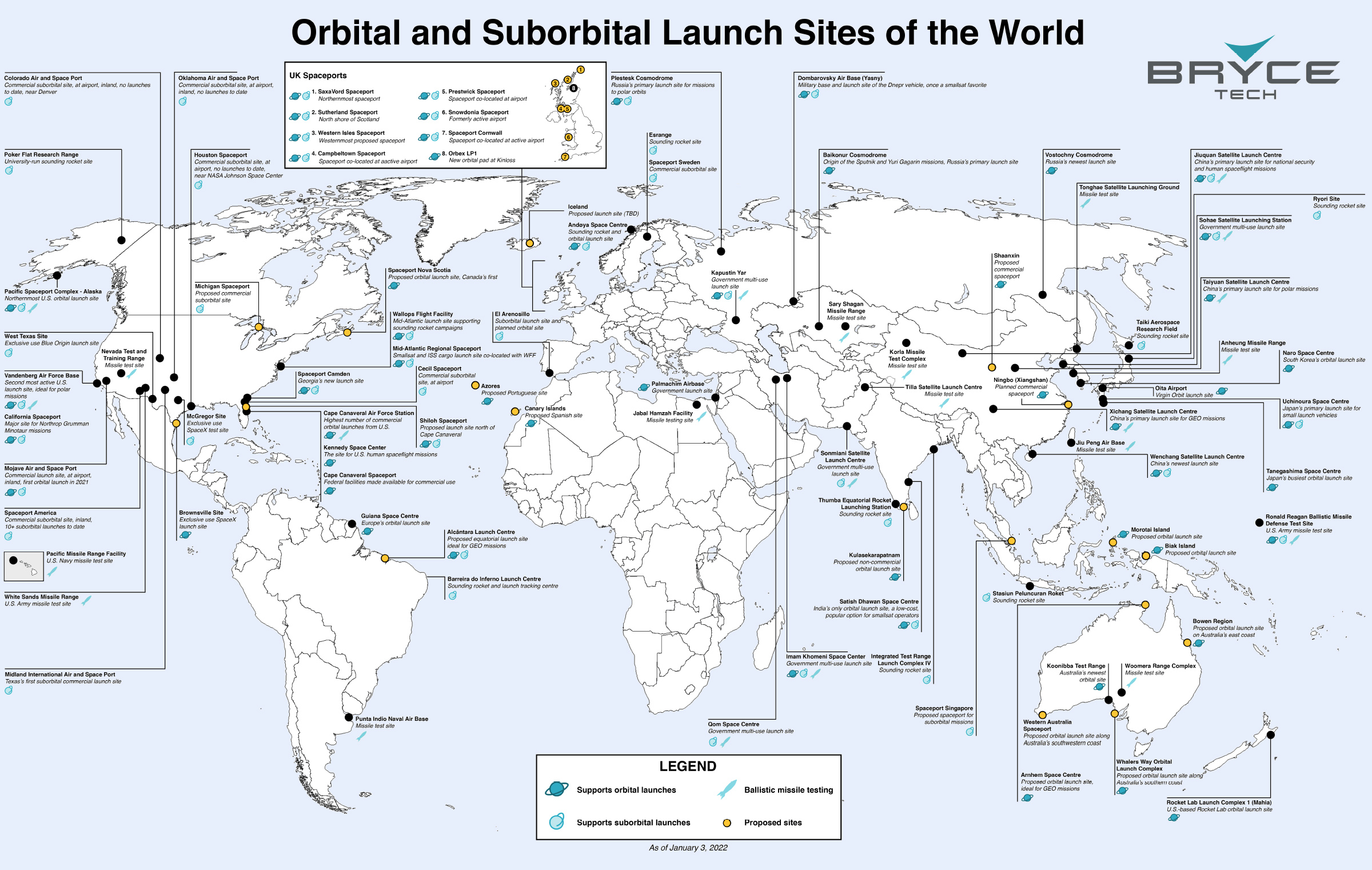
From Sputnik 1 to today’s massive satellite constellations, every object in space was launched from just a handful of locations.
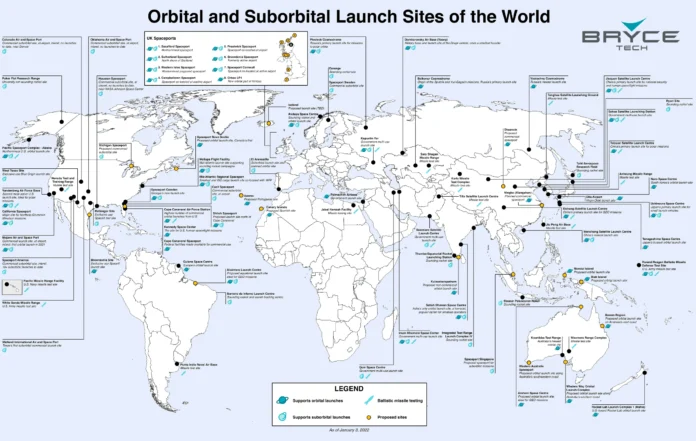
The map above, from BryceTech, is a comprehensive look at the world’s spaceports (both orbital and sub-orbital) as well as ballistic missile test sites.
ℹ️ In sub-orbital spaceflight, a spacecraft reaches outer space, but it doesn’t complete an orbital revolution or reach escape velocity. In orbital spaceflight, a spacecraft remains in space for at least one orbit.
The World’s Major Spaceports
Though the graphic above is a detailed list of many types of rocket launch sites, we’ll focus on major sites that are sending satellites and passengers into sub-orbit, orbit, and beyond.
Launch Facility
Location
Country
Cape Canaveral Space Force Station
Florida
🇺🇸 U.S.
Cape Canaveral Spaceport
Florida
🇺🇸 U.S.
Kennedy Space Center
Florida
🇺🇸 U.S.
Cecil Field Spaceport
Florida
🇺🇸 U.S.
Colorado Air & Space Port
Colorado
🇺🇸 U.S.
Vandenberg Air Force Base
California
🇺🇸 U.S.
Mojave Air and Space Port
California
🇺🇸 U.S.
Oklahoma Air & Space Port
Oklahoma
🇺🇸 U.S.
Poker Flat Research Range
Alaska
🇺🇸 U.S.
Pacific Spaceport Complex
Alaska
🇺🇸 U.S.
Showing 1 to 10 of 66 entries
PreviousNext
Editor’s note: The above table includes all sites that are operational, as well as under construction, as of publishing date.
The list above covers fixed locations, and does not include SpaceX’s autonomous spaceport drone ships. There are currently three active drone ships—one based near Los Angeles, and the other two based at Port Canaveral, Florida.
Two of the most famous launch sites on the list are the Baikonur Cosmodrome (Kazakhstan) and Cape Canaveral (United States). The former was constructed as the base of operations for the Soviet space program and was the launch point for Earth’s first artificial satellite, Sputnik 1. The latter was NASA’s primary base of operations and the first lunar-landing flight was launched from there in 1969.
The global roster of spaceports has grown immensely since Baikonur and Cape Canaveral were the only game in town. Now numerous countries have the ability to launch satellites, and many more are getting in on the action.
Wenchang Space Launch Site, on the island of Hainan, is China’s newest launch location. The site recorded its first successful launch in 2016.
Location, Location
One interesting quirk of the map above is the lack of spaceports in Europe. Europe’s ambitions for space are actually launched from the Guiana Space Centre in South America. Europe’s Spaceport has been operating in French Guiana since 1968.
Low altitude launch locations near the equator are the most desirable, as far less energy is required to take a spacecraft from surface level to an equatorial, geostationary orbit.
Islands and coastal areas are also common locations for launch sites. Since the open waters aren’t inhabited, there is minimal risk of harm from debris in the event of a launch failure.
As demand for satellites and space exploration grows, the number of launch locations will continue to grow as well.
Η Κίνα δεν είναι απλώς μια μεγάλη δύναμη με όρους τυπικής γεωπολιτικής αποτίμησης του ειδικού της βάρους και του μεγέθους της. Είναι η δύναμη εκείνη που απειλεί πλέον σοβαρά να παραγκωνίσει οριστικά τις ΗΠΑ από την πλανητική πρωτοκαθεδρία…
του Κ. ΚΥΡΙΑΚΟΠΟΥΛΟΥ
Δεν πρόκειται για μια διαδικασία διεκπεραιωτική κατά την οποία η σκυτάλη απλώς αλλάζει χέρια μεταξύ επίδοξων πρωταγωνιστών, αλλά για κάτι πολύ ευρύτερο που τροποποιεί ολοκληρωτικά τους όρους που διέπουν την ισορροπία ισχύος στον πλανήτη, αλλά και ευρύτερα τους κανόνες του παιχνιδιού σε έναν κόσμο εξόχως ανταγωνιστικό και όπως δείχνουν τα πράγματα πλήρως απορυθμισμένο.
Ήταν λοιπόν απολύτως αναμενόμενο, στο 20ο Συνέδριο του ΚΚΚ, το οποίο ουσιαστικά συμπίπτει με την συμπλήρωση και των 100 χρόνων από την ίδρυσή του, η εναρκτήρια ομιλία του Κινέζου ηγέτη να αποπνεύσει τον δυναμισμό μιας αποφασισμένης υπερδύναμης που ξέρει πολύ καλά τι ζητά και να μην αναλωθεί σε ιδεοληπτικές και ατελεύτητες φλυαρίες. Έτσι και έγινε…
Σε μια ιστορική εποχή που η φυσιογνωμία του Διεθνούς συστήματος επαναπροσδιορίζεται και το ισοζύγιο της Ισχύος θα καθορίσει με αρμοδιότητα πρωταγωνιστική τα διακυβεύματα της επόμενης μέρας, ο Σι Τζινπινγκ δεν έκανε παρά το αυτονόητο. Προσδιόρισε το τετράπτυχοπίσω από το οποίο οφείλει να στοιχηθεί αυτή η μεγάλη χώρα, αν θέλει «να πάρει κεφάλι» στο περιβάλλον της συστημικής σύγκρουσης που προδιαγράφεται ανελέητη.
Ανάπτυξη…
Ποιότητα…
Αυτονομία…
Ισχύς…
Και όλα αυτά ενταγμένα σε ένα εθνικό όραμαεφάμιλλο του παρελθόντος της και του ιστορικού ρόλου που καλείται να επιτελέσει.
Θα μπορούσε η προσέγγιση του Κινέζου ηγέτη να είναι διαφορετική;;;ΟΧΙ δεν θα μπορούσε. Εκτός εάν δήλωνε αποφασισμένος να οδηγήσει την χώρα του στον απόλυτο γεωπολιτικό ευνουχισμό. Αυτήν την επιλογή ο Σι Τζινπινγκ ΔΕΝ την έκανε.
Απέδειξε ότι έχει πλήρη επίγνωση τριών κρίσιμων δεδομένωνκαι την ιστορική υποχρέωση να τα διαχειριστεί αποτελεσματικά μέσα σε ένα κατάφορα συγκρουσιακό περιβάλλον.
Της ισχύος του έθνους του…
Των αδυναμιών του αντιπάλου του…
Των νέων ευνοϊκών δεδομένων που διαμορφώνονται στην μετασοβιετική εποχή και σπεύδει να εκμεταλλευτεί την ευκαιρία.
Και κυρίως σπεύδει να το κάνει διατυπώνοντας την αποφασιστικότητά του, προκειμένου να συνειδητοποιήσουν οι πάντες πως τα τετελεσμένα προηγούμενων ετών στα οποία επένδυσε η Κίνα πρωτίστως στην Σινική θάλασσα, θα πρέπει να θεωρούνται αδιαπραγμάτευτα και μη αναστρέψιμα.
Προφανώς η Κίνα έχει και τα δικά της ιδιαίτερα προβλήματα να αντιμετωπίσει ΚΑΙ στην Οικονομία… ΚΑΙ στην οργάνωση της παραγωγής… ΚΑΙ στην κοινωνία. Είναι βέβαιο όμως ότι ουδείς δικαιούται να διεκδικήσει ρόλο πρωταγωνιστή, αν την κορυφαία ιστορική στιγμή κατά την οποία ολόκληρος ο πλανήτης έχει στραμμένα τα βλέμματα επάνω του, αυτός επιλέξει να αναλωθεί σε μίζερες και αδιέξοδες ομφαλοσκοπήσεις.
Για την Κίνα και τον πολιτικά διορατικό ηγέτη της, φαίνεται πως γίνεται αντιληπτό ότι οι «συνασπισμένοι» στρατηγικοί της ανταγωνιστές (ΗΠΑ και ΕΕ) βρίσκονται στο μεταίχμιο μιας βραχείας μεταβατικής περιόδου, μετά το πέρας της οποίας θα κληθούν να πληρώσουν πολύ ακριβά το τίμημα των ολέθριων και ανερμάτιστων επιλογών τους, αναφορικά με τον τρόπο με τον οποίο διαχειρίστηκαν τα απόνερα του Ουκρανικού. Πρόκειται για ένα κόστος με βαρύτατες συνέπειες στην επίπλαστη δυναμική τους, στην αμφιλεγόμενη συνοχή τους και φυσικά στην στρατηγική τους επάρκεια η οποία χαρακτηρίζεται πρωτίστως από φαινόμενα τυχοδιωκτικού ερασιτεχνισμού και ρεβανσιστικής μικρότητας.
Η επιλογή του Κινέζου ηγέτη είναι να μην αφήσει αυτήν την ευκαιρία να περάσει αναξιοποίητη, και αυτή η αποφασιστικότητα φαίνεται ότι διαπερνά το σύνολο της εναρκτήριας παρέμβασής του στο 20ο Συνέδριο του ΚΚΚ.
Η συνέχεια αναμένεται επί της οθόνης με εξαιρετικό ενδιαφέρον για τους πραγματικά σκεπτόμενους όπως είναι φυσικό.
Υ.Γ. Η ομορφιά της βραδιάς βρίσκεται στο δημοσίευμα του Ριζοσπάστη στο οποίο υπάρχει μια μικρή αναφορά στο γεγονός ενώ δεν υπάρχει ούτε μια αναφορά στο Κινεζικό Κομμουνιστικό Κόμμα. Αποκαλείται απλώς «κυβερνών κόμμα» κι εκεί τελειώνει όλη η ομορφιά. Είναι φανερό πως δεν θα τους συγχωρήσουν ποτέ το γεγονός ότι το Κινεζικό Κομμουνιστικό Κόμμα επέλεξε στο 20ο Συνέδριό του να ασχοληθεί με όραμα ισχύοςκαι όχι με ιδεοληπτικές απεραντολογίες για διεθνισμούς και για τα δικαιώματα των προσφύγων…




 χρόνια, στέρησαν όμως από το συμμαχικό του σχήμα την απόλυτη πλειοψηφία στην γαλλική Εθνοσυνέλευση. Τουτέστιν, όταν τα κόμματα της αντιπολίτευσης συνασπίζονται εναντίον του, ένα νομοσχέδιο, όπως π.χ. ο προϋπολογισμός του 2023, δεν μπορεί να περάσει, εκτός κι αν η κυβέρνηση κάνει χρήση του άρθρου του ισχύοντος γαλλικού Συντάγματος 49.3. Κάτι που μάλλον θα κάνει σήμερα Τετάρτη 19-10-2022, τελευταία ημέρα εξέτασης του πρώτου μέρους του προϋπολογισμού του 2023.
 νομοσχέδιο ή πρόταση νόμου ανά συνεδρία».
 αδιάκοπες υπουργικές κρίσεις που είχαν παραλύσει την Τέταρτη γαλλική Δημοκρατία (σήμερα βρισκόμαστε στην 5η). «Η πείρα οδήγησε στην πρόβλεψη, επιπλέον, μιας κάπως εξαιρετικής διάταξης για να εξασφαλιστεί, παρά τους ελιγμούς, η ψήφιση ενός απαραίτητου κειμένου», εξήγησε ο Michel Debré τον Αύγουστο του 1958 ενώπιον του Συμβουλίου της Επικρατείας.
 Αλλά στη συνέχεια, αυτή η διάταξη θεωρήθηκε ως υπερεξουσία για την κυβέρνηση σε σχέση με τη νομοθετική εξουσία. Το 2006, ο τότε πρώτος γραμματέας του Σοσιαλιστικού Κόμματος, Φρανσουά Ολάντ δήλωσε: «Το 49.3 είναι μια βαρβαρότητα. Το 49.3 είναι άρνηση της δημοκρατίας. Η συνταγματική μεταρρύθμιση του 2008 περιόρισε έτσι τη χρήση του 49.3 : σήμερα μπορεί να χρησιμοποιηθεί μόνο για ένα νομοσχέδιο ανά κοινοβουλευτική περίοδο, εξαιρουμένων των οικονομικών νομοσχεδίων ή των λογαριασμών χρηματοδότησης κοινωνικής ασφάλισης.
 καταμέτρηση του ιστότοπου Vie Publique. Το ρεκόρ χρήσης του
 κατέχει ο Michel Rocard, ο οποίος είχε μόνο σχετική πλειοψηφία στην Εθνοσυνέλευση (όπως σήμερα και η Ελιζαμπέτ Μπορν) και το χρησιμοποίησε 28 φορές από το 1988 έως το 1991. Η τελευταία χρήση χρονολογείται από τον Φεβρουάριο του 2020, όταν ο Édouard Philippe το ενεργοποίησε για να περάσει τη συνταξιοδοτική του μεταρρύθμιση. Ένα νομοσχέδιο που τελικά εγκαταλείφθηκε λόγω της υγειονομικής κρίσης.