

Αρχική Blog Σελίδα 3004

Οι ΗΠΑ, η Τουρκία και το αβέβαιο μέλλον

0

του Νίκου Μιχαηλίδη*.

Παρά τις αναμενόμενες δημόσιες δηλώσεις και την καλλιέργεια προσδοκιών για βελτίωση των διμερών σχέσεων ΗΠΑ-Τουρκίας, οι πραγματικότητες επί του εδάφους προς το παρόν δεν επιβεβαιώνουν κάτι τέτοιο. Οι εξελίξεις στη Μέση Ανατολή σε συνδυασμό με τιςμεγαλοϊδεατικές, αυταρχικές και τυχοδιωκτικές πολιτικές της Άγκυρας στο εσωτερικό και στον άμεσο περίγυρό της, συνεχίζουν να αποτελούν πρόκληση για τη σταθερότητα της περιοχής και για αυτό που οι αρμόδιες αμερικανικές ελίτ ορίζουν ως εθνικό τους συμφέρον. Η απόκλιση των συμφερόντων ΗΠΑ-Τουρκίας είναι ένα υπαρκτό ζήτημα πουδημόσια πλέον το συζητούν στελέχη αμερικανικών think tanksαλλά και Τούρκοι σχολιαστές και αναλυτές.  Η πρόσφατη εμπρηστική δήλωση στα τουρκικά ΜΜΕ του βουλευτή του ΑΚΡ ΣαμίλΤαγιάρότι το ΝΑΤΟ αποτελεί τρομοκρατική οργάνωση που απειλεί την Τουρκία, αποτελεί μια μικρή ένδειξη του κλίματος που επικρατεί στις διμερείς σχέσεις.Παρόλα αυτά,για ορισμένους Αμερικανούς σχεδιαστές πολιτικής η στενότερη συνεργασία των ΗΠΑ με την Τουρκία θα παραμείνει μια δελεαστική αλλά ουτοπική προοπτική.

Τα στελέχητηςκυβέρνησηςτου κ. Τραμπ που θα ασχοληθούνμετηνεξωτερική πολιτική και την πολιτικήάμυνας και ασφάλειας, είναι αμφίβολο πλέον αν θα παραμείνουν εγκλωβισμένα στον παραδοσιακό μύθο περί «αμερικανοτουρκικής εταιρικής σχέσης» παρέχοντας νομιμοποίηση σε ένα αυταρχικό καθεστώς που υπονομεύει τα αμερικανικά συμφέροντα. Αυξάνονται οι φωνές στην Ουάσινγτον που καλούν τους αρμοδίους να αναγνωρίσουν την έκταση των πραγματικών προκλήσεων που αντιμετωπίζει η κοινωνία και το πολιτικό σύστημα της Τουρκίας και να κατευθύνουν την ενέργειά τους στην αντιμετώπιση του προβλήματος της συνεχούς διάβρωσης της δημοκρατίας, που οδηγεί σε περαιτέρω αποσταθεροποίηση τη γειτονική χώρα και αυξάνει τον κίνδυνο αστάθειας σε όλη την περιοχή.

Παράτις προσεκτικέςδημόσιεςτοποθετήσειςστελεχώντης αμερικανικήςδιοίκησης, είναι πλέονκοινά αποδεκτόότιΟυάσινγκτον καιΆγκυρα διαφωνούνκάθετασεστρατηγικήςσημασίας ζητήματαπου αφορούντηΜέσηΑνατολή. Η προσπάθεια των ΗΠΑ να περιθωριοποιήσουντοισλαμικόκράτος (ISIS) μέσα από συνεργασίεςμεομάδεςστις οποίες περιλαμβάνεται και τοκουρδικό YPG έχουν προκαλέσει πανικόστηνΆγκυρα. Η σταδιακήνομιμοποίησητωνκουρδικώνενόπλωνομάδωνκαι του πλουραλιστικού, δημοκρατικούιδεώδους πουεκπροσωπούν, προκαλείτριγμούςσεένα καθεστώς που επί δεκαετίεςστηρίχθηκεστη βίαιη καταστολήτωνκουρδικών αιτημάτων αλλά και τωνγενικότερων αιτημάτωνεκδημοκρατισμού.Αυτή η περίπλοκηκατάστασηδεν φαίνεται να αλλάζειστοάμεσομέλλον.

Τουρκική εξωτερική πολιτική

Η Τουρκία, σεσυνεργασία μετο Κατάρ και τη ΣαουδικήΑραβία, ενίσχυσετζιχαντιστικέςτρομοκρατικέςομάδες προκειμένου να ανατρέψειτον πρόεδροτηςΣυρίας Μ.Άσαντ και να εγκαταστήσειστηχώραμια φιλοτουρκικήσουνιτικήκυβέρνηση. Έτσι θα έθετε υπό τον πλήρηέλεγχότηςτους διαδρόμους διακίνησηςφυσικού αερίου και πετρελαίου προςτηΜεσόγειο και τηνΕυρώπη αλλά και θα περιόριζετις πιθανότητες αυτονόμησηςτωνΚούρδωντης βόρειας Συρίας.Η παρέμβασηόμωςτουΙράν και τηςΡωσίας καθώς και η καθοριστικήαντίστασηκαι η αυξανόμενηδιεθνήςνομιμοποίησητωνκουρδικώνενόπλωνομάδωντης περιοχής, ανέκοψαν τιςμεγαλοϊδεατικέςτουρκικές επιδιώξεις. Η Τουρκία ταπεινωμένη, αναγκάστηκε να ευθυγραμμιστείμετιςρωσικές πολιτικές προτεραιότητες, προσπαθώντας παράλληλα να εμποδίσειτην περαιτέρωενίσχυσητωνΚούρδων.Μετά από αυτήτηδραματική αλλαγήστρατοπέδου, η ΣαουδικήΑραβία κατηγόρησεευθέωςτηνΆγκυρα ότι πρόδωσετησυμμαχία τους. Δενείναι άλλωστεη πρώτηφοράστηνιστορία πουοιτουρκικές πολιτικέςελίτ προδίδουντουςσυμμάχουςτους προκειμένου να διασώσουντον εαυτό τους.

Η τρέχουσατουρκικήεξωτερική πολιτική, που διαμορφώνεται και ασκείται υπό τονφόβο και την ανασφάλεια ενός αυταρχικού προέδρου, στοχεύειπρωτίστωςστηνενδυνάμωσητηςθέσηςτουτουρκοσουνιτικού καθεστώτοςστοεσωτερικότηςχώρας. Ο αυξανόμενος αυταρχισμόςτου ΑΚΡ, οι διαδικασίες αλλαγήςτου πολιτειακού καθεστώτος, οιδιώξεις κατάτηςδημοκρατικής αντιπολίτευσης και των ΜΜΕ, ο πόλεμοςμετοΕργατικόΚόμμα Κουρδιστάν (ΡΚΚ), η επέκταση αυτούτου πολέμουστηΣυρία καθώς και η dιεθνής κρατική τουρκική εκστρατεία εναντίον του ισλαμιστή κληρικού Φετουλάχ Γκιουλέν είναι τμήματατης ίδιας πολιτικής ατζέντας.Το καθεστώςΕρντογάν προετοιμάζεται για μεγαλύτερηςέκτασης πολεμικές επιχειρήσειςεναντίοντου ΡΚΚ στοεσωτερικότηςχώρας ενώ υπάρχουν πληροφορίες και για σχεδιαζόμενη επέμβασηστις βάσειςτηςοργάνωσηςστο βόρειοΙράκ περί τα τέλη Μαρτίου, πριν από τοσχεδιαζόμενοδημοψήφισμα. Μια τέτοια επέμβαση, παρόμοια με αυτήστη βόρειαΣυρία, θα πυροδοτήσεισφοδρές αντιδράσεις από διαφορετικές πλευρές.

Επιπλέον ο σουνίτης πρόεδροςΕρντογάν, εκτός από τηνενίσχυσητης προσωπικήςτουεξουσίας, επιχειρεί, με βάσησεκταριστικάθρησκευτικά πρότυπα και αξίες, να αλλάξειριζικάτηνΤουρκία και τονρόλοτηςστονκόσμο. Η αυτοανακήρυξήτουσε προστάτητων απανταχούμουσουλμάνων και η διαρκήςκριτικήτουστην«κακή ιμπεριαλιστική Δύση» και ειδικά ο ανοιχτά εκφραζόμενος αντιαμερικανισμός του, είναι μέρος της προσπάθειάς του να νομιμοποιηθεί και να βρει διεθνή στηρίγματα σε χώρες και ακροατήρια όπου τα αντιδυτικά αισθήματα είναι έντονα. Σε πρόσφατο ταξίδι του σε χώρα της Αφρικής δεν έχασε την ευκαιρία να κατηγορήσει και πάλι τη Δύση για τις ανισότητες και τους πολέμους στον πλανήτη και να παρουσιάσει τη χώρα του ως δήθεν προστάτη των φτωχών και κατατρεγμένων του κόσμου. Παραβλέποντας βέβαια τις τρομακτικές ανισότητες, την ωμή βία και την κασταστολή που το καθεστώς του έχει επιβάλλει στην ίδια του τη χώρα. Σε αυτή την αντιδυτική του υστερία ο Ερντογάνδεν είναι μόνος. Πολιτικό Ισλάμ και παραδοσιακοί Κεμαλιστές ταυτίζονται απόλυτα όσον αφορά τα άκρως αρνητικά αισθήματά τους έναντι της Ε.Ε και των ΗΠΑ λόγω της στάσης τουςέναντι των Κουρδικών ομάδων στην περιοχή και της δίκαιης κριτικής τους στον πολιτικό αυταρχισμό και στην ωμή καταπάτηση των ανθρωπίνων δικαιωμάτων. Όλα τα παραπάνω θα συνεχίσουν να προκαλούν σοβαρές τριβές στις σχέσεις Ουάσινγκτον-Άγκυρας.

Η άκρως σεκταριστική και διχαστική ρητορική  Ερντογάν στο εσωτερικό της χώρας, η άμεση και έμμεση ενίσχυση των τζιχαντιστών, οι μαζικές συλλήψεις και φυλακίσεις αντιφρονούντων, η υπονόμευση της οικονομίας λόγω διαφθοράς και οιαντιδυτικές του κορώνες, ρίχνουν τους σπόρους μιας αιματηρής εμφύλιας σύγκρουσης. Η δημιουργία ενός αληθινά δημοκρατικού καθεστώτος στην Τουρκία και η επάνοδος στη σταθερότητα και στην ομαλότητα θα πάρει χρόνο και αναπόφευκτα θα απαιτήσει ανασχεδιασμό της αμερικανικής πολιτικής προς τη γειτονική χώρα. Αυτό προϋποθέτει αλλαγή του τρόπου με τον οποίο πολλοί αμερικανοί ιθύνοντες σκέφτονται και κατανοούν τις εσωτερικές δυναμικές και τη φυσιογνωμία της Τουρκίας καθώς και απαλλαγή από ορισμένους μύθουςκαι παραδοχές οι οποίες κυριαρχούν στο πεδίο των αμερικανοτουρκικών σχέσεων μέχρι και σήμερα.

Αμερικανικοί μύθοι και αδιέξοδα.

Μια σειρά από αμερικανικέςκυβερνήσεις, Δημοκρατικών και Ρεπουμπλικανών, σκέφτονταν και δρούσαν στηριζόμενεςσεμιαν υπερβολική πίστηστορόλοκαι στιςδυνατότητεςτηςΤουρκίας και στη βοήθεια που πίστευαν πως η Άγκυρα μπορούσε και επιθυμούσε να τους παράσχειστην αντιμετώπισηκρίσιμωνγεωπολιτικών προκλήσεων. Αυτή η υπερβολικήεμπιστοσύνηστορόλο, στις επιθυμίες και στιςδυνατότητεςτηςΤουρκίας οδήγησε πολλέςφορέςστηνεξάντλησησημαντικούκεφαλαίουεκμέρουςτης αμερικανικής διπλωματίας στην προσπάθειάτης να κερδίσειτηντουρκικήσυνεργασία και συμβολή, χωρίς τα επιθυμητά αποτελέσματα.

Μέσα σε αυτό το πολιτικό πλαίσιο, οποιαδήποτε απόπειρα της Ουάσινγκτον να απαλύνει τις φοβίες και τις ανασφάλειες του Ερντογάν για να δημιουργήσει διαύλους επικοινωνίας και συνεργασίας με το καθεστώς του, θα δυσχεράνει τις μεταξύ τους σχέσεις.  Ακόμα και στην περίπτωση που οι ΗΠΑ αποφάσιζαν να ικανοποιήσουν τα δύο βασικά αιτήματα της τουρκικής κυβέρνησης, δηλαδή  να εκδόσουν στην Τουρκία τον ΦετουλάχΓκιουλέν και να διακόψουν τη συνεργασία με το κουρδικό YPG στη Βόρεια Συρία, θα ήταν αφελές να προσδοκούν ότι ο Ερντογάν θα αλλάξει στάση. Ένα τέτοιο δώρο θα ενίσχυε το αυταρχικό καθεστώς και τον ίδιο προσωπικά, καθιστώντας τον περισσότερο αλαζονικό στο εσωτερικό αλλά και επιθετικό  προς τον άμεσο διεθνή περίγυρώ του. Αυτή η εξέλιξη θα υπέσκαπτε περαιτέρω τη σταθερότητα της γειτονικής χώρας και θα πυροδοτούσε μεγαλύτερες εντάσεις στη Μέση Ανατολή.

Δεν είναι μόνο η έλλειψη επαρκών επιβαρυντικών στοιχείων και οι περίπλοκες νομικές διαδικασίες που δυσκολεύουν την έκδοση Γκιουλέν στην Άγκυρα. Παρά το ότι το δίκτυο του τούρκου ιμάμη έχει υποστεί σοβαρή ζημία και έχει χάσει σημαντικό μέρος της δύναμής του στο εσωτερικό της Τουρκίας, παραμένει ιδιαίτερα ισχυρό και με επιρροή σε αρκετές ισλαμικές χώρες. Το δίκτυο Γκιουλέν παρέχει δυνητικά στις ΗΠΑ ένα χρήσιμο εργαλείο επικοινωνίας και επιρροής σε τμήματα του ισλαμικού κόσμου. Έτσι η Ουάσινγκτον δεν έχει να κερδίσει πολιτικά από την παράδοση του ηγέτη και τη διάλυση του παγκόσμιου θεολογικού, κοινωνικού και πολιτικού του δικτύου. Επιπλέον στη μάχη κατά του ισλαμικού κράτους οι ΗΠΑ βλέπουν στην κουρδική οργάνωση YPG της βόρειας Συρίας έναν πιστό και αποτελεσματικό σύμμαχο τον οποίο δεν πρόκειται να εγκαταλείψουν για να ικανοποιήσουν τα τουρκικά μαξιμαλιστικά αιτήματα.

Έχει πλέον καταστεί σαφέςότιΟυάσινγκτον και Άγκυρα δενμοιράζονται τιςίδιες αξίες και στρατηγικές προτεραιότητες. Έτσιδεν υπάρχεικάτι πουοι ΗΠΑ θα μπορούσαν να προσφέρουνστονΕρντογάν προκειμένου να τον καταστήσουνέναν λογικό και συνεργάσιμοεταίρο. Επιπλέονοι αμερικανοίιθύνοντες θα πρέπει να απαλλαγούν από τηνψευδαίσθησηότιοι ΗΠΑ χρειάζονται τηνΤουρκία περισσότεροαπό ότι η τελευταία τις πρώτες.Μια τέτοια ψευδαίσθησητις καθιστάόμηροτηςτουρκικης αλαζονείας και τουμεγαλοϊδεατισμού.Οι αμερικανοί αναλυτές φαίνεται πωςάρχισαν να συνειδητοποιούνότι η αυξανόμενηισχύςτουΕρντογάνδενενισχύει αλλά υποσκάπτειτησταθερότητα τηςΤουρκίας καιτηδημοκρατική προοπτικήτης, ενώ παράλληλαμειώνειτις πιθανότητεςη Άγκυρα να συμπεριφερθεί υπεύθυνα και μεσεβασμόστοδιεθνέςδίκαιο. Η νέα κυβέρνησητουκ.Τράμπ θα πρέπει να αντιμετωπίσει αυτότοενοχλητικότουρκικό παράδοξογνωρίζοντας επιπλέονότι η παρούσα συμμαχία ισλαμιστών και κεμαλιστώνεθνικιστώνδεν μπορεί να αποτελέσειέναν αξιόπιστο και αποτελεσματικόεταίροστην αντιμετώπισητων προκλήσεωνστηΜέσηΑνατολή και στηνΑνατολικήΜεσόγειο. Πολιτικοί αναλυτέςστις ΗΠΑ από τονχώροτων think tanks εκτιμούνότι η χώρα τουςδενέχει πλέοντην πολυτέλεια να θεωρείτηνΤουρκία σύμμαχο, παράτις περίτουαντιθέτουδημόσιεςδηλώσειςτων αρμοδίων. Έτσιμια νέα αμερικανική πολιτικήγια τηνΤουρκία, ανάμεσα στα άλλα, θα επιχειρήσει να περιορίσειτις αρνητικές επιπτώσεις από την απόκλισητων αμερικανοτουρκικώνσυμφερόντων και να βοηθήσειτηνΤουρκία, όσο μπορεί, ώστε να μηνοδηγηθείσε περαιτέρω αστάθεια και τυχοδιωκτισμούς, παρασύροντας στοχάοςτηδικήτηςκοινωνία και ολόκληρητηΜέσηΑνατολή. Το αν η Ουάσινγκτον τα καταφέρειείναι κάτι που θα φανείστους επόμενουςμήνες.

*Ο κ. Νίκος Κ. Μιχαηλίδης είναι διδάκτωρ ανθρωπολογίας του πανεπιστημίου Princeton και έχει διεξάγει πολυετή επιτόπια έρευνα στην Τουρκία

“Το Βήμα”.
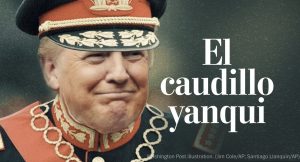
Trump is the U.S.’s first Latin American president

0

By Ishaan Tharoor January 26 at 1:00 AM THE WASHINGTON POST

Want smart analysis of the most important news in your inbox every weekday along with other global reads, interesting ideas and opinions to know? Sign up for the Today’s WorldView newsletter.

In his first week in power, President Trump has ruled by fiat and tweet, following through on many campaign promises most people had assumed were too absurd or extreme to ever fulfill. A temporary Muslim ban of some sort is set to come into effect, and the White House is seeking funding to actually build a wall on the Mexican border, still insisting Mexico will somehow pay for it. Meanwhile, his spokespeople engaged in a running war over the truth with the American media, doubling down on talking points and statistical claims already proven to be false.

If it weren’t clear before the inauguration, it certainly is now: Trump’s presidency represents a radical departure from the norms of American politics.

Yet to observers elsewhere, Trumpism feels deeply familiar. Trump may want to stop the flow of migrants and goods from south of the border, but he has imported a political style ingrained in Latin American politics: that of the nationalist demagogue.

A number of Latin American analysts have suggested over the past year that it’s useful to view Trump through the lens of the “caudillo,” or strongman. It’s a tradition that extends from the last days of Simón Bolivar, South America’s great liberator, to the current bluster of leaders like Venezuela’s Nicolás Maduro or Ecuador’s Rafael Correa.

Sure, Trump is no military despot like Chile’s late Augusto Pinochet, who came to power in a 1973 coup, nor is he a defiant autocrat like the late Hugo Chávez, the leftist populist who reshaped Venezuela in his image.

But to those who have lived under such leaders, it feels like Trump has been taking notes.

When Trump and his spokespeople started throwing out huge (and incorrect) numbers for the size of the crowd attending his inauguration, Venezuelan journalist Lisseth Boon immediately heard the echoes of her own experience reporting under a regime that constantly fed the public its scripted version of reality.

 Before the election, Enrique Krauze, a Mexican essayist and publisher, outlined with venom the parallels he saw between Trump and Latin American populists: It’s in “his extreme self-inflation, his call for unthinking acceptance of the supposed power of his personality; his ability to keep America safe from the dangers of terrorism, Mexicans, the Chinese, whatever straw man area he can use to generate hatred and support for thoughtless economic proposals that in reality can only benefit the very rich; his promises that under his guidance, America will ‘win so much, you may even get tired of winning.'”

Trump says he stands for the “forgotten man,” a gesture to the American white working class languishing in the nation’s farming villages and mining towns. Argentina’s Juan Perón, a populist nationalist who transformed his country in the mid-20th century, said he represented his society’s “descamisados,” or “shirtless ones.” Populists emerge, after all, in conditions of great social and economic inequity, and win votes with the promise to shake up an unfair system rigged against the common man.

Trump’s belief in tough talk; his posturing as the champion of the working class; his stated contempt for urban elites and the machinery of politics; and his projection of a robust machismo that is undimmed by political correctness — are all traits associated with caudillismo.

“Populism, authoritarianism, personalism, machismo, racialism, and caudillismo — or strongman rule — have been historically seen as ills almost inherent to Latin American political culture,” wrote Texas A&M political scientist Diego von Vacano. “With the election of Donald Trump, we can now see that the U.S. is indeed part of the Americas as a whole and shares in those pathologies.”

 But, as is the experience in Latin America, such politics can slide into trouble and dysfunction.

“Latin America has a mostly unhappy history of dealing with outsiders-turned-presidents,” wrote Javier Corrales, a professor of political science at Amherst College. “More often than not, they have ended up either hurting democracy or ruining the government’s ability to act.”

Krauze deployed another scathing analogy for Trump: “The Latin American populist leader harangues his people against those who are ‘not our people.’ He proclaims the dawn of a new history and promises the advent of heaven on earth. Once in power, microphone in hand, he installs a pattern of systematic lying, decrees that his official truth is the only truth, invents external enemies to blame for his own failures.”

Not everyone in Latin America sees Trump in such negative light. Guillermo Moreno, a former Argentinian trade secretary, favorably described Trump’s “America First” politics as “Peronist” in a radio interview last week. Venezuela’s Maduro, who constantly inveighs against the evils of yanqui imperialism, told reporters on Sunday that Trump was subject to a “brutal hate campaign” by American media.

Jair Bolsonaro, a right-wing, anti-establishment Brazilian firebrand and recent failed presidential candidate, also celebrated Trump’s success: “At the end of the day, Trump stood up to the politically correct, stood up to the polling firms, stood up to the big rotten media,” he said in a video cited by Americas Quarterly.

The irony, of course, is that Latin America has largely moved on from its days of demagoguery and dictatorship, with populism in retreat and mature democracies taking root across almost the whole region.

“The roles have been reversed,” wrote Vacano, “and it is perhaps up to Latino immigrants to teach the U.S. about deepening democratization.”

Want smart analysis of the most important news in your inbox every weekday along with other global reads, interesting ideas and opinions to know? Sign up for the Today’s WorldView newsletter.

https://www.washingtonpost.com/news/worldviews/wp/2017/01/26/trump-is-the-u-s-s-first-latin-american-president/?utm_term=.132072166b82

Οι εκβιασμοί για την ΑΟΖ: Το «όπλο» του φυσικού αερίου να μην γίνει «αγχόνη» στον λαιμό της Κύπρου για επιβολή κακής λύσης…

0

File Photo: Ο Πρόεδρος της Κυπριακής Δημοκρατίας κ. Νίκος Αναστασιάδης δέχθηκε αντιπροσωπεία της Noble Energy, με επικεφαλής τον Ανώτερο Αντιπρόεδρο της Noble για την Ανατολική Μεσόγειο κ. J. Keith Elliott , Λευκωσία 17 Μαρτίου 2015. Φωτογραφία ΧΡ. ΑΒΡΑΑΜΙΔΗΣ

Του Νίκου Μελέτη

Το θέμα του φυσικού αερίου και των θαλασσίων ζωνών απουσιάζει από την επίσημη ατζέντα των συνομιλιών για το Κυπριακό, αλλά τα ζητήματα αυτά είναι πανταχού παρόντα στην περιρρέουσα ατμόσφαιρα.

«Εάν δεν λυθεί το Κυπριακό, δεν θα καταστεί δυνατή η εκμετάλλευση του φυσικού αερίου. Αν δεν λυθεί το Κυπριακό θα πρέπει να γίνει διαμοιρασμός των κερδών από το φυσικό αέριο. Πρέπει να λυθεί το Κυπριακό για να καταστεί δυνατή η συνεργασία Τουρκίας-Ισραήλ και η εξαγωγή του αερίου προς την Τουρκία», είναι μερικά από τα στερεότυπα που διατυπώνονται και κατατείνουν φυσικά στην «άρον-άρον» λύση του Κυπριακού.

Η διαδικασία λύσης του Κυπριακού δημιουργεί και αναδεικνύει συγκεκριμένα ζητήματα σχετικά με τους φυσικούς πόρους αλλά και την οριοθέτηση των θαλάσσιων ζωνών σε μια ιδιαίτερα κρίσιμη περιοχή όπως η Ανατολική Μεσόγειος.

Κυρίως όμως τα ζητήματα αυτά ανακύπτουν επειδή απέναντι στους Ελληνοκυπρίους, δεν βρίσκονται οι Τουρκοκύπριοι, αλλά η ίδια η Τουρκία που μέσω του Κυπριακού θέλει να προωθήσει τα δικά της γεωστρατηγικά συμφέροντα.

Ας τα δούμε με την σειρά :

-Η αρμοδιότητα και ο έλεγχος των θαλασσίων ζωνών θα ανήκει στο Ομόσπονδο Κράτος. Κάθε απόφαση θα πρέπει να εχει την έγκριση και των Τουρκοκυπρίων και επομένως θα πρέπει να θεωρηθεί δεδομένο ότι έτσι θα τεθεί τέλος σε κάθε προσπάθεια στο ορατό μέλλον για οριοθέτηση των θαλασσίων ζωνών μεταξύ της Ελλάδας και της Κύπρου, καθώς η Τουρκία αμφισβητεί το μεγάλο μέρος της υφαλοκρηπίδας της Ανατολικής Μεσογείου, με στόχο να μπει «σφήνα» ώστε να μην προκύπτει πια γειτνίαση των θαλασσίων ζωνών της Ελλάδας και της Κύπρου.

Όμως αυτομάτως θα τεθεί ζήτημα και διατήρησης της υπάρχουσας συμφωνίας της Κυπριακής Δημοκρατίας με την Αίγυπτο, την οποία εχει αμφισβητήσει ευθέως η Τουρκία θεωρώντας ότι η Κύπρος στα δυτικά δεν μπορεί να εχει θαλάσσιες ζώνες πέραν των χωρικών υδάτων της, υποστηρίζοντας ότι η συγκεκριμένη οριοθέτηση εχει σαν αποτέλεσμα την επικάλυψη τουρκικής υφαλοκρηπίδας..

Ακόμη και στην παράλογη αυτή πολιτική της Τουρκίας όμως υπάρχουν σοβαρές αντιφάσεις:

Τα τελευταία χρόνια με διαρκείς δηλώσεις και ρηματικές διακοινώσεις στον ΟΗΕ η Τουρκία και το ψευδοκράτος υποστηρίζουν την ύπαρξη «δυο κρατών» στο νησί και την άσκηση κυριαρχικών δικαιωμάτων από το ψευδοκράτος, εντός της «κυριαρχίας» του. Πολλές φορές μάλιστα εχει αναφερθεί η Τουρκία (είτε με την διεξαγωγή ασκήσεων είτε με την διεξαγωγή ερευνών) σε «θαλάσσιες ζώνες της (παράνομης) ΤΔΒΚ».

Σε ότι αφορά μάλιστα το φυσικό αέριο η Τουρκία και οι Τουρκοκύπριοι ζητούν είτε να παγώσει η εκμετάλλευση του είτε να διαμοιρασθούν τα οφέλη από το φυσικό αέριο.

Όμως δεν είναι δυνατόν, το ψευδοκράτος να προβάλλεται ως «ανεξάρτητο-κυρίαρχο» κράτος και συγχρόνως να διεκδικεί μερίδιο από την άσκηση κυριαρχίας στην Κυπριακή Δημοκρατία από την οποία εχει αποσχισθεί με την παράνομη κατοχή.

Οι απειλές περί προσάρτησης του ψευδοκράτους, είτε απαίτησης διεθνούς αναγνώρισης του, θα δώσουν βεβαίως τέλος στις προσπάθειες επίλυσης του Κυπριακού, αλλά συγχρόνως θα ακυρώσουν την αμφισβήτηση της άσκησης κυριαρχικών δικαιωμάτων της Κυπριακής Δημοκρατίας στην ΑΟΖ, όπως εχει καθορισθεί από τις συμφωνίες με την Αίγυπτο και το Ισραήλ.

Η πάγια προσέγγιση μετα το 1974  που προωθούσαν όσοι σκέφτονταν το οριστικό διαζύγιο, ήταν «έδαφος έναντι αναγνώρισης», αλλά πλέον αυτό δεν αρκεί γιατί θα πρόκειται περί μιας προβληματικής επιλογής για τα τουρκικά συμφέροντα, καθώς η γεωγραφία εκδικήθηκε τους εισβολείς και όλος ο φυσικός πλούτος εχει ανακαλυφθεί στο Νότιο τμήμα της Κυπριακής ΑΟΖ, εκεί που δεν μπορεί να εγείρει  απαιτήσεις σήμερα η Τουρκοκυπριακή πλευρά μέσω της παράνομης «ανεξάρτητης και κυρίαρχης ΤΔΒΚ»… Προφανώς το ερώτημα θα διαμορφώνονταν με σημερινούς ορούς ως «διαζύγιο έναντι φυσικού αερίου» καθώς οι Τουρκοκύπριοι μπορούν να επιλέξουν την «αγκαλιά» της Τουρκίας και του κ. Ερντογάν και να επιμείνουν στις διχοτομικές αξιώσεις και τις πενιχρές εδαφικές επιστροφές, παραχωρώντας οριστικά και πλήρως ,στους Ελληνοκυπρίους τον έλεγχο και την εκμετάλλευση των φυσικών πόρων στις θαλάσσιες ζώνες που σήμερα ασκεί την κυριαρχία της η Κυπριακή Δημοκρατία.

Μερίδιο στο φυσικό αέριο, μετα απο ένα διαπιστωμένο αδιέξοδο, δεν μπορούν να διεκδικήσουν πια οι Τουρκοκύπριοι.

Αντιθέτως εάν οι Τουρκοκύπριοι επιδιώξουν τον απογαλακτισμό από την Άγκυρα και εμπλακούν σε διαδικασία για μια πραγματικά βιώσιμη λύση του Κυπριακού τότε θα μπορέσουν να επωφεληθούν από τον φυσικό πλούτο του νησιού.

Γι αυτό τον λόγο η Τουρκία θέλει να πέτυχει λύση που θα της εξασφαλίζει τον έλεγχο μέσω της χειραγώγησης των Τουρκοκυπρίων και στον φυσικό πλούτο της Κύπρου αλλά και μερίδιο από την υφαλοκρηπίδα της Ανατολικής Μεσογείου μέσω του βέτο της Ομόσπονδης Κύπρου στην οριοθέτηση της ΑΟΖ με την Ελλάδα (προς όφελος φυσικά της Τουρκίας).

Όμως το φυσικό αέριο δεν πρέπει από όπλο στα χεριά της Κύπρου να αφεθεί να γίνει η αγχόνη στο λαιμό του κυπριακού ελληνισμού, με την απειλή ότι εάν δεν λυθεί το Κυπριακό, δεν θα επιτρέψει η Τουρκία την εκμετάλλευση του φυσικού αερίου της και ότι η λύση θα επιβληθεί από τον διεθνή παράγοντα για να διευκολυνθεί η κατασκευή αγωγού από το Ισραήλ προς την Τουρκία…

Όσο το φυσικό αέριο μπορεί να χρησιμοποιηθεί ως μοχλός πίεσης για την επιβολή μιας κακής λύσης που θα προσφέρει πλεονεκτήματα στην Άγκυρα, άλλο τόσο το φυσικό αέριο μπορεί να αποτελεί το πραγματικό όπλο και ασπίδα για την Κυπριακή Δημοκρατία σε περίπτωση που η Τουρκία οδηγήσει σε αδιέξοδο την διαδικασία.

Βεβαίως ακόμη και σε περίπτωση αδιεξόδου, υπάρχουν δυνατότητες να βρεθεί συμβιβαστική φόρμουλα  στο ζήτημα αυτό, εάν οι εταιρείες αλλά και το ισραηλινό κράτος επιλέξουν την εξαγωγή αερίου προς την Τουρκία. Και τότε θα κριθεί και η ειλικρίνεια των δηλώσεων (Αμερικάνων και αρκετών ευρωπαίων) ότι πρέπει το φυσικό αέριο της Κύπρου και του Ισραήλ να κατευθυνθεί στην Τουρκία για να ενισχυθεί η ενεργειακή ασφάλεια της Τουρκίας και η μείωση της εξάρτησης από το ρωσικό φυσικό αέριο.

Υπάρχουν φόρμουλες και εργαλεία στην διεθνή πρακτική, που θα επέτρεπαν την εξαγωγή του αερίου μέσω αγωγού που θα διέρχεται από την κυπριακή ΑΟΖ, προς την Τουρκία. Και ρόλο σε αυτό θα μπορούσε να διαδραματίσει ως «ενδιάμεσος τρίτος» το Ισραήλ αλλά και ό μη κρατικός χαρακτήρας του έργου με την εμπλοκή μεγάλων πετρελαϊκών εταιριών, παρακάμπτοντας έτσι το εμπόδιο της μη αναγνώρισης της Κύπρου από την Τουρκία, και της υποχρέωσης επίσημης συνεργασίας των δυο κρατών.

Τέλος, δεν μπορεί παρά να μείνει εντελώς εκτός συζήτησης, κάθε υπαινιγμός, περί κάλυψης του κόστους της λύσης από το φυσικό αέριο. Θα πρόκειται περί υπονόμευσης του μέλλοντος της Κύπρου και για μια τραγική τιμωρία ανάλογη με τις οικονομικές συνέπειες της εισβολής, καθώς οι Ελληνοκύπριοι θα κληθούν να πληρώσουν για δεύτερη φορά το κόστος της τουρκικής εισβολής και συνεχιζόμενης Κατοχής του βόρειου τμήματος του νησιού…

http://www.apopseis.com/i-ekviasmi-gia-tin-aoz-to-oplo-fysikou-aeriou-na-min-gini-agchoni-ston-lemo-tis-kyprou-gia-epivoli-kakis-lysis/

The Rise and Fall of Spiro T. Agnew

0

y

“The mere happening of an accident does not justify an inference of negligence,” said the handsome, six foot-plus, strong-voiced adjunct professor of Tort Law at the University of Baltimore Law School. It was in the Fall of 1961. I was in my first year of law school. Spiro T. Agnew was one of my instructors.

Agnew was scholarly, imposing, immaculately dressed and prepared for every class. At the time, he was an on-the-rise politico. I got the impression that he was very happy to have the teaching gig. I’m proud to say I got an “A” in that course.

As an aside, I was then a deputy clerk in the Baltimore City courthouse, living in an small apartment on Fort Avenue in Locust Point, with a wife and a child on the way. I got my job via the old-boys’ clubhouse politics. To that end, a tip of the hat to the efforts of the Southside City Councilman, the late Michael “Iron Mikc” McHale, and the then chair lady of the Maryland Censor Board, the one and only Mary Avara. Bless their memories.

Getting back to Agnew. He was a middle-of-the-road Republican and a soon to be the County Executive for Baltimore County, (1962-1966). By most accounts, he did a solid job in that position. Agnew’s many friends called him “Ted.”

Fortuitous political events were to catapult this son of a Greek-born father into the office of governor of the state of Maryland (1967-69). Then, just as quickly, into six years as Richard M. Nixon’s Vice President (1968-1973) – only a heart beat away from the presidency itself. As Veep, however, Agnew’s politics soon shifted to the Far Right side of the scale. He regularly castigated antiwar protesters and the liberal media as “Un-American.”

Enter Agnew’s mega-speed fall from grace! It ended in his total public humiliation. The Feds had compelling evidence that he had taken bribes from Maryland-based consulting engineers to secure state contracts when he was both a county executive and governor. The bribe-taking continued as Vice-President in the Executive Office Building, just down the street from the White House.

The U.S. prosecutor who brought Agnew down was the Hon. George Beall, then the U.S. Attorney for Maryland. Mr. Beall was a popular figure in local legal circles. He died recently, at age 79, on January 15, 2017, in Naples, Florida.

Agnew faced with the inevitable (read serious prison time) entered into “a deal” to resign from his office on October 10, 1973. He pled “no contest” to a charge of tax evasion before U.S. Judge Walter E. Hoffman and paid a $10,000 fine.

Agnew’s earth-shaking resignation took place in the then-Federal Court House in Baltimore, located at Calvert & Fayette Streets. I was then an Assistant City Solicitor, in City Hall, under Mayor William Donald Schafer. I’ve always regretted missing that historic proceeding, since I had a case in Annapolis on that day.

Rep. Gerald Ford (R-MI) took Agnew’s place as V.P. on December 6, 1973. When Nixon (“I’m not a crook!”) resigned because of the notorious “Watergate” scandal. Ford on August 9, 1974, became president.

(As the fates would have it, I met then-V.P. Ford at a Heisman Trophy Award dinner in NYC, on December 13, 1973. The awardee that year was John Cappelletti of Penn State. We shared our recollections about his former House of Representative colleague – the Baltimore legend – the late Rep. Edward Garmatz (3rd-D).)

Ponder this: But for the discovery of the sleazy bribery scandal, it would have been Agnew assuming the highest office in the land. It doesn’t come any closer then that.

Disbarred from the practice of Law, Agnew spent much of his later years either on the West coast or at his residence near Ocean City, MD. He reportedly made a living as a international business consultant. Supposedly, Agnew once told a confidant, that kickbacks have been “going on for a thousand years.” A poor excuse for sure for continuing a legacy of corruption.

Most of Agnew’s local cronies had long since abandoned him, including lawyers that he had appointed to the Bench. On the celebrity circuit, all of his former fair-weather buddies, many from Hollywood, took a hike, save one, the crooner – Frank Sinatra.

I also couldn’t help but notice how fast some were, whom Agnew had enriched with those under the table deals, “to rat him out,” in order to save their own hides. According to court records, his co-conspirators were: Lester Matz, Allen Green, Jerome B. Wolfe and I.H. Hammerman 2d. As a final indignity, Agnew was ordered, in 1981, to repay the state $248,735, the amount of the kickbacks, with interests, that he had pocketed in the scheme.

Agnew died in political exile on September 17, 1996, at the age of 78. He was a veteran of both WWII and the Korean War and deserves some credit for his service to the Republic. Agnew is buried in a cemetery located in Timonium, MD.

The tragedy of Agnew’s rise and fall has all the makings of a tale right out of Greek mythology. The Maryland Court of Appeal labeled his self-destructive behavior “morally obtuse.” It could be argued that the Fates had claimed in Agnew yet another victim of man’s insatiable ability to deceive himself.

The current administration of Donald Trump in Washington would do well to learn from Agnew’s fall from grace. Something tells me, they won’t.

Bill Hughes is the author of Baltimore Iconoclast
http://www.counterpunch.org/2017/01/25/the-rise-and-fall-of-spiro-t-agnew/

Trumpus Andronicus? What the Byzantine Empire can tell us

0
U.S. President Donald Trump waves as he leaves the Central Intelligence Agency (CIA) headquarters after delivering remarks during a visit in Langley, Virginia U.S., January 21, 2017. REUTERS/Carlos Barria
Comparisons have abounded between historical villains and Donald Trump, but Maximilian Lau finds 12th century similarities that may have a useful message
JANUARY 22, 2017 11:51 AM 

The approaching Donald Trump presidency has taken quite a battering from historians. Comparisons have abounded with the 20th century’s greatest villains, including Adolf Hitler and Benito Mussolini, even if some have questioned how useful such parallels are.

But there is an era that lends itself rather closer to comparison than the tired fascist example. And it may have a far more useful message for us today.

Rise of a demagogue

Picture a superpower, once unquestioned, but now increasingly challenged by the rise of new powers. After political and financial crises, it tries to jumpstart its economy with international free trade, which, though it makes major cities and certain sectors of society very wealthy, also increases the strain on everyone outside these societal and geographical groups.

This leads to resentment towards both foreigners and elites, while those elites continue to focus on constraining rising powers abroad and, in particular, to extend their influence in the Middle East, the Balkans, and Crimea. This ends with the rise of a popular demagogue, who rules chaotically. But the people support him as they see his measures against foreigners and elites as justified in what they see as a broken system.

Sound familiar?

What will be less familiar is the setting: the 12th century Byzantine Empire (the surviving eastern part of the Roman Empire) during the Crusades. The outsider politician: an ageing prince named Andronicus Komnenos (1118-1185).

Photo: Wikimedia Commons

This is not a “warning from history”. The 2010s are not a rerun of the 1930s even if they share some similarities, and neither are we reliving the 1180s. But where events do not repeat, processes do.

Though these events contain horrors in the best traditions of a medieval caricature, so too one can see why people supported such a regime in spite of those horrors. And, in particular, to understand why people change course in such dramatic ways.

Early career

To describe the colourful man himself: Andronicus Komnenos was born around 1118, the grandson of an emperor. He was a prince, but far down the line of succession. He had two passions: his military career, and a series of high-profile seductions.

Andronicus’ record as a soldier bears more than a few similarities to Trump’s business career, in that he sold himself as hugely successful, but his actual record was mixed.

The Turks had taken the 23-year-old Andronicus captive in battle in 1141, but he was ransomed and came to the court of his cousin, the Emperor Manuel I Komnenos.

At court, Andronicus took up with his own niece, Eudoxia, making her his mistress, but they escaped her angry brothers when he was given military command in Cilicia in 1152. There, he failed to capture the rebel stronghold of Mopsuestria, was recalled and given another provincial command. But he appears to have left this one hurriedly as well, to avoid Eudoxia’s family.

At court, he was implicated in a plot against Manuel and imprisoned, but after escaping in 1165, Andronicus embarked on a grand tour of foreign courts, interspersed with short reconciliations with Manuel. He swanned into positions at court in Kiev, at Crusader Antioch and then Jerusalem.

Taking of Jerusalem by the Crusaders, 15th July 1099. Giraudon/The Bridgeman Art Library

At Antioch he seduced Philippa, sister of Manuel’s own wife Maria, compelling him to flee when Antioch succumbed to diplomatic pressure from Manuel to cease hosting this renegade prince. Andronicus was then welcomed in Jerusalem by King Amalric, who made him lord of Beirut, but then, at the age of 56, he seduced Amalric’s sister-in-law Theodora (who was also Manuel’s niece).

Andronicus then fled with Theodora to Damascus and the court of Sultan Nur al-Din. They moved on from there to Georgia. Though given estates and military command in Georgia too, in the late 1170s he was living on family estates by the Black Sea, where Manuel finally collared him. He was forced to submit to the emperor before being allowed to retire quietly.

His career may have ended here, were it not for the political situation when Emperor Manuel died in 1180, leaving ten-year-old Emperor Alexios II in charge, under a regency headed by Manuel’s widow, the western Empress Maria.

Political and economic turmoil

To understand the political climate, we need to go back to the crises of the late 11th century, which also echo modern times. The era was dominated by two previous geopolitical events: the Byzantine civil wars that followed the 1071 battle of Manzikert, which allowed Turks to occupy much of Anatolia, and the subsequent appeal of the civil war’s victor Alexios I Komnenos to the Papacy, which replied in the form of the First Crusade in 1097.

A 15th-century French miniature depicts the Battle of Manzikert.

Well chronicled as these events are, there are comparatively fewer accounts of their results – politically, socially, or economically. Such a focus on the invasion itself and a comparative lack of interest in its fallout is equally something we can recognise as a typical historical error in these days of post-invasion Iraq and Afghanistan.

Similarly, the chaos that the mass movement of peoples across continents can cause is not something of which a modern audience needs much convincing.

In the wake of these events, the Emperor Alexios, his son John and his grandson Manuel, found the empire’s economic and political situation shot to hell. Many of its provinces were occupied by Turks and Normans, and far from the western Christians helping it reclaim lost territories, they set up Crusader States that opposed any return to imperial hegemony.

At the same time, new powers were rising: Vladimir Monomakh of Kiev ruled over an increasingly powerful “Rus” in the north; Serbs and Hungarians increasingly found their feet in the Balkans; and the arrival of the Crusaders encouraged various movements among the Islamic powers to repel them

Alexios I Komnenos. Wikimedia Commons

The Italian merchant republics – foremost among them Venice, Genoa and Pisa – began to operate vast trading networks across the Mediterranean. Meanwhile, the western European kingdoms of England, France and others took an increasing interest in what was occurring in the Middle East.

To compete in this new world, Alexios allied himself with the rising commercial power of Venice. He granted it sizeable tax breaks from trading tariffs in exchange for a military alliance, while at the same time granting its people a district in Constantinople to call their own.

Tax breaks to Genoese, Pisan and other western merchants followed, and their presence appears to have enriched the imperial state treasury and cities across the empire. Cities became hubs of production and consumption, rivalling their classical Roman forebears. At the same time, the rural tax burden was increased to make up for the loss of traditional trading revenue.

Cities prospered while rural areas stagnated. The rural merchant was at a vast disadvantage both to his city-dwelling cousin, who gained tax breaks from trading with the foreigners, and, of course, to tax-free foreign merchants.

Andronicus rising

With this wealth, the Byzantine government focused on retaking its lost territories; Manuel pushed the empire through the Balkans to Croatia (1167) in the west while also attempting invasions of southern Italy (1155) and Egypt (1169). At the same time, the empire took on western cultural practices, with Manuel known to have held western European-style jousting in the ancient Hippodrome of Constantinople.

A topographical map of Constantinople during the Byzantine period


Constantinople became particularly cosmopolitan in this era. Italian merchants had their own quarters, as did Africans from Nubia; there were two rival Jewish communities; and the imperial bodyguard was composed of Vikings and Anglo-Saxons. Constantinople had a mosque for Islamic traders and prisoners of war, and Romany Gypsies are known to have entered the empire at this time.

There are many more examples, but overall the picture that emerges is familiar: cosmopolitan, affluent cities and a struggling countryside. And elites focused culturally and politically on global affairs, rather than local concerns.

So by 1180, we have a foreign Empress-regent in charge of an empire that has vast differences in wealth, a large foreign population in its cities, continuing challenges from abroad (especially with the rise of Saladin), and the new economic and political power of western Europeans.

After years of Manuel’s pro-western policies and military adventures, this situation led to rioting and civil unrest across the empire, such that in 1182 Andronicus (now aged 64) ended his retirement and marched on Constantinople with a small army.

Byzantine billon trachy (a cup-shaped coin) of Andronicus 1183-1185 AD.

He was allowed into the city by an admiral and a general, and immediately inflamed passions against elites and westerners in the city. This led to a bloody massacre of westerners in the streets, while Andronicus himself arranged the assassination of the young emperor after he had signed over power to him. Before this, the young emperor was forced to sign death warrants for his own mother, sister and the latter’s western husband.

Andronicus capped this off with marrying Alexios’ fiancée, the 12-year-old Agnes of France, daughter of the crusading French King Louis VII.

Bloody reign

Having taken power in so bloody a fashion, Andronicus did not completely break the wheel. His marriage to Agnes was an olive branch to the west, and in 1184 he compensated the Venetians 1,500 gold pieces for the massacre of their citizens and destruction of their property.

Despite this, he continued to persecute foreigners and the aristocracy. The people of the empire tolerated him because they saw the previous regime as corrupt and broken, even if Andronicus himself is likely to have acted mainly to eliminate rivals.

These measures began a vicious circle against his critics – real and imagined – as the harsher he got, the more rebellions broke out. He descended into paranoia, at one point blinding a bishop for supposedly not being able to see any rebels in his town.

In the end, his reign was cut short, after only three years, in 1185. His continuing purge of the aristocracy on slim pretences led one of his henchmen to try to arrest a nobleman called Isaac Angelos. But Isaac escaped, and fleeing to Hagia Sophia, he appealed to the people of Constantinople.

After three years of Andronicus’s cruelty and increasingly personal tyranny, despite his actions against the hated foreigners and elites, enough people wanted another change that rioting again broke out. When Andronicus returned from a military campaign, he found his son John had been murdered by his own troops and Issac had been declared emperor.

Andronicus was thrown to the mob and tortured publicly for three days, culminating in him being ripped apart by two western soldiers stabbing him by turns in the Hippodrome.

The gory end of Andronicus. Photo: National Library of France

In the aftermath

Three years of Andronicus did immense damage to the empire: new states emerged from rebellions in Bulgaria, Serbia and Cyprus, and all control over the crusaders was lost. His successors were more focused on retaining their own power than holding the empire together.

One of them appealed to cash-strapped soldiers of the Fourth Crusade, promising money for military support. When he couldn’t pay, the crusaders sacked Constantinople and ended the empire that had ruled there since the fourth century. For those wanting all the gory details, I recommend Umberto Eco’s historical novel Baudolino, which chillingly portrays these events.

Though Andronicus’ reign was full of “medieval” horrors, the point here is how an outsider politician, with known serious flaws, was supported by a populace deeply disenchanted by government policies that had left a deep divide between affluent cosmopolitan elites and everyone else.

I am not arguing that we should watch out else there will be massacres of foreigners and the end of America; Trump is not Andronicus. But the situation that led to their rise is similar, and it is this lesson that we should learn from history.

In Act IV Scene I of Shakespeare’s play, Titus Andronicus, Titus’ brother says: O, why should nature build so foul a den, Unless the gods delight in tragedies?

Neither then nor now is it “nature” that has “built so foul a den”. Historical contexts are built by people facing a certain set of circumstances. If we are to prevent future “tragedies”, and the rise of demagogues, we should look at fixing the processes that lead to them.

Maximilian Lau, Postdoctoral Research Fellow in Byzantine History, Hitotsubashi University

This article was originally published on The Conversation. Read the original article.

http://www.atimes.com/article/trumpus-andronicus-byzantine-empire-can-tell-us/

Do We Want to Live in China’s World?

0

Each weekday morning, I cross D.C.’s National Mall and pass a sign on Constitution Avenue bearing an epigram by the U.S. architect Daniel Burnham: Make No Little Plans. Little plans, Burnham warned, have “no magic to stir men’s blood,” so we must “make big plans; aim high in hope and work,” and “remember that our sons and our grandsons are going to do things that would stagger us.”

And every morning, these words make me think not of Burnham’s 20th century United States, but of 21st century China. That is now where staggering plans are made and funded. Some Chinese plans will improve lives around the world, while others may erode the liberal international order the United States has led since 1945.

By 2016, a broad swathe of Americans had begun to feel the effects of China’s development in their everyday lives—in shopping malls, at the multiplex, in paychecks—and to sense that the center of global power might be shifting from the United States toward China. Since the two countries established relations in 1979, U.S. institutional and ideational impact on China has far outstripped China’s minuscule influence on U.S. tastes and values. In 2016, China’s big plans may have begun to tilt the balance. Consider the summer of 2016: In June, China built the world’s fastest supercomputer (unlike the previous fastest machine, also made in China, the new one used only Chinese chips—and no U.S. hardware); in July, China completed the world’s biggest radio telescope; and in August, it sent the world’s first quantum-communications satellite into orbit.

Conversation

01.18.17

U.S.-China Flashpoints in the Age of Trump

Zha Daojiong, Isaac Stone Fish & more

China’s 2016 successes followed its construction of the world’s longest high-speed rail network; its creation, over the last few decades, of cities, like Pudong and Shenzhen, out of rice paddies; and its development of the world’s largest telecom system. It is now China, not the United States, that uses industrial policy to master emerging technologies, makes massive capital investments, appropriates land, and quickly brings new ideas to market on a continental scale. China increasingly drives global supply and demand, while the West settles for Nobel prizes.

China’s ability to plan big depends in part on foreign innovation, some of it stolen, and on an authoritarian government that botches many of its grand projects. But that will be scant consolation for Americans if the next wave of discovery, not to mention both the hard and soft power accrued by it, is spurred by Chinese telescopes and satellites. China, furthermore, is aware of its creativity deficit. In 2016, Beijing accelerated its Silicon Valley shopping spree, buying tech and talent it couldn’t produce at home. Americans often observe that China is imitative, not innovative, and that its politicized universities and denial of personal freedom make it dependent on others for new ideas. That may have been important before China got rich, but does China’s inability to foster innovation still matter now that it can purchase it overseas?

China’s big plans don’t stop at its borders. Beijing intends to lead the integration, through infrastructure, of Eurasia and Africa. (On January 1, the first China-United Kingdom freight train set off from the city of Yiwu.)

The United States offers developing nations sermons on democracy; China builds their airports, harbors, and highways.

If China builds the infrastructure that binds and enriches the world’s non-American nations, most of which already count China as their top trading partner, the United States will be a bystander to one of the century’s great transformations. The United States offers developing nations sermons on democracy; China builds their airports, harbors, and highways. Which approach will garner greater influence? As David Lampton, author of The Three Faces of Chinese Power, has said, “put your money on money.”While the scope of Beijing’s investments is staggering, the purchasing power of Chinese consumers may prove more influential yet. Credit Suisse estimates that, since 2015, China has had a larger middle class (people with U.S.$50,000-500,000 in annual income) than the United States. That means China will be tastemaker to the world. Products will be designed to satisfy Chinese consumers and Chinese Communist Party (C.C.P.) regulations. Some cell phones sold in the United States are already built to Chinese specifications. Hollywood studios, aware that China may soon offer the world’s biggest box office, rewrite scripts to ensure U.S. movies play on Chinese screens. These erstwhile architects of U.S. soft power have given the C.C.P. a channel for the export of censorship.

What’s At Stake?

Barring a domestic economic or political collapse—both unlikely—China is destined to be the world’s largest market for most products and commodities, the top issuer of everything from Ph.D.s and patents to greenhouse gases, and a leading shaper of global norms and institutions. There is nothing nefarious in this; it’s just the law of large numbers. When hundreds of millions of people in the same country get rich fast, that country’s power increases. In broad terms, China is doing what other rising powers, including the United States, have done: using financial and military power to shape the external environment to its aims.

It is those aims, not Chinese power per se, that should concern China’s neighbors and the United States.

The C.C.P.’s primary goal is maintaining its monopoly on power. China’s military strategy, trade and investment policy, global media, and cultural and educational exchanges all serve that end. Because the C.C.P. feels constrained and demonized by the modern liberal order, it uses its economic and military might to break constraints and change minds. Beijing is trying to persuade the world to accept the C.C.P.’s domestic standards for the treatment of individuals, information, and institutions as legitimate alternatives to liberal norms. This program is evident in China’s rejection of international law in the South China Sea, its gaming of international trade rules, its curbing of Internet freedoms in the name of “cyber security,” its attempts to weaken NGOs in China and at the United Nations (U.N.), and in its readiness to punish nations which host the Dalai Lama or celebrate Chinese dissidents on their own soil. China pushes these policies even as it provides a growing number of public goods, including U.N. peacekeeping, disaster relief, medical aid, and badly needed infrastructure investment. For the C.C.P., there is no contradiction between the illiberal and beneficial aspects of its foreign policy: protectionist authoritarianism provides the stability that makes Chinese generosity and trade possible. All of these variables should be understood and welcomed, in Beijing’s view, as essential parts of a balanced equation.

The question posed by China’s drive to shape world order is, do we wish to live in a world that is increasingly amenable to an increasingly repressive C.C.P.? What range of compromise to liberal principles should we accept to secure peace, accrue wealth, and develop technology in a world in which China is one of the dominant powers?

Twilight of the Engagement Consensus

China’s growing influence; the policies of General Secretary Xi Jinping, who sees Western values as an existential threat to his state; and Chinese assertiveness in the Western Pacific have convinced many Americans that the policy of engaging China has failed. Engagement, pursued by all American presidents since 1979, has been based on recognition that U.S.-China relations are both cooperative and competitive, and on the belief that encouraging cooperation is the United States’ best means of convincing China to support the liberal international order.

China has supported global norms more often than not over the past three decades, but under Xi, China seems determined—gradually and peacefully, if possible, and through coercion if necessary—to become the benign hegemon of Asia. China can only achieve this through the weakening of the United States’ alliance system and rejection of key principles of international law.

Against this background, a growing number of U.S. analysts, and several of Donald Trump’s advisors, argue that, through engagement, the United States has naively raised a tiger that devours U.S. prosperity. U.S. policy should therefore be guided by clear recognition that relations with China are, in essence, strategically, economically, and ideologically competitive. We should cooperate where we can, but steel ourselves to compete when we must.

2017: Rebalance Redux

When Donald Trump takes the oath of office on January 20, Chinese leaders and citizens will pay closer attention than they have to any prior inauguration. His campaign rhetoric, tweets, and appointments suggest Trump is eager to launch a competitive era in U.S.-China relations. China is less keen on adversarial relations. Its continued development requires a peaceful external environment and access to the American market. Because China has more to lose from heightened competition than the U.S., it will meet any Trumpian onslaught with the full attention of its government and military and will mobilize industry, media, and public opinion as only authoritarian regimes can. President Trump, meanwhile, cannot possibly make competition with China his top priority. His administration will be too busy and distracted, domestically and internationally, to pay the strategic attention to China that his China rhetoric has implied. The new president will therefore have to refine his competitive instincts in light of the complexity, ambiguity, and high risk which remain baseline facts of Sino-U.S. relations.

President Trump will also have to deal with the fact of limited resources. Early in its tenure, his team must review its global policy priorities and conduct an audit of America’s finances and will. If its assessments are thorough and objective, the administration is bound to find that China’s increased power, U.S. commitments in the Middle East and Europe, the domestic budget crisis, and the need to rebuild the U.S.’s job base and infrastructure—all while cutting taxes—mean that the U.S. cannot sustain the type of primacy to which it is accustomed in the Western Pacific. The Trump administration will have no choice but to rely on allies and partners, trade, diplomacy, and soft power to achieve its aims in the region. Sooner or later, and the sooner the better, Trump is bound to rediscover the strategic rationale for the Rebalance to Asia.

Whether or not Trump’s pledge to build a 350-ship navy is realistic, it signals his acceptance of the need for a military rebalance; the only threat that might justify such expense is China’s challenge to U.S. preeminence. A military buildup alone, however, will not convince Asian nations that the United States can check China’s power over the long haul. To compete in a region that boasts 60 percent of the world’s consumers and roughly two-thirds of global economic growth, the United States must set trade standards that benefit Asia as well as American companies and consumers. That means the Trump administration will have to resurrect the economic rebalance in some form, despite the death of the Trans-Pacific Partnership. Coordinating the security and prosperity legs of competition with China, moreover, will require U.S. participation in the growing number of organizations, treaties, and financial institutions that are reshaping Asia. Diplomatic rebalancing must therefore be added to the mix.

That completes the equation: military + economic + diplomatic focus on Asia was precisely the formula for the rebalance announced by Obama in 2012.

President Trump will not replay the Obama rebalance; he will reinvent it on a more militarized and moralistic basis. To convince a skeptical electorate to pay for an expanded military, Trump will likely invoke an issue he has shown no interest in to date: human rights. After all, the primary reason that the U.S. (and much of the rest of the world) should be wary of China’s wealth and power is that they come packaged with political practices that are noxious to free nations—practices that grow more severe as Xi tightens his control over Chinese society. Under Xi, China is “going bad,” as the journalist James Fallows put it in the December 2016 issue of The Atlantic. Fallows cautioned that “by ‘bad’ I don’t mean morally,” but that is exactly what he means. Trump is sure to seize on that “badness” eventually to make his case to taxpayers, and his penchant for moral critiques—“crooked,”China’s “rape” of the American economy—indicates that once he gets warmed up, he will attack China’s human rights record with gusto.

Re-Engagement

Even as it pursues its rebalance, the Trump administration will discover that it cannot isolate China. China has so much to offer the world (see money, above) that Trump will find little international support for policies aimed at stanching its economic development. Obama’s disastrous opposition to the China-led Asian Infrastructure Investment Bank demonstrated that even the United States’ closest allies will not join in unreasonable opposition to China. The U.S. and China are now so interdependent, moreover, that Washington cannot impose economic costs on China that don’t ricochet onto U.S. allies and the United States itself.

Faced with the fact (facts keep cropping up) of mutual dependence, the Trump team will realize that, just as it has no choice but to reclaim the rebalance, it cannot abandon engagement altogether.

Only by engaging can the United States continue to benefit from the talent and energy of the one-fifth of humanity that resides in China.

Only by engaging can the United States continue to benefit from the talent and energy of the one-fifth of humanity that resides in China, and only through engagement, coordinated with military, economic, and diplomatic strength, can the United States continue to catalyze change in a China that can still be influenced by American policy and American examples.He may not adopt the terms engagement and rebalance, but President-elect Trump is fortunate that these policies provide a rough roadmap for managing U.S.-China relations, even in an era of heightened competition. The aim of Trumpian Rebalance and Engagement should be to convince Beijing that, while a risen China is welcome as a leading provider of public goods and contributor to global norms, the United States and its allies are determined to prevent an illiberal China from dominating Asia.

That’s a Big Plan that Daniel Burnham might applaud. Realizing it will require the hard work of decades. The alternative is a new Cold War—one that renders all talk of global norms obsolete.

– See more at: http://www.chinafile.com/viewpoint/do-we-want-live-chinas-world#sthash.14zijlJJ.dpuf

Russia says unperturbed by China’s missile deployment

0
ASIA TIMES
A Terminal High Altitude Area Defense (THAAD) interceptor is launched during a successful intercept test, in this undated handout photo provided by the U.S. Department of Defense, Missile Defense Agency. U.S. Department of Defense, Missile Defense Agency/Handout via Reuters/File Photo
Military development in China is not a threat to Russia, said Dmitry Peskov, spokesman for President Vladimir Putin, in televised remarks on January 24.
JANUARY 26, 2017 11:20 AM (UTC+8)

The Kremlin mostly shrugged off Beijing’s reported deployment of intercontinental missiles near Russian borders, though some officials suggested strengthening missile defense systems near the country’s borders with China.

“If this information is true, any military development in China is not perceived by us as a threat to our country,” Dmitry Peskov, spokesman for President Vladimir Putin, said in televised remarks on January 24.

The Global Times, an English-language state-run newspaper in China, reported deployment of Dongfeng-41 (DF-41) nuclear road-mobile intercontinental ballistic missiles (ICBM) in three locations across the country.

Russian media outlets lost no time to explain that the DF-41 was a three-stage solid-fueled missile reported to have a maximum range of up to 15,000 kilometers (9,320 miles) and a top speed of Mach 25 (19,030 mph).  DF-41 (also known by its NATO name CSS-X-10) is said to be capable of carrying up to 10 warheads and its launch preparation time was estimated at 3-5 minutes.

Russian analysts and media outlets argued that China’s missile deployment seemed to be a response to US missile defenses in the Asia-Pacific.  Moscow and Beijing share concerns that the US missile defense system in Japan and South Korea, officially designed to contain North Korea, was in fact aimed at Russia and China.

They also speculated that as the news of the DF-41 deployment leaked immediately after the inauguration of US President Donald Trump, China was sending a message to Washington, and not to Moscow. Furthermore, some Russian experts claim China deployed the ballistic missiles near Russia to target the United States, Canada and Europe.

“The missile’s dead zone is no less than three thousand kilometers so … Russia’s entire Far East and Western Siberia are not within the missile’s reach,” Konstantin Sivkov, president of the Academy of Geopolitical Problems, Doctor of Military Science, was quoted as saying by the official TASS news agency.

On the other hand, deployed near Russian borders, “Chinese missiles would be able to use a more advantageous northern strategic route for approaching targets in the United States, thus bypassing the US missile defense,” Sivkov said. He described the DF-41 deployment as China’s response to Trump’s anti-Beijing rhetoric.

Other Russian officials sounded a bit more concerned.  Russia will not ignore this development near the country’s border and Russia’s missile defense grouping in the Far East will be strengthened, first deputy chairman of the Federation Council’s Defense and Security Committee Frants Klintsevich said.

“Of course we will respond,” Klintsevich was quoted as saying by semi-official Sputnik newswire.

Russian analysts and media outlets also reminded that Moscow and Beijing used to be allies in the early 1950s, but this partnership evolved into confrontation in the 1960s. They argue that in today’s mercurial world, friends and foes trade places very fast, as demonstrated by the latest twists and turns in relations between Russia and Turkey.

Whichever view is accurate, the news of China’s missile deployment came as a second wake up call from Beijing to Moscow in as many weeks.

Last week, Chinese President Xi Jinping announced that China would be willing “to play a constructive role” in the political settlement of the Ukraine crisis.  Xi made these remarks on January 17 when meeting with Ukrainian President Petro Poroshenko in Davos.

The move appeared to be a warning to Moscow that any attempts to improve relations with the US at China’s expense will face the prospect of a Beijing partnership with Russia’s foes, the Ukrainian authorities.

http://www.atimes.com/article/russia-says-unperturbed-chinas-missile-deployment/

Turkey-US relations in Trump era: Facts and expectations

0

Cemil Ertem Daily Sabah.

One of the first things that U.S. President Donald Trump approved after he took office on Friday was the U.S.’s withdrawal from the Trans-Pacific Partnership (TPP) agreement that covers 12 countries in Asia Pacific. He said the annulment of the agreement is important for employment in the U.S.

The agreement had been negotiated by former President Barack Obama for two years, but it was not endorsed by the U.S. Congress.

Experts suggest that the U.S.’s withdrawal from the TPP will not have a direct impact on the national economy, emphasizing that Trump will follow quite different economy and trade policies from Obama. In addition to the TTP, Trump also opposes the Transatlantic Trade and Investment Partnership (TTIP) which proposes a new foreign trade regime between the U.S. and the EU. One of Trump’s most striking assertions is to make history as a U.S. president that will bring the greatest boost in employment in the country’s history.

Can this assertion and these protectionist statements by Trump be interpreted as the first steps toward a new trade regime for both the U.S. and the world? Even if the global trade volume shrinks due to the crisis at this stage of globalization, it would be hard to say that protectionism will come to the fore as a dominant form of trade. This is because, while Trump says he will pursue protectionism, he also says the dollar has become valuable – which would bring down the U.S.’s exports. This means the U.S.’s exports to other countries are important for the recovery of the U.S. economy. This is Trump’s first contradiction. Trump vows that he will reduce corporate taxes and bring down regulations on the private sector by at least 75 percent. On the other hand, however, he mentions a new statist economy that creates jobs by boosting infrastructure investments. This is Trump’s second contradiction. Trump is neither an ultraliberal nor a pure Keynesian statist who claims that the crisis can end only through state investments and expenditures.

So, we cannot now make sharp statements about the U.S. in the Trump era. However, we can say that, as a businessman, Trump sees the basic problems of the U.S. economy. More precisely, he can identify these problems from the perspective of a businessman and produce pragmatic and palliative solutions for them. However, it would be hard to say that this method is a holistic foreign policy strategy.

For instance, if Trump has a cyclical economic expectation from Russia, Russia-U.S. relations should not be better than they should be in one period, and they should not be worse than they should be in another period, depending on this cyclical expectation. If this is the case, it will be a major problem not only for the U.S., but also for the whole world. One of the most important problems for the Obama administration was its failure to maintain a stable line in its relations with its allies in the global hot spots.

Both the U.S. and the Soviet Union’s basic strategy of sharing hegemony during the Cold War period was based on the idea that they would not allow countries remaining in their sovereignty areas to gain power. Especially, the U.S. maintained its hegemony through economic blockade and concomitant superiority. The Bretton-Woods system and the dollar as the basic reserve currency were the most important mainstays of this strategy. At the same time, the International Monetary Fund (IMF), a Bretton-Woods institution, maintained this strategy through bilateral stand-by agreements with developing countries.

Turkey ended this process for itself and by not signing a new standby agreement with the IMF under Recep Tayyip Erdoğan’s prime ministry in 2008. When we look at Turkey’s growth pace after 2008, we can see what kind of a change the country went through. Infrastructure investments, such as the construction of schools, airports, roads and subway lines in big cities, gained speed and Turkey’s export potential rose after 2008. As such, Turkey came to be a major economic center for both Europe and the Caucasus, which was dominated by Russia during the Cold War period. Also, it became a major democratic and market-friendly alternative for Middle Eastern regimes, which are moribund and outdated dictatorships. This, beyond any doubt, broke the routine of the U.S. and the EU dating back to the Cold War. This situation is an irreversible fact. Therefore, we expect Trump, who has the intelligence of a businessman, to acknowledge this fact, not to dally over Cold War clichés and not to let the U.S. lose time.

Turkey becoming a stable economic power in its region will also serve the U.S.’s interests. The regional peace and the end of the EU’s crisis is a significant dynamic that will help the U.S. economy rapidly recover.

The aforementioned contradictions of Trump can only be overcome in this way. Trump knows that the U.S. will not be able to go on with the overvalued dollar for a long time. This means he will pursue a new and different economic policy from Bush.

Wars in the Middle East, constant tension and crisis in Europe and the Pacific region are no longer a sustainable economic policy for the U.S. The Astana talks indicate that the light at the end of the tunnel in the Syrian civil war is seen now. The stability of Syria, Iraq and other Middle Eastern countries, the security of Israel, and Iran’s contribution to the regional peace in a trouble free way is only possible with Turkey’s stability. Also, Russia and Iran’s creation of troubles for the U.S. can be prevented only in this way. Russian, Caspian, Iraq and even Iranian energy lines can reach Europe and become commercialized only through regional peace and Turkey-based stability. We strongly expect Trump to evaluate these dynamics in detail and usher in a new era in Turkey-U.S. relations.

http://www.dailysabah.com/columns/cemil-ertem/archive

Trump Foiled Soros Master Plan to Impose New World Order – Hedge Fund Manager

0

Trump Foiled Soros Master Plan to Impose New World Order – Hedge Fund Manager© REUTERS/ Luke MacGregor 06:00 26.01.2017

Wall Street hedge fund manager and financial analyst Mitch Feierstein claims that Donald Trump came to power just in time to prevent billionaire George Soros and Bill and Hillary Clinton achieve a Trans Pacific free trade deal hidden from the public.

WASHINGTON (Sputnik) — President Donald Trump came to power just in time to prevent billionaire George Soros and Bill and Hillary Clinton achieve a Trans Pacific free trade deal hidden from the public, Wall Street hedge fund manager and financial analyst Mitch Feierstein told Sputnik.

“George Soros and Clinton Inc. were nearly able to declare ‘Mission Accomplished’ on their vision of establishing an opaque ‘New World Order’,” Feierstein, a hedge fund manager who has spent 38 years working in the New York, Tokyo and London global financial markets, said on Tuesday.

On Monday, Trump announced that he was scrapping the 12-nation Trans-Pacific Partnership (TPP) that his predecessor President Barack Obama had sought to complete during his eight years in office.

“Forget Soros’s New World Order for now because a new sheriff, Donald Trump, the 45th US President arrived on in Washington promising to drain the swamp. TPP is a now history and it will be interesting to see who is naked at low tide,” Feierstein noted.

The top-secret TPP free trade agreement was one of the worst trade deals ever crafted by Washington’s pay-to-play culture of corruption, Feierstein stated.

“How could any rational individual or sovereign be supportive of a secret ‘trade deal’ with zero transparency and legal language drafted by multi-national corporations?” he asked.

The TPP was deliberately crafted to ensure a form of “globalization” so that these same corporations who designed the “rules” could operate in the dark with total impunity while stripping member nations of their sovereignty and denying consumers of all their rights and protections, Feierstein explained.

“TPP was Obama’s ‘Crown Jewel’ achievement after 35 years of failed neoliberalism funded by oligarchs for the benefit of oligarchies,” he observed.

Feierstein is a British-American investor, banker and writer who has worked as a columnist for the Daily Mail and currently works as a columnist for The Independent and the Huffington Post.

https://sputniknews.com/politics/201701261050016570-trump-foiled-soros-world-order-tpp-plan/

Russia to build full-fledged naval base in Syria

0

January 23, 2017 NIKOLAI LITOVKIN, RBTH

Russia and Syria signed an agreement to transform the naval repair and docking facility in Tartus into a full-fledged naval base. Up to 11 Russian warships will be deployed in the eastern Mediterranean within the next few years.
On Jan. 20 Moscow and Damascus signed a 49-year old agreement to modernize the repair and docking facility in the Syrian port of Tartus. Upon the agreement’s expiration, a 25-year extension will be automatic unless one side informs the other a year in advance of any desired changes.

The Tartus naval repair facility was built by the Soviet government in 1977, and it’s the only Russian naval facility in the Mediterranean Sea.

Experts say that Moscow earned the right to a base in Tartus as remuneration from Damascus for its assistance in the war against the Islamic State and other extremist terror groups supported by the Gulf Arab states and the U.S.

Major construction

Until recently, the Tartus facility was nothing but a floating pontoon for rudimentary ship repair. According to the new agreement, Russia will build a full-fledged base at Tartus and have the right to deploy up to 11 ships in the area.

“We’re beginning major construction of military infrastructure – a wharf, barracks, headquarters, ammunition storage, and etc.,” said a retired Colonel Mikhail Khodorenok, a military observer at the online publication, Gazeta.ru. “Tartus will turn into a naval base headed by a fleet vice admiral.”

Khodorenok added that it would take two to three years to build the base. The number of servicemen stationed there will depend on the number of ships deployed in Tartus, and it’s highly unlikely that 11 ships will be docked in the region at the same time. Instead, most likely about five ships will be based in Tartus on a regular basis, while visiting ships will appear from time to time.

“Today, there is no serious threat to Russia that requires Moscow to deploy a large naval group in the Mediterranean,” said Vadim Kozyulin, a professor at the Academy of Military Sciences. Anyway, Russia doesn’t have such a large amount of naval hardware immediately available.”

“Ships that are part of the Admiral Kuznetsov aircraft carrier group will be stationed at the base, and most likely these will be ships from the Black Sea and Northern Fleets – large landing, patrol and anti-submarine ships,” said Kozyulin, adding that he believes the nuclear cruiser Peter the Great and the Admiral Kuznetsov aircraft carrier will require additional infrastructure.

“Tartus is one of the pillars of Russian influence in the Middle East, and no one knows how events will develop in the Middle East, in the world, and in Russia in the future,” said Gevorg Mirzayan, an associate professor at the department of political sciences at the Financial University  under the Government of the Russian Federation. “Russia needs to be present not only in the Black Sea, which NATO can close at any moment, but also in the Mediterranean Sea.”

Russia offsets Iran

Mirzayan said Russia is the bedrock of Syria’s security because the country’s neighbors still want to undermine Damascus.

“Syria needs Russia to counterbalance Iran because Teheran will want to have leverage and put pressure on Syria,” explained Mirzayan. “This is why Damascus is interested in our strong presence in the region. For Bashar Assad this means long-term investment in the future and the possibility to obtain a strong ally for many years to come.”

http://rbth.com/international/2017/01/23/russia-to-build-full-fledged-naval-base-in-syria_686651

Alain Badiou, no limit

0
ANALYSE
Par Philippe Douroux —
En 2009, le philosophe Alain Badiou, invité spécial à «Libération». Photo Lea Crespi

Le philosophe vient de tenir son dernier séminaire et de fêter ses 80 ans. Il assure que son travail philosophique se terminera avec la publication de «l’Immanence des vérités», son livre à venir. Il agace, irrite, tient des propos inacceptables, mais il ouvre aussi le monde à autre chose. Un autre chose qui manque aujourd’hui.

Son public était là. Face à lui, 280 personnes et une trentaine dans le hall devant un écran guettant les sorties définitives pour entrer dans la caverne et faire face au maître. Hommes et femmes mêlés, à parité, jeunes et vieux, mais plutôt vieux il faut le dire, tous habillés sans excentricité, parfois avec des taches de couleur, comme un pantalon orange ou jaune, une écharpe franchement jaune avec des motifs indiens sans doute rescapée des années 70. Le soir, au moment de se séparer, peu avant minuit, il aura même droit à une standing ovation. C’est dire si son public est fervent.

Pour commencer, en tout début d’après-midi le 16 janvier, Alain Badiou, était seul sur la scène du Théâtre de la Commune à Aubervilliers, en Seine-Saint-Denis, où il avait trouvé refuge pour donner son séminaire de philosophie. Un grand pull sans couleur affirmée, beige, anciennement blanc, ou presque blanc anciennement beige. Il aurait dit «indiscernable» ou «indécidable». Alain Badiou tenait donc sa dernière séance, transformée en performance, dans laquelle devait se mêler la philosophie, le théâtre, les mathématiques et la poésie, les quatre points cardinaux de sa vie. La politique, qu’il définit comme «le processus de transformation réelle des lois du monde, que ces lois soient celles de l’économie, de la société ou de l’Etat», n’était pas tout à fait absente, mais tenue un peu à l’écart. On n’en parlerait pas ou peu.

«Son public», Alain Badiou avait utilisé l’expression quand, en septembre sur France Inter, Ali Badou lui avait demandé un vendredi matin si la jeunesse à laquelle il s’adressait dans son dernier livre la Vraie Vie (1) devait changer le monde par le vote et les urnes. Le philosophe avait eu un léger haut-le-cœur, marqué par un déglutissement : «Ecoutez, si je disais cela, je risquerai de décevoir mon public, tout de même. Ils voient tous les jours que par les urnes le changement ressemble beaucoup à la stagnation.» Celui qui n’a pas voté depuis 1968, n’ira pas plus loin sur le chemin de la subversion sinon à appeler à une manifestation unissant les vieux et les jeunes.

Depuis plus de quarante ans qu’il tenait un séminaire, il semblait ne jamais devoir s’arrêter. Et puis il a fixé la date, il a voulu s’arrêter le 16 janvier 2017, à la veille de fêter ses 80 ans, en invitant «son public» en banlieue. «Merci d’être venu pour ce… je ne sais pas quoi. Une dernière journée de séminaire avant d’être octogénaire.» Il replaçait les jalons de son travail : l’Etre et l’Evénement (1988) et l’universalité, Logiques des mondes (2006) et la particularité, et l’Immanence des vérités, à venir, ou «l’absolu». Un séminaire amenait un livre, les causeries menaient à l’écriture, qui amenait une autre question. Et là, la question n’est pas venue. «Cette fois, je n’ai plus l’idée de ce que je pourrais faire. Après une philosophie de l’absolu, rien ne vient qui ne soit sinistre. L’enfer peut-être…»

Jusque-là, il tenait donc un séminaire, pas vraiment un cours, pas non plus un labo à cerveau ouvert, mais quelque chose entre les deux. Ses amis ou ses ennemis, les mathématiciens, inventaient les séminaires au début du XXe siècle. On parlait du séminaire Hadamard, du séminaire Cartan, ou de celui de Grothendieck dont Badiou aurait pu être proche. En philosophie, il y a eu le séminaire Badiou démarré alors que les années 70 se finissaient et que l’on commençait à ne plus croire à rien.

Si l’on prend les choses comme elles viennent, ou surviennent, il faut commencer par ce Badiou maoïste, dirigeant à poigne de l’Union communiste de France marxiste-léniniste qui voyait se lever un avenir radieux en Orient : 1968 leur laissait un goût d’inachevé. Il quittait le PSU dont son père avait compté parmi les fondateurs s’engageant dans le gauchisme pro-Chinois. Les millions de morts de la Révolution culturelle ne pesaient rien. En 1966, les Gardes rouges n’avaient que le temps de monter l’estrade sur laquelle serait exhibé le coupable forcément coupable parce que dépositaire d’un capital culturel, social ou économique, même modeste.

Alain Badiou n’a pas eu le temps de nous rencontrer, trop pris par les festivités. Il fallait attendre la sortie de son prochain livre. Il a préféré nous renvoyer à la lecture d’un texte «limpide» intitulé Sur la politique aujourd’hui paru dans Un parcours grec (2). Point un : «Il n’y a plus dans tout l’Occident qu’une seule politique, c’est-à-dire aucune. Beaucoup de gens aujourd’hui ont compris, de façon plus ou moins claire, que le capitalo-parlementarisme, étant une politique unique, n’est plus une politique du tout. Mais au lieu de se tourner vers la création d’une nouvelle politique communiste, ils se sont plutôt tournés du côté du scepticisme politique.» Voilà pour Nuit debout, Syriza et Podemos. Point deux : «La vérité qu’il faut partout rappeler, c’est que c’est d’abord le monde dominant actuel, la domination libérale, qui supprime la politique. Or, c’est également ce qu’ont fini par faire les régimes socialistes établis du XXe siècle. Avec et après Staline, et à l’exception de Mao pendant la Révolution culturelle, ils ont dépolitisé la situation.»

Seul Mao… Et la Révolution culturelle ? François Nicolas, polytechnicien devenu compositeur, ami de toujours du philosophe, réfugié à l’Ircam où il avait mis sur pied un séminaire Mamuphi pour maths, philo et musique, dans lequel on cherchait à tisser des liens allant de l’un à l’autre, livre une réponse qu’il sait autorisée en avançant Robespierre, Saint-Just et les millions de morts du capitalisme face auxquels les millions de morts de la Révo Cul ne pèsent pas.

Quelle est l’exigence pour «faire de la politique» ? Alain Badiou propose quatre jalons incontournables : l’abandon de la propriété privée, la fin de la division du travail entre manuels et intellectuels, la fin des nations, et la fin de l’Etat. Face à cette montagne, l’arithmétique électorale ne pèse pas.

On peut observer le parcours de l’homme. Son capital culturel de départ est énorme. Son père, grand résistant, fondateur du PSU, professeur agrégé en mathématiques, sa mère agrégée en lettres, il choisira «la voie centriste» en choisissant l’agrégation de philosophie. Rapidement, il rejoint la marge, la périphérie, l’expérimentation contestataire en prenant congé des institutions du savoir réservées à une caste. L’élève de Normal Sup se retrouve à l’université de Vincennes après Mai 1968. Là-bas, on fait table rase du passé, des notes, des rapports profs – élèves, de toutes les hiérarchies et de tous les pouvoirs. Mais, comme d’autres, Alain Badiou reviendra au centre et au sommet du dispositif culturel. Alain Finkielkraut, parti de la Gauche prolétarienne, finira à l’Académie française. Alain Badiou fera le chemin de Vincennes, devenue l’université de Saint-Denis, à la rue d’Ulm, où il devient professeur en 1999, à 62 ans. Gilles Deleuze ou Jean-François Lyotard resteront, eux, fidèles à l’université de tous les possibles. L’un et l’autre avaient eu, il est vrai, une reconnaissance internationale qui vaut bien la «reconnaissance institutionnelle» pour reprendre les termes de Boris Attencourt, doctorant à l’Ecole des hautes études en sciences sociales (EHESS) et auteur d’un parallèle sur les parcours d’Alain Badiou et d’Alain Finkielkraut dans le numéro 1 de la revue Zilsel de janvier 2017 (3). Que retenir de Badiou ? Boris Attencourt cite la philosophe Catherine Clément : «Le Badiou mao m’intéresse assez peu, le Badiou polémiste me navre assez souvent, mais cela m’est égal. Je l’aime pour autre chose.»

Il faut donc trouver cet «autre chose» qui fait que le philosophe nous aide. On peut lui reprocher d’être resté communiste, mais, en ces temps de désespérances, il ouvre toujours quelques portes trop verrouillées. Ce qu’il apporte, c’est de toujours choisir le camp de l’infinitude. Enfermer l’humain dans un nombre fini de solutions s’appelle le conservatisme. Accepter les limites physiques, métaphysiques ou économiques, c’est accepter ce que nous sommes. Sous-entendu : il n’y a pas d’issue. Alain Badiou dit autre chose et va chercher la poésie, le théâtre, la culture et l’amour pour offrir une perspective à la femme et à l’homme.

C’est peut-être ça «l’autre chose» que désigne Catherine Clément et que cherchent ses nombreux lecteurs en France, aux Etats-Unis ou ailleurs dans le monde. Il publie beaucoup trop pour certains qui lui rapprochent ses bavardages livresques de sophiste. Alors oui, il ressasse et remâche, mais ce qu’il dit surtout, c’est qu’un autre monde est possible. La question qui vient après est : comment ? Et là le débat reprend. Il avait un projet dévoilé dans le mensuel Vanity Fair : monter à Hollywood la vie de Platon, avec Brad Pitt dans le rôle de «son cher Platon». Badiou à Venice Beach, l’extase absolue.

(1) La Vraie Vie. Appel à la corruption de la jeunesse, éditions Fayard, août 2016, 14 €.
(2) Un parcours grec. D’Athènes à Nuit debout, «Circonstances, 8», éditions Lignes, 2016, 160 pp., 16 €.
(3) Zilsel, Science, Technique, Société, revue trimestrielle, janvier, éditions du Croquant, 19 €.

Philippe Douroux

http://www.liberation.fr/debats/2017/01/24/alain-badiou-no-limit_1543753

Ο Trump βάζει στο στόχαστρο την Ευρωπαϊκή Ένωση

3
Γιατί η ΕΕ δεν θα ενοποιηθεί ως αντίδραση
Ο Αμερικανός πρόεδρος Donald Trump στον Λευκό Οίκο, τον Ιανουάριο του 2017. JOSHUA ROBERTS / REUTERS
Περίληψη:

Ο δρόμος που έχει μπροστά της η ΕΕ είναι απότομος. Καθώς διαχειρίζεται τις συνέπειες της εκλογής του Τραμπ, θα πρέπει επίσης να αντιμετωπίσει τις δικές της αδυναμίες. Όσο για τις Ηνωμένες Πολιτείες, μπορεί να έχουν πέσει σε μια βαθύτερη τρύπα.

Η KATHLEEN R. MCNAMARA είναι καθηγήτρια Κυβερνητικής και Διεθνούς Υπηρεσίας στο Πανεπιστήμιο Georgetown και συγγραφέας του βιβλίου με τίτλο The Politics of Everyday Europe: Constructing Authority in the European Union. Μπορείτε να την ακολουθείτε στο Twitter @ProfKMcNamara [1].

Λίγες μέρες πριν από την ορκωμοσία του ως προέδρου των ΗΠΑ, ο Donald J. Trump [2] έβαλε στο στόχαστρο τους σημαντικότερους συμμάχους των Ηνωμένων Πολιτειών. Σε συνέντευξή του [3] που δημοσιεύθηκε ταυτόχρονα από την γερμανική Bild και τους Times του Λονδίνου στις 15 Ιανουαρίου, ο Trump υποτίμησε το ΝΑΤΟ ως «απαρχαιωμένο», επέπληξε την Γερμανίδα καγκελάριο Άνγκελα Μέρκελ για την δεκτικότητα της κυβέρνησής της προς τους αιτούντες άσυλο, και φάνηκε να υποστηρίζει την διάλυση της Ευρωπαϊκής Ένωσης [4], αποκαλώντας την «όχημα για την Γερμανία». Οι παρατηρήσεις αυτές ήρθαν δύο ημέρες μετά από μια διαφορετική βόμβα: Στις 13 Ιανουαρίου, ο Anthony Gardner, ο απερχόμενος πρέσβης των ΗΠΑ στην ΕΕ, δήλωσε ότι αξιωματούχοι από την ομάδα μετάβασης του Trump είχαν καλέσει τους ηγέτες της ΕΕ [5] και ρώτησαν ποια χώρα της ΕΕ θα ήταν «η επόμενη που θα φύγει».

Τα λόγια του Trump σηματοδότησαν μια εξαιρετική παρέκκλιση από τους κανόνες της μεταπολεμικής διατλαντικής σχέσης. Επί δεκαετίες, οι Ηνωμένες Πολιτείες και η Ευρωπαϊκή Ένωση υπήρξαν ο πιο σημαντικός εταίρος ο ένας του άλλου για την εξωτερική πολιτική, στενά συνδεδεμένες με ένα πλέγμα συμμαχιών και θεσμών, πάντα μαζί στην προώθηση των φιλελεύθερων δημοκρατικών αξιών, εμπορευόμενες και επενδύοντας μεταξύ τους σε πρωτοφανή επίπεδα. Ιδίως υπό το πρίσμα της αβεβαιότητας που περιβάλλει την έξοδο του Ηνωμένου Βασιλείου από την ΕΕ, οι παρατηρήσεις του Τραμπ σόκαραν πολλούς παρατηρητές που υποστηρίζουν την διατλαντική σχέση και την ευρύτερη φιλελεύθερη τάξη που αυτή εγγυάται.

Μήπως οι επιθέσεις του Τραμπ γυρίσουν σαν μπούμερανγκ, ενθαρρύνοντας τις χώρες της ΕΕ να ενοποιηθούν εναντίον του; Ένας αριθμός Ευρωπαίων ηγετών το έχουν προτείνει. «Εμείς οι Ευρωπαίοι έχουμε την τύχη μας στα χέρια μας», δήλωσε η Μέρκελ στις 16 Ιανουαρίου, σε μια δυναμική απάντηση στις παρατηρήσεις του Τραμπ. Άλλοι έχουν αντηχήσει τον Γάλλο υπουργό Οικονομικών Michel Sapin, ο οποίος δήλωσε στις 17 Ιανουαρίου ότι «όσο περισσότερο [ο Trump] κάνει τέτοιου είδους δηλώσεις, τόσο περισσότερο οι Ευρωπαίοι έρχονται πιο κοντά» [μεταξύ τους].

Δυστυχώς για τους υποστηρικτές του ευρωπαϊκού σχεδίου, η πρόβλεψη του Sapin είναι απίθανο να επαληθευθεί. Αντί να ενοποιήσει την ΕΕ, ο εμφανής ευρωσκεπτικισμός του Trump μπορεί να την υπονομεύσει με το να αναδεύσει την λαϊκή οργή εναντίον εσωτερικών εχθρών: Τους απρόσωπους τεχνοκράτες της ΕΕ και τις περιφρονημένες εθνικές ελίτ που φαίνονται αποσυνδεδεμένοι από τα καθημερινά προβλήματα των περισσότερων ευρωπαϊκών λαών.

25012017-1.jpg

Σε μια διαδήλωση ενάντια στον πόλεμο του Ιράκ στο Λονδίνο, τον Φεβρουάριο του 2003. PETER MACDIARMID / REUTERS
—————————————————–

ΟΠΩΣ ΚΑΝΕΝΑΣ ΑΛΛΟΣ

Ποιοι είναι οι λόγοι να πιστεύουμε ότι η προεδρία του Trump θα μπορούσε να οδηγήσει στην αναζωογόνηση της ΕΕ [6]; Ο πρώτος είναι ότι οι άνθρωποι τείνουν να καθορίζουν την ταυτότητά τους, όχι μόνο σε σχέση με εκείνους με τους οποίους μοιράζονται αξίες και κουλτούρες, αλλά και σε αντίθεση με εκείνους με τους οποίους δεν το κάνουν. Οι κοινωνικοί ψυχολόγοι έχουν από καιρό υποστηρίξει ότι η απότομη κατασκευή ενός «άλλου» ενθαρρύνει την αλληλεγγύη μιας ομάδας. Με την πρώτη ματιά, φαίνεται ότι ο Trump θα μπορούσε να παίξει ακριβώς αυτόν τον ρόλο.

Η Δύση έχει σίγουρα δει αυτό το είδος της δυναμικής και παλαιότερα. Δείτε τις πανευρωπαϊκές αντιπολεμικές διαδηλώσεις [7] που πραγματοποιήθηκαν στις 15 Φεβρουαρίου του 2003 στην Αθήνα, στο Ελσίνκι, στο Λονδίνο, στη Μαδρίτη, στο Παρίσι και στην Ρώμη, όταν εκατομμύρια διαδήλωσαν κατά του τότε προέδρου Τζορτζ Μπους και της επικείμενης εισβολής των ΗΠΑ στο Ιράκ. Οι πολίτες σε ολόκληρη την ΕΕ καθύβριζαν τον Μπους για αυτό που θεωρούσαν ως ανελεύθερη πολεμοκαπηλεία και απόρριψη των διεθνών συνθηκών για την κλιματική αλλαγή και τα ανθρώπινα δικαιώματα. Ευρωπαίοι διανοούμενοι όπως ο Ζακ Ντεριντά και ο Jürgen Habermas χαιρέτισαν τις διαδηλώσεις ως απόδειξη μιας επανενωμένης ηπείρου.

Πολλά έχουν συμβεί από τότε για να αποδυναμώσουν την ευρωπαϊκή αλληλεγγύη. Μια παγκόσμια οικονομική κρίση και μια αλματώδης ανισότητα εισοδημάτων έφεραν οικονομική στασιμότητα σε εκατομμύρια ανθρώπους και στις δύο πλευρές του Ατλαντικού. Πολλοί Ευρωπαίοι βλέπουν τώρα την ΕΕ είτε ως πηγή του προβλήματος (ειδικά στις χώρες που έχουν πληγεί περισσότερο από την κρίση της ευρωζώνης) είτε ως εξάρτημα του προβλήματος, και κατηγορούν τις πολιτικές της ΕΕ που υποστηρίζουν τα ανοιχτά σύνορα και την ελεύθερη κυκλοφορία των ανθρώπων [ως υπεύθυνες] για ένα μεγάλο μέρος της ταλαιπωρίας της Ευρώπης. Το ολοένα και πιο δημοφιλές επιχείρημα ότι η ΕΕ κυβερνάται από τεχνοκράτες ειδικούς και κατεστημένες κομματικές ελίτ που δεν έχουν επαφή με τους ανθρώπους, δίνει στους λαϊκιστές όλο το υλικό που χρειάζονται για να κερδίσουν στην κάλπη, όπως συνέβη με την ψηφοφορία για το Brexit.

Υπό το πρίσμα αυτό, ο Trump μπορεί να φαίνεται περισσότερο σαν σύμμαχος παρά σαν «άλλος». Αυτός είναι ο λόγος που πολλοί από τους λαϊκιστικές ηγέτες της Ευρώπης, συμπεριλαμβανομένων των επικεφαλής του «Εθνικού Μετώπου» της Γαλλίας [8] και των ιταλών «Κίνημα των Πέντε Αστέρων» και «Λίγκα του Βορρά», έχουν αγκαλιάσει [9] τον νέο πρόεδρο των ΗΠΑ. (Το ίδιο έχει κάνει και το βρετανικό Συντηρητικό Κόμμα, το μόνο κεντρώο κόμμα στην ΕΕ που το έχει πράξει).

Αλλά εάν οι Ηνωμένες Πολιτείες δεν μπορούν να παίξουν τον ρόλο ενός συγκολλητικού «άλλου» για την ΕΕ, ίσως υπάρχει ένας άλλος τρόπος που τα μαχαιρώματα του Trump θα μπορούσαν να σταθεροποιήσουν το μπλοκ. Η πολιτική ενοποίηση τρέφεται με απειλές: Τα περισσότερα από τα σημερινά έθνη-κράτη σχηματίστηκαν όταν οι κυβερνήσεις συγκέντρωσαν την πολιτική και διοικητική εξουσία προκειμένου να επιβιώσουν από σοβαρούς κινδύνους, όπως οι πόλεμοι. Έτι περαιτέρω, οι πολιτικές κοινότητες συχνά συσπειρώνονται γύρω από την σημαία και στερεοποιούν την εθνική τους ταυτότητα κατά την διάρκεια εμφανών κρίσεων.

Εδώ πάλι, η απάντηση στο αν ο Trump θα μπορούσε να ενοποιήσει την ΕΕ θα πρέπει να προσφέρει μόνο χλιαρή ανακούφιση στους υποστηρικτές της ένωσης. Τα δηλητηριώδη σχόλια του Trump δεν θέτουν άμεση υπαρξιακή απειλή για το μπλοκ. Εάν η συνεννόηση μεταξύ του Trump και του Ρώσου προέδρου Βλαντιμίρ Πούτιν [10] αποδειχθεί διαρκής και προκαλέσει άμεση βλάβη στα συμφέροντα της Ευρώπης, αυτό μπορεί να αλλάξει, και οι Ευρωπαίοι ίσως να βρεθούν αναγκασμένοι να ενοποιηθούν ως αντίδραση. Αλλά ακόμη και αν αυτή η δυναμική υλοποιηθεί, τα αποτελέσματά της θα μπορούσαν να πνιγούν από λαϊκά αιτήματα για πολιτική αλλαγή μετά από χρόνια οικονομικής λιτότητας και τεχνοκρατικής ηγεσίας.

25012017-2.jpg

Η Γερμανίδα καγκελάριος Άνγκελα Μέρκελ και ο Γάλλος πρόεδρος Φρανσουά Ολάντ στο Ludwigsburg, στην Γερμανία, τον Σεπτέμβριο του 2012. MICHAELA REHLE / REUTERS
——————————————————–

ΕΛΑΧΙΣΤΗ ΑΙΣΙΟΔΟΞΙΑ

Η φαντασιακή κοινότητα των Ευρωπαίων [11] που έχει οικοδομήσει η ΕΕ, προσφέρει μόνο αποδυναμωμένες εκδοχές των πολιτιστικών και συναισθηματικών συνδέσεων του παραδοσιακού εθνικισμού. Οι απειλές που ο Trump μπορεί να παρουσιάσει για την ΕΕ είναι μάλλον απίθανο να επιφέρουν την άμεση ή την εγκάρδια υιοθέτηση του ευρωπαϊκού εγχειρήματος. Αντ’ αυτού, η στάση του μπορεί να ενθαρρύνει το είδος του αυταρχικού λαϊκισμού που έχει ήδη πάρει θέση στην Ουγγαρία και στην Πολωνία.

Η ΕΕ και η διατλαντική φιλελεύθερη τάξη εναντίον των οποίων πρόσφατα επιτέθηκε ο Trump, δημιουργήθηκαν για να προωθήσουν τα αμερικανικά συμφέροντα σε μια εποχή που οι Ηνωμένες Πολιτείες είχαν αξεπέραστη δύναμη. Από τις στάχτες του Β’ Παγκοσμίου Πολέμου [12], οι Ηνωμένες Πολιτείες ενέκριναν το σύνταγμα της μεταπολεμικής Δυτικής Γερμανίας, βοήθησαν να πραγματοποιηθεί η γέννηση της ΕΕ, κατασκεύασαν τα θεμέλια αυτού που τελικά θα γινόταν ο Παγκόσμιος Οργανισμός Εμπορίου, και συνέταξαν το σχέδιο για το ΝΑΤΟ. Αυτοί οι φιλελεύθεροι θεσμοί, που δημιουργήθηκαν κατ’ εικόνα των Ηνωμένων Πολιτειών, ενήργησαν ως προπύργιο ενάντια στην Σοβιετική Ένωση και εγγυήθηκαν την ευημερία και την σταθερότητα, εξασφαλίζοντας το ίδιο είδος του αμερικανικού πλούτου και της εξουσίας που ο Trump έχει υποσχεθεί να αποκαταστήσει.

Ο δρόμος που έχει μπροστά της η ΕΕ [13] είναι απότομος. Καθώς διαχειρίζεται τις συνέπειες της εκλογής του Τραμπ, θα πρέπει επίσης να αντιμετωπίσει τις δικές της αδυναμίες. Οι ηγέτες και οι πολίτες της ΕΕ πρέπει να αντιμετωπίσουν τα πάθη του λαϊκισμού μετωπικά, απαντώντας με μια μαζική υπεράσπιση των επιτευγμάτων της ΕΕ, ενώ θα οικοδομούν ικανότητες τόσο σε εθνικό όσο και σε ευρωπαϊκό επίπεδο για να αντιμετωπιστούν οι προκλήσεις της Ευρωπαϊκής Ένωσης. Όσο για τις Ηνωμένες Πολιτείες, μπορεί να έχουν πέσει σε μια βαθύτερη τρύπα, δεδομένου ότι πρέπει να αντιμετωπίσουν την πιθανότητα ότι πολλοί από τους θεσμούς που έχουν ιστορικά υποστηρίξει την υπεροχή τους, ίσως να διαλυθούν. Για την ΕΕ, αυτή η προοπτική προσφέρει ελάχιστη αισιοδοξία.

Copyright © 2017 by the Council on Foreign Relations, Inc.
All rights reserved.

Στα αγγλικά: https://www.foreignaffairs.com/articles/europe/2017-01-24/trump-takes-ai…

Σύνδεσμοι:
[1] https://twitter.com/profkmcnamara
[2] https://www.foreignaffairs.com/articles/united-states/2017-01-20/jackson…
[3] http://www.thetimes.co.uk/article/full-transcript-of-interview-with-dona…
[4] https://www.foreignaffairs.com/articles/europe/2016-03-29/ever-looser-union
[5] https://www.ft.com/content/1b70c98a-d9a9-11e6-944b-e7eb37a6aa8e
[6] https://www.foreignaffairs.com/articles/europe/europe-reborn
[7] https://www.theguardian.com/world/2013/feb/15/iraq-war-mass-protest
[8] https://www.foreignaffairs.com/interviews/2016-10-17/france-s-next-revol…
[9] https://www.nytimes.com/interactive/2016/12/05/world/europe/populism-in-…
[10] http://www.newyorker.com/news/news-desk/trump-and-putin-a-love-story
[11] https://global.oup.com/academic/product/the-politics-of-everyday-europe-…
[12] https://www.foreignaffairs.com/anthologies/2016-10-20/world-war
[13] https://www.foreignaffairs.com/articles/europe/2016-12-12/europe-after-b…

Μπορείτε να ακολουθείτε το «Foreign Affairs, The Hellenic Edition» στο TWITTER στην διεύθυνση www.twitter.com/foreigngr αλλά και στο FACEBOOK, στην διεύθυνση www.facebook.com/ForeignAffairs.gr και στο linkedin στην διεύθυνση https://www.linkedin.com/company/foreign-affairs-the-hellenic-edition