The Muslim population of Britain surpassed 4.1 million in 2017 to become around 6.3% of the overall population of 64 million, according to a recent study on the growth of the Muslim population in Europe. In real terms, Britain has the third-largest Muslim population in the European Union, after France, then Germany.
The rapid growth of Britain’s Muslim population can be attributed to immigration, high birth rates and conversions to Islam.
Islam and Islam-related issues, omnipresent in Britain during 2017, can be categorized into several broad themes: 1) Islamic extremism and the security implications of British jihadists; 2) The continuing spread of Islamic Sharia law in Britain; 3) The sexual exploitation of British children by Muslim gangs; 4) Muslim integration into British society; and 5) The failures of British multiculturalism.
JANUARY 2017
January 1. Hundreds of adult asylum seekers lied about their age in order to enter Britain “as teenagers,” according to official data provided under the Freedom of Information Act. Figures obtained by Mail on Sunday show that social workers carried out 2,028 age tests between 2013-2016, during which almost one in four of the claimants — 465 — were found to be over 18. By concealing their real age, migrants hope to improve their chances of being granted asylum.
January 1. Reports of alleged links between Islamic charities and terrorism or extremism surged to a record high, according to the Charity Commission, a charity watchdog. The number of times the Commission shared concerns about links between charities and extremism with police and other agencies nearly tripled, from 234 to 630 in just three years.
January 4. Jamshid Piruz, a 34-year-old Afghan-born Dutch citizen declared guilty of murder in the Netherlands, pled guilty to attacking two British police officers with a hammer. Piruz entered the UK unchallenged, despite being convicted of decapitating a Chinese woman in Amsterdam. He was sentenced to 12 years in prison for the murder, but released early. As a Dutch resident, Piruz was allowed to travel freely across the EU. “Britain has got to have tougher border controls,” said MP Henry Smith.
January 6. St. Mary’s Episcopal Cathedral in Glasgow featured a reading from the Koran which denied the divinity of Jesus Christ. The Koran reading, aimed at “reaching out to Muslims,” was held on Epiphany, a festival which celebrates the incarnation of God in the person of Jesus Christ. One of the Queen’s chaplains, Gavin Ashenden, referred to the Koran reading as “blasphemy” and said the decision showcased the limits of interfaith dialogue. He resigned on January 23 in order to “speak more freely” about the struggle of Christianity in British culture.
January 7. Tanveer Ahmed, a 32-year-old jihadist serving a 27-year prison sentence for the murder in Glasgow of Asad Shah, an Ahmadi Muslim shopkeeper, issued a recording from Scotland’s Barlinnie prison in which he called for the “elimination” of the enemies of Islam.
January 8. MI5 launched a manhunt for a Syrian scientist posing as a refugee and plotting a chemical attack on a British seaside town.
January 9. Inspectors from Ofsted, the schools regulator, concluded that Darul Hadis Latifiah, an all-boys school in East London, was not preparing pupils “for life in modern Britain.” Many of the students at the school could not name the British prime minister. Inspectors also found books which “promoted inappropriate views” on how females should behave, and found a closed-circuit television (CCTV) camera in the bathroom.
January 15. Twelve of Britain’s most dangerous Islamic terrorists were to be placed in containment units in three prisons at a cost of about £1 million ($1.34 million) a year, according to The Sunday Times. The aim is to prevent them from radicalizing other inmates.
January 17. Cambridge Professor Wendy Ayres-Bennett called on Britons to learn languages such as Polish, Punjabi and Urdu to make immigrant families feel more at home. She said that English speakers should think of immigration as a “two-way street” and be able to communicate in another language to aid integration and social cohesion.
January 18. Manchester United appointed a counter-terrorism manager to protect against jihadist attacks. It was believed to be the first Premier League football club to do so.
January 20. Gloucester Cathedral invited Imam Hassan of the local Masjid-e-Noor mosque to perform the traditional Muslim invocation to worship at the launch of a multicultural Faith Exhibition. A video of the call to prayer was posted on the cathedral’s Facebook page. One commenter wrote: “My ancestors built this cathedral and to allow a practicing Muslim to pray to another god is insanely naive. What did you think it would do? Encourage them to convert?”
January 22. Hani al-Sibai, a 55-year-old Islamic extremist, was granted £123,000 ($165,000) in public money to help him fight deportation, even though he is alleged to be a “key influencer” of the Ansar al-Sharia movement, a terror group which murdered 30 British tourists at a Tunisian beach resort. Al-Sibai, whose three-story housing association home in West London is worth £1 million, is also said to have radicalized Mohammed Emwazi, the Islamic State executioner known as “Jihadi John.”
January 24. St. Clare’s School, a Roman Catholic School in Handsworth, founditself at the center of a social media storm after telling the parents of a four-year-old Muslim girl that she could not wear the hijab, a traditional Islamic headscarf, in class. The school has a strict uniform policy and asked the girl’s parents to respect it. The girl’s father refused and asked Birmingham City Council’s Labour cabinet member Waseem Zaffar to intervene. Zaffar said: “I’m insisting this matter is addressed asap with a change of policy.”
January 25. Abandi Kassim, a 44-year-old taxi driver in Leicester, was fined for breaching equality laws when he refused to carry a guide dog because he claimed it was against his religion. Kassim turned away Charles Bloch, 22, who is legally blind, and his dog in Leicester in July 2016. He pled guilty to refusing to convey a guide dog, an offense under the Equality Act 2010, and was fined £340 ($450) plus £200 costs and a £50 victim surcharge.
January 26. The City of Edinburgh invited citizens to vote for projects designed to create a city “free from Islamophobia.” Some £40,000 ($54,000) were made available for projects “to help local people deliver innovative projects which reduce prejudice and foster positive relationships between diverse communities.”
January 28. Changing of the Guard ceremonies at Windsor Castle were cancelledamid fears of jihadist attacks. Police said jihadis could target soldiers and the thousands of tourists who gather to watch the time-honored military tradition.
FEBRUARY 2017
February 1. Prime Minister Theresa May told the House of Commons that women should feel free to wear the hijab, a traditional Islamic headscarf. Several European countries have imposed bans on parts of Muslim religious dress. “What a woman wears is a woman’s choice,” May said.
 On February 1 (“world hijab day”), UK Prime Minister Theresa May said that women should feel free to wear the hijab, a traditional Islamic headscarf, stating: “What a woman wears is a woman’s choice.” Pictured above: Theresa May (then Home Secretary) wears a headscarf while attending an interfaith event at Al Madina Mosque in East London, in February 2015. (Image source: Imams Online video screenshot) |
February 2. Six Muslim men shouted “Allahu Akbar” as they were sentenced at Sheffield Crown Court for a total of 81 years for sexually abusing two girls — including one who became pregnant at age 12 — in Rotherham.
February 5. Muslim pupils outnumber Christian children in more than 30 church schools, including one Church of England primary school that has a “100% Muslim population,” according to The Sunday Times. St. Thomas in Werneth, Oldham, is reported to have no Christian pupils, while at Staincliffe Church of England Junior School in Batley, West Yorkshire, 98% of pupils “come from a Muslim background.” The Church of England estimated that about 20 of its schools had more Muslim pupils than Christians and 15 Roman Catholic schools had majority Muslim pupils.
February 7. Zakaria Bulhan, a 19-year-old Norwegian national of Somali origin, was sentenced to indefinite confinement at Broadmoor Hospital after he admitted to killing American tourist Darlene Horton and wounding five others in a rampage in central London on August 3, 2016. Bulhan, from Tooting, South London, pled guilty at the Old Bailey to “manslaughter by diminished responsibility” on the grounds that he was suffering from paranoid schizophrenia at the time of the attacks. He had been charged with murder and attempted murder, but the court accepted his plea. During his arrest, Bulhan repeatedly muttered “Allah, Allah, Allah,” and police found a Muslim prayer book, “Fortress of the Muslim,” in his pants pocket. The court, however, decided that Islam was not a factor in Bulhan’s behavior.
February 7. A Chatham House survey of more than 10,000 people from ten European countries found that an average of 55% agreed that all further migration from mainly Muslim countries should be stopped. Majorities in all but two of the ten states agreed, ranging from 71% in Poland, 65% in Austria, 53% in Germany and 51% in Italy to 47% in the United Kingdom and 41% in Spain.
February 9. A 44-year-old man from Hertfordshire was arrested at Gatwick Airport on terrorism charges after he disembarked from a flight from Iraq. He was charged under Section 5 of the 2006 Terrorism Act: suspicion of preparation of terrorist acts.
February 12. A National Health Service (NHS) project based on research by Leeds University claimed that Muslims with mental health issues could be helped by re-embracing Islam. Lead researcher Ghazala Mir helped to create a new treatment: Patients are asked if faith was part of their life when they were well. Those who stopped being religious are re-introduced to Islam by means of a self-help booklet.
February 14. Clayton McKenna, a 22-year-old Briton who converted to Islam while in prison, appeared at Newcastle Crown Court after he carried an axe through the streets of Boldon Colliery. Apparently, he had planned to confront his Christian father over “religious differences.” McKenna allegedly told police that he was on his way to his father’s home “to ask him to bow down to me.” Judge Penny Moreland told McKenna: “I am concerned that there is no real explanation for your confused thinking that morning, nor for those threats made.”
February 15. Faisal Bashir, a 43-year-old father of two from Ilford, was forced to move out of his home after he renounced Islam and stopped attending a mosque. Bashir said he was subject to harassment, but police dismissed his pleas for help as “just a nuisance.” The Chairman of the Ilford-based British Pakistani Christian Association (BPCA), Wilson Chowdhry, said: “Police and councils up and down the country just don’t understand the level of animosity people choosing to leave Islam can face.”
February 16. Metropolitan Police Commissioner Bernard Hogan-Howe urgedMuslim scholars to step up efforts to counter the Islamic State. He said he believed that IS fighters were “political criminals” who were carrying out “horrific violence” which had no justification in Islam. In an interview with the Evening Standard, Hogan-Howe repeated the politically correct dogma that the Islamic State is not Islamic.
February 18. Britain’s first-ever “modest” fashion event was held in London with more than 40 designers displaying garments that comply with Muslim values. Event organizer Romanna Bint-Abubaker, founder of modest fashion website Haute Elan, told Sky News: “The fastest growing global consumer is at the moment the Muslim market. By 2030, one in three people will be a Muslim in the world — that is a huge population.”
February 19. Counter-terrorism police launched an investigation into claims that Trish O’Donnell, head of Clarksfield Primary School in Oldham, was being forced to work from home after death threats from Muslim parents opposed to her Western values. O’Donnell reportedly was subject to “harassment and intimidation” in the form of “aggressive verbal abuse” and “threats to blow up her car” from parents pushing conservative Muslim ideals. The school is mostly filled with Pakistani pupils who do not speak English as a first language.
February 20. Members of Parliament debated U.S. President Donald J. Trump’s state visit to Britain. Left-wing MPs called for the invitation to be withdrawn to protest Trump’s travel ban on people from seven Muslim-majority countries. Conservative Party MPs accused their opponents of hypocrisy and insulting the American people.
February 21. Rezzas Abdulla, a 33-year-old man from South Shields, was sentenced to eight months in prison. The sentence was then suspended so that he could receive treatment for mental health problems, for assaulting a woman and her nine-month old baby. Rebecca Telford, 25, and her daughter were strolling in South Shields in January 2016 when Abdulla leaned into the baby carriage and spat into the baby’s mouth, and allegedly said, “white people shouldn’t breed,” before launching into a tirade of racial abuse.
February 22. Jamal al-Harith, a 50-year-old British convert to Islam, blew himself up at an Iraqi army base in Mosul. He had received £1 million (€1.1 million; $1.2 million) in compensation from the British government after being freed from Guantánamo Bay in 2004. Al-Harith, originally named Ronald Fiddler, was born in Manchester to parents of Jamaican origin and took the name Jamal al-Harith when he converted to Islam. He was also known more recently as Abu-Zakariya al-Britani. Captured in Afghanistan in early 2002, and released from Guantánamo Bay after two years, he later joined IS.
February 23. The BBC paid “very substantial” libel damages and broadcast a full apology to Chowdhury Mueen-Uddin, founder member of the Muslim Council of Britain, who was falsely accused of calling for the lynching of author Salman Rushdie.
February 26. Shahriar Ashrafkhorasani, a 33-year-old Iranian-born convert from Islam set to be ordained as a Church of England priest, accused Oxford University of discrimination and bias after he was told he could not ask a professor questions about Islam. Bishop Michael Nazir-Ali, a former senior fellow at Wycliffe Hall, said that a “politically correct” atmosphere is “very widespread in the university as a whole.” He added: “If people are taking money from these [Muslim] sources, then that can limit the critical approach to the study of Islam and Muslim civilization generally.”
February 27. A spokesman for the West Midlands Police wrote on social media that parents caught practicing female genital mutilation (FMG) on their children should not be prosecuted. He revealed that the force is opposed to “prosecuting/jailing” parents for FGM because it would be “unlikely to benefit” children who fall victim to the crime.
February 28. Patrick Kabele, a 32-year-old convert to Islam, was found guilty of preparing terrorist acts — namely attempting to travel to Syria — contrary to the 2006 Terrorism Act. During his trial, jurors at Woolwich Crown Court heard how Kabele, from Willesden in North London, tried to join the Islamic State in Syria, where he wanted to buy a “nine-year-old virgin, the younger the better.” He added that if he had enough money, he would buy four wives. Kabele, who was born in Uganda and became a British citizen, told police after his arrest that he did not “owe an oath of allegiance” to the United Kingdom.
MARCH 2017
March 1. A Channel 4 documentary series called “Extremely British Muslims” showed the inner workings of a sharia court inside Birmingham’s Central Mosque. In the first episode, viewers witnessed the case of mother-of-four Fatima, 33, as she sought permission to divorce her drug dealer husband whom she says has abused her throughout their 14-year marriage. According to sharia law, Muslim women must plead their divorce cases in court, while Muslim men need only to say the words “I divorce you” three times to obtain a divorce. Birmingham Central Mosque said it allowed the sharia proceedings to be filmed in an effort to “break down misconceptions about Islam.” Some 100 sharia courts in Britain are now dispensing Islamic justice outside the remit of the British legal system.
March 2. English actor Riz Ahmed warned that the lack of Muslim faces on British television was alienating young people, driving them towards extremism and into the arms of the Islamic State. Delivering Channel 4’s annual diversity lecture in Parliament, Ahmed said that television had a pivotal role to play in ensuring that Muslims felt heard, and valued, in British society.
March 3. The Amateur Swimming Association changed its swimsuit regulations to allow Muslim women to wear full body outfits, after a request from the Muslim Women’s Sport Foundation. The rule was changed to encourage more Muslim women to take part in the sport.
March 4. Ryan Counsell, a 28-yeara-old jihadist from Nottingham who left his wife and two small children to fight with the Abu Sayyaf Islamist group in the Philippines, blamed his behavior on the Brexit vote. He told the Woolwich Crown Court that increased tension within the local Muslim community after Brexit sparked his decision to leave. He said that he wanted to escape Britain’s political climate and seek an “idyllic life” under sharia law.
March 5. Homegrown terrorism inspired by the Islamic State poses the dominant threat to the national security of the United Kingdom, according to a comprehensive new report on violent Islamism in Britain. The 1,000-page report — “Islamist Terrorism: Analysis of Offenses and Attacks in the UK (1998–2015)” — was published by the Henry Jackson Society, a foreign policy think tank based in London.
March 6. British security services prevented 13 potential terror attacks since June 2013, according to Assistant Commissioner Mark Rowley, the UK’s most senior counter-terrorism police officer. He also said that there were 500 live counter-terror investigations at any given time, and that investigators have been arresting terror suspects at a rate of close to one a day since 2014. The official threat level for international terrorism in the UK has stood at severe — meaning an attack is “highly likely” — for more than two years.
March 7. The National Health Service (NHS) revealed that there were 2,332 new cases of female genital mutilation (FGM) in Britain between October and December 2016. That statistic brought the total of new cases in 2016 to nearly 5,500.
March 7. The managers of the cash-strapped Sandwell General Hospital near Birmingham said they would consider building a special kitchen for preparing halal meals for Muslim patients and staff. The move followed complaints about the quality of halal meals that the hospital has outsourced from local vendors.
March 10. The BBC announced that it would begin outsourcing production of Songs of Praise, a Sunday worship program that has been produced in-house for 55 years. Critics of the move said they feared that Songs of Praise will lose its Christian focus in favor of Islam. Anglican priest Lynda Rose said a recent Songs of Praise episode featuring a segment about the Muslim faith, including Church of England children visiting a mosque, exemplified the “Islamization of the BBC.” More than 6,000 people signed an online petition calling for MPs to investigate the BBC after it appointed Fatima Salaria as the BBC’s head of religious programming — the second Muslim in a row to hold the post.
March 11. Britain’s foreign aid budget was accused of funding at least two dozen Palestinian schools, some of which are named after terrorists and murderers, openly promote terrorism and encourage pupils to see child killers as role models. A Mail on Sunday investigation found pictures of “martyrs” posted on school walls, revolutionary slogans and symbols painted on premises used by youngsters, sports events named after teenage terrorists and children encouraged to act out shooting Israeli soldiers in plays.
March 11. Islamic preachers may be asked to begin delivering their sermons in English under measures being prepared to rid Britain of hate preaching. The Telegraph reported that the government’s counter-extremism taskforce is working on the plans amid concern that preaching in foreign languages enforces divisions between Islam and mainstream British society.
March 12. An Islamic bookstore in Alum Rock, a predominately Muslim suburb of Birmingham that has produced 10% of all of Britain’s convicted terrorists, was found to be openly selling books promoting jihad.
March 14. A father who described himself as “Anglo-Saxon” lost a legal battle to prevent his Muslim ex-wife from sending their 10-year-old son to an Islamic secondary school. The man, who was not named for legal reasons, said he wanted to prevent his son from attending a “school inside a mosque” on the grounds that he would be “marginalized” by his son if he enrolled at the London-based school. The man’s lawyer said that the mother and father had “different world views” and that it was client’s wish that his son be educated in a “neutral” environment. The man had converted to Islam but renounced his faith following the separation. A High Court judge dismissed the man’s appeal, ruling that the man would not be marginalized by his son.
March 17. The former owners of a bookstore in Bradford apologized after copies of the Koran and other Islamic literature were found in a garbage dumpster outside the store. Police were called to the store after a group of Muslim males began abusing the staff. The imbroglio began after the bookstore’s 80-year-old owner decided to close down his business, and the new owners gave him a month to move out the stock, which included a number of Korans and other Islamic books.
March 17. Zameer Ghumra, a 37-year-old Leicester pharmacist, was arrested after showing a beheading video to two young children. He was charged with distributing terrorist publications under section two of the Terrorism Act 2006.
March 18. The BBC apologized after a tweet from the BBC Asian Network account asked, “What is the right punishment for blasphemy?” The tweet provoked criticism that the BBC appeared to be endorsing harsh restrictions on speech. In an apology posted on Twitter, the network said it had intended to debate concerns about blasphemy on social media in Pakistan. “We never intended to imply that blasphemy should be punished,” a spokesperson said.
March 19. A British jihadist reportedly used social welfare payments to move his family to Syria to join the Islamic State. Shahan Choudhury, 30, who was radicalized at Belmarsh Prison while serving an 18-month sentence for stabbing to death a 17-year-old hospital worker over an alleged £15 ($18) drug debt, vanished from his apartment in London and has since used social media to urge other British Muslims to carry out terror attacks in the UK.
March 20. Mohammed Karamat, 45, an imam at a mosque in Coventry who assaulted four children as young as nine, was spared jail time. Magistrates watched footage of Karamat twisting a child’s arm, slapping a child, and using a pen to stab a child and pricking a child’s hand with the lid of a pen. He was filmed attacking the children during a six-day period. Karamat, who admitted to four counts of assault by beating, was ordered to do 100 hours unpaid work.
March 21. Minister for Higher Education, Jo Johnson, ordered British universities to include a clear commitment to freedom of speech in their governance documents to counter the culture of censorship and so-called safe spaces. Johnson said that universities had a “legal duty” to ensure as far as practicable that freedom of speech is secured for “members, students, employees and visiting speakers.” University premises should therefore not be “denied to any individual or body on any grounds connected with their beliefs or views, policy or objective.”
March 22. Khalid Masood, 52, drove a car at pedestrians on London’s Westminster Bridge and, armed with two knives, stormed the parliamentary estate. He killed five people and injured more than 50 before he was shot dead by police. Masood, a convert to Islam, was born in Kent as Adrian Elms. He was unemployed at the time of the attack and had been living on social welfare benefits. Masood, who had previous convictions for assaults, including grievous bodily harm, possession of offensive weapons and public order offenses, was reportedly radicalized in prison.
March 23. The Islamic State claimed responsibility for the Westminster attack. “The perpetrator of the attacks yesterday in front of the British parliament in London is an Islamic State soldier and he carried out the operation in response to calls to target citizens of the coalition,” the group’s Amaq news agency said in a statement.
March 23. Prime Minister Theresa May said that it would be “wrong” to describe the jihadist attack on Westminster Bridge and Parliament as “Islamic terrorism.” Instead, she said, it should be referred to as “Islamist terrorism” and “a perversion of a great faith.”
March 25. Police investigating the Westminster attack concluded that Khalid Masood acted entirely alone for reasons that may never be known. “We must all accept that there is a possibility we will never understand why he did this,” deputy assistant Metropolitan police commissioner Neil Basu said. Meanwhile, British security services reportedly do not like the term “lone wolf” because they feel it glamorizes an attacker. They prefer using “lone actor” instead.
March 25. An estimated 400 home-grown jihadis have returned to the United Kingdom after fighting in Syria, but only 54 of those have been prosecuted, according to a Mail on Sunday investigation, which also discovered that some returned jihadis are roaming free on the streets of Britain.
March 28. Kevin Lane, a convicted murderer who spent 20 years in British prisons, including HMP Woodhill and HMP Frankland, told the BBC that he saw many inmates pressured to convert to Islam and carry out attacks on other prisoners. “One man boiled fat and poured it over someone’s head because of an insult to Islam,” he said. A spokesman for the Ministry of Justice said: “The allegations put forward by the former prisoner are historic.”
March 31. A new biography of Prince Charles revealed that the heir to the British throne tried to halt the U.S. invasion of Afghanistan to “honor” Ramadan. He made the plea in an “urgent call” to William Farish, the American ambassador to London, four weeks into the huge military operation launched after the 9/11 terror attacks. Farish recalled: “Prince Charles asked me if it would be possible to stop the invasion to honor Ramadan, and if I could convey that request to President Bush.” The ambassador replied that it would be difficult to halt a military invasion already in full swing, but the prince allegedly protested: “But Americans can do anything!” Farish asked: “Sir, are you really serious?” Prince Charles replied: “Yes I am.”
APRIL 2017
April 1. The British Home office stripped Sufiyan Mustafa, 22, of his UK passport after he traveled to Syria to fight with jihadists. Mustafa is the youngest son of the cleric Abu Hamza, who was sentenced to life in prison in the United States after being convicted of terrorism charges. Mustafa complained that he is now stateless and stranded in Syria.
April 1. Frankland Prison in County Durham became the first of its kind to open “a prison within a prison” to isolate Islamic extremists. Convicted terrorists are to be moved to a “jihadist prison block” to reduce the risk of other inmates being radicalized.
April 5. A BBC investigation found that online services in Britain are charging divorced Muslim women thousands of pounds to take part in “halala” Islamic marriages. Halala involves the woman marrying a stranger, consummating the marriage and then getting a divorce, after which she is able to remarry her first husband. Some Muslims believe that halala is the only way a couple who have been divorced, and wish to reconcile, can remarry. The BBC reported that women who seek halala services are at risk of being financially exploited, blackmailed and even sexually abused. One man, advertising halala services on Facebook, told an undercover BBC reporter posing as a divorced Muslim woman that she would need to pay £2,500 ($3,250) and have sex with him in order for the marriage to be “complete” — at which point he would divorce her. The man also said he had several other men working with him, one who he claims refused to issue a woman a divorce after a halala service was complete.
April 5. The Salafi Independent School, an Islamic private school in Small Heath, was found to have placed an advertisement for a male-only science teacher. Although the advertisement, which breached the Equalities Act, was retracted, the headmaster claimed that the role must be occupied by a male teacher because of “religious observance reasons.” The decision prompted calls for the school to be investigated, amid fears it promotes “gender-based discrimination” and threatens to “undermine British values.”
April 6. Ummariyat Mirza, a 21-year-old from Birmingham, was charged with planning to carry out a jihadist attack with a knife. He was also charged with possessing a bomb-making guide, the Anarchist Cookbook, and an extremist document called the Mujahideen Poisons Handbook. Police also charged Zainub Mirza, a 23-year-old from Bordesley Green, Birmingham, with sending Islamic State propaganda videos and executions to others to encourage jihadist attacks.
April 7. The Food Standards Agency launched an investigation into the Malik Food Group, one of Britain’s largest halal slaughterhouses, over allegations of animal cruelty after an undercover video showed a slaughterman repeatedly sawing at the necks of sheep with a knife as they passed down a conveyor belt. The animals appeared not to have been killed instantly and some were seen heaving and jumping as they went down the line. More than 100 million animals are killed in the UK every year using the halal method, which forbids stunning animals prior to having their throats cut.
April 10. Walsall Council backed out of a pilot project to introduce voter identification measures at elections amid concerns over how staff would handle Muslim women wearing veils. Conservative leader Mike Bird said the idea was “more trouble than it’s worth” and may lead to “confrontation” at polling stations. The government is planning to run the pilot schemes at local elections in 2018.
April 10. Azad Ali, an Islamist who has said that he supports killing British soldiers, was named a director of Muslim Engagement and Development (Mend), a controversial Muslim pressure group which advises the British government. Ali said that the jihadist attack at Westminster on March 22, 2017 was not an act of terrorism.
April 11. The Charity Commission, which regulates charities in England and Wales, asked Islamic Relief to explain why it invited a hardline Muslim preacher to star in a fundraising tour of Britain. Yasir Qadhi, a Saudi-educated American academic, has been recorded telling students that killing homosexuals and stoning adulterers was part of Islam. Qadhi, who featured in an eight-city tour, described Islamic punishments such as cutting off the hands of thieves as “very beneficial to society.”
April 13. Twenty-nine people, facing more than 170 charges relating to the sexual exploitation of 18 children, appeared at Huddersfield Magistrates Court. The 27 men and two women were charged with offenses including rape, trafficking, sexual activity with a child, child neglect, child abduction, supplying drugs and making indecent images of children.
April 14. Sainsbury’s and Asda, two of Britain’s largest supermarket chains, refused to sell Easter eggs that tell the story of Christianity. Both chains, however, sold eggs that are not specifically Christian, including a halal version made by the Belgian firm Guylian. Stephen Green, of the lobby group Christian Voice, said: “You are whitewashing the Christian message out of Christian holidays. It’s difficult to find any explicitly Christian products, like Christmas cards, in supermarkets.”
April 15. Pupils at the Kilmorie Primary School in Lewisham, London were takenon a school trip to the Lewisham Islamic Centre where they met Shakeel Begg, an imam whom the High Court recently described as an “extremist” who “promotes and encourages religious violence.” Mr. Justice Haddon-Cave warned that Begg’s role as imam put him in a position to “plant the seed of Islamic extremism in a young mind.” Begg praised the children for their desire to learn about Islam.
April 22. Mohammed Aslam, an independent candidate for mayor of Greater Manchester, caused controversy after he delivered his election manifesto completely in Urdu on the BBC. Janice Atkinson, an independent member of the European Parliament, tweeted: “If you can’t/won’t speak English you have no right to stand in elections. You cannot represent our people, culture and values. Stand down.”
April 22. Nadir Syed, a 24-year-old jihadist serving life in prison for plotting to behead someone in a jihadist attack, won a High Court case which ruled that his human rights were breached after he was placed in solitary confinement. Syed was placed in isolation at the top-security Woodhill Prison after he led other Muslim inmates in chanting “Allahu Akbar” (“Allah is Greatest”), banging on cell doors and threatening to decapitate wardens.
April 23. Ahmadi Muslims in Cardiff said they were facing discrimination from other Muslims in the city. The Ahmadi branch of Islam believes Mohammed was not the final prophet, a view considered blasphemous to other Muslims.
April 24. The United Kingdom Independence Party (UKIP), in its new general election manifesto, pledged to ban the burka from being worn in public. The manifesto also proposed to outlaw Sharia law and make it a legal obligation to report female genital mutilation to police.
April 25. Prime Minister Theresa May was accused of ignoring Muslim voters after she scheduled the general election in the middle of Ramadan. Muslim politicians from Labour and the Scottish National Party said they feared reduced voter turnout among Muslims on June 8, during Ramadan, which took place between May 16 and June 14.
April 26. Wealthy Pakistani asylum seekers with £250,000 ($325,000) in savings, who claimed asylum in Britain before taking £40,000-a-year in benefits, were each sentenced to ten months in prison. Syed Zaidi, 41, and his wife Rizwana Kamal, 40, claimed they were being persecuted at home so flew to Britain with their family asking the Home Office for food and shelter. The couple, who have three children, were given free accommodation and other welfare payments worth £150,000 over four years at taxpayers’ expense, despite having more than £250,000 saved in seven different bank accounts. They then bought two cars and moved into a Victorian house near Manchester, but were prosecuted after a whistleblower called the Home Office.
April 27. The Church of England said that British children should be required to learn about Islam. Derek Holloway of the Church of England’s education office said that Christian parents who do not want their children to learn about Islam should not be allowed to withdraw their children from religious education lessons. At present, parents can insist that their children take no part in religious education lessons and do not have to provide a reason. Holloway said that parents with “fundamentalist” Christian beliefs, who did not want their children to learn about other world views, risked leaving pupils with little understanding of Islam and without the skills to live in a modern and diverse Britain. Holloway did not say whether Muslim children should be required to learn about Christianity and Judaism.
April 27. Khalid Mohamed Omar Ali, 27, was arrested on suspicion of preparing a jihadist attack near the British Parliament. He was detained with a backpack full of knives just five weeks after six people were killed in a jihadist attack in the same area.
April 27. Haroon Syed, 19, from Hounslow, West London, pled guilty to plotting a jihadist attack on an Elton John concert in Hyde Park on September 11, 2016. The court heard how Syed tried to obtain weapons online, including explosives and a bomb vest, and surfed the web to find a busy area in London to launch a mass-casualty attack.
April 28. Jade Campbell, a 26-year-old convert to Islam from West London, was sentenced to 18 months in prison for possessing materials likely to be useful to a person planning or committing an act of terror and making a false statement to obtain a passport. Police searching her mobile phone found a copy of the al-Qaeda article, “Make a bomb in the kitchen of your Mom,” which contained step-by-step instructions on how to make a homemade bomb. Another article concerned sending and receiving encrypted messages. Internet searches found on her phone included, “How to join ISIS” and “How to marry someone from ISIS,” as well as searches for flights to Istanbul and border crossings between Turkey and Syria.
April 29. Mohamed Amoudi, 21, was arrested on charges of planning a jihadist attack on a crowded tourist area of central London. Born in Yemen, Amoudi has been linked to a controversial human rights group, Cage, which campaigns against what it says is oppressive counter-terrorism policing against Muslims.
April 30. Cardiff Crown Court sentenced Mohsin Akram, a 21-year-old asylum seeker from Pakistan, to 15 months in prison for attacking his wife, Mariam Hussain, with a hammer when she forgot to cook his dinner.
MAY 2017
May 1. Army cadets in Scotland were warned not to wear their uniforms in public because they could be targeted by jihadists.
May 1. Three female teenagers were arrested in East London on terrorism charges. The arrests related to an anti-terror operation in London on April 27 in which a woman wearing a burqa was shot by police. Police said that an active terror plot had been foiled.
May 2. Samata Ullah, a 34-year-old jihadist from Cardiff, was sentenced to eight years in prison for five terror offenses, including membership of the Islamic State. Ullah, a British national of Bangladeshi origin, was a key member of a group calling itself the “Cyber Caliphate Army;” she gave other members of IS advice on how to communicate using encryption techniques.
May 3. Damon Smith, a 20-year-old convert to Islam, was found guilty of making a bomb filled with ball bearings and leaving it on a subway train in London. Jurors at the Old Baily court were told that Smith had downloaded the al-Qaeda article, “Make a bomb in the kitchen of your Mom.” The court also heard that Smith had a keen interest in Islam, guns and explosives, and had collected pictures of extremists, including the alleged terrorist behind the 2015 Paris terror attacks. Smith, who suffers from autism, admitted to making the device but claimed he only meant it as a prank.
May 3. The trial began of four Muslim men who gang-raped a 16-year-old girl in Ramsgate, Kent. The girl was attacked when she got lost after a night out and asked for directions at a Kebab shop. Restaurant owner Tamin Rahani, 37, Rafiullah Hamidy, 24, Shershah Muslimyar, 20, and an unnamed teenager are accused of taking turns raping the girl in an apartment above the restaurant.
May 9. Aine Davis, a 33-year-old British convert to Islam, was sentenced to seven-and-a-half years in prison by a court in Turkey for being a member of the Islamic State. The BBC reported that Davis was one of a four-man IS cell nicknamed “The Beatles” responsible for beheading more than two dozen hostages in Syria. Davis, the only one of the group to face a trial, denied the charges against him.
May 11. A mother and daughter, along with another woman, appeared at Westminster magistrates’ court on charges of plotting a jihadist attack near the British Parliament. Mina Dich, 43, her daughter Rizlaine Boular, 21, and Khawla Barghouthi, 20, are accused of plotting a random knife attack. Dich and Boular appeared in court wearing burkas covering their faces. Chief Magistrate Emma Arbuthnot asked them to lift their veils to reveal their eyes when they were identified in the dock.
May 12. Female drivers in Stockport were warned about a gang of young Muslim males who have been attempting to get into cars stopped at intersections. Several women in the area reported that they had been approached by the men while waiting for traffic lights to change.
May 13. A divorce practice that allows Muslim men instantly to terminate an Islamic marriage simply by repeating the word talaq, meaning divorce, three times to his wife, has been described as “really common” among Muslims in Britain, according to The Sunday Times. Women cannot use the method, known as “triple talaq.” Under civil law in Britain, Islamic marriages are not acknowledged, leaving women with little power to escape an unhappy or abusive marriage, or to defend their interests in court when a marriage breaks down.
May 14. Mohan Singh, founder of the Sikh Awareness Society, said that Muslim grooming gangs have been allowed to prosper in Britain because the authorities are afraid they will be labelled racist if they speak out.
May 17. The first episode of the BBC’s drama on Muslim rape gangs in Rochdale called “Three Girls” was broadcast with widespread approval by the mainstream media. The program did not, however, reveal that the perpetrators were Muslim or that Islamic doctrine sanctions such treatment of non-Muslim women, accordingto a review published by Breitbart London.
May 17. Muhammad Rabbani, the international director of Cage, a controversial group critical of British anti-terrorism laws, was charged with willfully obstructing, or seeking to frustrate, a search under Schedule 7 of the Terrorism Act 2000, which gives border officials sweeping search powers. Rabbani was detained at Heathrow Airport under counter terrorism stop-and-search powers; he refused to give police his computer passwords. Rabbani said he intends to fight the charge, which he regards as a test case of privacy versus surveillance.
May 18. The Muslim Council of Britain (MCB), an umbrella group with 500 affiliated mosques and Islamic bodies, released a list of key issues affecting Muslims before the election. It also circulated a suggested sermon for imams to deliver during Friday prayers. It read: “Muslims need to be more politically active.” An Ipsos MORI poll found that 53% of eligible Muslims did not vote at the 2010 general election.
May 19. Khalid Mohammed Omar Ali, 27, a jihadist arrested with a backpack full of knives on April 27 near the Houses of Parliament, told the Old Bailey court that he does not need a lawyer because he is represented by Allah.
May 22. Salman Ramadan Abedi, a 22-year-old British-born jihadist of Libyan descent, detonated a suicide bomb at an Ariana Grande music concert in Manchester. Twenty-three people, including Abedi, were killed in the attack and more than 100 others were injured. The attack was the deadliest on British soil since the London bombings on July 7, 2005. The American FBI had warned British authorities in January 2017 that Abedi was planning an attack in the UK, but he was evidently not judged to be a threat.
May 23. Prime Minister Theresa May announced after the Manchester bombing that the armed forces would be deployed on British streets to boost security. May said that military personnel would be positioned at key sites to free up police for patrols.
May 23. The Manchester-born singer Morrissey criticized British politicians for their reaction to the bombing in his hometown, saying they were too politically correct to admit that the concert bombing was the work of an Islamist extremist. “In modern Britain, everyone seems petrified to officially say what we all say in private,” the singer wrote on his Facebook page. “Politicians tell us they are unafraid, but they are never the victims. How easy to be unafraid when one is protected from the line of fire. The people have no such protections.”
May 24. Manchester Mayor Andy Burnham said that Manchester bomber Salman Abedi was “a terrorist, not a Muslim.”
May 26. MI5, Britain’s domestic security agency, revealed that it had identified 23,000 jihadist extremists living in the country. About 3,000 people from the group are judged to pose an immediate threat. They are under investigation or active monitoring in 500 operations being run by police and intelligence services. The 20,000 others have featured in previous inquiries and are categorized as posing a “residual risk.” The number was more than seven times higher than previously known.
May 27. Manchester bomber Salman Abedi used taxpayer-funded student loans and benefits to bankroll his terror plot, according to the Telegraph. Abedi is believed to have received thousands of pounds in state funding in the run-up to the attack, even while he was overseas receiving bomb-making training.
May 28. A 23-year-old Libyan “trainee pilot” was arrested in Shoreham-by-Sea, Sussex, as part of the investigation into the jihadist network behind Manchester bomber Salman Abedi.
May 29. Didsbury Mosque, the mosque attended by Manchester bomber Salman Abedi and his family, admitted to the BBC that it did not report him to British authorities for being a suspected Islamic extremist. The mosque was also reportedto have hosted hate preachers who called for British soldiers to be killed and non-believers to be stoned to death.
May 30. Five senior school leaders accused of involvement in the “Trojan Horse” controversy in Birmingham were allowed to return to the classroom, after the government’s case against them was found to involve an “abuse of justice” by government lawyers. The teachers had been accused of allowing undue Islamist influence in running three Birmingham state schools, but an independent disciplinary panel, citing a repeated failure on the part of government lawyers to share crucial evidence, discontinued the proceedings against them.
May 31. A new book, “Talking about Terrorism,” urges schoolchildren as young as seven to “write a letter to a terrorist” to help understand their motives. The book describes the indiscriminate mass murder of innocent members of the public as a “type of war.” It tells children of primary school age that terrorists kill people because they believe they are being treated “unfairly and not shown respect.”
May 31. The findings of an investigation commissioned by former Prime Minister David Cameron into the foreign funding and support of jihadi groups may never be published, according to the Guardian. The inquiry into revenue streams for extremist groups operating in Britain is thought to focus on Saudi Arabia. The Home Office confirmed that the report would not necessarily be published because the contents are “very sensitive.”
JUNE 2017
June 3. Khuram Shazad Butt, a 27-year-old Pakistani-born British citizen, Rachid Redouane, a 30-year-old who claimed to be Libyan and Moroccan and Youssef Zaghba, a 22-year-old Moroccan-Italian, murdered eight people and injured 50 others in a jihadist attack on and around the London Bridge. The three assailants were shot dead by police. It was the third major jihadist attack in Britain in as many months.
June 3. Khalid Al-Mathkour, chairman of Kuwait’s sharia council, and Essam Al-Fulaij, a Kuwaiti government figure known for his anti-Semitic diatribes, were listed as trustees of a UK-registered charity that is building a mosque in Sheffield, according to the Telegraph. They have helped channel almost £500,000 ($650,000) into the project from Kuwait. Another £400,000 ($525,000) has been donated to the charity, the Emaan Trust, by a Qatari organization. The stated aim of the new mosque, which will have a capacity for 500 worshippers, is to “promote and teach Islamic morals and values to new Muslim generations.”
June 4. Prime Minister Theresa May, after the London Bridge attack, said there was “far too much tolerance of extremism” in Britain and promised to step up the fight against Islamic terrorism. “Enough is enough,” she said. May also asserted that the jihadists held to an ideology that was a perversion of true Islam: “It is an ideology that claims our Western values of freedom, democracy and human rights are incompatible with the religion of Islam [Correct]. It is an ideology that is a perversion of Islam and a perversion of the truth [Incorrect].”
June 6. Khuram Shazad Butt, one of the London Bridge attackers, was known to British authorities, according to the Telegraph. He had appeared in a Channel 4 documentary about British extremists called “The Jihadis Next Door.” Butt was also filmed at events attended by questionable Islamic preachers, and had tried to go to Syria to become a jihadist there.
June 7. Three “Asian girls” shouting “Allah will get you” slashed a woman near a nursery in Hermon Hill, London. The victim, named as Katie, was walking along the street when she was ambushed from behind. Police said they were not treating the attack as a terrorist incident.
June 10. Police increased patrols at local mosques in Cambridge after strips of bacon were left on four cars parked at the Omar Faruque Mosque. A 19-year-old man was arrested and charged with religiously aggravated criminal damage.
June 13. Mak Chishty, who retired as the most senior Muslim police officer in Britain, said it was time for British Muslims to stop “skirting around the issues” and to start denouncing extremism.
June 13. Lugman Aslam, 26, was sentenced to five years in prison for plowing his van into five men in Leicester after an argument during Ramadan. Aslam admitted to dangerous driving and attempting to inflict intentional grievous bodily harm.
June 14. Shamim Ahmed, a 24-year-old Bangladeshi from Tower Hamlets, East London, was sentenced to six years in prison for trying to join the Islamic State in Syria. During his trial, Ahmed pointed his finger at Judge John Bevan QC and warned him that he, Ahmed, would continue to “wage jihad”: “Give me 20 years, I will come out the enemy.”
June 15. New statistics showed that during the year up to March 2017, 304 people were arrested for terrorism-related offenses — a 20% increase compared to the previous 12 months. Combined with those people held since March, total arrests in 2017 were expected to top the previous record of 315, set in 2015.
June 19. Darren Osborne, a 47-year-old unemployed father of four, drove a van into a group of worshippers close to the Finsbury Park Mosque in North London. One person was killed and eight others injured in the attack, which police said was premeditated. Osborne was “self-radicalized into his extremist hatred of Muslims,” according to the Guardian.
June 20. Armed police were deployed to the Neolithic Stonehenge to protect thousands of pagans, who were celebrating the summer solstice, from jihadist attacks. David Spofforth of the Pagan Federation said it was “very sad” that armed police were necessary: “I am not saying I am welcoming this, I sadly accept it. But you just have to look at the events such as at Finsbury Park, a peaceful religious gathering where people suffered so much by the actions of one hate-filled individual.”
June 22. A Muslim woman sued her former employers after allegedly being ordered to remove her black headscarf because the garment had “terrorist affiliations.” The estate agent had been working for Harvey Dean in Bury for almost a year when she says managers took issue with her hijab. The woman said she felt “singled out” as the only Muslim woman in the office and claimed the company discriminated against her on the basis of both religion and gender.
June 23. Amanda Spielman, the head of Ofsted, the schools regulator, vowed to crack down on Islamic extremism in British schools. She said that school children must be equipped with the “knowledge and resilience” required to combat the violent rhetoric “peddled” by hate preachers who “put hatred in their hearts and poison in their minds.”
June 24. More than 40 foreign jihadists have used human rights laws to remain in Britain, according to an unpublished report delayed by the Home Office. The study, a copy of which was leaked to the Telegraph, describes how lawyers, funded by legal aid, have successfully prevented foreign-born terror suspects from being sent back to their home countries.
June 25. Michael Adebolajo, who together with Michael Adebowale murdered British soldier Lee Rigby outside Woolwich barracks in south-east London in May 2013, is now regarded as the most dangerous prisoner in the British penal system, according to prison sources. A prison officer described him as “violent, unpredictable and a major danger to other prisoners.” He has also radicalized dozens of inmates, including non-Muslim prisoners who are said to have converted to Islam and sworn allegiance to the Islamic State.
June 27. Muslims launched an online petition to oppose a new “veil policy” at John Thursby Community College, in Burnley, Lancashire. The school announced plans for a universal-length headscarf that some Muslims said is too short and not sufficiently modest. Previously, girls were free to choose any length they pleased. Some feel that the move is aimed at deterring girls from wearing headscarves at all.
June 28. A trial began in London of four jihadists — Naweed Ali, 29, Tahir Aziz, 38, Khobaib Hussain, 25, and Mohibur Rahman, 32 — for allegedly plotting a knife rampage on British soil. The men, who called themselves “The Musketeers,” were accused of sharing “the same radical belief in violent jihad.” Prosecutors said the terror plot involved a samurai sword and a meat cleaver with the word “Kafir” (unbeliever) scratched onto the blade. The four men were arrested after weapons, ammunition, and a pipe bomb were found in Ali’s car during a counter-terrorism operation in Birmingham.
June 29. Three men were arrested in the Armagh and Coalisland areas of Northern Ireland for displaying anti-Muslim posters and stickers. Police said the material — which included the slogan “Rapefugees Not Welcome” — was likely to stir up “racial hatred.”
June 30. Tarik Chadlioui, a 43-year-old Moroccan cleric living in Birmingham with his wife and eight children, was accused of recruiting jihadists for the Islamic State. Chadlioui, a Salafist, is believed to be the spiritual leader of an Islamic State cell in Spain and is wanted in several European countries. Chadlioui, also known as Tarik ibn Ali, is said to have formed links with jihadist groups that aim to impose Sharia law in Europe.
JULY 2017
July 1. Two men, both aged 21, one from Leicester and one from Birmingham, were arrested at Heathrow Airport on suspicion of terrorism offenses after arriving on a flight from Turkey. Two days earlier, a 21-year-old woman was arrested, also on suspicion of terrorism offenses, as she arrived at the same airport on a flight from Istanbul. In May, a 30-year-old man was arrested at Heathrow, on suspicion of preparing for terrorist acts after he stepped off a plane from Istanbul.
July 2. Sahnoun Daifallah, a 50-year-old Algerian chemist, sentenced to nine years in prison for contaminating supermarket food with his own excrement, avoided deportation for seven years. Daifallah came to Britain in 1999 and was granted refugee status two years later. In May 2008, he used a weed killer spray bottle to contaminate food with a mixture of urine and feces at several supermarkets in Gloucestershire. Damage to the businesses was estimated at £700,000 ($900,000). Daifallah was told he would be deported in 2010, but he remains in Britain, apparently due to bureaucratic incompetence.
July 2. A new report — “The Missing Muslims: Unlocking British Muslim Potential for the Benefit of All” — concluded: “It is of great importance that British-born imams, who have a good understanding of British culture and who fluently speak English, are encouraged and appointed in preference to overseas alternatives.” Imams were told they must take a “stronger stance” against persecution of others, including Jews, Christians and other Muslims.
July 3. BBC One broadcast a documentary, — “The Betrayed Girls” — about the Rochdale child-exploitation ring, in which dozens of underage girls were raped and trafficked by a gang of men from Pakistan and Afghanistan. In the 90-minute film — which featured interviews with individuals from the case — former Detective Constable Maggie Oliver and Chief Prosecutor Nazir Afzal provided insights into the failings of police and other official bodies to investigate the large-scale sexual abuse, which occurred between 2008 and 2009.
July 3. Haroon Syed, 19, from West London, was sentenced to sixteen-and-a-half years in prison for plotting to attack an Elton John concert in London on the 15th anniversary of the September 11 attacks. Syed admitted to researching potential targets on the internet, including an Elton John concert in Hyde Park and Oxford Street, a busy shopping district. He also used the internet to try to obtain weapons to use in a possible attack, and used social media to approach people he believed were supporters of Islamic State. In one message, he wrote: “So after some damage with machine gun then do martyrdom…that’s what im planning to do.”
July 3. Armed police swooped down on a Megabus from London after a “disruptive” man, shouting “praise Allah” and “something’s about to happen,” caused a driver to pull over and evacuate worried passengers. A Warwickshire Police and West Mercia Police spokesman said: “The bus stopped on Central Park Drive where a 47-year-old man from Manchester was detained under the Mental Health Act. He will now undergo a mental health assessment.”
July 3. Britain’s domestic intelligence agency, MI5, deployed agents to Ireland to monitor jihadists there. A source interviewed by the Irish Star said: “The British think our security here is too lax and MI5 are here to try and spot any problems in Dublin before they get to England.”
July 4. The National Health Service (NHS) recorded 5,391 new cases of female genital mutilation (FGM) during the past year. Almost half the victims were women and girls living in London. One-third were women and girls born in Somalia, while 112 cases were UK-born nationals. Although FGM was banned in the UK in 1985, not a single person has been convicted of the crime.
July 4. Northern Ireland’s lead prosecutor, Barra McGrory, said he has no regrets about charging Pastor James McConnell for hate speech for making “grossly offensive” remarks during a May 2014 sermon in which he said that Islam is “satanic” and “heathen.” McConnell was acquitted of the charges in January 2016. McGrory said: “There are laws which control and limit free speech in certain contexts. It’s a prosecutor’s nightmare trying to make these finely balanced decisions on whether or not such comments do or do not stray across the line.”
July 5. A new report — “Foreign Funded Islamist Extremism in the UK” from the Henry Jackson Society — highlighted the need for a public inquiry into the foreign-based funding of Islamist extremism. The report’s conclusions include: “The foreign funding for Islamist extremism in Britain primarily comes from governments and government-linked foundations based in the Gulf, as well as Iran. Foremost among these has been Saudi Arabia, which since the 1960s has sponsored a multimillion dollar effort to export Wahhabi Islam across the Islamic world, including to Muslim communities in the West.”
July 7. A 17-year-old boy who grew up in a Christian family and converted to Islam allegedly plotted a “lone wolf” attack on a Justin Bieber concert in Cardiff. Counter-terrorism police said the boy, who was not identified because of his age, became radicalized online. The attack was to take place on June 30 as more than 40,000 fans descended on the Principality Stadium for the concert. The boy was arrested during a raid on his rural home hours before the performance.
July 8. Nazim Ali, a director of the Islamic Human Rights Commission (IHRC), claimed that the victims of the fire at the Grenfell Tower “were murdered” by “Zionists” who fund the Conservative party.
July 9. Zohair Tomari, 20, was sentenced to 12 years and nine months years in prison for raping a 17-year-old girl and sexually assaulting two other girls, aged 13 and 14. Tomari, who claims to be from Morocco but is believed to be from Syria, raped the 17-year-old after plying her with alcohol. After he was granted bail, he went on to attack the two younger girls.
July 12. Home Secretary Amber Rudd said that the government would not publish the much-delayed report, commissioned by former Prime Minister David Cameron in November 2015, into the funding of Islamist extremism in Britain. Opposition parties condemned the government for not publishing the report. They said that the decision appeared to be intended to bury any criticism of Saudi Arabia.
July 12. British Transport Police released a CCTV image of an elderly Muslim man suspected of having sexually assaulted a 16-year-old girl on a train between Preston and Blackburn. A police spokesman said: “We do not tolerate any form of unwanted sexual behavior and we are working to identify and trace the offender.”
July 14. Metropolitan Police Commissioner Cressida Dick, Britain’s senior police officer, said that a “very large number of plots” have been foiled during the last few years. “Some of them were very close, we would say, to an attack, very close.” Pressed on exactly how many attacks have been thwarted, she said that five had been averted in “just the last few weeks.”
July 14. Jahed Choudhury, 24, thought to be one of the first British Muslims to be in a same-sex marriage, said that since his wedding, he had received death threats online and abuse on the streets: “The worst messages say, ‘the next time I see you in the streets, I’m going to throw acid in your face.’ Even if I walk down the streets, I have people spitting on me and calling me pig.” He added: “I’ve been brought up Muslim and the Koran mentions you cannot be gay and Muslim. But this is how I have chosen to live my life. I will never get rid of my faith.”
July 16. Aniso Abulkadir, 18, from Harrow, London, claimed that she and her friends were racially assaulted at the Baker Street Tube station. After reporting the incident to police, Abulkadir shared a photo of the alleged attacker online and described how he attempted to remove her headscarf before hitting her. When the picture went viral, the man in the image identified himself on Twitter and refuted the allegations. Pawel Uczciwek, 28, from London, said he was protecting his girlfriend and attempting to defuse what he called a “racist attack from three random females.” Uczciwek wrote: “The police are fully cooperating with me and will be able to obtain CCTV footage showing the three women attempting to attack my partner because we are in an interracial relationship.”
July 19. Jihadists linked to the Islamic State called on supporters to carry out “lone wolf” attacks on Jewish businesses and places of worship in Britain. The threat, posted on a pro-ISIS social media site called Lone Mujahid, included a list of every synagogue in Britain, as well as a list of Jewish shops and delicatessens across the country.
July 20. Rachida Serroukh, 37, a single mother of three, filed a lawsuit against her daughter’s school, the prestigious Holland Park School, dubbed the “socialist Eton,” after being told she could not wear a face veil on its premises. The school said it is a safety issue to be able to identify all of those on school premises. Serroukh’s lawyer said it was a “straightforward” test case of religious discrimination. “The government constantly talks about British values,” he said. “To me, those values include diversity and multiculturalism.”
July 21. The British government lacks reliable immigration statistics and has no way to track who is entering or leaving the country, according to a report released by the House of Lords Economic Affairs Committee.
July 22. A freedom of information request revealed that Anjem Choudary, an Islamist serving a five-and-a-half year sentence for urging support of the Islamic State, has received more than £140,000 ($180,000) in taxpayer-funded legal aid for his unsuccessful bid to avoid prison. As his lawyers continue to file claims, the figure is set to rise. The father-of-five has claimed up to £500,000 ($640,000) in benefits, to which he has referred as a “Jihad seeker’s allowance.”
July 22. Zana Hassan, a 29-year-old Iraqi who has been living illegally in Britain for nine years, avoided deportation after he stormed into a Methodist church and threatened churchgoers. “I will kill you and kill all the English,” he shouted. The Crown Prosecution Service deemed the offense a “low-level disorder,” which allowed Hassan to avoid time in jail. Hassan walked free after Home Office officials failed to seek a deportation order.
July 25. Mujahid Arshid, 33, was charged with kidnapping, raping and murdering Celine Dookhran, a 19-year-old Indian Muslim, in a suspected “honor killing” in London. Prosecutor Binita Roscoe told the Wimbledon Magistrates’ Court that the teenager was of Indian Muslim heritage and had started a relationship with an Arab Muslim man.
July 25. An inmate at a prison in Norfolk shouted, “This is for Allah” before slashing the throat of a guard. After being moved to another prison, the man attacked a second officer. An official source said that the suspect was not serving a sentence for a terror-related offense, a statement that raised the possibility that he had been radicalized in prison.
July 26. A 15-year-old girl was raped at a railway station in Birmingham. She was then raped again by the driver of a passing car she flagged down to help her. Police described the first attacker as an “Asian” man in his early 20s and of a skinny build. Police said the second man was also “Asian,” in his 20s and of a large build.
July 27. Victoria Wasteney, a Christian NHS worker, lost a protracted legal battle, for having shared her faith at work with a Muslim colleague, Enya Nawaz. Wasteney, the former Head of Forensic Occupational Therapy at St. John Howard hospital in East London, was suspended in June 2013 for “gross misconduct” after Nawaz complained that Wasteney had been attempting to convert her to Christianity. Wasteney said she was surprised by the allegations because she thought she and her colleague had become friends during the 18 months they worked together.
July 27. An official report revealed that Omar Deghayes, a former detainee at Guantánamo Bay who was paid £1 million ($1.3 million) in compensation by the British Government for the time he spent at the detention center, passed some of the money on to teenage jihadists who later died fighting in Syria. Deghayes is alleged to have paid young Muslim boys to attend a gym where children were “vulnerable to radicalization.” The Serious Case Review revealed that police and other authorities were warned about a network of teenage jihadists attending the gym, but that those concerns were ignored.
July 27. Four members of the Rochdale sexual grooming gang received £1million ($1.3 million) in taxpayer-funded legal aid to fight their deportation to Pakistan. Lawyers for Shabir Ahmed, Abdul Aziz, Adil Khan and Abdul Rauf, pedophiles who raped and abused girls as young as 13, are leveraging Article 8 of the European Convention on Human Rights: “Everyone has the right to respect for his private and family life, his home and his correspondence.”
July 28. Iman FM, a radio station in Sheffield, was taken off the air by Ofcom, the media regulator, after it broadcast 25 hours of lectures by Anwar al-Awlaki, a former leader of al-Qaeda who was killed in an American drone strike. Ofcom said Iman FM was guilty of “extremely serious breaches” of the broadcasting code by airing material that “was likely to incite or encourage the commission of crime or to lead to disorder.”
July 30. Mubarek Ali, the ringleader of sexual grooming gang in Telford, was told he would be released from prison just five years into a 22-year sentence. Ali was one of seven men convicted at Worcester Crown Court in 2013 for preying on girls as young as 13. Telford MP Lucy Allan condemned the decision, which could allow Ali back into a community where his victims continue to live.
July 31. Amin Mohmed, 24, Mohammed Patel, 20, and Faruq Patel, 19, were sentenced to between 18 and 42 weeks at a young offenders’ institution after rampaging through Liverpool city center and attacking strangers because they were white “non-Muslims.” One of the men stopped Gary Bohanna and said, “I’m a Muslim, what are you?” When Bohanna answered, “I’m a Christian,” the attacker shouted, “Why aren’t you a Muslim?” before punching him twice. The group then encountered St. Helens councilor Paul Lynch and his girlfriend. Faruq filmed Mohmed punching Lynch with a “sickening blow” that could be “seen and heard.” The judge said: “References to the fact he was not a Muslim were made and you appeared to justify your actions because of certain beliefs you held.”
AUGUST 2017
August 9. Seventeen men and one woman were found guilty of involvement in a sex grooming network in Newcastle upon Tyne that plied vulnerable women and girls with drink and drugs before assaulting them. In a series of four trials at Newcastle crown court, juries found the men guilty of nearly 100 offenses — including rape, human trafficking, conspiracy to incite prostitution and drug supply — between 2011 and 2014. The victims, all females between 13 and 25, were targeted because they were vulnerable and less likely to complain about their circumstances, the prosecution argued. The court heard accounts of young women who were drugged before waking up to find themselves undressed, having been sexually assaulted.
August 9. Referrals by members of the public to the British government’s counter-terrorism scheme doubled since the jihadist attacks in London and Manchester. Police received around 200 referrals to the strategy known as “Prevent” from members of the public since March, when Britain suffered the first of four deadly attacks, according to Simon Cole, the National Police Chief Council’s lead spokesman on deradicalization efforts.
August 10. Ken Macdonald, a former Crown Prosecution chief, said there was “a major problem in particular communities” of men viewing young white girls as “trash” and available for sex. He admitted that Muslim grooming gangs were not investigated “rigorously” enough because of political correctness. Speaking on the Today program on BBC Radio 4, he said there had been “past reluctance” to look into Muslim men who had been targeting white girls.
August 10. More than 700 women and girls were identified as potential victims of sexual grooming in the North East of England and authorities expected the figure to rise following the conviction of a high-profile grooming gang. “I think there’s every likelihood that this is happening in every town and city across the country,” Chief Constable Ashman said.
August 11. The former head of MI5, Jonathan Evans, warned that Britain is likely to face an Islamic terror threat for the next 30 years. He told BBC Radio 4’s Today program: “I think on the terrorism side we are at least 20 years into this. My guess is that we will still be dealing with the long tail in another 20 years’ time…. I think that we are going to be facing 20, 30 years of terrorist threats and therefore we need absolutely critically to persevere and just keep doing it.”
August 17. Labour shadow minister Sarah Champion resigned after criticism over a newspaper article she wrote about grooming gangs. The Rotherham MP wrote that “Britain has a problem with British Pakistani men raping and exploiting white girls.” She apologized for her “extremely poor choice of words.”
August 23. Nadeem Muhammad, a 43-year-old Pakistani national with an Italian passport, was sentenced to 18 years in prison for attempting to carry a pipe bomb onto a flight at Manchester Airport. Muhammed, who lives in Greater Manchester, was arrested on January 30 but was later released and allowed to travel because officers did not believe the device was real. He was re-arrested when he returned to Britain on February 11 and charged with possessing an improvised explosive device. “Despite extensive investigation, Nadeem Muhammad’s motive for attempting to take this device on to a plane remains unknown,” said Sue Hemming, the head of the special crime and counter-terrorism division in the Crown Prosecution Service.
August 25. Mohiussunnath Chowdhury, a 26-year-old Uber driver from Luton, attacked police officers with a four-foot sword while shouting “Allahu Akbar” outside Buckingham Palace. Three police officers suffered minor injuries before taking the suspect into custody.
August 28. Teachers concerned about extremism in schools reported up to three warnings a day with a government terrorism hot-line. Staff raised 1,180 alerts with the Department of Education in two and a half years, making 741 phone-calls and sending 439 emails. The concerns included pupils being vulnerable to radicalization and staff members influencing their classes.
August 29. Ricardo McFarlane, a 30-year-old convert to Islam accused of preaching sharia law in central London, refused to stand for the judge at Southwark Crown Court. Defense attorney Roy Hedlam said: “Because of his religious belief he believes there is only one person who he should bow to.” Judge Martin Beddoe responded: “That may be, but this is not a court of religion, this is a secular court and it expects to be treated with respect.” McFarlane complied.
August 29. Sadia Malik, a 36-year-old primary school teacher from Wales, was charged with disseminating terrorist materials after she shared links to YouTube videos featuring Omar Bakri Mohammed, an Islamic extremist. She was accused of promoting a banned hate group and encouraging Muslims to sacrifice all their money to help establish a worldwide Islamic Caliphate. Her husband, Sajid Idris, 34, had previously been charged with four counts of disseminating terrorist publications as part of the same investigation.
SEPTEMBER 2017
September 1. Britain is home to up to 35,000 “Islamist fanatics,” more than any other country in Europe, according to European Union’s counter-terrorism coordinator, Gilles de Kerchove.
September 1. Mike Adamson, Chief Executive of the British Red Cross, wrote: “There is a risk that…an organization with the words ‘British’ and ‘Cross’ in its title is confused with a Christian, establishment organization.” He added: “We are nowhere near as diverse as we need to be in our volunteer base, our staffing or our leadership…that is why, as CEO, I am personally leading our inclusion and diversity strategy.”
September 1. Mohiussunnath Chowdhury, 26, was charged with a terror offense after he attacked police outside Buckingham Palace with a sword and “ranted” that the “Queen and her soldiers will all be in hellfire.” The British-born suspect, who is of Bangladeshi heritage, was accused of one charge of preparing terrorist acts, which carries a maximum charge of a life sentence.
September 2. A Christian church in Wales was accused of a “lack of unity” after it rejected a Muslim group’s request to hold Koran studies in its hall. The Muslims wanted to use the hall in the Feed My Lambs Church for “Koran and cultural studies.” Reverend Roger Donaldson said: “We are not against Islam; no way. Everybody has the right to worship as they please. Feed My Lambs is used for Christian worship.”
September 2. Rabar Mala, a 32-year-old illegal immigrant from Iraq, was chargedwith supplying hundreds of SIM cards to Islamic State jihadists to set up social media accounts. Mala allegedly provided 437 cards and phone numbers to jihadists in Iraq and Syria so that they could have a platform to post propaganda online.
September 2. Sarah Champion, a former Labour MP, who had said that the British left was turning a blind eye to Muslim sexual grooming gangs for fear of being branded racist, also said that many Labour members and politicians based in London had “never been challenged by a reality that’s different” from their “multicultural world.” She resigned under pressure after she wrote in an op-ed: “Britain has a problem with British Pakistani men raping and exploiting white girls.”
September 3. Thousands of schools in Britain are allowing girls as young as five to wear religious headscarves as part of their uniform policies, according to The Sunday Times. The growing trend has been criticized by campaigners who pointed out the headscarf is supposed to be worn by a girl when she reaches puberty, not as a child.
September 4. Robbie Travers, a 21-year-old law student at Edinburgh University, was investigated for a hate crime after he allegedly mocked the Islamic State on social media. After the U.S. Air Force attacked an Islamic State stronghold in Afghanistan in April, Travers wrote on Facebook: “I’m glad we could bring these barbarians a step closer to collecting their 72 virgins.” A fellow student, Esme Allman, claimed that Travers breached the student code of conduct with his comments. Travers ultimately was exonerated.
September 5. Three members of a Muslim sex gang, who used drugs to turn abuse victims into addicts and forced them to have sex if they wanted more drugs, were sentenced to a total of 56 years in prison. Seventeen men and one woman from Newcastle were sentenced for crimes including rape, sexual assault, inciting girls into prostitution and dealing drugs. They were part of a network of nearly 40 men, including Pakistani, Indian, Iranian, Iraqi, Bangladeshi and Turkish nationals, who preyed on approximately 100 girls. Prosecutor John Elvidge said the victims, who gave evidence in court, were white and British, and the male defendants were “all of Asian extraction;” but he insisted nevertheless that the crimes were not racially motivated.
September 8. Michael Adebolajo, 32, who murdered the fusilier Lee Rigby, 25, in Woolwich, London, in 2013, demanded £100,000 ($133,000) after he lost his two front teeth when staff at Belmarsh Prison tried to restrain him. “The public will be rightly outraged at the thought of this offender claiming compensation from the taxpayer,” a Ministry of Justice spokesman said.
September 9. Kamal Hanif, a counter-extremism expert appointed by the British government to rehabilitate schools involved in the “Trojan Horse” scandal, saidthat some teachers, particularly those who work in schools with a high proportion of Muslim students, are afraid of teaching about 9/11 because they fear a backlash from Muslim parents for being “Islamophobic.”
September 10. The Ministry of Justice revealed that Muslim inmates at HMP Prison Send, a female prison in Surrey, will be provided with special outfits for when they are checked by sniffer dogs. The overalls will be given to female prisoners who follow Islam because many Muslims believe that dogs are “impure.”
September 11. A Freedom of Information request revealed that Sammy Woodhouse, a woman sexually abused as a child by a grooming gang, was told by the Criminal Injuries Compensation Authority (CICA), a government body, that she was not entitled to compensation because she “consented” to the sexual abuse. Woodhouse was 14 when she met 24-year-old Arshid Hussain, who was jailed in 2016. Hussain was one of three brothers behind the grooming and sexual abuse of more than 50 girls, including Woodhouse. He was jailed for 35 years for 23 offenses including indecent assault and rape. Woodhouse appealed the decision: “If an adult can privately think that it’s a child’s fault for being abused, beaten, raped, abducted, I think you’re in the wrong job.”
September 11. TheCityUK, London’s top lobby group, urged the British government to prioritize Islamic finance to retain its status as Europe’s financial hub ahead of Brexit negotiations to exit the country from the European Union. A 32-page report showed that assets of British firms offering Islamic finance services surpassed $5 billion (£3.8 billion) in 2016, up 11% in two years. Britain was the first non-Muslim country to sell a bond that can be bought by Islamic investors.
September 12. British Muslims are twice as likely to espouse anti-Semitic views, according to a survey produced by the London-based Institute for Jewish Policy Research. “The prevalence of negativity towards Jews and Israel is, on average, twice as high among Muslims than the general population,” said the 85-page report.
September 14. A Dundee woman on a city bus found a handwritten note pledging: “Sharia law will be for all human beings with Islam. The sword will be used to reach this goal.” The woman said that she believed the message to be “some sort of call to Jihad.” She added: “We just didn’t expect to find something saying that on a bus in Dundee.”
September 15. A homemade bomb exploded during rush hour on a train at the Parsons Green tube station in West London and injured 30 people. The bomb, which failed to detonate properly, had been packed with knives, screws and shrapnel, as well as hundreds of grams of a homemade explosive known as TATP. The Islamic State claimed responsibility for the attack. Ahmed Hassan, an 18-year-old refugee from Iraq, was charged with attempted murder.
September 18. Online jihadist propaganda attracts more clicks in Britain than in any other European country and the main internet companies are failing to curb it, according to the Policy Exchange think tank. The report, “The New Netwar,” said that the Islamic State, despite big military defeats in Syria and Iraq, is still producing, at a conservative estimate, about 100 items of new content each week, including execution videos and bomb-making instructions. The report also said that the jihadist online “ecosystem,” the core of which is rooted in the Telegram app, is resilient and reaches an audience of, at a minimum, tens of thousands of users in the UK.
September 20. Muhammad, with variations in spelling, was the top name for baby boys in England and Wales in 2016. The name Muhammad was given to 7,084 boys in 2016, compared to 6,623 boys with the second-most popular name, Oliver.
September 20. Shabir Ahmed, a 64-year-old inmate at Wakefield prison, was found guilty of repeatedly stomping on an elderly fellow inmate’s face and head after an argument about the March 2016 Brussels terror attacks, which left 32 victims dead and 340 injured. Ahmed flew into a rage when he heard 71-year-old James Palmer say that the bombers should be “eradicated.” Ahmed, a former taxi driver, is currently serving a 22-year-prison term for leading a sexual grooming gang in Rochdale. He was sentenced to a further 12 months in prison on top of the term he is already serving.
September 22. Hussain Yousef, a 21-year-old fast food restaurant worker who arrived in Britain from Afghanistan in 2010 and lived in London, was sentenced to six-and-a-half years in prison for recruiting jihadists for the Islamic State. Yousef had six Facebook accounts from which he posted Islamist propaganda and execution videos. He also shared a list claiming to be details of U.S. military personnel, including their addresses. Kingston Crown Court heard how Yousef, before becoming an enthusiastic supporter of the Islamic State, had been a gifted student who excelled at school.
September 25. London Mayor Sadiq Khan revealed that since March 2017, police had foiled seven jihadist plots in the British capital. Those seven plots were in addition to the four successful attacks at Westminster, Borough Market, Finsbury Park and Parsons Green. Khan also criticized U.S. President Donald Trump for his “Muslim travel ban” and his “ignorant” views about Islam. Khan accused Trump of adopting the language of the Islamic State: “They say that there is a clash of civilizations, it is not possible to be a Muslim and a westerner, and the west hates us. And you are inadvertently playing their game, you are helping them.”
September 25. Muhammad Rabbani, the director of Cage, a Muslim advocacy group critical of British anti-terrorism laws, was convicted of an offense at Heathrow Airport. Rabbani, 36, was stopped on November 20, 2016 after returning home from a wedding in Doha. He refused, citing privacy and civil rights, to give his pin number or the password to his laptop. Westminster Magistrates’ Court convicted him of one count of willfully obstructing a stop-and-search under Section 7 of the Terrorism Act. Schedule 7 gives officers their right to stop and search people “with or without suspicion.” Rabbani was sentenced to one year conditional discharge; he plans to appeal.
September 25. Most British voters believe that Arabs have failed to integrate into British society, and that their presence has not been beneficial, according to a YouGov poll commissioned by the Council for Arab-British Understanding and the Arab News newspaper. Only 28% believe that migration from the Arab world has been beneficial to the UK, and 64% believe Arabs have failed to integrate.
September 26. Zameer Ghumra, a 38-year-old pharmacist from Leicester, was accused of showing beheading videos to young boys and telling them that they “had to kill” anyone who insulted Islam. Nottingham Crown Court heard that Ghumra believed in a “very, very, very extreme” form of Islam. He used a rented house to teach children about jihad and told them that they were not allowed to have non-Muslim friends. Ghumra also asked them to choose between going to Iraq or Syria, or staying in the UK and encouraging others to support the Islamic State.
September 26. Police launched a probe into an alleged sexual grooming ring targeting teenagers in Glasgow. Girls as young as 14 are thought to have been targeted by men in the city center. A social worker told the Evening Times that the area is “rife” with child exploitation problems. One of the victims, a 17-year-old girl, is understood to have been taken to houses in Govanhill and Dennistoun for sex with multiple men. A relative said: “This really is just our worst nightmare, it’s this Rochdale and Rotherham-type stuff but it’s happening here in Glasgow in a big way. Nobody seems to be doing anything to stop it, all the girls have been made to believe these men are their boyfriends. It is white females they are hitting on, aged 14 to 19.”
September 26. The Wolsey Infant and Junior Academy, a school in New Addington, announced that it would only serve halal meat in the canteen. The move sparked outrage among parents, who insisted that halal should be optional.
September 26. The National Secular Society (NSS) reported that girls in dozens of schools in England were being made to wear the hijab or a headscarf as part of their official uniform policy. NSS research found that out of 142 Islamic schools that accepted girls, 59, or 42%, had uniform policies that suggested a headscarf or another form of hijab was compulsory. Ishtiaq Ahmed, spokesman for the Council for Mosques, said: “We have to accept that Britain, and a city like Bradford, is a multi-faith society, and faith is an important part of people’s identity. It is about tolerance and respect, and making efforts to understand people’s different way of life. People should have choices without the fear of being criticized.”
September 27. A crowd of men wearing Islamic dress gathered outside a church in East London and repeatedly shouted “Allahu Akbar!” into a microphone while playing a recording of gunshot sounds at top volume on a loudspeaker. A video of the incident can be viewed here. A witness said: “I was alarmed, I did not know what was going on. When someone shouts Allahu Akbar while playing gunshot sounds on a speaker it is deliberately trying to alarm.” Another witness said: “I was alarmed at first but you come to expect things like that, it’s become common place in East London.” London police said they were unaware of the incident.
September 28. Kamran Hussain, a 40-year-old imam at a mosque in Stoke-on-Trent, was sentenced to six-and-a-half years in prison after being found guilty of two charges of supporting the Islamic State and six charges of encouraging terrorism. An undercover officer secretly recorded the Pakistan-born Hussain giving a series of sermons in which he told children as young as ten that martyrdom was better than academic success. “When you don’t fulfill the command of Allah, I’m coming to remove your head,” he said.
September 28. Soruth Ali, a 42-year-old restaurant owner in Manchester, was sentenced to 14 months in prison for beating his 17-year-old daughter and her secret boyfriend. Bolton Crown Court heard how Ali, a devout Muslim, went into a rage and grabbed a hammer when he found the two in bed together. The daughter said she had been forced to live “two lives” at home and was forced to wear a headscarf in front of her father and that she wanted to “live her own life.”
September 29. Henry Bolton, a former army officer, was elected to lead the United Kingdom Independence Party (UKIP). Bolton, the party’s fourth leader in a year, beat the two favorites, Anne-Marie Walters, an anti-Sharia activist, and Peter Whittle, who has publicly spoken of his opposition to boycotts of Israel. Bolton pledged to take a softer line on Islam: “I absolutely abhor the rhetoric that says we are at war with Islam.” He also promised to review UKIP’s “integration agenda,” which calls for a ban on full-face veils in public. The policy changes were likely to reduce UKIP’s role as the primary opposition party resisting the Islamization of Britain.
September 30. British universities hosted 110 events featuring extremist speakers in the last academic year, 2016/17, with the highest proportion taking place in London institutions, according to a report by the Henry Jackson Society. The extremist events were overwhelmingly organized by Islamic societies and groups; speakers included former Guantánamo Bay detainees and Islamists.
OCTOBER 2017
October 8. The integration of Pakistani women living in Britain is “shockingly bad,” according to a Cabinet Office report. The findings of the UK’s first disparity audit was aimed at understanding how people from different backgrounds are treated regarding access to healthcare, education, employment and the criminal justice system. “Other communities have integrated very well, but the audit shows that Pakistani women who don’t speak English or go out to work are living in an entirely different society and are shockingly badly integrated,” a source close to the Cabinet Office told The Sunday Times.
October 9. The trial began of ten Muslim men accused of operating a “cynical and predatory” child sex ring on a “massive” scale across Oxford. The six alleged victims were all from Oxford and aged between 13 and 15 at the time. Prosecutors said the men plied the girls with alcohol and drugs as part of what prosecutors called the “grooming process” and took part in “sex parties” at a number of addresses across Oxford, including at guest houses, in cars, and at local parks, involving groups of men.
October 10. Hasan Alkhabbaz, a 22-year-old Syrian refugee, sexually assaulted six women in a subway in Paddington, London. The attacks occurred one month after he was granted asylum. Alkhabbaz, who admitted to six counts of sexual assault, said he was suffering from PTSD from the conflict in his homeland.
October 11. David Wood, a former director-general of immigration enforcement, told the House of Commons Home Affairs Committee that there were “enormous difficulties” in removing illegal migrants from Britain: “There are probably over a million foreigners here illegally at the moment. There’s a large number, so no one could ever remove those really.”
October 12. Sally Jones, a former punk rocker from Kent who became the leading female recruitment officer for the Islamic State, was killed in a U.S. airstrike.
October 16. Abdel-Aziz Al-Shamary, a 21-year-old Kuwaiti who entered Britain illegally, was convicted of raping a stranger on a riverbank in Darlington. The attack occurred just weeks after he was granted legal status in the UK.
October 17. The director general of MI5, Andrew Parker, revealed that MI5 and police had stopped seven attacks by Islamists in the past seven months. Twenty major acts were detected in the past four years and 379 suspects were arrested in the first six months of 2017. He said there currently were 500 live operations under way targeting 3,000 people with 20,000 more who have been on the counter-terrorism radar and others who are not even known to the law agencies.
October 20. Naive jihadists who return to Britain after fighting for the Islamic State should be allowed to reintegrate rather than face prosecution, according to Max Hill, the independent reviewer of terrorism legislation. “The authorities have looked at them and looked at them hard and have decided that they do not justify prosecution, and really we should be looking towards reintegration and moving away from any notion that we are going to lose a generation due to this travel,” he said on BBC radio.
October 22. Mubashir Jamil, a 22-year-old from Luton obsessed with martyrdom, was found guilty of trying to join the Islamic State. He was arrested after he told an undercover police officer that he wanted to wear a suicide vest and “press the button.”
October 23. More than 100,000 Muslims registered on a website offering to help men find a “second wife.” Azad Chaiwala of Sunderland told BBC Inside Out: “The second wife website came about from my need, and thinking there’ll be other people in my situation. There are other deceiving ways of doing it — affairs, prostitution — those are not necessarily good for relationships. Here it’s more honorable.” In Britain, polygamous marriages are only recognized if they took place in countries where they are legal. British law does not, however, prevent unregistered religious ceremonies from taking place.
October 26. The Lancashire County Council Cabinet banned unstunned halal meat in meals served at its 600 schools. It was the first council to do so. Council leader Geoff Driver said: “In my view, it is abhorrent to kill an animal without stunning it because of the distress it causes.” The Lancashire Council of Mosques (LCM) advised Muslim families to boycott all such meat because it was not Sharia-compliant.
October 27. Steve Bailey, vicar of St Peter’s Church in Oadby, Leicestershire, banned the hymn “Onward Christian Soldiers” from a Remembrance Sunday service “in case it offends non-Christians.”
October 31. A Muslim advocacy group that works closely with police forces, politicians and councils was accused of promoting Islamist views. Mend (Muslim Engagement and Development) was described as a group of “Islamists masquerading as civil libertarians” according to a report from the Henry Jackson Society.
NOVEMBER 2017
November 2. The Home Office lost track of 56,000 foreign nationals, including convicted criminals and illegal immigrants, who were told they were liable to be deported from the country, and there is little evidence the government is trying to find them, according to reviews by the Chief Inspector of Borders and Immigration. Around 80,000 foreign nationals are currently required to check in regularly at police stations or immigration centers while officials prepare for them to leave the country. But by the end of 2016, there were a total of 55,974 “declared absconders” who had failed to keep appointments and “whose whereabouts are unknown and all mandatory procedures to re-establish contact with the migrant have failed.”
November 2. The British government and the UN are discriminating against Christians and other minorities in their refugee programs, according to Home Office statistics seen by Barnabas Fund, an aid agency that works for persecuted Christians. Barnabas Fund obtained figures proving that the UN has only recommended tiny token numbers of Syrian Christians, Yazidis and other minorities for resettlement in the UK. The overwhelming majority of refugees recommended by the UN have been Sunni Muslims who form the majority in Syria. But Christians, and other minorities have been repeatedly targeted for attack by Islamist groups such as IS. British officials tried to prevent the release of this information.
November 3. Four members of a Kurdish sexual grooming gang in Newcastle were sentenced to 33 years in prison for trafficking girls as young as 13. The four men, all asylum seekers who entered Britain illegally and were allowed to stay, may face deportation.
November 6. Farhana Ahmed, a 40-year-old mother of five from Wembley who urged others to launch jihadist attacks in Britain, was handed a two-year suspended sentence after a judge took pity on children. Ahmed shared a “prolific quantity” of Islamic State propaganda on a Facebook group whose aim was to support jihadists worldwide. Judge Christopher Moss said he was “moved” by a letter from her daughter and ruled that she could return to her children.
November 7. Mohammed Sawalha, a trustee at Finsbury Park Mosque, one of London’s best-known mosques, is a senior member of Hamas, a designated terrorist organization, according to the Times of London. His role was revealed when it was announced that he was part of a Hamas delegation to Moscow in September which held a meeting with Mikhail Bogdanov, President Putin’s Middle East envoy, and a deputy foreign minister.
November 7. Only 5% of honor crimes reported to police are referred to the Crown Prosecution Service, according to Sky News. Although more than 5,000 honor crimes were reported to police in 2016-17, only 256 such crimes referred to the CPS by the police in 2016-17, resulting in 122 convictions. This comes despite a large increase in the number of cases being detected and growing political awareness of the practice in recent years.
November 8. A Muslim father who forced his 17-year-old daughter to drink bleach for being “too Westernized” was sentenced to a nine-month community order and 15 days of rehabilitation activities aimed at addressing his offending behavior. The girl asked magistrates to show leniency toward her father as she wished for them to mend their relationship.
November 9. Students at the Kepier School in Sunderland were required to write a letter to their family about converting to Islam. Mark McLachlan refused to allow his 12-year-old stepdaughter to complete the assignment. He explained: “I know as part of the national curriculum they have to learn about all religions. I just don’t see why they should ask a child to write a letter addressed to their family about converting to another religion…. Like every parent, it is our decision on how we raise them and once they are old enough to make decision, then it is their choice.”
November 13. Tesco, the supermarket giant, faced a social media backlash after it released a Christmas advertisement featuring a Muslim family but no Christians celebrating the holiday. Tesco said the adverts aim to promote diversity.
November 17. The trial began of Akshar Ali for murdering Sinead Wooding, a 26-year-old mother or four from Leeds. She had converted to Islam and had married Ali in an Islamic ceremony in February 2015. Ali is accused of murdering Wooding in a knife and hammer attack after she continued to see a friend he had forbidden her to visit.
November 17. Gangs in Birmingham were said to be tasering underage girls and gang-raping them, according to Councilor Des Flood. He said that Birmingham was facing a “tsunami of child sexual exploitation” and that schools and parents are being kept in dark about menace.
November 19. Luqman Aslam, a 26-year-old delivery driver who deliberately drove his van into pedestrians in Leicester had his prison sentence reduced on appeal. He was sentenced to five years in prison at Leicester Crown Court in June after admitting to dangerous driving and attempting to inflict intentional grievous bodily harm. He appealed his sentence, saying it was too long, because at the time of the incident he had been fasting through Ramadan for 20 days. Judge Jeremy Carey cut Aslam’s sentence from five to four years.
November 20. A Channel 4 survey revealed that almost two-thirds of Muslim women married in Britain are not in legally recognized marriages, as they have not had a civil ceremony alongside their Nikah religious ceremony. Many of these women are unaware that they therefore do not have the same rights and protections afforded to couples who are married in the eyes of the law. The survey also found that the vast majority of women questioned did not wish to be in a polygamous relationship, and more than a third of those who were in such a relationship had not agreed to it.
November 22. Imran Qureshi, a 44-year-old Pakistani doctor who sexually assaulted a student nurse at a hospital in Manchester was allowed to keep his job after blaming the incident on “cultural norms.” Qureshi, a married father of two, admitted he made a mistake but said “cultural norms” were different in Britain compared to his native Pakistan and he failed to spot a “red light” warning him to make no advances towards the victim.
November 27. A 17-year-old convert to Islam from South Wales was found guilty of planning an Islamic State-inspired terrorist attack on a Justin Bieber concert in Cardiff. Jurors were told the boy had written a note with bullet points including “run down the non-believers with a car” and “strike the infidels who oppose Allah in the neck.”
November 28. The General Secretary of the Union for Borders, Immigration & Customs, Lucy Moreton, said that Britain has “no way” of ever tracking down the hundreds of thousands illegal immigrants working on the black market. “If you are here illegally you can survive very well, you access medical services your child can go to school the chances of us catching you are very, very slim,” said Morten. “If you don’t break the law we are not going to get you as we don’t have the resources. We can’t catch you.”
DECEMBER 2017
December 3. The All Saints Church in Kingston upon Thames held a joint birthday celebration for Jesus and Mohammed. The “Milad, Advent and Christmas Celebration” was aimed at “marking the birthday of Prophet Mohammed and looking forward to the birthday of Jesus.” The hour-long service included time for Islamic prayer and was followed by the cutting of a birthday cake. The prominent Christian blog “Archbishop Cranmer” rebuked the church for its lack of discernment: “Every time a church accords Mohammed the epithet ‘Prophet,’ they are rejecting the crucifixion, denying the resurrection of Christ, and refuting that the Word was made flesh and dwelt among us, for Mohammed denied all of these foundational tenets of the Christian faith.”
December 5. Aliou Bah, a 28-yer-old Guinean migrant who served two sentences for sex crimes, was awarded £110,000 ($148,000) after a bureaucratic mix-up caused him to spend an extra 21 months in prison. Judge Madge ruled that Bah was entitled to justice.
December 6. Naa’imur Zakariyah Rahman, a 20-year-old Bangladeshi-Briton, was charged with plotting to assassinate Prime Minister Theresa May. The alleged plan involved detonating a suicide bomb vest at the security gates outside 10 Downing Street, the official residence and the office of the British Prime Minister, before stabbing May.
December 6. Defense Secretary Gavin Williamson told the Daily Mail that he was prepared to hunt down and use air strikes against the remaining 270 UK passport holders who have travelled to Syria and Iraq to fight with the Islamic State. “I do not believe that any terrorist, whether they come from this country or any other, should ever be allowed back into this country,” he said. “We should do everything we can do to destroy and eliminate that threat.” His comments sparked outrage from many on the political left.
December 7. Husnain Rashid, a 31-year-old British citizen from Lancashire, was arrested for encouraging jihadists to attack Prince George at his primary school. He was also accused of calling for attacks on the Jewish community, and on British sports stadiums, in a series of encrypted messages.
December 7. Abdourahman Amadeo, a 24-year-old Somali refugee, was sentencedto nine years in prison for his “animalistic” attempt to rape a drunken student. Amadeo, who was born in Somalia, fled to Italy as a refugee. He moved to Britain after obtaining Italian citizenship.
December 14. The British government refused to say whether telling people about Christianity could be a hate crime. Lord Pearson of Rannoch said that when he raised a question on the issue in the House of Lords, the government failed to state clearly whether Christians can be prosecuted just for stating their beliefs. Speaking to Premier Christian Radio, Lord Pearson said the refusal to comment was “pretty unique” and “makes one very worried.” He also said there is a double standard in how hate crime laws are applied to Christianity and Islam: “You can say what you like about the Virgin Birth, the miracles and the Resurrection of Jesus Christ, but as soon as you say, ‘come on, is Islam really the religion of peace that it claims to be,’ all hell breaks loose.”
December 16. Mohamed Qoomaall, a 72-year-old Somalian refugee, was sentencedto 15 months in prison for pocketing £39,000 ($52,000) in welfare benefits after secretly returning to his homeland because he “missed the sunshine.” Qoomaall forged an immigration stamp on his British passport and had pension credit payments sent to him for two-and-a-half years as a friend enjoyed rent-free living in his council-funded home.
December 19. Four men were arrested in raids in South Yorkshire and Derbyshire on suspicion of planning an imminent jihadist attack.
December 20. Mohammed Awan, the 24-year-old brother of an Islamic State suicide bomber, was sentenced to ten years in prison for terror offenses.
December 21. The All-Party Parliamentary Group on British Muslims, a parliamentary group composed of members of both the House of Commons and the House of Lords, issued a report, “A Very Merry Muslim Christmas,” aimed at drawing attention to the “humanity” of Muslims during Christmas.
December 22. Bradford Councilor Arshad Hussain warned that there were “many areas in this city” where people were afraid to go, depending on their ethnicity. He made the comments after “Asian” youths attacked three pubs in the city. “These were the only white businesses in the area,” he said. “No Asian businesses were attacked. They were targeted because they were white…. There are so many areas in this city where white people are scared to go into…. I think we are heading towards disaster.”
December 22. Scotland’s International Development Minister, Alasdair Allan, pledged nearly £400,000 ($535,000) to fund 23 events for ethnic minorities during the winter months. He described them as “key dates in our national calendar” and said the “exciting and diverse” program would help Scots “celebrate everything great about our wonderful country during the winter months.” None of the events, however, had any connection to Christmas.
December 23. St. Thomas Werneth, a church in Oldham, announced that it would remove its pews to make room for local Muslim community events. The church serves a “predominantly Muslim” area. Vicar Nick Andrewes said he wanted to “extend a welcome” to a wider flock.
December 28. Metropolitan Police (Met Police) Service in London, Britain’s biggest force, has not improved its safeguarding of children at risk of sexual exploitation and rape since a report found systemic failings a year ago. Met Police improperly handled 90% of child protection cases, according to inspection results leaked to The Times.
December 29. Vast areas of East, North and South London have been declared“no-go zones” by delivery drivers because of an epidemic of acid attacks. London has more acid attacks per capita than any other city in the world, according to Labour MP Stephen Timms.
December 31. Security Minister Ben Wallace accused internet giants, including Facebook, Google and YouTube, of being “ruthless profiteers” that cost the government a fortune by failing to assist the security services in identifying jihadists and stamping out extremism online. In an interview with The Sunday Times, Wallace said the internet had become “an anarchic violence space” which was being leveraged by jihadists and rogue states to threaten the UK: “That’s what keeps me awake at night. We are more vulnerable than at any point in the last 100 years.”
Soeren Kern is a Senior Fellow at the New York-based Gatestone Institute.


 του Δρ. Νίκου Παναγιωτίδη.
 The Atlantic

 A Visual Story by Alexander Epp DER SPIEGEL ON LINE

 Μια επιλογή των κειμένων της χρονιάς foreignaffairs.gr 31/12/2017


 Soulignons l’importance de certaines années, en premier lieu le centenaire 1918, avec la fin de la Grande Guerre et la naissance de plusieurs États nouveaux au coeur de l’Europe. L’année 1968 apparaît aussi très riche en événements marquants, pas seulement autour du Quartier Latin de Paris !

 ALAIN DIECKHOFF


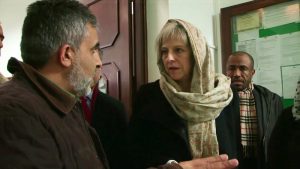 “I think we are heading towards disaster.”
 By


