Αρχική Blog Σελίδα 2670

The Eastern Mediterranean and the EU Parliamentary Election

0

EXECUTIVE SUMMARY: The states of the Eastern Mediterranean should pay close attention to the upcoming European parliamentary election, as its outcome will influence geostrategic and economic developments in that region. Israel, Cyprus, and Greece will have a major role to play in strengthening Western relationships in the region for decades to come.     

I recently returned to Thessaloniki after a week of lecturing at the University of Grenoble in France. The mood there was marked by widespread anxiety about the upcoming elections to the European parliament and the future of the EU. The alarming strengthening of Marine Le Pen, the ongoing hostile rallies of the gilets jaunes, the rise of xenophobia, and the more frequent expression of anti-Israelism as a new form of anti-Semitism collectively constitute a stygian socio-political reality for France and for Europe as a whole.

The French middle class, liberal by nature and visionary due to its historical roots, is worried about the rise in populism and extremism that can be seen in the ascent of both ultra-right and extreme left-wing parties. Members of the middle class are also unnerved by the fact that large parts of their own cohort are falling under the spell of populist rhetoric in response to the gradual lowering of living standards – and to the fact that they have absorbed a daily diet of fake news and conspiracy theories.

International politics is gradually being transformed from a Thucydidian venue of smart power to a dystopian arena of sharp power. The upcoming elections will probably be the first time Europeans vote for an EU parliament under a bombardment of fake news and the spillover effect of Russian sharp power. The incessant attack on the western narrative as false is designed to promote a mental dissociation among western citizens from their political center of gravity: liberal democracy.

In a few weeks, Europeans will exercise their democratic right to choose their representatives in the next European parliament. Yet for the first time since the formation of the Union, millions of those Europeans will cast their votes for political elements and parties that promote Euroscepticism. They will turn against the globalized liberal economy and support the invalid view that the Fourth Industrial Revolution does not include them and their children in the structuring of new moral, ideological, institutional, and corporate regulations that constitute the opening of a new chapter of human history.

This is a critical parameter for the future of Europe and the stability of the Union itself. If radical political elements impose themselves in European states, the European narrative will be weakened, and the results will be exceedingly negative on many levels of European politics and economy.

First, a serious security gap will emerge. The defeat of ISIS’s jihadists, together with the retreat of fighters of the Hay’at Tahrir ash-Sham (ex al-Nursa) from their positions in Syria, means Europe will be under considerable pressure from returning jihadists who hold European passports, or from organized infiltration efforts by jihadists who want to reach western Europe in order to create new terrorist cells there. At a time when Europe needs political unity and close cooperation among governments in order to enhance its security networks, the EU is entering a new phase in which walls constructed by European forces that openly question the Schengen Treaty – i.e., the Visegrad group – are considered the new mechanism of defense against the tsunami of militant Islam. The EU has to work harder to apply a common security agenda that will be able to stop the rise of jihadism inside its borders and deter violence against western targets.

In order for the second of these to occur at an efficient level, it is useful to consider the deterrence apparatus in the Eastern Mediterranean; i.e. Greece, Cyprus, and Israel. If Europe is to acquire a high operational mechanism with which to face post-Syrian Civil War spillover effects, it will have to blend Europeanism with Transatlantic elements.

Soon enough, the Union will have to decide whether or not to evolve into a true political and economic entity in the international system with the potential to play a pivotal role in the future of the Transatlantic prospect or to follow the same course to oblivion that other currency unions, such as the Hanseatic League, took in the past. The coming years are likely to add to economic volatility in the EU.

Europe has considerably delayed its transition from service economy to Artificial Intelligence economy. The Union has fallen behind the US, Japan, India, China, and Israel, thanks mainly to the methods the European Central Bank elected to use to face down the economic crisis within EU ranks. Developments such as Brexit, the asymmetric interdependency on Russia in the energy sector, and the swift aging of the continent will affect the European welfare system in a highly negative way and create a grim economic future.

Moreover, Europe continues to face geostrategic challenges in its east, where Turkey’s ambivalence toward the western world combined with the antagonism between pan-Islamism and pan-Arabism in the MENA region will continue to produce new refugees eager to reach the more advanced and less volatile side of the Mediterranean. The EU seems to be without any persuasive central idea regarding issues like these that might have rallied its citizens around the flag. On the contrary: the nation-states within the Union are formulating different policies and chasing different diplomatic goals.

Israel has enjoyed unprecedented political stability due to the long presence of Benjamin Netanyahu in power. Greece will likely soon reenter the path of stability and accelerating growth due to imminent political developments. In the autumn, or perhaps even during the summer, national elections will be held, and every opinion poll yet published expects the government to be defeated by Nea Dimokratia, the center-right party.

The leader of Nea Dimokratia, Kyriakos Mitsotakis, is a liberal politician and a believer in the free market economy. If his party is in fact victorious, Greece will have the chance to reconstruct its economy by reentering the international economic scene. It will be seeking expedient foreign investments free of the current government’s ideological burdens, which include statism, overtaxing of the middle class, and excessive austerity.

Cyprus, which has discovered a large quantity of natural gas in the Glafkos target within the Cypriot Exclusive Economic Zone, has the potential to greatly increase its clout in the region and thereby apply considerable pressure to the finding of a viable and just solution in the Cypriot Conundrum.

But things are not bright for the rest of Europe. If the Union fails to reshape itself, it will enter an irreversible period of political and economic deterioration, starting from May’s Euro-elections. In both cases, Greece, Cyprus and Israel will have a more advanced strategic role for the future of the Eastern Mediterranean and also for the western presence in the region.

View PDF 

Dr. Spyridon N. Litsas is Associate Professor of International Relations at the University of Macedonia & Visiting Professor at the Sciences Po of the University of Grenoble and at the Supreme Joint College of War of the Hellenic Armed Forces. Follow him on Twitter: @Spyros_Litsas

besacenter.org

Ο Αλέξης αποχαιρετά τον ΣΥΡΙΖΑ

0

Του Γιάννη Σιδέρη liberal.gr

Ο Αλέξης  Τσίπρας από την Κρήτη έκανε έναρξη του τελικού ρεσάλτου προς άλωση της Κεντροαριστεράς, με υψιπετείς λυρικές εξάρσεις και ανιστόρητες πολιτικές αναφορές.

Από το χωριό Χουδέτσι και με μια γλώσσα που προσπαθούσε να υιοθετήσει το κρητικό ιδιόλεκτο, κατηγόρησε τον Μητσοτάκη ότι «πήδαγε σαν φουριάρικο κατσίκι για να αποφύγει την τηλεμαχία». Εξέφρασε δε τη βεβαιότητα ότι «όσο θα ζυγώνουν οι ώρες προς την εκλογική  αναμέτρηση» να ξέρουν οι Κρητικοί ότι «θα είναι πολλά εκείνα τα θεριά  που θα θελήσουν αυτές τις ψυχές να αλλοιώσουν». Επίσης κατά τον ίδιο, η μάχη που έδωσε η κυβέρνηση  απέναντι ακόμα και σε θεριά, ήταν μια κατάθεση ψυχής.

Σημαδιακό είναι ότι την περηφάνια της πάλης με τα θεριά, την μνημόνευσε ανήμερα της ημέρας που είχε εκφωνήσει το εξίσου γενναίο «go back» στο θεριό Μέρκελ. Εκ των υστέρων είδαμε τη μάχη που έδωσε στα μαρμαρένια αλώνια με το θεριό την Καγκελάριο ( δηλαδή είδαμε τη ντροπερή ήττα που υπέστη άνευ καμιάς θεριώδους μάχης …).

Κάποιοι από τους λογογράφους του ξεπατίκωσαν τον Καζατζάκη – και αυτό είναι βέβαια κατ΄ αρχάς θετικό. Ανάγκα και Συριζαίοι πείθονται.  Από τα φυλλάδια της ΚΝΕ και τις απαγγελίες αντιιμπεριλαιστικών τσιτάτων,  αναγκάστηκαν να ξεψαχνίσουν τη γλώσσα  Καζαντζάκη για να θέλξουν συναισθηματικά τους Κρητικούς!

Παράλληλα εν τη ρύμη του λόγου του υποστήριξε «Αυτό που εμείς ονομάζουμε Προοδευτική Συμμαχία σε όλη την Ελλάδα είναι αυτό που σε κάθε εκλογική αναμέτρηση από το ’74 και μετά στην Κρήτη δίνει πρωτιές και μεγάλες νίκες σε όλες τις προοδευτικές και δημοκρατικές δυνάμεις σε όλες τις εκλογικές αναμετρήσεις, σε όλες τις κάλπες σε όλους τους νομούς της Κρήτης».

Ο ισχυρισμός αποτελεί ιστορική λαθροχειρία.  Αυτό «που δίνει πρωτιές και νίκες σε κάθε εκλογική  αναμέτρηση από το 74», λέγεται «Δημοκρατική Παράταξη» (ο όρος είναι ιστορική καταγραφή, όχι προσωπικός ισχυρισμός) και όχι «Προοδευτική συμμαχία».

Και σίγουρα – καλώς ή κακώς – μεταπολιτευτικά την εκπροσώπησε ο Αντρέας και το πολιτικό «απαράτ» του ΠΑΣΟΚ και όχι ο ΣΥΡΙΖΑ, ούτε ο κ. Μπίστης, ο κ. Λιάκος, η κα Ρεπούση. Και πολύ περισσότερο δεν την εκπροσώπησαν η κα Κουντουρά, η κα  Παπακώστα και ο κ. Κόκκαλης (στον εκ των ΑΝΕΛ  αναφερόμαστε. Ο νεότερος κ. Κόκκαλης, όντως διά της οικογένειας του, εκπροσώπησε αρκούντως κερδοφόρως τη δημοκρατική παράταξη, ήτοι τις δημόσιες «δουλειές» του ΠΑΣΟΚ της φθοράς).

Επίσης το πρότυπο του κ. Τσίπρα, ο Αντρέας  δεν ζητιάνευε αντιδεξιές ψήφους στην Κρήτη, κάνοντας αναφορές στην εκλογική επιρροή που είχε κάποτε η Ένωση Κέντρου. Πρόβαλε το ΠΑΣΟΚ και τους καλούσε στο ΠΑΣΟΚ. Κατ΄ αναλογίαν ο κ. Τσίπρας θα έπρεπε να προβάλει τον ΣΥΡΙΖΑ και να τους καλεί στον ΣΥΡΙΖΑ. Το ότι δεν το κάνει δείχνει ότι η υπόθεση ΣΥΡΙΖΑ για τον λαό έχει τελειώσει. Για τον λόγο αυτό έχει τελειώσει και για τον ίδιο.

Αν το ΠΑΣΟΚ διήρκησε τόσα χρόνια, είναι γιατί συσπείρωσε  αυθόρμητα τον λαό κεντρώας και κεντροαριστερής τοποθέτησης, γιατί έδωσε εύκολα λεφτά στο λαό (και τον εκμαύλισε, άσχετα τι λέει τώρα ο λαός) αλλά και γιατί ως σύγχρονο κόμμα μπορούσε με κάποια υποφερτή ικανότητα  να διαχειριστεί το κράτος.

Δεν είναι τυχαίο (και είναι κοινό μυστικό στους κόλπους της κυβέρνησης) ότι τα πιο ικανά στελέχη (υπουργοί, γραμματείς, διευθυντές οργανισμών, σύμβουλοι, είναι οι εκ του ΠΑΣΟΚ προσελθόντες. «Πιάνουν στο φτερό» τα θέματα, όπως μας είπε κάποιος παραδοσιακός Συριζαίος.

«Ο ΣΥΡΙΖΑ είναι ένα μικρό κόμμα μπροστά στη μεγάλη λαϊκή παράταξη, που τώρα οικοδομείται» είπε ο κ. Τσίπρας. Και γι’ αυτό θέλει να  απορροφήσει τον ΣΥΡΙΖΑ «στη μεγάλη λαϊκή παράταξη»

Βέβαια νομίζει ότι θα τον απορροφήσει. Η – καθόλου απρόσμενη σε όποιον είχε  μάτια  να δει  – αντοχή του ΠΑΣΟΚ, και οι αντιδράσεις της αριστερής  πτέρυγας του ΣΥΡΙΖΑ που δεν θα πέσει αμαχητί, ούτε θα κάνει το λάθος να  αποχωρήσει και να του αφήσει το πεδίο ελεύθερο, όπως έκαναν οι Λαφαζάνηδες, δεν προεικάζουν ανέμελο μέλλον για τον κ. Τσίπρα.

https://www.liberal.gr/arthro/250372/politiki/2019/o-alexis-apochaireta-ton-syriza.html

Turkey and the EU: A Doomed Engagement

0

The New Cheney

0

Column: Washington finds a bugaboo in Attorney General William Barr


William Barr / Getty Images

BY: 

I can’t think of a better illustration of our partisan divide than the reactions to Attorney General William Barr’s testimony before the Senate Judiciary Committee Wednesday. Democrats are furious at Barr’s defense of his rollout of the Mueller report and his assertions of executive power. Some Democrats want Barr to resign, others want him to be impeached, and Nancy Pelosi says he’s guilty of lying to Congress. Republicans have found a hero.

Barr is the new Dick Cheney: a stocky, bespectacled, confrontational, blunt, intelligent, unapologetically conservative, experienced, and high-powered official who believes in and fights for the office of the president. Just as Democrats loathed Cheney as a bugaboo manipulating President George W. Bush to further the interests of Halliburton, they attack Barr as a dishonest factotum of President Trump’s. The qualities that drove Democrats batty over Cheney—his inscrutability, his cleverness, his asperity, and above all his success—make them incensed about Barr. These happen to be qualities Republicans find appealing.

What’s behind conservative support for Cheney and Barr is their lack of embarrassment. Most Washingtonians, no matter their party, find it important to be held in esteem by the city’s tastemakers, who are overwhelmingly liberal. Not these two. The classic Cheney moment was his 2004 exchange with Pat Leahy on the Senate floor. Cheney complained that Leahy had called him a war profiteer. Leahy responded that Cheney had said he was a bad Catholic. So Cheney ended the conversation by telling Leahy to perform a physically impossible four-letter act. “You’d be surprised at how many people liked that,” Cheney recollected in a 2010 interview. “It’s sort of the best thing I ever did.” He’s selling himself short.

Republican fans of Barr circulated clips of his Senate appearance Wednesday even as media coverage of his testimony was uniformly negative. No Democrats are held in less esteem by conservatives than the ones on the Judiciary Committee. They will never live down their treatment of Brett Kavanaugh. Trump supporters nodded in agreement when Barr said the controversy over his March 24 description of the Mueller report is “mind-bendingly bizarre.” They chuckled when he said Mueller’s March 27 letter to him was “a bit snitty and I think it was probably written by one of his staff members.” They guffawed when Barr described the verb “spying” as “a good English word.” They cheered when Richard Blumenthal asked for notes Barr had taken of his phone conversation with Mueller and Barr told him no. “Why should you have them?”

Where his predecessor was genial and deferential to Congress and the press, Barr is disdainful and combative. At his April 18 press conference before the publication of the Mueller report, a CBS reporter asked Barr if his use of the word “unprecedented” to describe the circumstances of the Russia investigation was “quite generous to the president and his feelings and emotions.” Barr replied, “Is there another precedent for it?” “No,” the reporter acknowledged sheepishly. Another reporter wondered, “Is it an impropriety for you to come out and sort of spin the report before people are able to read it?” Barr said, “No,” and left the room. Lib owned.

In 2001, Cheney fought with Henry Waxman over records related to his energy task force. Almost two decades later, Barr and Jerry Nadler face each other in a standoff over whether a sitting attorney general ought to be questioned by staff counsel. Not even CNN “could locate an instance where a Cabinet official was interviewed by staff members during a public hearing before the House Judiciary Committee.” But that hasn’t stopped Nadler from claiming there’s “ample precedent” for his request. Committee Democrat Steve Cohen accuses Barr of being afraid of staff attorneys, but anyone who’s watched Barr before Congress knows he doesn’t spook easily. The fight with Nadler is over optics. Nadler wants his hearing to evoke memories of Watergate and Iran-contra. Barr has no problem denying him the opportunity.

The Democrats have a dilemma. Their base would like to impeach Trump, but the public at large is against it, and Democratic voters themselves don’t put impeachment high on the priority list. The people most interested in impeachment, it seems, are cable news anchors and the same four Democrats—SwalwellSchiffLieuBlumenthal—who appear on their shows day after day. Pelosi has adopted a too-clever-by-half strategy of letting the committee chairmen hound the Trump administration while leadership resists full-bore impeachment. The danger of overreach is real.

Barr is an obstacle not just because of his support for a strong presidency. He also shows every sign of wanting to get to the bottom of malfeasance at the FBI and DOJ during the 2016 campaign. His critics decry his use of the word “spying” to describe surreptitious intelligence gathering on Trump advisors, but the day after his Senate testimony the New York Times revealed that George Papadopoulos had been contacted by a second FBI employee as part of the Bureau’s counterintelligence probe. It was another vindication of Barr, who had told Congress last month the question wasn’t if spying had occurred, but if it had been “adequately predicated.”

“I think we did the right thing,” Dick Cheney tells James Rosen in Cheney One on One. “And I don’t have any problem defending it.” Bill Barr gives every indication of feeling the same way. That’s why he’s become a Democratic target. And a GOP star.

The New Cheney

Documents reveal Turkey tracked US military because of coup connection suspicions

0

John Vandiver
Stars and Stripes

The Turkish government tracked the movement of U.S. troops inside Turkey as part of its investigation into an attempted coup in the country, where top political leaders have accused the U.S. of playing a behind-the-scenes role, according to documents obtained by a group that monitors the government in Ankara.

Turkish intelligence reports, which included information on U.S. drone operations, troop movements and counter Islamic State operations involving American personnel, were reviewed on the suspicion that they might have been involved in the failed coup, Nordic Monitor reported Monday.

The organization, which investigates happenings inside the Turkish government, sited a “trove” of Turkish intelligence documents in its report. “The secret probe helps feed into the Erdogan government’s false narrative which claims that the U.S. was the mastermind behind the abortive putsch,” Nordic Monitor said. The Turkish intelligence reports were incorporated into a prosecutor’s file as part of an investigation into the 2016 attempted coup in Turkey, the site said.

Some of the details about U.S. military activities cited in the Turkish intelligence documents were about routine military missions. For example, the reports described basic logistical movements between Incirlik Air Base and a Turkish army base in the southern city of Gaziantep. But the reports also contained information about more sensitive missions that detailed U.S. personnel overseeing the High Mobility Artillery Rocket System deployed in southern Turkey and operations involving the Shadow Tactical Unmanned Aircraft System, Nordic Monitor said.

Turkish prosecutors concluded the documents “were relevant to the coup investigation and ordered all intelligence and military documents to be incorporated in the case file, making them part of the public record,” the site reported. “It helps the Erdogan government to spin conspiracy theories around the coup attempt, with partisan prosecutors doing the bidding of the government instead of searching for the facts.”

U.S. tensions with Turkey are arguably at an all-time high, and the disputes are wide ranging. Washington and Ankara are currently at odds over Turkey’s plan to acquire a sophisticated Russian missile defense system, which the U.S. says poses a threat to NATO. In recent years, there also have been disagreements over the battle against ISIS in Syria and the U.S. military’s close ties to Kurdish fighters that Turkey regards as an enemy force.

Meanwhile, the 2016 attempted coup by elements of the Turkish military also laid bare anti-U.S. sentiments in Turkey as conspiracy theories swirled in pro-Turkish government newspapers about the U.S. being behind the attempt to topple President Recep Tayyip Erodogan’s government. The U.S. has repeatedly denied any involvement and Turkey has never provided any evidence to back up the accusations. Years later, it’s still a point of contention.

In 2018, a group of pro-government lawyers in Turkey filed charges against several U.S. officers associated with Incirlik Air Base, seeking their arrest for alleged ties to terrorist groups.

The lawyers also sought to halt flights leaving the base and access to execute a search warrant. While the case hasn’t advanced, it underscores the fraught state of affairs.

In December, a U.S. servicemember was detained at Istanbul’s Ataturk Airport for questioning by Turkish officials over accusations he had links to a U.S.-based Turkish cleric that Ankara says was a political force behind the attempted coup. The U.S. soldier, who was assigned to a special operations task force, was eventually released.

———

©2019 the Stars and Stripes

Visit the Stars and Stripes at www.stripes.com

Distributed by Tribune Content Agency, LLC.

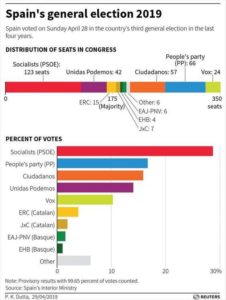
Εκλογές στην Ισπανία και ο Φελίπε Γκονζάλες.

0

Στη συζήτηση που άρχισε και στη χώρα μας για το αποτέλεσμα των εκλογών στην Ισπανία να θυμίσω τις απόψεις του Φελίπε Γκονζάλες όταν ήλθε στην Αθήνα, τον Σεπτέμβριο 2017, για να λάβει το «Βραβείο Δημοκρατίας της Πόλεως των Αθηνών». Είναι ο μακροβιότερος πρωθυπουργός της Ισπανίας.

Ανέλαβε σε ηλικία 40 ετών το 1982. Στα 14 χρόνια στην Πρωθυπουργία θα σφραγίσει τη μετάβαση στη Δημοκρατία και θα οδηγήσει την Ισπανία στα ήρεμα νερά της ΕΟΚ. Από το 1974 μέχρι το 1997 ήταν επικεφαλής του Σοσιαλιστικού Κόμματος (PSOE).

Ο ΣΥΡΙΖΑ απέδωσε την μεγάλη άνοδο του Σοσιαλιστικού Κόμματος στην αριστερή στροφή του και την αποκήρυξη του νεοφιλελευθερισμού.
Την απάντηση του Φελίπε Γκονζάλες στη συνέντευξη του στην «ΚΑΘΗΜΕΡΙΝΗ» το 2017.

«Η συζήτηση στο εσωτερικό του PSOE είναι η ίδια με αυτήν που γίνεται σε όλα τα Σοσιαλδημοκρατικά κόμματα της Ευρώπης. Το πρόβλημα δεν είναι ο αυτοπροσδιορισμός, στα δεξιά, στο κέντρο ή στα αριστερά. Είναι ο καθορισμός ενός πολιτικού εγχειρήματος που θα έχει τη στήριξη της πλειοψηφίας για να ανακτήσουμε την ικανότητα διαχείρισης των προκλήσεων του μέλλοντος, της παγκοσμιοποίησης και των ανισοτήτων που παράγει. Αυτό είναι το θεμελιώδες πρόβλημα.

Και προσθέτει: «Κάποιες φορές ο αμιγώς ιδεολογικός λόγος, είτε από Δεξιά, είτε από Αριστερά, αποτελεί ένα είδος προκαλύμματος, που κρύβει ένδεια πρακτικών λύσεων στα προβλήματα της κοινωνίας».

Συνεχίζει: «Η Αριστερά έχει την τάση να προσκολλάται στα μέσα, ακόμη κι αν δεν βοηθούν στο να επιτευχθούν οι σκοποί που πρεσβεύει. Μου το είχε πει ο Βίλι Μπραντ το 1992.Ο κόσμος έχει αλλάξει, πρέπει να αλλάξουμε κι εμείς».

Για την «κρίση της αντιπροσωπευτικής δημοκρατίας και τον κίνδυνο του εθνολαϊκισμού τονίζει: «Πριν καταγγείλουμε τα κινήματα του εθνολαϊκισμού, πρέπει να σκεφθούμε σοβαρά τι κάναμε λάθος στην πολιτική μας ώστε να δημιουργήσουμε τον χώρο για να αναπτυχθούν οι λαϊκιστές».

Κι όμως η νέα κρίση έρχεται!

1

Αθανάσιος Χ. Παπανδρόπουλος[email protected]/euro2day.gr

Οι συνθήκες για μια νέα και ίσως χειρότερη διεθνή χρηματοπιστωτική κρίση έχουν ήδη δρομολογηθεί και είναι θέμα χρόνου η έναρξή της. Ποιες είναι οι «αποδείξεις». Γράφει ο Αθ. Χ. Παπανδρόπουλος.

Θα πρόκειται για μια χώρα, για ένα γκρουπ επιχειρήσεων ή για νοικοκυριά; Το παγκόσμιο χρέος πάντως, από τα 110 τρισεκατομμύρια δολάρια του 2007, σήμερα βρίσκεται στα 178 τρισεκατομμύρια και στα τέλη του 2020 εκτιμάται ότι θα απέχει ελάχιστα από τα 200 τρισεκατομμύρια δολάρια. Και από αυτά, τα 70 τρισ. θα είναι κρατικό χρέος, τα 80 τρισ. επιχειρηματικά χρέη και τα 50 τρισεκατομμύρια θα οφείλονται από νοικοκυριά. Κατά συνέπεια, σε δύο χρόνια κάθε κάτοικος του πλανήτη, με το καλημέρα, θα οφείλει στο παγκόσμιο χρηματοπιστωτική σύστημα περί τα 30.000 δολάρια ασχέτως της προσωπικής του εισοδηματικής κατάστασης. Αν όλα αυτά δεν αποτελούν ωρολογιακή βόμβα, τότε οι ειδικοί ας μας πουν τι είναι;

Πριν δέκα και πλέον χρόνια, η παγκόσμια χρηματοπιστωτική κρίση που οδήγησε σε πτώχευση και την Ελλάδα, αφετηρία είχε τα νοικοκυριά της Αμερικής. Τα περισσότερα από αυτά βρέθηκαν σε αδυναμία να ξεπληρώσουν ενυπόθηκα δάνεια για αγορά ακινήτων και η φούσκα έσκασε.

Στο βασίλειο των πιστώσεων, από τότε, τίποτε σχεδόν δεν έχει αλλάξει. Οι ΗΠΑ σήμερα είναι πιο υπερχρεωμένες από το 2008. Δεν το λέμε εμείς, το επισημαίνει η τελευταία ανάλυση – έρευνα της Standard and Poor’s (S&R’s), η οποία αναφέρει ότι το συνολικό δημόσιο και ιδιωτικό χρέος στις ΗΠΑ, οδεύει προς πάνω από 50 τρισεκατομμύρια δολάρια και αντιπροσωπεύει 250% του ΑΕΠ της χώρας. Είναι δηλαδή 20 ποσοστιαίες ομάδες ανώτερο από το αντίστοιχο του 2008.

Για τον κοινό θνητό, οι αριθμοί αυτοί ίσως να μην του λένε πολλά πράγματα. Πίσω του όμως κρύβεται μια πραγματικότητα που έχει τεράστια σημασία. Αν σκάσει μια νέα χρηματοπιστωτική φούσκα το παγκόσμιο τοπίο θα σκοτεινιάσει σε επικίνδυνο βαθμό. Με απρόβλεπτες συνέπειες, μας λέει ο Γάλλος οικονομολόγος και συγγραφέας Φρανσουά Λανγκλέ, που το τελευταίο βιβλίο του φέρει τον τίτλο «Όλα μπορούν να γκρεμιστούν! 2019, η χρονιά όλων των κινδύνων».

Η παρατήρηση του Γάλλου οικονομολόγου αλλά και το περιεχόμενο του βιβλίου του, με έβαλαν σε σκέψεις. Έφεραν στο νου μου, για μιαν ακόμη φορά, τις θεωρίες της Αυστριακής Σχολής Οικονομικής Σκέψης, η οποία πριν 140 χρόνια είχε πει ότι όσο οι κυβερνήσεις θα εκδίδουν χρήμα το οποίο θα χρησιμοποιείται για μη παραγωγικούς σκοπούς, τόσο θα προκύπτουν κερδοσκοπικές φούσκες που θα νοθεύουν και τελικά θα καταστρέφουν το σύστημα της αγοράς.

Μια ματιά στα γεγονότα σήμερα, σχεδόν επιβεβαιώνει μέχρι κεραίας, απόψεις που διατυπώθηκαν στα μέσα της δεκαετίας του 1870, όταν ο Καρλ Μένγκερ (1840-1921), Αυστριακός οικονομολόγος, δημοσίευσε το βιβλίο του «Αρχές της Οικονομίας». Τι υποστηρίζει όμως η Αυστριακή Σχολή στην περί «οικονομικού κύκλου» θεωρία της;

Για τους οικονομολόγους της Σχολής αυτής (φον Μιζες, Φρήντριχ Χάγιεκ, Μάρραιη Ροθμπαρντ, Ευγένιο Μπεμ-Μπαβερκ), οι αιτίες των κυκλικών διακυμάνσεων της οικονομικής δραστηριότητας, από περιόδους ανάπτυξης σε περιόδους ύφεσης, θα πρέπει να αναζητηθούν στο χρήμα που κυκλοφορεί, στις πηγές έκδοσης του και στη χρήσιμοποίηση του. Κατά τον Αμερικανό οικονομολόγο Ρόμπερτ Χίγκς, που θεωρείται από τους πιο σύγχρονους εκφραστές της Αυστριακής Σχολής, «η νομισματική πολιτική συγκεκριμένων κυβερνήσεων και πρωτίστως της αμερικανικής, υπήρξε κορυφαίος συντελεστής αστάθειας επί μια εικοσαετία και με αφετηρία τις επιτοκιακές… διακυμάνσεις προκάλεσε τελικά την χρηματοπιστωτική κρίση». Βέβαια, στη διαπίστωση αυτή οι κρατιστές Αμερικανοί οικονομολόγοι επιρρίπτουν σοβαρές ευθύνες στην κινεζική νομισματική πολιτική αλλά και σε …άφρονες καπιταλιστές που δανείζονταν πολύ φθηνά για να επιδώσουν σε κερδοσκοπικές πράξεις επί ακινήτων και χρεωγράφων.

Όπως και να έχουν τα πράγματα, γεγονός είναι ότι οι δυτικές χώρες, πάνω στα ερείπια της αμερικανικής κρίσης, προσπάθησαν να σώσουν τις τράπεζες τους και για τον σκοπό αυτόν εφάρμοσαν γενναιόδωρες δημοσιονομικές πολιτικές, με αποτέλεσμα στη Δύση τα δημόσια χρέη να περάσουν από 46 τρισ. δολάρια το 2008 στα 62 τρισεκατομμύρια το 2018. Παρατηρήθηκε έτσι μια αύξηση 77% η οποία από μόνη της λέει πολλά. Την ίδια περίοδο, οι κεντρικές τράπεζες μηδένισαν τα επιτόκιά τους και άρχισαν να αγοράζουν σωρηδόν κρατικά ομόλογα.

«….Παρ’ όλα αυτά…», τονίζει ο Πήτερ Καγιό, πρώην επικεφαλής οικονομολόγος στη γνωστή Moody’s, «…η ανάκαμψη υπήρξε αναιμικά, οι κυβερνήσεις συνεχίζουν να υπερχρεώνονται και το φθηνό τραπεζικό χρήμα που κυκλοφορεί, τροφοδοτεί νέες φούσκες, οι οποίες κανείς δεν μπορεί να φανταστεί τις το τι θα συμβεί όταν σκάσουν…». Όντως, η κατάσταση είναι εκπληκτική. Στη Κίνα για παράδειγμα, οι κρατικές επιχειρήσεις έχουν περί τα 26 τρισεκατομμύρια δολάρια χρέη προς τις κρατικές τράπεζες και προς αδιαφανή επενδυτικά ταμεία.

Στην Αφρική, κατά την Παγκόσμια Τράπεζα, 11 χώρες, από 4 το 2008, είναι υπερχρεωμένες και αρκεί μια διεθνής στραβοτιμονιά για να βρεθούν χρεοκοπημένες οι 6 από αυτές. Στις ΗΠΑ, μπορεί ο πρόεδρος Ντόναλντ Τράμπνα αποκοιμίζει τους ψηφοφόρους του με τείχη και άλλα παρόμοια για τους μετανάστες, το ομοσπονδιακό χρέος όμως τραβά την ανηφόρα. Τα δε νοικοκυριά αντί τώρα να αγοράζουν σπίτια επί πιστώσει, έχουν κυριολεκτικά τρελλαθεί με αγορές αυτοκινήτων. Ήδη όμως, κάπου 7 εκατομμύρια αγοραστές ξεπερνούν τους τρεις μήνες σε καθυστερήσεις πληρωμών και ο αριθμός τους ανεβαίνει.

Από την πλευρά τους, οι επιχειρήσεις, επωφελούνται από το πολύ φθηνό χρήμα και δανείζονται μετά μανίας, όχι για να κάνουν επενδύσεις, αλλά για να επαναγοράζουν τις μετοχές τους και να αυξάνουν έτσι την τιμή τους στο Χρηματιστήριο. Παράλληλα όμως χρυσοπληρώνουν και κάποια στελέχη τους, που αντί να σκέπτονται τις παραγωγικές επενδύσεις δαπανούν πολύτιμο χρόνο σε χρηματιστηριακά παιγνίδια.

Μόνον για το 2018, οι αμερικανικές επιχειρήσεις επαναγόρασαν μετοχές τους για 1,110 τρισ. δολλάρια έναντι 400 δισ. δολλάρια που επαναγόραζαν τα έτη 2015, 2016 και 2017.

Όσο για τις αμερικανικές τράπεζες, μη έχοντας διδαχθεί πολλά πράγματα από την κρίση των subprimes σήμερα «παίζουν» με τα αποκαλούμενα «leverage loans»,που είναι υψηλότοκα δάνεια σχεδόν τοκογλυφικά, προς παραπαίουσες επιχειρήσεις. Όπως τον παλιό καλό καιρό τα δάνεια αυτά, «τιτλοποιούνται», δηλαδή σαλαμοποιούνται και πωλούνται σε άλλες τράπεζες. Αυτές οι τελευταίες, προχωρούν σε νέα σαλαμοποίηση και έτσι ο κίνδυνος διαχέεται παντού.

Αρκεί έτσι λόγου χάρη ο επιχειρηματίας κ. Σμίθ στο Οχάϊο να δηλώσει πτώχευση και μια τράπεζα στην Ιταλία θα εγγράψει τη ζημία στους λογαριασμούς της. «…Με την τεχνική αυτή», μας λέει ανήσυχος, ένας γνωστός Ιταλός επιχειρηματίας, «στην πραγματικότητα, το χρέος των αμερικανικών επιχειρήσεων θα μπορούσε να υποτιμηθεί κατά 30%…».

Το όλο θέμα όμως, δεν σταματά στο σημείο αυτό. Πάει ακόμα πιο μακρυά. Γι’αυτό και θα επανέλθουμε με το δεύτερο μέρος αυτού του άρθρου, που είναι προϊον μιας έρευνας μας τόσο σε τραπεζικό όσο και σε επιχειρηματικό επίπεδο.

Αθανάσιος Χ. Παπανδρόπουλος[email protected]

https://www.euro2day.gr/specials/opinions/article/1677597/ki-omos-h-nea-krish-erhetai.html

O επικίνδυνος εθισμός της Τουρκίας

0

Financial Times/ euro2day.gr

Η κατάρρευση της τουρκικής λίρας αντανακλά ανησυχίες για τα διαρθρωτικά προβλήματα της τουρκικής οικονομίας. Το μη βιώσιμο μοντέλο ανάπτυξης, ο ρόλος των εγχώριων τραπεζών και το πολιτικό ρίσκο.

Η τουρκική λίρα έχει ένα καθόλου ζηλευτό ρεκόρ φέτος, έχοντας υποχωρήσει πάνω από 11%, στην 145η θέση μεταξύ 146 νομισμάτων που παρακολουθεί το Bloomberg.
Μόνο το πέσο της Αργεντινής, το οποίο έχει υποστεί sell-off εν μέσω ανησυχιών για επιστροφή της Κριστίνα Φερνάντεζ Κίρχνερ στην εξουσία, της πρώην αριστερής προέδρου, έχει τη χειρότερη επίδοση.

Ο Ρόμπιν Μπρουκς, επικεφαλής οικονομολόγος στο Ινστιτούτο Διεθνούς Χρηματοοικονομικής (IIF), υποστηρίζει ότι η πορεία της λίρας αντανακλά εν μέρει ανησυχίες για τη φύση της ανάπτυξης στην έβδομη μεγαλύτερη οικονομία της Ευρώπης, η οποία εξαρτάται σε μεγάλο βαθμό από τον δανεισμό.

To IIF παρακολουθεί αυτό που αποκαλεί «πιστωτική παρόρμηση» -η οποία ορίζεται ως η τριμηνιαία αλλαγή στις νέες πιστώσεις που εκδίδονται- και τη συγκρίνει με την ακόλουθη ανάπτυξη στο ΑΕΠ. Με βάση τη μέτρηση αυτή, σημειώνει, η Τουρκία είναι μεταξύ των πιο εξαρτημένων από το χρέοςαναδυόμενων οικονομιών, μαζί με την Κολομβία, τη Ρωσία, την Ινδονησία και τη Βραζιλία.

O κ. Μπρουκς σημειώνει ότι η ραγδαία πιστωτική επέκταση που σημειώθηκε πριν από δύο χρόνια στην Τουρκία, η οποία τροφοδοτήθηκε από κρατικές εγγυήσεις σε δάνεια μικρομεσαίων επιχειρήσεων και οδήγησε το έλλειμμα στο ισοζύγιο συναλλαγών της χώρας σε μη βιώσιμα επίπεδα, πυροδότησε πιστωτική ασφυξία το 2018, μετά την κατάρρευση του νομίσματος.

Αυτή τη χρονιά, η πίστωση έχει αρχίσει να ρέει και πάλι, κυρίως μέσω εγχώριων τραπεζών, οι οποίες έχουν αυξήσει τη χορήγηση δανείων. Τούτο έχει αρχίσει και πάλι να επιβαρύνει τη λίρα.

«Η πραγματικότητα είναι πως οι παγκόσμιες κεφαλαιακές αγορές είναι πιο ευμετάβλητες και λιγότερο πρόθυμες να χρηματοδοτήσουν μια ανάπτυξη που στηρίζεται στην πίστωση, το οποίο είναι, πιστεύω, ο λόγος που η πρόσφατη πιστωτική επέκταση συνέπεσε πάλι με την αύξηση της μεταβλητότητας στη λίρα», έγραψε σε πρόσφατη έκθεση.

Oι πολιτικές μηχανορραφίες έχουν επίσης διαδραματίσει ρόλο, σημείωσε. Η μεγάλη βουτιά στη λίρα το περασμένο καλοκαίρι, για παράδειγμα, ήρθε μετά την κράτηση του Αμερικανού πάστορα, η οποία πυροδότησε κυρώσεις από την Ουάσιγκτον.

«Ακόμα και μετά τη στροφή των κεντρικών τραπεζών προς πιο ήπια αύξηση των επιτοκίων, η πίστωση παραμένει ένα ζήτημα» πρόσθεσε.

Copyright The Financial Times Limited 2017. All rights reserved.

The High-Stakes Confrontation Between Trump and Khamenei

0

KARIM SADJADPOUR

Source: Getty
Summary:  Neither leader appears to want escalating conflict—yet that’s precisely where things seem to be headed.
President Donald Trump doesn’t want conflict. Ayatollah Khamenei doesn’t want economic collapse. Yet that is where things are headed.

Put yourself in the shoes of Iran’s 80-year-old supreme leader, Ayatollah Ali Khamenei. His regime is beset by nearly 50 percent inflation, a collapsed currency, persistent labor strikes, and an irrepressible women’s-rights movement. Epic floods recently killed more than 75 people and caused nearly $3 billion in damage. A locust plague is threatening 300,000 hectares—$9 billion worth—of farming land. “Things have never been this bad” is a refrain commonly heard from Iran these days.

Beyond its borders, Iran is spending several billion dollars annually to arm and finance regional allies—including Syria’s Assad regime, Lebanese Hezbollah, Iraqi Shia militias, and the Houthis of Yemen—that offer little financial return on that investment. Direct flightsbetween Tehran and Caracas have resumed so Iran can prop up the embattled Maduro regime.

Against this backdrop, a U.S. president whom Khamenei has described as “mentally retarded”—Donald Trump—is pursuing a relentless economic-pressure campaign seemingly intended to force either Iran’s capitulation or its collapse. First, in May 2018, Trump unilaterally pulled out of the Iran nuclear deal. In April 2019, the State Department officially designated Iran’s most powerful political and economic institution—the Islamic Revolutionary Guard Corps (IRGC)—a terrorist organization, further rendering that group an international pariah. And now Secretary of State Mike Pompeo has announced that no countries will be granted further exemptions to import Iranian oil, an attempt to choke the lifeblood of Iran’s economy.

“Everyone has a plan until they get punched in the mouth,” Mike Tyson has famously said. Khamenei’s reaction—or lack thereof—to being punched by Trump repeatedly could have important consequences for the global economy, the stability of Iran and the Middle East, and even America’s 2020 presidential election.

Rarely have an American president and his national security adviser held more divergent views than Donald Trump and John Bolton. Trump has repeatedly expressed an aversion to greater U.S. involvement (including conflict) in the Middle East, and his affinity for autocrats makes clear that he has no interest in democracy promotion or regime change in Iran. He has made numerous unreciprocated efforts to meet Iranian President Hassan Rouhani and has told aides and foreign leaders that his “maximum pressure” campaign is designed to be a prelude to diplomacy, not conflict.

Bolton, by contrast, has a long history of advocating both military strikes and regime change against Iran. Pompeo has sought to reconcile these contradictory impulses by focusing on the means—that is, by raising the pressure—rather than the endgame. “The worst fear of Bolton and Pompeo,” a senior State Department official told me, “is that the Ayatollah [Khamenei] writes Trump a letter, suggesting a get-together. They know the president would jump at such an opportunity.”

Can Khamenei overcome his pride and cynicism to try to exploit the Trump administration’s internal divides, or will he choose to escalate? An insufficient response to American bullying could cause him to lose face; an excessive response could cause him to lose his head. Khamenei essentially has three options, and all of them are fraught with risk:

STRIKE A DEAL WITH TRUMP

The quickest way for Khamenei to halt Iran’s economic hemorrhaging would be to allow Rouhani to pursue a deal with the Trump administration. Given Trump’s weakness for flattery and disinterest in details, it’s conceivable Tehran could get an even better deal with Trump than it did with Obama.

While this outcome is plausible, it’s highly unlikely. Khamenei’s longtime distrust of the “deceitful, untrustworthy, and back-stabbing” U.S. government was vindicated after Trump pulled out of the Joint Comprehensive Plan of Action—the Iran nuclear deal—and he understandably fears that giving in to pressure may encourage Bolton and Pompeo to turn the heat up, not off. For Khamenei, subjecting 80 million Iranians to another 20 months (at least) of economic hardship may be preferable to holding his nose, swallowing his pride, and doing a deal with Trump.

WAIT TRUMP OUT

While Khamenei had vowed to “burn” the JCPOA were the United States ever to renege on its commitments, Tehran’s response to Trump’s provocations has so far been restrained. Iran has complied with the nuclear deal and has yet to react to the Trump administration’s designation of the IRGC as a terrorist group. Although one of the strategic goals of this restraint was to show the world it is the United States, not Iran, that deserves to be isolated, America’s economic might has rendered this strategy moot. “One of the strongest industrialized countries in the world has made a political decision.” Ralf Thomas, the CFO of Siemens, said last year. “As an industrial company, we have to recognize that.”

Former—and potentially future—U.S. officials have sought to reassure Iranian Foreign Minister Javad Zarif and Rouhani that Trump is a weak president unlikely to get reelected, and a Democratic president will swiftly return to the JCPOA come January 2021. Exercising such strategic patience, however, is a risky strategy for Khamenei. In addition to the possibility that Trump will get reelected, Khamenei rightfully fears that if Iran sits on its hands until January 2021, even Democrats may come to believe that the United States can eat its cake and have it too. “Why should we lift sanctions,” a former Obama-administration official asked rhetorically, “when they’ve stayed committed to the deal for four years and will use the sanctions relief to support our adversaries?”

COUNTER-ESCALATE

If Khamenei believes he can’t do a deal with Trump, and he fears that waiting out Trump projects weakness, he may contemplate restarting Iran’s nuclear program, counter-escalating against U.S. interests and allies in the Middle East, or both. Iran is the only country in the world simultaneously fighting three proxy wars—against the United States, Israel, and Saudi Arabia—each of which it could further agitate. Indeed, Arab Gulf officials claim to have picked up intelligence indicating that Tehran is planning to agitate against them in the region, via proxy. Given the already turbulent state of the Middle East and Trump’s inclination to further withdraw from the region of “death and sand,” however, Tehran’s threat to destabilize is a weakening asset.

If Tehran chooses to recommence its nuclear activities, it will likely do so very deliberately—still under the guise of a civilian energy program—to avoid triggering a unified international response. Iran’s renewed nuclear activities, coupled with an absence of international resolve, would force the United States and Israel to contemplate once against the possibility of military action against Iran’s nuclear facilities. Either Iranian escalation—nuclear or regional—could undermine Trump’s desire to withdraw from the Middle East as America’s regional allies, particularly Israel and Saudi Arabia, would request a greater U.S. presence to counter an agitated Iran.

Despite the overwhelming criticism of Trump’s maximum-pressure campaign, there are already signs of its impact on Iranian thinking. Whereas last year Khamenei strictly prohibited any talks with the United States on any issues and forbade Rouhani from accepting Trump’s offer to meet “anytime and without preconditions,” Zarif now appears eager to open a channel of communication with Washington—starting with hostage negotiations—and took the unprecedented step of appearing on Fox News to directly appeal to Trump.

Yet Khamenei’s 30-year tenure as supreme leader has honed his three-dimensional chess skills, and it’s likely that he may pursue these three seemingly contradictory objectives—negotiations, strategic patience, and escalations—simultaneously. While Zarif is waving a flag of diplomacy, Khamenei will likely simultaneously authorize Qassem Soleimani, commander of the IRGC’s Quds Force, to activate Iran’s regional proxies against U.S. allies and interests in the Middle East. Whereas Washington amasses leverage with economic sanctions, one of Tehran’s few sources of leverage is its ability to sow chaos and carnage.

Just as the Iran hostage crisis ended the Carter presidency, Iran-Contra tainted the Reagan presidency, and the Iran nuclear program and deal engrossed the Obama presidency, Trump’s Iran gamble could similarly consume the duration of his first term and either boost or bust his chances of a second term. Iran, to help ensure that Trump is a one-term president, should be expected to pursue policies that could trigger regional unrest and a spike in oil prices, increasing the anxieties of American voters.

Khamenei and Trump have a mutual interest in averting conflict and cooperating, but they face a prisoner’s dilemma. As the example of both the 2015 JCPOA and the current nuclear negotiations with North Korea illustrate, the path to diplomacy is often paved with mutual threats and escalation. While the winner of the Trump-Khamenei face-off remains unclear, the biggest losers of the next two years will almost certainly be the people of Iran, as well as the inhabitants of Middle East countries where Iran wields influence.

This article was originally published by the Atlantic.

https://carnegieendowment.org/2019/04/29/high-stakes-confrontation-between-trump-and-khamenei-pub-79036?utm_source=ctw&utm_medium=email&utm_content=buttonlink&mkt_tok=eyJpIjoiWXpkbVltVTVObUl6TkRVeiIsInQiOiJrQWhRcWZ2QzI3OGF4VUt4c3BaWkVSeW5xV1R5ODk2RkRWcTZQRmFySnNOTDQyV2Y1NG9MaDlPbEtmS20wR2orUG9JeVVzQW9oMTdja3Zvb1A2TWNpeUdIbVwvR2tPOVNSMDE2VjVmV1pEeFczMzA2VkNObmFlWWFhYk5Dem9zZ0EifQ%3D%3D

A “People’s War”: How China Plans to Dominate the South China Sea

0

May 2, 2019

“Essaying some foresight into these matters now could pay off handsomely if China tries to put General Chang’s—and Mao’s—strategic concept into practice.”

by James Holmes National Interest
By all means, let’s review China’s way of war, discerning what we can about Chinese warmaking habits and reflexes. But these are not automatons replaying the Maoist script from the 1930s and 1940s. How they might transpose Maoist doctrine to the offshore arena—and how an unruly coalition can surmount such a challenge—is the question before friends of maritime freedom.

Last year China’s defense minister, General Chang Wanquan, implored the nation to ready itself for a “people’s war at sea.” The purpose of such a campaign? To “safeguard sovereignty” after an adverse ruling from the International Tribunal for the Law of the Sea. The tribunal upheld the plain meaning of the UN Convention on the Law of the Sea (UNCLOS), ruling that Beijing’s claims to “indisputable sovereignty” spanning some 80-90 percent of the South China Sea are bunk.

A strong coastal state, in other words, cannot simply wrest away the high seas or waters allocated to weaker neighbors and make them its own.

Or, at any rate, it can’t do so lawfully. It could conceivably do so through conquest, enforced afterward by a constant military presence. Defenders of freedom of the sea, consequently, must heed General Chang’s entreaty. Southeast Asians and their external allies must take such statements seriously—devoting ample forethought to the prospect of marine combat in the South China Sea.

That’s the first point about a people’s war at sea. A clash of arms is possible. Statesmen and commanders in places like Manila, Hanoi, and Washington must not discount Chang’s words as mere bluster.

Indeed, it’s doubtful China could comply with the UNCLOS tribunal’s ruling at this stage, even if the Chinese Communist Party leadership wished to. Think about the image compliance would project at home. For two decades now, Beijing has invested lavishly in a great navy, and backed that navy up with shore-based firepower in the form of combat aircraft, anti-ship missile batteries, and short-range warships such as fast patrol craft and diesel submarines.

It was foolish to tie China’s national dignity and sovereignty to patently absurd claims to islands and seas. But party leaders did so. And they did so repeatedly, publicly, and in the most unyielding terms imaginable. By their words they stoked nationalist sentiment while making themselves accountable to it. They set in motion a toxic cycle of rising popular expectations.

Breaking that cycle could verge on impossible. If Beijing relented from its maritime claims now, ordinary Chinese would—rightly—judge the leadership by the standard it set. Party leaders would stand condemned as weaklings who surrendered sacred territory, failed to avenge China’s century of humiliation despite China’s rise to great power, and let jurists and lesser neighbors backed by a certain superpower flout big, bad China’s will.

No leader relishes being seen as a weakling. It’s positively dangerous in China. As the greats of diplomacy teach, it’s tough for negotiators or political leaders to climb down from public commitments. Make a promise and you bind yourself to keep it. Fail to keep it and you discredit yourself—and court disaster in the bargain.

Like any sane leadership, Beijing prefers to get its way without fighting. Fighting, though, could be the least bad of the options party leaders have left themselves. Quite the predicament they’ve made for themselves.

Which leads to the second point. Judging from Chang’s words, small-stick diplomacy has run its course. Small-stick diplomacy was about deploying the China Coast Guard and fellow nonmilitary sea services to police waters Beijing claimed. It depicted China’s sovereignty in the South China Sea as a fact, and dared woefully outmatched rivals to reverse that fact.

Left unopposed, de facto Chinese sovereignty—a near-monopoly on the use of force within borders sketched on the map—would have become entrenched over time. Once it became the new normal, it might even have taken on an aura of legitimacy among seafaring states.

The UNCLOS tribunal struck China’s approach a grievous blow, collapsing the quasi-legal arguments underlying small-stick diplomacy. The tribunal’s decision makes it clear that Chinese maritime forces operating in, say, the Philippines’ exclusive economic zone are invaders or occupiers—not constables.

If Beijing can’t get its way through white-hulled coast-guard vessels, that leaves military force. Sovereign states deploy law-enforcement assets to police what is rightfully theirs. They deploy military forces to fight for things that are in dispute. Chang’s warlike talk implies that Beijing has abandoned the softly, softly approach and has tacitly admitted Southeast Asia constitutes a contested zone.

And the lingo he employs matters. People’s war is a Maoist phrase used to convey certain martial ideas. Mao Zedong’s Red Army waged people’s war to seize contested ground from Japanese invaders and Chinese Nationalists. It appears China now sees the South China Sea in similar terms—as an offshore battleground where rivals must be overcome by force.

But not by military force alone. Beijing won’t withdraw the coast guard, maritime enforcement services, or the fishing fleet—an unofficial militia—from embattled waters. They will stay on as part of a composite whole-of-government armada. But the People’s Liberation Army (PLA) Navy and Air Force will figure more prominently in the force mix.

In the days of small-stick diplomacy, the naval big stick posed an implicit threat from over the horizon. Philippine or Vietnamese mariners knew the China Coast Guard had backup if they defied it. In all likelihood Chinese commanders will flourish the big stick more promiscuously in the future—rendering the threat overt and visible rather than latent and unobtrusive.

Here’s the third point. A people’s-war-at-sea strategy will confront a motley coalition in which outsiders—America, maybe joined by Japan or Australia—supply the bulk of the heavy-hitting combat power. The Philippines is lopsidedly outgunned. Vietnam has pluck and a formidable military, but it can hardly stand up to the northern colossus without help.

The coalition’s curious makeup would furnish Beijing opportunities for coalition-breaking. China might reckon that any conflict in the South China Sea would be a “war by contingent” for the United States, a war in which Washington fixes the size of a force dispatched to support regional allies and instructs the commanders of that force to do the best they can with the resources they have.

Such strategies are excellent for troublemaking but seldom decisive in themselves. Lord Wellington, for instance, led a contingent ashore in Iberia in 1807. The expedition gave Napoleon a “Spanish ulcer,” a nagging commitment on a new front. Yet Wellington never kidded himself that he would win a continent-spanning war with a modest expeditionary force augmented by partisans and the Royal Navy.

Such an approach, in other words, would betray half heartedness on Washington’s part. After all, America would have embarked on an open-ended enterprise in a distant theater off the opponent’s shores without any real thought of victory. Half Heartedness kills in such ventures.

People’s war is about outlasting stronger foes under circumstances like these. If the weaker contender is a China, endowed with sizable reserves of hard power to tap, then that contender needs time. Its armed forces protract the campaign, both to gain time to muster more strength and to wear away at enemy combat strength.

In short, China could win even if it remains weaker than America in the aggregate. The PLA could narrow or reverse the balance of forces in the theater—overpowering the U.S. contingent at the place and time that truly matter. It could dishearten Washington. U.S. leaders might despair of sustaining the undertaking indefinitely. Or, China could outlast America—inflicting numerous tactical losses over a long time, and thus driving the price tag of preserving freedom of the seas higher than U.S. leaders are willing to pay. If America goes home, the venture collapses.

How, in operational and tactical terms, can PLA commanders bring this about? By hewing to their own warmaking traditions. China is politically and strategically predictable in the South China Sea yet operationally and tactically unpredictable. Politically and strategically predictable because party leaders painted themselves into a corner with domestic constituencies. Tactically unpredictable because that’s how Chinese forces have fought since the age of Mao.

Indeed, “active defense,” the concept whereby Mao codified his ideas about people’s war, remains the heart of Chinese military strategy. Just ask Beijing. To oversimplify, the conceit behind active defense is that a weaker China can lure a stronger pugilist into overextending and tiring himself before delivering a punishing counterpunch. Conjure up the great Muhammad Ali’s Rumble in the Jungle in your mind and you get the idea.

https://nationalinterest.org/blog/buzz/peoples-war-how-china-plans-dominate-south-china-sea-55427

The European Union’s lack of political strategy toward the Western Balkans can only benefit Russia and China.

0

As several countries celebrated the fifteenth anniversary of the big bang enlargement on May 1, there was little cause for jubilation in the Western Balkans.

A summit of the region’s leaders, hosted in Berlin by Chancellor Angela Merkel on April 29, exposed divisions and indecision instead of unity and strategy. The lack of any sustained, long-term policy toward the Western Balkans will play into the hands of Russia and China, as if EU leaders are not already aware of that possibility.

Judy Dempsey
Dempsey is a nonresident senior fellow at Carnegie Europe and editor in chief of Strategic Europe.

Indeed, it is more than worrying how European governments have consistently failed to take its own back yard—Albania, Bosnia and Herzegovina, North Macedonia, Montenegro, Serbia, and Kosovo—seriously. It’s as if the EU has learned little from the former Yugoslav war of the 1990s that exposed deep historical divisions among the big EU countries.

The war finally ended in 1999. But it did not put closure to the centuries-old conflict between Serbia and Kosovo—a conflict that, to this day, divides the union. The EU has failed to adopt a united stance on recognizing the independence of Kosovo in 2008, with several countries, including Spain, opposing that new status. Serbia, which waged a policy of ethnic cleansing against the ethnic Albanians in Kosovo during the 1990s ending only after NATO intervened, has consistently rejected Kosovo’s unilateral declaration of independence.

Yet because Serbia wants to join the EU—as does Kosovo—Serbian President Aleksandar Vučić and his Kosovar counterpart, Hashim Thaçi, proposed a land swap on ethnic lines last year in a bid to normalize relations. The calculation was that if such a swap could be agreed, Serbia could then recognize Kosovo’s independence, one of the major conditions for starting accession talks with the EU.

Those bilateral talks not only broke down, but any idea of a land swap was vehemently opposed by Merkel and former diplomats and ministers who played a major role in ending the war in the former Yugoslavia. They believe it would set a very dangerous precedent. But the EU’s foreign policy chief, Federica Mogherini, and President Donald Trump’s national security advisor, John Bolton, supported the swap.

In the meantime, relations between Belgrade and Pristina have turned sour. In November 2018, Kosovo imposed a 100 percent tariff on Serbian goods because Belgrade has been lobbying against Kosovo joining Interpol, precisely because it would amount to this organization giving Kosovo’s independence more international legitimacy.

During the Berlin summit, Merkel, who has taken a close interest in the Western Balkans after she launched the “Berlin Process” in 2014, which was aimed at encouraging regional cooperation and closer integration, had hoped to kickstart a dialogue between Serbia and Kosovo. Another summit will be held in July 2019, this time hosted in Paris by President Emmanuel Macron.

Macron’s attitude toward the Western Balkans is completely at odds with Merkel’s. Merkel is not naïve enough to believe that these countries will join the union in the near future. The state institutions are very weak, corruption is rampant, and the economies are underdeveloped. But she knows that down the road the region’s place is in the EU.

Macron, however, has little interest in mentioning the “e” word. Further enlargement, in his view, would further weaken the cohesion of the EU and fuel populist or far right movements. It is a view shared by some other countries, including the Netherlands.

Yet what is even more disappointing about these divisions and lack of strategy is the EU’s attitude toward North Macedonia. Against all the odds, Greek Prime Minister Alexis Tsipras and North Macedonian Prime Minister Zoran Zaev managed to resolve a long and debilitating dispute over the future name of Macedonia. When the agreement was clinched between Athens and Skopje, it was an immense fillip for Zaev. Greece would no longer block Zaev’s ambitions to have his country join NATO and the EU.

Yet, for all the courageous steps in ending this dispute, the EU has been ungracious, to say the least. During the Berlin summit, Zaev was hoping he would be given a date for starting EU accession talks. Macron did not agree. Nothing like a slap in the face for Skopje and Athens.

The rest of the region still hopes that Merkel will change Macron’s mind. But for now, the EU’s policy toward the Western Balkans is divided and short-sighted.

Thankfully, these countries can still count on NATO to extend security and stability. In July 2018, it invited North Macedonia to join after previously admitting Montenegro, a move Russia had tried to prevent. Without the alliance, the region would be in a very sorry state and even more vulnerable to Russian interference.

https://carnegieeurope.eu/strategiceurope/79043?utm_source=rssemail&utm_medium=email&mkt_tok=eyJpIjoiTlRoaU9UQTVNMlJpTjJWbCIsInQiOiJUVE1HMldEQkhFNlRnR29ZejFyamp1a1NGU1NqRTVmRzdPUVVTR3dcL1RBNXZUQ0piQVNjWGcrdzROZ0huQXFMWDBaeHErSnZ6U0d6YlM0Y1dqa3Y0Z2NMdXBLbGFaZFwvTis3VCtOaU90cjdvZ3RiM3l0OVFReDI5aGd1U1pudENVIn0%3D

Ο Π. Σάντσες και η νίκη του PSOE : τα κοντά ποδάρια της υποκρισίας και τα διδάγματα της Ιστορίας.

1

( Μπορούσε στην Ελλάδα, να ακολουθηθεί η γραμμή Σάντσες; Γιατί δεν έγινε; )
…………………………………………………………………………………………………………….
του Ελευθερίου Τζιόλα.

Για τα αποτελέσματα των Ισπανικών Εκλογών ξεχειλίζει, για μια ακόμα φορά σε ένα ακόμα ζήτημα, η υποκρισία.
Σχετική κριτική για το γεγονός αυτό ασκήθηκε, ήδη. Όχι, πάντως, στην έκταση που θα έπρεπε και με την απαιτούμενη ένταση.
Πρωταγωνιστικής υποκρισίας η στάση του Α.Τσίπρα, που με χαρακτηριστική ευκολία αποστασιοποιείται από τον ”στενό φίλο” Χ. Ινγκλέσιας των σε πολύ μεγάλη υποχώρηση Podemos (- 25 έδρες !), μεταμφιέζεται με εντυπωσιακή ευκολία στον νικητή …Π. Σάντσες και θριαμβολογεί υπέρ της νίκης του και για λογαριασμό του ! Διαγράφοντας, μέσα στην ”ωραία ατμόσφαιρα” και ένα επιπλέον κρίσιμο στοιχείο από την στρατηγική του Π. Σάντσες, ότι ουδέποτε ο προοδευτικός Π.Σάντσες έχτισε αντιδεξιό μέτωπο με τον αντίστοιχο …δεξιό Ισπανό Π. Καμένο, όπως έκανε ο ίδιος ο Α.Τσίπρας επί τέσσερα (4) και πλέον χρόνια στη μνημονιακή Ελλάδα !
Ο Κ. Μητσοτάκης δεν μπορεί να υποδύεται το ρόλο του αυριανού πρωθυπουργού μιας χώρας σαν την Ελλάδα και κάθε τι που ανήκει στο ΕΛΚ να το υιοθετεί. Από τις απόψεις του γερμανού Μ. Βέμπερ μέχρι τον ολίγιστο Π. Κασάδο του ισπανικού Λαϊκού Κόμματος και των ακροδεξιών προτιμήσεων του, που μάλλον ενίσχυσαν παρά αναχαίτισαν το ακραία αντιδραστικό Vox, το οποίο μετά από 42 χρόνια εισέρχεται για πρώτη φορά (!) στην ισπανική Βουλή ( +24 έδρες !).
Η Φ. Γεννηματά, που θεωρεί ότι για να μιλά εκ μέρους του PSOE στην Ελλάδα αρκεί η γενική ονοματοθεσία (σοσιαλιστές), που κι αυτή πλέον δεν υπάρχει αναρτημένη στον τίτλο του κόμματος που προεδρεύει (ο επίσημος τίτλος είναι: ”Κίνημα Αλλαγής”). Ή, ότι αρκεί μια χαλαρή, τυπική σχέση, στα πλαίσια ενός ευρύ διευρωπαϊκού/διακομματικού θεσμού, του Ευρωπαϊκού Σοσιαλιστικού Κόμματος (με παρατηρητή και τον Α.Τσίπρα), για να αποκτηθεί το αυθεντικό δικαίωμα ενδοχώριας εκπροσώπησης των Ισπανών Σοσιαλιστών και η γνησιότητα του εκφραστή μιας νίκης, που όμως κατακτήθηκε μέσα από μια στρατηγική και μια πολιτική του Π.Σάντσες και του PSOE, αντιδιαμετρικά αντίθετη, από εκείνη που ακολούθησε ο Γ. Παπανδρέου, ο Ε. Βενιζέλος και δεν αρνήθηκε ούτε η ίδια (η Φ.Γεννηματά) σε σχέση με τη Δεξιά. Κι ας γίνουμε συγκεκριμένοι : ο Π. Σάντσες αρνήθηκε κάθε συμμαχική – κυβερνητική σχέση με τη Δεξιά, και την καταπολέμησε διαφωνώντας και με ΄΄βαρωνείες΄΄του κόμματός του, απέναντι στον Μ.Ραχόι και την κυβέρνησή του, ακολουθώντας μια δύσκολη και σε φάσεις μοναχική πορεία από τον Οκτώβριο 2016 μέχρι τον Ιούνιο 2018. Για την ακρίβεια, αρνήθηκε ακόμα και στάση ανοχής, -μέσω της αποχής του κόμματός του κατά την ψήφο εμπιστοσύνης -, προς την κυβέρνηση Ραχόι, παραιτούμενος από Γραμματέας αλλά καi βουλευτής του PSOE, επιστρέφοντας μετά από ενάμιση σχεδόν χρόνο μέσα από τη στήριξη της βάσης, εκλεγμένος, ως αδιαμφισβήτητος ηγέτης – γραμματέας του. Αντίθετα, εδώ, η ηγετική ομάδα του ΠΑΣΟΚ, τότε, και συνεχώς μέχρι τον Ιανουάριο 2015, αφού πρώτα παρέδωσε τη λαϊκή εντολή, εν συνέχεια, συμμάχησε, συγκυβέρνησε με τη Δεξιά και τον Α. Σαμαρά. Επιπλέον, στο ΠΑΣΟΚ αυτής της περιόδου και τα σχήματα μεταλλαγής του, ουδέποτε επανεξέτασαν κριτικά – απολογιστικά το σύνολο αυτής της πορείας, από το 2009 έως σήμερα, εξάγοντας πραγματικά, ουσιώδη συμπεράσματα που θα οδηγούσαν σε ανάλογες μ΄ εκείνες του Π. Σάντσες πολιτικές, οι οποίες επέφεραν τη θεαματική αποδυνάμωση των Podemos, με τον επαναπατρισμό περισσότερων από δύο (2) εκατομμύρια ψηφοφόρων από τους Podemos πίσω στο PSOE και έδωσαν τη νίκη στον Π.Σάντσες (με +38 έδρες !). Η αντιδιαστολή πρέπει να προσεχθεί : ο Σάντσες επαναπατρίζει σχεδόν 2.000.000 εκλογείς πίσω στο PSOE, oι Γ.Παπανδρέου – Ε. Βενιζέλος έχουν χάσει 2.250.000 ψηφοφόρους , κατακρυλώντας από το 43,3% στο 12,3%, συνεχίζοντας, διαδοχικά, παρά τον κοσμογονικό αυτό σεισμό, σε συνεργασία με τη Δεξιά ! Δηλαδή, το μοντέλο στρατηγικής και ηγεσίας του Π. Σάντσες που θα επαναπάτριζε τους ΠΑΣΟΚικούς ιδεολογικούς πρόσφυγες στο ΣΥΡΙΖΑ , εφαρμοσμένο ανάλογα σε ελλαδικό έδαφος, όχι μόνο δεν υπήρξε, – ώστε να αποδυναμωθεί ο ΣΥΡΙΖΑ, κατά το αντίστοιχο των Podemos, που και αυτοί είχαν αποτελέσει υπερδιογκωμένο σχήμα του ”κινήματος των αγανακτισμένων” στην Ισπανία -, αλλά έγιναν τα ακριβώς αντίθετα.

Μπορούσε, όμως, στην Ελλάδα να ακολουθηθεί το μοντέλο, η γραμμή Σάντσες ;
……………………………………………………………………………………………………………………….

Σε όσους στην παραπάνω ερώτηση απαντούν αρνητικά, και δογματικά εξακολουθούν να υποστηρίζουν ότι την περίοδο εκείνη (2012 -2013) η επιλογή της συνεργασίας με τον Α. Σαμαρά και της κυβέρνηση της ”Ν.Δ.” ήταν μονόδρομος και ότι στην απόφαση αυτή δεν υπήρξαν αντιρρήσεις ή διαφωνίες, οφείλουμε, πέραν του παραδείγματος Σάντσες, δημόσια πλέον να καταθέσουμε τα παρακάτω, που είχαν υπεύθυνα, και προφητικά, παρουσιασθεί από τον υπογραφόμενο (και άλλα στελέχη), ως μέλος του Εθνικού Συμβουλίου, στο 9ο Συνέδριο του ΠΑΣΟΚ, στις 2 Μαρτίου 2013, στην Αθήνα.
Η κατάθεση αυτή δεν έχει τόσο ιστορική σημασία, όσο, κυρίως, πολιτική. Θέλει να δείξει ότι ο δύσκολος, αλλά νικητήριος δρόμος του Π. Σάντσες θα μπορούσε αναλόγως να ακολουθηθεί και στην Ελλάδα, από το ελληνικό σοσιαλιστικό κόμμα. Ότι υπήρχαν αυτές οι δυνατότητες, ότι δυνάμεις μέσα στο ΠΑΣΟΚ υποστήριξαν σθεναρά μια τέτοια στρατηγική, μια τέτοια πορεία. Ότι τα πράγματα, πάντα, έχουν – μπορούν να έχουν- και άλλο δρόμο, ιδιαίτερα όταν υποστηρίζεται από ενεργά πολιτικά υποκείμενα. Ότι, όπως και στην ομιλία μου τον Μάρτιο 2013, τόνιζα θα μπορούσαμε να είχαμε αποφύγει την περιπέτεια ΣΥΡΙΖΑ-ΑΝΕΛ (2015 – 2019), αν τον Ιούνιο του 2012 το ΠΑΣΟΚ άλλαζε πολιτική και δεν συμμετείχε στην κυβέρνηση Σαμαρά, ή, αν ακόμα και τότε, το Μάρτιο 2013, μετά το Συνέδριο και με απόφαση Συνεδρίου, αξιοποιώντας ακόμα και την μη τήρηση ουσιωδών σημείων από το κοινό Σύμφωνο Σκανδαλίδη – Μεϊμαράκη – Χατζησωκράτη για τον σχηματισμό συγκυβέρνησης, το ΠΑΣΟΚ αποχωρούσε από την κυβέρνηση.

Το ΠΑΣΟΚ δεν έχει (δεν είχε) θέση σε κυβέρνηση της Δεξιάς. Διασώζοντας το ΠΑΣΟΚ, διασώζαμε την εναλλακτική δυνατότητα της Πατρίδας.
………………………………………………………………………………………………………………………………………………………………………………………………………………….
Ιδού, τα κρίσιμα σημεία της τοποθέτησής μου, ενώπιον 4.500 περίπου συνέδρων, στις 2 Μαρτίου 2013 :
”… Σύντροφοι, είμαστε ΠΑΣΟΚ ! Δεν ήρθαμε εδώ ως ενταφιαστές του και ιδρυτές ενός νέου κόμματος, του κόμματος του ΔΝΤ στην Ελλάδα. Δεν ήρθαμε εδώ ως σύμμαχοι και εντολείς της τρόϊκας και του ΔΝΤ. Δεν είμαστε απολογητές του νεοφιλελευθερισμού, της δεξιάς και του Σαμαρά !
Είμαστε ΠΑΣΟΚ, σύντροφοι.
Και οι πράξεις μας οφείλουν να είναι ανάλογες, αντίστοιχες !
Έρχομαι, τώρα, σ΄ένα κρίσιμο ζήτημα, κατά ένα παράξενο και ανεπίτρεπτο τρόπο, σ΄ ένα θέμα απαγορευμένο από την ηγεσία προς συζήτηση και απόφαση : τη σχέση του ΠΑΣΟΚ με την κυβέρνηση Σαμαρά !
Αν, σύντροφοι, αποφασίσουμε ότι ο τριετής κύκλος της αδιέξοδης και αποσυνθετικής πολιτικής έκλεισε, ότι το ΠΑΣΟΚ οφείλει να κινηθεί στα πλαίσια των αρχών του και σε προοδευτική κατεύθυνση, αναδεικνύοντας και προωθώντας και στην Ελλάδα και στην Ευρώπη μια άλλη πολιτική, τότε η σχέση με την κυβέρνηση Σαμαρά αποκλείεται να είναι και να εξακολουθήσει να είναι η σημερινή (της συμμετοχής, της συνευθύνης, της συγκυβέρνησης).
Η ειλικρίνεια, η αξιοπιστία και η συνέπεια όλων αυτών και του ”πραγματικού μας είναι” κρίνεται από τη σχέση με την κυβέρνηση Σαμαρά και την υλοποιούμενη πολιτική !
Ορισμένοι από μας είχαν αυτή την προσέγγιση, αυτή τη στέρεα λογική και τον Ιούνιο 2012 (αντίθετη με την ηγετική για τη συνευθύνη συμμετοχής σε κυβέρνηση Σαμαρά), αλλά τώρα, πλέον, τα πράγματα είναι περισσότερο από πιεστικά, εξουθενωτικά και προφανή.
Αν το ΠΑΣΟΚ είναι ειλικρινές ότι κλείνει τον τριετή αυτό καταστροφικό κύκλο δεν μπορεί να συμμετέχει στη δεξιά κυβέρνηση Σαμαρά, που συνεχίζει και βαθαίνει αυτόν τον κύκλο, κλιμακώνοντας πάντα αρνητικά τις μνημονιακές δεσμεύσεις, καταποντίζοντας την οικονομία και την κοινωνία.
Αν το ΠΑΣΟΚ είναι αξιόπιστο και συνεπές με την απόφαση επανασύνδεσης του με την προοδευτική του πολιτική, το αναγεννητικό κοινωνικό της περιεχόμενο, καθώς και την επανατοποθέτησή του στο δημοκρατικό-αριστερό φάσμα του πολιτικού πεδίου, τότε η αποσύνδεση του από την κυβέρνηση Σαμαρά του ακραίου νεοφιλελευθερισμού και της κοινωνικής αποσάθρωσης είναι η πρώτη, απλή λογική συνέπεια, η πρώτη, άμεση πολιτική κίνηση.
Αν, όμως, τίποτα απ΄ αυτά δεν ισχύσει, στην πράξη, τότε το ΠΑΣΟΚ, συνεχίζοντας βαθύτερα στου ”κακού τη σκάλα”, δεν θα αντιστρέψει την τροχιά της ήττας μέσα στην οποία επί τρία χρόνια κινείται και τα αποτελέσματα της ήταν και θα είναι συντριπτικά. Κατρακυλώντας, μέσα σε δυόμιση (2,5 !) χρόνια από το 43,3% στο 12,35%, χάνοντας, δηλαδή, 2.250.000 υποστηρικτές του, ψηφοφόρους ! Συνεχίζοντας έτσι οδηγείται στην πλήρη σχεδόν εξουθένωσή του, υποδιπλασιάζοντας τη δύναμή του, που απέμεινε…
Αν, δηλαδή, τίποτα απ΄αυτά που οριοθετούν έναν ποιοτικά νέο κύκλο και μια νέα πορεία, έμπρακτα και συγκεκριμένα, δεν γίνει τότε το ΠΑΣΟΚ μετεξελίσσεται σ΄ένα μικρό δεξιό-σοσιαλδημοκρατικό σχήμα, δορυφορικός σύμμαχος στο συντηρητικό σκηνικό. Αλλά, τότε, θα πάψει να είναι ΠΑΣΟΚ, όπως το κατέγραψε η Ιστορία, όπως το γνώρισε η ελληνική κοινωνία και η προοδευτική Ευρώπη, και, κυρίως, όπως το απαιτεί τούτη η περίοδος. ”Τα ράσα δεν κάνουν τον παππά…”, λέει η σοφία του λαού μας.
Οφείλω να υπογραμμίσω και κάτι, ακόμα, σημαντικό : ο ελληνικός λαός με την ψήφο του, δύο φορές, και το Μάϊο και τον Ιούνιο 2012, μας τοποθέτησε στη θέση της αντιπολίτευσης, εκεί μας έταξε. Αλλά, κι εμείς, ούτε προτείναμε προεκλογικά, ούτε διεκδικήσαμε, ούτε είχαμε εντολή να συγκυβερνήσουμε με τη ”Ν.Δ”. Η ”Ν.Δ.” ήταν αυτή που μετήλθε κάθε μέσο, διεκδίκησε με κάθε τρόπο και τελικά απέσπασε την ευθύνη της κυβέρνησης. Και έχει την ευθύνη της κυβέρνησης. Ας την έχει, λοιπόν, κι ας κριθεί.
Το ΠΑΣΟΚ, από τη θέση της αντιπολίτευσης, όπου το έταξε ο ελληνικός λαός, πρέπει να αξιοποιήσει όλα τα προσφερόμενα από το Σύνταγμα μέσα για να προχωρήσουν τα πράγματα προς όφελος της Πατρίδας, της οικονομίας και της κοινωνίας. Η ψήφος ανοχής, η ψήφος κριτικής και περιστασιακής στήριξης είναι μεταξύ των προσφερόμενων μέσων. Αλλά, και η αρνητική ψήφος, όταν και όπου η δεξιά-κεντροδεξιά-ακροδεξιά συμπαράταξη είναι εμφανής. Καθώς και η κριτική και η αντιπαράθεση στη βουλή και στην κοινωνία, η έμπρακτη ανάδειξη των άλλων λύσεων και της διαφορετικής πρότασης αποτελούν τακτικές και μέσα που πρέπει να χρησιμοποιηθούν. Γενικότερα, η αυτόνομη στάση, η αυτόνομη προοδευτική πορεία, ο πολιτικός αυτοπροσδιορισμός είναι σημεία κομβικά. Δεν μπορούν, -και δεν πρέπει άλλο πιά-, να ακυρώνονται, μετατρέποντας το ΠΑΣΟΚ σε ουρά της ”Ν.Δ.”, παγιώνοντας μια τέτοια εικόνα και, μάλιστα, ακυρώνοντας κάθε άλλη εναλλακτική.
Επιπρόσθετα σ΄αυτά, θα ήθελα να πώ και τούτο : τον Ιούνιο 2012, παρά τη διαφορετική προσέγγιση ορισμένων από εμάς, υπήρξε-προέκυψε ένα πολιτικό πλαίσιο συμφωνίας, ”εθνικής συνεννόησης”, κατά τη συγκρότηση και ως πλαίσιο για τη συγκρότηση της συγκυβέρνησης. Στην πράξη τίποτα δεν εφαρμόσθηκε και τίποτα δεσμευτικό δεν υπάρχει πλέον. Τούτο ομολογείται, πλέον, κι από όσους συμμετείχαν σ΄ εκείνη τη διαπραγμάτευση, για το κοινό εκείνο Σύμφωνο σχηματισμού κυβέρνησης συνεργασίας…
Επομένως, σε ποιά πολιτική βάση, σε ποιό πολιτικό πλαίσιο συμφωνίας συνεχίζει και υπάρχει η συμμετοχή του ΠΑΣΟΚ στην κυβέρνηση ;
Είναι ή δεν είναι, μετά κι απ΄ αυτά, απολύτως νομιμοποιημένο να αποχωρήσει ; ”

Το δίλλημα της ακυβερνησίας ήταν ψεύτικο και ιδιοτελές.
…………………………………………………………………………………..
Στη συνέχεια αναφέρθηκα στo δίλλημα της ακυβερνησίας, υπογραμμίζοντας :
΄΄ ‘Ηδη, από γνωστούς κύκλους, ακούω το τετριμμένο επιχείρημα της κινδυνολογίας : ”μα, θα οδηγήσουμε τη χώρα σε ακυβερνησία ;”…
Λοιπόν, κύριοι, ας ξεκαθαρίσουμε.
Δεν είναι η ακυβερνησία της χώρας που σας απασχολεί !
Αυτοί που κατακεραυνώνουν τον ”κυβερνητισμό”, που καταγγέλλουν την ”βαθειά αλλοτρίωση από τις πελατειακές σχέσεις της εξουσίας”, είναι αυτοί, οι ίδιοι, που δεν μπορούν να αισθανθούν ούτε στιγμή τον εαυτό τους έξω από την κυβέρνηση, δεν μπορούν να σκεφθούν ούτε λεπτό τον εαυτό τους έξω από τον κύκλο της εξουσίας.
Είναι αυτοί, που επανέρχονται, τώρα, διεκδικώντας, συστοιχημένοι ανασχηματισμό με πολιτικά, κοινοβουλευτικά στελέχη, φωτογραφίζοντας τους εαυτούς σας.
Η δική σας μη συμμετοχή στην κυβέρνηση απασχολεί… Επιθυμείτε, επιδιώκετε και οργανώνετε με κάθε τρόπο τη βαθύτερη συμμετοχή σας σ΄ αυτή την κυβέρνηση, την εμπλοκή σας στην άσκηση τούτης της πράγματι αντιδραστικής εξουσίας. Κι αυτά, -πρέπει να το γνωρίζετε-, σας κάνουν περισσότερο αντιδημοφιλείς, αποκρουστικούς στην κοινωνία και το λαό.
Επί της ουσίας : η αποχώρηση από την κυβέρνηση Σαμαρά και ο επαναπροσδιορισμός της σχέσης μαζί της με σεβασμό στη λαϊκή εντολή και στον προοδευτικό χαρακτήρα του ΠΑΣΟΚ, δεν σημαίνει ούτε ακυβερνησία, ούτε εκλογές.
Οι εκλογές, -και οι πρόωρες εκλογές-, είναι ευθύνη της ”Ν.Δ.”, της κυβέρνησης της ”Ν.Δ.” και του Σαμαρά, όχι του ΠΑΣΟΚ.

Η κατάρρευση του ΠΑΣΟΚ και η επερχόμενη περιπέτεια, μπορούσε να αποφευχθεί.
…………………………………………………………………………………………………………………………..
Συνέχισα τονίζοντας :
” Και, σας παρακαλώ, ακούστε -με…
Η ακυβερνησία θα προκύψει ως αποτέλεσμα των τεράστιων αδιεξόδων της ασκούμενης πολιτικής που συσσωρεύει οργή, εξαθλίωση και αγανάκτηση, ως αδυναμία περαιτέρω χειρισμών και διαχείρησης μιας οξυμένης κατάστασης εκτός ορίων, και δεν θα είναι, δεν θα έχει ουδεμία σχέση από τη συμμετοχή (ή, την μη συμμετοχή ) του ΠΑΣΟΚ στην κυβέρνηση. Και, σε κείνες τις συνθήκες αδιεξόδου, που, πάντως, εμφανίζονται πολύ κοντινές, το θέμα θα είναι : ποιός δεν θα έχει ακυρωθεί, ποιός θα διαθέτει την κοινωνική αποδοχή και δυναμική για να δώσει διέξοδο, για να αναλάβει ευθύνη εναλλακτικής λύσης και ελπίδας. Με συνεχιζόμενη την εμπλοκή του ΠΑΣΟΚ στην κυβέρνηση και σ΄ αυτή την πολιτική, αυτή η ζωτική, απολύτως αναγκαία δυνατότητα θολώνει στα χαρακτηριστικά της, απομειώνει τη δυναμική και την αποτελεσματικότητά της, περιορίζοντάς την στο ΣΥΡΙΖΑ, ενώ, ταυτόχρονα, είναι βέβαιο ότι μετά από τέτοιες εξελίξεις το ΠΑΣΟΚ θα έχει εξουθενωθεί, θα έχει πλήρως αυτο-αναιρεθεί…
Αυτή η ζοφερή προοπτική μπορεί να αποφευχθεί μόνο με την αποχώρηση του ΠΑΣΟΚ από την κυβέρνηση, την επικοδομητική άσκηση του αντιπολιτευτικού του ρόλου στη βάση μιας αυτόνομης προοδευτικής πολιτικής, στην επανατοποθέτησή του στο φυσιολογικό του δημοκρατικό -μη συντηρητικό χώρο και στην ανάληψη πρωτοβουλιών σε Ελλάδα και Ευρώπη για τη διαμόρφωση δημοκρατικής συνεργατικής εναλλακτικής λύσης.
Οι προοδευτικοί άνθρωποι στην Ευρώπη, κι όχι μόνο, οι προοδευτικές δυνάμεις της Ευρώπης και ευρύτερα, πρέπει να αντιληφθούν ότι στο όνομα μιας δογματικής αφοσίωσης στη συνταγή του γερμανικού δεσποτισμού και της τρόϊκας, στην Ελλάδα δεν θα ενταφιάσουμε κάθε άλλη λύση και το μέλλον μας. ‘Οτι αυτή η απόφαση της στροφής του ΠΑΣΟΚ, σε τελική ανάλυση, μπορεί την οριακή στιγμή να διασώσει την Ελλάδα από τα χειρότερα και να λειτουργήσει ως εκτονωτικός μηχανισμός και ως αναπροσανατολισμός και για την Ευρώπη.
Η πολιτική της τρόϊκας και της κυβέρνησης δεν καταστρέφει μόνο τη χώρα, με τη συμμετοχή και τη συνυπευθυνότητα του ΠΑΣΟΚ και της ΔΗΜΑΡ, καταστρέφει και τη δυνατότητα εναλλακτικής λύσης.
Το γεγονός αυτό είναι ακόμα πιο εφιαλτικό, πιο ζοφερό.
Ο ΣΥΡΙΖΑ χωρίς βάθος συμμαχιών, χωρίς αναφορά σε ευρύ κοινωνικό τόξο δυνάμεων, με ισχνή οργανωτική ανάπτυξη, χωρίς στέρεο εσωτερικό κομματικό έδαφος και με σοβαρές ανεπάρκειες δομημένης εναλλακτικής στρατηγικής αδυνατεί από μόνος του και υπ΄αυτά τα δεδομένα να αποτελέσει ισχυρό, βέβαιο και αποτελεσματικό φορέα διεξόδου και εναλλακτικής λύσης.
Ενώ, κάθε σκέψη ”συμμαχίας” με τον τυχοδιωκτισμό του Καμμένου δεν μπορεί ούτε καν να αναφέρεται…
Η ΔΗΜΑΡ μ΄ εντεινόμενο τον εσωτερικό της διχασμό και με διαρκή απίσχνανση των δυνάμεών της κατά ένα μέρος της θα τροφοδοτήσει το ΣΥΡΙΖΑ και κατά το άλλο της, -αν δεν συγκλίνει σε νέο μόρφωμα με ”εκσυγχρονιστικές” αποσχίσεις του ΠΑΣΟΚ-, είναι πολύ πιθανό να μην καταγραφεί ως κοινοβουλευτική δύναμη σε όποια ερχόμενη εκλογική αναμέτρηση.
Μετά και την δογματικά επαναλαμβανόμενη αυτοεξαίρεση του ΚΚΕ από κάθε κυβερνητική ευθύνη και προοπτική, η τοποθέτηση, οι αποφάσεις και ο σαφής επαναπροσανατολισμός του ΠΑΣΟΚ αποτελούν το κρίσιμο κυριολεκτικά ζήτημα, το κλειδί για το σήμερα και το αύριο της χώρας.
Το ΠΑΣΟΚ, – σ΄ αυτή τη φάση, αυτή την περίοδο -, αποτελεί τον κρίσιμο παράγοντα, τον κρίσιμο παίκτη. Το ΠΑΣΟΚ, όχι ως ουρά, όχι ως δορυφόρος της ”Ν.Δ.”, ούτε ως το ”κέντρο” του πολιτικού συστήματος, αλλά ως πολιτικός χώρος με προοδευτικά σημεία αναφοράς και αξιόλογο δυναμικό, αλλά, και σημαντική κοινωνική βάση, της οποίας η συρρίκνωση δεν είναι αναντίστρεπτη, όταν, μάλιστα, επανατοποθετηθεί δραστικά και πρωταγωνιστικά στη δημοκρατική -αριστερή του κοίτη, στο προοδευτικό -μη συντηρητικό φάσμα.
Το ΠΑΣΟΚ που αποσυνδέεται και αποκηρύσσει αυτή την αναποτελεσματική, καταστροφική πολιτική, που κλείνει οριστικά τον κύκλο της βύθισης και της αποσύνθεσης και αποφασίζει να κινηθεί δραστήρια και πρωταγωνιστικά στη γραμμή του απεγκλωβισμού από το Μνημόνιο, της επαναδιαπραγμάτευσης των συμφωνιών, της εξόδου από την κρίση, της ανάπτυξης, της ανόρθωσης.
Αν το ΠΑΣΟΚ αποφασίσει και κινηθεί σ΄αυτή την κατεύθυνση με συνέπεια, τότε διαμορφώνεται ένα πραγματικό, ρεαλιστικό τόξο δυνάμεων με πλατειά κοινωνική αναφορά, με ευρεία πολιτική πλειοψηφία, με αξιακή – πολιτική υπεροχή και ψυχολογία ανάτασης, με ”μεγάλη δύναμη πυρός”. Το τόξο αυτό, μια πραγματική-δυνατή κι όχι φανταστική-αδύνατη ”ελιά”, με τις δυνάμεις : του ΠΑΣΟΚ, του ΣΥΡΙΖΑ, της ΔΗΜΑΡ και ανένταχτων προοδευτικών προσωπικοτήτων μπορεί να δώσει λύσεις, να διευρύνει συμμαχίες και να δρομολογήσει τη χώρα στην έξοδο από την κρίση και την ανάκαμψη.
Ο χρόνος, η διάσταση του χρόνου, είναι πάντα κρίσιμη και καθοριστική.
Περισσότερο από ποτέ, η στιγμή του χρόνου για να γίνουν όλα αυτά είναι καθοριστική, τώρα. Τώρα !
Τώρα, πρέπει να γίνουν όλα αυτά !…
Τώρα παίζεται το πιο κρίσιμο στοίχημα, τώρα παίζεται και το σήμερα και το αύριο.
Θυμηθείτε : ” Χθές (ίσως) ήταν νωρίς, αύριο θα είναι αργά, τώρα ! ”
Η στιγμή αυτή, είναι και στιγμή συσσωρευμένης πολιτικής βούλησης και απόφασης, γιατί είναι στιγμή Συνεδρίου. Το Συνέδριο, πρέπει να αντιστοιχηθεί στις ζωτικές ανάγκες και να λάβει αυτές τις αποφάσεις, να ανοίξει μια νέα περίοδο, αφήνοντας πίσω τον σκοτεινό κύκλο της βύθισης και της απόγνωσης.
Τώρα, το μήνυμα της κοινωνίας και των καιρών, ας γίνει, εδώ, απόφαση του Συνεδρίου !”.

Η πρόταση μου προς ψηφοφορία στο 9ο Συνέδριο του ΠΑΣΟΚ για απόφαση εξόδου από την κυβέρνηση Σαμαρά.
……………………………………………………………………………………………………………………………………………………………………….
Δεν αρκέσθηκα σ΄αυτά.
Κατέθεσα, στο πνεύμα αυτό, εκπροσωπώντας και όσα μέλη – συνέδρους είχαν τοποθετηθεί στην ίδια κατεύθυνση, γραπτή πρόταση προς ψηφοφορία στο Προεδρείο του Συνεδρίου.
Την παρακάτω :
” Οι αντιπρόσωποι του Πανελλήνιου Σοσιαλιστικού Κινήματος , 1-3 Μαρτίου 2012 συνήλθαν στην Αθήνα, στο 9ο Συνέδριο του ΠΑΣΟΚ.
Αποφασίζουν ότι ο τριετής κύκλος της ύφεσης και της αποσύνθεσης πρέπει οριστικά να κλείσει.
Αποφασίζουν ότι αυτή η καταστροφική πολιτική για την Πατρίδα, την οικονομία και την κοινωνία πρέπει να αλλάξει ριζικά και να αντικατασταθεί από μία προοδευτική πολιτική ανάκαμψης, ανάπτυξης, αλληλεγγύης και δικαιοσύνης.
Αποφασίζουν :
1ο.  Να αποσυνδεθεί το ΠΑΣΟΚ από τη διαχείριση αυτής της πολιτικής και να επαναπροσδιορίσει τις σχέσεις με την κυβέρνηση Σαμαρά σε νέο πλαίσιο.
2ο.  Να αναλάβει το ΠΑΣΟΚ και να κλιμακώσει σειρά πρωτοβουλιών στην Ευρώπη και διεθνώς για τον απεγκλωβισμό από το Μνημόνιο και την επαναδιαπραγμάτευση των συμφωνιών με στόχο μία δίκαιη και θετική νέα συμφωνία για τη χειμαζόμενη ελληνική κοινωνία και ένα νέο πλαίσιο αλληλεγγύης, ισόρροπης ανάπτυξης και συνοχής για τις προοπτικές της Ευρώπης.
Οι αντιπρόσωποι-σύνεδροι, έλληνες σοσιαλιστές, στο 9ο Συνέδριο του ΠΑΣΟΚ, αποφασίζουν την ενεργή συμμετοχή τους στο μεγάλο και δίκαιο αγώνα όλων των προοδευτικών ανθρώπων της Ευρώπης για μια Ευρώπη της Ανάπτυξης, της Απασχόλησης, του Κοινωνικού Κράτους και της Αλληλεγγύης.

Για την υποβολή :
Ελευθέριος Τζιόλας
2 Μαρτίου 2013 ”

Όταν , λοιπόν, χρονικοί κύκλοι 10ετίας εξελίσσονται και κλείνουν με το πολιτικό σύστημα προσαρμοσμένο στις βασικές προδιαγραφές, στις ορίζουσες της ίδιας κυρίαρχης, κατεστημένης πολιτικής, είναι επόμενο να υπάρξουν και να εκδηλωθούν φαινόμενα και συμπεριφορές αντισυμβατικές, αντισυστημικές.
Αν ο Π.Σάντσες και η νίκη του έχουν στις παρούσες συνθήκες καίρια σημασία είναι, τελικά, γιατί, έστω και δύσκολα και οριακά, με αποφασιστικότητα και συνέπεια, κι όχι με μεταμορφισμούς και υποκρισία, κράτησε το παιχνίδι, ξαναέδειξε τον άλλο δρόμο, στα πλαίσια του δημοκρατικού -σοσιαλιστικού φάσματος. Υπογραμμίζουμε : στα πλαίσια του δημοκρατικού – σοσιαλιστικού φάσματος.»

Θεσσαλονίκη, 30 Απριλίου 2019.
Ελευθέριος Τζιόλας