
Αρχική Blog Σελίδα 2611

The full, rough transcript of Trump’s call with Ukraine’s president, annotated

0

THE WASHINGTON POST

By Aaron Blake

September 25 at 11:16 AM

The rough transcript of President Trump’s phone call with Ukrainian President Volodymyr Zelensky on July 25 has been released by the White House.

The call shows Trump offering no explicit quid pro quo when it comes to Ukraine investigating the Bidens. But it does include Trump emphasizing how good the U.S. government is to Ukraine and suggesting that U.S. support is not being reciprocated. Trump then asks for two specific investigations, including one involving the Bidens.

Below is the rough transcript provided by the White House, which is based upon voice-activated software. Spelling errors have not been corrected.

Telephone Conversation with President Zelenskyy of Ukraine President Zelenskyy of Ukraine Notetakers: The White House Situation Room July 25, 2019, 9:03 – 9:33 a.m. EDT

The President: Congratulations on a great victory. We all watched from the United States, and you did a terrific job. The way you came from behind, somebody who wasn’t given much of a chance, and you ended up winning easily. It’s a fantastic achievement. Congratulations.

President Zelenskyy: You are absolutely right Mr. President. We did win big, and we worked hard for this. We worked a lot but I would like to confess to you that I had an opportunity to learn from you. We used quite a few of your skills and knowledge and were able to use it as an example to our elections and yes it is true that these were unique elections. We were in a unique situation that we were able to achieve a unique success. I’m able to tell you the following; the first time you called me to congratulate me, when I won my presidential election, and the second time you are now calling me when my party won the parliamentary election. I think I should run more often so you can call me more often and we can talk over the phone more often.

The President: [laughter] That’s a very good idea. I think your country is very happy about that.

President Zelenskyy: Well yes, to tell you the truth, we are trying to work hard because we wanted to drain the swamp here in our country. We brought in many many new people. Not the old politicians, not the typical politicians, because we want to have a new format and a new type of government. You are a great teacher for us and in that.

The President: Well it’s very nice of you to say that. I will say that we do a lot for Ukraine. We spend a lot of effort and a lot of time. Much more than the European countries are doing and they should be helping you more than they are. Germany does almost nothing for you. All they do is talk and I think it’s something that you should really ask them about. When I was speaking to Angela Merkel she talks Ukraine, but she doesn’t do anything. A lot of the European countries are the same way so I think it’s something you want to look at but the United States has been very very good to Ukraine. I wouldn’t say that it’s reciprocal necessarily because things are happening that are not good but the United States has been very, very good to Ukraine.

President Zelenskyy: Yes you are absolutely right, not only 100%, but actually 1000%, and I can tell you the following; I did talk to Angela Merkel, and I did meet with her. I also met and talked with Macron, and I told them that they are not doing quite as much as they need to be doing on the issues with the sanctions. They are not enforcing the sanctions. They are not working as much as they should work for Ukraine. It turns out that even though logically, the European Union should be our biggest partner but technically the United States is a much bigger partner than the European Union, and I’m very grateful to you for that because the United States is doing quite a lot for Ukraine. Much more than the European Union especially when we are talking about sanctions against the Russian Federation. I would also like to thank you for your great support in the area of defense. We are ready to continue to cooperate for the next steps specifically we are almost ready to buy more Javelins from the United States for defense purposes.

The President: I would like you to do us a favor though because our country has been through a lot and Ukraine knows a lot about it. I would like you to find out what happened with this whole situation with Ukraine, they say Crowdstrike … I guess you have one of your wealthy people … The server, they say Ukraine has it. There are a lot of things that went on, the whole situation. I think you’re surrounding yourself with some of the same people. I would like to have the Attorney General call you or your people and I would like you to get to the bottom of it. As you saw yesterday, that whole nonsense ended with a very poor performance by a man named Robert Mueller, an incompetent performance, but they say a lot of it started with Ukraine. Whatever you can do, it’s very important that you do it if that’s possible.

President Zelenskyy: Yes it is very important for me and everything that you just mentioned earlier. For me as a President, it is very important, and we are open for any future cooperation. We are ready to open a new page on cooperation in relations between the United States and Ukraine. For that purpose, I just recalled our ambassador from United States, and he will be replaced by a very competent and very experienced ambassador who will work hard on making sure that our two nations are getting closer. I would also like and hope to see him having your trust and your confidence and have personal relations with you so we can cooperate even more so. I will personally tell you that one of my assistant spoke with Mr. Giuliani just recently, and we are hoping very much that Mr. Giuliani will be able to travel to Ukraine, and we will meet once he comes to Ukraine. I just wanted to assure you once again that you have nobody but friends around us. I will make sure that I surround myself with the best and most experienced people. I also wanted to tell you that we are friends. We are great friends, and you Mr. President have friends in our country so we can continue our strategic partnership. I also plan to surround myself with great people and in addition to that investigation, I guarantee as the President of Ukraine that all the investigations will be done openly and candidly. That I can assure you.

The President: Good because I heard you had a prosecutor who was very good, and he was shut down and that’s really unfair. A lot of people are talking about that, the way they shut your very good prosecutor down and you had some very bad people involved. Mr. Giuliani is a highly respected man. He was the mayor of New York City, a great mayor, and I would like him to call you. I will ask him to call you along with the Attorney General. Rudy very much knows what’s happening, and he is a very capable guy. If you could speak to him that would be great. The former ambassador from the United States, the woman, was bad news, and the people she was dealing with in the Ukraine were bad news so I just want to let you know that. The other thing, there’s a lot of talk about Biden’s son, that Biden stopped the prosecution and a lot of people want to find out about that so whatever you can do with the Attorney General would be great. Biden went around bragging that he stopped the prosecution so if you can look into it … It sounds horrible to me.

President Zelenskyy: I wanted to tell you about the prosecutor. First off, I understand and I’m knowledgeable about the situation. Since we have on the absolute majority in our Parliament; the next prosecutor general will be 100% my person, my candidate, who will be approved by the parliament and will start as a new prosecutor in September. He or she will look into the situation, specifically to the company that you mentioned in this issue. The issue of the investigation of the case is actually the issue of asking sure to restore the honesty so we will take care of that and will work on the investigation of the case. On top of that, I would kindly ask you if you have any additional information that you can provide to us, it would be very helpful for the investigation to make sure that we administer justice in our country with regard to the Ambassador to the United States from Ukraine as far as I recall her name was Ivanovich. It was great that you were the first one who told me that she was a bad ambassador because I agree with you 100%. Her attitude towards me was far from the best as she admired the previous President, and she was on his side. She would not accept me as a new President well enough …

The President: Well, she’s going to go through some things. I will have Mr. Giuliani give you a call and I am also going to Attorney General Barr call and we will get to the bottom of it. I’m sure you will figure it out. I heard the prosecutor was treated very badly, and he was a very fair prosecutor so good luck with everything. Your economy is going to get better and better, I predict. You have a lot of assets. It’s a great country. I have many Ukrainian friends, they’re incredible people.

President Zelenskyy: I would like to tell you that I also have quite a few Ukrainian friends that live in the United States. Actually last time I traveled to the United States, I stayed in New York near Central Park and I stayed at the Trump Tower. I will talk to them and I hope to see them again in the future. I also wanted to thank you for your invitation to visit the United States, specifically Washington DC. On the other hand, I also wanted (to) ensure you that we will be very serious about the case and will work on the investigation. As to the economy, there is much potential for our two countries and one of the issues that is very important for Ukraine is energy independence. I believe we can be very successful and cooperating on energy independence with United States. We are already working on cooperation. We are buying American oil but I am very hopeful for a future meeting. We will have more time and more opportunities to discuss these opportunities and get to know each other better. I would like to thank you very much for your support.

The President: Good. Well, thank you very much, and I appreciate that. I will tell Rudy and Attorney General Barr to call. Thank you. Whenever you would like to come to the White House feel free to call. Give us a date, and we’ll work that out. I look forward to seeing you.

President Zelenskyy: Thank you very much. I would be very happy to come and would be happy to meet with you personally and get to know you better. (I) am looking forward to our meeting, and I also would like to invite you to visit Ukraine and come to the city of Kyiv, which is a beautiful city. We have a beautiful country which would welcome you. On the other hand, I believe that on September we will be in Poland and we can meet in Poland hopefully. After that, it might be a very good idea for you to travel to Ukraine. We can either take my plane and go to Ukraine or we can take your plane, which is probably much better than mine.

The President: Okay, we can work that out. I look forward to seeing you in Washington and maybe in Poland because I think we are going to be there at that time.

President Zelenskyy: Thank you very much Mr. President.

The President: Congratulations on a fantastic job you’ve done. The whole world was watching. I’m not sure it was so much of an upset but congratulations.

President Zelenskyy: Thank you Mr. President bye-bye

End of Conversation



Η πραγματική ταυτότητα μιας σύγκρουσης με πολλά σασπένς και με αβέβαιο αποτέλεσμα

0

του Κ. ΚΥΡΙΑΚΟΠΟΥΛΟΥ

Ένα πρωτόγνωρο πολιτικό σκηνικό στήνεται στις ΗΠΑ, με πολλά σασπένς αλλά με αμφιλεγόμενο αποτέλεσμα που δεν είναι βέβαιο ότι θα δικαιώσει τις προσδοκίες των ενορχηστρωτών…

Είναι ωστόσο αποκαλυπτικό μιας σύγκρουσης που βρίσκεται σε εξέλιξη, και η οποία αν και εμφανίζεται να αφορά στην νομή της εξουσίας, η αλήθεια είναι πως έχει πρωτίστως, αμιγώς στρατηγικά χαρακτηριστικά.

Πρόφαση, γι’ αυτή την περίεργη αλλά πολυσυζητημένη των πραγμάτων εκτροπή, είναι οι καταγγελίες για την επιδίωξη του Ντόναλντ Τραμπ να εμπλέξει τον Ουκρανό πρόεδρο Βολοντίμιρ Ζελένσκι σε έρευνα που σχετίζεται με την δράση του Τζο Μπάιντεν πολιτικού αντιπάλου του Αμερικανού προέδρου, προκειμένου να διασφαλίσει κατηγορίες εναντίον του.

Έτσι, σύμφωνα με τις ανακοινώσεις της Δημοκρατικής προέδρου της Βουλής της κυρίας Νάνσι Πελόζι, η Βουλή ξεκινά μια επίσημη έρευνα με το ερώτημα της «προδοσίας» σε βάρος του Αμερικανού προέδρου, επειδή με τους χειρισμούς του ενέπλεξε μια ξένη δύναμη σε μια εθνική υπόθεση, και αυτό αντιμετωπίζεται ως πρακτική που υπονομεύει την Εθνική ασφάλεια και το Σύνταγμα των ΗΠΑ.

Στην ουσία, τα όσα διαδραματίστηκαν μεταξύ των δύο ανδρών κατά την τηλεφωνική τους επικοινωνία, αποτέλεσαν μια πρώτης τάξεως ευκαιρία, προκειμένου να διοχετευτεί με συγκεκριμένο τρόπο, μια σύγκρουση που είναι διαρκής και υποβόσκει χρόνια στα κέντρα εξουσίας των ΗΠΑ.

Πρόκειται για μια σύγκρουση η οποία αφορά στα φυσιογνωμικά χαρακτηριστικά της στρατηγικής μιας υπερδύναμης…

  • Που χάνει σταδιακά την παραδοσιακή της αίγλη…
  • Που βλέπει να κλονίζεται σταδιακά το αδιαφιλονίκητο του πρωταγωνιστικού της ρόλου, τόσο στον πλανήτη όσο και στο περιβάλλον των παραδοσιακών της συμμαχιών…
  • Που συνειδητοποιεί ότι σταδιακά ρευστοποιείται και ΔΕΝ ανασυντίθεται η πατερναλιστική στρατηγική της σχέση με μια σειρά παραδοσιακούς περιφερειακούς συμμάχους της…

Και αναζητεί εναγωνίως παράλληλες διαδρομές ανάκτησης ενός νέου ηγεμονικού ρόλου σε έναν κόσμο που η φυσιογνωμία του έχει μεταβληθεί αμετάκλητα.

Τα πρόδρομα φαινόμενα αυτής της σύγκρουσης, εμφανίστηκαν αμέσως μετά την εκλογή Τράμπ στο προεδρικό αξίωμα, και αυτό φυσικά έχει την εξήγησή του.

  • Ο Αμερικανός πρόεδρος, έχοντας την προσωπική του διοικητική, διαχειριστική και εμπορική κουλτούρα, χωρίς παρελθόν ικανό να τον ενσωματώσει στην παραδοσιακή Αμερικανική νοοτροπία των υπερφίαλων γερακιών, διείδε τις ανατροπές που είναι σε εξέλιξη στον σύγχρονο κόσμο, και επεχείρησε να διεμβολίσει τις εξελίξεις στην βάση μιας διαφορετικής αντίληψης, προσβλέποντας στις λιγότερες δυνατές απώλειες για την Αμερικανική υπερδύναμη, τόσο αυτοτελώς όσο και στο πλαίσιο των γεωστρατηγικών της συμμαχιών και διεθνών παρεμβάσεων.
  • Ο σκληρός πυρήνας ωστόσο των εκπροσώπων της παραδοσιακής Αμερικανικής ισχύος, αρνούμενος πεισματικά να συμβιβαστεί με την ιδέα της αναγκαίας προσαρμογής σε αυτήν την νέα πραγματικότητα, συνέχιζε να πιέζει για δράσεις και παρεμβάσεις που δεν θα εγκατέλειπαν την πεπατημένη, θεωρώντας ότι μπορεί να επιβάλει λύσεις δια πυρός και σιδήρου όπου και όταν το έκρινε πως είναι απαραίτητο.

Η αντικειμενική βάση επομένως αυτής της εσωτερικής σύγκρουσης που διαπερνά το σύστημα εξουσίας των ΗΠΑ, βρίσκεται στην διαφορά φάσης με την οποία αντιλαμβάνονται την νέα πραγματικότητα του δυναμικά μορφοποιούμενου πολυπολικού κόσμου, από την μία το περιβάλλον του προέδρου Τράμπ και από την άλλη η παραδοσιακή ηγεμονική ελίτ των ΗΠΑ, η οποία επιμένει να αρνείται να αποδεχτεί πως η διαχείριση των σύγχρονων προκλήσεων δεν είναι πλέον μια εύκολη υπόθεση αφού η πολυπολική φυσιογνωμία του σύγχρονου κόσμου συνδυάζεται…

  • Με την αδιαφιλονίκητα αυξημένη περιφερειακή, οικονομική και στρατιωτική ισχύ των αντιπάλων των ΗΠΑ, και πρωτίστως της Ρωσίας και της Κίνας…
  • Με την δυναμική περιφερειακή και όχι μόνο προβολή της επικαιροποιημένης τους στρατηγικής αντίληψης για τον ρόλο που διεκδικούν στον υπό διαμόρφωση γεωπολιτικό καμβά και στην ανακατανομή των ζωνών επιρροής και ισχύος…
  • Με την δυναμική εμφάνιση ισχυρών περιφερειακών δρώντων, που δεν δείχνουν διατεθειμένοι να καταστούν ουραγοί των ισχυρών, αλλά διεκδικούν επίσης αυτοτελή παρουσία και ρόλο στις ευρύτερες γεωπολιτικές εξελίξεις.

Το αποτέλεσμα αυτής της σύγκρουσης, είναι φανερό πως δεν μπορεί να κριθεί πλέον στο επίπεδο των προσώπων, αφού τα καινούρια τετελεσμένα είναι αμείλικτα και η Αμερικανική κοινωνία δείχνει μια τάση αποστροφής στην παραδοσιακή αντίληψη και μεθοδολογία, η οποία φαίνεται πως έχει εξαντλήσει προ πολλού την πραγματική της δυναμική.

Η Αμερική βρίσκεται αντιμέτωπη με σειρά νέων και πολυσύνθετων προκλήσεων, που ΔΕΝ έχουν εύκολες απαντήσεις, και το σημαντικότερο… Οι όποιες απαντήσεις, ΔΕΝ έχουν τα περιθώρια να εναποθέτουν προσδοκίες σε υπερφίαλους μαξιμαλισμούς.

Το βέβαιο είναι λοιπόν, πως πέρα και ανεξάρτητα από τις επιδιώξεις των ενορχηστρωτών, η επισημοποίηση αυτής της σύγκρουσης, θα επισφραγίσει δυο πράγματα:

  • Μια ακόμη πιο αποδυναμωμένη υπερδύναμη με αισθητά μειωμένο ρόλο στον σύγχρονο γεωπολιτικό καμβά…
  • Την απαρχή ενός εκτεταμένου επαναπροσδιορισμού μιας βιώσιμης στρατηγικής απέναντι στις προκλήσεις του σύγχρονου κόσμου…

Πρόκειται για εξελίξεις ωστόσο, που από την φύση τους ενσωματώνουν ΚΙΝΔΥΝΟΥΣ αλλά και ΔΥΝΑΤΟΤΗΤΕΣ.

  • Ο κίνδυνος γεωπολιτικών τυχοδιωκτισμών, παραμένει αυξημένος τουλάχιστον την πρώτη περίοδο μέχρι να συνειδητοποιηθεί επαρκώς ότι οι νέες ισορροπίες επιβάλουν περισσότερο ορθολογισμό στην σκέψη και στην απόφαση για ανάληψη δράσης…
  • Αυξημένη ωστόσο αναδεικνύεται και η δυνατότητα των μικρών περιφερειακών δρώντων που οφείλουν να επανεξετάσουν την στάση τους… να δραπετεύσουν από την δουλοπρεπή αντίληψη των χωρών-δορυφόρων με την οποία γαλουχήθηκε δεκαετίες ολόκληρες το πολιτικό τους προσωπικό… Και να διεκδικήσουν διαφορετικό ρόλο, εθνοκεντρική προστιθέμενη αξία… Και βιώσιμη περιφερειακή παρουσία με όρους εθνικής στρατηγικής, και όχι άβουλης παρασιτικής υπόστασης στα περιφερειακά δρώμενα.

Είναι φανερό πως οι παραπάνω διαπιστώσεις αφορούν πρωτίστως την χώρα μας…
Είναι όμως και αναγκαίο, να καταστεί η Ελληνική κοινωνία καταλύτης για να επιβληθούν όλα τούτα που το πολιτικό της προσωπικό αρνείται πεισματικά να ακούσει, και εμμένει φανατικά στη λογική της ατολμίας και του ραγιαδισμού έναντι πάντων.


‘Betrayal of his oath of office’: Pelosi opens Trump impeachment inquiry

0

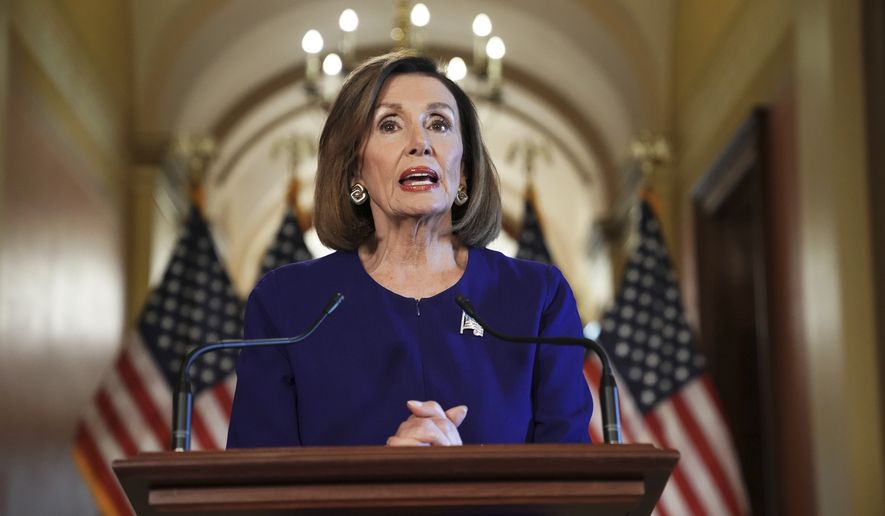
House Speaker Nancy Pelosi on Tuesday accused President Trump of a “betrayal of his oath of office” and said Democrats will rise to the challenge of the moment by opening an unprecedented inquiry that could lead to his impeachment.

After months of resisting, Mrs. Pelosi emerged from a meeting with fellow House Democrats to say she was swayed by the latest allegations, reported in the press, that Mr. Trump tried to pressure Ukraine to dig up dirt on Democratic presidential front-runner Joseph R. Biden.

The speaker brushed aside Mr. Trump’s promise to release a transcript Wednesday that he said would prove his innocence. She said the president’s admissions already demonstrate that he has broken the law.

“The times have found us today,” she said. “Not to place ourselves in the same category of greatness as our founders, but to place us in the urgency of protecting and defending our Constitution from all enemies, foreign and domestic.”

No president in modern history has been the target of impeachment in his first term heading into a reelection campaign. President Clinton was impeached in his second term but not removed from office by the Senate. Richard Nixon resigned in his second term while facing certain impeachment.

Mr. Trump, attending the U.N. General Assembly in New York, dismissed the development as “a continuation of the witch hunt.”

Congressional Republicans called Mrs. Pelosi’s move an empty gesture because Democratic committees already said they were acting under the rubric of impeachment. They said Mrs. Pelosi’s announcement didn’t change anything.

“What she said today is no different than what’s been going on,” said Minority Leader Kevin McCarthy, California Republican.

If Mrs. Pelosi’s move didn’t break any legal ground, it did signal a major shift among Democrats, with dozens of members rushing to climb aboard the impeachment train this week in the wake of reporting that Mr. Trump tried to rope Ukraine into boosting his political fortunes.

Hours before Mrs. Pelosi’s announcement, the president authorized the release of an unredacted transcript of his July 25 phone call with Ukrainian President Volodymyr Zelensky. He said the transcript will disprove Democrats’ suspicions that he threatened to withhold $391 million in military aid from Ukraine unless its president agreed to investigate the role of Mr. Biden’s son Hunter in a Ukrainian natural gas company.

“How can you do [impeachment] and you haven’t even seen the phone call?” Mr. Trump said.

The president predicted that the move will backfire on Democrats and be “a positive for me.”

“Our country’s doing the best it’s ever done. They’re going to lose the election,” Mr. Trump told reporters.

Top Democrats said the phone transcript alone won’t be enough to spare Mr. Trump. They also are demanding that the administration turn over to Congress a whistleblower’s complaint against him pertaining to his reported attempt to shake down the Ukrainian president.

“Simply to release the transcript is not going to come close to ending the need of the American public and the Congress to see what actually happened,” said Senate Minority Leader Charles E. Schumer, New York Democrat.

He led the Senate to approve a resolution Tuesday demanding that the complaint be turned over to Congress. Republicans joined in that call, even though allies of the president pointed out that the unidentified whistleblower, a national security employee, wasn’t listening in on the phone call and apparently got the information secondhand.

The White House was preparing to release the whistleblower’s complaint and the inspector general’s report about the complaint, Politico reported Tuesday evening.

Rep. Mark Meadows, North Carolina Republican, tweeted that “amazingly Democrats now say the whistleblower complaint is more important” than the transcript of the phone call.

“Folks, the ‘whistleblower’ wasn’t on the call,” Mr. Meadows tweeted. “They think a secondhand account of the call will tell you more than the *actual call*.”

Mr. Trump acknowledged that he did discuss the Bidens during the call but said the transcript will prove he did not ask Ukraine’s leader for any political favors. He said he withheld the military aid from mid-July until Sept. 11 because he was trying to persuade European allies to contribute their fair share to Ukraine’s defense against Russia.

“There was never any quid pro quo,” Mr. Trump said. “I said, ‘Hold it up. Let’s get other people to pay.’ I think that other countries should be paying also. I wanted to get other countries.”

Mrs. Pelosi, though, said the president’s confirmation of the call was a “betrayal of his oath of office, betrayal of our national security and betrayal of the integrity of our elections.”

Rep. Adam B. Schiff, California Democrat and chairman of the House Permanent Select Committee on Intelligence, said the whistleblower at the center of the controversy is looking to testify before his committee “as soon as this week.” Although the committee was still working to finalize a hearing, he told reporters that it would be behind closed doors.

The Trump administration reportedly has dropped its objection to the whistleblower’s testimony.

In Wilmington, Delaware, Mr. Biden said Mr. Trump’s stonewalling would likely leave Democrats with no choice but to start impeachment proceedings. He said the impeachment of Mr. Trump “would be a tragedy of his own making.”

“This is not the conduct of an American president,” Mr. Biden said. “It is the abuse of power. It undermines our national security. It violates his oath of office, and it strikes at the heart of the sworn responsibility of the president.”

Other Democratic presidential candidates who were reluctant to call for impeachment proceedings reversed themselves Tuesday. They said they now believe Mr. Trump went too far by trying to pressure Ukraine.

On Capitol Hill, Democrats who were agitating to begin impeachment proceedings said Mrs. Pelosi’s announcement was a watershed moment.

“Speaker Pelosi is telling us that we’re full steam ahead and the country will be with us if they aren’t already,” Rep. Jamie Raskin, Maryland Democrat, told reporters.

It’s not clear what changes with Mrs. Pelosi’s announcement. House Judiciary Committee Chairman Jerrold Nadler, New York Democrat, has been telling courts for two months that he has been conducting an impeachment inquiry.

His committee is looking into Mr. Trump’s personal business dealings and retracing the trail of special counsel Robert Mueller, who said there could be reason to believe Mr. Trump tried to obstruct justice in the investigation into Russian meddling in the 2016 presidential election.

Mrs. Pelosi said she is directing Mr. Nadler and five other committee chairmen to continue their work under the “umbrella of impeachment inquiry.”

Rep. James A. Himes, Connecticut Democrat and a member of the intelligence committee — one of the six panels Mrs. Pelosi said is operating as part of the inquiry — said he figures they will forward all of their findings to Mr. Nadler, who as Judiciary Committee chairman would lead any impeachment proceedings.

Still, some lawmakers said the investigations aren’t enough. Based on what they have seen, they said, the House should skip the inquiry stage and draw up articles of impeachment.

Impeachment is the equivalent of a political indictment and can be approved with a majority vote in the House. If articles of impeachment are approved, then the Senate holds a trial. It takes a two-thirds vote in the Senate to convict and remove the president.

Senate Majority Leader Mitch McConnell, Kentucky Republican, signaled that the Senate isn’t about to follow Mrs. Pelosi’s lead. He said Democrats have made a “rush to judgment.”

“It simply confirms that House Democrats’ priority is not making life better for the American people but their nearly 3-year-old fixation on impeachment,” he said.

Public counts showed that an overwhelming majority of House Democrats support beginning impeachment, and polling shows Democratic voters are with them. Republicans and independents have consistently dismissed the idea of impeachment in surveys.

Democrats had been expecting that flash points, such as the release of the special counsel’s report this spring, Mr. Mueller’s testimony to Congress in July and testimony by former top Trump aides over the past few months, would sway the public, yet polling hasn’t changed.

A Reuters/Ipsos poll released Tuesday night showed that 37% of Americans think Mr. Trump should be impeached, down from 41% in the same survey a month ago. The polling was conducted after reports about the Ukraine controversy surfaced.

Mr. Trump on Tuesday insisted the real malfeasance belongs to Mr. Biden and his son, who earned about $3 million from the Ukrainian energy company. As vice president in 2016, Mr. Biden threatened Ukraine’s leaders that the U.S. would withhold $1 billion in loan guarantees unless they fired the nation’s top prosecutor, whose office had been investigating the gas company. Mr. Biden and other Obama administration officials said they sought the prosecutor’s removal for failing to pursue corruption, not to take any heat off Hunter Biden.

Mr. Trump said in a Twitter message that the transcript will show his call with Ukraine’s president was “very friendly and totally appropriate.”

“No pressure and, unlike Joe Biden and his son, NO quid pro quo!” the president tweeted. “This is nothing more than a continuation of the Greatest and most Destructive Witch Hunt of all time!”

Mr. Zelensky, who is scheduled to meet with Mr. Trump Wednesday on the sidelines of the U.N. conference, said Tuesday that he respects Mr. Trump and wants the unceasing support of the U.S.

Mr. Zelensky said he expects his meeting with Mr. Trump “will be very warm.”

The president pointed out that the money was released to Ukraine after a two-month wait.

“As far as withholding funds, they were paid,” Mr. Trump said. “They were fully paid. I want other countries to put up money. People called me and said, ‘Let it go,’ and I let it go.”

A search of the White House website doesn’t reveal any summaries, or readouts, of phone calls made by Mr. Trump with foreign leaders last summer in which he discussed further payments for Ukraine’s defense.

The president said Tuesday that, similar to his complaints about NATO members not paying their fair share for the common defense of Europe, other European allies should be contributing more to protect Ukraine from Russian aggression.

“We paid the money,” Mr. Trump said. “But very importantly, Germany, France, other countries should put up money. And that’s been my complaint from the beginning.”

– The Washington Times 

Το μεταναστευτικό ζήτημα απειλή της εθνικής Ασφάλειας

0

Του Δημήτρη Τσαϊλά

Τετάρτη 25 Σεπτεμβρίου 2019, 00:03
Η μετανάστευση μεγάλου αριθμού ανθρώπων είναι ένα παγκόσμιο πρόβλημα, καθώς μπορεί να γίνει αντιληπτό ακόμη και με μια φευγαλέα ματιά στην πρόσφατη διεθνή επικαιρότητα. Θα διαπιστώσουμε ότι εκατοντάδες χιλιάδες χριστιανοί εγκατέλειψαν το Σουδάν, από τη Συρία φεύγουν προς όλες τις κατευθύνσεις, από το Ιράκ και τη Λιβύη επίσης, και οι μεταναστευτικές ιστορίες συνεχίζουν με τους μουσουλμάνους μετανάστες Κούρδους, Πακιστανούς, Αφγανούς, Αφρικανούς και Ασιάτες στην Ευρώπη.

Εδώ στην Ελλάδα, υπάρχουν αρκετές φωνές που έχουν την τάση να δείχνουν συμπάθεια για τα δεινά των μεταναστών, ενώ υπάρχουν και πολλοί που εκφράζουνε έντονη ανησυχία και σκεπτικισμό. Είναι δίκαιο να πούμε ότι αυτή η σύγκρουση για το θέμα της μετανάστευσης, δημιουργεί μια τάση σε ορισμένους κύκλους να υπερτονίζουν τα δικαιώματα της εθνικής κοινότητας προκειμένου να αποκλείσουν τους νεοεισερχόμενους. Κύριο σημείο μου σε αυτό το άρθρο δεν είναι η σύγκρουση, που είναι απολύτως κατανοητή, αλλά η τάση να τονίσει τη δύναμη του κράτους και η πολιτική βούληση για λήψη μέτρων για τον έλεγχο της μετανάστευσης.

Στην Ευρώπη, μια συνολική κοινή ευρωπαϊκή προσέγγιση στην κρίση των προσφύγων και μεταναστών αυτή φαίνεται απαραίτητη όμως είναι δύσκολο να επιτευχθεί, παρόλο που η Τουρκία εκβιάζει με τη μη τήρηση της συμφωνίας. Ο έλεγχος των συνόρων, η ασφάλεια και η εναρμονισμένη διαχείριση των προσφύγων είναι προφανή δημόσια αγαθά τόσο για την Ελλάδα ως πύλη εισόδου παράνομων μεταναστών όσο και για την περιοχή της ΕΕ. Είναι εντελώς απίθανο οι εθνικοί παράγοντες να ενεργούν ανεξάρτητα και να προσφέρουν αυτά τα δημόσια αγαθά αποτελεσματικά. Οι διαφορές μεταξύ των ευρωπαϊκών χωρών όσον αφορά τις πολιτικές τους για την υποδοχή και ένταξη των προσφύγων το αποδεικνύει αυτό περίτρανα.

Σε μια κοινή ευρωπαϊκή προσέγγιση, οι χώρες της ΕΕ αποφάσισαν τουλάχιστον στα χαρτιά, να μοιραστούν τα βάρη του μεταναστευτικού προβλήματος. Αυτός είναι προφανώς ένας πολύ δύσκολος στόχος και δεν πρόκειται να τον επιτύχουμε στο σύνολό του στην παρούσα φάση της ευρωπαϊκής μας ολοκλήρωσης. Ωστόσο, παραλείποντας την παραδοχή της στήριξης αυτών των δημοσίων αγαθών, θα αποδυναμωθεί η κοινωνική συνοχή και η γενική πολιτική συναίνεση πίσω από το ευρωπαϊκό εγχείρημα. Αυτός είναι και ο κύριος λόγος που πρέπει να επιδιωχθούν περαιτέρω προσπάθειες για να μοιραστεί το βάρος των εισροών των προσφύγων μεταξύ των χωρών της ΕΕ.

Από τα παραπάνω προκύπτουν οι βασικές παράγοντες του θέματος:

• Η επαρκής συναίνεση για την αναθεώρηση του κανονισμού του Δουβλίνου,
• Η συναίνεση σχετικά με τη μετεγκατάσταση των προσφύγων σε όλη την ΕΕ,
• Η επαρκής οικονομική υποστήριξη στις χώρες πρώτης εισόδου, για την ενίσχυση τόσο των πολιτικών υποδοχής όσο και την ένταξή τους.

Αφού αναφέραμε τους παράγοντες ας εξετάσουμε τις προϋποθέσεις του ζητήματος:

• Ο άνθρωπος είναι ένα κοινωνικό ζώο που ζει, αναπτύσσεται και ευημερεί μέσα σε κοινότητες. Αυτές οι κοινότητες έχουν το φυσικό δικαίωμα να καθιερώσουν ένα κοινό σκοπό, την προστασία και την προώθηση του κοινού καλού, με τρόπους που δεν θα ενοχλούν τις δραστηριότητες των υπολοίπων.

• Μια κοινότητα εντός ορισμένης γεωγραφικής περιοχής θεωρεί τον εαυτό της ως τη μόνη που πραγματικά διαθέτει την απεριόριστη εξουσία πάνω στο έδαφος, και μπορεί να αποκλείσει τους άλλους. Δεν υπάρχει βέβαια φυσικό δικαίωμα κανενός προσώπου ή ομάδας προσώπων, να ελέγχει μια συγκεκριμένη περιοχή, ως μοναδικοί κληρονόμοι αυτής. Αυτό σημαίνει σεβασμός των κοινοτήτων και όλων μαζί στη νόμιμη κυβέρνηση του κράτους.

• Αυτό είναι το “αξίωμα κρατικής εξουσίας” και δεν είναι ούτε παράλογο ούτε και επικίνδυνο. Οι νόμιμοι μετανάστες μπορούν να έχουν το βασικό δικαίωμα της ελεύθερης κυκλοφορίας, να μοιράζονται τη ζωή της κοινότητας, να βρουν τρόπους για τον εαυτό τους και τις οικογένειες τους να ευημερήσουν, αλλά και να υποχρεούνται στη κείμενη νομοθεσία του κράτους που φιλοξενούνται.

Εξέταση του προβλήματος

Η χώρα μας αντιμετωπίζει μια δυσανάλογη με τις δυνατότητες της εισροή παρανόμων μεταναστών και προσφύγων, πολλοί θα εισηγούντο ακόμη και τη χρησιμοποίηση των ενόπλων δυνάμεων εκτελώντας επιχειρήσεις απαγόρευσης για να ανακόψουν αυτή τη ροή. Από την πρώτη στιγμή που έγινε ορατό το πρόβλημα της παράνομης μετανάστευσης σε πολλές περιπτώσεις, αρχικά κυρίως λόγω έλλειψης μέσων από τους αρμοδίους φορείς, τα στελέχη των Ενόπλων Δυνάμεων (ΕΔ), που έχουν εκπαιδευτεί μόνο για τις παραδοσιακές στρατιωτικές συγκρούσεις, βρέθηκαν αντιμέτωποι με το αναφερόμενο πρόβλημα ασφαλείας και συνέδραμαν με όλες τις δυνατότητες διοικητικής μέριμνας.

Ωστόσο οι αποστολές εκείνες είχαν καθαρά βοηθητικό χαρακτήρα και από κοινού μαζί με την αστυνομία και το λιμενικό σώμα ενεπλάκησαν σε περιπολίες, τόσο σε χερσαίες όσο και θαλάσσιες περιοχές για την αναχαίτιση και καταστολή της παράνομης μετανάστευσης και περισυλλογής προσφύγων. Σήμερα ο “κόμπος έφτασε στο κτένι”, οι τάσεις δείχνουν τη δραματική εθνική αλλοίωση που έχει υποστεί η χώρα μας και πλέον είναι γνωστό “στους παροικούντες στην Ιερουσαλήμ”, το εντεινόμενο πρόβλημα της διεθνούς μετανάστευσης.

Η αυξανόμενη εξάρτηση από τις ένοπλες δυνάμεις από πολλές κυβερνήσεις που αντιμετωπίζουν το πρόβλημα της μετανάστευσης ή των προσφύγων προτείνουν μέτρα έκτακτης ανάγκης και θεμελιώδεις αλλαγές για την πιθανότητα χρησιμοποίησης των ένοπλων δυνάμεων τους κατά τις επόμενες δεκαετίες.

Με την πρώτη ματιά η μετανάστευση, μπορεί να θεωρηθεί ως φαινόμενο κοινωνικό ή οικονομικό, όμως προβάλλεται ολοένα και περισσότερο από πολλά έθνη που τα αφορούν ως πρόβλημα ασφάλειας, χαρακτηρίζοντας την παράνομη μετανάστευση, η οποία είναι και μαζική ως τρέχουσα ή εν δυνάμει απειλή για την εθνική ασφάλεια.

Ας παρατηρήσουμε το τι γίνεται εκτός των συνόρων μας. Στις Ηνωμένες Πολιτείες, επίσημα το Στέιτ Ντιπάρτμεντ και η ακτοφυλακή έχουν δηλώσει, ότι ενδεχόμενη μαζική μετανάστευση από το Μεξικό, την Κούβα ή η διακίνηση λαθρομεταναστών από την Καραϊβική, συνιστά απειλή για την εθνική ασφάλεια των ΗΠΑ. Επίσης, κέντρα λήψεως αποφάσεων στη Δυτική Ευρώπη, εν τω μεταξύ, έχουν αναφέρει ότι η μαζική μετανάστευση από τη Βόρεια Αφρική θα μπορούσε να αποσταθεροποιήσει την περιφέρειά τους.

Ως αποτέλεσμα, πολλά κράτη αναπτύσσουν στρατιωτικές δυνάμεις για να αποτρέψουν τους μετανάστες και τους πρόσφυγες, πριν από την άφιξή τους.

Για παράδειγμα, στη Μαλαισία, δόθηκαν στο στρατό περιορισμένες αστυνομικές εξουσίες να περιπολούν παραμεθόριες περιοχές της χώρας για να καταπολεμήσουν το πρόβλημα των παράνομων μεταναστών. Η Ιταλία έχει αναπτύξει στρατεύματα κατά μήκος της ακτογραμμής της Αδριατικής για να αποφευχθεί η εισροή των παράνομων μεταναστών. Ομοίως, η Νότιος Αφρική έχει τοποθετήσει εκατοντάδες στρατιώτες στα σύνορα με τη Μοζαμβίκη και τη Ζιμπάμπουε για να εξουδετερώσει την παράνομη είσοδο στη χώρα.

Αλλά εκτός από τη χρήση των ΕΔ για την καταπολέμηση των λαθρομεταναστών στα σύνορα, πολλές χώρες στηρίζονται στα στρατιωτικά μέσα για τον επαναπατρισμό των μεταναστών.

Η Γαλλία και η Ισπανία παλινόστησαν διάφορες ομάδες παράνομων μεταναστών με τη χρήση στρατιωτικών αεροσκαφών. Η κυβέρνηση της Μαλαισίας απέλασε βιετναμέζους πρόσφυγες, με χρήση πολεμικών πλοίων. Πιο πρόσφατα, η Τανζανία έχει αποστείλει στρατιωτικές δυνάμεις για να οδηγήσουν πρόσφυγες από τη Ρουάντα πίσω στην πατρίδα τους.

Επίσης να επισημάνουμε τον κίνδυνο της επόμενης γενιάς μαχητών τζιχάντ που προέρχονται από το στρατόπεδο Al-Hawl της Συρίας, όπου κρατούνται 73.000 γυναίκες και παιδιά μαχητών του ISIS. Ούτε οι Συριακές Δημοκρατικές Δυνάμεις που διαχειρίζονται το στρατόπεδο ούτε οι ΗΠΑ έχουν επαρκείς πόρους για να διαχειριστούν αυτή την απειλή. Άλλωστε ο Πρόεδρος των ΗΠΑ τελευταία απείλησε ότι θα απελευθερώσει τους κρατούμενους και θα τους στείλει στην Ευρώπη.

Εκτιμήσεις – Συμπεράσματα

Στην πατρίδα μας εκτιμώ ότι δικαιολογείτε πλέον η χρήση των ΕΔ σε θέματα μετανάστευσης και προσφύγων λόγω της υλικοτεχνικής γνώσεως που συνεπάγεται τη διαχείριση μεγάλων ομάδων ατόμων, κατόπιν εξασκήσεως αυτών σε μεθόδους αντιμετώπισης μετανάστευσης. Ισχυρίζομαι, ότι μπορούν οι ΕΔ οικονομικότερα και δραστικότερα, να δημιουργήσουν σε μια ικανοποιητική κλίμακα και με ρυθμό που δεν είναι δυνατό να δημιουργηθούν από άλλους κυβερνητικούς οργανισμούς, τα κέντρα υποδοχής και κράτησης παράνομων μεταναστών τα οποία η συντριπτική πλειοψηφία των Ελλήνων τα θεωρεί απαραίτητα. Χωρίς αυτό να σημαίνει ότι επιλύουν από μόνα τους το πρόβλημα της παράνομης μετανάστευσης στην χώρα.

Επιπλέον, επειδή η διαδικασία απόδοσης ασύλου στην Ελλάδα, ώστε να επαναπροωθούνται άμεσα εκείνοι που δεν δικαιούνται άσυλο, εξακολουθεί να είναι εξαιρετικά χρονοβόρα και αναποτελεσματική, με τη συνεχή παρουσία τους τα στελέχη των ΕΔ μπορούν να παράσχουν την αποτροπή της εκρηκτικής κατάστασης της παρανόμου εισόδου από τα σύνορά μας, καθώς η παρουσία των ενόπλων στρατιωτών θα εμποδίσει τις κινήσεις των λαθρεμπόρων και θα τους στερήσει από τη δυνατότητα εκφοβισμού ή και σωματικής βαναυσότητας κατά των μεταναστών.

Είναι σαφές ότι η στρατιωτική ανάμειξη σε θέματα μετανάστευσης και προσφύγων είναι μια υπόθεση εργασίας, πολύπλοκη. Όσο όμως μεγαλώνει το μέγεθος της διεθνούς μετανάστευσης στον κόσμο, το οποίο οφείλεται σε παράγοντες όπως η αύξηση του πληθυσμού, η ανεργία από τις χώρες προέλευσης οι αυξανόμενες οικονομικές διαφορές μεταξύ των κρατών και οι ένοπλες συρράξεις, έχουμε προκληθεί λόγω της αυξανόμενης πίεσης να “κάνουμε κάτι”.

Σκέφτομαι κυρίως την αδυναμία του έλεγχου αυτών των μαζικών μεταναστεύσεων, που οι γεωπολιτικές αλλαγές τείνουν να τις κάνουν αναπόφευκτες. Το κράτος μας πρέπει με κάποιο τρόπο να έχει πλήρη εξουσία για το θέμα. Ας ρίξουμε μια ματιά πίσω στο χρόνο, όχι πολύ μακριά αλλά λίγο πιο πέρα από την τρέχουσα πολιτιστική μυωπία μας. Τελικά είναι απαραίτητο να ληφθούν δομικής φύσεως μέτρα τα οποία να συνδυαστούν με μια ολοκληρωμένη εθνική στρατηγική για την μετανάστευση αφού πλέον το πρόβλημα έχει πάρει διαστάσεις εθνικής ασφαλείας.

Αντί να αντιμετωπίσουμε αυτή τη δυσάρεστη κατάσταση, εμείς οι ίδιοι πρέπει να προβούμε σε επανακαθορισμό της μεταναστευτικής στρατηγικής αποκλείοντας πρώτα απ’ όλα τη σχετική ευκολία δράσεως στο Αιγαίο με την πλήρη αξιοποίηση του κέντρου θαλάσσιας ασφάλειας το οποίο να είναι συνδεδεμένο με τα κέντρα επιχειρήσεων των Ενόπλων Δυνάμεων, και με τη συμμετοχή πόρων (ανθρώπινων και υλικών) των Ενόπλων Δυνάμεων σε συνεργασία με την Ακτοφυλακή. Δεν μιλάω για μια αναλαμπή που θα μετακινήσει τον έλεγχο του Αιγαίου με το μοντέλο του ισχυρού όψιμου ηγέτη σε έρευνα διάσωση, που θα έχει ως αποτέλεσμα τον ανταγωνισμό με τα αντίπαλα ναυτικά, αλλά για μια ευρωπαϊκή εφαρμογή ελέγχου με προοπτική στην ευρωπαϊκή ασφάλεια.

Η διασφάλιση της μακροπρόθεσμης χρηματοδότησης είναι ζωτικής σημασίας ιδιαίτερα για τις χώρες που αντιμετωπίζουν οικονομικά προβλήματα, όπως είναι η Ελλάδα. Με βάση το παράδειγμα του Ευρωπαϊκού Κοινωνικού Ταμείου, ένα Ευρωπαϊκό Ταμείο Ένταξης θα μπορούσε να δημιουργηθεί με επαρκή κεφάλαια για την προώθηση της πλήρους ενσωμάτωσης των ατόμων και των οικογενειών που γίνονται δεκτοί ως πρόσφυγες από τα κράτη μέλη της ΕΕ.

Επίσης οι πολιτικές ένταξης θα πρέπει να λαμβάνουν υπόψη τα χαρακτηριστικά των προσφύγων όσον αφορά τις δεξιότητες, την εκπαίδευση και τα γενικότερα πολιτιστικά χαρακτηριστικά, γιατί αυτοί οι παράγοντες επηρεάζουν επίσης το κόστος των πολιτικών ένταξης.

Τέλος, δεν υπάρχει αμφιβολία ότι οι δυσκολίες στην αντιμετώπιση της κρίσης των προσφύγων έχουν να κάνουν περισσότερο με την πολιτική και ιδεολογική αντίσταση παρά με τους πόρους. Υπάρχει ήδη μια δημόσια αντίσταση στη μετανάστευση, εντός και εκτός της ΕΕ, και λιγότερη προθυμία να αποδεχθούμε περαιτέρω ροές των μεταναστών, οι οποίοι έχουν διαφορετικά πολιτισμικά χαρακτηριστικά από τους ντόπιους πολίτες. Αυτό ασκεί πίεση στις κυβερνήσεις, ιδίως σε χώρες όπου υπάρχει ήδη πολύ μικρή αποδοχή της μετανάστευσης. Υπάρχει μάλλον περιορισμένο περιθώριο ελιγμών στον τομέα αυτό. Αντί να προσπαθούν να μεταφέρουν τους πρόσφυγες σε αυτές τις χώρες, είναι μάλλον πιο ρεαλιστικό να ζητηθεί αποζημίωση από τις χώρες που δεν θέλουν πρόσφυγες.

*Ο κ. Δημήτρης Τσαϊλάς είναι Υποναυάρχος ε.α. ΠΝ 

https://www.liberal.gr/diplomacy/to-metanasteutiko-zitima-apeili-tis-ethnikis-asfaleias/267888?fbclid=IwAR3SLXGDVc6OQG0FfUDUszKTU5MyaMPRqVVzwdUGCE0GfyaU4fM6HnQ5H1Q

Ο (μουλωχτός) διαδηλωτής Ευκλείδης

1

Του Δημήτρη Καμπουράκη  Τετάρτη 25 Σεπτεμβρίου 2019, 00:02 liberal.gr

Τους καμαρώσατε ως διαδηλωτές; Την Τασία Χριστοδουλοπούλου, την Αννέτα Καββαδία, αλλά κυρίως τον Ευκλείδη Τσακαλώτο αυτοπροσώπως; Τον άνθρωπο που είχε επί τετραετία την τύχη της οικονομίας της χώρας στα χέρια του και που μετά από δυόμισι μόλις μήνες ξαναθυμήθηκε πως «νόμος είναι το δίκιο του εργάτη». Νομίζω πως η χθεσινή του παρουσία εκεί, ήταν η πιο τρανή απόδειξη ότι είναι κορυφαίος χιουμορίστας.

Και σήκωνε που λέτε ο Ευκλείδης την γροθιά και βροντοφώναζε εναντίον του ανθρώπου που κάθεται στην δική του καρέκλα και προσπαθεί να συμμαζέψει τα ασυμμάζευτα που άφησε ο ίδιος. Υποψιάζομαι βέβαια ότι ο Ευκλείδης δεν βρισκόταν εκεί ως πρώην υπουργός, αλλά ως αρχηγός των 53 του Σύριζα δηλαδή της αριστερής του πτέρυγας, καθότι τα καπελάκια αυτός τα αλλάζει γρηγορότερα κι απ’ τα πουκάμισα του. Της πτέρυγας που ευαγγελίζεται τις ρίξεις σε πολιτικό και κοινωνικό επίπεδο, που διαφυλάττει ως κόρη οφθαλμού την αριστερή φυσιογνωμία του κόμματος του και στήνει ταμπούρια κατά της ιδεολογικής του επιμόλυνσης από τον ιό της Πασοκοποίησης.

Είναι τέλος πάντων αυτός που παριστάνει το αντίπαλο εσωκομματικό δέος του Αλέξη κι επειδή οι αρχηγοί είναι απαραίτητο να έχουν φρουρά, είχε δίπλα του την Αννέτα και την Τασία. Η οποία Τασία διαδήλωνε εναντίον της αναξιοκρατίας και της κατάληψης του κράτους από την Δεξιά. Αναρωτιέμαι αν ήταν δίπλα της και η κορούλα της που πήγε στην ζούλα να χωθεί στην Βουλή μέσα στην προεκλογική περίοδο, αλλά την τσίμπησαν οι άθλιοι νεοδημοκράτες και οι πουλημένοι δημοσιογράφοι των συγκροτημάτων και την ξεμπρόστιασαν.

Αυτός ο Ευκλείδης λοιπόν, είναι μεγάλη φάτσα. Καμία σχέση με τον φλεγματικό Βρετανοαναθρεμένο που παριστάνει. Πρόκειται για βαλκάνιο ολκής, καταφερτζή του κερατά και ανενδοίαστο πολιτικάντη. Είναι μέσα σε όλα, έχει χίλια πολιτικά πρόσωπα. Και Ελληνάρας και με βρετανική δήθεν νοοτροπία όποτε τον βολεύει, και υπουργός και μαρξιστής αντιεξουσιαστής, και μνημονιακός όταν υπογράφει μνημόνια και σφόδρα αντιμνημονιακός παράλληλα, και αρχηγός του οικονομικού επιτελείου και αρχηγός της εσωκομματικής αντιπολίτευσης κατά της οικονομικής πολιτικής της κυβέρνησης του, και με την υπουργική λιμουζίνα και με τους διαδηλωτές εναντίον του υπουργείου του.

Σα να μου φαίνεται πως παρασυγκεντρώσαμε την κριτική μας στον ανερμάτιστο Βαρουφάκη και αφήσαμε στο απυρόβλητο τον μουλωχτό Ευκλείδη, του οποίου τις συνταγές φάγαμε στην μάπα επί τετραετία με τραγικά αποτελέσματα για την τσέπη μας. Το πιο ενδιαφέρον δε είναι ότι οι Συριζαίοι κατηγορούν (στα ψιθυριστά) τον Πολάκη που έβριζε ή την Ακριβοπούλου που προπαγάνδιζε, αλλά τον Ευκλείδη που με τις οικονομικές του συνταγές τους κατέστρεψε, δεν τον ενοχλούν. Τον έχουν μάλιστα περί πολλού. Μάγκας ο Ευκλείδης, μόνο κάτι παλιοί σαν τον Κωλέτη τα κατάφερναν αυτά…

liberal.gr

The Nordic Research and Monitoring Network Launches The Turkey-ISIS Research Project

0

On the occasion of Turkey’s President Recep Tayyip Erdogan’s presentation tomorrow at the UN General Assembly, the Sweden-based Nordic Research and Monitoring Network (NRMN) launched today the Turkey-ISIS Research Project.

The Turkey-ISIS Research Project identifies material published by leading organizations, researchers and investigative journalists who have examined connections between the Turkish government, led by an Islamist president, and jihadists groups including Islamic State in Iraq and Syria (ISIS).

ISIS and other jihadist groups have used Turkey which has a long porous border with Syria as a conduit to bring fighters all over the world, procure supplies including arms, transfer wounded jihadists for a treatment and raise funds by well-orchestrated schemes including the smuggling of artefacts and Syrian oil. The evidence show that Erdoğan government’s notorious intelligence agency MIT has secretly worked with ISIS and other armed jihadist groups in Syria.


Therefore, the NRMN has taken an interest in exposing the reasons for ISIS’s ability to function in the region and has identified the support provided to ISIS by Erdoğan’s Turkey as significant and under reported. For example, senior ISIS figure Ilhami Bali, aka Abu Bakr, who is the mastermind behind a string of deadly attacks in 2015 which killed nearly 200 people including foreign nationals in Turkey had been hosted in a five-star hotel in Turkish capital courtesy of Turkish intelligence agency MIT.

The Project focuses on evidence from, inter alia, wiretaps of ISIS communications, testimony of former ISIS members, leaked Turkish government documents, secret intelligence communique, CCTV footages and still-shots that confirm how Erdoğan’s Turkey supports these groups in Turkey and abroad.

The project hopes to contribute to the debate on ISIS and other jihadist groups that still continue to pose a threat to national security of many countries in the world.

http://www.turkey-isis.org/

About Nordic Research Monitoring Network

Nordic Research Monitoring Network is a non-profit organization that aims to raise awareness on radical and violent extremist trends, with a specific focus on patterns that may very well disturb and disrupt social peace, harmony and community integration. It hopes to contribute to the debate on how nations should prevent and combat radicalization with close cooperation and collaboration between all relevant stakeholders at all levels of governance including the NGO community and civil society.

http://www.nordicrmn.org/ 

Britain and the United States

0

By George Friedman – September 24, 2019 Geopolitical Future

The United States and Britain have agreed to sign a trade agreement by next July, The Sun newspaper reported on Monday. The accuracy of the story is not yet clear, but for Britain, leaving the European Union and building a closer trade relationship with the United States, and therefore with North America, follows geopolitical logic.

Britain’s historical stance toward Europe was to try to maintain a balance of power on the Continent so that no force there would be able to threaten British sovereignty. One force driving British imperialism was the need to develop markets and sources outside Europe so as not to become excessively dependent on Europe. The Royal Navy was designed both to protect Britain from continental powers and, in time of war, to blockade hostile European powers without being excessively drawn into combat on the Continent. The British hesitated for a long time before agreeing to join the European Community and the powers on the Continent (particularly the French) hesitated for a long time before admitting them. The British were instrumental in creating the “Outer Seven” bloc of nations on the Continent’s periphery as an alternative to what would eventually become the European Union.

For Britain, the consolidation of the Continent into a single bloc was a perpetual nightmare. Britain was militarily weak compared to the Continent as a whole and saw Napoleon, for example, as an existential threat. Had he been able to impose a stable system, dominated by Paris, on the Continent, the economic and military force he could have mustered would have overwhelmed Britain’s naval defenses in the not-too-long run and compelled Britain to accommodate itself to French hegemony. In this hegemony, it would have found itself at a perpetual disadvantage (as would other nations) as France tilted the economic system in its favor. It therefore joined the anti-Napoleonic alliance and, after Waterloo, cautiously withdrew from the Continent and focused on its empire.

With the unification of Germany in 1871, however, Britain was drawn into Europe once again. It first found itself in economic competition with the new European power, then in political competition over empire, and finally was drawn into the two world wars. The point that must be borne in mind was that membership in a European bloc ran counter to historic British views of Europe. The British fear was that the constraints imposed by any European alliance would inevitably tilt the economic system against Britain and threaten its sovereignty.

World War II left Britain in a difficult position. It had essentially bankrupted itself in the war against Germany. The effort to resist the Continent in order to guarantee its sovereignty and prosperity had preserved sovereignty at the price of prosperity. It had also decisively brought another nation into the dynamic: the United States. At the end of World War I, the United States had the same perspective as the British. A German victory would unite Europe and create naval forces that would limit U.S. access to the seas. The U.S. wanted the same thing Britain had wanted: to prevent a single hegemon from controlling the Continent, and therefore to maintain division of the Continent through a balance of power. This was the intent of the Treaty of Versailles, which blocked France from dismembering Germany and achieving Napoleon’s goal of dominating the Continent. Versailles also set the stage for World War II, once Germany had reorganized itself.

From unification onward, Britain’s primary threat was not France but Germany. World War I settled the problem only temporarily, drawing both the British and Americans into a war on the Continent. The conflict also reversed the relationship between the United States and Britain. Neither had fully trusted the other. After World War I, the U.S. maintained a set of war scenarios that included War Plan Red, which was based on a potential British invasion from Canada. Far-fetched as this might seem now, Washington had seen the British as a threat during the Civil War less than 50 years before, as well as a naval challenger in 1900. Britain saw the American economic surge as a threat to its markets and vigorously limited U.S. economic relations with the empire. In 1920, the mutual suspicion continued; indeed, when lend-lease was enacted, the U.S. lent ships to Britain – but Britain leased almost all of its bases in the Western Hemisphere to the U.S., ending centuries of domination of the Atlantic and a perpetual threat to the United States. The two countries cooperated in World War I, but isolationists in the U.S. remained suspicious of British motives in the war.

World War II ended with Germany partitioned, the British Empire crumbling and the United States the dominant power. The U.S. and Britain were allied in the conflict, but it would be a mistake to think they were close partners. In 1956, the U.S. blocked Britain (and France and Israel) from retaking the Suez Canal. President Franklin Roosevelt had made it clear that the U.S. was fighting to defeat Germany and not to save the British Empire. The two countries were imperfectly aligned, to say the least.

The Marshall Plan made European economic integration a prerequisite to recovery. In a way, the EU originated as a U.S. plan. But the U.S. focus was not European integration. Washington was worried about the Soviets and wanted a prosperous, united Europe that could field a military. The British were uneasy about integration, and the French were cautious about Britain. The old tensions did not dissolve. Nor did German weakness. The U.S. needed Germany to recover, since Germany would be the battleground of any future war. And so it did, and over time an integrated Europe became a German-dominated Europe, benign militarily, aggressive economically.

The British had to develop a new grand strategy suitable for their new position. Britain’s strategy was to maintain its distance from Europe by building a special military and intelligence relationship with the United States, while cautiously dipping its toes into European integration. In other words, the British managed to maintain a European balance of power while at the same time creating a balance between Europe and the United States, using the space this opened to pursue their own interests.

The Brexit deadlock today is over the same issues: sovereignty and prosperity. For Britain, the EU delivered a degree of prosperity at the loss of a degree of sovereignty. This arrangement could work if it was meticulously balanced. But the EU was not a flexible entity in which Britain could work its historic subtlety. This split Britain down the middle between those who had not experienced prosperity and resented the loss of any degree of sovereignty and those who had experienced prosperity and did not value sovereignty. The damage to the United Kingdom’s stability was substantial, the fear of declining prosperity real.

This has forced Britain to look to the United States as it had during the 20th century. Britain’s military and intelligence relationships with its former settler colonies (the United States, Australia, New Zealand and Canada) were an important dimension of its global vision. They were also foundational to the American alliance system, with all five countries participating in the “Five Eyes” intelligence-sharing group and maintaining intimate military cooperation. Canada and Australia have significant trade agreements with the United States, and New Zealand is negotiating one.

Britain sees this structure as an alternative to the European Union. On security matters, Britain is already part of this coalition. Economically, North America’s total gross domestic product is larger than that of the EU. Add Australia, New Zealand and Britain and this economic group is substantially larger than the European Union and, in many ways, more dynamic. And given U.S. sensitivity over its own sovereignty, it does not make demands on social and political harmonization, nor does it dictate rules on migration. Britain already conducts substantial trade with all four nations, which requires a degree of integration, but it’s limited to market access on favorable terms.

The problem for Britain, however, is that a shift in economic posture would end the long-term balance of power strategy. On the other hand, staying in a bloc that has no interest in the internal harmonization of Britain would be damaging. A shift would be complex and painful, but the pain Britain is feeling now from the split inside of its country is at least as unbearable.

If Britain shifted economically to this bloc, we would be seeing the emergence of a loose economic and security alliance. It would be a bloc of the settler colonies Britain spawned. The weight of this group in world affairs would be massive. For the United States, this would be nice to have. For the Canadians, it would be more tense. For the Australians and New Zealanders, it would be business as usual. But nowhere would it be as fraught with tension as in Britain. Brexit is going to happen, and Britain must imagine what life will be like after its withdrawal. A trade agreement with the United States is the logical and even inevitable step, but one with long-term significance.


Grande-Bretagne : la Cour suprême juge « illégale » la suspension du Parlement

0

Dans une décision unanime publiée ce mardi, la Cour suprême estime que « cette décision empêche le Parlement de faire son travail ».

Η τελευταία κίνηση του Σταύρου

1

Κώστας Γιαννακίδης 23 ΣΕΠΤΕΜΒΡΙΟΥ 2019, 21:25 protagon.gr

Μου προκαλεί εντύπωση που κανένα πολιτικό στέλεχος, από τα άλλα κόμματα, δεν βρήκε δύο λόγια να πει για την δωρεά της επιχορήγησης στο Πανεπιστήμιο Αθηνών. Αλλά, μεταξύ μας, κάνω λάθος. Ποιος να πει; Στο ΚΙΝΑΛ δεν θέλουν να τον βλέπουν, στη ΝΔ τον εγκάλεσαν ως πατερίτσα του Τσίπρα και στον ΣΥΡΙΖΑ τον είχαν λούσει ως εργαλείο της διαπλοκής.

Πρακτικά ο Θεοδωράκης είχε τρεις επιλογές για το μέλλον του Ποταμιού, αν υφίσταται σχετική έννοια για το κόμμα που δημιούργησε πριν από πέντε χρόνια. Η πρώτη επιλογή ήταν να κλείσει το κόμμα, να καταθέσει τα κλειδιά και τις σφραγίδες στον Άρειο Πάγο και να επιστρέψει την κρατική χρηματοδότηση. Θα ήταν μία γενναία κίνηση, αλλά θα τελείωνε κάθε σχετική συζήτηση με τη συμμετοχή όσων, ακόμα, κινούνται μέσα και γύρω από το Ποτάμι. Δεν είναι πολλοί, αλλά δεν μπορείς να τους πετάξεις και έξω.

Η δεύτερη επιλογή ήταν να κρατήσει το κόμμα περίπου όπως είναι τώρα. Η επιχορήγηση θα συνεχίσει να τρέχει, ενώ η επίδοση στις ευρωεκλογές εξασφάλιζε και νέα χρηματοδότηση. Ο Θεοδωράκης μπορούσε να γίνει κάτι σαν επίτιμος πρόεδρος, να κρατήσει τους ανθρώπους του σε μισθοδοτούμενες θέσεις την αστυνομική φρουρά και πάει λέγοντας. Άσχημα περνάνε στη ΔΗΜΑΡ;

Η τρίτη επιλογή ήταν αυτή που υιοθέτησε. Επιστρέφει τα λεφτά στο Δημόσιο, δια του Πανεπιστημίου Αθηνών, σε δράσεις που αποτρέπουν τη φυγή επιστημόνων στο εξωτερικό. Θα μπορούσε να χρηματοδοτηθεί μέχρι και η ίδρυση καινοτόμων επιχειρήσεων από ομάδες νέων επιστημόνων. Το κόμμα πρακτικά δεν κλείνει, αλλά δεν καθίσταται και ελκυστικό για όποιον κάνει όνειρα πολιτικού αρχηγού. Όποιος διεκδικήσει τώρα την προεδρία του Ποταμιού θα πρέπει να έχει πολιτικό κίνητρο, όχι όρεξη για πολιτικό γραφείο με τα βασικά έξοδα πληρωμένα. Ο δε Θεοδωράκης αποχωρεί δια παντός από την πολιτική, επανακάμπτοντας στο πεδίο του ιδιωτικού τομέα, κοινώς στην εργασία για τον επιούσιο.

Έχω δε την αίσθηση ότι και ο ίδιος θα αποφεύγει, προς το παρόν, να κάνει τον απολογισμό που, αν μη τι άλλο, έχει δύο πρόσωπα. Το πολιτικό είναι αδιαμφισβήτητα ζοφερό. Το προσωπικό όμως, ως διαδρομή ζωής, είναι απρόσμενα φωτεινό για ένα παιδί που ξεκίνησε από την Αγία Βαρβάρα.

Από την άλλη, ο απολογισμός του Ποταμιού, ως εγχείρημα, δίνει θετικό πρόσημο, όσο και αν στον ισολογισμό πολιτικών ενεργειών τα λάθη υπερβαίνουν τα φρόνιμα και τα σωστά. Ήταν ένα κάποιο ανάχωμα στον λαϊκισμό, αριστερό και δεξιό, μία ματιά στον ορθολογισμό και, αν θέλετε, με μία lifestyle οπτική πέρα από τις αναχρονιστικές αισθητικές αγκυλώσεις του πολιτικού μας συστήματος.

Μου προκαλεί εντύπωση που κανένα πολιτικό στέλεχος, από τα άλλα κόμματα, δεν βρήκε δύο λόγια να πει για την τελευταία κίνηση του Θεοδωράκη. Αλλά, μεταξύ μας, κάνω λάθος. Ποιος να πει; Στο ΚΙΝΑΛ δεν θέλουν να τον βλέπουν, στη ΝΔ τον εγκάλεσαν ως πατερίτσα του Τσίπρα και στον ΣΥΡΙΖΑ τον είχαν λούσει ως εργαλείο της διαπλοκής. Όσοι γνωρίζουν τον Σταύρο, ξέρουν, βέβαια, ότι ήταν ο εαυτός του. Με τις αντιφάσεις, τα καλά και τα στραβά του.

Πηγή: Protagon.gr

Stratfor: Οκτώ πηγές αβεβαιότητας για το 4ο τρίμηνο

0

euro2day.gr/stratfor

Στο Ιράν και στον κίνδυνο σύγκρουσης με τις ΗΠΑ η προσοχή, ενώ η παγκόσμια οικονομία παρακολουθεί με νευρικότητα και την εξέλιξη του σινοαμερικανικού εμπορικού πολέμου. Το Brexit, οι αναταραχές στο Χονγκ Κονγκ και το οικονομικό χάος στην Αργεντινή.

Από το Brexit και το ενδεχόμενο πολέμου στον Περσικό Κόλπο μέχρι τους εμπορικούς πολέμους του Λευκού Οίκου, ο παράγοντας «αβεβαιότητα» θα είναι ιδιαίτερα έντονος το δ’ τρίμηνο, σύμφωνα με τις προβλέψεις του Stratfor.

Οι πολιτικές ακροβασίες στο Ιράν απειλούν την παγκόσμια προμήθεια πετρελαίου: Το Ιράν θα είναι προετοιμασμένο να διακινδυνεύσει μια περιορισμένη στρατιωτική σύγκρουση με τις ΗΠΑ και τη Σαουδική Αραβία, χρησιμοποιώντας την απειλή της κλιμάκωσης –και τις ευρύτερες ανησυχίες ως προς το πώς θα επηρεαστεί από μια μεγάλη διαταραχή στην προμήθεια πετρελαίου η παγκόσμια οικονομία, όπου ήδη επικρατεί νευρικότητα – προκειμένου να αναγκαστούν οι ΗΠΑ να επιστρέψουν σε μια στενή διαπραγμάτευση που θα επικεντρώνεται στην αποκλιμάκωση με αντάλλαγμα την ελάφρυνση των κυρώσεων. Οι ευρωπαϊκές και ασιατικές δυνάμεις, μαζί με τα κράτη πρώτης γραμμής του Περσικού Κόλπου, θα παραμείνουν δραστήριες στις προσπάθειες μεσολάβησης.

Παρατεταμένη αβεβαιότητα για το Brexit: Ο βρετανός πρωθυπουργός Μπόρις Τζόνσον θα φέρει το Ηνωμένο Βασίλειο στο χείλος ενός Brexit χωρίς συμφωνία το δεύτερο δεκαπενθήμερο του Οκτωβρίου, όμως το Λονδίνο για μια ακόμα φορά θα αποφύγει το χειρότερο σενάριο. Η ακροσφαλής πολιτική θα μπορούσε να οδηγήσει σε κάποιον συμβιβασμό για το Ιρλανδικό backstop, όμως, πιο πιθανό είναι μια παραίτηση του Τζόνσον ή μια πρόταση μομφής να ανοίξουν τον δρόμο για μια ακόμα παράταση και πρόωρες εκλογές.

Δοκιμάζοντας τις βάσεις για μια στενή εμπορική συμφωνία ΗΠΑ-Κίνας: Ο Λευκός Οίκος θα μετριάσει τις φιλοδοξίες του για μια ολοκληρωμένη εμπορική συμφωνία με την Κίνα εν όψει των αμερικανικών προεδρικών εκλογών του 2020, επιδιώκοντας αντιθέτως μια προκαταρκτική συμφωνία που θα ανακουφίσει κάπως τους αμερικανούς αγρότες και η οποία θα μπορούσε να οδηγήσει σε κάποια χαλάρωση των εξαγωγικών περιορισμών για την Huawei. Ωστόσο, υπάρχουν αρκετά ακανθώδη σημεία -σε συνδυασμό με ένα βαρύ φορτίο δασμών- που θα συνεχίσουν να επιβαρύνουν την παγκόσμια οικονομία. Όσο η αμερικανική οικονομία παραμένει σχετικά σταθερή, δεν μπορεί να αποκλειστεί το ενδεχόμενο μιας ακόμα κατάρρευσης των διαπραγματεύσεων και μιας δασμολογικής κλιμάκωσης.

Περισσότερη αβεβαιότητα στο εμπόριο λόγω ΠΟΕ: Οι ΗΠΑ θα δημιουργήσουν στον Παγκόσμιο Οργανισμό Εμπορίου υπαρξιακό ζήτημα, όταν τον Δεκέμβριο θα παραλύσει το δευτεροβάθμιο όργανο του Οργανισμού, καθώς ο Λευκός Οίκος σκοπίμως αποκλείει τους διορισμούς σε αυτό. Η κίνηση ευθυγραμμίζεται με την μακροχρόνια επιχειρηματολογία του Λευκού Οίκου πως ο πολυμερής οργανισμός, που διοικείται στη βάση της συναίνεσης, δεν μπορεί να συμμορφώσει τους μεγάλους εμπορικούς καταχραστές όπως η Κίνα. Η στροφή από ένα σύστημα διακυβέρνησης των εμπορικών διαμαχών που βασίζεται στους κανόνες, σε ένα σύστημα που βασίζεται κυρίως στην ισχύ και τις διμερείς διαπραγματεύσεις θα δημιουργήσει επιπλέον εμπορική αβεβαιότητα στην παγκόσμια οικονομία.

Η ΕΕ δεν θα σημειώσει εύκολες εμπορικές νίκες: Καθώς ο Λευκός Οίκος προσπαθεί να σημειώσει μικρότερες εμπορικές νίκες, η Ιαπωνία θα μπορέσει να μετριάσει την απειλή των αμερικανικών δασμών στα αυτοκίνητα, καταλήγοντας σε μια αρχική εμπορική συμφωνία. Η Ινδία, το Μεξικό και οι αυξανόμενοι εμπορική στόχοι όπως το Βιετνάμ, θα έχουν καλύτερες πιθανότητες να αποτρέψουν την επιβολή αμερικανικών δασμών αυτό το τρίμηνο. Ωστόσο, οι εμπορικές σχέσεις ΗΠΑ-ΕΕ θα γίνουν πιο ταραχώδεις, σε μια περίοδο που η Γερμανία ήδη κινδυνεύει με ύφεση.

Αντιδράσεις στην κινεζική περιφέρεια: Οι επίμονες αναταραχές στο Χονγκ Κονγκ είναι απίθανο να οδηγήσουν σε κάποια σοβαρή παρέμβαση από την Κίνα, όμως η παρατεταμένη πολιτική αντιπαράθεση θα ελαχιστοποιήσει τη φήμη του Χονγκ Κονγκ ως χρηματοοικονομικού κέντρου, με αποτέλεσμα κεφάλαια και επενδύσεις να κατευθυνθούν προς την Σιγκαπούρη και την Ταϊβάν. Η αντίσταση κατά του Πεκίνου και το σχετιζόμενο οικονομικό κόστος θα έχουν εξέχουσα θέση στην Ταϊβάν, εν όψει των εκλογών του Ιανουαρίου.

Ο λαϊκισμός και το οικονομικό χάος επιστρέφουν στην Αργεντινή: Η πιθανή νίκη του λαϊκιστή υποψηφίου Αλμπέρτο Φερνάντεζ στις προεδρικές εκλογές της Αργεντινής στις 27 Οκτωβρίου θα βαθύνει τις οικονομικές αναταράξεις, οδηγώντας σε αυστηριοποίηση των capital controls. Η επιρροή της μαύρης αγοράς θα αυξηθεί και θα ακολουθήσουν δύσκολες διαπραγματεύσεις με το Διεθνές Νομισματικό Ταμείο, καθώς η νέα κυβέρνηση θα προσπαθήσει να επαναδιαπραγματευτεί τους όρους της συμφωνίας διάσωσης. Μια άνοδος του προστατευτισμού θα εκτροχιάσει τις εμπορικές σχέσεις της ΕΕ με την Mercosur και θα βαθύνει τις εντάσεις με τη Βραζιλία.

Άφθονοι περισπασμοί για τις ΗΠΑ: Μια κλιμακούμενη κρίση με το Ιράν και οι προβληματικές διαπραγματεύσεις με το Αφγανιστάν θα περιπλέξουν την προσπάθεια των ΗΠΑ να ελαχιστοποιήσουν τους περισπασμούς, να αναπτύξουν πόρους και να ενισχύσουν τις συμμαχίες τους στον ανταγωνισμό με την Κίνα και τη Ρωσία. Η Κίνα θα βασιστεί στα οικονομικά κίνητρα και τις έμμεσες απειλές μαζί με τη Ρωσία προκειμένου να πείσει τις Φιλιππίνες, τη Νότια Κορέα και την Ιαπωνία να μην φιλοξενήσουν τους αμερικανικούς βαλλιστικούς πυραύλους μέσου βεληνεκούς. Ο εμπορικός πόλεμος μεταξύ της Ιαπωνίας και της Νότιας Κορέας θα συνεχιστεί, περιορίζοντας περαιτέρω τις προσπάθειες των ΗΠΑ να διαμορφώσουν ένα ισχυρότερο συμμαχικό μέτωπο προκειμένου να υπάρξει ισορροπία έναντι της Κίνας.

ERDOGAN DOESN’T WANT NUKES, HE WANTS TO BLOW UP THE SYSTEM

0

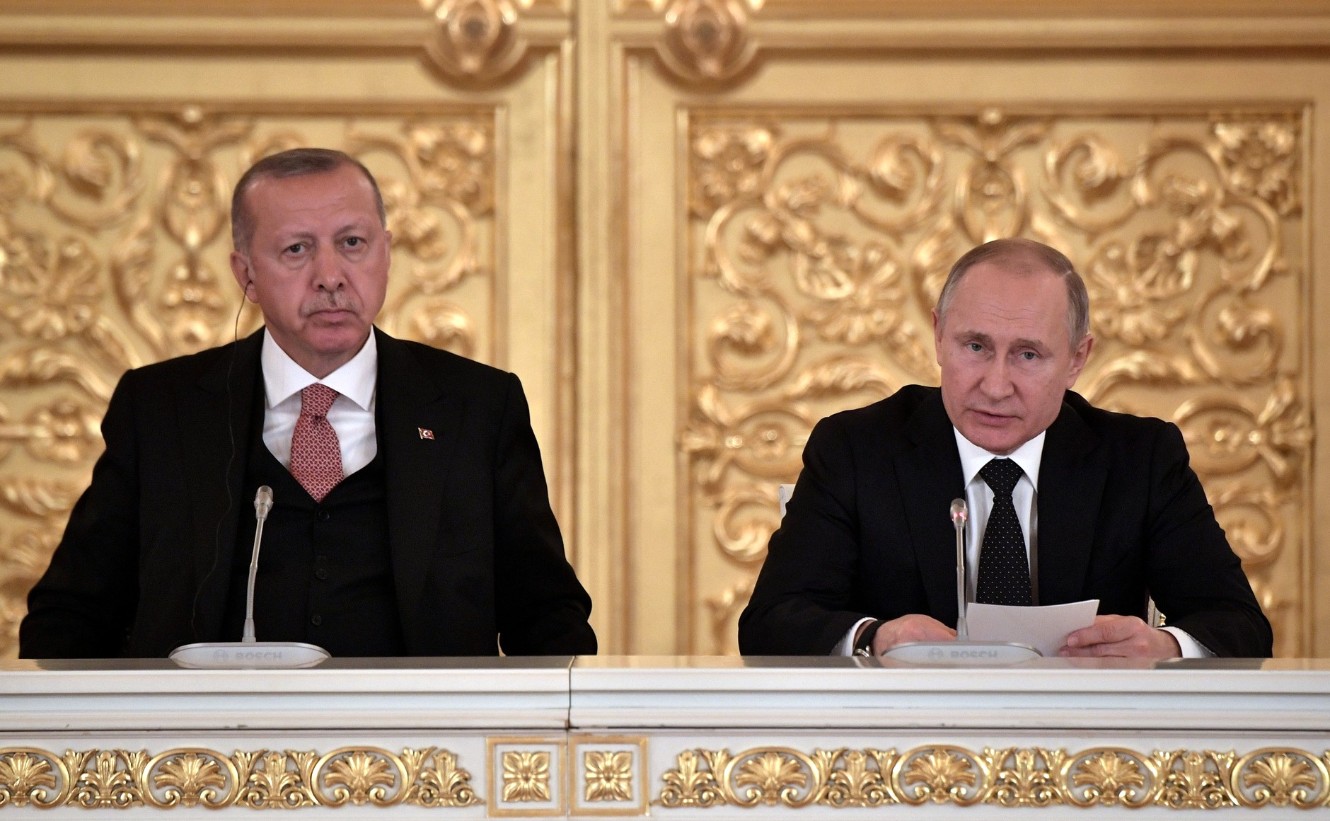
Erdogan’s intent, however, appears divorced from purely military considerations. Instead, he seemed to be using nuclear weapons as a straw man to make a broader argument about Ankara’s place in the world, and how the American and Western systems with which Turkey had long associated itself are unfair and require change. The Turkish president was not actually signaling an imminent decision to develop nuclear weapons. Instead, he was expounding on a more personal, deeply held grievance about Turkey’s global role. For the United States, both outcomes are bad given the importance Washington attaches to Turkey as a NATO ally and potential enabler of American interests in the Middle East and the Black Sea.

To understand the future of foreign policy under Erdogan, it is critical to internalize Turkey’s shifting view of the so-called liberal international order, and Ankara’s role within transatlantic institutions that established many of the norms with which Ankara is now uncomfortable. It is changes in how Turkish political elites view Ankara’s role in the world, and how the world order should be defined, that explain much of the country’s recent decision-making, the concerted top-down effort to decouple from the United States, why Ankara views certain international norms as antithetical to its own interests, and how it hopes to balance relations with Washington and Moscow.

Likewise, it may be tempting to ascribe the problems in the U.S.-Turkish relationship to events in Syria and, more specifically, the American decision to partner with the Syrian Kurds. Indeed, this narrative is comforting because it suggests that the current downturn can be fixed, either with creative diplomacy to address Turkish concerns in Syria, or, cynically, to stand aside and say nothing when Ankara eventually decides to destroy Kurdish targets after U.S. forces leave the country.

Unfortunately, the downturn in relations is far deeper than any one event and is instead a culmination of Ankara’s changing view of the global balance of power, including a sense that American and European influence is declining relative to competitors in Asia. This worldview coincides with Erdogan’s consolidation of authoritarian power, palace politics, and the elimination of any functional bureaucratic counterweight to challenge the president’s policy instincts. The result, especially since the failed July 2016 coup attempt, has been a Turkish foreign policy unchecked by dissenting voices within the government, allowing Erdogan and a close group of advisors to make policy as they see fit.

The United States cannot fix this, it can only hope to manage problems as they arise and continue to engage with Ankara to ensure American interests are not too negatively impacted. Rather than explaining away Turkey’s entente with Russia, for example, it is important to seriously grapple with how Turkey now makes policy. Erdogan’s quip about nuclear weapons, in this regard, may yield useful insight into how Erdogan believes that the old rules of the road are inadequate and unfair, and, importantly, that Turkey should be a central player in rewriting them. It further highlights why this matters for U.S. foreign policy.

Great Power Competition: Ankara’s Balancing Act

Turkish foreign policy under Erdogan’s Justice and Development Party (AKP) has espoused a point of view that Ankara’s regional interests differ from those of the United States — and that Turkey should not be constrained by its alliances. Instead, those alliances should be additive to Turkish interests, and, when they are not, Turkey should be free to cast them aside. This approach is, at its core, a transactional view of global affairs, similar to how President Donald Trump views American alliances. However, the two countries have not been able to capitalize on the ideological overlaps between Trump and Erdogan because, fundamentally, the two sides do not share many interests and have vastly different policy priorities.

With regard to the Middle East, the AKP’s foreign policy elite view the constellation of American allied governments, and U.S. military operations in Iraq and Syria, as antithetical to Turkish interests. These officials further view Washington’s support for Gulf Arab monarchs as the root cause of regional instability. The United States, even under Trump, instead views its presence in the region as vital for its own national security, and it views the region’s monarchs as critical to enhancing American power. In contrast, the AKP believes that the United States’ relationships with the region’s autocratic leaders enable these rulers to oppress their people, which catalyzes regional instability, prevents political change, and is the actual root cause of terrorism.

This highlights something important: the AKP does not believe it is authoritarian and bristles at any suggestion to the contrary. Instead, the party sees itself as a democratic vanguard fighting against regional political oppression in the Muslim world. While AKP elites never say Turkey is a political model, the party does, in fact, think its story is one of democratic triumph that should be replicated. This may be hard to swallow for Western observers that can clearly see a sharp democratic decline in Turkey, but it is a deeply held point of view and shapes the AKP’s thinking about the world.

Beyond its own region, the Turkish government has sought to adapt to what it perceives as a changing global order. As the United States debates how to prepare for great power competition, a euphemism for the emergence of peer competitors, Ankara views China’s rise and, to a lesser extent, Russian revisionism as indicative of American decline. To prepare for this new distribution of power, Turkey believes it should no longer be beholden to the West, as the United States will soon be surpassed by competing states. Instead, Turkey should be an independent actor working to advance its own self-interest, even when those interests clash with its traditional allies. This approach to global affairs explains Ankara’s dealings with Moscow. Erdogan was reluctant to side with the West even after Russia invaded Ukraine in 2014, defeated Turkish proxies in Syria in 2016, and launched chemical weapons attacks in England in 2018.

For Turkish decision-makers, Washington’s disapproval is not enough to alter Ankara’s outreach to Moscow. Take Erdogan’s decision to purchase the S-400 air and missile defense system. From the outset of Turkish cooperation with Russia, the United States cautioned Ankara that an agreement with the Russian government would have serious consequences. As the deal proceeded, but before actual delivery, American warnings became more pointed, with Washington warning that Turkey would face economic sanctions and lose access to the F-35 fighter jet — an aircraft Ankara had helped produce and from which it stood to benefit through its role in future co-production contracts. Instead, when forced to choose between the S-400 and F-35, Ankara chose air defense over a stealth fighter. This decision was not made in a vacuum. Ankara has a policy process, and that process resulted in the top-down choice to purchase Russian rather than American equipment.

In the short term, this decision will make Turkish armed forces weaker, but could also position Ankara to break free of Washington’s influence over defense decision-making and future defense exports. The nascent Turkish discussion about purchasing the Russian Su-35 is a good example of this dynamic. Faced with the loss of the F-35 and the inevitability of Turkish F-16s reaching the end of their service life beginning in the 2020s, Ankara will have to decide how to procure aircraft for its air force. American export controls give Washington considerable say over potential replacement fighters made in Europe and over Turkish defense exports. Ankara’s efforts to sell attack helicopters to Pakistan, for example, are complicated by the T-129’s use of an American-made engine, which means that Washington must grant an export license. Faced with longer-term concerns about a virtual American veto over exports, the AKP could decide that it is in the party’s interest to deepen cooperation with Moscow and to purchase the Su-35 or Su-57. This choice would deepen Turkish relations with an American competitor and free Ankara from the potential threat of American sanctions and/or U.S. export control restrictions on the export of a Turkish-made jet with Russian components to third countries.

Turkey believes that China’s rise is something to be cultivated to enhance its own national interests, not resisted in the name of transatlantic solidarity. This has played out in Turkey’s approach to China’s treatment of Muslims. Traditionally, the AKP has sought to derive domestic and international legitimacy from political Islam. Just as the AKP does not see itself as authoritarian, but as an inspiration for the Middle East, it also has sought to position itself as a voice for the world’s Muslim-majority countries. And yet, when faced with obvious Chinese oppression of its own Muslim minority, the Turkic Uighur population, Ankara has compromised on these purported core values in favor of narrow self-interest. The Turkish government received Chinese financing to help overcome a recent downturn in the economy, and in return, Turkey offered to whitewash the level of Chinese oppression by offering to send a delegation to “inspect” the concentration camps Beijing established to imprison its own Muslim citizens. Likewise, in an overlooked gesture before Erdogan’s last visit to America in May 2017, the AKP went out of its way to point out that the Turkish president was travelling to Washington via a stop-over in Beijing. Ankara designed the messaging to signal that it was engaging both the world’s great powers.

The Future: Transatlantic to Transactional

For Washington, the concern about Turkey is often framed in terms of Ankara’s axis, and whether foreign policy elites are oriented toward the East or the West. In an article for War on the Rocks, Nick Danforth wrote about the longstanding American fear of “losing Turkey” and the AKP choosing to “turn East.” Instead, as Danforth argued, “Turkey [has] turned against the West without necessarily having anywhere else to turn.” This choice appears to be by design or, if an accident, a consequence of the pursuit of a more independent foreign policy and calculated choices to downgrade ties with America.

The binary framing of “East or West” may not be useful to capture what’s happening. Instead, it may be worth thinking about Turkish decision-making as a set of variables, with a certain value attached to how Ankara’s policies will impact ties to Washington, Brussels, Moscow, and Beijing. Historically, Ankara assigned considerable value to ties with America, which weighted decisions in favor of U.S. interests. It chose to do so because foreign policy elites believed that Turkey had much to gain from America. This has clearly changed.

The AKP’s recent foreign policy shows the devaluation of the United States in its strategic calculus, and the assigning of coequal values to other capitals around the world. In fairness to the AKP, Washington, too, has decreased the value it assigns to Turkey. America no longer views Ankara as critical to its counter-terrorism goals in the Middle East, and, in Europe, Turkey is no longer the sole actor on NATO’s eastern flank bordering Russia. Instead, many in Washington view Ankara as an irritant, and an ally to be planned around, rather than seriously consulted. Ankara views Washington in much the same way — an irritant that upends the regional order and undermines Turkish security.

If one zooms out and focuses on more than just Syria, it’s clear that the AKP elite assign less value to the West than any previous Turkish government. This partly stems from increasingly divergent interests with Washington, and a Turkish backlash to frequent European criticism of its authoritarian governance. It also speaks to the reality that AKP Turks do not see themselves as Western, and therefore do not feel the need to change. Instead, the AKP argues it should be accepted as a coequal “other” because Turkish participation in Western institutions is additive to European power.

This point of view does not signal an imminent change in Ankara’s membership in NATO or Turkish willingness to bandwagon with the United States and Europe when it is in the country’s self-defined interest. Nor does it mean Turkey will soon develop its own nuclear deterrent. It also helps to explain the root cause of Erdogan’s nuclear comment. The ironic thing is that although Turkey hosts American nuclear weapons at Incirlik Air Force Base, it has made a series of choices to de-emphasize nuclear weapons for its own security.

Turkey’s decision to purchase the S-400 and, as a consequence, lose the F-35, means that Ankara will soon be unable to operate the future NATO aircraft designed to carry the nuclear weapons stored in Turkey. While it made a political decision to decertify the pilots slotted to carry these weapons in the mid-1990s, Ankara still participated in NATO nuclear weapons exercises and was part of the smaller, elite grouping of “nuclear NATO” members. But what now? Without the F-35, and with a future S-400 system operating near Ankara, the AKP has essentially ensured that it cannot ever again return to an arrangement that would give it some semblance of control over nuclear weapons on its territory, once Ankara has to consider beginning the retirement of F-16s.

If Turkey chooses to deepen cooperation with Russia and purchase the Su-35 and/or Su-57, it is unclear how the air force would even be incorporated into NATO nuclear exercises in the future. In this sense, the S-400 purchase is certain to have long-term ramifications for Turkey’s role within NATO. However, the purchase is also consistent with Ankara’s post-Cold War emphasis on acquiring and developing conventional, long-range precision strike capabilities backed by some semblance of missile defense. This policy de-emphasized nuclear weapons, a trend consistent with U.S. thinking about the future of combat.

The AKP, however, broke with Turkey’s traditional reliance on the United States for these capabilities when it purchased a Russian system and, importantly, abandoned its demands for the transfer of critical technology as condition of its weapons purchase. Ankara’s decision to purchase a missile system “off the shelf” was part of its broader effort to deepen ties with Moscow, a choice analysts in Washington should carefully study for what it portends about future AKP foreign policy decision-making. The reality is that, for the past 30 years, Turkish decision-makers (including the AKP) have devalued nuclear weapons for Turkish defense, but, more recently, increased the value assigned to relations with Moscow.

Observers should treat Erdogan’s recent comments instead as a window into his worldview and his resentments, wherein he argues the West is not treating Turkey equally. To right the wrong, Erdogan wants to remake the system, and to have a seat at the table to dictate the rules when that day comes. This is a fundamental argument against America’s current role as the dominant global power. This points to a broader problem for Washington — the political elite in Ankara no longer view America’s role in the world as good for Turkey.

Implications for the United States

The United States, therefore, cannot count on Turkey to support its effort to confront China and Russia — the underpinning of current U.S. national security policy. Ankara’s point of view differs, considerably, from other U.S. allies. While many countries in Europe may express frustration with Trump, their criticism of America is that it is operating outside of the international order, and that American unilateralism is undermining a system that is beneficial to their own interests. In many ways, it would be easier for Washington to deal with a Turkey concerned about the credibility of the U.S. nuclear guarantee. There are ways to address that, ranging from discussions about Ankara rejoining the nuclear mission in the alliance to increasing the rotation of U.S. dual-capable aircraft like the F-15E from bases in Europe to Turkey.

Erdogan’s nuclear comments, however, signal a more profound problem for Washington. And neither administration officials nor Congress can solve this problem with diplomatic visits and more fighter jets. Instead, to rectify this problem, a Turkish leader will have to decide if he or she wants to give more weight to Washington and Brussels in his/her decision-making calculus about foreign policy. That is, and will remain, an internal Turkish decision. The problem is that Erdogan remains formidable, and, by the time he leaves office, Ankara could be both a major purchaser of Russian defense equipment and another country enmeshed in financing arrangements with China.

Turkey has changed. Washington has also changed. The trends point to considerable friction and a murky bilateral future. Ankara is not leaving NATO, nor will it turn East. Instead, the current leadership rejects the current rules of the road and wants to change them. That may actually be worse for Washington.

Aaron Stein is the director of the Middle East Program at the Foreign Policy Research Institute.

Image: The Kremlin

Erdogan Doesn’t Want Nukes, He Wants to Blow Up the System

Why isn’t the media covering Turkish President Erdogan’s ties to ISIS

0


During his 2017 New York visit, Erdogan met with then-freshman U.S. Rep. Ilhan Omar (D-MN). This past July, state-run media chiefs called on Turks around the world to donate to her re-election campaign, which is illegal if they are not U.S. citizens or green-card holders.

But what should disturb Americans most about Erdogan is not his efforts to influence Congress, his abysmal record as a jailer of journalists, his genocidal war against the Kurds, or even the $100 million mosque he has constructed in Lanham, Maryland.

It’s Erdogan’s commitment to global jihad, and specifically, to ISIS terrorists. Since 2012, the Turkish intelligence service, MIT, under Erdogan’s direction, has been providing resources and material assistance to ISIS, while Turkish Customs officials turned a blind eye to ISIS recruits flowing across Turkey’s borders into Syria and Iraq.

Scores of ISIS fighters captured by pro-U.S. Kurdish forces in northern Syria showed Turkish exit stamps on their passports, and otherwise boasted of the direct assistance they had received from Turkish authorities.

“Turkish intelligence knows everything,” one captured ISIS fighter told his Kurdish captors recently.

Many former ISIS fighters have now joined the Turkish-backed forces that have occupied the Syrian Kurdish city of Afrin, where they have engaged in ethnic cleansing.

Two Turkish intelligence officers, captured by Kurdish guerilla fighters in northern Iraq in 2017, provided insider accounts of Turkish government assistance to ISIS and other jihadi groups operating in Syria and Iraq.

Turkey’s assistance to ISIS starts right at the top. In 2016, Wikileaks published an archive of 58,000 emails documenting the involvement of Erdogan’s son-in-law, Berat Albayrak, in helping ISIS market oil stolen from Syria and Iraq.

Until the publication of the emails, Albayrak had denied any involvement in the illicit oil trade.

Sümeyye Erdogan, daughter of the Turkish president, reportedly set up an entire medical corps, including a hospital to treat wounded ISIS fighters in Sanlurfa, a city in Southeastern Turkey close to the Syrian border.

ISIS evacuated severely wounded fighters across the border into Sanliurfa in Turkish army trucks without undergoing Customs inspection.

The evidence of Erdogan’s direct, personal and institutional support for ISIS and related jihadi groups is so extensive, the wonder is why the American media is not paying more attention to it.

This week a new group, the Turkey-ISIS Research Project, is sponsoring bus-billboards to roam the Big Apple. The message is clear: “Erdogan, the Godfather of Jihadist Terrorists, is Not Welcome in the United States.”