Αρχική Blog Σελίδα 2585

Η επέλαση της απολυταρχίας και η παρακμή της Δύσης

0
  • Toυ Tony Barber euro2day.gr/Financial Times

H παγκόσμια τάξη που σχεδίασαν οι ΗΠΑ προς όφελος των χωρών της Δύσης βρίσκεται σε κρίση. Ποιες δυνάμεις μπορεί να επιβραδύνουν την αποσύνθεσή της. Τι προμηνύουν οι πολιτικές εξελίξεις στην Κίνα.

H άνοδος που έχει καταγράψει ο απολυταρχισμός και ο ακροδεξιός λαϊκισμός, το αδερφάκι του στις δυτικές δημοκρατίες, προκαλεί την εύλογη ανησυχία πως οι φιλελεύθερες πολιτικές αξίες και το κράτος δικαίου απειλούνται με οριστικό μαρασμό.

Ωστόσο, ούτε απολυταρχικά κράτη όπως η Κίνα και η Ρωσία ούτε οι λαϊκιστές ηγέτες στις ΗΠΑ, την Ιταλία και σε άλλες δυτικές χώρες είδαν τα πράγματα να πηγαίνουν όπως ακριβώς τα ήθελαν το 2019.

Oι προκλήσεις που αντιμετώπισαν καταδεικνύουν πως είναι πολύ νωρίς να ξεγράψουμε τις προσδοκίες για παγκόσμια διακυβέρνηση, αν και η βασισμένη σε κανόνες παγκόσμια τάξη που οικοδομήθηκε μετά το 1945 χάρη στις ενέργειες των ΗΠΑ βρίσκεται σε αποσύνθεση και δεν θα επανέλθει ποτέ στην πρότερη κατάσταση.

Στην ετήσια έκθεση «Ελευθερία στον Κόσμο», η Freedom House, μια μη κομματική, κρατικά χρηματοδοτούμενη αμερικανική οργάνωση, υποστηρίζει ότι η ελευθερία στην υφήλιο συρρικνώθηκε πέρυσι για 13 διαδοχική χρονιά. Κατά την περίοδο 2006 με 2018, περίπου 116 χώρες βίωσαν καθαρή πτώση του δείκτη ελευθερίας και μόνο 63 κατέγραψαν άνοδο, σύμφωνα με την Freedom House.

Οι ΗΠΑ κατατάσσονται ως ελεύθερη χώρα, αλλά πίσω από τη Γαλλία, τη Γερμανία και το Ηνωμένο Βασίλειο λόγω της διάβρωσης του κράτους δικαίου από την κυβέρνηση Τραμπ.

Παρόμοιες ανησυχίες εμφανίζονται και στην τελευταία μέτρηση του «Δείκτη για το Κράτος Δικαίου» του World Justice Project, μια πρωτοβουλία της κοινωνίας των πολιτών με έδρα την Ουάσιγκτον.

Σύμφωνα με τη μελέτη αυτή, τα θεσμικά αντίβαρα στην εξουσία των κυβερνήσεων, όπως η ανεξάρτητη δικαιοσύνη, τα ελεύθερα μέσα ενημέρωσης και η νομοθετική εποπτεία του κυβερνητικού έργου, έχουν αποδυναμωθεί σημαντικά σε χώρες όπως η Κίνα, η Αίγυπτος, η Ουγγαρία, οι Φιλιππίνες και η Τουρκία.

«Ένα από τα πιο εντυπωσιακά στοιχεία σχετικά με την υποβάθμιση του κράτους δικαίου είναι πως έχει επιτευχθεί μέσω νόμων και νόμιμων θεσμών. Ο ίδιος ο νόμος έχει υφαρπαχθεί και χρησιμοποιείται για τη διάβρωση του ελέγχου της εξουσίας» υποστηρίζει η Ελίζαμπεθ Άντερσεν, εκτελεστική διευθύντρια του WJP.

Μια εξίσου ενοχλητική τάση είναι ο περιορισμός της ελευθερίας του λόγου μέσω της λογοκρισίας, των επιθέσεων σε ανεξάρτητους εκδοτικούς οίκους και την πίεση σε ακαδημαϊκούς που αρνούνται να υποταχθούν. Ο Ζίγια Σελκούκ, ο υπουργός Παιδείας της Τουρκίας, ανακοίνωσε τον Αύγουστο ότι η κυβέρνηση του προέδρου Ταγίπ Ερντογάν απομάκρυνε περισσότερα από 300.000 βιβλία από σχολεία και βιβλιοθήκες μετά το αποτυχημένο πραξικόπημα του 2016 και τα κατέστρεψε.

Υπό τον πρόεδρο Σι Τζινπίνγκ, τον παντοδύναμο ηγέτη της Κίνας μετά το 2012, οι κινεζικές αρχές έχουν βάλει λουκέτο σε βιβλιοπωλεία τα οποία πωλούν υλικό που ασκεί κριτική στο κομμουνιστικό κόμμα, αύξησαν την πίεση σε ανεξάρτητους στοχαστές και εμπόδισαν την πρόσβαση σε μη λογοκριμένες πληροφορίες στο ίντερνετ.

Παρά αυτά τα πισωγυρίσματα για τις ατομικές ελευθερίες, τον πολιτικό πλουραλισμό και το κράτος δικαίου, οι απολυταρχικοί και ακροδεξιοί λαϊκιστές ηγέτες αντιμετωπίζουν όλο και μεγαλύτερη αντίσταση από τους πολίτες και τους δημόσιους θεσμούς κατά τη διάρκεια του 2019.

O Ματέο Σαλβίνι, ο ηγέτης της ακροδεξιάς Λέγκας στην Ιταλία, έχασε τη δουλειά του ως αντιπρόεδρος και υπουργός Εσωτερικών όταν υπερεκτίμησε τη δυνατότητά του να προκαλέσει πρόωρες βουλευτικές εκλογές και να γίνει ο αδιαμφισβήτητος ισχυρός άνδρας της χώρας.

Αν και η Λέγκα διατηρεί περισσότερη στήριξη από άλλα κόμματα, η δημοτικότητά της έχει βουλιάξει μετά το ανεπιτυχές στοίχημα του κ. Σαλβίνι, το οποίο έρχεται να προστεθεί στην αποτυχημένη του απόπειρα να οδηγήσει την ευρωπαϊκή ακροδεξιά σε νίκη στις ευρωεκλογές του Μαϊου.

Αντίστοιχα ο Ντόναλντ Τραμπ βρίσκεται στην πιο σοβαρή κρίση της προεδρίας του μετά την προσπάθεια του να δυσφημήσει τον Τζο Μπάιντεν, πρώην αντιπρόεδρο των Δημοκρατικών και πιθανό του αντίπαλό του στις προεδρικές εκλογές του 2020, με τη βοήθεια ενός ξένου ηγέτη, του προέδρου της Ουκρανίας, Βολοντόμιρ Ζελένσκι. Στη Βουλή των Αντιπροσώπων έχει ξεκινήσει έρευνα για την παραπομπή του, παρά την άρνηση του Λευκού Οίκου να συνεργαστεί.

Εν τω μεταξύ, oi μαζικές διαδηλώσεις στο Χονγκ Κονγκ έχουν μετατραπεί μέσα σε επτά μήνες από μια εναντίωση στον νόμο περί απελάσεων σε ένα ευρύτερο κίνημα που απαιτεί από την κινεζική κυβέρνηση να σεβαστεί βασικά δημοκρατικά δικαιώματα όπως υποσχέθηκε να κάνει όταν ανέλαβε τον έλεγχο του κρατιδίου το 1997.

Η Μόσχα ταρακουνήθηκε φέτος από τις μεγαλύτερες αντικυβερνητικές διαδηλώσεις που έχουν πραγματοποιηθεί στη ρωσική πρωτεύουσα από τον χειμώνα του 2011-12. Η σπίθα που άναψε το φιτίλι ήταν η απόφαση των αρχών να απαγορεύσουν τους υποψήφιους της αντιπολίτευσης να εκλεγούν στο δημοτικό συμβούλιο.

Eν τέλει, το κυβερνών κόμμα Ενωμένη Ρωσία του Βλαντιμίρ Πούτιν υπέστη βαριές απώλειες μετά από μια αντιπολιτευτική καμπάνια που συνιστούσε «έξυπνη ψήφο» ή ψήφο για οποιονδήποτε υποψήφιο πέρα από τους υποστηρικτές του Πούτιν. Η μεγάλη εικόνα είναι ότι η δημοτικότητα του κ. Πούτιν υποχωρεί εξαιτίας της λαϊκής δυσαρέσκειας με την στασιμότητα του βιοτικού επιπέδου, τις αλλαγές στο συνταξιοδοτικό σύστημα, την περιβαλλοντική καταστροφή και την αυθαίρετη συμπεριφορά της αστυνομίας και των δυνάμεων ασφαλείας.

To ρωσικό και κινεζικό κράτος διαθέτουν τεράστιες δυνατότητες καταστολής που τους επιτρέπουν να καταπνίγουν εύκολα κάθε διαμαρτυρία, εφόσον υπάρχει η βούληση. Το Κομμουνιστικό Κόμμα στην Κίνα επέδειξε τέτοια βούληση στην Πλατεία Τιενανμέν το 1989 και δεν έχει μετανιώσει ποτέ για αυτό, μια άκαμπτη στάση που αποτελεί κακό οιωνό για τους διαδηλωτές στο Χονγκ Κονγκ. Αλλά υπάρχει πολύ μικρότερη ανοχή για ανάλογη κρατική βία στις ευρωπαϊκές κοινωνίες, όπως κατέδειξε η λαϊκή κατακραυγή στη Σλοβακία για τη δολοφονία του Γιάν Κούτσιακ, ενός ερευνητικού δημοσιογράφου, και της μνηστής του.

Αν ο ακροδεξιός λαϊκισμός δεν καταφέρει να διεισδύσει βαθύτερα στα πολιτικά συστήματα της Δύσης, λόγω των μη ρεαλιστικών υποσχέσεων και τις συγκεχυμένες πολιτικές, η διάβρωση της μεταπολεμικής παγκόσμιας τάξης θα επιβραδυνθεί. Τούτο ισχύει ιδίως για τις ΗΠΑ, όπου μια αλλαγή στην εξουσία μετά τις εκλογές του 2020 μπορεί να μειώσει σημαντικά την εχθρότητα και τον σκεπτικισμό του Λευκού Οίκου απέναντι στους πολυμερείς παγκόσμιους θεσμούς.

Οι αυξανόμενες εσωτερικές προκλήσεις που αντιμετωπίζουν τα απολυταρχικά συστήματα όπως η Ρωσία και η Τουρκία μπορεί να ενισχύσουν την τάση αυτή. Ωστόσο, οι πιο σημαντικές μακροπρόθεσμες τάσεις στις διεθνείς σχέσεις τα τελευταία 30 χρόνια ήταν η άνοδος της Κίνας και η μεταφορά οικονομικής ισχύος από τη Δύση στην Ασία. Αυτό καθιστά βέβαιο ότι η μεταπολεμική παγκόσμια τάξη που σχεδιάσει η Ουάσιγκτον, η οποία είχε ρυθμιστική προς όφελος των ΗΠΑ, της Ευρώπης, της Ιαπωνίας και άλλων συμμάχων, θα δώσει τη θέση της σε μια πιο κατακερματισμένη μορφή παγκόσμιας διακυβέρνησης.

Για τη Δύση, η σκληρή πραγματικότητα δεν είναι ότι η απολυταρχία θα θριαμβεύσει και η δημοκρατία θα μαραζώσει, αλλά μάλλον ότι η 500ετής εποχή της παγκόσμιας κυριαρχίας της Δύσης φτάνει στο τέλος της.

© The Financial Times Limited 2019. All rights reserved.
FT and Financial Times are trademarks of the Financial Times Ltd.
Not to be redistributed, copied or modified in any way.
Euro2day.gr is solely responsible for providing this translation and the Financial Times Limited does not accept any liability for the accuracy or quality of the translation

ΧΙΛΗ: Η πρώτη-αιματηρή- εξέγερση κατά του οικολογισμού

0

του James Taylor

 19/10/2019 (MARTIN BERNETTI/AFP via Getty Images)

 Οι ακτιβιστές του κλίματος και τα Ηνωμένα Έθνη υπέστησαν ένα άνευ προηγουμένου στραπάτσο από τις διαμαρτυρίες και τις ταραχές που εξερράγησαν στο Σαντιάγο της Χιλής λόγω των υψηλών τιμών της ενέργειας.

Η Χιλή, η οποία θα φιλοξενούσε μια μεγάλη διάσκεψη των Ηνωμένων Εθνών για το κλίμα τον Δεκέμβριο, κέρδισε την εκτίμηση των ακτιβιστών του κλίματος επιβάλλοντας πρόσφατα φόρο διοξειδίου του άνθρακα στις πηγές ορυκτών καυσίμων και συνέδεσε το δίκτυο του μετρό στο Σαντιάγκο με τις ανανεώσιμες πηγές ενέργειας Αλλά τώρα ο λαός της Χιλής εξεγείρεται και προειδοποιεί τα υπόλοιπα έθνη που εξετάζουν να προωθήσουν παρόμοιους φόρους και δαπανηρά προγράμματα στηριζόμενα στις ανανεώσιμες πηγές ενέργειας.

Στις 25 Οκτωβρίου, οι διαδηλωτές κατέβηκαν στους δρόμους του Σαντιάγκο για να διαμαρτυρηθούν για την αύξηση των ναύλων του μετρό. Στη συνέχεια οι διαδηλώσεις εξαπλώθηκαν γρήγορα στις άλλες πόλεις και οδήγησαν σε ταραχές που προκάλεσαν τουλάχιστον πέντε επίσημους θανάτους. Η κυβέρνηση της Χιλής και τα επίσημα ΜΜΕ αμφισβήτησαν την άνοδο των τιμών του πετρελαίου. Αλλά αυτό είναι ψέμα.

Οι τιμές του πετρελαίου δεν αυξάνονται. Οι παγκόσμιες τιμές πετρελαίου είναι σήμερα κατά 25% χαμηλότερες από ό, τι πριν από ένα χρόνο και 37% κάτω πριν από πέντε χρόνια.

Στη Χιλή, η τιμή της βενζίνης αντανακλά τη χαμηλή τιμή του πετρελαίου. Στη Χιλή η βενζίνη κόστιζε 1,12 δολάρια ανά λίτρο τον Αύγουστο (τα τελευταία αξιόπιστα  στοιχεία), έναντι 1,28 δολαρίων πριν από ένα χρόνο. Και πριν από πέντε χρόνια, η βενζίνη πωλιόταν 1,50 δολάρια.

Παρά την πτώση των τιμών του πετρελαίου και της βενζίνης, τα εισιτήρια του μετρό του Σαντιάγκο αυξάνονται επειδή η κυβέρνηση αποσύνδεσε το μετρό από τις συμβατικές πηγές ενέργειας και το σύνδεσε με αιολική και ηλιακή ενέργεια. Επίσης, επέβαλε στις υπόλοιπες συμβατικές ενέργειες νέους φόρους CO2.

Ως αποτέλεσμα, οι Χιλιανοί πρέπει τώρα να επωμιστούν το βάρος των ναύλων του μετρό που αντανακλούν την άνοδο της τιμής της ενέργειας χωρίς να υπάρχει κάποια ανάγκη. Ενώ οι Χιλιανοί διαδηλώνουν, οι ακτιβιστές του κλίματος και οι σύμμαχοι τους των ΜΜΕ θέλουν να τους πείσουν ότι η αιτία βρίσκεται στις τιμές του πετρελαίου και όχι στα κυβερνητικά προγράμματα κλιματικών αλλαγών που αυξάνουν τις τιμές ενέργειας και φτωχοποιούν τους ανθρώπους.

Σε αντίθεση με τα προβλήματα της κλιματικής αλλαγής που είναι ακόμα θεωρητικά, οι φόροι CO2 και η υποχρέωση χρήσης ανανεώσιμων ενεργειών αυξάνουν το κόστος ζωής με άμεσο και μετρήσιμο τρόπο και μειώνουν την ποιότητα ζωής. Στις ΗΠA, οι άνθρωποι μπορεί ασφαλώς να ανησυχούν για την αλλαγή του κλίματος, αλλά οι δημοσκοπήσεις δείχνουν ότι οι Αμερικανοί δεν είναι διατεθειμένοι να δεχτούν να πληρώσουν 2 δολάρια το μήνα για να μειώσουν τις εκπομπές CO2.

Καταλαβαίνουμε γιατί στη Χιλή, όπου το κατά κεφαλήν ΑΕΠ είναι μόνο το ένα τέταρτο των ΗΠΑ, οι άνθρωποι είναι ακόμη λιγότερο πρόθυμοι να πληρώσουν για αυτή τη μείωση του CO2. Ας μην ξεχνάμε ότι το κατά κεφαλήν ΑΕΠ της Χιλής είναι υψηλότερο από αυτό των περισσοτέρων άλλων λατινοαμερικανικών χωρών, και γι ‘αυτό οι άνθρωποι σε άλλες χώρες της Λατινικής Αμερικής θα εξεγείρονταν και θα αντιτάσσονταν ακόμα πιο αμείλικτα σε κλιματιστικά μέτρα  καταστρεπτικά για την οικονομία, όπως αυτά που επιβλήθηκαν στη Χιλή.

Για τους αξιωματούχους του ΟΗΕ που προετοιμάζονται για την 25η διάσκεψη για το κλίμα (COP25) που έχει προγραμματιστεί για τις δύο πρώτες εβδομάδες του Δεκεμβρίου στο Σαντιάγο, οι διαμαρτυρίες είναι ιδιαίτερα ενοχλητικές. Ήδη το περασμένο έτος πραγματοποιήθηκε η διάσκεψη του ΟΗΕ στην Πολωνία και το ισχυρό συνδικάτο Αλληλεγγύη είχε επικρίνει τα δαπανηρά προγράμματα του ΟΗΕ. Η Αλληλεγγύη πραγματοποίησε μάλιστα συνέντευξη Τύπου κατά τη διάρκεια της εκδήλωσης και εξέδωσε δήλωση που επικρίνει τον ακτιβισμό του κλίματος του ΟΗΕ.

Αρχικά, ο προγραμματισμός COP του Δεκεμβρίου σχεδιάστηκε για τη Βραζιλία. Ωστόσο, η κυβέρνηση της Βραζιλίας, αφού επέκρινε έντονα τον ακτιβισμό του κλίματος του ΟΗΕ, δήλωσε ότι δεν επιθυμεί πλέον να τη φιλοξενήσει.

Στη συνέχεια, η χιλιανή κυβέρνηση πρότεινε να την φιλοξενήσει αντί της Βραζιλίας, καυχόμενη για τους φόρους της στο CO2, το μετρό της με τις ανανεώσιμες πηγές ενέργειας και άλλα κλιματιστικά πρωτοπορειακά προγράμματα. Ωστόσο, όλος ο κόσμος παρακολουθεί τις ταραχές του πληθυσμού της Χιλής που προκλήθηκαν από αυτούς τους φόρους και τα προγράμματα για το κλίμα. Αυτό είναι το τρίτο ράπισμα  που δέχεται η COP σε λιγότερο από ένα χρόνο.

Οι χιλιανές διαμαρτυρίες, όπως αυτές των Κίτρινων Γιλέκων που ξέσπασαν στη Γαλλία πριν από ένα χρόνο, υπογραμμίζουν πως η διεθνής τάξη των ακτιβιστών του κλίματος αποσυνδέεται από τους ανθρώπους που επιδιώκει να κυβερνήσει και να ελέγξει. Αντιμέτωποι με την επιλογή μεταξύ της αποδοχής ενός συγκεκριμένου χαμηλού βιοτικού επιπέδου σήμερα ή της υποτιθέμενης αλλαγής του κλίματος στο μακρινό μέλλον, οι άνθρωποι επιλέγουν σοφά αυτή την τελευταία εναλλακτική λύση.

Και αυτό θα συνεχίσει να συμβαίνει μέχρις ότου οι υποθετικές ζημιές από το κλίμα υλοποιηθούν και βλάψουν τους ανθρώπους, ή μέχρις ότου η αιολική και η ηλιακή ενέργεια ανταγωνίζονται οικονομικά την συμβατική ενέργεια. Μέχρι στιγμής, ούτε το ένα συμβαίνει, ούτε το άλλο.

Μετάφραση: Ευάγγελος Δ. Νιάνιος

Πηγή: The Epoch Times, 29 octobre 2019

Top of Form

Bottom of Form


Sens. Menendez and Murphy Introduce Privileged Resolution to Trigger Mandatory Examination of Turkey’s Human Rights Abuses in Syria

0


WASHINGTON – Senator Bob Menendez (D-N.J.), Ranking Member of the Senate Foreign Relations Committee, and Senator Chris Murphy (D-Conn.), Ranking Member of the Senate Foreign Relations Subcommittee on the Middle East, today introduced a privileged resolution to require Secretary of State Mike Pompeo to detail the extent of Turkey’s human rights abuses in Syria. The effort sets up a fast-tracked debate and vote in the Senate to assess the U.S.-Turkey relationship based on Ankara’s human rights record.

The Senators’ Resolution comes as a direct result of Turkey’s invasion of northeastern Syria and its campaign to ethnic cleanse Kurds from the region, which has resulted in numerous reports of horrific human rights abuses against innocent civilians. Secretary of Defense Mark Esper recently stated that some of these abuses might be war crimes – an assessment echoed by President Trump’s Special Envoy for Syria James Jeffrey.  Nevertheless, President Trump has insisted on kowtowing to Ankara despite its aggressive behavior in the region, dramatic backsliding of democracy, and increasingly warming relationship with Russia.

“Not only was Turkey’s invasion of Syria to attack our Kurdish partners an unconscionable act of brutality against U.S. partners, it also handed Russia full control over the situation in Syria. As President Erdogan continues down a path to make Turkey an irresponsible actor on the world stage, an unreliable partner to NATO, and an ally of our adversaries, the United States Congress has a responsibility to act.”  Menendez said.  “That is why we are introducing this new legislation today. There must be a full accounting by Turkey of these atrocities.  For years, the world held out hope that Turkey, the bridge between the east and west, could be a democracy in Europe and a responsible actor on the world stage.  Sadly, the time has come for us to take special measures seeing as we are furthest from that dream than we’ve ever been.”

“The current crisis in Syria is of President Trump’ making, and the risk for real human rights abuses there is real and urgent. This resolution will force the Administration to get serious about tracking potential human rights violations and making sure humanitarian aid is reaching the places it’s desperately need. This is the least we can do to start mitigating this disaster we caused,” Murphy said.

The Senator’s resolution invokes statutory authority under section 502B(c) of the Foreign Assistance Act (FAA) to require the Secretary of State to assess and report to the Congress on Turkey’s potential human rights abuses in Syria.  Consequently, the resolution requests:

  • All available credible information concerning alleged violations of internationally recognized human rights by the Government of Turkey, its armed forces, and associated groups and persons, in Syria;
  • A description of the steps the U.S. has taken to promote Turkey’s respect of human rights in its Syria operations;
  • An assessment whether extraordinary circumstances require a continuation of U.S. security assistance to Turkey, and whether such assistance will be used in Syria;
  • Whether Turkey’s actions have resulted in the release of ISIS or other extremists;
  • Efforts by U.S. officials to convince Turkey to cease operations in Syria;
  • An additional request (permitted by the FAA) for a determination whether Turkey’s purchase and acceptance of delivery of the Russian S-400 missile system is a violation of CAATSA.
  • a description of any actions by the Government of Turkey to forcibly repatriate Syrian refugees; and
  • an assessment of whether the Government of Turkey is blocking humanitarian aid from reaching communities in need of assistance in northeast Syria.

Such a Resolution of Request receives expedited consideration in the Senate; if it passes the Senate, the Secretary of State is required to produce the report in 30 days – no House action is necessary, according to the statute. If the deadline is missed, delivery of all security assistance (defined as arms sales, military and other forms of training) stops until the statement is delivered.

A copy of the Senator’s resolution can be found HERE.

Press Contact

Juan Pachon (Menendez) 202-224-4651

Edward Patterson (Murphy) 202-228-2081

Destitution de Trump : un diplomate avait alerté en août

0

George Kent, un responsable du département d’État, s’était inquiété des pressions exercées par Rudy Giuliani sur la présidence ukrainienne

Le risque de destitution est faible pour Donald Trump alors que le Sénat est contrôlé par les Républicains.

Κριτική στο Γάλλο πρόεδρο απο ΗΠΑ και Γαλλία.

0

The Guardian.

Ο Εμμανουέλ Μακρόν δήλωσε ότι το ΝΑΤΟ βρίσκεται σε ωδίνες “εγκεφαλικού θανάτου” και οι ευρωπαϊκές χώρες δεν μπορούν πλέον να βασίζονται στις ΗΠΑ να υπερασπιστούν τους συμμάχους τους, δεχόμενος κριτική από τις ΗΠΑ και τη Γερμανία.
“Αυτό που βιώνουμε σήμερα είναι ο εγκεφαλικός θάνατος του ΝΑΤΟ”, δήλωσε ο Γάλλος πρόεδρος σε μια συνέντευξη στον Economist. “Δεν έχετε κανένα συντονισμό στη λήψη στρατηγικών αποφάσεων μεταξύ των Ηνωμένων Πολιτειών και των συμμάχων του ΝΑΤΟ. Κανένα. Έχετε μια ασυντόνιστη επιθετική δράση από έναν άλλο σύμμαχο του ΝΑΤΟ, την Τουρκία, σε έναν τομέα όπου διακυβεύονται τα συμφέροντά μας ».
Ερωτηθείς αν εξακολουθεί να πιστεύει στις διατάξεις της «συλλογικής άμυνας» του άρθρου 5 της ιδρυτικής συνθήκης του ΝΑΤΟ, σύμφωνα με την οποία μια επίθεση εναντίον ενός μέλους θεωρείται επίθεση εναντίον όλων των μελών, o Macron απάντησε: «Δεν ξέρω».
Το ΝΑΤΟ “λειτουργεί μόνο εάν ο εγγυητής της έσχατης ανάγκης λειτουργεί ως τέτοιος. Υποθέτω ότι πρέπει να επανεκτιμήσουμε την πραγματικότητα αυτού του ΝΑΤΟ υπό το πρίσμα της δέσμευσης των Ηνωμένων Πολιτειών », είπε.

Ο Μακρόν αναρωτήθηκε για την αποτελεσματικότητα του ΝΑΤΟ και την πρόταση οι ευρωπαϊκές χώρες, στην 29μελή συμμαχία, να επανεξετάσουν τις θέσεις τους πριν από μια σημαντική σύνοδο κορυφής με ηγέτες όπως ο Donald Trump στο Ηνωμένο Βασίλειο στις αρχές του επόμενου μήνα.
Υπήρξε κριτική από τη Γερμανία και τις ΗΠΑ, τα μεγαλύτερα μέλη της συμμαχίας.
Ο Αμερικανός υπουργός Εξωτερικών, Μάικ Πομπέο, τόνισε τη σημασία του ΝΑΤΟ σε μια επίσκεψη στην Ανατολική Γερμανία για να σηματοδοτήσει τα 30 χρόνια από την πτώση του Τείχους του Βερολίνου.”Νομίζω ότι το ΝΑΤΟ παραμένει μια σημαντική, κρίσιμη, ίσως ιστορικά μια από τις πιο κρίσιμες, στρατηγικές εταιρικές σχέσεις σε όλη την ιστορία που έχει καταγραφεί”, δήλωσε ο Pompeo σε δημοσιογράφους στη Λειψία.
Η καγκελάριος της Γερμανίας Άνγκελα Μέρκελ απέρριψε την εκτίμηση του Macron, λέγοντας ότι «χρησιμοποίησε δραστικά λόγια, που δεν ήταν η άποψή μου για τη συνεργασία στο ΝΑΤΟ».
Μιλώντας μετά από συνομιλίες στο Βερολίνο με τον επικεφαλής της Ατλαντικής αμυντικής συμμαχίας Jens Stoltenberg, η Μέρκελ δήλωσε: «Δεν νομίζω ότι τέτοιες σαρωτικές κρίσεις είναι απαραίτητες, ακόμα κι αν έχουμε προβλήματα και πρέπει να συνεργαστούμε».
Ο Στόλτενμπεργκ δήλωσε ότι το ΝΑΤΟ ήταν ισχυρό και ότι οι ΗΠΑ και η Ευρώπη εργάστηκαν «περισσότερο από ό, τι κάναμε εδώ και δεκαετίες».
Ο Macron είπε στη συνέντευξή του ότι η Ουάσιγκτον “μας γύρισε την πλάτη”, όπως καταδεικνύει η ξαφνική απόφαση του αμερικανικού προέδρου να αποσύρει στρατεύματα από τη βορειοανατολική Συρία τον περασμένο μήνα χωρίς να συμβουλευτεί τους συμμάχους του.
Η κίνηση εξέπληξε τις ηγετικές ευρωπαϊκές δυνάμεις του ΝΑΤΟ – τη Βρετανία, τη Γαλλία και τη Γερμανία – και άνοιξε το δρόμο για την Τουρκία να ξεκινήσει μια διασυνοριακή στρατιωτική επιχείρηση που στοχεύει τις συριακές κουρδικές δυνάμεις.
Ο Μακρόν αποτίμησε την αδυναμία του ΝΑΤΟ να αντιδράσει στην επίθεση της Τουρκίας και είπε ότι ήταν καιρός η Ευρώπη να σταματήσει να ενεργεί σαν ο μικρός σύμμαχος των ΗΠΑ όταν ήρθαν στη Μέση Ανατολή.
Επανέλαβε τη μακροχρόνια πεποίθησή του ότι η ΕΕ πρέπει να αναπτύξει στρατιωτική δύναμη και να ενισχύσει την ικανότητά της να ενεργεί ως πολιτικό μπλοκ με πολιτικές σε θέματα τεχνολογίας, δεδομένων και έκτακτης ανάγκης για το κλίμα.«Κοιτάξτε τι συμβαίνει στον κόσμο», είπε. «Πράγματα που ήταν αδιανόητα πριν από πέντε χρόνια – να εξαντλήσουμε τον εαυτό μας στο θέμα του Brexit, να συνειδητοποιήσουμε πόσο δύσκολο είναι να προχωρήσει η Ευρώπη, να έχουμε έναν αμερικανό σύμμαχο που μας γυρνά τις πλάτες τόσο γρήγορα σε στρατηγικά θέματα – κανείς δεν θα πίστευε ότι μπορεί να συμβούν.

“Είπε ότι η Ευρώπη βρίσκεται στην άκρη ενός γκρεμού. Αν δεν ξυπνήσουμε … υπάρχει ένας σημαντικός κίνδυνος ότι μακροπρόθεσμα θα εξαφανιστούμε γεωπολιτικά ή τουλάχιστον ότι δεν θα έχουμε πλέον τον έλεγχο του πεπρωμένου μας. Το πιστεύω πολύ βαθιά. “

«Ο Τράμπ λέει ότι το PKK είναι χειρότερο από το ISIS. Εγώ λέω ότι κάνει λάθος. Και εγώ είμαι Τούρκος».

0

Είμαι Τούρκος από την Αδριανούπολη. Έχω αφιερώσει τη ζωή μου στην πολιτική της χώρας μου. Επί σειρά ετών, υπηρέτησα στην κυβέρνηση του Προέδρου Ρετζέπ Ταγίπ Ερντογάν, πιστεύοντας ότι το κυβερνών κόμμα Δικαιοσύνης και Ανάπτυξης θα μπορούσε να επιτύχει τους πρώτους στόχους του για πολιτικές μεταρρυθμίσεις και οικονομική ευημερία. Οι τρέχουσες πολιτικές της κυβέρνησης, ωστόσο, έχουν πέσει σε ένα πρότυπο που δεν μπορώ να εγκρίνω.

Ο Ερντογάν εδραιώνει την εξουσία μέσω της βίας και της καταπίεσης, εις βάρος των καθημερινών ανθρώπων. Δεν εργάζεται προς το συμφέρον του τουρκικού λαού ή ακόμα και της τουρκικής κυβέρνησης – αυτό  καθαυτό. Οι αλλαγές που πίστευα ότι ήταν δυνατό να επιτευχθούν πριν από χρόνια έχουν αποκλειστεί από τη συμπεριφορά του. Πουθενά δεν είναι πιο εμφανές αυτό από τη βίαιη και ανόητη επίθεση στη βορειοανατολική Συρία. Αντιμετωπίζοντας μια παραπαίουσα οικονομία και μια επιφυλακτικώς ενθαρρυμένη αντιπολίτευση, ο Ερντογάν επέλεξε για άλλη μια φορά να προωθήσει την εξουσία του μέσω του πολέμου. Η τουρκική στρατιωτική εξέλιξη έχει πετύχει ελάχιστα εκτός από τη δολοφονία εκατοντάδων αμάχων και τον εξοβελισμό χιλιάδων άλλων από τα σπίτια τους με βομβαρδισμούς χωρίς καμιά διάκριση. Εκείνοι στην Τουρκία που αντιτίθενται έχουν φυλακιστεί απλώς και μόνο επειδή αναφέρουν αυτό που, ακριβώς, συμβαίνει: ένας πόλεμος. Οι συνέπειες θα απειλήσουν την ειρήνη, τη σταθερότητα και τη δημοκρατία στην περιοχή μας για τις επόμενες δεκαετίες.

Πάντα πίστευα στη σημασία της έντονης καταγγελίας αυτής της επιθετικότητας. Το 2018 περπάτησα περισσότερα από 1.000 χιλιόμετρα από την Άγκυρα στο Ντιγιαρμπακίρ, ζητώντας ειρηνική επίλυση της σύγκρουσης μεταξύ του κράτους και του κουρδικού λαού. Ενθυμούμενος αυτή την εμπειρία τώρα, έχω συνειδητοποιήσει ότι υπάρχουν περισσότερα που μπορώ, ακόμη, να κάνω για να καταρρίψω τις υποθέσεις στις οποίες βασίζεται αυτός ο πόλεμος. Είμαι Τούρκος. Είμαι πρώην κυβερνητικός αξιωματούχος. Και πιστεύω ότι το Κουρδικό Εργατικό Κόμμα, το PKK – το οποίο περιγράφεται από τον Πρόεδρο Τράμπ ως χειρότερο από το Ισλαμικό Κράτος – δεν είναι τρομοκρατική οργάνωση.

Για δεκαετίες, οι Τούρκοι ηγέτες χρησιμοποίησαν την απειλή της «τρομοκρατίας του ΡΚΚ» για να δικαιολογήσουν όλες τις πιθανές βιαιοπραγίες που ένα κράτος μπορεί να διαπράξει εναντίον ενός λαού και όλες τις πιθανές παραβιάσεις των αρχών των ανθρωπίνων δικαιωμάτων και του διεθνούς δικαίου. Μας διδάσκουν ότι όλοι οι Κούρδοι αποτελούν απειλή εξαιτίας του ΡΚΚ και ότι, χωρίς αυτούς, το κουρδικό ζήτημα δεν θα υπήρχε.

Αυτό που δεν μας είπαν ποτέ είναι ότι το κίνημά τους ιδρύθηκε σε μια εποχή όπου η κρατική πολιτική ήταν ότι οι Κούρδοι, ως λαός, εκατομμύρια άνδρες, γυναίκες και παιδιά, δεν είχαν δική τους ταυτότητα. Δεν μάθαμε ποτέ ότι ο ένοπλος αγώνας ξεκίνησε μόνο αφού οι πρώτοι πολιτικοί ηγέτες τους είχαν συλληφθεί, φυλακισθεί και βασανισθεί και ότι η απόφαση να ξεκινήσει, ως μια πολιτική οργάνωση, έγινε μόνο μετά από δεκαετίες σφαγών και κρατικής καταπίεσης. Ποτέ δεν αναγνωρίζουμε ότι κάθε προσπάθεια για να συντριβούν με βία οι κουρδικές φιλοδοξίες έχει δώσει στο Κίνημά τους περισσότερη δύναμη και υποστήριξη, όχι λιγότερη.

Οι διαδοχικές τουρκικές κυβερνήσεις επέλεξαν στρατιωτικές λύσεις και τον δημόσιο φόβο επειδή αρνούνται να αναγνωρίσουν τις πολιτικές δυνάμεις που καθιστούν την σύγκρουση αναπόφευκτη. Οι νέοι άνδρες και γυναίκες δεν θα εγκατέλειπαν τα σπίτια τους για να πολεμήσουν έναν μακρύ και βίαιο πόλεμο εάν πίστευαν ότι είχαν οποιαδήποτε άλλη επιλογή. Το έκαναν όταν είδαν τα χωριά τους να καίγονται, οι εκλεγμένοι αντιπρόσωποί τους να απομακρύνονται και να φυλακίζονται, η γλώσσα και ο πολιτισμός τους να ποινικοποιούνται.

Από αυτή την άποψη, δεν είναι τίποτε άλλο παρά το κράτος, το οποίο σήμερα κρατά φυλακισμένους χιλιάδες πολίτες του στο όνομα της «τρομοκρατικής προπαγάνδας», που χρησιμεύει ως ο μεγαλύτερος διαφημιστής και προστάτης του ΡΚΚ από όλους.

Η ίδια η ομάδα, από την άλλη πλευρά, ζητά συνεχώς πολιτική λύση. Από τις αρχές της δεκαετίας του 1990, έχει εξαγγείλει πολλές καταπαύσεις του πυρός και επανειλημμένα ζήτησε από την κυβέρνησή μας να εξετάσει τη δυνατότητα διαλόγου. Οι ηγέτες του καταλαβαίνουν ότι οι δικοί μας αρνούνται: πρόκειται για ζήτημα δικαιωμάτων και αναγνώρισης που η στρατιωτική δύναμη δεν μπορεί να λύσει.

Εμείς είπαμε να τους φοβόμαστε και να τους μισούμε γιατί είναι «αυτονομιστές».

Μπορώ να πω τώρα με σιγουριά, ως Τούρκος, ότι είναι οι πολιτικές του κράτους η πηγή μίσους και διαίρεσης μεταξύ των λαών της περιοχής μας. Οι στόχοι του κουρδικού κινήματος για πλουραλισμό και αποκέντρωση είναι το μόνο πράγμα που μπορεί να φέρει πίσω τη χώρα.

Η διεθνής κοινότητα, μέχρι τώρα, είναι μέρος του προβλήματος παρά η λύση του. Για χρόνια, έχει υποστηρίξει τον πόλεμο ενάντια στο κουρδικό κίνημα χωρίς αμφιβολία. Η διεθνής στήριξη στον πόλεμο της Τουρκίας ενάντια στην κουρδική πολιτική έκφραση, ειδικά από τις Ηνωμένες Πολιτείες, δεν κάνει τίποτε άλλο απο το να  ενδυναμώνει όσους χρησιμοποιούν τον πόλεμο για να ελέγξουν την εξουσία και αποδυναμώνει όσους εργάζονται για την ειρήνη. Αυτός είναι ο λόγος για τον οποίο καλώ την κυβέρνηση των ΗΠΑ να  βγάλει το PKK από τον κατάλογο των τρομοκρατικών οργανώσεων.

Η εγκατάλειψη αυτού του στενού πλαισίου καταπολέμησης της τρομοκρατίας και η επιμονή στην πραγματική κατανόηση των αιτιών αυτής της σύγκρουσης είναι ο μόνος τρόπος για να επιτευχθεί η δημοκρατία, η ασφάλεια και ένας πραγματικός τερματισμός αυτού του πολέμου. Εάν εγώ μπορώ να απορρίψω το αφήγημα της κοινωνίας που γεννήθηκα και την κυβέρνηση για την οποία εργάστηκα κάποτε, δεν υπάρχει κανένας λόγος να μην μπορούν να κάνουν το ίδιο και άλλοι σε όλο τον κόσμο. Η χώρα μου, και όλος ο λαός της, δεν μπορούν να αντέξουν διαφορετικά.

Μετάφραση Π.Σαβ.

Macron criticised by US and Germany over Nato ‘brain death’ claims

0

Emmanuel Macron made his comments before a Nato summit early next month in London. Photograph: Reuters

French president says in interview that Europe is in danger of disappearing geopolitically

Emmanuel Macron has said Nato is in the throes of “brain death” and European countries can no longer rely on the US to defend its allies, drawing criticism from both the US and Germany.

“What we are currently experiencing is the brain death of Nato,” the French president told the Economist in an interview. “You have no coordination whatsoever of strategic decision-making between the United States and its Nato allies. None. You have an uncoordinated aggressive action by another Nato ally, Turkey, in an area where our interests are at stake.”

Asked whether he still believed in the “collective defence” stipulations of article five of Nato’s founding treaty, under which an attack against one member is considered an attack against all members, Macron answered: “I don’t know.”

Nato “only works if the guarantor of last resort functions as such. I’d argue that we should reassess the reality of what Nato is in the light of the commitment of the United States,” he said.

Macron’s questioning of Nato’s effectiveness and suggestion European countries in the 29-member alliance should reassess their situation comes ahead of a key summit with leaders including Donald Trump in the UK early next month.

They were met with criticism from Germany and the US, the alliance’s largest member.

The US secretary of state, Mike Pompeo, stressed the importance of Nato on a visit to eastern Germany to mark 30 years since the fall of the Berlin Wall.

“I think Nato remains an important, critical, perhaps historically one of the most critical, strategic partnerships in all of recorded history,” Pompeo told reporters in Leipzig.

Angela Merkel, the German chancellor, rejected Macron’s assessment, saying he had “used drastic words, that [were] not my view of cooperation in Nato”.

Speaking after talks in Berlin with the chief of the transatlantic defence alliance, Jens Stoltenberg, Merkel said: “I don’t think that such sweeping judgements are necessary, even if we have problems and need to pull together.”

Stoltenberg said Nato was strong, and that the US and Europe were working “more together than we have done for decades”.

Macron had said in his interview that Washington was showing signs of “turning its back on us”, as demonstrated by the US president’s sudden decision to pull troops out of north-eastern Syria last month without consulting his allies.

The move caught Nato’s leading European powers – Britain, France and Germany – by surprise and paved the way for Turkey to launch a cross-border military operation targeting Syrian Kurdish forces.

Macron decried Nato’s inability to react to Turkey’s offensive and said it was time Europe stopped acting like a junior ally of the US when it came to the Middle East.

He repeated his long-held belief the EU must develop a military force and shore up its ability to act as a political bloc with policies on technology, data and the climate emergency.

“Look at what is happening in the world,” he said. “Things that were unthinkable five years ago – to be wearing ourselves out over Brexit, to have Europe finding it so difficult to move forward, to have an American ally turning its back on us so quickly on strategic issues – nobody would have believed this possible.”

He said Europe was on “the edge of a precipice. If we don’t wake up … there’s a considerable risk that in the long run we will disappear geopolitically, or at least that we will no longer be in control of our destiny. I believe that very deeply.”

The Guardian

The Coming Brexit Farce

0
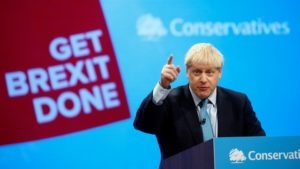
If you thought a Boris Johnson victory would put an end to Britain’s Brexit crisis, spoiler: It won’t.
The central thrust of Johnson’s election campaign is that, unlike the Labour Party, which wants to hold a second referendum on whether or not the U.K. should leave the EU, he will “get Brexit done” so Britain can move on to its core domestic priorities. Labour’s policy, he charges, will simply prolong the crisis.

For a country yearning for the three-year saga to just be over, it is a potentially appealing pitch. It is also almost entirely misleading.

While Johnson is right to say the U.K. could legally be out of the EU within weeks of an election result that returns a majority Conservative government on December 12, the reality is that this only closes the first chapter in the Brexit drama and opens up the next (and Chapter 2 is already beginning to look a lot like the first).

As soon as Britain leaves the European Union, under the terms of the divorce settlement Johnson negotiated with Brussels, two brand-new deadlines immediately loom into view. First, the U.K. government must decide by July 1 whether or not it wants to extend the so-called transition period, which essentially keeps Britain inside the EU’s economic bloc for a temporary period to avoid a “cliff edge” economic shock while it negotiates a free-trade agreement.

Here, the second deadline emerges: December 31, 2020, when the transition period is due to run out. Most experts and EU officials believe there is next to no chance that the two sides can agree on a free-trade agreement in the 12 months between next month’s U.K. election and this scheduled end of the transition period. It took Canada seven years to agree to its trade agreement with the EU. Even in the United States, which tends to be quicker than the EU at tying up trade deals, agreements take time—Washington’s FTA with Australia took 14 months to negotiate, for instance.

Despite the short window, Johnson has ruled out extending the transition period, claiming 12 months is plenty long enough. Brexiteers argue a U.K.-EU agreement is much simpler because the two start with total alignment of standards and regulations, given Britain’s membership in the EU single market. Yet this fundamentally misses the point: Any future trade deal will be concerned with how far Britain and the EU wish to diverge from each other—and to what extent divergence should reduce each other’s market access. Most trade deals are about bringing two economies closer together, not managing their slow drift apart, and therefore such a negotiation is fraught with political and technical difficulty.

Despite the time constraint, Johnson is under political pressure to rule out extending the transition period. His Conservative Party’s euroskeptic members of Parliament argue that the transition arrangement is a necessary evil, but one that should not drag on, because it amounts to “vassalage”—accepting EU law without voting rights to shape that law.

If no trade deal has been agreed on and ratified by December 31, 2020, Britain may leave the EU’s single market and customs union on simple “World Trade Organization terms”—the loosest, most basic form of trading relationship, stripping the U.K. of any preferential trading relationship.

According to former and current officials who spoke to me and asked for anonymity, it’s now almost inevitable that there will be another Brexit crisis late next year (should Johnson win the election) because of these deadlines.

If Johnson refuses to request an extension by July, foreign-policy and trade experts in Brussels and London who spoke to me said it was all too obvious how the following six months will play out. First, Johnson will attempt to use the threat of “no deal” to pressure the EU to give into his demands for a quick and simple trade deal. However, according to two serving and former diplomats who spoke to me, the EU is likely to respond to such threats by turning the tables on Johnson by using the ticking clock to do the exact opposite—piling pressure on London to sign up to its demands, principal among them the so-called level-playing-field provisions—legal commitments written into most free-trade deals to maintain certain mutually agreed on social, environmental, and economic standards. Supporters of such provisions insist they are necessary to avoid a race to the bottom in rights and standards and protect businesses from unfair competition. Put simply, the EU does not want to see the U.K. suddenly adopt radically lower standards that give its businesses a competitive advantage.

However, after Johnson’s sudden pivot to agree to a deal with the EU last month, despite fierce opposition in Northern Ireland, the EU has calculated, according to those who spoke to me, that the prime minister is prepared to turn on his closest political allies as it suits him when significant pressure is applied. The choice for Britain in this scenario, according to one experienced diplomat, will be a “diamond-hard Brexit” set out in a wafer-thin free-trade agreement negotiated hurriedly or an effective “no deal” exit on WTO terms. Both will create significant trading barriers between the U.K. and the EU, which currently do not exist.

Put simply, while Brexiteers believe the threat of “no deal” increases British leverage, the EU calculates that the threat increases its leverage, and is therefore happy to play along. The result: an inevitable crisis. If history repeats itself first as tragedy and then as farce, the tragedy of the past three years of protracted and bitter negotiations is that it was all so predictable. The farce is that it might be about to happen all over again.

We want to hear what you think about this article. Submit a letter to the editor or write to [email protected].

TOM MCTAGUE is a London-based staff writer at The Atlantic, and co-author of Betting the House: The Inside Story of the 2017 Election.

Catalonia, Spain, and Europe are Better Together

0
  (Photo by Jeff J Mitchell/Getty Images)
 

Project Syndicate

No state would ever allow the unilateral secession of a territory that forms part of its constitutional order. And no democrat should support the path taken by Catalonia’s separatist leaders, who won less than 48% of the votes cast in regional elections.

MADRID – Above all, Europe is freedom, peace, and progress. We must move forward with these values and make Europe the leading model of integration and social justice that protects its citizens. The Europe we aspire to, the Europe we need, the Europe we are building is based on democratic stability within member states and cannot accept the unilateral breach of its integrity. The Europe we admire has been built on the principle of overlapping identities and equality for all citizens, and on the rejection of nationalist ideologies and extremism.

For this reason, the challenge of separatism in Catalonia, devised against and outside Spain’s constitutional framework, and silencing the majority of Catalans who are against independence, is a challenge for Europe and Europeans. Preserving these values in Catalonia today means protecting the open and democratic Europe for which we stand.

Spain enshrined these values in 1978, when it created and ratified a fully democratic constitution. That historic document was endorsed by almost 88% of voters in a referendum. In Catalonia, support and turnout were even higher: some 90.5% of Catalans backed the new constitution.

Spain thus escaped the long and dark shadow of dictatorship and laid the foundations for a state based on the rule of law, comparable today with the long-established democracies of Western Europe. Individual freedoms, fought for and won by Spaniards of differing beliefs and backgrounds, including many Catalans, were restored. And the 1978 Constitution also provided an innovative and progressive answer to Spain’s territorial diversity by treating it as an authentic asset worthy of recognition. Some 40 years later, the Democracy Index, published by The Economist, rates Spain as one of the world’s 20 full democracies.

Contemporary Spain is Europe’s second most decentralized country, and Catalonia enjoys some of the highest levels of regional self-governance on the continent, with wide-ranging devolved powers over crucial sectors such as media and public communication, health, education, and prisons.

Today, however, Catalonia is associated not only with the spirit of creativity and initiative, qualities that are broadly admired around the world, but also with a profound crisis, caused by the unilateral breach of Spain’s constitutional order brought about by the region’s separatist leaders in the autumn of 2017. Catalonia’s leaders reneged on all the requirements and resolutions set out by the Constitutional Court, passed unconstitutional “disconnection” laws from the Spanish state, held an illegal referendum, and declared a purported Catalan Republic.

No state would ever allow the unilateral secession of a territory that forms part of its constitutional order. And no democrat should support the path taken by the separatist leaders, who won less than 48% of the votes cast in regional elections. Their fraudulent independence bid inflamed popular passions and, aided by the deliberate proliferation of fake news, encouraged a profound sense of injustice and confrontation with the rest of Spain. Where was the voice and the vote of those Catalans, the majority, who opposed independence? Where was the voice of those Spaniards who looked on, perplexed, at a direct breach of their Constitution’s guarantees?

My government has distinguished itself by putting the expansion of rights and liberties first and foremost. International organizations have recognized the high standards we have set on issues such as gender equality. We would never, therefore, agree to even the smallest restriction of freedom of expression. The president of the Generalitat de Catalunya (Catalonia’s regional government) is a radical separatist, but he is neither prevented from expressing his views freely, nor impeded from defending them publicly, despite the pain and damage they cause to peaceful coexistence in Catalonia.

The same is true for separatist local councils and governments, and for associations that support independence. They may express their opinions as they wish, provided that, they do not promote and encourage criminal acts. All Spaniards are equal before the law, and the Constitution and democracy are inseparable realities.

Under Spain’s democratic rule of law, the judiciary is fully independent and allows for the review of rulings by national and international authorities. The government respects and complies with all judicial decisions. This includes the Supreme Court’s ruling against nine separatist leaders charged for the illegal acts they carried out in the autumn of 2017. In that case, the Court acted with the greatest transparency: the entire proceedings were televised live.

Reactions to the Supreme Court’s ruling have been extremely diverse: while some believe it was too lenient in handing down prison sentences of between nine and 13 years, others have organized demonstrations against the verdict. While some of these protests have been peaceful, others have descended into extreme violence.

The rights to protest and to strike are fundamental pillars of our democracy, and I fully respect those Catalan citizens who have peacefully exercised this right. But the organized and intentional acts of violence that have occurred across Catalonia in recent weeks is something else altogether and in no way represent the region’s tolerance and welcoming spirit.

The illegal effort to bring about Catalonia’s independence has followed a roadmap that is all too familiar in today’s Europe. It leads through a web of lies, spun by fake news and viral messaging, and serves to energize right-wing extremists and enemies of European integration. It is the same route taken by those elsewhere who divide societies by exploiting the rhetoric of reaction to encourage polarization and confrontation.

Recently, leaders of this movement, such as the president of the main pro-separatist association, have stated that violence may be necessary for their cause to receive greater attention. But if we have learned anything from Europe’s painful and bloody history, it is that no political ambition can ever justify resorting to violence, much less the normalization of violence as a political tool.

My government has responded to this challenge with proportion and control. I firmly believe that restraint is our strength. We reacted with speed to restore peace and stability to Catalonia’s citizens, a majority of whom reject the current unstable impasse. We also acted with prudence to minimize the risk arising from moments of tension to the lowest possible level. And we must not forget the exemplary efforts and bravery of the Catalan police, with the support of the national police, in maintaining order at a time when their region’s leaders were openly contemptuous of the law.

It is an absurd paradox to witness a president of the Generalitat making light of the violence while denouncing a police force, which acts on his orders, for performing its duty. It is also a grave error. I call on him to condemn the violence fully and clearly, and to launch a dialogue with the Catalan people who do not want independence, and with those parties that are not pro-separatist. He must begin to act as president of all Catalans, not only of those who share his political beliefs.

I will not allow another extreme nationalist outbreak, fueled by false narratives and replete with lies, to undermine the success of Spanish democracy, which our citizens and institutions have worked hard to achieve. In the discussion about the future of Catalonia, only the healing and coexistence of the Catalan people and society, not independence, is on the agenda. This is our main challenge: to ensure that all understand and accept that a unilateral path toward independence constitutes a direct affront to fundamental democratic principles.

At this moment, restraint and moderation are imperative. We will act with all the firmness needed to defend peaceful coexistence, but with the intelligence to recognize that we have an opportunity to start a new chapter before us. I have never turned away from dialogue if both parties are willing to act within the framework of the Constitution and the law. I do not want to be an us-against-them leader. My job is to serve all Spaniards equally.

There are different areas of dialogue to be explored if the separatist leaders abandon their unilateral path. We can speak and listen to each other without threats or belittlement. I know that there are open wounds, and that there is pain and frustration. But, despite this, there is an opportunity for hope, recognizing what we have achieved together and thinking about what we can do, together, to improve the wellbeing of all our citizens. For this to happen, however, the separatist leaders must return to the domain of the Constitution and respect for the rule of law.

My government has positioned Spain at the forefront of the project of European integration, and on the front line of the fight against our greatest global challenges. We are committed to the strengthening and expansion of rights and freedoms, and to the fight against inequality. These objectives transcend a nationalist vision, and we need Catalonia and Catalan society to help achieve them.

The End of Neoliberalism and the Rebirth of History

0
 Project Syndicate


For 40 years, elites in rich and poor countries alike promised that neoliberal policies would lead to faster economic growth, and that the benefits would trickle down so that everyone, including the poorest, would be better off. Now that the evidence is in, is it any wonder that trust in elites and confidence in democracy have plummeted?

NEW YORK – At the end of the Cold War, political scientist Francis Fukuyama wrote a celebrated essay called “The End of History?” Communism’s collapse, he argued, would clear the last obstacle separating the entire world from its destiny of liberal democracy and market economies. Many people agreed.

Today, as we face a retreat from the rules-based, liberal global order, with autocratic rulers and demagogues leading countries that contain well over half the world’s population, Fukuyama’s idea seems quaint and naive. But it reinforced the neoliberal economic doctrine that has prevailed for the last 40 years.

The credibility of neoliberalism’s faith in unfettered markets as the surest road to shared prosperity is on life-support these days. And well it should be. The simultaneous waning of confidence in neoliberalism and in democracy is no coincidence or mere correlation. Neoliberalism has undermined democracy for 40 years.

The form of globalization prescribed by neoliberalism left individuals and entire societies unable to control an important part of their own destiny, as Dani Rodrik of Harvard University has explained so clearly, and as I argue in my recent books Globalization and Its Discontents Revisited and People, Power, and Profits. The effects of capital-market liberalization were particularly odious: If a leading presidential candidate in an emerging market lost favor with Wall Street, the banks would pull their money out of the country. Voters then faced a stark choice: Give in to Wall Street or face a severe financial crisis. It was as if Wall Street had more political power than the country’s citizens.

Even in rich countries, ordinary citizens were told, “You can’t pursue the policies you want” – whether adequate social protection, decent wages, progressive taxation, or a well-regulated financial system – “because the country will lose competitiveness, jobs will disappear, and you will suffer.”

In rich and poor countries alike, elites promised that neoliberal policies would lead to faster economic growth, and that the benefits would trickle down so that everyone, including the poorest, would be better off. To get there, though, workers would have to accept lower wages, and all citizens would have to accept cutbacks in important government programs.

The elites claimed that their promises were based on scientific economic models and “evidence-based research.” Well, after 40 years, the numbers are in: growth has slowed, and the fruits of that growth went overwhelmingly to a very few at the top. As wages stagnated and the stock market soared, income and wealth flowed up, rather than trickling down.

How can wage restraint – to attain or maintain competitiveness – and reduced government programs possibly add up to higher standards of living? Ordinary citizens felt like they had been sold a bill of goods. They were right to feel conned.

We are now experiencing the political consequences of this grand deception: distrust of the elites, of the economic “science” on which neoliberalism was based, and of the money-corrupted political system that made it all possible.

The reality is that, despite its name, the era of neoliberalism was far from liberal. It imposed an intellectual orthodoxy whose guardians were utterly intolerant of dissent. Economists with heterodox views were treated as heretics to be shunned, or at best shunted off to a few isolated institutions. Neoliberalism bore little resemblance to the “open society” that Karl Popper had advocated. As George Soros has emphasized, Popper recognized that our society is a complex, ever-evolving system in which the more we learn, the more our knowledge changes the behavior of the system.

Nowhere was this intolerance greater than in macroeconomics, where the prevailing models ruled out the possibility of a crisis like the one we experienced in 2008. When the impossible happened, it was treated as if it were a 500-year flood – a freak occurrence that no model could have predicted. Even today, advocates of these theories refuse to accept that their belief in self-regulating markets and their dismissal of externalities as either nonexistent or unimportant led to the deregulation that was pivotal in fueling the crisis. The theory continues to survive, with Ptolemaic attempts to make it fit the facts, which attests to the reality that bad ideas, once established, often have a slow death.

If the 2008 financial crisis failed to make us realize that unfettered markets don’t work, the climate crisis certainly should: neoliberalism will literally bring an end to our civilization. But it is also clear that demagogues who would have us turn our back on science and tolerance will only make matters worse.

The only way forward, the only way to save our planet and our civilization, is a rebirth of history. We must revitalize the Enlightenment and recommit to honoring its values of freedom, respect for knowledge, and democracy.Joseph E. Stiglitz

Welcome Recalibration of Sino-Greek Relations

0

By Plamen Tonchev

7 November 2019

Welcome Recalibration of Sino-Greek Relations

Plamen Tonchev*

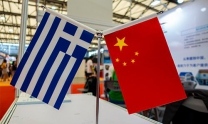
Greek prime minister Kyriakos Mitsotakis returns from a visit to Shanghai and hosts China’s president Xi Jinping in Athens three days later – no doubt, the media cannot miss this! The exchange of high-level visits between Greece and China within a single week would suggest an impressively tight bond between the two countries. Yet, this may be a bit of a rash conclusion. Assessing Sino-Greek relations and guessing where they may be heading next requires a step back in time and a look at the way the two countries got to this point. If the ties between Greece and China were a theatrical performance, they would probably be split in three distinctive acts under the following headings: get-to-know, romance and sobriety.

Evolution of Sino-Greek Relations

The ‘get-to-know’ phase started in 2006, when then prime minister Costas Karamanlis visited China and relations between the two countries were elevated to a ‘strategic partnership’. Two years later, the shipping behemoth COSCO won the tender for a concession of two-thirds of the Piraeus sea port and started operating it in early 2009. Piraeus was an economic backwater at the time, but over the next decade COSCO transformed it into a vibrant port, with a throughput that’s been growing in leaps and bounds.

January 2015 saw a new Greek government, formed by a coalition of two unlikely bedfellows and headed by Europe’s enfant terrible, Alexis Tsipras. His SYRIZA party, a constellation of radical left factions that the flamboyant finance minister Yanis Varoufakis has famously called a riff-raff, shared power with the far-right and populist Independent Greeks. At the beginning of its term of office, the Tsipras government fuelled a ferocious anti-European and anti-western rhetoric, and opted for a headlong collision with the country’s international creditors. Against this backdrop, and in a quest for alternatives to the much-vilified West, Greece pursued closer ties with illiberal states, such as Russia, Iran, Venezuela and, of course, China. Starting from 2016, when COSCO won a second tender and took over the management of the entire Piraeus Port Authority (PPA), Sino-Greek relations entered their second stage, which could be seen as the period of ‘romance’.

Over the next three years a raft of high-profile goodwill gestures to China raised many eyebrows in western capitals and fed a suspicion that Greece was turning into Beijing’s fifth column or Trojan horse in Europe. A few days after Tsipras’ first visit to Beijing in July 2016, his government backed Beijing over the South China Sea dispute in the wake of the ruling by the Permanent Court of Arbitration in The Hague. In May 2017, Alexis Tsipras was one of only five EU leaders to attend the first Belt & Road Forum, and a month later, Greece blocked an EU statement on human rights in China, causing dismay in the West. In August 2018, the foreign ministers of Greece and China signed a Memorandum of Understanding to advance Beijing’s flagship Belt and Road Initiative. In April 2019, Greece joined the 16+1 (now 17+1) platform for cooperation between China and Central/Eastern Europe, which many in Brussels and other western capitals view as an attempt at undermining EU unity. A few days later, Tsipras was back in Beijing, attending the second Belt and Road Forum.

The ‘romance’ period was marked by misconceptions in Athens and Beijing alike: the Greek government assumed that it could rely on China as a counterweight against creditors’ pressure for painful – and much-needed – structural reforms in the country; the Chinese government thought that in Greece it had found a vehicle for the attainment of its political objectives in the EU.

The mood has now changed quite a bit, with a new centre-right government in place since July 2019.  For instance, up until the elections, the Tsipras government supported Nicolás Maduro in Venezuela in a display of ideological camaraderie. However, only three days into the premiership of Kyriakos Mitsotakis, Greece recognised Juan Guaidó as the legitimate interim president of the South American country, thus sending an unequivocal message across to western partners, as well as to Beijing and Moscow who continue to back Maduro’s regime.

The Return of Geopolitics

But the real game-changer for Athens has been the return of geopolitics to Greece’s neighbourhood, both in the Eastern Mediterranean and the Western Balkans. The magnitude of the security challenges that Greece is facing highlights the West’s edge, as compared to China’s. Next-door Turkey is a big chunk of the geopolitical conundrum in the region and Greece definitely needs powerful allies. For instance, in case tension in the Aegean rises abruptly, and it is already dangerously high, who do you call? Beijing? Certainly not – China will opt for a non-engagement policy, as it has done in the Mediterranean and the Middle East to date. Chinese military vessels, which occasionally pay friendly visits to the COSCO-controlled port of Piraeus amount to a symbolic presence of little substance. In case the migrant flows to Greece trigger a crisis of the proportions Europe saw in 2015, who do you call? Beijing? Certainly not: once again, China will sit on its hands, as it has no skin in the game.

It has now become clear what exactly Beijing can – and cannot – do for Greece, i.e. there is a realisation setting in that China is essentially a trade partner and a potential investor, but not a significant actor in the realm of security. Conversely, last October Greece and the US renewed their bilateral military defence cooperation agreement (MDCA), which confirms and even upgrades the American footprint in the country, alongside growing US investment. As for the resurgence of migration flows, it’s the EU that Greece relies upon to address this formidable threat.

De-coupling Business and Politics?

Therefore, the third stage of ‘sobriety’ the two countries are now entering is marked by a switch to a different mode and a higher degree of clarity. There is now a clearer distinction between high politics and security on the one hand, and mutually beneficial economic cooperation between Greece and China on the other hand. Thus, Sino-Greek ties are not being downgraded, but are being recalibrated and brought down-to-earth. While the scope of bilateral cooperation will keep expanding, from now on relations between the two countries will be relieved of the burden of unwarranted expectations, and will focus on what is attainable and politically expedient.

Greece will seek to make the most of its membership in 17 +1, the format that the Tsipras government endorsed last April for no comprehensible reason and without informing parliament. Mitsotakis will keep the country in this platform, as long as he sees it as an opportunity to claim back Greece’s role in Southeast Europe and particularly in the Western Balkans, a region riddled with uncertainty and angst about its future. But, by and large, Sino-Greek relations will be more and more about business rather than politics.

Athens eyes the huge Chinese market and, indeed, Greek exports have been on the rise. Greece’s trade deficit has come down to a 4:1 ratio, €900m vs €3.6bn last year, while it used to be more than 10:1 in favour of China in the past. Boosting Greek FDI in China is also one of the priorities set by prime minister Mitsotakis, who attended the opening ceremony of a Greek elevator producer in Shanghai.

China, in turn, will continue to invest in Piraeus as an increasingly important transshipment hub and gateway to the European market. President Xi will visit the COSCO-controlled port and the approval of a fourth pier, which has not been granted by Greek authorities to date, will most probably be on the list of his talking points. Greece would definitely like to see more Chinese investment projects, preferably in the sectors of agriculture and industry, but Beijing seems to prioritise transport, logistics and renewable energy sources. China is the biggest producer of solar panels and, now that state subsidies have been slashed, Chinese companies are desperate to tap overseas markets. During his visit to Athens Xi may pull a rabbit or two out of his hat, but another Chinese project as large and visible as the one in Piraeus is unlikely to be on the cards.

Shipping, of course, cannot be omitted, as a strategically important area of bilateral cooperation, with Greece and China owning the first and third biggest commercials fleets, respectively. In Shanghai, Mitsotakis referred to 1,000-odd Greek-owned ships, worth some €50bn, built in China over the last 15 years. Chinese banks have been active in the provision of loans to Greek ship owners, which may be part of the rationale behind the decision of the Bank of China to open an office in Greece. At the same time, the Greek prime minister ruffled some feathers by pointing out that China should remain open to Greek suppliers of shipping equipment and services – there are reports about newly added obstacles to the provision of maritime services by foreign companies to vessels in Chinese waters.

Cultural diplomacy is yet another area of cooperation cherished by both countries, fiercely proud of their historical heritage. In an interview to Xinhua prior to his trip to Shanghai, the Greek PM mentioned the ten-strong Ancient Civilizations Forum held in Athens in 2017 and Bogota a year later, though the membership and practical value of this platform remain questionable at best. Currently, there are two Confucius Institutes in Greece, one at the Economic University of Athens and another one at the Aristotle University in Thessaloniki. Reportedly, an MoU is to be signed by the Greek state television and the National Radio and Television Administration (NRTA), a ministry-level executive agency directly under the State Council of China.

Furthermore, the Chinese are eager to promote film co-production, starting from a blockbuster about the large-scale evacuation of Chinese workers from Libya in 2011, with Greek commercial ships coming to their rescue. In doing so, the Chinese studios may have been encouraged by the appeal, though mostly at home, of the action movie Operation Red Sea about the evacuation of Chinese nationals from war-torn Yemen in 2015. According to some spoilers, the one on Libya will be spiced up with a love story about a Chinese guy and a Cretan girl, so it may well look like a Sino-Greek repeat of the Captain Corelli’s Mandolin movie.

Greece certainly expects large cohorts of Chinese tourists, thanks to the direct flight between Athens and Beijing three times a week, and a new air link to Shanghai that should be launched next summer. Meanwhile, some 60% of the Golden Visa holders in Greece are Chinese nationals and their share is rising. However, Athens may have to rethink its Golden Visa policy, as Greece has the lowest threshold, at €250,000, in all of the EU. Greek authorities may have to tread carefully on this issue for yet another reason – growing concerns in Brussels about foreign citizens buying EU residency or citizenship through investment in real estate.

Mitsotakis states he will be back in China next April, trying to attract Chinese FDI and promote Greek presence in the Chinese market. Greece badly needs both. But, on the whole, it is time for Greece and China to start talking turkey, by debunking some of the myths flying around during the ‘romance’ period. So far, China’s presence in Greece has been driven by its self-interest, which is quite understandable and entirely legitimate. It’s time Greece displayed an equally acute – and healthy – sense of self-interest as well.

*Plamen Tonchev is  Head of Asia Unit, Institute of International Economic Relations, Athens, Greece

eu-asiacentre

Εμανουέλ Μακρόν: «Αυτό που ζούμε είναι ο εγκεφαλικός θάνατος του ΝΑΤΟ»

7
ΚΟΣΜΟΣ 

«Αυτό που ζούμε είναι ο εγκεφαλικός θάνατος του ΝΑΤΟ», δηλώνει ο πρόεδρος της Γαλλίας Εμανουέλ Μακρόν στο περιοδικό The Economist, αποδίδοντάς τον στην αμερικανική αποδέσμευση και στην συμπεριφορά της Τουρκίας.

Πρέπει τώρα να αποσαφηνισθεί ποιοι είναι οι στρατηγικοί στόχοι του ΝΑΤΟ», δηλώνει ο πρόεδρος της Γαλλίας επαναλαμβάνοντας την ανάγκη ενίσχυσης της Ευρώπης της Αμυνας, καθώς πλησιάζει η σύνοδος κορυφής της Ατλαντικής Συμμαχίας η οποία θα διεξαχθεί στο Λονδίνο στις αρχές του Δεκεμβρίου.

«Δεν υπάρχει κανείς συντονισμός με τους εταίρους του ΝΑΤΟ στην στρατηγική απόφαση των ΗΠΑ και είμαστε μάρτυρες μίας επίθεσης από έναν άλλο εταίρο του ΝΑΤΟ, την Τουρκία, σε μία ζώνη όπου διακυβεύονται τα συμφέροντά μας, χωρίς συντονισμό. Αυτό που συνέβη αποτελεί τεράστιο πρόβλημα για το ΝΑΤΟ».

Υπό τις συνθήκες αυτές, ο Εμανουέλ Μακρόν αναρωτιέται ιδιαιτέρως για το μέλλον του Αρθρου 5 της Ατλαντικής Συνθήκης, το οποίο προβλέπει στρατιωτική συνδρομή μεταξύ των χωρών μελών της Συμμαχίας, εάν ένας από τους συμμάχους δεχθεί επίθεση.

«Τι θα είναι αύριο το Αρθρο 5; Εάν το καθεστώς του Μπασάρ αλ-Ασαντ αποφασίσει να απαντήσει στην Τουρκία, θα την συνδράμουμε; Αυτό είναι μία πραγματική ερώτηση», λέει.

«Εχουμε δεσμευθεί να πολεμήσουμε κατά του Ισλαμικού Κράτους. Το παράδοξο είναι ότι η αμερικανική απόφαση και η τουρκική επίθεση και στις δύο περιπτώσεις έχουν ένα και το αυτό αποτέλεσμα: θυσιάζουν τους επί του πεδίου εταίρους μας που πολέμησαν κατά του Ισλαμικού Κράτους, τις Συριακές Δημοκρατικές Δυνάμεις».

Για τον Μακρόν, όλες αυτές οι εξελίξεις καθιστούν ακόμη περισσότερο «ουσιαστική, από την μία πλευρά, την Ευρώπη της Αμυνας –μία Ευρώπη που πρέπει να αποκτήσει μία στρατηγική και λειτουργική αυτονομία σε στρατιωτικό επίπεδο. Και από την άλλη, επανέναρξη ενός στρατηγικού διαλόγου, χωρίς καθόλου αφέλειες, και που θα πάρει χρόνο, με την Ρωσία».

«Ο πρόεδρος Τραμπ, τρέφω μεγάλο σεβασμό σε αυτό, θέτει το θέμα του ΝΑΤΟ ως εμπορικού σχεδίου. Κατά την γνώμη του, πρόκειται για ένα σχέδιο όπου οι ΗΠΑ διασφαλίζουν ένα είδος γεωπολιτικής ομπρέλλας, αλλά, σε αντάλλαγμα, θα πρέπει να έχουν εμπορική αποκλειστικότητα, να υπάρχει ένα κίνητρο για να αγοράσουμε από τις ΗΠΑ. Η Γαλλία δεν έχει υπογράψει γι΄αυτό», προειδοποιεί ο Εμανουέλ Μακρόν.

Πηγή: ΑΠΕ-ΜΠΕ/”Καθημερινή”