Greek Prime Minister Kyriakos Mitsotakis will be keen to secure Chinese investment without upsetting his allies in Brussels, Washington
Xi is expected to visit Cosco-run port of Piraeus and witness the opening of a new Bank of China branch in Athens
Greek Prime Minister Kyriakos Mitsotakis’ was elected on a promise to transform Greece into a hub for foreign investment. Photo: Reuters
With Chinese President Xi Jinping set to arrive in Athens on Sunday,
be keen to use the trip to its advantage while not upsetting its allies within the European Union or the United States, observers say.
Xi is set to meet Greek Prime Minister Kyriakos Mitsotakis for the second time in a matter of days, after Mitsotakis visited Shanghai earlier in the week for the China International Import Expo. On that occasion Xi floated the possibility of Greece “becoming a logistics centre” for handling Chinese goods exported to Europe.
During his three-day trip, Xi is expected to visit Piraeus – the Mediterranean Sea port controlled by China’s state-owned Cosco – witness the opening of a new Bank of China branch in Athens, and visit historical sites such as the Acropolis.
A visit to the port of Piraeus, which is controlled by China’s state-owned Cosco, is on the cards for Xi Jinping during his three-day trip to Greece. Photo: Xinhua
Share:
Mitsotakis – whose election win in July was premised on a vision to transform Greece into a hub for foreign investment as well as turning it into an export-led economy – will be keen to secure Chinese investment.
However, EU and US diplomats will be looking on with caution as China continues to show an interest in Greece, and especially in relation to Athens’ participation in the Beijing-led “17+1” cooperation platform that includes Eastern and Southeastern European countries that are both inside and outside the EU.
Brussels has accused the Chinese initiative, which Greece joined earlier this year, of trying to divide the bloc
Greek Prime Minister Kyriakos Mitsotakis (second left) is keen to secure Chinese investment to bolster his nation’s economy. Photo: AP
Share:
Plamen Tonchev, head of the Asia unit at the Institute of International Economic Relations in Athens, said Mitsotakis saw the platform as a way for Greece to increase it stature in the region.
“Greece joined under the previous government, [but] Mitsotakis will not pull the country out as long as he sees it as an opportunity to claim back Greece’s role in Southeast Europe and particularly in the Western Balkans,” he said.
Greece says EU’s China concerns must not harm its economic interests
An EU official, speaking on condition of anonymity, said China “may ask Greece to play a bigger role in coordinating the 17+1, as some European parties to the initiative are already lukewarm about it”, mostly because they felt there was a lack of financial benefit.
An adviser to the Mitsotakis government said that from Athens’ perspective, the key issue was striking a balance between building better investment and trade relations with China while refraining from “showing the way” to Beijing as it seeks to boost its geostrategic interests in Eastern Europe.
“The prime minister is fully aware of the EU’s concern over China’s intentions, and he is not going to go against it,” said the person, who asked not to be named.
Greece’s relationship with China has not escaped Washington’s attention. During his visit to Athens in October,
repeatedly warned of China’s growing influence in Europe, accusing it of “using economic means to coerce countries into lopsided deals that benefit Beijing and leave its clients mired in debt”.
While Greece receives less than 1 per cent of China’s total investment in Europe, its control and expansion of Piraeus port has raised concern. Cosco has been operating it for a decade and is on course to make it the busiest container terminal in the Mediterranean by the end of the year.
In October, Athens approved two-thirds of the company’s plans to
, with investments totalling US$670 million in projects including a new cruise port, four hotels and a car terminal. The rest of the plan was rejected in April by Greece’s Central Archaeological Council, after it effectively classified half of Piraeus as an archaeological site.
“The approval of a fourth pier, which has not been granted by Greek authorities to date, will most probably be on the list of talking points [for Xi and Mitsotakis],” Tonchev said.
When it was first revealed in August that President Trump wanted to purchase Greenland from Denmark, many Danes initially assumed it was a joke. It was not until President Trump postponed a visit to Copenhagen — citing the Danish government’s lack of interest in selling the autonomous island — that many Danes realized he was serious about this idea.
The U.S. president may have been serious about it, but the whole notion was “absurd,” as Danish Prime Minister Mette Frederiksen put it.
The awkward episode that has strained Danish-U.S. relations in recent months surfaced once again on Wednesday, when House investigators releaseGREENLANDd a transcript of the closed-door testimony of the acting ambassador to Ukraine, William B. Taylor Jr. As part of the ongoing impeachment inquiry, Taylor was supposed to testify on questions surrounding Trump’s decision to withhold military aid to Ukraine this summer.
But from a Danish perspective, the testimony took its perhaps most stunning turn on page 132. Buried within the document, the transcript quotes Intelligence Committee Chairman Adam B. Schiff (D-Calif.) asking about Taylor’s prior claim that several senior administration officials tried to arrange a meeting with Trump in August to persuade him to lift the hold on military aid to Ukraine, but that the meeting did not happen.
“What do you deduce from that, that our ally is fighting with the Russians, but all of these agencies that support this can’t get a meeting with the president to discuss it?” Schiff asked.
In his response, Taylor cited scheduling issues — before he added: “I think this was also about the time of the Greenland question, about purchasing Greenland, which took up a lot of energy in the [National Security Council].”
Danes reacted “with a combination of astonishment, worry and laughter” to the claims surrounding Trump’s Greenland moves, said Jon Rahbek-Clemmensen, an associate professor at the Institute for Military Operations at the Royal Danish Defense College. “It almost seems surreal.”
But Rahbek-Clemmensen cautioned that the testimony — which, from Denmark’s perspective, appears to prove how serious the Trump administration was about purchasing Greenland — may deepen concerns that the White House is attempting to drive a wedge between Denmark and Greenland.
In late October, a U.S. delegation with State Department counselor T. Ulrich Brechbuhl traveled to Greenland for high-level talks with government officials. He was accompanied by Pentagon and National Security Council officials, according to the Wall Street Journal, which first broke the story in August of Trump’s desire to purchase Greenland.
U.S. Delegation Visits Greenland
Vivian Salama
Months after President Trump expressed an interest in buying Greenland, a U.S. delegation was there for meetings…
Denmark’s foreign minister was also reportedly present during the talks. But some Danish politicians worry that the Trump administration may not be honest about its real intentions behind forging closer U.S. ties with Greenland.
“Every time I meet with the U.S. Embassy’s officials, their number one questions will always be about Greenland,” said Michael Aastrup Jensen, a member of the Danish Parliament with the center-right Venstre party.
Aastrup Jensen noted that the Trump administration continued to try to “put Greenland into the U.S. hemisphere of political interest,” even though it has culturally and politically long been tied to Europe.
“There’s nothing wrong in that per se, as long as it doesn’t drive a wedge between the Greenlandic people and the Danish people,” he said.
Despite having fewer than 60,000 residents — spread out across 850,000 square miles that are geographically part of North America — Greenland was strategically significant during the Cold War because of its location between the Arctic and the Atlantic oceans.
In the decades since, Greenland has again become a playing field for major global powers, which now also include China.
As climate change is melting Greenland’s ice, hopes for the discovery of new offshore oil resources are on the rise. China in particular has attempted to make inroads on the gigantic island.
To secure resources, China and Russia have also stepped up their military activities in the region. The United States has followed suit, and the failed purchase of Greenland is only the latest example.
But unlike other measures that have been mostly welcomed by host countries — such as increasing troops in Northern Europe — Trump’s purchase attempt has risked interfering with a delicate political situation.
Many Greenlanders have long sought complete independence from Denmark and found Trump’s idea of a purchase “very offensive,” said Rahbek-Clemmensen.
But achieving independence will be possible only if Greenland is able to attract substantially more foreign investment — either from China, the United States or elsewhere. This has helped to preserve U.S. influence in Greenland, even in the wake of Trump’s foreign policy maneuvering.
Meanwhile, the United States’ public wooing of Greenland has reawakened a largely cooled-off enthusiasm for the autonomous territory within Denmark.
“The whole idea of President Trump wanting to buy Greenland was a wake-up call to all of us here in the Danish Parliament” — just not in the way Trump would have liked, Aastrup Jensen said. Instead, Danish political parties have taken a new interest in helping Greenland pursue a more promising path within the kingdom of Denmark that would allow it to “steer clear of all the superpowers’ interests.”
“That wasn’t the case before the whole debacle started with President Trump,” he said.
Σε όλο τον περίγυρό μας έρχονται τα πάνω κάτω, και τα πολιτικά κόμματα στην Ελλάδα περί άλλα τυρβάζουν. Βουλευτής της αξιωματικής αντιπολίτευσης αναζητώντας λιγόλεπτη δόξα δημοσιότητας ανήγαγε την τσίκνα και το αλκοόλ σε ζήτημα υψηλής πολιτικής. Βεβαίως αναγωγή προσπάθησε να κάνει, διότι επί της ουσίας δεν μπορεί να ανταποκριθεί αφού δεν γνωρίζει καν ότι δεν υπάρχει ποινικός νόμος (τον οποίο αναζητούσε) που να καταδικάζει το συνδυασμό τσίκνας και αλκοόλ. Μέχρι εκεί μπορεί να φθάσει. Κατάντια.
Διότι ενώ η Ελλάδα ασχολείτο με την τσίκνα, έξω βρίσκεται σε εξέλιξη η Νέα Γιάλτα.
Η Τουρκία έρχεται σε αδιέξοδο στη μεσανατολική της πολιτική. Είναι θέμα χρόνου να φτάσει στα όριά της η συνεργασία της με τη Ρωσία. Ιστορικά, τα γεωπολιτικά συμφέροντα των δύο χωρών αποκλίνουν. Ήδη, την εβδομάδα που πέρασε δημοσιεύτηκε η είδηση ότι οι Ρώσοι εξοπλίζουν τους Κούρδους στη Συρία. Αυτό που όταν το έκαναν οι Αμερικανοί, ο Ερντογάν αντιδρούσε. Αλλά τώρα δεν έχει απέναντί του έναν άσχετο περί τα διεθνή και τα αμερικανικά συμφέροντα πρόεδρο, όπως ο Ντόναλντ Τραμπ. Έχει τον Βλαντίμιρ Πούτιν. Η μεσανατολική κρίση φάνηκε να βγάζει ενισχυμένο τον Ερντογάν, αλλά στο τέλος όλοι οι εμπλεκόμενοι θα βγουν χαμένοι. Βεβαίως και η Τουρκία.
Το Ιράν ήδη αντιμετωπίζει σοβαρά προβλήματα με τις χώρες όπου είχε τοποθετήσει δικές του ουσιαστικά κυβερνήσεις ή επηρέαζε τη λειτουργία τους (Ιράκ και Λίβανος). Οι διαδηλώσεις και στις δύο χώρες δεν φαίνεται να σταματούν, ακόμη και αν ικανοποιηθούν τα αιτήματα των διαδηλωτών. Ο κόσμος κουράστηκε από τους πολέμους, την αστάθεια και τη διαφθορά, και ζητά κάτι άλλο. Απροσδιόριστο προς το παρόν, αλλά διαφορετικό. Δεν θα ησυχάσει μέχρι να το πετύχει.
Η Ρωσία έχει πετύχει σε μεγάλο βαθμό αυτό που αναζητούσε με την εμπλοκή της στη συριακή τραγωδία. Βγήκε από την απομόνωση στην οποία περιήλθε λόγω της Κριμαίας και της Ουκρανίας, και διεκδικεί αναγνώριση ως υπερδύναμη.
Η Τουρκία είχε υπερβολικές φιλοδοξίες που δεν είναι δυνατόν να ικανοποιηθούν. Οι πόλεμοι πληρώνονται ακριβά και ο λογαριασμός θα φθάσει κάποια στιγμή στην Άγκυρα.
Όλες οι δυνάμεις της περιοχής έχουν κοντύνει από τη συμμετοχή τους στους μεσανατολικούς πολέμους. Αντιθέτως, οι τριμερείς στις οποίες συμμετέχουν Ελλάδα και Κύπρος μπορεί να μην περιλαμβάνουν στρατιωτικές συμφωνίες, προβάλλουν, όμως, μια αξιόλογη ήπια ισχύ. Ήδη, στην τριμερή Ελλάδας-Κύπρου-Ισραήλ συμμετέχουν ad hoc και οι Ηνωμένες Πολιτείες, ενώ η Γαλλία εκδήλωσε ενδιαφέρον για συμμετοχή της στην άλλη τριμερή συνεργασία Ελλάδας-Κύπρου-Αιγύπτου.
Δεν ισχυρίζεται κανείς ότι οι συνεργασίες αυτές θα λειτουργήσουν σε περίπτωση στρατιωτικής κλιμάκωσης της έντασης, αλλά είναι μια προβολή ήπιας ισχύος η οποία λειτουργεί προληπτικά και αποτρεπτικά ως ενός σημείου.
Ο πρόεδρος Μακρόν και η Γαλλία αναμένεται τα επόμενα χρόνια να διαδραματίσουν σημαίνοντα ρόλο στην Ευρωπαϊκή Ένωση. Η έξοδος από την ΕΕ της Μεγάλης Βρετανίας και η αποχώρηση της Άνγκελας Μέρκελ από την πολιτική αφήνουν ένα κενό το οποίο φιλοδοξεί να καλύψει ο Μακρόν και η Γαλλία. Ήδη, δημοσιεύματα της εβδομάδας που πέρασε έφεραν τη γαλλική οικονομία να βελτιώνεται και να αναζητά τη θέση της στην ευρωπαϊκή ηγεσία.
Πιθανώς η ανάληψη ενός σημαντικού ευρωπαϊκού ρόλου από τη Γαλλία να είναι η αιτία που ο Μακρόν στάθηκε αρνητικός απέναντι στη διεύρυνση της Ένωσης με τα Σκόπια και τα Τίρανα. Οι τεράστιες θεσμικές και οικονομικές ελλείψεις των δύο χωρών θα αποτελούν υπολογίσιμη παράμετρο στη διαχείρισή τους εντός της Ένωσης, και η Γαλλία δεν θα θέλει να αναλάβει υποχρεώσεις στις οποίες θα δυσκολευτεί να ανταποκριθεί.
Βεβαίως, η γαλλική θέση έφερε ένα συμβολικό τέλος στην εποχή μετά το 1989.
Από την πτώση του Τείχους του Βερολίνου, τόσο οι Ευρωπαίοι όσο και οι ηγέτες των ΗΠΑ αναγνώρισαν ότι η ομαλή επέκταση του ευρωπαϊκού σχεδίου είναι καθοριστικής σημασίας για την ευρωπαϊκή ειρήνη και ευημερία. Αλλά αυτή η μακροχρόνια προοπτική φαίνεται να αλλάζει, εξαιτίας ενός συνδυασμού εσωτερικών προβλημάτων της ΕΕ και αμερικανικής αδιαφορίας.
Επιβεβαίωση του ηγετικού ρόλου που ετοιμάζεται να αναλάβει ο Μακρόν είναι και τα όσα είπε στην πολύ ενδιαφέρουσα συνέντευξή του στον Economist που δημοσιεύτηκε την εβδομάδα που πέρασε. Ουσιαστικά ο Γάλλος πρόεδρος μίλησε για την ανάγκη να δημιουργηθεί μια νέα αρχιτεκτονική ευρωπαϊκής άμυνας και ασφάλειας, και αναρωτήθηκε για το ρόλο του ΝΑΤΟ. «Δεν υπάρχει συντονισμός με τους εταίρους του ΝΑΤΟ στη στρατηγική απόφαση των ΗΠΑ, και είμαστε μάρτυρες μιας επίθεσης από έναν άλλο εταίρο του ΝΑΤΟ, την Τουρκία, σε μια ζώνη όπου διακυβεύονται τα συμφέροντά μας», είπε. Και πρόσθεσε: «Αυτό που ζούμε είναι ο εγκεφαλικός θάνατος του ΝΑΤΟ».
Φεύγοντας λοιπόν από την εσωτερική τσίκνα και μιζέρια, και βλέποντας τη μεγάλη εικόνα, η Τουρκία παρά την επιθετική συμπεριφορά της δεν θα κλιμακώσει σε επίπεδο σοβαρού επεισοδίου τις προκλήσεις της προς την Ελλάδα. Το διεθνές κλίμα δεν την ευνοεί, και η Ελλάδα μπορεί, ακόμη, να προβάλλει εκτός της ήπιας και σκληρή ισχύ.
Η Τουρκία, όμως, δεν θα εγκαταλείψει την υλοποίηση του Εθνικού Όρκου που δόθηκε το 1920: Να ανακαταλάβει τις περιοχές που απώλεσε η Οθωμανική Αυτοκρατορία. Μέχρι να μπορέσει να είναι σίγουρη ότι θα κερδίσει σε ποσοστό πάνω από 50%, η Ελλάδα έχει το χρόνο να καλύψει το κενό. Είναι γνωστό το τι πρέπει να γίνει.
Αλλάζει όμως και η ευρωπαϊκή αρχιτεκτονική, όπως αναφέρθηκε παραπάνω. Και εκεί πρέπει να είμαστε πολλαπλώς έτοιμοι.
“Europe is a cultural continent, not a geographical one… It is its culture that gives it a common identity. The roots that have formed it, that have permitted the formation of this continent, are those of Christianity. […] In this sense, throughout history Turkey has always represented another continent, in permanent contrast with Europe. There were the wars against the Byzantine empire, the fall of Constantinople, the Balkan wars, and the threat against Vienna and Austria. That is why I think it would be an error to equate the two continents.” — Pope Benedict XVI, Le Figaro Magazine, 2007.
In Germany, Turkey controls 900 mosques out of a total of 2,400. These Islamic centers not only serve members of the Turkish diaspora, but also stop them from assimilating into German society. Speaking with Turks in Germany, Erdogan urged them not to assimilate, and called the assimilation of migrants in Europe “a crime against humanity.”
Erdogan has also been expanding Turkey beyond its borders – starting with Cyprus, the Greek Islands, Suakin Island (Sudan) and Syria.
Mosques, migrants and the military are now Erdogan’s new weapons in his threats against the West.
Mosques, migrants and the military are now Turkish President Recep Tayyip Erdogan’s new weapons in his threats against the West. (Photo by Chris McGrath/Getty Images)
Turkey’s President Recep Tayyip Erdogan “has earned the title of Caliph” according to Turkish journalist Abdurrahman Dilipak.
Erdogan is the head of NATO’s second-largest army; he has spies throughout Europe through a network of mosques, associations and cultural centers; he has brought his country to the top of the world rankings for the number of imprisoned journalists and has shut the mouth of German comedians with the threat of legal action. By keeping migrants in Turkish refugee camps, he controls immigration to Europe.
The worse Erdogan behaves, the greater his weight in Europe. In a 2015 meeting, Erdogan reportedly was “openly mocking” European Commission President Jean-Claude Juncker and other “senior European leaders”, as Juncker asked Erdogan to consider how he was treated “like a prince” at a Brussels summit.
“Turkey now is the 17th largest economy in the world, it is larger than Saudi Arabia, it has an army and military capability that is probably the best in Europe, besides the UK and they could beat the Germans in an afternoon and the French in an hour if they showed up.”
Turkey’s 2018 military budget increased to $19 billion, 24% higher than 2017, according to a report by the Stockholm International Peace Research Institute. Erdogan has placed Turkey’s military — once a bastion of Turkish nationalism and secularism — under his political authority. While Europe is pacifist and refuses to invest in its own security or, like Germany, support NATO’s budget, Turkey is belligerent.
Ever since his Justice and Development Party (AKP) became Turkey’s dominant political force in 2002, for Erdogan, elevating the public role of Islam has been more than a slogan. At public gatherings, the Turkish president has made the “rabia“, a hand gesture of four fingers raised and the thumb hidden, to protest the overthrow of Egypt’s Islamist then President Mohamed Morsi by Egypt’s military. Erdogan evidently sees himself as a global Islamic leader with national elections to win. Through four million Turkish Muslims in Germany and vast communities in the Netherlands, France, Austria and beyond, Erdogan does indeed have enormous influence in Europe.
As a leader of the Ummah [Islamic community], Erdogan challenged the leader of Christianity. In 2006, Pope Benedict XVI delivered a famous lecture at Germany’s University of Regensburg, where he diagnosed Islam as inherently flawed. During his address, the Pope quoted a 14th Century Christian emperor:
“Show me just what Muhammad brought that was new and there you will find things only evil and inhuman, such as his command to spread by the sword the faith he preached”.
The Muslim world erupted in anger. In an apology tour of Erdogan’s Turkey, Benedict XVI reversed his firm position of just two years before and supported Turkey’s joining the European Union. The year before becoming Pope, then-Cardinal Ratzinger had said that Turkey should never join the European Union. “Europe is a cultural continent, not a geographical one,” Ratzinger said to Le Figaro.
“It is its culture that gives it a common identity. The roots that have formed it, that have permitted the formation of this continent, are those of Christianity. […] In this sense, throughout history Turkey has always represented another continent, in permanent contrast with Europe. There were the wars against the Byzantine empire, the fall of Constantinople, the Balkan wars, and the threat against Vienna and Austria. That is why I think it would be an error to equate the two continents.”
“The European continent has its own Christian soul and Turkey, which is not the Ottoman Empire in its extension but still constitutes its central core, has another soul, naturally to be respected”.
Both Benedict and Erdogan understood that Islamic Turkey has been the nemesis of Christian Europe — from October 7, 1571, when Europe inflicted a catastrophic defeat on the Ottomans at the Battle of Lepanto, until September 12, 1683, when Europe again defeated the Turks at the outskirts of Vienna, the city they had historically tried to capture as a base for the conquest of the rest of Europe.
It was in the half-century that followed the fall of Constantinople in 1453 — the great Eastern Christian center, whose collapse marked the end of the Byzantine Empire — that Christian Europe started to expel the Ottoman Turks from the continent. Now it seems as if Erdogan, by other means, is trying to pursue a historic Turkish revenge on Europe. Erdogan is seemingly using this ideology of conquest to cement his internal and external power.
Erdogan’s most powerful tool in his relations with Europe has been migrants. “You cried out when 50,000 refugees were at the Kapikule border”, Erdogan said in 2016, referring to the border with Bulgaria. “You started asking what you would do if Turkey would open the gates. Look at me — if you go further, those border gates will be open. You should know that”.
“Hey EU, wake up. I say it again: if you try to frame our operation there as an invasion, our task is simple: we will open the doors and send 3.6 million migrants to you.”
Europe, unable to control its own borders, is stalling.
Since he came to power, Erdogan, in a building spree, has reportedly built 17,000 mosques (one fifth of Turkey’s total). The largest is located in Camlica, the Asian shore of Istanbul. From Mali to Moscow, by way of Cambridge and Amsterdam, Erdogan is ceaselessly active in “diplomatizing” his religion. The “biggest mosque in the Balkans” is Turkish and is located in Tirana, Albania. “The largest in West Africa” was built by Erdogan in Accra, Ghana. “The largest in Central Asia” he built in Bishkek, Kyrgyzstan. The “largest mosque in Europe” will be his new Turkish mosque in Strasbourg. He is planning to open Turkish schools in France.
Erdogan has empowered Turkey’s Directorate of Religious Affairs (Diyanet), which now has 120,000 employees and a budget the size of twelve other ministries combined. In 2004, with 72,000 employees, the Diyanet was about half that size. This is the religious network with which Erdogan has a foot in European affairs.
In Germany, Turkey controls 900 mosques out of a total of 2,400. These Islamic centers not only serve members of the Turkish diaspora, but also stop them from assimilating into German society. Speaking with Turks in Germany, Erdogan urged them not to assimilate, and called the assimilation of migrants in Europe “a crime against humanity“. He apparently wants them to remain part of Turkey and the Ummah, the global Muslim community.
Last year, Austrian authorities announced the closure of several Turkish-controlled mosques after “children in a Turkish-financed mosque re-enacting the first world war battle of Gallipoli.” According to The Guardian:
As many as 60 Turkish imams and their families face expulsion from Austria and seven mosques are due to be closed under a clampdown on what the government has called “political Islam”.
Austria’s chancellor, Sebastian Kurz, said the country could no longer put up with “parallel societies, political Islam and radicalisation,” which he said had “no place in our country”.
Erdogan, however, knows that against Europe, numbers are on his side. “Make not three, but five children. Because you are the future of Europe,” Erdogan told the Turkish diaspora. Eurostat, the official statistics agency of the European Union, shows that in terms of birthrates, Turkey is ahead of Europe. In one year in Turkey, more than 1.2 million children were born, while only 5.07 million children were born in all of the EU’s 28 member states. What would Europe look like if 80 million Turks joined the EU?
Already in 1994, when Erdogan was campaigning to become the mayor of Istanbul, he talked about “the second conquest of Istanbul“. (The first conquest was the defeat of Christian Constantinople in 1453.) According to the exiled Turkish novelist Nedim Gürsel, Erdogan, when he was mayor of Istanbul, took it upon himself to commemorate the Turkish conquest of Constantinople. “Celebrating a conquest that took place more than five centuries ago may seem anachronistic, I would even say absurd, to European leaders”, Gürsel writes. “For Erdogan, the capture of Constantinople is another pretext for challenging the West and giving back to its people its repressed pride”. Last January, Erdogan chose the tomb of an Ottoman forebear to pledge a victory over Syria.
“You will not turn Istanbul into Constantinople”, Erdogan said after the Christchurch massacre. Erdogan is obsessed with history and takes it far more seriously than Europeans do. “We will change Hagia Sophia’s name from a museum to a mosque”, Erdogan said earlier this year. The Hagia Sophia, built by the Byzantine Emperor Justinian I in AD 537, was for 900 years the greatest cathedral in Christendom – until 1453 when the Ottoman Empire defeated the Byzantines and took over Constantinople; then it became one of Islam’s greatest mosques. In 1935, President Mustafa Kemal Ataturk turned it into a museum; Erdogan has pledged to turn it back into a mosque, and recited a Muslim prayer in the formerly Christian site.
Erdogan has also been expanding Turkey beyond its borders – starting with Cyprus, the Greek Islands, Suakin Island (Sudan) and Syria. “We are a big family of 300 million people from the Adriatic to the Great Wall of China”, Erdogan said in a recent speech from Moldova. The borders of Turkey, he stated in Izmir, span “from Vienna to the shores of the Adriatic Sea, from East Turkistan (China’s autonomous region of Xinjiang) to the Black Sea”.
To expand his country’s influence, Erdogan is also using Turkey’s military. “Not since the days of the Ottoman Empire has the Turkish military had such an extensive global footprint”, the journalist Selcan Hacaoglu reports. The Turkish-American political scientist Soner Cagaptay titled his new book, Erdogan’s Empire.
Mosques, migrants and the military are now Erdogan’s new weapons in his campaign against the West.
Giulio Meotti, Cultural Editor for Il Foglio, is an Italian journalist and author.
The American obsession with electoral politics is odd in that ‘the people’ have so little say in electoral outcomes and that the outcomes only dance around the edges of most people’s lives. It isn’t so much that the actions of elected leaders are inconsequential as that other factors— economic, historical, structural and institutional, do more to determine ‘politics.’ To use an agrarian metaphor, it’s as if the miller was put forward as determining the harvest.
The American left has had an outsider role in this politics from the inception of the nation as a capitalist oligarchy to the improbable cobbling together of the idea that popular democracy can exist alongside concentrated wealth. If the powers that be wanted popular democracy, they could stop impeding its creation. The ‘first mover’ advantage, that once gained, power is used to close the door behind it, has be understood for centuries in the realms of commerce and politics.
As was probably the intent, the 2016 presidential outcome was used by the more persistent powers to divide the American left. The neoliberal left moved to a reflexive nationalism tied through class interests to state-corporatism in defense of the realm. Carnival barker Trump, an American political archetype for at least two centuries, was portrayed as a traitor to capitalist democracy— from the left. Emptied of analytical content, left affiliation was made a ‘brand.’
In more constructive terms, Bernie Sanders reached into red state territory to facilitate a class-based left political response to the failures of capitalism by promoting social welfare programs with historical precedent in the New Deal. Tied to an analytically sophisticated effort to shift power down and across political and economic hierarchies, something akin to popular democracy is in the process of confronting its long-mythologized ghost.
Graph: It is hardly incidental that as wealth has been concentrated in fewer and fewer hands, its power to affect political outcomes has been codified through official determinations like Citizens United. While the domination of politics by concentrated wealth may seem new, it ties to the conception of the U.S. as a capitalist oligarchy where rich, white, slavers determined political outcomes. The Senate, the U.S. ‘House of Lords,’ wasn’t popularly elected until the twentieth century. Source: inequality.org.
Part of the challenge of addressing this politics comes through dubious parsing of ‘the political’ from its objects. If an agent of the government tells people when to wake, what to wear, what they can and can’t say and what to spend their time doing, that is authoritarian. When an employer determines these, it is considered ‘free choice.’ In the neoliberal frame, economics is only political to the extent that elected leaders promote specific economic policies.
Even with the realization of late that money determines political outcomes, the distribution of income and wealth is considered economics while the use that these are put to in the political arena is considered politics. The unvirtuous circle of capitalism, where concentrated income and wealth are used to affect political outcomes so as to increase concentrated income and wealth, ties economics to politics through the incompatibility of capitalism with democracy.
Modern electoral politics replaces this relationship of economics to politics with color-coded branding— red or blue, where ‘our guy’ is what is good and true about America. The other party exists to pin ‘our guy’ into a corner that prevents him / her from acting on this goodness. Barack Obama was prevented from enacting his ‘true’ progressive agenda by Republican obstructionists. Donald Trump is being persecuted by deep-state, snowflake, socialists.
Left unaddressed and largely unconsidered has been the persistence of class relations. The rich continue to get richer, the rest of us, not so much. For all of the claims of political dysfunction, when it comes to bailouts and tax cuts, wars and weaponry and policing and surveillance, these opposition parties can be counted on to come together to overcome their differences. Likewise, when it comes to the public interest, partisan differences are put forward to explain why nothing is possible.
Graph: as illustrated above, in recent decades the greatest gains in the relative wealth of the rich came during the terms of liberal Democrats Bill Clinton and Barack Obama. Lest this seem— or be framed as, incidental, the liberal Democrat’s support for the mechanism of this enrichment, Wall Street, explains the relationship. In economic terms, Democrats have been the party of the radical right— financialized, neoliberal capitalism, since the inception of neoliberalism in the 1970s. Source: inequality.org.
The unitary direction of this government response in favor of the rich may seem accidental, a byproduct of ‘our system’ of governance. In fact, the defining political ideology of the last half-century has been neoliberalism, defined here as imperialist, state-corporatism, controlled by oligarchs. And contrary to assertions that neoliberalism is a figment of the imagination of the left, its basic tenets were codified in the late 1980s under the term ‘Washington Consensus.’
What the Washington Consensus lays out is the support role that government plays for capitalism. Its tenets are short and highly readable. They provide a blueprint that ties Democratic to Republican political programs since the 1980s. They also tie neoliberalism to the Marxist / Leninist conception of the capitalist state as existing to promote the interests of connected capitalists. Left out, no doubt by accident (not), was / is a theory of class struggle.
When Donald Trump passed tax cuts that disproportionately benefited the rich and corporations, this was the Washington Consensus. When Barack Obama put ‘market mechanisms’ into Obamacare and promoted the TPP (Trans-Pacific Partnership), this was the Washington Consensus. When Bill Clinton tried to privatize Social Security, this was the Washington Consensus. The alleged ‘opposition parties’ have been working together from a single blueprint for governance for four decades.
The intended beneficiary of this unified effort is ‘capitalism,’ conceived as multinational corporations operating with state support to promote a narrowly conceived national interest. An ISDS (Investor-State Dispute Settlement) clause was included in NAFTA when Bill Clinton promoted and signed it. An even more intrusive ISDS clause was included in the TPP when Barack Obama promoted it. The intent of these ISDS clauses is to give the prerogative of governance (sovereign power) to corporations.
It is no secret in Washington and outside of it that multinational corporations pay few, if any, taxes. The logic of this is two sided. On the one side, the neoliberal / Washington Consensus premise is that corporations can put the money to better use than government. The other is that the role of government is to support capitalism, not to constrain it. Barack Obama’s consequence-free bailouts of Wall Street, often at the expense of ordinary citizens, possessed an internal logic when considered through this frame.
An historical analog can be found in the relationship of the East India Company to the British empire. The East India Company drew financial, tactical and military support from the British monarchy as its global reach made it a key institution of imperial expansion. Its economic ties gave it a depth and breadth of reach that military occupation alone couldn’t achieve. Centuries later, Mr. Obama made this point when he argued that the TPP was crucial to ‘countering China.’
The rise of neoliberalism in the 1970s was intended to address the alleged failures of the New Deal. By the late 1980s, this new-old ideology had been codified as the Washington Consensus. Its proponents amongst national Democrats morphed into the New Democrats / DLC just as the Soviet Union was coming unwound. The twin ‘failures’ of the New Deal and communism led to the revival of dogmatic capitalism that saw the state as an appendage of capitalist institutions. Bill Clinton was more likely than not sincere when he declared that ‘the era of big government is over.’
The conflation of Democrats with ‘the left’ that first emerged to counter the New Deal in the 1930s, persisted through the 1990s and the 2000s because it was useful to both political parties. Republicans were the party of business while Democrats claimed to be the party of the people. While the New Deal was in place and from a liberal perspective, the Democrats did support a limited conception of the public interest domestically. However, by the time that Bill Clinton entered office, the public interest had been redefined to mean corporate interests.
This tension can be seen more clearly in the fight over NAFTA, which Republicans had been unable to pass before Mr. Clinton entered office. Mr. Clinton was able to use his liberal bona fides— and the fact that he wasn’t a Republican, to bring over just enough Democrats in congress to get NAFTA passed. He went on to divide bourgeois Democrats from the broader Democratic constituency through the use of race and class dog whistles. In this sense, he presaged Donald Trump. The net effect was to successfully divide the Democrat’s constituency by class.
Before Bill Clinton, the anti-NAFTA fight had a clear class component. Organized labor had lined up against the free-trade agenda that was being promoted by Reaganite Republicans. Through his rhetoric of ‘fair’ capitalism and a ‘level playing field,’ Mr. Clinton gave a liberal patina to an utterly retrograde, pre-Great Depression, form of capitalism. With no apparent irony, the Washington Consensus applied a Marxist / Leninist conception of the capitalist state without any pretense of it mitigating capitalist excess.
The clutter of party politics creates differences where there are none, or where they are different than as posed. Prior to being elected president, Barack Obama used the frame of the Washington Consensus to give an ideologically coherent explanation of why he wanted to cut Social Security and Medicare. It is one with the Republican explanation. It ties to his inclusion of neoliberal ‘market mechanisms’ in Obamacare. And it ties to his pivot to cut public expenditures—a.k.a. ‘austerity,’ by early 2010. And it ties to his support for the TPP.
As with Bill Clinton before him, Mr. Obama had a clear ideological predisposition that was at odds with how liberals and his supporters perceived and / or explained them. The historically based conflation of Democrats with ‘the left’ was a misrepresentation of the ideological drivers of the New Democrat’s policies. In significant ways, Messrs. Clinton and Obama were ideologically to the right of their Republican colleagues. And they governed like this was the case.
The invisibility of this shared ideology to most Democrats and liberals came through general ignorance of the genesis and tenets of the Washington Consensus, its relationship to neoliberalism, and the closed nature of Washington political culture. In a Gramscian sense, it reflects the belief system of ruling oligarchs, an ideology based on the interests of the rich submitted from above. The historical precedent was the use of American foreign policy to promote the business interests of connected industrialists and the corporations they controlled.
Why any of this matters is that capitalism has been tried and its consequences are becoming increasingly untenable. Environmental ills appear intractable, capitalist political economy is being held together with increasingly desperate measures, and its human toll can be measured in foreign genocides and domestic deaths of despair. Given the nature of neoliberal recessions, the U.S. is but one recession away from wholesale economic and political rebellion. And that recession is on the way. The value of left analysis is that it opens the range of political possibilities.
Rob Urie is an artist and political economist. His book Zen Economics is published by CounterPunch Books.
The last time Turkish President Recep Tayyip Erdogan visited Washington, members of his security detail overran police and were caught on video beating demonstrators at Sheridan Circle, violent clashes that drew condemnation and criminal charges against more than a dozen of the leader’s guards.
But newly revealed State Department memos show the two-day visit in 2017 was filled with other troubling antics and discord. D.C. police and federal officers who were supposed to be helping protect a visiting head of state were instead entangled with his security forces from the moment the delegation’s two planes touched down at Joint Base Andrews.
At one point, U.S. authorities intervened in a squabble among the Turkish guards. In another case, they seized a guard’s weapon and handcuffed him. They later admonished a security officer who accosted a passerby filming the entourage on a downtown street and barred a guard from traveling in a State Department car. In the course of the visit, several U.S. officers and federal agents were hurt, and at least one was punched.
Erdogan is scheduled to return to Washington on Wednesday, and D.C. police and the State Department are preparing for the possibility of new demonstrations amid a climate even more volatile than in 2017, following the withdrawal last month of American troops from northeastern Syria and Turkey’s invasion targeting Syrian Kurds.
D.C. police Chief Peter Newsham would not offer details of security plans but said his department “will take every measure possible to make sure we don’t have another conflict like we had the last time.” He said his staff has been in contact with the State Department.
Officials with several federal agencies — including the Secret Service, the State Department and the White House — did not comment or did not respond to questions about Erdogan’s planned trip.
Erdogan had considered putting off the visit after the U.S. House of Representatives on Oct. 29 recognized as genocide the century-old mass killing of Armenians by Ottoman Turks, according to several media outlets. But President Trump tweeted on Wednesday: “Look forward to seeing President Erdogan next Wednesday, November 13th at the @WhiteHouse!”
Lusik Usoyan, one of the demonstrators who was injured two years ago, said she finds it incomprehensible that Erdogan would be invited back to the White House. “It’s just not how it should be,” the 36-year-old paralegal said.
Usoyan, a Yezidi Kurd born in Armenia who now lives in the United States, said she was repeatedly kicked in the head after being thrown to the ground and suffered memory loss and is unable to work.
“In this country, I had always felt safe,” said Usoyan, who fears some of the same security officers will return Wednesday. “I never imagined something like this would happen to me. I kept thinking, ‘I’m on the ground, why to they continue to beat me?’ I am no threat to them other than what I think.”
Usoyan, who is among several demonstrators suing the Republic of Turkey over the attack, said she will protest Erdogan’s return visit, joining others “raising our voices as the First Amendment allows.
“We will not be watching quietly,” she said.
Mayor Muriel E. Bowser announces criminal charges against members of Turkish President Recep Tayyip Erodgan’s security detail in June 2017. (Peter Hermann/The Washington Post)
After the 2017 visit, two Erdogan supporters were each convicted of assault and sentenced to 366 days behind bars. The Turkish guards left the country before criminal charges were filed. Prosecutors eventually dropped cases against all but four of them, who remain indicted on felony counts of assault and are being sought on arrest warrants by the U.S. Marshals Service. It could not be determined if those officers are still on the Turkish president’s security detail or if they will attempt to enter the U.S. for his upcoming trip.
The visit in 2017 by Erdogan and his foreign minister got off to a difficult start as soon as the Turkish delegation arrived in Maryland on May 15.
The State Department memos were obtained through the Freedom of Information Act by a law firm involved in civil lawsuits against Turkey and are included in public court filings. They say the dignitary protective division broke up a shouting match between the security detail’s leader and his staff on the tarmac. An agent told his Turkish counterpart that it was “unacceptable behavior.”
The next day, a State Department security official scolded a Turkish guard who grabbed a man and ordering him to stop recording Turkish officials as they walked from the St. Regis Hotel to a coffee house near the White House. The State Department memo says the diplomatic official told the Turkish guard that recording law enforcement in public is legal.
Video of the following day’s altercations at Sheridan Circle captured Turkish security guards outside the ambassador’s residence ignoring police commands and breaking through their lines. It shows them ripping posters, tackling and kicking people in the crowd, and fighting with police who struggled to maintain order. A 61-year-old man suffered a concussion and lost a tooth when he was kicked and beaten in the head, according to an account in the civil suit. A woman was attacked while pushing her child in a stroller.
Analysis | Was Erdogan personally involved in his bodyguards’ attacks on…
Newly released video footage raises the question.
The State Department memos describe other, previously undisclosed details of the those clashes at the circle and along a stretch of Massachusetts Avenue that leads to the Turkish Embassy.
State Department officials watched helplessly as a Turkish security officer jumped from a vehicle in a motorcade “to join the fighting.” D.C. police and members of the Secret Service also physically restrained the leader of the Turkish security force and other guards to keep them from leaving the embassy to join the melee. A Turkish security officer punched a D.C. officer in the nose, “causing massive blood flow.”
Authorities detained two Turkish officers, putting at least one in handcuffs and seizing his weapon as authorities debated whether to make arrests and discussed the legal complexities of diplomatic immunity. The security officers were later freed and the gun returned as the men boarded the airplane home later that night. One memo says the Turkish ambassador had pleaded for the officers’ release from custody “by ‘looking past’ what had happened.”
Officials at the Turkish Embassy did not respond to calls and an email seeking comment.
Soon after, D.C. Mayor Muriel E. Bowser (D) said the Turkish guards attacked “peaceful protesters,” calling the melee an “affront to our values.” The U.S. House of Representatives voted to condemn the attacks, and three dozen lawmakers demanded the Turkish officers be “arrested, prosecuted and jailed.”
In this image from a video provided by Voice of America, members of Turkish President Recep Tayyip Erdogan’s security detail are shown reacting violently to peaceful protesters during Erdogan’s 2017 trip to Washington. (AP)
Indictments filed against the guards describe the clashes as coordinated by Turkish officers in suits and olive-green military-style jackets who wore earpieces and appeared to communicate with each other. The indictment says “members of the conspiracy … rushed the anti-Erdogan protesters in a nearly simultaneous, coordinated throng,” as “Mehter March,” a Turkish nationalist song, played over loudspeakers.
The indictment quotes a Turkish officer telling a D.C. police officer that Erdogan was approaching and the demonstrators, some waving red, yellow and green Kurdistan flags, needed to be dispersed, “You need to take them; if you don’t, I will.”
Turkish leaders blamed the demonstrators, whom they linked to the separatist Kurdish Workers Party, or PKK, which both Turkey and the United States have designated a terrorist organization. They complained U.S. authorities allowed the group to get too close to Erdogan, who watched some of the fighting.
“The American police are not doing anything,” Erdogan told Turkey’s semiofficial Anadolu news agency at the time. Demonstrators denied being members of the PKK.
David Saltzman, one of the attorneys representing the Republic of Turkey in the two civil lawsuits, said his client hopes improved security awaits Erdogan’s visit on Wednesday, “so that agitated individuals sympathetic to a foreign terrorist organization cannot get dangerously close to a visiting head of state.”
In federal court pleadings, Turkey’s defense team wrote that police “failed to address a legitimate, perceived threat posed by the Anti-Turkey Group” and Erdogan’s security officers “had no choice but to react.”
The 2017 trip ended hours after the disturbance at Sheridan Circle. Back at Joint Base Andrews, the head of the State Department’s protective detail wrote in a report that the Turkish foreign minister “shook my hand and thanked me for our support,” but not before commenting on the chaos: “This was not good.”
The diplomatic officer wrote the foreign minister told him State Department security officers “were the main cause of the incident.”
The U.S. official responded that “this was indeed a regrettable incident, however, not one that [diplomatic officers] bear responsibility for.”
President Donald Trump, Nov. 11, 2018, DOD photo by Navy Petty Officer 1st Class Dominique A. Pineiro
Mideast Security and Policy Studies Paper #166
EXECUTIVE SUMMARY: President Donald Trump’s declared economic protectionism has taken the US’s international relations with several foes and allies into uncharted territory. His open-ended trade wars with several nations have triggered criticism among conservatives and liberals alike in the US. He has justified his actions by arguing for a downturn of America’s trade deficit, but the American people don’t seem to be on board with his logic. A recent Harvard CAPS/Harris Poll survey shows 63% of registered voters believe tariffs imposed on Chinese products ultimately hurt the US more than China, while 74% said American consumers are shouldering most of the burden of those tariffs.
The political network funded in part by billionaire libertarian Charles Koch has contested Trump’s approach toward China and is trying to shape an alternative strategy for 2020, the year of the US presidential election. One Koch senior official has acknowledged, “It doesn’t penetrate with the people that are willing to go along with the argument
that you have to punish China.” There is now a pursuit of a “two steps back strategy,” which will involve putting together a team of almost 100 business leaders to call on the Trump administration and lawmakers to end the trade war with China.
This paper examines the ramifications of President Trump’s policy of economic sanctions and tariffs vis-à-vis several nations and international groupings. It also looks at China’s counter-strategy and considers whether Middle Eastern countries like Saudi Arabia will be caught in the web of the current trade wars.
(Ph.D. University of Utrecht). Specializes in the Muslim world’s political, social, and economic fault lines as well as Chinese policy towards the region with a focus on geopolitics, social movements, and political and militant Islam. James also focuses on the nexus of sports, politics, and society. Email: [email protected]
In August of 1961, the German Democratic Republic (East Germany) began erecting a barrier to prevent East Berliners and other Eastern Bloc citizens from fleeing into West Berlin. Walls that started as small barriers became, over time, massive concrete structures dotted with watchtowers overlooking buffer zones known as “death strips.” During the 28 years it stood, only about 5,000 people managed to cross over the wall, escaping into West Berlin. More than 100 are believed to have been killed in the attempt, most shot by East German border guards. In 1989, waves of protest in East Berlin and a flood of defections through neighboring Hungary and Czechoslovakia led the government to finally allow free passage across the border on November 9. West German citizens swarmed the wall, pulling parts of it down with hammers and machinery, an act that set the stage for Germany’s reunification.
A crowd of West Berliners gather at the newly-erected Berlin Wall while an East German soldier patrols on the other side in August of 1961. #
Paul Schutzer / The LIFE Picture Collection via Getty
East German soldiers, left, set up barbed wire barricades at the border separating East and West Berlin on August 13, 1961. West Berlin citizens, right, watch the work. #
AP
A young East Berliner works on a concrete wall that was later topped by barbed wire at a sector border in the divided city on August 18, 1961. People’s police stand guard in background as another worker mixed cement. #
AP
Under the eye of a communist “people’s policeman”, East Berlin workers with a power shovel destroy one of a number of cottages and one-family houses along a sparsely settled stretch of the east-west Berlin boundary in October of 1961. #
National Archives
Tracks of the Berlin elevated railroad stop at the border of American sector of Berlin in this air view on August 26, 1961. Beyond the fence, communist-ruled East Berlin side, the tracks have been removed. #
Eddie Worth / AP
West Berliners gather near the newly-built Berlin Wall in August of 1961. #
Paul Schutzer / The LIFE Picture Collection via Getty
West Berliners, angered by taunts from East Berlin Police, throw rocks in August of 1961. #
Paul Schutzer / The LIFE Picture Collection via Getty
West Germans peer over part of the newly-constructed Berlin Wall while waiting for relatives to return from the eastern sector in August of 1961. #
Paul Schutzer / The LIFE Picture Collection via Getty
Workers set up a sign, warning pedestrians they are leaving the American sector of Berlin, Germany, on Wiener Strasse (Vienna Street) in the district of Kreuzberg in West Berlin, on August 13, 1961. In the background is the Berlin Wall that divides East and West Berlin. #
AP
Russian (background) and American (foreground) tanks face each other at the Friedrichstrasse checkpoint in Berlin, during the construction of the Berlin Wall, on October 28, 1961. #
Keystone / Hulton Archive / Getty
Barbed wire on the West side of the Brandenburg gate, put up as a “Safety measure” by the British, photographed in November of 1961. #
Keystone / Getty
Friends reach across the barrier to touch one another in August of 1961. #
Robert Lackenbach / The LIFE Picture Collection via Getty
Communist People’s Police officers string barbed wire along a fence between East and West Berlin, in September of 1961. #
Bettmann Archive / Getty
A young girl gazes pensively through the pane of her apartment window, which reflects the image of barbed wire fencing that tops the nearby Berlin Wall, in December of 1962. #
Paul Schutzer / The LIFE Picture Collection via Getty
A refugee runs during an attempt to escape from the East German part of Berlin to West Berlin by climbing over the Berlin Wall on October 16, 1961. #
AP
An East German VOPO (Volkspolizei) border policeman uses binoculars while standing guard on one of the bridges linking East and West Berlin, in 1961. #
Library of Congress
A 17-year-old East Berlin youth is helped down from the Berlin wall by two friendly West Berlin police officers after he climbed over to freedom in October of 1961. #
Paul Schutzer / The LIFE Picture Collection via Getty
After East Germans jumped to freedom in the West, the windows of this building on the eastern side of the wall were bricked over. The building was later demolished. Photographed in 1962. #
Flip Schulke / Getty
One of six West Berliners who dug a 20-inch-wide tunnel under a border street to East Berlin crawls out sometime over the weekend of June 8-10, 1962. Sixteen East Berliners, relatives of the diggers, came through the tunnel dragging an infant behind them in a wash basin. The tunnel was believed to have been discovered early June 12, a few hours after the 17 reached the West. #
Bettmann / Getty
A 75 year-old woman is helped into Tunnel 57, through which 57 East Berlin citizens escaped to the Western sector of the city on October 3 and 4, 1964. The tunnel was dug from West to East by a group of 20 students led by Joachim Neumann, from a disused bakery building on Bernauer Strasse, under the Berlin Wall, to a building 145 meters away on Strelitzer Strasse in East Berlin. #
Fuchs / Three Lions / Hulton Archive / Getty
Original caption: “To give the impression of normality, East German authorities sent children to the base of the Berlin Wall to act as if they were at play. Berlin, 1962.” #
Flip Schulke / Getty
Dying Peter Fechter is carried away by East German border guards who shot him down when he tried to flee to the west in this August 17, 1962, photo. Fechter was lying in no-man’s land for 50 minutes before he was taken to a hospital, where he died shortly after arrival. #
AP
President John F. Kennedy stands before a huge crowd in West Berlin on June 26, 1963. Here he made his famous declaration: “Ich bin ein Berliner,” and pledged support to West Berlin against Communist threats. #
Bettmann / Getty
Thousands of people line up at the Schillerstrasse in Charlottenburg, Berlin, to apply for a passage slip to get across the border on December 19, 1963. #
AP
A photograph taken on August 10, 1966, of the system of walls, barriers, watchtowers, and an open “death strip,” along the border separating East and West Berlin, looking toward Brandenburg Gate, as seen from German Reichstag Building. #
Bettmann / Getty
East German border guards carry away a refugee who was wounded by East German machine gun fire as he dashed through communist border installations toward the Berlin Wall in 1971. #
AP
U.S. President Ronald Reagan visits the Berlin Wall with German Chancellor Helmut Kohl (left), in June of 1987. #
Dirck Halstead / Getty
In this photo taken on August 11, 1988, the year before the Berlin Wall came down, a message is seen painted on the wall: “Berlin becomes wall-free,” at Potsdamer Platz. A little more than a year later, on November 9, 1989, the wall finally came down. #
Il fut un témoin direct de la réunification allemande. L’ancien conseiller de Mitterrand est l’invité du grand entretien politique du « Point ».
Le Point : Que faisait le conseiller spécial de François Mitterrand le 9 novembre 1989 ?
Jacques Attali : Ce n’est pas un jour très important pour moi. Il se trouve que j’étais en Espagne pour une négociation et, pour moi, tout était déjà réglé depuis longtemps et cela ne m’a pas du tout surpris. La chute du Mur est une anecdote sans importance. Le Mur était tombé depuis longtemps. En juin 1988, Vadim Zagladine, qui était le conseiller diplomatique de Gorbatchev et un ami très proche, me dit : « Il faut que tu comprennes qu’on ne tirera plus sur la foule. ». « C’est fini, nous sommes une démocratie et on verra combien il faut de temps pour que les gens comprennent », a-t-il ajouté ensuite. Au mois d’août de la même année, devant l’afflux d’Allemands de l’Est en Hongrie qui tentent de se rendre en Autriche, le Premier ministre hongrois Miklós Németh en appelle au Kremlin qui lui ordonne d’ouvrir les frontières. C’était fini ! Il n’y avait plus de Mur. Tout ce mythe selon lequel les Allemands ont poussé pour qu’il n’y ait plus de mur ne tient pas. La télévision est-allemande a annoncé que les frontières s’ouvraient au matin de la chute du Mur, mais elles l’étaient depuis un an en réalité. La chute du mur de Berlin est une construction historique qui donne aux Allemands un rôle qu’ils n’ont pas eu.
Au sommet de l’État, aucune surprise donc…
Pas du tout ! Beaucoup de gens poussaient pour que François Mitterrand aille à Berlin ce soir-là et il a refusé. « Ce n’est pas mon affaire ! » disait-il. Le dossier qui importait au moment de la chute du Mur, c’était la réunification. Juste après la chute, un des conseillers d’Helmut Kohl prédit à François Mitterrand et moi : « Je sais que les événements qui sont certains arrivent plus vite qu’on ne le croit. La réunification allemande arrivera l’an prochain. ». Or, le 15 décembre 1988, François Mitterrand rencontre George Bush à Saint-Martin aux Antilles. « Mon conseiller vous dit que la réunification aura lieu dans cinq ans. Je m’en excuse, il dit n’importe quoi. Elle aura lieu dans dix ans », nous disait naïvement le président américain…
Je ne veux pas m’en mêler, c’est une affaire allemande
Lorsqu’on relit les déclarations de François Mitterrand et de Roland Dumas, on remarque un double discours. L’on explique que la réunification était un fait historique (la chute du Mur de Berlin est comparée à la Révolution française), mais on semble inquiet de ce retour de la grande Allemagne… François Mitterrand a-t-il eu peur de la réunification ?
François Mitterrand était lui très net sur la réunification : « Je ne veux pas m’en mêler, c’est une affaire allemande. » Mais il pose néanmoins quatre conditions pour que la France approuve : la reconnaissance de la frontière Oder-Neisse avec la Pologne (source de nombreuses tensions au cours du siècle entre les deux pays, NDLR), la reconnaissance de la dénucléarisation de l’Allemagne, l’acceptation de l’avancée vers la construction de l’euro et une vision partagée sur les relations avec le reste des pays d’Europe de l’Est. Il n’était pas hostile à la réunification, quand Margaret Thatcher l’était, elle, et frontalement. François Mitterrand ne s’est jamais exprimé pour ou contre. Il pensait que Helmut Kohl allait reporter les négociations une fois l’Allemagne réunifiée, mais il ne l’a pas fait et là est la grandeur du chancelier. Il y a deux grands hommes dans ce moment de l’Histoire : Kohl et Gorbatchev. Ils ont tous les deux fait ce qu’ils avaient à faire aux yeux de l’Histoire.
N’a-t-il pas même une inquiétude sur la place de la France en Europe avec le retour d’une grande Allemagne ?
Il y avait un homme qui avait une influence considérable sur François Mitterrand, c’est l’écrivain Michel Tournier. Il était obsédé par la réunification allemande parce que cela signifiait pour lui le retour de la Prusse. « Je vous comprends, mais nous n’y pouvons rien, c’est le sens de l’Histoire », lui répondait François Mitterrand. Tant que nous avons des chanceliers venant de l’Ouest, le risque historique est moindre. C’est vrai qu’Angela Merkel, cette fille d’un pasteur qui est allé volontairement à l’Est, aurait pu être l’un de nos cauchemars à l’époque. Et aujourd’hui, quand on voit les négociations entre l’AfD (extrême droite) et la CDU (le parti de Merkel), il y a une inquiétude légitime que la Prusse reprenne le pouvoir. C’est pourquoi nous avions rapidement lancé l’entrée de l’Allemagne dans la communauté européenne tout en faisant patienter les pays de l’Europe de l’Est, le temps qu’ils rentrent pleinement dans l’Euro. Or, les Européens de l’Est ne voulaient pas de l’Union européenne. « On ne va pas quitter le Comecon pour rentrer dans une autre bureaucratie », nous disaient-ils. Par contre, ils souhaitaient vivement entrer dans l’Otan en profitant d’être, pour la première fois, détachés de l’orbite soviétique. Très habilement, les Américains ont poussé les pays de l’Est à entrer dans l’Union européenne non pas pour la renforcer mais pour l’affaiblir.
Quelques années après la chute, Harald Jäger, l’ancien garde-frontière à Berlin-Est, déclare : « C’était la nuit la plus belle mais aussi la plus terrible de ma vie. Terrible parce que j’ai réalisé que le parti m’avait laissé tomber. Ma vision du monde s’est effondrée cette nuit-là. » L’euphorie chez les Allemands de l’Est n’était pas générale ?
Ce qu’il se passait à l’Est était en effet très étrange. On sentait une très grande tristesse et une très grande peur dans les rues de Berlin après la chute. Une peur d’être envahi, d’être marginalisé, que la parité Ouest-Est au sommet de l’État ne soit pas la bonne. D’ailleurs, autre preuve de la grandeur d’Helmut Kohl, c’est lui qui fait le choix politique – contre l’avis de tout l’establishment allemand – de la parité de un pour un. Le président de la Bundesbank est venu me voir à Paris pour dire au chancelier de ne pas le faire.
Jean-Luc Mélenchon est un grand intellectuel parfois. Parfois, il dit des choses absurdes
Dans son livre Le Hareng de Bismarck, Jean-Luc Mélenchon écrit que l’Allemagne de l’Est a été « annexée » et que les Allemands de l’Est réclamaient « une constituante », un vote donc sur l’intégration est-ouest et sur la préservation d’un certain nombre de leurs acquis. Il l’a répété dans un tweet. Qu’en pensez-vous ?
C’est triste. Jean-Luc Mélenchon est un grand intellectuel parfois. Parfois, il dit des choses absurdes.
Historiquement, ce n’est pas une annexion ?
L’Allemagne de l’Est fait partie de l’Allemagne. Il y a eu bien évidemment une demande enthousiaste de l’Allemagne de l’Est. Il y a eu un vote à 90 % en faveur de la réunification. Il n’y a pas de doute possible. L’interrogation que nous avions, nous Français – pour dans 50 ans, pas pour l’immédiat –, c’était quelle partie de l’Allemagne allait prendre l’avantage sur l’autre. Fallait-il craindre que la Prusse prenne le pouvoir sur la Bavière ? On ne l’a jamais dit publiquement, ni même en privé face à Kohl.
Cette inquiétude persiste-t-elle ?
Elle peut persister, mais cela ne s’est pas produit.
Ni Jospin ni Chirac n’étaient des pro-Européens
Que pensez-vous du couple Macron-Merkel ?
C’est le meilleur couple franco-allemand que nous ayons eu depuis Mitterrand-Kohl. De loin. Je suis très lié aux présidents précédents (Nicolas Sarkozy et François Hollande), mais la France d’Emmanuel Macron est en position de dire et faire des choses en Europe. Même si les Allemands ne sont pas enthousiastes au début. C’est ce que nous faisions avec Kohl. On se voyait très régulièrement et on lançait des idées nouvelles : l’euro, la BERD, Schengen, etc. Beaucoup de choses n’ont pas abouti ou n’ont pas décollé, mais nous faisions sans cesse des propositions. Aujourd’hui émergent des idées comme l’Europe de la Défense (la Darpa européenne) ou le besoin de grands investissements d’infrastructures écologiques.
La successeure désignée d’Angela Merkel, Annegret Kramp-Karrenbauer, semble plus critique envers la France…
C’est tout le danger. On a connu ça par le passé : ni Jospin ni Chirac n’étaient des pro-Européens. Ils étaient soit sceptiques, soit résignés. Donc, ils n’avançaient pas. Nicolas Sarkozy était pris dans la crise ; François Hollande a toujours été soucieux d’avoir un accord préalable avec les Allemands avant d’avancer. Aujourd’hui, nous avons un chancelier finissant. Pour que les étoiles s’alignent, il faut avoir un chancelier qui a envie d’avancer. Si c’est le cas, on ira très loin. Si c’est « AKK » ou une autre personne plus réticente, ce sera plus gênant. Mais il ne faut pas oublier les Verts allemands qui sont très européens.
Dans une interview Poutine a déclaré : « La pensée libérale est dépassée. Elle entre en conflit avec l’intérêt de la majorité écrasante de la population. Les valeurs traditionnelles sont plus stables et plus importantes pour des millions de gens que cette pensée libérale qui, à mon avis, est en train de disparaître. » Avec Poutine, Erdogan, Orban, Trump, Bolsonaro, etc., 2019 marque-t-elle la revanche de 1989 ?
Tout d’abord, nous avons fait avec les Turcs et les Russes des erreurs historiques. Avec les premiers, il fallait continuer à négocier et dire « on se donne trente ans ». Je l’avais dit d’ailleurs publiquement : « Si on arrête les négociations avec les Turcs, ils vont se tourner vers l’Islam. » C’est ce qui se passe. Lorsqu’il est arrivé à la tête de la Russie, Vladimir Poutine a fait deux discours qui étaient explicitement des demandes de négociation pour une entrée de son pays dans l’Union européenne. Personne ne l’a entendu. Il s’est tourné vers autre chose. Nous n’avons été au bout de notre démarche. En 1991, dans Le Monde, je prévenais : Il y a un grand risque que la démocratie et le marché, contrairement à ce que croit Fukuyama (dans La Fin de l’histoire, son ouvrage majeur, NDLR), ne soient pas l’horizon indépassable de l’histoire. Pourquoi ? Car le marché est par nature mondial, sans frontières, tandis que la démocratie a des frontières. Le marché va donc dominer la démocratie sauf si on étend le champ de la démocratie très vite. De plus, le marché et la démocratie sont par nature fondés par l’apologie de la liberté (droit de changer d’avis avec le risque d’une obsession du court terme). Si on n’est pas capable de mettre très vite en place un moyen de gérer les enjeux du long terme, on va être bouffé par l’instant. Les peuples vont critiquer le marché et la démocratie. On y est.
Les Américains ne viendront plus nous défendre
N’est-ce pas trop tard ?
Non. Prenons le cas de l’Europe. Nous devons nous mettre cette idée dans la tête : NOUS SOMMES SEULS. Les Américains ne viendront plus nous défendre. Il n’y a guère que les Polonais pour croire que si un soldat russe vient mettre un pied sur leur territoire, les Américains vont débarquer. Les Américains ne viendront plus mourir pour les Polonais. Tous les exemples récents montrent que les Américains ne défendent plus leurs alliés – et ça n’a pas commencé avec Trump ! Les États-Unis n’ont pas défendu le Japon face à la Corée du Nord ; ils n’ont pas répondu à l’attaque iranienne sur l’Arabie saoudite ; ils ont lâché les Kurdes. Qui a dit : « Nous allons gouverner le monde depuis l’arrière-garde » ? Barack Obama. Pour moi, le danger, c’est le délitement de l’Europe qui n’aurait pas compris assez vite qu’elle est seule.
Vous sortez un nouveau livre : L’Année des dupes, Alger 1943 (Fayard). Pourquoi s’être intéressé à cette année précise ?C’est l’année de ma naissance. Cela faisait longtemps que je voulais savoir d’où je venais et que je me posais cette question : est-ce que j’étais vraiment français ? Pour comprendre, il faut tirer le fil. Je les ai tirés et j’ai remonté jusqu’à l’Algérie sous Vichy. J’ai découvert des tas de choses. Il y a un débarquement le 8 novembre 1942, on n’en parle jamais. C’est le premier débarquement en terre de France de troupes anglo-saxonnes. On n’en parle pas, car les Français tirent sur les Américains. Et les Américains, après avoir remporté cette bataille, mettent des hommes de Vichy au pouvoir. Des lois anti-juives vont être laissées en place pendant près d’un an. Les Américains n’étaient venus en Algérie que pour leur intérêt : éviter à tout prix que les Allemands aillent en Irak pour le pétrole. Enfin, cette année nous en dit beaucoup sur l’Histoire de France et notre obsession anti-musulmane et sur l’antisémitisme français. Il faut bien comprendre qu’entre 1940 et 1943, existe en Algérie un antisémitisme incroyable… alors qu’il n’y a pas un Allemand. Par exemple, fin octobre 1942, Vichy fait fabriquer 100 000 étoiles jaunes pour les juifs d’Algérie.
Quel regard portez-vous sur les récents événements en Algérie ?
Notre intérêt majeur est que l’Algérie se développe, qu’elle devienne une démocratie. Si l’Algérie bascule dans le cauchemar, nous aussi. Il faut soutenir, sans trop s’en mêler, cette jeunesse qui manifeste. Il faut s’inspirer de l’exemple tunisien.
Prominent U.S. conservative Robert Kagan warns that it is time for Europe to “grow up.” In an interview, he talks about Trump’s stance on foreign policy, the crumbling liberal democratic consensus and the precarious future of Germany and the EU.
DER SPIEGEL: Mr. Kagan, U.S. President Donald Trump’s decision to withdraw troops from northern Syria had grave consequences: He opened the gate for a Turkish invasion into northern Syria, strengthened the influence of Russia and Iran and undermined the confidence of in the reliability of the United States. Do you think Trump knew what he was doing when he made his decision?
Kagan: I don’t think he really was very concerned about what the consequences would be. Trump is operating on the assumption that the American people will be supportive of the idea of getting out of Syria regardless of the consequences. And he’s probably right. At least I didn’t hear a big public outcry.
DER SPIEGEL: Some influential Republican senators have sharply criticized Trump. Mitch McConnell, the Senate majority leader, even wrote in an op-ed for the Washington Post that Trump had led the U.S. into a “strategic nightmare.”
Kagan: Trump has responded to this by leaving a few American soldiers in eastern Syria. But by and large, the president does not believe that the Republican leadership holds any sway over Republican voters. Trump ran against the Republican Party in 2016, and he won. That’s why he considers people like Mitch McConnell to be paper tigers.
DER SPIEGEL: Yet it is now in the hands of the Republican party to end Trump’s presidency prematurely. Republican senators must only vote with the Democrats for an impeachment. Do you think such an outcome is out of the question?
Kagan: Not completely. But if they do, the reason certainly won’t be Trump’s foreign policy. The Republicans will turn away from the president if they get the impression that in his insanity, he is dragging the party into the abyss. But we’re not there yet.
DER SPIEGEL: The withdrawal from northern Syria was only one part of a larger promise by Trump to end the “endless wars” of his predecessors. Can Europeans fill the gap left by the U.S. in the Middle East?
Kagan: Maybe I missed something. But so far, I cannot see that Europeans are pushing to send soldiers to Syria.
Kagan: As much as I wish the Europeans were involved, I have great skepticism that they are truly capable of replacing the Americans. It starts with military logistics and materials, but it’s also about more fundamental issues. Are the Europeans really ready to pay the moral price of becoming a military interventionist? Because that means killing people and also enduring innocent civilians dying because mistakes are made in every war. The Germans developed into a peaceful, civilian people after World War II. I do not think they want to bear this burden.
DER SPIEGEL: Is Trump right when he insists that the Europeans finally have to stand on their own two feet 70 years after the end of World War II?
Kagan: Trump is only saying what every American president has said since John F. Kennedy, which is we want a greater burden sharing on the part of Europe. But I think that where Donald Trump is wrong, and where he’s different from other presidents, is that he wants to leave Europe by itself right now.
DER SPIEGEL: Why is he wrong?
About Robert Kagan
John Boal / DER SPIEGEL
Robert Kagan, 61, is a prominent U.S. neo-conservative. A trained historian, he began his career in the administration of President Ronald Reagan as a speechwriter for Secretary of State George Schulz. Later, he was an adviser to the presidential campaigns of John McCain and Mitt Romney. Kagan writes a column for the Washington Post and is a contributing editor at The New Republic. He left the Republican Party in 2016.
Kagan: Over the course of decades, we told Germany: “We don’t want you to be a normal nation. We want you to focus on peaceful growth, on your social well-being. We don’t want you to spend 5 percent of your GDP on the military.” So, for the United States to say: “We do want you to be a military power,” well, I think that’s a big gamble. The American role in the world was a critical part of establishing a peaceful Europe after World War II. The United States established the international trading regime, which has been important to European economic success. This regime is really in question, and also the fate of democracy as a common European ideology. One of the most important elements of the European project after World War II has been the suppression and control of nationalism. And we now see nationalism returning.
DER SPIEGEL: Trump is certainly not the only one who is responsible for this development.
Kagan: For a long time, we have been used to thinking that liberal democracy is the permanent condition of humanity. But that is an illusion. Liberal democracy always creates antibodies. The U.S. has played a key role in establishing the European democratic process, but for several years now, it has been pulling back from that role. Ever since the end of the Cold War, the American public has been increasingly questioning why they have to play this large role in the world. Why do we have troops in Europe? Why are the Europeans not taking care of themselves? After the Iraq War and the 2008 financial crisis, the discussion reached the tipping point. With Barack Obama and Donald Trump, we have had two presidents who considered it their job to pull America back from this role. Certainly, Trump is the more extreme version of that.
DER SPIEGEL: In a recent essay, you wrote that the German question will return if the U.S. is no longer willing to continue its engagement in Europe. Do you really think there is a danger of Germany once again becoming a threat to its neighbors?
Kagan: Up to the end of World War II, Germany always had the problem that it’s too big for Europe. A key element of the European peace after World War II was the American security guarantee, which reassured all of Germany’s neighbors that whatever else was going to happen, Germany would not become a danger again. That allowed Germany to have this great economic success without unnerving and frightening its neighbors. Once Germany was unified, it became the largest economy in Europe, the largest territory in Europe and the largest population in Europe. With that, of course, comes the potential of being the largest military in Europe. So it’s not about the German character or anything.
DER SPIEGEL:But?
Kagan: There are certain objective conditions that bring back the German question. You can already see the jealousies of other countries about Germany’s dominance of the European economy and the resentment that that creates. If you pull the American engagement out of the equation, here’s the scenario that I worry about: The neighbors of Germany could become sort of unmoored from NATO and maybe even from the EU. They will begin to look at Germany nervously and begin to undertake economic policies that are designed to break free of German hegemony. That will, in turn, create resentments in Germany. How long before you have a perfectly respectable German position that says: “Wait a second. We’ve got to start looking out for ourselves. Everybody else around us is looking out for themselves. Who is looking out for us?”
DER SPIEGEL: So in your view, the Europeans are eternal teenagers who start fighting as soon as America turns away.
In a DER SPIEGEL interview, former Soviet Union President Mikhail Gorbachev speaks about the fall of the Berlin Wall, why perestroika was unavoidable and the present-day relationship between the West and Russia.
Interview Conducted by Anna Sadovnikova
Yuriy Chichkov/ DER SPIEGEL
Former leader of the Soviet Union Mikhail Gorbachev
Mikhail Gorbachev was the general secretary of the Communist Party of the Soviet Union and the country’s president until 1991. During his tenure, he pushed through important liberal reforms with his policies of perestroika (“restructuring”) and glasnost (“openness”) and helped end the Cold War. He was awarded the Nobel Peace Prize in 1990.
Today, the 88-year-old Gorbachev lives in a dacha in a Moscow suburb and continues to be an active participant in the political debate. For health reasons, only part of the interview was conducted in person in the offices of his foundation in Moscow. The rest was conducted in writing.
DER SPIEGEL: Mr. Gorbachev, the Berlin Wall came down on Nov. 9, 1989. Thirty years on, how do you look back on this event?
Gorbachev: My view of German unity is the same today as it was back then. Unification was one of the most important things I’ve ever done. It had a huge impact on many people’s lives. I appreciate this day very much and I have great admiration for every person who was involved.
DER SPIEGEL: Did the fall of the Berlin Wall surprise you?
Gorbachev: We followed the events in the German Democratic Republic very closely. The demand for change was omnipresent. In early October 1989, during celebrations marking the 40th anniversary of the GDR’s founding, I watched young members of the ruling party marching in columns and expressing their sympathy for our perestroika and chanting: ‘Gorbachev, help us!’ Spontaneous demonstrations were taking place in the large cities of the GDR and were becoming more massive every day. And there were an increasing number of banners that read, ‘We are one people!’ On Oct. 18, Erich Honecker had to vacate his post and was replaced by Egon Krenz. But the reforms came too late. In a meeting of our politburo on Nov. 3, a week before the fall of the Berlin Wall, during a discussion about the situation in Germany, the chairman of the Committee for State Security said: “Tomorrow, 500,000 people will take to the streets of Berlin and other cities…”
DER SPIEGEL: What responses did you consider?
Gorbachev: No one doubted that the Germans had a right to decide their own fate. But the interests of neighboring states and of the global community also had to be taken into account. My main responsibility was to rule out the possibility of violence. We negotiated intensively with (West German Chancellor) Helmut Kohl, Krenz, the Americans and Europe’s leading figures. We had to prevent the German desire for reunification from reviving the Cold War.
DER SPIEGEL: Did military leaders in the GDR or the Soviet ambassador in East Berlin call for military intervention?
Gorbachev: We communicated with political leaders in the GDR, but I never maintained direct contacts with the military. It was our ambassador’s job to inform us as precisely as possible about what was happening in the country and not to make any demands.
DER SPIEGEL: Were any demands made after Nov. 9 for the Berlin Wall to be rebuilt?
International Newsletter: Sign up for our newsletter — and get the very best of SPIEGEL in English sent to your email inbox twice weekly.
Gorbachev: I wasn’t aware of any. But I don’t rule out the possibility that some irresponsible people or fringe groups discussed such a ridiculous idea. Trying to hinder a historical process in such a manner is like trying to stop a train by lying down on the tracks.
DER SPIEGEL: Were you asked to close the border and deploy troops?
Gorbachev: Which borders should have been closed? Where should the troops have marched? There were 380,000 Soviet soldiers stationed in the GDR at the time. They obeyed orders to refrain from intervening.
DER SPIEGEL: Why did you permit the GDR, a close ally of Moscow’s, to fall? In other places, such as the Baltic states in 1991, you were much tougher. Lithuanian demonstrations for their country’s independence were brutally suppressed.
Gorbachev: We saw West Germany as a country that embarked on a path to democracy after the collapse of the Hitler regime. And unification is understood today, as it was 30 years ago, as the fulfillment of long-held desires of the citizens of East and West Germany. As far as I can tell from the many letters, these people are still grateful for Russia’s support. You blame me for the bloodshed in Latvia and Lithuania. As president, I was of course responsible for everything that went on there. But if you study the documents from this time, you’ll see that I always tried to solve conflicts politically.
DER SPIEGEL: When you came to power in 1985, you signaled to Eastern Bloc states that they had to be able to exist independently of Moscow. Did you suspect at the time that one day the wall between East and West would fall?
Gorbachev: Do you really believe that a wall separating East and West was our ideal scenario? Or a model for the future? We created perestroika to lead the country out of a dead end. In order for the state and economy to flourish, we needed good relations not just with our neighbors, but with the entire world. We didn’t need the Iron Curtain. We wanted to get rid of the wall of mistrust between East and West — and all other walls, for that matter, between states, groups of people and individuals.
DER SPIEGEL: You have studied Marxist-Leninist ideas. How did it come about that you began fighting for the right of nations to self-determination? Why did a Marxist, of all people, allow the fall of the Berlin Wall to happen?
Gorbachev: I can see that you’ve long since forgotten what it was that Marx, Engels or Lenin wrote. Or perhaps you never read them? Here’s a famous quote: “A nation cannot become free and at the same time continue to oppress other nations.” In 1914, Lenin wrote a book called, “The Right of Nations to Self-Determination.” Then, after the October Revolution, he argued with Stalin about this subject. The Stalinist USSR was, in the end, a unified, strictly centralized state. Our allies, the countries of Eastern Europe, were also under the strict surveillance of Moscow. During the years of perestroika, we abandoned the “doctrine of limited sovereignty.” When I told the leaders of these countries that they were independent in their decisions, many did not believe me at first. But we turned words into deeds. That is why we did not interfere in the reunification of Germany.
DER SPIEGEL: You gave the Germans reunification but soon after, you lost your position and the USSR disintegrated. How do you look back on this today?
Gorbachev: Why don’t you just ask me whether I regret perestroika? No, I don’t. It was impossible to go on living like before. And an essential piece of perestroika was this new kind of foreign policy thinking. It included universal values and nuclear disarmament as well as free elections. We couldn’t deprive neighboring countries, the Germans, Czechs, Slovaks, Hungarians, of the rights and liberties that we granted our own people. When we began perestroika, we knew we were taking a risk. But the entire state leadership agreed that changes were necessary. The blame for the end of perestroika and the collapse of the Soviet Union lies in the hands of those who organized the August 1991 coup and took advantage of the weakened position of the president of the Soviet Union afterward.
DER SPIEGEL: Is the world a better place today than it was during the Cold War?
Gorbachev: I don’t feel any nostalgia when it comes to the Cold War. And I don’t wish it upon anyone that those times return. We must concede that after the end of the Cold War, new leaders failed to create a modern security architecture, especially in Europe. As a result, new dividing lines were created and NATO’s eastward expansion shifted these lines to Russia’s border.
DER SPIEGEL: Aren’t relations between Russia and the West just as bad today as during the Cold War?
Gorbachev: If one keeps repeating the same demands over and over, nothing good can come of it. There are signs that both the West and Russia understand that communication channels must be activated. The rhetoric is gradually changing. Perhaps this is the first step. Of course, we still have a long way to go before confidence is restored. I am convinced that we must begin with nuclear disarmament. I recently called on all nuclear powers to make a joint declaration against nuclear war. Negotiations must resume between Russia and the United States and consultations must begin with other nuclear powers.
DER SPIEGEL: Many people in Europe are following events in Russia with concern. It seems Moscow has abandoned the principles of perestroika.
Gorbachev: I don’t think the situation is as dramatic as you describe it. People know very well to appreciate the progress that has been made in this country. Now we face a new challenge: globalization.
DER SPIEGEL: What attitude should a reunified Germany adopt toward Russia?
Gorbachev: It’s important that Germans, including politicians, understand the Russians. Russia went through autocracy, serfdom and the repressive Stalinist regime. It is a difficult history. In the 1980s, we embarked on the path of reform. There were mistakes and failures. We can argue about how far we have come on the road to real democracy, but we’re not going to backslide into a totalitarian system. Today, we must forge ahead, using that which we have achieved as a basis. And we must do so in the spirit of the treaty we signed during the reunification of Germany.
DER SPIEGEL: Mr. Gorbachev, thank you for this interview.
Most Americans don’t care what Lutsenko said to Giuliani about Yovanovitch. And we rarely take interest in Kiev if it isn’t preceded by “chicken.”
But if you take away the names and the Ukraine intrigue, what you’re left with from the thousands of pages of deposition transcripts released this week by impeachment investigators is a striking consensus — among Trump administration officials, Democrats and even, to some extent, Republicans — that the United States is currently being run by a toddler.
He has tantrums. He rips up paper. He disregards facts. He believes crazy conspiracies. He’s erratic and ill-informed. Those around him walk on eggshells, trying to prevent him from doing the geopolitical equivalent of sticking his finger in an electrical socket.
U.S. Ambassador to the European Union Gordon Sondland, a Trump donor and political appointee, described Trump’s style: “President Trump changes his mind on what he wants on a daily basis. I have no idea what he wanted on the day I called him.” Sondland also spoke about Trump’s “completely inconsistent” behavior: “The funny part is that he was railing about the problems with Ukraine in our meeting, but I think shortly after that he sent essentially an unconditional invitation to President Zelensky to come visit him.”
Sondland testified about Trump’s unreasonableness (“He sort of went on and on and on about how Ukraine is a disaster and they’re bad people”), limited attention (“He didn’t even want to deal with it anymore, and he basically waved and said, ‘Go talk to Rudy’”) and poor judgment (“Taking directions from the president, as I must, I spoke with Mr. Giuliani … Please know that I would have not recommended that”). Likewise, George Kent, the deputy secretary of state overseeing Ukraine, painted a picture of aides trying to soothe a childlike Trump. “Initially the president did not want to sign a congratulatory letter, and he actually ripped up the letter that had been written for him,” Kent testified. “But by the end of the meeting he’d been convinced.”
Republicans’ questions suggest they, too, accept that the president is not entirely rational; they urged witnesses to respond as “if you are in President Trump’s world,” whether Trump’s views are “reasonable or not” and “fair or not.”
For example: “If the president, for whatever reason, true or untrue, develops a feeling that he’s got an ambassador that isn’t loyal to him, he’s going to bring them home, correct?”
And: “If you try to get inside the president’s head, I mean, he may have been searching for the name ‘Burisma’ but couldn’t grasp it so he spits out ‘Biden’?”
The witness, Kurt Volker, Trump’s envoy for Ukraine negotiations, said Trump “would not know or even know how to pronounce or be familiar with the name of a company like that.”
Of course, you don’t need to read depositions to know this about Trump; you only need look at his recent public behavior. One moment he’s at a rally shouting “we are kicking their ass,” and the next he’s retweeting a message calling him a “bad motherf—–.” One moment he’s declaring that “this impeachment nonsense … is driving the Stock Market, and your 401K’s, down.” The next he’s announcing: “Stock Markets (all three) hit another ALL TIME & HISTORIC HIGH yesterday!” One moment he’s proposing a “fireside chat” reading of the infamous rough transcript. The next he’s threatening a government shutdown.
An anonymous administration official writes in a new book that Trump is “like a twelve-year-old in an air traffic control tower, pushing the buttons of government indiscriminately, indifferent to the planes skidding across the runway and the flights frantically diverting away from the airport.” Even loyalist Sen. Lindsey Graham (R-S.C.) posits a dubious new defense of Trump’s Ukraine actions: “It was incoherent …They seem to be incapable of forming a quid pro quo.”
The depositions make clear Trump appointees and civil servants feel similarly. They describe “great confusion,” a “lack of clarity,” “the absence of “any coherent explanation” and a “vacuum.” The acting chief of staff, Mick Mulvaney, “rarely responded to emails and almost never returned phone calls.”
They describe a president who is “confounding” and paranoid (he “kept repeating it … ’they tried to take me down, they tried to take me down’”) and volatile (“the president was really in a bad mood,” “it was almost like he hung up on me”). They testified about him being swayed by Russia’s Vladimir Putin and Hungarian strongman Viktor Orban, and about how they coached the Ukrainians on dealing with Trump. They spoke of keeping “dissonant information” from Trump. They talked of fearing tweets from Trump and his family attacking them. As a consequence, they reported feeling “discouraged,” “incredibly frustrated” and “pissed.”
Toddlers have a way of doing that to their caregivers.




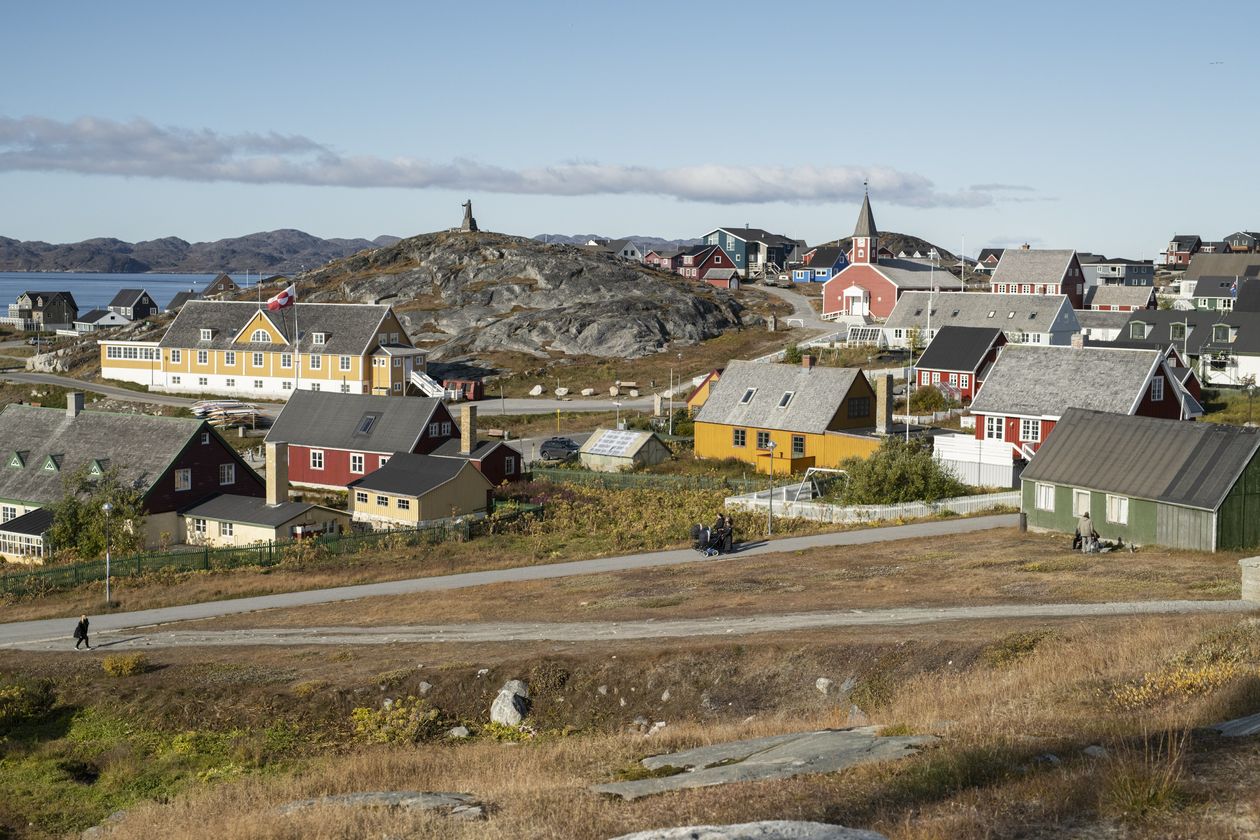

 Σε όλο τον περίγυρό μας έρχονται τα πάνω κάτω, και τα πολιτικά
 κόμματα στην Ελλάδα περί άλλα τυρβάζουν. Βουλευτής της αξιωματικής αντιπολίτευσης αναζητώντας λιγόλεπτη δόξα δημοσιότητας ανήγαγε την τσίκνα και το αλκοόλ σε ζήτημα υψηλής πολιτικής. Βεβαίως αναγωγή προσπάθησε να κάνει, διότι επί της ουσίας δεν μπορεί να ανταποκριθεί αφού δεν γνωρίζει καν ότι δεν υπάρχει ποινικός νόμος (τον οποίο αναζητούσε) που να καταδικάζει το συνδυασμό τσίκνας και αλκοόλ. Μέχρι εκεί μπορεί να φθάσει. Κατάντια.

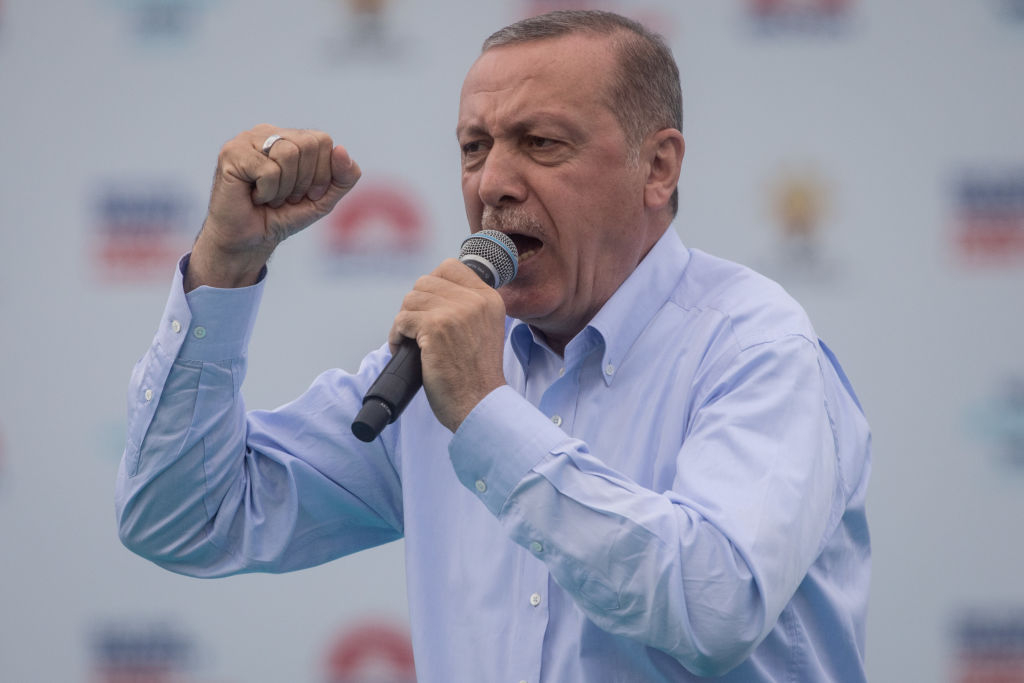 Mosques, migrants and the military are now Turkish President Recep Tayyip Erdogan’s new weapons in his threats against the West. (Photo by Chris McGrath/Getty Images)


 THE WASHINGTON POST


 The Washington Post