Αρχική Blog Σελίδα 2586

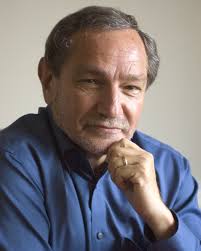
Michel Onfray: “La crétinisation progressive du peuple représente un vrai problème”

0
    INTERVIEW

©AFP

Dans son ouvrage “Théorie de la dictature”, Michel Onfray présente l’œuvre de George Orwell comme une grande préfiguration du monde contemporain. Le philosophe, qui ne craint pas la polémique, décrit ici la nouvelle forme de dictature à laquelle nous sommes aujourd’hui confrontés… Entretien.

George Orwell est, selon vous, un immense penseur politique. Il a fait le portrait des totalitarismes du vingtième siècle et a anticipé notre temps. En quoi notre époque porte-t-elle la marque du totalitarisme? N’est-ce pas un peu exagéré? Sommes-nous vraiment entrés dans une nouvelle forme de dictature?

 Non, ce n’est pas exagéré, car je ne dis pas que nous sommes revenus au nazisme ou au stalinisme. Ce qui m’intéresse, ce n’est pas comment fonctionnait le totalitarisme auparavant, mais comment il fonctionne à l’heure d’internet, des data et des téléphones portables. Ce totalitarisme contemporain n’est pas casqué ou botté. En revanche, nous vivons dans une société de contrôle: le fait que l’on puisse être écouté en permanence, le fait qu’on accumule des données sur nous, etc. Cette société de contrôle est à un point d’incandescence jamais atteint.

Les nouvelles technologies ne possèdent donc aucun avantage à vos yeux?

 Nous sommes dans une espèce de servitude volontaire vis-à-vis des nouvelles technologies. Mais parfois, c’est extrêmement pervers. Par exemple, pour assurer la confidentialité, on vous demande d’accepter certaines choses… Mais, en acceptant, on donne certaines informations aux Gafa. On peut accepter le dispositif de contrôle, mais on peut aussi le refuser. En même temps, si vous le refusez, vous ne pouvez plus vous déplacer en train, en avion, etc.

C’est ça qu’Orwell a bien anticipé?

 Orwell pense avec l’aide d’un roman. Il utilise la fiction. Mais sa science-fiction a cessé d’être fictive; elle est devenue science. Ce télé-écran qui nous surveille en permanence existe aujourd’hui. Nous y sommes. Orwell a inventé des choses au sujet du contrôle et de l’invisibilité des pouvoirs. Ce qui distingue le totalitarisme ancien et le totalitarisme nouveau, c’est précisément cela. Avant, le pouvoir avait un visage identifiable. Aujourd’hui, qui décide? Où sont les gens qui rendent cela possible? À mon sens, ces gens sur la côte ouest américaine ont un projet de domination du monde ainsi qu’un projet transhumaniste.

Le capitalisme débridé est-il aussi responsable de cette situation?

 Le capitalisme ne disparaîtra pas: il est consubstantiel à l’homme. Aujourd’hui, il n’a plus aucun ennemi en face de lui. Avec la chute du bloc soviétique, le capitalisme a estimé qu’il pouvait triompher. Certains, comme Fukuyama, ont même affirmé que c’était la fin de l’histoire, la victoire intégrale du néolibéralisme. Cependant, le monde n’est pas fait uniquement de capitalistes et de communistes. Il y a aussi des puissances spirituelles, comme l’Islam. On l’a vu lors du 11 Septembre 2001.

La démocratie représentative est-elle morte, selon vous?

 Oui. Le peuple et les représentants ne coïncident plus du tout. Dans les assemblées et les Parlements, il y a une surreprésentation des professions libérales, comme les avocats, les enseignants, etc. On y trouve peu de bergers, de chauffeurs de taxi ou d’étudiants. Ce qui signifie qu’il y a une partie de la société qui n’est tout simplement pas représentée. En outre, pour espérer être élu, il faut avoir de l’argent, se fondre dans un dispositif, passer par le moule d’un parti. Cette démocratie représentative a fait son temps. Le référendum au sujet du traité de Maastricht a été une parfaite incarnation de sa limite: les élus votent contre le peuple.

Comment définissez-vous le populisme que l’on craint tant aujourd’hui, vous qui faites confiance au peuple pour relancer la démocratie?

 Je n’ai aucun mal à me définir comme populiste. Cependant, je fais une différence entre les populistes et les “populicides”. C’est là que réside le problème; et non, comme on nous le fait croire, entre les populistes et les démocrates. Macron, Chirac, et Mitterrand avant lui, sont des “populicides”. Ces gens ne veulent pas gouverner pour le peuple. Le référendum d’initiative citoyenne est une idée très intéressante. L’idée qu’il y ait des élus qui soient révocables est une bonne chose. Évidemment, dans le contexte actuel, la crétinisation progressive du peuple représente un vrai problème. Et là, je vais vous surprendre par rapport à ce que j’ai dit auparavant: le grand avantage d’internet, c’est que le peuple peut aller chercher des informations alternatives. C’est formidable, un peuple qui décide de se prendre en main. Qu’un texte de loi puisse être pensé et critiqué par le peuple représente une très belle idée.

Que pensez-vous des mouvements de désobéissance civile qu’on voit apparaître?

 Quand Thoreau parlait de désobéissance civile, il parlait de la guerre contre le Mexique. Quand Martin Luther King s’en empare, c’était pour lutter contre le racisme. Même chose pour Ghandi, lorsqu’il veut l’indépendance de l’Inde. Aujourd’hui, tout le monde pense que la désobéissance civile doit marcher tout le temps. La question qui se pose à travers tous ces mouvements est celle-ci: quelle est la grande cause qui est défendue? Force est de constater qu’il s’agit souvent de soi. Par exemple, un enseignant va refuser de faire une dictée ou de faire passer un examen parce qu’il n’est pas d’accord avec une loi du ministre de l’éducation… Refuser de faire une dictée ne vous transforme pas en Jean Moulin. J’ai une haute idée de la Résistance. La désobéissance civile doit être réservée aux grandes causes communes.

Comme l’urgence climatique?

À son âge, aussi intelligente soit-elle, je ne peux pas imaginer que Greta Thunberg puisse disposer des arguments nécessaires lui permettant de maîtriser l’ensemble des enjeux scientifiques derrière la question écologique.

 Non, la grande cause commune, ce serait le triomphe des gilets jaunes. L’urgence climatique est le faux nez du capitalisme. Par exemple, les voitures électriques qu’on nous présente comme écologiques ne le sont pas. On veut nous refourguer un capitalisme vert, soi disant “éco-responsable”. Aujourd’hui, lorsqu’on veut nous faire acheter un produit, on vous dit qu’il est “bio”. L’écologie véritable, à laquelle j’aspire, est prise en otage par cette écologie urbaine qui est entre les mains des publicitaires. On joue avec le réchauffement climatique, qui est indéniable, en méprisant ses causes véritablement scientifiques.

Greta Thunberg, à propos de laquelle vous avez consacré un texte très polémique, est aussi selon vous une figure de ce capitalisme vert?

 Cette jeune fille est aux mains du capitalisme vert qui utilise l’écologie comme un bon argument de vente. À son âge, aussi intelligente soit-elle, je ne peux pas imaginer qu’elle puisse disposer des arguments nécessaires lui permettant de maîtriser l’ensemble des enjeux scientifiques derrière la question écologique.

Comment analysez-vous les différents mouvements sociaux aux quatre coins de la planète? Y a-t-il quelque chose qui, hormis les différences, les rassemble?

 Aujourd’hui, ce n’est plus possible d’envoyer les militaires dans la rue, car tout le monde vous tombe dessus grâce, là aussi, à la circulation de l’information. Cependant, j’ai peur que tous ces mouvements ne soient qu’une espèce de grand frisson démocratique. Un dictateur s’en va et un autre le remplace… Et on pense que ça change tout. Ce n’est pas parce qu’on mettrait Macron à la porte et qu’on placerait Muriel Penicaud à sa place qu’il s’agirait d’une grande révolution démocratique. Tous ces mouvements sont le signe d’un ras-le-bol des peuples. Ils n’en peuvent plus de voir qu’il y a des fortunes insolentes et qu’il y a des gens qui font des guerres dans le seul but de s’enrichir. Comme Trump qui, avec un cynisme incroyable, déclare, après avoir tué Baghdadi, qu’il a fait ça pour sécuriser le pétrole… Aujourd’hui, grâce aux réseaux, les gens sont capables de descendre dans la rue très rapidement. Ce soulèvement des peuples me réjouit et, en même temps, je crains qu’il soit récupéré par les démagogues qui sont toujours là en embuscade. Les gilets jaunes ont été récupérés par Mélenchon, par la violence des casseurs et des Black blocs, etc. En quelque sorte, c’est la leçon de l’histoire: les peuples souffrent toujours de cette récupération.

Vous n’hésitez pas à être volontairement polémique. Est-ce bien le rôle du philosophe? L’intellectuel contemporain doit-il être nécessairement engagé?

 Oui, il faut des paroles d’intellectuel dans un monde où n’importe qui fait l’intellectuel. De nos jours, tout le monde donne son avis et nous dit comment le monde doit fonctionner. Je ne vois pas pourquoi on s’étonne que j’intervienne sur tous les sujets. Pourquoi serais-je moins légitime qu’un footballeur?

Vous écrivez: “La langue est attaquée”. Qu’entendez-vous par là?

 Mon père a été élevé par l’école républicaine. Il savait écrire sans faute. Il ne faisait pas d’erreurs de logique. Il avait appris quelques grands classiques de la littérature. La destruction de l’école a entraîné la destruction de l’intelligence. Il s’agit moins de former un citoyen qui pense que de créer un consommateur qui paye. On apprend de moins en moins de choses. Certains nous disent qu’il ne faut plus faire de dictées, de grammaire, etc. Or, le cerveau est un muscle: si on ne l’entretient pas, il entre en dégénérescence… 

À la fin de votre ouvrage, vous déclarez: “Je ne suis pas bien sûr de vouloir être progressiste”. En quoi le progressisme peut-il incarner, selon vous, une forme de nihilisme?

Je suis opposé au progressisme tel qu’il nous est présenté actuellement. Le progrès n’est pas un bien en soi. Il peut y avoir un progrès du mal, de la mort. Dire à une femme pauvre qu’on va louer son utérus pour avoir un enfant ne représente pas, à mes yeux, un progrès. En ce sens, je ne suis pas un progressiste. Je ne joue pas à ce jeu qui consiste à opposer systématiquement les méchants populistes et les gentils progressistes.

Le socialiste libertaire et l’anarchiste que vous êtes peut donc être aussi conservateur?

Bien sûr. La retraite a 60 ans, c’est très bien. Il faut la conserver. D’où vient cette drôle d’idée que parce que l’on vit plus longtemps, il faudrait nécessairement travailler plus longtemps? Bien au contraire, il faut réduire la pénibilité et c’est très bien que des ouvriers partent tôt à la retraite. Faire des enfants tout nu sous la couette, ça a marché pendant des siècles. Pourquoi aller au-devant de problèmes en voulant tout changer? Il faut conserver ce qui a fonctionné. Le changement à tout prix n’a aucun sens. Si on me donne la preuve que c’est mieux, je veux bien l’accepter, mais sinon… Aujourd’hui, on a l’impression que notre civilisation avance en aveugle.

Emmanuel Macron’s Balkan Betrayal

0


  (Photo by Robert ATANASOVSKI / AFP) (Photo by ROBERT ATANASOVSKI/AFP via Getty Images)

French President Emmanuel Macron’s decision to block Albania and North Macedonia’s EU-membership bids has brought a symbolic end to the post-1989 era. Since the fall of the Berlin Wall, both European and US leaders had recognized that an orderly expansion of the European project is key to European peace and prosperity.

DENVER – Since the fall of the Berlin Wall 30 years ago, Western leaders have consistently maintained that there are no problems on the European continent that cannot be addressed through engagement with the European Union or an expansion of the European project. But that longstanding outlook seems to be changing, owing to a combination of internal EU woes and American indifference.

It may seem awkward that the United States would encourage membership in someone else’s club in the first place. But from its leadership position within NATO – the premier European security organization – the US has always been supportive of European efforts to consolidate political and economic unity on the continent. And the EU, for its part, has recognized that membership in the bloc is a logical aspiration for the post-Soviet countries on its periphery. While deepening and enlarging the structures of the EU has proved to be more difficult than many US observers realized, European leaders have soldiered on, not least because that is what was expected of them in the context of post-Cold War history.

But the European Council’s recent meeting on October 17-18 provided confirmation that something has changed: French President Emmanuel Macron made the fateful decision to block EU accession talks with Albania and the Republic of North Macedonia. With the United Kingdom leaving the EU and German Chancellor Angela Merkel retiring from politics, Macron is the heir apparent to European leadership. But his reasoning on the question of EU expansion is opaque. Many, even in the conspiracy-minded Balkans, assume that Macron simply has no appetite for the difficult process of taking on two more member states from a still-troublesome region, given the internal challenges already facing the EU.

Still, the disappointment – even anger – over Macron’s decision is palpable in Tirana and Skopje (the Albanian and North Macedonian capitals, respectively). North Macedonia, after all, just finished  in order to placate Greece, which had been vetoing its membership on the grounds that its name was too similar to the Greek region of Macedonia. Meanwhile, Bulgaria, another EU member, has also frustrated North Macedonia’s efforts, accusing the Macedonians of claiming Bulgarian national heroes as their own, and demanding that they amend their history books.

Faced with these demands and struggling with the legacy of corruption left by his predecessor (who has, oddly, now found “asylum” in Hungary), North Macedonia’s relatively new, inexperienced prime minister, Zoran Zaev, concluded that his country urgently needed to get into NATO and the EU. He rammed through the long-sought name change, normalized relations with Greece, placated the Bulgarians, and applied for membership. He knew that the name change did not poll well, that many Macedonians saw it as a humiliation that could be justified only by EU accession. But, because both NATO and the EU had singled out the name dispute as the main hurdle to membership, he and the Macedonian public had high hopes for gaining admission to both organizations.

For its part, NATO has followed through. Though some members still need to approve, the Republic of North Macedonia is expected to become a full NATO member at the alliance’s December summit.

But the EU accession process has been much slower. Macron, who has said very little on the subject, seems to be worried that continuing enlargement of the bloc will make reforming its governance structures more difficult. But by slamming on the brakes, he has put Zaev in a precarious position. North Macedonian voters, their hopes dashed, will return to the polls for a general election in April.

In the past, one might have expected the US to step in. But in the context of US President Donald Trump’s largely unformed foreign policy, the plight of small, distant countries like North Macedonia and Albania barely registers. Of course, it is possible that Trump has tired of the French president’s star power and is welcoming the recent criticism of him with a sense of schadenfreude. It is also possible that Trump doesn’t want Albania and North Macedonia to join the EU. But, most likely, he simply has no idea what is happening in the Western Balkans.

Just a few years ago, the US doubtless would have been working with the EU to facilitate the accession process for both countries. While EU membership would not solve their problems, it would help to address institutional weaknesses, and it would signal to an increasingly  that the geopolitical game in the Balkans is coming to an end. Given the trauma the region has suffered over the past 25 years, America and Europe have a duty to fulfill the promise of the post-Cold War era.

Άκρως επικίνδυνος

2

Ο κ. Τσίπρας χαιρόταν με τις δυσκολίες που αντιμετώπιζε η κυβέρνηση Σαμαρά στην διαχείριση της οικονομικής κρίσης και προσδοκούσε τα αδιέξοδα να τον φέρουν στην εξουσία. Αρνήθηκε, ακόμη και να συναινέσει στην εκλογή Προέδρου της Δημοκρατίας. Ανέλαβε την κυβέρνηση και φόρτωσε τη χώρα με επιπλέον χρέος. Δυστυχώς, και με μια τρομερά δυσάρεστη εμπειρία. Οι κυβερνήσεις του ήταν απο τις χειρότερες που γνώρισε ο τόπος στα 200 χρόνια του νεώτερου βίου του.

Τώρα, ο κ. Τσίπρας χαίρεται και πάλι- αντί να συνεισφέρει σε μια διακομματική πολιτική-  που η κυβέρνηση Μητσοτάκη δυσκολεύεται να διαχειριστεί τα προβλήματα του μεταναστευτικού που άφησε, και πάλι, ο κ. Τσίπρας.

Ο κ. Τσίπρας αποτελεί ένα επικίνδυνο φαινόμενο στη δημόσια ζωή.

Είναι στο χέρι του λαού να αποφασίσει για το μέλλον του.

The nonproliferation regime is tottering

0

Pantelis Ikonomou, a former IAEA inspector, writes:  November 6, 2019  

Turkish President Erdogan plainly stated on September 24 at the UNGA: “Nuclear power should be either free for all or banned.” He had already declared in Turkey that he “cannot accept” that a few powerful states have nuclear weapons on missiles while the rest of the world is denied the right to have them.

Erdogan’s words raised worries internationally. But to assess the fate of such statements two sets of facts need to be taken into account. First, the NPT’s limitations and secondly, political defects in the nonproliferation regime.

As for the NPT limitations, they are:

  • Breakout: any peaceful nuclear program with advanced fuel cycle facilities automatically includes a possible military dimension. It would only take a decision to “breakout,” as done by North Korea in 2003, to turn a peaceful program into a military one. Turkey does have an ambitious nuclear plan, yet the country is far away from having the critical nuclear installations and their peripherals, specifically uranium enrichment and plutonium reprocessing facilities, which would make meaningful a ‘‘breakout.’’
  •  Sneaking out: an NPT signatory could attempt to develop nuclear technology clandestinely. The IAEA inspectors have intrusive means of monitoring and verifying such equipment.
  • Buying the bomb: a nuclear weapons state could conceivably sell nuclear weapons, not only to Turkey but conceivably also to other states in the region. Turkey has reputedly already bought nuclear technology through the A.Q. Khan network.

The political defects that could inspire Erdogan include:

  • The international community failure to terminate the North Korean nuclear program, which demonstrates serious weakness.
  • The reactivation of Iran’s nuclear program, precipitated by US withdrawal from the Joint Comprehensive Plan of Action without any peaceful planning.
  • The risky call of President Trump to allied countries to develop their own nuclear deterrents, which jeopardizes the NPT regimae and the IAEA’s mandate.
  • The existing legal and political disparity that derives from non-universal adherence to the NPT. As long as some countries manage to stay outside the NPT and yet possess nuclear weapons, as India, Pakistan, and allegedly Israel have done, others might use the logical/ethical excuse to develop their own nuclear weapon programs.
  • The continuing failure of the five nuclear powers inside the NPT to fulfill their commitment towards nuclear disarmament expands the gap of confidence between the few nuclear “haves” and the many “non-haves”. This gap provides support to future “nuclear weapon dreamers”.
  • The possibility that the US might remove from Turkey the nuclear weapons stationed there for over six decades in Turkey.

All the above limitations and defects in the global nuclear non-proliferation architecture have shaped a fertile global climate for growing proliferation ambitions. Erdogan is not alone. There are others in the Middle East and Northeast Asia who would like to join the nuclear club.

The nonproliferation regime is tottering

IRAQ SITUATION REPORT: NOVEMBER 1-4, 2019

0

By Brandon Wallace

Street protests rooted in popular discontent and a harsh government response have embroiled Iraq in a crisis since early October 2019. The protesters – largely though not exclusively from Iraq’s Shi’a communities in Baghdad and southern Iraq – are airing growing frustrations over the Iraqi government’s failure to enact reforms and deliver basic services, a lack of economic opportunities, and the Iranian regime’s deepening control over the Iraqi state.

The Institute for the Study of War (ISW) is assessing the ongoing unrest and its effects on political-security dynamics in Iraq. The Iraq Situation Report (SITREP) series summarizes key events and likely developments to come. This SITREP update covers the period November 1-4, 2019. 

Key Takeaway: Protests continued to grow in Baghdad and southern Iraq after Iran intervened to block the resignation or ouster of Prime Minister Adel Abdul Mehdi in a no-confidence vote on October 30. Protests became increasingly anti-Iran in Karbala and Baghdad and spread to Diyala Province. Meanwhile, PM Mehdi refused the Iraqi parliament’s summons for questioning, likely recognizing that the measure has insufficient support in the parliament for the proceedings after Iran’s intervention.

Click on the image to view an enlarged version of the map.

ΟΙ 10 ΕΛΛΗΝΙΚΟΙ ΜΥΘΟΙ ΓΙΑ ΤΟ ΚΥΠΡΙΑΚΟ ΖΗΤΗΜΑ

0

του Μιχάλη Οικονομόπουλου*

 Et preterea censeo Carthago delenda est

Ειδάλλως :

Δέσποτα, μέμνησο των αθηναίων


Το κυπριακό  ζήτημα διαχρονικά, για την πολιτική τάξη και το λαό της Ελλάδας , αποτελείται μόνο από μύθους  που αποπροσανατολίζουν και εκτρέπουν από την ουσιαστική διαλεχτική ιεράρχιση των σχετικών θεμάτων, των στόχων και της ανάλογης δράσης. Μπορούν να αναφερθούν πολλά περισσότερα σχετικά θέματα. Σε αυτό το κείμενο απαριθμώ συνοπτικά 10 σημαντικά σημεία -(μύθους), τα πιο σημαντικά κατά τη γνώμη μου και εξετάζω το περιβάλλον μέσα στο οποίο αναπτύσσονται.

Στο θέμα βέβαια αυτό παρεμβαίνουν ενεργητικά και ξένες δυνάμεις, τα συμφέροντα των οποίων τους οδηγούν στον έλεγχο τόσο του ελληνικού πολιτικού συστήματος, όσο και των διαμορφωτών της κοινής γνώμης.

΄΄Δεν κατηγορώ εκείνους που επιζητούν να επεκτείνουν την δύναμή τους, αλλά εκείνους που είναι πρόθυμοι να υποταχθούν ΄΄ Θουκιδίδης

Οι 10 Μύθοι για το κυπριακό θέμα

  • Εμμένουμε στο ότι το κυπριακό είναι δήθεν θέμα Διεθνούς Δικαίου , περιμένοντας από τους παγκόσμιους θεσμούς, (ΟΗΕ, Ε.Ε. κυρίως) , να  λύσουν με βάση τις αρχές δικαίου το πρόβλημα. Ξεχνάμε ότι όλα τα γεωπολιτικά διεθνή θέματα είναι ζητήματα που άπτονται απόλυτα του Συσχετισμού Ισχύος, όπως πολύ καθαρά έχουν περιγράψει ο Θουκιδίδης, ο Κλαούσεβιτς και όλοι οι σχετικοί αναλυτές. Στους παγκόσμιους Συσχετισμούς Ισχύος παρεμβαίνεις με οργανωμένο, μακρόπνοο, πολύπλευρο σχέδιο και δράση, όπως κάνει και το μικρό πληθυσμιακά κράτος του Ισραήλ.
  • Η δήθεν συμπαράσταση και βοήθεια από την Ελλάδα στην Κύπρο.

Το  εξαρτημένο και ξενόδουλο ελληνικό πολιτικό σύστημα πάντα ακολουθεί εντολές ξένων, κυρίως των ΗΠΑ, Βρετανίας και Γερμανίας. Δεν υπάρχει καμιά ουσιαστική προετοιμασία σχετικά με το θέμα αυτό και σε ώρα κρίσης θα εξυπηρετήσει με διατεταγμένο τρόπο τα συμφέροντα των πιο πάνω χωρών, όπως κατ΄επανάληψη έχει κάνει και στο παρελθόν.

Ως χαρακτηριστκά γεγόνοτα αναφέρω την αντιμετώπση από τους έλληνες πρωθυπουργούς των δημοψηφισμάτων 1931 και 1950, την υποδοχή της Τουρκίας για πρώτη φορά σε τριμερή διάσκεψη το 1955 μετά τα Σεπτεμβριανά, την προδοτική στάση της χούντας και της κυβέρνησης Καραμανλή τον Ιούλιο – Αύγουστο του 1974 .

  • Η δήθεν εγγύηση των κυριαρχικών κυπριακών δικαιωμάτων που προσφέρει η συμμετοχή της στην Ε.Ε.

Η Ε.Ε είναι μια ένωση στην οποία κυριαρχούν οι μεγάλες δυνάμεις της Ευρώπης. Ηγεμονικό ρόλο έχει η Γερμανία. Σε κάθε δεδομένη στιγμή άσχετα από τις συμφωνίες και τα πρωτόκολλα  λειτουργίας, η στάση των χωρών της θα εξαρτηθεί , (όπως έχουμε πολλές φορές δει ), από τα συγκυριακά και μακροχρόνια συμφερόντά τους.

  • Ο δήθεν δίκαιος ρόλος που περιμένουμε από τον ΟΗΕ στην επίλυση του προβλήματος και η καθαρά υπονομευτική προς εμάς στάση της δήθεν ειρηνευτικής δύναμης της στο νησί. Ο ΟΗΕ εκφράζει και προωθεί αποκλειστικά τα συμφέροντα των μελών του συμβουλίου ασφαλείας του και τίποτε άλλο.
  • Ο δήθεν πατριωτικός ρόλος  του Γρίβα, (ενός ακροδεξιού συνεργάτη  των δωσίλογικών κυβερνήσεων  και των Άγγλων στην κατοχή), σε αντίθεση με τους ήρωες αγωνιστές της ΕΟΚΑ. Η στάση του Γρίβα βοήθησε  δραματικά να καταλήξουμε στο περιεχόμενο των συμφωνιών  Ζυρίχης – Λονδίνου και έτσι η Κύπρος να είναι η μόνη ίσως χώρα που δεν κατάφερε μετά τον  Β΄ παγκόσμιο πόλεμο να κερδίσει την πλήρη ανεξαρτησία της από την  Βρετανία.
  • Οι δήθεν χαμένες ευκαιρίες της δεκαετίας του ΄60 , αλλά και η αμαρτωλή πρόφαση μερικών για το ξεπούλημα της Κύπρου, που λένε ότι πρέπει να δεχτούμε αυτό που κάθε στιγμή μας προσφέρεται γιατί η επόμενη πρσφορά θα είναι χειρότερη.
  • Ότι δήθεν ΄΄ η Κύπρος κείται μακράν ΄΄ που δήλωσε ο δήθεν ΄΄εθνάρχης΄΄ Καραμανλής , ο οποίος μαζί με την καμαρίλα του τον Αβέρωφ, λειτουργώντας και οι δυο ως πεμπτοφαλαγγίτες, άρχισαν το ξεπούλημα της μεγαλονήσου με τις συμφωνίες ΄59-60 και το ολοκλήρωσαν σύμφωνα με τους νατοϊκούς σχεδιασμούς, τον Ιούλιο και Αύγουστο του ΄74.
  • Ο δήθεν μεγάλος ηγέτης και ΄έθνάρχης ΄΄ Μακάριος , ο οποίος ενώ είχε αγνό πατριωτισμό, δεν είχε την οξυδέρκεια και την πολιτική ικανότητα να διαχειριστεί τις περιστάσεις. Αντίθετα διέθετε μεγάλες προσωπικές φιλοδοξίες , όπως φανερώνει και το περιστατικό με την ανάθεση της μεταφοράς των αποτελεσμάτων του δημοψιφήσματος του Ιανουαρίου του 1950 στον  Μητροπολίτη Κυρηνείας Κυπριανό , γεγονός που του άφησε ανοιχτό το δρόμο προς την Αρχιεπισκοπή.
  • Η δήθεν ασφάλεια της αποστρατικοποίησης. Η αποστρατικοποίηση της μεγαλονήσου θα σημάνει τον οριστικό ενταφιασμό του ελληνισμού της Κύπρου, αφού προηγηθεί ένα μικρό διάστημα απόλυτης ομηρίας του από την Τουρκία. Η Τουρκία θέλει μια ώρα με πλοία και μερικά λεπτά από αέρος , από τα παράλιά της, για να αποβιβάσει στρατεύματα στην Κύπρο. Σε πολλούς ελλαδίτες και ελληνοκύπριους έχει αναπτυχθεί δυστυχώς, μετά από δεκαετίες βίαιων προκλήσεων της Τουρκίας το σύνδρομο της Στοκχόλμης. Κανένα κράτος χωρίς στρατό δεν μπορεί να υπολογιστεί απο την διεθνή κοινότητα ως αυτόνομο και κυρίαρχο.
  • Η δήθεν επανένωση της Κύπρου με λύση συνομοσπονδίας και χαρακτηριστικά πολιτικής κρατικής δομής τύπου σχεδίου Ανάν.  Πραγματικός στόχος της Τουρκίας είναι μέσω τέτοιων συμφωνιών ο πλήρης αφελληνισμός της μεγαλονήσου. Σε αυτή τους την θέση βρίσκουν στήριξη από τις μεγάλες δυνάμεις, οι οποίες πέραν της γεωγραφικής θέσης και του πληθυσμιακού βάρους της Τουρκίας, βρίσκουν  σε αυτήν έναν΄΄σοβαρό΄ συνομιλητή με σταθερό, στιβαρό  και οργανωμένο γεωπολιτικό σχέδιο , εξυπηρέτησης των συμφερόντων της.

Για να καταλάβουμε τους τελικούς στόχους της Τουρκίας, θα μπορούσαμε να  υλοποιήσουμε μια θεωρητική διπλωματική άσκηση για το κυπριακό, προτείνοντας στους Τούρκους την οριστική αναγνώριση της κατάστασης στην νήσο ως έχει σήμερα, αναγνωρίζοντας  δηλαδή την  λεγόμενη ΄΄ Τουρκική δημοκρατία της βόρειας Κύπρου ΄΄, με αντάλλαγμα βέβαια την αμοιβαία αναγνώριση εκ μέρους της Τουρκίας, της απόλυτης ανεξαρτησίας και κυριαρχίας του Ελληνοκυπριακού (μετά την οριστική διχοτόμηση) κράτους. Από την ανάλυση της πολιτικής των Τούρκων ιστορικά και στον παρόντα χρόνο, είναι βέβαιο ότι οι Τούρκοι δεν θα δέχονταν αυτή την συμφωνία, που εκ πρώτης όψεως δικαιώνει την πολύχρονη προσπάθειά τους. Διότι η οριστική τους επιδίωξη είναι η ολοκληρωτική εξάλειψη του ελληνισμού από τη νοτιοανατολική Μεσόγειο και η δική τους απόλυτη και μοναδική κυριαρχία και παρουσία εκεί.

Ο Βάσος Λυσσαρίδης έχει πει πολύ σωστά  ότι :  πάγιος στόχος της Τουρκίας είναι ”η Ιμβροποίηση της Κύπρου, η Κυπροποίηση της Θράκης και η διχοτόμηση του Αιγαίου. Επιβάλλεται για αυτό κοινή πανεθνική στρατηγική”.

Προσέγγιση των εθνικών θεμάτων

Βασικά Χαρακτηριστικά της σύγχρονης Ελλάδας

Για να μπορέσουμε να προσδιορίσουμε το ακριβές περιεχόμενο της Εθνικής Στρατηγικής που είναι αναγκαίο να ακολουθήσουμε, θα πρέπει πρώτα να κατανοήσουμε και να αξιολογήσουμε, τα βασικά χαρακτηριστικά που διέπουν την ιστορία και την πολιτική πραγματικότητα της πατρίδα μας , τα οποία επηρεάζουν άμεσα τη ζωή και εξέλιξή της. Αυτά επιγραμματικά είναι :

– Η γεωπολιτική συνεχής συρρίκνωση από το 1922 έως σήμερα

– Η έλλειψη συλλογικού οράματος και σχεδίου για τον τόπο και το λαό. Η απουσία μεγάλων διαχρονικών αλλά και μικρών διαχειριστικών στόχων.

– Η πνευματική καθίζηση και δημιουργική στειρότητα, με την καταρχήν βίαιη επιβολή της από τη χούντα του ’67 και μετά η μόνιμη παρουσία της στον ελληνικό χώρο.

-Το διεφθαρμένο – πελατειακό – αναχρονιστικό – καιροσκοπικό κράτος και πολιτικό σύστημα, που διαπλέκει τα συμφέροντα πολιτικών και κρατικών αξιωματούχων με την κρατικοδίαιτη οικονομική ολιγαρχία και με ξένα επιχειρηματικά συμφέροντα.

– Η έλλειψη αναπτυξιακών θεσμών, μέσων, διαδικασιών, υποδομών. Η διαρκής διαρροή κορυφαίων δημιουργικών μυαλών στο εξωτερικό.

– Η αδιέξοδη καταναλωτική συμπεριφορά, που μετά τη λειτουργία της ιδιωτικής τηλεόρασης έγινε κυρίαρχη ιδεολογία.,

– Η έλλειψη κοινωνικής συνοχής, ο αδιέξοδος και στρεβλός ατομισμός καθώς και η παντελής ανυπαρξία ελπίδας και προοπτικής από το λαό μας.

– Η τεράστια οκονομική κρίση και παραγωγική συρρίκνωση που συνέβει στην χώρα μας την τελευταία δεκαετία.

Παρατηρήσεις :

  • η εξωτερική μας πολιτική δημιουργεί περισσότερα προβλήματα απ’ όσα μας αναλογούν
  • η αδυναμία στήριξης των δικαίων μας διεθνώς σημαίνει ότι είμαστε ανίσχυροι
  • η αδυναμία αυτή δημιουργεί κλίμα ηττοπάθειας και αναμονής νέων τετελεσμένων
  • η χώρα έχει αποδείξει ιστορικά ότι σε μεγάλη πίεση επιλέγει την πολιτική υποχώρηση, τον συμβιβασμό, ή την ανοχή.

Παρατηρήσεις διεθνείς :

– η πραγματικότητα καθορίζεται τις περισσότερες φορές από σταθερές εθνικές επιδιώξεις και την ισορροπία δυνάμεων

– η καταπάτηση διεθνών συμφωνιών από την διεθνή κοινότητα είναι σύνηθες φαινόμενο

– δεν υπάρχουν σταθεροί φίλοι και εχθροί

– κάθε συμφωνία ισχύει όσο είναι χρήσιμη ή όταν επιβάλλεται πολιτικά

– το δίκαιο δεν εφαρμόζεται παρά μόνο αν συμπίπτει με τα γεωπολιτικά συμφέροντα των ισχυρών

– καμιά διεθνής εγγύηση ή δήλωση, κανένας διεθνής οργανισμός δεν καλύπτει καμία χώρα

– κάθε αδυναμία ή ένδειξη αδυναμίας από μια χώρα αξιοποιείται από τις άλλες και ιδιαίτερα από τις αντιπάλους της

– καμιά χώρα χωρίς μακρόπνοο σχεδιασμό και διεθνείς επιδιώξεις δεν επιβιώνει ακέραια

Ερώτημα :

  • Γιατί η Τουρκία κρίνοντας την πολιτική μας ιστορία, την ενδοτικότητα και την ηττοπαθή μας λογική, να μην επιμένει σταθερά να καταστήσει την πατρίδα μας πολιτικά υποτελή σ’ αυτήν, μεταχειριζόμενη κάθε μέσου ακόμα και την απειλή πολέμου ;
  • Ποιο μπορεί να είναι το μέλλον του λαού μας και της κρατικής του υπόστασης μέσα σ’ ένα αρνητικά διαμορφούμενο περιβάλλον όπως περιγράφηκε πιο πάνω;

Αν  ανοίξει η κερκόπορτα της Κύπρου για τον εχθρό, καταλυθεί η κυπριακή δημοκρατία και χαθεί οριστικά η δυνατότητα ελληνικής πολιτικής παρουσίας και  παρέμβασης στην νήσο, τότε σύντομα θα ακολουθήσουν στην ίδια προοπτική και το Αιγαίο και η Θράκη. Η κατάσταση όμως δεν θα μείνει εκεί, λόγω της διεθνούς ανυποληψίας και αδυναμίας του ηττημένου κράτους, οι εδαφικές και άλλες διεκδικήσεις κι άλλων γειτόνων, θα πάρουν ανοιχτή διεθνή στήριξη με τα ανάλογα ανατριχιαστικά αποτελέσματα.

Πρέπει να τονιστεί ότι είναι άκρως προσβλητικό για έναν λαό να ανέχεται να  ζει σε συνθήκες διαρκούς απειλής πολέμου, εφ’ όσον ασκήσει ένα αναφαίρετο δικαίωμά του, ( πχ. ανακήρυξη ΑΟΖ και επέκταση των χωρικών υδάτων από την Ελλάδα ή η εγκατάσταση ενός οπλικού συστήματος στην Κύπρο ).

Παράλληλα η διαχρονική έλλειψη ουσιαστικής βούλησης για επιτυχή αντιμετώπιση του τουρκικού επεκτατισμού σε όλα τα μέτωπα, έχει υπονομεύσει και το διεθνές προφίλ της χώρας μας, μεταστρέφοντας ακόμη και τη διεθνή κοινή γνώμη σε βάρος μας.

Η κατάσταση αυτή έχει αντίκτυπο και στο συλλογικό ψυχολογικό κλίμα μέσα στη χώρα μας, με αποτέλεσμα τον κατακερματισμό του κοινωνικού ιστού, την απογοήτευση, την ιδιώτευση και την αδυναμία ουσιαστικών θετικών μεταβολών στην λειτουργία της οικονομίας, του κράτους, των θεσμών όλη αυτή τη περίοδο.

Είναι εμφανείς οι στόχοι της Τουρκίας για τα παραπάνω καθώς και για την φιλανδοποίηση της χώρας μας καθιστώντας την πολιτικά υποτελή σ’ αυτήν (θεωρία του ζωτικού χώρου σε συνδυασμό με την προσπάθεια ανάδειξής της σε περιφερειακή υπερδύναμη).

Όπως έχει γράψει και ο Σουν Τσου το 500 περίπου πΧ. , ΄΄ Η μεγαλύτερη τέχνη είναι να υποτάξεις τον εχθρό χωρίς μάχη ΄΄.  Αυτόν τον στατηγικό σχεδιασμό προσπαθεί να επιτύχει και η σύγχρονη Τουρκία και δυστυχώς δείχνει να τα καταφέρνει καλά μέχρι τώρα.

Στα πλαίσια του ¨διεθνούς δικαίου¨ θα ήταν παθητική πολιτική η απαίτηση εφαρμογής της Συνθήκης της Λωζάνης ( για επιστροφή περιουσιών και υπηκοότητας Κωνσταντινοπολιτών, Ιμβρίων, Τενέδιων κλπ.), όπως επίσης και της εφαρμογής της Συνθήκης για το θαλάσσιο δίκαιο που προβλέπει την επέκταση των χωρικών υδάτων στα 12 ναυτικά μίλια. Βέβαια ούτε αυτό δεν διανοούμαστε να πράξουμε. Το να θέτουμε εμείς ως μόνο ζήτημα συζήτησης για επίλυση με τους Τούρκους  το θέμα της υφαλοκρηπίδας και μάλιστα χωρίς να έχει οριστεί τελεσίδικα το εύρος των χωρικών υδάτων στο Αιγαίο, αποτελεί αμυντική πολιτική ραγιαδισμού και ήττας.

Η ενεργητική πολιτική που θα έπρεπε να εκδηλώνεται, θα διεκδικούσε την υλοποίηση όλων των θεμάτων ελληνικών συμφερόντων, με νομικές,  όπως ορίζουν οι διεθνείς συνθήκες, γεωπολιτικές και ιστορικές αναφορές.

Η ανάλυση και  οι προτάσεις του Παναγιώτη Κονδύλη μπορούν και πρέπει να αποτελέσουν το φάρο που θα μας καθοδηγήσει.

Το να περιμένει κανείς ότι το διαχρονικά εξαρτημένο πολιτκό σύστημα, θα σκεφτεί και θα πράξει ανάλογα με τα εθνικά συμφέροντα της χώρας μας, είναι ουτοπία. Ακόμη κι αν για κάποιους λόγους είχαμε υπεροπλία και πιο αξιόμαχο στράτευμα, η πολιτική διαχείριση των κρατούντων, ανάλογη με τα συμφέροντα αλλότριων δυνάμεων, θα οδηγούσε σε ήττα μια αναμέτρηση με τους γείτονες, σε πολιτικό ή σε στρατιωτικό επίπεδο, σε στιγμιαία και σε διαχρονική ακολουθία.

Όπως χαρακτηριστικά συνέβη στην Κύπρο το 1974 λόγω προδοσίας, ή σε μικρότερο βαθμό στις Ίμια το 1996. Πρέπει να παραδεχτούμε ότι το πολιτικό σύστημα, που έχει γαλουχηθεί και οικοδομηθεί με ιδιοτελή και καιροσκοπικά στοιχεία, που λειτουργεί μέσα σε κατάσταση διαρκούς εξάρτησης και ελέγχου από αλλότρια συμφέροντα, είναι ικανό να προδίδει διαρκώς τη χώρα και το λαό, (όπως ακριβώς συμβαίνει και στις ημέρες μας).

Τα συμφέροντα, ιδίως στην ευρύτερη περιοχή μας, είναι τεράστια.  Μόνο με συνεχή εγρήγορση, με την αναγκαία στοχοθεσία και τον ανάλογο σχεδιασμό πολυδιάστατων κινήσεων, τόσο στην εξωτερική όσο και στην εσωτερική πολιτική και με τις Αναγκαίες Αλλαγές στην Πολιτειακή οργάνωση της χώρας, μπορούμε να ανταπεξέλθουμε στις ανάγκες των καιρών. Ο σταθερός γνώμονας όλων των παρεμβάσεων και αλλαγών πρέπει να είναι το συμφέρον της πατρίδας μας και του λαού μας.

Θέματα όπως η πολυδιάστατη εξωτερική πολιτική, (με την ανάπτυξη διεθνών σχέσεων, πρωτοβουλιών, δράσεων, συμμαχιών, που θα εξομαλύνουν τις διεθνείς πιέσεις συμφερόντων στην Ελλάδα και θα επιτρέπουν στη χώρα να καταλάβει τη θέση που της αξίζει στο διεθνές γεωπολιτικό στερέωμα καθώς και να αξιοποιήσει προς ίδιον όφελος τα υπάρχοντά της), χρειάζεται να αναλυθούν ξεχωριστά και εκτεταμένα. Το ίδιο πρέπει να γίνει και για τις άλλες σημαντικές αλλαγές που έχει ανάγκη ο τόπος μας, όπως κυρίως το πολιτικό – πολιτειακό σύστημα.

Είναι στιγμή να επιδείξουμε συλλογικά σαν κοινωνία τον πατριωτισμό μας, ανακτώντας την χαμένη κοινωνική συνοχή, την ελπίδα για μια θετική προοπτική και την υπερηφάνια μας για μια πατρίδα με ευημερία, που να μοιράζεται δίκαια σε όλους τους πολίτες της.

Η επαναπροσέγγιση του νοήματος του πατριωτισμού ιδεολογικά και πολιτικά μπορεί να μας δείξει το δρόμο που πρέπει να ακολουθήσουμε.

Πατριωτισμός σημαίνει βασικά αυτοσεβασμός και αξιοπρέπεια. Είναι η προβολή του προσωπικού στοιχείου πάνω στο συλλογικό κοινωνικό και εθνικό οικοδόμημα. Είναι η προάσπιση της προσωπικής αυτοτέλειας και πολιτισμικής ιδιαιτερότητας. Δεν μπορεί να είναι πατριώτης κάποιος που ετεροκατευθύνεται, που χειραγωγείται, που είναι ιδιοτελής και  υποτελής σε δυνατούς ή σε ανήθικα συμφέροντα. Τα αντίθετα χαρακτηριστικά δημιουργούν τις προϋποθέσεις για μια υγιή κοινωνία σε μια ακμάζουσα πατρίδα.

Για’ αυτούς τους λόγους, πρωταρχικό στοιχείο επιτυχίας κάθε προσπάθειας ανανέωσης, θεωρικά και πρακτικά, της ακολουθητέας πολιτικής στο χώρο των εξωτερικών και αμυντικών θεμάτων, είναι η ανατροπή αυτού του σάπιου πολιτικού συστήματος και του προσωπικού που το διαχειρίζεται.

Πρέπει να καθιερωθεί ένα πολιτικό μοντέλο σύγχρονο, πολυδιάστατο, λειτουργικό, εθνοκεντρικό (κι όχι εξαρτημένο), που να εκφράζει διαχρονικά και αποτελεσματικά τα συμφέροντα της πατρίδας και των πολιτών της.

Ένα σύστημα με χαρακτηριστικά μιας πραγματικής δημοκρατίας, που δεν μπορεί παρά να χαρακτηρίζεται από την Άμεση Διακυβέρνηση του τόπου από τον λαό, χωρίς αντιπροσώπευση. Επηρεασμένο από τα αρχαιοελληνικά πρότυπα, π.χ. με κληρώσεις αρχόντων, περιοδικότητα, ανακλητότητα, πλήρη συμμετοχή πολιτών κλπ, που θα πάρει διδάγματα και κατευθύνσεις και από αντίστοιχα οικουμενικά αξιακά πρότυπα και μεθόδους. Όπως είχε γράψει και ο Ζαν Ζακ Ρουσσώ στο ΄ Κοινωνικό Συμβόλαιο ΄ ΄ : ΄΄ η λαϊκή κυριαρχία για τον ίδιο λόγο που την κάνει αναπαλλοτρίωτη, δεν μπορεί να αντιπροσωπευτεί. Ουσιαστικά βρίσκεται στην γενική βούληση, και η βούληση δεν υπόκεινται σε αντιπροσώπευση ΄΄.

Θα πρέπει κάποτε να συνειδητοποιήσουμε τον απόλυτα ουσιαστικό ρόλο που διαδραματίζει το πολιτικό – πολειτιακό σύστημα, για την εξέλιξη όλων των σημαντικών θεμάτων που επηρεάζουν άμεσα και έμμεσα τον βίο μας, και να πράξουμε ανάλογα για την εξασφάλιση των ατομικών και συλλογικών μας δικαιομάτων και συμφερόντων.

Όπως έχει δείξει η ίδια η ιστορία, πολλές φορές οι άνθρωποι αν δεν βιώνουν το ρόλο του πολίτη και αν το κράτος – πολιτεία – οργανωμένο θεσμικά έθνος τους καταδυναστεύει δια μακρόν, τότε σταδιακά αποξενώνονται από την ιδέα της πατρίδας και διαλύεται η εθνική συνοχή. Πράγμα που συνέβη πολλές φορές στο παρελθόν , αλλά που είναι πιθανό να συμβεί δραματικά και τώρα, (έχει ήδη ξεκινήσει ), μετά από μια μεγάλη περίοδο  κοινωνικού εκμαυλισμού και πολιτικής φαυλοκρατίας.

Κάθε οργανωμένη πολιτεία, για να λειτουργήσει ισορροπημένα και να επιτύχει τις αρχές της Κοινωνικής  και Οικονομικής Δικαιοσύνης, της Ισονομίας, της Ισοπολιτείας, για να έχει πραγματικά ευτυχισμένους ανθρώπους, χρειάζεται να έχει ως βάση το αρχαιοελληνικό πρότυπο του ισόβιου Πολίτη – Στρατιώτη. Αυτό σημαίνει την συνύπαρξη  γνωστικών – σοφών και γυμνασμένων ανθρώπων , που θα συναποφασίζουν για τη πορεία της κοινωνίας και πολιτείας που ανήκουν και παράλληλα θα είναι έτοιμοι να την προασπίσουν από κάθε επιβουλή.

Αυτή είναι η μόνη ιστορικά δικαιωμένη σχέση του ανθρώπου με την πολιτεία, καθώς και η μόνη με σταθερά θετικά αποτελέσματα για την κοινωνία και τα συμφέροντά της.

Τελικά η πιο ουσιαστικά θετική και αήττητη μορφή οργάνωσης της πατρίδας, είναι η δημιουργία Μιας Αυτοδιοικούμενης Πολιτείας από Χειραφετημένους Πολίτες.

Όπως έγραψε ο ιστορικός Πολύβιος τον 2ο αιώνα π.Χ.: ‘‘Ουκ εκ των έξω κοσμείται η πόλις, αλλά εκ της των οικούντων αρετής ’’


*Ο Μιχάλης Οικονομόπουλος είναι Σύμβουλος Επικοινωνίας

email : [email protected]

Θεσσαλονίκη, Νοέμβριος 2019


«Η έλλειψη κοινοτικής αλληλεγγύης και αποφασιστικότητας έναντι του Ερντογάν, το εμπόδιο χάραξης κοινής μεταναστευτικής πολιτικής»

0

Του Αλκη Καλλιαντζίδη, Οικονομολόγου, [email protected]  www.kalkis.eu

Έλλειψη αλληλεγγύης, διαφορές μεταξύ Ανατολής-Δύσης, αποτυχία της πολιτικής των «ποσοστώσεων» για τις υποχρεωτικές μετεγκαταστάσεις, παρεμπόδιση λήψης αποφάσεων από τις χώρες του Βίζεγκραντ, και άλλες, που θα επέτρεπαν την ανάπτυξη μιας πραγματικής μεταναστευτικής στρατηγικής, συνθέτουν έναν ανησυχητικό απολογισμό των προηγούμενων 4 ετών, ιδιαίτερα για την Ελλάδα η οποία τρέχει απομονωμένη, και δίχως Σχέδιο, πίσω από τις εξελίξεις που άλλοι καθορίζουν εν τη απουσία της. Παράδειγμα η τελευταία διήμερη «σύνοδος κορυφής» των 6 υπουργών εσωτερικών της Ε.Ε. (Γερμανίας, Γαλλίας, Ιταλίας, Ισπανίας, Μεγ. Βρετανίας, Πολωνίας) που έγινε στο Μόναχο στα τέλη Οκτωβρίου 2019 για το ίδιο θέμα.

Εμάς δεν μας πλήττει ο Ερντογάν, μέσα από το προσφυγικό-μεταναστευτικό, μόνο γιατί ανήκουμε στην Ευρωπαϊκή Ένωση. Αλλά και γιατί μας έχει ιστορικό άχτι, όπως ασύστολα μας το έχει πει κατεπανάληψη ο συνεταίρος του «γκρίζος λύκος» ο Μπαχτσελί. Το θράσος της Τουρκίας έγινε τόσο μεγάλο που σήμερα απαιτεί, κουνώντας μας το δάχτυλο  :

α) κι άλλα λεφτά σε ευρώ (χρειάζεται σκληρό συνάλλαγμα) γιατί δήθεν η Ευρώπη δεν της πλήρωσε τα υπεσχημένα χρήματα για την υπεργολάβηση της συγκράτησης των προσφύγων-μεταναστών που η ίδια παράγει στις χώρες που επεμβαίνει με την ιμπεριαλιστική της πολιτική,

β) χρηματοδότηση (με 23 δις εκατ. δολάρια) της χωροθέτησης του κατακτημένου εδάφους από την Συρία, εκδιώχνοντας τους εκεί Κούρδους,

γ) να μη μιλάμε εναντίον της, και αμαυρώνουμε την εικόνα της, για την νέα γενοκτονία που έχει στα σκαριά, αλλά να την εκθειάζουμε (!) για αυτά που κάνει,

δ) απαλλαγή από τη βίζα για τους Τούρκους που επιθυμούν να ταξιδέψουν στις ευρωπαϊκές χώρες, άρα και στην Ελλάδα,

ε) να μην μας ενδιαφέρει για την καταπάτηση των ελευθεριών των Τούρκων αντιφρονούντων (κι ας προβλέπεται το αντίθετο στη συμφωνία του 2016 με την Ε.Ε.),

στ) να της στέλνουμε πίσω σούμπιτο τους «γκιουλενιστές» και τους Κούρδους «τρομοκράτες».

Έναντι αυτής της ωμής πραγματικότητας για τη χώρα μας, ας δούμε πως σκιαγράφησε στις 4-10-2019 ο δημοσιογράφος Jean–Pierre Stroobants στον ηλεκτρονικό Le Monde την κοινοτική αβελτηρία.

«Καμία νέα πρόταση δεν ανακοίνωσε κατά τις πρώτες 100 ημέρες», στους ευρωβουλευτές η Ylva Johansson, μελλοντική ευρωπαία Επίτροπος για τις εσωτερικές υποθέσεις. Το 2014, ο Jean–Claude Juncker, αναλαμβάνοντας την Προεδρία της Ευρωπαϊκής Επιτροπής, έκανε τη μετανάστευση μία από τις προτεραιότητές του και υποσχέθηκε μια «αποτελεσματική, δίκαιη και εύρωστη» πολιτική. Το κολέγιο των Επιτρόπων του εκπόνησε περίπου 40 προτάσεις, οι μισές από τις οποίες έχουν εγκριθεί αλλά δεν εφαρμόζονται πάντοτε. Τα 7 Σχέδια μεταρρύθμισης του δικαίου του ασύλου που συνέταξε η επιτροπή Juncker έχουν κολλήσει. Στο τέλος, έμεινε πάνω από όλα η εικόνα μιας Ευρώπης που είναι μπλοκαρισμένη, διαιρεμένη και τυφλή, όπου το θέμα της «προστασίας» (των συνόρων, του «τρόπου ζωής», ακόμη και της περιοχής «εθνικά καθαρής», όπως το απαιτούσε η Πολωνία !) υπερίσχυσε όλων των άλλων σημείων του μεταναστευτικού-προσφυγικού.

Στο εξής, σχεδόν κανείς δεν επικρίνει τη συμφωνία που υπογράφηκε το 2016 με την Τουρκία του Ερντογάν για μια υπεργολαβία του μεταναστευτικού ζητήματος που κατέστησε την Ένωση να εξαρτάται από ένα εκτροχιασμένο αυταρχικό καθεστώς το οποίο απειλεί καθημερινά να ανοίξει «τις πύλες των μεταναστών-προσφύγων και των τζιχαντιστών» και κανείς μέχρι σήμερα δεν απάντησε με τόλμη αλλά και τον πρέποντα τακτικισμό : «άνοιξέ τες». «Οι απειλές και οι εκβιασμοί σου δεν περνάνε πια». «Είμαστε 500 εκατομμύρια. Μπορούμε να ενσωματώσουμε αλληλέγγυα τα 4 εκατομμύριά σου που εργαλειοποιείς. Ξέχνα όμως κάθε είδους χρηματοδότηση που εκτρέφει την μαύρη δολαριοποιημένη οικονομία σου των διακινητών, των βιοτεχνών βαρκών και εξωλέμβιων μιας χρήσεως και των λοιπών επωφελουμένων σου, ξέχνα την κατάργηση της βίζας για τους Τούρκους, ξέχνα την τελωνειακή ένωση». Ο γράφων δεν είναι αφελής να περιμένει να ειπωθεί κάτι τέτοιο με ένα στόμα και μια φωνή από την σημερινή Ευρώπη της κακοφωνίας και των επιμέρους επιχειρηματικών συμφερόντων στην Τουρκία της Γερμανίας, της Γαλλίας, κλπ., που βρίσκονται υπεράνω της κοινοτικής αλληλεγγύης. Μόνο έτσι όμως θα ακυρωνόταν ο ερντογανικός εκβιασμός και θα δεχόταν ένα καίριο πλήγμα η ευάλωτη τουρκική οικονομία.

Ξεχασμένο το ηθικό ζήτημα

Ξεχάστηκε επίσης το ηθικό ζήτημα στις διαπραγματεύσεις της Ε.Ε. που διεξήχθησαν με τις διχασμένες αρχές της Λιβύης, της οποίας οι ακτοφυλακές εκπαιδεύονται στο Σπλιτ και πληρώνονται για να ελέγχουν τις αναχωρήσεις των προσφύγων-μεταναστών (στην περίπτωσή μας με την Τουρκία υπάρχει ύπουλη ενθάρρυνση των αναχωρήσεων, κι ας εισέπραξε η χώρα αυτή 6 δις εκατ. ευρώ για να κάνει το αντίθετο). Η κατάσταση των τελευταίων στα εκεί κέντρα κράτησης στη Λιβύη είναι  αξιοθρήνητη, αλλά ποτέ δεν θεωρείται αρκετά σοβαρή, ώστε να θέσει υπό αμφισβήτηση μια κοινοτική πολιτική που αποσκοπεί στο να πείσει ότι η Ευρώπη έπαψε να είναι το «σουρωτήρι», όπως το εμφανίζουν οι λαϊκιστικές ευρωπαϊκές δυνάμεις οι οποίες κατάφεραν διαχρονικά να δημιουργήσουν στους Ευρωπαίους πολίτες ένα αίσθημα ταυτοτικής ανασφάλειας. (βλέπε την συνωμοτική θεωρία της «Μεγάλης Αντικατάστασης»– Le “grand remplacement”). Σαν αυτήν που ζούμε σήμερα στην ηπειρωτική Ελλάδα, εκεί όπου μεταφέρονται πρόσφυγες-μετανάστες από τα βουλιαγμένα νησιά μας. Κι ας συνιστά αυτή η στάση μας μια κραυγαλέα αντίφαση : να επιζητεί δηλαδή δικαίως η Ελλάδα την κοινοτική αλληλεγγύη των εταίρων της, αλλά μια σημαντική μερίδα των Ελλήνων να μην είναι διατεθειμένη να παράσχει αλληλεγγύη για το ίδιο πρόβλημα, ακόμα και στους νησιώτες συμπατριώτες τους !

Ο άδικος Κανονισμός του Δουβλίνου

Η κοινή πολιτική ασύλου, με την «εναρμόνισή» της, διαρκώς μνημονευόμενη αλλά ποτέ συγκεκριμενοποιημένη, αποτελεί επίσης μια αποτυχία, με το Σχέδιό της να παραμένει ακόμα στα χαρτιά. Όσον αφορά την αδυναμία μεταρρύθμισης του κανονισμού του Δουβλίνου, θα παραμείνει το σύμβολο της ρήξης της αλληλεγγύης μεταξύ των χωρών πρώτης άφιξης (Ελλάδας, Ιταλίας, Ισπανίας, Κύπρου, Μάλτας) και των άλλων κοινοτικών χωρών. Αυτός ο κανονισμός αποδείχτηκε ουσιαστικά εγωιστικός, αφήνοντας τις χώρες της πρώτης γραμμής να τα βγάλουν πέρα μόνες τους.

Συμπέρασμα

Επί του παρόντος τον «γωνιακό οικόπεδο» της Ελλάδας είναι σχεδόν μόνο του απέναντι σε έναν μοχθηρό γείτονα ο οποίος μας πνίγει αναίμακτα με τους πρόσφυγες-μετανάστες που μας στέλνει μέρα-νύχτα. Ας το συνειδητοποιήσουμε άμεσα κι ας επιδείξουμε πρώτα την εσωτερική εθνική μας αλληλεγγύη για να έχουμε βάσιμες αξιώσεις να διεκδικήσουμε την αντίστοιχη κοινοτική αλληλεγγύη. Η μικροπολιτική κι οι εγωισμοί δεν έχουν θέση στο προσφυγικό-μεταναστευτικό μας πρόβλημα. Κι η κυβέρνηση ; Να επιδοθεί άμεσα σε μια εκτεταμένη καμπάνια ενημέρωσης, ευαισθητοποίησης και πειθούς των Ελλήνων και των Δημάρχων που αντιδρούν για την βαρύτητα που έχει το πρόβλημα. Κι ας εκπονήσει επιτέλους ένα ρεαλιστικό και συνεκτικό Σχέδιο αντιμετώπισης της κατάστασης. Στον τομέα αυτόν απεδείχθη ανέτοιμη.

Τι συμβαίνει με το Ισραήλ και την Αμερική; Γιατί οι ηγέτες του τηρούν παρατεταμένη σιωπή;

0

Του ΑΛΕΞΑΝΔΡΟΥ ΔΡΙΒΑ (*)

Ο Μπένιαμιν Νετανιάχου. Πηγή φωτογραφίας: Ισραηλινή Προεδρία.

NOVEMBER 6, 2019

To Iσραήλ μετέρχεται περιόδου πολιτικής αβεβαιότητας και ίσως ο Ταγίπ Ερντογάν συνυπολόγισε μαζί με την αμερικανική πολιτική κρίση λόγω του ζητήματος του τηλεφωνήματος  του Ντόναλντ Τραμπ στον Ουκρανό πρόεδρο, στο να εισβάλλει στη Συρία. Ποτέ η Τουρκία δεν επιχείρησε κάτι αν δεν ήταν βέβαιη ότι δε θα βρει κάποιο εμπόδιο.

To Iσραήλ ψάχνει ισορροπία μετά τις εκλογές. Προφανώς ένα κράτος σαν το Ισραήλ έχει μια υψηλή στρατηγική που δεν επηρεάζεται από την εναλλαγή πολιτικών κομμάτων στην εξουσία. Παρόλα αυτά, η σιωπή του Ισραήλ είναι εκκωφαντική σχετικά με τα όσα συνέβησαν και συμβαίνουν στη Συρία.

Ποια είναι τα ισραηλινά συμφέροντα στην περίπτωση της Συρίας και πόσο ισχυρές είναι οι σχέσεις του Ισραήλ με τις ΗΠΑ; Το Ισραήλ δεν άλλαξε ποτέ τον χαρακτήρα της στρατηγικής του κουλτούρας. Από το 1948 μέχρι και σήμερα, ισχύει το περίφημο Δόγμα Μπεν Γκουριόν. «Πόλεμος μακριά από το έδαφός μας».

Η κουλτούρα του προληπτικού χτυπήματος, συνδέεται άμεσα με την περικύκλωση που μπορεί να θεωρήσει ότι υφίσταται το Ισραήλ και με τη μικρή του εδαφική έκταση. Τα όσα συμβαίνουν στη Συρία, φέρνουν αμηχανία και προβληματισμό στο Ισραήλ το οποίο ναι μεν έβλεπε στον Άσαντ αυτό που ο George Friedman σε σχετικό του άρθρο ονόμασε «The Devil You Know» (σ.σ κακό αλλά γνώριμο) αλλά από την άλλη στήριζε και στηρίζει τους Κούρδους στους οποίους βλέπει έναν μελλοντικό σύμμαχο που θα δώσει λύση (αν υπάρξει κουρδική κρατική οντότητα) στη γεωπολιτική ασφυξία του Ισραήλ.

Μια αδύναμη κουρδική οντότητα αναμφισβήτητα, θα έχει την ανάγκη του Ισραήλ, το οποίο θα έχει ένα προγεφύρωμα το οποίο θα είναι ανάμεσα σε Τουρκία, Ιράν και Λίβανο.

Προσωρινά, το Ισραήλ βλέπει την αναβολή αυτής της εξέλιξης, αλλά όχι την ακύρωση των όποιων σχεδίων φέρνουν στο μέλλον, ένα Κουρδιστάν. Το Ισραήλ προβληματίζεται επίσης για τη στάση του Αμερικανού προέδρου ο οποίος φαίνεται πως προχώρησε σε μια συμφωνία με την Τουρκία για την εισβολή της δεύτερης στη Συρία. Αυτή η τουρκική επιχείρηση, έφερε τη Ρωσία να παίζει ακόμη πιο σημαντικό ρόλο στη Συρία και μάλιστα, να προστατεύει κουρδικές πόλεις στη Βόρεια Συρία.

Αναγκαστικά, το Ισραήλ οφείλει να αναβαθμίσει τις σχέσεις του με τη Ρωσία, όσο και αν αυτή πλήττει τα αμερικανικά συμφέροντα. Η υψηλή στρατηγική του Ισραήλ αξιοποιεί τις εκάστοτε συμμαχίες, ανάλογα με τα συμφέροντά του.

Παρόλα αυτά, το Ισραήλ θα περιμένει τον Αμερικανό πρόεδρο να εναρμονιστεί με την πολιτική της αμερικανικής αντιπολίτευσης και αν αυτό δε γίνει, τότε είναι λογικό το αμερικανοϊσραηλινό λόμπι στις ΗΠΑ να μην στηρίξει ξανά τον Ντόναλντ Τραμπ.

Ωστόσο, το ψήφισμα του Κογκρέσου για τις αμερικανικές κυρώσεις εις βάρος της Τουρκίας και η εν εξελίξει διαδικασία καθαίρεσης του Αμερικανού προέδρου, αναγκάζουν το Ισραήλ στο να διατηρεί στάση αναμονής. Μια πιθανή ρωσο-ισραηλινή συνεννόηση, θα έφερνε το Ισραήλ σε δύσκολη θέση καθώς θα αναγκαζόταν να συνεννοηθεί με στρατηγικούς εταίρους της Ρωσίας, όπως είναι η Τουρκία και το Ιράν.

Από την άλλη, η Ρωσία έχει εξελιχθεί σε μια ταχύτατη και αποφασιστική δύναμη στη Μέση Ανατολή που το Ισραήλ δεν μπορεί να αγνοήσει. Για να ικανοποιηθεί το Ισραήλ προσωρινά από την παρουσία της Ρωσίας, πρέπει να λάβει εγγυήσεις από τη Μόσχα για την επιρροή του Ιράν στην επόμενη μέρα της Συρίας. Αυτή τη στιγμή, η Ρωσία είναι πολύ δύσκολο να δώσει τέτοιες διαβεβαιώσεις στο Ισραήλ.

Τα διλήμματα του Ισραήλ είναι αρκετά και δύσκολα μπορούμε να προβλέψουμε τη ροπή του σε μία ή σε κάποια άλλη πολιτική. Το βέβαιο είναι ότι η στάση του προέδρου Τραμπ έφερε προβληματισμό και ανησυχία στο Ισραήλ, όπως και σε κάθε σύμμαχο των ΗΠΑ στην περιοχή. Πιθανή αποκατάσταση της αξιοπιστίας του Αμερικανού προέδρου στο Ισραήλ, θα έλθει με την αλλαγή πλεύσης του Αμερικανού προέδρου στο ζήτημα των Κούρδων και της Τουρκίας.

(*) Ο Αλέξανδρος Δρίβας είναι υποψήφιος Δρ. Διεθνών Σχέσεων, Συντονιστής της Ομάδας Ανατολικής Μεσογείου στο ΤΟ.ΡΕ.ΝΕ. Τα σχόλια που δημοσιεύονται στην ιστοσελίδα μας εκφράζουν απαραίτητα τους συγγραφείς. Η ιστοσελίδα μας δεν λογοκρίνει τις γνώμες των συνεργατών της. Δημοσιεύθηκε στην ιστοσελίδα Liberal

Πηγή: Τι συμβαίνει με το Ισραήλ και την Αμερική; Γιατί οι ηγέτες του τηρούν παρατεταμένη σιωπή; https://hellasjournal.com/2019/11/ti-symvainei-me-to-israil-kai-tin-ameriki-giati-oi-igetes-toy-tiroyn-paratetameni-siopi/

Trump says the PKK is worse than ISIS. I say he’s wrong — and I’m a Turk.

0
U.S. forces withdraw from a key base in northern Syria Sunday, a monitor said, two days before the end of a U.S.-brokered truce to stem a Turkish attack on Kurdish forces in the region.  (Delil Souleiman/Afp Via Getty Images)
U.S. forces withdraw from a key base in northern Syria Sunday, a monitor said, two days before the end of a U.S.-brokered truce to stem a Turkish attack on Kurdish forces in the region. (Delil Souleiman/Afp Via Getty Images)
Oct. 22, 2019 at 4:01 p.m. GMT+3

Tuna Beklevic, a Turkish politician and activist, currently lives in Washington.

I am a Turk from Edirne. I have dedicated my life to my country’s politics. For several years, I served in President Recep Tayyip Erdogan’s government, believing that the ruling Justice and Development Party could achieve its early goals of political reform and economic prosperity.

That government’s current policies, however, have fallen into a pattern that I cannot condone. Erdogan is consolidating power through violence and repression, at the expense of everyday people. He does not work in the interests of the Turkish people or even the Turkish government — only his own. The changes I believed were possible years ago have been foreclosed by his behavior.

Nowhere is this more evident than in the violent and senseless attack on northeast Syria. Facing a faltering economy and a cautiously emboldened opposition, Erdogan has chosen once again to shore up power through war. The Turkish military advance has achieved little aside from killing hundreds of civilians and forcing thousands more from their homes under indiscriminate bombardment. Those within Turkey who oppose it have been jailed merely for referring to it as what it is: a war. The consequences will threaten peace, stability and democracy across our region for decades to come.
AD

I have always believed in the importance of speaking out against this aggression. In 2018, I walked for more than 1,000 kilometers from Ankara to Diyarbakir, demanding a peaceful resolution to the conflict between the state and the Kurdish people. Recalling that experience now, I have realized there is more I can still do to break down the assumptions on which this war is based.

I am Turkish. I am a former government official. And I believe that the Kurdistan Workers’ Party, the PKK — described by President Trump as worse than the Islamic State — is not a terrorist organization.

For decades, Turkish leaders have used the threat of “PKK terrorism” to justify all possible atrocities that a state can commit against a people, and all possible violations of the principles of human rights and international law. We are taught that all Kurds are a threat because of the PKK, and that, without them, the Kurdish question would not exist.

What we were never told is that their movement was founded at a time when state policy was that Kurds as a people, millions of men and women and children, had no identity of their own. We never learned that their armed struggle began only after their first political leaders were captured, imprisoned and tortured, and that the decision to start a political organization at all was made only after decades of massacres and state oppression. We never acknowledge that every effort to crush Kurdish aspirations by force has given their movement more strength and support, not less.

Successive Turkish governments have chosen military solutions and public fear because they refuse to acknowledge the political forces that make conflict inevitable. Young men and women do not leave their homes to fight a long and brutal war when they believe they have any other choice. They do it when they have seen their villages burned, their elected representatives removed and jailed, their language and culture criminalized. In this regard, it is no one other than the state, which is currently jailing thousands of its citizens for “terror propaganda,” which serves as the PKK’s greatest propagandist and recruiter of all.

The group itself, on the other hand, has continuously called for a political settlement. Since the early 1990s, it has declared multiple cease-fires, and repeatedly asked our government to consider the possibility of dialogue. Its leaders understand what ours refuse to: The issue at hand is a question of rights and recognition that military force cannot solve.

We are told to fear and hate them because they are “separatists.” I can say now with confidence, as a Turk, that it is the policies of the state that are the source of hatred and division between the peoples of our region. The Kurdish movement’s goals of pluralism and decentralization are the only thing that can bring this country back together.

The international community has, until now, been more a part of the problem than the solution. For years, it has supported the war against the Kurdish movement without question. International support for Turkey’s war against Kurdish political expression, specifically from the United States, does nothing but empower those who use war to cement their hold on power and disempower those who work for peace. It is for this reason that I call upon the U.S. government to remove the PKK from its list of terrorist organizations.

Abandoning this narrow counterterrorism framing, and insisting on a real understanding of the causes of this conflict, is the only way to achieve democracy, security and a real end to this war. If I can reject the narrative of the society I was born in and the government I once worked for, there is no reason others around the world cannot do the same. My country, and all of its people, cannot afford otherwise.

The Washington Post

Ο Λίβανος και ο κίνδυνος να ανοίξει το κουτί της Πανδώρας

0

euro2day.gr/stratfor

Η αυξανόμενη πίεση για πολιτική αλλαγή στη χώρα μπορεί να αποδυναμώσει τις θέσεις των «αντιπροσώπων» του Ιράν και της Σαουδικής Αραβίας. Η στάση των επιμέρους «ενδιαφερόμενων», οι κίνδυνοι και οι ευκαιρίες.

Καθώς οι αντικυβερνητικές διαδηλώσεις στον Λίβανο αποκτούν όλο και μεγαλύτερες διαστάσεις, υπάρχει η αίσθηση πως σύντομα μπορεί να ανοίξει το κουτί της Πανδώρας για την κυβερνώσα ελίτ, γράφει το Stratfor.

Όπως επισημαίνει,  η εξάπλωση των διαδηλώσεων, που τροφοδοτούνται από την επιδεινούμενη οικονομική κατάσταση στη χώρα, έχει φτάσει στο σημείο που όποια κυβερνητική απόφαση ληφθεί και θεωρηθεί είτε μια αποσπασματική υπόσχεση ή μια επιφανειακή λύση, μπορεί να ρίξει κι άλλο λάδι στη φωτιά. Οι ηγέτες της Βηρυτού δεν έχουν πολλά μέσα στη διάθεσή τους για να ανακτήσουν την εμπιστοσύνη των πολιτών, εκτός και αν προχωρήσουν στις σαρωτικές αλλαγές που απαιτούν οι διαδηλωτές.

Οι διαδηλωτές από την πλευρά τους αντιμετωπίζουν μια δύσκολη μάχη για να πετύχουν τους στόχους τους για διαρθρωτική αλλαγή, δεδομένου ότι οι προηγούμενες προσπάθειες για εφαρμογή έστω και μικρών μεταρρυθμίσεων στον Λίβανο, σε γενικές γραμμές υπήρξαν ανεπιτυχείς. Όμως, όπως εκτιμά το Stratfor, δεδομένης της έντασης και δυναμικής των τωρινών διαδηλώσεων, υπάρχει πιθανότητα οι αναταράξεις αυτές να μετατραπούν σε ένα πολιτικό κίνημα που θα αλλάξει με την πάροδο του χρόνου την κυβέρνηση του Λιβάνου.

Ήδη βρίσκεται υπό συζήτηση το ενδεχόμενο πρόωρων εκλογών και αν αυτές διενεργηθούν υπό το τρέχον πολιτικό κλίμα, θα μπορούσαν κάλλιστα να απειλήσουν οποιοδήποτε έχει καταφέρει να έχει θέση στο περίπλοκο πολιτικό σύστημα του Λιβάνου, περιλαμβανομένων των ξένων δυνάμεων.

Σύμφωνα με το αμερικανικό think tank, ο Λίβανος από καιρό θεωρείται ένα πολύτιμο θέατρο για τα ισχυρότερα και πιο εύπορα κράτη της περιοχής, περιλαμβανομένων του Ιράν, της Σαουδικής Αραβίας, της Τουρκίας και του Ισραήλ, κάθε ένα από τα οποία έχει ιστορικό εκμετάλλευσης των σεκταριστικών διαιρέσεων του Λιβάνου.

Το μεγαλύτερο πλεονέκτημα στη χώρα, μέσω του ισχυρού πολιτικού αντιπροσώπου του, της Χεζμπολά, έχει το Ιράν. Η Χεζμπολά είναι προστάτης των Σιιτών, που μονίμως αποκλείονταν από τις διαδοχικές συμφωνίες διαμοιρασμού της εξουσίας μεταξύ των Σουνητών και των Χριστιανών, ενώ είναι η κυρίαρχη ένοπλη ομάδα του Λιβάνου.

Από την πλευρά της, η Σαουδική Αραβία έχει στηρίξει τον πρωθυπουργό Saad al-Hariri (που διαθέτει επενδύσεις και ακίνητα στο βασίλειο) και τους Σουνήτες συμμάχους του στον Λίβανο προκειμένου να διοχετεύσει την επιρροή της στη χώρα και να αντιμετωπίσει την στηριζόμενη από το Ιράν Σιιτική δύναμη υπό την Χεζμπολά. Ωστόσο, η εμπλοκή της Σαουδικής Αραβίας στον Λίβανο και η στήριξή της προς την κυβέρνηση του al-Hariri δεν είναι σταθερή και εξαρτάται από το πόσο καλά θεωρεί πως οι αντιπρόσωποί της μπορούν να ελέγξουν την θέση της Χεζμπολά στην εξουσία.

Τα τελευταία χρόνια η πολιτική επιρροή της Σαουδικής Αραβίας στο Λίβανο έχει αποδυναμωθεί. Όμως, αυτό μπορεί να αποδειχθεί πως είναι προς όφελος της Σαουδικής Αραβίας, εν μέσω του κύματος των μαζικών διαδηλώσεων των τελευταίων εβδομάδων.

Τόσο οι Σουνίτες (υπό το Μελλοντικό Κίνημα του al-Hariri) και οι Σιίτες (υπό τη Χεζμπολά) όσο και οι Χριστιανοί (υπό το Ελεύθερο Πατριωτικό Κίνημα) έχουν γίνει τα σύμβολα διαφθοράς που προκαλούν την οργή των διαδηλωτών. Και καθώς το λαϊκό αίσθημα συνεχίζει να επιδεινώνεται, μαζί με την οικονομία της χώρας, η πολιτική θέση της Χεζμπολά –και ως εκ τούτου και του Ιράν- μπορεί να πληγεί,  όπως έχει πληγεί η θέση και των  υπολοίπων ηγετών του Λιβάνου.

Εν τω μεταξύ, οι αμερικανικές κυρώσεις εμποδίζουν την ικανότητα του Ιράν να στηρίξει οικονομικά τη Σιιτική του βάση στον Λίβανο, κάτι που σημαίνει πως ο βασικός αντιπρόσωπος της Τεχεράνης στη χώρα θα αναγκαστεί να προσαρμόσει την πολιτική του θέση αν συνεχιστούν οι αναταραχές και επέλθει πολιτική αλλαγή.

Την ίδια ώρα, η Σαουδική Αραβία μπορεί να επωφεληθεί από μια δυνητική μείωση της λαϊκής στήριξης της Χεζμπολά. Αλλά το Ριάντ δεν είναι η μόνη περιφερειακή δύναμη που θα μπορούσε να νοιώσει ανακούφιση από την μείωση της επιρροής του Ιράν στον Λίβανο. Το Ισραήλ, για παράδειγμα, έχει πολεμήσει πολλές φορές με τη Χεζμπολά και, με την πάροδο των χρόνων, η αυξανόμενη εμπλοκή του Ιράν στον Λίβανο έχει δώσει κίνητρο στο Ισραήλ να βαθύνει την εκστρατεία του κατά των περιφερειακών συμμάχων και περιουσιακών στοιχείων του Ιράν. Αν οι τωρινές αναταράξεις οδηγήσουν σε μια ακόμα δραματική αλλαγή στην πολιτική ισορροπία του Λιβάνου, τότε υπάρχει πιθανότητα το Ισραήλ να επανεξετάσει την προσέγγισή του στην χώρα.

Εν τω μεταξύ, ως αντιστάθμισμα στην στηριζόμενη από το Ιράν Σιιτική επιρροή, η Τουρκία έχει προσπαθήσει να επηρεάσει τη Σουνητική πολιτική στον Λίβανο, όμως δεν έχει καταφέρει να συγκεντρώσει την απαιτούμενη πολιτική και οικονομική στήριξη και την στήριξη στον τομέα της ασφάλειας. Μια πιο αδύναμη παρουσία του Ιράν στη χώρα, όμως, θα μπορούσε να προσφέρει στην Τουρκία το άνοιγμα που θέλει για να ενισχύσει τη δική της παρουσία.

Μέχρι στιγμής, πάντως, σημειώνει το Stratfor, οι αναταραχές στον Λίβανο παραμένουν εσωτερικό ζήτημα. Η ευρύτερη γεωπολιτική επίπτωσή τους θα φανεί μόνο αν και όταν η τρέχουσα αστάθεια οδηγήσει σε ανακάτεμα της πολιτικής τράπουλας.

euro2day.gr

Toward a Theory of Journalistic Objectivity

0

By George Friedman – Nov. 5, 2019  Geopolitical Future

Last Sunday, I received an email from a close friend telling me and others that after 60 years he was canceling his subscription to The New York Times because he was tired of its bias against U.S. President Donald Trump and, even more, its failure to cover the world except through the prism of Trump. A few weeks ago, another friend of mine said that he was no longer able to write about the world without making clear the harm that Trump was doing and the disgraceful sort of man he was.

The interesting point is that one believed that The New York Times was falsifying reality with its hostility to Trump, while the other said that describing Trump in any way other than vile was falsifying reality. Few of us hold opinions we know to be false, and therefore few of us see ourselves as falsifying reality. We think of ourselves as clarifying reality and as being the victims of others. That makes each of us a spokesperson for truth and those who disagree with us as in error. The political question is how should we treat those we think are in error? One way is to think of them as reasonable people, to be respected even in disagreement. The other is to regard them as either too stupid to realize they are in error or deliberately corrupt. If you follow the latter approach, they are unreasonable people and unworthy of respect.

Both are very intelligent, reasonable men, and in other circumstances they would like each other. The issue here is not the intellectual, moral or emotional differences between the two, but how the media should present a president about whom they disagree. This debate transcends the current national frenzy over the president. We have had many such times in American history. Rather it is a question of what is the intellectually appropriate manner for a newspaper or other media to deal with the frenzy.

Opinion vs. Fact

The New York Times is clearly hostile to Trump. The Times would argue that it is not hostile but faithfully reporting the news, which in the case of Trump happens to paint him in a bad light. Its critics say that the paper deliberately interprets Trump’s actions in the worst possible way and, even worse, spends so much time disparaging him that it either has no space for other vital global news or views all world events as affected by Trump’s actions, no matter how marginal they might be.

This raises the question of what a newspaper ought to be. Benjamin Franklin published the Pennsylvania Gazette in the 19th century. It mixed news and opinion without shame. Early newspapers were not committed to neutrality. Franklin believed he was committing himself to truth, and achieving it by stating his opinion. The difference between The New York Times and Franklin rests in the fact that Franklin did not believe providing thoughtful opinion was unethical whereas modern journalism thinks that it should be presented on editorial pages, separate from the news pages. More precisely, modern journalism draws an ethical line between opinion and fact. But in practice it is hard to distinguish what is, from what ought to be. More important, the vision of what ought to be seems to define what is important. The hidden sphere of opinion rests not in how the story is being told, but in the choice of the story that should be told. In making decisions over what is and what isn’t important, the newspaper is already painted over by opinion.

The problem is not with approaching your life’s work as a journalist with a vision of the world. It is impossible not to. The problem is pretending, particularly to yourself and then to your readers, that your selections are devoid of prior choice, that the editor and reporter are blank slates, reflecting reality without prejudice. The presentation of facts without framework is impossible.

Ben Bradlee was the editor-in-chief of The Washington Post. He was a close friend of the Kennedys and he hated Richard Nixon. It was the Post that transmitted the information provided by Deep Throat, a senior FBI official, to the public. The fact that the Post didn’t reveal for decades that its secret source was an FBI official left out a critical dimension of the story. It was not that Nixon was not guilty, but it was also true that the source and Bradlee wanted Nixon to fall. The Post wanted to get Nixon, and Nixon committed a crime. Both statements can be true. But the Post pretended to be neutral and hid the fact that its source was in the FBI. The framework of motives was hidden from the public and dismissed when Nixon supporters charged the Post with burying important details.

An Evolution

According to contemporary journalism, approaching a newsworthy subject with a personal agenda is unethical. The difference between Franklin and Bradlee is that Franklin made no claims about journalistic ethics. Bradlee did. For Franklin, having a view on fishing or justice is not incompatible with being a good journalist. The only caveat must be that the view is openly stated and held to be true by the author. Indeed, Franklin reveled in using his paper as a platform. His ethical principle, if there was one, was that he stood responsible for what he wrote.

After World War II, there was an evolution in newspaper publishing toward the idea of journalistic objectivity. Most newspapers had political leanings before the war, and while these persisted after the war, the major newspapers sought increasingly to draw a sharp distinction between the editorial and news pages. Part of this had to do with the increased power of journalism schools and the rise of technocracy. Before the war, the local news beat was frequently covered by high school graduates with street smarts and little formal journalistic education. Over time, these reporters could be promoted to covering national and even international news. H.L. Mencken, one of the great reporters in the first half of the 20th century, symbolized this. He was a high school graduate who mixed reporting with his own pungent views liberally.

With the rise of journalism schools, journalism was seen through a technocratic lens paralleling the other professions. It possessed a method taught in journalism schools that required expertise. But more importantly, and less consciously, the journalism schools taught not only how to cover the news, but what constituted the news. It is hard to encapsulate what their vision of the news was, but we can get a sense by recalling what was covered by what used to be called the “mainstream press.” The mainstream press reflected the dominant ideology following World War II. It focused on the Cold War, on the American economy and on the politics of the two political parties and the framework in which they thought. The John Birch Society and the Communist Party were observed as oddities, not as valid movements.

Writing and editing without a framework is impossible. As I have said, the mere selection and rejection of what is to be published shapes the newspaper. One of the tasks of an editor is to decide what stories make it to print. There is only so much space in a newspaper or time on television, and there are many things happening in the world. The decision on how much space to devote to a subject derives from some concept of what is important and what is not. This is the foundation of journalism and almost any field. And that decision has its roots in some model of reality, whether it’s conscious or not.

The Problem With Modern Journalism

The problem is that modern journalistic ethics insist that simplistic objectivity is possible, and it compels journalists and newspapers to pretend that their political beliefs, or support for the Redskins, does not shape the way in which the news is presented. Franklin would never hide his personal views, nor would he ever see them as prejudices. Rather, in his mind they were well-honed reflections that he provided the world as a gift, without prejudice. In this sense, reporters at Fox and CNN are better journalists and more honest than those at The New York Times or The Washington Post. They make no bones about who they are, nor do they hide how they shape the news. They don’t have what used to be called the mainstream press’s objectivity and don’t pretend to have it.

Objectivity is not impossible. But the first step of objectivity is to know yourself and to be aware of what you are doing and why. Knowing your own motive and not being ashamed of it allows your readers to choose whether to read your publication and allows you to impose the discipline of your own intentions. At any case, it can’t be hidden and, over time, becomes readily apparent to your readers, who may approve or disapprove but will read your publication nonetheless to hear another view. But without that objective evaluation of your purpose, all other objectivity is lost.

True objectivity is enormously difficult, as all great things must be. I face this dilemma every day. I solve it not by pretending not to have a view, but by practicing an idiosyncratic method, geopolitics as I understand it, that allows me – I believe – to understand the world more deeply. To use geopolitics well, you must force yourself to separate your superficial political views from your work. That is not easy; I and my staff are human. But we believe that only by abandoning the politics of our time can we actually understand the deeper structure of things. We are less interested in whether Trump is right or wrong than in the underlying forces that created his presidency, and all other presidencies.

There is the objectivity of knowing your politics and the objectivity in caring for something other than the daily political discourse. But objectivity is more than simple neutrality. It is being conscious of your ends and the methods that help you to reach those ends, and freely admitting what those ends are. Objectivity is enormously difficult, as is rigidly separating belief in method from beliefs on current affairs. The objectivity I am speaking of has more in common with Benjamin Franklin than with contemporary journalism.

True Objectivity

It is impossible to be perfectly objective, even in my terms. But then it is difficult to love, to be courageous and to be just. The difficulty of each of these things does not excuse anyone from trying. The shallow claim to objectivity of contemporary journalism is transparent. That does not mean that objectivity is impossible, as imperfect as all things human might be. But clinging to an objectivity that is both simplistic and transparent undermines the Republic. Objectivity is not pretending not to have an agenda, but showing clearly what that agenda is. You cannot live without an agenda and you cannot free yourself from the responsibility of having it. And then the world can see the degree to which your agenda is profound or trivial. The agenda does not have to be a political goal, although if it is, then that is legitimate. For me, it is a consistent method of understanding how the world works and what things are more important than others. I try to make it clear that I am working from this model, geopolitics, and that the breadth and emphasis of what my organization, Geopolitical Futures, addresses comes from there.

Franklin made no bones about the reasons he chose to write as much as he did on what he did. This I think is true objectivity. Newspapers in the United States used to be unabashedly political, and that meant they covered some topics obsessively and ignored others. But we knew who they were. Defining objectivity as possessing no preconceptions works if you really have no preconceptions, but what human is a blank slate, and what human has the discipline not to care? Journalism, like all crafts, requires a structure that defines the proportions of their craft and then the content, and that structure must be visible to those who care to understand it. The mere assertion of objectivity is not such a structure. It is merely a principle that neither constrains nor compels.

Donald Trump will pass into history, and so too will the passions of the moment. But the problem of objectivity will live on. Anyone can claim to be objective. It is not a structure that guides or constrains. It is just an intent that does not impose order. The irony and intentions of Franklin can be understood and seen in his writing. The problem is not the writing of The New York Times or the selection of stories; it is the assertion of objectivity without definition or rigor.

The Yes-Men Have Taken Over the Trump Administration

0
The debate on President Donald Trump’s foreign policy in his first two years in office revolved around the question of what mattered more: the policy or the tweets. Trump-administration officials, sympathetic conservatives, and a significant number of foreign government officials argued that the policy pursued by the administration was sound even though the president had a penchant for hyperbole and sensationalism. Yes, he questioned NATO, but the United States was sending more troops to the Baltics and it provided lethal assistance to Ukraine. Skeptics argued that the president was not aware of many of these policies and that his words mattered. Yes, his National Security Strategy was coherent, but he had not read it and never spoke about its contents. Over time, the skeptics said, he would impose his will on his administration. Then he would act in accordance with his visceral instincts and his daily whims.
Historians will undoubtedly weigh in on which of these two arguments was true in 2017 and 2018, but there is no dispute about the state of affairs in 2019 and looking ahead to 2020. The policy and the tweets are now fused. Trump grew frustrated with the so-called axis of adults, who sought to preserve a mainstream foreign policy. He replaced these officials with people who are too sycophantic or weak to stand up to him. In John Bolton, his erstwhile national security adviser, Trump thought he had a sycophant. But when Bolton pushed back, Trump forced him out, too. As one former administration official put it to Politico, this is not “an A Team or B Team”; what you’re “really getting down to [is] who’s left that will say ‘yes.’”
Examples are piling up that suggest the yes-men have taken over. When James Mattis was secretary of defense, he repeatedly stymied various cockamamie plans by the White House. For instance, in his new book, Guy Snodgrass, who served as a speechwriter and communications director to Mattis, reveals that Trump asked Mattis to “screw Amazon” out of a $10 billion contract for cloud computing. Mattis reportedly said, “We’re not going to do that. This will be done by the book—both legally and ethically.” By coincidence, perhaps, under Secretary of Defense Mark Esper the contract was awarded to Microsoft, not Amazon. Esper also “found” money for Trump’s border wall by raiding funds from a vital mission in Europe to deter Russia, and said that Europeans needed to do more to defend themselves.Trump is now making policy on the fly, with little or no process or consultation. He decision to pull U.S. troops out of Kurdish-held regions in Syria and to green-light an invasion by Turkey was perhaps the most catastrophic foreign-policy move of his presidency to date. This decision gave ISIS a new lease on life, gave away any leverage the United States might have had in negotiations with the regime of Bashar al-Assad, and enhanced Russian influence in the Middle East. After outrage from Congress, Trump then backed punitive sanctions on Turkey for taking steps that he had personally endorsed.

The Syria decision is the rule, not the exception, as is the willingness of Trump’s Cabinet to go along with whatever he says, even when he reverses himself overnight. Recall his invitation to the Taliban to come to Camp David, two days before the 9/11 anniversary. The press reported that Vice President Mike Pence had opposed the decision, along with Bolton. Trump denounced the reports and Pence quickly retweeted him with the comment, “That’s Absolutely Right Mr. President. More Fake News! The Dishonest Media never contacted our office before running with this story and if they had, we would have told them I FULLY support your decision.”

As Trump has freed himself from the “adults,” he has also politicized and weaponized American foreign policy for his personal advantage: He empowered Rudy Giuliani to run a shadow foreign-policy operation to pressure the Ukrainian government to investigate Joe Biden and his son. In so doing, he has tested the mettle of the men and women who serve him.

Eliot Cohen, a professor at Johns Hopkins University’s School of Advanced International Studies and a contributing writer to this magazine, told me, “The government has the right to ask you to risk your life for your country; it does not have the right to ask you to sacrifice your character for it.” Trump has repeatedly asked his team to sacrifice their character. Some have failed and some have passed. Secretary of State Mike Pompeo fired the ambassador to Ukraine, Marie Yovanovitch, and seems to have instructed his employees to cooperate with Giuliani. He has publicly defended the unfounded conspiracy theories about Ukrainian interference in the 2016 election. Gordon Sondland, a Republican donor who once saw Trump for what he was, so desperately craved high office that he did Giuliani’s bidding and then placed himself in legal jeopardy with his testimony in the House impeachment inquiry.

Others abided by Cohen’s advice and did not yield. Yovanovitch, William Taylor, Fiona Hill, Alexander Vindman, Tim Morrison, and Bolton all registered their concerns about Trump’s politicization of Ukraine policy while serving. The first five have testified to that effect. Bolton has yet to do so. Bolton is particularly interesting. I, and others, have criticized him on the substance of his foreign-policy views, but based on what we know, he behaved with honor when confronted with an abuse of power—a stark contrast with Pompeo. None of these people wanted to undermine the president and none would have if their disagreements had been confined to policy. It must particularly gall Republicans such as Bolton and Morrison to aid a Democratic-led impeachment process. The nonpartisan bureaucrats find themselves unwillingly thrust into the public eye. But democracy is built on such slivers of courage. And then there is the whistle-blower, who went one step further and actually reported the wrongdoing when he or she became aware of it.Trump faces his moment of reckoning in the impeachment process and the trial that is likely to follow. However, with partisanship the dominant force in Washington, D.C, he is likely to be acquitted by the Senate. This raises the question of what Trump’s foreign policy will look like next year. What would a second term look like should he win reelection?

We know he is becoming more paranoid and distrustful of those who will not do his bidding. He called Taylor and Vindman Never Trumpers even though there is no evidence to that effect, and then called Never Trumpers in general “human scum,” a charge his press secretary, Stephanie Grisham, defended. Some Republicans hoped that over time Trump would relax his ban on those who signed Never Trump letters during the campaign, particularly for those signatories who recanted after he won the election. This now seems very unlikely. The ban will stay in effect and seems to be widening to anyone who has ever uttered or endorsed a critical word about the president.

The National Security Council is being downsized—ostensibly to improve efficiency but more likely because Trump distrusts the bureaucracy. Some of the jobs are being filled by relatively junior personnel with no background in the region they are responsible for. One former official, who spoke under the condition of anonymity in exchange for candor, expressed deep concern that the foreign-policy capacity of the U.S. government is being hollowed out from where it was a year ago—a time when alarm bells were already ringing about unfilled positions.

If Trump is reelected, he is unlikely to turn over a new leaf. He will feel completely vindicated and more confident in the superiority of his own judgment on foreign policy. The tumultuous events of the past month will become the norm, as crises grow in frequency and scale. As Senate Republicans serve as jurors in a trial to remove Trump from office, they will no doubt worry about splitting their party and losing the 2020 election. They should also worry about the consequences of winning. They can no longer take comfort in the expectation that Trump will be constrained by good advisers or that he will normalize over time. The American-led international order could survive four years of Trump if we’re lucky. On this trajectory, it cannot survive eight.

https://www.theatlantic.com