Αρχική Blog Σελίδα 2532

Κατηγορήστε την Ευρώπη, όχι μόνο την Τουρκία

1
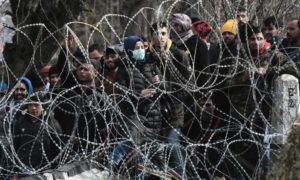
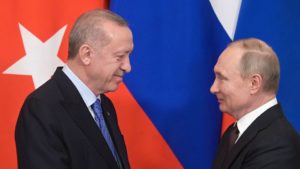
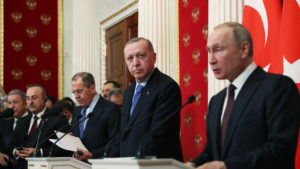
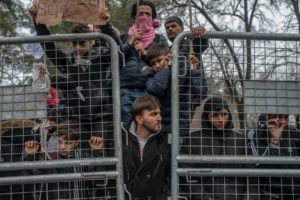
politico.eu  (Photo by BULENT KILIC / AFP) (Photo by BULENT KILIC/AFP via Getty Images)

Της Kati Piri

Η Kati Piri είναι Ολλανδή ευρωβουλευτής και αντιπρόεδρος της Ομάδας Σοσιαλιστών και Δημοκρατών. Ήταν η εισηγητής του Ευρωπαϊκού Κοινοβουλίου για την ένταξη της Τουρκίας στην ΕΕ από το 2014 έως το 2019.

Κατηγορήστε την Ευρώπη, όχι μόνο την Τουρκία, για την κατάρρευση της συμφωνίας για τη μετανάστευση.

Το χάος στα τουρκοελληνικά σύνορα είναι επίσης το αποτέλεσμα της αποτυχίας των Βρυξελλών να φέρουν τις διαπραγματεύσεις του 2016 στα μέτρα τους.

Όταν ο Πρόεδρος της Τουρκίας Ρετζέπ Ταγίπ Ερντογάν άνοιξε τα σύνορα της χώρας του με την Ελλάδα, προκαλώντας χάος στην περιοχή, καθώς χιλιάδες ευάλωτοι άνθρωποι προσπάθησαν να περάσουν στην Ευρώπη, η ΕΕ απάντησε με προβλέψιμο τρόπο. Καταδίκασε τον Ερντογάν για παραβίαση των όρων της μεταναστευτικής συμφωνίας ΕΕ-Τουρκίας του 2016, που είχε συμβάλει στην εξάλειψη της ροής των μεταναστών και των προσφύγων.

Το να επιρριφθούν ευθύνες στον Τούρκο πρόεδρο είναι, απλά, πάρα πολύ εύκολο.. Εάν η συμφωνία ΕΕ-Τουρκίας βρίσκεται στα τάρταρα, οφείλεται, επίσης, στο γεγονός ότι η ΕΕ ήταν – τουλάχιστον – απρόσεκτη στην προσπάθειά της να διαπραγματευθεί. Ναι, η κίνηση του Ερντογάν ισοδυναμεί με εκβιασμό. Έχει εργαλειοποιήσει ευάλωτους ανθρώπους – χιλιάδες από τους οποίους βρίσκονται, τώρα, κολλημένοι σε τρομερές συνθήκες σε μια ζώνη ασφαλείας μεταξύ Ελλάδας και Τουρκίας. Γνωρίζει ότι ο ταχύτερος τρόπος για να φτάσουν στις πρωτεύουσες της Ε.Ε. για να υποστηρίξει τους στρατιωτικούς και πολιτικούς στόχους του στην επαρχία Idlib της Συρίας,  είναι να πυροδοτήσει τους φόβους μιας νέας μεταναστευτικής κρίσης. Αλλά είναι, επίσης, αλήθεια ότι εδώ και χρόνια η Τουρκία έχει φέρει ένα βαρύ φορτίο για λογαριασμό της Ευρώπης – με πολύ λίγα σε αντάλλαγμα.

«Με προσοχή να μην θέσει σε κίνδυνο τη μεταναστευτική συμφωνία, η ΕΕ παρέμεινε σιωπηλή στην καταστολή των βασικών ελευθεριών απο τον Ερντογάν, χάνοντας όλη την αξιοπιστία της μεταξύ των δημοκρατικών δυνάμεων στη χώρα».

Η συμφωνία που υπέγραψε η Άγκυρα το 2016 εξασφάλισε ότι εκατομμύρια σύριων προσφύγων θα παραμείνουν στην Τουρκία αντί να διασχίσουν την Ευρώπη. Σε αντάλλαγμα, οι ευρωπαίοι ηγέτες προσέφεραν ορισμένες υποσχέσεις που υποτίθεται ότι θα ωφελούσαν όχι μόνο τον προσφυγικό πληθυσμό αλλά και τους Τούρκους πολίτες. Την εποχή εκείνη, περίπου 1.1 εκατομμύρια αιτούντες άσυλο είχαν περάσει στις ελληνικές ακτές μέσω της Τουρκίας. Οι ευρωπαϊκές κυβερνήσεις ήταν έτοιμες να υπογράψουν κάθε συμφωνία που θα έθετε τέλος στην εισροή.

Για να ελέγξει την κρίση, η ΕΕ έβαλε τα πάντα στο τραπέζι – ακόμη και μέτρα που έκρινε πολιτικά ακατάλληλα για χρόνια. Μεταξύ αυτών ήταν τα ταξίδια χωρίς θεώρηση για τους Τούρκους πολίτες, η αναβάθμιση της Τελωνειακής Ένωσης ΕΕ-Τουρκίας και το άνοιγμα νέων κεφαλαίων στη διαδικασία ένταξης της Τουρκίας στην ΕΕ.

Προς όφελος των Συρίων στην Τουρκία, η ΕΕ συμφώνησε επίσης να δώσει βοήθεια ύψους 6 δισεκατομμυρίων ευρώ σε τρία χρόνια και δεσμεύθηκε να θεσπίσει ένα ευρείας κλίμακας πρόγραμμα εγκατάστασης στις χώρες της ΕΕ για τους πιο ευάλωτους πρόσφυγες.

Αυτές ήταν μη ρεαλιστικές υποσχέσεις που δεν μπορούσαν και δεν ήθελαν να υλοποιήσουν. Τα τελευταία τέσσερα χρόνια, μόνο 25.000 πρόσφυγες έχουν μετεγκατασταθεί στα κράτη μέλη της ΕΕ – σταγόνα στον ωκεανό για την Τουρκία, η οποία φιλοξενεί σχεδόν 4 εκατομμύρια Σύριους, τον μεγαλύτερο πληθυσμό προσφύγων στον κόσμο. Ομοίως, οι Τούρκοι πολίτες δεν έχουν ακόμη δει κανένα από τα οφέλη που τους είχαν υποσχεθεί.

Με προσοχή να μην θέσει σε κίνδυνο τη μεταναστευτική συμφωνία, η ΕΕ παρέμεινε σιωπηλή όσον αφορά την καταστολή των βασικών ελευθεριών απο τον Ερντογάν, χάνοντας όλη την αξιοπιστία της μεταξύ των δημοκρατικών δυνάμεων στη χώρα.

Ωστόσο, η επιδείνωση των ανθρωπίνων δικαιωμάτων και του κράτους δικαίου στην Τουρκία διέκοψε τα σχέδια για την περαιτέρω απελευθέρωση του καθεστώτος θεωρήσεων και μιας εκσυγχρονισμένης τελωνειακής ένωσης.

Οι ενταξιακές συνομιλίες σταμάτησαν αποτελεσματικά. Το μόνο μέρος της συμφωνίας που πραγματικά λειτούργησε σωστά ήταν η οικονομική βοήθεια της ΕΕ ύψους 6 δισεκατομμυρίων ευρώ, η οποία προσέφερε στους πρόσφυγες ένα δίκτυο κοινωνικής προστασίας,  εκπαίδευση, απασχόληση και υγειονομική περίθαλψη – κυρίως μέσω των οργανώσεων των Ηνωμένων Εθνών.

Η Διευκόλυνση της ΕΕ για τους Πρόσφυγες στην Τουρκία (FRiT) κατέστη ένα κυρίαρχο παράδειγμα του τρόπου παροχής αποτελεσματικής, καινοτόμου και ουσιαστικής υποστήριξης της ΕΕ στους πρόσφυγες σε τρίτη χώρα. Αυτό καθιστά ακόμη πιο δύσκολο να κατανοηθεί γιατί ούτε η Ευρωπαϊκή Επιτροπή ούτε οι εθνικές κυβερνήσεις δεν συμπεριέλαβαν χρηματοδότηση για το πρόγραμμα στον επόμενο επταετή προϋπολογισμό της ΕΕ, γνωστού ως πολυετούς δημοσιονομικού πλαισίου. Χωρίς άμεση κρίση στα σύνορα της ηπειρωτικής Ευρώπης, οι ηγέτες της ΕΕ προφανώς δεν έκριναν απαραίτητο – ή πολιτικά πρόσφορο – να αντιμετωπίσουν την ανάγκη νέων οικονομικών δεσμεύσεων έναντι της Τουρκίας.

«Καθώς δεν είμαστε πρόθυμοι να δεχθούμε εκατομμύρια πρόσφυγες στην Ευρώπη, δεν έχουμε άλλη επιλογή απο το να συνάψουμε μια νέα συμφωνία με την Τουρκία».

Μέχρι το τέλος του καλοκαιριού, δεν θα υπάρξει περισσότερη κοινοτική χρηματοδότηση για την εκπαίδευση 500.000 παιδιών απο τη Συρία. Ένα πρόγραμμα βοήθειας που ωφελεί σήμερα συνολικά 1,7 εκατομμύρια αποδέκτες λήγει τους επόμενους 12 μήνες.

Η ΕΕ με τη μη δέσμευσης της στη συμφωνία της με την Τουρκία δεν είναι λιγότερο υπεύθυνη για την κατάσταση στην οποία βρισκόμαστε σήμερα.

Η ΕΕ δεν μπορεί να βάζει το κεφάλι της στην άμμο. Χιλιάδες μετανάστες συγκεντρώνονται στα σύνορα μεταξύ Τουρκίας και Ελλάδας χωρίς καμία πρόθεση να γυρίσουν πίσω. Εν τω μεταξύ, μια πραγματική κόλαση ξετυλίγεται στο οχυρό των ανταρτών του Idlib και περίπου 950.000 πρόσφυγες που έχουν παγιδευθεί στη Συρία στα σύνορα με την Τουρκία χρειάζονται επείγουσα ανθρωπιστική βοήθεια.

Καθώς δεν είμαστε πρόθυμοι να καλωσορίσουμε εκατομμύρια πρόσφυγες στην Ευρώπη, δεν έχουμε άλλη επιλογή απο μια νέα συμφωνία με την Τουρκία.

Αυτή τη φορά, πρέπει να φροντίσουμε να αποφύγουμε τις προσωρινές λύσεις και να προβούμε σε ρεαλιστικές δεσμεύσεις τις οποίες μπορούμε να υλοποιήσουμε.

Μετάφραση από το politico.eu: Παντελής Σαββίδης
politico.eu


Η “Μουσουλμανική Αδελφότητα” άρχισε δράση στον Έβρο.

0

του Ιωάννη Παπαδόπουλου.*

Πολλές δημοσιεύσεις εμφανίστηκαν, χθες, στον δυτικό τύπο για να αποδείξουν πώς οι ελληνικές αρχές κακομεταχειρίζονται τους μετανάστες στα σύνορα με την Τουρκία.
Συγκεκριμένα, φωτογραφίες που δείχνουν μια ομάδα μεταναστών, απογυμνωμένων και χτυπημένων γύρω από μια φωτιά έκαναν τον γύρο του κόσμου.
Κανείς δεν μπήκε στον κόπο να επαληθεύσει αυτές τις πληροφορίες, ούτε την προέλευσή τους ούτε την ερμηνεία τους.
Αυτές οι φωτογραφίες τραβήχτηκαν από τον φωτογράφο Belal Khaled (γεννημένος στην Γάζα, ζει στην Κωνσταντινούπολη, εργάζεται για την κρατική τουρκική τηλεόραση TRT και εργάστηκε στο παρελθόν για τα μέσα μαζικής ενημέρωσης Qatari Al-Jazeera.
Τρία σημεία που μιλάνε απο μόνα τους σε όποιον γνωρίζει λίγο τη Μέση Ανατολή …
Η προέλευση του κ. Belal Khaled και η επαγγελματική του σταδιοδρομία οδηγούν κατευθείαν στη Μουσουλμανική Αδελφότητα, της οποίας ο Πρόεδρος Ερντογάν είναι ένας από τους γνωστούς ηγέτες και ο οποίος, εξάλλου, δεν το κρύβει.
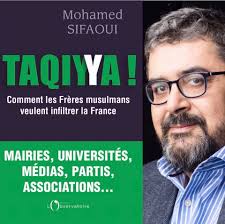
Αυτοί οι ίδιοι Μουσουλμάνοι Αδελφοί, που όπως δείχνει σαφώς ο Mohamed Sifaoui στο βιβλίο του Taqiyya, έχουν διεισδύσει σε πολλούς οργανισμούς στη Δυτική Ευρώπη με σημαντικούς οικονομικούς πόρους, ακόμα και σε επίπεδο λήψης αποφάσεων και εξουσίας, με την βοήθεια πολλών διανοούμενων και αριστερών πολιτικών δυνάμεων, πράγμα που πριν απο λίγα χρόνια θα μας φαινόταν τελείως αδιανόητο.

Οι τρεις μεγάλοι πόλοι της αδελφότητας είναι το Κατάρ, η Τουρκία και το Πακιστάν…
Αυτοί οι ίδιοι Μουσουλμάνοι Αδελφοί δημιούργησαν  τον όρο «ισλαμοφοβία» προκειμένου να εξαλείψουν κάθε κριτική για το Ισλάμ, γενικότερα, και για το πολιτικό Ισλάμ, ειδικότερα, που θέλουν να επιβάλλουν όπου είναι δυνατόν. Αντιστρέφοντας τους ρόλους θύτη- θύματος
Οι εκδόσεις του Belal Khaled είναι για άλλη μια φορά η προφανής επίδειξη της δύναμης εισοδισμού της αδελφότητας στις δυτικές κοινωνίες.

Η παγκόσμια δημοκρατική κοινή γνώμη, πρέπει να τραβήξει την προσοχή όλου του κόσμου για να αποφευχθεί, αν υπάρχει ακόμα χρόνος, η παρακμή των δυτικών κοινωνιών προς στα άκρα.
Το Taqiyya είναι η τεχνική που εκφράζει την ιδέα της στρατηγικής απόκρυψης (ο μουσουλμάνος μπορεί να πίνει αλκοόλ ή να τρώει χοιρινό, αν πρόκειται για να υπερασπιστεί τον σκοπό της αδελφότητας!) σε ένα πλαίσιο κατάκτησης, και ένα από τα μέσα είναι η αποσταθεροποίηση του αντιπάλου.
Ο σκοπός του Belal Khaled στην υπηρεσία της τουρκικής κρατικής τηλεόρασης και επομένως του κ. Ερντογάν, (όλα τα στοιχεία επιβεβαιώνουν την ιδιότητα του μέλους της Μουσουλμανικής Αδελφότητας), είναι να δώσουν μια τέτοια αρνητική εικόνα για την Ελλάδα, ώστε να συμβεί αυτό που όλοι φοβόμαστε: μια ανοιχτή σύγκρουση μεταξύ Ελλάδας και Τουρκίας με την Ελλάδα και τη Δύση στον ρόλο του θύτη, με θύματα τους πρόσφυγες γενικότερα αλλά τους μουσουλμάνους πιο συγκεκριμένα.

*Ο κ. Ιωάννης Παπαδόπουλος ζει στις Βρυξέλλες και είναι Πρόεδρος του Συλλόγου Ηπειρωτών Βελγίου.

«Le dessein conquérant des Frères Musulmans en Europe»

0
lefigaro.fr  

FIGAROVOX/ENTRETIEN –Le Projet d’Alexandre del Valle et d’Emmanuel Razavi expose la stratégie européenne et mondiale de conquête et d’infiltration de la confrérie des Frères Musulmans.

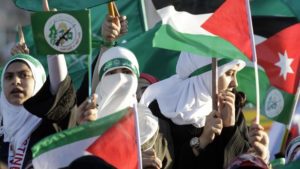
Manifestation de soutien aux Frères Musulmans à Gaza.
Manifestation de soutien aux Frères Musulmans à Gaza. KHALIL MAZRAAWI/AFP

Docteur en histoire contemporaine, Alexandre del Valle est chercheur au Center of Political and Foreign Affairs et professeur de géopolitique. Il publie, avec le grand reporter Emmanuel Razavi, Le Projet (L’Artilleur, 2019).


FIGAROVOX.- Qu’est-ce que «le Projet»?

Alexandre DEL VALLE.- Il est important de rappeler que les Frères Musulmans ont annoncé leur plan de conquête dans un document. «Le Projet» est le titre d’un ouvrage récupéré lors d’une perquisition en 2001 au domicile de Youssef Nada, de la Taqwa Bank, accusé d’avoir financé les attentats du 11 septembre. Nous avons appelé notre livre Le Projet parce que c’est bien la preuve d’un plan, écrit noir sur blanc. Les preuves que nous avançons dans le livre permettent d’évacuer toute accusation de complotisme. À ce document, s’ajoute un corpus de documents plus large des grands cadres des Frères Musulmans. Nous connaissons le dessein conquérant et totalitaire d’une telle organisation. Il ne s’agit pas d’une simple liberté religieuse revendiquée mais d’un véritable plan de conquête et de destruction. Ils ont pour objectif de faire régner la charia et d’édifier un califat mondial. Ce projet est antinomique de nos démocraties, et plus largement des états.

Cette organisation profondément antisémite et antichrétienne a réussi à prospérer et à berner les pouvoirs publics.

Cette organisation a pourtant pignon sur rue, elle encadre de nombreuses mosquées, associations et établissements scolaires en Europe. Le but de ce livre est de montrer comment cette organisation profondément antisémite et antichrétienne a réussi à prospérer et à berner les pouvoirs publics en menant un double jeu. L’infiltration et l’entrisme font en effet partie de leurs armes de choix. Les renseignements alertent pourtant depuis plusieurs dizaines d’années sur la nocivité de prédicateurs islamistes liés aux Frères Musulmans, pourtant les pouvoirs publics n’ont pas réagi. L’exemple de Tariq Ramadan est éloquent, il a été interdit de territoire en 1995 mais en tenant des discours de défense de la cause antiraciste, des politiques sont parvenus à faire plier le chef de l’État, François Mitterrand pour faire annuler cette décision de justice. Nos responsables politiques de droite, comme de gauche, sont responsables d’avoir laissé faire une organisation totalitaire dont on sait depuis les années 1960 qu’elle est criminelle. Ses penseurs ont affirmé la validité du jihad contre l’Occident. Nous avons laissé faire un ennemi alors qu’il nous avait prévenus.

Quels sont les liens entre les Frères Musulmans et le jihad?

Ce n’est pas un lien forcément direct mais c’est un lien idéologique. L’ancien terroriste, repenti, du GIA algérien David Vallat l’exprime bien en parlant de continuum idéologique. L’idéologie donne un mode d’emploi avec des objectifs à long terme autour de trois thèmes: le califat, la légitimité du jihad guerrier et la charria.

Le lien entre Frères Musulmans et jihad est très facile à établir puisqu’il est officiel.

Les Frères musulmans ont lancé ces objectifs. Le jihad prend deux formes, le jihad guerrier, dont l’émanation directe est le Hamas palestinien à Gaza, soit une forme institutionnelle et subversive, lorsqu’ils estiment que le jihad serait contre-productif. Il est difficile à cerner puisqu’elle est la matrice de l’idéologie islamiste et du djihadisme. Les pères fondateurs de la Confrérie, Hassan al-Banna (dont le petit-fils n’est d’autre que Tariq Ramadan) et Sayyid Qulb font tous deux l’apologie du jihad, ce dernier l’érige même en sixième pilier de l’islam. Un autre membre des Frères Musulmans Youssef al-Qardaoui, appelait au meurtre des apostats, des homosexuels et des juifs. Il est le chef de file des Frères Musulmans en Europe, ses écrits sont en vente libre. Le lien entre Frères Musulmans et jihad est très facile à établir puisqu’il est officiel. Des organisations liées à la confrérie collectent de l’argent pour le jihad du Hamas ou bien en Syrie. Leur malice est de faire croire qu’ils ne sont pas Frères Musulmans

L’Europe est-elle un refuge pour les Frères Musulmans?

Les Frères musulmans sont persécutés en Égypte, en Arabie Saoudite ou même dans les Émirats arabes unis, mais paradoxalement ils sont ouvertement installés en Europe. Dans les pays musulmans ex-soviétiques, il est interdit d’adhérer aux Frères musulmans ou aux thèses des fréro-salafistes. L’Europe est donc un endroit très accueillant pour les Frères musulmans puisqu’ils sont libres de s’y implanter.

Comment cerner la stratégie de l’organisation sur le sol européen?

Les Frères musulmans ont pour stratégie de ne pas dire qu’ils appartiennent à l’organisation. Ils ont un droit au mensonge. En Europe, ils se fondent sur l’entrisme, l’infiltration et le double discours. Ils sont capables de renier verbalement une partie de leur programme pour ne pas effrayer les Européens.

Ils veulent donc distiller une paranoïa au sein des populations musulmanes.

On retrouve cette même stratégie avec Ennahdha en Tunisie, qui a essayé un temps de berner le président laïc et de même du coté turque avec Erdogan qui apparaissait comme un conservateur modéré détaché de la charia. Ils avancent par étapes. Leur priorité est d’inciter les musulmans à ne pas s’intégrer. Le meilleur exemple nous est donné par Erdogan lorsqu’il affirme que l’intégration prônée par les démocraties occidentales est une mort insidieuse des musulmans, il va même jusqu’à dire qu’il s’agit d’un crime contre les droits humains. Ils veulent donc distiller une paranoïa au sein des populations musulmanes pour leur faire croire qu’ils vivent dans un milieu hostile et qu’ils sont la cible de discriminations racistes, qu’ils sont les victimes de «nouveaux nazis». Ils diffusent ce sentiment de persécution, cela crée une sorte de ghetto volontaire. La solution proposée par les Frères musulmans est celle souvent énoncée par Tariq Ramadan «L’intégration c’est la désintégration», donc ils s’isolent. Il s’agit de prôner une communauté séparée à l’endroit où ils vivent. Cette séparation commence avec des écoles islamiques pour forger l’individu musulman, puis la famille et l’éducation, grâce à des lycées puis des partis politiques qui prônent une nation islamique séparée. Réislamiser l’individu musulman est une des priorités. Il faut aussi séparer les musulmans des non-musulmans et cela passe notamment par le voile islamique pour les femmes. La stratégie est graduée, fragmentée. Cela ressemble plutôt au jeu de go qu’aux échecs. Le mot-clef est l’entrisme. Ils demandent que les musulmans en tant qu’héritiers de la colonisation cessent d’être stigmatisés et que des exceptions au nom de la liberté religieuse soient aménagées. Ils savent très bien instrumentaliser notre vocabulaire. La nouvelle doctrine des Frères musulmans est de faire croire qu’ils adhèrent aux valeurs des droits de l’Homme, de la démocratie et de la laïcité. Ils soutiennent que le droit pour la femme de porter le voile est un droit de l’homme. C’est très habile, puisqu’ils savent très bien manipuler la culpabilité européenne qui ronge les élites.

Jusqu’en 2017, Tariq Ramadan occupait une chaire à la prestigieuse université d’Oxford, comment comprendre le recul des intellectuels, et des universitaires français, face à ces leaders fréristes?

Un exemple éloquent est celui de Tariq Ramadan n’a pas nié les thèses de son maître à penser des Frères musulmans Youssef al-Qardaoui qui énumère les cas dans lesquels il est légitime pour un musulman de commettre un meurtre. Il est également l’auteur d’un certain nombre de fatwas.

Le système de représentation des musulmans est majoritairement noyauté par des islamistes.

L’islamologue suisse n’a pas voulu se dissocier de la pensée de Qardaoui. Il n’y a aucune repentance. Cela montre bien comme les Frères musulmans et leurs promoteurs ont été admis dans l’espace intellectuel. Cela se structure autour de trois voies. D’abord ils font alliance avec les progressistes, ironique lorsque l’on sait que leurs cadres ont été historiquement proches des fascistes et antisémites. Ils ont eu le culot de concocter une alliance avec les forces antiracistes et progressistes pour traiter de nouveaux nazis ceux qui entravent leur chemin. L’argent, en provenance du Qatar, est leur deuxième levier. Troisième volet, l’instrumentalisation des valeurs démocratiques, du pluralisme et de la tolérance occidentale. Cela est d’autant plus dangereux que dans les pays anglo-saxons, les universités sont libres et peuvent être financées par des intérêts privés. Cela explique comment la chaire de Tariq Ramadan à Oxford eut été financée par le Qatar.

Ces éléments font que les Frères musulmans sont le leader des institutions musulmanes en Europe. Le système de représentation des musulmans est majoritairement noyauté par des islamistes et par les quatre grands pôles de l’islamisme séparatiste, la tendance turque, la tendance frères musulmans, la tendance salafiste saoudienne et la tendance indo-pakistanaise. Plus ces structures seront monopolisées par des radicaux, mathématiquement les communautés musulmanes seront de plus en plus incitées au repli.

lefigaro.fr

Άρχισε ο Β! γύρος στα σύνορα. Έφυγαν οι περισσότεροι, έμειναν οι τζιχαντιστές.

8

του Ανδρέα Νικολόπουλου.*

Πως χειραγωγούν πρόσφυγες και μετανάστες οι τουρκικές μυστικές υπηρεσίες.-Μαρτυρίες εκ των έσω.-

Εχθές το μεσημέρι έκανα μία ενδιαφέρουσα συζήτηση με ένα παλιό καλό φίλο. Όνομα δεν θα γράψω -για ευνόητους λόγους- θα αναφέρω ότι είναι Άραβας, σουνίτης μουσουλμάνος. Ιδρυτής ΜΚΟ, ζει στην Αθήνα τα τελευταία 20 χρόνια, όπου ήρθε ως οικονομικός μετανάστης. Δηλαδή πάλεψε για να βρει εργασία, έμαθε την ελληνική, εργάζεται και πληρώνει τους φόρους του. Η συζήτηση μαζί του είχε τεράστιο ενδιαφέρον, γιατί άκουσα την γνώμη, την οπτική και τις πληροφορίες κάποιου που έχει ζήσει «από μέσα» το λεγόμενο προσφυγικό από το 2015. Κάποιου, που οι πολλοί εύκολα κατατάσσουν στους «άλλους», ενώ αυτά που μου είπε είναι πολύ κοντά σε εμάς. Μου επιβεβαίωσε πολλά και με πληροφόρησε για ακόμη περισσότερα. Όσα μπορώ να μοιραστώ μαζί σας, ακολουθούν.

Ξεκινήσαμε από τα τρέχοντα. Από τη νίκη της Ελληνικής Δημοκρατίας έναντι του νεοοθωμανού Ερντογάν. Όπως είπε χαρακτηριστικά οι Έλληνες αντιμετώπισαν την κρίση με επιδεξιότητα και ανθρωπιά και ευτυχώς νίκησαν. Αντιθέτως οι Τούρκοι φέρθηκαν εξαιρετικά βίαια, σε πολλές περιπτώσεις, κατά των άβουλων και ανυπεράσπιστων ανθρώπων, που οι ίδιοι με ψεύτικες υποσχέσεις κουβάλησαν στα σύνορα.

Την ίδια στιγμή οργάνωναν και χρησιμοποιούσαν ομάδες τζιχαντιστών κατά των δικαίως αμυνομένων Ελλήνων. Με το που άκουσα τη λέξη «δικαίως» ξέσπασα σε γέλια. Με ρώτησε ξαφνιασμένος γιατί και του είπα ότι αυτός ένας Άραβας σουνίτης μουσουλμάνος έβλεπε καθαρά και χαιρόταν που οι Ε.Δ και τα Σ.Α κρατούσαν εκτός επικρατείας χιλιάδες επίδοξους εισβολείς, ενώ αρκετοί Έλληνες την ίδια ώρα διαδήλωναν υπέρ των ανοιχτών συνόρων και του ριξίματος του φράχτη.

Μου χτύπησε συμπονετικά την πλάτη και συνεχίσαμε. Ξεκαθάρισε ότι στην συντριπτική τους πλειοψηφία οι απέναντι είναι κάθε τι άλλο πέραν από Σύριοι. Άνθρωποι από την Κεντρική Ασία, τη Βόρεια και Υποσαχάρια Αφρική, που οι περισσότεροι ζουν για περισσότερα από 2 χρόνια στην Τουρκία. Εργάζονται υπό αντίξοες συνθήκες για 12-14 ώρες, πληρώνονται ελάχιστα, τρέφονται ανθυγιεινά και κοιμούνται σε παραπήγματα. Πολλές φορές μάλιστα  πέφτουν θύματα επιθέσεων από νεαρούς Τούρκους.

Μου εξήγησε, έτσι, πως για αυτούς, η Γερμανία των παχυλών επιδομάτων, των δωρεάν επιπλομένων διαμερισμάτων, της δωρεάν ιατροφαρμακευτικής περίθαλψης και ασφάλειας είναι η γη της επαγγελίας. Για κάποιους βέβαια, η συνέχιση της Τζιχάντ στο χώρο των απίστων! Ευτυχές το ότι κανείς δεν πέρασε τα σύνορα. Οι περισσότεροι επέστρεψαν ήδη στις πόλεις όπου διαβιούν, αλλά έχουν μείνει, όπως φαίνεται από την κλιμάκωση, οι τζιχαντιστές! Μόλις ξεκίνησε ο δεύτερος γύρος ταραχών στα σύνορα.

Εύλογα φθάσαμε στην Ελλάδα και την κατάσταση που επικρατεί στο συγκεκριμένο τομέα. Ναι, φυσικά και δρουν τζιχαντιστές στην Ελλάδα, με διαβεβαίωσε. Βρίσκονται στην Αθήνα, στα νησιά, σε ξενοδοχεία, σε δομές, παντού. Τους βρίσκεις να προσεύχονται σε νόμιμα και παράνομα τζαμιά, όχι όμως στο νέο, μεγάλο τζαμί. Είναι σε επαφή με την ΜΙΤ, όχι σε εξάρτηση. Αυτοί που έχουν στενή σχέση και συνεργασία με τη ΜΙΤ είναι μέλη των Αδερφών Μουσουλμάνων. Ναι, έχουμε και από αυτούς στην Ελλάδα μας. Η ΜΙΤ έχει διευκολυνθεί αφάνταστα στο ξεδίπλωμα της ατζέντας της, από την παρουσία τόσων χιλιάδων, εύκολα χειραγωγούμενων μεταναστών. Μεγάλος της στόχος είναι η Θράκη! Ευτυχώς που η Αθήνα γνωρίζει και παρακολουθεί τα πάντα, προσπάθησε να με ηρεμήσει.

Η τελευταία μου ερώτηση είχε να κάνει με τυχόν παράπονα που έχει από την Ελλάδα. Η απάντηση μονολεκτική, αρνητική!

Θα ήθελα να σημειώσω ότι η ΜΚΟ του δεν έχει χρηματοδοτηθεί από καμία Ελληνική Κυβέρνηση! Επίσης, απέφυγε τα νησιά… Για να μπορώ να σε κοιτώ στα μάτια και να συζητώ μαζί σου και με κάθε Έλληνα, μου είπε αποστομωτικά!

*Ο Ανδρέας Νικολόπουλος είναι Στρατηγικός Σύμβουλος Ασφαλείας MSc Στρατιωτικής επιστήμης και Στρατηγικής διοίκησης έργων ασφαλείας, Επιστημονικός συνεργάτης του Κέντρου Πρόληψης Εγκληματικότητας της Σερβίας. Στο παρελθόν εργάστηκε σε Ελλάδα, Ελβετία, Σερβία και Ρουμανία ως Διευθυντής ή Σύμβουλος Ασφαλείας

ΘΑ ΚΑΝΕΙ ΤΟΝ ΨΟΦΙΟ ΚΟΡΙΟ ΓΙΑ ΝΑ ΑΝΑΚΑΜΨΕΙ. ΚΑΝΕΝΑ ΕΛΕΟΣ ΣΤΟΝ ΕΡΝΤΟΓΑΝ.

1

Υπάρχει μια συντονισμένη διεθνής προσπάθεια Μέσων Ενημέρωσης πίεσης στις δυτικές δυνάμεις στη λογική “μπορεί ο Ερντογάν να έκανε τραγικά λάθη, η Δύση, όμως, θα πρέπει να τον υποστηρίξει στην αντιπαράθεσή του με τον Πούτιν και το συριακό καθεστώς, στο Ιντλίμπ”.
Απο την Washington Post ως τους Financial Times αυτό είναι το μοτίβο. Στη λογική, να απεγκλωβιστεί ο Ερντογάν απο τις δαγκάνες του Πούτιν και να μπορέσει να εγκαταστήσει πρόσφυγες στη Βόρειο Συρία για ανθρωπιστικούς λόγους και για να αποσυμφορηθεί και η πίεση στα σύνορα με την Ελλάδα.
Ο ίδιος ο Ερντογάν, μάλιστα, απάντησε αμφίσημα όταν επιστρέφοντας απο τη Μόσχα ρωτήθηκε για τους S-400 και τι θα γίνει. Και οι ερωτήσεις σε τέτοιες περιπτώσεις δεν γίνονται στην τύχη. Δεν είπε πως θα τους εγκαταλείψει αλλά ότι πληρώθηκαν και είναι έτοιμος να πάρει πάτριοτ απο τους αμερικανούς αν του δώσουν. Αλλά οι αμερικανοί δεν θα του δώσουν, αν δεν επιστρέψει τους S-400.
1.-Πιστεύω πως πρόκειται για προπαγανδιστική κλιμάκωση του τουρκικού καθεστώτος.
2,-Η Δύση είτε με τη μορφή της Ε.Ε. είτε με τη μορφή του ΝΑΤΟ ή των αμερικανών δεν πρόκειται να εμπλακεί στο συριακό τέλμα. Δεν θα έρθει, χάριν του Ερντογάν, σε αντιπαράθεση με τη Ρωσία.

3.-Θα συντηρήσει, η Δύση, τον πόλεμο στη Συρία, επιδιώκοντας μερίδιο στο μεταπολεμικό καθεστώς, των δυνάμεων κατά του Άσσαντ διότι φέρνει σε δύσκολη θέση και την Τουρκία, την οποία επιδιώκει να επαναφέρει γονυκλινή στο δυτικό άρμα, και τη Ρωσία, η οποία φθείρεται με τη συμμετοχή της σε μια πολεμική αντιπαράθεση. Γι αυτό και οι ΗΠΑ απέρριψαν στο Συμβούλιο Ασφαλείας το σχέδιο συμφωνίας Πούτιν-Ερντογάν.
4.-Ο Ερντογάν “μαζεύεται” επειδή βρίσκεται σε αδυναμία αλλά μόλις ανακάμψει θα ακολουθήσει την εμμονική πολιτική του η οποία δεν έχει καμιά πιθανότητα να επικρατήσει.
5.-Ο στόχος του στο Ιντλίμπ δεν είναι ανθρωπιστικός. Το τελευταίο πράγμα για το οποίο ενδιαφέρεται ο Ερντογάν και το καθεστώς του είναι ο άνθρωπος. Θέλει να ελέγξει την συριακή επαρχία του Ιντλίμπ, να την αλλοιώσει πληθυσμιακά, και αναλόγως των εξελίξεων να θέσει θέμα ακόμη και προσάρτησής της, μαζί και του Αφρίν, στην Τουρκία. Στο μέλλον.
6.-Το ίδιο έκανε και με την Αλεξανδρέττα. Το 1921 δόθηκε στη Συρία η οποία ήταν γαλλικό προτεκτοράτο.
Η Τουρκία αλλοίωσε πληθυσμιακά την περιοχή, ακολούθησε συγκεκριμένη και σταθερή πολιτική και όταν η γαλλική εντολή έληξε και η Γαλλία θα απεσύρετο, η Τουρκία έθεσε το ζήτημα της Αλεξανδρέττας διεθνώς. Επειδή ήθελαν να την εντάξουν στις συμμαχικές δυνάμεις στον Β! Π.Π. της είπαν να κάνει δημοψήφισμα, το οποίο πραγματοποιήθηκε α λα τούρκα και βγήκε το αποτέλεσμα που ήθελε η Άγκυρα. Έτσι η Αλεξανδρέττα παραχωρήθηκε το 1939 στην Άγκυρα.
7.-Αυτό είναι που θέλει να κάνει και τώρα με το Ιντλίμπ και το Αφρίν βορειότερα. αυτό προσπαθεί να κάνει και στη Δυτική Θράκη.
8.-Άλλωστε, Τούρκος ναύαρχος ε.α. έγραψε πρόσφατα πως η απώλεια του Ιντλίμπ θα δυσχεράνει τις τουρκικές προσπάθειες να διαδραματίσει η χώρα καθοριστικό ρόλο στην Ανατολική Μεσόγειο. Αν δει κανείς το χάρτη θα διαπιστώσει ότι έχει δίκαιο.
9-. Πίσω απο όλην αυτήν την ανάλυση πρέπει να δει κανείς τις δηλώσεις Λαβρόφ περί ακεραιότητας, ανεξαρτησίας και κυριαρχίας της Συρίας. Κατι που τίθεται επιμόνως σε κάθε συνάντηση με τους Τούρκους. Συμφωνούν αλλά, έχουν και δεύτερες σκέψεις.
10.-Για να επανέλθουμε στην αφετηρία του σχολίου μας, για όλους αυτούς αλλά και για άλλους λόγους, η πίεση που ασκούν μέσα ενημέρωσης με διεθνή εμβέλεια, να βοηθηθεί ο Ερντογάν στη Συρία είναι επικίνδυνη. Καμιά βοήθεια στην Τουρκία. Αν χρειάζεται να αναληφθεί ρόλος ανθρωπιστικού χαρακτήρα να αναληφθεί απο τη Δύση, όχι, όμως, με τη συμμετοχή της Τουρκίας. Η Τουρκία πρέπει να φύγει απο τη Συρία και να αφήσει τον έλεγχο των περιοχών που ελέγχει στη νόμιμη κυβέρνηση της χώρας.
11.-Ο Ερντογάν έχει πλήρη συνείδηση πως όσα συμφώνησε με τον Πούτιν είναι σε βάρος του. Θα ελιχθεί, θα κάνει τον ψόφιο κοριό, θα χρηματοδοτήσει, θα δώσει υποσχέσεις για να ανακάμψει, να βγει απο το αδιέξοδο και μόλις βγει θα επανέλθει στα παλιά δριμύτερος. Έχει χάσει την αξιοπιστία του και έχει κουράσει. Αλλά στις διεθνείς σχέσεις τίποτε δεν αποκλείεται. Με μερικά εκατομμύρια ή δισεκατομμύρια, αν χρειαστεί, δώρο ακόμη και οι ισχυρότεροι ηγέτες αλλάζουν απόψεις και συμμαχίες. Αλί στον φτωχό και αδύναμο.
12.-Το επόμενο διάστημα θα δούμε μια Τουρκία να αναδιπλώνεται, μερικώς, επειδή αντιμετωπίζει παντού αδιέξοδο. Αλλά δεν θα αλλάξει την πολιτική της. Ο μόνος τρόπος που αντιμετωπίζεται η Τουρκία είναι ισχυρές ένοπλες δυνάμεις για αποτροπή.

Τι έδωσε ο Ερντογάν για να πάρει την εκεχειρία στην Ιντλίμπ

0

euro2day.gr/stratfor

Παραχώρηση εδαφών και σοβαρό στρατιωτικό μειονέκτημα για τους αντάρτες που υποστηρίζει η Τουρκία συνιστά το αποτέλεσμα της συμφωνίας με τη Ρωσία. Γιατί η Αγκυρα δεν αναμένεται να σταματήσει να χρησιμοποιεί ως «εργαλείο» τους πρόσφυγες.

Συμφωνώντας με τη Ρωσία την εκεχειρία στη βορειοδυτική Συρία, η Τουρκία εμφανίζεται πρόθυμη να θυσιάσει σημαντικά εδάφη που κατέχουν οι αντάρτες που υποστηρίζει, για να εξασφαλίσει ότι θα σταματήσει η βία όσο το δυνατόν συντομότερα. Με αυτό τον τρόπο στήνει το σκηνικό για την επόμενη επίθεση της Ρωσίας και της Συρίας στην επαρχία της Ιντλίμπ, χωρίς πραγματική λύση στον ορίζοντα για τους πρόσφυγες που βρίσκονται στην περιοχή.

Η συμφωνία είναι σχεδιασμένη για να επιτρέψει την αποκλιμάκωση μεταξύ της Τουρκίας, από τη μια πλευρά, και Ρωσίας, Συρίας και Ιράν, από την άλλη. Οι αρχικές λεπτομέρειες ανακοινώθηκαν χθες από τον Ταγίπ Ερντογάν και τον Βλάντιμιρ Πούτιν. Υποδεικνύουν ότι η Αγκυρα θα δεχτεί να μειώσει τη σφαίρα επιρροής της στη Συρία, καθώς στην υφιστάμενη γραμμή μετώπου (σ.σ. όπως διαμορφώθηκε μετά την προέλαση Ασαντ) θα γίνει η νέα οριοθέτηση μεταξύ των δύο πλευρών, ενώ ένας αποστρατιωτικοποιημένος «διάδρομος ασφαλείας» θα αφαιρέσει σημαντικό κομμάτι από τα εδάφη που ελέγχουν οι αντάρτες κατά μήκος του αυτοκινητοδρόμου M4. Κοινές περιπολίες Τούρκων και Ρώσων στρατιωτών θα έχουν στόχο να εγγυηθούν τον «διάδρομο ασφαλείας» στον M4, ο οποίος ορίστηκε στα έξι χιλιόμετρα βορειότερα και νοτιότερα του αυτοκινητοδρόμου.

Από στρατιωτικής πλευράς, ο «διάδρομος ασφαλείας» κατά μήκος του Μ4 επηρεάζει δραστικά την ικανότητα των ανταρτών που υποστηρίζονται από την Τουρκία να υπερασπιστούν την πόλη της Ιντλίμπ και τις περιοχές νοτιότερά της. Ακόμα και η πόλη Τζισρ αλ Σουγκούρ που κατέχουν, βρίσκεται εξ ολοκλήρου εντός του διαδρόμου.

Οι δυνάμεις των ανταρτών δεν θα είναι πλέον σε θέση να χτίσουν αμυντικές θέσεις σε βάθος, κάτι που τους βοήθησε να επιβραδύνουν ή ακόμα και να αποκρούσουν την πλέον πρόσφατη επίθεση της συριακής κυβέρνησης. Αν και όποτε αρχίσουν ξανά οι εχθροπραξίες, οι κυβερνητικές δυνάμεις θα είναι σε θέση να προελάσουν ταχύτατα σε αυτή την αποστρατιωτικοποιημένη ζώνη, καθώς και σε περιοχές στα νότια, που δεν θα είναι υπερασπίσιμες εξαιτίας αυτής της συμφωνίας.

Ετσι, η εκεχειρία επέτρεψε στην Αγκυρα να προστατεύσει προσωρινά ένα τμήμα της κατεχόμενης από τους αντάρτες επαρχίας της Ιντλίμπ, αλλά με κόστος τη μελλοντική βιωσιμότητα.

Ακόμα και εάν τα στρατιωτικά οφέλη είναι υπό αμφισβήτηση, η συμφωνία αποτελεί διπλωματική επιτυχία για την Τουρκία, αν και περιορισμένη. Βρισκόταν όλο και περισσότερο αναγκασμένη να αναλαμβάνει μεγαλύτερα στρατιωτικά ρίσκα για να αποτρέψει την προέλαση Ασαντ, περιλαμβανομένης μιας εκστρατείας με επιθέσεις drones κατά συριακών δυνάμεων. Με την εκεχειρία, η Αγκυρα μπορεί να αρχίσει να επαναφέρει τις σχέσεις της με τη Ρωσία σε πιο σταθερό επίπεδο, ενώ, προς το παρόν τουλάχιστον, οι λειτουργικοί δεσμοί των δύο πλευρών στη βορειοανατολική Συρία, καθώς και σε άλλα αμυντικά θέματα, φαίνεται να συνεχίζονται.

Σε ό,τι αφορά τη μελλοντική σχέση της Τουρκίας με την Ευρώπη, μικρές αναμένονται οι αλλαγές στρατηγικής στο προσφυγικό. Η χώρα βρίσκεται υπό εγχώρια πίεση να περιορίσει το βάρος που σηκώνει και χωρίς στρατιωτικές ανατροπές στην Ιντλίμπ, κάποιοι από τους πρόσφυγες της περιοχής θα συνεχίσουν να κατευθύνονται προς την Τουρκία, φοβούμενοι ότι αυτή η εκεχειρία απλά καθυστερεί, αντί να αποτρέπει, μελλοντικές προωθήσεις της Δαμασκού. Η Αγκυρα πιθανότατα θα συνεχίσει να χρησιμοποιεί Σύρους πρόσφυγες ως μοχλό πίεσης στην Ευρώπη, για να λάβει νέα υποστήριξη.

Τέλος, οι σχέσεις Τουρκίας-ΗΠΑ εμφανίζονται αμετάβλητες, με μικρή άμεση αμερικανική υποστήριξη να αναμένεται στην Ιντλίμπ. Η ρητορική στήριξη ήταν διαθέσιμη, αλλά καθώς η Αγκυρα έκανε έκκληση για ζώνη απαγόρευσης πτήσεων και στρατιωτικό εξοπλισμό (κυρίως αντιαεροπορικά συστήματα Patriot), η Ουάσιγκτον έδειξε μικρή προδιάθεση να εμπλακεί περαιτέρω στη Συρία, καθιστώντας τη Ρωσία τον πιο πολύτιμο εταίρο της Τουρκίας.

Ταπεινωτική εμπειρία για Ερντογάν η πρόσδεση με Πούτιν

0

euro2day.gr/Financial Times

  • Editorial

Ο Τούρκος πρόεδρος έχει μετατραπεί σε πιόνι του Κρεμλίνου, επισημαίνουν στο editorial οι Financial Times. Τα μεγάλα λάθη στη διαχείριση της κρίσης με τη Συρία. Γιατί δεν πρέπει να ελπίζει σε στήριξη από τους Ευρωπαίους.

H στροφή του Ταγίπ Ερντογάν προς τη Μόσχα αποδείχθηκε πως ήταν μια ταπεινωτική εμπειρία. Ο Τούρκος ηγέτης περιφρόνησε τους δυτικούς του συμμάχους, διότι θεώρησε πως δεν επέδειξαν αλληλεγγύη μετά το αποτυχημένο πραξικόπημα εναντίον του το 2016 και την επακόλουθη καταστολή.

Μετά τη συνταγματική αναθεώρηση που του έδωσε ενισχυμένες εξουσίες, ο κ. Ερντογάν επιδίωξε στενότερες σχέσεις με τον Ρώσο ομόλογό του Βλαντιμίρ Πούτιν. Κάλεσε τη Ρωσία να κατασκευάσει το πρώτο πυρηνικό εργοστάσιο της Τουρκίας και τον αγωγό φυσικού αερίου TurkStream. Προκάλεσε τους συμμάχους στο ΝΑΤΟ αγοράζοντας ρωσικό αντιαεροπορικό σύστημα, το οποίο θα μπορούσε να βοηθήσει το Κρεμλίνο να αντιμετωπίσει τα αμερικανικά αεροσκάφη τύπου stealth.

Αλλά η Τουρκία βρίσκεται τώρα πολύ κοντά σε μια επικίνδυνη στρατιωτική αντιπαράθεση με ρωσικές δυνάμεις στη βορειοδυτική Συρία, όπου οι επιδιώξεις της Άγκυρας συγκρούονται με αυτές της Μόσχας (όπως και στη Λιβύη).

Ο κ. Ερντογάν θέλει να διατηρήσει μια διευρυμένη ουδέτερη ζώνη στην Ιντλίμπ, για να προστατεύσει τους αμάχους και να αποτρέψει περαιτέρω αύξηση των προσφύγων στα σύνορα με την Τουρκία. Ο κ. Πούτιν βοηθάει το συριακό καθεστώς στη σφοδρή αντεπίθεση για την ανακατάληψη ολόκληρης της Ιντλίμπ και την τελειωτική εξουδετέρωση της εξέγερσης κατά του Μπασάρ Αλ-Άσαντ.

Η Άγκυρα έχει εντείνει τις επιχειρήσεις της μετά τον θάνατο των 34 Τούρκων στρατιωτών σε μία μόνο επίθεση την περασμένη εβδομάδα. Αλλά χωρίς να έχει λάβει την έγκριση της Ρωσίας για να χρησιμοποιήσει τις αεροπορικές της δυνάμεις ενάντια στις συριακές και μη έχοντας δική του αντιαεροπορική άμυνα, ο κ. Ερντογάν πρέπει να γνωρίζει ότι αυτός είναι ένας πόλεμος που δεν μπορεί να κερδίσει. Έχει, άλλωστε, κρατήσει ανοιχτά τα διπλωματικά κανάλια και θα διεξαγάγει σήμερα συνομιλίες με τον κ. Πούτιν στη Μόσχα.

O Τούρκος ηγέτης πίστεψε ότι θα αποκτούσε περισσότερο κύρος και επιρροή, αν εντασσόταν στο αντιφιλελεύθερο κλαμπ του κ. Πούτιν. Αλλά μετατράπηκε σε πιόνι του Κρεμλίνου, όπως έχουν επισημάνει οι εγχώριοι επικριτές του. Δεν αποτελεί λοιπόν έκπληξη που μετά την επίθεση της περασμένης εβδομάδας απαγόρευσε την πρόσβαση στα κοινωνικά δίκτυα.

Ο κ. Ερντογάν επέτρεψε στον κ. Πούτιν να προκαλέσει ρήγμα στα κράτη-μέλη του ΝΑΤΟ. Αλλά ήταν στους συμμάχους του στο ΝΑΤΟ που ο κ. Ερντογάν στράφηκε για βοήθεια, μετά τον θάνατο των Τούρκων στρατιωτών την περασμένη εβδομάδα. Έχοντας αντισταθεί στις πιέσεις της Ουάσιγκτον για το ρωσικό αντιαεροπορικό σύστημα -το οποίο ακόμα δεν έχει τεθεί σε ετοιμότητα- παρακάλεσε τις ΗΠΑ να του δώσουν πυραύλους Patriot.

Τώρα ο κ. Ερντογάν βοηθάει το Κρεμλίνο να προκαλέσει ρήγμα στα ευρωπαϊκά κράτη, ενθαρρύνοντας πρόσφυγες και μετανάστες να διασχίσουν τα τουρκικά σύνορα. Τούτο είναι σίγουρα κάτι που προβλημάτισε τους ηγέτες της Ε.Ε., οι οποίοι είχαν κλονιστεί το 2015-16 από την εισροή προσφύγων, η οποία προκάλεσε διχασμό και ενίσχυσε τα ακροδεξιά κόμματα. Εξέθεσε τις αδυναμίες ενός μπλοκ το οποίο ακόμα δεν έχει καταφέρει να εφαρμόσει μια νέα πολιτική για το άσυλο.

Τα 3,6 εκατ. Σύρων προσφύγων στην Τουρκία αποτελούν τεράστιο βάρος και η χώρα δικαιούται στήριξης. Η Άγκυρα ορθώς αναμένει από το μπλοκ να τηρήσει τις υποσχέσεις του και να αποδεχτεί περισσότερες μεταφορές Σύρων προσφύγων. Αλλά η επιδίωξη στήριξης από την Ευρώπη βάζοντας «το μαχαίρι στον λαιμό της», όπως το έθεσε ο Ολλανδός Μαρκ Ρούτε, δεν θα έχει αποτέλεσμα. Σε κάθε περίπτωση, η Ευρώπη δεν έχει πρόθεση να παλέψει στο πλευρό των τουρκικών δυνάμεων. Έχοντας μείνει αμέτοχη στο συριακό πρόβλημα, δεν μπορεί να δώσει στον κ. Ερντογάν αυτό που πραγματικά θέλει.

Η τουρκική ιστορία είναι γεμάτη από ήττες με τη Ρωσία. Αυτήν τη φορά δεν πρόκειται να είναι διαφορετικά. Το καλύτερο στο οποίο μπορεί να ελπίζει η Άγκυρα είναι μια νέα ανακωχή και η υποχώρηση σε μικρότερη ουδέτερη ζώνη, υπό την προϋπόθεση ότι ο κ. Πούτιν είναι διατεθειμένος να βοηθήσει τον κ. Ερντογάν να σώσει τα προσχήματα.

Ο Τούρκος ηγέτης αρέσκεται να κάνει την Ευρώπη να τρέμει με τις απειλές του για τους μετανάστες, αλλά είναι ο Ρώσος ηγέτης αυτός που κινεί τα νήματα.

Οι Ευρωπαίοι και οι Αμερικανοί έχουν αποποιηθεί κάθε ευθύνη για την καταστροφή της Συρίας. Η συμπεριφορά του κ. Ερντογάν τούς πρόσφερε μία ακόμα δικαιολογία για να μην επανεξετάσουν τη στάση τους.

© The Financial Times Limited 2020. All rights reserved.
FT and Financial Times are trademarks of the Financial Times Ltd.
Not to be redistributed, copied or modified in any way.
Euro2day.gr is solely responsible for providing this translation and the Financial Times Limited does not accept any liability for the accuracy or quality of the translation

Turkey’s Jihad in Syria

0

On February 28, the Turkish government-funded Anadolu Agency (AA) reported on the alleged takeover of a Syrian town by the Islamist “Free Syrian Army” (FSA). In the news report, the agency posted some images of the FSA fighters. A striking detail immediately attracted attention: on the arms and chests of some FSA fighters were logos of the Islamic State (ISIS) flag.

After the photos in the video were shared on social media, the agency immediately removed them from its website.

“Moderate rebels retook the strategically important Saraqib town in Idlib,” the AA claimed in its report.

“Moderate rebels” with ISIS symbols on their uniforms? Does not sound that moderate. See the photos here and here.

On the same day, the leading authority of Turkey’s Presidency of Religious Affairs (Diyanet), Ali Erbaş, led the Friday prayers in the city of Hatay on the Syrian border. In his sermon, Erbaş said that Turkish soldiers are engaging in jihad in Syria by following the teachings of Islam’s prophet Mohammed. He said, in part:

“By obeying the call of our Prophet, who said ‘engage in jihad with your hands, tongues and properties’, our soldiers are saying ‘stop’ to the shameless assault of the enemy.”

Erbaş went on to glorify martyrdom in the name of Islam:

Our Almighty Lord says, ‘There are such men of the believers that they have remained loyal to their promise to Allah. Some have fulfilled their promises and have been martyred. Others have been waiting to be martyrs. They have never changed their promises.’

As in the Battle of Gallipoli and the War of Independence, today we are fighting a relentless struggle against the powers whose conscience have been blinded, that have lost their mercy and humanity, and against those that want to erase us from the stage of history… We – women and men, the young and the old, in brief, every individual of our nation – will not let them [those powers] lower our flag, silence our adhan [Islamic call to prayer], or violate our homeland. It is our unwavering faith in Allah that will make us successful. It is our love for homeland, adhan, flag and independence and the desire in our hearts to be martyrs and veterans [that will make us successful].

Referring to the Koran, Erbaş continued: “Never think of those who have been killed in the cause of Allah as dead. Rather, they are alive with their God, receiving provision, and rejoicing in what Allah has bestowed upon them of his bounty.”

Once again referring to the Koran, Erbaş asserted that the “enemy” will get defeated in Syria:

We have no doubt that with the help of Almighty God, the games of traitors will get destroyed, the persecutors will fall into their own traps, and their tricks will be their own trouble. Just like yesterday, victory will belong to our glorious nation that is on the side of justice and truth.  As the Koran says, ‘soon that group too shall be ruined; they shall turn their backs and run away’.

Erbaş then recited a nationalistic poem by a Turkish author with Islamic themes, in which the Turkish military is referred to as “the last army of Islam.”

Erbaş continues using Koranic references to address the war in Syria. On March 2, he led the prayers at a mosque in Ankara, reading the Koranic verse, al-Fath (verse of conquest/victory). The Diyanet organized similar services in mosques around Turkey and in the Turkish-occupied northern districts of the Republic of Cyprus, reported the Anadolu Agency.

This is not the first time the Turkish government has declared jihad on Syria.

When Turkey launched a military campaign in the Syrian city of Afrin in 2018, the Diyanet declared that worshippers in mosques across Turkey — in at least 90,000 mosques — and across the Turkish-occupied northern districts of the Republic of Cyprus will pray for “the victory of Turkey’s military operation on Afrin,” reciting the Koranic verse Surah al Fath every day until the military campaign ends.

Surah al-Fath is the 48th chapter of the Koran, which says: “Allah has promised you much booty that you will take and has hastened for you this and withheld the hands of people from you—that it may be a sign for the believers and He may guide you to a straight path” (48:20).

It also contains this command: “Muhammad is the Messenger of Allah; and those with him are ruthless against the unbelievers, merciful among themselves” (48:29).

Since the start of the war in Syria in 2011, the Turkish government has funneled support to jihadists fighting to topple the secular-leaning government of Syria.

After years of fighting that has destroyed much of Syria, the government of Turkish President Recep Tayyip Erdogan still wants to support the last remnants of the same jihadi groups. To this end, Turkey has once again sent its troops to Idlib, the only city in Syria still held by al-Qaeda affiliated groups.

But Turks’ destructive jihadi attempts in the region did not start with Erdogan government. The Ottoman Empire (1299–1922), which also represented the Islamic caliphate since the 14th century, for centuries engaged in violent jihad to expand its territories in Europe, Asia and Africa.

And the founding phase of Turkey, which Turkey proudly but misleadingly calls “the War of Liberation/Salvation” (“Kurtuluş Savaşı” in Turkish), aimed for and brought about the extermination of the country’s indigenous Christian communities. Before and during that period, from 1913 to 1923, the leaders of the country organized and carried out a jihad genocide against Armenians, Greeks and Assyrians.

In a declaration issued on 2 July 1920, Mustafa Kemal, who would then be named “Ataturk” (The Father of Turks) and become Turkey’s first president, referred to the military campaign against the Greeks in terms of a holy war, stating: “The jihad, once it is properly preached, will, with God’s help, result quickly in the rout of the Greeks.”

And today, the Turkish military campaigns against Syria appear to be motivated by Islamic jihadism and neo-Ottomanist expansionism once again. At a public speech in 2016, for instance, Erdoğan made a distinction between Turkey’s “physical borders” and the “borders of our [Turkish] heart”. Referring to the collapse of the Ottoman Empire and the withdrawal of Turkish forces from other nations, Erdoğan said:

We cannot be trapped inside 780,000 kilometers [Turkey’s total area]. For our physical borders are different from the borders of our heart. Our brothers in Mosul, Kirkuk [in Iraq], in Al-Hasakah, Aleppo, Homs [in Syria], Misrata [in Libya], Skopje [in the Former Yugoslav Republic of Macedonia], Crimea [in the Russian Federation] and the Caucasus might be outside our physical borders, but they are all inside the borders of our heart. They are right inside our heart.

In another speech in 2018, Erdogan repeated his neo-Ottomanist aspirations. Referring to the days of the Ottoman Empire, Erdogan said:

Those who think that we have erased from our hearts the lands from which we withdrew in tears a hundred years ago are wrong.

We say at every opportunity we have that Syria, Iraq and other places in the geography [map] in our hearts are no different from our own homeland. We are struggling so that a foreign flag will not be waved anywhere where adhan [Islamic call to prayer in mosques] is recited.

The things we have done so far [pale in comparison to the] even greater attempts and attacks [we are planning for] the coming days, inshallah [Allah willing].

Given Erdogan’s many statements in praise of the Ottoman Empire, Turkey’s actions in Syria appear to be perfectly in line with his vision of the future and the Turkish government has been using and empowering the jihadists in Syria to implement that vision.

The New York Times reported in 2013 that “nowhere in rebel-controlled Syria is there a secular fighting force to speak of.”

Israeli Major General Aviv Kochavi also said that Syria now “attracts thousands of global jihad activists and Muslim extremists from the region and around the world, who base themselves in the country, not only to bring down Assad, but to promote the vision of a state based on Islamic law.”

Kochavi added that “before our very eyes, at our doorstep, a large-scale center of the global jihad is developing, which may affect not only Syria and not just the borders of Israel, but Lebanon, Jordan, Sinai, and can radiate onto the entire region.”

So many politicians and journalists in the West have misled the public concerning the real nature and goals of the ruinous war in Syria. Syrian President Bashar Hafez al-Assad is no angel, but all the propaganda to make a monster out of him was to have him overthrown in order to radically Islamise Syria. And that has only helped empower the global jihad movement and create a mass wave of refugees and migrants that Erdogan is now using to threaten Europe.

Is it not the time for the West to once and for all end the charade called the “Free Syrian Army” or the “moderate opposition” in Syria?

Dr. Vasileios Meichanetsidis is an Athens-based historian, genocide scholar and editor of the 2011 book “The Genocide of the Ottoman Greeks.”

jihadwatch.org

Η ευκαιρία της Γενιάς Ζ να κερδίσει τη μάχη για τον Λευκό Οίκο

0

της Patti Waldmeir (*)

Παρασκευή 6 Μαρτίου 2020, 14:59:19

Οι φετινές προεδρικές εκλογές στις Ηνωμένες Πολιτείες θα είναι οι εκλογές των παιδιών μου, όχι οι δικές μου: αυτό το απλό γεγονός μπορεί να αποδειχθεί καθοριστικό για το αποτέλεσμα.
Η δημογραφία αυτών των εκλογών θα είναι εντελώς διαφορετική από εκείνη προηγούμενων αναμετρήσεων. Σύμφωνα με μια νέα μελέτη του Pew Research Center, baby boomers σαν κι εμένα και τους μεγαλύτερους σε ηλικία θα είναι φέτος λιγότεροι από το 40% των ψηφοφόρων, έναντι 68% το 2000.
Την ίδια στιγμή, τα παιδιά μου – που σύμφωνα με τον ορισμό του Pew ανήκουν στη γενιά Ζ, στην ηλικιακή κατηγορία δηλαδή 18-23 ετών – θα αντιστοιχούν στο 10% των ψηφοφόρων, έναντι 4% το 2016, όταν εξελέγη ο Ντόναλντ Τραμπ. Θα έχουν μεγαλύτερη εθνοτική ποικιλία (μόνο το 55% θα είναι λευκοί) και άρα θα είναι πιο κοντά στο Δημοκρατικό Κόμμα από τη δική μου γενιά και τις μεγαλύτερες, που είναι κατά τα τρία τέταρτα λευκοί και άρα πιο κοντά στους Ρεπουμπλικανούς.
«Οι boomers και οι μεγαλύτερες σε ηλικία γενιές δεν έχουν το βάρος που είχαν το 2000», λέει ο Ρίτσαρντ Φράι, ένας από τους συντάκτες της μελέτης του Pew. Κατά συνέπεια, οι εκλογικές τάσεις στρέφονται εναντίον μου.
Η μήπως όχι; Όλα θα εξαρτηθούν από το πόσο θα κινητοποιηθούν αυτοί οι νέοι για να πάνε στις κάλπες. Τα ποσοστά κατά το παρελθόν δεν είναι και τόσο ενθαρρυντικά. Το 2016, προσήλθε στις κάλπες μόνο το 43% των ψηφοφόρων ηλικίας 18-24 ετών, έναντι του 71% των άνω των 65. Οι νέοι ψηφοφόροι υποβαθμίζουν το δημογραφικό τους βάρος με το να μην ψηφίζουν. Και οι νεαροί ασιατικής καταγωγής ψηφοφόροι όπως τα παιδιά μου ενδιαφέρονται ακόμη λιγότερο για τις εκλογές.
«Είναι πιθανό οι μεγαλύτερες γενιές να αποτελέσουν ένα μεγαλύτερο ποσοστό των ψηφοφόρων που θα πάνε στις κάλπες από εκείνο που τους αντιστοιχεί», αναφέρει η έκθεση του Pew, σημειώνοντας ότι το 2016 οι boomers και άνω ήταν το 50% όσων ψήφισαν, ενώ αντιστοιχούσαν στο 43% των εγγεγραμμένων ψηφοφόρων.
Ο Γουίλιαμ Φρέι, δημογράφος του Brookings Institution, αντιτάσσει ότι στις ενδιάμεσες εκλογές του 2018 το ποσοστό συμμετοχής των 18-29 ετών ήταν κατά πολύ αυξημένο σε σχέση με τις προηγούμενες ενδιάμεσες εκλογές: 36% έναντι 20%. Στις ίδιες εκλογές, βέβαια, ψήφισε το 66% των άνω των 65. Το πραγματικό ερώτημα λοιπόν είναι πόσο κάτω από το πραγματικό τους ποσοστό θα πέσουν φέτος οι νέοι ψηφοφόροι.
Τα παιδιά μου δεν ξεκινούν καλά. Δεδομένου ότι είναι φοιτητές, θα πρέπει να κάνουν αίτηση για ψήφο κατ’ εξουσιοδότηση αν θέλουν να ψηφίσουν στις προκριματικές εκλογές του Ιλινόι στις 17 Μαρτίου. Προσφέρθηκα να το κάνω εγώ για εκείνους, αλλά κάποιος είπε ότι αυτό ισοδυναμεί με νοθεία. Τελικά έπεισα το ένα από τα δύο παιδιά μου, το άλλο αντιστέκεται στις μητρικές παραινέσεις.
Η Κριστίνα Μπλαγκόγεφ, φοιτήτρια στο Πανεπιστήμιο του Ιλινόι, έκανε τη σχετική αίτηση με το ταχυδρομείο. Θα ψηφίσει Σάντερς, μου είπε, και δεν έχει καμιά όρεξη να χάσει τις εκλογές. Πολλοί από τους φίλους της όμως, ενώ θέλουν να ψηφίσουν, βαριούνται να αγοράσουν φάκελο και γραμματόσημο. Το αναβάλλουν λοιπόν συνεχώς μέχρι που φτάνει η ημέρα της ψήφου και είναι πια αργά.
Δεν το βρήκα σκόπιμο να υπενθυμίσω σε αυτά τα παιδιά ότι δεν χρειάζονται πάνω από 10 δευτερόλεπτα για να κάνουν την αίτηση ηλεκτρονικά.
Αν λοιπόν ψηφοφόροι σαν την Κριστίνα ψηφίσουν τον Νοέμβριο, θα είναι πράγματι οι εκλογές της γενιάς Ζ – και μπορεί να τις κερδίσουν οι Δημοκρατικοί. Αν δεν το κάνουν, θα κυριαρχήσουν οι boomers και θα επανεκλεγεί ο Τραμπ. Όλα εξαρτώνται από τη δημογραφία – για να μην πω από πολύπλοκες τεχνολογίες όπως η αγορά γραμματόσημου.

(*) Η Πάτι Γουόλτνμεϊρ είναι ανταποκρίτρια των Financial Times στις Ηνωμένες Πολιτείες

(Πηγή: Financial Times)

Πηγή: ΑΠΕ-ΜΠΕ

Erdogan’s Ottoman Dreams Lie Broken in Syria

0

Turkey’s push to become a world power is unraveling after alienating NATO allies and being made to look vulnerable by Russia.

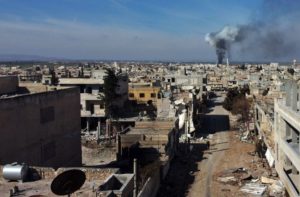
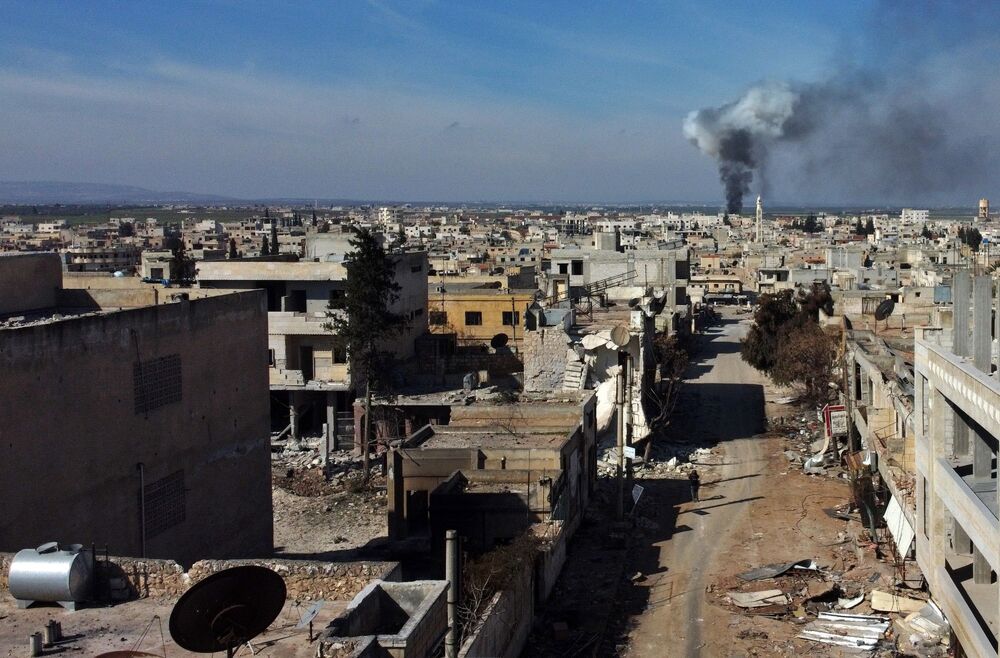
Smoke billows over the town of Saraqib in the eastern part of the Idlib province in Syria on Feb. 27.

Photographer: Aref TAmmawi/AFP via Getty Images

When Recep Tayyip Erdogan was inaugurated as Turkey’s president with enhanced powers in 2018, Venezuelan counterpart and admirer Nicolas Maduro called him the “leader of the new multi-polar world.”

In Syria, however, Erdogan appears to have tested to destruction the ability of a country with no nuclear arsenal, few natural resources and an economy roughly the size of Spain’s to carve a sphere of influence for itself.

Under Erdogan, Turkey has tried to re-establish sway in nations of the former Ottoman Empire. It’s been an enthusiastic competitor in the Middle East to fill the growing power vacuum left behind as the U.S. seeks to disengage.

But although he secured another cease-fire for Idlib from Russian President Vladimir Putin on Thursday, Erdogan was a supplicant. Russian jets and air defenses have demonstrated the vulnerability of Turkish troops in Syria and, in a political threat to the Turkish leader, their ability drive more than a million refugees to the border.

RUSSIA-TURKEY-DIPLOMACY-SYRIA-CONFLICT
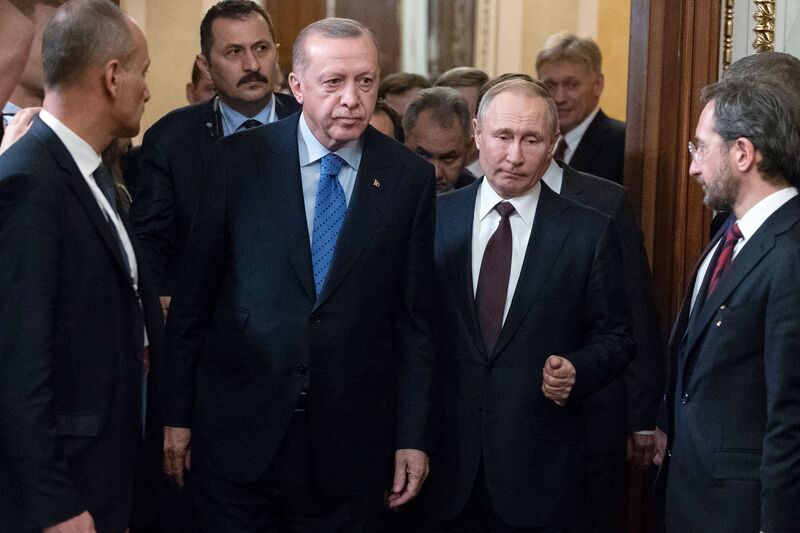
Recep Tayyip Erdogan and Vladimir Putin arrive to hold a joint press statement following their talks at the Kremlin in Moscow on March 5.
Photographer: Pavel Golovkin/AFP via Getty Images

After an airstrike blamed on Russian-backed Syrian forces killed 33 Turkish soldiers in Idlib province on Feb. 27, Erdogan requested an emergency meeting with NATO allies. Yet relations with many European alliance members are frosty—not least because Erdogan’s threats to direct refugees to Europe—and little concrete support was forthcoming.

Turkey also asked for U.S. help, in the form of Patriot anti-aircraft batteries to protect its troops, but Washington has proved reticent, angered by Erdogan’s purchase last year—over fierce U.S. objections—of Russia’s S-400 equivalent.

“What we saw in Idlib is the predicament of Erdogan’s empire,” said Soner Cagaptay, director of the Turkish Research Program at the Washington Institute for Near East Policy. “His vision that Turkey could be a stand-alone power has been proved completely wrong.”

QuicktakeWhat’s at Stake in Idlib

Erdogan has had successes abroad. Turkish Airlines has expanded to the point that by last year it served over 120 countries, more than any other airline anywhere, opening up possibilities around the globe for Turkish influence, trade and investment. Turkish TV dramas air in more than 100 countries.

The country has also become a significant political and economic force in Africa and the Balkans. Erdogan himself has proved adept at playing Donald Trump against the rest of Washington, securing the U.S. president’s agreement to make way for his incursion into Kurdish zones of Northern Syria, and protection from U.S. sanctions over his S-400 purchase.

In the Eastern Mediterranean, Erdogan has boldly laid claim to swathes of waters claimed by Greece in a deal with Libya that would have significant energy implications.

SYRIA-CONFLICT-IDLIB
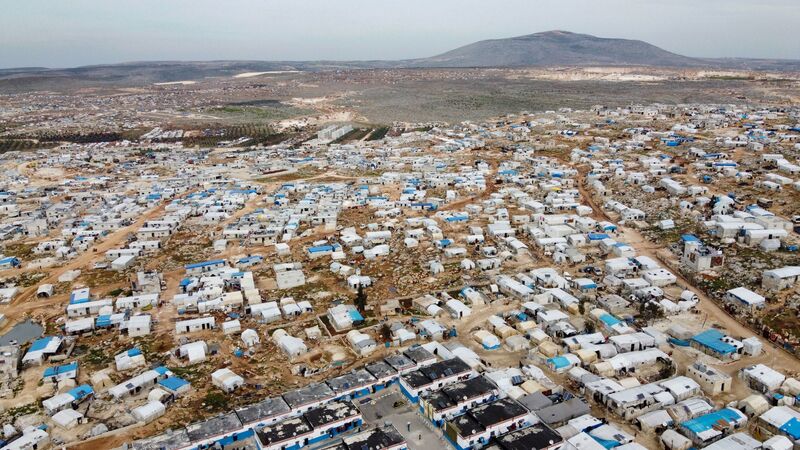
A camp for displaced Syrians sits in Deir Hassan village, in Idlib province near the Turkish border.
Photographer: Aaref Watad/AFP via Getty Images

Indeed, for a while, the creation of a Turkish zone of influence from North Africa to Central Asia looked at least conceivable. In the immediate wake of the 2011 Arab Spring, the Middle East seemed open to a new generation of leaders who looked to Turkey for the model of a distinctly Islamic government that was at the same time democratically elected and economically successful.

Yet Erdogan’s hopes of seeing like-minded Islamist leaders installed from Tunis to Damascus have been dashed, with the space hotly contested by rivals for influence including Iran, Russia, Saudi Arabia and United Arab Emirates.

Egypt’s Muslim Brotherhood President Mohammed Morsi was toppled in what amounted to a military coup in 2013. Tunisia’s governing Islamist party, Ennahda, stepped aside. Russia intervened in Syria’s civil war in 2015, turning the tide against Turkey’s Muslim Brotherhood clients.

In Libya, a United Nations-backed government favorable to Ankara is under siege from militants backed by Russia, Egypt and the United Arab Emirates, jeopardizing Erdogan’s fragile deal to carve up the Mediterranean.

Turkey is unlikely to be the last mid-size power to try to assert itself in this way, according to Graham Allison, professor of government at Harvard University, because the demise of the so-called unipolar moment of U.S. dominance that followed the Cold War has opened the door for others to act.

“As states notice that their relative power in a region has increased and the willingness of the U.S. to exercise power has decreased, they will undertake ventures,” Allison said, arguing that like it or not, the U.S. will have to accept spheres of influence, whether for China in the South China Sea, or Russia in Georgia and Ukraine.

In Syria, Turkey has a clear interest in preventing the establishment of a de facto Kurdish state that would be run by close allies of the Kurdish Workers’ Party, or PKK, which conducts an armed insurgency within Turkey. Since sending troops across the border last year, Erdogan has built a buffer zone where he hopes to build cities and repatriate about 1 million Syrian refugees from Turkey.

But Idlib, the last redoubt of Sunni Arab rebels and Al Qaeda-linked radicals dedicated to Erdogan’s long-held goal of bringing down President Bashar al-Assad’s regime in Damascus, is a different story. In their campaign to retake the province and reopen two of the country’s most important highways, Syrian government troops are backed by both Iranian—led militias and Russian airpower.

“There is no reason to think that middling powers will be smarter than superpowers,” said Allison, noting costly failures of both the former Soviet Union and the U.S. in Afghanistan.

SYRIA-CONFLICT-TURKEY
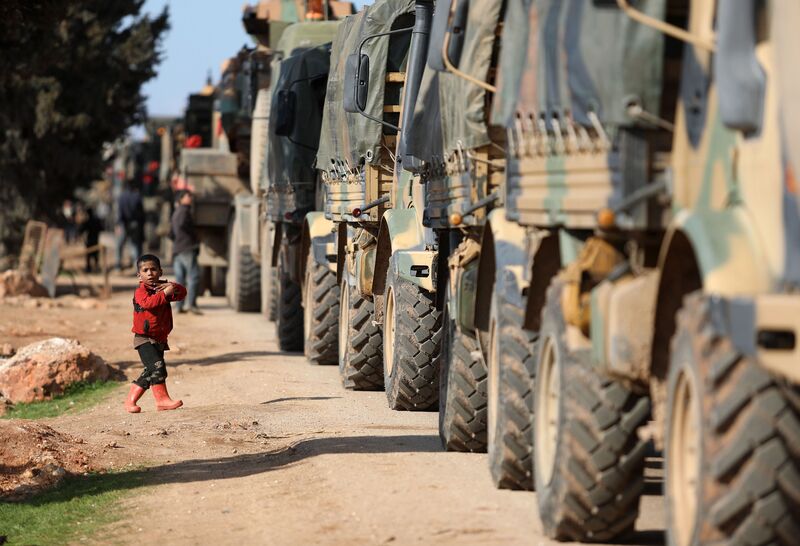
A Turkish military convoy is seen parked near the town of Batabu on the highway linking Idlib to the Syrian Bab al-Hawa border crossing with Turkey, on March 2.
Photographer: Aaref Watad/AFP via Getty Images

Erdogan has now doubled down to apply military force where diplomacy failed in both Syria and Libya, only to find the field crowded with other external powers. Meanwhile, he has alienated traditional allies in the West and made enemies of Arab leaders wary of his support for the Muslim Brotherhood. At home, meanwhile, Erdogan has crushed his nation’s democratic institutions and its economic miracle has stalled, sapping Turkey’s soft power attraction.

By the time of Erdogan’s inauguration at the peak of his domestic powers in 2018, the limits of his reach abroad were mapped out by the guest list, according to Cagaptay, author of a new book on Turkey’s foreign policy, “Erdogan’s Empire.”

Venezuela’s Maduro was there, together with about two dozen leaders mainly from Africa, the Balkans and Central Asia. But none came from a major NATO ally, Russia or China. Just one Arab leader attended, from Qatar—the object of a Saudi-led boycott.

By now, there is little that Turkey’s traditional Western allies are willing or able to do to dig Erdogan out of trouble in Idlib. That leaves him reliant on Russia, which controls the skies and therefore has the upper hand in any military escalation, said Emile Hokayem, senior fellow for Middle East security at the International Institute for Strategic Studies, a London-based think tank.

Erdogan’s audience, he says, “is an audience of one: Putin.”

bloomberg.com

Stress test passed: Russia and Turkey continue to work in Syria

0

www.rt.com

Fyodor Lukyanov
Fyodor Lukyanov
is the editor-in-chief of Russia in Global Affairs, chairman of the Presidium of the Council on Foreign and Defense Policy, and research director of the Valdai International Discussion Club.
Stress test passed: Russia and Turkey continue to work in Syria
Russian-Turkish relations have survived an important crash test after a harsh escalation of the situation in Idlib almost turned into a full-scale Turkish-Syrian war and threatened to derail the entire peace process in Syria.

In the end, this didn’t happen. The talks between presidents Vladimir Putin and Recep Tayyip Erdogan in Moscow that lasted almost six hours have brought the Russo-Turkish relationship back into working order. It seems that the Astana format – a unique mechanism for coordinating the positions of the countries with completely different agendas – has been preserved.

It became clear long ago that Idlib would become the deciding point for the Syrian war. A large number of militants, primarily of extreme radical kind, ended up concentrated there as a result of compromises in previous areas of escalation. In fact, Idlib, by general agreement, had become a sort of magazine for powder kegs that had been carefully evacuated from other parts of Syria as the government troops advanced.

In 2018, an agreement was reached between Putin and Erdogan that Ankara will ensure the gradual pacification of the turbulent province, while Damascus and Moscow won’t be solving the issue by military means. That agreement didn’t work out.

ALSO ON RT.COMIdlib ceasefire: Putin & Erdogan reach deal on Syria de-escalation after marathon Moscow talksFrom the beginning of the acute phase of the Syrian conflict, Erdogan chose to be actively involved (hence the abundance of pro-Turkish militant groups) in order to strengthen and expand Ankara’s geopolitical influence in the region and beyond. The Turkish leader thus started a large-scale and risky game on multiple chessboards.

One of them was Turkey’s role in the Middle East. Erdogan, who once had quite friendly relations with Syrian President Bashar Assad, came to the conclusion in the wake of the ‘Arab Spring’ that the regime in Damascus was doomed and abruptly switched into the camp of his enemies, in order to participate in the reconstruction (or division) of Syria after the collapse of the Alawites.

Instead of the expected blitzkrieg, he got bogged down in a quagmire that eventually entangled all the leading regional players and – due to the emergence of Islamic state (IS, formerly ISIS) – the US and Russia as well. The regional instability also resonated with the situation inside Turkey.

Another game has involved Turkey’s increasingly tangled up relationships with the West. Erdogan is deeply angry at the US and Europe and doesn’t trust them at all. Over the past few years, Turkey’s policy towards the West has been dictated by the desire to show that it’s not all about the US and the EU; that Ankara is an independent player with its own interests and ways of implementing them. This partly explains his surprising (especially after 2015) tilt towards Russia, including energy projects, the Syrian peace process and the unprecedented purchase of the S-400 air defense systems, over the vocal protests of Turkey’s NATO partners.

ALSO ON RT.COM‘Turks are our brotherly people,’ no reason for them to die in Syria – President AssadAll of this, however, has not delivered a very impressive result. When the situation became critical, Ankara still rushed to its Western partners: NATO for military-political support and the EU in order to apply pressure on Russia. Both have given a rather unenthusiastic response, which was mainly limited to verbal declarations – although this time the allies, especially the Americans, tried to make their statements sound as substantial as possible.

Last, but not least, there are the relations between Turkey and Russia, a complex and controversial phenomenon worthy of a more comprehensive study. On the question of Syria, the two countries are not bound together by common goals and objectives, coinciding interests, or strong relations based on trust. The basis for this partnership is rather the understanding that without interaction, neither party can achieve anything on its own.

The tormented coordination with Turkey has allowed Russia to achieve the current state of affairs in Syria, which is the return of most of the militant-occupied territory under Assad’s control. But with every new step forward, the room for flexibility narrowed and it was almost gone by the time Idlib appeared on the agenda. The tough choice boils down to restoring Syria within its former borders (possibly excluding buffer zones, like Afrin) or agreeing that some territories will remain under foreign control. All other elements of cooperation between Russia and Turkey – economy, energy, military-technical cooperation, etc. – depend on cutting this geopolitical knot and finding a solution that will allow everyone to save face and maintain the necessary level of control.

ALSO ON RT.COMOn the eve of Putin-Erdogan meeting in Moscow, where is the Idlib crisis at?An additional problem is the imbalance in the approaches to cooperation from the Russian and the Turkish sides. While there are different opinions on relations with present-day Turkey inside Russia, no one is seriously talking about a strategic partnership and refocusing on Moscow in Ankara, as that would include a complete rejection of its Euro-Atlantic obligations.

Nobody in Russia is expecting this to happen, so any interaction with Turkey is extremely pragmatic, aimed at a specific result, which in case of getting some benefits can be regarded as a bonus. In Turkey, the debate is much more heated and conceptual – Erdogan’s policies are perceived, at least by part of the elites, as an attempt to break the strong and familiar ties, making Ankara dependent on Moscow. Therefore, the argument becomes about Turkey’s strategic approach in the future, which only makes matters worse.

Turkey understands that a conflict with Russia would be a catastrophic scenario. Erdogan hardly wanted things to go this way, but has found himself in a very unfavorable position. Russia is the only major power with which Turkey is capable of finding some understanding in implementation of its goals, in spite of severe contradictions and a heavy aura of mistrust. There are simply no other options available, due to the state of affairs described above.

Without Turkey, and even more so in the case of active Turkish opposition, Russia may also get bogged down in another swamp, and the risks would begin to increase rapidly. This includes the the risks of involving numerous external “well-wishers,” who benefit from pitting Moscow and Ankara against each other with the aim of weakening them both.

ALSO ON RT.COMImpotent in Idlib: US pits Turkey & Russia against each other with ammo offer, but remains irrelevant in SyriaIn the end, the Idlib escalation turned into a chance for a new meaningful coordination of positions and clarification of possibilities for further joint actions between Moscow and Ankara.

The Afrin scenario (a security buffer zone along the border) plus joint control over the key communications is the compromise that has emerged after the negotiations in Moscow.

Whether that holds up or not, Russia’s Syria policy has seemingly passed a fateful test, avoiding a direct confrontation with Turkey. There will probably be a return to policies in the spirit of the ‘Astana Triangle.’ This means that the Russian intervention, which was launched in 2015, has now truly brought qualitative changes to the region.

What is clear is that this is not the last crisis. A new escalation is inevitable. But there is a chance that further frictions will also be resolved in a similar manner. The fact that a “working arrangement” in this context might mean occasional “recon by fire” and human casualties must sadly be taken for granted.

This is an abridged version of the article originally published in the Russian weekly magazine Profile.

The statements, views and opinions expressed in this column are solely those of the author and do not necessarily represent those of RT.

www.rt.com

New Putin-Erdogan deal is sugar-coating the Turks’ surrender

0

www.rt.com

President of Turkey, Recep Tayyip Erdogan (2nd R) and President of Russia, Vladimir Putin (R), March 5, 2020 © Getty Images / Turkish Presidency / Murat Cetinmuhurdar / Handout / Anadolu Agency 

Scott Ritter
Scott Ritter

is a former US Marine Corps intelligence officer. He served in the Soviet Union as an inspector implementing the INF Treaty, in General Schwarzkopf’s staff during the Gulf War, and from 1991-1998 as a UN weapons inspector. Follow him on Twitter @RealScottRitter

This week’s meeting between Presidents Putin and Erdogan in Moscow was cast as preventing a war between Russia and Turkey in Syria. War, however, was never on the horizon. Putin called Erdogan’s bluff, and the Turk folded.

Russian President Vladimir Putin and Turkish President Recep Erdogan, accompanied by their respective senior national security advisers, met in Moscow on March 5. The purpose of this emergency summit was to negotiate the terms of a ceasefire that would bring an end to heavy fighting in Syria’s Idlib province that threatened to draw their two nations into direct military conflict. After more than six hours of meeting, a new agreement, packaged as an “additional protocol” to the “Memorandum on Stabilization of the Situation in the De-escalation Area as of September 17, 2018” (better known as the “Sochi Agreement”), was agreed to by both parties.

A sputtering offensive

Over the course of a week, from February 27 through March 5, Syria’s Idlib province transitioned from being ground zero for a war between the Syrian army and allied forces, and heavily armed groups opposed to the rule of Syrian President Bashar Assad, into a geopolitical powder keg that threatened to pull the Turkish and Russian militaries into direct conflict with one another. On March 1, Turkey, following up on threats previously made by President Erdogan to drive the Syrian Army and its allies back to the line of demarcation set forth in the original Sochi Agreement, unleashed a major offensive, dubbed “Operation Spring Shield” and involving thousands of Turkish troops fighting alongside anti-Assad formations.

This operation soon fizzled; not only was the Turkish advance halted in its tracks, but the Syrian Army, supported by Hezbollah and pro-Iranian militias, were able to recapture much of the territory lost in the earlier fighting. Faced with the choice of either escalating further and directly confronting Russian forces, or facing defeat on the battlefield, Erdogan instead flew to Moscow.

The new additional protocol, which entered into effect at midnight Moscow time on Friday, March 6, represents a strategic defeat for Erdogan and the Turkish military which, as NATO’s second-largest standing armed force, equipped and trained to the highest Western standards, should have been more than a match for a rag-tag Syrian Army, worn down after nine years of non-stop combat. The Syrian armed forces, together with its allies, however, fought the Turks to a standstill. Moreover, the anti-Assad fighters that had been trained and equipped by the Turks proved to be a disappointment on the battlefield.

One of the major reasons behind the Turkish failure was the fact that Russia controlled the air space over Idlib, denying the Turks the use of aircraft, helicopters and (except for a single 48-hour period) drones, while apparently using their own aircraft, together with the Syrian Air Force, to pummel both the Turkish military and their allied anti-Assad forces (though neither side has officially confirmed the Russians bombing the Turks – that would be a disaster for the talks). In the end, the anti-Assad fighters were compelled to take shelter within so-called ‘Observation posts’– heavily fortified Turkish garrisons established under the Sochi Agreement, intermingling with Turkish forces to protect themselves from further attack. Operation Spring Shield turned out to be a resounding defeat for the Turks and their allies.

ALSO ON RT.COMStress test passed: Russia and Turkey continue to work in Syria

Problems talking doesn’t solve

Under the terms of the original Sochi Agreement, the Turkish military was supposed to oversee the removal of heavily armed anti-Assad forces, including Hayat Tahrir al-Sham (HTS), a designated terrorist organization, from so-called ‘de-escalation zones.’ The failure to accomplish this task, coupled with continued attacks against Syrian positions by HTS fighters, prompted the Syrian Army’s attack in Idlib. The additional protocol negotiated this week in Moscow “reaffirms” the Turkish and Russian “dedication” to “combat all forms of terrorism” and to “eliminate all terrorist groups in Syria”.

How this will be implemented is not spelled out in the additional protocol, indeed, given the fact that the majority of the anti-Assad forces that have sought refuge in the Turkish observation posts are HTS fighters that had, just a week before, been provided arms and vehicles to carry out attacks coordinated with the Turkish Army, the practicalities of implementation appear non-existent.

The agreement also focuses on another critical, yet unfulfilled, aspect of the original Sochi agreement – the guarantee of safe passage along the strategic M4 and M5 highway corridors connecting the city of Aleppo with Latakia (M4) and Damascus (M5). The inability and/or unwillingness on the part of the Turks to follow through with this provision was the major impetus behind the current Syrian offensive in Idlib. Indeed, the Syrian Army was able to gain full control of the M5 highway and was in the process of doing the same for the M4 highway when the Moscow agreement brought an end to the fighting.

Under the terms of the additional protocol, the new zones of de-escalation will be defined by the frontlines as they currently exist, securing the hard-won advances made by the Syrian Army and embarrassing Erdogan, who had promised to drive the Syrians back to the positions as they existed at the time of the original Sochi Agreement. Moreover, the M4 highway will now be buffered by a 12-kilometer security zone (Six kilometers on each side), and will be jointly patrolled by Turkey and Russia, guaranteeing secure passage for commercial vehicle traffic. These patrols will begin on March 15, which means the Turks have ten days to oversee the evacuation of anti-Assad forces from this corridor–in effect, pushing them back north of the M4 highway, which was the goal of the Syrian offensive to begin with.

Back in line, but for how long?

While couched as a ceasefire agreement, the additional protocol produced by the Moscow summit between Putin and Erdogan on Thursday is a thinly disguised instrument of surrender. The Syrian government got everything it was looking for by launching its offensive, and the Turks and their anti-Assad allies were left licking their wounds in a much-reduced Idlib pocket. Beyond preventing direct conflict between Turkey and Russia, the additional protocol achieves little that changes the situation on the ground. Turkey is still faced with the task of disarming the HTS fighters it currently embraces as allies, and the humanitarian crisis triggered by hundreds of thousands of refugees displaced by the earlier fighting remains. In many ways, the additional protocol, like its antecedent, the Sochi Agreement, is an arrangement designed to fail, because by succeeding it only perpetuates an unsustainable reality that will only be resolved when the totality of Syrian territory is restored to the control of the Syrian government.

Think your friends would be interested? Share this story!

The statements, views and opinions expressed in this column are solely those of the author and do not necessarily represent those of RT.

www.rt.com