Αρχική Blog Σελίδα 3011

There are high hopes for Cyprus reunification talks — even as they hit another impasse

0

imrsBy Max Bearak January 13 The Washington Post

Cyprus leaders seek deal in ‘historic opportunity’ for peace

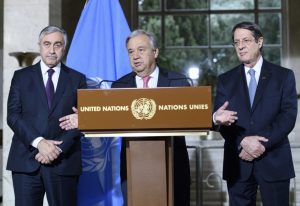
The leaders of both sides of ethnically divided Cyprus have sought to temper hopes of a swift breakthrough in unification talks that started on Monday, initially focusing on how to handle property disputes stretching back more than 40 years. (Reuters)

Unprecedentedly high hopes took hold at talks in Geneva earlier this week to end the 43-year partition of the Mediterranean island of Cyprus. But the prospect of reunification, long regarded as a Rubik’s cube of modern diplomacy, hit another impasse on Friday after Turkish President Recep Tayyip Erdogan rejected the prospect of Turkish soldiers ever leaving the island.

“We have told Cyprus and Greece clearly that they should not expect a solution without Turkey as guarantor,” Erdogan said. “We are going to be there forever.” The eventual withdrawal of Turkish troops is a key demand of Greek Cypriots.

Before Friday, there was hope that this would be the week the two side finally set terms for reunification. On Wednesday, in a first, the island’s two main communities — Greek-speakers in the south  and Turkish-speakers in the north — exchanged maps of their hoped-for zones of control in the potential united, federal republic the talks seek to create. The lead negotiators and heads of the Greek and Turkish Cypriot people respectively, Nicos Anastasiades and Mustafa Akıncı, both grew up in the southern city of Limassol in the pre-partition years and have been hailed as coolheaded and committed.

The top diplomats of Greece, Turkey and the U.K., as well as the United Nations’ new secretary-general, António Guterres, arrived at the talks Thursday. Britain formerly ruled the island as a colony and maintains two military bases there. Talks ended on Friday, and the Guardian reported that they will resume on Jan. 18.

Reunification talks have failed multiple times in the past. That long and contentious history leaves plenty of room for skepticism about this round. In 2004, an agreement was reached but voters in the south rejected it.

That said, optimism is running higher than  ever  before. Should an accord be reached, both groups would then hold twin referendums in April or May.

Cyprus is separated from Turkey by about 50 miles of sea and is considerably more distant from Greece. But Greek-speaking mostly Orthodox Christian people have historically been a majority on the island and now constitute around three-quarters of the population. Turkish Cypriots, mostly Muslim, make up about 18 percent.

The proportions were similar when Cyprus wrested independence from the British in 1960, but in those days the Turks lived interspersed among the Greeks, as they had during three centuries of Ottoman rule.

The independence struggle was mostly fought by Greek Cypriot guerrillas who wanted to join Greece. But the British insisted on separate nationhood to keep their military bases, and remained “guarantors” of the Cypriot state along with Greece and Turkey. Nevertheless, conflict between pro-union Greek Cypriots and Turkish Cypriots had spiraled out of control by 1963 and U.N. peacekeepers were deployed.

In 1974, Greek Cypriot militants attempted a coup, backed by Greece’s then-military government, which prompted Turkey to invade. The ensuing conflict displaced roughly 165,000 Greek Cypriots from the north and 40,000 Turkish Cypriots from the south. Turkey seized approximately 37 percent of the island’s land, and has kept tens of thousands of troops stationed in Cyprus ever since. The U.N. created a buffer zone between the north and south that stretches 180 miles.


The buffer zone’s northern and southern limits are “the lines where the belligerents stood following the cease-fire of 16 August 1974,” as recorded by the U.N. In some places it is miles wide, while in the divided capital city of Nicosia, it narrows at points to just a few yards. Some lanes are split right down the middle.

The land in between is frozen in 1974. Nicosia’s airport was abandoned as it fell in the buffer zone. The tarmac is littered with relics.

Elsewhere on the island, the buffer zone has become a refuge for wildlife. The village of Pyla, which is  entirely within the buffer zone, is the only place on the island where Greek and Turkish Cypriots still live side by side.

Turkey has never formally recognized Cyprus nor its maritime borders. In 1983, the north declared its own independence, though Turkey is the only nation to recognize it.

After Wednesday’s trading of maps between Anastasiades and Akıncı, Turkish Cypriot spokesman Baris Burcu said that already agreed upon criteria were finalized and would hypothetically leave the Turkish Cypriot zone with between 28.2 and 29.2 percent of the island’s land. Akıncı’s strategy has been to bargain land in return for more power-sharing rights, including a possible rotating presidency.

The maps were put in locked vaults after the meeting due to the sensitivity of the border issue. Where the lines are officially drawn may end up dictating which refugees are able to return to their ancestral lands. Greek Cypriots have asked for land concessions from the north that would allow 90,000 refugees to return to their old homes. And each resettled Greek Cypriot refugee is one less Anastasiades will be asking for compensation for, taking money off the negotiating table and lowering the financial stakes for the Turkish side.

Despite its complexity, the border issue isn’t as contentious as negotiations around the removal of Turkish troops and the prevention of renewed ethnic violence.

Turkish Cypriots see Turkey’s troops continued presence as insurance against that possibility and have insisted on them remaining in past talks. Greek Cypriots on the other hand have argued that Turkey, which is not a member of the European Union, does not have the right to station troops in Cyprus, which is.

On Wednesday, Anastasiades reportedly floated the idea of an “international police force,” though he skimped on specifics, according to a diplomat who attended the session and spoke to the Associated Press on condition of anonymity because he wasn’t authorized to provide details about the talks.

“We are coming very close to what is the settlement,” U.N. Secretary-General António Guterres told reporters in Geneva on Thursday. “You cannot expect miracles of immediate solutions, we are not looking for a quick fix. We are looking for a solid, sustainable solution.”

Erdogan Says Troops Will Be in Cyprus ‘Forever,’ Complicating Hopes of Reuniting

0
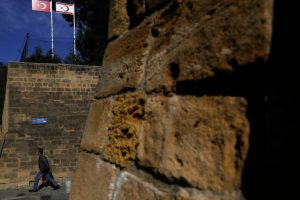
A man on Thursday crossed a United Nations buffer zone that divides an area controlled by Greek Cypriots and one controlled by Turkish Cypriots in Nicosia. CreditPetros Karadjias/Associated Press

GENEVA — Turkey’s president declared on Friday that Turkish troops would remain in Cyprus “forever,” complicating hopes of reuniting the island nation, which has been effectively partitioned since 1974.

“Greece is fleeing again from a solution to the Cyprus problem,” the president, Recep Tayyip Erdogan, told reporters in Istanbul on Friday. “Turkey will be in Cyprus forever.”

That said, Mr. Erdogan often takes a firmer line with domestic audiences than with foreign ones, and diplomats said they remained cautiously optimistic.

In 1974, a coup sponsored by the military junta that controlled Greece at the time ousted the government of Cyprus, and Turkey invaded, arguing that the Turkish Cypriots needed its protection. The nation has been largely stable and peaceful for decades, but this is one of the world’s thorniest and longest conflicts.

Since the late 1970s, leaders of both the Greek Cypriots and the Turkish Cypriots have agreed in principle on a “bizonal, bicommunal federation” as the basis for reunification, but have different understandings of that term.

The latest round of negotiations, sponsored by the United Nations, has been promising. On Thursday, the foreign ministers of Britain, Greece and Turkey — the three countries that are designated as “guarantors” of the nation’s sovereignty under a 1959 treaty — met in Geneva, prompting the new United Nations secretary general, António Guterres, to observe that Cyprus could be “a symbol of hope” this year.

Photo

The Greek Cypriot leader, Nicos Anastasiades, spoke at a news conference in Geneva on Friday.CreditPierre Albouy/Reuters

Among the key issues in dispute are the return of displaced Cypriots and the handling of their property, repatriation of Turkish settlers, demilitarization of the island, and the future role of Greece, Turkey and Britain.

Mr. Erdogan on Friday said firmly that Turkey would not withdraw from the island as long as Greek troops were also stationed there. “Full withdrawal of Turkish troops from Cyprus is not possible,” he said. “If this is being discussed, then both sides must withdraw.”

The Turkish foreign minister, Mevlut Cavusoglu, maintained the Turkish position while also leaving room for negotiation.

“Taking into consideration the current situation in our region, the continuation of the security and guarantees system, which has been the solid basis of the 43-year-long security and stability on the Island, is a necessity,” Mr. Cavusoglu said in the statement, referring to the system of guarantors, which Turkey used as its rationale for the 1974 invasion. “We expect this issue to be discussed in line with the realities on the island.”

Cypriot leaders held out hope for an agreement.

The Greek Cypriot leader, Nicos Anastasiades, noted that both sides had submitted maps detailing the redrawing of internal boundaries, a promising first; that Turkey had agreed to discuss the issue of the security guarantees, itself a sign of progress; and that both sides had made progress in discussing areas like governance, the economy and Cyprus’s involvement in the European Union, which it joined in 2004, notwithstanding the divisions.

Mr. Anastasiades and the Turkish Cypriot leader, Mustafa Akinci, both said that they had agreed that the security of one community should not be perceived as a threat by the other community.

“The point is, where can you strike a balance: How can you find the ways and means so that both communities of this beautiful island can feel safe and secure?” Mr. Akinci said, adding that the Turkish Cypriot community “feels that they need the continuation of some sort of a guarantee coming from Turkey.”

CYPRUS

“This is how they feel,” he said. “All the polls, more or less, say the same thing. How can we deal with this issue so that it’s acceptable by the other party?”

He added: “We are here to discuss all these issues. There are no taboos.”

The last time a peace deal was close at hand, in 2004, it was accepted by the Turkish Cypriots in a referendum but rejected by the Greek Cypriots. All sides are trying to avoid a repeat of that experience.

Mr. Akinci said that reunification would lead to major economic benefits, including the possibility of channeling natural gas deposits through Cyprus to Turkey and Europe, and distributing water that is currently piped to northern Cyprus from Turkey across the whole island.

Turkish Cypriots are estimated to make up about one-fifth of the island’s population, and the Greek side had proposed a rotating presidency, but how it would be carried out remains in dispute.

Asked about Mr. Erdogan’s remarks, Espen Barth Eide, the United Nations secretary general’s special adviser for Cyprus, said he did not think the talks were in trouble.

Negotiations on technical matters have been scheduled for Wednesday, and Mr. Eide said, “We’re close to completion” on five areas of agreement — not including the issue of security and guarantees. “Not easy, but the will is there,” he said, while reminding both sides that “we must not lose any time.”

Mr. Eide added, “It will be hard.”

We Are on the Verge of Darkness

0
The global rise of populism is a dangerous threat to democracy and human rights. And if it goes unchecked, the rollback of Western values could be staggering.
BEAUCAIRE, FRANCE - JANUARY 11:  French Front National party president Marine Le Pen takes part in a Unity rally "Marche Republicaine" on January 11, 2015 in Beaucaire, France. The French far-right National Front (FN) held their own rally after being excluded from the Paris unity rally. An estimated one million people have converged in central Paris for the Unity March joining in solidarity with the 17 victims of this week's terrorist attacks in the country. French President Francois Hollande led the march and was joined by world leaders in a sign of unity. The terrorist atrocities started on Wednesday with the attack on the French satirical magazine Charlie Hebdo, killing 12, and ended on Friday with sieges at a printing company in Dammartin en Goele and a Kosher supermarket in Paris with four hostages and three suspects being killed. A fourth suspect, Hayat Boumeddiene, 26, escaped and is wanted in connection with the murder of a policewoman.  (Photo by Patrick Aventurier/Getty Images)
BEAUCAIRE, FRANCE – JANUARY 11: French Front National party president Marine Le Pen takes part in a Unity rally “Marche Republicaine” on January 11, 2015 in Beaucaire, France. The French far-right National Front (FN) held their own rally after being excluded from the Paris unity rally. An estimated one million people have converged in central Paris for the Unity March joining in solidarity with the 17 victims of this week’s terrorist attacks in the country. French President Francois Hollande led the march and was joined by world leaders in a sign of unity. The terrorist atrocities started on Wednesday with the attack on the French satirical magazine Charlie Hebdo, killing 12, and ended on Friday with sieges at a printing company in Dammartin en Goele and a Kosher supermarket in Paris with four hostages and three suspects being killed. A fourth suspect, Hayat Boumeddiene, 26, escaped and is wanted in connection with the murder of a policewoman. (Photo by Patrick Aventurier/Getty Images)

The global rise of populists poses a dangerous threat to human rights — which exist to protect people from governments. Yet today, a new generation of populists is reversing that role. Claiming to speak for “the people,” they treat rights as an impediment to their conception of the majority will, a needless obstacle to defending the nation from perceived threats and evils. Instead of accepting that rights protect everyone, they encourage people to adopt the dangerous belief that they will never need their rights against an overreaching government claiming to act in their name.

The appeal of the populists has grown with mounting public discontent over the status quo. In the West, many people feel left behind by technological change, the global economy, and growing inequality. Terrorism sows apprehension and fear. Some are uneasy with societies that have become more ethnically, religiously, and racially diverse. There is an increasing sense that governments and the elite ignore public concerns.

In this cauldron of discontent, a certain breed of politician is flourishing by portraying rights as protecting only the terrorist suspect or the asylum-seeker at the expense of the safety, economic welfare, and cultural preferences of the presumed majority. They scapegoat refugees, immigrant communities, and minorities. Truth is a frequent casualty. Nativism, xenophobia, racism, Islamophobia, and misogyny are on the rise.

But if these voices of intolerance prevail, the world risks entering a dark era. We should never underestimate the tendency of demagogues who sacrifice the rights of others in our name today to jettison our rights tomorrow when their real priority — retaining power — is in jeopardy.

Donald Trump’s successful presidential campaign was a vivid illustration of this politics of intolerance.

Donald Trump’s successful presidential campaign was a vivid illustration of this politics of intolerance. Sometimes overtly, sometimes through code and indirection, he breached basic principles of dignity and equality. He stereotyped migrants, vilified refugees, attacked a judge for his Mexican ancestry, mocked a journalist with disabilities, dismissed multiple allegations of sexual assault, and pledged to roll back women’s ability to control their own fertility.We see a similar scapegoating of asylum-seekers, immigrant communities, and Muslims in Europe. Leading the charge have been Marine Le Pen in France and Geert Wilders in the Netherlands, but there are echoes of these arguments of intolerance in the Brexit campaign, the rhetoric of Viktor Orban in Hungary and Jaroslaw Kaczynski in Poland, and far-right parties from Germany to Greece. Throughout the European continent, officials and politicians hark back to distant, even fanciful, times of perceived national ethnic purity, despite established immigrant communities whose integration as productive members of society is undermined by this hostility.

We forget at our peril the demagogues of yesteryear — the fascists, communists, and their ilk who claimed privileged insight into the majority’s interest but ended up crushing the individual. When populists treat rights as an obstacle to their vision of the majority will, it is only a matter of time before they turn on those who disagree with their agenda. Such claims of unfettered majoritarianism, and the attacks on the checks and balances that constrain governmental power, are perhaps the greatest danger today to the future of democracy in the West. They threaten to reverse the accomplishments of the modern human rights movement.

President Recep Tayyip Erdogan’s increasingly dictatorial rule in Turkey illustrates the dangers of a leader trampling on rights in the name of the majority. For several years, he has shown diminishing tolerance for those who would challenge his plans, whether to build over a park in central Istanbul or to amend the constitution to permit an executive presidency. In the past year, he used a coup attempt as an opening to crack down not only on the plotters he alleged had been organized by the exiled cleric Fethullah Gulen but also on tens of thousands of others deemed to be his followers. A declared state of emergency became an opportunity to turn on other perceived critics as well, closing down much of the independent media and civil society groups.

There was broad cross-party support for Erdogan’s government in the wake of the coup, given the collective sigh of relief that many in Turkey felt after the attempt failed. But with the precedent of repression established, and the independence of the courts and other institutions of law decimated, there was nothing to stand in the way of the widening crackdown.

Egypt under President Abdel Fattah al-Sisi has undergone a similar evolution. Unhappy with the brief rule of the Muslim Brotherhood under President Mohamed Morsi, many Egyptians welcomed Sisi’s 2013 military coup. But he has proceeded to rule far more repressively than even the long dictatorship of President Hosni Mubarak, which was overthrown during the brief Arab Spring. Many Egyptians assumed that only Islamists would be targeted, but Sisi has overseen the radical closing of political space, with human rights groups, independent media, and opposition political parties all shuttered, and tens of thousands of prisoners held, often after torture and with little if any judicial process.

The rising tide of populism in the name of a perceived majority has paralleled a new infatuation with strongman rule. If all that matters are the declared interests of the majority, the thinking seems to go, why not embrace the autocrat who shows no qualms about asserting his majoritarian vision — self-serving as it may be — and subjugating those who disagree.

But the populist-fueled passions of the moment tend to obscure the longer-term dangers to a society of strongman rule. President Vladimir Putin, for instance, has presided over a weakening Russian economy plagued by massive crony corruption. Fearing popular discontent, he has introduced draconian restrictions on assembly and expression, imposed unprecedented sanctions for online dissent, and crippled civil society groups while embarking on various military adventures to distract from dwindling economic prospects at home. Military action in Ukraine prompted Western sanctions that only deepened Russia’s economic decline.

Chinese President Xi Jinping has embarked on a similar path of repression. China enjoyed remarkable economic growth as earlier leaders freed citizens economically from the whims of Communist Party rule that had brought the disastrous Great Leap Forward and Cultural Revolution. But economic liberalization was not accompanied by political reform, which was left stillborn in the crushing of the 1989 Tiananmen Square democracy movement. Ensuing governments made economic decisions guided mostly by the party’s desire to sustain growth at any cost in order to keep popular discontent under wraps. Corruption flourished while social inequity soared and the environment deteriorated. Worried as well that popular discontent would rise as economic growth slowed, Xi, too, has embarked on the most intense crackdown since the Tiananmen era, leaving his government even less accountable. Despite anointing himself with a lengthening list of leadership titles, this strongman looks increasingly fearful, having not delivered on the Chinese people’s demands for cleaner air, safer food, a just judicial system, and an accountable government.

Similar tendencies have characterized other autocrats’ rule. The Bolivarian revolution in Venezuela, initiated by President Hugo Chávez and now stewarded by his successor, Nicolás Maduro, has become an economic disaster for the worst-off segments of society whom it ostensibly serves. Even supposed models of authoritarian development like Ethiopia and Rwanda are plagued upon closer examination by government-imposed suffering. The Ethiopian government has forced rural farmers and pastoralists into service-deprived villages to make room for agricultural megaprojects. In the name of cleaning the streets, the Rwandan government rounded up street vendors and beggars and beat them in filthy detention centers.

Rather than confronting this populist surge, too many Western political leaders seem to have lost confidence in human rights values, offering only tepid support.

Rather than confronting this populist surge, too many Western political leaders seem to have lost confidence in human rights values, offering only tepid support. Few leaders have been willing to offer a vigorous defense, with the notable exception, at times, of German Chancellor Angela Merkel, Canadian Prime Minister Justin Trudeau, and U.S. President Barack Obama.Some leaders seem to have buried their heads in the sand, hoping the winds of populism will blow over. Others, if not seeking to profit from populist passions, seem to hope that emulation of the populists might temper their ascendancy when in fact it only reinforces their message.

The best way to counter this populist trend is by vigorous reaffirmation of human rights. Governments committed to respecting human rights serve their people better by being more likely to avoid the corruption, self-aggrandizement, and arbitrariness that so often accompany autocratic rule. Governments founded on human rights are better placed to hear their citizens and recognize and address their problems. And governments that respect human rights are more easily replaced when people become unhappy with their rule.

Ultimately, responsibility lies with the public. The demagogues traffic in casuistry, building popular support by spinning false explanations and cheap solutions to genuine ills. The best antidote is for the public to demand a politics based on truth and the values on which rights-respecting democracy has been built. Populists thrive in a vacuum of opposition. A strong popular reaction, using every means available — civic groups, political parties, traditional and social media — is the best defense of the values that so many still cherish despite the problems they face.

Lies do not become truth just because they are propagated by an army of internet trolls or a legion of partisans. Echo chambers of falsehoods are not inevitable. Facts remain powerful, which is why autocrats go to such lengths to censor those who report inconvenient truths, especially about human rights abuse. So we all have a duty to assert the truth against those who prefer a post-fact era.

Values are fragile. Because the values of human rights depend foremost on the ability to empathize with others — to recognize the importance of treating others the way we would want to be treated — they are especially vulnerable to the demagogue’s exclusionary appeal. A society’s culture of respect for human rights needs regular tending, lest the fears of the moment sweep away the wisdom that built democratic rule. We all have a duty, and we must not delay in getting to work.

This article has been adapted from the Human Rights Watch report “The Dangerous Rise of Populism,” published this week.

Kenneth Roth is the executive director of Human Rights Watch. Follow him on Twitter at: @KenRoth.

Photo credit: PATRICK AVENTURIER/Getty Images

We Are on the Verge of Darkness


U.S. Policy on Turkey

0

James F. Jeffrey and Soner Cagaptay The Washington Institute.

TRANSITION 2017: Policy Notes for the Trump Administration

January 2017

 TP1-900x600-198x132

The Trump administration should revamp policy toward Turkey to emphasize a transactional approach to critical bilateral issues, counsels two leading experts on U.S.-Turkish relations.

In the first in a series of Washington Institute presidential transition papers addressing key policy challenges across the Middle East, former U.S. ambassador to Ankara James F. Jeffrey and noted Turkish scholar Dr. Soner Cagaptay warn against maintaining current policy that has had the effect of mismanaging relations with a major NATO ally and pushing Ankara toward Moscow.

“For any relationship with [Turkish president] Erdogan to succeed,” argue Jeffrey and Cagaptay, “it will have to be based on mutual interests and trade-offs rather than deep friendship and shared values.”

A new approach, they suggest, would restore focus to each side’s most important interests. For Turkey, this includes the extradition of reputed coup plotter Fethullah Gulen; increased engagement on issues from Cyprus to Israel; and closer attention to Turkish equities in the Syria conflict. For the United States, a new approach would entail a stronger commitment to fighting the Islamic State; a return to peace talks with the Kurdistan Workers Party; closer cooperation on military moves, especially in Syria; and renewed respect for democratic freedoms.

In the coming weeks, Transition 2017 papers by Institute experts will offer analysis and recommendations on issues that range from countering Iran’s growing aggressiveness throughout the region, to repairing strains in the U.S.-Israel relationship, to strengthening stability in Northwest Africa. Taken together, they will constitute a comprehensive reappraisal of U.S. policy in the Middle East.

THE AUTHORS

JAMES F. JEFFREY, a former deputy national security advisor and ambassador to Turkey and Iraq, is the Philip Solondz Distinguished Fellow at The Washington Institute.

SONER CAGAPTAY is the Beyer Family Fellow and director of the Turkish Research Program at The Washington Institute.

THE SERIES

Founded in 1985, The Washington Institute is a nonpartisan organization dedicated to scholarly research and informed debate on U.S. policy in the Middle East. Following in the tradition of seven previous presidential election cycles, Transition 2017 is designed to provide a new administration with sound analysis, creative ideas, and useful recommendations to advance U.S. interests in the Middle East.

TURKEY, a NATO member, sits on prime real estate. Whether leveraged as a partner to fight the Islamic State (IS) in Iraq or Syria, end the war in Syria, stymie refugee flows from Syria into Europe, or, last but not least, address Russian influence in Eastern Europe, Ankara is a crucial ally for the United States. If the U.S.-Turkey relationship faces problems, Washington will be hard-pressed to implement its policies in Turkey’s neighborhood. Turkey is one of the most important countries for the United States overall, and of central importance for U.S. policy in southern Europe and the Middle East. But Washington’s mishandling of the Syrian civil war, along with its tilt toward the Syrian Kurdish Democratic Union Party (PYD) in the fight against IS in eastern Syria, risks forcing Turkey ever more into the Russian camp out of pure self-defense. In this regard, the new administration should understand the motives and objectives of President Recep Tayyip Erdogan, the most powerful Turkish leader since Mustafa Kemal Ataturk established the Turkish republic in 1923.

Since 2002, Erdogan’s Justice and Development Party (AKP) has tried to make Turkey a standalone Middle East power, so far without success. Moreover, Turkish foreign policy looks now, ironically, as it did under former Turkish president Suleyman Demirel in 1995: uncertain relations with Russia, Iran, Iraq, and Syria, with its only reliable allies the United States and thus NATO; (recently normalized) ties with Israel; and a relationship with the European Union characterized by one step forward, one step back. An opening therefore exists for the next president to improve ties with Erdogan and enlist Ankara more securely in regional initiatives, if only in a transactional and inevitably frequently contentious way. Why does the United States need a new policy on Turkey? The risks posed by a failed relationship with Turkey are immense, ranging from a setback for U.S. efforts to fight IS to a weakening of NATO’s ability to stem refugee flows into Europe, a development that would destabilize America’s allies. Furthermore, with or without Erdogan, Turkey is one of the most successful economic powers in the region, with a longstanding role as an important U.S. ally. Managing relations with Turkey well or badly will have ramifications throughout the world.

Flawed Traditional Approach

The next president, however, cannot bring Turkey more securely into America’s fold by using the traditional U.S. approach, whereby the United States assumes that it holds most of the cards with its foreign interlocutors, that given America’s championing of universal values it knows better than other states themselves what is good for them, and that the other countries both value relations with the United States above most other interests and feel they have few alternatives.

Washington thus is often tempted to treat its friends and allies as a parent handling “misbehaving children,” with endless talk, persuasion, and, if necessary, threats to withdraw love. Not only does this approach often fail to elicit Washington’s desired outcome, but with President Erdogan and to some degree Turkey as a “system,” it has been, repeatedly, disastrously, counterproductive.

A Way Forward

Given these failings, the United States should adopt a transactional approach to Turkey focused on common security interests, while emphasizing, and to some degree negotiating to make progress on, democratic liberal values. It is important in this transactional arrangement that the United States has tools with which to “trade.” The Obama administration has challenged the efficacy of many of these tools, but if the next U.S. president were to offer them, this would generate greater interest than usual. Washington can respond to Turkey’s needs with more vigor, effort, and resources if Ankara were more helpful on the U.S. agenda. This will vary specifically depending on the new administration’s priorities and global events, but would likely include more sensitivity to America’s legitimate concerns about Turkey’s domestic trends under Erdogan.

Erdogan’s Agenda

Step one to any “transactional reordering” is to understand Erdogan. His ultimate goal by 2023, the one hundredth anniversary of the Turkish republic’s establishment, is to steward the creation of an internationally and economically stronger, politically stable Turkey that would eclipse the epochal achievement of Ataturk himself. That goal does not include a greater anchoring of Turkey in Western values, although Erdogan appears supportive of at least formal democratic procedure, nor does it include loyal sacrifice for an American global security system. However, if convinced that such a system can advance his international and economic agenda, he can be persuaded to support it. To achieve his goals, he needs Ataturk-like power. In 2014, Erdogan stepped down from his post as prime minister to become the country’s president. Despite his growing formal and informal powers, including continued de facto control over his party, the AKP, almost continuously running the government without coalition since 2002, the country remains a parliamentary system. Therefore, he has focused on transforming Turkey into an executive system ever since becoming president. Such a change would require a constitutional amendment to overturn the presidency’s constitutionally mandated nonpartisan status, thus allowing him to officially lead his AKP. Here, the fate that befell two past leaders, Turgut Ozal and Suleyman Demirel, is instructive. Both saw their movements wither after they became head of state. Erdogan, as seen in his recent sidelining of former prime minister Ahmet Davutoglu, is determined to avoid this outcome by retaining direct control of the party. In this arrangement, he would be

Turkey’s head of state, head of its ruling party, and de facto head of government all at the same time. Turkish law offers two ways to amend the constitution to eliminate the restraints on the presidency: through a two-thirds majority in parliament (i.e., 367 of the 550 deputies voting in favor) or a three-fifths majority (330 votes). In the latter case, the amendment would also need to pass a popular referendum. Currently, the AKP has 317 deputies in the legislature. Yet voting tallies and poll results indicate that the party may have maxed out its electoral support, so Erdogan will have to shift his approach to reach either of the thresholds for amending the constitution. Enter the right-wing opposition Nationalist Action

Party (MHP). By courting this party, its forty seats, and its base in the event of a referendum, Erdogan can garner at least enough votes to create an executive-style presidency. In order to win over MHP deputies and voters, he has threatened legal action against the ultra-Turkish-nationalist MHP’s bitter foe, the pro-Kurdish Peoples’ Democratic Party (HDP). Such motives also partly explain the president’s ferocious campaign against the insurgency conducted by the country’s Kurdistan Workers Party (PKK), considered a terrorist entity by Washington, as well as its opposition to the PYD, the PKK’s franchise inside Syria. By thus widening the AKP’s own popular support, Erdogan could help his party gain the majority it needs—whether in the current parliament, through early elections, or in a public referendum. Such an outcome would also effectively sideline Turkey’s main opposition faction, the secular-leftist Republican People’s Party (CHP), which currently holds 133 seats. A second concern for Erdogan, besides the Kurdish nationalists, is the Gulen movement.

Erdogan is convinced that this movement and its founder, Fethullah Gulen, a U.S. permanent resident in Pennsylvania, are behind the failed July 15, 2016, coup plot in which 244 Turks died and the Turkish president himself almost lost his life. Given his suspicions, Erdogan will likely never give up his quest to have Washington extradite Gulen. Many people in Turkey share Erdogan’s deep animosity toward the Gulen movement, including, most obviously, pro-AKP Turks (about half the country’s population) but also opposition Turks, among them secular Turks who deeply distrust the Gulen movement as a cult that has tried to take over the Turkish state. Secular liberal Turks see the AKP as openly Islamist and therefore dangerous, but view the Gulenists as secretly Islamist, insidious, and hence even more dangerous. Even the Kurdish nationalists despise the Gulenists. And the Gulenists, as staunch Turkish nationalists themselves, have long opposed both the PKK and cultural and political concessions to the Kurds.

What Can the United States Give?

For any relationship with Erdogan to succeed, it will, as noted, have to be transactional—that is, based on mutual interests and trade-offs rather than deep friendship and shared values. Thus, the incoming U.S. administration must know what its toolbox contains, and what it can “trade” with in such a relationship with Turkey. These trade items fall into three categories: bilateral issues, general foreign policy cooperation, and Syria/Iran.

BILATERAL ISSUES

For starters, with the Gulen issue uniquely uniting many Turks, including Turkish Kurds, around Erdogan, Washington must convince Turkey that it is swiftly and thoroughly reviewing Ankara’s request for Gulen’s extradition. If extradition is delayed or denied by the courts, the administration must rapidly deploy measures, such as limits on movement and investigation of funding, to constrain the ability of both Gulen and his organization to influence Turkish domestic affairs. Separately, the United States can quietly guarantee Turkey that the Armenian Genocide resolution in Congress will not pass. This has always been critical in the relationship, and most Turks care deeply about the issue. On arms sales, the United States can make a serious effort to deal with Turkey’s longstanding complaints about delay-in-delivering, detuning, and resistance to offsets in the U.S. Foreign Military Sales program for Turkey. Washington should commit to an early trip by the secretary of defense that focuses not only on geopolitics but also on adopting a model like the U.S.-Israel arms sales relationship to ensure a smoother and better-managed program. The flagship F-35 program should be given special attention. More broadly, the next president and defense secretary should repair U.S.- Turkey military ties, which have been damaged in part by Defense Department perceptions of Erdogan’s negative role in the 2003 Iraq war, break with Israel, Syria policy—including, until recently, an open-door policy toward radicals there—and opposition to the Syrian Kurdish PYD’s alliance with Washington against the Islamic State.

SYRIA/IRAN

The greatest strain on the U.S.-Turkey relationship apart from Gulen has been Syria policy, a scenario with three related threats to Turkey’s south—namely, (1) the Assad regime, allied with Russia and Iran; (2) an anti-Turkish leftist Kurdish nationalist movement, the PKK, located in southeastern Turkey and in northern Iraq, and its sister organization, the PYD, in northern Syria; and (3) the Islamic State. The first is potentially existential. The second is a serious longterm threat to Turkish territorial integrity as well as a critically important domestic political football. The third is one danger among many to Turkey but not perceived as existential. The Obama administration, by contrast, saw its primary policy in Syria and Iraq as destroying IS. Officially, the administration wanted President Bashar al-Assad to leave and saw his regime as fueling Sunni Islamic terrorism and, as noted, considered the PKK a terrorist organization. In practice, however, the dangers of confronting Assad and the Russians, and the administration’s diplomatic ambitions with Iran, severely limited interest in confronting Assad and his allies. Furthermore, Washington needed the PKK-associated PYD in the fight against the Islamic State. Both such policies placed it at loggerheads with Ankara. In this regard, the Turkish incursion into Syria in late summer 2016 offered an opportunity. The Jarabulus operation provided Turkey with a bridgehead in Syria that increased Ankara’s value to the United States as a partner in fighting the Islamic State. But U.S. and Turkish perceptions of how to fight IS in northern Syria are strongly divergent, with these differences coming to a head in early January 2017. After suffering significant casualties fighting IS in the al-Bab region, Turkish forces were unable, for technical reasons, to obtain U.S. air support and turned to the Russians for airstrikes. This led to a flurry of Turkish threats to close down the U.S. anti-IS operations out of Turkish bases. Setting aside technical issues, the underlying problem is the U.S. reliance on the PYD and its Syrian Democratic Forces (SDF) Arab allies for the assault on the IS capital, Raqqa, in eastern Syria. The Turks, for their part, fear that the PYD is using its U.S. alliance to eventually create a large, contiguous Kurdish-controlled enclave that would provide a new front for PKK activities against Turkey and possibly a corridor for Iran to reach western Syria and Lebanon.

These concerns are legitimate. If Washington could reach an agreement with Turkey on its northern Syrian safe zone that would support the Turks and their Syrian opposition allies with advisory teams and airpower, limit PYD activity in non-Kurdish areas, and refuse to recognize PYD autonomy, much of the rancor in the current relationship would dissipate. Such joint effort would also afford leverage to the United States against Iranian and Russian efforts to push for a total victory against the Syrian opposition despite the current ceasefire.

Shared U.S.- Turkey efforts, including a possibly separate front to the west of the PYD forces against Raqqa, could expedite the destruction of the Islamic State. In any case, the United States can hardly prosecute a serious campaign against IS in northern Syria without Turkish bases, entailing a cost in cooperation. The PKK provides another basis for cooperation. The United States could contribute more intelligence support in Turkey’s fight against the PKK, asking in return for additional insight into Turkish plans for combating the group. Washington also needs to manage the Turkey-PYD relationship in Syria beyond the Islamic State campaign. In the long term, managing this relationship should culminate in renewed peace talks between Ankara and the PKK (Ankara and the PYD both view each other through the lens of TurkeyPKK ties), a development that would almost immediately change the tenor of Turkey-PYD ties. Erdogan, who wants to become an executive-style president, knows that if he can deliver a military victory against the PKK, this development would make him massively popular in the eyes of many voters. He could thus be rewarded with more than 50 percent of the vote, opening the path for an executive and partisan presidency and fulfilling his long-awaited dream. Indeed, Turkey is unlikely to enter into peace talks with the PKK until Erdogan has forced the group into some sort of military defeat, which means TurkeyPYD ties will be fraught with tensions until Erdogan has registered such a victory. The United States might consider delivering enhanced military assistance to Turkey to help bring forth this outcome. In this regard, Erdogan’s greatest asset is Abdullah Ocalan, the PKK’s founder, who is now in a Turkish jail serving a life term.

Ocalan has charismatic pull over the PKK—and also the PYD, with Ocalan posters in PYD offices and Ocalan badges on uniforms of the People’s Defense Units (YPG), as the PYD militia is known, signaling the group’s affiliation with the PKK. So far, Erdogan has kept Ocalan incommunicado. When he feels that he has inflicted enough military damage on the PKK, he will allow Ocalan to speak, at which point the PKK leader will likely call on the organization to lay down its weapons. Ocalan wants to get out of jail as part of a compromise with Erdogan, and to this end, he will deliver a ceasefire message to the PKK when Erdogan is ready for it. Both the PKK and the PYD will likely listen to Ocalan, their honorary and, more important, ideological leader. At this point, Turkey-PYD ties would seemingly shift back to the post-2013 period, with tensions falling significantly and Ankara and the PYD reestablishing contacts active in 2014–15.

Peace talks between Turkey and the PKK would help normalize Turkish ties to the PYD in Rojava, its Syrian homeland. In the long term, assuming an accommodation with Ocalan and the PKK, Turkey might even conceivably build a relationship with Rojava akin to its ties with the KRG. In 2007, the KRG leadership, realizing that it was surrounded by hostile states—Iran, Iraq, Syria, and Turkey— and needed at least one friend to survive over time, picked Turkey. In the ensuing years, Erbil offered Ankara economic and financial incentives, such as access to KRG markets, as well as natural gas and oil deals. Economic ties became the building blocks of the relationship, establishing confidence, and soon closer political and even security cooperation ensued between Ankara and the Iraqi Kurds.

Although Rojava does not have nearly as much oil as does the KRG, Turkish access to its markets and construction sectors would be a definite sweetener in any pursuit of rapprochement between Ankara and the Syrian Kurds. More important for Ankara, Rojava could offer Turkey a cordon sanitaire protecting Turkey from instability, sectarian warfare, conflict, and jihadist threats coming from the rest of Syria, in the same way the KRG acts as a very effective buffer between Iraq’s unstable center and Turkey. The budding of a close relationship between Turkey and Rojava can only be envisioned against the backdrop of peace talks and good ties between Ankara and the PKK, and by extension good ties between Turkey and the PYD. For their own part, the Syrian Kurds might eventually decide, following the KRG example, that they cannot survive in a hostile neighborhood surrounded only by enemies, and that they will need at least one friend—Turkey—in order to survive in the long term. U.S. policy should help Ankara weaken the PKK militarily in order to usher in Turkey-PKK talks, a definite precursor to TurkeyRojava normalization. Even if Turkey-Rojava ties never reach the level of Turkey-KRG ties, the KRG is a much larger entity than Rojava and offers Turkey many more economic benefits, Turkey and the Syrian Kurds could still come to a modus vivendi.

GENERAL FOREIGN POLICY ISSUES

Most important beyond the Syria/Iran conundrum is Russia. Highest-level discussions are needed to assess where Ankara and Washington stand on the issue of both Russia in general and Russia as an informal ally of Iran in Syria and perhaps elsewhere in the region. Turkey needs to know whether the United States will contain Russia or whether Turkey will be left on its own, as was recently the case in the al-Bab battle. For their part, U.S. officials need more clarity on the Turkish vision for the Turkish Stream pipeline project announced by Erdogan earlier this year in Saint Petersburg. If the intent is truly to substitute for the 60 billion cubic meters of Russian natural gas now flowing annually through Ukraine (one-quarter to Turkey, the rest to EU states), it would have serious geostrategic and energy security implications requiring indepth discussion.

If the informal Russia-Iran alliance on Syria continues, particularly if the Russian deployments to Syria remain, Washington should also demonstrate a willingness to keep NATO’s Patriot presence, including redeployment of U.S. Patriot batteries in Turkey, until a final Geneva agreement on Syria or pullout of Russian reinforcements is enacted. The United States could also periodically deploy F-22 or F-35 fifth-generation fighters to Turkey’s Incirlik Air Base to signal the seriousness of U.S. efforts to contain Russia. This U.S. commitment could also include more frequent Black Sea operations as part of NATO naval deployments, both by the United States unilaterally and with Turkey cooperatively. On the Cyprus dispute as well as Turkey-Israel relations, Washington should increase engagement. This would be done in conjunction with U.S. efforts on eastern Mediterranean gas exports to a Turkish “Eurasian gas hub” and U.S. support of the Baku (Azerbaijan) pipelines to Turkey. Likewise, the United States could give concrete support with the EU on the Trans-Anatolian Natural Gas Pipeline (TANAP) and Trans Adriatic Pipeline (TAP) to bring Azeri and possibly other Caspian or even Iraqi gas to Europe through Turkey. On Iraq, Washington and Ankara should continue their cooperation on security for the Kurdistan Regional Government (KRG). The United States should be careful, within the limits of its own relations with Baghdad, not to discourage Turkey-KRG hydrocarbons cooperation. Given the possibilities for both direct trade with and transit shipments through an ever more oil-rich Iraq, the United States should support reconciliation between Baghdad and Ankara. Real progress on this front, however, will depend on U.S.-Turkey success coordinating effective policy toward Syria and Iran. Finally, Washington could find ways inside or outside the Transatlantic Trade and Investment Partnership (T-TIP) to deepen bilateral trade and investment. Going forward, building economic leverage in Turkey is the best way of ensuring U.S. political leverage in the relationship.

What Can Turkey Give in Return?

In return for the proposed U.S. steps, the five main issues on which Turkey can be helpful involve „ a stronger commitment to the fight against the Islamic State; „ a return to peace talks with the PKK; „ more flexibility on Cyprus and Israel; „ closer cooperation with Washington on military moves, especially in Syria and against Russian provocations all around Turkey; and „ more emphasis on democratic values, rule of law, and domestic freedoms. Unfortunately, the Islamic State has targeted and, as seen with the New Year’s Eve Istanbul attack, will increasingly target Turkey; thus, cooperating with Turkey against the jihadist group provides an opportunity for building ties. Furthermore, even in the aftermath of Turkish-Russian normalization, the broader resurgence of Russia—now Turkey’s neighbor in Crimea and on the southern border— will undoubtedly remind Erdogan of NATO’s value and could help improve U.S.-Turkey military ties during the new administration.

Relatedly, Russia’s aggression toward Turkey following the November 2015 downing of a Russian military plane demonstrated clearly how vengeful Moscow can be. Nevertheless, in agreeing to the Russia-brokered Syrian ceasefire in December, and then calling on Russia to provide (apparently ineffective) airstrikes around al-Bab in early January 2017, Turkey signaled to Washington that absent U.S. engagement and support for Turkish objectives, Turkey will make deals with Putin. Ultimately, though, what the United States and Turkey can do against the Islamic State together, with potential peace between Turkey and Kurds in mind, will dictate the success of this transactional relationship. If Turkey makes peace with Kurds at home, something enhanced U.S. assistance to Turkey against the PKK can usher in, it can even more easily make peace with Kurds in Syria, facilitating a Turkish-Kurdish bond in the Middle East similar to Ankara’s with the KRG—and one in the U.S. interest.

Washington’s ability to deliver on Turkish issues is affected by Turkey’s behavior on human rights and democracy, and how Turkey is viewed from the outside. Therefore, it is important that U.S. policy on Turkey be guided by an emphasis on rule of law, which has been damaged considerably by a decade and a half of AKP rule. The next president must raise rule of law in his dealings with Turkey as a means not only of limiting the AKP’s authoritarianism but also of reminding Erdogan that he, too, will need this norm should the AKP and Erdogan fall from power. In the last decade, under Erdogan, Turkey went from being a country of mostly poor to a country of mostly middle-income people. Now, Turkey has a chance to move up the ladder and become a highincome economy, despite slumping economic performance in 2016. The country, though, cannot do so simply by making cars, as it does now, but instead by becoming a hub for the “Googles” of the world and other value-added and information-based industries. This is where unfettered freedoms come into play. In order to be a hub for “Googles,” Turkey needs to become an open society, able to attract creative professionals from around the globe and to keep its creative people at home. Only a society that provides unlimited rights and freedoms, that is seen as having a respected and independent judicial system, will achieve such a result, one in the interests of all Turks. The United States is uniquely positioned to make this argument, but then only if both transactional cooperation and leader-to-leader personal relations function better than they do today. It is possible that Erdogan’s impetuous actions, frequent disdain for the West, and penchant for ever more authority will render any cooperative policy with the United States moot. But that is a possibility, not a certainty. The United States can tip the scales toward a different outcome with the right policies and personal relations. The latter include reining in the understandable ire of many U.S. government and military officials who chafe under Turkish criticism, a characteristic of the relationship that predates, and goes beyond, Erdogan. Finally, Washington has little to lose with a more-carrots-than-sticks approach. Sticks are in short supply: the United States and the West need Turkey; Turkey and Erdogan, in return, need the United States.

http://www.washingtoninstitute.org/policy-analysis/view/us-policy-on-turkey

Authoritarianism in Macedonia

0

αρχείο λήψης (2)How the Country’s Progressives Can Best Oppose Gruevski

 Around 11 pm, on Sunday, December 11, 2016, the Republic of Macedonia discovered that its two main parties had finished neck and neck in early parliamentary elections. Supporters of former Prime Minister Nikola Gruevski, leader of the incumbent Internal Macedonian Revolutionary Organization–Democratic Party for Macedonian National Unity (VMRO-DPMNE), and Zoran Zaev, leader of the opposition Social Democratic Union of Macedonia (SDSM), gathered just feet away from one another in the center of Skopje, Macedonia’s capital, to celebrate their supposed victories. It was unclear which party, if any, would be able to form a government.

Gruevski’s VMRO-DPMNE secured 51 of the 120 total seats, two more than Zaev’s SDSM. Just as U.S. President-elect Donald Trump was voted into office despite (or because of) his threats to jail his political adversary, his payment of $25 million to settle a fraud lawsuit, and his bragging about nonconsensual sex on tape, so Gruevski was able to win a plurality of votes despite being mired in scandals, protests, and charges of fraud. Trump’s election has sent shock waves around the world, triggering a chaotic search for answers to how he was elected, what his policies will be, and how the opposition can regain its footing. Short of psychic powers, the best way to analyze the possibilities of a Trump presidency is through an examination of comparable leaders. And Macedonia’s Gruevski may prove an instructive example.

Like the U.S. elections, the Macedonian vote unleashed deep tensions. Even before the elections, allegations of Gruevski’s criminal actions unfolded like a House of Cards episode. In January 2015, Gruevski declared publicly that Zaev was preparing a coup and ordered his passport seized. Shortly thereafter, Zaev started releasing tape recordings in which members of the government could be heard discussing illegal activities. Gruevski and the VMRO-DPMNE inner circle allegedly engineered a massive wiretapping program that kept tabs on one percent of the population (roughly 20,000 citizens), comprising members of the opposition, diplomats, journalists, and businessmen. Now public, these recordings unveil Gruevski’s authoritarian style: political beatings, flattening of critical businessmen’s properties, and illegal real estate speculation are only some of the criminal acts disclosed. At their lowest point, VMRO-DPMNE ministers are heard mocking Martin Neskovski, a young VMRO-DPMNE sympathizer who was killed in 2011 by Gruevski’s bodyguard while celebrating Gruevski’s third electoral victory.

Public outrage over the scandal culminated in an outburst in April 2016, when protesters threw “bombs” of colored paint at Macedonia’s parliament and other institutions. The “colorful revolution” was not an expression of ethnic frustrations, the major source of instability in Macedonia, but rather a demand for the resignation of Gruevski and the repeal of a mass pardon that prevented the VMRO-DPMNE inner circle from being prosecuted for misdeeds.

Faced with mounting discontent, Gruevski did not step down. Instead, he organized counterrallies and dug in. To prevent an escalation of violence, EU mediators brokered a deal for new elections, which proved to be tricky to organize. The leaked tapes had revealed widespread electoral fraud in previous elections. Elevators were put out of order to prevent SDSM-inclined elderly voters from reaching the polls, deceased had been registered to vote, and in some cases foreign nationals had been given Macedonian passports to vote for the VMRO-DPMNE. Set for April 2016, then June, then September, the EU-mediated elections would not be held until last month, when the SDSM and other opposition parties felt confident in the electoral procedures.

THE MEDIA FACTOR

Both Gruevski and Trump captivated the press. Trump’s most extreme tweets received round-the-clock coverage on news outlets that counted on public outrage. In Macedonia, Gruevski dominated media coverage thanks to the support of businessmen who owned televisions and newspapers. Fake news permeated both political campaigns. Ironically, Macedonians spread disinformation about Trump’s Democratic opponent, Hillary Clinton, by publishing fake news articles picked up by major outlets or linked to Russian-sponsored portals. Although less influential, the same disinformation has plagued Macedonian domestic politics. “Fake news” as a phenomenon first appeared there in May 2015, in the aftermath of a bloody antiterrorism operation conducted by Macedonia’s SWAT teams in the northern town of Kumanovo. Locals and Western analysts suggested that the sudden emergence of “terrorists” was likely a play by Gruevski to stop the mounting protests. Russian-inspired media claimed that the West was behind both protests and the terrorist attacks. It aimed, the argument went, at foiling a pipeline deal supported by Russia. During the elections, fake news sites were set up by representatives of the VMRO-DPMNE. The party also conducted extensive Facebook trolling.

During the elections, fake news sites were set up by representatives of the VMRO-DPMNE. The party also conducted extensive Facebook trolling.

When considering the impact of fake news in the United States and Macedonia, the economic plight of voters is key. Antiestablishment conspiracy theories appealed to both Macedonian and U.S. voters who have lived through rapid deindustrialization. Make no mistake: although Trump and Gruevski didn’t build their campaigns around winning the poorest voters, they did seduce voters in rapidly deteriorating Rust Belt areas once known for liberal or socialist views.

Abandoned factories, empty union halls, and decaying police stations in Detroit look just like the crumbling department stores in Probistip, eastern Macedonia, once one of the most prosperous municipalities of the Socialist Federal Republic of Yugoslavia. Deindustrialization did not mean only a widening in education or income gaps. It implied a complete unmaking of citizens’ identity, whose belief in unions, social progress, and class mobility was radically undermined. Gruevski and Trump appealed to these discontented voters, as well as to those who were sympathetic to social welfare provisions or welcomed a strong state. Many of these same voters had supported U.S. President Barack Obama in 2012 or were inspired by Democratic presidential candidate Bernie Sanders in Wisconsin, Michigan, and Pennsylvania. In Macedonia, voters from the “Rust Belt” showed a deep nostalgia for socialism and thought of Gruevski as a right-leaning politician who implemented left-leaning social policies.

Trump and Gruevski presented themselves as entrepreneurs who know how to create jobs, and they both relied on their record of urban projects to showcase the future they promised. President-elect Trump has built his fortune on grand edifices that cast an image of excess and luxury. In the wake of the 2008 financial crisis, Gruevski pushed the Skopje 2014 project, which gave a face-lift to the socialist visage of Skopje, now transformed into a grand or, as some say, kitsch neo-Baroque-themed attraction. Although architects and other urbanites ridiculed the project, many working-class individuals found the new Skopje meaningful, an international brand that could bring Macedonia back to the world scene. Few of these buildings, in Skopje or New York City, would have been possible without tax breaks, city subsidies, and political favors that Trump gained thanks to his family and that Gruevski imposed to favor his business allies.

A WEAK OPPOSITION

αρχείο λήψης (3)

STOYAN NENOV / REUTERSSupporters of the opposition Social Democratic Union of Macedonia (SDSM) celebrate during parliamentary elections in Skopje, Macedonia, December 2016.

Working-class Macedonians did not believe that the SDSM would enact a significantly different agenda from that of the incumbent government. A full 67 percent of eligible voters cast their ballots in 2016—five percent more than in 2014—but the increase was largely a result of taking fraudulent voters off the list of eligible citizens. There were not enough new anti-Gruevski voters to topple his government. The SDSM did not provoke significant defections from the VMRO-DPMNE, which received only 30,000 fewer votes in 2016 than in 2014. This might indicate that Zaev’s baggage was too much for some voters to stomach. Zaev was arrested in 2008 on charges of corruption but claimed to have been a political victim of the Gruevski regime. His public appeal is also limited by the lack of transparency that surrounds the leaked tape recordings, whose origin and full extent is yet to be determined.

And just like the Hillary Clinton wing of the Democratic Party, the SDSM was not strengthened by its sympathy toward neoliberal economic policies. Under its watch, oligarchs thrived, unemployment soared to 40 percent, and austerity measures were approved (in agreement with the International Monetary Fund) to compensate for the economic shock of the 2001 conflict. The icing on the cake was perhaps the party’s top-down approach to campaigning, which resembled the Clinton campaign’s failed one-size-fits-all model in its ability to alienate potential voters.

On January 9, 2017, Gruevski received the mandate to form a new government. With only two representatives more than Zaev, he faces steep challenges. Theoretically, he could draw from his former Albanian coalition partner, the Democratic Union for Integration. Yet, in an unprecedented move, the three major Albanian parties, which control 18 seats, formed a common platform. They demand the use of Albanian as the second official language of the country, fair representation in the public administration, and support for the Special Prosecutor’s Office, which should verify the allegations of corruption within the Gruevski government. These conditions are unlikely to appeal to the VMRO-DPMNE but might also alienate some Zaev supporters, who fear that more rights granted to ethnic Albanians would weaken the Macedonian state.

THE PROGRESSIVE ANSWER

Macedonia’s example provides a window into potential paths Trumpism could take. Institutions might have significant inertia and antibodies, as Obama has suggested, but in the current economic context, they are highly vulnerable. Gruevski did not start out as an authoritarian leader, yet his regime has lasted for ten years so far, and it has caused extensive social conflict and economic damage. Insufficient and conditional funding in the name of “balanced budgets” makes state agencies susceptible to political pressures. Gruevski’s government was able to buy loyalty by withdrawing funding for agencies that did not conform to his views and providing economic resources to those who supported him. Trump’s request to see lists of programs and individuals active in areas such as gender equality and climate change alludes to a potentially similar process.

 Gruevski’s government was able to buy loyalty by withdrawing funding for agencies that did not conform to his views.

Indignation, one-off rallies, and even daily protests have not been enough to topple the Macedonian regime. Facebook posts and massive mobilizations have allowed Macedonians to start conversations about issues such as police brutality and urban planning, but they have not spurred any real political change. More important, protests have not engaged productively with those 500,000 Macedonians who support the VMRO-DPMNE regime. In such a polarized context, authoritarian tendencies in Skopje have rooted themselves by providing a sense of unreality—with plaster-made façades, fake counterrallies, and conspiracy theories masquerading as news.

There are, however, ways to overcome these problems. On December 11, 2016, ethnic Albanian voters in Macedonia cast their ballots for the SDSM, overcoming years of mistrust and ethnic fragmentation. An increasingly vocal number of public figures from Macedonia’s Albanian minority are publicly pressuring their parties to shun Gruevski, thus continuing the grass-roots, multiethnic efforts to shake up politics. This is a hopeful lesson for the United States: where infrastructures of care and everyday solidarity are built, progressive political change is attainable.

https://www.foreignaffairs.com/articles/southeastern-europe/2017-01-12/authoritarianism-macedonia

Το σχέδιο Νούλαντ απέτυχε – Η Κύπρος μπορεί να ελπίζει

6

nuland_anastasiadisle-630x400του ΠΑΝΤΕΛΗ ΣΑΒΒΙΔΗ.

Πρέπει να είναι κανείς πολιτικά αφελής για να πιστεύει πως η Τουρκία και ο Ερντογάν θα συναινέσουν σε λύση του Κυπριακού χωρίς τουρκικά στρατεύματα και χωρίς την τουρκική εγγύηση. Πριν αλέκτορα φωνήσαι τρις, ο Τούρκος πρόεδρος επιβεβαίωσε όσους είναι επιφυλακτικοί στη δυνατότητα εξεύρεσης λύσης.

Η Άγκυρα θέλει λύση στο Κυπριακό αλά τούρκα. Με στρατεύματα, εγγυήσεις, εναλλασσόμενη προεδρία, χωρίς σοβαρές εδαφικές παραχωρήσεις, δικαίωμα βέτο, έλεγχο της ευρωπαϊκής πολιτικής του νησιού κλπ.

Η Διάσκεψη της Γενεύης έληξε την Παρασκευή και η εκτίμηση είναι πως απέτυχε. Προσπάθεια διάσωσης των προσχημάτων αποτελεί η τεχνική επιτροπή που αποφασίστηκε να συγκροτηθεί και να συνεδριάσει στις 18 Ιανουαρίου για να θέσει τα ερωτήματα που προκλήθηκαν και να αναζητήσει απαντήσεις.

Στην τελευταία συνάντηση συζητήθηκε το θέμα των εγγυήσεων και της ασφάλειας, με την ελληνική πλευρά να είναι κατηγορηματικά αντίθετη σε οποιαδήποτε παραμονή τουρκικών στρατευμάτων και τον Κύπριο πρόεδρο να προτείνει τη δημιουργία μιας διεθνούς δύναμης για την Κύπρο χωρίς να λέει πώς θα συγκροτηθεί, από ποιον, και ποιος θα ηγείται.

Από το παρασκήνιο των εξελίξεων λείπει πλέον και η Βικτώρια Νούλαντ, καθώς η κυβέρνηση Ομπάμα αποχωρεί.

Όπως επανειλημμένως έχει γραφεί, η όλη μεθόδευση του Κυπριακού ήταν έργο της Αμερικανίδας υφυπουργού Εξωτερικών κ. Νούλαντ, η οποία ασκούσε, μάλιστα, και αφόρητες πιέσεις για την εξεύρεση φιλοτουρκικής λύσης.

Η κ. Νούλαντ ήθελε να βάλει την Άγκυρα μέτοχο στα ενεργειακά αποθέματα της Κυπριακής Δημοκρατίας, ικανοποιώντας την Τουρκία ακόμη και από τη δυσαρέσκειά της από τη μεσανατολική πολιτική της Ουάσινγκτον. Ο γεωπολιτικός στόχος της Αμερικανίδας υφυπουργού Εξωτερικών ήταν να διαμορφώσει έναν άξονα Ισραήλ-Τουρκίας, πάνω στον οποίο θα στηριζόταν η μεσανατολική πολιτική της κυβέρνησής της. Η επιλογή αυτή οδηγούσε στη διοχέτευση των ενεργειακών αποθεμάτων Κύπρου και Ισραήλ προς την Τουρκία. Η κυβέρνηση Ομπάμα προσπαθούσε να τετραγωνίσει τον κύκλο στη Μέση Ανατολή. Πέραν του διπόλου που προαναφέρθηκε, η μέχρι τώρα αμερικανική κυβέρνηση είχε ως επιλογή την υποστήριξη των κουρδικών δυνάμεων στη Συρία, υποστήριξη η οποία, μοιραία, θα κατέληγε στην ανάδυση κουρδικής οντότητας. Η επιλογή αυτή αποτελεί εφιάλτη για την Τουρκία. Μια κουρδική υπόσταση είναι και επιθυμία του Ισραήλ. Υποστήριξη όμως της Τουρκίας, του Ισραήλ και των Κούρδων, είναι ένας συνδυασμός που δεν είναι εύκολα διαχειρίσιμος.

Το δέλεαρ, λοιπόν, για τον Τούρκο πρόεδρο να δώσει την έγκρισή του για τη συμμετοχή της τουρκοκυπριακής πλευράς στις συνομιλίες για το Κυπριακό, ήταν τα ενεργειακά αποθέματα της Κυπριακής Δημοκρατίας αλλά και η επιρροή που θα ασκούσε, μέσω των Τουρκοκυπρίων, στην Ευρωπαϊκή Ένωση. Το ερώτημα είναι πώς θα αντιδράσουν οι Βρυξέλλες, τις οποίες η Τουρκία προσπάθησε να κρατήσει (και το πέτυχε) σε ρόλο παρατηρητή – γεγονός που προκάλεσε τον έντονο διάλογο του κ. Γιούνκερ με τον Τούρκο ΥΠΕΞ κ. Τσαβούσογλου.

Η Τουρκία επίσης, με δηλώσεις του κ. Ερντογάν, επιχείρησε να επιρρίψει τις ευθύνες για την αποτυχία στην ελλαδική πλευρά αλλά οι συνθήκες δεν είναι όμοιες με εκείνες της εποχής του Σχεδίου Ανάν. Τότε ο κ. Ερντογάν απολάμβανε της διεθνούς εκτίμησης και στήριξης, ενώ σήμερα βρίσκεται σε διεθνή απαξίωση.

Οι περαιτέρω εξελίξεις στο Κυπριακό θα εξαρτηθούν, πλέον, και από την πολιτική της νέας αμερικανικής κυβέρνησης.

Απομένει να δούμε αν, σε περίπτωση αποτυχίας, όπως όλα δείχνουν, θα προβεί σε προσάρτηση των κατεχομένων στην Τουρκία – κάτι το οποίο και δεν τον συμφέρει και δεν μπορεί να το πετύχει.

Δεν τον συμφέρει διότι οι σημερινές ελεύθερες περιοχές της Κυπριακής Δημοκρατίας θα έχουν τη δυνατότητα στρατιωτικής συνεργασίας με δυνάμεις των οποίων η παρουσία στο νησί δεν θα ήταν αρεστή στην Άγκυρα.

Και δεν μπορεί διότι το δίλημμα προσάρτηση ή συνθηκολόγηση είναι ψευτοδίλημμα γιατί, απλά, αντιμάχεται τις δύο θεμελιώδεις στρατηγικές στοχεύσεις της Τουρκίας στο Κυπριακό, δηλαδή:

  • την επέμβασή της μέσω των Τ/κ στη διαδικασία λήψης αποφάσεων της ΕΕ, και
  • την επέκταση του γεωστρατηγικού της ελέγχου στη ΝΑ Μεσόγειο μέσω της υποθήκευσης του τρόπου λειτουργίας της Ομόσπονδης Κύπρου σε ζητήματα εξωτερικής, αμυντικής, ενεργειακής και ευρωπαϊκής πολιτικής, δηλαδή, του γεωπολιτικού της ευνουχισμού.

Με τα όσα έχει ήδη συμφωνήσει ο κ. Αναστασιάδης, καμιά απόφαση δεν θα μπορεί να λαμβάνεται από την Ομόσπονδη Κύπρο χωρίς τη συναίνεση της Άγκυρας και καμιά απόφαση δεν θα μπορεί να λαμβάνεται εναντίον της Άγκυρας.

Αυτό εννοούμε όταν λέμε ότι η σημερινή ελεύθερη Κύπρος θα μετατραπεί σε τουρκικό «προτεκτοράτο» και θα καταστεί τουρκικός «δορυφόρος».

Με δεδομένο το αντιτουρκικό κλίμα που επικρατεί στην Ευρώπη λόγω της κατάρρευσης του δημοκρατικού προσωπείου του Ερντογάν, όπως διαφαίνεται και από το πρόσφατο ψήφισμα του Ευρωπαϊκού Κοινοβουλίου, ενδεχόμενη προσάρτηση των Κατεχομένων θα συνεπάγεται προσάρτηση ευρωπαϊκού εδάφους που θα επιφέρει την οριστική ρήξη όχι μόνο στην ενταξιακή προοπτική της Τουρκίας αλλά και στο σύνολο των τουρκοευρωπαϊκών σχέσεων, καθιστώντας εφικτή την επιβολή διπλωματικών, πολιτικών και οικονομικών κυρώσεων εναντίον της Τουρκίας όπως ακριβώς έγινε κατά της Ρωσίας μετά την προσάρτηση της Κριμαίας το 2014.

Σε περίπτωση δε που τα φιλοτουρκικά κράτη της ΕΕ (όσα θα έχουν απομείνει) αποτολμήσουν να εμποδίσουν την επιβολή κυρώσεων κατά της Τουρκίας, τότε η Ελλάδα και η Κύπρος δεν θα έχουν άλλη επιλογή από το να ασκήσουν βέτο στην ανανέωση των κυρώσεων που έχει επιβάλλει η ΕΕ στη Ρωσία, απαιτώντας την ανάλογη αλληλεγγύη από όλους.

Αυτό είναι ένα ιδιαιτέρως αποτελεσματικό επιχείρημα έναντι παραδοσιακά φιλοτουρκικών κρατών όπως οι Βαλτικές χώρες και η Πολωνία.

Σ’ αυτήν την προσπάθεια Ελλάδα και Κύπρος –που θα έχει πλέον απελευθερωθεί από τη μάστιγα του ανανισμού– θα έχουν σημαντικό αριθμό και άλλων κρατών μελών που είτε δεν αποδέχθηκαν να στηρίξουν την ανεξαρτησία του Κοσόβου, λόγω των δικών τους εθνοτικών προβλημάτων και δεν θα στηρίξουν μια τόσο ξεδιάντροπη προσάρτηση εδαφών, από μια εξω-ευρωπαϊκή χώρα υπέρ μιας εθνοτικής/θρησκευτικής μειονότητας (Ρουμανία, Σλοβακία, Ισπανία) είτε θα βρουν την ευκαιρία να τιμωρήσουν τον Ερντογάν για την αλαζονική του συμπεριφορά, επιβεβαιώνοντας την πάγια αντιτουρκική τους στάση, όπως η Αυστρία, η Ουγγαρία και ενδεχομένως η Μάλτα.

Οι Τουρκοκύπριοι θα έρθουν μπροστά στο δίλημμα οριστικής απώλειας της ευρωπαϊκής τους διεξόδου, και ενδέχεται να αντιδράσουν είτε μποϊκοτάροντας το δημοψήφισμα, μέσω μαζικής αποχής, είτε ψηφίζοντας εναντίον με συνέπεια το αποτέλεσμα να είναι οριακό υπέρ της προσάρτησης με επιπτώσεις στην εσωτερική ευστάθεια του ψευδοκράτους.

Σε κάθε περίπτωση, η απελευθερωμένη από τη μάστιγα του ανανισμού Λευκωσία θα πρέπει να προειδοποιήσει τους Τουρκοκύπριους ότι σε περίπτωση που περάσει το δημοψήφισμα της προσάρτησης, όλα τα τουρκοκυπριακά διαβατήρια όσων δεν διαβιούν ήδη στις ελεύθερες περιοχές έως την 31/12/16 θα ακυρωθούν, και η Κυπριακή Δημοκρατία θα μετατραπεί και de jure στο δεύτερο ελληνικό κράτος-μέλος της ΕΕ. Η προσάρτηση έχει γίνει de facto από το 1983 και επεκτείνεται συνεχώς σε οικονομικό και πληθυσμιακό επίπεδο λόγω του εποικισμού επειδή η κατευναστική πολιτική των τελευταίων 9 τουλάχιστον ετών έχει προσθέσει μηδενικό κόστος στην Τουρκία και έχει συναινέσει είτε λόγω δράσης, είτε λόγω αδράνειας στην αναβάθμιση των Κατεχομένων σε διεθνές επίπεδο σε σημείο που ο ηγέτης του ψευδοκράτους να επισκέπτεται την ηγεσία του Ευρωκοινοβουλίου και της Ευρωπαϊκής Επιτροπής χωρίς την παραμικρή διαμαρτυρία από την ελληνοκυπριακή πλευρά.

Κόκκινες γραμμές στο κεφάλαιο εγγυήσεων και ασφάλειας
Πρέπει να υπάρξουν κόκκινες γραμμές και στο κεφάλαιο των εγγυήσεων και της ασφάλειας. Μερικές από αυτές θα μπορούσαν να είναι:

Κατάργηση παντός είδους επεμβατικών δικαιωμάτων της Τουρκίας στη νήσο.

Οι συνθήκες Συμμαχίας και Εγγυήσεων δεν μετεξελίσσονται, δεν επιμερίζονται ώστε να αφορούν μόνο τους τουρκοκύπριους και δεν παρατείνονται ούτε ένα λεπτό μετά την επικύρωση της λύσης στα Δημοψηφίσματα.

Αποσύνδεση Δημοψηφισμάτων από Επικύρωση/Έναρξη Εφαρμογής της Συμφωνίας.

Ακόμη και αν εγκριθεί από τα χωριστά δημοψηφίσματα η Νέα Κατάσταση Πραγμάτων, που προνοεί η Συμφωνία Λύσης η κατάσταση δεν μπορεί να τεθεί σε ισχύ εφόσον εντός 9-12 μηνών:

  • Δεν αποχωρήσει το σύνολο των κατοχικών δυνάμεων από τη Νήσο μαζί με τον οπλισμό τους και κατά τρόπο που να μπορεί να επαληθευτεί από διεθνείς οργανισμούς.
  • Δεν διαγραφούν τα χρέη του ψευδοκράτους προς την Τουρκία και η Τουρκία δεν αναλάβει μέρος της χρηματοδότησης της λύσης.
  • Δεν επιστρέψει στην Τουρκία ο πλεονάζον αριθμός των Εποίκων.
  • Δεν επικυρωθεί η Συμφωνία από την Τουρκική Εθνοσυνέλευση βάσει του άρθρου 80 του ισχύοντος τουρκικού Συντάγματος.
  • Δεν επιστραφούν τα εδάφη που θα συμφωνηθούν υπό τον de jure έλεγχο των Ελληνοκυπρίων.

ΡΗΤΡΑ ΔΙΑΦΥΓΗΣ: Σε περίπτωση που παρέλθει η συμφωνηθείσα χρονική διορία και οι ανωτέρω προϋποθέσεις δεν έχουν τηρηθεί από πλευράς Τουρκίας, τότε τα αποτελέσματα των δημοψηφισμάτων ακυρώνονται και επιστρέφουμε αυτοδικαίως στην προτεραία κατάσταση πραγμάτων, δηλαδή, στο status quo praesens.

Επιπρόσθετες κόκκινες γραμμές

  • Επιστροφή της Μόρφου στους νόμιμους κατοίκους, πλήρης επιστροφή Μορφιτών και εκκένωση των Εποίκων.
  • Κατάργηση τουρκοκυπριακού βέτο σε σειρά πολιτειακών οργάνων και ελληνοκυπριακή αριθμητική πλειοψηφία στο Ανώτατο Δικαστήριο χωρίς «νικώσα» ψήφο ξένου δικαστή.
  • Άρνηση συμπερίληψης στη λίστα των συμφωνιών που θα δεσμεύσουν τη μελλοντική Ομόσπονδη Κύπρο των παράνομων διεθνών «συμβάσεων» του Ψευδοκράτους με την Τουρκία και ιδίως των «συμφωνιών» ΑΟΖ του 2012.
  • pontos-news.gr

Η Τουρκία και οι Αλεβίτες

0

09012017-1Γράμμα από την Κωνσταντινούπολη

Περίληψη:

Άλλο ένα ρήγμα υπάρχει στην Τουρκία. Οι Αλεβίτες πιστεύουν ότι διώκονται συνεχώς σε όλη την ιστορία τους, συμπεριλαμβανομένης της περιόδου των σύγχρονων τουρκικών κυβερνήσεων. Τείνουν να συντάσσονται με την κεμαλική εκκοσμίκευση και οι σχέσεις τους με το κυβερνών Κόμμα Δικαιοσύνης και Ανάπτυξης (ΑΚΡ), το οποίο ακολουθεί μια ιδεολογία σουνιτικού ισλαμιστικού λαϊκισμού, είναι βεβαρημένη.

Η FARIBA NAWA είναι δημοσιογράφος και συγγραφέας των βιβλίων Opium Nation: Child Brides, Drug Lords, και One Woman’s Journey Through Afghanistan (Harper Perennial).

Σε μια μη επιβεβαιωμένη καταγραφή που κυκλοφόρησε τον Νοέμβριο, ο Αμπού Μπακρ αλ-Μπαγκντάντι, ο αυτοαποκαλούμενος χαλίφης του Ισλαμικού Κράτους (ISIS) [1], ζήτησε από τους οπαδούς του να κάνουν πόλεμο εναντίον της Τουρκίας. «Η Τουρκία μπήκε σήμερα στην εμβέλεια της δράσης σας και στο στόχαστρο της τζιχάντ σας», είπε ο Μπαγκντάντι στους πιστούς του, και επιπλέον τους έδωσε εντολή να «εισβάλουν και να μετατρέψουν την ασφάλειά της σε φόβο». Η δήλωση ακολούθησε την απόφαση της Άγκυρας, στα τέλη Αυγούστου, να στείλει στρατεύματα να πολεμήσουν το ISIS στο Ιράκ και την Συρία [2].

Στην συνέχεια, την παραμονή της Πρωτοχρονιάς, ένας οπλοφόρος, φερόμενος ως να συνδέεται με το ISIS, σκότωσε 39 ανθρώπους και τραυμάτισε δεκάδες περισσότερους πυροβολώντας σε ένα ελιτίστικο νυχτερινό κέντρο διασκέδασης στην Κωνσταντινούπολη. Ο εισβολέας διέφυγε˙ οι τουρκικές Αρχές ισχυρίζονται ότι τον αναγνώρισαν και ξεκίνησαν ένα ανθρωποκυνηγητό [3], αλλά δεν έχουν κυκλοφορήσει το όνομά του, και η χώρα παραμένει σε κατάσταση έκτακτης ανάγκης. Η επίθεση, εν τω μεταξύ, έχει οξύνει τις διαιρέσεις μεταξύ κοσμικών και ισλαμιστών, μερικοί από τους οποίους φαίνονται ευνοϊκοί ως προς τον θάνατο των γλεντζέδων που γιόρταζαν μια «αντι-ισλαμική» γιορτή όπως το Νέο Έτος, κάτι που στην Τουρκία συνδέεται με τον Χριστιανισμό.

Οι πυροβολισμοί στο club είναι επομένως το πιο πρόσφατο παράδειγμα της στρατηγικής του ISIS να υποδαυλίζει τις υπάρχουσες διαιρέσεις στην τουρκική κοινωνία [4]. Κατά την διάρκεια των δύο τελευταίων ετών, βομβιστικές επιθέσεις της οργάνωσης έχουν σκοτώσει εκατοντάδες στην Τουρκία, με θύματα από διαφορετικές θρησκείες και εθνικότητες. Αλλά το ISIS, επίσης, προσπαθεί να ρίξει λάδι στην φωτιά του σεχταρισμού, και οι ειδικοί ανησυχούν ότι οι Αλεβίτες, η μεγαλύτερη θρησκευτική μειονότητα της χώρας, μπορεί να είναι ο επόμενος στόχος του.

ΟΤΑΝ ΟΙ ΑΛΕΒΙΤΕΣ ΑΠΟΚΟΠΤΟΝΤΑΙ

Ο Αλεβιτισμός είναι ένας ξεχωριστός κλάδος του Ισλάμ ευρισκόμενος στην Τουρκία. Περίπου το ένα πέμπτο των 80 εκατομμυρίων ανθρώπων της Τουρκίας, συμπεριλαμβανομένων αμφοτέρων των εθνοτικών Κούρδων και Τούρκων, είναι Αλεβίτες. Όπως και οι Σιίτες, οι Αλεβίτες τιμούν τον Αλί, ξάδελφο και γαμπρό του Μωάμεθ, και όπως οι Σούφι επικεντρώνονται στην πνευματικότητα [5]. Οι διαφορές τους με τους άλλους Μουσουλμάνους της κύριας τάσης όσον αφορά τις τελετουργίες και τα έθιμα, ωστόσο, είναι τεράστιες. Οι Αλεβίτες τείνουν να είναι φιλελεύθεροι και αριστεροί. Δεν προσεύχονται στα τζαμιά, δεν νηστεύουν κατά την διάρκεια του Ραμαζανιού, και οι γυναίκες Αλεβίτισες σπάνια καλύπτουν τα μαλλιά τους, εκτός αν είναι στην αίθουσα προσευχής. Σύμφωνα με τον Cemil Boyraz, έναν ειδικό στους Αλεβίτες με έδρα την Κωνσταντινούπολη, «οι Αλεβίτες ζουν για αυτή την γη, όχι για τον παράδεισο και την κόλαση» και «έχουν ανθρωπιστικές αξίες, συμπεριλαμβανομένων της ποικιλομορφίας, της ισότητας των φύλων, και μιας κοσμικής θεολογίας».

Τέτοια κοσμικά έθιμα κάνουν τους Αλεβίτες έναν φυσικό στόχο για το σκληροπυρηνικό είδος του σουνιτικού Ισλάμ του ISIS. Η αστυνομία έχει ήδη ανατρέψει δύο συνωμοσίες εναντίον Αλεβιτών στην Γκαζιαντέπ, μια πόλη στη νοτιοανατολική Τουρκία κοντά στα σύνορα με την Συρία. Στις 17 Σεπτεμβρίου, η αστυνομία συνέλαβε έναν ύποπτο ως μέλος του ISIS για προετοιμασίες ώστε να βομβαρδίσει ένα cem evi, ένα αλεβιτικό θρησκευτικό και πολιτιστικό κέντρο. Στην συνέχεια, στις 16 Οκτωβρίου, τρεις Τούρκοι αστυνομικοί σκοτώθηκαν όταν δύο βομβιστές αυτοκτονίας ανατινάχθηκαν κατά την διάρκεια μιας επιδρομής στον πυρήνα τους, ο οποίος όπως ισχυρίζονται οι Αρχές σχεδίαζε επίθεση εναντίον Αλεβιτών και Κούρδων.

Μέλη της κοινότητας των Αλεβιτών λένε ότι δεν τους είναι άγνωστες οι διώξεις. Πολλοί ισχυρίζονται ότι το ISIS τους θέλει νεκρούς επειδή δεν είναι Σουνίτες, και μερικοί σκληροπυρηνικοί τους συνδέουν λανθασμένα με τους Σύριους Αλαουίτες, την αίρεση του Σύρου προέδρου Μπασάρ αλ-Άσαντ και του καθεστώτος του. Αλλά, όπως μου είπε ο Vedat Kara, ένας Αλεβίτης ακτιβιστής, «Δεν είναι απλά μια θρησκευτική σύγκρουση. Το ISIS μας χρησιμοποιεί ως απλά έναν άλλο στόχο».

Πράγματι, αυτές οι απόπειρες χτυπημάτων αποτελούν ένα παράδειγμα τόσο της επιθυμίας του ISIS να υποκινήσει τον περιφερειακό σεχταρισμό [6] όσο και της ανάγκης του να αντεπιτεθεί κατά της Τουρκίας για την εμπλοκή της στο Ιράκ και την Συρία. Η ιδέα είναι πιθανό να βάλει μια σφήνα μεταξύ της τουρκικής κυβέρνησης και των εθνοτικών και θρησκευτικών μειονοτήτων της χώρας. Ο Cengiz Tomar, καθηγητής σπουδών Μέσης Ανατολής στο Πανεπιστήμιο του Μαρμαρά, μου είπε ότι μέσα από αυτές τις επιθέσεις, το ISIS «προσπαθεί να δημιουργήσει ένα ρήγμα στην Τουρκία».

ΕΧΘΡΑ

Ένα τέτοιο ρήγμα υπάρχει ήδη. Οι Αλεβίτες πιστεύουν ότι διώκονται συνεχώς σε όλη την ιστορία τους, συμπεριλαμβανομένης της περιόδου των σύγχρονων τουρκικών κυβερνήσεων. Τείνουν να συντάσσονται με την κεμαλική εκκοσμίκευση [7], και οι σχέσεις τους με το κυβερνών Κόμμα Δικαιοσύνης και Ανάπτυξης (ΑΚΡ), το οποίο ακολουθεί μια ιδεολογία σουνιτικού ισλαμιστικού λαϊκισμού, είναι βεβαρημένη. Για παράδειγμα, η Τουρκία απέτυχε να αναγνωρίσει τους Αλεβίτες ως θρησκευτική μειονότητα ή να τους εκχωρήσει τα δικαιώματα που δικαιούνται σύμφωνα με τις συνθήκες που έχει υπογράψει η Τουρκία, γεγονός που προκάλεσε το Ευρωπαϊκό Δικαστήριο Ανθρωπίνων Δικαιωμάτων να επιπλήξει την κυβέρνηση το 2014.

09012017-1.jpg

Αλεβίτες διαδηλωτές φωνάζουν αντικυβερνητικά συνθήματα στην Κωνσταντινούπολη, τον Μάιο του 2014. MURAD SEZER / REUTERS
——————————————————-

Αυτή η έλλειψη επίσημης αναγνώρισης στερεί από τους Αλεβίτες την χρηματοδότηση για τους θρησκευτικούς τους θεσμούς και καθιστά πιο δύσκολο για αυτούς να διατηρήσουν την ταυτότητά τους. Το ΑΚΡ χρηματοδοτεί σουνιτικά τζαμιά και θεσμικά όργανα, αλλά οι Αλεβίτες πρέπει να βασίζονται σε ιδιωτικές δωρεές. Η πλειοψηφία των Αλεβιτών στην Τουρκία προέρχονται από οικογένειες με χαμηλό εισόδημα, και πολλές από τις γειτονιές τους υποφέρουν από την φτώχεια και την κατάχρηση ναρκωτικών.

Η Τουρκία αρνείται ότι προβαίνει σε διακρίσεις εις βάρος των Αλεβιτών και έχει κάνει προσπάθειες για την άμβλυνση των εντάσεων. Πριν από δύο χρόνια, η κυβέρνηση μετέτρεψε έναν στρατώνα στο Τουντσελί, στην πόλη όπου σκοτώθηκαν 13.000 Αλεβίτες στην σφαγή του Ντερσίμ το 1937 με 1938, σε μουσείο στην μνήμη των θυμάτων. Το 2009, το ΑΚΡ οργάνωσε ακόμη και επιτροπές για να ακούσει τα παράπονα της κοινότητας. Ωστόσο, σύμφωνα με τον Boyraz, ο οποίος συμμετείχε στις επιτροπές, οι εκπρόσωποι της κυβέρνησης, αντί να ακούσουν, προσπάθησαν επανειλημμένα να πείσουν τους Αλεβίτες να εγκαταλείψουν την ταυτότητά τους και να υιοθετήσουν την επικρατούσα τάση του Ισλάμ. Η κυβέρνηση φοβάται ότι αποδεχόμενη τις απαιτήσεις των Αλεβιτών θα αποδυναμώσει την εθνική ενότητα και θα ανοίξει την πόρτα σε άλλες μειονότητες να απαιτήσουν δικαιώματα.

Οι εντάσεις είναι ιδιαίτερα υψηλές από την αποτυχημένη απόπειρα πραξικοπήματος στις 15 Ιουλίου [8] και μετά. Παρά το γεγονός ότι οι Αλεβίτες έχουν γλιτώσει από μαζικές συλλήψεις, η κατάσταση εθνικής έκτακτης ανάγκης έχει βάλει σε συναγερμό τις μειονοτικές κοινότητες της Τουρκίας. Πράγματι, τη νύχτα του πραξικοπήματος, ξέσπασαν μάχες στην συνοικία Γκεζί της Κωνσταντινούπολης μεταξύ ανταρτών του ΑΚΡ και Αλεβιτών, οι οποίοι επέλεξαν να μην κινητοποιηθούν για να υποστηρίξουν την κυβέρνηση. Λίγα μίλια μακριά, στην γειτονιά Kucuk Armutlu, φιλοκυβερνητικοί διαδηλωτές ξεχώρισαν τους Αλεβίτες, εκτοξεύοντας απαιτήσεις για την συμμετοχή τους μέσα από τα μεγάφωνα. Όταν οι Αλεβίτες αρνήθηκαν, οι διαδηλωτές τους κατηγόρησαν ότι είναι προδότες, αλλά έφυγαν χωρίς να συγκρουστούν, είπε ο 21χρονος Σινάν Γεσιλιούρτ.

Οι Αλεβίτες λένε πως φοβούνται ότι ο πρόεδρος της Τουρκίας, Ρετζέπ Ταγίπ Ερντογάν [9] κινείται για να ξανακάνει την Τουρκία έναν τόπο με ελάχιστα περιθώρια για διαφωνία ή ακόμα και διαφορετικούς τρόπους ζωής. Κατηγορούν την κυβέρνησή του ότι τους διώχνει από τα ιστορικά οχυρά τους, αντικαθιστώντας τους με Σουνίτες πρόσφυγες από την Συρία. Στην Τουρκία της Ανατολίας χιλιάδες Σύριοι, χρηματοδοτούμενοι από διεθνείς δωρητές, το ΑΚΡ και τους εαυτούς τους, έχουν μετεγκατασταθεί σε αλεβίτικες γειτονιές όπου τα ενοίκια είναι φθηνότερα. Τον Μάρτιο του 2016, για παράδειγμα, η κυβέρνηση κατεδάφισε σπίτια στο Kucuk Armutlu για να ανοίξει χώρους για νέες περιοχές ανάπτυξης, κάτι που θα εξώσει πολλούς από τους κατοίκους της περιοχής.

Η 42χρονη Nuray Gedik, είναι μια Αλεβίτισα της οποίας ο γιος, Χασάν, σκοτώθηκε επειδή διαμαρτυρήθηκε δημοσίως κατά των εμπόρων ναρκωτικών στην γειτονιά τους. Εξέφρασε την ανησυχία της για την κατεύθυνση της πολιτικής της χώρας. «Θα γίνει χειρότερα για τους Αλεβίτες, επειδή οι άνθρωποι διχάζονται και δημιουργούν διαφορετικές ομάδες», μου είπε. «Ο Ταγίπ [Ερντογάν] έχει πει ότι οι Αλεβίτες δεν είναι Μουσουλμάνοι, επειδή δεν προσεύχονται και δεν νηστεύουν. Για τον λόγο αυτό, δεν του αρέσουμε».

ΜΙΑ ΝΕΑ ΕΛΠΙΔΑ;

Ωστόσο, ακόμη και καθώς η δυσπιστία μεταξύ Αλεβιτών και κυβέρνησης δημιουργεί καθυστερήσεις, ακριβώς η προσπάθεια του ISIS να τους διαιρέσει μπορεί, κατά ειρωνεία της τύχης, να φέρνει κοντά τις δύο πλευρές. Όπως εξήγησε ο Tomar, ο ρόλος της τουρκικής αστυνομίας στην πρόληψη των επιθέσεων κατά των Αλεβιτών στην Γκαζιαντέπ μπορεί ακούσια να φέρει μεγαλύτερη ενότητα, μετατρέποντας το ISIS σε έναν εχθρό έναντι του οποίου μπορεί να συσπειρωθούν οι Αλεβίτες και η σουνιτική πλειοψηφία.

Αυτό συμβαίνει επειδή η προσπάθεια του ISIS να διογκώσει το φόβο και τον διχασμό έρχεται σε μια στιγμή που το τουρκικό κράτος δεν έχει την πολυτέλεια να κάνει περισσότερους εχθρούς εγχωρίως. Από την απόπειρα πραξικοπήματος, η κυβέρνηση έχει εκκαθαρίσει τα θεσμικά όργανα από Κούρδους και Γκιουλενιστές, κατηγορώντας μερικούς από αυτούς ως τρομοκράτες. Περισσότεροι από 125.000 άνθρωποι έχουν απολυθεί ή τεθεί σε διαθεσιμότητα και τουλάχιστον 40.000 κρατούνται.

«Η κυβέρνηση δεν τρελαίνεται για τους Αλεβίτες, ιδιαίτερα τους Κούρδους [Αλεβίτες], αλλά θα τους προστατεύσει από το ISIS για να παρουσιάσει ένα ενωμένο μέτωπο», δήλωσε ένας Τούρκος αξιωματούχος της επιβολής του νόμου ο οποίος μίλησε υπό τον όρο της ανωνυμίας. «Χρειάζονται τους Αλεβίτες τώρα ως σύμμαχους».

Ο Boyraz δήλωσε ότι οι απειλές του ISIS εναντίον των Αλεβιτών δεν είναι κάτι καινούργιο, αλλά [είναι το] ότι η κυβέρνηση έχει δώσει περισσότερη προσοχή σε αυτούς τους τελευταίους επτά μήνες. «Οι πληροφορίες στα τελευταία πέντε χρόνια των επιθέσεων εναντίον Αλεβιτών αγνοήθηκαν», είπε. «Τώρα είναι πιο σημαντικό για την κυβέρνηση, διότι είναι άμεσα [εμπλεγμένη με] την καταπολέμηση του ISIS».

Οι Αλεβίτες λένε ότι φοβούνται για συνεχείς επιθέσεις του ISIS, ακριβώς όπως και οι άλλοι Τούρκοι πολίτες, αν και δεν εμπιστεύονται την κυβέρνηση για την προστασία τους. Αλλά οι ακτιβιστές λένε επίσης ότι αν το ΑΚΡ τείνει μια γνήσια χείρα αλληλεγγύης, θα την αποδεχθούν. Το ISIS είναι ένας κοινός εχθρός που πρέπει να αντιμετωπίσουμε μαζί ως έθνος. Όπως μου είπε ο Αλί Γιλντιρίμ, ένας Αλεβίτης φοιτητής, «το ISIS στοχεύει αθώους ανθρώπους είτε πιστεύουν στο σουνιτικό Ισλάμ είτε στον αλεβιτισμό». Ωστόσο, αν πρόκειται να έρθει βοήθεια, θα πρέπει να έρθει σύντομα. Η απειλή του ISIS «με κάνει να αισθάνομαι φοβισμένος και λυπημένος», συνέχισε ο Γιλντιρίμ. «Μερικές φορές χάνω την ελπίδα μου για ένα καλύτερο μέλλον».

Ο Ozge Sebzeci συνέβαλε σε αυτό το άρθρο.

Copyright © 2017 by the Council on Foreign Relations, Inc.
All rights reserved.

Στα αγγλικά: https://www.foreignaffairs.com/articles/turkey/2017-01-05/turkey-and-alevis

Σύνδεσμοι:
[1] https://www.foreignaffairs.com/articles/middle-east/isis-revolutionary-s…
[2] https://www.foreignaffairs.com/articles/turkey/2016-10-06/ottoman-ghosts
[3] http://www.nytimes.com/aponline/2017/01/05/world/europe/ap-eu-turkey-att…
[4] https://www.foreignaffairs.com/articles/turkey/2016-07-19/turkeys-troubl…
[5] https://www.foreignaffairs.com/articles/united-states/2016-10-12/america…
[6] https://www.foreignaffairs.com/articles/2016-03-23/isis-more-terrorist-g…
[7] https://www.foreignaffairs.com/articles/turkey/2016-10-27/erdogans-turn-…
[8] https://www.foreignaffairs.com/articles/turkey/2016-07-18/erdogans-prophecy
[9] https://www.foreignaffairs.com/articles/turkey/2016-10-17/erdogan-s-journey

Μπορείτε να ακολουθείτε το «Foreign Affairs, The Hellenic Edition» στο TWITTER στην διεύθυνση www.twitter.com/foreigngr αλλά και στο FACEBOOK, στην διεύθυνση www.facebook.com/ForeignAffairs.gr και στο linkedin στην διεύθυνση https://www.linkedin.com/company/foreign-affairs-the-hellenic-edition

Ποιος Αναστασιάδης; Ποια λύση; Ποια διάσκεψη; Η Κύπρος οδεύει σε αχαρτογράφητα μονοπάτια

3

GUTERRES-AKINTZI-ANASTASIADHS03 Ο νέος Γενικός Γραμματέας του ΟΗΕ Αντόνιο Γκουτέρες με τον Πρόεδρο της Δημοκρατίας κ. Νίκο Αναστασιάδη και τον κατοχικό ηγέτης κ. Μουσταφά Ακιντζί στη Γενεύη της Ελβετίας, πριν από την έναρξη της Διάσκεψης για το Κυπριακό, Πέμπτη 12 Ιανουαρίου 2017. ΚΥΠΕ, ΚΑΤΙΑ ΧΡΙΣΤΟΔΟΥΛΟΥ JANUARY 13,

Tου  Κρεσέντσιο Σαντζίλιο *

1 . Ίσως για τις κομματικές κυπριακές ηγεσίες και για μια ορισμένη μερίδα Κυπρίων πολιτών να φαίνεται υπερβολικό και έτσι να μη θέλουν να ομολογήσουν ότι η πραγματικότητα είναι πολύ διαφορετική από εκείνη στην οποία πιστεύουν και την οποία «προτιμούν», αλλά το «φαινόμενο» της συμπεριφοράς του Προέδρου Αναστασιάδη αποκαλύπτει τόσες πτυχές χείριστης πολιτικής που είναι αδύνατον να σκεφτεί ή να φανταστεί κανείς πως πρόκειται συνέχεια για «λάθη» ή για «αναγκαστικές υποχωρήσεις» ή για ακούσιες κακοτοπιές και όχι για συνειδητή, «οργανωμένη» βούληση.

Υπάρχει μια μεγάλη σειρά γεγονότων τα οποία στοιχειοθετούν, και για τους πιο καλοπροαίρετους, μια πολιτική προδοσίας των Ελληνοκυπρίων και παράλληλης παράδοσης σε όλα τα «καμώματα» της Τουρκίας και των Τουρκοκυπρίων. Ασφαλώς δεν χρειάζεται να το πούμε εμείς: οι πάντες ξέρουν πως κάθε πράξη ή παράλειψη ενός Κυβερνήτη η οποία βλάπτει, απαξιώνει ή μειώνει την χώρα, το εύρος της ανεξαρτησίας και κυριαρχίας του κράτους και το μέλλον του λαού του προς όφελος άλλων τρίτων δεν συνιστά σίγουρα πλημμέλημα(λάθος πολιτική!), αλλά σίγουρα κακούργημα, έγκλημα. Και η ίδια η λέξη το λέει: προδίδω, «δίνω σε εχθρό την ευχέρεια να βλάψει την πατρίδα μου», άσχετο κι αν αυτή η έκφραση «πέφτει βαριά» και ίσως πειράζει ή ενοχλεί μερικούς.

Και επειδή τα πράγματα πρέπει να λέγονται με το αληθινό τους όνομα, υπ’ αυτή την έννοια ας περιγράψουμε συνοπτικά τα κρίσιμα γεγονότα που μας ενδιαφέρουν.

Προδοσία πρώτη – Ο Αναστασιάδης δήλωσε πως στη διάσκεψη στις 12 Ιανουαρίου 2017 δεν θα απουσίαζε η Κυπριακή Δημοκρατία και ο ίδιος θα ήταν παρών με τη διπλή ιδιότητά του Προέδρου της Κ.Δ. και του Κοινοτάρχη. Έλεγε ψέμα διότι ο ίδιος ο ΟΗΕ στην ανακοίνωσή του στα διεθνή ΜΜΕ δηλώνει πως ο Αναστασιάδης θα συμμετάσχει μόνο με την ιδιότητα του ελληνοκύπριου κοινοτάρχη. Ο Αναστασιάδης το δέχεται, αντί να βροντήξει τη πόρτα και να φύγει! Και το δέχεται απλά γιατί και ο ίδιος το συμφώνησε! Δεν πιστεύω πως ο ΟΗΕ «διεθνοποιεί» κάτι χωρίς να έχει την έγκριση των ενδιαφερόμενων.

Προδοσία δεύτερη – Ο Αναστασιάδης παγίως έλεγε πως η διάσκεψη δεν θα είναι η πενταμερής που παγίως ζητούσε η Τουρκία. Υποχώρησε παταγωδώς και δέχθηκε ακριβώς την τουρκική πενταμερή! Όχι μόνο, αλλά έκανε και περισσότερο: δέχθηκε επίσης να μπορούν να λάβουν μέρος (και απλώς σαν «παρατηρητές!) και άλλοι στη διάσκεψη (ΕΕ, ΗΠΑ, Ρωσία, Γαλλία, Κίνα) μόνο εφόσον οι πέντε (της τουρκικής πενταμερούς) θα το δέχονται! και επειδή Τουρκία και Τ/Κ δεν το δέχονται…

Προδοσία τρίτη – Ο Αναστασιάδης δεχόμενος να είναι παρών στη διάσκεψη σαν απλός κοινοτάρχης, δέχθηκε σαν αληθινό – χωρίς να έχει κανένα δικαίωμα να το κάνει! – τον ισχυρισμό της Τουρκίας ότι η Κυπριακή Δημοκρατία είναι «εκλιπούσα», με όλη τη τεράστια ζημιά που αυτό προκαλεί στο κυπριακό κράτος και στον ελληνοκυπριακό λαό.

Προδοσία τετάρτη – Ο Αναστασιάδης δημόσια δήλωνε πως τα θέματα της ασφάλειας, των εγγυήσεων και του κατοχικού στρατού δεν δεχόταν καθόλου να συζητηθούν πριν υπάρξει συμφωνία σε όλα τα θέματα εσωτερικής πολιτικής και διοίκησης. Υποχώρησε πανηγυρικά δεχόμενος και «τούρκικη» πενταμερή διάσκεψη και όλα τα άλλα θέματα όπως τα όρισε η Τουρκία.

Προδοσία πέμπτη – Ο Αναστασιάδης με τη σιωπή του και συμπεριφορά του δέχθηκε την απαίτηση της Τουρκίας όπως το νέο ενδεχόμενο κράτος (που κατ’ ευφημισμό θα ονομάζεται Ενωμένη Κυπριακή Δημοκρατία) να μην αποτελεί «μετεξέλιξη» της Κυπριακής Δημοκρατίας αλλά να είναι ένα νεοπαγές μόρφωμα άμεση συνέπεια της τουρκικής εισβολής και κατοχής.

Προδοσία έκτη – Ο Αναστασιάδης, σαν αποτέλεσμα όλων των ανωτέρω, θα κάνει στη πράξη το αντίθετο της δήλωσης του Τάσσου Παπαδόπουλου το 2004 και με αυτόν τον τρόπο «θα έχει λάβει κράτος και θα παραδώσει κοινότητα» επιβεβαιώνοντας πανηγυρικά τη στάση του με το Ναι στο σχέδιο Ανάν και επιτέλους(!) κάνοντας πραγματικότητα το σχέδιο που από τότε είχε ο ίδιος κατά νου. Η προδοσία του εδώ είναι πολλαπλή, διότι η απόφασή του η σημερινή υπερβαίνει την νόμιμη εξουσία του και στην ουσία τον καθιστά πραξικοπηματία που καταλύει τη νόμιμη Κυπριακή Δημοκρατία

Προδοσία έβδομη – Ο Αναστασιάδης συναίνεσε σε όλες τις καταστρεπτικές υποχωρήσεις και επιλογές οι οποίες – φαίνεται καθαρά – υπήρξαν συνειδητές και προκαθορισμένες έχοντας για οδηγό όχι τον ελληνοκυπριακό λαό (που έκανε τη βλακεία να τον εκλέξει Πρόεδρο) και το συμφέρον του, αλλά τις βουλήσεις των ΗΠΑ (Νούλαντ) και του ΟΗΕ (Έιντε), αμφότερες υπέρ της Τουρκίας.

Προδοσία όγδοη – Ο Αναστασιάδης, εκτός από ποιος ξέρει πόσες και ποιες άλλες υποχωρητικές συναινέσεις έκανε για δευτερεύοντα εσωτερικά θέματα που δεν μας είπε και ενώ δημόσια δήλωνε ότι θέλει την κατάργηση των εγγυήσεων και την αποχώρηση όλων των τουρκικών στρατευμάτων, δεν δίστασε να διαγράψει όλα όσα έλεγε με τις προδοτικές προτάσεις που έκανε στο non paper του «Ασφάλεια και Εγγυήσεις κατά τη μεταβατική περίοδο» και, ακόμη περισσότερο, να δηλώσει πως «εγγυήσεις» μπορεί να δώσει και η Τουρκία, εκτός από τον ΟΗΕ και την ΕΕ!!

Προδοσία ένατη – Ο Αναστασιάδης δέχεται να παραμείνουν στη Κύπρο έως και 10.000 Τούρκοι στρατιώτες σε μια βάση στο τ/κ κρατίδιο, δίχως κανένα χρονοδιάγραμμα αποχώρησης, έχοντας υπόψη του ότι η Τουρκία ζητάει να είναι 15 χρόνια! Αλλά, και 5 χρόνια να γίνουν, αυτό σημαίνει πως λιγότερη και λιγότερο επεμβατική θα είναι η παρουσία του τουρκικού στρατού;! Και ποιος μας εγγυάται ότι οι Τούρκοι θα φύγουν;!

2.  Αυτά, τα εμφανή που είδανε και γνωρίζουμε, εκτός από όσα δεν μάθαμε ως τώρα. Η συμπεριφορά του Αναστασιάδη υπέρ τρίτων (Τουρκία) δεν μπορεί να μην αναγνωριστεί. Και η επιείκεια έχει ένα όριο. Το πώς ονομάζεται αυτή η συμπεριφορά που κυριολεκτικά καταργεί την οντότητα της πατρίδας με συνεπές όφελος τρίτων(Τουρκία) είναι τόσο αυτονόητο ώστε το να διατυπώσει κάποιος τη λέξη «προδοσία» φαίνεται καθαρά πλεονασμός! Τι άλλο θα πρέπει να κάνεις για να γίνει προδότης;

Αρκεί να σκεφτεί κανείς ό,τι με τα προεδρικά «καμώματα», εκείνο που το 2004 ΟΗΕ, ΗΠΑ, Αγγλία, Τουρκία δεν μπόρεσαν να πραγματοποιήσουν, σήμερα θα μπορούν απλά να απλώσουν το χέρι και να το πάρουν πάνω σε ένα χρυσό πιάτο που – ας το ομολογήσουμε – ο Πρόεδρος πάει να τους προσφέρει.

Βέβαια, εφόσον οι Κύπριοι πολιτικοί δεν θέλουν να ενεργοποιήσουν κάποια μορφή empeachement, υπάρχει και το άρθρο 44 του κυπριακού Συντάγματος που μπορεί να δώσει τη λύση. Αρκεί η Βουλή, δηλαδή η «φωνή του λαού» (αν όντως είναι έτσι!), να το υιοθετήσει και εφαρμόσει όσο είναι ακόμη καιρός. Ο Αναστασιάδης από το 2013 και μετά έδειξε παντοιοτρόπως ότι ενεργεί εναντίον του συμφέροντος της Κυπριακής Δημοκρατίας και των Ελληνοκυπρίων: οι πάμπολλες υποχωρήσεις του και η παντελής έλλειψη βασικών ενεργειών υπέρ των ε/κ μόνον αυτό αποδεικνύουν. Ο φταίχτης είναι αυτός, όχι τόσο οι ξένοι: οι ξένοι κάνουν ό, τι κάνουν γιατί ο ντόπιος δέχεται, πουλιέται. Δεν υπάρχει κάτι πιο φανερό.

Τώρα, αν ο Αναστασιάδης φέρεται με αυτό τον τρόπο διότι είναι εύκολη λεία εκβιασμών (και γνωρίζουμε τα πολλά «λάθη» του), οπότε δεν μπορεί να κάνει αλλιώς, τότε ακόμη περισσότερο επείγει να απομακρυνθεί από την Προεδρία με τον ένα ή άλλο τρόπο. Δεν υπάρχει πολύς χρόνος. Αν ο Πρόεδρος υπογράψει κάποια συμφωνία, έστω και πηγαίνοντας κόντρα στην Ελλάδα, κάνοντας του κεφαλιού του όπως στην τραγική 1η Δεκεμβρίου 2016, δεν θα υπάρχει πια επιστροφή για τους Ελληνοκυπρίους. Θα είναι το τέλος τους, άσχετο αν αυτό «χτυπάει μελοδραματικά»!

Η μόνη ορθή λύση είναι να σταματήσει ή να αδρανήσει ή «παγώσει», με τον ένα ή τον άλλο τρόπο, αυτή η Grand Guignol διάσκεψη στη Γενεύη ή αλλού και να πάψουν επιτέλους όλες αυτές οι δήθεν διαπραγματεύσεις που γίνονται τελείως παράνομα αυστηρώς πάνω σε σχέδια τουρκικής έμπνευσης και επίλυσης τα οποία μόνο ένας τρελός ή ένας ηλίθιος θα μπορούσε να δεχθεί. Κι αυτό έκανε κάποιος γνώριμός μας!

Η ελληνοκυπριακή πλευρά (μαζί με την Ελλάδα) είναι ικανή να συγκροτήσει ένα σχέδιο ελληνικής έμπνευσης; Είναι ή δεν είναι; Αν είναι ικανή, να το παρουσιάσει σε ΕΕ και ΟΗΕ και σε όλες τις άλλες οργανώσεις κρατών και να ζητήσει να τεθεί σε συζήτηση για λύση του Κυπριακού. Είναι σχεδόν σίγουρο πως η Τουρκία και το τ/κ καθεστώς θα το απορρίψουν αμέσως. Και τότε γιατί οι ε/κ δέχθηκαν το τουρκικό σχέδιο;! Δεν υπάρχει κανένας λόγος ώστε η Ελληνοκύπριοι να πρέπει εσαεί να είναι «δεμένοι» με σχέδια που ετοιμάζουν οι Τούρκοι ή οι ξένοι φίλοι της Τουρκίας και να μη παρουσιάζουν οι ίδιοι μαζί με ξένους φίλους της Ελλάδας και του Ελληνισμού δικά τους σχέδια ρύθμισης του Κυπριακού!

Η Κύπρος είναι ήδη de facto χωρισμένη στα δυο. Με τις «συζητήσεις» στη Γενεύη του τουρκικού σχεδίου η ενδεχόμενη έγκριση αυτού θα καταστήσει τη Κύπρο χωρισμένη και de jure, όχι μόνο, αλλά και με ελληνοκυπριακή ή και ελληνική υπογραφή! Η τέλεια αυτοκτονία!

3. Αυτών λεχθέντων, θα πρέπει ίσως ή μάλλον να δούμε πώς η Κ.Δ. θα μπορούσε να χρησιμοποιήσει επωφελώς την ελευθερία κινήσεων που θα διαθέτει μετά την αποτυχία της διάσκεψης, την αδυναμία μιας συμφέρουσας συμφωνίας και την στασιμότητα των διεθνών παραγόντων που θα ακολουθήσει τουλάχιστον για ένα εύλογο χρονικό διάστημα. Το πρόγραμμα της εξέλιξης της Κύπρου (εννοώ της Κ.Δ.) πρέπει να είναι ιδιαιτέρως κυπροκεντρικό. Και λέγοντας «κυπροκεντρικό» εννοούμε βέβαια να αφορά αμιγώς την Κυπριακή Δημοκρατία.

Η Τουρκία περνάει πολύ άσχημες στιγμές: τα απανωτά τρομοκρατικά χτυπήματα, η σχεδόν κατάρρευση της νομισματικής πολιτικής της, η μεγάλη συρρίκνωση της οικονομίας της, ο αναβρασμός που υποβόσκει (και μερικώς εκδηλώνεται) και η αντιπαλότητα προς τον Ερντογάν που υπάρχει στο εσωτερικό και μεγαλώνει, η αρνητική περιρρέουσα ατμόσφαιρα με την ΕΕ και η στρατιωτική οπισθοχώρηση στο Ιράκ καθιστούν την Τουρκία αρκετά αδύναμη, σχεδόν έρμαιο των καταστάσεων και πολύ μειωμένης δυνατότητας αντιδράσεων.

Ειδικά δε το ότι οι σχέσεις της με την ΕΕ βρίσκονται σε τόσο χαμηλό βαρομετρικό και στο άμεσο μέλλον δεν φαίνεται να υπάρχουν περιθώρια βελτίωσης, είναι και έντονα ανασταλτικό στοιχείο σε οποιαδήποτε ενδεχόμενη ιδέα αλλοίωσης του status quo στον τουρκοκυπριακό βορρά της Κύπρου.

Αυτό σημαίνει πως ούτε λόγος να γίνεται για «προσαρτήσεις» ή «ενσωματώσεις» και πράσσειν άλογα, όπως απερίφραστα βγήκε στη φόρα και καλλιεργήθηκε από ελληνοκυπριακής πλευράς. Τέτοιου είδους πράξεις είναι πολύ βαριές, δύσκολες και ασύμφορες στις σημερινές συνθήκες στην Ανατολική Μεσόγειο, συμπεριλαμβανομένης και της Ελλάδας.

Επομένως μια αποτυχία ή μια «χειμέρια νάρκη» στη Γενεύη μπορεί να γίνει το έναυσμα για μια διαδρομή επιτυχίας για την Κυπριακή Δημοκρατία, μια διαδρομή ωστόσο που θα πρέπει να πραγματοποιηθεί χωρίς τον Αναστασιάδη, ένα πραγματικό βαρίδιο, ένα στοιχείο ολωσδιόλου αρνητικό και επικίνδυνο, ένας άνθρωπος ο οποίος είναι απαραίτητο να εξαφανιστεί από τη πολιτική σκηνή της Κύπρου.

Τα «μέσα» για την «διαγραφή» αυτού του Προέδρου ο οποίος τρανά απέδειξε πως δεν θέλει και ούτε μπορεί να προστατέψει τη χώρα του, είναι γνωστά και προπαντός βατά. Η Κύπρος χρειάζεται έναν άλλο Πρόεδρο που να ξέρει να αντιστέκεται σε ξένες και εγχώριες πιέσεις και παράλληλα να εφαρμόζει προγράμματα που θα δίνουν στην Κ.Δ. πλούτο, ευημερία και ευοίωνο μέλλον χρησιμοποιώντας και αξιοποιώντας ΚΑΙ την ξένη φιλική παρουσία. Τέλος πάντων, ένας Πρόεδρος με δυνατή και αποφασιστική προσωπικότητα και εραστής της πατρίδας του.

4 .Είπαμε: «μέλλον», και για την ελληνική Κύπρο το μέλλον τοποθετείται αποκλειστικά μέσα σε μια ευρεία εταιρική – οικονομική, πολιτική και στρατιωτική – συμμαχία με Ελλάδα, Ισραήλ, Ιορδανία και Αίγυπτο ικανή να κρατήσει την Τουρκία σε σίγουρη απόσταση. Ένα τέτοιο ισχυρό ατού οικονομικής άνθησης της Κ.Δ. εντός ενός πλέγματος πολιτικής και αμυντικής υποστήριξης από αυτούς τους εταίρους, μαζί με πρόσφορες συμπράξεις και οικονομικές συνεργασίες με ΗΠΑ, Ρωσία και Κίνα, θα μπορεί να εξελιχθεί και σε ισχυρό μαγνήτη για την τουρκοκυπριακή πλευρά ώστε αυτή να έλκεται από την ανάγκη ενός δυνατού συνεταιρισμού με την ελληνοκυπριακή που δεν θα αποκλείει και μια πολιτική και πολιτειακή λύση. Μια λύση, αυτή, πολύ πιθανόν ευμενώς εφικτή έχοντας υπόψη πως το μέλλον της Τουρκίας δεν φαίνεται καθόλου ρόδινο και η ίδια οδεύει προς μια κατάσταση τελείως αντίθετη με την σημερινή, όσο κι αν ο Ερντογάν σπασμωδικά επιδιώκει να αποκτήσει όλο και περισσότερη εξουσία, αυτός, και ο λαός του λιγότερη ελευθερία.

Σε ένα, το πολύ δυο χρόνια, με βάση όσα «μαγειρεύονται», και με προοπτική την διάλυση, σε Συρία και Ιράκ, των τζιχαντιστικών καθεστώτων, η Τουρκία προβλέπεται να παρουσιάζει μια τελείως διαφορετική in peius γεωγραφική εικόνα και μαζί πολιτειακή διαμόρφωση.

Δεν είναι απίθανο αυτή η σημαντική αλλαγή να έχει επίσης σημαντικές συνέπειες στη Βόρειο Κύπρο και στο εκεί καθεστώς, συνέπειες οι οποίες να προσφέρουν στέρεα ερείσματα καλύτερης και χρησιμότερης προσέγγισης προς την Κυπριακή Δημοκρατία. Μη ξεχνάμε ότι η Τουρκία με τα σημερινά της χάλια περιμένει πώς και πώς μια νίκη στο Κυπριακό, μια νίκη που θα την εκτοξεύσει διεθνώς και θα την κάνει να νιώσει περισσότερο ότι δικαιούται να επέμβει και στο Αιγαίο και στη Θράκη.

Η Τουρκία έχει απόλυτη ανάγκη από μια διεθνή διάκριση, και ελπίζει το Κυπριακό να της τη δώσει. Όλα εξαρτώνται από την Ελλάδα αν ή όχι θα της χαρίσει αυτήν την τεράστια ικανοποίηση με μεγάλες διεθνείς προεκτάσεις. Γι΄ αυτό πρέπει να ευχόμαστε να παγώσει η οποιαδήποτε διάσκεψη σε Γενεύη ή αλλού και να έχει έτσι η Κ.Δ. την ευκαιρία να εξελιχθεί πραγματικά σε κομβικό σημείο της περιοχής, που η θέση της στο χάρτη προβάλλει και επιβάλλει. Γι’ αυτό και για παν ενδεχόμενο είναι βασικότατο η Κ.Δ. να παραμείνει ελεύθερη, υγιής οικονομικά και σταθερή πολιτικά με έναν Πρόεδρο στο ύψος των γεγονότων, προσκολλημένο στο άμεσο και μελλοντικό συμφέρον των Ελληνοκυπρίων, κάτι που αποκλείεται παντελώς με το έκτρωμα της ΔΔΟ.

5. Όλα ετούτα ακυρώνονται εφόσον υπάρξει μεταμέλεια του Προέδρου και ανάλογη δράση. Υπάρχει ελπίδα;

*Ελληνιστής, συγγραφέας

Πηγή: Ποιος Αναστασιάδης; Ποια λύση; Ποια διάσκεψη; Η Κύπρος οδεύει σε αχαρτογράφητα μονοπάτια http://mignatiou.com/2017/01/pios-anastasiadis-pia-lisi-pia-diaskepsi-i-kipros-odevi-se-achartografita-monopatia/

Official: Cyprus security talks break, resume after Jan. 18

0
January 12 at 6:56 PM
GENEVA — Top diplomats from Turkey, Greece and Britain temporarily suspended talks aimed at helping unify long-divided Cyprus after failing to narrow differences Thursday on security guarantees for its ethnic Greek and Turkish communities.

Envoys to the U.N.-hosted talks in Geneva said foreign ministers from Cyprus’ three “guarantors” now will step back from the process and let their deputies thrash out the options starting next Wednesday, with hopes of returning to the table if progress is made.

“Today, as the foreign ministers, we frankly shared our position on different issues — particularly on security and guarantee issues,” Turkish Foreign Minister Mevlut Cavotoglu told reporters late Thursday. “At the end, we found out that we have totally different positions.”

“Today’s meeting was very useful, (I’m) not disappointed,” Cavusoglu added, saying that ideas were floated even if differences were not reduced.

The talks on post-reunification security featuring the foreign ministers came following three days of discussions between Greek Cypriot President Nicos Anastasiades and Turkish Cypriot leader Mustafa Akinci on internal issues. U.N. Secretary-General Antonio Guterres sought to play down expectations, saying there was no “quick fix” for decades of division in Cyprus.

 Turkey invaded northern Cyprus in 1974 following a coup aimed at making Cyprus part of Greece. Turkish Cypriots, the minority, see Turkey’s military might as their sole insurance against any Greek Cypriot hostility, and want those troops to remain in a final accord.

“The participants recognized that this is the time to bring the negotiations to a successful conclusion,” a U.N. statement said, alluding to years of failed efforts for a deal. “This is a historic opportunity that should not be missed.”

The Greek Cypriot president and the Turkish Cypriot leader are to keep discussing differences on issues such as returning homes and property to owners who were displaced when the island was cleaved along ethnic lines more than four decades ago.

Guterres said work will continue toward “a solid and a sustainable solution for Cyprus” that “will be a symbol of hope in a world where so many conflicts are emerging, where so many problems do not seem to come to an end.”

“You cannot expect miracles and immediate solutions,” he said.

Guterres said Anasastaides and Akinci made progress on issues like territory, property and relations with the European Union since they started meeting in Geneva on Monday.

The arrival of foreign ministers Boris Johnson of Britain, Nikos Kotzias of Greece and Turkey’s Cavusoglu brought talks about security — a key issue for both Turkish Cypriots and Greek Cypriots — to the table for the first time in years of peacemaking efforts.

 European Commission President Jean-Claude Juncker and EU foreign policy chief Federica Mogherini also participated in the talks.

Turkey’s Cavusoglu said the future talks would succeed if all sides “are sincere about a solution. But if we go around in circles, and if there is maneuvering for short-term political interests, there will be no results.”

Kotzias said earlier Thursday that the the main point of disagreement continues to be Turkey’s insistence on keeping troops in Cyprus and the right to militarily intervene, which Greece opposes.

“We believe, and rightly so, that the guarantee system must be abolished,” Kotzias told reporters.

He said Greece favors a plan to cobble together an international team of observers under U.N. Security Council auspices to oversee the implementation of a peace accord. Any deal should foresee the swift withdrawal of Turkish troops from Cyprus, he said.

Greek Cypriots see the Turkish troop presence as a threat and an instrument of Ankara’s influence on the island. They insist that Turkey, which isn’t an EU member, should neither keep troops on Cyprus, which is part of the 28-nation bloc, nor have the right to intervene militarily there.

Anasastaides floated the possibility an international police force for Cyprus, without specifying who might set it up or lead it, a diplomat who attended the session said on condition of anonymity because he wasn’t authorized to provide details about the talks.

The ministers hoped to pave the way for their prime ministers to join, a possible signal that a wide-ranging accord could be on tap. Britain is a former colonial overseer in Cyprus, and today has two military bases on the island.

Any final accord would go before voters in both the breakaway Turkish Republic of Northern Cyprus that’s recognized only by Turkey and the internationally recognized Republic of Cyprus in the south. Guterres acknowledged that “referenda are not an easy challenge.”

___

Hadjicostis reported from Nicosia, Cyprus. Suzan Frazer in Istanbul, Cinar Kiper in Ankara, Turkey, and Derek Gatopoulos in Athens, Greece, contributed to this report.

Copyright 2017 The Associated Press. All rights reserved. This material may not be published, broadcast, rewritten or redistributed.

https://www.washingtonpost.com/world/europe/3-key-foreign-ministers-join-talks-aimed-to-reunify-cyprus/2017/01/12/dc8b516a-d8a2-11e6-a0e6-d502d6751bc8_story.html?utm_term=.ecd37ab9cd77

Cyprus: A historic venue of big power intrigues

0

CyprusHistory-0fac4

January 12 at 6:31 AM
LONDON — Cyprus, a small, divided island nation in the eastern Mediterranean Sea, has played an outsized role throughout history because of its status as a jewel coveted by much bigger powers.

Its strategic location between three continents — Europe, Africa and Asia — has made it a prize, economically and politically.

Reunification talks on the island are at a critical juncture, with top officials from Britain, Greece, and Turkey joining the meeting in Geneva on Thursday to tackle the thorny issue of security.

Here’s a look at Cyprus through the ages:

___

CYPRUS IN ANTIQUITY

In ancient times, Cyprus’ location guaranteed it a role in flourishing trade routes.

Alexander the Great in 333 B.C. captured the island as part of his campaign against the Persians. As the supposed birthplace of Aphrodite, the Greek goddess of love, Cyprus also gained cult status in the Hellenic world.

The Romans invaded in 58 B.C. and held onto Cyprus for nearly five centuries, interrupted by a short period under Cleopatra of Egypt. Roman rule brought stability and the economy flourished.

When the Roman empire split in two at the end of the 4th century, Cyprus was part of the Byzantine empire and a more chaotic era began.

___

CYRPUS AND THE CRUSADES

From the middle of the 7th century, Cyprus suffered wave after wave of Arab raids before the Byzantine emperor re-established a firm grip toward the end of the millennium.

In the 12th century, Cyprus was embroiled in the Crusades, becoming a launching pad for Christian armies aiming to reclaim the Holy Lands, including those from England’s King Richard I.

He eventually sold the island to fellow crusader Guy of Lusignan, the displaced king of Jerusalem, in 1192.

The Lusignan dynasty lasted for three centuries and marked a period of prosperity, with the island’s elites profiting from growing trade with Venice and Genoa. Average Cypriots, however, chafed under these feudal times.

___

A VENETIAN POWER BASE

In 1489, the commercially minded Venetians took control of Cyprus.

They maintained the unpopular feudal system as they used the island as a defensive military base against the rising power of the Ottoman Empire, which had already captured Constantinople, the Byzantine capital.

The Venetians’ struggle to prevent the Turks from attacking the island forms the backdrop to “Othello,” one of Shakespeare’s greatest tragedies.

Cyprus was eventually conquered by the Ottomans in 1571 after the Venetian chief Marcantonio Bragadin was captured and flayed alive in the port of Famagusta.

Turkish rule would remain for about three centuries.

___

THE AGE OF THE SULTANS

Turkish influence in Cyprus has had long-term repercussions to this day.

Although the Ottomans engaged with the island’s Christian Orthodox representatives, its era of dominance was largely one of stagnation.

In the early part of the 19th century, the Greek independence movement started inspiring the island’s ethnic Greek majority.

Reprisals against Greek rebels and those accused of conspiring with them fed a growing desire for union with modern Greece.

___

CYPRUS AND THE BRITISH EMPIRE

As the Ottoman empire faced a raft of nationalist movements, the British saw their chance to gain a foothold in Cyprus.

In 1878, the British took control of the island in exchange for military aid in the Ottomans’ fight with Russia.

Britain then annexed Cyprus at the start of World War I when the Ottomans sided with Germany. The island helped defend Britain’s crucial trade routes to India and safeguard its interests in the Middle East.

Britain transformed Cyprus, introducing its legal code and customs like driving on the left side of the road. But as the years went by, local calls for union with Greece kept growing.

A guerrilla campaign forced Britain out and Cyprus became independent in 1960.

___

MODERN GREECE AND TURKEY

Independence didn’t make things quieter in Cyprus, though Britain, Greece and Turkey as so-called ‘guarantor’ powers were meant to keep the peace.

By 1963, the acrimony between pro-union Greek Cypriots and Turkish Cypriots had turned to violence.

The following year the United Nations arrived to keep the peace.

More than 50 years later, they’re still there, mainly patrolling the “Green Line” buffer zone.

Cyprus split into an internationally recognized, Greek-speaking south and a breakaway Turkish-speaking north in 1974 — after Turkey invaded following a coup by supporters of union with Greece.

Tens of thousands became refugees. A series of attempts to reunify the island have ended in failure, most notably in 2004 when Greek Cypriots voted against a proposed peace deal.

___

THE NEXT REFERENDUM IN CYPRUS

Negotiators hope to make enough progress this week that the island’s two sides vote this year on reunification.

Making sure there’s no repeat of the events of 1974 will be central to any success.

Greek Cypriots say enough territory must be returned to their control but Turkish Cypriots want to limit the amount, for telling their people to leave what they have considered home for decades is unlikely to go down well.

It’s a fine balance that Britain, Greece and Turkey as well as the domestic Cyprus communities have to tread.

Copyright 2017 The Associated Press. All rights reserved. This material may not be published, broadcast, rewritten or redistributed.

https://www.washingtonpost.com/world/middle_east/cyprus-a-historic-venue-of-big-power-intrigues/2017/01/12/a779dc0e-d8ba-11e6-a0e6-d502d6751bc8_story.html?utm_term=.7b3772e8e1ed

Οι διεκδικήσεις της Κίνας στην Νότια Σινική Θάλασσα. Οι επιπτώσεις τους στην Ανατολική Μεσόγειο

1

κινα

Ψωμιάδης Δημήτρης

του Δημήτρη Ψωμιάδη, Πολιτικού Επιστήμονα ([email protected])

‘’Αφήστε την Κίνα να κοιμάται, όταν ξυπνήσει θα ταρακουνήσει τον κόσμο. ’’
Η Κίνα αποτελεί χώρα αντιθέσεων. Είναι η 2η οικονομία του πλανήτη, όμως δεν κατατάσσεται στις ανεπτυγμένες οικονομίες. Είναι μόνιμο μέλος του Συμβουλίου Ασφαλείας του ΟΗΕ και φανερή πυρηνική δύναμη, αλλά δεν είναι  και κατεστημένη δύναμη. Συνιστά έναν από τους μεγαλύτερους πολιτισμούς, αλλά έναν εκ μέρους του παγκόσμιου όλου. Τι μπορούμε λοιπόν, να κατανοήσουμε για την συμπεριφορά της από αυτές τις αντιθετικές σταθερές για την Κίνα του 21ου αιώνα; Θα είναι πηγή δυναμισμού και συνεπώς αναθεώρησης του τρόπου δόμησης του παγκοσμίου γίγνεσθαι ή θα αρκεστεί απλώς στην αναγνώριση ενός περιφερειακού ρόλου;

Η οικονομική της άνοδος ήδη μεταφράζεται σε στρατιωτική ισχύ, με έμφαση στην ασύμμετρη αύξηση διαφόρων ικανοτήτων της όπως και εν γένει στρατηγικής της σύλληψης, επομένως ήδη βρισκόμαστε σε μια δυναμική διαδικασία αλλαγών.
Το ζήτημα που τίθεται με επίταση είναι αν αυτή η ισχυροποιούμενη άνοδος θα μετατραπεί σε ηγεμονία και αν ναι, θα είναι μεταβιβαστική και ειρηνική, κατά το προηγούμενο ΗΠΑ-Βρετανίας, ή συγκρουσιακή με απρόβλεπτες συνέπειες για την ασφάλεια και τάξη του κόσμου; Ένα από τα πεδία που εκδιπλώνεται αυτό το μεγάλο πρόβλημα είναι η εκδηλούμενη ένταση στην Νότια Σινική Θάλασσα – στο εξής ΝΣΘ.

Το βίαιο άνοιγμα της Κίνας στις ευρωπαϊκές δυνάμεις τον 19ο αιώνα αποτελεί για το συνολικό εθνικό αφήγημα της μια τραυματική διαδικασία, η οποία άφησε ανεξίτηλα τα σημάδια της στην σύλληψή της για τον κόσμο λόγω του βίαιου και εξαναγκαστικού τρόπου της. Έτσι, ήλθε σε επαφή με κράτη που μετείχαν στο βεστφαλιανό σύστημα, όπου με την σειρά της αυτή η συνάντηση έθεσε το ζήτημα της αντιμετωπίσεως των δυνάμεων αυτών, εγκαινιάζετο όμως, μια αλληλεπιδραστική σχέση δράσης-αντίδρασης, κατά τον 3ο νόμο του Νεύτωνα, που θα είχε καταλυτικές συνέπειες, οι οποίες μόλις τώρα γίνονται φανερές σ’ όλο τους το εύρος και βάθος.
Η κινεζική θεώρηση περί της διεθνούς τάξης έθετε στο επίκεντρο μιας ιεραρχικά δομημένης κλίμακας την Κίνα, το Μέσο Βασίλειο, ενώ τα υπόλοιπα κράτη του κόσμου είχαν μια βαθμιδωτή σχέση υποτέλειας μαζί της, αυτό ήταν εν ολίγοις το κοσμοσύστημα μέσα στο οποίο ηγεμόνευε και δρούσε ο Γιος του Ουρανού και η Αυτοκρατορία του . Η αυτάρκεια αγαθών, η ανωτερότητα του πολιτισμού της και η έκταση των εδαφών της συνέθεταν μια περιεκτική αντίληψη για τον κόσμο, καθιστώντας την αδιάφορη προς τον έξω κόσμο τις επιρροές και ανάγκες του δημιουργώντας έτσι μια οικουμένη υπό την εξουσία μιας συγκεντρωτικής διοίκησης έχουσας ως παντεπόπτη και εντολοδόχο του Ουρανού, έναν αυτοκράτορα. Η τάξη ήταν απόρροια της υποταγής των υπολοίπων κρατών στην εξουσία της Κίνας.

Απ’ την άλλη, το ευρωπαικό σύστημα κρατών, όπως το διαμόρφωσαν οι συνθήκες της Βεστφαλίας , καθιέρωνε το κράτος ως μονάδα οργάνωσης της ευρωπαϊκής τάξης, αξίωνε τον σεβασμό της κυριαρχίας του, επέτασσε την ισότητα μεταξύ τους και επέτρεπε την αυτόνομη επιλογή της εσωτερικής οργάνωσης και λειτουργίας. Το αποτέλεσμα ήταν να διαμορφωθεί μια πολύμορφη και διασπασμένη τάξη που θα επιτύγχανε την επιβίωσή της με την ισοτιμία και ισορροπία των δυνάμεων, εν αντιθέσει με το χριστιανικό και ολικό ιδανικό της Pax Christiana των Μεσαιωνικών χρόνων.
Η επαφή των δύο τάξεων ήταν τραυματική για την μεγαλειώδη αυτοπεποίθηση της Κίνας. Αναγκάστηκε μέσω της «διπλωματίας των κανονιοφόρων» να ανοίξει τα λιμάνια της στο εμπόριο των δυτικών, πράγμα που είχε σαν βραχυπρόθεσμο αποτέλεσμα την επιβολή των άνισων συνθηκών, και ως μακροπρόθεσμο την έλευση του ‘’αιώνα των ταπεινώσεων’’ (1842-1949), την βίωση μιας κατάστασης υποτέλειας και της παντοιότροπης κατάκτησης εδαφών από ξένες, ασιατικές και ευρωπαϊκές, δυνάμεις. Ήταν η εποχή των αυτοκρατοριών και της ιμπεριαλιστικής τους επέκτασης.
Η ανατροπή αυτής της ταπεινωτικής για την Ουράνια Αυτοκρατορία περιόδου συνέβη όταν ο Μάο Τσε Τουνγκ, ο ηγέτης του ΚΚΚ ίδρυσε την νέα κινεζική δημοκρατία, αξιώνοντας την επιστροφή της Κίνας ως μεγάλης δύναμης και ισότιμου συνομιλητή των δύο ανταγωνιστών του Ψυχρού Πολέμου, ΗΠΑ και ΕΣΣΔ, στο διεθνές τοτινό στερέωμα. Παρά τις τιτάνιες προσπάθειες που καταβλήθηκαν με κόστος εκατομμυρίων ανθρώπων για την ισχυροποίηση και άνοδο στα ίδια επίπεδα με τα βιομηχανικά έθνη, η Κίνα στα τέλη της δεκαετίας του ΄70 παρουσίαζε σχετική οικονομική καθυστέρηση. Δεν συνέβαινε όμως, το ίδιο με την πολιτισμική αυτοπεποίθηση των κινέζων σχετικά με την θέση τους στον κόσμο. Απ’ την άλλη βέβαια, αντιλαμβάνονταν ότι η ανωτερότητα συνδεόταν κατά κάποιο τρόπο με την βιομηχανική ανάπτυξη ή έστω την υποβοηθούσε! Το έργο της οικονομικής ανόρθωσης και ισχυροποίησης θα το υλοποιούσε ο Ντενγκ Σιάο Πινγκ. Συσσωρευτικά είχε ως αποτέλεσμα την λύτρωση 680 εκατομμυρίων ανθρώπων από την απόλυτη φτώχεια και την αναρρίχηση της χώρας στην 2 θέση της διεθνούς οικονομίας. Οι μεταρρυθμίσεις του όμως ενείχαν και τους σπόρους που θα οδηγούσαν στην εσωτερική της ισχυροποίηση, η οποία συνεπαγωγικά θα οδηγούσε σε μια αναπόδραστη προβολή ισχύος προς το εξωτερικό της. Η άνοδος της Κίνας, καταληκτικά, συνιστά προϊόν όσμωσης της δυτικής τεχνολογίας και τεχνογνωσίας και του κινεζικού εθνικισμού.

Ο 21ος ΑΙΩΝΑΣ ΚΑΙ Η ΝΟΤΙΟΑΝΑΤΟΛΙΚΗ ΑΣΙΑ
Η γεωγραφική μετατόπιση του οικονομικού δυναμισμού από τον βόρειο Ατλαντικό στην Νοτιανατολική Ασία και η συγκέντρωση ανερχομένων δυνάμεων σ’ αυτή την περιφέρεια του κόσμου, μοιραία ανέδειξε την γεωπολιτική σημασία της περιοχής αυτής επηρεάζοντας καθοριστικά τους συσχετισμούς της παγκόσμιας ισορροπίας μεταξύ των μεγάλων δυνάμεων, διαπίστωση που καταδείχθηκε με την απόφαση για τον αμερικανικό «άξονα» προς την Ασία για τον 21ο αιώνα. Η περιοχή αυτή φιλοξενεί σχεδόν κάτι παραπάνω από τον μισό πληθυσμό της γης, δύο αναδυόμενες δυνάμεις με αντιτιθέμενες αξιώσεις περιφερειακής ηγεμονίας, την Κίνα και την Ινδία, έναν στρατηγικό εταίρο των ΗΠΑ, την Ιαπωνία, θάλασσες στρατηγικής σημασίας που οριοθετούνται από περάσματα κλειδιά.

Η περιφέρεια αυτή παρουσίασε οικονομική ανάπτυξη 6.5% για το 2016 και ο όγκος εμπορίου Κίνας και χωρών ASEAN άγγιξε συνολικά τα 1.9 τρις. Ενδεικτικά στοιχεία της σημασίας της περιοχής είναι το συνολικό της οικονομικό μέγεθος που βάσει των στοιχείων της Παγκόσμιας Τράπεζας, η περιοχή της ανατολικής Ασίας-Ειρηνικού άγγιξε για το 2016 τα 21,4 τρις. έναντι των 20 τρις. της Ευρώπης-Κεντρικής Ασίας. Έτσι ο εμπορικός δυναμισμός, η οικονομική ζωτικότητα και η αύξουσα στρατηγική αξία αυτής της περιοχής έχει προσελκύσει το αμερικανικό ενδιαφέρον, όπως η Ευρώπη στα ψυχροπολεμικά χρόνια, λόγω της γειτνίασης με μια αναδυόμενη δύναμη που επιζητεί νέο ρόλο και βαρύτητα στην διεθνή πολιτική, την Κίνα.
Πέραν, από τις οικονομικές διακυμάνσεις και τις συνεπακόλουθες ακαδημαϊκές εκατέρωθεν αντιπαραθέσεις σχετικά με την ευρωστία ή κάμψη της οικονομίας αλλά και της δυνητικής πρωτοκαθεδρίας της Κίνας στην διεθνή πολιτική οικονομία , το αναμφισβήτητο γεγονός είναι πως η Κίνα θα διεκδικήσει δυναμικά την εμπέδωση των συμφερόντων της σε μια περιοχή που παραδοσιακά θεωρούσε «σφαίρα επιρροής» της, με την αποφασιστικότητα μιας δύναμης που της στέρησαν αυτό που ‘’δικαιωματικά’’ της ανήκε ‘’πάντοτε’’.
Η συνεχής και ειρηνική επί 30 έτη οικονομική άνοδος της Κίνας επετεύχθη ακριβώς λόγω της μη επιθετικότητας και συνεργασίας με τις κατεστημένες δυνάμεις και τους περιφερειακούς της γείτονες στα πλαίσια της τεθείσας από τον Πινγκ στρατηγική της ειρήνης και ανάπτυξης με την «πολιτική των ήπιων τόνων και του χαμηλού προφίλ» σχετικά με την διεθνή της παρουσία.
Παρά όμως την τριακονταετή ακολουθία αυτής της πολιτικής η Κίνα προβαίνει σε δυναμική προάσπιση των θέσεών της όσον αφορά στις γειτονικές της θάλασσες, ιδιαίτερα εκείνη της ΝΣΘ.

Η ΑΣΙΑΤΙΚΗ ΜΕΣΟΓΕΙΟΣ

Η ΝΣΘ κατέχει κεντρική γεωγραφική θέση επί του άξονα Δύσης-Ανατολής, όπου δυτικά οριοθετείται από τα Στενά της Μάλακα και την συνδέει με τον Ινδικό ωκεανό και τα πετρελαιοφόρα κράτη του Περσικού Κόλπου και ανατολικά, ανοίγεται στην Ιαπωνία και την Ρωσία και εν γένει της επιτρέπει την πρόσβαση στον Ειρηνικό. Ο έλεγχος της αυτής της θάλασσας είναι στρατηγικής σημασίας για την επαναφορά και την εμπέδωση της θέσης της στην Νοτιοανατολική Ασία και την αναγόρευσή της σε περιφερειακό ηγεμόνα, κατά παραλληλία, mutatis mutandis, με την προσπάθεια ελέγχου της Καραϊβικής που κατέβαλλαν οι ΗΠΑ στα τέλη του 19ου και στις αρχές του 20ου αιώνα, επίτευξη που ολοκλήρωσε μια μακρόσυρτη διαδικασία και τις προσέδωσε την ηγεμονία του Ανατολικού Ημισφαιρίου . Εν ολίγοις πρόκειται περί μιας θάλασσας που βρίσκεται στην «αυλή» της Κίνας.
Η θαλάσσια αυτή περιοχή εμπερικλείει συστάδες νησίδων και ατολών, όπως οι διεκδικούμενες Spratly και Paracel. Αναφορικά με τα Spratly ένα πλέγμα ανέγερσης τεχνητών νησιών , διάδρομοι προσγείωσης/απογείωσης και στρατιωτικές εγκαταστάσεις συνθέτουν ένα πλέγμα προβλημάτων που έχει όμως βαθύτερες αιτίες και επιπτώσεις. Η επιδιωκόμενη κατοχή στοχεύει στην κυριαρχία των συμπλεγμάτων από την Κίνα, ώστε να βασιστεί τις διατάξεις του άρθρου 121 της UNCLOS περί του ορισμού των νησιών για να διεκδικήσει θαλάσσιες ζώνες. Έτσι η Κίνα στηρίζει την καθ’ ολοκληρίαν διεκδίκηση της ΝΣΘ σ’ αυτές τις συστάδες με σκοπό την εκμετάλλευση της απορρέουσας υφαλοκρηπίδας και ΑΟΖ που εκτείνεται πέραν της χωρικής τους θάλασσας, κυρίως όμως βασίζει τις διεκδικήσεις της στα ‘’ιστορικά της δικαιώματα’’.
Η πολυπλοκότητα που δημιουργείται από την κατοχή νησιών από όλες τις χώρες της περιοχής επί των Spratly – Κίνα, Βιετνάμ, Φιλιππίνες, Ταιβάν, Μαλαισία, Μπρούνεϊ – καθιστά την ομαλοποίηση της έντασης ανέφικτη. Το σύμπλεγμα των Paracel κατέχεται από το 1974 από την Κίνα, η οποία τα κατέλαβε από το Βιετνάμ , παράλληλα όμως διεκδικείται και από την Ταιβάν.
κινα
Εικόνα 1. Πηγή: Economist
Έπειτα οι διεκδικήσεις συνδέονται με τα πιθανολογούμενα αποθέματα φυσικών πόρων, όπως το πετρέλαιο και το φυσικό αέριο. Σύμφωνα με αξιόπιστες εκτιμήσεις, ίσως στο υπέδαφος της θάλασσας αυτής να υπάρχουν 11 δις βαρέλια πετρελαίου και 190 τρις κ.π. φυσικού αερίου. Επίσης, ας σημειώσουμε πως η Κίνα κατέστη ο μεγαλύτερος εισαγωγέας πετρελαίου στον κόσμο απορροφώντας το 16.7% της παγκόσμιας εισαγωγής για το 2015.
Ένας ακόμα πλουτοπαραγωγικός πόρος που μπορεί να αντληθεί στα ύδατα αυτής της θάλασσας είναι τα αλιευτικά αποθέματα. Εκτιμάται πως η Κίνα εξήγαγε το 12.5% της συνολικής παγκόσμιας παραγωγής και η αξία της αλιευτικής βιομηχανίας ανήλθε στα 289 δις το 2013 . Επιπλέον, πρέπει να αναφερθεί πως εξ’ αιτίας της αυξανόμενης εκμετάλλευσης των παράκτιων περιοχών, η Κίνα στρέφεται προς τις ανοικτές περιοχές, πρακτική όμως που εφαρμόζουν και τα γειτονικά κράτη, σε μια όλο μειούμενων αλιευτικών αποθεμάτων θάλασσα . Έτσι, αν και η παράμετρος της διατροφικής ασφάλειας δεν είναι εμφανής ως στοιχείο της σύγκρουσης, αποτελεί ωστόσο μια μείζονα αιτία που κινεί τις κινήσεις σ’ αυτήν την υδάτινη σκακιέρα.
Ο έλεγχος αυτής της στρατηγικής θάλασσας, όπου διέρχεται το 1/3 του θαλασσίως μεταφερόμενου πετρελαίου και η γενική αξία των διακινούμενων αγαθών διαμέσου αυτής ανέρχεται στα 5 τρις, αλλά και το ότι όλες οι χώρες της περιοχής διενεργούν τις δικές τους εισαγωγές-εξαγωγές απ’ τα Στενά της Μάλακα και της ΝΣΘ , την καθιστά το μήλον της έριδος για έναν διαπρύσιο ανταγωνισμό της πλανητικής εποχής. Ακόμα να σημειωθεί πως η Κίνα διακινεί από θαλάσσης εξαγωγές 36.0 εκατ. TEUS και εισαγωγές 14.7 εκατ. TEUS , ενώ η συνολική αξία των εξαγωγών ανήλθε στα 2.37 τρις και των εισαγωγών 1.53 τρις για το 2014 .
Δεδομένης λοιπόν, της εξάρτησης της Κίνας από θαλάσσιες εισαγωγές στρατηγικών υλών , των εκτιμώμενων ορυκτών πόρων , των επίμαχων αλιευμάτων αλλά και της αμερικανικής επιμονής στην αρχής της ελευθερίας των θαλασσών, συντίθεται ένα σκηνικό εντάσεων με απώτατο διλημματικό διακύβευμα, είτε την επίτευξη ελέγχου στην ΝΣΘ, όπου θα εξυπηρετεί οικονομικές και στρατηγικές αναγκαιότητες και θα προσδώσει στην Κίνα το ποθούμενο μεγαλείο και την επανάκτηση της ‘’εθνικής αξιοπρέπειας’’, είτε οι ΗΠΑ θα αντισταθούν δυναμικά στις διεκδικήσεις της, υπερασπιζόμενες τους συμμάχους τις και συνεπακόλουθα το κύρος τους ως η ισχυρότερη δύναμη επί του πλανήτη.

Η ΧΑΓΗ ΕΠΙ ΤΗΣ ΝΟΤΙΑΣ ΣΙΝΙΚΗΣ ΘΑΛΑΣΣΑΣ

Η ένδικη επίλυση του ζητήματος της βασιμότητας του ισχυρισμού της Κίνας περί των ‘’ιστορικών δικαιωμάτων’’ στην ΝΣΘ και της ‘’γραμμής των 9 παυλών’’ και άλλων ζητημάτων, ώθησε τις Φιλιππίνων να προσφύγουν στο Μόνιμο Διαιτητικό Δικαστήριο στη Χάγη εναντίον της Κίνας για να εξετάσει τα ζητήματα αυτά βάσει της UNCLOS . Η Κίνα δεν συμμετείχε στις διαδικασίες, υποστηρίζοντας πως οι Φιλιππίνες παραβίασαν διμερείς συμφωνίες που όριζαν ως ενδεδειγμένη οδό επίλυσης των διαφορών την διμερή διαπραγμάτευση . Τελικά, το Δικαστήριο εξέδωσε την απόφασή του στις 12 Ιουλίου 2016, όπου απέρριψε την ύπαρξη ‘’ιστορικών δικαιωμάτων’’ λόγω ανυπαρξίας «ασκημένου (exercised) αποκλειστικού ελέγχου στα ύδατα ή τις πηγές τους» και «νομικής βάσης». Στην συνέχεια κατέληξε πως «τα ‘’χαρακτηριστικά’’ δεν μπορούν να συντηρήσουν αφ’ εαυτά να «συντηρήσουν ανθρώπινη διαβίωση ή δική τους οικονομική ζωή» και συνεπώς «κανένα από τα Νησιά Spratly δεν είναι ικανό να δημιουργήσει εκτεταμένες θαλάσσιες ζώνες» και ελλείψει καθορισμένου συνόρου το Δικαστήριο «ανακοινώνει πως οι συγκεκριμένες θαλάσσιες περιοχές βρίσκονται εντός της ΑΟΖ των Φιλιππίνων» . Η Κίνα απέρριψε την απόφαση χαρακτηρίζοντάς την ως «τυπική περίπτωση γεμάτη πολιτική μεροληψία» και υποστηρίζοντας πως «η εδαφική κυριαρχία, τα θαλάσσια δικαιώματα και συμφέροντα της στην ΝΣΘ δεν θα επηρεαστούν από την απόφαση» .

ΟΙ ΕΠΙΠΤΩΣΕΙΣ ΣΤΗΝ ΑΝΑΤΟΛΙΚΗ ΜΕΣΟΓΕΙΟ

Εφορμώμενοι από την κρίσιμης σημασίας φράση του N. Spykman πως «το σύνολο της γήινης επιφάνειας σήμερα, αποτελεί ένα ενιαίο πεδίο δράσης πολιτικών δυνάμεων», αλλά κυρίως ότι «οι αλλαγές στη διάταξη των δυνάμεων σε μια περιοχή πρέπει να επηρεάζουν τη διάταξη των δυνάμεων σε άλλες» θα θέλαμε να θίξουμε αδρομερώς τις βαρύνουσες επιπτώσεις της δυναμικής των συμβαινόντων από την ΝΣΘ στην Ανατολική Μεσόγειο. Η ενεργειακή κοσμογονία που επίκειται λόγω της ανακάλυψης μεγάλων αποθεμάτων υδρογονανθράκων, η γειτνίαση της με την στρατηγικής σημασίας διώρυγα του Σουέζ, η διέλευση εμπορικών οδών και η ύπαρξη αντικείμενων και παρακείμενων κρατών σε αυτήν την περίκλειστη θάλασσα συνθέτουν ένα πεδίο, όπου η οριοθέτηση των ΑΟΖ θα αποτελέσει αιτία συγκρούσεων και, δυνάμει, αποσταθεροποίησης της περιοχής.
Το ακανθώδες ζήτημα της εκμετάλλευσης των αποθεμάτων προϋποθέτει την ανακήρυξη και οριοθέτηση ΑΟΖ γεγονός που σημαίνει πως τα ενδιαφερόμενα μέρη θα πρέπει να έλθουν σε συνεννόηση για επίτευξη λύσης. Το κράτος που διατηρεί θέσεις ασύμβατες με το Διεθνές Δίκαιο της Θάλασσας προβάλλοντας ηγεμονικές αξιώσεις και το καταπατά όταν δεν συνάδει με τα συμφέροντά του στην περιοχή είναι η Τουρκία.
Αυτό που εξήχθη από την κινεζική αντιμετώπιση της υπόθεσης ήταν πως όταν τα συμφέροντα των κρατών τίθενται υπό αμφισβήτηση ή δεν επικυρώνονται, η καταπάτηση του ΔΔ επέρχεται νομοτελειακά αλλά και δίχως συνέπειες. Ανάλογο παράδειγμα μη τήρησης του ΔΔ είναι και η υπόθεση Νικαράγουα-ΗΠΑ, όπου οι ΗΠΑ αρνήθηκαν να καταβάλλουν αποζημιώσεις στην ενάγουσα Νικαράγουα . Να σημειωθεί ότι οι ΗΠΑ έλαβαν ισορροπημένη θέση σχετικά με την απόφαση.
Οι γεωμορφολογικές συνθήκες της Αν. Μεσογείου με την έλλειψη απόστασης ίσης ή μεγαλύτερης των 400 ν.μ. σημαίνει πως τα κράτη θα πρέπει να οριοθετήσουν τις αλληλεπικαλυπτόμενες ΑΟΖ. Ο κλειδοκράτορας της επίλυσης είναι το νησιωτικό σύμπλεγμα του Καστελορίζου. Η τουρκική θέση υποστηρίζει πως τα νησιά δεν έχουν ίδια επήρεια με τις ηπειρωτικές ακτές και έχουν μόνο αιγιαλίτιδα ζώνη . Η ελληνική θέση υποστηρίζει βάσει του άρθρου 121 πως τα νησιά έχουν πλήρεις θαλάσσιες ζώνες, όπως και οι ηπειρωτικές ακτές . Η θέση του συμπλέγματος περιπλέκει και τις χώρες της Αιγύπτου και της Κύπρου και η θέση που θα λάβουν επ’ αυτού, θα έχει τεράστιες συνέπειες στις περιφερειακές ισορροπίες.
Το νομικό προηγούμενο που παρήχθη από την απόφαση του Δικαστηρίου υποδηλοί ότι μονομερείς πράξεις και θεωρήματα δεν μπορούν να παράξουν έννομα αποτελέσματα στο σώμα του Δικαίου κατά την περίπτωση που αντίκεινται στο Διεθνές Δίκαιο και πως η κοινώς συμπεφωνημένη διεθνής δικαιική τάξη δεν διαταράσσεται από αναθεωρητισμούς και επιδιώξεις ισχύος. Η θέση αυτή εκφράζεται με πάσα επιφύλαξη.

ΣΥΜΠΕΡΑΣΜΑΤΑ
Ασχέτως των διακηρύξεων, η βαθύτερη ουσία της διεθνούς πολιτικής και του δικαίου είναι πως: «κατά την κρίση των ανθρώπων το δίκαιο λογαριάζεται όταν υπάρχει ίση δύναμη για την επιβολή του κι ότι, όταν αυτό δε συμβαίνει, οι δυνατοί κάνουν ό,τι τους επιτρέπει η δύναμή τους κι οι αδύναμοι υποχωρούν κι αποδέχονται» κατά την ρήση των Αθηναίων στο βιβλίο 5, 89 του Θουκυδίδη . Συνεπώς, η μακροπρόθεσμη έκβαση της διένεξης θα είναι θέμα συσσώρευσης ισχύος και συσχετισμού δυνάμεων .
Όταν η Κίνα άρχιζε τις οικονομικές της μεταρρυθμίσεις και το άνοιγμα στον κόσμο η δύναμή της ήταν περιορισμένη και συνεπώς η μόνη λογική προσέγγιση όλων των θεμάτων της ήταν μέσω της συνεργασίας και της κατανόησης. Η προαγωγή μιας ειρηνικής Κίνας αυτό ακριβώς υπέκρυπτε. Όμως ακριβώς υπέκρυπτε! Μόλις η Κίνα αισθάνθηκε ενδυναμωμένη άρχισε να διεκδικεί δυναμικότερα και πλέον και με στρατιωτικά μέσα τα συμφέροντά της. Άρα το δίπολο συνεργασία-σύγκρουση δεν ενέχει διφυή και αντιτιθέμενη σύλληψη αλλά είναι τα εξελικτικά στάδια προκειμένου να αποκτήσει την περιφερειακή ηγεμονία σε πρώτο επίπεδο. Όλα εξαρτώνται από το μερίδιο που θα καταλάβει στον διεθνή καταμερισμό ισχύος και από την αντίσταση αντι-συσπειρώσεων που θα προκληθούν από την ισχυροποίηση της. Οι τριβές που αναδύονται στην ΝΣΘ δεν πρέπει να θεωρηθούν ενδείξεις μιας κινεζικής θέλησης για παγκόσμια κυριαρχία που θα υποσκελίσει τις ΗΠΑ, αλλά η κινεζική ηγεσία θεωρεί ελκυστικότερο ένα μοντέλο συνυπεύθυνης άσκησης παγκόσμιας ηγεσίας με σεβασμό των εθνικών «ευαισθησιών » της και της σφαίρας επιρροής της.

Netanyahu: Paris Peace Conference Is a Palestinian Fraud Under French Auspices

0

Israeli prime minister stresses that Paris conference moves peace backward, adding that Israel is not bound by any decisions that will be made at the conference.
4151082068

Benjamin Netanyahu and Norwegian Foreign Minister Borge Brende, January 11, 2017. Amos Ben Gershom / GPO

Prime Minister Benjamin Netanyahu criticized the French government Thursday and the Palestinians in connection with the peace conference set to meet in Paris on Sunday with the participation of foreign ministers and senior diplomats from 70 countries and international organizations.
“This conference is a fraud, a Palestinian scam under French auspices, whose goal is to lead to the adoption of additional anti-Israeli positions,” said Netanyahu at the beginning of a meeting with Norwegian Foreign Minister Borg Brende.
Netanyahu stressed that not only terrorist organizations are trying to destroy any chance for peace, but that they have also undertaken political efforts that destroy any chance for peace, like the Paris conference. “It moves peace backward, and we are not bound by the decisions made there,” said Netanyahu. “This is a relic of the past. It’s a final attempt to hold on to the past before the future moves in.”
The Norwegian foreign minister replied to Netanyahu that he will participate in the conference and promised that there would be a balanced outcome.
Earlier in the week, Haaretz revealed the draft closing statement of the conference that says dozens of foreign ministers who will participate in the event in Paris on January 15, led by U.S. Secretary of State John Kerry, are likely to call on Netanyahu and Palestinian President Mahmoud Abbas to declare anew their support of the two-state solution and shake off officials in their governments who oppose it.
Western diplomats who are involved in preparations for the conference but wished to remain anonymous due to the political sensitivity of the matter, said that this clause in the final statement specifically addresses Israeli ministers like Naftali Bennett who call to abandon the two-state solution, and to senior individuals in the Palestinian Authority and Fatah who are involved in incitement to violence against Israel.
According to the draft, the countries that will participate in the conference will stress that they don’t recognize any change to the borders since June 4, 1967, including in Jerusalem, excluding changes agreed upon by the two sides in negotiations. The participating countries will also declare that they are committed to differentiating, in all their actions, between Israeli territory and and the settlements in territory captured by Israel in 1967.

874795928

Hollande and Netanyahu at UN Climate Change Conference, in Le Bourget, outside Paris, November 30, 2015.AP

The participants will “call on each side to independently demonstrate, through policies and actions, a genuine commitment to the two-state solution and refrain from unilateral steps that prejudge the outcome of final-status negotiations, in order to rebuild trust and create a path back to meaningful direct negotiations,” according to the text.The Paris peace conference will convene as part of the peace initiative announced by former French Foreign Minister Laurent Fabius in January 2016, which his successor Jean-Marc Ayrault continued to promote on behalf of French President Francois Hollande.
As part of the French initiative, foreign ministers from 30 countries convened in early June 2016 – without the presence of Israeli or Palestinian leaders – after which the need to preserve the two-state solution was emphasized.
Since June, the French continued to promote the initiative with the intention of holding an international peace conference by the end of 2016. The French hoped that Netanyahu and Abbas would attend the conference and spark the renewal of direct negotiations between the parties. Abbas expressed his willingness to attend the conference, but Netanyahu has made clear several times in recent months that he opposes the initiative.
Last month, Hollande invited Abbas and Netanyahu to meet with him in Paris the day after the conference. French diplomats noted that Hollande’s call was a response to Netanyahu’s declarations on his desires to meet with Abbas.
Abbas responded positively to the proposal, but Netanyahu once again rejected the offer. Netanyahu called the French president to inform him that he would not be receptive to invitations regarding a tripartite summit in Paris if it would be part of the greater French initiative. Netanyahu stressed to Hollande that he would meet Abbas without preconditions if France canceled the conference.
Despite Netanyahu’s opposition, the French have opted not to cancel the conference and continued to promote their initiative. UN Security Council Resolution 2334 on Israeli settlements provided an additional boost for the Paris conference. Netanyahu is concerned that the concluding statement of the conference on January 16 will be adopted by the Council of Foreign Ministers of the European Union and by the foreign ministers of the Quartet – the U.S., Russia, the UN and the EU. Further, it may lead to yet another UN Security Council resolution on January 17, when it will convene to discuss the Israeli-Palestinian issue.

Barak Ravid
http://www.haaretz.com