Αρχική Blog Σελίδα 3002

Η Ρωσία επιστρέφει δυναμικά στην Ανατολική Μεσόγειο και «κυκλώνει» την Ευρωπαϊκή Ένωση

0

 Του Βασίλη Κοψαχείλη*

Φωτογραφία Αρχείου: The Russian Black Sea Fleet Intelligence vessel SSV-201 Priazovye crosses the Bosphorus on its way to the Mediterranean Sea in Istanbul. EPA, Reuters JANUARY 31, 2017

Η Ρωσία ανακάμπτει ως μεγάλη δύναμη στην Ανατολική Μεσόγειο. Μετά τη Συρία σειρά έχει η Λιβύη στην οποία, μέσω του ανερχόμενου στα πολιτικά πράγματα της Λιβύης, στρατηγού Khalifa Haftar, το Κρεμλίνο αποκαθιστά τους στενούς παλαιούς δεσμούς επιρροής του στη χώρα.

Πλέον, ο στρατηγικός ρόλος της Ρωσίας στη Συρία και τη Λιβύη δημιουργεί ένα τόξο ανάσχεσης των συμφερόντων της ΕΕ στην ευαίσθητη περιοχή της Νοτιοανατολικής Μεσογείου. Αν συνυπολογίσει κανείς το Ρωσικό ρουά ματ στην Κριμαία και πιό πρόσφατα, προσεταιριζόμενη  την Τουρκία, τότε το τόξο ανάσχεσης διευρύνεται έναντι των συμφερόντων της ΕΕ στα ανατολικά. Η νέα αρχιτεκτονική σφαιρών επιρροής στα ανατολικά της ΕΕ, έχει ως στόχο την επιβολή των Ρωσικών ενεργειακών συμφερόντων στην ΕΕ και από το νότο, στοιχείο που άπτεται των ζωτικών συμφερόντων της Μόσχας και το οποίο μέχρι πρόσφατα σύσσωμες οι ηγεσίες σε Ευρώπη και ΗΠΑ προσπαθούσαν να αποτρέψουν.

Συρία και Λιβύη, τα διαμάντια του Ρωσικού «στέμματος» στη Μεσόγειο;

Η δυναμική εμπλοκή της Ρωσίας στη Συριακή κρίση το 2015 ήρθε να επισημοποιήσει ένα παλιό όνειρο της Μόσχας για ανάκαμψη στις παλαιές σφαίρες επιρροής της επί σοβιετικής εποχής. Θα λέγαμε πως απλά η Μόσχα έψαχνε την αφορμή ώστε να συνεχίσει το έργο που είχε ξεκινήσει ήδη από το 2014 με την «ανεξαρτητοποίηση» της Κριμαίας από την υπόλοιπη Ουκρανική επικράτεια.

Η καταλυτική εμπλοκή του Κρεμλίνου στη Συρία κατέστησε τη Ρωσία ρυθμιστή των εξελίξεων στην περιοχή της Μεσοποταμίας και του Λεβάντε. Στα πλαίσια του νέου ρόλου της στην περιοχή, η Ρωσία συμφώνησε με την κυβέρνηση Άσσαντ τη μακροχρόνια μίσθωση και επέκταση της Ρωσικής βάσης στην Tartus.

Έτσι λοιπόν, ένα αβύθιστο αεροπλανοφόρο στην περιοχή εξασφαλίστηκε για τη Μόσχα, αφού το ένα και μοναδικό της πλωτό αεροπλανοφόρο μάλλον μισθούς δικαιολογεί παρά χρησιμότητα.

Επόμενος σταθμός για τη Ρωσία η Λιβύη.

Η αποτυχία του Δυτικού παράγοντα και του ΟΗΕ να συνδράμουν προς την πολιτική σταθερότητα, μάλιστα με τον ΟΗΕ να συνεχίζει με την υποστήριξη ενός θνησιγενούς κυβερνητικού συνασπισμού Ισλαμιστών στην Τρίπολη, έχουν δώσει το προβάδισμα στη Ρωσία η οποία εκμεταλλευόμενη τη νομιμοποίηση του δημοκρατικά εκλεγμένου κοινοβουλίου στο Tobruk και τις επιτυχίες του Λυβικού στρατού (NLA) αποκαθιστά την παλαιά επιρροή της στη χώρα.

Αρχηγός του Λυβικού στρατού είναι ο στρατηγός Khalifa Haftar, ανερχόμενος στρατιωτικός (και πολιτικός) ηγέτης στη χώρα, ο οποίος μέσα στην περασμένη χρονιά επισκέφθηκε τρείς φορές τη Μόσχα για συνομιλίες με Ρώσους αξιωματούχους, ενώ πρόσφατα με μια κίνηση ισχύος και μηνύματος με πολλούς αποδέκτες το Κρεμλίνο επέτρεψε την επιβίβασή του στο Ρωσικό αεροπλανοφόρο που έπλεε στην περιοχή, υπήρξαν μέσω τηλεδιάσκεψης συνομιλίες και αποφασίστηκε να τον συνδράμει η Μόσχα με υποστηρικτικό υλικό για τις επιχειρήσεις που διεξάγει στη Λιβύη εναντίον των Ισλαμιστών.

Στόχος της Μόσχας η επιβολή των Ρωσικών ενεργειακών συμφερόντων στην Ευρώπη

Σίγουρα υπάρχουν ιστορικοί και γεωπολιτικοί λόγοι που επέβαλαν στη Ρωσία την αποκατάσταση της παλαιάς επιρροής της σε Συρία και Λιβύη. Όμως, όσο προχωράμε στον 21ο αιώνα, τα γεω-οικονομικά συμφέροντα ολοένα και περισσότερο θα υπαγορεύουν τη στρατηγική της Ρωσίας στην παγκόσμια σκακιέρα.

Στόχος της Μόσχας είναι η οικοδόμιση ενός τόξου που θα ξεκινά από τα Βαλτικά κράτη, θα διέρχεται της Μαύρης Θάλασσας και θα καταλήγει στην Λιβύη, και θα αποσκοπεί στην ανάσχεση των Ευρωπαικών συμφερόντων προς τα ανατολικά καθώς και στην επιβολή των ρωσικών ενεργειακών συμφερόντων στην ενεργειακά ελλειμματική ΕΕ.

Αυτός ο στόχος είναι ζωτικός για τη Ρωσία. Το Ρωσικό αέριο είναι πολύ ακριβό για να διοχετευθεί σε άλλες αγορές εκτός Ευρώπης και είναι σχεδόν το μόνο εξαγώγιμο προιόν που κρατά ζωντανή την Ρωσική οικονομία.

Στο Βορρά τα ρωσικά ενεργειακά συμφέροντα έχουν κλειδώσει με την λειτουργία του κοινού Γερμανο-Ρωσικού αγωγού Nord Stream I, με την κατασκευή του Nord Stream II, και την συζήτηση για την κατασκευή του Nord Stream III. Για τη Μόσχα αναγκαία είναι και η επιβολή ενός νότιου ενεργειακού διαδρόμου καθώς και η συμμετοχή σε ενεργειακά projects τοπικά στην Ανατολική Μεσόγειο.

Με τον προσεταιρισμό της Τουρκίας μετά το αποτυχημένο πραξικόπημα στη χώρα τον περασμένο Ιούλη και την όξυνση των σχέσεων με τη Δύση, η Ρωσία εξασφάλισε την επιβολή του λεγόμενου Turkish Stream ή South Stream.

Με τον έλεγχο της Συρίας και της Λιβύης εξασφαλίζει έμμεσα τον έλεγχο όλων των ενεργειακών projects στην Ανατολική Μεσόγειο, αλλά και όσων projects πρόκειται μελλοντικά να μεταφέρουν ενεργειακά φορτία από την ανατολική Αφρική προς τη Μεσόγειο.

Η ενεργειακή και όχι μόνο κύκλωση της ΕΕ από τη Ρωσία και ο απόλυτος ενεργειακός της έλεγχος, ολοκληρώνεται με την αποκατάσταση της Ρωσικής επιρροής στη Λιβύη και την προώθηση του στρατηγού Haftar στο τιμόνι της χώρας.

Οι εξελίξεις αφορούν και την Ελλάδα

Το πολύ ενδιαφέρον νέο σκηνικό που διαμορφώνεται στην Ανατολική Μεσόγειο έχει ξεχωριστό ενδιαφέρον για την Ελλάδα.

Το πρώτο στοιχείο αφορά τη σχέση Σούδας – Tartus, μεταξύ δηλαδή των αμερικανικών και των Ρωσικών συμφερόντων στην περιοχή.

Το δεύτερο στοιχείο σχετίζεται με την ομπρέλα των S-300 που σε λίγο καιρό θα σχηματίζουν ένα τρίγωνο Ελλάδα (Κρήτη) – Συρία (Tartus) – Τουρκία (πολύ πιθανή η προμήθεια).

Ένα τρίτο στοιχείο αφορά τα ενεργειακά projects και τα κοιτάσματα της περιοχής της Ανατολικής Μεσογείου. Πώς θα διαμορφωθούν οι νέες ισορροπίες;

Τέταρτο στοιχείο αποτελεί η ίδια η εμπλοκή της Ρωσίας με δικές της εταιρείες στην αποκατάσταση και επαναλειτουργία των ενεργειακών εγκαταστάσεων της Λιβύης και πως μετά από δεκαετίες Δυτικού εμπάργκο και αποεπενδύσεων μπορεί να δώσει τέτοια ώθηση στον ενεργειακό τομέα της Λιβύης ώστε να καταστεί ανταγωνιστικός των «Δυτικών» ενεργειακών συμφερόντων στην υπόλοιπη Ανατολική Μεσόγειο (Αίγυπτος, Ισραήλ, Κύπρος, ενδεχομένως και Ελλάδας).

Ένα πρόσθετο πέμπτο στοιχείο είναι το πως τοποθετείται ο Ρωσικός παράγοντας απέναντι στην προσπάθεια νομικής διευθέτησης των για δεκαετίες άλυτων ζητημάτων της ευαίσθητης περιοχής μας, τώρα που επανακάμπτει ως μεγάλη δύναμη η Ρωσία στην περιοχή. Θα μπορούσαμε να προσθέσουμε πολλές ακόμη παραμέτρους.

Το σημαντικό είναι ότι η Ρωσία ήρθε για να μείνει στην περιοχή και αυτή η πραγματικότητα θα φέρει αλλαγές στις παλιές μετα-Ψυχροπολεμικές ισορροπίες.

Η ΕΕ και η Ελλάδα βρίσκονται μπροστά σε νέα γεωστρατηγικά δεδομένα τα οποία θα πρέπει να εκτιμήσουν και να τοποθετηθούν ανάλογα.

Ο κ. Βασίλης Κοψαχείλης είναι Διεθνολόγος, Γεωστρατηγικός Αναλυτής. Είναι αναλυτής της ιστοσελίδας LIBERAL

Πηγή: Η Ρωσία επιστρέφει δυναμικά στην Ανατολική Μεσόγειο και «κυκλώνει» την Ευρωπαϊκή Ένωση http://mignatiou.com/2017/01/i-rosia-epistrefi-dinamika-stin-anatoliki-mesogio-ke-kikloni-tin-evropaiki-enosi/

Τώρα αρχίζουν τα δύσκολα για τους υποψηφίους Hamon και Fillon

0


του Άλκη Καλλιαντζίδη, Οικονομολόγου.

Όταν γράψαμε στις 24-01-2017 το προηγούμενο σχετικό μας άρθρο, μας έλειπαν δυο στοιχεία : το αποτέλεσμα του 2ου γύρου των εκλογών του σοσιαλιστικού κόμματος αλλά και η σοβαρή ίσως υπόθεση της κ. Πηνελόπης, συζύγου του κ. Fillon, η οποία φαίνεται, από χθεσινές δημοσκοπήσεις, να επηρεάζει  αρνητικά κάπως την υποψηφιότητά του.

Ας τα πάρουμε ένα-ένα αυτά τα δυο στοιχεία.

Δεν ήταν τόσο δύσκολο να προβλέψουμε την εκλογική νίκη του κ. Benoit Hamon (με 59%) στον δεύτερο ενδοπαραταξιακό γύρο των σοσιαλιστών στις 28 Ιανουαρίου, αφού τα αποτελέσματα του 1ου γύρου, και ιδιαίτερα οι διαμορφωθείσες συμμαχίες του εν λόγω χώρου, προδίκαζαν το χθεσινό τελικό αποτέλεσμα. Ήταν σχεδόν αδύνατο να κάνει την ανατροπή ο κ. Valls (με 41%), πρώην πρωθυπουργός του François Hollande, με όλη την κυβερνητική φθορά επάνω του, τη στιγμή που ο κ. Hamon έφερε το φωτοστέφανο του Αντιφρονούντος (fraudeur) έναντι των αριστερόστροφων ψηφοφόρων του parti socialiste.

Η σύζυγος του κ. François Fillon κατηγορείται πολιτικά, κι έχει ήδη ξεκινήσει σχετικά προκαταρκτική έρευνα, όχι γιατί εργάστηκε στο πολιτικό του γραφείο (επιτρέπεται αυτή η εργασιακή σχέση σήμερα σε πάρα πολλά βουλευτικά γραφεία) αλλά και σε άλλες δουλειές πολιτικών του φίλων. Κατηγορείται για «αργομισθία». Δηλαδή ότι εισέπραττε μισθούς, δίχως να εργάζεται (εικονική απασχόληση). Κι αυτό, αν πράγματι συνέβη, θεωρείται πάρα πολύ βαρύ για σημαντική μερίδα των συντηρητικών Καθολικών ψηφοφόρων του κ. Fillon. Κάτι που αποτυπώθηκε ήδη σε χθεσινοβραδινή δημοσκόπηση που πρόλαβε αυτό το σοβαρό συμβάν, άσχετα αν δεν έχει ακόμα εξακριβωθεί. Ο κ. Fillon παρούσιασε κάμψη, ενώ ο φερόμενος ως τρίτος κ.  Emmanuel Macron τον πλησίασε σε απόσταση αναπνοής για την 2η θέση του 1ου γύρου των επικείμενων προεδρικών εκλογών της Γαλλίας.

Αν και δεν πρέπει πια να παίρνουμε τοις μετρητοίς τις δημοσκοπήσεις, η ίδια χθεσινοβραδινή μέτρηση (SOFRES) δίνει την εξής πρόβλεψη για τον 1ο γύρο των προεδρικών εκλογών : 1η η κ. Le Pin, 2ος ο κ. Fillon με διαφορά 1% από τον 3ο κ. Macron, 4ος ο κ. Hamon και 5ος ο κ. Mélenchon. Προβλέπει δε επίσης για τον 2ο γύρο ότι η κ. Le Pin θα χάσει πιο εύκολα από τον Fillon και δυσκολότερα από τον κ. Macron, αν αυτός ερχόταν 2ος στον 1ο γύρο.

Fillon         Macron      Hamon             Mélenchon

Έτσι, ο κ. Fillon θα συνεχίσει τώρα την προεκλογική του καμπάνια με τη ρετσινιά του νομίμου αλλά μη ηθικού της απασχόλησης της υψηλόμισθης συζύγου του. Κάτι που άνοιξε ήδη το μείζον πολιτικό ζήτημα για το αν πρέπει ή όχι οι βουλευτές και ευρωβουλευτές να απασχολούν συζύγους, θυγατέρες, γιους, κλπ στη δούλεψή τους, αλλά με έξοδα των φορολογουμένων, με την αιτιολογία ότι είναι τα πιο έμπιστά τους πρόσωπα!!!

Ο κ. Hamon από την πλευρά του θα έχει μάλλον να αντιμετωπίσει την απροθυμία των ρεαλιστών σοσιαλιστών να συσπειρωθούν γύρω του, κι ας δήλωσε κομματική πειθαρχία στα συμφωνηθέντα ο αντίπαλός του κ. Valls. Θεωρούν τις προτάσεις του ουτοπικές και κοστοβόρες για τον ελλειμματικό προϋπολογισμό της Γαλλίας. Μόνο το «ελάχιστο εγγυημένο εισόδημα» των 750 ευρω για όλους, που υποσχέθηκε στους Γάλλους, ο κ. Valls το υπολογίζει σε 450 δισεκατομμύρια ευρω για μια πενταετία. Εξάλλου πολλοί από τους νυν σοσιαλιστές βουλευτές τον εχθρεύονται γιατί θυμούνται τι τράβηξαν από τον κ. Hamon κατά τις ψηφοφορίες στο κοινοβούλιο, όταν όχι μόνο καταψήφιζε ο ίδιος τα κυβερνητικά νομοσχέδια, ως δεξιά, αλλά τον θεωρούσαν και ως ηγέτη των Αντιφρονούντων. Και ίσως τώρα θα βρουν την χρυσή ευκαιρία να τον εκδικηθούν υπογείως ή και ανοιχτά, προωθώντας τον νεαρό υποψήφιο κ. Macron. Βέβαια ο κ. Hamon ελπίζει πως θα συσπειρώσει γύρω του και τους συνυποψήφιους του της αριστεράς κ. Jean–Luc Mélenchon και τον οικολόγο κ. Yannick Jadot., προτείνοντάς τους μια «κυβερνητική πλειοψηφία».

Συμπερασματικά έχουμε τη γνώμη ότι κερδισμένοι από τις παραπάνω εξελίξεις μάλλον θα είναι η κ. Marine Le Pin κι ο κ.  Emmanuel Macron. Αλλά προσοχή ! Ας μη ξεχνάμε ότι τελευταία οι ψηφοφόροι ψηφίζουν αρνητικά και δεν λένε όλοι την αλήθεια στους δημοσκόπους…

Αλκης Καλλιαντζίδης

Οικονομολόγος

[email protected]

www.kalkis.eu


Τουρκικό νταηλίκι. Γιατί το ΥΠΕΞ δεν συμπεριλαμβάνει στην ατζέντα του το θέμα της Γενοκτονίας;

1

του ΠΑΝΤΕΛΗ ΣΑΒΒΙΔΗ.

Υπάρχει μια άκρως προβληματική χώρα στα ευρωπαϊκά σύνορα η οποία από τότε που ο- κυρίαρχος, υποτίθεται- λαός που την αποτελεί, εμφανίστηκε στην περιοχή, «πουλάει νταηλίκι». Δεν χρειάζονται μαντικές ικανότητες: είναι η Τουρκία.

Έχει αναστατώσει τη Μέση Ανατολή, τον Καύκασο, την Ανατολική Μεσόγειο και το Αιγαίο. Και η Διεθνής Κοινότητα την παρακολουθεί χωρίς να την θεωρεί παρία του διεθνούς συστήματος και, χωρίς να της επιβάλει διεθνείς κυρώσεις.

Το κράτος αυτό έχει υποπέσει και στο έγκλημα της Γενοκτονίας των χριστιανικών λαών της Ανατολής και, εδώ και μερικά χρόνια κρατά υπο κατοχήν τη μισή, σχεδόν, Κύπρο.

Το πρώτο ζήτημα που τίθεται είναι μήπως ήρθε η ώρα να υπάρξει συντονισμένη διεθνής προσπάθεια όλων των λαών της περιοχής που απειλούνται από τον τουρκικό «τσαμπουκά», προς τον ΟΗΕ, όπου υποτίθεται εκφράζεται η νόμιμη βούληση της Διεθνούς Κοινότητας.

Η Τουρκία, όμως, δεν καταλαβαίνει και πολλά από συμπεριφορές στο πλαίσιο της διεθνούς νομιμότητας. Η μόνη γλώσσα που αντιλαμβάνεται και στην οποία υποχωρεί είναι η ισχύς των όπλων. Μια τέτοια ισχύ συνάντησε από αποφασισμένους ανθρώπους στη Συρία (ανεξαρτήτως ποιοι είναι) και σκέφτεται την υποχώρηση.

Έχει συνειδητοποιήσει, όμως, πως δίπλα της, και στα δυτικά της, έχει έναν λαό που η ευμάρεια των τελευταίων σαράντα χρόνων τον κατέστησε μαλθακό και φοβισμένο. Έναν λαό που, λόγω των αντιλήψεων της πολιτικής του ηγεσίας, αντικατέστησε την διαχρονική, από τότε που υπάρχει ο άνθρωπος, αρχή πως ο καθένας κρατά ό,τι μπορεί, με την αίσθηση πως «τώρα που είμαστε στο ευρωπαϊκό μαντρί, μπορούμε να τα εγκαταλείψουμε όλα».

Ήταν η ομάδα Σημίτη που από τότε που ανέλαβε την εξουσία, άλλαξε το δόγμα της χώρας. Μέχρι τότε, μαζί με τις ευρωπαϊκές προσπάθειες η χώρα φρόντιζε την άμυνά της. Από εποχής Σημίτη και μετά, κυριάρχησε η αντίληψη ότι η αντιμετώπιση της τουρκικής προκλητικότητας θα είναι πιο αποτελεσματική- και πιο συμφέρουσα- μέσα στην Ευρώπη και με τις ευρωπαϊκές πολιτικές. Έτσι, θα υπήρχαν και οι οικονομικές δυνατότητες για την προσαρμογή της χώρας στην ευρωπαϊκή οικονομική ενοποίηση.

Τα χρόνια πέρασαν και η πολιτική αυτή απέτυχε και στις δύο επιλογές της. Οικονομικά η χώρα κατέρρευσε και αμυντικά, βρίσκεται στα πρόθυρα μιας πολύ επικίνδυνης ανατροπής της ισορροπίας δυνάμεων.

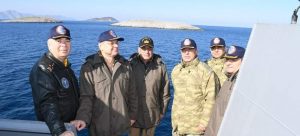
Η τουρκική πρόκληση με την παρουσία την Κυριακή του συνόλου της στρατιωτικής ηγεσίας της στα Ίμια είναι σαφής ως προς το τι θέλει να διαμηνύσει. Η γειτονική χώρα δηλώνει με τον πλέον σαφή τρόπο πως αμφισβητεί ελληνικά κυριαρχικά δικαιώματα και τα διεκδικεί στρατιωτικά. Και το, διαχρονικά, αποτυχημένο πολιτικό απαράτ της Αθήνας, χάνει τον ύπνο του. Γιατί γνωρίζει πως διέλυσε τη χώρα (οικονομικά, πολιτικά, κοινωνικά, δομικά) και με τη συμπεριφορά του έχει διαμορφώσει έναν λαό καθ εικόναν και ομοίωσιν.

Περιορίζεται στο να κάνει ακαδημαϊκού τύπου δηλώσεις, σαν και αυτές του προέδρου της Δημοκρατίας, ή του υπουργείου άμυνας που νοιώθει ικανοποιημένο επειδή γνώριζε την τουρκική προκλητική διάθεση από το Σάββατο (λες και πρόκειται για δημοσιογραφικό οργανισμό) και έστειλε στην περιοχή πολεμικό πλοίο. Ε, και;

Θα αναρωτηθείτε, τι θα μπορούσε να γίνει; Εδώ που έφθασαν τα πράγματα, η μόνη επιλογή είναι η περίφημη «αθηναϊκή ψυχραιμία». Για να δικαιολογήσουν την αδυναμία τους να κάνουν οτιδήποτε, μιλούν για ψυχραιμία, κατακεραυνώνοντας, έτσι, τους… θερμόαιμους. Όσους, δηλαδή, νοιώθουν πως η αξιοπρέπειά τους ως πολιτών μιας χώρας θίγεται.

Η αλήθεια είναι ότι, τώρα, δύσκολα μπορεί να γίνει κάτι πιο αποτελεσματικό από αυτά που αντιλαμβάνεται η Τουρκία.

Όταν ένας λαός βλέπει πως το μόνο ενδιαφέρον των κυβερνήσεων που εναλλάσσονται στην εξουσία είναι το βόλεμα των ημετέρων και η διαφθορά, δεν έχει τη διάθεση να συμμετάσχει σε μια ουτοπική προσπάθεια ανασυγκρότησης της χώρας, του κράτους και της κοινωνίας. Και κανείς … «ηγέτης» δεν είναι διατεθειμένος- ούτε έχει τις ικανότητες και το εκτόπισμα- να αναλάβει τέτοια προσπάθεια. Η χώρα βαδίζει με μαθηματική ακρίβεια στην καταστροφή. Κυρίως λείπει η ηγεσία. Είναι θλιβερή η εικόνα που παρουσιάζει το πολιτικό απαράτ. Οι πολυκατοικίες έχουν μεγαλύτερες αξιώσεις για την ανάθεση της διαχείρισής τους  σε πρόσωπα, από τις δυνατότητες των Ελλήνων πολιτικών αρχηγών.

Στην εύλογη ερώτηση τι προτείνετε, η απάντηση είναι: να θεωρηθεί ως το μεγαλύτερο έγκλημα η διαφθορά και το πολιτικό βόλεμα (π.χ. προδοσία της πατρίδας σε καιρό πολέμου) , εθνική συνεννόηση για την οικονομική ανάκαμψη και την αμυντική θωράκιση. Μέχρι τότε, επίμονη προσπάθεια για τη διαμόρφωση διεθνών συμμαχιών- κυρίως αυτό- προετοιμασία, με τις δυνάμεις που διαθέτουμε για την αντιμετώπιση ακραίων καταστάσεων, συνειδητοποίηση από το λαό πως μια σύγκρουση με την Τουρκία δεν βρίσκεται στη σφαίρα της φαντασίας και διάδοση στη διεθνή κοινότητα των ελληνικών θέσεων. Διαφορετικά, το τέλος είναι ορατό. Το μόνο που θα μας σώσει ίσως είναι ο ετεροπροσδιορισμός. Η επιβίωση δια της αποτυχίας των στόχων του άλλου. Και, προς Θεού. Μην κάνουμε πίσω, στην υπόθεση των “οκτώ”. Τέρμα η δορυφοροποίηση. Ας είναι αυτό το πρώτο μήνυμα.

Και επειδή η κύρια απειλή προέρχεται από μια ηθικά υπόλογη στη διεθνή κοινότητα, διαχρονικά, δύναμη, όπως η Τουρκία, γιατί το ελληνικό υπουργείο εξωτερικών δεν βάζει στην ατζέντα του το θέμα της Γενοκτονίας των χριστιανικών λαών της Ανατολής; Μήπως πρέπει α το σκεφτεί, εξετάζοντας όλες τις παραμέτρους που το ίδιο γνωρίζει πως θα συναντήσει σε μια τέτοια προσπάθεια;


Τα Ιμια σε τουρκικό χάρτη-ντοκουμέντο

0

ΣΤΑΥΡΟΣ ΣΤΑΘΟΥΛΟΠΟΥΛΟΣ*

Η νύχτα της 30ής προς την 31η Ιανουαρίου του 1996 στην Αγκυρα ήταν διπλά παγερή. Λίγο πριν από τα μεσάνυχτα χτύπησε το τηλέφωνο. Ηταν μια φίλη, διπλωματική συντάκτις μεγάλης τουρκικής εφημερίδας, που μου ζήτησε να αναβάλουμε το ραντεβού στο γραφείο μου το πρωί της επομένης επειδή, παρά το προχωρημένο της ώρας, είχαν ειδοποιηθεί τα ΜΜΕ ότι θα υπάρξουν δηλώσεις μετά το πέρας της συνεχιζόμενης μακράς έκτακτης σύσκεψης στο τουρκικό υπουργείο Εξωτερικών –με τη συμμετοχή και της ηγεσίας των Ενόπλων Δυνάμεων– για την κρίση στα Ιμια.

Στήθηκα στην τηλεόραση κι η ώρα περνούσε δύσκολα με κάποια μεταμεσονύκτια επανάληψη σίριαλ. Τελικά, στη 01.40΄ και χωρίς να διακοπεί το τρέχον πρόγραμμα, εμφανίστηκε «αθόρυβα» σε ζώνη στο κάτω μέρος της οθόνης του ιδιωτικού Interstar η είδηση ότι «Στρατιώτες μας αποβιβάστηκαν στο Καρντάκ» (η τουρκική ονομασία των Ιμίων). Μη πιστεύοντας στα μάτια μου, κι αφού ζήτησα τηλεφωνικά επιβεβαίωση από τη συνάδελφο Α. Μερσενιέ, ειδοποίησα τον πρέσβη μου Δ. Νεζερίτη και στη συνέχεια τον υπουργό Τύπου και κυβερνητικό εκπρόσωπο Δ. Ρέππα. Η αντίδραση του τελευταίου ήταν εύλογα δύσπιστη: «Είσθε σίγουρος;». «Διαβάζω τώρα στην οθόνη τη συμπληρωματική πληροφορία ότι σε λίγο ο ίδιος ο Τούρκος αντιπρόεδρος και υπουργός Εξωτερικών Ντενίζ Μπαϊκάλ θα προβεί σε δηλώσεις. Θα σας ξαναπάρω, επομένως, σε λίγο», του απάντησα.

Πράγματι, γύρω στη 01.50΄, αμέσως μετά το πέρας της μακράς σύσκεψης, εμφανίσθηκε ο κ. Μπαϊκάλ, συνοδευόμενος από τον εκπρόσωπο Τύπου του υπουργείου, Ομέρ Ακμπέλ. Και οι δύο επιβεβαίωσαν ότι «η Τουρκία αποβίβασε στρατιώτες της σε βραχονησίδα, όπου δεν υπήρχαν Ελληνες στρατιώτες και ανήρτησε τη σημαία της»· κι ακόμη, ότι «αναμένουμε, με καλή θέληση, να αποσυρθούν οι Ελληνες στρατιώτες, οπότε και εμείς θα πράξουμε το ίδιο, ώστε να αποκατασταθεί το status quo ante».

Με δεύτερη τηλεφωνική επικοινωνία, μετέφερα τις δηλώσεις στον υπουργό Τύπου κι αυτός, με τη σειρά του, στη «μικρή κυβερνητική σύσκεψη», που είχε αρχίσει στο πολιτικό γραφείο του πρωθυπουργού στις 00.30΄. Αργότερα, μου διηγήθηκε ότι η πληροφορία έπεσε σαν κεραυνός και αντιμετωπίσθηκε με περισσή δυσπιστία, ακόμη και ως προς το πρόσωπό του, ως κομιστή της είδησης.

Αποτέλεσμα της δυσπιστίας αυτής: το ΓΕΕΘΑ κατάφερε μόλις στις… 05.05΄ να διαπιστώσει του λόγου το αληθές. Δηλαδή, επί περίπου 4 κρίσιμες ώρες από τη στιγμή της κατάληψης, γύρω στη 01.00΄, και πάνω από 3 ώρες μετά τα δύο τηλεφωνήματά μου, η ελληνική πολιτική ηγεσία συνέχιζε να διαπραγματεύεται μέσω των ΗΠΑ με βάση λανθασμένα δεδομένα και με, ως εκ τούτου, καθοριστικά αποδυναμωμένα επιχειρήματα· κι αυτό επειδή η αρμόδια στρατιωτική ηγεσία ούτε είχε μεριμνήσει για την αποτροπή, ούτε αντελήφθη την επέμβαση αλλά και ούτε ήταν σε θέση να την εξακριβώσει σε εύλογο χρονικό διάστημα.

Η εξήγηση

Οκτώ μήνες αργότερα, στην αποχαιρετιστήρια εκδήλωση στην Αγκυρα –λόγω της μετάθεσής μου στη Βόννη– βρήκα την ευκαιρία να μιλήσω κατ΄ ιδίαν με τον βοηθό υφυπουργό Εξωτερικών, πρέσβη Ινάλ Μπατού, αρμόδιο για τις ελληνοτουρκικές σχέσεις και το Κυπριακό:

«Τελικά, πώς φτάσαμε σε εκείνη τη νύχτα;», τον ρώτησα. «Να σας πω», απάντησε, «τα πράγματα ήταν αρκετά απλά: Από τη στιγμή που επιμένατε στην παραμονή των κομάντος σας στη βραχονησίδα, έπρεπε να αντιδράσουμε. Οι στρατιωτικοί πρότειναν αυτό που καλά γνωρίζουν· να αποβιβαστούν, δηλαδή, δυνάμεις μας στη βραχονησίδα που είχατε καταλάβει και να απωθήσουν ή και να αιχμαλωτίσουν τους εκεί κομάντος. Γι’ αυτό, λοιπόν, υπάρχουμε εμείς οι πολιτικοί· ώστε να αναζητούμε και άλλες, λιγότερο επώδυνες λύσεις. Ρώτησα το Ναυτικό μας αν τα γύρω νησάκια έχουν επίσης καταληφθεί από ελληνικές δυνάμεις. Η απάντηση ήταν αρνητική. Πώς θα ήταν, άλλωστε, δυνατόν να καλύψετε όλες τις πέριξ νησίδες; Κάνατε όμως ένα βασικό σφάλμα: δεν επανδρώσατε τουλάχιστον και την άλλη βραχονησίδα των διαμφισβητούμενων Ιμίων. Πιθανώς, επειδή ήταν η μικρότερη και η δυτικότερη. Τι ευκολότερο, λοιπόν, από το να αποβιβαστούν σε μια κατασκότεινη νύχτα με έντονη θαλασσοταραχή βατραχάνθρωποί μας από την παραπλέουσα φρεγάτα στην αφύλακτη βραχονησίδα; Και για να σας το εξηγήσω με ποδοσφαιρικούς όρους: χάναμε 1-0 και ισοφαρίσαμε 1-1».

Ο συνομιλητής μου παρέπεμπε στο ότι η απόφαση είχε ήδη δρομολογηθεί τη Δευτέρα 29.1, σε έκτακτη σύσκεψη, όπου και ο ίδιος συμμετείχε. Πράγματι, η εφημερίδα «Χουριέτ» στις 30.1. –την προηγουμένη δηλαδή της επέμβασης– είχε γράψει: «Σύμφωνα με αποκλειστικές μας πληροφορίες, κατά τη χθεσινή έκτακτη σύσκεψη ασφαλείας», καθορίστηκε η τουρκική στάση: Αν η Ελλάδα δεν δεχθεί να αποσύρει τους στρατιώτες της, η Τουρκία θα αποκλείσει τις βραχονησίδες ή θα αποβιβάσει κομάντος σε άλλο τμήμα των Ιμίων ή και σε γειτονικό νησί». Το καυτό δημοσίευμα έστειλα το πρωί της ίδιας ημέρας, ως «Αμέσου Επιδόσεως» (241/30.1.1996) στην Κεντρική μου Υπηρεσία με κοινοποίηση στο υπουργείο Αμυνας! Αναρωτιέμαι, τι παραπάνω άραγε χρειαζόταν από αυτή την έγκαιρη και σαφή προειδοποίηση, ώστε να προστατευθεί και η δυτική βραχονησίδα;

Περί ελληνικών λαθών και η συνομιλία μου, δύο μήνες μετά τα γεγονότα, με τον γνωστό δημοσιογράφο Μεχμέτ Αλί Μπιράντ: «Το μεγάλο λάθος σας ήταν η αποστολή αγήματος στα Ιμια. Θα αρκούσε απλά να αφαιρεθεί η εκεί τουρκική σημαία. Η στρατιωτική αυτή ενέργεια προκάλεσε την Αγκυρα να αντιδράσει για λόγους όχι μόνο εντυπώσεων αλλά και εσωτερικής στήριξης, που τόσο είχε ανάγκη τότε η Τσιλέρ· ακόμη κι αν είχε αμφιβολίες για την ορθότητα των τουρκικών επιχειρημάτων».

Επίσημος χάρτης

Η άσκηση κυριαρχίας επί των Ιμίων από την Ελλάδα αδιαλείπτως από το 1947 υπήρξε έμπρακτη και ειρηνική, χωρίς η Τουρκία να την αμφισβητήσει μέχρι την κρίση του 1996. Προς επίρρωσιν δε, δύο μήνες μετά τα γεγονότα, εντοπίσαμε (χάρις στον συνάδελφο στο Γραφείο Τύπου Ε. Κοσμά) και ένα νεώτερο, εντελώς πρόσφατο ντοκουμέντο. Επρόκειτο για μια έκδοση της Γενικής Διοίκησης Χαρτογράφησης του τουρκικού υπουργείου Αμυνας σε συνεργασία με τον γερμανικό χαρτογραφικό οίκο R. Ryborsch. Είχε εκδοθεί μόλις το 1994 και ήταν ο αναλυτικότερος χάρτης της αγοράς (κλίμακα 1:500.000!)· πράγμα που παρείχε τη δυνατότητα αναγραφής ονομάτων ακόμη και βραχονησίδων. Στην επίμαχη θαλάσσια περιοχή, στις μεν τουρκικές βραχονησίδες προσετίθετο στην (με λατινική γραφή) ονομασία τους η συντομογραφία «Ad» (Ada=Νήσος), στις δε ελληνικές: «N» (=Νήσος). Με έκπληξη, διαπιστώσαμε ότι τα Ιμια αναγράφονταν ως «N. Limnia» (που είναι και η ορθή, μη παρεφθαρμένη φωνητικά, ελληνική ονομασία)! Κι αυτό, σε έναν επίσημο τουρκικό χάρτη, που κυκλοφόρησε δύο μόλις χρόνια πριν από την κρίση στα Ιμια…

Ενημέρωσα τον πρέσβη και το υπουργείο Τύπου, στο οποίο και απέστειλα 30 από τα αντίτυπα του χάρτη, που σπεύσαμε να εξασφαλίσουμε στην ελεύθερη αγορά. Επίσης, προμηθεύσαμε με αντίτυπα τόσο τους ξένους ανταποκριτές όσο και 5 τουρκικές εφημερίδες. Ο διπλωματικός συντάκτης της «Γκιουναϊντίν», Ιμπραχήμ Γκιουντούζ, με αναζήτησε για μια εκτενέστερη ενημέρωση, στη συνέχεια δε η προσκείμενη στις ένοπλες δυνάμεις εφημερίδα του εκυκλοφόρησε (13.6.96) με τον κύριο πρωτοσέλιδο πηχυαίο τίτλο: «Παράλειψη του Καρντάκ σε χάρτη» και υπότιτλο: «Χάρτης που εκπόνησε η Χαρτογραφική Υπηρεσία του Υπουργείου Αμυνας εμφανίζει τις βραχονησίδες Καρντάκ να ανήκουν στην Ελλάδα». Στην πρώτη σελίδα προβλήθηκε και το επίμαχο απόσπασμα του χάρτη-μπούμερανγκ, ενώ και στο σχετικό ρεπορτάζ επισημαινόταν ότι «…η Τουρκία δίνει φοβερά ατού στον αντίπαλο. Σύμφωνα με το πρωτόκολλο συνεργασίας με τον γερμανικό χαρτογραφικό οίκο, η Χαρτογραφική μας Υπηρεσία ήταν αυτή που καθόρισε τα τοπωνύμια».

Η αλλοίωση

Αμέσως μετά, αρχές του 1997, ο χάρτης επανεκδόθηκε(!) με μοναδική αλλαγή την αντικατάσταση του «N. Limnia» σε «Kardak Ad.». Η απόπειρα αλλοίωσης των ασύμφορων δεδομένων ενός χάρτη που είχε βασιστεί σε ενυπόγραφο δοκίμιό τους (όπως με διαβεβαίωσε ο γερμανικός οίκος αργότερα), προσέλαβε και ευτράπελη διάσταση μια και αφαίρεσαν επιπλέον και την ονομασία «N. Zouka» μιας άλλης μικρής βραχονησίδας, η οποία μάλιστα, κείμενη ΝΑ των Ιμίων, απέχει ακόμη λιγότερο από την τουρκική ακτή. Επειδή όμως δεν βρέθηκε κάποια τουρκική ονομασία, την άφησαν… αβάπτιστη (τουλάχιστον, δεν την εξαφάνισαν)!

Ο χάρτης λοιπόν του 1994 –σε αντιπαραβολή πλέον με την εκ των υστέρων αλλοίωσή του– τεκμηριώνει, ως νεώτερο επίσημο τουρκικό ντοκουμέντο, την από το 1947 μέχρι και το 1995 αποδοχή από την Aγκυρα όσων υπαγόρευαν τα ήδη γνωστά παλαιά ντοκουμέντα για το καθεστώς των Δωδεκανήσων και προδίδει το όψιμο και καινοφανές των τουρκικών διεκδικήσεων.

Σοβαρές άλλωστε επιφυλάξεις για το δίκιο της Αγκυρας στο ζήτημα των Ιμίων δεν δίστασαν να διατυπώσουν τότε όχι μόνο κορυφαίοι Τούρκοι αρθρογράφοι (Μεχμέτ Αλί Μπιράντ, Ερτουγρούλ Οζκιόκ, Γιαλτσίν Ντογάν, Γκιουνερί Τζιβάογλου) αλλά και τα μεγάλα κόμματα της αντιπολίτευσης. Και το σημαντικότερο, ο ίδιος ο αρχηγός του Γενικού Επιτελείου Ισμαήλ Χακί Καρανταγί, που μίλησε για «μέγα στρατηγικό λάθος». Απόλυτα συμβατός, δηλαδή, και με τη στρατιωτική υπηρεσία που είχε εγκρίνει τον χάρτη του 1994.

Αναφέρθηκα εκτενέστερα στο παραπάνω θέμα, επειδή περιέργως η χώρα μας δεν έχει ακόμη διεθνώς αξιοποιήσει επαρκώς το νέο σημαντικό αυτό τεκμήριο. Ομως, ποτέ δεν είναι αργά· προπάντων δε στις μέρες μας (3 αντίτυπα του χάρτη, που έχω ακόμη στο αρχείο μου, θέτω ευχαρίστως στη διάθεση αρμοδίων φορέων).

* Ο κ. Στ. Σταθουλόπουλος διετέλεσε, μεταξύ άλλων, επί μακρόν, σύμβουλος και εκπρόσωπος Τύπου στις ελληνικές πρεσβείες Αγκυρας, Βόννης και Βερολίνου.

“Καθημερινή”

How the Profound Changes in Economics Make Left Versus Right Debates Irrelevant

0
By Eric Beinhocker*
Complexity

Eric Beinhocker introduces the ‘new economics’ research programme


 Economic ideas matter. The writings of Adam Smith over two centuries ago still influence how people in positions of power – in government, business, and the media – think about markets, regulation, the role of the state, and other economic issues today. The words written by Karl Marx in the middle of the 19th century inspired revolutions around the world and provided the ideological foundations for the cold war. The Chicago economists, led by Milton Friedman, set the stage for the Reagan/Thatcher era and now fill Tea Partiers with zeal. The debates of Keynes and Hayek in the 1930s are repeated daily in the op-ed pages and blogosphere today.

Economic thinking is changing. If that thesis is correct – and there are many reasons to believe it is – then historical experience suggests policy and politics will change as well. How significant that change will be remains to be seen. It is still early days and the impact thus far has been limited. Few politicians or policymakers are even dimly aware of the changes underway in economics; but these changes are deep and profound, and the implications for policy and politics are potentially transformative.

For almost 200 years the politics of the west, and more recently of much of the world, have been conducted in a framework of right versus left – of markets versus states, and of individual rights versus collective responsibilities. New economic thinking scrambles, breaks up and re-forms these old dividing lines and debates. It is not just a matter of pragmatic centrism, of compromise, or even a ‘third way’. Rather, new economic thinking provides something altogether different: a new way of seeing and understanding the economic world. When viewed through the eyeglasses of new economics, the old right–left debates don’t just look wrong, they look irrelevant. New economic thinking will not end economic or political debates; there will always be issues to argue over. But it has the promise to reframe those debates in new and hopefully more productive directions.

An economics for the real world

The term ‘new economics’ is both vague and broad. It is easiest to define by what it is not. New economics does not accept the orthodox theory that has dominated economics for the past several decades that humans are perfectly rational, markets are perfectly efficient, institutions are optimally designed and economies are self-correcting equilibrium systems that invariably find a state that maximises social welfare. Social scientists working in the new economics tradition argue that this theory has failed empirically on many points and that the 2008 financial crisis is only the latest and most obvious example.

Defining what new economics is provides a greater challenge. As of yet there is no neatly synthesised theory to replace neoclassical orthodoxy (and some argue there never will be as the economy is too complex a system to be fully captured in a single theory). Rather new economics is best characterised as a research programme that encompasses a broad range of theories, empirical work, and methods. It is also highly interdisciplinary, involving not only economists, but psychologists, anthropologists, sociologists, historians, physicists, biologists, mathematicians, computer scientists, and others across the social and physical sciences.

It should also be emphasised that new economics is not necessarily new. Rather it builds on well-established heterodox traditions in economics such as behavioural economics, institutional economics, evolutionary economics, and studies of economic history, as well as newer streams such as complex systems studies, network theory, and experimental economics. Over the past several decades a number of Nobel prizes have been given to researchers working in what today might be called the new economics tradition, including Friedrich von Hayek, Herbert Simon, Douglass North, James Heckman, Amartya Sen, Daniel Kahneman, Thomas Schelling and Elinor Ostrom.

The common thread running through this broad research programme is a strong desire to make economic theory better reflect the empirical reality of the economy. New economics seeks explanations of how the economy works that have empirical validity. Thus behavioural economists run painstakingly crafted experiments to explain actual human economic behaviour. Institutional economists conduct detailed field investigations into the functions and dysfunctions of real institutions. Complexity theorists seek to understand the dynamic behaviour of the economy with computer models validated against data.

In my book The Origin of Wealth (2007: 97) I offered a table to summarise the contrast between traditional economics and the new economics perspective. I provide here an updated version.

Screen Shot 2016-05-26 at 11.56.54 PM

Traditional economists often respond that the limitations of orthodox theory are well recognised and there is much work being done to relax restrictive assumptions, introduce more realistic behaviour, heterogeneity, institutional effects, dynamics, endogenous innovation and so on. They are correct and this work is a very positive development for the field. However, much of this work introduces just one element of realism to an otherwise standard model – a bit of behaviour here, a bit of institutional realism there, and so on. It is very hard or even impossible to relax all of the assumptions at once without throwing out the whole structure of the model – in particular without abandoning the core idea that the economy is an equilibrium system.

The radical challenge the new economists have accepted is to relax all of the unrealistic assumptions at once, move to the right column of the above table, and create an economics that has much greater fidelity to the real world. It is an enormous challenge and it requires a new toolkit and methodologies. But there is growing evidence that it is possible. That evidence comes from work in economics itself, but also from other fields that successfully model highly complex distributed systems that have many similarities to the economy – for example climate and weather, biological ecosystems, the brain, the internet and epidemiology.

Thus what has come to be referred to as new economics is not a single theory, or even a coherent body of work. It is a broad research programme best characterised by its unifying desire to embrace the messy reality of the economy. To accept human behaviour, imperfect institutions, and the complex interactions and dynamics of the economy as they really are rather than what an idealised model says they should be.

As policymakers and politicians often rely on the advice of economists and use their theories and ideas to frame their views and debates, this move towards realism in economics should be a good thing. If one thinks of economists as like biologists and policymakers as like doctors, then just as better biology has led to more effective medicine, so too should a more realistic economics lead to more effective policy.

In the rest of this essay I will outline three ways in which new economics may impact policy and politics. First, new economics may offer better tools for policy development and analysis – I will discuss an example from the financial crisis. Second, new economics has the potential to change the way we think of the role of government and policy itself, yielding new ways of designing policies in general. Third, new economics offers the intriguing possibility of developing new political narratives – this is the least developed aspect of new economics, but perhaps the one with potential for greatest long-term impact.

New tools for policy – examples from the crisis

“…Uncertainty has increased, but generally inconsistent with the perception of a “bubble,” the implied risks do not seem particularly tilted to the downside…” – US Federal Reserve 2006

In 2006, economists at the US Federal Reserve conducted an analysis of what would happen to the US economy if house prices suddenly dropped by 20 per cent. Officials at the central bank had noted the unprecedented run-up in house prices and become concerned. They ran the analysis on their state of the art macroeconomic model and the answer that came back was ‘not much’. Growth might soften, or there might even be a mild recession, but nothing that a few small interest rate cuts couldn’t handle. The model had done exactly what such traditional models are designed to do. It assumed everyone would behave rationally, markets would function efficiently, and the system would smoothly self-correct back to full-employment equilibrium.

At around the same time, Fed chairman Alan Greenspan was repeatedly asked by the media, congressmen, and others whether there was a housing bubble. Greenspan, a devotee of efficient market theory and fan of Ayn Rand’s libertarian philosophy, consistently replied that the runup in prices must have good rational reasons, there was little evidence of a bubble, and even if there was, the Fed should not intervene to burst it as the markets would eventually self-correct and government intervention would likely do more harm than good.

We all know what happened. The bubble burst and it triggered a catastrophic financial collapse, almost instantly wiped out $10.8 trillion in wealth in the US alone, nearly led to a second great depression, and we are still dealing with the consequences, most notably the ongoing euro crisis. In late 2008, Greenspan gave his famous mea culpa saying, ‘I have found a flaw’ in orthodox free-market theory, ‘I don’t know how significant or permanent it is. But I have been very distressed by that fact.

Might new economic techniques and models have given a different view? Might they have helped policymakers avoid such a disastrous outcome? A team of researchers led by John Geanakoplos at Yale, Robert Axtell at George Mason, my colleague Doyne Farmer at Oxford and Peter Howitt at Brown think so. They have constructed (Geanakoplos et al 2012) an agent-based model of the housing market that gives new insights into what caused the bubble and the model could eventually become a tool to assist policymakers in designing strategies for preventing or managing future bubbles.

Their model is radically different from the kind of models the Fed used in its 2006 analysis. Rather than look at the economy top-down and in aggregate, they model the system bottom-up. Their model has individual households in it, and for those owning houses rather than renting, individual mortgages backed by houses of a certain value. This population of households is heterogeneous – some have mortgages they can easily afford, some don’t, and the terms of their mortgages may differ. The households are assumed to behave in ways consistent with how behavioural economists tell us real people behave. Rather than doing elaborate calculations the agents in the model use rules of thumb (for example one shouldn’t take on a mortgage more than three times one’s annual income) but individuals vary in their use of such rules (some might be more conservative, others more risk taking). They also introduce institutional realism, for example if interest rates drop you might consider refinancing, but you might not automatically do it if the hassle factor is too high.

The initial version of the model uses detailed mortgage and household data from a single metropolitan area – Washington, DC. The team eventually plan to calibrate it with data from other major cities, and possibly the whole of the US and other countries such as the UK as well. Their preliminary findings reproduce the dynamics of the bubble building up and then bursting. Unlike traditional analyses, the model doesn’t gently self-correct, it crashes (see figure 11.1a). They then run policy experiments on the model, asking what policymakers might have done to prevent the bubble forming, or at least stopped it building once it was clear there was one. Analyses using traditional models have tended to blame the bubble on overly loose monetary policy from the Fed. So the team tested scenarios where policymakers raise interest rates. The bubble is indeed moderated, but not eliminated. But interest rates are a blunt instrument and such tightening would also have slowed growth in the rest of the economy. So the team also tried a regulatory intervention – preventing banks from loosening their loanto-value ratios. During the heat of the bubble, banks competed with each other to give loans, loosening their standards. The team’s model shows that by intervening to prevent these standards from slipping, policymakers might have eliminated a key dynamic in the bubble’s formation, prevented the subsequent bust, and done so more effectively and without the collateral damage caused by a big interest rate hike.
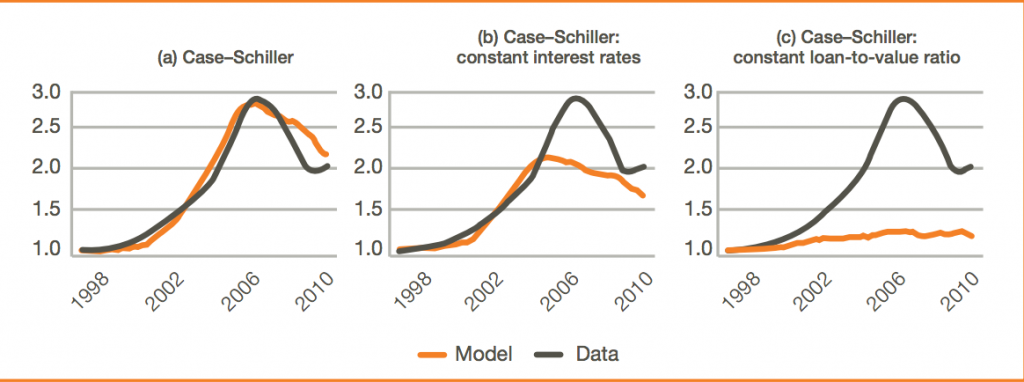
Screen Shot 2016-05-27 at 12.02.29 AM

Source: Geanakoplos et al 2012

There are also efforts to use similar approaches to go beyond the housing market and look more broadly at the relationship between the financial sector and the macroeconomy. When the crisis hit in 2008 many senior policymakers were shocked by how little help they received from the formal theories and models of traditional economics. Reflecting on this later, European Central Bank (ECB) president Jean-Claude Trichet said: ‘As a policymaker during the crisis, I found the available models of limited help. In fact I would go further: in the face of the crisis, we felt abandoned by conventional tools.

Central banks, finance ministries, and economic regulators all have large staffs of well-trained economists, fancy models and vast quantities of data. But when the crunch came, their theories and models could not describe what they were experiencing. The Economist reported that the Bank of England’s large macro model wasn’t much help because it didn’t have banks in it. It is hard to make policy in the middle of a banking crisis if one’s economic model doesn’t have banks in it.

The reason these models and formal theories were of limited use is they were built on assumptions that people are rational, markets always clear, bubbles can’t form, and that banks are just boring bits of plumbing that shuffle money from one part of the system to another and can be safely ignored. It is therefore not surprising that when people started panicking, markets were not clearing, a massive bubble had just burst, and the banking system was on the verge of collapse, that models with such assumptions were not that helpful. It is a bit like building a flight simulator where it is impossible for the airplane to crash.

Yet a crisis is exactly when a model should be at its most helpful. The crisis was something beyond the experience of most of the participants; it was highly complex and moving very fast. Intuition and ‘mental simulation’ can be unreliable in such circumstances. Models can be very helpful in augmenting and informing judgment. They can keep track of lots of variables, enforce logical relationships, and search spaces of possibility more rigorously and quickly than the human mind can alone. If policymakers had had better models, they might have been able to run more and different policy scenarios and gained different insights into the crisis. Politics and judgment will always play a key role in major policy decisions – but better models might have given the policymakers better options to choose from.

Andrew Haldane (2011), executive director for financial stability at the Bank of England, has teamed up with Lord Robert May, one of the world’s pre-eminent mathematical ecologists and applied ideas from network theory, epidemiology, and food webs in ecology to look at the problem of financial contagion in the banking system. Their work has potentially significant implications for structural reform of the banking system. Doyne Farmer, Domenico Delli Gatti and I are leading an effort supported by the European Commission called Project CRISIS, which is a consortium of researchers building an agent-based model of the interlinked banking system and macroeconomy to provide a simulation platform for policymakers to develop and test policy ideas. While the work is at an early stage and there are many challenges to building a tool policymakers can rely on, there has been significant interest from central banks, finance ministries, regulators, and other economic policymakers.

While the examples cited draw from behavioural economics, network theory, experimental economics, complex systems thinking and use computer simulation, there is also new economic work with direct public policy relevance going on in economic history, institutional economics, evolutionary economics, and a variety of other traditions and toolkits. And there is work going on not only on the financial crisis, but also on topics such as climate change, inequality, poverty, economic development, innovation and growth, and other policy-relevant topics. The challenge is bringing this promising, but still early-stage work, into the policy environment.

Policymaking in an uncertain world

In addition to providing new models and tools for specific issues like the financial crisis, new economics offers a potentially different way of thinking about policy more broadly.

Traditional economics views the economy in a fairly mechanistic way. If people are rational and we want to change their behaviour then we just need to change their incentives. Thus, a lot of policy is conducted through tinkering with the tax code or subsidies, for example if one wants more innovation, give an R&D tax credit; if one wants less smoking, tax it heavily. Of course people aren’t immune to such incentives, but often the response is far less than policymakers would like.

Likewise, traditional economics views the economy as naturally being in a state of efficiency, and so by definition any interventions move it away from that state, making it less efficient. Thus, interventions are justified by market failures, the need to create some public good, or the need to avoid some negative spillover effects or externalities. For example, state support of R&D might be justified if there are market failures, or taxing smoking might be justified to reduce the externalities smokers create for non-smokers.

Finally, policies are evaluated through the lens of cost–benefit analysis, where future benefits and costs are projected and compared. For example, much of the debate on climate change policy has been over competing forecasts of future costs from climate damage and their likelihood of occurring, versus the potential benefits of action to avoid those costs.

These mechanistic approaches to policy and regulation are still what are taught in most undergraduate and graduate university programmes, and they pervade the civil service and the pool of advisers and experts that governments rely on for policy development and assessment.

Both economists and policymakers have also ignored what George Soros calls the ‘reflexivity’ of the economy. Actors in an economy take actions which change the economy, those changes then change the actors’ perceptions of the economy, which then changes their actions, and so on. But as humans are fallible and our perceptions and interpretations may not always match reality, the two-way interplay between perceptions and actions can send the economy off on a course far from the optimal path predicted by orthodox economic models. Bubbles are a prime example. Soros has also pointed out that these reflexive interactions can create ‘predator–prey’ dynamics between regulators and those being regulated. Regulators take an action to address a perceived problem, that changes the perceptions and actions of market participants, which in turn creates a new set of problems triggering further regulator actions, and so on. Over time this infinite chase between fallible regulators and equally fallible market participants leaves a trail of rules, structures, and institutions that has a major effect on shaping the evolution of the economy.

So how might new economics move us beyond the mechanistic view of policy and regulation, and towards a view that takes into account the complexity, unpredictability, and reflexivity of the economy?

My view is that we must take a more deliberately evolutionary view of policy development. Rather than thinking of policy as a fixed set of rules or institutions engineered to address a particular set of issues, we should think of policy as an adapting portfolio of experiments that helps shape the evolution of the economy and society over time. There are three principles to this approach:

First, rather than predict we should experiment. Policymaking often starts with an engineering perspective – there is a problem and government should fix it. For example, we need to get student mathematics test scores up, we need to reduce traffic congestion, or we need to prevent financial fraud. Policy wonks design some rational solution, it goes through the political meat grinder, whatever emerges is implemented (often poorly), unintended consequences occur, and then – whether it works or not – it gets locked in for a long time. An alternative approach is to create a portfolio of small-scale experiments trying a variety of solutions, see which ones work, scale-up the ones that are working, and eliminate the ones that are not. Such an evolutionary approach recognises the complexity of social-economic systems, the difficulty of predicting what solutions will work in advance and difficulties in real-world implementation. Failures then happen on a small scale and become opportunities to learn rather than hard to reverse policy disasters. It won’t eliminate the distortions of politics. But the current process forces politicians to choose from competing forecasts about what will and won’t work put forward by competing interest groups – since it is hard to judge which forecast is right it is not surprising they simply choose the more powerful interest group. An evolutionary approach at least gives them an option of choosing what has been shown to actually work.

One area where evolutionary experimentation on policies has been tried explicitly is in development economics, where different interventions are tried across a portfolio of villages or regions, the results measured, and successful interventions scaled up. Michael Kremer at Harvard has conducted field experiments on issues ranging from policies to improve teacher performance, to getting farmers to use fertiliser. David Sloan Wilson, a leading evolutionary theorist, has tried an evolutionary approach in a fascinating case study of improvement efforts in his city of Binghamton, NY. The individual states in the US also provide such a natural evolutionary laboratory on issues ranging from healthcare to education. Other initiatives where there is a diversity of approaches, such as charter schools, end up creating an evolutionary portfolio of experiments, though more could be done to harvest those experiences and scale-up the successful experiments.

Second, policies and institutions should be made as adaptable as possible. The predator–prey dynamics between regulators and participants mean there is a never-ending battle between regulators trying to draw rules as tightly and specifically as possible, taking into account all possible contingencies, and armies of lawyers and accountants trying to find ways around them. This often leads to very rigid regulatory structures overlaid on highly dynamic markets. A better approach is to create rules that provide general frameworks, but then adapt to specific circumstances. One example is how California’s building codes have succeeded in reducing energy consumption. Rather than try to predict the state of energy efficiency technologies in future years, the regulators created a set of general performance standards that automatically ratchet-up as the state of technology improves – the standards are set by whatever the best developers are doing at the time. And rather than specify how those standards are to be achieved, developers are offered a choice of pre-approved practices, or experimenting with new ways of meeting the standards. Some developers are happy to go with the pre-approved practices, but others who are competing to meet the standards in less costly or more aesthetic ways have incentives to experiment and innovate. Thus the regulations and state-of-the-art building practices co-evolve with each other.

One could imagine similar approaches being applied in areas such as health, transport and education where general performance standards could be set, incentives created for experimentation and innovation, and then have the standards automatically adjust as the system evolves.

Third and finally, policymakers need to think of themselves less as social engineers and more as ‘system stewards’. As Michael Hallsworth from the Institute for Government (IFG) explains, rather than engineering specific outcomes, government’s role as system stewards is to create the conditions in which interacting agents in the system will adapt towards socially desirable outcomes. Policy design and implementation are thought of as integral rather than separately, and mechanisms for feedback and continuous learning and improvement are built-in from the beginning. The IFG recognises, however, that such an evolutionary approach may not be suitable for all circumstances. In some situations, for example emergency disaster relief or national security situations, a traditional top-down approach may be required when speed is of the essence, where clarity and consistency is critical, or when the capacity of actors further down the chain is limited.

A major challenge for these more adaptive approaches to policy is the political difficulty of failure. Learning from a portfolio of experiments necessitates that some experiments will fail. Evolution is a highly innovative, but inherently wasteful process – many options are often tried before the right one is discovered. Yet politicians are held to an impossibly high standard, where any failure, large or small, can be used to call into question their entire record.

Likewise, politicians are always expected to have clear plans, and simple, easy to understand answers in which they have unshakeable confidence. You would never hear a politician give a speech where she or he says ‘It is a complex problem, we’re not sure what to do. But we have several good ideas that we’ll try on a small scale. We’ll then ramp up the ones that work and close down the ones that don’t, and then have a good shot at solving it.’ For some reason we don’t mind such an approach when it is used by doctors looking for new drugs, energy companies looking for oil, or venture capitalists looking for the next big idea. But we seem to prefer politicians who tell us the world is simple and predictable, even though we know it to be complex and unpredictable.

So an explicit, widespread use of new economic approaches to policymaking may require some education of citizens, the media and politicians themselves on the risks of overconfident top-down solutions, and the importance of small-scale failure as a way to learn and prevent large-scale disasters.

Politics – neither left, right nor centre

Perhaps the most intriguing, but least developed, potential impact of new economic thinking could be on politics itself. The tradition of splitting politics into left and right camps dates back to the layout of the French National Assembly in the Revolution of 1789. Over the two and a quarter centuries since, both left and right have seen their political narratives evolve. The left has travelled an arc from Marx and Rousseau, through Victorian social reformers, to Keynes, the New Deal and to modern European notions of social democracy. Meanwhile, the right has travelled from Smith and Hume, through the Austrians, the Chicago revolution, Thatcher-Reagan, and to today’s European centre-right parties and America’s radicalised Tea Partiers. At the heart of both narratives have been differing views on the nature of the economy, the roles of the individual and the state, and notions of freedom and social justice.

New economics has the potential to significantly reframe these debates. It isn’t merely a matter of centrist compromise, of just splitting the difference. Rather it is a different frame that agrees with the right on some things, with the left on others, and neither on still other areas. For example, new economic work shows that Hayek was ahead of his time in his insights into the power of markets to self-organise, efficiently process information from millions of producers and consumers, and innovate. But new economic work also shows that Keynes was ahead of his time in his concerns about inherent instabilities in markets, the possibility that markets can fail to self-correct, and the need for the state to intervene when markets malfunction. Likewise, new economics research shows that humans are neither the selfish individualists of Hume nor the noble altruists of Rousseau, rather they are complex social creatures who engage in a never ending dance of cooperation and competition. Humans are what researchers such as Herb Gintis and Sam Bowles (2005) call ‘conditional co-operators and altruistic punishers’ – our cooperative instincts are strong and provide the basis for all organisation in the economy, but we also harshly punish cheaters and free-riders, and compete intensely for wealth and status.

Traditional economics tends to frame things in terms of market efficiency versus market failure, and those on the right emphasise the efficiency part and those on the left the failure part. This leads to differing views on the justice of market outcomes. The right generally believes that if markets allocate resources in the most societally efficient way then any interference in that process is morally suspect. Market outcomes may be unequal, but that is because the distribution of talent and hard work in the economy is also unequal – in general people get what they deserve. The left on the other hand tends to see unequal outcomes as an injustice in and of itself, and emphasises how powerful interests use markets to their benefit and can abuse or leave behind the less powerful. People often don’t get what they deserve and the state must intervene to protect the vulnerable, and correct both unfair processes and unfair outcomes.

To date there has been very limited work on questions of inequality, social welfare, and social justice from a complex systems or evolutionary economics perspective. But there are hints of a different view. Even models that start with perfectly equal or random distributions of income or wealth can produce unequal outcomes statistically similar to what is observed in the real world. These outcomes emerge because small, random differences can lead to self-reinforcing feedbacks that pull apart the tails of the distributions. For example, two people might start off with equal ability and starting circumstances, but by chance one gets an early lucky break and the other doesn’t leading to compounding differences in income over the rest of their lives. Thus even with equal initial endowments and a fair process, inequality may emerge. The right might be wrong in that inequality might not be merely the result of unequal distributions of talent and hard work and therefore justified. But the left might also be wrong in that inequality might not necessarily be the result of unfair processes. At the same time, the right might be correct that unequal outcomes are a natural and difficult to avoid outcome of market interactions, while the left might also be correct that a growing body of evidence shows that unequal outcomes are strongly associated with a number of social pathologies justifying state intervention to ameliorate those outcomes. In other words, a new economics perspective might not just split the difference on debates such as inequality, it might rescramble the terms of such debates.

Finally, new economic thinking may also provide the foundation for new political narratives. Eric Liu and Nick Hanauer, in their 2011 book The Gardens of Democracy, explore the possible shape of such a narrative. They liken the narratives of traditional economics to ‘machine-thinking’ and advocate a shift to ‘garden-thinking’ that emphasises the dynamic, constantly evolving nature of the economy and the interconnectedness of society. The state then plays the role of gardener helping create the conditions in which the garden of society can flourish.

It took traditional economics decades to move from academic theory to providing a foundation for policymaking and a basis for our political narratives. New economic thinking still has some distance to go to mature as a body of economic theory, and no doubt it will take time to fully develop the policy and political implications of these ideas. This journey might not end our political debates, but it has the potential to make them far more productive for society.

Adapted from Complex New World: Translating new economic thinking into public policy, published by the Institute for Public Policy Research (IPPR).

*ERIC BEINHOCKER


Eric Beinhocker
Eric Beinhocker is the Executive Director of the Institute for New Economic Thinking at the Oxford Martin School, University of Oxford. Follow him: @EricBeinhocker

http://evonomics.com/the-deep-and-profound-changes-in-economics-thinking/

The Long War: Turkey’s Difficult Struggle Against ISIS in Syria

0

by

The Turkish army is suffering unexpectedly serious losses in men and equipment as it engages in its first real battle against Isis fighters holding al-Bab, a small but strategically placed city north east of Aleppo. Turkish military commanders had hoped to capture al-Bab quickly when their forces attacked it in December, but they are failing to break through Isis defences.

At least 47 Turkish soldiers have killed and eleven tanks disabled or destroyed according to the Turkish military expert Metin Gurcan writing in al-Monitor. Isis have posted a video showing a Turkish tank being destroyed, apparently by an anti-tank rocket and Isis fighters looking at the wreckage of other armoured vehicles.

The Turkish military intervention in northern Syria, known as Operation Euphrates Shield, which began on 24 August last year has also led to heavy civilian casualties. The Syrian Observatory for Human Rights, citing local witnesses, says that 352 civilians including 77 children and 48 women have been killed by Turkish artillery bombardments and air strikes over the last five months. Drone footage taken by Isis shows that the buildings in al-Bab, that once had a population of 100,000, have been devastated.

Turkey had intended to make a limited military foray into the territory between the Turkish frontier and Aleppo city 40 miles further south which would make it a serious player in the Syrian conflict. It would drive Isis from its last big stronghold in northern Syria at al-Bab and, above all, prevent the Syrian Kurdish People’s Protection Units (YPG) from linking up their enclaves at Kobani and Qamishli with one at Afrin, north west of Aleppo.

The strategy has proven far more costly and slower to implement in the face of determined and skilful Isis resistance than Ankara had foreseen. It wanted primarily to rely on Arab and Turkman militiamen under Turkish operational control, though these would be nominally part of the Free Syrian Army (FSA) umbrella group. These proxies would be backed up by Turkish artillery, air strikes and a limited number of Turkish ground troops.

The plan seemed to work in the beginning as the Turkish forces took over the Isis-held town of Jarablus, where the Euphrates River crosses the Turkish border. But swift success here came because Isis did not fight, its men retreating or shaving off their beards and melting into the local population. But when the Turkish-backed FSA advance failed to break through Isis lines in and around al-Bab, Turkey had to reinforce them with its own units which now do the bulk of the fighting.

Turkish leaders blamed their problems partly on the US which has failed to make more than a few air strikes in support of the al-Bab offensive. The US does not want to aid militarily a Turkish intervention aimed primarily at the YPG, who have proved the most effective US ally against Isis in Syria. The YPG has at least 25,000 battle-tested ground troops who are backed up by the massive firepower of the US-led air coalition. Ankara is hoping that the new Trump administration will be less cooperative with the Kurds and more so with Turkey.

Isis is using an effective cocktail of tactics similar to those which it employed to slow down the offensive of the Iraqi security forces in east Mosul which took them three months to capture. These tactics include frequent use of suicide bombers driving vehicles packed with explosives (VBIEDs),often especially armoured in Isis workshops so they are difficult to stop.

“Isis uses VBIEDs to disrupt its enemies’ field planning, organisation and morale,” says Mr Gurcan. “With tunnels, Isis maintains mobility, despite air attacks.” As in Mosul, Isis is able to move small mobile units containing snipers, specialists using ant-tank missiles and suicide bombers from house to house without exposing them to superior enemy fire power. The Turkish forces have been unable to encircle al-Bab and cut the main supply route to Raqqa, the de facto capital of Isis in Syria.

Turkey benefited at this week’s peace talks in Astana in Kazakhstan from being one of three foreign powers – the others being Russia and Iran – with ground troops in Syria. It had previously provided crucial aid, sanctuary and a near open border to the Syrian armed opposition. Reinforced by a diplomatic marriages of convenience with both Russia and Iran, Turkey has acquired significant influence over the outcome of the six-year long war in Syria. But the slow military progress at al-Bab shows Turkey’s growing military engagement in Syria is coming at a price – even in its initial phases.

The fighting in and around al-Bab underlines an important weakness of the plans announced at Astana to bolster the current shaky Syrian ceasefire announced on 30 December. The two most powerful rebel military movements, Isis and Jabhat Fateh al-Sham, formerly al-Nusra, al-Qaeda’s branch in Syria, are not included in the ceasefire and have no reason to abide by its terms. On the contrary, Nusra has launched an offensive in west Aleppo province to eliminate rebel groups sympathetic to peace talks and a ceasefire.

Significantly, Isis is showing that, despite claims by the Iraqi and Syrian governments that it is facing imminent defeat, it is still capable of fighting on multiple fronts. It holds west Mosul in Iraq with a population of 750,000, recaptured Palmyra in Syria in mid-December and has repeatedly attacked the Syrian government enclave in the provincial capital of Deir Ezzor over the last ten days. The Russian air force was compelled to launch intense air strikes to help the Syrian army hold the city.

http://www.counterpunch.org/2017/01/27/the-long-war-turkeys-difficult-struggle-against-isis-in-syria/

Rajiv Gandhi Assassination: CIA Made Brief 5 Years Before ex-PM Was Killed

0
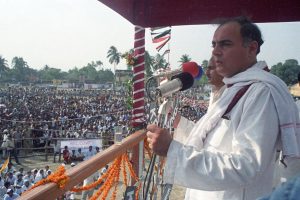
File photo of former prime minister Rajiv Gandhi who was assassinated in 1991. (File Photo/Reuters)

New Delhi: Five years before Rajiv Gandhi was killed in 1991, the US Central Intelligence Agency had prepared a very detailed and thorough “brief” on what would happen if he is assassinated or makes an “abrupt departure” from the Indian political scene.

A 23-page report, titled “India After Rajiv …” was put out as early as in March 1986 for comments from other senior CIA officials. The “sanitised” report was declassified recently by the Central Intelligence Agency (CIA).

 The report, whose complete title is not entirely available as it is part deleted, was prepared on the basis of inputs available to the CIA till January 1986.

The very first sentence of the report’s available (undeleted) page reads: “Prime Minister Rajiv Gandhi faces at least an even chance of assassination before his tenure in office ends in 1989.” It, however, later clearly said that “assassination is the major near-term threat” to him.

Over five years later, Gandhi was assassinated at Sriperumbudur in Tamil Nadu on May 21, 1991.

The first section titled “Key Judgments” analyses and deliberates upon what likely scenario would emerge in the domestic and international political situation if there is a sudden change in leadership minus Rajiv Gandhi and the likely impact on India’s relations with the US, the then USSR and the region.

It also dealt with the threats posed to Gandhi’s life by various extremist groups at that time and the likely fallout of his murder.

“If Gandhi fell to a Sikh or Kashmiri Muslim assassin, widespread communal violence probably would erupt even if strong preventive security measures — including deployment of Army and paramilitary troops across northern India — were taken by the Indian President ……(deleted),” it said.

Interestingly, it also names PV Narasimha Rao and VP Singh, who could be the “interim successor” and “likely candidates” in case of sudden exit by Rajiv. Rao took over as the Prime Minister in 1991.
In a section, titled ‘The Threat of Assassination: Stability in Jeopardy’, the report says “In our view, there is at least an even chance in the next several years of an assassination, most likely by extremist Sikhs or disgruntled Kashmiri Muslims who have targeted Rajiv,” besides “a fanatical Hindu”.

Since a significant portion of this section is deleted, it is not clear whether Sri Lankan Tamil extremists were also dealt with in the analysis. However, another section deals in- depth with Rajiv’s mediation efforts to resolve “the conflict between militant Sri Lankan Tamils and the Sinhalese-dominated government in Colombo…”

http://www.news18.com/news/india/cia-made-rajiv-gandhi-assassination-brief-five-years-before-he-was-killed-1342220.html

Η Τριμερής, η Συρία και η novus ordo της Μέσης Ανατολής

0


Του Δημητρίου Ψωμιάδη, Πολιτικού Επιστήμονα

e-mail: [email protected]

Η κινητικότητα που χαρακτηρίζει τους Ευρωπαίους από την αυγή των Νέων Χρόνων και για ανακάλυψη νέων περιοχών, εισάγει και την υπόλοιπη ανθρωπότητα στα πρώτα στάδια της πλανητικής εποχής. Ήταν μια ενοποιητική δυναμική που αναγκάζει όλες τις περιφέρειες και χώρες να εξέλθουν της απομόνωσής τους και να έλθουν σε επαφή με τους Άλλους. Συνεπεία, αυτού όλες οι παραδοσιακές σχέσεις γκρεμίστηκαν μπρος την ορμητικότητα του φαινομένου αυτού. Η τεχνολογική υπεροχή κατέδειξε πως ό,τι και αν στεκόταν στον δρόμο της εξαϋλωνόταν και αυτή ήταν ο μοχλός της κατάκτησης.

Μια από τις πιο πολύπαθες περιοχές ήταν αυτή της Μέσης Ανατολής. Το γεγονός που την έθεσε στο επίκεντρο του ενδιαφέροντος των Μεγάλων Δυνάμεων και επισφράγισε την σημασία της στους σχεδιασμούς τους ήταν η ανακάλυψη του πετρελαίου. Έκτοτε ταλανίζεται σε μια αέναη αναζήτηση περιφερειακής σταθερότητας, όπου θα συνδυάζονται τα συμφέροντα των κρατών της περιοχής και αυτά των Μεγάλων Δυνάμεων. ευοδώνοντας αποτελεσματικά τις ειρηνικές αναζητήσεις εκατομμυρίων ανθρώπων. Η κατάρρευση του ψυχροπολεμικού κόσμου με την ξαφνική διάλυση της ΕΣΣΔ κλόνισε συθέμελα τις μεταπολεμικές σταθερές και επέτρεψε μια ριζική επαναδιάρθρωση των σχέσεων των Μ. Δυνάμεων.Η «σταυροφορική» επέμβαση των ΗΠΑ στο Ιράκ[1] μετά τα τρομοκρατικά χτυπήματα της 11ης Σεπτεμβρίου αποσταθεροποίησε πολλαπλά την περιοχή[2] και ο κλυδωνισμός που επήλθε, είχε ως συνέπεια την ανάδυση δρώντων[3] και τάσεων που έως τότε δεν έβρισκαν το πρόσχημα για να εμφανισθούν.

Η «Αραβική Άνοιξη» πυροδοτούμενη από στρεβλώσεις του οικονομικού μοντέλου και της ανεπάρκειάς του[4], την συνεπαγόμενη λαϊκή δυσαρέσκεια και άλλους εσωγενείς παράγοντες[5] έλαβε διάφορες τροπές, άλλοτε ήπιου αποτελέσματος, όπως στην Αίγυπτο και την Τυνησία και άλλοτε βίαιο όπως την Υεμένη, την Λιβύη και την Συρία. Οι δύο τελευταίες περιπτώσεις ξεκίνησαν ως εξεγέρσεις εναντίον καθεστώτων και κατέληξαν σύντομα σε εμφύλιο.

Οι διαμαρτυρίες ξεκίνησαν τον Μάρτιο του 2011 εναντίον ενός καθεστώτος που μετρούσε ήδη 45 χρόνια στην εξουσία[6]. Ένα καθαρά εσωτερικό θέμα έλαβε ευρύτερες διαστάσεις από την στιγμή που η αντιπολίτευση συγκρότησε τον Ελεύθερο Συριακό Στρατό (FSA) και αργότερα το Συριακό Εθνικό Συμβούλιο (SNC) με έδρα την Κωνσταντινούπολη και διακηρυγμένο στόχο την ανατροπή του Άσαντ[7]. Ο χαρακτηρισμός της αντιπολίτευσης ως τρομοκράτες, μετέτρεψε την σύγκρουση σε εμφύλιο[8]. Ως συνέπεια είχαν δημιουργηθεί οι προϋποθέσεις σφυρηλάτησης και άρθρωσης δύο αντιθετικών συστημάτων στο πεδίο της Συρίας, αφ’ ενός του καθεστώτος με την υποστήριξη της Ρωσίας, του Ιράν, του Ιράκ και της Χεζμπολά και αφ’ ετέρου των ανταρτών με την υποστήριξη των ΗΠΑ, της Μ. Βρετανίας, της Γαλλίας, της Σ. Αραβίας, της Τουρκίας, του Κατάρ και των ΗΑΕ. Οι Κούρδοι αποτελούν ανεξάρτητη συνιστώσα του συριακού προβλήματος.

Ως αποτέλεσμα των ανωτέρω η βίαιη τροπή, υποβοηθούμενη αρχικά από τα αραβικά πετροδόλαρα του Κόλπου και την εκπαίδευση των αντιφρονούντων στην Τουρκία[9], κατέστησε αγριότερη την σύγκρουση. Από το 2012 η αντιπολίτευση άρχισε να λαμβάνει ανθρωπιστική βοήθεια με παράλληλη εκπαίδευση και εξοπλισμό από τις ΗΠΑ[10], που υποστήριζε ως δίκαια τα αιτήματα της αντιπολίτευσης, χαρακτηρίζοντας τον Άσαντ εμπόδιο «που πρέπει να φύγει» και πως έχει «χάσει την νομιμοποίηση»[11]. Αφότου έγινε χρήση του χημικού αερίου σαρίν[12] και επαπειλούταν απευθείας χτύπημα από τις ΗΠΑ, με εκατέρωθεν επίρριψη της διάπραξης του εγκλήματος πολέμου, η Ρωσία τελικώς έπεισε την Συρία να παραδώσει προς καταστροφή το χημικό της οπλοστάσιο[13], αποτρέποντας μια επέμβαση που θα αποσταθεροποιούσε θανάσιμα το καθεστώς.

Μέσα σ’ αυτόν τον κυκεώνα αναδύονταν και ο επιτακτικός κίνδυνος της ισλαμικής τρομοκρατίας υπό την μορφή του ISIS, όπου αργότερα θα αναγορευόταν ως ένα από τα σημαντικότερα προβλήματα της διεθνούς ασφάλειας[14].

Η καθοριστική στιγμή για το Συριακό ήταν η επέμβαση της Ρωσίας τον Σεπτέμβριο του 2015, κατόπιν επισήμου αιτήματος της συριακής κυβέρνησης, ώστε να καταπολεμηθούν οι αντάρτες και οι τζιχαντιστές[15]. Η επέμβαση επήλθε σε μια κρίσιμη στιγμή για το καθεστώς Άσαντ. Το ίδιο είχε πράξει το 2013 το Ιράν, κλιμακώνοντας έτσι την υποστήριξη που παρείχε εξ’ αρχής, στην Δαμασκό[16]. Οι 4+1 είχαν αναδυθεί. (Ρωσία, Ιράν, Ιράκ, Συρία + Χεζμπολά)[17]. Ως συνέπεια των κρίσιμων αυτών επεμβάσεων το καθεστώς επιβίωσε, ανακατέλαβε στρατηγικής σημασίας εδάφη, με κορυφαίο το Χαλέπι, εξέλιξη που αποτελεί την «μεγαλύτερη νίκη για την κυβέρνηση»[18] προλειαίνοντας έτσι το έδαφος για μια πολιτική λύση του ζητήματος.

Οι στρατηγικοί υπολογισμοί στην περίπτωση της Συρίας είδαμε να ανατρέπουν σταθερές δεκαετιών, όπως π.χ. η εχθρότητα ΗΠΑ-Ιράν που κατέστη συγκεκαλυμμένη συνεργασία για την καταπολέμηση του ISIS[19], και η συμφωνία σχετικά με το πυρηνικό πρόγραμμα του Ιράν. Επιπλέον, η θρησκευτικής υφής εξήγηση της σύγκρουσης ως αντιπαράθεση Σουνιτών-Σιιτών, συγκεκριμενοποιημένη ως σύγκρουση Σαουδικής Αραβίας-Ιράν, αίρεται από την συνεργασία Τουρκίας-Ιράν αλλά και ακόμα από την αντιπαράθεση της Τουρκίας-Σαουδικής Αραβίας[20]. Επομένως, το συριακό είναι ζήτημα γεωστρατηγικών σχεδιασμών και η θέση που έχουν οι θρησκευτικές και εθνοτικές εξηγήσεις ενέχουν θέση νομιμοποιητικών μηχανισμών.

Είναι παγκοίνως εμφανές πως τα γεγονότα σε μια περιοχή του πλανήτη αλληλεπιδρούν με αυτά μιας άλλης και οι κινήσεις μια δύναμης επιφέρουν αντι-κινήσεις μιας άλλης. Έτσι το θέατρο της Συρίας δεν θα μπορούσε να αποτελέσει εξαίρεση. Κυρίως, «η κρίση στην Συρία έχει μεταλλαχθεί: από έναν συριακό πόλεμο με περιφερειακές επιπτώσεις μετατρέπεται σε έναν περιφερειακό πόλεμο με συριακό επίκεντρο»[21] και θα προσθέταμε εμείς και με παγκόσμιες απολήξεις.

Εντός του πλέγματος των στρατηγικών συμφερόντων που αρθρώθηκε στο έδαφος της Συρίας η Ρωσία έδειξε την θέλησή της να υπερασπιστεί αυτό που θεωρεί ως τα έσχατα στρατηγικά όρια του ζωτικού της χώρου, αλλά και ενός συμμάχου-εφαλτηρίου στα θερμά ύδατα της Μεσογείου και τις χερσαίες μάζες της Μέσης Ανατολής. Επιπροσθέτως, πέραν της επανεπιβεβαίωσης του πάλαι ποτέ διεθνούς κύρους της, είτε τσαρικού είτε σοβιετικού, ο πόλεμος στην Συρία επιτελεί και μια άλλη λειτουργία: αυτής της ενδεχόμενης αποσόβησης αποσταθεροποιητικών τάσεων στο μαλακό της υπογάστριο, τον Καύκασο από την επιστροφή των τζιχαντιστών. Επίσης η επέμβαση της Μόσχας αφορά και στην στρατηγικής σημασίας περίπτωση της Ουκρανίας, που η Ρωσία αντιλαμβανόμενη την διαπραγματευτική αξία του συριακού στην συνολική διευθέτηση που θεωρεί ότι θα επέλθει μεταξύ Δύσης και Ρωσίας θα το χρησιμοποιήσει ως διαπραγματευτικό αντίβαρο.

Το Ιράν από την μεριά του αντιλήφθηκε εξ’ αρχής πως ενδεχόμενη πτώση του Άσαντ θα επέφερε την διάρρηξη της περιφερειακής του στρατηγικής, η οποία συνίσταται στην ύπαρξη χερσαίου γεωγραφικού βάθους διαμέσου Ιράκ, Συρίας και Χεζμπολά Λιβάνου, ώστε να ασκεί προβολή ισχύος επί του Ισραήλ και εν γένει στο σύστημα της Ανατολικής Μεσογείου. Παράγεται έτσι μια «στρατηγική ευθυγράμμιση» που δημιουργεί το περσικό πλέγμα γεωστρατηγικής ισχύος[22]. Είναι σαφές ότι το Ιράν έχει εξασφαλίσει ρόλο κλειδί στις περιφερειακές εξελίξεις. Επίσης συναφές με τα ανωτέρω είναι πως ενώ αποτελεί αξιόπιστη απειλή κυρίως για την Σαουδική Αραβία και έπειτα για το Ισραήλ, συνθέτει έναν δρώντα η παρουσία του οποίου για την σταθερότητα της Μέσης Ανατολής είναι απαραίτητη.

Οι σχέσεις τώρα, της Τουρκίας με την Συρία πριν το 1998 χαρακτηρίζονταν ως «δύσκολες», αλλά έκτοτε βελτιώνονταν σταθερά.[23] Στην αρχή του εμφυλίου υιοθέτησε ήπια στάση[24] αν και μετά από λίγο αντικειμενικός της στόχος κατέστη η πτώση του Άσαντ, στόχο που ενορχήστρωνε μεθοδικά συνεργαζόμενη και με τρομοκρατικές οργανώσεις (al Nousra[25]και ISIS[26]), εκτός των υπολοίπων αντιπολιτευόμενων οργανώσεων. Οι υπολογισμοί της προσέβλεπαν σε αυξημένη επιρροή στο σκηνικό της νέας Συρίας που αφενός θα περιόριζε τους φόβους της για τους Κούρδους και αφετέρου θα της παρείχε αυτοκρατορικό μεγαλείο, εμπέδωση ασφαλείας και περιφερειακής ηγεμονίας και όλα αυτά υπό την νέο-οθωμανική αναβίωση. Τα γεγονότα όμως ανεστράφησαν και η Άγκυρα αντί της κεντρικής θέσης για λύση έγινε σημαντικό μέρος του προβλήματος[27]. Το ζήτημα όμως πέριξ και επί του οποίου χαράζει τα συμφέροντα της στην περιοχή είναι το κουρδικό[28]. Η συριακή σύγκρουση όμως ανέδειξε τους Κούρδους ως τους μόνους αξιόπιστους συμμάχους των ΗΠΑ επί του εδάφους[29] και η Ρωσία, όταν διερρήχθησαν οι ρωσο-τουρκικές σχέσεις έπραξε το ίδιο[30]. Η τελευταία πράξη της Τουρκίας ήταν η εισβολή στην βόρεια Συρία, υπό την ονομασία ‘’Ασπίδα του Ευφράτη’’ έχοντας ως αντικειμενικό στόχο την καταπολέμηση του ISIS, την αποτροπή ενοποίησης των 3 καντονιών της Ροτζάβα, την μείωση της δύναμης των Κούρδων του YPG[31] και την κατοχύρωση της ως ενδιαφερόμενης δύναμης στις διαπραγματεύσεις για το μέλλον της χώρας.

Έτσι, η Τουρκία από σφοδρός πολέμιος του καθεστώτος και έχοντας φτάσει σε ρήξη με την Ρωσία που στην συνέχεια αποκατέστησε, ενώ παράλληλα οι σχέσεις της με τις ΗΠΑ γνώριζαν μια πρωτόφαντη επιδείνωση, αντιλαμβανόμενη ότι έχει να κερδίσει πολλά με την σύνταξη με την Ρωσία και το Ιράν, ανέκρουσε πρύμναν. Στην Αστάνα του Καζακστάν, με πρωτοβουλία της Ρωσίας-Τουρκίας, παρακάθισαν για μια πρώτη βολιδοσκόπηση των προθέσεων, απ’ την μια πλευρά η κυβέρνηση και απ’ την άλλη η αντιπολίτευση. Της έναρξης των διαπραγματεύσεων είχε προηγηθεί η κατάληψη του Χαλεπιού από τις κυβερνητικές δυνάμεις[32]. Η συνδιάσκεψη δεν είχε τα προσδοκώμενα αποτελέσματα όμως κατά το πέρας της η Ρωσία, το Ιράν και η Τουρκία διεκήρυξαν πως αναλαμβάνουν την «εδραίωση του καθεστώτος εκεχειρίας» που επετεύχθη στις 30 Δεκεμβρίου και αποφάσισαν να «εγκαθιδρύσουν ένα τριμερή μηχανισμό που να παρατηρεί και να διασφαλίζει την πλήρη συμμόρφωση με την εκεχειρία».[33] Αυτό που επικύρωσε η συνάντηση ήταν πως οι ΗΠΑ ‘παρακάμφθηκαν’’ και πως για πρώτη φορά από το τέλος του Ψυχρού πολέμου για την επίλυση μιας σύγκρουσης είχαν περιορισμένο ρόλο. Γεγονός που διακριτικά ετέθη ήδη στην δήλωση της Μόσχας.[34]

Στο διαδραματιζόμενο παίγνιο εντός της συριακής επικράτειας μια novus ordo αναδύεται. Δεδομένο είναι ότι το χάσμα των συμφερόντων είναι μεγάλο αλλά πάντα αμβλύνεται από την ισχύ των όπλων! Οι μέχρι πρότινος πλανητικοί αντίπαλοι ΗΠΑ-Ρωσία μετατρέπονται σε περιφερειακούς συνεργάτες. Η διακηρυγμένη πρόθεση ομαλοποίησης των σχέσεων τους[35], ενδεχομένως να αντικατοπτριστεί στην διαχείριση του Συριακού. Προσφάτως, δηλώθηκε πως ενδέχεται να διεξαχθούν κοινές επιχειρήσεις ακόμα και με την Ρωσία κατά του ISIS[36]. Παραλλήλως όμως ο κ. Τραμπ δήλωσε πως προτίθεται να δημιουργήσει «ζώνες ασφαλείας» στην Συρία, δήλωση που προκάλεσε προβληματισμό στην Ρωσία, που έχει de facto τον εναέριο έλεγχο της χώρας και της Τουρκίας που κατέχει ένα μικρό τμήμα στα βόρεια της χώρας[37]. Είναι σαφές πως η νέα αμερικανική διοίκηση είναι διατεθειμένη να αναγνωρίσει, όπως φαίνεται, την διαμορφούμενη κατάσταση αλλά και να επισφραγίσει παράλληλα την νέα εποχή με το στίγμα της. Το μόνο σίγουρο και εδραίως εξαγόμενο συμπέρασμα είναι ότι, στο έδαφος της Συρίας επανακαθορίζεται η διεθνής κατανομή ισχύος.

Καταληκτικά, θεωρούμε πως το αναδυόμενο μοντέλο άσκησης πλανητικής πολιτικής είναι αυτό των σφαιρών επιρροής θυμίζοντας πρακτικές 19ου αιώνα. Το ζήτημα είναι αν οι περιφερειακές ισορροπίες μεταξύ των χωρών της περιοχής και των Μ. Δυνάμεων θα καταλήξουν σε ένα αμοιβαία σεβαστό συμβιβασμό που θα παγιοποιεί τις μεταξύ των ζώνες επιρροής εμπεδώνοντας την σταθερότητα και την ενδεχόμενη ένωση δυνάμεων έναντι άλλων ανερχόμενων δυνάμεων, συνεχίζοντας το αέναο παίγνιο της διεθνούς πολιτικής.


[1]

[2] RAND, 2010, Collective, The Iraq effect, http://www.rand.org/content/dam/rand/pubs/monographs/2010/RAND_MG892.pdf

[3] Dilly Hussain, Foreign Policy Journal, ISIS: The ‘’unintended consequences’’ of the US-led war on Iraq, Mar. 23,2015 http://www.foreignpolicyjournal.com/2015/03/23/isis-the-unintended-consequences-of-the-us-led-war-on-iraq/

[4] London School of Economics, Toby Dodge, From the ‘Arab Awaking to the Arab Spring; the Post-colonial State in the Middle East http://www.lse.ac.uk/IDEAS/publications/reports/pdf/SR011/FINAL_LSE_IDEAS__fromTheArabAwakeningToTheArabSpring_Dodge.pdf

[5]

[6] Σωτήρης Ρούσσος, Πραξικόπημα στην Συρία, Καθημερινή,15/1/2017 http://www.kathimerini.gr/891792/article/epikairothta/kosmos/pra3ikophma-sth-syria

[7] New York Times, Anti-Assad Dissidents Form Syrian National Council, 3 Oct 2011, http://www.nytimes.com/2011/10/03/world/middleeast/anti-assad-dissidents-form-syrian-national-council.html

[8] Bill Kissane, The tragedy of Syria and the nature of civil war, LSE, http://blogs.lse.ac.uk/government/2015/11/24/the-tragedy-of-syria-and-the-nature-of-civil-war/

[9] The Guardian, Syria’s opposition has been led astay by violence, 22 Jun 2012 https://www.theguardian.com/commentisfree/2012/jun/22/syria-opposition-led-astray-by-violence

[10] BBC, Tara McKelvey, Arming Syrian rebels: Where the US went wrong, 10 Oct 2015, http://www.bbc.com/news/magazine-33997408

[11] Scott Wilson, The Washington Post,  How the U.S. message on Assad shifted, 18 Aug 2011 https://www.washingtonpost.com/blogs/checkpoint-washington/post/how-the-us-message-on-assad-shifted/2011/08/18/gIQAfPZxNJ_blog.html?utm_term=.e3e2a6b9d939

[12] BBC, Syria chemical attack: What we know, 24 Sept 2013 http://www.bbc.com/news/world-middle-east-23927399

[13] CNN, Laura Smith-Spark and Tom Cohen, U.S., Russia agree to framework on Syria Chemical weapons, 15 Sept 2013, http://edition.cnn.com/2013/09/14/politics/us-syria/index.html

[14] The Atlantic, David Ignatius, How ISIS Spread in the Middle East, 29 Oct 2015, http://www.theatlantic.com/international/archive/2015/10/how-isis-started-syria-iraq/412042/

[15] BBC, Russia joins war in Syria: Five key points, 1 Oct. 2015, http://www.bbc.com/news/world-middle-east-34416519

[16] ISW, Will Fulton, Joseph & Sam Wyer, Iranian Strategy in Syria, May 2013, http://www.irantracker.org/sites/default/files/imce-images/Iranian_Strategy_in_Syria.pdf

[17] CNN, Tim Lister, Why Russia is  pressing the ‘accelerate’ pedal in Syria, 15 Oct. 2015  http://edition.cnn.com/2015/10/15/middleeast/russia-syria-hardware-lister/

[18] Stratfor, The Beginning of the End of the Syrian Civil War, 13 Dec 2016, https://www.stratfor.com/analysis/beginning-end-syrian-civil-war

[19] Stratfor, Despite Competing Interests, the United States Will Need Iran to fight the Islamic State, 24 Sept 2014 https://www.stratfor.com/analysis/despite-competing-interests-united-states-will-need-iran-fight-islamic-state

[20] Stratfor, Turkey, Saudi Arabia strive for Sunni Leadership, 30 March 2015, https://www.stratfor.com/analysis/turkey-saudi-arabia-strive-sunni-leadership

[21] International Crisis Group, Syria’s Metastasising Conflicts, 27 Jun 2013,  https://www.crisisgroup.org/middle-east-north-africa/eastern-mediterranean/syria/syria-s-metastasising-conflicts

[22] Ι.Μάζης & Μ. Σαρλής, Foreign Affairs, Νέα πλήγματα στην ασφάλεια της Μέσης Ανατολής, 25 Απρ. 2014 http://foreignaffairs.gr/articles/69782/ioannis-th-mazis-kai-mixalis-sarlis/nea-pligmata-stin-asfaleia-tis-mesis-anatolis?page=show

[23] Republic of Turkey, Ministry of Foreign Affairs, Relations between Turkey-Syria http://www.mfa.gov.tr/relations-between-turkey%E2%80%93syria.en.mfa

[24] Aaron Stein, Foreign Affairs, Η εξελισσόμενη στρατηγική της Τουρκίας για την Συρία, 11/2/2015 http://www.foreignaffairs.gr/articles/70179/aaron-stein/i-ekselissomeni-stratigiki-tis-toyrkias-gia-tin-syria?page=show

[25] Independent, Kim Sengupta, Turkey and Saudi Arabia alarm the West by backing Islamist extremists the Americans had bombed in Syria, 12 May 2015  http://www.independent.co.uk/news/world/middle-east/syria-crisis-turkey-and-saudi-arabia-shock-western-countries-by-supporting-anti-assad-jihadists-10242747.html

[26] David L. Phillips, Research Papers, The Huffington Post, 11/9/2014 http://www.huffingtonpost.com/david-l-phillips/research-paper-isis-turke_b_6128950.html

[27] Jonathan Schanzer & Merve Tahiroglu, Foreign Affairs, Η αποτυχία της Άγκυρας, 27/1/2016 http://foreignaffairs.gr/articles/70671/jonathan-schanzer-kai-merve-tahiroglu/i-apotyxia-tis-agkyras?page=show

[28] Michael Werz & Max Hoffman, The United States, Turkey,and the Kurdish Regions, Jul 2014 https://cdn.americanprogress.org/wp-content/uploads/2014/07/Kurds-report.pdf

[29] Michael Tanchum, Foreign Affairs, Ο στρατηγικός εφιάλτης των Κούρδων και της Άγκυρας, 12/8/2015 http://foreignaffairs.gr/articles/70456/michael-tanchum/o-stratigikos-efialtis-ton-koyrdon-kai-tis-agkyras?page=show

[30] Ε. Διαμαντόπουλος, On Alert, Το παιχνίδι της Ρωσίας με τους Κούρδους της Συρίας έχει στόχο την Τουρκία, 11 Μαρ 2016 http://www.onalert.gr/stories/to-paixnidi-thw-rwsias-me-tous-kourdous-ths-syrias-stoxo-tourkia/48491

[31] Patrick Cockburn, Independent, Turkey could be overplaying its hand with Syria ground offensive as civil war reaches crucial point, 26 Aug 2016 http://www.independent.co.uk/voices/turkey-syria-civil-war-ground-offensive-us-russia-un-peace-a7211941.html

[32] Jonathan Spyer, Jerusalem Post, After the fall of Aleppo, 17 Dec 2016 http://www.jpost.com/Middle-East/After-the-fall-475539

[33] MoFA of the Russian Federation, Joint statement by Iran, Russia, Turkey on the International meeting on Syria in Astana, 26 Jan 2017 http://www.mid.ru/en/foreign_policy/news/-/asset_publisher/cKNonkJE02Bw/content/id/2610777

[34] [34] MoFA of the Russian Federation, Joint Statement by the Ministers of the Islamic Republic of  Iran, the Russian Federation and the Republic of Turkey, 20 Dec 2016 http://www.mid.ru/en/foreign_policy/news/-/asset_publisher/cKNonkJE02Bw/content/id/2573489

[35] Max Seddon & Courtney Weaver, Financial Times, Trump to call Putin as he considers lifting Russia sanctions, https://www.ft.com/content/581eff4e-e49b-11e6-8405-9e5580d6e5fb

[36] Το Βήμα, Λευκός Οίκος: Δεν αποκλείει επιχειρήσεις με τη Ρωσία κατά ISIS στη Συρία, 23/1/2017 http://www.tovima.gr/world/article/?aid=858716

[37] M. Chulov, K. Shaheen, S. Ackerman, Turkey and Russia skeptical of Trump’s plan to create safe havens in Syria, The Guardian, 26 Jan 2017 https://www.theguardian.com/world/2017/jan/26/turkey-russia-trump-syria-safe-zones

Τράμπ : ΗΠΑ, Γερμανία, Ρωσία, Ευρώπη.

0

του Ελευθερίου Τζιόλα 

Ο Τράμπ στο Λευκό Οίκο, οι Αμερικανοί στο δρόμο.

Ο Ντ. Τράμπ συμπληρώνει την πρώτη του εβδομάδα στο Λευκό Οίκο.

Κατά την ανάληψη των καθηκόντων του, τον υποδέχθηκαν μεγάλες κινητοποιήσεις , στις ΗΠΑ αλλά και σ΄όλες σχεδόν τις μεγάλες πρωτεύουσες του κόσμου, με κορύφωση τις πολυπληθείς ”ροζ συγκεντρώσεις” των γυναικών. Γεγονός πρωτοφανές για τελετή ορκωμοσίας νεοεκλεγέντα Προέδρου. Η τύποις, έστω, συναίνεση στο πρόσωπο νεοεκλεγέντα Προέδρου, έσπασε, ακυρώθηκε. Το μήνυμα είναι ξεκάθαρο : μεγάλα τμήματα της κοινωνίας των ΗΠΑ, με ορισμένες, μάλιστα, προσωπικότητες του πνεύματος και της τέχνης στην πρώτη γραμμή,  τοποθετείται μαχητικά απέναντι σε ό,τι ο Τράμπ αξιακά σηματοδοτεί και αντιστρατεύεται σε ό,τι εκείνος έχει προγραμματικά στοχεύσει (δήμαρχος Ν.Υόρκης, Μπιλ Ντε Μπλάζιο, Ρόμπερτ Ντε Νίρο, Μάικλ Μούρ, Μέριλ Στρήπ, κ.ά.) . Έχει αξιόλογη σημασία ότι η αμφισβήτηση δεν είναι στις στήλες των εφημερίδων, στις οθόνες των τηλεοράσεων, στο στιγμιαίο αποτύπωμα των  social media, αλλά ήδη στους δρόμους. Η αμφισβήτηση που είχε ξεκινήσει με μαζικές διαμαρτυρίες από το βράδυ των εκλογών, επεκτάθηκε και ενισχύθηκε από εκλεγμένους αντιπροσώπους, με την άρνηση τους να παραβρεθούν στην ορκωμοσία Τράμπ (Τζών Λιούις) και τη διευρυμένη επιφύλαξη γερουσιαστών απέναντι σε μέλη της κυβέρνησής του.

Ο Τράμπ αρέσκεται να μιλάει για ένα δικό του κίνημα, το ”κίνημα να ξανακάνουμε μεγάλη την Αμερική”. Τέτοιο κίνημα, στην πραγματικότητα δεν υπάρχει. Εξ άλλου, πόσο πιο μεγάλη θα μπορούσε να γίνει, από αυτό που ήδη είναι η πρώτη παγκόσμια υπερδύναμη; Στο contrast των δύο πλευρών, όσο ανησυχητική  είναι εκείνη του Τραμπ, τόσο ελπιδοφόρα αναδύεται η απέναντί του, αυτή του κινήματος αμφισβήτησής του.

Πέρα από την υπάρχουσα κοινωνική  κινητικότητα, περνώντας  σε άλλο επίπεδο, ποιοτικά διαφορετικό, εκείνου του  κρατικού μηχανισμό, χαρακτηριστικό, των κρίσιμων εσωτερικών τριβών που μπορεί να επιφέρει η εκλογή  Τράμπ, και δεν πρέπει να περάσει  απαρατήρητo, είναι το γεγονός ότι πρόσωπα-κλειδιά του σκληρού πυρήνα του κράτους, όπως ο απερχόμενος διοικητής της CIA, Τζών Μπρέναν, εκφραστές της ”μνήμης και της λογικής” του αντιδρούν.  Αναφερόμενος στα θέματα εξωτερικής πολιτικής και ιδιαίτερα για τη Ρωσία, ο Τζ. Μπρέναν απευθύνθηκε στον νεοεκλεγέντα Πρόεδρο  με την απολύτως υποτιμητική παρατήρηση  : ”Πρόσεξε τί λες !”

Τράμπ και τα νέα διλήμματα 

            Αν και οι δυνατότητες κάθε αμερικανού Προέδρου να επιφέρει μείζονες αλλαγές σε καίριους τομείς, όπως της εξωτερικής πολιτικής, δεν είναι απεριόριστες, και συνήθως οι διακηρύξεις αμβλύνονται πλησιάζοντας στο ιστορικά καθιερωμένο, εν τούτοις, ακόμα και περιορισμένες αλλαγές ισορροπιών που επιβάλλει ένας ”παίκτης” αυτής της ισχύος και αυτού του εκτοπίσματος πρέπει να εντοπίζονται, να αξιολογούνται και να αναζητούνται οι δυνατότητες αξιοποίησης. Ο Τράμπ, λοιπόν, φαίνεται ότι επιθυμεί να στηρίξει τη νέα εξωτερική πολιτική των ΗΠΑ, κυρίως,  σε τρεις νέους άξονες, για ό,τι αφορά  τους υπαρκτούς πόλους  της διεθνούς σκηνής.

Οι τρείς άξονες  είναι :

(α). Η βελτίωση των σχέσεων με τη Ρωσία, με τρόπο που να αναθεωρεί σημαντικά το μέχρι τώρα  status,  επιδιώκοντας μια νέα θετική ισορροπία μαζί της,

(β). Η οικονομική αντιπαράθεση με την Κίνα, με τη φιλοδοξία  υποβάθμισης του ρόλου της και μετακίνησης του παραγωγικού-βιομηχανικού κέντρου προς τις ΗΠΑ,

(γ). Ο χειρισμός της Ευρώπης μέσα από μια στρατηγική  δύο όψεων :  ενίσχυση, από τη μια, του διαχρονικού συνεταιρικού δεσμού με Μ. Βρετανία του Βrexit (των δυνάμεων και της εξω-ευρωπαϊκής προοπτικής  του Βrexit), σ συμπίεση και η αφαίρεση  πλεονεκτημάτων  της Γερμανίας, από την άλλη, με τρόπο που θα μειώνει θεαματικά την οικονομική της  θέση.

Ήδη, διευκρινίσαμε ότι η τελική θέση ισορροπίας θα είναι αποτέλεσμα και των οικονομικοπολιτικών και ενδοκρατικών  συσχετισμών των ΗΠΑ, καθώς, και των συσχετισμών και πιέσεων στα αντίστοιχα  διμερή επίπεδα, αλλά και ευρύτερα (πιέσεων πολλαπλών μορφών, όπου είναι πλέον πρόδηλο ότι  ο ρόλος της ηλεκτρονικής κατασκοπείας είναι αναβαθμισμένος).

Η νέα σχέση με τη Ρωσία, η οποία μετά το 1991 έχει δεί και ασθανθεί την μετακίνηση των συνόρων της ζώνης ζωτικής σημασίας για τη ίδια στην ‘’αυλή’’ της (από την Πράγα και τη Σόφια, πίσω στο Χάρκοβο και στο Ροστώβ !)  είναι ένα πολλαπλό στοίχημα. Το αμερικάνικό ‘’βαθύ κράτος’’, σημαντικό τμήμα των ίδιων των Ρεπουμπλικάνων,  συμφέροντα σε διεκδικούμενες ζώνες επιρροής στη Μ. Ανατολή, τον Κόλπο και την Ουκρανία θα αναπτύξουν παρεμβάσεις. Επίσης, στη λογική της Υπερδύναμης, μία νέα σχέση που επιθυμεί, ασφαλώς η Ρωσία, δεν μπορεί να εξαντλείται μόνο σ΄ένα καλό οικονομικό deal, που θα μπορούσε να επεξεργαστεί ο μέχρι χθες διευθύνων Σύμβουλος της Exxon-Mobil, και σημερινός υπουργός εξωτερικών, Π.Τίλερσον.

Μεγαλύτερο, όμως , και πιο σύνθετο είναι το ζήτημα με την Ευρώπη. Ο άξονας ΗΠΑ – Μ.Βρετανίας δεν ήταν στην ευρωπαϊκή Ήπειρο ποτέ από μόνος του νικηφόρος. Ιστορικά χρειάσθηκε πάντα τουλάχιστον μία ακόμα Μεγάλη Δύναμη για να καταστεί νικηφόρος.  Στον Α΄Π. Πόλεμο τη Γαλλία (αλλά και Ιταλία κλπ), στο Β΄Π. Πόλεμο την καταλυτική συμμετοχή της Σοβιετικής Ένωσης. Με τη Μ. Βρετανία, να στερείται , ακόμα και σήμερα, συγκροτημένη και αποφασισμένη  στρατηγική για την εφαρμογή του Βrexit και την επόμενη περίοδο προς το μέλλον, με ανανεωμένο το εσωτερικό μέτωπο απόσχισης της Σκωτίας, και σωρευμένα κοινωνικά προβλήματα, ο άξονας ΗΠΑ – Μ. Βρετανίας δεν έχει, -και δεν θα έχει-,  την αποτελεσματικότητα που οι εμπνευστές του σχεδίου αυτού ελπίζουν.

Τράμπ, γερμανικός εγωκεντρισμός και Ευρωπαϊκή Ένωση. 

Ο γερμανικός, όμως, παράγοντας και για τον Τραμπ, και για την Ευρώπη, και ασφαλώς για τους ίδιους τους Γερμανούς είναι ο σημαντικότερος. Αν η Γερμανία, μετά από δύο πολέμους και την καταστροφική τους εμπειρία, αλλά και την όποια ευρωπαϊκή ενωσιακή εμπειρία της, ενεργοποιήσει τον εγωκεντρικό, δεσποτικό, πρωσσικό   εαυτό της και ‘’σηκώνοντας το γάντι’’ του Τραμπ, θελήσει να απαντήσει, τότε δεν μπορεί κανείς να ελπίζει ότι οι εξελίξεις, πρωτίστως για τη Γερμανία, αλλά πιθανό και ευρύτερα στην Ευρώπη θα είναι θετικές. Ο εμφανής ανταγωνισμός ΗΠΑ –Γερμανίας, στο πεδίο μιας στάσιμης και ασταθούς Ευρωπαϊκής Ένωσης, για την οποία καίριες ευθύνες φέρει η επί δέκα (10) σχεδόν χρόνια σκληρή, περιοριστική, γερμανοκεντρική  πολιτική, θα αποτελέσει μήνυμα προς τις άλλες χώρες για την αναζήτηση νέων προοπτικών.

Η λογική διαμόρφωσης του κλειστού ‘’γερμανικού πυρήνα’’ (των χωρών-μελών επιρροής της Γερμανίας) για την ανταπάντηση στις αμερικανικές εξουθενωτικές πιέσεις, δεν θα βρεί σύμφωνη ούτε τη Γαλλία, ούτε την Ιταλία, ούτε την Ισπανία. Αν η Γερμανία ακολουθήσει τον δρόμο αυτό, μοιραία, θα λειτουργήσει συμπληρωματικά προς τον Τράμπ, την ίδια στιγμή που θα θεωρεί ότι τον αντιμετωπίζει, προκαλώντας  βαριές συνέπειες και για την ίδια και για την Ευρώπη !

Αν, όμως, Γερμανία ακολουθήσει το δρόμο της Ευρωπαϊκής Ένωσης, δηλαδή της εσωτερικής συνεννόησης, της κοινής ευρωπαϊκής στρατηγικής και  της  κοινωνικής  ευρωπαϊκής συνοχής, τότε οι εξελίξεις μπορεί να είναι εξαιρετικά θετικές. Και η ‘’απειλή Τράμπ’’ να αποδειχθεί σωτηρία ! Η Ευρώπη να ξαναβρεί τις ιδρυτικές της αξίες και αρχές , να γίνει το πραγματικά ευρύ, ισχυρό και πρωταγωνιστικό μέγεθος για την Παγκόσμια νέα ισορροπία, αλλά και τους λαούς της. Σε μια τέτοια περίπτωση, ούτε και η απειλή απόσυρσης της ομπρέλας του ΝΑΤΟ μπορεί να μετρήσει, στο βαθμό ανάληψης αντίστοιχης ευρωπαϊκής πρωτοβουλίας.

Ο δεύτερος δρόμος, απαιτεί ασφαλώς, αντίστοιχες νέες πολιτικές και τις ανάλογες ηγεσίες παντού στην Ευρώπη, και, πάντως, στη Γερμανία, στη Γαλλία, στην Ιταλία.  Κατά φοβερή ιστορική σύμπτωση, και στις τρείς αυτές χώρες, που μαζί με τις χώρες της  ΒΕΝΕLUX είχαν αποτελέσει τους έξι (‘’6’’) ιδρυτές της ΕΟΚ, αναδεικνύονται εντός του 2017 οι νέες τους ηγεσίες από τις εκλογές (επίσης, και στην Ολλανδία).

Το 2017, παρά την αφόρητη ελληνική κατάσταση, που όλοι βιώνουμε,  δείχνει να είναι ένα μεγάλο σταυροδρόμι. ‘Οπου η Ελλάδα, δίχως ευνοϊκές και σταθερές συμμαχίες, χωρίς διεθνή ερείσματα και με τεράστιο έλλειμα στρατηγικής πλεύσης οξύνει τα αδιέξοδά της…

            Θεσσαλονίκη, 26 Ιανουαρίου 2017

“Μακεδονία της Κυριακής”

Χαοτικό Τραμπ-ολίνο

1

του ΠΑΝΤΕΛΗ ΣΑΒΒΙΔΗ.

Ένα από τα αγαπημένα και γοητευτικά αθλήματα των Ολυμπιακών αγώνων είναι το Τραμπ-ολίνο. Ο αθλητής πηδάει πάνω σε μια επιφάνεια, και αφού αποκτήσει την κατάλληλη δύναμη, κάνει ασκήσεις στον αέρα. Το θέαμα είναι συναρπαστικό.

Με ασκήσεις στον αέρα δοκιμάζει ο νέος πλανητάρχης όχι μόνο τη διεθνή κοινότητα αλλά και τους συμπατριώτες του. Οι οποίοι έχασαν τον μπούσουλα για το τι θέλει ο νέος πρόεδρός τους.

Στην αρχή όλοι πίστευαν πως ο ιδιόρρυθμος κ. Τραμπ μετά τη νίκη του στις εκλογές θα επανερχόταν στην κατεστημένη πολιτική οδό. Όχι μόνο αυτό δεν έγινε, αλλά ο Αμερικανός πρόεδρος φαίνεται να υλοποιεί τις προεκλογικές του εξαγγελίες.

Υπάρχουν αρκετά ερωτήματα που χρειάζονται απαντήσεις:

Είναι τόσο εύκολο για έναν ιδιόρρυθμο πολιτικό να ανατρέπει τις παγκόσμιες ισορροπίες; Είναι τόσο εύκολο για έναν Αμερικανό πρόεδρο να επιβάλει την πολιτική του σε θεσμούς που θεωρούνταν το παγκόσμιο κατεστημένο; Πως είναι δυνατόν ένας πολυεκατομμυριούχος όπως ο Τραμπ να μιλά για τα λαϊκά στρώματα της Αμερικής, να παρουσιάζεται ότι ενδιαφέρεται γι’ αυτά και να γίνεται πιστευτός; Και, κυρίως, να έχει παγκόσμια λαϊκή υποστήριξη;

Και όμως, όλα αυτά συμβαίνουν και επιβεβαιώνουν την άποψη πως αν υπάρχει λαϊκή θέληση τίποτε δεν μπορεί να της αντισταθεί.

Ο Τραμπ έχει ένα ευρύ λαϊκό ρεύμα υποστήριξης το οποίο δεν φαίνεται να εκτονώθηκε μετά την εκλογική του νίκη. Και το ρεύμα αυτό δεν περιορίζεται μόνο στις ΗΠΑ αλλά εξαπλώνεται σε όλο τον κόσμο. Στην Ευρώπη συσπειρώνει όλους αυτούς που αναδεικνύουν τα αουτσάιντερ ως φαβορί. Είναι όλοι αυτοί που δεν θέλουν να ακούσουν πια για την πολιτική όπως ήταν μέχρι σήμερα.

Δεν υπάρχει αμφιβολία ότι σ’ αυτή την αμφισβήτηση θα δοθεί η κυβερνητική δυνατότητα. Κι εκεί θα αποδείξει αν η πολιτική της είναι βιώσιμη ή θα απογοητεύσει τις κοινωνίες που αναζητούν εναλλακτικές λύσεις. Οι κοινωνίες αυτές είναι που αναζητούν το καινούριο που θα τις προστατεύσει από την κάθε μορφής περιθωριοποίηση και θα τις δώσει κάποια ελπίδα για ζωή, ευελπιστούν να είναι πιο τυχερές από το ελληνικό πείραμα με τον ΣΥΡΙΖΑ.

Ο ΣΥΡΙΖΑ, ανεξαρτήτως αυτοποθέτησης στο πολιτικό φάσμα ως Αριστεράς, ήταν το ελληνικό ανάλογο της νέας αυτής αμφισβήτησης, το οποίο προηγήθηκε.

Ίσως αν είχε διεθνή αδελφάκια να κατάφερνε κάτι περισσότερο, αλλά η αποτίμηση της μέχρι σήμερα πολιτικής του είναι απογοητευτική. Απέτυχε διότι διέψευσε κάθε λαϊκή ελπίδα. Αλλά οι διαφαινόμενοι διάδοχοί του στην κυβέρνηση ας μην είναι ιδιαίτερα περιχαρείς. Ακόμη και αν αναδειχθούν στην κυβερνητική εξουσία, αυτό δεν θα γίνει επειδή ο λαός εγκρίνει την πολιτική τους (ποια πολιτική έχουν;) αλλά επειδή οι ψηφοφόροι απογοητεύτηκαν από τον ΣΥΡΙΖΑ, αναζητούν εναλλακτική λύση και δεν μπορούν να την βρουν. Η εκλογική πρόβλεψη δεν είναι γραμμική.

Υπάρχει μια σύγκλιση Αριστεράς και Ακροδεξιάς τύπου Τραμπ, αλλά και των ευρωπαϊκών αναλόγων του. Και τα δύο άκρα του πολιτικού φάσματος επιλέγουν πολιτικές προστατευτισμού, είναι κατά των διεθνών εμπορικών συμφωνιών και επιθυμούν την επιστροφή στην προστασία του κράτους-έθνους. Το αν οι πολιτικές αυτές επιδιώξεις είναι επιτεύξιμες στη φάση που διανύουμε, απομένει να το δούμε. Η σύγκλιση, όμως, ξενίζει. Οδεύουμε προς συγκλονιστικές ανακατατάξεις στο πεδίο της εργασίας που θα προκαλέσουν σεισμό στα θεμέλια του παγκόσμιου συστήματος.

Ο ίδιος ο Τραμπ δεν φαίνεται να είναι από το είδος των πολιτικών ή των διανοουμένων που μπορούν να δουν τις επερχόμενες εξελίξεις και να προετοιμάσουν τη χώρα τους ή την παγκόσμια κοινότητα. Και το ερώτημα είναι τι οδηγεί τον Αμερικανό πρόεδρο και την ομάδα του σ’ αυτήν την πολιτική αναθεώρηση που μπορεί να βρει υψηλή λαϊκή απήχηση.

Το διεθνές σύστημα γίνεται ολοένα και περισσότερο πολύπλοκο αλλά και χαοτικό. Ας ελπίσουμε πως υπάρχουν σχεδιαστές της μετάβασης στον νέο κόσμο που αναδύεται και να μην γίνονται όλα τυχαία.

Οι άνθρωποι θέλουν και κινούνται ακόμη με βεβαιότητες σε έναν κόσμο που είναι πολύπλοκος και χαοτικός, σε έναν κόσμο απ’ όπου οι βεβαιότητες εξέλιπαν. Το παγκόσμιο σύστημα είναι ένα ανοικτό σύστημα που αλληλοεπηρεάζεται από τα μέρη που το συνιστούν. Αλλά τα πολύπλοκα συστήματα περιέχουν και χάος. Και επειδή οι άνθρωποι δεν είναι μηχανές, οι κοινωνίες επιδιώκουν, ακριβώς, τον έλεγχο ή το μοντέλο που θα προβλέψει και –κατά το δυνατόν– θα ελέγξει το χάος.

Αυτό το μοντέλο είναι η πολιτική που υπόσχεται τον περιορισμό του κοινωνικού χάους. Αυτό αναζητούν οι κοινωνίες. Και θέλουν από τους πολιτικούς να τους το παρουσιάσουν. Όχι να τους λένε πως αδυνατούν να το δουν.

pontos-news.gr

The New Age of ProtectionismTrump’s Attack on Germany and the Global Economy

0

DER SPIEGEL

U.S. President Donald Trump wants to stimulate the American economy, but he has shown no interest in existing trade deals or in the basic rules of economics. It is a dangerous cocktail for German industry.

REUTERS
It has been quite a scene at Trump Tower on Fifth Avenue in New York recently, with a never-ending parade of stretch limousines and armored S-Class Mercedes pulling up to the building. The heads of Ford, Tesla, Boeing and dozens of other companies have all dropped by for an audience with Donald Trump. The president has consistently gushed about the “great meetings,” but little more than silence could be heard from the other side.
 Behind the scenes, this much has become clear: They didn’t come for negotiations or even to offer advice to the new president. They came to hedge their bets. They are on the defensive, in the hopes that Trump will be less aggressive with those who he knows.

Senior executives in Germany have been keeping close tabs on the stream of visitors heading for an audience with Trump, full of concern and nervous about what the future might hold. They have refrained from speaking about Trump publicly, but internally, it’s the only thing they are talking about.

There is significant fear that they too might become Trump targets. Nobody knows what rules are still valid in this new political era, one in which billions in value can be destroyed by a single tweet. An era in which it is no longer clear who is a friend and who is an enemy.

It is an era that began on Donald Trump’s first day in the White House, when he turned away from what has been the global economy’s most important motor for decades: free trade and globalization no longer have any place in America’s new populism.

Trump immediately backed out of the Trans-Pacific Partnership (TPP) and is intent on renegotiating other such free trade deals, these “horrible deals,” which he sees as the source of America’s downfall. “This wave of globalization has wiped out totally, totally, our middle class,” he said while on the campaign trail.

On the same Monday, he received dozens of America’s most important executives, representatives of the country’s leading economic sectors. Trump called it a “listening session,” but he didn’t appear to be the one interested in listening. Rather, it was the business leaders who were to receive the new rules of this new era. “America first,” is the only relevant philosophy, and those who go along will be rewarded by way of massive tax cuts and investments.

Those who resist will be punished, with tariffs, special taxes, government reprisals and, more than anything, the fury of the president — announced on Twitter and followed by a plunge in the stock price on Wall Street.

Attack on the German Model

Trump’s first week was a power play, full of attempts at intimidation and threats. It was a week that raised new, fundamental questions: Can Trump really suspend the fundamental rules of economics, which force multinational corporations to maximize profits and minimize costs? Can globalization be reversed through a few tweets? And most importantly, is the U.S. president risking a global trade war so that he can impose his domestic agenda? For the moment, the answers to these questions appear to be: Yes.

The consequences of this radical political shift are not limited to the United States. When the world’s largest and most influential economy makes changes, the shockwaves can be felt everywhere. A new economic world order is coming into being. And it is an attack on the German model.

In his campaign speeches and tirades against globalization, Trump primarily identified China and Mexico as his enemies, but Germany, a nation of exports, is likely to be third on that list. No other large economy is more reliant on the free exchange of goods and services, on border-free trade and barrier-free exports, than the German economy.

DER SPIEGEL

It is becoming apparent that Trump’s presidency represents a break in the trans-Atlantic relationship, the kinds of which hasn’t been seen since World War II. With a U.S. president who openly threatens a German carmaker with punitive tariffs of 35 percent, one who warns that the Germans were “very unfair to the U.S.,” it could even mark a shift from friendship to animosity. In corporate headquarters and in Angela Merkel’s Chancellery, executives and government officials are considering how best to stand up to this challenge. Is it better to remain composed and unperturbed, relying on rationality, on the strength of decades of ties and on the rules of the global economy? Or would it be better to prepare countermeasures, search for new allies in, for example, Asia or perhaps even to take advantage of the vacuum that is being created?

Either way, with the world looking more fragile than it has in quite some time, there is a lot at stake. The consequences of an economic crisis or even a trade war would likely be disastrous for Germany, particularly with elections approaching in autumn. Right-wing populists, who would love to see Trumpism imported to Germany, would be certain to take advantage of any economic downturn by posing as the champions of the victims of globalization.

Much will depend on the economic recipes that Trump ultimately mixes together and the effects they will have — whether the U.S. economy will begin to wobble or whether it will actually become stronger, at least for a time.

Tax cuts and additional government spending would usher in a period of sustained economic growth. That, at least, is what the new president is promising, and the stock markets seem inclined to believe him. Optimists believe that good times are on their way and that if the American economy does well, Trump’s threats will quickly fade.

A Clear Signal

However, most economists believe that anti-globalization policies can only end in a global trade war that would kill corporate innovation and plunge the entire world economy into a recession. The pessimists are concerned. The worse the American economy fares, the more radical will be the measures taken by President Trump.

In the first week of his presidency, Trump began putting together his team, charged with transforming his course campaign rhetoric into clear plans for financial and tax policy and for the Fed, for industry and for trade.

To do so, he has not surrounded himself with the country’s best economists as his predecessor did. That too is a clear signal. Instead, Trump is relying almost exclusively on “businessmen:” men who have made billions, or at least millions, on the free market. They are not all committed to the same ideological course. On the contrary. Some are in favor of protectionism while others are considered to be adherents of globalization. Some want an enormous state-sponsored infrastructure program while others want to see radical spending cuts. Some want to unleash the markets while others are in favor of state regulation of key industries. Some are arch-conservatives while others are liberal.

It is — intentionally — unclear who will emerge victorious. The president has divided the influence of his advisers across several power centers. In the end, only one person will decide how to proceed, likely on an ad hoc basis, largely dependent on his mood. Unpredictability is one of the tenants of Trumpism. Contradictions and conflicts are intentionally fostered.

Basically, though, Trump’s team, regardless of ideological proclivities, can be divided into two camps. On the one side is a random collection of speculators and crisis profiteers, provocateurs and extremists. The chair of the Council of Economic Advisors will likely be a television host. On questions of monetary policy, he relies on an arch-conservative lobbyist who wants to reintroduce the gold standard. An oil industry billionaire advises him on energy policy.

On the other side, Wall Street is celebrating its political resurrection. Steven Mnuchin is to become Secretary of the Treasury, a man who was long a partner and board member at Goldman Sachs. Head of the National Economic Council is Gary Cohn, who was chief operating officer at Goldman Sachs until a short time ago. His chief political strategist Stephen Bannon was once a Goldman Sachs executive.

During the campaign, Trump constantly attacked Hillary Clinton for her close ties to the financial industry. And many of his followers see Wall Street as the core of the conspiracy against American citizens and as the driving force behind the hated establishment.

Such crass contradictions show how deeply dissatisfied Americans are with the slow economic growth that characterized the Obama years. They long for an economic boom and for the growth rates seen in decades past — and are willing to accept any means necessary.

An Historic High

Stock markets and consumers seem unconcerned that many of the key elements of Trump’s economic plan don’t fit together, or even cancel each other out. On Wednesday, the Dow Jones climbed to an historic high. Consumer confidence is higher than it has been since before the Sept. 11, 2001, terrorist attacks.

Their enthusiasm is driven by expectations of trillions of dollars in tax cuts, particularly for corporations. The cuts are supposed to encourage both companies and individuals to invest and consume, with the hope that the resulting economic growth will produce sufficient tax revenues to pay for the cuts.

SPIEGEL ONLINE

Larry Kudlow, designated head of the Council of Economic Advisors, promises that the tax cuts will “really put a booster rocket underneath this economy” and produce growth rates of up to 5 percent. Growth, he says, solves all problems, including the budget deficit.

Such concepts are not new. Ronald Reagan made “supply side economics” popular in the early 1980s. But they didn’t work quite as planned.

To be sure, the massive tax cuts produced economic growth rates of over 3 percent. But at the same time, the U.S. developed sovereign debt higher than anywhere else in the world along with an enormous budget deficit. Later, one of the architects of Reaganomics, a domestic policy advisor to the president in the 1980s, wrote a book pillorying the supply side approach, saying that the strategy had been a “failure.” Reagan’s successor, George H. W. Bush, even referred to Reagan’s policies as “voodoo economics.” Bush felt impelled to significantly increase taxes.

As such, economists are extremely concerned, regardless of their political affiliations, that Trumponomics could end just as disastrously as Reaganomics in the long term — with enormous budget deficits, an even more rapidly shrinking middle class and a deeply wounded economy. Perhaps even with a stock market crash.

Nikolaus von Bomhard, chairman of the board at the reinsurance giant Munich Re, believes the recent stock market upturn to be excessive. He finds it particularly regrettable that “a part of the price movements will prove expensive, coming at the cost of engagement against climate change and its consequences.” He says that if Trump expands infrastructure investments and reduces taxes while pursuing protectionism at the same time, it will drive sovereign debt and inflation in addition to the desired economic growth. “There will be huge disappointment,” says Edmund Phelps, a Nobel laureate for economics and director of the Center on Capitalism and Society at Columbia University. He warns that a “deep recession,” could result.

The worse the U.S. economy, the more likely Trump will be to target his putative enemies from abroad. His policies are likely to become more aggressive, including punitive measures against foreign “dumping” and attacks on all those companies who build their new factories in Mexico instead of Milwaukee.

Peter Navarro, a professor at the University of California in Irvine, is responsible for developing these policies. He is head of the newly created National Trade Council.

Navarro is an outsider in several different ways. He is the only economist on the president’s team. And he is almost the only economist in the U.S. who fundamentally believes that free trade is a bad idea and who favors tough punitive tariffs. China is a danger, says Navarro, a country that doesn’t play by the rules. He even produced a documentary film called “Death by China.”

Part 2: German Automakers at Risk

 
 Navarro is supported by Wilbur Ross, the new secretary of commerce. He earned billions on the securities market and has compared free trade agreements with serfdom. Last fall, the two wrote an essay together in which they identified the World Trade Organization (WTO) as being primarily responsible for the downfall of American industry. In the essay, they demanded that significant free trade agreements be narrowed so as to eliminate the U.S. trade deficit, which currently stands at over $500 billion.

Most economics experts believe such anti-free trade plans are naïve at the least and perhaps even dangerous. “State trade barriers would inflict significant damage on the economy,” says Phelps. The immediate consequences, he says, would be felt by those who Trump promised to help: people who have been left behind by globalization. They are particularly dependent on low prices. But if tariffs were to make imported goods more expensive, their quality of life would suffer immediately.

 Trump, though, has thus far shown little respect for the opinions of experts. He has promised to return prosperity to America’s rusting industrial cities and in the last several weeks, it has seemed as though he is prepared to exert pressure on each individual company that plans to move jobs overseas.

His first victim was the conglomerate United Technologies, which was planning to move a few hundred jobs from Indiana to Mexico. Trump went after the company on Twitter. Now, the company intends to keep some of the jobs in the U.S. Several other companies, including Ford, General Motors and a half-dozen others, have also said they were planning to modify plans to move elements of their production to Mexico after their stock prices came under pressure following public attacks from Trump.

“It sounds like the economics of fascist times,” says Nobel laureate Phelps. “The leader should be in charge of the economy and tells the companies what they ought to be doing.”

He says that the greatest danger is to corporate innovation. “If an innovator contemplates the idea for a new product or company but has to worry that he will become the target of punitive action or threat from the government leader, then he will think twice about making the investment and effort,” Phelps says.

Next Target

One of the industries that Trump recently targeted is pharmaceuticals. In demanding lower drug prices, he triggered significant uncertainty among drug companies and biotech firms. What if the government sets prices in the future? Is it perhaps better to freeze investments for the time being?

Trump isn’t slowed by such concerns. Rather, he is intent on pushing through his new economic order both in the United States and globally. And he was quick to identify German companies as his next target.

He threatened BMW, for example, with a punitive tariff of 35 percent if the German automaker were to build a new factory in Mexico. In a recent Twitter post, Trump wrote: “Car companies and others, if they want to do business in our country, have to start making things here again. WIN!”

In his attack on the German automobile industry, the U.S. president singled out a company that actually could be seen as an example of the perfect foreign investor in the United States. BMW has been building automobiles for more than 20 years in Spartanburg, South Carolina. In 2016, over 411,000 SUVs were assembled there, many more than BMW actually sells in the U.S. Together with its suppliers, BMW employs around 70,000 people in America, and plans on hiring even more.

BMW is contributing to the reduction of the U.S. trade deficit. Seventy percent of the vehicles that BMW produces in the U.S. are exported. In fact, with exports valued at almost $10 billion, the Bavarian company is the largest car exporter in the U.S. “We refer to the U.S. as our ‘second home,'” says BMW CEO Harald Krüger.

Thus far, the U.S. president’s threat hasn’t had much of an effect at company headquarters in Munich. BMW has continued construction on its factory in Mexico, with completion scheduled for 2019. The carmaker could easily export the 3-Series sedans that will be produced there to countries other than the U.S.

DER SPIEGEL

Other German automobile companies, however, are more vulnerable to import tariffs imposed on vehicles produced in Mexico, such as Daimler and Volkswagen. Daimler, of course, has long been building cars and trucks in the U.S. and the company is currently expanding its American presence by moving production of its Sprinter van from Düsseldorf to South Carolina. But more than one-third of all trucks that Daimler sells in the U.S. are produced in Mexico. A 35 percent tariff would make this part of the company’s business unprofitable.

‘Reliant on Free Trade’

The consequences would be similarly drastic for VW. One of the company’s most important factories is located in Puebla, Mexico, where the Golf, Jetta, Beetle and, soon, the Tiguan are assembled. Over 60 percent of all the cars that Volkswagen sells in the United States are manufactured here. The company is also currently building a factory in San José Chiapa, where its Audi subsidiary plans to assemble the Q5 SUV — largely for export to the U.S.

At the groundbreaking ceremony, Audi CEO Rupert Stadler was still exclaiming, “Viva México, viva Audi.” Now Stadler doesn’t want to comment on the U.S. president’s attack on the company’s business model. He isn’t alone either — executives at Daimler and BMW are also holding back.

“The fact is and remains that the global automobile industry remains reliant on free trade,” says BMW CEO Krüger. “I believe that integration in world trade, overall, provides a major advantage for all concerned,” says Daimler CEO Dieter Zetsche. No one wants to provoke Trump. The modus operandi at the moment seems to be to duck away from the threats coming out of the White House. Behind the scenes, the companies are seeking to establish contact with the president’s confidants and to use those channels to try to ensure that the facts about German manufacturers’ activities in the U.S. ultimately reach Trump’s ears.

Some German companies that are already extremely active in the American market could even stand to profit from Trumponomics, especially when it comes to possible mass infrastructure investments. They could also benefit from weakened environmental protection regulations.

“Our expectation of our companies is that they will not duck away politically or even praise the supposed advantages of an authoritarian economic policy,” says Michael Vassiliadis, head of the German union for employees in the mining, chemical and energy industries (IG Bergau). “Those who have spent years calling for more cosmopolitanism, flexibility and globalization can’t now simply accept American protectionism in silence.”

German executives will have to abandon their reserve anyway considering how Trump’s policies represent a frontal attack on the German export model. The German economy is heavily dependent on foreign trade, with around one-fourth of all jobs in Germany pegged to overseas business. And many companies have been focused on the global market for over a century.

The German economy has always fared best when the global market was open and flows of goods remained unhindered. Few other industrial economies profited as much as Germany from the opening of markets in the Eastern Hemisphere, especially China’s. But Donald Trump’s presidency could mark the end of this trend — at least temporarily.

Massive Imbalance

Recently, Germany registered a record surplus in global foreign trade, exporting 260 billion euros more than it imported — an amount equal to 8 percent of gross domestic product. Trade in goods with the United States in particular flourished, with some 54 billion euros of the total export surplus originating from America. This massive imbalance has been a source of irritation with the Americans since long before Trump became president. But how can an imbalance on that scale be corrected?

Germany’s industry, with the strength of its exports and its successful products, can’t really be blamed, but one could be critical of the German government’s economic policies, which have kept domestic demand notoriously weak. Consumers and companies spend too little money domestically. Carl Christian von Weizsäcker, an economist with the Max Planck Institute for Research on Collective Goods in Bonn, has come up with an idea he believes would strengthen imports without weakening exports.

Weizsäcker’s proposal envisions a kind of braking mechanism for the current accounts balance. Parliament would sink the value-added (sales and services) tax, fueling consumers in Germany to spend more, buying import goods and thus aiding the economies of the countries delivering the goods and services. “The current accounts balance brake would be a strong weapon to use against newly growing protectionism that represents a threat to Germany’s prosperity.” Of course, the German government would have to adopt that model — a move that isn’t very likely.

The End of Globalization?

The more likely scenario is that it will grow increasingly difficult for the German export industry to maintain its dominance and that the surplus will melt away on its own in the coming years. Globalization is losing momentum and the balance is shifting in the world economy. The hegemony of the West — e.g. America and Europe — over the Asia-Pacific region is waning in terms of influence and importance as the global world becomes multipolar and more complex.

“Our view is that globalization has now come to an end and is slowly being replaced by a world where very distinct poles are forming — economically, socially, ethically and politically,” economists at Credit Suisse recently wrote in a report on the world’s changing state.

This means that the global economic order, as it has been known until now, is history. “It is crumbling at the moment,” says economics professor Thomas Straubhaar of the University of Hamburg. He says the international division of labor is undergoing a reordering and that Germany must still find its place in that new order.

Against that backdrop, virtually the entire political class in Berlin is monitoring developments in Washington with deep concern. Inside the German Economics Ministry, the computer systems have been churning nonstop since Trump’s election. With the use of stochastic general equilibrium models, officials there have been seeking to determine the possible effects Trump’s brash announcements and his first official acts as president will have on the German economy.

What they have determined is this: If the world’s most powerful man isolates the U.S. domestic market, German economic growth, depending on the scope of Trump’s trade barriers, could shrink by up to three-quarters of a point. Experts within the ministry are horrified at the possibility that Trump could withdraw from NAFTA, the free trade agreement with neighboring Mexico and Canada that was negotiated over two decades ago. If Trump were to revoke the treaty, there would be a six-month transition period before tariffs would be applied as set out in the deal agreed to during Uruguay round of talks at the World Trade Organization.

SPIEGEL ONLINE

Officials in Berlin are still hoping that the new government in Washington won’t go that far. They’re betting that a move to pull out of NAFTA would lead to outcry from U.S. companies whose factories in the American South maintain extremely tight relations with their Mexican suppliers. “Members of Congress from North Carolina or Alabama will make clear to Trump the consequences that would have,” say Economics Ministry sources.

If Trump does make good on his words, though, then the export industry must prepare for a drastic slump.

Berlin Explores Alternatives

In order to prevent the situation from deteriorating that dramatically, the government in Berlin is already exploring alternatives to trans-Atlantic trade. German politicians focusing on trade issues followed with interest the reactions triggered by Trump’s decision to halt talks on TPP, which would have created a giant Asian free trade zone with the U.S.

Australia and New Zealand have announced that they intend to forge ahead without the U.S. and possibly even establish the economic zone with China instead. Berlin is also laying plans to ensure that German companies might profit to the greatest extent possible from such a deal. A string of trade deals with countries across the Pacific boom region is envisioned, providing access to German companies.

A little under six years ago, the EU reached an initial trade deal with South Korea. Since then, German exports to the country have risen by around 50 percent. But improved ties with China would hold even greater promise. A new Berlin-Beijing alliance could — in part, at least — supplant the old trans-Atlantic order.

The importance of the Chinese economy has been growing for years now among its neighbors. With Trump’s election, China is now likely to attract countries that had previously been anchored in the trans-Atlantic alliance. Europe isn’t just closer to China when it comes to issues like climate change, the Middle East or the Iran nuclear program. It may soon become closer on trade policy too.

Chinese President Xi Jinping has already begun positioning himself as a defender of free trade. “We should adhere to multilateralism,” Xi said recently in Davos, choosing a term that Trump uses primarily as an invective. He extolled a “global network of free trade agreements” and warned against “forming exclusive groups that are fragmented in nature.”

This year, the Regional Comprehensive Economic Partnership (RCEP) is to be signed, an economic area encompassing over 3 billion people and which is also open to Western countries. And Germany seems willing to cast its gaze eastwards. “Europe should quickly begin working on a new Asian strategy,” said Germany’s new foreign minister, Sigmar Gabriel, at the beginning of the week. “We should now take advantage of the space that America is freeing up.” China, he said, “isn’t yet ready to be an equal partner for investors,” he said, referring to limitations imposed by China on German companies in the country. But his critical comments also contained a promise: If you improve access to your markets, we can make a deal.

‘Geostrategically Damaging’

For the moment, there are frequent disagreements between Beijing and Brussels, centered on cheap Chinese steel and on the country’s imposition of an electric vehicle quota. But following President Xi Jinping’s passionate speech at the World Economic Forum in Davos advocating free trade and the market economy, European economic representatives believe the climate could soon improve. “We will take him by his word,” said a source in the German government. On Wednesday, the German chancellor spoke with Chinese Prime Minister Li Keqiang on the phone, with Merkel suggesting that the two countries take joint action to confront the “elements of uncertainty” in the global economy: “China and Germany should send signals of stability to the global markets and safeguard the international system together via the liberalization of trade and investment.”

It is exactly these sorts of developments that have for months been the subject of warnings from opponents of Trump’s anti-free trade policies. Withdrawing from TPP, argues Michael Froman, the U.S. trade representative under Obama, would “basically hand the keys to China and say we’re withdrawing from our leadership position.” This, he noted, “is geostrategically damaging.”

China policy isn’t the only core element of Trumponomics that could end badly for the Americans. With his aggressive approach, Trump often also ignores broader economic implications. His economic stimulus plan to generate growth through tax cuts won’t just provide a boost to the stock markets. It will also drive up interest rates and, as a consequence, the strength of the dollar. That makes the U.S. more attractive for foreign exporters while at the same time making American exports more expensive and thus less attractive overseas.

Ultimately, the economy could even overheat. The American economy is already almost at capacity and if growth spikes, monetary policy would have to be normalized. “If that doesn’t take place, we could be faced with a boom-bust scenario of the kind we have seen in developing economies where a period of strong growth is followed by a violent slump,” warns Philipp Hildebrand, vice chairman of the world’s largest investment management company BlackRock. One trigger for such a scenario, he says, would be if the Federal Reserve failed to react timely enough to strong growth and raised interest rates abruptly to counter inflation.

The Fed is concerned that Trump might try to pressure it to keep interest rates low and the dollar weak. There is even a possibility that Trump could start a currency war. Some at the Fed believe that Trump could seek to exert pressure on other central banks around the world should the interest rate difference between the U.S. and Europe or Japan become too large and the dollar too strong. “In such a situation, he could issue a demand that the European Central Bank raise its interest rates,” says one Federal Reserve official.

A New Dynamic

The decisive question will be how cohesive and self-confident Europe might react to such pressure coming from Washington. And not just when it comes to interest rates.

European Commissioner for Trade Cecilia Malmström, for her part, has proven combative in recent days: “Trump or no Trump, we have a long list of countries willing to deal with the EU,” she said in a speech on Tuesday.

Currently, the EU is involved in free trade talks with around 60 countries, with CETA, the controversial deal with Canada, the furthest along. Then in March, Japanese Prime Minister Shinzo Abe is coming to Brussels. The EU has been negotiating with Japan, the third largest economy in the world, since 2013 over a far-reaching market liberalization package. Now, Malmström hopes, the deal could soon be finalized.

Negotiations for a treaty with Vietnam have been completed; in South America, the EU is presenting itself as an alternative to the U.S.; and in February, a delegation from the European Parliament’s International Trade Committee is heading for Mexico, Trump’s favorite target. Europe has offered Mexico a new, comprehensive trade pact. “An entirely new dynamic in the negotiations can suddenly be felt,” says Bernd Lange, head of the International Trade Committee in Brussels.

 It could very well be that the attacks from Washington will provide exactly the push that the crippled European project needs so badly. For the German economy, in particular, the greatest potential still lies in trade with its oldest and closest trade partners: with companies in France, the Netherlands, Austria and Italy. Around 56 percent of all German exports go to other EU member states.

As such, Germany doesn’t have to come up with a completely new business model, says Hamburg-based economist Peter Straubhaar. But there is one particularly important consequence of Trump’s vision of an isolated America: “Even more than before, we are dependent on a prosperous Europe. The internal market is more important than ever before.”

By Dietmar Hawranek, Martin Hesse, Alexander Jung, Christoph Pauly, Michael Sauga, Thomas Schulz, Gerald Traufetter and Bernhard Zand

http://www.spiegel.de/international/world/the-new-age-of-protectionism-trump-attacks-german-business-model-a-1132050-2.html

Why the Earth’s magnetic poles could be about to swap places – and how it would affect us

0

January 27, 2017 9.02am GMT

The Earth’s magnetic field is hugely important to our survival. NASA Goddard Space Flight Centre/Flickr, CC BY-SA

The Earth’s magnetic field surrounds our planet like an invisible force field – protecting life from harmful solar radiation by deflecting charged particles away. Far from being constant, this field is continuously changing. Indeed, our planet’s history includes at least several hundred global magnetic reversals, where north and south magnetic poles swap places. So when’s the next one happening and how will it affect life on Earth?

During a reversal the magnetic field won’t be zero, but will assume a weaker and more complex form. It may fall to 10% of the present-day strength and have magnetic poles at the equator or even the simultaneous existence of multiple “north” and “south” magnetic poles.

Geomagnetic reversals occur a few times every million years on average. However, the interval between reversals is very irregular and can range up to tens of millions of years.

There can also be temporary and incomplete reversals, known as events and excursions, in which the magnetic poles move away from the geographic poles – perhaps even crossing the equator – before returning back to their original locations. The last full reversal, the Brunhes-Matuyama, occurred around 780,000 years ago. A temporary reversal, the Laschamp event, occurred around 41,000 years ago. It lasted less than 1,000 years with the actual change of polarity lasting around 250 years.

Power cut or mass extinction?

The alteration in the magnetic field during a reversal will weaken its shielding effect, allowing heightened levels of radiation on and above the Earth’s surface. Were this to happen today, the increase in charged particles reaching the Earth would result in increased risks for satellites, aviation, and ground-based electrical infrastructure. Geomagnetic storms, driven by the interaction of anomalously large eruptions of solar energy with our magnetic field, give us a foretaste of what we can expect with a weakened magnetic shield.

In 2003, the so-called Halloween storm caused local electricity-grid blackouts in Sweden, required the rerouting of flights to avoid communication blackout and radiation risk, and disrupted satellites and communication systems. But this storm was minor in comparison with other storms of the recent past, such as the 1859 Carrington event, which caused aurorae as far south as the Caribbean.

Aurora borealis. Soerfm/wikipedia, CC BY-SA

The impact of a major storm on today’s electronic infrastructure is not fully known. Of course any time spent without electricity, heating, air conditioning, GPS or internet would have a major impact; widespread blackouts could result in economic disruption measuring in tens of billions of dollars a day.

In terms of life on Earth and the direct impact of a reversal on our species we cannot definitively predict what will happen as modern humans did not exist at the time of the last full reversal. Several studies have tried to link past reversals with mass extinctions – suggesting some reversals and episodes of extended volcanism could be driven by a common cause. However, there is no evidence of any impending cataclysmic volcanism and so we would only likely have to contend with the electromagnetic impact if the field does reverse relatively soon.

We do know that many animal species have some form of magnetoreception that enables them to sense the Earth’s magnetic field. They may use this to assist in long-distance navigation during migration. But it is unclear what impact a reversal might have on such species. What is clear is that early humans did manage to live through the Laschamp event and life itself has survived the hundreds of full reversals evidenced in the geologic record.

Can we predict geomagnetic reversals?

The simple fact that we are “overdue” for a full reversal and the fact that the Earth’s field is currently decreasing at a rate of 5% per century, has led to suggestions that the field may reverse within the next 2,000 years. But pinning down an exact date – at least for now – will be difficult.

Magnetic reversal. NASA.

The Earth’s magnetic field is generated within the liquid core of our planet, by the slow churning of molten iron. Like the atmosphere and oceans, the way in which it moves is governed by the laws of physics. We should therefore be able to predict the “weather of the core” by tracking this movement, just like we can predict real weather by looking at the atmosphere and ocean. A reversal can then be likened to a particular type of storm in the core, where the dynamics – and magnetic field – go haywire (at least for a short while), before settling down again.

The difficulties of predicting the weather beyond a few days are widely known, despite us living within and directly observing the atmosphere. Yet predicting the Earth’s core is a far more difficult prospect, principally because it is buried beneath 3,000km of rock such that our observations are scant and indirect. However, we are not completely blind: we know the major composition of the material inside the core and that it is liquid. A global network of ground-based observatories and orbiting satellites also measure how the magnetic field is changing, which gives us insight into how the liquid core is moving.

The recent discovery of a jet-stream within the core highlights our evolving ingenuity and increasing ability to measure and infer the dynamics of the core. Coupled with numerical simulations and laboratory experiments to study the fluid dynamics of the planet’s interior, our understanding is developing at a rapid rate. The prospect of being able to forecast the Earth’s core is perhaps not too far out of reach.

http://theconversation.com/why-the-earths-magnetic-poles-could-be-about-to-swap-places-and-how-it-would-affect-us-71910