Αρχική Blog Σελίδα 3000

Italy very likely to leave Eurozone.

0

Posted on February 2, 2017 20:15 By Willem Cornax

The EU may be at war with everyone, it might soon have to demonise another nation. A recent report by Mediobanca shows the chance of Italy leaving the Eurozone increased every year. The reason? No real growth since joining the euro has investors increasingly on the fence about the sustainability of Italian participation in the euro.

The report suggests the increasing doubts are based on two aspects. First of all, it is noted that

“subdued GDP growth, limited structural reforms, deflation and lack of monetary sovereignty will continue to  represent challenges for Italy’s debt sustainability.“

This means unless there is real growth in Italy and it can act on its own on monetary issues, the current levels of debt will remain or become more unsustainable.

GDP is the measure in money of the market value of all produced goods and services within a given period of time. This GDP “stayed flat in real terms between 1999 and 2015 whilst it contracted by 7% from 2008 to 2016,” the report states. In other words: there was no real economic growth in Italy during the past 18 years. This is important because, as long as it is accompanied by continual actual growth, debt is regarded as rather unproblematic. In Italy, however, this is clearly not the case.

A second problem noted in the report is the current ECB policy of Quantitative Easing (QE). This is the monthly buying program, creating an extra 80 billion euros per month in liquidities. The report acknowledges the initial benefits from it, but

“not even the cost of funding benefit from QE can be taken at face value: if, on the one side, we estimate a €20bn cost of funding benefit from 2013 (when QE expectations started to affect the yield curve), on the other, we calculate a cumulated €21bn negative impact of low rates on the MTM of public debt derivatives over the same period.”

MTM means Mark-to-Market. This term is used to describe the ‘fair value’ of a liability or asset based on the current market price. The liabilities, in this case, are the public debt derivatives. Since the market is appreciating these at a lower value, because of lack of growth and large public debt, the initial effects of QE by the ECB are nullified.

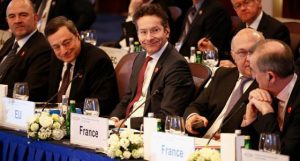
These two factors lead to the conclusion that within the next few years investors will see it become more likely that Italy will exit the Eurozone, or needs serious debt restructuring. However, the second option will add extra instability to a still fragile Eurozone. Maybe that’s why Mr. “No plan B” Draghi told Italy in late January 2017:

“If a country were to leave the Eurosystem, its national central bank’s claims on or liabilities to the ECB would need to be settled in full.”

Apparently, the integrity of the Eurozone is not as inevitable as he once deemed it to be.

https://gatestone.eu/italy-leaving-eurozone/

Turkey’s Gift From God

0

Posted by: MARC PIERINI MONDAY, JANUARY 30, 2017

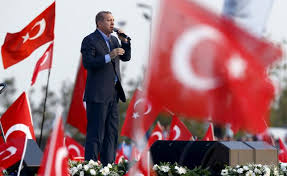
Speaking on July 16, 2016, Turkish President Recep Tayyip Erdoğan stated that the failed coup the previous night was a “gift from God” that would allow him to cleanse the army and the state of terrorists. Turkey’s post-coup purge had the most extensive scope imaginable. Not only rebellious officers were targeted but also scores of opponents—real or perceived—in local administration, the media, schools and universities, culture, and business. In addition, the government set in motion a massive crackdown on dissent and social media, and so-called enemies of the state from within and outside were routinely denounced.

After measures taken in response to the failed coup turned into a full-fledged purge, a second opportunistic move is now in the offing: a radical transformation of the Turkish state.

Pierini is a visiting scholar at Carnegie Europe, where his research focuses on developments in the Middle East and Turkey from a European perspective.

Marc Pierini

Visiting Scholar
Carnegie Europe

The issue is highly divisive—even in AKP ranks—as illustrated by the very heated debate in the parliament. Secret voting was in practice replaced by open voting in the chamber, suggesting an iron-fist strategy within the AKP. Because many deputies of the pro-Kurdish Peoples’ Democratic Party (HDP) are in jail pending trial, the entire group abstained in protest. Now, the referendum is the last ditch before Turkey formally adopts a one-man-rule system.

If approved, the new constitution would introduce drastic changes to the country’s governance. The position of prime minister would disappear, and the president would appoint vice presidents and ministers. Able to govern by decree, the head of state would remain at the helm of his political party, shaping his political group in the legislature as he sees fit by deciding who from his party can run for parliament. The president would also have a more direct authority on the High Council of Judges and Prosecutors—the body that appoints members of the judiciary—by appointing four of its members himself while the parliament elects seven other members, and by having the undersecretary of the ministry of justice sitting permanently on the Council.

Under the new constitution, presidential and parliamentary elections would take place at the same time, every five years, giving a lead role to the president, who in reality would run the main campaign. Meanwhile, the parliament would lose its powers to interpellate and audit the government.

The majoritarian logic of such a system has been explicit since Erdoğan’s 2014 presidential election campaign. In the president’s view, because he was directly elected by a majority of voters for the first time in the country’s history, he has complete legitimacy, meaning that his policies cannot be subjected to challenges by the legislative or judicial branches—let alone civil society or interest groups. As the government explained after the 2014 election, Turkey’s constitution is now being aligned to the political reality of the country.

If passed, this new power architecture would allow Erdoğan not only to possess all the levers of power but also to impose a religious-conservative society that reflects the views of about half of Turkish citizens. This would mean the triumph of the AKP’s narrative of “it’s our turn.” Turkey’s religious conservatives, who have felt suppressed and oppressed by Kemalism since 1923, would shape Turkish society their way. That would erase the message voters sent in the June 2015 parliamentary election, in which a solid majority of voters rebuffed the Turkish president’s majoritarian and polarizing policies by opting for other parties.

If Erdoğan attains his goal, he will largely dismantle the foundations of the Turkish secular republic proclaimed in 1923 by Kemal Atatürk, who pivoted the country toward Western legal, dress, and cultural standards and even changed peoples’ names and the alphabet used by the Turkish language. The political, social, and economic consequences of shifting away from the system established ninety-four years ago would be profound and unpredictable.

For Erdoğan, 2017 is a year of multiple tests. Amid a dire security and economic context, with a shaken security apparatus, and with few friends left abroad, the president will find it extremely costly to attain his two overarching political objectives: a religious-conservative society and a system of one-man rule.

To succeed in his goals, Turkey’s leader will probably have to continue relying on conspiracy theories—internal and external—to explain the country’s difficulties, clamp down further on the liberal half of Turkey, discard any future coexistence with the country’s Kurds, and promote the draft constitution through a muscular referendum campaign. This hardly leads Turkey toward a peaceful future, although the sentiment one gets from some observers after the January 21 vote in the parliament is resignation rather than fierce opposition.

Internationally, the EU and the United States are on notice that postreferendum Turkey may no longer be an ally that values its ethnic, social, and religious diversity. An authoritarian regime would put Turkey at odds with its memberships of NATO and the Council of Europe and would send Ankara’s EU application into an irreversible coma. These are momentous consequences that would be felt most strongly in the economic arena.

Some observers have speculated that such a deep gap between Turkey and the West would secretly cause European leaders to rejoice, all too happy to shrink their relationship with Erdoğan to a mere discussion on trade, counterterrorism, and refugees. Conversely, the Turkish president would supposedly be gladly relieved of EU rule-of-law norms, which, if implemented in Turkey, would impede his power. If this is the calculus, both sides will quickly come to measure the magnitude of the negative fallout of such a divorce.

When they go to vote in the constitutional referendum this spring, Turkey’s citizens will have on their shoulders a responsibility of historic proportions, by far the biggest since the proclamation of the republic in 1923.

http://carnegieeurope.eu/strategiceurope/67826?mkt_tok=eyJpIjoiTm1GbE9UYzFaV1F3WlRoaiIsInQiOiJjTm5CdmF5U1VteVAreUR6ZnJiTGVZRjFwRHFMMHRXVlA1MTRqNWVQeGppNW12NXROXC90MWszXC9weHhTazNaWmVZV2xYSlhGdWYxRVRSeGw0dCtMQ29zaWNuSENiSkw5MFYwMlh6MVFPWGVZQUNuVXJUdXUzVEE0bDM5aWNya0hsIn0%3D

Steve Bannon: ‘We’re going to war in the South China Sea … no doubt’

0

Only months ago Donald Trump’s chief strategist predicted military involvement in east Asia and the Middle East in Breitbart radio shows

The United States and China will fight a war within the next 10 years over islands in the South China Sea, and “there’s no doubt about that”. At the same time, the US will be in another “major” war in the Middle East.

Those are the views – nine months ago at least – of one of the most powerful men in Donald Trump’s administration, Steve Bannon, the former head of far-right news website Breitbart who is now chief strategist at the White House.

In the first weeks of Trump’s presidency, Bannon has emerged as a central figure. He was appointed to the “principals committee” of the National Security Council in a highly unusual move and was influential in the recent travel ban on citizens from seven Muslim-majority countries, overruling Department of Homeland Security officials who felt the order did not apply to green card holders.

“We’re going to war in the South China Sea in five to 10 years,” he said in March 2016. “There’s no doubt about that. They’re taking their sandbars and making basically stationary aircraft carriers and putting missiles on those. They come here to the United States in front of our face – and you understand how important face is – and say it’s an ancient territorial sea.”

China says nearly the entire South China Sea falls within its territory, with half a dozen other countries maintaining partially overlapping claims. China has built a series of artificial islands on reefs and rocks in attempt to bolster its position, complete with military-length airstrips and anti-aircraft weapons.

Bannon’s sentiments and his position in Trump’s inner circle add to fears of a military confrontation with China, after secretary of state Rex Tillerson said that the US would deny China access to the seven artificial islands. Experts warned any blockade would lead to war.

 Bannon is clearly wary of China’s growing clout in Asia and beyond, framing the relationship as entirely adversarial, predicting a global culture clash in the coming years.

“You have an expansionist Islam and you have an expansionist China. Right? They are motivated. They’re arrogant. They’re on the march. And they think the Judeo-Christian west is on the retreat,” Bannon said during a February 2016 radio show.

On the day Trump was inaugurated, China’s military warned that war between the two countries was a real possibility.

“A ‘war within the president’s term’ or ‘war breaking out tonight’ are not just slogans, they are becoming a practical reality,” an official wrote on the website of the People’s Liberation Army.

Aside from conflict between armies, Bannon repeatedly focused on his perception that Christianity around the world is under threat.

In one radio show, used to promote an article incorrectly claiming that a mosque had been built at the North Pole, Bannon focused heavily on China’s oppression of Christian groups.

“The one thing the Chinese fear more than America … they fear Christianity more than anything,” he said.

But China is not the only hotspot Bannon sees, and forecasts another ground war for American troops in the Middle East.

“Some of these situations may get a little unpleasant,” Bannon said in November 2015. “But you know what, we’re in a war. We’re clearly going into, I think, a major shooting war in the Middle East again.”

He also branded Islam as “the most radical” religion in the world, and moved swiftly since entering the White House to enact policies hostile to Muslims. Some have called Trump’s central doctrine a “war on Islam”. wer are paying for it. And advertising revenues across the media are falling fast. So you can see why we need to ask for your help. The Guardian’s independent, investigative journalism takes a lot of time, money and hard work to produce. But we do it because we believe our perspective matters – because it might well be your perspective, too.

https://www.theguardian.com/us-news/2017/feb/02/steve-bannon-donald-trump-war-south-china-sea-no-doubt

An Actual American War Criminal May Become Our Second-Ranking Diplomat

0

Elliott Abrams spent the Reagan years abetting genocide—now, he has been floated as Trump’s deputy secretary of state.

By Eric AltermanTwitter

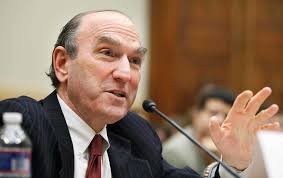
Elliott Abrams testifies on Capitol Hill in Washington on February 9, 2011. (AP Photo / Manuel Balce Ceneta)

 It may seem small in the saga of President Trump’s first two weeks, but according to The Washington Post, there’s a good chance he’ll appoint an actual war criminal to be the second-ranking US diplomat.

I don’t mean someone that we on the left like to call a “war criminal,” such as Henry Kissinger or Dick Cheney. These people might actually qualify, but the cases are at best arguable, and no one in authority has ever been asked to rule on them. Not so for Trump’s potential pick, the onetime neocon golden boy (and son-in-law to Norman Podhoretz and Midge Decter) Elliott Abrams.

The course of Abrams’s failing-upward career reveals the moral rot at the heart of our political establishment.

Like Trump himself, Abrams has behaved so badly in so many different arenas, it actually works in his favor: No one can keep up. The Post piece—which notes that the Trump administration has decided not to appoint a deputy secretary of state for management, giving the sole remaining deputy an enormous amount of influence over both policy and management issues—observes that Abrams was forced to plead guilty to deliberately misleading Congress regarding his nefarious role in the Iran-contra scandal. (He was also disbarred in the District of Columbia.)

However, this is just the tip of a colossal iceberg. As a member of George W. Bush’s National Security Council staff, Abrams encouraged, according to credible reports, a (briefly successful) military coup against the democratically elected government of Venezuela in 2002, poisoning the US relationship with that government once it returned to power. He also worked to subvert the results of the 2006 elections in the Palestinian territories, a move that ended up strengthening the most radical elements of Hamas and undermining—perhaps forever—the possibility of a democratic peace between Israel and the Palestinians.

But these are still relative misdemeanors in the Abrams dossier, paling in comparison with the role he played in the Reagan administration. As assistant secretary of state for human rights, Abrams sought to ensure that General Efraín Ríos Montt, Guatemala’s then-dictator, could carry out “acts of genocide”—those are the legally binding words of Guatemala’s United Nations–backed Commission for Historical Clarification—against the indigenous people in the Ixil region of the department of Quiché, without any pesky interference from human-rights organizations, much less the US government.

As the mass killings were taking place, Abrams fought in Congress for military aid to Ríos Montt’s bloody regime. He credited the murderous dictator with having “brought considerable progress” on human-rights issues. Abrams even went so far as to insist that “the amount of killing of innocent civilians is being reduced step by step” before demanding that Congress provide the regime with advanced arms because its alleged “progress need[ed] to be rewarded and encouraged.”

Promoted to assistant secretary of state for inter-American affairs, Abrams repeatedly denounced the continued protests by organizations seeking to call attention to the mass murders of both Ríos Montt and the no less bloodthirsty President Vinicio Cerezo Arévalo, who came to power fewer than three years later. In one village during the latter’s reign, “the army herded the entire population into the courthouse, raped the women, beheaded the men, and took the children outside to smash them to death against rocks,” according to Inevitable Revolutions, Walter LaFeber’s classic history of the United States in Central America. At the time, a leader of the Guatemalan Mutual Support Group (an organization of mothers of the disappeared), her brother, and her 3-year-old son were found dead in their wrecked car. Abrams not only supported the nonsensical official explanation (there was “no evidence indicating other than that the deaths were due to an accident”), he also denounced a spokeswoman for the group who demanded an investigation, insisting that she had “no right to call herself a human rights worker.” When The New York Times published an op-ed challenging the official State Department count of the mass murders under way—by a woman who had witnessed a death-squad-style assassination in broad daylight in Guatemala City without ever seeing it mentioned in the press—Abrams lied outright in a letter to the editor, even citing an imaginary story in a nonexistent newspaper to insist that the man’s murder had, in fact, been reported.

 I don’t know about you, but intentionally helping the US government to aid and abet the commission of genocide, while attacking the character and reputation of those trying to expose it, strikes me as securely within the definition of “war criminal.” But since Abrams’s 1991 conviction for his Iran-contra lies (and subsequent pardon by George H.W. Bush), the course of his failing-upward career has repeatedly revealed the moral rot at the heart of our political establishment. George W. Bush and Condoleezza Rice appointed Abrams to top national-security positions. The Council on Foreign Relations offered him a prestigious, high-profile title (senior fellow for Middle Eastern studies) and distanced itself only when he called President Obama’s nominee for defense secretary, former senator Chuck Hagel, an “anti-Semite.” Abrams is a respected regular on the American synagogue circuit and in the Jewish press, and rarely, if ever, does anyone have the bad manners to mention his pro-genocide past.

I’ve been writing about Abrams and his crimes, here and elsewhere, since 1987. I’ve complained privately to the president of the Council on Foreign Relations, to numerous rabbis who book him to speak in their synagogues, and to the editors of Jewish newspapers who publish him. I’ve seen some regret, but never any action.

If Abrams had abetted genocide against Jews instead of Guatemalans, it might not have disqualified him from a top diplomatic position in the Trump administration, but he would at least have been treated as a pariah in the media, the establishment, and, one certainly hopes, the world of professional Jews. These days, however, it’s hard to be certain of anything.

https://www.thenation.com/article/an-actual-american-war-criminal-may-become-our-second-ranking-diplomat/

Ήταν, πράγματι, φιάσκο; Ευκαιρία αναθεώρησης της ελληνικής πολιτικής.

1

ΤΟΥ ΠΑΝΤΕΛΗ ΣΑΒΒΙΔΗ.

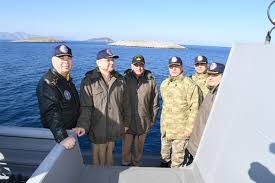
Η τουρκική πρόκληση, με την ασφαλή βόλτα στα Ίμια της στρατιωτικής ηγεσίας της, έτυχε τριών προσεγγίσεων:
Η μια ήταν η ελληνική κατά την οποία, ό,τι και να συμβεί, χρειάζεται ψύχραιμη αντίδραση. Αν αντιπαρέλθουμε την αίσθηση ότι η Αθήνα έχει μπερδέψει την ψυχραιμία με τη διαρκή χειμερία νάρκη, εδώ που οδήγησαν τα πράγματα οι πολιτικές ηγεσίες της χώρας από το 1974 ως σήμερα, δεν υπάρχουν και πολλά περιθώρια για κάτι διαφορετικό. Εκτός, βεβαίως, και αν η πρόκληση είναι τόσο ιταμή, που η ελληνική πλευρά δεν θα μπορέσει να κλείσει τα μάτια.
Η τουρκική, πρόκληση, όμως δεν είχε τα ακραία χαρακτηριστικά ενός θερμού επεισοδίου. Διότι όταν επιδιώκεις θερμό επεισόδιο, δεν στέλνεις τους στρατηγούς σου στην πρώτη γραμμή. Οι στρατηγοί είναι για άλλες δουλειές.
Τι ήθελαν, λοιπόν, οι Τούρκοι στρατηγοί στα Ίμια; Και εδώ, ερχόμαστε στη δεύτερη προσέγγιση του θέματος από την τουρκική κεμαλική αντιπολίτευση. Ο αντιπρόεδρος του CHP, του Λαϊκού Δημοκρατικού Κόμματος, δηλαδή, κατηγόρησε την τουρκική κυβερνητική ηγεσία ότι έστειλε τους στρατιωτικούς στα Ίμια προς άγραν εθνικιστικών ψήφων. Φροντίζοντας, βεβαίως, να υπενθυμίσει πως οι ίδιοι είχαν στείλει όταν κυβερνούσαν, στρατιώτες που κατέλαβαν τα νησιά, αντί του show της ηγεσίας. Συναγωνισμός εθνικιστικού παροξυσμού στη γείτονα, για όσους λησμονούν τη φύση της τουρκικής αντιπολίτευσης.
Ο τουρκικός στρατός υφίσταται δεινή στρατιωτική ήττα στη Συρία και τα μηνύματα από τις εξελίξεις στην περιοχή δεν είναι καθόλου καλά.
Ρωσία και ΗΠΑ αποφάσισαν διαδικασία διαλόγου για να συμφωνήσουν στη μοιρασιά ενώ η Τουρκία είναι έξω από όλα. Και, εκτός αυτού, οι στρατιωτικές επιχειρήσεις δεν πηγαίνουν καθόλου καλά. Καλόν είναι η στρατιωτική καθήλωση της Τουρκίας στην alBab να αποτελέσει αναλυτικό μάθημα στις στρατιωτικές σχολές των ελληνικών Ενόπλων Δυνάμεων.
Επι πλέον, η κυβέρνηση Τράμπ αποφάσισε να παραχωρήσει τεθωρακισμένα οχήματα στις αραβοκουρδικές δυνάμεις της Συρίας για την καταπολέμηση του Ισλαμικού Κράτους, κάτι που είναι ένα επι πλέον χτύπημα στην Τουρκία.
Δεν αποκλείεται ο Ερντογάν να αναζητά τρόπους τακτικής υποχώρησης από το συριακό βάλτο, κρατώντας, όμως, υψηλό το φρόνημα της τουρκικής κοινής γνώμης, ενόψει του δημοψηφίσματος για την καθιέρωση προεδρικού συστήματος.
Η προσπάθειά του αυτή σε συνδυασμό με άλλα ανοικτά ζητήματα με την Ελλάδα («οκτώ», αμφισβήτηση, ανά τακτά διαστήματα ελληνικής κυριαρχίας, κλπ) τον οδήγησαν στο να εκμεταλλευτεί με αγοραίο τρόπο την ηγεσία των Ενόπλων Δυνάμεων και να τη στείλει στα Ίμια, εν είδη τουριστικής ατραξιόν. Και, ω της δυστυχίας, για τον τουρκικό στρατό, που μέχρι προσφάτως υπαγόρευε τους όρους του πολιτικού παιχνιδιού, υπήκουσε στην εξευτελιστική πρόταση του τούρκου προέδρου.
Αυτήν τη συμπεριφορά της τουρκικής στρατιωτικής ηγεσίας κατήγγειλε η τουρκική αντιπολίτευση χρεώνοντας στον αρχηγό ΓΕΕΘΑ της Τουρκίας πολιτικά παιχνίδια ενόψει του δημοψηφίσματος.
Η τελευταία κίνηση της Τουρκίας άγγιζε, πράγματι, το όριο του γελοίου αλλά, ο αναθεωρητισμός που χαρακτηρίζει την πολιτική της και η αμφισβήτηση της ελληνικής κυριαρχίας, αποτελούν πραγματική απειλή.
Η μέχρι τώρα αντιμετώπισή της από ελληνικής πλευράς, μπορεί να αποσόβησε μια στρατιωτική ρήξη, δεν είναι, καθόλου σίγουρο, όμως, κατά πόσο δεν δημιουργεί καταστάσεις που η ελληνική διπλωματία θα συναντήσει μπροστά της καθώς κλιμακώνονται οι εξελίξεις.
Το διεθνές πεδίο είναι ρευστό και κανείς δεν γνωρίζει τι και πως θα υποστηρίξουν για τον επαναπροσδιορισμό της ισορροπίας δυνάμεων στις διάφορες περιοχές οι ισχυρές δυνάμεις.
Γι αυτό, η ορθότερη πολιτική, προς το παρόν, είναι η προσκόλληση σε συμμαχίες. Η Ελλάδα μόνη της δύσκολα μπορεί να ανταποκριθεί στις προκλήσεις της περιοχής της. Με αυτήν την έννοια η συμμετοχή στο σκληρό πυρήνα της Ευρώπης δεν έχει μόνο τη σημασία της οικονομικής βοήθειας αλλά, και του κύρους της συμμετοχής σε μια Ένωση χωρών που διαδραματίζει, ακόμη, ρόλο στην περιοχή.
Αν προσέξετε, άλλωστε, τις δηλώσεις του Προέδρου της Ελληνικής Δημοκρατίας, μονίμως αναφέρονται στην καταπάτηση ευρωπαϊκού εδάφους από την τουρκική στρατιωτική ηγεσία.
Υπάρχουν, όμως, και δύο άλλα ζητήματα:
Το πρώτο είναι αυτό που δήλωσε, δημοσίως, στρατιωτικός που διετέλεσε σε υψηλότατη θέση της ηγεσίας των Ελληνικών Ενόπλων Δυνάμεων. Ότι τα επόμενα 10 χρόνια, ίσως, χρειαστεί να πολεμήσουμε με την Τουρκία.
Κανείς δεν θέλει να μιλά, ούτε και να ακούει, για ένα τέτοιο ενδεχόμενο. Δεν αποκλείεται, όμως, να συμβεί.
Και το ερώτημα είναι: δεν θα πρέπει να εθιστεί η ελληνική κοινή γνώμη στο ενδεχόμενο αυτό και, κυρίως, δεν θα πρέπει να αναθεωρηθεί το δόγμα αντιμετώπισης της Τουρκίας;
Και, ερχόμαστε στο δεύτερο ζήτημα: Είμαστε σε θέση να γνωρίζουμε πως στο εσωτερικό των Ενόπλων Δυνάμεων και σε υψηλό στρατιωτικό επίπεδο, διατυπώνονται και διαφορετικές, από τη σημερινή, απόψεις, για τον τρόπο αντιμετώπισης της Τουρκίας. Δυστυχώς, όχι μόνο δεν εισακούονται αλλά, παρόλο που οι φορείς τους έχουν υπηρετήσει με επιτυχία σε υψηλές και κρίσιμες θέσεις με την πρώτη ευκαιρία αποστρατεύονται. Παρά τις αναγνωρισμένες ικανότητές τους. Γνωρίζουμε συγκεκριμένες περιπτώσεις.
Τα στελέχη αυτά αποφεύγουν να διατυπώσουν, δημοσίως, τις απόψεις τους για προφανείς λόγους. Υποστηρίζουν, όμως, πως ένας διάλογος στο εσωτερικό των Ενόπλων Δυνάμεων στη βάση των δικών τους προτάσεων θα πρέπει να γίνει.
Το ερώτημα είναι, γιατί δεν γίνεται αφού η σημερινή επιλογή είναι αναποτελεσματική;
Τέλος, δύο ακόμη ζητήματα:
Αν προσέξατε τη δήλωση της ηγεσίας των τουρκικών Ενόπλων Δυνάμεων, ενώ η ενέργειά τους είχε στρατιωτικά, επιθετικά χαρακτηριστικά, (αφού στρατιωτικοί είναι οι δρώντες και όχι πολιτικά πρόσωπα), μιλούσαν για ειρήνη και υπεράσπιση των τουρκικών συμφερόντων. Ας εστιάσουμε στην αντίφαση, ειρήνης και στρατιωτικής κίνησης. Τι σημαίνει αυτό; Πως η Τουρκία έχει επεξεργασμένο σχέδιο διάδοσης των θέσεών της διεθνώς. Δηλαδή, ενώ επιτίθεται με στρατιωτικές κινήσεις, μιλά για ειρήνη. Απαραίτητη προϋπόθεση να επιτύχεις το σκοπό σου και να γίνει, διεθνώς, αποδεκτός. Κάτι, που λείπει από την Ελλάδα.
Το απόλυτο δίκαιο να έχεις, αν αποφασίσεις να το διεκδικήσεις αντιδρώντας αμυντικά σε δυναμική επίθεση του αντιπάλου, πρέπει να υπάρχει πρόσφορο έδαφος στη διεθνή κοινή γνώμη για να σου αναγνωριστεί. Και τέτοιο έδαφος η Ελλάδα δεν μπόρεσε να καλλιεργήσει διεθνώς. Είναι μια αδυναμία που θα πρέπει να αντιμετωπιστεί.
Τέλος, η εποχή του «δεν διεκδικούμε τίποτε, δεν παραχωρούμε τίποτε» έχει παρέλθει. Τα συμφέροντα και οι δυναμικές στην περιοχή άλλαξαν και, τόσο η τακτική όσο και η ατζέντα των αιτημάτων της ελληνικής διπλωματίας, ίσως, θα πρέπει να αναθεωρηθούν.
Εν ολίγοις, θέλει δουλειά, όχι το γνωστό πολιτικό χαβαλέ στον οποίο έχει συνηθίσει το ελληνικό πολιτικό απαράτ. Και, κυρίως, χρειάζεται να προωθούνται ικανοί, και όχι ημέτεροι, στις κρίσιμες θέσεις.
01.02.17

New Allegations in Israeli Naval Procurement Scandal

0

sch
On Monday, the administration of Israeli prime minister Benjamin Netanyahu denied allegations of impropriety in the procurement of four surface craft from German conglomerate ThyssenKrupp.

“Contrary to allegations in the media, the purchase of four surface crafts was conducted in accordance with the recommendations of the Navy and the Defense Ministry,” Netanyahu’s office said in a statement.

The new questions regarding the contract for surface vessels add to a growing controversy over a $1.5 billion contract with ThyssenKrupp for three submarines. One of Netanyahu’s close associates, attorney David Shimron, is suspected of serving as the firm’s paid representative in Israel. On Friday, former defense minister Moshe Ya’alon testified that Netanyahu himself had been involved in cancelling an open tender for the subs so that the contract could go directly to ThyssenKrupp – against the wishes of the Israeli defense establishment.

Israeli attorney general Avichai Mendelblit has opened an investigation into Netanyahu’s possible conflicts of interest. The prime minister’s office denies the allegations and says that the submarine deal was “done in an orderly and professional process with no outside influence and with the recommendation of all the professional bodies in the security establishment.”

The naval procurement investigation is not the only corruption scandal involving Netanyahu’s associates. Brigadier-general Avriel Bar-Yosef, Netanyahu’s nominee for the post of national security advisor, was questioned late last year in connection with charges of bribery and fraud. He allegedly failed to disclose his ties to German businessmen who were interested in Israel’s offshore gas reserves – ties which may have included the receipt of material benefits.

The questions surrounding the Israeli procurement agreements are not the only ones for ThyssenKrupp. In 2015, the German paper Handelsblatt reported that the firm was investigating the possibility that its employees had used bribery to promote sales in Turkey, Pakistan, Greece, South Korea and Indonesia.

File image courtesy schlomiliss / social media

By MarEx 

http://maritime-executive.com

Πόσο κοντά βρισκόμαστε σε ένα πόλεμο Ελλάδας-Τουρκίας: Ο Ερντογάν είναι πάντως απρόβλεπτος…

0

Του ΜΙΧΑΛΗ ΙΓΝΑΤΙΟΥ

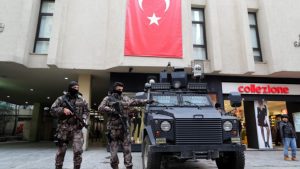
File Photo: Turkish special forces members patrol in front of a huge Turkish flag at Istiklal Street near Taksim Square, in Istanbul, Turkey, 26 January 2017. EPA, TOLGA BOZOGLU FEBRUARY 2, 2017

Η κατάσταση με την Τουρκία στο Αιγαίο Πέλαγος είναι στη φάση που ξεπέρασε τα όρια της διπλωματικής ρητορικής. Και ως γνωστόν, όταν σε μία παρόμοια κατάσταση δεν επεμβαίνουν οι “σοβαροί” της χώρας για να συγκρατήσουν τους ασυγκράτητους, τα πράγματα οδηγούνται στο επόμενο βήμα, που αναλαμβάνουν οι στρατηγοί, αλλά την ευθύνη έχουν πάντα οι πολιτικοί.

Λέγοντας τα παραπάνω και επειδή σίγουρα τίθεται το ερώτημα εάν η Ελλάδα και η Τουρκία βρίσκονται ενώπιον πολεμικού επεισοδίου, θα σπεύσω να απαντήσω ότι οι πιθανότητες για να επικρατήσουν οι λογικοί ή να επιβάλουν την άποψή τους οι τρελοί, είναι ίσες. “Είναι 50-50” θα έλεγε στην γλώσσα του ένας Αμερικανός στρατηγός, εάν τον βρίσκαμε να τον ρωτήσουμε, κάτι που είναι αδύνατο αυτές τις μέρες στην αμερικανική πρωτεύουσα. Και είναι δύσκολο επειδή, δυστυχώς, έχουν άλλα θέματα, πιο σοβαρά, να ασχοληθούν και άλλους πολέμους να …ξεκινήσουν.

Η δημόσια απειλή του Λευκού Οίκου εναντίον του Ιράν πρέπει να ληφθεί πολύ σοβαρά υπόψιν… Διότι στο αμερικανικό διπλωματικό και πολιτικό παιγνίδι παίζει δυνατά ο πρωθυπουργός του Ισραήλ Μπέντζαμιν Νετανιάχου και παράγοντες με ακροδεξιές ιδέες.

Αυτή τη στιγμή που μιλάμε, δεν έχει εκφραστεί η νέα αμερικανική πολιτική για την Ελλάδα, την Τουρκία και την Κύπρο, από κανένα Αμερικανό αξιωματούχο. Ότι λέγεται και γράφεται είναι αποκύημα της φαντασίας “δημοσιογράφων” και “αναλυτών” οι οποίοι ζουν εκτός της Ουάσιγκτον και αυτοπαρουσιάζονται στην Αθήνα, τη Λευκωσία και την Άγκυρα ως οι γνωρίζοντες και την ώρα κατά την οποία αποσύρεται στην κρεβατοκάμαρα του ο Πρόεδρος Τραμπ.

Έχουν τρικυμία στο μυαλό και δεν έχουν να επιδείξουν καμία υπευθυνότητα στη δουλειά τους.


Δεν γνωρίζουμε, λοιπόν, τη νέα αμερικανική θέση για τις τρεις χώρες που μας ενδιαφέρουν. Υποθέτουμε, μόνο, ότι επειδή ο νέος πλανητάρχης επέλεξε το Ισραήλ και την Αίγυπτο ως τους ακρογωνιαίους λίθους της στρατηγικής του στη Μεσόγειο, δεν “θα παίξει μπάλα με την Τουρκία”, όπως οι προηγούμενοι Αμερικανοί πρόεδροι. Είναι μόνο μία υπόθεση και ευχόμαστε να είναι αληθινή, διότι η πολιτική των δύο μέτρων και των δύο σταθμών μπορεί να αποδειχθεί καταστροφική για την Ελλάδα και την Κύπρο.

Θα το γράφω όσο πιο απλά μπορώ: Είναι κάτι που δεν γνωρίζει κανείς… Το ερώτημα, λοιπόν, είναι εάν ο Ταγίπ Ερντογάν είναι έτοιμος ψυχολογικά να μεταφέρει τον πόλεμο από τη Συρία, το Ιράκ και το Κουρδιστάν, στο Αιγαίο Πέλαγος.

Το δεύτερο ερώτημα είναι αν σχεδιάζει να κτυπήσει κάποια από τα νησιά και δη τα ακατοίκητα, ώστε να μην προκληθεί αιματοχυσία, αλλά να έχει κέρδη στο στρατιωτικό πεδίο. Έχουμε να κάνουμε με έναν άνθρωπο που κυριαρχείται απο τις ψυχασθένειές του, που παίρνει χούφτες χάπια για τις διάφορες αρρώστιες που τον ταλαιπωρούν, που καθοδηγείται από τον άκρατο εθνικισμό του και τον κακό ισλαμισμό.

Οι άπιστοι είναι εχθροί του. Και οι Έλληνες και οι Ελληνοκύπριοι είναι πιο εχθροί από τους εχθρούς του. Συμβαίνει και κάτι άλλο: Θεωρεί ότι οι ελληνικές αντιστάσεις είναι μηδενικές, αν και στην πραγματικότητα ο στρατός του δυσκολεύεται με τους “ξυπόλητους” της Συρίας, πόσο μάλλον να ανοίξει ένα ακόμη μέτωπο.

Ερντογάν είναι αυτός, βέβαια, απρόβλεπτος είναι, ψυχιατρικά προβλήματα έχει, γιατί να μην προχωρήσει σε μία απονενοημένη επίθεση εναντίον της Ελλάδας. Οι επιθετικές κινήσεις στην περιοχή των Ιμίων είναι συνεχείς και έχουν στόχο και σκοπό. Ούτε ο στόχος, ούτε ο σκοπός, έχουν την παραμικρή σχέση με το εσωτερικό μέτωπο της Τουρκίας.

Είναι μύθος ο ισχυρισμός και έρχεται από αναλυτές που δεν μελετούν ποτέ στη ζωή τους. Έχουν αυτή τη βλακώδη θεώρηση των πραγμάτων ότι δήθεν στο τέλος “επικρατεί η λογική”. Αυτό συμβαίνει μόνο στις δυτικές χώρες. Σε όλο τον άλλο τον πλανήτη την εντολή δίνουν παρανοϊκοί ηγέτες ή πολιτικοί που δεν έχουν πρόβλημα “να κάνουμε και ένα πόλεμο για να τον …έχουμε”. Ο Ταγίπ Ερντογάν παίζει άνετα και τους δύο ρόλους. Δυστυχώς.

Πηγή: Πόσο κοντά βρισκόμαστε σε ένα πόλεμο Ελλάδας-Τουρκίας: Ο Ερντογάν είναι πάντως απρόβλεπτος… http://mignatiou.com/2017/02/poso-konta-vriskomaste-se-ena-polemo-elladas-tourkias-o-erntogan-ine-pantos-aprovleptos/

Stratfor: Ορατός ο εμπορικός πόλεμος ΗΠΑ-Γερμανίας

0

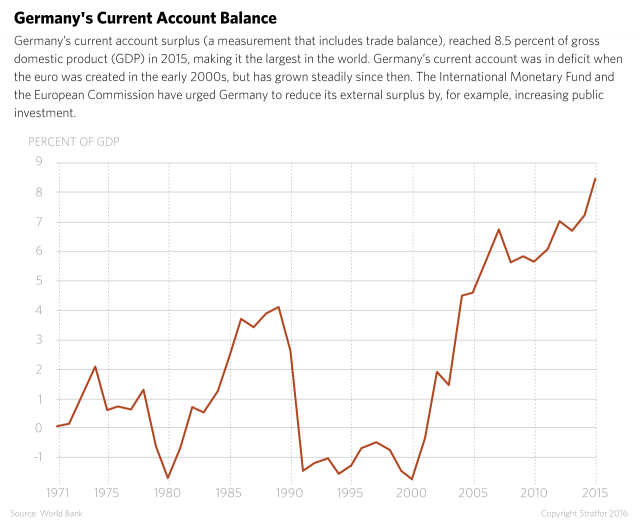
O Ντόναλτ Τραμπ δεν μπορεί να τραβήξει πολύ έναν εμπορικό πόλεμο με τη Γερμανία, ωστόσο αυτό δεν καθησυχάζει. Το πλεόνασμα-μαμούθ της Γερμανίας και η απειλή των εθνικιστικών δυνάμεων. Οι «ανησυχίες» του Βερολίνου.

Τα τελευταία πέντε χρόνια, το πλεόνασμα τρεχουσών συναλλαγών της Γερμανίας (στοιχείο που περιλαμβάνει το εμπορικό ισοζύγιο της χώρας) έχει σχεδόν διπλασιαστεί, αγγίζοντας τα 256,1 δισ. ευρώ το 2015. Ο Τραμπ έχει κατηγορήσει τη Γερμανία ότι δεν κάνει αρκετά για να αυξήσει τις εισαγωγές της ενώ έχει τόσο μεγάλο εμπορικό πλεόνασμα και, τον Οκτώβριο, το αμερικανικό υπουργείο Οικονομικών έβαλε τη Γερμανία στη λίστα με τις χώρες που πρέπει να παρακολουθούνται λόγω του πλεονάσματος τρεχουσών συναλλαγών. Οι χώρες της ευρωζώνης επίσης κατηγορούν τη Γερμανία ότι ενθαρρύνει την αποταμίευση αντί για την κατανάλωση, επιβραδύνοντας έτσι την εξέλιξη της ανάκαμψης της νομισματικής ένωσης.

Όμως, οι ΗΠΑ δεν μπορούνε να πάνε και πολύ μακριά έναν εμπορικό πόλεμο με τη Γερμανία. Υπό την αμερικανική νομοθεσία, η Ούασινγκτον μπορεί να επιβάλει προσωρινές δικλείδες ασφαλείας για να προστατεύσει τις εγχώριες βιομηχανίες που απειλούνται από ορισμένες εισαγωγές. Οι δικλείδες αυτές όμως μπορούν να έχουν στόχο μόνο εισαγωγές και όχι συγκεκριμένες χώρες, και η Γερμανία θα τις αμφισβητούσε αμέσως στον Παγκόσμιο Οργανισμό Εμπορίου. Αν η κυβέρνηση Τραμπ προσπαθήσει να απομονώσει τη Γερμανία, θα πρέπει να επιχειρηματολογήσει επιτυχώς πως το Βερολίνο στηρίζει αθέμητα τους Γερμανούς εξαγωγείς και στη συνέχεια να επιβάλει αντισταθμιστικούς δασμούς στις Γερμανικές εξαγωγές.

Αν οι ΗΠΑ μπορέσουν επιτυχώς να βάλουν στο στόχαστρο τις Γερμανικές εξαγωγές, τότε το Βερολίνο θα στραφεί στον Αμερικανικό λαό. Θεωρητικά, θα μπορούσε να υποστηρίξει πως οι υψηλότεροι δασμοί για τα Γερμανικά προϊόντα απλώς θα αυξήσουν το κόστος για τους Αμερικανούς καταναλωτές. Επίσης, το Βερολίνο θα υπενθυμίσει στους Αμερικανούς εργαζόμενους ότι πολλές Γερμανικές εταιρείες, περιλαμβανομένων των BMW, Volkswagen και Siemens, έχουν μονάδες στις ΗΠΑ που απασχολούν πολλούς Αμερικανούς και χρησιμοποιούν προϊόντα από αμερικανικές εταιρείες στις αλυσίδες προμηθειών τους.

Στην «καρδιά» της διαμάχης βρίσκεται η ανησυχία του Βερολίνου πως άλλα μέρη του αναπτυγμένου κόσμου θα αρχίσουν να απηχούν την εθνικιστική ρητορική του προέδρου, θέτοντας μια υπαρξιακή απειλή σε μια οικονομία που βασίζεται στις εξαγωγές, όπως η γερμανική. Αρκετά ευρωπαϊκά πολιτικά κόμματα έχουν ήδη αρχίσει να επαινούν τις δηλώσεις του Τραμπ, που υποσχέθηκε ότι η αμερικανική κυβέρνηση θα αποδείξει πως «ο προστατευτισμός λειτουργεί».

Η Γερμανία τρομοκρατείται από την προοπτική αυτές οι ίδιες εθνικιστικές δυνάμεις να πάρουν τον έλεγχο κυβερνήσεων της Ευρώπης στις επερχόμενες εκλογές του 2017. Επιπλέον, η Γερμανία ανησυχεί πως η επίθεση του Τραμπ κατά του φθηνού ευρώ μπορεί να μετατραπεί σε (ή τουλάχιστον να εκληφθεί ως) επίθεση κατά ολόκληρης της ευρωζώνης. Άλλες χώρες-μέλη της ευρωζώνης μπορεί να αρχίσουν να ανησυχούν πως η συμμετοχή τους στο μπλοκ θα τις βάλει και αυτές στο στόχαστρο προστατευτισμού του Λευκού Οίκου.

Η προφητεία του Κίσινγκερ και ο κόσμος του Τραμπ

1

ΠΕΤΡΟΣ ΠΑΠΑΚΩΝΣΤΑΝΤΙΝΟΥ

Στις 14 Φεβρουαρίου 1972, Νίξον και Κίσινγκερ συναντήθηκαν για να συζητήσουν την επικείμενη επίσκεψη του Αμερικανού προέδρου στο Πεκίνο. Αρχιτέκτονας της προσέγγισης με την Κίνα του Μάο –προσέγγιση που είχε στόχο την αποδυνάμωση του κύριου εχθρού, της Σοβιετικής Ενωσης– ο σύμβουλος εθνικής ασφαλείας είπε στο αφεντικό του: «Οι Κινέζοι είναι εξίσου επικίνδυνοι με τους Ρώσους. Σε βάθος χρόνου, μάλιστα, είναι πιο επικίνδυνοι. Σε 20 χρόνια από σήμερα, ο διάδοχός σου, αν είναι εξίσου σοφός με σένα, θα προσεγγίσει τους Ρώσους εναντίον των Κινέζων».

Η αναρρίχηση του Ντόναλντ Τραμπ στον Λευκό Οίκο θέτει το ερώτημα αν η προφητεία Κίσινγκερ βγει αληθινή με καθυστέρηση 25 ετών. Αλλωστε, ο Μέτερνιχ της αμερικανικής διπλωματίας, ενεργός παρά τα 93 χρονάκια του, θεωρείται «γκουρού» του άπειρου νέου προέδρου σε θέματα διεθνούς πολιτικής. Τον επισκέφθηκε κατ’ επανάληψιν στον πύργο του, στο Μανχάταν, μετά την εκλογή του και βρέθηκε στα τέλη Δεκεμβρίου στο Κρεμλίνο, για να βολιδοσκοπήσει τον Πούτιν γύρω από το «ντιλ» που είχε εισηγηθεί στον Τραμπ: να αποσύρει η Ρωσία την υποστήριξή της στους αντάρτες της ανατολικής Ουκρανίας, με αντάλλαγμα η Αμερική να δεχθεί το τετελεσμένο της Κριμαίας και να άρει τις κυρώσεις. Ο απώτερος στόχος είναι ο ίδιος με εκείνον που ενέπνευσε το ιστορικό άνοιγμα του 1972: Να αποτραπεί η δημιουργία μιας στρατηγικής συμμαχίας Μόσχας – Πεκίνου εναντίον της Ουάσιγκτον.

Οχι ότι ο ρεαλιστής Κίσινγκερ προσβλήθηκε από αντικινεζικές εμμονές – αντίθετα, στο Πεκίνο θεωρείται παλιός φίλος της Κίνας και συναντήθηκε πρόσφατα με τον πρόεδρο Σι. Γεγονός παραμένει ότι οι πρώτες κινήσεις του Τραμπ προϊδεάζουν για μια συγκρουσιακή σχέση.

Αμέσως μετά την εκλογή του, επικοινώνησε τηλεφωνικά με την πρόεδρο της Ταϊβάν και αμφισβήτησε την πολιτική της «Μιας Κίνας» που ακολουθούσαν όλοι οι προκάτοχοί του από τη δεκαετία του ’70. Στη συνέχεια, ο Ρεξ Τίλερσον, που προορίζεται για υπ. Εξωτερικών, δήλωσε ότι η κυβέρνησή του εννοεί να εμποδίσει την πρόσβαση της Κίνας στα τεχνητά νησιά που έχει φτιάξει στη Νότια Σινική Θάλασσα. Κινεζικά μέσα ενημέρωσης ερμήνευσαν τις δηλώσεις ως προαναγγελία ναυτικού αποκλεισμού, ίσως και θερμού επεισοδίου. Ας σημειωθεί ότι ο Τίλερσον, μέχρι χθες αφεντικό της ExxonMobil, είχε οικοδομήσει άριστες σχέσεις με τη Ρωσία, αλλά όχι και με την Κίνα. Αντίθετα, η εκμετάλλευση του κοιτάσματος φυσικού αερίου Blue Whale σε αμφισβητούμενα νερά από την εταιρεία του, με την άδεια του Βιετνάμ, είχε προκαλέσει οξείες αντιδράσεις του Πεκίνου. Δυσαρέσκεια στο Πεκίνο προκάλεσε και ο διορισμός του Πίτερ Ναβάρο ως επικεφαλής του Εθνικού Συμβουλίου Εμπορίου, το οποίο ασχολείται με τη χάραξη της διεθνούς οικονομικής πολιτικής. Συγγραφέας πολύκροτων βιβλίων με εύγλωττους τίτλους όπως «Οι επερχόμενοι πόλεμοι με την Κίνα» και «Θάνατος από την Κίνα», ο Ναβάρο ασφαλώς έπαιξε ρόλο στις απειλές του Τραμπ ότι θα επιβάλει εξοντωτικούς δασμούς στις κινεζικές εξαγωγές αν η Κίνα δεν σταματήσει να επιδοτεί τα προϊόντα της και δεν ανατιμήσει το νόμισμά της.

Aν βάλουμε στην άκρη τη ρητορική του, ο Τραμπ δεν πρωτοτυπεί και τόσο πολύ. Στην πρώτη προεκλογική του εκστρατεία, το 2008, ο Ομπάμα κατηγορούσε κατ’ επανάληψη την Κίνα για αθέμιτο ανταγωνισμό και καταστροφή αμερικανικών θέσεων εργασίας. Η μετατόπιση του κέντρου βάρους της αμερικανικής εξωτερικής και αμυντικής πολιτικής από τη Μέση Ανατολή στη ζώνη Ασίας – Ειρηνικού, με σαφή αν και ανομολόγητο στόχο τον έλεγχο της Κίνας, υπήρξε έργο της προεδρίας του. Είναι επίσης αλήθεια ότι ο Τραμπ δεν έχει υπερβεί, μέχρι στιγμής, τις «κόκκινες γραμμές». Προεκλογικά, δεσμεύθηκε ότι θα κηρύξει την Κίνα «χώρα που χειραγωγεί το νόμισμά της», κάτι που θα αποτελούσε πρελούδιο εμπορικού πολέμου. Δεν το έπραξε και δεν είναι καθόλου εύκολο να το πράξει. Οχι μόνο γιατί η Κίνα ελέγχει μεγάλο μέρος του αμερικανικού χρέους, αλλά και γιατί κορυφαίες αμερικανικές πολυεθνικές, όπως οι Apple, Microsoft και Boeing, βασίζουν μεγάλο μέρος της κερδοφορίας τους στις στενές σχέσεις τους με την Κίνα. Ας αφήσουμε που η χαριστική βολή του Τραμπ στην κλινικά νεκρή συμφωνία ελεύθερου εμπορίου του Ειρηνικού (ΤΡΡ) προσφέρει στην Κίνα τη δυνατότητα να ενισχύσει το οικονομικό και πολιτικό βάρος της στη νότια και ανατολική Ασία. Σε κάθε περίπτωση, το μέλλον των σινοαμερικανικών σχέσεων αντιπροσωπεύει ίσως τον πλέον δυσεπίλυτο γρίφο μέσα στο ευρύτερο αίνιγμα της εξωτερικής πολιτικής Τραμπ.

Τέλος, ο Αμερικανός πρόεδρος υπέγραψε την Παρασκευή διάταγμα με το οποίο θα καταστεί εφικτό να διεξάγονται αυστηρότεροι έλεγχοι προκειμένου στη χώρα να μη φτάνουν «ισλαμιστές τρομοκράτες», τονίζοντας ταυτόχρονα ότι θα δοθεί προτεραιότητα στους Σύρους Χριστιανούς για τη χορήγηση καθεστώτος πρόσφυγα.

“Καθημερινή”

No ‘G’day, mate’: On call with Australian prime minister, Trump badgers and brags

0

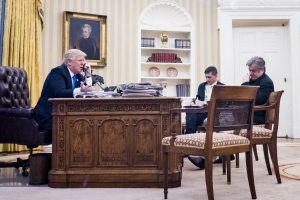
President Trump speaks on the phone with Australian Prime Minister Malcolm Turnbull in the Oval Office on Jan. 28, 2017. (Pete Marovich/Pool photo via European Pressphoto Agency)

By Greg Miller and Philip Rucker February 1 at 8:49 PM

It should have been one of the most congenial calls for the new commander in chief — a conversation with the leader of Australia, one of America’s staunchest allies, at the end of a triumphant week.

Instead, President Trump blasted Australian Prime Minister Malcolm Turnbull over a refu­gee agreement and boasted about the magnitude of his electoral college win, according to senior U.S. officials briefed on the Saturday exchange. Then, 25 minutes into what was expected to be an hour-long call, Trump abruptly ended it.

At one point, Trump informed Turnbull that he had spoken with four other world leaders that day — including Russian President Vladi­mir Putin — and that “this was the worst call by far.”

[Trump orders ISIS plan, talks with Putin and gives Bannon national security role]

Trump’s behavior suggests that he is capable of subjecting world leaders, including close allies, to a version of the vitriol he frequently employs against political adversaries and news organizations in speeches and on Twitter.

Mexico’s president cancels U.S. visit to meet with Trump

Mexican President Enrique Peña Nieto has canceled an upcoming visit to the United States as tensions are brewing between both governments over President Trump’s plans to construct a border wall at the financial expense of Mexico. (Bastien Inzaurralde/The Washington Post)

“This is the worst deal ever,” Trump fumed as Turnbull attempted to confirm that the United States would honor its pledge to take in 1,250 refugees from an Australian detention center.

Trump, who one day earlier had signed an executive order temporarily barring the admissions of refugees, complained that he was “going to get killed” politically and accused Australia of seeking to export the “next Boston bombers.”

U.S. officials said that Trump has behaved similarly in conversations with leaders of other countries, including Mexico. But his treatment of Turnbull was particularly striking because of the tight bond between the United States and Australia — countries that share intelligence, support one another diplomatically and have fought together in wars including in Iraq and Afghanistan.

The characterizations provide insight into Trump’s temperament and approach to the diplomatic requirements of his job as the nation’s chief executive, a role in which he continues to employ both the uncompromising negotiating tactics he honed as a real estate developer and the bombastic style he exhibited as a reality television personality.

[Trump’s refugee ban is a matter of life and death for some, including a 1-year-old with cancer]

The depictions of Trump’s calls are also at odds with sanitized White House accounts. The official readout of his conversation with Turnbull, for example, said that the two had “emphasized the enduring strength and closeness of the U.S.-Australia relationship that is critical for peace, stability, and prosperity in the Asia-Pacific region and globally.”

A White House spokesman declined to comment. A senior administration official acknowledged that the conversation with Turnbull had been hostile and charged, but emphasized that most of Trump’s calls with foreign leaders — including the heads of Japan, Germany, France and Russia — have been both productive and pleasant.

Trump announces executive actions on military, ‘new vetting measures’ for refugees


President Trump announced two executive actions, one relating to vetting refugees, the other to increased military funding, on Jan. 27 at the Pentagon. (The Washington Post)

Trump also vented anger and touted his political accomplishments in a tense conversation with Mexican President Enrique Peña Nieto, officials said. The two have sparred for months over Trump’s vow to force Mexico to pay for construction of a border wall between the two countries, a conflict that prompted Peña Nieto to cancel a planned meeting with Trump.

Even in conversations marred by hostile exchanges, Trump manages to work in references to his election accomplishments. U.S. officials said that he used his calls with both Turnbull and Peña Nieto to mention his election win or the size of the crowd at his inauguration.

[In fight with Trump, Mexico has plenty of ways to punch back]

One official said that it may be Trump’s way of “speaking about the mandate he has and why he has the backing for decisions he makes.” But Trump is also notoriously thin-skinned and has used platforms including social-media accounts, meetings with lawmakers and even a speech at CIA headquarters to depict his victory as an achievement of historic proportions, rather than a narrow outcome in which his opponent, Hillary Clinton, won the popular vote.

The friction with Turnbull reflected Trump’s anger over being bound by an agreement reached by the Obama administration to accept refugees from Australian detention sites even while Trump was issuing an executive order suspending such arrivals from elsewhere in the world.

The issue centers on a population of roughly 2,500 people who sought asylum in Australia but were diverted to facilities off that country’s coast at Nauru and Manus Island in Papua New Guinea. Deplorable conditions at those sitesprompted intervention from the United Nations and a pledge from the United States to accept about half of those refugees, provided they passed U.S. security screening.

[After years of hosting a notorious refugee camp for Australia, Papua New Guinea says: Enough.]

Many of the refugees came from Iran, Iraq, Sudan and Somalia, countries now listed in Trump’s order temporarily barring their citizens entry to the United States. A special provision in the Trump order allows for exceptions to honor “a preexisting international agreement,” a line that was inserted to cover the Australia deal.

But U.S. officials said that Trump continued to fume about the arrangement even after signing the order in a ceremony at the Pentagon.

“I don’t want these people,” Trump said. He repeatedly misstated the number of refugees called for in the agreement as 2,000 rather than 1,250, and told Turnbull that it was “my intention” to honor the agreement, a phrase designed to leave the U.S. president wiggle room to back out of the deal in the future, according to a senior U.S. official.

Turnbull told Trump that to honor the agreement, the United States would not have to accept all of the refugees but only to allow them each through the normal vetting procedures. At that, Trump vowed to subject each refu­gee to “extreme vetting,” the senior U.S. official said.

Trump was also skeptical because he did not see a specific advantage the United States would gain by honoring the deal, officials said.

Trump’s position appears to reflect the transactional view he takes of relationships, even when it comes to diplomatic ties with long-standing allies. Australia troops have fought alongside U.S. forces for decades, and the country maintains close cooperation with Washington on trade and economic issues.

Australia is seen as such a trusted ally that it is one of only four countries that the United States includes in the “Five Eyes” arrangement for cooperation on espionage matters. Members share extensively what their intelligence services gather and generally refrain from spying on one another.

There also is a significant amount of tourism between the two countries.

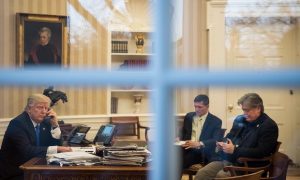
Trump made the call to Turnbull about 5 p.m. Saturday from his desk in the Oval Office, where he was joined by chief strategist Stephen K. Bannon, national security adviser Michael Flynn and White House press secretary Sean Spicer.

At one point, Turnbull suggested that the two leaders move on from their impasse over refugees to discuss the conflict in Syria and other pressing foreign issues. But Trump demurred and ended the call, making it far shorter than his conversations with Shinzo Abe of Japan, Angela Merkel of Germany, François Hollande of France or Putin.

“These conversations are conducted candidly, frankly, privately,” Turnbull said at a news conference Thursday in Australia. “If you see reports of them, I’m not going to add to them.”

Editor’s note: This article has been updated and a reference to an AP report on the details of a phone conversation between President Trump and Mexican President Enrique Peña Nieto removed because it could not be independently confirmed.

https://www.washingtonpost.com/world/national-security/no-gday-mate-on-call-with-australian-pm-trump-badgers-and-brags/2017/02/01/88a3bfb0-e8bf-11e6-80c2-30e57e57e05d_story.html?utm_term=.c43d739b40e4&wpisrc=al_alert-COMBO-world%252Bnation
Erdogan’s Further Consolidation Of Power Would Cement Turkey’s Demise

0

Aykan Erdemir, Merve Tahiroglu

26th January 2017 – The Huffington Post

The Turkish Parliament passed constitutional amendments last weekend that could allow President Recep Tayyip Erdogan to amass unprecedented power. Amidst terrorist attacks by the so-called Islamic State and Kurdish militants, Erdogan and his far-right allies are presenting the deal as a way out of chaos, promising that terrorism will cease once the constitutional amendments are approved in the upcoming referendum in April. But with an 80-million-strong population comprised of more than 20 ethnic and religious minorities, the further centralization of decision-making will only exacerbate the country’s ills.

With the proposed amendments, Erdogan seeks to consolidate all powers – executive, legislative and judicial – in one office: his palace. The Parliament will have little power to hold the president and his cabinet accountable. Erdogan will also appoint two-thirds of the country’s most senior judges, further undermining checks and balances in a country with the world’s worst record of press freedom. He will now be able rule by decree and even declare a state of emergency unilaterally. In short, Turkey – already one of the most centralized systems in the world – will turn into an over-centralized regime.

Turkey’s political instability, chronic security problems and economic volatility have as much to do with power-hungry leaders as with the burdens of top-down and undelegated policy-making. For a country already marred by economic slowdown and secular-Islamist polarization, at the brink of civil war with its Kurds, over-centralized rule is the worst course to follow.

Turkey entered 2017 with a devastating, ISIS-claimed attack at an Istanbul nightclub that killed at least 39 people. But the jihadists are but one group that has been targeting the country. In December alone, Kurdish militants conducted two suicide bombings in Istanbul and another in central Turkey, killing 58 citizens. Between ISIS and Kurdish militants, there have been more than 30 bombings over the past year and a half.

The economy is suffering, too. Despite a whopping 24 percent increase in government spending in the last quarter, in December, the economy contracted for the first time since 2009 – interrupting 27 quarters of continuous growth. Even the Turkish Statistical Institute’s highly questionable accounting failed to find a way to paper over the slip in third-quarter economic indicators. As global markets reacted to news of contraction, Turkey’s five-year bond yields hit 11.51 percent, the highest since the 2009 crisis. Meanwhile, the lira fell to 3.80 a dollar, a record low.

Turkey is caught in a downward spiral and needs an urgent reversal of its political and economic course. But leaders in Ankara are pouring gasoline on the fire instead.

In July 2015, the Turkish government’s peace talks with the outlawed Kurdistan Workers’ Party (PKK) ended after a two-year respite. More than 300 people lost their lives in resumed clashes since then. But Ankara’s response has been to crack down not only on the PKK but also on the pro-Kurdish Peoples’ Democratic Party (HDP). Incidentally, the HDP – formerly a fringe party ― became Turkey’s second largest opposition last June, a success hinged on its vociferous opposition to Erdogan’s presidential designs.

In the run-up to the constitutional debates in Parliament last month, Turkish authorities detained hundreds of HDP local executives countrywide. As of today, 11 HDP lawmakers, including the party’s co-chairs, Selahattin Demirtas and Figen Yuksekdag, are in jail. After vandalizing the HDP’s Istanbul headquarters, the police also spray-painted threatening graffiti on the walls. Such retaliation, reminiscent of the extrajudicial methods of Turkey’s “Dirty War” against Kurdish insurgents in the 1990s, only alienates moderate Kurds while also playing right into the hands of the militants. Punishing the HDP for the PKK’s sins is destined to backfire: The more Ankara pushes the HDP out of the political system, the more disenfranchised Kurdish youth will turn to extremist groups like the PKK.

Erdogan and his far-right allies in Parliament are presenting the draft constitution to the public as the only solution to Turkey’s terrorism problem, arguing that a powerful presidency is the best way not only to help secure the country but also to resuscitate its economy. But further consolidation of power in one office and person is not what the country needs. Ankara – paranoid of delegating any authority to local governments – is crushed under the burden of micromanagement. A 2013 study shows that up to 60 percent of the cabinet decisions concerned real estate and zoning issues.

Turkey’s politics and economy could benefit immensely from subsidiarity by handling decisions at the lowest possible level of competence. Decentralizing a country as populous as Germany, and twice as large, would not only strengthen governance and boost the economy, but also pave the way for the political and socio-economic inclusion of Kurdish citizens and the resolution of internecine bloodletting. Remedying gross inequality in regional income – which hits majority Kurdish areas hardest – requires more than generous incentives and handouts. It necessitates effective governance that allows locals to partake in decision-making and implementation.

This is easier said than done in a country where the public is highly skeptical about decentralization, seeing it as a threat to the country’s national unity and territorial integrity. The French, however, have proven with the 1982 Decentralization Act and 2003 constitutional amendments that the unitary state model – which the Turks hold dear – can go hand-in-hand with decentralization. Moreover, the Council of Europe’s Charter of Local Self-Government, which Turkey has been party to for nearly three decades, provides a roadmap for delegating power to local authorities.

Turkish voters will head to the polls in April for possibly the most consequential referendum of their lives. An overly centralized polity and a weak legislature unable to hold the executive accountable, combined with Erdogan’s reckless and authoritarian style, are exactly what have brought the country to the brink. Any steps towards de jure one-man rule would only accelerate Turkey’s downward spiral.

Aykan Erdemir is a senior fellow at the Foundation for Defense of Democracies, where Merve Tahiroglu is a research associate. Follow them on Twitter @aykan_erdemir and @MerveTahiroglu.

– See more at: http://www.defenddemocracy.org/media-hit/dr-aykan-erdemir-erdogans-further-consolidation-of-power-would-cement-turkeys-demise/#sthash.MXm1yfw8.dpuf

Erdogan’s Newfound Partners: Russia and Iran

0

Aykan Erdemir 31st January 2017

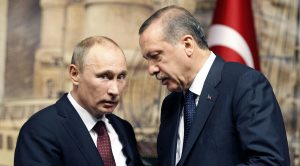
Russian officials announced Monday that Russian President Vladimir Putin would meet with his Turkish and Iranian counterparts, Recep Tayyip Erdogan and Hassan Rouhani, at some point over the following months – the latest sign that trilateral relations are deepening. Earlier this month, officials from all three countries convened for two-day talks on Syria in Kazakhstan’s capital Astana, following on the Moscow Declaration that their foreign ministers signed in December. Turkey’s ongoing pivot to NATO’s two leading adversaries continues to raise questions over its commitment to the transatlantic alliance.

Until recently, Erdogan was a major player in the Syrian proxy war against the Russia- and Iran-backed Assad regime. Relations between Ankara and Moscow had hit a low point in November 2015 with Turkey’s downing of a Russian jet. Russian sanctions targeting Turkey’s flailing economy, and the abortive Turkish coup of last July, however, pushed Erdogan back into Putin’s arms, and the two strongmen mended fences during a bilateral summit last summer in St. Petersburg.

Turkey’s signing of the Moscow Declaration, guaranteeing Syria’s “sovereignty, independence, unity and territorial integrity,” marks the abandonment of its policy of seeking regime change next door. Ankara’s convergence with Russian and Iranian positions continued with the Astana summit, where the parties announced a trilateral mechanism to monitor and enforce the ceasefire in Syria. Holding the summit in Astana was a deliberate Russian-Iranian attempt to undermine the Western-led Syria negotiations in Geneva.

At the previous week’s World Economic Forum in Davos, Turkish Deputy Prime Minister Mehmet Simsek reiterated his government’s U-turn by stating that Ankara “can no longer insist on a Syria settlement without Assad.” This statement was poorly received among the Islamist support base of Erdogan’s Justice and Development Party (AKP), and Simsek’s office issued a denial claiming a Russian news agency had twisted his words. Soon after, however, footage of the minister’s talk surfaced confirming the remarks.

Turkey’s pivot to Russia and Iran, and the accompanying turnaround in its Syria policy, stems from two intertwined developments. Erdogan’s support for jihadist proxies in Syria had led to a blowback at home, as since summer 2015 Turkey has become a target for jihadist violence. Turkish officials also witnessed the expansion of Kurdish-controlled territories in northern Syria by the Democratic Union Party (PYD) – an affiliate of the Kurdistan Workers’ Party (PKK), which Ankara and Washington deem a terror group. Turkey views the prospect of a contiguous PYD-administered entity bordering the country as an existential national-security threat.

The U.S. and NATO must address Turkey’s security concerns while also reminding it of its responsibilities as an ally. Failure to do so would help Moscow and Tehran shift the terms of the Syria debate, and a decades-long NATO member itself, ever closer to their anti-Western orbit.

Aykan Erdemir is a senior fellow at the Foundation for Defense of Democracies and a former member of the Turkish parliament. Follow him on Twitter @aykan_erdemir.

– See more at: http://www.defenddemocracy.org/media-hit/dr-aykan-erdemir-erdogans-newfound-partners-russia-and-iran/#sthash.mV8M7uGa.dpuf