Αρχική Blog Σελίδα 2970

Washington’s Way to European Hearts  

0

Nor has Trump pursued his campaign pledge to make a deal with Russia on the fight against the self-proclaimed Islamic State. The idea of U.S.-Russian cooperation is worthy in principle but has alarmed many in Europe because of fears that Moscow would demand a free hand in Eastern Europe in return. Rather than a grand bargain with Moscow, more U.S. troops and tanks seem to arrive each week to bolster NATO countries bordering Russia.

Valášek is the director of Carnegie Europe, where his research focuses on security and defense, transatlantic relations, and Europe’s Eastern neighborhood.

Tomáš Valášek

Director
Carnegie Europe

Perhaps most auspiciously for the alliance’s senior civilian leader, European defense spending in Europe—the most neuralgic of the issues dividing the United States and Europe—is going up. The secretary general will tell the president that budgets in Europe grew by 3.8 percent, or $10 billion, in 2016.

It would be too early, however, to declare the U.S.-European defense relationship safe and sound, for three reasons.

First, while it is important that the U.S. vice president, secretary of defense, secretary of state, and national security adviser all support NATO—and have taken the time to visit (or plan to visit) the Brussels headquarters to say so in person—one important uncertainty remains. Trump seems to regard NATO as a bad deal for the United States, with Washington spending too much money for something—the security of Europe—that lies outside America’s vital interests. This core belief that wealthy allies, not only in Europe but also farther afield, free ride on and laugh at the United States has appeared consistently in Trump’s statements, from a 1987 ad in the New York Times to his 2017 inaugural speech.

The uncertainty at the top matters. In times of crisis, the U.S. president makes the final decision. And presidents have been known to ignore the views of their senior principals, most recently in September 2013, when then U.S. president Barack Obama chose to disregard advice to launch strikes against Syria after the government of President Bashar al-Assad had dropped sarin gas on the suburbs of Damascus. As long as Trump does not believe that the alliance with Europe works to America’s advantage, the allies will not be certain that he would defend NATO in a crisis.

Second, when Trump meets other heads of state and government at a NATO summit in Brussels in late May, they risk having a divisive debate on how to fight terrorism. The United States has asked the alliance to do more but failed to specify what—or even to announce the results of its own review of national strategy to combat the Islamic State. Many European allies suffer from terrorism even more than the United States and agree that NATO ought to do more. Some also look to a joint U.S.-European counterterrorism campaign under the NATO flag to boost Trump’s interest in NATO. But the allies expect the United States to make the first move: the Washington-led global coalition remains by far the bigger player in the fight against the Islamic State, and NATO can hardly produce a strategy compatible with the coalition’s until the White House spells out how it plans to revamp its approach.

And third, defense spending has been growing, but not fast enough, and could yet slow. Three more NATO countries—Latvia, Lithuania, and Romania—told the allies at the last meeting of defense ministers in February 2017 that they would cross the threshold of spending 2 percent of GDP on defense in 2018. But many of the rest are not on track to do so anytime soon—maybe not even by 2024, the target year NATO members set at their Wales summit in 2014 for reaching 2 percent.

This is in most cases because defense spending remains unpopular and populations do not see a military threat to themselves; but it is also partly—and ironically—because of Trump. His tendency to speak of budget shortfalls in Europe as a debt to the United States grates. European allies point out that the alliance’s largest and costliest military operation to date, the one in Afghanistan in 2003–2014, was fought in response to the 9/11 attacks on the United States. At any given time, between one-third and one-half of troops fighting in Afghanistan came from Europe, but their governments have never asked for a reimbursement from Washington.

So each time Trump speaks of defense spending as payments to the United States, he riles parts of the public and political classes in Europe. That makes it more difficult for governments to build support for budget rises. This is especially true for Germany, which of the big three European allies (alongside France and the UK) spends the least on defense as a percentage of GDP, and where the military budget has become a divisive issue in the campaign for this fall’s parliamentary election.

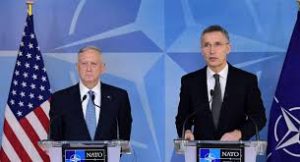
There is little that the NATO secretary general can do to convince Trump of the alliance’s usefulness in a short tête-à-tête. But Stoltenberg can use his visit to say the right things on terrorism and defense spending.

On terrorism, the message should be to involve NATO in the rethink of the U.S. counterterrorism strategy, perhaps by giving the alliance a formal seat on the coalition. Yes, some of NATO’s allies are kept in the loop, but not all. And Washington would find it easier to build consensus in NATO for a stronger role vis-à-vis the Islamic State if allies felt involved from the beginning.

On defense spending, the secretary general should politely point out that the president is right to demand more from Europe but that how he does it matters a great deal. A combination of a hint of menace and appeals to honor usually works best. U.S. Secretary of Defense Jim Mattis points the way. He told his colleagues at a NATO meeting in February that unless spending improved greatly, the United States would “moderate its commitment” to the alliance, without offering further details. He also reminded the allies that he was not asking them to do anything that they had not already agreed to do, at the level of heads of state and government, three years ago in Wales. That is the way to European hearts.

http://carnegieeurope.eu/strategiceurope/?fa=68630&utm_source=rssemail&utm_medium=email&mkt_tok=eyJpIjoiTW1OaU16YzFPRGd6TmpSaiIsInQiOiJ2TlE4NHNJUkdtOGFjVkwzOWlvWkhGbDQxZjA4ZEVIMW44YTRlSGZ5Y21KTnF0Uzc0M2c1TjN0bU9GQ0xtZVwvd2Q5R0d3OWJNeHUzM1NabVZxU2JZMjc1Yk1DVThrNnZWZVFNTldFVVhXd0REdWJUb2xPbU15S0hQaGJ2TVwvY0tCIn0%3D

Ξέρουν τι κάνουν ή χτυπούν στα τυφλά; Κίνδυνοι από την παγκόσμια αδυναμία των ΗΠΑ

0
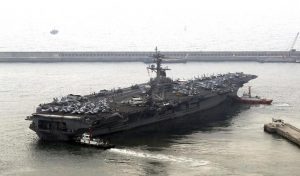
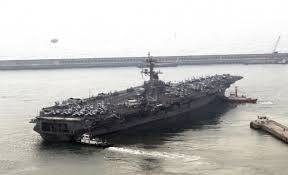
  • Το αμερικανικό αεροπλανοφόρο «USS Carl Vinson» στις ακτές της Βόρειας Κορέας (φωτ.: EPA / Yonhap South Korea)

Σημαντικά κέντρα διαμόρφωσης της αμερικανικής πολιτικής παραδέχονται την αδυναμία των ΗΠΑ να διατηρήσουν το καθεστώς της μοναδικής υπερδύναμης στον κόσμο. Αλλά ο νέος πρόεδρος της χώρας, Ντόναλντ Τραμπ, με το δόγμα «Πρώτα η Αμερική» μπορεί να ακολουθήσει μια τυχοδιωκτική πολιτική χωρίς αντίκρισμα, η οποία δεν αποκλείεται να αποβεί επικίνδυνη για την ανθρωπότητα.

Η πρώτη περίπτωση ήταν το χτύπημα στη Συρία για το οποίο διεθνείς αναλυτές αποδύονται σε έναν αγώνα ερμηνείας του στόχου του.

Έχουν γραφεί πολλές εκδοχές αλλά κανείς δεν γνωρίζει ποια ή ποιες από αυτές είναι σωστές. Ενδεχομένως και να μην υπήρχε στόχος ή να ήταν απλός: «Είμαστε εδώ». Αρκεί αυτό ή είναι επικίνδυνο; Στη Συρία υπάρχει έδαφος για μια αμερικανορωσική συνεργασία που θα αποτελέσει, ίσως, την ευκαιρία για το «νέο μεγάλο παιχνίδι», την παγκόσμια δηλαδή συγκυριαρχία. Αλλά τι θα γίνει με την Κίνα; Όλα αυτά είναι ερωτήματα που έχουν ήδη τεθεί στο τραπέζι των διαμορφωτών της αμερικανικής εξωτερικής πολιτικής. Και αναμένονται απαντήσεις.

Για να επανέλθουμε στη Συρία, η ρωσική πλευρά, σε συνεργασία με το Ιράν, αντέδρασε με τελεσίγραφο: «μην το επαναλάβετε». Και το μήνυμα ελήφθη: «Στόχος μας είναι ο αγώνας κατά του Ισλαμικού Κράτους» απάντησε ο Αμερικανός υπουργός Εξωτερικών.

Οι ΗΠΑ στη Συρία επιχείρησαν να προκαλέσουν και τη Ρωσία. Αλλά ανοίγουν και άλλο μέτωπο, με το οποίο προκαλούν την Κίνα. Τι επιδιώκουν, αφού στην Ουάσινγκτον αποτελεί κοινό τόπο πως δεν μπορούν, πλέον, να ανταγωνιστούν και τις δύο δυνάμεις;

Προς τη Χερσόνησο της Κορέας πλέει το αμερικανικό αεροπλανοφόρο «USS Carl Vinson», δια παν ενδεχόμενο. Από την κατάρρευση του καθεστώτος μέχρι μια εισβολή.

Ο Κιμ Γιονγκ-ουν, ηγέτης της Βόρειας Κορέας, ετοιμάζεται να εορτάσει τα 105 χρόνια από τη γέννηση του παππού του και ιδρυτή της κομμουνιστικής δυναστείας της χώρας, και τα 85 χρόνια από τη δημιουργία του βορειοκορεατικού στρατού. Το αμερικανικό αεροπλανοφόρο πήρε εντολή να παραμείνει στην περιοχή σε ετοιμότητα.

Οι ΗΠΑ θεωρούν τη Βόρεια Κορέα Νο1 απειλή, διότι με τις δοκιμές εκτόξευσης πυραύλων που κάνει, επιδιώκει να αποκτήσει πυρηνική ικανότητα. Και ένα τέτοιο ενδεχόμενο αποτελεί εφιάλτη για τις ΗΠΑ, διότι στις προσπάθειες που καταβάλει το κομμουνιστικό καθεστώς περιλαμβάνεται και η εκτόξευση διηπειρωτικού πυραύλου που θα μπορεί να πλήξει τις ΗΠΑ. Η Βόρεια Κορέα έχει δοκιμάσει πυραύλους μέσου βεληνεκούς κατά τους τελευταίους μήνες, και ο Κιμ δήλωσε τον Ιανουάριο ότι η χώρα του έχει εισέλθει «στο τελικό στάδιο της προετοιμασίας για μια δοκιμή εκτόξευσης ενός διηπειρωτικού βαλλιστικού πυραύλου» ικανού να χτυπήσει την ηπειρωτική χώρα των Ηνωμένων Πολιτειών. Σε απάντηση, ο Πρόεδρος Τραμπ έγραψε: «Δεν θα συμβεί!».

Τη διαχείριση της Βόρειας Κορέας έχει αναλάβει η Κίνα με μεσολαβητικές προσπάθειες, αλλά είναι σαφές πως το Πεκίνο εκμεταλλεύεται τη θέση του αυτή προς ίδιον όφελος. Σε μια εικοσάλεπτη τηλεφωνική συνομιλία με τον πρόεδρο της Νότιας Κορέας Χουάνγκ Γκιο-αν, ο Αμερικανός πρόεδρος Τραμπ του είπε πως κατά τη διάρκεια της συνάντησής του με τον Κινέζο πρόεδρο Σι Τζινπίνγκ είχε «εις βάθος συζητήσεις για σοβαρά πυρηνικά προβλήματα της Βόρειας Κορέας και πώς θα απαντήσει σ αυτά», σύμφωνα με το γραφείο του ηγέτη της Νότιας Κορέας.

Ο Τραμπ υποσχέθηκε να δράσει μόνος του εάν η Κίνα δεν χαλιναγωγήσει τη Βόρεια Κορέα.

Σε συνδυασμό με την ξαφνική απόφαση του προέδρου των ΗΠΑ να ξεκινήσει αεροπορικές επιδρομές στη Συρία, κάποιοι αναλυτές εικάζουν πως επόμενος στόχος θα είναι η Βόρεια Κορέα. Ο υπουργός Εξωτερικών Ρεξ Τίλερσον είπε σε μια επίσκεψή του στη Σεούλ τον περασμένο μήνα ότι «όλες οι επιλογές είναι στο τραπέζι», συμπεριλαμβανομένων και των στρατιωτικών επιλογών.

Η αμερικανική κυβέρνηση εδώ και καιρό έχει αποκλείσει χτύπημα των πυρηνικών εγκαταστάσεων της Βόρειας Κορέας λόγω της πιθανότητας καταστροφικής αντίδρασης κατά της Νότιας Κορέας. Η Βόρεια Κορέα έχει παρατεταγμένο μαζικό συμβατικό πυροβολικό από τη δική της πλευρά της αποστρατιωτικοποιημένης ζώνης που διαχωρίζει την κορεατική χερσόνησο, το οποίο της δίνει τη δυνατότητα να επιφέρει σοβαρό πλήγμα στην ευρύτερη περιοχή της Σεούλ, μια μητροπολιτική περιοχή 20 εκατομμυρίων ανθρώπων μόλις 30 μίλια νότια της ζώνης.

Μια δήλωση από το υπουργείο Εξωτερικών της Βόρειας Κορέας, που δημοσιεύθηκε την Κυριακή, έλεγε ότι η επίθεση στη Συρία ήταν «απολύτως ασυγχώρητη, δεδομένου ότι επρόκειτο για μια απροκάλυπτη πράξη επιθετικότητας εναντίον ενός κυρίαρχου κράτους».

Η Βόρεια Κορέα δεν θα πρέπει να «τρομάζει» από το χτύπημα των ΗΠΑ στη Συρία, σύμφωνα με δήλωση που δημοσιεύθηκε από το κρατικό κορεατικό Κεντρικό Πρακτορείο Ειδήσεων. Τα χτυπήματα έδειξαν γιατί η Βόρεια Κορέα χρειάζεται πυρηνικά όπλα, ανέφερε η δήλωση.

«Εμείς θα ενισχύσουμε με κάθε τρόπο την ικανότητά μας για αυτοάμυνα να αντιμετωπίσουμε τις όλο και πιο ριψοκίνδυνες κινήσεις των ΗΠΑ για έναν πόλεμο και να υπερασπίσουμε τον εαυτό μας με τη δική μας δύναμη» κατέληγε η δήλωση.

Όλα αυτά συμβαίνουν σε μια στιγμή που οι διαμορφωτές της εξωτερικής πολιτικής των ΗΠΑ προβληματίζονται για το αν μπορούν να συνεχίσουν να ηγούνται του κόσμου, ή αν θα πρέπει να συνεργαστούν για την παγκόσμια ηγεμονία με τη Ρωσία ή την Κίνα. Η επιλογή της μιας ή της άλλης δύναμης για συνεργασία έχει θετικά και αρνητικά σημεία για τις ΗΠΑ.

Θα εξετάσουμε τους προβληματισμούς αυτούς, που είναι πολύ ενδιαφέροντες και αποκαλυπτικοί, στο επόμενο σημείωμα.

pontos-news.gr

Μπράβο στον κ. Τσίπρα.

30

Φίλοι και εχθροί αναγνωρίζουν ότι ο κ. Τσίπρας πέτυχε εκεί που οι άλλοι απέτυχαν ή θα αποτύγχαναν.

Όπως είπε ο κ. Μοσκοβισί με θαυμασμό, ο έλληνας πρωθυπουργός και ηγέτης της αριστεράς, πέρασε 200 μνημονιακά μέτρα, τα οποία κανένας άλλος αστός πολιτικός δεν θα μπορούσε ούτε να διανοηθεί ότι θα κατάφερνε. Και όχι μόνο τα πέρασε, αλλά και δεν κουνήθηκε φύλο. Ακόμη περισσότερο, όποιος διανοήθηκε να αντιδράσει χαρακτηρίστηκε εχθρός της αριστεράς, άρα κατά του λαού, φασίστας και μύρια άλλα όσα. Δηλαδή, στην Ελλάδα της αριστερής διακυβέρνησης αν τολμήσεις και πεις πως δεν μπορώ να ζήσω με τα χρήματα που παίρνω, είσαι εχθρός του λαού και του αριστερού κινήματος, οπαδός του παλιού καθεστώτος κλπ κλπ.  Και η προσέγγιση αυτή δεν είναι, απλώς, κυβερνητική προπαγάνδα. Βρίσκει υποστηρικτές και σε λαϊκό επίπεδο. Είναι η ήπια μορφή των γκουλάγκ.  Η καταπίεση που μπορεί να υποστεί ένας άνθρωπος ή μια κοινωνία δεν είναι, μόνο, σωματική. Μπορεί να είναι και πνευματική και να είναι βιαιότερη.  Όχι μόνο μας λένε ψέματα,  αλλά απαιτούν και να τους πιστέψουμε. Μπροστά στο δράμα της αδυναμίας επιβίωσής μας, με τη μείωση μισθών και συντάξεων και την περαιτέρω φορολόγηση, προσθέτουν μύρια όσα για να θολώσουν τα νερά. Χρέος που θα κοπεί αλλά δεν περικόπτεται, δήθεν αντίμετρα που πολλές φορές επιδεινώνουν το πρόβλημα κλπ κλπ.

Αυτή, όμως, είναι η μία επιτυχία του κ. Τσίπρα, που θα τη ζήλευε και ο Γκαίμπελς. Μπράβο του.

Η άλλη είναι σπουδαιότερη.

Όπως είναι γνωστό, ο σκληρός πυρήνας του κυβερνώντος κόμματος μεγάλωσε με τα νάματα του μαρξισμού και λενινισμού, ορισμένοι, και του αναθεωρητισμού αλλά μαρξιστικού, οι άλλοι. Το βασικό ερώτημα αυτού του πολιτικού χώρου ήταν πως θα καταλάβουμε την εξουσία και πως θα εφαρμόσουμε το σοσιαλισμό. Βασικό στοιχείο της μαρξιστικής αριστεράς είναι η κοινοκτημοσύνη των μέσων παραγωγής και η σταδιακή κατάργηση της ατομικής ιδιοκτησίας. Χωρίς αυτά δεν νοείται μαρξιστική αριστερά.

Ενώ άλλοι ηγέτες, στο παρελθόν, αναγκάσθηκαν να προσφύγουν, ακόμη και στην ένοπλη βία για να επιτύχουν το στόχο τους, ο κ. Τσίπρας, και η ομάδα που τον ακολουθεί, κατέκτησε την εξουσία με κοινοβουλευτικές δημοκρατικές διαδικασίες. Ενώ άλλοι ηγέτες ,ανά τον κόσμο, τράβηξαν των παθών τους τον τάραχο για να κοινωνικοποιήσουν μέσα παραγωγής και ατομική ιδιοκτησία, στον κ. Τσίπρα, όλα αυτά προσφέρονται χωρίς καμιά διαμαρτυρία και, πολλές φορές, με τη βούληση των ενδιαφερομένων.

Αν χρωστάς στην εφορία μπορούν να σου κατάσχουν ό,τι κινητό και ακίνητο έχεις. Ακόμη και το σπίτι. Και κανείς δεν αντιδρά. Αυτό είναι επιτυχία. Μεγάλη, μάλιστα, αφού δεν θα συναντήσει ούτε την αντίδραση των αντιεξουσιαστών διότι το δικό τους δόγμα είναι «κανένα σπίτι στα χέρια τραπεζίτη» όχι στα χέρια του κράτους. Ίσως φοβούνται διότι αν αντιταχθούν στο κράτος θα τους καταλογίσουν έλλειψη αριστεροσύνης. Και αυτό αποτελεί μείζον ανάθεμα για έναν νεαρό που μεγαλώνει με τις ιδέες της αριστεράς. Αν κάποιος συγγενείς σου εγκαταλείψει τον μάταιο τούτο κόσμο και σου αφήσει κάποια ακίνητη περιουσία και δεν έχεις τη δυνατότητα να πληρώσεις τα σχετικά με τον φόρο, την εγκαταλείπεις στο κράτος. Και αυτό την παίρνει. Αν έχεις ένα εργοστάσιο, δηλαδή, μέσα παραγωγής, και δεν μπορείς πια , να το λειτουργήσεις, τότε, το εγκαταλείπεις στο κράτος. Και νοιώθεις ανακούφιση. Ακόμη και όταν έχεις ένα μέσο ενημέρωσης και, μάλιστα, μεγάλο.

Όλα αυτά είναι μια επιτυχία και του κ. Τσίπρα, ο οποίος δικαίως, κατά τους προπαγανδιστικούς μηχανισμούς της κυβέρνησης, διεκδικεί τον τίτλο της απόλυτης αριστερής συνείδησης στο Συριζα (το σύνθημα είναι «κανείς δεν είναι πιο αριστερός από τον πρωθυπουργό»), αλλά και του μαρξισμού που προέβλεψε πως όταν ο καπιταλισμός φθάσει σε ένα σημείο εξέλιξης, θα περάσει κρίση που νομοτελειακά θα οδηγήσει στο σοσιαλιστικό μετασχηματισμό. Αλλά, λόγω χρονικής απόστασης από το σήμερα, ο Μάρξ δεν διέβλεψε πως οι κοινωνίες δεν θα χρειαστούν βία για το σοσιαλιστικό πέρασμα. Αλλά, πως θα έρθει στιγμή, όπως σήμερα στην Ελλάδα, που ο κόσμος θα παρακαλάει τον σοσιαλιστή πρωθυπουργό του: πάρτα όλα. Και την ψυχή μας.

Τέλος, υπάρχει και μια άλλη διάσταση επιτυχίας του κ. Τσίπρα. Όσοι έχουν μελετήσει επισταμένως το Μάρξ, λένε πως του ασκούσε μια κρυφή γοητεία ο καπιταλισμός κάτι που διακρίνεται υποδορείως στα έργα του. Κεντρικό στοιχείο του καπιταλισμού είναι η ύπαρξη αστικής τάξης, η οποία κινεί τα νήματα στα καπιταλιστικά καθεστώτα. Ο κ. Τσίπρας, εν προκειμένω, δεν αγνοεί και την ταξική πολιτική και φροντίζει γι αυτήν. Διαλύει την εκπαίδευση, ιδιαιτέρως την ανώτατη. Υπάρχει άνθρωπος που έχει χρήματα να σπουδάσει τα παιδιά του και θα τα έστελνε στο κρατικό πανεπιστήμιο το οποίο λειτουργεί όποτε το επιτρέπουν τα συντρόφια του κ. Τσίπρα; Όχι, βεβαίως. Το δημόσιο πανεπιστήμιο είναι, πλέον, για τα παιδιά των ασθενέστερων οικονομικά τάξεων. Και αυτό για λίγο ακόμη. Διότι ούτε σ αυτό θα μπορούν οι οικονομικά αδύναμοι να σπουδάσουν. Τα έξοδα της μετακίνησης και διαμονής στις πόλεις που υπάρχουν ανώτατα ιδρύματα είναι τεράστια.Ούτε εκεί θα μπορούν να στέλνουν τα παιδιά τους οι αδύναμοι, τους οποίους, υποτίθεται, εκφράζει η κάθε αριστερά. Και όταν έθεσα το ερώτημα της εκπαίδευσης σε μεσοαστό της Θεσσαλονίκης η απάντηση που πήρα ήταν: σιγά να μη στείλω το παιδί μου στα σχολεία του Φίλη. Ναι, αυτή είναι η εικόνα του δημόσιου σχολείου. Και αυτήν την εικόνα δεν την καλλιέργησε μόνο ο κ. Φίλης. Αλλά και συνδικαλιστικές οργανώσεις εκπαιδευτικών.

Αντίδραση σε όλα αυτά; Καμιά. Λένε πως είναι βουβή. Θα το δούμε.


U.S. and Turkey Headed for Showdown

0

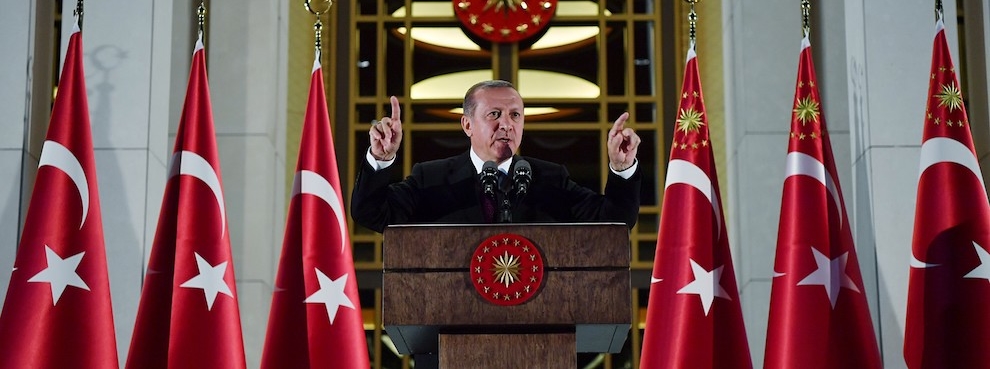
ANKARA, TURKEY – JUNE 23: President of Turkey, Recep Tayyip Erdogan gives a speech during an Iftar (fast-breaking) dinner, hosting Turkey’s opinion leaders due to Muslims’ holy month Ramadan at Presidential Complex in Ankara, Turkey on June 23, 2016. (Photo by Kayhan Ozer/Anadolu Agency/Getty Images)
A scenario President Harry S. Truman once feared — the fall of Turkey to tyranny and outside coercion — seems near. The country’s strongman, President Recip Tayyip Erdogan, and his ruling AK Party have dismantled the republic’s free institutions in the run-up to the watershed Turkish referendum on April 16.Turkey is far along in a dramatic transformation that has uncoupled it from its modern strategic and political moorings in the West. Since the failed July 15 military coup, President Erdogan has ruled under emergency law and shredded the remaining checks on his power. The judiciary, academia, independent media, the police and the military have all been purged and restocked with Mr. Erdogan loyalists. Dissent is being criminalized, with many either in jail or fearing for their lives — or at least their livelihoods — if they cross the president. This month, Turks will decide on whether to cement Erdogan’s imperial presidency in a new constitution.

For years, Western nations have soft-pedalled Erdogan’s Islamist nationalism and thuggish behavior in the hopes that NATO’s long-time ally will eventually come to its senses. Turkey, as it was in Truman’s time, is in a hazardous strategic predicament. Iran and Russia, the Turks’ centuries-old rivals, have exploited the ongoing wars and meltdown of the state-based order across the Greater Levant to enlarge their positions and influence. Having been rapidly encircled, Turkey, Western governments hoped, would reprise its Cold War role as a strategic bulwark.

But Mr. Erdogan has had other ideas. To maximize his power at home, he has been tearing up Turkey’s relations with the West and courting with Iran, jihadist forces, even the Kremlin — a dangerous game. Instead of strengthening Turkey, he is making it weaker.

One of the most significant trends in Middle East politics has been the decomposition of large, religiously and ethnically variegated countries into smaller, more homogenous polities, as people demand more say in their own governance. Well-formed republics can decentralize and manage this peacefully. Authoritarian states like Turkey now must commit enormous sums to internal repression — or they violently crack up.

Erdogan’s religious nationalism has exacerbated the country’s many fault lines — between civil democrats and caliphate revivalists, among rival religious brotherhoods, between Alevi and Sunni, and above all, between Turks and Kurds.

After abandoning an earlier conciliatory policy toward the Kurds that had shown some promise, the president, again for personal political gain, plunged his country into a militarily unwinnable war with Kurdish militants that has worsened. The army’s heavy-handed tactics have decimated Kurdish cities and towns, displacing hundreds of thousands from their homes. Radical Kurdistan Workers’ Party (PKK) factions have recruited thousands of supporters as a result, while Mr. Erdogan has jailed the very Kurdish civilian leaders (HDP) needed to make peace. Islamic State is trying to exploit these divides. Russia and Iran could, too. Mr. Erdogan has hardwired Turkey for debilitating conflict and, potentially, jeopardized its national integrity.

With Turkey’s security and economy in a downward spiral, Erdogan’s reach for an imperial presidency may yet be derailed. But don’t count on it.

Given the real political entropy in Turkey in which people are fearing for their lives and livelihoods, the short-term advantage will go to the dominant AKP faction, whose patronage networks are flush with money — thanks to its Arab Gulf patrons. More domestic chaos in coming months may even give Erdogan’s AKP a boost rather than hurt it. In any case, Mr. Erdogan will not permit himself to lose.

Regardless of what happens, the U.S.-Turkey alliance is becoming a fiction from a strategic point of view, and U.S. policymakers need to plan and act accordingly. Indulging Mr. Erdogan will only hasten Turkey’s degradation.

Washington’s task now is to build a new security architecture in the region — one that doesn’t depend on Mr. Erdogan — to cope with the ongoing implosion of order. Assuming Europe is roused from its slumber, balancing Russian power and dealing with Turkish frailty is prudent and points toward building up NATO positions in Southeast Europe and the Mediterranean.

The United States also has alternative positions to reinforce in the Middle East, particularly among the Kurds in Northeastern Iraq and in Eastern Syria, both stalwarts in the anti-ISIS fight. In this, Washington and Ankara are headed for a showdown in the lead-up to the battle over Raqqa, ISIS’ capital in Syria. The United States should double down on its partnership with the Kurds in Eastern Syria. True, this may draw Erdogan’s ire and obstructionism, but it underscores the need for independent U.S. access to Iraqi Kurdistan and Syrian Kurdistan via Iraq and Jordan.

All the same, the United States must not give up on Turkey. As it was in Truman’s time, Turkey’s political character and stability is vital to the pursuit of order in the Middle East. For this reason, the United States must be careful not to treat Kurds as merely mercenaries. The Kurds don’t want to be a part of somebody else’s empire, and strategically-wise Turks are fully aware the advance of enlightened Kurdish self-rule along Turkey’s southern border is in their interest. In addition to bolstering them militarily, the United States needs a follow-through plan for building the Kurds’ capacity for self-government. If America does not do this, Iran’s empire-builders or Russia will, with profoundly detrimental implications for Turkish security.

Millions of Turks and Kurds want the security and freedom that only republican government can provide. As the United States adopts “tough love” toward President Erdogan’s Turkey, it needs to align with these civil democratic forces and make clear the republic’s revival is essential.

————————–

President of Turkey Recep Tayyip Erdogan gives a speech during an Iftar (fast-breaking) dinner the at Presidential Complex in Ankara, Turkey, June 23, 2016. (Photo by Kayhan Ozer/Anadolu Agency/Getty Images)

Eric B. Brown

hudson.org

Το δημοψήφισμα στην Τουρκία, η κατάσταση στη Συρία και το Κυπριακό: “Νικητές” και “ηττημένοι”

0

 Του Άρη Βικέτου *

Ο πολιτικός κόσμος της Κύπρου, με εξαίρεση την κυβέρνηση, δεν ασχολήθηκε με την αμερικανική αεροπορική επίθεση στη Συρία. Η Λευκωσία, η οποία διατηρεί άριστες σχέσεις με τη Μόσχα και από την εποχή Ομπάμα χαρακτηρίζεται από την Ουάσιγκτον ως «στρατηγικός εταίρος», από την πρώτη στιγμή ταυτίστηκε με τη θέση των Βρυξελλών ως χώρα- μέλος της Ευρωπαϊκής Ένωσης. Μάλιστα, ο Κύπριος υπουργός Εξωτερικών, Ιωάννης Κασουλίδης δήλωσε ρητά ότι το αμερικανικό πλήγμα στη Συρία «δεν εξέρχεται της διεθνούς νομιμότητας, καθώς πρόκειται αποδεδειγμένα για θέμα σοβαρής παραβίασης του ανθρωπιστικού δικαίου».

Μια μέρα προηγουμένως, η κυπριακή κυβέρνηση είχε καταδικάσει τη χρήση χημικών όπλων και ζήτησε να λογοδοτήσουν όποιοι θεωρηθούν ως υπαίτιοι για την επίθεση με χημικά. Έγκυρη κυβερνητική πηγή ανάφερε στο Αθηναϊκό/ Μακεδονικό Πρακτορείο Ειδήσεων ότι η Λευκωσία παρακολουθεί τις εξελίξεις στην Συρία, αφού αυτή αποτελεί μέρος της «μεγάλης εικόνας» στην περιοχή, στην οποία περιλαμβάνεται και το Κυπριακό.

Αύριο, Τρίτη, λίγες μέρες μετά την επιδείνωση της κατάστασης στην Συρία και παραμονές του δημοψηφίσματος στην Τουρκία, θα επαναληφθούν οι απευθείας διαπραγματεύσεις για το Κυπριακό μεταξύ των ηγετών των δύο κοινοτήτων, Νίκου Αναστασιάδη και Μουσταφά Ακιντζί. Ο Τουρκοκύπριος ηγέτης τον περασμένο Φεβρουάριο αποχώρησε από το τραπέζι των διαπραγματεύσεων, επικαλούμενος την απόφαση της κυπριακής Βουλής για αναφορά στα σχολεία του ενωτικού δημοψηφίσματος του 1950.

Ωστόσο, ο πραγματικός λόγος ήταν η επικέντρωση του Ταγίπ Ερντογάν στο δημοψήφισμα στη χώρα του και το ότι ήθελε να αποφύγει να τοποθετηθεί στα κρίσιμα ζητήματα: ασφάλεια-εγγυήσεις και εδαφικό. Γι’ αυτό και δεν έγινε, όπως είχε προγραμματιστεί, στις αρχές Μαρτίου η δεύτερη διάσκεψη στη Γενεύη με τις εγγυήτριες δυνάμεις (Τουρκία- Ελλάδα-Βρετανία) και τις δύο κοινότητες της Κύπρου.

Από την πλευρά του, ο Ακιντζί για να δικαιολογήσει τη στάση του, υποστήριξε ότι το δημοψήφισμα στην Τουρκία δεν έχει σχέση με τις συνομιλίες στο Κυπριακό. «Πάντα με κατηγορούν ότι προσπαθώ να καθυστερήσω λόγω αυτού, δεν είναι αλήθεια, δεν ήταν ποτέ αλήθεια. Είναι ξεχωριστό ζήτημα, είναι εσωτερικό ζήτημα της Τουρκίας και αυτοί θα αποφασίσουν», είχε δηλώσει ο Τουρκοκύπριος ηγέτης. Το αποτέλεσμα του δημοψηφίσματος, όπως εκτιμούν αναλυτές στη Λευκωσία, θα παίξει ρόλο στη στάση της Τουρκίας τόσο σε σχέση με την κρίση στη Συρία όσο και σε σχέση με τα επόμενες κινήσεις της Άγκυρας στο Κυπριακό.

Σημειώνεται η δήλωση Ερντογάν, ότι η χώρα του θα διευρύνει τις επιχειρήσεις στη Συρία. Το ζήτημα είναι κατά πόσο θα μπορέσει να το κάνει αυτό, αν βγει αποδυναμωμένος από το δημοψήφισμα. Επίσης, ποια ανταλλάγματα θα ζητήσει από τη διεθνή κοινότητα για να εμπλακεί η Τουρκία σε επιχειρήσεις κατά του καθεστώτος Άσαντ και των τρομοκρατικών οργανώσεων;

Για το Κυπριακό οι ίδιοι αναλυτές εκτιμούν ότι με επικράτηση του «όχι» στο δημοψήφισμα πρέπει να θεωρείται βέβαιο ότι ο Ερντογάν δεν θα δείξει την παραμικρή ευελιξία στο Κυπριακό.

Σε περίπτωση νίκης του Τούρκου Προέδρου υπάρχει κάποια συγκρατημένη αισιοδοξία με δύο προϋποθέσεις: α) η επίλυση του Κυπριακού θα είναι μέσα στις προτεραιότητες του Ερντογάν, β) η λύση να διασφαλίζει τις ανησυχίες και των δύο κοινοτήτων της Κύπρου. Επίσης, θεωρώντας ότι θα επικρατήσει το «ναι» στο δημοψήφισμα στον προβληματισμό για τη στάση του Ερντογάν στο Κυπριακό θα πρέπει να ληφθούν υπόψη και οι ακόλουθοι παράγοντες:

– Το εύρος της νίκης του Τούρκου Προέδρου

– Η διακηρυγμένη θέση της κυπριακής κυβέρνησης να προχωρήσει, ανεξάρτητα από την πορεία του Κυπριακού και τις απειλές της Άγκυρας, το πρόγραμμα γεωτρήσεων στην κυπριακή ΑΟΖ

– Η σχέση Τουρκίας- ΗΠΑ και το κατά πόσον η Ουάσιγκτον θα ασκήσει επιρροή στην Άγκυρα για βιώσιμη και λειτουργική λύση

– Η επανάληψη, αν καταστεί δυνατόν, των ενταξιακών διαπραγματεύσεων Τουρκίας- Ευρωπαϊκής Ένωσης. Σημειώνεται ότι είναι γενικά αποδεκτό πως η σωστή λύση του Κυπριακού θα έχει σημαντικά οφέλη για την Άγκυρα στον ενεργειακό τομέα και κυρίως στη διέλευση από τη χώρα του αγωγού φυσικού αερίου από το Ισραήλ προς την Ευρώπη. Αυτό είναι και το σημαντικότερο κίνητρο για την Τουρκία για μια λύση, που δεν θα αφήνει, σύμφωνα με τον πρόεδρο Αναστασιάδη, «νικητές και ηττημένους».

Ο Άρης Βικέτος είναι δημοσιογράφος

Πηγή: Το δημοψήφισμα στην Τουρκία, η κατάσταση στη Συρία και το Κυπριακό: “Νικητές” και “ηττημένοι” http://mignatiou.com/2017/04/to-dimopsifisma-stin-tourkia-i-katastasi-sti-siria-ke-to-kipriako-nikites-ke-ittimeni/

U.S. Navy sends strike group toward Korean Peninsula

0

THE WASHINGTON POST

 A U.S. Navy strike group is traveling toward the Korean peninsula ahead of anniversary celebrations in North Korea that are expected to include huge military parades. Secretary of State Rex Tillerson commented on the situation during his April 9 interviews on ABC and CBS.(Monica Akhtar, Dani Player, Anna Fifield/The Washington Post)
April 9 
A U.S. Navy strike group led by the USS Carl Vinson aircraft carrier was making its way toward the Korean Peninsula on Sunday “to maintain readiness” as Kim Jong Un’s regime in North Korea prepared to mark key anniversaries in the coming weeks.North Korea is expected to hold a huge military parade Saturday to celebrate the 105th birthday of its founding president, Kim Il Sung, and to mark with similar fanfare the 85th anniversary of the creation of the Korean People’s Army on April 25.Analysts expect the recent barrage of missile launches­ to continue, and activities around the country’s known nuclear test site have raised concerns that Pyongyang may be preparing for a sixth nuclear test.Over the weekend, North Korea said that it was not afraid of military strikes like those the United States launched on Syria last week, saying it could defend itself with its “tremendous military muscle with a nuclear force.”

In this atmosphere, the Carl Vinson strike group, which includes a carrier air wing and two guided-missile destroyers, was ordered to travel to the “Western Pacific.” When the group left Singapore on Saturday, it was bound for Australia before receiving the new orders.

“The U.S. Pacific Command ordered the Carl Vinson Strike Group north as a prudent measure to maintain readiness and presence in the Western Pacific,” said Dave Benham, a spokesman for the Pacific Command.

“The number one threat in the region continues to North Korea, due to its reckless, irresponsible and destabilizing program of missile tests and pursuit of a nuclear weapons capability,” he said, according to the Agence France-Presse news agency.

The Vinson group participated in joint drills with the South Korean military last month to prepare for a sudden change on the peninsula — including the collapse of the North Korean regime or an invasion.

North Korea has been testing medium-range missiles over recent months, and Kim said in January that North Korea had “entered the final stage of preparation for a test-launch of an intercontinental ballistic missile” capable of hitting the mainland United States. In response, President Trump tweeted: “It won’t happen!”

In a 20-minute phone call Saturday, Trump told South Korea’s acting president, Hwang Kyo-ahn, that he had “in-depth discussions about North Korea’s serious nuclear problems and how to respond to them” during his summit meeting with Chinese President Xi Jinping last week, according to the South Korean leader’s office.

Secretary of State Rex Tillerson said “all options are on table” when confronting North Korea’s nuclear threat, while speaking in Seoul on March 17. He also commented on China’s opposition to the South Korea bringing in American anti-ballistic systems. (Reuters)

Trump’s vow to act alone if China does not rein in North Korea, combined with the U.S. president’s sudden decision to launch airstrikes on Syria, has some analysts speculating that North Korea could be next.

The North has conventional artillery massed on its side of the demilitarized zone that bisects the Korean Peninsula, giving it the capacity to inflict serious damage on Greater Seoul, a metropolitan area of 20 million people just 30 miles south of the DMZ.

A statement from North Korea’s Foreign Ministry, published Sunday, said that the attack on Syria was “absolutely unpardonable as it was an undisguised act of aggression against a sovereign state.”

North Korea will not be “frightened” by the U.S. strike on Syria, according to a statement published by the state-run Korean Central News Agency. The strikes showed why North Korea needed nuclear weapons and the means to deliver them, the statement said. “We will bolster up in every way our capability for self-defense to cope with the U.S. evermore reckless moves for a war and defend ourselves with our own force,” it said.

CHINA OR RUSSIA? U.S. MAY HAVE TO CHOOSE AN ALLY

0

BY

Forty-five years ago last February, U.S. President Richard Nixon returned from a visit to China that shocked the world and unsettled leaders in Moscow, who were awaiting a visit from Nixon a few months later.

Soviet leaders wondered if they were finally witnessing the birth of a U.S.-China alliance that they had feared ever since the breakdown of the Sino-Soviet alliance in the early 1960s.

As Washington and the media convulse over every new outrage emanating from Moscow, while President Trump repeatedly asks, “Wouldn’t it be nice if we actually got along with Russia?,” U.S. policymakers are faced with the same choice between Russia and China, though this time the stakes might be even higher.

The history of persistent tensions between Russia and China suggests two choices: Accommodate and reconcile with Russia to balance against the greater power—China. Or, align with China to defend a rules-based international order from its most powerful antagonist—Russia.

It should be clear by now that we can no longer oppose Russia and China at the same time. Though that route might seem tempting and natural, given the historical aspirations of U.S. foreign policy to protect territorial sovereignty, promote human rights and provide a framework for free trade, we are no longer equal to the task.

At a minimum, that would require decisive U.S. action in Syria, firm military support for the government in Kiev, a drastic military buildup of NATO forces across Eastern Europe and a more confrontational posture in the South and East China seas. Doing that would further stretch a U.S. military that is already facing a personnel shortage. It would also represent a burden that the American people apparently no longer wish to carry.

Lost in the discussion of whether Trump’s “America First” bravado reflects militarism or isolationism are the ways in which our options have been shaped by the administration that preceded him.

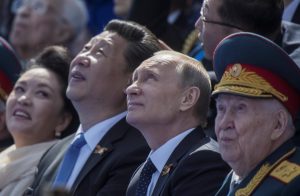
RTX2QS13Russia’s President Vladimir Putin, second from right, and China President Xi Jinping watch the Victory Day parade at Red Square in Moscow, Russia, May 9, 2015.REUTERS

We have only begun to reckon with the foreign policy legacy of Barack Obama, but he has clearly done more to shape the current global predicament than Trump has. When the Russian, Iranian and Turkish foreign ministers met in Moscow in the final weeks of the Obama administration to solve the Syrian crisis by themselves without inviting the U.S., they were making a startling declaration: The nation that had once declared itself to be “indispensable” was now very clearly dispensable. It would have been unthinkable at any point since Pearl Harbor for American interests to be discounted so brazenly in solving the most pressing international crisis.

It is hard to separate the factors that brought us to this point. Is this simply an inevitable product of relative, or even absolute, American decline? Is it a product of a president who sought to “lead from behind” and whose fundamental foreign policy principle was that sins of commission are always worse than sins of omission? Or did Obama conclude he was dealing with a country, already exhausted by wars in Iraq and Afghanistan, that was no longer willing to shoulder the burden of defending the free world? Either way, Trump has inherited a country that is no longer willing and able to play the leadership role it once did in world affairs.

So where do we go from here? If we cannot oppose both Russia and China, then we need to compromise with at least one of them.

Make friends with Russia?

Arguing for a Russian alignment is the notion that China already does more damage to American interests around the globe than Russia does. China damages U.S. economic interests through unfair trade practices, our standing in Asia by undermining our alliances, and our ability to promote democracy, particularly in Africa, by offering aid and investment without good governance conditions. As China grows more powerful and assertive, its efforts to drive the U.S. out of East Asia, coupled with increasing challenges to American interests around the globe, will amount to a full-spectrum challenge to the current U.S. position in the world.

In contrast, Russia’s challenges to American interests are relative pinpricks. Russia does not have the ability to turn either Eastern Europe or the Middle East into its own sphere of influence. It is even losing the competition for economic influence in Central Asia, its own post-Soviet backyard, to China.

Putin might not be an evil dictator bent on doing as much damage to the West as possible, but rather a spurned pragmatist with a realistic view of Russia’s position in the world who had initially hoped to cooperate with Western leaders, but has been embittered by poor treatment by them. Putin’s Russia, therefore, would represent not a mortal threat to the international world order, but rather a missed opportunity, one that can still perhaps be salvaged.

Or choose China instead?

Alternatively, we could align with China against Russia.

This approach makes sense if you believe Putin began as a pragmatist, but that was only a temporary tack, given his KGB background and nationalist authoritarian inclinations. But now that he has seen how weak his opponents are and how much havoc he can wreak, he has set his sights higher. Fifteen years ago he might not have imagined he could break NATO or the EU, but now that seems within reach, and nothing will deter him from this chance to realize the fondest dreams of his Soviet predecessors. What could we possibly offer him to match such dreams? He would revel in the chaos that would follow.

Chaos, however, is precisely the opposite of what the leaders in Beijing desire. China’s resurgence is built on a world of peace and trade, a world ultimately sustained by American military strength. For China to seek to challenge such an order, it would have to imagine that it could not only fill the role the U.S. currently fills, but manage the transition in such a way as to avoid a chaotic interlude. Chinese leaders are far too clear-headed for such a gambit, and in any case they see no need to rush such a transition before conditions for it have matured.

President Xi Jinping is anyway preoccupied with ensuring the indefinite continuation of Communist Party rule. What could jeopardize that more than a world in chaos and economic disaster?

Is the choice even ours?

With Russia against China? With China against Russia?

There is no question such a choice is unpalatable. Not only would either alternative involve morally difficult concessions, but having to make the choice at all implies that the United States is no longer capable of defending the world order it has long sponsored. This is a difficult reality to accept.

And broaching the possibility of such a choice leads to more difficult questions.

Could Russia even be persuaded to align with the U.S. against China or China against Russia? What would we have to offer either side? What would this mean for our allies, especially in Europe and East Asia? The latter question might not be as insoluble as it may seem, because our allies have long since begun anticipating just such a scenario. But if we are no longer able and willing to perform the role we once did, we need to reckon with the consequences.

Jeremy Friedman is Assistant Professor, Business, Government, and the International Economy, Harvard Business School.

http://www.newsweek.com/china-russia-us-choose-ally-580280

The Conversation

Are pro-Erdogan groups buying arms to prep for potential coup?

0

 Since the coup attempt in Turkey on July 15, 2016, Ankara has been preoccupied with scenarios of a possible second coup attempt. These scenarios are sometimes made public before being immediately countered by measures the political rule and its affiliated civil society take.

The political rule is worried about potential new threats and has been undertaking radical measures, especially within the Turkish Armed Forces. Military schools have been closed, military hospitals have been transformed into civilian public hospitals and tens of thousands of people have been fired from the public sector, including the Ministry of Defense and Ministry of Interior.

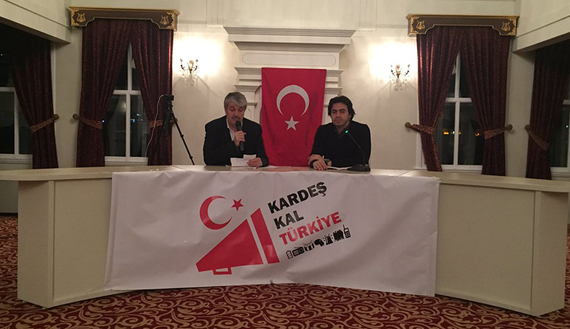
Turkey’s civil society responded to the rumors of threats with new structures that would not be allowed in a democratic country. The latest such body — “Stay as Brothers, Turkey” — was founded by Orhan Uzuner, a name known to the public.

Uzuner is not a politician but an engineer who started working for the Istanbul municipality in 1994. His life changed completely when his daughter Reyhan was introduced to President Recep Tayyip Erdogan’s son Bilal in 2003. Reyhan, who was only 17 years old at the time, was allowed to marry Bilal with a court permission, as she was not yet 18. That’s how Uzuner became a relative of Erdogan. He subsequently resigned from his job with the municipality. When his new employer Betra Corporation was accused by a Court of Audits of causing losses for the Turkish State Railways, his name came up.

He made the headlines again when he founded “Stay as Brothers, Turkey,” with the opposition secularist daily Cumhuriyet reporting the group’s formation under the headline “Erdogan’s militias.”

Uzuner told his audience that he had set up the group to counter “a natural disaster, an earthquake or an uprising.” The group, which organized on WhatsApp, is said to have 500 members already.

Uzuner, in his address to the group, explained the preparations they were making to “warn the public and provide communications” in a time of danger. He said their smallest instrument is a whistle, but that he has a bullhorn in his car. Next, a wireless communication system and a radio station will be established. Also on the agenda are first aid courses to be organized by the Ministry of Health. In addition, Uzuner promised training for the group’s members on how to use drones, yet did not explain the objective.

Uzuner concluded his speech by saying that the group is fully dedicated to Erdogan, and their supreme goal is to prevent harm to “our Quran, our prophet, our country and our nation.”

Some reports quoted Uzuner as saying, “We have weapons to use when needed.” Uzuner denied saying this and claimed he was talking of “sirens not weapons.”

While the debate of his use of the term “weapons” or “sirens” continues, people have not forgotten how paramilitary groups and militias were set up in the past. Husnu Bozkurt, an opposition lawmaker from the Republican People’s Party (CHP), asked Prime Minister Binali Yildirim to initiate an official inquiry. “The intention to set up a parallel arm cannot be ignored. You like Mussolini’s black shirts or Hitler’s brown shirts,” Bozkurt said in his written query to the parliament.

Although Uzuner insists his group is unarmed, other allegations about arming against a new coup attempt are widespread. Sinan Ogan, a lawmaker from the ultranationalist Nationalist Movement Party, charged the Justice and Development Party (AKP) with providing shopkeepers with weapons training. “We know that after July 15, shopkeepers who are normally bakers, grocers and barbers are taken to camps for weapons training. This semi-militia force is being prepared to take on the other segment of the population when the AKP feels it is needed,” Ogan said in an interview with daily Sozcu.

A man named Emin Canpolat, who refers to himself as the head of a nationalist, Islamist group on his social media account, called on people to “arm” themselves. “For the country, for the flag and for Erdogan,” Canpolat wrote.

Ankara’s staunchly pro-AKP Mayor Melih Gokcek recently said, “There has been extraordinary arming. Everyone buys a pump shotgun to keep in their house.”

Ahmet Akin, a CHP lawmaker, also said there has been a boom in sales of pump shotguns. No permit is needed to obtain these kinds of guns.

While Uzuner insists “Stay as Brothers, Turkey” was set up to resist “dangerous events,” he does not say who is to decide that an event is against Erdogan, the Quran, the prophet, the country or the nation. Who will then turn on the sirens in a country that is becoming more tense by the day?

—————————————

Orhan Uzuner, the father of the president’s daughter-in-law, discusses “Stay as Brothers, Turkey.” Posted Feb. 23, 2017.

(photo by Twitter/kardeskalTR)

www.al-monitor.com

Γιατί χτύπησαν οι Αμερικανοί στη Συρία! και Η αλήθεια για το “χημικό παιχνίδι” στη Συρία

0

Του Βασίλη Κοψαχείλη* Σάββατο 08 Απριλίου 2017
του Σάββα Καλεντερίδη Παρασκευή 07 Απριλίου 2017

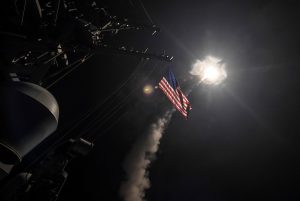
Το προχθεσινό Αμερικανικό χτύπημα στη Συρία με 59 πυραύλους Tomahawk εναντίον αεροσκαφών και εγκαταστάσεων στην αεροπορική βάση της Shayrat δίπλα στην Homs, όπου εδρεύει και Ρωσικό αεροπορικό απόσπασμα, ήρθε ως απάντηση στην προσβολή με χημικά όπλα – πιθανότατα από κυβερνητικές δυνάμεις – της πόλης Khan Sheikhoun της επαρχίας του Idlib που ελέγχεται από δυνάμεις αντικαθεστωτικών. Η Αμερικανική αντίδραση πυροδότησε συζητήσεις για τις προθέσεις της διοίκησης Τράμπ απέναντι στη Συριακή κρίση και στη Ρωσία. Τα σενάρια δίνουν και παίρνουν, με τους πλέον καλόπιστους ευθέως να απορρίπτουν την εκδοχή τα χημικά να ρίχτηκαν από τον Άσαντ διότι δεν βρίσκουν κίνητρο πίσω από αυτή την ενέργεια.

Με το παρόν άρθρο επιχειρούμε ορισμένες απαντήσεις στο θέμα.

Τα χημικά όπλα της Συρίας

Το 2013, οι ΗΠΑ συμφώνησαν με τη Ρωσία, η δεύτερη ως σύμμαχος του Άσαντ να τον υποχρεώσει να παραδώσει στη Μόσχα το χημικό του οπλοστάσιο και εκείνη θα αναλάμβανε την φύλαξη και καταστροφή του. Η συμφωνία αυτή πραγματοποιήθηκε, όπως έδειξαν τα πράγματα στη συνέχεια, μόνο σε ένα μικρό μέρος της. Χημικά όπλα βρέθηκαν στην κατοχή ή μεταγενέστερα χρησιμοποιήθηκαν από όλες τις εμπλεκόμενες δυνάμεις στη Συριακή κρίση, όμως την πλέον εκτεταμένη χρήση τους έκαναν οι φιλοκυβερνητικές δυνάμεις.

Για να δώσουμε μια εικόνα της πολυπλοκότητας του ζητήματος αρκεί να αναφέρουμε πως, τόσο οι φιλοκυβερνητικές δυνάμεις όσο και οι αντικαθεστωτικοί, στην ουσία αποτελούν συμπράξεις δεκάδων και εκατοντάδων αυτόνομων ένοπλων ομάδων με ιδιαίτερα συμφέροντα και στοχεύσεις, πολλές φορές αντικρουόμενα μεταξύ τους!

Η Ρωσική εμπλοκή

Το 2015 οι Αμερικανοί αποδέχθηκαν de facto ρόλο και αναγνώρισαν «εύλογα συμφέροντα» της Ρωσίας στη Συρία, αφήνοντάς τη ελεύθερη να ξεκαθαρίσει το τοπίο, φτάνει η μεταπολεμική Συρία να έχει ομόσπονδη δομή και πρόνοια μιας αυτόνομης Κουρδικής περιοχής κατά μήκος των Τούρκο-Συριακών συνόρων.

Με την στρατιωτική τους εμπλοκή στη Συρία, οι Ρώσοι βοήθησαν τον Άσαντ να κερδίσει εδάφη και τον επέβαλαν ως μέρος της λύσης στις συζητήσεις για τη μεταπολεμική Συρία, γεγονός που τελικά αποδέχθηκαν οι Αμερικανοί.

Η διαδικασία ειρήνευσης της Αστάνα

Στις αρχές του 2017 η Ρωσία επέβαλε (α) κατάπαυση του πυρός μεταξύ φιλοκυβερνητικών, αντικαθεστωτικών και Κούρδων (εξαιρέθηκαν η al–Nusra και το ΙΚ), και (β) συνομιλίες ειρήνευσης στην Αστάνα του Καζακστάν.

Στο μεσοδιάστημα αυτό και προκειμένου να απαλλαγεί ο Άσαντ από την πίεση των αντικαθεστωτικών στα νότια της Δαμασκού, συμφώνησε μαζί τους την μετακίνησή τους, μαζί με τις οικογένειές τους και τον ελαφρύ οπλισμό τους, προς το βορρά στην περιοχή της Idlib που βρίσκονταν και άλλες δυνάμεις αντικαθεστωτικών. Χωρίς προμήθειες και πυρομαχικά, οι αντικαθεστωτικοί συμφώνησαν και μετακινήθηκαν στην περιοχή της Idlib.

Στο διπλωματικό τραπέζι των συνομιλιών στην Αστάνα, ωστόσο, η μία αντιπροσωπεία στην ουσία δεν αποδεχόταν την παρουσία της άλλης. Οι αντικαθεστωτικοί δεν δέχονταν τον Άσαντ ως μέρος της μεταπολεμικής Συρίας, οι Τουρκμένοι δεν δέχονταν να καθίσουν στο τραπέζι των συνομιλιών οι Κούρδοι, κοκ…

Ο κίνδυνος κατάρρευσης των συνομιλιών, ακόμη και η προοπτική μη θετικής τους κατάληξης εκτιμάται από τη Μόσχα ως πλήγμα στο κύρος της και στην ισχύ της στην περιοχή (στοιχείο που μετράει πολύ τόσο στα μάτια των Ρώσων όσο και στα μάτια των Μεσανατολιτών).

Τα διλήμματα και το πιθανότερο σενάριο

Μπροστά σε αυτή την κατάσταση και με βάση τα διαθέσιμα στοιχεία, το πιθανότερο σενάριο θέλει τις φιλοκυβερνητικές δυνάμεις, ενδεχομένως και με ρωσική στήριξη, να έπληξαν με χημικά τους αντικαθεστωτικούς στην Idlib, στέλνοντάς τους το μήνυμα ότι είτε προσέρχεστε στις συνομιλίες χωρίς όρους είτε αφανίζεστε.

Βλέποντας αυτό οι Αμερικανοί θορυβήθηκαν, διότι σύμφωνα με την ανάλυσή τους, μετά τους αντικαθεστωτικούς σειρά θα είχαν οι Κούρδοι, τους οποίους ενεργά υποστηρίζουν.

Έτσι, το αμερικανικό πλήγμα στην κοινή Ρώσο-συριακή αεροπορική βάση, αφού πρώτα είχαν ειδοποιηθεί Ρώσοι και Σύριοι ώστε να μην υπάρχουν ανθρώπινες απώλειες, ήταν ένα ηχηρό μήνυμα με πολλαπλούς αποδέκτες. Κυρίως τους Ρώσους, αλλά και τους Κινέζους.

Αν οι Ρώσοι ενδιαφέρονταν πραγματικά να μην γίνεται χρήση χημικών όπλων στη Συρία, τότε γιατί έχουν επανειλημμένα μπλοκάρει σχετικά ψηφίσματα στο ΣΑ του ΟΗΕ;

Το μήνυμα λοιπόν των Αμερικανών προς τους Ρώσους είναι να μην συμπράττουν σε αυτό το έγκλημα και να φροντίσουν γρήγορα να πείσουν τα μέρη να συμφωνήσουν σε ένα πλάνο μετάβασης στη σταθερότητα στη χώρα. Χωρίς παιχνίδια κάτω από το τραπέζι.

Παρόμοιο μήνυμα όμως έστειλαν και στην Κίνα. Φιλοξενώντας τον Κινέζο Πρόεδρο στο Μαρ-α-Λάγκο στη Φλόριντα και έχοντας επί μια εβδομάδα σε όλους τους τόνους ζητήσει από την Κίνα να διευθετήσει το ζήτημα με το πυρηνικό οπλοστάσιο της Βόρειας Κορέας, οι ΗΠΑ έστελναν το μήνυμα ότι ή θα κάνετε φίλοι Κινέζοι κάτι σχετικά με τη Βόρεια Κορέα ή θα αναλάβουμε εμείς δράση.

Το αφήγημα Flynn

Υπάρχει ωστόσο και ένα σοβαρό εσωτερικό ζήτημα για την κυβέρνηση Τράμπ, σχετικά με την χθεσινή επίθεση στη Συρία. Προσωπικά, από το περασμένο καλοκαίρι επισημαίνω πως η κόντρα μεταξύ του συστήματος Τράμπ και του συστήματος Κλίντον-Ομπάμα δεν θα έχει καλή κατάληξη για τις ΗΠΑ και τον κόσμο. Ο αποπεμφθείς από τον Τράμπ πρώην συνεργάτης του και σύμβουλος εθνικής ασφάλειας των ΗΠΑ Michael Flynn, καλλιεργεί προφίλ ήρωα με το αφήγημα πως η αποπομπή του σχετίζεται με το γεγονός ότι η κυβέρνηση Τράμπ έχει εκχωρηθεί στα συμφέροντα του συστήματος Κλίντον-Ομπάμα, γι’ αυτό και οδηγούνται τα πράγματα σε όξυνση με τη Ρωσία. Είναι ένα πολύ βολικό αφήγημα, που κάνει όμως ζημιά.

Κλείνοντας θα λέγαμε πως με την προχθεσινή τους επίθεση στη Συρία, οι ΗΠΑ προσπαθούν να διασφαλίσουν την φυσική ακεραιότητα των συμμάχων τους Κούρδων, τα συμφέροντά τους στη Συρία, και να θέσουν το πλαίσιο μέσα στο οποίο θα πρέπει να κινηθούν Ρωσία και οι υπόλοιποι δρώντες, ώστε να υπάρξει γρήγορα εμπέδωση της σταθερότητας στην περιοχή. Μένει να δούμε τις εξελίξεις…

Ο κ. Βασίλης Κοψαχείλης είναι Διεθνολόγος, Γεωστρατηγικός Αναλυτής.

http://www.liberal.gr/arthro/129438/amyna–diplomatia/2017/giati-chtupisan-oi-amerikanoi-sti-suria.html

Η αλήθεια για το «χημικό παιχνίδι» στη Συρία

Ο καταστροφικός πόλεμος στη Συρία ξεκίνησε ως εξέγερση τον Μάρτη του 2011, για να ακολουθήσει στη συνέχεια εισβολή τρομοκρατών της Αλ Κάιντα και άλλων ομάδων τζιχαντιστών, και όχι μόνο, που εξοπλίστηκαν από τη Σαουδική Αραβία, το Κατάρ και την Τουρκία, υπό την υψηλή επίβλεψη του… διεθνούς παράγοντα.

Στις άλλες εξεγέρσεις που έγιναν στο πλαίσιο της «Αραβικής Άνοιξης», και κυρίως σε εκείνην της Λιβύης, Ρωσία και Κίνα δεν αντιστάθηκαν και ο… διεθνής παράγων έκανε ό,τι ήθελε.

Τη φορά αυτή όμως, Ρωσία και Κίνα άσκησαν αλλεπάλληλες φορές βέτο στο Συμβούλιο Ασφαλείας του ΟΗΕ όταν τέθηκε το θέμα της στρατιωτικής επέμβασης στη Συρία. Τη μόνη φορά που αποφάσισαν να άρουν το βέτο και ψήφισαν υπέρ οι δύο προαναφερθείσες χώρες, ήταν όταν –λίγες μέρες μετά τη χρήση χημικών στο προάστιο Γκούτα της Δαμασκού, τον Αύγουστο το 2013– τέθηκε το θέμα της καταστροφής του χημικού οπλοστασίου της Συρίας, που αποτελούσε στρατηγικού χαρακτήρα απειλή για τις γύρω χώρες και κυρίως για το Ισραήλ, αφού είναι γνωστό ότι τα χημικά όπλα αποκαλούνται τα «πυρηνικά των φτωχών».

Όντως, μετά την απόφαση του ΣΑ του ΟΗΕ, η Συρία δέχτηκε την καταστροφή του χημικού οπλοστασίου της, η οποία σημειωτέον έγινε στη Μεσόγειο, νότια της Κρήτης, με άγνωστες συνέπειες για την οικολογική ισορροπία της περιοχής. Παρ’ όλα αυτά, η Ρωσία αλλά και η Κίνα συνέχισαν να στηρίζουν τη νόμιμη κυβέρνηση της Συρίας, με την πρώτη να εμπλέκεται και στρατιωτικά στις συμπλοκές, που είχαν εξελιχθεί σε κανονικό πόλεμο.

Παράλληλα, στρατιωτική εμπλοκή είχε και το Ιράν, απευθείας και διά της τεθλασμένης. Απευθείας μέσω τμημάτων στρατιωτικών μηχανισμών του ιρανικού κράτους, και διά της τεθλασμένης με την Χεζμπολάχ του Λιβάνου.

Αυτή η εμμονή της Ρωσίας και η εμπλοκή της σε στρατιωτικό επίπεδο στον πόλεμο της Συρίας, σε συνδυασμό με τις τρομακτικές διαστάσεις που πήρε το φαινόμενο ISIS, που έκανε την εμφάνισή του τα τέλη του 2013, ήταν που υποχρέωσε τις ΗΠΑ να έλθουν σε ενός είδους συνεννόηση με τη Ρωσία. Αυτό έγινε κυρίως για δύο λόγους. Ο ένας ήταν για να αποφευχθεί μια στρατιωτική συμπλοκή ΗΠΑ-Ρωσίας, που θα οδηγούσε εκ των πραγμάτων σε παγκόσμιο πόλεμο, και ο άλλος για να εξουδετερωθεί πιο εύκολα ο ISIS, που ως απειλή είχε λάβει εξωπραγματικές διαστάσεις.

Αυτή η συνεργασία ΗΠΑ-Ρωσίας, σε συνδυασμό με την αλλαγή των προτεραιοτήτων της Ουάσινγκτον, οδήγησαν στην ισχυροποίηση και σταθεροποίηση του Άσαντ στη θέση του, στην παγίωση της παρουσίας στη Συρία και στην αναβαθμισμένη παρουσία του Ιράν στην περιοχή. Η εμμονή των ΗΠΑ στη συνεργασία με τους Κούρδους οδήγησε την Τουρκία στην «αγκαλιά» της Ρωσίας αλλά και του Ιράν, με αποτέλεσμα οι τρεις τους να αναλάβουν πρωτοβουλία για την κατάπαυση του πυρός στη Συρία.

Ενώ συμβαίνουν όλα αυτά και ενώ είναι σε εξέλιξη προσπάθειες για την εξεύρεση οριστικής λύσης στη Συρία, μέσω συνομιλιών στη Γενεύη, είχαμε το προχθεσινό περιστατικό με τους θανάτους από χημικά όπλα –και συγκεκριμένα από το αέριο σαρίν– σε περιοχή του Ιντλίμπ που κατέχεται από τρομοκράτες της Αλ Νούσρα (παρακλάδι της Αλ Κάιντα).

Οι χώρες που ανεβάζουν το θέμα και θεωρούν υπεύθυνο για την επίθεση τον Άσαντ είναι η Αγγλία και το Ισραήλ, για να ακολουθήσουν οι ΗΠΑ, με πιο μετριοπαθείς θέσεις από τους δυο πρώτους.

Η Τουρκία κάνει λόγο για επίθεση με χημικά χωρίς να ισχυρίζεται ότι την επίθεση την έκανε ο Άσαντ, ενώ η ΕΕ, διά της επικεφαλής της διπλωματίας, Φεντερίκας Μογκερίνι, ζητεί να καταβληθεί «σημαντική προσπάθεια» υπέρ των ειρηνευτικών συνομιλιών για τη Συρία στη Γενεύη.

Όσο για τη Ρωσία, δηλώνει ότι θα συνεχίσει από κοινού με τον Άσαντ τον πόλεμο κατά της τρομοκρατίας, με τη συριακή πλευρά να δηλώνει ότι σε αεροπορική επίθεση χτυπήθηκε αποθήκη πυρομαχικών των τρομοκρατών, μέσα στην οποία είχαν κρυμμένα χημικά όπλα και από αυτά προκλήθηκαν οι απώλειες.

Η κατάσταση στη Συρία είναι αυτή που περιγράψαμε. Απλά, να υπενθυμίσουμε ότι η Κάρλα Ντελ Πόντε, μέλος της επιτροπής του ΟΗΕ για τις παραβιάσεις ανθρωπίνων δικαιωμάτων στη Συρία, τον Αύγουστο του 2013 είχε δηλώσει ότι οι ισλαμιστές αντάρτες ήταν εκείνοι που έκαναν χρήση χημικών κατά αμάχων!

Καλό είναι λοιπόν να είμαστε προσεκτικοί όταν προσεγγίζουμε το θέμα, το οποίο προσφέρεται για εξαγωγή πολλαπλών και εξαιρετικά ωφέλιμων συμπερασμάτων για όλους…

* Το σχόλιο γράφτηκε πριν από το σημερινό χτύπημα των ΗΠΑ σε αεροπορική στρατιωτική βάση στη Συρία.

 pontos-news.gr

Η γερμανική Ευρώπη πνέει τα λοίσθια: Οι λαοί επιθυμούν ηγέτες, όχι αφέντες και υποτελείς

0

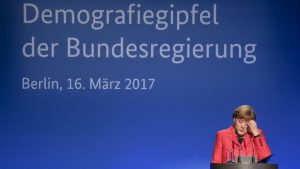
German Chancellor Angela Merkel speaks at the demography summit in Berlin, Germany. EPA, CLEMENS BILAN APRIL 9, 2017
Γράφει ο Γεώργιος Εμ. Δημητράκης

Στόχος της Συνθήκης της Ρώμης που υπεγράφη την 25.Μαρτίου 1957 (ΕΟΚ) από τις ιδρυτικές χώρες Βέλγιο, Γερμανία, Γαλλία, Ιταλία, Λουξεμβούργο και Ολλανδία ήταν η υλοποίηση της ιδέας της ευρωπαϊκής ολοκλήρωσης. Η συμβολή αυτών εις την λειτουργική δόμηση της πολιτικής Ευρώπης αποτέλεσε καθοριστικό βήμα για  την πληρέστερη ενοποίηση της, με κοινή δράση για την οικονομική και κοινωνική πρόοδο καθώς και για τους όρους διαβίωσης και απασχόλησης των λαών της, με συντονισμένες δράσεις για την εμπέδωση των αξιών, της ισότητας, της αλληλεγγύης και της εμπιστοσύνης, αλλά και για την εξασφάλιση της σταθερότητας, της επέκτασης της οικονομίας και της ισορροπίας εις τις συναλλαγές υπό συνθήκες θεμιτού ανταγωνισμού.

Και όλα αυτά προς αποτροπή νέων πολεμικών συρράξεων μετά τις τραυματικές εμπειρίες των δύο Παγκοσμίων Πολέμων που ξεκίνησαν από ευρωπαϊκό έδαφος και αιματοκύλησαν την ανθρωπότητα. Η επέτειος των 60 χρόνων από την υπογραφή της ίδρυσης της ΕΟΚ/ΕΕ εορτάστηκε την 25η Μαρτίου 2017 με λαμπρές εκδηλώσεις  από τα 27 κράτη-μέλη εις την ειδική Σύνοδο Κορυφής εις την Ρώμη με την  υπογραφή της Διακήρυξης των Αξιών της Ευρωπαϊκής Ένωσης με ανούσιες διαβουλεύσεις, ανεφάρμοστες υποσχέσεις και νέες διαβεβαιώσεις, οι οποίες δεν σηματοδοτούν παρά ένα ομιχλώδες σταθμό για το ευρωπαϊκό οικοδόμημα.

Εν ολίγοις η Διακήρυξη της Επετειακής Συνόδου Κορυφής υπογραμμίζει την υποχρέωση για εκπλήρωση στόχων οι οποίοι όμως, ως ήδη γνωστόν, είναι ανεφάρμοστοι λόγω της διαφορετικότητας, της έλλειψης ουσιαστικής σύγκλησης, κατανόησης, αλλά και λόγω  των επικρατούντων εθνικών προτεραιοτήτων των κρατών-μελών της Ένωσης. Διότι πέρα από τις εορταστικές εκδηλώσεις και τις συνηθισμένες γνωστές Συναντήσεις Κορυφής, το καίριο ερώτημα που τίθεται κάθε τόσο από τους πολίτες της Ευρώπης προς τους Ευρωπαίους Ηγέτες αλλά και  τους Θεσμούς και τα όργανα της Ε.Ε.  είναι το εξής:

Σε τι συνίσταται το βαθύ νόημα της ύπαρξης της Ευρωπαϊκής ‘Ένωσης. και της Ευρωζώνης; Διότι κάθε τόσο ο καθείς από εμάς, γίνεται  γνώστης των διαφόρων (έντονων) διχογνωμιών και αντιπαραθέσεων και της παντελούς έλλειψης  ενότητας, ισότητας και αλληλεγγύης για τη χάραξη μίας κοινής πολιτικής προς αντιμετώπιση σοβαρότατων κοινών προβλημάτων που υπονομεύουν τις τύχες των Λαών της, αν όχι αυτό το μέλλον της Ευρώπης. Μέγα σφάλμα είναι ο χαρακτηρισμός που δίνεται σε όλους εκείνους που εδώ και δύο δεκαετίες δικαιολογημένα ανησυχούν για την κατάντια και το μέλλον της Ε.Ε. τους οποίους και αποκαλούν τώρα «Ευρωσκεπτικιστές». Διότι οι κύριοι υπαίτιοι της λανθασμένης και ολέθριας πορείας που διανύει σήμερα η Ευρώπη χρησιμοποιούν εσκεμμένα τους «Ευρωσκεπτικιστές» ως άλλοθι και «εχθρούς της Ευρώπης», προκειμένου να αποκρύπτουν και να καλύπτουν τις καιροσκοπικές πολιτικές των εις βάρος της πλειονότητας των κρατών-μελών και των Λαών της Ευρώπης. Περί αυτού δεν υπάρχει καμία  αμφιβολία πλέον.

Πολλά παραδείγματα θα μπορούσε να παραθέσει κανείς για την εγκληματική συμπεριφορά των ολέθριων πρωταγωνιστών εις την ευρωπαϊκή αρένα:  η άρνηση των για την  πολυπόθητη από την πλειονότητα των Ευρωπαίων πολιτών πολιτική και οικονομική Ένωση, για χάραξη ενιαίας, κοινής εξωτερικής πολιτικής προς φύλαξη και υπεράσπιση των συνόρων της Ευρώπης. Για ισόρροπη ανάπτυξη και καθιέρωση κοινών αξιών, την προβολή αλληλεγγύης και εμπιστοσύνης μεταξύ των μελών προς αντιμετώπιση κοινωνικών και οικονομικών  ανισορροπιών και προβλημάτων.

Η παντελής απουσία της Ε.Ε. από τα διεθνή fora  και τις αποφάσεις που λαμβάνονται. Κι όλα αυτά την ίδια ώρα που μονομερείς ενέργειες κρατών-μελών που πλήττουν την αξιοπρέπεια, την υπερηφάνεια, τον πολιτισμό αλλά και την ευαισθησία των υπολοίπων εταίρων τους στην Ευρώπη. Όπως για παράδειγμα οι μυστικές διαπραγματεύσεις και η Συμφωνία του προκατόχου της κ.Μέρκελ,  καγκελάριου Γκέχαρντ Σρέτερ, με την Ρωσία για την κατασκευή του αγωγού πετρελαίου προς τη Γερμανία και την Ευρώπη, με παράκαμψη  του εδάφους της Πολωνίας επίσης κράτους-μέλους της Ε.Ε. μέσω της Βαλτικής Θάλασσας.

Η οποία όχι μόνον προσέβαλε και πλήγωσε την εθνική υπερηφάνεια και την εμπιστοσύνη της Πολωνίας, αλλά ταυτόχρονα έφερε εις την μνήμη όλων των Πολωνών το Σύμφωνο του Γ’ Ράιχ με τον Στάλιν για τη διχοτόμηση της Πατρίδας των και μόλις λίγους μήνες μετά, το έτος 1939, τη διμέτωπη επίθεση της Γερμανίας και Σοβιετικής Ένωσης κατά της Πολωνίας, που είχε ως συνέπεια την ισοπέδωση της και  την έναρξη του Β’ Παγκοσμίου Πολέμου. Αναρίθμητες είναι, ως τόσο, οι περιπτώσεις, οι αποφάσεις και οι ενέργειες των ισχυρών τώρα πρωταγωνιστών της Ε.Ε. που ούτε εις το ελάχιστον αντικατοπτρίζουν τους στόχους, τις ιδέες και τα οράματα των Συνθηκών της Ρώμης, του Μάαστριχ και της Λισαβόνας προς εξασφάλιση της ευημερίας των λαών της Ευρώπης,  ενώ παράλληλα, προκλητικά και ανεπίσημα, μετέφεραν το κέντρο λήψης των αποφάσεων της Ε.Ε. από τις Βρυξέλλες εις το Βερολίνο. Το κλίμα σύρραξης εις την συνάντηση των Ηγετών της G20 στις Κάννες, κατά την  δραματική νύχτα της 2ας Νοεμβρίου 2011, το οποίο περιγράφει ο πρώην Πρωθυπουργός της Ισπανίας Θαπατέρο  σε βιβλίο του με χαρακτήρα απομνημονευμάτων υπό τον  τίτλο «Το δίλημμα – 600 ημέρες ιλίγγου», αποτυπώνει το ζενίθ της ευρωπαϊκής κρίσης χρέους, την άθλια κατάντια και τα διάφορα μέτωπα εντός της Ε.Ε.

Πρόκειται ουσιαστικά για την πρώτη μαρτυρία Ευρωπαίου ηγέτη από τα παρασκήνια της δυσκολότερης ίσως εποχής εις την ιστορία της Ε.Ε. Οι ανεπίτρεπτες για Ηγέτες ύβρεις με «γαλλικές εκφράσεις», οι σφοδρότατες συγκρούσεις και οι εντονότατες πιέσεις είχαν ως συνέπεια, εντός μόλις τριών εβδομάδων, τις παραιτήσεις των Πρωθυπουργών της Ελλάδος, της Ισπανίας και Ιταλίας κ.κ. Παπανδρέου, Θαπατέρο και Μπερλουσκόνι αντιστοίχως. Δεν υπάρχει η παραμικρή αμφιβολία ότι εντός της Ε.Ε. οξύνεται η αντιπαράθεση μεταξύ ενός τμήματος κυρίως του Νότου και εκείνων των κρατών-μελών που,  ως εκφραστές της δήθεν «προτεσταντικής ηθικής»  και της «ιερότητας της εργασίας», κατέστησαν, εις βάρος όμως των Νοτίων, συλλέκτες τεράστιου πλούτου. Και όχι μόνο χρησιμοποιούν τώρα τα τεράστια κεφάλαια των μέσω των χρηματαγορών και των πολυεθνικών εταιρειών που ελέγχουν και μέσω της καιροσκοπικής πολιτικής και της θέσπισης Νόμων και Κανόνων εντός της Ε.Ε., αλλά μάλιστα, εις το όνομα της δήθεν  «ιερότητας της εργασίας»  και της «προτεσταντικής ηθικής»  εκβιάζουν και υποτάσσουν τώρα τα υπόλοιπα κράτη-μέλη, «στραγγαλίζοντας»  λαούς και κοινωνίες.

Όπως όμως η ανακήρυξη της ίδρυσης της Γερμανικής Αυτοκρατορίας από τον Γερμανό Καγκελάριο Οτο φον Βίσμαρκ μέσα εις τα Ανάκτορα των Βερσαλλιών την 18η Ιανουαρίου 1871 μετά την ήττα της Γαλλίας εις το γάλλο-γερμανικό πόλεμο σήμαινε την ταπείνωση της Γαλλίας, έτσι και η συνάντηση των 4 Ηγετών Ολάντ, Μέρκελ, Τζεντιλόνι και Ραχόϊ την 6η Μαρτίου.2017 και πάλιν εις τα Ανάκτορα των Βερσαλλιών σημαίνει την τελευταία πράξη, το προοίμιο της αναπόφευκτης διάλυσης της Γερμανικής Ευρώπης.

Διότι οι Λαοί της Ευρώπης επιθυμούν μία ηγεσία αντί της κυριαρχίας, μία παγκόσμια κοινότητα κοινών συμφερόντων και όχι την δημιουργία αφέντη και υποτελών. Κάτι όλως αντίθετο με την ιδιοφυή στρατηγική και το οικουμενικό όραμα του Μεγάλου Αλεξάνδρου και το πνεύμα του Ελληνισμού.

Ο αρθρογράφος κρητικής (Μαριού Ν. Ρεθύμνης) και θρακικής καταγωγής γεννήθηκε και διαμένει  εις την Ξάνθη. Σπούδασε Πολιτικές-Οικονομικές Επιστήμες και Κοινωνιολογία εις την Βόννη και Ιστορία και Πολιτιστική κληρονομιά εις την Αθήνα. Διετέλεσε επί 5 χρόνια υπάλληλος της Ομοσπονδιακής Βουλής της Γερμανίας και επί 30-ετίας Διπλωματούχος Ξεναγός για όλη την Ελληνική Επικράτεια.

Πηγή: Η γερμανική Ευρώπη πνέει τα λοίσθια: Οι λαοί επιθυμούν ηγέτες, όχι αφέντες και υποτελείς http://mignatiou.com/2017/04/i-germaniki-evropi-pnei-ta-listhia-i-lai-epithimoun-igetes-ochi-afentes-ke-ipotelis/

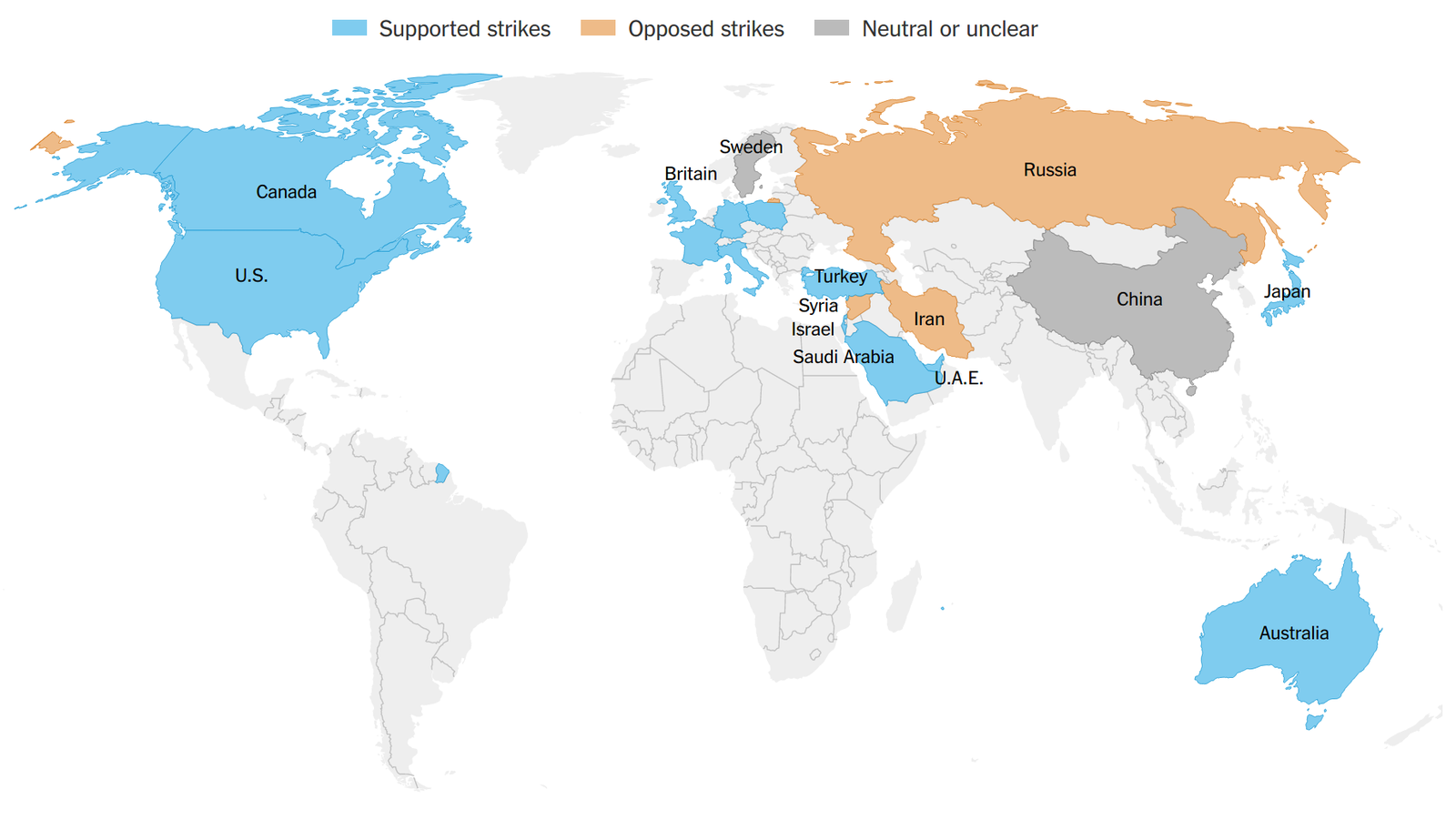
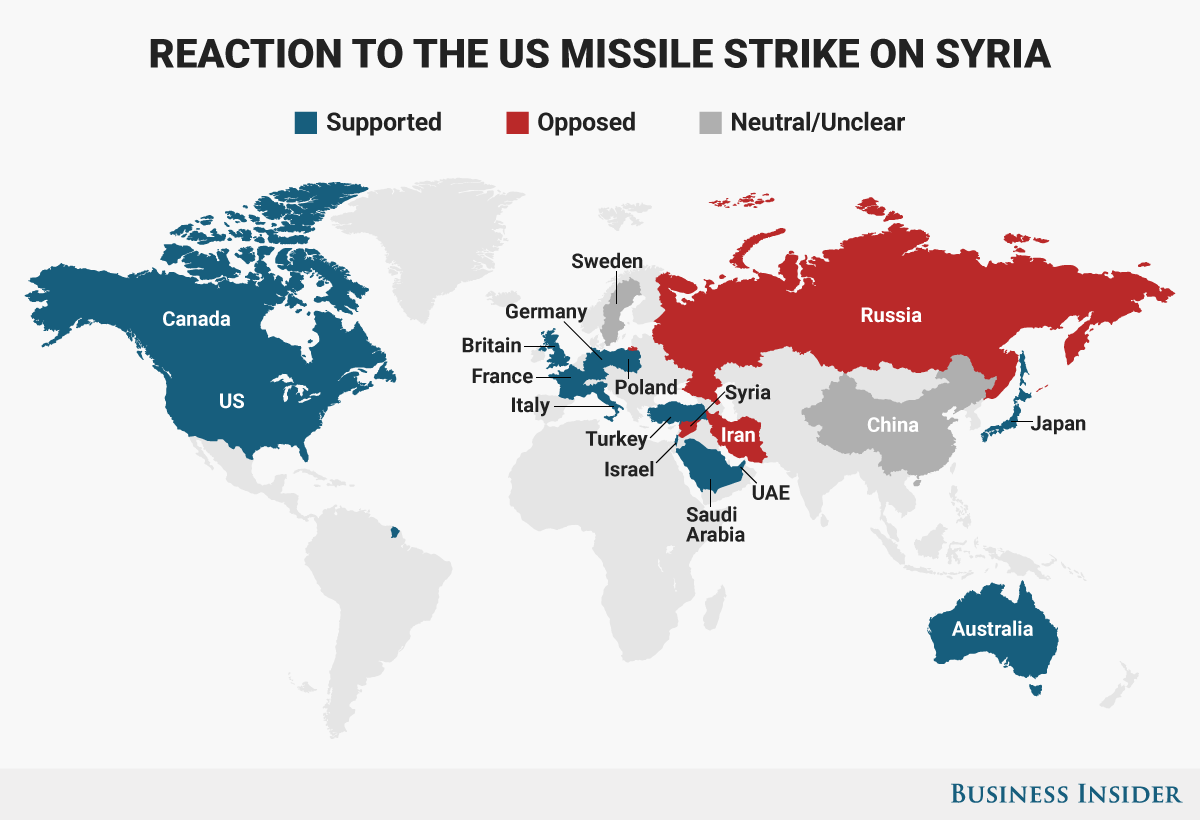
Which Countries Support and Which Oppose the U.S. Missile Strikes in Syria

0

Russia and Iran sharply criticized U.S. missile strikes on a Syrian airfield on Thursday night, while European countries have been broadly supportive so far.

Supported missile strikes

Britain

“The U.K. government fully supports the U.S. action, which we believe was an appropriate response to the barbaric chemical weapons attack launched by the Syrian regime, and is intended to deter further attacks.”

Germany and France

In a joint statement, Chancellor Angela Merkel of Germany and President François Hollande of France said that President Bashar al-Assad of Syria “bears sole responsibility” for the strike.

Turkey

A spokesman for President Recep Tayyip Erdogan of Turkey said, “The destruction of Sharyat airbase marks an important step to ensure that chemical and conventional attacks against the civilian population do not go unpunished.”

Israel

Israel’s prime minister, Benjamin Netanyahu, said in a statement: “President Trump sent a strong and clear message today that the use and spread of chemical weapons will not be tolerated. Israel fully supports President Trump’s decision and hopes that this message of resolve in the face of the Assad regime’s horrific actions will resonate not only in Damascus, but in Tehran, Pyongyang and elsewhere.”

Saudi Arabia

Saudi Arabia’s state news agency SPA said the government “fully supports” the missile strikes, calling it a “courageous decision” by President Trump in response to the use of chemical weapons by the Assad government against civilians.

Australia

Malcolm Turnbull, Australia’s prime minister, said the “Australian government strongly supports the swift and just response of the United States.” He added, “This was a calibrated, proportionate and targeted response. It sends a strong message to the Assad regime.”

Italy

Italy’s foreign minister, Angelino Alfano, said, “Italy understands the reasons for the U.S. military action.” However, Italy’s opposition parties condemned the strikes, saying, “Unilateral action is dangerous, destructive and violates the principles of International law.”

Poland

A spokesman for the Polish government said that the United States was a guarantor of world peace and that there were times when you needed to react.

The United Arab Emirates

The foreign affairs minister, Anwar Gargash, said: “The attack on the civilians is a continuation of the heinous crimes committed by the regime against the Syrian people. It is a blatant violation of international and humanitarian conventions.”

Japan

Prime Minister Shinzo Abe said, “Japan supports the U.S. government’s determination to prevent the spread and use of chemical weapons.”

Canada

Prime Minister Justin Trudeau said in a statement: “Canada fully supports the United States’ limited and focused action to degrade the Assad regime’s ability to launch chemical weapons attacks against innocent civilians, including many children. President Assad’s use of chemical weapons and the crimes the Syrian regime has committed against its own people cannot be ignored. These gruesome attacks cannot be permitted to continue with impunity.”

Opposed missile strikes

Syria

President Bashar al-Assad’s office denounced the U.S. strike as “reckless, irresponsible behavior.” The Syrian military called the attack a “blatant aggression” that would undermine Syria’s “fight against terrorism.”

Russia

Russia’s leader, Vladimir V. Putin, called the U.S. strikes “an act of aggression against a sovereign state delivered in violation of international law under a far-fetched pretext.” Russia said it was suspending an agreement to minimize the risk of in-flight clashes between American and Russian aircraft in Syria airspace. Russia also called on the United Nations Security Council to convene an emergency meeting.

Iran

Bahram Ghasemi of the Iranian Foreign Ministry said the “unilateral action is dangerous, destructive and violates the principles of international law.”

Neutral or unclear

China

China has played it neutral on the strikes, with Hua Chunying of the Chinese Foreign Ministry saying, “We hope all sides will stay calm and exercise restraint to prevent the escalation of tension.”

Sweden

Sweden’s foreign minister, Margot Wallstrom, said the attack “raises questions about how this could be compatible with international law.”

Judy Asks: Is Europe Powerless in the Middle East?

0

JUDY DEMPSEY Carnegie Europe

Perry Cammack Fellow in Carnegie’s Middle East Program

No, but European power will be most effective when it works at the margins.

There remain important roles for the European Union and individual European states in the Middle East, such as encouraging Saudi-Iranian de-escalation, supporting Tunisia’s economic transition, providing humanitarian assistance for displaced people, and promoting better governance.

European institutions were designed for an ordered and interdependent world. In the Middle East, however, disorder reigns. To resist the strong prevailing headwinds of conflict, corruption, and authoritarianism, European efforts will need to be targeted and well conceived. For the foreseeable future, power in the Middle East will ultimately rest in the hands of those willing to wage war.

Silvia ColomboSenior fellow for the Mediterranean and the Middle East at the Italian Institute for International Affairs

Middle Eastern crises, with their profound implications for Europe’s stability, are closely tied to the EU’s difficulties in living up to its own expectations. Europe’s crisis, meanwhile, manifests itself through withdrawal and defensive attitudes, which are particularly daunting when it comes to the manifold challenges posed by Europe’s immediate neighborhood. Europeans tend to look at the Middle East exclusively as the hotbed of Islamic terrorism and the cradle of the unprecedented migrant and refugee crisis that began in 2015.

With few exceptions, the EU has not played a proactive foreign policy role in the Middle East, whether in the Libyan, Syrian, Yemeni, or Israeli-Palestinian conflict. The result has been a series of reactive responses driven by other players, such as Turkey and Russia, or outright powerlessness.

An alternative reading underlines the strong political message embedded in the humanitarian interventions at the core of the EU’s response to Middle Eastern crises. This course of action is in line with the guiding principles and actions laid out in the June 2016 EU global strategy, which aims to endow the states and societies of the region with the necessary instruments and reforms to withstand instability and crisis.

Koert DebeufDirector of the Tahrir Institute for Middle East Policy, Europe

Not at all. But Europe hardly uses the power it has. Right now, it looks like the EU is absent everywhere. In Libya, it is Egypt and Algeria that are negotiating. In the Syrian conflict, Russia, Iran, and Turkey have replaced the EU and the United States. Israel’s Prime Minister Benjamin Netanyahu decides on new settlements in Palestine without any serious resistance. And in Iraq, there seems to be no EU at all.

However, Europe has more power than it thinks. But to use this power properly, the union should stop trying to fix migration challenges with short-term solutions. The EU is by far the largest donor of aid in the world. It should use this leverage politically. One good example is the EU’s reaction to the sudden U.S. support for Bashar al-Assad. EU foreign policy chief Federica Mogherini reacted by saying that with the Syrian president in power, there would be no peace in Syria and no aid from the EU.

Europe underestimates its power. It should use all the tools it has to make sure Tunisia is a successful democracy, to press Egypt to stop its brutal repression of civil society, to help get Libya back on track, and to stop Iran’s takeover of Iraq. The United States of President Donald Trump has become a liability. The EU is now the only force that can help the Middle East become more stable and more democratic. It’s time to take up that role.

Florence GaubSenior analyst at the European Union Institute for Security Studies

For those who confuse power with military might, Europe might indeed appear powerless. But if one accepts the definition of power as the capacity or ability to direct or influence the behavior of others or the course of events, Europe fares rather well. In fact, it is a bit like the tortoise in The Tortoise and the Hare: it seems to run more slowly than the others, but it has ideas and ideals that last.

After all, Europe’s vision for the Middle East is progressively coming true. The two-state solution to the Israeli-Palestinian conflict is now widely considered the most reasonable one, but when Europe first popularized it in 1980, it was seen as shocking. The values Arab citizens demonstrated for in 2011 weren’t populist or dictatorial but very much echoed those Europe has promoted consistently. And Europe understands that to solve a conflict sustainably, as in Lebanon in 1990, only politics will do the trick, not guns.

No other outside power can say that its ideas for the region have gained as much traction as Europe’s—even though several claim to be more powerful. But more importantly, the region’s powers themselves are rising as the most influential players. It is time to stop seeing the Middle East as a stage for diplomatic puppeteers.

Dalia Ghanem YazbeckEl-Erian fellow at the Carnegie Middle East Center

The EU is not capable of having a substantive influence in the Middle East, due to several factors.

First, the EU lacks a common vision for the region. The EU’s discourse and foreign policy toward the Middle East are unclear and dubious, which harms both the union’s visibility and its credibility in the region. In 2003, Europeans were divided on the U.S.-led invasion of Iraq. More recently, they have been completely incoherent with regard to the war in Syria. The lack of integration among EU member states hinders a complementary approach that would allow for the adoption of a common discourse, position, and direction.

Second, the EU’s policies are outdated and inadequate. The European Neighborhood Policy is not only obstructing the emergence of a regional approach but is also ineffective as it has excluded entire parts of the Middle East and North Africa (MENA).

Third, the EU is not a military power, and its idealist-liberalist discourse is inadequate. Humanitarian aid is not enough for countries torn apart by violent conflicts.

For all these reasons, the EU is and will probably remain only a donor entity that lacks the political courage to change the situation in the MENA region.

Kristina KauschSenior resident fellow at the German Marshall Fund of the United States

No—but power is clearly slipping out of Europe’s hands, due to competition, complacency, and disunity.

Taking advantage of U.S. and EU hesitation, geopolitical competitors have been filling political and security voids in the Middle East. Russia’s intervention in Syria was a success for Moscow in upgrading its weight on the world stage through the Middle Eastern back door. Russia’s engagement in Libya suggests Moscow may be seeking to extend a winning strategy to other parts of the Arab world. Europeans need to become quicker in anticipating and acting on power vacuums, or they will be outpaced by global and regional disruptors such as China, Iran, Russia, Saudi Arabia, or Turkey.

Rather than filling voids, the U.S. administration is likely to create new ones. President Donald Trump shares Moscow’s preference for anti-Islamist strongmen and is keen on refocusing U.S. Middle East policy on countering terrorism, away from inclusive nation building. The EU, struggling with disintegration and a make-or-break election year, is not up to major forays Southward. Even where European leverage remains unrivaled, such as in Morocco, EU member states’ vested interests turn the bloc into an unprincipled geopolitical dwarf. Disunity, both in the EU and across the Atlantic, undermines Western influence in the Middle East—at Europe’s peril.

Lina KhatibHead of the Middle East and North Africa Program at Chatham House

European powerlessness in the Middle East is largely self-inflicted, because there is a lack of political will to play a more leading role in the region.

Europe’s involvement in the Middle East has greatly reduced in recent years, and this applies to positive and negative developments alike. The Arab uprisings that began in 2010 did not trigger increased European engagement with the region. Tunisia, the only Arab country that made democratic progress after political transition in 2011, is relatively low on the European radar: it receives European funding for education but still covets significant economic support.

The Syrian conflict, despite having a direct impact on Europe in the form of refugees as well as terrorist attacks, has also failed to spark significant European interest beyond humanitarian aid and planned reconstruction support. Europe’s role in the coalition against the self-proclaimed Islamic State remains secondary to that of the United States.

European countries seem too consumed with domestic and regional issues to pay attention to their Southern neighbors. The rise in nationalist politics in places such as the UK and France is making foreign policy toward countries outside states’ own borders appear like a distraction. This means that the Middle East is not a priority for Europe.

Nora MüllerHead of the International Affairs Department at the Körber Foundation

Increasingly, Europe’s security is affected by multiple crises in the Middle East. However, as Europeans have their hands full putting their own house in order, they lack the means (and often the political will and unity) to act as an Ordnungsmacht, a stabilizing power, in their fragmenting Southern neighborhood. Ironically, it was the Syrian intervention, undertaken by an assertive yet essentially weak Russia, that put the spotlight on the limitations of Western—and, particularly, European—clout in the region.

Nevertheless, limited capabilities are not tantamount to powerlessness. The agenda laid out in the EU’s June 2016 global strategy—supporting the resilience of Middle Eastern states and societies, strengthening cooperative regional order(s), and fostering dialogue over conflicts—plays to Europe’s strengths.

Make no mistake: Europe’s capabilities may be limited; but if Europe plays its hand well, as in the case of the July 2015 nuclear deal with Iran, it can still provide a meaningful contribution to the stabilization of the region. Moreover, as the administration of U.S. President Donald Trump recalibrates U.S. policy toward the Middle East, it will fall on Europe to throw its weight behind the Iran deal to ensure that the agreement is not derailed, and to keep the channels of communication open with Tehran.

John ReedJerusalem bureau chief at the Financial Times

As regards Israel and the Palestinian territories: increasingly powerless, yes. With the arrival of U.S. President Donald Trump, Europe is no longer broadly aligned with Washington on its preferred policies for addressing the conflict. Trump’s new team talks of seeking the “ultimate” Israeli-Palestinian peace deal but sees Middle Eastern, not European, countries as its partners in achieving this.

In the EU, Britain—as it prepares to exit the bloc and angles for a free-trade agreement with the United States—has tilted its policy from an ostensibly even-handed one in line with EU principles to a more overtly, unapologetically pro-Israel line. Europe’s clout in the region was always limited to stern démarches and occasional use of economic levers, as when Brussels agreed on guidelines for labeling settlement-made products in 2015.

The EU is still Israel’s biggest trading partner, but its position is eroding as Israel finds new friends in Asia, the Middle East, and elsewhere. With terrorism and security concerns on the rise globally, Israel’s new allies put a higher priority on staying in its good graces so they can access intelligence and homeland security technology to counter these threats than on pressing Israel to end the conflict. European countries increasingly do too.

Marc PieriniVisiting scholar at Carnegie Europe

The question of whether the European Union as a bloc is an effective player in the Middle East has received different answers over time, often resulting in a light EU footprint consisting mostly of humanitarian and development assistance. Now, with the prospect of a political settlement in Syria, the EU has an opportunity to make its voice heard.

Traditionally, the UK and France didn’t want the EU to cast a shadow over their historical roles in the region. Only former EU foreign policy chief Javier Solana managed to play a personal part in trying to solve the Arab-Israeli conflict.

The Syrian war has now reached a watershed. The UN has so far been unable to produce a peace agreement. The administration of former U.S. president Barack Obama acted as a reluctant warrior, abandoning America’s traditional security role in the region. EU member states were reduced to accessories to the United States. And Iran, Qatar, Saudi Arabia, and Turkey have essentially pursued their own conflicting objectives. Only Russia has emerged since 2015 as a leading player, in coordination with Iran.

Now, starting with the April 4–5 ministerial conference on Syria, the EU for the first time has a chance to emerge as a key actor. Will the union remain confined to funding humanitarian and reconstruction assistance or play a wider role? The answer lies with the EU’s member governments, especially that of the outgoing UK.

Gianni RiottaMember of the Council on Foreign Relations

Powerless, yes, but deluded enough to still project its values, interests, and strategies. While Europe talks, Russian President Vladimir Putin is implementing a brutal yet rational strategy of national interests, establishing bases in Syria and further destabilizing Libya. Meanwhile, U.S. President Donald Trump has no clear focus in the Middle Eastern theater, limiting his views to offering a hapless free ticket to Syrian President Bashar al-Assad.

On April 4, civilians were once again hit by toxic gas in Syria. EU foreign policy representative Federica Mogherini squarely blamed Assad. Good point, but the strongmen in Damascus will not flinch at a press release. The union will keep doing a decent job in supporting various human rights and welfare issues in the Middle East and pursuing a comprehensive but totally groundless peace plan that is unfit to check a brutal new phase of history. The dominant European weltanschauung is fair, positive, compassionate, and oriented to a middle-class playground philosophy: all the moms and dads plead for their children to share, while the kids, Hobbesian style, fight in the sand over a toy.

A Game of Thrones brutality now rules the Middle East. Not exactly a European mind-set—unless the populists take over. Then, nobody knows what could happen.

Erika SolomonMiddle East correspondent for the Financial Times

Europe has economic influence to wield in the Middle East. Yet in countries like Syria, Europe seems to be its own worst enemy when it comes to bringing that weight to bear.

Despite EU threats to the contrary, Syrian President Bashar al-Assad and his powerful backers, Russia and Iran, still believe the EU will foot the bill for reconstruction to make war-torn cities livable again. They seem uninterested in yielding to European demands like a political transition deal. They know how wary Europe is of a new refugee flow—and that it has a budget it must spend every year.

Many Middle Eastern countries are reliant or keen on investment from European businesses that is seen not only as a critical economic opportunity but also as a sign of legitimacy and stability. Europe could use such influence to put greater pressure on countries like Iraq by demanding real, not superficial, changes to devastating government corruption that observers worry could sink the country into instability again. European countries like Germany, which is offering a €500 million ($534 million) credit facility to Iraq to fund the rebuilding of infrastructure, will likely provide loans and could push for important reforms.

But for that power to be effective, Europe must prove it is willing to withhold its money if its demands are not met.

Shimon SteinSenior research fellow at the Institute for National Security Studies at Tel Aviv University

If power means the capacity or ability to direct or influence the behavior of others or the course of events, then the EU is neither capable nor able to influence the behavior of the internal, regional, or extraregional players involved in the numerous conflicts in the Middle East, let alone direct the course of events. That said, there is currently no single power on earth that is able and willing by itself to tackle the challenges facing the Middle East.

However, the EU’s state of powerlessness doesn’t have to result in helplessness or inaction, given the interdependence between Europe and the Middle East and the impact the tumultuous situation in the region has had and will continue to have on Europe’s security and stability. In addition to making its voice heard, the EU should take the lead as a concerned party in assisting countries in the region—which will have to own their problems—to resolve the root causes of current crises. That is a mammoth project that will involve huge resources and determination over a long period of time.

Tommy SteinerSenior research fellow at the Institute for Policy and Strategy at the Interdisciplinary Center, Herzliya

Europe has indeed become powerless in the Middle East, but this need not be the case. One remarkable example of European influence was the imposition in 2012 of debilitating sanctions that forced Iran to negotiate and restrain its nuclear activities. But this example appears an exception to Europe’s inability to project influence in its Southern neighborhood.

There are several explanations for Europe’s dismal performance. First, Europe has failed to define and follow a comprehensive set of strategic interests in the Middle East. Rather, Europe has preferred low-cost, high-profile, and uncontroversial policies, resulting in disproportionate and not very constructive attention on the Israeli-Palestinian conflict. It seems easier for EU member states to agree to criticize Israel than to take real action against the regime of Syrian President Bashar al-Assad.

Second, for nearly a decade, Europe has deprioritized the Middle East as it faces a series of internal and external challenges including the financial crisis, the resurgence of Russia, homegrown terrorism, and, most recently, a troubled relationship with its key transatlantic partner.

Finally, and perhaps more importantly, the EU’s once self-proclaimed normative power has lost its high moral ground. The normative standards of too many European countries are questionable—be it the French obsession with Muslim swimwear or the Hungarian crackdown on academic freedom. With this baggage, Europe is destined to remain powerless in the Middle East.

Maha YahyaDirector of the Carnegie Middle East Center

Europe has considerable leverage in the Middle East but is not capitalizing on it. Political expediency and a lack of internal consensus on what Europe can collectively achieve have resulted in a wide gap between norms and interests and, therefore, between rhetoric and action.

The union’s strategic and economic interests have historically upended questions of human rights and democratic governance in Arab countries. More recently, EU policies have become more reactive in response to dramatic refugee inflows, intensifying conflicts, and terrorist activities. The result has been a blending of expanding humanitarian support with the securitization of politics. One striking example is the March 2016 €6 billion ($6.4 billion) Turkey-EU partnership agreement on refugees.

For the EU to regain its leverage, it needs to revisit its current instruments and think creatively about how they may be transformed. It can consider an Arab region compact or a broader EU-Arab partnership that would include both the public and private sectors and comprise clear mechanisms for addressing the socioeconomic inequalities and state capture that gave rise to the Arab uprisings.

Meanwhile, the EU can make future reconstruction an instrument for peace negotiations. This comes with the understanding that reconstructing Syria is not simply a technical matter and cannot be driven solely by infrastructure projects. Rather, it must bring about inclusive institutions that are essential for rebuilding social cohesion, trust, and legitimacy.

http://carnegieeurope.eu/strategiceurope/?fa=68562&utm_source=rssemail&utm_medium=email&mkt_tok=eyJpIjoiWlRBM1pqRTBaak00T0RFNSIsInQiOiI2WkJmaUFMTEpQemZLbmZIVDJNWnBUMGcrSytXeVJqYXYyTGtzUWR4NXJ6dG43RU9nMjE3ZGRvYWhCazlBSnBjUk8ybzJJY3p6MDNiWGNBXC9hbEJMZzFqUWlENTdIenNORzlpWUtFckx1dVFPSTF6SXFTd0JOQVdmaEthWHdGb0kifQ%3D%3D