Αρχική Blog Σελίδα 2971

Trump might be going to war. But he has no plans for establishing peace.

0

Does the president really know what he’s getting into?

  April 7 The Washington Post
About the authors

President Trump on April 6 said the U.S. military struck a Syrian military airfield in retaliation for a chemical attack on Syrian civilians that occurred April 4. (The Washington Post)

President Trump’s decision to launch missile strikes against Syria’s Shayrat airfield after a chemical weapons attack on civilians was an appropriate response to an act of unspeakable horror. Yet as analysts who have argued for greater U.S. military engagement to end the Syrian civil war, we find ourselves conflicted about the president’s decision: We fear there is simply no plan for what comes next.

To succeed beyond Thursday’s limited strikes, American leaders must decide on a clear set of objectives, a realistic desired final outcome, a theory of the case for how to get there and a solid understanding of the risks. We see three potential options for how the president could move forward.

The United States could pursue a limited strategy focused on one-off strikes in response to the Syrian regime’s use of chemical weapons. In that case, the strike on the air base from which this week’s chemical attack was launched will probably be enough. President Bashar al-Assad and his generals will get the message and stop using those types of weapons.

However, Trump may soon find this outcome dissatisfying. The regime will continue to terrorize civilians through airstrikes, artillery and surface-to-surface missiles against densely populated areas. It will continue to employ tactics such as starvation sieges and population transfers to tear communities apart.

Pictures of dead children and “beautiful babies,” as the president remarked, will continue to appear on television. And Assad’s forces and their Russian allies may up the scale of attacks to humiliate Trump and demonstrate the fecklessness of American military force. Thus, the pressure may grow on the United States to respond, and it may be hard for Trump to resist. The United States may slowly start to expand its objectives and escalate the conflict, and eventually find itself in a situation similar to Libya in 2012, where a limited civilian protection mission morphed into a full-blown regime change operation.

Alternatively, the administration could pursue a broader set of interests than strictly deterring chemical weapon use. These initiatives could, for instance, prioritize ending the Syrian civil war and closing the security vacuums that are the source of extremist attacks and massive refugee flows destabilizing American partners in the Middle East and Europe.

To achieve these objectives, the United States would threaten to launch more missiles on Assad regime targets unless Assad and his Russian allies stopped attacking civilians in opposition-held territory. The United States could target a wide array of facilities to compel Assad, such as weapons factories, major military bases, even ministries in Damascus responsible for the war effort. Using the threat of missile strikes instead of flying in manned aircraft to drop bombs is much less dangerous. The United States would not have to first destroy all of Syria’s air defenses — a highly provocative step sure to result in Russian fatalities, because Russian advisers help operate many of these systems. With the Russian and regime bombardment from the air stopped, the United States would then work with moderate armed groups in opposition areas to marginalize extremists and stabilize this territory.

This approach is risky. Russians are deployed throughout Syria, whether at regime bases or in a close advising role embedded with Assad’s forces on the front lines of the civil war. If the U.S. military inadvertently kills a significant number of Russians, tensions between the world’s two largest nuclear weapons states could skyrocket. The United States can try to warn Russia in advance of the targets it is striking, as it reportedly did with the strike this week, but the risks go up as the target lists become more expansive.

Moreover, this approach requires a viable moderate armed opposition that can serve as an effective local partner on the ground. Such groups exist in southern and eastern Syria but have become much weaker in the hotly contested northwest, where last week’s chemical weapons attacks occurred.

A final military option would be to pressure Assad from the south, where the United States and Jordan support a moderate coalition of armed opposition groups known as the Southern Front. In recent years, these forces have generally stabilized the areas of Syria bordering Israel and Jordan, and have fought hard against the Islamic State. But the Southern Front has also been restrained by the United States and Jordan, who have preferred a stable front near Jordan’s border and have threatened to cut off military support if the alliance moved too aggressively. If the restraints came off, this moderate rebel force could soon be bearing down on Damascus, putting huge pressure on the regime.

But this would require a major surge in fighting in an area that has been largely quiet the past few years. The regime would probably respond with the same scorched-earth tactics it has used elsewhere, and civilians would suffer. Moreover, the Southern Front may achieve catastrophic success and inadvertently topple Assad quickly, resulting in chaos. In that case, Jordan and Israel would feel the destabilizing effects of intensified fighting on their borders.

In the end, all of these military options are useless if they cannot be translated into a political outcome. The three military options outlined above can provide the United States with leverage in negotiations with Russia, Iran, Assad, Turkey and the Gulf States — but only if Trump has a clear view of the end he is seeking.

The most viable political goal is a Syria that remains whole as one nation, but with a governance model that would feature power devolved away from the central government to local actors who hold the territory in six different zones of control that now divide the country. This idea reflects the realities on the ground and has grown in support among experts as the war has dragged on.

Such an outcome would require a major diplomatic lift to mediate an arrangement between the Turks and Kurds in the north. The United States would have to come to a settlement with Russia and Iran on who retakes the territory currently held by the Islamic State and al-Qaeda. And we would need to assure Israel and Saudi Arabia that Iranian influence in Syria will be contained.

Unfortunately, it is this final and most important part of any plan for Syria — the political plan — which we are most concerned about when viewing the Trump administration’s approach.

We disagreed with former president Barack Obama when he insisted on too much certainty before taking any action in Syria. War does not always work that way: Sometimes, you have to take risks and jump into the breach.

But when it comes to Trump, we have yet to see any indicators that he has a broader political approach in mind. Less than a week ago, his team was arguing that removing Assad is unrealistic and that, instead of focusing on the civil war in western Syria, they would prioritize the effort in the east against the Islamic State. The president himself spent two years campaigning on opposition to deeper U.S. involvement in the Middle East, and his team has yet to engage seriously in any of the diplomatic processes surrounding the Syrian conflict — including the intensive talks in Astana, Kazakhstan, hosted by the Russians, or a major international Syria reconstruction conference held this past week in Brussels. And — most concerning of all — they have de-emphasized diplomacy, aid and reconstruction as tools of American foreign policy by calling for dramatic financial cuts for all these efforts and making clear to the international community that the United States is stepping back from coordinating these efforts.

If the United States is to turn the limited tactical strikes in Syria into a real strategic gain, the Trump team will have to change its approach, and focus not only on winning the war but also on winning the peace.

 https://www.washingtonpost.com/posteverything/wp/2017/04/07/trump-might-be-going-to-war-but-he-has-no-plans-for-establishing-peace/?utm_term=.ca4bfb9bda09

Horrible’ pictures of suffering moved Trump to action on Syria  

0
The Washington Post.
April 7 at 9:07 PM
When President Trump began receiving his intelligence briefings in January, his team made a request: The president, they said, was a visual and auditory learner. Would the briefers please cut down on the number of words in the daily briefing book and instead use more graphics and pictures?Similarly, after Trump entered office, his staff took President Barack Obama’s Syria contingency plans and broke the intelligence down into more-digestible bites, complete with photos, according to current and former U.S. officials with knowledge of the request.

This week, it was the images — gruesome photos of a chemical weapons attack on Syrian civilians — that moved Trump, pushing the president, who ran on an “America first” platform of nonintervention, to authorize the launch of 59 Tomahawk cruise missiles at Syrian targets Thursday night.

Senior administration officials and members of Congress who spoke with Trump said the president was especially struck by two images: young, listless children being splashed with water in a frantic attempt to cleanse them of the nerve agent; and an anguished father holding his twin babies, swathed in soft white fabric, poisoned to death.

As the carnage unfolded on cable news, which the president watches throughout the day and deep into the night, Trump turned to his senior staff, talking about how “horrible” and “awful” the footage out of Syria was, said one top adviser.

The 9-month-old twin children of Abdel Hameed Alyousef were killed along with his wife, two brothers, two nephews and a niece in a suspected chemical attack in the the northwestern Syrian town of Khan Sheikhoun on April 4. (Associated Press)

“What the world saw last night was the United States commander in chief, and also a father and grandfather,” Kellyanne Conway, counselor to the president, said Friday. “The world recoiled in horror at babies writhing and struggling to live. And who could avert their gaze — and that includes our very tough, very resolute, very decisive president.”

Horrific images were not the only reason military action made sense for Trump. Whatever his concern for the people of Syria — a country whose refugees would not be able to enter the United States for 120 days under Trump’s latest travel ban proposal — he has been eager to show a clear victory more than two months into his tumultuous young presidency.

A strike against Syria could help him demonstrate independence from Russia and its president, Vladi­mir Putin, whose alleged efforts to interfere in the 2016 presidential race have proved a major distraction. And Trump wants to show that he is a tougher and stronger leader than Obama, who received scathing criticism when he drew a “red line” with Syria over its use of chemical weapons and then declined to act when President Bashar al-Assad bounded over it.

Sen. Chris Murphy (D-Conn.) on Friday questioned Trump’s “24-hour pivot on Syria policy,” noting that until Assad’s regime launched its chemical attack, Trump had not made Syria a priority. White House press secretary Sean Spicer had told reporters last week that the United States had to accept the “political reality” of Assad’s grip on power.

“There is no strategy on Syria,” Murphy said. “He clearly made this decision based off an emotional reaction to the images on TV, and it should worry everyone about the quixotic nature of this administration’s foreign policy and their potential disdain for the warmaking authority of the United States Congress.”

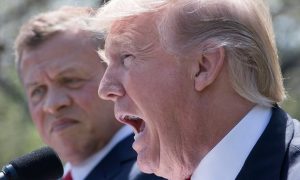
Throughout the week, Trump’s public remarks placed a special emphasis on the youngest victims. “When you kill innocent children, innocent babies, babies, little babies, with a chemical gas that is so lethal — people were shocked to hear what gas it was,” Trump said Wednesday afternoon in the Rose Garden, where he appeared at a news conference with King Abdullah II of Jordan. “That crosses many, many lines, beyond a red line — many, many lines.”

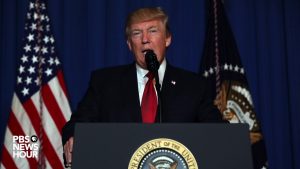
On Thursday, when a subdued Trump addressed the nation, he spoke of “beautiful babies” cruelly murdered, declaring, “No child of God should ever suffer such horror.”

 Doctors and activists in rebel-held areas have blamed the Syrian government for a sharp increase in chemical attacks since the end of last year. (The Washington Post)

About 54 hours after receiving news of the attacks in his daily briefing Tuesday morning, Trump — by then at his private Mar-a-Lago estate in Florida for a summit with Chinese President Xi Jinping — gave the order to target Shayrat air base.

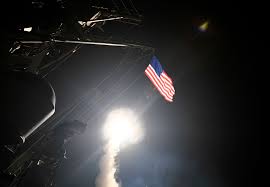
At 7:40 p.m. Thursday, as Trump and Xi were midway through a meal of pan-seared Dover sole with champagne sauce and dry-aged prime New York strip steak (a Trump favorite), a naval destroyer launched the first of nearly five dozen Tomahawk cruise missiles, lighting up the sky in eastern Syria.

White House aides and Trump deputies said that while the photos clearly affected Trump, he made his final decision after consulting with his advisers in a process they described as deliberative and thorough.

Over an intensive 2½ days, the president’s national security team convened several high-level meetings with representatives from the Pentagon, the State Department, intelligence agencies and the National Security Council.

“I don’t think it was an emotional reaction at all,” said Secretary of State Rex Tillerson, who was involved in the discussions. “President Trump evaluated the facts, that the attacks occurred on his watch, and [as he] reflected upon prior responses or lack of responses, he came to the conclusion that we cannot yet again turn away, turn a blind eye from what’s happened.”

But the process was especially — and perhaps intentionally — quick, in contrast to the style of Obama, who prided himself on making decisions based on information, not emotions, a manner his critics derided as “dithering,” as former vice president Richard B. Cheney put it early in Obama’s first term.

Trump learned of the chemical attack Tuesday morning, asked for options on how to respond Wednesday and received them Thursday, the day he authorized the strike.

He asked the Defense Department to prepare potential responses after the Pentagon assessed that the Syrian military was responsible for Tuesday’s chemical strike and for chemical attacks March 25 and March 30 against civilians near Hama air base, U.S. military officials said.

U.S. Central Command has had plans for striking the Syrian government for years and has significant assets in the region, enabling a quick response once a decision was made.

The National Security Council deliberated Wednesday night, and Defense Secretary Jim Mattis and other senior officials discussed the possibilities, senior military officials said. Ultimately, aides presented Trump with three options, but the president narrowed them to two and asked aides to flesh out more details.

Richard Fontaine, president of the Center for a New American Security, where Mattis was recently a member of the board, said the options probably included doing nothing and launching more comprehensive airstrikes involving bombers and jets.

“I suspect that they said if you are going to do something, they need to do it quickly,” Fontaine said. “You need to not hand-wring about this for weeks.”

Thursday, Trump held another meeting aboard Air Force One as he flew to Palm Beach, Fla. Some officials — including national security adviser H.R. McMaster, Treasury Secretary Steven Mnuchin, Commerce Secretary Wilbur Ross, Chief of Staff Reince Priebus and senior adviser Stephen K. Bannon — joined him in the plane’s wood-paneled conference room, with others piped in via secure videoconference from Washington as the presidential jet streaked southward.

Once on the ground in Florida, aides said, Trump gave Mattis the order to move forward. The defense secretary passed it along to Marine Gen. Joseph F. Dunford Jr., chairman of the Joint Chiefs of Staff, and Army Gen. Joseph L. Votel, chief of U.S. Central Command.

The missiles were launched about three hours later, at 3:40 a.m. local time, to minimize civilian casualties.

In the process, the president — who had championed an “America first” worldview rooted in the belief that U.S. foreign policy had become too interventionist — appeared to swing sharply in the other direction.

Thursday’s strike also raised several uncomfortable, still-unanswered questions: Was Trump motivated to attack Syria in part because Obama never did? Was he driven by a need for a political victory, at home and abroad? And what is the administration’s long-term strategy and goal in Syria?

It was unclear as well whether Trump fully considered the ramifications of his decision. Russia, whose president has supported Assad and whose troops operate inside Syria, reacted initially with pique, canceling a key air agreement designed to avoid military confrontations with U.S. forces in the skies, before later agreeing to restore the deal.

Though Trump had often seemed to blame Obama for the situation in Syria, his remarks Thursday night from Mar-a-Lago were nonpartisan and intentionally so, a senior adviser said.

The president, this adviser added, was sending a message not only to Syria and Russia but also to China, whose president was in Palm Beach for their summit, and to North Korea that Trump and the United States will not “shirk or shrink” from conflict.

On Friday, Spicer, the press secretary, initially told reporters at Mar-a-Lago that he would offer an update on Syria in front of the news cameras. But just before he was to begin his briefing, he reversed himself: He wanted images of the president, both from the night before on Syria and the China summit Friday, to carry the day.

Mike DeBonis, Adam Entous, Greg Jaffe and Abby Phillip contributed to this report.

In Syria, Russia Falls Victim to Its Own Success

0

The Atlantic

Moscow’s rogue client has destroyed the country’s ability to present itself as an indispensable arbiter in the conflict.

Alexei Druzhinin/ RIA Novosti / Kremlin / Reuters

 This morning, Moscow woke up to the news that the U.S. had hit an air base in Homs, Syria, in retaliation for Bashar al-Assad’s use of chemical weapons in Idlib province. This was accompanied by the usual protestations from the Kremlin, which complained that the U.S. had bypassed international law “under an invented pretext” and violated Syria’s sovereignty.
Maria Zakharova, the spokeswoman for the Russian Foreign Ministry, complained that the Trump administration made no efforts to verify who was behind the sarin gas attack and that, in striking Syria, the U.S. was attacking a country that has always fought “global terror” in order “to prove itself.” The Defense Ministry announced that the 2015 memorandum on deconfliction—worked out between Washington and Moscow to avoid air collisions in their anti-ISIS operations—was now moot, and Dmitry Peskov, Vladimir Putin’s spokesman, warned that the chances of collision were now much higher. Russian TV compared the bombings in Homs to the American bombings of Yugoslavia, Iraq, and Libya. And Margarita Simonyan, the head of the Russian propaganda outlet RT, asked if anyone cared to remember that 100 years ago to the day, America entered World War I.

Of course the Kremlin was upset, and of course it had to make a very convincing and angry show of condemning the operation. The Trump administration, for which it had such high hopes, was now like every American administration in recent memory: using the guise of human rights to circumvent the UN and intervene against what Russia considers legitimate governments—sometimes toppling them—and sowing chaos. Moreover, it did this in a country where Russia has a large military presence, which the United States seemed to completely disregard.

Even Moscow’s defense of Assad—that his air force hadn’t dropped sarin gas on civilians but had simply bombed a rebel warehouse containing sarin—felt weak. By contrast, when Assad gassed civilians in the Damascus suburb of Ghouta in August 2013, Moscow claimed that it had been a false flag operation by rebels intent on drawing the United States into the fight and onto their side.

The response today is understandable. Moscow had already given Assad three and a half years of breathing room after proposing, in 2013, that he hand over his chemical arsenal over to an international coalition. It was a masterful way to allow everyone involved to save face. Obama wouldn’t have to do what he was loathe to do—intervene in a messy civil war—but striking the deal would allow him to say that he had eliminated the aspect of the war that was most gruesome and most obviously violated international law. The deal allowed Assad to avoid being pounded by the American air force while using his own to continue to kill civilians by every other imaginable means. And most importantly from Moscow’s point of view, it allowed Russia to show itself in the light it had long wanted to be seen on the global stage: the one responsible, adult actor who wasn’t, like the U.S., rushing to pull the trigger, but was instead trying to reach sensible, peaceful resolutions to complex problems. With Russia long the spoiler in the UN Security Council and the international arena, the chemical-weapons deal allowed the country to establish itself as an indispensable arbiter of geopolitics.

In effect, Putin drew his own red line, right over Obama’s. Putin gave Assad a free pass to use any means to fight his people, anything save for chemical weapons. Moscow is a stickler for the letter of international law, and in 2013, it quickly organized a unanimous vote in the UN Security Council and a broad international coalition to oversee the destruction of Assad’s chemical arsenal at sea. But despite the pointedly international nature of the operation, Moscow had essentially acted as Assad’s guarantor, with Putin having to ensure that Assad would no longer use chemical weapons. But three years later, Assad has clearly been emboldened by Russia’s military help and diplomatic cover for brutally reconquering Aleppo and other territory. If Assad can bomb aid convoys, starve cities into submission, if he can use mass torture and barrel bombs and even chlorine gas because it wasn’t covered in the 2013 deal, why not push the envelope a little further and use a little sarin gas he’s squirreled away or redeveloped or bought somewhere?

Now, there is little Moscow can do to save face. It gathered an international coalition to dispose of Assad’s chemical weapons, and made political hay out of their destruction, only to have Assad make Moscow’s effort look either less than thorough, or gruesomely insincere. Either way, Russia doesn’t look like much of a guarantor.

At the same time, though, it can’t just allow Washington to unilaterally violate the ideas of national sovereignty it has spent years, treasure, and Russian blood defending in Syria. It can’t allow Washington to so obviously disregard not just Putin’s opinion, but the Russian military. And so Moscow has to condemn the American strikes strongly enough to retain its position as a defender of the UN Security Council and international law, strongly enough to maintain its stature as a global military power—but not so strongly that it appears to condone not just the gassing of children but, more importantly for Moscow, the violation of international law on chemical weapons, a law that it helped to enforce in 2013.

The problem for Moscow is that this was all painfully predictable. In helping Obama kick the chemical weapons can down the road, there was only so long Putin could continue to embolden Assad before Assad would go too far, at which point there would be no more forgiveness from the very international community Moscow had helped to galvanize.

And this is perhaps the ultimate lesson for Americans who fetishize Putin as the ultimate, perfect villain, who outfoxes the hemming, hawing United States at every turn in Syria. Putin is brilliant at finding quick maneuvers that advance his agenda in the moment. He too kicks the can down the road, repeatedly. But that road is not endless, and time doesn’t always work in his favor. Or, put another way, when you become a guarantor, at some point the bill comes due.

https://www.theatlantic.com/international/archive/2017/04/in-syria-russia-falls-victim-to-its-own-success/522294/

Γιατί βομβάρδισε ο Τραμπ τη Συρία;

2

του Δημήτρη Μακροδημόπουλου.

Αξιοποιώντας ως δικαιολογία την επίθεση με χημικά όπλα στο Χαν Σειχούν κατά αθώων πολιτών, επίθεση που αποδόθηκε στον Μπασάρ αλ-Άσαντ, ο Ντόναλντ Τραμπ εξαπέλυσε πυραυλική επίθεση κατά της αεροπορικής βάσης Σαϊράτ στη Συρία. Στο γραπτό μήνυμά του προς τους Αμερικανούς προσπάθησε να αγγίξει τις ευαισθησίες τους αναφερόμενος στα θύματα των χημικών όπλων: «Ήταν ένας αργός και βασανιστικός θάνατος για πολλούς ανθρώπους. Ακόμη κι όμορφα βρέφη δολοφονήθηκαν αποτρόπαια, από αυτή τη βαρβαρική επίθεση», ανέφερε και συνέχισε: «Ζητούμε τη σοφία του Θεού (!) καθώς βρισκόμαστε αντιμέτωποι με τις προκλήσεις των προβλημάτων του κόσμου που μας περιβάλλει. Προσευχόμαστε για τη ζωή των τραυματισμένων, αλλά και για τις ψυχές όλων αυτών που πέθαναν». Τόση ευαισθησία!! Διότι σήμερα γνωρίζουμε ότι σε ένα μόνον από τα πολλά παραδείγματα, κατά τον οκταετή πόλεμο Ιράκ – Ιράν, οι ΗΠΑ δεν ανέχτηκαν απλώς τη χρήση δηλητηριωδών αερίων εναντίον του ιρανικού στρατού, αλλά βοήθησαν το Ιράκ υποδεικνύοντάς του με δορυφόρο τις θέσεις του εχθρού. Πού ήταν η ηθική αγανάκτηση σε αυτή την περίπτωση; Σήμερα στο έδαφος της Συρίας διεξάγεται ένας νέος παγκόσμιος πόλεμος δι’ αντιπροσώπων. Η Τουρκία συμμετέχει έμμεσα στηρίζοντας τις μετριοπαθείς αντιστασιακές ομάδες και τελευταία άμεσα με την «Ασπίδα του Ευφράτη», το Ιράν δια της Χεζμπολάχ και όχι μόνον, η Σαουδική Αραβία, το Κατάρ και άλλα αραβικά κρατίδια δια των εξτρεμιστικών ισλαμιστικών ομάδων που ενισχύουν, η Ρωσία με δυνάμεις επί τόπου στο πλευρό του Άσσαντ ενώ συμμετέχουν με αεροπορικές δυνάμεις οι ΗΠΑ, η Γαλλία, η Βρετανία κ.α ευρωπαϊκές δυνάμεις στο όνομα της πάταξης της τρομοκρατίας, του ISIS και όχι μόνον, αποβλέποντας βέβαια σε διαφορετικούς σκοπούς κάθε μία..

Ποιο μπορεί λοιπόν να ήταν το κίνητρο της πυραυλικής επίθεσης των ΗΠΑ εναντίον της συριακής βάσης μέσα σε αυτό το κομφούζιο ενώ είναι ολοφάνερο πλέον ότι με τόσες εμπλεκόμενες δυνάμεις μόνον πολιτικά μπορεί να αντιμετωπιστεί το συριακό ζήτημα; Μόνον ένα κατά την άποψή μου: Ο Ντόναλντ Τραμπ στους δυόμιση μήνες που προεδρεύει γνώρισε σοβαρές και απανωτές πολιτικές ήττες που άπτονταν των προεκλογικών του εξαγγελιών (obamacare, μεταναστευτικό) παρόλο που οι συντηρητικοί διαθέτουν την πλειοψηφία και στα δύο κοινοβουλευτικά σώματα  ενώ υποχρεώθηκε να απομακρύνει δύο πολύ στενούς του συνεργάτες, τον πρώτο σύμβουλο εθνικής ασφαλείας Μάικλ Φλιν και τον επί κεφαλής του Λευκού Οίκου στον τομέα του στρατηγικού σχεδιασμού Στηβ Μπάνον. Η επίθεση με τα χημικά όπλα στο Χαν Σειχούν, του έδωσε την ευκαιρία να αναβαθμίσει το πληγωμένο προφίλ του από την αποτυχία της υλοποίησης των προεκλογικών του δεσμεύσεων και να απαντήσει στην αμφισβήτησή του από τις συμμαχικές δυνάμεις της Ευρώπης, να δείξει αποφασιστικότητα και ηγετικές ικανότητες. Διότι η αμερικανική πυραυλική επίθεση στη συριακή βάση δεν πρόκειται να αποσαφηνίσει το τοπίο στον πόλεμο όλων εναντίον όλων που διεξάγεται στη Συρία. Ας μη ξεχνάμε ότι ο απελθών ΥΠΕΞ των ΗΠΑ Τζον Κέρι με αφορμή την ουκρανική κρίση είχε ομολογήσει ότι «κατά τη διάρκεια του Ψυχρού πολέμου ήταν πιο εύκολα απ’ ότι σήμερα, ας πούμε πως ήταν πιο απλά… Οι επιλογές ήταν περισσότερο ποικίλες, λιγότερο περίπλοκες, με αντιθέσεις περισσότερο ξεκάθαρες» Αυτό επιβεβαιώνεται στο έπακρο σήμερα στη Συρία. Ας μη ξεχνάμε επίσης ότι όταν το 2008 αναλάμβανε την προεδρία ο Μπαράκ Ομπάμα, τίποτα  στην Βόρεια Αφρική και στην Εγγύς Ανατολή δεν προοιώνιζε το τι θα ακολουθούσε και μέσα σε οκτώ χρόνια όταν την παρέδιδε, η Βόρεια Αφρική και η Εγγύς Ανατολή είχαν μεταβληθεί σε κρανίου τόπο. Οι ΗΠΑ δεν μπόρεσαν να ανταποκριθούν στις απαιτήσεις των εξελίξεων ίσως μάλιστα και να τις μεθόδευσαν. Δεν μπορούν λοιπόν να επικαλούνται σήμερα ανθρωπιστικούς λόγους για να δικαιολογήσουν την ξαφνική ευαισθησία τους.

Γιατί χρησιμοποίησε ο Τραμπ τον θάνατο αμάχων και παιδιών ως αιτιολογία για την αιφνιδιαστική επίθεση; Γιατί οι κυβερνήσεις των δυτικών συμμάχων, της Βρετανίας και της Γαλλίας κ.α. υπερθεμάτισαν αμέσως την απόφαση του Τραμπ; Διότι όλοι τους χρησιμοποιούν την έννοια της “ανθρωπότητας” ως ένα ιδεολογικό όπλο ιμπεριαλιστικής επέκτασης σύμφωνα με τον Καρλ Σμιτ, ο οποίος θεωρούσε την ανθρωπιστική ηθική ως ένα όχημα οικονομικού ιμπεριαλισμού. Αυτός ήταν για τον Σμιτ ο κύριος μηχανισμός που χρησιμοποιήθηκε για την εμπέδωση της δυτικής ηγεμονίας. Η Βρετανία και η Γαλλία που εκδιώχτηκαν σκαιότατα από την Εγγύς Ανατολή το 1956, κατ’ απαίτηση των δύο υπερδυνάμεων, των ΗΠΑ και της ΕΣΣΔ, κατόρθωσαν να επανέλθουν στην περιοχή μετά δεκαετίες χάρις στην συριακή κρίση. Όσο μάλιστα επεκτείνεται χρονικά η κρίση τόσο εμπεδώνεται η στρατιωτική παρουσία τους εκεί, σε μια περίοδο που διακαώς επιθυμούν να συμμετάσχουν στην επαναχάραξη των συνόρων της, στην ανοικοδόμησή της και κυρίως να στηρίξουν τα συμφέροντα των πετρελαϊκών τους εταιρειών που ήδη δραστηριοποιούνται στις έρευνες για την εκμετάλλευση των ενεργειακών πηγών της Ανατολικής Μεσογείου.

Μακροδημόπουλος Δημήτρης

Αλεξ/πολη – κιν. 6947-771412

8-4-2017


Ο Πρόεδρος Τrump, το ΝΑΤΟ, το… «2%» και η Ελλάδα

0

Του Κωνσταντίνου Λουκόπουλου* Πέμπτη 06 Απριλίου 2017

Αρκετές ήταν οι αντιφατικές και  «αντισυμβατικές» τοποθετήσεις του Donald Trump τόσο κατά την προεκλογική του εκστρατεία, όσο και τις εβδομάδες που ακολούθησαν  σχετικά με αυτά που θεωρούνταν για δεκαετίες  στην Washington ως γεωπολιτικά δεδομένα! Αρκετές ήταν και οι υπεραπλουστευμένες προσεγγίσεις του στα πολύπλοκα και αλληλεξαρτώμενα θέματα των διεθνών σχέσεων.

Εστιάζοντας στα θέματα που αφορούν στην Ευρωατλαντική Αρχιτεκτονική Ασφαλείας επισημαίνεται ότι για πρώτη φορά αμφισβητήθηκε έμμεσα ο θεμελιώδης ρόλος του ΝΑΤΟ σε αυτήν αλλά και οι δυνατότητες να αντιμετωπίσει αυτό τις σύγχρονες απειλές.  Αναντίρρητα λοιπόν,  ήταν εύλογοι οι φόβοι που   δημιουργήθηκαν για πιθανές αλλαγές που θα μπορούσαν να προκαλέσουν ακόμα και  ανατροπές στο υφιστάμενο διεθνές και ιδιαίτερα το ευρωατλαντικό σύστημα ασφαλείας το οποίο και μας ενδιαφέρει ιδιαίτερα ως Χώρα.

Επικράτηση της σοβαρότητας και του πραγματισμού

Σήμερα, σχεδόν τρεις μήνες μετά την ανάληψη των καθηκόντων του ο Πρόεδρος των ΗΠΑ Donald Trump έχει αμβλύνει σε μεγάλο βαθμό τις γνωστές θέσεις του στα συγκεκριμένα θέματα χωρίς αυτό να  σημαίνει ότι έχει αποβάλει την εμπορική – επιχειρηματική αντίληψη που έχει για την εξωτερική πολιτική ούτε ότι έπαψε πλέον να  δίνει προτεραιότητα στις  διμερείς σχέσεις αντί στις θεσμικές συμμαχίες.

Οι εξισορροπητικές  όμως δομές  του αμερικανικού πολιτικού συστήματος (τα γνωστά «checks and balances»)  και οι υψηλού κύρους προσωπικότητες  της Αμερικανικής Διοίκησης όπως ο Αντιπρόεδρος Mike Pence, ο Υπουργός Εξωτερικών  Rex Tillerson και ο Υπουργός Άμυνας James Mattis έχουν βάλει με σωστό τρόπο τα πράγματα στην θέση τους σε ότι αφορά τις ΗΠΑ με  το ΝΑΤΟ και την Ευρωατλαντική Ασφάλεια. Εκτιμάται ότι καταλυτικός ήταν και ο ρόλος  της Πρωθυπουργού του ΗΒ, διαχρονικού  στρατηγικού  εταίρου των ΗΠΑ, η οποία φαίνεται να «εξήγησε» πολλά θέματα στον Πρόεδρο Trump  σχετικά με την σημασία του ΝΑΤΟ στην παγκόσμια σταθερότητα, η οποία φεύγοντας από τον Λευκό Οίκο είχε δηλώσει «με τις απειλές που αντιμετωπίζουμε, δεν είναι τώρα η ώρα για λιγότερη συνεργασία»! Η ανησυχία πολλών χωρών της  Ευρώπης  για ενδεχόμενη αμερικανική στροφή στον απομονωτισμό με ταυτόχρονη  υποβάθμιση της Συμμαχίας και συνεπώς μία «ειδική» ερμηνεία  του αμερικανικού συμφέροντος  που θα μπορούσε να οδηγήσει ακόμα και σε μία «νέα Γιάλτα» έχει μειωθεί σημαντικά.

Οι ΗΠΑ δια στόματος των Υπουργών Άμυνας και Εξωτερικών στις αντίστοιχες πρόσφατες υπουργικές διασκέψεις του ΝΑΤΟ στις Βρυξέλλες επιβεβαίωσαν την σημασία που έχει για την Αμερική και την ασφάλεια της το ΝΑΤΟ και φυσικά τις εγγυήσεις ασφαλείας σε σχέση με την ρήτρα  συλλογικής άμυνας της Συμμαχίας (Άρθρο 5 του Βορειοατλαντικού Συμφώνου)! Το ΝΑΤΟ ως οντότητα και τα έθνη που το συγκροτούν (νατοϊκός όρος έναντι του όρου «κράτη-μέλη») χρειάζονται τις ΗΠΑ για την ασφάλεια τους όπως και οι ΗΠΑ αναμφίβολα χρειάζονται το ΝΑΤΟ έστω και αν οι προεκλογικές δηλώσεις του Trump ως ένα βαθμό το …υπονόμευσαν.

Ουδέποτε Αμερικανός πρόεδρος μετά το 1949 (Βορειοατλαντικό Σύμφωνο) είχε αμφισβητήσει την στρατηγική αντίληψη ότι τα Αμερικανικά συμφέροντα στην  ευρωατλαντική περιφέρεια ταυτίζονται και διασφαλίζονται με το ΝΑΤΟ! Ας  μην ξεχνάμε ότι η μοναδική φορά που στην 68χρονη πορεία του ΝΑΤΟ έγινε επίκληση του άρθρου  5,  ήταν για να συνδράμει στην ασφάλεια των ΗΠΑ μετά την 11η Σεπτεμβρίου όπως επίσης ότι οι Ευρωπαίοι σύμμαχοι ήταν και συνεχίζουν να είναι οι πιο σημαντικοί εταίροι της Αμερικής στον αγώνα για την παγκόσμια ασφάλεια.

Υποχρεώσεις ευθύνες των κρατών-μελών της Συμμαχίας και το «2%»

Η απαίτηση της Washington να αναλάβουν οι Ευρωπαίοι Σύμμαχοι στο ΝΑΤΟ περισσότερες ευθύνες και συνεπώς πρόσθετες οικονομικές υποχρεώσεις είναι δίκαιη από πολλές πλευρές, όταν οι ΗΠΑ με καθαρά δική τους απόφαση συμβάλουν στα έξοδα λειτουργίας του ΝΑΤΟ  σε ποσοστό  70%. Όμως «δεν πρόκειται για μια οικονομική συναλλαγή όπου οι χώρες του ΝΑΤΟπληρώνουν τις ΗΠΑ για να τις υπερασπίζονται και είναι μέρος της δέσμευσης της συμφωνίας» έχει δηλώσει χαρακτηριστικά  ο πρώην Μόνιμος Αντιπρόσωπος (Πρέσβης) των ΗΠΑ στο Βορειοατλαντικό Συμβούλιο (ΝΑΤΟ)  κ. Ivo Daalder (2009-2013) απαντώντας στο twitter του Προέδρου Trump για τα πόσα χρήματα «χρωστάει» η Γερμανία.

Η αμερικανική απαίτηση για αύξηση των αμυντικών δαπανών των μελών του ΝΑΤΟ δεν είναι κάτι καινούργιο που «ανακάλυψε» ο νέος Πρόεδρος των ΗΠΑ. Απλά τέθηκε έντονα  με το γνωστό «χρωματισμένο» ύφος του τόσο κατά την προεκλογική του εκστρατεία όσο και με την ανάληψη των καθηκόντων του, οπότε δημιούργησε αίσθηση και έγινε «σημαία» καθόσον αυτό είχε τεθεί και  από τους προκατόχους του. Καταγράφηκε  ως σύσταση για πρώτη φορά στην  Διάσκεψη Κορυφής (Summit) στην Ρίγα της Λετονίας το 2006(Bush), ενώ στην αντίστοιχη της  Ουαλίας (Obama) συμφωνήθηκε και έγινε δέσμευση οι αμυντικές δαπάνες των κρατών-μελών να φθάσουν τουλάχιστον  (benchmark) στο  2% του ΑΕΠ με χρονικό όριο το 2024.

Από την πλευρά τους οι Ευρωπαίοι πρέπει αφ’ ενός μεν να επισημαίνουν σε κάθε ευκαιρία στην Διοίκηση Trump την αξία που έχει το ΝΑΤΟ για τις ΗΠΑ αλλά ταυτόχρονα να αποδείξουν έμπρακτα ότι αναλαμβάνουν μεγαλύτερο μερίδιο ευθύνης, δαπανώντας ιδιαίτερα οι οικονομικά εύρωστες χώρες όπως η Γερμανία,  περισσότερα για την Άμυνα και Ασφάλεια και υλοποιώντας τον συμφωνηθέντα στόχο στην Ουαλία. Τον επόμενο μήνα στην διάσκεψη κορυφής στις Βρυξέλλες (Summit) όπου θα είναι και «το ντεμπούτο» Trump, τα μέλη της Συμμαχίας, αναμένεται να επιβεβαιώσουν τον Οργανισμό και τον Αμερικανό Πρόεδρο την δέσμευση τους, με απλά λόγια… «Show Trump the money».

Επειδή γίνεται μεγάλη «κουβέντα» για το «2%» του ΑΕΠ το οποίο όπως προαναφέρθηκε  έχει γίνει «σημαία» από  γνωρίζοντες και μη γνωρίζοντες,  κρίνεται σκόπιμο να εξηγήσουμε σε τι αναφέρεται και πως διερμηνεύεται. Κατ’ αρχήν αφορά στο σύνολο των δαπανών από την μισθοδοσία και την συντήρηση των Ενόπλων Δυνάμεων μέχρι και την απόκτηση νέων οπλικών συστημάτων για  να αναπτυχθούν και οι προβλεπόμενες από τον Συμμαχικό Αμυντικό Σχεδιασμό (Defence Planning Process) «Δυνατότητες» (Capabilities) προκειμένου το ΝΑΤΟ να είναι σε θέση να ενεργήσει στρατιωτικά όταν απαιτηθεί σύμφωνα το γνωστό «Επίπεδο Φιλοδοξίας» ( Level of Ambition). Για το τελευταίο όμως  είναι υποχρεωτικό να δαπανηθεί το 20% του …«2%»!

Χώρες όπως  το Ηνωμένο Βασίλειο και η Γαλλία καλύπτουν έστω και οριακά όλες τις καθορισθείσες προϋποθέσεις καλύπτοντας μεγάλο μέρος των εκστρατευτικών δυνατοτήτων του ΝΑΤΟ, ενώ και η οικονομική υπερδύναμη της Ευρώπης, η Γερμανία έχει «αυτοδεσμευτεί»  για τον στόχο αυτό με την  Λευκή Αμυντική Βίβλο που εξεδόθη το 2016 αρκετούς μήνες πριν τεθεί το θέμα από τον Trump. Αυτό σημαίνει σε αριθμούς  ότι από τα 38  δις ευρώ θα πάει περίπου στα 60 δις,  δηλαδή μία αύξηση κατά 22δις! Ανάλογες μπορεί να είναι οι αυξήσεις και για άλλες εύρωστες οικονομικά χώρες όπως η Ολλανδία, Δανία και Νορβηγία οι οποίες όμως καλύπτουν σημαντικές απαιτήσεις του Συμμαχικού Αμυντικού Σχεδιασμού.

Η αλήθεια όμως είναι,  ότι αυτό το εμβληματικό πλέον «2%» δεν αντιπροσωπεύει μία πραγματική και ολοκληρωμένη εικόνα των στρατιωτικών δυνατοτήτων των κρατών-μελών. Η Γερμανία, η Ολλανδία, η Ισπανία, η Ιταλία  και κάποιες άλλες χώρες όταν τίθεται το θέμα ότι δεν καλύπτουν το …benchmark αντιτείνουν το γεγονός ότι έχουν πολύ μεγάλη συνεισφορά δυνάμεων και μέσων σε όλες τις κρίσιμες επιχειρήσεις του ΝΑΤΟ όταν άλλες χώρες το αποφεύγουν και όταν αυτές το κάνουν θέτουν αυστηρούς περιορισμούς (caveats) που τελικά η επιχειρησιακή συνεισφορά είναι ελαχίστη.

Αμυντικές Δαπάνες της Ελλάδος

Ερχόμαστε τέλος στην  Ελλάδα η οποία βρίσκεται ακόμα σε οικονομική περιδίνηση και άγνωστο είναι πότε θα ανακάμψει. Ναι μεν για πολλά χρόνια έπιανε και ξεπερνούσε τον στόχο του «2%» αναγκασμένη να δαπανά ένα σχετικά υψηλό ποσοστό του ΑΕΠ, αλλά αυτό οφειλόταν σε  εθνικούς λόγους λόγω της υπαρκτής και εκπεφρασμένης απειλής από την αναθεωρητική Τουρκία. Παρά το ότι στο Military Balance έχει γραφτεί ότι η Ελλάδα το 2016 δαπάνησε 2,2%,  σε απόλυτους αριθμούς είναι 1,8%,  δηλαδή 3,2 δις,  με 2 δις σε μισθοδοσία και συντάξεις , 700 εκ για τον λειτουργικό Προϋπολογισμό (λειτουργία και συντήρηση) ενώ τα υπόλοιπα 500 εκ σε αποπληρωμή ανειλημμένων υποχρεώσεων από παλαιές συμβάσεις. Λόγω της συνεχιζόμενης κρίσεως είναι ανέφικτο να «αφιερωθεί» το 20% των αμυντικών μας δαπανών σε απόκτηση νέων οπλικών συστημάτων όπως είναι η συμμαχική δέσμευση.

Θεωρώ όμως ότι είναι λάθος να κομπάζουν κάποιοι με πρώτο απ’ όλους τον Υπουργό Εθνικής Άμυνας στις υπουργικές διασκέψεις,  ότι η χώρα μας είναι εντός των νατοϊκών στόχων και σε περίπτωση που συνεχίζει υπάρχει κίνδυνος αυτοπαγίδευσης λόγω αυτού του…«20%»! Πλέον όμως τούτου καλό θα ήταν να πληροφορηθεί ο κ. Υπουργός τι ακριβώς…με φειδώ  διαθέτει (στα χαρτιά γιατί ουδέποτε αν ζητηθεί όντως …θα διατεθούν) η Χώρα στα πλαίσια του Συμμαχικού Αμυντικού Σχεδιασμού στο «Pool of Forces». Πρέπει να ομολογήσουμε ότι  λόγω της παραδοσιακής αριστερής «αντινατοϊκής» νοοτροπίας που έχει επικρατήσει για δεκαετίες, η Ελλάδα συνεισέφερε σε επιχειρήσεις του ΝΑΤΟ τα λιγότερα δυνατά και μόνο μετά από ισχυρή Συμμαχική πίεση.

Ως παράδειγμα υπενθυμίζω ότι το 2007 ενώ υπήρχε προγραμματισμός που την δέσμευε ως χώρα, δεν έστειλε τελικά το Στρατηγείο του NDC GR (Νατοϊκό Στρατηγείο της Δομής Δυνάμεων στην Θεσσαλονίκη) στην Καμπούλ δημιουργώντας σοβαρά προβλήματα στην εκ περιτροπής (rotation) ανάληψη αυτής της υποχρεώσεως και αντί αυτού τελικά εστάλη ένα Νοσοκομείο Εκστρατείας. Το περίεργο είναι ότι όποτε διέθεσε δυνάμεις  και μέσα  καταβλήθηκε προσπάθεια από τους κυβερνώντες, όποιοι και αν ήταν αυτοί,  η συνεισφορά αυτή να …υποβαθμιστεί»!

Αντί επιλόγου

H Αμερική του Trump τουλάχιστον στα θέματα της Ευρωατλαντικής Ασφάλειας εκτιμάται ότι δεν πρόκειται να αλλάξει τις παραδοσιακές στρατηγικές αντιλήψεις και πολιτικές της.  Από πλευράς τους οι Ευρωπαίοι Σύμμαχοι θα πρέπει για πολλούς λόγους να αναλάβουν ευθύνες και υποχρεώσεις που αφορούν στην ασφάλεια τους. Ας πούμε ότι είναι καιρός να κάνουν το ΝΑΤΟ περισσότερο…ευρωπαϊκό μιας και η «πολυτραυματίας» ΕΕ  πλέον των φιλολογικών κειμένων δεν μπορεί να πράξει πολλά.

Το εμβληματικό … «2%» διερμηνεύεται πολλαπλώς και η δική μας χώρα η οποία βιώνει μία πρωτοφανή σε διάρκεια οικονομική κρίση και επιπροσθέτως οφείλει να αντιμετωπίζει την Τουρκική επιθετικότητα θα πρέπει να είναι προσεκτική. Εκτιμώ όμως ότι η Ελλάδα σε κάθε περίπτωση θα πρέπει να αποκτήσει πρόσθετο «ειδικό βάρος» εντός της Συμμαχίας και όταν αυτό επιτευχθεί τότε  θα μπορούσε να πείσει τις ΗΠΑ ότι πέρα από ένας καλός νατοϊκός Σύμμαχος είναι και ένας στρατηγικός εταίρος σε διμερές επίπεδο!

* Ο Αντιστράτηγος ε.α. Κωνσταντίνος Λουκόπουλος είναι συντονιστής – υπεύθυνος για τα θέματα Άμυνας και Διπλωματίας στο liberal.gr. Είναι απόφοιτος της ΣΕΘΑ και έχει περατώσει Στρατηγικές Σπουδές Ασφαλείας. Διατέλεσε εκπρόσωπος Τύπου του Α/ΓΕΕΘΑ, διευθυντής Διεθνών Σχέσεων στο ΥΕΘΑ/ΓΓΟΣΑΕ, και υπηρέτησε σε διοικητικές και επιτελικές θέσεις στην Ελλάδα και στο ΝΑΤΟ.

** Το παρόν άρθρο – ανάλυση έχει συνταχθεί με βάση και την εμπειρία του ως Συντονιστής Αμυντικής Σχεδίασης στο Διεθνές Στρατιωτικό Επιτελείο (IMS) στο Στρατηγείο του ΝΑΤΟ στις Βρυξέλλες.

liberal.gr

Τα μειράκια του ενδιάμεσου χώρου και η ανάγκη ενότητας

1

του ΠΑΝΤΕΛΗ ΣΑΒΒΙΔΗ

Καθηγητής πανεπιστημίου μου έλεγε προχθές πως είναι εισηγητής στην εξέλιξη ενός νέου επιστήμονα στη σχολή του. Δικαίωμα υποψηφιότητας έχουν και άλλοι ενδιαφερόμενοι. Είδε τα βιογραφικά τους και διαπίστωσε πως είναι πολύ αδύναμα. Σε ανάλογες περιπτώσεις, στο παρελθόν, δυσκολευόσουν να επιλέξεις μεταξύ αξίων και ικανών επιστημόνων, έλεγε.

Όχι μόνο φεύγουν οι ικανοί νέοι από την Ελλάδα, αλλά ακόμη και όταν παρουσιάζεται εργασιακή ευκαιρία, δεν θέλουν να επιστρέψουν.

Δεν είναι πρωτόγνωρο το φαινόμενο. Λίγο να ανατρέξει κανείς στην ελληνική ιστορία, θα διαπιστώσει πως ανάλογες με τις σημερινές περιπτώσεις βίωσαν πολλές οι Έλληνες που έζησαν σ’ αυτά τα χώματα. Απλώς πιστέψαμε μετά τη Μεταπολίτευση πως καθώς, όπως φάνηκε, ξεπεράσαμε τις παιδικές αρρώστιες της Δημοκρατίας, θα μπορούσαμε να ξεφύγουμε από τη μιζέρια που ταλάνισε τους Έλληνες από τότε που διαμόρφωσαν το σύγχρονο κράτος τους.

Για του λόγου το αληθές, νά τι έγραφε, μεταξύ άλλων, ο Ηλίας Οικονομόπουλος στην Ιστορία του ελληνοτουρκικού πολέμου, που εκδόθηκε το 1898: «Εν Ελλάδι, δεν υπάρχουν θελήσεις ισχυραί δυνάμεναι να συγκρατήσουν του λαού τας εξάψεις. Δεν υπάρχουν πολιτικοί μεγάλοι προς ους ο λαός να αποβλέπη μετά πεποιθήσεως αιρούσης πάσαν του ανάμιξιν εις τας αποφάσεις αυτών περί των εθνικών συμφερόντων της χώρας. Δεν υπάρχει βασιλεία αρκούντως δημοτική ώστε να εξασκή επωφελώς το γόητρον του στέμματος επί το πνεύμα του λαού».

Πολλοί ανέμεναν η κρίση να αναδείξει νέες, καλύτερες συμπεριφορές, και προπαντός νέα πολιτικά μορφώματα που θα είχαν διδαχθεί από τις αποτυχημένες πολιτικές του παρελθόντος. Τίποτε από αυτά δεν συνέβη. Οι πολιτικές δυνάμεις που αναδείχθηκαν είτε διέψευσαν κατά τρόπο οικτρό τις ελπίδες του ελληνικού λαού που τις εμπιστεύτηκε, όπως ο ΣΥΡΙΖΑ, είτε αποτελούν λιλιπούτειο μέγεθος σε σχέση με τις ανάγκες της συγκυρίας, είτε διασπάστηκαν σε μικρά φιλόδοξα κομμάτια.

Ο λαός περιμένει εναγωνίως το νέο, αλλά αυτό δεν φαίνεται να έρχεται. Κάτι όμως πρέπει να γίνει, διότι η χώρα δεν μπορεί να μείνει ακυβέρνητη και δεν μπορεί να παραμείνει στα χέρια των σημερινών διαχειριστών της.

Η Αριστερά επιδίωξε μετά τον πόλεμο να κυβερνήσει και επιζητούσε εναγωνίως την εξουσία. Ο Ζαχαριάδης, και το ΚΚΕ που διηύθυνε, δεν είχαν παραδεχθεί ότι ο Δημοκρατικός Στρατός ηττήθηκε στον Εμφύλιο, και είχαν το όπλο παρά πόδα. Η ΕΔΑ επιδίωκε να συμμετάσχει σε εκλογικά σχήματα με το Κέντρο, και προς τα τέλη της δεκαετίας του ’80 σχήματα συνεργασίας Αριστεράς και Δεξιάς πήραν την κυβέρνηση. Δυστυχώς, το αποτέλεσμα ήταν απογοητευτικό. Η Αριστερά αποδεικνύεται ικανή στην αντιπολίτευση, αλλά όταν και όπου παίρνει την εξουσία, τα πράγματα οδηγούνται σε αδιέξοδο.

Αν η πολιτική γεωγραφία κατατάξει το ΠΑΣΟΚ περισσότερο στο κέντρο παρά στην παραδοσιακή Αριστερά, τότε η εμπειρία της διακυβέρνησης του ΣΥΡΙΖΑ είναι, πράγματι, η πρώτη αριστερή εμπειρία. Και η εμπειρία αυτή, μέχρι στιγμής τουλάχιστον, είναι απογοητευτική. Η εναλλακτική λύση που διαφαίνεται είναι η Νέα Δημοκρατία. Λίγο πολύ η ανθρωπολογία της και η πολιτική της γραμμή είναι γνωστά. Εκείνοι που αισθάνονται ότι θα νιώσουν κάποια ανακούφιση με την ανάδειξή της στην εξουσία, είναι όσοι πιστεύουν πως με τη Νέα Δημοκρατία στην κυβέρνηση είναι ευκολότερο να γίνουν κάποιες επενδύσεις τις οποίες έχει απόλυτη ανάγκη η χώρα. Μένει να το δούμε, αλλά όσοι νέοι επιστήμονες, ικανότατοι στον τομέα τους, επιχείρησαν να προσεγγίσουν το κόμμα του Κ. Μητσοτάκη και να προσφέρουν τις υπηρεσίες τους, συνάντησαν ισχυρή αντίσταση να περάσουν το τείχος που έχει ανεγερθεί στην είσοδο των γραφείων του κόμματος. Και αυτό είναι ενδεικτικό μιας πεπαλαιωμένης νοοτροπίας που εν πολλοίς οδήγησε στα σημερινά αδιέξοδα.

Μια ομάδα, γνωστή για το περιορισμένο των πολιτικών ικανοτήτων των μελών της, προσπαθεί να διατηρήσει τα κληρονομικά της προνόμια και δεν επιτρέπει σε νέους και ικανότατους επιστήμονες να ενισχύσουν το δυναμικό της. Ας μην αυταπατώμεθα. Η χώρα θα ολισθαίνει από το δράμα στην τραγωδία. Οι πύλες και της Νέας Δημοκρατίας παραμένουν ερμητικά κλεισμένες στην ανανέωση. Κάθε κλειστό σύστημα δεν μπορεί να αναπαραχθεί και δεν έχει ώσμωση με δυνάμεις που θα μπορούσαν να το τροφοδοτήσουν.

Την ώρα που η χώρα έχει, πρωτίστως, ανάγκη τη συναίνεση και κυβερνήσεις συνεργασίας, δεν αποκλείεται να περάσουμε από το ένα άκρο στο άλλο.

Είναι η στιγμή που χρειάζεται η αριστοτέλεια μεσότης. Και δυστυχώς, την πιο κρίσιμη στιγμή, ο μετριοπαθής ενδιάμεσος χώρος βρίσκεται διασπασμένος. Τα πολιτικά μειράκια του χώρου δεν άντεξαν την εκλογική ήττα και τον κατατεμάχισαν, αναλόγως των φιλοδοξιών τους. Το τραγικό είναι πως δεν έχουν επίγνωση των δυνάμεων τους και νομίζουν πως καθένας ξεχωριστά, ή με τη μικρή του ομάδα, θα μπορέσει να επιβιώσει πολιτικά, με μια έδρα στη Βουλή. Λύση προσωπική, δηλαδή.

Προφανώς θα γνωρίζουν την πολιτική ιστορία του χώρου αυτού από την εποχή του Ελευθερίου Βενιζέλου ως σήμερα. Και η ιστορία αυτή όχι μόνο δεν επιτρέπει την πολιτική μικρότητα, αλλά επιβάλλει την ανάληψη του βάρους για την εξεύρεση λύσης στο πρόβλημα που αντιμετωπίζει η χώρα. Η κοινωνία που τους στηρίζει έχει απόλυτη επίγνωση αυτού.

Όπως επισημάναμε παραπάνω, καλό θα ήταν ο χώρος να ανασυγκροτηθεί με νέες και ικανές δυνάμεις εκ βάθρων. Αυτό δεν έγινε, και τώρα εκείνο που προέχει είναι η ενότητά του.

Το τελευταίο διάστημα υπάρχει μια τάση επιστροφής –επαναπατρισμού, θα λέγαμε– κοινωνικών δυνάμεων που παραδοσιακά βρίσκονται στο μεσαίο χώρο, από την Αριστερά στην οποία, κυρίως, είχαν καταφύγει. Το γεγονός ίσως δημιουργεί την ψευδαίσθηση στην ηγεσία της κύριας πολιτικής δύναμης που εκφράζει το μεσαίο χώρο ότι οι εξελίξεις θα την ευνοήσουν. Και η αίσθηση αυτή να την οδηγεί σε μια σκλήρυνση της στάσης της. Λάθος μέγα. Ακόμη και έτσι να είναι, ο ενδιάμεσος χώρος πρέπει να αναδειχθεί, και πάλι, σε κύριο πόλο κόμματος εξουσίας. Όχι συμπλήρωμα κάποιου άλλου, αλλά κεντρικό σημείο αναφοράς. Και αυτό μόνο με συσπείρωση των δυνάμεών του μπορεί να επιτευχθεί.

Άλλωστε, το ίδιο δίλημμα αντιμετώπισαν οι δυνάμεις του ενδιάμεσου χώρου από την επαύριο της λήξης του Εμφυλίου μέχρι τη δικτατορία του ’67. Και παρά τις δυσκολίες, παρά επίσης το πολιτικό και εθνικό εκτόπισμα των πρωταγωνιστών του, κατάφερε να ενωθεί.

Όποτε ενώθηκε, διεκδίκησε με επιτυχία την εξουσία και βελτίωσε την ευημερία του λαού, κάτι που είναι ο στόχος των πολιτικών δυνάμεων σε μια δημοκρατία. Και όποτε διασπάστηκε, έγινε περίγελως των άλλων.

Πλαστήρας, Σβώλος, Γ. Παπανδρέου, Σοφοκλής Βενιζέλος, Καρτάλης και άλλοι, που κατά καιρούς συνεργάστηκαν την πρώτη μεταπολεμική δεκαετία, την κρίσιμη δεκαετία του 1950, είχαν πολλαπλάσιο κύρος και ικανότητες από τους σημερινούς διεκδικητές της ηγεσίας κομμάτων του ενδιάμεσου χώρου. Και το κατάφεραν. Οι σημερινοί δεν θα μπορέσουν; Θα αφήσουν τη χώρα στην πόλωση την πιο κρίσιμη στιγμή; Και αν το πράξουν δεν θα είναι υπόλογοι στην ιστορία του τόπου και του λαού;

pontos-news.gr

Erdoğan says Gülen followers in Turkey will not enjoy right to life

0

Turkish President Recep Tayyip Erdoğan, who has been waging a relentless war against followers of the faith-based Gülen movement in Turkey for the past several years, has said Gülen movement sympathizers in the country will not enjoy the right to life.

Speaking at a rally in the Black Sea province of Zonguldak on Tuesday, Erdoğan said: “We are purging every Gülenist in the army, in the police and in state institutions. And we will continue cleansing [these organizations of] them because we will eradicate this cancer from the body of this country and the state. They will not enjoy the right to life. They divided this nation, this Ummah [Islamic nation]. Our fight against them will continue until the end. We won’t leave them wounded.”

Turkey survived a military coup attempt on July 15 which killed over 240 people and wounded more than a thousand others. Immediately after the putsch, the Justice and Development Party (AKP) government along with President Erdoğan pinned the blame on the Gülen movement despite the lack of any evidence to that effect.
Although the Gülen movement strongly denies having any role in the putsch, the government accuses it of having masterminded the foiled coup. Fethullah Gülen, who inspired the movement, called for an international investigation into the coup attempt, but President Erdoğan — calling the coup attempt “a gift from God” — and the government initiated a widespread purge aimed at cleansing sympathizers of the movement from within state institutions, dehumanizing its popular figures and putting them in custody.

In the currently ongoing post-coup purge, over 135,000 people, including thousands within the military, have been purged due to their real or alleged connection to the Gülen movement, according to a statement by the labor minister on Jan. 10. As of March 1, 93,248 people were being held without charge, with an additional 46,274 in pre-trial detention.

According to a statement from Interior Minister Süleyman Soylu on April 2, a total of 113,260 people have been detained as part of investigations into the Gülen movement since the July 15 coup attempt while 47,155 were put into pre-trial detention.

The AKP government and Erdoğan launched their war against the Gülen movement in late 2013 in the aftermath of the eruption of a corruption scandal in which Erdoğan’s close circle was implicated. Erdoğan also accuses the movement of masterminding the corruption investigations to topple his government while the movement strongly denies the charge.

*Video courtesy of The Globe Post.

By

TM

Governor announces free transportation for Erdoğan’s rally in Adana

0
Mahmut Demirtaş, governor of Adana province, held a meeting with neighborhood administrators (mukhtars) as part of preparations for a rally to be held by President Recep Tayyip Erdoğan.

Amid opposition reactions to government use of the state bureaucracy and local municipalities to stage rallies for an April 16 referendum, Mahmut Demirtaş, governor of Adana province, announced on Monday that public transportation would be free for people attending a rally to be held by President Recep Tayyip Erdoğan on April 7 in the city.

According to the Diken news website, in a meeting with neighborhood administrators (mukhtars), Demirtaş called on all citizens to attend an inauguration of facilities by Erdoğan that will take place in Uğur Mumcu Square.

Erdoğan has been participating in large rallies during the inauguration ceremonies of facilities in many provinces where he is campaigning for a “yes” vote in a referendum on a constitutional reform package that will introduce an executive presidency.

Over the weekend the Ankara Municipality made public transportation free for people who participated in an Erdoğan rally. Republican People’s Party deputy Murat Emir then reported Ankara Mayor Melik Gökçek to the Supreme Election Board (YSK).

The ruling Justice and Development Party (AKP), backed by the Nationalist Movement Party (MHP), pushed through the legislation that President Erdoğan says will bring the strong leadership needed to prevent a return of the fragile coalition governments of the past.

The CHP and pro-Kurdish HDP fear the reform will fuel authoritarianism.

The reform will enable Erdoğan to appoint and dismiss government ministers, take back the leadership of the ruling party and govern until 2029.

By

TM

Τι κοινό έχουν Τσίπρας και Ερντογάν;

12

του ΠΑΝΤΕΛΗ ΣΑΒΒΙΔΗ.

Ίσως, με αφορμή τον τίτλο, πολλοί ανέμεναν να ταυτίσουμε τον Έλληνα πρωθυπουργό με τον Τούρκο πρόεδρο στο θέμα του αυταρχισμού. Όμως όχι. Δεν είναι αυταρχικός ο κ. Τσίπρας. Μάλλον αποδομιστής στοιχειωδώς οργανωμένων συστημάτων είναι. Εξ ανάγκης; Εξ ιδεολογίας; Δεν μπορούμε να το γνωρίζουμε και δεν έχει ίσως σημασία. Στην πολιτική εκείνο που μετράει είναι το γίγνεσθαι.

Πού βρίσκεται, όμως, το κοινό στοιχείο των δύο πολιτικών;

Στη μεν Ελλάδα ο κ. Τσίπρας, ενώ διαπραγματεύεται ένα υψίστης σημασίας θέμα για την οικονομία και τους πολίτες της, λαμβάνει υπόψη σε μεγάλο βαθμό –ίσως καθοριστικό– την αντίδραση του κόμματός του. Το γεγονός μπορεί να δημιουργεί ακραίες καταστάσεις αντοχής της οικονομίας, ικανοποιεί όμως και τους κομματικούς ινστρούχτορες αλλά και ευρέα κοινωνικά στρώματα που αγωνιούν πως με τις περαιτέρω μειώσεις στις συντάξεις και το αφορολόγητο δεν θα μπορούν να επιβιώσουν. Ήδη βρίσκονται σε δραματική κατάσταση. Είναι από τις ελάχιστες εκλογικές βάσεις του κ. Τσίπρα. Αναμένουμε να δούμε πώς θα ισορροπήσει, αν και για τους βουλευτές του το δέλεαρ της εξουσίας και του χρήματος είναι αρκετό για να ψηφίσουν οτιδήποτε.

Ο κ. Ερντογάν, πάλι, που κυρίως μας ενδιαφέρει στο κείμενο αυτό, παρόλο που αισθάνεται πανίσχυρος δεν μπορεί να αναπαράγει την εξουσία του χωρίς να ικανοποιεί το ισλαμικό μέρος της κοινωνίας του. Αυτό είναι το ακροατήριό του, αυτή η κοινωνική βάση του, και αυτή η ιδεολογική του αναφορά.

Η ιστορία και δράση των ισλαμιστών –όχι μόνο στην Τουρκία αλλά σε όλον τον κόσμο– δεν είναι σημερινή και δεν είναι άγνωστη. Απορώ από τον ισχυρισμό επιφανών θεολόγων, χριστιανών ή ισλαμιστών, που όταν αναφέρονται στο Ισλάμ μιλούν για ειρηνική θρησκεία. Το Ισλάμ από τότε που συγκροτήθηκε σε θρησκεία, από τον Μωάμεθ, είχε επιθετικά, πολεμικά χαρακτηριστικά.

Αυτός άλλωστε ήταν ο λόγος δημιουργίας του από τον προφήτη. Και στο όνομά του επεκτάθηκε. Όχι με την πειθώ, αλλά με τη δύναμη των όπλων.

Δίπλα από τον τάφο του Πορθητή υπάρχει μια ανώνυμη σαρκοφάγος. Οι μουλάδες που ενδιέτριβαν στο τέμενος διαβεβαίωναν ότι η πριγκίπισσα που αναπαύεται δίπλα στον Μωάμεθ ήταν χριστιανή, και ειδικότερα η ατυχής Ειρήνη, για την οποία ο σουλτάνος είχε καταληφθεί από πάθος παράφορο λίγο μετά την Άλωση της Κωνσταντινούπολης. Η επιρροή της στον σουλτάνο ήταν τόσο μεγάλη όσο και η επίμονη άρνησή της να αλλαξοπιστήσει.

Ο σεϊχουλισλάμης και οι μουλάδες αντέδρασαν σφόδρα και κατηγορούσαν τον σουλτάνο για την ανοχή που επιδείκνυε σε μιαν άπιστη, μια Γκιαούρ. Ο Μωάμεθ τούς συγκέντρωσε σε μια αίθουσα των ανακτόρων του, στη μέση της οποίας στεκόταν η Ειρήνη, σκεπασμένη με ένα απαστράπτον πέπλο. Ο σουλτάνος σήκωσε το πέπλο με το ένα χέρι, για να αποκαλυφθεί η ομορφιά της Ειρήνης, και ανέκραξε: «Βλέπετε πως είναι ωραιότερη από οποιαδήποτε γυναίκα αντικρίσατε ποτέ.  Την αγαπώ όσο αγαπώ την ίδια μου τη ζωή. Αλλά η ζωή μου είναι ένα τίποτα μπροστά στην αγάπη μου για το Ισλάμ».

Και αρπάζοντας τις μακριές, ξανθές πλεξούδες της άτυχης νέας, τις έστριψε με βία στον καρπό του, και με το γιαταγάνι του, με ένα μόνο χτύπημα, της έκοψε το κεφάλι.

Υπάρχει πληθώρα ιστορικών παραδειγμάτων που δείχνουν την καταλυτική δύναμη του Ισλάμ στη ζωή και τη διοίκηση μιας αυτοκρατορίας ή ενός σύγχρονου κράτους το οποίο έχει ασπαστεί τους κανόνες του. Και αν αναφέρονται εδώ, αναφέρονται διότι ο Τούρκος πρόεδρος έχει τον αποκεκαλυμμένο στόχο να μεταμορφώσει τη χώρα του σε μιας μορφής ισλαμικό κράτος. Διότι η πολιτική του ιδεολογία και οι στόχοι του προϋποθέτουν αυτήν τη μετατροπή.

Οι εκλογές, από το 2002 ως σήμερα, δείχνουν πως οι κεμαλιστές αποτελούν ένα μικρό σχετικά μέρος της τουρκικής κοινωνίας. Η ιστορία και η πολιτική τους δεν ευνόησαν καθόλου την πολυθενικότητα και πολυθρησκευτικότητα των λαών που ζούσαν στον μικρασιατικό χώρο. Και ενόψει του δημοψηφίσματος της 16ης Απριλίου, για την ενίσχυση των αρμοδιοτήτων του Τούρκου προέδρου, προβάλλει το ερώτημα αν συμφέρει η αποκαθήλωση ή η διατήρηση του Ερντογάν στη θέση του.

Είναι ηλίου φαεινότερον πως ο Τούρκος πρόεδρος, αν κερδίσει το δημοψήφισμα, θα επιχειρήσει να αλλάξει επί το ηπιότερον την πολιτική του.

Αντιλαμβάνεται πως το μεγάλο πρόβλημα που αντιμετωπίζει, το Κουρδικό, είναι πλέον άλυτο με τις προϋποθέσεις που θέλει η Τουρκία. Θα επιδιώξει ένα νέο «άνοιγμα» στους Κούρδους, οι οποίοι από την πλευρά τους το ελάχιστο που θα ζητήσουν θα είναι αυτονομία της περιοχής τους και επανασύσταση της Τουρκίας στη βάση ομοσπονδίας. Μια τέτοια εξέλιξη είναι άγνωστο αν θα ευνοήσει τους γειτονικούς λαούς της Τουρκίας. Σίγουρα, όμως, θα είναι μια ριζική αλλαγή.

Το «παιχνίδι» στη Συρία και το Ιράκ «δεν παίζεται» για την Τουρκία. Οι απώλειες είναι δεδομένες, το ίδιο και η αίσθηση ότι βάλτωσε στον συριακό βάλτο από τον οποίο η Άγκυρα από τη μια θέλει να φύγει, αλλά από την άλλη θέλει να διατηρήσει το διαχρονικό δόγμα το οποίο εξέφρασε ο Μέγας Βεζίρης Αχμέτ Κιοπρουλής, γιος του Μεχμέτ Κιοπρουλή στον Αυτοκράτορα της Αγίας Ρωμαϊκής Αυτοκρατορίας Λεοπόλδο Α΄ των Αψβούργων: Να μην παραδώσει ό,τι κατέκτησε στρατιωτικά.

Το 1663 ο Αχμέτ Κιοπρουλής, κατά την πάγια συνήθεια όλων των εξουσιών, αναγκάστηκε να στρέψει την προσοχή του από τα εσωτερικά προβλήματα που αντιμετώπιζε το οθωμανικό κράτος και να αναλάβει μια εκστρατεία εναντίον της Αγίας Ρωμαϊκής Αυτοκρατορίας. Η πορεία του ήταν νικηφόρα, και ο Λεοπόλδος πριν από τη στρατιωτική σύγκρουση προσπάθησε να έρθει αρχικώς σε μια συνεννόηση μαζί του, ζητώντας την επιστροφή μιας πόλης, του Ερσεκουιβάρ.

Ο Αχμέτ απέπεμψε με περιφρόνηση και γέλια σαρκαστικά τον απεσταλμένο του αυτοκράτορα, ρωτώντας τον εάν άκουσε ποτέ ότι οι Οθωμανοί παρέδωσαν οικειοθελώς στους χριστιανούς έδαφος που είχαν κατακτήσει.

Αυτά και για όσους αφελείς πιστεύουν πως η Τουρκία θα συναινέσει σε λύση στο Κυπριακό που δεν θα ευνοεί τα συμφέροντά της. Και τα συμφέροντα είναι, κυρίως, εδαφικά. Ο Ερντογάν, επίσης, θα επιχειρήσει να βελτιώσει τις σχέσεις της χώρας του με την Ευρώπη, σχέσεις που διαταράχθηκαν το τελευταίο διάστημα. Αν και φαίνεται δύσκολο, η ευρωπαϊκή διπλωματική ιστορία δείχνει πως οι αποφάσεις των χωρών της γηραιάς ηπείρου λαμβάνονται στη βάση ενός πραγματισμού και ενός ορθολογισμού. Το οικονομικό συμφέρον προέχει, και εκεί ο Ερντογάν πιστεύει πως έχει να δελεάσει τους Ευρωπαίους.

Είναι ευκολότερο για τον Τούρκο πρόεδρο να βελτιώσει τις σχέσεις του με την Ευρώπη, παρά να διαμορφώσει σχέσεις στρατηγικής συνεργασίας με τη Ρωσία. Σχέσεις στρατηγικού χαρακτήρα με τη Ρωσία είναι σχεδόν αδύνατες.

Ο Ερντογάν θα αναγκαστεί επίσης να εγκαταλείψει σταδιακά το νεοοθωμανικό του όραμα, διότι οι προϋποθέσεις δεν συντρέχουν.

Αδελφός Μουσουλμάνος ο ίδιος, βοήθησε τους ομοϊδεάτες του στην Αίγυπτο και το αποτέλεσμα ήταν οικτρό. Η πολιτική του στη Λιβύη και τη Συρία απέτυχε επίσης, και δεν διαθέτει ούτε τα στρατεύματα, ούτε το επιτρέπει η εποχή, να αρχίσει μια εκστρατεία στρατιωτικής κατάληψης της Μέσης Ανατολής. Αντιθέτως, οι εξελίξεις δεν τον ευνοούν. Στη διαφαινόμενη συμφωνία ειρήνης μάλλον δεν θα παρακαθίσει ούτε στο τραπέζι των δυνάμεων που θα ξαναμοιράσουν την περιοχή.

Τέλος, ο Ερντογάν προσπάθησε να επηρεάσει τον πυρήνα διαμόρφωσης της εξωτερικής πολιτικής των ΗΠΑ, αλλά και εδώ μάλλον απέτυχε. Η αποκάλυψη των σχέσεών του με τον αποπεμφθέντα σύμβουλο Εθνικής Ασφαλείας του προέδρου Τραμπ, Μάικλ Φλιν, και την επί πληρωμή παροχή υπηρεσιών δικηγορικών συμβουλών από τον Τζουλιάνι, δεν προμηνύουν θετική έκβαση των υποθέσεων που αφορούν τον Τούρκο πρόεδρο στις ΗΠΑ.

Ωστόσο είναι προτιμότερος από τους Νεότουρκους κεμαλιστές. Το γιατί, θα το εξηγήσουμε μια άλλη φορά.

pontos-news.gr

Trump’s change of heart on Syria isn’t reassuring, it’s profoundly disturbing

0
Trump with King Abdullah II of Jordan on 5 April.
Trump with King Abdullah II of Jordan on 5 April. ‘There are ominous rumblings … Mike Pence is now insisting that ‘all options are on the table’.’ Photograph: Michael Reynolds/EPA

‘Iwill tell you that attack on children yesterday had a big impact on me – big impact.” Those were the words of Donald Trump following the use of chemical weapons in Idlib province, Syria. With them, he sent the diplomatic world into a spin: had the president changed his mind on one of the most urgent foreign policy issues of our times?

As far as it’s ever possible to discern method in his madness, Trump’s attitude towards the war in Syria has been relatively straightforward. Destroying Isis is the priority, he has stated time and again, and if that means bolstering Assad as a side-effect, so be it. This has been the logic of his benign attitude towards Russia, too: Vladimir Putin is a Christian leader willing to use hard power against jihadist Islam, so he’s one of the good guys. Also, Iraq was a mess, and no one wants to start a third world war. Or, as he memorably put it back in November, “I had to listen to [Republican Senator] Lindsey Graham talk about, you know, attacking Syria and attacking, you know, and it’s like you’re now attacking Russia, you’re attacking Iran, you’re attacking.”


Trump: Syria chemical attack ‘crosses many, many lines’

But as images of the dead and dying of Khan Sheikhun were beamed out across the internet and on TV, as Trump appointee Nikki Haley held up photos of them in the UN security council chamber in New York, the president seemed to be mulling a different approach. “My attitude toward Syria and Assad has changed very much … You’re now talking about a whole different level.”

This despite the fact that the Syrian civil war has been going on for six years, during which time, according to a 2016 report, there have been 161 chemical attacks. Despite the UN-documented use of sarin, mustard gas, VX and chlorine. Despite the fact that Samantha Power, Obama’s ambassador to the UN, delivered a speech notable for its similarity to Nikki Haley’s in December last year.

It remains to be seen what Trump’s response to this appalling episode will be, but there are ominous rumblings. Haley said: “There are times in the life of states that we are compelled to take our own action.” For defence secretary James Mattis, “It was a heinous act and will be treated as such.” Vice-president Mike Pence is now insisting that “all options are on the table”.

All this may just be routine strategic ambiguity. But, as ever with the Trump administration, we are in uncharted territory. No one quite knows whether Haley et al are speaking from a Trump-approved hymn-sheet, or concerned with protecting their own reputations in an administration not exactly known for its message discipline. No one quite knows whether Haley’s statement, only last week, that “Our priority is no longer to sit there and focus on getting Assad out,” will stand or be overturned. Since the latter would represent a 180-degree turn, however, it’s worth considering in more detail.

Those celebrating the possibility of a shift should ask how it may have come about. If there’s one thing we do know, it’s that Trump wants us to see that he cares. This is a president who is obsessed with how he is perceived, griping about unflattering photos and the size of the crowd at his inauguration.

It’s not even clear that he has any ideological aims, other than to win, and to be liked. He has, after all, donated to both Republicans and Democrats. He supported the Iraq war, then didn’t, then claimed that he never had. When Americans become conscious of an atrocity – despite the fact that it might be the latest in a long line of atrocities, many of which didn’t make the morning news – he can’t help but respond.

One theory about the demotion of Steve Bannon from the National Security Council on Wednesday is that the president disliked the amount of attention his adviser was getting. The Washington Post’s columnist Paul Waldman dubbed him “the most powerful person in the Trump White House”. Time magazine put him on the cover with the headline “the Great Manipulator”. The problem is, his boss doesn’t like to be outshone.

Perhaps the instant praise won by his UN ambassador prodded him into action. Regardless, the conclusion must be that any Syria “pivot” has its roots in Trump’s approval-seeking personality, his proneness to being thrown off course by media coverage, his shallowness of purpose.

Whatever you think of the merits of western intervention in Syria, the idea of Trump directing it is, frankly, terrifying. And even though you may despise the current murky detente, so is the idea of this chaotic, underqualified White House being at loggerheads with Russia. The international order may be vulnerable, and dictators emboldened. But so long as this man is in charge, we must pray that the promise of an isolationist America is fulfilled.

https://www.theguardian.com/commentisfree/2017/apr/06/donald-trump-conscience-syria-terrifying

U.S. strikes Syrian military airfield in first direct assault on Bashar al-Assad’s government  

0

 Watch: President Trump’s full remarks after ordering Syria strikes The Washington Post
 President Trump made a statement on April 6 after U.S. forces launched approximately 50 cruise missiles at a Syrian military airfield late Thursday. The Trump administration authorized the attack in retaliation after a chemical attack against civilians. (The Washington Post)
April 6 at 11:23 PM
The U.S. military launched 59 cruise missiles at a Syrian military airfield late on Thursday, in the first direct American assault on the government of President Bashar al-Assad since that country’s civil war began six years ago.The operation, which the Trump administration authorized in retaliation for a chemical attack killing scores of civilians this week, dramatically expands U.S. military involvement in Syria and exposes the United States to heightened risk of direct confrontation with Russia and Iran, both backing Assad in his attempt to crush his opposition.President Trump said the strike was in the “vital national security interest” of the United States and called on “all civilized nations to join us in seeking to end the slaughter and bloodshed in Syria. And also to end terrorism of all kinds and all types.”

“We ask for God’s wisdom as we face the challenge of our very troubled world,” he continued. “We pray for the lives of the wounded and for the souls of those who have passed and we hope that as long as America stands for justice then peace and harmony will in the end prevail.”

The missiles were launched from two Navy destroyers — the USS Ross and USS Porter — in the eastern Mediterranean. They struck an airbase called Shayrat in Homs province, which is the site from which the planes that conducted the chemical attack in Idlib are believed to have originated. The targets included air defenses, aircraft, hangars and fuel.

The military said initial indications were that the strike had “severely damaged or destroyed Syrian aircraft and support infrastructure.”

Syrian state TV said a U.S. missile attack hit a number of military targets inside the country, calling the attack an “aggression,” according to the Associated Press.

U.S. officials said the Russians, who maintain significant forces in Syria, were given advance warning of the strike. There is a Russian military area at the base that was hit, but the U.S. took precautions not to strike that area, according to Navy Capt. Jeff Davis, a Pentagon spokesman.

In comparison, the start of the Iraq war in 2003 saw the use of roughly 500 cruise missiles and 47 were fired at the opening of the anti-Islamic State campaign in Syria in 2014.

The attack may put hundreds of American troops now stationed in Syria in greater danger. They are advising local forces in advance of a major assault on the Syrian city of Raqqa, the Islamic State’s de facto capital.

Video shows U.S. strikes in Syria

The Department of Defense released video of the U.S. military launching cruise missiles in Syria after President Trump ordered the strike on April 6. (Department of Defense)

The decision to strike follows 48 hours of intense deliberations by U.S. officials, and represents a significant break with the previous administration’s reluctance to wade militarily into the Syrian civil war and shift any focus from the campaign against the Islamic State.

Senior White House officials met on the issue of Syria Wednesday evening in a session that lasted into early Thursday, and Defense Secretary Jim Mattis, Secretary of State Rex Tillerson and Army Lt. Gen. H.R. McMaster, the national security adviser, have communicated repeatedly since Tuesday’s chemical attack, the officials said.

The U.S. Central Command has had plans for striking the Syrian government for years and currently has significant assets in the region, enabling a quick response once a decision was made.

While the Obama White House began operations against the Islamic State in 2014, it backed away from a planned assault on Syrian government sites a year earlier after a similar chemical attack on Syrian civilians.

Tuesday’s apparent nerve gas attack in northern Idlib, with its widely circulated images of lifeless children, appears to have galvanized Trump and some of his top advisers to harden their position against the Syrian leader.

The assault adds new complexity to Syria’s prolonged conflict, which includes fighters battling the Syrian government and others focused on combatting the Islamic State, which despite over two years of American and allied attacks remains a potent force.

The Trump administration’s position on the strongman appears to have quickly shifted in the wake of the chemical attack, as senior officials voiced new criticism of the Syrian leader.

On Thursday night, McMaster predicted the strikes would result in a “big shift on Assad’s calculus. It’s the first time United States has taken direct military action.”

McMaster described a deliberative process inside the White House and National Security Council, where three options were examined at the request of the president. Trump made the final decision and the strike “clearly indicate the president is willing to take decisive action when called for.” He emphasized, however, that the move did not otherwise alter the U.S. military’s posture in Syria.

Earlier Thursday, Tillerson suggested that the United States and other nations would consider somehow removing Assad from power, but he did not say how. Just a few days ago, the White House had said that removing Assad was not realistic with press secretary Sean Spicer saying it was necessary to accept the “political reality” in Syria.

“We are considering an appropriate response for this chemical weapons attack,” Tillerson said in Palm Beach, Fla., where Trump was meeting Thursday with Chinese President Xi Jinping. “It is a serious matter. It requires a serious response,” he said.

Speaking later Thursday, Tillerson recalled a 2013 agreement with Syria to hand over its chemical stockpile and for Russia to monitor that Assad not renege on that deal: “Clearly, Russia has failed in its responsibility on that commitment. Either Russia has been complicit or has been incompetent on its ability to deliver,” he said.

The summit with the Chinese leader will continue Friday, and some U.S. officials believe the strike will also serve as a warning of U.S. willingness to strike North Korea, if China does not act to curtail the nuclear ambitions of the government there.

It was not immediately clear whether Thursday’s assault marked the beginning of a broader campaign against the Assad government. While Thursday’s operation was the first intentional attack on Syrian government targets, the United States accidentally struck a group of Syrian soldiers in eastern Syria last year in what officials concluded was the result of human error.

The Obama administration had insisted that Assad could never remain in any postwar Syria, and it supported rebel groups that have tried unsuccessfully to oust him.

The United States has a broad arsenal already in the region, including dozens of strike aircraft on the USS George H.W. Bush, an aircraft carrier that is deployed to the Middle East and accompanied by guided-missile destroyers and cruisers that can also launch Tomahawk cruise missiles.

Additionally, an amphibious naval force in the region includes the 24th Marine Expeditionary Unit with Harrier jets and Cobra gunships. The Pentagon also has scores of aircraft in the region flying operations every day against the Islamic State group, including from Incirlik air base to the north in Turkey.

The attack appears to have involved only missiles. U.S. fighter planes, if used, would have had to contend with a modest web of Syrian air defenses and potentially more advanced types of surface-to-air missiles provided by Russia.

One of Assad’s more prevalent systems, the S-200, was used to target Israeli jets last month, but missiles were intercepted by Israeli defense systems. The S-200 has a range of roughly 186 miles, according to U.S. military documents, and can hit targets flying at altitudes of around 130,000 feet.

 In a joint statement, Sens. John McCain (R.-Ariz.), chairman of the Senate Armed Services Committee, and Lindsey Graham (R-S.C.) said the operation “sent an important message the United States will no longer stand idly by as Assad, aided and abetted by Putin’s Russia, slaughters innocent Syrians with chemical weapons and barrel bombs.”

They also called on the administration to take Assad’s air force out of the fight and follow “through with a new, comprehensive strategy in coordination with our allies and partners to end the conflict in Syria.”

David Nakamura in Palm Beach, Fla., and Abby Phillip, Anne Gearan, Carol Morello and David Weigel in Washington contributed to this report.

https://www.washingtonpost.com/world/national-security/trump-weighing-military-options-following-chemical-weapons-attack-in-syria/2017/04/06/0c59603a-1ae8-11e7-9887-1a5314b56a08_story.html?pushid=58e6e9759de27e1d0000000b&tid=notifi_push_breaking-news&utm_term=.6b9b57559c90

America’s way ahead in Syria

0

Mar 14, 2017 – Press ISW

This report is part of the series, U.S. Grand Strategy: Destroying ISIS and al Qaeda.

The Institute for the Study of War (ISW) and the Critical Threats Project (CTP) at the American Enterprise Institute conducted an intensive multi-month planning exercise beginning in November 2015 to frame, design, and evaluate potential courses of action that the United States could pursue to destroy the Islamic State in Iraq and al Sham (ISIS) and al Qaeda in Iraq and Syria.

ISW and CTP are publishing the findings of this exercise in multiple reports. The first report described America’s global grand strategic objectives as they relate to the threat from ISIS and al Qaeda. The second report defined American strategic objectives in Iraq and Syria, identified the minimum necessary conditions for ending the conflicts there, and compared U.S. objectives with those of Iran, Russia, Turkey, and Saudi Arabia in order to understand actual convergences and divergences. The third report assessed the strengths and vulnerabilities of ISIS and al Qaeda’s affiliate in Syria to serve as the basis for developing a robust and comprehensive strategy to destroy them.

This fourth report recommends a course of action (COA) that represents the best possible path forward for the United States that the ISW-CTP team could identify based on an evaluation of American interests, the current political-security dynamics, and forecasts of various actors’ plans. The ISW-CTP team tested 15 different courses of action to destroy both ISIS and al Qaeda without jeopardizing wider American interests or accepting undue cost or risk. Download the PDF to read the full report.

Executive Summary

Defining the Problem

  • The US is fighting the wrong war in the Middle East. ISIS and al Qaeda are waging population-centric insurgencies while we conduct counterterrorism operations by proxy. Defeating these groups requires the US to pursue population-centric counterinsurgency by, with, and through acceptable and viable partners in Syria’s and Iraq’s Sunni Arab communities.
  • Current US strategy empowers al Qaeda, which has an army in Syria, is preparing to replace ISIS, and exploits a vulnerable Sunni Arab community. The US has delayed defeating al Qaeda until after it has defeated ISIS. But al Qaeda is consolidating in northwestern Syria after withdrawing from Aleppo and is preparing a counteroffensive in Syria as it simultaneously reconstitutes in Iraq.
  • Current US military operations impale our local partners against the strongest points of the enemy’s prepared defensive position and make little use of American asymmetric capabilities. We can and should operate in the enemy’s rear areas while also attacking its front so as to disrupt its defense and confront it with multiple dilemmas to which it cannot adequately respond.
  • Sunni Arabs view the US as aligned with the deepening Russo-Iranian coalition and complicit in its atrocities.
  • The US must regain the initiative and drive the multinational strategy. No regional actor can or will develop the moderate Sunni Arab resistance needed to defeat the ISIS and al Qaeda insurgencies. Turkey supports the al Qaeda–penetrated Ahrar al Sham. Saudi Arabia and the United Arab Emirates are embroiled in Yemen and have given up on the idea of a moderate opposition in Syria. Jordan faces a major internal Salafi-jihadi threat and has few resources.
  • The US must de-escalate the underlying Turkish-Kurdish political dispute in Syria to gain leverage on both actors. Syrian Kurdish political aims threaten US interests. The US must halt these forces’ progress after they secure the Tabqa Dam, the Syrian Democratic Forces’ natural limit of advance.
  • Russia and Iran deny the US freedom of action in Syria and the Mediterranean and can threaten three of seven major global maritime trade chokepoints—the Suez Canal, the Strait of Hormuz, and the Bab al Mandab Strait—in the next five years.
  • A major US-Iran conflict is likely in the next five years. Iran has developed a functioning, interoperable, and deployable coalition of its proxies with Russia’s help, which will invalidate US planning assumptions. Iran seeks conventional capabilities as well. It will counter US pressure on nonnuclear issues, resist efforts to control Iraqi Popular Mobilization Forces, and escalate in the Persian Gulf, the Red Sea, and elsewhere, using its own forces and its proxies.
  • The US must develop a plan to achieve American interests with limited or no ability to base in Iraq. Iran and Iraqis aligned with Tehran are preparing to use the 2018 elections to replace Iraq’s Prime Minister Haider al Abadi with a pro-Iranian candidate, who will likely order US and coalition forces out of Iraq or curtail their actions below levels required to destroy ISIS and other jihadists.

Operational Concept: Mission

The US, with willing and acceptable partners, seizes and secures a base of operations in southeastern Syria to expand American freedom of action in the region and build a new Syrian Sunni Arab partner by, with, and through which to conduct a population-centric counterinsurgency to destroy ISIS and al Qaeda, set conditions to prevent their reconstitution, and eventually resettle refugees.

Recommended Course of Action: Phase One in a Series of Multiphase Campaigns

The US and acceptable partners seize and secure a base in southeastern Syria, such as Abu Kamal, and create a de facto safe zone. They then recruit, train, equip, and partner with local Sunni Arab anti-ISIS forces to conduct an offensive against ISIS. This independent Sunni Arab force forms the basis of a movement to destroy ISIS and al Qaeda in Iraq and Syria over many years. Building a Sunni Arab anti-ISIS partner must be the rate-determining step in the advance along the Euphrates River Valley (ERV). American forces must fight alongside their partners to reduce the trust deficit between the US and potential Sunni allies. Potential partners must not support Salafi-jihadists, Iranian proxies, or Kurdish separatism.

An operation in southeastern Syria—instead of Raqqa—is advantageous because it would:

  1. Reduce near-term escalation risks with Russia and Bashar al Assad by focusing on terrain not critical to either;
  2. Establish a US force posture in other terrain independent of current proxies;
  3. Position the US to de-escalate the Turkish-Kurdish war;
  4. Mitigate the risk of losing basing privileges in Iraq;
  5. Set conditions to win the urban fight in ISIS-held cities by targeting ISIS’s rear area;
  6. Enable the US to compete for legitimacy in Sunni Arab areas; and
  7. Reduce the ISIS threat to Jordan.

Next Phases

  • The US launches clearing operations along the Euphrates River Valley toward Raqqa, using US forces and the new Sunni Arab partner at Abu Kamal, and in Iraq’s Anbar Province.
  • The US brokers a peace deal between Turkey and the Syrian-Kurdish “People’s Defense Forces” (YPG), focused on the contact line in Aleppo Province.
  • The US implements a no-fly zone in Dera’a Province, demonstrating US commitment to addressing the grievances of populations under jihadist control and facilitating a local cessation of hostilities with Russia and between pro-Assad and US-backed anti-Assad forces. The US must also help partner forces in Dera’a destroy ISIS and al Qaeda, which would help facilitate a negotiated settlement of the Syrian war. The US should execute this step after the first phase and coincident with clearing operations in southeastern Syria.
  • The US should try to stitch together the new force with existing US-backed fighters to create a single partner that can secure terrain from jihadists, defend against pro-Assad attacks, and uphold a settlement against the Assad regime.

These follow-on operations set conditions that favor broader US interests in Syria, but they do not achieve those interests. Subsequent phases will be necessary and will require a significant counter-Iranian component in Iraq and Syria.

This course of action is the first step in the initial campaign to achieve our overarching aims. It is a limited counteroffensive designed to regain American freedom of action and set conditions for halting and then reversing our current steady movement toward defeat.

http://www.understandingwar.org/backgrounder/americas-way-ahead-syria?utm_source=ISW+Analysts+React+to+the+Anti-Assad+Strike+in+Syria&utm_campaign=ISW+Analysts+React+to+the+Anti-Assad+Strike+in+Syria&utm_medium=email