Ending the driving ban for women is likely to save families billions of dollars, boost industries from car sales to insurance, and reassure investors Saudi Arabia can diversify its economy
Saudi Arabia’s decision to end a driving ban for women is likely to save families billions of dollars, boost industries from car sales to insurance, and reassure investors that Crown Prince Mohammed bin Salman’s push to diversify its economy beyond oil is on track.
It should also encourage more women into the workforce and raise productivity in the economy, although analysts expect the initial boost to growth to be modest.
But hundreds of thousands of male chauffeurs who drive women around, most from south Asia and the Philippines, risk losing their jobs. That means they will no longer send money back to their families, strengthening Saudi Arabia’s balance of payments but reducing incomes in their home countries.
King Salman ordered on Tuesday that women be allowed to drive cars, ending the religiously inspired ban that made it hard for many women to work and forced many Saudi families to employ at least one driver to transport female members.
The decree promises to change the lifestyle of millions. About 10 million women over the age of 20, including foreigners, live in Saudi Arabia; nearly 1.4 million foreigners work as household drivers, earning roughly $500 a month in addition to being provided with accommodation and food.
The ban may not be lifted until next June, and because of conservative traditions, it may take years rather than months for women to become a major presence on the roads in some areas.
But families’ disposable incomes are likely to rise as they lay off their chauffeurs. Saudi economic news service Maaal estimated the drivers now collectively earn about $8.8 billion annually.
“The removal of the need for a family driver – even when women don’t work – will help boost real income for mid- and lower-income families,” said Monica Malik, chief economist at Abu Dhabi Commercial Bank.
The drivers have been sending much of their pay back to their home countries, and their departure will reduce this outflow, leaving more foreign reserves available to defend the Saudicurrency from pressure caused by low oil prices. Saudi Arabia posted a current account gap of $27.6 billion last year.
However, energy consultancy FGE estimated a 10 percent increase in Saudi driving activity due to women would add 60,000 barrels per day to domestic gasoline demand. Although it is the world’s biggest crude oil exporter, Saudi Arabia is a net gasoline importer.
Malik said there could be a short, one-off boost to Saudi car sales in coming months, as women buy vehicles before a scheduled imposition of value-added tax in January 2018. In many cases, however, women would not need to buy as they could use vehicles relinquished by departed chauffeurs.
The share prices of companies selling auto insurance rose on Wednesday, while car servicing company Saudi Automotive gained 1.6 percent and car rental and leasing company United International Transportation, which operates under the name Budget Saudi Arabia, jumped 4.0 percent.
“We certainly expect volumes to increase, in terms of short-term rentals, but it’s definitely too early to put a number on that,” said Anil Mathews Abraham, regional manager for Budget.
Employment
An exodus of drivers to their home countries could mean an immediate hit to Saudi domestic demand, which is already struggling because of low oil prices. Malik said that overall, the reform might add only a few tenths of a percentage point to economic growth in the next few years.
But she added that the ultimate impact could be larger, because it would remove an impediment for women to work, making the economy more productive.
Reforms launched by Crown Prince Mohammed bin Salman last year aim to increase women’s participation in the workforce to 30 percent by 2030 from 22 percent. Letting women drive could eventually raise pressure to remove other obstacles to their employment, such as a male guardianship system.
“Any economic change will likely be gradual with the weak underlying growth environment, but the social impact and positive sentiment over the transformation plan will be substantial,” Malik said.
Khalid Alkhudair, chief executive of Glowork, an employment agency serving women, said there were about 400,000 to 450,000 job opportunities open for women in the retail industry, but many could not afford to hire drivers to take them to work.
“This law will assist in the mobility of hundreds of thousands of women. The main obstacle we face is transportation, so this is a fantastic move.”
Public transport is undeveloped in many areas of Saudi Arabia and while the government has been seeking to change this, building metro rail systems in major cities such as Riyadh, many women are reluctant to travel alone in public.
One of the biggest benefits of the announcement may be to strengthen the confidence of foreign and local investors that Prince Mohammed is willing and able to push through far-reaching reforms of the economy.
In recent months, the weakness of the economy has prompted the government to delay or even reverse some reforms – a fresh round of fuel price rises has been put on hold, for example. But Riyadh’s decision to override social conservatives by lifting the driving ban suggests reform momentum remains strong.
“The determination to reform is clear, as a new Saudi Arabia is being constructed right in front of our eyes,” said John Sfakianakis, director of Riyadh-based Gulf Research Centre.
The prime minister of Japan, Shinzo Abe, received a grandiose reception in Gujarat during his September 13-14 visit. This would not have been possible in Delhi where the protocol and ceremonies for visiting foreign leaders are set and any significant departure creates a troublesome precedent for the future. Shifting the visit to Gujarat allowed the Indian prime minister, Narendra Modi, to display special regard for Abe and solidify their personal chemistry. Modi gave a much grander welcome to the Japanese leader than to the Chinese president, Xi Jinping, at Gandhinagar, conveying a diplomatic signal, especially in the context of the current state of India-China relations and the China factor in the evolving India-Japan ties.
The three biggest powers in Asia are China, Japan and India. Both New Delhi and Tokyo have problems with Beijing’s territorial claims and its military muscle flexing. Both would have a shared interest in curbing China’s increasingly apparent hegemonic ambitions. Japan has so far relied exclusively on its alliance with the United States of America to manage the China threat. Although it still considers this alliance as the anchor of its security policies, the unwillingness or the inability of the US to sufficiently restrain China’s disruptive conduct in the East China and South China Seas both under Barack Obama and under Donald Trump has no doubt led leaders like Abe to explore the option of widening the base of the country’s security by strengthening strategic ties with a country like India, Asia’s second largest and a growing economic and military power with an independent capacity to impede China’s sway over Asia. Under Abe, Japan has begun visualizing India as a security partner for developing a regional security architecture for Asia.
Abe’s reaching out to India is consistent with his aspiration to revive Japan’s effaced regional role, for which, in addition to using the economic tools at his disposal, he is trying to widen the country’s military role in a big political and psychological departure from the past. His active promotion of the Indo-Pacific concept which, by linking the security of the western Pacific to that of the Indian Ocean, presupposes a Japanese role in the Indian Ocean in conjunction with India, a country that geographically dominates the sea lanes of communication in the Indian Ocean and is equipped with a strong and growing navy. But this enhanced Japanese role in the Indian Ocean remains underpinned by US naval strength in the Indo-Pacific region, which explains why Japan has wanted to join the India-US Malabar exercises and make them trilateral in scope. Improved India-US strategic understandings as represented by the Obama-Modi Joint Strategic Vision for the Asia-Pacific and Indian Ocean Regions, reiterated in substance in the joint statement issued with India on the occasion of Modi’s US visit in June, have, in turn, opened the political space for Abe to build security ties with India.
India and Japan have now an annual defence ministerial dialogue, the national security advisers’ dialogue, the “2+2” dialogue, the defence policy dialogue and service-to-service staff talks. The first defence industry forum was held in Tokyo on September 5. Maritime security cooperation has expanded in scale and complexity. The Indian navy and the Japan Maritime Self-Defense Force are engaged in specialized cooperation that includes anti-submarine warfare and maritime domain awareness in the Indo-Pacific region. The possibility of joint field exercises between the Indian army and Japan’s Ground Self-Defense Force in 2018, and reciprocal visits by air assets to each other’s country, are being considered. Cooperation on defence equipment and technology includes the surveillance and unmanned system technologies and commencement of the technical discussion for future research collaboration in the area of Unmanned Ground Vehicles and Robotics. The sale to India of Japan’s US-2 amphibian aircraft could not be clinched during Abe’s visit and discussions will continue. If this costly acquisition paves the way for an assured transfer of advanced and dual-use defence technologies to India and assists in building an indigenous defence electronic base, for instance, that would no doubt facilitate decision making. However, one should not ignore the long standing internal resistance in Japan to any major expansion of its defence role. This has constitutional implications and relations with India do not as yet occupy centre space in Japanese foreign policy.
China’s shadow is visible in other parts of the Modi-Abe joint statement too. Respect for sovereignty and international law – notably the United Nations Convention on the Law of the Sea – in the Indo-Pacific region, the resolution of differences through dialogue and without resorting to the threat or use of force, freedom of navigation and overflight find mention. So does strengthening a rule-based order for which the intention is to align Japan’s Free and Open Indo-Pacific Strategy with India’s Act East Policy, including through enhancing maritime security cooperation, improving connectivity in the wider Indo-Pacific region and strengthening cooperation with the Association of Southeast Asian Nations. In the area of connectivity, the joint statement takes an implicit swipe at China’s Belt and Road Initiative by underlining the importance of all countries ensuring the development and use of connectivity infrastructure in an open, transparent and non-exclusive manner based on international standards and responsible debt financing practices, while ensuring respect for sovereignty and territorial integrity, the rule of law, and the environment. The importance of “quality infrastructure” which, among others, ensures alignment with local economic and development strategies, safety, resilience, social and environmental impacts, and job creation as well as capacity building for the local communities is mentioned as an indirect critique of China’s approach. The reference in the joint statement to the importance of holding accountable all parties that have supported North Korea’s nuclear and missile programmes points a finger at both China and Pakistan.
The joint statement mentions India-Japan cooperation in developing India’s North Eastern Region as part of developing synergies between India’s Act East policy and Japan’s Free and Open Indo-Pacific Strategy, noting in this context the setting up of the India-Japan Act East Forum. It is surprising that the Chinese foreign office has objected to this part of the joint statement, gratuitously referring to the unsettled India-Tibet border and advising third parties not to interfere (and this in spite of Japan having clarified on an earlier occasion that Arunachal Pradesh is not covered in these developments plans). By suggesting that any Japanese involvement in the Northeast is objectionable China is, as usual, guilty of double standards as it rejects India’s objection to the China-Pakistan Economic Corridor and China’s physical presence in Pakistan occupied Kashmir.
In evaluating the China factor in India-Japan relations, the reality of the massive Japan-China trade relationship should be recognized, which at $279 billion dwarfs that of India-China at $71 billion, not to mention the decline in India-Japan trade from $18.61 billion in 2012-13 to $13.48 billion in 2016-17. Because of its huge economic stakes in China and compulsions of neighbourhood, Tokyo will endeavour to keep its differences with Beijing under control. One way of doing that would be to signal the build-up of a coalition of interests in partnership with India to challenge China’s expansionism and hegemonic ambitions, which is a strategy that suits India too.
It was made abundantly clear last week in Philadelphia, of all places, that NATO is being undermined from within and lacks the will to defend its own values and interests.
I flew to Philadelphia to speak to visiting members of NATO’s Parliamentary Assembly at a foreign policy conference organized by the Middle East Forum, where I am a fellow. Most of the event was off the record, but the final portion was not, and that’s when the news broke.
First, a bit of background. Rumi Forum President Emre Çelik was supposed to be on my panel, but Turkish President Recep Tayyip Erdogan’s office in Ankara demanded we disinvite him or his delegation wouldn’t attend. Çelik is part of the intellectual movement led by Fethullah Gülen, a former Erdogan ally currently exiled in rural Pennsylvania. Erdogan blames Gülen and his followers for the botched military coup last summer and has since purged and imprisoned tens of thousands of people, including journalists as well as government officials and military officers. Çelik couldn’t sit next to me on a panel in Philadelphia because Ankara—on the other side of the world—declared him an enemy of the state and a terrorist.
I know little about Çelik personally and had no idea what he was planning to say, yet I expected to be a bit skeptical. He’s not on Team Erdogan—that’s clear—but the Gülenist movement isn’t composed of Jeffersonian democrats either. In City Journal, Claire Berlinski expertly exposed Gülen as an authoritarian thug masquerading as a moderate. Lest there be any doubt about that, until a few years ago, the Gülenists were part of Erdogan’s authoritarian coalition, making Gülen Turkey’s Leon Trotsky, if you will.
Even so, I didn’t mind being scheduled to sit next to Çelik and hear him out, but Turkish government officials reacted like campus snowflakes who were about to be forced, Clockwork Orange-style, to sit and listen to a speech by Ann Coulter.
MEF President Daniel Pipes wouldn’t stand for it, so he ostensibly disinvited Çelik, then sprung him on the NATO conference goers at the last minute. The Turkish delegation pitched a fit and stormed out. What happened next, though, was worse. The entire NATO delegation, in solidarity with their Turkish colleagues, also walked out of the conference.
So a dictator in Asia used the heckler’s veto against a dissident in America, a five-minute walk from the Museum of the American Revolution, and our European allies let him get away with it. The remaining guests in Philadelphia, though, almost all them Americans, gave Çelik a standing ovation.
If Turkey weren’t already in NATO, it would not be admitted. We might as well admit Venezuela, Cuba and Belarus if Turkey fits the bill. We are not going to kick the Turks out, though, nor should we, tempting as it may be. We’re going to have to deal with them either way, and we’ll get better results if we do so within a friendly framework than with them on the outside where they’d feel compelled to snuggle up to Moscow and Tehran even more than they already have.
It made perfect sense to bring Turkey into the Western alliance when the Soviet Union strode like a colossus over half of Europe, but it’s grandfathered in at this point, a second-class member, and needs to be treated accordingly. Virtually no Western government seems to grasp this, however, not even the American government, and not even the Trump administration. Last week, Donald Trump called Erdogan a “friend,” boasted that the Turkish dictator gets “very high marks,” and allegedly apologized to Erdogan personally for the fact that members of his security detail were indicted for beating up Kurdish protesters on a public sidewalk in Washington, DC.
Alas, the only Western head of state willing to take on Erdogan publicly and personally is German Chancellor Angela Merkel who, earlier this month, said Turkey has no chance of ever joining the European Union. It’s not the same as downgrading Turkey’s status in NATO, but it’s a start.
Pro-EU protesters at a demonstration against Poland’s right-wing government, Warsaw, May 2016. The sign says, ‘The people defend the Constitution as well as freedom, laws, and the threefold form of government.’
Six recent books argue that a new narrative, or a new European political project, or an institutional revolution, is exactly what Europe needs. It’s not hard to understand why. The continent is plagued by crises that cannot be solved by any one European nation acting on its own: the arrival of millions of migrants, the rise of terrorism, the spread of international corruption, the imbalances created by the single currency, the high youth unemployment in some regions, the challenge from a revanchist Russia. At the same time, Europe, like the American states before they adopted the Constitution in 1789, still has no political mechanisms that can create joint solutions to any of these problems. A common European foreign and defense policy is still a pipe dream; a common border is difficult to enforce; a common economic policy is still far away.
Pro-EU protesters at a demonstration against Poland’s right-wing government, Warsaw, May 2016. The sign says, ‘The people defend the Constitution as well as freedom, laws, and the threefold form of government.’
Back in 2013—an age ago, the calm before the storm—José Manuel Barroso, then the president of the European Commission, gave a speech launching a new project. This was before the refugee crisis, before the Russian invasion of Ukraine, before the British voted to leave the European Union, before the terrorist attacks in Paris, Brussels, London, and Barcelona.
Nevertheless, Barroso—like many, many others—saw which way the wind was blowing even then. Europe’s leaders seemed technocratic and remote—and they knew it. Europe’s political institutions were unpopular. The euro crisis had left numerous people angry and resentful. Worse, younger Europeans seemed not to get the point of the union at all. Barroso made a proposal:
I think we need, in the beginning of the XXI century, namely for the new generation that is not so much identified with this narrative of Europe, to continue to tell the story of Europe. Like a book: it cannot only stay in the first pages, even if the first pages were extremely beautiful. We have to continue our narrative, continue to write the book of the present and of the future. This is why we need a new narrative for Europe.
With that, he launched the “New Narrative for Europe,” a cultural project that looked impressive on paper. Artists, writers, and scientists from across the continent signed a declaration: “In light of the current global trends, the values of human dignity and democracy must be reaffirmed.” They made contributions to a new book, The Mind and Body of Europe: A New Narrative. Debates on the New Narrative were held across Europe, in Milan, Warsaw, and Berlin as well as Brussels. Members of the European Commission (each member state has one) held “citizens’ dialogues” across the continent too. A New Narrative website was created so that young Europeans could “have their say.”
The aim was to create a strong sense of European federal identity, and while it’s easy for Anglo-Saxons to laugh, many modern European states were created by precisely this kind of top-down campaign—think of the unification of Italy or Germany in the nineteenth century, or the resurrection of Poland after World War I. Barroso’s project had some of the elements of a popular national movement: intellectual and artistic support, a consistent idea, an inspiring concept.
Except, of course, that it was not popular. The artists, writers, and scientists squabbled about the declaration. The Mind and Body of Europe sank without a trace. The debates went unremarked. The website is still there but seems not to have been recently updated. None of the six books reviewed here, all by experts on European politics, mentions the New Narrative project at all. Giles Merritt, the author of Slippery Slope: Brexit and Europe’s Troubled Future, does have a section entitled “Searching for a ‘Grand Strategy’…or Even a New Narrative,” but he fails to cite Barroso’s initiative.
And yet in very different ways, and for very different reasons, all six of these books ultimately argue that yes, a new narrative, or a new European political project, or an institutional revolution, is exactly what Europe needs. It’s not hard to understand why. The continent is plagued by crises that cannot be solved by any one European nation acting on its own: the arrival of millions of migrants, the rise of terrorism, the spread of international corruption, the imbalances created by the single currency, the high youth unemployment in some regions, the challenge from a revanchist Russia.
At the same time, Europe, like the American states before they adopted the Constitution in 1789, still has no political mechanisms that can create joint solutions to any of these problems. A common European foreign and defense policy is still a pipe dream; a common border is difficult to enforce; a common economic policy is still far away. Instead, decisions made unilaterally by the larger states wind up determining policy for the continent, often creating anger in smaller states. Alternatively, decisions are not made at all, in which case the anger comes from the general public.
None of this is entirely new. As Heinrich Geiselberger writes in his introduction to The Great Regression, an anthology of fifteen essays, all of the elements of Europe’s current predicament were predictable and were indeed predicted not only in 2013 but back in the 1990s, an era of great optimism about Europe and more generally about the global economy: “All the risks of globalization that were discerned at the time actually became reality.” At the time it was also hoped that European and international institutions would bring people together in ways that would make solutions possible. Membership in the EU and NATO, as well as dozens of smaller organizations dedicated to everything from the regulation of pharmaceuticals to the promotion of culture, would gradually bring the continent together. Many hoped they would also eventually help integrate Russia and North Africa into Europe as well. But it didn’t happen. Despite those hopes, no collective European identity has emerged in the past two decades, let alone a Western or “cosmopolitan” collective identity that might be capable of formulating a unified political response to any of these problems.
Reading through the current literature on Europe, it isn’t hard to understand why. If the artists, writers, and scientists assigned to the New Narrative could not agree on a way forward, neither can the six books here. And it is notable that although they come from different countries—the UK, the US, Greece, Ukraine, Germany, Bulgaria—the problem isn’t one of national differences. The issues that separate them are temperamental, ideological, and even, one might say, eschatological. Ultimately, they disagree about the endgame: where Europe is going, what it should become, and what it should do in order to get there.
Most of the contributors to The Great Regression at least start from the same vantage point. Geiselberger explains that his book is designed to address not just a crisis but a “neoliberal” crisis, one that he believes has been caused by the ruling economic philosophy of the past three decades, by which he means the philosophy not just of Ronald Reagan and Margaret Thatcher but of Tony Blair, Bill Clinton, and the International Monetary Fund. Some of the arguments here are familiar and can be heard not only on the left but on the right and in the center. Financial markets are too powerful; trade unions are too weak. Globalization has been good for the wealthy in the West, bad for the poor. Deregulation has brought some ugly surprises.
Particularly given the EU’s reputation among conservatives in Britain and the US as a left-leaning institution, some will be surprised to discover that several contributors to The Great Regression believe that despite its redistributive functions and its support for the social welfare state, the EU is part of this same neoliberal problem. Robert Misik argues, for example, that with its uniform regulations and competition laws, the EU makes “practical implementation of left-wing ideas” impossible. Because this is the view held by Jeremy Corbyn, the British Labour Party leader, it’s an important one to reckon with: after all, if Labour had a pro-European instead of a Euroskeptic leader, Britain might well not be leaving European institutions at all.
The trouble is that it isn’t clear what an alternative, more left-wing EU would look like. Should the members of the deeply interconnected European single market be allowed to nationalize industry again? Nationalize banks? Since these are all ideas that failed in the past, why would they work in the present? With surprising pragmatism, Slavoj Žižek suggests that a “left alternative” to the current international trade regime might be a “programme of new and different international agreements—agreements which would establish control of the banks, enforce ecological standards, secure workers’ rights, healthcare services, the protection of sexual and ethnic minorities, etc.” Since this is some of what global trade agreements do already, this is not particularly revolutionary, but at least it is a concrete idea that could be implemented jointly, if there were the will to do so.
Yet even the contributors to The Great Regression are not in total agreement about the causes of the current malaise. Ivan Krastev, for example, is not much interested in the ownership of the means of production but is extremely concerned about migration, immigration, and the “majoritarian” political impulses they have provoked. Both in his Great Regression essay and in his short book After Europe, Krastev argues that the waves of refugees heading for Europe have prompted, in many European countries, not merely economic fears and increasing levels of racism but a kind of “demographic panic.” For his fellow Bulgarians, “the arrival of migrants signals their exit from history, and the popular argument that an aging Europe needs migrants only strengthens the growing sense of existential melancholy…. Is there going to be anyone left to read Bulgarian poetry in one hundred years?”
Nikolay Doychinov/AFP/Getty Images
Migrants and riot police at the Harmanli refugee camp in southern Bulgaria, near the Greek and Turkish borders, November 2016
Krastev also believes that the porous borders within Europe, one of the greatest achievements of the European Union, turn out to have a psychological cost. The educated feel comfortable traveling, living, and working all across the continent. But those who can’t or won’t live abroad harbor suspicions about those who do: “They feel comfortable in their ethnic states and mistrust those whose hearts lie in Paris or London, whose money is in New York or Cyprus, and whose loyalty is to Brussels.” The rural–urban divide that is so clear in the United States thus gains an extra dimension in Europe, where people in small towns and villages have often turned against the EU, while people in cities support it. It’s worth remembering that the Brexit vote in Britain was not only a rich vs. poor vote, it was also an urban vs. rural vote. Large swathes of the well-off English country gentry voted against the European Union and its foreign ways.
The side effects of such discomfort may be dangerous indeed. In response to this challenge, Krastev argues, ethnic and political majorities in several countries have begun to act like threatened minorities themselves. Claiming that they require extraordinary measures to stay in power and “protect the nation” from outside threats and foreign influence, illiberal leaders in Poland and Hungary have tried—the latter successfully, the former thus far less so—to restrict their courts and media.
But the promotion of the interests of “True Poles” or “True Hungarians” over those of supposedly disloyal cosmopolitan elites is not a particularly “Eastern European” phenomenon. Had she won the French presidency, there is no doubt that Marine Le Pen, leader of the French National Front and the runner-up in the 2016 election, would have tried to do the same for the “True French”—and of course Donald Trump would like to do the same for “Real Americans.” At their worst, the British Brexiteers also sound quite a bit more like English nationalists than the free-traders they claim to be.
Like his fellow authors, Krastev is cautious about offering solutions, beyond the enigmatic observation that Europe’s crises have always done more to pull the continent together than Europe’s institutions. In The End of Europe, James Kirchick also offers dark comfort: “Although there are many arguments in favor of European integration, perhaps the strongest is that the alternative is so much worse.” Kirchick, like Krastev, believes that Europe’s deepest problems are not so much economic as psychological and cultural. But he phrases the problem differently. What Kirchick fears is a “loss of faith in the universal, humanistic values of what might be called the European idea.”
He sees, on the populist right, the same scorn for rule of law and democratic norms that Krastev has observed. In a chapter on Hungary he quotes at length Hungarian Prime Minister Viktor Orbán’s famous oration in praise of “illiberal democracy,” during which he disparaged the “divisive” nature of democracy and advocated, instead, the emergence of a “great governing party…a central field of force, which will be able to articulate the national issues…without the constantly ongoing wrangling.”
But Kirchick also sees dangers coming from an ideologically rigid left that has sought to ignore the problems caused by the immigration wave, including the dangerous plague of Islamic terrorism and, in some places, a rise in crime. He excoriates the “constricted political discourse in which decent, ordinary people are told not only that plainly visible social phenomena don’t exist but also that voicing concerns about these allegedly nonexistent phenomena is racist.” Along those same lines, he worries that the entire debate about immigration will become a partisan, bifurcated battle between the genuinely racist far right and a “multicultural” left that can’t bring itself to address the public’s legitimate (or even illegitimate) desire for more security.
Kirchick notes that these divisions have been deliberately exacerbated by an outside force: Vladimir Putin’s Russia, which has now defined the EU, alongside the US, as its most important enemy. Russia dislikes the EU because it gives small European countries more clout in their dealings with Moscow—the EU can, for example, prevent the creation of Russian gas monopolies in Eastern Europe. Russia also dislikes the EU because it offers a clear ideological alternative to corrupt oligarchy. Ukrainians protesting against their pro-Moscow government in 2014 waved the EU flag because they believed it stood for the rule of law, anticorruption, democracy, and free speech. In response, Putin, whose worst nightmare is the emergence of precisely that sort of crowd in Russia, began energetically backing politicians and political parties on both the far left and the far right of the European political spectrum, precisely in order to undermine the European project from within.
This subject takes us into the realm of expertise of Anton Shekhovtsov, who has been tracking and cataloguing the Russian relationship with the European far right for many years. In Russia and the Western Far Right: Tango Noir, Shekhovtsov lays out the historical background of the relationship, going back to the Soviet era. He argues that since the Russian invasion of Ukraine in 2014, the Kremlin and groups loyal to it “dramatically stepped up active measures and other subversive activities inside the West.” In a different era, this support might not have mattered. But thanks to the economic shifts and the migration/immigration turmoil described above, extremism of all kinds was already on the rise in Europe, just at the moment when Russia began to put serious resources into supporting it.
That support now takes a number of forms, ranging from Russia’s outright, openly acknowledged funding for Le Pen’s presidential campaign to more secretive attempts to manipulate public opinion using online hacking, trolls, and bots. These techniques, first used in European elections, were repeated in the US in 2016 to great effect. In a number of European countries, including Italy and Germany, Russia has made great inroads into mainstream politics as well, by establishing economic relationships with powerful companies and buying the services of influential politicians, among them the former German chancellor Gerhard Schroeder. But again, Shekhovtsov’s goal is not to find solutions but rather to lay out the parameters of a problem that few really understand.
For a wider range of possible solutions and policy proposals, the reader must turn back to the books by Giles Merritt and Loukas Tsoukalis, both of which are far more Brussels-centric, policy wonkish, pragmatic, and thus somewhat harder to read than the others. These focus on the EU as an institution, and they offer laundry lists of policy recommendations. Merritt calls for, among other things, an EU-wide program to modernize infrastructure, a larger community budget, a more activist central bank. Tsoukalis wants policies that encourage social cohesion, such as a European unemployment scheme. Both men want, as many others do, reform to the EU’s democratic institutions. Suggested changes to the EU’s parliament have been under discussion for years, including changing its composition to include members of national parliaments, or electing candidates from multinational constituencies. So far, all such projects have been halted by inertia.
Both men also want, again like many others, a more robust EU foreign policy, one that would give Europe a voice in the world commensurate with its size and economic strength. Indeed, it is possible to argue that Europe’s failure to have a foreign policy is the source of many of its problems. A Europe that could stand up to Russia would not be so easily manipulated by Russian disinformation. A Europe capable of ending the civil wars in Libya and Syria, instead of pretending they weren’t happening, wouldn’t have a refugee crisis on the current scale at all.
The trouble with all of these ideas is that they come back to the problem that I began with: to push through parliamentary reform, to construct, finally, a real European army, to build support for a larger budget or central bank, Europe needs a set of institutions to which people feel loyal and attached. To provide small European nations with the confidence they need to thrive in a globalized world; to inspire enough growth to keep people thriving in rural Bulgaria or Spain; to create a real border agency that makes people feel secure; to persuade southern Europeans to take the Russian threat seriously and Eastern Europeans to take the refugee crisis seriously—all of this requires a level of political energy that always seems to be missing at the European level, and even, in many European countries, at the national level too.
Kirchick wants a “renewal of the muscular liberal center.” Tsoukalis writes that “Europe needs a game changer, one of those big initiatives that sometimes in history succeeds in radically transforming the scene.” Merritt wants to “persuade public opinion that we must rethink our comfortable and cherished assumptions about Europe’s privileged place in the world,” and start fighting harder to be heard. In short, Europe needs a narrative.
It could be, of course, that a “game changer” is just around the corner. Most of these books were published before the latest round of European elections, and some of them seem prematurely gloomy. A general backlash against Brexit and widespread revulsion at President Trump have already reduced support for the anti-European far right in Austria and the Netherlands. The unexpected triumph of Emmanuel Macron, the very incarnation of muscular liberalism, in an election in one of Europe’s most important countries has set off a wave of speculation: Are there other Macrons waiting in the wings, perhaps in Poland or Italy, who could pull off the same trick?
The likely victory of Angela Merkel in Germany also changes the Franco-German relationship from a tired cliché into something dynamic. Different though they are in character and background—portraits of them together look like an allegorical painting, “Youth Encounters Experience”—both Merkel and Macron are committed to the European Union, to the political center, and perhaps, it has been hinted, to major reforms. The notion of a European finance minister who could begin to coordinate the continent’s economic policy in a meaningful way has been discussed; so has a European army. If Merkel and Macron do push for those major reforms, they are staking everything on a proposition that hasn’t been tested: namely, that what people really hate about Europe isn’t that it usurps national power, but that it seems powerless.
And if Merkel and Macron disappoint? One European diplomat of my acquaintance likes to compare Europe and the US to the Western and Eastern halves of the old Roman Empire. The West imploded, with drama, violence and crazy Caesars; the Byzantine East lingered on, bureaucratic, stodgy, and predictable, for many centuries. It’s not exactly an optimistic precedent for Europeans, but it’s a comforting one.
At the Middle East Forum, we just finished hosting a conference for members of the NATO Parliamentary Assembly. A group of legislators who gather in Brussels to deliberate on the problems confronting the transatlantic partnership, this body seeks to uphold the same values that are supposed to underpin the transatlantic alliance: democracy, freedom of speech, freedom of the press, independence of the judiciary and protection of minorities.
Except it doesn’t. Less than a week before our event was scheduled to begin, we received a call from the NATO Parliamentary Assembly with an uncomfortable demand. At the request of the Turkish government, the NATO Parliamentary Assembly demanded that we censor our program to remove a scholar named Emre Çelik. And unless we agreed, they were prepared to cancel the engagement entirely.
This is troubling from a logistical standpoint, of course. We’d spent a lot of money and a lot of time preparing for this event already. But it’s troubling at a much more foundational level, too. If the nations sending delegates to the NATO Parliamentary Assembly truly believed in the values listed above, they would have rejected any such request from Recip Tayyip Erdoğan.
If NATO’s legislative partners are afraid to stand up when one of its own members violates key principles, then what’s the point of the alliance? Perhaps most importantly, why is Turkey allowed to stay a member of NATO as the country nears the completion of its decade-long slide into Islamist authoritarianism?
So we at the Middle East Forum were faced with a difficult decision. Either stand up for the values we believe in or kowtow to the very people we believe pose the gravest danger to civilized society in the West. It was truly a hard decision. And we decided to find a third option: We lied to protect our constitutional freedoms.
Çelik is the president of an organization called the Rumi Forum. Exiled cleric and top Erdoğan dissident Fethullah Gülen serves as honorary chair of the group. Gülen, you’ll remember is the one Erdoğan tried to blame for the failed 2016 coup attempt without any evidence at all. Intelligence officials in the European Union and the chairman of the U.S. House Intelligence Committee have both expressed their doubts that Gülen was involved.
We had invited Çelik to speak because we believe that hearing diverse opinions is valuable. And Erdoğan’s reign has led Turkey down a seriously bad path when it comes to the values that we are supposed to share with all NATO members. We also have a strong reaction when we hear Erdoğan’s son-in-law, a cabinet minister in the government, say of Gülenists, “I would strangle them wherever I see them.”
In light of all this, we think Çelik’s insight is useful and his willingness to share it in a room that includes officials from the Turkish government is brave. We decided to stand up for our values, and although we removed him from the program, we brought him in as a surprise speaker.
When Middle East forum founder and president Daniel Pipes introduced Çelik, the reaction was predictable. The Turks in the room stood up and screamed. The leader of the NATO Parliamentary Assembly delegation expressed his disappointment, gave his final remarks, and then the entire NATO Parliamentary Assembly delegation walked out. They didn’t hear what Çelik had to say, nor did they engage in a debate over the future of the alliance. Does that sound like the actions of people who share our Western values?
NATO was founded in 1949, and Turkey joined in 1952. It has long been a fear of members of NATO that one day the treaty would force the entire group to defend a rogue state simply because an earlier government had signed the treaty. That day is fast approaching, and that state is Turkey.
The country’s leader, President Erdoğan, is an Islamist. He spent the past 13 years dismantling Turkey’s democratic institutions and arresting anyone who has tried to stop him. Turkey, a NATO ally, has jailed more journalists than China and thrown thousands of students in prison for speaking out.
Erdoğan has expressed strong support for Hamas and other Muslim Brotherhood-linked terror organizations. Turkey has prevented the U.S. from using its airspace in the fight against ISIS. They recently purchasedRussia’s S-400 missile defense system, a move that should require approval by the rest of NATO, though no such approval was ever even sought. And let’s not forget that 19 of Erdoğan’s security guards still face charges for the savage beating of peaceful protesters outside the Turkish embassy in Washington last May.
Unfortunately, what started out as a great honor devolved into yet another controversy. We believe that our values are important, and that actions speak louder than words. That’s why we refused to let Turkey censor our event. But NATO’s parliamentary vanguard seemed fine with it. Perhaps that’s the most troubling part of all.
Gregg Roman is director of the Middle East Forum, a nonprofit organization that promotes American interests and Western values in the Middle East.
German Chancellor Angela Merkel of the Christian Democratic Union (CDU) steps on a stage in the late evening at the CDU election event in Berlin, Germany, 24 September 2017. According to federal election commissioner more than 61 million people were eligible to vote in the elections for a new federal parliament, the Bundestag, in Germany. EPA/CARSTEN KOALL SEPTEMBER 27, 2017
Η Αγγελα Μέρκελ θα παραμείνει καγκελάριος της Γερμανίας. Το προδιαγεγραμμένο αυτό αποτέλεσμα ήταν το μοναδικό αναμενόμενο στοιχείο των γερμανικών εκλογών. Κατά τα άλλα, η ακροδεξιά Εναλλακτική για τη Γερμανία (AfD) πήγε πολύ καλύτερα απ’όσο είχαν τολμήσει να προβλέψουν οι περισσότεροι παρατηρητές και θα είναι το πρώτο ρατσιστικό και ξενόφοβο κόμμα που θα βρεθεί στο κοινοβούλιο μετά την εποχή του Χίτλερ.
Οι Σοσιαλδημοκράτες σχεδόν κατέρρευσαν, με αποτέλεσμα να προτιμήσουν να περάσουν στην αντιπολίτευση για να επουλώσουν τις πληγές τους παρά να επιχειρήσουν έναν νέο «μεγάλο συνασπισμό» με τη Μέρκελ. Οι Ελεύθεροι Δημοκράτες, πάλι, τα πήγαν λίγο καλύτερα από το αναμενόμενο, όπως και οι Πράσινοι, πράγμα που σημαίνει ότι ο συνδυασμός «Τζαμάικα» είναι το πιθανότερο σενάριο για τον σχηματισμό κυβέρνησης.
Πέντε είναι τα βασικά συμπεράσματα από τις εκλογές της Κυριακής.
Η εκτίμηση του Μάρτιν Σουλτς ότι η Μέρκελ είναι η μεγαλύτερη χαμένη των εκλογών μπορεί να είναι σκληρή, ιδιαίτερα όταν έρχεται από έναν υποψήφιο που μόλις γνώρισε τη χειρότερη ήττα της ιστορίας του, αλλά έχει μια δόση αλήθειας. Αντί να αντιμετωπίσει με αποφασιστικότητα το ζήτημα της μετανάστευσης, η καγκελάριος καλλιέργησε ένα παραμύθι του τύπου «εδώ στη Γερμανία ζούμε όλοι καλά και χαρούμενα». Ο αποχαιρετισμός της Μέρκελ θα είναι μακρύς, αλλά δεν υπάρχει αμφιβολία ότι η «Σιδηρά Καγκελάριος» θα είναι όλο και λιγότερο σιδηρά. Ναι, νίκησε, αλλά το κόμμα της έχασε 10 μονάδες σε σχέση με το 2013, παρά τη μικρή ανεργία, την ισχυρή οικονομία και μια σειρά από άλλους δείκτες που θα έπρεπε να εξασφαλίσουν στο κόμμα της μια άνετη νίκη. Ούτε καν ο ισορροπημένος προϋπολογισμός του Βόλφγκανγκ Σόιμπλε δεν στάθηκε ικανός να πείσει τους ψηφοφόρους να συγχωρήσουν την καγκελάριό τους για τον χειρισμό της προσφυγικής κρίσης.
Αυτό που πρέπει να περιμένουμε λοιπόν είναι μια μετατόπιση της Μέρκελ προς τα δεξιά στο προσφυγικό και σε ζητήματα που σχετίζονται με τη «γερμανική ταυτότητα».
Το βασισμένο στη συναίνεση πολιτικό μοντέλο της Γερμανίας κλονίζεται. Η παρουσία της άκρας Δεξιάς στο κοινοβούλιο θα έχει ως αποτέλεσμα να ανεβούν οι τόνοι της πολιτικής συζήτησης και να γίνονται μαχαιρώματα κάτω από τη ζώνη. Τα ηγετικά στελέχη του AfD ξεκαθάρισαν ήδη ότι οι συγκρούσεις και οι προκλήσεις παίζουν κεντρικό ρόλο στη στρατηγική του κόμματος. Αν μας διδάσκουν κάτι οι άλλες ευρωπαϊκές χώρες στις οποίες οι λαϊκιστές έχουν ισχυρή παρουσία, είναι ότι η συμπεριφορά τους δηλητηριάζει το πολιτικό κλίμα.
Ο «μεγάλος συνασπισμός» θα ήταν η καλύτερη ευκαιρία για τον γάλλο πρόεδρο Εμανουέλ Μακρόν προκειμένου να προωθήσει τις μεταρρυθμίσεις του για την ευρωζώνη. Με το σενάριο αυτό να μην είναι πλέον στο τραπέζι, μια αποδυναμωμένη Μέρκελ δύσκολα θα πείσει τους Φιλελεύθερους, αλλά και τους επιφυλακτικούς στο ίδιο της το κόμμα, για την αναγκαιότητα αυτών των μεταρρυθμίσεων.
Η Γαλλία και η Γερμανία μπορεί να συμφωνήσουν σε μια μορφή προϋπολογισμού της ευρωζώνης και κάποιον που θα επιβλέπει με τον τίτλο του υπουργού Οικονομικών, αλλά τίποτα από αυτά δεν θα ικανοποιήσει τους Γάλλους.
Η υπομονή της Γερμανίας για την έλλειψη αλληλεγγύης των άλλων χωρών στο προσφυγικό είχε ήδη αρχίσει να εξαντλείται. Μετά τα αποτελέσματα της Κυριακής, η σύγκρουση με χώρες όπως η Πολωνία και η Ουγγαρία θα οξυνθεί. Πολλοί χριστιανοδημοκράτες πιστεύουν ότι το AfD δεν θα είχε φτάσει ποτέ σε αυτό το σημείο αν οι άλλες ευρωπαϊκές χώρες είχαν δεχθεί τους πρόσφυγες που τους αντιστοιχούσαν αντί να αφήσουν τη Γερμανία να σηκώνει το βάρος. Εφτασε η ώρα του λογαριασμού. Παρά τις ελκυστικές ιστορικές συγκρίσεις, καλό είναι να πάρουμε μια βαθιά ανάσα και να θυμηθούμε ότι η Γερμανία είναι μια σταθερή δημοκρατία. Η μεγάλη πλειοψηφία των Γερμανών δεν ψήφισε το AfD και πολλοί από αυτούς που το έκαναν ήθελαν με τον τρόπο αυτό να διαμαρτυρηθούν. Τα επόμενα χρόνια θα είναι δύσκολα, αλλά τα δημοκρατικά θεμέλια της Γερμανίας είναι αρκετά ισχυρά για να αντέξουν την επίθεση των λαϊκιστών.
(*) Ο Μάθιου Κάρνιτσνιγκ είναι αρθρογράφος του Politico
Η σχέση του Έλληνα πολίτη με το κράτος είναι συγκρουσιακή και καχύποπτη. Και ξεκινάει απο τον τρόπο που το κράτος αντιμετώπισε, διαχρονικά, και αντιμετωπίζει τον πολίτη. Με απλά λόγια, αν ο πολίτης ακολουθούσε- και ακολουθεί σήμερα- τη “νομιμότητα”, δεν θα τα βγάλει πέρα. Δεν του φτάνουν για να ικανοποιήσει τις υποχρεώσεις που του επιβάλλει μια σχετική πλειοψηφία που κυβερνά, επειδή έτσι συμφωνήσαμε. Με χαμηλά ποσοστά που αυξάνονται σε κοινοβουλευτικές έδρες, κυβερνάς και αποφασίζεις- συνήθως ΑΝΟΡΘΟΛΟΓΙΚΑ- για τη ζωή των ανθρώπων.
Τελευταίο παράδειγμα κρατικής αφερεγγυότητας είναι ο νόμος για την αυθαίρετη δόμηση που το αρμόδιο υπουργείο έφερε στη βουλή. Χαμηλώνει τα πρόστιμα σε όσους δεν προσήλθαν να κάνουν τη ρύθμιση την προηγούμενη φορά και, φυσικά, θεωρεί αφελείς, όσους, πιστεύοντας στη συνέπεια του κράτους ρύθμισαν τις υποθέσεις τους. Όταν βλέπουν οι πολίτες αυτήν την κρατική συμπεριφορά, γιατί να προσέλθουν για ρυθμίσεις; Γιατί να μην υποθέσουν ότι την επόμενη φορά θα είναι καλύτερα ή, και χαριστικότερα; Να, λοιπόν, πως διαμορφώνονται οι νοοτροπίες. Αφού δεν μας σέβεται το κράτος, δεν το σεβόμαστε και εμείς. Και αρχίζει το κυνήγι της γάτας με τον ποντικό.
The police confiscations indicate the degree to which tensions between the central government in Madrid and Catalonia’s regional government in Barcelona, known as the Generalitat, have escalated in recent weeks. As it turned out, they were only the first salvo in a series of draconian measures that have left many Catalans and Spaniards reeling, pushing the country to the edge of its most serious constitutional crisis since the end of the Franco dictatorship.
President of the Generalitat Carles Puigdemont and other Catalan leaders have declared their intention to proceed with the October 1 referendum anyway. According to leaders in Prime Minister Mariano Rajoy’s administration, the Catalan president and his cabinet’s brazen acts of disobedience may be punished with stiff fines and prison sentences, including years of disbarment from active politics. (Some of them have been prosecuted for conducting a similar referendum in 2014.)
“We will apply the law in its full force,” Rajoy, the conservative leader of Spain’s Popular Party (PP), announced in early September. The key word, it turns out, was “force.” On September 13 and again on September 16, the national police shuttered Catalonia’s official referendum website. On September 14, the Supreme Court of Catalonia ordered the national police to compile a list of media organizations that were running referendum ads, marking them as possible targets for criminal proceedings. On September 19, the Spanish Finance Ministry took over the Catalan treasury; it even ordered that banks block the credit cards of the Generalitat in compliance with the national court’s suspension of the referendum. On September 20, Madrid announced that it was sending some 4,000 riot police to Catalonia to help “maintain order” in the run-up to the referendum. (Given the lack of housing, they are being lodged in several chartered cruise ships anchored in Catalan harbors; the fact that one of them features gigantic images of Looney Tunes characters has provided some comic relief.)
Also on September 20, the national police raided several offices of the Generalitat and arrested 14 officials, including the second-in-command of Catalan Vice President Oriol Junqueras, who were charged with disobedience, misuse of funds, and sedition. The Constitutional Court then proceeded to impose individual fines of between $7,000 and $14,000 for every day they continued to work on the referendum. To shelter the officials from this liability, the Catalan government had no choice but to relieve them of their duties—in effect dissolving the governing body responsible for safeguarding the referendum’s integrity. On September 23, Zoido’s Interior Ministry announced it was taking over command of Catalonia’s autonomous police force, the Mossos d’Esquadra, although the measure was presented as a mere issue of “coordination.”
According to article 155 of Spain’s Constitution, the central government may revoke a region’s autonomy if it poses a “serious threat” to the country’s interest. Despite not formally invoking the article, which would require a previous parliamentary procedure, Rajoy’s summary decision to take control of Catalonia’s finances and security apparatus has effectively revoked any autonomy the region had. To many, his bypassing of Parliament and reliance on a politicized judiciary point to an erosion of Spanish democracy.
Throughout the entire process, Rajoy has insisted that his government is simply “enforcing the law” and not “entering into the provocation” that the Catalan government is angling for. But many would argue that it is Rajoy who is the provocateur. His administration’s disproportionate measures have not only showcased its tone-deafness, but have, for many, also conjured the specter of Spain’s dictatorial past. Speaking at a meeting of left-wing parties looking to negotiate a state-sponsored referendum, Alberto Garzón, the leader of United Left, a left-wing coalition that includes the Spanish Communist Party, called the central government’s measures “characteristic of the Francoist dictatorship.” Rajoy, he said, was “a coward” for “hiding behind the law instead of taking a political position.”
Indeed, were Rajoy to pronounce his political position on Catalan independence, he’d have to confess to his deep-seated attachment to a unified Spain. His brand of Spanish nationalism is eerily close to that of erstwhile dictator Francisco Franco, a diehard centralist for whom the unity and cultural homogeneity of Spain was sacred. “Without doing so formally, Rajoy has decreed a state of exception,” Benet Salellas, a member of the Catalan parliament for the left-wing, assembly-based Popular Unity Candidacy (CUP), told us, referencing the concept developed by the Nazi jurist Carl Schmitt in Weimar Germany. In his indignant reaction to the arrests on September 20, Catalan President Puigdemont used the same phrase.
Given the battery of confiscations, prohibitions, and arrests, will the Catalans get to vote at all on self-determination on October 1? “It’s anybody’s guess,” Guillem Martínez, a journalist in Barcelona who writes for the weekly CTXT, told us the day after a million Catalans took to the streets on September 11, Catalonia’s National Day, to defend their right to vote. “Literally no one knows what will happen.”
While the repressive measures taken so far have certainly made a region-wide vote more difficult, the Catalans refuse to give up. In a nationally televised interview aired on September 24, Catalan President Puigdemont vowed to go ahead with the referendum. Meanwhile, the arrests of September 20 have prompted massive, ongoing demonstrations in Barcelona and elsewhere. More remarkable even is the fact that Rajoy’s heavy-handed response has sparked acts of solidarity across the country. Bilbao and San Sebastián, in the Basque Country, have seen protests over the past fortnight in support of the Catalan referendum. The Basque group Gure Esku Dago (“In Our Hands”), which organized the protests in Bilbao, has called for a major demonstration on September 30, the day before the scheduled vote in Catalonia. (Elsewhere, in Zaragoza, radical-right Spanish nationalists took to the streets to demand that the Catalan “traitors” be executed.)
On September 6, the Catalan Parliament rush-processed a law calling for a referendum, subsequently adopting an additional law, on September 7, allowing for unilateral secession should a majority vote for independence. Both measures passed with a narrow majority and under a cloud of protest from both the right- and left-wing opposition—part of which boycotted the vote altogether, leaving their empty seats covered with Spanish and Catalan flags. If there is a referendum, it should be done right, Antonio Santamaría, the author of a recent book on right-wing politics in Catalonia, has argued: “Like the one that took place in Scotland, it should be the product of a pact between the [Spanish] state and Catalan political parties, with democratic guarantees and a thorough debate over the pros and cons of secession, similar to the conditions stipulated in the Venice Commission or Clarity Act in Canada.” Unlike the recent referendum in Scotland, in the lead-up to Catalonia’s there has not been a “No” campaign.
Supporters of the October vote, however, have pointed to the logical contradiction involved in the idea that a binding referendum on self-determination should be approved by the Spanish state. “Clearly, those who want to become independent cannot depend on the political will of the state from which they want to become independent,” explains Benet Salellas, whose party, the CUP, strongly supports the October 1 vote. “After all, that would grant the state veto power over the exercise of collective rights.” He cites the most often used examples—Quebec in 1995 and Scotland in 2014—as evidence: In both cases, the referendums were originally announced without any prior state agreement. “Our friends on the left” who are critical of the October vote, Salellas says, have to make up their minds: “Do they think a referendum for self-determination can only happen via an agreement with the State, or may the vote be held without permission in the case of the State’s refusal? ”
While four out of five Catalans believe they are entitled to self-determination, they are divided over the wisdom of voting without approval from Madrid. Recent polls indicate that some 41 percent of Catalans currently favor independence, down from almost 48 percent in the summer of last year. (Uncertainty about whether an independent Catalan state would automatically become a member of the European Union has no doubt tempered the enthusiasm for secession.)
Against the long view of history, these numbers are high; the desire for independence long hovered around 30 percent. For more than three decades following Franco’s death, most Catalans seemed to prefer limited autonomy and a carefully negotiated series of fiscal pacts with the Spanish state rather than outright independence. But public opinion began to shift around 2010. That year, Spain’s Constitutional Court categorically rejected a new autonomy statute that the Catalan parliament had adopted four years earlier and that the Spanish Parliament had also approved. Among other things, the new statute defined Catalonia as a nation, while Spain’s current Constitution calls it a mere “nationality.” For many Catalans, the court’s 2010 decision was a slap in the face, confirming Spain’s refusal to fully respect their language, culture, and history.
Raphael Minder, the New York Times correspondent in the Iberian Peninsula, tells the story of this recent shift in his new book, The Struggle for Catalonia: Rebel Politics in Spain, which will be released on October 1, the day of the referendum. In a balanced and sympathetic account, he concludes that, beyond the political gamesmanship, the growing Catalan desire for independence runs deep among surprisingly diverse segments of the population, including many young people who have never identified with Spain. For Minder, Catalan identity has, in fact, long been marked by solidarity and class struggle against a repressive central state, dating back to the Spanish Civil War and beyond: “It’s striking,” he writes, “that modern Catalan society continues to pivot around cooperative and associative projects, often born out of necessity.” It was this same spirit that revived in the wake of the Great Recession, for example in the Platform for those Affected by the Mortgage Crisis (PAH), the grassroots organization that launched the political career of Barcelona’s mayor, Ada Colau.
Spain has 17 autonomous communities; with a population of 7.5 million, Catalonia represents some 16 percent of the country’s population and produces one fifth of Spain’s GDP. The 2008 crisis made Catalans more aware than ever of the fact that their region, Spain’s wealthiest, was contributing more than it received from the rest of Spain. The ruling Convergència party, meanwhile, imposed austerity measures even more stringent than those of the national government in Madrid. Artur Mas, who as Catalan president from 2010 to 2015 was responsible for the cutbacks, had never been in favor of secession. But he realized that the growing popular support for independence could be a life raft for his embattled party. In a counterintuitive move, he managed to turn the Republican Left party (ERC) and the CUP into buoys to keep the sinking Catalan conservatives afloat.
“For many political observers,” Minder writes, “Mas is…the politician who took his party from almost neutral to fifth gear on the road towards independence.” After the CUP forced Mas to stand down last year, his successor, Carles Puigdemont, also from Convergència, has continued the same tactic, promising a long series of steps meant to bring Catalonia ever closer to independence in an increasingly tense standoff with the central government. And like Mas, he’s managed to convert Madrid’s intransigence into local political capital.
Spain’s territorial question will not be solved, Minder predicts, until the country and its leadership come to terms with “the plurality of their nation”—something that’s not likely to occur any time soon. And it’s not just a problem for Madrid; Brussels should worry, too. The “Catalan challenge,” he writes, “raises wider questions about the future of the European Union.” After all, a successful Catalan bid for independence may inspire other European regions—not just Scotland or Spain’s Basque Country but Brittany, Flanders, and Lombardy—to give it a shot.
Meanwhile, in the rest of Spain, the Catalan question is proving a politically difficult nut to crack, particularly for the left. Spain’s Socialist Party (PSOE) criticizes the central government’s intransigence at the same time that it has not yet challenged its policy on Catalonia. On Friday, the PSOE, in fact, reached a deal with the PP and Ciudadanos, a new right-wing, anti-independence party, to maintain a unified front against the referendum. Podemos, which was founded three years ago on an anti-austerity platform, is struggling to manage deep internal disagreements over the Catalan question. Its Catalan branch has broken with the leadership in Madrid over the party’s official line: support for Catalonia’s right to self-determination, but only through a legally approved, binding referendum.
Barcelona mayor Ada Colau, whose governing coalition includes Podemos, has been performing a political high-wire act over the question of independence since her first day in office. As someone who supports the referendum though not independence, she has said that she intends to cast a ballot but that she sees the referendum more as an as act of civic mobilization than as an official vote. “We’ve entered into a politics of testosterone, where everything is accelerated and people speak of victories and defeats, and whoever loses appears weak,” Colau said in an interview alongside Madrid Mayor Manuela Carmena. Colau supports, above all, a dialogue to “update the relationship” between Catalonia and the central government, which many involved have treated, in sexist terms, as a form of surrender.
On the opposite side of the spectrum, the polarization has allowed right-wing parties to stabilize their support at a time when the left across Spain has been gaining strength. For the PP, which is governing without a parliamentary majority, the mounting conflict with Catalonia provides a welcome distraction from an unrelenting spate of corruption scandals. In July, Rajoy became the first sitting Spanish prime minister to testify in a criminal trial, this one involving the so-called Gürtel Case, which has implicated a significant number of high-ranking PP members. The October 1 referendum also helps distract from the fact that Spain’s macroeconomic resurgence, touted by the government as a great success, has failed to improve the lives of most Spaniards.
In Catalonia, the pro-independence right, too, has benefited from the region’s push toward independence, also known as the Procés (“Process”). Convergència, rebranding itself as the Democratic Party of Catalonia (PDeCat), has managed to hold on to power with the begrudging support of ERC and the CUP. Members of both ERC and the CUP, which respectively hold 20 and 10 seats in Catalonia’s 135-seat parliament, have explained their collaboration with the conservatives in terms of expediency: Independence takes priority, and the alliance will dissolve once the new Catalan state is in place.
For Guillem Martínez, who has written a book on the pro-independence movement titled The Great Illusion (the word for “illusion” in Spanish means both “fantasy” and “hope”), the entire Procés amounts to an elaborate, opportunistic sham. It consists, he argues, of a series of improvised, semi-legal constructions that serve to infinitely postpone actual independence while keeping the Catalan right alive long past its expiration date. In fact, he adds, the processistes hope to be saved by the bell: They are betting that, at some point, Madrid will buckle under pressure and open negotiations for a new fiscal pact. But Rajoy, so far, has called their bluff.
According to journalist Antonio Maestre, the result is that Spain is rushing toward the edge of an abyss. The situation, he wrote in La Marea in early September, reminds him of Croatia and Serbia in 1990: “Emotionally and socially something has snapped among an immense majority of the population.” The two trains are racing full speed toward a head-on collision, his colleague Martínez says, yet there are no political incentives for either to slow down or change course. “The Spanish and Catalan right are precisely where they want to be,” he notes. “One is engaged in a non-stop crusade against Catalonia; the other is wallowing in martyrdom.”
Those at the helm of the Procés point to the opportunity independence would create to remake democracy itself. “It’s a question of democracy,” Lluc Salellas, brother of Benet and a councilman for the pro-independence CUP in Girona, says. “The people will be able to vote and decide.” One thing is clear: The Spanish state “offers few guarantees to Catalans.” Many inside and outside the CUP believe an independent Catalan Republic is the only hope for progressive change. “I believe in and defend the self-determination of peoples,” filmmaker Eulàlia Comas posted on social media,
and I want to decide the model of society in which I live.… I believe this process may be one more step toward another type of society: less hierarchical, less authoritarian, more humane, just, and egalitarian.
What happens once the smoke has cleared, on October 2, is anyone’s guess. Lluc Salellas sees four options. “If there’s high turnout and the ‘Yes’ vote wins, independence will be declared and implemented in a short period of time. If there’s low turnout and the ‘Yes’ vote wins, the Procéswill advance but at a slower pace. If the ‘No’ vote wins, there will be regional elections. And if the [Spanish] state manages to forcibly suppress the referendum, it’s hard to tell what might occur—but, in any case, it will mean that the state will have definitely lost all legitimacy in Catalonia,” he tells us.
In the most recent regional elections, pro-independence parties fell just short of a majority of the popular vote, although they won a majority of seats in Parliament. According to the journalist Enric Juliana, one effect of the current escalation may well be an electoral surge that, in the next elections, will push pro-independence support over the 50 percent line—a “qualitative jump.” The beginnings of such a jump were visible in the demonstrations on September 20, he explained in his column for La Vanguardia. If the government in Madrid continues to affirm its authority with the goal of “humiliating the Catalan institutions,” he wrote, “the consequences for the Spanish state may be catastrophic.”
A violent confrontation is not likely—at least not yet, Maestre, the journalist and television commentator, says. But even without it, the damage done may well be irreparable. “Until now, the demands by the Catalan government and civil society have been peaceful. But a large part of Catalan civil society has already broken with Spain. Emotionally they have reached a point of no return: An important number of Catalans no longer feel they belong in Spain.”
Martínez predicts a further wave of punitive measures in the wake of October 1. “The Spanish government seems to follow the same repressive model they applied to the Basque Country,” he says. “This means we’ll see more arrests, disbarments, and fines. The state may well outlaw some political parties and even shut down certain media.” “Whatever the Catalan government says,” Martínez wrote on September 23, “there will be no referendum. There will be simulacra, protests—and an unusual level of state violence.”
For Benet Salellas, the CUP MP, one of the biggest misconceptions about the entire independence process is that it has anything to do with nationalism at all. “I’m worried that in Spain, outside of Catalonia, people talk about nationalism…as if it were a debate over identity, over a flag. I think that is a complete misunderstanding. I’m pro-independence but I am not a nationalist.” In fact, he insists, “Catalonia as a society has overcome [the] debate” over nationalism: ”The independence process is, above all, a process for people to improve their standards of living. It originated in the people—although later certain political parties signed on, eager for votes and seats at the institutional table. But I’m convinced that the people of Catalonia rise far above its political class.”
Η καγκελάριος είναι αναγκασμένη να χτίσει την «Τζαμάικα» και θα αναγκαστεί σε μεγάλες υποχωρήσεις. Ο εκ των έσω κίνδυνος και γιατί τα επόμενα χρόνια θα αποκαλυφθεί ο μύθος της γερμανικής ηγεσίας στην ευρωπαϊκή και διεθνή σκηνή.
Δημοσιεύθηκε: 27 Σεπτεμβρίου 2017 – 08:04
Η επιστροφή των δεξιών εξτρεμιστών στο γερμανικό κοινοβούλιο είναι φυσικά η πιο συνταρακτική είδηση που ανακύπτει από τις γερμανικές εκλογές. Αν και από την άλλη, το ποσοστό 12,6% που κέρδισε το AfD είναι απόλυτα εντός του περιθωρίου λάθους των πιο πρόσφατων δημοσκοπήσεων.
Το AfD θα στείλει σχεδόν 100 βουλευτές στην Bundestag, το ένα τρίτο των οποίων πιστεύεται πως ανήκουν στην άκρα Δεξιά. Είναι μακράν πιο επικίνδυνοι από το Εθνικό Μέτωπο στη Γαλλία και κάνουν τους Βρετανούς του κόμματος Ανεξαρτησίας να φαίνονται σαν τα γλυκούλια ξαδερφάκια τους.
Επίσης συνταρακτική είναι και η πτώση των σοσιαλδημοκρατών. Πληρώνουν το τίμημα για τη συνεργασία με την Άνγκελα Μέρκελ για υπερβολικά πολύ καιρό. Το SPD έχει κάνει το μεγαλύτερο λάθος που μπορεί να κάνει ένα πολιτικό κόμμα: έχει καταστήσει τον εαυτό του περιττό.
Και το πιο μεγάλο σοκ αυτών των εκλογών είναι η εντυπωσιακή αδυναμία του CDU της κ. Μέρκελ και του βαυαρικού αδελφού κόμματος, του CSU. Το συνολικό τους ποσοστό υποχώρησε από 41,5% το 2013 σε 33% αυτή τη φορά. Αυτό, περισσότερο από καθετί άλλο, θα καθορίσει το μεσοπρόθεσμο μέλλον, τόσο της γερμανικής όσο και της ευρωπαϊκής πολιτικής.
Αφότου το SPD απέκλεισε την Κυριακή άλλον ένα συνασπισμό με την κ. Μέρκελ, μένει πλέον μόνο μία επιλογή: Mια συμμαχία του μπλοκ CDU/CSU, του φιλελεύθερου FDP και των Πρασίνων. Αυτός ο σχηματισμός είναι γνωστός ως «συνασπισμός Τζαμάικα», λόγω των χρωμάτων των κομμάτων.
Θα γίνει αυτό; Πιστεύω πως ναι, γιατί η κ. Μέρκελ δεν έχει άλλη εναλλακτική, αν θέλει να παραμείνει στην εξουσία. Θα προσφέρει στα δύο μικρότερα κόμματα ό,τι χρειαστεί, για να τα δελεάσει σε συμμαχία.
Θα βρισκόταν σε θανάσιμο πολιτικό κίνδυνο αν επέτρεπε στις επικείμενες διαπραγματεύσεις να καταρρεύσουν. Θα μπορούσαν να υπάρξουν νέες εκλογές, στις οποίες κάλλιστα θα έχανε άλλο ένα 5% της συνολικής ψήφου. Στο σημείο αυτό, το κόμμα της θα μπορούσε να επαναστατήσει εναντίον της. Τα κίνητρα όλων των κομμάτων, και ιδιαίτερα των ηγετών τους, είναι απόλυτα σαφή: η κ. Μέρκελ θέλει να κυβερνήσει, το SPD δεν θέλει να κυβερνήσει, το FDP και οι Πράσινοι θέλουν να εκμεταλλευτούν τα καλά τους ποσοστά για να πάρουν εξουσία.
Θα έχουν εντυπωσιακές απαιτήσεις. Το FDP είναι μάλλον το μοναδικό ευρωσκεπτικιστικό κόμμα στην Ευρώπη που δεν αναγνωρίζει τον εαυτό του ως ευρωσκεπτικιστικό. Ο ηγέτης του, ο Christian Lindner, διαρκώς τονίζει τις φιλοευρωπαϊκές ρίζες του κόμματός του. Ωστόσο θέλει την Ελλάδα έξω από την ευρωζώνη και δεν επιθυμεί καθόλου άλλα προγράμματα από τον ESM, το ταμείο διάσωσης της ευρωζώνης.
Στην πραγματικότητα, θέλει σταδιακή κατάργηση του ESM μακροπρόθεσμα και απορρίπτει την πρόταση του Εμανουέλ Μακρόν, του Γάλλου προέδρου, για κοινό προϋπολογισμό της ευρωζώνης. Ο κ. Lindner δήλωσε την Κυριακή ότι αυτό το τελευταίο θα είναι η κόκκινη γραμμή του κόμματός του στις διαπραγματεύσεις για κυβερνητικό συνασπισμό.
Στη διάρκεια της προεκλογικής καμπάνιας, ο κ. Lindner επέμεινε ότι το FDP θα απαιτήσει τον ρόλο του υπουργού Οικονομικών σε έναν συνασπισμό. Η κ. Μέρκελ επιθυμεί διακαώς να κρατήσει τον συνάδελφό της, τον Βόλφγκανγκ Σόιμπλε, στη θέση. Δεν είναι σαφές αν θα τα καταφέρει, αλλά αν το κάνει, το FDP σίγουρα θα αποσπάσει μεγάλη ανταμοιβή.
Οι Πράσινοι φαίνονται πιο μετριοπαθείς συγκριτικά. Θέλουν αυστηρότερες πολιτικές στους στόχους εκπομπών ρύπων και θα επιμείνουν σε σταδιακή κατάργηση των αυτοκινήτων καυσίμων, αρχής γενομένης πολύ σύντομα, μια απαίτηση που τόσο το CDU/CSU όσο και το FDP μπορεί να δυσκολευτούν να αποδεχθούν. Αλλά η θέση των Πρασίνων είναι ισχυρή. Έχουν μεγαλύτερη ροπή από άλλους για να αποχωρήσουν από τις διαπραγματεύσεις. Αν αποχωρήσουν λόγω διαφωνίας σε κάποιο θέμα αρχής και εξαναγκάσουν σε νέες εκλογές, λογικά θα κερδίσουν περισσότερη στήριξη.
Η κ. Μέρκελ έχει σταθεί αξιοθαύμαστη πολιτικός. Η ιστορία μάς έχει διδάξει να μην την υποτιμούμε. Ωστόσο η δραματική υποχώρηση του ποσοστού του CDU και του CSU στις εκλογές μάς λέει επίσης πως έχει ξεπεράσει το ζενίθ της εξουσίας της. Απόλαυσε σταθερούς και πιστούς συνασπισμούς στη διάρκεια των τριών πρώτων θητειών της. Αυτή η φορά θα είναι διαφορετική. Οι διαπραγματεύσεις για συνασπισμό θα μπορούσαν να καταρρεύσουν. Ο ίδιος ο συνασπισμός θα μπορούσε να καταρρεύσει. Και το CDU και το CSU θα μπορούσαν να επαναστατήσουν εναντίον της.
Τα επόμενα λίγα χρόνια, αναμένω η Γερμανία να γίνει πιο εσωστρεφής. Θα είναι μια περίοδος σοβαρών εσωτερικών μαχών μεταξύ όλων των μεγάλων κομμάτων, καθώς και μια εποχή σύγκρουσης με το AfD. Πάντα πίστευα πως η αντίληψη γερμανικής πολιτικής ηγεσίας στην ευρωπαϊκή και διεθνή σκηνή ήταν μύθος. Τώρα ο μύθος αυτός θα αποκαλυφθεί.
Οι αλλαγές στη γερμανική πολιτική παράλληλα θα επιβραδύνουν τις προσπάθειες για οικονομικές μεταρρυθμίσεις. Η Γερμανία υποφέρει από υποεπενδύσεις. Έχει μείνει πίσω στην ψηφιακή οικονομία. Και δεν έχει ιδέα τι να τους κάνει όλους τους μετανάστες που υποδέχθηκε η κ. Μέρκελ. Η νέα κυβέρνηση θα είναι πιο εχθρική απέναντι στις αυτοκινητοβιομηχανίες, κάτι που μάλλον είναι καλό. Αλλά δεν θα έχει plan B.
Εν ολίγοις, έρχονται δύσκολα χρόνια. Και η κ. Μέρκελ μπήκε στη μακρά λίστα πολιτικών ηγετών που προσπέρασαν την ιδανική στιγμή να αποχωρήσουν σε μια καλή εποχή.
Οι απειλές που εκτοξεύουν οι δύο πλευρές και ο κίνδυνος να ξεκινήσει μια σύρραξη από λάθος υπολογισμό ή ατύχημα. Η έμμεση πίεση στην Κίνα, η μυστική διπλωματία και οι κινήσεις που μπορεί να φέρουν ανάφλεξη.
Την τελευταία εβδομάδα, η ρητορική μεταξύ ΗΠΑ και Βόρειας Κορέας έχει κλιμακωθεί ταχύτατα. Ο Kιμ Γιον Ουν απάντησε στις δηλώσεις Τραμπ λέγοντας ότι η Πιονγιάνγκ εξετάζει σοβαρά το «υψηλότερο επίπεδο σκληρών αντίμετρων στην ιστορία». Της δήλωσης αυτής ακολούθησε η διευκρίνιση ότι η χώρα θα μπορούσε να προχωρήσει σε πυρηνική δοκιμή στην ατμόσφαιρα στην περιοχή του Ειρηνικού.Αν και η κλιμάκωση ήταν «ρητορική» παρά ουσιαστική, τόσο η Βόρεια Κορέα όσο και οι ΗΠΑ πλησιάζουν προς το σημείο που θα στηρίξουν τις λέξεις τους με πράξεις, για να επιδείξουν τις θέσεις τους. Οι ΗΠΑ συζητούν ανοικτά την κατάρριψη του επόμενου πυραύλου που θα εκτοξεύσει η Πιονγιάνγκ και η Β. Κορέα απάντησε με αυτό που θεωρεί ισοδύναμο: την πιθανότητα να καταρρίψει αμερικανικό στρατιωτικό βομβαρδιστικό κοντά στη χερσόνησο της Κορέας.
Η Πιονγιάνγκ εδώ και καιρό εξισώνει τις περιπολίες των αμερικανικών αεροσκαφών με το πυραυλικό της πρόγραμμα και προειδοποίησε ότι μπορεί να εκτοξεύσει πυραύλους στις ακτές των ΗΠΑ, σε μια παράλληλη επίδειξη εμβέλειας και δύναμης.
Τα σχόλια Τραμπ από το βήμα του ΟΗΕ και οι επιπλέον κυρώσεις που επιβλήθηκαν από τον Οργανισμό κατά της Βόρειας Κορέας μπορούν να διαβαστούν ως ένα βήμα στο παραδοσιακό μονοπάτι των ΗΠΑ πριν τη στρατιωτική δράση. Αυτό το μονοπάτι περιλαμβάνει τη δημιουργία από την πλευρά της υπερδύναμης μιας «ισχυρής υπόθεσης» στη διεθνή κοινότητα, πριν οδηγηθεί σε μονομερή ενέργεια που δικαιολογείται από την αδυναμία ή την άρνηση του υπόλοιπου κόσμου να αντιδράσει.
Η Ουάσιγκτον δεν έχει ακόμα αναλάβει ισχυρή δράση που να υπονοεί ότι ετοιμάζει χτύπημα. Δεν έχει αλλάξει τη στρατιωτική δομή και δεν έκανε κινήσεις για εκκένωση των 125.000-140.000 Αμερικανών πολιτών που ζουν στη Νότια Κορέα. Ούτε φαίνεται ότι η Βόρεια Κορέα μεταβάλλει σημαντικά τις θέσεις των δυνάμεών της, αν και εκμεταλλεύεται τις αυξημένες απειλές των ΗΠΑ για να συσπειρώσει τον πληθυσμό της Βόρειας Κορέας γύρω από την κυβέρνηση στην Πιονγιάνγκ.
Αν και ούτε οι ΗΠΑ, ούτε η Β. Κορέα κάνουν κινήσεις που θα υποδείκνυαν ότι επίκειται μια σκόπιμη στρατιωτική σύγκρουση, ο πυρετός μεταξύ των δύο και η αυξανόμενη επίδειξη δύναμης αυξάνουν την πιθανότητα ένα ατύχημα ή ένας λάθος υπολογισμός να οδηγήσει σε σύγκρουση. Η Βόρεια Κορέα και οι ΗΠΑ δεν έχουν συμφωνήσει σε βασικούς κανόνες εμπλοκής σε περίπτωση αεροπορικής αναμέτρησης. Ετσι, αν η Βόρεια Κορέα αποφασίσει να απογειώσει αεροσκάφη της για να αναχαιτίσει αμερικανικά, ακόμα και αν δεν έχει ως στόχο να προχωρήσει σε εμπλοκή, η πιθανότητα για μια αεροπορική σύγκρουση είναι υψηλή. Αεροσκάφη της Βόρειας Κορέας αναμετρήθηκαν με αμερικανικά στο παρελθόν, τελευταία φορά το 2001 ανοικτά των κινεζικών ακτών, αλλά η στρατιωτική ένταση τότε δεν ήταν τόσο υψηλή.
Οι κινήσεις των ΗΠΑ μπορεί να είναι εξίσου ριψοκίνδυνες: αν η Πιονγιάνγκ πραγματοποιήσει τις απειλές της για δοκιμή πυρηνικής συσκευής στον Ειρηνικό, η Ουάσιγκτον μπορεί να προσπαθήσει να καταρρίψει τον πύραυλο, ειδικά αν η τροχιά του μπορεί να τον φέρει κοντά στις αμερικανικές ακτές.
Σε κάθε ένα από τα παραπάνω σενάρια, τα αντίποινα μπορούν να οδηγήσουν σε γρήγορη κλιμάκωση, παρότι ακούσια.
Εν μέσω σκλήρυνσης της αντιπαράθεσης, σημάδια υπόγειων διαπραγματευτικών προσπαθειών θα πρέπει να παρακολουθούνται, ακόμα και αν φαίνεται πως υπάρχει μικρό περιθώριο για συμβιβασμό που θα ικανοποιεί και τις δύο πλευρές. Η Ρωσία εργάζεται διπλωματικά με τη Βόρεια Κορέα και ο υπεύθυνος αξιωματούχος για τη Βόρεια Αμερική του υπουργείου Εξωτερικών της Β. Κορέας είναι στη Ρωσία αυτή την εβδομάδα, δημιουργώντας χώρο για πιθανές παρασκηνιακές διαπραγματεύσεις.
Οι κινήσεις της Κίνας επίσης θα πρέπει να παρακολουθούνται στενά. Οι σχέσεις Κίνας – Βόρειας Κορέας είναι τεταμένες τα τελευταία χρόνια και τα πολλά μηνύματα των ΗΠΑ για στρατιωτική δράση μπορεί να απέβλεπαν περισσότερο να πειστεί η Κίνα να πάρει αποφασιστικότερη θέση παρά να πειστεί άμεσα η Βόρεια Κορέα να αλλάξει πορεία.
Οποιεσδήποτε αλλαγές στις στρατιωτικές θέσεις θα είναι επίσης σημαντικές. Αυτές περιλαμβάνουν, για παράδειγμα, την πιθανότητα οι ΗΠΑ να αλλάξουν τον τρόπο που διεξάγουν αποστολές στρατιωτικών βομβαρδιστικών, επιλέγοντας αεροσκάφη stealth ή επεκτείνοντας τη συνοδεία μαχητικών.
Η πιθανότητα ενός διεθνούς πολέμου, χωρίς επιπλέον κλιμάκωση, είναι ακόμα σχετικά χαμηλή, αλλά η πιθανότητα κατά λάθος σύγκρουσης αυξάνεται. Η Βόρεια Κορέα απείλησε ότι στο κοντινό μέλλον θα μπορούσε να δοκιμάσει τους πυραύλους της κοντά στο αμερικανικό έδαφος της νήσου Γκουάμ, να δοκιμάσει τους πυραύλους της ανοικτά των αμερικανικών ακτών, να αναχαιτίσει αμερικανικά βομβαρδιστικά κοντά στην Κορέα και να διεξάγει πυρηνική δοκιμή στον Ειρηνικό Ωκεανό.
Οι ΗΠΑ είναι λιγότερο ακριβείς στις απειλές τους, αλλά έχουν αυξήσει τις πτήσεις στρατηγικών βομβαρδιστικών και έχουν συζητήσει την αποστολή επιπλέον στρατηγικών όπλων στην περιοχή.
Και η περισσότερη φυσική δράση κάνει πιο πιθανό το ατύχημα ή τον λάθος υπολογισμό…
IRBIL, Iraq — Kurds voted overwhelmingly to secede from Iraq, with 92.7 percent approving a controversial referendum that was held Monday, according to an official tally released Wednesday.While Kurds celebrated the result in the streets of their semiautonomous enclave in northern Iraq, the bid for independence continued to roil Iraq’s central government and powerful regional neighbors Turkey and Iran and is shaping up to usher in a period of contentious wrangling over its implementation.
Early Wednesday, Iraqi lawmakers authorized Prime Minister Haidar al-Abadi to deploy troops to a disputed city in northern Iraq and urged for legal action against Kurdish leaders as a showdown escalated over the vote. The parliament also called for the government to take control of all oil fields in the Kurdish region, bringing them under control of the ministry of oil.
Several regional airlines said they would suspend flights to airports in the Kurdish region in a sign of Baghdad’s pressure to try to punish and isolate the Kurds.
The vote has led to a tense standoff between the Kurdistan regional administration and Baghdad, setting off a crisis that has spiraled beyond Iraq’s borders.
The move toward autonomy, a long cherished dream for millions of Kurds, was vehemently opposed by the United States as well as Turkey and Iran, which have worried about their own restive Kurdish populations.
Several regional powers have threatened to impose a raft of punishing sanctions to forestall any further steps toward independence and force the Kurds to negotiate with Baghdad. Both Iran and Turkey have separately held military exercises along their borders with the Kurdish region ahead and since the vote.
Though it opposed the referendum and has since said it is disappointed the Kurds went ahead with it, the United States State Department said on Tuesday it would not effect Washington’s long-standing partnership with the regional government.
The flight suspensions, by Lebanese and Egyptian carriers, came after Abadi ordered Kurdish authorities to surrender control of the airports to the central government in Baghdad by Friday. If the order was ignored, he said, flights to the airports would be stopped.
In a speech to parliament on Wednesday, Abadi also demanded the annulment of the independence vote, saying Iraq would “not allow any violation of the constitution.”
“We will impose the rule of Iraq in all of the areas of the KRG, with the strength of the constitution,” he added. “There will be no fighting between the sons of one country, but we will impose the law, you will see.”
The parliament authorized Abadi to send troops to Kirkuk, an oil-rich city that is claimed by Baghdad as well as the Kurdish region and has been a flashpoint in the contest for territory between the two governments. Lawmakers also called for the prosecution of Kurdish officials responsible for organizing the referendum, including KRG President Masoud Barzani.
Barzani has said the referendum is nonbinding and is intended to kickstart stalled negotiations with Baghdad over Kurdish independence from a position of equity. The two sides have sparred since 2003 over the sharing of revenue, borders and oil exports – with Baghdad often withholding payments to the Kurdish government in response to alleged landgrabs by the Kurds.
Fahim reported from Istanbul. Mustafa Salim contributed to this report from Irbil, Iraq.




 Michael J. Totten


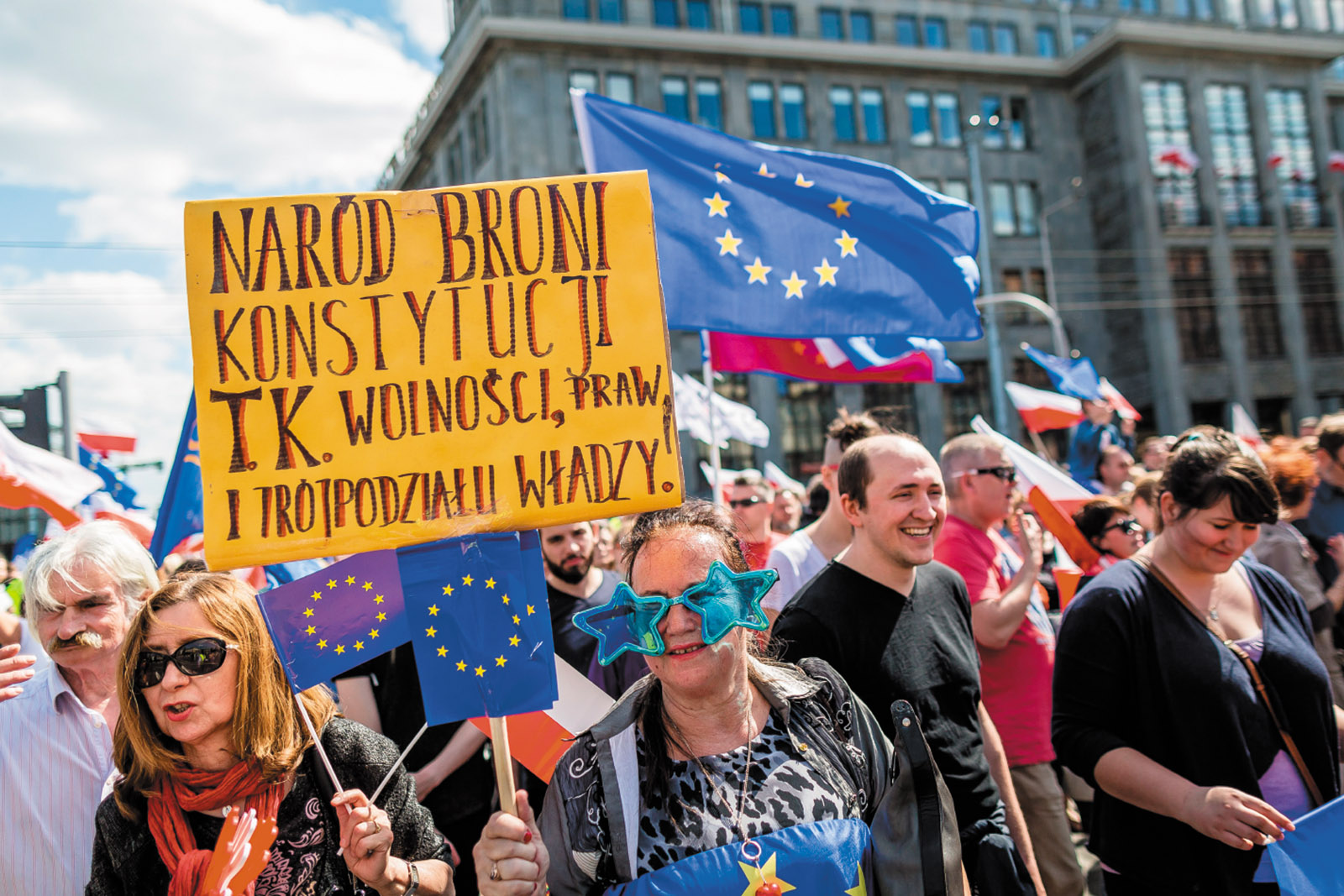


 Του Μάθιου Κάρντιτσνιγκ(*)
 Η σχέση του Έλληνα πολίτη με το κράτος είναι συγκρουσιακή και καχύποπτη. Και ξεκινάει απο τον τρόπο που το κράτος αντιμετώπισε, διαχρονικά, και αντιμετωπίζει τον πολίτη. Με απλά λόγια, αν ο πολίτης ακολουθούσε- και ακολουθεί σήμερα- τη “νομιμότητα”, δεν θα τα βγάλει πέρα. Δεν του φτάνουν για να ικανοποιήσει τις υποχρεώσεις που του επιβάλλει μια σχετική πλειοψηφία που κυβερνά, επειδή έτσι συμφωνήσαμε. Με χαμηλά ποσοστά που αυξάνονται σε κοινοβουλευτικές έδρες, κυβερνάς και αποφασίζεις- συνήθως ΑΝΟΡΘΟΛΟΓΙΚΑ- για τη ζωή των ανθρώπων.
 The bitter struggle over an independence referendum has pushed the country into a grave constitutional crisis.
 του Wolfgang Münchau Financial Times
 euro2day.gr
 Δημοσιεύθηκε: 27 Σεπτεμβρίου 2017 – 08:04


