Αρχική Blog Σελίδα 2726

Les trois défis d’Emmanuel Macron pour 2019

0

Après une deuxième année catastrophique, Emmanuel Macron, en chute dans les sondages, doit redresser la barre. Trois chantiers apparaissent prioritaires.

2017 fut l’état de grâce pour Emmanuel Macron. 2018, celui de la disgrace. Que peut-il attendre pour 2019 ?

Erdogan’s Anti-Semitism Will Sink Turkey’s Economy

0

The Turkish president’s racist conspiracy theories are a threat to economic stability.

  
President of Turkey Recep Tayyip Erdogan addresses the press during the Argentina G20 Leaders’ Summit 2018 on Dec. 1 in Buenos Aires. (Daniel Jayo/Getty Images)

On Nov. 21, Turkish President Recep Tayyip Erdogan told a meeting of local elected officials that “the famous Hungarian Jew Soros” was behind an individual who “financed terrorists” during the nationwide anti-government protests of 2013. He added that George Soros is “a man who assigns people to divide nations and shatter them. He has so much money and he spends it this way.”

The individual whom Erdogan smears as a “terrorist financier” is Osman Kavala, one of Turkey’s leading philanthropists and civil-society activists. Turkish authorities arrested Kavala over a year ago and have held him without an indictment. The Turkish president and his media mouthpieces accuse him not only of supporting the widespread protests of 2013, which were sparked by Erdogan’s plans to raze Istanbul’s popular Gezi Park to build a shopping mall, but also the abortive coup of 2016.

After Erdogan’s latest attack, Soros’s Open Society Foundations (OSF), citing his “baseless claims,” decided to leave Turkey, likely worried that the safety of their employees was at risk. Ten days earlier, Hakan Altinay, one of the founders of the OSF’s Turkish branch, was arrested.

Although OSF announced that it will “continue to support future partners in Turkey who would want to work with them,” this might prove to be impossible for local nongovernmental organizations. Pro-government media have already smeared OSF’s partners as “evil structures,” claiming that “after the Open Society Foundation of Jewish speculator George Soros, who is an aide of the great devil the United States and Zionist Israel, fled Turkey,” German foundations picked up where they left off.

This worrying trend is not unique to Turkey. On Dec. 3, Hungarian Prime Minister Viktor Orban forced the Soros-funded Central European University into exile. In October, a Dutch public broadcaster drew condemnation for describing the billionaire philanthropist as “the Jew Soros [who] supports organizations openly critical of governments and has tentacles.” From Hungary to the Netherlands, populists exploit anti-Semitic conspiracies to mobilize the electorate.

From Hungary to the Netherlands, populists exploit anti-Semitic conspiracies to mobilize the electorate.

Yet in Turkey, such conspiracy theories not only shape voter preferences—as we again see in the run-up to the municipal elections of March 2019—but also monetary policy.The accusation that Jews conspired to orchestrate the Gezi Park protests, the largest anti-government rally since Erdogan’s rise to power, is not new. As the events were unfolding, the Turkish strongman alluded to a treacherous “interest-rate lobby” working behind the scenes. This framing echoes classical anti-Semitic tropes from Europe, the use of which in “fistfuls of cash” ads during the U.S. midterm elections also led to controversy. Turkish society, unfortunately, is obsessed with such conspiracy theories, which Erdogan cynically uses to his political advantage. Yet anti-Semitic conspiracies also profoundly influence the president’s own worldview, and his bigoted beliefs are dragging the Turkish economy into a catastrophe.

Yet anti-Semitic conspiracies also profoundly influence the president’s own worldview, and his bigoted beliefs are dragging the Turkish economy into a catastrophe.

It is no secret that Erdogan deplores interest rates, which he denounced earlier this year as “the mother and father of all evil.” The president not only sees interest rates as a “tool of exploitation,” comparing them to “heroin trade,” but also insiststhat high interest rates lead to higher inflation. Economists know that raising interest rates tends to bring down inflation, but Erdogan’s willful ignorance of this axiom cannot fully explain his hostility. Indeed, Erdogan’s antipathy to interest rates stems from his often conflicting convictions, ranging from the religious to the conspiratorial.

Many Turkey watchers ascribe the president’s views on interest rates to the traditional Muslim belief that riba, or usury, is haram, or forbidden by Islamic law. While this is true, the real issue is that in Turkish Islamist thinking, as espoused by Erdogan’s political mentor for nearly 30 years, former prime minister Necmettin Erbakan, interest rates are a tool employed by Jews to control world events. Even until the end of his life, as Soner Cagaptay of The Washington Institute for Near East Policy writes, “[Erbakan] entertained the fantasy that a cabal of Jews controlled the West.”

Following his break with Erbakan’s Islamist party in 2001 to establish his own “conservative democratic party,” Erdogan claimed that he had “taken off the shirt” of Islamism, and posed as an opponent of anti-Semitism. He even went so far as to declare anti-Semitism a crime and accept the Anti-Defamation League’s Courage to Care Award. Nevertheless, unable to suppress his deeply internalized anti-Semitic convictions, he has continued to employ bigoted rhetoric scapegoating Jews for Turkey’s political and economic problems.

Crucial for understanding the direction of Turkish monetary policy is Erdogan’s use of the term “interest-rate lobby,” or faiz lobisi. Western media continue to describe Erdogan’s “interest-rate lobby” as merely “shadowy” or “mysterious,” overlooking the anti-Semitic undertones obvious to every Turk.

Erdogan’s Anti-Semitism Will Sink Turkey’s Economy

Το δόγμα του ’22 – Προσοχή σε μια νέα εγκατάλειψη

7

ΤΟΥ ΠΑΝΤΕΛΗ ΣΑΒΒΙΔΗ

Σε τέσσερις ημέρες το 2018 μας αφήνει και μπαίνουμε αισίως στη νέα χρονιά. Αν κάτι θα μπορούσε να μας μείνει από το 2018, είναι το πόσο γρήγορα αλλάζουν όλα. Από τις νέες τεχνολογίες, μέχρι τις ιδεολογίες και τις διεθνείς σχέσεις.

Οι νέες τεχνολογίες, με έμφαση στην τεχνητή νοημοσύνη, αποτελούν τον καταλύτη των αλλαγών.

Η εξέλιξη της τεχνολογίας περιέχει ιδεολογία. Τα παλιά σχήματα Δεξιάς-Αριστεράς κατέρρευσαν λόγω ακριβώς της εισόδου της ανθρωπότητας σε μια εποχή νέων τεχνολογιών που δεν θυμίζει τίποτε από τον παλιό κόσμο.

Σε διεθνές επίπεδο, που ενδιαφέρει περισσότερο τη στήλη, παρατηρούμε μια σταδιακή αποκαθήλωση των Ηνωμένων Πολιτειών από τη μονοκαθεδρία της παγκόσμιας δύναμης. Οι ΗΠΑ παραμένουν στην κορυφή, αλλά δεν είναι πια μόνες. Συγκατοικούν με τη Ρωσία και την Κίνα και ετοιμάζονται για τη μάχη οπισθοφυλακής, πριν παραδώσουν τα ηνία της παγκόσμιας ηγεσίας. Η Κίνα τις απειλεί ως πρώτη δύναμη. Στην οικονομία, το εμπόριο, ακόμη και σε μερικούς τεχνολογικούς τομείς, το Πεκίνο βρίσκεται μπροστά. Υστερεί προς το παρόν στον στρατιωτικό τομέα, αλλά δεν είναι μακριά η στιγμή που και εκεί θα δοθεί η μάχη της κορυφής. Γι’ αυτήν τη μάχη ετοιμάζεται η Ουάσινγκτον. Και ετοιμάζεται με έναν πρόεδρο που υπολείπεται των υψηλών απαιτήσεων της κρίσιμης στιγμής.

Δεν είναι μακριά η εποχή που το κυρίαρχο αφήγημα για τις ΗΠΑ ήταν πως ο πρόεδρος πλαισιώνεται από μια πλειάδα ικανότατων διαμορφωτών πολιτικής, και πως ο ίδιος απλώς εκτελεί. Οπότε, δεν πείραζε την ανθρωπότητα αν κάποια στιγμή διαπίστωνε πως ο πλανητάρχης ήταν γυμνός. Τη γύμνια της υπερδύναμης κάλυπταν τα κέντρα που διαμόρφωναν πολιτική, και από τη σύνθεσή τους προέκυπτε μια ασφαλής διαδρομή για τις ΗΠΑ και τους συμμάχους τους. Ο σημερινός πρόεδρος αποκαθήλωσε αυτό το δόγμα, που μάλλον εδώ και χρόνια ήταν ψευδαίσθηση.

Σήμερα τις τύχες των ΗΠΑ και της ανθρωπότητας, στο βαθμό που επηρεάζονται από την Ουάσινγκτον, τις διαμορφώνει ένας παντελώς ανίκανος πρόεδρος με μια ομάδα οικογενειακών μυστικοσυμβούλων. Κατάφερε και διέλυσε όλη τη βαθιά Αμερική, που σήμερα δεν έχει καμιά επιρροή στον πρόεδρο.

Το πρόβλημα με αυτήν την εξέλιξη είναι πως οι συντεταγμένες της βαθιάς Αμερικής ήταν γνωστές. Ο κόσμος μπορούσε να κινηθεί με βάση αυτές, και η Αμερική τηρούσε λίγο-πολύ τις υποσχέσεις της.

Σήμερα τα πάντα είναι αβέβαια και μπορούν να μεταβληθούν από στιγμή σε στιγμή. Την πολιτική του προέδρου, αν δεν την διαμορφώνει ο ίδιος μεταξύ τυρός και αχλαδίου, κυριολεκτικά, την επηρεάζει ένα στενά προσωπικό και οικογενειακό απαράτ το οποίο μπορεί να μην έχει και κανέναν θεσμικό ρόλο.

Το πρόβλημα για τη διεθνή κοινότητα είναι τεράστιο. Μοιάζει με ακυβέρνητο καράβι. Ποιος έχει εμπιστοσύνη στις ΗΠΑ και τον πρόεδρό τους; Μπορεί να ηγηθεί η Ουάσινγκτον του Δυτικού κόσμου;

Η απάντηση είναι όχι, και ο Τραμπ κάνει ό,τι μπορεί να το επιβεβαιώσει.

Βεβαίως, λένε οι υποστηρικτές του, αναζητά συμμαχίες για την τελική σύγκρουση με την Κίνα. Και οι συμμαχίες αυτές περνούν από τη συνεργασία με τη Ρωσία και τους όψιμους συμμάχους της, όπως η Τουρκία.

Υπάρχει όμως ένα πρόβλημα για τη Δύση, το οποίο αντιμετωπίζει και η Ελλάδα: μπορούμε να εμπιστευτούμε τις ΗΠΑ στο παγκόσμιο παιχνίδι ανακατάταξης;

Ας μείνουμε στα δικά μας. Στην Ελλάδα. Οι χώρες της ευρωπαϊκής Δύσης έχουν άλλη πολιτική κουλτούρα. Η Ελλάδα προσπαθεί ακόμη να συγκροτηθεί σε κράτος. Δεν το πέτυχε ποτέ, με την έννοια του Δυτικού κράτους, από την Απελευθέρωση ως σήμερα.

Η σημερινή αντιπαράθεση με την Τουρκία αποτελεί τη μακροχρόνια, από το 1821, διαμάχη για την ανεξαρτησία της χώρας. Δεν τελείωσε ακόμη. Η Ελλάδα απέκτησε κρατική συγκρότηση επειδή συνέφερε τις ευρωπαϊκές δυνάμεις. Η Επανάσταση είχε περιέλθει σε αδιέξοδο και πέτυχε το στόχο της επειδή βοηθήθηκε έξωθεν.

Η υποστήριξη αυτή, όμως, έφθασε στα όριά της το 1922. Η Ελλάδα ωθήθηκε σε επέκταση αλλά εγκαταλείφθηκε. Η εγκατάλειψη εκείνη αποτέλεσε το οριακό σημείο που καθόρισε και την έκταση και το βαθμό ανεξαρτησίας της χώρας.

Η Ελλάδα είναι μια χώρα απολύτως εξαρτημένη από τη Δύση. Δεν μπορεί να κάνει τίποτε χωρίς να ρωτήσει τις ισχυρές δυνάμεις. Μην έχετε ψευδαισθήσεις, αυτό συμβαίνει πίσω από τις κουρτίνες.

Αυτό είναι η πρώτη διαπίστωση που πρέπει να λάβουμε υπόψη μας.

Η δεύτερη είναι πως δεν πρέπει να έχουμε καμιά εμπιστοσύνη σε υποσχέσεις. Είμαστε μέρος της διεθνούς κοινότητας, συμμετέχουμε στο διεθνές γίγνεσθαι ως μικρή ποσότητα της Ευρωπαϊκής Ένωσης, αλλά το 1922 μάς υπαγορεύει να προσέχουμε.

Η συμπεριφορά των ΗΠΑ στη Συρία αποδεικνύει άλλη μια φορά πως το «δόγμα του ’22» καθορίζει τη συμπεριφορά των μεγάλων δυνάμεων.

Βεβαίως θα ελισσόμεθα για να πετύχουμε τα εθνικά μας συμφέροντα αλλά με προσοχή. Ιδιαίτερη προσοχή.

Η επισήμανση έχει τη σημασία της καθώς η χώρα έχει εμπλακεί σε μια φιλόδοξη συνεργασία στην ανατολική Μεσόγειο. Αν η συνεργασία αυτή έχει αυτόνομη δυναμική, που εξαρτάται από τα συμμετέχοντα μέλη της, μπορεί να εξελιχθεί σε πόλο σταθερότητας. Αν όχι, αν η εξέλιξή της εξαρτάται από τις ΗΠΑ ή άλλες Δυτικές δυνάμεις, θα πρέπει να ληφθεί υπόψη πως η Δύση, είτε αμερικανική είτε ευρωπαϊκή, υπολογίζει σε μεγάλο βαθμό στην Τουρκία. Καλώς ή κακώς, η Τουρκία παραμένει σημαντικός πόλος στη στρατηγική της Δύσης. Όταν ο Τραμπ φτάνει σε σύγκρουση με το Ισραήλ και το εβραϊκό λόμπι για να υποστηρίξει την Τουρκία, αυτό κάτι σημαίνει.

Ήρθε ίσως η στιγμή, οι πολιτικές, οικονομικές και πνευματικές δυνάμεις της χώρας να αρχίσουν να σχεδιάζουν πώς θα αποκτήσει η Ελλάδα στοιχειώδεις δυνατότητες άσκησης δικής της πολιτικής που θα εγγυάται την ύπαρξη και την ανεξαρτησία της.

Η αρχή της χρονιάς προσφέρεται για τέτοιους προβληματισμούς.

pontos-news.gr

In Turkey, Recep Tayyip Erdogan faces a make-or-break year

0

Adnan R. Khan: For more than a decade and a half, Turkey has aggressively pursued a more prominent role in the world. In 2019, it will pay the price.

by 

Protesters spread a large banner depicting Turkish President Recep Tayyip Erdogan alongside another of a Turkish flag on Jan. 22, 2018. (Birol Bebek/AFP/Getty Images)

The goal was unity. At least, that’s what Recep Tayyip Erdogan, the president of Turkey, claimed about his campaign to transform Turkey’s fractious parliamentary democracy into a highly centralized presidency. When his “yes” side prevailed in an April 2017 constitutional referendum, the ambitious and polarizing leader promised that the new system would eliminate all the ugly partisan battles of the past. Turkey, he exulted, had embarked on a “historic” journey; at the end of it would be the respect and admiration it deserved.

More than a year and a half later, that unity has not materialized.

In early elections last June, Erdogan’s AK Party only managed a little over 40 per cent support, relying on ultra-nationalists to form a majority alliance in Parliament. Erdogan managed a more respectable 52.59 per cent to win the presidency, but he now governs over an increasingly divided nation, with an economy in the throes of an inflation and foreign-debt crisis, as a potential recession looms for next year.

Meanwhile, its decision to back Islamist forces in Syria against the Bashar al-Assad regime has put it in strategic conflict with Russia and Iran. Its obsession with the dangers posed by Kurdish militants in northern Syria has put it in direct conflict with the U.S., which backs the Kurds. Its mishandling of the fallout from a failed coup attempt in 2016 has ratcheted up tensions with Europe, and stripped its own institutions of capable bureaucrats. This year has been a rude awakening for Turkey, and 2019 is shaping up to be disastrous.

With so much on the table, from the purchase of the Russian S-400 missile defence system—which threatens to widen the breach between Turkey and its NATO allies—to local elections in March, which are increasingly being viewed as a referendum on the AK Party’s handling of the economy, the chances of Turkey coming out of the year unscathed look slim indeed. And of course, there is the escalating fallout with Saudi Arabia after the Oct. 2 murder of Jamal Khashoggi, the dissident journalist who was lured into the Saudi consulate in Istanbul, strangled to death and then dismembered. What the Turkish government knew, and how it obtained its information, including audio recordings of the killing, has exposed the extent to which it was monitoring the Saudis, who pose a challenge to Erdogan’s ambitions to rebrand Turkey as the dominant regional power in the Middle East.

The gambit it is now playing—slowly releasing information in an attempt to punish Saudi Crown Prince Mohammed bin Salman and extract concessions over various issues, including the future of the Assad regime in Syria, which the Saudis increasingly back—may backfire next year. With Saudi Arabia mulling over dismantling OPEC, rising oil prices could very well push Turkey’s economy over the edge. And if Erdogan believes he can stare down Salman, who appears to have the backing of the U.S., he might be in for a very rude awakening.

If there’s an overarching lesson Turkey appears not to have learned it is that concentrating power in a single individual never ends well. Erdogan was the first iteration of the new millennium’s neo-authoritarian—democratic in name but more aligned with a view that power is dictated rather than debated—and he may also be the first to see his quest for power become his own worst enemy.

His quest to reclaim Turkey’s Ottoman-era prestige has crashed head-on with the 21st century realities of the Middle East. Ironically, perhaps even naively, in the mid-2000s, Erdogan promoted a “zero problems with neighbours” foreign policy; today, Turkey faces problems on virtually every front.

But even as his Quixotic visions show signs of crumbling, Erdogan has refused to back down. As 2018 draws to a close, Turkey is going all in on extracting as much as it can from the instability that now surrounds it. Rather than bite the bullet and institute the austerity it needs to weather the current economic storm, it has cranked up incentive programs, including tax amnesties and price controls, and announced even more mega-projects to keep economic activity humming.

Increasingly, Erdogan’s strategy appears now to be more survivalist than visionary. It looks likely that his Turkey will enter the new year roaring but leave it badly bruised, and that does not bode well for the world. For a NATO ally and once reliable democratic partner sitting smack in the middle of an international crisis zone, its failures send tremors well beyond its borders. And 2019 will be a year of failures. 

https://www.macleans.ca/opinion/why-everybody-should-rid-themselves-of-old-habits-and-go-vegan/

Γιατί ο Μακρόν θα μπορούσε να ζήσει ένα έτος 2019 εφιαλτικό, χειρότερο από το 2018

0

Του Αλκη Καλλιαντζίδη, Οικονομολόγου, [email protected]   www.kalkis.eu

Δίχως καμία αμφιβολία, ο Emmanuel Macron πέρασε ένα  2018 που ήταν το χειρότερο έτος της μέχρι τώρα πολιτικής καριέρας του. Το 2017 ήταν η χρονιά της μεγάλης και ανέλπιστης νίκης του σε βάρος του «παλιού πολιτικού κόσμου». Το «εξερχόμενο» 2018 έγινε η χρονιά της ντροπής του. Τη στιγμή που γράφονται αυτές οι γραμμές, αγνοείται ο τόπος όπου βρίσκεται ο πρόεδρος! Ο αρχηγός του γαλλικού κράτους έχασε μέσα σε λίγους μήνες το κεκτημένο που είχε αποκτήσει μετά τη νίκη του στις προεδρικές εκλογές και την έναρξη της θητείας του. Είχε προωθήσει τις φημισμένες μεταρρυθμίσεις που για χρόνια δεν ήταν εφικτές (όπως, π.χ. η αλλαγή του κώδικα εργασίας, η μεταρρύθμιση των σιδηροδρόμων SNCF, η κατάργηση του φόρου μεγάλης περιουσίας ISF). Όταν ξέσπασε το περασμένο καλοκαίρι η υπόθεση Alexandre Benalla, αναχαίτισε  αυτή τη δυναμική του. Προστέθηκε σε αυτό και η κρίση των «κίτρινων γιλέκων» που βρίσκονται ακόμα στους δρόμους παρά τα ψηφισθέντα κυβερνητικά μέτρα, η οποία όξυνε τη δυσπιστία της γαλλικής κοινής γνώμης στο πρόσωπο του Μακρόν. Αλλά, το έτος 2019 θα μπορούσε να είναι ακόμη χειρότερο για τον αρχηγό του κράτους για τους παρακάτω λόγους.

1 – Η οικονομική μεγέθυνση της Γαλλίας κινδυνεύει

Όταν ο Macron κατέκτησε την εξουσία το 2017, η οικονομική μεγέθυνση της Γαλλίας δεν ήταν θεαματική αλλά ήταν σταθερή, το πετρέλαιο ήταν φτηνό και τα επιτόκια δανεισμού πολύ χαμηλά. Η οικονομική συγκυρία είχε επιστρέψει εν μέρει. Η οικονομική μεγέθυνση της Γαλλίας θα πρέπει μάλλον να κλείσει το έτος 2018 με άνοδο μόνο 1,5%, δηλαδή 0,7 μονάδες χαμηλότερα από το 2017. Ειδικά η ανάπτυξη του έτους 2019 θα μπορούσε να είναι ακόμη χαμηλότερη. Ο Philippe Waechter, διευθυντής οικονομικής έρευνας της Ostrum Asset Management, αναμένει για παράδειγμα αύξηση 1,2%, έναντι 1,7% που ανακοίνωσε η κυβέρνηση Μακρόν. «Θα αντιμετωπίσουμε ένα πραγματικό φρενάρισμα» για την οικονομική δραστηριότητα, δήλωσε ο Philippe Waechter ο οποίος προβλέπει ότι «το 2019 θα είναι ένα πολύ δύσκολο έτος στο επίπεδο του προϋπολογισμού», σύμφωνα με το δημοσίευμα στις 25-12-2018 του Michaël Bloch στην ηλεκτρονική έκδοση της εφημερίδας Le journal de dimanche. Το δημόσιο χρέος της Γαλλίας 2,41 τρις εκατ. ευρώ προσεγγίζει και πάλι το συμβολικό όριο του 100% του ΑΕΠ, ενώ το δημόσιο έλλειμμα από 2,8% που προβλέπει ο προϋπολογισμός του 2019, θα υπερβεί το 3,4% μετά τα ψηφισθέντα μέτρα πάνω από 10 δις ευρώ. Το τέλος του έτους 2018 χαρακτηρίστηκε επίσης από την πτώση της κατανάλωσης και την επιδείνωση του επιχειρηματικού κλίματος λόγω της κρίσης των «κίτρινων γιλέκων». Και το εν λόγω κίνημα βρίσκεται μακράν από το να υποχωρήσει. Αύριο Σάββατο, και παρά τις γιορτινές μέρες, απειλεί νέες κινητοποιήσεις. Μάλιστα κάποιοι (καμιά σαρανταριά που βλέπω στις μεταδόσεις του καναλιού BFM TV) βρίσκονται κοντά στην εξοχική προεδρική κατοικία στο Brégançon για να διαμαρτυρηθούν στο Μακρόν, σε περίπτωση που θα πήγαινε εκεί.  Η μεγέθυνση το 2019 θα μπορούσε επίσης να επηρεαστεί αρνητικά από την παγκόσμια κάμψη. Δίχως μια ισχυρή ανάπτυξη, είναι δύσκολο να προβλεφθεί μια διαρκής μείωση της ανεργίας, ένας έλεγχος των κρατικών ελλειμμάτων και μια πιο αναδιανεμητική πολιτική μέσα σε ένα πλαίσιο κοινωνικής κρίσης.

2 – Η παρακράτηση φόρου στην πηγή μπορεί να επιδεινώσει την κοινωνική κρίση

Αυτή ήταν το μείζον πολιτικό θέμα του φθινοπώρου του 2018. Θα μπορέσει η κυβέρνηση να εφαρμόσει την παρακράτηση φόρου εισοδήματος στην πηγή (σε 12 μηνιαίες δόσεις) από τον Ιανουάριο του 2019; Μετά από πολλούς δισταγμούς, ο Μάκρον αποφάσισε τελικά να εφαρμόσει αυτή την φορολογική αλλαγή που επιθυμούσε ο προκάτοχός του Francois Hollande. Η χρονική συγκυρία για την εφαρμογή μιας τέτοιας μεταβολής φαίνεται εκρηκτική. Τον Ιανουάριο του 2019, πολλοί Γάλλοι θα δουν μια πτώση του διαθέσιμου εισοδήματός τους στην μισθοδοσία τους ή στη σύνταξή τους, αφού θα παρακρατηθεί στην πηγή ένα ποσοστό του μισθού ή της σύνταξής τους αντίστοιχα, όπως γίνεται στην Ελλάδα και σε πολλές άλλες χώρες. Ακόμη και αν αυτό το ζήτημα είναι καθαρά διαδικαστικό (αφού οι αναλογούντες φόροι του κάθε Γάλλου πρέπει να πληρώνονται ούτως ή άλλως), μπορεί να έχει ισχυρό ψυχολογικό αντίκτυπο, την στιγμή που πολλοί Γάλλοι ήδη διαμαρτύρονται για τη μείωση της αγοραστικής τους δύναμης.

Μια άλλη μεταρρύθμιση που θα τεθεί σε ισχύ το 2019 είναι ο νέος υπολογισμός των επιδομάτων στέγασης. Τα εν λόγω επιδόματα (APL) θα υπολογίζονται με βάση το τρέχον εισόδημα του δικαιούχου και όχι πλέον το εισόδημα που είχε ο δικαιούχος πριν από 2 χρόνια. Ενδεχομένως, πολλοί Γάλλοι, ιδίως οι μαθητευόμενοι και οι νέοι εργαζόμενοι, να κινδυνεύσουν να υποστούν μια νέα μείωση του εισοδήματός τους.

3 – Έχασε όλο το πολιτικό του κεφάλαιο για μεταρρυθμίσεις ο Μακρόν

Μπορεί ακόμη να κάνει μεταρρυθμίσεις ο Μακρόν, όταν έχει γίνει τόσο αντι-δημοφιλής και τα «κίνητρα γιλέκα» βρίσκονται ήδη στους δρόμους για απροσδιόριστο χρονικό διάστημα ; Για τον  Macron, η εξίσωση που έχει να επιλύσει το 2019 πιθανότατα θα είναι ιδιαίτερα δύσκολη.  Τρεισήμισι χρόνια πριν το τέλος της θητείας του, φαίνεται τώρα να αντιμετωπίζει μια επίμονη αντιδημοτικότητα. Σύμφωνα με την τελευταία έρευνα της δημοσκοπικής εταιρείας IFOP για την εφημερίδα Journal de dimanche, ο Μακρόν έχει θετικές γνώμες μόνο από το 23% των Γάλλων (δηλαδή 27 μονάδες λιγότερες από ό, τι είχε τον Ιανουάριο του 2018).

Ο Γάλλος πρόεδρος σχεδιάζει το 2019 να μεταρρυθμίσει το ισχύον συνταξιοδοτικό σύστημα  και το σύστημα επιδομάτων ανεργίας, εν δυνάμει εκρηκτικά θέματα, όπου αυτά επιχειρήθηκε να αλλάξουν. Πώς όμως θα το επιτύχει χωρίς πλέον διαθέσιμο πολιτικό κεφάλαιο; «Από εδώ και πέρα, οι Γάλλοι θα βγαίνουν στο δρόμο συστηματικά, όταν δεν συμφωνούν με τα μέτρα της κυβέρνησης», δήλωσε πρόσφατα ο Frédéric Sawicki, ειδικός για τα πολιτικά κόμματα και για τον κομματικό ακτιβισμό, στο πανεπιστήμιο Παρίσι 1 Pantheon-Sorbonne, σε συνέντευξή του στο Γαλλικό Πρακτορείο Ειδήσεων AFP. Το 2019, ο Macron θέλει επίσης να μεταρρυθμίσει το σύνταγμα. Πώς όμως θα γίνει αυτό όταν έχει αναδυθεί το «δημοψηφίσμα της πρωτοβουλίας πολιτών» ως το νούμερο ένα αίτημα από τα κίτρινα γιλέκα ;

4 – Δεν φαίνεται να έχει κάποια πολιτική εναλλακτική λύση ο Μακρόν

Η υπόθεση Alexandre Benalla και η κρίση των «κίτρινων γιλέκων» έχουν ένα κοινό σημείο : δείχνουν την απουσία πολιτικών ανδρών και γυναικών με μεγάλη πολιτική βαρύτητα, έτοιμων να υπερασπιστούν τον Macron στις δυσκολίες του. Ο Γάλλος πρόεδρος, πέρα από τις δικές του γκάφες, βρέθηκε ολομόναχος, χωρίς κανένα βασικό υπολοχαγό έτοιμο να μπει στη φωτιά για να τον προστατεύσει, με εξαίρεση τον πρωθυπουργό. Ένα άλλο πρόβλημα για τον Emmanuel Macron είναι ότι δεν έχει ουσιαστικά καμία εναλλακτική λύση στον πολιτικό του πάγκο, όπως έδειξαν οι δύο τελευταίες κυβερνητικές αλλαγές. Δεν μπορεί καν να ελπίζει ότι θα κάνει μια πολιτική κίνηση χαρτοπαιχτικού πόκερ για να αναζωογονήσει  την πενταετή θητεία του.

Ποιος είναι, τι έκανε και πώς ζημίωσε τον Μακρόν Alexandre Benalla ;

Ήταν ένας από τους πιο στενούς φρουρούς του, σε σημείο να κάνουν ποδηλατάδα μαζί σε στιγμές χαλάρωσης. Την πρωτομαγιά του 2018, ο  Alexandre Benalla, ενδεδυμένος με στολή Γάλλου Ματατζή, φαίνεται σε βίντεο να δέρνει 2 διαδηλωτές, δίχως να έχει μια τέτοια υπηρεσιακή αρμοδιότητα. Το εν λόγω αντιδημοκρατικό περιστατικό κρατήθηκε μυστικό από το προεδρικό μέγαρο Elysée. Απλά του επιβλήθηκε τότε μια ποινή χάδι, παρακράτησης ενός δεκαπενθημέρου από τον μισθό του ! Ώσπου το βίντεο είδε το φως της δημοσιότητας κι έτσι έγινε ο πρώτος πολιτικός χαμός. Απολύθηκε τότε ο  Alexandre Benalla τον περασμένο Ιούλιο και ξεκίνησε σχετικά μια κοινοβουλευτική έρευνα  μαζί με την δικαστική που βρίσκεται σε εξέλιξη.

Από χθες ζούμε τον νέο χαμό του Alexandre Benalla. Γιατί ; Διότι ο γαλλικός ιστότοπος media part αποκάλυψε στις 27-12-2018 ότι ο εν λόγω «κύριος» διέθετε και έκανε χρήση δυο διπλωματικών διαβατηρίων με τα οποία ταξίδευε στο εξωτερικό κάνοντας τον επενδυτικό Σύμβουλο, ενώ δεν είχε καμία τυπική σχέση με τη γαλλική προεδρία ή κάποια άλλη διπλωματική Αρχή. Τα διαβατήριά του δεν του αφαιρέθηκαν, έστω και βιαίως, παρόλο ότι του ζητήθηκαν με συστημένη επιστολή ! Μάλιστα βρέθηκε με ιδιωτικό αεροπλάνο και τουρκο-λιβανέζους μεγαλοεπενδυτές στο Τσαντ της Αφρικής,  τρεις βδομάδες πριν πάει εκεί ο Μακρόν σε επίσημη επίσκεψη. Μάλιστα ο Alexandre Benalla φέρεται να έχει συναντήσει στο Τσαντ τον αδελφό του εκεί προέδρου της δημοκρατίας !

Θέλετε κι άλλα για τον  Alexandre Benalla, για να διατυπώσετε τα εύλογα ερωτήματά σας, όπως και όλοι οι Γάλλοι ;

Το μείζον ερώτημα που τίθεται είναι : τι θα μπορούσε να κρύβει (αν κρύβει) ο Alexandre Benalla και ο Μακρόν δεν του πήρε παραδειγματικά το κεφάλι από την αρχή αυτού του «εκτσογλανισμού» της γαλλικής πολιτικής ζωής ;


Οριοθέτηση ΑΟΖ Δανίας-Πολωνίας

2

Του Θεόδωρου Καρυώτη alltimeclassic.net
 Έγινε πρόσφατα μια σημαντική οριοθέτηση ΑΟΖ μεταξύ δυο κρατών της Ευρωπαϊκής Ένωσης, της Δανίας και της Πολωνίας, που πρέπει να μελετηθεί σοβαρά από το ελληνικό Υπουργείο Εξωτερικών. Στη διαπραγμάτευση η Δανία προσήλθε με «ελληνικές» θέσεις και η Πολωνία με «τουρκικές» θέσεις και από ότι φαίνεται εκ του  αποτελέσματος η Πολωνία κέρδισε στα σημεία.

Οι υπουργοί Εξωτερικών της Πολωνίας και της Δανίας υπέγραψαν στις Βρυξέλλες, στις 19 Νοεμβρίου 2018, συμφωνία για τα θαλάσσια σύνορα των δύο κρατών στη Βαλτική Θάλασσα, τερματίζοντας μια μακροχρόνια διαμάχη που διήρκεσε πάνω από 40 χρόνια. Ένα σημαντικό στοιχείο αυτής συμφωνίας  είναι το γεγονός ότι τα δύο κράτη δεν προσέφυγαν στα διεθνή δικαστηρια της Χάγης ή του Αμβούργου, αλλά προτίμησαν, ως πολιτισμένα ευρωπαϊκά κράτη, να συνεννοηθούν μεταξύ τους και το πέτυχαν. Βέβαια στην περίπτωση της ελληνοτουρκικής διαφοράς, δεν νομίζω ότι η Τουρκία θα ενδιαφερθεί να κάνει κάτι παρόμοιο με την Ελλάδα.

Η διαφορά της Δανίας με την Πολωνία εντοπιζόταν στο δανικό νησί Bornholm που βρίσκεται, όπως φαίνεται στον χάρτη, πολύ μακριά από την Δανία και είναι περικυκλωμένο από τη Γερμανία, την Σουηδία και την Πολωνία στη νότιο Βαλτική Θάλασσα.Το Bornholm είναι μήκους 35 χιλιομέτρων και πλάτους 15 χιλιομέτρων, και αποτελεί μέρος του δανικού βασιλείου για το μεγαλύτερο μέρος της ιστορίας του. Λόγω της στρατηγικής του θέσης, έχει εμπλακεί σε πολλούς πολέμους. Κατά τη διάρκεια του Δευτέρου Παγκοσμίου Πολέμου, καταλαμβάνεται από γερμανικά στρατεύματα από το 1940 έως το 1945 και στη συνέχεια από σοβιετικά στρατεύματα μέχρι τον Απρίλιο του 1946 οπότε  επιστρέφει στη Δανία.

Η αμφισβητούμενη περιοχή είναι περίπου 3.600 τετραγωνικά χιλιόμετρα. Παρά τις διαπραγματεύσεις που ξεκίνησαν το 1972, η Πολωνία και η Δανία δεν είχαν καταφέρει, μέχρι σήμερα, να πραγματοποιήσουν μια οριοθέτηση των θαλάσσιων περιοχών τους μεταξύ Bornholm και πολωνικών ακτών. Η κατάσταση αυτή αποτελούσε την πλέον μακροχρόνια περίπτωση αβέβαιων θαλάσσιων συνόρων στη Βαλτική Θάλασσα. Παρόλο που και οι δύο χώρες επικύρωσαν την UNCLOS, επικαλούνταν διαφορετική ερμηνεία της Σύμβασης, που αναφέρει:

Άρθρο 74 Οριοθέτηση της αποκλειστικής οικονομικής ζώνης μεταξύ κρατών με έναντι ή προσκείμενες ακτές

  1. Η οριοθέτηση της αποκλειστικής οικονομικής ζώνης μεταξύ κρατών με έναντι ή προσκείμενες ακτές πραγματοποιείται κατόπιν συμφωνίας με βάση το διεθνές δίκαιο, όπως ορίζεται στο άρθρο 38 του καταστατικού του διεθνούς δικαστηρίου, με σκοπό την επίτευξη δίκαιης λύσης.
  2. Αν δεν επιτευχθεί συμφωνία μέσα σε εύλογο χρονικό διάστημα, τα ενδιαφερόμενα κράτη προσφεύγουν στις διαδικασίες, που προβλέπονται στο μέρος XV.
  3. Εκκρεμούσης της συμφωνίας που προβλέπεται στην παράγραφο 1, τα ενδιαφερόμενα κράτη, σε πνεύμα κατανόησης και συνεργασίας, καταβάλλουν κάθε προσπάθεια για την επίτευξη προσωρινών διευθετήσεων πρακτικού χαρακτήρα και, κατά τη διάρκεια αυτής της μεταβατικής περιόδου, για να μην θέσουν σε κίνδυνο ή παρεμποδίσουν την επίτευξη οριστικής συμφωνίας. Οι διευθετήσεις αυτές δεν επηρεάζουν την τελική οριοθέτηση.
  4. Όπου ισχύει συμφωνία μεταξύ των ενδιαφερομένων κρατών, τα ζητήματα που αναφέρονται στην οριοθέτηση της αποκλειστικής οικονομικής ζώνης καθορίζονται σύμφωνα με τις διατάξεις της εν λόγω συμφωνίας.

Η Δανία θεωρούσε ότι η αμφισβητούμενη περιοχή πρέπει να διαιρεθεί με βάση τη μέση γραμμή (median line), ενώ η  Πολωνία επικαλείτο διεθνείς αποφάσεις και την πρακτική κρατών υποστηρίζοντας ότι τα όρια πρέπει να καθορίζονται βάσει ειδικών περιστάσεων, δηλαδή γεωγραφικών και γεωφυσικών παραγόντων και υπολογισμών ευθυδικίας (equity).

Κατά τη διάρκεια των πρόσφατων διαπραγματεύσεων, τα δύο μέρη συμφώνησαν να συστήσουν μια ειδική επιτροπή εμπειρογνωμόνων, που θα εξέταζε όλες τις πιθανές γραμμές οριοθέτησης. Τελικά οι διμερείς διαπραγματεύσεις στέφθηκαν με επιτυχία, με την Δανία να υποχωρεί και να οριοθετεί την ΑΟΖ της νήσου βάσει της ευθυδικίας (equity), δεχόμενη το επιχείρημα της Πολωνίας ότι η ακτή της Bornholm ήταν πολύ μικρότερη από την ακτή της Πολωνίας και επομένως δεν διέθετε πλήρη επήρεια (full effect).Το περίεργο είναι ότι τα θαλάσσια σύνορα μεταξύ Δανίας και Σουηδίας οριοθετήθηκαν το 1984 και μεταξύ Δανίας και Γερμανίας το 1988, βάσει της μέσης γραμμής.

Τέλος, ρίχνοντας μια ματιά στον παραπάνω χάρτη, το πιο αξιοσημείωτο  για την Ελλάδα και την Κύπρο είναι ότι δεν υπάρχουν θαλάσσια σύνορα μεταξύ Δανίας και νήσου Bornholm,  διότι μεσολαβούν οι συνορεύουσες ΑΟΖ Γερμανίας και Σουηδίας!  Δηλαδή η κατάσταση αυτή θυμίζει την περίπτωση του συγκροτήματος του Καστελόριζου, όταν ένα δικαστήριο ή μια ελληνοτουρκική συμφωνία μπορεί να μην δώσει «πλήρη επήρεια» στην Στρογγύλη με αποτέλεσμα η Ελλάδα να μην έχει θαλάσσια σύνορα με την Κύπρο και να έχει η Τουρκία  με την Αίγυπτο.

Οριοθέτηση ΑΟΖ Δανίας-Πολωνίας


Amos Oz, ‘Israel’s greatest writer,’ dies at 79

0
RIVLIN MOURNS ‘OUR GREATEST WRITER, A GIANT OF THE SPIRIT’

Israel Prize-winner passes away after brief bout with cancer; won dozens of awards; works translated into 45 languages; was peace activist, supporter of two-state solution

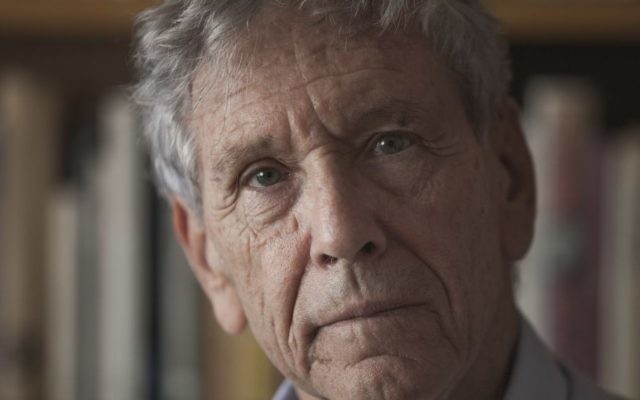
A photo of Israeli writer Amos Oz at his house in Tel Aviv from November 2015. Oz was nominated Thursday, April 20, 2017 for the Booker Man International Prize for his novel ‘Judas’ (Courtesy Dan Balilty/AP)

Acclaimed Israeli author Amos Oz died on Friday after a short bout with cancer, his daughter said. He was 79.

“My beloved father has just passed away from cancer after a swift deterioration,” his daughter Fania Oz-Salzberger said in a brief statement. Oz died “peacefully in his sleep, surrounded by loved ones,” she said, calling on the public to respect the family’s privacy.

“Thank you to all who loved him,” she said.

Oz was one of Israel’s most widely read and best-known writers, and was hailed by Israel’s president on Friday as the country’s “greatest writer.”

He won dozens of awards, including the Israel Prize and Germany’s Goethe Award, and his books have been translated into 45 languages. He had repeatedly been mentioned as a leading candidate for the Nobel Prize for Literature, but it eluded him.

Born Amos Klausner in Jerusalem in Mandatory Palestine in 1939, the city would provide a canvas for many of his works including “Black Box,” and “In the Land of Israel.”

He is survived by his wife Nili and three children.

Considered one of the most accomplished authors in the history of Israeli literature, Oz was also among the country’s most vocal left-wing activists and supporters of a two-state solution.

“My Zionist starting point has always been simple: We are not alone in Israel and in Jerusalem, and neither are the Palestinians. We cannot become one happy family,” the author said in a 2015 interview.

“There is another way: They are not going anywhere, they have nowhere to go; we have nowhere to go. The house should be divided into two families,” said Oz, a co-founder of the Peace Now group.

After news of his death was announced on Friday afternoon, tributes poured in from across the political spectrum in Israel.

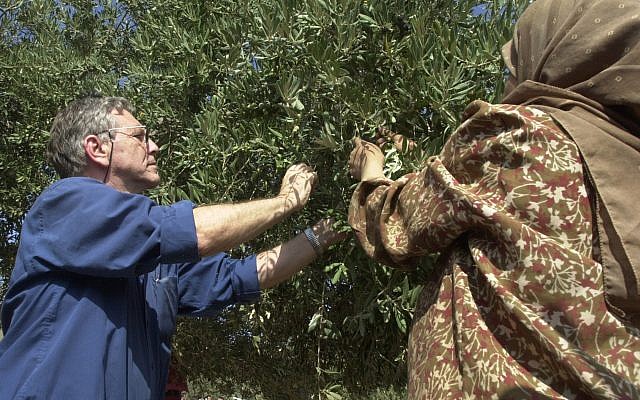
Renowned Israeli writer Amos Oz picks olives along with local Palestinians in the village of Aqraba near the West Bank town of Nablus, as Oz and several dozen left-wing Israelis help Palestinians bring in their olive harvest Wednesday, Oct. 30, 2002. (AP Photo/Jacqueline Larma)

“A tale of love and light, and now great darkness,” said President Reuven Rivlin, referring to Oz’s autobiographical work “A Tale of Love and Darkness,” which was turned into a film by Natalie Portman.

“Sadness has descended on us,” Rivlin said, calling Oz “our greatest writer,” and “a giant of the spirit.”

Prime Minister Benjamin Netanyahu, who was in Brazil, called Oz “one of the greatest ever authors.”

“He contributed immensely to the renewal of Hebrew literature, which he expressed with talent and feeling, Netanyahu said. “Even though our views diverged, I deeply respected his contribution to the renewed Hebrew language and literature.”.

“Amos Oz will be remembered as a giant! His writing has influenced generations of Israelis, Jews and followers all over the world,” said Isaac Herzog, the chairman of the Jewish Agency and former head of the Labor party. “His original and rich language, his moral strength and fight for justice and peace will be his eternal legacy. Heartfelt condolences to his family!”

Culture Minister Miri Regev, who was often at odds with Oz politically, said his works “resounded around the world and inspired all our hearts.”

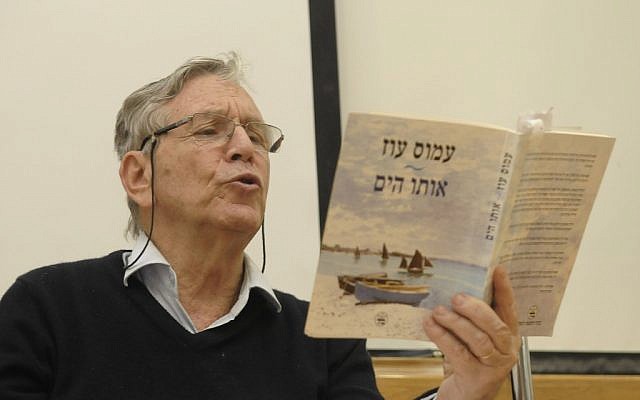
Amos Oz reading from one of his books in 2011. (photo credit: Tomer Neuberg/Flash90)

Amos Oz reading from one of his books in 2011. (photo credit: Tomer Neuberg/Flash90)

Ayman Odeh, head of the Joint (Arab) List party, hailed him as a man of equality. “I met Amos Oz a number of times and even when we argued (quite a lot!) he was a partner who stood for equality, ending the occupation and peace,” he said. “He was not afraid to speak his mind and was an exceptional talent.”

Oz was the only child of parents who emigrated from Russia and Poland to help establish a homeland for the Jews.

His austere childhood in the final years of British-mandate Palestine — haunted by the Holocaust and the threat of war for the land claimed by two peoples — would serve as a major theme of his literary works.

So would the suicide of his mother when he was 12, the topic of his heart-wrenching memoir “A Tale of Love and Darkness.” Seeking a break from his life in Jerusalem, he moved to a kibbutz collective farm at the age of 15 and changed his last name to Oz, Hebrew for strength and bravery.

It was while living on the kibbutz, where he would remain on and off for the next 25 years, that Oz emerged as a writer, focusing on daily life and family tribulations.

“My work is the comedy of unhappy families, not tragedy,” he has said.

His early works, many of which were published in Hebrew by the Israeli Labor Party’s publishing house, included “Where the Jackals Howl” (1965) and “My Michael” (1968).

Other works of fiction include “Black Box” in 1987, while “A Tale of Love and Darkness”, the autobiographical story that portrayed three generations of Jewish life in Jerusalem, was published in 2002.

Oz’s final novel “Judas” was nominated for the Man Booker Prize. Aside from a detective story about Jesus and Judas, it was full of the other familiar elements of an Oz novel, including enigmatic characters, the complicated environs of Jerusalem, and endless questions about the State of Israel.

Speaking to the Times of Israel after it was published in 2016, Oz said there was something of his own self in each of the three “Judas” characters, but that was not unusual, he said, given that everything he writes is in some way autobiographical, originating from things he’s heard or seen, dreamed, read or fantasized about.

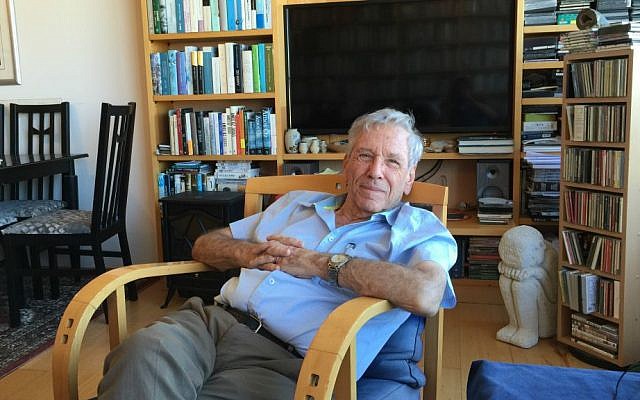
Amos Oz, at home in Tel Aviv, discussing ‘Judas,’ his latest novel, released in English in September 2016 (Jessica Steinberg/Times of Israel)

What would be familiar to readers of Oz’s previous works was the setting, Jerusalem of 1959, the years that were “the morning after,” said Oz, “after the cataclysm, after the euphoria, after the huge monumental changes unprecedented in Jewish history. The lines for chickens and eggs, the shortage of electricity, the bureaucracy, the long list for telephone lines.”

Jerusalem of Oz’s youth was a divided city, he added, with “barbed wire, minefields, walls, snipers. It was a very small city, yet with a kind of loose federation of different communities that on the whole coexisted very peacefully.”

“It was a divided city linked to the rest of Israel by a fairly narrow corridor, threatened almost daily,” said Oz. “Even before the State of Israel, it was a very tense and insecure place with uncertainty about the future when I was a little kid.”

Nobody talked to the young Oz about those uncertainties, but it was in the air, he recalled.

Επιτακτική η ανάγκη διαμόρφωσης και εφαρμογής Εθνικής Στρατηγικής  σε ένα κόσμο που αλλάζει.

4

του Γιώργου Χατζηθεοφάνους*

Η αιφνιδιαστική και μάλλον απρόσμενη απόφαση του Προέδρου των Ηνωμένων Πολιτειών, Ντόναλντ Τραμπ, να αποσύρει τα αμερικανικά στρατεύματα από τη Συρία δημιουργεί νέα δεδομένα στην ευρύτερη περιοχή και προκαλεί ανησυχίες σε παραδοσιακούς συμμάχους και φίλους της Αμερικής όπως το Ισραήλ. Ίσως να μην αιφνιδιάστηκαν όσοι γνώρισαν τον τρόπο που λαμβάνονται οι αποφάσεις στο Λευκό Οίκο επί Τραμπ μέσα από βιβλίο «Πυρ και Μανία» του δημοσιογράφου Μάικλ Γουλφ.

Η απόφαση αυτή έρχεται να μας υπενθυμίσει πως ζούμε σε ένα ταχέως μεταβαλλόμενο διεθνές περιβάλλον χωρίς τα σταθερά δεδομένα ούτε του πρόσφατου παρελθόντος. Το διεθνές περιβάλλον σήμερα χαρακτηρίζεται από μια επικίνδυνη για την παγκόσμια ειρήνη αστάθεια. Βρισκόμαστε σε ένα μεταβατικό στάδιο από ένα σημείο ισορροπίας σε ένα άλλο τη μορφή του οποίου αγνοούμε, όπως αγνοούμε τον χρόνο και κυρίως τον τρόπο που θα φθάσουμε σε αυτό.

Το τοπίο σε ότι αφορά στη Χώρα μας έρχεται να συμπληρώσει μια ΕΕ σε αναζήτηση ταυτότητας, στην οποία έκαναν την εμφάνισή τους και πάλι μετά από δεκαετίες ο εθνικισμός και οι εγωιστικές εθνικές πολιτικές  στην εξάλειψη των οποίων χτίστηκε το οικοδόμημα αυτό. Είναι μια κατάσταση δύσκολα αναστρέψιμη όσο οι επικεφαλής των κρατών-μελών επιμένουν να έχουν ως βασική τους προτεραιότητα τον ισοσκελισμό των δημόσιων λογιστικών τους βιβλίων αντί της διαμόρφωσης ενός νέου οράματος που θα εμπνεύσει και πάλι τους λαούς της Ευρώπης.

Η πορεία της ΕΕ θα επηρεάσει σε μεγάλο βαθμό την κατάσταση στο εγγύς γεωστρατηγικό περιβάλλον της Χώρας μας και φυσικά αναφέρομαι στα ταλαιπωρημένα λόγω εθνικισμού Βαλκάνια, ο οποίος είναι ιστορικά αποδεδειγμένο πως αναζωπυρώνεται και θεριεύει σε περιόδους οικονομικής κρίσης και φτώχειας, όπως αυτή που τώρα βιώνουν όλοι οι λαοί στα Βαλκάνια.  Φοβάμαι πως ο ευρωσκεπτικισμός τα επόμενα χρόνια θα αυξάνεται με ότι αυτό συνεπάγεται για την ειρήνη στην ευαίσθητη αυτή περιοχή που αποτελεί τη πυριδιταποθήκη της Ευρώπης και στην οποία βρίσκονται σε εξέλιξη σενάρια αλλαγής συνόρων με υπαρκτό τον κίνδυνο να ανοίξει για άλλη μια φορά ο Ασκός του Αιόλου.

Και βέβαια από το κάδρο δεν μπορεί να λείπει η αναθεωρητική Τουρκία του Ερτογάν, με ξεκάθαρες διεκδικήσεις σε βάρος των κυριαρχικών μας δικαιωμάτων, η οποία βλέπει την δυναμική της διεθνούς κατάστασης ως ευκαιρία δημιουργίας νέων σχέσεων με τους δρώντες σε παγκόσμιο επίπεδο με όραμα τη συμμετοχή της στη διαδικασία διαμόρφωσης-μετάβασης στο νέο σημείο ισορροπίας.

Το ερώτημα είναι τι κάνει και τι πρέπει να κάνει η Ελλάδα σε αυτό το περιβάλλον. Δυστυχώς, η ελληνική εξωτερική πολιτική χαρακτηρίζεται από την απουσία μακροχρόνιου σχεδιασμού και συνέχειας και, κατά συνέπεια, απουσία επίσημων θεσμικών κειμένων με προσδιορισμένα τα εθνικά συμφέροντα και μια αποτελεσματική εθνική στρατηγική για την υποστήριξη-προώθησή τους στο διεθνές περιβάλλον.

Από την παθογένεια αυτή ξεκινούν όλα τα προβλήματα στην εξωτερική πολιτική της Χώρας. Από την στιγμή που δεν υπάρχει εθνική στρατηγική, κάθε νέο γεγονός-περιστατικό, απειλή ή ευκαιρία, που προκύπτει και άπτεται των εθνικών συμφερόντων, αποτελεί για το Υπουργείο Εξωτερικών και μια νέα κρίση. Ουσιαστικά καλείται να διαχειρίζεται σε μόνιμη βάση κρίσεις και φυσικά το μόνο που μπορεί να πετύχει είναι μια καλή διαχείριση κρίσης, υπό την αναγκαία πάντα προϋπόθεση να είναι ικανοί οι εκάστοτε χειριστές.

Αναμφισβήτητα η ελληνική εξωτερική πολιτική έχει να επιδείξει σημαντικές επιτυχίες. Αυτό όμως ήταν το αποτέλεσμα ευνοϊκών συγκυριών στο εσωτερικό (ύπαρξη ικανών πολιτικών-διπλωματών κλπ) και κυρίως στο διεθνές περιβάλλον κι όχι εφαρμογής μιας εθνικής στρατηγικής, όπως αρμόζει σε σοβαρά κράτη, μέσα από την οποία εξασφαλίζεται σε μόνιμη βάση η αποτελεσματική διαχείριση των εθνικών θεμάτων χωρίς να ψάχνουμε μονίμως για ηγέτες. Κάποιες πάλι φορές μπορεί ακόμη και λάθος επιλογές-χειρισμοί να οδηγήσουν σε ένα καλό αποτέλεσμα εξαιτίας των επιλογών και της δράσης των άλλων διεθνικών παραγόντων ή γενικά αναπάντεχων εξελίξεων στο διεθνές περιβάλλον . Η τύχη όμως, διότι περί αυτής πρόκειται, στην οποία μας αρέσει να αποδίδουμε όλα όσα μας συμβαίνουν, είναι, πλην ελαχίστων εξαιρέσεων,  με το μέρος αυτών που  πρώτον σχεδιάζουν και δεύτερον δεν την λαμβάνουν υπόψη στα σχέδιά τους μέσα από ένα αποτελεσματικό risk management χωρίς το οποίο ποτέ δεν μπορεί ένα σχέδιο να θεωρηθεί πλήρες.

Ο μακροχρόνιος σχεδιασμός και η συνέχεια, στη διαχείριση των εθνικών θεμάτων, δίνουν τη δυνατότητα εφαρμογής μιας επιθετικής εξωτερικής πολιτικής. Δίνουν τη δυνατότητα σε ένα κράτος να διαμορφώνει τις εξελίξεις κι όχι να τρέχει συνεχώς ασθμαίνοντας πίσω από αυτές, υποχρεωμένο να αντιμετωπίζει μονίμως κρίσεις, τις οποίες δρομολογεί ο «αντίπαλος» στη βάση μιας δικής του επιθετικής εξωτερικής πολιτικής για την επίτευξη των στόχων του, όπως αυτοί προκύπτουν από την εθνική του στρατηγική, που φρόντισε να διαμορφώσει.

Ένα έθνος-κράτος για να μπορέσει να επιβιώσει στο σημερινό σύνθετο και πολύπλοκο διεθνές περιβάλλον και να αντιμετωπίσει τις μεγάλες σύγχρονες προκλήσεις, δεν μπορεί να συνεχίσει να πορεύεται εναποθέτοντας τις ελπίδες του στην σπίθα του Καζαντζάκη «Το Ελληνικό γένος, αν σώθηκε ώς τα σήμερα, αν επέζησε ύστερα από τόσους εχτρούς, ύστερα από τόσους αιώνες κακομοιριά, σκλαβιά και πείνα, το χρωστάει όχι στη λογική –θυμηθείτε τους τρεις εμποράκους που ίδρυσαν τη Φιλική Εταιρεία, θυμηθείτε το ’21– το χρωστάει στο θάμα. Στην ακοίμητη σπίθα που καίει μέσα στα σωθικά της Ελλάδας. Ευλογημένη η σπίθα αυτή, που αψηφάει τις φρόνιμες συμβουλές της λογικής και όταν φτάσει το γένος στα χείλια του γκρεμού βάζει φωτιά σε ολόκληρη την ψυχή και φέρνει το θάμα. Στα θάματα χρωστάει η Ελλάδα τη ζωή της».  Μόνος δρόμος οι μεγάλες δομικές μεταρρυθμίσεις για τη δημιουργία ενός σύγχρονου, ευρωπαϊκού, βαθιά δημοκρατικού κράτους ικανού να υποστηρίξει τα εθνικά συμφέροντα που δεν είναι τίποτα άλλο από την προώθηση της ασφάλειας και ευημερίας των πολιτών στο διεθνές περιβάλλον όπου πέρα της Ελλάδας υπάρχουν κι άλλα έθνη-κράτη αλλά κι άλλοι πόλοι ισχύος ως δρώντες που δεν ελέγχονται από τη Χώρα.

Μήπως ήρθε επιτέλους η ώρα να υπάρξει ένα νέο αποτελεσματικό θεσμικό πλαίσιο με συγκεκριμένες, καθορισμένες με σαφήνεια διεργασίες-διαδικασίες και όργανα-ρόλους διαμόρφωσης και εφαρμογής μιας εθνικής στρατηγικής; Αναζητούνται σοβαρές πολιτικές μεταρρυθμιστικές δυνάμεις.

*Ο Γιώργος Χατζηθεοφάνους είναι

Υποστράτηγος ε.α. – Οικονομολόγος

Συγγραφέα του Βιβλίου «Εθνική Στρατηγική-Πρόταση για ένα νέο θεσμικό πλαίσιο» των Εκδόσεων «Ι.ΣΙΔΕΡΗ».

Ignatius: Trump’s order abandons 10,000 Kurds who fought ISIS

0

“This is something immoral, leaving your ally in the battle alone,” a Syrian Kurdish leader said.


By David Ignatius
The voice of Gen. Mazloum Abdi, the Kurdish commander of the Syrian Democratic Forces militia, is tight and controlled as he describes President’s Trump’s decision to withdraw U.S. troops from the country and leave America’s allies to their fate.
“This was something we never expected,” he said somberly in a telephone interview Saturday night from his command headquarters in northeast Syria. “Honestly, until now, everything the Americans told us, they fulfilled, and the same thing for us. … So we were surprised and confused. We were not ready for a decision like this.

Mazloum explained the dangers of a terrorist resurgence after Trump’s sudden decision. Islamic State communications last week showed new hope they can restore their caliphate, which was on the way to destruction, he said. What’s more, Mazloum has been holding more than 2,200 Islamic State prisoners, including 700 foreign fighters. Without help from the United States and other coalition members, those deadly fighters may eventually escape.

What’s agonizing is that Mazloum has been fighting alongside U.S. Special Operations Forces that represent the steadfastness of this country’s military, and now he is experiencing a quite different American face. “To be frank, the first thing I thought about when I heard this decision was America’s reputation,” Mazloum said. “Because after this decision, what are people going to say about America? All the credibility and trust that was built, we have lost.”
Mazloum is a tough, unsentimental commander, in his early 50s, with tight, curly hair and a pitted face. When I’ve met him on past visits to Syria, he conveyed a quality of calm and deliberative judgment that’s rare among militia leaders in that part of the world. The Kurdish fighters have an almost cult-like commitment to follow his orders and hold their ground, no matter what.
This willingness to fight and die under U.S. guidance has made the Kurdish-led forces unique allies. With American air support, SDF fighters destroyed the Islamic State’s capital of Raqqa and all its major strongholds. The Kurds and their Syrian allies paid a severe price: They have suffered about 4,000 dead and 10,000 wounded since 2014. Over that same period, the United States lost only three soldiers in Syria, according to a U.S. military spokesperson.
Mazloum said Trump’s decision was a shock because it came just a week after a personal visit from Ambassador James Jeffrey, the administration’s special envoy to Syria. Jeffrey promised that U.S. forces wouldn’t withdraw until they had achieved the “enduring defeat” of the Islamic State, the expulsion of Iranian troops from Syria and a political settlement that stabilized the country. Jeffrey’s promises “created a high level of morale,” Mazloum explained, “but unfortunately, after a short period, the opposite happened.”
The Kurdish people have been abandoned by America before, when they became politically expendable. I asked Mazloum if he had ever thought, in working with his U.S. advisers, that the same thing might happen again. “If you want the truth, no,” he said. Now, after Trump’s announcement, he’s scrambling to open channels with Russia and the Syrian regime, “to fill this vacuum left by America.”
What astonished me most during our hour-long conversation was that Mazloum’s forces continue waging their bloody campaign against the remnants of the Islamic State in eastern Syria, even though his fighters want to return home to Kurdish areas and protect their families. Mazloum said his forces had suffered at least 27 killed in action since Trump’s abrupt decision, and many more wounded, as a revitalized terrorist adversary sent a wave of more than 10 suicide attacks against Mazloum’s front lines.
“Right now, we are fighting for ourselves, for our existence,” Mazloum said. “Because all our fighters know that if they don’t defend themselves [the Islamic State] will come back and be stronger, murdering and beheading their families.” He said the threat was especially severe for the Arab members of the SDF coalition who fear reprisals from both Sunni terrorists and Iranian-backed Shiite forces.
Mazloum believes that Trump made a deal with Turkish President Recep Tayyip Erdogan, who has threatened to invade Kurdish areas and destroy what he claims is Kurdish terrorism. Mazloum said he advised his commanders that this agreement was made by U.S. politicians, not soldiers. “This is something immoral, leaving your ally in the battle alone,” he said, something American soldiers would never do by choice.
I asked Mazloum what he would be doing the following morning. He said he planned to go to the front lines, to bolster the morale of his 10,000 troops still battling the Islamic State. In this holiday season, when we think about keeping faith, that’s the kind of ally we are betraying.
Follow David Ignatius on Twitter @IgnatiusPost.

« La France peut empêcher l’invasion turque de la Syrie »

0

INTERVIEW. Représentant en France du Kurdistan syrien, Khaled Issa estime que l’opération annoncée par Erdogan va provoquer la résurgence de Daech.

Khaled Issa, représentant en France du Rojava (Kurdistan syrien) est membre du Parti de l’Union démocratique (PYD), lié au Parti des travailleurs du Kurdistan (PKK), considéré comme “terroriste” par la Turquie et l’Union européenne.

Syrie : l’armée répond à l’appel au secours des Kurdes

0

Le Kremlin considère que l’arrivée de l’armée syrienne au nord contribuait à une « stabilisation de la situation ». Le sujet sera bientôt discuté avec la Turquie.

Après l’annonce du retrait américain, les Kurdes étaient sous la menace de la Turquie.

Trump reaffirms the U.S. war on Kurdistan 

0

by Marcel Cartier    The Region

Over the course of the past six weeks, the Trump administration has confirmed a most basic fact which had been often overlooked, confused or distorted since the United States entered Syria in 2015, ostensibly to combat the Islamic State.

This reality is that despite the ‘tactical’ military cooperation that has existed between the U.S. and the Kurdish-led Syrian Democratic Forces (SDF), Washington remains – as it always has – in a state of actual war with the Kurdish Freedom Movement, namely Kurdistan Workers’ Party (PKK), despite the American Special Representative for Syria James Jeffrey admitting links between the U.S. local partner and PKK.

Therefore, when news headlines make reference to Trump abruptly deciding to pull the 2,000 U.S. troops out of Syria as a ‘betrayal’ to ‘the Kurds’, it obscures the fundamental truth that actually, such a betrayal was never possible.

It only would have been possible if the cooperation between the YPG/J-led SDF and the U.S. in the fight against the Islamic State wasn’t based on a temporary intersection of interests and instead on principles and a long-term vision. In other words, if the short-term military objectives extended to political ones. They never did.

In fact, in the ideological realm, the United States and the Kurdish Freedom Movement stand worlds apart, so much so that to say they are diametrically opposed is closer to reality than to posture that they are somehow fighting for the same conception of ‘freedom’.

The notion of freedom to the ruling class of U.S. imperialism is one based on the exploitative order of global capitalism and the ability for Washington to penetrate markets across the world.

For the YPG/J and the political leadership of the Democratic Union Party (PYD), capitalism is a remnant of the past which is to be replaced with an egalitarianism rooted in democratic modernity, women’s liberation and ecology. These two visions are deeply at odds with each other.

Thus, the writing has been on the wall since the very beginning of the tentative cooperation which reached its peak with the defeat of the Islamic State in Raqqa in October 2017, after which the U.S. reacted furiously to the display of a banner of Abdullah Ocalan in the city centre.

This writing has only become clear for the world to see in the most recent period. It has unfolded over Three Acts, which are actually just the latest chapters in a long war the United States had waged against the socialist-inclined forces of Kurdistan and the wider region.

Act I: Bounties on the PKK

On November 6, the U.S. Embassy in Ankara announced that massive bounties were to be placed on three leaders of the Kurdistan Workers’ Party (PKK). The rewards for information on Murat Karayilan (up to $5 million), Cemil Bayik (up to $4 million), and Duran Kalkan (up to $3 million) were made after a visit to Turkey by U.S. Deputy Assistant Secretary of State Matthew Palmer.

The rewards were largely viewed as a means of the U.S. attempting to appease Turkey and its President Erdogan due to a souring of the relationship between the largest armies in NATO over recent years.
Given that Turkey had long claimed that the U.S. was aiding the PKK in Syria (due to the fact that the PYD is a sister party of the PKK that follows the same ideology of democratic confederalism), the bounties were essentially an olive branch to prove to Turkey that the U.S. had never actually abandoned its ally.

It’s important to understand that as U.S. weapons were being given to Kurdish forces in Syria, those same weapons were being used to murder their comrades within the borders of Iraq and Turkey.

One key example was the August assassination of Zekî Åžengali, a high-ranking Yezidi member of the Kurdistan Communities Union (KCK) and PKK in Shengal, Iraq by Turkish forces – a murder which was committed due to intelligence given to Ankara by the U.S.

In the aftermath of the decision to impose the bounties, the KCK issued a statement in which it said “This unwarranted decision by the U.S. is a continuation of the international plot against Leader Apo. Our people and forces of democracy must rise up at once against the attack that is part of the plot.”

In other words, the KCK took the long view of history, understanding that the imperialist leopard had never changed its spots in the almost 20 years since the CIA and Clinton administration played a key role in the capture of PKK leader Abdullah Ocalan.

Act II: Patriot Missile Sales to Turkey

Preceding the second major act by the U.S. in the run-up to Trump’s sudden decision on American military personnel in Syria were bombing campaigns by the Turkish state in Iraq that targeted Shengal and the Mexmur Refugee Camp, where three women and one young girl were killed on December 11. This was a blatant attack against areas with massive civilian populations, including those who had been targeted by the ethnic cleansing campaigns of the Islamic State in recent years.

Again, the KCK responded by asserting that the United States had to bear some responsibility for Turkey’s actions, writing that “As in the First World War, today’s attacks by the Turkish state on the Kurds and other peoples of the region will not take place without the knowledge and consent of international and regional powers. Iraqi airspace is under US control. Without the consent of the US, such air strikes are not possible.”

But it’s isn’t only U.S. control of Iraqi airspace which is fueling the war on the PKK, and by extension the revolutionary Kurdish movement for self-determination. The Second Act which really drove home that the fundamental mission of U.S. imperialism has never shifted in the region was delivered hours after Trump’s decision on withdrawing forces from Syria, in which the State Department authorised the sale of $3.5 billion worth of Patriot Missiles to Turkey.

Although technically coming after Trump’s announcement (via Twitter), it can be assumed that the State Department decision had been finalised for some time.

Much attention was paid to the fact that the decision was taken in light of a U.S.-Turkey row over Erdogan’s decision to purchase an S-400 system from Russia. Although certainly the decision helps to mitigate tensions within the NATO alliance, and some of the motivation has to be to prevent Turkey from moving further into the sphere of Russian influence, it also hardly breaks with the consistent policy of State Department aid to Turkey’s war on the PKK.

In typical imperial-bullying, the U.S. warned Turkey that not purchasing the Patriot Missiles could result in the non-sale of F-35 jets — which, of course, would be used to conduct airstrikes on the PKK.

Act III: The Phone Call, Withdrawal & Coming Invasion

Trump’s tweet last Monday that announced that the United States would be leaving Syria sent shockwaves across foreign policy circles and the mainstream media in the U.S.

According to the Associated Press, the decision was hastily made by Trump – against the wishes of his advisors – during a telephone call with Erdogan on December 14. The call was held due to talks the previous day between Secretary of State Mike Pompeo and Turkish Foreign Minister Mevlut Cavusoglu about Turkey’s plan to invade and occupy territory held by the Kurdish forces in northern Syria.

During the call, Erdogan reportedly asked Trump why the U.S. was still in Syria despite the fact that the Islamic State had been defeated, to which Trump turned to national security advisor John Bolton for assistance.
According to the AP report, “Bolton was forced to admit, [what Erdogan said] had been backed up by Mattis, Pompeo, U.S. special envoy for Syria Jim Jeffrey and special envoy for the anti-ISIS coalition Brett McGurk, who have said that IS retains only 1 percent of its territory.”

With that, Trump pledged a withdrawal of U.S. forces, basically granting Erdogan a gift that he apparently didn’t see coming. The AP reported that “caught off guard, Erdogan cautioned Trump against a hasty withdrawal, according to one official. While Turkey has made incursions into Syria in the past, it does not have the necessary forces mobilised on the border to move in and hold the large swaths of northeastern Syria where U.S. troops are positioned, the official said.”

Divisions in the U.S. Establishment

Trump’s decision stunned the U.S. establishment, and understandably fears across much of the Kurdish community, with concern that Trump had effectively green-lighted a Turkish invasion of Rojava that could result in a much more widespread ethnic cleansing than the one we saw in Afrin nearly a year ago.

The immediate aftermath of Trump’s decision was met with resistance by both Republicans and Democrats in the halls of power. But their dissent had nothing to do with the fact that these political forces were ‘friends of the Kurds’ – even if they attempted to posture themselves that way – but rather with the fact that when it comes to the military industrial complex, war is a bipartisan affair.

For example, let’s take the outrage of Republican Senator Marco Rubio who tweeted that, “Without our help Kurds will have to go home to prepare to fight Turks. With no one on the ground hitting ISIS they will regroup & expand plots to attack Americans. We weren’t in Syria to help anyone else. We were in Syria to wipe out terrorists who want to kill Americans.”

While Rubio is indeed correct about the Islamic State having the opportunity to regroup, and that ‘the Kurds’ (i.e. the YPG and YPJ) would have to abandon the Deir ez-Zor front to fight an Erdogan invasion (as was the case in Afrin earlier this year), he also makes it clear that the U.S. has been there for its own motivations.

After all, this is coming from Rubio, an extremely right-wing political figure who has built much of his career off of opposing the socialist governments in Cuba and Venezuela, as well as much of the rest of Latin America. Therefore, it’s no wonder that Rubio’s interests have nothing to do with the ideology of what he quite disrespectfully calls ‘the Kurds’, but rather with the geopolitical motivations of U.S. power in the region.

A more honest assessment of U.S. interests could be found in Secretary of Defence James ‘Mad Dog’ Mattis, who chose to resign as a consequence of Trump’s decision.

According to the New York Times, “Mr. Mattis went to the White House with his resignation letter already written, but nonetheless made a last attempt at persuading the president to reverse his decision about Syria, which Mr. Trump announced on Wednesday over the objections of his senior advisers. Mr. Mattis, a retired four-star Marine general, was rebuffed. Returning to the Pentagon, he asked aides to print out 50 copies of his resignation letter and distribute them around the building.”

Mattis also has little love for the socialist rhetoric and ideology of the PYD and the YPG/J, but has been guided by a policy of realpolitik that is rooted largely in opposing Iran in the region. This doesn’t mean that Mattis is any more ‘progressive’ than Trump; his entire career has been based on furthering the objectives of the U.S. empire on a global stage, particularly in the so-called ‘Middle East.’

As the Morning Star put it in an editorial published on December 21, “Let us be clear. Any measure that limits the power of the United States to intervene in the internal affairs of other countries is, without qualification, a good thing… The career of this man Mattis is a Cook’s Tour of US military adventures. His first foreign foray was to protect Saudi Arabia in the 1990-91 Gulf war…In a subsequent deployment to Afghanistan, he buttressed this approach with an injunction to “be polite, be courteous and have a plan to kill everyone you meet.”

The Revolution Can Only Be Strengthened

But what of the Rojava Revolution itself? Is it actually strong enough to withstand the withdrawal of the U.S military? Such a question can only really come from those who don’t understand the thrust of what a real revolution entails.

First of all, the Rojava Revolution began long before the intervention of the U.S. into the sphere of anti-ISIS operations in Syria in 2015. It dates from the summer of 2012 but is, in reality, part of the Kurdish revolution and national liberation struggle that has its genesis in the foundation of the PKK in 1978.

The events that unfolded in northern Syria in 2012 with the declaration of autonomy and the withdrawal of the Syrian Arab Army could not have taken place without the decades of political work that was orchestrated by PKK cadres across the region for decades.

Contrary to those who have deemed the PYD and YPG/J as nothing more than U.S. proxies, PYD Diplomatic Relations Co-Chair Salih Muslim stated in light of Trump’s announcement that “They weren’t here to protect us in any case. We rely on our own strength and defence. We are at a point of legitimate self-defence. That much has never been lacking. It is their business to decide whether they stay or go. Our interests coincided, we acted together, but we never relied on them.”

It is absolutely true that the U.S. withdrawal accelerates the threat of a Turkish invasion – in fact, it seems to be the case that the two are inextricably linked. This danger cannot be overstated and is very real.
Yet, in terms of the social revolution in Rojava, it could never actually succeed long-term while the U.S. remained in Syria. The U.S. presence was at best a necessary nuisance and arrangement with the devil, but at the worst meant the ever-consistent attempts by Washington to water down the content of the social transformation.

One clear manifestation of this is the recent demand placed upon the Rojava authorities by the U.S. that they allow the so-called ‘Rojava Peshmerga’ to deploy to Syria. These are the armed forces affiliated with the Iraqi Kurdistan Democratic Party (KDP) of Masoud Barzani, who the PYD deem to be agents of the Turkish state.

The Road Forward

The road ahead will evidently be riddled with difficulties, as well as contradictions, just as the Rojava Revolution has been in its six and a half years to date.

There’s no need to either aggressively cheerlead a U.S. withdrawal from Syria, just as there isn’t a need to wallow in despair or appeal for the imperialists to remain.

As Dr. Hawzhin Azeez has said, “If you want freedom you have to take it! You cannot appeal to the conscience of the imperialists, the colonialists, the oppressors, and the creators of your dispossessed marginalised status. Your martyrs did not die for this ideology, they died fighting against it.”
Syria has been in the midst of a small-scale third world war for almost eight years. Rojava has been the bastion of progress within that war for almost the whole of that period. We should reaffirm our commitment to the revolutionaries of Rojava just as the United States has reiterated where it really stands – on the side of the reactionaries of the region and the world.

Picking sides should be easier now than ever.

https://theregion.org/article/13308-trump-reaffirms-u-s-war-on-kurdistan