Αρχική Blog Σελίδα 2707

A SOVEREIGN DEMOCRACY AND A DUD PARTNER: EXPLAINING THE SLIDE IN U.S.-TURKEY RELATIONS

0

FEBRUARY 7, 2019

What’s wrong with U.S.-Turkey relations? For over a decade, ties between the United States and its NATO ally have been a rollercoaster ride, leading some in the United States to conclude that Turkey has either lost or is losing its value as a strategic partner. Observers have offered various explanations for the tensions, including Aykan Erdemir and Merve Tahiroglu in War on the Rocks and Steve Cook, who gave a long list of disheartening reasons in a recent colorful article.

But at its essence, the problem is more systematic. Turkey does not think in terms of national interests because it has almost completed its transformation into a Russian-style kleptocratic “guided democracy.” In such a system, the political survival of a power elite becomes the sole strategic objective and the institutional means of safeguarding national interests are delegated to mere tactical tools. This makes it nearly impossible for Turkey to pursue more static geopolitical objectives and to participate effectively in the strategic partnership that the United States might seek.

Turkey has never been a well-functioning democracy, not even during the Cold War when it aligned itself with the West. Back then, the government engaged in rampant human and minority rights violations and experienced military coups. Still, during that era, with the exception of periods of military control, Turkey had fierce political competition with some level of meaningful scrutiny of the state and politicians. Its democracy index score remained relatively high.

Things started to look even better during the early years of the Prime Minister (now President) Recep Tayyip Erdogan’s administration at the beginning of the 2000s. Like the other growing economies of the world, Turkey grew at a breakneck pace. The country took considerable steps toward European Union membership, and there was ample reason to be hopeful that Turkey would become a functioning democracy. This picture started to get less rosy by the 2010s. The government, led by Erdogan’s Justice and Development Party (AKP) slowly alienated sections of society with its divisive policies, the economy began to falter, and, following the failed coup attempt by members of a religious cult in 2016, all hope was lost. Since the early 2010s, especially after the Gezi protests in 2013, the AKP and Erdogan realized that there was a possibility of their losing power, and Turkey started its journey towards becoming a “sovereign democracy.”

What is a sovereign democracy? Jeffrey Herf called the unique conservative worldview of the Nazi movement “reactionary modernism.” According to Herf, Nazis embraced modernism selectively: They were exhilarated by modern science and technology whilst rejecting the enlightenment values of modernism. In a similar vein, today’s Russian ruling elites are “reactionary liberals.” They enjoy the economic benefits of the liberal international order and globalism whilst strongly resisting the social and political changes that come with it. Vladislav Surkov, a close associate of Russian President Vladimir Putin, termed the phrase “sovereign democracy” to describe this unique view, which has evolved into a quasi-ideology for the Russian Federation.

The German reactionary modernists believed Germany was neither West nor East, neither a democracy nor a complete autocracy. They therefore claimed that Enlightenment ideas of democracy could not work in Germany. Today, Russia advocates a parallel view: The country has a distinct history that is incompatible with the idea of liberal democracy, so Russia should develop its own unique type of democracy. Following the same playbook, Erdogan and the AKP in Turkey rely on the buzzwords of “yerli ve milli” (“local and national”) to define their autochthonous government style.

However, despite ideological pretenses, at its essence sovereign democracy is a model in which a powerful elite retains permanent dominance over the country through the manipulation of politics and the media whilst preserving the illusion of the existence of rule of law and a competitive electoral landscape. This model gives the elite immunity from responsibility and from inspection of their affairs. Corruption is at the core of the model, in which politicians, bureaucrats, and individuals of private wealth with good connections exploit public resources without scrutiny.

The playbook of sovereign democracy dictates a clampdown on traditional media and the internet to establish a countrywide echo chamber. Turkey’s brisk decline in the freedom of press and internet freedom indexes to “not free” is the result of this process. For traditional media sources, this is achieved through the involvement of private individuals with close connections to the administration who acquire media outlets and hand over control of their broadcasting/printing policy to ruling parties’ public relations consultants. In return, these private individuals gain access to lucrative long-term government contracts. As all these transactions happen through private means; the ruling party preserves plausible deniability.

An early example of this process playing out was the acquisition of Turkuvaz Medya, one of the largest media organizations in Turkey, by the Çalık Group in 2008. Berat Albayrak, the son-in-law of Erdogan, was at the time CEO of the Çalık Group and, following the acquisition, his brother became CEO of Turkuvaz Medya. Not surprisingly, Turkuvaz’s policy became increasingly pro-government. The organization’s news channel, aHaber, started to spread anti-western and, in some instances, anti-Semitic conspiracy theories.

Meanwhile, opposition quietly begins to disappear from mainstream media. Slowly the government’s propaganda becomes the overwhelmingly repeated message. Journalists who criticize the government lose their jobs even though they work for private enterprises. Although some enclaves of opposition media are left alone, they work under the continuous threat of court cases and prison time, being labeled terrorists, or being threatened by mafia elements.

When constituents can only access one side of events, it becomes easier to solidify the electoral base. In a highly regulated and oppressive environment, it becomes nearly impossible for the opposition to reach a meaningful number of constituents. Even when they can reach them, they get imprisoned or the elections get cancelled via political manipulation. Like in Russia, electoral competition and constitutional legal practice are kept alive, but in a vegetative state, to maintain the illusion.

Accordingly, both Putin and Erdogan represent themselves not as mere politicians but as the main pillar of survival of their countries. The possibility of these individuals losing power is represented as a potential catastrophe. Behind the veneer of its nationalistic appeal, the actual reason for this rhetoric is that the whole model works for the predatory minority only as long as certain politicians remain in power and provide cover for them. Accordingly, the only national strategic aim becomes the political survival of those individuals. Policy decisions and definitions in the fields of national security, economics, and foreign affairs are reduced to mere tactical tools in the service of this strategic goal and are subject to constant fluctuations.

Take, for instance, Erdogan’s willingness to jeopardize Turkish-Dutch relations in 2017. Despite the Netherlands being an important economic partner and source of foreign direct investment, Erdogan had few qualms about sparking a diplomatic spat in order to win votes during the presidential referendum campaign. It started when Erdogan and AKP ministers signaled their desire to hold campaign rallies in Germany and the Netherlands in order to reach expatriate Turks residing there. Both the German and the Dutch governments refused this request. Erdogan, seeing an opportunity to kindle the nationalistic feelings of his constituents and solidify his base, escalated the situation by taunting both countries as “Nazis.” A Turkish minister then attempted to enter Netherlands by land to hold rallies, resulting in her expulsion. Then-Turkish Prime Minister Binali Yıldırım threatened the Netherlands with economic sanctions and the Dutch ambassador was barred from returning to Turkey. Erdogan got the results he wanted from the referendum. A year later, four of Erdogan’s AKP ministers appeared before the cameras to announce Turkey’s intent to renew the talks towards E.U. membership in an apparent attempt to remedy the previous year’s politically expedient whim.

In the same year, the Turkish government once again exhibited its propensity to fluctuate in foreign policy when Erdogan made an ill-fated attempt to woo foreign investors in the United Kingdom. At the time, the Turkish economy was faltering and he hoped to shore up investor confidence by discussing his economic policy. His speeches had the opposite effect. A few weeks later, Turkey sent Minister of the Treasury Berat Albayrak to the United Kingdom to do damage control, but to the surprise of his audience, the policies he promoted directly contradicted what Erdogan had said earlier. Similarly, the Turkish leader’s abrupt halt to the peace talks with the Kurdistan Workers’ Party and the ongoing saga of the acquisition of S-400 weapons systems from Russia are further evidence of the government prioritizing  political expedience over long-term strategy.

Essentially, sovereign democracies must constantly change their minds in foreign relations, economics, and national security to make these policies align with the domestic necessities of the moment rather than more unmoving national interests. This is the main reason it is hard for Turkey to remain a strategic partner of the United States. Turkey’s parameters are constantly changing, and there is no long-term predictability. As long as the United States has no strategic interest in the survival of the regime in Turkey (as it does in the case of Saudi Arabia), it remains impossible for these two countries to share a common language of cooperation.

This doesn’t mean the model will prevail in Turkey for the long term. Strategic partnership may be possible in the future. The main flaw of the sovereign democracy model is the rampant inbuilt corruption and erosion of institutions, which ultimately leads to stagnation and decay. For countries like Russia, natural resources provide a cushion for the fall. Turkey, however, has no such cushion. Like the Soviet Union in the 1970s and 1980s and Venezuela in the 2000s and 2010s, the impact of rising levels of corruption, stagnation, and decay will be inescapable in the long run.

The model itself, then, has intrinsic qualities that one way or another lead to fundamental change. But this change may not occur in a way that restores Turkey’s democratic institutions and makes it a predictable strategic partner. Whether or not this happens will depend on how much the country’s institutions and social fabric decay while sovereign democracy reigns in Turkey.

Nadir Firat lectures on military history at Nanyang Technological University, Singapore. You can find him on Twitter: @nadir_firat. These views are those of the author and do not represent the positions of Nanyang Technological University.

Image: Hedda Gabler/Wikimedia Commons

A Sovereign Democracy and a Dud Partner: Explaining the Slide in U.S.-Turkey Relations

Two Palestinian Teenagers Killed by Israeli Live Fire in Protests, Gaza Authorities Say

0

One of the dead named as relative of Hamas political chief Ismail Haniyeh, as Palestinians protest for the 46th Friday in a row.

Haaretz
MAHMUD HAMS / AFP

The 14-year-old was named as Hassan Shalabi, the son of a niece of Ismail Haniyeh, the political chief of Hamas.

The military said it was aware of reports that a protester had been killed but could not confirm that the individual was a 14-year-old or what caused the death.

About 7,000 people were protesting at several points along the fense, the military said, adding that protesters were clashing with troops and that some had thrown explosive devices and grenades that landed on the Gaza side of the fence.

It was the 46th Friday protest in a row.

On Sunday, the Gaza Health Ministry said that Ahmed Abu Jabal, 30, succumbed to bullet wounds sustained on the Gaza border the previous week.

During last Friday’s weekly protest, 32 Palestinians were wounded by Israeli live fire according to Gaza authorities.

According to data in a United Nations report released last month and confirmed by Israeli security officials, 295 Palestinians were killed and about 6,000 wounded by live ammunition since protests began last March.

Ο Αραβικός Σύνδεσμος δίνει… συγχώρεση στον Ασαντ

0

stratfor/euro2day.gr

Μετά από 8 χρόνια εμφυλίου στη Συρία, οι χώρες του Αραβικού Κόλπου ετοιμάζονται να παραδεχθούν πως απέτυχαν να ανατρέψουν το καθεστώς της Δαμασκού. Ο διχασμένος Αραβικός Σύνδεσμος, η οικονομία και η παράμετρος… Ιραν.

  • Μετάφραση-Επιμέλεια: Άννα Φαλτάϊτς
Μετά από χρόνια στην διπλωματική ερημιά λόγω του εμφυλίου πολέμου, η Συρία μπορεί σύντομα να επιστρέψει απ’ την… εξορία, τουλάχιστον στην άμεση γειτονιά της.

Οι πρόσφατες διπλωματικές εξελίξεις μαρτυρούν την αλλαγή κλίματος: τον περασμένο μήνα ο πρόεδρος του Σουδάν Omar al Bashir έγινε ο πρώτος επικεφαλής κράτους του Αραβικού Συνδέσμου που επισκέφθηκε τον Σύρο ομόλογό του στη Δαμασκό, από τότε που ξεκίνησε ο εμφύλιος στη Συρία πριν από σχεδόν οκτώ χρόνια.

Τον ίδιο μήνα, τα Ηνωμένα Αραβικά Εμιράτα ξανα-άνοιξαν την πρεσβεία τους στη Δαμασκό, η οποία ήταν κλειστή από το 2011. Γειτονικές χώρες όπως η Ιορδανία και ο Λίβανος, που έχουν πληγεί οικονομικά και πολιτικά από τον συνεχιζόμενο πόλεμο στη διπλανή τους χώρα, επίσης εξετάζουν το πώς και πότε θα επαναφέρουν τις, τεταμένες σήμερα, σχέσεις τους με τη Συρία.

Από τα πιο ξεκάθαρα σημάδια πως η θέση της Συρίας στον Αραβικό κόσμο βελτιώνεται, είναι η προοπτική ο Αραβικός Σύνδεσμος να ξαναδεχθεί την κυβέρνηση του Μπασάρ αλ Άσαντ, οκτώ χρόνια αφότου ψήφισε υπέρ της αποβολής της Δαμασκού ως απάντηση στον τρόπο με τον οποίον αντιμετώπιζε την αντιπολίτευση της χώρας.

Τους τελευταίους μήνες, διπλωματικές πηγές έχουν δηλώσει στην Guardian πως αναδύεται μια γενική συναίνεση στα μέλη του Αραβικού Συνδέσμου –ιδιαίτερα μεταξύ των ισχυρών και πλούσιων χωρών του Αραβικού Κόλπου- πως η επανεισδοχή της Συρίας στης αγκάλες τους, περισσότερο θα τους ωφελούσε παρά θα τους έβλαπτε. Εν όψει της επόμενης ετήσιας συνόδου του Συνδέσμου τον Μάρτιο στην Τυνησία, το μπλοκ ίσως βρίσκεται στα πρόθυρα μιας μεγάλης αλλαγής ως προς το πώς προσεγγίζει η περιοχή την Συρία του Άσαντ.

Η σημασία του Αραβικού Συνδέσμου

Ο Αραβικός Σύνδεσμος, ο οποίος ιδρύθηκε το 1945 με την βρετανική «πειθώ», είναι μια «ομπρέλα» για αραβόφωνες χώρες που δραστηριοποιείται προκειμένου να επιτύχει κοινούς οικονομικούς και πολιτικούς στόχους. Ωστόσο, ο Σύνδεσμος είναι διαβόητα αδύναμος, εν μέρει διότι οι αποφάσεις του ισχύουν μόνο για τα κράτη μέλη εκείνα που τις επιβεβαιώνουν. Ένα κοινό ανέκδοτο για τον Σύνδεσμο είναι πως δεν έχει επιτύχει τίποτα σημαντικό από το 1967, όταν εξέδωσε απόφαση κατά της συνεργασίας με το Ισραήλ, κατά την τέταρτη σύνοδό του. (Η σύνοδος του 1967 φιλοξενήθηκε στο Χαρτούμ λίγους μόλις μήνες αφότου του Ισραήλ κατατρόπωσε τους στρατούς έξι Αραβικών κρατών – ένα πάθημα που έφερε για λίγο κοντά τα μέλη του μπλοκ στην κοινή εχθρική τους στάση έναντι του Ισραήλ). Δώδεκα χρόνια αργότερα, όμως, η Αίγυπτος διαφοροποιήθηκε και υπέγραψε ειρηνευτική συμφωνία με το Ισραήλ, δείχνοντας πως υπάρχει ένα μοτίβο όπου οι αδύναμες αποφάσεις του μπλοκ συχνά λαμβάνονται μόνο για να παραβιαστούν.

Ο Αραβικός Σύνδεσμος σχεδιάστηκε για να ενισχύσει την ενότητα, αντιθέτως, όμως, έχει γίνει μια πλατφόρμα που δείχνει ξεκάθαρα την έκταση της διχόνοιας στην περιοχή. Τα κράτη μέλη συχνά απέχουν από τις ψηφοφορίες, όπως έγινε και κατά τη διάρκεια της ψήφισης της απόφασης για τη Συρία το 2011, όταν ο Λίβανος, η Υεμένη και η Συρία ψήφισαν κατά της απόφασης και το Ιράν απείχε.

Ακόμα και όταν τα μέλη συμφωνούν στις αποφάσεις, όπως έγινε στη συνάντηση στο Sharm el-Sheik το 2015 όπου ψήφησαν για τη δημιουργία κοινής στρατιωτικής δύναμης ώστε να αντιμετωπιστεί ο εξτρεμισμός στην περιοχή, λίγα γίνονται σε επίπεδο υλοποίησης. Πράγματι, στην ίδια τη διακήρυξη του Συνδέσμου για τη στρατιωτική συμμαχία δίνεται έμφαση στο ότι η δύναμη δεν θα συμμετέχει στις επιχειρήσεις κατά των Χούθι στην Υεμένη και πως η συμμετοχή είναι προαιρετική. Επιπλέον, μια «αραβική στρατιωτική δύναμη» από την ηγεσία της Αιγύπτου διαφέρει από μια «ισλαμική συμμαχία για την αντιμετώπιση της ισλαμικής τρομοκρατίας» της οποίας ηγείται η Σαουδική Αραβία, ενώ και οι δυο διαφέρουν από την επωνομαζόμενη «στρατηγική συμμαχία Μέσης Ανατολής» των ΗΠΑ.

Στο τέλος, οι αποφάσεις του ίδιου του Συνδέσμου συχνά δείχνουν τον πολλαπλασιασμό των υποομάδων της Μέσης Ανατολής, υπογραμμίζοντας ότι όλοι στην περιοχή κινούνται προς διαφορετικές κατευθύνσεις.

Ακόμα και οι συγκριτικά ξεκάθαρες πρωτοβουλίες για την παροχή κοινής οικονομικής βοήθειας και την υλοποίηση αναπτυξιακών έργων αποδεικνύονται δύσκολες. Αυτό φάνηκε και στην συνεδρίαση της επιτροπής οικονομικών και κοινωνικών υποθέσεων του Αραβικού Συνδέσμου που πραγματοποιήθηκε τον Ιανουάριο στη Βηρυτό. Ο Σύνδεσμος συγκάλεσε τη συνεδρίαση προκειμένου να στηρίξει τη διαδικασία ανοικοδόμησης της Συρίας, καθώς και την ανοικοδόμηση και ανάπτυξη άλλων περιοχών του Αραβικού κόσμου που μαστίζονται από τον πόλεμο και τη φτώχεια. Τελικά, όμως, ο Λιβανέζος πρόεδρος Michel Aoun,κατέληξε  να σημειώνει τις πολλές απουσίες στην εναρκτήρια ομιλία του.

Στο δρόμο για την Τυνησία

Πέραν αυτών των γνωστών εμποδίων, ο Σύνδεσμος παραμένει η σημαντικότερη αποκλειστικά Αραβική πολιτική οντότητα στον κόσμο. Επιπλέον, είναι κρίσιμης σημασίας οι συνεδριάσεις του διότι δίνουν πολιτικά σήματα: το ποιος βρίσκεται στο τραπέζι και ποιος όχι, έχει σημασία για τα μεγάλα Αραβικά κράτη. Ασχέτως του αν η Σύνοδος θα δεχθεί εκ νέου τη Συρία στους κόλπους της πριν την ετήσια σύνοδο στην Τυνησία, η απόφαση σηματοδοτεί πως η χώρες του αραβικού κόσμου προσπαθούν να γυρίσουν σελίδα (κάποιες δυσανασχετώντας περισσότερο από άλλες) στον πολυετή κτηνώδη πόλεμο στη Συρία. Μια τέτοια εξέλιξη συνοδεύεται από οικονομικές και πολιτικές επιπτώσεις που είναι δεδομένο ότι θα αλλάξουν την περιοχή.

Πολιτικά, η αποδοχή της Συρίας θα έδειχνε δημοσίως πως τα κράτη του Αραβικού Κόλπου αλλάζουν στάση ως προς το πώς δουλεύουν με τη Συρία, την κυβέρνηση της οποίας οι χώρες του Κόλπου, όπως και άλλα Αραβικά κράτη, επιδίωκαν για χρόνια να υπονομεύσουν.

Αποδεχόμενες την επιστροφή της Συρίας στο τραπέζι, οι χώρες αυτές θα παραδέχονταν την αποτυχία τους να φέρουν κάποιον άλλον στην εξουσία, πρώτον διότι οι αντάρτες που υποστήριξαν έχουν ως επί το πλείστον χάσει τη μάχη τους κατά του Άσαντ και, δεύτερον, διότι το «Plan B» τους να στηρίξουν τις Συριακές Δημοκρατικές Δυνάμεις καταρρέει καθώς οι ΗΠΑ σχεδιάζουν την απόσυρσή τους από τη Συρία.

Η στήριξη που δίνουν χώρες όπως η Σαουδική Αραβία και τα Ηνωμένα Αραβικά Εμιράτα στην επιστροφή της Συρίας στις αγκάλες του Συνδέσμου δεν δείχνει την ικανοποίησή τους για την παραμονή στην εξουσία της Δαμασκού μιας κυβέρνησης που ευθυγραμμίζεται με το Ιράν, όμως δείχνει πως αναγνωρίζουν πως η καλύτερη πορεία είναι να συνεργαστούν με τον αλ Άσαντ σε μια προσπάθεια να τον «τραβήξουν» από την Ιρανική επιρροή.

Για τις Αραβικές χώρες που συνορεύουν με τη Συρία, όπως η Ιορδανία, ο Λίβανος και το Ιράκ, ο πόλεμος κατέστρεψε τα κερδοφόρα ναυτιλιακά και εμπορικά δίκτυα που οι κυβερνήσεις αυτές θέλουν να ξαναχτιστούν γρήγορα. Η επανεισδοχή της Συρίας στο Σύνδεσμο θα επέτρεπε στη Βηρυτό να ενισχύσει δημοσίως το εμπόριό της με τη Δαμασκό, ενώ η Βαγδάτη και το Αμάν θα μπορούσαν να «αναστήσουν» μεταφορικές διαδρομές. Και δεδομένου ότι ο πόλεμος προσθέσει εκατομμύρια Σύριους πρόσφυγες –και ένα οικονομικό βάρος- στους πληθυσμούς του καθενός από αυτά τα κράτη, οι χώρες αυτές είναι πρόθυμες να επωφεληθούν από τους δεσμούς με μια διπλωματικά αποκατεστημένη Συρία.

Γενικότερα, η επαναφορά της Συρίας στο Σύνδεσμο θα έδινε το έναυσμα για να ξεκινήσει το κοστοβόρο έργο της ανοικοδόμησης. Αν και οι κυρώσεις των ΗΠΑ, της ΕΕ και άλλων χωρών κατά της Δαμασκού πιθανότατα θα διατηρηθούν για χρόνια, ωστόσο οι χώρες του Αραβικού Κόλπου θα αντιμετώπιζαν λιγότερα νομικά και πολιτικά ζητήματα συμμετέχοντας σε έργα ανοικοδόμησης της Συρίας και ανακατασκευής των δικτύων αν ο Σύνδεσμος αναγνωρίσει τον έλεγχο του αλ Άσαντ.

Για εμπορικούς και ναυτιλιακούς κόμβους όπως είναι τα Ηνωμένα Αραβικά Εμιράτα και το Κατάρ, η αύξηση των διαθέσιμων εμπορικών εταίρων τους έχει πλεονεκτήματα. Και για τα Αραβικά κράτη όπως η Σαουδική Αραβία, που αντιτίθενται σθεναρά στην αύξηση της επιρροής του Ιράν στην περιοχή, η πιθανότητα δημιουργίας θετικών οικονομικών δεσμών με τη Συρία μακροπρόθεσμα θα αποτελούσε μέρος μιας στρατηγικής στροφής προς τη συνεργασία με τους Άραβες συμμάχους του Ιράν ώστε να προσπαθήσουν να τους προσελκύσουν στην «τροχιά» του Ριάντ. Πράγματι, οι Άραβες επικριτές της Τεχεράνης έχουν ήδη αρχίσει να προωθούν μια τέτοια στρατηγική στο Ιράκ, όπου τα Ηνωμένα Αραβικά Εμιράτα, το Κουβέιτ και η Σαουδική Αραβία έχουν αυξήσει τις οικονομικές επενδύσεις, τις δραστηριότητες media και την αλληλεπίδρασή τους με όλα τα δόγματα προκειμένου να ενισχύσουν την επιρροή τους σε βάρος της Ισλαμικής δημοκρατίας.

Πέρα από τον Αραβικό κόσμο

Η απόφαση του Συνδέσμου να συνεργαστεί με τη Συρία δεν σημαίνει απαραίτητα πως ο υπόλοιπος κόσμος θα κάνει αμέσως το ίδιο. Πράγματι, η πρόταση είναι ένα ριψοκίνδυνο στοίχημα, ιδιαίτερα καθώς παράγοντες όπως το Κογκρέσο των ΗΠΑ παραμένουν προσηλωμένοι στην οικονομική απομόνωση του Άσαντ. Ωστόσο, η αλλαγή πορείας του μπλοκ θα μείωνε σε κάποιον βαθμό την τοξικότητα γύρω από τη Συρία· για παράδειγμα, η Τουρκία έχει παραδεχθεί πως πρέπει να είναι έτοιμη να συνεργαστεί με τον Άσαντ –αρκεί η κυβέρνησή του να κερδίσει στις εκλογές.

Ακόμα και αν μεγάλες εξωτερικές δυνάμεις όπως οι ΗΠΑ και η Ρωσία δεν συμφωνούν αναφορικά με το αν θα πρέπει να στηρίξουν ή όχι τη νυν κυβέρνηση της Συρίας, ωστόσο και οι δυο κατανοούν τα οφέλη της στενότερης συνεργασίας των κρατών του Αραβικού Συνδέσμου. Η Ουάσινγκτον δυσκολεύεται να καλλιεργήσει την ενότητα στους συμμάχους της στη Μέση Ανατολή καθώς προσπαθεί να βρει μια συμμαχία που θα μοιραστεί το βάρος της περιφερειακής σταθεροποίησης –κάτι που αποτελεί στρατηγικό στόχο των ΗΠΑ. Η Ρωσία, φυσικά, αναμένεται να επωφεληθεί αν ο Σύνδεσμος αγκαλιάσει και πάλι τη Συρία, αφού η Μόσχα στήριξε τον Άσαντ με πολιτικό κεφάλαιο, χρήμα και στρατιωτική βοήθεια.

Μετά από σχεδόν μια δεκαετία πολέμου, η νυν κυβέρνηση της Συρίας έχει δείξει πως δεν πάει πουθενά. Για πολλούς στον Αραβικό κόσμο, η παραμονή του καθεστώτος Άσαντ στην εξουσία καταστρέφει την επιθυμία τους να δουν μια πιο διαχειρίσιμη κυβέρνηση στη Δαμασκό, ωστόσο αυτό δεν αποτελεί πλέον τον απαράβατο όρο που αποτελούσε παλαιότερα. Αντιλαμβανόμενος την χρησιμότητα της συνεργασίας με το καθεστώς Άσαντ αντί της υπονόμευσής του, ο Αραβικός Σύνδεσμος φαίνεται έτοιμος να υποδεχθεί ξανά στην αγκαλιά του τη Συρία.

Και ο υπόλοιπος κόσμος σιγά-σιγά θα αναγκαστεί να ακολουθήσει το παράδειγμα του Αραβικού Συνδέσμου.

Ο Αποστολάκης «φωτογράφισε» την Τουρκία ως τη χώρα που θέλει να προσηλυτίσει τα Σκόπια

1

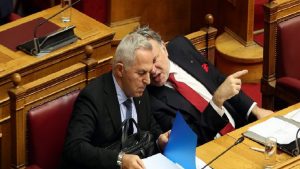
Ο ΑνΥΠΕΞ Γιώργος Κατρούγκαλος (Δ) και ο ΥΕΘΑ Ευάγγελος Αποστολάκης (Α) συνομιλούν στη σημερινή συζήτηση και ψηφοφορία στη Βουλή για το πρωτόκολλο ένταξης της πΓΔΜ στο ΝΑΤΟ, Παρασκευή 8 Φεβρουαρίου 2019. ΑΠΕ-ΜΠΕ, Αλέξανδρος Μπελτές
FEBRUARY 9, 2019

ΡΕΠΟΡΤΑΖ HELLAS JOURNAL

Μια ήταν η πλέον βασική πρόταση του Ευάγγελου Αποστολάκη κατά την πρώτη ομιλία του,στην ολομέλεια του Ελληνικού κοινοβουλίου, η οποία βέβαια εξηγούσε με πολύ εύσχημο τρόπο, ποια είναι τα στρατηγικά οφέλη της χώρας μας, με την ένταξη των Σκοπίων στο ΝΑΤΟ. Ουσιαστικά. ο υπουργός, φωτογράφησε με τον πλέον ξεκάθαρο τρόπο τη γειτονική Τουρκία, με την οποία μπορεί φαινομενικά να διάγουμε περίοδο “καλής γειτονίας”, μένει ωστόσο να εφαρμοστεί αυτό, από την πλευρά της Άγκυρας.

Ο υπουργός Εθνικής Άμυνας με την φωτογραφική πρόταση του, ανάμεσα στη ροή του λόγου του, είπε:

«Η συνδρομή μας, θα εκτοπίσει άλλους περιφερειακούς υποψηφίους που επιχειρούν να επωφεληθούν και να ασκήσουν την επιρροή τους στη γείτονα, με ενδεχόμενες αρνητικές συνέπειες για τη χώρα μας».

Έως σήμερα τα Σκόπια, είναι στραμμένα προς την Τουρκία και ο βασικός λόγος, όπως σημειώνουν κύκλοι του Ελληνικού πενταγώνου, είναι η διαχρονική αντιπαράθεση με την Ελλάδα για το ονοματολογικό ζήτημα. Το ίδιο ωστόσο συμβαίνει και με την Αλβανία η οποία ποτέ δεν απεμπόλησε την φίλη Τουρκία, στέλνοντας διαρκώς φοιτητές της στις παραγωγικές σχολές.

Αυτό ωστόσο το κάνει και με την χώρα μας, η οποία δέχεται στις τάξεις της νεαρές και νεαρούς που γίνονται Αξιωματικοί και πλάθονται μέσα στην Ελληνική παιδεία και κουλτούρα. Το Hellas Journal, πριν λίγους μήνες είχε αποκαλύψει στοιχεία από έκθεση στελεχών των ΕΔ που είχαν πάρει μέρος σε κοινή άσκηση με την Αλβανία. Μέσα από την έκθεση έβγαιναν σαφή συμπεράσματα εντελώς διαφορετικής κουλτούρας ανάμεσα σε στελέχη των Αλβανικών Ενόπλων Δυνάμεων που έχουν ολοκληρώσει τις σπουδές τους στην Ελλάδα και την Τουρκία. Μέσα από τις παραγωγικές σχολές, ανώτατα στελέχη από εκείνο το ρεπορτάζ μας, τόνιζαν πως αυτός είναι ένας βασικός τρόπος που μπορεί η χώρα μας να επηρεάσει τις γειτονικές χώρες και με τις σπουδές τους στην Ελλάδα, σε βάθος, όχι πολλών ετών, μπορείς να έχεις τους αυριανούς ηγήτορες του γειτονικού κράτους, βγαλμένους από τις δικές σου σχολές. Άρα έχεις κατ’ αυτό τον τρόπο, δημιουργήσει ένα φυτώριο που μόνο θετικά έχεις ν’ αποκομίσεις με ανθρώπους που μιλούν την ίδια γλώσσα.

Τουρκία και Αλβανία, όπου είναι έντονο το Μουσουλμανικό στοιχείο στα βορειοδυτικά σύνορά μας, δεν σταμάτησαν ποτέ να έχουν στρατιωτικές σχέσεις και αυτό παρά το γεγονός πως η Αλβανία, βοηθήθηκε ιδιαιτέρως από την Ελλάδα κατά τη Νατοϊκή πορεία που έχει διαγράψει έως σήμερα.

Πως μπορεί η Ελλάδα να επηρεάσει τα Σκόπια μέσω της αμυντικής συνεργασίας

Ένα από τα βασικά ταξίδια του Ευάγγελου Αποστολάκη είναι αυτό που θα κάνει στη Γευγελή, όταν αυτό κλειδώσει διότι εκεί, μαζί με την ομόλογό του, θα έχει την ευκαιρία να εκμεταλλευτεί τα όσα ορίζονται μέσα στο άρθρο 17 της Συμφωνίας των Πρεσπών- το οποίο ανέφερε κατά την ομιλία του στη Βουλή- και δεν είναι κάτι άλλο από ένα ευρύ φάσμα στρατιωτικής συνεργασίας μέσα από το οποίο ο υπουργός- που δεν ξεχνά σε καμία περίπτωση το στρατιωτικό του παρελθόν- θα θελήσει να πάρει την δέσμευση για την στρατιωτική συνεργασία. Σε τι μπορεί να φανεί χρήσιμη η Ελλάδα στη γειτονική χώρα; Σχεδόν σε όλους τους στρατιωτικούς τομείς, με πιο βασικούς την διευρυμένη παροχή στρατιωτικής εκπαίδευσης, παροχή στρατιωτικών υλικών και μέσων, οπλισμό, αεροσκάφη, πυρομαχικά κ.ο.κ. Ανώτατα στελέχη των ΕΔ εξηγούσαν πως η Ελλάδα για παράδειγμα, έχει F-16 – σε συνεννόηση με τις Ηνωμένες Πολιτείες- τα Block 30.

Αυτά μπορούν να περάσουν στα χέρια ιπταμένων της γειτονικής χώρας. Μπορεί μάλιστα η ΠΑ να εκπαιδεύσει τους αυριανούς πιλότους των Σκοπίων σε όλα τα στάδια και να υπάρξει μια όσμωση διαρκείας για εκπαιδευτικούς σκοπούς ακόμη και στα Simulator που διαθέτουμε.

Ταυτόχρονα, εφόσον Ελληνικά αεροσκάφη μετασταθμεύσουν στη Γευγελή, η ΕΑΒ σίγουρα με την τεχνογνωσία που διαθέτει, μπορεί να εξυπηρετήσει όλες τις ανάγκες που θα υπάρξουν. Η όποια κατασκευή στρατιωτικού κτιρίου μπορεί να γίνει και από Ελληνικά χέρια. Επιπλέον εφόσον θ’ αναπτυχθεί στρατός, οχήματα κάθε τύπου, άρματα μάχης, οχήματα μεταφοράς προσωπικού και πολλά άλλα θα φανούν χρήσιμα εκεί και φυσικά τα Ελληνικά εργοστάσια μπορούν να τα υποστηρίξουν. Όπως εξηγούσαν ανώτατες πηγές του υπουργείου Άμυνας, εφόσον η κατάσταση έτσι όπως έχει διαμορφωθεί δεν αλλάζει, η Ελλάδα οφείλει πρώτα απ’ όλα να εκμεταλλευτεί στο έπακρο ότι περισσότερο μπορεί, ακόμη επί παραδείγματι και τις φόρμες του στρατού τους, να τις κατασκευάζουν Ελληνικά εργοστάσια, αν και πολλές από τις φόρμες και άλλα είδη ιματισμού, ράβονται σε άλλες χώρες και φτάνουν έτοιμα στη χώρα μας.

Το άρθρο 17 της Συμφωνίας των Πρεσπών και η αμυντική συνεργασία

Ο πρωθυπουργός, ακόμη και κατά τη συζήτηση στη Βουλή, όταν ο Αρχηγός της Αξιωματικής αντιπολίτευσης επιτέθηκε στον υπουργό Εθνικής Άμυνας, έσπευσε να καλύψει τον Ευάγγελο Αποστολάκη, δείχνοντας γι’ ακόμη μια φορά και με αυτό τον τρόπο, την εμπιστοσύνη που έχει στις ικανότητες του πάλαι ποτέ Ναυάρχου. Πάντως ο κος Αποστολάκης πριν «φωτογραφίσει» την Τουρκία στην ομιλία του, είχε κάνει focus στο άρθρο 17 της συμφωνίας των Πρεσπών σημειώνοντας πως «σύμφωνα με το Άρθρο 17 της Συμφωνίας των Πρεσπών, θα ενισχυθεί και θα επεκταθεί η συνεργασία με τη γείτονα χώρα στον τομέα της άμυνας, μέσω, μεταξύ άλλων, συχνών εκατέρωθεν επισκέψεων και επαφών της στρατιωτικής ηγεσίας, μεταφορά τεχνογνωσίας, παροχή εκπαίδευσης, εκτέλεσης κοινών ασκήσεων και οικοδόμησης δυνατοτήτων.»

Η Αθήνα θέλει πάση θυσία να διατηρήσει ζωντανό αυτό το άρθρο. Αυτό τονίζουν με κάθε τρόπο και κύκλοι του νέου υπουργού Εθνικής Άμυνας, διότι αυτό το άρθρο είναι ο έμμεσος τρόπος εκπαραθύρωσης της Τουρκίας από την Βαλκανική χώρα και «πάνω από το κεφάλι μας», έλεγαν με χαρακτηριστικό τρόπο οι ίδιοι άνθρωποι. Σύμφωνα με νομικούς, δυο είναι τα σημαντικά άρθρα που έχουν να κάνουν με την ασφάλεια και την άμυνα, το 16ο & το 17ο.

Στο 16ο άρθρο περιγράφεται η συνεργασία που τα δυο κράτη πρόκειται ν’ αναπτύξουν με κύριο σκοπό την καταπολέμηση του οργανωμένου εγκλήματος και της τρομοκρατίας που κι εδώ, η Ελλάδα μπορεί να προσφέρει πολλά σε όλους τους τομείς της αστυνόμευσης και διευρυμένα, στην Πολιτική προστασία.

Στο 17ο άρθρο, περιγράφονται όλα εκείνα που περικλείονται στις λέξεις «αμυντική συνεργασία» που είναι η εκπαίδευση-και η Ελλάδα εδώ έχει κάνει τεράστια άλματα ιδίως σε ότι έχει να κάνει με τις ειδικές επιχειρήσεις, που έχει γίνει παραδεκτή από τους πλέον προηγμένους στρατούς- οι ανταλλαγές επισκέψεων, η διεξαγωγή διμερών ασκήσεων, η τεχνογνωσία, η ανταλλαγή στρατιωτικών πληροφοριών κ.ο.κ.

Την ίδια στιγμή στο Ελληνικό πεντάγωνο παρατηρούν οποιαδήποτε κίνηση γίνεται, από «χώρες «που εκείνο που επιδιώκουν είναι να «προσηλυτίσουν» από τώρα την βόρεια γείτονά μας και να εκμεταλλευτούν γεωστρατηγικά τη θέση της, αλλά και τους πόρους που θα κεφαλαιοποιηθούν σ’ αυτή, τόσο από την Ε.Ε. όσο και από την Ατλαντική συμμαχία.

Συμπερασματικά, εφόσον σε πολιτικό επίπεδο πάρθηκε αυτή η απόφαση, τώρα όλοι οι οργανισμοί καλούνται να βγάλουν τα κάστανα από τη φωτιά και να φέρουν όσο πιο κοντά γίνεται τη συνορεύουσα χώρα με την Ελλάδα, ώστε μελλοντικά να αποδειχτεί πραγματική σύμμαχος και να μην βλέπουμε νέες παραβιάσεις ή τεταμένες σχέσεις ανάμεσα στα δυο κράτη, αρκετά έχουμε να παλέψουμε δεν χρειάζονται περισσότερα λένε στρατιωτικές πηγές.

Πηγή: Ο Αποστολάκης «φωτογράφισε» την Τουρκία ως τη χώρα που θέλει να προσηλυτίσει τα Σκόπια https://hellasjournal.com/2019/02/o-apostolakis-fotografise-tin-toyrkia-os-ti-chora-poy-thelei-na-prosilytisei-ta-skopia/

Ο γερουσιαστής Μενέντεζ καλεί τον Τσίπρα να σταθεί στην ορθή πλευρά της Ιστορίας…

2

ΡΕΠΟΡΤΑΖ HELLAS JOURNAL

Ο Αμερικανός γερουσιαστής Ρόμπερτ Μενέντεζ, ο μεγαλύτερος φίλος της Ελλάδας στην Ουάσιγκτον, κάλεσε τον Πρωθυπουργό Αλέξη Τσίπρα να σταθεί στο πλευρό των Ηνωμένων Πολιτειών και να αναγνωρίσει τον Χουάν Γκουαϊδό ως τον μεταβατικό πρόεδρο της Βενεζουέλας.

Ο κ. Μενέντεζ (Δημοκρατικός από το Νιου Τζέρσεϊ) είναι ένας εκ των πολλών φίλων της Ελλάδας που βρέθηκαν από την πρώτη στιγμή εναντίον του Νικολάς Μαδούρο, θεωρώντας τον εχθρό της Δημοκρατίας. Όπως αναφέρει ο γερουσιαστής αυτή τη στιγμή η Δημοκρατία στη Βενεζουέλα απειλείται

Συστηματικά, σημειώνει ο κ. Μενέντεζ, ο Μαδούρο κατέστρεψε κάθε δημοκρατικό θεσμό που απειλούσε τη δικτατορία του και έχει διαφθείρει το δικαστικό και πολιτικό σύστημα, ενώ απαγορεύει κάθε ελευθερία στα μέσα μαζικής ενημέρωσης.

Ο Αμερικανός γερουσιαστής τονίζει ότι είναι σημαντικό η αρχαιότερη Δημοκρατία στον κόσμο να σταθεί δίπλα στο δοκιμαζόμενο λαό της Βενεζουέλας. Αν συμβεί αυτό, υπογραμμίζει στην επιστολή του προς τον Αλέξη Τσίπρα, αυτό θα δείξει στο λαό, στον Μαδούρο και στους συμμάχους του, αλλά και σε όλο τον κόσμο, ότι η Ελλάδα είναι μία δυνατή Δημοκρατία και στέκεται στην ορθή πλευρά της ιστορίας

Η ελληνική κυβέρνηση δέχεται πιέσεις και από την αμερικανική για να ακολουθήσει τις χώρες της Ευρώπης που υποστηρίζουν τον Γκουαϊδό.

Πηγή:  https://hellasjournal.com

Don’t Blame the Orthodox Church for Nasty Political Games in the Holy Land

0

BY 

RESPONSE

The Greek Orthodox Patriarchate is not deliberately selling off land to Israeli settlers. It has been the victim of fraud and attacks by Israeli extremists.

 
Jerusalem’s Greek Orthodox patriarch, Theophilos III (center), arrives at the Church of the Nativity in the occupied West Bank town of Bethlehem on Jan. 6. (Musa al-Shaer/AFP/Getty Images)

In her Jan. 7 article for Foreign Policy, “Holy Land for Sale,” Dalia Hatuqa presented a picture of large-scale discontent within the Greek Orthodox Patriarchate of Jerusalem that exaggerates the numbers and importance of the dissidents within the church, misstates many facts, and distracts attention from an existential threat to all Christian churches in the Holy Land, not just the Greek Orthodox Church.

The article unwittingly serves the interests of extremists among the Israeli settler movement, allied with politicians seeking political gain

The article unwittingly serves the interests of extremists among the Israeli settler movement, allied with politicians seeking political gain

, who have targeted the land holdings of all the churches—Orthodox, Catholic, Armenian, Coptic, Anglican, and half a dozen others—that make up the Christian community of the Holy Land.Ateret Cohanim, a settler organization that aims to expel Muslims and Christians from Jerusalem, has, as correctly noted in Hatuqa’s article, systematically acquired property in the Old City through a toxic mixture of intimidation and bribery—and occasionally violent occupation. Once Ateret Cohanim acquires a property, its adherents occupy the buildings and terrorize the surrounding neighborhood. They play loud music at night, assault women, and spit on priests. Jerusalem Christians believe that Ateret Cohanim has also vandalized churches and other holy sites. In a sad commentary on the abuse of U.S. tax laws, Ateret Cohanim receives much of its financing through its eponymous U.S.-registered charity.

In 2004, dummy Caribbean entities affiliated with Ateret Cohanim bribed high-ranking employees of the Orthodox Patriarchate to lease four strategically located church-owned properties near Jaffa Gate, the entry into the Old City’s Christian and Armenian Quarters. The Holy Synod, effectively the patriarchate’s board of directors, discovered the fraud in 2005 and took Ateret Cohanim to court. Unfortunately, the settler organization has managed to repeatedly delay proceedings so that the matter is still pending in Israeli courts.

Hatuqa’s article implies that the Holy Synod deposed Patriarch Irenaios I and elected Patriarch Theophilos III as part of the plot to sell the land. In fact, the Holy Synod deposed Irenaios after it learned of the fraudulent transaction and instituted the process that ultimately elected Theophilos to the patriarchal throne.

This process included approval by church elders, the lower clergy, and the governments of Israel, Jordan, and the Palestinian Authority before it came to a vote in the synod. Hatuqa’s assertion that the Palestinian Authority absolved Irenaios of responsibility in the affair is simply untrue. The statement that Irenaios is currently confined under house arrest is misleading; he is free to leave and return to his native Greece. Why he does not is a question best directed to the deposed cleric himself.

The real story, largely overlooked in Hatuqa’s article, is that a number of Israeli politicians have pandered to anti-Arab and anti-Christian sentiments among a portion of their constituency to initiate actions that, if they succeed, will constitute one of the largest illegal land grabs in recent history.

The real story, largely overlooked in Hatuqa’s article, is that a number of Israeli politicians have pandered to anti-Arab and anti-Christian sentiments among a portion of their constituency to initiate actions that, if they succeed, will constitute one of the largest illegal land grabs in recent history.

By way of background, in 1951 the Jewish National Fund (JNF) coerced the Orthodox Patriarchate to lease a large tract of land known as Rehavia in what is now West Jerusalem for a piddling sum. The fund then subleased the property to developers as well as to the Israeli government.The neighborhood of Rehavia today contains the Knesset, the offices of the president and prime minister of Israel, the national museum, and the most upscale and expensive residential buildings in Jerusalem. Although 2050, when the lease expires, may appear to be a long way away, the JNF faces the grim reality that the vast appreciation of value of Rehavia will require it to pay a correspondingly increased rent. Therefore, the JNF has tried to acquire the freehold from the patriarchate by various means, all of which have failed.

In 2017, the JNF took a new tack, alleging that the patriarchate planned to evict the Israeli government from the Knesset and thousands of tenants from the homes that they rented from the JNF. One of those tenants, Knesset member Rachel Azaria, has sponsored a bill, as noted in Hatuqa’s article, that would allow the government to confiscate church land. The article neglects to mention that Azaria rented her home in full knowledge that her leasehold would expire in 2050. In fact, Azaria has no reason to worry; the original leasehold gives JNF the exclusive right of first refusal and requires the patriarchate to submit any rent increase to a mediator.

Azaria’s bill, however, is phrased in such a way as to permit the confiscation of any land leased for commercial purposes by any church located within Israel. Azaria has the support of Israel’s justice minister, Ayelet Shaked. Prime Minister Benjamin Netanyahu and President Reuven Rivlin recognize that passage of this legislation would place Israel in open confrontation with virtually the whole of organized Christendom and, as noted in the article, have managed to prevent it from coming to a vote. Unfazed, Azaria and her supporters have resubmitted the bill six times to the Knesset under different names. Netanyahu and Rivlin continue, wisely, to block it. But the threat remains.

This threat to confiscate land represents an existential threat to all churches because all the churches depend on their real estate to sustain their mission.

This threat to confiscate land represents an existential threat to all churches because all the churches depend on their real estate to sustain their mission.

Donations from pilgrims do not pay the bills. The mission of the Greek Orthodox Patriarchate of Jerusalem is to protect and steward the holy places as places of worship open to all people and to tend to its flock, which includes indigenous Christians, immigrants from other continents, and pilgrims from around the world. All the other churches in Jerusalem share the same mission. The patriarchate has responsibility for about 100 churches, monasteries, and other holy sites. These shrines are the sacred heritage entrusted to the patriarchate since the earliest days of Christianity. Pilgrims and natives visit these places by the millions each year. It is a sacred and serious task to maintain them. The cost of this mission is significant and depends almost entirely on real estate revenues.The patriarchate dedicates itself to offering service to all people in need without conditions or discrimination. In the Holy Land, sadly, there is much need and much suffering. The patriarchate has fulfilled this pastoral obligation since the birth of Christianity. Governments, diplomatic missions, and nongovernmental organizations often lack the means to reach the most vulnerable. The church can go where others cannot and provides services to the sick, needy, displaced, or abandoned. By adhering to a strictly spiritual mission that is inclusive of all people, the patriarchate has been able to circumvent politics, provide relief, and offer hope of reconciliation.

The church also maintains an extensive educational system, health facilities, charities, and youth centers. It sponsors and supports more than 20 K-12 schools with approximately 15,000 students of all faiths throughout the land west of the Jordan River and many schools in Jordan. In addition to educating students, the patriarchal schools provide hundreds of jobs to the community as teachers, principals, maintenance staff, doormen, secretaries, and tutors. The church operates the Patriarch Benedict Health Clinic in the Old City of Jerusalem that provides full health services, including an in-house pharmacy, either without cost or at a highly discounted rate to anyone in need. It cares for Jerusalem residents who lack health insurance, as well as the elderly and visiting pilgrims, without ethnic or religious discrimination. The patriarchate also financially supports the charity Four Homes of Mercy, which provides permanent housing and care to the disabled and chronically ill, currently ranging from ages 4 to 94.

When crisis strikes, the church provides refuge. During Israel’s military operations in Gaza in 2014, the Greek Orthodox Church opened its doors to several thousand people who had no other place to go, providing temporary refuge and aid until the cease-fire. When the Syrian civil war broke out, the patriarchate established the “Orthodox Initiative” in Jordan to aid tens of thousands of refugees. The Jordanian government does not oversee these camps, and NGOs often have difficulty reaching them. The church distributes food and hygiene parcels and maintains an unofficial school system, teaching men and women crafts and trades for future employment. The church provides the dignity and respect they had not felt since they left their homes in Syria.

The dissident groups Hatuqa describes represent a small group of Palestinian Christians who resent the fact that ethnic Greeks dominate the hierarchy of the patriarchate.

The dissident groups Hatuqa describes represent a small group of Palestinian Christians who resent the fact that ethnic Greeks dominate the hierarchy of the patriarchate.

This is a long-standing political issue beyond the scope of this article. However, we should note that both the king of Jordan, the recognized international protector of Christian and Muslim holy places in Jerusalem, and the Palestinian political leadership support the present hierarchy in the not unreasonable belief that international leadership of the churches hinders Israeli land seizures. In the same vein, Jordan and the Palestinian Authority also support Franciscans’ (i.e., Italian citizens’) control of the Jerusalem Catholic Church, English hierarchs in the Anglican Church, and Armenian and Egyptian Coptic bishops protecting their own respective institutions.The article mentions dissident Palestinian groups’ criticisms of land sales in Jaffa and elsewhere in the internationally recognized pre-1967 boundaries of Israel. Almost all these transactions have been leases, not sales. In fact, the church has also bought land in Israel. The dissidents’ assertion that the “church has no right to the property because the community’s ancestors endowed most of it to the church for safekeeping during the Ottoman and British occupations” has no basis. The church has purchased all its land from its own resources and endowments from abroad and has the records to prove it. Within the occupied territories, the church has neither sold nor knowingly leased land to Israeli interests; as noted above, extremist settlers have illegally occupied some property through fraud, subterfuge, or violence.

Finally, the article fails to note that the demonstrations against the patriarchate have usually consisted of only a few dozen activists. The statement in the article that “Sunday mass and prayers are held in Greek” is also not true. Almost the entire Divine Liturgy today is conducted in Arabic throughout the patriarchate. Despite what the article asserts, the overwhelming majority of parish priests are Arab Palestinians. Ethnic Greeks are only a few dozen concentrated in the hierarchy, but there are several Arab bishops as well. Greek flags are indeed flown outside Orthodox churches and holy sites, and they are there with the full knowledge of the Palestinian and Jordanian authorities, who regard them as a deterrent to Israeli encroachment.

Extremist Israeli groups are seeking to create a negative environment that will undermine U.S. support for the traditional churches in Jerusalem; Palestinians who oppose those extremists should not fall into their public relations trap.

Extremist Israeli groups are seeking to create a negative environment that will undermine U.S. support for the traditional churches in Jerusalem; Palestinians who oppose those extremists should not fall into their public relations trap.

Hatuqa did not reach out to church representatives, who are authorized to speak on behalf of its leadership; she could have gone to the prominently marked and very well-known offices of the patriarchate in Jerusalem for further comment.Christianity began in the Middle East, and for the first millennium or so of its existence, more Christians lived in the region between the Adriatic Sea and the Persian Gulf than in Western Europe. Unfortunately, the end of World War I, another great victory for the Christian West, accelerated the hemorrhaging of Christians from the region. Unless we learn more and care more about the Christians of the region, we may very well all be guilty of letting Christianity disappear altogether from Christ’s homeland.

Patrick N. Theros, a career diplomat who served as U.S. ambassador to Qatar from 1995 to 1998, is a strategic advisor to the Gulf International Forum and the appointed representative of the Greek Orthodox Patriarchate of Jerusalem in the United States.
https://foreignpolicy.com/2019/02/08/dont-blame-the-orthodox-patriarchate-for-nasty-political-games-in-the-holy-land-israel-ateret-cohanim-settlers-azaria-knesset-rehavia/?utm_source=PostUp&utm_medium=email&utm_campaign=11380&utm_term=Editor#39;s%20Picks%20OC

Has Turkish President Erdoğan Distanced Himself from the Muslim Brotherhood?

0

TURKISH-FINANCED MOSQUES ARE EMBASSIES OF POLITICAL ISLAM

0

I strongly reject Islamophobia. Almost all people whose human rights I work to defend – Rohingya, Kashmiris, Kurds, Kosovars, Bosniacs – are Muslim. I believe that religious freedom and other human rights are sacrosanct.

For this reason, I have struggled to understand Turkey’s financing of mega-mosques. After deep soul searching about the meaning of spirituality and Turkey’s political agenda, I have concluded that Turkish financed mosques are not legitimate places of worship. They propagate political Islam as sources of division and proponents of discord. Turkish financing of mosques outside of Turkey should be banned.

Turkey’s foreign policy aims to propagate Islamism, destabilize secular democracies, and thereby enhance Turkey’s influence. It finances mosques across Europe to support for President Tayyip Erdogan’s Islamist and neo-Ottoman agenda.

“Diyanet”, Turkey’s Department of Religious Affairs, is Erdogan’s vehicle for spreading political Islam. It is not staffed by imams and religious scholars. Rather, Diyanet is run by bureaucrats and political henchmen who undermine the noble principles of Islam as a religion of peace. Diyanet has become Erdogan’s instrument for corrupting Islam by pursuing a political agenda.


The latest controversy around a Turkish funded mosque occurred in Cologne, Germany. When Erdogan showed up last weekend to open the Cologne Central Mosque, thousands, including many Muslims, gathered to protest and criticize Erdogan’s presence.

The ceremony in Cologne occurred at the end of Erdogan’s contentious trip to Germany. At every event, Erdogan was chastised for Turkey’s abysmal human rights record, restrictions on press freedom, and violations of minority rights. Chancellor Angela Merkel refused to attend the state dinner for Erdogan and many members of parliament boycotted his visit. Hurt feelings linger after Erdogan called Merkel a Nazi last year.

Germany is not the only country where Turkey uses Islam as a wedge issue to divide societies and radicalize youth against the West. Turkish financed mosques in Albania and Kosovo are also embassies of Islamism.

The Great Mosque of Tirana — Namazgâh Mosque – will be the largest mosque in the Balkans. In Kosovo, the Turkish Cooperation and Coordination Agency (TIKA) – in coordination with Diyanet — has restored more than 30 religious structures from the Ottoman period and built at least 20 new mosques since 2011. Erdogan personally pledged to sponsor construction of Kosovo’s mega-mosque in Pristina.

The same occurs in the Turkic republics of central Asia. Rather than nation-building in newly-independent states, Turkey supports Muslim community building.

These mosques have classrooms for Islamic education as well as Turkish language instruction. TIKA-supported facilities function like madrassas, corrupting Qur’anic education to radicalize impressionable youth. Some from the western Balkans have joined the Islamic State to become fighters in Syria and Iraq.

There are different interpretations of Islam, as in every religion. In one view, Islam is a righteous religion, which teaches that believers must live in modesty and peaceful co-existence with each other and their environment, exemplified by the life of the Prophet Mohammed. Religious devotion and love of God are the basis of a just world order.

In another view, mankind can only attain personal peace by utterly submitting to Allah. Islam means submission to God, accepting His authority, as well as obeying His orders. Individuals who submit are more vulnerable to manipulation. Some have been convinced to commit acts of sensational violence against unbelievers, moderate Muslims, and Muslims who belong to other sects.

Of course, all people including Muslims have the right to worship as long as their religious practice brings no harm to others. They have the right to build places of worship, as long as those places of worship espouse personal purification rather than acts of violence. The noble qualities of Islam must be upheld.

However, Turkey practices a double standard. Erdogan has used religion to divide Turkish society and galvanize his political base. In 2002, Erdogan was jailed by secular judges for preaching: “the mosques are our barracks, the domes our helmets, the minarets our bayonets, and the faithful our soldiers.”

By embracing political Islam, Erdogan has created a fertile ground in the name of Islam for radical groups such as ISIS. He rhetorically rejects radicalization, but Erdogan should be judged by the result of his actions. Syria is a case in point.

At home and abroad, Erdogan continues to use religion in service of his political agenda. Under Erdogan’s direction, Turkish authorities restrict the restoration and construction of non-Muslim shrines and places of worship in Turkey. Requests to open new places of worship by religious minorities are routinely denied. Even assembly houses (“Cemevi”) for Alawites, a division of Islam, are restricted. Non-Sunni Muslims are seen as heretics.

The mosque in Cologne is a lightning rod for controversy, highlighting Turkey’s insidious perversion of Islam. Muslims in Germany should build their sanctuaries without support from Turkey. By politicizing Islam, Erdogan poisons the purity of their devotion and gives Islam a bad name.

Mr. Phillips is Director of the Program on Peace-building and Rights at Columba University’s Institute for the Study of Human Rights. He previously held position as a Senior Adviser to the US State Department and the United Nations Secretariat.

Politurco.com

ΥΠΑΡΧΟΥΝ ΟΡΙΑ;

7

Τις τελευταίες ημέρες μίλησα με σκεπτόμενα στελέχη του Συριζα και διαπίστωσα πως είναι ενθουσιασμένα απο τη Συμφωνία των Πρεσπών. Μάλιστα, θεωρούν πως η Ελλάδα πρέπει να αντιμετωπίσει την πραγματικότητα των μειονοτήτων στο έδαφός της.
Φυσικά, επαναλαμβάνουν τις γνωστές κοινοτοπίες περί ύπαρξης Μακεδόνων και Μακεδονικής γλώσσας κλπ κλπ. Προσέθεταν, ακόμη, πως στη Θράκη θα πρέπει να αναγνωρίσουμε ότι η μειονότητα είναι τουρκικής εθνότητας και άλλα παρόμοια.
Όσα μου έλεγαν αποτελούσαν διαχρονικά θέσεις των αριστερών τάσεων που εξέφρασε ο Συριζα.
Έθεσα τέσσερα ζητήματα τα οποία θέτω και δημοσίως.
-Άλλο πολιτική ιδεολογία ενός κομματικού φορέα και άλλο διαχείριση των υποθέσεων του κράτους.
-Τη μειονότητα της Θράκης, τον τρόπο λειτουργίας της, τον χαρακτηρισμό της ως μουσουλμανικής και άλλα πολλά, τα προβλέπει η Συνθήκη της Λωζάνης. Οι συνθήκες είναι συμφωνίες μεταξύ κρατών που συνάπτονται για να μπορέσουν να συνυπάρξουν με βάση τετελεσμένα και ισορροπίες. Θέλουν τα στελέχη του Συριζα να υπερβούμε τη Συνθήκη της Λωζάνης; Και αν την υπερβούμε, που σημαίνει να την αμφισβητήσουμε, αντιλαμβάνονται τι ζητήματα δημιουργούνται και στη μειονότητα και πέραν αυτής;
-Μακεδόνες, όπως θα αποκαλούνται απο δω και πέρα έλληνες πολίτες που ζούν στη βόρειο Ελλάδα, που μιλούν μακεδονική γλώσσα, όπως αποδέχθηκε η ελληνική κυβέρνηση βεβαίως υπάρχουν στην ελληνική επικράτεια. Αισθάνονται, όμως, όλοι οι δίγλωσοι έλληνες ότι ανήκουν σ αυτήν την κατηγορία; Θέλουν να λειτουργήσουν ως μειονότητα; Υπάρχουν διεθνή στάνταρτς για το τι χαρακτηρίζεται ως μειονότητα; Ή, οποιοσδήποτε, έστω και ελάχιστος αριθμός ανθρώπων μπορεί να ζητά να αντιμετωπίζεται ως μειονότητα;
-Τέλος, για τη λειτουργία του κράτους και την προάσπιση των συμφερόντων του, υπάρχουν όρια στο τι θέλουν μειονοτικές ομάδες; Υπάρχουν όρια στην αρχή της αυτοδιάθεσης; Στη Θράκη για παράδειγμα υπάρχει μια ομάδα μειονοτικών που δραστηριοποιείται διεθνώς, η οποία ζητά αυτονομία της Δυτικής Θράκης. Πρέπει να τη παραχωρήσει η Ελλάδα στο όνομα της αυτοδιάθεσης;
Μήπως, τελικά οι κρατικές υποθέσεις απαιτούν μεγαλύτερη σοβαρότητα στο χειρισμό τους απο την υλοποίηση των ιδεοληψιών ενός κόμματος;

Π.Σ.

Γιατί ο Τραμπ αποχωρεί από τη Συρία; Είναι όντως η Αμερική “ανέντιμη”; Ή κάτι άλλο παίζει…

1

του ΑΛΕΞΑΝΔΡΟΥ ΔΡΙΒΑ (*)

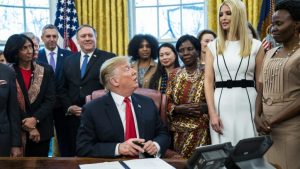
US President Donald J. Trump (C) launches the White House global women initiative before signing a national security memorandum in the Oval Office of the White House in Washington, DC, USA, 07 February 2019. Led by First Daughter Ivanka Trump (2-R), the initiative aims to boost women’s economic development globally, with emphasis on developing countries. EPA, JIM LO SCALZO   FEBRUARY 8, 2019

Λiγες μέρες πριν, ο Αμερικανός Πρόεδρος Ντόναλντ Τραμπ, άσκησε για ακόμη μια φορά το στοιχείο της έκπληξης για ένα σημαίνον θέμα της αμερικανικής εξωτερικής πολιτικής. Ο Τραμπ διέταξε την απόσυρση των αμερικανικών χερσαίων δυνάμεων από τη Συρία. Η αιτιολόγηση που έδωσε ήταν εφάμιλλη με αυτή που είχε δώσει ο Πούτιν 3 έτη πριν όταν και ανακοίνωσε το τέλος των ρωσικών επιχειρήσεων.

Ο Φρειδερικός Νίτσε, ένας φιλόσοφος που προχώρησε τη σκέψη της ανθρωπότητας έγραψε κάποτε “Το κράτος ψεύδεται σε όλες τις γλώσσες του κόσμου“. Με άλλα λόγια, δεν πρέπει να κοιτάμε τις δημόσιες δηλώσεις των δρώντων. Ποιοί όμως είναι οι λόγοι αυτής της απόσυρσης των ΗΠΑ από τη Συρία; Γιατί ο πανικός δεν πρέπει να μας κυριεύει όσο απρόβλεπτος και αν είναι ο Τραμπ;

Empire by Invitation

Η Αμερική έχει υιοθετήσει ένα New Look με την κυβέρνηση Τραμπ (παραφράζοντας τα όσα συνέστησαν κάποτε το Δόγμα Αϊζενχάουερ). Η οργή των Αμερικανών πολιτών έχει γίνει πολιτική πρακτική. Αυτό δεν είναι “καλό” ή “κακό” αλλά ένα γεγονός που φανερώνει την κόπωση των Αμερικανών πολιτών από την παγκοσμιοποίηση από τα a la Vietnam λάθη σε Ιράκ και Αφγανιστάν και από την βαθιά πίστη των Αμερικανών οτι η Αμερική είναι πολύ μεγάλη για να ασχολείται με τον κόσμο.

Πριν καν αναλάβει τις τύχες της Αμερικής ο Πρόεδρος Ομπάμα, ο Charles A. Kupchan (σύμβουλος εξωτερικής πολιτικής του Μπιλ Κλίντον) στο βιβλίο του “Το Τέλος της Αμερικανικής Εποχής”, αναφέρεται στα προβλήματα των ΗΠΑ να προσαρμοστούν σε ένα νέο, μεταψυχροπολεμικό κόσμο. Περιγράφει επίσης την σκέψη των ΗΠΑ όταν αμφιταλαντεύεται μεταξύ απομονωτισμού και μονομερισμού (isolationism & unilateralism). Η πολιτική του Τραμπ δεν είναι λοιπόν όσο απρόβλεπτη φαίνεται. Όχι περισσότερο από αυτήν του προέδρου Μπους Τζούνιορ. Η διαφορά των ΗΠΑ της εποχής του Μπους Τζούνιορ με του Τραμπ είναι οτι τότε, οι Αμερικανοί πολίτες επιθυμούσαν την εμπλοκή των ΗΠΑ σε οτιδήποτε θα τους έκανε περισσότερο ασφαλείς μετά τις 11/9. Σήμερα οι Αμερικανοί έχουν καταλάβει οτι η τρομοκρατία είναι αρκετά πολύπλοκη για να αντιμετωπιστεί με άγαρμπες παρεμβάσεις εντός άλλων κρατών.

Ο αντιαμερικανισμός διογκώνεται και τελικά άθελά της, η Αμερική νομιμοποιεί την ύπαρξη φρικτών τρομοκρατικών ομάδων με γεγονότα που ακολουθούν έναν φαύλο κύκλο. Τι θα συνέφερε επομένως την Αμερική; Να γίνει αυτό που περιέγραφε κάποτε ένας Νορβηγός ιστορικός αναφορικά με το πώς οι ΗΠΑ μπήκαν στη θέση του οδηγού του δυτικού κόσμου μετά το Β.Π.Π’. Να γίνουν “αυτοκρατορία κατόπιν προσκλήσεως”. Αυτή η περίπτωση είναι βολική για τις ΗΠΑ καθώς τις βγάζει από το -βαθύτατα ιδεολογικό- αδιέξοδο του συσχετισμού απομονωτισμού και μονομερούς παρεμβατισμού (που χαλά τις σχέσεις της με τους συμμάχους της).

Η Συρία φιλοξενεί μια πολύ καλή περίπτωση για “πρόβα” αυτού του νέου “New Look”. Το σκεπτικό μπορεί να κριθεί απλό ή απλοϊκό, όμως είναι το ακόλουθο: Αν η Τουρκία, η Ρωσία και το Ιράν έχουν δημιουργήσει έναν ισχυρό άξονα με κοινό παρονομαστή την συσπείρωση έναντι της Αμερικής, αν η Αμερική φύγει τότε δεν υπάρχει λόγος ύπαρξης του άξονα αυτού. Απεναντίας δημιουργούνται συνθήκες γι’αυτό που λέμε στη στρατηγική θεωρία ως “Κατατριβή τρίτων”, συγγενής πρακτική με το πασίγνωστο “divide & conquer”.

Η φθορά των τριών αντιπάλων της Αμερικής θα καταστήσει αναγκαία την επαναφορά της Αμερικής στο συριακό κάδρο, κατόπιν προσκλήσεως και για να…μεσολαβήσει.

Οι Κούρδοι και η Αμερική που είναι στη Συρία ό,τι και αν γίνει

Η “προδοσία” απέναντι στους Κούρδους δεν είναι και τόσο “προδοσία”. Δύο λόγοι στοιχειοθετούν αυτήν την άποψη: Πρώτον, δεν υπάρχει κάποια ηθική μεζούρα, κάποια ηθική μονάδα μέτρησης του πολιτικού γίγνεσθαι. Δεύτερον, οι Κούρδοι σε κάποιες δεκαετίες θα ξεπεράσουν τα 40 εκ. πληθυσμού. Ούτε η Αμερική, ούτε η Ρωσία, ούτε το Ισραήλ μπορούν να παραγνωρίσουν αυτήν την πραγματικότητα. Πολλά ακούγονται σε εκπομπές της ελληνικής τηλεόρασης από “κουρδολόγους” που περισσότερο ενδιαφέρονται γι’αυτούς παρά για τους Έλληνες. Η αλήθεια είναι ότι οι Κούρδοι συνιστούν μια υπολογίσιμη δύναμη με μέλλον. Το παρόν τους όμως φαίνεται να έχει εγκλωβιστεί στην “πολιτική ορθότητα”. Ακούγοντας δηλώσεις κάποιου εκπροσώπου Κούρδων, στο ερώτημα “τι επιδιώκετε εσείς;” δεν αναφέρθηκε κάποιος στόχος.

Πέραν αυτού, η αυτοδιάθεση και η δημιουργία συνθηκών κρατογένεσης, δυστυχώς -ιστορικά αποδεδειγμένο- πληρώνονται με βαρύ φόρο αίματος. Αν δεν είσαι ανεξάρτητος στην πολιτική, τότε προσδένεσαι και ρισκάρεις πάνω σε δυνάμεις. Το ρίσκο μεγαλώνει όταν άλλα θέλουν οι Κούρδοι της Τουρκίας και άλλα αυτοί του Ιράν, του Βορείου Ιράκ και της Συρίας. Οι Κούρδοι θα αυξήσουν την επιρροή τους σε Ουάσινγκτον και Ισραήλ (ακόμη και σε Ρωσία) αν δείξουν τάσεις ενοποιητικές. Στο τέλος, δε θα φτιαχτούν τέσσερα κουρδικά κράτη.

Οι ΗΠΑ δε φεύγουν από τη Συρία.

Οι ΗΠΑ μαζί με συγκεκριμένες χώρες του ΝΑΤΟ μπορούν να πλήξουν ακόμη και από υποβρύχια θέσεις-στόχους της συριακής επικράτειας. Επιπλέον, η Αμερική έχει επενδύσει εδώ και καιρό στη συνεργασία Ελλάδος, Κύπρου, Ισραήλ και Αιγύπτου. Αν υπάρχει αποχώρηση των ΗΠΑ από τη Συρία, δεν πρέπει να φέρνει πανικό σε Ελλάδα και Κύπρο. Απεναντίας πρέπει να μας κάνει να αναρωτιόμαστε πόσο πιθανό είναι η Αμερική να εξαφανιστεί ως δια μαγείας από την Ανατολική Μεσόγειο. Θα αφήσει η Αμερική τα δύο κρίσιμα Στενά του πλανήτη; Απίθανο.

Αμερική και Τουρκία στην εποχή Τραμπ και Ερντογάν

Ο πανικός που έχει κυριεύσει την Ελλάδα αποδεικνύει ότι δεν έχουμε τακτική και στρατηγική παιδεία. Ας σκεφτούμε λοιπόν το εξής: Η Ελλάδα το καλοκαίρι για να κάνει τα γλυκά μάτια στην Αμερική, δια βοής απέλασε Ρώσους διπλωμάτες (ψέγουμε τον τρόπο και όχι την ουσία της απέλασης) και σήμερα γεμάτη αμηχανία βλέπει πως μέσα σε 3 μήνες οι ΗΠΑ συνομιλούν με την Τουρκία. Τα πράγματα για τις σχέσεις ΗΠΑ και Τουρκίας είναι απλά: Δε θα γίνεται κάθε μέρα αυτό που είδαμε Αύγουστο-Σεπτέμβρη του 2018. Η Αμερική έστειλε μήνυμα στην Τουρκία ότι μπορεί να γονατιστεί οικονομικά μέσα σε ώρες.

Δεύτερον, Η Αμερική δε θέλει να χάσει την Τουρκία όμως δε θα κάνει το παν για να την κρατήσει. Αν δεν μπορέσει να την κρατήσει στη Δύση τότε καλό είναι να μη θέλουμε να σκεφτόμαστε το τι θα γίνει.

Τρίτον, οι σχέσεις Αμερικής -Τουρκίας δεν γίνεται να ξαναγίνουν θερμές όσο η Τουρκία είναι παγιδευμένη μεταξύ ρωσικής και αμερικανικής αγκάλης. Η Ρωσία δεν έχει την πολυτέλεια να αφήσει τον Ερντογάν να εξαπατήσει τη Ρωσία επιστρέφοντας ένα πρωί στις νατοικές του δεσμεύσεις. Η Τουρκία αποτελεί προσωρινή λύση για τη Ρωσία όσο η Ουκρανία βρίσκεται μεταξύ σφύρας και άκμονος. Επίσης, η Τουρκία είναι για τη Μόσχα ο βατήρας για την επιτυχία της στη Συρία.

Ο Τραμπ είναι ένας πολιτικός που είναι εξίσου παρορμητικός με τον Ερντογάν. Παρόλα αυτά, ο Ερντογάν μόνο τέτοιες “παρορμήσεις” σέβεται και υπολογίζει. Η Τουρκία είναι πολύ μεγάλη για να μη συνομιλείς μαζί της, πολύ μικρή όμως για να κάνει ό,τι θέλει. Σε κάθε περίπτωση, είναι θετικό ότι για τις ΗΠΑ, άλλο θέμα αποτελεί το ζήτημα της ΑΟΖ της Κύπρου και άλλο θέμα είναι η Συρία.

Μπορεί η Ανατολική Μεσόγειος να είναι ένα ενιαίο σύμπλοκο όμως η Αμερική δεν έχει την πολυτέλεια να χάσει Ελλάδα, Κύπρο και Ισραήλ.

Ο Τραμπ και η εσωτερική πολιτική των ΗΠΑ

Σαν λήπτης απόφασης, ο Τραμπ είναι ένας άνθρωπος που δε θέλει κανείς να τον έχει απέναντί του. Η παιδεία του δεν είναι “πολιτική”. Ο Τραμπ προσπαθεί να συνεφέρει την αμερικανική γραφειοκρατία. Πιο ορθά, προσπαθεί να τη φέρει με το μέρος του. Το άλλα λέει το Πεντάγωνο, άλλα λέει η άλλη υπηρεσία, ενοχλεί ιδιαίτερα τον Τραμπ ο οποίος κατά βάθος…βλέπει παντού Δημοκρατικούς. Όσο δύσκολο και αν είναι, ο Τραμπ προσπαθεί να φτιάξει ένα όσο το δυνατόν, ομόφωνο κράτος. Η αντιπολίτευση οδηγεί τον Αμερικανό πρόεδρο να παίρνει όλο και μεγαλύτερα ρίσκα στην εξωτερική πολιτική, πετώντας την μπάλα στην εξέδρα. Δεν είναι καθόλου τυχαίο ότι ο Τραμπ αυτήν την περίοδο νοιάζεται για το τείχος στα αμερικανικά σύνορα και κάνει ό,τι περνά από το χέρι του για να του περάσει. Στέλνει λοιπόν ταυτόχρονα μήνυμα στους Δημοκρατικούς ότι σε περίπτωση που αναλάβουν την εξουσία σε 2 έτη, θα φροντίσει να αφήσει καμμένη γη και μια Αμερική που στο εξωτερικό θα είναι κυριολεκτικά σε zero point. Όλα τα παραπάνω, συνθέτουν μια επιχειρηματολογία στηριγμένη στον πολιτικό πραγματισμό ο οποίος σαφώς και εμπεριέχει τη χρήση του στοιχείου του αιφνιδιασμού.

Η ταύτιση πολιτικού πραγματισμού και προβλεψιμότητας, είναι πέρα για πέρα λάθος. Ο πραγματισμός καλωσορίζει κάθε τακτική και κάθε μορφή δράσης η οποία υποστηρίζει μια στρατηγική στοχοθέτηση. Η στρατηγική των ΗΠΑ, δε θα είναι ποτέ ξανά αυτή που ήταν 10 ή 20 ή 30 έτη πριν. Ο σημερινός κόσμος και η εικόνα του, υποχρεώνουν τις ΗΠΑ να ακολουθήσουν μια διαφορετική προσέγγιση αναφορικά με τις εξωτερικές τους υποθέσεις. Από την εποχή της άμεσης προσέγγισης (στρατηγική αντίληψη που ευνοεί παρεμβάσεις σε Ιράκ και Αφγανιστάν) οι ΗΠΑ έχουν περάσει ήδη -από τη θητεία του Προέδρου Ομπάμα- σε μια εποχή έμμεσης προσέγγισης. (*)

Ο κ. Αλέξανδρος Δρίβας είναι Υποψήφιος Διδάκτωρ στις Ελληνοαμερικανικές Σχέσεις, Γ.Γ ΑΗΕΡΑ Solon HJ04

Πηγή: Γιατί ο Τραμπ αποχωρεί από τη Συρία; Είναι όντως η Αμερική “ανέντιμη”; Ή κάτι άλλο παίζει… https://hellasjournal.com/2019/02/giati-o-tramp-apochorei-apo-ti-syria-einai-ontos-i-ameriki-quot-anentimi-quot-i-kati-allo-paizei/

Οι τέσσερις μεγάλες προκλήσεις της Ευρώπης

0
  • του Adriano Bosoni Stratfor/euro2day.gr

Χρονιά σημαντικών αποφάσεων διανύει η Ευρωπαϊκή Ένωση, με επίκεντρο τον προϋπολογισμό και τον διορισμό των επικεφαλής βασικών υπερεθνικών θεσμών. Ο λαϊκισμός, οι οικονομικοί κίνδυνοι και οι σχέσεις με Κίνα-Ρωσία.

Το 2019 μετράει λιγότερο από ένα μήνα, όμως ήδη φαίνεται πως θα είναι ένα πολυάσχολο έτος για την Ευρώπη, η οποία έχει μια μεγάλη λίστα με πράγματα που πρέπει να κάνει, καθώς έρχεται αντιμέτωπη με πολιτικές αναταράξεις, με μια επιβραδυνόμενη οικονομική ανάπτυξη και με τεταμένες σχέσεις με τις παγκόσμιες υπερδυνάμεις.

Οι Ευρωπαίοι ηγέτες θα αντιμετωπίσουν μια σειρά ζητημάτων, περιλαμβανομένου του ασταθούς πολιτικού συνασπισμού της Γερμανίας, της αντοχής του λαϊκισμού, των οικονομικών προβλημάτων της Ιταλίας και των ανησυχιών για την αιωρούμενη παρουσία της Κίνας και της Ρωσίας πάνω από την Ευρωπαϊκή Ένωση. Αυτές είναι τέσσερις τάσεις που θα διαμορφώσουν την πολιτική, οικονομική και κοινωνική ατζέντα της Ευρώπης αυτό το έτος.

Τάση 1: Προβλήματα στους 4 της ΕΕ

Το 2019, οι κυβερνήσεις των τεσσάρων μεγαλύτερων οικονομιών της ευρωζώνης θα αντιμετωπίσουν σειρά πολιτικών προβλημάτων που θα περιορίσουν το περιθώριο ελιγμών τους στο εσωτερικό, καθώς και την ικανότητά τους να προσφέρουν μια ηγεσία με συνοχή στο μπλοκ συνολικά. Στη Γερμανία, η απόφαση της Άγκελα Μέρκελ να μη θέσει εκ νέου υποψηφιότητα στις εκλογές του 2021 θα αναγκάσει τα μέλη του κυβερνητικού συνασπισμού της να προετοιμαστούν για ένα πολιτικό περιβάλλον χωρίς αυτήν. Ακόμα και αν η Μέρκελ καταφέρει να ολοκληρώσει τη θητεία της, η εξουσία της εντός της κεντροδεξιάς Χριστιανοδημοκρατικής Ένωσης (CDU) θα αποδυναμωθεί προοδευτικά καθώς το κόμμα σχεδιάζει τη διαδοχή της.

Στο μεταξύ, το κεντροαριστερό Σοσιαλδημοκρατικό Κόμμα (SPD) θα επιζητήσει την αποστασιοποίηση από το CDU, τον κυβερνητικό του εταίρο, σε μια απέλπιδα προσπάθεια να βελτιώσει τη δημοτικότητά του. Αυτό θα μπορούσε να κάνει την κυβέρνηση της Γερμανίας όλο και πιο δυσλειτουργική, μειώνοντας την επιθυμία του Βερολίνου να εισαγάγει διαρθρωτικές μεταρρυθμίσεις σε επίπεδο ΕΕ. Ως αποτέλεσμα, οι προτάσεις για τη δημιουργία ενός προγράμματος κοινής εγγύησης καταθέσεων για τις τράπεζες της ευρωζώνης, ή για τη δημιουργία ενός μεγάλου προϋπολογισμού της ευρωζώνης για να σταθεροποιηθούν οι χώρες που βρίσκονται σε οικονομική δυσκολία (που και τα δύο απαιτούν ισχυρή γερμανική στήριξη), είναι απίθανο να προχωρήσουν σύντομα.

Η γαλλική κυβέρνηση, από την πλευρά της, εξετάζει διάφορες ιδέες για τη νομοθέτηση εγχώριων και ευρωπαϊκών μεταρρυθμίσεων, όμως αντιμετωπίσει σημαντικούς περιορισμούς. Στο εσωτερικό, οι διαμαρτυρίες των «κίτρινων γιλέκων» έχουν δείξει σε όλους πως οι γάλλοι πολίτες είναι και με το παραπάνω πρόθυμοι να βγουν στους δρόμους για να διαδηλώσουν για οποιαδήποτε οικονομική πολιτική τους βρίσκει αντίθετους. Προσπαθώντας να αποφύγει νέες διαδηλώσεις, η κυβέρνηση του προέδρου Εμμανουέλ Μακρόν πιθανότατα θα ακολουθήσει μια πιο επιφυλακτική προσέγγιση ως προς τις μεταρρυθμίσεις φέτος. Αυτό θα μπορούσε να σημαίνει τον περιορισμό των σχεδίων για απλοποίηση του συνταξιοδοτικού συστήματος της χώρας και για αυστηροποίηση των κριτηρίων επιλεξιμότητας για την ασφάλιση της ανεργίας.

Σε επίπεδο ΕΕ, εν τω μεταξύ, η αντίθεση από τις χώρες της Βόρειας Ευρώπης αποδείχθηκε τόσο ισχυρή πέρυσι ώστε να «νερώσει» τις προτάσεις του Παρισιού για μεγαλύτερο διαμοιρασμό του ρίσκου και για υψηλότερες δαπάνες στην ευρωζώνη. Στο τέλος, άλλη μια χρονιά που σημαδεύτηκε από εσωτερικούς περιορισμούς, θα περιορίσει την ικανότητα του Παρισιού να επηρεάσει την κατεύθυνση που θα πάρει η πολιτική της Ευρωπαϊκής Ένωσης.

Η Ιταλία θα είναι άλλη μια χώρα που θα πρέπει να παρακολουθείται το 2019. Στα τέλη του περασμένου έτους, η ιταλική κυβέρνηση υπέκυψε στις πιέσεις των χρηματαγορών και κατέβασε τους τόνους της κριτικής της για το ευρώ και κατέληξε σε συμφωνία με την Ευρωπαϊκή Επιτροπή αναφορικά με τα σχέδιά της για τον προϋπολογισμό. Όμως ο συνδυασμός υπέρογκου χρέους, εύθραυστων τραπεζών και ισχνής ανάπτυξης σημαίνει πως η ιταλική οικονομία δεν έχει γλιτώσει. Επιπλέον, τα κυβερνώντα κόμματα της Λέγκας και του Κινήματος των Πέντε Αστέρων δυσκολεύονται να κρύψουν τις ιδεολογικές τους διαφορές σε σειρά ζητημάτων, από τη μετανάστευση μέχρι τα έργα υποδομών –τάση που θα συνεχιστεί και το 2019.

Όπως είναι αναμενόμενο, πρόωρες εκλογές απλώς θα αύξαναν την αβεβαιότητα για το μέλλον της Ιταλίας. Εν τω μεταξύ, η τέταρτη μεγαλύτερη οικονομία της ευρωζώνης, η Ισπανία, έχει υπερβολικά πολλά εσωτερικά προβλήματα (από μια κυβέρνηση μειοψηφίας που δυσκολεύεται να κάνει πράγματα μέχρι την επίμονη μουρμούρα για αυτονόμηση της Καταλονίας) ακόμα και για να σκεφτεί να διαμορφώσει την μελλοντική κατεύθυνση του μπλοκ.

Αυτά τα εσωτερικά προβλήματα εμφανίζονται σε μια περίοδο που η Ευρωπαϊκή Ένωση πρέπει να λάβει αποφασιστική δράση στην πολιτική της. Μια από τις πιο τεταμένες συζητήσεις της Ευρώπης φέτος θα αφορά τον επόμενο επταετή προϋπολογισμό της Ευρωπαϊκής Ένωσης, που θα πρέπει να τεθεί σε ισχύ το 2021.

Η συζήτηση, που θα επικεντρωθεί στο μέγεθος και στην κατανομή των αγροτικών επιδοτήσεων και αναπτυξιακών κεφαλαίων, θα δείξει ξεκάθαρα τα ανταγωνιστικά στρατηγικά συμφέροντα που υπάρχουν εντός του μπλοκ. Τα μέλη του μπλοκ που είναι καθαροί λήπτες κεφαλαίων (τα περισσότερα εκ των οποίων είναι στην Ανατολική Ευρώπη και, σε μικρότερο βαθμό, στη Νότια Ευρώπη), θα πιέσουν για αύξηση, ή τουλάχιστον διατήρηση των σημερινών επιπέδων δαπανών, ενώ οι καθαροί χορηγοί (οι περισσότεροι στη Βόρεια Ευρώπη) θα πιέσουν για μειώσεις δαπανών.

Οι διαπραγματεύσεις για τον διορισμό των νέων μελών της Ευρωπαϊκής Επιτροπής και των νέων προέδρων της Ευρωπαϊκής Κεντρικής Τράπεζας και του Ευρωπαϊκού Συμβουλίου θα οδηγήσουν επίσης σε ιδεολογικές και στρατηγικές διαφωνίες μεταξύ των κυβερνήσεων της ΕΕ. Αξίζει να παρακολουθήσουμε στενά αυτές τις διαπραγματεύσεις, διότι θα βρίσκεται στο τραπέζι το μέλλον της οικονομικής, εξωτερικής και νομισματικής πολιτικής της Ευρωπαϊκής Ένωσης.

Τάση 2: Ο λαϊκισμός ήρθε για να μείνει

Τα πρόσφατα χρόνια, οι λαϊκιστικές και εθνικιστικές δυνάμεις έχουν «εισβάλει» σε πολλά κράτη-μέλη. Το 2019 -και πέραν αυτού- τέτοιες δυνάμεις θα συνεχίσουν να επηρεάζουν την πολιτική του μπλοκ για έναν απλό λόγο: οι παράγοντες που συνέβαλλαν στην άνοδό τους επιμένουν. Θέματα όπως η χαμηλή οικονομική ανάπτυξη, ο σκεπτικισμός ως προς τα φαινομενικά οφέλη της παγκοσμιοποίησης, η αυξανόμενη ανισότητα του πλούτου, η αγωνία για τη μετανάστευση, οι δημογραφικές αλλαγές και οι ανησυχίες για την απώλεια εθνικής κυριαρχίας, θα συνεχίσουν να παρέχουν πρόσφορο έδαφος για πολιτικές δυνάμεις που αμφισβητούν την τρέχουσα πολιτική και οικονομική τάξη στην Ευρώπη.

Φυσικά, οι δυνάμεις αυτές αντιμετωπίζουν σημαντικούς περιορισμούς. Οι περισσότεροι ψηφοφόροι θα θελήσουν οι χώρες τους να παραμείνουν στην Ευρωπαϊκή Ένωση και στην ευρωζώνη -ακόμα και αν σε πολλές περιπτώσεις η επιθυμία αυτή δεν προέρχεται από κάποια έμφυτη αγάπη για το ευρωπαϊκό εγχείρημα αλλά από τον φόβο των απρόβλεπτων συνεπειών της αποχώρησης από αυτό.

Το ίδιο ισχύει και για τους πολιτικούς, που συχνά κατεβάζουν τους τόνους της αντιευρωπαϊκής ρητορικής τους μόλις αναλάβουν την εξουσία και πρέπει να κάνουν ξεκάθαρες επιλογές πολιτικής. Ωστόσο, η άνοδος των λαϊκιστικών και εθνικιστικών δυνάμεων είναι η μεγαλύτερη απειλή για την επιβίωση της Ευρωπαϊκής Ένωσης στην τρέχουσα μορφή της. Τελικά, η ένωση δεν μπορεί να βασίζεται στον φόβο του αγνώστου ή στους θεσμικούς περιορισμούς για να αποτρέπει αιωνίως τα κόμματα αυτά από το να κερδίσουν τις εκλογές ή, αν τις κερδίσουν, να αμβλύνουν τον ευρωσκεπτικισμό τους. Το ζήτημα επιδεινώνεται από το γεγονός πως η ανάδυση λαϊκιστικών και εθνικιστικών δυνάμεων έχει κάνει πολλά μετριοπαθή πολιτικά κόμματα να υιοθετήσουν παρόμοια στάση προκειμένου να ανταγωνιστούν τους νεοεμφανιζόμενους.

Το 2019 αυτά τα πολιτικά κινήματα θα δοκιμαστούν σοβαρά. Τα καλά νέα για την Ευρωπαϊκή Ένωση είναι πως δεν υπάρχουν πολλές γενικές εκλογές προγραμματισμένες για φέτος την Ευρώπη. Στα τέλη Μάϊου, όμως, ολόκληρο το μπλοκ θα διενεργήσει εκλογές για τον διορισμό των βουλευτών του Ευρωπαϊκού Κοινοβουλίου.

Αυτό θα δώσει στους ψηφοφόρους μια ευκαιρία χαμηλού ρίσκου να τιμωρήσουν τις εθνικές τους κυβερνήσεις και να στηρίξουν τα αντισυστημικά κόμματα. Οι φιλοευρωπαϊκές δυνάμεις θα διατηρήσουν τον έλεγχο της Ευρωβουλής, όμως το νομοθετικό σώμα θα γίνει πιο κατακερματισμένο, κάτι που σημαίνει πως η διαδικασία λήψης πολιτικών αποφάσεων θα μπορούσε να δυσκολέψει. Οι εκλογές θα έχουν επίσης εγχώριες επιπτώσεις, καθώς τα πολιτικά κόμματα (τόσο της κυβέρνησης όσο και της αντιπολίτευσης) θα συνεδριάσουν για να χαρτογραφήσουν το πολιτικό τους μέλλον μετά την ψηφοφορία.

Οι πανευρωπαϊκές δημοσκοπήσεις θα μπορούσαν να επιταχύνουν πρόωρες εκλογές σε χώρες με αδύναμες κυβερνήσεις (όπως στην Ισπανία) ή με αμήχανους συνασπισμούς (όπως στην Ιταλία και στη Γερμανία).

Μια ψηφοφορία που θα πρέπει να παρακολουθείται ιδιαίτερα, θα είναι οι γενικές εκλογές της Πολωνίας τον Νοέμβριο, όπου οι ψηφοφόροι καλούνται να αποφασίσουν αν θα επανεκλέξουν τη νυν κυβέρνηση, η οποία είναι μια από τους μεγαλύτερους επικριτές των φεντεραλιστικών προσπαθειών της Ευρωπαϊκής Ένωσης.

Τάση 3: Οι οικονομικοί κίνδυνοι δεν φεύγουν

Η ευρωζώνη θα πρέπει επίσης να αντιμετωπίσει με τουλάχιστον τρις πηγές οικονομικού κινδύνου το 2019. Η πρώτη πηγάζει από τα εμπορικά ζητήματα με τις ΗΠΑ. Η κυβέρνηση του αμερικανού προέδρου Ντόναλντ Τραμπ εξακολουθεί να εξετάζει αν θα εισαγάγει υψηλότερους δασμούς στα ευρωπαϊκά οχήματα. Η έκθεση του αμερικανικού υπουργείου Εμπορίου ως προς το αν οι εισαγωγές οχημάτων συνιστούν απειλή για την εθνική ασφάλεια στις ΗΠΑ αναμένεται μέχρι τα μέσα Φεβρουαρίου· όταν δημοσιοποιηθεί, ο Λευκός Οίκος θα έχει 90 ημέρες για να αποφασίσει πώς θα ενεργήσει.

Ως βασικός παραγωγός οχημάτων στην Ευρώπη, η Γερμανία έχει να χάσει πολλά αν υλοποιηθεί αυτή η απειλή, όμως το ίδιο ισχύει και για πολλές από τις χώρες της ΕΕ που απαρτίζουν την αλυσίδα προμήθειας της Γερμανίας. Στο τέλος, η Ευρωπαϊκή Ένωση θα δυσκολευτεί να υπογράψει μια ολοκληρωμένη συμφωνία ελεύθερου εμπορίου που περιλαμβάνει τον αγροτικό τομέα -που είναι πιθανότατα αυτό που θα ζητήσει ο Λευκός Οίκος ως αντάλλαγμα για τη μη επιβολή υψηλότερων δασμών στα ευρωπαϊκά αυτοκίνητα.

Επιπλέον, αν ο Λευκός Οίκος εισαγάγει υψηλότερους δασμούς στα οχήματα που κατασκευάζονται στην ΕΕ, τότε οι Βρυξέλλες θα «απαντήσουν» με δικά τους αντίμετρα, κάτι που θα έχει ως αποτέλεσμα μια γενική μείωση του διμερούς εμπορίου μεταξύ των δύο εκ των τριών μεγαλύτερων οικονομικών παικτών του κόσμου.

Το Brexit είναι η δεύτερη μεγαλύτερη πηγή οικονομικού κινδύνου στην Ευρώπη. Η βρετανική κυβέρνηση μπορεί να αποφύγει μια άτακτη έξοδο από την Ευρωπαϊκή Ένωση, διότι μπορεί να ζητήσει παράταση της περιόδου διαπραγμάτευσης (κάτι που θα απαιτούσε ομόφωνη στήριξη από την υπόλοιπη Ευρωπαϊκή Ένωση) ή να αποσύρει το αίτημά της για αποχώρηση (κάτι που το Λονδίνο μπορεί να κάνει μονομερώς). Όμως η αναστολή της εξόδου του Ηνωμένου Βασιλείου δεν θα έχει ιδιαίτερο νόημα, αν το Λονδίνο δεν καταρτίσει μια στρατηγική που θα ακολουθήσει την καθυστέρηση αυτή. Αυτό θα μπορούσε να έχει τη μορφή πρόωρων εκλογών, μιας νέας συμφωνίας εξόδου ή ακόμα και ενός δεύτερου δημοψηφίσματος για τη συμμετοχή στην Ευρωπαϊκή Ένωση (ιδιαίτερα αν το Εργατικό Κόμμα αναλάβει την εξουσία). Ενώ οποιαδήποτε από τις επιλογές αυτές θα οδηγούσε σε αναβολή του Brexit, ωστόσο θα μπορούσαν επίσης να δημιουργήσουν νέες πηγές αβεβαιότητας και άγχους, τόσο στο Ηνωμένο Βασίλειο όσο και στο εξωτερικό.

Η τελευταία πηγή κινδύνου είναι παλιά: η οικονομική ευθραυστότητα της Νότιας Ευρώπης, που θα εκδηλωθεί με πολλούς τρόπους το 2019. Μια αιτία ανησυχίας είναι ένας φαύλος κύκλος, γνωστός ως «debt boom loop», μεταξύ των χωρών με υψηλά επίπεδα χρέους και των τραπεζών που διακρατούν τα χρέη αυτά. Την τελευταία δεκαετία, τα χρηματοπιστωτικά ιδρύματα έχουν αγοράσει όλο και περισσότερο από το δημόσιο χρέος των χωρών της ευρωζώνης, όμως οι τράπεζες που κατέχουν τα ομόλογα αυτά πιέζονται όταν πέφτουν οι τιμές των ομολόγων.

Για μια ακόμα φορά, η βασική χώρα που θα πρέπει να παρακολουθούμε το 2019 θα είναι η Ιταλία. Ακόμα και αν η Ρώμη κατέληξε σε ανακωχή με την Ευρωπαϊκή Επιτροπή, απέτυχε να διασκεδάσει τις ανησυχίες για τη βιωσιμότητα των δημόσιων οικονομικών της, ενώ ορισμένες τράπεζες εξακολουθούν να κατέχουν δισεκατομμύρια ευρώ σε κρατικό ιταλικό χρέος, καθώς και μεγάλα ποσά μη εξυπηρετούμενων δανείων.

Όμως υπάρχουν επιπλέον θέματα που περιπλέκουν την οικονομική εικόνα στη Νότια Ευρώπη. Τώρα που η ΕΚΤ έχει τελειώσει το πρόγραμμα ποσοτικής χαλάρωσης, θα υπάρξει μια λιγότερη πηγή ζήτησης για τα ομόλογα της ευρωζώνης φέτος, κάτι που σημαίνει πως τα κόστη δανεισμού, ιδιαίτερα των αδύναμων οικονομιών της Μεσογειακής Ευρώπης, θα μπορούσαν να αυξηθούν χωρίς την παρέμβαση της Κεντρικής Τράπεζας.

Την ίδια ώρα, χώρες όπως η Ιταλία, η Ισπανία και η Γαλλία έχουν ανακοινώσει σχέδια προϋπολογισμού για το 2019 που θα οδηγήσουν σε υψηλότερα ελλείμματα. Αυτή είναι μια ριψοκίνδυνη κίνηση για χώρες που έχουν ήδη υψηλά επίπεδα δημόσιου χρέους. όταν έρθει η επόμενη ύφεση –και πολλές οικονομίες της ευρωζώνης ήδη επιβραδύνονται- οι οικονομίες αυτές θα έχουν ελάχιστο δημοσιονομικό περιθώριο για να χειριστούν το πρόβλημα.

Τάση 4: Διφορούμενες σχέσεις με την Κίνα και τη Ρωσία

Εκτός από τις εμπορικές διαμάχες με τις ΗΠΑ, η Ευρωπαϊκή Ένωση θα είναι απασχολημένη και με τις άλλες δύο βασικές δυνάμεις του παγκόσμιου συστήματος, την Κίνα και τη Ρωσία. Επί του παρόντος, ο εμπορικός πόλεμος μεταξύ της Κίνας και των ΗΠΑ δημιουργεί μια ευκαιρία για την Ευρωπαϊκή Ένωση, αφού οι Βρυξέλλες μπορούν να αυξήσουν τις πιέσεις στο Πεκίνο να ανοίξει την αγορά του στις ευρωπαϊκές επενδυσεις.

Η Ευρώπη θέλει η Κίνα να δώσει σε ευρωπαίους επενδυτές ίσες ευκαιρίες με τις ντόπιες εταιρείες της και να αφαιρέσει τις επιδοτήσεις για τις κινεζικές επιχειρήσεις. Ενώ η Κίνα είναι απίθανο να μεταβάλει σημαντικά το οικονομική της μοντέλο, η όποια περαιτέρω επιδείνωση των σινοαμερικανικών σχέσεων θα καθιστούσε το Πεκίνο πιο δεκτικό στις πιέσεις των Βρυξελλών.

Όμως η Ευρωπαϊκή Ένωση ανησυχεί επίσης για την αυξανόμενη παρουσία της Κίνας στην Ήπειρο. Οι Βρυξέλλες ανησυχούν ιδιαίτερα για τα επενδυτικά σχέδια του Πεκίνου στην Κεντρική και Ανατολική Ευρώπη, υποστηρίζοντας πως ορισμένες από τις προτάσεις αψηφούν τους ευρωπαϊκούς κανόνες για τις δημόσιες προμήθειες και την κρατική βοήθεια, ενώ επιπλέον στερούνται μιας αξιόπιστης ανάλυσης κόστους/οφέλους.

Το μπλοκ φοβάται επίσης πως η αυξανόμενη οικονομική επιρροή του Πεκίνου θα μεταφραστεί τελικά σε πολιτική επιρροή, κάτι που θα έκανε ακόμα εντονότερο τον πολιτικό κατακερματισμό της Ένωσης. Σε κάποιον βαθμό, οι φόβοι αυτοί ήδη υλοποιούνται, καθώς πλούσιες χώρες της ΕΕ, που βλέπουν με επιφύλαξη τις κινεζικές επενδύσεις, έχουν αρχίσει να συγκρούονται με τις φτωχότερες χώρες, που καλοδέχονται οποιαδήποτε ξένη επένδυση μπορούν να βρουν.

Την ίδια ώρα, το μπλοκ είναι επιφυλακτικό για τις κινεζικές επενδύσεις σε ευαίσθητες τεχνολογίες. Η Γερμανία, η Γαλλία και άλλοι έχουν ήδη εισαγάγει μηχανισμούς για την παρακολούθηση ξένων –δηλαδή κινεζικών- επενδύσεων σε τεχνολογίες και υποδομές κρίσιμης σημασίας, αν και η Ένωση δεν έχει καταφέρει να εισάγει έναν κοινό μηχανισμό σε Ευρωπαϊκό επίπεδο. Την ίδια ώρα, οι ΗΠΑ εντείνουν τις πιέσεις στους ευρωπαίους εταίρους να εισάγουν ισχυρότερα εμπόδια στις κινεζικές επενδύσεις, κάτι που θα επηρεάσει την έρευνα και το εμπόριο σε τομείς περιλαμβανομένης της τεχνητής νοημοσύνης και της ανάπτυξης δικτύων 5G.

Ομοίως, αμφισημία θα σημαδέψει και τις σχέσεις της Ευρώπης με τη Ρωσία φέτος. Η Ευρωπαϊκή Ένωση πρόσφατα παρέτεινε τις οικονομικές της κυρώσεις κατά της Μόσχας μέχρι τα μέσα του 2019 και πιθανότατα θα κάνει το ίδιο και πάλι πριν το τέλος του έτους, δεδομένου ότι οι προοπτικές επίλυσης της σύγκρουσης στην ανατολική Ουκρανία φαίνονται θολές· αν μη τι άλλο, οι εντάσεις θα μπορούσαν να κλιμακωθούν, καθώς οι αντίπαλοι ανταγωνίζονται να αποκτήσουν έλεγχο γύρω από την Αζοφική Θάλασσα.

Χώρες στην Κεντρική και Ανατολική Ευρώπη θα συνεχίσουν τις απαιτήσεις τους για τήρηση σκληρής στάσης έναντι της Ρωσίας, ενώ περιφερειακοί ηγέτες όπως η Πολωνία θα προσπαθήσουν να ενισχύσουν τους πολιτικούς, στρατιωτικούς και οικονομικούς δεσμούς με τις ΗΠΑ, τις οποίες θεωρούν τον υπέρτατο υπερασπιστή έναντι της δυνητικής ρωσικής επιθετικότητας. Η Πολωνία, η Ρουμανία και άλλοι ψάχνουν επίσης τρόπους για να διαφοροποιήσουν τις ενεργειακές πηγές τους μέσω μέτρων όπως τα έργα υποδομών και οι αγορές υγροποιημένου φυσικού αερίου.

Όμως δεν θεωρούν όλες οι ευρωπαϊκές χώρες πως απειλούνται από τη Ρωσία. Η Γερμανία, για παράδειγμα, υπερασπίζεται τον αμφιλεγόμενο αγωγό Nord Stream 2, που θα παρακάμπτει την Ουκρανία στη μεταφορά ρωσικού φυσικού αερίου στην Ευρώπη ενώ αρκετά άλλα κράτη-μέλη της ΕΕ έχουν επίσης επιμείνει στην επιδίωξη κατευνασμού με τη Μόσχα ώστε να καλλιεργηθεί το εμπόριο και να βρεθεί κοινό έδαφος σε διάφορα θέματα, από τη Συρία μέχρι το Ιράν.

Συρροή προβλημάτων

Η Ευρωπαϊκή Ένωση δεν αντιμετωπίζει το ίδιο είδος άμεσων απειλών που αντιμετώπιζε στο αποκορύφωμα της οικονομικής κρίσης στις αρχές της δεκαετίας, όταν τα οικονομικά προβλήματα της Ελλάδας, της Ιρλανδίας, της Πορτογαλίας και άλλων έθεσαν εν αμφιβόλω τη συνέχεια της ευρωζώνης. Οι απειλές που αντιμετωπίζει σήμερα η Ένωση είναι περισσότερο δομικής φύσεως,περιλαμβανομένων των ελλείψεων στο ‘στήσιμο’ της ευρωζώνης, των κοινωνικών και πολιτικών επιπτώσεων της πρόσφατης οικονομικής και μεταναστευτικής κρίσης, και του συνεχιζόμενου ανταγωνισμού μεταξύ των παγκόσμιων υπερδυνάμεων.

Αυτό μπορεί να σημαίνει πως τα προβλήματα της Ευρώπης δεν είναι τόσο επείγοντα όσο ήταν πριν από λίγα χρόνια, όμως δεν σημαίνει πως είναι λιγότερο επικίνδυνα για την Ευρωπαϊκή Ένωση.

https://www.euro2day.gr/specials/topics/article/1659098/oi-tesseris-megales-proklhseis-ths-eyrophs.html

Greece vs. Turkey: Are We Headed for an Intra-NATO War?

0
Satellite imagery of Greece and part of Turkey.
UniversalImagesGroup

Athens

The Aegean Sea between Greece and Turkey hosts one of the world’s highest concentrations of high-tech weaponry. Sixty-seven surface ships and two dozen submarines are deployed on a body of water the size of Lake Superior. The two air forces command 448 fighter jets armed with smart bombs and guided missiles. On land, 832 heavy tanks and more than 2,500 lighter artillery vehicles—as much tank firepower as in all the rest of Europe combined—could rapidly be brought to bear along a Greek-Turkish border only 105 miles long.

These arsenals, built up over decades and constantly modernized, were not merely a boon to U.S. and German defence contractors. Western policymakers wanted to believe that loyalty to NATO’s mission of containing the USSR, rather than regional rivalries, motivated this exemplary level of Greek and Turkish defense spending. After the Soviet Union collapsed, good diplomacy and Turkey’s EU aspirations made it possible, most of the time, to overlook the downsides of an arms race between uneasy neighbors. Recently, however, the Aegean has become a dangerously narrow sea.

Kostas Grivas, who teaches advanced weapons systems at the Hellenic Army Academy, calls it a “a unique theater of confrontation,” where “land, sea and air forces are simultaneously in use in a very confined area, and there is an enormous amount of weapons systems and men-at-arms in deployment.” In the event of war, he believes, it would be very difficult to maintain command-and-control systems because of the intensity and speed of activity, meaning heavy fratricidal losses. In such chaos, the outcome might ultimately be up to local commanders’ ability to take intelligent initiatives. An Aegean war, Grivas says, would resemble “a mini-nuclear war because there will be so much high-tech ordnance discharged it will cause a huge amount of damage.”

The prospect of such hostilities has been suddenly brought closer this year, following events that are individually and as a series without parallel in recent decades.

Last autumn, Greek foreign minister Nikos Kotzias expressed concern that Turkey had become an “irritable power.” What inspired this concern was a record 3,317 airspace and 1,998 territorial water violations recorded in the Aegean last year—respectively double and quadruple the previous year’s numbers. “Our job is to behave responsibly,” Kotzias declared, so he invited Recep Tayyip Erdogan to become the first Turkish president in six decades to visit Greece.

Recep Tayyip Erdogan’s December 7 visit was a disaster. On its eve, Erdogan gave an interview calling for revisions of the Lausanne Treaty of 1923. This is the treaty that defines the borders of the modern Turkish state, while guaranteeing the rights of Greek and Muslim minorities in the two countries. It has kept Greece and Turkey at peace for a century and forms the bedrock of their détente. No Greek or Turkish head of state or government had ever publicly called for its revision. Greece’s President Prokopis Pavlopoulos reacted by overstepping his role as ceremonial head of state to lecture Erdogan. Lausanne, he asserted, was “non-negotiable.”

“It has no gaps. It needs neither revision nor updating. It stands as it is, it covers absolutely the issues that it needs to cover, and stresses that among other things it leaves no leeway for gray zones or minority issues,” Pavlopoulos said.

Erdogan gave as good as he got. Greece had plunged its Muslim minority into poverty, he said, and is racially prejudiced against it. Erdogan also demanded of Prime Minister Alexis Tsipras the extradition of ten Turkish military officers who fled to Greece after the failed July 2016 coup. The Greek Supreme Court had barred their extradition on the grounds that their lives would be endangered in Turkey. The government cannot overrule the decision and there is no higher court of appeal, but Erdogan insisted: “What I told Mr. Tsipras is that these putschists may be returned to Turkey, a country that has abolished the death penalty, a country where torture does not take place.”

Kotzias’s charm offensive has since collapsed. A planned February revival of the Greek-Turkish Supreme Council, a diplomatic forum, never took place, and a May visit to Athens by the Turkish foreign minister is very much in doubt. But there is worse.

Turkey upped the ante on the last day of February, arresting two Greek officers who apparently strayed into Turkish territory while on a routine patrol on the Thracian border. The standard practice for both sides during the last three decades has been to return wayward patrols at the nearest checkpoint after a routine procedure. Turkish authorities instead jailed the men and charged them with illegal entry. More serious charges may follow. Greek Defense minister Panos Kammenos refers to the two soldiers as “hostages,” and Greek public opinion takes for granted their seizure as connected with the ten Turkish military fugitives.

Since these incidents, polls say 92 percent of Greeks believe Turkey constitutes Greece’s biggest threat. Is Turkey generating grievances as a pretext for war? Who would gain from such a war? How would America react? And why has Erdogan chosen this moment to escalate tension?

Brinkmanship in 1996: preview of a far worse confrontation?

“What I worry about is the risk of an unintentional confrontation,” says U.S. ambassador to Athens Geoffrey Pyatt. Greece and Turkey nearly did stumble into war two decades ago. On Christmas Day 1995, the Figen Akat, a small Turkish cargo ship, ran aground on the western twin islet of Imia. A Greek tug was dispatched to refloat her, but the Turkish captain refused Greek help, saying he was in Turkish territorial waters. He eventually accepted Greek assistance, but not before the Turkish government had voiced a claim to the Imia islets as Turkish.

“The Turkish claims have no basis at all. There is no space for negotiations in … matters which concern our sovereignty,” said Greek Premier Kostas Simitis. Greece landed special forces on one of the two islets while Turkish frogmen took the other. As many as 20 Greek and Turkish ships and submarines converged on Imia (or Kardik, as the Turks call it).

On January 31, the United States intervened to avert an unintended war. “In 1996 the Americans stepped in and that sobered both sides,” says retired ambassador Christos Rozakis, one of Greece’s leading experts on international law. “We parted under the understanding, “no ships, no flags,” and reverted to the status quo ante. It wasn’t exactly that, but until the latest incident it was almost that. Greek shepherds didn’t herd their goats there any more, but neither did Turks go there.”

Treaties vs. politics

Imia stands as a textbook case of calculated escalation leading to the brink of an unintended war, and conditions now are even more conducive to such a war than they were in 1996, because new causes of instability have been added to older ones.

Those future talks are important, because Greece and Turkey have a number of unsettled jurisdictional issues. Under international law, Greece can claim territorial waters of 12 nautical miles around each of its islands, but Turkey threatens to wage war if Greece does so, claiming the Aegean, as a semi-enclosed sea, is a special case. And the two countries have yet to apportion the continental shelf and settle rights to mineral deposits on and under the sea floor. Exploratory talks have been ongoing since 2000, but Turkey broke them off last summer.

Turkey has instead escalated to questioning not the jurisdiction of islands but their very ownership. “In the 1990s, various papers started circulating from [Turkish] think-tanks that took a legalistic approach, and said that if an island or islet or rock isn’t specifically mentioned in an international treaty, then it reverts to the previous power, which is the Ottoman Empire. And as Turkey is considered the successor regime, they belong to Turkey,” says a Turkey-based expert who wishes to remain anonymous. “That is the argument … and to a large degree [Turkish] people have come to believe it. It’s a question of discourse. If populist journalists and a couple of pseudo-academics say it, that’s all it takes.”

This has become known as the “grey zones” policy, which aims to cast doubt on the status of anything between a couple of dozen to a couple of hundred uninhabited or sparsely inhabited Aegean islets. Turkish claims are spread throughout the Aegean, but her frustrations focus on the Dodecanese, the island group in the southeast Aegean, which were the last to formally join Greece. The Lausanne Treaty awarded them to Italy, naming the 12 principal islands “and the islets dependent thereon.” Nine years later, Italy signed a protocol with Turkey, which included British Admiralty maps and clearly delineated territorial waters, showing which islets lie in whose sovereign area. In the Paris Treaty of 1947, Greece inherited Italy’s possessions and treaty obligations. Turkey now objects that it had never formally ratified the protocol.

“There were high expectations in Turkey that at least some of the Dodecanese would not be given to Greece,” says Dr. Thanos Dokos, who directs the Hellenic Foundation for European and Foreign Policy. “By not participating in the Second World War they were spared the destruction, but they lost the remaining Aegean islands. You can see statements … over the years expressing frustration that an uninterrupted line of islands across the coast are ‘strangling’ Turkey.”

As long as they remained marginal, Turkish revisionist claims did not affect the bilateral relationship, but they have now entered the Turkish political mainstream thanks to the nationalist opposition party, the CHP. “Why did you not talk about 18 occupied islands?” CHP leader Kemal Kilicdaroglu berated Erdogan when he returned from his Athens trip. Kilicdaroglu has also taken it upon himself to speak in the government’s stead. Goaded by provocative remarks the Greek Defense minister made this month, Kilicdaroglu again pushed his revanchist narrative: “The Greek Defense minister says ‘Come and get it.’ I will come and take all of those islands back.

Some observers see Turkey’s hardening stance toward Greece as an attempt to counter Erdogan’s slippage in the polls. “He is very insecure right now,” says the Turkey-based expert. “It seems that there is a big qualitative decline in Turkish public opinion [towards him]. People discern fatigue. They no longer believe he is the leader who will solve Turkey’s problems.”

For Erdogan, who faces re-election next year, there is more at stake than power. In 2013, a judicial investigation was launched into his family’s assets after telephone conversations were leaked suggesting that he had amassed a personal fortune of more than a billion dollars while in office. He shut the investigation down in the name of national security, then imprisoned the prosecutors. But “Erdogan needs to survive politically so he can avoid legal prosecution. That’s what it comes down to,” says the Turkey expert. “You have an explosive mix of regional or even global ambition to the point of arrogance, on the one hand, and instability on the other,” says Dokos.

A deteriorating security environment

Under Erdogan, Turkey has come to see itself very differently from the secular state forged by Kemal Ataturk, which joined NATO, applied to join the EU, and generally played by Euro-Atlantic rules. Erdogan has ruled the country for almost 16 years, and during that time its GDP has grown fourfold and its foreign policy has become increasingly Islamic and assertive.

Turkey has directly challenged the United States on Syria, entering the fray to attack the Kurds, whom it sees as an existential threat but who have been America’s frontline troops against the Islamic State. In March, Turkey won its first major victory in Syria, taking the town of Afrin 20 miles from its border. It now plans to move on the town of Manbij, 60 miles to the east, creating the buffer zone it has long sought between its own restive Kurdish citizens and the heavily armed Kurdish militias in Syria and Iraq. Turkey has become the only regional power straddling the world’s two major alliances, acting both on behalf of NATO and in concert with Russia—and it is doing so within the same conflict.

Turkey is also putting its foot down in the eastern Mediterranean. On February 9, five Turkish navy ships prevented a drilling platform contracted by Italian energy company ENI from reaching its intended site offshore northeast Cyprus. ENI is one of six energy multinationals—including Qatar Petroleum, France’s Total and ExxonMobil—which have signed agreements to dig exploratory wells on Cyprus’s continental shelf. Those wells are scheduled to be completed by the end of this year; early tests have confirmed deposits of 3.6 to 6 trillion cubic feet of natural gas and indicated the prospect of much more.

Cyprus has been divided since a 1974 Turkish invasion created a universally unrecognized Turkish-Cypriot state in the north. Greek Cypriots say they will share the island’s newfound resource wealth when they reach a reunification settlement. Turkey counters that this wealth shouldn’t be used as ransom to extort such a settlement that disadvantages Turkish Cypriots. Turkey therefore rejects the Cypriot exclusive economic zone assertion and says it will conduct its own exploratory drilling, setting the stage for another confrontation in the eastern Mediterranean. Many experts believe it is this agenda that drives the latest belligerence in the Aegean.

A regional power

Turkey’s weapons programs suggest broad strategic aspirations. It has ordered an aircraft carrier from Spanish shipyards, due in 2022, and is developing its own ballistic missiles. Neither has any defensive use close to home. “They’re symbolic weapons, great-power weapons,” says Grivas of the Hellenic Army Academy. “Turkey is proving that it aims to be a midsize power in a multipolar system.”

Turkey’s defense capabilities have risen with its economy, while Greece’s have suffered as a result of its eight-year depression. Last year Turkey spent $15.8 billion on defence; Greece could manage only $5.4 billion, and almost none of that was investment in new weapons. In fact, Greece has cut its defense expenditure by 40 percent in the last decade. This means it has spent no money on procurements other than ordnance.

Meanwhile, Turkey is purchasing the F-35 stealth fighter and is pouring billions into developing its own mounted cannon and armored vehicle. Greece’s domestic defense industry has suffered so much disinvestment that four years ago it nearly lost the ability to make its own bullets and service its aircraft. Thanks to previous investments, Greece is for now a formidable adversary. Its forces almost match Turkey’s numerically, and it has covered the Aegean with overlapping anti-aircraft missile defense shields. Over time, though, military experts say, Greece’s ability to mount a credible defense will erode without new investments.

Given these divergent trends, some analysts wonder whether a Turkish power-play in the Aegean is only a question of time. Rozakis believes Turkey is now more assertive in the Aegean than it was 20 years ago. “Back then, the Turkish side would say that [Imia] were disputed islands, that it was unclear to whom they belonged. Now they are saying that they are Turkish. This happened now, this year. That is an escalation.”

In February, Turkish construction began on what media billed an “observation post” on the mainland opposite Imia. “It’s not just an observation post,” says defence expert Efthymios Tsiliopoulos. “They’re building a slipway and an access road; they could truck in semi-rigid inflatables and from there get to Imia in five minutes. And then what does the Greek side do? It would have to wage war to get them off.”

Grivas calls Turkey’s actions “hybrid operations—military power below the threshold of full war accompanied by psychological pressure.” He believes the strategy could culminate “in a measured act of war in the hope that Greece will not react.”

Dokos doesn’t believe there is a specific Turkish plan for annexation of a rocky islet, but he thinks it could happen as a result of the new instability in the Aegean. “What is different today is that you have more aggressive tactics by the Turkish side. You have a higher number of incidents. You have less experienced officers on the Turkish side. You have fewer channels of communication. … The influence of the usual firefighters—the U.S., primarily NATO—is extremely limited in Ankara today. So this is an explosive mix. Statistically, the risk of an accident is higher.”

David Phillips, a former diplomat who runs Columbia University’s Program on Peace Building and Rights, believes an accident or miscalculation is more likely today for yet another reason: Washington is less likely to umpire. “The last thing the U.S. wants is to intervene between Turkey and Greece where military action is involved. So Erdogan may just think he can pull a fast one and get away with it. He might unleash forces he can’t control.”

Military leadership concerns

Against the advance of hyper-nationalism, the Turkish military may no longer be a reliable barrier. Following the July 2016 coup attempt, Erdogan imprisoned an estimated 50,000 public servants, most of them from the armed forces. By some accounts, that has deprived Turkey of a fighter wing’s worth of pilots experienced in taking calculated risks, and many of its most experienced commanders at sea. Dokos believes the ramming of the Greek coastguard vessel near Imia last month was the result of those purges.

“My theory is that the instructions from high command in Ankara were, ‘make them feel our presence there. Show them that we cannot be pushed around and we are the big power,’” he says. “How that was interpreted by the Turkish captain was a different story. … If you look at the mood inside the Turkish armed forces and the mood among officers not to be seen as anything other than patriotic, because that can make the difference between being promoted and being thrown in jail, I think there was too much enthusiasm on the Turkish side.”

The combination of an aggressive foreign policy and an inexperienced military is made worse by the fact that the two defense ministers have such a bad relationship that they do not speak. By some accounts, the direct line between the Greek and Turkish chiefs of staff has also fallen into disuse.

Appeasement isn’t working

Former Greek premier Kostas Simitis recently called on EU leaders to put pressure on Turkey. “Peace in this area is in the interest of the entire Union. An EU candidate country cannot dispute the borders of the Union and seek to revise them. Greece must prevail on Europe’s leaders to secure measures to protect our country.” The European Council produced Europe’s boldest statement in March, saying it “strongly condemns Turkey’s continued illegal actions in the Eastern Mediterranean and the Aegean Sea and underlines its full solidarity with Cyprus and Greece.” And the United States, too, says it “recognizes the right of the Republic of Cyprus to develop its resources in its Exclusive Economic Zone.”

Such statements reaffirm the Greeks’ traditional belief in their NATO and EU memberships as security shields. But few Greeks expect concrete action from either the EU or the United States or NATO, should push come to shove.

NATO Secretary General Jens Stoltenberg recently told the Greeks that they’d have to extricate their wayward soldiers from Turkey on their own, disappointing Greek hopes that NATO would enforce collegial norms among Alliance members. NATO has also declined to take any formal position on the Lausanne and Paris treaties—effectively encouraging Turkey’s disputatiousness. NATO’s Stoltenberg has even refrained from criticizing Turkey for attacking the Kurds. “Turkey is contributing to our collective security, to our missions and operations in many different ways. I thank Turkey for that,” Stoltenberg told Anadolu Agency in March”.

Turkey’s longstanding aspirations to join the European Union have all but ceased to provide meaningful leverage. Greece lifted its objections to Turkish membership in 1999, reasoning that a democratic, European Turkey would present less of a threat. That decision yielded dividends for a decade. It has become apparent, at least to Erdogan, that major European powers have no intention of letting Turkey in, so Erdogan’s strategic calculations no longer include the need for deference to the EU

The refugee crisis

The EU’s handling of the refugee crisis has further weakened Greece by isolating it from the European core and making Turkey indispensable. In February 2016, Austria prevailed on the police forces of the former Yugoslavia to close the Balkan route that allowed refugees from the Middle East and Africa to reach central Europe on foot. A barbed wire fence went up on former Yugoslav Macedonia’s border, which trapped tens of thousands of refugees in Greece. The following month, the European Union signed its “Statement” with Turkey, whereby Turkey would retain refugees seeking to leave its shores, and take those back who failed to qualify for asylum in Europe. Greece was itself trapped between these two arrangements—left outside Vienna’s Balkan security blanket but still the recipient of refugees whom Turkey could not or would not apprehend.

Refugee arrivals to Europe have fallen dramatically thanks to these two actions—from more than 1 million in 2015 to 172,000 last year . Greece, however, reaps the least benefit of anyone in the EU from this. Under European rules, refugees must apply for asylum in the first EU member state they reach. Prevailing smuggling routes put the most pressure on Greece, Italy, Malta and France. Last year, Greece received more new asylum applications in proportion to its population than any other EU member. It is currently processing 57,000 asylum applications—9 percent of the EU total—whereas the European Commission has apportioned to Greece 1.6 percent on the basis of population and prosperity. Yet many EU members remain reluctant to renegotiate Europe’s asylum rules, requiring frontline states like Greece to bear the brunt.

Turkey’s new usefulness to Europe has arguably given it more leverage against Brussels than the other way around. Despite his political differences with Erdogan, the Dutch premier recently praised Turkey for its implementation of the agreement, highlighting its supreme importance to Europe. “I think Turkey has adhered extremely well to the refugee agreement,” Mark Rutte told parliament on the Statement’s second anniversary. “It’s how Greece is implementing the agreement that needs looking into, not Turkey,” he added, an apparent reference to Greece’s slowness in deporting ineligible asylum applicants.

For its services, Turkey has been promised $3.7 billion a year, with Europe “in a hostage situation” according to Rozakis. The Statement turned Greece’s eastern Aegean islands into a buffer zone, where most refugees are confined until their cases are heard. This has alienated Europe’s frontier from its heartland and put the eastern Aegean very much at the mercy of Turkish goodwill in enforcing the agreement.

Europe’s contracting of Turkey to defend external EU borders which Ankara disputes has made Greece’s Aegean possessions a much riper target for Turkish hawks. As the post-World War One order in the Middle East begins to unravel, the order Lausanne instituted in the Aegean may follow suit.

With erratic Turkish behavior spreading to the Aegean, some Greeks are beginning to wonder whether they will be forced to fight simply to preserve their present borders. Rozakis believes Greece should be prepared for anything: “We are at the pinnacle of the problem now. I fear that from now on, nothing is a given. We have Erdogan, an unpredictable man. We’ve no idea what he’ll do tomorrow.”

John Psaropoulos is an independent journalist who has covered Greece and the Balkans since the fall of communism. He writes and broadcasts for, among others, the Daily Beast , the Washington Post , the American Scholar , and Al Jazeera English. His blog isthenewathenian.com .