Αρχική Blog Σελίδα 2546

Erdogan’s energy grab roils the Mediterranean’s waters

0

arabnews.com

Turkey’s aggression in the eastern Mediterranean has provoked the ire of EU countries, as well as the US, Saudi Arabia and the UAE, who have condemned Ankara. (AFP)
Short Url
Updated 11 February 2020
  • Turkey claims it has recently discovered deposits of natural gas in the eastern Mediterranean Sea
  • Ankara’s moves in gas-rich eastern Mediterranean reflect its aspiration to become an energy hub

MISSOURI: Turkey has steadily increased its efforts over the past year to claim recently discovered deposits of natural gas in the eastern Mediterranean Sea.

Maritime laws include some ambiguous elements regarding borders and “exclusive economic zones” extending from the shoreline of maritime states, and Ankara has been attempting to use these ambiguities to forcefully assert its claim to almost half the Mediterranean.
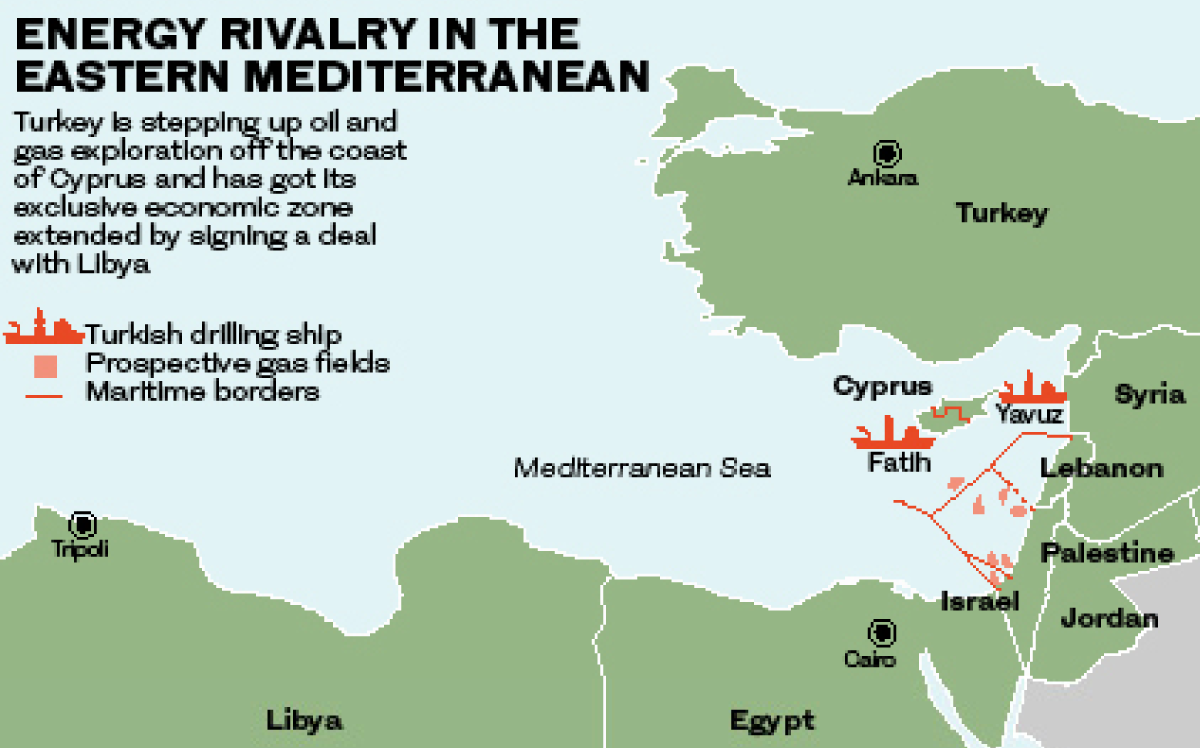
Most recently, Turkey signed an agreement with one of the warring administrations in Libya that unilaterally divided much of the Mediterranean between the two countries.
Ankara’s deal with the Tripoli-based Government of National Accord (GNA) drew a diagonal line from Libya’s continental shelf and waters to Turkey’s, with Turkey claiming the waters east of the line right up to the coast of Cyprus and beyond.
The delimitation of “exclusive territorial waters” ignored and displaced recognized claims by Cyprus and Greece. Turkey claimed this was legal because, in contrast to the EU and the UN, it did not recognize islands (such as the Greek islands and Cyprus) as being entitled to territorial waters beyond their immediate coastline.
Following its distinctive interpretation of maritime laws, Turkey was one of only four countries that did not sign the UN Convention on the Law of the Sea in 1982.
Ankara can therefore now claim that it shares a maritime border with Libya and Egypt and completely ignore Greece’s maritime border with Cyprus.
In return for the maritime borders deal with the Libyan GNA and the right to drill in Libyan waters as well, Turkey has dispatched military aid to Tripoli.
The Turkish support apparently included deployment of Syrian mercenary proxy forces that Turkey had also used in its incursions into northern Syria.
The GNA in Tripoli is fighting a Tobruk-based rival government supported by Egypt and several other countries.

INNUMBERS

122 – Estimated recoverable gas in trillion cubic feet in the Levant Basin.

223 – Estimated recoverable gas in trillion cubic feet in the Nile Delta Basin.

French President Emmanuel Macron accused Turkey of violating the Berlin peace conference with its military aid to the GNA, since signatories had agreed to stay out of the Libyan civil war.
Tensions in the Mediterranean as a result of the newly discovered gas reserves there go far beyond Libya, however.
Turkey’s moves appear to come as a result of Cypriot, Greek and Israeli joint ventures to develop the underwater gas reserves and build a pipeline for the gas from Israel’s new Leviathan gas project in the Mediterranean to Greece.

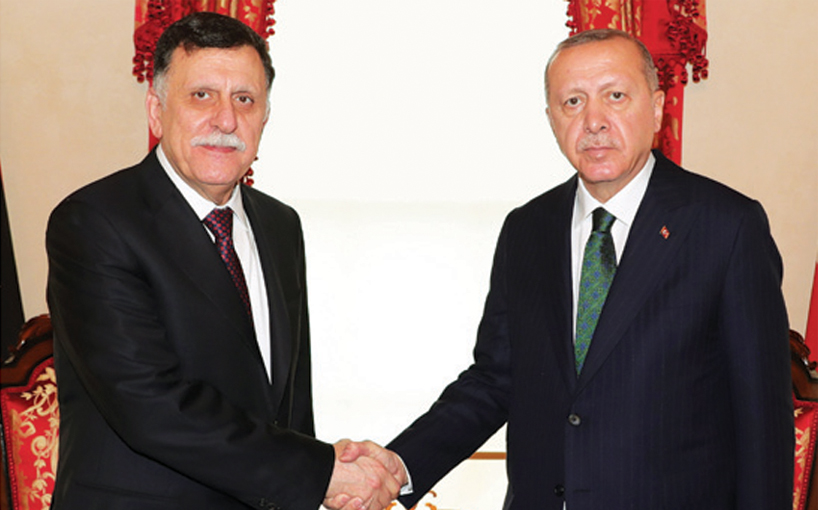
Recep Tayyip Erdogan (R) and Libya’s GNA PM Fayez Al-Sarraj. (AFP)

The pipeline would bypass Turkey, a self-proclaimed energy hub of the area with aspirations to be the central transit point of oil and gas to Europe.
The pipeline would likewise decrease European energy dependence on Russia, which has built a competing pipeline project in cooperation with Turkey.
The gas from the Israeli project has also already begun supplying Egypt and Jordan.
However, Turkey’s President Recep Tayyip Erdogan, mimicking Beijing’s actions in the South China Sea, has concluded that force can determine law.
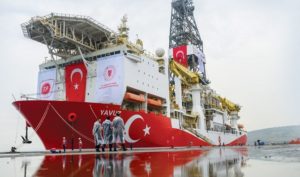
Turkish naval ships were therefore dispatched to accompany Turkey’s drilling vessels operating in what most of the world views as Cypriot territorial waters.
Turkey’s navy has regularly threatened and pushed out rival drilling ships from other countries, including Cypriot ones considered by many to be operating in their own waters.
For months, Turkey’s aggressive posturing on the seas was largely ignored by Europe (with the exception of Greece and Cyprus) and other powers.
Seeing little resistance to a fairly bellicose strategy in the eastern Mediterranean, Turkish leaders began pushing even harder.
The latest confrontation occurred on Dec. 15 last year, when Turkish naval forces accosted an Israeli exploration ship, the Bat Galim, off the coast of Cyprus.
The Bat Galim was conducting oil and gas exploration under contract from the Greek Cypriot government, but Turkish naval vessels forced it out of the area.
Greece quickly sent its own naval forces and issued a strong warning to Turkey, while Israeli F-16 and F-35 fighter aircraft began buzzing Turkish ships in the area.
France likewise responded by sending some of its own warships to the flash point — in support of Cypriot claims to these waters. France, Italy, Greece, and Cyprus engaged in joint naval exercises in the area as well.
By all accounts, Turkey is isolated on the issue. In addition to France, Egypt, Israel, Cyprus, Italy and Greece, other powers such as the EU, Saudi Arabia, the US and the UAE have vocally condemned Turkey’s moves in the Mediterranean and its recent deal with the Libyan GNA.
According to experts, Turkey’s legitimate rights in the Mediterranean are indisputable but these are not exclusive and must be balanced with the recognized rights of other states in the area – including smaller ones such as Cyprus.


Regional powers without any self-interest in the Mediterranean — such as Saudi Arabia and the UAE — thus have an important role to play here. They find themselves on the right side of history as they back a multilateral legal regime for the laws of the sea and discourage the kind of brinksmanship Turkey appears to be engaged in.
The EU has said Turkey’s activity “infringes upon the sovereign rights of third states, does not comply with the Law of the Sea and cannot produce any legal consequences for third states.”
Traditional Turkish allies such as Qatar and Azerbaijan have remained largely silent.
While Russia may appreciate Turkish moves to block the Greek-Cypriot-Israeli competing gas pipeline in the Mediterranean, Moscow backs the Tobruk-based government in Libya rather than the Tripoli-based one that Turkey signed a deal with and is arming.
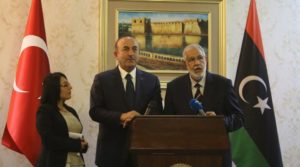
Ankara shows no signs of backing off, however. In December 2019, Mevlut Cavusoglu, Turkey’s minister of foreign affairs, told a local news channel that Turkey had “the right to prevent” what it viewed as “unauthorized drilling” in waters it considered to be part of its continental shelf.
When pressed about whether or not this included Turkey using force to assert its claims in the eastern Mediterranean, Cavusoglu replied “of course.”
Tensions such as these have a way of getting out of hand quickly if not addressed seriously right away.
The situation in the eastern Mediterranean has already been allowed to degenerate to very dangerous levels.
If hawkish powers like Turkey can get away with unilaterally reinterpreting maritime laws to the detriment of smaller states such as Cyprus, things may get a lot worse yet.

arabnews.com


Turkey agreement with Israel may be next step in Erdoğan’s plan for Med

0

After years of feuding with Israel over the Palestinian issue, the Turkish government could look to mend ties with Israel to boost its claim to gas-rich waters in the eastern Mediterranean, Turkish columnist Burak Bekdil wrote for international Jewish news site, the Algemeiner.

Until it signed a maritime borders deal with the U.N.-recognised Libyan government last November, Turkey had been left isolated against a block of regional countries including Israel, Cyprus, Greece and Egypt that signed deals demarcating areas of the eastern Mediterranean believed to hold vast hydrocarbon reserves.

Now it could seek a similar deal with Israel, according to the chief of staff of the Turkish Navy, Rear Admiral Cihat Yaycı, who masterminded the Libyan deal.

Israel has signed deals with the government of Cyprus, which Turkey does not formally recognise, and other regional states, but Turkey is acting as a spoiler for plans by Greece, Cyprus and Israel to build a pipeline that could carry gas under the Mediterranean to Europe.

But a deal with Turkey would carry Israeli gas to Europe far more cheaply, and Turkish President Recep Tayyip Erdoğan has said he would be willing to work with any regional state except Cyprus.

This potentially leaves the door open for a deal with Israel, though the bad blood between the countries, which have not exchanged ambassadors since expelling each other’s envoys in 2017, would make that difficult, Bekdil said.

Erdoğan and his Islamist-rooted Justice and Development Party have been firm backers of the Palestinian movement, including supporting Hamas, the militant Islamist group governing the Gaza Strip that Israel views as a terrorist organisation.

ahvalnews-com

Ο Πούτιν αρχίζει να ανακαλύπτει τι σημαίνει να είναι κανείς φίλος του Ερντογάν

1

capital.gr

Του Bobby Ghosh

Πούτιν, Ερντογάν και τι σημαίνει να είναι κανείς φίλος του ισχυρού άνδρα της Τουρκίας: Οι ένοικοι του Κρεμλίνου δεν έχουν άδικο να θεωρούν ότι στην Ουάσινγκτον ακούγονται κάποια πνιχτά γέλια για την περίπτωσή τους. Κι αυτό γιατί οι αξιωματούχοι της κυβέρνησης Τραμπ δεν μπορούν παρά να νιώθουν μια κάποιου είδους χαιρεκακία όταν παρακολουθούν τους ομολόγους τους στη Μόσχα να παλεύουν με ένα πάρα πολύ οικείο για το Πεντάγωνο και γενικά για το κατεστημένο της Ουάσινγκτον ζήτημα: πώς λύνει κανείς ένα πρόβλημα όπως ο Ρετζέπ Ταγίπ Ερντογάν;

Οι πιο φιλοσοφικά σκεπτόμενοι Ρώσοι αξιωματούχοι ίσως να παραδέχονταν ότι αυτή η αντιστροφή ρόλων έχει και ένα στοιχείο δικαιοσύνης: εδώ και αρκετά χρόνια ήταν οι ίδιοι που κρυφογελούσαν παρακολουθώντας τον πρόεδρο της Τουρκίας να διαρρηγνύει τους δεσμούς της χώρας του με τις ΗΠΑ, αναπτύσσοντας “πολεμική” ρητορική και προκλητική συμπεριφορά έναντι συμμάχων των Αμερικανών, από τους Κούρδους στη Συρία και το Ισραήλ έως την Ελλάδα, την Αίγυπτο και τα Ηνωμένα Αραβικά Εμιράτα.

Τα κέρδη της Μόσχας από τη ρήξη Δύσης – Ερντογάν

Οι Ρώσοι κέρδισαν όλη αυτή την περίοδο κάτι περισσότερο από την διατάραξη των σχέσεων του Ερντογάν με τις ΗΠΑ. Ο πρόεδρος Βλάντιμιρ Πούτιν εκμεταλλεύτηκε την κατάσταση για να αποδυναμώσει τον Οργανισμό του Βορειοατλαντικού Συμφώνου (NATO) και να εξασφαλίσει επικερδείς επιχειρηματικές συμφωνίες με την Τουρκία, από την πώληση στρατιωτικού εξοπλισμού έως αγωγούς φυσικού αερίου.

Προκειμένου να διατηρήσει το καθεστώς του ως του νέου καλύτερου φίλου του Ερντογάν, ο Πούτιν ανέχθηκε τις περιφερειακές και διεθνείς φιλοδοξίες του Τούρκου ηγέτη. Ακολουθώντας το παράδειγμα δύο Αμερικανών προέδρων, των Μπαράκ Ομπάμα και Ντόναλντ Τραμπ, ο Πούτιν έκανε ότι δεν άκουγε στην επιθετική ρητορική του Ερντογάν κατά συμμάχων της Ρωσίας όπως ο Σύρος δικτάτορας Μπασάρ αλ Άσαντ και ο Λίβυος πολέμαρχος Χαλίφα Χαφτάρ.

Ο Ρώσος ηγέτης έχει “καταπιεί τη γλώσσα του” ακόμη και σε περιπτώσεις κατά τις οποίες οι ενέργειες του Ερντογάν ακυρώνουν ή τουλάχιστον κάνουν ιδιαίτερα περίπλοκη την εκπλήρωση των ίδιων των φιλοδοξιών και στόχων της Ρωσίας. Μια τουρκική στρατιωτική εισβολή στη βορειοδυτική Συρία “τελείωσε” κάθε ελπίδα της Μόσχας ότι ο Άσαντ θα μπορούσε να ανακτήσει στρατιωτικά τον έλεγχο του συνόλου του εδάφους της Συρίας. Τούρκοι στρατιώτες και μισθοφόροι στέκονται πλέον  εμπόδιο στον δρόμο του Χαφτάρ για την κατάληψη της Τρίπολης.

Την ίδια στιγμή, ακριβώς όπως ο Ερντογάν έχει αψηφήσει την Ουάσινγκτον, αγκαλιάζοντας εκείνους που φωνάζουν συνθήματα όπως “Θάνατος στην Αμερική” – είτε πρόκειται για το καθεστώς του Ιράν είτε για την ηγεσία της παλαιστινιακής Χαμάς και της Μουσουλμανικής Αδελφότητας – ο πρόεδρος της Τουρκίας έκανε ακριβώς το ίδιο και έναντι της Μόσχας, με το σύνθημα “Slava, Ukraine”  κατά την πρόσφατη επίσκεψή του στο Κίεβο. Ο χαιρετισμός “Δόξα στην Ουκρανία” έχει γίνει σύνθημα αντίστασης στη ρωσική ηγεμονία από την προσάρτηση, το 2014, της Κριμαίας από το καθεστώς Πούτιν. Η Μόσχα και όσοι απηχούν τις θέσεις της ισχυρίζονται ότι πρόκειται για ναζιστικό σύνθημα.

Οι Ρώσοι ανακαλύπτουν τώρα, όπως είχαν ανακαλύψει στο παρελθόν τόσο οι Αμερικανοί όσο και οι Ευρωπαίοι, ότι με τον Ερντογάν τα πράγματα πάντα καταλήγουν σε κρίσεις οι οποίες συνοδεύονται από απειλές για τερματισμό συμμαχιών.

Συρία: η αιτία του διαζυγίου;

Ο Πούτιν βρίσκεται τώρα στην άλλη άκρη του διπόλου με τον Τούρκο ομόλογό του. Σε πρόσφατη τηλεφωνική επικοινωνία των δύο προέδρων, ο Ερντογάν προειδοποίησε ότι η Τουρκία θα αντιδράσει “με τον σκληρότερο τρόπο” εάν τα τουρκικά στρατεύματα στη Συρία δεχθούν άλλες επιθέσεις από τις δυνάμεις του Άσαντ. Και φυσικά, έχει προειδοποιήσει ότι η ρωσοτουρκική σχέση θα μπορούσε να τερματιστεί με αφορμή τη Συρία.

Αίμα έχει ήδη χυθεί και από τις δύο πλευρές. Οι δυνάμεις του Άσαντ έχουν εντείνει τις επιθέσεις τους εναντίον τουρκικών θέσεων στην επαρχία Ιντλίμπ, γεγονός που έχει κοστίσει τη ζωή σε αρκετούς Τούρκους στρατιωτικούς. Η Ρωσία ισχυρίζεται ότι ορισμένοι από τους στρατιωτικούς της σκοτώθηκαν σε επιθέσεις που εξαπολύθηκαν από τουρκικές θέσεις. Εκατοντάδες Σύροι, στρατιώτες και πολίτες, έχουν σκοτωθεί στις κλιμακούμενες μάχες και δεκάδες χιλιάδες έχουν αναγκαστεί να εγκαταλείψουν την περιοχή, δημιουργώντας μια νέα προσφυγική κρίση.

Οι επιλογές του Πούτιν σχετικά με τον Ερντογάν είναι περιορισμένες. Η Τουρκία είναι δυνητικά σημαντικός οικονομικός εταίρος για τη Ρωσία – οι δύο ηγέτες επιθυμούν το εμπόριο μεταξύ των δύο χωρών, που σήμερα ανέρχεται σε περίπου 30 δισεκατομμύρια δολάρια, να αγγίξει μελλοντικά τα 100 δισ. δολ. κατ’ έτος. Η συμμετοχή της Τουρκίας είναι ζωτικής σημασίας για τις ελπίδες της Ρωσίας να διατηρήσει πολυμερείς οργανισμούς στον Καύκασο και την Κεντρική Ασία. Και φυσικά, ο Πούτιν ενδιαφέρεται να εντείνει την αβεβαιότητα του ΝΑΤΟ σχετικά με την προσήλωση της Τουρκίας στη βορειοατλαντική συμμαχία.

Ο Ερντογάν τα γνωρίζει όλα αυτά. Εάν οι συναλλαγές του με τις ΗΠΑ και την Ευρώπη μπορούν να αποτελέσουν κάποιου είδους “οδηγό”, θα συνεχίσει να πιέζει τη Ρωσία για παραχωρήσεις στη Συρία και στη Λιβύη – και ποιος ξέρει πού αλλού.

Μπορεί η Ουάσιγκτον να επωφεληθεί από αυτή την κατάσταση, όπως έκανε η Ρωσία όταν οι σχέσεις της Τουρκίας με τις ΗΠΑ άρχιζαν να χειροτερεύουν; Ίσως, αλλά αυτό θα απαιτούσε ο Πούτιν να κινηθεί ενάντια στον Ερντογάν και ο Τούρκος ηγέτης να δείξει κάποιο ενδιαφέρον για επιστροφή στο δυτικό “πλαίσιο” στις διεθνείς σχέσεις. Δεν είμαστε ακόμη εκεί. Εάν φθάσουμε σε αυτό το σημείο, οι ΗΠΑ θα πρέπει να επιδείξουν διπλωματική τέχνη υψηλού επιπέδου – σίγουρα υψηλότερου σε σχέση με εκείνο που έχουν επιδείξει τα τελευταία χρόνια – προκειμένου να προσελκύσουν τον Ερντογάν και να τον βγάλουν από τον “πάγο”.

Προς το παρόν, ωστόσο, οι Αμερικανοί αξιωματούχοι μπορούν απλώς να απολαμβάνουν ήσυχα-ήσυχα το πάθημα του Πούτιν, δηλαδή τον τρόπο με τον οποίο ο τελευταίος ανακαλύπτει σιγά – σιγά τι σημαίνει να είναι κανείς φίλος με τον Ερντογάν.

capital.gr

ΑΝ ΔΕΝ ΑΛΛΑΞΟΥΜΕ, ΘΑ ΧΑΣΟΥΜΕ

7
Η Γερμανία θα φιλοξενήσει στο Μόναχο νέα Διάσκεψη για τη Λιβύη σε επίπεδο υπουργών εξωτερικών. Και, φυσικά, παρά τις διαβεβαιώσεις που δόθηκαν, η Ελλάδα παραμένει εκτός συμμετοχής.
Ας ξεχάσουμε ό,τι γνωρίζαμε για κοινή εξωτερική πολιτική της Ε.Ε. Αυτήν τη στιγμή κάτι τέτοιο δεν υπάρχει, επι της ουσίας, και δεν θα συγκροτηθεί, με τις σημερινές δομές της Ένωσης.
Το πολύ πολύ η Ε.Ε. να παράσχει στα μέλη της το νέφος (cloud, στη γλώσσα των υπολογιστών) μιας soft ισχύος. Ό,τι κερδίζουν απο το γεγονός ότι είναι μέλη της Ένωσης. Τίποτε περισσότερο.
Σε λίγο θα αναδυθούν και εσωτερικά προβλήματα. Γερμανίας και Γαλλίας σε ό,τι αφορά την πολιτική και στρατιωτική ηγεσία της Ε.Ε., ακόμη και Ελλάδας και Γερμανίας, σε ό,τι αφορά τα Βαλκάνια.
Η Γερμανία θεωρεί ότι η Ελλάδα έχει τεθεί πίσω απο το άρμα των ΗΠΑ. Είναι αδύνατον με αυτήν την εδραιωμένη πεποίθηση των Γερμανών, να προσκληθεί η Ελλάδα σε συνάντηση γερμανικής πρωτοβουλίας.
Υπενθυμίζω πως η Ελλάδα δεν προσκλήθηκε ούτε στην πρώτη Διάσκεψη για τη Λιβύη στο Βερολίνο, ούτε και στην προγραμματιζόμενη στο Μόναχο. Βεβαίως, δεν προσκλήθηκε να συμμετάσχει και στην υπο γερμανική πρωτοβουλία Διάσκεψη του Βερολίνου για τα Δυτικά Βαλκάνια.
Αν προσέξετε τις δηλώσεις Πάγιατ η Ελλάδα ενθαρρύνεται να διαδραματίσει ηγετικό ρόλο στα Βαλκάνια. Αυτό θα φέρει την Αθήνα, ακόμη και σε αντιπαράθεση με το Βερολίνο.
Γι αυτό ας σοβαρευτούμε Και ας αναζητήσουμε τρόπους αποτελεσματικής διαχείρισης των εξελίξεων που διαφαίνονται.
Ας αναδειχθεί ένας νέος ρόλος για τη Θεσσαλονίκη με την αναβάθμιση του Υφυπουργείου Μακεδονίας-Θράκης σε υπουργείο και τη μεταφορά αρμοδιοτήτων απο την Αθήνα σε αυτό.
Ο τρόπος που λειτουργεί ως σήμερα το ελληνικό κράτος είναι αναποτελεσματικός. Επιτέλους ας αλλάξουμε κάτι ριζικά.

AMERICA TODAY: We’re In A Golden Age Of White Collar Crime

0
1A Slow-Motion Looting

OVER THE LAST TWO YEARS, nearly every institution of American life has taken on the unmistakable stench of moral rot. Corporate behemoths like Boeing and Wells Fargo have traded blue-chip credibility for white-collar callousness. Elite universities are selling admission spots to the highest Hollywood bidder. Silicon Valley unicorns have revealed themselves as long cons (Theranos), venture-capital cremation devices (Uber, WeWork) or straightforward comic book supervillains (Facebook). Every week unearths a cabinet-level political scandal that would have defined any other presidency. From the blackouts in California to the bloated bonuses on Wall Street to the entire biography of Jeffrey Epstein, it is impossible to look around the country and not get the feeling that elites are slowly looting it.

And why wouldn’t they? The criminal justice system has given up all pretense that the crimes of the wealthy are worth taking seriously. In January 2019, white-collar prosecutions fell to their lowest level since researchers started tracking them in 1998. Even within the dwindling number of prosecutions, most are cases against low-level con artists and small-fry financial schemes. Since 2015, criminal penalties levied by the Justice Department have fallen from $3.6 billion to roughly $110 million. Illicit profits seized by the Securities and Exchange Commission have reportedly dropped by more than half. In 2018, a year when nearly 19,000 people were sentenced in federal court for drug crimes alone, prosecutors convicted just 37 corporate criminals who worked at firms with more than 50 employees.

With few exceptions, the only rich people America prosecutes anymore are those who victimize their fellow elites. Pharma frat boy Martin Shkreli, to pick just one example, wasn’t prosecuted for hiking the price of a drug used to treat HIV from $13.50 to $750 per pill. He went to prison for scamming investors in a hedge fund scheme years before. Meanwhile, in 2016, the CEO whose company experienced the deadliest mining disaster since 1970 served less than one year in prison and paid a fine of 1.4 percent of his salary and stock bonuses the previous year. Why? Because overseeing a company that ignores warnings and causes the deaths of workers, even 29 of them, is a misdemeanor.

Construction magnate Bruce Karatz provides an infuriating case study of how the criminal justice system treats wealthy defendants. In 2010, Karatz was convicted of failing to disclose in a financial statement that he had secretly “backdated” his stock options (think Biff with the Sports Almanac in “Back to the Future II”) to boost his pay by more than $6 million. Prior to his sentencing hearing, his lawyer submitted letters of support from former mayor of Los Angeles Richard Riordan and billionaire philanthropist Eli Broad. Prosecutors recommended six-and-a-half-years in prison; the judge gave Karatz five years’ probation and eight months of house arrest in his Bel Air mansion. After two years, the judge terminated the remainder of the sentence. Karatz later received a civic award from The Malibu Times for volunteer work he did to make a good impression for his sentencing hearing.

HARVEY WEINSTEIN AND JEFFREY EPSTEIN.Getty Images

Country-club nepotism and Gilded Age avarice are nothing new in America, of course. But the rich are enjoying a golden age of impunity unprecedented in modern history. “American elites have become more brazen than they were even five years ago,” said Matthew Robinson, a professor at Appalachian State University and the author of several books on “elite deviance”— all the legal and illegal social harms caused by the wealthy.

Elite deviance has become the dark matter of American life, the invisible force around which the country’s most powerful legal and political systems have set their orbit. Four members of the Sackler family, the owners of Oxycontin maker Purdue Pharma, have retained the services of former SEC head Mary Jo White as their personal lawyer. Epstein’s dinner party guest lists included Harvard professors, billionaire philanthropists and members of political dynasties in at least two countries. In 2017, the pharmaceutical company Novartis spent about 14 percent of its annual lobbying budget on payments to a shell company controlled by ex-Trump lawyer Michael Cohen.

Tax evasion siphons10,000times more money out of the U.S. economy every year than bank robberies.SOURCE: FBI; IRS.

And this clubbiness has human costs. Tax evasion, to pick just one crime concentrated among the wealthy, already siphons up to 10,000 times more money out of the U.S. economy every year than bank robberies. In 2017, researchers estimated that fraud by America’s largest corporations cost Americans up to $360 billion annually between 1996 and 2004. That’s roughly two decades’ worth of street crime every single year. As the links between corporations and regulators become increasingly incestuous, the future will bring more crude-soaked coastlines, price-gouging corporate behemoths and Madoff-style Ponzi schemes. More hurdles to suing companies for poisoning their customers or letting bosses harass their employees. And more uniquely American catastrophes like the opioid crisis and the price of insulin.

Perhaps the greatest myth about white-collar crime is that Americans struggle to understand it—as if chemical companies toxifying rivers or insurance executives gouging their customers fail to stimulate our moral intuitions. In fact, surveys consistently show that the vast majority of the population considers white-collar crime more harmful than street crime and powerful offenders more odious than common criminals.

Those intuitions are correct: An entrenched, unfettered class of superpredators is wreaking havoc on American society. And in the process, they’ve broken the only systems capable of stopping them.

2An Increasingly Desperate Pantomime Of Legal Enforcement

EVERY YEAR, AT BRANDED COCKTAIL receptions and bloated buffet breakfasts, government agents spend two days hobnobbing with the tax-haven attorneys they spend the rest of the year investigating.

The Offshore Alert conference takes place in Miami each spring, in London each fall and in “key offshore jurisdictions” all year round. Officially, participants come to discuss “wealth creation, preservation and recovery.” Less officially, the tax lawyers come to learn what the feds will crack down on next year. The government investigators come to fish for future jobs. Imagine a yearly picnic where sheriffs give drug dealers tips on hiding baggies from pat-downs and leave with a new set of endorsements on LinkedIn.

In person, the conference is even more surreal than it sounds. From across a cologne-scented hotel lobby, I watched tanned attorneys fresh off flights from the Caribbean mingle with ashen IRS agents who bring business cards from Kinko’s because the agency won’t pay to get them printed anymore. I listened to officials from the FBI and SEC lay out enforcement priorities as cryptocurrency investors and Russian bankers took notes. At lunch, I talked “Game of Thrones” with a Senate advisor, a government auditor and a Bahamanian lawyer who later offered to set me up a shell corporation for $5,000.

“We killed a generation of agents,” said Arthur VanDesande, a former IRS investigator. “If you investigate mom and pop grocery stores for 20 years, you lose the ability to do Bernie Madoffs.”

The finance types were frosty during the day—an investor who appeared to be wearing monogrammed slacks wouldn’t tell me his first name—but they loosened up at the happy hours. An offshore tax advisor bragged that he could take his clients’ tax rates from 49 percent to 15 percent and complained that they were constantly pushing him to go lower. Another told me that most of his clients aren’t trying to hide money from the government but from their second or third wives. “The first one raised their kids so they feel like she’s entitled to something,” he explained. “It’s the trophy wives they want to lock out.”

Jack Albertson is a government investigator—that’s not his real name and he won’t let me get more specific about his job description—who has been coming to Offshore Alert for years. When I ask him how this cops-and-robbers conflagration even exists, he tells me I’m thinking about it the wrong way. He, like all the other investigators here, knows that many of the lawyers who attend are hiding their clients’ money sketchily or outright illegally. He even knows how they’re doing it. The tactics for hiding money from tax authorities are not particularly sophisticated and have barely changed in the last 50 years. Set up a shell company and buy an appreciating asset—Iowa farmland, a London apartment, a New York pizzeria, something common enough that it won’t attract attention.

Contrary to the “Catch Me If You Can” myth, Albertson said, solving financial crimes is not a cat-and-mouse game between cunning investigators and slippery con artists. Most of the time it is simply the blunt application of resources to a series of unimaginably tedious tasks. “Investigators can already crack almost any offshore account if they have enough time and money,” he said. “The problem is that they only get that for a few cases a year.”

Over the last four decades, the agencies responsible for investigating elite and white-collar crime—roughly speaking, the IRS, SEC, the Occupational Safety and Health Administration, the Environmental Protection Agency and FBI—have seen their enforcement divisions starved into irrelevance. More than a third of the FBI investigators who patrol Wall Street were reassigned between 2001 and 2008. Enforcement funding at the IRS has fallen by 23 percent over the last decade. And, worst of all, every time a scandal exposes the government’s inadequacy, Congress steps in to squeeze the regulators even harder.

The most instructive case of this deliberate stunting is the Consumer Product Safety Commission. Founded in 1972, the CPSC’s job is to make sure the things you buy won’t pierce, poison or burn you. In the 1980s, Ronald Reagan slashed its budget as part of his crusade against bureaucratic waste. In the 1990s, Clinton instructed the agency to produce more data as part of his push for government accountability. No matter which party was in power, every administration gave the CPSC more to do and less money to do it with. By 2007, it had shrunk from its initial 786 employees to just 420.

SINCE DONALD TRUMP BECAME PRESIDENT, WHITE COLLAR PROSECUTIONS HAVE FALLEN TO A RECORD LOW.Getty Images

That same year, Mattel announced a recall of more than 1 million⁠ of its children’s toys that had been contaminated with lead paint. Despite the company’s sophisticated international operations and billions in revenues, it had never bothered to inspect the Chinese sub-contractors. By then, the CSPC had fewer than 100⁠ inspectors to monitor all imports to the United States. The Los Angeles-area ports where a chunk of the tainted toys arrived was overseen by a single part-time inspector.

Congress responded to the scandal by compounding the mistakes that had caused it. Lawmakers agreed to double the CPSC’s budget and increase its staff, but also obligated the agency to carry out dozens of new activities, including the creation of a public database to track safety hazards for every single product sold in the U.S.

The new mandate swallowed up all the agency’s new funding and more. Soon, the CPSC was dedicating nearly all of its time to lead abatement in children’s toys, neglecting millions of products that posed far greater risks to children, like flammable blankets or dangerous table saws. The product database filled up with unconfirmed complaints and spammy comments. Mattel, meanwhile, faced no consequences for manufacturing the lead-tainted toys beyond a $2.3 million fine—roughly 0.006 percent⁠ of its net income. According to Rena Steinzor, the author of “Why Not Jail? Industrial Disasters, Corporate Malfeasance, and Government Inaction,” the same cycle has repeated itself across every form of elite deviance, from tax compliance to financial regulation to environmental protection. In 2010, following a series of tax-haven scandals, the IRS set up a “wealth squad” to investigate the ultra-rich —but only staffed it with enough agents to perform 36 audits in its first two years.

After the Enron-led avalanche of corporate bankruptcies in the early 2000s, Congress gave the SEC enough funding to hire 200 new auditing staff. At the same time, however, lawmakers obligated the agency to review the filings of every publicly traded U.S. financial firm every three years—a mandate far larger than the agency’s new staffing levels. Then, after the financial crisis, it happened again: The Dodd-Frank act tasked the SEC with monitoring even more companies and trillions of new assets while increasing its enforcement staff by less than 10 percent.

This cycle has left America’s regulators with no choice but to engage in an increasingly desperate pantomime of white-collar law enforcement. On the outside, they report impressive performance statistics to avoid even more budget cuts. Behind the scenes, they’ve retreated to investigating only the defendants they know are guilty and the crimes they know where to find.

The primary beneficiaries of this shift are American elites. Rich people generate mountains of financial data. Millionaires can have over 100 bank accounts; billionaires’ tax returns run to 800 pages long. For people who earn most of their income from working (i.e. almost everyone), the IRS has an automatic system that compares individuals’ reports to the records submitted by their employers and banks. For the wealthy, who make much of their income from interest and investments, the agency has nothing to compare their reports against. The only way to tell if a rich person is cheating on their taxes is to sit down and go through them line by line.

In 2018, prosecutors convictedjust 37corporate criminals who worked at companies with more than 50 employees.SOURCE: U.S. SENTENCING COMMISSION.

“Let’s say you get a tip that some billionaire is hiding a bunch of money offshore and not paying taxes on it,” said Arthur VanDesande, who spent 25 years as a criminal investigator for the IRS. “And you manage to narrow the tax evasion down to 20 of his bank accounts. OK, now you have to prepare 20 subpoenas, get them signed by a judge and deliver them to the banks. But when you go to Bank of America, they say, ‘We don’t accept subpoenas at this location, you have to go to our authorized representative in Orlando.’ So then you go to Orlando and and you find out the money is linked to an offshore account. So then you have to write to the embassy…’”

Due to the IRS’ lean resources, VanDesande did most of this legwork himself. “You type your own shit, you make your own copies, you write every single affidavit. Sometimes you feel like, ‘I’m a senior-level person with a college degree. Why am I calling Wells Fargo and sitting on hold for 45 minutes?’”

Only some of this drudgery can be outsourced to lower-level staffers. White-collar cases involve understanding arcane laws, absorbing thousands of pages of documents, traversing international jurisdictions and coordinating a vast array of agencies from the Secret Service to the Post Office. They require investigators to be Jack Ryan, Magnum P.I. and Leslie Knope all at once. Even though auditing millionaires and billionaires is one of the most cost-effective government activities imaginable—an independent report estimated in 2014 that it yielded up to $4,545 in recovered revenue per hour of staff time—the IRS investigated the returns of just 3 percent of American millionaires in 2017.

In addition to reducing their caseload, America’s white-collar enforcement agencies have started prioritizing crimes they can prosecute in bulk. In 2017, the Department of Justice took on 889 prosecutions for identity theft (which, according to a 2010 survey, is estimated to cost individuals $371 out-of-pocket) and just 24 for antitrust violations. According to a ProPublica report, 43 percent of all tax filers audited by the IRS earn less than $56,000 per year. Roughly one in six of the SEC’s enforcement actions in fiscal 2019 were against financial firms for filing paperwork late—a six-fold increase since 2004.

Helen Richmond, a paralegal in a white-collar prosecutor’s office (that’s not her real name), said most of the defendants her office pursues are “either dumb or unlucky.” She’s worked on cases against money launderers who named stolen items on their wire transfers and fraudsters who sent emails with recipe-like details of their schemes. Criminals with even a scrap of sophistication, Richmond said, mostly avoid detection.

Another bargain-hunting strategy is to try cases in administrative proceedings rather than civil courts, an innovation that reduces hearings from months to hours. The downside, though, is that these cases largely play out in secret, resulting in fines rather than prison time and don’t compel defendants to testify, turn over evidence or admit guilt. In 2007, the SEC filed 60 percent of its settlements in civil courts. In 2015, that proportion was 17 percent. In 2014 and 2015, the agency didn’t file a settlement against a single U.S. Wall Street firm.

One of the most conspicuous aspects of white-collar cases is the doting, near-veterinary care with which judges try to prevent defendants from facing harsh punishment.

According to former OSHA assistant secretary David Michaels, these strategies are designed to achieve the all-consuming yet unstated goal of every regulation agency in America: Make yourself look more powerful than you are. The best way to do this is to focus on the cases that will yield the maximum deterrence for the lowest cost. At OSHA, Michaels said, “we would issue press releases announcing waves of random inspections so employers would look at their hazards. We never told them we only planned to do a few inspections.”

Similarly, the IRS has explicitly instructed agents to prioritize cases likely to generate headlines. (Ever wonder why so many B-list celebrities get busted for tax evasion?). Federal investigators go after media punching bags like Martin Shkreli, Martha Stewart and Fyre Festival scammer Billy McFarland to make the public think criminal prosecutions are routine. They’re not: In a case-by-case analysis of the 216 alleged large-scale corporate frauds discovered between 1996 and 2004, researchers found that the media uncovered twice as many as the SEC.

And so, after decades of operating in survival mode, white-collar enforcement agencies are better at reporting success than producing it. In a 2016 study, a Georgetown University School of Law professor named Urska Velikonja discovered that while the SEC reported a steady rise in prosecutions between 2002 and 2014, most of the increase was statistical padding. When a trader was charged with fraud and then lost her license to trade securities, for example, the SEC logged the sanctions as two separate cases. When the agency was in danger of posting sluggish performance stats for the year, investigators filed dozens of slam-dunk cases in September to catch up. As Velikonja put it, “they’re engaging in their own version of accounting fraud.” (The SEC declined to comment.)

For the agents charged with cracking offshore tax schemes and protecting consumers from lead-painted Elmo collectibles, this charade is profoundly demoralizing. “We killed a generation of agents,” VanDesande said. “If you investigate mom and pop grocery stores for 20 years, you lose the ability to do Bernie Madoffs.”

VanDesande has spent months building cases only to have the DOJ toss them with little explanation. Richmond, the paralegal, tells me federal and state prosecutors have been playing hot potato with one of her cases for months because they can’t justify an expensive prosecution for a fraud that adds up to the low six digits. During his first year on the job, Lewis Winters, an SEC examiner (and another government employee who couldn’t use his real name), had an investigation of a shady CEO rejected by the agency’s enforcement division. Even though he had found plenty of violations, the crimes just weren’t … grand enough for the agency to pursue.

“It felt personal,’” Winters said. “Why did I spend three months examining this guy if enforcement just goes, ‘meh’?”

3Defining Deviance Downward

ENRON USED TO BE CONSIDERED the capstone to the Golden Age of white-collar prosecutions, a shining example of the system working like it’s supposed to. Weeks after the company filed America’s then-largest corporate bankruptcy, federal agents searched its headquarters and discovered a $63 billion game of three-card monte. Using an intricate network of off-the-books shell companies, Enron executives made loans look like income and debt look irrelevant. The year before the company collapsed, its leaders had falsified 96 percent of its net income and 105 percent of its cash flow.

Between 2002 and 2006, the FBI’s Enron Task Force filed charges against more than 30 architects of Enron’s fraud. Investigators discovered a “shred room” at the company’s financial auditor, Arthur Andersen, and convicted the company of obstruction of justice. Four Merrill Lynch bankers were found guilty of helping Enron falsify its financial returns by purchasing three Nigerian barges. Task force agents convinced the company’s chief financial officer to testify against his higher-ups by threatening to charge his wife with a felony. He flipped; they convicted her of a misdemeanor.

Eventually, after a five-year investigation, Enron founder Ken Lay and former CEO Jeffrey Skilling were convicted of securities fraud and a meal deal of lesser charges. Though Lay died at a rented mansion in Colorado shortly afterwards, Skilling got 24 years in prison. At the time, it was one of the longest white-collar sentences in U.S. history. Prosecutors called it a victory. Skilling’s lawyers called it just the beginning.

ENRON’S JEFFREY SKILLING AND KEN LAY.Getty Images

As soon as the nation turned its attention elsewhere, Skilling’s lawyers began quietly dismantling his sentence. They filed appeals objecting to the statutes used to convict him, the trial’s Houston location and the questionnaires filled out by potential jurors. In 2013, citing the “extraordinary resources” it had spent prosecuting and defending Skilling’s conviction, the Department of Justice agreed to cut ten years off Skilling’s sentence if he promised not to file any more appeals. He was released in February 2019 after serving less than half his original sentence.

The rest of the FBI’s victory has crumbled under the same blitzkrieg of high-priced lawyering. The Supreme Court overturned Arthur Andersen’s conviction in 2005. The convictions of three of the Merrill Lynch bankers were vacated after they convinced an appeals court that they were merely trying to “solidify business relationships” rather than acting for personal gain. In the end, just 18 people served prison sentences (by comparison, more than 500 served time for the savings and loan crisis of the 1980s and early 1990s). Fourteen of them served fewer than four years. Andrew Fastow, the mastermind of Enron’s network of shell companies, now makes his living lecturing business school students and fraud investigators about how he did it.

Nearly every high-profile corporate scandal has the same overlooked epilogue. The wealthy have always attempted to spend their way to lighter sentences, but in the last two decades, the American judicial system has become increasingly willing to let them.

Fraud by large corporations costs Americans up to$360 billionper year—the equivalent of two decades’ worth of street crime. SOURCE: NEW YORK UNIVERSITY, DRUG AND ALCOHOL DEPENDENCE.

“We’ve seen a concerted effort to define deviance downward,” said Paul Leighton, a professor at Eastern Michigan University and the co-author of “The Rich Get Richer and the Poor Get Prison.” “We’ve made felonies into misdemeanors, misdemeanors into torts and torts into regulatory offenses.”

Honest services fraud, for example, is the subsection of mail and wire fraud that prohibits companies from lying to customers to get their business and CEOs from lying to investors after they’ve already been hired. Think of a mechanic telling you that your perfectly functional transmission is busted, then telling you it will cost $2,000 to fix it. He hasn’t defrauded you exactly—he really will replace your transmission—but he used his position of authority to scam you into paying for something you didn’t need.

Since 1909, prosecutors have used the honest services fraud provision to go after companies that lie to boost their stock price and politicians who give golfing buddies lucrative procurement contracts. District Court Judge Jed Rakoff, a former white collar prosecutor, once referred to the statute as “our Colt 45, our Louisville Slugger, our Cuisinart.”

But over the last three decades, the Supreme Court has taken the law apart piece by piece. In 1987, the Rehnquist Court ruled that the statute should never have been used to protect the so-called “right to honest services.” In 2010, the court restricted its application to public-sector bribery and kickbacks. From now on, the lying mechanic is breaking the law only if someone else is paying him to scam you.

Based on that ruling, several white collar criminals—including, wait for it, Jeffrey Skilling—had their sentences or convictions vacated. This year, two former Chris Christie underlings will tell the Supreme Court that orchestrating the “Bridgegate” conspiracy, in which they deliberately orchestrated traffic jams to get revenge on a Democratic mayor, is no longer illegal under the new, narrowed definition. If the Supreme Court agrees, the law will get even weaker.

There will never be a wake-up call for corporations; the justice system doesn’t do that anymore.

Other white collar statutes have suffered the same slow strangulation. In 2006, a district court judge reaffirmed the right of companies to pay the legal fees of their executives, effectively giving every C-suite defendant the same deep pockets as their corporate employer. Since 1996, the Supreme Court has consistently blocked plaintiffs from receiving punitive damages, arguing that large punishments deprive corporations of their due process rights. In 2016, the court ruled that federal bribery law only applies to politicians who traded official acts for personal benefit—the kind of immediate, explicit kickback that rarely happens outside of corporate HR training videos.

“Criminal law used to be more closely aligned to our moral intuitions,” said Will Thomas, a University of Michigan professor who studies corporate liability. “We still talk about it like it’s a guiding moral force, but it’s a much more administrative process now.”

Today, Thomas explained, judges are more willing to disregard the consequences of their rulings (like, say, an Enron-scale fraud going unpunished) in favor of resolving obscure procedural ambiguities. In 2017, for instance, a case against New York financier Benjamin Wey was dismissed after he successfully argued that the search warrant used to gather evidence against him was overly broad and vaguely worded.

The confounding thing about these challenges is that they often highlight real weaknesses in the criminal justice system. American law is a contradictory jungle of century-old statutes and arbitrary definitions. Lying to government investigators, for example, is prohibited by at least 215 separate laws, each with their own standard of proof. Mens rea, the concept of “guilty mind” central to establishing criminal liability, has more than 100 definitions across various statutes.

So of course wealthy defendants win cases by arguing that fraud statutes and insider trading rules are poorly written. They are. But so are the rest of the laws. (Numerous state anti-gang statutes, for example, define “gang” so imprecisely that they could apply to most sororities.) The only difference is that white-collar defendants have the ability to dispute every step of the process used to convict them—and a judicial system all too happy to oblige.

One of the most conspicuous aspects of white-collar cases is the doting, near-veterinary care with which judges try to prevent defendants from facing harsh punishment. In 2014, a Colorado judge ruled that two farm owners whose tainted cantaloupes caused a listeria outbreak and killed 33 people couldn’t be sent to prison because it would interfere with their ability to earn income for their families. As he announced a sentence of five years probation, the judge explained, “I must deliver both justice and mercy.”

More than50%of auditors for the country’s largest companies said they had been asked to falsify internal audit reports.SOURCE: INSTITUTE OF INTERNAL AUDITORS.

According to a study by the Federal Judicial Center, four out of five judges in federal courts (where the vast majority of white-collar cases are decided) are white. A 2010 survey found that they have an average age of nearly 70. Their base salary is $210,000 per year.

It is, as one of those high-priced lawyers might say, improbable that these demographic and economic facts exert no influence whatsoever on judges’ rulings. In a 2012 review of sentencing data in Florida, researchers found that “high-status” white collar criminals, such as doctors scamming Medicaid, were 98.7 percent less likely to receive prison terms than welfare fraudsters. A 2015 study found that judges showed increasing mercy as fraud offenders moved up the income scale: Criminals who stole more than $400 million got sentences that were less than half of the minimum recommended by federal guidelines. Criminals who stole $5,000 or less served sentences well over the minimum.

“When you zoom out, you see all the ways that bias accumulates throughout the system,” said Justin Levinson, a University of Hawaii professor and the editor of “Implicit Racial Bias Across The Law.” Sentencing guidelines prescribe lighter punishments for first-time offenders and criminals who can afford to pay restitution. Evidence rules make it nearly impossible to seize records or computers from corporations. Jury selection weeds out the poor, the less educated and minorities.

And then there’s the matter of criminal liability. For many low-level crimes, prosecutors have to prove that a defendant should have known a crime was taking place. If a renter deals drugs out of her apartment, her landlord can be prosecuted. If you loan your friend your car and he commits a murder while driving it, you can be charged with murder, too. For executive-level crimes, however, the bar of criminal liability is set impossibly high: Prosecutors have to prove that defendants knew their actions were illegal and did them anyway. This myopic focus on intent means that white-collar trials often come down to the question of whether the defendant was the kind of person who would commit a criminal act.

John Lauro, an attorney who has represented healthcare and financial executives, said he always emphasizes the complexity of white-collar crimes to the jury—financial disclosures are so technical! How could my client possibly know that stock wasn’t going to pan out? He also plays up the upstanding-citizen angle. The first thing he does when he lands a new client, he said, is visit their homes and meet their families.

“I bring in things like their marriage, their kids and whether they coach little league,” he said. “The prosecution always wants to dehumanize them. They call my client ‘the defendant.’ I’ll call him by his first name until a judge tells me to stop.”

The only way to get around this, said Sarah Larkin, a securities fraud prosecutor in Manhattan (she couldn’t speak on the record, so that’s not her real name), is to make every crime seem as simple as possible. It’s lying, it’s cheating, it’s stealing. She structures every trial like a crash course, spending days explaining how the stock market works and what acronyms like SEC, CDO and GAAP stand for. Before she can convince jurors that the defendant lied on a financial statement, she has to do a week-long “Big Short” interlude to teach them what a financial statement even is—without the help of Margot Robbie in a bathtub.

“And after all that,” she said, “you still have to make the case for why this person who looks very upper-middle-class and has a family sitting in the back row should be branded a criminal. It’s a heavy lift.”

The near-impossibility of establishing white-collar defendants’ motives combines with the high standard of reasonable doubt to create a paradox. Most Americans have a visceral aversion to greedy executives in general. Introduce them to a single banker and a specific crime, however, and their moral outrage often melts away. As Sam Buell, a Duke University law professor, told me: “Put people on a jury and they’ll say, ‘Gee, it seems like this guy was doing his job, so I don’t think it was a crime.’”

Take the case of Brian Stoker, a Citigroup employee who was charged in 2011 with marketing risky investments (one trader called them “dogsh!t” in an internal communication) as safe bets. According to the SEC, the bank made $160 million while investors lost $700 million. In his closing argument, Stoker’s attorney showed the jury an illustration from a “Where’s Waldo” book. Their client was a nobody, he suggested, a scapegoat for the culture of high-stakes gambling that had taken over the entire financial sector. Why make him a patsy when everyone else was doing the same thing?

The jury declared Stoker not guilty. But in the same envelope as their decision, they included a handwritten note. “This verdict,” it read, “should not deter the S.E.C. from continuing to investigate the financial industry.” In other words: Keep trying to lock up greedy bankers. Just not this one.

And this is it, the Rosetta Stone for understanding why judges are so comfortable explaining away the misconduct of corporate executives; why Congress never strengthened the castrated white-collar statutes; why so few pharmaceutical executives have been imprisoned for the opioid crisis and only a single banker went to prison for the financial crash. American law is incapable of prosecuting crimes in which elites use their legitimate power for nefarious ends.

3%of the millionaires who filed tax returns in 2017 were audited by the IRS.SOURCE: TRANSACTIONAL RECORDS ACCESS CLEARINGHOUSE AT SYRACUSE UNIVERSITY.

“The way businesses harm people is the same way they interact with them normally,” Albertson said. Banks collect debts and foreclose on homes every day. Banks give out home loans every day. When they entice customers into unaffordable mortgages or foreclose on borrowers tricked into signing loans they can’t afford, the courts can’t tell the difference.

This insight also explains why the legal system applies the opposite logic to organizations run by the rich and organizations run by the poor. Teenage gang members who argue that they committed crimes due to the culture of the Crips or the Latin Kings receive harsher sentences—stealing money for yourself is bad; stealing money for a criminal organization is worse. Corporate defendants who claim they committed crimes due to the internal culture of Goldman Sachs or HSBC, on the other hand, get lighter sentences—how could an individual possibly be held accountable for something everyone else was doing?

And so, as they lose the ability to prosecute high-level crimes and elite offenders, many of America’s criminal justice institutions have simply stopped trying. Of the 649 companies prosecuted by the Department of Justice since 2015, only eight were convicted in court. The rest either took settlements or negotiated themselves a deferred prosecution or non-prosecution agreement.

These arrangements, like so many other aspects of America’s white-collar enforcement apparatus, represent the cynical perversion of a benign idea. Deferred prosecution agreements were created in the 1930s to allow first-time juvenile offenders to avoid jail time if they followed probation rules and didn’t reoffend. Since the early 1990s, prosecutors began extending the principle to corporations: If you agree to investigate your own crimes, turn over evidence against your employees and change your internal policies, we won’t take you to court.

Since then, deferred prosecutions have become one of the primary engines of American impunity. They don’t require companies to explicitly admit guilt and don’t apply steeper punishments to repeat offenders. While courts often appoint independent monitors to make sure corporations comply with the terms of their probation, these reports aren’t released to the public. Since 1999, only three companies have ever been prosecuted for violating the terms of their agreements.

“Criminal law isn’t just about deterrence, it’s about moral education,” said John Coffee, the director of the Center on Corporate Governance at Columbia Law School. “You show the public that a crime occurred and how terrible its impact was. We’re missing that catharsis now.”


CREDITS

Story
Michael Hobbes is a senior enterprise reporter for HuffPost and the co-host of You’re Wrong About. He previously wrote for Highline about millennials, obesity, gay loneliness and sweatshops. He lives in Seattle.
Research
Matt Giles is a freelance writer and the head of research and fact-checking at Longreads.
Creative Direction and Design
Una Janicijevic is an art director in Toronto.
Illustration
Rebecca Yanovskaya is a Toronto based illustrator whose focus is decorative and narrative works in a signature ballpoint pen and gold leaf style.
Development & Design
Gladeye is a digital innovations agency in New Zealand and New York.

Turkey’s Nationalist Course

0

Research Questions

  1. What political, social, and economic trends are shaping Turkey’s internal dynamics and its regional and global interests?
  2. In what areas are Turkey’s evolving interests and the interests of its neighbors and partners convergent, divergent, or in conflict?
  3. What do these domestic and regional trends suggest about Turkey’s future role in the international system?
  4. What are the implications of these trends for U.S. foreign policy and defense planning and the U.S. Army?
  5. What initiatives could the United States pursue to manage disruptive developments in the partnership with Turkey and restore its previous scope if and when there are favorable changes in Turkish policies?

For more than six decades, the United States has maintained a strategic partnership with the Republic of Turkey as a key element of U.S. strategy in Eurasia and the Middle East. This partnership was forged at the outset of the Cold War to check Soviet expansionism, and Turkey remains a powerful North Atlantic Treaty Organization (NATO) ally at the nexus of three regions important to U.S. security.

The United States and Turkey have long cooperated on a range of global issues, including countering terrorism and violent extremism, enhancing energy security, and promoting prosperity and development. However, the partnership has become strained in recent years because U.S. and Turkish interests and assessments of various challenges are not as aligned as they once were, and significant disagreements have emerged on policies to address many of these challenges. Tensions in Turkey’s relations with Europe and other neighbors have exacerbated these strains.

In this report, RAND researchers assess the key challenges confronting the U.S.-Turkish partnership over the coming decade and recommend possible initiatives to sustain it during what is likely to be a turbulent period. The researchers focus on the political, social, and economic trends that are changing Turkey’s internal dynamics and global interests; explore Turkey’s changing relations with key neighbors and partners; and compare how Turkey’s interests and those of its neighbors and partners converge, diverge, or are in conflict. Finally, the researchers assess the implications of these trends for Turkey’s future course, U.S. defense planning, and the U.S. Army.

Key Findings

Turkey remains a polarized country

  • Under President Recep Tayyip Erdoğan, democratic and civil rights in Turkey have declined. Constitutional and legal changes are transforming the government from a parliamentarian system into an authoritarian state with a strong executive presidency.
  • Erdoğan has played to nationalist, religious, and ethnic tensions to advance his political agenda, but many Turks have deep concerns about the erosion of democracy, economic uncertainty, and the failure to achieve a peace settlement with the Kurds.

Turkey is balancing relations with traditional allies and Eurasian neighbors

  • Turkish policy toward Iran and Iraq will often be at odds with U.S. interests.
  • The differing priorities of Turkey and the Arab states and formidable obstacles to improved Israeli-Turkish relations will complicate advancement of U.S. regional initiatives.
  • Russia and Turkey claim a strategic partnership and do have some convergent interests, but significant points of friction and the potential for conflict remain. Turkey’s influence in the Caucasus and Central Asia is likely to remain limited.
  • NATO still plays a central role in Turkey’s national security, but domestic doubts about the Alliance’s commitment and relevance have grown. Turkey will remain willing to work at cross purposes with allies when its shifting national interests dictate.
  • Turkey’s relations with the European Union have reached a low point. Progress on migration, travel, counterterrorism, and Cyprus will determine the longevity of the accession process and alternative futures for the relationship.

U.S.-Turkish relations will remain volatile, but a major breach can be avoided

  • Turkey and the United States still have some convergent interests, including balancing Russia and Iran, countering terrorism, and promoting stability in the Middle East.
  • Turkey still values defense cooperation with the United States. Its armed forces want to work effectively with U.S. counterparts and remain dependent on U.S.-origin military equipment.

Recommendations

  • The United States needs a long-term strategy to buffer relations with Turkey against the kind of disruptive developments experienced in recent years. It also needs initiatives that could maintain cooperation on abiding shared interests over the next decade and help restore a reliable strategic partnership if a democratic opposition emerges to restore Turkey’s role as a more cooperative ally and reliable regional and global partner.
  • Defusing the differences over Syria will require agile U.S. diplomatic engagement with its Turkish allies and Kurdish partners and likely further policy adjustments.
  • Continued U.S. and NATO military engagements with the Turkish Armed Forces can help counterbalance Russia’s influence in Turkey.
  • U.S. defense planners need be prepared to deal with the temporary or even permanent loss of access to İncirlik Air Base and other U.S. and NATO facilities in Turkey.
  • Further efforts should be taken to deepen dialogues between U.S. military and Turkish General Staff leaders and to revitalize the U.S.-Turkish High-Level Defense Group, taking into account the increased importance of the Turkish minister of defense.
  • The U.S. military could seek to help Turkey develop curricula at its new National Defense University, and Turkey could continue to send officers to schools in the United States. These steps could help improve civil-military relations in Turkey and influence the future course of Turkey’s military in ways that could strengthen bilateral and NATO cooperation with Turkey over the long term.

Table of Contents

  • Chapter One

    Introduction

  • Chapter Two

    Turkey at a Crossroads

  • Chapter Three

    Turkey’s Relations with Iran and Iraq: Enduring Rivals or a New Modus Vivendi?

  • Chapter Four

    Turkey and the Arab World: Mixed Views and Interests

  • Chapter Five

    Wary Partners: The Future of Israeli-Turkish Relations

  • Chapter Six

    The Russian-Turkish Bilateral Relationship: Managing Differences in an Uneasy Partnership

  • Chapter Seven

    Turkey’s Relations with the Caucasus and Central Asia: Unrealized Ambitions

  • Chapter Eight

    Turkey’s Relations with Europe, the European Union, and NATO: Reaching an Inflection Point

  • Chapter Nine

    Implications for the U.S.-Turkish Partnership and the U.S. Army

Greece Is at the Nexus of America’s Geopolitical Crossroads

0
February 7, 2020  Topic: Security  Region: Eurasia  Tags: GreeceDemocracyMilitaryBasesTrade

National Interest

by Eric Edelman Charles Wald    

Athens is becoming a crucial pro-American player at the center of important security issues in the Eastern Mediterranean. The United States must take advantage of this budding relationship, as part of a renewed strategic focus on the region.

In his recent White House meeting with President Donald Trump, Greece’s prime minister, Kyriakos Mitsotakis, emphasized that the United States should view his country as a “reliable and predictable ally” in an unpredictable part of the world.

Such a seemingly boilerplate statement actually might have sounded ludicrous just a few years ago, when the neighborhood was quiet and Turkey, not Greece, was the pillar of stability. But today Athens is becoming a crucial pro-American player at the center of important security issues in the Eastern Mediterranean. The United States must take advantage of this budding relationship, as part of a renewed strategic focus on the region.

The Eastern Mediterranean, and particularly Greece, were pivotal in America’s decisions to defend freedom and contain communism after World War II. The region largely receded from view once the Cold War ended, however, and Washington declared a peace dividend.

Now geopolitics and geology are bringing security competition back to this strategic crossroads, with Greece at the nexus.

The primary driver has been Turkey’s transformation under its president, Recep Erdogan. Once a dependable democratic ally, Ankara is increasingly a pro-Russian autocracy with ambitions for greater regional influence, and possibly even predominance, at the direct expense of the United States, Greece, Israel and others. Meanwhile, great-power competition is returning to the region as Russia, Iran and China all make inroads.

A potential boon, yet also another flashpoint, comes from the simultaneous discovery of considerable natural gas—and the possibility of discovering lots more. This could promote much-needed economic growth and lessen Europe’s worrisome energy dependence on Moscow, and already it is bringing Greece and U.S. companies closer together.

But it has also raised tensions between Turkey and everyone else. Unlike its neighbors, Ankara refuses to accept international law for its offshore economic boundaries. Instead, it advances expansive territorial claims and sends drilling ships into Cypriot waters, threatening the rest of the region’s ability to develop and export their valuable natural resources.

These major developments help explain Greece’s aspirations to replace Turkey as a regional diplomatic and economic hub and a key NATO bulwark. Indeed, Athens is doing exactly what American policymakers ask of allies, namely taking on larger duties of collective defense. Greece already spends a greater share of GDP on defense than any NATO member save the United States.

This reflects how, after decades of cool relations at best, there is a growing national consensus that partnership with the United States should form the bedrock of Greek security. Remarkably, this turnaround was led by Alexis Tsipras, the former prime minister and former Communist. Now his initiatives are being expanded by the center-right, traditionally more pro-American New Democracy Party.

Yet Greece needs deeper cooperation to project American power and promote stability in the increasingly troubled Eastern Mediterranean. JINSA recently developed a set of recommendations to bolster the bilateral security relationship.

Central to Greece’s new geopolitical role is its diplomatic leadership, which is building stronger ties with Cyprus, Israel and Egypt on energy and security. With U.S. companies becoming more involved in regional energy exploration, the United States should bolster its naval presence in the Eastern Mediterranean, including port visits, joint exercises and integrating Greek naval forces with U.S. carrier groups. This would lend credibility to existing statements of U.S. support for Athens and would help defend the legal rights of American companies against Turkish interference and intimidation.

The United States also should capitalize on Greece’s eagerness to do more. Its armed forces are still burdened by recent fiscal austerity, meaning it can only buy so much so quickly on its own. Therefore, Greece will need foreign military financing (FMF) to purchase U.S. upgrades for core air and naval capabilities. Late last year, Congress authorized $3 million in FMF for Greece; while a welcome increase from zero, Athens needs more to upgrade or acquire new U.S.-made fighter jets, missile defense ships, drones and other systems. More FMF for Greece would benefit the American workforce and economy, as well.

American policymakers should also consider a stronger U.S. military presence in Greece. Among other things, this could include U.S. naval forces at strategically vital ports in Souda Bay and Alexandroupoli, increased deployments of aerial refueling tankers and drones, and enhanced training operations for army helicopters.

Greece is also an attractive option for relocating U.S. military assets from Turkey. So could Cyprus, depending on developments with Turkey over time. This would ensure reliable access for U.S. forces and could generate leverage to compel changes in Ankara’s increasingly destabilizing policies around the region.

Looking back less than a decade, it is amazing just how far the U.S.-Greece partnership has come. Now, with the Eastern Mediterranean again a cockpit of potential conflict, it is important to envisage how much more our two countries can accomplish moving forward.

Amb. Eric Edelman is a former U.S. Ambassador to Turkey and former Under Secretary of Defense for Policy.

Gen. (ret.) Charles Wald, a Distinguished Fellow at JINSA’s Gemunder Center for Defense and Strategy, is former Deputy Commander of U.S. European Command. They co-chair JINSA Gemunder Center’s Eastern Mediterranean Policy Project. 

Image: Reuters

Η απομάκρυνση της Ελλάδας από το Αιγαίο είναι αναπόφευκτη

0

Επιμέλεια: Ευάγγελος . Ν. Νιάνιος

του Ardavan Amir-Aslani*
[‘’Γινόμενοι μέλη της Ενωμένης Ευρώπης θα συμπορευόμασταν με τα ρεύματα της Ιστορίας ή μάλλον θα συμπορευόμασταν ξανά με τα ρεύματα της Ιστορίας και θα επαναφέραμε την Ελλάδα στα ρεύματα που επανακαθορίζουν την Ιστορία’’.

Αυτά έλεγε ο διαπραγματευτής της Ελλάδας με την ΕΟΚ, Γιάγκος Πεσμαζόγλου – τίμιος καθόλα πολιτικός – το 1960, ένα χρόνο πριν τη σύνδεση, στο ντοκιμαντέρ του Βασίλη Μάρου, για λογαριασμό του BBC, «Η Ελλάδα χωρίς κολόνες». Αντιπαρερχόμενοι τις αιχμές κατά της Ορθόδοξης Εκκλησίας – ο εσωτερικός αντίπαλος για τους ετερόφωτους Διαφωτιστές – του ντοκιμαντέρ, ο απολογισμός, εξήντα χρόνια μετά, αυτή η ιστορία με την ΕΟΚ, και μετά με την ΕΕ, περιγράφεται με αυτό που η κα Νεγρεπόντη – Δελιβάνη περιγράφει ευγενώς ως ενδοοικογενειακή κακοποίηση… Αλλά και η Ιστορία μας έγινε εφιάλτης. Υπογράψαμε την επαίσχυντη συμφωνία των Πρεσπών και ακολουθεί το Αιγαίο. Χρόνια τώρα ο Ερντογάν μας απειλεί χρησιμοποιώντας τη γλώσσα του Χίτλερ του 1930, αλλά για την ΕΕ και τις ΗΠΑ πέρα βρέχει… Ηρθε η ώρα για μια πολυδιάστατη εξωτερική πολιτική και να πάψουμε να είμαστε δεδομένοι. Υπάρχει ένα σίγουρο δεδομένο: αν η Δύση δεν θα έβλεπε με κακό μάτι την κυριαρχία της Τουρκίας στο Αιγαίο, υπάρχουν δυνάμεις που δεν θα επιτρέψουν επ’ ουδενί να γίνει η Τουρκία μεγάλη δύναμη. Λίγη Ιστορία αρκεί…Ε.Δ.Ν.]

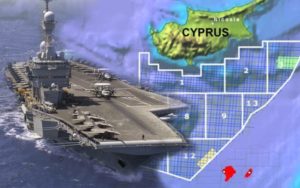
Στα τέλη Νοεμβρίου του 2019, η Τουρκία και η Λιβύη υπέγραψαν μνημόνιο συμφωνίας για την οριοθέτηση των θαλάσσιων συνόρων τους, συμπεριλαμβανομένης της αποκλειστικής οικονομικής ζώνης. Αυτή η ζώνη ορίζεται από το δίκαιο της θάλασσας ως θαλάσσια περιοχή πάνω στην οποία το παράκτιο κράτος ασκεί κυριαρχικά δικαιώματα σε θέματα εξερεύνησης και χρήσης των πόρων. Εκτείνεται μέχρι και 200 ναυτικά μίλια (370,4 χλμ.) από τις ακτές του κράτους. Αυτές οι οριοθετήσεις που πραγματοποιούνται μονομερώς από την Τουρκία και τη Λιβύη, χωρίς τη συμμετοχή της Ελλάδας, επεκτείνουν τα νέα θαλάσσια σύνορα της Τουρκίας πολύ κοντά στην Κρήτη, το μεγαλύτερο ελληνικό νησί. Η ανακοίνωση της Τουρκίας για έναρξη γεώτρησης για φυσικό αέριο στην περιοχή γίνεται συνεπώς σε βάρος των διεκδικήσεων της Ελλάδας για θαλάσσιες εκτάσεις.

Προς μεγάλη ζημία της Ελλάδας, οι παραδοσιακοί σύμμαχοί της, οι Ηνωμένες Πολιτείες και η Ευρωπαϊκή Ένωση, απέφυγαν να την υπερασπιστούν και τήρησαν μια ενοχλητική σιωπή. Βεβαίως, το γεγονός ότι τόσο η Τουρκία όσο και η Ελλάδα είναι μέλη του ΝΑΤΟ περιπλέκει τα πράγματα εμποδίζοντας τη λήψη μιας απόφασης υπέρ της μιας ή της άλλης χώρας. Επιπλέον, ο πρωταρχικός ρόλος που διαδραματίζει η Τουρκία, στον περιορισμό της μετανάστευσης στην Ευρωπαϊκή Ένωση και στο πλαίσιο της συριακής κρίσης, συμβάλλει στη σιωπή των Βρυξελλών.

Το γεγονός ότι σε πλήρη ρήξη με την εξωτερική πολιτική του Σύριζα, του αριστερού κόμματος που προηγήθηκε εκείνου του Μητσοτάκη στην Αθήνα από το 2015 έως το 2019, η ελληνική συντηρητική κυβέρνηση έκανε τα πάντα για να πλησιάσει την Ουάσινγκτον, φτάνοντας μέχρι να γίνει το μόνο μέλος της Ευρωπαϊκής Ένωσης που χειροκρότησε τη δολοφονία του Ιρανού στρατηγού Σουλεϊμάνι και προτείνοντας την ανάπτυξη πυραύλων στη Σαουδική Αραβία, προκειμένου να αποτραπούν οι ιρανικές επιθέσεις. Αυτά όμως δεν ήταν αρκετά για να κερδίσει την υποστήριξη της  Ουάσιγκτον. Έτσι, όταν συναντήθηκε με τον Donald Trump τον περασμένο Ιανουάριο, ο Μητσοτάκης δεν πήρε καμία δέσμευση από την Ουάσινγκτον υπέρ της  Ελλάδας στη διαμάχη με την Τουρκία. Ακόμα χειρότερα, με πρωτοβουλία της Τουρκίας, η Ελλάδα δεν κλήθηκε καν να συμμετάσχει στη διάσκεψη για τη Λιβύη που διοργάνωσε η Γερμανία πριν από λίγες εβδομάδες. Η Ελλάδα, και αυτό παρά το γεγονός ότι τα συμφέροντά της συσχετίζονται με τη Λιβύη, έλαμψε με την απουσία της από αυτή τη διάσκεψη όπου οι Ρώσοι, οι Γάλλοι, οι Τούρκοι πρόεδροι καθώς και η Γερμανίδα καγκελάριος προσπαθούσαν να επιτύχουν μια πιθανή κατάπαυση του πυρός μεταξύ των δύο αντιμαχόμενων μερών της Λιβύης και πιθανή επίλυση της σύγκρουσης

Επιπλέον, η ανάληψη του κινδύνου εκ μέρους της ελληνικής κυβέρνησης, η οποία σκοπεύει να αναπτύξει στρατεύματα στη Λιβύη στο πλαίσιο της αποστολής της Ευρωπαϊκής Ένωσης για την εφαρμογή εμπάργκο όπλων στα αντιμαχόμενα μέρη, σηματοδοτεί μια ρήξη με την παραδοσιακή ελληνική εξωτερική πολιτική, η οποία τηρούσε ουδετερότητα στις συγκρούσεις και διατηρούσε φιλικές σχέσεις με μεγάλες γειτονικές χώρες, όπως το Ιράν και η Ρωσία. Έτσι χαλάρωσαν οι σχέσεις μεταξύ Τεχεράνης και Αθήνας και οδήγησαν τον Ιρανό Πρόεδρο να προσφέρει τις καλές του υπηρεσίες μεταξύ Ρωσίας και Τουρκίας στη συριακή διαμάχη. Αυτή η προσέγγιση του Ιράν με την Τουρκία και τη Ρωσία δεν είναι καλή για τα ελληνικά συμφέροντα. Οι Ιρανοί, στην πραγματικότητα, εκτίμησαν ελάχιστα την ολίσθηση της Ελλάδας στο στρατόπεδο της Ουάσινγκτον.

Μπορούμε να αμφιβάλουμε ότι οι πρωτοβουλίες αυτές θα έχουν θετικό αντίκτυπο στην υπεράσπιση των συμφερόντων της στο Αιγαίο. Η Τουρκία, μέχρι και σήμερα, διέφυγε τις διεθνείς κυρώσεις για τις ενέργειές της στη Λιβύη. Είναι ένα ασφαλές στοίχημα ότι η θέση της Ελλάδας θα αποδυναμωθεί καθώς η Τουρκία και η Ρωσία εμβαθύνουν τους δεσμούς τους, παρά το γεγονός ότι η σύγκρουση στη Συρία τους φέρνει αντιμέτωπους.  Οι Ρώσοι σκέφτονται μάλιστα να αναγνωρίσουν την κυβέρνηση της βόρειας Κύπρου, η οποία αναγνωρίζεται μόνο από την Τουρκία, με  απώτερο σκοπό να εγκαταστήσουν εκεί μια θαλάσσια βάση.

Η περιθωριοποίηση της Ελλάδας στο Αιγαίο Πέλαγος και πέρα από αυτήν της Ευρωπαϊκής Ένωσης φαίνεται συνεπώς αναπόφευκτη.

Ardavan Amir-Aslani είναι δικηγόρος και δημοσιογράφος, ειδικός στη Μέση Ανατολή


https://www.atlantico.fr/decryptage/3587218/la-puissance-hegemonique-de-la-turquie-en-mer-egee-et-la-faiblesse-de-l-union-europeenne-ardavan-amir-aslani-

Τι “δουλειά” έχει η Γαλλία στην Ανατολική Μεσόγειο;

2

του Δημήτρη Μακροδημόπουλου.

Είναι αυτονόητο νομίζω ότι η κατανομή των ενεργειακών πηγών της Ανατολικής Μεσογείου αποτελεί αντικείμενο διαπραγμάτευσης, ακόμη και σύγκρουσης, μεταξύ των κρατών που έχουν θαλάσσια πρόσβαση σε αυτή. Από πού λοιπόν προκύπτει το ενδιαφέρον της Γαλλίας για την περιοχή;

Την Τρίτη 15 Μαρτίου 2011, ενώ ο Μουαμάρ Καντάφι προήλαυνε προς την Βεγγάζη, η κατάληψη της οποίας εθεωρείτο βέβαιη και θα επισφράγιζε το τέλος της εμφύλιας σύγκρουσης, δήλωσε ότι τα συμβόλαια για την εκμετάλλευση των πετρελαϊκών κοιτασμάτων της Λιβύης θα περάσουν από τα χέρια των Δυτικών σ’ αυτά των Ρώσων, των Κινέζων και των Ινδών. Μάλιστα είχε διευκρινίσει ότι «η μοναδική χώρα της Δύσης με την οποία υπάρχει πιθανότητα συνεργασίας είναι η Γερμανία», η οποία δια του ΥΠΕΞ της είχε εκφράσει τις αντιρρήσεις στις προσπάθειες των Άγγλων και των Γάλλων να επιβληθεί ζώνη απαγόρευσης πτήσεων πάνω από τη Λιβύη. Έτσι λοιπόν δεν ήταν καθόλου τυχαίο ότι στην απόφαση του δεκαπενταμελούς Συμβουλίου Ασφαλείας (ΣΑ) του ΟΗΕ με την οποία επιβλήθηκε τελικά η ζώνη απαγόρευσης πτήσεων με δέκα ψήφους υπέρ και πέντε αποχές, απόφαση που ανέστρεψε την έκβαση του εμφυλίου, μεταξύ των πέντε απεχόντων χωρών συμπεριλαμβάνονταν η Ρωσία, η Κίνα, η Ινδία και η Γερμανία ενώ μεταξύ των υπερψηφισάντων  η Αγγλία, η Γαλλία και οι ΗΠΑ. Αν μάλιστα λάβουμε υπόψη τις πληροφορίες σύμφωνα με τις οποίες την επομένη της απόφασης του ΣΑ έληγαν τα συμβόλαια της Λιβύης με πετρελαϊκές εταιρείες της Δύσης, τότε δεν μένει καμιά αμφιβολία ότι η διάλυση της Λιβύης ήταν αποτέλεσμα της σύγκρουσης των συμφερόντων με προεξάρχουσα τη Γαλλία. Γιατί τη Γαλλία; Είναι χαρακτηριστικό ότι το 2016 ο Μπαράκ Ομπάμα στη διάρκεια συνέντευξης στο αμερικανικό δίκτυο Fox News ομολόγησε ότι η διαχείριση της κρίσης στη Λιβύη ήταν το μεγαλύτερο σφάλμα της προεδρικής του θητείας ενώ σε συνέντευξή του στο περιοδικό The Atlantic είχε αποδώσει τις ευθύνες στο Παρίσι αφού το Λονδίνο «αδιαφόρησε» για την τύχη της Λιβύης μετά την ανατροπή του Καντάφι.

Δεδομένου ότι ο στρατηγός Χαφτάρ ελέγχει σήμερα τη ροή του πετρελαίου της Λιβύης αυτός είναι και ο λόγος της υποστήριξής του από το Παρίσι. Και για έναν πρόσθετο λόγο: Όπως σημειώνει ο Alain Badiou «Σε μια περιοχή που δεν υπάρχει καν κρατική εξουσία, κάθε επιχείρηση μπορεί να δραστηριοποιείται ελεύθερα, χωρίς κανένα ουσιαστικά έλεγχο στις δραστηριότητές της». Διότι «σε αυτό το καθεστώς της ημιαναρχίας, κάθε είδους business και δοσοληψίες μπορεί να συνεχίζονται με καλύτερους όρους απ’ ότι πριν». Για να προσθέσει ο Slavoj Zizek: «Μια από τις στρατηγικές του σημερινού καπιταλισμού, ο οποίος επιδιώκει τη σταθερή προσφορά φτηνών πρώτων υλών χωρίς την επιβάρυνση μιας ισχυρής κρατικής εξουσίας, είναι ο διαμελισμός του κράτους που διαθέτει πλούσια αποθέματα ορυκτών και πετρελαίου. Ο κάθε πολέμαρχος, συνεχίζει, έχει επιχειρηματικούς δεσμούς με μια ξένη εταιρεία ή έναν ξένο επιχειρηματικό όμιλο που εκμεταλλεύεται τον πλούτο της περιοχής. Η εταιρεία αποκτά δικαιώματα εξόρυξης χωρίς να πληρώνει φόρους και τα παρόμοια ενώ ο πολέμαρχος αμείβεται». Με άλλα λόγια εισαγωγή πετρελαίου χωρίς δασμούς, σε εξευτελιστικές τιμές αφού η κυβέρνηση Χαφτάρ δεν είναι νόμιμη και ταυτόχρονα ικέτης της στήριξης της Γαλλίας.

Όμως, τα ενδιαφέροντα της Γαλλίας εστιάζονται και στην Εγγύς και τη  Μ. Ανατολή. Με τη διάλυση της Οθωμανικής Αυτοκρατορίας και τη συμφωνία Σάικς – Πικό η Εγγύς Ανατολή είχε μοιραστεί μεταξύ Γαλλίας και Αγγλίας ενώ με Εντολή της Κοινωνίας των Εθνών είχε αποδοθεί στη Γαλλία η διακυβέρνηση της Συρίας και του Λιβάνου. Από το 1956 όταν η Γαλλία αποχώρησε από την περιοχή κατ’ απαίτηση των τότε υπερδυνάμεων (ΗΠΑ – ΕΣΣΔ) διακαής πόθος της παρέμεινε η επάνοδός της. Όμως με τη διάλυση της ΕΣΣΔ και την αποχώρηση της Μόσχας από το διεθνές προσκήνιο το κενό αναπλήρωσε η Τουρκία του Ερντογάν αξιοποιώντας το οθωμανικό παρελθόν της περιοχής και τη θρησκεία αποκλείοντας τις βλέψεις της Γαλλίας. Γιαυτό η εμφάνιση της ISIS ήταν θείο δώρο για τη Γαλλία αφού αποτέλεσε το πρόσχημα για τη στρατιωτική επάνοδό της ενώ στο όνομα  των ελλαδικών συμφερόντων ως ευρωπαϊκών δραστηριοποιείται στην Ανατολική Μεσόγειο αξιοποιώντας τις ελληνοτουρκικές διαφορές για την προώθηση των γαλλικών συμφερόντων. Στην πράξη βέβαια όταν το «Γιαβουζ» εισήλθε στα οικόπεδα 7 και 8 της κυπριακής ΑΟΖ, που παραχωρήθηκαν από τη Λευκωσία στη γαλλική Total και στην ιταλική Eni, η Γαλλία δεν αντέδρασε. Έτσι ώστε να καθίσταται προφανές ότι το Παρίσι προσπαθεί με κάθε τρόπο να οξύνει τις ελληνοτουρκικές σχέσεις διότι προσβλέπει στην προώθηση των συμφερόντων του στην ευρύτερη περιοχή μέσα από μια ελληνοτουρκική και όχι μέσα από μια γαλλοτουρκική σύγκρουση. Είναι αξιοσημείωτο ότι η Γαλλία που αναμειγνύεται στην κατανομή των ενεργειακών πηγών της Ανατολικής Μεσογείου, από το 2016 έχει εγκαταλείψει τις έρευνες και εξορύξεις υδρογονανθράκων στο έδαφος, την υφαλοκρηπίδα και την ΑΟΖ της ηπειρωτικής χώρας και των υπεράκτιων γαλλικών κτήσεων και επαρχιών ενώ απέκλεισε και την ανανέωση των υπαρχουσών αδειών (Καθημερινή 9/2/2020).

Μέσα σε αυτό το πλαίσιο αποκτά ιδιαίτερη σημασία όσα είπε πρόσφατα ο Νικήτας Κακλαμάνης σε τηλεοπτική εκπομπή: Όταν επισκέφθηκε την Τουρκία ως ευρωβουλευτής συμμετέχοντας, όπως είπε, σε επιτροπή του Ευρωκοινοβουλίου, τους δέχθηκε ο Σουλεϊμάν Ντεμιρέλ, πρωθυπουργός τότε της γείτονος. Κατά την αποχώρηση της επιτροπής του ζήτησε να παραμείνει για να του ζητήσει εν συνεχεία να μεταφέρει στην Αθήνα το μήνυμα σύμφωνα με το οποία οι δύο χώρες θα πρέπει να λύσουν μόνες τα προβλήματά τους πριν αναλάβει διαμεσολαβητής κάποιος “αρχιδιαιτητής” και βγουν και οι δύο χαμένες.

Μακροδημόπουλος Δημήτρης

Αλεξ/πολη – κιν. 6947- 771412

8-2-2019.


Η σχέση Αγκυρας – Μόσχας δοκιμάζεται στη Συρία

0
 ΞΕΝΙΑ ΚΟΥΝΑΛΑΚΗ “Καθημερινή”

Bλαντιμίρ Πούτιν και Ταγίπ Ερντογάν στο δείπνο εργασίας, ένα μήνα πριν στην Κωνσταντινούπολη, με αφορμή τα εγκαίνια του αγωγού TurkStream. Οσο και αν τον εκνευρίζει ο Tούρκος πρόεδρος ως προσωπικότητα, ο Πούτιν ξέρει ότι τον χρειάζεται, υπογραμμίζει το πρακτορείο Bloomberg σε ανάλυσή του για τη σχέση των δύο ανδρών.

Θα μπορούσε η σφοδρή σύγκρουση Ρωσίας – Τουρκίας για τις τελευταίες εξελίξεις στο Ιντλίμπ της Συρίας να αποτελέσει την αφορμή για την επιστροφή της Αγκυρας στις αγκάλες της Δύσης; Είναι παρακινδυνευμένο να απαντήσει κανείς θετικά, σε μια χρονική στιγμή κατά την οποία η Τουρκία κατορθώνει –παρά την απρόβλεπτη συμπεριφορά της– να έχει τη στήριξη αμφοτέρων των πλευρών.

Παρά την επιμονή της ότι η συμφωνία για τους S-400 δεν θα επηρεαστεί από την πρόσφατη κρίση στις ρωσοτουρκικές σχέσεις λόγω Ιντλίμπ, ο Τούρκος πρόεδρος Ταγίπ Ερντογάν εξασφάλισε πλήρη κάλυψη της Ουάσιγκτον για τις ενέργειές του στη βόρεια Συρία. «Στεκόμαστε στο πλευρό του νατοϊκού μας συμμάχου, της Τουρκίας, στον απόηχο της επίθεσης, που είχε ως αποτέλεσμα τον θάνατο πολλών Τούρκων στρατιωτικών που υπηρετούσαν σε ένα φυλάκιο παρατήρησης που χρησιμοποιείτο για συντονισμό και αποκλιμάκωση, και στηρίζουμε πλήρως τις δικαιολογημένες ενέργειες αυτοάμυνας της Τουρκίας, που έγιναν ως αντίποινα», τόνισε αυτή την εβδομάδα ο Αμερικανός υπουργός Εξωτερικών Μάικ Πομπέο.

Σύμφωνα με ανάλυση του πρακτορείου Bloomberg, «η Τουρκία έχει χάσει την πίστη της στις ΗΠΑ και δεν εμπιστεύεται απολύτως ούτε τη Ρωσία, αλλά η σχέση με τη Ρωσία τής επιτρέπει να έχει μια πιο ανεξάρτητη εξωτερική πολιτική». Η Μόσχα εμφανίζεται αποφασισμένη να διατηρήσει τη συνεργασία της με την Τουρκία μετά το συμβόλαιο των 2,5 δισ. δολαρίων για τους S-400, καθώς η Ρωσία θεωρεί ιδιαιτέρως σημαντικό να βρίσκεται σε στενή συνεργασία με ένα μέλος του ΝΑΤΟ που αψηφά ανοικτά τις ΗΠΑ. Η Ρωσία κατασκευάζει εξάλλου τον πρώτο πυρηνικό σταθμό της Τουρκίας, ενώ ο αγωγός TurkStream προορίζεται για τη μεταφορά φυσικού αερίου κάτω από τη Μαύρη Θάλασσα προς την Τουρκία και άλλες χώρες της Νοτιοανατολικής Ευρώπης, μειώνοντας έτσι την εξάρτηση της Μόσχας από το ουκρανικό δίκτυο.

Ενδεικτικές του επιπέδου στο οποίο έχουν βρεθεί οι διμερείς σχέσεις Μόσχας – Αγκυρας τον τελευταίο καιρό ωστόσο είναι οι δηλώσεις Ερντογάν, που επέλεξε μάλιστα να τις κάνει από το Κίεβο, την πρωτεύουσα της Ουκρανίας. Κατά τη διάρκεια της συνέντευξης Τύπου που παραχώρησε στην ουκρανική πρωτεύουσα, ο Τούρκος πρόεδρος τοποθετήθηκε πάνω σε ένα από τα πιο ευαίσθητα θέματα της ρωσικής εξωτερικής πολιτικής, δηλώνοντας ότι δεν αναγνωρίζει την «παράνομη προσάρτηση» της Κριμαίας από τη Ρωσία.

«Θα ήθελα και πάλι να υπογραμμίσω ότι εμείς δεν αναγνωρίζουμε την παράνομη προσάρτηση της Κριμαίας. Θα συνεχίσουμε να υποστηρίζουμε την εδαφική ακεραιότητα της Ουκρανίας», δήλωσε χαρακτηριστικά ο Τούρκος πρόεδρος στο πλαίσιο της επίσημης επίσκεψής του στη χώρα. H ανταποκρίτρια των Financial Times απέδωσε τη δήλωση στην προσπάθειά του να εκτονώσει την οργή του για τον θάνατο των οκτώ Τούρκων στρατιωτών από πυρά των συριακών δυνάμεων. Είχε προηγηθεί η ιαχή του «Δόξα στην Ουκρανία», ένα σύνθημα συνυφασμένο με το αντιρωσικό φρόνημα στη χώρα και τον αγώνα της για ανεξαρτησία μετά την κατάρρευση της Σοβιετικής Ενωσης.

Τρίζει έτσι για πρώτη φορά η ρεαλιστική συμμαχία μεταξύ Αγκυρας και Μόσχας μετά την επίθεση που δέχθηκαν οι τουρκικές δυνάμεις τη Δευτέρα. Για την Αγκυρα είναι σαφές ότι αυτό δεν θα μπορούσε να συμβεί χωρίς –τουλάχιστον– την ανοχή της Ρωσίας. Η σημαντικότερη αγωνία της Τουρκίας είναι πως οι εχθροπραξίες στο Ιντλίμπ θα μπορούσαν να προκαλέσουν ένα νέο προσφυγικό κύμα στη χώρα, η οποία ήδη βρίσκεται στα όριά της φιλοξενώντας 3,6 εκατ. Σύρους.

Το ζήτημα της Λιβύης

Αν προσθέσει κανείς στις εντάσεις το ζήτημα της Λιβύης, όπου η Μόσχα στηρίζει τον στρατάρχη Χαλίφα Χαφτάρ και η Αγκυρα τη διεθνώς αναγνωρισμένη κυβέρνηση της Τρίπολης υπό τον Φαγέζ αλ Σαράζ, τότε είναι σαφές πως το όψιμο ρωσοτουρκικό ειδύλλιο δοκιμάζεται πολλάκις. Toύρκοι αναλυτές προειδοποιούν ότι δεν πρέπει οι Δυτικοί αξιωματούχοι να πιστεύουν ότι η Τουρκία έχει γυρίσει οριστικά την πλάτη στη Δύση. «Δεν εναρμονιζόμαστε πλήρως με τους Ρώσους. Δεν ισχύει αυτό», διευκρίνισε ανώτατος Τούρκος αξιωματούχος στους Financial Times.

Σύμφωνα με το Bloomberg, η συνεννόηση Βλαντιμίρ Πούτιν – Ταγίπ Ερντογάν είναι απόρροια της επίγνωσης του Ρώσου προέδρου ότι δεν μπορεί να έχει επιρροή στη Μέση Ανατολή αν βρίσκεται σε σύγκρουση με την Τουρκία. Οσο κι αν τον εκνευρίζει ο Ερντογάν ως προσωπικότητα, ο Πούτιν ξέρει ότι τον χρειάζεται, υπογραμμίζει το πρακτορείο.

Δεν είναι τυχαίο ότι ο Ρώσος πρόεδρος δαγκώνει τη γλώσσα του ακόμη και μετά τα τελεσίγραφα Ερντογάν ότι οι συριακές δυνάμεις πρέπει να αποχωρήσουν από τις περιοχές κοντά στα τουρκικά σύνορα μέχρι τα τέλη του μήνα. Πρόκειται για μια ασυνήθιστα ήπια συμπεριφορά εκ μέρους του Πούτιν, ο οποίος αρέσκεται συχνά στην επίδειξη αρρενωπότητας και πυγμής.

Το Bloomberg εκτιμά ότι αυτό οφείλεται στο γεγονός πως ο Πούτιν βλέπει μακροπρόθεσμα αυτόν τον γάμο συμφέροντος με τον Ερντογάν. Θέλει να προσελκύσει την Τουρκία με πωλήσεις όπλων και ενεργειακές συμφωνίες για να προκαλέσει ένα χάσμα ανάμεσα στην Τουρκία και στον σημαντικότερο σύμμαχό της στο ΝΑΤΟ, τις Ηνωμένες Πολιτείες.

Οι αντάρτες του PKK και τα drones

Στη λίστα των τριβών ΗΠΑ – Τουρκίας συμπεριελήφθη πρόσφατα και η αναστολή του απόρρητου προγράμματος συνεργασίας στη συγκέντρωση πληροφοριών σχετικά με τους αντάρτες του ΡΚΚ. Οπως αποκάλυψε το πρακτορείο Reuters, η αμερικανική απόφαση για το επ’ αόριστον «πάγωμα» του προγράμματος των drones ήταν η απάντηση στην τουρκική επιχείρηση στη βόρεια Συρία τον Οκτώβριο. Πάντως, στην αποκάλυψη επισημαίνεται ότι η Αγκυρα έχει επενδύσει εκατοντάδες εκατομμύρια δολάρια για την προώθηση των αμυντικών ικανοτήτων της και τον περιορισμό της εξάρτησής της από τα αμερικανικά και ισραηλινά drones, τα οποία συχνά χρησιμοποιεί από τα τέλη της δεκαετίας του ’90. Η ιδιωτική εταιρεία Baykar Defense, τη διαχείριση της οποίας έχει μεταξύ άλλων και ο Σελτσούκ Μπαϊρακτάρ, γαμπρός του Ταγίπ Ερντογάν, άρχισε να αναπτύσσει drones πριν από περίπου είκοσι χρόνια. Μέσα σε μία δεκαετία και κάτι χρόνια, η Αγκυρα δημιούργησε οπλισμένα και άοπλα drones και άρχισε να πουλάει στον τουρκικό στρατό, στην Ουκρανία και στο Κατάρ.

“Καθημερινή”

Mahmoud Abbas – Το παλαιστινιακό προ αδιεξόδου

0

της Ευμορφίας Δημητρακοπούλου.

Γνωστός ως Abu Mazen ο ηγέτης της παλαιστινιακής αρχής, πρόεδρος της PLO και μέλος της Fatah, βρίσκεται σε εξαιρετικά δυσχερή θέση, λόγω της χρόνιας σύγκρουσης με την ισλαμική φονταμενταλιστική Χαμάς και της σταδιακής απομόνωσης των Παλαιστινίων ακόμη και στον Αραβικό κόσμο.

Ο Αμπάς γεννήθηκε το 1935 στο Safed, της Γαλιλαίας. Η οικογένειά του εγκαταστάθηκε στην Συρία το 1948. Σπούδασε νομικά στο Πανεπιστήμιο της  Δαμασκού και στην συνέχεια πήγε στην Αίγυπτο. Βάση της διατριβής του, το εβραϊκό Ολοκαύτωμα αποτελεί μύθο. Είναι παντρεμένος με την Αμίνα Αμπάς και έχει τρεις γιους. Σύμφωνα με τον Mohammad Daoud Oudeh, τον αρχιτέκτονα της σφαγής  του Μονάχου ο Αββάς ήταν εκ των χρηματοδοτών της επιχείρησης το 1972.

Η Παλαιστινιακή Αρχή βρίσκεται διαρκώς αντιμέτωπη με τεράστια σκάνδαλα διαφθοράς. Το 2004 αποκαλύφθηκε ότι τσιμέντο που εισαγόταν από την Αίγυπτο για την ανακατασκευή παλαιστινιακών κατοικιών στην Λωρίδα της Γάζας πουλήθηκε από την Π.Α. στους ισραηλινούς για την κατασκευή του τείχους.

Ο Αββάς είναι σε συνεχή επαφή με την Μόσχα. Σύμφωνα με τα αρχεία Mitrokhin ήταν πράκτορας της KGB, με το κωδικό όνομα “Mole”. Έπειτα από τόσα χρόνια ίσως δεν έχει ιδιαίτερη σημασία, αλλά εξηγεί την στάση του έναντι του άξονα Αγκύρας-Μόσχας-Τεχεράνης-Δαμασκού. Η άρνηση του Αββάς να δεχθεί οποιαδήποτε συμφωνία με το Ισραήλ θυμίζει την περίοδο του Χαφέζ Αλ-Άσαντ, μέσω του οποίου δίνονταν οδηγίες στον Αραφάτ: «Ναι σε συνομιλίες, όχι στην υπογραφή οιασδήποτε συμφωνίας». Όσο το παλαιστινιακό παραμένει άλυτο κάποιοι επωφελούνται και αυτοί δεν είναι οι Ισραηλινοί.

Τι σήμαινε η δήλωση Αββάς ότι θα διακόψει τις σχέσεις με το Ισραήλ και τις ΗΠΑ μετά την λεγόμενη “Συμφωνία του Αιώνα”; (Βεβαίως, την επόμενη μέρα η στενή συνεργασία στον τομέα της ασφάλειας συνεχίστηκε κανονικά). Τι θα σημάνει για την επιβίωση χιλιάδων οικογενειών, όταν 120.000 Παλαιστίνιοι μεταβαίνουν καθημερινά στο Ισραήλ και 47.000  στα κατεχόμενα, για να εργαστούν; Τι θα γίνουν τα εμπορεύματα που εισάγονται στα παλαιστινιακά εδάφη μέσω των ισραηλινών τελωνείων; Τι εννοούσε λοιπόν ο Αββάς; Μάλλον υπενθύμισε ότι: Η Παλαιστινιακή Αρχή παίζει ρόλο στον πόλεμο της Δύσης κατά της τρομοκρατίας και ο ρόλος αυτός έχει πολιτικό αντίτιμο. Η διακοπή του συντονισμού της ασφάλειας μπορεί να οδηγήσει σε ένοπλες συγκρούσεις και συνεπώς στην κατάρρευση της Π.Α. Ήταν λοιπόν θέμα χρόνου να αρχίσουν οι επιθέσεις των Παλαιστινίων. Την Τετάρτη, 13 πύραυλοι εκτοξεύτηκαν από την Γάζα εναντίον του Ισραήλ. Ακολούθως, δυο Παλαιστίνιοι σκοτώθηκαν σε ανταλλαγή πυρών στην Δυτική Όχθη και λίγο αργότερα δώδεκα Ισραηλινοί στρατιώτες τραυματίστηκαν από παλαιστινιακή επίθεση στην Ιερουσαλήμ.

Οι συνθήκες δεν ήταν ποτέ τόσο ευνοϊκές για το Ισραήλ. Οι Ευρωπαίοι έχουν απεμπλακεί, ενώ πολλά αραβικά κράτη βρίσκονται σε αναταραχή. Το Ισραήλ έχει περισσότερες σχέσεις με τον αραβικό κόσμο από ότι οι Παλαιστίνιοι. Εδώ και περίπου ένα μήνα προμηθεύει με φυσικό αέριο την Αίγυπτο και την Ιορδανία, αλλάζοντας τις ισορροπίες στην περιοχή. Προ του αδιεξόδου ο Αββάς ίσως προσεγγίσει την Χαμάς, που ελέγχει την Λωρίδα της Γάζας. Τι προοπτικές έχει μια συνάντηση με τον Ισμαήλ Χανίγια, ο οποίος συνεργάζεται με τον Ερντογάν και τους εταίρους του;

Ευμορφία Δημητρακοπούλου

“Μακεδονία” 09.02.20


Η ελληνοτουρκική προσφυγή στη Χάγη: ένας δρόμος γεμάτος στροφές και λουλούδια

3

Κωνσταντίνος Τσιτσελίκης, καθηγητής Παν. Μακεδονίας

Η επίλυση μιας διεθνούς διαφοράς μπορεί να επιτευχθεί με τη χρήση μιας σειράς δυνατοτήτων: προσφυγή στις καλές υπηρεσίες του ΓΓ ΟΗΕ, με την διαμεσολάβηση τρίτων, με απευθείας διαπραγμάτευση, με διαιτησία ή την προσφυγή στο Διεθνές Δικαστήριο της Χάγης. Η τελευταία, έχει το χαρακτηριστικό ότι δημιουργεί υποχρέωση συμμόρφωσης με την απόφασή του. Σε όλες τις περιπτώσεις, τα μέρη που έχουν την διαφορά θα πρέπει να συναινέσουν ως προς το πλαίσιο επίλυσης της διαφοράς τους. Ελλάδα και Τουρκία, επιχειρούν επί δεκαετίες να επιλύσουν τις διαφωνίες τους, έχοντας να αντιμετωπίσουν πρώτα μια διαφορά δεύτερου βαθμού: την ασυμφωνία για το ποιες είναι οι υπό επίλυση διαφορές.

Ας υποθέσει κανείς, ότι Ελλάδα και Τουρκία συναποφασίζουν να στείλουν το πακέτο των διαφορών τους στο Διεθνές Δικαστήριο της Χάγης. Στην περίπτωση αυτή, η απόφαση του δικαστηρίου θα έδινε οριστικό τέλος στις διαφορές αυτές, φέρνοντας μια πραγματική άνοιξη στις ελληνοτουρκικές σχέσεις. Αυτό θα ήταν η φυσιολογική κατάληξη της επίλυσης, ας μην φαντασιωνόμαστε συνεχώς ότι η Τουρκία θα αθετήσει την επόμενη ημέρα την υποχρέωσή της να σεβαστεί την απόφαση. Πολύ απλά γιατί η κάθε άλλη πλευρά μπορεί να λέει το ίδιο για τον αντίδικο. Αλλά εδώ συζητάμε για μια πορεία που βασίζεται στην συμφωνία και την αμοιβαία εμπιστοσύνη. Η αμφισβήτηση εκ των προτέρων της εμπιστοσύνης του άλλου, διαρρηγνύει αμέσως τις πιθανότητες επίλυσης της διαφοράς.

Πρώτη και σημαντική συνέπεια της επίλυσης των ελληνοτουρκικών διαφορών θα ήταν ότι, ύστερα από μια περίοδο προσαρμογής κατά την εφαρμογή της απόφασης, τα δύο μέρη θα είχαν απαλλαγεί από ένα πακέτο ζητημάτων που γεμίζει με δηλητήριο την πολιτική τους ζωή. Θα είχαν να αντιμετωπίσουν όμως κύμα δυσαρέσκειας για όλα αυτά που θεωρούνταν ότι ανήκαν στον ιερό χώρο του άβατου των «εθνικών θεμάτων». Δυσαρέσκεια θα πήγαζε και από τα συμφέροντα που συνέχονται με τα εξοπλιστικά προγράμματα, με τζίρους δισεκατομμυρίων ευρώ. Αυτό βέβαια είναι ένα άλλο θέμα, δυστυχώς δομικό στην συντήρηση των ελληνοτουρκικών διαφορών.

Ας πάμε ένα βήμα πίσω σε αυτή την υποθετική λύση μέσω του Δικαστηρίου της Χάγης: το περιεχόμενο του πακέτου των διαφορών προς επίλυση. Είναι αλήθεια ότι η Τουρκία, σταδιακά, τα τελευταία 30 χρόνια ανοίγει νέα ζητήματα αμφισβήτησης ζωνών κυριαρχίας της Ελλάδας. Ένα από τα επιχειρήματα λέει ότι η Ελλάδα δεν πρέπει να συναινέσει στην υποβολή τέτοιων θεμάτων στο Δικαστήριο γιατί θα αναγνώριζε ότι η Τουρκία μπορεί να διεκδικεί οτιδήποτε οπουδήποτε. Δεν είναι άστοχο το επιχείρημα. Ωστόσο, θα μπορούσε να ισχυριστεί κανείς ότι, αντίστροφα, εάν τέτοια ζητήματα (πχ γκρίζες ζώνες τύπου Ίμια, Γαύδος) πήγαιναν στη Χάγη, δεν υπάρχει περίπτωση να χάσει η Ελλάδα και η κατοχύρωση των κυριαρχικών δικαιωμάτων της θα ήταν παραδειγματική και μόνιμη. Εξάλλου, η οριοθέτηση στο Αιγαίο των δύο αιγιαλίτιδων ζωνών δεν έχει γίνει ποτέ από μικτή επιτροπή. (Η Ελλάδα κληρονόμησε την ιταλο-τουρκική χάραξη των θαλάσσιων συνόρων στη Δωδεκάνησο). Ευκαιρία να γίνει τώρα με απευθείας συνεννόηση ή με ανάθεση στο Δικαστήριο της Χάγης.

Αν πάει κανείς πίσω ένα ακόμα βήμα, θα διαπιστώσει ότι και στις δύο πλευρές του Αιγαίου οι πολιτικές των κυβερνήσεων έχουν διαμορφώσει τα τελευταία 40-50 χρόνια βεβαιότητες και πεποιθήσεις ότι η «δική μας πλευρά (μόνον) έχει δίκιο». Προφανώς, τα πράγματα δεν έχουν έτσι. Υπάρχουν δύο κατηγορίες σαθρών βεβαιοτήτων: οι αμφισβητήσεις για τα κατοχυρωμένα κεκτημένα της άλλης πλευράς, και η ανακήρυξη ιδίων κυριαρχικών δικαιωμάτων σε σαθρή βάση.

Τις τελευταίες δεκαετίες, η τουρκική πλευρά έχει προχωρήσει τέτοιου είδους περιπτώσεις αμφισβήτησης της ελληνικής κυριαρχίας αλλά και προσπάθειας κατοχύρωσης δικών της δικαιωμάτων. Η αμφισβήτηση της ελληνικής κυριαρχίας στη Γαύδο για παράδειγμα, όπως και η πρόσφατη υπογραφή μνημονίου με την οριοθέτηση της τουρκολιβικής ΑΟΖ (προσπερνώντας θαλάσσιες ζώνες οι οποίες τεκμαίρεται δια γυμνού οφθαλμού ότι ανήκουν στην Ελλάδα λόγω εγγύτητας) αφορούν και τις δύο κατηγορίες αμφισβήτησης με κοινό παρονομαστή την ενέργεια-πυροτέχνημα.

Θα αναφερθώ λίγο πιο αναλυτικά στην ελληνική πλευρά, σε σχέση με την υποθετική προσφυγή στη Χάγη. Οι βεβαιότητες που αναπαράγει η ελληνική πλευρά και οι οποίες δύσκολα τεκμηριώνονται νομικά, και πιθανόν να ανατραπούν στο δικαστήριο βάσει του διεθνούς δικαίου και της διεθνούς νομολογίας είναι οι εξής:

  • Ο εθνικός εναέριος χώρος στα 10 ν.μ. από την ακτογραμμή. Στην πραγματικότητα, εθνικός εναέριος χώρος πέραν των 6 νμ (βλ. εναρμόνιση με τα χωρικά ύδατα) δεν υφίσταται διεθνώς.
  • Ότι το Καστελλόριζο έχει αυτόνομη υφαλοκρηπίδα/ΑΟΖ σε όλη την έκταση που θα της αναλογούσε. Ωστόσο, η διεθνής νομολογία δύσκολα στηρίζει το επιχείρημα αυτό. Το Δικαστήριο μπορεί να ορίσει τα όρια των ζωνών δικαιωμάτων εκμετάλλευσης του νησιού, παρεκτός και τα δύο μέρη το έπρατταν απευθείας.
  • Ότι η Ελλάδα μπορεί να επεκτείνει τα χωρικά της ύδατα στα 12 νμ. Νομικά ισχύει. Πολιτικά είναι ατελέσφορο και επιβλαβές μέτρο. Μια τέτοια επέκταση βρίσκει κυρίως αντίθετη τη Ρωσία. Επίσης θα αλλοίωνε δραστικά την υφαλοκρηπίδα της Τουρκίας και θα τίναζε την όλη διαπραγμάτευση στον αέρα, δεν θα υπήρχε συμφωνία οριοθέτησης και άρα κανένα μέρος δεν θα είχε πραγματικό δικαίωμα εκμετάλλευσης των φυσικών πόρων του υπεδάφους.
  • Ότι υφαλοκρηπίδα και ΑΟΖ μπορούν να κηρυχθούν μονομερώς. Δεν ισχύει εφόσον οι ζώνες εφάπτονται. Απαιτείται συνεπώς ελληνοτουρκική συνεννόηση για την οριοθέτησή τους.
  • Η άρση της αποστρατικοποίησης των νησιών του Ανατολικού Αιγαίου (τρία διαφορετικά καθεστώτα). Δεν είναι βέβαιη η έκβαση μιας πιθανής αναθεώρησης του καθεστώτος. (Θα μπορούσε να συμφωνηθεί διευρυμένη αποστρατικοποίηση και από τις δύο πλευρές του Αιγαίου).

Οι παραπάνω βεβαιότητες προσκρούουν σε νομικής και διεθνοπολιτικής φύσης πραγματικότητες τις οποίες δεν έχουμε τον χώρο να εξηγήσουμε.

Το ελληνικό κοινό δύσκολα θα αναθεωρήσει τις βεβαιότητες που του έχουν καλλιεργήσει όλες οι προηγούμενες κυβερνήσεις. Θα πρέπει να γίνει γνωστό ότι στο Δικαστήριο της Χάγης με βάση την αρχή της ευθυδικίας η Τουρκία θα «κερδίσει» ένα ποσοστό των ζωνών εκμετάλλευσης (υφαλοκρηπίδα, ΑΟΖ) πέραν αυτού που δικαιούται. Άγνωστο πόσο. Επίσης, και ίσως το σημαντικότερο, ότι η Ελλάδα για να έχει «ενεργή» υφαλοκρηπίδα θα πρέπει να συμφωνήσει με την Τουρκία τα όριά της. Το ίδιο, εάν επιδιώκει να κατοχυρώσει και ΑΟΖ, η οποία δεν έχει νόημα στο Αιγαίο παρά μόνο σε ότι αφορά την αλιεία, ζήτημα το οποίο επίσης θα πρέπει να διευθετηθεί πριν το Αιγαίο χάσει εντελώς τα ψάρια του.

Η ελληνοτουρκική συνεννόηση απευθείας ή μέσω δικαστικής απόφασης είναι αμφίδρομη και αναγκαία. Πόσο μάλλον όταν το εφαρμοστέο δίκαιο θα πρέπει επίσης να αποτελέσει αντικείμενο συμφωνίας. Διαφορετικά, δεν μπορεί να γίνει καμία εκμετάλλευση του φυσικού πλούτου. Έμμεση ή άμεση συνεκμετάλλευση (ανάλογα με το ποσοστό συμμετοχής στην υφαλοκρηπίδα) σημαίνει στο μέλλον πολλαπλασιασμός των ωφελημάτων και για τους δύο. Διπλό όφελος το κοινό όφελος, το οποίο εδράζεται στην συνεργασία με άξονα την ασφάλεια και την σταθερότητα στην περιοχή, απαραίτητη προϋπόθεση κάθε απόπειρας εκμετάλλευσης των υδρογονανθράκων και της απαιτούμενης προστασίας του θαλάσσιου περιβάλλοντος, και βέβαια του τουρισμού.

Η υπογραφή του συνυποσχετικού παραπομπής της υπόθεσης στη Χάγη προϋποθέτει νηφάλια διαπραγμάτευση η οποία δεν μπορεί να γίνει σε συνθήκες έντασης και κρίσης. Σήμερα, οι ελληνοτουρκικές σχέσεις διατρέχουν περίοδο ψυχρού πολέμου, με όχημα την προκλητική τουρκική πολιτική στους θαλάσσιους χώρους στην Ανατολική Μεσόγειο. Θέλει πολύπλευρες και αποτελεσματικές διπλωματικές προσπάθειες εκτόνωσης της έντασης και άρση των τετελεσμένων που προσπαθεί να επιβάλει η Άγκυρα. Παράλληλα, χρειάζεται δουλειά στο εσωτερικό της Ελλάδας: σταθερή πολιτική γραμμή διάλυσης των πλαστών βεβαιοτήτων που μόνο κακό κάνουν και υπονομεύουν την πιθανότητα λύσης μέσω μιας προσφυγής στη Χάγη. Γιατί «εθνικό είναι ό,τι είναι αληθινό» και όχι ό,τι θα θέλαμε να είναι αληθινό. Η εφαρμογή, λοιπόν, του διεθνούς δικαίου στην πραγματική του διάσταση, και μόνον, υποδεικνύει με ασφάλεια το συμφέρον της Ελλάδας σε αυτή την κρίσιμη καμπή των ελληνοτουρκικών.

Δημοσιεύθηκε στη “Μακεδονία” Κυριακή 09.02.20