Αρχική Blog Σελίδα 2547

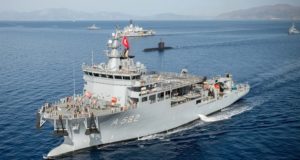
Modernized navy adds further muscle to Turkey’s aspiration to protect national interests

0

dailysabah.com

AYŞE BETÜL BAL@bal_betul

ISTANBUL
Published09.02.202016:52
Updated09.02.202020:29 emPhoto courtesy of SEFT Ship Design & Engineering/em
Photo courtesy of SEFT Ship Design & Engineering

Recent global developments have given greater pertinence to Turkey’s efforts to expand and modernize its navy in a bid to safeguard the country’s geostrategic interests

Recent global developments, including the ones concerning the Eastern Mediterranean, have once again brought power and capabilities of the navies of coastal states to mind and the Turkish navy is no exception.

Ankara has placed itself at the center of the latest discussions due to its determination to protect its rights both on land and offshore amid interdependent geopolitical and military developments encircling the country and has been expanding and modernizing its navy by leaps and bounds by taking steps to transform the defense industry with domestic projects.

In an exclusive interview with Daily Sabah, Ret. Navy Capt. Alp Kırıkkanat, a maritime defense and security consultant said several developments in the near past, including the Cyprus Peace Operation and the arms embargoes implemented on Turkey, following it appeared as a big step pushing Turkey toward locally modernizing its navy, despite its success with limited capacity at the time.

Within the following process, the Turkish navy “in addition to the national activities in the surrounding seas, has also carried out NATO duties in the remote seas and served with ships and other combat elements in the United Nations peace support activities,” he said, by benefiting from the domestic projects.

Most recently, the Turkish Presidency of Defense Industries (SSB) released video footage showing the Multi-Purpose Amphibious Assault Ship TCG Anadolu anchoring to side dock at Sedef Shipyard in Istanbul’s Tuzla district for harbor competency tests.

The TCG Anadolu is a landing helicopter dock (LHD) type amphibious assault ship that was modeled on Spanish LHD Juan Carlos and is expected to enter the Turkish Naval Forces’ fleet toward the end of this year, further contributing to the aim of steadily modernizing the navy fleet while reducing its outside dependency by replacing the already-existing vessels with domestically produced ones.

The Anadolu, the navy’s flagship-to-be vessel, often dubbed “Blue Homeland,” will surely strengthen Turkey’s hand in regional politics, concerning its maritime borders. Along with enabling the country to operate overseas when needed, it will safeguard Turkish-flagged vessels anywhere they sail. It will also participate in the humanitarian missions that the navy carries out.

The Turkish LHD will able to host a battalion-sized force along with flight and command personal and although the length of its flight deck is not long enough for classic warplanes to land and take off, the Anadolu has six spots where medium load transport, assault or general-purpose helicopters can land and take off along with other two spots that provide a landing platform for heavy cargo transport helicopters.

The TCG Anadolu will be able to carry many light and heavy armored vehicles, including the wheeled and tracked ones. It will have the capacity to carry up to 30 wheeled vehicles, including armored amphibious vehicles and armored personnel carriers on its light vehicle deck. The vessel’s hangar enables at least 12 medium load helicopters to be transported, while the number can be increased with additional helicopters carried on the light vehicle deck, depending on the vessels’ mission. The heavy vehicle deck at the top of the carrier’s pool provides the transportation of heavy and tracked vehicles such as tanks along with other kinds of armored heavy vehicles.

The Anadolu provides the transportation of up to nearly 45 tanks, again, depending on how the vehicles are positioned on it and the vessel’s mission-ranking from amphibious war to power transfer, along with the non-military tasks such as humanitarian aid, search and rescue, medical assistance or natural disaster support in variety of areas, including in the Aegean, Black Sea and Mediterranean and, if necessary, in the Indian Ocean (north of the Arabian Peninsula, west of India) and the Atlantic Ocean (west of Europe, northwest of Africa).

The launchpad constructed on the Anadolu’s deck provides a vertical landing for aircraft, such as the Lockheed Martin’s STOVL (Short Take-Off / Vertical Landing) F-35Bs. This proved to be a deadlock issue between the U.S. and Turkey as it was announced previously by U.S. President Donald Trump that Turkey would be expelled from the joint F-35 program over disputes between Washington and Ankara. This means it will be capable of assisting air operations as well, though limited, such as performing close air support.

Though the country’s first domestically made warplane TF-X National Combat Aircraft (MMU) is being developed in a move to replace the F-16 fighter jets, the dispute between Turkey and its NATO ally on the F-35s, including the world’s one of two STOVL aircraft F-35B, appears to be an object of interest, considering the Anadolu, once again highlighting the importance and urgency of overall nationalization process in defense industries.

The U.S.’ removal of Turkey from the F-35 program, in which Ankara was both manufacturer and buyer, came as a move after Turkey purchased Russian s-400 air and missile defense systems, which Washington argues could be used by Moscow to obtain classified details on the jet, along with its being incompatible with NATO systems. Turkey, however, counters that the S-400 would not be integrated into NATO systems and would not pose a threat to the alliance, underlining that the U.S. has initially pushed Ankara toward deciding to pursue alternative sellers after the U.S. refused to sell its Patriot systems.

Projects for mid-scale global capability

In 2015, Turkish Naval Forces in their strategy report announced the aim to bring the Turkish Navy to the upper league, from a navy capable of medium-scale regional power transfer to a “Navy with Medium-Scale Global Power Transfer Capability.”

The 48-page report lays down a path for the modernization of the navy. It outlines the regional and global developments, in which the construction of an LHD was included in six to 10 years of plans, along with Air Defense War Frigates, Combat Support Ship, New Generation Mine Hunting Ships and Submarines with Air Independent Drive Systems. A project for the construction of TF-2000 air defense frigate was also included in the navy’s strategy plans, first of which will be added to the navy’s inventory by 2023. The air defense frigate is one significant step for a country located in between three seas, all of which may face, different, yet interdependent escalations.

One crucial project that gave acceleration to the domestication of navy was the MİLGEM project that was initiated in 2000 to locally design and built a new line of multi-purpose frigates and corvettes that will replace the older ones. TCG-Heybeliada, which is one of the pride ships designed and built nationally within the scope of the project, was commissioned by the Naval Forces Command in 2011, TCG-Büyükada in 2013, TCG-Burgazada in 2018 and lastly the TCG-Kınalıada in 2019. The MİLGEM project has enabled the design of a corvette type military ship to be nationalized for the first time, thereby reducing external dependence in ship design, shipbuilding and system integration while bringing the participation of local industry up to 70% and providing job opportunities to more than 50 local companies.

In an interview with Daily Sabah, naval architect and marine engineer Semih Zorlu from Istanbul-based SEFT ship design & engineering said that this project can be considered as a milestone for the nationalization and replacement process of the navy vessels, which also brought up the cooperation and knowledge and experience sharing of military and the private sector which not only sped up the process but also made it open to further steps of exporting the local designs.

Evaluating the military-private sector cooperation on joint production of navy vessels or other naval equipment, Zorlu said the private sector can be considered “more dominant in technology and innovations, competitive solutions, cost-effective and high-quality products, which are advancing rapidly due to its dynamic and competition intensive structure,” thus it is the best way to reach a good design and product with low initial investment is to cooperate with the industry.

Coast Guard Search and Rescue Ship Project carried out by the RMK Shipyard, New Type Patrol Boats Project carried out by the DEARSAN Shipyard, Landing Ship Project by the ADIK Shipyard, Submarine Rescue Ship, Rescue and Backup Vessels and Seismic Research Vessel by Istanbul Denizcilik can be included within the projects that were carried out by the private sector shipyards and then delivered to the Naval Forces. Zorlu gave the examples, noting that several others are still underway such as the fleet replenishment vessel (DIMDEG) Construction Project, together which can increase the domestication rate up to 85% in near future.

Similar to Kırıkkanat, Zorlu also said: “Despite the limited capabilities of our navy, it played a key role in the Cyprus Peace Operation in 1974 by successfully carrying out the amphibious operation, which was considered to be the most arguably militarily undisputed operation, and ensured that the amphibious and ground troops landed in Cyprus at the same time, along with naval gunfire support,” arguing that the navy was using old vessels back than some of which had already completed their economic lives when purchased, and now the country is capable of “designing and producing its own frigates. We do not have to buy the ships that foreign countries have already used.”

In 1974, following a coup aimed at Cyprus’ annexation by Greece, Ankara had to intervene as a guarantor power. In 1983, the Turkish Republic of Northern Cyprus (TRNC) was founded. The operation, which was Turkey’s first military operation abroad in the Republican era, followed two-decades of intercommunal violence where Turkish Cypriots were targeted by Greek Cypriot pro-independence militia during the British colonial rule, and after independence, Turkish Cypriots were confined to enclaves starting from 1963 to protect themselves against Greek militia groups.

Local contractors supply missiles, sensory equipment

Weaponry and sensory systems and command control software have also been on the top list of the defense industry’s agenda, to domestically meet the needs of the navy, along with other command forces. One such system, the New Generation Network-Assisted Data Integrated Combat Management System (ADVENT SYS), developed in cooperation with Turkey’s leading military systems developer HAVELSAN and the Naval Forces Command Research Center Command (ARMERKOM), is being installed on the TCG Anadolu, making the warship the second vessel to use the homegrown system after the TCG Kınalıada. Weapon and sensor systems of the TCG Kınalıada was also domestically developed by the leading defense contractor ASELSAN.

The country’s first domestic maritime missile ATMACA, developed by the major defense contractor Roketsan, will also be equipped on Turkish ships soon, in a bid to replace currently used Harpoon missiles.

Tests on ASELSAN’s Multipurpose Phased Array Radar ÇAFRAD is expected to be completed soon, which will be used on the national air defense frigates.

Modernized navy for maritime trade

Turkish Navy, apart from safeguarding its geostrategic rights, with a mission to protect any Turkish-flagged merchant ships, as well, as to operate on behalf of a country surrounded by sea on three sides with 8,985 kilometer of coastline with an advantage in maritime trade and transportation, along with transnational pipelines passing through its territorial waters.

Zorlu highlighted the importance of naval capabilities in this regard, in all areas from transportation to fishing and scientific research, saying that the country now has two seismic research vessels and two drill vessels.

“Among these, MTA Oruç Reis seismic research vessel was designed by SEFT Ship Design company entirely by Turkish engineers and was built in the Istanbul Shipyard. The ship has the capability of 3-dimensional seismic research with 8 seismic cables, each 8000 meters long, and it is also capable of conducting geology, hydrography and oceanography studies,” he noted.

Although those currently operating in Eastern Mediterranean, namely the Yavuz and Fatih drilling ships were purchased from other countries due to the necessity of fast action, Zorlu noted, “Turkey has shipyards that export these kinds of ships to Norway to operate in the northern sea which means, under the scope of a planned projects, those operations can also be carried out by domestic vessels in the future.”

Strongest navy in the Eastern Mediterranean

Among the other three regional countries with strong navies, namely Egypt, Greece and Israel, in the eastern Mediterranean where Turkey has been conducting drilling activities with two seismic vessels under the scope of its territorial rights, Turkey has the strongest navy, though there are several different aspects of such a comparison. Not only it has the largest navy, quantitatively, next to Egypt, whose navy is large but mostly out serviced thus still can’t outnumber that of Turkey’s, Turkish navy is also one of the most modern navies in the region.

“With 16 frigates, 10 corvettes, 19 armed fast patrol boats, 12 submarines and other auxiliary elements, we have a considerable fleet in the region,” Kırıkkanat evaluated. Four İ-class frigates are also under construction to be added to the fleet, among others.

Kırıkkanat noted that the numbers are not always the indicators of power all alone, however, the Turkish navy with its current fleet “can successfully carry out national and alliance missions in several different seas at the same time,” adding the logistics support infrastructure is very strong with experienced shipyard and maintenance units.

Turkish Naval Forces have conducted the Blue Homeland-2019 naval exercise between Feb. 27 to March 8, 2019, with 103 ships in the Black Sea, the Aegean and the Mediterranean simultaneously.

Commenting on the navies of Eastern Mediterranean coastal states, Kırıkkanat stressed: “The Greek and Egyptian navies are different from each other at first glance but one common thing is that they have many foreign warfare weapons, vehicles and equipment. This is a major disadvantage in terms of logistics integrity, repair capability and possible modernization plans,” adding that the Greek navy is old and the economic crisis and foreign debts that must be paid by 2060 pose a significant obstacle to the implementation of many defense projects in the neighboring country, along with creating an obstacle for the modernization of already existing vessels.

Kırıkkanat said that similar to Greece’s, the Egyptian navy also needs modernization while the new purchases do attract quite an attention.

“Although two multi-purpose amphibious ships, one frigate and one corvette from France, along with two submarines of German origin added a certain strength to the navy; it seems quite difficult for them to create a concept with ships purchased from U.S., Russia, Germany, England, France and South Korea,” he said.

Egypt has purchased its first multi-purpose amphibious ship from France which was originally intended for Russia but was not delivered due to sanctions imposed upon Moscow, following its annexation of Crimea.

Israeli Navy, with advanced submarines and indigenous advanced sensors, electronic warfare and weapon systems, on the other hand, is quite at the fore especially when compared to those of the Egyptian and Greek navies, though it is the smallest of all four relevant navies, including Turkish, with 3 corvettes, 8 assault boats and 5 submarines, Kırıkkanat said.

Recent disputes arising from the share of exploration rights of offshore natural gas fields in the Eastern Mediterranean, which has only accelerated after the Greek Cypriot uniliterally declared its Exclusive Economic Zones (EEZs) by illegally crossing into Turkey’s territorial waters, has only been escalated tensions between the Turkish Republic of Northern Cyprus (TRNC), the Greek Cyprus, Turkey, Greece, Egypt and Israel. Meanwhile, Turkey, though having come a long way, should maintain its focus on domestically developing the needs of its command forces, experts say, the Navy being the forefront.

Ανάλυση: Η Τουρκία θέλει συμφωνία και με το Ισραήλ (χάρτες)

0
Τελευταία Ενημέρωση: 09 Φεβρουαρίου 2020, 9:28 πμ
Η στρατιωτική ισχύς της Τουρκίας και ο επιτυχημένος τρόπος με τον οποίο διαχειρίζεται το επικοινωνιακό παιχνίδι, ιδιαίτερα προς την κατεύθυνση της Κύπρου και της Ελλάδας, της επιτρέπουν να προβαίνει συνεχώς σε κινήσεις οι οποίες αποσκοπούν σε δύο πράγματα: Πρώτον, να αλλάξει η ισορροπία δυνάμεων στην Ανατολική Μεσόγειο και δεύτερον, να διαγράψει την Κυπριακή Δημοκρατία ως κρατική οντότητα. 
Στην Άγκυρα είναι πολύ ξεκάθαρο ότι θεωρούν πως το εγχείρημα με τη Λιβύη έχει επιτύχει πλήρως και αποτελεί κίνηση αλλαγής του παιχνιδιού, game-changer. Γι’ αυτό και πλέον στην κατεύθυνση της Λιβύης ετοιμάζονται για την επόμενη τους κίνηση που δεν είναι άλλη από την διεξαγωγή έρευνας.
Αυτό που είναι σημαντικό και χρίζει ιδιαίτερης προσοχής από τη Λευκωσία είναι πως στην Τουρκία άρχισε να παίζει πολύ το θέμα μιας ανάλογης συμφωνίας και με το Ισραήλ. Στα πρότυπα της συμφωνίας με τη Λιβύη.
Πρωτεργάτης αυτής της εξέλιξης είναι το ίδιο άτομο, ο ιθύνων νους της συμφωνίας μεταξύ Τουρκίας και Λιβύης. Και σήμερα, εισηγείται πως μια ανάλογη συμφωνία θα μπορούσε να γίνει και με το Ισραήλ.
ΧΑΡΤΗΣ 1: Οι παράνομες τουρκικές διεκδικήσεις στην Ανατολική Μεσόγειο.
Η Τουρκία φαίνεται να έχει αρχίσει να προσεγγίζει τα ζητήματα με το Ισραήλ με περισσότερο πραγματισμό παρά με πολιτική και θρησκευτική διάθεση. Και το τελευταίο διάστημα έχουν πολλαπλασιαστεί οι συζητήσεις για το πώς Τουρκία και Ισραήλ μπορεί να επιστρέψουν ξανά στην οδό μιας συνεργασίας η οποία να μην είναι κατ’ ανάγκη πολιτική.
Σύμφωνα με τον Σινάν Ουλγκέν, επικεφαλής του κέντρου μελετών EDAM, με έδρα την Κωνσταντινούπολη: «Τα τελευταία χρόνια, μια αποτυχημένη περιφερειακή πολιτική από πλευράς Άγκυρας σε συνάρτηση με την άνευ όρων στήριξη της Μουσουλμανικής Αδελφότητας οδήγησε σε αποξένωση της Τουρκίας από την Αίγυπτο και το Ισραήλ. Ως αποτέλεσμα, η Τουρκία βρίσκεται αντιμέτωπη με μια συμμαχία κρατών της περιοχής αποφασισμένα να εκμεταλλευθούν τον φυσικό πλούτο της Ανατολική Μεσογείου, σε βάρος των συμφερόντων της Τουρκίας. Για τον (Πρόεδρο Ρετζέπ Ταγίπ) Ερντογάν, η συμφωνία με τη Λιβύη είναι μια φόρμουλα για να σπάσει η απομόνωση της Τουρκίας και να κερδίσει στήριξη προς όφελός της στο τι η ίδια θεωρεί ως δικαιότερη κατανομή των υπεράκτιων ενεργειακών αποθεμάτων στην Ανατολική Μεσόγειο». (Από κείμενο του Burak Bekdil – «Turkey and Israel: Can Pragmatism Defeat “Bad Blood”?» – BESA Center).
Αυτό που σήμερα γίνεται γνωστό ως διπλωματία των κανονιοφόρων από πλευράς Τουρκίας ήταν μια κίνηση για την οποία υπήρξαν πολλές συζητήσεις και πολλοί, εντός και εκτός περιοχής, ήθελα να δουν ποιος ήταν εκείνος που είχε σπρώξει τον Ερντογάν προς αυτή την κατεύθυνση. Πρόκειται για τον Αντιναύαρχο Σιχάτ Γιαγτσί, διοικητή του Πολεμικού Ναυτικού της Τουρκίας, ο οποίος είχε υποστηρίξει πως «εάν ο Πρόεδρος δεν έδειχνε ρεαλισμό και θάρρος όλα αυτά θα έμεναν ακαδημαϊκές συζητήσεις». Και ο Ερντογάν έχει κάθε λόγο να πλέκει το εγκώμιο του Γιαγτσί από κάθε βήμα.
Η Άγκυρα προχωρεί πλέον στο επόμενο βήμα σ’ ότι αφορά την περιοχή με την οποία υπέγραψε συμφωνία οριοθέτησης με τη Λιβύη. Την περασμένη Πέμπτη μετά την συνεδρία του Υπουργικού Συμβουλίου στην Άγκυρα ο εκπρόσωπος της τουρκικής κυβέρνησης, Ιμπραχίμ Καλίν, έκανε συγκεκριμένες ανακοινώσεις σ’ ότι αφορά την περιοχή μεταξύ Τουρκίας και Λιβύης.
Ανέφερε συγκεκριμένα: «Στο πλαίσιο της συμφωνίας που έχουμε υπογράψει με τη νόμιμη κυβέρνηση της Λιβύης θα συνεχίσουμε χωρίς να σταματήσουμε τις σεισμικές έρευνες και γεωτρήσεις τόσο στην Ανατολική Μεσόγειο, όσο και στην περιοχή μεταξύ Τουρκίας και Λιβύης. Η Τουρκία θέλει για άλλη μια φορά να δηλώσει την αποφασιστικότητά της στο θέμα αυτό».
Κι επειδή τα βήματα είναι γνωστά, τουλάχιστον η Κύπρος τα βίωσε πολλές φορές, των δηλώσεων Καλίν είχε προηγηθεί έκδοση Navtex σύμφωνα με την οποία δεσμεύεται περιοχή στα νοτιοανατολικά της Κρήτης και της Καρπάθου, για στρατιωτικά γυμνάσια. Ο υδρογραφικός σταθμός της Αττάλειας με σχετική οδηγία γνωστοποίησε ότι προγραμματίζει άσκηση, διάρκειας 4 ωρών σε περιοχή νότια της Ρόδου και ανατολικά της Καρπάθου και της Κρήτης. Σύμφωνα με την σχετική οδηγία το τουρκικό Πολεμικό Ναυτικό θα βρίσκεται στην εν λόγω περιοχή κατά την περίοδο 11, 14 και 25 Φεβρουαρίου.
Είναι και σ’ αυτή την περίπτωση εμφανές ότι η Τουρκία επαναλαμβάνει την ίδια πρακτική που ακολούθησε στην ΑΟΖ της Κύπρου. Δέσμευση περιοχών για ασκήσεις, μετά έρευνες και τέλος γεωτρήσεις.

Αφού πέτυχε προχωρά…

Με τη συμφωνία της Λιβύης (χάρτης 2) να θεωρείται ως μια επιτυχημένη κίνηση από μέρους της Τουρκίας θα πρέπει πλέον να προχωρήσει στο επόμενο βήμα για ανακατανομή των θαλάσσιων ζωνών στην Ανατολική Μεσόγειο στη βάση της τουρκικής θεώρησης και όχι σύμφωνα με ό,τι όλες οι άλλες χώρες της περιοχής υποστηρίζουν ότι αποτελεί διεθνές δίκαιο.

Print
ΧΑΡΤΗΣ 2: Τι προβλέπει για τις ΑΟΖ το παράνομο τουρκολιβυκό μνημόνιο.
Και ο εμπνευστής της τουρκοκλιβυκής συμφωνίας είναι αναμενόμενο ότι έχει πρόταση και για το πώς η χώρα του θα δράσει στη συνέχεια. Σύμφωνα με τον Σιχάτ Γιαγτσί: «Υπάρχει ένα πολύ σημαντικό βήμα που θα πρέπει τώρα να κάνουμε. Θα πρέπει να υπογράψουμε με το Ισραήλ, το συντομότερο δυνατό, την ίδια συμφωνία (ΑΟΖ) που υπογράψαμε με τη Λιβύη. Αυτό το βήμα θα πρέπει οπωσδήποτε να γίνει».
Λαμβανομένης υπόψη της σχέσης που έχουν Ερντογάν και Γιαγτσί είναι αντιληπτό πως αυτή η θέση στέλνει ένα συγκεκριμένο μήνυμα προς την κατεύθυνση του Τούρκου Προέδρου. Ένα μήνυμα τα οποίο φαίνεται να έχει ήδη λάβει και επεξεργάζεται αναζητώντας την κατάλληλη στιγμή να το προωθήσει.
Σ’ ένα από τα πρόσφατα ξεσπάσματά του ο Ρετζέπ Ταγίπ Ερντογάν είχε διαμηνύσει πως «κανένα έργο στην Ανατολική Μεσόγειο δεν μπορεί να επιβιώσει οικονομικά, νομικά και διπλωματικά χωρίς να έχει τη στήριξη της Τουρκίας». Συνέχισε δε λέγοντας πως, η Τουρκία είναι έτοιμη να προχωρήσει σε διαπραγματεύσεις με οποιαδήποτε χώρα της περιοχής εκτός από την Κύπρο. Αυτή του η τοποθέτηση, «με οποιαδήποτε χώρα εκτός από την Κύπρο», στέλνει ένα μήνυμα προς την κατεύθυνση του Ισραήλ. Ότι υπάρχει διάθεση για διάλογο.
Ένα τέτοιο εγχείρημα είναι σίγουρο ότι πάσχει τόσο νομικά όσο και τεχνικά. Μια τέτοια συμφωνία μεταξύ Τουρκίας και Ισραήλ (χάρτης 3) θα σημαίνει ότι θα υπάρξει τουρκική θαλάσσια ζώνη νοτίως της Κύπρου, για την οποία η Άγκυρα επιμένει ότι της ανήκει. Δεν πρέπει παράλληλα να διαφεύγει και το ότι παρά τις δυσκολίες που μπορεί να υπάρχουν σήμερα μια ανάλογη συμφωνία δεν είναι απίθανη να συμβεί. Τόσο η Τουρκία όσο και Ισραήλ είναι ανάμεσα στις χώρες, άλλη μία είναι οι Ηνωμένες Πολιτείες Αμερικής, που δεν έχουν υπογράψει τη Συμφωνία για το Δίκαιο της Θάλασσας του 1982.
Print
ΧΑΡΤΗΣ 3: Ο τουρκικής έμπνευσης χάρτης για τον καθορισμό ΑΟΖ μεταξύ Τουρκίας-Ισραήλ που δημιουργήθηκε το 2010-2012, λίγο μετά τη συμφωνία Κύπρου-Ισραήλ που κατατέθηκε στα Ηνωμένα Έθνη.

Διαγράφει την Κυπριακή Δημοκρατία

Η Τουρκία δεν έχει αποκλίνει κατά το ελάχιστο από την αρχική της προσέγγιση που θέλει την Κυπριακή Δημοκρατία να είναι νεκρή. Τώρα, με τις συμφωνίες που θέλει να υπογράψει με τα κράτη που βρίσκονται στη νότια πλευρά της Ανατολικής Μεσογείου, θέλει και να την διαγράφει και ως κρατική οντότητα.

Η προσέγγιση της Τουρκίας ότι τα νησιά δεν έχουν και ούτε μπορούν να έχουν δικαίωμα σε Αποκλειστική Οικονομική Ζώνη επιδιώκεται τώρα να αποκτήσει ντε φάκτο νομιμοποίηση μέσα από συμφωνίες που υπογράφονται σε διμερές επίπεδο.
Έκανε ένα πρώτο βήμα υπογράφοντας συμφωνία με τη Λιβύη. Πριν από τη Λιβύη, το επιχείρησε με την κυβέρνηση της Μουσουλμανικής Αδελφότητας στην Αίγυπτο (χάρτης 4), αλλά τους πρόλαβαν τα γεγονότα και η ανάληψη της εξουσίας από τον Αμπντέλ Φατάχ αλ Σίσι. Στην προκειμένη περίπτωση η ανάληψη της εξουσίας από τους στρατιωτικούς στην Αίγυπτο λειτούργησε υποστηρικτικά για την Κυπριακή Δημοκρατία.

Print
ΧΑΡΤΗΣ 4: Ο τουρκικής έμπνευσης χάρτης για τον καθορισμό ΑΟΖ μεταξύ Τουρκίας-Αιγύπτου που δημιουργήθηκε το 2010-2012, αρκετά χρόνια μετά τη συμφωνία Κύπρου-Αιγύπτου που κατατέθηκε στα Ηνωμένα Έθνη.
Επόμενος στόχος της Τουρκίας, απ’ ότι φαίνεται είναι το Ισραήλ. Θέλουν να εκμεταλλευθούν το γεγονός ότι η γειτονική χώρα δεν έχει υπογράψει τη Συμφωνία του ΟΗΕ για το Δίκαιο της Θάλασσας. Στην πορεία ενδεχομένως να δούμε από την Τουρκία να προσφέρονται κι άλλα κίνητρα προς την κατεύθυνση του Ισραήλ για να επιτευχθεί ο στόχος της Τουρκίας.
Στην περίπτωση της Λιβύης οι επιπτώσεις για την Κύπρο είναι ελάχιστες. Ενώ το να προχωρήσει σε ανάλογες συμφωνίες με Αίγυπτο ή και Ισραήλ (όπως στοχεύει η Άγκυρα) τότε τα πράγματα είναι διαφορετικά. Δημιουργούν νέα δεδομένα για την Κυπριακή Δημοκρατία για τα οποία θα πρέπει να σπεύσει να προλάβει πριν αρχίσουν να υλοποιούνται.

Αδυνατεί να το διαχειριστεί

Τα ενεργειακά είναι ένα πολύ μεγάλο κεφάλαιο και δύσκολα διαχειρίσημο. Και όσο περνά ο καιρός αποδεικνύει και η αδυναμία που υπάρχει σε πολιτικό επίπεδο στο εσωτερικό, να διαχειριστεί ένα ανάλογα σοβαρό ζήτημα.
Οι καθημερινές αμφισβητήσεις εκ των έσω αποδεικνύονται καθόλα υποβοηθητικές στους όποιους σχεδιασμούς και βεβαίως επιτρέπουν στους όποιους τρίτους να κτίζουν πάνω σ’ όλα αυτά προωθώντας άλλα σχέδια και πολιτικές που εξυπηρετούν άλλους στόχους.
Εμφανώς, η πλειοψηφία των Κύπριων πολιτικών δεν μπορούν παρά να διαχειριστούν πράγματα και καταστάσεις εντός των κομμάτων τους. Ζητήματα όπως είναι η ενέργεια είναι πολύ πέρα και πάνω από τις δυνατότητες και ικανότητές του κι αυτό φαίνεται από την καθημερινή τους προσέγγιση.
 
 Ανδρέας Πιμπίσιης   

Regional Security and the Islamic Military Alliance

0

By Kamran Bokhari

Cooperation between Muslim-majority states has always been an aspiration that has failed to materialize. The fate of a Saudi-Pakistani initiative to form a NATO-style military organization for the Muslim world will not be much different. In fact, the “Islamic Military Alliance” is based on Sunni-versus-Shiite geopolitical sectarian logic that has produced intra-Muslim conflicts for centuries. This tactical alignment between certain Sunni Muslim nation-states is unlikely to come together in a coherent form, much less achieve its stated goal of successfully combating jihadists who have pursued a more strategic project of pan-Muslim unity.

Pakistan has asked Iran to respect its decision to play a lead role in Saudi Arabia’s initiative known as the Islamic Military Alliance, The Express Tribune reported on April 4. A day earlier, Tehran’s ambassador to Islamabad said that while the Pakistanis had taken the Iranians into confidence on the move, Iran maintains serious reservations on the matter. Nevertheless, Pakistan’s defense minister on March 29 confirmed speculation that the country’s recently retired army chief, Gen. Raheel Sharif, had been given permission to assume the post of commander of the 39-nation military coalition. The defense minister added that discussions were underway to deploy a Pakistani combat brigade in the kingdom.

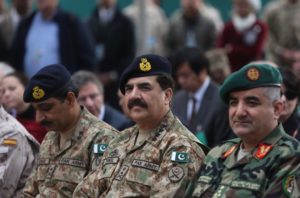
Pakistani army chief Gen. Raheel Sharif, center, attends a change of command ceremony for U.S. commanders at Resolute Support headquarters in Kabul, Afghanistan, on March 2, 2016. RAHMAT GUL/AFP/Getty Images

This is not the first time that Pakistan has deployed forces in the Middle East under a bilateral security arrangement. In 1970, Pakistan sent forces to Jordan to help the Hashemite kingdom defeat an insurrection by the Palestine Liberation Organization. Pakistani forces were also sent to the kingdom to dislodge renegade Salafist militants who had seized the holiest Muslim mosque in Mecca in 1979. Twelve years later, Pakistan sent 20,000 military personnel to Saudi Arabia during the 1991 Gulf War. But this time is different because it would be the first time Pakistan is committing troops to an alliance and not for a specific battlespace that had a specific objective.

Historically, Pakistan has had a close defensive relationship with Saudi Arabia. In addition to deploying troops, Pakistan has provided training assistance to all three services of the kingdom’s armed forces. In return, the Saudis have extended financial assistance, crude oil at concessionary rates and diplomatic support. Such is the extent of the relationship that Riyadh has had considerable influence in domestic Pakistani political struggles, especially the one between current Pakistani Prime Minister Nawaz Sharif and the country’s last military dictator, President Pervez Musharraf.

More recently, in 2015, Pakistan tried to resist pressures from Saudi Arabia to join the latter’s geopolitical sectarian struggle with Iran. Islamabad politely declined Riyadh’s request to join the Saudi-led coalition involved in the war in Yemen. A large apex-level civil-military delegation traveled to the kingdom to explain to the king that its troops were stretched thin between the eastern border, where tensions have been high with India, the western border with Afghanistan, and domestic counterinsurgency operations against Taliban rebels. However, the Pakistanis pledged to provide forces if the monarchy’s sovereignty were threatened, as it is now. This threat would explain the decision to have Pakistan’s most respected general head the military bloc and deploy a brigade reportedly along the Yemeni border, where the Saudis have faced attacks from Yemen’s opposition forces led by the Iran-leaning Houthi movement.

So far, Pakistan is the only large Muslim military power that has committed to this Saudi-led military bloc announced in October 2015. Pakistan is also an extra-regional player sitting outside the Middle East. What is significant is that the two major and more proximate military powers – Turkey and Egypt – have both steered clear of this alliance.

The Turks see themselves as the regional hegemon and are in competition with the Saudis for the leadership of the Sunni-majority Muslim world. While engaging in its own competition with Tehran, Ankara does not share Riyadh’s ethnic and sectarian loathing of the Persians. Although it has been dependent on Saudi and Gulf Cooperation Council financial support, Egypt is also not interested in seeing its military forces entangled in Saudi wars, especially when it has much deeper problems at home and in its neighborhood. Given its location in North Africa, Egypt does not have the same concerns as the Saudis regarding Iran and the Shiites.

This general lack of interest among key Muslim states explains why the Islamic Military Alliance has not moved much beyond the conceptual stage. So far, only three things about it are clear: A retired Pakistani army chief will be heading it, Pakistan is committing a brigade to the force, and its headquarters will be in Riyadh. Its size, which of the 39 states will provide troops, and its mission have not been sorted out.

The Saudis have very little experience in managing their own national armed forces, let alone putting together an ambitious project like a Muslim NATO. They are likely to pay for these issues, which will be sorted out by the Pakistani commander once he formally takes over. Riyadh hopes to retain its control through its signature financial lever. Even if the fundamentals of this joint command are sorted out, the question of political control will prevent it from being a coherent force.

Like all multinational entities, the Islamic Military Alliance will be coherent to the extent that its member states will be willing to share power. At a time when the European Union is disintegrating and NATO’s relevance is being seriously questioned, it is unlikely that the proposed Muslim (read Sunni) military alliance will be able to function where the divisions among member states are both wide and deep. Pan-Islamic solidarity is a notion that is romanticized in the Muslim world, but no state within the Ummah is willing to actually invest in it. The nearly 50-year history of the Organization of Islamic Cooperation underscores how the nation-state trumps religious solidarity.

In the case of the Islamic Military Alliance, it is from the start a sectarian project given that it excludes Iran and is geared toward fighting Tehran’s Arab allies. In essence, it is by design aimed at addressing the Middle Eastern reality that Geopolitical Futures identified as the hollowing out of the Arab world since the start of the 2011 uprisings. Saudi Arabia is the only Arab power in the region, but it derives its strength from its financial muscle fueled by being the world’s largest producer of crude oil. It does not have any military capability of its own, as is evident from the outcome of the ongoing war in Yemen. Depressed oil prices have created a domestic crisis for the Saudi political economy, which coupled with the increasing chaos in the region is gradually undermining the security of the kingdom itself. Therefore, the Islamic Military Alliance is primarily designed to protect Saudi national security at a time when the kingdom cannot count on its historical security guarantor, the United States.

From the U.S. perspective, as long as the Islamic Military Alliance fights the Islamic State and acts as a bulwark against other destabilizing forces in the region, it is helpful to American national interests. It has the potential to relieve Washington from doing the heavy lifting on regional security. To a great extent, the U.S. has had to engage in costly interventions because regional pro-Western states have lacked collective security capabilities. Washington would like nothing more than countries like Turkey, Pakistan and others to take the lead in the fight against IS and other jihadist actors, as well as in containing Iran.

However, these countries are having troubles on their respective domestic fronts – not to mention that they have competing and often divergent national interests. Even more alarmingly, IS is pushing its transnational agenda that seeks to take advantage of the increasing power vacuums in the region to establish its caliphate. In many ways, the Islamic Military Alliance is a response to IS’ efforts to forge Muslim political unity. That this Muslim NATO is unlikely to succeed will strengthen the jihadist position that the current regimes are a cause of Muslim disunity.

The Islamic Military Alliance is not designed to be a pan-Muslim alliance. Even at the intra-Sunni level, very few states have shown interest. In addition, the Sunni camp is so divided that it is unlikely to challenge the jihadists. On the contrary, its sectarian architecture will only exacerbate jihadism.

geopoliticalfutures.com

Η Ρωσία ενισχύει τη νέα επίθεση του συριακού καθεστώτος στην Ιντλίμπ.

0

iswresearch

Ο συνασπισμός υπέρ του καθεστώτος είναι έτοιμος να κερδίσει περισσότερα στο ευρύτερο Ιντλίμπ, προσθέτοντας ήδη σημαντικές εδαφικές προόδους. Η Ρωσία θα καθορίσει την ταχύτητα με την οποία πραγματοποιούνται αυτές οι πρόοδοι με βάση τον πολιτικό της λογισμό, τόσο στη Συρία όσο και αλλού. Η σύγκρουση μπορεί να κλιμακωθεί δραματικά, θέτοντας σε κίνδυνο τις ΗΠΑ και τους συμμάχους της.

Η κατάσταση στη βορειοδυτική Συρία είναι δυναμική και έχει τη δυνατότητα να κλιμακωθεί δραματικά. Αυτή η κλιμάκωση απειλεί τα συμφέροντα των ΗΠΑ και των συμμάχων τους, καθώς η Ρωσία και η Τουρκία έρχονται αντιμέτωποι σε μια περιοχή που κυριαρχείται από ομάδες που συνδέονται με την Αλ Κάιντα. Μια στρατιωτική εκστρατεία υποστηριζόμενη από τη Ρωσία, η οποία ξεκίνησε ως περιορισμένη κατάληψη εδάφους για το καθεστώς Assad,  εξελίχθηκε σε μια μεγάλη επιχείρηση στο πλαίσιο της συριακής σύγκρουσης. Η Ρωσία έχει θέσει τις προϋποθέσεις για την ανάκτηση μιας μεγάλης έκτασης εδάφους σε μια κεντρική εθνική οδό που διασχίζει την περιοχή και πιθανότατα θα συνεχίσει την χερσαία επίθεση έως ότου επιτύχει αυτόν τον στόχο. Η Τουρκία κινείται ενισχύοντας το  Ιντλίμπ ως αντίδραση στην πίεση της Ρωσίας. Η Ρωσία μπορεί να αποφασίσει να υποστηρίξει την κατάληψη εδαφών απο το συριακό καθεστώς, σημαντικά περισσότερων τους επόμενους μήνες. Η Ρωσία θα καθορίσει το ρυθμό της προόδου, ανεξάρτητα από τον Assad, με βάση την ισορροπία που έχει καθιερώσει μεταξύ των δυνητικών διπλωματικών ωφελειών της και των πιθανών στρατιωτικών κινδύνων.

Η Ρωσία του Βλαντιμίρ Πούτιν έχει εδώ και καιρό εμπλακεί σε μια σειρά παράλληλων στρατηγικών προσπαθειών που αποσκοπούν στην επέκταση της παρουσίας της και στην προβολή της δύναμής της στη Μέση Ανατολή και τις γύρω περιοχές. Η Ρωσία ξεκίνησε την παρέμβασή της στη Συρία το 2015 για να διατηρήσει ένα υπόλογο στη Ρωσία καθεστώς που της επιτρέπει να χρησιμοποιήσει τη Συρία για στρατιωτική βάση που θα υποστηρίζει αυτούς τους στόχους. Η Ρωσία, το Ιράν και το καθεστώς Assad ανέλαβαν μια σειρά από επιχειρήσεις για να καταλάβουν το έδαφος και να ανοικοδομήσουν το συριακό κράτος στο πλαίσιο του Σύρου Προέδρου Μπασάρ Αλ Ασάντ. Η Ρωσία ξεκίνησε μια συμπληρωματική διπλωματική εκστρατεία για να εδραιώσει την πολιτική νομιμοποίησή της στη Συρία μεταξύ των Συρίων, των Ρώσων και της διεθνούς κοινότητας, να ενισχύσει το καθεστώς Assad στο εσωτερικό και στο εξωτερικό και να θέσει ευνοϊκούς όρους για μακροπρόθεσμη παρουσία της Ρωσίας στους πολιτικούς και πληροφοριακούς τομείς της Συρίας . Βασική συνιστώσα αυτής της διπλωματικής εκστρατείας είναι η Διαδικασία της Αστάνα, μια σειρά συναντήσεων που διοργανώνονται από τη Ρωσία, το Ιράν και την Τουρκία για να συζητήσουν τη συριακή διαμάχη που λειτουργεί ανεξάρτητα από την ειρηνευτική διαδικασία του ΟΗΕ. Η Διαδικασία της Αστάνα επιτρέπει στη Ρωσία να εμφανιστεί ως παγκόσμια δύναμη με τη δυνατότητα να διαπραγματεύεται την επίλυση τοπικών συγκρούσεων ενώ περιθωριοποιεί τις Δυτικές δυνάμεις.

Η επαρχία Ιντλίμπ, μια περιοχή στη βορειοδυτική Συρία που ελέγχεται απο αντάρτες, αντιπροσωπεύει το μεγαλύτερο εναπομείναν εμπόδιο στην εκστρατεία του συνασπισμού υπέρ του Assad για την αποκατάσταση του εδαφικού ελέγχου της Συρίας από το καθεστώς Assad. Η Ρωσία, ο Άσαντ και οι σύμμαχοί τους βρίσκονται τώρα στον δέκατο μήνα μιας εξαντλητικής χερσαίας επίθεσης για να ανακαταλάβουν αυτό το έδαφος από μια ποικιλία δυνάμεων κατά του Ασαντ. Η Ρωσία χρησιμοποίησε τα στάδια αυτής της στρατιωτικής επιχείρησης για να ενισχύσει τη διπλωματική της θέση, ιδιαίτερα όσον αφορά την Τουρκία. Η Ρωσία έχει εναλλαγές μεταξύ της στρατιωτικής και της διπλωματικής φάσης στην εκστρατεία, επιβραδύνοντας την πρόοδό της, αλλά διευκολύνοντας τα κέρδη τα δικά της και του καθεστώτος τόσο στο έδαφός όσο και διπλωματικά. Οι αλλαγές μεταξύ αυτών των φάσεων συμπίπτουν συχνά με τις σημαντικές συναντήσεις της Αστάνα. Η επίθεση επιταχύνθηκε σημαντικά από τα μέσα Δεκεμβρίου, καθώς η Ρωσία ενίσχυσε την υποστήριξή της στην επιχείρηση σε μαχητές, εξοπλισμό και αεροπορική υποστήριξη. Ανεξάρτητα από τον Άσαντ, η Ρωσία αποφάσισε το ρυθμό της επίθεσης κατά του καθεστώτος για να ανταποκριθεί στους πολιτικούς και διπλωματικούς της στόχους.

Οι δυνάμεις κατά του Assad που ελέγχουν μεγάλο μέρος της επαρχίας Ιντλίμπ και τμήματα γειτονικών επαρχιών Λατάκια και Χαλέπι αποτελούν την τελευταία υπολειπόμενη περιοχή της Συρίας, εκτός του ελέγχου του καθεστώτος Assad, τις Συριακές Δημοκρατικές Δυνάμεις (SDF) ), και τήν κατεχόμενη απο την Τουρκία περιοχή. Οι δυνάμεις ανταρτών στο Ευρύτερο Ιντλίμπ απειλούν την ασφάλεια της βασικής βάσης της Ρωσίας στη Συρία με όπλα και έμμεση ανάφλεξη. Αυτές οι δυνάμεις ελέγχουν επίσης μια έκταση της βασικής οδού Μ5, η οποία συνδέει τις δύο μεγαλύτερες πόλεις της Συρίας τη Δαμασκό και το Χαλέπι. Η Hay’at Tahrir al Sham (HTS), που συνδέεται με την Αλ Κάιντα, δεσπόζει στον έλεγχο του Ευρύτερου  Ιντλίμπ, αν και το εμπλεκόμενο με την Τουρκία Μέτωπο Εθνικής Απελευθέρωσης (NLF) και μια σειρά μικρότερων παρατάξεων διατηρούν την παρουσία τους σε μεγάλο μέρος της περιοχής. Οι δυνάμεις υπέρ του καθεστώτος ξεκίνησαν την επίθεσή τους τον Μάιο του 2019 και έκτοτε κατέλαβαν αρκετές βασικές πόλεις, μεταξύ των οποίων ο Χαν Σέικουν στις 21 Αυγούστου, την Μααράτ αλ Νταμάν στις 28 Ιανουαρίου και το Σάρακιμ στις 7 Φεβρουαρίου.

Η Ρωσία και ο Assad έχουν αναλάβει μια τεράστια εκστρατεία για την εκτόπιση του τοπικού πληθυσμού και την επιδείνωση της ήδη φρικτής ανθρωπιστικής κατάστασης στην περιοχή. Αυτή η εκστρατεία όχι μόνο ασκεί πιέσεις στις τοπικές παρατάξεις που πρέπει να διαφοροποιούν πόρους για τη διατήρηση της ασφάλειας, αλλά και στην Τουρκία, η οποία έχει κλείσει τα σύνορά της σε πρόσθετους πρόσφυγες από τη Συρία. Το Ευρύτερο Ιντλίμπ φιλοξενεί περίπου 3-4 εκατομμύρια πολίτες και εσωτερικά εκτοπισμένα άτομα (IDPs). Η τελευταία φάση της επίθεσης υπέρ του Assad έχει εκτοπίσει περίπου 700.000 ανθρώπους από τον Νοέμβριο. Οι συριακές και οι ρωσικές δυνάμεις καταστρέφουν τακτικά την πολιτική υποδομή, συμπεριλαμβανομένων των αστικών κέντρων και των νοσοκομείων.

Η μετακίνηση πολιτών προς τα σύνορα Τουρκίας-Συρίας αποτελεί συνιστώσα μιας ευρύτερης ρωσικής εκστρατείας για τη συγκράτηση των τουρκικών ενεργειών στη Συρία. Παρά τις συχνά ρεαλιστικές σχέσεις μεταξύ Ρωσίας και Τουρκίας στη Συρία, οι δύο χώρες έχουν τελικά διαφορετικές τελικές επιθυμίες και προτεραιότητες στη χώρα. Η Ρωσία βλέπει την Τουρκία ως ΝΑΤΟικό παράγοντα στη Συρία, μαζί με τις Ηνωμένες Πολιτείες. Η Ρωσία ακολουθεί μια διττή προσέγγιση για να υπονομεύσει τη δυνατότητα μιας ΝΑΤΟικής ζώνης ΗΠΑ-Τουρκίας που θα μπορούσε να εκτείνεται από την επαρχία Ντερ ε Ζόρ στα ανατολικά μέχρι τη Λατάκια στα δυτικά. Ένας άξονας αυτής της προσπάθειας είναι να περιορίσει τις ενέργειες της Τουρκίας στο Ιντλίμπ, ενώ το άλλο άκρο επιδιώκει τη συνεργασία της Ρωσίας με την Τουρκία για την αντιμετώπιση των ενεργειών των ΗΠΑ στην ανατολική Συρία. Η Ρωσία έχει απογοητευτεί από την αδυναμία ή την απροθυμία της Τουρκίας να ελέγξει τις ανταρτικές ομάδες στο Ευρύτερο Ιντλίμπ σύμφωνα με τις συμφωνίες της με τη Ρωσία. Η προσπάθεια της Ρωσίας και του Assad να επιδεινώσουν την ανθρωπιστική κατάσταση και να μετακινήσουν τον πληθυσμό στα σύνορα της Τουρκίας είναι ένας τρόπος να προειδοποιήσουν την Τουρκία για τις συνέπειες της αδράνειάς της χωρίς να χρειαστεί να χτυπήσει-η Ρωσία- απευθείας τις τουρκικές δυνάμεις.

Συμπεράσματα και προβλέψεις

Η Ρωσία έχει θέσει τις προϋποθέσεις για την πλήρη ανακατάληψη της εθνικής οδού M5 τις επόμενες εβδομάδες. Η Ρωσία μπορεί να προσπαθήσει να κερδίσει σημαντικό έδαφος στο Ευρύτερο Ιντλίμπ, συμπεριλαμβανομένης της πόλης του Ιντλίμπ, όταν ο αυτοκινητόδρομος είναι ασφαλής. Ωστόσο, το έδαφος του Ευρύτερου Ιντλίμπ πέρα από το Μ5 είναι τακτικό πλεονεκτικό για τις αμυνόμενες κατά του Assad δυνάμεις. Αυτές οι ομάδες έχουν ετοιμάσει εκτεταμένες οχυρώσεις και άμυνες, συμπεριλαμβανομένων των σηράγγων, σε διάφορες περιοχές του Ευρύτερου Ιντλίμπ, ειδικά στις δυτικές ορεινές περιοχές. Ως αποτέλεσμα, ακόμη και μετά τη ανακατάληψη του Μ5, η Ρωσία μπορεί να επανέλθει σε μια διπλωματική φάση του αγώνα. Εάν η καθοδηγούμενη απο τη Ρωσία εκστρατεία σταθεί ικανή να κινηθεί πέρα από το M5, η επακόλουθη μάχη πιθανότατα θα απαιτήσει δυνάμεις να εμπλακούν σε αστικό πόλεμο στην πόλη Ιντλίμπ, η οποία ελέγχεται απο την Hay’at Tahrir al Sham που προετοιμάζεται πιθανώς για πολιορκία. Η Ρωσία θα πρέπει να ξεκινήσει μια εκστρατεία για την αποδυνάμωση της πόλης με αεροπορικές επιδρομές και πυροβολικό, κινδυνεύοντας μια αυξημένη ανταπόκριση από την Τουρκία και τη διεθνή κοινότητα, συμπεριλαμβανομένων των Ηνωμένων Πολιτειών. Η Ρωσία πιθανόν να επιτύχει ορισμένους στόχους πέρα από τον αυτοκινητόδρομο Μ5, αλλά η πρόοδος θα είναι αργή και καθοδηγούμενη από τις διπλωματικές ανησυχίες της Ρωσίας καθώς και από τη στρατιωτική της δύναμη. Ο εμφύλιος πόλεμος της Συρίας δεν έχει τελειώσει.

Μετάφραση: Παντελής Σαββίδης

F-35 : l’avion de chasse de l’armée américaine incapable de viser

0

 Un mauvais positionnement de l’arme et des fissures sur le boîtier auraient contraint l’armée de l’air à limiter son usage, explique Bloomberg.

Μοίρασμα του Αιγαίου μέσω Χάγης;

0

του Αναστάσιου Λαυρέντζου*

Τους τελευταίους μήνες πολιτικοί, σύμβουλοι και μέλη διαφόρων «δεξαμενών σκέψης» κάνουν δηλώσεις που δείχνουν ότι κάποια σημαντική εξέλιξη κυοφορείται για το νομικό καθεστώς του Αιγαίου.

Αυτού του είδους τις δηλώσεις τις ξεκίνησε πρώτος ο πρώην Υπουργός Εξωτερικών Ν. Κοτζιάς, ο οποίος μας συνέστησε «να μην είμαστε μοναχοφάηδες» στο Αιγαίο. Τη σκυτάλη πήρε ο Γ. Κατρούγκαλος, ο οποίος είπε ότι η Τουρκία δεν μπορεί να αποκλειστεί από την ενεργειακή εξίσωση, λόγω της μεγάλης ακτογραμμής της. Αμέσως μετά, σε ρόλο «λαγού», ο Γ. Τσιρώνης, «ανακάλυψε» ότι το Καστελόριζο δεν είναι στο Αιγαίο, αλλά στη Μεσόγειο.

Ακολούθησε ο πρώην Πρωθυπουργός κ. Σημίτης, ο οποίος με προεκλογικό του άρθρο προέτρεψε την κυβέρνηση που θα προέκυπτε από τις εκλογές του Ιουλίου να προχωρήσει σε δύσκολες αποφάσεις για να επέλθει ηρεμία στο Αιγαίο.

Στην προεκλογική περίοδο δεν υπήρξαν ανάλογες δηλώσεις από την πλευρά της τότε αντιπολίτευσης. Αμέσως μετά όμως άρχισαν να εμφανίζονται φωνές εντός της σημερινής κυβέρνησης, οι οποίες ως ένας αντίλαλος που έρχεται από παντού ψιθυρίζουν όλο και πιο δυνατά «Χάγη». Ακόμη και ο Πρωθυπουργός είπε πρόσφατα, ότι «αν δεν τα βρούμε με την Τουρκία, να πάμε στη Χάγη και να είμαστε τότε έτοιμοι να δεχτούμε την απόφαση που θα προκύψει». Πιο πρόσφατα εμφανίστηκε ο Σύμβουλος Εθνικής Ασφαλείας της κυβέρνησης κ. Ντόκος, ο οποίος σε συνέντευξη του σε κυπριακή εφημερίδα μίλησε πάλι για συνεκμετάλλευση στο Αιγαίο. Διευκρίνισε δε ότι κάτι τέτοιο προϋποθέτει την οριοθέτηση των θαλασσίων ζωνών μέσω προσφυγής σε «διεθνές δικαιοδοτικό όργανο».

Για ποια θέματα θα πάμε στη Χάγη;

Αφού λοιπόν φαίνεται ότι διενεργείται μια εντατική προετοιμασία της κοινής γνώμης για προσφυγή στην Χάγη, εύλογα προκύπτει το ερώτημα: για ποια ακριβώς θέματα θα πάμε στη Χάγη; Στελέχη της κυβέρνησης σπεύδουν να μας διευκρινίσουν ότι δεν προτείνουν την υπαγωγή ολόκληρης της ατζέντας των τουρκικών διεκδικήσεων στη Χάγη. Αναφέρονται μόνο στην πάγια από το 1975 ελληνική πρόταση για δικαστική οριοθέτηση της υφαλοκρηπίδας του Αιγαίου, στην οποία πλέον έχει προστεθεί και η οριοθέτηση της ΑΟΖ.

Η Τουρκία από την πλευρά της δεν αποδέχεται όμως μια τόσο περιορισμένη ατζέντα, και πριν από οποιαδήποτε προσφυγή στη Χάγη, θέτει ως προϋπόθεση να κάτσουμε σε ένα τραπέζι και να συζητήσουμε μαζί της το σύνολο των διεκδικήσεών της.

Μήπως λοιπόν οι δηλώσεις περί «Χάγης» συνιστούν έναν επικοινωνιακό χειρισμό με σκοπό να δείξουμε ότι εμείς δεν είμαστε αδιάλλακτοι; Δηλαδή, μήπως ποντάρουμε στον τουρκικό μαξιμαλισμό, διατυπώνοντας μια πρόταση που δεν θα δεχτεί η Τουρκία; Η απάντηση είναι ότι καλύτερα να μας λείπουν τέτοιοι ακροβατισμοί. Και αυτό, για τρεις λόγους:

Πρώτον, το πόσο υποχωρητική είναι η ελληνική πλευρά, το γνωρίζει ήδη η διεθνής κοινότητα. Το είδε στο πώς το ελληνικό πολιτικό σύστημα χειρίστηκε την χρεοκοπία της χώρας και κυρίως το είδε στο πώς η Ελλάδα συνθηκολόγησε στις απαιτήσεις των Σκοπίων. Αυτή την ώρα επομένως η Ελλάδα δεν χρειάζεται να δείξει άλλο τη διαλλακτικότητά της. Αυτό που προέχει είναι να ξεκαθαρίσει τα θέματα που δεν συζητά και παράλληλα να προβάλει επί τέλους και ορισμένες αντισταθμιστικές διεκδικήσεις.

Δεύτερον, η ελληνική κοινή γνώμη έχει διαχρονικά πολύ πικρή εμπειρία από την αναντιστοιχία λόγων και έργων των πολιτικών της «ελίτ». Και αυτή η παρατήρηση αφορά δυστυχώς και την παρούσα κυβέρνηση. Ενδεικτικά αναφέρουμε ότι προεκλογικώς κορυφαία μέλη της υπόσχονταν να βελτιώσουν τη Συμφωνία των Πρεσπών, αξιοποιώντας την ενταξιακή διαδικασία των Σκοπίων στην ΕΕ. Ωστόσο, μετά τις εκλογές, τα ίδια ή άλλα μέλη της κυβέρνησης άρχισαν να αντιστρέφουν τους χαρακτηρισμούς τους και να ανακαλύπτουν στη Συμφωνία των Πρεσπών «αρετές» που δεν έβλεπαν όταν συμμετείχαν στα συλλαλητήρια για τη Μακεδονία. Το αποκορύφωμα ήλθε, όταν η ένταξη των Σκοπίων στην ΕΕ αναβλήθηκε με γαλλικό βέτο. Η ελληνική κυβέρνηση τότε, όχι μόνο δεν άρπαξε αυτή την ευκαιρία για να παζαρέψει τουλάχιστον τη στάση της, αλλά αμέσως έσπευσε να ανακηρυχθεί σε διαπρύσιο υπερασπιστή της ευρωπαϊκής προοπτικής των Σκοπίων.

Τρίτον, οι ελληνικές πολιτικές «ελίτ» έχουν την τάση να αντιλαμβάνονται τις διεθνείς εξελίξεις με μια στατικότητα. Έτσι μάλλον παραβλέπουν τις αλλαγές που έχουν συντελεσθεί από το 1975 έως σήμερα. Η επισήμανση αυτή έχει δύο όψεις:

Η μια όψη είναι ότι στο παραπάνω διάστημα οι συσχετισμοί ισχύος Ελλάδας-Τουρκίας άλλαξαν σημαντικά. Η μεν Ελλάδα έμεινε στάσιμη δημογραφικά, διέγραψε μια πορεία δανεικής ευημερίας και τελικά χρεοκόπησε. Η δε Τουρκία έκτοτε διπλασιάστηκε πληθυσμιακά, γιγαντώθηκε παραγωγικά και σήμερα – παρά τα όποια εσωτερικά της προβλήματα – συμπεριφέρεται ως περιφερειακή δύναμη στην Ανατ. Μεσόγειο, κάνοντας στρατιωτικές επεμβάσεις στον περίγυρό της.

Η άλλη όψη των μεταβολών που έχουν επισυμβεί από το 1975 στο διεθνές περιβάλλον είναι ότι πια έχουμε φύγει από την περιχαράκωση που επέβαλε ο «ψυχρός πόλεμος». Πλέον είμαστε σε έναν κόσμο πολύ πιο ρευστό, όπου οι ΗΠΑ είτε δεν μπορούν να τηρούν σε όλα τα σημεία του πλανήτη την Pax Americana είτε επιλέγουν για λόγους οικονομίας δυνάμεων να επικεντρωθούν στην αντιπαράθεσή τους με την Κίνα. Η παράβλεψη αυτής της μεταβολής από πλευράς ελληνικού πολιτικού προσωπικού είναι βεβαίως πολύ επικίνδυνη: δημιουργεί την ψευδαίσθηση ότι λειτουργούν κάποια διεθνή δίχτυα ασφαλείας, τα οποία στην πραγματικότητα ίσως να μην υπάρχουν.

«Κι αν χάσετε;»

Σχετικά, χαρακτηριστικό ήταν αυτό που συνέβη στην πρόσφατη επίσκεψη του κ. Μητσοτάκη στις ΗΠΑ. Όταν ο Έλληνας Πρωθυπουργός απευθυνόμενος στον Πρόεδρο Τραμπ ανέφερε ότι «αν η Τουρκία αμφισβητήσει τα κυριαρχικά μας δικαιώματα, θα αντιδράσουμε δυναμικά», ο Αμερικανός Πρόεδρος τον ρώτησε με νόημα: «Κι αν χάσετε;»

Επρόκειτο για μια έμμεση παραίνεση, περιέχουσα και κάποια απειλή, ότι πρέπει «να τα βρούμε» με την Τουρκία. Και το «να τα βρούμε» βεβαίως σημαίνει ότι θα πρέπει εμείς να κάνουμε τις κατάλληλες υποχωρήσεις και η Τουρκία να μετριάσει κάπως τις διεκδικήσεις της, μεταθέτοντας ορισμένες για την επόμενη φορά. Το γεγονός βεβαίως ότι η ελληνική πλευρά διάλεξε να γνωστοποιήσει αυτή τη συζήτηση, δείχνει ότι μάλλον είναι έτοιμη να προχωρήσει σε αυτή τη συνθηκολόγηση και έμμεσα μεταθέτει τον εκβιασμό στην ελληνική κοινή γνώμη. Εννοείται φυσικά ότι αν όλα αυτά πιθανώς ισχύουν για τις ΗΠΑ, τότε δεν έχουμε να περιμένουμε τίποτε περισσότερο από την ΕΕ και ειδικά από τη Γερμανία.

Αντίσταση αντί υποταγής

Για όλους τους παραπάνω λόγους, η ελληνική κοινή γνώμη έχει κάθε λόγο να δυσπιστεί στις διαβεβαιώσεις κυβερνητικών στελεχών ότι πιθανή προσφυγή στη Χάγη θα γίνει με περιορισμένη ατζέντα. Διότι υπάρχει ο κίνδυνος τελικά να πάμε στη Χάγη ή να μας καθίσουν σε κάποιο άλλο τραπέζι διαπραγματεύσεων με όρους πολύ χειρότερους από αυτούς που υποθέτουμε. Και βέβαια σε ένα τέτοιο τραπέζι έχουμε μόνο να χάσουμε, αφού έτσι κι αλλιώς με όποια ατζέντα κι αν πάμε, η συζήτηση θα αφορά μόνο διεκδικήσεις της Τουρκίας εις βάρος μας.

Ζητούμενο λοιπόν σήμερα είναι να πάψουμε να δηλώνουμε ανοικτά ότι αναζητούμε φόρμουλα κατευνασμού της τουρκικής επιθετικότητας. Διότι είναι καιρός να πάψουμε να θεωρούμε την «προληπτική παράδοση» ως τη μόνη διαθέσιμη «εθνική στρατηγική». Υπάρχει και ο δρόμος της αντίστασης, ο οποίος απαιτεί θυσίες και ουσιαστικές μεταρρυθμίσεις, που όμως το πολιτικό σύστημα τις αποφεύγει, για να μην χάσει την πρόσβαση στην εξουσία. Ας διαλέξουμε τον δρόμο της αντίστασης. Το χρωστάμε στις προηγούμενες και στις επόμενες γενιές. Το χρωστάμε όμως και στον εαυτό μας· γιατί εν τέλει, είναι θέμα στοιχειώδους αξιοπρέπειας.

*Ο Αναστάσιος Λαυρέντζος κατέχει πτυχίο Φυσικής και διπλώματα μεταπτυχιακής ειδίκευσης (MSc) στα Οικονομικά Μαθηματικά και στη Θεωρητική Φυσική. Έχει εργαστεί ως διευθυντικό στέλεχος στον τομέα Διαχείρισης Κινδύνων σε μεγάλους ελληνικούς χρηματοπιστωτικούς οργανισμούς. Στο πλαίσιο αυτό έχει επισκεφτεί πολλές βαλκανικές χώρες (Τουρκία, Βουλγαρία, Ρουμανία, Σερβία). Συνεργάζεται με διεθνείς ελεγκτικούς οίκους ως συμβουλος επιχειρήσεων και διδάσκει Διαχείριση Κινδύνων στο Οικονομικό Πανεπιστήμιο Αθηνών. Έχει γράψει τα βιβλία: «Η Θράκη στο μεταίχμιο» και «Σιωπηρή Άλωση – Το Δημογραφικό και το Μεταναστευτικό πρόβλημα της Ελλάδας».


Russia Enables New Syrian Regime Offensive in Idlib

0

By: Michael Land


Key Takeaway: The pro-regime coalition is poised to make further gains in Greater Idlib Province, adding on to already substantial territorial advances. Russia will govern the speed at which these advances happen based on its political calculus, both in Syria and elsewhere. The conflict has the potential to escalate dramatically, posing a risk to the U.S. and its allies.

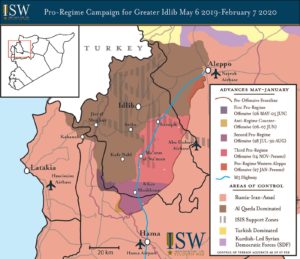
The situation in Syria’s northwest is dynamic and has the potential to escalate dramatically. This escalation threatens the interests of the U.S. and its allies as Russia and Turkey face off in a region dominated by al Qaeda-affiliated groups. A Russian-backed military campaign that began as a limited seizure of terrain for the Assad regime has since evolved into a major undertaking within the Syrian conflict. Russia has set the conditions for the retaking a large swath of terrain along a key highway running through the area, and will likely continue the ground offensive until it achieves that objective. Turkey is moving reinforcements into Idlib in reaction to Russia’s push. Russia may decide to support the pro-regime seizure of significantly more territory in the coming months. Russia will determine the pace of the advance, independent of Assad, based on the balance it has established between its potential diplomatic benefits with its potential military risks.

Vladimir Putin’s Russia has long engaged in a series of parallel strategic endeavors aimed at expanding its presence in and projecting its power into the Middle East and surrounding regions. Russia launched its intervention in Syria in 2015 to preserve a Russian-amenable regime that allows Russia to use Syria for military basing that supports these goals. Russia, Iran, and the Assad regime have undertaken a series of operations to seize terrain and rebuild the Syrian state under Syrian President Bashar Al-Assad. Russia has launched a complementary diplomatic campaign to solidify its political legitimacy in Syria among Syrians, Russians, and the international community, strengthen the Assad regime at home and abroad, and set favorable conditions for a long-term Russian presence in Syria’s political and information spheres. A key component of this diplomatic campaign is the Astana Process, a series of meetings organized by Russia, Iran, and Turkey to discuss the Syrian conflict that operates independently of the UN peace process. The Astana Process allows Russia to portray itself as a global power with the ability to negotiate settlements to local conflicts while marginalizing Western powers.

Idlib province, a rebel-held area of northwest Syria, represents the largest remaining obstacle in the pro-Assad coalition’s campaign to restore the Assad regime’s territorial control of Syria. Russia, Assad, and their allies are now in the tenth month of a grueling ground offensive to retake this terrain from a variety of anti-Assad forces. Russia has used the phases of this military operation to strengthen its diplomatic position, particularly with regard to Turkey. Russia has alternated between military and diplomatic phases in the campaign, slowing its progress, but facilitating Russian and pro-regime gains both territorially and diplomatically. The changes between these phases often coincide with major Astana meetings. The offensive has accelerated significantly since mid-December as Russia stepped up its support for the operation in the form of fighters, equipment, and air support. Independent of Assad, Russia has decided the pace of the pro-regime offensive to suit its political and diplomatic goals.

The anti-Assad forces that control much of Idlib Province and portions of neighboring Latakia and Aleppo provinces (a.k.a. “Greater Idlib”) constitute the last remaining area of Syria outside the control of the Assad regime, the Kurdish-led Syrian Democratic Forces (SDF), or Turkish occupation. The rebel forces in Greater Idlib threaten the security of Russia’s main base in Syria with weaponized drones and indirect fire. These forces also control a stretch of the key M5 Highway, which connects Syria’s two largest cities of Damascus and Aleppo. Al Qaeda-affiliated Hay’at Tahrir al Sham (HTS) dominates control over much of Greater Idlib, although the Turkish-backed National Liberation Front (NLF) and an array of smaller factions retain a presence in much of the region. Pro-regime forces began their offensive in May 2019 and have since seized several key cities, including Khan Sheikhoun on August 21, Ma’arat al Nu’man on January 28, and Saraqib on February 7.

Russia and Assad have undertaken a massive campaign to displace the local population and worsen the already dire humanitarian situation in the region. This campaign not only puts pressure on local factions who must divert resources to maintain security, but also Turkey, which has closed its border to additional refugees from Syria. Greater Idlib is home to approximately 3-4 million civilians and internally displaced persons (IDPs). The latest phase of the pro-Assad offensive has displaced approximately 700,000 people since November.[1] Both Syrian and Russian forces regularly strike civilian infrastructure, including urban centers and hospitals.[2]

The displacement of civilians toward the Turkey-Syria border is a component of a larger Russian campaign to contain Turkish actions in Syria. Despite an often-pragmatic relationship between Russia and Turkey in Syria, the two countries ultimately have extremely different desired end states and priorities in the country. Russia views Turkey primarily as a NATO actor in Syria, along with the United States. Russia is taking a two-pronged approach to undermine the possibility of a U.S.-Turkey NATO zone that could stretch from Deir ez Zour province in the east to Latakia in the west. One prong of this effort is to constrain Turkey’s actions in Idlib, while the other prong involves Russia working with Turkey to counter U.S. actions in eastern Syria. Russia has been frustrated by Turkey’s inability or unwillingness to control rebel factions in Greater Idlib per its agreements with Russia. Russia and Assad’s efforts to exacerbate the humanitarian and displacement situation on Turkey’s border is a means of warning Turkey of the consequences of their inaction without needing to strike Turkish forces directly.

Conclusion and Forecast

Russia has set conditions for a full retaking of the M5 Highway in the coming weeks. Russia may attempt to gain significantly more terrain in Greater Idlib, including Idlib City, once the highway is secure. However, the terrain of Greater Idlib beyond the M5 is tactically advantageous for the defending anti-Assad forces. These groups have prepared extensive fortifications and defenses, including tunnels, in several regions of Greater Idlib, especially in the western mountainous regions. As a result, even after the capture of the M5, Russia may revert to a diplomatic phase of the fight. If the Russian-led campaign gains sufficient initiative to move beyond the M5, the ensuing battle will likely require forces to engage in urban warfare in Idlib City, where the local powerbroker, Hay’at Tahrir al Sham, has likely prepared for a siege. Russia would have to undertake a campaign to depopulate the city through airstrikes and artillery, risking an increased response from Turkey and the international community including the United States. Russia will likely be able to achieve certain objectives beyond the M5 Highway, but the progress will be slow and driven by Russia’s diplomatic concerns as well as its military might. The Syrian Civil War remains far from over.

[1] “International Crisis Looms as 700,000 Flee Syria’s Idlib: U.S. Envoy,” Reuters, January 30, 2020, https://www.reuters.com/article/us-syria-security-us/us-envoy-700000-displaced-in-northwest-syria-idUSKBN1ZT1SU.

[2] Evan Hill, Christiaan Triebert, Malachy Browne, Dmitriy Khavin, Drew Jordan, and Whitney Hurst, “Russia Bombed Four Syrian Hospitals. We Have Proof.” New York Times, October 13, 2019, https://www.nytimes.com/video/world/middleeast/100000005697485/russia-bombed-syrian-hospitals.html; Christiaan Triebert, Evan Hill, Malachy Browne, Dmitriy Khavin, and Aaron Byrd, “We Proved Russian Pilots Bombed a Hospital. Then They Did It Again.” New York Times, November 14, 2019, https://www.nytimes.com/video/world/middleeast/100000006815692/syria-hospitals-russia.html; “Russian Air Strikes on Syria Market Kill 23: Monitor,” AFP, July 22, 2019, https://www.france24.com/en/20190722-russian-air-strikes-syria-market-kill-23-monitor.

Posted by Institute for the Study of War at 9:48 PM 

Η αθώωση του Τραμπ και ο εθνικός διχασμός των ΗΠΑ

0

Protagon Team 8 ΦΕΒΡΟΥΑΡΙΟΥ 2020, 21:35

Οι ερχόμενες εκλογές θα είναι μια μάχη μεταξύ του καλού και του κακού: τους επόμενους μήνες ο αμερικανός πρόεδρος θα εκμεταλλευτεί στο έπακρο την αθώωσή του για να πολώσει κι άλλο. Η έκβαση αβέβαιη, αλλά σίγουρα ο Τραμπ θα κυνηγήσει όσους οδήγησαν στην παραπομπή του, όχι μόνο εκείνους που κατέθεσαν ως μάρτυρες

Το 2004 ο βρετανός ιστορικός Νάιαλ Φέργκιουσον έγραψε το βιβλίο «Κολοσσός: Η άνοδος και η πτώση της αμερικανικής αυτοκρατορίας». Σήμερα, 16 χρόνια μετά, η αμερικανική αυτοκρατορία, παραμένοντας οικονομικά και στρατιωτικά πανίσχυρη, απέχει ακόμα πολύ από την πτώση. Αλλά για τους ιστορικούς του μέλλοντος, η όλη διαδικασία παραπομπής του Ντόναλντ Τραμπ σε δίκη θα είναι ιδιαίτερα αποκαλυπτική όσον αφορά τους παράγοντες που μπορούσαν να οδηγήσουν στην παρακμή μια αυτοκρατορία.

Μεταξύ αυτών ξεχωρίζει κυρίως η πόλωση της κοινωνίας, η οποία στην περίπτωση της Αμερικής έχει επέλθει εδώ και καιρό και πρόκειται να ενταθεί επικίνδυνα κατά τους μήνες έως τις προεδρικές εκλογές του ερχόμενου Νοεμβρίου.

«Η σύντομη αλλά αξέχαστη πολιτική καριέρα του Ντόναλντ Τραμπ βασίστηκε γύρω από την αρχή του “διαίρει και εξαπάτα”. Η απαλλαγή του από τη Γερουσία των ΗΠΑ θα φουντώσει περισσότερο τις φλόγες του βαθύτερου εθνικού διχασμού (στη χώρα) από τον Πόλεμο του Βιετνάμ κι έπειτα, αν όχι από τον Εμφύλιο Πόλεμο και μετά», αναφέρει χαρακτηριστικά στο ρεπορτάζ του ο Ντέιβιντ Σμιθ, επικεφαλής του γραφείου του Guardian στην Ουάσινγκτον. Γιατί σε αντίθεση με τον Ρίτσαρντ Νίξον, ο οποίος, όταν αναγκάστηκε να παραιτηθεί, παραδέχτηκε πως «είναι ξεκάθαρο ότι απώλεσα την πολιτική μου βάση», ο Ντόναλντ Τραμπ εξακολουθεί να χαίρει της στήριξης πολλών εκατομμυρίων Αμερικανών με το 49% εξ αυτών να δηλώνουν ικανοποιημένοι με το έργο του.

Πρόκειται για το υψηλότερο ποσοστό του από τότε που ανέλαβε τα ηνία των ΗΠΑ, με τον αμερικανό πρόεδρο να είναι περισσότερο αρεστός από όσο ήταν και ο Μπιλ Κλίντον και ο Μπαράκ Ομπάμα κατά τους μήνες πριν από την επανεκλογή τους.

Καθώς συμμερίζονται την άποψη περί απόπειρας «πραξικοπήματος» εναντίον του προέδρου τους από μια υποτιθέμενη «πολιτισμική, οικονομική και κοινωνική ελίτ» την οποία εκπροσωπούν στην Ουάσινγκτον διεφθαρμένοι (Δημοκρατικοί) πολιτικοί, οι οπαδοί του Τραμπ αισθάνονται πλέον δικαιωμένοι. Ο άνθρωπος στον οποίο αποδίδουν χαρακτηριστικά «λαϊκού ήρωα» κατάφερε να επιβιώσει για ακόμη μια φορά. Από την άλλη πλευρά, οι Δημοκρατικοί και οι υπόλοιποι επικριτές του αμερικανού προέδρου υποστηρίζουν –ορθώς, σύμφωνα με τον βρετανό δημοσιογράφο– ότι ο Τραμπ καταχράστηκε την εξουσία του για να επωφεληθεί προσωπικά σε πολιτικό επίπεδο, δίχως, ωστόσο, να υποστεί τις συνέπειες. Θεωρούν επίσης ότι ο πρόεδρός τους, ο οποίος θα προτιμούσε να είναι βασιλιάς ή αυτοκράτορας, υπονομεύει το κράτος δικαίου και απειλεί τον πυρήνα της δημοκρατίας στην Αμερική αλλά και στον υπόλοιπο κόσμο.

Την προηγούμενη εβδομάδα ο Ανταμ Σιφ, ο Δημοκρατικός πρόεδρος της Επιτροπής Πληροφοριών της Βουλής που διεξήγαγε την έρευνα για την παραπομπή του στη Γερουσία, έκανε λόγο για «συνταγματική παραφροσύνη», σχολιάζοντας το γεγονός πως πολλές δεκαετίες μετά το Γουότεργκεϊτ, οι Ρεπουμπλικανοί γερουσιαστές στήριξαν τον Τραμπ, ακολουθώντας την ίδια υπερασπιστική γραμμή με τον Ρίτσαρντ Νίξον, βασικό επιχείρημα της οποίας ήταν το εξής: «Οταν ο πρόεδρος κάνει κάτι, αυτό σημαίνει ότι δεν είναι παράνομο». «Εχουν περάσει σαράντα, πενήντα χρόνια από το Γουότεργκεϊτ; Δεν μάθαμε τίποτα κατά τον τελευταίο μισό αιώνα; Τίποτα απολύτως; Επιστρέψαμε εκεί όπου βρισκόμασταν πριν από μισό αιώνα και μπορεί να βρισκόμαστε και σε χειρότερο σημείο, γιατί αυτήν τη φορά αυτό το επιχείρημα ενδέχεται να έχει επιτυχία. Αυτό αποτελεί κανονικοποίηση της ανομίας», σημείωσε, προβλέποντας την απαλλαγή του Τραμπ.

Αν απέδειξε, οπότε, κάτι η δίκη και η αθώωση του αμερικανού προέδρου, αυτό είναι η απόλυτη πόλωση της αμερικανικής κοινωνίας, μια πόλωση χάρη στην οποία ο Ντόναλντ Τραμπ όχι μόνον κατέλαβε την εξουσία, αλλά εξακολουθεί να τη διατηρεί και ενδέχεται να την κερδίσει εκ νέου. Την ώρα που Δημοκρατικοί δηλώνουν πως ο διεφθαρμένος Τραμπ αποτελεί υπαρξιακή απειλή για τη χώρα τους, οι Ρεπουμπλικανοί δηλώνουν πως υπαρξιακή απειλή για την πατρίδα τους αποτελούν το βαθύ κράτος και τα φιλελεύθερα ΜΜΕ.

«Αυτή η διχοτομία, αυτή η αντίθεση, εντείνεται τα τελευταία τρία χρόνια, αλλά αυτή η δίκη πραγματικά αποκρυστάλλωσε την εν λόγω διαφορά. Απλώς μιλούσαμε διαφορετικές γλώσσες. Εκείνοι θεωρούσαν πως (η δίκη) αφορούσε τη συνωμοσία του βαθέος κράτους και των Μέσων (κατά του Τραμπ), εμείς πιστεύαμε ότι αφορούσε τα εγκλήματα του προέδρου», εξήγησε, μιλώντας στους New York Times, ο Κρις Μέρφι, γερουσιαστής των Δημοκρατικών από το Κονέκτικατ. Αυτό σημαίνει ότι αμφότερες οι παρατάξεις αντιμετωπίζουν τις εκλογές του ερχόμενου Νοεμβρίου ως μια μάχη μεταξύ του καλού και του κακού, του σωστού και του λάθους. Και δεν υπάρχει καμιά αμφιβολία πως κατά τους επόμενους οκτώ μήνες ο Ντόναλντ Τραμπ θα αποπειραθεί να εκμεταλλευτεί στο έπακρο την αθώωσή του για να πολώσει ακόμη περισσότερο τη χώρα του και να πωρώσει τους υποστηρικτές του.

Το ότι η απαλλαγή του αποτέλεσε για τον αμερικανό πρόεδρο «μια θριαμβική στιγμή», η οποία του προσέφερε «ένα αίσθημα επιβεβαίωσης» και «νέα δυναμική», το πιστεύει και ο Πίτερ Μπέικερ, επικεφαλής ανταποκριτής των New York Times στον Λευκό Οίκο. Θεωρεί, ωστόσο, πως ο Τραμπ κατάφερε μια σημαντική νίκη, αλλά δεν κέρδισε τον πόλεμο. «Ο πρόεδρος που ορκίστηκε να τερματίσει όλους τους ατέρμονους πολέμους στο εξωτερικό, παραμένει στο επίκεντρο ενός ατέρμονου πολέμου στο εσωτερικό, ο οποίος θα συνεχιστεί κατά την προεκλογική εκστρατεία και δεν θα ολοκληρωθεί έως το Νοέμβριο το νωρίτερο», αναφέρει ο αμερικανός δημοσιογράφος.

Οι Δημοκρατικοί επιδιώκουν την επικράτησή τους στις προεδρικές εκλογές ούτως ώστε να παραμείνει η Αμερική «μια συνταγματική δημοκρατία», όπως δήλωσε ο βουλευτής του Δημοκρατικού Κόμματος Τομ Μαλινόφσκι. Για τους Ρεπουμπλικανούς η επανεκλογή του Τραμπ θα τερματίσει οριστικά την υποτιθέμενη δίωξή του. Το αποτέλεσμα δεν μπορεί να το προβλέψει κανείς, αλλά ελάχιστοι αμφιβάλλουν πως ο αμερικανός πρόεδρος θα κυνηγήσει όλους όσοι τον κατηγόρησαν στο πλαίσιο της παραπομπής του.

«Η αποκαλούμενη λίστα μίσους που φέρει μαζί του θα διευρυνθεί και οι προσπάθειες να βλάψει όσους   εμπεριέχονται σε αυτήν θα αρχίσουν. Δεν θα φοβάται τίποτα», προειδοποίησε ο Τζακ Οντόνελ, πρώην διευθυντής του ξενοδοχείου Trump Plaza στο Ατλάντικ Σίτι. Ο Τζακ Οντόνελ δεν άργησε να επιβεβαιωθεί. Την Παρασκευή το βράδυ ο Τραμπ καθαίρεσε με συνοπτικές διαδικασίες (εδώ) δύο σημαντικούς ανθρώπους της κυβέρνησης, των οποίων το μόνο λάθος ήταν ότι στις έρευνες που διεξήγαγε το Κογκρέσο τόλμησαν να καταθέσουν εναντίον του, λέγοντας, όπως είπαν, απλώς την αλήθεια.

Πηγή: Protagon.gr

Ποια είναι τα προπύργια των τζιχαντιστών στον πλανήτη

0

euro2day.grstratfor.gr

Νέα δεδομένα προκαλεί το τέλος του Χαλιφάτου. Η διαίρεση μεταξύ ISIS και αλ Κάιντα και οι τρεις πόλοι των τρομοκρατικών ομάδων. Ο ρόλος των παραρτημάτων και ο κίνδυνος από μοναχικές επιθέσεις. Οι προβλέψεις για Μέση Ανατολή, Αφρική και Ασία.

Καθώς ξεκινά το 2020, ο κόσμος βρίσκεται στην «μετά-χαλιφάτο του ISIS» φάση σε ότι αφορά τη μάχη με τον τζιχαντισμό. Το 2019, το Ισλαμικό Κράτος έχασε και τα τελευταία από τα τεράστια εδάφη που είχε καταλάβει κατά την ταχεία άνοδό του, το 2014. Η ομάδα έχασε και τον «χαλίφη» της, τον Abu Bakr al-Baghdadi, που σκοτώθηκε σε αεροπορική επιδρομή τον περασμένο Οκτώβριο.

Οι συνθήκες που πυροδότησαν την άνοδό του και το έφεραν στην πρώτη γραμμή του τζιχαντιστικού κινήματος έχουν ξεκάθαρα αλλάξει. Η απειλή όμως δεν εξαφανίστηκε.

Το κίνημα εξακολουθεί να είναι διχασμένο μεταξύ του ISIS και της αλ Κάιντα. Στην πράξη, ωστόσο, το τζιχαντιστικό οικοσύστημα είναι πολύ πιο περίπλοκο. Αν και υπάρχουν δυο μεγάλα «σήματα» του τζιχαντ, μπορεί να υπάρξει αρκετή διαφοροποίηση αναφορικά με το πόσο στενά συγκεκριμένες ομάδες ή άτομα ακολουθούν το δόγμα και τις τακτικές οδηγίες της κεντρικής ηγεσίας του κάθε πόλου.

Αυτοί οι πόλοι μπορούν να αναλυθούν σε τρία διαφορετικά τμήματα: ο πυρήνας, οι συσχετιζόμενες ομάδες και οι απλοί υποστηρικτές.

Ο πυρήνας, είναι ακριβώς αυτό, ο βασικός οργανισμός που προσφέρει ηγεσία και καθοδήγηση στο υπόλοιπο κίνημα. Οι τοπικές ομάδες οι οποίες είναι γνωστές ως «franchises», αντί για «υποκαταστήματα», «κόμβοι» ή «συνεργάτες». Ενώ έχουν υιοθετήσει το όνομα παραμένουν σε μεγάλο βαθμό τοπικής ιδιοκτησίας και δράσης ομάδες. Σχεδόν όλοι αυτοί οι οργανισμοί ήταν στρατιωτικές ομάδες πριν ορκιστούν πίστη στον ISIS ή την αλ Κάιντα. Εχουν δική τους ηγεσία, πηγή χρηματοδότησης και αλυσίδα εφοδιασμού.

Οι απλοί τζιχαντιστές είναι άτομα που ασπάζονται την τζιχαντιστική ιδεολογία και κάποιες φορές ταξιδεύουν για να συμμετάσχουν στον βασικό πυρήνα ή επιμέρους ομάδες. Κάποιοι ίσως επιστρέψουν στις χώρες καταγωγής τους, για τις οποίες μπορεί να συνιστούν απειλή. Αλλες φορές, θα ακολουθήσουν τους κανόνες της μοναχικής αντίστασης και θα διεξάγουν επιθέσεις στις χώρες καταγωγής είτε αυτόνομα, είτε σε «μικρές κυψέλες».

Ο πυρήνας του ISIS

Κατάσταση

Ο πυρήνας του ISIS σε Ιράκ και Συρία ανακάμπτει από τα αξιοσημείωτα πλήγματα του 2019. Εχασε τα τελευταία εδαφικά ερείσματα του Χαλιφάτου, όπως και τον αυτοανακηρυγμένο Χαλίφη του. Τον Μάρτιο οι Συριακές Δημοκρατικές Δυνάμεις επανακατέλαβαν τα εδάφη που του είχαν απομείνει στη Συρία. Τον Οκτώβριο, ο ηγέτης του σκοτώθηκε από αμερικανική επιδρομή στην Ιντλίμπ. Η ομάδα συνεχίζει την στρατηγική φθοράς των αντιπάλων της με ένα συνδυασμό αντάρτικων και τρομοκρατικών τακτικών.

Πρόβλεψη

Ο πυρήνας του ISIS θα διευρύνει το πεδίο των επιχειρήσεών του σε Ιράκ και Συρία αναζητώντας ρήγματα στο χάος που προκαλούν οι πολιτικές αναταραχές, οι εντάσεις μεταξύ ΗΠΑ και Ιράν και άλλες εξελίξεις στις δυο χώρες. Θα εμπλακεί σε δολοφονίες, επιδρομές, κλοπές και εκβιασμούς για να υπονομεύσει την τοπική διακυβέρνηση και να σπείρει χάος.

Το ISIS στην περιοχή της Δυτικής Αφρικής (ISWAP)

Κατάσταση

Το ISWAP κέρδισε μομέντουμ κατά τη διάρκεια της χρονιάς, ειδικά εντός της βάσης του στη Νιγηρία και σε μικρότερο βαθμό στο γειτονικό Καμερούν, το Τσάντ και το Νίγηρα. Αποδείχτηκε ικανό να εξαπολύσει σημαντικές επιθέσεις, όπως οι επιδρομές σε μικρές στρατιωτικές βάσεις. Ο στρατός της Νιγηρίας καλύπτεται σε οχυρωμένες θέσεις, δίνοντας στον ISWAP περισσότερο χώρο για να επεκτείνει τον έλεγχό του στον τοπικό πληθυσμό, μια σημαντική πηγή χρηματοδότησης.

Πρόβλεψη

Το ISWAP θα συνεχίσει να κερδίσει μομέντουμ έναντι των δυνάμεων ασφαλείας και θα είναι επίμονο στις επιθέσεις του, τις απαγωγές και τις αντάρτικες και τρομοκρατικές επιχειρήσεις. Οι κυβερνήσεις δεν δείχνουν σημάδια ότι κάνουν μια συντονισμένη προσπάθεια ώστε να το αντιμετωπίσουν αποτελεσματικά.

Η Wilayat στο Σινά

Κατάσταση

Η ομάδα μπαίνει στο 2020 πιο αδύναμη απ’ όσο ήταν τα προηγούμενα χρόνια. Συνεχίζει να εξαπολύει μικρές επιθέσεις στην Χερσόνησο του Σινά, αλλά δεν είναι σε θέση να διεξάγει μεγάλες επιχειρήσεις ή να επεκτείνει τις τρομοκρατικές της δυνατότητες στην ηπειρωτική Αίγυπτο.

Πρόβλεψη

Οι δυνατότητες της Wilayat θα συνεχίσουν να φθίνουν, αλλά θα παραμείνει εδραιωμένη εντός του Σινά. Οποια επίθεση υπάρξει στο Δέλτα θα αντιμετωπιστεί από τις δυνάμεις ασφαλείας.

Το ISIS στο Χορασάν

Κατάσταση

Το ISIS στο Χορασάν (σ.σ. μια περιοχή που καλύπτει το σημερινό βορειοανατολικό Ιράν, τμήματα του Αφγανιστάν και κομμάτι της κεντρικής Ασίας) συνέχισε τις επιθέσεις κατά τη διάρκεια της περασμένης χρονιάς, περιλαμβανομένων αρκετών κατά της Καμπούλ, αλλά αντιμετώπισε εμπόδια από την πίεση των Αμερικανών και των Ταλιμπάν. Ο πρόεδρος του Αφγανιστάν ανακοίνωσε τη νίκη έναντι της ομάδας το Νοέμβριο του 2019. Προχώρησε στην απόσχιση και τη δημιουργία ενός πακιστανικού τμήματος, αλλά δεν υπήρξαν σημαντικές επιχειρηματικές αλλαγές από την κίνηση αυτή.

Πρόβλεψη

Οι τρομοκρατικές επιχειρήσεις θα συνεχιστούν, όπως και οι επιθέσεις σε πολίτες και δυνάμεις ασφαλείας. Η εστίαση θα είναι στο να στρατολογήσει μαχητές των Ταλιμπάν που είναι δυσαρεστημένοι από την ειρηνευτική διαδικασία ΗΠΑ-Ταλιμπάν για να αυξήσει τις δυνάμεις του.

Παραρτήματα της Βόρειας Αφρικής

Κατάσταση

Τα παραρτήματα του ISIS στη Βόρεια Αφρική (Αλγερία, Λιβύη και Τυνησία) μπήκαν στο 2020 σε πολύ αδύναμη κατάσταση. Αυτό της Τυνησίας ανέλαβε την ευθύνη κάποιων επιθέσεων στην πρωτεύουσα Τύνιδα και την επαρχία, αλλά τα υπόλοιπα αποδείχτηκε ότι δεν ήταν σε θέση το 2019 να προκαλέσουν σημαντικές αναταραχές σε Αλγερία και Λιβύη.

Πρόβλεψη

Οι ομάδες αυτές θα παραμείνουν επίμονες, αλλά εν πολλοίς μικρή απειλή για τις τρεις χώρες, εστιασμένες στην ύπαιθρο και περιοχές υπό χαλαρό κυβερνητικό έλεγχο.

Τo ISIS στην ευρύτερη Σαχάρα (ISGS)

Κατάσταση

Το ISGS μπαίνει στο 2020 με σημαντικά αναβαθμισμένες ικανότητες. Είναι η ομάδα που το 2019 μεγάλωσε περισσότερο από κάθε άλλο «franchise». Αξιοποίησε την αυξανόμενα χαοτική κατάσταση στο Σαχέλ (σ.σ. η ζώνη νότια της Σαχάρας στην Αφρικη που εκτείνεται από τις ακτές του Ατλαντικού έως την Ερυθρά Θάλασσα) για να εξαπολύσει μεγάλης κλίμακας επιθέσεις, τόνωσε την δύναμή της σε προσωπικό και εγκατέστησε επιπρόσθετα δίκτυα εφοδιασμού. Ξεκίνησε παράλληλα να διεκδικεί την ιδιοκτησία κάποιων επιθέσεων υπό τον ISWAP, αν και παραμένει επιχειρησιακά διαχωρισμένη από την ομάδα της Νιγηρίας. Σκότωσε αρκετούς στρατιώτες σε Νίγηρα και Μάλι.

Πρόβλεψη

Το ISGS θα συνεχίσει να κεφαλαιοποιεί το μομέντουμ για να επεκτείνει την τρομοκρατική του καμπάνια σε Μάλι, Μπουκίνα Φάσο και Νίγηρα. Θα κινηθεί ώστε να εγκαθιδρύσει δεσμούς με το ISWAP.

Το ISIS στις Φιλιππίνες

Κατάσταση

Η Abu Sayyaf συνέχισε τις επιθέσεις αυτοκτονίας το 2019 και κατάφερε να στρατολογήσει τουλάχιστον έναν τοπικό βομβιστή αυτοκτονίας, ενώ μαχητές του προχώρησαν στην πρώτη απαγωγή δυτικού πολίτη από το 2016. Ωστόσο η στρατιωτική πίεση που υφίσταται φαίνεται πως το έχει αποδυναμώσει.

Πρόβλεψη

Θα συνεχίσει το αντάρτικό, αλλά θα είναι απομονωμένο στο αρχιπέλαγος Σούλου και σε τμήματα της υπαίθρου στην επαρχία Μιντανάο. Η περιοχή θα συνεχίσει να αποτελεί τη βάση για την παρουσία του ISIS στην νοτιοανατολική Ασία και η ομάδα θα στρατολογεί και θα στηρίζει απλούς τζιχαντιστές σε Ινδονησία και Μαλαισία.

Το ISIS στην περιοχή της Κεντρικής Αφρικής (ISCAP)

Κατάσταση

Το ISIS εγκατέστησε μια νέα ομάδα στην Κεντρική Αφρική τον Απρίλιο, αλλά έχει δυο τμήματα: το ένα στην Λαϊκή Δημοκρατία του Κογκό και το άλλο στην Μοζαμβίκη. Συμπεριέλαβε τις μαχητικές ομάδες «Συμμαχικές Δημοκρατικές Δυνάμεις» (ADF) στο Κογκό και την «Ahlu Sunnah Wa-Hamo» στη Μοζαμβίκη, που κάνουν αντάρτικο για χρόνια.

Πρόβλεψη

Το ISCAP θα παραμείνει διχοτομημένο, με κάθε τμήμα να λειτουργεί ανεξάρτητα από το άλλο. Αυτό της Μοζαμβίκης θα εκμεταλλευτεί ντόπιους δυσαρεστημένους και ξένους μισθοφόρους και θα εστιάσει σε επιθέσεις σε δυνάμεις τοπικές ασφαλείας, όπως και σε ξένους, περιλαμβανομένων αυτών της ενεργειακής βιομηχανίας. Η ομάδα του Κογκό είναι απίθανο να συγκεντρώσει αρκετούς πόρους για να αυξήσει τις ικανότητές του.

Το πόλος της αλ Κάιντα στο τζιχαντιστικό κίνημα

Πυρήνας

Κατάσταση

Ο πυρήνας της αλ Κάιντα, εγκατεστημένος στην περιοχή των συνόρων Αφγανιστάν – Πακιστάν, παραμένει εν πολλοίς το ιδεολογικό τοτέμ για το παγκόσμιο κίνημα. Εδειξε μικρή ουσιαστική επιχειρησιακή δραστηριότητα την περασμένη χρονιά. Από προέκυψε από την επιθετικές αμερικανικές ενέργειες εναντίον του. Χτυπήματα με πυραύλους στην Συρία τον Ιούνιο και τον Δεκέμβριο του 2019 φέρονται να οδήγησαν στον θάνατο υψηλόβαθμων στελεχών του. Εξαιτίας της πίεσης, η ομάδα δεν ήταν έως τώρα ικανή να κεφαλαιοποιήσει τον θάνατο του ηγέτη του ISIS al-Baghdadi. Η αλ Κάιντα έχασε επίσης τον Hamza bin Laden, γιο του Osama bin Laden που επίσης σκοτώθηκε σε αμερικανική επιδρομή. Ο θάνατος του στέρησε από την ομάδα έναν δημοφιλή πιθανό διάδοχο.

Πρόβλεψη

Ο πυρήνας της αλ Κάιντα θα συνεχίσει να χάνει έδαφος επιχειρηματικά. Οσο ο Ayman al-Zawahiri παραμένει επικεφαλής, θα παραμείνει αδιάφορος για το ευρύτερο κίνημα. Στερείται χαρίσματος και δεν έλκει νεότερους τζιχαντιστές.

Jamaat Nusrat al-Islam wal-Muslimin (JNIM)

Κατάσταση

Η ομάδα της αλ Κάιντα στο Σαλέχ (σ.σ. η ζώνη νότια της Σαχάρας στην Αφρικη που εκτείνεται από τις ακτές του Ατλαντικού έως την Ερυθρά Θάλασσα) είναι μια από τις ισχυρότερες καθώς κινούμαστε στο 2020. Διεύρυνε το ήδη σημαντικό μέγεθός της, αλλά και τη ροή επιθέσεων την περασμένη χρονιά, κάτι που συνέβαλε σημαντικά στο να μεγαλώσουν τα προβλήματα ασφαλείας σε Μάλι, Μπουκίνα Φάσο και Νίγηρα. Το ISIS στην ευρύτερη Σαχάρα κέρδισε περισσότερο μομέντουμ από την JNIM, αλλά οι δυο ομάδες εν πολλοίς απέφυγαν τις άμεσες συγκρούσεις.

Πρόβλεψη

Η JNIM θα συνεχίσει να επεκτείνει τις δραστηριότητές της. Η αυξανόμενη δύναμή της θα την μετατρέψει σε μεγαλύτερη απειλή για την ευρύτερη περιοχή, περιλαμβανομένης της ακτής της Δυτικής Αφρικής. Ωστόσο είναι απίθανο να μεγαλώσει σε σημείο που να μπορεί να αναλάβει τον έλεγχο μιας μεγάλης περιοχής, όπως έκανε το 2012.

Al Shabaab

Κατάσταση

Η Al Shabaab παρέμεινε μια ισχυρή τρομοκρατική απειλή για την Ανατολική Αφρική, πραγματοποιώντας μεγάλες επιθέσεις στη Σομαλία και την Κένυα. Προχώρησε, μάλιστα, παρά τις εκτεταμένες αεροπορικές επιθέσεις που δέχεται από τις ΗΠΑ.

Πρόβλεψη

Θα παραμείνει η κυρίαρχη τζιχαντιστική ομάδα στην Ανατολική Αφρική πραγματοποιώντας μεγάλες επιθέσεις και απαγωγές, οι οποίες θα επηρεάσουν τις δυνάμεις ασφαλείας, πολίτες αλλά και ξένα συμφέροντα στην περιοχή. Η ομάδα πιθανότατα θα δώσει έμφαση στο να απομακρύνει τις ξένες επιρροές και οι επιθέσεις σε πολίτες, αλλά και δυνάμεις ασφαλείας, θα παραμείνουν σημαντικός κίνδυνος.

Οι Ταλιμπάν

Κατάσταση

Οι Ταλιμπάν μπήκαν στο 2020 ελέγχοντας ή διεκδικώντας μεγάλα τμήματα του Αφγανιστάν, ενώ διατήρησαν όλο το φάσμα των ικανοτήτων τους, περιλαμβανομένης τρομοκρατίας, αντάρτικου αλλά και συμβατικής στρατιωτικής δράσης. Εφτασε πιο κοντά σε μια συμφωνία ειρήνης με τις ΗΠΑ, αλλά οι συζητήσεις κατέρρευσαν μετά από μια επίθεση στην οποία έχασε τη ζωή του ένας αμερικανός στρατιώτης.

Πρόβλεψη

Οι Ταλιμπάν θα διατηρήσουν μια ευμεγέθη τρομοκρατική και αντάρτικη ικανότητα και θα την αξιοποιήσουν στην προσπάθειά τους να βελτιώσουν τη διαπραγματευτική τους θέση. Η ομάδα θα επιχειρήσει να βάλει εμπόδια στην αποτελεσματική διακυβέρνηση της χώρας από την αφγανική κυβέρνηση και να εκτοπίσει την επιρροή από το εξωτερικό, κυρίως αυτή των ΗΠΑ.

Απλοί τζιχαντιστές

Κατάσταση

Οι επιθέσεις τζιχαντιστών μαχητών, μεμονωμένα άτομα ή μικρές ομάδες που εμπνέονται από την ιδεολογία, έχουν σε μεγάλο βαθμό περιοριστεί. Η συχνότητα και το εύρος αυτών των επιθέσεων μειώθηκε ουσιαστικά το 2019. Αυτό αποδίδεται σε σειρά παραγόντων, περιλαμβανομένης της αυξημένης επαγρύπνησης των αρχών και των μεγάλων απωλειών που είχε το ISIS. Οι επιθέσεις του Πάσχα στην Σρι Λάγκα ήταν οι πιο σημαντικές. Αριθμός μικρότερων επιθέσεων καταγράφηκε σε Μεγάλη Βρετανία, Ιορδανία, Ρωσία, Σαουδική Αραβία και αλλού. Οι αρχές απέτρεψαν επιθέσεις στις ΗΠΑ, στην Μεγάλη Βρετανία, την Αυστρία, την Τουρκία και αλλού.

Πρόβλεψη

Η απειλή των απλών τζιχαντιστών θα παραμείνει ανά τον κόσμο και η μάχη κατά του μαχητικού τζιχαντισμού θα διαρκέσει δεκαετίες. Ο αριθμός όσων θα αντιδράσουν στις εκκλήσεις ομάδων για επιθέσεις θα παραμείνει σχετικά μικρός. Ο κίνδυνος απλοϊκών επιθέσεων, με μαχαιρώματα και τη χρήση οχημάτων, θα είναι περισσότερο πιθανός.

euro2day.grstratfor.gr

The Turkish Air Force – Current Status and Perspectives

0

The Turkish Air Force (Türk Hava Kuvvetleri, THK) is one of the world’s larger air arms and among the largest in Europe. It was and still is in combat not only against Islamists and Kurds within Turkey, but also beyond the borders of this large Eurasian NATO nation.

When it comes to modernisation and various upgrade programmes, the THK enjoys the support of an excellent state-run aerospace industry, but it suffers from the current geopolitical reorientation of its political leadership. Although it was once technically supported by Israel, the air force of the easternmost NATO outpost, which is slowly turning away from Europe and the United States and toward Russia and China, is still feeling the aftershocks of the mysterious 2016 military coup d’état, and especially in terms of the THK’s human resources, the climate after the far-reaching layoffs and sentences undoubtedly has a negative impact on the feasibility and composition of various high-flying procurement programmes.

For lovers of military aviation, the current dispute between Turkey and the USA over the US administration’s refusal to supply Turkey with up to 116 F-35 JSF aircraft because of the forthcoming Russian S-400 GBAD system reminds us of another historic air force episode involving Turkey and Germany. Only then it was the other way round. At that time, Turkey was put under pressure to scrap already imported ones, because they were of “wrong” origin. Turkey, neutral in the Second World War, had 72 ultra-modern FW-190Aa-3 (the small “a” was for foreign or foreign fighters) from the German Reich in mid-1942, all delivered between October 1942 and March 1943. When Turkey later also ordered British SPITFIREs and P-47s built in the US, there were demands to give up the “Nazi planes”, which Turkey accepted. The FW-190Aa flew only four squadrons until 1948. Aviation enthusiasts from Turkey still claim that up to 50 of these German vintage aircraft are stored in boxes and wrapped in oil paper below the Kayseri airfield. But the THK and MoD label these people as nerds or simply don’t respond to these rumours.

The F-35 Dilemma

Nowadays, the Turkish side is very much unresponsive; at least this is the impression of those in US and NATO who are deeply hesitant and do not want to try out how a key adversary system invented to fight and kill Western stealth-aircraft might be operating alongside such a platform in one military. There are fears that this situation might lead to handing over the F-35’s features to overcome that air defence system to the Russian makers. While several Turkish statements may be partly right that Western bullyism is only building up pressure to force Turkey to buy Raytheon‘s PATRIOT GBAD, no one in the Turkish Air Force is able or willing to explain how these two key assets of two competing militaries should cooperate in one Integrated Air Defence System (IADS) without compromising, minimising or damaging the capabilities of the F-35 as a growing cornerstone of Western air arms.

A line-up of Turkish F-16Cs and Ds (Photo: TuAF)

Many years ago, when all these procurements were still on paper, it was not planned to turn out like this and culminate in such a major rift between Turkey and the US. Maybe there is a way for a coexistence, as in Greece, Egypt or the UAE both Russian and Western systems are in operation. Sometimes elder Greek S-300s (once ordered by Cyprus but relocated to Crete after the Turkish threatening to destroy them) are a welcome “sparring partner” for the Israeli Air Force (IAF). But in this case, no side shows the will to bridge and discuss such Westernisation possibilities but only stubborn entrenching on both sides. Readers may consider how to weigh the worry about reducing or nullifying the operational value of a multi-multi-billion programme for 10 or 11 nations for decades to come, versus Turkey’s alleged urgent need to defend its airspace with that big stick S-400, and, by the way, who in the region would be such a sophisticated Level-1 air/space opponent?

When Turkey’s President Erdogan recently shouted “Hey, we paid for them!“, he reminded that Turkey still plans to procure as many as 116 F-35As conventional take-off and landing (CTOL) variants, of which 30 are under firm order, according to a statement released in July 2018 by the “Presidency for Defence Industries”, the former SSM or Undersecretariat for Defence Industries. The THK wants to replace its ageing F-4Es (meanwhile already phased out), and the Israeli-modified F-4E 2020s and the early F-16C/D Block 30 and Block 40s. Additionally, Turkey had plans to procure up to 32 F-35Bs in the STOVL version for the Turkish Navy.

The F-35 dispute between Ankara and Washington escalated when President Donald Trump signed the 2019 National Defense Authorization Act (NDAA). The bill explicitly calls for the cancellation of the delivery of F-35s to the THK, despite Turkey being called a NATO ally and two decades ago one of the first international partners on the programme. Since 1999, Turkey has invested about US$1.2Bn into the project. Following a fresh bipartisan bill by US senators to even block any storage in Turkey, on March 29th Turkey once again rejected any US pressure to abandon the S-400 procurement. After meeting Russian Foreign Minister Sergey Lavrov, Turkey’s Minister for Foreign Affairs Mevlut Cavusoglu said, “We have signed a deal with Russia and this deal is valid. We are now discussing the process of delivery; the S-400’s are expected for July of this year“.
Thus, at the moment it looks like the first four F-35s destined for Turkey will remain sitting at Luke AFB and will not be delivered like planned. Originally, the plan was to get four from LRIP-11 in 2019, eight from LRIP-12 in 2020–21, eight from LRIP-13 in 2022 and eight from LRIP-14 in 2023. Ankara wanted to deploy the first 30 F-35s to the 7th Main Jet Base (MJB) located in Akçadağ, Malatya which has been undergoing modernisation since mid-2017 by Nurol İnşaat/Rönesans Holding under a contract valued at TL429.5M, with 88 buildings to be torn down and rebuilt, such as new Hardened Aircraft Shelters (HASs) and hangars, underground pens, squadron- and headquarter buildings, mess halls, guest houses, maintenance facilities, depots and heating plant. In spite of all the squabble, two THK instructor pilots, 13 student pilots and over 300 mechanics continue training in the US; it remains to be seen if all that would have been in vain and a huge financial disaster or whether it remains in political limbo.

An F-4F with POPEYE missiles (Photo: TuAF)

There is also the industrial side; Turkey is so far a single supplier for critical parts of an F-35, such as the missile remote interface unit and the good-looking panoramic cockpit display. So far, 10 Turkish armaments/aerospace companies (Alp Aviation, Ayesas, AYESAŞ, Fokker Elmo, Havelsan, Kale Aero, Kale Pratt & Whitney Engine Industries, Roketsan, TÜBİTAK-SAGE and Turkish Aerospace) involved in the F-35 programme have contributed US$700M in exports to the programme. And Turkey has received approval to build/assemble its own F135-PW-100 turbofan.

The Ambitious TF-X Programme

Another milestone in the THK’s future capabilities after 2030 is the TF-X, the National Stealth Combat Aircraft. It is Turkey’s most ambitious defence programme, run by Milli Muharip Uçak/MMU as the TF-X Programme Management Office, staffed by the THK National Combatant Branch Office, SSB, TA and BAE Systems personnel. The large, 60,000-pound, twin-engine, double-shell stealth design was discussed in detail by Georg Mader in ESD 8/2018. Looking at the available financial resources, the Turkish economy and currency seem to have overcome the slump they fell into after the coup attempt in 2016 and the costly engagement in Syria, and the TF-X still seems to be on course. The only setback was that the British engine manufacturer Rolls-Royce scaled back its efforts to build the first high-performance jet fighter engine produced in Turkey with the Kale Group. Discussions between Kale and RR have encountered problems over the past year, allegedly due to a dispute over the sharing of intellectual property and the involvement of a Qatari–Turkish company.

On 22 June 2018, TA signed a cooperation agreement with Dassault for the implementation and maintenance of its “3DEXPERIENCE” as part of the TF-X programme. This tool provides seamless integration between data management and industry-leading design and process functions. TF-X is currently in a four-year Engineering Development & Preliminary Design phase, which is expected to cost approximately US$1.3Bn, of which approximately US$300M will be provided for infrastructure investments and approximately US$1Bn for engineers. This will be followed by an 8-year planned Critical Design Review (CDR) and Prototype Production and Qualification phase, which will cost an additional US$7.3Bn. After 12 years, it is expected that US$8.6Bn will be spent on the first flight of a first prototype. But all these plans have already been abandoned. The first TF-X prototype should make its maiden flight in 2023 when Turkey celebrates the 100th anniversary of the founding of the republic. This schedule was extended in March 2018, when the TA President & CEO announced that the first flight would take place in 2026, with engines from abroad such as the EUROJET EJ200, the GE F414-GE-400 or even a Russian UEC-SATURN AL-31F to be procured. It is planned to produce seven flying TF-X prototypes for testing, evaluation and qualification purposes. Last year, the TAI chief estimated that the TF-X programme would cost about US$20Bn and create 11,200 jobs. Given such schedules and amounts, there will be enough time to provide the reader with multiple updates.

The “Peace Onyx”

The Turkish Aircraft Industries Incorporated Company (TUSAŞ) was established in 1973, after the so-called “Cyprus Peace Operation”, the Turkish seizure of Northern Cyprus in 1974. Economic and social problems prevented Turkey from building its own aircraft design on a larger scale. In the early 1980s, the THK did research to select its new combat aircraft and for this purpose founded a committee in 1982. As a result of a comprehensive test and evaluation process, THK chose the General Dynamics F-16 FIGHTING FALCON (now VIPER) as the new combat fighter. For this purpose, Turkish Aerospace Industries (TAI) Company was founded on 15 May 1984 as a Joint Venture (JV). On 25 June 1985, the Turkish-American joint stock company TUSAŞ Engine Industries (TEI) was established to manufacture engine components and assemble F110-GE-100 engines for the THK F-16C/Ds. Its facility was officially opened on 10 June 1987. In several blocks under the term ‘Peace Onyx‘, initially 160 F-16C/D Block-30 (34 Cs, 9 Ds) and Block 40 (102 Cs,15 Ds) aircraft were purchased, with the first eight manufactured in the US and the remaining 152 assembled at TAI in Ankara. In March 1992, a follow-on order for two batches of 40 F-16C/D Block 50s each (68 Cs,12 Ds) was placed. TAI also received a contract to build 46 F-16C/D Block 40s 34 Cs,12 Ds) for the Egyptian Air Force under “Peace Vector”-IV and completed deliveries during 1993-1995. And in 2009, another FMS procurement of 30 F-16 Advanced Block 50+ (16 Ds and 14 Cs) was finalised to again be co-produced by TAI in Eskisehir. These deliveries were completed in December 2012, making the THK the world’s third-largest operator of the VIPER behind the USAF and IAF. Additionally, from 1987 to 2012, TAI manufactured a total of 308 F-16C/Ds, while TEI assembled and tested a total of 313 F110-GE-100, F110-GE-129 IPE and F110-GE-129B turbofan engines from 1987 to 2010.

A Myriad of Turkish VIPERs

Back in 2005, long before the latest versions were on the horizon, Turkey ordered the first US$1.1Bn avionics upgrade based on the USAF’s Common Configuration Implementation Program (CCIP). Up to 165 F-16s were upgraded to F-16 Block 50+ standards by TAI. Ever since 1990, TAI has also carried out a number of US-provided and local F-16 modernisations, including the F-16C/Ds EW-upgrade during 1993-1999 on 148 aircraft and the structural FALCON-UP on 134 F-16s in the same period. TAI also carried out an MLU upgrade of the Royal Jordanian Air Force’s (RJAF) 17 F-16A/Bs during 2006-2009 and another one for the Pakistan Air Force’s (PAF) 41 F-16A/Bs during 2009-2014. TAI also overhauled ex-RJAF F-16s for the PAF.

The KGK-83 folding wing-set kit to extend the range of the F-16 (Photo: Tübitak SAGE)

By 2015, the latest capability status of the THK’s F-16s included the AN/APG-69(V)9 radar, coloured cockpit displays, the modular mission computer, new avionics processors, the joint JHMCS helmet-mounted cueing system, Link 16 data link, new identification-friend-or-foe (IFF) transponders, AN/AVS-9 night-vision goggles, upgraded navigation systems and BAE Systems‘ AN/ALQ-178(V)5+ internal mounted EW system, with self-protecting radar-warning and jamming capabilities.

The ÖZGÜR programme, which was launched in December 2010, should also be emphasised. After a long break, it did not take off until 27 December 2016. Another prototype of the F-16C Block 30 carried out a flight test over the sky of Ankara in July 2018 with special permission of the Turkish president. During the test flight, the aircraft broke the sonic barrier at an altitude of 30,000 feet and the sound boom could be heard in all of western Ankara. According to sources, although important steps towards the serial implementation phase of the “Özgür” have been achieved in these two years, Turkey’s long-standing negotiations with the US Government on the joint use of the source codes running on the MMC 7000 mission computers have meant that no agreement has yet been signed. An F-16 mission computer was procured directly from LM and national software running on this computer was developed for ÖZGÜR.

When LM integrated a more developed MMC with a lighter and smaller architecture as part of the mentioned CCIP, the possibility of utilising the indigenous solution computer on earlier “Peace Onyx” (PO)-blocks was eliminated. The Flight Control Computer on board the F-16C Block 30 was not changed, so the existing computer is being used as part of the 2012-launched project covering the modernisation and certification of those Block 30s, which did not receive avionics upgrades under PO-III, with a national avionics suite solution that contains an indigenous mission computer with a national operational flight programme and an optional AESA radar. Not completed by December 2016, the project schedule was extended to 80 months as each software block had to be tested at the System Integration Laboratory (SIL) and then tested in a prototype during a certification flight. On the other hand, certain capabilities gained with the ÖZGÜR project do not exist even in the F-16C/D Block 50+ aircraft procured under the PO-IV Project.
In parallel, a structural upgrade project (SUP) for the Block-30s was launched in order to increase the service life of these 35 aircraft in THK’s inventory from its original 8,000 to 12,000 flight hours. Most of them have clocked up well over 7,000 hours on average and are quite worn out.

The first flight of a Turkish Air Force F-35A. The Trump administration has refused to hand these aircraft over to Turkey. (Photo: Lockheed-Martin)

And last but not least, on 24 March 2019, the Turkish State Secretariat for Defence officially confirmed that a further upgrade with ASELSAN for the modernisation of THK’s entire F-16 fleet with a domestic AESA radar by 2021 had been signed. This also means that Turkey could soon sell 245 AN/APG-69(V)9 radars that are only four years old. This might well become another contentious issue between Turkey and the USA.

On 7 February 2018, it was announced that 22 THK F-16s have already been equipped with a new indigenous EW-self-protection suite (SPEWS-II) developed by Aselsan. It is tailored towards the Block-50 C single-seaters and features an integrated Radar Warning Receiver (RWR), an ECM-suite reportedly even against ballistic missile threats and which provides pilots with situational awareness and deceptive RF jamming. The AN/ALQ-178(V)5+ provides intelligent control of chaff/ flare dispenser systems for enhanced/coordinated ECM response. So far, 22 F-16 fighters out of PO-IV have been equipped with the new set.

New Ordnance

On 29 March, the Turkish MoD confirmed that the THK had bombed PKK camps in Hakurk in Northern Iraq; it also confirmed that Turkish F-16s were now using the so-called HGK PGM kits produced by Tübitak-Sage. HGK-84 (Precision Guidance Kit-84) is a GPS/INS-guided JDAM guidance kit that turns existing 2000 lb Mk-84 general purpose bombs and penetrator bombs into smart air-to-surface weapons. Added to them is KGK, a folding wing-set kit attached to HGK to extend range. A special feature of the kit is that it does not require access to the aircraft mission computer and software codes as it has been separately wired to independent dedicated systems on board the aircraft. However, THK Block 40s and 50s did get the CCIP upgrade which included NATO’s UAI (Universal Armament Interface), and HGK is also UAI compatible. The Block 30s use indigenous mission computers, while the Blocks 40 and 50 have UAI interfaces to bring future ordnance to the front line.

It needs to be mentioned that the next generation of indigenous PGM are already being tested. The 150+ NM air-launched cruise-missile (ALCM) “SOM-J” is flying on the F-16s, but was of course targeted to be integrated into the Turkish F-35 with the assistance of Roketsan and Tübitak-Sage by 2023 in the Block 4.2 software release package. For the reasons given above, however, this remains uncertain for the foreseeable future.

TERMINATOR Soldiers

Ordnance also comes to mind when looking at the two remaining THK squadrons operating about 30 F-4E-2020 PHANTOMs in the upgraded TERMINATOR configuration. And that is because of the large and mighty AGM-142 POPEYE attack missiles, Turkey acquired previously from Israel. It was intended to use them on the F-16s as well, but so far they have been used only on the TERMINATOR. The weapon was first used on 16 December 2007 during “Operation Sun” – an incursion into Northern Iraq targeting Kurdish strongholds. More than 200 PHANTOMs were delivered to Turkey from 1974 on, of which 54 were upgraded to TERMINATOR standards by IAI, with new Elta EL/M-2032 multi-mode fire control radar, an upgraded avionics suite including a digital glass cockpit and a Kaiser El-OP 976 wide-angle HUD and HOTAS system. These fighters have had 20 km of internal wiring replaced by lighter and modern systems, reducing their weight by a phenomenal 750 kg, thereby significantly enhancing the aircraft’s thrust/weight ratio making it more manoeuvrable and better suited to air-to-air engagements.

Other Incoming Assets

In July 2018, Turkey’s defence procurement agency SSB tweeted that the “Advanced Jet Trainer & Light Attack Aircraft” project HürJet had been signed between TA, SSB and THK Command. It was officially launched on 14 August 2017 as a company-funded project after receiving the go-ahead from TA’s Board. The Conceptual Design Phase (CDP) of the HürJet project was completed in April 2018; currently, engineering and analysis studies as part of its Preliminary Design Review (PDR) are under way. That phase is expected to be completed in August 2019, to be followed by the Critical Design Review (CDR) phase, which is scheduled to be launched in late 2019. Powered by a single turbofan engine (F404-GE-102, 17,000 lb thrust with reheat), it is to replace 68 supersonic T-38M trainers. On the other hand, a Light Combat Aircraft is sought to perform close air support (CAS) to ease the burden for the F-16C/Ds. With a max. speed of Mach 1.2 and a max. altitude of 45,000 ft, THK will also be able to employ the HürJet as a “Red Air” aggressor aircraft during exercises. HürJet’s AJT is expected to perform its maiden flight in 2022 and to enter THK service in 2025.

A THK KC-135R refuelling F-16s (Photo: THK)

On 15 March 2018, Turkey’s Savunma Sanayii Baskanligi (SSB, Presidency of Defence Industries) announced that two green Bombardier GLOBAL 6000s had been delivered to the facilities of TA to undergo modification to the Hava SOJ (air stand-off jammer) configuration. ASELSAN was awarded the contract for four such aircraft on 9 August 2018, with the first to be delivered to THK in 2023. The aircraft is primarily intended to operate from stand-off range to suppress enemy air defences and protect tactical aircraft during operations. The conversion requires extensive airframe modifications to add large sensor fairings, enabling the aircraft to provide a remote electronic support/electronic attack (ED/ET in Turkish nomenclature) capability; it will also be equipped with a comprehensive electronic support measures suite to detect and locate hostile radar transmissions and communications and a powerful jamming suite to deceive and jam those emissions.

THK in Combat

The Turkish Air Force has participated in multinational coalition operations in the Balkans, Afghanistan and the Middle East, gaining a great deal of operational experience in the process. In 2006, four Turkish F-16s were deployed to take part in NATO’s Baltic Air Policing operation. Ongoing operations against the Kurdish Workers Party (PKK) in Northern Iraq and against Daesh and other insurgent groups in Syria have kept the service at a high operational pitch. The Syrian civil war has provided plenty of opportunities to gain combat experience. On 16 September 2013, a Turkish Air Force F-16C shot down a Syrian Mi-17 that violated Turkish airspace, while on 23 March 2014 another F-16 downed a Syrian Arab Air Force MiG-23ML FLOGGER which intruded two miles into Turkish airspace.

On 3 and 4 October 2015, newly arrived Russian Air Force (VKS) Su-30SM and Su-24 aircraft violated Turkish airspace in the Hatay region. Despite what the THK described as “clear, timely and repeated warnings”, the Russian aircraft (maybe technically never hearing these) continued until F-16s on QRA (Quick Reaction Alert) were scrambled. During the incident on 3 October, the VKS Su-30SM maintained a radar lock on one or both the F-16s for more than five minutes, an unusual and provocative thing to do if not at war. After the incident, the Turkish Government declared that its pilots would shoot down all planes that violate its sovereign airspace. Accordingly, on 24 November 2015, a VKS Su-24M FENCER was shot down by a THK F-16C with AIM-120 AMRAAM when it briefly crossed the border from Syria, resulting in the death of one of the crew. Following the shoot-down, relations with Russia cooled for some months while Russian incursions continued. Russia responded by equipping aircraft flying in Syria with air-to-air self-defence missiles and routinely began sending Su-30SMs to escort Su-24M bombers and Su-25 fighter bombers, deployed an S-400 SAM missile system to its Hmeymin air base and sent the MOSKVA missile destroyer (equipped with S-300F SAMs) off Latakei to establish a Missile Engagement Zone (MEZ) over Syria. On 29 January 2016, following yet another border violation – this time by a Su-34 FULLBACK striker – Turkey refrained from engaging the aircraft but summoned the Russian envoy for a formal ‘dressing down’. Back then, the Turkish MFA commented that: “We are making a clear call to the Russian Federation not to violate Turkish airspace, which is also NATO airspace!”

At the beginning of March 2019, the Turkish secret service (MIT) confirmed that it had successfully carried out its first drone attack deep in Syria and against a senior PKK terrorist using ISR/ELINT U(C)AVs. The TAI ANKA and TB2 identified an operator through voice recognition applied to satellite phone conversations and then began tracking the target for several hours until the passenger’s identity could be verified. THK F-16s with laser-guided bombs then quickly “eliminated” the target; it was Riza Altun, a close ally of Cemil Bayik, leader of the PKK and “top terrorist” from the Turkish point of view.
Not real combat missions, but close to it, were and are the THK incursions into Greek airspace. Due to Turkey’s long-standing disagreements regarding what is internationally known as the Athens Flight Information Area, Greece has been filing for decades deliberate and dangerous Turkish intrusions over the Aegean Sea, sometimes dozens a week. Several jets of both air forces have fallen into the sea following hot pursuits in which the pilots have been lost. On 26 March 2019, the General Staff of the Greek National Defence declared that Turkish F-16s had violated Greek airspace 47 times in only one Monday, using eight aircraft. Even Greek Prime Minister Alexis Tsipras accused Turkey of harassing his helicopter with fighter planes as he travelled to an Independence Day celebration. He said his helicopter was forced into low manoeuvres when Turkish jets invaded Greek airspace, and he called the Turkish actions “foolish acts that have no adult meaning”. Turkey, of course, rejected the accusations and insisted that the jets were conducting routine missions.

U(C)AV

The Turkish MoD disclosed that it has added 151 TB2 BAYRAKTAR tactical UAVs (75 of which are armed) to its inventory since their introduction in 2015. Twenty-five armed ANKA MALE UAVs were delivered to Turkish security forces. And since six weaponised TB2s were delivered to Ukraine in March 2019, the Ukrainian company Ivchenko-Progress and an unnamed Turkish company in turn formed a joint venture to develop turbine jet engines for the Turkish MIUS UCAV programme. The stealthy flying wing MIUS is the last of the large family of drones that Turkey wants to develop for THK, other security agencies and exports. With the series launch of ANKA, ANKA-2, BAYRAKTAR, TB2 and AKINCI for THK, the Turkish aerospace industry is now turning its attention to MIUS.

Aftershocks of the Coup

In addition to THK’s ambitious acquisition and modernisation projects, the coup attempt in July 2016 and its consequences are at least as important a topic: Who will fly all these aircraft and whom does the AKP government trust?

A Turkish A400M (Photo: Georg Mader)

On 15 July 2016, members of various branches of the Turkish military are said to have launched a coup to overthrow the AKP Islamist government of President Recep Tayyip Erdogan; the secular Kemalist Turkish military has launched four successful coups between 1960 and 1997 to overthrow civilian governments. Some observers describe the botched 2016 coup as ridiculous: soldiers tried to isolate Istanbul by erecting roadblocks on the Bosporus Bridge, blocking the lanes only in one direction, and videos showed soldiers with LEOPARD tanks surrendering to the police and civil society. When a rotor-backed rebel team missed Mr Erdogan returning to Istanbul from his Marmara vacation, two rebel-led THK F-16s tracked his GULFSTREAM IV (TC-ATA) but failed to identify or shoot it; his captain used a callsign from Turkish Airlines. Thousands of senior officers were subsequently purged. More than 300 F-16 pilots were dismissed and charged, including the one who shot down the Russian Su-24. With the war in Syria and the Turkish armed forces conquering parts of the north and suffering surprising losses against the Syrian Kurdish YPG, the Turkish military is overburdened. This is hardly a good time to decimate your pilot cadre, each member of which has received millions in investment.

It appears that the Turkish authorities are now looking overseas to make up for the apparent deficit; Washington, however, has refused to send US flight instructors. Turkey has also asked Pakistan for support to fly F-16s, although training Turkish pilots on F-16s may contravene US rules. In May 2018, more than 200 retired pilots “suddenly” returned to THK, including Turkey’s first female F-16 fighter jet pilot Berna Şen (now aged 42). The retired THK personnel are to close the gap caused by the purge. In the meantime, it seems that these retired pilots have not only been “called” but were also blackmailed; out of sheer desperation, the Erdogan government had issued a decree threatening 330 former pilots with the withdrawal of their civil professional pilot licence, unless they return to THK service for four years. It is easy to imagine how the decision to force a return to service will affect the morale of the units.

The Turkish analyst Verda Ozer recently claimed that “the drastic and harmful reduction in the number of F-16 pilots has created an urgent need to eliminate the holes in our air defence – and this is the reason for the stubborn purchase of S-400”. But even the S-400 would not completely fill the gaps in Turkish air defence. “Since the Russian S-400 system cannot be integrated into NATO’s infrastructure, it cannot be used for higher-level missile defence,” says Ozer. Turkey then needs two systems: The S-400 to defend against all enemy aircraft, but also a Western system capable of intercepting ballistic missiles. In fact, at the beginning of 2018, Turkey awarded EUROSAM, ASELSAN and Roketsan an 18-month contract for a definition study for the future Turkish long-range air and missile defence system. The contract was awarded between President Recep Tayyip Erdogan and President Emmanuel Macron at Elyseé Palace.

Georg Mader is a defence correspondent and freelance aerospace journalist based in Vienna, Austria, and a regular contributor to ESD.

euro-sd.com

Exxon to Congress: Lift Cyprus Arms Embargo, There’s Gas Nearby

0

February 7, 2020

Related Bios

Steve Horn Headshot

Steve Horn

Steve Horn is a San Diego, CA-based climate reporter and producer for The Real News Network. He has worked as a staff investigative reporter for the publications Prison Legal News and Criminal Legal News and works as the Escondido reporter for The Coast News Group’s Inland Edition in northern San Diego County. He worked from 2011-2018 as an investigative reporter for the…

Lee Fang

Lee Fang is a journalist with a longstanding interest in how public policy is influenced by organized interest groups and money. He was the first to uncover and detail the role of the billionaire Koch brothers in financing the Tea Party movement. His interviews and research on the Koch brothers have been featured on HBO’s…

TRNN’s Steve Horn and The Intercept’s Lee Fang say a bill to lift the arms embargo on Cyprus and promote offshore gas in the region received lobbying support from ExxonMobil, and the pro-Israel and pro-Greece lobbies.

Story Transcript

This interview is about a collaborative investigation between The Intercept and The Real News Network.

It highlights a prior investigation published in December by The Real News into subsidies granted to European Union countries to promote gas projects.

Also see TRNN’s prior coverage of the climate impacts of offshore drilling in the Mediterranean Sea and the response of activists in the EU and Israel.

Greg Wilpert: It’s The Real News Network, and I’m Greg Wilpert in Baltimore. Shortly before Christmas, Congress passed and President Trump signed one of the main budget bills for 2020. Included in that bill was a legislative provision that got practically no media attention, but which will be of tremendous benefit for the oil company, Exxon Mobile. The spending bill provides a range of financial assistance for the development of natural gas extraction off the coast of Israel and Cyprus. This includes support for the construction of pipelines and liquified natural gas terminals

Also, Congress repealed the prohibition of weapon sales to Cyprus, which have been in place since 1987. It also provided greater US military assistance to Greece and Cyprus, and instructed the US to maintain its predator drone fleet in the region.

So who all exactly might benefit from this practically unknown budget bill provision to support gas extraction in the Mediterranean? A joint investigation between The Real News Network and the Intercept explored just this issue. The result of this investigation is being published by both outlets, together with this interview with the investigations two main authors, Steve Horn and Lee Fang. They’re both joining me now. Steve Horn is a climate reporter and producer for The Real News Network, and Lee Fang is an investigative journalist with The Intercept, where he focuses on how organized interest groups and money influence public policy. Thanks for joining us today, Lee and Steve.

Steve Horn: Good to be here. Thanks for having me.

Lee Fang: Yeah, thanks for having us.

Greg Wilpert: So let’s start with what this is all about. I mean, Lee, why do you think Congress is so interested in supporting the development of offshore natural gas off the coast of Israel and Cyprus? That is, who benefits and who lobbied for this provision?

Lee Fang: Well, look, over the last 10 years, there have been a series of natural gas discoveries off the coast of Israel and Cyprus. This, of course, provides a lucrative opportunity for gas development companies. And of course, it also provides a new realignment in the geopolitics of the region. Israel, Cyprus and Greece have formed a new coalition, a political agreement to develop these resources and to build a pipeline not only to exploit these resources for their own domestic benefit, but to also become natural gas exporters to Europe, where there’s a huge demand for natural gas. So in terms of influencing Congress, you have two very powerful coalitions of players; the three governments: Greece, Cyprus and Israel, which have considerable sway in Congress; as well as the mostly American energy forums involved in this development: Noble Energy and primarily Exxon Mobile, which discovered one of the largest gas mines just over the last year off the coast of Cyprus.

So this is a powerful mix, in terms of influencing Congress. This bill that you just discussed and that we were reporting on, this provision of omnibus never received committee hearing, never received an up or down vote, but it was tucked into this last-minute, must pass legislation, and signed into law with very little public discourse, very little debate. But it goes to show the political influence, the political muscle of those involved; both in terms of the governments and the energy companies.

Steve Horn: Yeah, and I’ll add that I think that the companies themselves, they also got audiological interest groups on board, as we mentioned in the article; so groups like the Christians United for Israel or the American Jewish Committee and also a pro-Greek group, plus foreign governments that were lobby for it that we found in the disclosures. So they had both the companies … I guess the triumvirate; they had the companies, they had the countries, and they had the ideological interest groups online with this bill, so it was definitely a force to be reckoned with in Washington.

Greg Wilpert: Hm. Now, Steve, you previously did a story on another bill that was tucked into the budget, the European Energy Security and Diversification Act. How are these two bills related to one another?

Steve Horn: Yeah. Well, I actually found out about this, the newest bill that Lee and I wrote about from writing about this particular piece of legislation, which is also tucked into the must pass budget. And basically what that bill did, is it gave a billion dollars in subsidies to the European Commission for projects on its priority list. There are dozens of projects on that list that are natural gas projects. Included among that list is the East Med pipeline, which takes the exact pipeline that Lee was talking about, that will go through Greece and Cyprus, into the European Union countries. So they definitely have to be seen in tandem. And when I was talking to sources for that particular piece, I was told about this other piece of legislation. So it’s not a coincidence that they passed in the same budget.

Greg Wilpert: And what does that other one do, exactly? I mean, it’s supposed to provide natural gas to Europe? Can you say a little bit more about that?

Steve Horn: Yeah, so the East Med pipeline, which is on the projects list that’s … So the billion dollars is anything that’s on that projects list. I think the most important pipeline and one of the most important projects on the whole list is the East Med pipeline. So that will go through Cyprus and Greece and culminate in Italy, actually, which I think goes back to who’s doing the drilling in this region. It’s not only Exxon and Noble, it’s also Eni, which is an Italian company, and then [Total 00:05:56] is another company. And then another interesting alliance that’s really become a powerful one is the one between Exxon and Qatar Petroleum. They have lots of joint ventures around the world, including in the United States, but also in the Mediterranean region. So it’s definitely an alliance that’s formed between several countries.

Greg Wilpert: Hm. Now, normally we hear that Congress is considered to be both sharply divided and generally gets little done. Now, in that context, Lee, what does it say about this provision to support natural gas development in the Mediterranean; that it was bipartisan? And how often do these types of provisions get inserted into budget bills, anyway?

Lee Fang: Well, look, big picture, if you’re watching cable news or the mainstream political coverage, it does seem like Congress is completely broken; that democrats and republicans are yelling at each other, they can’t get anything done. But in the middle of the night, in a lot of these appropriation bills and other must pass legislation, is when the real legislating takes place. And actually, if you look over the last decade, whether it’s the Obama Administration or the Trump Administration, we see the natural gas lobby, the energy lobby pushing through the administrative level. The State Department under both administrations has gone around the world promoting natural gas projects. We’ve seen legislation expediting the approval of liquefied natural gas terminals in the US to export fracked natural gas from the US to the global market. That’s something that Steve’s also done a lot of great reporting on.

And in this latest bill in December, with very little debate, we see a number of special interest provisions tucked into this. We reported on this pipeline deal, this militarization effort in Cyprus, which was, I think, a caveat that was just used to boost political support and reassure the government of Cyprus that they can go forward with this project because they’re under increasing pressure from Russia and Turkey. But that’s not the only provision. There are many other provisions that were tucked in. Billions of dollars in Affordable Care Act taxes, taxes on the health insurance companies were also repealed in the same bill. So this was a special goodie package. As they say in Congress, a Christmas tree, because it comes around a holiday season. It’s right when all the legislators want to go home, so they let the lobbyists and the special interest tuck these bills that never received any serious scrutiny, any serious debate in to this must pass legislation, that if the legislation doesn’t pass, the government shuts down and it becomes a crisis.

So they shoehorn these bills into these appropriation bills, and that’s how the real legislating really takes place in Washington.

Greg Wilpert: Now, Senator Robert Menendez, democratic co-author of this legislation, he actually openly mused that it marks a new frontier in US relations with Turkey. Here’s how he described it on the Senate floor.

Robert Menendez: I traveled to Greece and Cyprus in the spring and told leaders in both places that this was not not an anti-Turkey bill, and that we all wanted Turkey to be a constructive and democratic partner in the region. At the time, this vision seemed a long ways off. But now, given Erdoğan’s recent choice, it has become virtually impossible.

Greg Wilpert: Now, Steve, what recent choice of Turkey’s President Erdoğan is Menendez referring to, here? And how does this tie into the lifting of the arms embargo against Cyprus and the instructions for the predator drone fleet to remain in the area?

Steve Horn: Well, he’s referring to the sale of S-400 anti-missile defense units from Russia to Turkey, which happened in the middle of the year last year. And that’s really when this bill started to move forward, although it wasn’t really covered that much by the media. But you can look in press releases and you can see different maneuverings that were happening, that this is when the momentum really shifted on this provision. And so I think that sort of the … What does this mean, for why is there this shift in the policy? Why, in the bill, is it mentioned about the drones? It’s the fact that I think they realized that by pushing this policy, that it’s going to increase military tension. And it already has. In the weeks after this legislation passed, Turkey had a military presence in the region saying, “Do not move forward with this plan.” And even in the years before this legislation passed, when exploratory drilling was being done in the region, both Turkey and the United States had military presences in the region. So when Exxon started drilling on an exploratory basis, the US military, coincidentally, we’ll say, was also in the region at the same time, though they denied that it had anything to do with Exxon doing the drilling. And the same thing; Turkey reacted when the Italian company, Eni, was drilling. They actually blockaded Eni from doing that exploratory drilling.

So there’s already been military tension. I think that these clauses in the bill go to show that they know that there will be increasing military tension in the future in the region because of this law.

Greg Wilpert: Now, Lee and Steve, both of you, one of the things that your investigation does is explain the official lobbying that took place to push this legislation through Congress. But other unofficial avenues of influence also exist for Exxon, particularly in Cyprus. Isn’t that right? And what are they? How do they work? Let’s start with you, Lee.

Lee Fang: Well, I think this is a good question for Steve, but I just do want to note that for Exxon Mobile, and really many other massive corporations of that scale, these are companies that don’t just have in-house lobbyists that are working the halls of Capitol Hill; they have a massive advocacy program. They’re influencing legislators and regulators in the European Union and in countries all over the world simultaneously. They have third party advocacy groups, they provide a lot of money to think tanks and other organizations with academic credibility to pus their bills that benefit their bottom line.

But I’d let Steve talk a little bit more about the specific EU lobbying and Cyprus lobbying, since he reported more on that aspect.

Steve Horn: Yeah, well … Yeah, I think that Lee sort of led me in a good direction, there. So I think the think tank side of this is so crucial. So really, the narrative on lifting the arms embargo started because of a report that was done by the Hudson Institute, which may be coincidentally, may be coincidentally not, received funding from Exxon the year after that report came out, calling for the lifting of the embargo and for increased drilling in the region. So that’s the think tank side of this. And I think as Jeremy Scahill has said before about think tanks, first they think, then come the tanks. So this is a good example of that.

And then I’ll also note that it’s really important that the US Chamber of Commerce has a global presence around the world through AmCham chapters. And there’s an AmCham Cyprus within that particular node for the Chamber of Commerce. On the Board of Directors sits one of the executives of Exxon Mobile Cyprus. And then on top of that, that AmCham Cyprus receives funding from the US State Department through the Embassy in Cyprus. So it really comes full circle, that Exxon has sort of captive the US State Department and the US State Department doing its bidding in Cyprus through that Chamber of Commerce and through other avenues of influence.

Greg Wilpert: And before we conclude, I think there’s one issue that we haven’t really touched on, yet. We talked earlier about who’s benefiting from this. And clearly, there’s a number of different companies that are clearly benefiting; Israel, Cyprus of course, Italy, the European Union, the United States, oil companies, et cetera. But who is losing from all of this? I mean, what’s the issue, in terms of who might be losing out by the fact that this deal came through, was made in secret?

Lee Fang: Well, the clear obvious loser here is Turkey, and to a greater extent, Russia. There’s kind of a great game being played, of pipelines being built to supply natural gas from our gas fields in Russia to the European Union; some by way of Turkey. And that’s where the militarization comes in because there’s increasing tension as various regional powers compete for that market.

But the other big loser in this debate is climate change; is human civilization. Because as all of these countries, whether it’s Russia or Israel or the United States rapidly increasing the development of fossil fuels … Natural gas has been defended as a bridge fuel, and it indeed does have a lower carbon emissions footprint, but drilling operations related to natural gas release methane, which is another greenhouse gas. And as we see the entire world, major energy companies searching for the next big gas find, drilling and allowing these methane leaks all are contributing to climate change.

Steve Horn: Yeah and the other major loser of this was the Turkish lobby, which I’ll mention real briefly; is the fact that they, through the Turkish Republic of Northern Cyprus, which isn’t government-recognized, really, by the rest of the world. But through that particular unit, they were lobbying the United States government against this bill through a firm that’s affiliated formerly with Paul Manafort and Roger Stone called the Prime Policy Group. So I think that that’s definitely a significant loss for the Turkish lobby in general; not just … And then all the other things Lee mentioned.

Greg Wilpert: The [inaudible 00:15:58] also connects with a story that we reported on earlier, having to do with Libya and Turkey’s involvement in Libya in order to access its natural gas resources. But we’re going to leave it there for now and just refer our viewers to that earlier story.

So I was speaking to Steve Horn, climate reporter and producer with The Real News Network; and Lee Fang, investigative journalist with Intercept. Thanks again, Steve and Lee, for having joined us today.

Lee Fang: Thanks for having us.

Steve Horn: Yeah, thanks for having us.

Greg Wilpert: And thank you for joining The Real News Network.

therealnews.com

Το «παιχνίδι» με την Τουρκία «παίζεται»

1

του ΠΑΝΤΕΛΗ ΣΑΒΒΙΔΗ

Για να χρησιμοποιήσουμε, λόγω επικαιρότητας, ποδοσφαιρικούς όρους, το «παιχνίδι» με την Τουρκία «παίζεται». Δεν είναι χαμένο, όπως έσπευσαν να προδικάσουν οι αντιλαμβανόμενοι τις σχέσεις των δύο χωρών με μια στενόθωρη γραμμικότητα. Η υπερεπέκταση της γειτονικής χώρας ήταν ο κύριος παράγοντας της πτώσης των Μεγάλων Δυνάμεων κατά την εντυπωσιακή ανάλυση του Πολ Κένεντι πριν από αρκετά χρόνια. Πόσο, μάλλον, μικρών ή μεσαίων δυνάμεων που υποπίπτουν στο ίδιο λάθος.

Η Τουρκία επεκτάθηκε πολύ ·και σε έναν πολύπλοκο, και όχι γραμμικό, κόσμο ενόχλησε πολλούς.

Μέχρι ενός σημείου διέθετε το ανθρώπινο, υλικό και διπλωματικό δυναμικό για να υποστηρίξει την πολιτική της. Από ένα σημείο και πέρα, οι επιδιώξεις της είναι αναντίστοιχες των δυνατοτήτων της. Σ’ αυτήν τη φάση εισερχόμαστε τώρα. Χρειάζεται, βεβαίως, προσοχή για την αντιμετώπισή της αλλά όχι φοβίες. Και αναζήτηση εναλλακτικών πολυδιάστατων προσεγγίσεων. Όχι μονοδιάστατων σαν και αυτές που η σημαντικότερη Δεξαμενή Σκέψης της Ελλάδας, το ΕΛΙΑΜΕΠ, επιχειρεί. Για να είμαι σαφής, δεν διαφωνώ ούτε με την ύπαρξη, ούτε με την αναγκαιότητα του ΕΛΙΑΜΕΠ. Νομίζω, όμως, πως έχει μια στενά μονοδιάστατη πολιτική.

Για παράδειγμα, οργανώνει σε μια κρίσιμη στιγμή μια ενδιαφέρουσα εκδήλωση για τη Χάγη και καλεί να μιλήσουν τους Γιώργο Παπανδρέου, Ντόρα Μπακογιάννη, Γιώργο Κατρούγκαλο και Χρήστο Ροζάκη. Πιστεύετε πως από αυτόν το διάλογο θα κατατεθούν διαφορετικές απόψεις, η σύνθεση των οποίων θα βοηθήσει την ελληνική κυβέρνηση; Μάλλον, όχι. Από ενδιαφέρον για την αποτελεσματικότητα του ρόλου του αφιερώνω τόσες γραμμές.

Όπως επανειλημμένως έχουμε γράψει, το διεθνές περιβάλλον στην ευρύτερη περιοχή (Ανατολική Μεσόγειος, Μέση Ανατολή, Βόρεια Αφρική) μεταβάλλεται. Η Τουρκία επιχείρησε να διαδραματίσει ρόλο προβάλλοντας σκληρή ισχύ. Οι άλλες, ανταγωνίστριες χώρες που δεν έχουν καμιά διάθεση να μπλέξουν σε στρατιωτικές περιπέτειες ελίχτηκαν και ελίσσονται πολιτικά και διπλωματικά.

Το αποτέλεσμα σήμερα δεν είναι και τόσο ευνοϊκό για την Άγκυρα.

Ούτε στη Λιβύη, ούτε στη Συρία, ούτε στη σχέση της με την εταίρο της Ρωσία. Η σχέση της με τη Ρωσία έχει καταστεί λόγω των αγωγών στρατηγική και δεν πρόκειται να περάσει βαθιά κρίση. Σε τακτικό επίπεδο, όμως, οι κρίσεις είναι, ήδη, εμφανείς. Και στη Λιβύη και στη Συρία. Η Ελλάδα πρέπει να δώσει τη δυνατότητα στη Μόσχα να έχει εναλλακτική λύση απέναντι στον Ερντογάν. Η βελτίωση των ελληνορωσικών σχέσεων είναι μονόδρομος.

Οι στρατηγικοί εταίροι της χώρας, όμως, είναι άλλοι. Και σ’ αυτό το πεδίο κάτι σημαντικό φαίνεται να αλλάζει. Δεν εννοώ πως θα έρθουν αρμάδες να πολεμήσουν με την Τουρκία και να μας παραδώσουν μια ελεύθερη, ανεξάρτητη και μη απειλούμενη χώρα. Αλλά πως η απόφαση για αναζήτηση εναλλακτικού πόλου εξισορρόπησης μιας Τουρκίας που διολισθαίνει προς τον ευρασιατισμό είναι ειλημμένη.

Πρόταση του JINSA
Πριν από λίγες ημέρες, δημοσιεύθηκε στην ιστοσελίδα του JINSA (Jewish Institute for National Security of America), που εδρεύει στην Ουάσιγνκτον και σε γενικές γραμμές προωθεί την αμερικανοεβραϊκή σχέση, μια ενδιαφέρουσα πρόταση που με δύο λόγια έλεγε πως οι ΗΠΑ πρέπει να μεταφέρουν στην Ελλάδα και την Κύπρο υποδομές, προσωπικό και οπλισμό που έχουν στην Τουρκία και να συμμετάσχουν πιο ενεργά στις τριμερείς που διαμορφώθηκαν στην περιοχή. Πιστεύω πως η δημοσιοποίηση της πρότασης ανιχνεύει το έδαφος για την υλοποίησή της.

Πριν αρχίσει να καλλιεργείται η σημερινή στενή σχέση με το Ισραήλ, επί Γιώργου Παπανδρέου, εν μέσω κρίσης, ο Geroge Friedman είχε γράψει στο Stratfor ένα άρθρο που, εν ολίγοις, έλεγε πως η Ελλάδα βρίσκεται σε κρίση, είναι αδύναμη όχι μόνο οικονομικά αλλά και πολιτικά και στρατιωτικά και πως για να επιβιώσει πρέπει να αναπτύξει στενές σχέσεις με το Ισραήλ. Τίποτε δεν υπήρχε στον ορίζοντα που να προοιωνιζόταν τις εξελίξεις. Από τον Friedman, μάλλον, ζητήθηκε να ανιχνεύσει το πεδίο. Οι εξελίξεις είναι γνωστές.

Η πρόταση του JINSA πιστεύω πως είναι μια ανίχνευση τοπίου.

Αυτό δεν σημαίνει πως πρέπει να την αποδεχθούμε αβρόχοις ποσί. Επιτέλους, να συνειδητοποιήσουμε πως όταν ζητούν κάτι έχουν κάποια ανάγκη την οποία αν ικανοποιήσουμε θα πρέπει να θέσουμε και δικά μας αιτήματα. Επ ουδενί η συμμετοχή μας σε μια νέα αρχιτεκτονική ασφαλείας στην περιοχή θα μπορούσε να παραβλέψει τις ισορροπίες που η χώρα έχει διαμορφώσει στη Μέση Ανατολή και στη Μεσόγειο. Η Ελλάδα είναι μικρή χώρα για να διαπράττει μεγάλες ατιμίες. Και αυτό είναι πλεονέκτημά της.

Υπάρχουν δύο, ακόμη, ζητήματα τα οποία εν τάχει θα ήθελα να σχολιάσω. Το ένα είναι η ανακοίνωση μετά την επίσκεψη Δένδια στη Ρώμη ότι Ελλάδα και Ιταλία εκδήλωσαν τη διάθεσή τους να οριοθετήσουν την ΑΟΖ τους. Οι δύο χώρες έχουν οριοθετήσει την υφαλοκρηπίδα τους από το 1977 και μεταξύ τους υπάρχει το πρόβλημα η Ιταλία να θέλει μεγαλύτερη ΑΟΖ επειδή ο αλιευτικός στόλος της ψαρεύει, ήδη, σε νερά που θα ανήκουν σε ελληνική ΑΟΖ, αν οριοθετηθεί με βάση το Δίκαιο της Θάλασσας. Είναι μια διαφορά που εγείρει μια χώρα η οποία δεν διεκδικεί απειλώντας με πόλεμο όπως κάνει η εξ ανατολών γείτων: η προβληματική Τουρκία.

Το άλλο θέμα είναι η ανακοίνωση περί έναρξης συνομιλιών για τα ΜΟΕ. Οι συνομιλίες αυτές πέραν της συμφωνίας Παπούλια-Γιλμάζ του 1988 για την αποφυγή στρατιωτικών ασκήσεων Ιούλιο και Αύγουστο, άρχισαν μετά την κρίση των Ιμίων και είναι τόσο πολύπλοκες που δεν πρόκειται να οδηγήσουν πουθενά. Ας γίνονται, με την προϋπόθεση πως η ελληνική πλευρά δεν θα υποχωρήσει στις μέχρι σήμερα θέσεις της. Η Τουρκία είναι αντιμετωπίσιμη από την Ελλάδα. Αρκεί να διαμορφωθεί μια ικανή και ευέλικτη διπλωματία, ισχυρές συμμαχίες και ενίσχυση των Ενόπλων Δυνάμεων.

Η δήλωση Καλίν την επομένη της αθώωσης Τραμπ
Την Πέμπτη ο κ. Καλίν, στενός σύμβουλος του κ. Ερντογάν έκανε μια δήλωση. Ότι η Τουρκία θα επιχειρήσει έρευνες μεταξύ Καστελόριζου και Λιβύης. Στον χώρο δηλαδή, όπου η Ελλάδα έχει κυριαρχικά δικαιώματα σύμφωνα με το Δίκαιο της θάλασσας. Ήταν αυτό για το οποίο ανησυχούσε η Αθήνα. Η δήλωση Καλίν έγινε την επομένη της αθώωσης Τραμπ απο τη Γερουσία. Είναι τυχαίο; Ο κ. Τραμπ υποστηρίζει τον κ. Ερντογάν και την Τουρκία του Ερντογάν εξ ορισμού.

Δεν μπαίνει σε λεπτομέρειες. Δεν ασχολείται σε βάθος με τα θέματα. Όσα κατά καιρούς λέει για την Ελλάδα και τις σχέσεις των δύο χωρών (ΗΠΑ-Ελλάδας) είναι τυπικές υπαγορεύσεις των υπηρεσιών του (Λευκού Οίκου, State Department, Πενταγώνου) γιατί πρέπει να ειπωθούν.

Και το ερώτημα είναι: θα εμφανιστεί ο κ. Τραμπ την κρίσιμη ώρα σε περίπτωση, ό μη γένοιτο, που Ελλάδα και Τουρκία έρθουν σε μια αντιπαράθεση;

Ακούω συχνά τον κ. Δένδια να λέει πως σε περίπτωση κρίσης μπορούμε και μόνοι μας αλλά δεν θα είμαστε μόνοι. Δεν έχει σχολιαστεί, αρκούντως, η επισήμανση αυτή του κ. Δένδια. Τι εννοεί ο υπουργός Εξωτερικών όταν λέει ότι δεν θα είμαστε μόνοι; Φυσικά δεν εννοούμε ότι δεν θα είμαστε μόνοι διπλωματικά. Τέτοιες υποστηρίξεις θα έχουμε. Είναι εύκολες και ανέξοδες. Θα υπάρξει κάποιος που θα μπει στη μέση και θα σταματήσει μια στρατιωτική αντιπαράθεση μεταξύ Ελλάδας και Τουρκίας;

Η αίσθησή μου είναι πως ναι. Θα ήθελε να το κάνει και η Γαλλία αλλά δεν ξέρω αν μπορεί. Σίγουρα, όμως, μπορούν να το κάνουν οι ΗΠΑ. Έχουν τη δύναμη. Το θέλουν; Πιστεύω πως στο βαθμό που περιγράφω (αποτροπή ενός επεισοδίου) δεν θα είχε πρόβλημα να το κάνει ούτε και ο Τραμπ. Μια τέτοιου είδους παρέμβαση δεν έρχεται σε αντίθεση με την τυφλή υποστήριξη που παρέχει στην Τουρκία και τον Ερντογάν. Φτάνει οι διπλωμάτες και οι αξιωματούχοι του Λευκού Οίκου να του δώσουν να καταλάβει τι ακριβώς θα γίνει.

Η Ελλάδα παρέχει βάσεις και ό,τι άλλο της έχει ζητηθεί από στρατιωτικής και διπλωματικής πλευράς στις Ηνωμένες Πολιτείες. Αν η πολιτική ηγεσία της δεν έχει καταφέρει να διασφαλίσει υποστήριξη για το status quo της περιοχής που η Ελλάδα ενδιαφέρεται τότε μιλάμε για μια προβληματική ηγεσία (σημερινή και χθεσινή) η οποία θα πρέπει να ανησυχεί.

Περισσότερο και από την οικονομική ανάκαμψη σημασία έχει η ακεραιότητα της χώρας και η διασφάλιση των κυριαρχικών δικαιωμάτων της. Τα κυριαρχικά δικαιώματα έχουν σημασία όχι μόνο –και, ίσως, όχι τόσο– λόγω της εκμετάλλευσής τους όσο διότι η υποχώρηση από αυτά θα δώσει το στίγμα μιας χώρας μειωμένης κυριαρχίας και δυνατότητας να υποστηρίξει την ύπαρξή της.