Από τη συνάντηση του Τούρκου Προέδρου Recep Tayyip Erdogan με τον Πρόεδρο της Γαλλίας, Emmanuel Macron, στη διάρκεια διμερούς συνάντησης στο περιθώριο της συνάντησης των G20 στην Οσάκα, στις 28 Ιουνίου 2019.
Η Τουρκία ανήκει στο ΝΑΤΟ, είναι μέλος του Συμβουλίου της Ευρώπης, και υποψήφια για ένταξη στην Ευρωπαϊκή Ένωση εδώ και πολύ καιρό. Λόγω των δεσμών αυτών, η Τουρκία επωφελείται από τη σημαντική οικονομική χρηματοδότηση της Ευρώπης, απολαμβάνει μια τελωνειακή σύνδεση με την Ευρωπαϊκή Ένωση, και συμμετέχει σε αξιοζήλευτες ευρωπαϊκές συνεργασίες στους τομείς της εκπαίδευσης και της έρευνας. Η Ευρώπη, επίσης, υποστηρίζει οικονομικά την Τουρκία για την υποδοχή εκατομμυρίων προσφύγων από τη Συρία στα εδάφη της. Όλα αυτά μοιάζουν με καθαρό ουρανό, έτσι δεν είναι;
Όχι, ακριβώς.
Από τότε που ο Ερντογάν έγινε Πρόεδρος της Τουρκίας, το 2014, και ακόμη περισσότερο από τότε που αντιμετώπισε αποτυχημένο πραξικόπημα εναντίον του το 2016, σύννεφα καταγίδας άρχισαν να συγκεντρώνονται ταχύτατα, και τώρα αντιμετωπίζουμε εξαιρετικά ταραχώδεις καιρικές συνθήκες.
Το πιο πρόσφατο συμβάν είναι μάλλον το πιο εντυπωσιακό: Τον Ιούνιο, κατά τη διάρκεια θαλάσσιας επιχείρησης του ΝΑΤΟ στη Μεσόγειο, υπό την ονομασία Θαλάσσιος Φύλακας, μια γαλλική φρεγάτα που ερευνούσε τουρκικό πλοίο για το οποίο υπήρχε η υποψία ότι παραβίαζε τον αποκλεισμό στρατιωτικού εξοπλισμού της Λιβύης, αντιμετώπισε ολοφάνερα εχθρική συμπεριφορά από τα τουρκικά πολεμικά πλοία. Τόσο σοβαρό επεισόδιο μεταξύ μελών της ίδιας συμμαχίας συμβαίνει σπάνια, και συνήθως αποδίδεται σε ασυνεννοησία χωρίς πρόθεση. Δεν συνέβη το ίδιο εδώ. Η Τουρκία δεν ζήτησε συγγνώμη, και με δυσκολία κρύβει το γεγονός ότι δεν προτίθετο να σεβαστεί το εμπάργκο όπλων στη Λιβύη, το οποίο αποφασίστηκε από το Συμβούλιο Ασφαλείας των Ηνωμένων Εθνών, τις απόφάσεις του οποίου δεσμεύεται το ΝΑΤΟ να επιβάλει.
Αυτό το στρατιωτικό συμβάν, ακόμη κι αν είναι σοβαρό και άνευ προηγουμένου, δε θα έπρεπε να προκαλεί έκπληξη. Η Τουρκία επιδίδεται σε πόλεμο δι’ αντιπροσώπων στη Λιβύη στέλνοντας εκεί Σύριους μαχητές, μερικοί εκ των οποίων συνδέονται με ομάδες τζιχαντιστών, και παραβιάζοντας όχι μόνο το εμπάργκο όπλων, αλλά και τις δεσμεύσεις που ανέλαβε στο συνέδριο του Βερολίνου για την Λιβύη, στις αρχές αυτού του χρόνου, να σταματήσει κάθε παρέμβαση στη σύγκρουση. Οι πράξεις της Τουρκίας στη Λιβύη καθιστούν τον πολιτικό συμβιβασμό ακόμη δυσκολότερο και πολλαπλασιάζουν τον κίνδυνο διχοτόμησης της χώρας, η οποία θα είχε καταστροφικές συνέπειες για τους γείτονες της Λιβύης στην Τυνησία, στην Αίγυπτο, στην περιοχή του Sahel [γεωγραφική ζώνη μεταξύ της ερήμου της Σαχάρα στο Βορρά, και της σαβάνας του Σουδάν στον Νότο], και την Ευρώπη. Η Άγκυρα δεν δείχνει να νοιάζεται.
Η αιτιολογία της Τουρκικής κυβέρνησης για την υποστήριξη της Λυβικής κυβέρνησης της Τρίπολης που αναγνωρίζουν τα ΗΕ, δεν μπορεί να κρύψει τις απτές οικονομικές και στρατηγικές της φιλοδοξίες σε σχέση με τη σύγκρουση, οι οποίες αντιβαίνουν ευθέως στα ευρωπαϊκά συμφέροντα ως προς την ασφάλεια και την κυριαρχία. Η Άγκυρα έσπευσε να υποστηρίξει την κυβέρνηση της Τρίπολης, και σε αντάλλαγμα η Τρίπολη έσπευσε να παραχωρήσει στην Τουρκία μια θαλάσσια συμφωνία που παραβιάζει τα νόμιμα δικαιώματα της Ελλάδας, ενός άλλου μέλους του ΝΑΤΟ, και της Κύπρου. Η Τουρκία έχει ακόμη προβεί σε παράνομες αντλήσεις αερίου στα θαλάσσια ύδατα υπό κυπριακή κυριαρχία, παρά τις προειδοποιήσεις και τα αντίμετρα από την ΕΕ.
Εδώ και πολλά χρόνια, οι σχέσεις μεταξύ Τουρκίας και Ελλάδας είναι περίπλοκες, αλλά πρόσφατα οι εντάσεις έχουν κορυφωθεί. Εκτός της παραβίασης των ελληνικών δικαιωμάτων στη θάλασσα, η οποία επομένως αποτελεί παραβίαση του Δικαίου της Θαλάσσης, η Άγκυρα εξακολουθεί να ασκεί πιέσεις στην Αθήνα: ομάδες μεταναστών που προσπαθούν να περάσουν παράνομα τα σύνορα πρός την Ελλάδα με την υποστήριξη της Τουρκίας, η οποία μπορεί μεν να δέχεται μεγαλόψυχα εκατομμύρια προσφύγων, αλλά επίσης τους χρησιμοποιεί ως πιόνια για να παζαρεύει με την ΕΕ. Θέτοντας τέτοιες προκλήσεις σε διεθνώς αναγνωρισμένα σύνορα, ο Ερντογάν δρα σα να βλέπει τις σχέσεις του με τη Δύση με όρους εκδίκησης για τη Συνθήκη της Λωζάνης του 1923, με την οποία σημειώθηκε και το τέλος της Οθωμανικής Αυτοκρατορίας.
Μια στιγμή όμως: δεν αντιτίθεται η Τουρκία στην επιρροή της Ρωσίας στη Λιβύη, όπως κάνει και στη Συρία, εξυπηρετώντας, επομένως, τα νατοϊκά συμφέροντα; Η σύγκριση με τη Συρία, εδώ, είναι πράγματι χρήσιμη. Τι συμβαίνει εκεί, και τι να περιμένουμε στη Λιβύη; To 2019, η Τουρκία αποφάσισε να παρέμβει στρατιωτικά στη βορειοανατολική Συρία χωρίς να ζητήσει τη συγκατάθεση του ΝΑΤΟ, αλλά μετά ζήτησε νατοϊκή βοήθεια και συμπαράσταση, τα οποία δεν πήρε. Ήταν η πρόθεσή της να αντιτεθεί στη Ρωσία; Όχι ακριβώς. Ο πρωταρχικός λόγος ήταν να επιτεθεί σε Κούρδους μαχητές —σ’ αυτούς ακριβώς που βοήθησαν τις ΗΠΑ, την Βρετανία, και τη Γαλλία στον κοινό μας αγώνα εναντίον του ISIS.
Για να είμαστε δίκαιοι, η Τουρκία πήρε το ρίσκο να αντιμετωπίσει τη Ρωσία όταν επενέβη στη Συρία τον περασμένο χρόνο. Εδώ και αρκετό καιρό όμως, η Άγκυρα έχει αναπτύξει ειδικούς διαύλους με τη Μόσχα και την Τεχεράνη για να συζητήσει το μέλλον της Συρίας μέσω της ομάδας Astana, ενώ παράλληλα αγοράζει στρατιωτικό εξοπλισμό από τη Ρωσία. Ναι: ένα μέλος του ΝΑΤΟ αγοράζει όπλα από τη Ρωσία. Οπότε, μαντέψτε τι συνέβη: η Τουρκία και η Ρωσία διαπραγματεύηκαν την επιρροή της καθεμιάς στη Συρία. Παρά τις περιστασιακές συγκρούσεις, δε μοιάζουν να έχουν σοβαρά προβλήματα στο να αποδεχτούν την παρουσία η μια της άλλης στη χώρα. Η άμεση συνέπεια αυτής της (όχι και τόσο μαλακής) συμφωνίας ισχυρών μεταξύ Ερντογάν και Πούτιν, είναι ότι ο αγώνας μας εναντίον των τζιχαντιστών τρομοκρατών έγινε ακόμη δυσκολότερος, και επομένως βλάπτει τα συμφέροντα της Δύσης στο πεδίο της ασφάλειας. Ας θυμηθούμε ότι οι τρομοκρατικές επιθέσεις στο Παρίσι, το 2015, είχαν σχεδιαστεί στην ίδια ακριβώς περιοχή της Συρίας η οποία βρίσκεται στο επίκεντρο της διαμάχης τώρα. Πριν την τουρκική επέμβαση του 2019, o ISIS θεωρήθηκε ότι έχει ηττηθεί. Όχι πια.
Μπορεί να συμβεί το ίδιο και στη Λιβύη; Αν κρίνουμε από την ανησυχία που εκφράζουν οι γειτονικές χώρες, αυτό ακριβώς φοβούνται: τον διαμελισμό της Λιβύης σε μια περιοχή υπό τον έλεγχο της Ρωσίας, και μια περιοχή υπό τον έλεγχο της Τουρκίας —δύο μη αραβικά κράτη που παίρνουν θέση σε έναν εμφύλιο πόλεμο αραβικής χώρας, χωρίς τη στήριξη του Συμβουλίου Ασφαλείας των ΗΕ, της Αραβικής Λέγκας, ή άλλων διεθνών οργανισμών. Παρόμοιο αποτέλεσμα θα σήμαινε ότι η Τουρκία, μέλος του ΝΑΤΟ, ‘πλαγιάζει’ με την Ρωσία και μοιράζεται τα λάφυρα μιας ακόμη εξασθενημένης και κατεστραμένης από πόλεμο χώρας στη γειτονιά της Ευρώπης.
Δεν μας εκπλήσσει που η Ευρώπη χάνει την υπομονή της. Μπορεί κανείς να προσθέσει στον κατάλογο με τις ανησυχίες την αυταρχική φύση του τουρκικού καθεστώτος και την ισλαμιστική του ατζέντα, στοιχεία αντίθετα προς την επίμονη φιλοδοξία της Άγκυρας να γίνει μέλος της ΕΕ. Κάτι που δεν πρόκειται να γίνει στο προσεχές μέλλον.
Οι ευρωπαίοι όμως είναι έκπληκτοι από τη συνεχιζόμενη σιωπή της Ουάσινγκτον στο θέμα της Τουρκίας. Οι προκλήσεις της Άγκυρας εναντίον άλλων μελών της νατοϊκής συμμαχίας, όπως η Ελλάδα ή η Γαλλία, παραβλέπονται, όπως επίσης και οι παραβιάσεις του εμπάργκο όπλων των ΗΕ, και τα εμπόδια που έχει θέσει στον αγώνα εναντίον της τρομοκρατίας. Ακόμη και η αγορά ενός ρωσικού πυραυλικού-αμυντικού συστήματος από την Τουρκία δεν θεωρήθηκε παραβίαση κόκκινης γραμμής από την κυβέρνηση Τράμπ: πρίν μερικές μέρες, το Πεντάγωνο ανακοίνωσε ότι θα συνεχίσει να προμηθεύεται ανταλλακτικά για F-35 κατασκευασμένα στην Τουρκία, και το 2022.
Καμιά κόκκινη γραμμή. Μόνο πράσινο φώς: Έτσι χειρίστηκε η κυβέρνηση Τραμπ τις σχέσεις της με τον Ερντογάν μέχρι τώρα. Η προσέγγιση αυτή έχει αποθρασύνει ένα ανελεύθερο καθεστώς και αύξησε τον κίνδυνο στη Μέση Ανατολή, τη Μεσόγειο, και την υπερατλαντική συμμαχία. Με τέτοιους φίλους, η σκοπούμενη απραξία δεν μπορεί να αποτελεί επιλογή.
*Η Nathalie Loiseau είναι μέλος του Ευρωπαϊκού Κοινοβουλίου, Πρόεδος της Υποεπιτροπής για την Άμυνα και την Ασφάλεια. Στο παρελθόν, έχει υπηρετήσει ως Υπουργός Ευρωπαϊκών Υποθέσεων της Γαλλίας στην κυβέρνηση του Προέδρου Μακρόν.
Σήμερα είναι η τραγική επέτειος του πραξικοπήματος στην Κύπρο.
Επίορκοι αξιωματικοί έδωσαν με το πραξικόπημα το πρόσχημα στην Τουρκία να επέμβει στο νησί και όταν ήρθε η κρίσιμη ώρα να το υπερασπίσουν το εγκατέλειψαν στην τύχη του.
Εγκατέλειψαν και τις θέσεις τους, όταν οι αμερικανοί φίλοι και προστάτες τους που τους υπαγόρευσαν την προδοτική κίνηση τους αναζητούσαν να συνθηκολογήσουν. Τόσο γενναίοι.
Μου έχουν χαραχθεί στο μυαλό τα λόγια του άθλιου Αρχηγού Ενόπλων Δυνάμεων Μπονάνου όταν ρωτήθηκε απο την Επιτροπή της Βουλής που ασχολήθηκε με τον Φάκελλο της Κύπρου γιατί δεν αντέδρασε όταν έμαθε πως οι Τούρκοι έκαναν επέμβαση στο νησί.
Η απάντησή του: Ασχολιόμουν με άλλα θέματα.
Ποιά άλλα θέματα έχουν προτεραιότητα για έναν αρχηγό Ενόπλων Δυνάμεων τη στιγμή της εισβολής εχθρικής δύναμης σε ελληνικό έδαφος; Οι εντολές απο τα αφεντικά του.
Ο ελληνικός στρατός είναι πιστά ταγμένος στην υπεράσπιση της εδαφικής ακεραιότητας της χώρας. Και θα το αποδείξει αν κληθεί να το κάνει και σήμερα.
Γι αυτό είναι μαύρη σελίδα της ιστορίας του το χουντικό πραξικόπημα του ’67 και το πραξικόπημα στην Κύπρο στις 15 Ιουλίου 1974.
Τα ονόματα των χουντικών αξιωματικών που ευθύνονται για το πραξικόπημα πρέπει να αφαιρεθούν απο τις λίστες του στρατού.
Και κάτι, ακόμη. Να απαιτηθεί απο τους αμερικανούς η ανάληψη της ευθύνης για ό,τι έγινε τις κρίσιμες εκείνες ημέρες.
Δεν θα εκλείψει η καχυποψία μεταξύ των δύο λαών (ελληνικού και αμερικανικού) αν η Ουάσιγκτον δεν ζητήσει συγνώμη για ό,τι έκανε τις μέρες εκείνες και δεν δώσει διαβεβαιώσεις πως δεν θα υπονομεύσει και πάλι την ακεραιότητα Ελλάδας και Κύπρου.
Οφείλει, επίσης, η Αμερική να εργαστεί ώστε να υπάρξει μια δίκαιη λύση στο νησί.
Μόνο ως απαράδεκτη επίθεση στον πολιτισμό μπορεί να θεωρηθεί η απόφαση του τουρκικού καθεστώτος να κάνει τζαμί την Αγία Σοφία, κορυφαίο μνημείο του χριστιανικού κόσμου. Κανείς φυσικά δεν μπορεί να αρνηθεί στην Τουρκία, εφόσον ο λαός της το επιθυμεί, κάτι που δεν είναι καθόλου βέβαιο, να γίνει ισλαμιστική, εγκαταλείποντας την παράδοση του Κεμάλ. Αλλά μπορεί να το κάνει χτίζοντας και τιμώντας τα δικά της μνημεία και τόπους λατρείας, όχι χρησιμοποιώντας μνημεία και τόπους λατρείας που έχτισαν άλλοι.
Απορεί κανείς που η τουρκική ηγεσία πιστεύει ότι βοηθάει το γόητρο της Τουρκίας να υπενθυμίζει συνεχώς εν έτη 2020, την κατάκτηση της Κωνσταντινούπολης. Αν κάτι χρειάζεται η ανθρωπότητα σήμερα, σε τόσο άσχημη κατάσταση που βρίσκεται, είναι η ανοχή και ο σεβασμός του ενός έθνους προς το άλλο, της κάθε θρησκείας προς τις άλλες. Αυτό είναι βασικό κριτήριο για τον πολιτισμό κάθε ανθρώπου και λαού.
Η τουρκική απόφαση δεν είναι μεμονωμένο γεγονός. Έρχεται να προστεθεί σε σειρά άλλων παραγόντων που απειλούν την ειρήνη στην Ανατολική Μεσόγειο. Προδίδει ότι η Άγκυρα έχει χάσει το μέτρο, ότι έχει υπερτιμήσει τις δυνάμεις της, νομίζοντας ότι μπορεί να τα βάζει με όλο τον κόσμο χωρίς συνέπειες. Ο Ερντογάν τρέφει υπέρμετρες φιλοδοξίες και συνήθως είναι σε ένα τέτοιο σημείο που συμβαίνουν καταστροφές.
Για όποιον λόγο κι αν την πήρε, η απόφαση Ερντογάν για την Αγία Σοφία αντανακλά την ιδεολογία και τις αντιλήψεις των πανισλαμιστών και νεοοθωμανών, όπως επί παραδείγματι η οργάνωση SADAT, που ανταγωνίζεται τους νεοκεμαλιστές και ευρασιανιστές. Η τάση αυτή θεωρεί ότι ο εξτρεμιστικός ισλαμισμός είναι η λύση, αφήνει να εννοηθεί ότι ο Ερντογάν είναι ο νέος Προφήτης (Μάχντι) και αποβλέπει στη δημιουργία μιας μεγάλης σουνιτικής “συμπολιτείας”, πίσω από την οποία εύκολα διακρίνει κάποιος μια παραλλαγή της Οθωμανικής Αυτοκρατορίας.
Αυτά τα σχέδια στερούνται σοβαρότητας. Η προσπάθεια να υλοποιηθούν θα προκαλέσει αναπόφευκτα την κινητοποίηση κατά της Τουρκίας των Αράβων, των Ελλήνων, των Ιρανών, των Ρώσων και των Σιϊτών. Όμως, από τη στιγμή που εμπνέουν ιδεολογίες και πολιτικές του τουρκικού κράτους, αυτά τα μεγαλεπήβολα σχέδια, αν και ανέφικτα, παράγουν σημαντικά διεθνή πολιτικά αποτελέσματα.
Ο “Πόλεμος των Πολιτισμών”
Το πρώτο αποτέλεσμα είναι ότι ενισχύουν την πολιτική του “πολέμου των πολιτισμών” που προωθούν οι πιο επικίνδυνες δυνάμεις παγκοσμίως, αυτές που ευθύνονται για μια αλυσίδα πολέμων στη Μέση Ανατολή, που συσπειρώνονται γύρω από τις ιδέες του Χάντινγκτον και που εκφράζονται από πολιτικούς όπως ο Πομπέο, ο Μπάνον, ο Νετανιάχου κλπ. Αυτοί σπρώχνουν τον ισλαμικό κόσμο σε μια επιθετική και οπισθοδρομική πολιτική, για να συσπειρώσουν εξ αντιδιαστολής τους δυτικούς λαούς γύρω από τα πολεμικά τους σχέδια.
Αυτή άλλωστε ήταν βασική πολιτική της δυτικής αποικιοκρατίας στον αραβο-μουσουλμανικό κόσμο εδώ και έναν αιώνα τουλάχιστον, από την εποχή που οι Βρετανοί απαγόρευαν στα κορίτσια της Αιγύπτου να πηγαίνουν σχολείο και πρωταγωνιστούσαν στη δημιουργία των Αδελφών Μουσουλμάνων, μέχρι το Αφγανιστάν και τον ISIS. Καλό θα ήταν να διερωτηθούν στην Άγκυρα και παντού, γιατί η Βρετανία του Μπόρις Τζόνσον, εκ των πρωταγωνιστών σ’ όλους τους πολέμους στη Μέση Ανατολή, υποστηρίζει σήμερα την απόφαση του Ερντογάν για την Αγία Σοφία.
Για να υπάρξει και να δικαιολογηθεί, ο δυτικός ιμπεριαλισμός έχει ανάγκη την ισλαμική βαρβαρότητα. Και μια ισλαμιστική Τουρκία θα είναι τελικά πιο εύκολος ως αντίπαλος, πιο χρήσιμος ως εταίρος για τη Δύση. Εκτός αν ο Ερντογάν έχει την μοιραία αυταπάτη ότι θα βρει, με τέτοιες ιδέες, τη συμπάθεια του Τραμπ. Η ειρωνεία της ιστορίας είναι ότι αυτές οι δυνάμεις, οι Νεοσυντηρητικοί, ή αλλιώς το κόμμα του “Πολέμου των Πολιτισμών”, είναι ακριβώς οι ίδιες που οργάνωσαν το αποτυχημένο πραξικόπημα εναντίον του Ερντογάν το 2016.
Οι δυσκολίες των εναλλακτικών
Αξίζει να σημειώσουμε τις δυσκολίες που έχουν καθεστώτα, όπως αυτό του Ερντογάν, όταν σε μια ορισμένη στιγμή αναγκάζονται να έλθουν σε σύγκρουση με δυτικά “αυτοκρατορικά” κέντρα. Δυσκολεύονται να ολοκληρώσουν τη ρήξη μαζί τους, στο μέτρο που δεν διαθέτουν προγραμματική εναλλακτική. Γι’ αυτό και επιδιώκουν να παραμείνουν εντός του συστήματος της “χρηματοπιστωτικής παγκοσμιοποίησης”, στο οποίο κυριαρχεί η “Αυτοκρατορία του Χρήματος”.
Μην μπορώντας να μιλήσει, όπως ο Ούγκο Τσάβες, για «σοσιαλισμό του 21ου αιώνα», ο Ερντογάν, έστω κι αν κάποια στιγμή έφτασε να απαγγέλλει Ναζίμ Χικμέτ στους οπαδούς του, δεν θέλει να τα σπάσει πλήρως με τη Δύση. Είναι, λοιπόν, καταδικασμένος εξ αιτίας και των καταβολών του, να στρέφεται στο Ισλάμ για άντληση νομιμότητας και πολιτικής δύναμης.
Η δυσκολία αυτή εμφανίζεται συχνά διεθνώς. Είναι δυσκολία συγκρότησης ενός διεθνούς πλέγματος συνεργασιών και συμμαχιών εναντίον της “Αυτοκρατορίας του Χρήματος”. Κάτι τέτοιο απαιτεί την ύπαρξη εναλλακτικού θετικού οράματος. Το βλέπουμε άλλωστε αυτό και με τις χώρες BRICS, που ξεκίνησαν με προσδοκίες, αλλά μετά την εκλογή Μόντι στην Ινδία και Μπολσονάρου στη Βραζιλία βρίσκονται μεταξύ τους σε αποκλίνουσες ή και συγκρουσιακές τροχιές.
Όταν η Ινδία προτιμάει να τα βάζει με την Κίνα και το Πακιστάν και η Βραζιλία με τον Μαδούρο και τον Μοράλες, όταν θέτουν τα επί μέρους συμφέροντά τους, όπως τα αντιλαμβάνονται, υπεράνω των γενικών, το αποτέλεσμα είναι να μην μπορούν να συγκροτήσουν μπλοκ απέναντι στις δυτικές πιέσεις. Το θέλουν όταν τις υφίστανται, αλλά το ξεχνάνε μόλις παρέρχεται ο άμεσος κίνδυνος. Αξίζει να υπενθυμίσουμε τις ιδέες όχι κάποιου σοσιαλιστή, αλλά του Μέιναρντ Κέινς, που τόνιζε στον καιρό του, ότι δεν μπορεί να υπάρχει διεθνής ειρήνη και σταθερότητα χωρίς κάποιας μορφής αλληλεγγύη, όταν υπάρχουν διαρκή πλεονάσματα κάποιων εις βάρος άλλων.
Σπρώχνοντας την Τουρκία σε υπερεπέκταση
Το δεύτερο αποτέλεσμα είναι ότι οι νεοοθωμανικές αντιλήψεις φέρνουν την ίδια την Τουρκία σε σύγκρουση με Άραβες, ‘Ελληνες και Ρώσους, αν όχι και με το Ιράν. Διευκολύνουν επομένως τις δυνάμεις που θέλουν ενδεχομένως να σπρώξουν την Τουρκία σε περιπέτειες που δεν μπορεί να φέρει σε πέρας,δηλαδή σε υπερεπέκταση. Έτσι θα καταστρέψουν τις “ανεξαρτησιακές” της φιλοδοξίες και θα ανατρέψουν τον Ερντογάν.
Υποπτεύεται κανείς ότι σε αυτό αποβλέπουν όσοι σπρώχνουν τον πρόεδρο Τραμπ να στέλνει ενθαρρυντικά μηνύματα στον Ερντογάν σε ό,τι αφορά στη Λιβύη και στη Συρία (δεν είναι σίγουρο τι μηνύματα στέλνει για την Ελλάδα). Πάντως, ποτέ στην ιστορία της η Τουρκία δεν προχώρησε σε επιθετική ενέργεια χωρίς να έχει την ανοχή ή ενθάρρυνση μιας ξένης μεγάλης δύναμης.
Θέλουν πιθανόν να δημιουργήσουν στον Τούρκο Πρόεδρο εσφαλμένη αντίληψη ασφάλειας και να τον οδηγήσουν σε βήματα που θα καταστρέψουν τον ίδιο, αφού προηγουμένως καταστρέψουν τις σχέσεις του με τη Ρωσία. Η μέθοδος είναι κλασική και χρησιμοποιήθηκε πολλάκις στην ιστορία, με χαρακτηριστικά παραδείγματα τον Σαντάμ στο Κουβέιτ και τον Μιλόσεβιτς στο Κόσοβο.
Ο Ερντογάν θα έπρεπε κανονικά, μετά τις περιπέτειες του 2016, να γνωρίζει ότι δεν είναι αποδεκτός από τα κύρια δυτικά κέντρα, ότι θα τον ανατρέψουν μόλις τους δοθεί ευκαιρία, κάτι που άλλωστε γίνεται εμφανές με απλή ανάγνωση όλων των εκθέσεων των μεγάλων αμερικανικών think tanks (για μια παρουσίαση των θέσεών τους, βλ. σχετικό άρθρο μας)
Μπορεί ο Τούρκος πρόεδρος να πιστεύει ότι θα ελίσσεται πάντα με επιτυχία και θα κερδίζει διαρκώς και από την Ρωσία και από τις ΗΠΑ, όπως έκανε στη Συρία. Αρχικά υποστήριξε τον Άσαντ, μετά συμμάχησε με τους Αμερικανούς εναντίον του για να καταλήξει σε συμφωνία με τους Ρώσους όταν είδε το χάρο με τα μάτια του. Η τακτική ικανότητά του δεν συνεπάγεται αναγκαστικά και επιτυχή στρατηγική.
Το τρίτο αποτέλεσμα της απόφασης Ερντογάν για την Αγία Σοφία προσθέτει και άλλα εκρηκτικά υλικά στις ελληνοτουρκικές σχέσεις, οι οποίες κινούνται σε πολύ επικίνδυνη τροχιά, που εμπεριέχει την πιθανότητα πολέμου μεταξύ των δύο χωρών. Αλλά αυτή την διάσταση της υπόθεσης θα εξετάσουμε στο επόμενο άρθρο μας.
An armored personnel carrier was damaged and disabled during the coup events of July 15, 2016.
Abdullah Bozkurt
The spy who runs Turkey’s clandestine and secretive operations in Libya helped orchestrate a false flag coup attempt in July 2016 to prop up the embattled regime of Turkish President Recep Tayyip Erdoğan and set up the opposition for mass persecution, a Nordic Monitor investigation has discovered.
Sadık Üstün, an operative of Turkey’s National Intelligence Organization (MIT), played a key role in organizing Islamist groups in Libya in 2011 and later returned to Turkey to run political operations on behalf of President Erdoğan. He helped plot the failed coup, entrapped generals in military operations that had nothing to do with a coup, framed the mobilization of troops under emergency terror threats as a putschist attempt and accused Erdogan’s foe, the unsuspecting Gülen movement, of being coup plotters. He went back to Libya again in order to shore up support for the Erdoğan-aligned Libyan leadership and is currently in charge of intelligence operations in the North African country.
Üstün’s role in the false military bid to purportedly oust Erdogan, which was supposed to be secret, was exposed when he rushed into one major timing mistake. He prematurely identified the alleged leader of the putschists, triggering closer scrutiny of his role in the July 15 events. During the court hearings of suspected putschists who knew him well, many came forward revealing further details of his role in the false flag. Immediately after the coup events, the Erdoğan government sent him off to Australia as a diplomatic attaché, out of the reach of defense attorneys who wanted to put him on the stand and cross-examine him. He never testified in court despite repeated motions filed by defense lawyers in multiple court cases and was not summoned to testify before the parliamentary committee set up to investigate the failed coup.
Sadık Üstün, an agent of Turkish intelligence agency MIT who runs secret ops in Libya, is seen here making a speech in Brussels in 2013.
In a major blunder, Üstün, a military man-turned-spy, prematurely named a decorated general, senior member of the Supreme Military Council (YAŞ) and former Air Forces Commander Akın Öztürk, as the leader of the putschists when the general was still at his daughter’s home, located some four or five kilometers from Akıncı Air Base, the alleged headquarters of the putschists. Öztürk, who had no affiliation with the Gülen movement, was completely unaware of the plot unfolding around him and was playing with his grandchildren on the night of the coup attempt.
According to the journal (Ceride) kept at the 8th Corps Command to record events in real time by officers on duty, at 23:17 hours on July 15, Üstün called Lt. Gen. Yılmaz Uyar of the command, saying this was a Gülenist coup and that Gen. Öztürk was the leader. This is the first known record that identified the coup attempt as Gülenist and the well-respected general as its leader when nobody knew what was going on and people were trying to make sense of the military mobilization that took place in Istanbul and Ankara. Many generals and admirals were on vacation, away from their posts, and some of the top brass were attending wedding ceremonies.
Former Air Forces Commander Akın Öztürk, accused of leading the coup, accused Sadık Üstün, an agent of the Turkish intelligence agency, of a false flag coup attempt in his court statement.
Some 20 minutes after this phone call to the 8th Corps Command, Üstün had his close buddy, Air Forces Commander Abidin Ünal, who was at a wedding in Istanbul, call Öztürk to request that he go to Akıncı Air Base and check out what was going on there. When he went, Öztürk saw Chief of General Staff Hulusi Akar, who told him that some officers had attempted to stage a coup and asked him to convince them to give up. In his testimony to the court, Öztürk explained that Akar, the top commander, was not held hostage, was not restrained and could easily have gone out and ordered his men to halt all activities. It would have been more effective if the top commander himself made the effort. He found it bizarre that as a general who had no official mandate over troops, he was asked to talk to the alleged putschists stationed at 143rd Squadron at the base. In hindsight, he realized that he had been pushed into the middle of the events and deliberately and made a fall guy.
Satellite Google map that shows the distance between Akıncı Air Base and Gen. Akın Öztürk’s daughter’s home (R). He went to the base at the request of Air Forces Commander Abidin Ünal and was summoned by Chief of General Staff Hulusi Akar.
Multiple witnesses testified in several court cases that Öztürk had nothing to do with the coup attempt and had tried to bring some order to the chaotic events, yet the prosecutors and courts had ignored all these statements and the evidence supporting his innocence. On July 21, 2016 the General Staff even issued a formal statement clearing him of coup allegations and corroborating Öztürk’s own statement, but that statement was later removed from its website without explanation. He was taken to a black site for torture and beatings that continued for days, and his fingers were even burned with acid at one point in time. He was forced to sign a false confession that had already been released in the early morning hours of July 16 by state news agency Anadolu to create the perception that he was the leader of the putschists and had admitted to everything. To the surprise of the plotters, the commander refused to sign the document despite the torture he endured, and Anadolu had to retract the false news report and run a correction.
Testifying for the first time on March 1, 2019 after a long pre-trial detention in solitary confinement, Gen. Öztürk revealed how he was set up and dragged into the middle of events by MIT. He named Üstün as the man behind the plot and Air Forces Commander Ünal as his accomplice. Without an independent judiciary and in the absence of critical media, Öztürk’s plea of innocence fell on deaf ears. The Turkish intelligence agency’s fabricated storyline, narrated by Üstün, was repeated by Erdoğan and other government officials, while the coup attempt was used as a pretext to transform Turkey’s regime into a one-man rule.
Gen. Akın Öztürk is seen at his daughter’s home between 22:30 and 23:00 hours on July 15, 2016. He had no role in the coup, yet he was accused of leading it with no evidence to support any accusations leveled against him.
Turkey’s rulers had another motivation for sidelining Öztürk. President Erdoğan and the MIT leadership led by Hakan Fidan, his confidant, had been facing stiff resistance by pro-NATO generals, especially Öztürk, who held a key seat as the senior member of the Supreme Military Council (YAŞ). The generals did not see an exit strategy from the Syrian quagmire and insisted on the coordination of any Turkish military activity with NATO allies and demanded a clear mandate under the UN Charter for the cross-border operation. The fake coup helped break that resistance in the military with the purge of nearly 70 percent of all flag officers in NATO’s second largest army.
WHO IS SADIK ÜSTÜN?
Üstün’s military record, obtained by Nordic Monitor, shows that he had served mainly in logistics in the Turkish military’s special forces command, General Staff headquarters and the Land Forces Command. Between 1999 and 2002 he was assigned to serve at NATO Supreme Headquarters Allied Powers Europe (SHAPE) to work on transportation, logistics and coordination of troop movement. He was the cadet regiment commander for the Turkish Military Academy between 2004 and 2006. The last post he served at before his retirement on October 2, 2009 was the Land Forces Logistical Command in Ankara.
Intelligence agent Sadık Üstün’s record in the military.
Although as a colonel he served as the prestigious cadet regiment commander, he was one of the few officers who were not promoted to general after serving in this position under Akar, the then-commander of the academy (Kara Harp Okulu). He never accepted being sidelined and pursued a vindictive agenda to exact revenge on the senior military leadership that he thought had stolen his future.
According to Üstün’s own account, which was told in confidence to Fırat Alakuş, a staff colonel who led the Special Forces Command team, when the two were serving in Libya on a special assignment, Üstün was denied promotion by the top brass, comprising mainly neo-nationalist, Kemalist generals, when he refused to mobilize cadets against the Erdoğan government at a protest rally. The order was given some time after 2004 when Gen. Yaşar Büyükanıt was commander of the Land Forces. Büyükanıt later became chief of general staff, in July 2006, and Üstün was punished for not complying with Büyükanıt’s wishes.
Sadık Üstün, an operative of Tukey’s intelligence agency, MIT.
Sharing the details of his conversations with Üstün during his testimony during a hearing on March 20, 2019 at the Ankara 17th High Criminal Court, Alakuş, a suspect in the coup attempt, recalled the scandal that involved Lt. Gen. Reha Taşkesen, who was found to have been involved in an affair with a female military officer in a breach of the code of military conduct. Taşkesen, who was commander of the military school regiment, had to resign in 2006 due to the scandal, and Üstün was rumored to have been behind the leak of a voice recording between Taşkesen and his lover.
Staff Col. Bilal Akyüz of the Land Forces Command revealed in court that a secret special forces unit was established by Üstün and former colleagues from the special forces.
He was brought into MIT after Fidan, an Erdoğan confidant and pro-Iranian Islamist figure, was appointed head of MIT in 2010. Fidan set up a separate and parallel intelligence service within MIT with the help of Üstün, who brought his expertise in special operations, coordination and logistics. Üstün’s special assignment in MIT was revealed during the coup trials when suspects who knew him from his military days revealed why he was selected by Fidan.
Sadık Üstün, a Turkish spy who runs Libya ops and executed a false flag coup attempt in Turkey, blended in at receptions in Australia under diplomatic cover.
He set up a Special Forces unit within the agency in a rivalry with the Turkish Armed Forces Special Forces Command. He recruited many from the military and had them transferred to MIT. This parallel special force unit was revealed by Staff Col. Bilal Akyüz of the Land Forces Command during a hearing on April 17, 2019. Akyüz testified that he saw Üstün and former colleagues from the military special forces unit during the funeral of Lt. Col. İhsan Ejder, who was killed in a terrorist attack in October 2015. He recalled his conversation with Üstün and others who said they had resigned from the military and joined MIT for a newly established special forces section. In other words, the spy agency set up a ghost special forces unit under Üstün to compete with the Turkish military.
When Erdoğan found himself incriminated in major corruption and Iran’s Quds Force investigations in 2013 and 2014, he rushed to amend the intelligence law, giving MIT sweeping powers to obtain information from all government institutions including the military and the police. The bill, which sparked criticism that Turkey was turning into an intelligence state like Syria and its al-Muhabarat, was pushed through parliament by Erdoğan’s ruling Justice and Development Party (AKP). One of the most important changes was the establishment of the National Intelligence Coordination Board (Milli İstihbarat Koordinasyon Kurulu, or MİKK) under the leadership of Fidan. The board is effectively run by Üstün, who collects all the intelligence from other government branches.
Sadık Üstün, Turkish spy, working undercover in Australia in November 2017.
The main assignment given to Üstün was to profile officers, especially at the level of general, admiral and colonel, and help the government purge all officers, mostly pro-NATO individuals, who might not subscribe to the same political Islamist ideology as the government. Working closely with Akar and Ünal, he created a fake list of people who were allegedly selected for participation in the coup. The list, which was full of inconsistencies and mistakes in rankings and designations, was nevertheless the basis of purges in the Turkish military. Adnan Tandıverdi, the head of Turkish paramilitary group SADAT and an advisor to Erdoğan, also helped him compile the lists and mobilized the SADAT militia on the night of the coup attempt.
The defense attorney asked the court to put MIT agents on the witness stand for cross examination. But such motions were rejected, and key operatives who played a significant role in the coup attempt were never questioned.
MIT’S MEDIA CAMPAIGN
Another of Üstün’s assignments on the night of the coup attempt was to shape the government narrative and push it through designated media outlets. The coordinator of the false flag operation on the military side was Maj. Gen. Zekai Aksakallı, the then-commander of the elite Special Forces Command (ÖKK). In his statement to the prosecutor on December 6, 2016, Aksakallı admitted that Üstün called him and said he could set up an interview for him to speak on television.
Sadik Üstün, the MIT agent, coordinated the false flag with Maj. Gen. Zekai Aksakallı, the then-commander of the elite Special Forces Command (ÖKK).
The first TV network interview Üstün arranged was on TGRT (Türkiye Gazetesi Radyo Televizyonu), an outlet known among professional journalists in Turkey as a hub for operatives planted by MIT agents under the guise of journalists, cameramen and crew members. Aksakallı appeared on the TGRT Haber station at 1:11 a.m. on July 16 and later was on the air with NTV at 01:47 a.m. He pointed out that Gülenists (parallel treacherous networks, or paralel ihanet şebekeleri) were behind the coup attempt and promised that the military would soon contain the mutiny.
Nuri Elibol (L) is seen with Turkish President Erdoğan.
The man used by Üstün to run the media campaign on the TGRT network was Nuri Elibol, a former soldier who ran secret operations in Azerbaijan against Armenia. For this secret mission, Elibol was later rewarded with the post of Ankara representative for the Ihlas media group, which owned the TGRT brand, when he had no experience in journalism. In fact the close relationship between the two men was exposed when Elibol wrote an article about Üstün, describing him as a patriot and a close friend. In his article he revealed how Üstün called him on the night of the coup attempt to make arrangements for interviews for military commanders, and the two worked out the details on how and which outlets to use for interviews with senior commanders. Elibol also revealed that he received a call from Üstün in the early morning hours of July 16, when he was at the office of the Prime Ministry, where Chief of General Staff Akar had gone.
Üstün’s calls to Aksakallı as well as other selected officers who were urged to go on air and speak to the nation using scripted talking points were found to be quite strange. There weere no institutional mechanisms to warrant such contact, and it violated established rules in the military. On December 14, 2018 Halit Kazancı, ÖKK’s lieutenant general, testified in court that Üstün had no authority to give such orders to generals in the military and could not instruct officers to make pubic statements to media outlets.
Halit Kazancı, ÖKK’s lieutenant general, revealed in court the bizarre connection of a MIT agent to the Turkish military when he coordinated a media campaign.
“Only the General Staff has authority to do so because they have the mandate,” he said, questioning how MIT agent Üstün could make such calls and arrange TV interviews. He also noted that Üstün knew everything and was planning an entrapment scheme for generals and that Aksakallı simply read the scripted statement given to him by MIT. “Otherwise he would not dare to make such a statement,” Kazancı underlined, highlighting the violation of established protocols and regulations by speaking to the media on the record.
MIT agent Üstün called Maj. Gen. Ali Doğan İnce to coordinate the detention of generals and colonels in the Land Forces Command headquarters.
While Üstün was taking care of the media campaign from the military side, Nuh Yılmaz, an aide to the head of the intelligence agency, was working with several journalists to push the government narrative, which had been prepared days earlier. Yılmaz used to work for the Erdoğan family-owned Sabah daily before he was brought to the agency by Fidan as a press advisor in 2013. Yet his real mandate was to organize media campaigns against Erdoğan critics using the resources of the intelligence agency. He directed the media appearances of government officials, fed misinformation to the networks and planted fake news on websites funded by the agency.
CNN TÜRK ANCHOR WAS WORKING FOR TURKISH INTELLIGENCE
Yılmaz worked with Hande Fırat, a Turkish intelligence asset who served at the time as the Ankara bureau chief for Doğan TV, which owned CNN Türk and Kanal D, and a TV anchor who made a name for herself after talking to Erdoğan via FaceTime on the night of the abortive putsch, during which conversation the Turkish president called on his supporters to take to the streets to show their opposition to the coup attempt. Interestingly, while Erdoğan’s call was still going on with his video feed transferred to the network via Fırat’s mobile phone in front of live cameras at 00:24 hours on July 16, an incoming call from Yılmaz was displayed for 10 seconds on the iPhone screen starting at 1 minute, 12 seconds of the president’s statement. It took some time for Fırat to figure out what to do before pressing the reject button to get rid of Yılmaz’s name from the screen, send him to her voice mail and bring the picture of Erdoğan back to the forefront.
Court records indicating that Hande Fırat, Doğan TV’s bureau chief in Ankara, works for Turkish intelligence.
Doğan TV’s Ankara Bureau Chief Fırat’s connections to the Turkish intelligence agency were confirmed by two sources. One was through defense attorney Ayten İzmirli, who represented a former MIT agent who was jailed in the aftermath of the coup. She said her client hadconfirmed that Fırat met Yılmaz multiple times using unique evasive and secretive methods employed by the agency in its clandestine operations, which suggested that the Ankara bureau chief was working on an assignment given to her by MIT.
İzmirli’s client also witnessed unusual meetings at MIT headquarters in the Yenimahalle district of Ankara in the weeks and days leading up to the coup attempt. The client, whose office was located next to a meeting room in MIT headquarters, stated that the meetings were attended by police and military officers as well as some foreigners. They were unusually long and lasted into the late hours. The client believed that the meetings were part of preparations for the false flag coup.
Nuh Yılmaz, a Turkish intelligence operative, worked with Hande Fırat, the CNN Türk bureau chief in Ankara to promote the government’s official narrative on the coup events.
The second piece of information that confirmed Fırat’s links to MIT came from two senior MIT officials, Erhan Pekçetin and Aydın Günel, who were captured by the outlawed Kurdistan Workers’ Party (PKK) in Iraq’s Kurdish city of Sulaymaniyah on August 4, 2017. Pekçetin was the head of the department responsible for ethnic separatist groups operating outside of Turkey’s borders, while Günel used to run the human resources department at MIT, otherwise known as the service responsible for developing human intelligence in the field and bringing in new recruits and informants. The MIT officials admitted that Fırat had a direct connection to the intelligence agency at the leadership level. The pro-PKK Fırat news agency (ANF) published video footage along with the confessions of the captured MIT officials.
SPY AGENCY LEFT TOO MANY TRACES, MADE BLUNDERS
MIT agent Üstün used several key military officers in the scheme to lay a trap for unsuspecting officers who thought they were simply following the orders on emergency mobilizations against a terrorist threat or running drills on the night of the coup. On May 13, 2019 Doğan Özturk, the head of the Project Development Unit in the General Staff’s Strategic Transformation Department, told the court that Üstün established close ties with Abidin Ünal, the Air Forces commander, although the former was a colonel in the Land Forces and the latter a general in the Air Forces. He questioned why Üstün had a 30-minute phone conversation with Ünal on July 14.
Ramazan Gözel, a staff colonel who served as chief of staff at General Staff headquarters, testified that MIT agent Üstün had a close relationship with Hulusi Akar, who was later promoted to defense minister in the Erdoğan government. He said Üstün was sent to Australia as a reward for his services during the coup events.
Strangely enough, Üstün also talked to Akar, the chief of general staff, at 18:30 on July 15. This account was verified by the testimony of Ramazan Gözel, a staff colonel who served as chief of staff at General Staff headquarters. He told the judges at the Ankara 17th High Criminal Court on April 10, 2019 that Üstün had a close relationship with Akar, who was later promoted to defense minister in the Erdoğan government. He said Üstün was sent to Australia as a reward for his services during the coup events.
Doğan Özturk, head of the Project Development Unit in the General Staff’s Strategic Transformation Department, questioned MIT’s role in the false flag.
After hammering out the coup narrative through designated media outlets, Üstün also called Maj. Gen. Ali Doğan İnce to coordinate the detention of generals and colonels in Land Forces Command headquarters. İnce, whose office was located at the Central Officers Club (Ankara Merkez Orduevi) in Ankara, was in charge of the Land Forces Inspection and Assessment unit. In his statement to the prosecutor on February 24, 2017 he said he had multiple phone conversations with Üstün and Aksakallı. In other words, Turkish intelligence, not the prosecutors, decided who the suspects were and who should be detained and charged with coup plotting.
Troops mobilized to respond to an emergency terror threat were ambushed by a lynch mob organized by Turkish intelligence.
Another blunder made by MIT was exposed by Süleyman Karaca, a former colonel. He revealed during a hearing on June 18, 2019 that the military journals at the Gendarmerie Special Forces Command Operations Center (JÖHAK Harekat Merkezi) were apparently doctored to reflect the government’s official narrative. Stating that he had personally worked on drafting military journals for five years, Karaca told the court that the dates and hours were wrongfully entered into the journal that recorded events on July 15 and 16. The last authentic entry to the journal was at 00:23 hours on July 16, and all the entries after that were hurriedly fixed in the early morning hours. He claimed that the journal was rewritten under orders so that it would not raise suspicions about the official narrative and would hide traces of the real masterminds behind the coup attempt.
Describing Üstün as running a shadow intelligence apparatus within the intelligence agency, Karaca highlighted that Üstün was recorded as having talked to Cemal Alataş, the commander of JÖHAK, as the 29th entry in the journal. “He [Üstün] is the person responsible for the MIT-TSK [Turkish Armed Forces] coordination of the staged coup. They also wrote this in the journal. Now a fake document has been produced,” Karaca testified, adding that people whose signature appeared on this doctored journal would be held to account one day when the rule of law is restored in Turkey.
Süleyman Karaca, a former colonel, revealed MIT’s blunders in the coup events.
More inconsistencies in the coup narrative were raised in the courtroom by Ayten İzmirli, the attorney for several defendants in coup trials. She told the Ankara 23rd High Criminal Court at an April 1, 2019 hearing that what really happened on the night of the coup would not be revealed unless MIT agents Üstün and Kemal Eskintan as well as former ÖKK commander Aksakallı were summoned by the court to testify and the defense team was allowed to cross-examine them. In a separate coup trial case, İzmirli filed a motion on May 17, 2019 with the Ankara 17th High Criminal Court asking authorities to subpoena Üstün as a witness so that she could cross-examine him. But the judges of the court rejected the motion, protecting Üstün from possibly incriminating himself on the witness stand.
On July 14, 2016, a day before the coup attempt, Üstün talked to Ünal at 17:00 hours for 20 minutes. The two also met in person for secret talks. These were verified by phone records and witness statements and confirmed by Ünal when he was finally cross-examined by attorney İzmirli two years after the trial started. Although he often referred his prior statements and declined to answer many questions from the defense, Ünal admitted that he knew Üstün and even inadvertently revealed that the MIT agent was currently assigned abroad, classified information that only a few people knew.
Ayten İzmirli, the attorney for several defendants in the coup trials, revealed at a hearing that the key culprit in the coup events had been sent to Australia under diplomatic cover.
Referring to the admission of the former Air Forces commander in this cross-examination at a hearing held February 14, 2019 Maj. Adnan Arıkan told the judges of the Ankara 17th High Criminal Court that Ünal was complicit in the false flag and coordinated the plot with MIT agent Üstün. He said it was bizarre and unusual for Üstün, a former colonel, to talk to a general and was a clear breach of established protocols. Likewise, Üstün’s conversation with Akar on July 15 at 18:32 hours, before any military mobilization took place, was also found to be strange.
Maj. Adnan Arıkan told the judges that Air Forces Commander Abidin Ünal was complicit in the false flag and coordinated the plot with MIT agent Üstün.
Veysel Kavak, the general secretary of the Air Forces who planned the itinerary of the Air Forces commander, testified at the Ankara 4th High Criminal Court on March 12, 2018 and confirmed that Üstün had direct access to Air Forces commander Ünal.
Veysel Kavak, the general secretary of the Air Forces, testified how the MIT agent Üstün had unusually long conversations with the Air Forces commander Ünal a day before the failed coup.
He also confirmed that on July 14 at around 15:00 hours, Yaşar Güler, the number 2 at the General Staff, and Ünal had a 30-minute phone conversation, which he described as unusually long. “It was longer than usual phone conversations, which ordinarily take about two or three minutes,” he noted. After Ünal hung up, he sent a yellow envelope without a signature, addressee name or seal to Güler through a trusted courier, Kavak recalled, also finding it bizarre. Güler and Ünal had another long phone conversation after the envelope was delivered to Güler. At 17:00 hours MIT agent Üstün called the general secretary’s phone from a civilian line, introducing himself as a colonel and saying he wanted to talk to Ünal. “I did not know him … the commander [Ünal] usually did not accept such unplanned phone calls because he had been quite busy. But he accepted [Üstün’s] call, and they talked for 20 or 30 minutes,”. Kavak testified, adding that he did not know Üstün was working for MIT at the time. He underlined that it was against established rules for the Air Forces commander to talk to a lower ranking MIT agent when he could directly talk to the head of the intelligence agency, Fidan.
TURKISH PROSECUTOR LISTED EVENTS BEFORE THEY HAPPENED
Another major blunder the planners of the false flag made was to list the events that took place in the early hours of July 16 before they actually occurred, confirming that the intelligence agency had planned several incidents to make the coup attempt appear real.
According to an official document written by Ankara public prosecutor Serdar Coşkun, who prepared indictments in the coup trials, the events that unfolded on that night were known by Turkish authorities in advance. The document was dated July 16 and time-stamped at 1 a.m., three hours after the coup attempt began to unfold. Yet, the document mentioned events that took place after 1 a.m., which can only confirm that those events were actually planned in advance by operatives of the Erdoğan government, not the putschists. It also laid bare the fact that MIT wanted more bloodshed in the chaotic events.
For instance, the document mentioned the bombing of the Turkish Parliament by warplanes and stated that people were killed. In reality there were two explosions in the parliament, one at 2:35 a.m., and a second at 3:24 a.m. Nobody was killed, and it was not entirely clear that the explosion was actually caused by a bomb dropped from a plane. The damaged site suggested that explosives planted on the site were used to blow up sections of the parliament.
Official document written by Ankara public prosecutor Serdar Coşkun at 1:00 a.m. listed events that happened after the document was written or events that never took place, suggesting that coup incidents were planned by the Turkish authorities far in advance:
Another prediction made by prosecutor Coşkun was the raid on some private TV stations by the putschists, but no name was mentioned. On the night of the coup, it was only the Doğan Media Center, which hosts the CNN Türk and Kanal D TV stations and the Hürriyet newspaper, that was raided by pro-coup military troops. The raid on the Doğan Media Center took place at 3:10 a.m., two hours after the paper was written. As mentioned earlier, it was the same media outlet where President Erdoğan appeared for the first time to make a speech to the nation and Fırat, the Turkish intelligence asset, interviewed him.
The document predicted the bombing at the presidential palace five hours before an explosion took place near the palace. The alleged perpetrators who had state-of-the-art F-16 warplanes miraculously missed the huge presidential complex in a national park and hit only a car park and overpass near the presidential complex. These incidents took place at 6:19 a.m. In other words, not only was the timing wrong but also description of the incident and targets was not accurate.
Blood stains inside an armored personnel carrier.
What is more, the document claimed that the presidential palace was besieged by putschists who wanted to storm the building and take it over. Yet, it was later uncovered that only 13 officers, three of whom were high-ranking, and 10 privates went to the palace, which hundreds of security personnel were stationed to protect.
There was also a claim that noise-generating bombs were dropped in Ankara by jets when no such action took place. The noise was generated by a sonic boom from jets that flew at high speed and low altitude. Some incidents mentioned in the document never took place on the night of the coup. For example, the document talked about a siege of MİT headquarters in Ankara and the bombing of the Special Forces Command and Security Directorate’s Intelligence Unit by pro-coup soldiers. The appointment of new officers as chief of general staff and force commanders by the putschists, which were written in the document, never happened.
At a time when no evidence had been collected and the incidents were still unfolding, the document named Turkish Islamic scholar Fethullah Gülen, who has been living in the US since 1999, as the mastermind of the coup.
This document and allegations in it were used as evidence to issue warrants for hundreds of generals, admirals and colonels as well as civilians. It was also presented as evidence in the arrest of thousands of judges, prosecutors, journalists and others. It is clear that the plot by Turkish intelligence was prepared in advance and that the plotters recorded events that either did not take place or happened hours after the key document was generated. The planned events also indicated that the plotters wanted to spark outrage in Turkish society, and that is why they picked targets like parliament, which did not make an sense for alleged coup perpetrators who would instead want to keep public opinion on their side in the post-coup period.
In the end Erdoğan got what he wanted. He consolidated power in his hands, switched the country’s parliamentary regime to an imperial presidency, eliminated generals and admirals who opposed his cross-border military adventures, persecuted the opposition, jailed tens of thousands who had nothing to do with the coup and shut down nearly 200 media outlets.
Basically, the whole Hagia Sophia affair can be summed up with the phrases “improper” or “a shame”. But I think that the audience whom I am addressing do not possesses the cultural delicacy to find these words meaningful. For their sakes, it would better to formulate it in a frank manner that they could more easily understand: the deed that is being performed in regard to Hagia Sophia is a clear show of barbarism.
It is a declaration of a “Turkish lack of culture and destructiveness” to the entire world. And the pairing of President and AK Party leader Recep Tayyip Erdoğan with MHP leader Devlet Bahçeli is the political alliance through which this lack of culture and destructiveness has been made manifest.
“But, why?” you may ask.
Because with this step it’s being said to the world that “Even though we live in the 21st century, our mentality is still that of 1453. Even now, in the 21st century, we are utterly unconcerned with preserving the cultural heritage of humanity. Among us, there’s no sense of a greater cultural inheritance beyond that which was left to us; we have nothing to contribute to humanity’s cultural treasures. We are unable to create any new cultural value ourselves. We seize the cultural treasures of humanity, we break them and/or we destroy them.”
This is what’s being done. Here, now, in the 21st century, the Hagia Sophia, one of the most significant monuments of human culture will again be “conquered” and turned into a mosque, just like in 1453.
What’s being performed here is an act of cultural vandalism.
One wonders: will this partnership of Erdoğan and Bahçeli understand the reasons that world opinion once held such an utterly negative image of Turkey and the Turks?
The famous 19th century Russian thinker Nikolai Danilevski once divided human societies into “civilization creators” and “civilization destroyers”. He listed the ten greatest unique civilizations in chronological order: Egyptian, Chinese, Ancient Semitic (Assyrian, Babylon, Phonoecia, Chaldea), Indian, Persian, Grecian, Roman, neo-Semitic (Arab), and Germano-Roman (European) and had the following to say about them: “[B]eside these positive… civilizations there have also periodically appeared in the ages of humanity certain transitory actors like the Huns, Mongols, and Turks, whose candles have suddenly flared up and gone out, passing quickly into history. After completing their task of destruction, of assisting in the deaths of moribund civilizations and scattering their remains, they return to their previous insignificance and disappear. We may call them the negative actors of history.”
Not only among the intellectuals, but throughout the West there has been no end of things said about the cultural vandalism of the Turks.
“In the Balkan Peninsula, with his every step, the Turk has trampled underfoot the products of thousands of years of culture.”
“Where ever the Turk sees a tree, he cuts it down”; “The Turks have obliterated cultures at every turn and have not preserved those things of which they have taken possession. They were not a people of culture in a sense whatsoever and have failed to build one on the cultural foundations that they have occupied.”
“The places where the Ottoman has set his foot have not flourished”, the places where the Turk has stepped “have withered and died.” “The Ottoman rulers have done nothing with the places they have conquered other than to raze and destroy, to blight.”
Some sources even mention that the cruelty and mercilessness of the Turks was not only toward foreigners. Turkish rulers “would cruelly strangle and kill their own people if they felt even the slightest trace of suspicion.”[*]
If we were to repeat these utterances today, would Erdoğan and Bahçeli be able to reasonably object?
Just look at the state to which they have brought the country. Almost everyone who has attempted to speak out against the powers that be has been intimidated and suppressed, they’ve been jailed and imprisoned, and none of it has shown any sign of letting up.
There is no one left who hasn’t been cowed into silence, who hasn’t been crushed by the oppressive weight of the state. The cultural heritage that exists on these lands, and beyond that, nature itself, have both been dealt their share of this destruction.
The things that have been done—that are still being done, are the product of nothing less than the unrestrained exercise of power; of a ravenous appetite for destruction.
Indeed, the Erdoğan-Bahçeli partnership is only the most recent manifestation of a barbarism and tradition of destruction whose roots run deep in these lands.
The geography of Anatolia today is one of destruction, of ruin; it is filled with thousands of churches and other holy places being used as stables or warehouses.
The Erdoğan-Bahçeli partnership (and we can just as easily add Patriotic Party (VP) head Doğu Perinçek) represents this tradition of destruction that has razed Anatolia, that has not only deported and liquidated whole peoples, but also destroyed their cultural heritage and attempted to erase all trace of them.
Today, Turkish vandalism, Turkish destructiveness holds the reins of power as the Erdoğan-Bahçeli-Perinçek coalition.
Every Turk must therefore understand that opposing this axis is, at its core, the waging of a war for civilization.
The regime’s imprisonment of the wealthy philanthropist Osman Kavala, who as the founder of the Foundation for Anatolian Culture desires to preserve the cultural heritage and civilization of these lands, is perhaps the most poignant example of the struggle.
What is at stake here is nothing less than whether Turkey will stand the test of civilization.
In the end, civilization will triumph; but those who oppose it may not…
[*] The statements regarding Turks in the text are taken from the works Doğan Avcıoğlu, Türklerin Tarihi, Volume I, and Onur Bilge Kula, Alman Kültüründe Türk İmgesi III.
We remember Thucydides as a historian thanks to his documentation of the Peloponnesian War, but we often forget that he was also a philosopher. And like all great philosophers, he has many things to teach us, even if his teaching is inappropriately applied. Thousands of years after the war was fought between Sparta and Athens, observers argued that it showed that an authoritarian government would defeat a democracy. This was widely said in the early stages of World War II and repeated throughout the Cold War. In truth, what Thucydides said about democracies and oppressive regimes was far more sophisticated and complex than a simplistic slogan invoked by defeatists.
Jacek Bartosiak, who wrote of the Thucydides trap for us last week, is never simplistic, but I think he is wrong in some respects. The error is the idea that China is a rising power. He is certainly correct if by rising he means it has surged since Mao Zedong died. But he is implying more: that China is rising to the point that it can even challenge the United States. The argument that the U.S. may overreact is based on this error. The U.S. is choosing to press China hard, but the risk of doing so is low.
The most important thing to understand about China is that its domestic market cannot financially absorb the product of China’s industrial plant. Yes, China has grown, but its growth has made it a hostage to its foreign customers. Nearly 20 percent of China’s gross domestic product is generated from exports, 5 percent of which are bought by its largest customer, the United States. Anything that could reduce China’s economy for the long term by about 20 percent is a desperate vulnerability. COVID-19 has hurt and will continue to hurt many countries. But for China, if international trade collapsed, internal declines in consumption would come on top of the loss of foreign markets.
China faces a non-military threat from the United States, which relies on exports to China for about half of 1 percent of its GDP. If the U.S. simply bought fewer Chinese products, Washington would damage China without firing a shot. If China is a rising power, it is rising on a very slippery slope without recourse to warfare.
But the United States has even more devastating options. China must have access to global markets, which depends overwhelmingly on the ports of its east coast. The South China Sea is therefore a frontier of particular interest for Beijing. The military problem is simple. To access the ocean, China must control the sea lanes through at least one (and preferably more) outlet. The United States does not need to control these lanes; it just needs to deny them to China. The difference is massive. The Chinese have to force the U.S. into deep retreat to secure access. The United States needs only to remain in position to fire cruise missiles or lay mines.
The U.S. Navy controls the Pacific from the Aleutians to Japan, Korea, Taiwan, the Philippines, Indonesia and Australia, giving Washington an old and sophisticated alliance system that China cannot match. And though allies can drag a nation into conflicts it doesn’t want to be part of, having no allies deprives a nation of strategic options. If only one of China’s littoral nations allied with it, China’s strategic problem might be solved. The failure to recruit allies is an indicator of the regional appreciation of Chinese power and trustworthiness. Adding to China’s strategic problems is that it borders some countries such as Vietnam and India that are hostile to its interests.
Hypothetically, China could forge an alliance with Russia, a nearby power with which it shares some common competitors. The problem is that Russia’s focus must be on its west and on the Caucasus. It has no ground force it could lend to China, nor does it have a naval force that would be decisive in its Pacific operations. A simultaneous strike westward by Russia and eastward by China is superficially interesting, but it would not divide U.S. and allied forces enough to take the pressure off of China.
It’s true that China is a rising power, but as I said, it’s rising from the Maoist era. It has a significant military, but that military’s hands are tied until China eliminates its existential vulnerability: dependence on exports. Under these circumstances, the idea of initiating a war is farfetched. More than perhaps any country in the world, China cannot risk a breakdown in the global trading system. Doing so might hurt the U.S. but not existentially.
The United States has no interest in a war in the Western Pacific. Its current situation is satisfactory, and nothing is to be gained from initiating a conflict. The United States is not giving up the Pacific – it fought wars in Korea and Vietnam as well as World War II to keep it. The U.S. can’t invade mainland China or conquer it. It cannot expose its forces to massive Chinese ground forces. In this sense China is secure. China’s fear is maritime – isolation from world markets. And that possibility is there.
There is of course evidence of advanced Chinese systems being prepared and claims that the U.S. is losing its relative share of power. But this is one of the great defects of military analysis: counting the hardware. In the U.S. military, I have noted people rolling their eyes when they hear about the superweapons being produced. The closer you are to weapons development, the more you are aware of its shortcomings. Wars are won by experienced staff, brave and motivated forces, and factories that don’t screw up. Engineering is part of war but not its essence. The question for any military is not what equipment it has but how long it takes to jury-rig the breakdown. Technology matters, of course, but it is only decisive in the hands of those with deep experience of the battle to be fought. China lacks that. For all its hardware and technology, it has not fought a naval battle since 1895 (which it lost). China has no tradition of naval warfare to compare to its experience on land. And tradition and lessons passed down from generation to generation of admirals are extremely valuable. The United States has been in combat frequently, launching aircraft against land targets, conducting active anti-submarine searches and coordinating air defense systems for large fleets in combat conditions.
It’s on this point that I disagree with Jacek. He submits that China is rising, with a particular focus on a technological prowess with which the U.S. is not keeping pace. Maybe that’s true. But the U.S. is still the superior power. It has an economic superiority, a geographic superiority, a political superiority in alliances, and a superiority of experience not only at sea but in air and space. Technology can only offset those deficiencies so much.
So I think the Thucydides concept, while valid, doesn’t apply to this case. China is not pressing the United States in any dimension, and for this reason, American rhetoric is not matched by the frenzied production the U.S. puts in motion when it is concerned.
Le chef de l’État s’est exprimé lors d’un grand entretien en marge des célébrations d’un 14 Juillet qu’il considère comme « particulier »
Le chef de l’État est arrivé vers 10 h 40 devant les tribunes dressées place de la Concorde, où ont défilé en rond 2 000 militaires, moitié moins que pour l’habituelle descente des Champs-Élysées. Sans masque, mais avec les distances sanitaires. Avec le défilé aérien et un double survol de la Patrouille de France mais sans blindés. Et surtout sans public.
Dans les gradins, 2 500 invités, dont 1 400 réprésentent les Français en première ligne pendant l’épidémie de nouveau coronavirus : soignants, famille de soignants morts du Covid-19, enseignants, caissiers, agents funéraires, policiers, gendarmes, pompiers, salariés d’usines de masques ou de tests.
La soirée s’annonce elle aussi inédite, la plupart des villes ayant supprimé bals populaires et feux d’artifice ou, comme à Paris, interdit au public de venir les admirer.
13 h 56 – “Agir pour défendre les emplois existants”, demande Emmanuel Macron
“Le secteur de la culture est toujours en crise, l’événementiel, les hôtels, cafés, restaurants, le bâtiment : beaucoup de secteurs ont été impactés par la crise”, déclare Emmanuel Macron. “Nous allons avoir des plans sociaux, et nous allons avoir une augmentation du chômage. Il faut agir pour défendre les emplois existants, soutenir l’activité, soutenir les salariés. Le fameux quoi qu’il en coûte que j’ai prononcé était la première réponse au chômage. Il était légitime pour éviter une casse sociale et économique.”
13 h 52 – Emmanuel Macron : “Je ne prendrais pas de chloroquine”
Si Emmanuel Macron venait à être contaminé, il déclare qu’il “ne prendrait pas de chloroquine”. “Il n’y a pour l’heure pas de traitement, je m’en remettrai au médecin. Le professeur Raoult est un grand scientifique, il était normal qu’il participe au débat. Mais ce n’est pas au président de la République de trancher une question scientifique. Aujourd’hui, personne n’a prouvé que c’était le bon traitement.”
13 h 50 – Une rentrée, “la plus normale possible”
“Le rentrée des classes sera le plus normale possible”, selon Emmanuel Macron. “Le ministre prépare une rentrée où les enseignants seront protégés, où on aura la bonne organisation. S’il y avait une accélération du virus pendant le mois d’août, nous repenserons cette rentrée.”
13 h 46 – “Nous serons prêts” face à une deuxième vague
“Nous serons prêts”, affirme Emmanuel Macron en cas d’une éventuelle deuxième vague du coronavirus. “Nous sommes en train de tout faire pour éviter une nouvelle vague et avoir une approche différenciée si elle arrivait : des masques, des tests et des isolations locales.”
13 h 43 – Emmanuel Macron va demander l’obligation du port du masque dans les lieux publics clos
Les masques, la distance et le gel, il faut continuer d’appliquer les gestes barrières. Emmanuel Macron déclare : “Je souhaite que les masques soient obligatoires dans les lieux publics clos dans les prochaines semaines. Nous allons nous mettre en situation de pouvoir les rendre totalement obligatoires.” Le chef de l’État envisage la date du 1er août.
13 h 42 – Emmanuel Macron reconnaît “une crise de confiance”
Emmanuel Macron estime que la France “au fond a peur” et regrette “une crise de confiance”, tout en reconnaissant être l’objet “d’une détestation” alimentée parfois par ses propres “maladresses”. “Les gens se sont mis à détester ce président qui voudrait tout réformer pour que ce ne soit que les meilleurs qui puissent réussir (…) ça n’est pas mon projet, mais le jeu des maladresses, parfois des phrases sorties de leur contexte.”
13 h 40 – Gérald Darmanin “a été blessé par ces attaques”
Le chef de l’État poursuit, au sujet du ministre de l’Intérieur : “J’ai eu une discussion avec lui, il a été blessé par ces attaques. Je sais que lui-même est sensible à cela pour pouvoir exercer ses fonctions. Je chéris cette cause de la lutte contre les violences, mais je chéris ce qui peut faire de notre démocratie une démocratie plus juste.”
13 h 38 – Emmanuel Macron sur Gérald Darmanin : “Il ne m’appartient pas d’en juger”
“Il y a de cela plusieurs années. La présomption d’innocence, cette affaire a déjà fait l’objet de plusieurs enquêtes à plusieurs reprises. Il y a une procédure pour des raisons de forme, il ne m’appartient pas d’en juger. Je pense qu’aucune cause n’est défendue justement si l’on bafoue les principes fondamentaux de la République.”
13 h 35 – Un gouvernement de “dépassement de la politique”
Le chef de l’État estime être “radicalement en désaccord” avec l’idée que le gouvernement est de droite. “Le gouvernement aujourd’hui constitué, explique-t-il, complété dans quelques jours par des secrétaires d’État, comporte des femmes et des hommes qui viennent de la droite comme de la gauche. Je revendique le dépassement politique, de prendre les meilleurs, ceux qui sont capables de mener à bien ce projet.”
13 h 33 – Édouard Philippe “a tout fait sauf démériter”
Évoquant le changement de Premier ministre, Emmanuel Macron a tenu à préciser : “Une page politique de la vie du pays se tourne. Un nouveau chemin, qui ne peut pas se faire avec la même équipe. À mes yeux, Édouard Philippe a tout fait sauf démériter. J’ai choisi de nommer un inconnu des Français, qui n’avait pas fait ma campagne. Pendant des années à mes côtés, il a agi avec beaucoup de courage.”
Interrogé sur la défiance des Français à son égard, le chef de l’État déclare pouvoir “comprendre l’hostilité”. “Nous sommes dans un pays qui a ça dans ses tripes, explique-t-il. Le jeu des maladresses, des phrases sorties de leur contexte a fait que cette détestation a pu être alimentée. Mais la haine n’est pas acceptable en démocratie, la haine du discours et la violence des manifestations ne peuvent être acceptées.”
13 h 18 – Emmanuel Macron s’apprête à prendre la parole
Après avoir présidé une cérémonie du 14 Juillet au format réduit, honorant la mobilisation des armées et du monde soignant contre le Covid-19, Emmanuel Macron va donner une longue interview consacrée au plan de relance prévu pour soutenir une économie française durement frappée par l’épidémie. Depuis l’Élysée, le chef de l’État s’expliquera dans les prochaines minutes sur son programme à venir, juste après avoir changé de Premier ministre et une partie du gouvernement.
12 h 47 – Des incidents dans la nuit en Île-de-France
Plusieurs incidents ont éclaté dans la nuit de lundi à mardi à Paris et en banlieue, où un gymnase et un bus ont notamment été incendiés et au moins une cinquantaine de personnes interpellées. À Nanterre, un bus de la RATP et un gymnase ont été incendiés et totalement détruits, a-t-on appris auprès de la préfecture des Hauts-de-Seine. Vers 0 h 30, au cœur de la cité sensible Pablo-Picasso, “un ou plusieurs individus ont fait sortir un chauffeur de son bus avant de mettre le feu au véhicule”, a rapporté la même source. La présence de passagers dans le bus quand le chauffeur a été extrait n’est pas établie. Un peu plus tard dans la nuit, vers 2 heures, un gymnase situé dans un autre quartier de la ville a, à son tour, été incendié. Le bâtiment a été entièrement détruit. Le feu aurait pris “à partir de tirs de mortiers d’artifice”, selon une source préfectorale.
Ailleurs en Île-de-France, d’autres incidents ont eu lieu. Dans les Yvelines, 17 personnes ont été interpellées et 3 policiers ont été blessés aux Mureaux et à La Celle-Saint-Cloud. En Essonne, un fonctionnaire a été légèrement blessé en tentant d’interpeller un homme qui incendiait un mat de caméra de vidéosurveillance à Étampes. Quatre personnes ont été interpellées dans le département. Dans le Val-d’Oise, la police a procédé à 19 interpellations, et en Seine-et-Marne, six personnes ont été arrêtées, principalement pour des feux de poubelles ou de voitures. Dans Paris intra-muros, des sources policières ont fait état de tirs de mortiers d’artifice en direction des forces de l’ordre dans plusieurs quartiers des 12e, 18e, 19e et 20e arrondissements. Au moins une dizaine de personnes ont été interpellées à Paris, de source policière. Comme à son habitude, la préfecture n’a pas donné de chiffrage des incidents et interpellations.
ΣΗΜΕΙΩΣΗ «ΑΝΙΧΝΕΥΣΕΩΝ»: Μεταφράσαμε από την «Γενί Σαφάχ» και δημοσιεύουμε άρθρο του Ιμπραχίμ Καραγκιούλ ο οποίος θεωρείται η φωνή του Ερντογάν στα Μέσα Ενημέρωσης της Τουρκίας.
Από το άρθρο διαφαίνονται οι προβληματισμοί που προηγήθηκαν της μετατροπής της «Αγίας Σοφίας» σε τζαμί αλλά, κυρίως, τα επόμενα βήματα.
Κεντρικός πυρήνας του άρθρου είναι ότι η Τουρκία τελείωσε με την εξάρτησή της από τη Δύση.
Αγία Σοφία: Όσοι μένουν πίσω δεν θα καταλάβουν θέση στην ιστορία. Το δυτικό μονοπώλιο στην Τουρκία έχει καταρρεύσει. Η ισχύς έχει αλλάξει κατεύθυνση. Η υπογραφή του Ερντογάν είναι αυτή του Alparslan, του Sultan Mehmed’s. ανήκει στο ίδιο πολιτικό γονίδιο. Μια αναμέτρηση βρίσκεται σε εξέλιξη ανάμεσα πολιτική κληρονομιά αιώνων και την πτέρυγα της κηδεμονίας. Είναι τόσο ενοχλημένοι όσο και η Αθήνα. Λοιπόν τι ακολουθεί? Μόλις ξεκινήσαμε!
Οι μεγάλες αλλαγές δεν επιτυγχάνονται με δισταγμό και φόβο, αλλά με αποφασιστικότητα και θάρρος.
Μεγάλες δηλώσεις και ισχυρές αξιώσεις προβάλλονται μόνο από εκείνους που στοχεύουν ψηλά.
Η δημιουργία ιστορίας, η καθοδήγηση των εθνών, η τοποθέτηση των θεμελίων των νέων θεσμών βρίσκεται στα χέρια εκείνων που είναι σε θέση να επηρεάσουν την ιστορία με την πένα και την εξουσία τους, εκείνων που είναι σε θέση να λαμβάνουν και να εφαρμόζουν αποφάσεις που αλλάζουν τον παγκόσμιο χάρτη ισχύος.
Γενναίοι, ισχυροί ηγέτες χτίζουν ιστορία
Όλοι γνωρίζουμε πόσο οι γενναίοι, ισχυροί και αποφασισμένοι ηγέτες γνωρίζουν τη δύναμη, το βάθος, την κληρονομιά, τις αξιώσεις, τα σχέδια, τους στόχους και τα συναισθήματα της χώρας τους αλλάζουν την ιστορία όταν ενεργούν με σοφία και θάρρος.
Η ιστορία είναι γεμάτη με αμέτρητα τέτοια παραδείγματα. Η πολιτική μας ιστορία είναι γεμάτη με τέτοια παραδείγματα. Αυτά δεν είναι γεγονότα που συμβαίνουν μόνο στην ιστορία. Αυτό που μάθαμε από τις σελίδες της ιστορίας και βελτιώθηκε, μεταφέρθηκε στο παρόν είναι πράγματα που ξέρουμε ότι «μπορούμε να κάνουμε».
Αν είχαμε διστάσει, η Ανατολία δεν θα υπήρχε σήμερα
Αυτή είναι μια εποχή στην οποία τα πάντα κινούνται τόσο γρήγορα, οι ευκαιρίες αυξάνονται, τα όρια του νου δοκιμάζονται. Ως εκ τούτου, αυτή η εποχή δεν θα ανήκει σε εκείνους που διστάζουν.
Δεν θα είναι η εποχή των διστακτικών, των φοβισμένων, εκείνων που κάνουν σωστούς υπολογισμούς, εκείνων που φοβούνται τη δική τους σκιά, εκείνων που δεν μπορούν να προβλέψουν το μέλλον, και εκείνων που σκέφτονται με τη νοοτροπία του 20ου αιώνα.
Εάν ο Μεχμέτ ο Κατακτητής είχε διστάσει, η Κωνσταντινούπολη δεν θα είχε κατακτηθεί. Η Αγία Σοφία δεν θα ήταν ποτέ τζαμί.Ο δισταγμός θα εμπόδιζε την άνοδο του Σουλτάνου Μεχμέτ του Κατακτητή, του Σουλτάνου Σελίμ του Ζοφερού, του Σουλτάνου Σουλεϊμάν του Μεγαλοπρεπούς, του Σουλτάνου Αμπντουλχαμίτ. Δεν θα υπήρχε μεγάλη πορεία από την Κεντρική Ασία προς την Ανατολία και την Ευρώπη. Η Ανατολία δεν θα υπήρχε, δεν θα μπορούσαμε να χτίσουμε μια περιοχή.
Εκείνοι που συγκρατιούνται , αυτοί που μας λένε να «κρατήσουμε τη μαμά» δεν έχουν ιστορία.
Όσοι δειλιάζουν δεν αφήνουν κανένα σημάδι στην ιστορία. Δεν έχουν ιστορία ή μέλλον. Όλα τα έθνη που δείχνουν διστακτικότητα έχουν ξεχαστεί.
Το μυστικό που κάνει τα έθνη της ιστορίας να εξακολουθούν να υπάρχουν μετά από χιλιετίες έγκειται στη γνώση του πως να ανυψωθούν από τη στάχτη τους ανεξάρτητα από την κατάσταση του κόσμου.
Εκείνοι που μας προτείνουν σήμερα να σκεφτούμε δύο φορές, να παραμείνουμε σιωπηλοί, να υποταχθούμε, εκείνοι που αγωνίζονται μέσα και έξω για να το επιτύχουν αυτό προσπαθούν να μας πουν, «παραδοθείτε, εξαφανισμένοι στις σκονισμένες σελίδες της ιστορίας, ξεθωριάστε σιγά σιγά».
Η υπογραφή του Ερντογάν είναι αυτή του Alparslan, του Sultan Mehmed’s, το πολιτικό γονίδιο είναι ένα και το ίδιο.
Αυτό είναι που αντιστέκεται σήμερα στην Τουρκία. Παλεύει για να επιτύχει τη διάθλαση του νου, την απελευθέρωση, την αυτοανακάλυψη, την ανάμνηση της δύναμης και των ισχυρισμών του μέσω της παράδοσης Σελτζούκ, της Οθωμανικής παράδοσης και της Δημοκρατίας.
Οι αποφάσεις που ελήφθησαν και εφαρμόστηκαν από τον Πρόεδρο Ρετζέπ Ταγίπ Ερντογάν είναι ίδιες με εκείνες που ελήφθησαν από τον Άλπαρσλάν, τον Κιλίντσαρσλάν, τον Σουλτάνο Μεχμέτ τον Κατακτητή, τον Σουλτάνο Σελίμ τον Βλοσυρό, εκείνους που συνήλθαν στην Ανατολία, άλλαξαν την πορεία της ιστορίας και αναμόρφωσαν την περιοχή. Είναι η σημερινή συνέχεια αυτής της γενιάς, αυτού του πολιτικού γονιδίου, αυτών των κρατών.
Είναι η έκδοση του 20ου αιώνα της ίδρυσης της Δημοκρατίας και αυτή η τεράστια ιστορία – όπως οι Σελτζούκοι, όπως οι Οθωμανοί. Δεν πρέπει να ξεχνάμε ότι η Ανατολία ήταν περισσότερο εξισλαμισμένη κατά την περίοδο της Δημοκρατίας. Δεν στοχεύω στη νομιμοποίηση της τυραννίας, αλλά κοιτάζοντάς το από αυτό το πολιτικό γονίδιο, βλέπω ότι όλα είναι η συνέχεια του άλλου.
Το πληρώσαμε ακριβά. Ποτέ δεν ικετεύσαμε, φωνάξαμε. Αλλά δεν ξεχάσαμε ποτέ.
Αυτό το έθνος πλήρωσε ακριβά για τα πάντα. Εκατομμύρια άνθρωποί μας σφαγιάστηκαν στο δρόμο επιστροφής από τα Βαλκάνια, τον Καύκασο. Έχουμε μάρτυρες, αντιστάσεις, αγώνες, πένθος και δάκρυα σε κάθε γωνιά, κάθε ίντσα γης στην περιοχή.
Ωστόσο, αυτό το έθνος δεν έκλαψε ποτέ. Δεν γονάτισε, δεν παραδόθηκε, δεν ικέτευσε ή θρήνησε στον κόσμο ακόμα και όταν ήταν στα πρόθυρα της καταστροφής. Απλώς έδειξε υπομονή. Έθαψε τη θλίψη του και περίμενε, αλλά δεν εγκατέλειψε ποτέ τις αξιώσεις και την αντίστασή του.
Το πιο σημαντικό, δεν ξέχασε ποτέ.
Τώρα είναι η ώρα. Η μεγάλη αφύπνιση έχει ξεκινήσει
Αυτό το έθνος περίμενε την κατάλληλη στιγμή και τώρα έχει έρθει η ώρα. Το είδε, έκανε υπολογισμούς και έδρασε. Έκανε τους υπολογισμούς του τώρα ανεξάρτητα, αλλά επίσης κοιτάζοντας τον κόσμο, το χάσμα ισχύος, τις μετατοπίσεις δύναμης και την αλλαγή της δύναμης σε άλλα χέρια αιώνες αργότερα.
Η μετατροπή της Αγίας Σοφίας σε τζαμί είναι το αποτέλεσμα αυτής της μετατόπισης ισχύος, αυτού του σημείου αιχμής στην ιστορία, της έκκλησης των μεγάλων αξιώσεων στο παρόν.
Ο συστηματικός μετασχηματισμός στο εσωτερικό, ο οικονομικός αγώνας, η ενίσχυση της τοπικής αντίστασης, το ξύπνημα της κοινωνικής μνήμης, επαναφέρει αξιώσεις απο το ράφι, αναπτύσσοντας περιοχές επιρροής σε κάθε γωνιά της περιοχής, οι προσπάθειες για τον τερματισμό της δυτικής ηγεμονίας και της εποπτείας είναι τα σημάδια αυτής της μεγάλης αφύπνισης.
Μια αναμέτρηση βρίσκεται σε εξέλιξη ανάμεσα στην αιώνια πολιτική κληρονομιά και την πτέρυγα υπέρ της κηδεμονίας. Είναι τόσο ενοχλημένοι όσο η Αθήνα.
Τώρα δηλώνεται ότι η Τουρκία δεν αποτελείται μόνο από την Τουρκία ή την Ανατολία. Φυσικά, αυτή η πρόκληση θα οδηγήσει σε μεγάλες αναμετρήσεις. Ως εκ τούτου, το μεγαλύτερο μέτωπο για την αναμέτρηση δημιουργήθηκε μέσα στη χώρα.
Παρόλο που γνωρίζουν ότι πρόκειται να αποτύχουν, προσπαθούν να πραγματοποιήσουν μια άλλη απόπειρα. Επομένως, είναι υποχρέωση να μελετήσουμε όλα όσα συμβαίνουν στα σύνορά μας, τις συμμαχίες και τα μέτωπα από αυτήν την προοπτική επίσης.
Η σύγκρουση πολλών αιώνων πολιτικού γονιδίου και της πτέρυγας της κηδεμονίας γίνεται τώρα με τον πιο οδυνηρό τρόπο. Αυτή η παράδοση της κηδεμονίας είναι τόσο ενοχλημένη, όσο τουλάχιστον, και η Αθήνα σχετικά με το άνοιγμα της Αγίας Σοφίας.
Το δυτικό μονοπώλιο πάνω στην Τουρκία έσπασε. Αυτή η αλλαγή έχει δηλωθεί.
Η επαναχαρακτηρισμός της Αγίας Σοφίας ως τζαμιού σηματοδοτεί το τέλος της Δυτικής κηδεμονίας έναντι της Τουρκίας. Αυτή η κυριαρχία δεν μπορεί ποτέ να αποκατασταθεί.
Ο Ατλαντικός κύκλος, τον οποίο αναφέρουμε ως Δύση, έχει ήδη χάσει το ανεξέλεγκτο παγκόσμιο μονοπώλιο ισχύος που είχε από την αρχή της αποικιοκρατίας. Αυτή είναι η αλλαγή των αιώνων.
Αυτή η αλλαγή, αυτή η ανακατανομή εξουσίας έχει κάνει την Τουρκία μία από τις αναπτυσσόμενες δυνάμεις του κόσμου. Η συνειδητοποίηση και η ταυτότητα που χτίσαμε αυτήν τη στιγμή απαιτεί μεγάλη δράση και αυτές οι ενέργειες θα αναληφθούν.
Υπάρχει τώρα ένας «άξονας της Τουρκίας» και αυτός είναι επίσης ο «περιφερειακός άξονας».
Λοιπόν τι ακολουθεί; Μόλις αρχίζουμε! Έχουμε ενθουσιαστεί με αυτήν την απόφαση. Ωστόσο, η Τουρκία λαμβάνει μέτρα με σύνεση, χρησιμοποιώντας πολιτική πρόβλεψη, λαμβάνοντας υπόψη την αλλαγή στον παγκόσμιο χάρτη ισχύος, την ιστορία, τους ισχυρισμούς και τις πραγματικότητές της. Κάνει γενναία βήματα τη σωστή στιγμή με τις σωστές αποφάσεις. Λοιπόν, τι θα συμβεί στη συνέχεια; Τι είναι διαθέσιμο;
Eίναι σχεδόν απίστευτο ότι μια πανδημία που ξεκίνησε σε μια κινεζική επαρχία, και που η αρχική προσπάθεια συγκάλυψής της φάνηκε να συνιστά σοβαρό πλήγμα για το κομμουνιστικό καθεστώς, καταλήγει να προσφέρει στην Κίνα μια γεωπολιτική ευκαιρία μεγαλύτερη από οποιαδήποτε είχε οποιοσδήποτε ανταγωνιστής των ΗΠΑ μετά τον πόλεμο του Βιετνάμ.
Η ευκαιρία αυτή χτίζεται εδώ και καιρό. Κατά τη δεκαετία του 2000 και στις αρχές της δεκαετίας του 2010, το κυβερνών κόμμα της Κίνας αποκόμιζε τα οφέλη της παγκοσμιοποίησης χωρίς να πληρώνει το κόστος σε πολιτική φιλελευθεροποίηση. Η πιο πλούσια αλλά όχι πιο ελεύθερη Κίνα αποδείκνυε ότι μια αυταρχική δύναμη μπορούσε να δαμάσει το Διαδίκτυο, να κάνει τους πολίτες της σκληρά εργαζόμενους καπιταλιστές χωρίς να τους παράσχει σημαντικές πολιτικές ελευθερίες, να εξαγοράζει συμμάχους σε όλο τον αναπτυσσόμενο κόσμο και να εξασφαλίζει δίκτυα επιρροής στα κέντρα εξουσίας των ανταγωνιστών της.
Στο τέλος, η Αμερική απάντησε με τον τρόπο που θα περίμενε κανείς από μια υπερδύναμη να απαντήσει: εξέλεξε ένα γεράκι, που υποσχέθηκε να κρατήσει σκληρή στάση απέναντι στην Κίνα, να αποκαταστήσει τις θέσεις εργασίας που χάθηκαν λόγω του κινεζικού ανταγωνισμού και να στρέψει τις προτεραιότητες της εξωτερικής πολιτικής από τη Μέση Ανατολή στον Ειρηνικό. Υπήρξε μόνο μια μικρή δυσκολία: το γεράκι αυτό δεν ήταν ένας Τρούμαν ή ένας Ρίγκαν, αλλά ένα προϊόν των τηλεοπτικών ριάλιτι που η πραγματική του στάση απέναντι στην Κίνα ήταν «οτιδήποτε με βοηθήσει να επανεκλεγώ». Eνας ανίκανος ηγέτης, που κατάφερε να μετατρέψει μια επικίνδυνη επιδημία που ήρθε από τον ανταγωνιστή του σε μια καταστροφή για την Αμερική.
Η Κίνα κατήγαγε έτσι μια διπλή νίκη. Πρώτα με την ενεργή συνεργασία αφελών αμερικανών κεντρώων και στη συνέχεια με την ντε φάκτο συνεργασία ενός αδίστακτου αμερικανού λαϊκιστή. Τέσσερις μήνες μετά την εκδήλωση της πανδημίας, η κυβέρνηση του Σι Τζινπίνγκ υποτάσσει το Χονγκ Κονγκ, προκαλεί την Ινδία και άλλους γείτονές της και ολοκληρώνει μια γενοκτονία στο μουσουλμανικό δυτικό της μέρος. Την ίδια στιγμή, μια ακέφαλη Αμερική μαστίζεται από διαμαρτυρίες και ψυχοδράματα για το παρελθόν της.
Ο πιθανός διάδοχος του Τραμπ είναι ένα πρόσωπο που το παρελθόν του, τα ένστικτά του και οι οικογενειακές του διασυνδέσεις ανήκουν στην πρόσφατη περίοδο των αμερικανικών ψευδαισθήσεων για την Κίνα. Ο Τζο Μπάιντεν έχει σκληρύνει τελευταία τη γλώσσα του, αλλά αυτό που τον καθιστά μια αποτελεσματική εναλλακτική λύση – η υπόσχεσή του να αποκαταστήσει την προ του Ομπάμα κανονικότητα – μειώνει και τις πιθανότητες επαναξιολόγησης των επιλογών που έδωσαν στην Κίνα τα πλεονεκτήματά της.
Οι αναλυτές που φοβούνται μια «παγίδα του Θουκυδίδη» – ένα σενάριο δηλαδή όπου μια αναδυόμενη και μια κατεστημένη δύναμη καταλήγουν σε πόλεμο, όπως η Αθήνα και η Σπάρτη – έχουν λόγους να φοβούνται πως ο σημερινός συνδυασμός των κινεζικών φιλοδοξιών και της αμερικανικής παρακμής θα καταλήξει σε μια αναμέτρηση, ας πούμε, στα στενά της Ταϊβάν.
Υπάρχει όμως κι ένας άλλος τρόπος να δει κανείς τα πράγματα. Είναι πιθανό να βλέπουμε την κορύφωση των αμερικανοκινεζικών εντάσεων όχι επειδή η Κίνα θέλει να ξεπεράσει τις ΗΠΑ ως περιφερειακή δύναμη, αλλά επειδή η ίδια βλέπει τα όριά της. Βλέπει δηλαδή την οικονομική της ανάπτυξη να επιβραδύνεται, τον πληθυσμό της να γηράσκει και τον Κινεζικό Αιώνα να μετατρέπεται σε Κινεζική Δεκαετία.
Ενδέχεται λοιπόν η κυβέρνηση Σι να δρα με επιθετικότητα επειδή θεωρεί ότι δεν θα ξαναέχει αυτή την ευκαιρία. Αυτό δεν καθιστά τη δεκαετία που διανύουμε λιγότερο επικίνδυνη. Επηρεάζει όμως την αμερικανική απάντηση, που πρέπει να αποτελέσει έναν συνδυασμό αποφασιστικότητας και αυτοσυγκράτησης. Αν βρεθεί ένας τρόπος να περιοριστεί η Κίνα για μια δεκαετία, ο κινεζικός αιώνας μπορεί να αναβληθεί επ’ αόριστον.
(*) Ο Ρος Ντάτχατ είναι αρθρογράφος των New York Times
Τα κείμενα που φιλοξενούνται στη στήλη «Ιδέες και Απόψεις» του ΑΠΕ- ΜΠΕ δημοσιεύονται αυτούσια και απηχούν τις απόψεις των συγγραφέων και όχι του πρακτορείου.
Turkish President Recep Tayyip Erdogan meets with France’s President Emmanuel Macron during a bilateral meeting on the sidelines of the G20 Summit in Osaka on June 28, 2019. Photo by Eliot Blondet/ABACAPRESS.COM
Turkey belongs to NATO, is a member of the Council of Europe, and has been a candidate for accession to the European Union for quite a long time. As a result of these ties, Turkey benefits from significant funding from Europe, enjoys a customs union with the EU, and participates in attractive European partnerships on education and research. Europe also supports Turkey financially for welcoming millions of Syrian refugees on its soil. All this looks like a cloudless sky, doesn’t it? Well, not exactly.
Since Recep Tayyip Erdoğan became president of Turkey in 2014 and even more so since he faced a failed coup in 2016, storm clouds have accumulated rapidly, and we are now experiencing very disturbed weather conditions.
The most recent incident is probably the most striking one: In June, while participating in the NATO maritime operation Sea Guardian in the Mediterranean and investigating a Turkish vessel suspected of breaking the arms embargo on Libya, a French frigate was faced with blatantly hostile behavior from Turkish warships. Such a serious incident between members of the same alliance rarely happens and is normally attributed to unintentional misunderstandings. Not this one. Turkey didn’t apologize and barely hides that it has no intention to respect the arms embargo on Libya decided by the United Nations Security Council, which NATO is committed to enforce.
This military incident, if serious and unprecedented, shouldn’t come as a surprise. Turkey is waging a proxy war in Libya by sending over Syrian militants, some of them affiliated with jihadist groups, and violating not only the arms embargo but also the commitments it made at the Berlin conference on Libya earlier this year to cease interference in the conflict. Turkey’s actions only make a political settlement in Libya more difficult and aggravate the risk of a partition of the country, which would have terrible consequences for Libya’s neighbors in Tunisia, Egypt, the Sahel, and Europe. Ankara doesn’t seem to care.
The Turkish government’s rationale of supporting the UN-recognized Libyan government in Tripoli hardly covers Ankara’s more tangible economic and strategic aspirations in the conflict, which go directly against European security interests and sovereignty. Ankara rushed to support the Tripoli government, and in exchange Tripoli rushed to grant Turkey a maritime agreement that contravenes the legitimate rights of Greece, another NATO member, and Cyprus. Turkey has also proceeded with illegal gas drilling in the territorial waters of Cyprus despite warnings and sanctions from the EU.
The relationship between Turkey and Greece has been complex for a long time, but tensions have recently spiked. In addition to contravening Greek sea rights, thus disrespecting maritime law, Ankara keeps on pressuring Athens: Groups of migrants trying to cross the border illegally into Greece are supported by Turkey, which does generously welcome millions of refugees but also uses them as a bargaining chip with the EU. In posing such challenges to internationally agreed borders, Erdoğan acts as if he thinks of his relations with the West in terms of revenge for the 1923 Lausanne Treaty, which recorded the end of the Ottoman Empire.
But wait: Isn’t Turkey bravely countering the influence of Russia in Libya, as it is also doing in Syria, therefore serving NATO’s interests? The comparison to Syria is indeed helpful. What is taking place there, and what can we expect in Libya? In 2019, Turkey decided on a military intervention in northeastern Syria without asking NATO for consent, but then asked NATO for support and solidarity, which it didn’t get. Was the purpose of the intervention to oppose Russia? Not exactly, as the primary reason was to attack Syrian Kurdish soldiers—the very same ones who have helped the United States, Britain, and France in our common fight against ISIS.
To be fair, Turkey took the risk of confronting Russia when it intervened in Syria last year. Except that for quite some time, Ankara had developed a special channel with Moscow and Tehran to discuss the future of Syria through the Astana group, while also purchasing military equipment from Russia. Yes: a NATO member, buying Russian military equipment. So guess what happened? Turkey and Russia negotiated their respective influence in Syria. Despite occasional conflicts, they don’t seem to have serious problems accepting each other’s presence in the country. The direct consequence of this (not so gentle) strongmen agreement between Erdoğan and Vladimir Putin is that our fight against jihadist terrorists has become much more difficult, thus hurting the security interests of the West. Recall that the Paris terrorist attacks of 2015 were plotted in the very region of Syria that is contested now. Before the 2019 Turkish intervention, ISIS was deemed defeated. Not anymore.
Could Libya turn out the same way? Judging by the concerns expressed by Libya’s neighboring countries, this is precisely what they fear the most: a partition of Libya between an area controlled by Russia and another controlled by Turkey—two non-Arab states taking sides in a civil war in an Arab country for no legitimate reason, without the support of the UN Security Council, the Arab League, or other international entities. Such an outcome would mean Turkey, a NATO member, consorting with Russia and sharing the spoils of another weakened, war-torn country in Europe’s neighborhood.
No wonder Europe is losing patience. You could add to the list of concerns the authoritarian nature of the Turkish regime and its Islamist agenda, which go against Ankara’s persistent ambition to become a member of the European Union. This won’t be realized any time soon.
Europeans, however, are struck by Washington’s continuous silence on Turkey. Ankara’s provocations against other NATO members such as Greece or France go unnoticed, as do its violations of a UN arms embargo and the obstacles it has put up in the fight against terrorism. Even Turkey’s purchase of a Russian missile-defense system didn’t cross a red line for the Trump administration: Some days ago, the Pentagon announced that it would continue to buy Turkish-made F-35 parts through 2022.
No red lines, only green lights: This is the way the Trump administration has handled its relationship with Erdoğan so far. The approach has only emboldened an illiberal regime and increased risks for the Middle East, the Mediterranean, and the transatlantic alliance. With friends like these, benign neglect isn’t an option.
Nathalie Loiseau is a member of the European Parliament, where she serves as chairwoman of the security and defense subcommittee. She previously served as France’s minister of European affairs under President Emmanuel Macron.
Hagia Sophia: Those who hold back will occupy no place in history. Western monopoly over Turkey has been shattered. Power has shifted direction. Erdoğan’s signature is that of Alparslan’s, Sultan Mehmed’s; it belongs to the same political gene. A showdown is underway between the centuries-old political legacy and the pro-tutelage wing. They’re just as disturbed as Athens. So, what’s next? We’ve just begun!
Great changes aren’t brought about with hesitation and fear but with determination and courage.
Grand statements and great claims are only made by those who shoot high.
Making history, guiding nations, laying the foundations of new establishments is in the hands of those who are able to influence history with their pen and power, those who are able to make and implement decisions that change the global power map.
Brave men, strong leaders build history
We all know how brave men, strong and determined leaders who are aware of their country’s strength, depth, legacy, claims, plans, goals and emotions change history when they act with wisdom and courage.
History is filled with countless examples of this. Our political history is filled with such examples. These are not events that occur in history only. What we learnt from the pages of history and ameliorated, carried to the present are things we know we “can do.”
If we had hesitated, Anatolia would not have existed today
This is such an age in which everything is moving so fast, opportunities are increasing, the boundaries of the mind are being tested; hence, this age will not belong to those who hesitate.
It will not be the age of the hesitant, the fearful, those who make fine calculations, those who are afraid of their own shadow, those who are unable to foresee the future, and those who think with the mindset of the 20th century.
If Mehmed the Conqueror had hesitated, Istanbul would not have been conquered. Hagia Sophia would never have been a mosque.
Hesitation would have prevented the rise of Sultan Mehmed the Conqueror, Sultan Selim the Grim, Sultan Suleyman the Magnificent, Sultan Abdulhamid. There would have been no great march from Central Asia to Anatolia and Europe; Anatolia would not have existed; we would not have been able to build a region.
Those who hold back, those telling us to ‘keep mum’ have no history
Those who flinch will leave no mark on history. They have no history or a future. Nations that show hesitance have all be forgotten.
The secret to why history-making nations still exist after millennia lies in the knowledge for to rise from their ashes regardless of the world’s state.
Those suggesting to us today to think twice, to keep quiet, to submit, those striving within and outside to achieve this are trying to tell us, “surrender, disappear into the dusty pages of history, fade away.”
Erdoğan’s signature is thatof Alparslan’s, Sultan Mehmed’s, the political gene is one and the same
This is what Turkey is resisting against today. It is fighting to achieve the refraction of the mind, liberation, self-discovery, remembrance of its strength and claims through the Seljuk tradition, Ottoman tradition, and the Republic.
The decisions made and implemented under President Recep Tayyip Erdoğan’s are the same as those made by Alparslan, Kılınçarslan, Sultan Mehmed the Conqueror, Sultan Selim the Grim, those who flocked to Anatolia, altered the course of history and reshaped the region. They are the present-day continuation of that generation, that political gene, those states.
They are the 20th century version of the founding of the Republic and this vast history – like the Seljuks, like the Ottomans. It must not be forgotten that Anatolia was most Islamized during the Republic period. I do not aim to legitimize the tyranny, but looking at it from that political gene, I see they are all one another’s continuation.
We paid dearly for it. We never begged, cried. But we never forgot.
This nation paid dearly for everything. Millions of our people were slaughtered on the way back from the Balkans, the Caucasus. We have martyrdoms, resistances, fights, mourning and tears in every corner, every inch of land in the region.
However, this nation never cried. It did not kneel, surrender, beg or mourn to the world even when it was on the verge of destruction. It simply showed patience. It buried its grief and waited, but it never abandoned its claims and resistance.
Most importantly, it never forgot.
Now is the time. The great awakening has started
This nation waited for the right time and now that time has arrived. It saw this, made calculations and took action. It made its calculations now independently but also looking at the world, the power gap, the power shifts, and power’s change of hands centuries later.
The reversion of Hagia Sophia back into a mosque is the result of this power shift, this breaking point in history, the call of great claims to the present.
The systematic transformation within, the economic struggle, the strengthening of local resistance, the awakening of social memory, bring claims back from off the shelf, developing areas of influence in every corner of the region, efforts to end Western hegemony and tutelage are the signs of that great awakening.
A showdown is underway between the centuries-old political legacy and the pro-tutelage wing. They’re just as disturbed as Athens.
It is now being declared that Turkey does not consist of Turkey or Anatolia alone. Of course, this challenge is going to lead to big showdowns. Hence, the biggest front for the showdown was established inside the country.
Despite knowing that they are going to fail, they are striving to realize another attempt. Thus, it is an obligation to study all that is happening within our borders, the alliances and fronts from this perspective as well.
The clash of the centuries-old political gene and the tutelage wing is now taking place within in the most painful manner. That pro-tutelage tradition is at least as disturbed as Athens now about the reopening of Hagia Sophia.
Western monopoly over Turkey broken. This change has been declared
The reversion of Hagia Sophia back into a mosque signifies the end of Western tutelage over Turkey. This sovereignty can never be re-established.
The Atlantic circle, which we refer to as the West, already lost the unchecked global power monopoly it had since the start of colonialism. This is the change of centuries.
This change, this distribution of power has made Turkey one the world’s rising powers. The awareness and identity that we built right at this time requires great action, and these actions will be taken.
There is now a “Turkey axis,” and this is also the “regional axis.” So, what’s next? We’re just getting started!
We have become overjoyed with this decision. However, Turkey is taking steps wisely, using political foresight, taking into account the change in its global power map, its history, claims and realities. It is taking brave steps at the right time with the right decisions.
So, what is going to happen next? What is in store?
Για την μυθιστοριογράφο, ο Τούρκος πρόεδρος Ρετζέπ Ταγίπ Ερντογάν δείχνει ότι δεν τον απασχολούν πλέον οι ηθικές αξίες που αποδίδονται στη Δύση, όπως ο νόμος ή η δημοκρατία, συνοψίζει την επιστολή η Le Monde.
Η ανοιχτή επιστολή.
Κατάγομαι από την πόλη που ονομαζόταν Κωνσταντινούπολη, όταν ιδρύθηκε και σήμερα, μετά από περισσότερα από 1.000 χρόνια, λέγεται Istanbul. Μεταξύ των δύο, η Πόλη είχε περισσότερες από δύο δωδεκάδες διαφορετικά ονόματα. Αυτή η πόλη υπέστη σχεδόν δύο δωδεκάδες πολιορκίες, δύο πανδημίες πανώλης, σχεδόν 10 μεγάλους σεισμούς. Έχει επιβιώσει από αμέτρητους πολέμους, μάχες, ίντριγκες και αγώνες.
Είδε εκατοντάδες βασιλιάδες να έρχονται, να βασιλεύουν, μετά να φεύγουν και υποδέχτηκε πολλές γλώσσες, θρησκείες και μνημεία … Και για μένα που είμαι ιθαγενής της Πόλης, όπως την αποκαλούσαν οι Έλληνες, υπάρχει ένα αδιαμφισβήτητο σύμβολο της μοναδικότητας και της σοφίας αυτής της πόλης : Η Αγία Σοφία, ένα μνημείο τόσο επιβλητικό και μοναδικό, για μένα τουλάχιστον, όπως οι αιγυπτιακές πυραμίδες.
Αναρωτιόμουν συχνά με ποια δικαιοσύνη αντιμετωπίστηκε το Βυζάντιο, στην αναζήτηση που είχε η Ευρώπη για τις ιστορικές της ρίζες. Η Κωνσταντινούπολη ήταν ρωμαϊκή, ελληνική και πολλά άλλα … Ήταν εκεί όταν η Μεσόγειος συναντούσε τη Μαύρη Θάλασσα, όταν παλιοί πολιτισμοί της Μικράς Ασίας12.000 ετών συναντούσαν τη Θράκη, την ελληνική χερσόνησο και την Περσία, όταν η Ανατολή συναντούσε τη Δύση …
Κατεδάφιση του κοσμικού συστήματος του κεμαλισμού
Αλλά μια διήμερη βόλτα στην Κωνσταντινούπολη σήμερα αρκεί για να δείξει ότι ο τρόπος με τον οποίο οι Οθωμανοί αντιμετώπισαν το Βυζάντιο ήταν μακριά από το σωστό. Ωστόσο, έχουν μάθει και αφομοίωσαν πολλά. Ερειπωμένα παλάτια, εκκλησίες που μετατράπηκαν σε τζαμιά, 1.000 χρόνια Βυζαντίου, τα οποία σε μεγάλο βαθμό αρνήθηκαν να σκιάσουν τη δόξα της Οθωμανικής εποχής …
Ο μετατροπή της Αγίας Σοφίας σε τζαμί είναι ένα σκόπιμο χαστούκι στο πρόσωπο εκείνων που εξακολουθούν να πιστεύουν ότι η Τουρκία είναι μια κοσμική χώρα. Το κοσμικό σύστημα του κεμαλισμού, ή μάλλον του κοσμισμού, αφού η Τουρκία ακολούθησε το γαλλικό μοντέλο περισσότερο από το αγγλοσαξονικό, και το οποίο ήταν ένα από τα σπάνια παραδείγματα σε ολόκληρο τον μουσουλμανικό κόσμο, κηρύχθηκε έτσι κατεδαφισμένο.
Αν και η πλειονότητα των Τούρκων βλέπει αυτή τη μετατροπή ως πολιτικό ελιγμό του Ερντογάν για να αποσπάσει την προσοχή τους από την οικονομική κρίση, τα κόμματα της αντιπολίτευσης, ιδιαίτερα το CHP, ο τυπικός φορέας του Κεμαλισμού, παρέμειναν μάλλον δειλά στις επικρίσεις τους, ακόμη και αθόρυβα. Σε μία ή δύο περιπτώσεις ενέκριναν και την εν λόγω απόφαση. Κανείς δεν τολμά να επιτεθεί στα θρησκευτικά συναισθήματα του λαού, αν και κανείς δεν τον ρώτησε, εάν θέλει πραγματικά μια τέτοια μετατροπή.
Προς την κατάκτηση της απόλυτης εξουσίας
Βλέποντας τις δηλώσεις του Ερντογάν, οι Κεμαλιστές και ο Κεμαλισμόςδεν είναι οι μόνοι που έλαβαν ένα μάθημα. Χαρακτηρίζοντας την μετατροπή «τελευταία πινελιά μιας κατάκτησης», ο Ερντογάν ανακήρυξε τον εαυτό του ως τον περήφανο διάδοχο του Μεχμέτ τον Κατακτητή και άλλων Οθωμανών σουλτάνων. «Κατάκτηση» είναι ένας όρος που ανήκει στην ορολογία ή την ιδεολογία μιας περασμένης εποχής, κατά την οποία ο νικητής κατελάμβανε και εξόντωνε τον ηττημένο, χωρίς να λαμβάνει υπόψη του την ηθική.
Η καταστροφή ή μετατροπή των ναών των κατακτημένων ήταν κοινή πρακτική στο παρελθόν. Το καθεστώς του Ερντογάν δηλώνει έτσι ότι στο εξής η Οθωμανική Αυτοκρατορία θα είναι το νέο μοντέλο της σύγχρονης Τουρκίας. Αυτό το καθεστώς δεν θα ασχολείται πλέον με ηθικές αξίες που αποδίδονται στη Δύση ή στη σύγχρονη κοινωνία, και γενικά, με τις μοντέρνες δυτικές έννοιες και δεν θα επιτρέπει μικροπράγματα όπως : ο νόμος, η δημοκρατία, κ.λπ. να εμποδίζουν τη μεγάλη κατάκτησή της … Η κατάκτηση της απόλυτης εξουσίας.
AsliErdogan (Μιθυστοριογράφος)
Για την ελεύθερη μετάφραση και την επεξεργασία της ανοιχτής επιστολής.



 Σήμερα είναι η τραγική επέτειος του πραξικοπήματος στην Κύπρο.
 Του Δημήτρη Κωνσταντακόπουλου
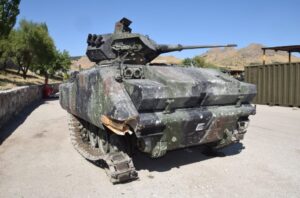 July 14, 2020


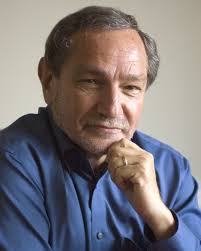 By George Friedman


 İbrahim Karagül

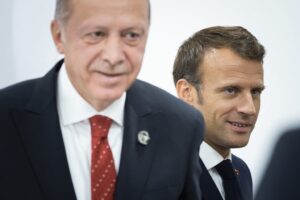
 İbrahim Karagül

 δωδεκάδες διαφορετικά ονόματα. Αυτή η πόλη υπέστη σχεδόν δύο δωδεκάδες πολιορκίες, δύο πανδημίες πανώλης, σχεδόν 10 μεγάλους σεισμούς. Έχει επιβιώσει από αμέτρητους πολέμους, μάχες, ίντριγκες και αγώνες.
 μάθημα. Χαρακτηρίζοντας την μετατροπή «τελευταία πινελιά μιας κατάκτησης», ο Ερντογάν ανακήρυξε τον εαυτό του ως τον περήφανο διάδοχο του Μεχμέτ τον Κατακτητή και άλλων Οθωμανών σουλτάνων. «Κατάκτηση» είναι ένας όρος που ανήκει στην ορολογία ή την ιδεολογία μιας περασμένης εποχής, κατά την οποία ο νικητής κατελάμβανε και εξόντωνε τον ηττημένο, χωρίς να λαμβάνει υπόψη του την ηθική.