Αρχική Blog Σελίδα 2412

Σχέσεις Ρωσίας-Γερμανίας: Επιστροφή στο Μέλλον

1

carnegie.ru

Dmitri Trenin

Το Βερολίνο τελειώνει την εποχή που ξεκίνησε ο Γκορμπατσόφ εμπιστοσύνης και φιλικής σχέσης με τη Μόσχα. Η Ρωσία, από την πλευρά της, δεν περιμένει πλέον τίποτα από τη Γερμανία, και ως εκ τούτου δεν αισθάνεται υποχρεωμένη να λάβει υπόψη τη γνώμη ή τα συμφέροντά της.

Η δηλητηρίαση του ακτιβιστή της αντιπολίτευσης Alexei Navalny έχει γίνει σημείο καμπής στις ρωσο-γερμανικές σχέσεις. Οι λεπτομέρειες του συμβάντος είναι ακόμη, σε μεγάλο βαθμό, ασαφείς  αλλά αυτό που είναι σαφές είναι ότι ώθησε το Βερολίνο να λάβει μια κρίσιμη απόφαση για τη γερμανική εξωτερική πολιτική: δεν θα ακολουθήσει πλέον μια ειδική πολιτική έναντι της Ρωσίας. Το Βερολίνο δεν θα προσπαθήσει να κατανοήσει τα κίνητρα της άλλης πλευράς ούτε θα προσπαθήσει για αμοιβαία κατανόηση, και τουλάχιστον, βασική συνεργασία. Ούτε θα ενεργήσει ως διερμηνέας της ρωσικής πολιτικής γλώσσας, ούτε θα αναλάβει να γνωστοποιήσει τη θέση των συμμάχων της στη Μόσχα.

Αυτός ο ειδικός ρόλος που διαδραματίζει η Γερμανία και η καγκελάριός της τα τελευταία χρόνια είναι πλέον παρελθόν. Από τώρα και στο εξής, η Γερμανία θα έχει την ίδια στάση απέναντι στη Ρωσία όπως όλες οι άλλες χώρες της Δυτικής Ευρώπης. Στο επίπεδο της ρητορικής, αυτό θα σημαίνει αδιάκοπη αντίθεση από το Βερολίνο στην εξωτερική και εσωτερική πολιτική του Κρεμλίνου, σκληρή κριτική για συγκεκριμένα μέτρα που έλαβε η Μόσχα και ισχυρή αλληλεγγύη προς τις χώρες της Ανατολικής Ευρώπης. Σε οικονομικό επίπεδο, πολλοί αναμένουν τώρα την ακύρωση του αγωγού φυσικού αερίου Nord Stream 2. Σε διπλωματικό επίπεδο, πιθανότατα θα δούμε έναν σημαντικό περιορισμό της επίσημης επαφής και πιθανώς την αναστολή του διαλόγου στο ανώτατο επίπεδο.

Είναι απίθανο ο Ρώσος πρόεδρος Βλαντιμίρ Πούτιν να φαντάστηκε αυτήν τη σειρά των γεγονότων όταν έδωσε την άδεια στο Ναβάλνι να πετάξει από τη Σιβηρική πόλη Ομσκ στο Βερολίνο για θεραπεία. Αν μη τι άλλο, περίμενε, πιθανώς, τη Γερμανίδα Καγκελάριο Άνγκελα Μέρκελ να συνεργαστεί και ότι η βοήθεια της Γερμανίας θα είχε ως αποτέλεσμα μια κοινή διέξοδο από ένα δυσάρεστο συμβάν χωρίς πρόσθετες απώλειες στη φήμη της Ρωσίας.

Μπορεί κανείς να φανταστεί μόνο πώς αντέδρασε ο Πούτιν στην ανακοίνωση της Μέρκελ ότι ο Ναβάλνι είχε δηλητηριαστεί με τον νευρικό παράγοντα Νοβιτσόκ. Ένα μαχαίρι στην πλάτη είναι η πιο ήπια αντίδραση που έρχεται στο μυαλό. Για τον Πούτιν, οι προσωπικές του σχέσεις με ξένους ηγέτες έχουν μεγάλη σημασία για τον καθορισμό της εξωτερικής πολιτικής και δεν θα ξεχάσει τις ενέργειες της Μέρκελ.

Αυτό σημαίνει ότι όχι μόνο το Βερολίνο τελειώνει την εποχή που ξεκίνησε ο Γκορμπατσόφ, μια εποχή εμπιστοσύνης και, για πολλά χρόνια, φιλικής σχέσης με τη Μόσχα. Η Ρωσία ξεκινά επίσης ένα νέο κεφάλαιο. Πριν από τριάντα χρόνια, η γερμανική επανένωση φάνηκε να είναι όχι μόνο μια ιστορική συμφιλίωση, αλλά και εγγύηση για μελλοντικές φιλικές σχέσεις και στενή συνεργασία μεταξύ δύο λαών και κρατών. Τώρα έχει γίνει παρελθόν.

Το παρόν, εν τω μεταξύ, αρχίζει με την ηχώ αυτού που φάνηκε να ανήκει σταθερά στο παρελθόν. Η ρωσική πλευρά εξέφρασε οργή, συγκρίνοντας τις κατηγορίες της Γερμανίας με την εμπρηστική επίθεση του 1933 στο Ράιχσταγκ από τους Ναζί, για την οποία, τότε, κατηγορήθηκε η Κομιντέρν και η Μόσχα.

Το Κρεμλίνο είναι απίθανο να λάβει δραστικά μέτρα, αλλά από τώρα και στο εξής η Γερμανία θα θεωρείται ότι ελέγχεται από τις Ηνωμένες Πολιτείες.

Αυτό θα έχει συνέπειες στην επίλυση της σύγκρουσης στο Ντονμπάς, καθώς και στην παρατεταμένη αντιπαράθεση μεταξύ διαδηλωτών και αρχών στη Λευκορωσία. Η αξία της συνεργασίας με το Βερολίνο και το Παρίσι σε αυτά τα ζητήματα – είτε στη μορφή της Νορμανδίας είτε διμερώς – μειώνεται, ενώ ο διάλογος με την Ουάσινγκτον για την Ουκρανία και τη Λευκορωσία έχει από καιρό περιέλθει σε άγριες συμβουλές και εξίσου άγριες αντανακλάσεις και από τις δύο πλευρές.

Κατά συνέπεια, η κατάσταση γίνεται απλούστερη αλλά και πιο επικίνδυνη: η Ρωσία δεν περιμένει πλέον τίποτα από την Ευρώπη και, ως εκ τούτου, δεν αισθάνεται υποχρεωμένη να λάβει υπόψη τη γνώμη ή τα συμφέροντά της. Όσον αφορά τις Ηνωμένες Πολιτείες, η Ρωσία έχει από καιρό εμπλακεί σε έναν υβριδικό πόλεμο μηδενικού αθροίσματος, στον οποίο απομένουν ολοένα και λιγότεροι ανασταλτικοί παράγοντες.

Η κατάρρευση της ειδικής σχέσης μεταξύ Ρωσίας και Γερμανίας είναι η τελευταία και πιο σοβαρή σε μια σειρά χτυπημάτων στις θέσεις της Ρωσίας στην Ευρώπη. Τα τελευταία χρόνια, υψηλού προφίλ σκάνδαλα διαφθοράς σε διάφορες χώρες έχουν εξαλείψει κορυφαίους πολιτικούς που είχαν την τάση να συνεργαστούν με τη Μόσχα: προεδρικοί υποψήφιοι όπως οι Dominique Strauss-Kahn και François Fillon στη Γαλλία, ο αναπληρωτής πρωθυπουργός Matteo Salvini στην Ιταλία και ο αντιπρόεδρος της κυβέρνησης Heinz- Christian Strache στην Αυστρία.

Σε άλλες χώρες – την Ισπανία, την Ελλάδα, τη Βουλγαρία, το Μαυροβούνιο, την Τσεχική Δημοκρατία, τη Σλοβακία και τη Νορβηγία – αποκαλύφθηκαν ρωσικές συνωμοσίες ή κατάσκοποι, με αποτέλεσμα την ψύχρανση των σχέσεων με τη Ρωσία. Τέλος, η δηλητηρίαση του Σεργκέι Σκριπάλ και της κόρης του στη βρετανική πόλη Σαλίσμπερυ είχε μια πραγματικά παγκόσμια απήχηση.

Η αντίδραση στη Δύση ήταν στρατηγική: εκκαθάριση της επιρροής του εχθρού. Ως αποτέλεσμα, δεν υπάρχουν σχεδόν καθόλου κράτη στην Ευρώπη των οποίων οι αρχές να έχουν ουδέτερη ή θετική στάση έναντι της Ρωσίας. Κατά συνέπεια, η απόφαση της Merkel να αφήσει στη μοίρα του τον Nord Stream 2 να αποφασιστεί σε επίπεδο ΕΕ μοιάζει με θανατική ποινή για το έργο.

Παρά τα σκάνδαλα και άλλα εμπόδια, τα βασικά συμφέροντα τόσο της Ευρώπης όσο και της Ρωσίας απαιτούν συντονισμό και συνεργασία. Αυτά τα περιοδικά σκάνδαλα δεν υπερισχύουν των συμφερότων. Μερικές φορές απλά τα πνίγουν. Για αυτόν τον λόγο, είναι ζωτικής σημασίας να διατηρούνται τα συναισθήματα υπό έλεγχο και να διαμορφώνεται μια ευρύτερη εικόνα.

Όλοι στην ευρωατλαντική περιοχή πρέπει να θυμούνται ότι η ρωσο-γερμανική συμφιλίωση υπήρξε  ζωτικός πυλώνας της ευρωπαϊκής ασφάλειας: τίποτα λιγότερο από ένα σύγχρονο θαύμα, λαμβάνοντας υπόψη την καταπληκτική πληγή της ναζιστικής επιθετικότητας, την τεράστια κλίμακα καταστροφής και τα πολλά εκατομμύρια ζωών που χάθηκαν.

Η επιστροφή της Ρωσογερμανικής εχθρότητας δεν θα ενισχύσει το ΝΑΤΟ, καθώς οι αυξημένοι κίνδυνοι της αντιπαράθεσης μπορεί να φέρουν νέες διαιρέσεις. Η Γερμανία μπορεί, ενδεχομένως, να εκπληρώσει την υποχρέωσή της να αυξήσει ταχύτερα τις αμυντικές δαπάνες, αλλά οι δαπάνες αυτές δεν θα ενισχύσουν την ασφάλεια της Ευρώπης εν μέσω ενός ασταθούς γεωπολιτικού περιορισμού.  Ούτε υπάρχει λόγος να υπολογίζουμε πάρα πολύ στην εξωτερική βοήθεια ή την πυρηνική αποτροπή. Το τελευταίο αποτελεί μόνο εγγύηση καταστροφής και όχι σωτηρίας.

Οι Ρωσο-γερμανικές σχέσεις επιδεινώνονται εδώ και σχεδόν μια δεκαετία. Δεν είναι ρεαλιστικό να πιστεύουμε ότι θα μπορούσαν να αποκατασταθούν σε μια εταιρική σχέση στο άμεσο μέλλον, αλλά εξακολουθεί να υπάρχει η ευκαιρία  να μην καταλήξει η σχέση σε εχθρότητα.

Για να επιτευχθεί αυτό, η Ρωσία πρέπει να καταργήσει τη δημόσια ρητορική, να διεξαγάγει διεξοδική έρευνα για το τι ακριβώς συνέβη στον Ναβάλνι στο ρωσικό έδαφος και να αναπτύξει μια λεπτομερή και καλά τεκμηριωμένη θέση προτού συζητήσει το θέμα στον Οργανισμό Απαγόρευσης Χημικών Όπλων.

Αυτή η θέση πρέπει να είναι αξιόπιστη, κυρίως για το ρωσικό κοινό. Η προσέγγιση «δεν ξέρουμε τι συνέβη, αλλά έχουμε δώδεκα εκδοχές για το τι θα μπορούσε να έχει συμβεί» δεν λειτούργησε στη δολοφονία του Αλεξάντερ Λίτβινενκο, στην πτώση του MH17 ή στη δηλητηρίαση Skripal και δεν θα λειτουργήσει και στην υπόθεση Navalny.

Όσον αφορά τη σχέση με το Βερολίνο, θα ήταν καλύτερο να αφιερώσετε ένα χρονικό διάστημα. Αφήστε στους Γερμανούς να αποφασίσουν μόνοι τους εάν χρειάζονται ή όχι άλλο αγωγό φυσικού αερίου από τη Ρωσία.

Μετά από λίγο, η αναζήτηση πρέπει να ανανεωθεί για να επιτευχθεί αμοιβαία κατανόηση με τη Γερμανία σε μια νέα βάση: αυτή των σχέσεων γειτονίας, της προβλεψιμότητας και του αμοιβαίου οφέλους. Για τη Μόσχα, το πιο σημαντικό καθήκον αυτήν τη στιγμή στην Ευρώπη είναι να μην χάσει τη Λευκορωσία, όπως έχασε την Ουκρανία. Ούτε να επιτραπεί στον ηγέτη της Λευκορωσίας Αλεξάντερ Λουκασένκο να οδηγήσει τον Πούτιν σε βόλτα.

carnegie.ru

Πώς η «αρρώστια» της Τουρκίας μπορεί να μεταδοθεί και στην Ευρώπη

0

Για πολλούς επενδυτές, τα προβλήματα της τουρκικής οικονομίας αποτελούν πηγή -μόνο- εσωτερικής αστάθειας, επηρεάζοντας αποκλειστικά την ίδια τη χώρα. Όμως, δεν συμμερίζονται όλοι την ίδια άποψη, καθώς ορισμένοι θεωρούν ότι τα συμπτώματα της τουρκικής αρρώστιας θα επεκταθούν και στην Ευρώπη.

Ενδεικτική είναι στάση του Τζον Φλόιντ, επικεφαλής μακροπρόθεσμων επενδύσεων στην Record Currency Management, ο οποίος διαχειρίζεται κεφάλαια 63 δισεκατομμυρίων δολαρίων.  Ο ίδιος έχει ήδη «σορτάρει» τα κρατικά ομόλογα της Ισπανίας, της Γαλλίας και της Ιταλίας, όπως και το ίδιο το ευρώ, υπό τον φόβο ότι η τουρκική αναταραχή πολύ σύντομα θα γίνει αντιληπτή και στους ισολογισμούς των ευρωπαϊκών τραπεζών.

«Είναι ένα πρόβλημα της Τουρκίας. Αλλά δεν είναι μόνο της Τουρκίας. Η Ευρώπη αντιμετωπίζει σοβαρές προκλήσεις. Οι εθνικές οικονομίες αποδυναμώνονται, τα κρούσματα κορωνοϊού αυξάνονται ξανά, η ανεργία κινείται σε πολύ υψηλά επίπεδα, όπως και το επίπεδο του δημόσιου χρέους. Υπάρχει ένας ζουρλομανδύας εντός του οποίου έχει εγκλωβιστεί το κοινό νόμισμα» δηλώνει ο βετεράνος αναλυτής, μιλώντας στο πρακτορείο Bloomberg.

Η έκθεση των ξένων τραπεζών στην Τουρκία έχει συρρικνωθεί σημαντικά από το 2018 και μετέπειτα. Ωστόσο, αρκετοί ξένοι επενδυτές εξακολουθούν να διαθέτουν αξιώσεις, ύψους 166 δισεκατομμυρίων δολαρίων, από την τουρκική οικονομία, με τη μερίδα του λέοντος να αφορά τις ευρωπαϊκές τράπεζες.

Κι όλα αυτά, ενώ το ΑΕΠ της γειτονικής χώρας αναμένεται να συρρικνωθεί κατά 4% το 2020, ενώ η τουρκική λίρα έχει ήδη απολέσει πάνω από το 20% της αξίας της, καταγράφοντας τη δεύτερη μεγαλύτερη «βουτιά» ανάμεσα στις αναδυόμενες αγορές. Την ίδια ώρα, το κόστος ασφάλισης έναντι πιθανής χρεοκοπίας των τουρκικών ομολόγων έχει σχεδόν διπλασιαστεί.

Ο βασικός προβληματισμός του Φλόιντ συνίσταται στην υπόθεση ότι οι Τούρκοι δεν θα μπορέσουν να αποπληρώσουν τα δάνεια που διαθέτουν σε ξένο συνάλλαγμα, εξαιτίας της ξέφρενης πτώσης της λίρας, κάτι το οποίο θα συμβάλει στη σημαντική αύξηση των μη εξυπηρετούμενων δανείων στις ευρωπαϊκές τράπεζες. «Η έκθεση των ευρωπαϊκών τραπεζών στις τουρκικές τράπεζες και εταιρείες αποτελεί έναν εν είδει μηχανισμό αντανάκλασης του τουρκικού κινδύνου» καταλήγει ο Αμερικανός αναλυτής.

“Καθημερινή”

It’s Time to Rethink the UK’s Posture in the Mediterranean

0

rusi.org

Ziya Meral
Commentary, 10 September 2020
UK

The UK has maintained a ‘respectful silence’ on the rising tensions in the eastern part of the Mediterranean. That will have to change.

Developments in the Eastern Mediterranean seem to have caught many by surprise, at least those who have not paid attention to the rising tensions over energy exploration in the region, emerging alliances with different agendas and the limits of unsustainable comfort Europe enjoyed by leaving the Cyprus issue as it is.

If you were lucky enough to swim through the cacophony of op-eds and social media bravado in multiple languages – which lead us to no solution but to take a clear side in condemnation of the other in often out-of-context reductions of complex issues – you might have wondered what all of these mean for the UK, and why the government chose to remain cautious. This approach stood in contrast to the French, as they sought to assert preferences rather visibly, not just over Greece–Turkey–Cyprus issues, but also Libya and now Lebanon.

The short answer to that is clear: the UK’s interests in the region are a complex entanglement of portfolios that require engagement and good relations with all sides of the current escalation. As a country that has territories and bases in Cyprus, and has devoted substantial effort to enable unification of the island and de-escalation of potential crises, it is fully aware of how the current alignment of diverse interests and issues has made the region vulnerable to out-of-control deterioration.

CYPRUS

Diplomatic caution, however, should not hinder reflections on a long-term strategic vision for what the UK can and cannot – and should and should not – seek to achieve when so many regional actors are aligning their particular interests to pursue shared agendas. This is particularly the case as we are going through the Integrated Review process, which will impact UK defence and security capabilities and posture for a decade.

The first of these reflections concerns Cyprus. The UK has to ask the uncomfortable question of whether it is time to end any effort to unite the island in a top-to-bottom diplomatic and political process, as it has already missed several historic moments when this was actually possible to achieve. The time has come to discuss whether what the UK should focus on is the economic integration of the island, an increase in social exchanges, and enabling Turkish Cypriots to have platforms and a voice. Thus, while not necessarily seeking to create a two-state solution for the island, a new framework that can ease isolation of the north is necessary, and it should focus on bottom-to-top long-term trajectories.

Make no mistake, while often omitted in op-eds, Cyprus lies at the heart of the current escalation and dead-end EU–Turkey conversations. Choosing to leave things as they are is clearly not sustainable.

TURKEY

The UK has taken a much more long-term perspective on Turkey, beyond universal anger at President Erdogan, and has often maintained good working relations with Ankara, which have proved to be of value in a variety of cases. Thankfully, no one in Whitehall or across the government wants to play the same op-ed trick of pulling NATO into tensions as a way of pressuring Turkey. NATO matters, and with all of the challenges it poses, having Turkey outside of structural alliances has a lot more implications on a wide range of issues. These range from the Black Sea to the Baltics, Balkans and operational capabilities, and not least to more than $5 billion of NATO investment in military facilities in the country.

Yet, as UK and EU relations are being negotiated and US–Turkey relations remain at a historic low, there has to be a discussion on how best the UK can or should exploit its rapport with Turkey to achieve stability in the Mediterranean. This in no way takes away from serious concerns over Turkey’s often self-harming attempts to achieve ‘strategic independence’, such as purchasing of Russian missile systems and Turkish politicians missing no opportunity to antagonise European leaders with polemical statements. However, the policy approach to address these is not the path taken by France. The UK should seek to be more public and visible in playing a constructive role, given many seem to want to deepen the rifts and escalate tensions for their own interests. As the cliché saying goes, ‘every crisis is an opportunity’. Just ask President Macron.

A BROADER PERSPECTIVE

The wider question of ‘the strategic South’ also deserves the UK’s attention. The above discussion already signals to the complexity of the region. NATO has, by and large, paid lip service to its southern flank for the last decade and still does not have a robust and upgraded engagement with its soft underbelly. The US has long moved on from the conversation. France is clearly pursuing a unilateral – and often deeply questionable – push to position itself, with direct calculations on defence industry and energy opportunities, as well as diplomatic and political capital, even when it has meant aligning with Russia and its mercenaries in Libya in their campaign to topple the UN-approved government in Tripoli in favour of a strong-man-in-waiting. In fact, France has attracted criticism for its selective rage on Libya and turning an eye away from serious human rights abuses by forces it supported, as well as its own suspected violation of arms embargo imposed by the UN Security Council.

President Macron’s latest comments on Egypt and his approach to issues such as Islamism do signal a return to well-tried and frequently found wanting policies of preferring ‘secular’ strong leaders at the expense of everything else. Thus, just as in the idea that the West should engage more with Russia – which is often just a refrain of a lazy old mantra – Macron’s approach lacks originality. For the UK, the increasing Russian footprint in the Mediterranean has been a concern, and the fault lines that are emerging over the region offer premium opportunities for Russia to exploit and strain relations within NATO and EU states. Russia has already achieved its aim of alienating Turkey while keeping it within the alliance with its wooing of Ankara. From irregular migration to terrorism, the potential of a military escalation over energy disputes and exploitation of the tensions by Russia, there is a lot at stake for the UK.

So, what is the UK’s approach and vision in the middle of all of these fast developments? Can it afford to follow the same strategy as it did with Libya (namely, look away and remain quiet following the intervention that took Gaddafi out of the picture)? While Brexit may be an all-consuming project, the coronavirus pandemic might have given pause to foreign-policy thinking, and irregular migration in the English Channel might have caught the attention of the media and domestic audiences, the UK cannot be seen to be unengaged and unfocused as the long-anticipated tensions in the Mediterranean are playing out.

This is a good time to test the potential of a post-Brexit UK that maintains good bilateral relations with countries such as France, Germany, Turkey, Greece and Cyprus, as well as with important stakeholders in these issues including the US, UAE, Egypt and Israel.

The views expressed in this Commentary are the author’s, and do not represent those of RUSI or any other institution.

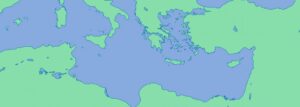
BANNER IMAGE: Location map of the Eastern Mediterranean Sea. Courtesy of NordNordWest / CC-BY-3.0

rusi.org

Tension in the Aegean and Eastern Mediterranean: What Does Greece Want?

0

rusi.org

John Kittmer
Commentary, 16 September 2020
Turkey

Greece is settling for the long haul in the management of the confrontation with Turkey. And both time and a network of alliances may be on its side.

The current tensions in the Aegean and Eastern Mediterranean are neither new nor a consequence of ancient history. Their origins can be traced to 1973, when Turkey first contested the Greek continental shelf. Since then, in the aftermath of Turkey’s invasion of Cyprus and its hardened stance towards Hellenism, the scope of that challenge has widened to encompass a broad range of rights associated with Greek sovereignty at sea and in the air. With the Imia crisis of 1996, Turkey went so far as to reject Greek sovereignty over territory which previous international agreements (the Lausanne Treaty of 1923, the Italo-Turkish Agreements of 1932 and the Paris Treaty of 1947) had, taken all in all, made Greek.

Greece’s position is straightforward and, since the return of democracy in 1974, consistent. Greece wants stability in the Aegean and Eastern Mediterranean and views the international legal order as its guarantor. All bar three of the islands in the Aegean (Bozcaada, Gökçeada and Tavşan) are Greek. They are home to a sizeable population: just over half a million people. Respect for the international treaties and agreements that underpin this settlement is, accordingly, essential in Greek eyes.

Greeks have reacted with alarm to the nationalist rhetoric emanating from President Recep Tayyip Erdoğan and his circles: crudely revanchist comments by Turkish Vice President Fuat Oktay are but the latest examples. To take Erdogan’s statements at face value, the Lausanne Treaty itself is now in doubt. This should raise a general alarm, beyond Greek shores.

LEGAL ARGUMENTS

Developments in international law since the 1950s have complicated matters, creating an overlay of new sovereign rights on top of prior agreements. After failing to exclude the Aegean from its scope, Turkey has notoriously refused to ratify the UN Convention on the Law of the Sea (UNCLOS) of 1982. It has done this primarily to frustrate the rights afforded to the Greek islands in the Aegean and Eastern Mediterranean. In 1995, the Turkish Parliament, extraordinarily, declared that extension of the territorial waters of Greece’s Aegean islands to 12 nautical miles (a right under UNCLOS) would constitute a ‘casus belli’. Despite all that, Turkey has declared its own exclusive economic zone (EEZ) in the Black Sea, agreeing its boundaries with the other coastal states, and has asserted its right to 12 nautical miles of territorial waters there and in the Eastern Mediterranean. Greeks point out that Turkey thus recognises the fundamental provisions of UNCLOS as customary international law, binding on all.

The Greek response has been measured. Greece has not asserted its sovereign rights to 12 nautical miles of territorial waters in the Aegean (though it has now done so in the Ionian), and has long indicated its readiness to negotiate the delimitation of the continental shelf, which, in practical terms, also means its EEZ. Recent discoveries of gas in the Eastern Mediterranean add fuel and urgency to the Greek position, without fundamentally altering it. In delimiting its EEZ with other states, Greece has proceeded circumspectly: it has not, for example, used the coordinates of Kastellorizo in its partial delimitation with Egypt.

In seeking de-escalation, Greece is clear about what it wants. Above all, it wants a negotiation with Turkey, but one in which both parties have reached prior agreement to allow the International Court of Justice (ICJ) to arbitrate in the event that negotiations reach an impasse. Arbitration is surely going to be necessary: although Greece has compromised in its partial delimitation of the EEZ border with Egypt, it is hard to imagine Greek or Turkish politicians making the necessary compromises for a deal between them.

The court’s jurisprudence suggests that it will determine the issue in a way that gives neither side everything it wants. Given Turkey’s rejection of ICJ jurisdiction, a prior agreement to go to arbitration is essential (the ICJ’s disavowal of competence in Greece’s 1976 case proves the point). Furthermore, though some in NATO find this surprising, Greece does not want negotiations to begin while Turkish threats continue – whether in the form of Ankara’s increasingly abusive rhetoric or its attempts to create alternative facts at sea, by sending its survey ship, Oruç Reis, and accompanying frigates to probe in waters claimed by Turkey.

INCONCLUSIVE TALKS

Since 2002, Greece and Turkey have held 60 rounds of inconclusive ‘exploratory contacts’ for negotiations on the continental shelf. Defining the parameters of formal talks will not be easy. Negotiation on the continental shelf and EEZ is one matter. But trickier still is the handling of Greece’s extension of its territorial waters to 12 nautical miles (where geography allows). If that right were extended to all the Greek islands, Greece’s territorial waters would rise to 71.5% of the Aegean, making the passage of military shipping between the Dardanelles and the Mediterranean problematic. Extension is a unilateral sovereign right, not a matter for which UNCLOS mandates negotiation. Greek politicians will be wary of bartering away sovereign rights, however much they understand the difficulties otherwise caused to Ankara. It must also be in Greece’s interest to use negotiations to end loose Turkish talk of ‘grey zones’ of indeterminate maritime sovereignty in the Aegean and Eastern Mediterranean. Discussing such matters will be politically hazardous.

Greece wants de-escalation and negotiation but is preparing for other eventualities too: one in which Ankara indefinitely maintains current tensions, and one in which it acts with extreme provocation (for example, explorations off Cretan waters and action against Kastellorizo). The Greek political strategy accepts the reality of Ankara’s attempts to define the relationship not through modern international norms but by balance of power.

Turkey calculates that US withdrawal tilts the balance in its favour. Greece, therefore, is seeking counterweights. Irrespective of party, Greek governments have recently sought more widely spread alliances (for example with Egypt, Israel and the UAE) and undertaken joint military exercises (including also France, US and Italy) both to contain and to prevent. Major Greek efforts to update, replace and augment military hardware are underway – regained Greek access to the international money markets helps. As a response to the recent growth of Turkish naval and air forces, and Turkey’s installation of Russian S-400 missiles, a regional arms race appears inevitable.

Greece also looks to its multilateral alliances. Expectations of a helpful NATO stance are low, given NATO’s inability to act in the Imia crisis. Secretary General Jens Stoltenberg’s initiative of 3 September, for the two sides to discuss deconfliction through technical talks, seems to have caught Athens unawares and been considered premature. Greece has expended more diplomatic effort on the EU, where, of course, Cyprus is also a member and French President Emmanuel Macron’s stance has been encouraging. Greece expects and deserves a more sophisticated reading by its partners of its careful diplomatic and legal strategy. (Athens might help itself by improving its international public diplomacy.) The important point is not that Brussels should endorse every square mile of EEZ claimed by Greece, but that it should unfailingly support Greece’s determination to sort things out under norms and processes of international law. Following the informal meeting of EU foreign ministers in Berlin at the end of August, Athens will certainly expect Brussels to apply economic sanctions if de-escalation has not happened by the time of the European Council on 24 September. Its work is cut out.

Now that Turkish accession to the EU has become a pipe dream, forward-thinking voices in Athens advocate a new strategic relationship between the EU and Turkey – one which is not simply defined by northern European mercantile interests. Migration and security both need to feature. An active realignment of Greek positions with those of President Macron will continue. So far, Ankara has not stepped back, though the return to port of Oruç Reis may be a good sign. With the US election pending, time may be on Greece’s side.

John Kittmer is chairman of The Anglo-Hellenic League and a former British ambassador to Greece.

The views expressed in this Commentary are the author’s, and do not represent those of RUSI or any other institution.

BANNER IMAGE: The current Prime Minister of Greece, Kyriakos Mitsotakis. Courtesy of primeminister.gr/CC-BY-4.0.

rusi.org

EU: Greece-Turkey crisis talks might include other nations

0

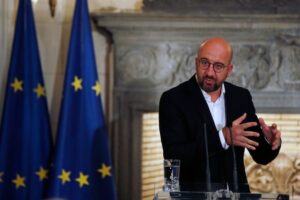
European Council President Charles Michel makes statements after his meeting with Greece’s Prime Minister Kyriakos Mitsotakis at Maximos Mansion in Athens, Tuesday, Sept. 15, 2020. Michel will visit Lesbos later today as Greece’s migration minister says the government will use force if necessary to move homeless migrants to a new facility on the island after thousands of people were left without shelter by fires last week at an overcrowded refugee camp. (Thanassis Stavrakis/Associated Press)
September 15, 2020 at 3:32 p.m. GMT+3

ATHENS, Greece — Third countries may be invited to talks aimed at easing a dispute between Greece and Turkey over energy rights that has brought warships to the eastern Mediterranean, a top European Union official said Tuesday. Greece and Turkey have been involved in a standoff at sea for weeks over maritime boundaries between Turkey’s coast, the ethnically divided island nation of Cyprus and several Greek islands. A Turkish research ship that has been operating in the area over which Greece claims exclusive rights has returned to port for maintenance, giving EU diplomats a window to launch negotiations between Greece and Turkey. EU member countries are also mulling sanctions against Turkey over its exploration. European Council President Charles Michel said while visiting Athens that he was hopeful a commitment for talks would be made soon and that a negotiating process involving several countries could help facilitate an agreement. “We are discussing the idea of a multilateral conference because, beyond bilateral dialogue, there is probably the need to bring the different countries to the table in order to deal with the different issues,” Michel said. He did not elaborate. Germany, which currently holds the EU’s rotating presidency and launched an effort in July to broker direct Greek-Turkish negotiations, is a likely candidate to participate if the discussions are broadened, while Greek officials say they also want the Republic of Cyprus

NATO has also organized contacts between Greek and Turkish military officials in hope of preventing the use of force in the disputed area of the eastern Mediterranean. Turkish defense officials said that a new round of NATO-facilitated contacts took place Tuesday. In recent days, both sides have expressed willingness to attend negotiations. “We must leave gunboat diplomacy aside and join a genuine dialogue within the framework of international law and with respect for good neighborly relations,″ Greek Foreign Minister Nikos Dendias said. The two countries have sent warships as part of an armed forces buildup that has included multiple military exercises.

The European Union’s top foreign affairs official, Josep Borrell, said the bloc’s relations with Turkey were at a “watershed moment.”

“Tension has been continuing to rise over the summer. I have spent the last few months, including this summer, trying to facilitate the de-escalation efforts,” Borrell said in Brussels. “But the least I can say is that more efforts are needed — the softest way of saying that the situation has not been improving.”

However, he noted that the return of the research vessel to port was a step in the right direction.”

Domestically, Borrell said, Turkey “is seriously backsliding away from European Union values and reforms.” Specifically, he said, the country had not delivered on promises to strengthen the independence of the judiciary.

“We perceive a worrying backsliding in the area of rule of law and fundamental freedoms that continues to raise our concerns,” he said.

Raf Casert in Brussels and Zeynep Bilginsoy in Istanbul contributed.

Russian-German Relations: Back to the Future

0
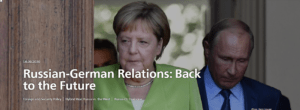
Photo: Getty Images 
Berlin is ending the era launched by Gorbachev of a trusting and friendly relationship with Moscow. Russia, for its part, no longer expects anything from Germany, and therefore does not feel obliged to take into account its opinion or interests.

The poisoning of the opposition activist Alexei Navalny has become a turning point in Russo-German relations. The details of the incident are still largely unclear, but what is clear is that it has prompted Berlin to make a crucial decision for German foreign policy: it will no longer follow a special policy toward Russia. Berlin will not try to understand the other side’s motivation or strive for mutual understanding and at least basic cooperation. Nor will it act as an interpreter of Russian political language, or take it upon itself to communicate the position of its allies to Moscow.

This special role performed by Germany and its chancellor in recent years is now a thing of the past. From now on, Germany will have the same attitude to Russia as all the other countries in Western Europe. At the level of rhetoric, this will mean unflinching opposition from Berlin to Kremlin foreign and domestic policy, harsh criticism of specific steps taken by Moscow, and strong solidarity with the countries of Eastern Europe. At the economic level, many now expect the cancelation of the Nord Stream 2 gas pipeline project. At the diplomatic level, we will likely see a significant restriction of official contact and possibly a suspension of dialogue at the top level.

It’s unlikely that Russian President Vladimir Putin envisaged this turn of events when he gave permission for Navalny to be flown from the Siberian city of Omsk to Berlin for treatment. If anything, he was probably expecting German Chancellor Angela Merkel to cooperate, and that Germany’s help would result in a joint way out of an unpleasant incident without any additional losses to Russia’s reputation.

One can only imagine how Putin reacted to Merkel’s announcement that Navalny had been poisoned with the Novichok nerve agent. A stab in the back is the mildest reaction that comes to mind. For Putin, his personal relationships with foreign leaders are of major importance in determining foreign policy, and he will not forget Merkel’s actions.

This means that not only is Berlin ending the era launched by Gorbachev of a trusting and, for many years, friendly relationship with Moscow. Russia is also embarking on a new chapter. Thirty years ago, German reunification seemed to be not only a historic reconciliation, but also a guarantee of future friendly relations and close cooperation between two peoples and states. Now that, too, has become a thing of the past.

The present, meanwhile, is beginning to echo what had seemed to belong firmly in the past. The Russian side has expressed outrage, comparing Germany’s accusations to the 1933 arson attack on the Reichstag by the Nazis, which was at the time blamed on the Comintern and Moscow. The Kremlin is unlikely to take any drastic action immediately, but will from now on view Germany as being controlled by the United States.

This will have consequences for the resolution of the Donbas conflict, as well as for the protracted standoff between protesters and the authorities in Belarus. The value of cooperating with Berlin and Paris on those issues—in either the Normandy format or bilaterally—is decreasing, while dialogue with Washington on Ukraine and Belarus has long been reduced to fierce admonishments and equally fierce rejoinders from both sides.

The situation is accordingly becoming both simpler and more risky: Russia no longer expects anything from Europe, and therefore does not feel obliged to take into account its opinion or interests. As for the United States, Russia has long been engaged in a zero-sum hybrid war with it, in which there are fewer and fewer inhibitive factors left.

The collapse of the special relationship between Russia and Germany is the latest and most serious in a series of blows to Russia’s position in Europe. In recent years, high-profile corruption scandals in various countries have eliminated leading politicians who were inclined to cooperate with Moscow: presidential candidates Dominique Strauss-Kahn and François Fillon in France, Deputy Prime Minister Matteo Salvini in Italy, and Vice-Chancellor Heinz-Christian Strache in Austria.

In other countries—Spain, Greece, Bulgaria, Montenegro, the Czech Republic, Slovakia, and Norway—Russian conspiracies or spies were exposed, leading to a cooling in relations with Russia. Finally, the poisoning of Sergei Skripal and his daughter in the British city of Salisbury had a truly universal fallout.

The reaction in the West was strategic: a purge of enemy influence. As a result, there are hardly any states left in Europe whose authorities have a neutral or positive stance on Russia. Accordingly, Merkel’s decision to let the fate of Nord Stream 2 be decided at an EU level looks like a death sentence for the project.

Despite the scandals and other obstacles, the key interests of both Europe and Russia require coordination and cooperation. These periodic scandals don’t override those interests; they simply sometimes drown them out. For this reason, it’s vital to keep emotions in check, and take a broader view of the picture.

Everyone in the Euro-Atlantic region needs to remember that the Russo-German reconciliation is a vital pillar of European security: nothing short of a modern miracle, considering the rankling wound of Nazi aggression, the enormous scale of destruction, and the many millions of lives lost.

The return of Russo-German enmity will not strengthen NATO, as enhanced dangers of confrontation may bring new divisions. Germany may, perhaps, fulfill its obligation to increase defense spending more promptly, but that expenditure will not enhance Europe’s security amid faltering geopolitical restraint. Frontline countries will live up to their description. Nor is there any point in counting too much on external help, or on nuclear deterrence. The latter is only a guarantee of destruction, not of salvation.

Russo-German relations have been deteriorating for nearly a decade now. It’s unrealistic to think they might be restored to a partnership in the foreseeable future, but there is still a chance to stop the relationship from descending into one of hostility.

To achieve that, Russia needs to dial down the public rhetoric, conduct a thorough investigation of what exactly happened to Navalny on Russian soil, and develop a detailed and well-argued position before discussing the issue at the Organization for the Prohibition of Chemical Weapons.

This position must be credible, above all for the Russian public. The approach of “we don’t know what happened, but we have a dozen versions of what might have happened” didn’t work in the murder of Alexander Litvinenko, the shooting down of MH17, or the Skripal poisoning, and it won’t work in the Navalny case either.

In terms of the relationship with Berlin, it would be better to take a time-out. Let the Germans decide for themselves whether or not they need another gas pipeline from Russia.

After a while, the quest must be renewed to reach mutual understanding with Germany on a new basis: that of neighborly relations, predictability, and mutual benefit. For Moscow, the most important task right now in Europe is not to lose Belarus as it so incompetently lost Ukraine; not to allow Belarusian leader Alexander Lukashenko to take Putin for a ride; and to make sure Putin does not miscalculate the Belarusian people—or, for that matter, the Russian people either.

This material is part of the “Russia-EU: Promoting Informed Dialogue” project supported by the EU Delegation to Russia.

carnegie.ru

Sturgeon’s nightmare! Orkney to follow Shetland in demanding independence from Scotland

0

NICOLA Sturgeon now faces Orkney demands to secede after civic bosses admitted they would “seek self-determination in the event of any future constitutional change”.

Orkney Islands Council said they would look at options to potentially become independent from Scotland with a number of choices on the table. Council leader James Stockan said that the islands could be governed as a Crown dependency similar to Jersey as among one of the ideas for independence.

On Saturday he said: “We want to seek our opportunity as a unique part of the UK that we could do something different if we wished.

“All constitutional matters ultimately rest with Westminster, so the question is, we would need to make sure that is written into any future referendum.”

It comes after Shetland island councillors voted 18 to two in favour of a motion to formally explore options “for achieving financial and political self-determination”.

In a debate lasting more than an hour at a meeting this week, members argued decision-making has become increasingly centralised and public funding for the islands has been cut under the SNP Government at Holyrood.


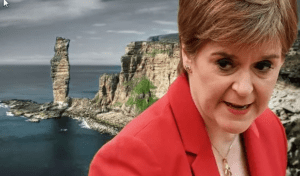
Nicola Sturgeon

Orkney is exploring options after Scottish independence (Image: Getty )

Scotland islands.

Orkney is exploring options for independence (Image: Getty)

The motion, signed by council leader Steven Coutts and convener Malcolm Bell, said: “We are concerned that this ongoing situation is seriously threatening the prosperity and even basic sustainability of Shetland as a community.”

Any move for Shetland to become self-determining would need to be supported by an island-wide referendum, councillors stressed.

Mr Coutts suggested devolution has not benefited the area and said the Scottish Parliament feels “remote” to islanders, who face some of the highest rates of fuel poverty in the country.

He added the levels of funding for ferries “negatively impacts on Shetland and everyone of Shetland”, although the Scottish Government said it has provided more than £15 million for ferry services over the last three years.

But on Orkney, Cllr Stocktan said that Shetland was “in a different position” but stressed that they would support them.

“We will work with them and support them and work alongside them because we both have the same historic background and the same challenges from government and there are some unique opportunities in a post-brexit world.

“We have a whole lot of opportunities that probably should have been afforded us in the past.”

More than half of Orkney’s councillors forced through a motion in 2017 which demanded an investigation into “greater autonomy or self-determination” amid the vote to leave the European Union and a possible second independence referendum.

Western Isles

The Western Isles are also exploring their options (Image: Getty )

But his Shetland counterpart Cllr Coutts said the council planned to speak to the UK and Scottish Governments next week about options for Shetland’s self-determination.

Speaking on Friday, he said: “The status quo is not working, Devolution and the Islands Act have not made any tangible difference to the quality of life.

“I hope they recognise the challenges of living in Shetland, like the high cost of living, but also the incredible opportunities political and financial self-determination could bring.”

Orkney, Shetland and the Western Isles are to receive £100 million of investment as part of a new growth deal.


Viking fire.

Up Helly Aa in Lerwick (Image: Getty )

The Scottish and UK Governments recently pledged £50 million each to boost the economy of the islands, which will be the last part of Scotland to receive cash under the growth deals.

The Scottish Government said its investment will be made over the next 10 years whilst Westminster’s will be delivered through city region and growth deals.

Mr Johnson also visited Orkney to pledge his support for the Union in a flash one-day visit in July.

Responding to the comments, islands minister Paul Wheelhouse MSP said neither Shetland nor any other island council had submitted any request for further powers under Additional Powers Request (Scotland) Regulations introduced last year.


Viking festival.

The Shetland’s are seeking talks with the UK and Scottish Governments (Image: Getty) 

He said: “It is the responsibility of individual local authorities to manage their own budgets and to allocate the total financial resources available to them, including on ferry services, on the basis of local needs and priorities.”

On the “profound impact” of coronavirus on island communities, Mr Wheelhouse said: “In order to protect and provide support to our island communities, we have had to reprioritise our efforts to support key areas such as access to lifeline services and maintaining crucial supply chains, while managing the impact the virus has had on the islands economy and preventing transmission.”

The archipelago is home to 22,190 people.

express.co.uk


Τι συμβαίνει στην Λιβύη

0

Σπύρος Πλακούδας

Το τελευταίο διάστημα η Λιβύη βιώνει ένα μεγάλο κύμα αυθόρμητων λαϊκών διαδηλώσεων που πυροδοτούν οι ελλείψεις σε βασικά αγαθά, πρωτίστως σε ηλεκτρικό ρεύμα και φάρμακα. Αμφότερες οι δύο κυβερνήσεις, της Δυτικής Λιβύης (Σάρατζ) και της Ανατολικής (Σάλεχ-Χάφταρ) προσπαθούν αμήχανα να χαλιναγωγήσουν τους διαδηλωτές.

Δεν φαίνεται να τα καταφέρνουν τόσο καλά. Το πρώτο εξιλαστήριο θύμα ήταν η κυβέρνηση της Βεγγάζης, που πρόσκειται στον Χάφταρ και η οποία προχθές παραιτήθηκε. Έτοιμος να παραιτηθεί όμως είναι και ο νόμιμος πρωθυπουργός της χώρας, ο Φαγιέζ αλ Σάρατζ, επικεφαλής της κυβέρνησης της Δ.Λιβύης. Στόχος του είναι να στείλει ένα μήνυμα καλής θέλησης προς την διεθνή κοινότητα ότι θέλει να προχωρήσουν οι ειρηνευτικές διαπραγματεύσεις που διεξάγονται υπό την αιγίδα του Μαρόκου (ενός “έντιμου διαμεσολαβητή” ή honest broker), με απώτερο σκοπό την διεξαγωγή εκλογών τον Μάρτιο του 2021.

Δεν θα ήμουν ιδιαίτερα αισιόδοξος για μια τέτοια έκβαση. Από την ημέρα που ανακοινώθηκε η συμφωνία κατάπαυσης του πυρός, καμία από τις δυο αντιμαχόμενες παρατάξεις δεν σταμάτησε να συσσωρεύει στρατιωτικό υλικό. Εκτός της Τουρκίας η οποία συνεχίζει την αερογέφυρα προς την αεροπορική βάση Αλ Ουατίγια στην ΒΔ Λιβύη και η Αν.Λιβύη συνεχίζει να ανεφοδιάζεται από την Ρωσία και την Αίγυπτο, οχυρώνοντας την γραμμή Σύρτη- Γιούφρα, δηλαδή την πύλη προς την Πετρελαϊκή Ημισέλινο.

Τις προηγούμενες εβδομάδες είδαμε να εκτυλίσσεται ένα game of thrones στην κυβέρνηση της Δ.Λιβύης. Η στρατιωτική ήττα του Χάφταρ και άρα η απουσία της συγκολλητικής ουσίας μεταξύ των φατριών,  της κυβέρνησης της Δ.Λιβύης, ανέδειξε στην επιφάνεια για άλλη μια φορά τις ενδοπαραταξιακές έριδες.

Κατόπιν των παραπάνω, το εύλογο ερώτημα που θα έθετε κανείς είναι κατά πόσο η βορειοαφρικανική χώρα πρόκειται να βυθιστεί σε ένα ακόμη πιο βαθύ χάος ;

Η απάντηση είναι πως σίγουρα η ακυβερνησία θα ενισχυθεί. Ούτως ή άλλως όμως, αυτή είναι μια κατάσταση πολύ γνώριμη στην Λιβύη. Διότι μετά την πτώση του Καντάφι, την χώρα κυβερνούσε περισσότερο ένα συνονθύλευμα συμμαχιών με φυλές, όπως οι Τουαρέγκ και οι Τούμπου στο νότο ή η φυλήστον Καντάφα και Αλ Ζουάγια στην Σύρτη, παρά από κυβερνήσεις με την έννοια που τις προσδιορίζουμε στην Δύση.

Τα ερωτηματικά είναι πολλά. Την ίδια στιγμή που μεγάλα τμήματα του Νότου της χώρας βιώνουν ακυβερνησία, ουδείς γνωρίζει τι στάση θα τηρήσουν οι φύλαρχοι, με τους οποίους η συμμαχία έκανε εφικτή την προέλαση του Χάφταρ τα προηγούμενα χρόνια προς τα δυτικά. Οι φύλαρχοι αυτοί ομνύουν πίστη μόνο στον Χάφταρ προσωπικά, όχι στην κυβέρνηση της Αν.Λιβύης. Είχαν ποντάρει σε αυτόν ότι θα αποδειχθεί το “νικηφόρο άλογο” στην κούρσα προς την εξουσία. Δεν συνέβη.

Στην περίπτωση του Σάρατζ, ο παράγοντας των φυλών απουσιάζει στον ίδιο βαθμό. Κεντρικό ρόλο διαδραματίζουν δύο μεγάλα κέντρα εξουσίας, η Τρίπολη και η Μισράτα. Η τελευταία είναι το κέντρο των τουρκογενών ισλαμιστών, οι οποίοι όμως δεν υποστηρίζουν την κυβέρνηση Σάρατζ αυτή καθ’ εαυτή, παρά βουλευτές- πολεμάρχους που αποτελούν μέλη της, όπως ο υπουργός Άμυνας Μπασάγκα.

Ακυβερνησία δηλαδή υπήρχε ήδη στην χώρα και σίγουρα θα ενταθεί σε αρκετές περιοχές της Λιβύης, λόγω της άγνωστης στάσης που θα τηρήσουν οι φύλαρχοι από τον παραμερισμό του Χάφταρ. Απάντηση επομένως στο ερώτημα κατά πόσο τα δύο στρατόπεδα θα φτάσουν έως τις εκλογές του επόμενου Μαρτίου, δεν υπάρχει. Εξάλλου, οι ειρηνευτικές διαπραγματεύσεις οφείλονταν σε ένα στρατιωτικό τέλμα. Σε αυτό που ονομάζεται στην βιβλιογραφία των διεθνών σχέσεων “το αμοιβαία επώδυνο τέλμα” (mutual hurting stalemate). Όταν κανείς από τους δύο αντιμαχόμενους δεν είναι σε θέση να νικήσει ολοκληρωτικά τον άλλο στο πεδίο της μάχης. Διαπραγματεύεται επομένως υποχρεωτικά μαζί του για την εξεύρεση μιας επωφελούς συμβιβαστικής λύσης, ενώ παράλληλα επιχειρεί να αυξήσει την δική του διαπραγματευτική ισχύ. Εκλογές θα γίνουν μόνο υπό την προϋπόθεση ότι θα υπάρξει μια συμφωνία ad hoc μεταξύ Ανατολικής και Δυτικής Λιβύης για έναν τέτοιο οδικό χάρτη. Έναν χάρτη που θα περιλαμβάνει όχι μόνο εθνικές εκλογές, αλλά και δημοψήφισμα.

Το ερώτημα που τίθεται αυτή την στιγμή είναι ποιος κατέχει την εξουσία και την νομιμότητα, προκειμένου να διεξάγει υπό ιδεατές συνθήκες σε μια χώρα μαστιζόμενη από κρίσεις και πολέμους, τόσο εθνικές εκλογές, όσο και δημοψήφισμα ; Καμία από τις δύο πλευρές φυσικά

Η εικόνα αυτή την στιγμή έχει ως εξής. Από την μια πλευρά επιχειρείται από αμφότερες τις πλευρές η αύξηση της διαπραγματευτικής τους ισχύος δια της στρατιωτικής τους ενίσχυσης μαζί με ορισμένες κινήσεις ως ένδειξη καλής θέλησης, όπως η άρση του πετρελαϊκού εμπάργκο εκ μέρους της Αν.Λιβύης και η φημολογούμενη παραίτηση Σάρατζ για ένα νέο κυβερνητικό σχήμα.

Τα προβλήματα παραμένουν όμως και είναι τρία:

– Η αδυναμία συμφωνίας για τον διαμοιρασμό της εξουσίας. Κάθε πλευρά υπερέχει σε κάτι και υστερεί σε κάτι άλλο. Η Αν.Λιβύη υπερέχει σε πλουτοπαραγωγικούς πόρους, η Δ.Λιβύη σε πληθυσμό. Η Αν.Λιβύη υποστηρίζεται από Ρώσους, Αιγύπτιους και διπλωματικά από τους Γάλλους, ενώ η Δ.Λιβύη από την Τουρκία και το Κατάρ.

– Εγγυήσεις από τρίτα μέρη. Κατά πόσο κάποια τρίτη δύναμη θα εγγυηθεί για αυτόν τον περίφημο οδικό χάρτη. Δεν υπάρχει κανείς τέτοιος διαθέσιμος παίκτης, τον οποίο να αναγνωρίζουν και οι δύο πλευρές ως ”έντιμο διαμεσολαβητή”. Είτε την Γαλλία, είτε την Αίγυπτο, είτε την Ρωσία.

– Η εμπλοκή τόσων εξωτερικών δρώντων, ορισμένοι εκ των οποίων δεν επιθυμούν την ειρήνευση αλλά την παγίωση της κυρίαρχης θέσης τους και άρα την δημιουργία ζωνών επιρροής.

Αυτοί είναι και οι λόγοι για τους οποίους δεν είμαι ιδιαίτερα αισιόδοξος για την θετική έκβαση των συνομιλιών. Ο υπαρκτός φόβος είναι ότι όπως ακριβώς το 2015 δεν υλοποιήθηκε η Συμφωνία του Σιρκάτ, έτσι και τώρα μπορεί μια τέτοια λύση να μην περπατήσει. Διότι πρέπει πρώτα να επιλυθούν τα τρία παραπάνω προβλήματα. Και μπορεί να μην υπάρχει στον ίδιο βαθμό με το παρελθόν ο κίνδυνος προβοκάτσιας από τις δυνάμεις του Χαφταρ, ωστόσο προβληματισμό δημιουργεί τι θα κάνουν οι μισθοφόροι από την Συρία πώς θα αντιδράσουν άλλοι δρώντες στο (ημι)μόνιμο στο μόνιμο στρατιωτικό προγεφύρωμα της Τουρκίας στην Δ.Λιβύη και οι διαφορές μεταξύ των πολιτικών ταγών των δύο στρατοπέδων. Κάτι από όλα αυτά ή και όλα μαζί, είναι πολύ πιθανόν να οδηγήσουν σε νέο τέλμα τις ειρηνευτικές διαπραγματεύσεις.

* Ο Δρ Σπύρος Πλακούδας είναι καθηγητής Διεθνών Σχέσεων και εργάζεται ως Επίκουρος Καθηγητής Εθνικής Ασφάλειας στο Rabdan Academy

liberal.gr

Ολάντ: Γιατί είναι επικίνδυνος ο Ερντογάν και η κόντρα του με τον Γκάμπριελ

0

Διαφορετικές προσεγγίσεις για το πώς πρέπει η Ευρώπη να χειριστεί την Τουρκία ανέπτυξαν οι Φρανσουά Ολάντ και Ζίγκμαρ Γκάμπριελ, αναπαράγοντας κατ’ ουσίαν τις θέσεις των κυβερνήσεων των χωρών τους. Μιλώντας στο πρώτο πάνελ του Συνεδρίου του Economist, ο μεν τ. Πρόεδρος της Γαλλίας ζήτησε η Τουρκία να πληρώσει τίμημα, αφ’ ης στιγμής “έχει ηγεμονικές βλέψεις τουλάχιστον σε ένα τμήμα της ευρωπαϊκής ηπείρου”, την ώρα που ο τ. αντικαγκελάριος της Γερμανίας υποστήριξε ότι οι κυρώσεις δεν αποτελούν λύση αντιπροτείνοντας τη “στρατηγική υπομονή”.

Σε μια προσπάθεια να εξηγήσει τη στάση της Δύσης έναντι της Άγκυρας, ο Φρ. Ολάντ παρέθεσε σειρά ερμηνειών, και πρώτα ότι, όπως υποστήριξε, “οι ΗΠΑ πιστεύουν ότι η Τουρκία πρέπει να μείνει εντός του πλαισίου (του ΝΑΤΟ). Και, πολλά κράτη της Ευρώπης που θέλουν να διατηρούν καλές σχέσεις με τις ΗΠΑ -γιατί θέλουν να έχει μέλλον το ΝΑΤΟ- προτιμούν να μην είναι απαιτητικοί έναντι του Προέδρου Ερντογάν. Αυτή είναι η πρώτη εξήγηση.

Η δεύτερη εξήγηση είναι ότι υπάρχουν κάποια κράτη που είναι υπό την επιρροή της Τουρκίας σε εμπορικό και οικονομικό επίπεδο. Δεν θα τα αναφέρω, αλλά είναι τα κράτη που δεν δέχονται να επιβληθούν κυρώσεις εναντίον της Τουρκίας”, επισήμανε ο τ. Πρόεδρος της Γαλλικής Δημοκρατίας.

Μια τρίτη ερμηνεία έχει να κάνει με το ότι “υπάρχουν οι Τούρκοι που ζουν στην Ευρώπη, τη Γαλλία, τη Γερμανία -κι αυτό βαραίνει στις αποφάσεις των κυβερνήσεών τους. Νομίζω ότι πολύ καιρό ανεχτήκαμε τη δημιουργία τέτοιων επιρροών μέσα στην Ευρώπη. Ο Ερντογάν πραγματοποιεί προεκλογικές εκδηλώσεις στην Ευρώπη, στη Γερμανία, τη Γαλλία, -κι αυτό εμείς το έχουμε ανεχθεί”, δήλωσε εμφατικά επίσης.

“Η Ευρώπη”, συνέχισε, “θα πρέπει να αντιληφθεί ότι η Τουρκία έχει ηγεμονικές βλέψεις τουλάχιστον σε ένα τμήμα της ευρωπαϊκής ηπείρου. Η Τουρκία βιώνει σημαντική ύφεση, (ο Ρ. Τ. Ερντογάν) είναι λιγότερο δημοφιλής στη χώρα του, έχει κάνει διάφορες (στρατιωτικές) επιχειρήσεις στη Συρία, πάντα σε σύγκρουση με τους Κούρδους, κρατά διαφωνούντες και διανοούμενους στη φυλακή”.

“Η μόνη λύση του Ερντογάν”, σύμφωνα με την προσέγγιση Ολάντ, είναι “να ξαναδημιουργήσει την Οθωμανική Αυτοκρατορία και να αξιοποιήσει τον εθνικισμό. Θα πρέπει ο Πρόεδρος Ερντογάν και η Τουρκία να πληρώσουν το τίμημα για αυτήν την πολιτική”, ζήτησε επίσης ο ομιλητής εξηγώντας συγχρόνως το “γιατί”:

“Αν αυτό ισχύει για τον Πούτιν, ισχύει και για τον Ερντογάν Αν αυτοί οι ηγέτες αντιμετωπίσουν κυρώσεις και περιορισμούς που τους δημιουργούν πρόβλημα στην κοινή τους γνώμη, τότε θα μειώσουμε την επιθετικότητά τους”.

Ενώ κατέληξε υπογραμμίζοντας το γεγονός ότι το “να έχουμε επιτρέψει, εντός του ΝΑΤΟ, στην Τουρκία να έχει αγοράσει ρωσικούς πυραύλους σε αντίθεση με το πνεύμα της Συμμαχίας, αυτό λέει πολλά για τις υποχωρήσεις ή για τις παραιτήσεις ορισμένων κρατών – μελών του ΝΑΤΟ αρχής γενομένης από τις ΗΠΑ, έναντι της Τουρκίας”.

Σε ερώτηση για το προσφυγικό/μεταναστευτικό, ο κ. Ολάντ, αφού επισήμανε εισαγωγικά ότι δεν είναι “καθόλου απίθανη” μια νέα μεταναστευτική κρίση, δήλωσε ότι “ο Ερντογάν μπορεί να την χρησιμοποιήσει ως μορφή πίεσης, να αφήσει μετανάστες να έλθουν στην Ευρώπη, (και) τότε θα δούμε τα hot spots να μην μπορούν πιθανώς να δεχθούν άλλους πρόσφυγες, εκτός αν υπάρχει κατανομή των προσφύγων στην Ευρώπη. Είναι, όμως, μια πρόκληση για την Ευρωπαϊκή Ένωση”, τόνισε εξάλλου.

“Μιλάμε και συζητάμε επί μακρόν για τους 400 ασυνόδευτους ανηλίκους, φαντασθείτε πόσος χρόνος θα χρειαστεί για να γίνει ο καταμερισμός 400.000 προσφύγων και μεταναστών. Θα πρέπει, λοιπόν, να προστατέψουμε τα σύνορά μας, να στηρίξουμε χώρες, όπως είναι η Ιταλία, η Ελλάδα, η Μάλτα. Θα πρέπει σε περίπτωση έκτακτης ανάγκης να έχουμε εκπονήσει σχέδιο κατανομής των προσφύγων”, πρότεινε κλείνοντας την ομιλία του ο τ. Πρόεδρος της Γαλλίας.

Από τη δική του πλευρά, ο Ζ. Γκάμπριελ, αφού έθεσε τον προβληματισμό, όπως είπε, ότι η Τουρκία θα είναι η επόμενη πυρηνική δύναμη στη γειτονιά μας, σημείωσε πως καμία χώρα δεν εκδιώχθηκε από το ΝΑΤΟ, ούτε και η Ελλάδα επί δικτατορίας.

Και, στον πυρήνα του προβληματισμού του, “σε περίπτωση κυρώσεων, ποια είναι η πρώτη χώρα που θα υποστεί τις συνέπειες; Η Ελλάδα. Και μετά, η Γερμανία”, υποστήριξε και συνέχισε με τις προτάσεις του:

“Αυτό που μπορούμε να κάνουμε, είναι πρώτον, να βρούμε συμμάχους στους γείτονές του, έτσι ώστε μην φαίνεται ότι είναι ο ηγέτης του μουσουλμανικού κόσμου. Και δεύτερον, θα πρέπει να διαπραγματευθούμε. Η οικονομία του είναι στα πρόθυρα καταστροφής, έχει και τις εκλογές, ενώ όσο έχει έναν εξωτερικό εχθρό, ο λαός συσπειρώνεται”.

Εν κατακλείδι, “σε αυτήν τη σύγκρουση η Γερμανία προσπαθεί να βρεθούν ειρηνικές λύσεις, αυτή τη στιγμή μία λύση υπάρχει: η στρατηγική υπομονή. Δεν θα βρούμε μια γρήγορη λύση με το να τον διώξουμε (σ.σ. τον Ερντογάν) από το ΝΑΤΟ ή με κυρώσεις. Ο Ρούσβελτ είχε πει κάποτε, θα πρέπει να μιλάμε σοφά, αλλά να έχουμε και ένα μεγάλο ραβδί. Η Ευρώπη λειτουργεί διαφορετικά: μιλά με βροντερή φωνή, αλλά έχουμε ένα πολύ μικρό ραβδί”, έκλεισε με νόημα ο τ. αντικαγκελάριος της Γερμανίας.

ΑΠΕ-ΜΠΕ

Kosovo’s Jews cheer their Muslim-majority state’s new deal with Israel

0


(JTA) — For Flori Dedoni, a member of the tiny Jewish community of Kosovo, the news that his country is establishing formal diplomatic ties with Israel is cause for celebration.

Until last week, Israel was among the dozens of countries that had not recognized the Muslim-majority territory sandwiched between Albania and Serbia.

“When someone learns I’m Jewish, they usually ask sometime during the conversation why Israel doesn’t recognize us,” Dedoni said. “Now, finally it’s happening and the feeling is just festive. Plus, I don’t have to explain anymore.”

Israel’s implied recognition of Kosovo is part of a three-way deal announced on Sept. 4 by the White House. According to the announcement, Serbia, which claims ownership of Kosovo’s territory and has fought against international recognition of its declaration of independence in 2008, has agreed to cooperate on some economic issues with the government of the breakaway region.

The deal stipulates that both countries will open embassies in Jerusalem — a development that Israel and the United States are advancing despite opposition by the Palestinians and the European Union, who say that the city should only be recognized as Israel’s capital after a peace deal with the Palestinians.

The United States is one of the 116 countries that recognize Kosovo, a landlocked nation with about 1.8 million inhabitants with a land area roughly half the size of New Jersey. China, Russia and India, among other powers, have not. Their non-recognition, and that of other important countries including Spain, Israel, Morocco and Ukraine, is believed to be a consistency issue: They fear encouraging unilateral independence declarations in territories they control.

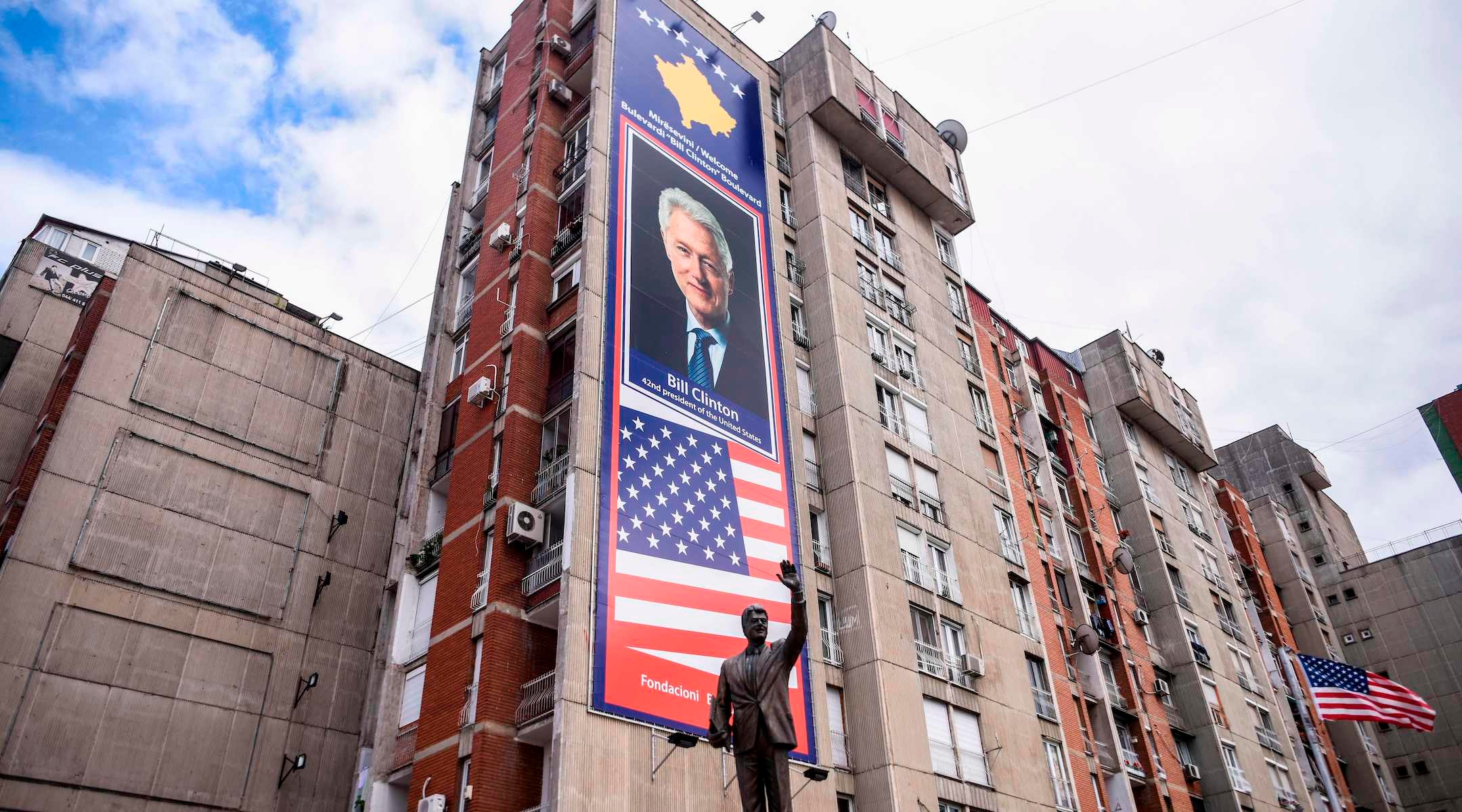
A statue of former US President Bill Clinton is pictured at a boulevard named after him, in Pristina, Kosovo, June 23, 2020. With streets named after U.S. presidents and stars and stripes flying in the capital, Kosovars do not wear their love of America lightly. (Armend Nimani/AFP via Getty Images)

But Israel’s position had been met with incomprehension in Kosovo, whose people are overwhelmingly pro-American and have a long tradition of philo-Semitism. During World War II, Kosovars and Albanians famously rescued local Jews and helped refugees fleeing from other Nazi-occupied countries.

“It’s ironic that Israel doesn’t recognize us,” Kosovar President Hashim Thaçi said in a 2016 interview with Ynet.

Kosovo’s 12-year-long quest for recognition, and the consistent opposition to it by major world powers, have made Dedoni and his wife question whether it’s the best place to raise their 7-year-old son Lior. Dedoni is a technical engineer and member of the World Jewish Congress’ Jewish Diplomatic Corps.

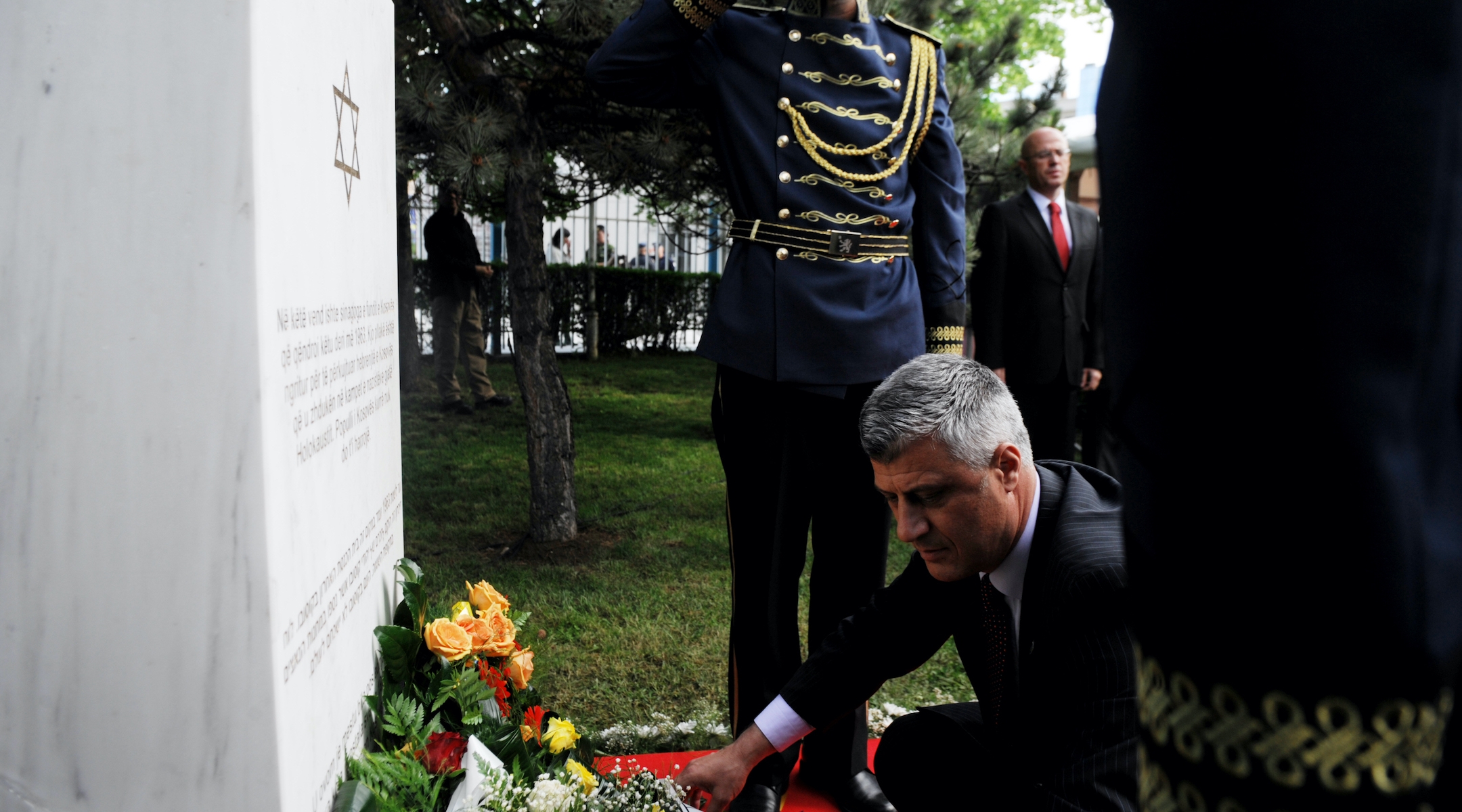
Kosovo Prime Minister Hashim Thaci places flowers in Pristina, May 23, 2013, on the commemorative plaque remembering Kosovo Jews that perished in Holocaust, at the site where the last synagogue of Kosovo stood until 1963. (Armend Nimani/AFP via Getty Images)

“It creates all kinds of issues, including visa and travel issues, when much of the world doesn’t recognize your country, your passport,” Dedoni said. “We want Kosovo to succeed and wish for it, but with all the difficulties we were wondering whether it will ever become a fully-recognized country because you also want to give your child the best start in life.”

The Dedonis have been considering immigrating to Israel for a number of years now, but the new Israeli recognition of their country, and Serbia’s apparent amenability to normalizing relations with Kosovo, are giving the Dedonis “new hope” for staying put, he said.

It’s unclear whether Israel will officially recognize Kosovo beyond the embassy terms — an anonymous source told The Times of Israel that an official declaration would “destroy” Israel’s relationship with Serbia.

But either way, the news has energized the local Jewish community of 100 or so, which is based in the Kosovar capital, Pristina, but has no synagogue there. Its members meet for Shabbat dinners and on holidays at a hotel in Pristina that is owned by a Muslim Albanian with an interest in Judaism — particularly Kabbalah and the spiritual book of Zohar, Dedoni said.

“There is an atmosphere of excitement” in the community right now, he added.

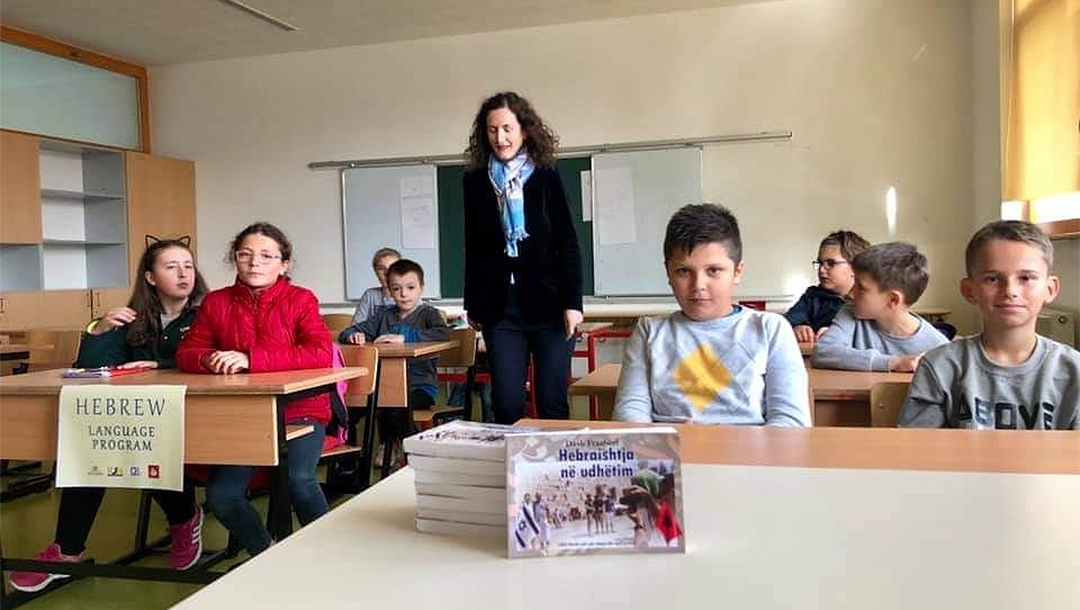
Children of members of Kosovo's Jewish community studying Hebrew at a summer camp activity in Kosovo in 2020. (Courtesy of Flori Dedoni)

Children of members of Kosovo’s Jewish community study Hebrew at a summer camp in 2020. (Courtesy of Flori Dedoni)

Dedoni was born in Kosovo, but many other members of his community are citizens of Israel and employed by international firms active in Kosovo, he said. About 50 people show up regularly for the Shabbat services, he said. Most of them earn salaries that are far above the country’s average monthly pay of about $500, but are on par with the income of other Kosovars employed in highly-skilled professions.

The Kosovar Jews also love Donald Trump. The U.S. president is not known for his popularity in Muslim countries, where many believe he harbors an anti-Muslim animus, including because he has limited travel visas for citizens of several Muslim-majority countries.

But in a Gallup poll from 2018, support for Trump was about 75% in Kosovo, higher than anywhere else in Europe (followed by Albania, with 72%). In this year’s Gallup poll, the approval rating in Kosovo rose to 82%, again the highest in Europe.

Dedoni attributes this to reports of the diplomatic deal trickling in this month.

In Kosovo, “Trump is America, and America, and also Israel, stand for success and freedom,” Dedoni said.

jta.org

Stripped, dismissed, jailed and exiled: Turkish soldier tells his story of ‘the coup night’ 

0

Four years ago, a military coup was attempted in Turkey. It failed, and the fallout led to tens of thousands of soldiers, police, and civil servants being dismissed or suspended from their jobs, and thousands jailed.

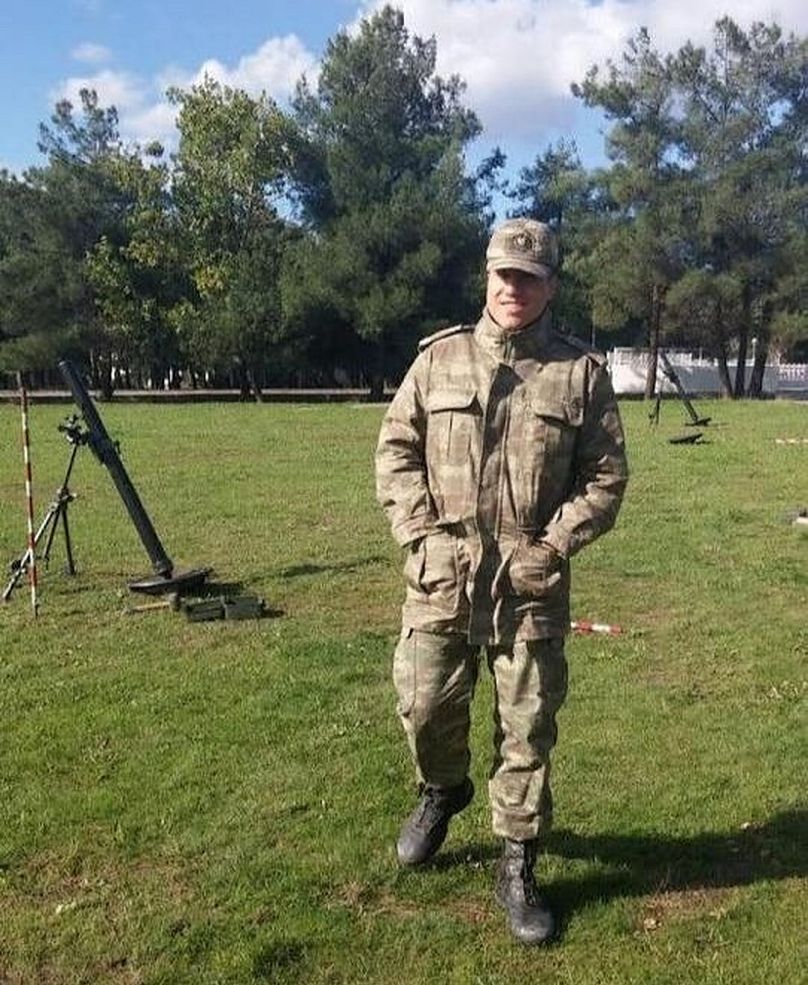
A photo published in a Turkish newspaper shows rows of men partially stripped, hands bound behind their backs, kneeling in a horse stable after they were detained by police. Among them was Lt. Muhammed Emin Gundogdu, who had been attending a training course in the capital Ankara on the night of the coup.

Now in Germany, he has shared his story for the first time in an exclusive interview with Euronews.

Failed coup

On July 16, 2016, thousands of Turkish soldiers were arrested and brought to various locations around the country after the failed coup d’état which began the previous night

The July 15 coup attempt resulted in the deaths of 251 people, and 2,200 were injured. The Turkish government accused the Gulen movement (a Muslim group led by US-based cleric Fethullah Gulen) of being behind the attempt, labelling them the “Fethullah Terrorist Organization” (FETO).

Since the failed coup, more than 500,000 people have been detained, according to a government source, and more than 150,000 have been dismissed from their jobs. Many thousands have fled the country, including security officers, judges, prosecutors, public servants, teachers, academics, and journalists. Soldiers and military cadets, some as young as 17, were captured and imprisoned. Many have received life sentences.

On July 15 Muhammed Emin Gundogdu, then 23, had packed his bags and was preparing a trip home to visit his family when his commander Muhlis Kocak sent a message on a WhatsApp group announcing a mandatory night training session that evening. Gundogdu cancelled his planned trip.

Muhammed Emin Gundogdu
Muhammed Emin Gundogdu was jailed following the attempted 2016 coup in TurkeyMuhammed Emin Gundogdu

“Our commander never showed up that night,” he says. At the training, they were briefed on a potential terrorist attack and provided with live ammunition, unlike in previous training.

The soldiers wondered whether they were under attack by the so-called Islamic State, or other radical groups.

They were then dispatched to various locations. Forty were sent to President Recep Tayyip Erdogan’s presidential palace and assigned to protect him.

Those soldiers were positioned at the Gendarmerie Command base, opposite the palace, and later accused of attempting to kill the president, says Gundogdu.

Among the 36 “putschists” killed that night were Gundogdu’s friends Abdulkadir Karaagac and Ramazan Erdogan. They died believing they were defending the presidential palace, according to Gundogdu.

The government refused to give information about Karaagac’s body to his family. After 15 days, they located it in a tent on the campus of a forensic unit.

“They called him a traitor, even though he was one of the best people I have known in my life,” says Gundogdu. After being denied permission to bury their son in the local cemetery, Karaagac’s family buried him on a mountain, in an unmarked grave.

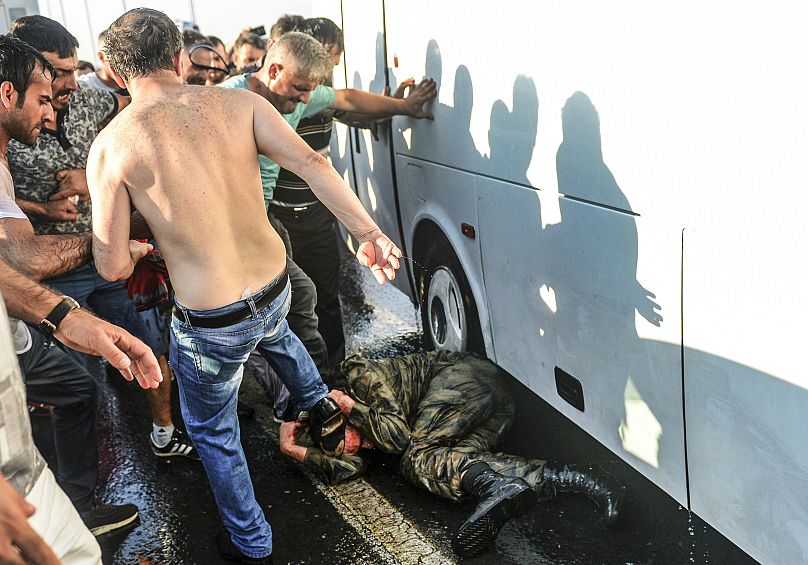
In another case, 21-year-old cadet Murat Tekin was beaten to death by an angry civilian mob in Istanbul after civilians came out to defend the government.

AP Photo/Selcuk Samiloglu
Members of the public attacked soldiers, claiming to defend the governmentAP Photo/Selcuk Samiloglu

On the night of July 15, Gundogdu was tasked with defending their Gendarmerie Guard Academy Command post that housed a large number of weapons, including tanks and helicopters.

He says they only learned about a military coup against the Erdogan government later when Prime Minister Binali Yildirim made an announcement on television around 11 pm.

“We were not allowed off the base. I thought our commanders were anti-coup.”

Around 1 am, after nothing happened on the base, the soldiers retreated to their dormitories. Gundogdu says he slept for a few hours before being awakened by the sound of gunshots around 6 am.

“Colonel Veli Tire and ten of his men threatened to shoot anyone trying to leave the base,” he recalls.

Then Gundogdu’s Commander Kocak appeared, pointing his rifle at the soldiers. When no one responded, the commander put his gun down, sat with the men and told them that a group of soldiers had attempted a coup.

Gundogdu says the soldiers insisted they weren’t involved, after which he says they were detained.

Stripped, beaten and jailed

“We were 300 men, fully armed, being detained by 10 men with only pistols, but we did nothing. We followed instructions.”

As there weren’t enough handcuffs for 300 soldiers, Gundogdu says they helped by handcuffing each other with their own bootlaces. He says they were reassured that everything would be cleared up at the police station and that they would soon be released.

Instead, they were transferred to a horse stable in Ankara, where they were made to undress and kneel in rows.

He says the place was filthy and the smell was nauseating.

“They forced us to use the place where we were sleeping as a toilet.”

Gundogdu reports that everyone was being beaten and tortured. They were also photographed.

“I had bruises on my wrists from the tight handcuffs. We had to go to the bathroom, handcuffed, eat with handcuffs.” He says his hands turned purple from lack of circulation.

When they complained, one of the police officers told them: “You are traitors, be thankful you are still alive.”

An investigation by Amnesty International found that detainees were held for 48 hours in stress positions, denied food, water and medical treatment. “Turkish police verbally abused and threatened them and subjected them to beatings and torture, including rape and sexual assault.”

STF/AP
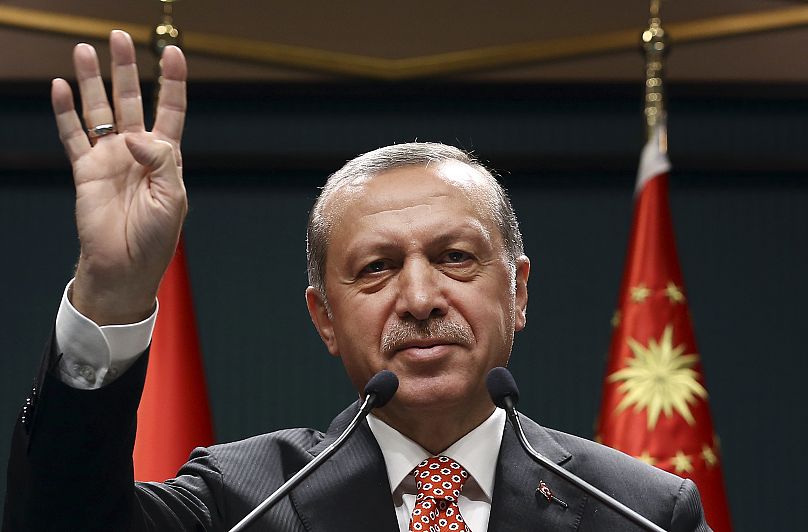
Turkey’s President Recep Tayyip Erdogan shortly after the coup attemptSTF/AP

After two days in the stable, they were sent to another sports complex for four more days before being jailed for nine months in pretrial detention.

In 2018, Gundogdu says he was caught trying to escape from Turkey, resulting in 13 more months behind bars.

“They not only dismissed me from my post and jailed me, but also discriminated against me in society. They prevented me from having another job. My relatives cut off relations with me. Our neighbours verbally abused my family and me, calling us traitors.”

Escape to Germany

In January of this year, he managed to escape to Greece. From there, he traveled to Germany, where, according to the country’s government agency for migrants and refugees (BAMF), he is among more than 39,000 Turkish nationals who have sought asylum there since 2016.

In June this year, the Turkish army dismissed another 4,562 personnel, taking the total number to 19,583, according to Defense Minister Hulusi Akar.

“Our aim is to purge terrorists from our ranks and not allow even a single traitor to wear this glorious military uniform,” Akar said in a statement on June 3.

In court last week, a Turkish prosecutor recommended life imprisonment for Gundogdu. As evidence, he pointed to a WhatsApp message Gundogdu had sent on July 15, which read, “We don’t know anything. We are waiting at the entrance [of the base] armed and ready. Let’s not share anything from here.”

To date, Ankara has dismissed or suspended more than 45,000 police and military personnel and more than 130,000 civil servants, as well as a third of the judiciary, according to a report published this year by the US embassy in Turkey.

Gundogdu claims the coup attempt was a game devised by the government to “remove the obstacles before Erdogan’s dictatorship.”

He says he never wanted to leave Turkey but was left without a choice.

“I had no right to live a normal life in my country.”

This article was developed with the support of Journalismfund.eu (www.journalismfund.eu

https://www.euronews.com/2020/07/16/stripped-dismissed-jailed-and-exiled-turkish-soldier-tells-his-story-of-the-coup-night

Η ελληνο-τουρκική αντιπαλότητα τείνει να καταστεί και γαλλο-τουρκική

1

Του Αλκη Καλλιαντζίδη, Οικονομολόγου, [email protected], www.kalkis.eu

Ως γαλλομαθής, με περισσή σεμνότητα, ενημερώνω τους αναγνώστες μου ότι έχω την ευχέρεια να παρακολουθώ εναλλακτικά, αλλά συστηματικά, τα γαλλικά τηλεοπτικά κανάλια France 24, TV 5, ARTE, LCI, BFMTV και να διαβάζω τις ηλεκτρονικές εκδόσεις των γαλλικών εφημερίδων Le Monde, Libération, Les Echos, La Croix, Le Point, Le journal du Dimanche. Δηλαδή ένα αντιπροσωπευτικό δείγμα των γαλλικών ΜΜΕ. Τούτο φυσικά μου παρέχει τη δυνατότητα να έχω μια σφαιρική άποψη για την κρατούσα καθημερινή επικαιρότητα της Γαλλίας αλλά και της παγκόσμιας. Και διαπιστώνω ότι τα γαλλικά ΜΜΕ, δίχως να τα θεωρώ ως τέλεια (κάθε άλλο), είναι πολύ πιο διεθνικά σε σχέση με τα δικά μας, τα οποία πολλές φορές έχουν την τάση να ομφαλοσκοπούν, όπως κι ολόκληρο το πολιτικό μας σύστημα κι έτσι, και ως λαός, να νομίζουμε ότι όλοι οι άλλοι στον κόσμο γυρίζουν γύρω από εμάς. Κάτι που δεν συμβαίνει στην πραγματικότητα βέβαια. Και συνακόλουθα συνήθως μας οδηγεί στο να κάνουμε λάθος προσεγγίσεις για τα εθνικά και τα παγκόσμια δρώμενα.

Εν πάση περιπτώσει, μέχρι περίπου πριν ένα μήνα, τα γαλλικά ΜΜΕ που παρακολουθώ δεν ασχολούνταν και τόσο συχνά με τα ελληνικά δρώμενα. Κι όμως και οι ελληνο-τουρκικές διαφορές και το μείζον μεταναστευτικό-προσφυγικό πρόβλημα που αντιμετωπίζουμε, με τον υβριδικό πόλεμο που μας κήρυξε η Τουρκία, τους ήταν γνωστά. Καθώς και τα υπάρχοντα ελληνικά και κυπριακά υποθαλάσσια αποθέματα φυσικού αερίου.

Διάβασα πρόσφατα για τα εκτιμώμενα αποθέματα φυσικού αερίου από τις εξής  δυο πηγές :

1) «Νέες επιθυμίες και παλιές διαμάχες στο Αιγαίο Πέλαγος» (Nouvelles convoitises et vieux contentieux en mer Egée) των δημοσιογράφων Pierre Alonso και Maria Malagardis, 9 Σεπτεμβρίου 2020, στην ηλεκτρονική Libération. Η εν λόγω πηγή αναφέρει ότι : «σύμφωνα με τους υπολογισμούς της «Γεωλογικής Επιτροπής των Ηνωμένων Πολιτειών» (Commission géologique des Etats-Unis), αυτά τα αποθέματα ανέρχονται σε 5.765 δισεκατομμύρια κυβικά μέτρα, έναντι 47,8 τρισεκατομμυρίων κυβικών μέτρων για τη Ρωσία, 33,720 δισεκατομμυρίων για το Ιράν και 20,070 για το Κατάρ, δηλαδή οι τρεις χώρες με τα μεγαλύτερα αποθέματα, σύμφωνα με τα στοιχεία της CIA. Όσον αφορά τη Μεσόγειο, τα κοιτάσματα  μοιράζονται μεταξύ διαφόρων κρατών. Το Ισραήλ είναι το πρώτο που άρχισε να τα εκμεταλλεύεται. Πρόκειται για το κοίτασμα του Tamar (2009) και το κοίτασμα  του Leviathan (2010) που θα του καλύπτουν την κατανάλωση φυσικού αερίου για τις επόμενες δεκαετίες και θα μετατρέψουν το εβραϊκό κράτος σε μια χώρα εξαγωγής φυσικού αερίου». 2) «Ανατολική Μεσόγειος : Η Τουρκία απειλεί, η Ελλάδα εξοπλίζεται» (Méditerranée orientale : la Turquie menace, la Grèce s’arme) του δημοσιογράφου Luc Mathieu, 13 Σεπτεμβρίου 2020, στην ηλεκτρονική Libération. Η εν λόγω πηγή επιβεβαιώνει την προηγούμενη, εκτιμώντας τα αποθέματα στη Μεσόγειο «περίπου 5,8 δισεκατομμύρια κυβικά μέτρα, ή περισσότερα από το ένα τέταρτο των αποθεμάτων του Κατάρ».

Συνακόλουθα, στα γαλλικά έντυπα αλλά και ηλεκτρονικά ρεπορτάζ, που μας αφορούν, αποδίδεται «η όλη επιθετικότητα» που προκαλεί η Τουρκία στην ανατολική Μεσόγειο, στο Αιγαίο και στη Λιβύη, στη μη νόμιμη πρόσβασή της, με βάση το διεθνές δίκαιο (το οποίο δεν συνυπέγραψε), στους παραπάνω εικαζόμενους ή πραγματικούς φυσικούς πόρους.

Οι Γάλλοι ειδικοί, για την Τουρκία, αναλυτές, και οι δημοσιογράφοι, που παρακολουθώ στην τηλεόραση, φαίνονται «να ενοχλούνται» με ψυχραιμία, όπως κι ο Μακρόν φυσικά, από την τουρκική επιθετικότητα αλλά και τα πεπραγμένα της Τουρκίας στη βορειοδυτική Συρία και το βόρειο Ιράκ, ενάντια στους Κούρδους. Αλλά και από τις προσπάθειες που καταβάλλει ο Ερντογάν να προσεταιριστεί, στην νέο-οθωμανική του ονείρωξη, ορισμένες από τις χώρες του Μαγκρέμπ, ήτοι : την Τυνησία, την Αλγερία, το Μαρόκο, τη Λιβύη και τη Μαυριτανία, στο όνομα της κοινής μουσουλμανικής τους θρησκείας. Μάλιστα για την τελευταία, η οποία δεν απαγορεύεται φυσικά στη Γαλλία με τους περίπου 5.000.000 Γάλλους μουσουλμάνους που έχει, εκείνο που ενοχλεί τη γαλλική πολιτεία κι η οποία μάλλον θα πάρει μέτρα, κι εν μέρει την κοινή γνώμη, είναι οι 150 περίπου Τούρκοι Ιμάμηδες, στους συνολικά 300 υφιστάμενους στη Γαλλία, που διορίζονται, χρηματοδοτούνται και ελέγχονται απευθείας από το τουρκικό Υπουργείο Θρησκευμάτων (με το 1 δις εκατ. ευρώ ετήσιο προϋπολογισμό !) και που φέρονται να δουλεύουν υπόγεια για την ανάπτυξη και ενίσχυση ενός αποσταθεροποιητικού «σουνιτικού κοινοτισμού» («le communotarisme»), ως πολιτικό ισλάμ. Κάτι άλλο, που ενόχλησε τους Γάλλους, ήταν η απειλή βομβαρδισμού της γαλλικής φρεγάτας, από τουρκικές, στα ανοιχτά της Λιβύης. Το συχνό ερντογανικό υβρεολόγιο και οι υποτιμητικές εκφράσεις του εναντίον του Μακρόν και της «αποικιοκρατικής Γαλλίας» μνημονεύονται απλά, στις εφημερίδες και τις τηλεοράσεις, μέσα σε εισαγωγικά, δίχως τις ανάλογες ιταμές απαντήσεις από γαλλικής πλευράς, η οποία, πολύ συχνά δίνει τηλεοπτικό και έντυπο βήμα στους Τούρκους αντιφρονούντες του εξωτερικού και του εσωτερικού οι οποίοι καταχερίζουν δεόντως τους υβριστές. Κι αυτό νομίζω ότι είναι η καλύτερη γαλλική εκδίκηση με βαμβάκι στο αυταρχικό και υβριστικό καθεστώς της Τουρκίας. Πονάει πιο πολύ στον «Σελίμ πασά». Η Μαρίν Λεπέν δήλωσε, εξάλλου, πριν δυο μέρες ότι είναι στο πλευρό του Μακρόν, αναφορικά με την Τουρκία. Αν υποθέσουμε δηλαδή ότι «σε λίγο φεύγει ο Μακρόν λόγω λήξης της θητείας του», όπως είπε πρόσφατα ο «Σελίμ πασάς», ποιος θα έρθει ; Η Λεπέν ;  Θα το δούμε. Πάντως η Γαλλία δεν θα γίνει Γερμανία για την Τουρκία.

Όλα τα παραπάνω τα επικαλούμαι για να επιχειρήσω να αποδείξω ότι :  δεν είμαστε πια, εμείς οι έλληνες και οι ελληνοκύπριοι, οι μόνοι που μας υβρίζουν σκαιότατα, μας προπηλακίζουν και μας απειλούν καθημερινά οι Τούρκοι υψηλόβαθμοι προύχοντες του καθεστώτος Ερντογάν. Εδώ κι έναν μήνα περίπου υβρίζονται και απειλούνται, κι ο Μακρόν, κι η αποικιοκρατική Γαλλία ακόμα και το σατυρικό περιοδικό Charlie Hebdo, εναντίον του οποίου έκαναν μια σκόρπια διαδήλωση την περασμένη Κυριακή (13-9-2020) οι Τούρκοι φανατικοί, όπως δείχνει η διπλανή φωτογραφία.

Έχω τη γνώμη, με αυτά που βλέπω και διαβάζω καθημερινά, η γαλλική κοινή γνώμη (όχι οι Γάλλοι ειδικοί) εδώ κι έναν μήνα ενημερώνεται εντατικά : α) για την γεωγραφία της ελληνο-τουρκικής διαφοράς, ήτοι βλέπει στις εφημερίδες ή στις τηλεοράσεις πού ακριβώς υπάρχει το πρόβλημα, όπως δείχνει ο διπλανός δημοσιευμένος χάρτης (Πηγή : Pourquoi la Grèce et la Turquie s’affrontent en Méditerranée orientale, της Eléa Pommiers, 14-9-2020, Le Monde). Δηλαδή μέχρι πού φτάνουν τα νόμιμα ελληνικά θαλάσσια σύνορα και μέχρι πού θέλει να τα συρρικνώσει η Τουρκία. β) για την πραγματική ιστορία της διαφιλονικούμενης από τους Τούρκους περιοχής. Ούτε εγώ γνώριζα, έως πρόσφατα ότι με την Συνθήκη της Λωζάννης η Τουρκία αποδέχθηκε ότι τα νησιά, δίπλα στα παράλιά της θα είναι ελληνικά, έναντι της εκδίωξης 2.000.000 περίπου ελλήνων από τα μικρασιατικά παράλια, στα πλαίσια της συμφωνηθείσας ανταλλαγής πληθυσμών, όπως δήλωσε πρόσφατα ο Γάλλος γεωγράφος Michel Foucher, τεκμηριώνοντας  την «ρεβιζιονιστική στρατηγική» της Τουρκίας, σε συνέντευξή του στη Libération στις 15-8-2020 με τίτλο : «Ο Ερντογάν εφαρμόζει μια στρατηγική απαλλαγής από όλες τις διεθνείς συνθήκες». Η Τουρκία αναγνώρισε τότε την ελληνική κυριαρχία τους στο Αιγαίο. Σήμερα όμως, στα πλαίσια της ιμπεριαλιστικής της προπαγάνδας, παίζει με την ιστορική άγνοια των πολλών. Των τηλεθεατών και των ανύποπτων αναγνωστών Γάλλων, λέγοντας με πικρό παράπονο : «Είναι δυνατόν εμείς μια μεγάλη χώρα να μην έχουμε άνετη πρόσβαση στο Αιγαίο και στην ανατολική Μεσόγειο γιατί οι [ασήμαντοι] έλληνες και οι ελληνοκύπριοι είναι πλεονέκτες» ; Και τούτο προβληματίζει, αν δεν επηρεάζει, τον μέσο τηλεθεατή, αν δεν υπάρχει ο εδραίος ιστορικός αντίλογος. Κι ευτυχώς υπάρχει στα γαλλικά ΜΜΕ που παρακολουθώ.

γ) Ικανοποίησε πάρα πολύ νομίζω τα γαλλικά ΜΜΕ και την ευρύτερη κοινή γνώμη η αναγγελία  του έλληνα πρωθυπουργού ότι πρόκειται να αγοράσουμε 18 Rafale, ότι θα συντηρήσουμε τα υφιστάμενα Mirage κι ότι θα προμηθευτούμε λοιπό γαλλικό εξοπλισμό, στα πλαίσια της ενίσχυσης της στρατιωτικής μας αποτρεπτικής ισχύος. Κι ότι θα είμαστε η 1η ευρωπαϊκή χώρα που θα έχει Rafale. Αντίθετα εξόργισε έναν Τούρκο νομικό ινστρούχτορα που παρακολούθησα χθες βράδυ (14-9-2020) σε ένα σχετικό πάνελ της εκπομπής «28 λεπτά» (28 minutes) του γαλλο-γερμανικού καναλιού ARTE. Ο εν λόγω αμετροεπής ινστρούχτορας, μεταξύ άλλων, διερωτήθηκε : «γιατί η Γαλλία ανακατεύεται στην περιοχή του Αιγαίου και δεν αφήνει τους Τούρκους και τους έλληνες να λύσουν τις μεταξύ τους διαφορές μόνοι τους ;» «Γιατί ο Μακρόν διακινδυνεύει να απομονωθεί στην Ευρωπαϊκή Ένωση, επί αυτού του θέματος, αφού οι εκεί εταίροι του δεν θα συμφωνήσουν με την επιβολή κυρώσεων εναντίον της Τουρκίας στην επικείμενη σύνοδο κορυφής» ; «Γιατί έτσι ενισχύει τη δημοτικότητα του Ερντογάν στην Τουρκία» ; Διότι του αντέτεινε Γάλλος καθηγητής διεθνολόγος, συμμετέχων στο πάνελ, ότι ο Μακρόν επιθυμεί να αναπτυχθεί μια «ευρωπαϊκή κυριαρχία» (souverenisme européen) η οποία δεν θα επιτρέπει την παραβίαση των ευρωπαϊκών συνόρων στην Ελλάδα, την Κύπρο και αλλαχού.

Συμπέρασμα :  Η ελληνο-τουρκική αντιπαλότητα έχει καταστεί ήδη και γαλλο-τουρκική. Αν αποφάσιζε δε η Γαλλία, να επαναπατρίσει στη χώρα της, τις εν Τουρκία υφιστάμενες γαλλικές βιομηχανικές επενδύσεις, τότε οι Τούρκοι θα πονούσαν πιο πολύ από την πώληση των 18 Rafale. Αυτό όμως το θεωρώ σχεδόν αδύνατο, διότι οι ιδιωτικές επενδύσεις στο εξωτερικό σπανίως υπακούουν σε κυβερνητικά γεωπολιτικά κελεύσματα. Συνεχίζουν να κάνουν τη δουλειά τους, εφόσον δεν θίγονται τα κέρδη τους.