Αρχική Blog Σελίδα 2307

The Geopolitics of Mediterranean Natural Gas

0

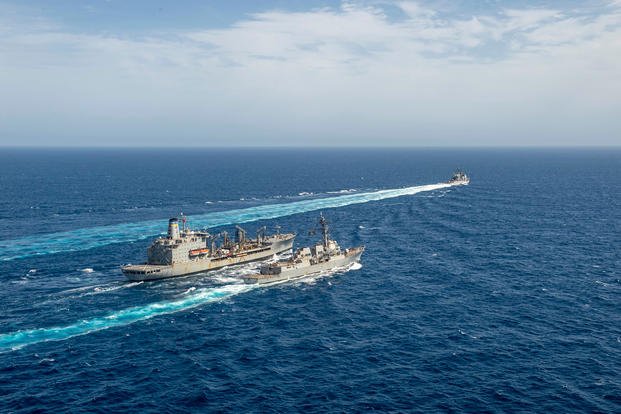
Navy operations in the Mediterranean Sea
The guided-missile destroyer USS James E. Williams (DDG 95), front, conducts a replenishment-at-sea with the fleet-replenishment oiler USNS Laramie (T-AO 203) as the guided-missile cruiser USS San Jacinto (CG 56) executes an emergency breakaway while conducting operations with the aircraft carrier USS Dwight D. Eisenhower (CVN 69) in the Mediterranean Sea, March 7, 2020. (Sawyer Haskins/U.S. Navy)

Joseph V. Micallef is a best-selling military history and world affairs author, and keynote speaker. Follow him on Twitter @JosephVMicallef.

Over the last two decades, a series of major natural gas discoveries in the eastern Mediterranean have had a profound impact on the international relations of the region. Even more significantly, the geologic evidence suggests that these discoveries are just the beginning of a Mediterranean-wide hydrocarbon bonanza that could significantly transform the geopolitics of the region.

The Mediterranean Sea was formed about 30 million years ago when the African continental plate collided with the Eurasian plate. The two plates are still colliding, which is why the region is so prone to seismic and volcanic activity.

Technically, the Mediterranean is a gulf of the Atlantic Ocean. The eight-mile-wide Strait of Gibraltar connects the Mediterranean to the Atlantic. In addition to acting as a shipping lane, the strait has another important function: It permits the inflow of Atlantic waters into the Mediterranean.

Evaporation results in the loss of roughly six feet of water per year in the Mediterranean. Inflows from the Black Sea and the rivers that ring the Mediterranean, along with rainfall, make up about two feet of that loss. The remaining deficit is made up by inflows of Atlantic waters. Without that inflow, the Mediterranean would largely dry up in less than a millennium — a long time by human historical standards, but not even an instant in geologic time.

The continued collision between the African and Eurasian plates has from time to time blocked the Strait of Gibraltar, resulting in a cycle of emptying and filling. It’s believed that the Mediterranean has dried up dozens of times over its history, only to be refilled again when Atlantic waters returned. The last time the Mediterranean was refilled was approximately five million years ago.

The result of these tectonic forces is a complex geology across eight different sub-basins, featuring metamorphosized sedimentary rocks of sandstone, limestone and shale; marine carbonates; and thick layers of evaporates. Combined, they create a perfect environment to host oil and gas deposits.

Hydrocarbons in the Mediterranean

Notwithstanding that the North African countries ringing the southern shore of the Mediterranean are all hydrocarbon producers, the Mediterranean region has been only lightly explored. Estimates of the region’s hydrocarbon potential have ranged from North Sea-sized reserves to potentially holding as much as 50 billion barrels of petroleum, or BOP, and upward of 500 trillion cubic feet, or TCF, of natural gas. The latter number is roughly comparable to U.S. continental reserves.

To date, the major discoveries have been in the Nile Delta and the Levantine Basin. The latter encompasses a broad area north and east of the Nile Delta — up to the southern portion of Cyprus and extending to the eastern Mediterranean coast. According to the U.S. Geological Survey, these two regions alone have estimated reserves of 345 TCF of natural gas and upward of two billion barrels of oil.

The discovery of the Noa field (1999) and the Mari-B field (2000), both of which were relatively modest in size, ushered in a series of major gas discoveries: Tamar and Tamar SW (Israel/2009/11 TCF), Leviathan (Israel/2010/21.5 TCF), Aphrodite (Cyprus/2011/4.5 TCF), Zohr (Egypt/2015/30 TCF), Calypso (Cyprus/2018/6-8 TCF) and Glaucus (Cyprus/2019/5-8 TCF). Combined, these six fields contain more than 80 TCF of natural gas. Since the Levantine Basin has not been fully explored, and there are seven other sedimentary basins in the Mediterranean that have been even less explored, the estimate of 500 TCF of gas may prove to be unduly conservative.

The Israeli and Cypriot discoveries were made in a type of sandstone deposit that is widely found throughout the Mediterranean. The Egyptian discovery was made in carbonates, similar to the carbonate reef structures that hosts many of Libya’s onshore oil fields. Tight limestone and shale deposits, like the source rock that was economically developed by American frackers, are also widely present in the Mediterranean and could represent another potential store of hydrocarbons.

Moreover, at least in the Levantine Basin, the chemical analysis of the natural gas discovered suggests that there may be even deeper deposits of both biogenic and abiogenic gas present. There has been virtually no ultra-deep offshore drilling in the Mediterranean region. In short, the hydrocarbon potential of the Mediterranean Sea might be orders of magnitude greater than even the most optimistic assessment.

Mediterranean Geopolitics and Natural Gas

The discovery of large deposits of natural gas in the eastern Mediterranean has already had a wide-ranging geopolitical impact. If these discoveries continue, and the region’s hydrocarbon potential is borne out, the consequences will be even more dramatic.

The Leviathan and Tamir discoveries have transformed Israel from a net importer of hydrocarbons to a net exporter. Likewise, the Zohr field, when fully developed, will also make Egypt a net exporter of gas. The Levantine gas discoveries have also led to a close working relationship and a pronounced warming of Israel’s relations with Greece and Cyprus. Historically, both of those countries tended to side with the Palestinian Authority and often had frictions with the Israeli government.

For Jerusalem, the export of Israeli gas to its neighbors and its potential involvement in gas exploration elsewhere in the Mediterranean could give it significant diplomatic leverage and lead to an improvement in its relations with many of its Mediterranean neighbors, as well as export access to markets in the Middle East and North Africa region.

Major gas discoveries in their respective portions of the Levantine Basin also could revitalize failed states like Lebanon and Syria. Alternatively, the prospect of a massive hydrocarbon windfall could also catalyze sectarian violence there.

Egypt has some liquefied natural gas, or LNG, export capacity, and Cyprus is building additional LNG export facilities. But pipelines are the cheapest and best way to link up with Europe’s existing natural gas infrastructure. The European Union, or EU, consumes roughly 16.6 TCF of gas yearly; it is the logical outlet for the region’s natural gas exports. Currently, the EU gets 40% of its gas from Russia, 30% from domestic sources and 25% from Norway/the North Sea. The balance comes from LNG imports and North Africa. With North Sea and domestic gas production rapidly declining, Russia has been poised to sharply increase its share of European gas imports.

In 2019, Cyprus, Egypt, France, Greece, Israel, Italy, Jordan and the Palestinian Authority organized the Eastern Mediterranean Gas Forum, or EMGF. The EMGF is an intergovernmental organization based in Cairo, mandated to increase natural gas exports from the region. The organization is also taking the lead in formulating a consensus on which pipelines to Europe will best suit its needs. The U.S. and EU have observer status on the EMGF.

Italy has played an important but generally sub-rosa role in the development of the Mediterranean’s gas reserve. ENI, Italy’s state energy company, is the operator of the Zohr gas field in Egypt. It’s likely that most of the Mediterranean’s gas exports will flow through Italy to connect with the rest of Europe’s gas grid. Italy has also been extensively involved in the exploration for hydrocarbons in North Africa, especially off Libya’s shores — a region ENI knows well and whose hydrocarbon potential has barely been scratched.

Conspicuously absent from the EMGF are two countries that could be significantly affected by the development of Mediterranean natural gas: Turkey and Russia.

Turkey’s gas consumption has tripled over the last two decades and is continuing to grow rapidly. It can supply only about 1% of its needs from domestic sources, however. Roughly half of Turkey’s gas comes from Russia; 18% comes from Iran; and 11% comes from Azerbaijan, with the balance from miscellaneous sources.

The amount of Russian gas Ankara imports is relatively easy to expand, but Ankara is also wary of growing too dependent on Moscow for its energy needs. There are significant reserves of natural gas in Central Asia, Iran and Iraq, but tapping into those supplies will likely require additional pipelines. The Caspian Sea-Azerbaijan-Georgia Route is the most reliable politically but requires crossing extremely rough terrain.

Moreover, Turkey believes that it can garner significant diplomatic and economic leverage by positioning itself as an energy hub between Europe, Russia and central Asia. There are more than half a dozen pipelines that bring gas from Russia and Central Asia to Turkey, and from there on to Europe.

Ankara has proposed an Israel-Turkish pipeline to move gas from the Levantine Basin to Turkey. Given its growing energy demand and its proximity, Turkey is a logical market for east Mediterranean gas. Neither Israel, Egypt nor Cyprus, three countries with which Ankara has had particularly difficult diplomatic relations, have supported the idea, however. Instead, they have proposed the East-Med pipeline to bring the gas to Greece and there connect it with Italy and the rest of the European gas grid via the Trans-Adriatic Pipeline.

Turkish President Recep Tayyip Erdogan has expressed his concern that if significant quantities of Mediterranean gas flow to Europe, Turkey’s role as an energy hub could be marginalized. That’s why he has insisted that, without Turkish participation, it will be impossible to fully develop the eastern Mediterranean’s gas reserves.

Turkey is not a signatory to the United Nations Convention for the Law of the Sea, or UNCLOS. It therefore does not recognize the exclusive economic zones mandated by UNCLOS for maritime nations. Moreover, Ankara does not recognize the legitimacy of the Republic of Cyprus or its claim on the territorial waters that surround it. Additionally, the Turkish government believes that islands, such as the Greek islands in the Aegean Sea, should not be entitled to exclusive economic zones, and that the claims of larger maritime states should take precedence over those of small islands.

Furthermore, Ankara in recent years has repeatedly advanced the concept of Blue Homeland (Mavi Vatan). The term is shorthand for Ankara’s contention that the 1920 Treaty of Sevres, which ended the hostilities between the Ottoman Empire and the Allied powers, improperly stripped Turkey of many of its historic island and maritime possessions in the Aegean and eastern Mediterranean. The restoration of those possessions would allow Turkey to put an additional 178,000 square miles of the Mediterranean Sea under Turkish control.

Turkey has followed an increasingly aggressive foreign policy in the eastern Mediterranean. It has dispatched drilling ships accompanied by Turkish navy ships to waters claimed by Cyprus, and on one occasion to drill in blocs that had already been leased by the Cypriot government to foreign oil companies.

In November 2019, it reached an agreement with the Tripoli-based Government of National Accord, or GNA, under which it would supply troops and armaments to the GNA in return for opportunities to invest in the Libyan oil sector. As part of that agreement, Ankara and the GNA agreed on a demarcation of territorial waters between the two countries along a diagonal that ran from Derna to the Egyptian border in eastern Libya, across to the southwest corner of Anatolia from Marmaris to Antalya between Libya and Turkey. The region cuts across Greece’s Exclusive Economic Zone as set out in UNCLOS.

The agreement was condemned by scores of Mediterranean nations, as well as the U.S. and the EU. The Libyan parliament in Tripoli refused to ratify it. On Jan. 27, 2021, the Turkish-GNA memorandum on maritime zones was canceled by the Al Bayda Court of Appeals of Libya. The Turkish government, however, has continued to insist that the agreement is a valid demarcation of Turkish-controlled waters.

Turkey’s aggressiveness toward its Mediterranean neighbors has led to a deterioration in its relations with the EU, in particular with France, and risks further diplomatically isolating Ankara.

There is no question that the development of the Levantine gas fields will be easier with Turkish cooperation. Israel, Cyprus and Egypt, however, are resisting Turkey’s attempt to deal itself into the development of those gas fields. Turkey has hinted that it will block the laying of the East-Med pipeline, and may dispatch military forces to do so. A confrontation will only further isolate it and likely precipitate a confrontation with the EU, and possibly even with the U.S.

To date, Russia has played a minor role in the development of the Levantine Basin gas fields. Russian state energy companies have offered to help finance the development of the Cypriot gas fields, but otherwise it has not played a visible role.

Notwithstanding the significance of the Mediterranean gas discoveries, they pale in comparison to the EU’s gas consumption and Russian exports. The EU consumes about 16 TCF of natural gas per year, about 40% of which comes from Russia. The Levantine Basin gas fields represent about a five-year supply for the EU and a 12-year supply of Russian imports.

Russia is banking that its gas imports to the EU will rise as the North Sea fields and Europe’s own onshore gas production declines. The main challenge to Russian plans is either the growth of LNG exports to Europe, from either the U.S. or the Persian Gulf, or a significant increase in gas from the Mediterranean basin. If the Mediterranean’s other sedimentary basins have a similar geology to the Levantine Basin, the region could be on the cusp of a prolonged natural gas boom.

The EU has expressed its concerns in its policy on the “security of energy supply,” where it diversifies its energy sources lest it become dependent on Russian gas. That policy will limit the growth of Russian gas exports and likely also put a damper on pricing, regardless of what happens with the Mediterranean’s gas boom.

There are political issues that will need to be overcome. Most of the southern fringe of the Mediterranean is politically unstable. Libya is still in a civil war. Tunisia and Algeria could well slide into one also. Many maritime boundaries have not been completely delineated, in particular the waters around Libya and portions of the Adriatic’s Balkan coast. France and Spain currently have a moratorium on offshore hydrocarbon development in the Mediterranean, although the prospect of major gas finds could well lead to a reversal. Turkey’s foreign and energy policy in the eastern Mediterranean is potentially destabilizing in the region and may trigger a confrontation with one or more of its maritime neighbors.

The two other wild cards in the region are the U.S. and China. Both have played a minor role to date. Under the Trump administration, the U.S. pushed the EU to take American LNG in lieu of Russian gas. Given its climate policy, the Biden administration is unlikely to aggressively push LNG exports. The U.S. has been supportive of developing the hydrocarbon resources of the eastern Mediterranean, seeing it as a way of economically strengthening both Israel and Egypt, two important American allies in the region, even though Mediterranean gas will compete with U.S. LNG exports.

China has not been directly involved with the development of Mediterranean gas resources. Gas reserves in Central Asia and the Middle East are closer to China and easier to access and transport. Through its Belt and Road initiative, Chinese state companies have invested heavily in infrastructure projects in the Mediterranean region. These projects include a wide range of investments in port facilities and industrial sites throughout the Mediterranean.

In particular, Shanghai International Port Group has acquired a 25-year contract to manage the Port of Haifa, while China Harbor Engineering is building a new port terminal in Ashdod, Israel. Chinese shipping conglomerate COSCO has acquired a 51% interest in Noatum Port Holdings, which in turn owns, among other things, container terminals in Bilbao and Valencia, Spain. It has also acquired a 67% interest in Greece’s Piraeus Port and, along with Qingdao Port International, has invested in the Vado Ligure Container terminal in Italy. Euro-Asia Oceangate acquired a 64.5% interest in Kumport Terminal in Ambarli, at the mouth of the Bosporus Strait on the Black Sea. Collectively, these investments represent an expenditure of around three billion euros.

Mediterranean gas will likely move to European markets across pipelines, but the Mediterranean-wide development of the region’s gas resources will be a boom to port facilities and industrial sites. The cost of developing the six major gas fields in the Levantine Basin will run between $20-$25 billion. A Mediterranean-wide gas boom could result in upward of $100 billion of new energy-related investment in the region.

The Mediterranean’s natural gas boom is real. What remains to be seen is whether the region’s other sedimentary basins will be equally prolific. If they are, the Mediterranean could well develop into a major supplier of natural gas to Europe to the detriment of Russia’s gas exports and, to a lesser extent, America’s LNG export plans.

Such a development would shower the smaller Mediterranean countries like Cyprus, Malta, Albania or Croatia with a gigantic hydrocarbon windfall. It could also facilitate the rebuilding of failed states like Lebanon and Syria. It will lead to new alignments and coalitions, but it will also likely spur conflict between those countries fortunate to have a piece of the natural gas cornucopia and those that don’t.

Hydrocarbon riches are a double-edged sword that could create more social conflict in weakly governed states, especially those along the North African rim.

Turkey poses a particular challenge. In Ankara’s case, the discovery of natural gas has galvanized an already increasingly revanchist foreign policy, and may lead toward a more confrontational stance between Turkey and its maritime neighbors.

Simply put, the Mediterranean’s gas boom will create many economic opportunities but also new risks to the region’s stability.

— The opinions expressed in this op-ed are those of the author and do not necessarily reflect the views of Military.com. If you would like to submit your own commentary, please send your article to [email protected] for consideration. 

military.com

Θύμισες από την αμερικανο-κουβανική σύγκρουση στον Κόλπο των χοίρων

0

Του Αλκη Καλλιαντζίδη, Οικονομολόγου, [email protected]  www.kalkis.eu

Με αφορμή την αλλαγή φρουράς στην εξουσία της Κούβας αυτές τις ημέρες, ας θυμηθούμε παρακάτω εν συντομία την αμερικανο-κουβανική σύγκρουση στον Κόλπο των Χοίρων.

Πρόκειται για ιστορικές στιγμές : σε λίγες μέρες, κανένας Κάστρο δεν θα είναι πλέον στην εξουσία της Κούβας. Το Κογκρέσο του Κομμουνιστικού Κόμματος, το οποίο ξεκίνησε την Παρασκευή, 16 Απριλίου 2021, έθεσε τέρμα στην εξηκονταετή βασιλεία μιας οικογένειας που αφήνει πλέον πολιτικό χώρο για μια νέα γενιά. Μετά το θάνατο του Φιντέλ το 2016, η συνταξιοδότηση του Ραούλ, σύντομα στα 90 του χρόνια, παραδίδει τη σκυτάλη στον πρόεδρο Miguel Diaz–Canel, 60 ετών. Δηλαδή μια ιστορική σελίδα αλλάζει για το νησί και τους κατοίκους του οι οποίοι, σχεδόν όλοι τους, δεν γνώρισαν ποτέ οποιαδήποτε άλλη κυρίαρχη οικογένεια από εκείνη των διάσημων επαναστατών των Castro.

Πέραν αυτής της εξέλιξης, ας δούμε λοιπόν τι έγινε τότε.

Ήταν 17 Απριλίου 1961, πριν από 60 χρόνια που συνέβη το μεγαλύτερο φιάσκο στην ιστορία της CIA. Ο Κόλπος των χοίρων είναι το όνομα ενός κόλπου στα νότια του νησιού της Κούβας, 150 χλμ. από την Αβάνα, την πρωτεύουσα. Είναι αυτό το μέρος που η αμερικανική υπηρεσία πληροφοριών επέλεξε να πραγματοποιήσει την «Επιχείρηση Zapata», δηλαδή την απόβαση 1.400 κουβανών εξόριστων που εκπαιδεύτηκαν από αυτήν, με σκοπό την κατάληψη της τότε νεόδμητης κουβανικής εξουσίας.

Δύο χρόνια νωρίτερα, το δικτατορικό καθεστώς που ίσχυε στην Κούβα είχε ανατραπεί από αντάρτες με επικεφαλής τον Φιντέλ Κάστρο, τον αδερφό του Ραούλ και τον επαναστάτη της Αργεντινής Ερνέστο “Τσε” Γκεβάρα. Είχαν δημιουργήσει ένα κομμουνιστικό καθεστώς, υποστηριζόμενο από τον εχθρό των Ηνωμένων Πολιτειών, τη Σοβιετική Ένωση. Οι δύο τελευταίες χώρες βρίσκονταν σε πλήρη «ψυχρό πόλεμο».

Απολογισμός της επιχείρησης ; 114 νεκροί και μια «τέλεια αποτυχία»

Ως εκ τούτου, η CIA αποφάσισε να ξεκινήσει μια στρατιωτική επιχείρηση για να αλλάξει την κατάσταση σε αυτόν τον ταραχώδη γείτονα, λίγα χιλιόμετρα από τις ακτές της. Εκτός από το ότι η επιχείρηση, χωρίς λαϊκή υποστήριξη στην Κούβα και κακώς προετοιμασμένη τακτικά, ήταν μια αποτυχία. Κι ο απολογισμός ήταν εντυπωσιακός : 114 νεκροί και 1.189 κρατούμενοι μεταξύ των «αντι-Καστρικών». Χρειάστηκαν πάνω από ένα χρόνο διαπραγματεύσεων και μια συμφωνία 53 εκατομμυρίων δολαρίων για να τους απελευθερώσουν, σύμφωνα με τα στοιχεία του δημοσιογράφου Vivien Vergnaud της ηλεκτρονικής έκδοσης της εφημερίδας Le journal du dimanche στις 17-4-2021.

Η κουβανική στρατιωτική νίκη ένωσε τον λαό του γύρω από τον Φιντέλ Κάστρο. Το κομμουνιστικό καθεστώς της Κούβας συνδέθηκε ανοιχτά με την ΕΣΣΔ και οι Ηνωμένες Πολιτείες ταπεινώθηκαν διεθνώς. Στην Ουάσιγκτον, η CIA έχασε την επιρροή της στον αμερικανό πρόεδρο. Στα αμερικανικά αρχεία, αυτό το επεισόδιο χαρακτηρίστηκε ως «τέλεια αποτυχία» (perfect failure). Μια «τέλεια αποτυχία». Αυτό το φιάσκο ενέπνευσε τα λόγια του τότε Προέδρου των ΗΠΑ Τζον Φιτζέραλντ Κένεντι : «Υπάρχει ένα παλιό ρητό που λέει ότι η νίκη έχει εκατοντάδες πατέρες και η ήττα είναι ορφανή». Όμως η φράση προέρχεται πραγματικά από μια ταινία του 1951, το «Λιοντάρι της ερήμου».

Αρκετά Ωραία μωβ και πορτοκαλί ψάρια

Τον Οκτώβριο του 1962, τα διδάγματα που αντλήθηκαν κατά τη διάρκεια αυτού του επεισοδίου θα συμβάλλουν κατά την αμερικανο-σοβιετική κρίση των πυραύλων (δηλαδή ρωσικών πυρηνικών πυραύλων με στόχο τις Ηνωμένες Πολιτείες και εγκατεστημένων στην Κούβα) να μην καταλήξουν  σε καταυλισμό,.

Τέλος, ας ξέρουμε ότι δεν υπάρχουν χοίροι στον κόλπο των χοίρων! Στην κουβανική γλώσσα, τα «cochinos» δεν είναι οι χοίροι, είναι το όνομα των ωραίων μωβ και πορτοκαλί ψαριών  που κολυμπούν σε αυτά τα νερά.


Καλά έκανε ο κ. Δένδιας.

0

του Νίκου Κανέλλου*

Οι ελληνοτουρκικές σχέσεις μετά από έναν ανεπανάληπτο «λεκτικό» αγωνα μποξ, στη συνέντευξη τύπου των δυο υπουργών, εισέρχονται σε μια νέα, ευαίσθητη και αβέβαιη περίοδο.

Χωρίς να γνωρίζουμε τι ακριβώς ελέχθη στο δίωρο των επισήμων συνομιλιών στην Αγκυρα οι δηλωσεις του Έλληνα Υπεξ, στη συνέντευξη τύπου που ακολούθησε, υπήρξαν αξιόλογες και διαφωτιστικές Συνετέλεσαν ομως, παράλληλα στο να διαμορφωθεί ένα νέο κλίμα ευαίσθητο και αβέβαιο που εκ των πραγμάτων γεννά, αυτόματα, τρία μεγάλα ζητήματα

Α. Για ποσο διάστημα μπορεί να κρατηθεί ψηλά ο πήχυς απο ελληνικής πλευράς;

Β. Εάν και κατα πόσον θα πυροδοτηθεί το κλίμα στην πενταμερή σύσκεψη για το κυπριακό που συγκαλείται εντός δυο μηνών στη Γενευη;

Εδώ τίθεται ένα σκληρό ερώτημα εάν η Διζωνική Δικοινοτική Ομοσπονδία, δεν είναι μια λύση πολύ πιο οδυνηρή και από αυτήν ακόμη τη Διχοτόμηση

Γ. Ποσο αξιόπιστοι θα αποδειχθούν όλοι όσοι …..υποσχέθηκαν να μας «υποστηρίξουν» συμπεριλαμβανομένων της ΕΕ, των ΗΠΑ και των περιφερειακών μας συμμάχων;

Αυτό που αποκλείω να συμβεί είναι να επηρεασθούν αρνητικά οι ανιχνευτικες διαπραγματεύσεις στις οποίες η ελληνική πλευρά θα αισθάνεται μεγαλύτερη τώρα ανακούφιση και όχι μεγαλύτερη πίεση Οι καθαρές κουβέντες του κ Υπεξ θα χρησιμεύσουν ως πυξίδα και θα είναι δύσκολο να ανατραπούν Αυτό που, αντιθέτως, προβλέπω να παραταθεί είναι η αναμονή της συνάντησης του Πρωθυπουργού κ Μητσοτακη με τον Πρόεδρο Ερντογκαν.

Οι εξελίξεις τόσο στην Ελλάδα όσο και στην Τουρκία θα πρέπει να επαναπροσδιοριστούν και αυτό πάντοτε έχοντας κατα νου ότι απαιτείται αξιόπιστη αναζήτηση λύσεων στις διαφορές μας.  Ο κ Δένδιας έπρεπε και έκανε άριστα να διακόψει τον φρενήρη ρυθμό των απαιτήσεων και των προσδοκιών της Άγκυρας όπως και να ευαισθητοποιήσει τις θέσεις του Διεθνούς παράγοντα. Απάντησε με τα αυτονόητα εξηγώντας ότι η επικοινωνία δεν σημαίνει υποχωρητικότητα.

Το ασυνήθιστο είναι ότι όσα ειπώθηκαν στη συνέντευξη Τύπου διατυπώθηκαν και κατα την διάρκεια των επισήμων συνομιλιών. Ο χειρισμός δε αυτήν τη φορά του ελληνικού υπεξ ήταν σε πλήρη εναρμόνιση με το λαϊκό αίσθημα.

Η παρατεινόμενη ένταση των Τούρκων στο Αιγαίο έφτασε σε ένα σημείο διπλωματικού κορεσμού. Η Αγκυρα αιφνιδιάστηκε και είναι εκ των πραγμάτων αναγκασμένη να σχεδιάσει εκ νέου την στρατηγική της.

Η λογομαχία μπροστά στα ΜΜΕ δεν μπορεί,σε καμμία περίπτωση,να λειτουργήσει εκτονωτικά. Ο άμεσος λόγος του κ Δένδια ανατρέπει τον τουρκικό σχεδιασμό να πείσει όλα τα ενδιαφερόμενα μέρη για το business as usual Στην Χωρα μας τέλος, δημιουργείται επιτακτικά η ανάγκη να λειτουργήσει και να υλοποιηθεί ένα όραμα μιας ευρύτερης πολιτικής-υπερκομματικής αντίληψης-που θα στηρίζεται στην δημιουργία νέων δομών στην εξωτερική μας πολιτική με ότι αυτό συνεπάγεται και εννοώ ,πρωτίστως, το Συμβούλιο Εθνικής Ασφαλείας στελεχωμένο με έμπειρα και ευρύτατης αποδοχής μελη.

*Οκ. Νίκος Κανέλλος είναι Πρέσβης ε.τ., Αντιπρόεδρος του Ελληνικού Ινστιτούτου Πολιτιστικής Διπλωματίας.

“Μακεδονία” 18.04.21

 Πυρηνική Απειλή: Η Ζοφερή προοπτική και η “Tetra-Polar” Ισορροπία

0

Απόσπασμα από το βιβλίο του Δρ Παντελή Οικονόμου(δ), «Global Nuclear Developments», Springer, May 2020.

Μετάφραση του αποσπάσματος απο τον Ηλία Λεοντάρη, Αντιστράτηγο ε.α.

Παραθέτουμε ένα ενδιαφέρον, όπως θα διαπιστώσετε, απόσπασμα απο το βιβλίο του Δρ. Πυρηνικής Φυσικής και Επιθεωρητή της Διεθνούς Επιτροπής Ατομικής Ενέργειας Παντελή Οικονόμου, απο το βιβλίο του  Global Nuclear Developments. Το βιβλίο κυκλοφορεί στα αγγλικά. Στο τέλος του αποσπάσματος θα βρείτε στοιχεία για το βιβλίο.

“Ανιχνεύσεις”

Τα πυρηνικά όπλα θεωρήθηκαν από τους κατόχους τους ως ο αποτελεσματικότερος μοχλός για την επίτευξη ενός στρατηγικού στόχου, μία θέση ως παγκόσμια δύναμη ή την αναγνώριση μιας χώρας ως ηγέτη μιας περιοχής. Ωστόσο το γεωπολιτικό σκηνικό από τους πυρηνικούς βομβαρδισμούς της Χιροσίμα και του Ναγκασάκι δεν μπορεί να αγνοείται. Υπάρχουν ήδη αρκετοί “μνηστήρες των πυρηνικών ” ή επίδοξοι για την εξάπλωση αυτών που είναι έτοιμοι να παίξουν το ίδιο χαρτί στο εξελισσόμενο γεωπολιτικό παιχνίδι.

Το γεγονός αυτό δεν μπορεί και δεν πρέπει να αγνοηθεί.

Επιπλέον, το υφιστάμενο “πυρηνικό χάσμα” στη διεθνή κοινότητα θα μπορούσε να αποτελέσει ισχυρό καταλύτη για αρνητικές εξελίξεις που θα οδηγήσουν μακροπρόθεσμα, πιθανόν, στην κατάρρευση του καθεστώτος της Non–Proliferation Treaty (NPT).

Οποιαδήποτε αλλαγή στη δυναμική και λεπτή αναπτυσσόμενη ισορροπία του σημερινού πολυπολικού κόσμου, η οποία σε μεγάλο βαθμό είναι χτισμένη γύρω από τους σημερινούς κατόχους πυρηνικών όπλων(α) θα έχει, μακροπρόθεσμα, ισχυρό αντίκτυπο στην παγκόσμια ασφάλεια και ειρήνη και κατά συνέπεια στο μέλλον των λαών.

Στην υποθετική περίπτωση μιας μεγάλης πυρηνικής σύγκρουσης, οι ΗΠΑ λόγω των υποχρεώσεων του ΝΑΤΟ θα εγγυηθούν την ασφάλεια των κρατών-μελών του ΝΑΤΟ μέσω της πυρηνικής αποτροπής. Ωστόσο, δεν ισχύει το ίδιο για τους συμμάχους των ΗΠΑ στην Ασία και τη Μέση Ανατολή.

Η αυξανόμενη πυρηνική δυνατότητα της Κίνας και το άγνωστο αποτέλεσμα της πυρηνικής κρίσης στη Βόρεια Κορέα ενισχύουν την πυρηνική απειλή στην Ανατολική Ασία τόσο για την Ιαπωνία όσο και για τη Νότια Κορέα, οι οποίες δεν θα δίσταζαν να γίνουν πυρηνική δύναμη και αν το επιλέξουν, υπό ορισμένες συνθήκες, είναι και οι δύο σε θέση να αποκτήσουν πυρηνικά όπλα σχετικά γρήγορα.

Στη Νότια Ασία, οι δύο πυρηνικές δυνάμεις που δεν ανήκουν στη Non–Proliferation Treaty (NPT),  η Ινδία και το Πακιστάν, από τότε που απέκτησαν την ανεξαρτησία τους το 1947, θεωρούν η μία την άλλη ως απειλή για την εδαφική τους ακεραιότητα και σταθερότητά τους, λόγω των θεμάτων που δεν επιλύθηκαν κατά τη διάρκεια της διχοτόμησης και κυρίως για το ζήτημα του Κασμίρ.

Η συνεχιζόμενη διαμάχη για το αμφισβητούμενο καθεστώς στο Κασμίρ αποτελεί πιθανή αιτία μιας καταστροφικής πυρηνικής περιπέτειας παγκόσμιων διαστάσεων. Τις τελευταίες ημέρες του Φεβρουαρίου του 2019 και ενώ η παγκόσμια προσοχή ήταν στραμμένη στην πυρηνική συνάντηση του Τραμπ με τον Κιμ στο Ανόι, βίαιες και φονικές εχθροπραξίες οδήγησαν, ίσως πιο κοντά από ποτέ, το Νέο Δελχί και το Ισλαμαμπάντ πολύ κοντά στη χρήση στρατιωτικής δύναμης και αυτό αναπόφευκτα παρέχει τη δυνατότητα κλιμάκωσης σε πυρηνικό πόλεμο. Ωστόσο, η κρίση Πακιστάν-Ινδίας έφτασε πρόσφατα σε μια νέα κορύφωση. Στις 27 Σεπτεμβρίου 2019 ο πρωθυπουργός του Πακιστάν Imran Khan αναφερόμενος στην κρίση του Κασμίρ απευθύνθηκε στη Γενική Συνέλευση του ΟΗΕ με μια απελπισμένη, αλλά απλή παγκόσμια προειδοποίηση: «… δύο πυρηνικά οπλισμένες χώρες θα έρθουν πρόσωπο με πρόσωπο… και αν μια πυρηνικά οπλισμένη χώρα πολεμήσει μέχρι τέλους, θα έχει συνέπειες πολύ πέρα από τα σύνορα, θα έχει συνέπειες για όλους …”.

Οι δύο πλευρές φαινομενικά κατέληξαν στο συμπέρασμα ότι δεν ήθελαν να δουν την κατάσταση να κλιμακώνεται, αλλά σε αυτό το συνεχές κλίμα εχθρότητας και βίας ο κίνδυνος λάθους εκτίμησης παραμένει πάντα παρών. Αν οι προειδοποιήσεις του Imran Khan γίνουν πραγματικότητα, θα είναι ιστορικά η πρώτη πυρηνική αντιπαράθεση μεταξύ των δύο χωρών που κατέχουν τα πυρηνικά όπλα. Και ίσως να είναι η τελευταία στον πλανήτη μας.

Αυτή η εκτίμηση δεν είναι υπερβολική. Ακόμη και μια περιορισμένη πυρηνική σύγκρουση μπορεί να επιφέρει δραματικές αλλαγές στο κλίμα, μια παγκόσμια οικονομική κατάρρευση και ιδίως μια κατάρρευση της γεωργικής οικονομίας και της οικονομίας παραγωγής τροφίμων που θα μπορούσε να προκαλέσει εκτεταμένες περιπτώσεις λιμού, και φυσικά μόνιμης βλάβης στη ζωή και την υγεία των ανθρώπων σε παγκόσμια κλίμακα. Είναι το σενάριο που οι ειδικοί αποκαλούν “πυρηνικό χειμώνα” και αυτό θα σηματοδοτούσε το τέλος της ζωής στον πλανήτη μας [8].

Στη Μέση Ανατολή, εάν το Ιράν αποχωρήσει τελικά από την NPT, μετά την αποχώρηση των ΗΠΑ από την πυρηνική συμφωνία (The Joint Comprehensive Plan of Action/JCPOA) και την κλιμάκωση των κυρώσεων κατά της χώρας, είναι πολύ πιθανό ότι κι άλλες χώρες θα αναπτύξουν στρατιωτικά πυρηνικά προγράμματα. Χώρες που φιλοδοξούν ηγετικό ρόλο στη Μέση Ανατολή ή που βλέπουν το Ιράν ως απειλή, όπως η Σαουδική Αραβία, η Τουρκία και η Αίγυπτος.

Όσον αφορά στη διαφορετική προσέγγιση από την Αμερική και τη Ρωσία των συνεχιζόμενων πυρηνικών κρίσεων της Βόρειας Κορέας και του Ιράν, καθώς και τις διμερείς διαφωνίες και τον ανταγωνισμό τους στα θέματα πυρηνικού οπλοστασίου, είναι ενδιαφέρον να αναφερθεί εδώ η μη επικρατούσα, αλλά όχι αβάσιμη, άποψη ορισμένων αναλυτών που μέχρι στιγμής δεν έχει λάβει τη δέουσα προσοχή [9]. Σύμφωνα με αυτήν την προσέγγιση, ο κόσμος βιώνει τώρα την αρχή μιας διεξοδικής και προσεκτικά σχεδιασμένης πολιτικής των ΗΠΑ, με τη ρωσική συναίνεση, αν και υλοποιείται κάπως αδέξια από την αμερικανική ηγεσία. Αυτή η νέα αρχιτεκτονική ασφάλειας στοχεύει στην αντιμετώπιση της ανόδου της Κίνας και του επακόλουθου φόβου της σταδιακής κατάρρευσης της ηγεμονίας των ΗΠΑ [10]. Στην πραγματικότητα, γίνεται αντιληπτό από τις υπερδυνάμεις, (ΗΠΑ και Ρωσία), ότι η σταθερά αυξανόμενη δύναμη της Κίνας γίνεται κοινή στρατηγική απειλή και για τους δύο.

Ως εκ τούτου, μια επεξεργασμένη αναθεώρηση των στρατηγικών σχεδίων είναι σ’ εξέλιξη στις ΗΠΑ. Αυτό συνεπάγεται στοχευμένη μετατόπιση ισχύος και αναδιάρθρωση της παλιάς ισορροπίας δημιουργώντας νέους εχθρούς και φίλους στον υπόλοιπο κόσμο. Στο πλαίσιο αυτής της προσέγγισης, ο επόμενος στόχος στον ολιστικό σχεδιασμό της εθνικής ασφάλειας των ΗΠΑ, είναι η σταδιακή αντικατάσταση της Ρωσίας από την Κίνα ως κορυφαίου ανταγωνιστή στον κατάλογο των μεγάλων απειλών για την αμερικανική παγκόσμια ηγεμονία. Μια ηγεμονία που αν χαθεί, θα έχει τραγικές συνέπειες για την τύχη της ανθρωπότητας, καθώς έτσι πιστεύουν οι αμερικανοί υπεύθυνοι για τη χάραξη της  πολιτικής και οι κορυφαίοι πολιτικοί, όπως ο αείμνηστος Zbigniew Brzezinski, ο οποίος ήταν από τους πρώτους που επεσήμαναν αυτή την άποψη [11]. Ο Brzezinski απέδωσε επίσης υψηλή προτεραιότητα στην ασφάλεια των ΗΠΑ, συμπεριλαμβανομένης της αντιμετώπισης της πυρηνικής απειλής και της παγκόσμιας τρομοκρατίας, σε αντίθεση με την ευρωπαϊκή ιεράρχηση των παγκόσμιων απειλών που θέτει ως πρώτη απειλή για τον πλανήτη την καταστροφή του περιβάλλοντος και το χάσμα μεταξύ Βορρά και Νότου [12].

Ενδείξεις ότι έχει αρχίσει η υλοποίηση της αλλαγής στην προσέγγιση των ΗΠΑ, δηλαδή να υποβαθμίσει τη Ρωσία ως απειλή και να αναβαθμίσει την Κίνα, είναι οι ακόλουθες εξελίξεις:

  1. Η γενικά επιφυλακτική και φιλική στάση του Αμερικανού προέδρου Τραμπ απέναντι στον Ρώσο ομόλογό του Πούτιν.
  2. Η θετική στάση απέναντι στη Ρωσία και η αρνητική απέναντι στην Κίνα που ανέδειξαν με δηλώσεις τους εξέχουσες προσωπικότητες της νέας αμερικανικής κυβέρνησης.
  3. Η πρόταση του Αμερικανού Προέδρου στη συνάντηση των μελών της G-7 στον Καναδά στις 8 Ιουνίου 2018 να προστεθεί η Ρωσία σε αυτή την ομάδα των ισχυρότερων οικονομιών του κόσμου, μια πρόταση που δεν αντιμετωπίσθηκε ευνοϊκά από τους άλλους ηγέτες[13].
  4. Οι δηλώσεις του Αμερικανού Προέδρου με τις οποίες αμφισβητεί το ΝΑΤΟ ως “ξεπερασμένο” οργανισμό και προωθούν την ενίσχυση των διμερών συμφωνιών.
  5. Η ενθάρρυνσή του προς τους συμμάχους των ΗΠΑ στην Ανατολική Ασία, την Ιαπωνία και τη Νότια Κορέα, να αποκτήσουν πυρηνικά όπλα [14].
  6. Οι δηλώσεις του προέδρου Τραμπ στο Συμβούλιο Ασφαλείας του ΟΗΕ στις 26 Σεπτεμβρίου 2018 κατά της Κίνας με τις οποίες την κατηγόρησε ότι προσπάθησε να αναμιχθεί με τις ενδιάμεσες(β) εκλογές (για το 1/3 της Γερουσίας και της Βουλής των Αντιπροσώπων) των ΗΠΑ τον Νοέμβριο του 2018, χωρίς να κάνει καμία αντίστοιχη αναφορά στην πολυσυζητημένη συμμετοχή της Ρωσίας στις εκλογές των ΗΠΑ το 2016, όταν ο Ντόναλντ Τραμπ εξελέγη Πρόεδρος των Ηνωμένων Πολιτειών.
  7. Η απροσδόκητη απόφαση του Αμερικανού Προέδρου στις 20 Δεκεμβρίου 2018 να αποσύρει τα αμερικανικά στρατεύματα από τη Συρία· μια ενέργεια που εξυπηρετεί αναμφισβήτητα τα γεωπολιτικά συμφέροντα της Ρωσίας.

Όσον αφορά στην πάντα επίκαιρη και ταραχώδη περιοχή της Μέσης Ανατολής, ο χρόνος και οι παγκόσμιες εξελίξεις θα αποκαλύψουν αργά ή γρήγορα μια  νέα ισορροπία ισχύος. Εν τω μεταξύ, οι παράπλευρες δραστηριότητες χωρών της ευρύτερης Μέσης Ανατολής, όπως το Ισραήλ, η Τουρκία, το Ιράν και η Σαουδική Αραβία, έχουν προφανώς ως στόχο να επωφεληθούν από αυτή τη μετακίνηση του κέντρου ισχύος  και να επανατοποθετηθούν στο πλαίσιο της δημιουργίας ενός νέου status quo.

Ταυτόχρονα, οι δύο υπερδυνάμεις συνεχίζουν να εντείνουν τον πυρηνικό ανταγωνισμό τους τόσο με λόγια όσο και με πράξεις, προκειμένου να διατηρήσουν ηγετικό ρόλο στις δρομολογημένες εξελίξεις. Ο αντίκτυπος των πυρηνικών όπλων σε αυτή τη βίαιη και στην πραγματικότητα ανεξέλεγκτη πρόοδο των γεωπολιτικών αλλαγών, χωρίς να έχει αποκαλυφθεί πλήρως, είναι κυρίαρχος. Η πυρηνική ικανότητα, πραγματική ή εκτιμώμενη, αποτελεί πρωταρχική πηγή ισχύος για τους «διαχειριστές» των πραγματικών κρίσεων, τις δύο υπερδυνάμεις. Ωστόσο, αυτή η πυρηνική ικανότητα αποτελεί ταυτόχρονα την υφιστάμενη απειλή. Την απειλή που κρύβει τον κίνδυνο ενός καταστροφικού εκτροχιασμού του συστήματος της παγκόσμιας ειρήνης και ασφάλειας. Αυτός ο κίνδυνος αυξάνεται μέρα με τη μέρα.

Πρόθεση, ατύχημα ή λάθος εκτίμηση, στο τέλος δεν θα έχει σημασία. Τα πιθανά θύματα καθώς και οι πιθανοί θύτες το γνωρίζουν αυτό. Παρ’ όλα αυτά, ο τρομακτικός φαύλος κύκλος των εξελίξεων, τις οποίες πιστεύουν ότι ελέγχουν, αλλά στην πραγματικότητα έχουν παγιδευτεί σ’ αυτές, σε επιταχύνει σταθερά. Ουάσινγκτον και Μόσχα πιστεύουν ότι ο αντίπαλος θα παραδοθεί πρώτος. Υπάρχουν πολλοί στην Ουάσιγκτον που πιστεύουν ότι στη δεκαετία του 1980, ήταν η στρατηγική του Προέδρου Ρήγκαν που οδήγησε τη Σοβιετική Ένωση να καταρρεύσει μέσω του γιγαντιαίου και εξαιρετικά δαπανηρού προγράμματος Star War των ΗΠΑ. Τώρα πιστεύουν ότι οι ΗΠΑ μπορούν σήμερα να επαναλάβουν την ίδια τακτική στην περίπτωση της Κίνας.

Επίσης, υπάρχουν κάποιοι στην Ουάσιγκτον και τη Μόσχα που θα συμφωνούσαν ότι το κοινό τους συμφέρον έγκειται στη διατήρηση του «status quo», το οποίο ωστόσο μπορεί να αμφισβητηθεί ή και να ανατραπεί από την Κίνα. Εμφανίζονται προσεκτικά με “ιδέες” σχετικές με τους περιορισμούς των πυρηνικών όπλων. Το Πεκίνο, ωστόσο, απορρίπτει κάθε άμεση ή έμμεση πρόταση για μείωση των πυρηνικών όπλων. Κατά τη διάρκεια μιας παγκόσμιας συγκέντρωσης δεξαμενών σκέψης υψηλού επιπέδου και κρατικών εκπροσώπων τον Δεκέμβριο του 2019 στις Βρυξέλλες, η Κίνα απάντησε κατηγορηματικά σε μια σχετική και ευθεία αμερικανική πρόσκληση για την εξέταση των μειώσεων των πυρηνικών όπλων: «Το πυρηνικό μας οπλοστάσιο είναι πολύ μικρότερο από το αντίστοιχο των ΗΠΑ· δεν είναι δίκαιο να δεχτούμε τώρα διαπραγματεύσεις για τον πυρηνικό αφοπλισμό. Ίσως στο εγγύς μέλλον” [15]. Είναι προφανές ότι  μια στρατηγική απάντηση από μια δυναμικά ανερχόμενη Κίνα, θα διευρύνει την περίμετρο του προαναφερθέντος φαύλου κύκλου.

Παρά το έντονο ενδιαφέρον της διεθνούς κοινότητας για τον πυρηνικό αφοπλισμό, όπως σαφώς παρουσιάστηκε στα συμπεράσματα της Διάσκεψης του ΟΗΕ για τη Συνθήκη απαγόρευσης των πυρηνικών όπλων της 7ης Ιουλίου 2017, τα προγράμματα «εκσυγχρονισμού» των πυρηνικών όπλων που άρχισαν οι πυρηνικές δυνάμεις δείχνουν ότι η πραγματική πρόοδος στον πυρηνικό αφοπλισμό θα παραμείνει μακρινός στόχος[16].

Μια νέα τάξη πραγμάτων διαμορφώνεται  γύρω από την πολυπολική ισορροπία που βασίζεται στην οικονομική και στρατιωτική δύναμη, με τα πυρηνικά όπλα να αποτελούν σημαντικό παράγοντα της εξίσωσης. Σε αυτήν την αργά εξελισσόμενη και σε κάποιο βαθμό ήδη ορατή αναθεώρηση της ισορροπίας του κόσμου, μπορεί κανείς να δει την προσπάθεια των δύο υπερδυνάμεων, των ΗΠΑ και της Ρωσίας, να εμπλέξουν την Κίνα χωρίς να χάσουν την ηγεσία τους.

Ταυτόχρονα, όπως ήδη αναφέρεται στο Τμήμα  7.5  του βιβλίου, ο Γάλλος πρόεδρος Εμανουέλ Μακρόν στις 7 Φεβρουαρίου 2020 προσφέρθηκε να ξεκινήσει έναν «στρατηγικό διάλογο» με τα πρόθυμα ευρωπαϊκά κράτη που υποστηρίζουν τον κεντρικό ρόλο της Γαλλίας, της μοναδικής πυρηνικής δύναμης της Ευρωπαϊκής Ένωσης μετά το Brexit, ζητώντας «αύξηση» των ευρωπαϊκών αμυντικών δαπανών και διευθέτηση του θέματος[17]. Τόνισε ότι “η Ευρώπη πρέπει να ενισχύσει τη στρατηγική αυτονομία της εν όψει των αυξανόμενων παγκόσμιων απειλών και να σταματήσει να βασίζεται αποκλειστικά στις Ηνωμένες Πολιτείες και τη διατλαντική συμμαχία για την υπεράσπισή της”.

Πίσω από τον καπνό των υφιστάμενων περιφερειακών ένοπλων συγκρούσεων, πάνω από την αγωνία για τις συνεχιζόμενη πυρηνική κρίση και υπό το φόβο απερίσκεπτων πολιτικών αποφάσεων, ορισμένοι διεθνείς αναλυτές βλέπουν να «οικοδομείται» κάτι σε νέες βάσεις. Νέες συμμαχίες πυρηνικών δυνάμεων χτίζονται πάνω τους, σχηματίζοντας τη δομή της νέας τάξης πραγμάτων. Μια δομή που κυριαρχείται από τέσσερις ισχυρούς βασικούς πυλώνες, όλοι κάτοχοι πυρηνικών, που υποστηρίζονται από περιφερειακά κράτη στρατηγικά επιλεγμένα, με κριτήρια ιστορίας, της τρέχουσας πραγματικότητας ή και για τις μελλοντικές ανάγκες.

Τέσσερις συμμαχίες, επίσημα ή ανεπίσημα σχηματισμένες, είναι ορατές:

  1. ΗΠΑ και Ηνωμένο Βασίλειο
  2. Ρωσία και Ινδία
  3. Η Κίνα, το Πακιστάν και η ΛΔΚ
  4. Γαλλία και Ισραήλ

Η “τετραπολική” αυτή ισορροπία των συμμαχιών των πυρηνικών δυνάμεων πιθανόν να επέτρεπε την προσωρινή αποκλιμάκωση της τρέχουσας πυρηνικής «κούρσας»  και του “εκσυγχρονισμού” των όπλων, καθιστώντας δυνατή τη δημιουργία ενός παγκόσμιου κλίματος σταθερότητας και εμπιστοσύνης. Ένα κλίμα απαραίτητο για τον μετριασμό, πρωτίστως, των τεράστιων κινδύνων που απορρέουν από την επί του παρόντος ανεξέλεγκτη πυρηνική απειλή και δευτερευόντως για την εξάλειψη της παγκόσμιας πυρηνικής απειλής μέσω ενός συμφωνηθέντος σχεδίου πυρηνικού αφοπλισμού. Αυτή θα ήταν η λύση της πυρηνικής ισορροπίας του Nash [18], στην οποία, μόλις οπλιστεί, καμία πλευρά δεν έχει κανένα κίνητρο να ξεκινήσει μια σύγκρουση ούτε να αφοπλιστεί. Αυτή η περίφημη ισορροπία αντικατοπτρίζει πλήρως στις μέρες μας την πραγματικότητα της πυρηνικής στρατηγικής Mutually Assured Destruction (MAD)/Αμοιβαία Εξασφαλισμένη Καταστροφή. Η μόνη δυνατή λύση της ισορροπίας Nash θα ήταν να χαμηλώσει όλα τα οπλισμένα σηκωμένα χέρια πριν κτυπήσει το ένα στο άλλο, είτε από ανάγκη, είτε τον παραλογισμό ή το λάθος. Αυτή είναι η σκληρή πραγματικότητα η οποία πρέπει να πείσει όλους τους κατόχους πυρηνικών όπλων για την επικείμενη ανάγκη να ξεφύγουν από την αδιέξοδη στρατηγική της MAD και να επιλύσουν με «γενναία» στάση την ισορροπία του Nash.

Αυτός δεν είναι ο προσωπικός μου ευσεβής πόθος. Είναι μάλλον ο νόμος της φυσικής. Είναι η εντροπία(γ) του σύμπαντος, η παγκόσμια τάση να μετακινηθούν τα πάντα από την τάξη στην αταξία και στη συνέχεια σε μια νέα απρόβλεπτη ισορροπία. Η ανθρωπότητα δεν έχει ανάγκη να προκαλέσει αταξία και αβεβαιότητα μέσω των πυρηνικών της όπλων, αλλά να προσπαθήσει να σχηματίσει σταθερές και ειρηνικές ισορροπίες ισχύος. Οι κανόνες ισορροπίας και μετατόπισης της εξουσίας είναι παγκόσμιοι και εφαρμόζοντε τόσο στις μικροκοσμικές όσο και στις μακροκοσμικές διεργασίες. Ως εκ τούτου και στις ανθρώπινες γεωπολιτικές πυρηνικές αναδιατάξεις. Κερδισμένοι είναι οι ηγέτες και οι άνθρωποι που σέβονται το ισχυρό και μυστηριώδες σύμπαν που προσαρμόζεται γρήγορα και έξυπνα στους κανόνες του. Αλλιώς, η προοπτική του κόσμου είναι ζοφερή. Κατά τη γνώμη μου, υπάρχουν ακόμη  καθαρά μυαλά, δίπλα στους αντισυμβατικούς, κυνικούς ή ανίκανους υπεύθυνους για τη λήψη αποφάσεων.

Υποσημειώσεις

(α) The 5 nuclear–weapon states (NWS) China, France, Russia, United Kingdom, and the United States and 4 UN member states have never accepted the NPT, three of which possess or are thought to possess nuclear weapons: India, Israel, and Pakistan. In addition, South Sudan, founded in 2011, has not joined,

(β) The 2018 United States elections were held on Tuesday, November 6, 2018. These midterm elections occurred during the presidency of Republican Donald Trump. Thirty-five of the 100 seats in the United States Senate and all 435 seats in the United States House of Representatives were contested.

(γ)  Στη θερμοδυναμική, εντροπία είναι η έννοια μέσω της οποίας μετράται η αταξία, της οποίας η μέγιστη τιμή αντικατοπτρίζει την πλήρη αποδιοργάνωση (ομογενοποίηση των πάντων) και ισοδυναμεί με την παύση της ζωής.

(δ) Ο Παντελής Οικονόμου είναι Διδάκτωρ (PhD) πυρηνικής φυσικής του Πανεπιστημίου  Βιέννης, Αυστρία.

https://www.eliamep.gr/members/%CF%80%CE%B1%CE%BD%CF%84%CE%B5%CE%BB%CE%AE%CF%82-%CE%BF%CE%B9%CE%BA%CE%BF%CE%BD%CF%8C%CE%BC%CE%BF%CF%85/

Πηγές: Αφορούν στο συγκεκριμένο τμήμα και αναφέρονται με την αρίθμηση του βιβλίου.

  1. Robock, A., & Toon, O. B. (2012). Self-assured destruction: The climate impacts of nuclear war. Bulletin of the Atomic Scientists, 68(5), 66–74.
  2. Katehon Think Tank. (2016). Zbigniew Brzezinski’s American new strategy towards Russia and China. Geopolitics & Tradition.
  3. Ryan, J. (2012, December 10). US intelligence: China economy to surpass US by 2030. ABC News.
  4. The choice: Global domination or global leadership. (2004). Basic Books.
  5. Thanos Veremis (Θάνος Βερέμης), «ΗΠΑ: Από το 1776 έως σήμερα», 2010 [USA from 1776 to now (in Greek)].
  6. Reuters Business News. (2018, June 8).
  7. Gerzhoy, G., & Miller, N. (2016, April 6). Donald Trump thinks more countries should have nuclear weapons. The Washington Post.
  8. ELIAMEP. (2019, December 30). USA, China and Russia agree that they disagree in the matter of nuclear disarmament. https://www.eliamep.gr/en/media/usa-china-and-russia-agree-that-they-disagree-in/.
  9. The United Nations Nuclear Weapon Ban Treaty. (2017, July 7).
  10. Rose, M. (2020, February 7). Amid arms race, Macron offers Europe French nuclear wargames insight. Reuters. World News.
  11. Nash, J. (1950). Equilibrium points in n-persons games. (1951). Non-cooperative games.


ΛΙΓΑ ΛΟΓΙΑ ΓΙΑ ΤΟ ΒΙΒΛΙΟ

Ikonomou, Pantelis F., Vienna, Austria
Global Nuclear Developments
Insights from a Former IAEA Nuclear Inspector
Written by a former International Atomic Energy Agency (IAEA) nuclear
inspector
Reveals the technical capabilities, political strategies and motives of nuclear
weapon owners
Highlights the existing global nuclear threat and the risks it entails for
humanity
Written by a former International Atomic Energy Agency (IAEA) nuclear inspector and nuclear
security expert, this book provides a comprehensive and authentic overview of current global
nuclear developments. The author provides detailed insights into current and past nuclear
crises and reveals the technical capabilities, political strategies and motives of nuclear weapon
owners. By analyzing the nuclear programs and strategies of various countries, including the
USA, Russia, China, Great Britain and France, this book highlights the existing global nuclear
threat and the risks it entails for humanity. It also describes the current blockades and
suggests possible ways out. Given its scope, the book will appeal to scholars and policymakers
interested in gaining new insights into sensitive or complex nuclear programs in various
countries.
ISBN 978-

Order online at springer.com/booksellers
Springer Nature Customer Service Center GmbH
Customer Service
Tiergartenstrasse 15-17
69121 Heidelberg
Germany
T: +49 (0)6221 345-4301
[email protected]

Table of contents

Preface IX
Acknowledgements XI
Contents: XIII
Acronyms XIX
1 Introduction 1
1.1 History, Science, Politics—Power and Primacy
1.2 Nuclear Fission and Nuclear Weapons—Intelligence and Absurdity
References
2 Facts and Institutions 7
2.1 Realities
2.2 Global Legal Framework
2.2.1 International Atomic Energy Agency—IAEA
2.2.2 Non‐proliferation Treaty—NPT
2.2.3 Nuclear Weapon Free Zones—NWFZ
2.2.4 Comprehensive Nuclear‐Test Ban Treaty—CTBT
2.2.5 Nuclear Suppliers Group—NSG
2.2.6 UNSC Resolution 1887/2009 on Nuclear Non‐proliferation and Nuclear
Disarmament
2.2.7 Treaty for the Prohibition of Nuclear Weapons—TPNW
2.2.8 Treaties, Conventions, Agreements, Resolutions
References
3 Capability, Threat, Response 17
3.1 Nuclear Capability
3.2 Nuclear Threat
3.3 Addressing the Nuclear Threat—The Three IAEA “S”
3.3.1 Nuclear Safeguards
3.3.2 Nuclear Safety and Security
Reference
4 Nuclear Crises 25
4.1 North Korea 1993–2020
4.1.1 History of the Crisis
4.2 Iraq 1991 and 2003
4.2.1 Personal Experience
4.2.2 Historical Events
4.3 Iran 2003–2015 and 2018–2020
4.3.1 History of Crisis
4.3.2 Consequences—Possible Developments
4.3.3 Comments
4.4 Syria 2011–2020
4.4.1 History of an Outstanding Issue
4.4.2 Consequences—Results
4.4.3 Comment
4.5 Libya 2003–2004
4.5.1 History
4.5.2 Consequences—Results
4.5.3 Comment
4.6 Romania 1978–1989
4.6.1 History
4.6.2 Concealed Nuclear Military Dimension
4.6.3 Comment
4.7 Former Soviet Union 1991–2000
4.7.1 New Nuclear Risks
4.7.2 Mission to the Nuclear Reactor Beloyarsk, 1986
4.7.3 Mission “Sapphire”—Kazakhstan, 1993
References
5 Nuclear Suitors or Would‐be Proliferators 67
5.1 Turkey: Capable or Cunning Bluffer?
5.1.1 History—Planning
5.1.2 Akkuyu
5.1.3 Sinop
5.1.4 Igneada
5.1.5 International Support
5.1.6 Assessment of Turkey’s Nuclear Program
5.1.7 Perspective
5.1.8 Erdogan—Putin and Geopolitical Uncertainty
5.1.9 US Nuclear Weapons in Incirlik
5.1.10 Turkish Nuclear Bomb: Reality or Myth?
5.1.11 Comments and Conclusions
5.2 Saudi Arabia
5.3 Egypt
5.4 Japan
5.4.1 Peaceful Nuclear Energy Program
5.4.2 Possible Military Dimension
5.5 South Korea
5.5.1 Peaceful Nuclear Program
5.5.2 Possible Military Dimension
References
6 Nuclear Accidents—Nuclear Incidents 93
6.1 Nuclear Accidents—Safety
6.2 Nuclear Incidents—Security
References
7 NPT Nuclear Weapon States (NWS) 103
7.1 United States
7.1.1 History
7.1.2 Trump’s Doctrine and the Munich Security Conference
7.1.3 Global Concern and Uncertainty
7.1.4 The US and Nuclear Crises
7.2 Russia
7.2.1 History
7.2.2 Present
7.2.3 Future
7.3 China
7.3.1 History
7.3.2 Peaceful Nuclear Program
7.3.3 Military Nuclear Program
7.4 United Kingdom
7.4.1 History
7.4.2 Peaceful Nuclear Program
7.4.3 Military Nuclear Program
7.5 France
7.5.1 History
7.5.2 Peaceful Nuclear Program
7.5.3 Military Nuclear Program
7.6 Nuclear Weapons in Non‐nuclear Weapon States
References
8 Non‐NPT Nuclear Weapon States 123
8.1 India
8.1.1 Peaceful Nuclear Program
8.1.2 Military Nuclear Program
8.1.3 Future
8.2 Pakistan
8.2.1 Peaceful Nuclear Program
8.2.2 Military Nuclear Program
8.2.3 Future
8.3 North Korea (See also Sect. 4.1)
8.4 Israel
8.4.1 History
8.4.2 Present
8.4.3 Future
8.5 South Africa
8.5.1 History
8.5.2 Peaceful Nuclear Program
8.5.3 Nuclear Weapon Development
8.5.4 Twenty‐Six Years Later
References
9 Observations, Conclusions, Perspective 143
9.1 Four Observations
9.1.1 Technical “Details”
9.1.2 A Prelude to Worrying Nuclear Developments
9.1.3 Common Characteristics of Nuclear Weapon Holders
9.1.4 Mutual Assistance Between Nuclear Weapon Holders
9.2 Three Conclusions
9.2.1 Safeguards After the AP
9.2.2 Shaking NPT
9.2.3 “Double Standards”
9.3 Gloomy Perspective — “Tetra‐Polar” Balance
References
Epilogue — Policy Proposal 157
Annex I: Einstein’s Letter to the US President F. D. Roosevelt—1939 167
Annex II: 2005‐Nobel Peace Prize’s Political Message
Annex III: Global Overview of Power Reactors and Nuclear Share
Annex IV: Nuclear Power Reactors Under Construction
Annex V: Status of Nuclear Arsenals (Warheads) in 2019
Annex VI: World Enrichment Capacity ‐ Operational and Planned (Thousand SWU/yr.)
Annex VII: International Nuclear and Radiological Event Scale (INES)
Index 181


Ταξιδεύοντας στην Εποχή του Ανθρώπου

0

Παρασκευή 16.04.21 Οι “Ανιχνεύσεις” αγαπούν το βιβλίο. Ωρα 19:00​ Ο Παντελής Σαββίδης συζητά με τον Συγγραφέα Ζαχαρία Σκούρα

ΜΑΚΡΟΖΩΙΑ – ΠΟΛΛΑ ΠΡΟΒΛΗΜΑΤΑ ΚΑΙ ΜΙΑ ΛΥΣΗ

0


ΤΑΞΙΔΙ ΣΤΗ ΖΩΗ – ANIXNEUSEIS WEB TV ΔΕΥΤΕΡΑ 12 ΑΠΡΙΛΙΟΥ – 19.00 ΜΑΚΡΟΖΩΙΑ – ΠΟΛΛΑ ΠΡΟΒΛΗΜΑΤΑ ΚΑΙ ΜΙΑ ΛΥΣΗ Mπορούμε να μακροημερεύσουμε με σφρίγος, σθένος και δύναμη; Χρειάζεται μυστικοπάθεια και μεταφυσικότητα ή ανακαλύπτοντας απλές φυσικές διαδικασίες, γύρω και μέσα μας, μπορούμε να οδηγηθούμε στη μακροζωία, με ευρωστία, περιορισμό της νοσηρότητας και αύξηση της σωματικής, ψυχικής και πνευματικής ευεξίας; Για όλα θα συζητήσουμε τη Δευτέρα 12 Απριλίου στις 19.00 με τον Λέκτορα του Queens University του Μπέλφαστ κο Μιχάλη Δούμα. Τα ερευνητικά και επιστημονικά ενδιαφέροντα του κου Δούμα εστιάζονται στον έλεγχο της ισορροπίας, της κίνησης και των γνωστικών λειτουργιών, με έμφαση στη γήρανση στη νόσο του Πάρκινσον και τον αυτισμό. Μπορείτε να στείλετε τυχόν ερωτήσεις είτε στο messenger, ή να τις καταθέσετε κατά τη διάρκεια της εκπομής για να συμπεριληφθούν στη συζήτηση μας.

Μετεωρίτες στην Ανταρκτική και τις ερήμους της Γης και του Άρη

0

Τι είναι μετέωρα και τι μετεωρίτες; Ποια η σχέση των μετεωριτών με τα πεφταστέρια και τις εντυπωσιακές βολίδες; Που και πως δημιουργούνται οι μετεωρίτες; Πως έρχονται στον πλανήτη μας; Πως τους εντοπίζουμε και πως βεβαιωνόμαστε ότι πρόκειται για τέτοιους και όχι για γήινα αντικείμενα; Πέφτουν μετεωρίτες στην Ελλάδα; Πόσα είδη μετεωριτών υπάρχουν και ποια είναι η σύσταση κάθε τύπου; Ποια είναι η σημασία τους για τη σύγχρονη επιστήμη; Τι μας αποκαλύπτουν; Τα παραπάνω και για άλλα πολλά θα αποτελέσουν το αντικείμενο της εκπομπής ΦΥΣΙΚΑ της Παρασκευής 16 Απριλίου 2021, στις 9 μμ ώρα Ελλάδας, η οποία θα έχει ως τίτλο “Μετεωρίτες στην Ανταρκτική και τις ερήμους της Γης και του Άρη”. Ο Φυσικός Σπύρος Κάνουρας θα συζητήσει με δύο ειδικούς επί του θέματος· τον Επίκουρο καθηγητή Ορυκτολογίας – Πετρολογίας του Γεωπονικού Πανεπιστημίου Αθηνών Ιωάννη Μπαζιώτη και τον Ομότιμο καθηγητή του Πανεπιστημίου του Σικάγου και συνεργάτη της NASA σε αποστολές στο Ηλιακό μας σύστημα, Θανάση Οικονόμου. Ο κ. Μπαζιώτης θα μας αφηγηθεί τις συναρπαστικές εμπειρίες του από τη συμμετοχή του στην 41η αποστολή Antarctic Search for Meteorites (ANSMET), την οποία η NASA έχει καθιερώσει από το 1976 για τον εντοπισμό και τη συλλογή μετεωριτών, στον παγετώνα Αμούνδσεν της Ανταρκτικής, η οποία απέδωσε 263 μετεωρίτες! Είναι ο μοναδικός μέχρι στιγμής Έλληνας που έχει συμμετάσχει σε τέτοια αποστολή. Ο κ. Οικονόμου θα μας εξηγήσει πως εντοπίζονται μετεωρίτες στις γήινες ερήμους, τη δεύτερη σημαντικότερη πηγή μετά την Ανταρκτική. Επίσης, θα αναφερθεί σε αντίστοιχες εμπειρίες που είχε από αποστολές της NASA στον πλανήτη Άρη, όπου κινούμενα ρομπότ, εφοδιασμένα μεταξύ άλλων και με όργανο του κ. Οικονόμου για τον προσδιορισμό της σύστασης των πετρωμάτων, έχουν εντοπίσει και καταγράψει μετεωρίτες εξωαρειανής προέλευσης.

ΕΜΦΑΝΙΣΗ ΛΙΓΟΤΕΡΩΝ

ΕΡΩΤΗΜΑΤΑ ΜΕΤΑ ΤΗΝ ΕΠΙΣΚΕΨΗ ΣΤΗΝ ΤΟΥΡΚΙΑ

7

Γράφει ο Παντελής Σαββίδης

Τι συνέβη στην Άγκυρα – Από την μίζερη αναζήτηση “σφαλμάτων” στην επιθετική διαχείριση προκλήσεων

0

του Κ. ΚΥΡΙΑΚΟΠΟΥΛΟΥ

Νομίζω πως δεν έχει νόημα να ασχοληθούμε σοβαρά με τις εμμονές των περιφερόμενων σχολιαστών που θεωρούν ότι η κριτική επί παντός επιστητού, είναι υποκατάστατο της πολιτικής τους ανυπαρξίας…

Αυτοί άλλωστε θα συνεχίσουν να βλέπουν, μόνο αυτά που θυμούνται πως ΔΕΝ είπε ο Δένδιας κατά την διάρκεια της παρέμβασής του στην Άγκυρα και το μοναδικό πράγμα που θα θεωρούν πως είναι άξιο σχολιασμών, είναι οι προσωπικές του πολιτικές φιλοδοξίες για τον ρόλο που σκοπεύει να διεκδικήσει στο χώρο της κεντροδεξιάς παράταξης.

Υπάρχει όμως πολύ σοβαρό πρόβλημα, όταν διαπιστώνουμε πως αυτή η αβάστακτη ελαφρότητα, διαχέεται και μεταξύ πολιτικών στελεχών αλλά και έμπειρων πολιτικά ανθρώπων, από ολόκληρο το πολιτικό φάσμα. Πρόκειται για μια εικόνα παντελώς απαράδεκτη, αλλά και εξόχως αποκαλυπτική για την ποιότητα του πολιτικού προσωπικού που συναποτελεί την πολιτική τάξη του τόπου.

Όχι μονάχα γιατί όλοι αυτοί αποδεικνύουν ότι τελικά ΔΕΝ αντιλαμβάνονται την δεινή θέση στην οποία έχει περιέλθει η χώρα, εξ αιτίας της παρατεταμένης αφωνίας, των φοβικών συνδρόμων αλλά και της καταφανούς ανεπάρκειας που έχει καταγραφεί, αναφορικά με την ανάγκη για μια αποτελεσματική διπλωματικοπολιτική υπεράσπιση των αυτονόητων…

Αλλά κυρίως γιατί επιβεβαιώνουν με την στάση τους, ότι είναι πολύ κατώτεροι των περιστάσεων και απολύτως ανίκανοι να συνειδητοποιήσουν αυτό που συνέβη πραγματικά μέσα στην «σκληρή και αφιλόξενη τουρκική έδρα»…

Στην Άγκυρα κύριοι, με την παρέμβαση του Έλληνα Υπουργού Εξωτερικών, συνέβησαν τρία πράγματα τα οποία έχουν ξεχωριστή βαρύτητα και σημασία και τα οποία σε καμία περίπτωση δεν μπορούν να υποτιμηθούν από κανέναν.

  • Το πρώτο πράγμα που συνέβη, ήταν η δικαίωση της άλλης αντίληψης. Της αντίληψης που επιμένει ότι η Ελληνική Εξωτερική πολιτική, οφείλει να αποκτήσει φωνή με αυτοπεποίθηση που θα παραπέμπει σε πολιτική ηγεσία με αποφασιστικότηταστην διαχείριση των κρίσιμων εθνικών υποθέσεων.

Στην Άγκυρα αποδομήθηκε μέσα σε λίγα λεπτά η λογική της αφωνίας και του συμβιβαστικού εξευμενισμού, από τον ίδιο τον Υπουργό Εξωτερικών και αυτό ήταν ένα χαστούκι απρόσμενο, που «κάθησε» καλά ΚΑΙ στα δύο μάγουλα της τουρκικής Διπλωματίας, αλλά και ολόκληρης της Τουρκικής πολιτικής ηγεσίας.

  • Το δεύτερο πράγμα που συνέβη στην Άγκυρα, ήταν το γεγονός ότι ο πήχης ανέβηκε ψηλάμε μια μόλις κίνηση και τοποθετήθηκε σε σημείο εμφανές ΚΑΙ στην Τουρκική πολιτική ηγεσία… ΚΑΙ στην Διεθνή κοινότητα… Αλλά ΚΑΙ στο Ελληνικό πολιτικό σύστημα στο σύνολό του.

Οριοθετήθηκαν συγκεκριμένα στάνταρντς που επαναπροσδιορίζουν την περιφερειακή φυσιογνωμία της χώρας, δημοσιοποιήθηκαν με τον πλέον χαρακτηριστικό τρόπο «κόκκινες γραμμές» ανάσχεσης του νεο-οθωμανικού σχεδισμού, καταδείχτηκε με τον πλέον επίσημο και κυρίως με μη αμφισβητήσιμο τρόπο, ότι οι παρασκηνιακές κινήσεις στις οποίες καταφεύγει η Τουρκική πολιτική ηγεσία, στοχεύουν ευθέως στο Διεθνές Δίκαιο και επιδιώκουν την ανατροπή του, μέσα από τον διαρκή γεωπολιτικό εκβιασμό τον οποίο υφίσταται η χώρα μας. Και φυσικά…

  • Το τρίτο πράγμα το οποίο συνέβη στην Άγκυρα, ήταν η δυναμική περιθωριοποίηση των κηρύκων του συμβιβασμού και της υποχωρητικότητας, οι οποίοι υπέστησαν ένα πρώτο σοκ και είναι υποχρέωση όλων μας, αυτό το σοκ να αποδειχτεί τελειωτικό και αμετάκλητο. 

Και κυρίως είναι υποχρέωση όλων μας, αυτή η εξέλιξη να σηματοδοτήσει την συνολική μεταστροφή της Ελληνικής Εξωτερικής πολιτικής στην κατεύθυνση της πλήρους εναρμόνισής της με τις πραγματικές ιστορικές προκλήσεις με τις οποίες βρίσκεται αντιμέτωπη η πατρίδα μας.

Το σημαντικό στοιχείο το οποίο δίνει προστιθέμενη αξία σε όλα τα παραπάνω, δεν είναι ο τρόπος, είναι κυρίως ο χρόνος στον οποίο συντελέστηκαν. Πρωτίστως όμως είναι η «πρεμούρα» η οποία φαίνεται πως ήδη έχει κυριεύσει την Τουρκική πολιτική ηγεσία, που επιδιώκει εναγωνίως να πάρει την ρεβάνς για το ηχηρότατο χαστούκι που δέχτηκε. Και αυτή η “πρεμούρα” πρέπει πάση θυσία να εργαλειοποιηθεί από την Ελληνική στρατηγική σκέψη.

Κι εδώ ακριβώς βρίσκεται το κυρίαρχο στοίχημα για όλες τις υγιείς πολιτικές και κοινωνικές δυνάμεις του τόπου μας, οι οποίες βρίσκονται αντιμέτωπες με μια τριπλή πρόκληση:

Α. Με τις δρομολογημένες διαδικασίες (όπως η γνωστή πενταμερής για το Κυπριακό αλλά και οι διαρκείς πολυμερείς συνευρέσεις στο περιβάλλον της Βαλκανικής και της ΝΑ Μεσογείου) στις οποίες όχι μονάχα δεν θα πρέπει να επιτραπούν κανενός είδους πισωγυρίσματα, αλλά αντιθέτως θα πρέπει να διευρυνθεί έτσι περαιτέρω η ανυποχώρητη Εθνική συνοχή ΚΑΙ στην υπεράσπιση των Εθνικών προτεραιοτήτων, αλλά ΚΑΙ στην διαρκή επιβεβαίωση ότι η χώρα συνιστά μια υπολογίσιμη, αποφασισμένη, συνεπή και με αυτοπεποίθηση περιφερειακή δύναμη στην οποία οφείλουν να υπολογίζουν οι πάντες.

Β. Με την ίδια την συνέχιση του Ελληνοτουρκικού διαλόγου με οποιανδήποτε μορφή και σε οποιοδήποτε επίπεδο διεξάγεται, στα πλαίσια του οποίου η Ελλάδα όχι μόνο δεν θα πρέπει να διανοηθεί να ροκανίσει την βάση της συζήτησης την οποία έθεσε ο Δένδιας, αλλά αντιθέτως θα πρέπει να διαμορφώσει ένα ολοκληρωμένο διαπραγματευτικό πλαίσιο διευρυμένο ΚΑΙ με τα ιστορικά Δίκαια του Ελληνισμού, χωρίς διάθεση υπαναχωρήσεων και συμβιβασμών. Και τέλος…

Γ. Με την αναγκαιότητα άμεσης και ουσιαστικής αναμόρφωσης του περιβάλλοντος και του θεσμοθετημένου πλαισίου μέσα στο οποίο οφείλει να κινείται η συστημική στρατηγική σκέψη. Οι αυτονόητες άμυνες που θα ενεργοποιήσει η περαιτέρω κλιμάκωση των τουρκικών τυχοδιωκτισμών, δεν θα αφήσουν περιθώριο για την ολική επαναφορά των κηρύκων του συμβιβασμού, τουλάχιστον την αμέσως επόμενη περίοδο. Και αυτή η περίοδος θα πρέπει να αξιοποιηθεί στοχευμένα για την οριστική και αμετάκλητη αποπομπή των φορέων αυτής της αντίληψης από τα κέντρα διαμόρφωσης και λήψης αποφάσεων.

Η επόμενη μέρα ΔΕΝ πρέπει να βρει την χώρα χωρίς Συμβούλιο Εθνικής Ασφάλειας, με Ντόκους στην θέση των συμβούλων, και με ΕΛΙΑΜΕΠ ικανό να βάζει την σφραγίδα του σε επιλογές εθνικής αυτοκτονίας.

Το περιβάλλον αυτής της πολιτικής, τσαλακώθηκε στην Άγκυρα και η Ελληνική πολιτική τάξη έχει την υποχρέωση να το αποπέμψει οριστικά από την πολιτική καθημερινότητα του τόπου.

Η δυναμική της άλλης αντίληψης, κατέδειξε στην πράξη την αδιαφιλονίκητη υπεροχή της. Τσαλάκωσε την Αγκυρα… Ταρακούνησε την Διεθνή κοινότητα… Ενέπνευσε τους πολίτες… Κατέδειξε τον οδικό χάρτη της αξιοπρέπειας και την αυτοπεποίθησης στην Εξωτερική πολιτική.

Είναι καιρός λοιπόν να σταματήσει η μίζερη αναζήτηση αυτών που ΔΕΝ έγιναν στην Άγκυρα και να αφοσιωθούμε πραγματικά με όλα όσα θα πρέπει να γίνουν, έτσι ώστε να αποκλειστεί οριστικά κάθε πιθανότητα επανόδου σε λογικές που κυριάρχησαν προ της 15ης Απριλίου του 2021, οι οποίες παραπέμπουν σε μια χώρα δεδομένη, απολύτως χειραγωγούμενη και με πολιτικό κουκλοθέατρο που εκβιάζεται και απειλείται από το απύθμενο θράσος της παρέας του Ερντογάν.

Why Russia may not be planning the invasion that Ukraine fears

0

bbc.com

By Sarah Rainsford
BBC News, Moscow

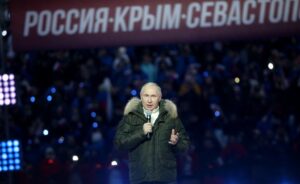
Russian President Vladimir Putin speaks during a concert marking the 7th anniversary of Crimea annexation, on March 18, 2021 in Moscow, RussiaIMAGE COPYRIGHTGETTY IMAGES
image captionRussia’s troop movements looked like grandstanding and many in Moscow doubt President Putin intended a major escalation

The build-up has been impossible to ignore: thousands of Russian troops deployed towards Ukraine; US warships reportedly heading for the Black Sea and Russia’s foreign ministry warning them off “for their own good”.

As the hostile rhetoric and military moves around Ukraine have intensified, Western politicians have begun fearing an open invasion and urging Russia’s Vladimir Putin to “de-escalate”.

Russia has refused: the defence ministry this week insisted its moves were in response to “threatening” Nato exercises in Europe.

Then Mr Putin got a phone-call from the White House.

‘Biden blinked’

“In Putin’s game of brinkmanship, Biden blinked first,” argues journalist Konstantin Eggert, after Joe Biden made his first call to the Kremlin and proposed meeting Mr Putin “in the coming months”.

It’s just weeks after the US president agreed with an interviewer that Russia’s leader was “a killer”.

President Biden’s new move is now a new topic of debate – disaster prevention or a mistaken concession – but in the run-up to a summit, the risk of major military action by Russia certainly fades.

“That would be really unstatesmanlike: a slap in Biden’s face,” Mr Eggert told the BBC. “But the fact that it was Biden who suggested they meet does give Putin the edge.”

Russian Prime Minister Putin shakes hands with US Vice-President Biden during their meeting in Moscow, March 2011IMAGE COPYRIGHTREUTERS
image captionThe two men met in Moscow in 2011 and spoke over the phone on Tuesday evening

Sending signals – not soldiers

Russian state TV certainly thinks so.

Hosts and guests alike on political chat shows have been hailing Moscow’s show of force, claiming their country stood up to US and Nato hostility. One commentator suggested President Biden’s “nerves had failed him”.

Senator Konstantin Kosachev was widely quoted arguing that the US had realised it was “impossible to achieve military superiority over Russia” and the two countries needed to return to dialogue.

A Russian commander looks on during military exercises in Crimea, 19 March 2021IMAGE COPYRIGHTGETTY IMAGES
image captionRussian forces have carried out exercises in Crimea

Russia’s recent ostentatious troop movement always looked like grandstanding by a country that’s given up trying to be liked and now wants the West to fear it instead.

When Vladimir Putin sent troops and hardware into eastern Ukraine seven years ago, those were secret operations that are still denied to this day.

This time, Russia seems more intent on sending signals than soldiers.

Kyiv’s ‘children with matches’

“My take is that it’s about deterrence,” says Andrei Kortunov, head of the Russian International Affairs Council. He points out Kyiv’s own recent reinforcements in eastern Ukraine and argues that Russia’s actions are to avert any move to retake areas controlled by Russian-backed militants.

One senior Kremlin official warned that such military action would be “the beginning of the end of Ukraine”, whose government was children “playing with matches”.

These days, Russia has an excuse to intervene: some half a million people in the self-proclaimed Donetsk and Luhansk “People’s Republics” of eastern Ukraine have been issued with Russian passports since fighting broke out in 2014.

Map of eastern Ukraine

“I think it would be difficult for the Kremlin not to come to their rescue if these ‘republics’ faced a threat of major defeat,” Mr Kortunov says, noting that Ukraine’s military was significantly better equipped and trained now thanks to US and European support.

But he still doubts that Vladimir Putin is planning an intervention.

“I don’t see anything the Kremlin could gain by direct military engagement in the Ukraine crisis. I think Russian policy is more focused on maintaining the status quo and assuming that Ukraine will implode from mounting problems and Ukraine fatigue in the West,” Mr Kortunov says.

A message to Washington

The other audience for Moscow’s manoeuvres is further afield.

For the US there’s a not-so-veiled warning that Russia still considers its neighbour’s fate its business and remains particularly opposed to Ukraine’s aim, reiterated this week, of joining Nato.

Ukrainian President Volodymyr Zelensky on a working visit to the eastern Ukrainian conflict zone, 09 April 2021IMAGE COPYRIGHTEPA
image captionUkraine’s President Zelensky visited eastern Ukraine last week and has called for Nato to admit the country as a member

But some detect another goal: attempting to avert the tough, new sanctions that the Biden administration is threatening in retaliation for Russia’s election meddling, hacking attacks and more.

“Russia is trying to raise the stakes: to show that it can inflict cost on those trying to inflict costs on Russia, even if that is reckless and may result in harsher sanctions,” argues foreign policy analyst Mikhail Troitskiy.

“I think this is the logic behind this escalation – which is dangerous because at some point it could spiral out of control,” he adds.

State of the Nation?

Despite renewed talk on state TV of “fascist” Ukrainians, there’s little sense that all-out war would be popular among Russians already coping with Covid, sanctions and the impact of a low oil price.

Andrei Kortunov believes the “mobilising potential” of foreign policy adventures is now “almost depleted” with people more concerned with their own problems than in the more comfortable context of 2014.

Russia’s 2008 war with Georgia is a stark warning of how rapidly such a confrontation can escalate and there is always the caveat that no-one believed Vladimir Putin would dare to annex Crimea either.

But defending the Donbas would likely be a far bloodier and more dangerous operation.

Mr Putin’s intentions may become clearer next week when he’s due to make his annual “state of the nation” address, a podium he’s often used for sabre-rattling against the West.

But the call from Joe Biden may have given him chance to pull back from this particular fight. Turkey now says the US has cancelled Mr Biden’s request for two warships to pass through the Bosphorus.

“I think Putin attracted attention, he put himself in the focus not only of Europe but the US administration,” Konstantin Eggert says. “He managed to scare them, and he likes doing that.”

Mikhail Troitskiy agrees.

“If Russia sees no major US sanctions affecting its vital interests, then it may consider pulling troops from the border,” he believes.

“Another way to de-escalate things is for them to climax, as happened in the Cuban missile crisis. But that would be very undesirable.”

media captionSurviving the chaos – and living with the memories: A Ukrainian war veteran on the battle that changed his life (2019 report)

bbc.com

Intelligence Chiefs Warn of Russian Troops Near Ukraine and Other Threats

0

Officials said that China’s push for global power posed a threat to the United States, and they dwelled on climate change, domestic extremism and more.

Credit…Pool photo by Saul Loeb

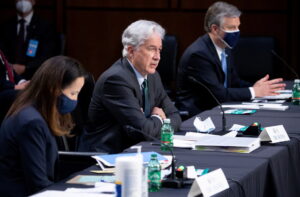
WASHINGTON — The Russian military buildup at the Ukraine border and in Crimea could provide enough forces for a limited military incursion, the C.I.A. director, William J. Burns, told senators on Wednesday as he and other senior officials outlined a range of threats facing the United States.

Russia could simply be sending a signal to the United States or trying to intimidate the Ukrainian government, but it had the abilities in place to do more, Mr. Burns told the Senate Intelligence Committee.

“That buildup has reached the point that it could provide the basis for a limited military incursion, as well,” Mr. Burns said. “It is something not only the United States but our allies have to take very seriously.”

Mr. Burns testified alongside Avril D. Haines, the director of national intelligence, and other officials about an array of threats from global powers like Russia and China as well as challenges that have been less of a focus of intelligence agencies in the past, including domestic extremism and climate change.

In its annual threat assessment report, released Tuesday ahead of the hearing, the intelligence community said that China’s push for global power posed a threat to the United States through its aggression in its region, its expansion of its surveillance abilities and its attempts to dominate technological advances.

Russia has also pushed for a sphere of influence that includes countries that were part of the Soviet Union, like Ukraine, the report said.

Both China and Russia, however, wanted to avoid direct confrontation with the United States, the report said.

Mr. Burns said the Russian actions have prompted internal briefings as well as consultations with allies. President Biden’s call on Tuesday to President Vladimir V. Putin of Russia was intended to “register very clearly the seriousness of our concern,” Mr. Burns said.

The United States has been tracking the Russian troops for some time, at least since late March. American officials have said privately that the Russians have done little to hide their troop buildup, unlike in 2014 when they first attacked Ukraine. That has convinced some, but not all, officials briefed on the intelligence that the Russian activities may be mostly for show.

“They could actually be going into a series of exercises starting anytime, or they could, if they chose to, perhaps do a limited objective attack,” said Lt. Gen. Scott D. Berrier, the director of the Defense Intelligence Agency. “We don’t know what the intent is, right now.”

Both Russia and China have been blamed for conducting cyberoperations that compromised broad sections of the software supply chain. Lawmakers asked Ms. Haines and Gen. Paul M. Nakasone, the director of the National Security Agency, about the Russian hacking, which penetrated nine federal agencies, and another by China that compromised Microsoft Exchange servers. The Biden administration is expected to respond to the Russian hacking soon, most likely with sanctions and other measures.

Ms. Haines said Russia used hackings to sow discord and threaten the United States and its allies. “Russia is becoming increasingly adept at leveraging its technological prowess to develop asymmetric options in both the military and cyberspheres in order to give itself the ability to push back and force the United States to accommodate its interests,” she said.

Lawmakers also raised the issue of a series of mysterious episodes that have injured diplomats and C.I.A. officers overseas. Some former officials believe Russia is behind the episodes, which they have called attacks.

Mr. Burns said he was working with his colleagues to ensure better medical care for C.I.A. officers. He also said he was working to “get to the bottom of the question of what caused these incidents and who might have been responsible.”

Questions on China dominated the earlier Senate confirmation hearings for Ms. Haines and Mr. Burns, and lawmakers again pressed on Wednesday for assessments on China and its efforts to steal American technology. Ms. Haines outlined how China uses technological might, economic influence and other levers of power to intimidate its neighbors.

“China is employing a comprehensive approach to demonstrate its growing strength and compel regional neighbors to acquiesce to Beijing’s preferences,” she told senators.

The F.B.I. director, Christopher A. Wray, also emphasized the threat from China. “We’re opening a new investigation into China every 10 hours,” he said of the bureau, “and I can assure the committee that’s not because our folks don’t have anything to do with their time.”

Biden administration officials have said that they want the intelligence agencies to take a wider view of national security threats.

Ms. Haines noted that another recent intelligence report, on global trends, highlighted how the coronavirus pandemic and climate change, along with technological change, were testing “the resilience and adaptability” of society. The “looming disequilibrium,” she said, compels intelligence agencies to broaden their definition of national security.

But at least one lawmaker, Senator Richard M. Burr, Republican of North Carolina, also asked a more practical question: How many intelligence officers have received coronavirus vaccines?

Mr. Burns said 80 percent of the C.I.A. work force was fully vaccinated and another 10 percent have had their first shot. He said all C.I.A. officers serving overseas “have the vaccine available to them directly.”

Mr. Wray was unable to give an estimate of how many of his agents had received a shot, saying that the vaccination rates varied in field offices in different states. Ms. Haines said 86 percent of her work force had had at least one shot, with a “fair percentage” being fully vaccinated. General Nakasone also had no estimate but said a vaccination center had been set up at Fort Meade, Md., where the National Security Agency’s headquarters is.

Lawmakers have also been pressing intelligence agencies to help examine the problem of domestic extremism. Senator Mark Warner, Democrat of Virginia and the chairman of the intelligence committee, linked the rise of domestic extremism to the same trends promoting disinformation produced by Russia and others. And he said he wanted the intelligence chiefs to outline how they could help provide better warnings of potential violence like the Jan. 6 attack on the U.S. Capitol.

Social media has helped disinformation from domestic extremist groups spread with more speed and efficiency than ever before — much the same as Russia and other nations have used it to spread falsehoods, Mr. Wray said.

“Social media has become, in many ways, the key amplifier to domestic violence extremism, just as it has for malign foreign influence,” he said. “There is all sorts of stuff out there on the internet that poses as facts, which just isn’t.”

The isolation caused by the pandemic, Mr. Wray continued, had increased the public’s susceptibility.

The intelligence chiefs’ hearing was the first since early 2019, when they contradicted President Donald J. Trump’s rosier public statements, prompting Mr. Trump to criticize his appointees publicly, telling them to “go back to school.” Mr. Trump’s last director of national intelligence, John Ratcliffe, chose not to release a threat assessment or testify before Congress last year.

The New York Times

Advice from the classics for Washington, Beijing, and Moscow

0

Alexandros P. Mallias, Ambassador of Greece to the United States ( 2005-2009) writes:

Secretary of State Tony Blinken, a fine diplomat and a seasoned top national security official, followed the footsteps of several American Presidents. During his first trip in Europe, he paid an important and much anticipated visit to NATO’s Headquarters in Brussels. The top American diplomat reiterated the Biden’s Administration strong commitment to NATO, while expressing  the expectation that the allies will remain committed to cope with the three main challenges/threats  as reflected in NATO’s reports and joint declarations. Is that so?

The response is neither easy nor linear. Let’s elaborate:

  1. The unprecedented though foreseeable rise of China’s capabilities. China is a privileged commercial, economic, trade, shipping, financial, and investment partner for NATO’s European allies. She is also an indispensable enabler in addressing climate change and the COVID pandemic. A Permanent Member of the UN Security Council, swiftful rising China is a global antagonist and potentially a strategic challenge for American interests. China has been a major concern issue for Congress and the top foreign policy priority, with important domestic parameters, for the Obama, Trump, and Biden Administrations.
    China’s Asian-Pacific claims and interests as well as its global designs are supported by political, economic and increasing military capabilities, yet under a “soft power” cover. It is increasingly difficult to draw a clear line among cooperation, engagement and deterrence. Economic, energy, trade, and financial interdependence are the basic characteristics of China’s bonds with her leading global partners. It is now more difficult for the United States alone to prevent by coercive measures China’s ascent to primacy.
    The 2500 years old “Thucydides trap” syndrome is now becoming a useful tool of analysis when examining US-China relations. Washington runs the risk of eventually projecting the image of a hegemon, like the city of Athens. But America’s soft power is colossal and global, much stronger than coercion. If hard power towards China and pressure on allies are the best policy option, then the probable product is a brotherhood of non-willing allies. A third powerful pole has already taken shape opposing US policies, including politico-military rapprochement among China, Russia and others .
    2. Russia’s assertiveness and come-back policy under President Vladimir Putin, which includes prestige, self-confident power politics, and territorial ambitions. Russia, a big power, is today an important energy, trade, tourism and economic partner for many NATO allies, with whom it sided in the fight against international terrorism. Russia is also a key player albeit a hard power antagonist in Eurasian affairs.
    The Russian Federation, also a Permanent Member of the UN Security Council, is focusing on the European theater of energy, political, and military operations as well as on the greater Middle East (MENA).
    Notwithstanding justified and legitimate opposition and apprehension among NATO allies and the European Union, Russia considers itself a shareholder of European cultural heritage, from the Atlantic to the Urals. But Russia’s invasion, occupation and annexation of Crimea in 2014 and the ongoing aggressive moves against Ukraine , in violation of the UN Charter, the Helsinki Final Act, and the Paris Charter for a New Europe are illegal. The status quo in Crimea cannot be tolerated. Russia has undermined its own role as an important stakeholder in European security and cooperation. US, NATO policies and EU sanctions are justified.
    Notwithstanding the Russian Federation’s important fossil fuel resources, its economic and military capabilities at this stage may not sustain its superpower aspirations. A framework of a “principled (value based) cooperative engagement” is possible. Russia’s desire to become a big power player in Eurasia, MENA, and beyond should be matched by the Kremlin’s attachment to the principles and purposes of the UN Charter and the fundamental principles and values of the European legal, political and security post cold-war commitments and architecture.
    There is a basic prerequisite before engaging with Russia. It pertains to NATO’s credibility, cohesion, and deterrence capability. Russia has managed to establish–against NATO’s interests–strategic defense procurement agreements and unprecedented confidential bonds with Turkey, a NATO member. The S-400 issue is a serious “intra muros” challenge undermining NATO diplomatically and politically. It is not an issue to be dealt with simply between Washington and Ankara. Further to  Turkey’s  provocative and aggressive  policies against Greece and Cyprus, it poses a credibility problem for NATO as a whole and seriously affects Alliance security. It has to be addressed as a priority issue in order to preserve NATO’s credibility, restore intra-Alliance confidence, and revive the indivisible collective security axiom.
    3. Preventing, countering and deterring hybrid threats. Often, the sources of these attacks directed against NATO members and institutions are also related or correlated to Moscow and Beijing. But it would be naive to attribute them solely to NATO’s two global antagonists. Cyberspace is the most difficult theater of operations for an undeclared global confrontation. More so, if associated with the possibility of rogue or failed states, authoritarian leaders, and non-state actors (terrorists, secessionist groups, etc.) getting access to nuclear weapons systems and/or long range ballistic capabilities. This is the 21st century nightmare scenario.

“Reset” global politics, starting with the UN Security Council

There is nothing new in stating that the world is characterized by power politics, rivalry between states and the promotion of state interests. Synergy is partial, alliances challenged, while the ecumenic symmetry is rather elliptic. The bipolar world order collapsed \; today, superpower monopoly is challenged. We should be in search of a new world order.
The Biden-Harris Administration’s much anticipated “reset” of multilateral diplomacy has a name: international cooperation, in particular within the United Nations and the Security Council. Multilateralism is the prerequisite for restoring the efficacy of the collective international security system: securing, shaping and reshaping the problematic world order.
It is a common secret that the United Nations is today unable to discharge its mission; synergy is missing among the five Permanent Members (P5) of the Security Council. The antagonism and conflict among the five stem both from a different hierarchy of values, attachment to human rights issues included, mostly though for geopolitical and economic reasons.

Attachment to the principles and purposes enshrined in the United Nations Charter has eroded. As long as the Security Council is unable to operate and act as mandated by the Charter, it will be impossible to reach the necessary consensus to prevent and counter threats against peace, stability, and security. The “veto” power prerogative should not be synonymous with idleness and inertia. The “zero sum game” equilibrium point cannot become the world order power equilibrium.
At times the United Nations Security Council was considered to be the refuge of the weak or the haven for weaker UN members. Now it is the indispensable condition for the P5 in resetting and restoring the much wanted world order.
In their legitimate search for common ground, the United States may wish to test the waters by hosting a ‘closed door retreat” of the P5 at Ministerial or Head of State level. Such a move could display of the American “smart power” (hard+ soft + principles and values) in reshaping the world order. Coping with the pandemic, climate change, and unity in fighting against terrorism could figure as the starting point of the agenda.

Engagement, negotiation, leadership: get advice from the Classics

What lessons can we draw from the ancient Greek classics that are relevant today? I refer to war and peace prototypes: Athens, Sparta, and Corinth were the three key city-states at the origins of the Peloponnesian War. Thucydides’ History of that War remains by far the most complete handbook on strategy and tactics, on peace and war, on alliances and hegemony, on the cleavage between principles and interests, might and right, on negotiating of truces and treaties and definitely on leadership. We often use a famous quote from the Melian Dialogue:

…since you know as well as we do that right is only in question between equals in power, while the strong do what they can and the weak suffer what they must.

Thucydides refers also to the argument used by the Athenian ambassadors warning the Spartans not to start the war by saying:

….Consider the vast influence of accident in war before you start it. For a long war as it continues for the most part ends in catastrophe… It is a common mistake in going to war to begin at the wrong end, to act first and wait for disaster to negotiate…

Many scholars argue that we already move in the footsteps of the Peloponnesian War. I earnestly hope that the Athenian message will not be ignored by Moscow, Beijing or Washington.

peacefare.net