Αρχική Blog Σελίδα 2297

De profundis για το Παλαιστινιακό

1
Έγραψα, χθες, ένα σύντομο σχόλιο για την κρίση στην Γάζα και το Ισραήλ. Με δύο λόγια έλεγα πως υποστηρίζω τον αγώνα των Παλαιστινίων για κράτος και αξιοπρεπή ζωή αλλά με προβληματίζει η ταύτιση του αγώνα με τη Χαμάς, την Μουσουλμανική Αδελφότητα και την χειραγώγηση απο τον Ερντογάν.
Το απέσυρα το σχόλιο μετά από μια βίαιη τηλεφωνική επίθεση παλαιστινίων, γνωστών από τη δεκαετία του 70.
Δεν δέχονται καμιά κριτική στη Χαμάς την οποία θεωρούν το ένοπλο τμήμα των Παλαιστινίων. Το παράδοξο, για μένα, είναι ότι οι παλαιοί αυτοί φίλοι ήταν φανατικοί αραφατικοί. Της Αλ Φατάχ.
Δεν πτοούμαι από αρνητικά σχόλια και επιθέσεις. Αλλά αναγνωρίζω την υπερβολή σε έναν λαό, όπως σήμερα οι Παλαιστίνιοι, που υφίστανται όσα βιώνουν τελευταία. Ανεξαρτήτως των αιτιών.
Το σχόλιο δεν έλεγε τίποτε ιδιαίτερο. Ήταν, απλώς, μια θέση με την οποία, από την αποδοχή που συνάντησε και τα ονόματα που διάβασα συμφωνούσε, επαγωγικά μιλώντας, μεγάλο μέρος του ελληνικού λαού.
Αν σε επίπεδο ανάλυσης θα έχω κάτι να πω θα το κάνω αδιαφορώντας για τις αντιδράσεις. Αλλά έκρινα πως αφού δυσαρεστούνται φίλοι παλαιστίνιοι από μια κοινοτοπία δεν είχα λόγο να επιμένω σε ένα ανώδυνο σχόλιο.
Τα γράφω αυτά, κυρίως, για να καταλήξω σε ορισμένα συμπεράσματα:
-Το κοσμικό παλαιστινιακό κίνημα μετά τον Αραφάτ τελείωσε.
-Η διάβρωση και η διαφθορά ήταν τεράστια.
-Το μεγαλύτερο μέρος των Παλαιστινίων εκφράζει σήμερα η Χαμάς. Με ό,τι αυτό σημαίνει.
– Από τις αντιδράσεις των Αραβικών χωρών διαπίστωσα (το διαπίστωσα εδώ και χρόνια από μια επίσκεψη στο Κουβέιτ, αλλά το επιβεβαίωσα και τις μέρες αυτές), ότι οι Παλαιστίνιοι και το Κίνημά τους εγκαταλείφθηκαν από τις περισσότερες αραβικές χώρες.
-Η δύναμη που τους εκφράζει είναι η Χαμάς.
-Το τέμενος Αλ Ακσά συσπειρώνει όλους τους Παλαιστίνιους. Κοσμικούς, άθρησκους και θρησκευόμενους.
-Η θέση μου υπέρ της δημιουργίας ανεξάρτητου Παλαιστινιακού κράτους είναι θέση αρχής.
-Οι φίλοι Παλαιστίνιοι θα πρέπει να σκεφθούν πως αν οι προσπάθειές τους ταυτίζονται με την Μουσουλμανική Αδελφότητα και τον Ερντογάν, οι συμπάθειες που έχουν όχι, μόνο στην Ελλάδα αλλά και στη Μέση Ανατολή και στις Αραβικές χώρες, θα μειωθούν.
-Η Μουσουλμανική Αδελφότητα απειλεί τα κοσμικά αραβικά καθεστώτα. Απειλεί με αστάθεια ολόκληρη την Μέση Ανατολή. Η ταύτισή της με τον Ερντογάν προβληματίζει και την ελληνική κοινωνία, οι ευαισθησίες της οποίας δεν πρέπει να παραβλέπονται.
-Το Ισραήλ και η διεθνής κοινότητα πρέπει να αναγνωρίσουν ανεξάρτητο Παλαιστινιακό Κράτος.
-Η σιωπή Ρωσίας, Κίνας δείχνει μια αποστασιοποίηση των δύο αυτών δυνάμεων από την Παλαιστινιακή υπόθεση.
-Η πολιτική του σημερινού ηγέτη της Παλαιστινιακής αρχής απέτυχε. Θα είναι η επόμενη επιλογή η τακτική της Χαμάς;
-Η διαχείριση της ρευστότητας στη Μέση Ανατολή δεν μπορεί να γίνει όπως παλαιά. Οι ΗΠΑ δεν είναι η μόνη υπερδύναμη. Οικονομικά ισορροπείται, σε μεγάλο βαθμό από την Κίνα, και στρατιωτικά, εν πολλοίς, από την Ρωσία. Ρωσία και Κίνα εξισορροπούν τις ΗΠΑ.
-Τα προβλήματα είναι, πλέον, πολυπαραγοντικά και απαιτούν υψηλού επιπέδου και ακρίβειας διαχείριση.
Το Παλαιστινιακό έχει σημαντικές διαφορές με το κυπριακό. Για την Κύπρο υποστηρίζω ενιαίο κράτος με αναγνώριση όλων των μειονοτικών δικαιωμάτων στις μειονότητες του νησιού. Η Κύπρος ήταν κράτος στο οποίο εισέβαλε η Τουρκία. Άρα, το πρόβλημα είναι εισβολής και κατοχής. Στο σημερινό Ισραήλ, οι Εβραίοι (Εβραίος σημαίνει αυτός που έρχεται απο πέρα και το πέρα είναι ο Ευφράτης. Πρώτος Εβραίος που ήρθε απο πέρα ήταν ο Αβραάμ) οι Ισραηλινοί έχουν ιστορικά δικαιώματα. Απο την εποχή της Βίβλου. Δικαιούνται πατρίδας. Όπως πατρίδας δικαιούται και ο λαός που ζούσε μονίμως εκεί. Οι Παλαιστίνιοι. Υπάρχει χώρος και για τους δύο. Αλλά φαίνεται πως δεν θέλουν πολλοί. Το Ισραήλ (Νετανιάχου) δεν διαχειρίστηκε καλά την κρίση. Οι παλαιστινιακές ευαισθησίες ήταν γνωστές και θα μπορούσε το Ισραήλ να τις σεβαστεί. Δεν το έκανε. υπάρχει, κατά την άποψή μου λόγος. Απο την άλλη και η Χαμάς, παίρνει αφορμές και παίζει παιχνίδι που ξεπερνά το αίτημα αναγνώρισης Παλαιστινιακού κράτους. Η Χαμάς κάνει ευρύτερο παιχνίδι, ενταγμένη στην πολιτική της Μουσουλμανικής Αδελφότητας στην περιοχή. Εδώ διαφωνώ με τους φίλους μου τους Παλαιστίνιους.

Ποια είναι η φλεγόμενη Γάζα ;

0

Του Αλκη Καλλιαντζίδη, Οικονομολόγου, [email protected]  www.kalkis.eu

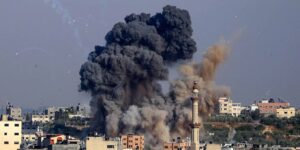
Τα γεγονότα της Γάζας, που βρίσκονται σε εξέλιξη την ώρα που γράφονται αυτές οι γραμμές, θεωρούνται από διεθνείς αναλυτές τα σοβαρότερα από τον πόλεμο του 2014. Η Γάζα είναι και πάλι στο επίκεντρο της ανανεωμένης βίας μεταξύ του ισραηλινού στρατού και της παλαιστινιακής φιλο-ιρανικής και φιλο-τουρκικής οργάνωσης της Χαμάς. Για να καταλάβουμε καλύτερα τα εκεί τεκταινόμενα, ποια ακριβώς είναι η Λωρίδα της Γάζας ;

Η Λωρίδα της Γάζας είναι μια έκταση 360 km2 κατά μήκος της Μεσογείου στα σύνορα της Αιγύπτου και του εβραϊκού κράτους, από την οποία προέρχονται χιλιάδες ρουκέτες με στόχο το Ισραήλ. Και την οποία ο ισραηλινός στρατός υποβάλει σε έναν συνεχιζόμενο έντονο αεροπορικό βομβαρδισμό και βομβαρδισμούς πυροβολικού από την περασμένη Δευτέρα. Μαζί με τη Δυτική Όχθη  είναι τα δύο εδάφη που διεκδικεί η Παλαιστινιακή Αρχή για να στεγάσει εκεί το μελλοντικό της κράτος.

Πρώην γη των Φιλισταίων τον 13ο αιώνα π.Χ., αυτή η περιοχή καταλήφθηκε και διοικήθηκε από την Οθωμανική Αυτοκρατορία μεταξύ του 15ου και του 18ου αιώνα και στη συνέχεια πέρασε στη βρετανική κυριαρχία από το 1917. Ανακτήθηκε από την Αίγυπτο κατά τη διάρκεια της πρώτης Ισραηλο-Αραβικής σύγκρουσης του 1948, η Λωρίδα της Γάζας κατακτήθηκε το 1967 από το Ισραήλ, καταλήφθηκε στρατιωτικά και αποικειοποιήθηκε μέχρι τις ειρηνευτικές συμφωνίες του Όσλο που ανέθεσαν την αυτόνομη διαχείρισή της στην Παλαιστινιακή Αρχή.

Το 2005, η κυβέρνηση του Ariel Sharon (δεξιά) διέταξε μια μονομερή αποχώρηση του στρατού και των αποίκων από τη Γάζα. Από τις παλαιστινιακές εκλογές του 2006 και μια βίαιη σύγκρουση μεταξύ του ισλαμικού κόμματος Χαμάς, που κέρδισε τις εκλογές, και της Φατάχ του Παλαιστίνιου Προέδρου Μαχμούντ Αμπάς, η Γάζα έχει βιώσει τρεις στρατιωτικές αντιπαραθέσεις μεγάλης κλίμακας με το Ισραήλ : το 2009, το 2014 και το 2018. Το Ιράν κατηγορείται από τις ισραηλινές αρχές για παράνομη παροχή στη Χαμάς όπλων και βαλλιστικής τεχνολογίας.

Κατοικημένη από περισσότερους από 2 εκατομμύρια κατοίκους, η Γάζα έχει το υψηλότερο ποσοστό ανθρώπινης πυκνότητας των χωρών μεσαίου εισοδήματος. Ο οικονομικός αποκλεισμός, που της έχει επιβάλλει το Ισραήλ, έχει ένα  σημαντικό αντίκτυπο στο ποσοστό ανεργίας της (ήταν 52% το 2019) και στην οικονομική της μεγέθυνση (το 56% του πληθυσμού της ζει κάτω από το όριο της φτώχειας).

Γεωπολιτικες εξελίξεις, εθνικές προκλήσεις & εξοπλιστικές ανάγκες

0

Οι εκλεκτοί καλεσμένοι μας Περικλής Νεάρχου, Γιάννης Μάζης και Κώστας Γρίβας συζητούν με τον Παντελή Σαββίδη και την Κάτια Πουλάκη για το γεωπολιτικό περιβάλλον στην ανατολική Μεσόγειο, τα ελληνοτουρκικά, το κυπριακό και τα εξοπλιστικά προγράμματα που πρέπει η Ελλάδα να αποκτήσει.

Θέμα: Σε ρόλο Πόντιου Πιλάτου οι ΗΠΑ και Ρωσία για τα γεγονότα στο Ισραήλ;

0

της Δρ Άννας Κωνσταντινίδου

Ιστορικός- Διεθνολόγος[1]

Ζούμε, άραγε, την «σταύρωση» του Ισραήλ (εννοώντας και τις δύο αντιμαχόμενες πλευρές που κατοικούν στο εσωτερικό κατεστημένο), αφού ΗΠΑ και Ρωσία ως άλλοι Πόντιοι Πιλάτοι δεν παίρνουν ευθέως μέρος; Βλέπουμε ένα Συμβούλιο Ασφαλείας του ΟΗΕ, απλό παρατηρητή, μια και εκτός των άλλων οι Αμερικανοί εμποδίζουν την έκδοση ψηφίσματος για τα γεγονότα. Και το απλοϊκό ερώτημα που προκύπτει: Δεν φοβούνται οι δύο μεγάλοι μία γενικευμένη σύρραξη; Μήπως, όμως δε, τα παραπάνω ερωτήματα είναι μόνο ρητορικής φύσης, μια και οι απαντήσεις είναι γνωστές;

Χθες, έγινε γνωστό, ότι ο Βλαντιμίρ Πούτιν ενώ επικοινώνησε με πολλούς ομολόγους του που έχουν άμεση ή έμμεση εμπλοκή με τα γεγονότα που συμβαίνουν στο Κράτος του Ισραήλ, αντίθετα ακόμα δεν έχει έρθει σε τηλεφωνική επαφή με τον Μπέτζαμιν Νετανιάχου, παρόλο που οι δύο ηγέτες έχουν μία σχέση που βασίζεται στο σεβασμό των αρχών της Διπλωματίας.

Τη δεδομένη χρονική στιγμή, οι ΗΠΑ και η Ρωσία, στην κρίση αυτή όχι μόνο δεν τους συμφέρει να έχουν το ρόλο του Πόντιου Πιλάτου, αλλά, ως φαίνεται, επειδή είναι μία κρίση, υποβολιμαία από ένα κράτος (δηλαδή την Τουρκία), το οποίο καθίσταται «μεγάλο πρόβλημα» και για τις ίδιες, είναι επιβεβλημένο να χειριστούν το όλο πράγμα με «χειρουργική ακρίβεια» για δύο λόγους: α. για να μη δώσουν αξία στην Τουρκία, ότι είναι μία χώρα που κινεί τα νήματα και διαμορφώνει τις καταστάσεις κατά το δοκούν, β. αυτήν την στιγμή με τη «συμπεριφορά» τους πρέπει να φέρουν την ισορροπία δυνάμεων στην περιοχή, γιατί υπάρχουν και τα περιφερειακά κράτη -κλειδιά που επιβάλλεται να μείνουν σε κατευνασμό.

Άλλωστε, πρέπει να σημειωθεί και αυτό. Η συνάντηση αυτής της εβδομάδας ανάμεσα σε Μπλίνγκεν και Λαβρόφ θα είναι το «σημείο εκκίνησης» που θα διαμορφώσει τις εξελίξεις. Στο Συμβούλιο Ασφαλείας του ΟΗΕ δεν αποφασίζουν μόνο ΗΠΑ και Ρωσία (και ένα εξ αυτών των κρατών που έχει ψήφο, είναι η Κίνα). Με λίγα λόγια το μήνυμα, εκτός από το ζήτημα Ισραήλ,  που επιδιώκουν να βγει από τη συνάντηση αυτή (προς όλους τους ενδιαφερομένους), είναι κατ’ ουσίαν να αποδείξουν ποια είναι τα δύο «αφεντικά» του Παγκόσμιου Συστήματος. Όταν οι δύο αυτοί, Παγκόσμιοι Εντολοδότες αποφασίσουν, τότε όλα ξεκινούν. Μάλλον, αυτή η διαπίστωση θα φαντάζει σε κάποιους κυνική. Όμως, οφείλουμε να αναλογιστούμε ότι ο Κόσμος μετά το 1945 (και μέχρι σήμερα) φτιάχτηκε με σημείο αναφοράς τα δύο αυτά κράτη.

Επίσης, όσον αφορά το ρωσικό κράτος, τίθεται το εξής ερώτημα: πώς ο Πούτιν θα επικοινωνήσει με το Νετανιάχου, με ένα Ιράν, που αν και «παρατηρητής» στη συγκεκριμένη διένεξη Ισραηλινών και Παλαιστινίων, δεν παύει να αποτελεί μία δύναμη για το συγκεκριμένο περιφερειακό περιβάλλον; Το ιρανικό κράτος δεν έχει τη διάθεση να παρέμβει στην εμπλοκή αυτή, γιατί ουσιαστικά δεν έχει «καλυμμένα» τα νώτα του από τη Ρωσία. Στο πώς κινούνται ρωσικό και ιρανικό κράτος τη δεδομένη περίοδο για το ζήτημα αυτό, είναι ταιριαστή η λαϊκή ρήση: «φοβάται ο Γιάννης το θεριό και το θεριό το Γιάννη». Γιατί, ας μην ξεχνάμε, ότι η χώρα των Αγιατολάχ, επειδή συντηρεί οικονομικά τη Χαμάς, εύκολα, αν ήθελε, θα μπορούσε να έχει ρόλο στα τεκταινόμενα. Όμως, η νέα θέση που διεκδικεί στην περιοχή της, προσπαθώντας να «ανασυστήσει» τις σχέσεις της με ευρωπαϊκά κράτη, εδώ και καιρό την καθιστά ένα «παίχτη» που κινείται με ιδιαίτερα κατευναστικό τρόπο στη διπλωματία του. Αυτήν την στιγμή, το ιρανικό κράτος αποφασίζει τις κινήσεις του, παρατηρώντας τις προθέσεις των συμμάχων του απέναντι σε αυτό. Επίσης, δεν πρέπει να λησμονούμε  ότι για τη Ρωσία το Ιράν δεν είναι ούτε Αζερμπαϊτζάν, ούτε Αρμενία, ούτε Τουρκία. Είναι μία χώρα αυτοδύναμη και αυτάρκης σε κάθε επίπεδο, που δεν εξαρτάται, ως εκ τούτου, από τρίτους, αλλά αντίθετα διαμορφώσει τις κινήσεις τρίτων.

Και από την άλλη πλευρά, οι ΗΠΑ κρατούν τους «μεγάλους» Άραβες και το Ισραήλ. Αν εμπλακεί το Ιράν από απροσεξία (sic) των Ρώσων, οι Άραβες για τα ζητήματα φυλετικής τιμής (ως παραδοσιακές κοινωνίες) επιβάλλεται στην περίπτωση αυτή, να βγουν μπροστά. Όπως κατανοούμε, τότε θα υπάρξει ένα σκηνικό που θα λάβει ανεξέλεγκτες διαστάσεις. Ένα επίσης ερώτημα που τίθεται, είναι αν το όλο σκηνικό στο Ισραήλ λήξει σύντομα. Διάφορα σενάρια είναι στο τραπέζι και πολλοί αναλυτές πιστεύουν, ότι είναι μακρύς ακόμα ο δρόμος, για να λάβουν τέλος οι συγκρούσεις στο Κράτος του Ισραήλ. Όμως, στην προκειμένη περίπτωση, για να βγάλουμε πιο πιθανά συμπεράσματα για την έκβαση των πραγμάτων, είναι να εξετάσουμε και τα γεγονότα τα οποία υποδηλώνουν το ακριβώς αντίθετο, ότι δηλαδή, η συγκεκριμένη συμπλοκή των δύο εθνοτικών ομάδων δε θα διαρκέσει μεγάλο χρονικό διάστημα. Ποια είναι τα γεγονότα αυτά; Α. επειδή το όλο πράγμα ξέσπασε επί της ουσίας από τρίτη χώρα, δηλαδή την Τουρκία (που είναι πλέον προβληματική για όλους), Β. καθώς, επίσης, τον Ιούνιο επίκειται η συνάντηση Μπάιντεν με Πούτιν που η μεταξύ τους συζήτηση θα εστιαστεί σε ένα πραγματικά μεγάλο ανταγωνιστή των συμφερόντων τους, που ακούει στο όνομα Κίνα, το θέμα Ισραήλ θα δρομολογηθεί μετά τη συνάντηση που επίκειται των Υπουργών Εξωτερικών, ΗΠΑ και Ρωσίας.

Ένα πρώτο βήμα που θα απαιτηθεί από τους δύο Μεγάλους με σκοπό την ομαλοποίηση της κατάστασης, είναι η επίσπευση των εκλογών στους Παλαιστίνιους που συνεχώς αναβάλλονται (πυροδοτώντας και τη μεταξύ τους ένταση, η οποία βρίσκει το αντίβαρο που ονομάζεται κρίση με το Ισραήλ) με επιτήρηση της εκλογικής διαδικασίας από τον ΟΗΕ (καθώς η Παλαιστινιακή Αρχή συμμετέχει ως παρατηρητής στον Οργανισμό). Η δεύτερη απαίτηση θα αφορά το ίδιο το Ισραήλ και θα είναι η επίσπευση της διαδικασίας σχηματισμού κυβέρνησης.

Φυσικά, υφίσταται και ένα τελευταίο, εύλογο ερώτημα στη βάση όσων παραπάνω καταθέσαμε. Αφού, ως φαίνεται, την κρίση στο Ισραήλ δεν την επιδίωξαν ούτε οι Αμερικανοί ούτε οι Ρώσοι, πώς, ωστόσο, τους «ξέφυγε η κατάσταση από τα χέρια τους»; Η κατάσταση κάθε άλλο τους ξέφυγε ή μπορεί να τους ξεφύγει, κι αυτό δεν μπορεί να συμβεί καθώς οι Συμφωνίες του Αβραάμ ήταν η μεγαλύτερη παρακαταθήκη στη Διεθνή Διπλωματία που άφησε η Κυβέρνηση Τραμπ, και ο πρώην Υπ.Εξ. των ΗΠΑ, Μάικ Πομπέο. Και επίσης, είναι μία κρίση που δεν ενδιαφέρει την Κίνα. Και γιατί δεν την ενδιαφέρει; Γιατί, η Κίνα εμπλέκεται σε οικονομικούς πολέμους και όχι σε συμβατικούς. Και η συγκεκριμένη κρίση στο Ισραήλ κάθε άλλο παρά οικονομικά ψήγματα φέρει.

[1] Η Δρ Άννα Κωνσταντινίδου είναι Ιστορικός- Διεθνολόγος, Διδάκτωρ Δημοσίου Δικαίου & Πολιτικής Επιστήμης της Νομικής Σχολής ΑΠΘ, μεταδιδακτορική ερευνήτρια της ίδιας Σχολής, εξωτερική συνεργάτιδα της Ανώτατης Διακλαδικής Σχολής Πολέμου (ΑΔΙΣΠΟ), διαλέκτρια από το ακαδημαϊκό έτος 2021-2022 στη Σχολή Εθνικής Άμυνας (Σ.ΕΘ.Α.), μέλος και επιστημονική συνεργάτιδα στο Ελληνικό Ινστιτούτο Στρατηγικών Μελετών (ΕΛ.Ι.Σ.ΜΕ.)

Το «Σύνδρομο του Ναυαρίνου» και πόσο επικίνδυνο είναι

5

Γράφει ο Παντελής Σαββίδης

The End of Israel’s Illusion

0

Project Syndicate

 BABA/AFP via Getty Images)

The prevailing consensus among Israelis that Palestinian nationalism had been defeated – and thus that a political solution to the conflict was no longer necessary – lies in tatters. And even as the violence escalates, it has become clear to both sides that the era of glorious wars and victories is over.

TEL AVIV – The sudden eruption of war outside and inside Israel’s borders has shocked a complacent nation. Throughout Binyamin Netanyahu’s 12-year premiership, the Palestinian problem was buried and forgotten. The recent Abraham Accords, establishing diplomatic relations with four Arab states, seemed to weaken the Palestinian cause further. Now it has re-emerged with a vengeance.

Wars can be triggered by an isolated incident, but their cause is always deeper. In this case, the trigger, the eviction of Palestinians in favor of Israeli nationalists in the Sheikh Jarrah neighborhood of East Jerusalem, touched all the sensitive nerves of the Israeli-Palestinian conflict. Israel’s occupation of East Jerusalem, its humiliating control of access to the Al-Aqsa mosque, the ever-present memory of the 1948 Nakba (the displacement of 700,000 Palestinians when Israel was founded), and the grievances of Israel’s Arab minority are all fueling the current flare-up.

It may be true that the contested real estate in Sheikh Jarrah did belong to a Jewish family before 1948. But Palestinians saw the incident as part of Israel’s unrelenting drive to “Judaize” Jerusalem, and a striking injustice, because the state of Israel was built partly on the abandoned properties of Palestinian refugees. While Jews are entitled to reclaim property they owned before Israel’s founding, Palestinians may not. Those facing eviction in Sheikh Jarrah cannot recover the homes in Jaffa and Haifa that they once owned.

On the face of it, the latest escalation of violence is following the template of all inter-ethnic wars. Muslims observing Ramadan shouted nationalist slogans and clashed with Israeli right-wing groups chanting “Death to the Arabs.” The Israelis haughtily marched with their national flag on Jerusalem Day, marking Israel’s capture in 1967 of East Jerusalem and the Temple Mount, the site of the biblical Second Temple, and of Al-Aqsa, completed in the year 705. Battles in and around the Al-Aqsa compound erupted, with worshipers inside throwing stones at the Israeli police, who responded by firing rubber-tipped bullets and other projectiles, wounding hundreds.

But the young Arab protesters could claim victory, for they forced the postponement of an Israeli Supreme Court ruling on the evictions in Sheikh Jarrah. They also forced the police to change the route of the Jerusalem Day march away from the Muslim Quarter in the Old City.

The flare-up spilled over into pre-1967 Israel, where Islamist groups incited young Israeli Arabs. Mixed Jewish-Arab cities that were supposed to be exemplars of coexistence, such as Acre, Ramla, Jaffa, and Lod, erupted in an orgy of violence and vandalism. Lod was practically taken over by gangs of young Arabs. This was a pogrom, said Jewish residents. An old Jewish woman spoke of memories of Kristallnacht. The mayor of Lod drew the same comparison.

But Jerusalem has emerged as the crucible of conflict. It offered Hamas a golden opportunity to assert its predominance over Israel’s collaborators in the West Bank’s Palestinian Authority and sweep away PA President Mahmoud Abbas’s moribund leadership. Under Israeli pressure, Abbas had just canceled legislative elections for fear that Hamas, which has ruled Gaza since 2006, would win and extend its control to the West Bank.

Abbas framed his decision as a protest against Israel’s refusal to allow the Palestinians in East Jerusalem to participate in the elections. But the truth is that the PA’s presence in East Jerusalem had practically vanished, with the vacuum filled by a mostly secular young Palestinian generation that turned the Temple Mount (Haram Al-Sharif to Muslims) into the symbol of their resistance to Israeli occupation.

In the current eruption of violence, Hamas connected all the dots needed to gain primacy in the Palestinian national movement. It positioned itself as the protector of Jerusalem and Al-Aqsa, as the spearhead of the Palestinians’ national and religious struggle against the Israeli-Jewish occupier, and also as the voice of the Arab minority in Israel proper.

Israelis and their complacent government were caught off guard. Hamas conducted an unprecedentedly massive missile attack on Israeli cities. They even launched salvos at Jerusalem and Tel Aviv, sending half the country’s population to shelters. Israelis were left to wonder how their vulnerable home front could withstand a war with Hezbollah, the Iran-backed militia across the border in southern Lebanon. Hezbollah has an arsenal of 150,000 missiles many times more lethal than Hamas’s.

To make its case, Hamas was willing to pay a high price. Israel’s punitive airstrikes on Gaza have been devastating, targeting Hamas military commanders with brutal efficiency. But Hamas knows that in the asymmetric wars of this era, a militia hidden among two million civilians in one of the world’s most densely populated areas has practical immunity from defeat. Hamas also knows that the war’s reverberation throughout the region will force neighbors like Egypt and Hamas’s patron, Qatar, to mediate a ceasefire.

From the debris of Gaza, Hamas will then claim victory, not necessarily on the battlefield, but in the minds of its people. At that point, Hamas will have achieved its main objectives: an utterly discredited PA and heightened prestige as the ultimate protector of Islam’s holy shrines in Jerusalem.

Paradoxically, Netanyahu has no interest in destroying Hamas. Quite the contrary: he has struck an unwritten deal with it against Abbas’s PA, which his governments have consistently done all they could to weaken and humiliate. A Hamas Islamic state in Gaza offers Netanyahu the ideal pretext to reject peace negotiations and a two-state solution. Netanyahu even allowed Qatar to keep Gaza functioning by paying the salaries of Hamas’s functionaries.

Israel certainly cannot claim victory. The fragile coexistence between Jews and Arabs within its borders has been shaken. The prevailing consensus among Israelis that Palestinian nationalism had been defeated – and thus that a political solution to the conflict was no longer necessary – lies in tatters. And even as the violence escalates, it has become clear to both sides that the era of glorious wars and victories is over.

Germany’s rising Green Party echoes many U.S. policies. That could rattle pipeline plans from Russia.

0

BERLIN — Annalena Baerbock was born the same year as Germany’s Green Party, then a fringe mix of peace activists, environmentalists, equal rights campaigners and members of the anti-nuclear movement, skeptical of Western power.

Forty years later — espousing a foreign policy generally in sync with the Biden administration — she hopes to lead the much-transformed Greens to an election win in September as Germany begins a new political era without Angela Merkel at the helm.

Laying out her vision in interviews, Baerbock has put a tougher stance toward Moscow and Beijing at the center of her foreign policy promises — a break from a more cautious approach under Merkel that has been a source of frustration in both Washington and Brussels.

That includes the end of political backing for Nord Stream 2, a nearly completed gas pipeline between Russia and Germany that has long been a wrench in U.S.-German relations.

The United States and others argue that the pipeline — which Russian officials say could be completed as early as this summer — would leave Europe a hostage to Russian energy and threaten U.S. national security.

Advocates say the private project is key to securing the region’s gas supplies, doubling the shipments of the original Nord Stream that opened a decade ago.

Image without a caption

Speaking to the Atlantic Council in her first English-language interview since being nominated as her party’s candidate for chancellor, Baerbock talked of being on the “same field” as the Biden administration when it comes to climate and human rights, and cautioned of a “new strategic fight” with Russia and China.

Such comments will be “music to the ears” of those in Washington who are thinking about how to bring Europe, and specifically Germany, into the fold of considering Russia and China to be strategic competitors, said Cathryn Clüver Ashbrook, executive director of the Project on Europe and the Transatlantic Relationship at the Harvard Kennedy School.

“She’s in lockstep there with the way Americans are thinking,” Ashbrook added.

The election outcome is far from certain. Merkel’s Christian Democratic Union remains a powerful force, but her retirement leaves the party with a successor, Armin Laschet, whose poll numbers are weak.

That has put the Greens — for the moment — in the pole position for chancellor. No party is expected to win a majority, but the Greens’ strong showing makes them likely to be a key part of any coalition.

Image without a caption

Merkel has tried to position Germany as a bridge between East and West. As a child of the Cold War, analysts say, her foreign policy is driven by the desire not to return to one.

She has remained unwavering in support of Nord Stream 2, despite pressure even from within her own party after last year’s poisoning of Russian opposition leader Alexei Navalny and a buildup of Russian troops around Ukraine.

In Brussels, Merkel has been a driving force for a huge E.U.-China investment deal, which is crumbling under tit-for-tat sanctions over China’s treatment of Uyghurs.

Baerbock, however, grew up in a united Europe, studied abroad in London and the United States, and worked in Brussels. She has called for a clear, united European position on key issues, including more cooperation on security.

“Her thinking about the world and foreign policy and the challenges we face is really not shaped by the Cold War,” said Bastian Hermisson, head of the Washington office for the Heinrich Böll Stiftung, a Greens-affiliated think tank. “But it is really shaped by a united Europe, where she really thinks about Central and Eastern Europe just as much as she thinks about Western Europe.”

Opponents of Baerbock pick at her lack of political experience; she has not run a ministry or led one of Germany’s state governments. But that outsider status also could help her if a sense of change is in the air. An impassioned speaker, she stands out in the staid world of German politics.

Domestically, the Greens point to their leadership in the state of Baden-Württemberg, home to Germany’s auto industry powerhouses, Daimler and Porsche, as proof they can balance environmental policies with business interests.

Image without a caption

When it comes to Nord Stream 2, Baerbock has said she will end political support for the pipeline. But she has also acknowledged the difficulties posed by the fact that much of it has already been built.

In the gray waters of the Baltic Sea, two Russian pipe-laying vessels are rushing to complete the last 70 miles.

“The question is what legal instruments we have to stop it, from a German point of view,” said Claudia Müller, Green parliamentarian for Mecklenburg-Vorpommern, where the pipeline lands. “I think a moratorium is possible.”

Supporters of the pipeline have said a German block would result in enormous claims for damage by investors.

But European Parliament member Reinhard Bütikofer believes that, without political backing, the project would struggle to overcome the regulatory hurdles it still needs to clear. At least 18 international companies working on the pipeline have pulled out under the threat of sanctions.

“I’m optimistic that there will be a way out of the dead end to which the German government has backed into,” he said.

Others see a compromise as the only solution at this stage.

With China, a change in tone in Berlin could also have ripples across Europe, said Noah Barkin, senior visiting fellow at the German Marshall Fund.

“If Germany shows other countries in Europe that it’s willing to pay an economic price for a tougher, more realistic China policy, then I think you’ll see other countries following Germany’s lead,” he said.

Yet few expect a “revolution” in German politics with Merkel gone, he said.

“The Greens are going to be in coalition with another party or other parties,” Barkin added, “and any new government will have to reach a consensus on big foreign policy issues.”

Still, he said, Germany could adopt a sterner tone on human rights and a tougher line on technology issues such as 5G, where China’s Huawei and others are in competition with Western rivals.

From Washington’s perspective, “there are good things and bad things” when it comes to the defense-shy Greens, Barkin said.

“They may not be the best partner when it comes to NATO and the military,” he said.

Baerbock has said the pledge by NATO members to commit 2 percent of gross domestic product to defense spending is “arbitrary.”

In its only other stint in federal power — as a junior coalition partner between 1998 and 2005 — the Green Party struggled with a backlash from its pacifist base after its foreign minister, Joschka Fischer, backed sending German troops to Kosovo.

Regardless of how the Greens do in September, Baerbock’s candidacy appears to have cemented a leading political role.

“She’s really shown her mettle in the last couple of weeks,” said Clüver Ashbrook. “She seemingly is ready for it. She comes off as competent, she knows the issues. She can hold the spotlight. She can withstand, seemingly, the heat in the engine room.”

Luisa Beck contributed to this report.

The Washington Post

Time for Mutiny Over Turkey’s Bounties on Kurdish Leaders

0

Why is the Biden administration blindly following Donald Trump’s policy of propping up Turkey’s authoritarian president?

On April 20, the State Department renewed multimillion-dollar bounties on three senior leaders of the Kurdistan Workers’ Party (PKK): Cemil Bayık, Duran Kalkan, and Murat Karayılan. Bayık and Karayılan are founding members of the PKK and Kalkan is a senior commander.

The Kurdish freedom movement sees these men as instrumental in the defeat of ISIS, but to some this is no recommendation. Turkish president Recep Tayyip Erdoğan would rather hit the Kurds than the Islamic State. In renewing the bounties, the State Department has given him tacit permission to attack Kurdish democratic movements in Iraq, Syria, and Turkey, since according to Erdogan they are all really PKK.

The bounty renewals are part of a long history of the United States bribing or rewarding Turkey by facilitating its attacks on Kurds. The bounties were originally part of an apparent deal in 2018 to get Pastor Andrew Brunson, a Christian evangelical preacher, released from a Turkish jail in time to be televised at the White House before midterm elections. In other words, Trump was willing to trade the lives of Kurdish leaders for evangelical votes.

‘All We Need Is Some More Courage From the World’Palestinian Lives, and Death: An Interview With Rachel Kushner

Palestinian Lives, and Death: An Interview With Rachel KushnerErdogan, head of the authoritarian AKP party, needs US support. He presides over a tanking economy, has put thousands of his critics in jail, and has gone to war in both Libya and Iraq. Despite protests from Baghdad, Turkey has built numerous bases in Iraq, where Operation Claw Lightning, its current campaign against the PKK, has killed many civilians. At home, where his party lost the 2019 mayoral elections in Ankara and Istanbul, Erdogan hopes to hold on to power by stirring up ethnic hatred and manufacturing a terrorist threat.

It is obvious that Erdogan’s ambitions destabilize the region and do not benefit the United States. So why is the Biden administration helping him? The current approach can only be called appeasement. Biden’s speech on foreign policy and his appointment of Brett McGurk, former special envoy to the coalition against ISIS, as White House coordinator for the Middle East and North Africa, seemed to promise better. But putting a price on the heads of PKK leaders is a long way from the foreign policy based on human rights Biden outlined. Bounties are intrinsically a human rights violation; as Article Ten of the Universal Declaration says, “Everyone is entitled in full equality to a fair and public hearing by an independent and impartial tribunal.”

The bounty renewals have alienated and endangered our most reliable ally against ISIS at a time when the battle is far from won. Kurdish fighters were central to the success of the Syrian Democratic Forces and, as McGurk said in his speech when he resigned from the Trump administration, “only the SDF provides stability in the areas that once made up the Islamic State in northeast Syria. Its forces cannot be replaced.” He could have gone further and said that the democratic, pluralistic basis of Rojava’s system provides a potential model for the whole region, in contrast to the repressive regimes that Washington now supports, many based on ethnic or religious discrimination.

Within the Kurdish freedom movement, renewal of the bounties has prompted anger and confusion, and encouraged distrust of the United States. This movement is united loosely in an umbrella organization, the Kurdish Communities Union (KCK), which brings together Kurds living in Iran, Iraq, Turkey, Syria, and the diaspora. KCK member organizations range from political parties like the PKK and the Syrian Democratic Union Party (PYD) to civil society groups, national militias, and autonomous women’s networks. In a statement released on April 21, the KCK linked renewal of the bounties to US participation in Turkey’s 1999 capture and imprisonment of PKK leader Abdullah Öcalan. The statement said that were it not for Öcalan’s ideas, the three bountied PKK leaders, and the deaths of thousands of PKK fighters, ISIS would never have been defeated—and the United States might be negotiating with them as it is with the Taliban.

Terrorism is usually defined as attacks on civilians for political objectives. When the State Department tries to placate Turkey by giving a green light to attacks on Kurds, it gives the excuse that the PKK is on the US terrorist list. The question is why the PKK is on this list when it renounced attacks on civilians two years before the list was made.

Until its Fifth Congress, the PKK pursued a strategy of people’s war against Turkey in order to form a Kurdish state. But in 1995, under Öcalan’s leadership, it decisively changed its line, giving up armed struggle except in self-defense, and signing the Geneva Convention. Like other groups under the KCK umbrella, it now follows a strategy of organizing for direct democracy and community control in Kurdish areas while working for autonomy and civil rights within a federal Turkish state. The PKK has never been on the UN terrorist list, and European courts have begun to rule that it is not a terrorist organization. In a trial that started in 2010, with a final decision in 2019, Belgian courts said repeatedly that the PKK was not a terrorist organization but one involved in an “internal armed conflict.”

Far from pursuing a military strategy aimed at an independent state as alleged by Turkey, the PKK has been trying to hold peace negotiations with the Turkish government for many years. The most recent truce was in 2013, but that became strained in September 2014 when Erdogan felt threatened by Kurdish success in the battle of Kobane. He definitively ended the truce in July 2015, after the AKP failed to win an absolute majority in parliamentary elections. In that election, the success of the HDP, a progressive party that defends the rights of Kurds, women, and minorities, would have forced Erdogan into a coalition government had he not called a snap election and started a new war on the Kurds. He has since concentrated on criminalizing members of the HDP and making the party itself illegal.

If the State Department really wants to counter terrorism in the Middle East, it should take a good look at this NATO partner of ours. Turkey’s aid to ISIS during the course of the war has been documented not only by the Kurds but also by American researchers like David Phillips and Anne Speckhard. When Turkey invaded Rojava in January 2019, it used as its proxies Islamist militias notorious for their brutality: Jaysh al-Islam, which ruled Douma and Eastern Ghouta by torture and imprisonment until Turkey evacuated them; the Sultan Murad Brigade, accused by the UN of committing war crimes against the Kurds in Aleppo; and the Syrian branch of Al Qaeda. McGurk noted in 2019 that “many of the Syrian opposition groups backed by Turkey include extremists who have openly declared their intent to fight the Kurds, not the Islamic State.”

Greece in the Tangles of the Cold War: How the Johnson Administration Helped the Greek Military Junta Consolidate Power

0
 
Greek Military Junta

Like a bolt out of the blue, tanks surrounded the Greek parliament on April 21, 1967 as a cabal of junior officers launched a military coup to thwart impending elections. Arresting more than 8,000 citizens, the coup installed the oppressive military junta that would rule Greece for the next seven and a half years.

In Washington, news of the coup posed a thorny challenge to the government of Lyndon Johnson, already under political siege for its war in Vietnam. Unlike other military coups during the Cold War, the Greek junta had not seized power in some distant “Third World” country. Instead, Greece was a NATO ally on the frontier of the East-West division of Europe.

Two decades earlier, the United States, under the 1947 Truman Doctrine, had intervened in the Greek civil war in order to defeat the communist Left, rescue the country’s flawed but functioning crowned democracy, and keep Greece from slipping into the Soviet orbit.

A catalyst in forging bipartisan support for America’s postwar rivalry with the Soviet Union, the Greek intervention was celebrated by Democrats and Republicans alike as a Cold War victory for democracy. Now a dictatorship gripped Greece.

Greek Military Junta
Tanks in the center of Athens on April 21, 1967.

Months before the 1967 putsch, US intelligence reported that King Constantine had ordered the army chief of staff to prepare contingency plans for a coup to avert a return to power of the liberal Center Union, which had challenged his interventions in parliament. But the King also appealed to Washington for a covert CIA program to rig the elections against the Center Union should they go forward.

Six weeks before the military coup, the National Security Council’s 303 Committee, chaired by Johnson’s national security adviser Walt Rostow, met to consider the King’s appeal.

Writing in the Washington Post a decade later, Jack Maury, CIA Station Chief in Athens in 1967, recounts that the interagency committee “ultimately disapproved” the covert election-rigging scheme. But he also recalled that, “as one very high administration official remarked: ‘Maybe we should let the Greeks try a military dictatorship; nothing else seems to work over there’”. (1)

As it happened, the colonels who executed the coup caught the King, Greece’s top brass and many US officials by surprise. “It was the right coup, but the wrong guys!”, wrote embassy defense attaché O.K. Marshal to the State Department. The “wrong guys” were the junior officers who, recruited by the King’s generals to prepare the coup plan, had seized the initiative themselves, taking the King, who grimly endorsed their actions, political hostage.

The day following the coup, Rostow sent morning-after reflections to President Johnson placing Greek developments in a broader context. “We do regret the coup,” he wrote. “Greece, like so many countries, has been feeling its way to a new position in this world of relaxing East-West tensions. While some leaders like Andreas Papandreou wanted to go too fast, the planned May election could have provided a peaceful sorting out. Now the lines are drawn more sharply than ever.” (2)

Greek Military Junta

Click here to read the full April 22, 1967 memorandum for President Johnson

In evoking relaxing East-West tensions, Rostow was referring to the US-Soviet détente in Europe that President Kennedy had inaugurated in the aftermath of the 1963 Cuban missile crisis. In the early Sixties, a liberal awakening began gaining momentum in Greece. In 1964, the Center Union won a sweeping electoral victory on promises of greater democracy and national independence, bringing a decade of stultifying conservative rule to an end.

Prime Minister George Papandreou, with Andreas, his popular son, at his side, soon came into conflict with the King over control of the army. But his government also had angered the US by scotching an American plan to divide recently decolonized Cyprus between Greece and Turkey.

In US policy circles, Cold War hawks grew fearful of losing Greece, home to four US bases, as a strategic military asset. In 1965, the King forced George Papandreou to resign, triggering an intractable political crisis that opened the way to the 1967 putsch.

While Rostow regretted the coup verbally, his actions demonstrated on which side of the sharply drawn lines he stood. Rather than issue a statement condemning the coup, the Administration remained silent.

“The new leaders are still trying to flesh out their government and broaden its membership as much as possible,” Rostow explained to Johnson. “With the situation still in flux, we shouldn’t do anything to tip the balance publicly.” (3)

A week later, the State Department finally released a press statement expressing regret at the suspension of democratic processes. But the statement also welcomed the new regime’s declaration of continued devotion to NATO, as well as the King’s call for a quick return to constitutional rule.

Meanwhile the US imposed an arm embargo that the Pentagon would covertly evade. As an NSC official would explain to Johnson’s successor, Richard Nixon, Pentagon evasion of the embargo had enabled the US “to straddle the fence between continuing basic supplies to a NATO partner while maintaining a semblance of disapproval for domestic political purposes.” (4)

The King’s call for a quick return to constitutional rule was, in fact, spurious. Hostile to the entire political world—Left, Right and Center—the reactionary junta had no intentions of relinquishing power. Seven months after the coup, In December 1967, the King launched a counter-coup. Its failure saw him flee to Rome, adding royalists to the fractious, ideologically diverse contingent of anti-junta Greeks living in Western exile.

Soon after, the junta declared a Christmas amnesty, releasing a number of political prisoners. These included Andreas Papandreou, whose months of solitary confinement had made him a cause célèbre in the West. A sense of euphoria briefly swept the country in the belief that the regime was preparing a transition back to civilian rule. But hopes were soon dashed.

Of the 3,000 or so political prisoners expected to benefit, fewer than 300 were finally released, with many of them simply transferred from their prison cells to island exile. Instead, the junta’s wily dictator, George Papadopoulos, in moves carefully choreographed with Washington, moved to consolidate power.

Events ahead of the King’s failed counter-coup had prepared the way. Six weeks after the April 1967 coup, the outbreak of the Six-Day War in the Middle East had intensified the Pentagon’s pressure on President Johnson to normalize relations with the Greek junta. At the same time, Papadopoulos earned kudos from US foreign policymakers in November 1967 for his handling of a crisis in Cyprus that threatened to bring two NATO allies, Greece and Turkey, into military conflict.

Johnson sent Cyrus Vance to the region as a special envoy. Working collaboratively with Vance, Papadopoulos had defused the crisis by withdrawing a Greek military division from the island. In the aftermath, Vance wrote a glowing report on Papadopoulos whose handing of the crisis “demonstrated not only loyalty to the Western alliance, but also the capacity to comprehend a complex problem of statecraft [my italics].” (5)

In fact, by withdrawing the Greek division, Papadopoulos had weakened Cypriot defenses against the repeated threat of a Turkish invasion that would finally take place with disastrous consequences in 1974.

Turkish armed forces landing in Cyprus in July of 1974.

After the King’s failed counter-coup in December 1967, the Greek colonels no longer faced an internal threat from the royalist generals, leaving junta leader Papadopoulos securely in power. Conditions were now ripened for normalization of US-Greek relations.

Brokering the enterprise politically was Greek-American businessman Tom Pappas, who would later gain notoriety as the man President Richard Nixon would turn to in order to secure hush money for the Watergate burglars.

Later also a junta back-channel to Nixon, Pappas delivered a personal letter from Papadopoulos to President Johnson in January 1968. The letter reassured the Johnson of the junta’s intentions to hold free elections, “if this were practically possible and psychologically advisable.”

Four days later, Johnson sent a reply informing Papadopoulos that, while not making “a formal announcement”, the Administration had “decided to move in the near future to a working relationship with the regime in Athens.” (6)

The Johnson-Papadopoulos exchange was kept secret, both in Washington and Athens. But not long after, the U.S. Ambassador to Greece, Philips Talbot, welcomed Prime Minister Papadopoulos aboard the USS Franklin D. Roosevelt aircraft carrier for lunch and an underwater operations demonstration.

Treated to photographs of the event in Athens’ government-supervised press, the Greek public got the message.

When Richard Nixon took office in January 1969, Greece’s political nightmare would go from bad to worse. Dropping all “semblance of disapproval”, Nixon moved to fully embrace the military regime, which for most of its tenure ruled through martial law.

Greek Military Junta
U.S. Vice President Spiro T. Agnew, who was of Greek descent, angered many Greeks when he visited their country in 1971, embraced the junta leaders and called them the country’s best leaders since Pericles ruled ancient Athens.

In the end, the Greek dictatorship junta collapsed in 1974 in the wake of the bloody Turkish invasion of Cyprus that the junta had itself provoked. By an irony of history, that collapse came in the same weeks that Nixon was forced out of the White House by the Watergate scandal.


References

1. “The Greek Coup: A Case of CIA Intervention? No, Says Our Man in Athens”, John M. Maury, Washington Post, May 1, 1977.

2. Walt Rostow, Memorandum for the President, “Greek Coup: Morning After Reflections”, April 22, 1967, Top Secret, Declassified Document Reference System.

3. Walt Rostow, Memorandum for the President, “Our Posture on the Greek Coup”, April 22, 1967, Secret, Declassified Document Reference System.

4. Foreign Relations of the United States, XXIX: Eastern Europe; Eastern Mediterranean, 1969–1972, document 257, “Military Supply Policy Towards Greece,” October 7, 1969.

5. National Security File, Country File, Box 124, “Vance Mission Final Report, Vol. 1.” Document #15. LBJ Presidential Library.

6. Foreign Relations of the United States, XVI: 1964–68: Cyprus, Greece, Turkey, document 352, January 6, 1968.


About the author

Stan Draenos is a Greek American living in Athens. He is a historian, political analyst and the author of a biography about the early life of former Greek Prime Minister Andreas Papandreou. His book is called “Andreas Papandreou: The Making of a Greek Democrat and Political Maverick” and is available for purchase via Amazon or via The Pappas Post Bookshop.

NOTE: By purchasing the book through our bookshop instead of Amazon you can directly support our efforts as we receive a larger portion of the profits.

pappaspost.com


The Idea of Global Britain: A Neo-Victorian Attempt to Define the Place of the English in the World

0


As the UK is yet again able to take its future into its own hands, the ‘Global Britain’ narrative appears to be emerging as the leading framework set to define the country’s future engagement with the rest of the world.

Although the phrase has recently become more pervasively used in the public domain, it still remains stubbornly ambiguous to many observers on the both sides of the Atlantic.

In order to fully grasp the post-Brexit narrative of Britain—which is crucial to make conscious strategic decisions in an increasingly complex and interconnected world—we should turn to its inception by the British government and its subsequent conceptualization by a number of high government officials as well as through the government’s policies concerning the ‘Global Britain’ narrative, alongside the historical and intellectual origins of Britain’s ‘Global’ thinking.

Setting the governmental agenda for ‘Global Britain’

The phrase ‘Global Britain’ was coined shortly after the historic Brexit referendum, when Prime Minister Theresa May first outlined her vision for the country in her speech to the Conservative Party Conference on 2 October 2016 and called for “truly global Britain.”

May concluded that “Brexit should not just prompt us to think about our new relationship with the European Union,” but also “make us think of Global Britain, a country with the self-confidence and the freedom to look beyond the continent of Europe and to the economic and diplomatic opportunities of the wider world.” She believed that Brexit “was a vote for Britain to stand tall, to believe in ourselves, to forge an ambitious and optimistic new role in the world.”

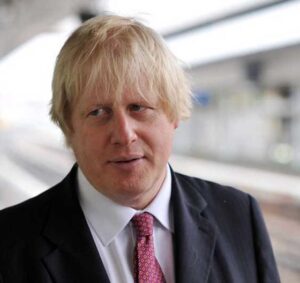
Interestingly, in the same year on 2 December, PM Boris Johnson, then Foreign Secretary, gave his first major speech at Chatham House tellingly titled Global Britain: UK Foreign Policy in the Era of Brexit, in which he affirmed the government’s intention to pursue a “truly global foreign policy.”

Ever since that time Theresa May has been referring to ‘Global Britain’ in a similar manner in her major speeches, including the January 2017 Lancaster House speech and her speech to the US Republican Party Conference in Philadelphia the same month. May also referred to ‘Global Britain’ in her addresses to the World Economic Forum in Davos and at the UN General Assembly 2017 in New York.

A month later, in a speech at the Conservative Party Conference in 2017, Boris Johnson restated his belief in the ‘Global Britain’ brand by expressing the following words:

“We are big enough to do amazing things. We have the ability to project force 7,000 miles, to use our permanent membership of the UN security council to mobilise a collective response to the crisis in North Korea. We contribute 25 % of European aid spending and yet no one seriously complains that we have a sinister national agenda and that is why the phrase global Britain makes sense because if you said Global China or Global Russia or even alas Global America it would not have quite the same flavour.”

Crucially, it is important to mention that at the centre of the ‘Global Britain’ narrative, free trade is its core element—something clearly visible both in Theresa May’s October 2016 speech to the Conservative Party Conference and at the 2017 World Economic Forum in Davos, where she expressed the hope that the UK “will step up to a new leadership role as the strongest and most forceful advocate for business, free markets and free trade anywhere in the world.”

Furthermore, Boris Johnson described the UK’s role of an advocate for global free trade as the country’s “historic post-Brexit function” in his Chatham House speech in 2016. Yet, by that time many, like Professor Richard G. Whitman from the University of Kent, have argued that “we know little more than Global Britain means Global Britain.”

PM Boris Johnson’s announcement in 2020 to increase defence spending by £16.5 billion ($23 billion) over the next four years—dubbed as “the biggest spending boost since the Cold War” and said to be aiming at catching President Joe Biden’s attention—was a strong message in the direction the ‘Global Britain’ policy narrative has been turning towards.

Simultaneously, in 2020 the UK’s foreign aid budget was announced to be cut by £2.9 billion ($3.7 billion), so that in 2021 the UK will not meet the UN-recommended target of spending 0.7 % (decreased to 0.5 %) of its Gross National Income (GNI) on Official Development Assistance (ODA) for the first time since 2013—steps said to be taken in line with the government’s attempt to grapple with the economic fallout of the pandemic.

With the commitment to retain the target enshrined in law by the Coalition Government in 2015 and the Conservative Party’s manifesto of 2019, the cut—which was met with strong condemnation both by David Cameron and Tony Blair, who warned the decision would jeopardise Britain’s ‘soft power’ status—resulted in Foreign Office minister James Cleverly’s pledge at the March 2021 UN virtual conference to donate £87 million ($120 million) to Yemen relief efforts in the coming year, which is less than half of the £196.6 million donated in 2020 and around 40 % of the £214 million total donations made in 2020-2021.

Mark Lowcock, head of the UN’s Office for Humanitarian Affairs, described the UK government’s decision as an attempt to “balance the books on the backs of the starving people of Yemen” and warned of a long-term damage to the country’s reputation—bearing in mind that British MPs were prevented from having a vote on PM Johnson’s controversial move, which is why he is said to be running the risk of setting an illegal budget.

At the same time the UK government continues to be deeply involved in the Yemen conflict by remaining the leading arms supplier to Saudi Arabia. Once the ban on weapons sales to the Gulf country was lifted London authorised the export of £1.4 billion-worth ($1.9 billion) weaponry to the Saudis between July and September last year, refusing to follow the U.S. moral lead in this regard.

Taking this into consideration it is difficult to imagine how to quote Foreign Secretary Dominic Raab, “Global Britain is leading the world as a force for good”—the very slogan repeated by Raab in January last year as part of his three pillars defining the “truly global Britain.”

In March 2020, before the long-anticipated Integrated Review was published, Oxfam took an opportunity to voice its view on the UK’s approach to foreign policy in its research paper.

The organisation argued that in order to be “taken seriously as a future partner, the UK must tread carefully and intentionally remedy the historic power imbalances institutionalised in the UN and Bretton Woods institutions” in its contacts with the Commonwealth and the Global South, warning that “‘Global Britain’ could too easily be (mis)interpreted as ‘Empire 2.0’” if it fails to carry out deliberate action.

September that year, Tradecraft Exchange published a research paper which argued that in prioritising trade negotiations with richer nations, Britain risks falling short on its commitments to tackle global poverty and climate change. Moreover, with the UK engaging in striking trade deals with poorer nations like in the recent case of Kenya, it is evidently doing this to their detriment.

That same month, the UK government decided to merge the Department for International Development (DFID) with the Foreign and Commonwealth Office (FCO) and establish the Foreign, Commonwealth & Development Office (FCDO). The newly published policy paper is said to be the blueprint for the work of this new department.

The document states that “the UK is one of the world’s leading development actors, committed to the global fight against poverty, to achieving the SDGs [Sustainable Development Goals] by 2030 and to maintaining the highest standards of evidence and transparency for all our investments… where we can have the greatest life-changing impact in the long term.”

It goes on to state that Britain will “maintain our commitment to Africa,” particularly emphasizing importance of its partners in East Africa and Nigeria, “while increasing development efforts in the Indo-Pacific.” Sadly, the very pledge stands in stark contrast to the recent government leaks concerning plans to cut aid to Nigeria by 59 %, South Sudan by 59%, Somalia by 60%, not to mention the DRC (60%), Syria (67%), and Libya (63%).

While the UK’s International Development Committee chair, Sarah Champion MP, commented that “the Integrated Review appears to be more centred towards rubbing shoulders with trading partners than creating a level playing field for the global community to prosper”.

On that note, it is fair to say that the Integrated Review of Security, Defence, Development and Foreign Policy puts much less emphasis on development than it does on the other parts constituting its title, while revealing “the government’s vision for the UK’s role in the world over the next decade and the action we will take to 2025.”

Integrated Review: The Unfortunate Triumph of Form over Strategic Substance

The review published in early March this year, dubbed as “the most radical reassessment of our place in the world since the end of the Cold War”, is said to be “an attempt to put meat on the bones of the ‘Global Britain’ concept,” as Raffaello Pantucci, senior associate fellow at the Royal United Services Institute (RUSI), argues.

“This was something the Tories banged on about a lot, this was something that Brexit was supposed to be all about, but no one has any idea what it means,” Pantucci added.

The 100-page document—visibly inspired by the Policy Exchange’s Making Global Britain Work (July 24, 2019) and A Very British Tilt (November 22, 2020)—sets a vision for “Global Britain”, in which the country is “tilting” towards the Indo-Pacific region to become a bigger player there, as the world’s “geopolitical and economic centre of gravity” moves eastwards towards countries such as China, India and Japan.

“The Indo-Pacific is this incredible hub and so is somewhere the UK is looking to have a larger say in […] Where navies go, trade goes, and where trade goes, navies go,” Adm. Tony Radakin, explained.

It is important to note that a similar narrative was seen in the past. The former First Sea Lord, Adm. Sir Philip Jones, argued in his speech delivered at the 2017 DSEI Maritime Conference that “the Asia-Pacific region contains two of the three largest economies in the world and five of the largest 16. If the U.K. does wish to forge new global trading partnerships, this is somewhere we need to be.”

Sir Jones also stated that the new aircraft-carriers, including HMS Queen Elizabeth and HMS Prince of Wales will enable the country to resume its old role in Asia and the Pacific, which was abandoned in 1971 after the UK’s withdrawal of forces from Singapore.

As Richard Reeve already observed in his article, “Global Britain’s post-Brexit identity is a return to neo-mercantilist maritime control,” which is driven by the need to secure new trade and arms deals by establishing a strong ‘Global Britain’ brand through the Royal Navy and aligning the country’s objectives and alliances with those of the U.S.

Reeve warned that such a strategy risks the UK’s involvement “in a potentially very hot Korea-US conflict” and even more dangerous “creeping cold war” between the U.S. and China. Both are burdened with the high risk of escalation to a nuclear exchange.

Furthermore, he reminded his readers of “the UK’s doomed inter-war Singapore Strategy and of the Imperial Russian Navy in 1905,” notably after the Commons Defence Committee was presented that month with evidence that new carriers are unlikely to be able to operate within range of China.

At the time, Foreign Secretary Boris Johnson’s pledge made at the Lowy Institute’s lecture in July 2017 outlined that one of the first tasks of the new carriers will be to conduct freedom of navigation operations around Chinese-built islands in the South China Sea.

Most recently, Prime Minister Boris Johnsons planned dispatch of an aircraft carrier group to the Indo-Pacific in order to face-off China, is viewed by some as a defeatist delusion suggesting “that the best thing we can do is ingratiate ourselves with the Americans,” as senior policy fellow Nick Witney (ECFR) suggests.

Mr Witney, like Professor Anatol Lieven, believes that such strategic theatrics could result in the same disastrous outcome as the invasion of Iraq.

Without the ability to bring substantive change to the table as far as the Indo-Pacific is concerned, the UK is said to be “risking of reminding the Chinese of how we treated them in the nineteenth-century Opium Wars,” as argued by Professor Lieven in his recent article.

As far as the British public’s opinion is concerned in their perception of deploying security resources to contain China in the Indo-Pacific, the British Foreign Policy Group’s recent report suggests that only 18% of respondents would be comfortable with this move, while 45 % of them do not want the UK to be drawn into conflicts. Another 35 % believe that the country’s track record of involvement abroad is bad.

Unfortunately, the government’s Integrated Review call to increase the number of nuclear warheads from 180 to 260, which some perceive as violating international law and breaching Article 60 of the NPT, risks the possibility of creating another conflict according to Professor Serhii Plokhy of Harvard University.

“At the NPT Review Conference this August, HMG will have to explain its reversal on nuclear warhead numbers not just to Russia or China but to a sceptical international community,” Sir Adam Thomson, director of the ELN and former diplomat who served as Permanent Representative to NATO between 2014 and 2016, rightly observed, also wondering how this corresponds with the UK’s commitment to the world without nuclear weapons.

Dominic Raab recently announced that he will “rally NATO allies to face down the threat from Russia and ensure it faces real world consequences for hostile activity”–potentially go to the detrimental to U.S. efforts in attempting to “chart a new course” for Moscow, as discussed by David Keene and Dan Negre–despite being more nuanced with respect to China.

As Jo Johnson, the former universities minister and the prime minister’s brother argues, the reason for this ambiguous approach to the Middle Kingdom by the Johnson government is the Conservative Party’s problem with Sinophobia, which is said to be the new Euroscepticism.

“It’s the new political machismo, but it would be economic madness to decouple from China and incredibly destructive of this idea of Global Britain, because there are many countries […] across the Global South who are increasingly interdependent with China. There won’t be a global Britain if we are not engaging with China, and all the other countries enmeshed with it,” Johnson believes.

“The reality is that if we follow a hard Brexit with Chexit [decoupling with China], then Global Britain is going to be an aeroplane that has dropped both engines,” he added.

In fact, it is really difficult to imagine the government succeeding in accomplishing all of these competing goals in a situation where the national debt has already exceeded £2 trillion (and growing), with the pandemic adding an extra burden to the country’s economic condition, which is said to be ‘heading for a new era of austerity.’

Interestingly, ahead of the review last year, security experts giving evidence to the UK lawmakers warned there was often a gap between the ambitions of a wide-ranging policy review and the resources allocated to meet them.

 ‘Global Britain’: Old Wine in a New Bottle

The mentioned analysis of ‘Global Britain,’ however, would not be full without paying attention to historical and intellectual influences related to the term and associated topics.

“Global Britain,” writes Oliver Turner in his 2019 peer-reviewed article stresses that it “is more than a notion, an idea, or a vision for UK international engagement, and more than the foreign policy blueprint it purports to provide. It is an autobiographical narrative about what Britain is and what it envisions the world and its actors to be.”

Turner informs that the significance of this distinction lies in the fact that narratives seldom stand alone and are often “written to construct particular realities and shape policy choice.”

The academic argues that “Global Britain is principally authored as a ‘painkiller’ in anticipation of domestic trauma following the loss of EU membership, just as the British Commonwealth once was to assuage the loss of empire.” In order to be marketable, Turner believes, it requires “pre-existing knowledges of past imperial ‘successes’ and accepting images of empire among the British public.”

The said narrative has significant consequences, as the ‘Global Britain’ advocates tend to selectively exploit the past to imagine the future and effectively turn history into a “proxy for ideology,” as Robert Saunders from Queen Mary University of London argues.

He further mentions, one of the most famous figures of the British right, Enoch Powell, who argued that “all history is myth” in a sense that “the stories told about the past carried political meanings.”

Saunders continues, believing that the post-war Britain suffered from a special kind of myth known as “the myth of empire,” which caused “grave psychological damage” to the British people.

This manifested itself in a dual way: first, as “a pervasive sense of decline that had sapped the British of self-confidence” and second, “as a longing for empire-substitutes, such as the Commonwealth or the European Community.”

Professor Paul Gilroy (UCL) made similar observation in his book arguing that after the end of World War II, British life has been “dominated by an inability even to face, never mind actually mourn, […] the end of the empire and consequent loss of imperial prestige.”

This constant fear of reconciling with the past has managed to produce an extremely unbalanced identity of the nation burdened with a distorted vision of its country, called by Sathnam Sanghera in his latest book titled Empireland, which “recast a coercive military empire as a champion of “free trade”; and, in so doing, established entrepreneurialism, rather than empire, as the golden thread connecting past and present,” as Dr Saunder’s put it.

What is noticeable about the ‘Global Britain’ narrative, in the mentioned sense, is that it takes out the empire—one whose reach stretched from Africa and the Americas to Asia and Australasia, and also Europe if we count the colonisation of Ireland—from the equation leading to its status of “the world’s largest and most powerful trading nation,” as former international trade secretary Dr Liam Fox put it during his Free Trade speech in 2016.

Hence, when advocates of ‘Global Britain’ romanticize the vision of Britain trading across the Commonwealth—which they tend to describe as an association of “some of the world’s oldest and most resilient friendships”—they tend to forget to tell the complete story in what particular circumstances those very “friendships” were established and further sustained through “imperialism of free trade,” as John Gallagher and Ronald Robinson explained in their peer-reviewed article of the same title published in The Economic History Review 1953.

To illustrate this in greater detail, it is best to turn to Shashi Tharoor’s insights provided in his book, where he says the following:

“Free trade was, of course, suited to the British as a slogan, since they were the best equipped to profit from it in the nineteenth century, and their guns and laws could always stifle what little competition the indigenes could attempt to mount. A globalization of equals could well have been worth celebrating, but the globalization of Empire was conducted by and above all for the colonizers, and not in the interests of the colonized.”

In other words, what ‘Global Britain’ advocates are doing is “use ‘trade’ as a euphemism for ‘empire’,” as Dr Robert Saunders argues.

What is also significant about the group is the attachment to the idea of ‘Anglosphere,’ which has its intellectual roots in the late 19th century’s Victorian discourses about “Greater Britain.”

Resurrected after the fall of the Berlin Wall, the mythology of the “English-speaking peoples’” union served as a counter, and culturally more “natural,” narrative to the one embracing UK’s membership in the EU, as well as the British very own attempt to make sense of the post-Cold War moment.

Furthermore, as Professor Duncan Bell from University of Cambridge argues in his excellent article published in 2017 in the Prospect magazine, “dreams of deep Anglosphere integration, and of political unification, are symptomatic expressions of colonial nostalgia, underwritten by fears about Britain’s declining status.”

Importantly, it was British historian Robert Conquest who most comprehensively articulated—and inspired politicians like Margaret Thatcher, who referred to his idea of the broader alliance between the “English-speaking peoples” in her speech to the English-Speaking Union in December 1999 in New York—the idea of Anglosphere.

What is interesting about Conquest’s “bold charge that existing international bodies had failed,” as Professor Bell mentioned, is its similarity to the current language used by Brexiteers (and Trump supporters).

Echoing the famous historian’s concern, Theresa May told the audience at the Conservative Party conference in October 2016 that “if you believe you are a citizen of the world, you are a citizen of nowhere—you don’t understand what citizenship means.”

The statement with a clear aim to rejuvenate patriotism after the Brexit referendum, which should be understood in the broader context of growing tendency among the Conservative Party voters to lean towards anti-globalism (as it was confirmed in the already mentioned BFPG’s survey published this year), has its roots in the Victorian era, namely in the ‘civic imperialism.’

As Duncan Bell argues in his book, civic imperialism “placed duty, individual and communal virtue, patriotism, disdain of luxury, and the privileging of the common good, at the centre of the political universe.” Bell also continues that “empire and liberty, it was argued, were intimately connected.”

What is visible here is that “the image of 19th century Britain has so far appeared to play an outsized role” in ‘Global Britain’ narrative, as Harvard University’s research paper published this year and titled Finding ‘Global Britain’: political slogan to hard economic policy choices observes.

What follows?

Since the “conditions which allowed the UK to dominate global industrial production, such as a large lead in industrial productivity and the coercive power of the British Empire, no longer apply,” as the paper concludes, it is still safe to argue, repeating Dean Acheson, that Britain had “lost an empire and not yet found a role.”

Trapped in hubris, the ‘Global Britain’ narrative seems to be missing the true security challenges while pursuing its “quest for a unique role” in the world, which, like Christopher Hill wrote, is “like the pursuit of the Holy Grail” and can be “a fatal distraction to politicians with responsibilities,” who may find the levelling-up agenda more vital than the search for the long-lost imperial grandeur.

With a clear collapse in trust in the government in terms of its willingness to act in the British public’s interest when foreign policy decisions are concerned, the possible overload of ‘Global Britain’s’ often competing agendas run the high risk of not only turning into nemesis for Britain itself, but the U.S. and the very ‘special relationship’ which London is so desperately trying to preserve.

From our partner RIAC

moderndiplomacy.eu

Η συνύπαρξη μεταξύ Εβραίων και Αράβων Ισραηλινών κρέμεται από μια κλωστή. Ποιοι είναι αυτοί οι Άραβες ;

0

Του Αλκη Καλλιαντζίδη, Οικονομολόγου, [email protected]  www.kalkis.eu

Ένας άντρας που θεωρήθηκε Άραβας λυντσαρίστηκε από ακροδεξιούς ακτιβιστές την Τετάρτη 12 Μαΐου 2021, όπως είδαμε στους τηλεοπτικούς μας δέκτες. Όπως είδαμε και Άραβες Ισραηλινούς να σπάνε και να καίνε μαγαζιά και αυτοκίνητα Εβραίων. Οι ταραχές ξέσπασαν σε αρκετές ιουδαιο-αραβικές πόλεις στο Ισραήλ και η κατάσταση έκτακτης ανάγκης ανακηρύχθηκε σε μία από αυτές, τη Lod π.χ.. Η συνύπαρξη μεταξύ Εβραίων και Αράβων κρέμεται από μια κλωστή.

Ποιοι είναι ακριβώς οι Ισραηλινοί Άραβες;

Καθώς η βία μεταξύ Ισραηλινών και Παλαιστινίων αυξάνεται, οι προβολείς της δημοσιότητας φωτίζουν τους Ισραηλινούς Άραβες.

Ποιοι είναι αυτοί ;

Σύμφωνα με τις τελευταίες επίσημες ισραηλινές στατιστικές, ο αριθμός των Αράβων που κατείχαν ισραηλινή ιθαγένεια το 2020 ανήλθε σε σχεδόν 2 εκατομμύρια, ή σχεδόν το 20% του συνολικού πληθυσμού, συμπεριλαμβανομένων και των οικογενειών των φυλών των Βεδουίνων και των Δρούζων.

Για τη συντριπτική πλειοψηφία αυτών, οι Άραβες του Ισραήλ είναι Παλαιστίνιοι που ζούσαν στη γη που είχε χορηγηθεί στο Ισραήλ από το σχέδιο διαμοιρασμού των Ηνωμένων Εθνών το 1947 ή που επέστρεψαν εκεί μετά τον πόλεμο του 1948 και τη διακήρυξη της ανεξαρτησίας από το 1948. Ζουν κυρίως στη Γαλιλαία και στα βόρεια της χώρας. Η Ναζαρέτ είναι η μεγαλύτερη πόλη με αραβική πλειοψηφία σε αυτήν την περιοχή. Αλλά σε άλλες μεγάλες πόλεις της χώρας, όπως η Χάιφα, η Τύρος ή η Άκο καθώς και η Λοντ ή η Ramla  στα περίχωρα του Τελ Αβίβ, οι Άραβες πολίτες του Ισραήλ αποτελούν σημαντική μειονότητα. Το 90% από αυτούς είναι Μουσουλμάνοι και περίπου το 10% Χριστιανοί.

Σε πολιτικό επίπεδο, οι Ισραηλινοί Άραβες ή οι Παλαιστίνιοι του Ισραήλ, σύμφωνα με τον τρόπο ταυτοποίησής τους, έχουν εκλέξει εκπροσώπους στην Κνεσέτ, το ισραηλινό κοινοβούλιο. Με 4 έδρες που κέρδισαν στις εκλογές της 23ης Μαρτίου 2021, η Ενωμένη Αραβική Λίστα (Raam, ισλαμική τάση) έχει γίνει καθοριστική για τη δημιουργία κυβερνητικού συνασπισμού. Ο αρχηγός της, Mansour Abbas, είναι ένας ισλαμιστής οδοντίατρος από μια μικρή, κυρίως αραβική πόλη στο βόρειο Ισραήλ, ο οποίος αποφοίτησε από το Εβραϊκό Πανεπιστήμιο στην Ιερουσαλήμ. Τώρα περιγράφεται ως «καθοριστικός παράγων» από τον ισραηλινό τύπο.

Η διπλή πρόκληση για το Ισραήλ και τι έχει υποχρέωση να απονομιμοποιήσει προκαταβολικά η Ελλάδα

1

του Κ. ΚΥΡΙΑΚΟΠΟΥΛΟΥ

Υποθέσεις μπορεί ο οποιοσδήποτε να κάνει πολλές. Ουδείς όμως μπορεί να πει με βεβαιότητα ποια θα είναι τελικά η έκβαση των δραματικών συγκρούσεων που βρίσκονται σε εξέλιξη, μεταξύ του Ισραήλ και των Παλαιστινίων…

Το κρίσιμο ζήτημα άλλωστε -από πολιτική άποψη- δεν είναι η έκβαση των συγκρούσεων αυτή καθ’ εαυτή, αλλά το γεγονός ότι αυτές οι συγκρούσεις κλιμακώνονται σε ένα νέο περιβάλλον, με δραματικά τροποποιημένους τους όρους που τις ανατροφοδοτούν ιστορικά, με εξαιρετικά αναβαθμισμένες τις στρατηγικές επιδιώξεις των περιφερειακών εμπλεκομένων και με τα θεμελιώδη διακυβεύματα που σχετίζονται με αυτήν την ιστορική σύγκρουση, να οδηγούνται αναπόφευκτα σε σημείο οριακό.

Όλα τα παραπάνω συνηγορούν υπέρ της ανάγκης να προσεγγίζεται πλέον το πρόβλημα έξω από το παραδοσιακό μοτίβο δεκαετιών, το οποίο κατά κανόνα εξαντλείται σε αφορισμούς, αναθέματα και δικαιολογημένη ως ένα βαθμό μονομέρεια στην εκτίμηση των γεγονότων και κυρίως στην απόδοση των ευθυνών. Μια τέτοια μεθοδολογία δεν θεωρείται πλέον επαρκής. Δεν προσφέρει στον διάλογο τις απαντήσεις που λείπουν. Δεν μπορεί να φωτίσει κρίσιμες πλευρές των γεγονότων που έχουν αυξημένο ειδικό βάρος στην έκβαση των εξελίξεων. Αρκείται σε μια επιφανειακή ερμηνεία των αιτιών, που αντί να φωτίζουν, συσκοτίζουν το πρόβλημα, συντηρούν αδιέξοδα άλλοθι και αναπαράγουν μια ανιστόρητη και πλήρως αντιπαραγωγική θέαση υπό τις παρούσες συνθήκες. Καλό θα είναι λοιπόν να εγκαταλείψουμε τις απλουστευτικές προσεγγίσεις περί δήθεν προσωπικών στρατηγικών Νετανιάχου ο οποίος δήθεν εξώθησε τα πράγματα στην σύγκρουση για να τις εξυπηρετήσει πληρέστερα και να αρχίσουμε επιτέλους να λέμε τα πράγματα με το όνομά τους.

Η σύγκρουση που βρίσκεται σε εξέλιξη ήταν αναπόφευκτη…

Και το ξέσπασμά της ήταν απλώς ζήτημα χρόνου. Τα περί απόφασης εξώσεων οικογενειών Παλαιστινίων από τα σπίτια τους για να στεγαστούν σε αυτά Ισραηλινοί έποικοι, είναι αιτιάσεις που δεν αντέχουν σε σοβαρή κριτική. Όχι γιατί το γεγονός αυτό καθ’ εαυτό δεν είναι αληθινό. Είναι αληθινό. Αλλά από μόνο του δεν αρκεί για να ερμηνεύσει τα γεγονότα που ακολούθησαν. Η Χαμάς επέδειξε αξιοσημείωτη ετοιμότητα να επιτεθεί και η επίθεση με ρουκέτες υπήρξε διαρκής και εκτεταμένη. Αυτή η εικόνα δεν παραπέμπει σε αντίδραση οργής, αλλά σε μια καλά προετοιμασμένη επιχείρηση που αναζητούσε ένα πρόσχημα για να εκδηλωθεί και εάν δεν το εύρισκε στην Ισραηλινή απόφαση για τις εξώσεις, θα το δημιουργούσε η ίδια με την κλασική μέθοδο της προβοκάτσιας που είναι ευρέως διαδεδομένη στην ευρύτερη περιοχή.

Οι αντιδράσεις που ακολούθησαν στην Γάζα μετά την Ισραηλινή απάντηση, αλλά και τα συνθήματα που κυριάρχησαν στις προσευχές και στις διαδηλώσεις των Παλαιστινίων, παραπέμπουν σε μια κοινωνία παραδομένη πλήρως στην λαγνεία του νεο-οθωμανικού Ισλαμοφασισμού και τα φυσιογνωμικά της χαρακτηριστικά δεν έχουν καμία απολύτως σχέση με έναν λαό που αγωνίζεται για το δικαίωμά του σε μια πατρίδα. Συνθήματα όπως: «Είμαστε εδώ, για τον Αλλάχ, έλα Τουρκία, έλα Ερντογάν!», «Ερντογάν-Ερντογάν» και «για όνομα του Θεού, Τουρκία», δεν συνιστούν συνθήματα εθνικού αγώνα και δεν παραπέμπουν σε κανενός είδους αγωνιστικό πατριωτικό φρόνημα ενός δοκιμαζόμενου λαού. Αντιθέτως, αυτό που αποκαλύπτουν είναι μια πλήρως διαβρωμένη κοινωνία η οποία με όχημα τον θρησκευτικό φανατισμό, εργαλειοποιείται με όρους πραγματικής υποτέλειας από την τουρκική εξωτερική πολιτική, γιατί εκεί ακριβώς την έσπρωξαν οι ηγέτες που έχει επιλέξει.

Το πραγματικό δίλημμα επομένως, δεν είναι το εάν δικαιούνται οι Παλαιστίνιοι να έχουν την δική τους πατρίδα. Προφανώς το δικαιούνται. Όπως το δικαιούνται και οι Ισραηλινοί και καλό θα είναι να μην λησμονούμε ότι στις 15 Μαΐου του 1948, μια μόλις ημέρα μετά από την ανακήρυξη της ίδρυσης του κράτους του Ισραήλ, οι συνασπισμένες στρατιωτικές δυνάμεις της Ιορδανίας, του Λιβάνου, της Αιγύπτου, του Ιράκ και της Συρίας, επιτέθηκαν στο νεοσύστατο κράτος για να το αφανίσουν, γράφοντας στα παλιά τους τα παπούτσια την σχετική απόφαση της ΓΣ του ΟΗΕ που αποφάσισε στις 29 Νοεμβρίου του 1947 (και στον απόηχο της διακήρυξης Μπάλφουρ 30 χρόνια νωρίτερα και στα ερείπια της Οθωμανικής αυτοκρατορίας) την ίδρυση ενός Εβραϊκού και ενός Αραβικού κράτους. Τι έκαναν δηλαδή οι Άραβες; Αντί να ασχοληθούν με την δημιουργία του Παλαιστινιακού κράτους στην βάση της σχετικής απόφασης, έθεσαν σκοπό της ζωής τους τον αφανισμό του κράτους του Ισραήλ, επειδή πίστευαν ότι αυτή η περιοχή τους ανήκει και ας ήταν στην ουσία η αρχαία κοιτίδα των Εβραίων.

Στα χρόνια που μεσολάβησαν…

Και εν μέσω της διαρκούς Αραβοϊσραηλινής σύγκρουσης αλλά και των δυο Ιντιφάντα που έχουν ξεσπάσει, το Ισραήλ – βεβαίως με την αμέριστη βοήθεια των Αμερικανών – ασχολήθηκε με την οικοδόμηση και την θωράκιση του κράτους του, μέσα σε ένα καταφανώς εχθρικό περιβάλλον. Οι Παλαιστίνιοι από την άλλη, προφανώς δεν ήσαν οι ευνοημένοι της Ιστορίας, είχαν ωστόσο μια σειρά από πολύ συγκεκριμένες δυνατότητες που τις διαχειρίστηκαν αυτοκτονικά. Οι Συμφωνίες του Οσλο (1993 & 1995) οδήγησαν στην αναγνώριση της Παλαιστινιακής Αρχής ως φορέα αυτόνομης αλλά και περιορισμένης εξουσίας των Παλαιστινίων, ενώ προσδιόρισαν τα σύνορα των δύο πλευρών, το καθεστώς της Ιερουσαλήμ, την στρατιωτική παρουσία του Ισραήλ και την τύχη των περιοχών που θα εκκενώνονταν από τις δυνάμεις του Ισραήλ.

Αρκετά χρόνια αργότερα και πιο συγκεκριμένα τον Μάρτη του 2013, κατά την διάρκεια της επίσκεψής του στο Ισραήλ και σε ομιλία του προς τους νέους Ισραηλινούς σε συνεδριακό κέντρο της Ιερουσαλήμ ο Μπαράκ Ομπάμα προκάλεσε έκπληξη με την κριτική ανάλυση που έκανε για τις σχέσεις του Ισραήλ με την Παλαιστίνη. «Αν στόχος του Ισραήλ είναι να εδραιωθεί ως ένα δημοκρατικό, εβραϊκό κράτος, τότε ο δρόμος προς την επίτευξή του είναι η δημιουργία ενός ανεξάρτητου παλαιστινιακού κράτους». Και επιπλέον τόνισε:…

«Βάλτε τον εαυτό σας στη θέση τους – κοιτάξτε τον κόσμο με τα μάτια τους. Δεν είναι δίκαιο να μην μπορεί ένα παιδί Παλαιστινίων να μεγαλώσει σε ένα δικό του κράτος, να ζει με την παρουσία ενός ξένου στρατού που ελέγχει καθημερινά τις μετακινήσεις των γονιών του. Δεν είναι δίκαιο όταν η βία των εποίκων εναντίον των Παλαιστινίων μένει ατιμώρητη. Δεν είναι δίκαιο να εμποδίζονται Παλαιστίνιοι να καλλιεργήσουν τη γη τους· να περιορίζεται η δυνατότητα μετακίνησης ενός φοιτητή στη Δυτική Οχθη, να εκτοπίζονται παλαιστινιακές οικογένειες από τα σπίτια τους. Ούτε η κατοχή ούτε η εκδίωξη είναι η απάντηση. Οπως ακριβώς οι Εβραίοι έχτισαν ένα κράτος στην πατρίδα τους, έτσι και οι Παλαιστίνιοι έχουν δικαίωμα να είναι ένας ελεύθερος λαός στη δική τους γη».

«Ο αμερικανός πρόεδρος κατάφερε να αλλάξει την ημερήσια διάταξη» έγραψε στην εφημερίδα Ma’ariv η ισραηλινή δημοσιογράφος Σαλόν Γερουσαλμί, σχολιάζοντας: «Αν και ο Νετανιάχου ήθελε να συζητηθεί μόνο το θέμα του Ιράν, ο Ομπάμα κατάφερε ξαφνικά να επιβάλει ως προτεραιότητα στην ατζέντα το ζήτημα της ειρηνευτικής διαδικασίας με τους Παλαιστίνιους».

Πως διαχειρίστηκαν οι Παλαιστίνιοι την συγκεκριμένη ιστορική ευκαιρία;;;

«Κατά την άποψή μου, η συγκεκριμένη επίσκεψη του Ομπάμα φαντάζει κάπως περίεργη» είπε ο Μπουσταφά Αμπντέλ Χαντί, πρόεδρος του παλαιστινιακού Ιδρύματος Αμπού Ραγιά. «Νομίζω δεν θα αποφέρει κανένα αποτέλεσμα. Απλώς είπε στους Ισραηλινούς πως αυτό που προέχει είναι η ασφάλεια της χώρας τους».

Και βέβαια, η επίσκεψη του αμερικανού προέδρου στην Ραμάλα «συνοδεύτηκε» από την εκτόξευση δύο τουλάχιστον ρουκετών από παλαιστινιακά εδάφη.

Αυτά, είναι γεγονότα που συνέβησαν μόλις τον Μάρτη του 2013. Τα αναφέρουμε όχι για να βγάλουμε λάδι τους Αμερικανούς μακελάρηδες, αλλά για να καταδείξουμε πως στην ιστορική διαδρομή των εθνών παρουσιάζονται ΚΑΙ ευκαιρίες. Στο παρασκήνιο λοιπόν ΚΑΙ αυτών των παρεμβάσεων, διαφαίνεται η δυνατότητα μιας δυναμικής επανεκκίνησης όλων των διπλωματικοπολιτικών πρωτοβουλιών που θα άνοιγαν επιτέλους και μετά από πολλές αποτυχίες του παρελθόντος, τον δρόμο της επίλυσης του προβλήματος. Η ευκαιρία χάθηκε…

Επειδή λοιπόν τα ζητήματα δεν έχουν και δεν μπορεί να έχουν μονομερείς αναγνώσεις, καλό είναι να θυμόμαστε ότι εκτός από τα εγκλήματα του Ισραήλ που είναι πολλά, υπάρχει και η αμφίδρομη σχέση με τις αιτίες που τα προκάλεσαν, χωρίς αυτό να παραπέμπει σε καμία απολύτως πρόθεση συμψηφισμού ανόμοιων πραγμάτων. Και κυρίως υπάρχουν οι ιστορικές ευκαιρίες που κλώτσησαν οι Παλαιστίνιοι, παραδομένοι στο αντιισραηλινό μένος τους και στον ανεξέλεγκτο ισλαμικό ριζοσπαστισμό και παραδίδοντας έτσι τον τόπο τους στον έλεγχο των συμμοριών της Χαμάς και του Ισλαμικού Τζιχάντ, και ρίχνοντας στα τάρταρα και κάθε θεμιτή εθνική τους προσδοκία.

Τι σημαίνει πρακτικά να παραδίδεις την χώρα σου στο έλεος των ριζοσπαστικοποιημένων φονταμενταλιστών; Η σημερινή κατάσταση στα παλαιστινιακά εδάφη το επιβεβαιώνει πλήρως. Ένας πληθυσμός πολύπαθος αλλά δυστυχώς πλήρως εργαλειοποιημένος από τους μισανθρώπους των φανατικών Ισλαμιστών και υποταγμένος πλήρως στις διαθέσεις τους. Και για όποιον αμφισβητεί ότι αυτή η κατάντια είναι ο κανόνας και όχι η εξαίρεση, δεν έχει παρά να ρίξει μια ματιά στο σημερινό Σινά, 54 χρόνια μετά τις συγκρούσεις του Ισραήλ με την Αίγυπτο. Μια περιοχή παραδομένη στο έλεος των δολοφονικών συμμοριών της Τζιχάντ και του αδελφάτου της Ισλαμικής τρομοκρατίας. Μια περιοχή δηλαδή για την οποία μονάχα ντροπή μπορεί να αισθάνεται ο πλανήτης.

Προφανώς η κατάσταση που έχει διαμορφωθεί στα παλαιστινιακά εδάφη, τροφοδοτεί με κίνητρα και υλικό ακροδεξιές και φανατικές θρησκευτικές σέχτες μέσα στο Ισραήλ με αποτέλεσμα ΚΑΙ να επεκτείνονται οι συγκρούσεις με τους Ισραηλινούς πολίτες Αραβικής καταγωγής και εντός της Ισραηλινής επικράτειας, αλλά ΚΑΙ να ασκούνται ισχυρές πιέσεις για περαιτέρω σκλήρυνση της Ισραηλινής στάσης έναντι των Παλαιστινίων συνολικά, με αποτέλεσμα ο φαύλος κύκλος να καθίσταται ανεξέλεγκτος.

Στο Ισραήλ βεβαίως δεν είναι Αρσακειάδες…

Αλλά αν θέλουμε να λέμε τα πράγματα με το όνομά τους, δεν μπορούμε να συνεχίσουμε να προσεγγίζουμε αυτή την σύγκρουση με τα δεδομένα προγενέστερων εποχών και να αντιμετωπίζουμε την δράση των Παλαιστινίων ωσάν να έχουν εξ ορισμού το ακαταλόγιστο για τα πάντα.

Καμία χώρα δεν μπορεί να ανεχτεί στο μαλακό της υπογάστριο ένα ανεξάρτητο κράτος στο οποίο θα ασκούν διοίκηση ριζοσπαστικοποιημένες συμμορίες φανατικών Ισλαμιστών. Πολύ περισσότερο το Ισραήλ. Και για όποιον δεν το αντιλαμβάνεται αυτό, καλό θα είναι να θυμίσουμε τα λόγια της αειμνήστου πρωθυπουργού του Ισραήλ της Γκόλντα Μέιρ,η οποία δήλωνε χαρακτηριστικά: “Μπορούμε να συγχωρήσουμε τους Άραβες για το ότι σκοτώνουν τα παιδιά μας. Δεν μπορούμε να τους συγχωρήσουμε για το ότι μας αναγκάζουν να σκοτώνουμε τα παιδιά τους. Θα έχουμε ειρήνη με τους Άραβες (Παλαιστίνιους), μόλις αγαπήσουν τα παιδιά τους, περισσότερο από ότι μισούν εμάς.”

Κανένας λογικά σκεπτόμενος άνθρωπος δεν προσφέρει θετική υπηρεσία στην εθνική υπόθεση των Παλαιστινίων, αποσιωπώντας ή κλείνοντας το μάτι στα εγκλήματα των συμμοριών της Χαμάς, στο όνομα του Δικαίου του εθνικού αγώνα των Παλαιστινίων. Η Χαμάς είναι ο νεκροθάφτης της υπόθεσης των Παλαιστινίων. Στις σύγχρονες συνθήκες, αυτή είναι κατά βάθος ο δολοφόνος τους και όχι το Ισραήλ και αλίμονο σε αυτούς που θα αργήσουν να καταλάβουν αυτήν την αλήθεια. Αν λοιπόν θέλουν οι Παλαιστίνιοι να επαναφέρουν με όρους ουσιαστικούς στο προσκήνιο την Εθνική τους υπόθεση, οφείλουν να στείλουν χθες στον Τουρκοδιάβολο την Χαμάς και να εγκαινιάσουν μια σοβαρή και σταθερή πολιτική πλήρους αποριζοσπαστικοποίησης του πληθυσμού τους. Τελεία…

Ειδικά για την χώρα μας… Καλό θα είναι να αποστασιοποιηθούμε πλήρως από την αδιέξοδη ιδεοληψία. Η Χαμάς δεν δολοφονεί μονάχα την υπόθεση των Παλαιστινίων. Λειτουργεί, παράλληλα με αυτό, και ως ενεργούμενο της Τουρκικής εξωτερικής πολιτικής, στην προσπάθειά της να υπονομεύσει μεταξύ άλλων και τις περιφερειακές συνεργασίες του Ισραήλ σε όλα τα επίπεδα αλλά και να προωθήσει από το παράθυρο την τουρκική νεο-οθωμανική ατζέντα. Η Ελλάδα λοιπόν οφείλει, στο πλαίσιο της συνολικής της διαχείρισης, να τοποθετηθεί μετά των λοιπών της περιφερειακών συμμάχων, καθαρά και προκαταβολικά απονομιμοποιώντας πλήρως το δικαίωμα της Παλαιστινιακής αρχής να συνάψει διμερείς ή άλλες συμφωνίες με επιπτώσεις σε τρίτες χώρες και τέτοιες είναι πρωτίστως οι συμφωνίες που θα σχετίζονται με το Δίκαιο της Θάλασσας. Και οφείλει να το κάνει, πριν «σκάσει» κάποιο νέο υβριδικό διμερές μνημόνιο στα ανατολικά της Κύπρου για τις θαλάσσιες ζώνες.

Επίλογος…

Η κατάσταση βρίσκεται ήδη σε σημείο οριακό και η πιθανότητα να πυροδοτήσει ένα ντόμινο ευρύτερων εξελίξεων είναι περισσότερο πιθανή από κάθε άλλη φορά στο παρελθόν. Προφανώς κανείς δεν μπορεί να αισθάνεται ικανοποιημένος όταν υπάρχουν θύματα. Αλλά οφείλουμε να είμαστε ξεκάθαροι.

  • Αν το Ισραήλ δεν βάλει τώρα και οριστικά ταφόπλακα στην ανεξέλεγκτη δράση των ισλαμιστών της Χαμάς και του Τζιχάντ, τότε και οι δύο αυτές τρομοκρατικές οργανώσεις θα βάλουν οριστικά ταφόπλακα στην Παλαιστίνη και θα μεταλαμπαδεύσουν δυναμική εμφυλίου στο εσωτερικό του.
  • Αν το Ισραήλ δεν τσακίσει τώρα το δόλιο σχέδιο της Τουρκίας που εργαλειοποιεί αδίστακτα το Παλαιστινιακό, τότε οι ανατροπές που θα δρομολογηθούν στην ΝΑ Μεσόγειο θα φέρουν τους πάντες αντιμέτωπους με πολύ δυσάρεστες εκπλήξεις…

Ας λείπουν λοιπόν οι εξυπνακισμοί των δήθεν ευαίσθητων. Δεν διαθέτουν ούτε δράμι περισσότερο από την δική μας ευαισθησία. Οφείλουν όμως να επιστρατεύσουν και το τελευταίο απόθεμα λογικής που υπάρχει διαθέσιμο, διότι οι καιροί δεν επιτρέπουν παραδοσιακές δικαιωματικές κουτουράδες.