Αρχική Blog Σελίδα 3015

Ισλαμικό Χαλιφάτο και τζιχαντιστική τρομοκρατία: Σε σοβαρό κίνδυνο Τουρκία και Ευρώπη

0

turkey-tromos-protoxronia01Του Κωνσταντίνου Φίλη*

Στα τέλη του 2015, το αυτοαποκαλούμενο «Ισλαμικό Χαλιφάτο» ξεκίνησε τις τρομοκρατικές ενέργειες σε ευρωπαϊκό έδαφος, απόρροια της εδαφικής του υποχώρησης σε Συρία και Ιράκ και με στόχο τα όποια πλήγματα αφενός να κλονίσουν το αίσθημα ασφάλειας πολιτών κρατών που το έπλητταν στρατιωτικά ή βοηθούσαν όσους τον πολεμούν στο πεδίο των μαχών, αφετέρου να στείλει μήνυμα ισχύος, διατηρώντας ζωντανό τον μύθο του και κατ επέκταση υψηλό το φρόνημα των υποστηρικτών του.

Ο Columb Strack, αναλυτής της IHS, εκτιμά πως «καθώς το Ισλαμικό Χαλιφάτο συρρικνώνεται γίνεται όλο και πιο ξεκάθαρο ότι το σχέδιο που είχε για διακυβέρνηση αποτυγχάνει και η οργάνωση αναθεωρεί την στάση της. Ως αποτέλεσμα αυτού, δυστυχώς, αναμένουμε αύξηση στις μαζικές επιθέσεις και σαμποτάζ σε οικονομικές δομές στην Συρία, στο Ιράκ και αλλού συμπεριλαμβανομένης και της Ευρώπης».

Αξίζει, λοιπόν, σε αυτό το σημείο να επισημανθεί ο μη συριακός χαρακτήρας της εν λόγω τρομοκρατικής οργάνωσης με στόχο τη διεύρυνση της ακτίνας επιρροής της και τη συνολική επικράτηση απώτερος στόχος που χρησιμοποιείται ως πηγή έμπνευσης και κίνητρο προσέλκυσης νέων μαχητών ανά τον κόσμο.

Διαθέτει στους κόλπους της πολλούς ξένους μαχητές, ενώ έχει δημιουργήσει δύο ζώνες ελέγχου/επιχειρησιακής δράσης: α) σε Ιράκ και Συρία, β) σε περιοχές που τρομοκρατικές οργανώσεις δηλώνουν υποταγή (βλ. AQAP στην Υεμένη, al-Maqdis Ansar Bayt Sina στην Αίγυπτο, Jund al-Khilafah στην Αλγερία) ή από τις οποίες αντλεί μαχητές (π.χ. Τυνησία) ή όπου υπάρχει πρόσφορο έδαφος για να αναπτύξει δίκτυα και πυρήνες ριζοσπαστικοποίησης (π.χ. Αφγανιστάν, Πακιστάν, αν και η ύπαρξη των Ταλιμπάν δυσχεραίνει την προσπάθεια του).

Το Χαλιφάτο απευθύνεται, επίσης, σε κάθε μουσουλμάνο απανταχού της γης, που μπορεί να βρει νόημα στη σύμπλευση του με αυτό η συμβολή του μπορεί να είναι οποιασδήποτε μορφής, από στρατολογητής, καθοδηγητής και εκτελεστής έως και να προσφέρει κάλυψη σε επιθέσεις και μαχητές.

Η ανασφαλής Ευρώπη

Επιχειρησιακά, η αποτροπή τρομοκρατικών επιθέσεων δεν μπορεί να γίνει στην ολότητά της. Δεν είναι μόνο η αδυναμία αποτελεσματικής συνεργασίας μεταξύ αστυνομικών, δικαστικών και (εν γένει) αρχών ασφαλείας, αλλά και η φύση των ενεργειών που δεν αφήνει περιθώρια αισιοδοξίας.

Ως προς το πρώτο, η λειτουργία της Σένγκεν παραμένει στρεβλή, εφόσον υπάρχουν κοινά σύνορα τα οποία δεν συμπληρώνονται με κοινές αστυνομικές/δικαστικές υπηρεσίες προκειμένου τόσο ο συντονισμός όσο και η ταχύτητα ανταλλαγής πληροφορίων, σκιαγράφησης προφίλ υπόπτων και λήψης αποφάσεων να είναι άρτιος και αποδοτικός. Ο δε τρόπος δράσης με μοναχικούς λύκους, μικρά ή υποτυπώδη συντονιστικά κέντρα, ο βαθμός φανατισμού, οι πρωτόγονες μέθοδοι (π.χ. οχήματα ή άνθρωποι λειτουργούν σαν κινούμενες βόμβες) καθιστούν περίπου αδύνατη, αφενός την έγκαιρη πρόληψη, αφετέρου την επιχειρησιακή αντιμετώπιση τυχόν επίθεσης.

Ενδιαφέρον στοιχείο αποτελεί πως ο «εγκέφαλος» της πολύνεκρης τρομοκρατικής ενέργειας στο Παρίσι, στις 13 Νοεμβρίου 2015, όσο και ο δράστης του Βερολίνου (στις 19 Δεκεμβρίου 2016), διέφυγαν, λειτουργώντας περισσότερο ως γκάγκστερ και λιγότερο ως «μάρτυρες».

Η απήχηση του Χαλιφάτου σε βάθος χρόνου

Σε βάθος χρόνου, η μεταχείριση των σουνιτικών πληθυσμών θα καθορίσει σε σημαντικό βαθμό αν οι εξτρεμιστικές οργανώσεις θα περιθωριοποιηθούν ή θα βρεθούν στο επίκεντρο της αντιπαράθεσης με τους Σιιτες -δευτερευόντως και τους Κούρδους.

Άρα, όπως εκτίμησε πρόσφατα έκθεση του United States Institute of Peace, ακόμη και αν το Χαλιφάτο χάσει όλο το έδαφος που κατέχει θα εξακολουθήσει να είναι σε θέση να εκμεταλλεύεται τη σουνιτική δυσαρέσκεια και να υποκινεί τη σουνιτική δυσαρέσκεια τα επόμενα 5-10 χρόνια σε Συρία, Ιράκ, Λιβύη και άλλες χώρες.

Συνεπώς, η διατήρηση των θρησκευτικών διαιρέσεων/εντάσεων, ο δεσποτικός τρόπος διακυβέρνησης, οι διεφθαρμένες πολιτικές ελίτ, οι διευρυμένες ανισότητες και η ανάδυση του πολιτικού Ισλάμ αποτελούν παράγοντες οι οποίοι συνδυαστικά με τη γενικευμένη αστάθεια στον αραβικό και μουσουλμανικό κόσμο(που μάλλον θα ενταθεί το 2017) θα διατηρήσουν τον κίνδυνο της ασσύμετρης τρομοκρατίας για καιρό και τη δυνατότητα στρατολόγησης ακόμη και αν ηττηθεί επιχειρησιακά το Χαλιφάτο.

Αρκετά εκτεθειμένες θα παραμείνουν γειτονικές χώρες, ιδίως η Τουρκία, αλλά και η Ευρώπη. Μάλιστα, η επικράτηση Τραμπ στις ΗΠΑ και η διεισδυτικότητα αντίστοιχων φωνών στην Ευρώπη, όπου εμφανίζουν τις τρομοκρατικές ενέργειες ως επιβεβαίωση της πολιτισμικής σύγκρουσης Δύσης-Ισλάμ, ρίχνει νερό στον μύλο των τζιχαντιστών, εφόσον θα επιχειρήσουν να εκμεταλλευτούν το «χάσμα» και τυχόν άκριτη στοχοποίηση των μουσουλμανικού πληθυσμών για να προσηλυτίσουν νέα στελέχη.

Ο Δρ. Κωνσταντίνος Φίλης είναι  Διευθυντής Ερευνών Ινστιτούτου Διεθνών Σχέσεων

Πηγή: Ισλαμικό Χαλιφάτο και τζιχαντιστική τρομοκρατία: Σε σοβαρό κίνδυνο Τουρκία και Ευρώπη http://mignatiou.com/2017/01/islamiko-chalifato-ke-tzichantistiki-tromokratia-se-sovaro-kindino-tourkia-ke-evropi/

Here’s what it will take to reunify Cyprus

0

By Kristy Buzard, Benjamin A.T. Graham and Johanna Reyes January 4 at 7:00 AM

The Washington Post.

imrs

On Monday, negotiators will reconvene to try to resolve a four-decade standoff on the island of Cyprus. Since 1974, the island has been divided between north and south. Even its capital city of Nicosia is split in two by the “green line” that divides the Republic of Cyprus, which identifies as Greek, from the Turkish Republic of Northern Cyprus (TRNC).

Why? In 1974, after a Greek military coup, Turkey invaded the northern part of the island to secure autonomy for Turkish residents. Since then, Turkey has supported the breakaway nation while the European Union and United Nations have pressed for reunification. In November, the two sides seemed close to peaceful reunification — until talks collapsed.

While the conflict has been peaceful in recent years, the lack of resolution holds back both sides. For decades, the E.U. and U.N. have imposed economic sanctions on TNRC to try to force it back into a union with Greek Cyprus. The sanctions have crippled the TRNC economically. The south suffers as well, as the standoff discourages international investment and slows development.

Almost any of the proposed agreements could make both sides better off. So why is a deal so elusive?

The state of the deal

To get the TRNC to agree to reunify with the south, the proposed agreement promises many things to the north. These promises include the end of sanctions, a presidency that rotates between Turkish Cypriots and Greek Cypriots, and other political arrangements that guarantee Turkish Cypriots a voice in the new government.

But of course, Greek Cypriots could simply renege once the island is reunified and the Turkish military withdraws from the north.

In 1994, separatists in Gagauzia agreed to rejoin Moldova in exchange for promises of regional autonomy. The autonomy was initially granted. Then in 2002 the Moldovan government forced the governor from office, jailed several other Gagauz politicians and reasserted control.

How to enforce the deal, then, is the question that must be solved to get an agreement. How does the TRNC seize the economic benefits of reunification, while avoiding the fate of the Gagauz separatists in Moldova?

 Stalemated separatist conflicts are really tugs of war between the foreign backers of each side

In a newly published paper in the Journal of Law, Economics and Organization, we show that stalemated separatist conflicts, such as the one in Cyprus, can be understood as a push and pull between the foreign powers that support each side.

Stalemates continue when the outside actor supporting the separatists — here, Turkey — considers the issue to be more important than do the actors supporting reunification — here the E.U. and the U.N.

Our analysis suggests that, if the E.U. and U.N. are willing and able to commit sufficient resources, a peaceful, durable resolution is possible.

Because reunification agreements are so difficult to reach and enforce, reunification in similar cases has been most often achieved through military conquest. Throughout negotiations, most of the focus has been on the presidents of the Republic of Cyprus and the TRNC. But in fact, the fate of reunification hangs primarily on whether outside countries and institutions will make commitments to support the deal.

What motivates each international backer?

The E.U. wants reunification of the island, not independent statehood for the TRNC. That’s because many countries in Europe have a region or two that separatists want to split off into another country such as Catalonia and the Basque region of Spain; Flanders in Belgium; and Corsica in France. If the TRNC gains independence, it would embolden separatist groups across Europe.

The economic embargo has been intended to force the TRNC to the bargaining table. The carrot in this arrangement is that, in addition to lifting the embargo, reunification would grant the region access to E.U. markets and development aid. Previewing the benefits of reunification, since 2004 the E.U. has offered all Cypriots — including residents of the TRNC — E.U. passports.

Turkey, in contrast, is seeking to undermine current negotiations, hoping instead for independence for the TRNC or a chance to annex the territory, as Russia recently did in Crimea. Even persistent stalemate allows Turkey to wield enormous influence over the region, influence that would evaporate if the island reunifies.

Turkish troops protect the island from any attempts at military conquest by the Greek Cypriots, and Turkey works to prop up the economy of the north enough to ensure that reunification does not become too appealing.

In October, Turkey and the TRNC signed an agreement to integrate their electric grids, and are pushing forward a range of infrastructure and energy-related collaborations. But even with Turkish support, the TRNC is barely scraping by. Incomes in the north are 40 percent lower than in the south, and growth is stagnant.

So how can the foreign powers’ standoff be undone?

The E.U. must therefore promise to enforce political autonomy for the North after reunification — by, for instance, threatening to impose sanctions on the Cypriot government if it fails to live up to the deal. That way the TNRC representatives can be confident that Greek Cypriots won’t be allowed to run roughshod over the North as soon as Turkish troops withdraw. This is a commitment the E.U. is powerful enough to make — if it has the will to do so.

 Kristy Buzard is an assistant professor of economics at Syracuse University’s Maxwell School of Citizenship and Public Affairs.

Benjamin A.T. Graham is an assistant professor of international relations at the University of Southern California.

Johanna Reyes is a research intern in the Security and Political Economy (SPEC) Lab at the University of Southern California.

https://www.washingtonpost.com/news/monkey-cage/wp/2017/01/04/heres-what-it-will-take-to-reunify-cyprus/?utm_term=.b0204dc45f01&wpisrc=nl_cage&wpmm=1

Ford CEO: Trump’s Policies Played a Part in Our Decision Making

0

1280-markfields1Kirsten Korosec Updated: 1:23 AM

The shadow of president-elect Donald Trump seemed to loom over Ford’s decision to scrap plans for a $1.6 billion factory in Mexico and instead invest $700 million in a Michigan assembly plant to build autonomous and electric vehicles.

Why else would Ford make such a sudden about-face? Surely, Trump, who singled out Ford numerous times during his campaign as a symbol of outsourcing and the decline of manufacturing, was the catalyst—the influencer who steered Ford into a new direction.

The explanation, of course, isn’t nearly as neat or accurate.

Exactly one year ago—at a Fortune Brainstorm Tech dinner—Ford CEO Mark Fields was steadfast in the company’s strategy, which includes producing vehicles with lower profit margins in Mexico where labor costs are lower. And that hasn’t changed.

But the market has, Fields told Fortune after the announcement.

“It’s very simple,” Fields said explaining the decision behind the plant cancellation. “We’ve seen the market demand drop for small cars. Every year, we look at industry, segmentation changes and then we compare that to our capacity needs. And it was very clear as we were going through the year that we didn’t need the capacity.”

Fields stressed that market conditions have changed dramatically in the past.

 Even in the last six or eight months, if you look at how the segmentation has changed from cars to trucks and SUVs it’s been pretty dramatic; pretty unprecedented,” he said. “Our views have changed because we’re nine months, a year later, and the market has moved. Any business needs to make sure they’re looking at the business environment and not so hand-cuffed to previous decisions so you end up waking up two years omigosh what did we do?”

Ford wanted to produce the Focus in Mexico to improve profitability, Fields said. And the Focus is staying in Mexico. Those jobs are not returning to the U.S. Ford is moving production of the next-generation compact Focus car to an existing facility in Hermosillo, Mexico.

That move allows Ford to invest money somewhere else. It was here—in the company’s decision to invest that money in the U.S.—where Trump’s tax proposals did have an influence Fields admitted to Fortune. It was not because of his rhetoric about penalizing U.S. companies that move operations to Mexico and other foreign countries, Fields said. Trump had promised to slap a 35% tax on cars, trucks, and parts that Ford makes in Mexico and ships into the United States.

 Ford says it will invest about $700 million into its Flat Rock Assembly Plant in Michigan to build an all-new fully electric small SUV and a high-volume autonomous hybrid vehicle designed for commercial ride hailing or ride sharing. In all, the company outlined plans for seven electrified vehicles, including a hybrid version of its best-selling F-150 pickup that will be available by 2020 and sold in North America and the Middle East. Ford also plans to build a hybrid version of the Mustang built at the Flat Rock Plant. The hybrid Mustang will debut in 2020 and will be available in the North America to start, Ford says.

 Ford Announces Its New Hybrid Line
Including the first hybrid mustang
 “As you can imagine, we look at a lot of different factors and one is that we feel it’s going to be a positive business environment under President-elect Trump, particularly for manufacturing,” Fields said. “We are confident that he’s going to be able to deliver on that and that does play a part. It did play a part in those decisions.”

Trump’s proposal to reform the corporate tax policy was the single biggest factor that influenced Ford’s decision to invest in Flat Rock, Fields said.

“He’s made it very clear there will be tax reform and that could be very beneficial to us as well as the things he’s been talking about around infrastructure investment,” he said. “Overall, I think bringing down the corporate tax rates is obviously extremely important because we have the highest tax rate in the world. Tax holidays to bring back cash, that’s not really an impact to us because literally 80 to 85% of our cash is here in the U.S.”

Another promising policy for Ford is the border adjusted tax, a proposal floated by House Republicans. The border adjusted tax proposal would change the entire system for how U.S. companies are incentivized or taxes on their imported and exported goods. Under the proposal, companies wouldn’t be able to deduct the cost of their imported goods, removing one incentive to move operations outside the U.S. In addition, a U.S. company’s exports would not be subject to U.S. tax.

“We’ll have to see what this border adjustability tax looks like,” Fields said. “The good news for us: We’re the largest manufacturer of automotive vehicles in the U.S. and we’re one of the biggest exporters.”

About 80% of Ford’s sales in the U.S. come from vehicles that are produced in the U.S. and less than 15% come from Mexico.

http://fortune.com/2017/01/04/ford-mexico-michigan-trump-mark-fields/

How Greece’s Troubled Economy Could Turn Around in 2017

0
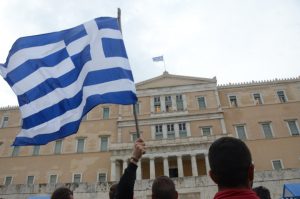
ATHENS, GREECE - 2016/02/12: A flag raise during demonstration against pension reforms in Greece.Farmers from all over Greece demonstrate in Syntagma Square in Athens against the new pension reforms that Greek goverment plans. (Photo by George Panagakis/Pacific Press/LightRocket via Getty Images)
ATHENS, GREECE – 2016/02/12: A flag raise during demonstration against pension reforms in Greece.Farmers from all over Greece demonstrate in Syntagma Square in Athens against the new pension reforms that Greek goverment plans. (Photo by George Panagakis/Pacific Press/LightRocket via Getty Images)

Nicholas Economides Updated: Jan 03, 2017 10:48 PM

 Violating the terms of its bailout program, the Greek government recently announced that it will distribute a sizeable “Christmas gift” to Greek pensioners even though this requires additional borrowing from the EU since the Greek budget is not balanced and Greece cannot borrow from money markets. The move has prompted the EU finance ministers to freeze implementation of debt restructuring. Greece is at the brink again.

This is the modern-day, Greek economic tragedy. But unlike the three-acts ancient Greek tragedies, we’ve seen many acts and often the horrible events happen on stage. Of the main actors, the Greek government repeatedly threatens with suicide elections; the IMF tries to apply the same rules to all countries irrespective of development level; the EU bureaucrats paint a rosy picture with no grounding in reality or economics, and German Finance Minister Wolfgang Schaeuble keeps reading the same austerity rulebook no matter what the circumstances. Even worse, there is practically no dialogue among the actors – they deliver their monologues past each other, each trying to please a different chorus. How did we get here (again), is there hope, and, more importantly, and how does it end?

 After two large bailouts in 2010 and 2012 from the EU and the IMF, and after a negotiated haircut of €100 billion off its bonds, Greece was close to recovery in 2014. It had reversed the 2010 15-plus percent deficit and achieved a small primary surplus (before paying interest), reached growth after four years of recession, and even issued new bonds. However, the fiscal consolidation did not happen through spending cuts but rather through large increases in taxation, resulting in a multi-year recession. With Greeks having lost 25% of their income, and unemployment at 25%, disaffected voters brought to power a tiny, radical left party in early 2015.

Following a defiant stance in early 2015, which resulted in closed banks, capital controls, reversal of growth and exclusion from money markets, the present radical left Greek government signed an onerous agreement. The agreement provided Greece a new loan of €87 billion, yet required that Greece achieve a 3.5% of GDP surplus (through more austerity) for a number of years. This target was clearly not feasible, and the Bank of Greece proposed a surplus of 1.5% to 2% of GDP. The IMF agreed with this target, and has asked the EU to restructure Greek debt obligations consistent with this target as well as for implementation of structural reforms that would make the Greek economy competitive. However, the EU has insisted on the 3.5% surplus target and painted an unrealistically rosy picture of the Greek economy to make this target appear feasible, while not pressing Greece on reforms.

 Greece’s choice was a no-brainer: side with the IMF, have less austerity, have immediate and deep debt restructuring, and implement reforms that will make Greece more competitive and bring it out of the crisis. Instead, the Greek government sided with the EU, accepted higher austerity and less debt restructuring. Why? The Greek government wants to avoid reforming and shrinking the State because civil servants are its main block of voters. Compounding this error, the Greek government has now violated the fiscal agreement and reverted to the defiant tactics of the first half of 2015. But there’s still hope.

The solution to the Greek crisis is obvious and has been obvious for some time: make reforms, cut state expenditure, cut taxes, simplify investment procedures, open markets to competition, and proceed with privatizations. The present Greek government has failed in all of these dimensions.

Fortunately, for Greece, a pro-reforms consensus is emerging. All opposition parties with the exception of the Communist and the Nazi party are now pro-reform. Additionally, a reformist politician, Kyriakos Mistotakis, has been elected leader of the main opposition party, center-right New Democracy, which presently has a large lead in polls. He has advocated a strictly reformist agenda.

There are two additional factors that make reforms more likely to succeed now. First, the IMF fully supports the reforms and is willing to battle with the Europeans for debt restructuring, less austerity, and more reforms. Second, many Greeks, having tried everything else, now see reforms as the only way out of the crisis.

Reforms and fiscal discipline is the only way for Greece to survive and prosper in the European Union. The alternative, Grexit, would plunge Greece to poverty and hyperinflation leading to a crisis a-la-Venezuela in Europe.

Nicholas Economides is a professor of economics at the NYU Stern School of Business and has advised the Greek government and Bank of Greece.

http://fortune.com/2017/01/03/greece-euro-2017/

Why China’s air pollution is on the rise again

0

The Economist

20170107_woc534_0Daily chart 

Improvements to air quality in China since 2014 are evaporating as industrial production increases

What explains the reversion to “airpocalypse”? The answer lies in a rebound in heavy industry, according to Greenpeace, an environmental group. China’s steelmaking heartland, just a few hours’ drive south of Beijing, has been the centre of the recent pollution bouts. Output of crude steel, pig iron and cement began to pick up around the spring of 2016, tracking a property-market rally. The concentration of small, dangerous PM2.5 (particulate matter of less than 2.5 microns in diameter) has also increased since then, more or less in tandem with the industrial products.

Although it was easy to overlook this trend in the summer and autumn, when the worst of the air was blown away from Beijing, shifting wind patterns in the winter have let it settle over the capital. With the government now trying to cool the property market, there is the possibility of a renewed industrial downturn in the coming months, welcome news for urbanites gasping for clean air. But officials are also worried about jobs in China’s steel and coal sectors, and so will try to avert a more serious slowdown. The war against pollution will only go so far.

http://www.economist.com/blogs/graphicdetail/2017/01/daily-chart-1?cid1=cust/ddnew/n/n/n/2017014n/owned/n/n/nwl/n/n/EU/email

Mysterious radio burst came from a galaxy 2.5 billion light years away, astronomers discover

0
imrsBy Sarah Kaplan January 4 at 1:00 PM The Washington Post.

For the first time, scientists have nailed down a source of fast radio bursts, one of astronomy’s most enigmatic phenomena.

A dim dwarf galaxy 2.5 billion light years from Earth is sending out the mysterious millisecond-long blasts of radio waves, researchers report Wednesday in Nature and Astrophysical Journal Letters. The bursts traverse vast expanses of time and intergalactic space before reaching our planet.

“This really is the first ironclad association of a fast radio burst with another astronomical source, so it’s a pretty huge result,” said Duncan Lorimer, an astronomer at West Virginia University who reported the first detection of a fast radio burst (FRB) in 2007.

FRBs are extremely brief pulses of radio waves, flaring with the power of about 500 million suns. Scientists have recorded just 18 of these signals, but studies suggest there could be as many as 10,000 a day. Their unpredictability makes them difficult to spot, and they appear to come from all over the sky.

Understanding these bursts may open up a new field in astronomy, added Lorimer, who was not involved in the new reports. Because they travel so far to reach Earth, FRBs could be a tool for studying the mostly empty space between galaxies and mapping the distribution of matter across the universe. But first astronomers have to figure out what exactly they are.

“I am not exaggerating when I say there are more models for what FRBs could be than there are FRBs,” said Cornell astronomer Shami Chatterjee, the lead author of the new Nature paper.

Many scientists think the bursts are emitted by distant neutron stars, the super-dense embers of exploded suns. But some believe they must originate in our own galaxy. Still more suggest that FRBs could be caused by cataclysms like a supernova or a collision of two stars. This last theory was compelling because most FRB detections were one-off events — astronomers never spotted more than one flare from a single source.

In spring, researchers looking at archival data from Arecibo Observatory — one of the largest radio telescopes in the world — found evidence that bursts were repeatedly coming from the same spot in the sky. Each one carried the telltale signature of an FRB: the high frequency radio waves arrived first, followed by successively lower frequencies, which get stretched out and slowed down as they travel across space. The signal, called FRB 121102, was definitely repeating, and it certainly traveled a long way to reach Earth.

But where did it come from? To answer that question, Chatterjee and his colleagues turned to the Karl G. Jansky Very Large Array, a network of 27 radio telescopes spread over a 20-mile-wide area in the high grassland of New Mexico (Jodie Foster works there in the movie “Contact”). Each of the telescopes making up the VLA has a smaller diameter than the one at Arecibo, meaning they don’t take in very much of the sky. But combining the data from all 27 gives a very high-resolution glimpse of one small swatch of space — exactly what Chatterjee needed.

He applied for 10 hours of telescope time, thinking that would be plenty to catch FRB 121102 flaring. But he saw nothing. He applied for 40 more hours. Nothing again.

Finally, he asked for 40 more hours at the VLA, scheduled to coincide with 40 hours of time at Arecibo. During a trial run, the team caught its first flash from FRB 121102. Then it got eight more.

“Nine pulses captured with two telescopes — now we have enormous resolution,” Chatterjee said. “We’ve pinpointed a speck, to a 10th of an arcsecond [a unit of angular measurement] . . . where the burst is coming from.”

Next, scientists at the Gemini Observatory in Hawaii trained their optical telescope on the speck nailed down by Chatterjee. Their scan of the sky revealed that FRB 121102’s source is 2.5 billion light years away, within a very faint dwarf galaxy with about 1 percent of the mass of the Milky Way.

The discovery allows researchers to rule out some proposed explanations for FRBs. They can’t be cataclysmic, since their source needs to survive whatever causes them in order to repeat, and they definitely don’t originate within our galaxy.

Observations from the European VLBI network — an array of telescopes spread all over the globe — offered an even more precise snapshot of the FRBs’ origin point, which seems to coincide with another, more persistent source of radio waves. Those signals resemble the radio emissions that come from supermassive black holes. But those types of black holes are typically found only in bright galaxies — not small faint ones like that identified by the astronomers at Gemini.

Another possible explanation involves active galactic nuclei (bright compact regions at the centers of galaxies) emitting jets that vaporize blobs of plasma.

Chatterjee said he’s inclined to believe FRBs are pulses emitted by magnetars — neutron stars with an especially strong magnetic field. These stars are already known to emit high-energy radiation, like gamma rays and X-rays. It would be unusual for a magnetar to flare as brightly as an FRB suggests it must. But Chatterjee said that blobs of plasma surrounding the star could act as a lens, coalescing in just the right manner to focus the light toward Earth.

“It’s not a slam-dunk explanation,” Chatterjee said, noting that scientists usually are drawn to the simplest possible interpretations of their results. But for now, he thinks it’s the most compelling theory.

It remains to be seen whether FRB 121102 — the only one that is known to repeat — is representative of all other fast radio bursts. Astronomers wonder whether there are two classes of FRB, some that repeat and some that come from cataclysms that can only happen once.

All this uncertainty has hobbled previous attempts to identify a source of FRBs. One researcher at Australia’s Parkes Radio Telescope spent months trying to track down what she thought were strange signals related to FRBs — only to discover they were actually blasts from the microwave oven in the lab kitchen.

In February, an international team of astronomers announced in Nature that they’d traced one of the flashes back to a galaxy 6 billion light years from Earth based on an “afterglow” they saw emanating from the host galaxy. But that identification quickly fell apart when other researchers observed that the glow persisted long after the bursts came and went; two months later they reported that the purported burst was actually a flickering black hole. During those same two months, the researchers looking at Arecibo data announced that FRB 121102 was repeating — a discovery that shifted the field of FRB research under astronomers’ feet.

That’s how science works — it’s surprising, sometimes silly and almost always messy, especially when it involves phenomena researchers don’t fully understand.

Heino Falcke, an astronomer at Radboud University-Nijmegen in the Netherlands, invoked past missteps in his analysis of the new study for Nature: “As good detectives, we should avoid adopting newly emerging dogmas too soon, even when we think we have caught the suspect red-handed,” he wrote. “FRBs are nimble fugitives and are not necessarily all alike.”

Lorimer suggested that clarity might come from adopting Chatterjee’s “sit and stare method” — taking a telescope, pointing it at a known FRB source, and waiting to detect another pulse. This is no simple task; there are a limited number of radio telescopes in the world and an inexhaustible list of possible uses for them. On top of that, two of the U.S.’s top radio telescopes, Arecibo and the Green Bank Observatory in West Virginia, are facing funding woes and could be shut down. But new instruments are about to come online, including China’s Tianyan (“eye of heaven”) telescope, whose 500-meter dish makes it the largest in the world.

But if astronomers can figure out where FRBs come from and why, they may start to use the signals to probe other mysteries.

“This phenomenon is so well tuned to explore the universe,” said Sarah Burke-Spolaor, an astronomer at West Virginia University and co-author of the new study. Their dispersion — the fact that high-frequency wavelengths arrive slightly before lower frequencies — can inform astronomers about the matter they encountered during their journey to Earth. The signals might even provide ways of testing Einstein’s theory of relativity, because they cross so much of the universe over such long spans of cosmological time.

“This detection has really broken open the gates of a new realm of science and discovery,” Burke-Spolaor said.

Sarah Kaplan is a reporter for Speaking of Science.

Follow @sarahkaplan48

https://www.washingtonpost.com/news/speaking-of-science/wp/2017/01/04/mysterious-radio-burst-came-from-a-galaxy-2-5-billion-light-years-away-astronomers-discover/?utm_term=.fdef0b4ed5ed&wpisrc=al_alert-hse

ZBIGNIEW BRZEZINSKI: Toward a Global Realignment

1
%ce%b1%cf%81%cf%87%ce%b5%ce%af%ce%bf-%ce%bb%ce%ae%cf%88%ce%b7%cf%82-1Η μελέτη του άρθρου αυτού που δημοσιεύθηκε τον Απρίλιο του 2016 βοηθά στην κατανόηση της πολιτικής που θα ακολουθήσουν οι ΗΠΑ.
STRATEGIC VISION American Interest. April 17, 2016

As its era of global dominance ends, the United States needs to take the lead in realigning the global power architecture.

Zbigniew Brzezinski is a counselor at the Center for Strategic and International Studies and was the National Security Advisor to President Jimmy Carter from 1977-81. He is the author, most recently, of Strategic Vision: America and the Crisis of Global Power.
http://www.the-american-interest.com/2016/04/17/toward-a-global-realignment/


Τι φέρνει το 2017 στη διεθνή πολιτική

0

Τα πράγματα θα είναι δύσκολα για τα κράτη της Δύσηςκαθώς η απόρριψη της διεθνούς τάξης πραγμάτων βρίσκεταιστο επίκεντρο των αναδυόμενων ισχυρών ιδεολογιών

7a0e112c10a46ac515cb6a079fab2851
Βλαντίμιρ Πούτιν και Σι Τζινπίνγκ επιδιώκουν να ανατρέψουν την αμερικανική παγκόσμια πρωτοκαθεδρία
Το 2017 έδειξε ήδη τα «δόντια» του, με την τρομοκρατική επίθεση του Ισλαμικού Κράτους στην Κωνσταντινούπολη. Το νέο έτος αναμένεται ίσως περισσότερο δύσκολο από το 2016 – μια σειρά από κρίσιμες εκλογικές αναμετρήσεις στην Ευρώπη με ακροδεξιές, λαϊκιστικές δυνάμεις να απειλούν να βρεθούν ακόμη και στην εξουσία, η πρώτη χρονιά του Ντόναλντ Τραμπ στην προεδρία των Ηνωμένων Πολιτειών, ο αναθεωρητισμός της Ρωσίας και η εύθραυστη κατάσταση στη Μέση Ανατολή συνιστούν ένα εκρηκτικό μείγμα διεθνών ζυμώσεων.
Επομένως, τι επιφυλάσσει πολιτικά το 2017 σε παγκόσμιο επίπεδο;
Τα γεγονότα του περασμένου χρόνου δείχνουν ότι τα πράγματα θα είναι δύσκολα για τα κράτη της Δύσης απαντά σε άρθρο του ο Μαρκ Ερμπαν, διπλωματικός συντάκτης στο βρετανικό BBC. «Ενώ στα τέλη του 2015 εξέταζα το πώς ο εθνικιστικός λαϊκισμός θα έκανε πιο δύσκολη τη ζωή των διπλωματών το 2016, τώρα υπάρχουν ενδείξεις ότι η ικανότητα της Δύσης να θέτει τους κανόνες του διεθνούς παιχνιδιού έχει αρχίσει να φθίνει» γράφει ο Ερμπαν. Μερικά από τα πλέον χαρακτηριστικά γεγονότα του 2016 ήταν:
¢ Η φημολογούμενη εμπλοκή της Ρωσίας στις αμερικανικές εκλογές.
¢ Η καταστολή των ανταρτών στο Ανατολικό Χαλέπι από τη Συρία και τους ξένους υποστηρικτές του καθεστώτος, κάνοντας χρήση απαγορευμένων όπλων εναντίον πολιτών.
¢ Η απόφαση της Κίνας να αγνοήσει το Διαρκές Διαιτητικό Δικαστήριο της Χάγης που δικαίωνε τις Φιλιππίνες στην προσφυγή τους σχετικά με τις διεκδικήσεις του Πεκίνου στη Νότια Κινεζική Θάλασσα.
¢ Η απόφαση κάποιων κρατών, περιλαμβανομένης της Ρωσίας και της Νότιας Αφρικής, να αποχωρήσουν από το Διεθνές Ποινικό Δικαστήριο.
¢ Ο κίνδυνος για ορισμένες συμφωνίες ελεύθερου εμπορίου, όπως η TPP, μετά την ανακοίνωση του νεοεκλεγέντος προέδρου Τραμπ ότι πρόκειται να τις εγκαταλείψει.
Επιπλέον τα γεγονότα στη Συρία υπογραμμίζουν την αδυναμία των πέντε μόνιμων μελών του Συμβουλίου Ασφαλείας του ΟΗΕ να συμφωνήσουν σε μια διαρκή λύση που θα βάλει τέλος στην κρίση. Στην πραγματικότητα όμως, σημειώνει ο βρετανός αρθρογράφος, από τη στιγμή της ίδρυσης του ΟΗΕ, το 1945, οι μεγάλοι παίκτες σπανίως αντιμετώπιζαν ενωμένοι τις σοβαρές διεθνείς κρίσεις.
«Πολλοί θα χαιρετίσουν την έκλειψη της αμερικανικής υπερδύναμης, την αίσθηση της παγκόσμιας κυριαρχίας που άκμασε για αρκετά χρόνια μετά την κατάρρευση του κομμουνισμού και την εμφάνιση του πολυπολικού κόσμου. Σε πολλές αφρικανικές και ασιατικές χώρες υπάρχει μια αίσθηση χειραφέτησης καθώς μια γενιά μορφωμένη σε δυτικά πανεπιστήμια έχει ανοίξει τον δρόμο σε εκείνους που έχουν τη δική τους κοσμοθεωρία» γράφει ο Ερμπαν.
Η Ρωσία και η Κίνα αμφισβητούν την ικανότητα του ΟΗΕ να διευθετεί εδαφικά ζητήματα τα οποία τις αφορούν. Και αυτό γιατί αν οι παλαιοί κανόνες έχουν συνταχθεί από τις αποικιοκρατικές δυνάμεις ή τα ισχυρά δυτικά κράτη, τότε έχουν όλο και μικρότερη σημασία για πολλές χώρες στον κόσμο, που επί δεκαετίες είχαν υιοθετήσει ένα «ξένο» σύστημα αξιών.
Η απόρριψη της διεθνούς τάξης πραγμάτων βρίσκεται στο επίκεντρο των αναδυόμενων ισχυρών ιδεολογιών, όπως ο μετακομμουνισμός / κομφουκιανισμός της Κίνας, η αίσθηση του εθνικού πεπρωμένου της ορθόδοξης Ρωσίας, ή οι ισλαμικές ιδεολογίες που κινούν τις πολιτικές της Σαουδικής Αραβίας ή του Ιράν.

Οι μη κρατικοί δρώντες, όπως οι τρομοκρατικές οργανώσεις, επίσης συνιστούν μια μεγάλη πρόκληση για τη Δύση. Σύμφωνα με τον καθηγητή Πάτρικ Πόρτερ, του Πανεπιστημίου του Εξετερ, «κινούμαστε απροετοίμαστοι σε μια ιστορικά πιο “φυσιολογική” διπλωματία, στην οποία ταυτόχρονα ανταγωνιζόμαστε και συνεργαζόμαστε με άλλες μεγάλες δυνάμεις».

Ενα παράδειγμα αυτής της τάσης είναι η σχέση της Τουρκίας του Ρετζέπ Ταγίπ Ερντογάν και της Ρωσίας του Βλαντίμιρ Πούτιν. Παράλληλα τα δυτικά κράτη βρίσκονται σε μειονεκτική θέση: ακολουθούν τους διεθνείς κανόνες, ενώ η Κίνα και η Ρωσία υποστηρίζουν ότι μπορούν να τους αγνοούν. Μια σειρά από εκλογικές αναμετρήσεις στην Ιταλία, στην Ολλανδία, στη Γαλλία και στη Γερμανία θα αποτελέσουν ένα μεγάλο τεστ για την Ευρωπαϊκή Ενωση και επακόλουθα για το ευρώ.
Σχετικά με το ΝΑΤΟ, ο Τραμπ είπε ότι η λειτουργία του θα εξαρτηθεί από την πρόθεση των ευρωπαίων συμμάχων να πληρώσουν περισσότερα για την ασφάλειά τους. «Σε αυτή την κατάσταση διαρκούς αλλαγής, θα υπάρξουν ευκαιρίες αλλά και κίνδυνοι. Αλλά το ερώτημα τώρα είναι: θα μπορέσουν οι δυτικές χώρες να τους αναγνωρίσουν και να πάρουν τη μοίρα στα χέρια τους ή θα βρεθούν στο έλεός τους;» καταλήγει το άρθρο του BBC.
ΒΗΜΑ

Ερντογάν-Τουρκία: Προσπαθεί να ξεφύγει από τη θανάσιμη αγκαλιά των ΗΠΑ και πάει να πέσει στα νύχια της ρωσικής αρκούδας!

3

1327241_525_350_wΑπόστολος Αποστολόπουλος

Αυτό οι μέρες είναι ξεχωριστές γιατί δεν προλαβαίνουμε να καταλάβουμε ποιος πρόδωσε ποιον, γιατί  μένουμε σύξυλοι βλέποντας ο φίλος το πρωί να πουλάει τον φίλο πριν να βραδιάσει, σε ένα    ξέφρενο αλισιβερίσι με τον Ερντογάν πρωταγωνιστή με δικαιολογία ότι «αμύνεται περί πάτρις». Η Τουρκία πράγματι κινδυνεύει με διαμελισμό, πλέον ούτε οι γείτονες την αντέχουν, ούτε οι Μεγάλες Δυνάμεις την ανέχονται, ούτε στο εσωτερικό της Τουρκίας την υποφέρουν οι πολυπληθείς καταπιεσμένες μειονότητες, Κούρδοι, Αλεβίτες και άλλοι. Από τα 70-80 εκ. που καυχώνται οι κυβερνώντες ότι κατοικούν στη χώρα, Τούρκοι δεν είναι ούτε οι μισοί. Η Κεμαλική προπαγάνδα, «ένα κράτος, ένα έθνος» σκόνταψε στον αγώνα του ΡΚΚ και στην εθνική κουρδική αυτοσυνείδηση που αναπτύχθηκε. Στη σύμπλευση του Ερντογάν με το ακραίο Ισλάμ αντιδρούν με τα όπλα οι Σύριοι Αλαουίτες και αφυπνίζονται οι θρησκευτικά συγγενείς τους Αλεβίτες που ζουν στην Τουρκία, γύρω στα 15 εκατομμύρια.

Αν οι ξένοι σχεδιάζουν ανατροπή του Ερντογάν θα βρουν φιλικό πληθυσμό στις μειονότητες και στους κεμαλιστές. Τώρα παρά τις απειλές του για αλλαγή των Συνθηκών κλπ, μοιάζει περισσότερο με κυνηγημένο αγρίμι παρά με αυτοκυριαρχημένο ηγέτη. Προσπαθεί να ξεφύγει από τη θανάσιμη αγκαλιά των ΗΠΑ και πάει να πέσει στα νύχια της ρωσικής αρκούδας. Είναι αλήθεια ότι ο Λένιν, από δική του ανάγκη, βοήθησε τον Κεμάλ να στήσει το Κράτος του. Αλλά είναι επίσης αλήθεια ότι η Τουρκία, έκτοτε, είναι ο φράχτης που εμποδίζει τη Ρωσία να βραχεί στη Μεσόγειο. Το ερώτημα είναι: γιατί η Ρωσία να θέλει τώρα μεγάλη και ακέραιη την Τουρκία; Η απλή λογική υπαγορεύει ότι η Ρωσία θα προστατεύσει την Τουρκία τόσο ώστε να την εκθέσει οριστικά στα μάτια των ΗΠΑ, ως αποστάτη. Έτσι ώστε οι ΗΠΑ να προτιμήσουν μια μικρότερη, διαμελισμένη και χωρίς σθεναρή κρατική συνοχή Τουρκία αντί για μια γιγαντιαία χώρα ευεπίφορη σε κάθε είδους ζαβολιές. Δεν φαίνεται να υπάρχει καλή απάντηση στο προηγούμενο ερώτημα για τον Ερντογάν και την Τουρκία. Αν μάλιστα Τραμπ και Πούτιν συνεννοηθούν σε στρατηγική βάση τότε η τύχη του Ερντογάν και της Τουρκίας θα γίνει εξαιρετικά δυσχερής. Στις δυο αυτοκρατορίες, Μόσχας και Ουάσιγκτον, η Οθωμανική περισσεύει. Ούτε θα επιτραπεί κάτι που να συντηρεί την ψευδαίσθηση πως κάποτε θα μπορεί να αναβιώσει το όνειρο της νέο-Οθωμανικής δόξας, πηγή αστάθειας. Λένε ότι η Δύση με πρώτες τις ΗΠΑ και ο καπιταλισμός της Δύσης περνάνε κρίση. Έτσι είναι αλλά ακόμα και έτσι η πτώση τους δεν φαίνεται για αύριο. Αντίθετα οι κυρίαρχες χώρες της Δύσης, οι κυβερνώσες ελίτ, εξακολουθούν να χαράσσουν την πλανητική πολιτική και οπωσδήποτε ορίζουν ακόμα τις τύχες της γειτονιάς τους, τον δυτικό ζωτικό χώρο.
Όσοι βιάζονται, στη Λευκωσία και στην Αθήνα, να «λύσουν» τώρα αμέσως το Κυπριακό παίζουν παιχνίδι εναντίον των ελληνικών συμφερόντων. Στο Κυπριακό, το ζήτημα είναι ότι η Τουρκία δεν πήρε ποτέ την άδεια να εισβάλλει στην Κύπρο για να την κάνει τελικά δική της. Νοικάρης ήταν και είναι η Τουρκία. Το ενοικιοστάσιο τράβηξε λίγο παραπάνω αλλά αν η Τουρκία είχε αποκτήσει δικαίωμα ιδιοκτησίας θα είχε αναγνωριστεί το κατοχικό κράτος διεθνώς. Εκεί σκοντάφτει και η απειλή Ερντογάν ότι θα ενσωματώσει τα κατεχόμενα. Μπορεί να το κάνει και η Ελλάδα δεν μπορεί να αντιδράσει. Αλλά ο Ερντογάν ξέρει ότι θα έχει βάλει άλλη μια πλάκα στον τάφο που του ετοιμάζουν. Αυτό που  θέλει ο «διεθνής παράγων», ΗΠΑ/Βρετανία, είναι να εξουδετερωθεί η κυριαρχία των Ελλήνων/Κυπρίων. Το ζητούμενο είναι αυτοί οι Έλληνες Κύπριοι, ιστορικά συνεχώς  κατακτημένοι, ορθόδοξοι, ατίθασοι, με την ΕΟΚΑ τους αλλά και το δημοψήφισμα για το Ανάν, το ζητούμενο, λέω, είναι να εξουδετερωθούν, να τα παρατήσουν, να εξαγοραστούν, όλα τα γνωστά και αθέμιτα. Πρόθυμοι, «δόξα τω Θεώ», για ξεπουλήματα υπήρχαν και υπάρχουν και χθες και σήμερα, στο Νησί και στην Αθήνα, αγύρτες κάθε ιδεολογίας, πραξικοπηματίες και εκλεγμένοι, καθάρματα, δήθεν πατριώτες, έτοιμοι να πουλήσουν και τη μάνα τους για ένα πορτοφόλι, ένα υπουργείο, ένα μοναστήρι, στην ανάγκη και για τριάντα αργύρια όλα κι όλα. Ο Τσίπρας, λένε, μετά βίας και καθυστερημένα πήρε μυρουδιά ότι στη συνάντηση με τον Ερντογάν αυτός θα είναι το ποντίκι στη φάκα και ψάχνει πως να κάνει πίσω, να γλιτώσει. Ο Κοτζιάς έστησε ωραία το σκηνικό αναλαμβάνοντας στα γρήγορα το ρόλο του πατριώτη και αφήνοντας στον προϊστάμενό του το ρόλο του κακού, του αφελούς.
Κίνητρο δεν είναι μόνο το πετρέλαιο και το φυσικό αέριο, όπως πολλοί νομίζουν παρασυρμένοι από τη μανία των Δυτικών, τώρα νεοφιλελεύθερων,  όλα ανέκαθεν να τα μεταφράζουν σε χρυσό και ασήμι, ευρώ και δολάρια. Η Εξουσία είναι το κλειδί, αυτή φέρνει τα λεφτά, υποδουλώνει και εξανδραποδίζει. Η Τουρκία είναι πολύ μεγάλη, κατέχει 500 χρόνια τη Μικρά Ασία- βάση του Βυζαντίου- είναι πύλη για πολλά και πολλούς, συμπυκνώθηκαν σε δυο λέξεις την εποχή της παρακμής: Ανατολικό Ζήτημα. Το Βυζάντιο ηττήθηκε από τους Δυτικούς και τους Οθωμανούς αλλά, τελικά, οι Σουλτάνοι θέλησαν μα δεν μπόρεσαν να γίνουν ισάξιοι διάδοχοι των Βυζαντινών αυτοκρατόρων. Πήραν από τη στρατιωτική και διπλωματική βυζαντινή τέχνη μα τους έλλειψε (λόγω Ισλάμ;) ο πολιτισμός. Ο Ερντογάν έχτισε Παλάτι και οι Δυτικοί του απένειμαν τον τίτλο του Σουλτάνου. Όχι οι Δυτικοί ηγέτες αλλά οι γελοιογράφοι.

 infognomon.gr

Μακριά απ’ τη Γενεύη

0
cc822274952fdf21226d0c62023548e5
Μαλούχος Γεώργιος Π.   ΔΗΜΟΣΙΕΥΣΗ:  03/01/2017 08:04

Μπορεί η Γενεύη να είναι μία από τις πιο ήρεμες και ασφαλείς πόλεις του κόσμου, ειδικά ενός κόσμου που κάθε μέρα που περνάει γίνεται πιο επικίνδυνος όπως στα χρόνια του Μεσοπολέμου, όμως, όσον αφορά στο Κυπριακό, η μαγευτική κοσμοπολιτική μητρόπολη στις όχθες της λίμνης Λεμάν μπορεί πολύ σύντομα να αποδειχθεί εξαιρετικά επικίνδυνη όχι για τους ανέμελους τουρίστες και τους κατοίκους τους, αλλά τόσο για την Κύπρο όσο και για την Ελλαδα.

Ο λόγος γι αυτό είναι ότι αν τελικά, σε λίγες ημέρες από σήμερα, ξεκινήσουν οι πολυμερείς διαπραγματεύσεις για το Κυπριακό χωρίς τις στοιχειώδεις απαραίτητες προυποθέσεις που όμως μέχρι στιγμής δεν έχουν επιτευχθεί, θα είναι πολύ πικρές τόσο για τη Λευκωσία όσο και για την Αθήνα.

Η περίφημη πολυμερής δεν είναι νοητό να αρχίσει χωρίς να έχουν εξασφαλιστεί τα minima, τουλάχιστον ως προς τις εγγυήσεις, την αποχώρηση του τουρκικού στρατού, το εδαφικό και τη διεθνή προσωπικότητα που θα έχει η Λευκωσία πριν την έναρξη τέτοιων συνομιλιών.

Ο δρόμος που μας χωρίζει ακόμα από όλα αυτά, είναι τεράστιος και το χάσμα, μέχρι στιγμής, αγεφύρωτο. Αν πάμε λοιπόν έτσι, στην ουσία η, κατά τα λοιπά όλο και πιο επιθετική Τουρκία, θα πετύχει την έμμεση νομιμοποίηση όλων των θέσεών της στα πιο πάνω ζητήματα – και όχι μόνον.

Αυτό σημαίνει ότι όποιο κι αν είναι το αποτέλεσμα στη Γενεύη στα μέσα Ιανουαρίου, αυτό θα είναι εξαιρετικά εις βάρος της Κύπρου και της Ελλάδας: αν μεν οι πιέσεις είναι τέτοιες που επιβάλλουν «λύση» σε αυτές τις βάσεις, η «λύση» αυτή θα είναι καταστροφή, χειρότερη από εκείνη που θα έφερνε το Σχέδιο Ανάν – από την απόρριψη του οποίου η Κύπρος δεν έπαθε τίποτα παρά τα όσα καταστροφικά έλεγαν τότε οι υποστηρικτές της ντε και καλά υπογραφής του.

Αν πάλι δεν βγει «λύση», η Τουρκία θα έχει ήδη de facto νομιμοποιήσει ένα νέο, πολύ δυσμενέστερο για την Κύπρο πλαίσιο συζήτησης, από το οποίο ουδέποτε πια θα μπορεί να ξεφύγει κάθε συζήτηση ή απόπειρα λύσης για το Κυπριακό.

Γι αυτούς τους λόγους, η διάσκεψη στη Γενεύη δεν πρέπει να γίνει, καθώς η Αγκυρα και η πλήρως ελεγχόμενη από αυτήν τουρκοκυπριακή «κυβέρνηση», δεν πρόκειται να κάνει ούτε βήμα πίσω. Αντίθετα, θα πιέζει με όλους τους τρόπους και την Ελλάδα και την Κύπρο.

Σε αυτές τις πιέσεις, δεν πρέπει να υποκύψουν οι δύο χώρες. Πρέπει να κρατήσουν σθεναρή στάση και να περιμένουν. Πρέπει να ενισχύσουν την προσέγγισή τους με το Λονδίνο, καθώς και, κυρίως, να αναμένουν την ανάληψη των καθηκόντων της νέας Αμερικανικής κυβέρνησης, με την οποία πρέπει – και μπορούμε – να δούμε το Κυπριακό από την αρχή. Είναι αδιανόητο, αληθινά καταστροφικό, να βιαστούμε τώρα για μία «λύση».

“Το Βήμα”

10 questions Trump should be asked at his press conference — if he ever holds it

0
mideast_palestinians_trump_57284-jpg-0f138-1873By Paul Waldman January 3 at 12:56 PM The Washington Post.

Donald Trump’s many potential conflicts of interest, explained

 Donald Trump has a lot of potential conflicts of interest as president – but there’s no law that specifically requires a commander in chief to remove themselves from all of their business interests. The Fix’s Peter W. Stevenson explains why presidents usually put their assets in a “blind trust” to avoid problems. (Peter Stevenson/The Washington Post)

Donald Trump will take the Oval Office with more potential financial conflicts of interest than any president in American history, yet no president in modern times has refused more steadfastly to reveal details his finances. After the election, Trump promised to to hold a press conference in early December at which he’d answer questions about how he will ensure that his widespread holdings will not provide opportunities for graft or the incentive to shape American policy toward his own financial gain.

After all, as he said in January, “My whole life I’ve been greedy, greedy, greedy. I’ve grabbed all the money I could get. I’m so greedy.” Yet when the date of that press conference came and went, he and his advisers said that he was too busy to do it, and it would happen some time in January.

 Well now, Kellyanne Conway says it will take place next Wednesday. “I believe it was rescheduled for January 11, originally, and if the lawyers and the compliance officers feel like we’re ready, then we’ll stick to that date. It’s really up to them,” she told CNN last night. “But I know that I spoke to the president-elect today about press conference and I know that’s the current plan.”

You’ll notice that she gave herself an excuse if it doesn’t end up happening, by claiming that the decision is up to “the lawyers and the compliance officers” and not Trump himself. Personally, I’d be shocked if this press conference ever happens. The idea that Donald Trump will voluntarily answer questions about his finances is almost preposterous. He’ll find some other excuse — it’s so close to the inauguration, we’re so busy! — and just hope that everyone forgets about it, which they well might.

But let’s assume for the moment that there actually will be such a press conference, on January 11 or at some other time. Here are some questions that those fortunate enough to be called on might consider asking the president-elect:

  1. Unlike every presidential nominee in the last four decades, you refused to disclose your tax returns, claiming that you couldn’t do it because you were being audited by the IRS. In truth, the audit didn’t prevent you from making the returns public, but in any case, can you tell us when that audit will be complete? And will you pledge right now in front of the cameras that as soon as it is, the public will finally get to see your tax returns?
  2. Just after the election, you settled the Trump University fraud lawsuit by agreeing to pay $25 million to the people who were scammed out of their savings. Yet you personally and your company are still involved in approximately 75 lawsuits as either a plaintiff or a defendant, a small portion of the 4,000 lawsuits to which you’ve been a party over the course of your career. Will you be settling these as well?
  3. You’ve said that “No new deals will be done during my term(s) in office.” Can you be more specific? Does that mean that when a developer proposes to enter a licensing agreement with the Trump Organization, they will be told no, because the Organization will be pursuing no new projects until you leave office? For instance, Dubai billionaire Hussein Sajwani, on whom you lavished praise at your New Year’s Eve party, has said he is hoping to do more projects with you and your children. Will he be turned away?
  4. Even under your existing contracts, a variety of foreign interests, many with close ties to their governments, will be sending money to the Trump Organization on an ongoing basis, particularly in licensing fees. Some of these projects are in their early stages and require the cooperation of those governments on matters like permits and zoning. Yet you will be setting policy for the United States as it relates to those governments. Even if you aren’t involved in the day-to-day operations of the Trump Organization, you still have a financial interest in those projects, as both you and those governments are well aware. Does the public have anything other than your word to assure them that your decisions as president won’t be guided by what will make you the most money?
  5. You’ve said you will transfer control of the Trump Organization to your two sons. But even if you aren’t running it while you’re president, we will still need to understand the ownership structure, so we know whether you’re getting money from it — or how much you’re getting — during your presidency. So for clarity’s sake, what will be the ownership structure of the Trump Organization? Will you own 100 percent of it, or will ownership be shared with your children?
  6. You currently owe at least $713 million to banks, which does not include the billions of dollars in debt owed by projects of which you are a partner. Your largest single creditor is Deutsche Bank, to whom you owe $364 million. Deutsche Bank just agreed with the Justice Department to pay a staggering $7.2 billion in fines and restitution for its fraudulent activities related to the mortgage crisis. How can we be sure that your Justice Department won’t be affected by your own financial interests when it comes to future investigations of the banking industry?
  7. Your hotel in Washington has been encouraging foreign governments to patronize it, with the implication that doing so will curry favor with you. As one diplomat said, “Why wouldn’t I stay at his hotel blocks from the White House, so I can tell the new president, ‘I love your new hotel!’ Isn’t it rude to come to his city and say, ‘I am staying at your competitor?’” This seems like about as clear a violation of the Constitution’s emoluments clause as one could imagine, since it means that foreign governments are paying you in order to stay in your good graces. What do you intend to do about that?
  8. The property of that hotel is owned by the U.S. government, and on the day you take office, you will be in violation of the lease you signed, which specified that no elected official could be an owner of the hotel. In addition, you will in effect be your own landlord, hiring the head of the General Services Administration, which oversees federal government property. The GSA will have to periodically renegotiate the terms of that lease, and the idea that it would aggressively represent the interests of the taxpayers against the president is questionable, to say the least. Will you be selling or transferring your interest in the hotel?
  9. You have your name plastered on properties all over the world, all of which are now potential targets for terrorism. Will the American taxpayer be asked to foot the bill for increased security at those hotels, apartment buildings, and golf courses? If one of them should be subject to an attack, how can we be sure that your reaction will be determined by what’s in the best interests of the United States and not your own personal anger?
  10. When Congressional Republicans voted to gut the Office of Congressional Ethics, you tweeted that they shouldn’t have done so but only because there are other things to work on, and you called the OCE “unfair.” In the wake of a public outcry they have now reversed themselves. But between this Congress, the collection of billionaires and Wall Streeters in your cabinet, and your own conflicts of interest and refusal to release your tax returns, this is shaping up to be an administration with less transparency and more opportunities for self-dealing than any in memory. What can you tell the American people to assure them that the Trump years will be something other than an orgy of corruption?

I said, I doubt that Trump is ever going to have that press conference, precisely because he’d have to answer questions like these. But we’ll see if I’m wrong.

Το Ισλάμ του μέλλοντός μας

8

Toυ Ανδρέα Ανδριανόπουλου Τρίτη 03 Ιανουαρίου 2017, 00:03

%ce%b1%cf%81%cf%87%ce%b5%ce%af%ce%bf-%ce%bb%ce%ae%cf%88%ce%b7%cf%82

Είναι αδύνατο να οδηγηθεί σε δρόμο σωτηρίας η χώρα όταν ο λαός σχεδόν καθημερινά βομβαρδίζεται με μηνύματα ανεδαφικής και βλακώδους αριστεροσύνης. Ανεξάρτητα από τις εξελίξεις και τις τύχες κυβέρνησης και κομμάτων της αντιπολίτευσης το βέβαιο είναι πως τα άρθρα, τα ρεπορτάζ και τα σχόλια των μέσων μαζικής ενημέρωσης αλλά και οι σελίδες των κοινωνικών δικτύων είναι πλημμυρισμένα από απόψεις και εκδοχές που προπαγανδίζουν μιά αριστερόστροφη πολιτική ορθότητα αλλά και εκδοχές επιθετικές απέναντι στην λογική, την ελευθερία και την ανοιχτή κοινωνία.

Επισημάνθηκε σε πολλά ΜΜΕ πως το κλείσιμο των συνόρων χωρών της Κεντρικής Ευρώπης και της Βαλκανικής οδηγεί την Ευρώπη σε απομονωτισμό. Παρά το γεγονός πως ακριβώς αυτό το σφράγισμα συνόρων για παράνομους διερχόμενους -ποτέ δεν «έκλεισαν» τα σύνορα και συνεχίζουν να υπάρχουν δεκάδες νόμιμα entry points- ανέκοψε την αυθαίρετη ροή μουσουλμάνων μεταναστών προς την Ευρώπη. Η  πολιτική ορθότητα όμως επιμένει πως η επιλογή αυτή συνιστά κατρακύλα στον αυταρχισμό και την κλειστή κοινωνία.

Υπονοείται δηλ. πως τα ανοιχτά σύνορα και η ελεύθερη διακίνηση πολιτών μέσα  στην Ευρώπη περιλαμβάνει την αυθαίρετη μετακίνηση χιλιάδων μουσουλμάνων προσφύγων από την Αφρική και την Μέση Ανατολή προς κάθε γωνιά της ΕΕ. Από πότε όμως κάποια τέτοια πρόθεση περιλαμβάνεται στην Συνθήκη της Ρώμης; Όλα αυτά δεν είναι παρά αποτελέσματα μιάς ανόητης «πολιτικά ορθής» αριστερόφρονης συμπεριφοράς που συγχέει τα πράγματα και προετοιμάζει τις κοινωνίες της Δύσης για τον οριστικό τους θάνατο.

Γιατί αποτελεί ευθύνη της Ευρώπης και της Δύσης γενικότερα το συμμάζεμα των συνεπειών των εμφύλιων σπαραγμών και των εξοντωτικών θρησκευτικών πολέμων ανάμεσα σε φανατικούς που περιφρονούν τις αξίες της Δύσης γενικότερα; Μήπως – όπως διατείνονται κάποιοι – λόγω αποικιοκρατικού παρελθόντος ορισμένων δυτικών δυνάμεων; Είναι δυνατόν παρόμοιοι ισχυρισμοί να προέρχονται από Άραβες και άλλους μουσουλμάνους των οποίων η υπόσταση ακριβώς οφείλεται σε κατακτητικούς πολέμους και σε βίαιους εξισλαμισμούς;

Τα σκοτεινά χρόνια του Μεσαίωνα δεν οφείλονται, όπως πιστεύει ο περισσότερος κόσμος, στην είσοδο βαρβαρικών φύλων από τον Βορρά αλλά στις κατακτητικές επιδρομές των μουσουλμάνων Αράβων από την Ανατολή και τον Νότο. Δεν είναι τυχαίο πως ολόκληρη η Βόρεια Αφρική αποτελούσε για αιώνες το μήλο της έριδος για τις αυτοκρατορίες της Μεσογείου (λ.χ. Καρχηδόνα) και βούλιαξαν στην παρακμή και το περιθώριο μόλις πέρασαν, μέσω βίαιων πολέμων, στα χέρια των Αράβων και του Ισλάμ (βλ. σχετ. διάλεξη του Bill Warren, Why we are Afraid of Islam, στο Youtube).

Όταν οι θεωρητικοί της Αλ Κάιντα και οι προπαγανδιστές του Σαλαφισμού (μουσουλμανική προγονολατρεία) επιμένουν για την ανασύσταση της ισλαμικής κυριαρχίας από την Ισπανία (Ανδαλουσία) μέχρι την Ινδονησία είναι φανερό πως αναφέρονται σε Αραβικές κατακτήσεις και στην βίαιη επιβολή του Ισλάμ από τον μεσαίωνα μέχρι αρκετά πρόσφατα (βλ. σχετ. το βιβλίο του Άραβα ποιητή Άδωνις, Ισλάμ και Βία, Αθήνα 2016).

Και ποιο αποικιοκρατικό παρελθόν έχουν στη Μέση Ανατολή κράτη όπως το Βέλγιο, η Ισπανία, χώρες της Σκανδιναβίας, η Αυστρία, η Γερμανία κ.ά., προς τις οποίες όμως κατευθύνονται τα κύματα των μεταναστών ή στο έδαφος των οποίων πραγματοποιούνται πράξεις τρομοκρατίας και σφαγές αμάχων;

Πλάνη επίσης συνιστά ο ισχυρισμός πως οι μουσουλμάνοι μετακινούνται λόγω βομβαρδισμών των χωρών τους και εξόντωσής τους από τα αφεντικά του κράτους που ζούνε και των συμμάχων τους. Ποιος βομβάρδισε ποτέ, μεταξύ άλλων, την Νιγηρία, την Σομαλία, την Τυνησία, το Μαρόκο, την Ερυθραία και την Αλγερία; Και γιατί δεν υπάρχουν πρόσφυγες από την Υεμένη που, από τον Μάιο που την βομβαρδίζει ανηλεώς η Σαουδική Αραβία, έχουν χάσει την ζωή τους πάνω από 7.000 άνθρωποι; Μήπως επειδή είναι Σιίτες, και η γενικότερη ισλαμική «εισβολή» είναι Σουνιτική; Γιατί τόσος πόνος στη Δύση για το Χαλέππι και πλήρης αδιαφορία για τα θύματα της Υεμένης;

Όλα αυτά όμως αποτελούν ψιλά γράμματα για τις επιλεκτικές ευαισθησίες των μέσων ενημέρωσης της Δύσης και ιδιαίτερα της χώρας μας. Που εκτιμούν πως οτιδήποτε είναι αντι-δυτικό είναι προοδευτικό και αριστερόστροφο. Αγνοώντας πως για τους σαλαφιστές και τους ακραίους μουσουλμάνους μεγαλύτεροι εχθροί τους, μετά τους αποστάτες του Σουνιτισμού και τους προδότες της αληθινής πίστης, είναι οι πολυθεϊστές Σιίτες και οι άθεοι –  κορυφαίοι ανάμεσά τους οι ακτιβιστές της Αριστεράς. Το Ισλάμ του μέλλοντός μας δεν προβλέπεται αισιόδοξο για τους σημερινούς οπαδούς του προοδευτισμού!

liberal.gr