Αρχική Blog Σελίδα 2978

Το προβληματικό στάτους της Τουρκίας στο ΝΑΤΟ

0

Του   Τετάρτη, 15-Μαρ-2017

Η φλεγόμενη εκστρατεία για το τουρκικό δημοψήφισμα της 16ης Απριλίου, με το οποίο ο Πρόεδρος της Τουρκίας Recep Tayyip Erdogan ελπίζει να κερδίσει εξουσίες που αγγίζουν τα όρια της δικτατορίας, έχει δημιουργήσει διπλωματική κρίση μεταξύ της Τουρκίας και ορισμένων από τους βασικούς συμμάχους του ΝΑΤΟ. Οι σχέσεις με την Ολλανδία έχουν σχεδόν διακοπεί, η Γερμανία προσπαθεί να παραμείνει πολιτισμένη απέναντι σε έναν καταιγισμό προσβολών από τον Erdogan και η Δανία τάσσεται στο πλευρό των Βορειοευρωπαίων γειτόνων της.

Προσθέστε σε αυτό τις διαφορές της Τουρκίας με τις ΗΠΑ και την πολυετή ένταση μεταξύ Τουρκίας και Ελλάδας, και δεν είναι πλέον ξεκάθαρο πόσο μέλος του ΝΑΤΟ είναι στην πραγματικότητα η χώρα του Erdogan. Παρά τη σημαντική στρατιωτική δύναμή της, η συμμετοχή της Τουρκίας στις δραστηριότητες της συμμαχίας δεν είναι εκτεταμένη, και τα συμφέροντά της δεν ευθυγραμμίζονται απαραίτητα με αυτά του ΝΑΤΟ.

Μεγάλο μέρος της εναντίωσης της Βόρειας Ευρώπης στις εκστρατείες του Erdogan επί δικού της εδάφους έχει να κάνει με την εσωτερική πολιτική. Ο Ολλανδός πρωθυπουργός Mark Rutte βρίσκεται αντιμέτωπος με μια ισχυρή, εθνικιστική, αντι-μεταναστευτική πρόκληση στις σημερινές εκλογές. Το να κρατά μακριά τους Τούρκους υπουργούς που θέλουν να ταράξουν τη διασπορά στις ολλανδικές πόλεις τον βοηθά να κερδίζει πολιτικούς πόντους. Η δημοτικότητα της Γερμανίδας Καγκελαρίου Angela Merkel υπέστη πλήγμα από την εκλαμβανόμενη ως μαλακή αντίδρασή της στο μεταναστευτικό. Μπορεί λοιπόν να ζήσει και χωρίς τουρκικές διαδηλώσεις στη Γερμανία πριν από τις εκλογές της το Σεπτέμβριο. Η Merkel δεν ενήργησε το ίδιο σκληρά με τον Rutte, ωστόσο επέτρεψε στους δήμους να ακυρώνουν τα συλλαλητήρια με οποιοδήποτε πρόσχημα μπορούν να βρουν. Στη Δανία, δεν αναμένεται καμία σημαντική εκλογική αναμέτρηση, αλλά η κυβέρνηση έχει ζητήσει από τον Πρωθυπουργό της Τουρκίας Binali Yildirim να αναβάλει την επίσκεψή του: Δεν θα έδειχνε καλό να τον καλωσορίσουν μετά την παρομοίωση από τον Erdogan της γερμανικής και ολλανδικής κυβέρνησης με Ναζί.

Ο ίδιος ο Erdogan στοχεύει τόσο στο εγχώριο ακροατήριό του -στους υποστηρικτές του αρέσει η νευρική προθυμία του να αντιμετωπίσει τους πάντες- όσο και στους πολίτες της διασποράς της Ευρώπης, που συχνά αισθάνονται ότι οι τοπικές κυβερνήσεις δεν κάνουν αρκετά ώστε να μην αντιμετωπίζονται ως πολίτες δεύτερης κατηγορίας.

Αυτό δεν σημαίνει, ωστόσο, ότι όταν τελειώσουν οι εκλογές και τα δημοψηφίσματα δεν θα παραμείνει μια πικρή επίγευση. Οι αμερικανοτουρκικές σχέσεις δεν έχουν συνέλθει από όταν ο Erdogan εξαπέλυσε παρόμοια επιθετική ρητορική εναντίον των ΗΠΑ το περασμένο έτος, κατηγορώντας τες ότι βρίσκονται πίσω από την αποτυχημένη συνωμοσία για την απομάκρυνσή του, ενώ ο υπουργός Εξωτερικών John Kerry έφτασε κοντά στο να απειλήσει την Τουρκία με απώλεια της ιδιότητας μέλους του ΝΑΤΟ. Η συμμετοχή της ωστόσο, δεν φαίνεται να είναι ούτως ή άλλως ιδιαίτερα σημαντική σήμερα.

Στη Συρία, το μεγαλύτερο σκηνικό πολέμου στον κόσμο σήμερα, η Τουρκία ενεργεί ως ανεξάρτητος φορέας και ενίοτε ως αντίπαλος των ΗΠΑ. Αυτό έγινε εμφανές το περασμένο έτος, όταν η Τουρκία και η Ρωσία σύναψαν μια συμφωνία κατάπαυσης του πυρός και μια ειρηνευτική διαδικασία που δεν περιλάμβανε τις ΗΠΑ. Φέτος, οι ΗΠΑ και οι Ρωσία κατέληξαν να γίνουν απρόσμενοι σύμμαχοι εναντίον της Τουρκίας κοντά στην συριακή πόλη Manbij, αποτρέποντας μια τουρκική επίθεση ενάντια στις δυνάμεις των Κούρδων, οι οποίοι χαρακτηρίζονται τρομοκράτες από την κυβέρνηση Erdogan, αλλά θεωρούνται χρήσιμοι σύμμαχοι κατά του Ισλαμικού Κράτους από την Αμερική και τη Ρωσία. Δεν υπάρχει καμία ένδειξη για μια κοινή αμερικανο-τουρκική στρατηγική και η όποια αμερικανική κίνηση βοήθειας προς τους Κούρδους θα θεωρηθεί ως προδοσία στη φορτισμένη ατμόσφαιρα μετά το πραξικόπημα της Άγκυρας.

Η Κύπρος είναι άλλο ένα σημείο έντασης εντός του ΝΑΤΟ. Η Τουρκία αρνείται να αποσύρει τα στρατεύματά της από την κατεχόμενη Βόρεια Κύπρο και για αυτό εμποδίζει τις τελευταίες συνομιλίες για την επανένωση. Αυτό επιδεινώνει την ιστορικά ταραχώδη σχέση με την Ελλάδα, η οποία έχει οδηγήσει σε κάτι σαν κούρσα εξοπλισμού τα δύο μέλη του ΝΑΤΟ.

Συνολικά, η Τουρκία φαίνεται να έχει περισσότερες διαφορές από ό,τι φιλίες με τους συμμάχους της στο ΝΑΤΟ. Και η συμμετοχή της στο ίδιο το ΝΑΤΟ, στο οποίο εντάχθηκε το 1952, δεν είναι ιδιαίτερα ισχυρή.

Σύμφωνα με την ετήσια έκθεση που δημοσιοποίησε το ΝΑΤΟ για το 2016, η Τουρκία πήρε μέρος μόνο σε 4 από τις 18 βασικές ασκήσεις της συμμαχίας που πραγματοποιήθηκαν το περασμένο έτος. Παρά το γεγονός ότι είναι η τέταρτη ισχυρότερη στρατιωτική δύναμη του ΝΑΤΟ (μετά τις ΗΠΑ, τη Γαλλία και το Ηνωμένο Βασίλειο, αλλά μπροστά από τη Γερμανία) και αριθμητικά διαθέτει το δεύτερο μεγαλύτερο στρατιωτικό προσωπικό (μετά τις ΗΠΑ), η συμμετοχή της στην ανάπτυξη των δυνάμεων του ΝΑΤΟ είναι μικρή, αντιπροσωπεύοντας μόλις το 4% του προσωπικού στην αποστολή για την εκπαίδευση των αφγανικών δυνάμεων ασφαλείας, και το 7% στις δυνάμεις του Κοσσυφοπεδίου.

Άλλωστε, παρά τις επανειλημμένες εκκλήσεις για τα μέλη του ΝΑΤΟ να τηρούν τη δέσμευση να δαπανούν 2% του ΑΕΠ για την άμυνα, οι οποίες έγιναν πιο ισχυρές μετά τη νίκη του Donald Trump στις προεδρικές εκλογές των ΗΠΑ, η Τουρκία έχει κινηθεί προς την αντίθετη κατεύθυνση. Οι στρατιωτικές της δαπάνες υπερέβησαν το 2% του ΑΕΠ το 2009, αλλά έκτοτε κινούνται πτωτικά, την ώρα που άλλα μέλη του ΝΑΤΟ έχουν αυξήσει τις δαπάνες τους:

Το προβληματικό στάτους της Τουρκίας στο ΝΑΤΟ

Οι εκκαθαρίσεις του Erdogan μετά το πραξικόπημα έχουν βλάψει το στάτους της Τουρκίας στο πλαίσιο του ΝΑΤΟ. Μερικοί Τούρκοι αξιωματικοί που είχαν αποσπαστεί στο αρχηγείο του ΝΑΤΟ στις Βρυξέλλες, ζήτησαν ακόμη και άσυλο, ενώ άλλοι αποδεσμεύτηκαν απότομα από το στρατό. Οι δεσμοί της Συμμαχίας έχουν αποδυναμωθεί και αυτό είναι που θέλουν κάποιοι ριζοσπαστικοί εντός του κόμματος του Erdogan. Νωρίτερα φέτος, ο Samil Tayyar, βουλευτής του AK, αποκάλεσε το ΝΑΤΟ “τρομοκρατική οργάνωση” που “απειλεί την Τουρκία.” Κατηγόρησε τη συμμαχία και τα μέλη της ότι βρίσκονται πίσω από όλα τα πραξικοπήματα της Τουρκίας από το 1960 και κάλεσε την Τουρκία να το την εγκαταλείψει.

Ο ίδιος ο Erdogan δεν έχει αφήσει ποτέ να εννοηθεί ότι θα φτάσει τόσο μακριά. Η μικροπολιτική του έχει σχεδιαστεί για να διατηρεί τα πλεονεκτήματα της επίσημης ένταξης στο ΝΑΤΟ, χωρίς να αναλαμβάνει πάρα πολλές δεσμεύσεις. Οι ΗΠΑ και οι κορυφαίοι σύμμαχοί τους στην Ευρώπη το ανέχονται επειδή στην πραγματικότητα μια αποχώρηση των Τούρκων θα έβαζε επίσημα τη Μαύρη Θάλασσα και τα Βαλκάνια στο παιχνίδι ως τα μέρη του κόσμου όπου η Ρωσία και η Τουρκία θα μπορούν ανοιχτά να ανταγωνίζονται για επιρροή. Η Δύση θα έχανε επίσης ένα βασικό “πάτημα” για τη Μέση Ανατολή.

Στην πραγματικότητα, όμως, ο Erdogan δεν είναι μακροχρόνιος σύμμαχος κανενός. Είναι ένας λαϊκιστής, που ενδιαφέρεται κυρίως για την εδραίωση της εγχώριας εξουσίας του μακροπρόθεσμα, ενώ η στρατηγική σημασία της χώρας του για όλους  -Ευρωπαίους, Αμερικανούς, Ρώσους, Άραβες- του δίνει μια αίσθηση ατιμωρησίας. Η Τουρκία δεσμεύεται μόνο από τις συνθήκες εφόσον δεν αναγκάζουν τον Εrdogan να κάνει κάτι που δεν του αρέσει. Και το δημοψήφισμα, εάν ο Erdogan το κερδίσει, θα ενισχύσει αυτή τη δυναμική

ΑΠΟΚΛΕΙΣΤΙΚΗ ΣΥΝΕΡΓΑΣΙΑ ME   Capital.gr με    Bloomberg View

The Coming U.S.-Turkey Collision Course over Syria

0


And at the center of it all are the Kurds.

On the plane trip back from a meeting in Pakistan on March 2, Turkey’s President Recep Tayyip Erdogan threatened to expand Turkey’s role in the Syrian conflict. “After the liberation of al-Bab from Daesh [ISIS] terrorists, Turkey’s new target in Syria is Manbij. Manbij is a city which belongs to Arabs, and the Syrian Democratic Forces [SDF] must also not be in Raqqa,” he told reporters, referring to ISIS by its Arabic acronym.

The statement represents a challenge to American policy in Syria, and indirectly to American special forces, who are deployed with the SDF in combat operations against ISIS. Since last year, the United States has committed dozens of special operations forces to bolster Kurdish fighters and their Arab allies in eastern Syria. This is the second time Erdogan has threatened to expand Turkey’s role in Syria, which has been aiding mostly Sunni Arab rebel forces that oppose the regime of Bashar al-Assad. Before leaving for Pakistan he also threatened the Kurds, saying Turkey would move towards Manbij.

His comments came after Turkey’s Daily Sabah claimed on February 25 that Gen. Joseph Votel, commander of U.S. Central Command, made a “secret trip to northern Syria.” Votel also told U.S. reporters that he was “very concerned about maintaining momentum in Syria” and that “it could be that we take on a larger burden ourselves.” Read between the lines, and this means more U.S. ground troops. Americans have already upped the tempo in Iraq’s Mosul offensive, moving troops closer to the front than at any time during the two-year war on ISIS.

Turkey’s threats occur amidst U.S. president Donald Trump’s vow to defeat ISIS and his demands that the Pentagon present him with a new plan on how to do so. What the United States fears is that its Kurdish allies in Syria will be drawn into a conflict with its Turkish allies. This has been a major headache for U.S. planners, particularly at the CIA and Defense Department, as divergent agendas and differing friends have led to a Janus-faced policy. On one hand, Turkey is one of America’s closes allies in the region and a NATO partner. Soon after he was sworn in as CIA chief, on February 9, Mike Pompeo made a trip to Turkey. But at the same time, the Defense Department is shoring up ties with the Kurds, supplying vehicles and other hardware.

Turkey has expected improved ties with the Trump administration, but it also wants to test the new team to see how closely those ties will bind. Turkey will try to push the SDF back across the Euphrates. However the Kurds and their allies fought a difficult battle to eject ISIS from Manbij, and they won’t surrender it so easily. To avoid doing so, they may work with the Syrian regime and, according to recent statements, hand over some villages to the Syrian army, because they know Turkey fears being drawn into direct contact with Syria and Syria’s Russian ally.

Erdogan views the Kurdish forces in Syria as “terrorists.” In a recent interview, he said, “It is impossible that Turkey accepts the presence of armed terrorists along its border.” Referring to the fighters that the United States has been working side-by-side with, and that have played the largest role in defeating ISIS, as “terrorists” puts Turkey deeply at odds with the United States. Turkey would like to encourage U.S. policymakers to support a Turkish-backed rebel offensive on Raqqa. Anyone looking at a map of Syria knows that such an offensive cannot work except by removing the Kurdish-backed forces and cutting off their backing from the United States.

Is Ankara on a collision course with Washington over the next step? Both sides have to tread carefully; as ISIS’s defeat looms, there is a scramble to fill the vacuum it is creating. The presence of Turkish and American special forces, warplanes and armored vehicles so close to one another creates the chance for an accident, like the one that befell a Russian jet near the Turkish border in 2015.

The larger picture is that Turkey wants to see how far Trump’s support for America’s Kurdish allies will go. Trump has been tight-lipped about the Kurds, and his senior military and political advisors have as well. Nevertheless, Brett McGurk, a holdover from Obama’s White House who is the special Presidential Envoy for the Global Coalition to Counter ISIS, is well aware of the key role Syria’s Kurds have played. Trump chose to keep him.

Seth J. Frantzman

http://nationalinterest.org

US hypocrisy on the high seas

0

By Caleb T. Maupin

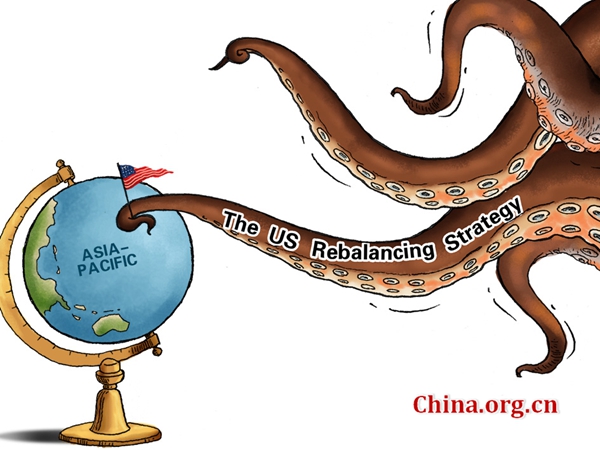
Long tentacles [By Zhai Haijun / China.org.cn]

When discussing international hypocrisy, analysts often make reference to “The City of God,” a deeply influential text written by St. Augustine of Hippo, published in the year 426. The often cited text tells of a heated exchange between Alexander the Great and a pirate. After being apprehended, the sea robber is said to have rebuked the Greek Emperor saying: “What thou meanest by seizing the whole earth; but because I do it with a petty ship, I am called a robber, whilst thou who dost it with a great fleet art styled emperor.”

This fable regarding the principle of “might makes right” on the high seas should ring loudly in the heads of all who read the 2016 Freedom of Navigation Report from the U.S. Department of Defence.

The United States has not ratified the United Nations Conventions on the Law of the Sea. Since the 1980s, U.S. leaders have maintained that the treaty is a “bad bargain” which hurts American businesses.

Though American representatives participated very closely in the international gathering that composed the treaty, U.S. leaders were unwilling to subject themselves to what was ultimately decided. Despite not signing the treaty, the U.S. Department of Defence still issues an annual Freedom of Navigation report, criticizing nations whose oceanic activities they consider to be inconsistent with the U.N. Convention.

While the 2016 report criticized many different countries, China’s actions were very well highlighted. This narrative regarding China violating “Freedom of Navigation” fits into standard U.S. rhetoric regarding tensions in the South China Sea. China’s increasing naval presence is said to be “aggressive” and “expansionist.”

China’s naval activity shouldn’t be so hard to understand. Prior to 1949, when China was known as the “Sick Man of Asia,” the country had barely any steel production, if any at all. Today, half of the steel in the world is produced in China.

Speaking on the recent anniversary of the Party’s founding, Chinese President Xi Jinping said: “Prosperity for the people is the primary goal of the Communist Party of China, and it is this goal that distinguishes Marxist parties from other political forces.”

Led by the Communist Party, China has made great achievements toward this goal of prosperity. The world tourism industry is reacting to a huge new market, as millions of Chinese families, in poverty just one or two generations before, are now taking international vacations. Economic statistics tell us that each day another Chinese person becomes a millionaire.

Stabilizing the world, securing trade routes

One of the hardships China has always faced in the process of working toward greater prosperity and eliminating poverty is securing access to natural resources. China leads the world in the development of alternative energy, hoping to end the global “oil addiction” which many have condemned. However, China’s industries still require lots of petroleum in order to keep producing and supplying the world with commodities.

While China has some oil domestically, running the vast apparatus of production on the mainland requires imported petroleum. In addition to the land pipelines, most of China’s oil comes by sea, specifically via the South China Sea.

Efforts to secure the routes of oil tankers fit in with China’s overall vision of stabilizing the world, and ensuring peaceful growth and cooperation. China is working to stabilize the Middle East, and to resolve the conflicts in Syria, Iraq, and Yemen. China is cooperating with the Islamic Republic of Iran to build railways through Afghanistan and other countries in Central Asia.

The strategy of “trade and transport” is intended to provide the economic opportunities, reducing the role of heroin traffickers and religious extremists. Much of China’s oil comes from South America, and China has done a great deal to stabilize this region, with the financing of hydro-electrical power plants, schools, hospitals and other necessities.

The safer and more stable the world becomes, the more secure China’s oil imports will be. China’s presence in the South China Sea is not “expansionist” or “aggressive.” It is about protecting the trade routes necessary for ensuring peaceful growth.

Chinese leaders have been very happy to negotiate with nearby countries such as the Philippines. Amid rising tensions, the people of this archipelago nation elected a leader, Rodrigo Duterte, who was determined, not to clash with China, but to resolve the differences.

Freedom of Navigation, most surely means that not only U.S. warships can travel as they please, but that other countries are also able to oversee and protect their vital imports. When U.S. leaders claim to be offended or threatened by actions far away from their shores, which are intended to ensure the safety of trade routes, their motivations must be questioned.

Caleb Maupin is a journalist and political analyst who resides in New York City focusing on U.S. foreign policy and the global system of monopoly capitalism and imperialism.

Opinion articles reflect the views of their authors only, not necessarily those of China.org.cn

http://www.china.org.cn/opinion/2017-03/14/content_40453008.htm

The next century: Realpolitik vs. liberalism

0

Mar 1, 2017  ANALYSIS

Squeezed between networked citizens and assertive non-state actors, states will have to balance between liberalism and realpolitik to adjust to the new geopolitical reality of the 21st century.

U.S. President Donald Trump [pictured left] seeks to modernize America’s nuclear arsenal and increase its military budget by $54 billion. Photo: Donald Trump’s official Facebook page  

Numerous mantras and truisms about “predictable unpredictability” have become commonplace among pundits and politicians today. Paradoxically, quite predictable moves from global and regional stakeholders make the world less predictable and more vulnerable today. Here are three examples to illustrate the trend, from the United States, Russia and China.

U.S. President Donald Trump seeks to modernize America’s nuclear arsenal and increase its military budget by $54 billion (which is about 80 percent of Russia’s entire military budget in 2015). The White House announced this plan on Feb. 27 and the Kremlin might have seen it as a warning signal. Yet, in fact, Trump makes no bones about his desire to negotiate with partners from a position of strength. And this move should surprise neither politicians nor experts.

Likewise, Russia’s policy in Eastern Ukraine seems to be no more astounding. Following Russian President Vladimir Putin’s Feb. 18 decree to recognize Donbas passports, Eastern Ukraine’s separatist republics — probably, with the tacit approval of the Kremlin — announced that they would adopt the Russian ruble as their official currency. By the same token, the West and Ukraine might first see the stance as a warning and only later as a predictable signal.

Raed the interview with Carnegie Moscow Center’s Dmitri Trenin: “What kind of Russia should the West fear?“

Finally, China’s ongoing maneuvers in the South China Sea fuel tensions with its neighbors and the U.S. in another part of the world — the Asia-Pacific, as Beijing has recently spurred its military buildup in the region by deploying new missile systems and facilities on the Spratly and Parcel Islands. Again, it sends the U.S. an unwelcome message: Washington will likely see it as a direct challenge to America’s leadership in the region.

However, oddly enough, in such a turbulent and unpredictable environment, some experts cannot resist the temptation to forecast what the world will look like in 100 years. By looking ahead to the long-term future, they try to escape the comfort zone of conventional analysis and come up with relevant solutions in a chaotic world, no matter whether their forecasts will ever come true or not. On the other hand, other pundits choose another, more straightforward, tactic — they simply label the traditional chessboard view of geopolitics as outdated to meet the challenges of the 21st century.

The world in 100 years

The futuristic approach is vividly conveyed in a new book released by the Russia International Affairs Council (RIAC), “The World in 100 Years,” which was presented in a Moscow library in mid-February. Written by 55 Russian pundits, it brings together forecasts about the world in the 2100s and its different aspects, including politics, economies and social life. Its initiators, RIAC’s Ivan Timofeev and Timur Makhmutov, describe the book as “an intellectual provocation” or a “collective brainstorming.”

“The authors of the book describe 55 different scenarios, which outline a general picture of the future,” Makhmutov said.

TODAY, PLANNING EVEN WITHIN THE 10-20 YEAR TIMESPAN IS CHALLENGING, NOT TO MENTION 100 YEARS. THAT’S WHY A FUTURISTIC APPROACH MIGHT SEEM LIKE A BREATH OF FRESH AIR

The problem is that many experts have a narrow planning horizon — three or four years due to the need to deal with the current agenda and the lack of certainty in general. Today, planning even within the 10-20 year timespan is challenging, not to mention 100 years. That’s why a futuristic approach might seem like a breath of fresh air. The goal is to push experts to expand the planning horizon of pundits and decision-makers and, thus, “foster imagination, reassess their views and look into the future,” said Makhmutov.Timofeev calls such an approach “out-of-the-box thinking.” Even though it is not based on rigorous research and analysis, it could be helpful in dealing with future global challenges, at least as long as the traditional technologies — brick-and-mortar infrastructure, energy facilities, conventional weapons and military equipment — persist (and they will, according to Timofeev).

“The high speed of technological changes always co-exists with their rigidity,” Timofeev said, pointing out that this aspect creates demand for futuristic analysis.

The old and the new in turbulent co-existence

The co-existence of the old and the new is commonplace for today’s geopolitics and expertise. As Anne-Marie Slaughter, a foreign policy analyst as well as the president of the think tank New America, implies in a recent article for Foreign Affairs magazine, attempts to look at the world only through the traditional chessboard view (which is common for realpolitik, with its adherence to national interests) might create problems in the 21st century networked world.

Also read: “What threats will Russia and the world face in 2017?“

“Think of a standard map of the world, showing the borders and capitals of the world’s 190-odd countries. That is the chessboard view,” Slaughter writes. “Now think of a map of the world at night, with the lit-up bursts of cities and the dark swaths of wilderness. <…> . That is the web view. It is a map not of separation, marking off boundaries of sovereign power, but of connection.”

In fact, seeing the international system as a web prioritizes not the states and their interests, but rather, their networks. To a certain extent, such an approach shies away from realpolitik as a tool of dealing with other countries, non-state actors and global challenges, including the terrorism threat; drugs, arms, and human trafficking; climate change; pandemic disease carried by air, sea, and land.

“In this world, problems and threats arise because people are too connected, not connected enough, or connected in the wrong ways to the wrong people or things,” Slaughter argues, pointing out that today most politicians act as chess players, and see the world “as if they lived in the seventeenth century” and fail to navigate in the networked world.

According to such logic, the national leaders will have to build and maintain a transparent international order to succeed in the 21st century. Open societies, open governments and an open international system are supposed to be three essential elements of the networked world, the cornerstones of liberalism.

Such a concept seems to relegate realpolitik to something secondary. Sergey Medvedev, a professor at the Higher School of Economics in Moscow, echoes this view. According to him, the mantra about the need to defend national interests oversimplifies the complicated nature of the globalized and networked world. It cannot meet the challenges of the 21century, he said during the Feb. 14 discussion held at the Moscow-based DI Telegraph center, as part of the Inliberty educational project.

ATTEMPTS TO STICK BLINDLY TO NATIONAL INTEREST LEAD TO AUTOCRACY AND THE DOMINATION OF THE STATE. AND PRIORITIZING THE INTERESTS OF A STATE (OR RATHER A SEPARATE RULER AND HIS CLIQUE) OVER THE INTERESTS OF AN INDIVIDUAL MIGHT BE FLAWED AND DANGEROUS

According to him, Russia and other countries “should think beyond the box of traditional and realistic thinking.” He describes the focus on national interests as “the Russian backward game, a parochial response to the complexity of the globalized world.” Attempts to stick blindly to national interest lead to autocracy and the domination of the state. And prioritizing the interests of a state (or rather a separate ruler and his clique) over the interests of an individual might be flawed and dangerous, Medvedev warns. He gives an example: Russia.By controlling the media consumption of the Russian people, the Kremlin tries to impose an idea on the population that there is “a Russia that has a certain national interest and projects this interest onto the external world. This is the geopolitics that ‘zombies out’ the population,” concluded Medvedev.

In contrast, Sergey Markedonov, an associate professor at the Russian State University for the Humanities based in Moscow, doesn’t believe that the concept of national interest is outdated. On the contrary, recent events in the 21st century — including civil wars in Libya, Syria and Ukraine as well as Brexit and the victory of Donald Trump in the 2016 presidential election in the U.S. — indicate that realpolitik is in demand as an effective tool.

“The national interest will still be dominant,” he told Russia Direct during the Feb. 17-18 Meeting Russia event, a public diplomacy program for young leaders. “High expectations [for a new open and liberal global order] are also dangerous, because they might lead to high disappointment.”

Recommended: “Conventional arms race draws the world closer to state of brinkmanship“

It remains to be seen if the chessboard view will be viable and overshadow the liberal concept of the world within the next 100 years. But one thing is certain: states will have to balance between two concepts and adjust to a new reality. They might find themselves squeezed between active citizens and assertive non-state actors.

The state might be not above, but rather in between, while playing a mediating role, predicts Makhmutov. This means that those national leaders, who place their bets on innovation, emerging new technologies and human capital, are likely to be more viable in a networked world.

POLICYMAKERS SHOULD COMBINE TWO APPROACHES TO NAVIGATE SUCCESSFULLY IN THE 21ST CENTURY. THEY NEED TO BE A BLUE SKY VISIONARY, CAPABLE OF LOOKING AHEAD 50 TO 100 YEARS, AND THEY NEED TO BE A DOWN-TO-EARTH PRAGMATIST, DEALING WITH THE DAY-TO-DAY ROUTINE

Most importantly, in such an environment, policymakers should combine two approaches to navigate successfully in the 21stcentury. They need to be a blue sky visionary, capable of looking ahead 50 to 100 years, and they need to be a down-to-earth pragmatist, dealing with the day-to-day routine. Only by combining both approaches will they be able to respond to the inevitable “black swan” events in the world.

http://www.russia-direct.org/analysis/next-century-realpolitik-vs-liberalism

Ancient Humans Created the Sahara Desert, Says Archaeologist

0

© AFP 2017/ HOCINE ZAOURA

A new paper authored by archeologists with Seoul National University has suggested that the Sahara Desert, once green and wet, dried out as a result of the actions of ancient peoples. The spread of agriculture depleted the Sahara’s plant life and caused the region’s the shift to a desert biome, the paper claims.

Scientists have long known that, until fairly recently, the massive Sahara Desert was once verdant and teeming with life, until some 6,000 years ago, when rains ended and the desert became as it is today.

The exact cause of the meteorological shift has been a subject of much study in recent years, as earth scientists believe it could teach us much more about the history of the planet’s climate, as well as the evolution of early human civilizations in the region. A 1997 paper suggested that the shift was a natural consequence of the withdrawal of the glaciers, and has been, until now, traditionally considered to be the most credible explanation.

Now, archaeologist David Wright has published a paper in Frontiers in Earth Science in which he argues that the cause of the Sahara’s drying out was human activity in the region. Some 8,000 years ago, humanity had undergone the Neolithic Revolution, as a result of the invention of farming. Humans, building farms and domesticating animals, allowed livestock to eat large amounts of plants, which lowered the amount of Saharan vegetation.

Plants do more than make oxygen, as they also cool the Earth by absorbing sunlight via photosynthesis. A decrease in the number of plants over a large area can increase that region’s albedo (the amount of sunlight that reflects off the surface of a planet). When the Sahara’s albedo rose, the surrounding atmosphere changed, enough to cause the monsoons that provided water to become far less prevalent.

The drying of the Sahara caused plants to die, further increasing the albedo, further weakening the rains. This continued until early humans packed their bags and left for Egypt and Sumer, to start the first complex civilizations.

Wright formed his hypothesis by collecting archaeological evidence from ancient pastoral communities in the area. “There were lakes everywhere in the Sahara at this time, and they will have the records of the changing vegetation,” he said to phys.org. “We need to drill down into these former lake beds to get the vegetation records, look at the archaeology, and see what people were doing there. It is very difficult to model the effect of vegetation on climate systems. It is our job as archaeologists and ecologists to go out and get the data, to help to make more sophisticated models.”

 “In East Asia there are long established theories of how Neolithic populations changed the landscape so profoundly that monsoons stopped penetrating so far inland,” Wright said. He also mentioned that similar phenomena occurred elsewhere in the world in Europe, North America, and New Zealand.

If early humans could have such an enormous impact on the climate, it begs the question of what a vastly more numerous and advanced people, such as ours, could do to our planet. “The implications for how we change ecological systems have a direct impact on whether humans will be able to survive indefinitely in arid environments,” Wright stated.

https://sputniknews.com/environment/201703151051585583-ancient-humans-created-sahara-desert/

Enough is Enough: European Governments Move Against Soros NGOs

0

© AP Photo/ Kin Cheung

Despite the fact that a number of European governments have taken steps to thwart American NGOs ostensibly promoting ‘democracy and globalization’ while targeting countries for regime change, the US is unlikely to stop ‘exporting democracy’ around the world.

A number of European countries, including Hungary, Poland and the Czech Republic, have unleashed a barrage of criticism against US-backed non-government organizations (NGOs).Groups affiliated with the US billionaire George Soros have attracted the most ire, as prominent political figures like Hungarian Prime Minister Viktor Orban and Czech President Milos Zeman have accused these groups of meddling in their nations’ internal matters.

However, Anatoly Petrenko, a professor at the Social Management Academy, told Sputnik Radio that despite the European leaders’ reaction, the US is unlikely to give up on using NGOs to advance its agenda in foreign countries.

“Let’s just say that it is a very convenient method of ‘exporting democracy’, so to speak. Perhaps some kind of transformation will take place and they will switch to more sophisticated methods. Maybe these organizations will revert to their original methods, when they were training and teaching other people instead of directly taking to the streets,” Petrenko said.

He also expressed skepticism about claims that these organizations are not affiliated with the US government.

“Everything these organizations do, they do by spending certain amounts of money – money they receive from the budget. This is, after all, not some kind of sponsorship by Soros who earned himself some money and now spends it on democracy in the world,” Petrenko explained.

Earlier, US President Donald Trump declared that the US will no longer try and impose its political system upon other countries, and according to Petrenko, the European leaders regarded this statement as a kind of signal to them.

“Apparently they regarded Trump’s statement about the US refraining from imposing its democracy upon others as a sort of signal that now they can quietly curb the activities of these organizations (US-backed NGOs) in their countries. However, it remains to be seen if they (European leaders) actually do something about it,” he remarked.

https://sputniknews.com/

Foreign secret services stepping up efforts to destabilize Russia – top security official

0

Published time: 14 Mar, 2017

The head of Russia’s top consultative security body has said that foreign secret services have intensified their efforts to destabilize Russia, noting that Ukrainian authorities had openly confessed to planning sabotage operations.

“The destructive activities of foreign special services that set their goal as destabilizing the Russian social and political situation has intensified,” Security Council chair Nikolai Patrushev told participants at a conference of the heads of security agencies of the Southern Federal District.

“Ukrainian authorities openly declare that they are organizing acts of sabotage,” he said.

The Russian security chief also told his colleagues that the terrorist threat was higher in the Southern Federal District than in other parts of the country. He outlined such threats as various radical and xenophobic groups, internet propaganda of radical ideas and the growth of xenophobia among the younger generation.

Earlier this month, Patrushev held a similar conference in the Urals Federal District in central Russia. There he prioritized the threat from cyberattacks, saying that the main goal of these attacks was the disruption of hardware – including the networks that service the Russian segment of the internet – and obtaining classified information through clandestine deployment of various means of computer surveillance.

According to the head of the Security Council, the overall number of cyberattacks on Russian state bodies and companies was over 52 million in 2016, more than three times the number registered in the previous year.

https://www.rt.com/politics/380657-foreign-special-services-seek-to/

From Post-Modernism to Neo-Modernism

0

Andrey Kortunov 13 february 2017

The World at the Crossroads of Two Eras

Andrey Kortunov is Director General of the Russian International Affairs Council, President of the New Eurasia Foundation in Moscow. He is also the president of the Information Scholarship Education Center (ISE) and a member of the Educational Board of the Open Society Institute.

Resume: For the majority of neo-modernists the question of democracy and authoritarianism is drifting into the background, giving way to an issue they consider much more important, namely the border between order and chaos in international relations.

It is common knowledge that the concept of post-modernism came into international relations lexicon from the French philosophy of the 1970s-1980s. Shortly before the end of the last great rise of French intellectual universalism, Jacques Derrida, Michel Foucault, Louis Althusser, Jacques Lacan and other founders and opponents of post-structuralism formulated the basic characteristics of post-modernism as an integral sociological and historical interpretation of the modern world.

Most often cited are four of them. The first one is agnosticism that claims that truth is relative and is no more than a generally accepted view rather than a reflection of objective reality. The second one is pragmatism, which holds that the only unquestionable value is success, and success is measured solely by material achievements of individuals or their groups. The third one is eclecticism that maintains that in order to succeed an individual and society randomly blend conflicting principles, strategies and behavioral models. The fourth one is anarcho-democracy, which states that the combined effect of agnosticism, pragmatism and eclecticism consistently destroys the legitimacy of any social and political hierarchy by opposing it with a completely free “atomized” personality.

Many may find these characteristics bleak and undoubtedly inferior to the consistent and clear rationalism of classical modernism. In fact, many founders of post-modernism regarded it as a philosophy reflecting the crisis of Western conscience. Nevertheless, one should not overlook the strong sides of post-modernism, primarily its inclusive nature and ability to offer a “common denominator” to the very complex, heterogeneous, divided, and contradictory Western society of the late 20th and early 21st centuries. It is not surprising, therefore, that this concept made its way into international relations to be applied not just to Western society, but also to the extremely complex, heterogeneous, divided, and contradictory world at large.

THE SHORT AGE OF POST-MODERNISM

Having migrated from philosophy and sociological theory into real international relations, the four characteristics of post-modernism could not but be modified. However, in a modified form, for almost three post-Cold War decades they not only reflected the global political establishment’ views on the world but also reflected on concrete foreign-policy priorities and activities of great powers, international organizations and other global players in the West and, to a considerable degree, in the rest of the world as well. Although Bill Clinton, Tony Blair, Nicolas Sarkozy or Jose Manuel Barroso never positioned themselves as “post-modernists,” the paradigm of post-modernism can easily be seen in their international activities.

As far as international relations are concerned, postmodern agnosticism has acquired the form of legal relativism whereby basic norms of international law (sovereignty, non-interference in the internal affairs of other states, rejection of military force, etc.) are applied selectively depending on the current political situation and needs of main players. There emerged a gap between the “legality” and “legitimacy” of foreign-policy activities and this gap kept growing. Unlawful “legitimacy” (based on a “generally accepted view” held by the extremely amorphous “world public opinion”) was more and more often preferred to formal juridical “legality.” Legal relativism was closely followed by moral relativism (for example, in dividing terrorists into good and bad guys depending on situational political needs).

Pragmatism transformed into economic determinism when foreign policy began to be viewed as a purely technical mechanism for servicing immediate economic interests of national and transnational business elites. All other interests–from preserving national culture to protecting national security–were declared annoying, albeit unavoidable, rudiments of the bygone era of modernism or even earlier epochs. Pragmatism also resulted in the worldwide rejection of major long-term political projects such as UN reform or transformation of NATO into a universal Euro-Atlantic security organization. Such projects required significant political investments, had long recoupment periods and from the point of view of plain pragmatism were irrational, impractical, and irrelevant. It was much more logical to expand existing institutions at minimum cost and political risk.

Eclecticism can be detected in numerous instances of double standards, controversial and inconsistent foreign-policy narratives, widespread hypocrisy, preterition, and “political correctness.” Tactics increasingly prevailed over strategy, and political rhetoric was drifting father and farther away from political practice. The desire to satisfy numerous group interests, keep fragile consensus on key international issues, and minimize political risks and potential costs made major political breakthroughs practically impossible. Eclecticism also steadily ruined what little was left of national ideologies (“big narratives”) after the global triumph of liberalism at the end of the 1980s and the beginning of the 1990s.

Finally, anarcho-democracy manifested itself at least on two levels. Inside countries, the dominant role of the state in determining and carrying out foreign policy came under fierce attacks from numerous non-state actors such as large corporations, public organizations, regional authorities and municipalities, political parties, and religious movements. At the interstate level, international organizations, both regional and global, faced a serious challenge worldwide. It was a sort of “geopolitical deconstruction” replacing rigid structures wherever possible with flexible tactical alliances (“coalitions of the willing”) where every member could determine the format and degree of its involvement without making any firm or long-term commitments.

As a philosophical and sociological construct, post-modernism reflected Western society’s fatigue from mobilization discipline and hard rationalism in the era of modernism. As a global political phenomenon, it reflected the international community’s fatigue from strict hierarchy and Manichean dualism of the Cold War era. Both softened their requirements on the subjects of social activity: the “atomized” individual in the former case, and the nation state in the latter case.

This softening exposed both the obvious attractiveness of postmodern approaches and their historical narrowness, which was equally obvious. So far no one has been able to replace action with its imitation, policy with rhetoric, strategy with tactics, principles with opportunism, and sober analysis with “political correctness” for an indefinitely long period of time. Postmodern politicians were not an exception. The inevitable decline of post-modernism in world affairs was accelerated by the sad fact that, unlike postmodern philosophers, postmodern politicians appeared to be disinclined for reflection, doubt or critical evaluation of their own experience, thus proving unable to make prompt corrections and introduce new ideas to the political practice and missing the “point of no return” in the development of the international system.

The era of the unchallenged reign of post-modernism in international relations, at least in the form it had assumed by the end of the last century, was very short by historical standards. When exactly its decline began is an arguable point. Looking back on past events, some analysts say that 2016 was a watershed year and insist that Brexit and Donald Trump’s victory in the U.S. elections were the “points of no return.” Others believe that the era of post-modernism ended two or three years earlier when the Ukraine crisis broke out and the “Greater Europe” project failed. Still others go even further back in time, recalling the “Arab awakening” in 2011 as an event that had not only a regional, but also a truly global impact. And some cite the 2008-2009 financial and economic crisis or rather the inability and unwillingness of the postmodern world elite to come up with any adequate response, make necessary sacrifices for the sake of common interests and take the international currency and financial system to a new level of governance.

Let us leave the dating alone and simply state the obvious: in the second decade of the 21st century we can see the reemergence of some key parameters from the era that proceeded post-modernism. Since no restoration presupposes exact reestablishment of the ancien régime, we should be talking about a new stage in the development of the international system. Borrowing the term used by Russian researcher Vassily Kuznetsov in his analysis of the contemporary sociopolitical dynamics in the Middle East, we can say that international relations today are entering a neo-modern period.

In present-day architecture, neo-modernism rejects the excessive elaborateness and complexity of post-modernism for the sake of a simpler and clearer style. Neo-modern architects prefer a brutal and minimalist manner, avoiding lavishly decorated facades and choosing straight lines and right angles instead of numerous curves and rounded corners. They use a lot of metal and composite materials that render the impression of emotional restraint and inner strain. One can clearly see some parallels with international constructs being built by contemporary neo-modern politicians.

NEO-MODERNISM AS A NEGATION OF POST-MODERNISM

A countless number of articles, reports, essays, and books have been written, conferences, symposiums and other collective events held to explain unexpected and almost incredible victories recently won by neo-modernists. Sometimes their successes are attributed to certain situational factors such as a concourse of political circumstances, the charisma of neo-modern leaders, or tactical blunders of their opponents, etc. Neo-modernists’ successes are often explained by their ability to mobilize marginalized sections of the population, hypnotize masses and stir up dark depths of public subliminal consciousness where “normal” post-modern politicians would never dare pry (to quote J.R.R. Tolkien, “…evil was stirred up in Moria again…”). Conspiracies are also part of this ploy, with Vladimir Putin pulling the strings in a neo-modern plot as a global mastermind and the boss of all neo-modernists.

Intentionally or not but such explanations distract attention from the main issue, that is, the need to admit the fact that the agenda of post-modernism is considered exhausted not only by the fringes of society but also by the middle class and even a large part of the global intellectual elite. Foreign-policy post-modernism has degenerated into a trivial desire to keep the status quo, and this alone made it doomed.

Even if the supporters of the European Union had won in the UK referendum and Donald Trump had been defeated by Hillary Clinton, these circumstances could only have delayed, but not prevented, the end of the era of post-modernism. In fact, neither David Cameron nor Hillary Clinton had even tried to offer a new and attractive perspective to their potential supporters but only scared them with catastrophic consequences if the vote went the “wrong” way. As one of the characters in O. Henry’s story said, sand is a not a palatable substitute for oats, but post-modernists failed to offer anything more substantive.

Equally erroneous, in my opinion, is the view that there is some united global front of neo-modernists who are advancing on post-modernism like hoplites in a Macedonian phalanx. Russian President Vladimir Putin is not marching along with Polish leader Jaroslaw Kaczynski, and Chinese President Xi Jinping is not very close with Japanese Prime Minister Shinzo Abe. If Francois Fillon becomes the next French president, he is unlikely to be a comfortable partner for his American vis-à-vis Donald Trump. Nor France’s National Front leader Marine Le Pen has much chance to become British Prime Minister Theresa May’s best friend.

We are not talking about some international political alliance like the Holy Alliance in Europe after the Napoleonic Wars or the Communist International. What we see is a number of identical, converging or close views on world affairs, on their laws and driving forces, on negotiation strategies and tactics, on foreign-policy success criteria and indicators, and on the future of the world political and economic order. These unorthodox views that seemed to be outdated, antiquated and marginal are now characteristic of the new cohort of national leaders and the political forces behind them.

Each of them challenges the post-modern paradigm one way or another, distances himself/herself from its basic characteristics and offers his/her own version of the neo-modern agenda for a country, a region or the international community as a whole. The decrepit citadel of post-modernism is being stormed from different sides, with the storming forces having no single plan and yet having much in common. Accepting inevitable accusations of schematism and unlawful generalizations, I will nevertheless take the liberty of naming four basic characteristics of neo-modernism that stand in opposition to the four post-modern tenets, which until recently were considered generally accepted.

Firstly, it is nationalism. All heralds of the new era invariably emphasize specific national interests of their countries as opposed to post-modernists’ global universalism. It is quite noteworthy that during his election campaign Donald Trump spoke not about “American leadership” but about “America’s greatness.” Nationalism, like nothing else, unites Western and non-Western neo-modern leaders. While post-modernists diligently tore down walls along the “friend or foe” line, neo-modernists are rebuilding those walls just as diligently (even literally like Hungarian Prime Minister Viktor Orban or his Israeli colleague Benjamin Netanyahu). Nationalism is closely associated with the strong belief in the central role of the state in world politics. Post-modern attempts to challenge the hierarchy of legitimacy and present the state as just one of the global political players are resolutely brushed away as irresponsible and untenable.

Secondly, it is transactionalism. The transactional approach in foreign policy likens joint work with partners and opponents on the international stage to business relations where each negotiating party bargains for the best possible terms. Abstract notions like ‘common values,’ ‘interests of humanity’ or ‘world public opinion’ may be mentioned but generally are not frequently used and certainly do not reflect key priorities. Demonstrative transnationalism can be considered a legitimate reaction to the numerous ambiguities, double-speak, hypocrisy, and “political correctness” in the post-modern era. Transactional rhetoric, which sometimes borders on cynicism, wins much more trust and support among people than high-flown declarations made in the retro post-modern style.

Thirdly, it is holism. The commitment to holism, or, paraphrasing Jan Smuts, “foreign policy of the wholes,” exposed the fallaciousness of economic determinism advocated in the era of post-modernism. The last several years have clearly shown that foreign policy can instantly turn from a slavish servant of the economy into its capricious mistress. Interestingly, the political triumph of Eurosceptic Jaroslaw Kaczynski coincided in time with Poland’s unprecedented economic successes achieved due to its active role in European integration. The principle of holism, a thing Jaroslaw Kaczynski and Vladimir Putin paradoxically have in common, deprives the economy of its central place in foreign policy priorities by paying just as much attention to national security, ethnocultural identity or state sovereignty.

Fourthly, it is historicism. While post-modern leaders drew inspiration from fantasies about the global future of mankind, neo-modernists who are taking their place are much more willing to look for political beacons in their national past. This revives seemingly forgotten “big narratives,” especially noticeable in France and Japan (clearly, they never ceased to exist in Russian, China, and India even in the best post-modern times); this provokes a resolute rejection of post-modern universalism, warrants increased attention to national myths, and generates explicit or disguised claims of exclusiveness. While for post-modernists the term ‘normal country’ had a clear positive meaning, it is completely void of any meaning for neo-modernists. Although in terms of political tactics most neo-modernists position themselves as pragmatic transactionalists, they clearly gravitate towards historical romanticism in terms of worldview, evoking memories of timeless novels written by Victor Hugo or Walter Scott.

There is yet another, less obvious, distinction between neo-modernists and post-modernists. It the era of post-modernism, the main divide in world politics was the watershed between democracy and authoritarianism. The advance of democracy and the ousting of authoritarianism to the sidelines of the emerging global civilization were viewed as the main purpose of global development. For the majority of neo-modernists the question of democracy and authoritarianism is drifting into the background, giving way to an issue they consider much more important, namely the border between order and chaos in international relations. In the second decade of the 21st century the world has entered a period of chronic instability, regional and global turmoil, and a dramatic decline in the governability of the international system, and keeping the emphasis on the advance of democracy would be an unaffordable luxury—at stake is not development but survival, not prosperity but security.

NEGATION OF THE NEGATION?

It would be at least premature to declare the full and final victory of neo-modernism over post-modernism. The latter continues its desperate resistance to the new paradigm, fighting it fiercely on several fronts at the same time. The main pocket of resistance in Europe is Germany, which under Angela Merkel has been holding the post-modern bridgehead in the center of the continent, every year losing more allies and companions. In the United States, numerous groups from the liberal establishment, entrenched in leading newspapers, Washington-based analytical centers and Congress, are conducting guerrilla warfare. The majority of small countries are opposing neo-modernism across the world, because “the new reality” they have been offered generally reduces their freedom of maneuver and denies them political and economic bonuses by way of “positive discrimination.” Naturally, resistance fighters should also include a large number of big business leaders, bureaucrats in international organizations, and transnational civil society activists who are not willing to put up with the new hierarchy and new ideology in world politics.

Even if the advance of neo-modernism is stanched on one front,  and if the post-modernist underground partly succeeds in undermining it from inside, the world will never go back to the golden age of post-modernism. Elvish ships are quietly departing from the Grey Havens, the last Elven princess, who never became lawful queen, is casting a sad glance at the receding shores of Lindon she is leaving forever, while a new dawn is already lighting up the sky above Middle-Earth.

How long will this new era last? Several years or several decades? And what will come next? Answers to these questions depend in the first place on whether neo-modernism proves able to develop, evolve and correct mistakes, diligently although not always passionately, which post-modernists never bothered to do. One cannot but notice that the four basic symbols of neo-modern faith are as unreliable, internally contradictory and exposed to opponents’ criticism as the four tenets of post-modernism were unreliable, relative, controversial, and vulnerable.

To what extent can nationalism act as a mechanism for long-term sociopolitical mobilization in the 21st century? Globalization processes are still in progress and, therefore, individual and group identities are multiplying, transboundary migration is growing and cultural and anthropological unity, which is so vital for nationalism, is eroding. Would it be realistic today to present the national idea as a “big narrative” making up for the shortage of religious conscience the way it was done in Europe a hundred or two hundred years ago?

And what about transactionalism? Doesn’t it bear the birthmarks of post-modernism when it places “concrete” momentary achievements above “abstract” future interests? Doesn’t it sacrifice strategy to tactics and the general to the particular the same way post-modernism once did? And what about the urgent need for long-term and politically costly projects to restore the governability of the political system? One can hardly expect this enormous challenge to be solved by a simple sum-total of numerous individual transactions between different international political players.

There are also many questions to foreign-policy holism, because holism is not only about looking for a balance between the economy and politics, between integration and sovereignty. Holism is based on the conviction that every country has its own unique destiny and its foreign policy should perform a special international mission. This is why a national leader should not seek to balance out different group interests but listen to the rumble of the “drums of destiny,” articulate a national mission and consolidate society around it. This epic task can be effectively handled by the leaders of authoritarian regimes where the foreign-policy decision-making process is overly centralized. But how can this be done in democratic societies with their “checks and balances,” where lobbyists and the media play a significant role and any major political decision is adopted one way or another through compromises and mutual concessions?

Historicism also contains numerous dangers and traps. Paraphrasing Herzen’s remarks about Westernizers and Slavophiles, it would be appropriate to say that post-modernists take the world as a prophecy, while neo-modernists view it as a reminiscence. The prophecy turned out to be cooked up by self-obsessed dilettantes, crude and short-lived, and the reminiscence may actually be daydreaming leading one away from the real world. Moreover, a clash of mismatching “big narratives” can cause acute political conflicts as vividly proved by the Chinese and Japanese versions of the history of World War II in Asia. Besides, how long can one walk forward while looking backward all the time?

It should be noted that just like in architecture, neo-modernism in international relations allows for simplification, wholeness, minimalism, and to some extent even demonstrative anti-intellectualism, while modern society keeps accumulating elements of complexity, nonlinearity, ambivalence, and fragmentation. Sociocultural processes recorded by French post-structuralism some forty years ago are still underway and have actually acquired new dimensions and new dynamics. This makes an escalation of tension between the social base and the political superstructure almost unavoidable.

Will we see a convincing revenge by post-modernism? Will such terms as ‘neo-postmodernism’ or ‘post-neomodernism’ make their way into our vocabulary? Hardly anyone can give a conclusive answer to these questions today. The world political and academic communities will most likely miss the decline of neo-modernism just as they missed its rise. But one thing is clear—in the future political game those will have the best chances to win who are prepared to follow Socrates’ advice, relevant up to date: The secret of change is to focus all of your energy not on fighting the old, but on building the new.

http://eng.globalaffairs.ru/number/From-Post-Modernism-to-Neo-Modernism-18578

Όσα δεν ξέρετε για τον Ολλανδό ακροδεξιό Βίλντερς

0

Financial Times

Αντιφατικός και αμφιλεγόμενος ο λαϊκιστής πολιτικός. Πώς από βουλευτής κεντρώου κόμματος μετατράπηκε σε ηγέτη της ισλαμοφοβικής ακροδεξιάς. Η καταγωγή από την Ινδονησία και η κόντρα με τον αδερφό του.

Όσα δεν ξέρετε για τον Ολλανδό ακροδεξιό Βίλντερς

του Duncan Robinson

 Ο Χέερτ Βίλντερς δεν είναι ποτέ μόνος.
Ο ακροδεξιός Ολλανδός πολιτικός, ο οποίος αποκαλεί τους Μαροκινούς μετανάστες «αποβράσματα» και θέλει να κλείσει κάθε τζαμί στην Ολλανδία, ζει υπό 24ωρη αστυνομική προστασία.

Τα ταξίδια σε άλλες πόλεις, όπως η πρόσφατη περιοδεία στην πόλη Σπίκενις κοντά στο Ρότερνταμ, είναι σπάνια και πολύ καλά οργανωμένα. Με τον κ. Βίλντερς να είναι περικυκλωμένος από τους άνδρες της προσωπικής του ασφάλειας, το ενθουσιασμένο πλήθος μόλις που μπορούσε να διακρίνει το χαμόγελο και τη χαρακτηριστική χρυσή αλά Μότσαρτ κόμη του αντι-ισλαμιστή πολιτικού, που το Κόμμα της Ελευθερίας (PVV) του βρίσκεται ψηλά στις περισσότερες δημοσκοπήσεις.

«Αν θέλετε να ξανακερδίσετε τη χώρα σας, αν θέλετε να ξανακάνετε το σπίτι σας μια Ολλανδία για τους Ολλανδούς, τότε μπορείτε να ψηφίσετε μόνο για ένα κόμμα», δήλωσε στα αγγλικά ο κ. Βίλντερς, αναγνωρίζοντας πως το κοινό του δεν περιορίζεται πλέον στους Ολλανδούς ψηφοφόρους.

Από την ίδρυση του κόμματος το 2006, ο κ. Βίλντερς έχει γίνει μόνιμο θέμα συζήτησης στην Ολλανδία και τώρα έρχεται αντιμέτωπη με τις αντιφάσεις του και η υπόλοιπη Ευρώπη. Είναι εκτός συστήματος, αλλά έχει περάσει σχεδόν δύο δεκαετίες στο κοινοβούλιο, στηρίζοντας προσωρινά μια κεντροδεξιά κυβέρνηση.

Είναι ηγέτης ενός λαϊκιστικού κόμματος που έχει 12 βουλευτές και τη στήριξη από έναν στους έξι Ολλανδούς, αλλά έχει μόνο ένα μέλος: τον εαυτό του. Ισχυρίζεται πως μιλάει εκ μέρους του απλού Ολλανδού πολίτη, αλλά έχει περάσει 13 χρόνια σε απομόνωση για λόγους ασφαλείας και εμφανίζεται σε οικογενειακές συγκεντρώσεις με οπλισμένους φρουρούς.

Ακόμα και η οικογενειακή ιστορία του κ. Βίλντερς είναι γεμάτη ανακολουθίες: πίσω από το οξυζεναρισμένο μαλλί κρύβονται ινδονησιακές ρίζες. Η οικογένεια της μητέρας του ήταν ολλανδικής και ινδονησιακής καταγωγής. Ορισμένοι «Ινδονήσιοι» προσπάθησαν να αντισταθμίσουν τη μεικτή κληρονομία τους με το να γίνουν «πιο Ολλανδοί από τους Ολλανδούς», σύμφωνα με τον Ίαν Μπούρουμα, τον Ολλανδό ιστορικό. Άλλοι έδειχναν βαθιά περιφρόνηση για το Ισλάμ, το οποίο ασπαζόταν η πλειοψηφία όσων βρίσκονταν στην πρώην ολλανδική αποικία.

Μετά από δύσκολα παιδικά χρόνια στον καθολικό Νότο της Ολλανδίας («Ήταν ένα απαίσιο ζιζάνιο, εγωκεντρικό και επιθετικό», λέει ο αδερφός του Πολ Βίλντερς σε συνέντευξη στο Der Spiegel), ο κ. Βίλντερς μπήκε στην πολιτική πριν κλείσει τα τριάντα. Εργάστηκε στο κεντροδεξιό Λαϊκό Κόμμα για την Ελευθερία και τη Δημοκρατία (VVD) και έγραφε λόγους για τον Φριτς Μπολκστάιν, έναν από τους πρώτους Ολλανδούς πολιτικούς που αμφισβήτησαν τα οφέλη της πολυπολιτισμικότητας. Ως το 1998, ο κ. Βίλντερς είχε γίνει βουλευτής.

Όταν ο Πιμ Φόρτουιν, ο αντι-ισλαμιστής πολιτικός που άρχισε να γίνεται δημοφιλής μετά τις επιθέσεις της 11ης Σεπτεμβρίου, απηύθυνε έκκληση για έναν «ψυχρό πόλεμο κατά του Ισλάμ», ο κ. Βίλντερς αντέδρασε: «Βρίσκω τη δήλωση απαράδεκτη γιατί βάζει στο ίδιο τσουβάλι όλους τους μουσουλμάνους», υποστήριξε σε ολλανδική τηλεοπτική εκπομπή το 2001.

«Δεν υπάρχει τίποτα λάθος με το Ισλάμ, είναι μια αξιοσέβαστη θρησκεία. Οι περισσότεροι μουσουλμάνοι και στην Ολλανδία είναι καλοί πολίτες που δεν έχουν κάνει τίποτα κακό. Το πρόβλημα αφορά μόνο μια χούφτα ακραίων Μουσουλμάνων» τόνισε.

Σήμερα ο κ. Βίλντερς έχει καταδικαστεί για προτροπή σε ρατσιστικό μίσος, για σχόλια που έκανε για Μαροκινούς και έχει απειλήσει με απέλαση μουσουλμάνων.

Η μετάλλαξη έγινε μετά από δύο δολοφονίες που συνεχίζουν να στοιχειώνουν την πολιτική στην Ολλανδία. Το 2002 ο κ. Φόρτουιν έπεσε νεκρός από πυρά περιβαλλοντικού ακτιβιστή που ήταν αντίθετος με τις απόψεις του.

Ο κ. Βίλντερς έσπευσε να καλύψει το κενό. Σε άρθρο που έγραψε μαζί με τη βουλευτή του VVD και επικριτή του Ισλάμ Αγιάν Χίρσι Αλί, ζητούσε μια «φιλελεύθερη τζιχάντ» κατά της «ισλαμοποίησης» που έβλεπε στην Ολλανδία.

«Για να διατηρήσουμε μια ανεκτική και φιλελεύθερη χώρα, πρέπει να βάλουμε στην άκρη ακόμα και στοιχειώδη δικαιώματα και νόμους, όταν αντιμετωπίζουμε ανθρώπους που τα καταπατούν και έχουν ως στόχο να τα αποσύρουν ως θεμέλιο της κοινωνίας μας» έγραψαν.

Τα σχόλια αυτά -και άλλα σαν και αυτά- δημιούργησαν ένα ρήγμα ανάμεσα σε αυτόν και το VVD. Ο κ. Βίλντερς έφυγε από το κόμμα το 2004.

Λίγους μήνες αργότερα, ο τηλεοπτικός παραγωγός Τέο Βαν Γκογκ δολοφονήθηκε για τη συμμετοχή του σε ένα αμφιλεγόμενο ντοκιμαντέρ για το Ισλάμ. Άνοιξε μια πληγή που δεν έχει επουλωθεί. Το νέο κόμμα του κ. Βίλντερς εκτινάχθηκε στις δημοσκοπήσεις.

«Είναι ένας οξυδερκής πολιτικός, πολύ πιο οξυδερκής από ό,τι του αναγνωρίζει ο κόσμος» λέει ο κ. Μπούρουμα. «Ξέρει πώς να πατάει τα σωστά κουμπιά μιας απογοητευμένης ομάδας ανθρώπων που αισθάνονται αποκλεισμένοι από τις ελίτ. Είναι ένα αλεξικέραυνο για όλων των ειδών τις δυσαρέσκειες που δεν έχουν βρει φωνή».

Η δημοτικότητα του PVV αυξήθηκε και έφτασε να λάβει το 16% των ψήφων και 24 έδρες το 2010. Παρά τις αντισυμβατικές του απόψεις, ο κ. Βίλντερς πιστεύει στις συμβατικές πολιτικές μεθόδους. «Ο κ. Βίλντερς ήταν ένας παραδοσιακού τύπου πολιτικός που πιστεύει στον κοινοβουλευτισμό», λέει ο Κας Μούντε, λέκτορας πολιτικής επιστήμης στο Πανεπιστήμιο της Τζόρτζια.

Αλλά η εξουσία και ο λαϊκισμός δεν ταιριάζουν πάντα καλά. Το 2012, η ολλανδική κυβέρνηση ήθελε να περάσει περικοπές για να συμμορφωθεί με τους δημοσιονομικούς κανονισμούς της Ε.Ε. Αντί να στηρίξει τις περικοπές, ο κ. Βίλντερς προκάλεσε την κατάρρευση της κυβέρνησης.

Αυτό περιθωριοποίησε τον κ. Βίλντερς: έκτοτε, τα υπόλοιπα μεγάλα κόμματα έχουν αρνηθεί να σχηματίσουν κυβέρνηση μαζί του, για λόγους ιδεολογικούς και αξιοπιστίας. Ο κ. Βίλντερς, ένας από τους παλαιότερους βουλευτές της Ολλανδίας, άρχισε να παρουσιάζει τον εαυτό του ως εκτός συστήματος. «Πήγε για μια στρατηγική των άκρων, όπου θα γινόταν τόσο μεγάλος που δεν θα μπορούσε να αγνοηθεί» σημείωσε ο κ. Μούντε.

Οι δηλώσεις έγιναν πιο επιθετικές. Ο λογαριασμός του στο Twitter άρχισε να εμφανίζει εικόνες του Προφήτη Μωάμεθ με φίδια για μαλλιά και με αφίσες που ρωτούσαν γιατί τα χρήματα που ξοδεύονται για νέους, σκουρόχρωμους ανθρώπους δεν μπορούν να δαπανηθούν για ηλικιωμένους Ολλανδούς. Μια λεζάντα γράφει «ΣΤΑΜΑΤΗΣΤΕ ΤΟ ΙΣΛΑΜ».

Ο κ. Βίλντερς μελετάει εξονυχιστικά ό,τι γράφεται για αυτόν. Αποκλείει από τα κοινωνικά δίκτυα όσους δημοσιογράφους τον δυσαρεστούν, το κύριο μέσο επικοινωνίας του. (Το ίδιο ισχύει και για τα μέλη της οικογένειάς του: απέκλεισε τον αδερφό του τον Δεκέμβριο). Από μια οχυρωμένη πτέρυγα του ολλανδικού κοινοβουλίου στη Χάγη, ασκεί δικτακτορικό έλεγχο στο κόμμα του, περνώντας εκεί την ημέρα του και επιστρέφοντας σε κάποιο μυστικό καταφύγιο στις 11 το βράδυ.

Αν και το PVV αναμένεται να είναι το πρώτο ή το δεύτερο κόμμα στην Ολλανδία, ο κ. Βίλντερς απέχει πολύ από το να σχηματίσει κυβέρνηση. Οι αντίπαλοί του, όπως το κεντροδεξιό VVD, έχουν αρνηθεί να συνεργαστούν μαζί του και τα νούμερά του στις δημοσκοπήσεις υποχωρούν.

«Είμαστε όλοι απασχολημένοι με τον κ. Βίλντερς, αλλά έχασε στις τελευταίες τέσσερις εκλογές και κινείται καθοδικά στις δημοσκοπήσεις» αναφέρει ο Αλεξάντερ Πέτστολντ του κεντρώου κόμματος D66. «Στο σύστημά μας αυτό δεν αποφέρει τίποτα, αν δεν είσαι διατεθειμένος να διαπραγματευτείς με άλλους».

Ο κ. Βίλντερς έχει κολλήσει. Οι δίοδοι προς την κυβέρνηση είναι λίγες και όλο και λιγότερο πιθανές. Αν χάσει και την προσοχή του κόσμου, το ίδιο θα συμβεί και στην καριέρα του. «Πιθανότατα θα χρειαστεί προστασία για το υπόλοιπο της ζωής του», λέει ο αδερφός του Πολ. «Και ακόμα και αν χάσει τις εκλογές, θα πρέπει να συνεχίσει να κάνει αυτό που κάνει. Τι άλλο θα μπορούσε να κάνει; Δεν υπάρχει επιστροφή. Τον λυπάμαι».

Ο κ. Βίλντερς πρέπει να συνεχίσει να πολιτεύεται εγκλωβισμένος σε ένα φαύλο κύκλο μίσους ή για πρώτη φορά μετά από δεκαετίες να μείνει μόνος.

http://www.euro2day.gr/ftcom/ftcom_gr/article-ft-gr/1524058/osa-den-xerete-gia-ton-ollando-akrodexio-vilnters.html

«Ήρθε η ώρα να αυξήσουμε τα χωρικά μας ύδατα στα 12 μίλια»

1

Άγγελος Συρίγος: Τετάρτη 15 Μαρτίου 2017

H ένταση με την Τουρκία δεν είναι ανεξήγητη. Ξεκίνησε όταν ο Αρειος Πάγος απέρριψε (ορθώς) το αίτημα για έκδοση των οκτώ αξιωματικών στην Τουρκία. Ο Ερντογάν το αντιμετώπισε ως προσωπική προσβολή και ακολούθησε την παλαιά, δοκιμασμένη, κεμαλική συνταγή: στρατιωτική απειλή ως μέσον ασκήσεως πολιτικών πιέσεων. Στην Ελλάδα επικρατεί η εντύπωση ότι το κάνει για εσωτερικούς λόγους. Σαφώς! Οχι όμως για τους εσωτερικούς λόγους που εμείς εννοούμε. Το θέμα των ελληνοτουρκικών σχέσεων σπανιότατα βρίσκεται τις τελευταίες εβδομάδες στα πρώτα οκτώ θέματα των ειδήσεων στην Τουρκία. Ο Ερντογάν, όμως, φοβάται ότι μπορεί να το χρησιμοποιήσει η αντιπολίτευση. Δρα λοιπόν προληπτικά ανεβάζοντας τους τόνους. Δεν το κάνει για να συσπειρώσει τον κόσμο πίσω του. Υπ’ αυτό το πρίσμα είναι πιθανόν να μειωθεί η ένταση μετά το δημοψήφισμα, αλλά η ουσία του προβλήματος παραμένει. Ο Ερντογάν, όπως και οι προκάτοχοί του, θα συνεχίσει να αμφισβητεί με διαφόρους τρόπους το νομικό καθεστώς στο Αιγαίο. Επιπλέον, η οικονομική καχεξία της χώρας μας θα του ανοίγει την όρεξη.

Το ερώτημα για την Ελλάδα είναι εάν μπορούμε να ακυρώσουμε σε βάθος χρόνου τη συγκεκριμένη τουρκική πολιτική. Πρέπει να θέσουμε αυτό το ερώτημα, διότι οφείλουμε άμεσα να επαναχαράξουμε τη στρατηγική μας έναντι της Τουρκίας. Μετά το 1999 βασισθήκαμε στον σταδιακό εξευρωπαϊσμό της Τουρκίας. Σήμερα, η ευρωπαϊκή της προοπτική είναι νεκρή.

Είναι καιρός να μιλήσουμε για το μεγάλο ταμπού: την αύξηση των ελληνικών χωρικών υδάτων στα 12 μίλια. Πρόκειται για αδιαμφισβήτητο δικαίωμα που δίνει το διεθνές δίκαιο και έχει ασκηθεί από όλα τα παράκτια κράτη στον κόσμο (148 στον αριθμό), πλην της Ελλάδος. Με την αύξηση των ελληνικών χωρικών υδάτων στα 12 μίλια οι περισσότερες από τις τουρκικές διεκδικήσεις στο Αιγαίο θα τερματισθούν ή θα καταστούν άνευ σημασίας. Πιο συγκεκριμένα:

• Η περιοχή της υφαλοκρηπίδας του Αιγαίου που διεκδικούν σήμερα οι δύο χώρες θα περιορισθεί μόλις στο 5,1%.

• Το διαφορετικό εύρος εναερίου χώρου (10 μίλια) και χωρικών υδάτων (6 μίλια) θα πάψει να υφίσταται.

• Η Τουρκία θα απονομιμοποιηθεί εντελώς στην προσπάθειά της να αλλάξει τα όρια FIR Αθηνών και της Ζώνης Ερευνας και Διασώσεως, που πλέον θα περιλαμβάνουν περιοχές ελληνικής κυριαρχίας σε ποσοστό 72% (έναντι 43% σήμερα) της θαλάσσιας επιφάνειας του Αιγαίου.

• Οι λεγόμενες «γκρίζες ζώνες» κυριαρχίας θα αποκτήσουν μόνον συμβολικό χαρακτήρα. Η Τουρκία τις θέτει προκειμένου να καταστήσει τη δικαστική οριοθέτηση της υφαλοκρηπίδας δεύτερο κατά σειράν θέμα μετά τη διαπίστωση της κυριότητας επί κάποιων νησιών στο Αιγαίο.

Τα μόνα ζητήματα που δεν αγγίζει η αύξηση των χωρικών υδάτων είναι (α) το καθεστώς αποστρατιωτικοποιήσεως των ανατολικών νησιών του Αιγαίου και (β) η αμφισβήτηση της υφαλοκρηπίδας του συμπλέγματος της Μεγίστης (Καστελλόριζο).

Στο παρελθόν δεν προχωρήσαμε σε αύξηση των χωρικών υδάτων για διαφόρους λόγους. Μετά το 1974 προείχε η ένταξή μας στην ΕΟΚ. Στη συνέχεια δεν είχαν ολοκληρωθεί οι διαπραγματεύσεις που οδήγησαν στην υιοθέτηση της συμβάσεως για το δίκαιο της θάλασσας ή μετά το 1999 δόθηκε σημασία στην εμπλοκή του ευρωπαϊκού παράγοντα στις ελληνοτουρκικές διαφορές. Η μεγάλη σκιά πίσω από την αδράνεια ήταν πάντα η απειλή πολέμου εκ μέρους της Τουρκίας. Παράνομη μεν, αλλά δεν μπορούσε να μη ληφθεί υπ’ όψιν. Αυτή είναι και η ουσιαστική πρόκληση που πρέπει να αντιμετωπίσει η ελληνική εξωτερική πολιτική.

Εκεί που έχουν (έχουμε) φτάσει τα πράγματα, δεν μπορούμε να προχωρήσουμε σε αύξηση αύριο το πρωί. Πρέπει να προηγηθεί συστηματική ενημέρωση των παραγόντων της διεθνούς πολιτικής σκηνής που χρησιμοποιούν το Αιγαίο είτε εμπορικά είτε στρατιωτικά και να βρεθούν σύμμαχοι. Στον σχεδιασμό πρέπει να περιλαμβάνεται η παροχή διευκολύνσεων για τη ναυσιπλοΐα (που θα περιλαμβάνουν και την Τουρκία), τυχόν προσφυγή στο Διεθνές Δικαστήριο για το θέμα αλλά και η πρακτική αντιμετώπιση των τουρκικών προκλήσεων. Αρκετοί θα σκεφτούν πως είναι ουτοπικό. Είναι πράγματι; Μήπως δεν ήταν ουτοπικές τη δεκαετία του 1970 η ένταξη της Ελλάδος στην ΕΟΚ ή τη δεκαετία του 1990 η ένταξη της Κύπρου στην Ε.Ε.; Οταν δουλεύουμε με συγκεκριμένο στόχο, συνήθως τα καταφέρνουμε.

*Ο κ. Αγγελος Μ. Συρίγος είναι αναπληρωτής καθηγητής Διεθνούς Δικαίου και Εξωτερικής Πολιτικής στο Πάντειο Πανεπιστήμιο.

πηγη:kathimerini.gr

Europe: “The Era of Liberal Babble”

0

Europe’s ‘Turkish Awakening’

0