Αρχική Blog Σελίδα 2966

US ‘Deeply Concerned’ By Turkish Strikes In Syria, Iraq

0

News Now AFP

Washington (AFP) –

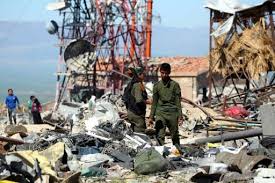
The United States is “deeply concerned” by Turkish air strikes that reportedly killed more than two dozen Kurdish fighters in Iraq and Syria, the State Department said Tuesday.

The strikes underscore the delicate political tightrope the United States is treading in Syria — and to a lesser extent in Iraq — where it is relying heavily on Kurdish forces to conduct the ground fight against the Islamic State group.

“We are very concerned, deeply concerned that Turkey conducted air strikes earlier today in northern Syria as well as northern Iraq without proper coordination either with the United States or the broader global coalition to defeat” IS, State Department spokesman Mark Toner said.

“We have expressed those concerns to the government of Turkey directly.”

Turkey is a key US ally and a NATO member, so America must be careful not to alienate its partner and risk losing Ankara’s support for the anti-IS fight and access to Turkey’s vital Incirlik airbase.

Turkey said it had carried out the strikes in northeastern Syria and northern Iraq against “terrorist havens” and vowed to continue action against groups it links to the outlawed Kurdistan’s Workers’ Party (PKK).

US commandos are working with local Kurds on the ground, much to the fury of Turkey, which sees the Kurdish YPG forces as a terrorist offshoot of the PKK that has been waging an insurgency inside Turkey since 1984.

“This is a very complex battle space. We’re cognizant of that,” Toner said.

“We are also cognizant of the threat that the PKK poses to Turkey… But these kinds of actions frankly harm the coalition’s efforts to go after ISIS.”

The Pentagon offered a more muted response.

“We don’t want our partners hitting other partners,” a senior US defense official told AFP.

“We’ve got to figure out exactly who got hit. We don’t know yet. We do know where the strikes were, but we don’t know exactly who is dead.”

The United States is counting on the SDF, a Syrian Arab-Kurdish alliance, to push into the IS bastion of Raqa in Syria, and is currently weighing whether to provide the Kurdish faction with heavy weaponry and other materiel.

http://start.att.net/news/read/category/news/article/afp-us_deeply_concerned_by_turkish_strikes_in_syria_ir-afp

Το τέλος της υπερεθνικής ψευδαίσθησης και η θέση της Ελλάδας

0

Του Δημήτρη Τσαϊλά*  Τετάρτη 26 Απριλίου 2017

 Η ΕΕ, ιδρύθηκε πάνω στα ερείπια της μεταπολεμικής Ευρώπης, με εκτεταμένη την αμερικανική βοήθεια και ενθάρρυνση. Στόχος τους ήταν να δημιουργήσουν μια υπερεθνική δομή, πρώτα σε οικονομικά θέματα, και αργότερα στις κοινωνικές και νομικές υποθέσεις, ακόμη και στην εξωτερική και αμυντική πολιτική.

Η συμμαχία του ΝΑΤΟ, με σκοπό να αντιμετωπίσει το πρόβλημα της άμυνας, προηγήθηκε της ΕΕ, και αποτελεί το σύνδεσμο ανάμεσα στις Ηνωμένες Πολιτείες, την Ευρώπη και τον Καναδά. Ο εικοστός πρώτος αιώνας έφερε μαζί του διαδικασίες που αμφισβήτησαν την κυριαρχία των υπερεθνικών δομών και οι τελευταίες εκλογές στην Ευρώπη σηματοδοτούν μια ριζική αλλαγή στη μέχρι τώρα εφαρμοσμένη πολιτική καθώς υπάρχει μια συνεχής μετατόπιση από την παραδοσιακή αντιπαλότητα αριστεράς-δεξιάς στην αντίθεση μεταξύ της παγκοσμιοποίησης, με τη μορφή της Ευρωπαϊκής Ένωσης (ΕΕ), και της εθνικής κυριαρχίας.

Όλο αυτό το πολιτικό σκηνικό μοιάζει με το περπάτημα της Αλίκης, από τη χώρα των θαυμάτων, μέσα από το καθρέφτη. Έτσι πηγαίνοντας από “εκεί προς εδώ” τα πάντα είναι ανάποδα. Από τη πλευρά του γυαλιού, η αριστερά έχει μετατραπεί σε δεξιά και η δεξιά μετατρέπεται σε αριστερά. Ο παραδοσιακός στόχος της αριστεράς για οικονομική ισότητα εγκαταλείφθηκε, και αντικαταστάθηκε από μια εμφατική υποταγή στα «ανθρώπινα δικαιώματα», η οποία μάλιστα ξεκίνησε να διδάσκεται στα σχολεία ως μια πραγματική θρησκεία αντί των παραδοσιακών αξιών και των εθνικών αγώνων των προγόνων μας. Η αόριστη έννοια των ανθρωπίνων δικαιωμάτων ήταν κατά κάποιο τρόπο η σύνδεση με την «ελεύθερη διακίνηση» των πάντων.

Πράγματι, το επίσημο δόγμα της ΕΕ είναι η προστασία της «ελεύθερης κυκλοφορίας» (ελεύθερη κυκλοφορία των εμπορευμάτων, των προσώπων, του εργατικού δυναμικού και του κεφαλαίου). Αυτές οι «τέσσερις ελευθερίες» στην πράξη μετέτρεψαν το έθνος από μια πολιτική κοινωνία σε μια χρηματοπιστωτική αγορά, μια επενδυτική ευκαιρία, που διευθύνεται από μια γραφειοκρατία των δήθεν ειδικών που στην αλαζονεία του κέρδους άφησαν τεράστια κενά στην εθνική ασφάλεια. Με τον τρόπο αυτό, η Ευρωπαϊκή Ένωση έχει γίνει το πείραμα πρωτοπορία στο μετασχηματισμό του κόσμου σε μια ενιαία αγορά χωρίς όμως εμβάθυνση στη «Κοινή Πολιτική Ασφάλειας και Άμυνας».

Εδώ και πολύ καιρό, πέρα του σημαντικού προβλήματος της ανεξέλεγκτης ροής μεταναστών, διαμαρτυρόμαστε για την απώλεια θέσεων εργασίας, τη μείωση του βιοτικού επιπέδου, τη μετεγκατάσταση ή το κλείσιμο των κερδοφόρων βιομηχανιών, χωρίς να αναγνωρίζουμε ότι αυτά προκαλούνται από τις ελλείψεις πολιτικής της ΕΕ. Οι οδηγίες της ΕΕ και οι κανονισμοί δημιούργησαν ένα νέο μοντέλο αναδιανομής, είτε γιατί «οι κυβερνήσεις είναι διεφθαρμένες και ανίκανες» ή λόγω των κανόνων ανταγωνισμού που απαγορεύουν τις χώρες να λάβουν μέτρα για τη διατήρηση των βασικών βιομηχανιών τους ή της γεωργίας τους. Αντί όμως να αντιμετωπίσουμε την πραγματικότητα, η αντίδραση, είναι ως επί το πλείστον να επαναλάβουν το φθαρμένο αίτημα για μια αδύνατη «Κοινωνική Ευρώπη».

Άλλο ένα καμπανάκι χτύπησε μετά τις Προεδρικές εκλογές της Γαλλίας. Είχαν προηγηθεί το Βρετανικό δημοψήφισμα όπου υπερίσχυσε το “BREXIT” και οι Προεδρικές εκλογές στις ΗΠΑ. Σήμερα μπορούμε να λέμε ότι η εθνική κυριαρχία έγινε ουσιαστικά μια αμυντική έννοια. Πρόκειται ουσιαστικά για ένα νέον απομονωτισμό, την παραμονή στο εσωτερικό της χώρας τη φύλαξη των δικών μας παιδιών, και της δική μας επιχείρησης.

Είναι το αντίθετο του επιθετικού εθνικισμού που ενέπνευσε τη φασιστική Ιταλία και τη ναζιστική Γερμανία να κατακτήσουν άλλες χώρες, στερώντας τους την εθνική τους κυριαρχία. Η σύγχυση αυτή οφείλεται κυρίως στο γεγονός ότι όλο και περισσότερο ο σημερινός κόσμος θεωρεί ότι απειλείται από την «παγκοσμιοποίηση». Την θεωρούν ως ενός νέου τύπου ιμπεριαλισμό όπως θα έλεγε ένας επαναστατικός Κουμουνιστής, με επίκεντρο τη χρήση στρατιωτικής βίας ή της «ήπιας» ισχύος για να καταστεί δυνατή η διακρατική χρηματοδότηση για να διεισδύσουν οι ισχυροί γεωπολιτικοί παίκτες του πλανήτη σε κάθε γωνιά της γης και να αναμορφώσουν τις κοινωνίες στην ατελείωτη κερδοφόρα αναζήτηση και απόδοση της επένδυσης κεφαλαίου. Η νέα αριστερά επιρροή έχει αποκομίσει προσωρινά κέρδη πάνω σε αυτό το αφήγημα, επειδή έχει σηκώσει τη σημαία των «ανθρωπίνων δικαιωμάτων» και του «αντιρατσισμού» αφαιρώντας το δικαίωμα από μια ολόκληρη γενιά να εξετάσει τα κεντρικά, αν όχι τα μόνα, πολιτικά ζητήματα της εποχής μας.

Το γεγονός ότι ο εθνικισμός αυξάνεται ολοένα στην Ευρώπη, ερμηνεύεται από την επικρατούσα τάση της παγκοσμιοποίησης ως απόδειξη ότι «η Ευρώπη εγκαταλείπει το ανωτέρω αριστερό αφήγημα και κινείται προς ένα φιλελευθερισμό» με τους αριστερούς να κατηγορούν τους υπολοίπους ως ρατσιστές. Η ερμηνεία αυτή είναι μεροληπτική και επικίνδυνη. Οι άνθρωποι σε όλο και περισσότερες ευρωπαϊκές χώρες ζητούν εναγωνίως  την εθνική κυριαρχία τους, ακριβώς επειδή την έχουν χάσει. Την έχασαν από την Ευρωπαϊκή Ένωση και τη θέλουν πίσω. Αυτός είναι ο λόγος για τον οποίο οι Ευρωπαίοι δυσπιστούν σε αυτήν την Ευρωπαϊκή Ένωση. Όχι επειδή είναι «ρατσιστές», αλλά κυρίως επειδή αγαπάμε την ιστορική τους παράδοση και τους αγώνες των προγόνων τους με εθνική υπερηφάνεια.

Στην Πατρίδα μας περισσότερο από ποτέ άλλοτε, αντιμετωπίζουμε προκλήσεις στην εθνική μας άμυνα, την ασφάλεια μας, και την Ευρωπαϊκή μας πορεία. Η εσωτερική πολιτική στη χώρα μας, μάλλον το έχει αναγνωρίσει αυτό, καθώς πλέον δεν έχει την πολυτέλεια του χρόνου. Εκτός από μια αποδυναμωμένη χώρα που είμαστε, αντιμετωπίζουμε μαζί με τους ευρωπαίους εταίρους μας ένα πλήθος προκλήσεων κατά μήκος της ανατολικής και νότιας μεθορίου μας. Εκτός από την τουρκική προκλητικότητα την τρομοκρατία, τις κυβερνοεπιθέσεις, την ενεργειακή ανασφάλεια, τις εκστρατείες παραπληροφόρησης με στόχο την αποδυνάμωση της συνοχής των Ελλήνων αλλά και των Ευρωπαίων, έχουμε και την αβεβαιότητα της στάσης των ευρωπαίων ηγετών και συμμάχων. Το ζητούμενο είναι η θέσπιση μακροπρόθεσμων μηχανισμών για την προστασία του τρόπου ζωής, των κοινών αξιών, και της ασφάλειας.

Νέες ασύμμετρες απειλές έχουν συσσωρευτεί γύρω από την Ευρωπαϊκή Ένωση, με πύλη εισόδου την Ελλάδα και την Ιταλία πρωτίστως. Έχουν τη δυνατότητα να προκαλέσουν ανεπανόρθωτες βλάβες στην ευρωπαϊκή μας σχέση που βρίσκεται ήδη υπό τεράστια πίεση. Ευρωατλαντικοί σύμμαχοι και Ευρωπαίοι εταίροι δυστυχώς λόγω δικών μας αστοχιών δεν έχουν κοινή αντίληψη των απειλών. Η επιθετικότητα της Τουρκίας οι εκστρατείες παραπληροφόρησης κατά της Ελλάδας, και η ανυπαρξία ενός σχεδίου αντιμετώπισης των ροών των μεταναστών μας κάνει ευάλωτους. Η μεταβαλλόμενη φύση των απειλών που αντιμετωπίζει η ΕΕ και η μετατόπιση απαιτήσεων στις προκλήσεις ασφαλείας για την αναμόρφωση των τρόπων αντίδρασης απαιτεί άμεσες πολιτικές αποφάσεις.

Θεωρώ την ενίσχυση της πολιτικής διάστασης της ΕΕ όλο και περισσότερο απαραίτητη από ποτέ, λόγω των πολύπλοκων προκλήσεων στην πολιτική, την ασφάλεια μας, και τα δημοκρατικά συστήματα, όχι μόνο από την ανεξέλεγκτη ροή μεταναστών και την τρομοκρατία από το αυτοαποκαλούμενο ισλαμικό κράτος, αλλά και από τις σκοτεινότερες πλευρές της παγκοσμιοποίησης και της τεχνολογίας, συμπεριλαμβανομένων των κυβερνοεπιθέσεων.

Οι τρομοκρατικές επιθέσεις, είτε είναι συμβατικές μέσα από τον κυβερνοχώρο ή υβριδικές, σε θέματα ασφαλείας προκαλούν ζημιές στους πολίτες αλλά και τις κυβερνήσεις. Η ΕΕ και οι κυβερνήσεις πρέπει να είναι σε θέση να ξαναχτίσουν τις κοινωνίες γρήγορα σε περίπτωση σοβαρών επιθέσεων που θα μπορούσαν να διαταράξουν την απαραίτητη υποδομή. Η ανθεκτικότητα είναι απαραίτητη για την υπεράσπιση της Δυτικής φιλελεύθερης τάξης. Ο ρόλος της ΕΕ είναι ζωτικής σημασίας από την άποψη αυτή, υπό την προϋπόθεση ότι θα έχει και τις στρατιωτικές δυνατότητες να ανταποκριθεί γρήγορα στις επιθέσεις.

Επομένως η σφυρηλάτηση ισχυρών πολιτικών δεσμών με την ΕΕ είναι ζωτικής σημασίας. Δεν υπάρχει χρόνος, αξία, ή ιδεολογικό πλεονέκτημα για το ΝΑΤΟ και την ΕΕ να ανταγωνίζονται μεταξύ τους. Οι σχέσεις του ΝΑΤΟ με την ΕΕ είναι ζωτικής σημασίας για την ενίσχυση των πολιτικών πτυχών της διατλαντικής σχέσης. Ο διαχωρισμός των στρατιωτικών και πολιτικών σχέσεων είναι περιττός.

Το ερώτημα δεν είναι αν η Ευρώπη μπορεί να αμυνθεί, αλλά τι πρέπει να κάνει για να είναι μια ανεξάρτητη και ανθεκτική δύναμη, λιγότερο εξαρτημένη από τις στρατιωτικές δυνάμεις του ΝΑΤΟ. Το ευρωπαϊκό τμήμα του ΝΑΤΟ δεν θα είναι σε θέση να υπερασπιστεί τα Ανατολικά του σύνορα από μια παραδοσιακή στρατιωτική επίθεση. Αλλά μια τέτοια επίθεση είναι μάλλον απίθανη. Το πιο ρεαλιστικό σενάριο είναι ένας υβριδικός πόλεμος, με πολιτικές αναταραχές στο εσωτερικό των χωρών, μια εκστρατεία παραπληροφόρησης, κυβερνοεπιθέσεις, και ακόμη ασύμμετρες απειλές είτε προερχόμενες από την τρομοκρατία ή από την ανεξέλεγκτη ροή μεταναστών.

Επομένως είναι αδύνατο να υπάρχει διχασμός στην Ευρώπη σχετικά με τη φύση της απειλής, ή ακόμα και για το πότε μια επίθεση απαιτεί μια απάντηση. Το οπλοστάσιο πρέπει να περιλαμβάνει μια ισχυρή αντιπολεμική εκστρατεία, με δυνάμεις πολιτικής άμυνας σε θέση να καταστείλουν πιθανές εσωτερικές ταραχές μέσα σε ένα νομικό πλαίσιο και να είναι σε θέση να διακρίνουν ποιος υποκινεί τέτοια γεγονότα, μια ισχυρή ικανότητα σε κυβερνοπόλεμο, και ενισχυμένη συνεργασία για την καταπολέμηση όλων των μορφών τρομοκρατίας.

* Ο κ. Δημήτρης Τσαϊλάς είναι Υποναύαρχος ΠΝ ε.α.

liberal.g

Former Greek Minister of Finance Recognizes Ecuador’s Economic Manage

0
In a lecture delivered invited by the Institute of High National Studies (IAEN) the economist and university professor considered that achievements of this South American country are duwe to a combination of the use of the U.S. dollar ansd a financial architecture that generates liberty inside the Ecuadorian macroeconomy.

‘That is why Ecuador is so important. I really believe the Ecuadorian experience in the last 10 years has many lessons to teach every one’, he stressed.

In his opinion, this is not a political issue, as whoever leads the nation and attends the financial sector, will have to learn from the last 10 years and not sacrifice that combination of hard currency, the dollar, with the flexibility in technological innovation.

‘You face strong challenges, the biggest of which is the human condition that tends to accept the good things as given and then they compromise them, putting them in danger’, he said.

On the subject, he referred to conversatios with the opposition and the message he received were that things in Ecuador are not well because of recession and the loss of that small fraction of the Gross Domestic Product (GDP), which he compared to the estimates of Greece, where the fall was 28 percent. ‘In Greece, one of every two families has no one actively working, we have a massive loss of youths who migrate and turn the country into a desert’, he affirmed.

About that issue, he insisted that it is the task of the new government of maintaining the capacity to face the blows with the mínimum impact.

Foreign Minister Guillaume Long, present at the lecture, considered in statements to Prensa Latina, that it is an honor and a great joy to have the presence in Ecuador of the author of books such as ‘Economy without a Tie’ and ‘Conversations with my Daughter’.

Long asserted that the expert writes on economic issues from a ‘very good combination between left and democratic affiliation, in favor of the most vulnerable and the peoplwe, but also with a lot of pragmatism, from understanding the need to reach wide agreements, even with sectors that not necessarily have put the interests of the people as their first worry’.

In his opinion, the conference delivered by Varoufakis is illustrative and interesting from the Quito perspective, with its dollarized context.

‘We have the same currency of another country, the United States, that controls the emission of that currency and has much more power. Something similar happens in the Eurozone with countries that have the euro and a great asymmetry’, he explained.

Varoufakis continues today his agenda in Ecuador and as he advanced to Prensa Latina, includes a meeting with president Rafael Correa in the Palace of Carondelet.

ef/arc/scm

http://plenglish.com/index.php?o=rn&id=12130&SEO=former-greek-minister-of-finance-recognizes-ecuadors-economic-manage

Who Failed the Palestinian-Israeli Peace Test?

0

Despite continually seeking ‘tests’ for the Palestinians, without which Israel cannot conduct peace talks with them, the one who has consistently failed the test of peace is Netanyahu himself.

In an interview with Fox News on Friday, Prime Minister Benjamin Netanyahu said the Palestinians must “pass the test of peace” (Haaretz, April 22). This time, the test was over “paying terrorists.” Netanyahu argued that the Palestinian Authority and its leader must stop giving money to Palestinians in Israeli prisons and to the families of terrorists. The prime minister’s public support for a position the Israeli defense establishment opposes was meant, inter alia, to further Republican-sponsored federal legislation that would force the United States to halt financial assistance to the PA if it continues these payments.

Netanyahu’s consistent view is that the Palestinians don’t meet the threshold conditions for negotiations. Each time, he pulls a different – essential – condition out of his pocket, without which it’s impossible to launch any political moves. It’s like one of satirist Ephraim Kishon’s poker games, in which the rules change constantly.

The demand that the Palestinians recognize Israel as a Jewish state has until now served as an obstacle intended to block any attempt at political progress. It’s not inconceivable that Netanyahu, in the light of the proposals of then-U.S. Secretary of State John Kerry — which, according to media reports, led the Palestinians to soften their objections on this issue — sought a new excuse to maintain the freeze in negotiations, especially when there are signs of a new U.S. initiative on the horizon.

In the same spirit, Netanyahu ignores the important cooperation with the PA. Just last week, during an Israeli army operation in Nablus, two Israeli undercover soldiers were detained by the Palestinian police before being returned with all their equipment, including guns, communication gear and their car. Such an act seems self-evident only in the context of security cooperation and trust between Israel and the PA.

But a rejectionist like Netanyahu will never present the positive aspects of Israeli-Palestinian relations. For if he did, how could he continue to blur the differences between the PA and Hamas, or between the PA and all the other “beasts of prey” with which Israel is surrounded?

Despite the “tests” Netanyahu is continually seeking for the Palestinians, the one who has consistently failed the test of peace is Netanyahu himself. The prime minister has been running the country for eight years, during which he hasn’t done a thing to seriously promote an agreement. On the contrary, Netanyahu has done everything in his power to torpedo any kind of process that might have enabled a real dialogue with our neighbors.

Meanwhile, he has allowed right-wing extremists, especially Habayit Hayehudi party Chairman Naftali Bennett, to dominate the agenda and make the two-state solution irrelevant. Thus on the most important test of peace, the Israeli test, Netanyahu receives a failing grade.

The above article is Haaretz’s lead editorial, as published in the Hebrew and English newspapers in Israel.

Is Mad Dog Planning to Invade East Syria?

0

The Pentagon’s plan for seizing and occupying territory in east Syria is beginning to take shape. According to a Fox News exclusive:

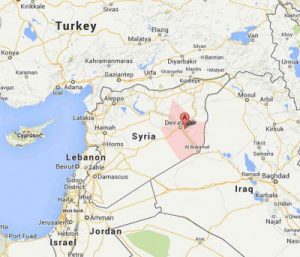
“The Islamic State has essentially moved its so-called capital in Syria… ISIS is now centered in Deir ez-Zur, roughly 90 miles southeast of Raqqa, the officials said.”
(“ISIS moves its capital in Syria”, FOX News )

The move by ISIS corresponds to the secretive massing of US troops and military equipment on the Syria-Jordan border. It creates the perfect pretext for a ground invasion followed by a long-term military occupation in an area that Washington has sought to control for the last 18 months.  Here’s more on the topic from South Front:

“The US military is reportedly concentrating troops and military equipment at the Syrian-Jordanian border. Local sources said that about 20 US Army armoured vehicles (including battle tanks and artillery pieces) carried on trucks were spotted in Al-Mafraq. US troops were allegedly accompanied with the Jordanian Army’s 3rd Division.

The US Special Operation Forces, the UK Special Operation Forces and units from some other countries -have been conducting operations across the Syrian-Jordanian border for a long time. They even had a secret military facility inside Syria where members the so-called New Syrian Army militant group were deployed. However, it was the first time when a notable number of US armoured vehicles was reported there. The US Ro-Ro ship Liberty Passion, loaded with vehicles, had arrived to the Jordanian port of Al-Aqapa few days ago. These moves followed a meeting between the Jordanian King and the US president.

Thus, the US-led coalition could prepare a large-scale military operation in southern Syria. The goal of the operation will likely be to get control over the Syrian-Iraqi border and to reach Deir Ezzor. It will involve militants trained in camps in Jordan and the US-led coalition’s forces.” (“US Military Deployment at Syrian-Jordanian Border, Military Escalation”, Global Research)

Deir Ezzor is a strategically-located city along the Euphrates that the Pentagon needs in order to tighten its grip on the eastern quadrant of the country. Once Deir Ezzor is taken, the US can launch its CIA-backed jihadist militias back into Syria at will putting more pressure on Damascus and eventually forcing regime change. That is the plan at least, whether it works or not is anyone’s guess. The deployment of troops on the Jordanian border suggests that Washington’s proxy-army, the mainly-Kurdish militia or SDF, is either unwilling to conduct operations as far south as Deir Ezzor or doesn’t have the military strength to beat ISIS on its own. In any event, the Pentagon needs fresh troops and equipment to succeed. Here’s more from South Front:

“US Defense Secretary Jim Mattis presented a preliminary version of the new plan to defeat ISIS in Syria and Iraq, a Pentagon spokesman, Navy Capt. Jeff Davis, said on February 28th. ….The plan submitted by Mattis also includes a proposal to increase the size of the US military contingent to ISIS in Syria… (Note–There are already 400 Special Forces operating alongside the SDF) Without significant US presence on the ground, the SDF will hardly be able to retake Raqqah from ISIS without incurring unacceptable losses….

As to Deir Ezzor, the US can try to use militants trained in Jordan to launch an attack on Deir Ezzor from the southern direction. However, the total failure of this US-backed group in 2016 leaves little chance that it’s able to combat ISIS successfully in 2017. So, the US and its allies will be pushed to deploy special forces units or even ground troops to support the advance there.

The Polish Special Forces have already deployed to Jordan where they will operate alongside their French and British counterparts.  According to reports, the US-led block created a joint command center to coordinate efforts of all sides, which will support the advance against ISIS in the area.”  (“New US Strategy Against ISIS And War In Syria. What To Expect?”, South Front)

Here’s more from Fox News:

“U.S. military drones have watched hundreds of ISIS “bureaucrats,” or administrators, leaving Raqqa in the past two months for the city of al-Mayadin located further down the Euphrates River from Deir el-Zour.”

Let me get this straight:  US military drones located hundreds of ISIS terrorists traveling across the open dessert, but did nothing to stop them. Why?

Is it because the Pentagon needs ISIS in Deir Ezzor to justify a ground invasion?  That’s certainly the most plausible explanation.

More from Fox:  “Questions remain about the hold force necessary to keep the peace after ISIS is uprooted from Raqqa.”

In other words,  readers are supposed to believe that the Pentagon doesn’t already have a plan in place for occupying the cities when the siege ends.  That’s baloney. Check out this excerpt from an article by Whitney Webb:

“The Syrian city of Raqqa – the “stronghold” of terror group ISIS – will be governed by a “civilian council” with the support of U.S. troops following its “liberation” from terrorists….

On Tuesday, the U.S.-allied militias …announced that they had formed a “civilian council” to govern Raqqa after its capture from Daesh militants. The Syrian Democratic Forces (SDF)… claim to have spent six months setting up the council, with a preparatory committee having met “with the people and important tribal figures of Raqqa city to find out their opinions on how to govern it,” Middle East Eye reported.

SDF spokesman Talal Selo stated that some towns near Raqqa had already been turned over to the council following a successful operation to drive out Daesh forces.

The U.S. military had previously hinted that power would be given to rebel groups following Raqqa’s “liberation”…(“After ‘Liberation,’ U.S. To Give Control Of Raqqa To Rebels, Not Syrian Government”, Information Clearinghouse)

Washington has already chosen a group of puppets who will follow their directives when the fighting finally ends.  The leaders will be selected from rebel groups and tribal elders that pledge their allegiance to Washington. The new arrangement will prevent the Syrian government from reclaiming a sizable portion of its sovereign territory or reestablishing control over its borders. A splintered Syria will strengthen US-Israeli regional hegemony and provide the land needed for future US military bases.

But why would Washington opt to occupy another country when previous occupations (like Iraq) have gone so badly?

There’s a two word answer to that question: Nadia Schadlow.  President Trump’s National Security Advisor H R McMaster recently hired Schadlow to join his staff as a deputy assistant to the president for national security strategy.  Schadlow recently published a book that “examined 15 cases in which the United States Army intervened abroad, and the service’s role in political and economic reconstruction.” According to the Wall Street Journal:

(Schadlow’s) “War and the Art of Governance” consists of a collection of case studies, beginning with the Mexican-American War and ending in Iraq. Each examines how the U.S. attempted…to translate battlefield victory into a lasting and beneficial political outcome.
Ms. Schadlow’s case studies tell an often doleful story of America allowing victories to fall apart, leaving behind a suffering populace that should have been rewarded with a better peace. She asserts convincingly that postconflict governance can only be done well by soldiers….

The Army’s Civil Affairs units are the only government entities capable of administering conquered territories, yet Civil Affairs units remain the Army’s neglected stepchildren. … the nation must never go to war again until it can definitively answer Gen. Petraeus’s question about “how this ends.” It ends only when the U.S. Army assumes the mantle of leadership and commits itself to remaining on the field until the lives of the population can be protected, the damage repaired and a political future guaranteed.” (“What Happens After Victory”, Wall Street Journal)

Get it? The woman is an expert on military occupation!

Now answer this one question for me: Why would McMaster hire an expert on military occupation unless he was planning to militarily occupy another country?

The facts speak for themselves.

Notes.

1.  http://www.foxnews.com/world/2017/04/21/isis-moves-its-capital-in-syria.html

2. http://www.globalresearch.ca/breaking-video-us-military-deployment-at-syrian-jordanian-border-military-escalation/5584435

3. https://southfront.org/new-us-strategy-against-isis-and-war-in-syria-what-to-expect/

4. http://www.informationclearinghouse.info/46907.htm

5. https://www.wsj.com/articles/what-happens-after-victory-1491520385

MIKE WHITNEY lives in Washington state. He is a contributor to Hopeless: Barack Obama and the Politics of Illusion (AK Press). Hopeless is also available in a Kindle edition. He can be reached at [email protected].

Is Mad Dog Planning to Invade East Syria?    

The Collapse of the Left

0

April 24, 2017

By George Friedman and Jacob L. Shapiro


French voters headed to the polls on Sunday in the first round of France’s presidential election. With the rise of National Front candidate Marine Le Pen, the election raises the question of what is happening to the “left.”

We have spent a lot of time analyzing the rise of nationalist and populist politicians, but less time examining the demise of the “left.” We start off by putting this term in quotation marks because it is unclear what the left stands for anymore.

The term originally comes from the French Revolution. Members of the Third Estate—people outside of the clergy and nobility—met at a tennis court in 1789 because their regular meeting hall was closed. Those who wanted to create a democratic republic sat on the left side of the court, and this is how the term “left wing” emerged.

As liberal democratic nation-states rose across Europe, the left had to transform itself, and the growing needs of the urban working class provided the opportunity. The Industrial Revolution led to urbanization, and the left became the champion of the poor and the working class. But over the last few decades, this general definition of the left has lost its value.

A Split Emerges

Along the way, a split developed within the left between the ideology of its elites and the needs of its rank-and-file members. We saw this play out most recently in last year’s US presidential election.

Democratic nominee Hillary Clinton was not in touch with the working and middle classes that had been the Democratic Party’s base since Franklin D. Roosevelt. Clinton was a technocrat who was paid substantial amounts to give speeches at Goldman Sachs. She was unable to hide her disdain for what she saw as the provincial views of middle-class voters who ended up supporting Donald Trump. She also failed to visit key battleground states like Wisconsin.

Clinton won the nomination because Democratic Party elites believed it was more important to elect the first female president of the US than to convince working-class Americans that the Democrats were still their party. Since Trump became president, the opposition has been fragmented at best. The strongest voice in the Democratic Party isn’t even a registered Democrat. Sen. Bernie Sanders is a socialist and registered Independent who wants to remake the US in the image of Sweden.

In the French election, of the top two candidates who can make some claim to being on the left, one is a former banker and empty suit who has never served in public office but claims the mantle of progressivism. The other is a former Trotskyite and socialist who has garnered attention by delivering speeches through holograms.

In Great Britain, the biggest challenger for Prime Minister Theresa May—who called for a snap election last week—is Jeremy Corbyn. He is a socialist who became the Labour Party leader by accident.

The US case is different from the British case, which is different from the French case. But the left in each of these examples shares one thing in common. The political leaders of the major left-wing parties became enamored by a kind of cosmopolitan and utopian messianism that emphasized internationalism over national interests. They became less concerned with representing working- and middle-class voters who were the source of their power in the first place. At best, the left’s policies did little to help these voters. At worst, some of these policies hurt working- and middle-class voters who formed the left’s electoral base.

The elites continued to romanticize the average working-class voter, but this was accompanied by practical indifference. In the US, it was Democratic presidents who signed NAFTA and pushed for the Trans-Pacific Partnership. Trade deals have pros and cons, but the working class bore the brunt of the damage these deals caused.

In the UK, it was the Conservative Party that brought Great Britain into the European Economic Community in 1973; Labour opposed it. When it came to Brexit, Labour veered in the opposite direction. Corbyn, despite having ambiguous feelings about the EU at best, came out in favor of remaining in the EU. He has also called himself “relaxed” about increased migration to the UK. But the British middle class was enraged at being lectured by Germany about refugees, and this issue led the Brexit campaign to take off. This is one example of how the left is out of touch with its old constituents.

Losing Confidence in the Establishment

The fallout from the 2008 financial crisis affected political elites on both sides of the aisle. The people who experienced the worst of 2008 came to see that establishment political figures did not care about their struggles. Technocratic expertise did little to avert the crisis and perhaps exacerbated it.

This hollowing out of confidence in establishment candidates presented an opportunity for previously fringe ideas and parties. The National Front, for example, has existed in France for decades, but it has become normalized in French politics. The party has gotten to this point by stepping into the breach created by the left’s failures. It aims to be the party of the average Frenchman and the working-class factory worker who has lost his job and has no prospects for the future.

The political parties enjoying the most success currently are those that espouse some combination of nationalism, populism, and economic protectionism. It is debatable whether policies based on these “isms” will cure the underlying disease, but that is not the point. Parties like the National Front and the UK Independence Party (which had limited electoral success but championed Brexit from the start), as well as leaders like Trump, have clearly defined their ideology, their constituents, and the policies they think will benefit the working and middle classes.

The old parties of the left have failed to grasp that this ideology appeals to their constituents as well. The average working- or middle-class worker in Europe may not necessarily be hostile to the European Union, but that worker also is not passionately dedicated to the European project, especially when the economic benefits are unclear at best.

The result is that the left’s proposals are unconvincing for working- and middle-class voters. The far-left candidate in France, Jean-Luc Mélenchon, has a résumé that makes him as ideologically opposed to capitalism as one can get. But when you scrutinize his economic policies, they are not so different from Le Pen’s. He wants to boost public spending and is willing to lead France out of the EU if France cannot secure better terms with the bloc.

In the UK, Labour has been trying to transform Corbyn into a firebrand left-wing populist, but it has had limited success. YouGov polls show that the Conservatives’ support is around 50%.

In the US, the Democrats continue to split their time between alleging Russia threw the election in Trump’s favor and raging at the injustice of his victory. They are still behaving as the party of “Not Trump” rather than trying to regain their position as the party of the working class.

Searching for a Champion

The only voices being clearly heard now are those of Le Pen, Trump, and others who advocate similar policies. The other voices are a cacophony, unsure of the best course of action. Some are unwilling to compromise on moral issues like internationalism and accepting refugees, in part because they are not the ones who experience the negative effects of maintaining a moral high ground on these issues. The voices on the left that have emerged most clearly advocate much the same as the populists but prefer to worship at the altar of Marx instead of the nation.

The middle and working classes are desperately searching for a champion. The problem for the left is that it has forgotten how to fight. The liberal elites are ashamed of nationalism but offer no alternative. So on and on they continue spinning, searching in vain for the supporters they lost. But those supporters have already given up and are begrudgingly casting their lots with the only real game in town.
George Friedman
Editor, This Week in Geopolitics


 

The Fall of the French Left

0

The Atlantic

With Benoît Hamon’s defeat, his Socialist Party may be obsolete.

Benoit Hamon, Socialist Party presidential candidate for the 2017 presidential election, makes selfie with supporters after delivering a speech as he campaigns in Carmaux, France, April 21, 2017.Regis DuvignauIn the first round of a French presidential election, there will, naturally, always be more losers than winners. But until Sunday, the Socialist Party had lost in the initial round only once before: in 2002, when incumbent President Lionel Jospin unexpectedly finished a close third, behind a surprise surge from the National Front’s leader (FN), Jean-Marie Le Pen.

This year, independent-centrist Emmanuel Macron and Jean-Marie’s daughter, Marine, now leader of the FN herself, will move on to the final round on May 7. The Socialist candidate, Benoît Hamon, finished an unprecedented fifth. His loss feels very different from Jospin’s of 15 years ago, and not only because his paltry share of the vote was so much lower—just over 6 percent compared to Jospin’s 16.

What is even more striking than the result itself is that, unlike in 2002, this crushing loss comes as no surprise at all. Like Le Pen’s victory, it was in the making for months, if not years. And yet it is still so remarkable: the most open presidential race France has seen since the formation of the Fifth Republic, with four candidates in close contention, saw no place for the Socialist Party, a stalwart of the French political scene for the past half century. The election was full of surprises, scandals, twists, and turns. But for numerous reasons the Socialists were never really in the mix. The media covered Hamon, it seemed, almost out of sympathy, a melancholic nod to the party’s former status.

Indeed, if this election revealed the rifts and ruptures within French society, it also revealed the rifts and ruptures within the Socialist Party itself, and across the French left more generally. President Francois Hollande endured the lowest popularity ratings on record and his difference-splitting agenda—anti-austerity rhetoric with austerity-driven policy and occasional appeasements to the FN’s xenophobia—satisfied no one. He leaves behind the strange air of having let down everyone, all but burying the Socialist Party in the process. His attempts to maintain unity have, instead, ripped the party apart.

While Hamon’s leadership victory was initially met by suggestions of support from the party’s elites, these swiftly gave way to betrayal. Manuel Valls, France’s prime minister, was one of the most notable departures, along with Defense Minister Jean-Yves Le Drian. Hamon, Valls explained, “does not arouse my enthusiasm.” It’s hard to blame them. The Socialists’ pro-business wing already had its dream candidate, only he wasn’t running for their party. Macron, a former investment banker at Rothschild who left the party last year to launch his own movement, En Marche!, attracted a large share of the Socialist Party vote—supporters and staff alike—with his pro-Europe, pro-business agenda; his vote was highest in areas that voted for Hollande in 2012, predominantly in the western regions. On the left, meanwhile, Hamon was outflanked by Jean-Luc Mélenchon, another former member of the Party backed by his own movement, La France Insoumise. His captivating campaign did the most damage to Hamon, almost single-handedly halving his vote-share within the space of a month.

 It’s tempting to ask what might have happened had Mélenchon and Hamon merged their candidacies—could one of them have bested Macron or Le Pen, commentators on the left wonder? But such a plan could have could have just as easily backfired and come to nothing; such is the Socialist Party’s blemished brand that it could have hurt Mélenchon by trying to help him. He was, after all, advocating dégagisme, or “kick them out,” where “them” refers to the traditional politicians and elites. This rebellious message, which resonated so well with French frustrations over politics-as-usual, may have fallen flat had he bound himself to a “them” party like the Socialists. As Mélenchon put it himself, he had “no intention of going and hitching myself to a hearse.”
In the wake of Mélenchon’s surprising (if also unsuccessful) surge and Macron’s hold on the center, the Socialists are left to awkwardly ask whether they have a purpose. This question has no easy answers. With no territory to call their own, they are not even in “no-man’s land”—theirs is a nowhere land. It’s not clear what the way forward is, or if one even exists. While for now the Socialists retain a majority of seats in Parliament, with elections for the legislative assemblies in June, The Economist has already reported that, according to the En Marche! team, many Socialists are ready to defect. The two factions that have hitherto lain uneasily within the party—centrism and socialism—have now deserted it for Mélenchon and Macron. Meanwhile, whatever remains of the working class has largely shifted its support to Le Pen, who preys on its insecurity by invoking foreign threats. Living in areas with low economic activity and with low levels of education were the two strongest demographic indicators for voting Le Pen.

 What is clear is that the Socialist Party cannot continue as if nothing has changed. It is no longer the workers’ party, and has not been for some time—François Mitterrand’s embrace of the Single European Act in the mid-1980s marked the end of the left’s opposition to the market, but no vision ever replaced it. The left’s mainstream parties across the Western world have failed to confront this same identity crisis. They now draw their core support from an urban, affluent middle class. Hamon’s campaign promises, radical though they were, reflected this narrowness: clever, cool ideas, but too intellectual to resonate with the millions of men and women struggling to make a living right now.
Tellingly, Macron, Le Pen, and Mélenchon found success by adopting new vocabularies—they each desperately wanted to distance themselves from the status quo, and, in the process, ditched the tired dichotomy of the left and the right. In western democracies, the center has made this move before, with Tony Blair’s “Third Way” and Bill Clinton’s “triangulation,” but Mélenchon’s decision to do something similar, while not yielding on his left-wing agenda, was striking and effective. For decades, he has been a staunch maverick of the French left. When he decided to leave the Socialist Party in 2008 after 30 years of service, it was, he said, to set up a “new party for the left.” Now, he and those around him almost refuse to use the word. “We do not appeal to the identitarian patriotism of those who think that we have to ‘save the left’ or ‘be left-wing,’” a spokesperson for Mélenchon’s La France insoumise explained in an interview. “It is far too minoritarian. We want to win.”

And they came closer than many thought possible. Hamon, by contrast, languished in fifth with dated language. “The left,” he gushed, “it’s everything I am. It is my life.” No one else, he said, could represent the country’s political left. But it turns out no one wanted to, because no one needed to. It’s not where the votes are found.

Throughout his campaign, Mélenchon always insisted that the French are furious, not fascist. In the final round, Macron against Le Pen, France will see how far that is true. But we can say with certainty that nor are the French loyally “left-wing” either. If the Socialist Party is to survive, it will need a new beat.

https://www.theatlantic.com/international/archive/2017/04/france-socialist-hamon-macron-le-pen-melenchon-election/524085/

Σχέδιο Ανάν 13 χρόνια μετά: Μουσειακό έκθεμα ή όχημα λύσης

0

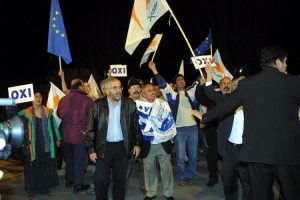
FILE PHOTO. Συντριπτικά (76%), οι Ελληνοκύπριοι απέρριψαν το σχέδιο του τότε Γ.Γ του ΟΗΕ Κόφι Ανάν ΚΥΠΕ/ Γιώργος Κωνσταντίνου

Του Κώστα Βενιζέλου
Δεκατρία χρόνια μετά το δημοψήφισμα της 24ης Απριλίου 2004, το Κυπριακό βρίσκεται ξανά στο προσκήνιο μέσα από μια εν εξελίξει διαδικασία των συνομιλιών. Οι συνομιλίες που διεξήχθηκαν την περίοδο 2008-2012 από τον τότε Πρόεδρο Χριστόφια με τους Ταλάτ και Έρογλου διαδοχικά δεν οδήγησαν σε λύση του Κυπριακού. Ούτε και οι συνομιλίες Αναστασιάδη- Έρογλου και Αναστασιάδη- Ακιντζί, που συνεχίζονται μέχρι σήμερα.

Μετά το αποτέλεσμα στο δημοψήφισμα το σχέδιο Ανάν δεν μπορεί να αποτελέσει βάση διαπραγμάτευση. Παραμένει, ωστόσο, ως σημείο αναφοράς και ως στοιχείο της μακράς πορείας του Κυπριακού. Χρησιμοποιούνται στοιχεία του και αποτελεί το κρυφό χαρτί των εν δυνάμει μεσολαβητών.

Το σχέδιο Ανάν δεν ήλθε από το πουθενά, αλλά αποτέλεσε τη διαχρονικά «συσσωρευμένη εμπειρία» στο Κυπριακό. Κοντολογίς τις υποχωρήσεις που έγιναν από την ελληνοκυπριακή πλευρά από το 1974 και εντεύθεν. Για το συγκεκριμένο σχέδιο, οι σχεδιασμοί που κορυφώθηκαν το 2004 είχαν ξεκινήσει, τουλάχιστον, από το 1999. Είχε, ωστόσο, στοιχεία και από το 1992, όταν παρουσιάσθηκαν οι Ιδέες Γκάλι «ως συμφωνημένες αντιλήψεις».

Αποτιμώντας λάθη και παραλείψεις της ελληνικής πλευράς, θα μπορούσε να καταγράψει κανείς μια σειρά από παράγοντες που διαδραμάτισαν καθοριστικό ρόλο στη διαμόρφωση των εξελίξεων.

Πρώτον, η υποχωρητικότητα που επέδειξε η τότε κυβέρνηση( 1998-2003) στο Κυπριακό στην προσπάθεια της να διασφαλίσει την ένταξη στην Ε.Ε.

Δεύτερον, η τακτική της αποδοχής των ιδεών και εισηγήσεων του ΟΗΕ και των αγγλοαμερικανών με τη λογική «ότι θα τις απορρίψει ο Ντενκτάς». Όταν το Φεβρουάριο του 2004 στη Νέα Υόρκη ο Ντενκτάς αποδέχθηκε τη διαδικαστική φόρμουλα, η ε/κ πλευρά αιφνιδιάστηκε και δεν είχε σχέδιο Β΄.

Τρίτο, η επιστολή Παπαδόπουλου του Δεκεμβρίου 2003 προς τον Γενικό Γραμματέα για την ανάληψη πρωτοβουλίας στο Κυπριακό. Την ώρα που η κατάρρευση της Χάγης πιστώθηκε στους Τούρκους, η επιλογή που υπήρχε ήταν μόνο η απρόσκοπτη πορεία προς την ένταξη στην Ε.Ε. την πρωτομαγιά του 2004.

Τέταρτο, η αποδοχή της επιδιαιτησίας το Φεβρουάριο του 2004, που εκ των πραγμάτων θα οδηγούσε σε ένα ετεροβαρές σχέδιο λύσης, όπως και έγινε.

Πέμπτο, η πίεση της Αθήνας για αποδοχή μιας διαδικασίας και ενός σχεδίου, πριν ακόμη υποβληθεί.

Έκτο, δεν αξιολογήθηκαν σωστά οι εξελίξεις στην Τουρκία και την τουρκοκυπριακή κοινότητα.

Μέσα σε ένα κλίμα και έχοντας ενώπιον της ένα σχέδιο ετεροβαρές, που δεν διασφάλιζε τη βιωσιμότητα, λειτουργικότητα της συμφωνίας, η επιλογή για την ελληνοκυπριακή πλευρά ήταν η απόρριψη. Διαμορφώθηκαν τότε δυο μπλόκ στην κοινωνία. Για πρώτη φορά μετά από πολλά χρόνια η κοινωνία χωρίστηκε στα δυο και ήταν έντονος ο διαχωρισμός.

Ο Τάσσος Παπαδόπουλος με το διάγγελμά του ζήτησε ένα ηχηρό όχι. Τούτο ήταν μεν αποτέλεσμα της θέσης και της στάσης του έναντι του περιεχομένου του σχεδίου, είχε όμως και μια άλλη εξήγηση. Ο τότε Πρόεδρος δεν ήθελε το αποτέλεσμα να ήταν οριακό, γιατί εσωτερικά θα υπήρχαν αναταράξεις και θα βάθαινε ο διαχωρισμός και η αντιπαλότητα.

Το αποτέλεσμα ήταν καθαρό, όπως καθαρό ήταν και το μήνυμα προς εκείνους που ήθελαν να επιβάλλουν μια λύση, που είχε σοβαρά ελλείμματα δημοκρατίας, δεν διασφάλιζε τη συνέχεια του κράτους ενώ τρύπιο ήταν το σύστημα της ασφάλειας. Η βιασύνη κάποιων να περάσει το σχέδιο λίγες μέρες πριν την ένταξη της Κύπρου στην Ευρωπαϊκή Ένωση, ήταν ενδεικτική των προθέσεων τους.

Αμυντικογενή διαχείριση του «όχι»

Η διαχείριση του «όχι» αποτέλεσε αντικείμενο συζητήσεων. Είναι προφανές πως διαχείριση ήταν αμυντικογενή και σε πολλές περιπτώσεις φοβική. Η Κυβέρνηση δεν οχυρώθηκε πίσω από το συντριπτικό αποτέλεσμα του δημοψηφίσματος, για να ενταφιάσει το σχέδιο και να προτάξει ένα πλαίσιο το οποίο θα οδηγούσε σε απεμπλοκή του Κυπριακού από διαχωριστικές πρόνοιες

Δυσκολίες, ασφαλώς, υπήρχαν. Δεν ήταν εύκολο το εγχείρημα, καθώς υπήρξε μια καθολική, σχεδόν, αντίδραση από το ξένο παράγοντα. Ωστόσο, στη διπλωματία, όπως και στον πόλεμο, η καλύτερη άμυνα είναι η επίθεση. Οι εξελίξεις γύρω από την ενταξιακή πορεία της Τουρκίας, θα μπορούσε να αποτελέσει την καλύτερη ευκαιρία για να υπάρξει συνέχεια στις πρωτοβουλίες για το Κυπριακό σε μια νέα βάση. Η συμφωνία της 8ης Ιουλίου 2006, ήταν ένα βήμα προς τα εμπρός και η πρώτη σοβαρή εξέλιξη από το δημοψήφισμα. Δεν προχώρησε, όμως, λόγω της τουρκικής στάσης και μόνο.

Δεν έγινε καμία διαπραγμάτευση

Διαπραγμάτευση, παρά την προσπάθεια της ελληνικής πλευράς, δεν έγινε. Δεν το ευνοούσε τούτο, ούτε η τουρκική πλευρά, ούτε και η ομάδα του ΟΗΕ. Η ομάδα Ντε Σότο μετά το Φεβρουάριο του 2004 και αφού εξασφάλισε την επιδιαιτησία, θεώρησε πως το επόμενο βήμα ήταν το δημοψήφισμα. Το τι έγινε στο Μπούργκερνστοκ, είναι επίσης, γνωστό. Τα δέκα στα δέκα του εγγράφου Ζιγιάλ καθόρισαν και το παιχνίδι και ήταν από τις λίγες αλλά σημαντικές αλλαγές που έγιναν στο διαμορφωμένο ήδη σχέδιο..

Στο Μπούργκενστοκ της ελβετικής Λουκέρνης, οι αντιπροσωπείες σε ένα κλοιό απομόνωσης συγκεντρώθηκαν για το προτελευταίο στάδιο της συμφωνημένης διαδικασίας. Στις 23 Μαρτίου όλοι οι εμπλεκόμενοι βρίσκονταν στον καθορισμένο χώρο. Από το σκηνικό απουσιάζει ο άλλοτε κύριος πρωταγωνιστής, ο Ραούφ Ντενκτάς. Είχε με επιστολή του προς τον Κόφι Ανάν εξουσιοδοτήσει τους Μεχμέτ Αλί Ταλάτ και Σερντάρ Ντενκτάς να διεξάγουν τις διαπραγματεύσεις.

Ήταν προφανές από την πρώτη ημέρα ότι δεν επρόκειτο να διεξαχθούν συνομιλίες. Τα διαδικαστικά ζητήματα που εγείρονταν, οι συζητήσεις για τη μονογραφή του εγγράφου, κατά πόσον θα ήταν τετραμερής ή όχι η διαδικασία, προδιέγραφαν το πλαίσιο μέσα στο οποίο θα κινείτο η διαδικασία. Ήταν προφανές ότι όλοι, άλλος λίγο άλλος περισσότερο, θεωρούσαν πως διέξοδο θα αποτελούσαν τελικά τα δημοψηφίσματα. Στο τραπέζι πέφτουν έγγραφα με θέσεις επί όλων των σημείων. Ο περιβόητος χάρτης που παρασκηνιακά εξήγγειλε ο Ερντογάν, δεν δόθηκε ποτέ. Δεν χρειάστηκε για την ακρίβεια. Το παζάρι που επιχειρήθηκε με το θέμα πρωτογενούς δικαίου σε σχέση με το κοινοτικό κεκτημένο ξεπεράσθηκε καθώς δεν χρειάστηκε καν να παίξει το θέμα της Καρπασίας. Οι Τούρκοι το εξασφάλισαν ασυζητητί.

Ο Κόφι Ανάν επέδωσε, στις 29 Μαρτίου, στις πλευρές το αναθεωρημένο του σχέδιο για λύση του Κυπριακού( Σχέδιο Ανάν 4), με το οποίο θεωρούσε «ότι αντιμετωπίζει τις ανησυχίες των δύο πλευρών». Ο Γ.Γ. σημείωνε ότι θα ανέμενε τις αντιδράσεις τους μέχρι την επομένη το πρωί «και τότε θα τις αξιολογήσει και θα δει πού είναι απαραίτητες περαιτέρω προσαρμογές για οριστικοποίηση του κειμένου μέχρι την 31η Μαρτίου». Την Πρωταπριλιά του 2004 (στις 00.40) άρχισε η τελετή που οργάνωσαν τα ΗΕ στο Μπούργκενστοκ, στην παρουσία όλων των πλευρών, για ολοκλήρωση των συνομιλιών για το Κυπριακό. Ο Γενικός Γραμματέας επέδωσε στις εμπλεκόμενες πλευρές στο Κυπριακό το τελικό σχέδιο για συνολική λύση στο Κυπριακό, που θα υποβαλλόταν σε δημοψήφισμα στις 24 Απριλίου.

Η αυλαία έπεσε, ο Άλβαρο ντε Σότο στη συνέντευξη Τύπου εναπόθεσε τις ελπίδες του στους πολιτικούς ηγέτες και στο λαό.

*Πηγή «Σχέδιο Ανάν Το μυστικό Παζάρι» (Κ. Βενιζέλου, Μιχ. Ιγνατίου, Ν. Μελέτη εκδόσεις Λιβάνη)

http://www.apopseis.com/schedio-anan-13-chronia-meta-mousiako-ekthema-i-ochima-lysis/

European Union Closes Ranks on Brexit

0

Handelsblatt

TOUGH TALKS

British government hopes of dividing the remaining 27 European Union states are thwarted, as new guidelines show the EU toughening its negotiating position on Brexit.

brexitflags, LR1ED3P120IIW
Brexit talks will be tough. Picture source: Reuters

Breaking up is hard to do. And the European Union is making it clear that it wants Britain to learn this lesson.

Draft guidelines for the EU negotiating position, currently in preparation in Brussels, have hardened in recent weeks. The guidelines, which Handelsblatt has seen, are expected to be finalized this week and approved by a summit of EU heads of government next weekend.

British government hopes of exploiting divisions among other EU countries seem not to have materialized. British prime minister Theresa May and her Brexit minister David Davis had aimed to isolate countries like Poland and enlist their help in gaining a better exit deal.

But  remaining 27 European Union member states, often known as the EU-27, are increasingly united in setting hardline terms for Brexit negotiations.

Finland’s finance minister Petteri Orpo said last week Brexit “is inevitably going to be so painful that no one will want to feel it for themselves.”

And this appears to be the sentiment driving the EU.

24 p8 EU Demands for the UK-01

The guidelines indicate that negotiations for a new trade deal will begin only after a withdrawal agreement has been hammered out. The withdrawal agreement will primarily deal with duties the UK government has agreed to over its 40 years of EU membership and that list of obligations is steadily growing longer. The latest draft guidelines state that: “The withdrawal agreement should address further areas of cooperation, including security.”

In practice, that means Britain must give some kind of guarantee that military and anti-terrorism cooperation will continue after Brexit. There have been threats made in British political circles to end security cooperation – but the EU-27 wants to rule this out.

There is also growing determination on the EU side to hold London to its financial commitments. Originally, the EU Brexit negotiating guidelines had spoken of Britain needing to fulfill its “legal and budgetary obligations.” Under pressure from the German government, this has been rephrased as “all financial obligations,” removing any possible ambiguity.

The EU-27 want Britain to pay a total of around €60 billion ($65 billion) when negotiations conclud. This primarily includes British contributions to the pensions of EU staff, as well as money for ongoing aid projects that Britain has already agreed to support.

Specifics on Britain’s financial obligations have now been established by the European Commission, outlined in a working paper seen by Handelsblatt. The paper defines the elements adding up to “the total which Britain must pay,” suggests a “timetable for payments” and outlines powers for the European Court of Justice to enforce payment.

The EU-27 also wants the withdrawal agreement to settle questions relating to Britain’s withdrawal from the European Investment Bank, the European Central Bank and the European Development Fund.

The guidelines additionally contain a warning for the British government – after leaving the EU, they should not attempt to use tax dumping or loose financial regulations to undermine a stricter EU regime. Any post-Brexit free trade agreement must ensure that “the financial stability of the EU will not be endangered,” says paragraph 20 of the guidelines. The German government is said to have pushed hard to include both EU institutions and financial rules in the negotiation guidelines.

The EU-27’s draft negotiating position makes clear that Britain should continue to respect the jurisdiction of the European Court of Justice during the transitional period before a new free trade agreement. They are also clear on the question of EU citizens currently living in the United Kingdom, stating that London must guarantee to “preserve” their existing legal status in the country.

The new guidelines will form the background to European Commission President Jean-Claude Juncker’s visit to London on Wednesday. It promises to be a tense event. Europe’s Brexit negotiation positions have drawn scorn from Euroskeptic British politicians, now stronger than ever in Britain’s domestic politics.

Referring to the negotiating demands, Conservative MP Peter Bone said: “The EU is in cloud-cuckoo land.” His party colleague William Cash, a veteran Euroskeptic, said it would be “completely impossible” for Theresa May to accede to these demands.

Responses from the British government has been more relaxed. Officially they are saying nothing: the prime minister’s office declined to comment on the Brussels guidelines. Unofficially, the government played down tensions. The guidelines are only a draft, said one government figure to Handelsblatt: “We’ll see what comes out in the end.”

Experts said the new guidelines could be about jockeying for position as much as hardening attitudes. “Negotiations have not yet begun,” EU expert Jill Rutter told Handelsblatt. “We’ll see more clearly in the coming weeks where there is room for maneuver,” she added.

Ms. Rutter suggested there would be little flexibility on the British side on the question of the European Court of Justice. Ms. May has regularly expressed her wish to cut links to the court, saying her country “would not really being leaving the EU if we do not control our own laws.” Ms. Rutter said the legal point could prove a difficult one in the talks.

“The negotiating demands show the EU is in cloud-cuckoo land.”

Peter Bone, British Conservative MP

By contrast, she suggested, financial questions may prove easier to solve. The British side has already said it intends to meet its financial obligations: “we’ll find out what that means in the negotiations,” said Ms. Rutter.

European advisers to the 27 EU heads of government will meet today in Brussels to agree the final form of the guidelines, which will be approved at this weekend’s summit meeting. Then things get serious, with direct Brexit negotiations set to begin in the second half of May.

The latest EU guidelines contain a stern warning against underestimating the difficulty and cost of Brexit: “All national authorities, companies and any other stakeholders must now take steps toward preparing for the consequences of British withdrawal.”

 Ruth Berschens heads Handelsblatt’s Brussels office, leading coverage of European policy. Kerstin Leitel is a correspondent for Handelsblatt in London. To contact the authors: [email protected], [email protected]

https://global.handelsblatt.com/politics/european-union-closes-ranks-on-brexit-753165

Macron and Le Pen advance to the second round of the French election

0

A new Republic

For the first time in the history of the Fifth Republic, neither mainstream political party has entered the run-off for the presidency

This result means that for the first time in modern French history, the second round will not include a candidate from either of the two political families—the Socialists and the Republicans—that have held the presidency since the Fifth Republic was established by Charles de Gaulle in 1958. François Fillon, a former prime minister and the Republicans’ beleaguered candidate, came third, with 19.7% of the vote, closely trailed by the far-left Jean-Luc Mélenchon at 19.2%, who failed to sustain a late surge during the closing weeks of the campaign.

The selection of Ms Le Pen and Mr Macron for the run-off, on a high turnout of around 80%, is remarkable in several respects. In effect, it turns the final round of the election into a direct contest between two rival world views. Campaigning under the slogan “In the name of the people”, Ms Le Pen calls herself a “patriot” and spreads an essentially nationalist message. She vows to hold a referendum on taking France out of the European Union, and thus the euro; to introduce protectionist trade barriers; to tax firms that hire foreigners; to strengthen ties with Vladimir Putin’s Russia; to close the borders to immigration; and to strip jihadist suspects with dual citizenship of their French nationality.

By contrast Mr Macron, who set up his party, En Marche! (On the Move!), only a year ago, advocates keeping France central to the liberal Western order. A former Socialist economy minister, he is a zealous pro-European who wants to reinforce ties with Germany, to keep France part of the global trading system, to build cross-party support between left and right in order to “unblock” the French economy, and to support the transatlantic alliance. Polls taken before first-round voting consistently suggested that he would beat Ms Le Pen by some 20 points in a head-to-head contest. Although no surprise can be ruled out, voters from the centre-right and far left are expected to rally to him, whatever their reservations, in order to keep her out.

This first-round result could also presage the break-up of the French party system. It is a measure of the anti-establishment mood that neither Ms Le Pen nor Mr Macron belong to a mainstream, established party. The FN was founded in 1972 by Ms Le Pen’s father, Jean-Marie Le Pen, but has been confined for decades to the xenophobic fringes of political life. When Mr Le Pen shocked France and made it into the final of the presidential election in 2002, he was roundly beaten by Jacques Chirac, a Gaullist, who got 82% of the vote in the run off. The FN currently has only two deputies in the National Assembly, and mayors in only a dozen of the country’s 36,000 communes. That Ms Le Pen is in a position potentially to double her father’s result is a reflection of how far she has turned the FN into a fixed feature of the French party system, and brought its ideas into the mainstream. Even if she loses the presidency, the FN has wielded influence over this campaign in a way that far outweighs its electoral representation.

As for the amiable Mr Macron, he has already pulled off a historic feat. Three years ago, the 39-year-old former investment banker and adviser to the Socialist president, François Hollande was unknown to the general public. Last summer he was still considered an outsider whose hopes of running for president defied all French rules about the way candidacies are slow-cooked over the years. But his political gamble and his campaign team’s tireless door-knocking and leaflet-stuffing have paid off. En Marche! boasts more than twice as many members as the decades-old Socialist Party. Mr Macron now goes into the second round as the firm favourite.

As Mr Macron and Ms Le Pen now prepare for a tough two-week campaign, France could be in for a deep political realignment. Disappointed centre-left deputies from the Socialist camp, whose candidate, Benoît Hamon, secured a miserable 6.2% of the vote and who fear for their parliamentary seats, could well knock on Mr Macron’s door ahead of legislative elections in June. The En Marche! team says that many Socialists are ready to defect. On the right, the Republicans had expected this election to belong to them, after five years under the unpopular Mr Hollande. Some of its deputies too will be tempted to join Mr Macron. Dominique de Villepin, a former prime minister (though not a deputy), has already pledged his support. Within the party, there will be recriminations and despondency as it decides how to pick itself up, and whether it can survive in its current form.

On May 7th, France faces a choice that will determine not only its future but that of the EU. It will become the most crucial test case in Europe for whether a liberal Western democracy can defy the trend and face down nationalist populism. The political alternatives on offer in this run-off could scarcely differ more. But the chances are that France’s next president will be a man with a dream and a gamble, who is now as well-placed as possible to become the next, and youngest-ever, president of the Fifth Republic.

http://www.economist.com/news/21721278-first-time-history-fifth-republic-neither-mainstream-political-party-has?cid1=cust/ddnew/n/n/n/20170424n/owned/n/n/nwl/n/n/eu/Daily_Dispatch/email&etear=dailydispatch

George Soros Funds Over 200 US Organizations – Here’s the List

0

Self-professed Nazi war criminal George Soros continues to go free and influence American politics and society.  However, part of the weapon in the war against him is to openly identify those he funds.

Both Soros and his Open Society Foundations provide funding directly or indirectly to over 200 US organizations.

  • Advancement Project: This organization works to organize “communities of color” into politically cohesive units while disseminating its leftist worldviews and values as broadly as possible by way of a sophisticated communications department.
  • Air America Radio: Now defunct, this was a self-identified “liberal” radio network.
  • Al-Haq: This NGO produces highly politicized reports, papers, books, and legal analyses regarding alleged Israeli human-rights abuses committed against Palestinians.
  • All of Us or None: This organization seeks to change voting laws — which vary from state to state — so as to allow ex-inmates, parolees, and even current inmates to cast their ballots in political elections.
  • Alliance for Justice: Best known for its activism vis a vis the appointment of federal judges, this group consistently depicts Republican judicial nominees as “extremists.”
  • America Coming Together: Soros played a major role in creating this group, whose purpose was to coordinate and organize pro-Democrat voter-mobilization programs.
  • America Votes: Soros also played a major role in creating this group, whose get-out-the-vote campaigns targeted likely Democratic voters.
  • America’s Voice: This open-borders group seeks to promote “comprehensive” immigration reform that includes a robust agenda in favor of amnesty for illegal aliens.
  • American Bar Association Commission on Immigration Policy: This organization “opposes laws that require employers and persons providing education, health care, or other social services to verify citizenship or immigration status.”
  • American Bridge 21st Century: This Super PAC conducts opposition research designed to help Democratic political candidates defeat their Republican foes.
  • American Civil Liberties Union: This group opposes virtually all post-9/11 national security measures enacted by the U.S. government. It supports open borders, has rushed to the defense of suspected terrorists and their abettors, and appointed former New Left terrorist Bernardine Dohrn to its Advisory Board.
  • American Constitution Society for Law and Policy: This Washington, DC-based think tank seeks to move American jurisprudence to the left by recruiting, indoctrinating, and mobilizing young law students, helping them acquire positions of power. It also provides leftist Democrats with a bully pulpit from which to denounce their political adversaries.
  • American Family Voices: This group creates and coordinates media campaigns charging Republicans with wrongdoing.
  • American Federation of Teachers: After longtime AFT President Albert Shanker died in in 1997, he was succeeded by Sandra Feldman, who slowly “re-branded” the union, allying it with some of the most powerful left-wing elements of the New Labor Movement. When Feldman died in 2004, Edward McElroy took her place, followed by Randi Weingarten in 2008. All of them kept the union on the leftward course it had adopted in its post-Shanker period.
  • American Friends Service Committee: This group views the United States as the principal cause of human suffering around the world. As such, it favors America’s unilateral disarmament, the dissolution of American borders, amnesty for illegal aliens, the abolition of the death penalty, and the repeal of the Patriot Act.
  • American Immigration Council: This non-profit organization is a prominent member of the open-borders lobby. It advocates expanded rights and amnesty for illegal aliens residing in the U.S.
  • American Immigration Law Foundation: This group supports amnesty for illegal aliens, on whose behalf it litigates against the U.S. government.
  • American Independent News Network: This organization promotes “impact journalism” that advocates progressive change.
  • American Institute for Social Justice: AISJ’s goal is to produce skilled community organizers who can “transform poor communities” by agitating for increased government spending on city services, drug interdiction, crime prevention, housing, public-sector jobs, access to healthcare, and public schools.
  • American Library Association: This group has been an outspoken critic of the Bush administration’s War on Terror — most particularly, Section 215 of the USA Patriot Act, which it calls “a present danger to the constitutional rights and privacy rights of library users.”
  • The American Prospect, Inc.: This corporation trains and mentors young leftwing journalists, and organizes strategy meetings for leftist leaders.
  • Amnesty International: This organization directs a grossly disproportionate share of its criticism for human rights violations at the United States and Israel.
  • Applied Research Center: Viewing the United States as a nation where “structural racism” is deeply “embedded in the fabric of society,” ARC seeks to “build a fair and equal society” by demanding “concrete change from our most powerful institutions.”
  • Arab American Institute Foundation: The Arab American Institute denounces the purportedly widespread civil liberties violations directed against Arab Americans in the post-9/11 period, and characterizes Israel as a brutal oppressor of the Palestinian people.
  • Aspen Institute: This organization promotes radical environmentalism and views America as a nation plagued by deep-seated “structural racism.”
  • Association of Community Organizations for Reform Now: This group conducts voter mobilization drives on behalf of leftist Democrats. These initiatives have been notoriously marred by fraud and corruption.
  • Ballot Initiative Strategy Center: This organization seeks to advance “a national progressive strategy” by means of ballot measures—state-level legislative proposals that pass successfully through a petition (“initiative”) process and are then voted upon by the public.
  • Bend The Arc: A Jewish Partnership for Justice: This organization condemns Voter ID laws as barriers that “make it harder for communities of color, women, first-time voters, the elderly, and the poor to cast their vote.”
  • Bill of Rights Defense Committee: This group provides a detailed blueprint for activists interested in getting their local towns, cities, and even college campuses to publicly declare their opposition to the Patriot Act, and to designate themselves “Civil Liberties Safe Zones.” The organization also came to the defense of self-described radical attorney Lynne Stewart, who was convicted in 2005 of providing material support for terrorism.
  • Black Alliance for Just Immigration: This organization seeks to create a unified movement for “social and economic justice” centered on black racial identity.
  • Blueprint North Carolina: This group seeks to “influence state policy in North Carolina so that residents of the state benefit from more progressive policies such as better access to health care, higher wages, more affordable housing, a safer, cleaner environment, and access to reproductive health services.”
  • Brennan Center for Justice: This think tank/legal activist group generates scholarly studies, mounts media campaigns, files amicus briefs, gives pro bono support to activists, and litigates test cases in pursuit of radical “change.”
  • Brookings Institution: This organization has been involved with a variety of internationalist and state-sponsored programs, including one that aspires to facilitate the establishment of a U.N.-dominated world government. Brookings Fellows have also called for additional global collaboration on trade and banking; the expansion of the Kyoto Protocol; and nationalized health insurance for children. Nine Brookings economists signed a petitionopposing President Bush’s tax cuts in 2003.
  • Campaign for America’s Future: This group supports tax hikes, socialized medicine, and a dramatic expansion of social welfare programs.
  • Campaign for Better Health Care: This organization favors a single-payer, government-run, universal health care system.
  • Campaign for Youth Justice: This organization contends that “transferring juveniles to the adult criminal-justice system leads to higher rates of recidivism, puts incarcerated and detained youth at unnecessary risk, has little deterrence value, and does not increase public safety.”
  • Campus Progress: A project of the Soros-bankrolled Center for American Progress, this group seeks to “strengthen progressive voices on college and university campuses, counter the growing influence of right-wing groups on campus, and empower new generations of progressive leaders.”
  • Casa de Maryland: This organization aggressively lobbies legislators to vote in favor of policies that promote expanded rights, including amnesty, for illegal aliens currently residing in the United States.
  • Catalist: This is a for-profit political consultancy that seeks “to help progressive organizations realize measurable increases in civic participation and electoral success by building and operating a robust national voter database of every voting-age American.”
  • Catholics for Choice: This nominally Catholic organization supports women’s right to abortion-on-demand.
  • Catholics in Alliance for the Common Good: This political nonprofit group is dedicated to generating support from the Catholic community for leftwing candidates, causes, and legislation.
  • Center for American Progress: This leftist think tank is headed by former Clinton chief of staff John Podesta, works closely with Hillary Clinton, and employs numerous former Clinton administration staffers. It is committed to “developing a long-term vision of a progressive America” and “providing a forum to generate new progressive ideas and policy proposals.”
  • Center for Community Change: This group recruits and trains activists to spearhead leftist “political issue campaigns.” Promoting increased funding for social welfare programs by bringing “attention to major national issues related to poverty,” the Center bases its training programs on the techniques taught by the famed radical organizer Saul Alinsky.
  • Center for Constitutional Rights: This pro-Castro organization is a core member of the open borders lobby, has opposed virtually all post-9/11 anti-terrorism measures by the U.S. government, and alleges that American injustice provokes acts of international terrorism.
  • Center for Economic and Policy Research: This group opposed welfare reform, supports “living wage” laws, rejects tax cuts, and consistently lauds the professed achievements of socialist regimes, most notably Venezuela.
  • Center for International Policy: This organization uses advocacy, policy research, media outreach, and educational initiatives to promote “transparency and accountability” in U.S. foreign policy and global relations. It generally views America as a disruptive, negative force in the world.
  • Center for Reproductive Rights: CRR’s mission is to guarantee safe, affordable contraception and abortion-on-demand for all women, including adolescents. The organization has filed state and federal lawsuits demanding access to taxpayer-funded abortions (through Medicaid) for low-income women.
  • Center for Responsible Lending: This organization was a major player in the subprime mortgage crisis. According to Phil Kerpen (vice president for policy at Americans for Prosperity), CRL “sh[ook] down and harass[ed] banks into making bad loans to unqualified borrowers.” Moreover, CRL negotiated a contract enabling it to operate as a conduit of high-risk loans to Fannie Mae.
  • Center for Social Inclusion: This organization seeks to counteract America’s “structural racism” by means of taxpayer-funded policy initiatives.
  • Center on Budget and Policy Priorities: Reasoning from the premise that tax cuts generally help only the wealthy, this organization advocates greater tax expenditures on social welfare programs for low earners.
  • Center on Wisconsin Strategy (COWS): Aiming to redistribute wealth by way of higher taxes imposed on those whose incomes are above average, COWS contends that “it is important that state government be able to harness fair contribution from all parts of society – including corporations and the wealthy.”
  • Change America Now: Formed in December 2006, Change America Now describes itself as “an independent political organization created to educate citizens on the failed policies of the Republican Congress and to contrast that record of failure with the promise offered by a Democratic agenda.”
  • Citizens for Responsibility and Ethics in Washington: This group litigates and brings ethics charges against “government officials who sacrifice the common good to special interests” and “betray the public trust.” Almost all of its targets are Republicans.
  • Coalition for an International Criminal Court: This group seeks to subordinate American criminal-justice procedures to those of an international court.
  • Color Of Change: This organization was founded to combat what it viewed as the systemic racism pervading America generally and conservatism in particular.
  • Common Cause: This organization aims to bring about campaign-finance reform, pursue media reform resembling the Fairness Doctrine, and cut military budgets in favor of increased social-welfare and environmental spending.
  • Constitution Project: This organization seeks to challenge the legality of military commissions; end the detainment of “enemy combatants”; condemn government surveillance of terrorists; and limit the President’s executive privileges.
  • Defenders of Wildlife Action Fund: Defenders of Wildlife opposes oil exploration in Alaska’s Arctic National Wildlife Refuge. It condemns logging, ranching, mining, and even the use of recreational motorized vehicles as activities that are destructive to the environment.
  • Democracy Alliance: This self-described “liberal organization” aims to raise $200 million to develop a funding clearinghouse for leftist groups. Soros is a major donor to this group.
  • Democracy 21: This group is a staunch supporter of the Bipartisan Campaign Reform Act of 2002, also known as the McCain-Feingold Act.
  • Democracy Now!: Democracy Now! was created in 1996 by WBAI radio news director Amy Goodman and four partners to provide “perspectives rarely heard in the U.S. corporate-sponsored media,” i.e., the views of radical and foreign journalists, left and labor activists, and ideological foes of capitalism.
  • Democratic Justice Fund: DJF opposes the Patriot Act and most efforts to restrict or regulate immigration into the United States — particularly from countries designated by the State Department as “terrorist nations.”
  • Democratic Party: Soros’ funding activities are devoted largely to helping the Democratic Party solidify its power base. In a November 2003 interview, Soros stated that defeating President Bush in 2004 “is the central focus of my life” … “a matter of life and death.” He pledged to raise $75 million to defeat Bush, and personally donated nearly a third of that amount to anti-Bush organizations. “America under Bush,” he said, “is a danger to the world, and I’m willing to put my money where my mouth is.”
  • Demos: This organization lobbies federal and state policymakers to “addres[s] the economic insecurity and inequality that characterize American society today”; promotes “ideas for reducing gaps in wealth, income and political influence”; and favors tax hikes for the wealthy.
  • Drum Major Institute: This group describes itself as “a non-partisan, non-profit think tank generating the ideas that fuel the progressive movement,” with the ultimate aim of persuading “policymakers and opinion-leaders” to take steps that advance its vision of “social and economic justice.”
  • Earthjustice: This group seeks to place severe restrictions on how U.S. land and waterways may be used. It opposes most mining and logging initiatives, commercial fishing businesses, and the use of motorized vehicles in undeveloped areas.
  • Economic Policy Institute: This organization believes that “government must play an active role in protecting the economically vulnerable, ensuring equal opportunity, and improving the well-being of all Americans.”
  • Electronic Privacy Information Center: This organization has been a harsh critic of the USA PATRIOT Act and has joined the American Civil Liberties Union in litigating two cases calling for the FBI “to publicly release or account for thousands of pages of information about the government’s use of PATRIOT Act powers.”
  • Ella Baker Center for Human Rights: Co-founded by the revolutionary communist Van Jones, this anti-poverty organization claims that “decades of disinvestment in our cities” — compounded by “excessive, racist policing and over-incarceration” — have “led to despair and homelessness.”
  • EMILY’s List: This political network raises money for Democratic female political candidates who support unrestricted access to taxpayer-funded abortion-on-demand.
  • Energy Action Coalition: Founded in 2004, this group describes itself as “a coalition of 50 youth-led environmental and social justice groups working together to build the youth clean energy and climate movement.” For EAC, this means “dismantling oppression” according to its principles of environmental justice.
  • Equal Justice USA: This group claims that America’s criminal-justice system is plagued by “significant race and class biases,” and thus seeks to promote major reforms.
  • Fair Immigration Reform Movement: This is the open-borders arm of the Center for Community Change.
  • Faithful America: This organization promotes the redistribution of wealth, an end to enhanced interrogation procedures vis a vis prisoners-of-war, the enactment of policies to combat global warming, and the creation of a government-run heath care system.
  • Families USA: This Washington-based health-care advocacy group favors ever-increasing government control of the American healthcare system.
  • Feminist Majority: Characterizing the United States as an inherently sexist nation, this group focuses on “advancing the legal, social and political equality of women with men, countering the backlash to women’s advancement, and recruiting and training young feminists to encourage future leadership for the feminist movement in the United States.”
  • Four Freedoms Fund: This organization was designed to serve as a conduit through which large foundations could fund state-based open-borders organizations more flexibly and quickly.
  • Free Exchange on Campus: This organization was created solely to oppose the efforts of one individual, David Horowitz, and his campaign to have universities adopt an “Academic Bill of Rights,” as well as todenounce Horowitz’s 2006 book The Professors. Member organizations of FEC include Campus Progress (a project of the Center for American Progress); the American Association of University Professors; theAmerican Civil Liberties Union; People For the American Way; the United States Student Association; theCenter for Campus Free Speech; the American Library Association; Free Press; and the National Association of State Public Interest Research Groups.
  • Free Press: This “media reform” organization has worked closely with many notable leftists and such organizations as Media Matters for America, Air America Radio, Global Exchange, Code Pink, Fairness and Accuracy in Reporting, the Revolutionary Communist Party, Mother Jones magazine, and Pacifica Radio.
  • Funding Exchange: Dedicated to the concept of philanthropy as a vehicle for social change, this organization pairs leftist donors and foundations with likeminded groups and activists who are dedicated to bringing about their own version of “progressive” change and social justice. Many of these grantees assume that American society is rife with racism, discrimination, exploitation, and inequity and needs to be overhauled via sustained education, activism, and social agitation.
  • Gamaliel Foundation: Modeling its tactics on those of the radical Sixties activist Saul Alinsky, this group takes a strong stand against current homeland security measures and immigration restrictions.
  • Gisha: Center for the Legal Protection of Freedom of Movement: This anti-Israel organization seeks to help Palestinians “exercise their right to freedom of movement.”
  • Global Centre for the Responsibility to Protect: This group contends that when a state proves either unable or unwilling to protect civilians from mass atrocities occurring within its borders, it is the responsibility of the international community to intervene — peacefully if possible, but with military force if necessary.
  • Global Exchange: Established in 1988 by pro-Castro radical Medea Benjamin, this group consistently condemns America’s foreign policy, business practices, and domestic life. Following the 9/11 terrorist attacks, Global Exchange advised Americans to examine “the root causes of resentment against the United States in the Arab world — from our dependence on Middle Eastern oil to our biased policy towards Israel.”
  • Grantmakers Without Borders: GWB tends to be very supportive of leftist environmental, anti-war, and civil rights groups. It is also generally hostile to capitalism, which it deems one of the chief “political, economic, and social systems” that give rise to a host of “social ills.”
  • Green For All: This group was created by Van Jones to lobby for federal climate, energy, and economic policy initiatives.
  • Health Care for America Now: This group supports a “single payer” model where the federal government would be in charge of financing and administering the entire U.S. healthcare system.
  • Human Rights Campaign: The largest “lesbian-gay-bisexual-transgender” lobbying group in the United States, HRC supports political candidates and legislation that will advance the LGBT agenda. Historically, HRC has most vigorously championed HIV/AIDS-related legislation, “hate crime” laws, the abrogation of the military’s “Don’t Ask, Don’t Tell” policy, and the legalization of gay marriage.
  • Human Rights First: This group supports open borders and the rights of illegal aliens; charges that the Patriot Act severely erodes Americans’ civil liberties; has filed amicus curiae briefs on behalf of terror suspect Jose Padilla; and deplores the Guantanamo Bay detention facilities.
  • Human Rights Watch: This group directs a disproportionate share of its criticism at the United States and Israel. It opposes the death penalty in all cases, and supports open borders and amnesty for illegal aliens.
  • I’lam: This anti-Israel NGO seeks “to develop and empower the Arab media and to give voice to Palestinian issues.”
  • Immigrant Defense Project: To advance the cause of illegal immigrants, the IDP provides immigration law backup support and counseling to New York defense attorneys and others who represent or assist immigrants in criminal justice and immigration systems, as well as to immigrants themselves.
  • Immigrant Legal Resource Center: This group claims to have helped gain amnesty for some three million illegal aliens in the U.S., and in the 1980s was part of the sanctuary movement which sought to grant asylum to refugees from the failed Communist states of Central America.
  • Immigrant Workers Citizenship Project: This open-borders organization advocates mass immigration to the U.S.
  • Immigration Advocates Network: This alliance of immigrant-rights groups seeks  to “increase access to justice for low-income immigrants and strengthen the capacity of organizations serving them.”
  • Immigration Policy Center: IPC is an advocate of open borders and contends that the massive influx of illegal immigrants into America is due to U.S. government policy, since “the broken immigration system […] spurs unauthorized immigration in the first place.”
  • Independent Media Center: This Internet-based, news and events bulletin board represents an invariably leftist, anti-capitalist perspective and serves as a mouthpiece for anti-globalization/anti-America themes.
  • Independent Media Institute: IMI administers the SPIN Project (Strategic Press Information Network), which provides leftist organizations with “accessible and affordable strategic communications consulting, training, coaching, networking opportunities and concrete tools” to help them “achieve their social justice goals.”
  • Institute for America’s Future: IAF supports socialized medicine, increased government funding for education, and the creation of an infrastructure “to ensure that the voice of the progressive majority is heard.”
  • Institute for New Economic Thinking: Seeking to create a new worldwide “economic paradigm,” this organization is staffed by numerous individuals who favor government intervention in national economies, and who view capitalism as a flawed system.
  • Institute for Policy Studies: This think tank has long supported Communist and anti-American causes around the world. Viewing capitalism as a breeding ground for “unrestrained greed,” IPS seeks to provide a corrective to “unrestrained markets and individualism.” Professing an unquestioning faith in the righteousness of the United Nations, it aims to bring American foreign policy under UN control.
  • Institute for Public Accuracy: This anti-American, anti-capitalist organization sponsored actor Sean Penn’s celebrated visit to Baghdad in 2002. It also sponsored visits to Iraq by Democratic Congressmen Nick Rahall and former Democrat Senator James Abourezk
  • Institute for Women’s Policy Research: This group views the U.S. as a nation rife with discrimination against women, and publishes research to draw attention to this alleged state of affairs. It also advocates unrestricted access to taxpayer-funded abortion-on-demand, stating that “access to abortion is essential to the economic well-being of women and girls.”
  • International Crisis Group: One of this organization’s leading figures is its Mideast Director, Robert Malley, who was President Bill Clinton’s Special Assistant for Arab-Israeli Affairs. His analysis of the Mideast conflict is markedly pro-Palestinian.
  • J Street: This anti-Israel group warns that Israel’s choice to take military action to stop Hamas’ terrorist attacks “will prove counter-productive and only deepen the cycle of violence in the region”
  • Jewish Funds for Justice: This organization views government intervention and taxpayer funding as crucial components of enlightened social policy. It seeks to redistribute wealth from Jewish donors to low-income communities “to combat the root causes of domestic economic and social injustice.” By JFJ’s reckoning, chief among those root causes are the inherently negative by-products of capitalism – most notably racism and “gross economic inequality.”
  • Joint Victory Campaign 2004: Founded by George Soros and Harold Ickes, this group was a major fundraising entity for Democrats during the 2004 election cycle. It collected contributions (including large amounts from Soros personally) and disbursed them to two other groups, America Coming Together and the Media Fund, which also worked on behalf of Democrats.
  • Justice at Stake: This coalition calls for judges to be appointed by nonpartisan, independent commissions in a process known as “merit selection,” rather than elected by the voting public.
  • LatinoJustice PRLDF: This organization supports bilingual education, the racial gerrymandering of voting districts, and expanded rights for illegal aliens.
  • Lawyers Committee for Civil Rights Under Law: This group views America as an unremittingly racist nation; uses the courts to mandate race-based affirmative action preferences in business and academia; has filed briefs against the Department of Homeland Security’s efforts to limit the wholesale granting of green cards and to identify potential terrorists; condemns the Patriot Act; and calls on Americans to “recognize the contribution” of illegal aliens.
  • Leadership Conference on Civil and Human Rights: This organization views the United States as a nation rife with racism, sexism, and all manner of social injustice; and it uses legislative advocacy to push for “progressive change” that will create “a more open and just society.”
  • League of United Latin American Citizens: This group views America as a nation plagued by “an alarming increase in xenophobia and anti-Hispanic sentiment”; favors racial preferences; supports the legalization of illegal Hispanic aliens; opposes military surveillance of U.S. borders; opposes making English America’s official language; favors open borders; and rejects anti-terrorism legislation like the Patriot Act.
  • League of Women Voters Education Fund: The League supports taxpayer-funded abortion-on-demand; supports “motor-voter” registration, which allows anyone with a driver’s license to become a voter, regardless of citizenship status; and supports tax hikes and socialized medicine.
  • League of Young Voters: This organization seeks to “empowe[r] young people nationwide” to “participate in the democratic process and create progressive political change on the local, state and national level[s].”
  • Lynne Stewart Defense Committee: IRS records indicate that Soros’s Open Society Institute made a September 2002 grant of $20,000 to this organization. Stewart was the criminal-defense attorney who was later convicted for abetting her client, the “blind sheik” Omar Abdel Rahman, in terrorist activities connected with his Islamic Group.
  • Machsom Watch: This organization describes itself as “a movement of Israeli women, peace activists from all sectors of Israeli society, who oppose the Israeli occupation and the denial of Palestinians’ rights to move freely in their land.”
  • MADRE: This international women’s organization deems America the world’s foremost violator of human rights. As such, it seeks to “communicat[e] the real-life impact of U.S. policies on women and families confronting violence, poverty and repression around the world,” and to “demand alternatives to destructive U.S. policies.” It also advocates unrestricted access to taxpayer-funded abortion-on-demand.
  • Malcolm X Grassroots Movement: This group views the U.S. as a nation replete with racism and discrimination against blacks; seeks to establish an independent black nation in the southeastern United States; and demands reparations for slavery.
  • Massachusetts Immigrant and Refugee Advocacy Coalition: This group calls for the expansion of civil rights and liberties for illegal aliens; laments that illegal aliens in America are commonly subjected to “worker exploitation”; supports tuition-assistance programs for illegal aliens attending college; and characterizes the Patriot Act as a “very troubling” assault on civil liberties.
  • Media Fund: Soros played a major role in creating this group, whose purpose was to conceptualize, produce, and place political ads on television, radio, print, and the Internet.
  • Media Matters for America: This organization is a “web-based, not-for-profit … progressive research and information center” seeking to “systematically monitor a cross-section of print, broadcast, cable, radio, and Internet media outlets for conservative misinformation.” The group works closely with the Soros-backed Center for American Progress, and is heavily funded by Democracy Alliance, of which Soros is a major financier.
  • Mercy Corps: Vis a vis the Arab-Israeli conflict, Mercy Corps places all blame for Palestinian poverty and suffering directly on Israel.
  • Mexican American Legal Defense and Education Fund: This group advocates open borders, free college tuition for illegal aliens, lowered educational standards to accommodate Hispanics, and voting rights for criminals. In MALDEF’s view, supporters of making English the official language of the United States are “motivated by racism and anti-immigrant sentiments,” while advocates of sanctions against employers reliant on illegal labor seek to discriminate against “brown-skinned people.”
  • Meyer, Suozzi, English and Klein, PC: This influential defender of Big Labor is headed by Democrat operativeHarold Ickes.
  • Midwest Academy: This entity trains radical activists in the tactics of direct action, targeting, confrontation, and intimidation.
  • Migration Policy Institute: This group seeks to create “a North America with gradually disappearing border controls … with permanent migration remaining at moderate levels.”
  • Military Families Speak Out: This group ascribes the U.S. invasion of Iraq to American imperialism and lust for oil.
  • Missourians Organizing for Reform and Empowerment: This group is the rebranded Missouri branch of the now-defunct, pro-socialist, community organization ACORN.
  • MoveOn.org: This Web-based organization supports Democratic political candidates through fundraising, advertising, and get-out-the-vote drives.
  • Ms. Foundation for Women: This group laments what it views as the widespread and enduring flaws of American society: racism, sexism, homophobia, and the violation of civil rights and liberties. It focuses its philanthropy on groups that promote affirmative action for women, unfettered access to taxpayer-funded abortion-on-demand, amnesty for illegal aliens, and big government generally.
  • Muslim Advocates: Opposed to U.S. counter-terrorism strategies that make use of sting operations and informants, MA characterizes such tactics as forms of “entrapment” that are inherently discriminatory against Muslims.
  • NARAL Pro-Choice America: This group supports taxpayer-funded abortion-on-demand, and works to elect pro-abortion Democrats.
  • NAACP Legal Defense and Education Fund: The NAACP supports racial preferences in employment and education, as well as the racial gerrymandering of voting districts. Underpinning its support for race preferences is the fervent belief that white racism in the United States remains an intractable, largely undiminished, phenomenon.
  • The Nation Institute: This nonprofit entity sponsors leftist conferences, fellowships, awards for radical activists, and journalism internships.
  • National Abortion Federation: This group opposes any restrictions on abortion at either the state or federal levels, and champions the introduction of unrestricted abortion into developing regions of the world.
  • National Coalition to Abolish the Death Penalty: This group was established in 1976 as the first “fully staffed national organization exclusively devoted to abolishing capital punishment.”
  • National Committee for Responsive Philanthropy: This group depicts the United States as a nation in need of dramatic structural change financed by philanthropic organizations. It overwhelmingly promotes grant-makers and grantees with leftist agendas, while criticizing their conservative counterparts.
  • National Committee for Voting Integrity: This group opposes “the implementation of proof of citizenship and photo identification requirements for eligible electors in American elections as the means of assuring election integrity.”
  • National Council for Research on Women: This group supports big government, high taxes, military spending cuts, increased social welfare spending, and the unrestricted right to taxpayer-funded abortion-on-demand.
  • National Council of La Raza: This group lobbies for racial preferences, bilingual education, stricter hate-crime laws, mass immigration, and amnesty for illegal aliens.
  • National Council of Women’s Organizations: This group views the United States as a nation rife with injustice against girls and women. It advocates high levels of spending for social welfare programs, and supports race and gender preferences for minorities and women in business and academia.
  • National Immigration Forum: Opposing the enforcement of present immigration laws, this organization urges the American government to “legalize” en masse all illegal aliens currently in the United States who have no criminal records, and to dramatically increase the number of visas available for those wishing to migrate to the U.S. The Forum is particularly committed to opening the borders to unskilled, low-income workers, and immediately making them eligible for welfare and social service programs.
  • National Immigration Law Center: This group seeks to win unrestricted access to government-funded social welfare programs for illegal aliens.
  • National Lawyers Guild: This group promotes open borders; seeks to weaken America’s intelligence-gathering agencies; condemns the Patriot Act as an assault on civil liberties; rejects capitalism as an unviable economic system; has rushed to the defense of convicted terrorists and their abettors; and generally opposes all U.S. foreign policy positions, just as it did during the Cold War when it sided with the Soviets.
  • National Organization for Women: This group advocates the unfettered right to taxpayer-funded abortion-on-demand; seeks to “eradicate racism, sexism and homophobia” from American society; attacks Christianity and traditional religious values; and supports gender-based preferences for women.
  • National Partnership for Women and Families: This organization supports race- and sex-based preferences in employment and education. It also advocates for the universal “right” of women to undergo taxpayer-funded abortion-on-demand at any stage of pregnancy and for any reason.
  • National Priorities Project: This group supports government-mandated redistribution of wealth — through higher taxes and greater expenditures on social welfare programs. NPP exhorts the government to redirect a significant portion of its military funding toward public education, universal health insurance, environmentalist projects, and welfare programs.
  • National Public Radio: Founded in 1970 with 90 public radio stations as charter members, NPR is today a loose network of more than 750 U.S. radio stations across the country, many of which are based on college and university campuses. (source)
  • National Security Archive Fund: This group collects and publishes declassified documents obtained through the Freedom of Information Act to a degree that compromises American national security and the safety of intelligence agents.
  • National Women’s Law Center: This group supports taxpayer-funded abortion-on-demand; lobbies against conservative judicial appointees; advocates increased welfare spending to help low-income mothers; and favors higher taxes for the purpose of generating more funds for such government programs as Medicaid, food stamps, welfare, foster care, health care, child-support enforcement, and student loans.
  • Natural Resources Defense Council: One of the most influential environmentalist lobbying groups in the United States, the Council claims a membership of one million people.
  • New America Foundation: This organization uses policy papers, media articles, books, and educational events to influence public opinion on such topics as healthcare, environmentalism, energy policy, the Mideast conflict, global governance, and much more.
  • New Israel Fund: This organization gives support to NGOs that regularly produce reports accusing Israel of human-rights violations and religious persecution.
  • NewsCorpWatch: A project of Media Matters For America, NewsCorpWatch was established with the help of a $1 million George Soros grant to Media Matters.
  • Pacifica Foundation: This entity owns and operates Pacifica Radio, awash from its birth with the socialist-Marxist rhetoric of class warfare and hatred for capitalism.
  • Palestinian Center for Human Rights: This NGO investigates and documents what it views as Israeli human-rights violations against Palestinians.
  • Peace and Security Funders Group: This is an association of more than 60 foundations that give money to leftist anti-war and environmentalist causes. Its members tend to depict America as the world’s chief source of international conflict, environmental destruction, and economic inequalities.
  • Peace Development Fund: In PDF’s calculus, the United States needs a massive overhaul of its social and economic institutions. “Recently,” explains PDF, “we have witnessed the negative effects of neo-liberalism and the globalization of capitalism, the de-industrialization of the U.S. and the growing gap between the rich and poor …”
  • People for the American Way: This group opposes the Patriot Act, anti-terrorism measures generally, and the allegedly growing influence of the “religious right.”
  • People Improving Communities Through Organizing: This group uses Alinsky-style organizing tactics to advance the doctrines of the religious left.
  • Physicians for Human Rights: This group is selectively and disproportionately critical of the United States and Israel in its condemnations of human rights violations.
  • Physicians for Social Responsibility: This is an anti-U.S.-military organization that also embraces the tenets of radical environmentalism.
  • Planned Parenthood: This group is the largest abortion provider in the United States and advocates taxpayer-funded abortion-on-demand.
  • Ploughshares Fund: This public grantmaking foundation opposes America’s development of a missile defense system, and contributes to many organizations that are highly critical of U.S. foreign policies and military ventures.
  • Prepare New York: This group supported the proposed construction of a Muslim Community Center near Ground Zero in lower Manhattan – a project known as the Cordoba Initiative, headed by Imam Feisal Abdul Rauf.
  • Presidential Climate Action Project: PCAP’s mission is to create a new 21st-century economy, completely carbon-free and based largely on renewable energy. A key advisor to the organization is the revolutionary communist Van Jones.
  • Prison Moratorium Project: This initiative was created in 1995 for the express purpose of working for the elimination of all prisons in the United States and the release of all inmates. Reasoning from the premise that incarceration is never an appropriate means of dealing with crime, it deems American society’s inherent inequities the root of all criminal behavior.
  • Progressive Change Campaign Committee: This organization works “to elect bold progressive candidates to federal office and to help [them] and their campaigns save money, work smarter, and win more often.”
  • Progressive States Network: PSN’s mission is to “pass progressive legislation in all fifty states by providing coordinated research and strategic advocacy tools to forward-thinking state legislators.”
  • Project Vote: This is the voter-mobilization arm of the Soros-funded ACORN. A persistent pattern of lawlessness and corruption has followed ACORN/Project Vote activities over the years.
  • Pro Publica: Claiming that “investigative journalism is at risk,” this group aims to remedy this lacuna in news publishing by “expos[ing] abuses of power and betrayals of the public trust by government, business, and other institutions, using the moral force of investigative journalism to spur reform through the sustained spotlighting of wrongdoing.”
  • Proteus Fund: This foundation directs its philanthropy toward a number of radical leftwing organizations.
  • Psychologists for Social Responsibility: This anti-capitalist, anti-corporate, anti-military, anti-American organization “uses psychological knowledge and skills to promote peace with social justice at the community, national and international levels.”
  • Public Citizen Foundation: Public Citizen seeks increased government intervention and litigation against corporations — a practice founded on the notion that American corporations, like the capitalist system of which they are a part, are inherently inclined toward corruption.
  • Public Justice Center: Viewing America as a nation rife with injustice and discrimination, this organization engages in legislative and policy advocacy to promote “systemic change for the disenfranchised.”
  • Rebuild and Renew America Now (a.k.a. Unity ’09): Spearheaded by MoveOn.org and overseen by longtime activist Heather Booth, this coalition was formed to facilitate the passage of President Obama’s “historic” $3.5 trillion budget for fiscal year 2010.
  • Res Publica: Seeking to advance far-left agendas in places all around the world, RP specializes in “E-advocacy,” or web-based movement-building.
  • Roosevelt Institute: Proceeding from the premise that free-market capitalism is inherently unjust and prone to periodic collapses caused by its own structural flaws, RI currently administers several major projects aimed at reshaping the American economy to more closely resemble a socialist system.
  • Secretary of State Project: This project was launched in July 2006 as an independent “527” organization devoted to helping Democrats get elected to the office of Secretary of State in selected swing, or battleground, states.
  • Sentencing Project: Asserting that prison-sentencing patterns are racially discriminatory, this initiative advocates voting rights for felons.
  • Social Justice Leadership: This organization seeks to transform an allegedly inequitable America into a “just society” by means of “a renewed social-justice movement.”
  • Shadow Democratic Party: This is an elaborate network of non-profit activist groups organized by George Soros and others to mobilize resources — money, get-out-the-vote drives, campaign advertising, and policy iniatives — to elect Democratic candidates and guide the Democratic Party towards the left.
  • Sojourners: This evangelical Christian ministry preaches radical leftwing politics. During the 1980s it championed Communist revolution in Central America and chastised U.S. policy-makers for their tendency “to assume the very worst about their Soviet counterparts.” More recently, Sojourners has taken up the cause of environmental activism, opposed welfare reform as a “mean-spirited Republican agenda,” and mounted a defense of affirmative action.
  • Southern Poverty Law Center: This organization monitors the activities of what it calls “hate groups” in the United States. It exaggerates the prevalence of white racism directed against American minorities.
  • State Voices: This coalition helps independent local activist groups in 22 states work collaboratively on a year-round basis, so as to maximize the impact of their efforts.
  • Talking Transition: This was a two-week project launched in early November 2013 to “help shape the transition” to City Hall for the newly elected Democratic mayor of New York, Bill de Blasio.
  • Think Progress: This Internet blog “pushes back, daily,” by its own account, against its conservative targets, and seeks to transform “progressive ideas into policy through rapid response communications, legislative action, grassroots organizing and advocacy, and partnerships with other progressive leaders throughout the country and the world.”
  • Thunder Road Group: This political consultancy, in whose creation Soros had a hand, coordinates strategy for the Media Fund, America Coming Together, and America Votes.
  • Tides Foundation and Tides Center: Tides is a major funder of the radical Left.
  • U.S. Public Interest Research Group: This is an umbrella organization of student groups that support leftist agendas.
  • Universal Healthcare Action Network: This organization supports a single-payer health care system controlled by the federal government.
  • Urban Institute: This research organization favors socialized medicine, expansion of the federal welfare bureaucracy, and tax hikes for higher income-earners.
  • USAction Education Fund: USAction lists its priorities as: “fighting the right wing agenda”; “building grassroots political power”; winning “social, racial and economic justice for all”; supporting a system of taxpayer-funded socialized medicine; reversing “reckless tax cuts for millionaires and corporations” which shield the “wealthy” from paying their “fair share”; advocating for “pro-consumer and environmental regulation of corporate abuse”; “strengthening progressive voices on local, state and national issues”; and working to “register, educate and get out the vote … [to] help progressives get elected at all levels of government.”
  • Voter Participation Center: This organization seeks to increase voter turnout among unmarried women, “people of color,” and 18-to-29-year-olds — demographics that are heavily pro-Democrat.
  • Voto Latino: This group seeks to mobilize Latin-Americans to become registered voters and political activists.
  • We Are America Alliance: This coalition promotes “increased civic participation by immigrants” in the American political process.
  • Working Families Party: An outgrowth of the socialist New Party, WFP seeks to help push the Democratic Party toward the left.
  • World Organization Against Torture: This coalition works closely with groups that condemn Israeli security measures against Palestinian terrorism.
  • YWCA World Office, Switzerland: The YWCA opposes abstinence education; supports universal access to taxpayer-funded abortion-on-demand; and opposes school vouchers.

“Secondary“ or “Indirect“ Affiliates of the George Soros Network

  • Center for Progressive Leadership: Funded by the Soros-bankrolled Democracy Alliance, this anti-capitalist organization is dedicated to training future leftist political leaders.
  • John Adams Project:This project of the American Civil Liberties Union was accused of: (a) having hired investigators to photograph CIA officers thought to have been involved in enhanced interrogations of terror suspects detained in Guantanamo, and then (b) showing the photos to the attorneys of those suspects, some of whom were senior al-Qaeda operatives.
  • Moving Ideas Network (MIN): This coalition of more than 250 leftwing activist groups is a partner organization of the Soros-backed Center for American Progress. MIN was originally a project of the Soros-backed American Prospect and, as such, received indirect funding from the Open Society Institute. In early 2006, The American Prospect relinquished control of the Moving Ideas Network.
  • New Organizing Institute: Created by the Soros-funded MoveOn.org, this group “trains young, technology-enabled political organizers to work for progressive campaigns and organizations.”
  • Think Progress: This “project” of the American Progress Action Fund, which is a “sister advocacy organization”of the Soros-funded Center for American Progress and Campus Progress, seeks to transform “progressive ideas into policy through rapid response communications, legislative action, grassroots organizing and advocacy, and partnerships with other progressive leaders throughout the country and the world.”
  • Vote for Change: Coordinated by the political action committee of the Soros-funded MoveOn.org, Vote for Change was a group of 41 musicians and bands that performed concerts in several key election “battleground” states during October 2004, to raise money in support of Democrat John Kerry‘s presidential bid.
  • Working Families Party: Created in 1998 to help push the Democratic Party toward the left, this front group for the Soros-funded ACORN functions as a political party that promotes ACORN-friendly candidates.

The list comes from Discover the Networks and needs to be circulated across the nation.

The man has no conscience, as demonstrated in the following video.  He also financed over 50 anti-Trump protest groups and even funds Facebook’s laughable “fake news fact checking” group. Here’s a question for President Trump, when you finally get around to appointing an investigator like you promised, how about tying up some loose ends with this guy?

TIM BROWN

http://freedomoutpost.com

Η νίκη Μακρόν και ο κίνδυνος… ακυβερνησίας

2

Η επικράτηση του κεντρώου υποψηφίου δεν σημαίνει ότι υπάρχουν περιθώρια εφησυχασμού για την Ευρωπαϊκή Ενωση. Γιατί οι βουλευτικές εκλογές του Ιουνίου αποτελούν «κλειδί» για τη διακυβέρνηση της Γαλλίας. Ο ρόλος των παραδοσιακών κομμάτων.

Ο κεντρώος Εμανουέλ Μακρόν και η λαϊκίστρια Μαρίν Λεπέν περνούν στον δεύτερο γύρο των προεδρικών εκλογών της Γαλλίας και θα έρθουν αντιμέτωποι στην ψηφοφορία της 7ης Μαΐου. Οι δύο υποψήφιοι νίκησαν τον συντηρητικό Φρανσουά Φιγιόν κα τον αριστερό διεκδικητή Ζαν Λικ Μελανσόν, σε μία από τις πιο απρόβλεπτες προεδρικές εκλογές στην ιστορία της σύγχρονης Γαλλίας.

Ο Μακρόν και η Λεπέν έχουν εκ διαμέτρου αντίθετες απόψεις ως προς το πώς θα πρέπει να είναι το μέλλον της Γαλλίας. Στην προεκλογική του εκστρατεία ο Μακρόν υποσχέθηκε μείωση των δημόσιων δαπανών κατά περίπου 60 δισ. ευρώ και επενδύσεις περίπου 50 δισ. ευρώ σε πολιτικές για τον εκσυγχρονισμό της γαλλικής οικονομίας. Θέλει επίσης να μεταρρυθμίσει την εργατική νομοθεσία της Γαλλίας και να απελευθερώσει περαιτέρω ορισμένους τομείς της γαλλικής οικονομίας. Υπερασπιζόμενος τον ρόλο της Γαλλίας στην Ευρωπαϊκή Ένωση, ο Μακρόν πιστεύει πως το Παρίσι θα πρέπει να συνηγείται του μπλοκ μαζί με τη Γερμανία.

Αντιθέτως, η Λεπέν υπόσχεται μια πολιτική «έξυπνου προστατευτισμού», φορολογώντας ορισμένες ξένες εισαγωγές για να προστατεύσει τις εγχώριες βιομηχανίες από τον ανταγωνισμό. Θέλει επίσης να κλείσει τα σύνορα της Γαλλίας, να μειώσει τη μετανάστευση, να επιστρέψει στο φράγκο ως εθνικό νόμισμα και να διενεργήσει δημοψήφισμα για τη συμμετοχή της Γαλλίας στην Ευρωπαϊκή Ένωση.

Αυτές οι αντικρουόμενες ιδέες θα έρθουν αντιμέτωπες στις 7 Μαΐου. Το γαλλικό εκλογικό σύστημα των δύο γύρων σχεδιάστηκε ώστε να δυσκολεύει τη νίκη ακραίων κομμάτων στις εκλογές. Το Εθνικό Μέτωπο παραδοσιακά δυσκολεύεται να εξασφαλίσει τη στήριξη άλλων κομμάτων, τα οποία θα μπορούσαν να υπονομεύσουν τις πιθανότητές του να κερδίσει στον δεύτερο γύρο των εκλογών. Αντιθέτως, η κεντρώα πλατφόρμα του Μακρόν θα τον βοηθήσει να εξασφαλίσει στήριξη από ψηφοφόρους που ψήφισαν άλλους υποψήφιους στον πρώτο γύρο. Μετά την ανακοίνωση των πρώτων αποτελεσμάτων, ο Φιγιόν και ο υποψήφιος των Σοσιαλιστών Μπενουά Αμόν ζήτησαν από τους ψηφοφόρους τους να στηρίξουν τον Μακρόν στον δεύτερο γύρο.  

Αν και ο Μακρόν εκτιμάται πως θα προσπαθήσει να προσελκύσει τόσο κεντροαριστερούς όσο και κεντροδεξιούς ψηφοφόρους, η Λεπέν εκτιμάται πως θα στοχεύσει στους συντηρητικούς.

Αξιοσημείωτο είναι το γεγονός πως τα δύο παραδοσιακά κόμματα της Γαλλίας, το κεντροδεξιό Ρεπουμπλικανικό Κόμμα και οι κεντροαριστεροί Σοσιαλιστές, αποκλείστηκαν στον πρώτο γύρο των εκλογών. Αυτό δείχνει την έκταση στην οποία οι Γάλλοι ψηφοφόροι έχουν εξαντληθεί από τα παραδοσιακά πολιτικά κόμματα. Η αποχή από τις εκλογές ήταν περίπου 22,7%, υψηλότερη από το 20,5% στις προηγούμενες προεδρικές εκλογές, το 2012.

Ωστόσο, τα συστημικά κόμματα θα συνεχίσουν να παίζουν σημαντικό ρόλο στη γαλλική πολιτική στο μέλλον. Αν και το γαλλικό σύνταγμα δίνει στον/στην πρόεδρο ευρείες εξουσίες σε θέματα εξωτερικής πολιτικής και άμυνας, ωστόσο, εξακολουθεί να χρειάζεται τη στήριξη της Εθνοσυνέλευσης για να περάσει κάποιο νόμο.

Οι βουλευτικές εκλογές, που θα διενεργηθούν τον Ιούνιο, επίσης σε δύο γύρους, θα αποτελέσουν «κλειδί» για τη διακυβέρνηση της χώρας. Λεπέν και Μακρόν είναι δημοφιλείς ως άτομα, όμως δεν ηγούνται μεγάλων κομμάτων με ισχυρή παρουσία στη χώρα. Επιπλέον, πολλοί ψηφοφόροι που στήριξαν υποψήφιους διαμαρτυρίας στις προεδρικές εκλογές θα μπορούσαν να στραφούν στα συστημικά κόμματα στις βουλευτικές εκλογές. Αν η προεδρία και η Εθνοσυνέλευση ελέγχονται από διαφορετικά κόμματα, τότε η διαδικασία λήψης πολιτικών αποφάσεων θα μπορούσε να γίνει περίπλοκη, καθιστώντας δύσκολη την εφαρμογή μεταρρυθμίσεων.

Οι χρηματαγορές ανακουφίστηκαν από το αποτέλεσμα της 23ης Απριλίου, καθώς ανησυχούσαν για την πιθανότητα στον δεύτερο γύρο των εκλογών να περάσουν η Λεπέν και ο Ζαν Λικ Μελανσόν. Ικανοποιημένη θα είναι και η γερμανική κυβέρνηση, καθώς τόσο η Λεπέν όσο και ο Μελανσόν είναι επικριτές της Ευρωπαϊκής Ένωσης.

Ωστόσο, το γεγονός πως ένα μεγάλο κομμάτι του γαλλικού εκλογικού σώματος ψήφισε κόμματα που επικρίνουν το μπλοκ δεν αφήνει περιθώριο εφησυχασμού. Η προοπτική θεσμικής παράλυσης μεταξύ της γαλλικής προεδρίας και της Εθνοσυνέλευσης, μαζί με την υψηλή ανεργία και τις κοινωνικές ανησυχίες για τη μετανάστευση και την ασφάλεια, θα δημιουργήσουν ευρωσκεπτικιστικά αισθήματα και αισθήματα κατά της παγκοσμιοποίησης στη Γαλλία. Ακόμα και μια μετριοπαθής κυβέρνηση θα πιεστεί για να υιοθετήσει λαϊκιστικά στοιχεία, ώστε να προσπαθήσει να διατηρήσει τη στήριξη του πολωμένου και δυσαρεστημένου εκλογικού σώματος.