L’hebdomadaire décrit d’abord les coulisses d’un départ que beaucoup, même au sein de l’exécutif, ont jugé précipité et surprenant. Selon le JDD, Sylvie Goulard a appelé Emmanuel Macron dimanche 18 juin, soit deux jours avant son annonce officielle, « pour lui faire part de son souhait de quitter le gouvernement ». L’ancien banquier d’affaires, décontenancé, a souhaité que sa ministre régalienne prenne « le temps d’une réflexion de 24 heures ». Rien n’y a fait, même après de nombreuses discussions, y compris avec Édouard Philippe, « qui lui aussi a tenté de la retenir » selon le JDD.
Rémunérée généreusement par un institut américain
On le sait, Sylvie Goulard a trébuché à cause d’une enquête judiciaire récemment ouverte sur des emplois fictifs présumés au sein du MoDem. « La classe politique doit se poser la question du renouvellement de ses pratiques. (…) Vous imaginez un acte judiciaire me concernant en pleine opération militaire ou terroriste ? J’ai estimé que ce n’était pas possible. C’est tout », a-t-elle confié. Ce choix, « en conscience » et « mûri sereinement » selon l’ancienne ministre, elle l’aurait fait « pour mettre son ministère à l’abri des affaires », rapporte le JDD.
« Des affaires », au pluriel, car l’ancienne ministre a également dévoilé une autre information qui aurait pu secouer la République exemplaire souhaitée par Macron. Elle explique ainsi à l’hebdomadaire avoir occupé un poste de « conseiller spécial » pour un think tank américain, payé plus de 10 000 euros par mois entre 2013 et 2016. Des sommes toutes « déclarées et brutes », défend un proche au JDD. Cet organisme ferait « la promotion de l’Union européenne et contribue au débat d’idées », explique Sylvie Goulard.
Dernière raison possible : « Sylvie Goulard était destinée au Quai d’Orsay et n’était absolument pas préparée aux questions de défense », analyse une source militaire pour le JDD, qui estime tout de même que « sa prise de contact avec l’état-major s’est plutôt bien passée ». Entre erreur de casting et excès de probité, les scrupules de l’éphémère ministre ont en tout cas précipité le départ de deux autres poids lourds du MoDem, Marielle de Sarnez et François Bayrou.
Majoritairement kurdes et gauchistes, les futurs « libérateurs » de Rakka sont étrangers à cette ville, à sa population et à sa culture.
Miliciens majoritairement kurdes, formés par les Etats-Unis pour prendre le contrôle de Rakka, prêtant un serment collectif, le 17 juin 2017.
Les Forces démocratiques syriennes (FDS) constituent le fer de lance de l’offensive lancée au début de ce mois contre Rakka, la ville syrienne où Daech a proclamé en avril 2013 son « Etat islamique en Irak et au Levant ». Ces FDS bénéficient d’un soutien multiforme des Etats-Unis en termes d’appui aérien (aviation et hélicoptères de combat), d’armement et de « conseillers », en fait des centaines de forces spéciales américaines déployées à leurs côtés. Le Pentagone a d’emblée annoncé que la bataille pour Rakka serait « longue et difficile ». Mais la principale hypothèque qui pèse sur cette opération découle du caractère profondément étranger à Rakka des FDS.
DES FDS FORT PEU « DEMOCRATIQUES »
Les FDS, malgré le sigle qu’elles ont habilement choisi, s’avèrent fort peu « démocratiques ». Leur colonne vertébrale était et demeure la branche syrienne du Parti des Travailleurs du Kurdistan (PKK), la guérilla séparatiste de Turquie, dont la direction militaire est implantée dans les montagnes du Nord de l’Irak. Tenu d’une main de fer par Cemil Bayik, l’appareil militaire du PKK a intégré sa chaîne de commandement dans un dispositif gigogne qui fait en Syrie des Unités de Protection du Peuple (YPG) la composante déterminante des FDS.
Les YPG et leur Parti de l’Unité démocratique (PYD) ont pu prendre pied en Syrie à partir de l’été 2012, quand Bachar al-Assad a autorisé le retour de milliers de combattants du PKK. Une forme de co-gestion des zones ainsi soustraites à la révolution syrienne a vu le jour, le PKK/PYD mettant en place l’autonomie d’un Rojava (ou Kurdistan occidental), tout en acceptant le maintien discret des différents services liés à Assad. Cette coopération entre le PKK et la dictature syrienne a connu ses moments de crise, mais la contribution des YPG au siège gouvernemental des quartiers contrôlés par l’insurrection dans l’est d’Alep a été déterminante dans leur reconquête par le régime Assad à l’automne 2016.
J’ai rencontré en avril dernier au Kurdistan d’Irak un responsable du PKK/PYD pour la région d’Afrin, au nord-ouest d’Alep. Il m’a fièrement remis la version française du « Contrat social », censé régir l’administration du Rojava. De nombreux progressistes occidentaux ont pu voir dans un tel texte l’émergence d’une « troisième voie » entre dictatures et islamistes au Moyen-Orient. Ils ont sans doute lu trop rapidement l’article 15 de cette charte, qui confère le monopole de la défense aux YPG et le monopole de la sécurité intérieure aux Assayich du PKK. On rappellera que ce terme d’Assayich désigne de manière générique les forces de « sécurité » des différents partis kurdes. Les Assayich sont partout un instrument de répression de la société civile kurde au nom de la milice localement dominante. Le PKK s’est ainsi arrogé les pouvoirs d’étouffer par les YPG et ses Assayich toute voix dissidente dans le « Rojava » sous son contrôle en Syrie.
DES FDS PLUTOT KURDES QUE « SYRIENNES »
Les FDS, à mesure de leur progression territoriale hors des zones majoritairement kurdes de Syrie, ont dû chercher à élargir leur assise à des milices arabes, que les Etats-Unis encourageaient à un tel ralliement par un soutien inédit. Mais la structure de commandement n’a jamais échappé au PKK, dont l’organisation pyramidale n’a pas peu séduit les différents états-majors, las de la confusion milicienne prévalant en Syrie. Washington a bravé les foudres d’Ankara à ce sujet et a même toléré les relations persistantes entre les forces russes et les YPG/FDSdans la région d’Afrin.
C’est le « colonel » auto-proclamé Talal Sello qui assure avec brio la communication des FDS. Derrière sa façade policée, les reporters plus chevronnés entendent les combattantes se surnommer « Rosa Luxembourg » ou « Clara Zetkin ». Cette identification à des icônes allemandes du siècle dernier peut prêter à nostalgie chez certains, elle n’en révèle pas moins un décalage cruel avec la réalité humaine de Rakka et de sa région, profondément marquée par le conservatisme social. Et même si le PKK/PYD prétend avec aplomb représenter tous les Kurdes, cette assertion a été démentie depuis Rakka même par Nissan Ibrahim, une militante d’origine kurde, dont Daech a annoncé la décapitation en janvier 2016, et à laquelle Hala Kodmani vient de consacrer un formidable livre-témoignage.
Pour les combattants kurdes, qui constituent selon le Spiegel 90% des forces engagées à Rakka, il est exclu de ne pas tirer tous les fruits de leur future victoire. Les précédents de Tall Abyad et de Manbij, reprises par les YPG/FDS à Daech respectivement en juillet 2015 et en août 2016, sont accablants: le PKK/PYD a établi en quelques semaines une domination méthodique sur les villes « libérées », n’hésitant pas à marginaliser, puis à pourchasser les forces arabes qui l’avaient assisté dans ces batailles. Les malheureux civils de Raqqa, déjà coincés entre la tyrannie de Daech et les bombardements de la coalition, sont ainsi menacés de tomber sous la coupe de « libérateurs » fondamentalement étrangers à la ville. Un tel scénario ne pourrait évidemment que faciliter la reconstitution de poches jihadistes au sud de Rakka, et le long de la vallée de l’Euphrate.
Il n’est peut-être pas trop tard pour éviter que la « libération » de Rakka vire à un nouveau cauchemar pour ses habitants.Et à une victoire en trompe l’oeil pour la coalition anti-Daech.
Greater Zab River near Erbil in Iraqi Kurdistan, Wikipedia
BESA Center Perspectives Paper No. 507, June 24, 2017
EXECUTIVE SUMMARY: On September 25, a referendum will be held on the future of the Kurdistan region of Iraq. The vote will decide whether autonomous Kurdistan should disengage from Iraq and become an independent state or remain within the Iraqi state. The referendum will be the Iraqi Kurds’ first concrete step towards the realization of the more than century-long dream of an independent Kurdish state.
After WWI, the victorious powers promised independence for the Kurds. This did not materialize, however, mainly due to the opposition of Mustafa Kemal Ataturk, the founder of modern Turkey.
Since then, the Kurds have suffered persecution and oppression in the countries where they reside: Iraq, Iran, Syria, and Turkey. The Kurds now constitute the largest national group in the world without a state to call their own.
Since the fall of Saddam Hussein in 2003, the Kurds have enjoyed a broad autonomy that has rekindled their aspiration for independence. This aspiration gained great momentum due to the considerable assistance provided by the Peshmerga, the Kurdish military militia, to the war effort against ISIS, without which the Iraqi army would not have succeeded in liberating the Mosul area from the Islamist terrorist organization. But there is a certain irony to the Iraqi victories in Kurdistan: they led to a mini-crisis between the Baghdad government and the Kurdistan Regional Government (KRG) over the revival of Kurdish national aspirations.
On this subject, it seems there has been no change in the position of the current Iraqi government in relation to that of its predecessors. According to the central government and Iraqi public figures who oppose Kurdish independence, the Kurds – like Assyrians, Yazidis, and Turkmens – are an inseparable part of Iraqi society who must not disengage from the Iraqi motherland.
Moreover, harsh disputes exist between the KRG and the Iraqi government over oil ownership in Kurdistan and the reimbursement of funds demanded by the government for the sale of that oil. Unexpected support on this matter was recently received from Saudi Arabia, which sought to take revenge on Ankara for its support of Qatar.
As for Israel, while there is a thunderous official silence on the subject, there is no doubt that Jerusalem would support an independent Kurdish state. About three years ago, Prime Minister Netanyahu declared Israel’s support for the establishment of such a state in the part of Iraq where Kurdish autonomy is today. “We must support the Kurds’ aspirations for independence; they deserve it,” Netanyahu declared in a speech at the Institute for National Security Studies in Tel Aviv.
This statement received a harsh response from Nuri al-Maliki, former prime minister of Iraq (2006-14), who repeatedly told the media pejoratively that Kurdistan would be a “second Israel.” When Israeli reporters arrived in Iraq to cover the war on ISIS, Maliki did not hide his anger. Many other Iraqi leaders besides Maliki accuse the president of the Kurdish autonomous region, Massoud Barzani, of collaborating with Israel, thereby hinting at the military assistance given by Israel in the 1960s and 1970s to the Kurds under the leadership of Mustafa Barzani (Massoud’s father) in their war against the central government.
Few countries support a referendum and the granting of independence to the Kurdish people in their state. The Kurdish region, which has no sea outlet and is surrounded by enemies, shares a border with Iraq, Iran, Syria, and Turkey. These countries, especially Iran and Turkey, all strongly oppose the establishment of a Kurdish state. They fear, like Maliki, that Kurdistan – which has managed to build a friendly island of calm and stability in an area surrounded by enemies and war – will indeed become that distasteful thing, a “second Israel.” This expression has been used extensively in recent years whenever the issue of Kurdistan’s independence has made headlines.
It is entirely possible that the Iranians and the Turks will try to derail the referendum and divide the Kurdish factions.
For its part, Israel has an economic and security interest in supporting a Kurdish state. In view of the profusion of jihadist militias in Syria and Iraq, Jerusalem must be involved in developments in Kurdistan. It would be in Israel’s interest for the IDF to train and instruct Peshmerga soldiers in any future Kurdish state. One could go further – it might be sensible to build an air force base in Kurdistan for the state’s protection. Moreover, the independent Kurdish state may well allow the restitution of its former Jewish population, driven from Iraq for its plundered property, thus setting an important precedent for future Arab-Israeli peace agreements.
Beyond these vital interests, the people of Israel greatly sympathize with the just struggle of the Kurds. There are many commonalities between the Kurdish people and the Jewish people, both of whom have suffered continuous long-term persecution and are scattered throughout the world.
Iran, Turkey, and the Arab states will never support the independence of Kurdistan. The Kurds must lose no time after the referendum in declaring their disengagement from Iraq and the establishment of the independent state of Kurdistan.
In all probability, the state of Kurdistan will be an island of stability that is respectful of human rights. It will therefore differ substantially from the countries surrounding it. The Trump administration should support the referendum and the independence of the Kurdistan region and its disengagement from Iraq, since this development is of interest to the entire region.
The Kurdish people must have a state of their own, and the sooner the better. The international community should support the independence of Kurdistan, not only the establishment of a Palestinian state. Self-determination and independence should be the prerogative of all peoples, not a principle selectively applied.
View PDF
Dr. Edy Cohen is author of the book The Holocaust in the Eyes of Mahmoud Abbas (Hebrew).
BESA Center Perspectives Papers are published through the generosity of the Greg Rosshandler Family
► Τις τελευταίες ημέρες ο υπουργός παιδείας Κώστας Γαβρόγλου με τις, ατυχείς, δηλώσεις του έθεσε τον δάκτυλον επί τον τύπον των ήλων. Η παιδεία στην Ελλάδα χωλαίνει βαρύτατα και ο υπουργός φαντασιώνεται ένα ρωμαλέο φοιτητικό κίνημα το οποίο, μεταξύ άλλων, θα καταδιώκει τους εμπόρους ναρκωτικών από τον πανεπιστημιακό χώρο.
Το πρόβλημα ανέκυψε με αφορμή επιστολή 471 φοιτητών του Πανεπιστημίου Θεσσαλονίκης οι οποίοι επισήμαιναν τις συνέπειες από την αγοραπωλησία ναρκωτικών στο campus του ΑΠΘ.
Το φαινόμενο είναι βεβαίως παλιό, αλλά ο κόμπος έφτασε στο χτένι. Για όσους δεν γνωρίζουν, υπάρχει και το παρασκήνιο της ώθησης χρηστών και εμπόρων στον πανεπιστημιακό χώρο, από τη διάχυσή τους στην πόλη, ώστε να είναι ευκολότερος ο έλεγχός τους. Αυτό δείχνει την υπόληψη στην οποία έχουν οι δημόσιες Αρχές την Ανώτατη Παιδεία.
Η πρώτη αντίδραση στις δηλώσεις του υπουργού –και ουσιαστική– προήλθε από τον δήμαρχο Θεσσαλονίκης. Ακολούθησε ο Σύλλογος Αποφοίτων ΑΠΘ και το ευτύχημα είναι πως η κριτική στάση απέναντι σε μια ιδεοληψία της Μεταπολίτευσης ότι στο πανεπιστήμιο δεν παρεμβαίνουν τα όργανα της πολιτείας, βρήκε ανταπόκριση στην κοινή γνώμη.
Το πανεπιστημιακό άσυλο είναι ένα ταμπού το οποίο δεν είναι πλέον σαφές αν υποστηρίζεται επί της ουσίας ή προς άγραν ψήφων.
Η έννοια και το περιεχόμενό του δεν είναι αδικαιολόγητα και αβάσιμα. Στο παρελθόν υπήρξε σοβαρό πρόβλημα με την παρουσία και τις παρεμβάσεις αυταρχικών κυβερνήσεων στο πανεπιστήμιο, και το αίτημα για την καθιέρωσή του αποτελούσε και έναν καταλύτη των δημοκρατικών αγώνων του λαού. Εξ ορισμού το πανεπιστήμιο είναι ένας χώρος ελεύθερος στη διακίνηση ιδεών και στην ανοχή. Το ερώτημα είναι, κινδυνεύει σήμερα η διακίνηση ιδεών και χρειάζεται το άσυλο για να την προστατέψει; Και, το ουσιαστικότερο, όσοι έχουν ιδέες τις οποίες θέλουν να διαδώσουν, χρειάζονται την νομική προστασία του ασύλου για να το κάνουν; Εξασφαλισμένοι, δηλαδή, επαναστάτες;
Η προσέγγιση στο θέμα είναι καλοπροαίρετη. Η αλήθεια είναι ότι σε έναν χώρο με την παράδοση των ελληνικών πανεπιστημίων, η συνεχής παρουσία αστυνομίας, επί παραδείγματι, είναι κάτι που ξενίζει. Αναζητώντας τη μέση λύση θα μπορούσε η παρουσία αυτή να περιοριστεί στην αντιμετώπιση εγκληματικών πράξεων. Κανείς δεν αμφιβάλλει ότι η διακίνηση ναρκωτικών από εμπόρους είναι μία από αυτές.
Αν υπάρχει βούληση, η χρυσή τομή πάντα βρίσκεται.
► Ενώ η ένωση των καθηγητών του Πανεπιστημίου Θεσσαλονίκης στάθηκε κριτικά απέναντι στον υπουργό, οι πανεπιστημιακοί του ΣΥΡΙΖΑ εξέδωσαν δική τους ανακοίνωση με την οποία ασκούν κριτική στις πολύ εύστοχες επισημάνσεις του δημάρχου. Και λίγο-πολύ λένε γιατί ανακινείται το θέμα, ενώ είναι παλιό. Προφανώς για τους πανεπιστημιακούς του ΣΥΡΙΖΑ ό,τι είναι παλιό, και θέλουν να συντηρηθεί, δεν πρέπει να θίγεται.
Το ζήτημα πλέον είναι ένας βαθύς αναχρονισμός στις αντιλήψεις ορισμένων για το πανεπιστήμιο και τη λειτουργία του, και μια αναντιστοιχία του ρόλου του με τις ανάγκες της κοινωνίας.
Με τρόπο άσχημο, λόγω και της οικονομικής κρίσης, το ελληνικό πανεπιστήμιο με την εξαίρεση ορισμένων πρωτοπόρων καθηγητών έχει μείνει σε μια λειτουργία που θυμίζει Μεταπολίτευση. Δεν συζήτησε ποτέ –γιατί δεν το επέτρεψε μια ορισμένη πολιτικοϊδεολογική μειοψηφία στην οποία συγκαταλέγονται και οι δυνάμεις του ΣΥΡΙΖΑ– ποια είναι τα νέα δεδομένα στην εξέλιξη του ελληνικού κοινωνικού σχηματισμού και πώς αυτά μπορούν να ικανοποιηθούν και από την πανεπιστημιακή λειτουργία.
Κινδυνεύει, έτσι, το δημόσιο πανεπιστήμιο να απαξιωθεί και στη συνείδηση του μεγάλου μέρους της κοινωνίας, και κυρίως να ακυρωθεί ο ρόλος του.
Οι συνέπειες θα είναι τραγικές για τις ασθενέστερες οικονομικά δυνάμεις που αδυνατούν να στείλουν τα παιδιά τους για σπουδές στο εξωτερικό. Ποιον λοιπόν εξυπηρετεί η διατήρηση του πανεπιστημίου σε έναν επικίνδυνο αναχρονισμό;
► Κανείς δεν υποστηρίζει πως το πανεπιστήμιο θα πρέπει να προσαρμοστεί αβρόχοις ποσί στις επιταγές της αγοράς. Αλλά και η διατήρησή του σε μια απομόνωση από το κοινωνικό γίγνεσθαι συντηρεί μια ελίτ που, για τις συνθήκες που διανύουμε, είναι πολυτέλεια. Ποιον εξυπηρετεί ένα πανεπιστήμιο του οποίου οι απόφοιτοι προστίθενται, απλώς, στη σωρεία των ανέργων, ή –στην καλύτερη περίπτωση– παίρνουν των ομματιών τους και φεύγουν στο εξωτερικό; Ποιον εξυπηρετεί ένα πανεπιστήμιο του οποίου οι απόφοιτοι δυσκολεύονται να προσαρμοστούν στις συνθήκες της εργασίας που αναζητούν;
Ποιον εξυπηρετεί ένα πανεπιστήμιο στο οποίο εισάγονται νέοι χωρίς προγραμματισμό του τι θα αντιμετωπίσουν μετά την αποφοίτησή τους;
Αντί λοιπόν το υπουργείο Παιδείας να αντιμετωπίσει αυτά τα ζητήματα, διαμορφώνει ένα σχέδιο νόμου –το οποίο κατά πάσα πιθανότητα θα περάσει το καλοκαίρι από τη Βουλή– με το οποίο επιχειρεί να το καταστήσει ακόμη πιο αναχρονιστικό. Το κακό είναι ότι πανεπιστημιακοί του ΣΥΡΙΖΑ (ενδεχομένως όχι όλοι, αλλά πολλοί) θεωρούν αυτήν την αλλαγή ως το Α και το Ω της πολιτικής του κυβερνώντος κόμματος. Και στην απορία για ποιο λόγο θα πρέπει να αλλάζουν βασικά χαρακτηριστικά του πανεπιστημίου κάθε φορά που αναδεικνύεται μια νέα κυβέρνηση στην εξουσία, θεωρούν δεδομένο ότι αυτό πρέπει να γίνεται. Κάθε κόμμα, λένε, που κυβερνά, θα πρέπει να εφαρμόζει τη δική του πολιτική.
Αλλά τι σημαίνει «εφαρμόζω την πολιτική μου στο πανεπιστήμιο»; Πριν από λίγες μέρες παρακολούθησα μια πολύ ενδιαφέρουσα ημερίδα που οργάνωσε το τμήμα Πολιτικών Επιστημών του ΑΠΘ προς τιμήν του ομότιμου καθηγητή Γεράσιμου Βώκου. Στην ημερίδα παρευρέθησαν και μίλησαν εμβληματικοί φιλόσοφοι όπως ο Ετιέν Μπαλιμπάρ και ο Πιερ-Φρανσουά Μορό. Τόσο ο Μορό όσο και ο Βώκος αναφέρθηκαν στο πανεπιστήμιο και τη λειτουργία του και τόνισαν πως οι βάσεις του γαλλικού πανεπιστημίου τέθηκαν από έναν φιλόσοφο στα μέσα του 19ου αιώνα, τον Βίκτωρα Κουζέν, και παραμένουν μέχρι σήμερα αναλλοίωτες. Για τις βάσεις μιλάνε, όχι για τα στοιχεία που πρέπει να προσαρμόζονται αναλόγως των αναγκών μιας κοινωνίας. Προφανώς, για τους πανεπιστημιακούς του ΣΥΡΙΖΑ ή για αρκετές από τις αριστερές αντιλήψεις που κατοικοεδρεύουν στο πανεπιστήμιο, οι Γάλλοι δεν ξέρουν τι κάνουν.
Και ξέρει τι κάνει μια ομάδα του κυβερνώντος κόμματος που οδηγεί το πανεπιστήμιο σε έναν ακόμη, πιο επικίνδυνο, αναχρονισμό.
Το τεράστιο πρόβλημα είναι ότι μ’ αυτά και μ’ αυτά το ελληνικό πανεπιστήμιο όχι μόνο απαξιώνεται, αλλά δεν μπορεί να αντιμετωπίσει οικονομικά και τα πάγια έξοδά του. Για το Αριστοτέλειο Πανεπιστήμιο, που γνωρίζω, το έλλειμμα αυτό ανέρχεται στα πέντε με έξι εκατομμύρια.
Ο δρόμος στρώνεται για την έλευση του αντίθετου πόλου από αυτόν που μας ταλάνισε τελευταία. Έρχεται η σαρωτική αντίληψη που τα θέλει όλα αγοραίο εμπόρευμα. Όσοι αναζητούν την αριστοτελική μεσότητα, έχουν βγει στο περιθώριο. Και να σκεφτείτε, πως στην ημερίδα που αναφέρθηκα παραπάνω, οι οργανωτές της αναζητούσαν την ενδιάμεση αντίληψη μεταξύ Μαρξ και Φρόιντ και εστίασαν στον Σπινόζα. Γιατί; Σε τι χρειάζεται το ενδιάμεσο;
Μήπως ήρθε η ώρα να ξανασκεφτούμε; Μήπως κατέρρευσαν οι ιδεοληψίες της Μεταπολίτευσης και πρέπει να αναζητήσουμε κάτι άλλο από το σημερινό ιδεολογικοπολιτικό αδιέξοδο και την αγοραία αντιπαλότητά του; Μήπως το 1989 αποτέλεσε για την ελληνική Αριστερά –και μόνον γι’ αυτήν σε όλο τον κόσμο– μια ατυχή στιγμή της ιστορίας;
Για όποιον παρακολουθεί τις εξελίξεις στη Συρία, η τελευταία εμπλοκή με την κατάρριψη του συριακού αεροσκάφους από ένα αμερικανικό F/A18 δεν ήταν κεραυνός εν αιθρία.
Μετά την απελευθέρωση του Χαλεπίου, το οποίο προσφέρθηκε από την Τουρκία στις συριακές δυνάμεις, οι βλέψεις όλων των δρώντων στράφηκαν προς την Ράκκα. Η πόλη αυτή είναι το προπύργιο των μαχητών του λεγόμενου Ισλαμικού Κράτους στη Συρία. Οι μνηστήρες για την επιχείρηση της επίθεσης και πολιορκίας εναντίον της ήταν πολλοί. Καταρχάς, το συριακό καθεστώς. Ύστερα από την ανακατάληψη του Χαλεπίου ως επόμενος στόχος ορίστηκε η απελευθέρωση της Ράκκα. Ρωσία και Ιράν ευθυγραμμίσθηκαν απολύτως με την στόχευση της Συρίας, εάν δεν την κατηύθηναν. Από την άλλη μεριά, για την Ράκκα πρωτίστως ενδιαφέρονταν οι ΗΠΑ και οι υποστηριζόμενες από αυτές Συριακές Δημοκρατικές Δυνάμεις (SDF). Εδώ πρέπει να έχουμε υπόψη μας, πως όποια δύναμη κατέχει τη Ράκκα αποκτά ένα ισχυρό γεωπολιτικό πλεονέκτημα για τον έλεγχο της ευρύτερης περιοχής και του συνόλου της Συρίας. Γνωρίζοντας η Τουρκία τη σημασία της κατοχής της Ράκκας πίεζε μέχρι την τελευταία στιγμή να συμμετάσχει στην επιχείρηση. Δυστυχώς, γι’ αυτήν οι όροι για κάτι τέτοιο ήταν απαγορευτικοί. Οι ΗΠΑ θα αποδέχονταν την στρατιωτική συμβολή της Άγκυρας, μόνον εάν η ίδια αποδεχόταν να πολεμήσει «ώμο με ώμο» με τις κουρδοκρατούμενες Συριακές Δημοκρατικές Δυνάμεις. Όπως είναι φυσικό, το δίλημμα που τέθηκε στην Τουρκία οδήγησε στην απόρριψη της συμμετοχής της στις επιχειρήσεις.
Η πολιορκία, λοιπόν, της Ράκκα άρχισε και συνεχίζεται από τις ΗΠΑ με τις SDF, κεντρικός πυρήνας των οποίων είναι οι Μονάδες Λαϊκής Προστασίας (YPG). Αυτή την εξέλιξη προσπάθησε ανεπιτυχώς να αποτρέψει το συριακό καθεστώς και οι υποστηρίκτριές του δυνάμεις: Ρωσία, Ιράν και εν τέλει Τουρκία. Σε πείσμα των ανωτέρω, όμως, η επιχείρηση «Οργή του Ευφράτη» που εξαπέλυσαν οι Κούρδοι στρίμωξε τους τζιχαντιστές. Τινές εξ αυτών έμειναν στην πόλη για να την υπερασπιστούν, ενώ άλλοι έφυγαν με κατεύθυνση προς την Ντέιρ εζ Ζορ. Άλλωστε, οι SDF παραχώρησαν τη δυνατότητα στους μαχητές του ΙΚ να φύγουν, αφήνοντάς τους έξοδο στα νότια της πόλης. Αυτός ήταν και ο βασικός λόγος, για τον οποίο διαμαρτυρήθηκαν οι δυνάμεις που υποστηρίζουν το καθεστώς. Διότι ο δρόμος της εξόδου από τη Ράκκα οδηγούσε στη Ντέιρ εζ Ζορ. Και εκεί βρίσκεται ήδη ο Συριακός Αραβικός Στρατός με μονάδες των ρωσικών ενόπλων δυνάμεων. Δηλαδή, η εκκένωση από πληθυσμό τζιχαντιστών της Ράκκα θα γέμιζε τα περίχωρα της Ντέιρ εζ Ζορ, με αποτέλεσμα να κινδυνεύουν οι καθεστωτικές δυνάμεις από επιθέσεις εναντίον τους. Όπερ και εγένετο.
Όλα αυτά έχουν δημιουργήσει ένα εκρηκτικό κλίμα στην κεντρική Συρία. Ο Συριακός Αραβικός Στρατός έχει αποδυθεί στον αγώνα ανακατάληψης περιοχών που διατηρεί το λεγόμενο ΙΚ. Τη Ράκκα την πρόλαβαν οι SDF, οι οποίες εισέρχονται στη μία συνοικία μετά την άλλη, ενώ οι δυνάμεις του Άσσαντ έχουν πλησιάσει. Εκτιμάται, πάντως, πως η απελευθέρωση της Ράκκα είναι ζήτημα εβδομάδων, αν όχι ημερών.
Επειδή ακριβώς η Ράκκα μοιάζει να έχει τελειώσει και να την έχουν υπό τον έλεγχό τους οι Αμερικανοί, Συρία, Ρωσία και Ιράν καθόρισαν ως τον επόμενο αντικειμενικό τους σκοπό την Ντέιρ εζ Ζορ. Έτσι, μεταθέτουν την εστία της προσοχής εκεί.
Στο πλαίσιο αυτό εντάσσεται η εκτόξευση των 6 πυραύλων Zulfigar, η οποία βέβαια έγινε με την αιτιολογία των αντιποίνων για την επίθεση και το μακελειό στο ιρανικό κοινοβούλιο. Κατ’ εφαρμογή του ίδιου σχεδίου οι συριακές δυνάμεις κάνουν έναν πραγματικό αγώνα δρόμου για να φτάσουν στην Ντέιρ εζ Ζορ, φοβούμενες συγχρόνως πως αυτό θα επιδιώξουν και οι δυτικόφιλες δυνάμεις μετά την απελευθέρωση του προπυργίου. Σημειωτέον, πως οι κουρδικές δυνάμεις από την περιοχή Βαντί αλ Μπακάρ απέχουν από την Ντέιρ εζ Ζορ 40 χιλιόμετρα. Τα ρωσικά και συριακά στρατεύματα που βρίσκονται στην Αλ Τάμπκα απέχουν 120 χιλιόμετρα, ενώ όσα είναι ανατολικά της Παλμύρα 145. Από τη νότια Συρία, όσες δυνάμεις Σύρων και Ρώσων είναι κοντά στην Αλ Τανφ απέχουν από την Ντέιρ εζ Ζορ περί τα 162 χιλιόμετρα.
Εξαιτίας των ανωτέρω σχεδιασμών, οι οποίοι μεταξύ τους είναι συγκρουσιακοί, όλοι οι δρώντες έχουν αρχίσει έναν πόλεμο φθοράς του αντιπάλου. Γι’ αυτό οι συριακές επιθέσεις έχουν γίνει συχνές εναντίον των Συριακών Δημοκρατικών Δυνάμεων στην περίμετρο της Ράκκα. Γι’ αυτό παίζεται ξανά το λεγόμενο chicken game, δηλαδή, η προσπάθεια εκάστης δύναμης να κάνει την άλλη να δειλιάσει. Κατά τα φαινόμενα, λοιπόν, ο επόμενος στόχος όλων των αντεγκλήσεων είναι η Ντέιρ εζ Ζορ και βέβαια, η κυριαρχία και η επικράτηση σε έναν εξουθενωτικό πόλεμο που μετράει ήδη επτά χρόνια.
Σε διάφορες δημόσιες παρεμβάσεις μας υπογραμμίσαμε ότι ο κυριότερος –αν όχι ο αποκλειστικός– στόχος της επίσκεψης του Μπιναλί Γιλντιρίμ στην Ελλάδα (στην Αθήνα και την Κομοτηνή) ήταν η εξυπηρέτηση ενός ευρύτερου σχεδίου που έχει θέσει σε εφαρμογή ο Ερντογάν, η τουρκική κυβέρνηση και το κράτος, για να εξουδετερώσει το δίκτυο του Γκιουλέν στο εσωτερικό της Τουρκίας αλλά και στο εξωτερικό, στις ξένες χώρες όπου δραστηριοποιείται με διάφορους τρόπους ο υπό διωγμόν ιμάμης, που έγινε ο εφιάλτης του Ερντογάν.
Το σχέδιο για την εξουδετέρωση της επιρροής Γκιουλέν έχει δύο σκέλη.
Το ένα αφορά τα πλοκάμια του δικτύου στο εσωτερικό – στους τομείς της κρατικής διοίκησης, της αστυνομίας, του στρατού, της Δικαιοσύνης, της Παιδείας, του Τύπου και των ΜΜΕ, της οικονομίας, της θρησκείας κτλ. Σε όλους αυτούς τους τομείς ο Ερντογάν προσπαθεί να εκμηδενίσει την επιρροή του Γκιουλέν με κατασταλτικές και δικαστικές μεθόδους.
Το δεύτερο σκέλος αφορά τα πλοκάμια του δικτύου Γκιουλέν στο εξωτερικό. Στο πλαίσιο του προαναφερθέντος σχεδίου, και ακριβώς επειδή δεν μπορεί το τουρκικό κράτος και η κυβέρνηση να εφαρμόσουν κατασταλτικά μέτρα σε ξένα κράτη, προσπαθούν να πετύχουν την αποδυνάμωση και εξάρθρωση του δικτύου Γκιουλέν με διπλωματικές και πολιτικές παρεμβάσεις σε ξένες χώρες. Και όταν μιλάμε για διπλωματικές και πολιτικές παρεμβάσεις, εννοούμε επίσημες επισκέψεις Τούρκων πολιτικών αξιωματούχων στο εξωτερικό.
Στο πλαίσιο αυτού του σχεδίου έχει εξαπολύσει τον υπουργό Εξωτερικών του ο Ταγίπ Ερντογάν, ο οποίος έχει πάρει σβάρνα τις ξένες χώρες και προσπαθεί να πείσει τις κατά τόπους κυβερνήσεις να λάβουν τα μέτρα που θέλει η τουρκική κυβέρνηση για να εξουδετερωθεί το «τέρας» που λέγεται δίκτυο Γκιουλέν.
Τέτοιες επισκέψεις και για το συγκεκριμένο σχέδιο είναι αυτές που έκανε ο Τσαβούσογλου στα Σκόπια, όπου ο Γκιουλέν διαθέτει ισχυρό δίκτυο, το Μαυροβούνιο και την Ιαπωνία.
Μάλιστα, στην Ιαπωνία (όπου βρίσκεται από χθες ο Τσαβούσουγλου) δήλωσε ότι «Η Τρομοκρατική Οργάνωση Φετουλάχ [FETÖ] είναι πολύ ισχυρή στην Ιαπωνία και αυτό είναι μια μεγάλη απειλή και για την Ιαπωνία».
Αναφερόμενος στην επιρροή που ασκούσε ο Γκιουλέν στο Διπλωματικό Σώμα της Τουρκίας είπε: «Υποχρεωθήκαμε να εκδιώξουμε το 25% των διπλωματών μας από το Διπλωματικό Σώμα, γιατί αυτοί αντί να είναι πιστοί στο τουρκικό κράτος, ήταν πιστοί στον Γκιουλέν».
Ο Τσαβούσογλου, που έγινε δεκτός και από τον Ιάπωνα πρωθυπουργό Σίνζο Άμπε, δήλωσε στους εκπροσώπους των τοπικών ΜΜΕ ότι ενημέρωσε και έδωσε στοιχεία στις ιαπωνικές Αρχές για τη δράση του δικτύου Γκιουλέν στην Ιαπωνία.
Από τα παραπάνω, αλλά και από την επικέντρωση του Τούρκου πρωθυπουργού στο θέμα των οκτώ Τούρκων αξιωματικών, συνάγεται ότι η επίσκεψή του στη χώρα μας είχε αποκλειστικό στόχο το θέμα του Γκιουλέν.
Απλώς επισκέφθηκε την Κομοτηνή γιατί εκεί ο Γκιουλέν έχει χρηματοδοτήσει αρκετούς μικρομεσαίους επιχειρηματίες της μουσουλμανικής μειονότητας, και μέσω της χρηματοδότησης η Άγκυρα θεωρεί ότι ασκεί επιρροή σε μέρος αυτής, εξέλιξη που δημιουργεί τρόμο στην Άγκυρα, η οποία βλέπει το οικοδόμημα που χτίζει δεκαετίες τώρα, με την ανοχή της Αθήνας, αυτό το «ενιαίο συμπαγές τουρκικό πράγμα» που μας είχε πει ο υποψήφιος Ευρωβουλευτής του ΣΥΡΙΖΑ Δημήτρης Χριστόπουλος, να μην είναι πλέον και τόσο συμπαγές όσο θα ήθελε.
Πήγε λοιπόν ο Γιλντιρίμ στη Θράκη για να θεραπεύσει τις ρωγμές, σαν μηχανικός που είναι, αυτού του «ενιαίου συμπαγούς τουρκικού πράγματος». Απλώς δεν βρέθηκε κανείς να πει στους μουσουλμάνους που παρευρέθηκαν στην τουρκοφιέστα στο χωριό Λύκειο της Ροδόπης, ότι ο Τούρκος επίσημος που υποδέχτηκαν βρέθηκε κι αυτός με τη… γίδα στην πλάτη, όπως ο άλλος υπερασπιστής τους, ο Εγεμέν Μπαγίς.
Μόνο από τα Malta Files, αποδεικνύεται ότι διαθέτει έντεκα καράβια και επτά ακίνητα, συνολικής αξίας 140 εκατομμυρίων δολαρίων, που κανείς δεν ξέρει πώς αποκτήθηκαν.
A Mars-sized planet appears to be lurking at the edge of the solar system, scientists have announced. The “planetary mass object” seems to be disrupting the orbits of other, smaller rocky bodies within the Kuiper Belt—a disc-shaped region of icy bodies beyond Neptune that encircles the whole solar system and extends around 2.3 billion miles.
This “planetary mass object” is different from the hypothetical Planet Nine—a huge object believed to be orbiting the sun from the outer solar system. Evidence for this planet was announced in 2016, when scientists from Caltech, California, found several objects with highly unusual orbits. These orbits could, however, be explained by the existence of a giant planet with a mass about 10 times that of Earth.
Celestial objects are drawn into the orbits of larger bodies: All the planets in the solar system orbit the Sun and the moon orbits Earth. So when astronomers find bodies that are not orbiting in the way they should be, it suggests something else is influencing them.
In a study submitted for publication in the Astronomical Journal, a team of scientists presented evidence of a planetary body sitting on the edges of the Kuiper Belt. Kat Volk and Renu Malhotra, from the University of Arizona, analyzed the tilt angles and orbits of over 600 Kuiper Belt objects (KBOs).
Artist impression of “Planet 10”.HEATHER ROPER/LPL
They discovered the most distant KBOs is tilted away from the orbital plane they should be sitting on, meaning something in this region is warping their orbits. “Imagine you have lots and lots of fast-spinning tops, and you give each one a slight nudge,” Malhotra said in a statement. “If you then take a snapshot of them, you will find that their spin axes will be at different orientations, but on average, they will be pointing to the local gravitational field of Earth.”
They found that for the KBOs that were farther out than 50 astronomical units (1AU is 93 million miles), the average plane warps away from the one they should be on.
“The most likely explanation for our results is that there is some unseen mass,” lead author Volk said. “According to our calculations, something as massive as Mars would be needed to cause the warp that we measured.”
Volk and Malhotra calculate the Mars-sized object would sit around 60 AU from the sun and would influence the KBOs sitting 10 AU either side of it. “The observed distant KBOs are concentrated in a ring about 30 AU wide and would feel the gravity of such a planetary mass object over time, so hypothesizing one planetary mass to cause the observed warp is not unreasonable across that distance,” Volk said.
Another explanation for the weird KBO orbits could be that a star traveling passed our solar system at some point in the past knocked them out of alignment. “Once the star is gone, all the KBOs will go back to precessing around their previous plane,” Malhotra said. “That would have required an extremely close passage at about 100 AU, and the warp would be erased within 10 million years, so we don’t consider this a likely scenario.”
They said the launch of the Large Synoptic Survey Telescope, a new telescope that will survey the sky, should help identify the planet—if it exists.
An artist’s rendering shows a distant view from Planet Nine back toward the sun. The planet is thought to be gaseous, similar to Uranus and Neptune. Hypothetical lightning lights up the night side.CALTECH/R. HURT (IPAC)
Commenting on the study, Andrew Coates, Professor of Physics and Deputy Director (Solar System) at UCL’s Mullard Space Science Laboratory, U.K., tells Newsweek the “jury is still out” when it comes to working out what is causing the weird behavior of KBOs.
“Early last year, the alignment of the orbits of 6 objects behaving oddly was linked with a possible but as yet unseen object, called ‘Planet Nine’, about ten times the size of Earth. The suggestion was that it is orbiting being between 200 and 1,200 to 2,000 AU in the Kuiper belt,” he says.
“In the middle of last year, computer modeling suggested that, as its orbit is much further from the Sun than us, such an object could be a captured exoplanet from another star in the Milky Way some 4.5 billion years ago, or it may be an ejected forming planetary core from our own solar system.
“The new paper suggests, based on a measured statistically significant warping of the solar system’s plane…that this could instead be consistent with a Mars to Earth sized object at a much closer distance…. In all cases, what we really need is observations of any object to back [it] up. The hunt is on for the new object with several existing and planned spacecraft and telescopes.”
Michele Bannister, from the Astrophysics Research Center at Queen’s University Belfast, U.K., tells Newsweek the possibility of Planet 10 is “entirely reasonable.”
“You’d expect objects like this to form in the initial growth of tiny planets,” she says. “Most of the planets stayed really tiny—so we called them planetesimals—and they became the KBOs. But some of them got bigger. Most of them have been scattered and lost from the solar system, but we know of a few of them remaining—Pluto for example.
“It’s entirely reasonable you would have a mars-sized object at some point. The question is why would we not have found it yet?”
Bannister says Planet 10 could be located in one of the only areas of the sky that you could hide any large object—a region covered by the Milky Way. “At that point it becomes a lot harder to find distant moving objects because there’s just so many stars,” she says. “It’s a region of the sky where you could potentially hide an object.”
“It’s possible, it’s quite plausible. And the fact there’s this twist in the orbit [of the KBOs]… it’s really suggestive. ”
Boundaries of the Levant Basin, US Energy Information Administration
BESA Center Perspectives Paper No. 505, June 22, 2017
EXECUTIVE SUMMARY: The EastMed pipeline, a proposed means of transporting gas from the eastern Mediterranean to new markets, would be expensive and difficult – but it is feasible. Easier and less expensive solutions are also being considered, but the security element works in EastMed’s favor. EastMed would allow Cyprus, Greece, and Israel to collaborate while developing their roles as hubs of stability in a turbulent neighborhood. The EU and the US would likely see improvement in Western energy dependence. And Israel would have the opportunity to improve its relationship with the EU, not only by participating in a project of European interest but also by finding new clients for its own gas in the European market.
The gas discoveries in the eastern Mediterranean are altering regional dynamics. Transporting that gas to new export destinations, principally in Europe, will be complicated but feasible.
With this challenge in mind, Cyprus, Greece, and Israel have intensified their contacts of late. Trilateral summits are regularly taking place with the participation of Cypriot President Nicos Anastasiades and Greek and Israeli Prime Ministers Alexis Tsipras and Benjamin Netanyahu. (In April 2017, Italy joined the club, signing a declaration in Tel Aviv to that effect.)
The first trilateral summit took place in Nicosia in January 2016 and the second in December 2016 in Jerusalem. A third was held only a few days ago in Thessaloniki. At that most recent summit, the leaders agreed to deepen their energy collaboration by exploring means of constructing an underwater “EastMed” pipeline.
The project envisages a 1,300 km offshore pipeline and a 600 km onshore one from Eastern Mediterranean sources to Cyprus, from Cyprus to Crete, from Crete to mainland Greece (the Peloponnese), and from the Peloponnese to Western Greece. Then, the plan is to connect Western Greece to Italy east of Otranto via a 207 km offshore pipeline across the Ionian Sea, the so-called Poseidon.
At first glance, the biggest obstacle to the construction of the EastMed pipeline – which, if constructed, would be the longest and deepest subsea pipeline on earth – is its technical viability. Practical challenges abound. On the approach to Crete, for example, there is a stretch of about 10 km where the depth is quite high, which could cause construction problems. However, the companies involved are optimistic that technology will advance sufficiently to enable the pipeline to be built.
The Natural Gas Supplier Corporation (DEPA) of Greece describes the project as “technically feasible,” according to studies it has conducted. To bolster its case, DEPA notes the success of the Medgaz pipeline, which runs between Algeria and Spain. Israel energy minister Yuval Steinitz, too, has attempted to ease fears about construction issues and suggests that EastMed can be completed by 2025.
Technical feasibility is not the only matter of concern, however. Another challenge is the cost, which has been projected to range anywhere from
$4 billion to $7 billion. Low gas prices are also concern, as they could prevent private companies from supporting the project alongside the EU (which is prepared to offer co-financing).
Alternatives scenarios are on the table to address these concerns. LNG bases in either Cyprus or Israel could work in theory, but the prohibitively high cost of constructing them makes them a nonstarter. On a practical level, there are two real options available.
The first is to construct a 550 km submarine pipeline beginning from the Leviathan reservoir in Israeli waters, passing through Cypriot waters, and reaching southern Turkey. Israeli gas would then be shipped from southern Turkey to Europe via existing, and perhaps some newly constructed, pipeline networks. This project is estimated to cost half or possibly even less than half what EastMed would cost. But in view of the lack of resolution on the Cyprus Question, Israel is hesitant to proceed to an agreement with Turkey on this matter.
The second option is to use already existing LNG facilities in Egypt. Gas from the eastern Mediterranean could theoretically be supplied to the two Egyptian facilities in Damietta and Idku, turning Egypt back into a gas exporter. But the recent discovery of the Zohr field represents an unknown factor. It cannot be anticipated how this field will influence Egypt’s energy priorities and the balance between domestic consumption and exports. Also, neither the construction of new pipelines nor the reversal of the existing one connecting Israel to Egyptian LNG facilities would be an easy process.
If the Cyprus Question is resolved soon, the Turkish option will gain ground. But the restarted talks between Anastasiades and Turkish Cypriot leader Mustafa Akinci are highly unlikely to lead to a breakthrough. In any case, Turkey will not be considered a reliable partner by Israel for as long as President Tayyip Erdoğan dominates the political sphere, despite the rapprochement achieved last summer. Israel also has reservations vis-à-vis Egypt: the growing Russian role in Egypt’s energy sector cannot be ignored.
Israel has always attached great significance to political and security parameters. If the EastMed project develops, it will certainly improve Israel’s relationship with the EU. Commissioner for Climate Action and Energy Miguel Arias Cañete has said construction of this pipeline would contribute to the reduction of Europe’s dependency on Russian energy, a potential result also viewed with favor by the US.
The traditional division among EU member states on their view of Moscow can work in EastMed’s favor. While Germany is looking favorably towards Nord Stream II, which will complement Nord Stream I in the transporting of Russian gas to Europe under the Baltic Sea, the EU might well emphasize energy security and push (with the support of the US) for the realization of EastMed.
Israel is the driving force for energy development in the eastern Mediterranean, and its choices on this matter will have serious implications in terms of both strategic calculations and long-term economic planning. By cooperating with trustworthy democratic countries, Jerusalem will be able to mitigate the risk of instability, secure clients on the Continent, strengthen its relationship with the EU, and improve its image in Europe.
Το άρθρο επιμελήθηκε ο Αλκης Καλλιαντζίδης Οικονομολόγος [email protected]
Ο χρόνος των εκλογών παρήλθε και βγήκε από τις εκλογές ένας αδιαφιλονίκητος νικητής : ο Εμμανουήλ Μακρόν. Όπως και το 2012, η νέα εξουσία έχει όλα τα απαραίτητα ατού στα χέρια της για να κυβερνήσει. Ο Μακρόν και η κυβέρνησή του έχουν την απόλυτη πλειοψηφία στην βουλή. Όμως τώρα ξεκινά η ώρα των πράξεων και …. Θα δούμε …
Κάθε εξουσία έχει να αντιμετωπίσει την πραγματικότητα και αυτή είναι η βασική διαφορά με την προεκλογική περίοδο. Εάν η νέα εξουσία εκλέγεται μέσα από λαϊκίστικα προγράμματα ποιος νοιάζεται ; Περίπτωση κατά την οποία ο πολιτικός λέει στους πολίτες ό,τι αυτοί θέλουν να ακούσουν, ανεξάρτητα από την πραγματική κατάσταση της χώρας τους, και μόνο για ψηφοθηρικούς σκοπούς. Ο εν λόγω εκλεγμένος πήρε αυτό που ήθελε, ως έξυπνος ή πονηρός και άφησε για αργότερα τους πολίτες να αισθανθούν κοψοχέρηδες.
Η οικονομική κατάσταση της Γαλλίας είναι ιδιαίτερα δύσκολη. Ως προς την Γερμανία, η οποία είναι ο βασικός της εμπορικός εταίρος, η Γαλλία βρίσκεται πραγματικά πολύ πίσω όπως δείχνουν οι παρακάτω βασικοί μακροοικονομικοί δείκτες. Πράγματι :
– Η Γαλλία έχει εδώ και χρόνια χαμηλότερη οικονομική ανάπτυξη σε σύγκριση με την Γερμανία, κατά μέσο όρο, στην περίοδο 2008-2016 (μόνο το 2009 και για λίγο το 2013 ήταν καλύτερη). Το επίπεδο διαβίωσης μεταξύ των δυο χωρών διαφοροποιείται κάθε χρόνο ολοένα και περισσότερο προς όφελος της Γερμανίας.
Ετησία οικονομική ανάπτυξη στη Γερμανία και Γαλλία (ΑΕΠ)
2008
2009
2010
2011
2012
2013
2014
2015
2016
Γερμανία
1,1
-5,6
4,1
3,7
0,5
0,5
1,6
1,7
1,9
Γαλλία
0,2
-2,9
2
2,1
0,2
0,6
0,9
1,1
1,2
– Η Γαλλία έχει υψηλότερη ανεργία σε σύγκριση με την Γερμανία (περισσότερη από τη διπλάσια!!!!) και την ΕΕ των 28. Το 2016, η ανεργία έφτασε στο 10,11% (κατά διαβολική σύμπτωση έπεσε κάτω από το 10%, μόλις ανέλαβε ο Μακρόν) αντί 8,5% στην Ευρωπαϊκή Ένωση των 28 και 4,11% στην Γερμανία.
Ποσοστό ανεργίας στη Γερμανία, Γαλλία και στην Ε.Ε.
2008
2009
2010
2011
2012
2013
2014
2015
2016
EU-28
7,0
9,0
9,6
9,7
10,5
10,9
10,2
9,4
8,5
Γερμανία
7,4
7,6
7,0
5,8
5,4
5,2
5,0
4,6
4,1
Γαλλία
7,4
9,1
9,3
9,2
9,8
10,3
10,3
10,4
10,1
– Το συνολικό χρέος της Γαλλίας σε σύγκριση με το γερμανικό είναι ουσιαστικά υψηλότερο. Το 2016 έφτασε στο 96% για την Γαλλία έναντι 68,3% για την Γερμανία. Οι δυο χώρες είχαν περίπου το ίδιο επίπεδο χρέους το 2008.
Συνολικό χρέος ως προς το ΑΕΠ στη Γερμανία και Γαλλία.
2008
2009
2010
2011
2012
2013
2014
2015
2016
Γερμανία
65,1
72,6
81
78,7
79,9
77,5
74,9
71,2
68,3
Γαλλία
68
78,9
81,6
85,2
89,5
92,3
94,9
95,6
96
– Η μείωση της ανταγωνιστικότητας της Γαλλίας ως προς την γερμανική παρατηρείται, μεταξύ άλλων, με το αυξημένο έλλειμμα του ισοζυγίου πληρωμών της Γαλλίας (-0,9 το 2016) έναντι πλεονάσματος +8,3% για την Γερμανία.
Ισοζύγιο πληρωμών στη Γερμανία και στη Γαλλία
2008
2009
2010
2011
2012
2013
2014
2015
2016
Γερμανία
5,6
5,7
5,6
6,1
7
6,7
7,5
8,6
8,3
Γαλλία
-1
-0,8
-0,8
-1
-1,2
-0,9
-1,1
-0,2
-0,9
– Τέλος, και σημαντικότερο, η Γαλλία βγήκε μετά την πενταετία Ολάντ και μετά από τις πρόσφατες εκλογές διχασμένη όσο ποτέ άλλοτε μετά από το δεύτερο παγκόσμιο πόλεμο.
Οι παραπάνω δείκτες αποδεικνύουν, πιστεύω, την ευθραυστότητα της Γαλλικής οικονομίας. Και το μείζον ερώτημα είναι ξεκάθαρο. Πώς η Γαλλία μπορεί να συνεχίσει να πληρώνει υψηλές κοινωνικές δαπάνες (τις υψηλότερες στην ΕΕ το 2014!!) και γενικότερα τις υψηλές δημόσιες δαπάνες (δευτέρες υψηλότερες στην ΕΕ το 2014!) με χαμηλή οικονομική ανάπτυξη και υψηλό ποσοστό ανεργίας;
Κοινωνικές δαπάνες σε ποσοστό ΑΕΠ στη Γερμανία, Γαλλία και ΕΕ
2008
2009
2010
2011
2012
2013
2014
EU-28
25,9
28,7
28,6
28,3
28,7
28,9
28,7
Γερμανία
27,1
30,5
29,8
28,6
28,7
29,0
29,1
Γαλλία
30,4
32,9
32,9
32,7
33,5
33,9
34,3
Συνολικές δημόσιες δαπάνες σε ποσοστό του ΑΕΠ στη Γερμανία, Γαλλία και ΕΕ
2008
2009
2010
2011
2012
2013
2014
EU-28
46,3
50,1
49,9
48,6
49,0
48,6
48,1
Γερμανία
43,6
47,6
47,3
44,7
44,3
44,7
44,4
Γαλλία
53,0
56,8
56,4
55,9
56,8
57,0
57,3
Ταυτόχρονα η Γαλλία πρέπει να μειώσει το χρέος της. Πώς θα γίνουν όλα αυτά; Πώς γενικότερα θα αυξηθεί η αγοραστική δύναμη των Γάλλων μέσα σε τέτοια οικονομική κατάσταση; Πώς θα δημιουργηθεί ξανά ένας γάλλο-γερμανικός άξονας για μια οικονομική ομοσπονδιακή Ευρώπη με τέτοια μη συγκρίσιμα οικονομικά στοιχεία μεταξύ Γαλλίας και Γερμανίας;
Οι δείκτες αυτοί δείχνουν, πιστεύω, ότι η νέα κυβέρνηση πρέπει να αντιδράσει γρήγορα και να υλοποιήσει βαθιές μεταρρυθμίσεις. Όμως, ο νέος γάλλος πρωθυπουργός έχει ήδη ξεκινήσει να προειδοποιεί ότι πιθανόν η Γαλλία δεν θα μπορέσει να επιτύχει την μείωση του ελλείμματος του κρατικού προϋπολογισμού στο 2.8% του ΑΕΠ, όπως προέβλεπε ο προηγουμένη κυβέρνηση (σε συμφωνία με την ΕΕ), επειδή ο Ολάντ άφησε τον προϋπολογισμό να ξεφύγει πριν από τις εκλογές (ο νέος πρωθυπουργός αλλά και ο Πρόεδρος το ήξεραν από πριν, αλλά το λένε τώρα επειδή έφτασε η ώρα των πράξεων και της αλήθειας!).
Κανείς από την ομάδα Μακρόν δεν άσκησε κριτική για τις οικονομικές πολικές/ αποφάσεις του Ολάντ σε όλη την διάρκεια της προεκλογικής εκστρατείας. Γιατί πήγε στραβά η οικονομική πολιτική του Ολάντ ; Γιατί η οικονομική ανάπτυξη έμεινε ιδιαίτερα περιορισμένη; Γιατί η ανεργία δεν μειώθηκε; Πώς η νέα κυβέρνηση θα εξηγήσει τώρα στους πολίτες ότι δεν μπορεί να υλοποιήσει τις υποσχέσεις της; Κανείς δεν είπε στους πολίτες ότι η κατάσταση είναι ιδιαίτερα δύσκολη εκτός από τον Φιγιόν. Ωστόσο, στην περίπτωσή του, τα media που υποστήριξαν τον Macron αποφάσισαν να μιλήσουν για τα «σκάνδαλα» για να μην συζητούν για τον πολιτικό απολογισμό του Ολάντ, την οικονομική κατάσταση της Γαλλίας και για τις νέες προοπτικές. Τώρα πώς θα «πουλήσουν» στους πολίτες την λιτότητα ; Είμαι περίεργος να το δω. Τι θα πουν ; Θα πουν ότι φταίει ο Ολάντ «τι να κάνουμε» ; Θα πουν ότι δεν το ήξεραν, όπως έλεγε ο Παπανδρέου το 2009/2010 ; Η Λε Πεν και ο Μελενσόν, που εκλέχθηκαν στην βουλή, σίγουρα θα πουν ότι ο Μακρόν είναι ψεύτης. Το σημαντικότερο, τι θα πιστέψουν οι πολίτες και τι θα ψηφίσουν –για όσους ψηφίζουν ακόμα- το 2022 ;
Η ξεκάθαρη νίκη του Μακρόν φοβάμαι ότι μπορεί να αποδειχθεί Πύρρειος νίκη για τον ίδιο, και το χειρότερο, και για την ίδια τη Γαλλία και για τους Γάλλους. Σε λιγότερα από 2 χρόνια, θα το ξέρουμε, γιατί η πραγματικότητα είναι πεισματάρα.
Sergey Kislyak participates in an annual ceremony commemorating the meeting between Soviet and Allied troops during WWII in Germany in 1945, in April 2016 at the Russian embassy in Washington, D.C. Many analysts doubt Kislyak is a spymaster.ROMAN MAKHMUTOV
The meeting was apparently jovial—though we have to take the Russians’ word for it. On May 10, Donald Trump received Russian Foreign Minister Sergey Lavrov and Sergey Kislyak, Moscow’s ambassador to the United States, in the Oval Office. But the American president barred the White House press corps from the meeting. Footage released by the official Russian news agency, Tass, showed the three men joking and laughing, and according to leaked accounts of the meeting, Trump bragged that he had “just fired the head of the Federal Bureau of Investigation. He was crazy, a real nut job.” The reason? “I faced great pressure because of Russia,” Trump reportedly told his visitors from Moscow. “That’s taken off.”
Trump was clearly mistaken. Far from taking the pressure off, firing FBI Director James Comey the day before his meeting with Lavrov and Kislyak intensified the bureau’s scrutiny into contacts between Russia and the Trump team—and triggered howls from congressional Democrats over Moscow’s meddling in the 2016 elections. In June, not long after Comey testified to a Senate committee, saying he leaked documents so that Russiagate special counsel Robert Mueller would investigate whether Trump was trying to stymie the investigation, Washington buzzed with reports that Mueller was doing just that.
Allegedly improper contacts with Kislyak form at least three strands of the Russiagate scandal—the ambassador’s meetings with Trump’s son-in-law, Jared Kushner; with national security adviser Michael Flynn; and with Attorney General Jeff Sessions. Trump’s alleged attempts to cover up his Russia ties make “Watergate pale, really in my view, compared to what we’re confronting now,” former Director of National Intelligence James Clapper told an audience at Australia’s National Press Club in early June. “I am very concerned about the assault on our institutions coming from both an external source—read Russia—and an internal source, the president himself.”
Today, Kislyak has become so radioactive that senior officials are falling all over each other to deny they ever had contact with him. In late April, House Minority Leader Nancy Pelosi claimed she’d never met the man—before having to row back her comments after photos appeared of her sitting across a table from him in 2010. And Flynn, Kushner and Sessions all failed to report their meetings with him, as required by U.S. regulations that dictate protocol on contact with foreign officials. As former Obama campaign chief David Axelrod joked on Twitter, “‘Kislyak’ turns out to be a Russian word for ‘I forgot.’”
Sergey Kislyak participates in an annual ceremony commemorating the meeting between Soviet and Allied troops during WWII in Germany in 1945, in April 2016 at the Russian embassy in Washington, D.C. Many analysts doubt Kislyak is a spymaster.ROMAN MAKHMUTOV
Typhoid Sergey
People who have worked closely with Kislyak doubt the ambassador was up to anything more than just doing his job. “He was always very professional,” says Michael McFaul, U.S. ambassador to Russia between 2012 and 2014, who had frequent contact with the Russian diplomat for the three years McFaul was a senior White House adviser. Kislyak’s “job is to make as many contacts as possible, as well as advocate for the policies of his government. He always did both very effectively. On political involvement, I personally don’t think he crossed any lines.”
Flynn certainly has some questions to answer. A month before Trump took office, the FBI overheard several phone conversations between Flynn and Kislyak in the course of routine surveillance of the Russian Embassy. According to accounts of the intercepts leaked to The Washington Post, the two men discussed sanctions imposed by the outgoing Obama administration to punish Russia for hacking the servers of the Democratic National Committee, among other targets, as well as voter registration systems in up to 39 states. (The Obama White House also expelled 35 Russians on suspicion of spying—including the top four declared officers of Russian military intelligence working at Kislyak’s embassy— and shuttered two Russian diplomatic compounds in Upper Brookville, New York, and another on Maryland’s Eastern Shore.) Facing his mission’s biggest crisis since the end of the Cold War, Kislyak texted and then called Flynn on December 28 and 29. “The honor of his colleagues and of Russia was besmirched by the fairy tales of so-called hacking,” says a senior staff member of Russia’s Diplomatic Academy of the Ministry of Foreign Affairs, who did not wish to be named. “Of course it was [Kislyak’s] duty to protest to all relevant officials…the contact was entirely correct.”
There’s no public evidence that Flynn offered Kislyak any improper deals or made any promises that the incoming Trump administration would go easy on the Kremlin. But instead of the sanctions triggering a serious diplomatic crisis, the next day, President Vladimir Putin’s spokesman announced that Russia would not respond tit for tat—a highly unusual break from previous practice. In February, when news of the Kislyak conversations broke, Flynn was asked to resign as national security adviser after it emerged he had misinformed Vice President Mike Pence about his talks with the Russian ambassador. (Flynn was also embarrassed by reports that he had received at least $45,000 from the Russian state-owned propaganda channel RT to appear at its anniversary gala in Moscow in late 2015, where he sat near Putin.)
Russian President Vladimir Putin sits next to retired U.S. Army Lieutenant General Michael Flynn as they attend an exhibition marking the 10th anniversary of Russia Today television news channel in Moscow, Russia, on December 10, 2015. Flynn is at the center of the Trump-Russia probe.MIKHAIL KLIMENTYEV/SPUTNIK/REUTERS
At some point in December, Kislyak also held a 20-minute meeting with Flynn and Trump’s son-in-law, Kushner, at Trump Tower, White House spokeswoman Hope Hicks confirmed in March. What was said hasn’t been reported. Nor has the exact date been established. But after the meeting, U.S. intelligence officials listening in on Kislyak’s phone overheard the ambassador apparently discussing a request from Kushner to establish a secret, secure channel to communicate with the Kremlin and avoid monitoring by U.S. intelligence. The ambassador, according to a Washington Postreporton the incident, was “taken aback” by the American’s alleged suggestion to use Russian “diplomatic facilities in the United States” to talk directly to Moscow.
More mysteriously, Kislyak attended a meeting between Kushner and Sergey Gorkov, a Putin ally and a graduate of Russia’s intelligence academy who heads Vnesheconombank, a state-owned bank—which has been sanctioned by Washington since 2014. Russian intelligence has used its Wall Street office as a cover for its spies at least once in recent years; in 2015, Evgeny Buryakov, deputy representative of Vnesheconombank in New York, was exposed as a spy in an FBI sting and sentenced to 10 months in prison (he was released in March 2017 and returned to Russia). “The overseas office of a state company is a natural place to establish an intelligence officer,” says one retired overseas officer of the Russian Federal Security Service, or FSB, now a Russian senator, who asked for anonymity when discussing the Vnesheconombank case. “Please don’t tell me that the Americans don’t do the same.” As for whether Gorkov knew about agents in his company—or had continued his links to the FSB—the retired officer joked that “as the president said, there’s no such thing as a former FSB man.”
Kushner’s attorney, Jamie Gorelick, who was the No. 2 official in Bill Clinton’s Justice Department, says in a statement: “Mr. Kushner previously volunteered to share with Congress what he knows about these meetings. He will do the same if he is contacted in connection with any other inquiry.”
The Gorkov link has led some to allege that Kislyak has ties to Russia’s burgeoning intel operations against the U.S. The ambassador is a “very experienced operative,” former KGB sleeper agent Jack Barsky claimed on CNN in April. Most professionals find that claim ridiculous. Kislyak is “an incredibly solid and professional diplomat,” Thomas Pickering, former U.S. ambassador to Russia and the United Nations and a top-ranking diplomat in the Clinton and George H. W. Bush administrations, tells Newsweek. “If he’s a spymaster, he has hidden it very well,” Pickering jokes. It’s simply not how Russia’s spy agencies work—the roles of ambassador and FSB station chief, or rezident, are institutionally distinct. And Kislyak’s background—he graduated from Moscow’s Engineering Physics Institute in 1973 before joining the USSR Academy of Foreign Trade and later the Foreign Ministry—doesn’t fit the profile of most career spooks. “There are huge risks in having your ambassador be too closely associated with intelligence efforts,” says Mark Stout, a former intelligence official and professor and the School for Advanced International Studies at Johns Hopkins University. This is especially true, Stout notes, because of the Russian view of intelligence as “power in its own right.” Or as Pickering laughs: “The spy isn’t the guy in the back of the limousine. It’s the chauffeur.”
That’s not to say that Kislyak isn’t aware of undercover operations being supervised from his embassy. He “oversees a very aggressive intelligence operation in this country,” Clapper told NBC in May. “To suggest that he is somehow separate or oblivious to that is a bit much.” On Kislyak’s watch, according to congressional testimony in 2016, Russia has ratcheted up its espionage operations. In 2010, the FBI busted and expelled 10 Russian “sleeper” agents—the inspiration for the FX series The Americans. And last year, Congress inserted a provision in an annual Intelligence Authorization Act that continues to require Russian diplomats to have the FBI validate any travel more than 50 miles from where they are based. (The Obama administration fought the regulations—and played down mounting evidence of Russian hacking—in part to build support from Moscow for a peace deal in Syria.)
Russian Prime Minister Dmitry Medvedev, left, meets with Vnesheconombank Head Sergey Gorkov on September 12, 2016. Gorkov, a Putin ally, attended a mysterious meeting with Kushner in December.ALEXANDER ASTAFYEV/SPUTNIK/AP
Most troubling for the Trump administration, former FBI Director Comey told members of Congress in June that his agency was investigating Russian attempts to influence and even recruit members of the Trump team. “I was…aware of information and intelligence that revealed contacts and interactions between Russian officials and U.S. persons involved in the Trump campaign that I was concerned about because of known Russian efforts to suborn such individuals,” Comey told lawmakers in sworn testimony. What remained unclear was “whether or not the Russians were able to gain the cooperation of those individuals.”
This scandal is still murky. Despite the wave of expulsions of alleged Russian spies in December, no link has emerged between Kislyak’s embassy and what Comey called “an overwhelming…active-measures campaign” of politically motivated hacking by two Russian state–linked groups, APT 28 and 29 (also dubbed Cozy Bear and Fancy Bear) between 2014 and 2016. There are also doubts over whether Russia’s hacking efforts were primarily directed at helping Trump—or just digging up dirt on Hillary Clinton, the long-standing Democratic heir-presumptive and Kremlin nemesis due to her tough stance on Putin’s Ukrainian interventions. The Russian phishing attack on the Democratic Party began—as the FBI noted—as early as 2014, well before Trump was even considered to be a candidate.
Kislyak did symbolically favor Trump before the election, sitting in the front row at Trump’s first major speech at the Mayflower Hotel in Washington in April 2016 and attending the Republican convention, but not the Democratic one. But that favoritism—which McFaul calls Kislyak’s “one mistake”—mostly pertained to the Kremlin’s strong disapproval of Clinton’s support for regime change in the Middle East and her hard line on anti-Russian sanctions in the wake of Putin’s annexation of Crimea in February 2014.
The main motivation behind the Russian hacking, says Mark Galeotti, senior research fellow at the Institute of International Relations in Prague, was “to make as much of a firestorm as possible so that Clinton would be busy carting buckets of water domestically and would be too busy to act against the Russian interest.” A declassified U.S. intelligence report into the hacking released in January concluded that “Putin ordered an influence campaign in 2016 aimed at the U.S. presidential election. Russia’s goals were to undermine public faith in the U.S. democratic process, denigrate Secretary [Hillary] Clinton, and harm her electability and potential presidency.” The report noted that the Russians “developed a clear preference for President-elect Trump”—but in reality, says Galeotti, the Kremlin has always been “much more alarmed and downbeat on Trump than official propaganda suggests.… The U.S. missile strike on Syria [in May] was Russia’s worst nightmare. America has a president who is totally unpredictable, has a low threshold for use of force. That’s a real problem for Russia.”
White House Senior Adviser Jared Kushner listens as President Donald Trump speaks during a Cabinet meeting, on June 12 in the White House in Washington, D.C. The Russia probe continues to dog Donald Trump, and his son-in-law, Jared Kushner, despite (or perhaps because of) the president’s attempts to put it behind them.ANDREW HARNIK/AP
Slashed Tires and Dead Dogs
There’s no evidence Kislyak is a spymaster—or even an active, covert Trump enabler. But the more realistic—and fundamental—accusation against Kislyak is that he didn’t do enough to halt a precipitous decline in U.S.-Russian relations, which were cordial at the beginning of his term in 2008 and disastrous today.
An effective ambassador isn’t just a lobbyist—he or she is a go-between. All ambassadors explain their country’s policies to their hosts—but the best ones also help their bosses understand the fears, red lines and logic of the country where they have been posted.
Take the Cuban missile crisis. For 13 days in October 1963, the world was on the brink of nuclear war until top diplomats defused the conflict. Llewellyn Thompson had just stepped down as U.S. ambassador to Moscow and was serving on John F. Kennedy’s National Security Council when two messages from Soviet Premier Nikita Khrushchev landed—one an offer to talk, the other a harsh ultimatum. Thompson knew how Moscow worked and advised Kennedy to ignore the belligerent message, which he correctly guessed had been drafted by warmongers in the Politburo. He also told the president that Khrushchev was looking for a face-saving way to de-escalate. At the same time, the Soviet ambassador to Washington, Anatoly Dobrynin, acted as a confidential back channel between Attorney General Robert F. Kennedy and Khrushchev.
In contrast, Kislyak has “failed to play that kind of intermediary role,” says one U.S. official who worked with him in Washington but preferred not to be quoted criticizing a colleague. Kislyak has “only fulfilled one side of his job”—pushing Russia’s agenda in Washington but failing to explain Washington’s position to the Kremlin. “All the Russian foreign policy disasters of recent years—especially the annexation of Crimea—have been based on deep ignorance of America’s real agenda,” says a senior European ambassador who has dealt with Russia since the 1980s, but who was not authorized to speak on the record. “Putin and his inner circle really believed that [Ukraine’s 2014] Maidan revolution was a U.S.-backed coup. They believed that NATO was imminently going to seize [the Russian naval base of] Sevastopol. Invade Crimea and save Sevastopol from NATO, that was their logic.… But it was based on a totally false view of reality. There wasn’t anyone saying to Putin, ‘Wait, this is wrong. I know the U.S., and the U.S. isn’t going to do that.’”
One likely reason Kislyak didn’t speak out against the Kremlin’s false assumptions about Washington’s designs on Sevastopol is the culture of absolute loyalty that prevails in the Putin administration. “Not enough people dare to express dissenting views to the Kremlin—and the Kremlin doesn’t want to hear voices that disagree with their line,” says Galeotti. “This is a system that depends entirely on the favor of the president. The temptation is to tell him what he wants to hear.”
People take part in celebrations for the third anniversary of Russia’s annexation of Crimea in Sevastopol, Crimea, on March 18.PAVEL REBROV/REUTERS
Another reason: During the Crimean crisis, Kislyak wasn’t getting the access to top Washington decision-makers that might have given him a better feel for what was really going on. Between 2012 and 2014, McFaul became a figure of hate in the Russian media. The Kremlin was nervous about mass demonstrations against Putin during his run for a third term as president, and McFaul’s meetings with prominent Russian opposition leaders gave state-controlled media an excuse to portray the U.S. as the puppet master of the unrest. Worse, McFaul was systematically harassed by pro-Kremlin youth groups, and U.S. diplomats were stopped daily by traffic cops. There were nastier KGB-era moves too: One military attaché’s house was broken into and someone killed his dog, and American diplomatic cars had their tires slashed. “It was the nastiest form of low-level intimidation,” recalls one British official who served in Moscow at the time. “For me, it was the moment when I decided, Wow, we’re really back in the USSR.”
McFaul wasn’t getting access in Moscow, so Kislyak didn’t get access in Washington. He rarely saw then–Secretary of State John Kerry. “It was a kind of tit-for-tat situation…. In hindsight, it led to major breakdown in communications and trust,” recalls the British official. “Up till [2012], we had real dialogue between former Cold War enemies. But [the Russians] scrapped that and went back to name-calling and demonizing the West.”
The third—and most worrying—reason for the deep disconnect between the Kremlin’s perception and reality was that Putin just wasn’t listening. Neither Kislyak, nor his boss Lavrov, nor the Foreign Ministry itself have much of a voice at the top tables of Kremlin policy making anymore. Many Foreign Ministry officials complain, according to Galeotti, that “nobody bothers listening to them, and that their job has become just to follow orders and clear up the mess afterwards.”
While the Kremlin may choose to be deeply misinformed about America and its intentions, Kislyak certainly isn’t. Since the beginning of his term, he’s made a point of traveling all over the U.S. to speak to ordinary people—pushing Russia’s line, but also listening to the pulse of the American heartland and regularly calling for “better relations and understanding” between “our two great nations.” Kislyak told an audience at the 2016 annual Fort Ross Dialogue that “if you drew up a list of things that unite us against things that pull us apart, the first would be much longer and more significant.… We, the two biggest nuclear nations in the world, have a special responsibility to maintain stability—and we are bound to do it.”
The ambassador has a special interest in Fort Ross, California, 70 miles north of San Francisco; it was the southernmost outpost of Imperial Russia’s possessions in America between 1812 and 1842. He has visited more than a dozen times, and when the museum was threatened with closure as a result of California budget cuts in 2009, Kislyak was active in a campaign to save it. “My impression is that he quite liked America and Americans—their straightforwardness, their enthusiasm,” Fort Ross Director Sarah Sweedler tells Newsweek . “It’s true that Kislyak did not hesitate to point out perceived U.S. hypocrisy…[but] he clearly supports the second-track dialogue between Russians and Americans and wants it to succeed.”
For all his apparent sympathy for America, the ambassador has also always pedaled the Kremlin’s party line on Chechnya, Syria and the annexation of Crimea, despite Kislyak’s Ukrainian heritage. “I thought he was pretty much of an old-style Soviet-type ambassador,” Attorney General Jeff Sessions said at a news conference announcing his decision to recuse himself from investigations into Trump after he had met with Kislyak. Later, in mid-June, in his high-profile testimony before a Senate committee, Sessions said that when he met Kislyak in his office in 2016, the diplomat defended Moscow’s annexation of Crimea without apology. Kislyak also mouthed the Putin line on Crimea and Ukraine in a now-infamous 2015 showdown at the Aspen Institute with Evelyn Farkas, a deputy assistant secretary of defense for Russia, Ukraine and Eurasia at the time. “He was an effective advocate for his country,” she tells Newsweek. “In as much as he could be, representing a policy and a Kremlin that was moving into the adversarial column.”
A television plays a news report on President Donald Trump’s recent Oval Office meeting with Russia’s Ambassador to the U.S. Sergey Kislyak through the windows of the West Wing of the White House in Washington, D.C., on May 15.JONATHAN ERNST/REUTERS
Since the cascade of Russiagate revelations, the White House has repeatedly insisted that “the president has been incredibly tough on Russia,” as White House press secretary Sean Spicer said in March. “President Trump has made it very clear that he expects the Russian government to de-escalate violence in Ukraine and return Crimea.” And on June 14, the Senate overwhelmingly approved an extension of Obama-era sanctions. Whatever the Trump team’s pre-inauguration plans for a thaw may have been, the scandal has made any concessions to Moscow seem politically impossible.
In that sense, the Russiagate scandal is Kislyak’s tragedy. The ambassador worked hard to build relationships with a new administration and push Trump’s team to be as sympathetic to Russia as Hillary Clinton’s was hostile. But instead of achieving a Trump-Putin reset, Kislyak has presided over a rift that is likely to outlast both leaders.
The new Washington narrative that blames Russian interference for every snafu in American democracy may be “distorted…a Saturday afternoon football fan view that sees nefarious activity in everything the ‘other team’ does,” as Pickering says. But the result is that Russia has become as toxic as Kislyak himself—a mess that will take years to clean up.
When the United States went to war with Spain in 1898, it did so in a media environment of “yellow journalism,” that played no small part in the advent of the Spanish-American War. Yellow journalism was basically the use of sensationalism and poorly researched reportage to stir up excitement and pad the bottom line. In February on that year, the mysterious sinking of the American cruiser Maine on a quiet night in Havana harbor was seized upon by western media outlets like William Randolph Hearst’s New York Journal and Joseph Pulitzer’s New York World to create an atmosphere rife with tension, accusation, and defamation. War fever was loosed upon the population. The McKinley administration was soon ensnared in combat, which it won in ten weeks across the Caribbean and Pacific theaters, effectively erasing the Spanish imperial footprint from the Philippines and Caribbean, and delivering American control over Cuba, Puerto Rico, and the Philippines. American author Mark Twain wasn’t fooled by the jingoistic broadsheets, nor by the administration’s claims of support for Cubans, nor by its claims to want to bring democracy to the Philippines, a former Spanish colony. Twain said, “…we have gone there to conquer, not to redeem.”
Different Century, Same Masterplan
It’s depressingly familiar to see the similarities between the scenario Twain and his anti-imperialist colleagues faced off against and the ones progressives face today. The imperial machine marches on, like W.H. Auden’s driveling ogre, subjugating nation after nation that attempt any sort of freethinking alternative to indentured servitude to the globalists. The tactics of the state and the machinations of the media are little different than they were in 1898. Both seek to cloud the clarity of imperial crimes behind a façade of moral necessity.
To the modern ear, yellow journalism sounds a lot like “fake news,” with its ceaseless reliance on anonymous sources, fake experts, misleading interpretations, and scare tactics. Yellow journalism and fake news are both euphemisms for state propaganda, typically employed to mask the machinery of empire. Whatever we name it, state deceit is in any case slated to grow more pervasive thanks to Barack Obama. Obama, the vacuous charlatan who infested the security state with his pro-war acolytes, signed into law the Countering Disinformation and Propaganda Act (CDPA) as part of the FY 2017 National Defense Authorization Act (NDAA). This followed the 2013 NDAA which permitted the State Department to aim its public relations efforts directly at the American people, something previously illegal. Overt state propaganda is now legal on domestic turf, as if the state’s media fronts weren’t already busily engaged creating domestic propaganda.
If the media that fronts for the imperial state is much the same, so too is the process by which conflict unfolds. These steps, too, are designed to cast aggression as self-defense. A false flag or at least an uncertain event provides a pretext for media hyperbole and state saber rattling. The Maine fiasco delivered the same pretext as the misattributed chemical attacks did in Syria. A list of untenable demands ensures conflict. McKinley demanding Spain quit Cuba had the same escalating effect as NATO’s demand in the Nineties that Slobodan Milosevic permit it to occupy Serbia. A jingoist media drools for war. Hearst had his papers enjoining readers to “Remember the Maine,” just as the Washington Post editorial board did when it claimed the Bush administration’s argument for war with Iraq was “Irrefutable.” And, as always, claims of noble aims ring forth from the precincts of power. Washington was principally helping Cuba throw off the onerous shackle of Spanish rule rather than protect its sugar and tobacco interests, while NATO is backing freedom fighting moderates in Syria against an authoritarian regime rather than seeking to replace Assad. Those that oppose are, as Hermann Goering recommended, denounced for their lack of patriotism, as have been leftists that claim the Syrian state is sovereign and should determine its own future.
We are still in the same situation Twain was in largely because the imperialist elites own the media that shape our understanding of the world, an understanding that permits little if any genuine discussion of American imperialism and its criminal destruction of vulnerable peoples, communities, villages, and families across the globe. The absence of this information continues in no small part because the general public remains convinced we live in a society of wide-ranging debate in which no topics are off limits in the great American marketplace of ideas.
The Limits of Debate
We do have lively debates, by design, and only within acceptable limits. As Noam Chomsky said, “The smart way to keep people passive and obedient is to strictly limit the spectrum of acceptable opinion, but allow very lively debate within that spectrum.” Imperialism and its consequences–economic, psychological, and physical violence–are largely off limits. We can discuss racism against blacks in the police force, but not racism as a feature of the imperial state. We can discuss corruption on Wall Street, but not finance as a critical tool of imperial exploitation. We can discuss whether policing borders is racist, but not the role of immigration in creating reserve armies of labor for use by the ruling corporatocracy. We can discuss gay rights and gender pay scales, but not how imperialism destroys the lives of countless women and gays in nations we target. We can discuss the Syrian war, but not Syria as a new chapter in imperialism’s history of slaughter. So long as we debate and march for issues that do not challenge the ruling class power and wealth, nothing structural will change. Racism, bigotry, gender discrimination, financial exploitation of Main Street by Wall Street, debt peonage, wage serfdom, foreign wars of dubious provenance, the canonization of war criminals past and present, and much more will continue unabated.
Yet the media consistently denies us the imperial context on issue after issue, which leaves us arguing about our response to an event that we misunderstand. We fail to see the root causes of events, and therefore debate symptoms of imperialism, not the imperialist disease itself.
* Look at the recent Manchester attacks. The media–from the BBC to the Washington Post–refused to deal with the complexities of the collapse of the Libyan state. They will note that in 2011 Libya suffered a “chaotic collapse.” They will mention that Muammar Gadhafi “was toppled from power. They will decry its status as “a failed state.” But they won’t situate that war on the timeline of global imperialism, which quite transparently marches on, toppling ‘despots’ and ‘dictators’ and installing puppet regimes willing to facilitate western exploitation of that particular nation’s resources, infrastructure, and national monetary wealth. The focus, most especially on the right, will descend on Islam, which is radicalized and thereby ‘weaponized’ by imperial brutality. Each war is treated as a one-off, an isolated incident that has its own unique motive force. This is essentially the ‘rogue actor’ excuse writ large, an explanation that is often used to shield corporations from institutional complicity in crimes.
* Look at liberal criticism of President Donald Trump. The Washington Post gave Trump four “Pinocchios” for supposedly lying about NATO. He was first correctly accused of being incorrect for saying nations owed monies to the United States. NATO nations are current on their dues. He was then accused of lying for saying NATO nations weren’t spending enough on their own security. In fact, NATO members have until 2024 to up their spending to two percent of GDP. Therefore, this statement was likewise deemed to be incorrect, even though the article did not note the probable conflict between what Trump deemed to be sufficient spending and what extant NATO agreements thought sufficient. Nor was a word spent illuminating Trump’s overarching criticism, that NATO was a defunct organization that should have been dissolved when the Warsaw Pact was dismantled at the end of the Cold War. The paper never noted that was instead expanded as a tool of western aggression toward Russia in the post-Gorbachev era. The paper failed to note that Washington has increasingly used NATO, and has consequently spent more on NATO, as a Trojan horse by which it can somewhat covertly expand Washington’s imperialism to the East.
* Look at Russiagate. The probe. The investigation. The hearings. The intelligence community’s supposedly “damning” report on Russian hacking of the election failed to deliver technical evidence of the Russian state’s role in the crime and primarily complained about Russian media coverage of America. The supposed consensus of the 17 intelligence agencies is even a dubious claim. Look at the nonstop New York Times coverage of the collusion allegations, a sophomoric attempt to use standard business contacts, cocktail party conversations, media appearance fees, and Twitter contacts to paint the Russian Federation as a wanton imperial power. This baseless investigation steals precious column inches from what could be discussions of the actual empire and its heavy-handed military deployments abroad. Nor is it explained why this fearmongering distraction exists in the first place: because the freewheeling Trump wanted to unwind President Obama’s witless aggressions against Russia, from sanctions to NATO to Syria to the election disinformation campaign. That would have directly challenged the globalist strategy to extend U.S. hegemony worldwide.
* Look at the British parliamentary elections. Jeremy Corbyn’s tattered, divided Labour party clawed 32 seats away from the center-right, while Theresa May’s reactionary Conservative Party dropped 12 seats, losing its majority. This was considered by the mainstream press to be a devastating turn of events, mostly because it had comprehensively demonized Corbyn and his socialist-leaning ideas. The day before the election the Daily Mail ran a front-page story calling Corbyn a terrorist sympathizer. Context was dutifully elided. It might have been mentioned that May’s own party comprehensively supported terror in Northern Ireland in the 1980s, and the DUP party it will now align with to form a majority was a major supporter of anti-Catholic violence as well. More to the point, May now supports a war in Syria that a) represents a war of aggression by the West against a sovereign state that has never invited it inside its borders; and b) is the most transparent instance yet of the dovetailing interests of terrorist organizations and western governments, namely that the former profitably serve the latter as a lance or trident injecting the triple evils of war, poverty, and racism into the vortex of the post-colonial chaos that is neo-imperialism.
* Look at the faux scope creep in Syria. The so-called coalition of western states plus terrorist factions shot down a Syrian jet that was supposedly bombing ISIS. Washington said it bombed the Syrian Democratic Forces (SDF). They are probably one in the same, as the Russians seem to think. In any case, the Wall Street Journal, Washington Post, New York Times, and Financial Times all skipped the “inciting action” of the U.S. attack on a Syrian jet, an act of war in a nation into which the west’s farcical coalition was never invited. These White House flacks instantly published articles announcing that Russia would now “target” and “threaten” U.S. warplanes over Syria. At once, the roles have been reversed and the aggressor is acting in self-defense. Ostensibly there to combat ISIS, something the Russians and Syrians vehemently challenge, the U.S. is really there to overthrow Bashar Al Assad, balkanize Syria in sectarian statelets that Israel can control on our behalf, and sever linkages between Iran and Hezbollah, which will weaken resistance to Tel Aviv’s conquest and settlement of all of the West Bank. Not to mention moving toward its feverish vision of one day expanding its Jewish democracy from the Nile to the Euphrates.
Topics aside, the question of empire is rarely included, if ever. Not in a reporter’s notes, not in a list of interview questions, not in the video transcript, not in a first or second or final draft.
Corruptions of Protocol
We have two actions in particular to thank for the whitewashing of imperialism in modern times. One is the Clinton regime’s popularization of “humanitarian interventions” as a legitimate form of violent aggression in the Nineties. Generally, the UN Security Council is summoned to provide a patina of legitimacy for such aggression. Simon Chesterton, in his book Just War or Just Peace?, examines what he calls, “Security Council activism, notable for the plasticity of circumstances in which the Council was prepared to assert its responsibility for international peace and security.” The related “responsibility to protect” (R2P) was enshrined by UN members as a new international norm in 2005. Among its intellectual underpinnings is the idea that sovereign states are responsible for the safety of their populations and if they fail to live up to that responsibility, including violations of humanitarian law, it falls to the international community to fulfill it.
Both concepts have been used to confuse and co-opt progressive voters and move them into a state of surrender in which they acquiesce to our noble wars in whatever form they materialize–by air, land, sea, or proxy. Both concepts are founded on a fair premise–the desire to protect the weak against the strong, but predictably both have been deliberately perverted into justifications for their antithesis–removing legal protections for the weak against the aggression of the strong. A look at Libya, Iraq, Serbia, among other wars makes this plain.
Nature of the Beast
But this is the brazen, crass, and intrepid nature of imperialism. It wantonly employs language to erect a curtain of rectitude behind which it prosecutes its vice. As Chesterton points out, the UNSC seems to harbor little fear of invoking R2P for its own uses. Likewise, Washington has no compunction in leveraging the norms of R2P to unilaterally take military action, as though one nation among all has the moral fortitude to stride into the breach and defend the undefended. This has been necessary in Syria since Russia and China have gotten wise to Washington’s intrigues. Perhaps they have finally learned that the Bretton Woods institutions, as well as the UN, are the legitimizing instruments of western hegemony. The “third world” understood this in the Seventies. These institutions are the notary republics that give western violence the stamp of authority.
Twain voiced a popular impulse when he wrote he was “opposed to having the (American) eagle put its talons on any other land.” But his words were drowned out by imperialists then, and today the globalists and their press flacks continue to refashion the notion of “just war” in fresh raiment to bamboozle a new generation of citizen-readers, and lead them hollering and cheering into the breech. As George Orwell said, “It is the same in all wars; the soldiers do the fighting, the journalists do the shouting, and no true patriot ever gets near a front-line trench, except on the briefest of propaganda-tours.” As long as the yellow press at the Times and Post continues to peddle the narrative of America above all, right or wrong, the march of imperial slaughter will never abate. That tale and its glib raconteurs have to be comprehensively discredited if resistance to empire is ever going to achieve critical mass.
The Trump team is obsessing over Thucydides, the ancient historian who wrote a seminal tract on war.
The subject was America’s rivalry with China, cast through the lens of ancient Greece. The 77-year-old Allison is the author of a recent book based on the writings of Thucydides, the ancient historian famous for his epic chronicle of the Peloponnesian War between the Greek states of Athens and Sparta. Allison cites the Greek scholar’s summation of why the two powers fought: “What made war inevitable was the growth of Athenian power and the fear which this caused in Sparta.” He warns that the same dynamic could drive this century’s rising empire, China, and the United States into a war neither wants. Allison calls this the “Thucydides Trap,” and it’s a question haunting some very important people in the Trump administration, particularly as Chinese officials arrive Wednesday for “diplomatic and security dialogue” talks between Washington and Beijing designed, in large part, to avoid conflict between the world’s two strongest nations.
It might seem curious that an ancient Greek would cast a shadow over a meeting between a group of diplomats and generals from America and Asia. Most Americans probably don’t know Thucydides from Mephistopheles. But the Greek writer is a kind of demigod to international relations theorists and military historians, revered for his elegant chronicle of one of history’s most consequential wars, and his timeless insights into the nature of politics and warfare. The Yale University historian Donald Kagan calls Thucydides’ account “a source of wisdom about the behavior of human beings under the enormous pressures imposed by war, plague, and civil strife.”
Thucydides is especially beloved by the two most influential figures on Trump’s foreign policy team. National security adviser H.R. McMaster has called Thucydides’ work an “essential” military text, taught it to students and quoted from it in speeches and op-eds. Defense Secretary James Mattis is also fluent in Thucydides’ work: “If you say to him, ‘OK, how about the Melian Dialogue?’ he could tell you exactly what it is,” Allison says—referring to one particularly famous passage. When former Defense Secretary William Cohen introduced him at his confirmation hearing, Cohen said Mattis was likely the only person present “who can hear the words ‘Thucydides Trap’ and not have to go to Wikipedia to find out what it means.”
That’s not true in the Trump White House, where another Peloponnesian War aficionado can be found in the office of chief strategist Steve Bannon. A history buff fascinated with grand conflict, Bannon once even used “Sparta”—one of the most militarized societies history has known—as a computer password. (“He talked a lot about Sparta,” his former Hollywood writing partner, Julia Jones, toldThe Daily Beast. An unnamed former colleague recalled for the New Yorker Bannon’s “long diatribes” about the Peloponnesian War.)
In an August 2016 article for his former employer, Breitbart News, Bannon likened the conservative media rivalry between Breitbart and Fox News to the Peloponnesian War, casting Breitbart as the disciplined warrior state of Sparta challenging a decadently Athenian Fox. There’s also NSC spokesman Michael Anton, a student of the classics who owns two copies of Thucydides’ fabled work. (“The acid test for me is: Do you read the Hobbes translation?” he says. “If you’ve read that translation, you’ve got my respect.”)
That’s a lot of Greek history for any administration, never mind one led by our current tweeter-in-chief. “Most people in Washington have almost no historical memory or grounding,” Allison says. “Mattis reads a lot of books. McMaster can quote more central lines from more books than anybody I know. And Bannon reads a huge amount of history. So I think this is an unusual configuration.” Allison also left a copy of his new book, Destined for War: Can America and China Escape Thucydides’s Trap? for Anton, in whose West Wing office it now resides. Another copy went to Matthew Pottinger, the NSC’s Asia director, who invited Allison to address his colleagues last month.
As for President Donald Trump himself, there’s no evidence he’s taken any interest in an Athenian historian born almost 500 years before Jesus Christ. (Not that Trump has anything against Greece: “I love the Greeks. Oh, do I love them,” Trump said at a Greek Independence Day event in March. “Don’t forget, I come from New York—that’s all I see is Greeks, they are all over the place.”)
But Trump might approve of the ancient Greek scholar’s sway over his senior strategists. Thucydides is considered a father of the “realist” school of international relations, which holds that nations act out of pragmatic self-interest with little regard for ideology, values or morality. “He was the founder of realpolitik,” Allison says. This view is distilled in the famous Melian Dialogue, a set of surrender talks that feature the cold-eyed conclusion that right and wrong means nothing in the face of raw strength. “In the real world, the strong do what they will and the weak suffer what they must,” concludes an Athenian ambassador—a Trumpian statement 2½ millennia before The Donald’s time.
The conservative military historian and Thucydides expert Victor Davis Hanson knows McMaster, Mattis and Bannon to varying degrees, and says they can apply useful lessons about the Peloponnesian War to a fracturing world. “I think their knowledge of Thucydides might remind them that the world works according to perceived self-interest, not necessarily idealism as expressed in the General Assembly of the U.N.,” Hanson says. “That does not mean they are cynical as much as they are not naive.”
In recent months, both Mattis and McMaster have publicly cited Thucydides’ diagnosis of the three factors that drive nations to conflict. “People fight today for the same reasons Thucydides identified 2,500 years ago: fear, honor and interest,” McMaster wrote in a July 2013 New York Times op-ed that argued for bringing historical perspective to military challenges. Mattis also endorsed the universal power of “fear, honor and interest” during his confirmation hearing (prompting Maine Senator Angus King to announce that he had stored the quote in his phone).
Mattis was answering another senator’s somewhat puzzled question about the meaning of the ‘Thucydides Trap,” raised earlier in the hearing by Cohen. The Marine general wouldn’t endorse the theory that the U.S. and China are on a collision course. But he did say that “we’re going to have to manage that competition between us and China,” and that the U.S. would have to “maintain a very strong military so our diplomats are always engaging from a position of strength when we deal with a rising power.”
Kori Schake, a former George W. Bush State Department official at Stanford University’s Hoover Institution who co-wrote a 2016 book with Mattis, has spoken with Mattis about Thucydides, whose history, she says, gives the Pentagon chief “a rich appreciation for the way democratic societies can talk themselves into folly and destruction, as Athens (the rising power) does. It illustrates for him the danger of action without careful analysis of consequences.”
A U.S. military conflict with China would be a global disaster. But while Allison believes it is entirely possible, he does not call it inevitable. His book identifies 16 historical case studies in which an established power like Sparta (or the United States) was confronted with a fast-rising rival like Athens (or China). Twelve of those cases led to war. Four were resolved peacefully. Allison hopes that readers—including officials in the Trump administration—can draw from the latter examples. “I am writing this history to help people not make mistakes,” he says.
Allison’s theory, which he first promoted in 2015, has caught the attention of the Chinese themselves. During a visit to Seattle that September, Chinese President Xi Jinping addressed the gloomy prospect of a collision course, saying there is “no such thing as the so-called Thucydides Trap in the world,” while adding that if major nations “time and again make the mistakes of strategic miscalculation, they might create such traps for themselves.”
If Trump really is confronted with a historical trap, it remains unclear how he might escape it. Senior Trump officials complain that the U.S. has accommodated China’s rise for decades, hoping that integration into the Western economic system would alter its Communist values. That hasn’t happened. But it’s not clear how Trump might try to reverse the trend. He hasn’t followed through on his provocative campaign pledges to declare China a currency manipulator and impose huge tariffs on its exports, instead forging a chummy relationship with Xi that has so far focused on bringing Chinese pressure to bear on North Korea.
Some China experts say Allison’s theory has implications that Trump isn’t likely to countenance. “If you’re worried about the Thucydides Trap, then you try to adopt a set of policies that reduce the threat of confrontation, and ultimately seek to reassure China,” says Evan Medeiros, a former NSC Asia director for the Obama White House. “That’s very different from the hard-core realist view of the world, especially with people like Bannon.” (In his 2016 article on the Fox-Breitbart rivalry, Bannon writes that Thucydides “would warn” Fox executives that their failure to take Breitbart’s rise more seriously “will only accelerate Fox’s fall.”)
Trump’s strategy is still a work in progress. On Tuesday, he tweeted that China’s assistance on the North Korea problem “has not worked out. At least I know China tried!” He did not explain what the consequences might be, though they will presumably be a topic of conversation when Mattis and Secretary of State Rex Tillerson meet senior Chinese diplomatic and military officials in Washington this week.
Thucydides may not be part of that conversation. Allison’s theory is just one application of the Greek historian’s insight. There are others, as Schake notes—including lessons focused more on a nation’s internal threats than on external foes.
“Most of all, Thucydides’ history is a story of the devastation that political disunion brings to a vibrant republic,” she says, “something Secretary Mattis often talks about and every American should worry about.”


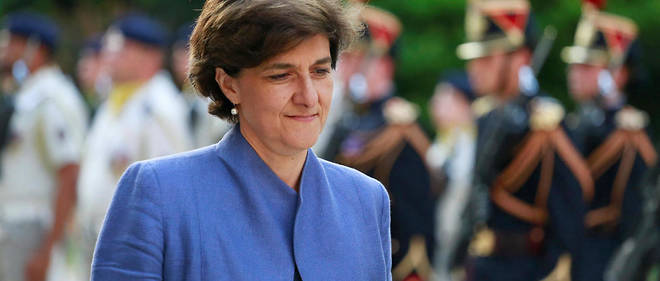

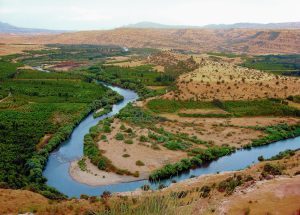
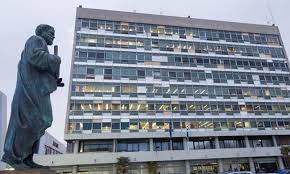 του ΠΑΝΤΕΛΗ ΣΑΒΒΙΔΗ
 του Παναγιώτη Μπαλακτάρη.
 του Σάββα Καλεντερίδη.


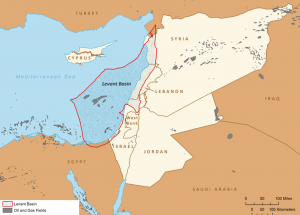
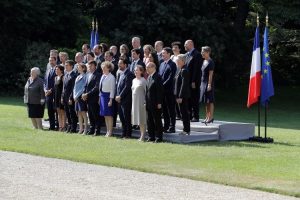
 Του Eric Gazon Οικονομολόγου