Αρχική Blog Σελίδα 2934

Τι πιστεύουν οι Κούρδοι πεσμεργκά του Ιράκ

0
Και πώς αυτά θα επηρεάσουν το μέλλον της χώρας μετά το ISIS
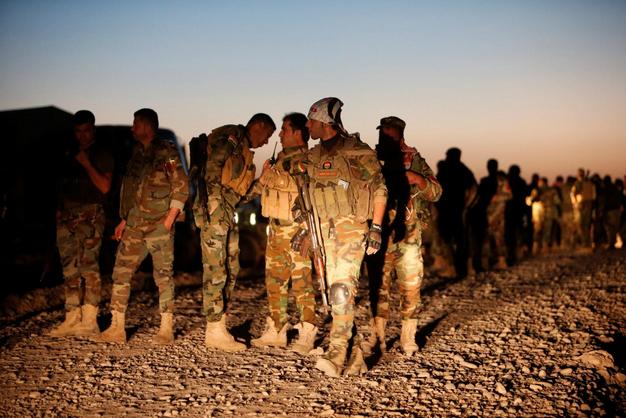
Δυνάμεις peshmerga συγκεντρώνονται στα ανατολικά της Μοσούλης για να επιτεθούν στους μαχητές του Ισλαμικού Κράτους στην πόλη, τον Οκτώβριο του 2016. AZAD LASHKARI / REUTERS

Περίληψη:

 Η έρευνά μας διαπιστώνει ότι οι στρατιωτικές δυνάμεις των Κούρδων είναι πιο ενωμένες από ό, τι έχει προταθεί προηγουμένως, γεγονός που θα μπορούσε να αποδώσει μια κάποια σταθερότητα στο Ιράκ μετά το ISIS και ειδικότερα στο Κουρδιστάν. Ωστόσο, ένας καλά ενοποιημένος κουρδικός στρατός δεν αποτελεί πανάκεια για τα αμφισβητούμενα εδάφη.

Ο MATTHEW FRANKLIN CANCIAN είναι διδακτορικός φοιτητής στο Massachusetts Institute of Technology (ΜΙΤ).
Η KRISTIN E. FABBE είναι επίκουρη καθηγήτρια στο Harvard Business School.

Με την απελευθέρωση της Μοσούλης [1] τον Ιούλιο, το Ιράκ ξαναβρίσκεται σε ένα σταυροδρόμι. Το Ισλαμικό Κράτος (ή ISIS [2]) έχει χάσει το πετράδι του στέμματός του, την έδρα από την οποία ανακήρυξε το λεγόμενο χαλιφάτο του, το 2014. Για την εξέλιξη αυτή, πιστώνονται οι ιρακινές κυβερνητικές δυνάμεις, οι πολιτοφυλακές που συγκροτούν τις Λαϊκές Δυνάμεις Κινητοποίησης (PMF) και οι Κούρδοι peshmerga [3]. Μια παρενέργεια των νικών των peshmerga στον πόλεμο εναντίον του ISIS, ωστόσο, ήταν η αύξηση των εδαφών που κατέχει η περιφερειακή κυβέρνηση του Κουρδιστάν (KRG) κατά περίπου 40% από το 2014 [4]. Και, με την σειρά τους, οι Κούρδοι έχουν ενισχυθεί περαιτέρω ώστε να αμφισβητήσουν την εδαφική ακεραιότητα του Ιράκ.
28082017-1.jpg

Δυνάμεις peshmerga συγκεντρώνονται στα ανατολικά της Μοσούλης για να επιτεθούν στους μαχητές του Ισλαμικού Κράτους στην πόλη, τον Οκτώβριο του 2016. AZAD LASHKARI / REUTERS
———————————————————————-

Από νομική άποψη, η KRG εξακολουθεί να λειτουργεί ως ομοσπονδιακή μονάδα της ιρακινής εθνικής κυβέρνησης, αλλά ένα δημοψήφισμα την 25η Σεπτεμβρίου για ανεξαρτησία θα μπορούσε να θέσει τους Κούρδους σε μια τροχιά προς την εθνική κυριαρχία, κάτι που οι Ιρακινοί Κούρδοι ήθελαν με συντριπτική πλειοψηφία σε ανεπίσημο δημοψήφισμα το 2005 [5]. Τόσο το επερχόμενο δημοψήφισμα όσο και τα ζητήματα εδαφικού ελέγχου είναι ήδη έντονα αμφισβητήσιμα. Οι απόψεις των πεσμεργκά σχετικά με την περιφερειακή τάξη μετά το ISIS -και ο βαθμός στον οποίο αυτές οι απόψεις είναι ενιαίες- είναι επομένως καίριες για το πολιτικό μέλλον του Ιράκ.

Οι ειδικοί συχνά αμφισβητούν τον βαθμό στον οποίο οι Κούρδοι του Ιράκ και οι διάφορες ομάδες peshmerga είναι πολιτικά ενιαίες. Η περιφέρεια του Κουρδιστάν χωρίζεται από το Κουρδικό Δημοκρατικό Κόμμα (KDP) και την Πατριωτική Ένωση του Κουρδιστάν (PUK). Τα κόμματα αυτά πολέμησαν έναν εμφύλιο πόλεμο το ένα εναντίον του άλλου στα μέσα της δεκαετίας του ’90 και από τότε διατηρούσαν ξεχωριστές στρατιωτικές δυνάμεις και δυνάμεις ασφαλείας. Παρά τις πρόσφατες κινήσεις προς την ενοποίηση [7], ξεχωριστές δυνάμεις ευθυγραμμισμένες με το KDP και την PUK εξακολουθούν να υπερισχύουν των peshmerga. Αυτοί οι πολιτικοί στρατοί προσθέτουν ένα ακόμα στρώμα πολυπλοκότητας στο ήδη βυζαντινικό μίγμα των εδαφικών αγώνων, των διαφορών επί των υδρογονανθράκων και της πολιτικής των πολιτοφυλακών που παίζονται στην περιοχή του Κουρδιστάν. Επιπλέον, το KDP και η PUK έχουν κατακερματιστεί, πιο δραματικά με την εμφάνιση του κινήματος Gorran («αλλαγή») το 2009, το οποίο ισχυρίζεται ότι αποκηρύσσει την εδραιωμένη και διεφθαρμένη πολιτική των δύο παραδοσιακών κομμάτων.

Σε μια προσπάθεια να κατανοηθούν καλύτερα οι συμπεριφορές των πεσμεργκά που υπηρετούν σε αμφότερες τις ενσωματωμένες και τις πολιτικές μονάδες, ρωτήθηκαν 2.339 από αυτούς νωρίτερα αυτό το καλοκαίρι από μια ερευνητική ομάδα που φτιάξαμε μαζί με τον Δρ Muslih Irwani από το Κέντρο για την Ειρήνη και την Ανθρώπινη Ασφάλεια (Center for Peace and Human Security). Εκτός από το να δουλεύουν στις τέσσερις κατά νόμον επαρχίες της περιφέρειας του Κουρδιστάν (Ντουχόκ, Ερμπίλ, Χαλαμπτζιά, και Σουλεϊμανίγια), οι ομάδες μας επίσης έκαναν έρευνα και σε πεσμεργκά στις επαρχίες Κιρκούκ και Νινευή, οι οποίες αποτελούν μέρος των αμφισβητούμενων εδαφών μεταξύ της KRG και της ιρακινής κυβέρνησης. Επειδή στόχος μας ήταν να κατανοήσουμε καλύτερα την κουρδική πολιτική [που θα εκτυλιχθεί] μετά τις συγκρούσεις, επιλέξαμε τους ερωτηθέντες από μια πλειάδα βάσεων που στηρίζουν άμεσα είτε την άμυνα κατά του ISIS είτε την φύλαξη των συνόρων μαζί με την ιρακινή κυβέρνηση. Ανησυχίες για την ασφάλεια και την ιδιωτικότητα, μας εμπόδισαν να προμηθευτούμε έναν πλήρη κατάλογο του προσωπικού των πεσμεργκά που υπηρετούν σε τέτοιες βάσεις. Παρ’ όλα αυτά, ήμασταν σε θέση να καταλήξουμε σε μια λογικά αντιπροσωπευτική ομάδα ερευνώντας ενσωματωμένες και πολιτικές μονάδες πεσμεργκά σε 51 στρατιωτικούς καταυλισμούς διαφόρων μεγεθών. Οι καταυλισμοί βρίσκονταν κατά μήκος της γεωγραφίας των συνόρων του KRG, από την Sinjar στα δυτικά έως την Halabja στα ανατολικά. Το 74% των peshmerga με τους οποίους μιλήσαμε ανέφεραν ότι είχαν υπηρετήσει σε εδάφη πρόσφατα απελευθερωμένα από το ISIS. Οι ερωτηθέντες προβλέψιμα προσδιορίζονται κατά κύριο λόγο ως Κούρδοι (98%), αρσενικοί (98%), και Μουσουλμάνοι (97%), αλλά διέφεραν ως προς την ηλικία τους, την κοινωνικοοικονομική κατάσταση, τις πολιτικές πεποιθήσεις και τις πόλεις καταγωγής τους.

Η έρευνά μας κάλυψε μια σειρά θεμάτων, εστιάζοντας σε τρεις συγκεκριμένους τομείς. Πρώτον, θέσαμε ερωτήματα για να κατανοήσουμε καλύτερα τα πρότυπα στρατολόγησης και τα κίνητρα για την ένταξη σε μονάδες peshmerga, καθώς και την εμπειρία μάχης των peshmerga. Δεύτερον, ρωτήσαμε για τις απόψεις των peshmerga σχετικά με την στρατιωτική ενσωμάτωση και τις διαδικασίες που χρησιμοποιήθηκαν για την επίτευξή της. Τρίτον, και τελευταίο, συμπεριλάβαμε μια σειρά ερωτήσεων που αποσκοπούν να μετρήσουν τις στάσεις των peshmerga σχετικά με την συμφιλίωση αφού τερματιστούν οι συγκρούσεις και με τις πολιτικοστρατιωτικές σχέσεις σε εδάφη που απελευθερώθηκαν από το ISIS.

ΔΕΣΜΟΙ ΠΟΥ ΕΝΩΝΟΥΝ

Κατά καιρούς οι απαντήσεις των ερωτηθέντων ήταν απροσδόκητες. Το πιο εκπληκτικό, δεδομένης της καλά δημοσιευμένης ιστορίας των πολιτικών διαιρέσεων [8] μεταξύ των ιρακινών κουρδικών δυνάμεων, πάνω από το 98% των peshmerga που ερευνήσαμε ήθελαν οι μονάδες τους να ενταχθούν σε μια απολίτικη δύναμη. Εντούτοις, η αφηρημένη στήριξη για την ενοποίηση δεν μεταφράζεται απόλυτα σε μια από τις πιο κρίσιμες ενέργειες προς την κατεύθυνση μιας τέτοιας ενοποίησης, δηλαδή στην κατάργηση των πολιτικών γραφείων στα στρατόπεδα, θεσμών που παραδοσιακά διατηρούσαν οι μονάδες peshmerga που συνδέονται στενά είτε με το KDP είτε την PUK. Εδώ, μόνο το 81% των ερωτηθέντων απάντησε ευνοϊκά. Έτσι, παρ’ όλο που η ιδέα της ενσωμάτωσης μπορεί να υποστηριχθεί σχεδόν ομόφωνα, τα πρακτικά βήματα που απαιτούνται για την υλοποίησή της εξακολουθούν να προβληματίζουν την πλειοψηφία των peshmerga.

Πέρα από την κομματική διασύνδεση, οι αναλυτές έδιναν συχνά μεγάλη έμφαση στην φυλετική διασύνδεση ως απειλή για τη νεοδημιουργημένη κουρδική δημοκρατία [9] και ενότητα. Διαπιστώσαμε ότι οι φυλετικές ταυτότητες είναι πράγματι σημαντικές σε ατομικό επίπεδο. Το 92% του δείγματος των peshmerga ταυτοποιούνταν σε κάποια συγκεκριμένη φυλή, με υψηλότερα ποσοστά μεταξύ των δυνάμεων που συνδέονται με το KDP από ό, τι μεταξύ των συνδεδεμένων με την PUK. Ωστόσο, ο ρόλος των φυλών στην διαμόρφωση των ενδο-Κουρδικών στρατιωτικών συμμαχιών και δυναμικών μπορεί να έχει υπερεκτιμηθεί. Μόνο το 26% των peshmerga που ερευνήσαμε είχε έναν διοικητή διμοιρίας που να ανήκε στην δική του φυλή και μόνο το 13% δήλωσε ότι ο διοικητής της ταξιαρχίας ήταν μέλος της οικογένειας του φυλετικού ηγέτη τους. Επισκεφθήκαμε όντως μια ταξιαρχία όπου ο προηγούμενος διοικητής ήταν ο πατέρας του σημερινού διοικητή και οι περισσότεροι από τους peshmerga στην ομάδα αυτή ήταν μέλη της ίδιας φυλής: Αυτό όμως ήταν η εξαίρεση και όχι ο κανόνας. Οι φυλετικοί δεσμοί δεν κυριαρχούν στους peshmerga. Πρόκειται για ένα ελπιδοφόρο σημάδι για το μέλλον της ενσωμάτωσης, καθώς οι φυλετικά διαφορετικοί στρατιωτικοί σχηματισμοί θα μπορούσαν ενδεχομένως να αντισταθούν πολύ περισσότερο στην ενοποίηση και την επαγγελματικοποίηση.

Εάν ο φυλετισμός δεν δένει μαζί τους πεσμπεργκά, ο εθνικισμός το κάνει. Όταν ρωτήσαμε τους μαχητές peshmerga μια ερώτηση σχετικά με το τι τους κράτησε στην μάχη, το 73% ανέφερε ότι το να «αγωνίζονται για το Κουρδιστάν» είναι το σημαντικό κίνητρο. Οι εν λόγω αναφορές έρχονται σε πλήρη αντίθεση με τις Δυτικές στρατιωτικές δυνάμεις, στις οποίες οι μελέτες έχουν δείξει ότι ο εθνικισμός είναι ένας ασήμαντος κινητήριος παράγοντας [10], ιδιαίτερα σε σύγκριση με την αλληλεγγύη των μικρών ομάδων. Το 88% των peshmerga πίστευε επίσης ότι η επιθυμία υπεράσπισης της κουρδικής πατρίδας ήταν ένας από τους κύριους λόγους για τους οποίους οι άνθρωποι εντάχθηκαν στους peshmerga, σε αντίθεση με το 44% που πίστευαν ότι οι οικονομικοί παράγοντες ήταν σημαντικοί για την στρατολόγηση. Η τρέχουσα δημοσιονομική κρίση στην KRG έχει δοκιμάσει περαιτέρω την αποφασιστικότητα των peshmerga. Κατά μέσο όρο, οι μαχητές που μιλήσαμε είχαν περάσει περισσότερους από τρεις μήνες χωρίς αμοιβή και το 75% από αυτούς δήλωσε ότι «οι σκέψεις για το Κουρδιστάν» τους ώθησαν να μην φύγουν σε αυτές τις δύσκολες στιγμές. Δεδομένου ότι δεν υπάρχει αποζημίωση και οι μισθοί μπορεί να είναι ασυνεπείς, η δύναμη των εθνικιστικών κινήτρων δεν πρέπει να αποτελεί έκπληξη.

ΤΟ ISIS ΚΑΙ Η ΜΕΤΑΒΑΤΙΚΗ ΔΙΚΑΙΟΣΥΝΗ

Ο κουρδικός εθνικισμός τροφοδοτείται εν μέρει από προηγούμενα εγκλήματα εναντίον των Κούρδων, από την εκστρατεία Anfal του Ιρακινού πρώην προέδρου Σαντάμ Χουσεΐν στα τέλη της δεκαετίας του 1980, ο οποίος συστηματικά σφαγίαζε τους Κούρδους στο τέλος του πολέμου Ιράν-Ιράκ, μέχρι τις πιο πρόσφατες καταστροφές του ISIS. Το 45% των peshmerga ανέφεραν ότι είτε αυτοί είτε ένα άμεσο μέλος της οικογένειάς τους υπήρξαν θύματα του πρώην μπααθικού καθεστώτος˙ το 24% δήλωσε το ίδιο με το ISIS. Η προηγούμενη θυματοποίηση, ωστόσο, δεν ισοδυναμεί με την καθολική επιθυμία για εκδίκηση: Μόνο το 10% των peshmerga ανέφεραν την επιθυμία για εκδίκηση ως κίνητρο στην μάχη και το 19% το χαρακτήρισε σημαντικό για τις στρατολογήσεις.

Παρ’ όλο που οι peshmerga είχαν μόνο μέτρια πιθανότητα να αναφέρουν την επιθυμία για εκδίκηση ως ένα από τα δικά τους κίνητρα, ήταν πολύ πιο πιθανό να αποδώσουν αυτά τα κίνητρα σε άλλους. Για παράδειγμα, όταν ζητήθηκε να αναφερθούν οι πιο συνηθισμένοι λόγοι για τους οποίους οι Σουνίτες Άραβες εντάχθηκαν στο ISIS, η πλειοψηφία των peshmerga (51%) δήλωσε ότι η επιθυμία να εκδικηθούν την Βαγδάτη για την καταστολή των Σουνιτών Αράβων ήταν ένα σημαντικό κίνητρο. Το 24% των ερωτηθέντων ανέφεραν την επιθυμία να υπερασπιστούν την σουνιτική αραβική ταυτότητα από την σιιτική υπονόμευση, ενώ το 27% πιστεύει ότι η συμφωνία με την ιδεολογία του ISIS παρακίνησε τα μέλη του. Ένα σχετικά μικρό ποσοστό 17% των peshmerga ανέφερε την πεποίθηση ότι τα μέλη του ISIS είναι εγγενώς κακοί. Λιγότερο συχνή μεταξύ των peshmerga που ερευνήσαμε ήταν η πεποίθηση ότι τα οικονομικά κίνητρα ήταν σημαντικοί οδηγοί της ένταξης στο ISIS, με μόνο το 2% να αναφέρουν έναν καλύτερο τρόπο ζωής για τα μέλη του ISIS, το 4% να αναφέρουν τα οικονομικά κίνητρα και το 3% να αναφέρουν τις προοπτικές της απόκτησης λάφυρων πολέμου.

Οι πεποιθήσεις των πεσμεργκά για τους Σουνίτες Άραβες, οι οποίοι αποτελούσαν το μεγαλύτερο μέρος των μελών και των υποστηρικτών του ISIS, θα έχουν κεντρικό ρόλο στις προοπτικές συμφιλίωσης. Παρά την αναφορά ότι η συμμετοχή στον ISIS κινητροδοτείται περισσότερο από εκδίκηση παρά από οικονομικές διαμαρτυρίες, οι peshmerga είναι πρόθυμοι να πιστεύουν ότι η υποστήριξη των πολιτών προς το ISIS ήταν υπό όρους. Περίπου το 65% των ερωτηθέντων peshmerga πιστεύουν ότι πάνω από το 75% των Σουνιτών Αράβων στο Ιράκ υποστήριξε το ISIS το 2014, αλλά μόνο το 9% των peshmerga πιστεύουν ότι το ISIS απολαμβάνει σήμερα υποστήριξη από πάνω από το 75% των Σουνιτών Αράβων.

Για να κατανοήσουμε τις προοπτικές συμφιλίωσης με διαφορετικό τρόπο, ρωτήσαμε τους peshmerga εάν θα έδιναν σωτήρια ιατρική θεραπεία σε διάφορες εξωτερικές ομάδες. Πάνω από το 99% ανέφεραν ότι θα έδιναν ιατρική βοήθεια σε έναν peshmerga από άλλη μονάδα, υποδεικνύοντας μια θεμελιώδη έλλειψη εχθρότητας μεταξύ διαφορετικών πολιτικών κομμάτων και φυλών, παρά το γεγονός ότι το 36% έχει χάσει ένα άμεσο μέλος της οικογένειας τους στον εμφύλιο πόλεμο των Ιρακινών-Κούρδων της δεκαετίας του 1990. Μόνο το 4% των ερωτηθέντων δήλωσαν ότι δεν θα ήταν καθόλου πιθανό να παράσχουν ιατρική βοήθεια σε έναν Σουνίτη Άραβα πολίτη, σε σύγκριση με το 80% που δήλωσαν ότι είναι πολύ πιθανό να παράσχουν τέτοια βοήθεια, υποδηλώνοντας επιπλέον ένα χαμηλό επίπεδο καθαρά εθνοτικής έχθρας ενάντια στους Άραβες. Ωστόσο, η συνεργασία με το ISIS αποδείχθηκε ότι σκληραίνει τις στάσεις. Το 19% των peshmerga δεν θα βοηθούσε [ιατρικά] έναν πολίτη συνεργάτη του ISIS, ενώ το 24% δεν θα βοηθούσε έναν ξένο μαχητή ISIS. Δεν αποτελεί έκπληξη το γεγονός ότι οι τοπικοί μαχητές του ISIS ήταν οι πιο απεχθείς για τους peshmerga, με το 36% των peshmerga να λένε ότι δεν θα ήταν καθόλου πιθανό να τους δώσουν [ιατρική] θεραπεία.

Αυτά τα αποτελέσματα δείχνουν ότι αν και η εγγενής εθνοτική εχθρότητα έναντι των Σουνιτών Αράβων είναι σχετικά χαμηλή, οι υποστηρικτές του ISIS δεν θα συγχωρεθούν εύκολα. Πράγματι, λίγοι peshmerga τάχθηκαν υπέρ της διάκρισης μεταξύ των ηγετών του ISIS και των υποστηρικτών του ISIS -μόλις 10% δήλωσαν ότι θα πρέπει να τιμωρούνται μόνο οι ηγέτες του ISIS και όχι οι υποστηρικτές του ISIS. Πώς, λοιπόν, πιστεύουν οι peshmerga ότι οι υποστηρικτές του ISIS θα πρέπει να λογοδοτούν; Ενώ το 10% των πεσμεργκά πιστεύουν ότι οι υποστηρικτές του ISIS αξίζουν να εκτελεστούν, πολύ πιο συνηθισμένη ήταν η πεποίθηση ότι πρέπει να δικαστούν σε δικαστήρια (72%) και / ή να εκπαιδευτούν και να αναμορφωθούν (31%).

Συνολικά, η έρευνά μας διαπιστώνει ότι οι στρατιωτικές δυνάμεις των Κούρδων είναι πιο ενωμένες από ό, τι έχει προταθεί προηγουμένως, γεγονός που θα μπορούσε να αποδώσει μια κάποια σταθερότητα στο Ιράκ μετά το ISIS και ειδικότερα στο Κουρδιστάν. Ωστόσο, ένας ενωμένος και καλά ενοποιημένος κουρδικός στρατός δεν αποτελεί πανάκεια για τα αμφισβητούμενα εδάφη. Η διαρκής ειρήνη θα εξαρτηθεί από την εφαρμογή μιας συστηματικής και διαφανούς διαδικασίας μεταβατικής δικαιοσύνης για τους υποστηρικτές του ISIS, ώστε να μην τροφοδοτηθεί περαιτέρω ο κύκλος της βίας. Θα πρέπει να αποφευχθούν οι σκληρές ποινές, όπως ο ξυλοδαρμός, η εκτέλεση, η καταναγκαστική κράτηση και τα βασανιστήρια χωρίς την δέουσα διαδικασία. Αντ’ αυτού, θα πρέπει να ξεκινήσουν δίκαιες δίκες, εκπαίδευση, αναμόρφωση, και μάλιστα ενδεχομένως μια διαδικασία «αλήθειας και συμφιλίωσης». Το πιο δύσκολο κομμάτι για να αποκτηθεί αυτή την φορά η μεταβατική δικαιοσύνη πιθανότατα θα αφορά την σχέση μεταξύ των πεσμεργκά και των πολιτοφυλακών του PMF που επιχειρούν στην περιοχή. Σχεδόν το 50% των peshmerga που ερευνήσαμε, αρνήθηκαν να πιστέψουν τους ισχυρισμούς ότι τα μέλη των peshmerga χτύπησαν Σουνίτες Άραβες πολίτες που συνεργάστηκαν με το ISIS, ενώ μόνο το 5% αρνήθηκε να πιστέψει τους ίδιους ισχυρισμούς σχετικά με το PMF. Το να βρεθούν οι peshmerga και το PMF στην ίδια πλευρά σχετικά με τον τρόπο αντιμετώπισης των υποστηρικτών του ISIS θα είναι ένα κρίσιμο πρώτο βήμα για την σταθεροποίηση της περιφερειακής τάξης.

Copyright © 2017 by the Council on Foreign Relations, Inc.
All rights reserved.

Στα αγγλικά: https://www.foreignaffairs.com/articles/middle-east/2017-08-25/what-iraq…

Σύνδεσμοι:
[1] https://www.foreignaffairs.com/articles/middle-east/2017-01-10/fight-mosul
[2] https://www.foreignaffairs.com/articles/2017-08-18/preparing-isis-30
[3] https://www.foreignaffairs.com/articles/iraq/2015-05-14/boots-ground
[4] http://www.rudaw.net/english/kurdistan/090820175
[5] http://www.nytimes.com/2005/02/01/opinion/as-iraqis-celebrate-the-kurds-…
[6] https://warontherocks.com/2016/11/the-bigger-issues-at-play-mosul-and-th…
[7] http://www.rudaw.net/english/kurdistan/070520173?ctl00_phMainContainer_p…
[8] http://foreignpolicy.com/2016/07/14/the-battle-for-the-soul-of-iraqi-kur…
[9] http://www.niqash.org/en/articles/politics/5270/
[10] https://academic.oup.com/poq/article-abstract/12/2/280/1910462/Cohesion-…

Μπορείτε να ακολουθείτε το «Foreign Affairs, The Hellenic Edition» στο TWITTER στην διεύθυνση www.twitter.com/foreigngr αλλά και στο FACEBOOK, στην διεύθυνση www.facebook.com/ForeignAffairs.gr και στο linkedin στην διεύθυνση https://www.linkedin.com/company/foreign-affairs-the-hellenic-edition
ΛΑΘΗ ΤΟΥ ΤΡΑΜΠ ΣΤΟ ΑΦΓΑΝΙΣΤΑΝ. ΚΑΚΗ ΠΛΗΡΟΦΟΡΗΣΗ. ΑΝΥΠΑΡΞΙΑ ΕΙΔΙΚΩΝ ΓΝΩΣΕΩΝ.

0

ΓΡΑΦΕΙ Ο ΔΡ ΑΘΑΝΑΣΙΟΣ.Ε.ΔΡΟΥΓΟΣ

1)Ο ΤΡΑΜΠ ΣΤΗΝ ΠΡΟΣΦΑΤΗ ΟΜΙΛΙΑ ΤΟΥ ΕΚΑΝΕ ΚΑΠΟΙΑ ΑΝΑΦΟΡΑ ΣΕ ΝΙΚΗ ΣΤΟ ΑΦΓΑΝΙΣΤΑΝ, ΑΛΛΑ ΔΕΝ ΞΕΚΑΘΑΡΙΣΕ ΤΙ ΕΙΔΟΥΣ ΝΙΚΗ…ΠΧ ΘΑ ΔΩΣΕΙ ΣΕ ΚΑΠΟΙΑ ΦΑΣΗ ΡΟΛΟ ΣΤΟΥΣ ΤΑΛΙΜΠΑΝ;ΘΑ ΕΞΑΛΕΙΨΕΙ ΑΠΟ ΠΡΟΣΩΠΟΥ ΑΦΓΑΝΙΣΤΑΝ ΤΗΝ ΑΛ ΚΑΕΝΤΑ ΚΑΙ ΤΟ ISIS ;ΔΗΛΑΔΗ ΣΥΜΦΩΝΑ ΜΕ ΤΗΝ ΑΠΟΨΗ ΤΟΥ ΤΙ ΧΑΡΑΚΤΗΡΙΖΕΙ ΩΣ ΝΙΚΗ ΣΤΟ ΑΦΓΑΝΙΣΤΑΝ , ΜΙΑ ΧΩΡΑ ΠΟΥ ΕΙΝΑΙ ΚΟΙΜΗΤΗΡΙΟ ΑΥΤΟΚΡΑΤΟΡΙΩΝ(ΒΡΕΤΑΝΙΚΗ-ΣΟΒΙΕΤΙΚΗ ).

2)ΔΕΝ ΚΑΘΟΡΙΣΕ ΚΑΠΟΙΟ ΧΡΟΝΟΔΙΑΓΡΑΜΜΑ ΓΙΑ ΤΥΧΟΝ ΕΠΙΚΡΑΤΗΣΗ, ΕΝΩ ΔΕΝ ΕΔΩΣΕ ΕΞΗΓΗΣΕΙΣ ΓΙΑ ΤΗΝ ΑΠΟΣΤΟΛΗ ΠΕΡΑΙΤΕΡΩ 4000 ΑΝΔΡΩΝ ΣΤΑ ΥΨΙΠΕΔΑ ΤΟΥ ΑΦΓΑΝΙΣΤΑΝ. ΑΥΤΟΙ ΘΑ ΦΕΡΟΥΝΕ ΤΗ ΝΙΚΗ ;ΕΔΩ ΔΕΝ ΤΟ ΚΑΤΑΦΕΡΑΝ ΟΙ ΔΕΚΑΔΕΣ ΧΙΛΙΑΔΕΣ ΕΠΙ ΜΠΟΥΣ ΚΑΙ ΟΜΠΑΜΑ.

3)Ο ΤΡΑΜΠ ΕΙΠΕ ΟΤΙ ΥΠΟΣΤΗΡΙΖΕΙ ΤΗΝ ΚΥΒΕΡΝΗΣΗ ΓΚΑΝΙ ΣΤΗΝ ΚΑΜΠΟΥΛ. ΜΑΛΙΣΤΑ. ΑΛΛΑ ΔΕΝ ΕΙΠΕ ΑΝ ΘΑ ΣΥΝΕΧΙΣΕΙ ΝΑ ΤΗΝ ΣΤΗΡΙΖΕΙ, ΔΕΔΟΜΕΝΟΥ ΟΤΙ ΧΑΝΕΙ ΕΔΑΦΗ, ΧΑΝΕΙ ΥΠΟΣΤΗΡΙΞΗ ΑΦΓΑΝΙΚΟΥ ΛΑΟΥ, ΕΝΩ ΣΕ ΠΟΛΛΟΥΣ ΤΟΜΕΙΣ ΚΥΡΙΑΡΧΕΙ Η ΔΙΑΦΘΟΡΑ.

4)Ο ΤΡΑΜΠ ΔΗΛΩΣΕ ΟΤΙ ΔΕΝ ΜΠΟΡΟΥΝΕ ΟΙ ΗΠΑ ΝΑ ΑΠΟΧΩΡΗΣΟΥΝ ΑΠΟ ΤΟ ΑΦΓΑΝΙΣΤΑΝ. ΜΑΛΙΣΤΑ. ΑΛΛΑ ΔΕΝ ΕΙΝΑΙ ΛΑΘΟΣ ΤΟΥ ΟΜΠΑΜΑ ΤΟ ΑΦΓΑΝΙΣΤΑΝ. ΕΙΝΑΙ ΛΑΘΟΣ ΤΟΥ ΝΕΟΤΕΡΟΥ ΜΠΟΥΣ ΠΟΥ ΣΤΡΑΦΗΚΕ ΕΜΜΟΝΙΚΑ ΚΑΤΑ ΤΟΥ ΣΑΝΤΑΜ ΤΟ 2003 ΚΑΙ ΑΠΕΣΥΡΕ ΤΕΡΑΣΤΙΕΣ ΔΥΝΑΜΕΙΣ ΚΑΙ ΚΕΦΑΛΑΙΑ ΑΠΟ ΤΟ ΑΦΓΑΝΙΣΤΑΝ.ΜΗΝ ΞΕΧΝΑΜΕ ΟΤΙ ΤΟ 2011 ΕΠΙ ΟΜΠΑΜΑ ΟΙ ΗΠΑ ΑΠΟΧΩΡΗΣΑΝ ΣΕ ΣΥΝΤΡΙΠΤΙΚΟ ΒΑΘΜΟ ΑΠΟ ΤΟ ΙΡΑΚ ΚΑΙ ΤΟ 2014 ΑΠΟ ΤΟ ΑΦΓΑΝΙΣΤΑΝ. Ο ΤΡΑΜΠ ΤΩΡΑ ΒΑΔΙΖΕΙ ΜΕΣΑ ΣΤΗΝ ΑΦΓΑΝΙΚΗ ΟΜΙΧΛΗ.

5)Η ΑΠΟΣΤΟΛΗ ΠΕΡΑΙΤΕΡΩ ΣΤΡΑΤΟΥ ΣΤΟ ΑΦΓΑΝΙΣΤΑΝ ΥΠΟΣΤΗΡΙΖΕΙ Ο ΤΡΑΜΠ ΑΠΟΤΡΕΠΕΙ ΝΕΑ 9/11. ΤΕΛΕΙΩΣ ΛΑΘΟΣ ΕΚΤΙΜΗΣΗ. Η 9/11 ΣΤΗΡΙΧΘΗΚΕ ΣΤΟ ΣΧΕΔΙΟ ‘ΜΠΟΓΙΑΝΑ’ ΤΟΥ 1996, ΣΥΖΗΤΗΘΗΚΕ ΣΤΑ ΒΟΥΝΑ ΤΟΥ ΤΖΑΛΑΛΑΜΠΑΝΤ ΑΠΟ ΤΗΝ ΠΑΡΕΑ ΤΟΥ ΜΠΙΝ ΛΑΝΤΕΝ ΚΑΙ ΤΟΥ ΧΑΛΙΝΤ ΜΩΧΑΜΕΝΤ ΚΑΙ ΥΙΟΘΕΤΗΘΗΚΕ ΠΡΑΚΤΙΚΑ ΣΤΟ ΑΜΒΟΥΡΓΟ ΚΑΙ ΣΤΟ ΚΑΜΠΡΙΛΕΣ ΤΗΣ ΚΑΤΑΛΩΝΙΑΣ ΑΠΟ ΤΟΝ ΑΙΓΥΠΤΙΟ ΜΩΧΑΜΕΝΤ ΑΤΑ ΚΑΙ ΤΟΝ ΥΕΜΕΝΙΟ ΡΑΜΙΖ ΒΙΝΑΛΣΙΜΠ. ΑΡΑ ΤΡΟΜΟΚΡΑΤΙΚΑ ΣΧΕΔΙΑ ΔΕΝ ΤΑ ΣΤΑΜΑΤΑΣ ΜΕ ΑΠΟΣΤΟΛΗ 4000 ΠΕΖΟΝΑΥΤΩΝ ΣΤΑ ΒΟΥΝΑ ΤΟΥ ΧΙΝΤΟΥ ΚΟΥΣ. ΚΑΚΑ ΔΙΑΒΑΣΜΕΝΟΣ Ο ΤΡΑΜΠ.ΑΜΕΣΑ ΣΕ ΦΡΟΝΤΙΣΤΗΡΙΟ. ΚΑΘΗΜΕΡΙΝΟ ΚΑΙ ΠΟΛΥΩΡΟ. ΟΙ ΗΠΑ ΕΧΟΥΝΕ ΤΑ ΚΟΡΥΦΑΙΑ ΜΥΑΛΑ ΤΟΥ ΠΛΑΝΗΤΗ.

6)ΔΕΝ ΕΧΕΙ ΑΝΤΙΛΗΦΘΕΙ ΟΤΙ ΣΤΟ ΑΦΓΑΝΙΣΤΑΝ ΔΙΕΞΑΓΟΝΤΑΙ 5 ΠΟΛΕΜΟΙ. Ο ΕΝΑΣ ΕΙΝΑΙ ΜΕΤΑΞΥ ΤΩΝ ΠΑΣΤΟΥ ΚΑΙ ΤΩΝ ΑΛΛΩΝ ΦΥΛΩΝ. Ο ΔΕΥΤΕΡΟΣ ΜΕΤΑΞΥ ΤΩΝ ΝΤΟΥΡΑΝΙ ΚΑΙ ΧΙΛΖΑΙ ΦΥΛΩΝ/ΠΑΣΤΟΥ. Ο ΤΡΙΤΟΣ ΜΕΤΑΞΥ ΠΡΟΟΔΕΥΤΙΚΩΝ ΚΑΙ ΣΥΝΤΗΡΗΤΙΚΩΝ ΚΥΚΛΩΝ ΣΤΟ ΑΦΓΑΝΙΣΤΑΝ. Ο ΤΕΤΑΡΤΟΣ ΜΕΤΑΞΥ ΑΦΓΑΝΩΝ ΚΑΙ ΠΑΚΙΣΤΑΝΩΝ ΤΑΛΙΜΠΑΝ. ΚΑΙ Ο ΠΕΜΠΤΟΣ ΜΕΤΑΞΥ ΙΝΔΙΑΣ ΚΑΙ ΠΑΚΙΣΤΑΝ ΣΕ ΟΛΑ ΤΑ ΕΠΙΠΕΔΑ.ΛΥΠΑΜΑΙ ΑΛΛΑ ΔΕΝ ΜΠΟΡΕΙΣ ΝΑ ΕΠΙΚΡΑΤΗΣΕΙΣ ΣΕ ΟΛΟΥΣ.

7)ΛΑΘΟΣ ΤΟΥ ΤΡΑΜΠ, ΝΑ ΚΑΛΕΣΕΙ ΤΗΝ ΙΝΔΙΑ ΝΑ ΕΜΠΛΑΚΕΙ ΣΤΟ ΑΦΓΑΝΙΣΤΑΝ. ΑΣΧΕΤΟΣ ΤΕΛΕΙΩΣ. ΤΟ ΠΑΚΙΣΤΑΝ ΔΕΝ ΤΟ ΑΠΟΔΕΧΕΤΑΙ ΑΥΤΟ. ΘΕΩΡΕΙ ΟΤΙ ΠΕΡΙΚΥΚΛΩΝΕΤΑΙ.ΑΝ ΟΙ ΗΠΑ ΠΕΡΙΚΟΨΟΥΝ ΟΙΚΟΝΟΜΙΚΗ ΚΑΙ ΣΤΡΑΤΙΩΤΙΚΗ ΒΟΗΘΕΙΑ ΣΤΟ ΠΑΚΙΣΤΑΝ, ΤΟΤΕ ΤΟ ΤΕΛΕΥΤΑΙΟ ΔΕΝ ΘΑ ΕΠΙΤΡΕΨΕΙ ΤΟΝ ΧΕΡΣΑΙΟ ΕΦΟΔΙΑΣΜΟ ΤΩΝ ΑΜΕΡΙΚΑΝΙΚΩΝ ΔΥΝΑΜΕΩΝ ΑΠΟ ΚΑΡΑΤΣΙ ΚΑΙ ΛΑΧΩΡΗ ΠΡΟΣ ΑΦΓΑΝΙΣΤΑΝ. ΕΚΤΟΣ ΠΡΑΓΜΑΤΙΚΟΤΗΤΑΣ ΕΙΝΑΙ. ΚΑΙ ΚΑΛΑ ΑΥΤΟΣ. ΟΙ ΚΟΡΥΦΑΙΟΙ ΣΤΡΑΤΗΓΟΙ ΤΟΥ ;ΜΗΝ ΞΕΧΝΑΜΕ ΤΟ ΠΑΚΙΣΤΑΝ ΜΠΟΡΕΙ ΝΑ ΤΑ ΓΥΡΙΣΕΙ ΜΕ ΤΗΝ ΚΙΝΑ, ΕΝΩ ΕΙΝΑΙ ΠΥΡΗΝΙΚΗ ΔΥΝΑΜΗ.

8)ΑΝ ΑΠΟΧΩΡΗΣΟΥΝ ΟΙ ΗΠΑ ΑΠΟ ΤΟ ΑΦΓΑΝΙΣΤΑΝ., ΤΟΤΕ ΟΙ ΤΑΛΙΜΠΑΝ ΘΑ ΤΟΥΣ ΕΠΙΤΕΘΟΥΝ!!!ΑΝΟΗΣΙΕΣ. ΟΙ ΤΑΛΙΜΠΑΝ ΔΕΝ ΕΧΟΥΝΕ ΜΑΚΡΙΑ ΧΕΡΙΑ ΝΑ ΦΘΑΣΟΥΝ ΣΤΙΣ ΗΠΑ. ΚΑΙ ΚΑΤΙ ΑΛΛΟ. ΟΙ ΗΠΑ ΔΕΝ ΕΧΟΥΝΕ ΣΤΡΑΤΗΓΙΚΟ ΔΟΓΜΑ ΚΑΤΑΛΗΨΗΣ ΟΛΩΝ ΤΩΝ ΧΩΡΩΝ ΚΑΙ ΛΑΩΝ, ΠΟΥ ΦΙΛΟΞΕΝΟΥΝ Ή ΠΑΡΕΧΟΥΝ ΑΣΥΛΟ ΣΕ ΣΤΕΛΕΧΗ ΩΣ ΚΑΙ ΚΡΥΣΦΗΓΕΤΑ ΤΡΜΟΚΡΑΤΩΝ.ΔΕΝ ΥΠΑΡΧΕΙ ΤΕΤΟΙΟ ΔΟΓΜΑ. ΔΕΝ ΞΕΡΕΙ ΤΙ ΤΟΥ ΓΙΝΕΤΑΙ. ΑΝ ΠΑΜΕ ΣΕ ΤΕΤΟΙΑ ΚΑΤΑΣΤΑΣΗ ΕΙΝΑΙ ΑΜΕΣΗ ΑΝΑΓΚΗ ΝΑ ΑΝΤΙΚΑΤΑΣΤΑΘΕΙ ΤΟ ΕΠΙΧΕΙΡΗΣΙΑΚΟ ΔΟΓΜΑ 3-24 ΤΟΥ ΣΤΡΑΤΟΥ ΤΩΝ ΗΠΑ ΠΟΥ ΑΦΟΡΑΜΟΝΟ COUNTERINSURGENCY. ΔΕΝ ΕΙΔΑ ΠΟΥΘΕΝΑ ΝΑ ΕΧΕΙ ΔΩΣΕΙ ΤΕΤΟΙΑ ΕΝΤΟΛΗ ΑΛΛΑΓΩΝ ΣΕ ΕΠΙΧΕΙΡΗΣΙΑΚΑ ΔΙΑΚΛΑΔΙΚΑ ΕΓΧΕΙΡΙΔΙΑ.

9)ΑΝ ΦΥΓΟΥΝ ΑΠΟ ΤΟ ΑΦΓΑΝΙΣΤΑΝ ΟΙ ΗΠΑ ΤΟΤΕ Η ΑΛ ΚΑΕΝΤΑ Ή ΤΟ ISIS ΘΑ ΑΠΕΙΛΟΥΝ ΤΙΣ ΗΠΑ ΣΕ ΑΛΛΕΣ ΒΑΣΕΙΣ. ΛΑΘΟΣ. ΤΟΤΕ ΤΕΤΟΙΟΙ ΑΣΥΜΜΕΤΡΟΙ ΕΧΘΡΟΙ ΜΠΟΡΕΙ ΝΑ ΠΛΗΓΟΥΝ ΑΠΟ ΜΗ-ΕΠΑΝΔΡΩΜΕΝΑ ΑΕΡΟΣΚΑΦΗ-ΕΙΔΙΚΕΣ ΔΥΝΑΜΕΙΣ ΚΑΙ ΕΝ ΑΝΑΓΚΗ ΣΕ ΠΕΡΙΟΧΕΣ ΟΠΩΣ Η ΝΑΓΚΑΧΑΡ, Η ΠΑΚΤΙΚΑ, Η ΟΥΡΟΥΖΓΚΑΝ , Η ΖΑΜΠΟΥΛ, Η ΦΑΙΖΑΜΠΑΝΤ ΚΛΠ,Ή ΜΕ ΕΠΙΛΕΚΤΙΚΟΥΣ ΑΛΛΑ ΣΦΟΔΡΟΥΣ ΑΕΡΟΠΟΡΙΚΟΥΣ ΒΟΜΒΑΡΔΙΣΜΟΥΣ. ΤΕΛΕΙΩΣ ΑΣΧΕΤΟΣ ΕΙΝΑΙ .ΚΑΙ ΔΕΝ ΜΑΘΑΙΝΕΙ ΚΙΟΛΑΣ…ΧΑΡΑΚΤΗΡΣΤΙΚΑ ΠΑΡΑΔΕΙΓΜΑΤΑ Η ΥΕΜΕΝΗ ΚΑΙ Η ΣΟΜΑΛΙΑ.ΟΙ ΗΠΑ ΔΕΝ ΕΧΟΥΝΕ ΑΝΑΠΤΥΞΕΙ ΣΥΜΒΑΤΙΚΕΣ ΔΥΝΑΜΕΙΣ ΕΚΕΙ.

10)Ο ΤΡΑΜΠ ΕΧΕΙ ΠΑΡΑΝΟΗΣΕΙ ΤΟ ΘΕΜΑ ΤΗΣ ΑΠΟΧΩΡΗΣΗΣ. ΘΕΩΡΕΙ ΟΤΙ ΑΝ ΟΙ ΗΠΑ ΦΥΓΟΥΝΕ, ΑΥΤΟΜΑΤΑ ΘΑ ΕΙΣΕΛΘΟΥΝ ΑΛΛΑ ΚΡΑΤΗ…ΛΑΘΟΣ. ΣΤΟ ΝΕΚΡΟΤΑΦΕΙΟ ΤΟΥ ΑΦΓΑΝΙΣΤΑΝ ΔΕΝ ΠΕΡΝΑΣ ΕΥΚΟΛΑ. ΕΔΩ ΧΑΘΗΚΑΝ ΣΤΡΑΤΙΕΣ ΤΟΥ Μ.ΑΛΕΞΑΝΔΡΟΥ, ΤΟΥ ΣΟΒΙΕΤΙΚΟΥ ΣΤΡΑΤΑΡΧΗ ΓΚΡΟΜΩΦ ΚΑΙ ΟΙ ΒΡΕΤΑΝΟΙ ΑΠΟΙΚΙΟΚΡΑΤΕΣ ΣΕ ΚΑΝΤΑΧΑΡ ΚΑΙ ΧΕΡΑΤ.ΚΑΝΕΝΑΣ ΔΕΝ ΠΗΓΑΙΝΕΙ, ΓΙΑΤΙ ΞΕΡΕΙ ΤΙ ΤΟΝ ΠΕΡΙΜΕΝΕΙ.
ΣΤΗΝ ΚΑΜΠΟΥΛ ΤΟ 2007 ΠΟΥ ΒΡΕΘΗΚΑ ΕΝΑΣ ΑΦΓΑΝΟΣ ΑΝΑΛΥΤΗΣ ΜΟΥ ΕΙΠΕ ‘ΔΟΚΤΩΡΑ. ΝΑ ΦΟΒΑΣΑΙ ΤΟ ΔΟΝΤΙ ΤΗΣ ΤΙΓΡΗΣ. ΤΟ ΔΗΛΗΤΗΡΙΟ ΤΗΣ ΚΟΜΠΡΑΣ. ΚΑΙ ΤΗΝ ΕΚΔΙΚΗΣΗ ΤΟΥ ΑΦΓΑΝΟΥ ΑΠΕΝΑΝΤΙ ΣΕ ΚΑΘΕ ΞΕΝΟ!!!’ΜΙΑ ΖΩΗ ΘΑ Τ ΘΥΜΑΜΑΙ….

11)Ο ΤΡΑΜΠ ΕΠΙΔΙΩΚΕΙ ΝΑ ΧΡΗΣΙΜΟΠΟΙΗΣΕΙ ΟΛΑ ΤΑ ΔΙΑΘΕΣΙΜΑ ‘ΕΡΓΑΛΕΙΑ’ ΓΙΑ ΤΗΝ ΕΘΝΙΚΗ ΑΣΦΑΛΕΙΑ ΤΩΝ ΗΠΑ. ΟΙ ΠΡΟΘΕΣΕΙΣ ΕΙΝΑΙ ΚΑΛΕΣ. ΑΛΛΑ ΔΕΝ ΥΠΑΡΧΟΥΝ ΠΛΕΟΝ ΤΟΣΟΙ ΠΟΛΛΟΙ ΠΟΡΟΙ. ΑΜΕΡΙΚΑΝΙΚΕΣ ΔΥΝΑΜΕΙΣ ΣΤΑΘΜΕΥΟΥΝ ΣΕ 151 ΧΩΡΕΣ ΑΠ ΤΙΣ 193 ΤΟΥ ΟΗΕ. ΑΠΙΣΤΕΥΤΟ. ΟΛΑ ΔΕΝ ΓΙΝΟΝΤΑΙ. ΕΠΙΣΗΣ ΕΧΕΙ ΠΕΡΙΚΟΨΕΙ ΤΟΝ ΠΡΟΥΛΟΓΙΣΜΟ ΤΟΥ STATE DEPARTMENT-USAID KA. ΚΡΙΜΑ ΓΙΑΤΙ ΚΑΙ ΩΣ MANAGER ΑΠΕΤΥΧΕ.

12)Ο ΤΡΑΜΠ ΕΙΠΕ ΟΤΙ ΔΙΕΥΚΟΛΥΝΕΙ ΤΟΥΣ ΕΠΙ ΤΟΠΟΥ ΔΙΟΙΚΗΤΕΣ ΤΟΥ ΝΑ ΑΝΑΛΑΒΟΥΝ ΠΡΩΤΟΒΟΥΛΙΕΣ, ΟΠΩΣ ΣΕ ΣΥΡΙΑ ΚΑΙ ΥΕΜΕΝΗ. ΑΝΑΦΕΡΟΜΑΙ ΣΤΟΝ ΔΙΟΙΚΗΤΗ ΤΗΣ ISAF ΣΤΡΑΤΗΓΟ ΝΙΚΟΛΣΟΝ. ΜΑ ΑΥΤΟΝ Ο ΤΡΑΜΠ ΠΡΙΝ ΕΝΑ ΜΗΝΑ ΕΚΡΙΝΕ ΩΣ ΑΝΙΚΑΝΟ.ΑΝ ΕΙΝΑΙ ΔΥΝΑΤΟΝ…ΜΠΟΡΕΙ ΠΡΟΣΩΡΙΝΑ Η ΚΙΝΗΣΗ ΤΡΑΜΠ ΝΑ ΒΟΗΘΗΣΕΙ. ΑΛΛΑ ΜΙΑ ΤΕΤΟΙΑ ΕΝΕΡΓΕΙΑ, ΘΑ ΔΩΣΕΙ ΠΡΑΣΙΝΟ ΦΩΣ ΣΕ ΣΦΟΔΡΟΥΣ ΒΟΜΒΑΡΔΙΣΜΟΥΣ, ΑΡΑ ΑΠΩΛΕΙΕΣ ΖΩΩΝ. ΑΡΑ ΠΙΟ ΠΟΛΛΕΣ ΚΑΤΑΣΤΡΟΦΕΣ ΣΕ ΣΤΥΛ ΥΕΜΕΝΗΣ. ΑΡΑ ΔΗΜΙΟΥΡΓΙΑ ΠΟ ΠΟΛΛΩΝ , ΝΕΩΝ, ΕΚΔΙΚΗΤΙΚΩΝ ΤΡΟΜΟΚΡΑΤΩΝ.ΑΡΑ ΕΠΙΘΕΣΕΙΣ ΚΑΤΑΔΡΟΜΙΚΟΥ ΣΤΥΛ Ή ΑΥΤΟΚΤΟΝΙΚΕΣ ΣΤΗΝ ΔΥΣΗ.

Η ΣΤΡΑΤΗΓΙΚΗ ΤΡΑΜΠ ΣΤΟ ΑΦΑΝΙΣΤΑΝ ΕΙΝΑΙ ΕΝ ΕΕΛΙΞΕΙ ΣΥΝΤΑΓΗ ΓΙΑ ΑΠΟΤΥΧΙΑ. ΚΑΙ ΕΧΕΙ ΣΗΜΑΣΙΑ ΓΙΑΤΙ ΚΡΙΤΙΚΑΡΩ, ΕΝΩ ΠΟΤΕ ΣΤΗΝ ΖΩΗ ΜΟΥ ΔΕΝ ΕΚΡΥΨΑ,(ΠΑΝΤΑ ΕΝΤΙΜΑ) ΟΤΙ ΥΠΟΣΤΗΡΙΞΑ ΔΙΑΧΡΟΝΙΚΑ ΤΕΤΟΙΕΣ ΕΠΙΧΕΙΡΗΣΕΙΣ. ΑΛΛΑ ΜΕ ΕΞΥΠΝΟ ΤΡΟΠΟ. ΟΧΙ ΜΕ ΠΑΛΙΟ ΚΡΑΣΙ ΣΕ ΚΑΙΝΟΥΡΓΙΑ ΜΠΟΥΚΑΛΙΑ.

ΜΕΡΟΣ ΔΕΥΤΕΡΟ

1)Η ΣΤΑΣΗ ΤΡΑΜΠ ΑΠΕΝΑΝΤΙ ΣΤΟ ΠΑΚΙΣΤΑΝ ΔΕΝ ΕΙΝΑΙ ΔΙΠΛΩΜΑΤΙΚΑ ΕΝΔΕΔΕΙΓΜΕΝΗ.ΔΕΝ ΕΠΙΤΙΘΕΣΑΙ ΣΕ ΧΩΡΑ ΣΥΜΜΑΧΟ ΑΠΟ ΤΗΝ ΔΕΚΑΕΤΙΑ ΤΟΥ 50. ΑΣΦΑΛΩΣ ΟΙ ΠΑΚΙΣΤΑΝΟΙ ΕΧΟΥΝΕ ΚΑΝΕΙ ΠΟΛΛΑ ΛΑΘΗ, ΕΙΔΙΚΑ ΣΤΟ ΘΕΜΑ ΤΗΣ ΚΑΤΑΣΚΕΥΗΣ ΤΗΣ ΠΥΡΗΝΙΚΗΣ ΒΟΜΒΑΣ.ΩΣ ΚΑΙ ΣΤΟ ΘΕΜΑ ΤΩΝ ΣΧΕΣΕΩΝ ΜΕ ΤΑΛΙΜΠΑΝ. Η ΧΩΡΑ ΕΧΕΙ ΦΟΒΙΚΟ ΣΥΝΔΡΟΜΟ ΑΠΟ ΤΑ ΠΙΣΩ ΤΗΣ. ΔΕΝ ΘΕΛΕΙ ΝΑ ΔΕΙ ΡΩΣΙΚΗ Ή ΙΝΔΙΚΗ ΕΠΙΡΟΗ ΣΤΟ ΑΦΓΑΝΙΣΤΑΝ.. Ο ΤΡΑΜΠ ΘΑ ΕΠΡΕΠΕ ΝΑ ΒΑΛΕΙ ΕΝΑ ΧΡΟΝΟΔΙΑΓΡΑΜΜΑ ΣΤΟ ΠΑΚΙΣΤΑΝ ΝΑ ΣΥΝΔΡΑΜΕΙ ΠΙΟ ΑΠΟΤΕΛΕΣΜΑΤΙΚΑ ΣΤΗΝ ΚΑΤΑΠΟΛΕΜΗΣΗ ΤΡΟΜΟΚΡΑΤΚΩΝ ΟΡΓΑΝΩΣΕΩΝ ΕΝΘΕΝ ΚΑΙ ΕΝΘΕΝ ΤΗΣ ΑΦΓΑΝΟ-ΠΑΚΙΣΤΑΝΙΚΗΣ ΜΕΘΟΡΙΑΚΗΣ ΓΡΑΜΜΗΣ DURAND. ΟΜΩΣ ΤΟ ΠΑΚΙΣΤΑΝ ΕΧΕΙ ΠΛΗΡΩΣΕΙ ΚΑΙ ΠΛΗΡΩΝΕΙ ΤΗΝ ΤΡΟΜΟΚΡΑΤΙΑ ΜΕ ΕΚΑΤΟΝΤΑΔΕΣ ΝΕΚΡΟΥΣ ΜΕΧΡΙ ΣΗΜΕΡΑ .ΚΑΙ ΣΤΗΝ ΟΠΟΙΑ ΠΟΛΙΤΙΚΗ ΛΥΣΗ ΤΟΥ ΑΦΓΑΝΙΣΤΑΝ, ΤΟ ΠΑΚΙΣΤΑΝ ΕΧΕΙ ΛΟΓΟ. ΜΗΝ ΞΕΧΝΑΜΕ ΟΤΙ ΤΟ ΠΑΚΙΣΤΑΝ ΜΠΟΡΕΙ ΝΑ ΠΡΟΚΑΛΕΣΕΙ ΣΤΗΝ ΥΠΟΗΠΕΙΡΟ ΠΥΡΗΝΙΚΟ ΠΟΛΕΜΟ, ΑΦΟΥ ΔΕΝ ΕΧΕΙ ΑΠΟΡΡΙΨΕΙ ΤΗΝ ΜΗ-ΠΡΩΤΗ ΧΡΗΣΗ ΠΥΡΗΝΙΚΩΝ ΟΠΛΩΝ. ΧΡΕΙΑΖΕΤΑΙ ΠΡΟΣΟΧΗ. ΕΠΙΣΗΣ Ο ΤΡΑΜΠ ΑΓΝΟΕΙ ΟΤΙ ΤΟ ΠΑΚΙΣΤΑΝ , ΑΝ ΚΑΙ ΔΕΝ ΕΙΝΑΙ ΜΕΛΟΣ ΤΟΥ ΝΑΤΟ, ΩΣ NON-NATO MAJOR ALLY ΤΥΓΧΑΝΕΙ ΠΡΟΝΟΜΙΩΝ. ΝΑΙ ΝΑ ΠΙΕΣΤΕΙ ΤΟ ΙΣΛΑΜΑΜΠΑΝΤ ΑΛΛΑ ΟΧΙ ΚΑΙ ΝΑ ΕΝΤΑΞΕΙΣ ΤΟ ΠΑΚΙΣΤΑΝ ΣΤΑ ΚΡΑΤΗ ΠΟΥ ΥΠΟΣΤΗΡΙΖΟΥΝ ΤΗΝ ΤΡΟΜΟΚΡΑΤΙΑ. Η ΣΥΓΚΕΚΡΙΜΕΝΗ ΧΩΡΑ ΚΑΘΕ ΕΒΔΟΜΑΔΑ ΕΧΕΙ ΠΟΛΥΝΕΚΡΑ ΧΤΥΠΗΜΑΤΑ ΤΡΟΜΟΚΡΑΤΙΑΣ. ΕΧΕΙ ΔΟΛΟΦΟΝΗΜΕΝΟΥΣ ΠΡΟΕΔΡΟΥΣ ΚΑΙ ΠΡΩΘΥΠΟΥΡΓΟΥΣ. ΖΙΑ ΟΥΛ ΧΑΚ-ΜΠΕΝΑΖΙΡ ΜΠΟΥΤΟ .

2)Ο ΤΡΑΜΠ ΔΕΝ ΑΝΕΦΕΡΕ ΚΑΘΟΛΟΥ ΣΤΗΝ ΟΜΙΛΙΑ ΤΟΥ ΓΙΑ ΤΗΝ ΣΤΡΑΤΗΓΙΚΗ ΣΤΟ ΑΦΓΑΝΙΣΤΑΝ , ΤΗΝ ΠΕΡΙΠΤΩΣΗ ΤΟΥ ΙΡΑΝ , ΠΟΥ ΒΑΣΕΙ ΠΛΗΡΟΦΟΡΙΩΝ ΤΩΝ ΜΥΣΤΙΚΩΝ ΥΠΗΡΕΣΙΩΝ ΤΩΝ ΗΠΑ, ΥΠΟΣΤΗΡΙΖΕΙ ΣΕ ΟΠΛΑ ΚΑΙ ΔΙΕΥΚΟΛΥΝΣΕΙΣ ΤΟΥΣ ΤΑΛΙΜΠΑΝ. ΤΟ ΙΡΑΝ ΜΠΟΡΕΙ ΑΠΟ ΤΑ ΑΝΑΤΟΛΙΚΑ ΤΟΥ ΝΑ ΑΠΟΣΤΑΘΕΡΟΠΟΙΗΣΕΙ ΤΟ ΑΦΓΑΝΙΣΤΑΝ. ΤΟ ΙΡΑΝ ΕΜΠΛΕΚΕΤΑΙ ΜΕ ΤΗΝ ΙΣΛΑΜΙΚΗ ΤΡΜΟΚΡΑΤΙΑ ΣΕ ΑΛΛΗ ΦΑΣΗ.ΥΠΟΣΤΗΡΙΖΕΙ ΑΝΤΑΡΤΙΚΕΣ ΚΑΙ ΤΡΟΜΟΚΡΑΤΙΚΕΣ ΟΜΑΔΕΣ ΣΕ ΛΙΒΑΝΟ-ΙΡΑΚ-ΣΥΡΙΑ-ΥΕΜΕΝΗ.ΕΝΩ ΒΡΙΣΚΕΤΑΙ ΣΕ ΕΥΘΕΙΑ ΚΟΝΤΡΑ ΜΕ ΤΑ ΦΙΛΟΑΜΕΡΙΚΑΝΙΚΑ ΚΡΑΤΗ ΤΟΥ ΚΟΛΠΟΥ ΚΑΙ ΕΙΔΙΚΑ ΤΗΝ ΣΑΟΥΔΙΚΗ ΑΡΑΒΙΑ. .ΓΙΑ ΑΥΤΑ ΤΑ ΣΟΒΑΡΑ Ο ΤΡΑΜΠ ΔΕΝ ΕΙΠΕ ΤΙΠΟΤΑ.

3)ΤΑ ΗΑΕ ΚΑΙ Η ΣΑΟΥΔΙΚΗ ΑΡΑΒΙΑ ΕΙΝΑΙ ΔΕΔΟΜΕΝΟΙ ΣΥΜΜΑΧΟΙ ΤΟΥ ΠΑΚΙΣΤΑΝ..ΑΥΤΕΣ ΟΙ 3 ΧΩΡΕΣ ΗΣΑΝ ΟΙ ΜΟΝΕΣ ΠΟΥ ΜΕΧΡΙ ΤΟ 2001 ΔΙΑΤΗΡΟΥΣΑΝ ΕΠΑΦΕΣ ΤΟΤΕ ΜΕ ΤΟ ΚΑΘΕΣΤΩΣ ΤΩΝ ΤΑΛΙΜΠΑΝ ΣΤΗΝ ΚΑΜΠΟΥΛ.Ο ΤΡΑΜΠ ΔΕΝ ΡΩΤΗΣΕ ΤΟ ΑΜΠΟΥ ΝΤΑΜΠΙ ΚΑΙ ΤΟ ΡΙΑΝΤ ΠΩΣ ΕΚΤΙΜΟΥΝ ΤΗΝ ΚΑΤΑΣΤΑΣΗ ΜΕ ΤΑ ΑΦΓΑΝΟ-ΠΑΚΙΣΤΑΝΙΚΑ. ΜΗΝ ΛΗΣΜΟΝΟΥΜΕ ΟΤΙ ΤΑ ΗΑΕ ΕΣΤΕΙΛΑΝ ΣΤΡΑΤΙΩΤΙΚΗ ΔΥΝΑΜΗ ΣΤΟ ΑΦΓΑΝΙΣΤΑΝ ΥΠΟ ΤΟ ΝΑΤΟ.Ο ΑΡΧΗΓΟΣ ΤΩΝ ΠΑΚΙΣΤΑΝΙΚΩΝ ΕΝΟΠΛΩΝ ΔΥΝΑΜΕΩΝ ΣΤΡΑΤΗΓΟΣ ΚΑΜΑΛ ΖΑΕΝΤ ΕΧΕΙ ΚΑΝΕΙ ΜΕΓΑΛΟ ΑΓΩΝΑ ΝΑ ΔΙΑΤΗΡΗΣΕΙ ΣΕ ΚΑΠΟΙΟ ΚΑΛΟ ΕΠΙΠΕΔΟ ΤΙΣ ΣΧΕΣΕΙΣ ΤΗΣ ΧΩΡΑΣ ΤΟΥ ΜΕ ΤΙΣ ΗΠΑ, ΔΕΔΟΜΕΝΟΥ ΤΟΥ ΑΝΤΙΑΜΕΡΙΚΑΝΙΣΜΟΥ ΣΤΗΝ ΧΩΡΑ. ΣΥΝΕΠΩΣ ΟΙ ΑΚΡΑΙΕΣ ΘΕΣΕΙΣ ΤΡΑΜΠ ΕΝΑΝΤΙ ΙΣΛΑΜΑΜΠΑΝΤ ΕΙΝΑΙ ΛΑΘΟΣ.

4)ΜΗΝ ΞΕΧΝΑΜΕ ΟΤΙ ΣΤΗΝ Σ.ΑΡΑΒΙΑ, ΣΤΟ ΟΜΑΝ ΚΑΙ ΣΤΟ ΜΠΑΧΡΕΙΝ ΥΠΗΡΕΤΟΥΝ ΧΙΛΙΑΔΕΣ ΠΑΚΙΣΤΑΝΟΙ ΣΤΡΑΤΙΩΤΕΣ, ΠΟΥ ΥΠΟΣΤΗΡΙΖΟΥΝ ΤΙΣ ΦΙΛΟΔΥΤΙΚΕΣ ΘΕΣΕΙΣ ΤΩΝ ΣΥΓΚΕΚΡΙΜΕΝΩΝ ΚΡΑΤΩΝ.Ο ΠΡΩΗΝ ΑΡΧΗΓΟΣ ΤΩΝ ΠΑΚΙΣΤΑΝΙΚΩΝ ΕΝΟΠΛΩΝ ΔΥΝΑΜΕΩΝ ΣΤΡΑΤΗΓΟΣ ΡΑΧΕΝΤ ΣΑΡΙΦ ΕΙΝΑΙ ΕΠΙΚΕΦΑΛΗΣ ΤΗΣ ΣΤΡΑΤΙΩΤΙΚΗΣ ΣΥΜΜΑΧΙΑΣ 45 ΜΟΥΣΟΥΛΜΑΝΙΚΩΝ ΚΡΑΤΩΝ ΚΑΤΑ ΤΗΣ ΤΡΟΜΟΚΡΑΤΙΑΣ ΚΑΙ ΤΟΥ ISIS. ΠΛΗΡΩΝΕΤΑΙ ΑΠΟ ΣΑΟΥΔΙΚΗ ΑΡΑΒΙΑ. ΑΡΑ ΧΡΕΙΑΖΕΤΑΙ ΠΡΟΣΟΧΗ ΣΤΟΥΣ ΕΛΙΓΜΟΥΣ….ΤΟ ΙΣΛΑΜΑΜΠΑΝΤ ΕΠΙΣΚΕΦΘΗΚΕ ΔΥΟ ΦΟΡΕΣ Ο ΔΙΑΔΟΧΟΣ ΤΟΥ ΣΑΟΥΔΑΡΑΒΙΚΟΥ ΘΡΟΝΟΥ ΚΑΙ ΥΠΟΥΡΓΟΣ ΑΜΥΝΑΣ ΤΟΥ ΒΑΣΙΛΙΟΥ ΜΩΧΑΜΕΝΤ ΜΠΙΝ ΣΑΛΜΑΝ, ΚΑΙ ΕΙΝΑΙ ΠΟΛΥ ΔΕΜΕΝΟΣ ΜΕ ΤΟ ΠΑΚΙΣΤΑΝ. ΕΠΙΣΗΣ ΓΝΩΡΙΖΩ ΟΤΙ Ο ΥΠΕΞ ΤΩΝ ΗΝΩΜΕΝΩΝ ΑΡΑΒΙΚΩΝ ΕΜΙΡΑΤΩΝ ΕΙΝΑΙ ΑΠΟ ΤΟΥΣ ΕΛΑΧΙΣΤΟΥΣ ΠΟΥ ΕΧΟΥΝΕ ΕΠΙΣΚΕΦΘΕΙ ΠΑΚΙΣΤΑΝΙΚΕΣ ΠΥΡΗΝΙΚΕΣ ΒΑΣΕΙΣ ΚΑΙ ΥΠΟΣΧΕΘΗΚΕ ΟΙΚΟΝΟΜΙΚΗ ΒΟΗΘΕΙΑ. ΜΗΝ ΞΕΧΝΑΜΕ ΟΤΙ ΤΟ ΝΤΟΥΜΠΑΙ ΕΙΝΑΙ TRANSIT PΟINT ΓΙΑ ΤΑ ΠΥΡΗΝΙΚΑ ΥΛΙΚΑ ΤΟΥ ΠΑΚΙΣΤΑΝ.

ΣΥΝΕΠΩΣ ΚΑΛΟ ΘΑ ΗΤΑΝ ΟΤΑΝ ΕΛΕΓΕ ΑΥΤΑ ΠΟΥ ΕΙΠΕ Ο ΤΡΑΜΠ ΚΑΤΑ ΤΟΥ ΠΑΚΙΣΤΑΝ, ΝΑ ΛΑΜΒΑΝΕ ΥΠΟΨΗ ΤΙ ΛΕΝΕ ΟΙ ΑΡΑΒΕΣ ΣΥΜΜΑΧΟΙ ΤΩΝ ΗΠΑ ΚΑΙ ΤΟΥ ΙΣΛΑΜΑΜΠΑΝΤ

5)ΕΠΙΣΗΣ ΘΑ ΕΠΡΕΠΕ Ο ΤΡΑΜΠ ΝΑ ΣΚΕΦΘΕΙ ΟΤΙ ΤΟ ΠΑΚΙΣΤΑΝ ΠΑΡΕΧΕΙ ΕΝΑΕΡΙΟ ΧΩΡΟ ΣΤΑ ΑΜΕΡΙΚΑΝΙΚΑ ΜΗ-ΕΠΑΝΔΡΩΜΕΝΑ ΑΕΡΟΣΚΑΦΗ ΝΑ ΧΤΥΠΑΝΕ ΤΡΟΜΟΚΡΑΤΕΣ ΣΤΟ ΝΟΤΙΟ ΟΥΑΖΙΡΣΤΑΝ ΤΟΥ ΠΑΚΙΣΤΑΝ, ΩΣ ΚΑΙ ΣΤΟ ΑΝΑΤΟΛΙΚΟ ΑΦΓΑΝΙΣΤΑΝ.Ο ΑΡΧΗΓΟΣ ΤΩΝ ΤΑΛΙΜΠΑΝ ΤΟΥ ΠΑΚΙΣΤΑΝ Ο ΜΑΝΣΟΥΡ ΣΚΟΤΩΘΗΚΕ ΣΕ ΚΟΝΗ ΑΜΕΡΙΚΑΝΟ-ΠΑΚΙΣΤΑΝΙΚΗ ΕΠΙΧΕΙΡΗΣΗ.ΕΠΙΣΗΣ ΣΤΗΝ ΕΙΔΙΚΗ ΕΠΙΧΕΙΡΗΣΗ ‘ΖΑΡΒ Ε-ΑΛΒ’ ΚΑΤΑ ΤΗΣ ΑΛ ΚΑΕΝΤΑ ΚΑΙ ΤΗΣ ΙΣΛΑΜΙΣΤΙΚΗΣ ΤΡΟΜΟΚΡΑΤΙΚΗΣ ΟΡΓΑΝΩΣΗΣ TTP ΕΧΑΣΑΝ ΕΠΙ ΔΥΟ ΧΡΟΝΙΑ ΤΗΝ ΖΩΗ ΤΟΥΣ 1560 ΠΑΚΙΣΤΑΝΟΙ ΣΤΡΑΤΙΩΤΕΣ.

ΣΥΝΕΠΩΣ ΑΠΟΓΟΗΤΕΥΤΙΚΟΣ ΗΤΑΝ Ο ΤΡΑΜΠ ΓΙΑ ΑΛΛΗ ΜΙΑ ΦΟΡΑ. ΑΝΙΣΤΟΡΗΤΟΣ ΚΑΙ ΔΥΣΤΥΧΩΣ ΕΞΑΚΟΛΟΥΘΕΙ ΝΑ ΠΡΟΚΑΛΕΙ ΠΡΟΒΛΗΜΑΤΑ ΜΕΤΑΞΥ ΦΙΛΩΝ ΚΑΙ ΣΥΜΜΑΧΩΝ.

ΤΑ ΔΥΟΣΥΝΕΧΗ ΑΡΘΡΑ ΓΙΑ ΑΦΓΑΝΙΣΤΑΝ ΤΑ ΜΕΤΑΦΡΑΖΩ ΣΕ ΑΓΓΛΙΚΑ-ΓΑΛΛΙΚΑ ΚΑΙ ΤΑ ΣΤΕΛΝΩ ΣΕ ΕΚΑΤΟΝΤΑΔΕΣ ΦΙΛΟΥΣ ΑΞΙΩΜΑΤΙΚΟΥΣ ΤΩΝ ΗΠΑ ΚΑΙ ΣΥΜΜΑΧΩΝ ΧΩΡΩΝ ΩΣ’ΤΡΟΦΗ ΓΙΑ ΣΚΕΨΗ. “

analystsforchange.org


Ο αιματηρός πόλεμος για τον οποίο δεν μιλάει κανείς! Βομβαρδισμοί, πείνα, χολέρα και η AQAP στην Υεμένη!!

0

Γράφει ο Ιωάννης Αθ. Μπαλτζώης*
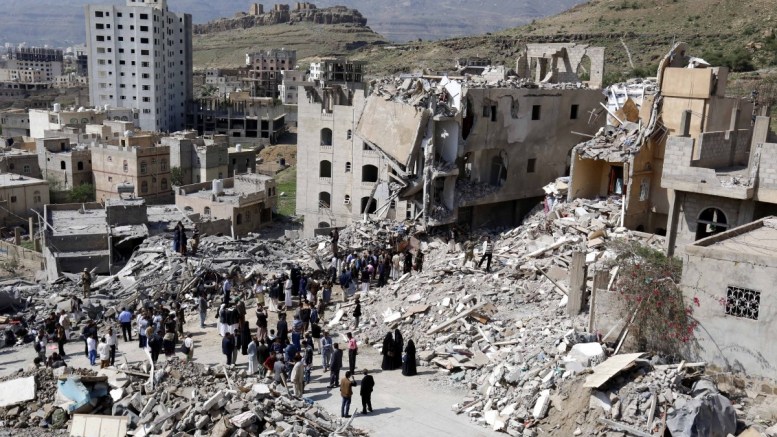
Υπάρχει ένας πόλεμος σήμερα, που δεν ακούμε σχεδόν τίποτα. Ένας πόλεμος που διαρκεί δυόμιση χρόνια τώρα. Ένας πόλεμος με δεκάδες χιλιάδες νεκρούς και τραυματίες, που ελάχιστοι γνωρίζουν. Ένας πόλεμος με καθημερινούς βομβαρδισμούς και δεκάδες αθώα θύματα, όπου μεταξύ αυτών είναι πολλά παιδιά και που δεν αντιδρά κανείς. 
Ένας πόλεμος που είναι η επιτομή της ανθρωπιστικής καταστροφής, η μεγαλύτερη ανθρωπιστική κρίση σύμφωνα με τον ΟΗΕ, αφού εκτός από τις βόμβες, οι άνθρωποι πεθαίνουν από χολέρα και από λιμοκτονία. Που είναι αυτός ο πόλεμος; Ποια είναι αυτή η χώρα που γίνονται αυτά; Είναι η Υεμένη, Αλλά ας τα πάρουμε από την αρχή, για να καταλάβουμε τι γίνεται.
Η Υεμένη είναι ένα κράτος στο Νότιο τμήμα της Αραβικής χερσονήσου και αποτελεί κράτος της Μέσης Ανατολής. Συνορεύει με το Ομάν και τη Σαουδική Αραβία. Δυτικά βρέχεται από την Ερυθρά θάλασσα και νότια από τον κόλπο του Άντεν. Η Υεμένη είναι μία από τις αρχαιότερες κοιτίδες πολιτισμού στην εγγύς Ανατολή. Μεταξύ του 12ου αιώνα π.Χ και του 6ου μ.Χ., η περιοχή αποτελούσε τμήμα των βασιλείων της Μίνα, του Σαβά και των Χιμιαριδών, τα οποία έλεγχαν το ισχυρό εμπόριο των μπαχαρικών. Αργότερα, ήταν κάτω από την εξουσία της Αιθιοπίας και της Περσίας.Τον 7ο αιώνα οι μουσουλμάνοι χαλίφηδες εμφανίστηκαν καταλαμβάνοντας την περιοχή, ενώ μετά τη διάλυση του χαλιφάτου, η πρώην βόρεια Υεμένη βρέθηκε κάτω από τον έλεγχο των ιμάμηδων διαφόρων δυναστειών, κυρίως της φυλής των Ζαΐντι, οι οποίοι εγκαθίδρυσαν μία θεοκρατική πολιτική δομή που επέζησε μέχρι τη σύγχρονη ιστορία.

Η κατάσταση
Η Υεμένη είναι από καιρό η φτωχότερη χώρα της Αραβικής Περιφέρειας και μέχρι τώρα η επιβίωσή της βασίστηκε και στη βοήθεια των γειτόνων της, καθώς και των ΗΠΑ. Σύμφωνα με την εφημερίδα TheNewYorkTimes, τα χρήματα από τα αποθέματα πετρελαίου της χώρας, έχουν χαθεί ή κλαπεί κατά τη διάρκεια της 33χρονης διακυβέρνησης της χώρας, του προέδρου Αλή ΑμπντουλάχΣαλέχ. Ήταν Πρόεδρος της Βόρειας Υεμένης από το 1978 μέχρι το 1990 και έγινε Πρόεδρος του ενιαίου κράτους στις 22 Μαΐου του 1990 και παρέμεινε μέχρι το 2011. Ο Σαλέχ ήρθε αντιμέτωπος με μία μεγάλη εξέγερση του λαού το 2011, οπότε τραυματίστηκε σε επίθεση με ρουκέτα που εκτοξεύτηκε στην προεδρική του κατοικία, εγκαταλείποντας την χώρα.Μια έκθεση του ΟΗΕ του 2015, αποκάλυψε τη συσσώρευση περιουσίας του Σαλέχ, ύψους έως 60 δισ. δολαρίων από τη διαφθορά, την εκβίαση και την υπεξαίρεση.

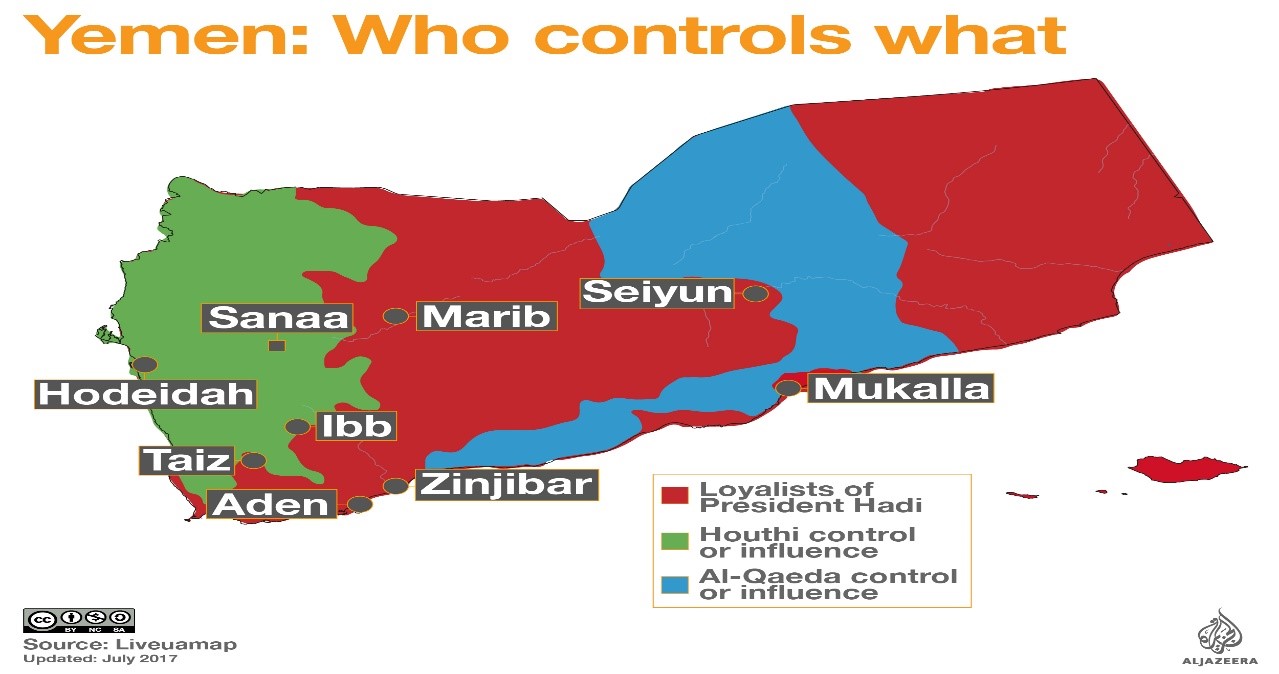
Ο διάδοχός του, από το 2011 και μετά από τις εκλογές του 2012, ήταν ο πρόεδρος Μανσούραλ-Χαντί, ο οποίος παραιτήθηκε έπειτα από την κατάληψη της πρωτεύουσας από τους Σιΐτες αντάρτες Χούτι, τον Ιανουάριο του 2015.Μαζί του παραιτήθηκε και ο πρωθυπουργός Χαλέντ Μπαχά. Τους Χούτι στηρίζει και ενισχύει σε οπλικά συστήματα και οικονομική βοήθεια το Σιϊτικό Ιράν. Οι Χούτι είχαν συνάψει συμμαχία με τον πρώην πρόεδρο Σαλέχ και η ενέργειά των είχε σκοπό την επαναφορά του προηγουμένου καθεστώτος, του προέδρου Σαλέχ, ή του υιού του. Σε απάντηση αυτών των εξελίξεων, δημιουργήθηκε ένας συνασπισμός Σουνιτικών αραβικών κρατών με επικεφαλής τη Ουαχαμπιστική Σαουδική Αραβία, όπου ξεκίνησε μια στρατιωτική επιχείρηση, τον Μάρτιο του 2015, με στρατεύματα και αεροπορικές δυνάμεις, για να εκδιώξει τους Χούτι από τη πρωτεύουσα Σάνακαι τις δυτικές περιοχές της χώρας και να επαναφέρει την προηγούμενη κατάσταση, τον εκλεγμένο πρόεδρο Μανσούραλ Χαντί, ο οποίος και αναγνωρίζεται διεθνώς. Έκτοτε, στη χώρα μαίνεται ένας ολέθριος εμφύλιος πόλεμος, μεταξύ των ανταρτών Χούτι και των υποστηρικτών της διεθνώς αναγνωρισμένης κυβέρνησης της Υεμένης του Μανσούραλ Χαντί. Εξάλλου και μόνο η εμπλοκή του Ιράν στην Υεμένη, θα ήταν αρκετό για την εμπλοκή της Σαουδικής Αραβίας στην εμφύλια διαμάχη, λόγω των γνωστών ανταγωνιστικών των θέσεων για την κυριαρχία στον Αραβικό κόσμο.

Στην επιχείρηση του συνασπισμού με την ονομασία «Decisive Storm», συμμετέχουν Α/Φ και στρατιωτικές δυνάμεις από την Αίγυπτο, το Μαρόκο, την Ιορδανία, το Σουδάν, τα Ηνωμένα Αραβικά Εμιράτα, το Κουβέιτ, το Κατάρ, τον Μπαχρέιν και μισθοφόροι της ιδιωτικής εταιρείας Academi. Το Τζιμπουτί, η Ερυθραία και η Σομαλία έχουν παραχωρήσει τον εναέριο χώρο, τα χωρικά ύδατα και τις στρατιωτικές βάσεις των στη διάθεση του συνασπισμού. Οι Ηνωμένες Πολιτείες παρέχουν υποστήριξη πληροφοριών και υλικοτεχνική υποστήριξη, συμπεριλαμβανομένου του εναέριου ανεφοδιασμού καυσίμων και έρευνας και διάσωσης.

 
Οι Βομβαρδισμοί-Οι απώλειες.
Ο πόλεμος είναι άγριος και αδιάλειπτος. Ο Συνασπισμός υπό την Σαουδική Αραβία πραγματοποιεί συνεχώς αεροπορικούς βομβαρδισμούς με θύματα όπως προαναφέραμε αθώους ανθρώπους και μεταξύ αυτών πολλά μικρά παιδιά. Όπως ανέφερε πρόσφατα το AlJazeera, στις 23 Αυγούστου, από τους αεροπορικούς βομβαρδισμούς κοντά στην πόλη Σανά, είχαμε 35 νεκρούς πολίτες, κυρίως αγρότες, που είχαν την τύχη να είναι κοντά σε ένα στρατόπεδο των Χούτι και στις 25 Αυγούστου είχαμε 14 νεκρούς πολίτες σε συνοικία στην πόλη Σανά, μεταξύ αυτών πολλά παιδιά. Και όταν αναφερόμαστε σε αεροπορικούς βομβαρδισμούς εννοούμε μόνο τον συνασπισμό με επικεφαλής την Σαουδική Αραβία, καθόσον οι Χούτι δεν έχουν τέτοια δυνατότητα, αφού δεν διαθέτουν αεροσκάφη.
Για να αντιληφθούμε την συχνότητα των αεροπορικών βομβαρδισμών , θα παραθέσουμε τα στοιχεία της Ύπατης Αρμοστείας του ΟΗΕ για τους πρόσφυγες.
Έτσι σύμφωνα με την UNHCR’s Protection Cluster Yemen group, μέχρι τώρα στο πρώτο εξάμηνο του 2017, έχουν πραγματοποιηθεί 5.676 αεροπορικοί βομβαρδισμοί, κατά μέσο όρο 946 βομβαρδισμοί τον μήνα, δηλαδή περίπου 31,5 αεροπορικοί βομβαρδισμοί ημερησίως!! Διάφοροι διεθνείς οργανισμοί για τα ανθρώπινα δικαιώματα έχουν κατηγορήσει τον συνασπισμό υπό την Σαουδική Αραβία, ότι βομβαρδίζουν περιοχές αδιακρίτως, όπου υπάρχουν δημόσιοι χώροι και πλατείες, αγορές, νοσοκομεία και συνοικίες, προκαλώντας όχι παράπλευρες απώλειες αλλά απώλειες αθώων και ανυποψίαστων αμάχων. Τα στοιχεία του ΟΗΕ αποκαλύπτουν ότι μέχρι τώρα ο πόλεμος έχει προκαλέσει τον θάνατο σε πάνω από 10.000 ανθρώπους και τον τραυματισμό σε πάνω από 40.000 ανθρώπους.

Λιμός –Χολέρα και Αλ Κάιντα.
Ο συνεχιζόμενος εμφύλιος πόλεμος, ο οποίος ξεκίνησε μετά την παρέμβαση της Σαουδικής Αραβίας και ορισμένων αραβικών κρατών εναντίον των ανταρτών Χούτι, έριξε τη Υεμένη σε μια από τις χειρότερες ανθρωπιστικές κρίσεις της πρόσφατης ιστορίας.
Ο πόλεμος και αυτό είναι ακόμη χειρότερο, έχει προκαλέσει τεράστια έλλειψη τροφίμων, που έχει περιγραφεί από διεθνείς ανθρωπιστικές οργανώσεις ως το άμεσο αποτέλεσμα του πολέμου .Η Υεμένη, η οποία έχει πληθυσμό πάνω από 27 εκατομμύρια ανθρώπους, βρίσκεται στα πρόθυρα της γενικής λιμοκτονίας, με περίπου 20 εκατομμύρια ανθρώπους να έχουν ανάγκη ανθρωπιστικής βοήθειας, καθώς και στη μέση μιας πρωτοφανούς επιδημίας χολέρας. Αναφερόμενος στον πόλεμο που διεξάγεται στη Σαουδική Αραβία στην Υεμένη, ο ΟΗΕ προειδοποίησε ότι η χώρα κατευθύνεται προς την “πλήρη κατάρρευση”.
Επί του παρόντος, πάνω από επτά εκατομμύρια άνθρωποι βρίσκονται στα πρόθυρα της άμεσης λιμοκτονίας, λόγω των αποκλεισμών των συνόρων και της φτώχειας από την διάρκεια του πολέμου. Σύμφωνα δε με τον ΟΗΕ, η μεγαλύτερη ανθρωπιστική κρίση στον κόσμο σήμερα, βρίσκεται στην Υεμένη.
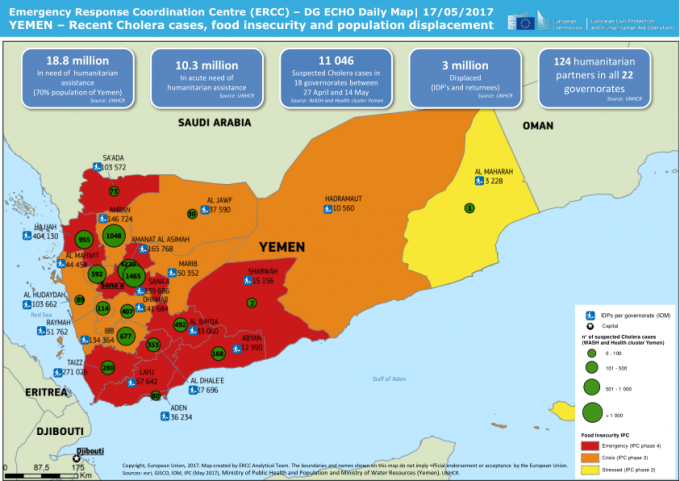
Εκτός του εμφυλίου πολέμου, των καθημερινών βομβαρδισμών και της επισιτιστικής κρίσης (λιμοκτονίας), ένα άλλο μεγάλο κακό ενέσκηψε στην χώρα. Η Χολέρα!! Η ξεχασμένη χολέρα είναι μια σοβαρή ασθένεια που μπορεί να πάρει τη μορφή επιδημίας, όπως ήδη συμβαίνει στην Υεμένη. Η νόσος της Χολέρας έχει αντιμετωπιστεί αποφασιστικά από τις σύγχρονες κοινωνίες, ιδιαίτερα στην ευρωπαϊκή ήπειρο. Οφείλεται κυρίως στα ελλιπή μέτρα υγιεινής και είναι εξαιρετικά μεταδοτική όταν εκδηλώνεται. Προκαλείται από ένα βακτήριο που ονομάζεται “Δονάκιο της χολέρας” το οποίο βρίσκεται συνήθως σε μολυσμένο νερό. Στην Υεμένη, σε μόλις τρεις μήνες, η χολέρα σκότωσε πάνω από 2.000 άτομα, εκ των οποίων το 1/3 παιδιά και έχει μολύνει περισσότερο από μισό εκατομμύριο ανθρώπους (για την ακρίβεια 542.000 , όταν στην περίπτωση της Αϊτής το 2011είχαν μολυνθεί 340.000 συνολικά), το μεγαλύτερο ποσοστό επιδημίας στον κόσμο τα τελευταία 50 χρόνια, σύμφωνα με τα στοιχεία του WHO (World Health Organization). 

περιοχές με την επιδημία χολέρας

Και όποιος νομίζει ότι τρίτωσε το κακό για την έρημη αυτή χώρα (βομβαρδισμοί, πείνα, χολέρα), έκανε λάθος. Ο πόλεμος έχει αφήσει διάφορες περιοχές της χώρας, με κενά εξουσίας, ελέγχου και οικονομικών δραστηριοτήτων, ώστε να χρειάζονται άμεση ανθρωπιστική βοήθεια και ταυτόχρονα έχει επιτρέψει στην Αλ Κάιντα να εισχωρήσει και να αναπτυχθεί μέσα στο κενό ασφαλείας, που δημιουργήθηκε από το χάος του εμφυλίου. Με αποτέλεσμα να υπάρχει εκτός των άλλων και ο Σαλαφιστικός Ισλαμιστικός τρομοκρατικός εξτρεμισμός. Στην Υεμένη, δρα με ευχέρεια και ευρύτητα δράσεων, λόγω του εμφυλίου πολέμου, η ΑlQaeda in the ArabianPeninsula (AQAP), δηλαδή η Αλ Κάϊντα της Αραβικής Χερσονήσου!! Και λόγω της κατάστασης πολλοί κάτοικοι, απελπισμένοι και πεινασμένοι, να βρίσκουν καταφύγιο στην εξτεμιστική Σαλαφιστική Σουνιτική Ισλαμιστική ιδεολογία και να επανδρώνουν τις τάξεις της Αλ Κάιντα, μεταβαλλόμενοι έτσι σε δυνητικούς μελλοντικούς τζιχαντιστές, με ότι αυτό συνεπάγεται.
Επίλογος
Η κατάσταση στην Υεμένη είναι περίπλοκη, δραματική, απελπιστική, χωρίς να διαφαίνεται ελπίδα για τερματισμό του παραλογισμού που επικρατεί στην χώρα, αφού όλοι πολεμούν εναντίον όλων, με αποτέλεσμα, όλα όσα προαναφέραμε, βομβαρδισμοί, λιμός, χολέρα και Ισλαμιστικός Σαλαφιστικός εξτρεμισμός. Μαίνεται ένας πόλεμος που έχει τεθεί στο περιθώριο από την διεθνή κοινότητα και τα διεθνή ΜΜΕ. Καθημερινά πεθαίνουν άνθρωποι από βομβαρδισμούς, την πείνα, την χολέρα, την τρομοκρατία και η είδηση ή αποκρύπτεται ή πηγαίνει στα «ψιλά», με αποτέλεσμα η συντριπτική πλειοψηφία να την αγνοεί. Στην Υεμένη δεν συγκρούονται τα μεγάλα γεωστρατηγικά συμφέροντα των ισχυρών κρατών, ούτε σχεδιάζονται αγωγοί Υ/Δ να περάσουν από την χώρα.
Ο πλούτος της χώρας έχει λεηλατηθεί από διεφθαρμένες ηγεσίες που λυμαίνονταν την χώρα επί δεκαετίες, εξυπηρετώντας ξένα συμφέροντα. Εκεί δεν υπάρχουν «ανθρωπιστικές οργανώσεις», τύπου «Λευκά Κράνη», να γυρίζουν βίντεο με παιδάκια που δήθεν σώζονται από τους βομβαρδισμούς των κακών (στην περίπτωση της Συρίας οι κακοί είναι οι Ρώσοι και το καθεστώς Άσαντ), δίνοντας άλλοθι στους τζιχαντιστές του ΙSIS και άλλων Ισλαμιστικών «ευαγών ιδρυμάτων» και οργανώσεων που δρούσαν στην περιοχή, αλλά σήμερα ευτυχώς εξαλείφονται σταδιακά από την Συρία και το Ιράκ. Η εμπλοκή του Σιϊτικού Ιράν στον εμφύλιο, στο πλευρό των Χούτι, ήταν παραπάνω από σίγουρο ότι θα ανάγκαζε την Σαουδική Αραβία, του νεαρού πρίγκηπα και διαδόχου του Θρόνου και πραγματικού ηγέτη της χώρας, του Υπουργού Άμυνας Μωχάμεντ μπιν Σαλμάν, να εμπλακεί στρατιωτικά στην εμφύλια διαμάχη, ομού με τα Αραβικά κράτη συμμάχους του, όπερ και εγένετο και συνεχίζεται ακόμη. Το γιατί τα διεθνή ΜΜΕ δεν αναφέρονται σχεδόν καθόλου στην Υεμένη, έτσι αποφασίστηκε.
Η ηγετική παρουσία της Σαουδικής Αραβίας, φίλου και εταίρου και μακρύ χέρι των ΗΠΑ στον εμφύλιο πόλεμο είναι αρκετό να μην αναφέρεται σχεδόν τίποτα για την Υεμένη. Τα διεθνή ΜΜΕ για πολλούς λόγους, δεν αναφέρουν και πολλά για την ΟυαχαμπιστικήΣαουδική Αραβία. Το γιατί μπορείτε να το αντιληφθείτε από τα λόγια ενός Ροκφέλερ. O πρόσφατα αποθανών και μάλιστα σε ηλικία 101 χρόνων, πατριάρχης της θρυλικής οικογένειας των Ροκφέλερ και ένας από τα φερόμενα μέλη της «παγκόσμιας κυβέρνησης», ο Ντέιβιντ Ροκφέλερ, σ’ ένα βίντεο που αφέθηκε σκόπιμα να διαρρεύσει,δηλώνει:«Είμαστε ευγνώμονες στην WashingtonPost, τους NewYorkTimes, το περιοδικό Time και άλλους μεγάλους εκδοτικούς οίκους, των οποίων οι διευθυντές έχουν παρακολουθήσει τις συναντήσεις μας και σεβάστηκαν τις υποσχέσεις τους για διακριτικότητα για σχεδόν σαράντα χρόνια…» (!) Και εξηγεί τους λόγους: «Θα ήταν αδύνατο για μας να αναπτύξουμε το σχέδιό μας για τον κόσμο, αν είχαμε υποστεί τα φώτα της δημοσιότητας…..». Χρειάζονται άλλες εξηγήσεις;

  • Ο Ιωάννης Αθ. Μπαλτζώης είναι Αντγος (ε.α.), πρώην ΑΚΑΜ Τελ Αβίβ, πρώην Αξκος επιχειρήσεων της ECMM στον πόλεμο της Βοσνίας, Απόφοιτος TacticalIntelligenceSchool (U.S.Army), Μεταπτυχιακό στην Γεωπολιτική Ανάλυση, Γεωστρατηγική Σύνθεση και Σπουδές Άμυνας και Διεθνούς Δικαίου του Εθνικού Καποδιστριακού Πανεπιστημίου Αθηνών, μέλος ΔΣ του ΕΛΙΣΜΕ (Ελληνικό Ινστιτούτο Στρατηγικών Μελετών).

Πηγές:
• https://www.nytimes.com/interactive/2017/08/23/world/middleeast/yemen-cholera-humanitarian-crisis.html?smid=tw-nytimes&smtyp=cur
• https://www.alaraby.co.uk/english/news/2017/8/25/children-among-dead-in-air-raid-on-yemen-capital
• http://www.aljazeera.com/news/2017/08/children-dead-fresh-air-strikes-hit-yemen-170825081935581.html
• http://www.aljazeera.com/indepth/features/2017/08/saudi-arabia-war-yemen-strategic-failure-170823072854582.html
• https://www.criticalthreats.org/analysis/losing-wars-terrorism-and-disease-in-yemen
• World Health Organization (http://www.who.int/en/ )
• UNHCR’s Protection Cluster Yemen
• http://www.independent.co.uk/news/world/europe/russia-ambassador-sudan-dead-mirgayas-shirinsky-swimming-pool-khartoum-a7909606.html?=1

.analystsforchange.org

Germans Are Becoming More Skeptical of Turkey

0

A new survey shows that, amid rising tensions between Ankara and Berlin, German skepticism of Turkey is significant. That’s bad news for tourism in the country.
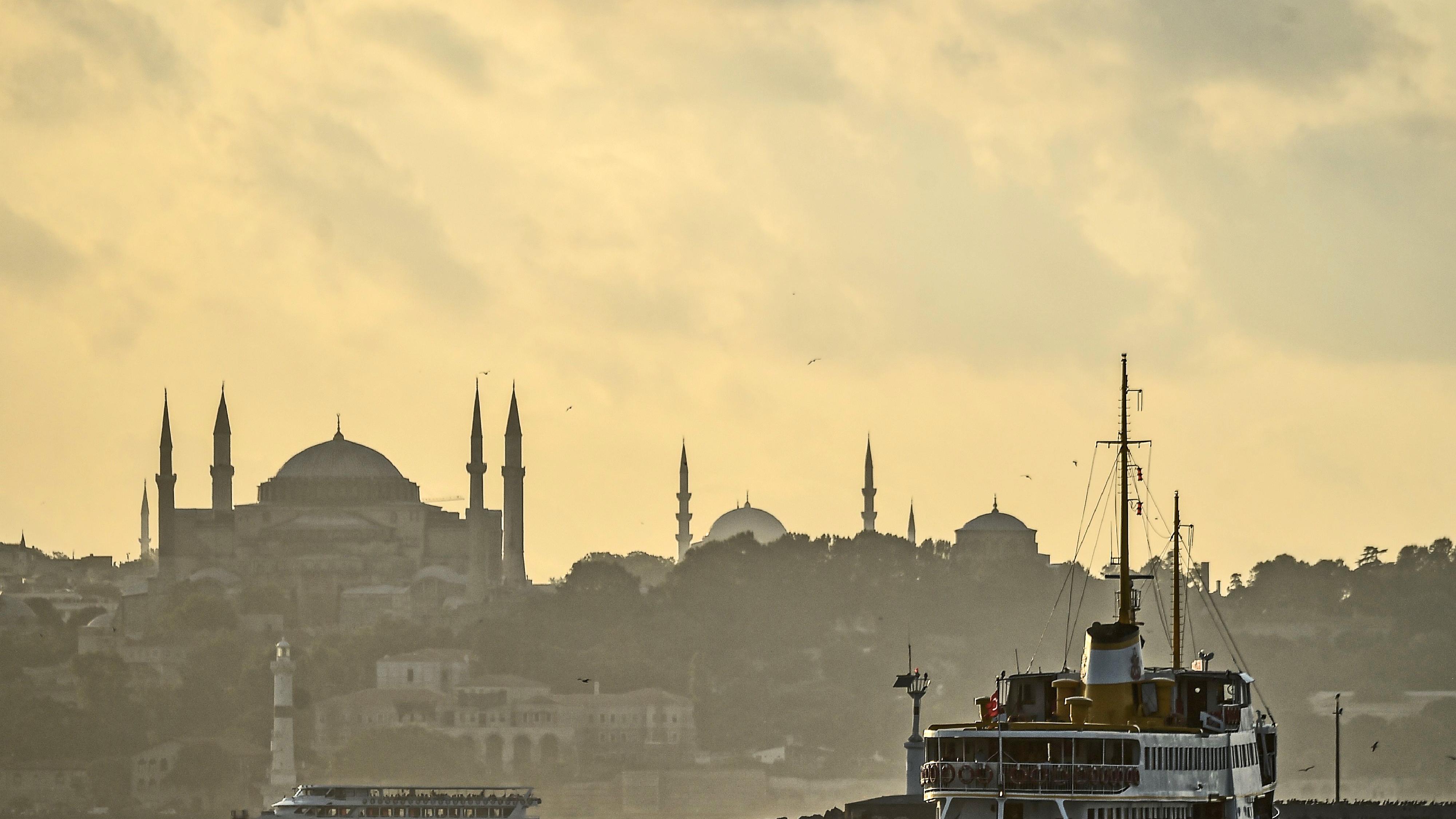
tuerkei-tourismus-istanbul
A ferryboat crosses the Bosphorus in Istanbul © Ozan Kose/AFP/Getty Images

Lesen Sie diesen Text auf Deutsch

It’s no secret that relations between Turkey and Germany are very strained at the moment. Earlier this year, Turkish President Recep Tayyip Erdogan accused Berlin of “Nazi practices” for refusing to allow Turkish politicians to campaign in Germany. Furthermore, Ankara continues to hold several Turkish-Germans in custody, including journalists, and has lobbed threats at Berlin. And last week, Erdogan urged Turkish-Germans to boycott a trio of top German political parties in upcoming parliamentary elections, including Chancellor Angela Merkel’s Christian Democrats.

No wonder, then, that the German population has begun viewing Turkey with a significant amount of skepticism, as shown by a new survey conducted by the German public opinion research organization Civey and seen by ZEIT ONLINE.

In response to the question as to whether they could imagine taking a trip to Turkey, 70 percent of respondents answered: “Definitely not.” An additional 15 percent responded, “likely not.” Only around 6 percent remain completely open to spending a vacation in Turkey. The tourism industry is one of the most important economic sectors for the country and vacationers from Germany had long represented the greatest share of travelers to Turkey. That, though, now appears to be changing – and the German Foreign Ministry’s recently issued travel advisory for Turkey in response to Erdogan’s behavior likely won’t have helped the country’s standing in the eyes of Germans.

Two Turkish-German journalists, Meşale Tolu and Deniz Yücel, are currently being held in Turkey, as is human-rights activist Peter Steudtner. The seemingly arbitrary arrests, along with recent terror attacks on tourist destinations in Turkey, appear to have had their effect on security-conscious Germans.

Despite all of Erdogan’s recent verbal transgressions, the German government still views Turkey as an important ally. In addition to being a member of NATO, Turkey also plays a key role in efforts to prevent a repeat of the 2015 refugee crisis. But a majority of Germans would like to see Berlin chart a tougher course in its dealings with Turkey. Sixty percent of survey respondents are in favor of “clear dissociation” from Ankara while an additional 27 percent support a course that “tends toward dissociation.” Only 6 percent are in favor of remaining on the current path, a tiny minority.

The Turkish president has called on all Germans with Turkish backgrounds to avoid voting for the center-right Christian Democrats (CDU/CSU), the center-left Social Democrats (SPD) and the Greens in the German general election on Sept. 24. The parties, he says, are “enemies of Turkey.” But the Civey survey shows that supporters of the remaining parties – the business-friendly Free Democrats (FDP), the far-left Left Party and the right-wing populist Alternative for Germany (AfD) – are actually more critical of Turkey than the parties Erdogan singled out.

AfD voters are particularly skeptical of Turkey, with around 74 percent of the party’s potential voters saying they are in favor of a “clear dissociation” from Turkey, a higher rate than among supporters of any other party. Among Left Party supporters, 66 percent would like to see “clear dissociation” while that opinion is shared by 57 percent of voters who say they support the FDP.

Among the parties Erdogan criticized, 57 percent of Merkel’s conservatives would like a clear dissociation from Ankara while supporters of the Greens are the least skeptical, with 49 percent in favor of more distance to Turkey. When compared to supporters of other parties, those respondents who back the Greens were most likely to be in favor of a course that “tends toward dissociation” when questioned about how the German government should approach Ankara. The results make it clear that skepticism of Turkey is widespread across the entire German population, regardless of political affiliation.

A majority of Germans believe that the AfD is the party best positioned to take advantage of the current tensions between Germany and Turkey, with 37 percent holding this viewpoint, though only 32 percent in eastern Germany. Only 16 percent, by contrast, believe that Merkel’s conservatives can profit from the strained relationship with Ankara. Around a quarter of respondents believe that no German political party will benefit.

Translated by Daryl Lindsey and Charles Hawley

About This Survey

The survey values shown here were collected by the Civey public opinion research institute. Only answers from registered and verified users were included in the representative results. Civey corrects for distortions by way of a multilevel weighting system.

Representative surveys are momentary snapshots and are always subject to error. In general, the value given is at least 2.5 percentage points higher or lower than the actual value. This so-called “margin of error” is noted by Civey and is listed in our graphics.

http://www.zeit.de/politik/deutschland/2017-08/turkey-tourism-holiday-resort-travel-destination

Why Israel Is Concerned About American-Russian Understandings on Syria

0

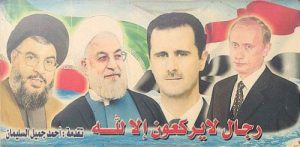
Iranian poster showing Hizbullah leader Hassan Nasrallah, Iranian President Hassan Rouhani, Syrian President Bashar Assad, and Russian President Vladimir Putin
(ABNA News – Iran)

The agreement reached during the G-20 meetings in Hamburg between U.S. President Trump and Russian President Putin on July 7, 2017, about establishing a de-escalation zone in southwestern Syria was accepted with mixed feelings in Israel.

Jerusalem, of course, welcomes stability in the southern part of Syria. But Prime Minister Netanyahu voiced concern about the agreement mainly because it focused on the de-escalation zone. It tacitly gave legitimacy to the prolonged presence of Iranian and Iranian-backed forces throughout the regions of Syria nominally controlled by the Assad regime.

Israeli doubts about this American policy will probably intensify following Trump’s decision to curtail U.S. assistance to opposition groups that were supported by the CIA.  Moreover, Israel is alarmed by recent reports about negotiations between Russia and the United States that practically allow Assad to stay in power and that guarantee a favorable division of the territory between Assad and his supporters and the forces who cooperate with the United States.

Israeli Concerns about Iran in Syria

Israel has five major concerns regarding the Iranian entrenchment in Syria. Two of them are an immediate concern. Israel regards these specific two as tripwires that if and when crossed, Israel will react. These are:

  1. Iran’s ongoing effort together with its proxy Hizbullah to turn the northern part of the Golan Heights into a base from which the Iranians could launch – via their proxies – terror activities against Israel. Throughout the civil war in Syria, Israel countered Iranian efforts to establish a launching pad for terror attacks in the northern Golan Heights with the decisive reaction that foiled these attempts. Last year, it seemed that Iranians got the message, and they have been much more cautious about this idea.
  2. Iran’s presence in Syria allows for the acceleration of the delivery of military equipment to Hizbullah through Syria, including the supply of “tie-breaking” weapons and weapons components, such as –
    • precision guidance for Iranian-made missiles such as the Fatah 110 and missiles with heavier payloads;
    • land-to-sea missiles produced by Iran, China, and Russia (C-704, C-802, Yakhont supersonic anti-ship cruise missile with a 600 km range;
    • SA-22 air defense system and a wide variety of anti-aircraft missiles produced in Russia and Iran);
    • unmanned air vehicles, drones;
    • mini submarines (Ghadir type);
    • anti-tank missiles, etc.

    So far, Israel has not been shy about hitting those armed shipments on Syrian territory. Recently, Prime Minister Netanyahu even admitted that Israel carried out “dozens and dozens” of such attacks. If Iran managed to solidify its presence in Syria and most of all, establish an Iranian-controlled ground corridor stretching from Iran, through Iraq and Syria to Lebanon (the “Shia Crescent”), it would be able to deliver these arms with greater safety and with fewer limits on the kinds of weapons to be delivered. In the meantime, due to ongoing Israeli interdictions, the Iranians have already embarked on building weapons production factories in Lebanon and maybe in Syria that will facilitate the supply to Hizbullah of advanced weaponry. (To some extent Iran did the same with Hamas in Gaza.)

    But beyond these two well-known concerns, the Iranian presence in Syria should worry Israel for three other reasons, which are no less dangerous.

Fateh-110 missiles.

Fateh-110 missiles. Iranian armed forces parade in 2012 (Wikipedia)

  1. Iran almost assuredly wants to turn Syria into an Iranian military base. Iran plans to build in Syria a naval base, and it may move ground forces, missiles, and maybe even aircraft to Syria so that instead of threatening Israel from 1,300 kilometers away, the Iranian forces could sit on Israel’s doorstep. This would bring about a dramatic change in the nature of the threat Israel is facing. In fact, Israel’s neighbor to the north would no longer be Syria anymore, but Iran, using a Syrian facade with impunity.
  2. An Iranian stronghold in Syria will significantly weaken the pragmatic elements in the Sunni Arab world and put the Hashemite Kingdom of Jordan under threat – with its geo-strategic importance for Israel and the Sunni Arabs. This is not only a concern of Israel but of course, denies sleep from other Arab states.
  3. The Iranians may take advantage of their continuous presence in Syria and Assad’s deep dependence on Iranian support for the survival of his regime and his Alawite sect to make progress on Syrian territory in their nuclear program. Under the JCPOA, the IAEA can monitor nuclear activities in Iran but has no authority to monitor Iranian activity abroad or to follow Iranian scientists. Iran may use these loopholes to conduct research and development of nuclear-related material in Syria.

As a reminder: ten years ago, Syria nearly completed a secret nuclear facility in Deir Ez-Zor with Iranian and North Korean assistance.  The facility was destroyed in September 2007.

The Russian interest in this negotiated deal reflects the Russian commitment to keep Basher al-Assad as president of Syria and to secure the ongoing presence of Russian military bases in Syria. Russia considers Iran as an irreplaceable protector of Assad. Putin is also motivated by the Russian interest in weakening radical Sunni forces that constitute the most effective elements of the opposition to Assad. Russia is also plagued by radical Sunni opposition within Russia itself. Continuous Iranian presence in Syria is a strategic interest for Moscow. In the long run, if Assad again becomes capable of standing on his own feet, the value of the Iranian presence may erode, but since this is unlikely to happen in the foreseeable future, the strategic alliance between Russia and Iran will remain strong.

For the Islamist regime in Iran, their interests in Syria go far beyond strategic. It is part of its ideology. The entire regime is committed to spreading its version of Islam, turning Iran into the hegemonic force of the Middle East and Muslim world and bringing about the end of the Jewish State. The taking over of Syria goes hand-in-hand with the Iranian regime’s efforts in Yemen, Iraq, Bahrain, and elsewhere in the Arab world. Therefore, Iran will not show any readiness to leave Syria unless the price for staying there becomes very high.

Former U.S. President Obama granted Iran a free hand in Syria in return for the JCPOA because he believed that Iran is a force for good that may contribute to stability and help in destroying the Islamic State. He wondered why the Saudis were not ready to share power in the Middle East with the Iranians.

Trump was expected to adopt a different attitude based on his declarations that “Iran is evil” and the impression he gave that in return for allowing the Russians to keep Assad temporarily in power, he would demand from them a commitment to oust the Iranians from Syria. But the latest deal reached between Trump and Putin seems to ignore this commitment. That worries Israel not only because it allows Iran to stay with all the above-mentioned consequences, but because it casts doubt over the depth of American commitment, the ability of the Americans to deliver, or the relevance of the “Art of the Deal” to the Middle East and international politics.

Russia and the United States announced that they took Israeli security concerns into consideration. But so far it seems that only Israel’s first two concerns have been into account – possibly even only one. That leaves Israel on its own because the last three other concerns aren’t taken into account.

As always, Israel will have to take care of its interests first of all by itself. It is, therefore, no surprise that given this situation, Israel exposed its “Good Neighbor” program, under which it supplies humanitarian aid to the Syrian population in the Golan Heights. By doing so, Israel sent a message that left alone, it will find ways to protect its interests in Syria.

About Brig.-Gen. (res.) Yossi Kuperwasser

Brig.-Gen. (res.) Yossi Kuperwasser is Director of the Project on Regional Middle East Developments at the Jerusalem Center. He was formerly Director General of the Israel Ministry of Strategic Affairs and head of the Research Division of IDF Military Intelligence.
http://jcpa.org/israel-concerned-american-russian-understandings-syria/

Russia’s propaganda machine amplifies alt-right

0
© Thinkstock

Russia’s army of media influencers, social media bots and trolls has increasingly amplified alt-right and far-right narratives in the United States since the 2016 presidential election.

Russia’s efforts to push propaganda and disinformation, experts say, are nothing new and extend beyond the U.S. to nations in Europe. But they have seemed to evolve in recent months, increasingly infiltrating and engaging with alt-right and far-right Americans online.

Moscow’s aim is widely viewed as exploiting divides and sowing distrust of democratic institutions, the latter a conclusion reached by the U.S. intelligence community in its initial investigation of Russia’s interference in the presidential election, including overt efforts to push propaganda.

“Promoting content that is divisive – that is the ultimate goal here,” said Lee Foster, manager of information operations analysis at FireEye iSIGHT Intelligence.

“It’s the same in Europe, but the specific themes change,” Foster said. “There, one of the most prominent themes is migration and the refugee crisis.”

In some cases, it is pro-Russia personalities, trolls or automated accounts magnifying right-wing messages.

The latest example is the recent flood of negative coverage of President Trump’s national security adviser, H.R. McMaster, which originated on right-wing media outlets like Breitbart News and has been picked up by prominent conservative personalities, including Sean Hannity.

The campaign, coined #FireMcMaster, was also picked up by automated Twitter accounts—commonly known as “bots”—that are linked to Russia, according to Hamilton 68, a new dashboard developed to monitor fake news. Separately, researchers at the Atlantic Council’s Digital Forensic Research Lab identified Lee Stranahan, a host on Russian state-run outlet Sputnik, as one of the most prominent voices behind the anti-McMaster campaign.

“The long view of the Russian active measures program is chaos and disunity among the American government,” Clint Watts, a former FBI agent and cybersecurity expert who developed the Hamilton 68 dashboard, told NPR earlier this month.

“The reason the #FireMcMaster topic is so potent is it’s one of the key themes that you consistently will see the Russians push,” Watts said. “One is anti-EU. They want to see the EU break up. The other one is anti-NATO. And they want to see the U.S. back away from both of those alliances. McMaster’s very much about staying engaged in those alliances, which is different from other people in the White House.”

In other cases, pro-Russian personalities and accounts will push narratives to their targeted audience, attempting to get American influencers to pick up a certain storyline.

Such was the case during 2016 presidential election campaign, noted Foster, when accounts tweeted content copied from the WikiLeaks dumps of Democratic officials’ emails.

“Up through the election, it was heavily anti-Clinton and steadily increased in the promotion of pro-Trump material,” Foster said. “It moved into this pro-Trump realm.” He noted that while these accounts continue to push anti-Democratic messaging, the balance has shifted toward pro-right-wing messages.

A more recent example is laid out by Atlantic Council researchers Donara Barojan and Ben Nimmo.

According to their August 18 analysis, far-right and nationalist activists in the U.S. picked up a narrative pushed by Kremlin-backed media that the 2014 revolution in Ukraine was driven by neo-Nazis.

The narrative, which Moscow has advanced to justify its annexation of Ukraine’s Crimean Peninsula, again picked up steam as Russian figures began comparing the white nationalist rallies in Charlottesville, Va., to the uprising in Ukraine. Those pushing the narrative eventually used it to attack Republican figures, notably Sen. John McCain (R-Ariz.), accusing him of hypocrisy for denouncing white supremacist protesters in Charlottesville but supporting Ukrainian protesters.

“[It’s] this kind of unholy alliance between the Kremlin-funded media and the alt-right activists and influencers,” Barojan said in an interview.

Bots, or automated accounts that tweet at high volumes, play a key role in amplifying these messages online. While some researchers maintain that it is impossible to say for certain in which countries these accounts originate, others say that specific characteristics—such as the times they tweet or the narratives they push–can lead them to reasonably conclude that they originate in Russia, or elsewhere.

Experts say that pro-Russia bot activity particularly targeting U.S. audiences has evolved in recent months.

“They went from being effectively propaganda experiments to being something that is now known tradecraft,” explained Ryan Kalember, senior vice president for cybersecurity strategy at Proofpoint. “You look at the numbers and you definitely see trends toward greater organization in terms of the messaging.”

Some have observed bot activity in general intensify.

“We see that they’ve been more prevalent in a variety of scenarios, not only political discourse and elections but also really in a variety of nefarious or malicious applications,” said Emilio Ferrara, an assistant research professor at the University of California’s computer science department. “They are used to push conspiracy theories, they are used to push anti-science operations like climate change denial campaigns.”

Ferrara published research in July linking Twitter bots that spread pro-Donald Trump messages ahead of the U.S. election to those that circulated disinformation about then-French presidential candidate Emmanuel Macron leading up to the May 2017 election in France. Ferrara did not attribute the bot activity to Russia.

Moscow is widely believed to have spread disinformation about Macron, in an effort to prop up far-right candidate Marine Le Pen, leader of France’s National Front. Macron also witnessed his campaign emails hacked and leaked days before the election, though the hack has not been definitively traced to Russia.

National Security Agency director Mike Rogers has said that the U.S. warned France of Russian cyber activity before the hack.

When it comes to pro-Russia accounts engaging in the U.S., they are not solely reaching out to the alt-right.

There are also anti-Trump bots and trolls tied to Russia, Kalember said, that engage with left-wing audiences to push disinformation. For now, though, the engagement is more prominent on the right because the narrative fits Russia’s aim, experts say.

“It goes to show that this is not in anyway a phenomenon that is restricted to the alt-right,” Kalember said. “That’s just a vehicle of convenience for whatever the Russian agenda happens to be.”

http://thehill.com/policy/cybersecurity/348054-russias-propaganda-machine-amplifies-alt-right

«Ποιοι είναι και γιατί οι αποσπασμένοι εργαζόμενοι εντός της Ε.Ε. προκαλούν διαιρετικές αντιδράσεις;»

1

Του Αλκη Καλλιαντζίδη Οικονομολόγου [email protected]   www.kalkis.eu

Ο Emmanuel Macron, την ώρα που γράφονται αυτές οι γραμμές, ολοκλήρωσε μια μίνι περιοδεία  στην Αυστρία, Ρουμανία και Βουλγαρία, έχοντας συναντήσει στο Σάλτσμπουρκ  και τους ηγέτες της Τσεχίας και Σλοβακίας, πριν έρθει στην Ελλάδα σε λίγες μέρες για να συναντήσει την ελληνική ηγεσία με άγνωστη ακόμα ατζέντα.

Ποιος ήταν ο κύριος σκοπός αυτής της περιοδείας ;

Να επιτύχει την υποστήριξη των εν λόγω χωρών αναφορικά με το αίτημά του  προς το Ευρωπαϊκό Συμβούλιο για τροποποίηση της ισχύουσας από το 1996 κοινοτικής οδηγίας για τους «αποσπασμένους εργαζομένους», από μια κοινοτική επιχείρηση με έδρα μια κοινοτική χώρα π.χ. την Πολωνία, σε μια άλλη κοινοτική επιχείρηση με έδρα μια άλλη κοινοτική χώρα π.χ. τη Γαλλία η οποία φιλοξενούσε το 2016 280.000 Πολωνούς αποσπασμένους. Αλλά και να διασπάσει την άτυπη ένωση των χωρών του αποκαλούμενου  «Visegrad».

Γιατί αυτή η επιδίωξη του Macron τώρα ;

Γιατί μεγάλη μερίδα Γάλλων και άλλων κοινοτικών εργαζομένων θεωρεί ότι οι «αποσπασμένοι εργαζόμενοι» των πρώην ανατολικο-ευρωπαϊκών χωρών σε δυτικο-ευρωπαϊκές χώρες συμβάλουν σε ένα «κοινωνικό ντάμπιγκ» σε βάρος των δυτικο-ευρωπαίων εργαζομένων, αφού οι «αποσπασμένοι» στοιχίζουν λιγότερο στην δυτική εργοδοσία (αν τους καταβάλει τον κατώτατο μισθό είναι νόμιμη) η οποία τους προτιμάει για να συμπιέσει το κόστος του συντελεστή εργασία. Έτσι θεωρείται ότι αυξάνεται η ανεργία στις δυτικο-ευρωπαϊκές χώρες, ενισχύεται η ξενοφοβία και η ακροδεξιά, ότι «προδίδεται το ευρωπαϊκό πνεύμα σύγκλησης στις βασικές αρχές του», καταστρατηγείται ο νόμος και εφαρμόζεται ένας αθέμιτος ανταγωνισμός μεταξύ των μισθωτών των διαφόρων χωρών, ισχυρίζεται η πλευρά Macron. Ο Γάλλος πρόεδρος κινεί τώρα αυτό το ζήτημα, γιατί ήταν μια προεκλογική του δέσμευση να το κινήσει τώρα (άλλη μια τήρηση του χρονοδιαγράμματός του. Αν απέφευγε το μακιγιάζ των 26.000 ευρώ, ίσως τα πράγματα να ήταν καλύτερα για αυτόν), επιδιώκοντας  την σύμφωνη γνώμη για την «ενισχυμένη πλειοψηφία» των κρατών μελών της Ευρωπαϊκής Ένωσης για τροποποίηση της οδηγίας. Για αυτό το θέμα δεν απαιτείται ομοφωνία, όπως ανοήτως υποστηρίζεται από κάποιους άσχετους νεοέλληνες. Σύμφωνα δε με το Editorial της ηλεκτρονικής έκδοσης της εφημερίδας LE MONDE στις 24-08-2017, ο Γάλλος πρόεδρος πέτυχε την υποστήριξη της Πράγας, της Μπρατισλάβας και της Βιέννης, όπως δείχνει και η σχετική φωτογραφία του BERTRAND GUAY / AFP και των δημοσιογράφων Robert Fico, Christian Kern και Bohuslav Sobotka.

 Ποιος θεωρείται «αποσπασμένος εργαζόμενος» ;

Η κοινοτική Οδηγία που χρονολογείται από το 1996 εγκρίθηκε για να συμβάλλει θεωρητικά στην ανάπτυξη της εσωτερικής αγοράς της ΕΕ, διευκολύνοντας την κινητικότητα της εργασίας.

Το άρθρο 2 του κειμένου της Οδηγίας ορίζει έναν αποσπασμένο εργαζόμενο ως «τον κάθε εργαζόμενο που εκτελεί το έργο του για περιορισμένο χρονικό διάστημα  στο έδαφος κράτους μέλους άλλου από το κράτος στο έδαφος του οποίου εργάζεται συνήθως». Προσοχή, δεν πρέπει να συγχέονται αυτοί οι μισθωτοί με τους υπηκόους ενός κράτους μέλους (π.χ της Βουλγαρίας) που εγκαθίστανται μόνιμα σε μια άλλη χώρα (π.χ. τη Γερμανία) και αναζητούν εκεί μια απασχόληση και κοινωνική ενσωμάτωση, χωρίς να εργάζονται προηγουμένως σε επιχείρηση στη χώρα καταγωγής τους.

Το κείμενο της οδηγίας προβλέπει 3 «διακρατικές» καταστάσεις τέτοιας εργασίας:

Ένας μισθωτός που αποστέλλεται από την Πολωνία π.χ. σε άλλη χώρα στη Γαλλία π.χ., βάσει «σύμβασης μεταξύ της πολωνικής επιχείρησης αποστολής και του γάλλου αποδέκτη της υπηρεσίας που παρέχεται σε αυτό το κράτος μέλος».

Ένας μισθωτός που αποσπάται σε άλλη χώρα «μέσα σε μια μονάδα ή σε μια επιχείρηση που ανήκει στον ίδιο επιχειρηματικό όμιλο».

Ένας προσωρινός εργαζόμενος αποσπασμένος σε «μια επιχείρηση-χρήστη που είναι εγκατεστημένη ή λειτουργεί στην επικράτεια κράτους μέλους».

Και στις 3 αυτές περιπτώσεις, εξηγείται ότι πρέπει να υπάρχει και να παραμείνει μια «εργασιακή σχέση μεταξύ της επιχείρησης αποστολής και του εργαζομένου κατά την περίοδο απόσπασής του».

Αυτό που επιδιώκει ο Macron είναι μόνο το πρώτο βήμα, που ενδεχομένως να μετρήσει, σε έναν πολύ πιο συμβολικό αγώνα για το μέλλον της Ευρώπης, για δύο λόγους :

Πρώτον η απόσπαση εργαζομένων  που επιτρέπει στις εταιρείες τους την καταβολή των χαμηλότερων εισφορών κοινωνικής ασφάλισής τους στη χώρα καταγωγής τους ευνοεί το κοινωνικό ντάμπινγκ και τον άνισο ανταγωνισμό τους με τους ντόπιους ομοειδείς εργαζόμενους των χωρών υποδοχής τους (45% είναι στη Γαλλία οι εισφορές κοινωνικής ασφάλισης), πυροδοτώντας εκεί την άνοδο του λαϊκισμού και του ευρωσκεπτικισμού.

Δεύτερον, εντός της ΕΕ, το ζήτημα αυτό έχει καταστεί ένα από τα κύρια και επικίνδυνα θέματα διαιρέσεων μεταξύ Ανατολής και Δύσης. Βλέπε την οξύτατη διπλωματική φασαρία που ξέσπασε στις 25-08-2017 μεταξύ Γαλλίας και Πολωνίας, με βαρύτατους υπαινιγμούς.  Η Ανατολή – με την  Πολωνία, κατά πρώτο λόγο – ως προμηθευτή  «αποσπασμένων εργαζομένων» (500.000 Πολωνοί) και  η Δύση (ειδικότερα η Γερμανία, η Γαλλία και το Βέλγιο) ως αποδέκτης τους. Μεταξύ των 11 κρατών μελών που αντιτάχθηκαν στη μεταρρύθμιση της Οδηγίας το Μάιο του 2017, οι 10 ήταν χώρες της ανατολικής Ε.Ε., στις οποίες προσχώρησε και η Δανία.

Μια ισχυρή χειρονομία του Macron

Ο Γάλλος πρόεδρος θέλησε  να δείξει στους Γάλλους ψηφοφόρους ότι είναι δυνατόν να βελτιωθεί η λειτουργία της Ευρώπης μέσα και από την μεταρρύθμιση του ισχύοντος  καθεστώτος των «αποσπασμένων εργαζομένων»  μέχρι το τέλος του 2017. Θέμα που όπως είδαμε παραπάνω έχει διαιρέσει την Ε.Ε. σε δυο μπλοκ. Η συσπείρωση της Τσεχικής Δημοκρατίας και της Σλοβακίας στη γαλλική θέση, η οποία θέλει να μειώσει τη διάρκεια των συμβάσεων «αποσπασμένων εργαζομένων» σε ένα έτος από δύο που είναι σήμερα και να εξισώσει την αμοιβή τους με τους γηγενείς εργαζόμενους (ίδια αμοιβή για ίδια εργασία είναι το γαλλικό σλόγκαν),  πηγαίνει προς αυτήν την κατεύθυνση. Είναι μια ισχυρή πολιτικά χειρονομία, αν επιτύχει φυσικά την αυστηροποίηση της εφαρμογής της.

Η Γαλλία ζητά, πέραν του περιορισμού της χρονικής διάρκειας της απόσπασης στους 12 μήνες, να ενισχυθεί και η καταπολέμηση των «εταιρειών-σφραγίδωνν» (boîte aux lettres), μέσα από την μεγαλύτερη ευρωπαϊκή συνεργασία  ενάντια στην καταστρατήγηση της Οδηγίας και την απάτη.

Εάν όμως ο γάλλος πρόεδρος αγωνίζεται για μια φιλόδοξη αναθεώρηση της αποσπασμένης εργασίας, δεν ενδιαφέρεται να καταργήσει την σχετική οδηγία. Πράγματι, η Γαλλία κατέχει την 3η θέση στις ευρωπαϊκές χώρες που αποσπούν εργαζομένους στο εξωτερικό. Σύμφωνα με έγγραφο του φορέα CNLTI του 2015, 200.000 Γάλλοι αποσπασμένοι εργάζονταν περιοδικά σε άλλα κράτη της Ένωσης.

 Ο Άλκης Καλλιαντζίδης, είναι Οικονομολόγος
 

Polish government demands war reparations from Germany

0


By Clara Weiss 

The Polish government of the Law and Justice party  (PiS) announced earlier this month that it would demand reparations from Germany for the massive damage done to the country under the Nazi occupation in World War II. Just a few days earlier, the European Union had initiated legal proceedings against Poland which could result in the country losing its voting rights in the EU. The developing conflict is symptomatic of the renewed eruption of national conflicts in Europe, which led to two world wars in the 20th century.

During World War II, some six million Poles (about 20 percent of the population) lost their lives under Nazi occupation, including over three million Polish Jews. Over 200,000 Polish civilians were killed just during the destruction of Warsaw in the summer of 1944 by the German Wehrmacht. Millions of Polish workers were employed as forced laborers in the German war economy.

Polish vice prime minister Mateusz Morawiecki has stated tht it was “clear” that the “historical accounts” had “not been settled. Our neighbors, especially the Germans, massacred Poland. I am not just talking about the six million Polish lives that were taken. Not even one percent of this was compensated.”

For decades, Berlin has been rejecting demands for reparations from Poland as well as from numerous other European countries. The German government’s vice press secretary Ulrike Demmer declared that the question of reparations to Poland had been settled, both legally and politically. Last year, former foreign minister Frank-Walter Steinmeier had similarly stated that any kind of reparation payments to Poland were out of the question.

In rejecting any demands for reparations, the German government is basing itself on contracts from 1953 and, particularly, the so called “Treaty of Good Neighborship” between Poland and Germany from 1991. The payments which occurred based on this agreement are absurdly low. Germany paid only 750 million Deutsche Marks (about 375 million Euros) directly as reparations, in addition to a few billion Euros paid to former forced laborers. This starkly contrasts with the actual material damage that Poland suffered under the Nazi occupation, which the Polish government estimated to amount to some $850 billion right after the war.

Politicians of the ruling PiS party have repeatedly raised the issue of reparations in the past. However, previous social democratic and liberal governments deliberately avoided advancing such demands, as they are politically explosive. Thus, former Polish president Aleksander Kwaśniewski warned back in 2004: “If we were to invoice [the reparations] we would indeed destroy united Europe.”

The fact that PiS is now taking up the issue in such an aggressive manner is indicative of the renewed eruption of fundamental geopolitical conflicts between Germany and Poland. Especially since the inauguration of US president Donald Trump and in light of the growing tensions between Washington and Berlin, the relations between Warsaw and Berlin have considerably deteriorated, while the domestic political crisis in Poland has deepened.

During his visit to Poland in early July, Trump signalled open support for the so called Three Seas Initiative, a thinly veiled revival of the Intermarium project. With this project, the PiS is seeking to build an alliance of Eastern and Central European states that would be directed against both Russia and Germany.

However, the Polish bourgeoisie is deeply divided over this issue. The liberal opposition is oriented toward the EU and particularly Germany, Poland’s most important trading partner.

Donald Tusk, Poland’s former prime minister and an influential figure in the liberal opposition party Civic Platform (PO), is playing a central role in the EU’s maneuvers against the PiS government. Only a few months ago, Tusk was reelected as the president of the European Council against the opposition of the PiS government. He is considered a close ally of German chancellor Angela Merkel.

On a formal level, the legal proceedings are directed against bills providing for changes to the country’s judicial system, which the PiS introduced in the wake of Trump’s visit. By subordinating the judiciary to the government, these bills implement the de facto end of the division of powers in Poland.

In Brussels, Tusk said of the EU’s proceedings against Poland: “Today, there is a big question mark over Poland’s European future.” Further, he cautioned that Poland could soon announce “that it does not need the European Union and that the European Union does not need Poland. I’m afraid that this moment is now drawing closer.”

For about two years, the liberal opposition has been leading a protest movement against the abolition of the separation of powers and other reactionary measures of the PiS-government, such as the undermining of the right of abortion. It is supported by sections of the urban middle class who see their future bound up with that of the EU.

In contrast, the PiS represents a wing of the Polish bourgeoisie that insists on national independence and is, for this purpose, seeking a closer alliance with Washington. To prop up its policies, the PiS is trying to mobilize layers in the rural regions and sections of the working class which have particularly suffered from the neoliberal policies of Brussels and Berlin.

The EU is exploiting the conflicts within the Polish bourgeoisie and the opposition to the dictatorial measures by the PiS to step up the pressure on the Polish government.

At this point, cracks are beginning to show within the government camp. President Andrzej Duda, who was long considered a mere puppet of Jarosław Kaczyński, the head of the PiS, vetoed two of the PiS’s judicial bills, and is now in a public feud with justice minister Zbigniew Ziobro. Several members of the government and PiS have publicly supported Duda’s steps and the PiS leadership is now fearing that the president could try and build his own movement with their support.

For all the rhetoric, what is involved for the EU is neither the “rule of law” nor “democracy. ” Rather, vicious conflicts are taking place, behind closed doors, over Poland’s foreign policy orientation.

What the EU really thinks of democracy was proven not least of all in Greece, where it pushed through brutal austerity diktats against massive protests and a referendum voicing the opposition of the majority of the population. And when it comes to undermining democratic rights and building a powerful surveillance and police apparatus, Brussels is well ahead of Warsaw.

Brussels and Berlin view with great concern the emerging alliance between the right-wing PiS government and the Trump administration in Washington. The latter is now openly backing the construction of a political and military alliance in Eastern Europe under Poland’s leadership.

The Intermarium-style alliance envisioned by the PiS would create military and political structures that are independent from the EU. The Polish government’s demands for German reparations are not least of all aimed at mobilizing the support of nationalist forces within Poland to support this policy.

The liberal opposition is oriented toward Germany and the EU and rejects this policy. The liberal Newsweek Polska, which is owned by the German publishing house Axel Springer, condemned the whipping up of “anti-German resentment” through the PiS as “extremely irresponsible and fundamentally stupid.”

The conservative newspaper Rzeczpospolita, which cautioned in an earlier commentaryagainst an exclusive orientation toward the United States, also rejected the demands for reparations. While acknowledging that they were “morally justified,” the newspaper warned of deteriorating relations with Berlin. Further, the editors commented: “Yes, Donald Trump, who spoke so nicely about us in Warsaw, is on the other side of the ocean. But that’s precisely the problem. He is on the other side of the ocean, and recently he has been looking mostly toward Asia…. ”

The Three Seas Initiative was “interesting,” the newspaper wrote, but: “It is enough to take a look at the structure of Polish exports to notice that our current economic relations with this region are extremely loose…” On a political and military level too, the ties are rather poor, it observed.

Therefore, according to Rzeczpospolita, “an institutionalization of the Three Seas Initiative can only be realized within the framework of the EU. ” However, the PiS’s policy toward Germany, the editors stated, was undermining such a possibility. The commentary cited a well-known statement by the authoritarian inter-war dictator of Poland, Józef Piłsudski, who declared that Poland could not simultaneously fight Germany and Russia without losing its independence, and concluded: “Let’s be frank: it doesn’t look good [for us].”

defenddemocracy.press

Far-Left Antifa Agitators on the Rise in the Age of Trump

0

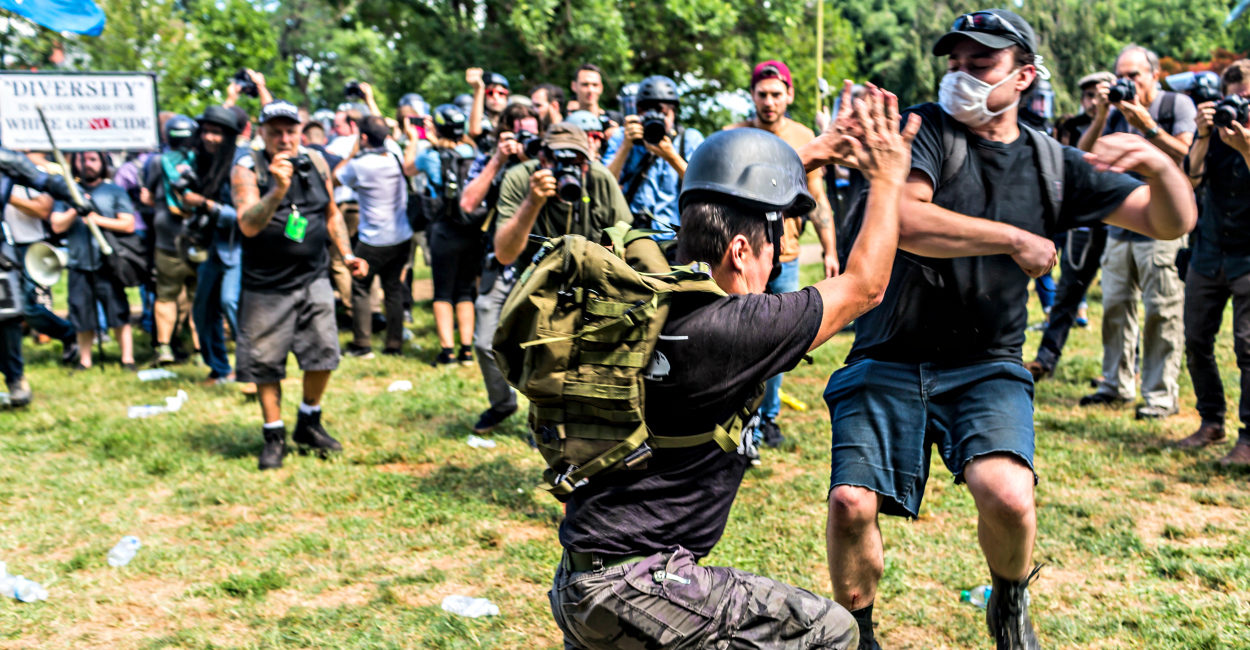
Leftist activists, some affiliated with the radical Antifa network, got into violent clashes with white supremacists Saturday in Charlottesville, Virginia. (Photo: Michael Nigro/Sipa USA /Newscom)

When self-described anti-fascists showed up in force Saturday to oppose a rally of white supremacists in Charlottesville, Virginia, some of them turned violent, according to media reports and eyewitness accounts.

President Donald Trump did not specify radicals who operate under the banner of Antifa, an abbreviation for anti-fascist or anti-fascist action, when he said Tuesday that “both sides” bore responsibility for the violence and bloodshed that left three dead and dozens injured.

“They are not legitimate actors in the democratic process.”–@vadum on Antifa

It is hard to know at this juncture how many of the hundreds of counterprotesters considered themselves affiliated with Antifa. Nor is it clear how many of them were among those who squared off against the white supremacists marching in downtown Charlottesville, trading punches and blows, some with lengths of wood.

Americans need an alternative to the mainstream media. But this can’t be done alone. Find out more >>

The full facts await the findings of a Justice Department investigation of the Charlottesville violence announced by Attorney General Jeff Sessions.

“Antifa is a coalition of hyperviolent activists who are far-left anarchists or communists,” said Matthew Vadum, senior vice president at the Washington-based Capital Research Center. “They could be considered domestic terrorists. They are not legitimate actors in the democratic process.”

Fox News Channel’s Doug McKelway, on the scene in Charlottesville, was among reporters who described individuals in clashing groups wearing helmets and padded clothes, carrying shields, and brandishing lengths of wood.

Initially, the network of radical activists did not attract as much media attention as the white nationalists and neo-Nazis they were confronting, but this has begun to change.

This short video from the pro-Trump outlet Very Fake News, which contains strong language, documents some Antifa members’ behavior toward media organizations reporting on events in Charlottesville:

The liberal media outlet Slate, however, reported that clergy and other peaceful protesters of the white supremacists credited Antifa activists with trying to protect them from violence.

Absurd Suggestions

There is no cohesive, centralized structure to Antifa. Instead, it appears to be set up as a network of anarchists, communists, and socialists who say they are opposed to “racism, sexism, homophobia, and capitalism” and take inspiration from a European movement in the 1930s called Anti-Fascist Action, as The Economist explains in a brief profile:

Antifa groups are not as widespread as they might seem. Their lack of coordination and endorsement of violence hinders their appeal as a mass movement. In America, their ongoing guerrilla war with the alt-right has helped bring more publicity to white supremacists and nationalists while doing little to advance their (somewhat unclear) cause.

Prior to its clashes with white supremacists in Virginia, Antifa—often rendered in lowercase as antifa–gained some notoriety June 4 after confronting Trump supporters in Portland, Oregon, which resulted in violent clashes.

Antifa allegedly had a hand in threatening violence against Portland’s 82nd Avenue of Roses Business Association if the business group allowed the Multnomah County Republican Party to participate in its annual Rose Festival. The business group canceled the event.

>>> Hate Crime or Domestic Terrorism? How Federal Charlottesville Case Could Proceed

Arthur Milikh, associate director of the B. Kenneth Simon Center for Principles and Politics at The Heritage Foundation, told The Daily Signal in an interview that Antifa has avoided spelling out its positions and goals in an effort to evade scrutiny.

“They have been very careful to avoid laying out what precisely they desire to obtain, or what fascism means”–@Heritage’s Arthur Milikh on Antifa.

“They have been very careful to avoid laying out what precisely they desire to obtain, or what fascism means,” Milikh said. “Whatever one may think of President Trump, his rhetoric, or his policies, it’s absurd to suggest that he intends to or could dissolve Congress, cancel elections, shred the Constitution, and name himself dictator, as a fascist would.”

Writing in The Atlantic, Peter Beinart—who has written before about Antifa in an essay titled “The Rise of the Violent Left”—suggests that adherents are hard to pin down, noting:

Antifa activists are sincere. They genuinely believe that their actions protect vulnerable people from harm. Cornel West claims they did so in Charlottesville. But for all of Antifa’s supposed anti-authoritarianism, there’s something fundamentally authoritarian about its claim that its activists—who no one elected—can decide whose views are too odious to be publicly expressed. That kind of undemocratic, illegitimate power corrupts.

Beinart points to Portland’s Rose Festival confrontation as an example.

Assailants dressed in black appear to wrest a Confederate flag from an older man after knocking him down while police officers watch Saturday in Charlottesville, Virginia. (Photo: Michael Nigro/Sipa USA/Newscom)

Muzzling Milo at UC Berkeley

Antifa has been connected with other far-left organizations such as one with the unwieldy name of Coalition to Defend Affirmative Action, Integration, & Immigrant Rights and Fight for Equality by Any Means Necessary, or BAMN.

Antifa activists sometimes stand out from the pack by dressing “head to toe” in black, a style and tactic known as “Black Bloc.”

Antifa has operated with a heightened profile since Trump’s election. During official festivities surrounding Inauguration Day in Washington, Antifa was part of anti-Trump protests and engaged in destruction of property, The Washington Post reported.

In February, Antifa activists took part in fiery protests at and around the University of California, Berkeley.

>>> In Photos, the Latest Example of Liberal ‘Tolerance’

Antifa joined with others to aggressively oppose a scheduled appearance at UC Berkeley by Milo Yiannopoulos, a British-born libertarian commentator, making Antifa part of the movement to suppress free speech on college campuses.

CNN reported:

Black-clad protesters wearing masks threw commercial-grade fireworks and rocks at police. Some even hurled Molotov cocktails that ignited fires. They also smashed windows of the student union center on the Berkeley campus where the Yiannopoulos event was to be held.

UC Berkeley, which reported $100,000 in damages, canceled that speech.

‘Stir Up the Debate’

In many respects, Antifa appears to exist mostly as a conduit for social media organizing strategies, as opposed to a single organization. Using Facebook, Twitter, and other tools, the network attracts participants in its activities, including its role in the Berkeley protest and the counterprotest in Charlottesville.

The Economist notes:

The biggest impact of American Antifa groups has been to stir up the debate on free speech through their insistence on preventing so-called fascists from expressing themselves, such as at Berkeley in February, where Antifa groups staged violent protests against Milo Yiannopoulos, an alt-right provocateur. Shutting down speech is hardly anti-fascist.

>>> Trump Protesters Vow to ‘Shut Down’ Inauguration

Coverage of Antifa appears to focus narrowly on its opposition to white supremacist and neo-Nazi organizations, but a significant number of Antifa members appear to regard Trump and the Republican Party as fascist and racist.

A growing number of videos supporting and attacking Antifa pop up on YouTube and other social media outlets, including this example, a 10-minute video in which two masked young members call themselves socialists.

In an Aug. 8 post about Antifa on the Capital Research Center’s website, four days before the violence in Charlottesville, Jacob Grandstaff wrote:

In Sacramento, California in June 2016, hundreds of Antifa rioters attacked 30-odd members of the white nationalist Traditional Workers Party (TWP). Although Capital Research Center does not support the goals of the TWP, the group had obtained a lawful permit to demonstrate when Antifa protesters violently refused to to allow the group to express its First Amendment rights. In the ensuing melee, 14 people received stab wounds, and two were sent to the hospital in critical condition (they both survived).

Conservative political commentator Ben Shapiro posted a video Thursday questioning the left’s embrace of Antifa, which he calls “a violent, communist, anarchist organization”:

‘Vibrating With Anger’

Antifa’s source of funds is as murky as its leadership.

The Capital Research Center’s Vadum told The Daily Signal that the Alliance for Global Justice, associated with hedge fund manager and leftist financier George Soros, “acts as fiscal sponsor for Antifa groups.”

Heritage’s Milikh described two main tactics the left has employed against the Trump administration.

“Since the left currently controls neither Congress nor the White House,” he said, “they decided they will try to rule the public mind and preserve their own power and respectability through two means.”

The first tactic is to propagate and circulate accusations, Milikh said.

“Right now, they have no evidence of collusion between the Trump campaign and the Russian government,” he said. “But they have made it their biggest issue, which is used to undermine the president’s powers by turning public opinion against him.”

The second tactic is “deploying well-organized and well-funded protests on the ground,” Milikh said, adding:

Protests are often successful for the left because a willing press often assists their cause by leaving the impression that the entire country—not just a handful of protesters—is vibrating with anger. This in turn teaches viewers the lesson that the bigger and angrier the crowd, the more just their cause. This tactic aims to prevent serious, reasoned public deliberation and debate.

‘Cultural Resistance’

The New York City branch of the Antifa network says on its website that it is keen on using social media to galvanize support.

“NYC ANTIFA is an autonomous blog that is trying through different media (news, videos, and information in general) [to] help to build, defend, educate, and create an effective cultural resistance against fascism,” the website says.

The New York group recently marked its third annual International Day of Solidarity With Antifascist Prisoners, an event detailed and described on its website:

The July 25 International Day of Solidarity With Antifascist Prisoners originated in 2014 as the Day of Solidarity with Jock Palfreeman, an Australian man serving a 20-year sentence in Bulgaria for defending two Romani men being attacked by fascist football hooligans. Whether acting as individuals or as part of larger organized demonstrations, this is the kind of bravery and solidarity which defines antifascist actions against the forces of hate.

Since the day of solidarity last year, we have seen this spirit all over the world—in Indonesia, Czech Republic, Brazil, Poland, England, Greece, the United States, France, Syria, Australia, Japan, and all points in between.

Among the fringe groups on the right participating in the so-called “Unite the Right” event in Charlottesville, as chronicled on Wikipedia, were clubs of the neo-Nazi website The Daily Stormer, the neo-Confederate League of the South, the National Policy Institute, and the National Socialist Movement. Other involved groups include the Ku Klux Klan, the Fraternal Order of Alt-Knights, the Traditionalist Workers Party, Vanguard America, the American Guard, the Virginia Minutemen Militia, the Nationalist Front, and Anti-Communist Action.

Among liberal and leftist groups identified on Wikipedia as on hand in Charlottesville were Antifa, Black Lives Matter, Anti-Racist Action, the Democratic Socialists of America, the Workers World Party, the Revolutionary Communist Party, the Industrial Workers of the World, the Metropolitan Anarchist Coordinating Council, Redneck Revolt, and Showing Up for Racial Justice.

Washington lobbying firms receive subpoenas as part of Russia probe

0

The Washington Post

Special counsel Robert Mueller, pictured in June, departs after a closed-door meeting with members of the Senate Judiciary Committee about Russian meddling in the election and a possible connection to the Trump campaign in Washington. (J. Scott Applewhite/AP)

 August 25 at 11:00 PM

Lawyers for special counsel Robert S. Mueller III, who is investigating Russian meddling in the 2016 election, have issued subpoenas to several prominent Washington lobbying firms as the probe examines the finances of two former Trump campaign advisers, according to people with knowledge of the requests.

The subpoenas asked the firms to answer questions and provide records regarding their interactions with the consulting firms led by Michael Flynn, a former national security adviser to President Trump, and Paul Manafort, former chairman of the Trump presidential campaign, these people said.

The requests suggest that Mueller’s investigators are looking closely at Manafort and Flynn, both of whom face possible legal jeopardy for allegedly failing to disclose that foreign governments or parties may have been the beneficiaries of their consulting and lobbying work, as they seek potential links between Trump’s campaign and the Kremlin.
A spokesman for Manafort declined to comment, while a lawyer for Flynn did not respond.

The fight for control over the special counsel’s Russia investigation
President Trump routinely expresses his dissatisfaction with special counsel Robert Mueller’s investigation into Russian meddling in the 2016 election. Here’s a look at just how much control he has over the probe, and what Congress is trying to do about it. (Jenny Starrs/The Washington Post)

Two of the subpoenas were issued to Mercury Public Affairs and SGR LLC, according to people familiar with the requests. A handful of other lobbying firms that did similar work have also received subpoenas from Mueller’s office in recent days, those individuals said.

A lawyer for SGR LLC confirmed the company received a subpoena. Representatives of Mercury declined to comment, but people close to the company confirmed they also received requests from Mueller’s team.

The investigators asked Mercury for information about their public relations work at Manafort’s behest for a Brussels-based organization called the European Centre for a Modern Ukraine, which pushed for improved relations between Ukraine and European countries. The Brussels group primarily advanced the interests of a Russia-friendly Ukrainian political party that had been a client of Manafort’s before he joined the Trump campaign.

Mercury, which has prominent Republicans among its senior partners, had worked on the Ukraine lobbying project with the Podesta group, led by Anthony Podesta, brother of John Podesta, who led Hillary Clinton’s presidential campaign.

Podesta principal Mark Tavlarides declined Friday evening to comment on whether his firm had been contacted by Mueller’s team.

The firms involved with the Ukraine project did not initially register as foreign agents at the time, citing legal analyses that indicated they were not required to do so because they were working for a nonprofit and not a foreign political party or government. But in recent months, the Podesta Group and Mercury have filed retroactively, acknowledging that the Ukrainian political party benefited from their efforts.

Mike McKeon, a partner at Mercury, declined to comment on or confirm that his firm received a subpoena. But he said the company took care in asking the Centre about its finances and consulting with lawyers about its duties to file.

“Before we accepted this assignment in 2014, we went through our own due diligence to determine the proper disclosure required under federal law,” he said.

Some of the subpoenas were first reported Friday evening by NBC News.

Investigators have sought information from SGR in relation to work Flynn did for a Dutch company with ties to Turkish President Recep Erdogan, according to people familiar with the request. Flynn’s company, the Flynn Intel Group, hired SGR to help handle public affairs work on that contract.

The Flynn Intel Group initially described the project to SGR as promoting a good business climate in Turkey, according to a person familiar with the discussions. Later, under pressure, Flynn filed formal reports indicating that the contract focused on a public affairs campaign to raise concern in the United States about Fethullah Gulen, a Turkish cleric living in exile in Pennsylvania. Erdogan’s government blamed Gulen for a failed coup against him and wanted to persuade the United States to extradite Gulen to Turkey. Flynn also acknowledged in his retroactive filings this spring that he had secretly met with two top ministers to Erdogan, including Erdogan’s son-in-law, two months before the election, where they had discussed Gulen’s extradition.

Eric Lewis, a lawyer for SGR LLC, confirmed that the lobby firm received a subpoena.

“SGR received a request several months ago to be a witness (through a customary witness subpoena that I voluntarily accepted) and provided documents and background regarding its brief project as a subcontractor with Flynn Intel Group, which is fully detailed in public filings,” he said.

Devlin Barrett, Rosalind S. Helderman and Alice Crites contributed to this report.

Το ευρωπαϊκό συνδικάτο του εγκλήματος.

3

 Της Μαρίας Νεγρεπόντη-Δελιβάνη  (δημοσιεύθηκε στα Επίκαιρα στις 25.08.2017)
Το νέο βιβλίο του Γιάνη Βαρουφάκη, των 540 σελίδων και προς το παρόν μόνο στα αγγλικά, αποτελεί συγκλονιστική ανάλυση των λεπτομερειών της  εν ψυχρώ δολοφονίας της Ελλάδας από τους Ευρωπαίους εταίρους της. Αναμφισβήτητα, πολλά από τα αδιανόητα μαρτύρια, που επιβλήθηκαν στη μικρή ευρωπαϊκή χώρα των 10 εκατομμυρίων κατοίκων, καθώς και η κεντρική ερμηνεία της επιλογής της, ως Ιφιγένειας,  ήταν αρκούντως γνωστά, και μάλιστα από την αρχή του ελληνικού δράματος, σε όσους  φυσικά ήθελαν να τα γνωρίζουν[1].  Ωστόσο, η πολύτιμη συμβολή του ανά χείρας δοκιμίου εδράζεται στα αδιάσειστα αποδεικτικά στοιχεία, που συνοδεύουν το σύνολο των εφιαλτικών αποκαλύψεων, και που αυτόματα διακωμωδούν  τις συνήθεις κατηγορίες των συνοδοιπόρων της τρόικας, περί δήθεν αφελών και αστήρικτων απόψεων. Με την υψηλών προδιαγραφών γραφή του Γιάνη Βαρουφάκη, που συνδυάζει στέρεες γνώσεις οικονομίας, βαθιά καλλιέργεια και πολύπλευρη μόρφωση, έχω την πεποίθηση ότι χάρη στο βιβλίο αυτό, που διαβάζεται εύκολα και ευχάριστα, θα γίνει επιτέλους γνωστή, στην Ευρώπη και στην υφήλιο, η φρικτή αλήθεια, γύρω από την καθολική καταστροφή της Ελλάδας[2].

Παράλογο, αλλά ίσως όχι και ανεξήγητο, το είδος του σάλου που προκλήθηκε από το περιεχόμενο του βιβλίου, όπως αυτό  απεικονίζεται στα ΜΜΕ.  Αντί, δηλαδή, να υπάρξει οργή, που θα ήταν απολύτως  δικαιολογημένη, από το πλήθος των πολύπλευρων αποδείξεων, που εμπεριέχονται στο βιβλίο Βαρουφάκη:

*για την ενσυνείδητη απόφαση της ΕΕ να εξοντώσει μια μικρή ευρωπαϊκή χώρα 10 εκατομμυρίων κατοίκων, προκειμένου να σωθούν οι τράπεζες,

*για την ασύλληπτης έκτασης  προδοσία των εταίρων μας εναντίον της Ελλάδας,

*για την κυνική άρνηση των εταίρων μας να “διορθώσουν” έστω και εκ των υστέρων, και αφού σώθηκαν οι τράπεζές τους, τα κατά συρροή εγκλήματα που διέπραξαν, προβάλλοντας από επίσημα χείλη τη δικαιολογία,  ότι “πήγαμε πολύ μακριά και δεν υπάρχει επιστροφή”!

*για τον ανήθικο συνδυασμό εγκλημάτων με καλά προετοιμασμένη εκστρατεία αποδόμησης ενός ολόκληρου λαού, που εμφανίστηκε ως τεμπέλης, μέθυσος, φοροφυγάς, ανεπίδεκτος κ.ά.

*για τις συνεχείς διαπλοκές, συνωμοσίες, και υπόγειες συμφωνίες, μεταξύ τραπεζιτών, διεθνών οργανισμών και πολιτικών, που καταλήγουν  στην απρόσκοπτη εφαρμογή αδιέξοδων και δογματικών προγραμμάτων, περί δήθεν ανόρθωσης της ελληνικής οικονομίας

*για την κατ’ εξακολούθηση, όσο   και προκλητική αθέτηση όλων των υποσχέσεων των θεσμών, προς την Ελλάδα, αφού  εκάστοτε πείθουν   τους αρμόδιους, να τους προσφέρουν “Γη και Ύδωρ”

*για τα παιδαριώδη επιχειρήματα, περί της δήθεν έλευσης  ανάπτυξης, και δήθεν success stories, της ελληνικής οικονομίας

*για τη συμπόρευση, με την τρόικα, πολυάριθμων Ελλήνων, που αναφέρονται ονομαστικά από τον Βαρουφάκη,  που κατέχουν θέσεις-κλειδιά, στην οικονομία και στην πολιτική ελληνική σκηνή, και από τις ενέργειες των οποίων εξαρτάται η επιβίωση της χώρας  (κλπ., κλπ., επιβάλλεται να διαβαστεί κάθε σειρά του βιβλίου)

Για όλα αυτά, που αναγκαστικά αναφέρω πολύ συνοπτικά, αμέσως παραπάνω, και τα οποία εξευτελίζουν και εξαφανίζουν την Ελλάδα, ως κυρίαρχο κράτος, δεν είδα και δεν άκουσα καμιάς μορφής οργισμένη αντίδραση. Να εκλάβω αυτή τη σιωπή ως συναίνεση για το “καλά μας κάνουν”; για το “αυτά αξίζουμε”;

Και, αντιθέτως, έχει ξεσπάσει όργιο ιλαροτραγωδικών  αντιδράσεων, γύρω από κάποιες ασκήσεις επί χάρτου, που φέρουν τα αναγνωριστικά Plan B, X ή Ζ τα οποία, κατά τους ξεσηκωμένους, δεν έπρεπε να χαραχθούν επί χάρτου, γιατί “εξέθεσαν την Ελλάδα”, “παραβίασαν το Σύνταγμα”, “έθεσαν σε κίνδυνο την οικονομία της χώρας”, και πλήθος παρομοίων ανοησιών. Παράλληλα, ζητείται  συγκρότηση “εξεταστικής επιτροπής” (άκουσον-άκουσον), για τη “διερεύνηση αυτών των εγκλημάτων”. Και με το λεπτό humour που διακρίνει το Βαρουφάκη, ο ίδιος ζητεί…… να τον  περάσουν από στρατοδικείο! Μα, είναι δυνατόν, να είμαστε σε τέτοιο βαθμό αυτοκαταστροφικοί  και αυτοκτονικοί;  Να μην έχουμε απαιτήσει τιμωρία για τα εγκλήματα  των υπογραψάντων τα  μνημόνια, των εκτελεστών της καταστρεπτικής αναδιάρθρωσης χρέους, να έχουμε καταπιεί τη μετάλλαξη του ΟΧΙ σε ΝΑΙ του δημοψηφίσματος,   και να συζητούμε σοβαρά για το γιατί υπήρξαν τα σχέδια B, X ή Ζ; Ενώ, αν κάποιος θα  έπρεπε να τιμωρηθεί, εν προκειμένω, θα ήταν ο Πρωθυπουργός, επειδή φοβήθηκε την τελευταία στιγμή, επειδή προφανώς υπέκυψε στις σειρήνες των πέριξ αυτού, και δεν προχώρησε σε ότι, πιθανότατα, θα ήταν σωτήριο για την Ελλάδα:  στη ΡΗΞΗ!

Να υπογραμμίσω, ακόμη, την υψηλών προδιαγραφών ανάλυση Βαρουφάκη, σχετικά με τη διάκριση μεταξύ  αυτών, που βρίσκονται εντός του χώρου, όπου χαλκεύονται οι μυστικές  συμφωνίες, και αποφασίζονται οι καταδικαστικές αποφάσεις ατόμων, ομάδων και χωρών, και τους εκτός, που δίνουν μάχες, για την επικράτηση του δίκαιου, της ισότητας και της ηθικής. Ο Βαρουφάκης με έπεισε, ειδικά και μετά το είδος της πολεμικής που προκάλεσε το βιβλίο του, ότι κινείται στους εκτός. Ομολογώ, ότι είχα αμφιβολίες για την τοποθέτηση του Πρωθυπουργού μας. Αμφιβολίες για την αρχή, τη διαδρομή και το τέλος. Η γνώμη μου είναι ότι, σε πείσμα των αλληλοκατηγοριών, ανάμεσα σε Αλέξη και  Γιάνη, το ανά χείρας βιβλίο απαλλάσσει τον Πρωθυπουργό από τη χειρότερη δυνατή, για αυτόν, κατηγορία, που ωστόσο πλανιέται ευρέως στην Ελλάδα: του να ανήκε, δηλαδή,  από την αρχή στους “εσωτερικούς”, και να είχε προδώσει, έτσι, την Ελλάδα. Οι όποιες, εν προκειμένω, κατηγορίες εναντίον του Πρωθυπουργού παραμένουν, ωστόσο, όπως η έλλειψη θάρρους, η αναποφασιστικότητα, η ευκολία επηρεασμού του από το επιτελείο του, μεταξύ των οποίων υπάρχουν και “εσωτερικοί”, η αναβλητικότητά του. Κατηγορίες, ασφαλώς, σοβαρές, αλλά σε κάποιο βαθμό δικαιολογημένες, από το ανθυγιεινό περιβάλλον μέσα στο οποίο επιβιώνουμε.

Συνοψίζοντας τη διάκριση ανάμεσα σε “εσωτερικούς” και “εξωτερικούς”, για την Ελλάδα, αλλά χωρίς ονόματα:

*Εσωτερικοί είναι όσοι πιστεύουν ότι τα μνημόνια μπορούν να  βγάλουν την Ελλάδα από την κρίση. Όσοι υποστηρίζουν ότι η παραμονή μας στην ευρωζώνη είναι αδιαπραγμάτευτη και αξίζει τόσο όσο ολόκληρη η Ελλάδα, που αλύπητα ξεπουλιέται. Όσοι, ακόμη, δικαιολογούν την εγκληματική συμπεριφορά της τρόικας και επιδιώκουν αγαθή συνεργασία μαζί της, που μοιραία καταλήγει στην, χωρίς ουσιαστική αντίδραση (εκτός από τις αέναες όσο και αναποτελεσματικές διαπραγματεύσεις) υπογραφή του ενός μετά το άλλο, των καταδικαστικών χαρτιών, για την Ελλάδα. “Εσωτερικοί” είναι, γενικώς, οι δογματικοί, που υπηρετούν τον υπερφιλελευθερισμό, αλλά και την ανεξέλεγκτη παγκοσμιοποίηση, με όλες τις οικτρές επιπτώσεις τους, εναντίον των πολλών και των λιγότερο ισχυρών.

*Εξωτερικοί είναι όσοι αναγνωρίζουν τα αδιαμφισβήτητα γεγονότα. Ότι, δηλαδή, η ΕΕ μας κατέστρεψε εν ψυχρώ, εξακολουθεί να μας εξοντώνει με εξευτελιστικούς εκβιασμούς, με την υποχρέωση εφαρμογής αναποτελεσματικών μεταρρυθμίσεων, με το παραμύθιασμα περί success stories, με την υφαρπαγή του δημόσιου πλούτου μας.  Και μάχονται,   αν και γνωρίζουν, ότι οι αγώνες τους δεν οδηγούν πουθενά. Είναι ακόμη αυτοί, που μεταξύ των δύο διαθέσιμων κοσμοθεωριών προτιμούν την παρεμβατική του Keynes, ή ορθότερα το συνδυασμό των δύο.

Το βιβλίο του Γιάνη Βαρουφάκη, εκτός από τα πολλά του προτερήματα, που ανάμεσα σε άλλα είναι η καθαρή   και  συγκροτημένη έκφραση,  η ακρίβεια των γεγονότων και η επάρκεια των αποδείξεων, η ευπρέπεια των εκφράσεων, αλλά και η ευαισθησία, αλλά και ο εμπλουτισμός του κειμένου με ιστορικές αναφορές, με λογοτεχνικά αποσπάσματα, με ευρηματικά αποφθέγματα και ανέκδοτα έχει, ωστόσο, κατά τη γνώμη μου πάντοτε, και σοβαρά μειονεκτήματα. Θα αναφέρω ως πρώτο, την μη επιτυχή επιλογή του τίτλου, που ναι μεν μεταφέρει εκλεπτυσμένη ειρωνεία, αλλά πιστεύω ότι πιο συμβατός με το περιεχόμενο, θα ήταν: “Το ευρωπαϊκό συνδικάτο εγκλήματος”. Πιο ουσιαστική αδυναμία θεωρώ τη διάχυτη, σε ολόκληρο το κείμενο,  ανεπίτρεπτη ουτοπία: δηλαδή, την πεποίθηση, ότι με τις διαπραγματεύσεις, όσο εμπεριστατωμένες και να ήταν, θα μπορούσε να μεταβληθεί το πράγματι αδιάβροχο πρόγραμμα της ΕΕ, στο τμήμα που αφορούσε την Ελλάδα. Η αφέλεια αυτή, που φαίνεται ότι διατηρήθηκε μέχρι το τέλος της θητείας Βαρουφάκη είχε δύο εξαιρετικά αρνητικές συνέπειες:

α)Η πρώτη ήταν, η μη αξιοποίηση, όσο ακόμη ήταν καιρός και όσο οι αρχικά ορθές απόψεις του Πρωθυπουργού δεν είχαν υποστεί τη φθορά, από τις ειδικές περιποιήσεις της κυρίας Μέρκελ και από το θλιβερό επηρεασμό  τμήματος του περιβάλλοντός του, δηλαδή της ΡΗΞΗΣ. Που θα έπρεπε να απορροφήσει το σύνολο του διαθέσιμου χρόνου, χωρίς σπατάλη του σε παλινωδίες ή φρούδες ελπίδες, για δήθεν βελτιώσεις, μέσω  ατελεύτητων διαπραγματεύσεων. Ιδίως, που το σάπιο περιβάλλον των θεσμών ήταν αρκούντως γνωστό, όπως αυτό αναδύεται με επιτυχία μέσα από τις αναλύσεις του συγγραφέα.

β)Η δεύτερη, άμεσα σχετιζόμενη με την πρώτη αντίρρησή μου, αναφέρεται στη  μη  κατάρτιση σοβαρής μελέτης για την αντιμετώπιση των πολλών και δυσχερών προβλημάτων της ελληνικής οικονομίας, μετά τη ΡΗΞΗ. Ρίχνοντας, φυσικά, το βάρος αυτής της μελέτης στους τρόπους απάλειψης των αρνητικών επιπτώσεων από το πέρασμα στη νέα δραχμή, καθώς και στις προϋποθέσεις ταχύρρυθμης ανάπτυξης, σε συνδυασμό με αναδιανομή εισοδήματος. Την οικοδόμηση, δηλαδή, μιας νέας Ελλάδας, αντί των σπαραξικάρδιων συζητήσεων με τους δολιοφθορείς της.

Σε συνέχεια των παρατηρήσεων/αντιρρήσεών μου, είναι απαραίτητο να προσθέσω και την έκπληξή μου, για την ταύτιση (αν, βέβαια, την εξέλαβα ορθά), του συγγραφέα, της ιδιότητας του ευρωπαϊστή με το ευρώ. Κατά την κρίση μου, δεν παύει  να ανήκει στην Ευρώπη οικονομία που είναι έξω ή  έχει εγκαταλείψει το ευρώ για να  επανέλθει στο εθνικό της νόμισμα. Αντιθέτως, θα έλεγα, και ειδικότερα για την Ελλάδα, ότι  θα  είχαμε απαλλαγεί από ένα ασήκωτο βαρίδιο, που κατέστρεψε την έστω χαμηλή  ανταγωνιστικότητά μας και που δημιούργησε τα ανεξέλεγκτα εξωτερικά μας ελλείμματα, με αντικάτοπτρο  τα επίσης ανεξέλεγκτα πλεονάσματα της Γερμανίας. Και για να προχωρήσω βαθύτερα: πως δικαιολογείται η πίστη του Γιάνη Βαρουφάκη  ότι θα ήταν ποτέ δυνατόν να πειστεί η Γερμανία να άρει τη λιτότητα από την Ελλάδα, εφόσον μια τέτοια ενέργεια, εκτός του ότι θα αποτελούσε κακό παράδειγμα για το σύνολο της Ευρώπης του Νότου, θα έθετε σε θανάσιμο κίνδυνο και την επιβίωση του ευρώ; Και, τέλος, πως φαντάστηκε ο ευρωπαϊστής Βαρουφάκης  τη ΡΗΞΗ, με παραμονή όμως της Ελλάδας στην Ευρωζώνη; Εκτός του ότι θα επρόκειτο για αδύνατο σχήμα, εκ των πραγμάτων, η σπουδαιότερη αντίρρησή μου αναφέρεται στην αδυναμία επίτευξης ταχύρρυθμης ανάπτυξης, έχοντας ως νόμισμα το σταγονομετρικό και δανειζόμενο ευρώ, όταν η ανάπτυξη της καταποντισμένης ελληνικής οικονομίας απαιτεί, για αρκετά μεγάλο χρονικό διάστημα, την εφαρμογή ελεγχόμενου πληθωρισμού. Με μια συνοπτική ερώτηση: πώς ο τόσο καλά καταρτισμένος οικονομικά Βαρουφάκης δεν συνειδητοποίησε το αυταπόδεικτο: τον μονόδρομο σωτηρίας της Ελλάδας.

Η επιλογή του Γιάνη Βαρουφάκη ήταν, τελικά, άριστη για την Ελλάδα,  χάρη στις πολύτιμες και ουσιαστικές επαφές του ανά την υφήλιο, στη διεθνή αναγνώρισή του ως οικονομολόγου, στις γνώσεις και την πρωτοτυπία σκέψης του. Και ήταν, βέβαια, κάκιστη επιλογή για τους δανειστές. Δυστυχώς, για τους λόγους που ανέφερα, και που συμπληρώνονται από το κείμενο του βιβλίου, η ευκαιρία αυτή χάθηκε ανεπιστρεπτί.


[1] Βλ. Μ. Νεγρεπόντη-Δελιβάνη, Όλη η αλήθεια για χρέη και ελλείμματα και πως θα σωθούμε, Η εν ψυχρώ δολοφονία της Ελλάδας κλπ.

[2] Έχω προσπαθήσει και εγώ προς αυτή την κατεύθυνση με άρθρα στην Le Monde, και βιβλία στη γαλλική γλώσσα, όπως L’assassinat économique de la Grèce et le dernier recours la drachme, L’Harmattan-CEDIMES, 2014 και Grèce et euro : quel avenir ? Συλλογικό έργο με βάση τις εισηγήσεις στην ημερίδα που διοργανώθηκε τον Νοέμβριο του 2014, από το Ίδρυμα Δημητρίου και Μαρίας Δελιβάνη. Διευθυντής/Εκδότης του συγγράμματος, που εμφανίζεται στη σειρά CEDIMES από τις εκδόσεις L’Harmattan, είναι ο καθηγητής  Gérard Lafay.

How James Mattis Tried to Explain Trump to the World

0

The Atlantic

“Just as Mattis sought to reassure nervous allies, back home there were numerous reminders that the populist and intemperate impulses of his boss will not be tamed.”

James Mattis stands in the center laughing and shaking hands with men in suits and military uniforms.
Defense Secretary James Mattis and U.S. Army General John Nicholson, commander of U.S. Forces Afghanistan, meet with members of the Afghan delegation at Resolute Support headquarters in Kabul, Afghanistan, on April 24, 2017.Jonathan Ernst / Reuters
The stifling heat of the tarmac beneath the wings of his C-17 aircraft, the dragon’s breath backwash from nearby helicopters, and the unmistakable, acrid smell of summertime Baghdad must have brought back distant memories when Secretary of Defense Jim Mattis touched down there earlier this week. Like many of his peers, Mattis, a retired Marine Corps general, came of age as a field commander in the Afghan and Iraq wars, earning his nickname of “Mad Dog” as the commander of 1st Marine Division during the 2003 invasion, and in the subsequent fierce battles for Fallujah. A keen student of history, he popularized the division’s motto “no better friend, no worse enemy,” paraphrasing a maxim attributed to Roman general Lucius Cornelius Sulla.

All these years later, Mattis was returning to Iraq at a hopeful moment, with U.S.-backed Iraqi forces having recently recaptured the city of Mosul from the Islamic State after months of bloody urban fighting. Just the night before his arrival in Baghdad, President Donald Trump had also announced additional U.S. forces for the Afghan war and a new strategy formulated by Mattis, National Security Adviser and Army Lt. Gen. H.R. McMaster, and General Joseph Dunford, chairman of the joint chiefs. Trump’s tight circle of generals, which includes John Kelly, the White House chief of staff and a retired Marine four-star general, aims to reclaim an inheritance that the U.S. military fought and bled for, which the generals believe was nearly squandered in the waning years of the Obama administration.

The return to Iraq and the events of the past week marked an inflection point for Mattis, the first former general to serve as a secretary of defense since General George C. Marshall 70 years ago. Speaking to reporters in Baghdad on August 22, Mattis praised the leadership of Haider al Abadi, the prime minster of Iraq, and his security forces. “Cities have been liberated, people freed from ISIS … The economy is recovering. Clearly, Iraq is reengaging with the region, and ISIS is on the run.”

For Trump’s generals, what’s also notable is who is no longer inside Trump’s inner circle. Just before leaving for the Middle East, Mattis and the rest of Trump’s national-security team gathered at Camp David to finalize the new Afghan war strategy. Notably absent from the meeting was just-fired White House chief strategist Stephen Bannon, the populist provocateur who had fought bitterly and, increasingly, publicly with McMaster over the way forward in Afghanistan. Kelly, reportedly, all but ushered Bannon out the White House door. In the struggle for the soul of the Trump administration’s foreign and national security policies, Bannon’s ouster was a seminal moment. His hyper-nationalism and anti-globalist ideology is the antithesis of their worldview: By training, education, and hard experience, they are pragmatic realists and internationalists.

And yet: Just as Mattis sought to reassure nervous allies, back home there were numerous reminders that the populist and intemperate impulses of his boss will not be tamed. After Trump’s disastrous response to the violent protests in Charlottesville, in which he equated neo-Nazis, Ku Klux Klansmen, and white supremacists, with the counter-protesters who opposed them, Trump gave a disciplined speech on Monday unveiling the new Afghan strategy before uniformed service members at Fort Meyer, Virginia. Reading from a teleprompter, he cited U.S. troops as the “inspiration our country needs to unify, to heal.” Then, the very next day in a campaign-like rally in Phoenix, a bellicose and ad-libbing Trump was once again hammering the “us versus them” themes that propelled him to the presidency.

In another divisive move, the White House will reportedly soon issue guidance to the Pentagon barring transgender persons from serving in the military, a ban that Trump initially unveiled weeks ago in a surprise tweet that reportedly caught Mattis by surprise and left him “appalled.” That tension was evident throughout the week, as Mattis travelled to Iraq, Jordan, Turkey, and Ukraine.

In many ways, Mattis’s return to Iraq was a triumph. The conventional wisdom among senior U.S. military leaders has long been that the Obama administration’s decision to withdraw all U.S. troops from the country in 2011 was a strategic mistake. After ISIS overran roughly a third of both Syria and Iraq in 2014, President Obama essentially conceded the point, returning U.S. military forces to the country that summer, and beginning operations against the group in Syria.

U.S. commanders had chafed, however, at the Obama administration’s sensitivity to the number of U.S. “boots on the ground,” and restrictive rules of engagement that required White House approval for many lethal strikes. Mattis thus moved to accelerate the anti-ISIS campaign, deploying more forces, and, with Trump’s approval, pushing the authority to launch lethal strikes down to U.S. field commanders.

To limit the ability of ISIS fighters to retreat and regroup, and for foreign fighters to slip through the coalition dragnet and return to their home countries and launch terrorist attacks, Mattis also developed an “annihilation strategy”: Rather than allowing ISIS fighters to flee from one battle to the next, the strategy calls for coalition forces to first encircle ISIS strongholds such as Mosul and Raqqa before starting operations to recapture them. U.S. military officials credit the strategy for limiting the number of ISIS fighters able to escape and live to terrorize another day. Mattis also did some damage control, asking Kurdish leaders to postpone a scheduled independence referendum.

On his trip, Mattis also suggested that the United States might leave a residual U.S. military force in Iraq for the foreseeable future, living up to the spirit of the Strategic Framework Agreement, a 2008 partnership first signed by President George W. Bush and his Iraqi counterpart. “[We] will continue standing by the Iraqi people and their military…to maintain the stability that has been earned at a very, very high price.”

The fight against ISIS has both unified Iraq and solidified the partnership between Washington and Baghdad, Jon Alterman, the director of the Middle East Program at the Center for Strategic and International Studies, told me from Iraq, where he arrived just after Mattis’s visit. “To the extent that the Iraqis were concerned that the United States would abandon them again, Mattis and Trump’s other generals all send the opposite message. They all have an intimate familiarity with Iraq, they know exactly where it is on a map, and they are looking for ways to leverage the costs and sacrifices the United States has already made here.”

Mattis’s warrior pedigree and reputation also calmed nerves in Jordan, where this week for the first time as defense secretary he met with King Abdullah II, a staunch U.S. ally. Like the other Sunni-Arab regimes in the Middle East, Jordan’s was concerned by the Obama administration’s opening to Iran through the nuclear deal, and the perception that America no longer strongly opposed its destabilizing role in the region. By contrast, then-General Mattis had been eased out by the Obama administration as head of U.S. Central Command because of his harsh rhetoric about Iran.

Where Iran is concerned, Mattis is now unmuzzled. In a rare recent interview with The Islander, the newspaper of Mercer Island High School, he described the Iranian regime as “acting more like a revolutionary cause.” This is a government that attempted to murder the Saudi ambassador to Washington, and employs surrogates like Lebanese Hezbollah that continues to threaten Israel and kill Israeli tourists, he noted. It has also supplied ballistic and anti-ship missiles to Houthi rebels in Yemen who have used them to attack Saudi Arabia and international shipping; at home, it continues to imprison many young Iranians, Mattis said. Iran is also “the only reason” Syrian President Bashar al Assad remains in power, he said. “So Iran is certainly the most destabilizing influence in the Middle East.”

Yet even on the territory of a staunch ally like Jordan, there was an element of damage control to Mattis’s visit. Shortly after Trump’s trip to nearby Saudi Arabia in May, where he bonded with Saudi royals and the other gulf monarchs, Riyadh and the other members of the Gulf Cooperation Council announced a blockade of Qatar, home to a major U.S. military base, over its alleged financing of terrorism. Trump has publicly backed the Saudis, working at cross purposes with Mattis and Secretary of State Rex Tillerson, who have sought to diffuse the crisis.

The next leg of Mattis’s trip offered a stark reminder of just how far west the shadow of authoritarianism has crept in recent years. In Ankara on August 23rd, he met with Recep Tayyip Erdogan, the president of Turkey, and his foreign-affairs and national-security team. As Mattis told reporters, Turkey is a “frontline state against terrorists right there in Syria…[and] a frontline state on dealing with refugees, who are traumatized as any you’ll ever find in the history of the world.”

In recent months, senior U.S. military officials have continually stressed to Turkey that Washington’s decision to arm and train Kurdish-led Syrian Democratic Forces (SDF) has been narrowly focused on enabling them to recapture Raqqa from ISIS. The United States has also helped the Turkish military rebuild after its recent operations in northern Syria. The U.S. intelligence community continues to share intelligence with Ankara about the Kurdish terrorist group PKK, which seeks an independent Kurdish state in southeastern Turkey, and has waged a deadly, decades-long terrorist campaign in Turkey.

“We have done everything we can to address Turkish concerns, and I personally have made on the order of nine visits to Turkey to speak with my counterpart there,” General Joseph Dunford, chairman of the Joint Chiefs of Staff, told me. “The Turks have indicated publicly that they don’t like the fact that we armed the [largely Kurdish] Syrian Democratic Forces, so this issue has been a challenge and an irritant in U.S.-Turkish relations, there is no doubt about that.”

There is also no doubt that when Mattis, Dunford, and other senior U.S. officials visit Turkey these days, they no longer encounter the reliable NATO ally and Muslim democracy that the United States once held up as a model for the Islamic world. Erdogan has publicly blamed Washington for seeking to unseat him in last year’s failed coup; he has also consolidated power, brutally suppressing political opposition to his Islamist agenda by arresting tens of thousands of academics, government officials, journalists, secularists, and members of non-governmental organizations. Turkey still allows the U.S. military to use Incirlik air base for its anti-ISIS campaign, but increasingly its relations with the United States and other NATO allies are transactional, no longer based on shared values such as democracy and human rights.

“In his meeting with Mattis, Erdogan continued to criticize U.S. support for the Syrian Kurds, but the bigger issue is this systematic smear campaign that the Turkish government and government-controlled media have kept up against the United States and NATO countries,” Aykan Erdemir, a former member of the Turkish parliament and a senior fellow at the Washington-based Foundation for the Defense of Democracies, told me. “The United States is not only in danger of losing the Erdogan government as a reliable ally, but it is also starting to lose the hearts and minds of 80 million Turks who are increasingly skeptical of the West.” Indeed: 72 percent of respondents in a recent opinion poll viewed the United States as the country’s top security threat.

To conclude his tour of world crises, Mattis stopped in Kiev on Ukraine’s Independence Day. The optics of his visit drove home just how profoundly constant controversies, major personnel upheavals, and the rise of Trump’s generals have altered the trajectory of his administration. Last summer at the Republican National Convention, with Trump constantly praising Vladimir Putin and his inner circle reaching out to the Russians, his campaign quietly managed to remove a plank calling for U.S. support of Ukraine with lethal weaponry from the party platform. Since then, multiple investigations have been launched into Russia’s meddling in the election and the Trump campaign’s possible collusion in those efforts, and Congress has passed veto-proof legislation ensuring that the White House cannot relax sanctions put in place after Russia annexed Crimea and supported separatist rebels in eastern Ukraine.

In Kiev on Thursday, Mattis signaled that, while no decision had yet been made on whether the U.S. will provide Ukraine with defensive weapons, he personally supports the move. “I will go back now having seen the current situation and be able to inform the secretary of state and the president in very specific terms what I recommend for the direction ahead,” Mattis told reporters in Kiev, standing alongside Ukrainian President Petro Poroshenko. “Defensive weapons are not provocative unless you are an aggressor, and clearly Ukraine is not an aggressor since it is their own territory where the fighting is happening.”

Of course more weapons in the region could also escalate the conflict by emboldening Poroshenko and challenging Putin’s strongman image. A similar dynamic in Georgia in 2008 led to a Russian invasion and de facto annexation of two Georgian provinces.

“If we escalate in Ukraine when Putin is facing upcoming elections and more dependent than ever on his tough guy credentials, it could easily change Moscow’s calculus in a dangerous way,” Dmitri Simes, a Russia expert and president of the Washington-based Center for the National Interest, told me. The more diplomatic path would be for the United States to pressure both Ukraine and Russia to honor the Minsk Agreement that was supposed to end the conflict, he said. But with the Trump administration under investigation for potentially secret ties to Russia, Congress would likely oppose any pressure on Ukraine.

Simes also worries that, with generals so ascendant in the Trump administration, military solutions will naturally begin to take precedence over diplomatic ones. “I hear only good things about Mattis, and generals are important in terms of reassuring our allies and providing sound military strategies and advice to the president,” Simes said. “But there is a long American tradition of having civilians with strong national security credentials in these jobs, and for a good reason. As the old saying goes, war is too important to be left to the generals.”

In a week that included a new strategy for the Afghan war, a triumphant return to Iraq, and a tour of global hotspots, Mattis attempted to both reclaim the legacy of the U.S. military’s longest wars and mitigate the damage done to U.S. alliances by the administration’s “America First” foreign policy. The challenge for him and Trump’s other generals is that the epicenter of the growing instability and uncertainty they encounter overseas is increasingly the White House itself.

ABOUT THE AUTHOR

https://www.theatlantic.com/international/archive/2017/08/mattis-trump-turkey-jordan-iraq-ukraine-isis/538086/