Από αριστερά προς τα δεξιά: Ο πρωθυπουργός της Λιβύης, Fayez al-Sarraj, ο Γάλλος πρόεδρος, Emmanuel Macron, και ο στρατάρχης Khalifa Haftar, κοντά στο Παρίσι, τον Ιούλιο του 2017. PHILIPPE WOJAZER / REUTERS.
Περίληψη:
Ένας από τους λόγους για τους οποίους η σύγκρουση στη Λιβύη έχει συρθεί επί έξι και μισό χρόνια είναι η αποδιαρθρωμένη, παραταξιακή φύση των ξένων παρεμβολών. Μόνο μια παγκόσμια δύναμη με τεράστια επιρροή και μόχλευση θα μπορούσε να συμβάλει στην σταθεροποίηση του διεθνούς ανταγωνισμού για την έκβαση του εμφυλίου πολέμου της Λιβύης.
Ο JALEL HARCHAOUI είναι υποψήφιος διδάκτωρ στο Τμήμα Γεωπολιτικής του Πανεπιστημίου Paris 8. Η διδακτορική του έρευνα επικεντρώνεται στην διεθνή διάσταση της σύγκρουσης στην Λιβύη.
Στις 25 Ιουλίου, στις ειρηνευτικές συνομιλίες στο Παρίσι [1] που συγκάλεσε ο Γάλλος πρόεδρος Εμμανουέλ Μακρόν [2], οι ηγέτες των δύο κύριων παρατάξεων της Λιβύης -ο πρωθυπουργός, Fayez al-Sarraj, της διεθνώς αναγνωρισμένης Κυβέρνησης Εθνικής Συμφωνίας (GNA) στην Τρίπολη και ο στρατάρχης Khalifa Haftar του αυτο-αποκαλούμενου Εθνικού Στρατού της Λιβύης, που εδρεύει κοντά στην ανατολική πόλη της Βεγγάζης- συμφώνησαν προφορικά [3] σε εκεχειρία και σε εθνικές εκλογές που θα διεξαχθούν «το συντομότερο δυνατό». Η συμφωνία έφερε θετικούς τίτλους [στα μέσα μαζικής ενημέρωσης] και χρησίμευσε ως ένα αρχικό διπλωματικό επίτευγμα για τον νέο Γάλλο πρόεδρο. Αλλά με το να συμπεριλάβει τον Χαφτάρ στις συνομιλίες -παρά την υποστήριξη του ΟΗΕ, της ΕΕ και του ΝΑΤΟ στην GNA- η Γαλλία βοηθά τον μετασχηματισμό του από έναν άτιμο πολέμαρχο σε έναν νόμιμο πολιτικό ηγέτη, ενθαρρύνοντας έτσι τα σχέδιά του να κατακτήσει και να κυβερνήσει την χώρα στο σύνολό της. Συνεπώς, η Σύνοδος Κορυφής του Παρισιού είναι απίθανο να οδηγήσει σε μια βραχυπρόθεσμη λύση στον εμφύλιο πόλεμο της χώρας [4].
Από αριστερά προς τα δεξιά: Ο πρωθυπουργός της Λιβύης, Fayez al-Sarraj, ο Γάλλος πρόεδρος, Emmanuel Macron, και ο στρατάρχης Khalifa Haftar, κοντά στο Παρίσι, τον Ιούλιο του 2017. PHILIPPE WOJAZER / REUTERS
————————————————————–
Η ΑΝΟΔΟΣ ΤΩΝ ΓΑΛΛΩΝ «ΓΕΡΑΚΙΩΝ»
Η διπλωματική πρωτοβουλία του Macron, της οποίας ο τόνος και ο τύπος ευνόησε τον Haftar, είναι συνεπής με τις προηγούμενες ενέργειες της Γαλλίας στην Λιβύη τα τελευταία χρόνια. Από τις αρχές του 2015, η Γαλλία βοήθησε τον συνασπισμό του Haftar [5], αναπτύσσοντας συμβούλους, μυστικούς πράκτορες και ειδικές δυνάμεις στην ανατολική Λιβύη, ενώ παράλληλα προσέφερε ελάχιστα στην GNA. Τον Φεβρουάριο, ο Χαφτάρ δήλωσε σε μια γαλλική εφημερίδα [6] ότι η Γαλλία στηρίζει την κυβέρνησή του «από ηθική άποψη και από την άποψη της ασφάλειας». (Η Γαλλία αναγνώρισε δημόσια αυτήν την στρατιωτική υποστήριξη τον Ιούλιο του 2016, αφού τρεις στρατιώτες των γαλλικών ειδικών δυνάμεων σκοτώθηκαν σε συντριβή ελικοπτέρου [7] κοντά στην Βεγγάζη).
Ο κύριος υποστηρικτής του Χάφταρ στο Παρίσι είναι ο υπουργός Εξωτερικών, Jean-Yves Le Drian. Από το 2012 έως το 2017, ο Le Drian υπηρέτησε ως υπουργός Άμυνας του προέδρου François Hollande. Στην θέση αυτή, συνέβαλε στην εδραίωση μιας μετατόπισης, που ξεκίνησε υπό τον προκάτοχο του Ολάντ, Νικολά Σαρκοζί, μακριά από την συγκρατημένη εξωτερική πολιτική του προέδρου Ζακ Σιράκ (1995-2007) στην πιο θεληματική και παρεμβατική στάση της Γαλλίας τα τελευταία χρόνια. Όταν πρόκειται για την Αφρική και την Μέση Ανατολή, το Παρίσι έχει απομακρυνθεί πολύ από την φιλειρηνική στάση με τις «πατάτες ελευθερίας» (freedom fries) στα μέσα της του 2000.
Τα άρτι αναρρηθέντα γεράκια της Γαλλίας χωρίζονται σε δύο στρατόπεδα. Το πρώτο –παίρνοντας παράδειγμα από τον Σαρκοζί και, στα πρώτα χρόνια της προεδρίας του, τον Hollande- υποστηρίζει την προώθηση της φιλελεύθερης δημοκρατίας και έχει μια τάση προς την αλλαγή καθεστώτων. Ο Hollande, για παράδειγμα, ποτέ δεν αμφισβήτησε δημοσίως την απόφαση του Σαρκοζί να ανατρέψει τον Καντάφι το 2011 και υπήρξε ένας αρχικός υπέρμαχος της Δυτικής παρέμβασης κατά του καθεστώτος του προέδρου Μπασάρ Αλ Άσαντ στην Συρία. Η δεύτερη ομάδα είναι πιο επιφυλακτική και (κατά την άποψή της) ρεαλιστική. Δίνει προτεραιότητα στην σταθερότητα στην Αφρική και την Μέση Ανατολή και ευνοεί την επιδίωξη των γαλλικών εθνικών συμφερόντων, στρατιωτικά ερχόμενη αντιμέτωπη με τον τζιχαντισμό, και διεξάγοντας μια ιδεολογική εκστρατεία ενάντια στο πολιτικό Ισλάμ στο εξωτερικό.
Ο Γάλλος υπουργός Εξωτερικών Jean-Yves Le Drian (δεξιά) μιλά με τον υπουργό Εξωτερικών της Γερμανίας Sigmar Gabriel στο παλάτι του Élysée, τον Αύγουστο του 2017. PHILIPPE WOJAZER / REUTERS
——————————————————————
Ο Le Drian εμπίπτει σε αυτό το δεύτερο στρατόπεδο, το οποίο φαίνεται να έχει βρει υποστηρικτή τον Macron, ο οποίος αποκήρυξε [8] την [δια της αλλαγής καθεστώτων] προώθηση της δημοκρατίας ως «μια μορφή νεοσυντηρητισμού εισαγόμενη από το εξωτερικό». Η συχνά επαινούμενη επιφυλακτικότητα του τότε υπουργού Άμυνας Le Drian καθορίστηκε σε μεγάλο βαθμό από την παρέμβαση της Γαλλίας τον Ιανουάριο του 2013 εναντίον των τζιχαντιστικών ομάδων στο βόρειο Μάλι -μια (αν και στρατηγικά ελλιπής [9]) επιτυχία σε τακτικό επίπεδο που ενίσχυσε την φήμη της προσέγγισής του «πρώτα η ασφάλεια» [10]. Και από τον Ιανουάριο του 2015, μια σειρά καταστροφικών τρομοκρατικών επιθέσεων στο γαλλικό έδαφος έχουν τραυματίσει το κοινό, δημιουργώντας ένα περιβάλλον στο οποίο η πολιτική της Γαλλίας θα μπορούσε να αγνοήσει τις ανησυχίες για τα ανθρώπινα δικαιώματα και τα δημοκρατικά ιδανικά, χωρίς να προκαλέσει πάρα πολλή κατακραυγή εγχωρίως.
Αυτή η απομάκρυνση από τον ιδεαλιστικό παρεμβατισμό ταιριάζει στον Le Drian, ο οποίος από το 2013 ώθησε επιτυχώς την Γαλλία να ενισχύσει την υποστήριξή της σε πολλές καταπιεστικές κυβερνήσεις [10], συμπεριλαμβανομένων εκείνων του Idriss Deby [11] στο Τσαντ, και του Denis Sassou Nguesso στο Κονγκό [12]. Επίσης, έκανε ευκολότερο για την Γαλλία να επιδιώξει τους βραχυπρόθεσμους εμπορικούς της στόχους, όπως καταδεικνύει η πιο στενή στήριξή της [13] στον Αιγύπτιο πρόεδρο, Abdel Fattah el-Sisi. Το 2015-2016, η Αίγυπτος αγόρασε 24 αεριωθούμενα αεροσκάφη Rafale [14], δύο πλοία Mistral, μια φρεγάτα και πυραύλους αξίας 5,2 δισεκατομμυρίων ευρώ από την Γαλλία. Οι συνολικές πωλήσεις γαλλικών όπλων [15] έφθασαν τα 18 δισ. ευρώ το 2015 και τα 14 δισ. ευρώ τον περασμένο χρόνο -ετήσια στοιχεία σχεδόν τριπλάσια του μέσου όρου του Σαρκοζί. Τον Σεπτέμβριο του 2015, ο Le Drian απομακρύνθηκε περαιτέρω από την ανθρωπιστική αλλαγή καθεστώτων, δηλώνοντας ότι ο πρόεδρος Assad είναι μόνο ο εχθρός του συριακού λαού [16] -όχι της διεθνούς κοινότητας. (Ο Macron χρησιμοποίησε την ίδια φράση [17] ένα μήνα αφότου έγινε πρόεδρος).
Πράγματι, τα τελευταία πέντε χρόνια η Γαλλία ανέπτυξε ισχυρότερους δεσμούς ασφαλείας με την Μπουργκίνα Φάσο, το Τσαντ, την Αίγυπτο, την Ιορδανία, το Μάλι, την Μαυριτανία και τον Νίγηρα. Έχει εμπλακεί στρατιωτικά με το Ισλαμικό Κράτος (ή ISIS) στο Ιράκ και την Συρία, ενώ παράλληλα κάνει άλματα στην καλλιέργεια σχέσεων με την Σαουδική Αραβία υποστηρίζοντας σιωπηρώς τον πόλεμο στην Υεμένη, υιοθετώντας μια σκληρή στάση όσον αφορά την επιβολή της πυρηνικής συμφωνίας με το Ιράν, βραβεύοντας με το μετάλλιο της Λεγεώνας της Τιμής τον περασμένο χρόνο τον τότε πρίγκιπα-διάδοχο Mohammed bin Nayef. Η Γαλλία ενίσχυσε επίσης τις σχέσεις της με τα Ηνωμένα Αραβικά Εμιράτα, όπου διατηρεί στρατιωτική βάση από το 2009 [18].
Από το Μαρόκο έως την Ακτή του Ελεφαντοστού, την Αίγυπτο και πέρα από αυτήν, μια ευρεία περιοχή γαλλικής επιρροής εμφανίζεται προσωρινά στην Αφρική και την Μέση Ανατολή. Σε αυτό το περιφερειακό πλαίσιο, μια Λιβύη που κυβερνάται από τον Haftar, ή κάποιον με παρόμοια ιδεολογία, φαίνεται να είναι ένας λογικός, σχεδόν αυτονόητος στόχος που πρέπει να επιδιωχθεί. Και δεδομένου ότι ο Macron προφανώς υιοθέτησε την προσέγγιση του Le Drian, οι κατηγορίες περί εγκλημάτων πολέμου [19] που απευθύνθηκαν στον Haftar -καθώς και η τάση του για μη κοσμική [20], αντι-φιλελεύθερη [21], στρατιωτική διακυβέρνηση [22]- δεν είναι πιθανό να εγείρουν μεγάλες ανησυχίες στο Παρίσι.
ΕΥΝΟΪΚΟΙ ΑΝΕΜΟΙ
Εκτός από την εγχώρια πολιτική της Γαλλίας, οι διεθνείς άνεμοι έχουν μετατοπιστεί υπέρ του Haftar. Ο στρατηγός και ο Εθνικός Λιβυκός Στρατός του -που υποστηρίζονται από τα Ηνωμένα Αραβικά Εμιράτα, την Αίγυπτο, την Ιορδανία και την Ρωσία- ταιριάζουν καλά στο παράδειγμα ασφάλειας που έθεσαν η Σαουδική Αραβία και οι Ηνωμένες Πολιτείες στην Διάσκεψη Κορυφής του Ριάντ [23] τον Μάιο, το οποίο δίνει έμφαση στην αντιτρομοκρατία και την αντίσταση στον ισλαμισμό εις βάρος της δημοκρατίας και των ανθρωπίνων δικαιωμάτων. Πριν από τις συνομιλίες του Ιουλίου στο Παρίσι, ο Macron και ο πρόεδρος των ΗΠΑ, Donald Trump, δήλωσαν στον Τύπο [24] ότι «μοιράζονται τις ίδιες προθέσεις σχετικά με την Λιβύη», πράγμα που σημαίνει ότι η Ουάσιγκτον έδωσε στο Παρίσι το πράσινο φως για να αναλάβει ηγετικό ρόλο στην χώρα.
Στρατεύματα πιστά στο Haftar κατά την διάρκεια εκστρατείας κατά Ισλαμιστών μαχητών κοντά στα σύνορα μεταξύ Λιβύης και Αιγύπτου, τον Ιούνιο του 2014. REUTERS
—————————————————
Αν και οι Ηνωμένες Πολιτείες υπό τον πρόεδρο Μπαράκ Ομπάμα ήταν ισχυροί υποστηρικτές της GNA, η διοίκηση του Trump υποχώρησε [25] από την εμπλοκή της στην Λιβύη –για παράδειγμα, ο υπουργός Εξωτερικών Rex Tillerson, ανακοίνωσε πρόσφατα ότι θα καταργήσει την θέση ειδικού απεσταλμένου των ΗΠΑ για την χειμαζόμενη βορειοαφρικανική χώρα. Η σημερινή προτεραιότητα της Ουάσιγκτον είναι να αποφευχθεί να αποκτήσουν πρόσβαση οι τζιχαντιστικές ομάδες όπως το ISIS, στην χώρα. Αλλά εκτός από την περιορισμένη αυτή αποστολή -η οποία πιθανότατα θα υποστηριχθεί από μικρό αριθμό ειδικών δυνάμεων των ΗΠΑ [26]- οι Ηνωμένες Πολιτείες είναι τώρα ικανοποιημένες με το να αφήνουν τους στενούς συμμάχους τους να αντιμετωπίσουν την Λιβύη με τον τρόπο που κρίνουν κατάλληλο.
Στην πράξη, η μετατόπιση της Ουάσιγκτον από την υποστήριξη της GNA στο να γίνει λιγότερο αφοσιωμένη, είναι ένα δώρο προς τον Haftar. Για παράδειγμα, όταν το ISIS ανέλαβε την ευθύνη για μια επίθεση στις 26 Μαΐου εναντίον Κοπτών Χριστιανών στη Minya της Αιγύπτου, το Κάιρο χρησιμοποίησε την επίθεση ως πρόσχημα για βομβιστικές επιδρομές στην Λιβύη [27] που στόχευαν αντιπάλους του Haftar μη συνδεδεμένους με το ISIS. Οι Ηνωμένες Πολιτείες παρέμειναν σιωπηλές, ενώ ο Le Drian εξέφρασε δημοσίως την υποστήριξή του [28] για τις ενέργειες της Αιγύπτου. Και η Γαλλία απέφυγε να επικρίνει τα ΗΑΕ για παραβίαση του διεθνούς δικαίου επειδή παρείχε όπλα [29] στον Haftar και λειτουργούσε μια αεροπορική βάση [30] στην ανατολική Λιβύη.
ΑΝΑΚΑΤΕΥΟΝΤΑΣ ΤΟΝ ΧΥΛΟ
Το Παρίσι επιμένει ότι δεσμεύεται να στηρίξει την πολιτική συμφωνία της Λιβύης που υποστηρίζεται από τα Ηνωμένα Έθνη [31], ενώ συνιστά να τροποποιηθεί ώστε να γίνει «πιο περιεκτική». Υπογεγραμμένη στην Skhirat το 2015, και προγραμματισμένη να λήξει τον Δεκέμβριο, αυτή η συμφωνία αποκλείει μια στρατιωτική λύση και τονίζει την ανάγκη για πολιτικό έλεγχο των ενόπλων δυνάμεων. Ζητά επίσης από τον πολιτικό διάλογο να συμπεριλάβει όσο το δυνατόν περισσότερες αντιμαχόμενες φατρίες της Λιβύης, δεδομένου ότι μια αποτυχία να το πράξει θα μπορούσε να οδηγήσει σε μεγαλύτερη βία στην πορεία. Ωστόσο, η ρητορική υποστήριξη του Παρισιού στην συμφωνία των Ηνωμένων Εθνών δεν έχει νόημα αν συγκριθεί με την πραγματικότητα των πράξεών του. Για παράδειγμα, η Γαλλία δεν συμπεριέλαβε πολλές φατρίες της Λιβύης στις ειρηνευτικές συνομιλίες του Ιουλίου (αν και ο Le Drian, σε μια προσπάθεια να διορθώσει την παράβλεψη, συναντήθηκε νωρίτερα αυτόν τον μήνα με μετριοπαθή στοιχεία στην παράκτια πόλη Misrata). Εξάλλου, ο Macron δεν είχε απαιτήσεις από τον Haftar, ενώ τον καλωσόρισε ως έναν πολιτικό σε ισότιμη βάση με τον Sarraj και αναγνώρισε την «στρατιωτική νομιμοποίηση» των πράξεών του.
Η διπλωματική αγκαλιά της Γαλλίας, η οποία δεν μπορεί να υποχωρήσει εύκολα, έχει καταστήσει το Haftar πιο αποδεκτό στην διεθνή σκηνή και ενθάρρυνε [32] την 40 μηνών στρατιωτική του εκστρατεία. Απηχεί τις ενέργειες των Εμιρατινών, οι οποίοι, όταν φιλοξένησαν τον Serraj και τον Haftar τον Μάιο, δίνοντας λίγη προσοχή στον ΟΗΕ, παρουσίασαν τον Haftar ως πολιτικό και απέκλεισαν πολλούς από τους πολιτικούς του αντιπάλους. Τόσο το Αμπού Ντάμπι όσο και το Παρίσι ενθάρρυναν τις εκλογές στην Λιβύη για την άνοιξη του 2018, μια προοπτική που μπορεί εύκολα να χρησιμοποιηθεί για να αποφευχθεί ο πραγματικός διάλογος [33], καθώς οι φατρίες που επιδιώκουν να αποφύγουν έναν συμβιβασμό μπορούν να επισημάνουν τις επερχόμενες εκλογές ως γεγονός που θα επιλύσει τα ρήγματα της Λιβύης δια μιάς. Ωστόσο, η πρόσφατη ιστορία της χώρας δείχνει ότι αυτό είναι αδύνατο.
Ένας από τους λόγους για τους οποίους η σύγκρουση στην Λιβύη έχει συρθεί επί έξι και μισό χρόνια είναι η αποδιαρθρωμένη, παραταξιακή φύση των ξένων παρεμβολών [34]. Μόνο μια παγκόσμια δύναμη με τεράστια επιρροή και μόχλευση θα μπορούσε να συμβάλει στην σταθεροποίηση του διεθνούς ανταγωνισμού για την έκβαση του εμφυλίου πολέμου της Λιβύης. Η Γαλλία, ωστόσο, δεν έχει τέτοια επιρροή ή αντοχή, και δεν έχει δείξει καμία επιθυμία να αποφύγει την παραταξιακή πολιτική. Η αυξανόμενη μονόπλευρη υποστήριξη του Haftar από το Παρίσι θα προσθέσει μόνο στο ευρύ ρεύμα των ξένων παρεμβάσεων στην σύγκρουση στην Λιβύη. Η κίνηση είναι απίθανο να βοηθήσει να φέρει την Λιβύη πιο κοντά στην ειρήνη.
Through the first four decades of his life, Joseph Stalin achieved little. He was born in 1878 to a poor family in Gori, Georgia, then part of the Russian empire. His father was a cobbler; his mother, a cleaning lady and seamstress. Stalin’s childhood, illnesses and mishaps included, was largely normal for the time. He received good marks in school and, as a teenager, got his poems published in well-regarded Georgian periodicals. (“To this day his beautiful, sonorous lyrics echo in my ears,” one reader would later recall.) But he did not sit for his final-year exams at the Tiflis Seminary and failed to graduate. Instead of becoming a priest, he became an underground revolutionary fighting tsarist oppression, spending the next 20 years hiding, organizing, and serving time in prison and internal exile in Siberia.
Stalin’s life was altered forever by the outbreak of total war in 1914, which helped precipitate the Russian tsar’s abdication in February 1917 and, later that year, a putsch by radical leftists led by Vladimir Lenin. Suddenly, the 39-year-old Stalin was a leading member of the new Bolshevik regime.
He played a central role in the Russian Civil War and the creation of the Soviet Union. In 1922, Lenin appointed him head of the Communist Party. A month later, Lenin was incapacitated by a stroke, and Stalin seized his chance to create his own personal dictatorship inside the larger Bolshevik one. Beginning in the late 1920s, he forced through the building of a socialist state, herding 120 million peasants onto collective farms or into the gulag and arresting and murdering immense numbers of loyal people in the officer corps, the secret police, embassies, spy networks, scientific and artistic circles, and party organizations.
The vast shadow of Stalin the despot often hides Stalin the human being. He collected watches. He played skittles and billiards. He loved gardening and Russian steam baths. He liked colored pencils—blue, red, and green. He drank mineral water and wines from his native Georgia. He smoked a pipe, using tobacco from cigarettes, which he would unroll and slide into the pipe—usually two cigarettes’ worth—and then light with matches. He kept his desk in order.
Stalin had a passion for books, which he marked up and filled with placeholders to find particular passages. His personal library would ultimately grow to more than 20,000 volumes. He annotated works by Karl Marx and Lenin, of course, but also Russian translations of Plato and Clausewitz, as well as the writings of Alexander Svechin, a former tsarist officer whom Stalin never trusted but who demonstrated that the only constant in war was an absence of constants. Among Russian authors, Stalin’s favorite was probably Anton Chekhov, who portrayed villains, and not just heroes, with complexity. Still, judging by the references scattered among his writings and speeches, he spent more time reading Soviet-era literature. His jottings in whatever he read were often irreverent: “Rubbish,” “fool,” “scumbag,” “piss off,” “ha-ha!”
Stalin in 1932.
Stalin’s manners were coarse, and his sense of humor perverse. But he cultivated a statesmanlike appearance, editing out his jokes and foul language from the transcripts of official gatherings. He appears to have had few mistresses, and definitely no harem. His family life was neither particularly happy nor unhappy. Personal life was subsumed in politics.
Stalin spoke softly, sometimes inaudibly, because of a defect in his vocal cords. He relished being called Koba, after the Georgian folk-hero avenger (and a real-life benefactor who had underwritten Stalin’s education). But one childhood chum had called him Geza, a Gori-dialect term for the unusual gait Stalin had developed after an accident. He had to swing his hip all the way around to walk. A childhood bout with smallpox had left lifelong scars on his nose, lower lip, chin, and cheeks.
It is tempting to find in such deformities the wellsprings of bloody tyranny: torment, self-loathing, inner rage, bluster, a mania for adulation. His pockmarks were airbrushed out of public photographs, and his awkward stride was hidden from public view. (Film of him walking was prohibited.) But people who met him saw the facial disfigurement and odd movement; they also discovered that he had a limp handshake and was not as tall as he appeared in photographs. He stood five feet seven inches, roughly the same as Napoleon and one inch shorter than Adolf Hitler. And yet, despite their initial shock on seeing him for the first time—could this be Stalin?—most people found that they could not take their gaze off him, especially his expressive eyes.
THE DREAM PALACE
Stalin saw himself and his country as menaced from every direction. After seizing power in 1917, Lenin and his followers had obsessed over the “capitalist encirclement” their coup had brought about: now, this structural paranoia fed, and was fed by, Stalin’s personal paranoia. Such were the paradoxes of power: the closer the country got to achieving socialism, Stalin argued, the sharper the class struggle became; the more power Stalin personally wielded, the more he still needed. Triumph shadowed by treachery became the dynamic of both the revolution and his life. Beginning in 1929, as the might of the Soviet state and Stalin’s personal dictatorship grew and grew, so, too, did the stakes. His drive to build socialism would prove both successful and shattering, and deeply reinforcing of his hypersuspicious, vindictive disposition.
Communism was an idea, a dream palace whose attraction derived from its seeming fusion of science and utopia, and Stalin was an ideologue. In the Marxist conception, capitalism had created great wealth by replacing feudalism, but then promoted only the interests of the exploiter class, at the expense of the rest of humanity. Once capitalism was overcome, the thinking went, the forces of production would be unleashed as never before. Exploitation, colonization, and imperialist war would give way to solidarity, emancipation, and peace. To be sure, socialism in practice had been difficult to imagine. But whatever it was, it could not be capitalism. Logically, socialism would be built by eradicating private property, the market, and “bourgeois” parliaments and putting in their place collective property, socialist planning, and people’s power. Of course, as Stalin and many other Marxists avowed, the capitalists would never allow themselves to be buried. Rather, they would fight to the death against socialism, using every means—lies, espionage, murder—because this was a war in which only one class could emerge victorious. Socialism, therefore, would also have to use mass violence and deceit. The most terrible crimes became morally imperative acts in the name of creating paradise on earth.
The purported science of Marxism-Leninism ostensibly explained why the world had so many problems (class) and how it could be made better (class warfare), with a role for all. People’s otherwise insignificant lives became linked to building an entirely new world. To collect grain or operate a lathe was to strike a hammer blow at world imperialism. It did not hurt that those who took part stood to gain personally: idealism and opportunism are always reinforcing. Accumulated resentments, too, fueled the aspiration to become significant. People under the age of 29 made up nearly half of the Soviet population, giving the country one of the youngest demographic profiles in the world, and the youth proved especially attracted to a vision that put them at the center of a struggle to build tomorrow today.
Stalin personified communism’s lofty vision. A cult would be built around him, singling him out as vozhd, an ancient Slavic word that came to mean something like “supreme leader”—the Russian equivalent of “duce” or “führer.” Stalin resisted the cult, calling himself “shit compared with Lenin.” According to his close associate Anastas Mikoyan, Stalin once rebuked another Soviet official, saying, “Why do you praise me alone, as if one man decides everything?” Whether Stalin’s objections reflected false modesty or genuine embarrassment remains hard to say, but he indulged the prolonged ovations he received in public. “At first,” recalled Vyacheslav Molotov, who served as Stalin’s principal lieutenant for decades, “he resisted the cult of personality, but then he came to like it a bit.”
Stalin was a ruler of seemingly irreconcilable contradictions. He could flash burning anger; he could glow with a soft, capacious smile. He could be solicitous and charming; he latched on to perceived slights and compulsively sought revenge. He prided himself on his voracious reading and his ability to quote the wisdom of Marx or Lenin; he resented fancy-pants intellectuals who he thought put on airs. He possessed a phenomenal memory and a mind of scope; his intellectual horizons were severely circumscribed by primitive theories of class struggle and imperialism. He developed a feel for the aspirations of the masses and incipient elites; he almost never visited factories or farms, or even state agencies, instead reading about the country he ruled in secret reports and newspapers. He was a cynic about everyone’s supposed base motives; he lived and breathed his own ideals.
Stalin did what winning leaders do: he articulated and drove toward a consistent goal, in his case a powerful state backed by a unified society that had eradicated capitalism and built industrial socialism. “Murderous” and “mendacious” do not begin to describe him. At the same time, Stalin galvanized millions. His colossal authority was rooted in a dedicated party, a formidable governing apparatus, and Marxist-Leninist ideology. But his power was magnified many times over by ordinary people, who projected onto him their ambitions for social justice, peace, abundance, and national greatness. Dictators who amass great power often retreat into pet pursuits, expounding interminably on their obsessions and paralyzing the state. But Stalin’s obsession was a socialist great power, and he labored day and night to build one. Stalin was a myth, but he proved equal to the myth.
“A TREMENDOUS CHAP”
Hitler was 11 years Stalin’s junior, born in 1889 in a frontier region of Austria-Hungary. He lost his father at age 13 and his mother at 18. (The Jewish physician who tended to his mother would recall that in 40 years of practicing medicine, he had never seen anyone as broken with grief over a mother’s death as Hitler.) At age 20, Hitler found himself on a bread line in Vienna, his inheritance and savings nearly spent. He had twice been rejected from Vienna’s Academy of Fine Arts (“sample drawing unsatisfactory”) and was staying in a homeless shelter behind a railway station. A vagrant on the next bed recalled that Hitler’s “clothes were being cleaned of lice, since for days he had been wandering about without a roof and in a terribly neglected condition.” Soon, with a small loan from an aunt, Hitler got himself into a group home for men. He managed to find odd jobs, such as painting picture postcards and drafting advertisements. He also frequented the city’s public libraries, where he read political tracts, newspapers, the philosopher Arthur Schopenhauer, and the fiction of Karl May, set in the cowboys-and-Indians days of the American West or in the exotic Near East.
Hitler dodged the Austrian draft. When the authorities finally caught up with him, they judged the undernourished and gloomy youth unfit for service. He fled across the border to Munich, and in August 1914, he joined the German army as a private. He ended World War I still a private, but the war’s aftermath transformed his life. He would be among the many who migrated from the political left to the right in the chaotic wake of imperial Germany’s defeat.
Under Stalin, the most terrible crimes became morally imperative acts in the name of creating paradise on earth.
Film footage from 1918 shows Hitler marching in the funeral procession of provincial Bavaria’s murdered leader, a Jewish Social Democrat; he is wearing two armbands, one black (for mourning) and the other red. In April 1919, after Social Democrats and anarchists formed the Bavarian Soviet Republic, the Communists quickly seized power; Hitler, who contemplated joining the Social Democrats, served as a delegate from his battalion’s soviet (council). He had no profession to speak of but appears to have taken part in leftist indoctrination of the troops. Ten days before Hitler’s 30th birthday, the Bavarian Soviet Republic was quickly crushed by the so-called Freikorps, made up largely of war veterans. Hitler remained in the military because a superior, the chief of the German army’s “information” department, had the idea of sending him to an antileftist instructional course and then using him to infiltrate leftist groups. The officer recalled that Hitler “was like a tired stray dog looking for a master” and “ready to throw in his lot with anyone who would show him kindness.” The assignment as an informant led to Hitler’s involvement in a minuscule right-wing group, the German Workers’ Party, which had been established to draw workers away from communism and which Hitler, with the assistance of rabidly anti-Semitic émigrés from the former imperial Russia, would remake into the National Socialist German Workers’ Party, or Nazi Party.
Although he had begun to earn a reputation as a transfixing far-right agitator, Hitler remained a marginal figure. When Stalin was the new general secretary of the Communist Party of the largest state in the world, Hitler was in prison for a failed 1923 attempt to seize power in Munich, which would be derided as “the Beer Hall Putsch.” He was convicted and sentenced to five years. Still, he managed to turn his trial into a triumph. One of the judges remarked, “What a tremendous chap, this Hitler!” Indeed, even though Hitler was an Austrian citizen, the presiding judge allowed him to stay in Germany, reasoning that the law requiring deportation “cannot apply to a man who thinks and feels as German as Hitler, who voluntarily served for four and a half years in the German army at war, who attained high military honors through outstanding bravery in the face of the enemy, was wounded.”
During his first two weeks in prison, Hitler refused to eat, believing he deserved to die, but letters arrived congratulating him as a national hero. Richard Wagner’s daughter-in-law, Winifred, sent paper and pencil, encouraging him to write a book. Hitler had an attendant in confinement, Rudolf Hess, who typed his dictation, creating an autobiography dedicated to the 16 Nazis killed in the failed putsch. In Mein Kampf, Hitler portrayed himself as a man of destiny and pledged to revive Germany as a great power and rid it of Jews, anointing himself “the destroyer of Marxism.” In December 1924, after serving only 13 months, he was released. But his book sales disappointed, a second book failed to find a publisher, and his Nazi Party struggled at the ballot box. Lord D’Abernon, the British ambassador to Berlin at the time, summarized Hitler’s political life after his early release from prison as “fading into oblivion.”
History is full of surprises. That this Austrian member of a fringe political movement would become the dictator of Germany, and Stalin’s principal nemesis, was scarcely imaginable in 1924. But Hitler turned out to be a master improviser: often uncertain, but a man possessed of radical ideas who sensed where he was ultimately going and grasped opportunities that came his way. Stalin, too, was a strategist in that sense: a man of radical ideas able to perceive and seize opportunities that he did not always create but turned to his advantage. The richest opportunities perceived by Stalin and Hitler were often supposedly urgent “threats” that they inflated or invented. History is driven by the interaction of geopolitics, institutions, and ideas—but it takes historical agents to set it all in motion.
Stalin’s direct experience of Germany consisted of just a few months in 1907 in Berlin, where he stopped on the way back to Russia from a Bolshevik meeting in London. He studied but never mastered the German language. But like several tsarist predecessors, Stalin was a Germanophile, admiring that country’s industry and science—in a word, its modernity. But for the longest time, Stalin had no idea of Hitler’s existence.
Then, in 1933, Hitler was handed the wheel of the great state Stalin admired. The lives of the two dictators had run in parallel, as the historian Alan Bullock wrote. But it was the intersection that would matter: two very different men from the peripheries of their societies who were bloodily reviving and remaking their countries, all while unknowingly (and then knowingly) drawing ever closer. It was not only the German people who turned out to be waiting for Hitler.
Hitler addresses the Reichstag, Berlin, March 1933.
FACE-OFF
On Saturday, June 21, 1941, Stalin paced and paced in his Kremlin office, with his usual short steps, gripping a pipe. Inside the triangular Kremlin, the Imperial Senate formed its own triangular stronghold, and Stalin’s wing was a fortress within the fortress. Even the regime personnel with regular Kremlin passes needed a special pass to enter Stalin’s wing. It came to be known to regime insiders as the Little Corner. The walls in the offices were lined with shoulder-height wood paneling, under the theory that wood vapors enhanced air quality, and the elevators were paneled with mahogany. Behind Stalin’s working desk hung a portrait of Lenin. In a corner, on a small table, stood a display case with Lenin’s death mask. Another small table held several telephones. (“Stalin,” he would answer.) Next to the desk was a stand with a vase holding fresh fruit. In the rear was a door that led to a room for relaxation (although rarely used for that purpose), with oversize hanging maps and a giant globe. In the main office, between two of the three large windows that let in afternoon sun, sat a black leather couch where, in his better moods, Stalin sipped tea with lemon.
Over the years, people who were granted an audience with him surmised that he paced to control his explosive emotions or, alternatively, to unnerve those in his company. Invariably, he would be the only one in the room standing, trundling back and forth, sidling up to people while they were speaking. Only a few intimates knew that Stalin suffered nearly constant pain in the joints of his legs, which may have been a genetic condition and which movement partly alleviated. He also strolled the Kremlin grounds, usually alone, touching the leaves on the trees and shooing away black ravens. (Afterward, guards would come and massacre the birds.)
Stalin had eliminated private property and made himself responsible for the Soviet equivalents of Washington, Wall Street, and Hollywood all rolled into one, and all rolled into one person. He complained of fatigue, especially toward the end of his long workdays, and suffered from insomnia, a condition never acknowledged publicly. A tiny group of insiders knew of his infections and multiday fevers. Rumors of various health problems had circulated abroad, and the use of foreign doctors had long ago been discontinued. But a narrow circle of Russian physicians had acquired detailed knowledge of his illnesses and of his bodily deformities, including his barely usable left arm, the thick, discolored toenails on his right foot, and the two webbed toes on his left foot (an omen, in traditional Russian folklore, of Satanic influence). For long periods, Stalin resisted being seen by any doctor, and he had ceased using medicines from the Kremlin pharmacy that were issued in his name. The household staff had stopped bringing his meals from the Kremlin canteen, cooking them in his apartment instead and, in his presence, tasting from the plates. All the same, Stalin’s stomach was a wreck. He suffered from regular bouts of diarrhea.Hitler was a master improviser who grasped opportunities that came his way.
The Imperial Senate had been built by the Teutonic empress of Russia, Catherine the Great, for “the glorification of Russian statehood.” A few decades after its opening, in the early fall of 1812, Napoleon had arrived with his invading forces. Members of the French Grande Armée—which included many Protestants and Catholics from Germany, Italy, and Poland—had defecated in the Kremlin’s Orthodox churches and taken potshots at the holy icons. After cunning Russian resistance starved the occupiers, a retreating Napoleon had ordered the Kremlin blown to pieces. Heavy rains limited the damage, but the explosives destroyed parts of the walls and several towers. The Imperial Senate suffered a fire.
The long, red-carpeted corridors around the Little Corner were attended by an army of sentries. “See how many of them there are?” Stalin once remarked to a military commander. “Each time I take this corridor, I think, which one? If this one, he will shoot me in the back, and if it is the one around the corner, he will shoot me in the front.” The commander was dumbfounded by such paranoia: after all, there had never been a single genuine assassination attempt against Stalin. But the “Man of Steel”—“deeper than the ocean, higher than the Himalayas, brighter than the sun, teacher of the universe,” in the words of the Kazakh national poet—was being stalked from afar.
In the summer of 1941, it seemed clear that Hitler had won World War II. He had annexed his native Austria, the Czech lands, much of Poland, and a strip of Lithuania, creating the Greater Germany that in 1871 Otto von Bismarck had deliberately avoided forging during the wars of German unification (deeming Austria-Hungary’s existence vital for the balance of power). Hitler’s troops had occupied the Balkans, Denmark, the Low Countries, Norway, and northern France. Leaders loyal to the führer ruled Bulgaria, Croatia, Finland, Hungary, Italy, Romania, and Spain. Hitler essentially controlled all of Europe from the English Channel to the Soviet border; only Sweden and Switzerland remained neutral, and both were cooperating with Nazi Germany economically. True, the defiant British still refused to come to terms, but London could never overturn Berlin’s continental dominance.
Stalin was strictly observing the nonaggression pact that Germany and the Soviet Union had signed in August 1939. At that time, Hitler, who had decided to swallow Poland by force, needed to keep the Soviet Union out of a possible anti-German coalition with France and the United Kingdom. Stalin extracted a highly favorable bargain. As Hitler rampaged across the rest of Europe, Stalin avoided having to face Germany’s military might and, taking advantage of the situation, occupied and soon annexed the Baltic states, eastern Poland, and the eastern European regions of Bukovina and Bessarabia. Moreover, in exchange for Soviet grain and oil, Stalin received advanced machine tools and state-of-the-art weaponry from Germany.
Stalin’s apprenticeship in high-stakes diplomacy had shown him to be cunning but also opportunistic, avaricious, obdurate. His approach had remained the same: prepare for war with a massive armaments buildup, yet do everything to avoid fighting while allowing the British and the Germans to go at each other. This had worked, until Germany—aided by the cornucopia of Soviet raw materials—conquered France in the summer of 1940, and Germany was freed up to turn its troops toward the Soviet Union. The two geopolitical and ideological rivals, as a result of their shared aggrandizement, had acquired a common border.
Molotov in 1945.
Now, after half a year of contradictory secret reports about a possible German invasion of the Soviet Union, intelligence warnings of an imminent titanic war were coming from everywhere. In Moscow, German embassy personnel were evacuating, taking with them oil paintings, antique rugs, and silver. The Soviet secret police reported that the Italian embassy, too, had received instructions to evacuate. Earlier in the day, a Soviet agent in Bulgaria had reported that a German emissary had said that “a military confrontation is expected on June 21 or 22.” The Chinese Communist leader Zhou Enlai reported to officials at the Comintern, the international communist organization, that his nationalist rival, Chiang Kai-shek, “is declaring insistently that Germany will attack the USSR, and is even giving a date: June 21, 1941!” This prompted the head of the Comintern to call Molotov. “The situation is unclear,” Molotov told him. “There is a major game under way. Not everything depends on us.”
FAKE NEWS
It was a hot, stifling day, and Stalin’s top aide, Alexander Poskryobyshev, was sweating profusely, his window open but the leaves on the trees outside utterly still. The son of a cobbler, like the despot he served, Poskryobyshev occupied the immediate outer office through which all visitors had to pass, and invariably they would spray him with questions—“Why did the Master have me summoned?” “What’s his mood?”—to which he would laconically answer, “You’ll find out.” He was indispensable, handling all the phone calls and document piles in just the way the despot preferred. But Stalin had allowed Lavrenti Beria, the feared head of the secret police, to imprison Poskryobyshev’s beloved wife as a “Trotskyite” in 1939. (Beria had sent a large basket of fruit to their two girls; he then executed their mother.)
Poskryobyshev sat at his desk trying to cool down with a bottle of mineral water. On Stalin’s instructions, at around 2:00 PM, he phoned General Ivan Tyulenev, head of the Moscow Military District. Soon the general heard Stalin’s muffled voice asking, “Comrade Tyulenev, what is the situation concerning Moscow’s antiaircraft defenses?” After a brief report, Stalin said, “Listen, the situation is unsettled and therefore you should bring the antiaircraft defenses of Moscow up to 75 percent of their readiness state.”
Poskryobyshev placed the latest intelligence, delivered by a field courier, on Stalin’s desk. Almost all of it was hearsay, rather than purloined documents. The reports were contradictory, contaminated with obviously false information, and often delivered with skepticism. In London, the Soviet ambassador to the United Kingdom wrote in his report that he considered a German attack “unlikely” despite having received information to the contrary from British intercepts of secret German military communications. In Berlin, however, the Soviet ambassador to Germany, after months of equivocation, finally averred that Germany’s actions signaled an imminent invasion. But Stalin evidently concluded that his envoy in Berlin had been fed disinformation and remarked that he was “not such a smart fellow.”
Stalin labeled as “disinformation” whatever he chose not to believe.
For Stalin, the question was not whether war with the Nazi regime was inescapable but whether it was inescapable this year. Scores and scores of invasion warnings had accumulated on his desk, but 14 specific dates that intelligence reports had identified as the day when Germany would attack had come and gone. The only remaining possibilities were “June 22–25” and “June 21 or 22.” The invasion window would soon shut, because of the short time remaining until the onset of winter. Stalin was virtually home free for another year.
Of course, warnings of impending war were even splashed across the front pages of newspapers all over the world. But knowing how he himself made use of the press, Stalin took the screaming headlines to be planted provocations. He reasoned that the Americans and the British wanted nothing more than for the Germans and the Soviets to become embroiled in war. He was right, of course. But as a result, he dismissed all warnings of a German attack. He knew that Germany was experiencing severe shortages and reasoned that it needed even more supplies from him, thus a German invasion would be self-defeating because it would put those supplies at risk. He knew further that Germany had lost World War I because it had fought on two fronts, and so he reasoned that the Germans understood that it would be suicidal for them to attack the Soviet Union in the east before defeating the United Kingdom in the west.
This kind of reasoning had become a trap for Stalin, allowing him to conclude that the colossal buildup of German forces on his doorstep was not a sign of imminent attack but rather Hitler attempting to blackmail him into giving up territory and making other concessions without a fight. Indeed, a brilliant Nazi disinformation campaign fed the Soviet global spy network with incessant reports about German demands that would follow the vast eastern military buildup. Thus, even Stalin’s best intelligence said both that war was coming and that there would be blackmail. And if the latter were true, the former need not be.
When Stalin damned his intelligence as contaminated by disinformation, therefore, he was right. But the despot had no idea which parts were disinformation and which might be accurate intelligence. He labeled as “disinformation” whatever he chose not to believe.
READY OR NOT, HERE I COME
Colonel Georgy Zakharov, a decorated fighter pilot, had been ordered to conduct a full daylight reconnaissance of the border region on the German side, and he reported that the Wehrmacht was poised to invade. The NKGB, the Soviet secret police agency, had discovered that German saboteurs brazenly crossing the border had been instructed that “in the event German troops cross the frontier before they return to Germany, they must report to any German troop unit located on Soviet territory.” Soviet counterintelligence noted vigorous German recruitment of disaffected people in the Baltic region, Belarus, and Ukraine, who were forming underground groups and engaging in terrorism long after Stalin’s supposed annihilation of the perceived fifth column during the Great Terror. Overburdened Soviet rail lines that were needed to transport troops westward were swamped with tens of thousands of “anti-Soviet elements” being deported. German tanks, warplanes, and pontoons had been advanced into an inner zone protected by barbed wire; now the wire was being removed. The click and whir of German motors resounded across to the Soviet side of the frontier.
At the centerpiece of the Little Corner, a felt-covered conference table, Stalin had held countless sessions devoted to war preparations. He had forced into being upward of 9,000 new industrial enterprises during three Five-Year Plans, and Soviet military production grew even faster than GDP for a decade. He had overseen the formation of 125 new divisions just since 1939, and the Red Army now stood at 5.37 million troops, the largest military force in the world. It had 25,000 tanks and 18,000 fighter planes, three to four times the size of Germany’s stocks. Stalin knew that Germany was underestimating this massive force out of prejudice as well as ignorance, so he had arranged German visits to Soviet aviation and tank factories, and even allowed German planes nearly unimpeded reconnaissance of Soviet troop concentrations, airfields, naval bases, and fuel and ammunition depots. Stalin also had his spies spread rumors that, if attacked, Soviet aircraft would assault Berlin with chemical and biological agents. In Hitler’s shoes, Stalin would have been deterred.
Stalin clung to his belief that Germany could not attack Russia before defeating the United Kingdom.
Of course, if his own country really was so well armed, why not let an enemy foolishly underestimate it? Because the so-called Winter War between the Soviet Union and Finland, waged in 1939–40, had exposed Soviet military weaknesses not just to Hitler but also to Stalin. (The Soviets had won a crushing victory in the end, but only after being stymied for months by stout Finnish resistance.) The Red Army was still in the middle of a protracted post-Finland technological upgrade and reorganization. The Soviets possessed only around 1,800 advanced heavy tanks; the rest of their tanks were too light relative to their German counterparts. Similarly, the most advanced Soviet warplanes made up just one-quarter of the air force. Stalin’s war preparations also bore the mark of his executions of thousands of loyal officers, especially top commanders such as Vasily Blyukher, whose eye had been deposited in his hand before he died under torture in 1938, and the gifted Mikhail Tukhachevsky, whose blood had been splattered all over his “confession” to being a German agent—not long before Stalin concluded the German-Soviet Nonaggression Pact.
Now, 85 percent of the officer corps was 35 or younger; those older than 45 constituted around one percent. Fully 1,013 Soviet generals were under age 55, and only 63 were older than that. Many had been majors just a short time earlier. Out of 659,000 Soviet officers, only around half had completed military school, while one in four had the bare minimum (a few courses), and one in eight had no military education whatsoever.
TONIGHT’S THE NIGHT
Stalin was keenly aware of these realities, and lately, the despot’s morose side had gotten the upper hand. “Stalin was unnerved and irritated by persistent reports (oral and written) about the deterioration of relations with Germany,” recalled Admiral Nikolai Kuznetsov, the commissar of the Soviet navy, of this period. “He felt that danger was imminent,” recalled Nikita Khrushchev, who was at the time the party boss of Ukraine and had spent much of June in Moscow. “Would our country be able to deal with it? Would our army deal with it?”
June 21 happened to be the summer solstice, the longest day of the year—and it must have seemed interminable. At 5:00 PM, Stalin ordered that party secretaries of all Moscow wards were to stay at their posts. At 6:27 PM, Molotov entered the Little Corner—the first visitor, as usual. At 7:05, in walked Beria, Kuznetsov, Georgy Malenkov (a senior Communist Party secretary responsible for cadres), Grigory Safonov (a young deputy procurator general responsible for military courts), Semyon Timoshenko (a senior military commander), Kliment Voroshilov (a deputy head of the government), and Nikolai Voznesensky (the head of state planning). The discussion apparently revolved around recent developments pointing toward war and Stalin’s dread of provocations that might incite it.
Stalin’s military intelligence estimated that only 120 to 122 of Germany’s 285 total divisions were arrayed against the Soviet Union, versus somewhere between 122 and 126 against the United Kingdom (the other 37 to 43 were said to be in reserve). In fact, there were around 200 divisions arrayed against the Soviets—a total of at least three million Wehrmacht soldiers and half a million troops from Germany’s Axis partners, as well as 3,600 tanks, 2,700 aircraft, 700,000 field guns and other artillery, 600,000 motor vehicles, and 650,000 horses. The Soviets had massed around 170 divisions (perhaps 2.7 million men) in the west, along with 10,400 tanks and 9,500 aircraft. The two largest armies in world history stood cheek by jowl on a border some 2,000 miles long.
Most conspicuously, German forces had occupied their firing positions; the Soviets had not. To be sure, Stalin had allowed covert strategic redeployments to the western border from the interior. But he would not permit the assumption of combat positions, which he feared would only play into the hands of hawks in the German military who craved war and were scheming to force Hitler’s hand. Soviet planes were forbidden from flying within six miles of the border. Timoshenko and Georgy Zhukov, another senior military commander, made sure that frontline commanders did not cause or yield to provocation. Beria also tasked a master assassin with organizing “an experienced strike force to counter any frontier incident that might be used as an excuse to start a war.” Soviet commanders could be liquidated by their own side if their forces returned any German fire.
Soviet intelligence was now reporting that not just Germany but also its eastern allies—Finland, Hungary, Romania, and Slovakia—were at full war readiness. But Stalin, having long ago ceded the initiative, was effectively paralyzed. Just about anything he did could be used by Hitler to justify an invasion.
At 7:00 PM, Gerhard Kegel, a Soviet spy in the German embassy in Moscow, had risked his life, slipping out to tell his Soviet handler that German personnel living outside the facility had been ordered to come inside immediately and that “all think that this very night there will be war.” At 8:00 PM, a courier arrived to give Stalin, Molotov, and Timoshenko this new piece of intelligence in sealed envelopes. In the Little Corner, Kuznetsov, Safonov, Timoshenko, Voroshilov, and Voznesensky were dismissed at 8:15. Malenkov was dismissed five minutes later. Nothing significant was decided.
Zhukov phoned in to report that yet another German soldier had defected across the frontier and was warning of an invasion within a few hours. This was precisely the kind of “provocation” Stalin feared. He ordered Zhukov to the Kremlin, along with the just-departed Timoshenko. They entered Stalin’s office at 8:50. Whereas Molotov and Beria parroted Stalin’s denials that Hitler was going to attack, the two peasant-born commanders could see that Germany was coiled to invade. Still, when Stalin insisted otherwise, they presumed that he possessed superior information and insight. In any case, they knew the costs of losing his trust. “Everyone had in their memory the events of recent years,” Zhukov would later recall. “And to say out loud that Stalin was wrong, that he is mistaken, to say it plainly, could have meant that without leaving the building, you would be taken to have coffee with Beria.”
Nonetheless, the pair evidently used the defector’s warnings to urge a general mobilization—tantamount, in Stalin’s mind, to war. “Didn’t German generals send that defector across the border in order to provoke a conflict?” Stalin asked. “No,” answered Timoshenko. “We think the defector is telling the truth.” Stalin: “What do we do now?” Timoshenko allowed the silence to persist. Finally, he suggested, “Put the troops on the western border on high alert.” He and Zhukov had come prepared with a draft directive.
Stalin had himself tried to engage Hitler even as he waited for the blackmail demands he expected Hitler to issue. “Molotov has asked for permission to visit Berlin, but has been fobbed off,” Joseph Goebbels, the Nazi propaganda chief, had written in his diary on June 18. “A naive request.”
“The beginning of every war is like opening the door into a dark room,” Hitler once said.
Stalin, instead of continuing to wait for an ultimatum from Hitler, could have preempted it. This was the last option he had left, and a potentially powerful one. Hitler feared that the wily Soviet despot would somehow seize the initiative and unilaterally, publicly declare dramatic, far-reaching concessions to Germany. Stalin appears to have discussed possible concessions with Molotov, but if he did, no record survives. Evidently, Stalin expected Germany to demand Ukraine, the Caucasian oil fields, and unimpeded transit for the Wehrmacht through Soviet territory to engage the British in the Near East and India. A cunning despot could have publicly declared his willingness to join the hostilities against the United Kingdom, exacting revenge against the great power he most reviled and, crucially, robbing Hitler of his argument that the British were holding out against Germany in anticipation of eventual Soviet assistance. Instead, or in parallel to that, Stalin could have demonstrably begun the withdrawal of Soviet forces back from the entire frontier, which would have struck at the heart of the Nazi leader’s public war rationale: a supposed “preventive attack” against the “Soviet buildup.”
Instead of acting cunningly, Stalin clung to his belief that Germany could not attack Russia before defeating the United Kingdom, even though the British did not have an army on the continent and were neither defending territory there nor in a position to invade from there. He assumed that when Hitler finally issued his ultimatum, he would be able to buy time by negotiating: possibly giving in, if the demands were tolerable, and thereby averting war, or, more likely, dragging out any talks beyond the date when Hitler could have launched an invasion, gaining one more critical year, during which the Red Army’s technological revamp would advance. Failing that, Stalin further assumed that even if hostilities broke out, the Germans would need at least two more weeks to fully mobilize their main invasion force, allowing him time to mobilize, too. When his spies out of Berlin and elsewhere reported that the Wehrmacht had “completed all war preparations,” he did not grasp that this meant that day one would bring full, main-force engagement.
BARBAROSSA BEGINS
In the Little Corner, while the relatively heated discussion with Timoshenko and Zhukov continued, Molotov stepped out. Stalin had him summon the German ambassador, Friedrich Werner von der Schulenburg, to the Imperial Senate for a meeting at 9:30 PM. Schulenburg arrived promptly, direct from overseeing the burning of secret documents at the embassy. The envoy had been deeply disappointed that the Hitler-Stalin Pact, in which he had played an important role, had turned out to be an instrument not for a territorial deal over Poland to avoid war but for the onset of another world war. Now he feared the much-rumored German-Soviet clash, and recently he had gone to Berlin to see Hitler himself and persuade him of Stalin’s peaceful intentions but had come back empty-handed. In desperation, Schulenburg had sent his embassy counselor to Berlin to try one last time, but this had failed as well.
Molotov demanded to know why Germany was evacuating personnel, thereby fanning rumors of war. He handed Schulenburg a letter of protest detailing systematic German violations of Soviet airspace and plaintively told him that “the Soviet government is unable to understand the cause of Germany’s dissatisfaction in relation to the [Soviet Union], if such dissatisfaction exists.” He complained that “there was no reason for the German government to be dissatisfied with Russia.” Schulenburg responded that “posing those issues [is] justified,” but he shrugged, saying that he was “not able to answer them, because Berlin utterly refrains from informing [me].”
During a state visit to Germany in November 1940, Molotov had gone toe to toe with Hitler in the gargantuan new Reich Chancellery, arguing over clashing spheres of influence in eastern Europe. “No foreign visitor had ever spoken to [Hitler] in this way in my presence,” the führer’s translator later wrote. But now Molotov could merely express, several times, his regret that Schulenburg was “unable to answer the questions raised.”
Molotov shuffled back to Stalin’s Little Corner. Suddenly, around 10:00 PM, amid the still suffocating heat, the winds gushed, billowing the curtains at open windows. Then came the thunderclaps. Moscow was struck by a torrential downpour.
Finally, Stalin yielded to his insistent soldiers and accepted their draft directive. Timoshenko and Zhukov rushed out of the Little Corner at 10:20, armed, at long last, with an order for full-scale war mobilization, Directive Number 1. “A surprise attack by the Germans is possible during 22–23 June 1941,” it stated. “The task of our forces is to refrain from any kind of provocative action that might result in serious complications.” It ordered that “during the night of June 22, 1941, the firing positions of the fortified regions on the state border are to be secretly occupied,” that “before dawn on June 22, 1941, all aircraft stationed in the field airdromes are to be dispersed and carefully camouflaged,” that “all units are to be put in a state of military preparedness,” and that “no further measures are to be carried out without specific instructions.” It carried the signatures of Timoshenko and Zhukov. The military men had managed to delete an insertion by the despot that if the Germans attacked, Soviet commanders were to attempt to meet them, to settle any conflict. Still, the document made clear that the military was to prepare for war while doing everything possible to avoid it.
Soviet commanders up and down the frontier were hosting performances, as they generally did on Saturday nights. In Minsk, 150 miles east of the border, the officers’ club put on The Wedding at Malinovka, a Soviet comic operetta about a village in the Ukrainian steppes during the civil war. The venue was packed. Attendees included the commander of the critical Western Military District, Dmitry Pavlov; his chief of staff; and his deputies. Six German aircraft had crossed the frontier in Pavlov’s region on a recent night. “Never mind. More self-control. I know, it has already been reported! More self-control!” Pavlov was overheard saying on the phone about reports of German actions. As soon as Pavlov put the receiver down and prepared to greet a visitor, the phone rang again. “I know; it has been reported,” Pavlov was heard to say. “I know. Those at the top know better than us. That’s all.” He slammed down the phone. During the operetta, Pavlov was interrupted in his box by a new report of unusual activity: the Germans had removed the barbed wire from their side of the border, and the sound of motors had grown louder, even at a distance. An uninterrupted flow of German mechanized columns was moving forward. Pavlov remained at the show.
Around midnight, the commander of the Kiev Military District called the defense commissariat to report that another German had crossed the border, claiming that Wehrmacht soldiers had taken up their firing positions, with tanks at their start lines. Some 12 hours earlier, at 1:00 PM, Germany’s high command had transmitted the password for war, “Dortmund.” That afternoon, Hitler had composed letters explaining his decision to attack the Soviet Union to the leaders of Nazi-allied states. Hitler’s adjutant Nicolaus von Below noticed that the führer was “increasingly nervous and restless. Hitler talked a lot, walked up and down; he seemed impatient, waiting for something.” In his residence in the old Reich Chancellery, Hitler did not sleep for a second straight night. He took a meal in the dining room. He listened to Les Préludes, the symphonic poem by Franz Liszt. He summoned Goebbels, who had just finished watching Gone With the Wind. The two walked up and down Hitler’s drawing room for quite a while, finalizing the timing and content of Hitler’s war proclamation for the next day, which would focus on “the salvation of Europe” and the intolerable danger of waiting any longer. Goebbels left at 2:30 AM, returning to the Propaganda Ministry, where staff had been told to await him. “Everyone was absolutely astonished,” he wrote in his diary, “even though most had guessed half of what was going on, and some all of it.” The Germans had given the invasion the code name Operation Barbarossa. Now, it had begun.
Most of the intended recipients in Soviet frontline positions failed to receive Directive Number 1. Wehrmacht advance units, many disguised in Red Army uniforms, had already crossed the border and sabotaged Soviet communications. “The beginning of every war is like opening the door into a dark room,” Hitler had told one of his private secretaries. “One never knows what is hidden in the darkness.”
A German infantryman walks toward the body of a Soviet soldier and burning Soviet BT-7 tank in the early days of Operation Barbarossa, 1941.
BLINDED BY THE MIGHT
Stalin’s regime had reproduced a deep-set pattern in Russian history: Russian rulers launching forced modernizations to overcome or at least manage the asymmetry of a country that considered itself a providential power with a special mission in the world but that substantially lagged behind the other great powers. The urgent quest for a strong state had culminated, once more, in personal rule. Stalin’s regime defined the terms of public thought and individual identity, and Stalin himself personified the passions and dreams of a socialist modernity and Soviet might. With single-sentence telegrams or brief phone calls, he could spur the clunky Soviet party-state machinery into action, invoking discipline and intimidation, to be sure, but also galvanizing young functionaries who felt close emotional ties to him and millions more who would never come close to meeting him in person.
Stalin’s regime promised not merely statist modernization but also the transcendence of private property and markets, of class antagonisms and existential alienation—a renewal of the social whole rent by the bourgeoisie, a quest for social justice on a global scale. In worldview and practice, it was a conspiracy that perceived conspiracy everywhere and in everything, constantly gaslighting itself. In administration, it constituted a crusade for planning and control that ended up generating a proliferation of improvised illegalities, a perverse drive for order, and a system in which propaganda and myths about “the system” were the most systematized part. Amid the cultivated opacity and patent falsehoods, even most high officials were reduced to Kremlinology. The fanatical hypercentralization was often self-defeating, but the cult of the party’s and especially Stalin’s infallibility proved to be the most dangerous flaw of Stalin’s fallible rule.
By inclination, Stalin was a Russian nationalist in the imperial sense, and anti-Westernism was the core impulse of this long-standing Russian-Eurasian political culture. Initially, the ambitious Soviet quest to match the West had actually increased the country’s dependency on Western technology and know-how. But after importing technology from every advanced Western economy, Stalin’s regime went on to develop its own sophisticated military and related industries to a degree unprecedented for even a military-first country. Geopolitically, however, whereas tsarist Russia had concluded foreign alliances for its security, the Soviet Union mostly sought, or could manage, only nonaggression pacts. Its sole formal alliance, formed with France, lacked any military dimension. The country’s self-isolation became ever more extreme.
Stalin insisted on calling fascism “reactionary,” a supposed way for the bourgeoisie to preserve the old world. But Hitler turned out to be someone neither Marx nor Lenin had prepared Stalin for. A lifelong Germanophile, Stalin appears to have been mesmerized by the might and daring of Germany’s parallel totalitarian regime. For a time, he recovered his personal and political equilibrium in his miraculous pact with Hitler, which deflected the German war machine, delivered a bounty of German industrial tools, enabled the conquest and Sovietization of tsarist borderlands, and reinserted the Soviet Union into the role of arbitrating world affairs. Hitler had whetted and, reluctantly, abetted Stalin’s own appetite. But far earlier than the despot imagined, his ability to extract profit from the immense danger Hitler posed to Europe and the world had run its course. This generated unbearable tension in Stalin’s life and rule, yet he stubbornly refused to come to grips with the new realities, and not solely out of greed for German technology. Despite his insight into the human psyche, demonic shrewdness, and sharp mind, Stalin was blinkered by ideology and fixed ideas. British Prime Minister Winston Churchill controlled not a single division on the Soviet frontier, yet Stalin remained absolutely obsessed with British imperialism, railing against the Treaty of Versailles long after Hitler had shredded it and continuing to imagine that Hitler was negotiating with the British behind his back.
HITLER’S CHOICE
For Hitler, the 1939 pact had been a distasteful necessity that, with luck, would not endure very long. His racial, social Darwinist, zero-sum understanding of geopolitics meant that both the Soviet Union and the United Kingdom would have to be annihilated in order for Germany to realize its master-race destiny. To be sure, in the immediate term, he thought in terms of domination of the European continent (Grossmacht), which required Lebensraum—living space—in the east. But in the longer term, he foresaw domination of the world (Weltmacht), which would require a blue-water fleet, bases rimming the Atlantic, and a colonial empire in the tropics for raw materials. That was incompatible with the continued existence of the British Empire, at least in the form it took at that time. Hitler thus put himself in front of a stark choice of either agreeing to deepen the pact with Stalin and taking on the entire British Empire, which would mean conceding at least a partial Soviet sphere in the Balkans and on the Black Sea—on top of the Soviet sphere in the Baltics—or, alternatively, freeing himself from the infuriating dependency on Moscow and taking on the British later. In the end, military circumstances helped determine the sequencing: Hitler did not possess the air or naval capabilities or the depth of resources to prevail militarily over the United Kingdom; he did have the land forces to attempt to smash the Soviet Union.
A commitment to a prolonged contest for supremacy with the British, whom Hitler expected to be aided more and more by the vast resources of the United States, made quick annihilation of the Soviet Union an absolutely necessary prelude. Moreover, even though Hitler and the German high command knew that the Soviet Union was not poised to attack, the invasion amounted to a preventive war all the same in his logic, for the Soviet Union was only getting stronger and might itself attack at a time it deemed more advantageous. And so in 1940, while pushing Japan to attack British positions in East Asia, Hitler had offered the British government a version of the pact he had concluded with Stalin and seemed dumbfounded when the British government did not accept it. The Nazi leader had grasped the British imperial mindset, and he was sincere when promising that, in exchange for a free hand on the continent, he would keep the British Empire intact for now. He continued to hold out hope that the United Kingdom, patently weak militarily on land and therefore unable to defeat him, would come to terms with him. But Hitler had failed to understand the long-standing British preference for a balance of power on the continent (on which the security of the empire, too, partly depended). And he perceived far more common interests between London and Moscow than either of them saw themselves.
Hitler turned out to be someone neither Marx nor Lenin had prepared Stalin for.
During the preparations for the blitzkrieg against the Soviets, Hitler continued to devote resources to preparing for a long naval and air war against the British and the United States. May and June of 1941 was the blackest period yet for the United Kingdom: Germany was sinking its ships and bombing its cities, and it had lost its position in the Balkans. After German paratroopers had captured Crete, in late May 1941, the British position seemed grievously imperiled. Eleven days before the scheduled launch of his Soviet invasion, Hitler had dictated a draft of Directive Number 32, “Preparations for the Time after Barbarossa.” It envisioned the subdivision and exploitation of Soviet territories, as well as a pincer movement against the Suez Canal and British positions in the Middle East; the conquest of Gibraltar, northwestern Africa, and the Spanish and Portuguese Atlantic islands, to eliminate the British in the Mediterranean; and the building of coastal bases in West and possibly East Africa. Eventually, there would need to be a German base in Afghanistan for seizing British India.
Had Hitler thrown all his might into this “peripheral strategy” rather than invading the Soviet Union, the United Kingdom might not have survived. The war with the Soviets would have gone ahead at some point, but with the British knocked out of the picture. There would have been no British beachhead to assist an eventual U.S.-led Allied landing in western Europe.
THE WISDOM OF BISMARCK
Hitler cannot be explained in terms of his social origins or his early life and influences, a point that is no less applicable to Stalin. The greatest shaper of Stalin’s identity was the building and running of a dictatorship, whereby he assumed responsibility for the Soviet Union’s power in the world. In the name of socialism, Stalin, pacing in his Kremlin office, had grown accustomed to moving millions of peasants, workers—whole nations—across a sixth of the earth, on his own initiative, often consulting no one. But his world had become intensely constricted. Hitler had trapped the Soviet despot in his Little Corner.
Stalin’s dealings with Hitler differed from British appeasement in that Stalin tried deterrence as well as accommodation. But Stalin’s policy resembled British appeasement in that he was driven by a blinding desire to avoid war at all costs. He displayed strength of capabilities but not of will. Neither his fearsome resolve nor his supreme cunning—which had enabled him to vanquish his rivals and spiritually crush his inner circle—was in evidence in 1941. He shrank from trying to preempt Hitler militarily and failed to preempt him diplomatically.
In the end, however, the question of who most miscalculated is not a simple one. “Of all the men who can lay claim to having paved the way” for the Third Reich, Hitler liked to say, “one figure stands in awe-inspiring solitude: Bismarck.” But Bismarck had built his chancellorship on avoiding conflict with Russia. When a bust of Bismarck was transferred from the old Reich Chancellery to Hitler’s new Reich Chancellery, it had broken off at the neck. A replica was hastily made and artificially aged by soaking it in cold tea. No one shared this omen with Hitler.
Ο κ. Κυριάκος Μητσοτάκης φρόντισε να μας θυμίσει την κλασική φιλελεύθερη αντίληψη ότι η κοινωνία είναι ανταγωνιστική και ότι όλοι δεν είμαστε ίσοι. Αυτό, ως φιλοσοφική αντίληψη είναι ενδιαφέρουσα. Και πάνω του έχουν οικοδομηθεί πολιτικές θεωρίες και πολιτικά κόμματα. Όταν, όμως, είναι η κινητήρια αναφορά της πολιτικής σου σε έναν λαό που τα τελευταία οκτώ χρόνια υφίσταται συνεχή μείωση του βιοτικού του επιπέδου και των δυνατοτήτων του να αντιδράσει κάτω απο την βαριά μπότα του κράτους, είναι, τουλάχιστον, πολιτικά άστοχο.
Υπάρχει μεγάλο μέρος της κοινωνίας που έχει έρθει σε αδιέξοδο με την κυβέρνηση Συριζα. Και αναζητά αλλού τη σωτηρία.
Με τέτοιες δηλώσεις ο κ. Μητσοτάκης δεν διευκολύνει τον εαυτό του και το κόμμα του. Θυμάστε την ελληνική ρήση,: συν Αθηνά και χείρα κίνει;
Πολύ καλά κάνει ο κ. Τσίπρας και το εκμεταλλεύεται.
Iraq’s Kurds are preparing to hold their referendum on independence on Sept. 25, and in Turkey anxieties are high. Ankara, headed by the iron-fisted President Recep Tayyip Erdogan, officially opposes the plebiscite. The Turkish government has long feared Kurdish independence outside its borders lest it provoke similar aspirations within them. Turkey has come a long way toward accepting Kurdish identity, thanks in part to Erdogan’s efforts, but has recently receded back into anti-Kurdish bigotry, also thanks to Erdogan’s machinations. As a result, Turkish reactions to the vote betray a paradoxical mixture of pragmatism and fury.
The Kurds are spread across the north of Iraq and its three neighboring states — Turkey, Syria and Iran. Turkey is home to more than 15 million Kurds, the largest of the four communities, and views Kurdish secession as the leading threat to its national security. Ankara historically dealt with this perceived threat by denying its Kurdish citizens even the most basic expressions of ethnic identity, including periodic bans on Kurdish language and names, employing instead a strategy of repression and assimilation. Tensions reached their apex in the 1980s, when Kurdish militants under the banner of the Kurdistan Workers’ Party (PKK) launched a violent campaign against the Turkish state.
Over the decades, Turkish politicians across the political spectrum exploited the conflict and fueled nationalist sentiments to shore up votes from an anxiety-ridden electorate. Today, Turkey’s Kurdish anxieties are complicated even further by a bizarre tactical alliance between Erdogan’s ruling Justice and Development Party (AKP) and its ultranationalist partners in government — strange bedfellows that once advocated diametrically opposite views on the Kurdish issue.
Just five years ago, Erdogan’s Islamists drew the ultranationalists’ fury by launching direct negotiations with the outlawed PKK, a taboo in Turkish politics. Erdogan also forged close economic ties with the Kurdish Regional Government (KRG) in Iraq, defying the prevalent prejudice and hostility towards Iraqi Kurds. He even invited KRG President Masoud Barzani to Turkey, where the Kurdish leader delivered a historic speech under Turkish and KRG flags. This was a bold step in a country that for years dismissed Barzani and his colleagues as primitive clansmen.
All that changed in June 2015, when the AKP lost its majority in parliament after a predominantly Kurdish party passed the country’s 10 percent electoral threshold for the first time in history. Desperate to regain power, Erdogan turned to the ultranationalists, dramatically reversing his Kurdish opening: The war with the PKK resumed with a vengeance that summer, and Ankara became one of the loudest opponents of Barzani’s referendum this fall. Dozens of duly elected Kurdish politicians now sit in jail on dubious charges.
Erdogan’s sharp turns on the Kurdish issue — first by legitimizing the outlawed PKK and then by jailing Kurdish lawmakers en masse — have produced a disjointed policy and disoriented electorate. In February, Erdogan again raised the Kurdish flag in honor of Barzani’s visit to Turkey, while scolding the Iraqi Kurds in April to lower it in Kirkuk, controlled by the Iraqi Kurds since 2014.
In the past decade, the Turkish president has advanced a paradigm of “good” vs. “bad” Kurds to justify his relationships with Barzani and the PKK to an electorate wary of both. While Erdogan has no sympathy for the PKK, he is willing to embrace Kurds as long as they remain loyal to himself or to his KRG partner Barzani. During the peace talks, Erdogan even applied that paradigm to the PKK itself, distinguishing the group’s military command from its jailed leader Abdullah Ocalan, with whom his government negotiated.
This selective treatment of Kurds is ultimately perilous, for it anchors Turkish support for Barzani on the whims of Erdogan, and on the KRG’s status as a region beleaguered by hostile actors and dependent on Ankara for foreign trade — effectively a Turkish vassal state. Thus for many Turks, the KRG is only palatable so long as it identifies with “good” Kurds, as defined by Erdogan. Even then, Turks have never been able to utter the word Kurdistan, a remnant of decades of blanket denial of the Kurds’ existence as a distinct ethnicity. To make matters worse, Turkey’s Islamo-nationalist ruling bloc recently submitted a resolution to ban the use of the word “Kurdistan” in parliament, introducing a fine equivalent to one-third of a lawmaker’s monthly salary.
In Turkey’s current state of rampant nationalism and heightened Kurdish anxieties, prospects for genuinely warm relations between Turks and a nascent Kurdistan remain elusive. Erdogan will continue to ride the anti-Kurdish sentiment at home together with his far-right allies, while also benefiting from energy and economic cooperation with the KRG. Thus, a pragmatic partnership between Erdogan and Barzani may continue beyond the referendum, contingent — as with all the Turkish president’s relationships — on the Iraqi Kurds’ willingness to play along with Erdogan’s two-faced game.
Aykan Erdemir, a former member of the Turkish Parliament, is a senior fellow at the Foundation for Defense of Democracies. Merve Tahiroglu is a research associate at the Foundation for Defense of Democracies. Follow them on Twitter @aykan_erdemir and @MerveTahiroglu.
Berlin and Paris need to quickly assess whether they share a common vision for Europe and its place in the new world order.
September 15, 2017
From the French point of view, the upcoming federal election in Germany is essentially the second stage of a process that began with the election of President Emmanuel Macron in May. There is little doubt on the French side about the outcome of the German vote. Angela Merkel’s widely expected confirmation as Chancellor is seen as an added boost to the new positive spirit that has been observed since May between Paris and Berlin. For the French leadership, Merkel’s reelection also promises a genuine incitement to relaunch the European Union—something that Macron has been promoting since he became president.
This is not to say that the French government is ignoring its own obligations on the reform front. Early on, and before his own electoral success, Macron understood the political deal in-the-making between a strong French commitment to national reform and an equally firm engagement from Germany for more European integration. Within the first months of his presidential mandate, Macron has lost no time implementing his side of the bargain. His comprehensive—and sometimes provocative—agenda for economic and social change has been a kind of shock therapy on the French population. But Macron has also sent a clear message to Berlin about his determination to change the present course of the French economy and bring it back to parity with Germany’s. More specifically, the immediate launch of labor market reforms this summer was meant as a clear indication to Berlin about the seriousness of the new French government, in contrast to the procrastination so often experienced in the past.
When the German election is over, France will expect the same strong commitment from Berlin, this time in favor of European integration. For France, the 2017 elections on both sides of the Rhine are two faces of the same coin. They were the preconditions for making any significant moves toward more European ambition after the shock of the Brexit vote. From the French perspective, the political scene is now set for the EU to move ahead speedily.
Yet, with the electoral season over in both countries, the impression of common determination and mutual trust recently perceived in Berlin and Paris could soon face a hard reality check. And the wishful thinking also observed in both capitals may gradually give way to a more realistic assessment. Berlin could discover that attempts to overhaul the economy in France traditionally stir strong opposition from all sectors of society and may require a more gradual approach than what Germany is anticipating. As for French expectations on Europe, these could confront Germany’s more limited ambitions once the two partners start working on the vision—and the details—of substantial EU reform.
For those who have been observing the European debate in France and Germany, none of this will come as a complete surprise. It has been obvious for some time that political leaders in Berlin and Paris have been referring to the same concepts—such as permanent structured defense cooperationor the consolidation of the eurozone—but with quite different ideas about the substance. As discussions unfold between the two sides in the aftermath of this year’s electoral season, renewed Franco-German collaboration will need less superficial dialogue than has been exchanged in recent months. It will require some deep thinking about the kind of future that Berlin and Paris envisage for Europe; how much flexibility they are ready to inject into existing EU institutions; which partners they can set up coalitions with to promote their common idea of progress; and what type of process should be favored within the EU to work on the definition and preparation of this reform effort. In other words, the two partners need to find out whether they share the same vision and the same working method as they try to promote more European integration.
This clarification will not come without risk. Differences will emerge and may hinder the renewed momentum between Berlin and Paris. Both partners are well aware of the difficulties to come. They know that the postelection phase will require a better understanding of where they both intend to go. There will be pressure on both sides to take the lead and impose its own views. While the new coalition in Berlin will need some time to be shaped, Germany’s French counterparts will probably keep the pressure up in order to place as many of their own ideas on the European program.
This scenario is not new. It is the traditional way of functioning for the French-German tandem. While differing points of view are common stock in this partnership, its greatest asset has always been the capacity of both nations to overcome their differences and pull a positive force out of divergences. If the EU is genuinely committed to becoming a serious player in the new world order, hard choices will need to be made. French and German leaders share a responsibility to bridge their differences to guide Europe forward. For both, this will be biggest the challenge in the months ahead.
Turkey this week announced its purchase of the S-400 antiaircraft missile system from Russia. The deal, according to Western media reports, is worth $2.5 billion. Turkish President Recep Tayyip Erdogan told Turkish media that the first deposit on the system has already been paid.
The S-400, which has a range of 400 km. and can down 80 targets simultaneously, is widely considered to be the world’s most advanced air defense system at the present time. This development is the latest milestone in Ankara’s ongoing drift in recent years away from its traditional strategic position in the region as a NATO and US ally.
The recent visit of Iranian Chief of Staff Mohammad Hossein Bagheri to Ankara, accompanied by a large military delegation, was an additional recent indicator of the direction of events. This was the first such visit since the Iranian Revolution of 1979.
Turkey’s close involvement in the Russian-brokered Astana diplomatic process regarding Syria reflects this trend, as does the signing in Moscow in mid-August of a contract between the Turkish Unit International company, Russia’s state-owned Zarubezhneft and the Iranian Ghadir Investment Holding for the joint development of three oil fields and a large natural gas field in Iran.
Three factors are driving Turkey’s repositioning away from the West and toward erstwhile adversaries.
So what are the factors underlying Turkey’s repositioning away from the West and toward its enemies and adversaries? The explanation lies in three areas: Turkey’s perceived immediate interests, the eclipse of its hopes for the region in recent years, and the long-term internal direction of Turkish society and politics.
Regarding the first issue, Turkish concerns at the growing Kurdish power in Syria and Iraq bring it closer to Iran’s agenda and further from that of the West. Ankara has anxiously watched the rise of the Syrian Kurdish PYD (Democratic Union Party) in recent years in northern Syria. The party is an affiliate of the same Kurdish movement as the PKK (Kurdish Workers’ Party), which has been engaged in an insurgency against Turkey and for greater Kurdish rights since 1984. The Syrian Kurds are now ruling over the greater part of the 911-km. border between Syria and Turkey. Only a Turkish military intervention in August 2016 prevented their probable acquisition of the entirety of the border.
Turkish concerns about Kurdish power bring it closer to Iran’s agenda than that of the West.
Yet more disconcertingly from the Turkish point of view, the Syrian Kurds are today engaged in a flourishing military alliance with the United States and the Western coalition in the war against Islamic State in Syria. From tentative beginnings in the urgent days of late 2014, the Pentagon-organized cooperation between the Kurdish YPG and US air power and special forces has turned into a doggedly effective military blunt instrument, which is currently destroying ISIS in the capital of its dying “caliphate” in Raqqa city.
The Turks have looked on helplessly as this alliance has grown. Their own attempts in early 2017 to propose an alternative partnership between the US and Turkey’s Syrian rebel clients foundered on the low military abilities of the latter and the lack of a clear dividing line between the rebels and Sunni jihadi extremists in northern Syria.
So Turkish prioritization of the need to contain and turn back Kurdish achievements in Syria, as well as its staunch opposition to the emergence of a Kurdish state in northern Iraq, bring it into line with Iran’s agenda in these countries, and against that of the West. The West, too, does not support Iraqi Kurdish moves toward independence, but its level of hostility to this and its determination to prevent it fall short of those of Tehran.
In the past, Ankara and Tehran’s joint opposition to Kurdish aspirations did not lead to improved relations between them, because they found themselves on opposite sides of the war between the Assad regime and the Sunni Arab rebellion against it. Similarly, this placed Ankara at loggerheads with Moscow.
The Sunni Islamist regional project that put Turkey at odds with Iran & Russia has largely been eclipsed.
But this restraining factor no longer applies. The Sunni Islamist regional project that placed Turkey on a collision course with Iran and Russia has, for the moment at least, largely been eclipsed. Once, it was common among Israeli strategists to count among the region’s alliances a group of countries and movements broadly aligned with Muslim Brotherhood-style Sunni political Islam. This emergent power bloc was a product of the Arab Spring revolts of the post-2010 period. At its high point in 2012, the crystallizing alliance consisted of Turkey, Qatar, Egypt, Tunisia and Hamas-controlled Gaza. Ankara and the others hoped that the Sunni Arab rebels would swiftly destroy the Assad regime and create an additional conservative Sunni Islamist regime.
This didn’t happen. The Sunni Islamic revolutionary energies of 2010-2012 are now largely spent. There is little to show for them. Egypt is back in the hands of its army. Tunisia is ruled by a coalition government dominated by non-Islamists. Hamas is trying to rebuild its alliance with Iran. Qatar is facing a counterattack from the UAE and Saudi Arabia, because of its stances. And the Syrian Sunni Arab rebels have no further chance of victory and are currently fighting for survival.
Turkey has nothing to gain from further support for Syrian President Bashar Assad’s downfall.
Turkey emerges from all this as a major loser. It had hoped to ride the wave of Sunni grassroots revolt to a position of regional dominance. (It also, in the initial phase, flirted with the more radical jihadists of Nusra and ISIS in Syria.) But the wave has spent itself. There is nothing to be gained from further support for the destruction of Assad, which will not happen. This clears the way for rapprochement between Iran, Turkey and Russia, through which Ankara will hope to thwart or contain Kurdish gains.
At the same time, the latest evidence suggests that Turkey will seek to use Russian mediation to prevent the total defeat and eclipse of the Sunni rebels. This is a matter both of Turkey’s Sunni identity and of a simple desire to avoid the humiliation of witnessing the destruction of its clients.
The final element underlying Turkey’s drift away from the West relates to internal matters. Erdogan is in the process of dismantling much of Turkey’s republican societal model, and is building in its place an Islamist society. Forty-thousand people have been jailed since the failed coup of July 15, 2016. A state of emergency remains in place. The free media has been silenced, legal immunity for members of parliament removed, journalists and academics arrested.
Hopes for the return of Turkey as a bulwark of Western security in the Middle East are misguided.
This new Islamic Turkey will not find its natural home in alliance with the United States and the West, still less with Israel, of course. So there should be no surprise at the sea changes under way in Ankara’s regional and global orientation.
Turkey is too big and too Sunni to ever become a charter member of the Iran-led regional bloc. There remain sharp differences with Tehran over the future of Sunni communities in Syria and Iraq. But all those still entertaining hopes for a return to Turkey’s status as a bulwark of Western security in the Middle East should revise their analysis. The emergent evidence points in a single direction. The Second Turkish Republic is on its way – and its face will be turned toward the East.
Jonathan Spyer, a fellow at the Middle East Forum, is director of the Rubin Center for Research in International Affairs and author of The Transforming Fire: The Rise of the Israel-Islamist Conflict (Continuum, 2011).
A selection of experts answer a new question from Judy Dempsey on the foreign and security policy challenges shaping Europe’s role in the world.
September 20, 2017
Federiga BindiSenior fellow at the School of Advanced International Studies at Johns Hopkins University, director of the Foreign Policy Initiative at the Institute for Women’s Policy Research, and D. German distinguished visiting chair at Appalachian State University
Yes it is. Erdoğan’s decision to purchase a surface-to-air missile system from Russia is a huge blow in the face of NATO allies, not least because of the question of interoperability between NATO defense systems. It is yet further proof—as if more was needed—that Erdoğan’s Turkey is drifting away from Western Europe.
The question is what to do next. Clearly, Turkey cannot be expelled (yet) from NATO, so it is up to the European Union to give the signal that the limit has been reached: the European Parliament voted to suspend accession negotiations with Turkey in July, and it is time that the European Commission and the European Council follow suit. Erdoğan will likely respond by breaking the Turkey-EU migrant deal, but this is something that he may do anyway as one more way to upset Europe. Europe and NATO cannot afford to be checkmated by Erdoğan.
Kristian BrakelAssociate fellow at the German Council on Foreign Relations and director of the Heinrich Böll Foundation in Istanbul
Mistrust of western allies is nothing new in Turkey—the country’s position as a frontline state during the Cold War produced a military elite that became an integral—however, at times reluctant—part of NATO. All those who had reason to mistrust the military, both Islamists and leftists, have nursed an anti-Western discourse that sees NATO as an ally to the different military juntas that have oppressed the opposition. In every Turkish opinion survey that rates trust levels in different institutions, NATO has always ranked at the very bottom of the scale.
However, some things are new in Turkey’s recent turn toward Russia. First, since the 2016 coup attempt, President Erdoğan’s trust in Western allies has reached rock bottom. Second, Erdoğan turned to an old nationalist (and, in his view, anti-imperialist) narrative to mobilize broad parts of Turkish society to secure victories at the ballot box. And third, with the United States and Europe being largely out of the picture when it comes to shaping Syria’s future, Turkey needs to deal with Russia.
All this does not mean that Turkey wants to leave NATO. Staying a member in the alliance remains a priority, especially as Russia does not offer a viable alternative. Turkey’s relationship with Russia is a transactional one, born out of necessity to have a seat at the negotiating table over Syria. The Turkish leadership has the wish to diversify the range of its allies and the possible suppliers of military hardware, just in case. But other than in the NATO Council, Turkey remains just a junior partner for Russia.
The biggest threat to the integrity of NATO is therefore not Turkey’s blustering or buying of some Russian military hardware, but the attempt to misuse the partnership to fight its bilateral battles with member states such as Austria, Germany, and potentially the United States.
Can KasapoğluDefense analyst at the Centre for Economics and Foreign Policy Studies
The S-400 deal remains a detrimental factor for NATO’s allied cohesion. What we are talking about is a strategic weapons system procurement. So, by nature, the deal would go well beyond a relatively simpler arms transfer of, say, armored personnel carriers or artillery. Such a deal would inevitably bring about further military cooperation projects. Hundreds of Turkish military personnel will need to be trained by Russian experts, and probably, some will be sent to Russia. Besides, the S-400 deal could pave the ground for further opportunities, especially those related to the planned SAM configuration. And finally, the S-400 is not a “buy and forget” system. Thus, once procured, it would twist the Turkish and Russian defense industries together. More importantly, the project was finalized right before the Zapad-17 drills. The timing was not the best at all.
However, it wouldn’t be fair to scapegoat Turkey for the alliance’s eroded cohesion. Since the annexation of Crimea, some important NATO members failed to show a determined posture against Moscow. Many members of the alliance still fall short of meeting the planned defense expenditure requirements. And many allies underestimated Ankara’s threat perceptions emanating from the PYD in Syria. In sum, we’re all weakening NATO as an alliance.
Ian LesserVice president at the German Marshall Fund of the United States
Turkey’s decision to buy a Russian air defense system should not materially weaken NATO in operational terms. In political terms, the decision—if implemented—sends troubling signals about Ankara’s strategic thinking. Given Turkey’s significance for European defense, east and south, this is not particularly good news for NATO. But it is even less good news for Turkish security.
Ankara’s posture toward Western allies is weakening Turkish security. The alliance can adjust to ill-considered procurement decisions and disruptive rhetoric. Turkey may have more difficulty adjusting to the erosion of confidence in and support for Ankara’s leadership among transatlantic partners. The country faces tough and sustained security challenges. These include the likelihood of durable chaos on Turkey’s Middle Eastern borders, and longer-term geopolitical competition with Iran and Russia.
Under these conditions, the NATO security guarantee matters, not just in clear-cut Article 5 contingencies but also across the range of murkier threats to Turkish security. This is no time to undercut the predictability of security ties. But that is precisely the effect of Turkey’s drift away from Western norms and alignments.
Paul T. LevinDirector of the Stockholm University Institute for Turkish Studies
Relations between Turkey and several NATO allies are severely strained right now.
First, a series of nasty bilateral diplomatic quarrels have erupted between Ankara and several NATO members on a range of issues, which has soured important personal relationships between Erdoğan and key alliance leaders.
Second, the failed military coup in Turkey last year and the massive purges of alleged Gülenist putschists in the military that followed have exacerbated tensions. The purges also targeted many “Atlanticists,” that is, west-leaning and often secular officers. Many of them sought asylum in the NATO countries where they were stationed during the coup, and Ankara now claims that several allies are harbouring coup plotters.
Third, the purges appear to have given the so-called “Eurasianists”—who prefer an eastward turn in Turkish foreign and security policy—the upper hand. The possible purchase of the Russian S-400 missile defense system suggests a broader Eurasianist reorientation.
All of this has affected intelligence cooperation, access to key military installations in Turkey (especially Incirlik Air Base), as well as NATO cooperation with partner countries, which Turkey has blocked. With its geostrategic location and strong military, Turkey remains an important member of the alliance, especially as the organization is returning to its Cold War focus on Russia. But the apparent divergence of values between Turkey and its allies are weakening NATO at a key moment in time. Only Russia stands to gain from this.
Julian Lindley-FrenchFormer vice president of the Atlantic Treaty Association in Brussels, senior fellow at the Institute for Statecraft in London, and distinguished visiting research fellow at the National Defense University in Washington, DC
Look at a map. Now, look at where Turkey sits on it. Turkey is strategically important; the pivot between the EU, NATO, Russia, and the Middle East, and a fault-line between Europe and Asia.
It is easy for European liberals to get exercised by President Erdoğan’s illiberal tendencies. And yes, NATO is ultimately an alliance of Western liberal democracies, even if its partners are often not. Yet it is through the lens of “Mackinder-esque” geopolitics, and the shifting plates of power tectonics, that one must look at Turkey. Rebuffed by the EU, deeply concerned about the de facto alliance the United States has forged with Kurds in the struggle against the self-proclaimed Islamic State, and now “home” to 3 million Syrian refugees, Ankara could break with NATO if Turkey’s geopolitical concerns are not taken more seriously by its Western allies. The bigger picture? As Germany and its fig leaf European Commission grow more powerful, all three major peripheral European powers have been alienated—Britain, Russia, and Turkey. Heal thyself, Europe!
Is Turkey weakening NATO? No, it is the geopolitical alienation of Turkey by Europeans who reject twenty-first century geopolitics who are weakening NATO. Look at a map.
Ziya MeralResident fellow at the British Army Centre for Historical Research and Conflict Analysis
Turkey needs NATO as much as NATO needs Turkey for a wide range of reasons, from deterrence to operational capacity to defense technology. While the Turkish government is clearly using the possible purchase of Russian antiaircraft missiles to express displeasure with certain alliance members, the country is aware of the limitations of its relationship with Russia. Turkey needs to maintain working relations with Russia, but Ankara also needs NATO to balance its vulnerabilities to Moscow, thus the Erdoğan government’s caution of publically criticizing the alliance outright.
Militarily, the purchase of a limited number of Russian missiles does not weaken NATO. Turkey is still committed to NATO operations, still hosts key NATO assets, and still maintains its soldiers and diplomats across alliance structures. However, underlying tensions between Turkey and the United States (and between Turkey and Germany) are weakening NATO unity—not least because of the ambiguities of the Trump administration over NATO, and the thorny issue of the United States directly arming PKK offshoots in Syria, which Ankara has read as a profound betrayal. Yet Ankara too continues with its self-undermining and reactionary foreign policy, which are weakened daily due to worrying domestic developments.
These provide Russia with a superb playing field to bid NATO states against each other, thus weakening any resolve they might have toward reducing tensions that are building up in the Baltics, the Black Sea, and in the Western Balkans. In other words, the question of S-400 system is a distraction from a deepening crisis at the heart of NATO: one of trust and shared threat perceptions among core members of the alliance.
Marc PieriniVisiting scholar at Carnegie Europe
It is too early to say that Turkey is weakening NATO, but it is fair to say that the country is following a new policy of keeping its distance from both its traditional allies and its non-NATO partners.
The first sign is that for the past three years in Syria, Turkey has not primarily been fighting the self-proclaimed Islamic State as part of the U.S.-led coalition—though not a NATO operation per se, Turkey has essentially pursued its own national objectives in the fight against IS, while at the same time being protected from potential threats from Syria by NATO’s anti-missile systems and AWACS aircraft.
The second sign is Turkey’s impending purchase of Russian S-400s anti-missile systems (instead of NATO compatible system), while at the same being committed to NATO’s Missile Defense Shield and hosting ballistic missile defense radar in Kureçik. The exact impact of the S-400s deployment on NATO and U.S. operations in Turkey will depend on where the missiles and their Russian operators will be stationed.
The third sign is in the non-military field: for more than a year, Turkey, contrary to other members of the alliance, has largely dismantled its rule-of-law architecture.
To sum up, Turkey is giving multiple signs of distancing itself from the position of an unequivocal member of NATO. This is its free choice, but a choice with strategic implications.
Kati PiriMember of the European Parliament
When a crucial NATO ally buys an important air defense system from Moscow, which sees the alliance as its primary geopolitical foe, of course there is a problem. Although other allied nations have procured Russian arms, Turkey’s case is different due to its strategic role on NATO’s Southern flank—the center of many contemporary security challenges.
Closer cooperation between Moscow and Ankara in the fields of energy and defense is mainly the result of more recent strained relations between the Turkish government and its longtime allies in the United States and Europe. The purchase of the Russian S-400 missile system signals a move toward military independence by Ankara and contributes to an erosion of NATO’s solidarity principle. The open question remains: what has NATO done to prevent this?
Kaan SahinMercator fellow on international affairs
Turkey’s acquisition of the Russian S-400 air defense system is just one issue in the complex relationship between Turkey, Russia, and NATO.
Ankara’s flirtation with Moscow will not make major points of contention between the two countries disappear: Turkey dislikes Russia’s support for the PKK-affiliated Kurdish PYD/YPG in Syria; both take different stances on the status of Crimea and the Nagorny Karabakh conflict; and both try to outcompete each other as transit hubs for Europe’s energy supply—in spite of the joint South Stream project.
Besides the gloomy prospect of an intensified Russian-Turkish relationship, Ankara’s importance for NATO remains unquestioned. As a guardian over the Bosphorous and the Dardanelles, the country is of high strategic importance. It plays a crucial role in providing maritime security in the Mediterranean Sea, and its proximity to conflict-ridden Iraq and Syria makes it a central player for the alliance’s security.
In addition to geographic factors, one must not disregard the commitment of the Turkish Armed Forces as an active provider to several NATO operations, both past and present. Turkey, for example, is the fifth biggest contingent in Operation Resolute Support in Afghanistan.
For the foreseeable future, Turkey will remain a key NATO member that continues to strengthen, not weaken, the alliance.
Stephen SzaboResident senior fellow at the American Institute for Contemporary German Studies
The time has come to seriously evaluate Turkish membership in NATO. The country no longer qualifies for EU membership on value grounds, as well as over its obstructionist role in the Cyprus question. In NATO’s case, the key criterion is security. Although NATO is an alliance of democracies, it has had problematic members in the past—most notably Greece during the junta period in the 1960s and early 1970s. Greece remained in NATO because of its strategic location and importance during the Cold War. Today, NATO faces the same questions on Turkey.
Turkey is in a pivotal location and is key to the Black Sea, the eastern Mediterranean, and Syria. It also has the second-largest military in the alliance, though degraded by post-coup purges. Unlike the Greek case, the Erdoğan government is increasingly anti-American, anti-EU, and pro-Russia. Still, the country is too important to the alliance to lose, meaning that the United States, in particular, has to find ways to work with the Turkish regime—which also has an important stake in alliance membership and its economic relationship to the West.
NATO has work on military-to-military relations and hope to ride out the storm.
Gönül TolDirector of the Center for Turkish Studies at the Middle East Institute
Turkey’s large military and geopolitical position make it an indispensable ally for NATO. But the escalating tension between Ankara and its NATO allies, as well as the purges within the Turkish military that followed the 2016 coup attempt, threaten to undermine the alliance.
Tensions between Turkey and Europe have mounted over Erdoğan government’s efforts to campaign in EU member states in favor of a referendum to consolidate the president’s political control, especially in Germany. And Ankara is at odds with Washington over U.S. cooperation with the Syrian Kurdish militia that is linked to the PKK.
Turkey’s flirtations with Russia have set further alarm bells ringing. Ankara has signed a controversial deal with Moscow to arm its forces with Russian S-400 anti-aircraft missiles. If the deal goes through, the Turkish military will need training and technical assistance from Russian counterparts, exposing the NATO member’s defense structure to a belligerent country.
Turkey’s military purge since last year’s coup attempt also threatens to undermine NATO operations. Dozens of officers posted to NATO assignments have received orders to return home and many have been arrested. Liaison officers with NATO were hit particularly hard. NATO officials are concerned that Erdoğan’s sweeping purges are weakening the alliance’s second-largest military, making it more difficult to coordinate operations.
But ultimately, Ankara’s actions are weakening Turkey’s position within the alliance by denting its reputation as a reliable ally. This does not bode well for a country that equally needs NATO support, given its proximity to conflict zones.
Piotr ZalewskiTurkey correspondent for The Economist
For the past couple of years, Turkey has flaunted its rapprochement with Russia to let its NATO partners know it cannot be taken for granted. When first announced, Turkey’s planned purchase of Russia’s S-400 missile defense system appeared to be yet another part of this strategy. Leaving aside Turkey’s legitimate interest in air and missile defense, some observers assumed President Recep Tayyip Erdoğan would talk up the potential deal as much as possible, extract a few concessions from his Western allies, and quietly shelve the whole project. That may still happen. Following last week’s announcement that Turkey has paid a deposit on the S-400 system, such a scenario is considerably less likely.
In the event it does happen, Turkey’s purchase of the S-400 will become a big sticking point in its relations with NATO. But it will not place Turkey’s membership in the alliance in jeopardy. Uneasy as they are about the planned purchase, Turkey’s allies appear unwilling to sanction Mr. Erdoğan’s government for going ahead with it. (Mr. Erdoğan might be willing to push ahead with the deal precisely for this reason. He may not trust NATO, but he sees no alternative to it.) The ropes mooring Turkey to the alliance are dangerously taut. But it will take more than the S-400 deal for them to snap.
Russian S-400 Triumph surface-to-air missile systems before the World War II anniversary in Moscow, July 5, 2017.Thomson Reuters
Turkey finalized its purchase of the Russian-made S-400 surface-to-air missile system earlier this month.
The acquisition has stirred concern in other NATO countriessince it was first reported several months ago, and the sale comes at time of increased tensions between Ankara and the West, the US in particular, over the government of President Recep Tayyip Erdogan as well as the US-led campaign against ISIS in Syria.
Turkish state-run news agency Anadolu appeared to make pointed references to the S-400’s potential use against NATO and US planes on Wednesday, when it tweeted out an infographic displaying the specifications of the S-400 and which US planes it could shoot down.
The graphic, as noted by Military Times, says the S-400 can react to targets in less than 10 seconds and can hit targets at a range up to 250 miles while traveling at about 10,000 mph. It also says the system can eliminate such US aircraft as the B-52 and B-1 bombers; F-15, F-16, and F-22 fighters; as well as surveillance aircraft and Tomahawk missiles.
Ankara’s purchase of the S-400 raised alarm among other NATO countries for the consequences it would have for military cooperation as well as the signals it appeared to send about the contentious diplomatic relationships within the defense alliance.
Russian President Vladimir Putin with Turkish President Recep Tayyip Erdogan at the G-20 summit in Hamburg, Germany, July 8, 2017.Thomson Reuters
Militarily, the missile system would not be interoperable with NATO defense systems and would not be subject to the same restrictions on deployments, meaning Turkey could put it in places like the Armenian border or Aegean coast.
The S-400 is Russia’s most sophisticated missile-defense system (though Turkey is unlikely to get the most advanced version). It can detect and target manned and unmanned aircraft and missiles, and hit targets up to 250 miles away.
A Turkish official said this summer that the S-400 would not come with friend-or-foe-identification system, meaning it could be used against any target. Turkey has said that a domestic firm would install software so it could distinguish between friend and foe aircraft, but there are doubts that process is technically feasible.
Turkish President Recep Tayyip Erdogan with President Donald Trump at the White House, May 16, 2017.Thomson Reuters
Diplomatically, the sale seemed to be the culmination of a period of frosty relations between Turkey and its partners in Europe and the US.
Ankara has clashed with Germany in the wake of a failed coup against Erdogan, after Berlin criticized the Turkish government for a crackdown on people accused of involvement.
Turkish-US relations have also suffered because of the war in Syria, where the US backs Kurdish fighters who Turkey sees as aligned with the Kurdish PKK, which both the US and Turkey have designated a terrorist group.
Turkey has threatened to target US-backed Kurdish fighters in Syria several times.
The deal also underscores for many in the West who believe there is an increasingly cozy relationship between Russia and Turkey.
Some view the sale as another step by Moscow to undermine NATO — a sentiment Russian presidential adviser Vladimir Kozhin may have tried to nurture earlier this month by saying , “I can only guarantee that all decisions taken on this contract strictly comply with our strategic interests.”
Σε άρθρο μου στις 29-07-2017 στις Ανιχνεύσεις συμπέραινα : «Το κόμμα του Εθνικού Μετώπου δεν είναι τόσο κραταιό όσο φάνηκε στην παγκόσμια κοινή γνώμη, προκαλώντας σε πολλούς αστήρικτο τρόμο» http://www.anixneuseis.gr/?p=172071. «Το ισχύον εκλογικό σύστημα των δυο γύρων απέδειξε για άλλη μια φορά ότι βοηθάει στο να προσκρούει το Εθνικό Μέτωπο στον τοίχο του φράγματος που διαμορφώνουν τα δημοκρατικά κόμματα κατά τον δεύτερο γύρο».
Δεν πέρασαν ούτε καν 2 μήνες από τότε και διαβάζουμε σήμερα το πρωί στα γαλλικά ΜΜΕ την είδηση : Ενώ η Marine Le Pen αφαίρεσε, την Τετάρτη βράδυ 20 Σεπτεμβρίου από τον Florian Philippot, το χαρτοφυλάκιό του, αναφορικά με τη στρατηγική και την επικοινωνία, διατηρώντας τον όμως ως αντιπρόεδρο, ο ευρωβουλευτής της ανακοίνωσε την Πέμπτη το πρωί 21 Σεπτεμβρίου, ώρα 07:40, στην τηλεοπτική εκπομπή «οι 4 αλήθειες» του καναλιού France 2, ότι φεύγει από το Εθνικό Μέτωπο. «Μου είπαν ότι είμαι αντιπρόεδρος του τίποτα. Δεν μου αρέσει η γελοιοποίηση και δεν θέλω να υπηρετώ το τίποτα, οπότε εγκαταλείπω το Εθνικό Μέτωπο», είπε στην εκπομπή. «Μόνο ο αγώνας για τη Γαλλία έχει προτεραιότητα». Η αντίδραση της Marine Le Pen, λίγα λεπτά αργότερα, ήταν άμεση από την πρωινή εκπομπή «Ερωτήσεις ενημέρωσης» στο κανάλι LCP και στο ραδιόφωνο France info : «σέβεται» την «απόφαση» του Florian Philippot να εγκαταλείψει το Εθνικό Μέτωπο, αλλά καταγγέλλει μια στρατηγική «θυματοποίησής» του και των «αυξανόμενων εντάσεων» από πλευράς του πρώην αντιπροέδρου της. Διαβεβαίωσε δε η Le Pen ότι είναι «η πιο ισχυρή και η έχουσα την καλύτερη θέση» για την προεδρική εκλογή του 2022!
Ποια ήταν η αφορμή της αποχώρησης του Florian Philippot ;
Η άρνηση του ευρωβουλευτή του Εθνικού Μετώπου να «θέσει τέρμα στη σύγκρουση συμφερόντων που απορρέει από τη διπλή του ιδιότητα ως αντιπροέδρου του κόμματος και προέδρου του πολιτικού συνδέσμου «Οι Πατριώτες», τον οποίο μάλιστα ίδρυσε στα μέσα Μαΐου 2017, δηλαδή εν μέσω των κρίσιμων προεδρικών εκλογών. Ο περί ου ο λόγος στύλωσε τα πόδια, αρνούμενος να «εγκαταλείψει τους Πατριώτες» (με 2.500 μέλη) ή να «παραιτηθεί των πεποιθήσεών του», μετά από μια τελευταία προειδοποίηση από τον Marine Le Pen, στο κανάλι RTL την Τετάρτη το πρωί.
Ποια ήταν η πραγματική διαφορά του Florian Philippot και των Λεπενιστών ;
Ο Florian Philippot, ως «Κυριαρχιστής» (souvereniste) που είναι (πρώτα η Γαλλία δηλαδή) προερχόμενος από τους Γκωλιστές, είναι ενάντια στο Ευρώ και ήθελε το Εθνικό Μέτωπο να μιλάει επίσης για τα κοινωνικά θέματα και για τα θέματα ασφάλειας. Ενώ η γραμμή της Le Pen, λέει ότι η έξοδος της Γαλλίας από το ευρώ αποδοκιμάστηκε από την πλειοψηφία των Γάλλων στις πρόσφατες εκλογές, άρα εγκαταλείπεται. Το κόμμα οφείλει να επικεντρωθεί στην καταπολέμηση της μετανάστευσης και του «ισλαμισμού». Δηλαδή στις παραδοσιακές αρχές του.
Ο Florian Philippot αποχώρησε μόνος του ή έχει και υποστηρικτές ;
Η προσχώρηση του Florian Philippot από τους Γκωλιστές στο Εθνικό Μέτωπο συνέβαλε καθοριστικά στην λεγόμενη «αποδιαβολοποίηση» αυτού το ακροδεξιού κόμματος του οποίου το όνομα μάλλον θα αλλάξει σύντομα. Κι έτσι ήρθαν και τα τελευταία εντυπωσιακά εκλογικά αποτελέσματα (10,6 εκατομμύρια Γάλλοι ψήφισαν την Marine στον 2ο γύρω των προεδρικών εκλογών). Όπως έγραψε η ηλεκτρονική έκδοση της εφημερίδας Le journal de dimanche στις 21-09-2017, «παραιτούμενος ο πρώην αντιπρόεδρος του Εθνικού Μετώπου προετοίμαζε ήδη την έξοδο του εδώ και αρκετές ημέρες. Σημάδι ότι η απόφασή του ήταν αναπόφευκτη : διάφορα τοπικά στελέχη που τον υποστήριζαν είχαν ανακοινώσει την προθυμία τους να επιστρέψουν την κάρτα μέλους τους. Ξεκινώντας από την ευρωβουλευτή Sophie Montel, αντιπροέδρου των «Πατριωτών». Την Πέμπτη το πρωί, λίγα λεπτά μετά τον Philippot, η εν λόγω ευρωβουλευτής ανακοίνωσε επίσης στο ραδιόφωνο RMC ότι αποχωρεί από το κόμμα, καταγγέλλοντας τον «εκτροχιασμό της ταυτότητας» του κόμματος.
Συμπερασματικά :
Όπως η ζωή μας δεν είναι μια γραμμική εξίσωση ότι όλο και θα βελτιώνεται, έτσι, και πολύ χειρότερα, στα κόμματα, όπως το Εθνικό Μέτωπο, η βελτίωση των εκλογικών αποτελεσμάτων τους δεν μπορεί να είναι διαρκής. Και για έναν αποχρόντα λόγο : την δελφινομαχία που τα χαρακτηρίζει και που ενδύεται ψευδέστατα τον ιδεολογικό μανδύα. Μέσα στο ευρώ, έξω από το ευρώ, στην προκειμένη περίπτωση. Και ας μην ξεχνούν οι αναλυτές ότι το Εθνικό Μέτωπο είναι ένα οικογενειακό κόμμα από της ιδρύσεώς του. Η ανιψιά της Marine Le Pen, η Marion Maréchal Le Pin, η οποία αποσύρθηκε προσωρινά από την πολιτική κονίστρα στο όνομα της ανατροφής του παιδιού της, ενδεχομένως να επανέλθει δριμύτερη σε κάποια άλλη στιγμή αδυναμίας της θείας της. Ο έτερος αντιπρόεδρος Louis Aliot του Εθνικού Μετώπου είναι ο Σύντροφος της Marine Le Pen.
Τροπολογία για μειονότητα: επικίνδυνες ιδεοληψίες του Σύριζα και ανακόλουθη πολιτική της ΝΔ
Στη βουλή, την Τετάρτη, ο Σύριζα υπέστη κοινοβουλευτική ήττα εθνικών διαστάσεων, αφού αναγκάστηκε να αποσύρει τροπολογία, σε νομοσχέδιο του Υπουργείου Δικαιοσύνης , που θα υποχρέωνε τα ελληνικά δικαστήρια στη λήψη διαφορετικής απόφασης- από αυτήν που έλαβαν- σε ό,τι αφορά τον τίτλο: «Τουρκική Ένωση Ξάνθης», αλλά και αναγνώριση άλλων μειονοτικών συλλόγων με αμφισβητούμενες ονομασίες.
Η όλη υπόθεση αναδείχθηκε με την άρνηση των ΑΝΕΛ να ψηφίσουν την τροπολογία του Υπουργείου Δικαιοσύνης. Η κυβέρνηση ήλπιζε πως μέρος της αντιπολίτευσης θα υπερψήφιζε την πρότασή της αλλά έπεσε έξω. Η αντιπολίτευση δήλωσε πως θα καταψηφίζει στη βουλή- ακόμη και αν συμφωνεί- νομοσχέδια ή τροπολογίες που φέρνει η κυβέρνηση αν δεν συμφωνούν οι δύο κυβερνητικοί εταίροι.
Βέβαια το 2008 Κυβέρνηση ήταν η Νέα Δημοκρατία με Υπουργό Εξωτερικών την κα Μπακογιάννη και Υπουργό Δικαιοσύνης τον κ. Δένδια . Η συμπεριφορά της Κυβερνήσεως αυτής προκάλεσε το πρόβλημα που όμως ο Σύριζα σήμερα αντί να το λύσει ορθολογικά αφήνει υποψίες για «κρυφές ατζέντες»
Πρόσχημα, βεβαίως, για την κατάθεση της τροπολογίας, υπήρξε απόφαση του Ευρωπαϊκού Δικαστηρίου Ανθρωπίνων Δικαιωμάτων που δικαίωσε προσφυγή μελών της μειονότητας σε ό, τι αφορά τη χρήση του όρου «Τουρκική Ένωση Ξάνθης».
Η απόφαση, όμως, του Ευρωπαϊκού Δικαστηρίου υποχρέωνε την Ελλάδα στην καταβολή χρηματικής αποζημίωσης 8000 ευρώ. Πέραν τούτου ουδέν. Δεν ζητά από την χώρα μας την αλλαγή της νομοθεσίας της, κάτι που δεν είναι και στις αρμοδιότητες του δικαστηρίου να κάνει.
Όλα αυτά εκτυλίσσονται από το 1983 ως το 2008 και, δυστυχώς, αντί η- τότε- Ελληνική Κυβέρνηση αντί να προσφύγει στην ολομέλεια του Διεθνούς Δικαστηρίου ζητώντας την ακύρωση της απόφασης, άφησε το διάστημα προσφυγής να παρέλθει μετατρέποντας έτσι την απόφαση σε οριστική. Ακόμη χειρότερα: Αντί να καταβάλλει τη χρηματική αποζημίωση που επιδικάστηκε, άφησε άλυτο το θέμα και, σήμερα, η χώρα κινδυνεύει να προειδοποιηθεί στην Υπουργική του Συμβουλίου της Ευρώπης τον Νοέμβριο πως αν δεν συμμορφωθεί με την απόφαση του Δικαστηρίου θα αποβληθεί από το Συμβούλιο της Ευρώπης.
Ωστόσο, και σήμερα, το πρόβλημα θα μπορούσε να λυθεί με την καταβολή της αποζημίωσης. Μιλάμε για 8000 ευρώ. Προς τι η κατάθεση τροπολογίας;
ΠΩΣ ΕΧΕΙ ΤΟ ΘΕΜΑ
Το 1983 το Μονομελές Πρωτοδικείο Ξάνθης, κατόπιν αίτησης του Νομάρχη Ξάνθης απαγόρευσε στην «Τουρκική Ένωση Ξάνθης» τη χρήση του όρου «τουρκικός». Τρία χρόνια αργότερα, το 1986, το Πολυμελές Πρωτοδικείο Ξάνθης διέταξε τη διάλυσή της.
Το 1987 ο Άρειος Πάγος, με απόφασή του (Αρ. 1729/20.11.1987) απαγόρευσε τη χρήση του όρου «τουρκικός» στους τίτλους των Σωματείων «Ένωση Τουρκικής Νεολαίας Κομοτηνής» και «Ένωση Τούρκων Διδασκάλων Δυτικής Θράκης»», χωρίς, όμως, να τίθεται θέμα αναστολής της λειτουργίας τους εφόσον γίνονταν οι απαραίτητες αλλαγές στο καταστατικό.
Η «Τουρκική Ένωση Ξάνθης» αφού εξάντλησε όλα τα ένδικα μέσα στα ελληνικά δικαστήρια για την αναίρεση της απόφασης αναστολής της λειτουργίας της, το 2005, προσέφυγε στο Ευρωπαϊκό Δικαστήριο Ανθρωπίνων Δικαιωμάτων (ΕΔΑΔ).
Το ΕΔΑΔ, με απόφασή του το 2008, δικαίωσε την «Τουρκική Ένωση Ξάνθης» αποφαινόμενο ότι το ελληνικό κράτος με την απόφαση αναστολής λειτουργίας της παραβίασε το άρθρο 11 της Σύμβασης για την Προστασία των Ανθρωπίνων Δικαιωμάτων και των Θεμελιωδών Ελευθεριών, συγκεκριμένα την ελευθερία του συνέρχεσθε και συνεταιρίζεσθε.
Την απόφαση η ελληνική πολιτεία δεν τη θεώρησε δεσμευτική και ο Άρειος Πάγος αποφάσισε το 2012 ότι δεν συντρέχει λόγος άρσης της απαγόρευσης λειτουργίας της.
Θα πρέπει να τονιστεί ότι η Συνθήκη της Λωζάννης του 1923 που ορίζει ότι η μειονότητα στη Θράκη είναι θρησκευτική άρα όχι πολιτική ή εθνική αφού είναι Έλληνες πολίτες, επικυρώθηκε με Νόμο και το Σύνταγμα στο άρθρο 28 παρ.1 ορίζει ότι
«Οι γενικά παραδεγμένοι κανόνες του διεθνούς δικαίου, καθώς και οι διεθνείς συμβάσεις, από την επικύρωσή τους με νόμο και τη θέση τους σε ισχύ σύμφωνα με τους όρους καθεμιάς, αποτελούν αναπόσπαστο μέρος του εσωτερικού ελληνικού δικαίου και υπερισχύουν από κάθε άλλη αντίθετη διάταξη νόμου. Η εφαρμογή των κανόνων του διεθνούς δικαίου και των διεθνών συμβάσεων στους αλλοδαπούς τελεί πάντοτε υπό τον όρο της αμοιβαιότητας».
Η ΑΠΟΦΑΣΗ ΤΟΥ ΕΥΡΩΠΑΪΚΟΥ ΔΙΚΑΣΤΗΡΙΟΥ
Το Δικαστήριο αφού αναλύει όλο το χρονικό της προσφυγής και τα κριτήρια με τα οποία κατέληξε στην απόφασή του αποφαίνεται ομόφωνα:
α) ότι το εναγόμενο Κράτος οφείλει να καταβάλει στο πρώτο προσφεύγον, μέσα σε τρεις μήνες από την ημέρα κατά την οποία η απόφαση θα καταστεί τελεσίδικη σύμφωνα με το άρθρο 44 § 2 της Σύμβασης, 8.000 (οκτώ χιλιάδες) ευρώ για την ηθική βλάβη, πλέον οποιουδήποτε ποσού που μπορεί να οφείλεται για τον φόρο επί του ποσού αυτού,
β) ότι, από τη λήξη της προθεσμίας αυτής και μέχρι την καταβολή, το ποσό αυτό θα προσαυξηθεί με τόκους υπολογιζόμενους με επιτόκιο ίσο με το επιτόκιο δανεισμού της Ευρωπαϊκής Κεντρικής Τράπεζας, το οποίο θα ισχύει κατά την εν λόγω περίοδο, προσαυξημένο κατά τρεις εκατοστιαίες μονάδες.
Αυτή είναι η απόφαση του Δικαστηρίου η οποία επιδικάζει στο ελληνικό κράτος την καταβολή 8.000 ευρώ. Δεν ζητάει ούτε ο νόμος να αλλάξει ούτε τίποτε άλλο.
Το ελληνικό κράτος θα μπορούσε να κλείσει την υπόθεση με την καταβολή των 8000 ευρώ.
Γιατί, αντί να κάνει αυτό, φέρνει μια επίμαχη τροπολογία, με βάση την οποία θα αναγκαστεί να αναγνωρίζει, πλέον, ανάλογους συλλόγους, όχι μόνο από την τουρκική μειονότητα αλλά και από οπουδήποτε αλλού (πχ. «μακεδονική»).
Η απάντηση βρίσκεται στις ιδεοληψίες του Σύριζα και φαίνεται από την παρακάτω ανακοίνωση.
Η- ΤΟΤΕ- ΑΝΑΚΟΙΝΩΣΗ ΤΟΥ ΣΥΡΙΖΑ
Μετά την απόφαση του Αρείου Πάγου η Επιτροπή Δικαιωμάτων του Συριζα είχε εκδώσει την εξής ιστορική ανακοίνωση στις 12 Μαρτίου 2012.
«Η Επιτροπή Δικαιωμάτων ΣΥΡΙΖΑ επισημαίνει με ανησυχία το γεγονός ότι ο Αρειος Πάγος απέρριψε την αίτηση της Τουρκικής Ενωσης Ξάνθης για την αναγνώρισή της ως νόμιμου σωματείου παρά τη δικαίωσή της από το Ευρωπαϊκό Δικαστήριο Δικαιωμάτων του Ανθρώπου, με αποτέλεσμα να διαιωνίζεται άδικα και παράλογα η παραβίαση του στοιχειώδους συλλογικού δικαιώματος ελεύθερης ίδρυσης συλλόγων που προστατεύεται ρητά τόσο από το Σύνταγμα της Ελλάδας όσο και από την Ευρωπαϊκή Σύμβαση Δικαιωμάτων του Ανθρώπου» ανέφερε η ανακοίνωση και συνέχιζε:
«Μάλιστα, είναι λυπηρό από τη σκοπιά της προάσπισης των ανθρωπίνων δικαιωμάτων ότι η αίτηση απορρίφθηκε με το σκεπτικό ότι οι αποφάσεις του Ευρωπαϊκού Δικαστηρίου Δικαιωμάτων του Ανθρώπου δεν είναι δεσμευτικές! Ομως αυτή καθαυτή η άρνηση εφαρμογής απόφασης του Ευρωπαϊκού Δικαστηρίου συνιστά από μόνη της νέα παραβίαση της ΕΣΔΑ, δεδομένου ότι, σύμφωνα με το άρθρο 46 της σύμβασης, τα συμβαλλόμενα κράτη αναλαμβάνουν την υποχρέωση να συμμορφώνονται προς τις οριστικές αποφάσεις του δικαστηρίου επί των διαφορών στις οποίες είναι διάδικοι. Κατά συνέπεια, η Επιτροπή Δικαιωμάτων του ΣΥΡΙΖΑ καλεί την Ελληνική Πολιτεία να πράξει τα δέοντα ώστε οι συμπολίτες μας της μειονότητας της Θράκης να μπορούν να απολαμβάνουν ισότιμα τα δικαιώματα που τους κατοχυρώνουν το Σύνταγμα και η Ευρωπαϊκή Σύμβαση».
Να σημειωθεί ότι υπήρξαν και δύο άλλες προσφυγές κατά της Ελλάδας από άλλους συλλόγους της μειονότητας στις οποίες δεν επιδικάστηκε ούτε χρηματική αποζημίωση.
ΥΠΑΡΧΕΙ ΘΕΜΑ;
Υπάρχει, όμως, ένα θέμα με το Ευρωπαϊκό Δικαστήριο και τα κριτήριά του.
Στην απόφασή του και στις γενικές εκτιμήσεις αναφέρεται, μεταξύ άλλων:
…«Τα σωματεία που συστήνονται για άλλους σκοπούς, και ειδικότερα για την προστασία της πολιτιστικής ή της πνευματικής κληρονομιάς, η επιδίωξη μιας εθνικής ταυτότητας ή η δήλωση μιας μειονοτικής συνείδησης είναι επίσης σημαντικές για την καλή λειτουργία της δημοκρατίας».
Νομικοί κύκλοι χαρακτήρισαν στην εφημερίδα «Πρώτο Θέμα» τη ρύθμιση «εθνικά επιπόλαιη» επισημαίνοντας ότι υποχρεώνει το ανώτατο δικαστήριο να μπαίνει στη διαδικασία ακόμα και ανατροπής παλαιότερων αποφάσεων, θεωρώντας «αμελλητί» τις αποφάσεις του Ευρωπαϊκού Δικαστηρίου Ανθρωπίνων Δικαιωμάτων (ΕΔΑΔ) ως νέο στοιχείο που πρέπει να εξεταστεί, ακόμα κι αν αμφισβητούνται πάγιες εθνικές θέσεις ή διεθνείς συμβάσεις όπως της Λωζάννης.
Τονίζουν δε ότι «το ΕΔΑΔ δικαίωσε τους συλλόγους γιατί στάθηκε σε γενικές αρχές όπως στο δικαίωμα του συνεταιρίζεσθαι. Από την άλλη πλευρά, ο Άρειος Πάγος θεωρεί ότι οι διεθνείς συνθήκες που διαμορφώνουν τις σχέσεις κρατών είναι πιο δεσμευτικές από τις αποφάσεις του Ευρωπαϊκού Δικαστηρίου».
Ως αντίλογος παρουσιάζεται το επιχείρημα που αναφέρει ότι η Ελλάδα πρέπει να επιδεικνύει καθολική αποδοχή των αποφάσεων του Ευρωδικαστηρίου και όχι να επικαλείται τις αποφάσεις του μόνο όταν το περιεχόμενό τους τη συμφέρει.
Αλλά η αποδοχή, στη συγκεκριμένη περίπτωση της απόφασης του Ευρωπαϊκού Δικαστηρίου σημαίνει καταβολή των 8000 ευρώ.
ΤΙ ΕΛΕΓΕ Η ΤΡΟΠΟΛΟΓΙΑ
Η τροπολογία είναι διατυπωμένη σε μια ακατάληπτη νομική γλώσσα που μόνο με γνώσεις νομικών και ύστερα από μεγάλη προσοχή μπορεί να γίνει αντιληπτό τι εννοεί.
Ιδού η διατύπωσή της:
«Άρθρο 40
Στο τέλος της παρ. 1 του άρθρου 758 του Κώδικα Πολιτικής Δικονομίας προστίθενται εδάφια ως εξής: Η αίτηση ανάκλησης ή µμεταρρύθμισης του πρώτου εδαφίου επιτρέπεται, εφόσον δεν ορίζεται διαφορετικά, και µετά την έκδοση οριστικής απόφασης του Ευρωπαϊκού Δικαστηρίου Δικαιωμάτων του Ανθρώπου µε την οποία κρίνεται ότι η δικαστική απόφαση που δέχθηκε ή απέρριψε την αρχική αίτηση εκδόθηκε κατά παράβαση δικαιώµατος που αφορά στο δίκαιο χαρακτήρα της διαδικασίας που τηρήθηκε ή διάταξης ουσιαστικού δικαίου της Ευρωπαϊκής Σύµβασης Δικαιωμάτων του Ανθρώπου. Στην περίπτωση αυτή η αίτηση ασκείται µέσα σε προθεσμία ενενήντα (90) ηµερών, η οποία αρχίζει από την ημερομηνία που καθίσταται οριστική η απόφαση του Ευρωπαϊκού Δικαστηρίου Δικαιωμάτων του Ανθρώπου, σύµφωνα µε το άρθρο 44 της Ευρωπαϊκής Σύµβασης Δικαιωμάτων του Ανθρώπου».
Προκειμένου δε να έχει αναδρομική ισχύ, προστέθηκε «μεταβατική διάταξη» ως άρθρο 41 που αναφέρει: «Η διάταξη του άρθρου 40 του παρόντος καταλαμβάνει και τις υποθέσεις για τις οποίες έχει εκδοθεί απόφαση του Ευρωπαϊκού Δικαστηρίου Δικαιωμάτων του Ανθρώπου που έχει καταστεί οριστική σύµφωνα µε το άρθρο 44 της Ευρωπαϊκής Σύµβασης Δικαιωμάτων του Ανθρώπου πριν από τη δηµοσίευση του παρόντος. Στην περίπτωση αυτή η προθεσμία άσκησης της αίτησης ανάκλησης ή µμεταρρύθμισης είναι ένα (1) έτος από τη δηµοσίευση του παρόντος».
Του Δημήτρη Τσαϊλά Πέμπτη 21 Σεπτεμβρίου 2017, 00:03
Η Ελλάδα δεν είναι μόνο ο ηπειρωτικός χώρος και οι θάλασσες που τον περιβάλλουν, αλλά συμπεριλαμβάνεται και ο θαλάσσιος χώρος που μας διασφαλίζει το Διεθνές Δίκαιο, με την διακήρυξη της Αποκλειστικής Οικονομικής Ζώνης (ΑΟΖ). Έχετε ποτέ αναλογισθεί πόσο τεράστιος είναι, γεωγραφικά, αυτός ο χώρος του Ελληνισμού; Εξετάζοντας το δόγμα του ενιαίου αμυντικού χώρου του Ελληνισμού, αναδεικνύονται πολλές από τις συνήθεις απειλές και κινδύνους για την Ελλάδα και την Κύπρο.
Πρώτη στον κατάλογο των κινδύνων είναι η φιλοδοξία της Τουρκίας, να κυριαρχήσει στη θάλασσα, συμπεριλαμβανομένης της Μεσογείου, και να πιέσει με την απόκτηση συντριπτικής υπεροχής των ναυτικών της δυνάμεων. Άλλες απειλές είναι εδαφικές διεκδικήσεις σε θαλάσσιες και παράκτιες ζώνες, οι προσπάθειες για τον περιορισμό του Ελληνισμού στη πρόσβαση των θαλάσσιων πόρων, και η επιχείρηση να αποδυναμώσει τον Ελληνικό έλεγχο πάνω από το Αιγαίο. Εκτός από το Αιγαίο, τονίζεται η σημασία της προστασίας πρόσβασης στους ενεργειακούς πόρους της Μεσογείου, και η ανησυχία για τον αρνητικό αντίκτυπο των περιφερειακών συγκρούσεων στη Μέση Ανατολή και την Αφρική στη διεθνή ασφάλεια. Σημειώνω, επίσης, τον κίνδυνο που δημιουργεί η αύξηση της διεθνούς πειρατείας για τον Εμπορικό μας στόλο. Η ενίσχυση του Πολεμικού στόλου μας, καθώς και η διατήρηση μιας σταθερής ναυτικής παρουσίας στη Μεσόγειο, πρέπει να ξεχωρίζουν ως οι πιο κρίσιμες προτεραιότητες για τη μελλοντική ανάπτυξη του Πολεμικού Ναυτικού.
Αποστολές των Ναυτικών Δυνάμεων
Μέσα από το φακό των γεωστρατηγικών μας επιδιώξεων, οι σχεδιαστές Ναυτικής στρατηγικής εξετάζουν τις πολεμικές αποστολές του ναυτικού, όπως:
η εξασφάλιση του θαλασσίου ελέγχου στις περιοχές ενδιαφέροντος (ή τουλάχιστον τοπικού θαλασσίου ελέγχου για καθορισμένο χρόνο) μέσω των αεροναυτικών επιχειρήσεων,
η ματαίωση ανάληψης πλεονεκτικών θέσεων του δυνητικού αντιπάλου μας στο θαλάσσιο περιβάλλον,
η εξουδετέρωση των επιχειρησιακών στόχων του εχθρού με την αποθάρρυνση του,
οι αποβατικές επιχειρήσεις από τη θάλασσα πάνω στο έδαφος ενεργώντας διακλαδικά με συμμετοχή πεζοναυτών και αεροπορικών δυνάμεων και
επιχειρήσεις αποκλεισμού κατά τις εχθροπραξίες και απαγόρευσης του εχθρού στις θαλάσσιες γραμμές επικοινωνίας.
Προσδιορισμός των προτεραιοτήτων και στόχων της ναυτικής πολιτικής
Οι ναυτικές δυνάμεις πρέπει να αναπτυχθούν προς όλο το γεωστρατηγικό χώρο ενδιαφέροντος (εθνικό, κυπριακό και νοτιοανατολικής Μεσογείου) χωρίς περιορισμούς, ιδιαίτερα σε μια εποχή όπου αντιμετωπίζονται ποικίλες απειλές για την πατρίδα μας. Μια προκεχωρημένη παρουσία των ναυτικών δυνάμεων μας επιτρέπει την εξοικείωση με το θαλάσσιο περιβάλλον, καθώς και την προσωπικότητα αλλά και τη συμπεριφορά τόσο των φίλιων όσο και των εχθρικών περιφερειακών φορέων. Έχοντας επίγνωση της κυριαρχίας των άλλων εθνών με τα οποία συνεργαζόμαστε, η επιρροή και η κατανόηση συμβάλλει ώστε να δοθούν αποτελεσματικές απαντήσεις σε περίπτωση κρίσης.
Γι’ αυτό από τον καιρό της ειρήνης προετοιμαζόμαστε για επιχειρήσεις μετάβασης στον πόλεμο, για να έχουν οι ναυτικές μας δυνάμεις, ήδη αναπτύξει, συμμαχίες, επιχειρησιακή κατανόηση και εμπειρία και να συμμετάσχουν γρήγορα στις πολεμικές επιχειρήσεις. Η προκεχωρημένη παρουσία, μας επιτρέπει επίσης να καταπολεμήσουμε την τρομοκρατία πολύ πιο μακριά από τις ακτές μας.
Η αποτροπή πρέπει να προβληθεί όχι μόνο σε εθνικό επίπεδο αλλά και σε περιφερειακό και μάλιστα με όρους συμβατικών και αντισυμβατικών μέσων (ανορθόδοξου πολέμου). Στο θέατρο επιχειρήσεων απαιτείται αποτελεσματική συνεργασία για την ασφάλεια, εφόσον οι δραστηριότητες που θα αναληφθούν θα είναι μια μορφή εκτεταμένης αποτροπής, δημιουργώντας ασφάλεια και στέρηση συνθηκών σύγκρουσης από το δυνητικό αντίπαλο. Αυτό απαιτεί μια αξιόπιστη αντιαεροπορική άμυνα ώστε να ενισχυθεί η αποτροπή, παρέχοντας μια ομπρέλα προστασίας “προς τα εμπρός” κατά την ανάπτυξη φίλιων και συμμαχικών δυνάμεων, συμβάλλοντας παράλληλα στην αρχιτεκτονική υπεράσπισης της στρατηγικής της Ελλάδος. Είναι απαραίτητο να χρησιμοποιήσουμε προκεχωρημένες εθνικές και συμμαχικές βάσεις, καθώς και κάθε τεχνολογικό μέσο ώστε να επιτύχουμε διαρκή πληροφόρηση, βασισμένη στη θαλάσσια στρατηγική αποτροπής.
Η ικανότητα μας να διατηρούμε ελεύθερη τη θάλασσα επιχειρήσεων και τις θαλάσσιες γραμμές επικοινωνίας είναι μια από τις σημαντικότερες επιχειρήσεις, καταλύτης για τις διακλαδικές επιχειρήσεις και τον θαλάσσιο έλεγχο που απαιτεί δυνατότητες σε τακτικό και σε επιχειρησιακό επίπεδο ελέγχου του γεωγραφικού χώρου και του κυβερνοχώρου. Υπάρχουν πολλές προκλήσεις όσον αφορά την ικανότητά μας να ασκήσουμε θαλάσσιο έλεγχο, όμως εκτιμάται ότι βρισκόμαστε για την ώρα σε πλεονεκτικότερη θέση που οφείλεται στη λειτουργία των υποβρυχίων τύπου 214 “Παπανικολής”.
Πρέπει λοιπόν να συνεχίσουμε να εξασκούμε αυτό το πλεονέκτημα για να εξουδετερώσουμε τη κάθε λογής απειλή. Οφείλουμε να μην επιτρέψουμε συνθήκες υπό τις οποίες οι ναυτικές δυνάμεις μας θα εμποδιστούν από την ελευθερία ελιγμών και πρόσβασης, ούτε να επιτρέπουμε στον αντίπαλο να διαταράξει την εθνική εφοδιαστική αλυσίδα, εμποδίζοντας ζωτικής σημασίας θαλάσσιες γραμμές επικοινωνίας και ηλεκτρονικού εμπορίου. Ασκώντας δόγμα ενιαίου χώρου του Ελληνισμού (Ελλάδα-Κύπρος) πρέπει να είμαστε σε θέση να επιβάλλουμε τοπικό θαλάσσιο έλεγχο όπου κρίνεται αναγκαίο, συνεργαζόμενοι με τις φίλιες δυνάμεις και συμμάχους, αλλά και μόνοι μας εάν απαιτηθεί. Αυτό απαιτεί ικανότητά να ξεπεράσουμε τις προκλήσεις και να αποκτήσουμε ισχυρή αξιοπιστία. Τα πλεονεκτήματα μας θα διατηρηθούν μέσω πολλαπλασιαστών ισχύος, με καινοτόμες τεχνολογίες, με κατανόηση των δυνατοτήτων του αντιπάλου, με προσαρμογή σε κοινές διαδικασίες σχεδιασμού και με εφευρετικότητα.
Συμπεράσματα
Η δημιουργία και διατήρηση της ασφάλειας στη θάλασσα είναι απαραίτητη για να μπορούμε να μετριάζουμε όχι μόνο την απειλή ενός κεραυνοβόλου πολέμου, αλλά της πειρατείας, της τρομοκρατίας, του λαθρεμπορίου όπλων, ναρκωτικών και άλλων παράνομων δραστηριοτήτων.
Πηγαίνοντας προς τα εμπρός, είναι ανάγκη να αξιολογήσουμε τις νέες τεχνολογίες, πως μπορούν να επηρεάσουν τις αποστολές στο Ναυτικό και τις προοπτικές τους για την επιτυχία των επιχειρήσεων. Στα νικηφόρα σενάρια που αφορούν ιδιαίτερα την Τουρκία πρέπει να ληφθούν υπόψη οι λειτουργικές αλληλεπιδράσεις σε πολλαπλούς τομείς, συμπεριλαμβανομένου του χώρου και του κυβερνοχώρου, βοηθώντας οι προβλέψεις μας να καταδείξουν πώς μια διένεξη ενδέχεται να ξετυλιχτεί μέσα από τις διάφορες φάσεις και πώς η Ελλάδα και οι σύμμαχοι μας μπορούν να τερματίσουν τις μάχες με ευνοϊκούς όρους πολιτικής.
Για την επίτευξη των στόχων, το Πολεμικό Ναυτικό χρειάζεται να οικοδομήσει μια ισορροπημένη δύναμη, τόσο για τη διατήρηση των υφιστάμενων πλεονεκτημάτων όσο και για την εκπλήρωση της αποστολής αποτροπής. Για την εκτέλεση αυτής της αποστολής, παράλληλα με την ετοιμότητα των μονάδων το Πολεμικό Ναυτικό χρειάζεται να προμηθευτεί με ένα πλήρες φάσμα ναυτικού εξοπλισμού, συμπεριλαμβανομένων των πολλαπλής χρήσεως πολεμικών πλοίων επιφανείας και ναυτικής αεροπορίας.
* Ο κ. Δημήτρης Τσαϊλάς είναι Υποναύαρχος ε.α. ΠΝ.
Many people thought that this day would never come, but it’s official – Russian President Putin will sell his Turkish NATO counterpart S-400 missiles, and there’s nothing that the US or NATO can do about it. This is a profound geo-military pivot for Turkey because it solidifies Russia’s role as the country’s high-level strategic partner for decades to come, considering that Russian experts will be relied on to provide maintenance, repairs, spare parts, and upgrades to these anti-aircraft systems. This move didn’t come out of nowhere, however, since it follows a spree of fast-moving steps that President Erdogan has taken ever since the failed pro-American coup against him last summer to diversify his country’s erstwhile Western unipolar dependency with newfound Eastern multipolar partners such as Russia, China, and Iran.
Ankara has since largely aligned its Mideast policies with all of these three Great Powers, particularly as it relates to Syria, and even though Turkey hasn’t officially done away with its failed “Assad must go” slogan, it’s all but certain that President Erdogan tacitly recognizes the reality that President Assad won’t be overthrown by so-called “moderate rebels”. In addition, he appears to be much more concerned about the rising Kurdish threat all along his country’s southern periphery as his former US “ally” moves forward with carving a de-facto “second geopolitical ‘Israel’” of “Kurdistan” out of Syria and Iraq. It’s this development, more so than anything else, which is driving Turkey to cooperate even closer with Russia, and it’s very possible that the expedited pace at which the S-400 sale went through is due to the imminent danger posed by what might soon become an American- and “Israeli”-backed “Kurdish Air Force” operating out of northern Syria and Iraq.
One needs to remember that the US is losing its decades-old position in the Mideast, particularly in parts of the Gulf and especially Turkey, and it therefore needs to accommodate for the new geostrategic situation ever since the commencement of Russia’s anti-terrorist operation in Syria almost exactly two years ago. There’s been talk ever since last year’s failed coup against President Erdogan that the US might pull out of its Incirlik base in southern Turkey, and some of the Syrian PYD-YPG Kurds were more than willing to invite it into so-called “Rojava” instead. Furthermore, a de-facto independent “Kurdistan” in northern Syria and Iraq would naturally encourage PKK separatist violence in the regions of southeastern Turkey abutting this polity, and if the Kurds were given or sold aircraft by the US and “Israel” for purported “anti-terrorist” purposes, then it’s foreseeable that these assets could end up being used against the Turkish military instead.
After all, it’s very unlikely that Turkey would risk its relations with the US to buy Russian anti-aircraft missiles just to guard against non-existent threats from the neighboring states of Georgia, Armenia, Iran, Iraq, Syria, Cyprus, Greece, and Bulgaria. It’s more probable, then, that it chose to go ahead with this move because it already accepted that its ties with the US are irreparably ruined ever since last year’s failed pro-American coup attempt and that its former American “ally” is now actively working to erase the country from the map by supporting the region-wide rise of a so-called “Kurdistan”, complete, as it might even be, with its own “air force” in Syria and Iraq to assist with anti-Turkish strikes in support of their compatriots.
Andrew Korybko is an American Moscow-based political analyst specializing in the relationship between the US strategy in Afro-Eurasia, China’s One Belt One global vision of New Silk Road connectivity, and Hybrid Warfare.


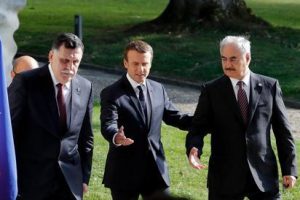


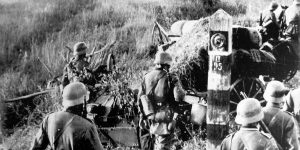 Who Fooled Whom?


 Ο κ. Κυριάκος Μητσοτάκης φρόντισε να μας θυμίσει την κλασική φιλελεύθερη αντίληψη ότι η κοινωνία είναι ανταγωνιστική και ότι όλοι δεν είμαστε ίσοι. Αυτό, ως φιλοσοφική αντίληψη είναι ενδιαφέρουσα. Και πάνω του έχουν οικοδομηθεί πολιτικές θεωρίες και πολιτικά κόμματα. Όταν, όμως, είναι η κινητήρια αναφορά της πολιτικής σου σε έναν λαό που τα τελευταία οκτώ χρόνια υφίσταται συνεχή μείωση του βιοτικού του επιπέδου και των δυνατοτήτων του να αντιδράσει κάτω απο την βαριά μπότα του κράτους, είναι, τουλάχιστον, πολιτικά άστοχο.
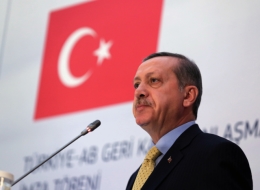
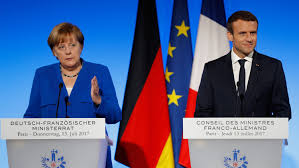 PIERRE VIMONT carnegieeurope.eu
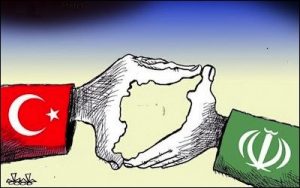
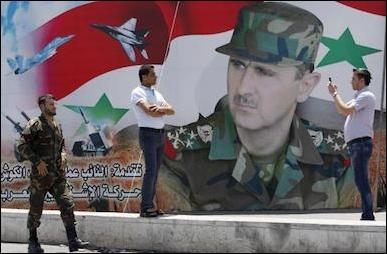 Turkey has nothing to gain from further support for Syrian President Bashar Assad’s downfall.
 JUDY DEMPSEY carnegieeurope.eu


 Του Αλκη Καλλιαντζίδη Οικονομολόγου
 μου αρέσει η γελοιοποίηση και δεν θέλω να υπηρετώ το τίποτα, οπότε εγκαταλείπω το Εθνικό Μέτωπο», είπε στην εκπομπή. «Μόνο ο αγώνας για τη Γαλλία έχει προτεραιότητα». Η αντίδραση της Marine Le Pen, λίγα λεπτά αργότερα, ήταν άμεση από την πρωινή εκπομπή «Ερωτήσεις ενημέρωσης» στο κανάλι LCP και στο ραδιόφωνο France info : «σέβεται» την «απόφαση» του Florian Philippot να εγκαταλείψει το Εθνικό Μέτωπο, αλλά καταγγέλλει μια στρατηγική «θυματοποίησής» του και των «αυξανόμενων εντάσεων» από πλευράς του πρώην αντιπροέδρου της. Διαβεβαίωσε δε η Le Pen ότι είναι «η πιο ισχυρή και η έχουσα την καλύτερη θέση» για την προεδρική εκλογή του 2022!
 Η άρνηση του ευρωβουλευτή του Εθνικού Μετώπου να «θέσει τέρμα στη σύγκρουση συμφερόντων που απορρέει από τη διπλή του ιδιότητα ως αντιπροέδρου του κόμματος και προέδρου του πολιτικού συνδέσμου «Οι Πατριώτες», τον οποίο μάλιστα ίδρυσε στα μέσα Μαΐου 2017, δηλαδή εν μέσω των κρίσιμων προεδρικών εκλογών. Ο περί ου ο λόγος στύλωσε τα πόδια, αρνούμενος να «εγκαταλείψει τους Πατριώτες» (με 2.500 μέλη) ή να «παραιτηθεί των πεποιθήσεών του», μετά από μια τελευταία προειδοποίηση από τον Marine Le Pen, στο κανάλι RTL την Τετάρτη το πρωί.
 de dimanche στις 21-09-2017, «παραιτούμενος ο πρώην αντιπρόεδρος του Εθνικού Μετώπου προετοίμαζε ήδη την έξοδο του εδώ και αρκετές ημέρες. Σημάδι ότι η απόφασή του ήταν αναπόφευκτη : διάφορα τοπικά στελέχη που τον υποστήριζαν είχαν ανακοινώσει την προθυμία τους να επιστρέψουν την κάρτα μέλους τους. Ξεκινώντας από την ευρωβουλευτή Sophie Montel, αντιπροέδρου των «Πατριωτών». Την Πέμπτη το πρωί, λίγα λεπτά μετά τον Philippot, η εν λόγω ευρωβουλευτής ανακοίνωσε επίσης στο ραδιόφωνο RMC ότι αποχωρεί από το κόμμα, καταγγέλλοντας τον «εκτροχιασμό της ταυτότητας» του κόμματος.
 Όπως η ζωή μας δεν είναι μια γραμμική εξίσωση ότι όλο και θα βελτιώνεται, έτσι, και πολύ χειρότερα, στα κόμματα, όπως το Εθνικό Μέτωπο, η βελτίωση των εκλογικών αποτελεσμάτων τους δεν μπορεί να είναι διαρκής. Και για έναν αποχρόντα λόγο : την δελφινομαχία που τα χαρακτηρίζει και που ενδύεται ψευδέστατα τον ιδεολογικό μανδύα. Μέσα στο ευρώ, έξω από το ευρώ, στην προκειμένη περίπτωση. Και ας μην ξεχνούν οι αναλυτές ότι το Εθνικό Μέτωπο είναι ένα οικογενειακό κόμμα από της ιδρύσεώς του. Η ανιψιά της Marine Le Pen, η Marion Maréchal Le Pin, η οποία αποσύρθηκε προσωρινά από την πολιτική κονίστρα στο όνομα της ανατροφής του παιδιού της, ενδεχομένως να επανέλθει δριμύτερη σε κάποια άλλη στιγμή αδυναμίας της θείας της. Ο έτερος αντιπρόεδρος Louis Aliot του Εθνικού Μετώπου είναι ο Σύντροφος της Marine Le Pen.

 του ΠΑΝΤΕΛΗ ΣΑΒΒΙΔΗ
 Όλα αυτά εκτυλίσσονται από το 1983 ως το 2008 και, δυστυχώς, αντί η- τότε- Ελληνική Κυβέρνηση αντί να προσφύγει στην ολομέλεια του Διεθνούς Δικαστηρίου ζητώντας την ακύρωση της απόφασης, άφησε το διάστημα προσφυγής να παρέλθει μετατρέποντας έτσι την απόφαση σε οριστική. Ακόμη χειρότερα: Αντί να καταβάλλει τη χρηματική αποζημίωση που επιδικάστηκε, άφησε άλυτο το θέμα και, σήμερα, η χώρα κινδυνεύει να προειδοποιηθεί στην Υπουργική του Συμβουλίου της Ευρώπης τον Νοέμβριο πως αν δεν συμμορφωθεί με την απόφαση του Δικαστηρίου θα αποβληθεί από το Συμβούλιο της Ευρώπης.
 Το Δικαστήριο αφού αναλύει όλο το χρονικό της προσφυγής και τα κριτήρια με τα οποία κατέληξε στην απόφασή του αποφαίνεται ομόφωνα:
 Του Δημήτρη Τσαϊλά Πέμπτη 21 Σεπτεμβρίου 2017, 00:03
 * Ο κ. Δημήτρης Τσαϊλάς είναι Υποναύαρχος ε.α. ΠΝ.
 By