Αρχική Blog Σελίδα 2921

They didn’t #TakeTheKnee: The Black Power protest salute that shook the world in 1968

0

By DeNeen L. Brown September 24 at 4:23 PM The Washington Post


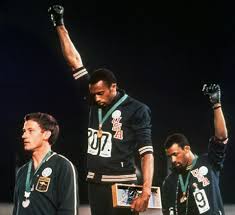
U.S. Olympic gold medalist Tommie Smith, center, and his teammate John Carlos, who won bronze in the 200-meter race, raise their fists during the U.S. national anthem at the 1968 Summer Games in Mexico City. Australian silver medalist Peter Norman is at left. (AP Photo)

They didn’t #TakeTheKnee. Instead they raised a fist.

On Sunday, President Trump’s demand that NFL owners fire players who kneel during the national anthem set off protests by NFL players, coaches and even owners. They linked arms, knelt or remained in the locker room as “The Star Spangled Banner” rang out in stadiums across the country and in London, where the Baltimore Ravens played the Jacksonville Jaguars.

The show of unity and defiance reminded some of another silent protest that continues to reverberate almost 50 years later.

U.S. Olympians Tommie Smith and John Carlos — who’d won gold and bronze respectively in the 200-meter sprint — raising black-gloved fists during the medal ceremony at the 1968 Olympic Games in Mexico City became one of the most iconic sports images of the 20th century.

The protest had been something the two athletes carefully planned. As Smith and Carlos walked to the podium, they took off their shoes to protest poverty. They wore beads and a scarf to protest lynchings. And when the national anthem was played, they lowered their heads in defiance and raised their fists in a Black Power salute that rocked the world.

Before the anthem started to play, Carlos recalled later that he thought about the symbols that had been chosen for that moment on the world stage. They knew it would become “a moment of truth.” And that by protesting they might lose everything.

“I looked at my feet in my high socks and thought about all the black poverty I’d seen from Harlem to East Texas. I fingered my beads and thought about the pictures I’d seen of the ‘strange fruit’ swinging from the poplar trees of the South,” Carlos wrote in his 2011 book written with Dave Zirin, “The John Carlos Story: The Sports Moment That Changed the World.”

He had decided to unzip his Olympic jacket, in defiance of Olympic etiquette, but in support of “all the working-class people — black and white — in Harlem who had to struggle and work with their hands all day.”

He had deliberately covered up the “USA” on his uniform with a black T-shirt to “reflect the shame I felt that my country was traveling at a snail’s pace toward something that should be obvious to all people of good will. Then the anthem started and we raised our fists into the air.”

They had one pair of gloves between them. Smith put a black glove on his right fist; Carlos covered his left fist. Smith raised his right fist; Carlos his left.

“As the anthem began and the crowd saw us raise our fists, the stadium became eerily quiet,” Carlos wrote. “For a few seconds, you honestly could have heard a frog piss on cotton. There’s something awful about hearing fifty thousand people go silent, like being in the eye of a hurricane.”

As the national anthem played the crowd began to boo them. Then some people in the crowd began to scream the national anthem.

“It was like they were saying, ‘Oh, you anti-American sons of bitches. We’re going to shove the s–t down your throat!’ ” Carlos wrote. “They screamed it to the point where it seemed less a national anthem than a barbaric call to arms.”

The punishment for defying Olympic rules was swift. Smith and Carlos were ordered to leave the Olympic Stadium.

But the image of Smith and Carlos raising fists and Australian sprinter Peter Norman — who took silver in the race — would become seared in history as an incendiary act of protest by athletes.

They’d taken a stand at a moment when the country was also embroiled in protests over the Vietnam War and the aftermath of the assassinations of Martin Luther King Jr. and Robert F. Kennedy. The nation had seen on television Chicago police beating demonstrations at the Democratic National Convention.


A statue of Tommie Smith, center, and John Carlos, right, was installed at the Smithsonian Institution’s new National Museum of African American History and Culture last year. (Jahi Chikwendiu/The Washington Post) 

When they returned to the United States, Carlos and Smith were suspended from the U.S. track team, and they received death threats.

After their track careers, both Smith and Carlos played in the NFL, but their time on the field was short-lived. Smith played three seasons with the Cincinnati Bengals, according to the Track and Field Hall of Fame. Carlos played one year with the Philadelphia Eagles and one year in the Canadian Football League.

Smith, who worked at Santa Monica College as a sociology professor and head cross-country and track and field coach, said in an HBO documentary that they were just trying to bring attention to injustice in the United States. “I don’t like the idea of people looking at it as negative,” Smith said. “There was nothing but a raised fist in the air and a bowed head, acknowledging the American flag — not symbolizing a hatred for it.”

Carlos, who worked as a guidance counselor at Palm Springs High School in California, told the Guardian newspaper: “I had a moral obligation to step up. Morality was a far greater force than the rules and regulations they had.”

https://www.washingtonpost.com/news/retropolis/wp/2017/09/24/they-didnt-takeaknee-the-black-power-protest-salute-that-shook-the-world-in-1968/?hpid=hp_rhp-top-table-main_retropolis-9pm%3Ahomepage%2Fstory&utm_term=.042c215be0d8

Here’s why we Kurds deserve a country of our own

0
 September 22 The Washington Post

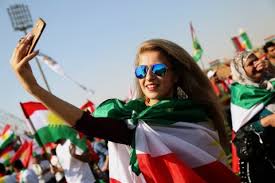
A Kurdish woman takes a selfie during a rally for the Kurdistan independence referendum campaign at the Franso Hariri stadium in Irbil, Iraq, on Friday. (Gailan Haji/EPA-EFE)

The author is deputy prime minister of the Kurdistan Region of Iraq.

Iraqi Kurdistan’s independence referendum is set for Monday. Our allies — the United States, Britain, France and the United Nations — keep calling on us to forgo the referendum and to engage, yet again, in negotiations with Iraq. We are grateful to our friends for their efforts, but the time has come for us to secure our own long-term security, prosperity and stability. The path is not clear, but we know it ends in Kurdistan’s independence — in the best-case scenario, by mutual agreement with Iraq.

Yes, we have a choice. We can either go ahead with our symbolic vote, which has the potential to generate serious backlash from the countries that oppose it, or we can accept a proposed set of commitments from our allies, the most powerful nations in the world, in return for postponing the referendum. As it happens, though, we Kurds have a long and vivid memory of the many betrayals our people have suffered throughout history. For this reason, it is not at all clear to us that postponement is in our nation’s best interest.

While our allies disagree with our emphasis on a referendum as a first step to independence, this right is enshrined in international law and complies with Iraq’s constitution. We have yet to hear of a commitment to an alternative process that would definitively result in improved governance or eventual independence for Kurdistan. And we have seriously weighed the risks of holding a referendum. Who, indeed, could be more aware of them than us?

Some of our friends are asking us to remain part of a country that has been unable to defend its territory from the homegrown terrorists of the Islamic State who so recently ravaged our lands — a country that has mismanaged its resources and has failed to pay us the mutually agreed share of the national budget. As a result, over the past few years, Baghdad has brought Kurdistan to its knees financially, rendering us unable to pay our civil servants or the peshmerga soldiers defending Iraq and the world from the Islamic State. We are now hosting well over 1 million displaced Iraqis, as well as more than 200,000 Syrians who have fled sectarian violence and come to our region for protection. Yet the Iraqi government has refused to send funding to care for those citizens either. Rather than trying to convince us not to leave Iraq, the world should have tried harder to ask Iraq to convince us to stay.

Yes, Kurdistan’s democracy is imperfect; our governance, institutions and political leadership have their flaws. But we are committed to economic prosperity, to transparency and accountability, and, above all, to the safety and protection of our citizens. We have far more of the building blocks for new institutions in place than many other new nations.

We invite you to help us strengthen our institutions. Press us for progress on democracy and human rights. We have been working for years on reforms that will put us in a strong position to govern for the well-being of our citizens and the strength of our nation. Nobody pressured us to do this. We ourselves recognized what we needed to do for our survival, despite our lack of the tools and instruments that sovereign nations have at their disposal. We are an open, tolerant and pluralistic society that accepts — no, protects — all groups. We aim to be an independent, peaceful and stable nation, with positive political, economic and security relations with our neighbors, and, most important, with Iraq.

You can see the excitement among our young people celebrating Kurdistan’s referendum and contrast that passion with their counterparts across the Middle East, where radicalism festers. While our people have a range of views about the referendum and the best path forward, in the heart of every Kurd we are already independent. We are already a nation.

We did not hesitate to join the international coalition and the Iraqi forces that set out to liberate Mosul from the Islamic State. Nor did we hesitate before that to fight al-Qaeda, or before that, Saddam Hussein. But we are not mercenaries, paid to fight wars. Our lives are on the line, and we, too, have our strategic and national interests. We didn’t think twice about opening our doors to those displaced by conflict, despite our own economic problems.

Despite all this, rather than recognizing or rewarding us, other nations have joined forces to oppose our right to self-determination. Where were you when we were being slaughtered, attacked with chemical weapons and buried in mass graves in 1988? How long did it take you to respond to our pleas when we fled to the mountains after Hussein crushed our uprising in 1991? Every Kurd around the world shook with fear and indignation at the predicament of our brothers and sisters on the top of Mount Sinjar in 2014. The wounds of past persecution and genocide are fresh in our hearts and minds. It is no wonder that Israel, a nation created as a haven for the survivors of the world’s most tragic genocide, is alone in publicly supporting the referendum, though we have no diplomatic relations with it.

We remain grateful for the international coalition’s support in defending Kurdistan from the Islamic State. But as that support now appears at risk, we find ourselves sadly reviving an old saying: “The Kurds have no friends but the mountains.” Vague commitments with exit clauses do not address the desires of our people. It is time for our international partners to seriously chart out a path that resolves the Kurdish question in Iraq and gives our people what you already enjoy, and what we deserve: a country of our own.

https://www.washingtonpost.com/news/democracy-post/wp/2017/09/22/heres-why-we-kurds-deserve-a-country-of-our-own/?utm_term=.95f78ea50e8e

«Ο Mélenchon με λενινιστική ρητορεία και στρατηγική  επιχειρεί να καταστεί ο πρώτος αντίπαλος του Macron ;»

2

Του Αλκη Καλλιαντζίδη Οικονομολόγου [email protected] www.kalkis.eu

Στο άρθρο μου στις Ανιχνεύσεις στις 13-09-2017, αναφορικά με την 1η αντικυβερνητική διαδήλωση που διοργάνωσε πρωταγωνιστικά  η φιλοκομμουνιστική συνδικαλιστική οργάνωση CGT, φάνηκε ο έντονος ανταγωνισμός μεταξύ του ΚΚ Γαλλίας και του νεόδμητου κόμματος «Ανυπότακτη Γαλλία» του Jean-Luc Mélenchon   http://www.anixneuseis.gr/?p=174887. Ήδη διενεργήθηκαν άλλες δυο διαδηλώσεις, μια στις 21 πάλι από την CGT (που ήταν μικρότερη από την 1η ) και η δεύτερη στις 23 Σεπτεμβρίου από το κόμμα του Mélenchon που πρέπει να ήταν ικανοποιητική, σύμφωνα με το ρεπορτάζ του δημοσιογράφου Hervé Gattegno της ηλεκτρονικής έκδοσης της εφημερίδας Le journal de dimanche 24-09-2017. Όμως το ερώτημα που θέτει ο δημοσιογράφος είναι αν μπορεί να αλλάξει κάτι ; «Ακόμα και οι χθεσινοί διαδηλωτές μιλούσαν ήδη για άλλους αγώνες, εναντίον των νέων μεταρρυθμίσεων που έχει ήδη εξαγγείλει η κυβέρνηση, π.χ για την επαγγελματική κατάρτιση, την ασφάλιση της ανεργίας και τη στέγαση». Θέματα που δεν έχουν σχέση πλέον με τα Διατάγματα στον κώδικα εργασίας τα οποία ο  Μακρόν, έσπευσε να τα υπογράψει την παραμονή της  διαδήλωσης της «Ανυπότακτης Γαλλίας». Και επειδή ο Μακρόν έχει τεράστια πλειοψηφία στην Εθνοσυνέλευση, δεν υπάρχει καμία αγωνία για την επικύρωση των Διαταγμάτων τα οποία ήδη δημοσιεύθηκαν στην εφημερίδα της κυβερνήσεως.

Βέβαια είναι αλήθεια ότι υπάρχουν εντάσεις, διαμαρτυρίες, ακόμη και θυμός, σίγουρα. Για αυτό και υπήρχε κόσμος στη διαδήλωση χθες. Αλλά όλοι συνειδητοποιούν ότι αυτό δεν θα είναι αρκετό. Η μεταρρύθμιση δρομολογήθηκε. Αυτό είναι μια πραγματικότητα την οποία  ακόμα και οι Ανυπότακτοι θα τη συνηθίσουν.

Ο  Jean-Luc Mélenchon αντιμετώπισε τρεις προκλήσεις :

@ στο κοινωνικό μέτωπο. Όφειλε να δείξει ότι ήταν σε θέση να κινητοποιήσει περισσότερο κόσμο από τη συνδικαλιστική οργάνωση  CGT. Το πέτυχε, έστω κι αν έβαλε 150 πούλμαν μεταφερόμενων διαδηλωτών. Αυτό αποδεικνύει ότι η ορμή είναι από τη δική του πλευρά. Όχι από την πλευρά της CGT.

@ μέσα στην αντιπολίτευση: εδώ τα πράγματα ήταν πάρα πολύ εύκολα, αφού το Εθνικό Μέτωπο  και η δεξιά των Ρεπουμπλικάνων  είναι εντελώς άφωνοι για το ζήτημα του εργατικού δικαίου . Έτσι, ναι, ο Jean-Luc Mélenchon  καπέλωσε την αντιπολίτευση του Μακρόν με μόνο 17 έδρες στην Εθνοσυνέλευση.

@ η τρίτη πρόκληση είναι αυτή που απεύθυνε ο Mélenchon στον Macron.  Ήθελε να αποδείξει ότι η εξουσία μπορεί να παγιδευτεί στο  πεζοδρόμιο. Είναι αυτός όμως που βρίσκεται προς το παρόν στο αδιέξοδο του δρόμου. Για αυτό και εξήγγειλε ήδη την προσεχή διαδήλωση στα Ηλύσια Πεδία με 1.000.000 διαδηλωτές! Είπε στην ομιλία του χθες ότι  «η μάχη μόλις αρχίζει». Έτσι θα υπάρξουν και άλλοι γύροι …

Ο Mélenchon έκανε ένα ωραίο λογοπαίγνιο προς τον Μακρον : «Μας εμποδίζετε να ονειρευτούμε, έτσι κι εμείς θα σας εμποδίσουμε να κοιμηθείτε», καλώντας τους οπαδούς του να κατέβουν στους δρόμους με τις «κατσαρόλες». Αλλά μάλλον υπερεκτιμά τις δυνάμεις του. Με τους κοινοβουλευτικούς συσχετισμούς που έχει επιτύχει ο Μακρόν δεν δυσκολεύεται να κοιμηθεί. Και δείχνει προφανώς αποφασισμένος να προχωρήσει περισσότερο. Και αν ένας Πρόεδρος μπορεί να κοιμάται ενώ προχωρεί, είναι ίσως διότι υπάρχουν στην πολιτική αρετές και κατά  την υπνοβασία!

«Οι επαναλαμβανόμενες εκκλήσεις για διαδηλώσεις, η άρνηση συμμαχίας με οποιονδήποτε από την  αριστερά … Οι μέθοδοι και η ρητορική του Jean-Luc Mélenchon θυμίζουν εκείνες του Λένιν,  σύμφωνα με την ανάλυση του Jean-Christophe Buisson». Για αυτόν, «η ανάληψη της εξουσίας από τους Μπολσεβίκους στοιχειώνει και εμπνέει τον ηγέτη των Ανυπότακτων», σύμφωνα με τη σχετική συζήτηση που είχε μαζί του στις 22-09-2017 ο δημοσιογράφος Vincent Tremolet de Villers  της ηλεκτρονικής έκδοσης της εφημερίδας  Le Figaro. Ο Jean Christophe Buisson είναι συγγραφέας και αναπληρωτής διευθυντής του περιοδικού Figaro. Το τελευταίο του βιβλίο, «1917, το έτος που άλλαξε τον κόσμο», δημοσιεύθηκε από τις εκδόσεις Perrin. Μπορούμε να θεωρήσουμε ότι το κίνημα που οδήγησε ο Λένιν εκείνο το έτος θα μπορούσε να εμπνεύσει τον Jean-Luc Mélenchon. Υπάρχουν αντιστοιχίες;

Τροτσκιστής ακτιβιστής στα νεότερα χρόνια του, ο Jean-Luc Mélenchon παίζει στα δάχτυλα τις λεπτομέρειες της ρωσικής επανάστασης του 1917. Δεν είναι πιστευτό ότι δεν φαντασιώνεται, αυτήν τη περίοδο που εορτάζεται ως η εκατονταετηρίδα της επανάστασης (κατά άλλους του πραξικοπήματος του καθεστώτος) των Μπολσεβίκων, τον τρόπο με τον οποίο ο Λένιν κατάφερε να καταλάβει την εξουσία.

Κατά τη διάρκεια του χειμώνα του 1917, στη Ρωσία γεννήθηκε ένα μεγάλο κίνημα του «παρτεδρομισμού» (dégasisme) : κόπωση από τον πόλεμο και εξέγερση  ενάντια σε μια εξουσία συχνά ανίκανη και βάναυση (η χώρα αριθμεί περίπου ένα εκατομμύριο φυγόστρατους, «ανυπότακτους», αρνούμενους να συνεχίσουν να υπηρετήσουν κάτω από τις αυτοκρατορικές σημαίες), απόρριψη ενός αυταρχικού πολιτικού συστήματος προς το τέλος του, επιθυμία για πραγματική αλλαγή, ειδικά στην ύπαιθρο όπου επικρατεί μια οιονεί φεουδαρχική οργάνωση κ.ο.κ. Αυτό το κίνημα αποκρυσταλλώθηκε τον Φεβρουάριο-Μάρτιο του 1917 με δημοφιλείς διαδηλώσεις που οδήγησαν στην ανατροπή της ρωσικής μοναρχίας. Επιτυγχάνει μια προσωρινή κυβέρνηση που διατηρεί την επανάσταση, η γη αναδιανέμεται, οργανώνεται μια τεράστια χαλάρωση των θεσμών, η Ρωσία διατηρεί τις παραδοσιακές στρατιωτικές συμμαχίες της συνεχίζοντας να πολεμά ενάντια στις κεντρικές αυτοκρατορίες παράλληλα με τους συμμάχους, κ.λπ. Η επανάσταση με μικρά βήματα, κατά κάποιο τρόπο. Κατά τη διάρκεια αυτής της περιόδου, τι έπραξε ο Λένιν, του οποίου όλα τα γραπτά δείχνουν ότι είχε εμμονή με τη φιγούρα του Ροβεσπιέρου και είχε πειστεί ότι μόνο με μια ακραία βία μπορεί να γεννήσει έναν νέο κόσμο; Ανέλαβε ως πρώτος αντίπαλος της ρεφορμιστικής εξουσίας, υποστηρίζοντας μια πραγματική επανάσταση, θεωρώντας ότι το καθεστώς κατά τη διαδικασία της εγκατάστασής του δεν πάει αρκετά μακριά στις αλλαγές. Μέσα από τα σοβιέτ των στρατιωτών, των εργατών και των αγροτών που εκλέχθηκαν την άνοιξη, οι ηγέτες των μπολσεβίκων, αν και μειοψηφία στη χώρα (είχαν μόνο μερικές χιλιάδες υποστηρικτές), παρενοχλούν την κυβέρνηση και καπελώνουν τις κοινωνικές δυσαρέσκειες που αναδύονται στη χώρα. Αυτό πάει να κάνει κατά κάποιο τρόπο ο Jean-Luc Mélenchon στη Γαλλία το καλοκαίρι του 2017, λέει ο Jean-Christophe Buisson …

Η ρητορική της «Ανυπότακτης Γαλλίας» θυμίζει εκείνην  του 1917 στη Ρωσία;

Η βίαιη ορολογία, την οποία περιγράφει λεπτομερώς ο Stéphane Courtois στην  βιογραφία του Λένιν, «εφευρέτη του ολοκληρωτισμού», είναι γνωστή. Συνοψίζεται σε μερικές ιδέες που ακούγονται εξοικειωμένες με τα αυτιά μας. Είναι καιρός για τον λαό, είπε, να «σαρώσει» όλη τη Ρωσία για να τερματίσει την αστική προσωρινή κυβέρνηση. Ο στόχος είναι να «κατακτήσει την εξουσία» – με τη βία, αν είναι απαραίτητο. Σύμφωνα με τον ίδιο, η δημοκρατική νομιμότητα που γεννήθηκε από την επανάσταση του Φεβρουαρίου-Μαρτίου 1917 πρέπει να δώσει τη θέση της στο πεζοδρόμιο, που εκδηλώνεται καθημερινά με διαδηλώσεις τις οποίες ενθαρρύνουν οι μπολσεβίκοι ενάντια στην πείνα, τον πόλεμο, τις κοινωνικές ανισότητες, κ.λπ. Σύμφωνα με τον Λένιν, υπήρξε ένα είδος δήμευσης της επανάστασης που δεν τήρησε τις κοινωνικές της υποσχέσεις. Ένα «Κοινωνικό  Πραξικόπημα» (για coup d’Etat social μιλάει και ο Mélenchon) , κατά κάποιο τρόπο …Πέρα όμως από τη ρητορεία που μοιάζει μεταξύ τους, οι καταστάσεις ωστόσο στην Ρωσία του 1917 και στη Γαλλία του 2017 δεν έχουν καμία σχέση. Έτσι είναι.

Αλλά ας ρίξουμε μια προσεκτικότερη ματιά στα πράγματα.

Ο άνθρωπος που ήρθε στην εξουσία μετά την επανάσταση του «παρτεδρομισμού» του Φεβρουαρίου-Μαρτίου 1917 ονομάζεται Αλέξανδρος Kerensky. Δεν είναι ούτε 40 ετών, προέρχεται από την κοινωνία των πολιτών (είναι δικηγόρος), γοητεύει τα πλήθη με τα νιάτα του, την ομορφιά του, το χάρισμα του, τη ρητορική του δεινότητα, τον ρομαντισμό του. Αφού διορίστηκε αρχηγός της προσωρινής κυβέρνησης  στις αρχές του καλοκαιριού του 17, επιχειρεί την μεταρρύθμιση της χώρας, αρνούμενος όμως τον σοσιαλιστικό εξτρεμισμό.

Από την άλλη πλευρά του πολιτικού φάσματος, τι συμβαίνει; Επικεφαλής μιας πολύ μικρής μειονότητας, ο Λένιν ακολουθεί μια στρατηγική που μπορεί να φαίνεται εκπληκτική: κανένας φίλος στα αριστερά. Αντί να επιτεθεί μετωπικά στον Kerensky, ποτέ δεν έπαψε να επιτίθεται στους αντιπάλους του στρατοπέδου του (μενσεβίκοι, σοσιαλιστές-επαναστάτες κλπ.). Ο σκοπός του ; Να είναι ο μόνος που θα ενσαρκώσει μια πραγματική αντίθεση με τον Kerenski. Ο,τι επιχειρεί να κάνει στη Γαλλία και ο  ο Mélenchon. Όταν ο Mélenchon  ξοδεύει το χρόνο του για να εξοβελίσει τους ανταγωνιστές του μέσα στην αριστερά (π.χ. Hamon, Laurent, κλπ.),  τούτο σημαίνει ότι ακολουθεί  μια στρατηγική πολύ λενινιστική.

Ποιος είναι ο στόχος αυτής της στρατηγικής;

Πρώτον, για να γίνει ο μόνος αντάξιος αντίπαλος της εξουσίας του Μακρον. Η δεξιά των Ρεπουμπλικάνων είναι ήδη σαστισμένη και ψάχνει για νέο πρόεδρο τον Δεκέμβριο. Η άκρα δεξιά διασπάστηκε ήδη τη βδομάδα που πέρασε. Οι σοσιαλιστές είναι άφαντοι και αποφάσισαν να πουλήσουν το κτήριο του κόμματός, κάτω από το βάρος των χρεών τους. Άρα  δεν του έμενε παρά να επιβάλει την ηγεμονία του (έστω και προσωρινή) στην αριστερά: και αυτό γίνεται.

Ενθάρρυνση της κοινωνικής αναταραχής σε όλους τους τομείς της οικονομίας (δημόσιοι υπάλληλοι, συνταξιούχοι, εργάτες, νέοι, κλπ.), χωρίς να είναι απαραίτητα ο διοργανωτής της : αυτό γίνεται. Ακόμη και αν η προσπάθειά του να καπελώσει  την ένωση φοιτητών UNEF πριν από λίγες εβδομάδες απέτυχε.

Αλλά είναι αναμφισβήτητα το όνειρο του Mélenchon, 66 ετών, που σίγουρα δεν θέλει να περιμένει 4 χρόνια για να διοικήσει τη Γαλλία (Είναι έτοιμος να κυβερνήσει δήλωσε). Δεν είπε ο ίδιος ότι δεν θα κατέβει  ξανά το 2022 στις προεδρικές εκλογές; Σε αυτήν την περίπτωση, πώς σκοπεύει να έχει πρόσβαση στην ανώτατη εξουσία, αν όχι προς όφελος μιας κατάστασης παρόμοιας με εκείνη της Ρωσίας το φθινόπωρο του 1917, αναρωτιέται ο Jean-Christophe Buisson ;

Επί του πιεστηρίου : όπως είχα γράψει ότι θα ήταν απίθανο να πάει καλά στις εκλογές για τη Γερουσία, http://www.anixneuseis.gr/?p=175363 το κόμμα του Μακρόν υπέστη απόψε την 1η του κοινοβουλευτική ήττα από τους «μεγάλους εκλέκτορες» της γαλλικής αυτοδιοίκησης. Έλαβε μόνο 23 έδρες. Με θρίαμβο των Ρεπουμπλικάνων.


End of an Era?The Slow Death of Europe’s Social Democrats

0

Spiegel

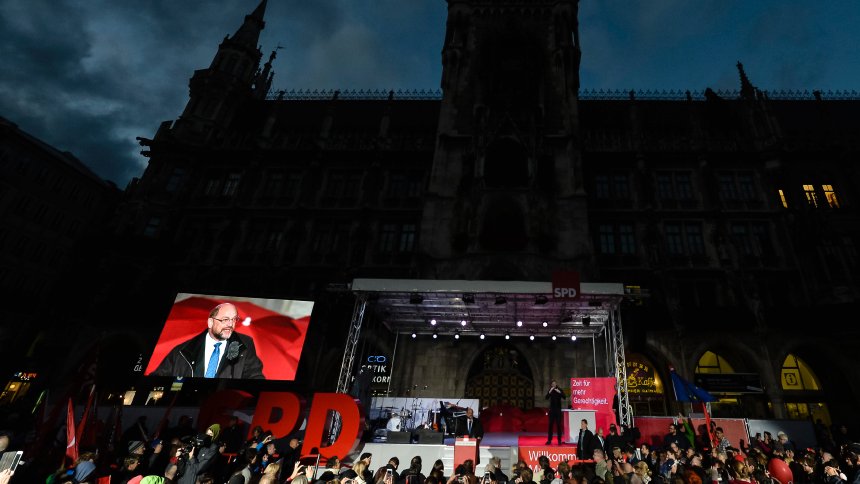
Across Europe, social democratic parties are in crisis and on Sunday, the German SPD could slide to its worst result since World War II. What has happened to the once-glorious center-left parties on the Continent? And how can they recover? By SPIEGEL Staff

AFP

On a recent late summer evening, Austrian Chancellor Christian Kern pulled into Illmitz, in Austria’s Burgenland, in a tour bus not unlike those used by rock stars. He was greeted with cheers and a brass band before making his way through a throng of selfie-hunters at a local trade union festival to reach the stage, in front of which some 200 people were gathered to hear him speak.

His speech focused on the “Austrian Dream,” and he outlined his own journey from a humble background to the very top. He talked about Austria and what people were telling him about their concerns, outlining a plan to turn the country back into a place where everyone “gets the chance to have a successful life.” It was the kind of rhetoric you would normally expect from an American president, not an Austrian Social Democrat.

Yet despite him being a good candidate, despite running a good campaign and despite the country’s solid economy, with unemployment at 5.7 percent and economic growth topping 2 percent, Kern and his party, the Social Democratic Party of Austria (SPÖ), are failing to gain traction. His country’s economy is even better shape than Germany’s, yet the SPÖ has been polling at 22 to 28 percent for months now — far from enough to win the Oct. 15 general election.

Kern, 51, headed the Austrian national railroad before becoming chancellor last year. He was responsible for making sure that special trains were provided during the 2015 refugee crisis. And he forced the hapless former chancellor, Werner Faymann, out of office. Kern’s team is young and motivated, with hardly anyone on his bus older than their late 30s, and he has multimedia experts to manage his social media presence. But absent a miracle, Kern will have to step down after the election.

One reason, of course, is Sebastian Kurz, Kern’s 31-year-old challenger. Kurz has rebranded his party, the Austrian conservatives, and is betting on his youth and staunch anti-Islam stance. In polls comparing the two on an individual basis, Kern and Kurz are basically neck-and-neck — but next to his young challenger, the incumbent chancellor nevertheless looks like the status quo. Despite everything, Austrian voters associate the current chancellor with old, sclerotic social democracy.

In 2000, social democrats or socialists were part of the government in 10 out of the 15 countries that made up the European Union at the time. These days, though, the picture is a drastically different one. There is a real chance that German Social Democrats will no longer be part of Chancellor Angela Merkel’s coalition following Sunday’s vote and the same could happen in Italy after voters there go to the polls next spring. Were that to happen, center-left parties would only be part of six EU governments out of 28 member states, all of them on the European periphery: Malta, Portugal, Romania, Sweden, Slovakia and the Czech Republic. The populist left-wing Syriza alliance heads the government in Greece. Elections are scheduled for October in the Czech Republic, but it seems unlikely that the social democrats will be returned to power.

There is even a new word for the social democratic swoon: Pasokization, as in PASOK, Greece’s long-term governing party, which fell into insignificance in the 2015 election. A similar situation applies in the Netherlands, where the traditional Labor Party captured only 5.7 percent of votes in the last election. French Socialist Party candidate Benoît Hamon came in fifth in the recent French presidential election, with 6.4 percent of the vote, and his party went on to receive a miserable 9.5 percent of the vote in parliamentary elections a short time later. In Poland, the Social Democrats no longer hold any seats in the parliament.

It is a puzzling development given the desire held by many voters for greater social security. Indeed, that desire could help explain the rapid, yet brief, rise of Social Democratic chancellor candidate Martin Schulz in the polls earlier this year. Indeed, the SPD came within a single percentage point of Merkel’s conservatives — only to plunge again. That dive certainly had something to do with the SPD’s uninspiring campaign, and with Schulz’s own apparent inability to win over voters. But there was also a bigger problem: No one knows what exactly social democracy stands for anymore.

This is astonishing. Weren’t people proclaiming a comeback for strong state governance and the end of financial capitalism after the 2008 financial crisis? Isn’t the gap between rich and poor widening almost everywhere in Europe? Don’t voters have several good reasons to vote social democratic?

Social democrats have shaped Western Europe more than any other political movement. Their ideas are now taken for granted among large segments of the middle class: principles like the social welfare state; the notion that the strong bear some responsibility for weaker members of society; and the idea that everyone should have the same opportunity to participate in society. Those are the philosophical underpinnings of social democracy, yet social democratic parties are no longer benefitting from these ideas.

Splintered Electorate

Martin Schulz has made “social justice” the central issue of his campaign, but the working class, once the key constituency of social democracy, has been fragmented into a well-paid core workforce and a periphery of temporary workers who often do the same work for less money. Others are stuck in dead-end service jobs. Are social democratic parties still the parties of workers? Or is this just a distant memory to which educated, upwardly mobile public servants cling to? That, at least, is what the SPD factions in state parliaments and the Bundestag make it look like.

http://www.spiegel.de/international/europe/the-demise-of-social-democracy-in-europe-a-1168670.html

Turkey and Germany: A Worsening Crisis

0

By September 24, 2017 

BESA Center Perspectives Paper No. 594, September 24, 2017

EXECUTIVE SUMMARY: The harsh measures taken by Turkish President Recep Tayyip Erdoğan since the failed coup attempt last year have led to a deepening crisis with a host of Western states, first and foremost with Germany. Since the coup attempt, relations between Ankara and Berlin have been at an unprecedented low. However, in light of their history of close relations, the volume of stable economic trade over the years, and Turkey’s ability to stabilize the waves of immigration to Europe, the countries may yet find a channel of communication in order to contain the crisis.

In the wake of the failed coup attempt against him last year, Turkish President Erdoğan has sought to consolidate his status and convey a message of unity under the banner of democracy against “Turkey’s enemies at home and abroad.” In practice, however, Turkey is experiencing profound internal upheaval. With the object of tightening the regime’s grip on power, the authorities are persecuting public figures and members of the media.

The coup attempt and its failure constitute a political turning point for Turkey. Erdoğan’s oppressive measures have contributed to the strengthening of Islamic and anti-Western circles inside Turkey and exacerbated Ankara’s friction with the West, which strongly opposes the regime’s trampling of individual rights. In addition, geopolitical fluctuations and Washington’s enduring weakness in the Middle East have prompted Ankara to warm its relations with countries such as Russia, Iran, and Qatar, a shift that can have a great impact on Turkey’s energy ambitions and economic needs.

Turkey’s relations with Germany have been fragile for months. The tension marks a stark contrast to normal times, before the coup attempt and its aftermath, when Berlin adopted a pragmatic line towards Ankara in relation to the EU and maintained deep political ties with it.

The tensions that have arisen between the two nations have been conspicuously manifesting themselves. Turkish security forces arrested German activists and journalists suspected of incitement to terrorism against Turkish targets. They also stopped German parliamentarians from visiting German forces stationed in Turkey as part of NATO’s activities against ISIS. The German authorities responded by preventing senior Turkish officials from holding rallies in Germany prior to Turkey’s April referendum.

Germany will be holding elections this month, and strains with Turkey appear to be getting worse. Erdoğan recently claimed that a German travel warning to Turkey was a cynical attempt to exploit the crisis between the two countries for political gain.

Erdoğan appears to have decided that Berlin is part of a Western conspiracy to weaken Turkey. To bolster this accusation, Turkish law enforcement agencies disseminated false intelligence indicating that German finance companies are involved with the movement of Fethullah Gülen, a Turkish expatriate believed by the regime to have orchestrated the abortive coup attempt.

German Chancellor Angela Merkel is seeking economic sanctions to restrain Erdoğan. There have even been voices in Germany calling on the EU to freeze the customs union with Turkey, which, if realized, could pose a serious problem for Ankara. Germany is Turkey’s main trading partner. Ankara has not yet recovered from the sanctions imposed on it by Moscow following the downing of the Russian plane in Syria in late 2015, and new sanctions would be far from welcome.

Investment companies on both sides recognize the economic damage that can be caused by crises like this, and hope the hostility between the countries will pass immediately after the German elections. Erdoğan recently summoned 19 representatives of German companies to a meeting in Ankara to deflect their fears and assure them that their status in the Turkish economy will not be harmed.

The tenor of relations between Ankara and Berlin could have broader effects on Turkey’s relationship with the West, particularly Washington. Ankara is at odds with the US, its main NATO partner, over the latter’s tactical cooperation with Kurdish forces in Syria – forces the Turkish government sees as an operational arm of the PKK and a threat to Turkey’s national security. Ankara’s tension with Berlin could worsen the strained Washington relationship.

An interesting rapprochement, meanwhile, has been forged between Turkey and Iran, which was expressed in the Iranian chief-of-staff’s recent extraordinary visit to Ankara. During his visit, he spoke with senior Turkish officials, headed by Erdoğan, about the possibility of establishing a cooperation mechanism against terrorist organizations in northern Iraq. Turkey’s concern about Kurdish national aspirations in the region serves the Iranians, who want to tighten their hold on the area between Iraq, Syria, and Lebanon. It is not clear what benefit Erdoğan sees from this rapprochement, because strengthening Iran and cozying up to Russia at the West’s expense might harm Turkey’s ability to influence Syria’s political future.

It is safe to assume that relations between Turkey and Germany are not going to improve anytime soon, and will be influenced by internal fluctuations. However, in view of the countries’ historically strong relations, they will likely contain the crisis to mitigate its economic impact. Ankara’s ability to influence the Turkish diaspora living in Germany, its cooperation in the fight against ISIS, and its capacity to assist Europe on the refugee crisis and other political issues like the conflict in Cyprus could lead to a channel of dialogue.

View PDF

Yaniv Avrahm is a former researcher on Turkey at the Center for Political Research of the Israeli Ministry of Foreign Affairs, and is a freelance expert on modern Turkey.

BESA Center Perspectives Papers are published through the generosity of the Greg Rosshandler Family

Germany’s Crisis of Complacency

0


Over the past decade, Germany has gone from being the “sick man of Europe” to a bastion of stability. But with German Chancellor Angela Merkel poised to gain a fourth term, it is worth asking if too much stability can be a bad thing.

BERLIN – What a difference a decade makes. Ten years ago, Germany was cast as “the sick man of Europe,” owing to its apparent unwillingness to reform. The country suffered from high unemployment, declining competitiveness, a failing education system, an aging and shrinking population, and public debt that exceeded the limits set by the European Union’s Stability and Growth Pact.

But that was then. Today, Germany is regarded as a bastion of political stability and an island of widely shared prosperity in Europe and the world. This Sunday, Germans will elect a new government, and will most likely give Chancellor Angela Merkel a fourth term. She will then be on track to surpass her mentor, the late Helmut Kohl, as Germany’s second-longest-serving chancellor, after Otto von Bismarck. Germans can thus expect continued political stability in Berlin, and in most of their country’s 16 Länder (federal states).

Political stability follows economic success. Germany’s exports and imports are booming, wages are rising, unions are content and cooperative, and the economy is near full employment. The 2008 global financial crisis is long forgotten. And an influx of almost a million migrants and refugees in recent years has been accommodated, while public budgets remain in the black.

Looking ahead, few clouds seem to darken Germany’s horizon. Notwithstanding the squalid Volkswagen emissions scandal, endless delays for infrastructure projects, and Air Berlin’s recent bankruptcy, there has been little to dampen Germans’ collective spirits. By contrast, their fellow-Europeans are consumed with angst. Britons are wringing their hands about Brexit. The French are confronting the realities of President Emmanuel Macron’s overhaul of the country’s labor code. And, as has long been the case, Italy is worried about its banks, and Spain is worried about Catalonia’s bid for independence.

In fact, things appear to be going so well for Germany that its federal election campaign has been a rather dull affair. The recent televised debate between Merkel and her main rival, Martin Schulz of the Social Democratic Party (SPD), was a charming but somnambulant display of civility and consensus. Talk-show hosts, struggling to fill the airtime allotted for commentary and analysis, had to play up every slight hint of disagreement just to keep audiences from tuning out altogether.

HIDDEN TROUBLES

But the calm surface of German public life masks lurking dangers. Germans are hardly living in a Westphalian “best of all possible worlds,” as in Voltaire’s Candide. They have no illusions that Brexit will not bring headaches to the EU, or that Macron’s agenda will not have far-reaching implications for all of Europe.

Moreover, Germany has plenty of problems that it needs to fix at home. Many controversial issues have simply been avoided, and important attempts at reform have gone unrealized. For example, Germany still has not reformed its impossibly complex and unjust tax system. Its Energiewende (transition to a low-carbon economy) remains unfinished, and its public-private partnerships consistently underperform. Germany also needs to address its underinvestment in digital infrastructure, stalled financial reforms, underfunded pensions, and muddled state-federal relations.

In fact, no major reform has been successfully implemented since Chancellor Gerhard Schröder’s “Hartz” labor-market reforms in the early 2000s. Worse still, since Schröder presented his Agenda 2010 in 2003, no equally ambitious reforms have even been proposed, much less attempted.

In contrast to Schröder’s tenure, Merkel’s long chancellorship has been characterized by modest policy initiatives and incrementalism. That is not surprising, given that Merkel has had to devote considerable attention to managing crises, most of which originated beyond Germany’s borders. And despite various market, currency, refugee, and even nuclear disasters, Germany has managed to pull through.

Germany has weathered these storms largely because of measures that were put in place by prior governments, and because Merkel and her coalition partners used those tools effectively. As a result, Germany was the first to bounce back from the 2007 financial crisis and subsequent euro crisis, and the first to take in large numbers of refugees.

But there is no forward-looking agenda or grand ambition behind these successes. Merkel’s approach to governing is to change as little as possible; and if changes are absolutely necessary, she makes them with the utmost caution. Indeed, under Merkel, caution has been the defining principle of German politics generally, and that is unlikely to change if – as seems likely – she secures another term in office.

THE TEFLON COUNTRY?

In the 1980s, the American press deemed Ronald Reagan the “Teflon president”. Today, Germans seem to have adopted that title for themselves and their country, and most certainly for their chancellor. Criticism may be hurled in Germany’s direction, but it never sticks. Everything is always someone else’s problem – or at least someone else’s fault.

Starting with the eurozone, all would be well, according to the prevailing German mindset, if not for Greece and Italy. Likewise, breakdowns in corporate governance can be reduced to a few rogue executives at Volkswagen who decided that compliance with pollution tests meant systematically cheating on them, or to tax-skirting American companies such as Amazon and Google. The world would be well on its way to addressing the existential threat of climate change, except that US President Donald Trump has decided to renounce the Paris climate agreement. And Germany’s ethnic and religious minorities would be far better off if Islamic extremists were not carrying out attacks in the West, and if Turkish President Recep Tayyip Erdoğan were not fomenting resentment among Germany’s Turkish population.

Given this style of thinking, it should come as no surprise that Germany’s government is Teflon-coated as well. When, for example, other EU member states complain that Germany makes unilateral decisions affecting the whole bloc – the country’s leaders simply let the reproaches slide off. This was certainly the case during the financial crisis, when Merkel announced a guarantee on euro-denominated deposits held by German banks. Her decisions to shut down the domestic nuclear-energy industry and to open Germany’s borders to refugees were similarly unilateral, and were taken at little apparent cost to her political standing in Europe.

The history of the past few years shows that Germans have become masters of self-protection. The German political establishment shuns any domestic problem that might disturb the country’s collective amnesia, while simply ignoring signals of discontent or resentment from abroad, and especially from fellow EU member states. And Merkel’s cautious leadership style is well suited to its environment. The chancellor and the country are essentially in cahoots to avoid taking action until pressed to do so.

ESTABLISHMENT RULES

Almost certainly, Germany’s political center hold in the election on September 24, as will its governance modus operandi. Merkel’s Christian Democratic Union (CDU) and its Bavarian sister party, the Christian Social Union (CSU), will return as the Bundestag’s strongest bloc, with the SPD a distant second. Between them, Merkel’s alliance and the SPD will win almost two-thirds of the Bundestag’s seats. Even among the smaller parties, The Greens and the Free Democratic Party will be eager to join a Merkel-led governing coalition. And The Left (Die Linke) has been “domesticated” to the point that it will not cause too much of a parliamentary stir. That leaves only the far-right Alternative for Germany (AfD) standing decidedly outside the political mainstream.

The question, then, is not whether the center will hold, but what will happen at the political margins. Even if the AfD makes it into the Bundestag with 15% of the votes, it will be an isolated, essentially radioactive opposition. AfD representatives will certainly make a lot of noise; but they won’t change Germany’s tradition of political civility or the government’s cautious leadership style. Germany’s center-left and center-right parties have much in common with each other, and almost nothing in common with the right-wing fringe. And if the AfD brings its radical policy platform to the Bundestag, it will likely solidify the centrist consensus even further.

But while a broad political consensus may bode well for collegiality, it could also leave Germany unprepared for many of the challenges ahead, particularly given the mainstream parties’ evident inability to offer anything more than more of the same. Consider the CDU, whose current election platform leaves the tax, pension, and health-care systems almost untouched, and proposes only incremental changes to family and education policies. For example, the party would increase the current monthly childcare allowance by just €25 ($30) per child. And despite Merkel’s reputation among her supporters as a climate-policy pioneer, the CDU is offering no new proposals in this area. Instead, it is sticking with the current government’s watered-down, heavily criticized Climate Action Plan 2050.

Similarly, the SPD is proposing no new overarching reforms, even though its program is almost twice as long as the CDU’s. It has a plan to create new individual investment accounts for education, and to replace the current fragmented health-insurance system with a new scheme for all citizens, but not much else. And the potential junior coalition partners, despite having supposedly been toughened up by years in opposition, have little to add to their traditional party platforms. If anything, their defining issues and proposals – not least The Greens’ climate-policy goals – have already been absorbed into the centrist consensus.

THE COSTS OF QUIESCENCE

One can only wonder what world Germany’s political class think they are living in. The mainstream parties’ platforms all indicate a willingness to rest on their laurels and enjoy the fruits of past labor, while putting nothing in place for the future. This is ironic, given that Germany regularly chastises other countries to reform, singling out Italy for its unruly public finances, for example, or Ireland for its wayward tax system. At home, meanwhile, the publicly owned state lenders, the Landesbanken, are still a drain on the economy ten years after the financial crisis; and the government is still dishing out billions in tax subsidies to German corporations.

Similarly, Germany can be expected to maintain its timid and often self-serving posture vis-à-vis the EU and the eurozone. Macron may soon discover that his purported ally in Berlin will not support him in any domestic or EU-wide reform effort that implies changes for Germany.

But Germany can avoid sorely needed reforms for only so long. Eventually, the Teflon will wear off, criticism will begin to stick, and the critics will multiply. The threat that continuity poses to the political center this year may well turn out to be nothing compared to that in the 2021 election. Whether or not German leaders want to admit it, their country is at a crossroads. If they stay the current course, they will miss opportunities to ensure long-term prosperity and stability. Even worse, a domestic stalemate could take hold, as happened in the last years of Kohl’s long chancellorship.

And yet it is not too late to break the political mold. Germany’s leaders could still take a proactive approach to long-neglected domestic issues, such as education, taxation, infrastructure, social inequality, and pension reform. And they could finally start to anticipate future issues, by doing more to prepare Germany for the digital age.

With regard to the EU, German leaders could push for greater subsidiarity, accountability, and transparency. And they could start to cooperate more in reforming the eurozone, the Common Agricultural Policy, external border controls, and the current security framework.

Such an approach would mean actively removing the Teflon, rather than waiting for it to chip away. Germany would have to confront its critics head-on. At the national level, the government will have to address the concerns of those who have already realized that the country’s decade-long economic and political honeymoon is ending. Internationally, it may just have to get used to being called a bully by thin-skinned neighbors and allies.

It is always easier to stay the course than to change it. But Germany’s leaders need to recognize that taking the path of least resistance is no longer in their – or their country’s – best interest.
Καλύτερα ή μήπως χειρότερα; Η Ελλάδα και τα σενάρια της επόμενης μέρας των γερμανικών εκλογών

0

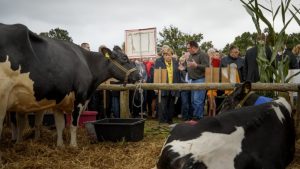
German Chancellor Angela Merkel (C), the leader of the German Christian Democratic Union (CDU) and top candidate for the general election, gets explanations by a milk farmer, during an election campaign tour to a Thanksgiving funfair in Lauenburg part of Putbus in Mecklenburg-Western Pomerania, Germany, 23 September 2017. Angela Merkel is on election campaign tour for the general elections which are scheduled to be held on 24 September 2017. EPA, CARSTEN KOALL SEPTEMBER 24, 2017
Το γερμανικό εκλογικό σύστημα επιβάλλει τον σχηματισμό κυβερνήσεων συνεργασίας και αυτό δημιουργεί πονοκέφαλο στα κομματικά επιτελεία ιδίως φέτος λόγω του θεωρούμενης βεβαίας εισόδου δύο ακόμα κομμάτων τα οποία δεν εκπροσωπούνταν στην προηγούμενη Βουλή / Bundestag: του Φιλελεύθερου FDP και του ακροδεξιού κόμματος «Εναλλακτική για την Γερμανία».

Κατά τους ειδικούς, η είσοδός τους στην Μπούντεστακ θα μειώσει καταρχάς τις έδρες κυρίως των δύο μεγάλων κομμάτων που ήδη βρίσκονται στη Βουλή, της Χριστιανοδημοκρατικής Ένωσης (CDU/CSU), του σοσιαλδημοκρατικού Κόμματος της Γερμανίας (SPD), αλλά ενδεχομένως και των μικρότερων, δηλαδή των Πρασίνων (Die Gruenen) και της Αριστεράς (Die Linke).

Φυσικά οι πιθανοί εφικτοί συνδυασμοί των ενδιαφερομένων και κυρίως …δυναμένων να συμμετάσχουν στον επόμενο κυβερνητικό συνασπισμό έχουν αναλυθεί δεόντως στο παρασκήνιο από τα κομματικά επιτελεία. Καταρχάς όλα τα κόμματα αποκλείουν την συνεργασία με το AfD και η Αριστερά αποκλείεται εκ προοιμίου από την Χριστιανοδημοκρατική Ένωση. ‘Ετσι, δια της εις άτοπον απαγωγής μένουν τα υπόλοιπα.

Ποιοί είναι οι κυβερνητικοί συνασπισμοί που μπορεί να προκύψουν και ποιά πολιτική θα ακολουθήσουν απέναντι στην Ελλάδα;

Πολυσυζητημένος είναι ο λεγόμενος συνδυασμός Τζαμάικα (από τα χρώματα της σημαίας της, το μαύρο, το πράσινο και το κίτρινο τα οποία αντιστοιχούν στο CDU, τους Πράσινους και το FDP). Τέτοιoς συνασπισμός δεν έχει υπάρξει σε ομοσπονδιακό επίπεδο και είναι δύσκολο να φανταστεί κανείς πως θα συνδυαστούν οι απόψεις τους για την Ελλάδα. Και τούτο διότι οι μεν Φιλελεύθεροι είναι υπέρ της σκληρής στάσης που φτάνει μέχρι τις συμβουλές να βγει από την ευρωζώνη για το καλό της, οι δε Χριστιανοδημοκράτες δεν συζητούν πλέον το θέμα καθόλου όπως φυσικά και οι Πράσινοι.

Πάντως, ο Ελμαρ Μπροκ, πολύπειρος και αρχαιότερος χριστιανοδημοκράτης ευρωβουλευτής, απέκλεισε (σε συνέντευξή του στο ΑΠΕ-ΜΠΕ) κάθε συζήτηση γύρω από το θέμα αυτό, ενώ άλλοι συνάδελφοί τους λένε απλώς ότι οι Φιλελεύθεροι θα πειστούν να μην επιμείνουν. Ίσως και να έχουν δίκαιο διότι απλώς το FDP θέλει προεκλογικά να αλιεύσει ψήφους. Αλλά και στο θέμα της ελάφρυνσης του χρέους οι απόψεις των τριών αυτών εν δυνάμει εταίρων διίστανται, αφού οι Πράσινοι είναι υπέρ, οι Χριστιανοδημοκράτες και ο κ. Σόιμπλε παραπέμπουν την εξέτασή του για την, μετά τη λήξη του ελληνικού προγράμματος βοήθειας, εποχή. Για τους Φιλελεύθερους ούτε λόγος να γίνεται φυσικά.

Αντίβαρο θα αποτελούσε βέβαια η παρουσία των Πρασίνων στην κυβέρνηση και αυτό θα λειτουργούσε υπέρ της Ελλάδας. Αν αναλογιστεί όμως κανείς ότι οι διαφορές τους σε άλλα θέματα, όπως είναι το προσφυγικό και το κλίμα , είναι μεγάλες, η συνύπαρξή τους μοιάζει μάλλον δύσκολη.

Φιλελεύθεροι και Πράσινοι συμφωνούν απολύτως σε ένα πράγμα, προεκλογικά τουλάχιστον: ότι δεν μπορούν να φανταστούν ένα συνασπισμό «Τζαμάικα». Οι αριθμοί που προκύπτουν από τις μέχρι τώρα δημοσκοπήσεις συνηγορούν πάντως υπέρ του τρικομματικού αυτού σεναρίου.

Λιγότερες δυσκολίες για τον σχηματισμό κυβέρνησης θα είχε το σχήμα Χριστιανοδημοκράτες-Φιλελεύθεροι καθότι είναι ιδεολογικά συγγενέστεροι. O Kρίστιαν Λίντνερ όμως, ο πρόεδρος του FDP, προτίθεται να διεκδικήσει για το κόμμα του το υπουργείο Οικονομικών προκειμένου να γίνουν οι αλλαγές που επαγγέλλεται. Κάτι τέτοιο όμως προϋποθέτει την -μάλλον απίθανη- απομάκρυνση του δημοφιλέστατου και ισχυρότατου κ. Σόιμπλε.

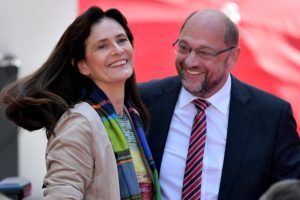
Martin Schulz (R), the leader of the German Social Democratic Party (SPD) and candidate for the German Chancellor, and his wife Inge (L) attend the SPD’s election campaign conclusion in Aachen, Germany, 23 September 2017. General elections in Germany are scheduled to be held the following day on 24 September. EPA, SASCHA STEINBACH

Εκτός αν και η κ. Μέρκελ βρει την ευκαιρία να τον θυσιάσει. Ο κ. Σόιμπλε όμως δηλώνει -και είναι- νομιμόφρων παρά τις διαφωνίες που μπορεί να έχει κατά καιρούς με την καγκελάριο. Ένας υπουργός Οικονομικών από τις τάξεις των Φιλελευθέρων θα της είναι όμως (και) στα θέματα που απασχολούν την Ελλάδα; Εξάλλου ο νυν υπουργός Οικονομικών είναι ο καταλληλότερος για να κάνει τις όποιες υποχωρήσεις στον κ. Μακρόν, αφού οι Γερμανοί του έχουν εμπιστοσύνη.

Στην -πιθανότερη- περίπτωση που παραμείνει ο πρώτος, η Ελλάδα θα έχει να αντιμετωπίσει την άκαμπτη, αλλά γνωστή στάση του. Στην δεύτερη η σκλήρυνσή της μάλλον θα πρέπει να θεωρείται πιθανή, αφού θα συνεπικουρείται και από τους -συντηρητικότερους της κ. Μέρκελ- Βαυαρούς Χριστιανοκοινωνιστές του CSU.

Θα θελήσει όμως η καγκελάριος Μέρκελ να συνασπιστεί με ένα εταίρο ο οποίος φέρεται αποφασισμένος να επιβάλει σκληρές οικονομικές απόψεις και σε ευρωπαϊκό επίπεδο, αφού απορρίπτει τις προτάσεις Μακρόν;

Για το σενάριο αυτό πάντως τα ποσοστά που προκύπτουν από τις δημοσκοπήσεις φαίνεται πως δεν αρκούν. Όπως και για το σενάριο της συνεργασίας Χριστιανοδημοκρατών- Πρασίνων. Στην περίπτωση όμως αυτή, η νέα γερμανική κυβέρνηση, ιδίως ο κ. Σόιμπλε, πιεζόμενη από τους Πράσινους θα λειάνει τις θέσεις της απέναντι στην Ελλάδα. Όμως το βαυαρικό CSU δύσκολα θα δεχόταν να συγκυβερνήσει με τους Πράσινους έστω και αν συμπροεδρεύουν του κόμματος οι λεγόμενοι ρεαλιστές (η Κάτριν Γκέρινγκ-Εκαρντ και ο Τσεμ Εζντεμιρ).

Ιδιαίτερα ευνοϊκή θα ήταν βέβαια για την Ελλάδα η ανάληψη του υπουργείου Οικονομικών από τους Πράσινους, οι οποίοι, όπως και το FDP, θα το βάλουν στο τραπέζι των διαπραγματεύσεων.

Απομένει ένα ακόμα σενάριο, αφού τόσο ο κοκκινο-κοκκινο-πράσινος συνασπισμός όπως και ο σχηματισμός κυβέρνησης υπό τους Σοσιαλδημοκράτες (SPD) με τους Φιλελεύθερους (FDP) και τους Πράσινους (Die Gruenen) αποκλείεται από τα μέχρι σήμερα δημοσκοπικά ευρήματα: το σενάριο της συνέχισης του σημερινού «μεγάλου συνασπισμού» μεταξύ Χριστιανοδημοκρατών-Σοσιαλδημοκρατών.

Και ο πιο αδιάφορος Γερμανός πολίτης θα έχει διαπιστώσει ότι κανένα από τα δύο αυτά κόμματα, ούτε καν το SPD για ψηφοθηρικούς έστω λόγους, δεν τον αποκλείει. Δεν ήταν και τόσο άσχημος λένε μάλιστα κατ΄ιδίαν υψηλόβαθμα στελέχη και των δύο κομμάτων.

Η περίπτωση αυτή μας είναι γνωστή. Η Ελλάδα θα έχει ένα ισχυρό συμπαραστάτη εντός της κυβέρνησης -αλλά και στην Ευρώπη- για την ελάφρυνση του χρέους και την χαλάρωση της πολιτικής λιτότητας και των περικοπών, ο οποίος θα αποτελεί αντίβαρο στον κ. Σόιμπλε, εάν φυσικά παραμείνει υπουργός Οικονομικών, αφού το Σοσιαλδημοκρατικό Κόμμα είναι πολύ πιθανόν να διεκδικήσει το υπουργείο του.

Αν τα πράγματα γίνουν έτσι η μεν κ. Μέρκελ θα έχει μια σοβαρή δικαιολογία να μετακινήσει τον κ. Σόιμπλε χωρίς να διακινδυνεύει και την ευρωπαϊκή της πολιτική, όπως θα συνέβαινε με το FDP, το δε SPD θα μπορέσει να επιβάλει ορισμένα μέτρα κοινωνικής δικαιοσύνης που επαγγέλλεται ώστε να μην καταποντιστεί πολιτικά. Το σενάριο αυτό μπορεί να είναι και η τελευταία επιλογή μετά από τις διαπραγματεύσεις μεταξύ των κομμάτων.

Ή και η πρώτη, ιδίως εάν το ακροδεξιό AfD έχει υψηλό ποσοστό και ως τρίτο κόμμα είναι αξιωματική αντιπολίτευση, αφού η συνέχιση της συνεργασίας των νυν εταίρων θα είναι πλέον θέμα επιτακτικής δημοκρατικής ανάγκης και έτσι θα γίνει ευκολότερα αποδεκτή από τους σοσιαλδημοκράτες εντός και εκτός του κόμματος.

Η πίεση πάντως ενός -ενδεχομένως- ισxυρού AfD, έστω και από την αντιπολίτευση, ίσως να έχει καταλυτική σημασία ως προς την στάση που θα τηρήσουν οι συντηρητικοί κυβερνητικοί εταίροι στο θέμα της Ελλάδας, αφού θα πιέζουν από δεξιά την κ. Μέρκελ, το κόμμα της οποίας θα φοβάται διαρροές προς το AfD. 24/09/2017 06:30 ΑΠΕ-ΜΠΕ, του απεσταλμένου μας Αντ.Πολυχρονάκη Βερολίνο, Germany

Πηγή: Καλύτερα ή μήπως χειρότερα; Η Ελλάδα και τα σενάρια της επόμενης μέρας των γερμανικών εκλογών

http://mignatiou.com/2017/09/kalitera-i-mipos-chirotera-i-ellada-ke-ta-senaria-tis-epomenis-meras-ton-germanikon-eklogon/

«Εξαιρέστε το Καστελόριζο από την ΑΟΖ» ήταν η παράκληση του ΥΠΕΞ και του Παπανδρέου στους Κύπριους (βίντεο)

7

Γράφει ο Δημήτρης Ι. Μανακανάτας

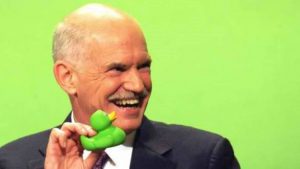
Ο κ. Γεώργιος Παπανδρέου. Φωτογραφία EPA, DAPD, ANA-MPA SEPTEMBER 24, 2017

Αν κάποιος έλεγε στον οποιοδήποτε έλληνα ότι η ελληνική κυβέρνηση έχει ζητήσει από την Κύπρο, να αυτοεξαιρεθεί από το Διεθνές Δίκαιο με σκοπό να μετατρέψει μια εθνική επιτυχία σε εθνική αποτυχία για να μην αντιδράσει η Τουρκία τότε θα απαντούσε ότι πρόκειται για φαιδρότητες.

Σίγουρα το να προσπαθήσει από μόνη της η πολιτική ηγεσία της χώρας να υπονομεύσει μια τεράστια επιτυχία για τον Ελληνισμό στο πεδίο της εξωτερικής πολιτικής μόνο και μόνο για να μην δημιουργηθεί πρόβλημα με την Τουρκία, ακούγεται τουλάχιστον προσβλητικό για την τότε ελληνική κυβέρνηση.

Ωστόσο σύμφωνα με τον πρώην υπουργού Εξωτερικών Νίκο Ρολάνδη της Κυπριακής Δημοκρατίας, το 2003 η Αθήνα ζήτησε από τη Λευκωσία να αλλάξει μια συμφωνία με την Αίγυπτο, η οποία εάν ολοκληρωνόταν όπως προβλεπόταν αρχικά, το Κάιρο θα είχε αποδεχτεί πως το Καστελόριζο έχει ΑΟΖ.

Με απλά λόγια, σύμφωνα με τα λεγόμενα του κ. Ρολάνδη η Κύπρος είχε προετοιμάσει το έδαφος για να πραγματοποιήσει η Ελλάδα μια κίνηση ματ έναντι της Τουρκίας σε σχέση με την ΑΟΖ, αλλά η τότε ηγεσία του ΥΠΕΞ με επικεφαλής τον Γιώργο Παπανδρέου δεν στάθηκε αντάξια των περιστάσεων…

Ως γνωστόν στις 17 Φεβρουαρίου του 2003, υπεγράφη συμφωνία μεταξύ της Αιγύπτου και της Κύπρου σχετικά με την εκμετάλλευση των δυνητικών κοιτασμάτων υδρογονανθράκων στην ΑΟΖ της Κύπρου. Η υπογραφή της συμφωνίας μεταξύ των δυο κρατών πραγματοποιήθηκε στο Κάιρο και για την κυπριακή πλευρά επικεφαλής ήταν ο τότε υπουργός Εμπορίου, Βιομηχανία και Τουρισμού Νίκος Ρολάνδης.

Ο κ. Ρολάνδης είχε χρηματίσει και ως υπουργός Εξωτερικών από το Μάρτιο του 1978 έως το Σεπτέμβριο του 1983 και θεωρείται ο κύριος χειριστής της ενεργειακής συμφωνίας με την Αίγυπτο. Υπενθυμίζεται ότι μετά από πολύμηνες μυστικές διαβουλεύσεις με τις αιγυπτιακές αρχές, λίγο πριν από την πτώση της κυβέρνησης του προέδρου Γλαύκου Κληρίδη, ο κ. Ρολάνδης ολοκλήρωσε τη διακρατική συμφωνία.

Ειδικότερα, η κυπριακή πλευρά εκπροσωπήθηκε από τον Νίκο Ρολάνδη, ενώ από την αιγυπτιακή πλευρά υπέγραψε ο υπουργός Εξωτερικών της χώρας Αχμέτ Μάχερ.

Η κυπριακή πλευρά με μία άκρως επιτυχημένη διαπραγματευτική τακτική κατάφερε αυτό που επεδίωκε εξ’ αρχής, δηλαδή να πείσει την Αίγυπτο να υπογράψει μία ισορροπημένη συνθήκη που δεν θα δημιουργούσε επικοινωνιακό θόρυβο που πιθανόν να έκανε την Τουρκία να αντιδράσει με τον γνωστό τρόπο της αμφισβήτησης των πάντων.

Η κυπριακή πλευρά ήταν ιδιαίτερα ευχαριστημένη από την όλη διαπραγμάτευση διότι είχε καταφέρει το Κάιρο να αποδεχθεί τη διαχωριστική γραμμή μεταξύ της κυπριακής και της αιγυπτιακής ΑΟΖ και να ακολουθεί τον κανόνα της μέσης χάραξης από τις ακτογραμμές των δύο χωρών.

Τα χωρικά ύδατα ανάμεσα στην Τουρκία και το Καστελόριζο

Η πραγματική δύναμη της διπλωματίας

Θα πρέπει να σημειωθεί πως η συγκεκριμένη πρακτική δεν είναι και τόσο αυτονόητη, διότι υπάρχει η τάση όταν το ένα κράτος διαθέτει πολύ μεγαλύτερη ακτογραμμή σε σχέση με το άλλο κράτος, όπως φυσικά συμβαίνει στην περίπτωση της Αιγύπτου με την Κύπρο, να ευνοείται το κράτος με τη μεγαλύτερη ακτογραμμή.

Έτσι, ενώ η θέση της Αιγύπτου ήταν να ακολουθηθεί ο συγκεκριμένος κανόνας και η Λευκωσία δεν φαινόταν να έχει κάποια δεδομένα για να το αποτρέψει, τελικά αυτό δεν ίσχυσε, διότι για ακόμα μια φορά αποδείχθηκε πως η πραγματική δύναμη της διπλωματίας έγκειται στην συνεχή ενημέρωση και την σωστή αποκωδικοποίηση και σύνθεση των πληροφοριών από τους χειριστές της.

Στην συγκεκριμένη περίπτωση η διπλωματική υπηρεσία της Κύπρου ενημέρωσε την κυβέρνηση, πως την ίδια περίοδο το Κάιρο διαπραγματευόταν μία αντίστοιχη συμφωνία με τη Σαουδική Αραβία για την Ερυθρά Θάλασσα. Η λεπτομέρεια που έκανε τη διαφορά ήταν πως στη συγκεκριμένη περίπτωση η ακτογραμμή της Σαουδικής Αραβίας είναι τριπλάσια από αυτήn της Αιγύπτου. Κατά συνέπεια, εάν η Αίγυπτος επέμενε στη διαπραγμάτευση με την Κύπρο, δεν μπορούσε να μη δεχθεί την ανάλογη εξέλιξη (εις βάρος της, όμως, αυτή τη φορά), διότι υπήρχε νομικό προηγούμενο σε σχέση με την διαπραγμάτευσή της με τη Σαουδική Αραβία.

Μετά την κατάλληλη επεξεργασία των νέων στοιχείων η Λευκωσία έθεσε με διπλωματικό αλλά σαφή τρόπο το ζήτημα στη σωστή του βάση στην αιγυπτιακή πλευρά, με αποτέλεσμα το Κάιρο να αποδεχτεί τη μέση χάραξη.

Με άλλα λόγια, απεφεύχθη η επανάληψη της περίπτωσης του δίπολου Μάλτας-Λιβύης, στην οποία η Βαλέτα αναγκάστηκε λόγω του μεγέθους των ακτογραμμών της Τρίπολης σε σχέση με τη δική της να μεταφερθεί η χάραξη των εκατέρωθεν ΑΟΖ στα κατά 30% περίπου βορείως από τη μέση γραμμή.

Επιπροσθέτως, η Λευκωσία, ακολουθώντας την ίδια πετυχημένη συνταγή, κατάφερε να διαπραγματευτεί με βάση τον κανόνα της μέσης γραμμής τα όρια της ΑΟΖ τόσο με το Ισραήλ όσο και με το Λίβανο.

Ωστόσο όλα τα προαναφερθέντα είναι λίγο πολύ γνωστά και ο κύριος λόγος που αναφέρθηκαν ήταν αφενός για να καταστεί σαφές ότι ο κ. Ρολάνδης είναι ένα έμπειρος πολιτικός που έχει φέρει επιτυχώς εις πέρας δύσκολα διπλωματικά εγχειρήματα και αφετέρου για να γίνει κατανοητό πως επιτυχημένο διπλωματικό σώμα, είναι εκείνο που διαθέτει ενημερωμένη, αναλυτική και συνδυαστική σκέψη σε συνδυασμό με τολμηρές κινήσεις σε ένα πλαίσιο χαμηλών τόνων.

Η πολιτική της υποχωρητικότητας

Δημιουργεί λοιπόν έντονα ερωτηματικά σχετικά με το τι ακριβώς συνέβη ώστε ο Ν. Ρολάνδης να δηλώνει δημοσίως πως η Ελλάδα έχασε μια μεγάλη ευκαιρία, φοβούμενη την αντίδραση της Τουρκίας. Σύμφωνα με τα λεγόμενα του πρώην υπουργού (σε εκπομπή στο PIK 1), η Αθήνα λίγο πριν από την επικείμενη υπογραφή της Κύπρου με την Αίγυπτο αναφορικά με την οριοθέτηση της οριογραμμής των μεταξύ τους ΑΟΖ, επέδειξε διστακτικότητα και επενέβη ζητώντας από τη Λευκωσία να μετακινήσει τη γραμμή που έχει συμφωνήσει με το Κάιρο λίγο ανατολικότερα.

Ακολουθεί το απόσπασμα με τη δήλωση του Νίκου Ρολάνδη:

Συγκεκριμένα ο κ. Ρολάνδης αναφέρει ότι η Κύπρος το 2003 είχε συμφωνήσει με την Αίγυπτο σε μία οριογραμμή η οποία εκτεινόταν ακριβώς μέχρι το σημείο που αρχίζει η ελληνική ΑΟΖ εάν συνυπολογιστεί σε αυτή το Καστελόριζο. Με απλά λόγια η Κύπρος είχε καταφέρει να πείσει την Αίγυπτο να αναγνωρίσει το Καστελόριζο ως έχων ΑΟΖ με αποτέλεσμα, εάν η συγκεκριμένη συμφωνία υπογραφόταν ως είχε, η Αίγυπτος να μην μπορούσε μετά να διαπραγματευτεί τίποτα με την Τουρκία που θα αφορούσε την ελληνική και την κυπριακή ΑΟΖ.

Μια άλλη πιο απλή αλλά ουσιαστική προσέγγιση του θέματος, δείχνει ότι η Κύπρος είχε προετοιμάσει το έδαφος για να περιφρουρήσει η Ελλάδα τα δικαιώματα της στην περιοχή, διότι στην περίπτωση που υπογραφόταν η συμφωνία η Τουρκία δεν θα μπορούσε σήμερα να προκαλεί ασύστολα στο Αιγαίο επικαλούμενη δήθεν το δίκαιο της θάλασσας. Σύμφωνα πάντα με τον Νίκο Ρολάνδη, ο οποίος επικαλείται πρακτικά συνεδριάσεων στο γραφείου του γενικού εισαγγελέα, αντιπροσωπία του ελληνικού ΥΠΕΞ «παρακάλεσε» την κυπριακή πλευρά να μην υπογράψει την οριογραμμή έως εκεί που άρχιζε η ελληνική ΑΟΖ, κατά τις προβλέψεις του Δικαίου της Θάλασσας, αλλά να μεταφέρει τη γραμμή κατά 8 ν.μ. ανατολικότερα, ήτοι 15 χιλιόμετρα περίπου, για να μην δημιουργηθούν επιπλοκές με τις γείτονες χώρες.

Με απλά λόγια η τότε ελληνική κυβέρνηση και ειδικότερα το ΥΠΕΞ ακολουθώντας την πολιτική της υποχωρητικότητας με την κίνηση της αυτή δίδει πάτημα στην Άγκυρα ώστε στην περιοχή του Καστελορίζου να δημιουργηθεί μία de facto «γκρίζα ζώνη».

Εάν κάποιος προσπαθήσει να αντιληφθεί το μέγεθος των αποκαλύψεων του κ. Ρολάνδη καταλήγει στο συμπέρασμα ότι η κυβέρνηση του Γλαύκου Κληρίδη είχε καταφέρει ήδη από το 2003, την οριοθέτηση της ΑΟΖ κατά τέτοιο τρόπο ώστε να επωφελούνταν και η Ελλάδα εφόσον, εάν η Αίγυπτος υπέγραφε την αρχική συμφωνία τότε δεν θα υπήρχε περίπτωση η Τουρκία να μπορεί να σύρει το Κάιρο αργότερα σε ατραπούς οι οποίες θα δημιουργούσαν σοβαρά θέματα σε ότι αφορούσε τα ελληνικά συμφέροντα στην περιοχή.

Η άλλη όμως δυστυχώς αρνητική διαπίστωση που προκύπτει από τα λεγόμενα του κ. Ρολάνδη είναι η έλλειψη αποφασιστικών κινήσεων της ελληνικής διπλωματίας. Η Αθήνα φοβισμένη πως η επιτυχία της Κύπρου που θα αντανακλούσε και στην ίδια – ίσως μια μεγάλη ευκαιρία που χάθηκε διότι εάν υπογραφόταν η συμφωνία η Αθήνα θα αναγκαζόταν να ενεργήσει επιτέλους ως κράτος και όχι ως …αποικία-, ουσιαστικά όπως λέει και ο θυμόσοφος λαός μας, «έβαλε τα χέρια της και έβγαλε τα μάτια της».

Η «απόσταση» της εθνικής επιτυχίας από την εθνική αποτυχία….

Ειδικότερα, με το να ζητήσει από την Κύπρο να αυτοεξαιρεθεί από το διεθνές δίκαιο ουσιαστικά οδήγησε να καταστεί επί της ουσίας «γκρίζα» μία μεγάλη περιοχή 8 περίπου ναυτικών μιλίων, η οποία εάν η Λευκωσία δεν «κατανοούσε» την «έκκληση» της Αθήνα θα ήταν τώρα κυπριακή και επιπρόσθετα η γραμμή που δυνητικά πιθανόν να διαχωρίζει την ελληνική από την κυπριακή ΑΟΖ!

Σε κάθε περίπτωση τα 15 αυτά χιλιόμετρα που «γκρίζαρε» ο Γιώργος Παπανδρέου και το επιτελείο του προ 14ετίας στην Ανατολική Μεσόγειο αντανακλούν την «απόσταση» της εθνικής επιτυχίας από την εθνική αποτυχία. Υπενθυμίζουμε ότι τα τελευταία 40 χρόνια οι ελληνικές κυβερνήσεις αποφεύγουν να κάνουν γεωτρήσεις στο Αιγαίο για να μην «ταράξουν» την Τουρκία.

Υπενθυμίζουμε ότι ο αείμνηστος Ανδρέας Παπανδρέου όταν το 1975 επί πρωθυπουργίας του αείμνηστου Κωνσταντίνου Καραμανλή είχε πει την ιστορική πλέον φράση «βυθίσατε το Χόρα», όταν το ερευνητικό σκάφος «Χόρα» είχε βγει για έρευνα σχετική με υποθαλάσσια κοιτάσματα πετρελαίου, στην ελληνική υφαλοκρηπίδα την οποία και παραβίασε.

Ο Ανδρέας Παπανδρέου με τη δήλωση του αυτή, ήθελε να υποδηλώσει την αδυναμία της τότε κυβέρνησης να απειλήσει την Τουρκία με μια δυναμική αντίδραση. Αυτό είχε ως αποτέλεσμα την επόμενη χρονιά η Άγκυρα να αναγγείλει εκ νέου την έξοδο του «Χόρα» για σεισμικές έρευνες και σε ζώνες του Αιγαίου που ανήκουν στην υφαλοκρηπίδα των ελληνικών νησιών.

Ωστόσο όταν Ανδρέας Παπανδρέου έγινε ο ίδιος πρωθυπουργός και το «Χόρα» με την νέα του ονομασία ΜΤΑ Sismik Ι το οποίο θεωρητικά είχε μετατραπεί σε ερευνητικό σκάφος γεωλογικού χαρακτήρα, εμφανίστηκε εν δράσει μεταξύ Λήμνου και Μυτιλήνης και προκάλεσε τη μεγάλη κρίση του Μαρτίου του 1987, παρότι αρχικά χειρίζεται δυναμικά το θέμα και εμπλέκει το ΝΑΤΟ σε μια πιθανή σύρραξη στο Αιγαίο, τελικά κάνει τακτική οπισθοχώρηση διακηρύσσοντας την αρχή «μη πόλεμος».

Αυτή την τακτική ακολούθησαν σε γενικές γραμμές όλες οι μετέπειτα ελληνικές κυβερνήσεις με τα γνωστά αποτελέσματα. Ελπίζουμε κάποια στιγμή οι ιθύνοντες της πολιτικής σκηνής να κατανοήσουν τη λαϊκή ρήση «τα παθήματα να γίνονται μαθήματα»…

Πηγή: «Εξαιρέστε το Καστελόριζο από την ΑΟΖ» ήταν η παράκληση του ΥΠΕΞ και του Παπανδρέου στους Κύπριους (βίντεο) http://mignatiou.com/2017/09/exereste-to-kastelorizo-apo-tin-aoz-itan-i-paraklisi-tou-ipex-tou-papandreou-stous-kiprious-vinteo/

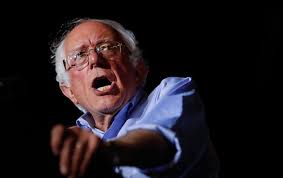
Bernie Sanders Just Gave the Progressive Foreign-Policy Speech We’ve Been Waiting For

0

The senator powerfully linked domestic and foreign policy in the context of massive global inequality.

Το μυστικό της «εφτάψυχης» Μέρκελ και η «φούσκα» Σουλτς

0
 Πώς παρά τα λάθη της η καγκελάριος φαίνεται ανίκητη ενώ ο επικεφαλής των Σοσιαλδημοκρατών μοιάζει καθηλωμένος πίσω από το CDU
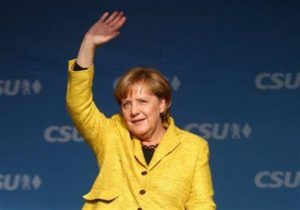
Με τις γερμανικές εκλογές σε απόσταση αναπνοής και την Ανγκελα Μέρκελ στα πρόθυρα μιας τέταρτης ιστορικής θητείας στην καγκελαρία, αναλυτές σε όλον τον κόσμο αναρωτιούνται ποιο είναι το μυστικό της επιτυχίας της. Διστακτική, συχνά απόμακρη και χωρίς ρητορικό χάρισμα, έχει κάνει πολιτικά λάθη που θα κατέστρεφαν τους περισσότερους άλλους πολιτικούς. Και όμως εκείνη φαίνεται ανίκητη.
Πριν από ενάμιση χρόνο, στο απόγειο της κρίσης των προσφύγων, μετά τις σεξουαλικές επιθέσεις από ξένους εναντίον γυναικών στον σιδηροδρομικό σταθμό της Κολωνίας, μόνο οι γενναίοι θα είχαν στοιχηματίσει στην πολιτική επιβίωση της Μέρκελ. «Αντάρτες» από το δικό της Χριστιανοδημοκρατικό Κόμμα στρίμωχναν δημοσιογράφους σε γωνίες και τους μιλούσαν για ένα επικείμενο πραξικόπημα που θα εγκαθίδρυε τον υπουργό Οικονομικών Βόλφγκανγκ Σόιμπλε ως προσωρινό καγκελάριο μέχρι να παρουσιαστεί ένα ανερχόμενο αστέρι για να οδηγήσει το κόμμα και τη χώρα πίσω στα ιδανικά του Κόνραντ Αντενάουερ και του Χέλμουτ Κολ.
 Νωρίτερα εφέτος, ο αρχικός ενθουσιασμός για τον νέο ηγέτη του Σοσιαλδημοκρατικού Κόμματος Μάρτιν Σουλτς τον οδήγησε να πιστέψει για λίγες γλυκές εβδομάδες ότι ήταν ο γερμανός Μπαράκ Ομπάμα. Ομως, έκτοτε το «φαινόμενο Σουλτς» έχει ξεφουσκώσει και το SPD φαίνεται καθηλωμένο στη δεύτερη θέση, 15 μονάδες πίσω από το CDU της Μέρκελ.
 Μόνο ένα ερώτημα ενδιαφέρει τους ειδικούς, και αυτό αφορά τη σύνθεση της νέας κυβέρνησης. Οι φιλελεύθεροι Ελεύθεροι Δημοκράτες (FDP) ή οι Πράσινοι, ή ένας συνδυασμός των δύο, θα αποκτήσουν αρκετές έδρες ώστε να μπορέσει η Μέρκελ να σχηματίσει συνασπισμό μαζί τους αντί για τον απερχόμενο «μεγάλο συνασπισμό» με το SPD;
Και αυτός είναι ένας λόγος για την επιτυχία της. Πολλοί Γερμανοί αναρωτιούνται γιατί να ψηφίσουν τον Σουλτς για καγκελάριο όταν βλέπουν το κόμμα του να έχει παίξει πιστό δεύτερο βιολί, στηρίζοντας την πολιτική της Mέρκελ όλα αυτά τα χρόνια. Ενα άλλο ατού της Μέρκελ είναι η μετριοπάθειά της.
Στο σύστημα της αναλογικής εκπροσώπησης της Γερμανίας οι κυβερνήσεις συνασπισμού καθίστανται αναπόφευκτες. Και δεδομένου ότι η άκρα Αριστερά – που ήδη εκπροσωπείται στην Μπούντεσταγκ από το πρώην κομμουνιστικό κόμμα Die Linke – και η ακροδεξιά Εναλλακτική για τη Γερμανία (AfD), που δεν έχει μπει στη Βουλή, αλλά ελπίζει να κερδίσει περίπου το 10%, δεν πρόκειται να συμμετάσχουν σε κυβέρνηση, αυτό καθιστά τα κόμματα της Κεντροδεξιάς και της Κεντροαριστεράς σχεδόν αδιαίρετα. Η Μέρκελ, γνωστή ως Μούτι (μαμά), είναι τόσο αποδεκτή ώστε κανένα από τα άλλα κόμματα δεν έχει πρόβλημα να σχηματίσει συνασπισμό μαζί της. Το SPD και το FDP το έχουν ήδη κάνει, και οι Πράσινοι δεν θα πουν όχι στην ευκαιρία της συγκυβέρνησης.
 Αλλά υπάρχει κάτι περισσότερο από αυτό. Κατά πολλούς, η μαγική φόρμουλα της επιτυχίας της Μέρκελ είναι ότι η μετριοπάθεια της επιτρέπει να «κλέβει» με ευκολία δημοφιλείς ιδέες της αντιπολίτευσης στερώντας από τους αντιπάλους της κρίσιμα αιτήματα και επιχειρήματα για να τη χτυπούν.
 Η Μέρκελ το έκανε αυτό όταν εγκατέλειψε την ατομική ενέργεια μετά την καταστροφή της Φουκουσίμα, αφήνοντας τους Πράσινους χωρίς «σημαία», και όταν εισήγαγε έναν κατώτατο μισθό, πάγιο αίτημα των Σοσιαλδημοκρατών. Μόλις πρόσφατα έδωσε μια άλλη αριστοτεχνική τέτοια παράσταση, όταν εγκατέλειψε την αντίθεσή της στον γάμο ομοφυλοφίλων.
 Για χρόνια η αντιπολίτευση στον «γάμο για όλους» υπήρξε χαρακτηριστικό γνώρισμα του CDU και του βαυαρικού αδελφού κόμματος, της CSU (Χριστιανοκοινωνικής Ενωσης). Προκειμένου να διατηρηθεί ο μεγάλος συνασπισμός, το SPD είχε καταστείλει όλες τις απόπειρες των Πρασίνων να ψηφίσουν επί του θέματος στο κοινοβούλιο. Αλλά όταν ο ηγέτης του FDP, σε μια προσπάθεια να κερδίσει την ψήφο των ομοφυλοφίλων, ανακοίνωσε ότι δεν θα εισέλθει σε κανέναν συνασπισμό αν δεν υποστηρίζει τον γάμο για όλους, η Μέρκελ άφησε να γίνει γνωστό – στη διάρκεια συνέντευξης σε γυναικείο περιοδικό, και χωρίς προηγούμενες διαβουλεύσεις με το κόμμα της – ότι θα ήταν υπέρ μιας ψηφοφορίας στο κοινοβούλιο στην οποία οι βουλευτές θα ψήφιζαν σύμφωνα με τη συνείδησή τους και όχι με βάση την κομματική γραμμή.
 Μέσα σε μία εβδομάδα ο γάμος ομοφύλων ζευγαριών έγινε νόμιμος στη Γερμανία. Η ίδια η Μέρκελ ψήφισε εναντίον του νόμου, δείχνοντας στη συντηρητική πτέρυγα του CDU ότι η ίδια είναι στο πλευρό τους, αν και είπε σε μια συνέντευξη ότι είναι υπερήφανη που επέτρεψε την ψηφοφορία καθώς είδε ότι «η πλειοψηφία μετατοπίστηκε».
 Και αυτό είναι το πραγματικό μυστικό της: η Μέρκελ είναι πάντα πιστή στην πλειοψηφία. Είναι κάτι που η εκστρατεία της δεν το αναγνωρίζει απλώς, αλλά το γιορτάζει. Το εκλογικό σύνθημα της Μέρκελ είναι: Για μια Γερμανία στην οποία ζούμε καλά και νιώθουμε καλά (Für ein Deutschland,in dem wir gut und gerne leben). Η εκστρατεία της πήρε τα αρχικά από αυτό το σύνθημα και δημιούργησε το hashtag #fedidwgugl. Υπάρχει, για παράδειγμα, ένα «σπίτι fedidwgugl» στο Βερολίνο, όπου ψηφοφόροι «βιώνουν» το πρόγραμμα του κόμματος μέσω βιντεοπαιχνιδιών και ούτω καθεξής.
Για τους επικριτές της Μέρκελ, αυτό το hashtag είναι απόδειξη κυνικής ιδιοφυΐας, η μείωση της πολιτικής σε μια λέξη χωρίς νόημα, «σαν να μην αντιμετωπίζει η Γερμανία και η Δύση απειλές από τον Πούτιν και την ισλαμική τρομοκρατία μέχρι το Dieselgate, που έχει εκθέσει τα ψέματα πίσω από το Vorsprung durch Technik και την ευπάθεια της βιομηχανικής βάσης της Γερμανίας. Σαν η μαζική μετανάστευση από τη μία πλευρά και η άνοδος των λαϊκιστών από την άλλη να μην απειλούν την εποχή της καλοπέρασης που εκπροσωπούσε η Μέρκελ και που συνοψίζεται τόσο καθαρά στο fedidwgugl.
Και λέω εκπροσωπούσε, επειδή είναι προφανές ότι η Γερμανία χρειάζεται μια αλλαγή και ότι η Μέρκελ είναι στην εξουσία πάρα πολύ καιρό για να ηγηθεί αυτής της αλλαγής. Αλλά ποιος θα μπορούσε να πάρει τη θέση της; Το πραγματικά τρομακτικό πράγμα με τη Μέρκελ είναι ότι δεν υπάρχει κανένας διάδοχος στον ορίζοντα» σχολιάζει ο Αλαν Πόζενερ στη «Welt».
“Το Βήμα”

Kurdistan and Catalonia are voting on independence. Welcome to the age of secession.

0

By Ryan Griffiths September 23 at 7:00 AM The Washington Post

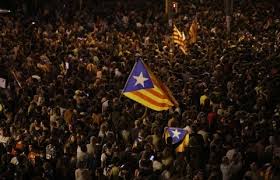
A crowd of protesters gather outside the Catalan region’s economy ministry building in Barcelona on Sept. 20. (Manu Fernandez/AP)

Controversial referendums on independence are scheduled in Iraqi Kurdistan on Sept. 25 and the Spanish region of Catalonia on Oct. 1. Both referendums place these secessionist regions on a collision course with their central governments and the international community, increasing the probability of conflict. What is the purpose of these referendums, and what is the strategy behind them?

Secession occurs when a region within a state breaks away to form its own sovereign state. There were 55 active secessionist movements around the world as of 2011, and an average of 52 movements per year since 1945. Most have failed to achieve their goal of independence, sometimes coming to an agreement with their central government or simply fading away. Roughly a third have resulted in violence. Indeed, some claim that secessionism is the chief cause of violence in the world today.

As I argue in my recent book, we are truly living in the Age of Secession.

Strategy of secession

The Kurds and the Catalans are pursuing the same overall strategy of secession. Strategically, all secessionist movements are the same: they need to make a change by forcing others to recognize them as independent states. To do so, they engage in “compellence,” getting an actor to do something they would not otherwise do. These tactics vary, from the deployment of violence to civil resistance to electoral competition. Seen from a wide angle, Catalonia and Iraqi Kurdistan are not unique. They are using the same strategic playbook and employing the same tactics as other movements of their kind.

A secessionist movement can take two approaches to achieving independence. The first is to target their central government, the chief obstacle to any movement for achieving independence. If the government permits the independence, as Serbia did for Montenegro in 2006, then the path to sovereign statehood is almost certainly guaranteed.

The second approach is essentially an end-run. Here, the movement goes around the central government to bring the international community into the game. As in South Sudan, the international community can either pressure the central government to permit the independence or, as in Kosovo, it can bypass the central government entirely to recognize the secessionist region. Most secessionist movements use both approaches.

How secessionist groups learn and weigh risky behavior

Secessionist movements are surprisingly aware of the strategic playing field. In interviews with more than a dozen secessionist movements, I have found that they are well networked and learn from one another. The Catalans sent observers to Scotland in 2014 to learn how to run a referendum campaign. The High Representative of the Kurdish Regional Government (KRG) to the United Kingdom used to meet regularly with their counterpart in the Catalan and Flemish movements to discuss best practices.

However, this does not guarantee secessionists will always prevail or even make the right tactical choices. Sovereign states are generally — though not always — opposed to secession because of its disruptive potential. Forcing them to negotiate requires confrontational and risky behavior that can alienate supporters or result in violence.

Such behavior is quite evident in both the Catalan and Kurdish cases. Should they be held, both referendums will increase tension with their central governments and the international community, raise the risk of conflict and potentially backfire. But strategic logic still motivates each group’s behavior.

Catalan secessionism

A secessionist region like Catalonia is shaped predominantly by the democratic institutions of the Spanish state. The chief compellence tactic is electoral capture — gaining control of the Catalan parliament and regional government (the Generalitat) to enact legislation that advances the cause of secession and forces the Spanish state to negotiate.

The upcoming referendum is intended to force the Spanish government to respond. Ignoring the referendum is risky. Since many “no” voters are expected to stay home, a “yes” vote could likely win. Moreover, the Catalan secessionists have promised to declare independence within 48 hours should they win the referendum. Sooner or later, the Spanish government will have to respond.

Obstructing the referendum or arresting participants — as the government has threatened to do — could make matters worse, possibly spurring unrest, civil disobedience and financial market uncertainty. Catalan secessionist leaders think at some point the international community, particularly the European Union, will be forced to apply pressure on the Spanish government to negotiate. An overreaction or crackdown by the government would only call further attention to the problem and invite external pressure.

Kurdish secessionism

Iraqi Kurdistan is somewhat different. The democratic institutions of the Iraqi state are weaker, the region is beset with violent conflict and the prospect of Kurdish independence is a concern for neighbors like Turkey and Iran, which possess their own Kurdish minorities. In a movement such as this, compellence tactics can include electoral capture, civil resistance and the use of violence.

The international community plays a particularly large role in this case, given the politics of the region. The United States does not currently support the Kurdish referendum, saying that it is ill-timed and creates a distraction from the war with the Islamic State. But the Kurdish leadership thinks that the conflict gives them leverage to force the issue now when they are an important element of the war effort, rather than later when their demands will be easier to ignore.

Both movements are using strategic logic designed to compel key actors to make a change. It could work, but it could also backfire and result in violence.

Ryan Griffiths is a senior lecturer at the University of Sydney and the author of “Age of Secession: The International and Domestic Determinants of State Birth,” (Cambridge University Press, 2016).

https://www.washingtonpost.com/news/monkey-cage/wp/2017/09/23/kurdistan-and-catalonia-are-voting-on-independence-heres-what-we-know-about-secessionist-groups/?utm_term=.2b354da2f07a&wpisrc=nl_cage&wpmm=1

INTELLIGENCE ESTIMATE AND FORECAST: THE SYRIAN THEATER

0

Sep 23, 2017 – Press ISW

The combined research teams of the Institute for the Study of War (ISW) and AEI’s Critical Threats Project (CTP) authored this report.

EXECUTIVE SUMMARY

The United States will continue to risk its vital strategic interests in the Middle East unless it changes its policies in Syria and Iraq. President Donald Trump and his administration inherited a weakened U.S. position, with Russia imposing constraints on American freedom of action and options. The Trump administration has taken initial steps to advance U.S. prestige in the region by reassuring America’s traditional allies and acting more firmly against its enemies and adversaries. The tactical tasks of recapturing Mosul and liberating Raqqa from the Islamic State of Iraq and al Sham (ISIS) are complete and nearly complete, respectively. Nevertheless, its efforts to define and execute policies that secure America’s vital interests are moving more slowly than those of America’s enemies, adversaries, and spoilers who are more agile than the U.S. These actors include Russia, Iran and its proxies, Turkey, ISIS, al Qaeda, and some Kurdish elements, who are pursuing goals that threaten American objectives and are exploiting the current situation to make strategic gains as the U.S. champions short-term gains and tactical success.

The Trump administration has not yet broken with its predecessor’s approach to the Middle East, particularly in Syria and Iraq. It has prioritized conducting counterterrorism operations against ISIS to recapture ISIS’s territory. American military forces have accelerated this campaign by relying on the most readily available local forces, including Kurdish forces in northern Syria that are aligned with terrorists targeting Turkey. The administration has eschewed a U.S. role in addressing the regional war’s underlying drivers, including the role of the Bashar al Assad regime in Syria and sectarianism in Iraq stoked by Iran. The main effort of the counter-ISIS fight must become preventing the organization from reconstituting and its rivals from inheriting its leadership of the Iraqi and global jihad. ISIS re-emerged from a defeated al Qaeda in Iraq and controlled Iraqi cities only three years after American troops departed in 2011.

The Trump administration has also acquiesced to an expanding Russian and Iranian ground campaign in Syria and a growing role for Iran inside Iraq. Its diplomatic efforts to end the wars have focused on the most expedient political outcomes shaped by dominant local and regional actors. It does not appear committed to shaping a long-term stabilization congruent with a wider set of American regional interests. The administration has expressed that it will confront and roll back Iran’s destabilizing campaign but has neither set the conditions for such a campaign nor undertaken sufficient policy action that will set conditions for such an outcome.

The Russo-Iranian coalition is exploiting the continuity in American strategy from President Obama to President Trump’s administration. It is now strengthening its grip in Syria while enabling the Assad regime to extend its positions. Vladimir Putin’s dependence on Iran for securing Russia’s most important interests in Syria – its airbase at Latakia and naval base at Tartous – will continue to ensure that he will remain intertwined in a deepening partnership with Tehran. The “de-escalation” agreements brokered in Syria will allow Russia to remain in the driver’s seat for shaping the overall political settlement. These agreements will also fail to prevent Iranian expansionism. Russian and Iran share the ambition to weaken and ultimately expel the U.S. from the region. They are continuing to position themselves to make that outcome a reality.

The Salafi-jihadist movement remains a long-term threat to the United States, in part because of the time and space the U.S. has ceded to al Qaeda and ISIS by remaining fixated on terrain. ISIS has lost territory but is not defeated. The anti-ISIS coalition is actually setting conditions that will enable ISIS to resurge, by leaving communities in Syria and Iraq vulnerable and core governance and political issues unresolved. Al Qaeda, a more serious long-term threat to the U.S., has used its freedom of operation to defeat competitors within the broader anti-Assad opposition. America’s growing alignment with the pro-regime coalition in Syria benefits al Qaeda by legitimizing its narrative, incentivizing al Qaeda to reaffirm Syria as its priority theater globally. An escalating regional conflict between Saudi Arabia and Iran also threatens to empower Salafi-jihadists and embolden Tehran by fueling the sectarian war from which both benefit.

The Iraqi Kurdish community’s planned referendum on independence has created conditions and competition that could result in increased violence and further regional instability. The referendum in Iraq will fuel further division within the broader ethnic Kurdish community that extends into Syria, Turkey, and Iran. Kurdish presence and control over non-Kurdish communities will likely result in Kurd-Arab tensions and potential conflict. Turkey’s ongoing escalation against the PKK and Iran’s increasingly aggressive campaign against the referendum will likely create additional flashpoints. Salafi-jihadists will be poised to exploit the ensuing violence and instability. This report does not discuss regional actors’ approaches to the Iraqi Kurdish referendum in depth, but it offers important context for the regional geo-political trends with which the referendum will take place.

American national security requires that the Trump administration pursue a strategy that helps constrain, contain, and ultimately roll back Russia and Iran; defeat Salafi-jihadists in ways that prevent their reconstitution; defend strategic allies and bolster partners; and facilitate the emergence of independent, representative, and unitary states in Syria and Iraq. The removal of the Assad regime remains a necessary condition to achieve a desirable outcome in Syria. The U.S. must apply meaningful pressure against the Assad-Russia-Iran axis and regain leverage over it rather than accommodate it. The U.S. is now accommodating its adversaries by signing onto various agreements that allow it to consolidate control. This axis not only destabilizes the region and perpetuates conflict, but it also fuels radicalization and strengthens jihadist forces through its policies. It is making it increasingly difficult for the U.S. to protect its own security and interests.