Αρχική Blog Σελίδα 2911

Death of the Nile  

0

The world’s longest river is sick –
and getting sicker

Booming populations have dirtied and drained it, while climate change threatens to cut its flow.

And some fear that competition over its dwindling waters could trigger a regional conflict.

The rains

The rot starts at the source.

For as long as the Nile has flowed, Ethiopia’s rains have made up the great bulk – over 80% – of its waters.

Fat droplets pour down from July to September, not stopping until the roads have been churned into impassable bogs.

Small inland seas emerge almost overnight, slicing the Amhara Plateau into a maze of soggy islets.
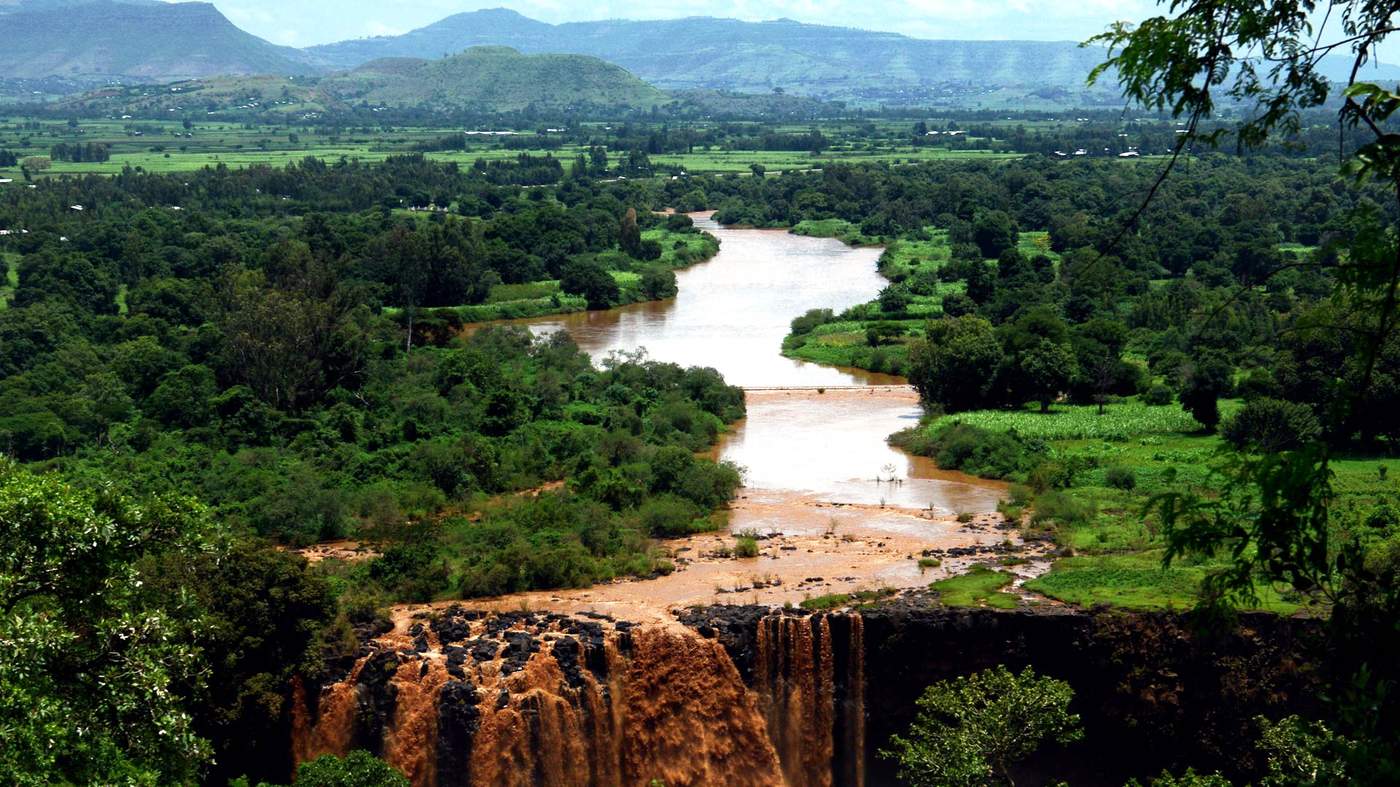
Gushing out of a forest just south of Lake Tana, the Blue Nile greedily soaks up this bounty, quickly swelling from a stream to a torrent.
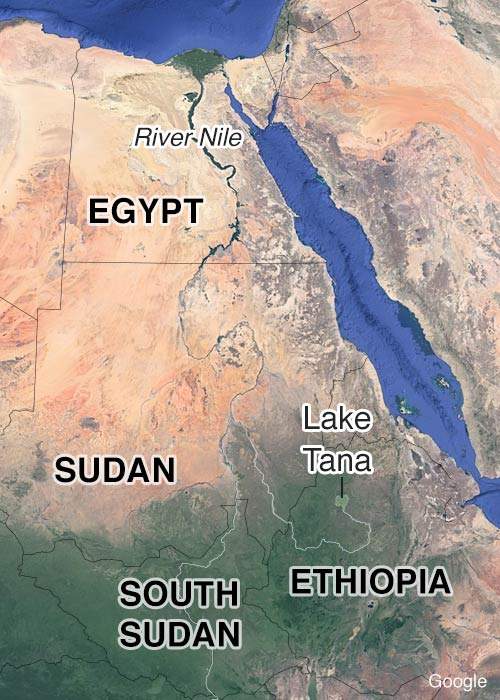
Though slightly longer, the White Nile, which originates in East Africa’s Lake Victoria and merges with the Ethiopian branch at Khartoum, carries a fraction of the volume.

But these rains are not falling as they used to. And that is potentially catastrophic for the entire basin.

The Meher, the long summer wet season, is arriving late, and the shorter rains earlier in the year sometimes not at all.

“It’s so inconsistent now. Sometimes stronger, sometimes lighter, but always different,” said Lakemariam Yohannes Worku, a lecturer and climate researcher at Arba Minch University.

When it does rain, the storms are often fiercer, washing over a billion tons of Ethiopian sediment into the Nile each year, which clogs dams and deprives farmers of much-needed soil nutrients.

Population growth has fuelled this phenomenon, as expanding families fell trees to free up more space and provide construction materials. Monster floods have also become much more common.

As crops wither and food prices soar, many rural communities, who have historically relied on steady rains rather than rivers to irrigate their land, have been pitched even deeper into desperate poverty.
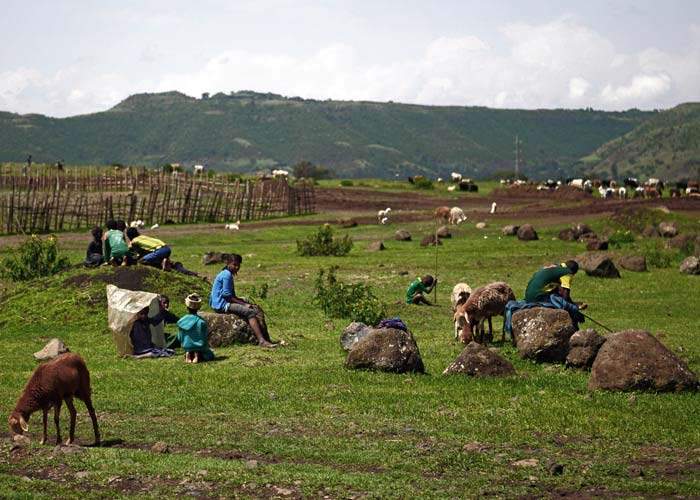
Some villagers have given up on agriculture altogether, trying their luck instead in Bahir Dar, the regional hub – or nine hours’ bus drive away in Addis Ababa, Ethiopia’s booming capital.

Most have simply struggled on, subsisting on reduced rations while hoping against hope that the rains will normalize. Church attendance has increased, a priest told me.

For a small minority, however, enough is enough. Even in poor, out-of-the-way hamlets with no TVs or electricity, many have heard of the possibility of seeking their fortunes in Europe.

After dropping out of school to help his family work their battered farm and selling his prized bicycle to buy new seeds, Getish Adamu, a rake thin 17-year-old from Dangla, near the Blue Nile’s source, is among those considering chancing the perilous desert paths to the Mediterranean.
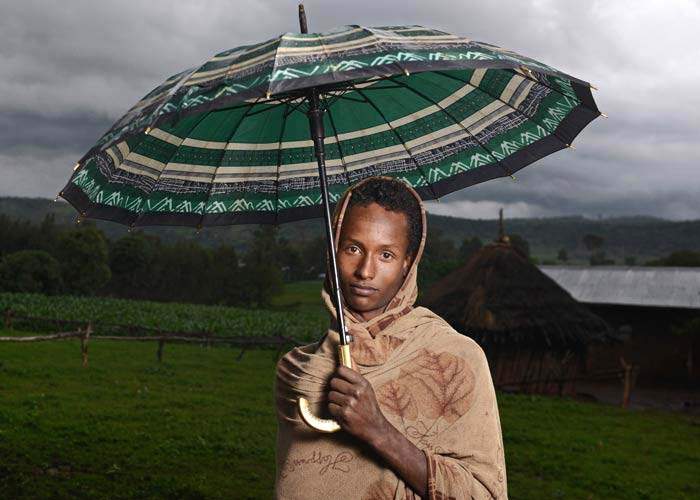
Getish Adamu is considering his future

Getish Adamu is considering his future

“Myself, I am undecided. I would like to stay with my family,” he said. “But if these rains go on like this, I will not be able to stay.” If the Nile rains continue to ebb and flow, nor will many others.

Dam conflict

The further the Nile goes, the more sordid its problems become.

Thirty miles after leaving Lake Tana, the river plunges over the majestic Blue Nile falls, and then enters a long web of deep cliff-lined gorges.
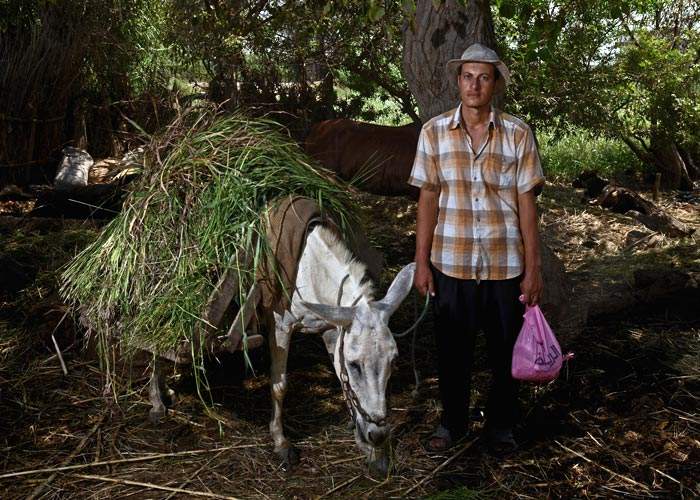
Gathering strength with each arriving tributary, it cascades down 1,500 metres from the highlands to the semi-arid plains below. It is the most beautiful, most isolated and, perhaps, the most troubled portion of the entire basin.

That is because Ethiopia’s sparsely-populated wild west is mired in squabbles both local and international.

From the controversial construction of Africa’s largest dam in the rugged hinterland just shy of the Sudanese border, to Addis Ababa’s alleged displacement of tens of thousands of villagers in order to lease their prime Nile-side land to foreign agribusinesses, an uneasy pall hangs over the entire area.

Just reporting there means navigating a complicated minefield of checkpoints, informants, and terrified interviewees.

“You have to understand there are things we cannot talk about,” said Samuel, a restaurant chef in Injibera, blanching noticeably when asked about nearby land grabs. “These are the questions that get you into trouble.”
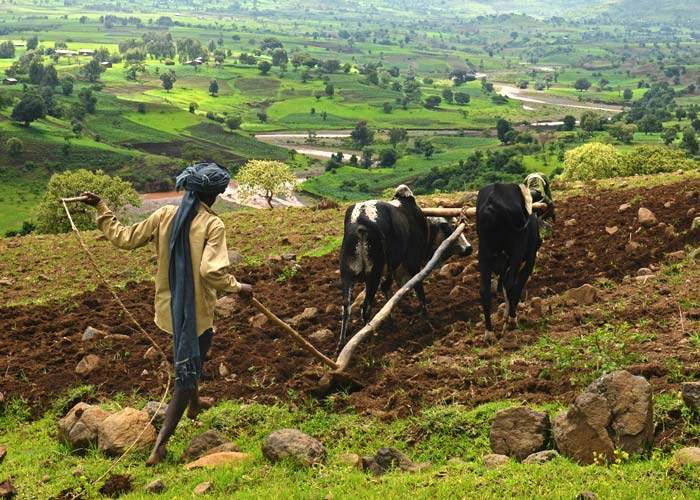
He was not exaggerating. Days later, security forces raided my hotel room, taking only my reporting pads (and some of my Snickers stash). On another occasion, I was turned back at a police roadstop near Chagni while trying to reach some of the largest chunks of confiscated farmland.

Of all these hot-button issues, it is the dam – the Grand Ethiopian Renaissance Dam (GERD) – that has really stoked the region’s hopes and fears.
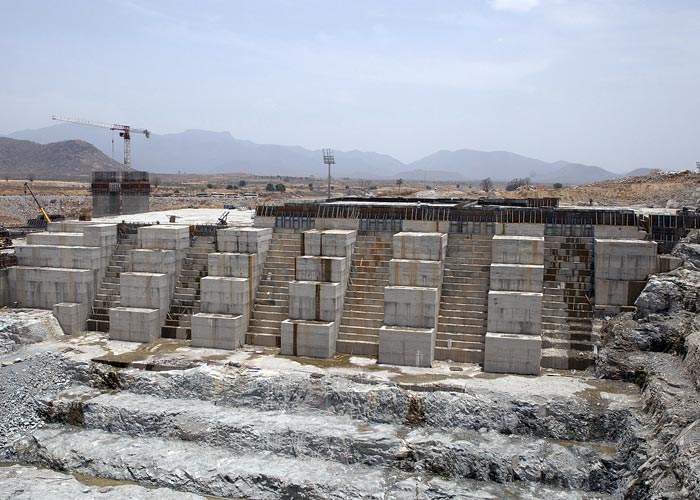
GERD under construction in 2015(Getty Images)

GERD under construction in 2015
(Getty Images)

At a little over a mile long and with a generating capacity of roughly 7GW, the Nile megastructure is seen by many Ethiopians as a tangible illustration of their country’s emergence after the humiliation of the famines in the 1980s and 90s.

Roadside billboards superimposed with politicians’ faces tout its potential to bring electricity to millions; schoolchildren sing about it. “This is our destiny,” some of them chant. Across western Ethiopia, many residents excitedly await their new neighbour.
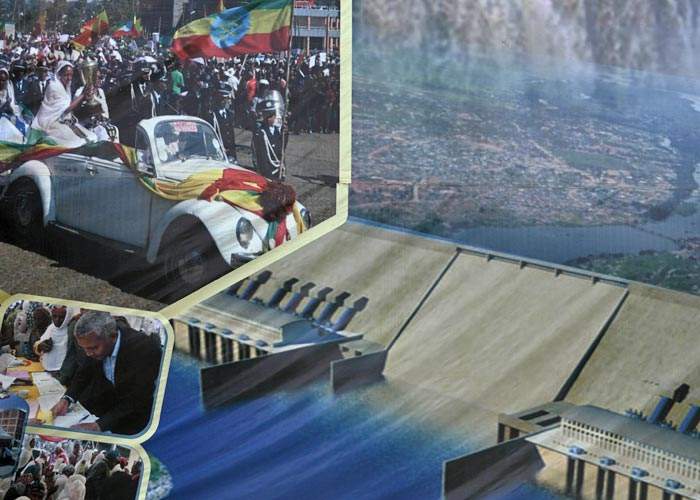
But to downstream Egypt, which is mostly desert, receives little rain, and consequently relies on the river for more than 95% of its water, the possibility that GERD might cut the Nile’s flow is perceived as an existential crisis.

A 1959 treaty apportioned all Nile waters to Egypt and Sudan, though Ethiopia and the other upstream riverine states dispute its legitimacy, saying it was drawn up in the colonial era when most African countries had little say in their own affairs.

There have been threats of war from Cairo, and fierce sabre-rattling on both sides. If there is ever a regional conflagration over water, this stunning, almost impossibly green stretch of the river will likely be at the heart of it.

“It all looks so peaceful, no?” a naval officer called Moses told me over beers at a shoreline Bahir Dar bar. “But we are all aware that we are on the frontline. This is where the water is, the dam, the best land.”

Despite losing access to the sea when Eritrea broke away in 1991, Ethiopia has maintained a naval facility on Lake Tana. “We might need it in the future,” Moses added, cryptically.

The sprawling cities

Khartoum, where the Blue and White Niles meet

And then there is the human impact.

For Nile travellers, Khartoum has always marked both a necessary and symbolic port of call.

Perched at the point where the Blue and White Niles meet, it is only here that the river finally takes on its broad, sleepy, familiar form. After more than a thousand miles of separation, it is only at this juncture that one can readily identify each branch’s distinctive features.

The Blue Nile, swollen and coloured brown by the Ethiopian rains, roars into the confluence, pushing back for miles its insipid and slightly yellow counterpart. At other times of the year (during the dry season), the two run alongside one another in what some poetic locals refer to as the “longest kiss in history”.

But the reality no longer matches the romance. Because it is also here, in its first meeting with a major metropolis, that the Nile’s water quality begins to falter.

Pummelled with sewage almost from the moment it enters the city, it is in Khartoum that the river receives a rude taster of what soaring population growth will mean for its health.

Egypt’s numbers have more than quadrupled since 1960; Ethiopia is adding roughly 2.5 million new people a year. The basin’s total population is on track to double to 500 million by 2050.

As governments struggle to service their new citizens’ needs, the Nile is soaking up more and more of the shortfall.

“We’ve always treated the river badly, we’ve always assumed it was big enough,” said Youssef Abugroun, an engineer and part-time fisherman, whose regular evening sessions now net him around 10% of his catch a decade ago. “But maybe we’re just too many for that now.”

For the most part, Khartoum’s problems mirror those of other booming Nile cities. The municipal wastewater network has barely grown even as the Sudanese capital’s boundaries have massively expanded over the past few decades.

With inadequate rubbish disposal facilities, factories and businesses have taken matters into their own hands, dumping everything from toxic run-off from nearby munitions plants, to unwanted exotic animal parts from the downtown ivory market, into the muddy, chemical-tainted shallows.

But in Sudan, a fierce crackdown on civil society has compounded the crisis. In 2014, the state jailed the leaders of a consumer protection group after they pushed it too hard. Fearful of suffering a similar fate, the country’s environmentalists have had to temper their pursuit of the worst polluters.

“We do advocacy, sometimes we go to court against government actions,” said Mutasim Bashir Nimir of the Sudanese Environment Conservation Society (SECS),when we met at his organisation’s modest office in south Khartoum. “But we need to balance. We try to survive.”

The encroaching sands

All this before the desert has its say.

Meandering further north, through the Sahara, the Nile settles into a lazy, somnolent rhythm.

It drifts past the Pyramids of Meroe, which stand battered by sandstorms and almost unvisited by tourists, and then on to the Merowe dam. Soon after the fourth cataract, it reaches Karima, supposedly the hottest town on the river.

Working in conditions that are almost calculated to kill any crop, farmers here have learnt to cope with whatever man or nature throws at them.

When the mercury tops 45 C, as it often does by noon, they cultivate their fruit and vegetable plots, most of which survive under thick tree canopies that residents have planted up for this purpose.

When the wobbly power supply cuts out, which frequently happens – especially since the turbines of the Roseires and Sennar dams became stuffed up with Ethiopia’s Nile sediment – they turn to diesel generators to fuel their water pumps.

For every problem, they’ve always found a solution. Until now.

Investment in new technology is helping combat the desert advance 

Investment in new technology is helping combat the desert advance

That is because the desert is eating into the narrow – sometimes only 150 metre-wide – farmable strip along the Nile at an unprecedented pace. The sands are advancing day and night, and the traditional preventative measures, like planting deep-rooted mesquite trees or stringing up fences of yellowing palm leaves around fields, are no longer helping.

Trapped between the devilish dunes and the big blue river, farms are being swallowed whole.

“If they brought the map of the area to the minister of the environment, he wouldn’t recognize anything,” said Osman Abdul Moati, only half-joking, as he showed off the billowing sandbanks that threaten to engulf his wheat fields in the shadow of the holy Jebel Barkal mountain, on Karima’s edge. “The productive land is vanishing.”

Osman Abdul Moati

Osman Abdul Moati

A lot of this appears to be due to climate change, and it is happening up and down the Nile valley.

The desert has marched 120km into the scrubland to the south of Khartoum over the past 30 years, the UN Environment Programme says. Temperatures, too, are hitting outrageous new highs, increasing evaporation from the river.

But in northern Sudan, the situation has reached breaking point in large part because many young farmers, whose labour is needed to keep the desert at bay, have been lured away by the promise of easy riches at nearby gold mines.

In their stead, some landowners have taken on migrants from Ethiopia, Eritrea and the troubled Sudanese region of Darfur, all looking to earn a little additional cash as they make their way north, but others have simply ditched tools and relocated to the cities. This is deeply problematic for a poor country that already shells out money it can ill-afford on wheat imports.

As with Ethiopia’s long-suffering hill farmers, those who have battled on are questioning if it is still worth it. “In the past, summer was summer, and winter was winter, but now everything’s mixed up,” said Awad Hawran, who grows mangoes, sugar cane, dates, and watermelons on a one-and-a-half acre plot aside the Nile.

“It’s hard to continue farming when even the desert and weather are against you.”

Poisoned Sea

So what happens now? Might the Nile’s sorry state one day lead to war?

By the time the river reaches Cairo, it is utterly filthy.

The banks are laced with rubbish, and the water is gloopy and often gleaming with toxins. Already, farmers are complaining of water shortages in the northern Delta, as the Nile’s increasingly meagre flow struggles to filter through clogged-up irrigation canals.

To officials staring out from Cairo’s riverside ministries, it is a grim, in-your-face illustration of their country’s precarious water future. “The Nile is everything to us – what we drink, what we eat,” said Ali Menoufi, from the Ministry of Water Resources. “It would be a disaster if anything happened to it.”

The rhetoric and tenor of Nile basin relations over the past few years have reflected the high stakes.

A politician in a previous Egyptian administration called for a strike on Ethiopia’s prized dam in 2013, while state-owned media in Addis Ababa has not been shy about ratcheting up tensions in response.

As GERD has neared completion, authorities in Cairo have bolstered their strategic capabilities, acquiring two French Mistral long range-strike warships in a move that analysts believe is at least partly calculated to send a message to their southern rival.

“All options are on the table,” said Ahmed Abu Zeid, the foreign ministry spokesman and a former Nile talks negotiator, when asked whether military action remains an option.

History suggests that the Nile basin states are unlikely to come to blows over the river any time soon. Transboundary water disputes have a strong record of peaceful resolution, and there are indications that Egypt is reconciling itself to the dam’s inevitability.

However, Ethiopia’s intense secretiveness over GERD’s ramifications remains a stumbling block, as do the negotiations over how long it will take to fill the dam’s enormous reservoir.

And the war of words continues to play out in some unsavoury ways.

Ethiopian Oromo refugees in Egypt report increased harassment whenever GERD hits the news. Some Ethiopian monasteries, including Lake Tana’s island churches, which have traditionally enjoyed close ties with their Coptic Orthodox brethren, have broken off relations, sending Egyptian monks home.

At a time when Sudan is leasing millions of acres of arable Nile-side land to Gulf Arab agribusinesses – at least 2.5 million to the UAE, there are myriad potential banana skins on the road ahead.

“If you think about it. We’re growing and the river’s not,” said Gebremichael Mengistu, an Ethiopian university student I met in Bahir Dar, ably summing up the source of the tension. “It was always going to come to this.”

But there is still enough river for a fittingly bleak end.

For the fishermen who ply their trade around Rosetta, where the western branch seeps into the Mediterranean, the Nile’s shabby state has proven particularly disastrous.

Much of their river catch has died off, and what they do hook looks so unpalatable that they usually won’t eat it. The Nile’s final stretch is so poisonous that even out on the open sea, around the river mouth, few species can survive, fishermen say.

“We worshipped the river, but now we want nothing to do with it,” said Khamees Khalla, untangling his nets steps from the fort where the Rosetta Stone, the key to deciphering hieroglyphics, was found. “We all have the same tactic – get as far away from the river as possible.”

Battered by challenging fishing conditions – and by increased competition as many beleaguered coastal farmers try their hand at sea – some trawlermen have turned to crime.
Twice, Mohammed, a Rosetta-based fisherman, has ferried migrants and refugees part of the way to Europe, and twice he has almost been caught. But with the river no longer the cash cow it once was and people from other struggling parts of the Nile basin willing to pay much more than he earns fishing for safe passage, he insists he is not deterred.

“I would prefer to make my living from the Nile, like my father, like my father’s father, but that’s just not possible any more,” he said.

http://www.bbc.co.uk/news/resources/idt-sh/death_of_the_nile

Why Doesn’t the U.S. Support Kurdish Independence?

0

The Kurds are one of Washington’s closest and most reliable allies in the Middle East.

An Iraqi soldier takes down a Kurdish flag in Kirkuk
An Iraqi soldier takes down a Kurdish flag in KirkukReuters

After World War I, the Kurds came tantalizingly close to getting an independent state. Nearly a century later, they are no closer to an independent homeland.

There are many reasons for this: regional instability; suppression of the Kurds, most dramatically in Turkey and Saddam Hussein’s Iraq; vehement opposition to a Kurdish state; infighting among Kurds; and, despite some prominent Western supporters, no viable advocate for Kurdish statehood. These reasons were on display this week as Iraqi forces took control of Kirkuk, the disputed oil-rich city that Kurds see as their Jerusalem. Kurdish fighters had controlled the city since 2014, when Iraqi forces fled the area in the face of an ISIS onslaught. What made the situation even more precarious was last month’s referendum, in which an overwhelming number of Kurds voted for an independent homeland in what is now Iraqi Kurdistan. The referendum was also conducted in three areas with significant Kurdish populations, including Kirkuk, that are deemed disputed areas by the 2005 Iraqi constitution. That document was approved in most of Iraq by wide margins, but in Iraqi Kurdistan more than 98 percent of voters endorsed it.

The aftermath of this vote and the seizure of Kirkuk is playing out in a predictable fashion—finger-pointing among the Kurds, an attempt at neutrality by the United States, decisive action by Iran, and a flexing of muscles by the Iraqi state—but it also raises two questions: Why wasn’t the U.S. able to persuade one of its most reliable allies in the region to postpone the referendum? And why doesn’t Washington support Kurdish independence outright?

“There is no ambiguity on what the U.S. position was on this issue. The United States has been telling the Kurds and telling [Kurdish President] Masoud [Barzani], and telling Masrour [Barzani, his heir apparent] since last spring not to proceed with this because this would be not good for Kurdistan, not good for Iraq, and would play into the hands of the hardliners and the hands of the Iranians,” said Stuart Jones, the former ambassador to Iraq, now at the Cohen Group. “And I think that’s what we’re seeing.”

Barzani’s call for a referendum has been called a miscalculation, but the Kurdish leader has long maintained that as long as Iraqi Kurds are part of the state of Iraq, they will not get a square deal. Bayan Sami Abdul Rahman, the KRG’s  representative in Washington, told me that the best U.S. offer to postpone the referendum came far too late for the vote to be delayed. “We didn’t have confidence that Baghdad would have stood by it anyway,” she said. Abdul Rahman said Kurds are consistently told it’s not a good time for independence. “From our perspective, it’s always a bad time,” she said. “If you’re looking for a moment when Iraq is stable and you have somebody reasonable to negotiate with, that’s never been the case in Iraq.”

She said the Kurds knew there would be opposition to the referendum, pointing to the fact that the U.S. and its Western allies have traditionally been against independence movements. She cited the example of the Baltic states and Croatia, noting that “those countries would still be part of the” eastern bloc “if American policies of the day had carried through.”

“So, we expected opposition. We thought that would be the pattern,” she said. “Where we were surprised is the hostility to the referendum, the disrespect, the attempt to belittle the referendum.”

There are two main overlapping theories for why Iraq and its allies, including the U.S., reacted the way they did: the referendum itself was problematic and the inclusion of Kirkuk and the disputed areas was provocative. As Fareed Yasseen, the Iraqi ambassador to Washington, told me: “The referendum would still be unconstitutional, but with Kirkuk it’s even more blatantly anti-constitutional.”

“It’s a federal entity trying to assert its federal authority,” he said. “If you pitch it in an American context it becomes very clear: The situation we’ve had is, for example, if Texas would prohibit agents from TSA to be present at Houston airport. It doesn’t work that way. … It can’t work that way.”

Peter Galbraith, a former U.S. diplomat who has been a vocal advocate for Kurdish independence, says “it’s baffling” why the U.S. doesn’t recognize a Kurdish state. Galbraith, who was in the KRG for the recent referendum as an unpaid adviser to the Kurds, pointed out that the area has long been a bastion of stability in Iraq. “Could a place of 5 million people be a viable place?” he asked. “I would think so. It’s larger and more viable than half the states in the United Nations.”

Indeed, the KRG is slightly bigger than the U.S. state of Maryland and about the size of Switzerland. But what it does have in area and population it lacks in the factors that make a stable state. Jones, who was U.S. ambassador from 2014 to 2016, argued those reasons are why the U.S. doesn’t support an independent Kurdish state at the moment.

“A: The KRG is not economically viable. B: The political conditions were simply not prepared. We’re seeing that,” he said. “There’s a very sharp reaction from Iran. There’s a sharp reaction from Turkey. A sharp reaction from Baghdad. So the neighbors weren’t prepared for this. They weren’t willing to go along. There were a lot of issues that were not resolved.”

Regional reaction may, in part, be the reason why the Iraqi government acted in the manner it did. As I wrote earlier this week, now that ISIS is all but defeated, the region’s dormant conflicts are resurfacing. Iran, Syria, and Turkey have significant Kurdish minorities and Tehran and Ankara, especially, fear that an independent Kurdish state would embolden Kurdish separatist forces in their own countries. Turkey, which traditionally has been close to the Barzani family, and Iran, which enjoys influence with the rival Talabani family (the two families have dominated Kurdish politics for decades), stepped in. Turkey called the referendum a “big mistake” and threatened to stop buying oil from the Kurds. Iran was more direct. Qassem Soleimani, the head of the Quds force of the Islamic Revolutionary Guard Corps, was in Iraqi Kurdistan last weekend, meeting with the Talabani-allied Patriotic Union of Kurdistan to mediate a resolution to the standoff. It appears to have worked. PUK fighters withdrew from Kirkuk this week, handing the city over to Iraqi government forces.

If there is one thing that is clear from the crisis in Iraq it is that 14 years after the U.S.-led invasion that ousted Saddam, Iran maintains a significant influence in the country—not only with the central government in Baghdad, which is dominated by its fellow Shia Muslims, but with the Kurds. This will especially be a factor as the U.S. continues to attempt to counter Iran, first by the Trump administration’s decision to send the nuclear deal back to Congress and then by imposing terrorism-related sanctions on the IRGC, the same group in which Soleimani is a senior commander.

“We certainly can counter Iran’s influence, but we can’t negate it,” Jones told me. “Iran had influences in these places before and will continue to have influence. It has an 800-kilometer border with Iraq, including with the PUK-controlled portion of the KRG in northern Iraq. Conditions in Iraq are vital to Iranian national security. There’s no way that Iran is not going to be a player.”

Ryan Crocker, who was U.S. ambassador to Iraq from 2007 to 2009, said the U.S. has weakened its position by appearing to take Baghdad’s side in the dispute with the Kurds. “I do not think we should have taken a position one way or the other on a Kurdish state in northern Iraq: It’s for the Kurds and Iraqis to work out,” he said. “But by injecting ourselves on one side of this … [the] concern is that we will no longer be seen as an honest broker as we move ahead.”

Any negotiations involving Iraqi Kurdistan’s future will involve not only Iraq and the Kurds, but also Iraq’s neighbors. Another significant issue: the extent of the fissures between the Kurdistan Democratic Party and the PUK. The two parties, whose controlling families have been at odds for decades, have come together at crucial moments in Kurdish history to seize a political opportunity. This week was not one of those occasions.

Abdul Rahim, the KRG’s representative in Washington, lamented the “naive, greedy people who sold out Kirkuk.” She added: “Disunity is definitely our Achilles heel. Kurdish disunity is our worst enemy. Whatever we think of our opponents and detractors, our disunity is our worst enemy.”

But Michael Rubin, a resident scholar at the American Enterprise Institute, who has written about corruption in the KRG, the lack of political transparency, and the dynastic nature of Kurdish politics, said Iraq and the Kurds will likely find a way forward. “The issue in the long term, I suspect,” he said, “will be less the Baghdad-Erbil dynamic than whether and how Kurds will address their own leaderships’ failings.”

These dynamics notwithstanding, Kurdish leaders have in the past articulated why declaring outright independence would be challenging. Jalal Talabani, the late Kurdish leader who at the time was Iraq’s president, told The New Yorker in 2007:

Let us imagine that Iraqi Kurdistan declared independence, and Iran, Syria, Turkey, and Iraq didn’t fight it but just closed their borders. How could we live? Let us say, we’ve got our oil—how could we export it? And you can be sure that if Kurdistan declares independence Iran will attack, Turkey will attack, Syria will attack—and Iraq will not accept it. We cannot resist all these countries.

A decade later, those concerns appear all the more real, even though they now involve countries that are often at odds and sometimes at each other’s throats.

“On this issue, the U.S., Iran, Saudi Arabia, Turkey, and Iraq all have aligned interests,” Yasseen, the Iraqi ambassador, told me. “They want stability in Iraq—and the referendum went against that stability.”

https://www.theatlantic.com/international/archive/2017/10/us-kurdish-independence/543540/

Πάιπς: “Πρέπει να σώσουμε το ΝΑΤΟ από την Τουρκία” και τον “ισλαμιστή δικτάτορα Ερντογάν”

1

 Του Ντάνιελ Πάιπς

A handout photo made available by the Turkish Presidential Press Office on 19 October 2017 shows Turkish President Recep Tayyip Erdogan (R) and Nigerian President Muhhamadu Buhari (L) attending a welcome ceromony in Ankara, Turkey, 19 October 2017. EPA, TURKISH PRESIDENTAL PRESS OFFICE HANDOUT, EDITORIAL USE ONLY OCTOBER 20, 2017

Το ΝΑΤΟ αντιμετωπίζει πρόβλημα ύπαρξης. Όχι το πρόβλημα δεν είναι η αύξηση των δαπανών για την κοινή άμυνα, ούτε ο ρόλος της συμμαχίας μετά την σοβιετική κατάρρευση, ή ο Πούτιν.

Αιτία είναι ο Ερντογάν, ο ισλαμιστής δικτάτορας της Τουρκίας που η πολιτική του υπονομεύει την συμμαχία αυτή των 29 εθνών με την ιστορία των 70 σχεδόν ετών.

Δημιουργημένο το 1949 το ΝΑΤΟ ιδρύθηκε για να εξασφαλίσει την ελευθερία, την κοινή κληρονομιά και τον πολιτισμό των λαών των κρατών μελών υπό το θεμέλιο της Δημοκρατίας, των ατομικών ελευθερίων και του κράτους δικαίου. Με άλλα λόγια ιδρύθηκε για να προστατεύσει τον Δυτικό πολιτισμό.

Μέχρι την κατάρρευση της ΕΣΣΔ, το 1991, το ΝΑΤΟ είχε απέναντί του τις δυνάμεις του Συμφώνου της Βαρσοβίας. Σήμερα έχει απέναντί του τη Ρωσία και το ακραίο Ισλάμ. Από τις απειλές αυτές το Ισλάμ αποτελεί την πιο επικίνδυνη πρόκληση για τη Δύση. Κορυφαίοι αξιωματούχοι της συμμαχίας αντιλήφθηκαν αυτή την πραγματικότητα αμέσως μετά την σοβιετική κατάρρευση και τάσσονταν υπέρ της άμεσης αντιμετώπισης του ισλαμικού εξτρεμισμού. Όμως οι απόψεις αυτές υπονομεύθηκαν από τον Ερντογάν. Έτσι αντί το ΝΑΤΟ να πολεμήσει το εξτρεμιστικό Ισλάμ, οι άλλες 28 χώρες βρέθηκαν με έναν ισλαμιστή δίπλα τους.

Οι 28 έμειναν βουβοί απέναντι στον σχεδόν εμφύλιο πόλεμο που μαίνεται στην Τουρκία κατά των Κούρδων. Ούτε φάνηκε να ενοχλούνται από την ύπαρξη ενός ιδιωτικού στρατού (SADAT) του Ερντογάν. Παρομοίως δεν αντέδρασαν όπως έπρεπε στους τουρκικούς περιορισμούς χρήσης της βάσης του Ιντσιρλίκ, αλλά και τις τουρκικές κινήσεις και τη ρητορική έναντι χωρών όπως η Αυστρία, η Κύπρος και το Ισραήλ, αλλά και κατά του σφοδρού αντιαμερικανισμού της Άγκυρας, που εκφράστηκε από ανθρώπους όπως ο δήμαρχος της Άγκυρας, ο οποίος ευχόταν καταστροφές και θανάτους στις ΗΠΑ.

Ούτε η σύλληψη 12 Γερμανών υπηκόων στην Τουρκία, ούτε οι απόπειρες δολοφονίας Τούρκων στη Γερμανία, ούτε η κράτηση Αμερικανών, ούτε τα επεισόδια κατά Αμερικανών επηρέασαν το ΝΑΤΟ, που αγνόησε επίσης τη βοήθεια της Τουρκίας προς το Ιράν για το πυρηνικό του πρόγραμμα, τις τουρκικές επενδύσεις στους ιρανικούς υδρογονάνθρακες και τη μεταφορά μέσω Τουρκίας ιρανικών όπλων στη Χεζμπολάχ.

Οι δε δηλώσεις Ερντογάν για την ένταξη της Τουρκίας στον Οργανισμό Συνεργασίας της Σαγκάης, μαζί με τη Ρωσία και την Κίνα, οι κοινές ασκήσεις δεν πτόησαν το ΝΑΤΟ, όπως και η συμφωνία για την αγορά των ρωσικών S-400 που περισσότερο προκάλεσε, παρά ενόχλησε, όπως και το θέμα με τη βίζα που ξέσπασε μεταξύ Άγκυρας και Ουάσινγκτον.

Το ΝΑΤΟ πλέον μπορεί να ελπίζει ότι η «βασιλεία» Ερντογάν δεν θα είναι παρά ένα επεισόδιο και η Τουρκία θα επιστρέψει στους κόλπους της Δύσης και να συνεχίσει την αυτή πολιτική ή να αποφασίσει ότι η ενότητα της συμμαχίας είναι πιο σημαντική για να θυσιαστεί και να λάβει τα αναγκαία μέτρα ώστε η Τουρκία να δει την πόρτα της εξόδου.

Στην περίπτωση αυτή πρέπει να απομακρυνθούν από το Ιντσιρλίκ όλα τα πυρηνικά όπλα και η βάση να κλείσει. Επίσης πρέπει να ακυρωθεί η πώληση μαχητικών F-35 στην Τουρκία, να εξαιρεθεί η Τουρκία από κάθε πρόγραμμα ανάπτυξης οπλικών συστημάτων, να πάψει να έχει πρόσβαση σε πληροφορίες, να πάψει η εκπαίδευση Τούρκων και να φύγει το τουρκικό προσωπικό από συμμαχικέ εγκαταστάσεις.

Μια τέτοια κοινή στάση της συμμαχίας έναντι του Ερντογάν θα της επιτρέψει να ανακτήσει τα αρχικά της ιδεώδη και να αντιμετωπίσει τον ισλαμισμό υπερασπίζοντας και πάλι τον Δυτικό πολιτισμό.

ΠΗΓΗ: The WASHINGTON TIMES

Πηγή: Πάιπς: “Πρέπει να σώσουμε το ΝΑΤΟ από την Τουρκία” και τον “ισλαμιστή δικτάτορα Ερντογάν” http://mignatiou.com/2017/10/paips-prepi-na-sosoume-to-nato-apo-tin-tourkia-ke-ton-islamisti-diktatora-erntogan/

Showdown in Sinai

0

Recent terrorist attacks in Sinai show that the war against terrorism in the peninsula is escalating, reports Ahmed Eleiba

A series of terrorist incidents rocked North Sinai this week. One attack on Sunday targeted the Karm Al-Qawadis checkpoint in Sheikh Zuweid, killing six security personnel. A second attack took place a day afterwards in Arish, where terrorists staged a two-pronged assault killing three policemen and three civilians.

Monday’s attack unfolded when militants drove into the centre of Arish in the morning and split into two groups. One group exchanged gunfire with the guards outside the Church of Saint George, unused for months following a surge in attacks on Christians in the peninsula. The second group shot and killed the guards at the local branch of the National Bank and then stormed in and emptied the safe.

Though no group immediately claimed responsibility for the assault, it bore all the hallmarks of the Ansar Beit Al-Maqdis group, which has changed its name to the Sinai Province.

Military spokesman Tamer Al-Rifaai said in a statement that law-enforcement forces operating in the framework of the Martyr’s Right Operation had “succeeded in intercepting an attempted terrorist attack against security points in Al-Qawadis, killing 24 terrorist operatives, wounding another, and destroying six four-wheel-drive vehicles. Six members of the security forces were killed. A combing operation of the area is still in progress.”

Subsequently, photographs of the terrorists who were killed were published, along with video footage of the incident. The presidency issued a statement praising the efforts of law-enforcement forces in the Sinai in the fight against terrorism, and the authorities sealed the Rafah crossing in the wake of the incidents.

A later report stated that about 100 terrorists had taken part in the attack against the Al-Qawadis checkpoint and security forces, using dozens of four-wheel-drive vehicles. This checkpoint is strategically situated between the Rafah and Sheikh Zuweid sector and Arish.

Informed sources relate that the Al-Qawadis assault was intercepted within the space of eight minutes, during which about a quarter of the attacking force was taken out. However, the two incidents in Arish triggered an outburst of criticism against the security plans in the city, especially in view of the fact that the bank robbery had succeeded and several police and civilian lives were lost. The assailants also managed to break through three police checkpoints in the area.

“The current security plans do not change and develop as they should in Sinai,” said MP Hossam Al-Rifaai, parliamentary representative for North Sinai, in an interview with Al-Ahram Weekly. He noted that in spite of repeated incidents, the plans were still flawed and needed to be revised. “There is nothing sacred about them that prevents revision, as long as the primary aim is to safeguard Egyptian national security,” he commented.

“Monday’s incident on 23 July Street proves that the security plans are not working in the present form. An armed bank robbery took place in broad daylight at 8:45am after penetrating three checkpoints around the site in a 100-metre area. We have said time and again that these checkpoints are a target. And that is what happened in this case,” Al-Rifaai said.

“The policemen did not have the flexibility needed to block the attack. If the security plans had realised their objectives and prevented such incidents, we would not have reached the result we’ve been experiencing on the ground for four years.”

Asked where the attackers and vehicles had come from, Al-Rifaai said that in the past such incidents were attributed to the Palestinian group Hamas in Gaza, but that now that the Palestinian reconciliation agreement was being put into effect and Hamas was coordinating with Egypt, it was more difficult to ascribe responsibility to Hamas.

Khaled Okasha, a terrorist affairs expert and member of the National Council for the Fight against Terrorism, responded to the question by saying “I have no answer. A fog has descended over the situation. There may be wings of the movement in Gaza that are angry about the reconciliation.”

 “Cairo has succeeded in concluding a reconciliation agreement with Hamas leading to a number of security arrangements. One is the construction of a buffer zone on the Palestinian side of the border, parallel to the broader buffer zone on the Egyptian side. The border tunnels are under full control from both sides, and Hamas has also taken action against attempts to infiltrate the borders on the part of terrorists from the Islamic State (IS) group and a Palestinian organisation in Rafah called Nour Eissa,” he said.

Charges of shortcomings on the part of the security services are countered by charges of shortcomings in Sinai society. Critics point to the reluctance of the peninsula’s Bedouin communities to deal with security and to a social environment that nurtures extremist elements. However, this view was rejected by both Al-Rifaai and Salah Salam, head of the North Sinai branch of the Doctors Syndicate and a member of the National Council for Human Rights.

“Sinai is a part of Egypt,” Al-Rifaai told the Weekly. “We cannot separate what is happening in Sinai from what is happening in the rest of the country. Extremist thought proliferated in Egypt in the 1970s and 1980s and infiltrated Sinai in the 1980s. We have to ask whether Al-Azhar has performed its role and whether the Ministry of Waqf (religious endowments) and Ministry of Culture have performed theirs,” he commented.

“Have these agencies taken appropriate actions against the wave of extremist thought that has led to terrorists controlling mosques in entire areas like Rafah? We had pinned our hopes on development after the territory was recovered. But development plans in the past were riddled with corruption, and we are paying the price for this today in Sinai.”

“As for claims regarding an environment that nurtures extremism, we are working hand-in-hand with the Armed Forces in the area to fight terrorism. Many Sinai people know that they are also targets of the takfiris and many of them have paid the price.”

“The sight of a mother receiving 16 bullets in her back while holding her son is enough to realise who is paying the price. Terrorism had been confined to Rafah and Sheikh Zuweid. Now it’s in the centre of Arish. Why? Because it moved with the people who were evacuated from the border areas. This is enough to suggest that there is a deficiency in intelligence and that plans need to change,” Salam said.

 For his part, Okasha remained adamant that the Sinai environment was conducive to terrorism and that the government’s reluctance to admit this was part of the problem.

“We can’t say that the terrorists somehow dropped out of the sky. Most of them are from an environment that rejects the presence of the government in any form. Even when they came to say that they wanted to defend themselves and take up arms in the fight against terrorism, we discovered that it was to promote their own interests,” he said.

However, all the sources agree that changes need to be made in order to ensure a more effective campaign against terrorism in Sinai and that these should begin with a new strategy to narrow the confidence gap between the people of Sinai and the government and security apparatus.

http://weekly.ahram.org.eg

Ρεαλισμός ή τυχοδιωκτισμός;

1

Γιώργος ΚαρελιάςΓιώργος Καρελιάς19 ΟΚΤΩΒΡΙΟΥ 2017, 07:14  Protagon.

Είναι ρεαλισμός να κομπορρημονείς ότι κυβερνάς μια χώρα που έχει αποκτήσει γεωπολιτική σημασία, να έχεις τη σημαντικότερη βάση στην περιοχή (Σούδα) και το μόνο χειροπιαστό που «παίρνεις» από τον Τραμπ είναι ότι θα του… δώσουμε λεφτά για τα αεροπλάνα μας;

Ποιος νουνεχής άνθρωπος θέλει οι κυβερνήτες μας να πετάνε στα σύννεφα; Ποιος δεν θέλει να διαθέτουν το χάρισμα της προσαρμογής, που σημαίνει πάνω απ’ όλα ρεαλισμό;

Οσοι άκουγαν το «go back, κυρία Μέρκελ» ή ότι «θα καταργήσουμε το Μνημόνιο με ένα νόμο κι ένα άρθρο»ή ότι «ο ΕΝΦΙΑ δεν διορθώνεται, καταργείται» και τα άλλα παλαβά είχαν την κρυφή ελπίδα-οι νουνεχείς, όχι οι παλαβοί και οι ιδιοτελείς, που σήμερα έχουν γίνει κοψοχέρηδες- ότι, μόλις αναλάβουν τη διακυβέρνηση, θα προσγειωθούν στην πραγματικότητα.

Γι’ αυτό και έβγαλαν ένα μεγάλο «ουουουφ», όταν ο Αλέξης Τσίπρας πήρε το αποτέλεσμα του δημοψηφίσματος και το μετέτρεψε σε αυτό που σήμερα γνωρίζει όλη η Ευρώπη ως κωλοτούμπα. Η οργή για τον εμπαιγμό και την εξαπάτηση έδωσε τη θέση της στη ανακούφιση, διότι οι νουνεχείς άνθρωποι ήξεραν ότι, αν επέμενε στις προεκλογικές παλαβομάρες, θα τραγουδούσαμε όλοι μαζί το «έχετε γεια βρυσούλες».

Εκτοτε, όμως, βλέπουμε την πιο κυνική εκδοχή του «ρεαλισμού», με μοναδικό στόχο τη διατήρηση της εξουσίας:

– Είναι «ρεαλισμός» να έχεις οδηγήσει(για την ακρίβεια να έχεις χειροτερέψει αυτό που παρέλαβες) πάνω από το μισό του πληθυσμού στο όριο της φτώχειας (εδώ) και να πανηγυρίζεις για την καχεκτική «ανάπτυξη» του 0,5%, που ούτε κι αυτή ήρθε;

– Είναι «ρεαλισμός» να λες ότι θα αυξηθούν οι συντάξεις την ίδια ώρα που νομοθετείς τη μείωσή τους, όπως έκανε ο ανεκδιήγητος Κατρούγκαλος;

– Είναι «ρεαλισμός» να λες ότι μειώνεται η ανεργία ενώ ξέρεις ότι οι νέοι «εργαζόμενοι» αμείβονται με 300, 200 ή και 100 ευρώ σε συνθήκες γαλέρας;

– Είναι «ρεαλισμός» να κομπορρημονείς ότι κυβερνάς μια χώρα που έχει αποκτήσει γεωπολιτική αξία και το μόνο χειροπιαστό αποτέλεσμα από τη συνάντηση της Ουάσιγκτον να είναι η αναβάθμιση των F-16, για αυξηθούν οι θέσεις εργασίας στην Αμερική, όπως κυνικά ανακοίνωσε ο Τράμπ; Είναι, δηλαδή, «ρεαλισμός» να έχεις μια περιζήτητη βάση(Σούδα) και να μην ακούς από το στόμα του πλανητάρχη ούτε λέξη για τη γεωπολιτική σημασία της Ελλάδας, που αποτελεί «πυλώνα σταθερότητας» για τα αμερικανικά συμφέροντα(όπως είπε-μόνο- ο Τσίπρας) κι ενώ η Τουρκία βγάζει γλώσσα στους Αμερικανούς;

– Είναι «ρεαλισμός» ένα παχύδερμο της εξουσίας, ακόμα κι αν λέγεται Πολάκης, να εκφράζεται έτσι;

Τελικά, όλα αυτά είναι «ρεαλισμός»; Η παχυδερμία είναι «ρεαλισμός»; ‘Η μήπως έχουμε να κάνουμε με την ανώτατη μορφή του τυχοδιωκτισμού; Λένε το άλφα» και κάνουν το «ωμέγα». Η κατάκτηση της εξουσίας προϋπέθετε το πρώτο, η διατήρησή της προϋποθέτει το δεύτερο. Κι επειδή η διατήρηση είναι πιο δύσκολη από την κατάκτηση, ο αναγκαίος ρεαλισμός μετατρέπεται σε τυχοδιωκτισμό. Επειδή για την εξουσία δεν ισχύει μόνο αυτό που είχε πει ο Κίσινγκερ («είναι το υπέρτατο αφροδιασιακό»), αλλά κυρίως αυτό που είχε πει ο Οργουελ: «Η εξουσία δεν είναι μέσο, είναι σκοπός».

protagon.gr

Πέτυχε και τι η επίσκεψη Τσίπρα στις ΗΠΑ;

1

“Πέτυχε και τι, η επίσκεψη Τσίπρα στις ΗΠΑ”; Αυτό είναι το θέμα της εκπομπής “Τομές στην Επικαιρότητα” της Δημοτικής Τηλεόρασης Θεσσαλονίκης TV-100 την Πέμπτη 19 Οκτωβρίου.

Την εκπομπή παρουσιάζει ο δημοσιογράφος Παντελής Σαββίδης και μεταδίδεται κάθε Πέμπτη απο τις 9μμ-10μμ και επαναλαμβάνεται το Σάββατο απο τις 5μμ ως τις 6μμ.

Προσκεκλημένοι της εκπομπής είναι:

–Ιωάννης Πατσαντάρας, Αντιπτέραρχος ε.α.  Επίτιμος Αρχηγός Τακτικής Αεροπορίας.

–Βασίλης Πολυμένης, Καθηγητής Οικονομικών Πανεπιστημίου Θεσσαλονίκης.


Το σήμα της TV-100 μεταδίδεται:

Μέσω της Digea στην Κεντρική Μακεδονία

Απο την OTE TV οπουδήποτε

Διαδικτυακά απο τη διεύθυνση:

www.fm100.gr

και

http://www.anixneuseis.gr/?page_id=47224

Προβλήματα και αδιέξοδα του ευρωπαϊκού μετασχηματισμού

0

Κείμενο: Όμηρος Ταχμαζίδης

Συνεχίζεται και φέτος η διοργάνωση των “φιλοσοφικών νυκτηγοριών”, τις οποίες πραγματοποιεί ανελλιπώς ο υποφαινόμενος: εδώ και έξι συναπτά έτη. Πρόκειται για μια εκδήλωση η οποία λαμβάνει χώρα σε καφέ της Θεσσαλονίκης κάθε εβδομάδα, εκτός εξαιρετικών περιπτώσεων, από τα μέσα του Φθινοπώρου έως το τέλος της Ανοίξεως.

Η σύλληψη της δημιουργίας ενός forum φιλοσοφικών συζητήσεων αν και γεννήθηκε ανεξαρτήτως από την πρακτική των λεγόμενων Café philosophique (“café-philo”), τα οποία λειτουργούν  σε πολλές ευρωπαϊκές μεγαλουπόλεις, δύναται να θεωρηθεί ως μια παραλλαγή τους, επί τω ελληνικότερον.  Οι “φιλοσοφικές νυκτηγορίες” της Θεσσαλονίκης, είναι μοναδικές στο είδος τους στην Ελλάδα και αποτελούν πλέον μέρος της πολιτιστικής κίνησης της πόλης.

Εκτός από τα προγραμματισμένα φιλοσοφικά θέματα προς συζήτηση, οι εκδηλώσεις περιλαμβάνουν  και παρουσιάσεις βιβλίων (λογοτεχνία, ποίηση, καλαισθητική θεωρία) και άλλα γεγονότα, όπως εναλλακτικές ξεναγήσεις στην πόλη της Θεσσαλονίκης με επίκεντρο, πάντοτε, τη φιλοσοφία.

Οι “φιλοσοφικές νυκτηγορίες” φιλοξενούν και “εν ενεργεία” φιλοσόφους, σε μια προσπάθεια εξοικείωσης του κοινού τους με τη σύγχρονη πλευρά του στοχάζεσθαι. Ανάμεσα στους επισκέπτες, οι οποίοι “χρωμάτισαν” με την παρουσία τους τις συναντήσεις της Τετάρτης, ήταν και ο Γερμανός φιλόσοφος Bernhard Waldenfels, γνωστός παγκοσμίως για τις θεωρήσεις του επί του “ξένου” και της “ξενότητας” και ο τακτικός επισκέπτης της Ελλάδος και “λάτρης”  της Θεσσαλονίκης Αυστριακός Walter Seitter. [Βλ. τα σχετικά λήμματα στην Wikipedia για το φιλοσοφικό έργο τους]

Την Τετάρτη 18 Οκτωβρίου 2017 θα πραγματοποιηθεί η πρώτη συνάντηση των φίλων των “φιλοσοφικών νυκτηγοριών” για την περίοδο 2017-2018, στο Art Café Container, ώρα έναρξης 20.00. Ρωμαϊκή Αγορά (Φιλίππου και Αγνώστου Στρατιώτου). Θέμα: “Προβλήματα του ευρωπαϊκού μετασχηματισμού στη φιλοσοφική προοπτική τους: προρίψεις και αδιέξοδα”.

Η πρόσκληση είναι ανοικτή για όλους/ες τους ενδιαφερόμενους.

Ο Όμηρος Ταχμαζίδης είναι μέλος του Ε.Γ. της “Σοσιαλιστικής Προοπτικής”

Συμμαχεί με τους κεμαλιστές και διαλύει(;) το κόμμα του

0

του Νίκου Μιχαηλίδη  – 

Το 2009, φιλελεύθερη τουρκική εφημερίδα που ασκούσε κριτική στον πολιτικό ρόλο του τουρκικού στρατού και υποστήριζε τις πολιτικές του Ερντογάν, δημοσίευσε μια έκθεση του τουρκικού Γενικού Επιτελείου Στρατού. Η έκθεση περιέγραφε λεπτομερώς ένα μυστικό σχέδιο σταδιακής αποδόμησης και περιθωριοποίησης του κινήματος Γκιουλέν και του ισλαμικού κυβερνώντος Κόμματος Δικαιοσύνης και Ανάπτυξης (ΑΚΡ). Ο δημοσιογράφος που έβγαλε την είδηση βρίσκεται ακόμα στη φυλακή, η δε εφημερίδα έκλεισε.

Οι εξελίξεις των τελευταίων δύο ετών στην Τουρκία επιβεβαιώνουν σε μεγάλο βαθμό το περιεχόμενο της εν λόγω έκθεσης. Το κίνημα Γκιουλέν αποτέλεσε στόχο των κρατικών αρχών και θύμα εκτεταμένων διώξεων και εκκαθαρίσεων. Πλέον, στο εσωτερικό της Τουρκίας η επιρροή του είναι μηδαμινή.

Από την άλλη, αυτά που βλέπουμε να συμβαίνουν το τελευταίο διάστημα στην κρατική γραφειοκρατία και στο εσωτερικό του ΑΚΡ (αποπομπές δημάρχων μεγάλων πόλεων, μαζικές εκκαθαρίσεις στον κομματικό μηχανισμό σε όλα τα επίπεδα, απομάκρυνση στελεχών της Τοπικής Αυτοδιοίκησης, περιθωριοποίηση της ιστορικής ηγετικής ομάδας του κόμματος) αποτελούν σοβαρές ενδείξεις ότι το σχέδιο του Γενικού Επιτελείου για αποδόμηση του πολιτικού ισλάμ έχει προχωρήσει στη δεύτερη φάση του και μάλιστα με την αγαστή συνεργασία του ηγέτη του.

Δεν θα πρέπει να εκπλαγούμε αν τους επόμενους μήνες ο Ερντογάν προχωρήσει και σε εκτεταμένες εκκαθαρίσεις στην Κοινοβουλευτική Ομάδα του κόμματός του. Είναι γεγονός ότι έχει στραφεί εναντίον των πρώην ισλαμιστών συντρόφων του, συμμαχώντας με τους στρατιωτικούς και τις πολιτικές του βιτρίνες, τη ναζιστικού τύπου Ακροδεξιά του Ντεβλέτ Μπαχτσελί και την ρατσιστική παλαιοκεμαλική ψευδοαριστερά του Ντογού Περιντζέκ.

Το γιατί έχει κάνει αυτή την επιλογή είναι κρίσιμο ερώτημα. Η απάντηση συνδέεται με την διαφθορά την δική του και του συστήματός του, με την εξαρτημένη, αδύναμη φύση του τουρκικού πολιτικού συστήματος και της κοινωνίας των πολιτών, καθώς και με τον διαχρονικά κεντρικό ρόλο του βαθέως κράτους στα πολιτικά πράγματα της χώρας. Το αναδιαρθρωμένο βαθύ κράτος (τμήματα του στρατού, μυστικές υπηρεσίες και δίκτυο στελεχών της κρατικής γραφειοκρατίας), λόγω της διείσδυσής του σε όλα τα πολιτικά κόμματα και στα Μίντια, αλλά και της δυνατότητάς του να ασκεί φυσική βία κατά αντιπάλων, καταφέρνει να ξαναμοιράζει την τράπουλα και να αναδιαμορφώνει το πολιτικό σκηνικό κατά το δοκούν.

Το come back των κεμαλιστών

Δεν είναι, άλλωστε, τυχαίο ότι πολλοί κεμαλιστές αξιωματικοί που είχαν εκδιωχθεί από τις ένοπλες δυνάμεις στο παρελθόν, λόγω των υποθέσεων Βαριοπούλα και Εργκενεκόν, επέστρεψαν στη στρατιωτική γραφειοκρατία και μάλιστα κάποιοι εξ αυτών σε υψηλές θέσεις. Αυτοί οι κεμαλιστές αξιωματικοί υποστηρίζουν την χρήση ένοπλης βίας έναντι των Κούρδων στη Μέση Ανατολή, την στενότερη συνεργασία με Ρωσία και Κίνα και την απομάκρυνση της Τουρκίας από την Δύση (ΝΑΤΟ και ΕΕ).

Από την άλλη πλευρά, οι φίλα προσκείμενοι στο δίκτυο του Γκιουλέν αξιωματικοί, οι οποίοι υποστήριζαν την ειρηνική επίλυση του κουρδικού ζητήματος, την χαλάρωση του αυταρχικού καθεστώτος της Τουρκίας και την ανάπτυξη στενών σχέσεων με τη Δύση, βρέθηκαν στην φυλακή ή στην εξορία.

Συνέχεια στο slpress.gr

Η μετατόπιση της Τουρκίας στη «ζώνη του πολέμου»

0

του Άγγελου Συρίγου – 

Η βάση του Ιντσιρλίκ στην ανατολική Τουρκία λειτουργεί από τη δεκαετία του 1950 και θεωρείται στρατηγικής σημασίας, δεδομένου ότι δεσπόζει στη βόρεια ζώνη της Μέσης Ανατολής. Το γεγονός αυτό την καθιστά στρατηγικής σημασίας. Δεν είναι τυχαίο ότι εκεί βρίσκονται αποθηκευμένα αμερικανικά τακτικά πυρηνικά όπλα. Η στρατηγική σημασία της Τουρκίας για την Ουάσιγκτον δεν εξαντλείται προφανώς στη σημασία της βάσεως του Ιντσιρλίκ. Από γεωπολιτικής απόψεως, το γειτονικό μας “οικόπεδο” είναι μεγάλης αξίας. Αυτό σημαίνει ότι οι Αμερικανοί δεν θέλουν να το χάσουν.

Από την άλλη πλευρά, η Τουρκία του Ερντογάν έχει καταστεί δυσεπίλυτο πρόβλημα για τη Δύση. Οι αλλεπάλληλες τριβές και αντιπαραθέσεις και με τις ΗΠΑ και με ευρωπαϊκά κράτη το επιβεβαιώνουν. Η απομάκρυνση του Ερντογάν από την εξουσία θα ήταν μία λύση. Μετά το αποτυχημένο πραξικόπημα του Ιουλίου 2016 και την επικράτηση του ΝΑΙ στο δημοψήφισμα του περασμένου Απριλίου, όμως, αυτό δεν είναι –τουλάχιστον προς το παρόν– πολιτικά εφικτό με πολιτικές διαδικασίες.

Προσπάθεια γεφύρωσης του χάσματος

Παρ’ όλα αυτά, δεν βρισκόμαστε ακόμα στο σημείο που η Ουάσιγκτον να έχει αποφασίσει τη ρήξη με την Άγκυρα. Ειδικά αυτές τις ημέρες γίνεται μία προσπάθεια να γεφυρωθεί το χάσμα. Από την άλλη πλευρά, όμως, δεν διαφαίνεται να υπάρχει στέρεα βάση για επιστροφή στην ομαλή συμμαχική σχέση. Αυτός είναι ο λόγος, που οι Αμερικανοί, χωρίς να εγκαταλείπουν οριστικά την Τουρκία, έχουν αρχίσει να προσανατολίζονται σε εναλλακτικές λύσεις. Στο πλαίσιο αυτό διανοίγεται η προοπτική για ποιοτική αναβάθμιση του ρόλου της Ελλάδος και της Κύπρου στο στρατηγικό σύστημα ασφαλείας της Δύσεως.

Επί δεκαετίες, η Τουρκία ήταν το προπύργιο της Δύσεως στην ευρύτερη περιοχή. Εκτός από τον ρόλο της απέναντι στη Ρωσία, ήταν και το τελευταίο ασφαλές καταφύγιο της “ζώνης της ειρήνης” δίπλα στη “ζώνη του πολέμου” που παραδοσιακά είναι η Μέση Ανατολή. Ο ρόλος της Άγκυρας ενισχύθηκε, μάλιστα, όταν άρχισε η διάλυση ισχυρών κρατών της περιοχής που αποτελούσαν παραδοσιακούς εχθρούς του Ισραήλ, όπως το Ιράκ και η Συρία. Μόνον το Ιράν έχει απομείνει ισχυρό και γι’ αυτό αποτελεί τον υπ’ αριθμόν ένα αντίπαλο και στόχο του Ισραήλ.

Η άνοδος του Ερντογάν στην κυβέρνηση, μάλιστα, είχε υποστηριχθεί ενθέρμως από την Ουάσιγκτον, με τη θεωρία πως το μετριοπαθές και δυτικόφιλο τουρκικό πολιτικό Ισλάμ θα μπορούσε να λειτουργήσει σαν υπόδειγμα για τον μουσουλμανικό κόσμο. Μετά το 2010, όμως, οι στρατηγικές επιλογές της Τουρκίας άρχισαν να διαψεύδουν την μέχρι τότε κυρίαρχη στη Δύση αυτή θεωρία. Η σταδιακή ισλαμοποίηση στο εσωτερικό και ο νεοοθωμανικός μεγαλοϊδεατισμός του Ερντογάν υποχρέωσαν τους Αμερικανούς να κάνουν δεύτερες σκέψεις.

Ηγέτης των απανταχού μουσουλμάνων

Όταν άρχισε το κίνημα της “Αραβικής Άνοιξης”, ο Ερντογάν, με τη στήριξη του Κατάρ, προσπάθησε να τοποθετήσει στην περιοχή φίλα προσκείμενες στον ίδιον μουσουλμανικές αδελφότητες. Το πρώτο μεγάλο βήμα έγινε στην Αίγυπτο. Το 2012 οι Αδελφοί Μουσουλμάνοι πήραν την εξουσία εκλέγοντας τον Μόρσι πρόεδρο της χώρας. Η ισλαμική αδελφότητα της Χαμάς ανέλαβε τον έλεγχο της Γάζας στην Παλαιστίνη.

Εκεί που ο Ερντογάν ποντάρισε τα ρέστα του ήταν στη Συρία. Η ανατροπή του καθεστώτος Ασαντ θα έφερνε στην εξουσία ισλαμιστές, γεγονός που θα μετέτρεπε τη Συρία όχι απλώς σε σύμμαχο, αλλά ουσιαστικά σε δορυφόρο της Τουρκίας. Η με τη βοήθεια της Ρωσίας επιτυχής αντίσταση του καθεστώτος Άσαντ, σε συνδυασμό με την ανάδυση του κουρδικού παράγοντα στη βόρειο Συρία μετέτρεψαν τη στρατηγική των νεοοθωμανών σε μπούμεραγκ.

Η προσπάθεια του Ερντογάν να αναδειχθεί σε ηγετική μορφή των απανταχού μουσουλμάνων τον ώθησε να ανοίξει μέτωπο με το Ισραήλ. Είχε, ωστόσο, και έναν δεύτερο αποφασιστικής σημασίας λόγο που πήρε αυτό τον δρόμο. Ήταν η απάντησή του στην επιλογή του Τελ Αβίβ να στηρίξει τη δημιουργία κουρδικού κράτους στην περιοχή.

Η “ζώνη του πολέμου”

Συνέχεια στο slpress.gr

Η συνεργασία Ρωσίας-Κίνας καθοριστική για το μέλλον του πλανήτη;

0
Ευάγγελος Κοροβίνης  

Α. Πολύπλευρη η συνεργασία Ρωσίας και Κίνας

Οι σχέσεις μεταξύ Ρωσίας και Κίνας συσφίγγονται ολοένα και περισσότερο τις τελευταίες δεκαετίες, αν και εν πολλοίς αφανώς και σιωπηρά. Το έτος λήξης του ψυχρού πολέμου, το 1989, σηματοδοτεί το ξεπάγωμα των σχέσεων Ρωσίας και Κίνας, του οποίου είχε προηγηθεί η σινοσοβιετική αντιπαράθεση της δεκαετίας του 60 και του 70. Μετά το 1989 οι ρωσοκινέζικες σχέσεις βελτιώνονται συνεχώς με την συνεργασία των δύο χωρών να αποκτά νέα ορμή όταν πρόεδρος της Κίνας έγινε το 2012 ο XiJiping. Καταλύτης για την περαιτέρω σύσφιξη των σχέσεων Ρωσίας και Κίνας υπήρξε η ουκρανική και η συριακή κρίση και η όλο και πιο επιθετική συμπεριφορά των ΗΠΑ απέναντι στο ανασφαλές καθεστώς της Β. Κορέας.

Η συνεργασία Ρωσίας και Κίνας εκδηλώνεται και υλοποιείται κυρίως σε τέσσερις τομείς: την ενέργεια, την άμυνα, τον σχεδιασμό της διεθνούς οικονομικής αρχιτεκτονικής και την εξωτερική πολιτική των δύο χωρών.

Έτσι παρά τους ισχυρισμούς κάποιων ότι, λόγω της πτώσης των τιμών του πετρελαίου τα τελευταία χρόνια, επιβραδύνθηκε η συνεργασία Ρωσίας και Κίνας στον ενεργειακό τομέα, η κατασκευή αγωγών ορυκτών καυσίμων μεταξύ των δύο χωρών προχωράει κανονικά. Εξάλλου πρόσφατα ανακοινώθηκε η εξαγορά μέρους των μετοχών της ρωσικής πετρελαϊκής εταιρείας Rosneltαπό κινέζικο επιχειρηματικό κολοσσό. Η συνεργασία στον ενεργειακό τομέα θα μακροημερεύσει καθώς η Ρωσία παραμένει ενεργειακός γίγαντας, ενώ η Κίνα διψά για ορυκτά καύσιμα.

Στην άμυνα εκτός από την πώληση από την Ρωσία στην Κίνα εξελιγμένων οπλικών συστημάτων, όπως του γνωστού για τις επιδόσεις του πολεμικού αεροσκάφους Su-35 και των πυραυλικών αμυντικών συστημάτων S–400, καθώς και τα κοινά στρατιωτικά γυμνάσια, οι κινέζοι εξαρτώνται σε μεγάλο βαθμό από τους Ρώσους στην τεχνολογία των κινητήρων των πολεμικών αεροσκαφών τους. Οι Ρώσοι με την σειρά τους στηρίζονται σε κινέζικη τεχνολογία σε ότι αφορά τα ηλεκτρονικά υποσυστήματα για ορισμένα από τα εξοπλιστικά τους προγράμματα. Η σημαντική πρόοδος που σημειώνει η Κίνα; εξάλλου, στην παραγωγή των λεγόμενων υπερυπολογιστών θα της επιτρέψει στο εγγύς μέλλον να αναπτύξει την τεχνολογία του κυβερνοπολέμου, που τυφλώνει τα συστήματα επικοινωνίας του αντιπάλου και μεσοπρόθεσμα να παράγει και διαστημικά όπλα.

Στο πεδίο της οικονομικής συνεργασίας καταγράφεται κατ’ αρχήν η δραστική στήριξη της Ρωσίας από την Κίνα για να αντιμετωπισθούν οι συνέπειες των κυρώσεων που επιβλήθηκαν στην πρώτη εξαιτίας της προσάρτησης της Κριμαίας. Περαιτέρω οι δύο χώρες προωθούν κοινούς σχεδιασμούς για να παρακάμψουν το δολάριο ως παγκόσμιο αποθεματικό νόμισμα. (Γίνεται λόγος για τις συνεχείς αγορές χρυσού από την Ρωσία και την Κίνα τα τελευταία χρόνια, μαζί με την αύξηση της παραγωγής του σε αυτές τις χώρες, καθώς και για το γεγονός ότι η Κίνα ετοιμάζεται να υπογράψει συμβόλαια μελλοντικής αγοράς πετρελαίου τιμολογημένα σε κινέζικα γουάν μετατρέψιμα σε χρυσό). Οι δύο χώρες συνεργάζονται επίσης για να συγχωνεύσουν την ρωσική πρωτοβουλία για την Ευρασιατική Οικονομική Ένωση, με την κινέζικη για τον νέο Δρόμο του μεταξιού. Πρόκειται για ένα σχέδιο προϋπολογισμού ενός τρισεκατομμυρίου δολαρίων, που εμπλέκει περισσότερες από 60 χώρες και αφορά κυρίως κατασκευή έργων υποδομής (λιμάνια, σιδηροδρόμοι, οδικοί άξονες κ.λ.π). Η Κίνα είναι παρούσα, ως ο βασικότερος ξένος επενδυτής στην υποσαχάρια Αφρική και τελευταία και σε χώρες της Λατινικής Αμερικής.

Η συνεργασία, τέλος, των δύο χωρών στην εξωτερική πολιτική εκδηλώνεται με την υποστήριξη, που παρέχει η μία στην άλλη, σε κάθε σύγκρουση. Σε ότι αφορά την συριακή κρίση και γενικότερα τα ζητήματα της Μέσης Ανατολής, ο πρώτος λόγος αφήνεται στην Ρωσία, καθώς η χώρα αυτή μαζί με τους συμμάχους της (καθεστώς Άσαντ, Ιράν, Χεζμπολάχ, σιτικές πολιτοφυλακές του Ιράκ και μετριοπαθείς Σουνίτες) κέρδισαν τον πόλεμο κατά των τζιχαντιστών. Πρόκειται για μία νίκη που αποδεικνύεται ήδη κρίσιμη για τον έλεγχο της περιοχής. Είναι πολύ χαρακτηριστικά, από αυτήν την άποψη, τα πολλά ταξίδια του Ισραηλινού πρωθυπουργού Μ. Νετανιάχου στην Μόσχα, την οποία πρόσφατα επισκέφθηκε για πρώτη φορά στα χρονικά ακόμη και ο πλέον εχθρικά διακείμενος προς την Ρωσία παράγων της περιοχής, ο Σαουδάραβας μονάρχης, την ίδια στιγμή που οι επαφές των ηγετών της Μ. Ανατολής με την Ουάσινγκτον περιορίζονται. Στο πρόβλημα της Β. Κορέας τώρα τον πρώτο λόγο έχει η Κίνα, αν και σε ότι αφορά τις σχέσεις με την σημαντικότατη, για τις ισορροπίες στην Άπω Ανατολή, «αμφιρέπουσα» Ινδία ο ρόλος της Ρωσίας είναι αυξημένος.

Β. Μια «συμπεριληπτική» παγκοσμιοποίηση

Οι περισσότερες χώρες όταν συνάπτουν συμμαχίες με άλλες χώρες δημοσιοποιούν με σαφή και έντονο τρόπο το γεγονός. Αντίθετα ο λόγος για τον οποίο η συμμαχία μεταξύ Ρωσίας και Κίνας δεν αναγνωρίζονταν, μέχρι πρόσφατα τουλάχιστον, ως βαθιά και διαρκής, έχει να κάνει με το γεγονός ότι οι δύο χώρες κρατούσαν και κρατούν και τώρα, εν πολλοίς, χαμηλούς τόνους και επίτηδες δεν την διατυμπανίζουν, κυρίως για να μη συσπειρώσουν τις ΗΠΑ και τους συμμάχους των εναντίον της. Πόσο μάλλον αν γίνει αντιληπτό ευρύτερα ότι η συνεργασία Ρωσίας και Κίνας δεν λειτουργεί ως ένα απλό αντίβαρο στην ισχύ των ΗΠΑ, αλλά φιλοδοξεί να προωθηθεί ως θεμέλιο και πυρήνας μιας νέου τύπου παγκοσμιοποίησης, μιας «συμπεριληπτικής» παγκοσμιοποίησης. Τα έθνη – κράτη στα πλαίσια αυτού του τύπου της παγκοσμιοποίησης, συνεχίζουν να συναλλάσσονται μεταξύ τους στην παγκόσμια αγορά, διατηρώντας όμως τον έλεγχο του οικονομικού μέλλοντός τους, του πολιτικού τους συστήματος και της εξωτερικής τους πολιτικής. Πέραν της έμφασης που δίνεται, στα πλαίσια αυτής της αντιπρότασης, στον κυριαρχικό ρόλο των κρατών, τονίζεται επίσης η σημασία των παραγωγικών επενδύσεων και των έργων υποδομής και περιορίζεται η σημασία των χρηματοοικονομικών ροών, ενώ η προωθούμενη καπιταλιστική ανάπτυξη γίνεται προσπάθεια να συνδυασθεί, με την κοινωνική συνοχή. Γενικά μιλώντας και επιχειρώντας μία πρώτη αποτίμηση του όλου εγχειρήματος πρόκειται για προώθηση μια πολυπολικής παγκοσμιοποίησης βασισμένης στο βεστφαλιανό σύστημα των κυρίαρχων κρατών και από οικονομική άποψη, σε επίπεδο ρητορικής τουλάχιστον, για προσπάθεια επιστροφής στον Κένυς και απομάκρυνσης από τα οικονομικά της προσφοράς του νεοφιλελευθερισμού. Πριν επιχειρήσουμε να διαγνώσουμε τη μεσομακροπόθεσμη βιωσιμότητα της ρωσοκινεζικής αντιπρότασης θα παραθέσουμε παρακάτω τα κύρια σημεία μιας χαρακτηριστικής για το θέμα συνέντευξης.

Γ.Ο Ντούγκιν και η εναλλακτική μεταφιλελεύθερη νεωτερικότητα

Πρόκειται για μία πρόσφατη συνέντευξη του φερόμενου και ως «θεωρητικού» του Πούτιν, του AlexanderDugin, στον PaulRobinsonπου παρουσιάσθηκε από το Irrussianalityστις 13/9/2017. Προσπαθώντας να στηρίξει το ρωσοκινεζικό πρόταγμα για μία εναλλακτική, νεωτερική πάντα, διεθνή τήξη, ο Duginαναφέρει αρχικά ότι ο εκσυγχρονισμός της Ρωσικής κοινωνίας και στην Τσαρική και στην σοβιετική περίοδο, ήταν μερικός, διατηρώντας πάντα έναν κάποιο συντηρητικό, αρχαϊκό πυρήνα. Πολλά στοιχεία που μοιάζουν νεωτερικά, όπως ο μπολσεβικισμός, σε στενότερη επισκόπηση, δεν υπήρξαν τόσο νεωτερικά και σύγχρονα. Αν πάλι εξετασθεί η τρέχουσα κατάσταση της Ρωσίας, η μειοψηφική σε αριθμούς αναγέννηση της Ορθοδοξίας και η λατρεία του ηγέτη, όπως των Τσάρων στο παρελθόν, συνυπάρχουν με τον έντονο ατομοκεντρισμό τμημάτων του πληθυσμού. Όσοι λοιπόν στην Δύση ομιλούν για συντηρητική στροφή στην Ρωσία του Πούτιν απλοποιούν μια σύνθετη κατάσταση.

Ο Duginσυνεχίζει τονίζοντας ότι σήμερα η Δύση δεν μπορεί να περιγράψει ούτε την κατάσταση των δικών της κοινωνιών με επάρκεια. Οι Δυτικοί δεν ήταν πάντοτε έτσι. Η ιδιωτεία και ανοησία των δυτικών ελίτ αναπτύχθηκε την δεκαετία του 1970 και το σημείο καμπής υπήρξε η δεκαετία του 1980. Ξαφνικά στένεψαν οι ορίζοντες. Οι Δυτικοί πριν ήταν ανοιχτοί, ελεύθεροι, επέτρεπαν την συνύπαρξη πολλών οπτικών γωνιών και άκουγαν με προσοχή ο ένας τον άλλον. Και ξαφνικά τα πάντα άλλαξαν. Έχει κανείς την εντύπωση ότι ο ολοκληρωτισμός μεταπήδησε από την Ρωσία των σοβιέτ στην μεταμοντέρνα Δύση της παγκοσμιοποίησης, η οποία δεν ανέχεται την οποιαδήποτε αντίρρηση και αντίθεση. Δαιμονοποιεί τους πάντες ως εθνικιστές και φασίστες, εξτρεμιστές, ομοφοβικούς κ.λ.π. Οι συντηρητικοί στο πλαίσιο αυτό γίνονται αντικείμενα ενός φιλελεύθερου ρατσισμού. Αν κοιτάξουμε όμως πιο προσεκτικά τους Δυτικούς στοχαστές του παρελθόντος ήταν στην πλειοψηφία τους αντιφιλελεύθεροι, ανεξάρτητα αν βρίσκονταν στο αριστερό ή στο δεξιό άκρο του πολιτικοιδεολογικού φάσματος. Οι φιλελεύθεροι στοχαστές, όπως ο Πόπερ και ο Χάγιεκ, ήταν λίγοι σε αριθμό και μικρής αξίας. Μέχρι ένα ορισμένο χρονικό σημείο όταν η φιλελεύθερη και γκλομπαλσιτική ιδεολογία θριάμβευσε, η Δύση ήταν κόσμημα. Ο Duginυπογραμμίζει ότι δεν είναι αντιδυτικός, αλλά ότι είναι αντιφιλελεύθερος.

Στην συνέχεια ο Ρώσος στοχαστής αναφέρεται στον ευρασιανισμό, στην Ρωσία ως μετέχουσα τόσο της Ευρώπης όσο και της Ασίας, Ειδικά για την τελευταία, την Ασία, όταν μιλάμε γι’ αυτήν σκεφτόμαστε ότι πρόκειται για μία περιοχή μη ινδοευρωπαϊκή. Αλλά υπάρχουν δύο πολιτισμοί στην Ασία, που είναι καθαρά ινδοευρωπαϊκοί, το Ιράν και η Ινδία. Ο Duginτονίζει την σημασία των τουρανικής καταγωγής νομαδικών ινδοευρωπαϊκών λαών, που υπήρξαν οι πρόγονοι των Ιρανών, των Ινδών και των Ευρωπαίων. Υπό την πολιτιστική επιρροή των τουρανικής καταγωγής νομάδων βρέθηκαν και οι Μογγόλοι και οι Τούρκοι, αν και δεν είναι Ινδοευρωπαίοι. Απ’ αυτήν την άποψη δεν πρέπει να γίνεται λόγος για αντίθεση Ανατολής και Δύσης. Η Ρωσία η οποία κείται στο μέσον μεταξύ Ανατολής και Δύσεως δεν είναι ένας μηχανιστικός συνδυασμός  Ανατολικών και  Δυτικών στοιχείων, αλλά ένα πεδίο διαλόγου αρχών, μια όσμωση εννοιολογικών και σημασιολογικών πυρήνων των πιο ποικίλων τύπων πολιτισμού. Ο Δυτικός Λόγος, τον οποίο αντιμετωπίζει με σεβασμό και αγάπη, δεν την εμποδίζει να μην δίδει προσοχή στον Λόγο της Ανατολής, στους πολλούς Λόγους για παράδειγμα της κινέζικης παράδοσης. Ο Ευρασιανισμός τελικά είναι μια πρόσκληση στον αντιρατσισμό.

Στην συνέχεια ο Duginασκεί κριτική στην φιλελεύθερη παγκοσμιοποίσηση. Αν αναλύσουμε, λέει, την γενεαλογία της παγκοσμιοποίησης, βλέπουμε μια αγγλοσαξωνική, μια αμερικάνικη για την ακρίβεια ιδεολογία στην αφετηρία. Ο φιλελευθερισμός που προήλθε σε τελευταία ανάλυση από την προτεσταντική ηθική, όπως λέει ο  Weber, κυριάρχησε τελικά στον πλανήτη, αλλά δεν είναι η Δύση στο σύνολό της, αντίθετα είναι ένα μέρος της. Ο φιλελευθερισμός όμως καταπίνει γρήγορα το σύνολο της Δύσης. Ήταν ένα μέρος της, κατά τα άλλα θεμιτό, τείνει να γίνει το όλον, μια καθολική νόρμα. Ο ευρασιανισμός αντιτίθεται στην γκλομπαλιστική φιλελεύθερη ιδεολογία. Η Δύση συνέδεσε δυστυχώς την τύχη τους, από ένα σημείο και πέρα, με μια καρκινωματώδη διόγκωση της Σκωτικής φιλοσοφίας του κοινού νου του 18ου αιώνα, που τείνει να γίνει παγκόσμια. Πρέπει να ελευθερώσουμε τους πολιτισμούς, περιλαμβανομένου και του Αγγλοσαξωνικού, απ’ αυτήν την καρκινωματώδη εξαλλαγή, την απολυτοποίηση του μερικού, που οδηγείται προς την άβυσσο και απειλεί να συμπαρασύρει όλη την ανθρωπότητα μαζί της.

Σχολιάζοντας την συνέντευξη Dugin  και αποτιμώντας την πιθανότητα να αναδυθεί στις μέρες μας μια εναλλακτική νεωτερικότητα με κυρίαρχα κευνσιανά έθνη – κράτη στον πυρήνα της, σπεύδουμε εξ’ αρχής να τονίσουμε, ότι η πιθανότητα να μακροημερεύσει μία μεταφιλελεύθερη παγκόσμια τάξη, που δεν θα είναι ταυτόχρονα και ευρύτερα μετανεωτερική είναι περιορισμένη. Και τούτο γιατί κατ’ αρχήν στην θέση των NewDealers, των αξιωματούχων των κυβερνήσεων Ρούσβελτ που (αν και δεν εμπνέονταν ευθέως από τον Κευνς) οργάνωσαν υπό την αιγίδα του κράτους μια συμμαχία των κατά τα άλλα συγκρουόμενων συμφερόντων κεφαλαίου και εργασίας για την αντιμετώπιση της κρίσης του 29, βρίσκονται σήμερα -ήδη από την δεκαετία του 80- τα goldenboys.

Πράγματι η συμμαχία κεφαλαίου – εργασίας αποδείχθηκε ανθεκτική και μετά τον Β’ Παγκόσμιο πόλεμο, καθώς στις ΗΠΑ και τα δύο κόμματα αποδέχθηκαν τις μεταρρυθμίσεις που εισήγαγαν οι NewDealersως σταθερά της δημόσιας ζωής. Στην Ευρώπη την συμμαχία των «κοινωνικών εταίρων» προώθησαν κυρίως τα σοσιαλδημοκρατικά πολιτικά κόμματα. Αυτό συνεχίσθηκε μέχρι τα τέλη της δεκαετίας του 60, όταν άρχισε να αποσαρθρώνεται ο ανθρωπολογικός τύπος, που στήριξε το όλο κεϋνσιανό εγχείρημα.

Από τότε, και πιο αποφασιστικά από την δεκαετία του 80 και έπειτα, ο καπιταλισμός αρχίζει να μεταλλάσσεται σε απροκάλυπτη κλεπτοκρατία. Οι φιγούρες των goldenboysδεν αποτελούν καινούργιο ανθρωπολογικό τύπο, αλλά τα «φανταχτερά» απομεινάρια της αποσύνθεσης προηγουμένων ανθρωπολογικών τύπων (του αστού, του τεχνοκράτη κ.λ.π)

Η μετάβαση από τον εθνοκρατικό κευνσιανισμό στις απάτριδες δυνάμεις της νεοφιλελεύθερης παγκοσμιοποίσησης, δεν υπήρξε ένα ατύχημα ή ένα καπρίτσιο των «μισάνθρωπων» ελίτ, αλλά μια οργανική και αναγκαία ολίσθηση του συστήματος, ώστε να αντιμετωπισθεί η κρίση της ατομικότητας, μέσα από την προώθηση ενός κοινωνικού δαρβινισμού. Καθώς στα κέντρα του συστήματος δεν είναι δυνατή η άσκηση εξωοικονομικής βίας σε μεγάλη κλίμακα, ώστε να πειθαρχηθεί ότι έχει μείνει από την εργατική τάξη μετά την αποβιομηχάνιση των τελευταίων δεκαετιών και να εξασφαλισθεί και η υπακοή των φτωχοποιούμενων μεσοστρωμάτων, επιλέγονται μορφές ανοιχτής οικονομικής βίας: η απειλή απώλειας της θέσης εργασίας λόγω του σταθερά υψηλού ποσοστού ανεργίας, η υπερχρέωση κρατών και ιδιωτών κλπ. Από την πραγματικότητα της κρίσης της ατομικότητας δεν μπορούν να διαφύγουν όμως, μεσοπρόθεσμα τουλάχιστον, ούτε η Κίνα ούτε η Ρωσία, όπως θα φανεί παρακάτω όταν θα γίνει λόγος για την ενδημική διαφθορά και την κατά τόπους, κατάχρηση εξουσίας που χαρακτηρίζει τα καθεστώτα τους.

Δ. Η αντίδραση απέναντι στο ρωσοκινεζικό πρόταγμα.

Πριν συζητηθούν τα φαινόμενα αυτά της διαφθοράς και της κατάχρησης εξουσίας και η ανθρωπολογική τους βάση, θα γίνει μία σύντομη αναφορά στις αντιδράσεις που συναντά το ρωσοκινέζικο πρόταγμα της «συμπεριληπτικής» παγκοσμιοποίησης. Νεοσυντηρητικά γεράκια στις ΗΠΑ, όπως ο γερουσιαστής McCain, επιδιώκουν να παραμερισθούν τα προσχήματα και να προσδιορισθούν τα καθεστώτα της Ρωσίας και της Κίνας ως «ανελεύθερα» και «αυταρχικά» και στην καλύτερη περίπτωση «ημιδημοκρατικά» και να θεωρηθούν η Ρωσία και η Κίνα εχθροί των ΗΠΑ και των συμμάχων τους. Η ατζέντα  των νεοσυντηρητικών γίνεται προσπάθεια να συνδυασθεί με την ατζέντα οπαδών του προστατευτισμού, όπως ο Ντόναλντ Τραμπ, που θέλουν να κλείσουν την αμερικάνικη αγορά στα κινέζικα προϊόντα.

Έτσι ο Τραμπ άδραξε την ευκαιρία, που του έδωσαν οι απειλές του καθεστώτος της Β. Κορέας, για να συνδέσει το ζήτημα της ασφάλειας των ΗΠΑ με την εμπορική του πολιτική. Είναι χαρακτηριστική απ’ αυτήν την άποψη η άρνηση του προέδρου των ΗΠΑ να αποδεχθεί πολυμερείς διαπραγματεύσεις για τον βορειοκορεατικό και να συζητήσει την πρόταση των Ρώσων  και των Κινέζων για «διπλό πάγωμα», της κρίσης, για διακοπή δηλαδή των πυρηνικών δοκιμών της Β. Κορέας με αντάλλαγμα το σταμάτημα των στρατιωτικών γυμνασίων ΗΠΑ και Ν. Κορέας, πρόταση η οποία εντάσσεται στο ευρύτερο ρωσοκινεζικό σχέδιο για αποπυρηνικοποίηση της κορεάτικης χερσονήσου στο σύνολο της. Αντίθετα ο Ντόναλντ Τραμπ κλιμακώνει συνεχώς την ένσταση με την Β. Κορέα και επαναφέρει στο προσκήνιο την απειλή ενός οικονομικού πολέμου με την Κίνα, με το αιτιολογικό, ότι η χώρα αυτή δεν είναι τόσο αυστηρή όσο εκείνος θα ήθελε με τους απείθαρχους γείτονές της. Αποκαλύπτεται έτσι η θλιβερή πραγματικότητα, ότι οι ηγέτες των ΗΠΑ και η καθοδηγούμενη από τους εξοπλισμούς οικονομία τους, δεν θέλουν την ειρήνη στην κορεατική χερσόνησο. Εντάσεις, συγκρούσεις και η βαριά σκιά ενός επικείμενου πολέμου, είναι επιπλέον ουσιώδεις όροι για να διασφαλισθεί η αμερικανική παρουσία στην Ασία και τον Ειρηνικό και ευρύτερα σε όλον τον πλανήτη. Κινδυνεύοντας να χάσουν τον έλεγχο της Μ. Ανατολής, οι αμερικανοί (αν δεν τον έχουν χάσει ήδη) προσπαθούν απεγνωσμένα να κερδίσουν μία νίκη στο μέτωπο της Β. Κορέας, ώστε να μην αναδειχθεί ο Ντόναλντ Τραμπ σε αμερικανό Γκορμπατσώφ, από εκεί που προσπαθούσε να πλασαρισθεί σαν νέος Ρήγκαν και ώστε οι ΗΠΑ συνολικά να «ρεφάρουν».

Ε. Η ευστάθεια του κινεζικού καθεστώτος και τα φαινόμενα διαφθοράς

Πριν εξετασθεί η πιθανότητα ενός πυρηνικού ολοκαυτώματος με αφορμή το βορειοκορεατικό θα γίνει μία σχετικά σύντομη εκτίμηση της ευστάθειας του κινέζικου καθεστώτος, καθώς γίνεται πολύς λόγος γι’ αυτήν τα τελευταία χρόνια.

Κομβικό ζήτημα για την ευστάθεια του καθεστώτος, πέρα από την επίκληση της οικονομικής ευμάρειας και την αποκατάσταση της Εθνικής Ισχύος που πέτυχε το μονοκομματικό καθεστώς, είναι το ζήτημα της διαφθοράς και της κατά τόπους κατάχρησης εξουσίας. Η κυρίαρχη ερμηνεία των φαινομένων αυτών τα συνδέει με το γεγονός ότι η παλιά κομμουνιστική ηθική των στελεχών του ΚΚΚ φαίνεται να έχει ατονήσει αρκετά, ενώ οι προσπάθειες που γίνονται τελευταία να επανεισαχθούν στοιχεία της κομφουκιανής ηθικής, με έμφαση στο σεβασμό της ιεραρχίας αποδίδουν περιορισμένους καρπούς.

Είναι όμως τα φαινόμενα διαφθοράς και κατάχρησης εξουσίας απλά και μόνον ζητήματα ηθικής των στελεχών του καθεστώτος; Η ουσία της στρατηγικής του Ντενγκ Σιαοπίνγκ υπήρξε η προσπάθεια σταδιακού εκσυγχρονισμού της Κίνας με την ενσωμάτωση πολλών στοιχείων του οικονομικού φιλελευθερισμού και ελάχιστων στοιχείων πολιτικού φιλελευθερισμού. Έτσι στη γεωργία για παράδειγμα αρχικά επιτράπηκε στους αγρότες να έχουν ιδιωτικές οικονομικές δραστηριότητες παράλληλα με την απασχόλησή τους στις κολεκτίβες που σταδιακά καταργήθηκαν. Στη βιομηχανία αρχικά υιοθετήθηκαν ειδικές οικονομικές ζώνες σε παράλιες περιοχές, όπου ίσχυε ειδικό φορολογικό καθεστώς και άλλες διευκολύνσεις για τις ξένες επιχειρήσεις. Τα μέτρα αυτά γενικεύθηκαν αργότερα σε όλη την Κίνα. Στην παιδεία, για να αντισταθμιστούν τα ελλείμματα σε ειδικευμένο προσωπικό, αποφυλακίσθηκαν δεκάδες χιλιάδες πολιτικοί κρατούμενοι υψηλού μορφωτικού επιπέδου, ενώ ενθαρρύνθηκαν οι σπουδές των νέων στο εξωτερικό. Τα κύρια στοιχεία πολιτικού φιλελευθερισμού, που ενσωματώθηκαν, ήταν η διαβούλευση στην βάση του κόμματος πριν την λήψη αποφάσεων από τα κεντρικά του όργανα και το άνοιγμα του κόμματος σε στελέχωση και από επιχειρηματίες, πέρα της δεξαμενής στελεχών που προέρχεται από τα λαϊκά στρώματα.

Πρέπει να δεχθούμε τώρα ότι η ανθρωπολογική κατάρρευση, που σημειώνεται στην Δύση από τα τέλη της δεκαετίας του 60 (όπως ειπώθηκε προηγουμένως) θα συμπεριλάβει σταδιακά και όλους όσους σπεύσουν να «εκσυγχρονισθούν», υιοθετώντας στοιχεία του οικονομικού και πολιτικού φιλελευθερισμού σε διάφορα μείγματα, προκειμένου να εισέλθουν έτσι στον δρόμο της νεωτερικής εξατομίκευσης, με αποτέλεσμα να συμμεριστούν κι αυτοί με την σειρά τους την κρίση της εξατομίκευσης και την αποσύνθεση των φορέων της. Αυτή είναι η ανθρωπολογική βάση της ενδημικής διαφθοράς του πολιτικού προσωπικού και της γραφειοκρατίας στην Κίνα (αλλά και στην Ρωσία). Δεν πρόκειται απλά για ζήτημα χαλάρωσης των ηθών, αλλά για το γεγονός ότι η Νεωτερικότητα για να διασφαλίσει την αναπαραγωγή της «καίει» προνεωτερικούς πολιτισμικούς «θησαυρούς» και τις υποδομές μακροβιότητας των άλλων πολιτισμών.

Το πρόβλημα, που σχετίζεται με την ευστάθεια του κινεζικού καθεστώτος, περιπλέκεται περαιτέρω από το γεγονός, ότι αν σχηματισθεί μια υπολογίσιμη αριθμητικά μεσαία τάξη (πράγμα που ήδη έχει αρχίσει να συμβαίνει) μοιραία από ένα σημείο και πέρα θα αρχίσει να ζητά «πολιτικές ελευθερίες» και χαλάρωση του ελέγχου της κεντρικής εξουσίας στην δημόσια ζωή. Πόσο μπορεί να συμβάλλει στην ευστάθεια και την μακροβιότητα του μονοκομματικού καθεστώτος η πείρα μιας ιστορίας, όπως η κινέζικη, που πάει σε βάθος πέντε χιλιάδων χρόνων και διδάσκει ότι μια χαλάρωση της κεντρικής εξουσίας μπορεί να οδηγήσει είτε σε νέο χάος τύπου Πολιτιστικής Επανάστασης, είτε σε διασπαστικές τάσεις με τοπικούς πολέμαρχους όπως στο απώτερο κινέζικο παρελθόν; Είναι χαρακτηριστικό πράγματι, ότι ενώ οι αμερικανοί για παράδειγμα, βλέπουν την κεντρική κυβέρνηση σαν αναγκαίο κακό, για τους κινέζους η κυβέρνηση είναι αναγκαίο καλό. Οι εποχές διάσπασης σε αλληλομισούμενα εμπόλεμα κράτη, ήταν πάντοτε εποχές χάους, ανομίας και οικονομικής δυσπραξίας. Η πλέον διακριτή κινέζικη ιδέα είναι ίσως το να είσαι «συνεκτικός». Η συνεκτικότητα αποτελεί το κλειδί της ισχύος και της κοινωνικής ειρήνης. Το αντίθετο, στα πλαίσια αυτά, της κινέζικης σοφίας δεν είναι το λάθος, αλλά το επιμέρους. Η δυστυχία των ανθρώπων προκύπτει  από την τύφλωση να βλέπουν μια μερική όψη μόνον και να αφήνουν στο σκοτάδι την συνολική εικόνα. Ο κομφουκιανισμός, ο ταοϊσμός και ο λεγκαλισμός (οι τρεις βασικές παραδόσεις του κινεζικού πολιτισμού) μπορεί να ερμηνευθούν σαν διαφορετικές προσπάθειες τερματισμού των αντιπαλοτήτων προς κάθε κατεύθυνση. Αντιπαλοτήτων που συνδέθηκαν με την περίοδο των εμπόλεμων  κρατών.

Ο βαθμός ευστάθειας του κινεζικού καθεστώτος θα φανεί, εν πάση περιπτώσει, από την αντοχή του στις τρέχουσες και τις επικείμενες συγκρούσεις και από την ικανότητα του να αξιοποιήσει την πείρα πέντε χιλιάδων χρόνων ιστορίας του κινέζικου έθνους.

ΣΤ. Οι περιορισμένες πιθανότητες ενός νέο παγκοσμίου πολέμου

Η παγκοσμιοποίηση και η αυξανόμενη αλληλεξάρτηση των οικονομιών των μεγάλων δυνάμεων, υποτίθεται ότι καθιστά το κόστος ενός νέου παγκόσμιου πολέμου απαγορευτικό. Πριν το Α’ Παγκόσμιο Πόλεμο όμως η οικονομική αλληλεξάρτηση των μεγάλων δυνάμεων ήταν μεγαλύτερη απ’ ότι σήμερα, χωρίς όμως να αποτραπεί το ξέσπασμα του.

Στην πραγματικότητα η αντιπαλότητα μεταξύ Ρωσίας και Κίνας, από την μία μεριά, και των ΗΠΑ από την άλλη, θα μπορούσε να εξελιχθεί άνετα και γρήγορα σε τρίτο παγκόσμιο πόλεμο, αν δεν υπήρχαν τα εκατέρωθεν πυρηνικά οπλοστάσια. Κάθε φορά στην ιστορία που μία ηγεμονική δύναμη «έδυε» και μια ανταγωνιστική δύναμη «ανέτειλε», τον λόγο τον είχε ο πόλεμος. Σήμερα λόγω των πυρηνικών εξοπλισμών είναι δύσκολο, αν και όχι αδύνατο, να οδηγηθούν οι εξελίξεις σε ένα θερμό πυρηνικό πόλεμο. Αν δεν επικρατήσουν οι άκρως επικίνδυνες θεωρίες περί ενός υποτίθεται αποφασιστικού «πρώτου πλήγματος», η αστάθεια που προκαλείται στο διεθνές σύστημα από την ανάδειξη του ανταγωνιστικού ρωσο-κινεζικού πόλου ισχύος και την διάθεση της παρακμάζουσας ηγεμονικής δύναμης, των ΗΠΑ, να μην παραδοθεί αμαχητί, θα καταλήξει μάλλον προς έντονες αντιπαλότητας τύπου ψυχρού πολέμου, παρά σε ανοιχτή πολεμική σύρραξη, καθώς και σε πολλαπλασιασμό των περιφερειακών συγκρούσεων, με χρήση συμβατικών όπλων.


Πηγές

–    Putin in China. The Russian – Chinese Alliance. By Alexander Mercouris. The Duran. July 5, 2016

–    Ποιο το βάθος της «στρατηγικής» σύμπραξης Κίνας – Ρωσίας. Του Κώστα Ράπτη. www.capital.gr

–    Η Διεθνής Πολιτική στον 21ο αιώνα. Του Χαράλαμπου Παπασωτηρίου. Εκδόσεις ΠΟΙΟΤΗΤΑ . Αθήνα 2008

–    Η Κίνα από την ουράνια αυτοκρατορία στην ανερχόμενη υπερδύναμη του 21ου αιώνα. Του Χαράλαμπου Παπασωτηρίου. Εκδόσεις ΠΟΙΟΤΗΤΑ. Αθήνα 2013

–    Από την Ελλάδα στην Κίνα. Μετάβαση και επάνοδος. Του Francois Julien. Εκδόσεις ΕΞΑΝΤΑΣ – ΝΗΜΑΤΑ. Αθήνα 2002

–    Τι σκέφτεται η Κίνα; Του Mark Leonard. Πρόλογος Γιώργος Παγουλάτος Εκδόσεις ΚΡΙΤΙΚΗ. Αθήνα 2008

–    Η Πτώση και η Άνοδος της Κίνας. Του Paul U. Unschud. Εκδόσεις αρχαίας Ελληνικής και παραδοσιακής κινεζικής ιατρικής. Αθήνα 2017

–    The Chinese at work: Collectivism or individualism? By Edward Y.T. Wong. Hong Kong Institute of Business Studies Lingnan University.

–    “The Spirits of Chinese Religion”.ΤουStephen F. Teiser. 1996 Princeton University Press.

–    China – Russia Military – to – Military Relations: Moving Toward a Higher Level of Cooperation. ΤουEthan Meick Policy Analyst, Security and Foreign Affars, March 2017

–    China and Russia – A study on Cooperation, Competition and Disturt. By Marta Carlsson, Susan Oxenstierna and Mikael Weissmann. FOI, June 2015

–    Κομφούκιος. Ανάλεκτα. Εκδόσεις Οδυσσέας. Πρώτη Έκδοση Ιούνιος 2004

–    TaoTeching. Μετάφραση Νικόλας Ρώσσης, Ph.D. Το ηλεκτρονικό αυτό βιβλίο διανέμεται δωρεάν στην διεύθυνση www.istomediahost.gr/taoteching

πηγή: Aντίφωνο

The 10 Schools That Have Produced The Most Billionaires In The US

0
Graduating from college isn’t a prerequisite to becoming one of the richest people in the US.

But certain schools mint more billionaire graduates than others, according to an analysis by Forbes of the undergraduate degrees earned by the billionaires on its newly released 2017 Forbes 400 list.

Harvard may boast the richest dropouts — looking at you, Bill Gates and Mark Zuckerberg — but it doesn’t take the top spot for number of graduates with three commas in their net worths. That honor goes to the University of Pennsylvania — the alma matter of America’s first billionaire president, Donald Trump.

The most common college degree among billionaires, according to Forbes, is a bachelor’s degree in economics from the University of Pennsylvania’s Wharton School of Business. Even Warren Buffett studied there for two years before ultimately transferring to and graduating from the University of Nebraska.

Princeton, which is the best college in America, is one of only two Ivies that didn’t make the top 10 list, along with Brown University. The University of Michigan, which counts seven billionaires among its alumni, is the only public state school to make the list.

Scroll through to see the 10 universities that have produced the most billionaire graduates.

10. Cornell University: 5 graduates

Via Wikimedia Commons

9. Duke University: 6 graduates

Via Flickr

8. Dartmouth University: 7 graduates

Via Flickr

7. University of Michigan: 7 graduates

Doug Pensinger/Getty Images

6. Columbia University: 8 graduates

meunierd/Shutterstock

5. Harvard University: 11 graduates

Marcio Jose Bastos Silva / Shutterstock

4. University of Southern California: 11 graduates

Wikimedia Commons / Bobak Ha’Eri

3. Yale University: 13 graduates

Via Wikimedia Commons

2. Stanford University: 13 graduates

Via Flickr

1. University of Pennsylvania: 18 graduates

Wikimedia Commons

This article was written by Lauren Lyons Cole from Business Insiderand was legally licensed through the NewsCred publisher network. Please direct all licensing questions to [email protected].

http://start.att.net/news/read/category/finance/article/business_insider-the_10_schools_that_have_produced_the_most_billion-newscred2

The sooner Rex Tillerson resigns as secretary of state the better

0

The guy with the thing from The Post has more thoughts on Tillerson. They’re not kind thoughts either.

 October 18 at 8:15 AM The Washington Post

Daniel W. Drezner is a professor of international politics at the Fletcher School of Law and Diplomacy at Tufts University and a regular contributor to PostEverything.

President Trump and his Secretary of State Rex Tillerson have been on shaky ground for weeks, and Trump’s challenge of an ‘IQ test’ face-off with Tillerson isn’t smoothing things over. Here’s a look back at where their relationship derailed. (Jenny Starrs/The Washington Post)

The hard-working staff here at Spoiler Alerts has been rather adamant in advocating that Rex Tillerson resign as secretary of state. Back in August, my argument was threefold:

  1. “Tillerson allocated all of his political capital to ingratiating himself with Trump. There were defensible reasons for this choice, but it’s increasingly clear that it hasn’t worked … [and] he has no other political goodwill to draw upon.”
  2. “Tillerson has prioritized the reorganization of Foggy Bottom to the exclusion of pretty much everything else [in foreign policy].”
  3. “Tillerson’s emphasis on reorganization has resulted in the hemorrhaging of human capital from the State Department.”

What is impressive is that, in the seven weeks since I made that argument, each piece of the argument has gotten stronger. After the ‘moron’ comments, Trump and Tillerson are obviously more estranged than they were in August. The Senate’s rejection of Tillerson’s proposed budget cuts highlights the lack of congressional deference. I have heard from multiple sources inside and outside Foggy Bottom that the only thing that animates Tillerson these days is the reorganization of State. The hemorrhaging of personnel from Foggy Bottom continues apace.

Yesterday, however, Jason Zengerle’s New York Times Magazine story on Tillerson’s time at State hit the Web. I know this because I play a small cameo role in the article that you have to read to believe.

Can a secretary of state be both “radically disappointing” and effective strategically? Washington Post columnist David Ignatius says Rex Tillerson is checking both boxes. (Adriana Usero, Kate Woodsome/The Washington Post)
 Honestly, though, that’s not the most important part of Zengerle’s story. Nor is Tillerson’s blunt admission that a Trump tweet “certainly kind of comes out that even I would say, ‘I wasn’t expecting that.’” Nor is the White House’s growing disaffection with the secretary of state (because, among other reasons, Tillerson doesn’t pal around with Trump on the weekends). Nor is the Trump transition team’s strategy of not interacting at all with State Department employees.

To be clear, all of this is worth reading. It all reaffirms what the hard-working staff here at Spoiler Alerts has been saying for months. It buttresses the reporting done by Robbie Gramer in Foreign Policy and Dexter Filkins in The New Yorker on Tillerson’s catastrophic management of the State Department.

You should read the whole thing, but Zengerle’s closing section is the most devastating. He highlights two dynamics that have to change for anyone interested in advancing the national interests of the United States: Tillerson’s political idiocy and the long-lasting damage he has wreaked on the State Department.

On Tillerson’s political cluelessness, read these paragraphs:

Although Republicans and Democrats on Capitol Hill have already declared Trump’s State Department cuts a nonstarter — and, in September, passed an appropriations bill that funded the department for the next three months at about last year’s level — Tillerson still intends to slash the department’s staff by 8 percent, or roughly 2,000 people. According to one senior State Department official, Tillerson originally wanted to cut the staff by 15 percent, until he was told that to do so the State Department would have to fire people. (The 8 percent reduction will be accomplished through attrition and some buyouts.)

“I have just the utmost respect for the Foreign Service officer corps here, and they’re vital,” Tillerson told me. “They’re vital and critical to the country’s ability to carry out its foreign policies.” As for the perception by many inside and outside Foggy Bottom that he wants to gut the Foreign Service, he said he doesn’t quite know how to respond. “I’m mystified by it,” he said. “I’m perplexed by it.”

If Tillerson is actually perplexed by this perception, then he needs to leave public service right damn now. It’s hard to interpret cutting staff by 8 percent and hastening the retirement of high-ranking civil servants as anything but gutting the Foreign Service. If Tillerson is mystified by that, then Trump probably would beat him in an IQ test.

When Tillerson said earlier this month that he wasn’t from inside the Beltway, he clearly meant it as a good thing. But if you can’t understand the politics of running a department, then you have no business exercising power in Washington.

On the long-lasting effects at the State Department, Zengerle writes:

In nearly 300 embassies, missions and consulates around the world where State Department officials work to promote and defend America’s interests, diplomats complain about not just a dearth of resources but also a lack of guidance. “I’d request instructions on action items, saying I need a decision, and I’d hear absolutely nothing,” a recently returned ambassador said. Meanwhile, foreign leaders are increasingly emboldened in their attempts to drive a wedge between America’s diplomatic corps and the president. Earlier this year, according to Foreign Policy, Trump pushed out the United States ambassador to Jordan at the request of the country’s king. And this month, Turkey’s president Recep Tayyip Erdogan, who has cultivated a close relationship with Trump, declared the American ambassador to his country persona non grata after a visa dispute. “We do not see him as the representative of the United States in Turkey,” Erdogan said.

A result, according to the nearly two dozen current and former State Department officials with whom I spoke, is that the department’s morale has never been lower. For that, almost all of them blame Tillerson. “When we’re put up for confirmation and swearing in, we thank the president and the secretary of state for having confidence in us, but I’m not sure I can honestly say that anymore,” the 25-year veteran of the Foreign Service confessed. “It’s not even about the president for me. It’s that I am deeply, deeply anguished about the secretary of state, and I have never felt like that.”

…

Even if Tillerson leaves, the fear among many in the State Department is that the hangover from his tenure will be long-lasting. The Foreign Service officer recalls a recent meeting of acting assistant secretaries, where the most pressing matters discussed were the backlog of Freedom of Information Act requests and the number of typographical errors in memos to the secretary’s office. “The world is going to hell in a handbasket,” the Foreign Service officer fumed, “and the greatest minds in our diplomatic service are talking about FOIA requests and [expletive] typos.”

The longer Tillerson stays, the greater the long-term damage to the State Department. And to paraphrase Secretary of Defense Jim Mattis, if the State Department gets ransacked, then the Pentagon will need to buy a lot more ammunition.

It still looks as though Tillerson will be around for a spell — which is a shame, because at this point almost anyone else would have a better chance at doing the job. And yes, that includes some guy who has the thing at The Post.

In Zengerle’s profile, Rex Tillerson comes across as a decent person with foreign policy preferences that are superior to the president. That does not matter anymore. He has alienated the White House, Congress, and the State Department. He has zero political instincts. Intentionally or not, he is eviscerating the diplomatic corps. He is in way over his head, and he needs to exit the stage as soon as possible.

Daniel W. Drezner is a professor of international politics at the Fletcher School of Law and Diplomacy at Tufts University and a regular contributor to PostEverything.

 Follow @dandrezner

https://www.washingtonpost.com/news/posteverything/wp/2017/10/18/the-sooner-rex-tillerson-resigns-as-secretary-of-state-the-better/?utm_term=.a9862a3ce139