Της κας Παναγιώτας Παπαρούνα
Η κ. Παναγιώτα Παπαρούνα είναι Εξωτερική Επιστημονική Συνεργάτης του Ινστιτούτου Διεθνών Οικονομικών Σχέσεων. Κάτοχος του Μεταπτυχιακού Κύκλου Σπουδών Μεταπτυχιακών στις Ευρωπαϊκές και Διεθνείς Σπουδές στο Τμήμα Πολιτικής Επιστήμης και Δημόσιας Διοίκησης του Πανεπιστημίου Αθηνών και απόφοιτος από το Εργαστήρι Επαγγελματικής Δημοσιογραφίας.
Το κείμενο δημοσιεύθηκε για πρώτη φορά http://idos.gr/organismos-synergasias-tis-sagkais-apo-pnevma-tis-sagkais-sto-pnevma-tou-lefkou-tigri/
Εισαγωγή
Το άρθρο μελετά τον Οργανισμό Συνεργασίας της Σαγκάης[1] (θα αναφέρεται ως Οργανισμός), ως νέο πρότυπο συνεργασίας στο πλαίσιο του διεθνούς συστήματος και ερευνά, αν ήταν επιβεβλημένη η δημιουργία του, υπό τις συγκεκριμένες αρχές και κανόνες. Αν, δηλαδή, οι σύγχρονες προκλήσεις που αντιμετωπίζουν τα κράτη μέλη, αλλά και η παρουσία των άλλων παικτών αναδυόμενων ή καταδυόμενων επιβάλλει τη συνεργασία κυρίως μεταξύ των δύο ηγετικών δυνάμεων, αλλά και των μικρότερων Δημοκρατιών στην περιοχή, ώστε να προστατευθούν, από τους τρεις δαίμονες της τρομοκρατίας, της απόσχισης και του εξτρεμισμού. Πράγματι, ο συνασπισμός των δύο ισχυρότερων δυνάμεων (Ρωσία και Κίνα), έστω κι αν προς το παρόν, εμφανίζεται, ως απλή συγκέντρωση δυνάμεων, λειτουργεί πολλαπλασιαστικά για την προώθηση των εθνικών συμφερόντων κάθε χώρας που συμμετέχει και διαμορφώνει, με όχημα τον Οργανισμό, τη στάση της στο διεθνές γίγνεσθαι. Μοιραία ανοίγει ένα καινούργιο κεφάλαιο στην περιφερειακή και υπερεθνική συνεργασία μεταξύ κρατών. Ο Οργανισμός από μόνος του λειτουργεί ανταγωνιστικά στο διεθνές σύστημα διακυβέρνησης, όταν το παλαιό Παράδειγμα[2], απειλεί το νέο.[3] Οι δύο φυγόκεντρες δυνάμεις πολώνουν όλο και περισσότερο τον κόσμο, που γνωρίζουμε και θέτουν το μοιραίο δίλημμα «ή με εμάς ή με τους άλλους» ή όπως θα έλεγε ο πρώην Πρόεδρος των ΗΠΑ George W. Bush,«όποιος δεν είναι με εμάς είναι εναντίον μας». Στο άρθρο αυτό θα επιδιωχθεί, να αναλυθεί συνοπτικά η οργάνωση και η λειτουργία του, ως διακυβερνητικός περιφερειακός Οργανισμός, καθώς και η στάση των κρατών μελών, που τον συνθέτουν, μέσα από την επιστημονική και την τρέχουσα αρθρογραφία και βιβλιογραφία.
Αφορμή, του άρθρου αυτού, είναι η συμπλήρωση δεκαέξι χρόνων, από την ίδρυσή του το 2001. «Το 2016 είναι ιδιαίτερη χρονιά για την ιστορία του Οργανισμού» αναφέρει χαρακτηριστικά ο Γενικός Γραμματέας του Οργανισμού Rashid Alimov. «Αποτελεί μια νέα Άνοιξη, για τον Οργανισμό, από την ίδρυσή του, όπου η ενότητα και η ισοτιμία μεταξύ των κρατών μελών, υπό το ΄Πνεύμα της Σαγκάης΄, θα φέρουν ένα ποιοτικό άλμα στην πρακτική συνεργασία, για μια καλύτερη ζωή».[4] Στο ΄πνεύμα της Σαγκάης΄ θα δοθεί ιδιαίτερη έμφαση, ώστε να εξηγηθεί η φυσιογνωμία και η πρωτοτυπία του Οργανισμού συγκριτικά με άλλους παρεμφερείς Οργανισμούς.
Στο δεύτερο μέρος θα επιχειρηθεί να αναλυθεί εκτενώς η υπόθεση ότι το ΄πνεύμα (δαίμων, «Леший»)[5] της Σαγκάης΄[6], μπορεί να εξελιχθεί σε ΄λευκό τίγρη΄[7] απειλώντας τη διεθνή ισορροπία δυνάμεων και ασφάλειας, στη μετα-κομμουνιστική εποχή. Ειδικότερα, οι αναδυόμενες ανατολικές δυνάμεις συνασπισμένες στον Οργανισμό, ενδεχομένως, να διεκδικήσουν δυναμικά έναν περισσότερο υπολογίσιμο ρόλο στην παγκόσμια διακυβέρνηση, εξαιτίας της δυναμικής που διαδραματίζουν ήδη στο διεθνές γίγνεσθαι. Οι ανατολικές δυνάμεις δρώντας στο ΄πνεύμα της Σαγκάης΄ που τις χαρακτηρίζει αλλά και τις διακρίνει από το δυτικό μοντέλο, δεν αποκλείεται να λειτουργήσουν, με το ένστικτο του «λευκού τίγρη», για την υπεράσπιση των θέσεών τους. Ταυτόχρονα, αν η Δύση από την άλλη πλευρά, αψηφήσει τους νέους παίκτες που αναδύονται στη διεθνή σκηνή και δεν αναγνωρίσει τη συμμετοχή τους, στη διαμόρφωση μιας νέας στρατηγικής σταθερότητας και ισορροπίας δυνάμεων, μία πιθανή σύγκρουση των δύο συνασπισμών φαντάζει αναπόφευκτη. Αντίστροφα, εάν ο ανατολικός πόλος που αναδύεται, δεν χαλιναγωγήσει πιθανές ηγεμονικές τάσεις του παγκόσμιας κυριαρχίας, τότε επίσης υφίσταται κίνδυνος σύγκρουσης. Στο πλαίσιο αυτό οι δύο πόλοι είναι σημαντικό να αποφασίσουν ότι η διπλωματική οδός είναι η μοναδική μέθοδος προσέγγισης και γεφύρωσης των διαφορών τους, για τη δημιουργία ενός πιο δίκαιου πολυπολικού κόσμου. Ο Οργανισμός αποτελεί έναν μηχανισμό που θα μπορούσε κάλλιστα να προάγει την ισορροπία δυνάμεων, αντί να λειτουργήσει ανταγωνιστικά. Γι αυτό έχει ενδιαφέρον και θα αναλυθούν οι λόγοι που τον δημιούργησαν και αποδεικνύουν τη σημασία του στη διεθνή σκηνή.
Λόγοι δημιουργίας του Οργανισμού και διάκρισής του από άλλους Οργανισμούς
Οι κυριότεροι λόγοι δημιουργίας του Οργανισμού ήταν οι εξής:
- Γεωγραφικός παράγοντας: Σύμφωνα με τα αριθμητικά μεγέθη ο Οργανισμός περιλαμβάνει το 60% της Ευρασιατικής ΄νήσου΄ και ο πληθυσμός του καλύπτει το ¼ του παγκόσμιου πληθυσμού. Μαζί με τις χώρες παρατηρητές του Οργανισμού ξεπερνά τον μισό παγκόσμιο πληθυσμό. Μία τόσο αχανή γεωγραφική περιοχή και σταυροδρόμι μεγάλων πολιτισμών, με πολλές ποικιλομορφίες χρειάζεται συντονισμένες δράσεις, αφού κανένας, ως τώρα ισχυρός παίκτης στην περιοχή, δεν μπορεί να έχει την πρωτοκαθεδρία. Άρα οφείλει να συνεργαστεί με τους άλλους παίκτες που δρουν στην περιοχή.
- Οικονομικό πλαίσιο ανάπτυξης: Ο Οργανισμός αναπτύσσεται στο σύγχρονο παγκοσμιοποιημένο περιβάλλον που είναι κυρίαρχο οικονομικό μοντέλο καπιταλιστικής ανάπτυξης. Εάν δεχτούμε ότι «ο καπιταλισμός είναι θεμελιωδώς ένα πολλαπλασιαστικό φαινόμενο» και αποτελεσματικό, όπως απέδειξε ο Vilfredo Pareto και άλλοι κλασικοί και οικονομολόγοι,[8] αλλά και σύγχρονοι επιστήμονες άλλων κλάδων, συνδέοντας την οικονομική επιστήμη ακόμη και με τη βιολογία[9], τότε και ο Οργανισμός κινείται προς αυτήν την κατεύθυνση συσπείρωσης δυνάμεων.[10] Η ισχύ εν τη ενώσει συνάδει, αν δεν επιβάλλει, το συνασπισμό των δυνάμεων, για πολλαπλασιαστικά αποτελέσματα. Οι περιφερειακοί οργανισμοί συνεργασίας αποτελούν εργαλεία προώθησης της οικονομικής πολιτικής κάθε χώρας. Επομένως, τα κράτη μέλη του Οργανισμού για τους δικούς τους λόγους το καθένα επιλέγει τη συμμετοχή του σ’ αυτόν, για την καλύτερη εξυπηρέτηση των συμφερόντων και των απειλών που αντιμετωπίζουν. Ενώνουν τις δυνάμεις τους, για την επίτευξη των σκοπών τους, που προς το παρόν αποδεικνύεται επιτυχημένη και αποτελεσματική.
- Ζητήματα ασφαλείας: Τα τεράστια ποσά που επενδύονται [11] ανά τον κόσμο[12] μέσω φιλόδοξων προγραμμάτων ανάπτυξης, από Κίνα, Ρωσία, ΗΠΑ[13] χρειάζονται εκ των πραγμάτων τοπικούς και περιφερειακούς παίκτες, για να υλοποιηθούν, σε βάθος χρόνου. Ωστόσο, δημιουργούν, παράλληλα, τις προϋποθέσεις ενός άκρατου ανταγωνισμού, αφενός μεταξύ των μεγάλων παικτών και αφετέρου μεταξύ των παικτών μικρού και μεσαίου βεληνεκούς. Αναπτύσσεται μια ταχύτατη πόλωση, όπου η συμμετοχή ενός μπορεί να σημαίνει τον αποκλεισμό ενός άλλου παίκτη της περιοχής. Ο ανταγωνισμός για το ποιος θα επικρατήσει ή ποιος θα παραγκωνίσει τους αντιπάλους του είναι εμφανής. Συνεπώς, η προστασία των τεράστιων προγραμμάτων που βρίσκονται σε εξέλιξη, σε ολόκληρο τον πλανήτη, απαιτούν ασφάλεια και σταθερό περιβάλλον, για την ολοκλήρωση και την απόδοσή τους στο μέλλον. Γι’ αυτό και ο Οργανισμός αποτελεί σημαντική ασπίδα προστασίας και αντιμετώπισης των διαφόρων προβλημάτων που προκύπτουν, κατά την υλοποίηση των προγραμμάτων αυτών.
- Συμμετοχή των αναδυόμενων δυνάμεων που συμμετέχουν στον Οργανισμό στο διεθνές γίγνεσθαι ως συν-διαμορφωτές: Η διαδικασία σχηματισμού μιας νέας πολυπολικής παγκόσμιας τάξης συνοδεύεται από την αύξηση της παγκόσμιας και περιφερειακής αστάθειας. Οι κλιμακούμενες συγκρούσεις που παρατηρούνται οφείλονται στην άνιση παγκόσμια ανάπτυξη, στις αυξανόμενες διαφορές μεταξύ των επιπέδων της ευημερίας, του ανταγωνισμού διασφάλισης των πόρων, της επιδίωξης πρόσβασης στις αγορές και του ελέγχου του διεθνούς εμπορίου. Ο ανταγωνισμός μεταξύ των κρατών επεκτείνεται σε αξίες και στα κοινωνικά μοντέλα ανάπτυξης των ανθρώπινων, τεχνολογικών και επιστημονικών πόρων, αναφέρεται μεταξύ άλλων στην Στρατηγική Εθνικής Ασφάλειας της Ρωσίας.[14]
- Αντιμετώπιση κοινών απειλών: Οι απειλές αυτές αναφέρονται στη Στρατηγική Εθνικής Ασφάλειας της Ρωσίας είναι «η δραστηριότητα των ριζοσπαστικών κοινωνικών ομάδων και οργανώσεων που χρησιμοποιούν εθνικιστική και εξτρεμιστική θρησκευτική ιδεολογία, της διεθνούς δραστηριότητας των διεθνών ΜΚΟ καθώς και των χρηματοοικονομικών και οικονομικών οργανισμών. Επίσης, απειλές μπορεί να εκπορεύονται και από ιδιώτες, με στόχο την υπονόμευση της ενότητας και εδαφικής ακεραιότητας της Ρωσικής Ομοσπονδίας, που αποσταθεροποιούν την πολιτική και κοινωνική κατάσταση στο εσωτερικό της χώρας μεταξύ άλλων με το να εμπνέουν ‘επαναστάσεις’ και να καταστρέφουν τις ρωσικές παραδοσιακές πνευματικές και ηθικές αξίες.[15] Πρόκειται για τις ίδιες απειλές που ο Οργανισμός ανέλαβε να αντιμετωπίσει.
- Το ασταθές διεθνές περιβάλλον και σύγχρονες προκλήσεις κυριαρχίας: Σε αυτό το ασταθές παγκοσμιοποιημένο περιβάλλον παλαιοί και νέοι παίκτες αναδύονται, ενώ μεγάλες δυνάμεις πέφτουν σε παρακμή στην ‘παγκόσμια σκακιέρα’, όπως χαρακτηρίζει την Ευρασία ο Zbigniew Brzezinski[16], σύμφωνα με τον οποίο, όποιος κυριαρχεί σε αυτήν, ελέγχει και ολόκληρο τον κόσμο. Συμφώνησε δηλαδή με την ΄προφητεία΄ του Halford Mackinder[17] το 1904, όπως παρουσιάζεται στο Σχήμα 1. Αυτή τη στιγμή βρίσκονται σε εξέλιξη τεράστια επενδυτικά προγράμματα με ασιατικά κεφάλαια, ανά τον κόσμο, επιδιώκοντας να συνδέσουν πλουτοπαραγωγικές πηγές, κεφάλαια και ανθρώπους.
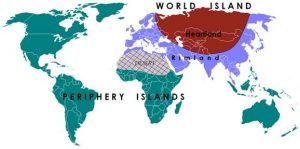
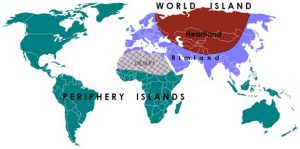
Σχήμα 1: http://cosmoidioglossia.blogspot.gr/2014/09/21-11-2014-11-2001.html
Ο Οργανισμός παρουσιάζει ιδιαίτερο ενδιαφέρον και διακρίνεται από τους άλλους Οργανισμούς στο διεθνές γίγνεσθαι για τους εξής λόγους: α)Περιλαμβάνονται οι δύο μεγαλύτεροι παίκτες στην περιοχή (Κίνα-Ρωσία) β) Επετεύχθη κατά την 17η Σύνοδο Κορυφής[18] στην Αστάνα 8-9 Ιουνίου 2017[19] η ένταξη άλλης μίας ανερχόμενης δύναμης, όπως είναι η Ινδία, που για ορισμένους δυτικούς αναλυτές προβάλλεται, ως η εν δυνάμει δεύτερη δύναμη του 21ου αιώνα ξεπερνώντας την Κίνα, το σημερινό αδιαφιλονίκητο (;) φαβορί, ιδιαίτερα, μετά από την οικονομική κρίση, που πλήττει τελευταία τις περιφερειακές οικονομίες. γ) Η ένταξη του Πακιστάν, που αποτελεί αναγκαίο εταίρο στην αντιμετώπιση, τόσο της τρομοκρατίας, όσο και του εξτρεμισμού στην περιοχή και ευρύτερα. δ) Η αίτηση ένταξης από το Ιράν που επιδιώκει τη σύνδεσή του με τον Οργανισμό, ύστερα από την πρόσφατη συμφωνία με τον ΟΗΕ.[20] ε) Ο τρισυπόστατος χαρακτήρας του Οργανισμού, αφού περιλαμβάνεται η πολιτική, οικονομική αλλά και ο τομέας της ασφάλειας. Επομένως, παρουσιάζει ενδιαφέρον η εξέλιξη και η προοπτική του. Παράλληλα, ο Οργανισμός, αναλαμβάνει δράση και σ’ άλλους τομείς, όπως είναι το οργανωμένο έγκλημα,[21] τα ναρκωτικά και το λαθρεμπόριο όπλων στ) Για πρώτη φορά οι νέες δυνάμεις συνεργάζονται στενά[22] και δημιουργούν εντελώς καινούργιες δομές[23] (όπως ο Οργανισμός, οι BRICS κ.ά), για την αντιμετώπιση συγκεκριμένων προβλημάτων διεθνούς ενδιαφέροντος και μάλιστα, χωρίς την συμμετοχή της πάλαι ποτέ μοναδικής αμερικανικής υπερδύναμης ή πιστών της συμμάχων. ζ) Τα κράτη μέλη ξεχωριστά προσπαθούν να αναμορφώσουν τα ήδη υπάρχοντα παγκόσμια συστήματα, ώστε να εισακουστούν και τα δικά τους συμφέροντα στην παγκόσμια διακυβέρνηση και τέλος, η) ο Οργανισμός ενισχύει τις δυνάμεις, όταν δρουν από κοινού. Η λειτουργία του βασίζεται στην αρχή της μη παρέμβασης, και δίνεται έμφαση στη διατήρηση της παράδοσης αυτής, διαφέροντας από τα δυτικά πρότυπα.
Οργανισμός Συνεργασίας της Σαγκάης- Οργάνωση και Λειτουργία του
Στόχοι και δομή του Οργανισμού
Στις 26 Απριλίου 1996 στη Σαγκάη, η Κίνα και οι τρεις πρώην σοβιετικές δημοκρατίες της Κεντρικής Ασίας (Καζακστάν, Κιρκιζία, Τατζικιστάν), με την συμμετοχή της Ρωσίας, συζήτησαν τη διευθέτηση των συνόρων μεταξύ τους, ύστερα από τη διάλυση της πάλαι ποτέ Σοβιετικής Ένωσης και υπέγραψαν τη σχετική Συνθήκη[24]. «Οι πέντε της Σαγκάης» συμφώνησαν να ενώσουν τις δυνάμεις τους και να αντιμετωπίσουν από κοινού ζητήματα που άπτονται των ενδιαφερόντων τους.[25] Στις 15 Ιουνίου 2001 και λίγους μόλις μήνες, πριν την 9/11 και την πτώση των δίδυμων πύργων στη Νέα Υόρκη, όπου φαίνεται να πραγματώνεται η περίφημη κατά τον Samuel Huntington «Σύγκρουση πολιτισμών»[26], με τη συμμετοχή και του Ουζμπεκιστάν συνθέτουν τον διακυβερνητικό, περιφερειακό «Οργανισμό Συνεργασίας της Σαγκάης» ή «Σύμφωνο της Σαγκάης», όπως έχει επικρατήσει.
Eαν το 1996 η αφορμή της συνάντησης των «πέντε της Σαγκάης» ήταν η οριοθέτηση των συνόρων μεταξύ τους, το 2001 το ζήτημα του Αφγανιστάν κυριάρχησε και μάλιστα πριν την 9/11. Η διακυβέρνηση από τους Ταλιμπάν και οι ακρότητες του καθεστώτος λειτουργούσαν αποσταθεροποιητικά στην περιοχή αποτελώντας μόνιμη πηγή αστάθειας και κινδύνου, για τους γείτονές του. Αυτή η ανησυχία των χωρών της περιοχής προετοίμασε, ως ένα βαθμό την εμφάνιση του Οργανισμού με τη συγκεκριμένη μορφή που πήρε, ως μία ευρασιατική, πολιτική, οικονομική και στρατιωτική οντότητα. Υπογράφθηκε δε η αντίστοιχη διακήρυξη, με σκοπό τη μετεξέλιξη του, σε οργανισμό υψηλού επιπέδου συνεργασίας (Cooperation) “Declaration of Shanghai Cooperation Organization”, αλλά και η Συνθήκη Καλής Γειτονίας και Φιλικής Συνεργασίας “Treaty of Good –Neighborliness and Friendly Cooperation”. Τον επόμενο χρόνο, τα κράτη μέλη υπέγραψαν τον Χάρτη του Οργανισμού που περιλαμβάνει τους σκοπούς, τις αρχές, τις δομές και τον τρόπο λειτουργίας και υπογράμμισαν την εναρμόνισή του με το διεθνές δίκαιο και τον Χάρτη του ΟΗΕ.
Κύριοι σκοποί του Οργανισμού είναι:
- Η ενίσχυση της αμοιβαίας εμπιστοσύνης και της καλής γειτονίας και φιλίας μεταξύ των κρατών μελών
- Η ανάπτυξη συνεργασίας στις πολιτικές υποθέσεις, την οικονομία, το εμπόριο, την επιστήμη και την τεχνολογία, την εκπαίδευση και τον πολιτισμό, την ενέργεια, την προστασία του περιβάλλοντος
- Η διατήρηση της περιφερειακής ειρήνης, ασφάλειας και σταθερότητας
- Η προώθηση και η δημιουργία μιας νέας διεθνούς πολιτικής και οικονομικής τάξης που χαρακτηρίζεται από:τη δημοκρατία,τη δικαιοσύνη και τον ορθολογισμό.
Ο Οργανισμός συμμορφώνεται με τους στόχους και τις αρχές των Ηνωμένων Εθνών ενώ παράλληλα θέτει και τους δικούς του ξεχωριστούς στόχους που είναι:
- Σεβασμός για την ανεξαρτησία και την εδαφική ακεραιότητα
- Η μη ανάμειξη στις εσωτερικές υποθέσεις του άλλου
- Η αμοιβαία μη χρήση ή απειλή χρήσης βίας
- Η ισότητα μεταξύ των κρατών μελών
- Η διευθέτηση όλων των ζητημάτων μέσω διαβουλεύσεων
- Το άνοιγμα προς τον έξω κόσμο και η προθυμία πραγματοποίησης ανταλλαγών, διαλόγου και συνεργασίας, με άλλες χώρες και άλλους παρεμφερείς διεθνείς και περιφερειακούς οργανισμούς.
Τα όργανα του Οργανισμού αποτυπώνονται στο Σχήμα 2 και συγκεκριμένα με ιεραρχική σειρά κατάταξης είναι:
- Το Συμβούλιο των Αρχηγών Κρατών με ετήσιες εκ περιτροπής συναντήσεις ανάμεσα στις χώρες μέλη, που αναλαμβάνουν τη διοργάνωσή της εκάστοτε Συνόδου Κορυφής
- Το Συμβούλιο των Υπουργών Εξωτερικών
- Η Διάσκεψη των Επικεφαλών του Οργανισμού
- Το Συμβούλιο Εθνικών Συντονιστών
- Η Γενική Γραμματεία. Είναι το κύριο εκτελεστικό όργανο και επιφορτισμένη να εκδίδει τις αποφάσεις, τις προτάσεις και τα άλλα επίσημα έγγραφα, με έδρα το Πεκίνο, ενώ ο Γενικός Γραμματέας έχει τριετή θητεία και σήμερα είναι ο νεοεκλεγείς Rashid Alimov ρωσικής καταγωγής παίρνοντας τη σκυτάλη από τον επίσης Ρώσο Dmitry Fyodorivich Mezentsev.
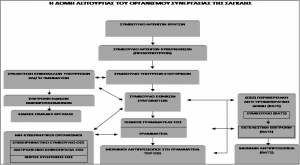
Σχήμα 2: Πηγή: Επίσημη ιστοσελίδα Οργανισμού http://www.sectsco.org/html/00027.html
- Η Περιφερειακή Δομή κατά της τρομοκρατίας – Regional Anti-Terrorist Structure –RATS έχει έδρα την Τασκένδη στο Ουζμπεκιστάν και είναι μόνιμο όργανο. Ιδρύθηκε 21 Απριλίου 2006 στην Τασκένδη για να προωθήσει τα σχέδια δράσης του οργανισμού, για την καταπολέμηση του διασυνοριακού εμπορίου ναρκωτικών (cross-border under the counter –terrorism rubric). Προωθεί τη συνεργασία των κρατών μελών ενάντια στους τρεις δαίμονες όπως τους όρισαν ως κύριες απειλές : την τρομοκρατία, τις αποσχίσεις και τον εξτρεμισμό.
Ο «ασιατικός μηχανισμός» συνεργασίας του Οργανισμού
Υιοθετήθηκε το πρότυπο ανάπτυξης του ASEAN. Το ASEAN στηρίχθηκε στην κυριαρχία και τη μη επέμβαση στα εσωτερικά των χωρών και πήρε το όνομά του από την «Ένωση των χωρών της Νοτιοανατολικής Ασίας» (Association of Southeast Asian Nations- ASEAN, (1967). Για τους επικριτές του ASEAN πρόκειται, για έναν οργανισμό μη-δημοκρατικών κρατών μελών, που ενδυναμώνουν απολυταρχικές τάσεις στην περιοχή. Εξάλλου, κράτη με το ίδιο πολιτικό σύστημα συνεργάζονται καλύτερα μεταξύ τους και μοιράζονται τις ίδιες αξίες και κινδύνους αποσταθεροποίησης, στο πλαίσιο μιας «συντονιστικής στρατηγικής» (coordinate strategy).[27] Παρόλα αυτά, για τους υποστηρικτές του ο ASEAN είναι κοντά στο ευρωπαϊκό πρότυπο και συνεργάζεται στενά με την Ευρωπαϊκή Ένωση (ΕΕ). Παράλληλα, ως τώρα μονοπωλεί και το ενδιαφέρον της διεθνούς κοινής γνώμης, εν αντιθέσει με τον Οργανισμό[28] που σπάνια αναφέρεται από τα δυτικά ΜΜΕ ή συχνά αναφέρεται μάλλον με σκωπτική διάθεση[29]. Ωστόσο, μπορεί ο Οργανισμός να ακολούθησε τον δρόμο του ASEAN, ως πρότυπο, αλλά οικοδομείται με τις δικές του αξίες και κανόνες. Στη Διακήρυξη της Μόσχας (2003) δίνεται το ιδιαίτερο στίγμα του, όπου «διαφορετικές κουλτούρες πρέπει να προχωρούν μαζί, φέροντας το καλύτερο από ότι έχουν να προσφέρουν, και να παλεύουν για το κοινό καλό ενώ αφήνουν τις διαφορές τους στην άκρη».[30]
Βασικοί σταθμοί εξέλιξης του Οργανισμού, συμμετοχή κρατών και διεύρυνση
Το 2001 αναγνωρίζεται, ως η επίσημη έναρξη των δραστηριοτήτων του. Το Συμβούλιο των αρχηγών κρατών είναι και το κυρίαρχο, ανώτατο όργανο για τη λήψη των αποφάσεων, με τη μέθοδο της συναίνεσης (consensus), όπως ορίζεται ρητά στο άρθρο 16 του καταστατικού χάρτη του Οργανισμού[31].
Εκτός από την ιδιότητα του κράτους μέλους υπάρχουν ακόμη τρεις ιδιότητες συμμετοχής κρατών ή οργανισμών στις συνόδους κορυφής, όπως απεικονίζεται στο Σχήμα 3. Ειδικότερα, με την ιδιότητα του παρατηρητή, συμμετείχαν κατά την Σύνοδο του 2015 το Αφγανιστάν, η Λευκορωσία, το Ιράν και η Μογγολία. Την ιδιότητα του «Εταίρου διαλόγου» (Dialogue Partners), κατέχουν η Αρμενία, το Αζερμπαϊτζάν, η Καμπότζη, το Νεπάλ, η Σρι Λάνκα και όψιμα η Τουρκία (2012), που είναι και η μοναδική χώρα μέλος του ΝΑΤΟ, που συμμετέχει στις εργασίες του Οργανισμού. Παράλληλα, ως καλεσμένοι (Guests) παραβρίσκονται, τόσο οι περιφερειακοί οργανισμοί όπως η Ένωση Χωρών της Νοτιοανατολικής Ασίας-ASEAN και η Κοινοπολιτεία Ανεξαρτήτων Κρατών-CIS, όσο και το Τουρκμενιστάν που, παρά την παροιμιώδη τήρηση της ουδετερότητάς του, επιλέγει, να διατηρεί γέφυρες συνεργασίας, με τον Οργανισμό.
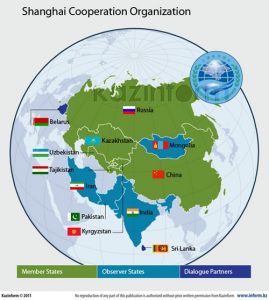
Σχήμα 3: http://www.sectsco.org/EN/2012.asp
Τον Ιούλιο του 2005 στην Πέμπτη και κρίσιμη, όπως αποδείχθηκε,[32] σύνοδο κορυφής της Αστάνα στο Καζακστάν συμμετείχαν και αντιπροσωπείες από την Ινδία, το Ιράν, τη Μογγολία και το Πακιστάν ενώ στην σύνοδο της Αστάνα το 2017 η Ινδία και το Πακιστάν έγιναν πλήρη μέλη του Οργανισμού. O οικοδεσπότης Πρόεδρος του Καζακστάν Nazarbayer χαιρέτησε, με φλογερό ενθουσιασμό τους καλεσμένους του, ως «τους ηγέτες που αντιπροσωπεύουν την μισή ανθρωπότητα και κάθονται στο ίδιο τραπέζι των συνομιλιών». Η Σύνοδος αυτή, ωστόσο, ήταν που τράβηξε και το ενδιαφέρον των Ηνωμένων Πολιτειών που ζήτησαν την είσοδό τους στον Οργανισμό αλλά το αίτημά τους απορρίφθηκε.[33] Έως το 2007 ο Οργανισμός προώθησε είκοσι σημαντικά προγράμματα δράσης σχετικά με την ενέργεια, τις μεταφορές και τις τηλεπικοινωνίες, ενώ υπήρξαν και συναντήσεις, για την ασφάλεια, τη στρατιωτική παρουσία, την άμυνα, τις εξωτερικές σχέσεις, αλλά και για τα οικονομικά, τα πολιτιστικά και τα τραπεζικά ζητήματα που συζητούνται σε τακτική βάση. Επιπλέον, ο Οργανισμός έγινε δεκτός ως Παρατηρητής στη Γενική Συνέλευση των Ηνωμένων Εθνών και σύναψε σχέσεις, με άλλους διεθνείς οργανισμούς και συγκεκριμένα τον ASEAN (Association of Southeast Asian Nations), την Κοινοπολιτεία Ανεξαρτήτων Κρατών (Commonwealth of Independent States) και τον Οργανισμό Ισλαμικής Συνεργασίας (The Organization of Islamic Cooperation). Σταθμός στην εξέλιξη του Οργανισμού αποτέλεσε το 2009 η Σύνοδος Κορυφής στο Yekaterinburg[34] της Ρωσίας όπου αφενός η Κίνα ανακοίνωσε σχέδια να χορηγήσει 10 δις δολάρια, σε μέλη του Οργανισμού, ώστε να αντιμετωπιστεί η οικονομική κρίση και αφετέρου η σύνοδος πραγματοποιήθηκε μαζί με την πρώτη σύνοδο του Οργανισμό των BRIC (Βραζιλία, Ρωσία, Ινδία και Κίνα). Έναν ισχυρό οργανισμό, που με τις δομές του, εκτιμάται, ότι προωθεί την αποδέσμευση[35], από τους πιστωτικούς οργανισμούς της Δύσης.[36]
Από τον Ιούνιο του 2010 συμφωνήθηκε η αποδοχή νέων μελών, όπως για παράδειγμα του Ιράν που έκανε αίτηση εισόδου ως πλήρες μέλος, αλλά οι κυρώσεις που επιβλήθηκαν από τη διεθνή κοινότητα δεν έκαναν εφικτή την ένταξή του. Τον Σεπτέμβριο του 2013 ο Πρωθυπουργός της Αρμενίας Tigran Sangsyan ζήτησε να ενταχθεί η Αρμενία και μάλιστα με την υποστήριξη της Κίνας, ενώ τελικά της δόθηκε η ιδιότητα του παρατηρητή. Εξάλλου και άλλες χώρες –παρατηρητές έχουν εκδηλώσει το ενδιαφέρον, να γίνουν πλήρη μέλη και έχουν κάνει τη σχετική αίτηση. Επίσης, χώρες, όπως η Αίγυπτος και η Συρία εκδήλωσαν ενδιαφέρον να συμμετάσχουν ως παρατηρητές στις εργασίες του Οργανισμού. Κατά την σύνοδο κορυφής των ηγετών στην Ούφα της Ρωσίας το 2015, αποφασίστηκε να αποδεχτούν, ως πλήρη μέλη τους δύο ‘άσπονδους’ φίλους της Κεντρικής Ασίας: την Ινδία και το Πακιστάν. Ειδικότερα για την Ινδία καλλιεργούνται μεγάλες προσδοκίες και εκ μέρους της αμερικανικής διπλωματίας που υπόσχεται τη στήριξή της , ώστε να λειτουργήσει ως ‘ατμομηχανή ανάπτυξης’στην περιοχή. [37] Η Ρωσία, από τη μεριά της, υπόσχεται στην Ινδία να πωλήσει το αντι-αεροπορικό σύστημα S-400[38], ίσως για να τη δελεάσει, για ευρύτερη συνεργασία, τόσο σε διμερές επίπεδο, όσο και για να ενταχθεί στον Οργανισμό.
Εντούτοις, το 2016 στην Τασκένδη και πάλι παρά τις υψηλές προσδοκίες πριν τη Σύνοδο για ένταξη της Ινδίας και το Πακιστάν και περίμενε τη σειρά του το Ιράν [39] η διεύρυνση δεν επετεύχθη.[40] Υιοθετήθηκε η αντίστοιχη Διακήρυξη της Τασκένδης. Εγκρίθηκε το Πρόγραμμα Δράσης για την περίοδο 2016-2020 για την Στρατηγική Ανάπτυξη του Οργανισμού και υπογράφτηκαν σειρά επίσημων εγγράφων. Υπογράφτηκαν, επίσης, μνημόνια και χρονοδιαγράμματα, για την ένταξη της Ινδίας και του Πακιστάν, χωρίς όμως να δημοσιοποιηθεί συγκεκριμένη χρονική δέσμευση.[41] Σε σχέση με το Ιράν ο Βλαντιμίρ Πούτιν κατά την ομιλία του στη Σύνοδο επί της ουσίας προσκάλεσε την Ισλαμική Δημοκρατία να ενταχθεί στον Οργανισμό, ύστερα από την άρση των κυρώσεων του ΟΗΕ, χωρίς όμως να υπάρξει συγκεκριμένη δέσμευση εκ μέρους του Οργανισμού. [42] Όσον αφορά την Τουρκία κατά την επίσκεψη του Τούρκου Προέδρου Ερντογάν στην Κίνα πριν τη σύνοδο κορυφής η Κίνα φάνηκε θερμός υποστηρικτής της ένταξης της Τουρκίας στον Οργανισμό,[43] ενώ η Τουρκία, σύμφωνα με τουρκικά δημοσιεύματα, ασκούσε πιέσεις για να ενταχθεί στον «Δρόμο του μεταξιού» και αναπτύσσει με ταχείς ρυθμούς τις εμπορικές σχέσεις της με τις χώρες του Οργανισμού. Παράλληλα, τουρκική εφημερίδα πανηγυρίζει με τίτλο «Οι Πέντε της Σαγκάης προτείνουν την Τουρκία για πλήρες μέλος του Οργανισμού».[44] Σημαντική, βέβαια, εξέλιξη θα μπορούσε να χαρακτηριστεί η αποκατάσταση των σχέσεων Ρωσίας- Τουρκίας[45] στο περιθώριο της Συνόδου[46] με την καταλυτική διαμεσολάβηση του Καζάκου Προέδρου Ναζαρμπάγεφ αποδεικνύοντας τη συμβολή των μικρότερων χωρών στη επίτευξη συμφωνιών εντός του Οργανισμού.
Σταθμός, ωστόσο, στην εξέλιξη του Οργανισμού αποτελεί, όπως αναφέρθηκε και παραπάνω, η επίτευξη της συμφωνίας διεύρυνσής του με την ένταξη της Ινδίας και το Πακιστάν ως πλήρη μέλη του κατά την Σύνοδο Κορυφής των ηγετών των κρατών μελών τον Ιούνιο του 2017 στην Αστάνα δίνοντας νέα ώθηση στην πορεία του Οργανισμού και την θέση του στον κόσμο. Επιπλέον στα αποτελέσματα της Συνόδου Κορυφής της Αστάνα του 2017 περιλαμβάνονται αρκετές αναφορές στον Οργανισμό Ηνωμένων Εθνών και την επαναβεβαίωση της ευθυγράμμισης του Οργανισμού με τις αρχές του χάρτη των Ηνωμένων Εθνών αλλά και την προσήλωση στις επίσημες εκθέσεις του. Παράλληλα όμως μεταξύ άλλων τονίζεται και η ανάγκη αναμόρφωσης του ΟΗΕ, ώστε να εξελιχθεί σε πιο αντιπροσωπευτικό και αποτελεσματικό θεσμό διαπραγμάτευσης και λήψης αποφάσεων, σε διεθνή ζητήματα. Επίσης, οι αρχηγοί κρατών εξήραν την σημαντική συμβολή του προέδρου του Καζακστάν Nursultan Nazarbaev, για την επιτυχία της Συνόδου της Αστάνα, ενώ η Κίνα ανέλαβε τη σκυτάλη της διοργάνωσης της επόμενης συνόδου κορυφής, τον Ιούνιο του 2018.
Σχέσεις και συσχετισμοί δυνάμεων των κρατών εντός και εκτός του Οργανισμού
Οι αντιδράσεις των εμπλεκομένων κρατών
Στις ΗΠΑ υπάρχουν τρεις αντικρουόμενες απόψεις για τον Οργανισμό και αναλόγως των συγκυριών πότε ενισχύεται η μία και πότε η άλλη αντίληψη. Συγκεκριμένα, η πρώτη άποψη θεωρεί τον Οργανισμό, ως δυνητική απειλή για τις ΗΠΑ (potential threat) που πρέπει να περιοριστεί με κάθε τρόπο. Η δυναμική του εμφάνιση στη διεθνή σκηνή εξελίσσεται σε ‘αμερικανικό εφιάλτη’[47] και εκτιμάται ότι θα περιορίσει τον ρόλο των ΗΠΑ στην Ευρασία. Η δεύτερη άποψη αγνοεί έναν τέτοιο κίνδυνο – αν δεν τον περιφρονεί τελείως – εκτιμώντας ότι δεν θα έχει καμία τύχη στην αποτελεσματική επίλυση των ζητημάτων που αναλαμβάνει να επιλύσει, υπενθυμίζοντας ότι μετά την 9/11 ζητήθηκε από τις ΗΠΑ η συμβολή του, αλλά με πενιχρά αποτελέσματα. Η τρίτη άποψη θεωρεί ότι ο Οργανισμός ως περιφερειακή πολυεπίπεδη συνεργασία θα μπορούσε να εξελιχθεί σε σημαντικό εταίρο των ΗΠΑ, με δεδομένο ότι δεν συγκρούονται άμεσα τα συμφέροντα ΗΠΑ και της Κίνας στην περιοχή.[48] Στις ΗΠΑ εξάλλου θεωρούν ότι , «όποιος θέσει τους κανόνες του παιχνιδιού για τον 21ο αιώνα θα είναι και ο κυρίαρχος έναντι των αντιπάλων του», όπως είχε δηλώσει χαρακτηριστικά ο τέως Αμερικανός Πρόεδρος Μπαράκ Ομπάμα[49]. Η απάντηση της Κίνας ήταν να προχωρήσει στο δικό της Σύμφωνο Συνολικής Περιφερειακής Οικονομικής Συνεργασίας (RCEP), για τη δημιουργία μίας περιοχής ελευθέρου εμπορίου, μεταξύ δεκαέξι χωρών περιλαμβανομένης της Ινδίας φιλοδοξώντας, να γίνει η μεγαλύτερη εμπορική ένωση του κόσμου περικλείοντας 3,4 δις ανθρώπους. «Όταν ο εχθρός είναι ενωμένος, διαιρέστε τον» λένε στην Κίνα[50] η οποία αντιστρόφως επιδιώκει να συγκεντρώνει φιλικές δυνάμεις γύρω της μέσα από διάφορους διεθνείς οργανισμούς, αλλά και διμερείς συνεργασίες, όπου κρίνει απαραίτητο. Γι αυτό η συνεργασία Κίνας, Ρωσίας, Ινδίας ξαφνιάζει δυσάρεστα τη Δύση και κυρίως τους νεοσυντηρητικούς των ΗΠΑ.[51]
Η θέση της Κίνας για τον Οργανισμό βασίζεται σε ένα κοινό μυστικό. Η Κίνα εξαρτάται από τις εισαγωγές πετρελαίου, για να διατηρήσει την ανάπτυξη της οικονομίας της, αλλά και να καλύπτει τις ανάγκες του τεράστιου πληθυσμού της, ώστε το πολιτικό της σύστημα να μείνει ανεπηρέαστο, από κοινωνικές αναταραχές. Γι αυτό το λόγο, προσπαθεί με κάθε μέσο, να διασφαλίσει τις διόδους, που θα της εξασφαλίζουν τις πρώτες ύλες και τη διακίνηση των προϊόντων της. Όπως, με το παλαιότερο «περιδέραιο μαργαριταριών» (“String of Pearls: Meeting the challenge of China’s rising power across the Asian littoral” – Περιδέραιο Μαργαριταριών: Η αντιμετώπιση της πρόκλησης από την αύξηση της επιρροής της Κίνας κατά μήκος των ασιατικών ακτών), όπως το είχε ονομάσει μια Έκθεση του Αμερικανικού Ινστιτούτου Στρατηγικών Μελετών (SSI). Στην Έκθεση αυτή αναλύονταν οι φιλοδοξίες της Κίνας, για την ενίσχυση της επιρροής της κατά μήκος αυτής της ‘διαδρομής’ που θεωρείται, ως άμεση πρόκληση, για την αμερικανική υπεροχή, καθώς και απειλή για το μονοπολικό όραμα μιας ‘Νέας Τάξης Πραγμάτων’.[52] Το ‘περιδέραιο’, δηλαδή ο έλεγχος στρατηγικών σημείων διέλευσης, όμως είναι και ‘στο λαιμό’ της Ινδίας, στον Ινδικό Ωκεανό. Η ανάδειξη Μόντι στο τιμόνι της Ινδίας που επιχειρεί την ‘αντίστροφη πολιτική των μαργαριταριών’ δυσκολεύει τα σχέδια της Κίνας στην περιοχή ενώ σε όποιον μείνει το ‘περιδέραιο’ του εξασφαλίζει ενεργειακή ασφάλεια, αλλά και σημαντικό στρατηγικό πλεονέκτημα.[53] Στο πλαίσιο αυτό η ένταξη της Ινδίας στον Οργανισμό αλλάζει τα δεδομένα στην περιοχή και συνασπίζει περαιτέρω τις ανατολικές χώρες έναντι των μη ασιατικών δυτικών δυνάμεων, όπως οι ΗΠΑ. Η Κίνα δε με το σχετικά πρόσφατο φαραωνικό φιλόδοξο πρόγραμμα, που έχει εξαγγείλει και που εκτείνεται, σε στεριά και θάλασσα, όπως είναι ο νέος δρόμος του μεταξιού (Silk Road –One Belt –One Road) (χερσαία ζώνη) και η 21st century Maritime Silk Road (θαλάσσια ζώνη) επιδιώκει εύκολη πρόσβαση σε αγορές και πλουτοπαραγωγικές πηγές. Η επιτυχής υλοποίηση τέτοιων προγραμμάτων, εξελίσσεται σε κρίσιμο παράγοντα, που θα καθορίσει τις διεθνείς εξελίξεις. Επομένως η Κίνα, δρα εντός και εκτός διεθνών οργανισμών συνεργασίας,[54] για την οικονομία, την ασφάλεια, συμμετέχοντας σε μεγάλο εύρος οργανισμών ενώ δίνει ιδιαίτερη βαρύτητα στον τομέα των εξοπλισμών.[55] Στις διμερείς, περιφερειακές και διεθνείς συμφωνίες συνεργασίας η Κίνα με τους πολλούς στρατηγικούς εταίρους και τα φιλόδοξα προγράμματα μαμούθ[56], που σχεδιάζει και υλοποιεί, ακολουθεί μία πολυεπίπεδη οικονομική πολιτική.[57] Εδώ θα μπορούσε να υπάρξει ταύτιση συμφερόντων με τη Ρωσία, ώστε να οικοδομηθεί από κοινού ένας νέος πολυπολικός κόσμος. Ο Οργανισμός Συνεργασίας της Σαγκάης σύμφωνα με την κινεζική ηγεσία μπορεί να παίξει σημαντικό ρόλο προς την κατεύθυνση αυτή.
Οι θέσεις της Ρωσίας για τον Οργανισμό συμπίπτουν σε: γενικές γραμμές και με τους στόχους του Οργανισμού Συνεργασίας της Σαγκάης που παλεύει με τους τρεις δαίμονές του[58] (τρομοκρατία, αποσχίσεις, εξτρεμισμός). [59] Οι προτεραιότητες αυτές εκτός από τη Ρωσία, τις έχει υιοθετήσει και η Κίνα. Δεν αποκλείεται, όμως, η συνεργασία της Ρωσίας με την Κίνα να αποτελεί απλώς μια αναγκαιότητα της πάλαι ποτέ υπερδύναμης και να είναι συγκυριακή, ως μια προσπάθεια να εξημερωθεί ο ‘κινεζικός δράκος’.[60] Σε κάθε περίπτωση η Ρωσία δεν είναι διατεθειμένη να χάσει την πρωτοκαθεδρία στην περιοχή[61]. Προς το παρόν πέτυχε να εντάξει ορισμένες χώρες της περιοχής στον CSTO, την EurAsEC και την Custom Union Commision (CIC) Επιτροπή Τελωνειακής Ένωσης. [62] Ενδεικτική της αξιοποίησης του Οργανισμού από τη Ρωσία αποτελούν τα γεγονότα της Νότιας Οσσετίας και η βίαιη προσπάθεια ανακατάληψης της περιοχής, από τον Σαακασβίλι. Ο Οργανισμός με ανακοίνωσή του στήριξε τις ρωσικές ενέργειες για τη σταθερότητα στην περιοχή», αλλά κανένα κράτος μέλος του Οργανισμού δεν προχώρησε και στην αναγνώριση της αυτονομίας της Οσσετίας και της Αμπχαζίας, έστω κι αν η αναγνώριση απαιτήθηκε από τη ρωσική διπλωματία.[63]
Έχει δε ενδιαφέρον να εξετάσει κάποιος πως θα μπορούσε να προχωρήσει η συνεργασία ανάμεσα στις δύο μεγάλες δυνάμεις,[64] (Κίνα, Ρωσία) οι οποίες προς το παρόν έχουν αμοιβαίο όφελος, από την μεταξύ τους συνεργασία επειδή έχουν απέναντι ως κοινό εχθρό[65] την κυρίαρχη υπερδύναμη που όμως δείχνει να αποδυναμώνεται. Εξάλλου στο παρελθόν, υπήρχε ψύχρανση στις διμερείς τους σχέσεις, όταν συγκρούστηκαν τα κυριαρχικά τους συμφέροντα στην περιοχή και οι ηγεμονικές τους φιλοδοξίες. Προς το παρόν, έχουν κοινούς εχθρούς και φίλους και κοινές αντιλήψεις, που μοιράζονται. Όσο δε, η συνεργασία μεταξύ τους αποδίδει καρπούς, προφανώς, δεν θα έχουν λόγο να τη διακόψουν,[66] αλλά να τη διευρύνουν και να την εμβαθύνουν, όπως και συμβαίνει ήδη σε πολλούς τομείς. Πιο συγκεκριμένα η Κίνα και η Ρωσία μοιράζονται τις ίδιες ανησυχίες και έχουν παρόμοιες προκλήσεις να αντιμετωπίσουν που τις απειλούν. Ανάμεσα σε αυτές τις απειλές είναι α) οι μειονότητες που βρίσκονται στην επικράτειά τους και μάλιστα μουσουλμανικής προελεύσεως, όπως οι τουρκογενείς Ουιγούροι της Κίνας[67] και οι μουσουλμανικές φυλές του Καυκάσου, με επίκεντρο την Τσετσενία. β) η απρόβλεπτη Τουρκία συχνά δημιουργεί προβλήματα προσπαθώντας να χειραγωγήσει τις συγκεκριμένες μουσουλμανικές μειονότητες, ώστε να φανεί ως φυσικός τους προστάτης, για τις δικές της επιδιώξεις, γ) τις τρομοκρατικές επιθέσεις εξαιτίας του ισλαμικού φονταμενταλισμού, δ) η αμερικανική υπερδύναμη αποτελεί απειλή και για τις δύο δυνάμεις. Οι δύο χώρες συμφωνούν, επίσης, να μεταβάλουν το παγκόσμιο σύστημα διακυβέρνησης σύμφωνα με τα νέα δεδομένα και τις δικές τους επιδιώξεις. Αφενός με το να τροποποιήσουν τους ήδη υπάρχοντες διεθνείς θεσμούς, όπως είναι η Παγκόσμια Τράπεζα και το Διεθνές Νομισματικό Ταμείο και αφετέρου δημιουργώντας νέους μηχανισμούς, όπως είναι ο Οργανισμός, οι BRICS κ.ά. Προς το παρόν, εξάλλου, δεν έχουν δείξει, ότι θέλουν να διαρρήξουν τους δεσμούς τους, με τον υπόλοιπο κόσμο και οι προσπάθειές τους εντάσσονται, στο πλαίσιο των Ηνωμένων Εθνών (τονίζεται στο προοίμιο του καταστατικού χάρτη του Οργανισμού) και των άλλων διεθνών οργανισμών που συμμετέχουν. Ωστόσο, παρά τον μήνα του μέλιτος που διάγουν υπάρχουν και σκιές στις σχέσεις τους[68] πραγματικές ή ‘φανταστικές’ από τους αντιπάλους τους που βλέπουν ότι «Η Σύγκρουση Ρωσίας και Κίνας για έλεγχο της Κεντρικής Ασίας περιπλέκει την εξίσωση», όπως προσφυώς βλέπει ένα δυτικό έντυπο.[69] Παρόλα αυτά, τα ερωτήματα παραμένουν και απασχολούν έντονα δυτικούς και ανατολικούς[70] αναλυτές, χωρίς όμως να έχει αποκρυσταλλωθεί ακόμη πόσο είναι διατεθειμένες οι δύο ισχυρές δυνάμεις, να υποστηρίξουν η μία την άλλη, εφόσον έρθουν σε ανοικτή ρήξη οι γεωπολιτικές τους προσδοκίες ή εάν στο μέλλον τα συμφέροντά τους ικανοποιούνται περισσότερο σε τυχόν στενότερη συνεργασία με τις ΗΠΑ ή άλλους ισχυρούς παίκτες της παγκόσμιας σκηνής.
Οι αντιδράσεις των κρατών της Κεντρικής Ασίας για τον Οργανισμό προσδιορίζονται περισσότερο από την ανάγκη να διατηρήσουν την αυτονομία και την ακεραιότητά τους, προσπαθώντας να ελίσσονται κάθε φορά στις προκλήσεις και τους εσωτερικούς και εξωτερικούς κινδύνους που αντιμετωπίζουν ανάμεσα σε μεγάλες και μεσαίες δυνάμεις που δρουν στην περιοχή. Ειδικότερα, το Καζακστάν, το Ουζμπεκιστάν και το Τουρκμενιστάν (μη μέλος) έχουν μεγάλα αποθέματα ενεργειακών πόρων και στηρίζονται στις εξαγωγές τους ενώ αντιθέτως το Τατζικιστάν και η Κιρκιζία δεν έχουν αρκετούς πόρους και χρειάζονται εισαγωγές, για την ανάπτυξή τους. Η διάκριση αυτή εξηγεί και τις διαφορές στην ανάπτυξή τους. Η Κιρκιζία από την άλλη μεριά είναι η μόνη χώρα με κοινοβουλευτικό καθεστώς. Παρόλα αυτά η συμβολή στον Οργανισμό των χωρών αυτών είναι σημαντική καθώς συχνά ανταποκρίνονται σε καθήκοντα που οι μεγάλες χώρες δεν μπορούν να ελιχθούν. Χαρακτηριστική είναι η πετυχημένη σύνοδος στην Αστάνα του Καζακστάν το 2011 όπου η 10η επέτειος ίδρυσης του Οργανισμού έθεσε τις βάσεις για τη μελλοντική εξέλιξη του.[71] Σημαντική βέβαια θεωρείται και η πρόσφατη Σύνοδος Κορυφής το 2017, όπου επετεύχθη η συμφωνία σε σειρά ζητημάτων, αλλά και η πρώτη διεύρυνση του Οργανισμού.
Όσον αφορά την Τουρκία, ποικίλες αντιδράσεις προκάλεσε η δήλωση του Τούρκου Προέδρου Ερντογάν το 2013, που ζήτησε χαριτολογώντας, την άμεση ένταξη της Τουρκίας στον Οργανισμό λέγοντας ότι «όταν τα πράγματα δεν αποδίδουν, αναπόφευκτα, ως ηγέτης εβδομήντα πέντε εκατομμυρίων ανθρώπων, αναζητάς άλλους δρόμους. Για αυτό και εγώ είπα πρόσφατα στον κ. Πούτιν: πάρτε μας στο Σύμφωνο της Σαγκάης και εμείς θα αποχαιρετήσουμε την Ε.Ε».[72] Βέβαια, αυτές οι δηλώσεις έγιναν, όταν ήταν ακόμη άριστη η συνεργασία Ρωσίας- Τουρκίας και πριν ψυχραθούν οι διμερείς τους σχέσεις. H ξαφνική αναθέρμανση των σχέσεών τους δεν αποκλείει νέα επιδείνωση στο μέλλον, καθώς φαντάζει δύσκολο να ανατραπεί ο δυτικός προσανατολισμός της Τουρκίας και να στραφεί ‘προς Ανατολάς’ ακόμη κι αν το επιδιώξει, παρόλο που οι προθέσεις του Τούρκου Προέδρου είναι απρόβλεπτες ιδιαίτερα μετά την καταστολή της απόπειρας του στρατιωτικού πραξικοπήματος τον Ιούλιο του 2016 και την μεταβολή του Συντάγματος. Ωστόσο, με την ραγδαία αλλαγή της τουρκικής πολιτικής ανασύρεται πάλι το σενάριο στον διεθνή τύπο για πιθανή ένταξη της Τουρκίας, είτε στον Οργανισμό είτε στην Ευρασιατική Ένωση[73]. Παρόλα αυτά, τότε η δήλωση αυτή προφανώς είχε πολλούς αποδέκτες. Αφενός τους Ευρωπαίους ότι η Τουρκία έχει εναλλακτική λύση και άρα δεν θα είναι πάντα διαθέσιμη, για ένταξη στην Ε.Ε. Από την άλλη, κατέδειξε τη δυναμική του Οργανισμού, ως ελκυστική εναλλακτική λύση συνεργασίας. Δεν αποκλείεται η συγκεντρωτική τάση του πολιτεύματος που εγκαθιδρύεται από το καθεστώς Ερντογάν να βρίσκει κατανόηση στο ανατολικό ευέλικτο μοντέλο συνεργασίας στο «πνεύμα της Σαγκάης», όπου δεν χρειάζεται να δίνει εξηγήσεις, ως προς την καταπάτηση των ανθρωπίνων δικαιωμάτων στη χώρα του. Ωστόσο, η Τουρκία απομακρύνεται συστηματικά από την ευρωπαϊκή προοπτική της.[74] Η αλλαγή στην τουρκική διπλωματία είναι εμφανής, ειδικότερα, ύστερα από το αποτυχημένο πραξικόπημα εναντίον του Προέδρου τον Ιούλιο του 2016. [75] Αλλά και η Ευρωπαϊκή Ένωση αμφιταλαντεύεται για την ένταξη της Τουρκίας, η οποία έχει φανατικούς φίλους και ορκισμένους εχθρούς ανάμεσα στα κράτη μέλη της. Ενδεικτική του κλίματος είναι η δήλωση του πρώην Γάλλου Προέδρου Νικολά Σαρκοζί, ότι «η θέση της Τουρκίας είναι στην Ασία».[76] Για να δηλώσει την επόμενη σχεδόν μέρα ο Τούρκος Πρόεδρος, σε προσωπικό σχεδόν τόνο « Να μας πει η ΕΕ αν μας θέλει».[77]
Από την άλλη πλευρά, η μεγαλύτερη δημοκρατία στον κόσμο και ραγδαία αναπτυσσόμενη Ινδία, παραμένει ζητούμενο το πως θα μπορούσε να συνεργαστεί, με τον διαχρονικά άσπονδο αυταρχικό, ασταθή και μάλλον απρόβλεπτο γείτονά της, το Πακιστάν[78], υπό την ίδια στέγη του Οργανισμού, σε ενδεχόμενη ένταξη όπως αποφασίστηκε αρχικά στην Ούφα της Ρωσίας και επιβεβαιώθηκε το 2016 στην Τασκένδη και την τελική ένταξή τους στην Αστάνα το 2017. Αλλά και πως θα μπορούσε να συμπλεύσει η Ινδία, με τις «ασιατικές αξίες» και τα συγκεντρωτικά καθεστώτα, στο ‘πνεύμα της Σαγκάης’. Εξάλλου, κατά καιρούς αναζωπυρώνεται η διένεξη μεταξύ τους, ενώ κατά την πρόσφατη κρίση στο Κασμίρ δοκιμάζονται οι σχέσεις τους. Τα Ηνωμένα Έθνη, βέβαια, δεν παρέλειψαν να εκφράσουν την ανησυχία τους, για την κλιμάκωση της έντασης.[79] Παρόλα αυτά ο Οργανισμός δεν εμπλέκεται άμεσα στη χρόνια διένεξη Ινδίας-Πακιστάν, για το Κασμίρ. Ο Οργανισμός δίνει ένα διεθνές βήμα, ώστε να εκφράζονται οι θέσεις κάθε χώρας στα διεθνή ζητήματα και τα ζητήματα ασφαλείας στην περιοχή, ώστε να συμβάλει στην επίτευξη διμερών συμφωνιών των χωρών.[80] Παραδοσιακά η Ρωσία ήταν σύμμαχος με την Ινδία από τον καιρό του Ψυχρού Πολέμου, ενώ ήταν αντίπαλος με το Πακιστάν. Ωστόσο, τα τελευταία χρόνια γίνονται προσπάθειες για την αναθέρμανση των σχέσεων Ρωσίας-Πακιστάν καθώς το Πακιστάν έδειξε προθυμία να κάλυψε τις διατροφικές ανάγκες της Ρωσίας, ύστερα από τις ευρωπαϊκές κυρώσεις που της επιβλήθηκαν. Αντιστρόφως, βελτιώνονται οι σχέσεις Ινδίας –ΗΠΑ με μια σειρά αμερικανικών δελεαστικών σχεδίων συνεργασίας αν και οι ισχυροί δεσμοί Ρωσίας-Ινδίας είναι διαχρονικοί επιβεβαιώνονται και από τις δύο χώρες, σε κάθε ευκαιρία. Η ένταξη της Ινδίας στον Οργανισμό το αποδεικνύει. Η Κίνα επίσης στηρίζει την ένταξη του Πακιστάν στον Οργανισμό, ενώ θετική εμφανίζεται και για την ένταξη της Ινδίας, παρά τις εδαφικές διαφορές μεταξύ τους.
Το Ιράν φιλοδοξεί να διαμορφώσει μια πανίσχυρη στρατιωτική συμμαχία, με την Ινδία, τη Ρωσία και την Κίνα όπου κάτω από την αιγίδα του Οργανισμού θα μπορούσε να εξελιχθεί σ’ ένα πλήρες σύστημα ασφάλειας στην περιοχή. [81] Πάνω σε αυτή τη βάση ένα εγχείρημα ζωτικής γεωπολιτικής σημασίας, εάν πραγματοποιηθεί, θα είναι και η λεγόμενη «Περσική Διώρυγα» ή ιρανική «Διώρυγα του Σουέζ», ενός καναλιού δια μήκους του Ιράν που θα ενώσει την Κασπία με τον Περσικό Κόλπο. Ο υδάτινος αυτός διάδρομος θα εφάπτεται με τον ‘Δρόμο του Μεταξιού’. Το έργο αυτό θα αποδέσμευε την Ρωσία τόσο από τη διώρυγα του Σουέζ όσο και από τα Στενά του Βοσπόρου. Επιπλέον Ιράν και Ρωσία μαζί με το Αζερμπαϊτζάν συμμετείχαν σε μία σπάνια τριμερή σύνοδο κορυφής στο Μπακού του Αζερμπαϊτζάν τον Αύγουστο του 2016 , όπου συζητήθηκαν, όπως ανακοινώθηκε, τα περιφερειακά σχέδια οικονομικής ολοκλήρωσης ιδιαίτερα στον Δρόμο μεταφορών Βορρά-Νότου, έναν προτεινόμενο εμπορικό δρόμο δια ξηράς και θαλάσσης, που θα συνδέει την Ινδία προς την Ευρώπη, μέσω του Ιράν, του Νοτίου Καυκάσου και της Ρωσίας. Προφανώς όμως θα συζήτησαν και άλλα ζητήματα αμοιβαίου ενδιαφέροντος, όπως η ισλαμική τρομοκρατία.[82] Από την πλευρά της η Κίνα οραματίζεται με επίκεντρο το Ιράν ένα τεράστιο εγχείρημα ενωμένων υποδομών της Ευρασίας, με ένα τεράστιο δίκτυο λιμένων και σιδηροδρομικών δικτύων υψηλής ταχύτητας, που θα διασχίζουν την Ευρασία, από το Πεκίνο προς τη Λευκορωσία και πέρα από αυτήν.[83] Επομένως δεν αποτελεί έκπληξη το γεγονός ότι το Ιράν τελεί υπό το καθεστώς υποψηφίου μέλους του Οργανισμού από το 2008. Βασικό εμπόδιο για την πλήρη ένταξή του αποτελούσαν οι κυρώσεις του ΟΗΕ, καθώς ένα από τα έξι κριτήρια για την ένταξη μιας χώρας στον Οργανισμό, που τέθηκαν το 2010 στη Σύνοδο της Τασκένδης: η υπό ένταξη χώρα να μην βρίσκεται σε καθεστώς κυρώσεων από τον ΟΗΕ.[84]
Δραστηριότητες και συνεργασίες με άλλους Οργανισμούς
Η συνεργασία για την ασφάλεια αποτελεί βασική προτεραιότητα του Οργανισμού. Ιδιαίτερα, δίνεται έμφαση σε θέματα ασφάλειας στην περιοχή της Κεντρικής Ασίας και το πώς, θα αντιμετωπιστούν η τρομοκρατία, οι αποσχιστικές τάσεις και ο εξτρεμισμός. Τον Οκτώβριο του 2007 συμφωνήθηκε στο Ντουσάμπε του Τατζικιστάν να προχωρήσουν σε συμφωνία με τον εξ αγχιστείας ‘αδερφό’ Οργανισμό, δηλαδή τη Συνθήκη Συνεργασίας Συλλογικής Ασφάλειας- Collective Security Treaty Organization-CSTO,[85] που ιδρύθηκε το 1992 και αποτελείται από τις τρεις πρώην σοβιετικές δημοκρατίες της περιοχής και ταυτόχρονα μέλη του Οργανισμού[86] (Καζακστάν, Κιρκιζία, Τατζικιστάν), την Ρωσία, την Αρμενία, και τη Λευκορωσία, ενώ το Ουζμπεκιστάν κατά καιρούς συμμετείχε στον CSTO, αλλά, έχει αποχωρήσει αναλόγως τον «ανατολικό» ή «δυτικό» άνεμο που «φυσάει» προς την ηγεσίας του[87]. Σκοπός του Οργανισμού αυτού (CSTO) είναι η διατήρηση της ασφάλειας στην περιοχή, σε συλλογική βάση και μεταξύ άλλων έχει στον καταστατικό του χάρτη παρόμοιο άρθρο με το άρθρο 51 του χάρτη των Ηνωμένων Εθνών «για το φυσικό δικαίωμα της ατομικής και συλλογικής νόμιμης άμυνας» εάν ένα μέλος δεχτεί ένοπλη επίθεση.[88] Παράλληλα, οι δύο Οργανισμοί προχώρησαν σε συνεργασία για θέματα ανταλλαγής πληροφοριών και επιθέσεις στον κυβερνοχώρο και τον πόλεμο της πληροφορίας.
Σε στρατιωτικό επίπεδο, οι δραστηριότητες του Οργανισμού ενισχύουν τη συνεργασία μεταξύ των μελών, με ανταλλαγή πληροφοριών υψίστης ασφαλείας καθώς και για τον πόλεμο στον κυβερνοχώρο. Παράλληλα, διενεργούνται εκτεταμένες στρατιωτικές ασκήσεις, όπως τα «παιχνίδια πολέμου» (Peace Mission) 2005, 2007 (όπου αίσθηση προκάλεσε η παρακολούθηση των ασκήσεων από τους Προέδρους Ρωσίας και Κίνας και τους άλλους ηγέτες) και 2009, υπό την αιγίδα του Οργανισμού, με συμμετοχή πάνω από 4.000 στρατιωτών ενώ το 2014 ωρίμασε περισσότερο η ιδέα της συνεργασίας με τον CSTO.
Σε οικονομικό επίπεδο χαρακτηριστικό είναι ότι όλα τα κράτη μέλη του Οργανισμού, εκτός της Κίνας, είναι παράλληλα και μέλη της Ευρασιατικής Οικονομικής Ένωσης που ηγείται η Ρωσία. Συζητείται, επίσης, ένα πλαίσιο συμφωνίας (Framework Agreement), για την ευρύτερη οικονομική συνεργασία που υπογράφτηκε το 2003. Ο κινέζος Πρόεδρος πρότεινε μακροπρόθεσμο στόχο του Οργανισμού τη δημιουργία μιας Ζώνης Ελευθέρων Εμπορικών Συναλλαγών (a long-term objective to establish a free trade area), ενώ ένα πρόγραμμα εκατό συγκεκριμένων δράσεων υπογράφτηκε τον επόμενο χρόνο. Το 2005 ο Γ. Γ. του Οργανισμού τόνισε ότι προγράμματα που αφορούν την ενέργεια αποτελούν προτεραιότητα για τον Οργανισμό. Στο πλαίσιο αυτό προτάθηκε από την κινεζική πλευρά και συζητήθηκε η δημιουργία μιας τράπεζας, που όμως συνάντησε αρχικά τους δισταγμούς της Ρωσίας, η οποία δεν ήθελε να αυξήσει περισσότερο την οικονομική επιρροή της Κίνας στην περιοχή. Παρόλα αυτά αποφασίστηκε η ενίσχυση και η προώθηση τόσο της Αναπτυξιακής Τράπεζας όσο και του Αναπτυξιακού Ταμείου (Special Account) του Οργανισμού κατά την Σύνοδο της Αστάνα το 2017. Το 2007 πυροδότησε νέες αναταράξεις η δήλωση του Ιρανού αντιπροέδρου Parviz Davudi ότι ο Οργανισμός είναι καλό μέσο για τον σχεδιασμό ενός νέου τραπεζικού συστήματος, που θα είναι ανεξάρτητο από το ισχύον διεθνές τραπεζικό σύστημα. Επιπλέον, η συνεργασία με τους BRICS δίνει περαιτέρω ώθηση στην δυναμική που αναπτύσσει η οικονομική δράση του Οργανισμού.
Στο πεδίο της πολιτιστικής συνεργασίας οι Υπουργοί πολιτισμού συναντώνται σε τακτά διαστήματα, ενώ το πρώτο φεστιβάλ και έκθεση τέχνης έγινε κατά τη σύνοδο της Αστάνα το 2005. Η έμφαση που δίνουν τα μέλη του Οργανισμού, στην πολιτιστική τους ταυτότητα και τη διατήρησή της αντικατοπτρίζει αυτές καθ’ αυτές τις αντιλήψεις τους, για την προώθηση και τη διατήρηση της πολιτιστικής ιδιομορφίας και κληρονομιάς, που συχνά δεν γίνονται κατανοητές, από τα κράτη της Δύσης. Αυτό όμως εν πολλοίς μπορεί να εξηγηθεί, αφού για παράδειγμα, σύγχρονα κράτη με λίγα χρόνια σχετικά παρουσίας στην παγκόσμια ιστορία, όπως οι ΗΠΑ δεν μπορούν να κατανοήσουν πανάρχαια κράτη, με ιστορικό βάθος, όπως η Κίνα υπερήφανα για την καταγωγή τους. Αντιστρόφως, δεν γίνονται κατανοητές οι δυτικές φιλελεύθερες προοπτικές και ευαισθησίες. Γι αυτό είναι φυσικό να έχουν διαφορετικές αντιλήψεις, ως προς τις αξίες και τις αρχές, που αποτελούν συστατικά στοιχεία της ταυτότητας και της ιδιοσυγκρασίας τους. Αυτές οι ιδιαιτερότητες του Οργανισμού θα επιχειρηθεί να εξηγηθούν στο δεύτερο μέρος και αφορούν τον εκδημοκρατισμό και τα ανθρώπινα δικαιώματα, που διακρίνουν τον Οργανισμό, από το δυτικό πρότυπο προβάλλοντας το δικό του ανατολικού τύπου μοντέλο συνεργασίας και ανάπτυξης.
Περί του «πνεύματος της Σαγκάης» και άλλων «δαιμονίων»
Τα ανθρώπινα δικαιώματα και «δημοκρατία ανατολικού τύπου»
Στις 4 Φεβρουαρίου 2016 στο Πεκίνο ο Γενικός Γραμματέας Ρασίντ Αλίμωφ τόνισε ότι ο Οργανισμός είναι ‘νέου τύπου’. Οι κοινοί στόχοι και οι προκλήσεις, που αντιμετωπίζουν τα κράτη μέλη βασίζονται στις κοινές αξίες και κανόνες του Οργανισμού, σε μια αμφίδρομη σχέση, που δίνει ώθηση στο ‘Πνεύμα της Σαγκάης’. Ο Οργανισμός πρέπει να γίνει εποικοδομητική δύναμη, για τη διατήρηση της ειρήνης και της σταθερότητας στην περιοχή, ιδιαίτερα σε μια εποχή που συμβαίνουν σημαντικές αλλαγές αλλά και αναδύονται σοβαροί κίνδυνοι στον κόσμο, όπως η διεθνής τρομοκρατία, τις αποσχίσεις και ο εξτρεμισμός.[89]
Ήδη από το 1999, στο Ντουσάμπε του Τατζικιστάν, τα κράτη μέλη συμφώνησαν στην μη ανάμειξη στις εσωτερικές υποθέσεις των κρατών με το πρόσχημα του ανθρωπισμού και της προστασίας των ανθρωπίνων δικαιωμάτων. Αλλά και στην υποστήριξη των μελών, εάν υποστούν επίθεση από άλλο κράτος ή κράτη. Η μη ανάμειξη στις εσωτερικές υποθέσεις διατηρείται απαρέγκλιτα ως τώρα, ως μία από τις αρχές και τους κανόνες, που οφείλουν, να σέβονται και να τηρούν τα μέλη ή τα επίδοξα μέλη, για να γίνουν αποδεκτά στον Οργανισμό. Ο συγκεκριμένος στόχος όμως έχει επικριθεί κατ’ επανάληψη, ότι αποτελεί το πρόσχημα, ώστε να στηριχθούν τα αυταρχικά καθεστώτα των κρατών μελών, που κατά γενική ομολογία απέχουν πολύ, από το να χαρακτηριστούν δημοκρατικά. Τα κράτη μέλη, αλλά και ο ίδιος ο Οργανισμός, δέχονται τα επικριτικά βέλη της Δύσης ότι δεν προωθούν τον εκδημοκρατισμό στην περιοχή. Αντίθετα, οι δράσεις του Οργανισμού αποτρέπουν οποιαδήποτε προσπάθεια ανατροπής των αυταρχικών καθεστώτων και της πορείας προς τον εκδημοκρατισμό[90]. Αξίζει να σημειωθεί, ότι ένας από τους τέσσερις βασικούς στόχος του Οργανισμού είναι και η προώθηση μιας νέας διεθνούς πολιτικής και οικονομικής τάξης που χαρακτηρίζεται από: τη δημοκρατία και τη δικαιοσύνη. Μάλλον, όπως διατείνονται οι επικριτές, αυτό αφορά τη σχέση του Οργανισμού, προς τα έξω, με τους άλλους διεθνείς οργανισμούς και δεν αφορά τη λειτουργία του Οργανισμού, προς τα μέσα.
Ενδεικτική του κλίματος ως προς τα ανθρώπινα δικαιώματα και την διάσταση απόψεων του δυτικού κόσμου με την Κίνα είναι η αντίδραση του κινέζου Υπουργού Εξωτερικών κατά την επίσημη επίσκεψή του στον Καναδά, στις 2.6.2016, ύστερα από ερώτηση δημοσιογράφου, για τα ανθρώπινα δικαιώματα στην Κίνα. Φανερά εκνευρισμένος απάντησε μεταξύ άλλων «Η ερώτησή σας είναι γεμάτη προκατάληψη για την Κίνα και αλαζονεία, που δεν ξέρω από πού προέρχεται. Είναι απολύτως απαράδεκτη. Καταλαβαίνετε την Κίνα; Έχετε πάει στην Κίνα;» ρώτησε τη δημοσιογράφο, για να συνεχίσει ότι «κανείς δεν γνωρίζει καλύτερα από τον κινεζικό λαό την κατάσταση των ανθρώπινων δικαιωμάτων στην Κίνα». Προσθέτοντας «ότι η Κίνα έχει βγάλει από τη φτώχεια 600 εκατομμύρια ανθρώπους. Ξέρετε ότι έγινε η δεύτερη μεγαλύτερη οικονομία από πολύ χαμηλές βάσεις; Ξέρετε ότι έχει εγγράψει στο Σύνταγμά της την προστασία των ανθρώπινων δικαιωμάτων;» και αναρωτήθηκε «πώς γίνεται, αν δεν προστατεύαμε τα ανθρώπινα δικαιώματα, να έχουμε τέτοια ανάπτυξη».[91] Η αντίδραση αυτή δείχνει χαρακτηριστικά το πόσο ενοχλεί το ζήτημα των ανθρωπίνων δικαιωμάτων που τίθεται, επίμονα και σε κάθε ευκαιρία, από τη φιλελεύθερη Δύση.
Εντούτοις, η Κίνα κατά την 60η επέτειο, από την ίδρυση της Λαϊκής Δημοκρατίας, το 2009, ανάμεσα στους οκτώ πυλώνες που απέδωσε την επιτυχημένη πορεία της οικονομίας της τονίζει με υπερηφάνεια ότι «η χρηστή διακυβέρνηση μετράει περισσότερο από τον εκδημοκρατισμό». Δεν αποδέχεται δηλαδή το στερεότυπο δίλημμα δημοκρατία ή αυταρχισμός, θεωρώντας ότι η φύση του κράτους, συμπεριλαμβανομένης της νομιμότητάς του, προσδιορίζεται από την ουσία του, δηλαδή από τη σωστή διακυβέρνηση, η οποία κρίνεται από αυτά που είναι σε θέση να προσφέρει. Το κινεζικό κράτος παρά τις ελλείψεις σε διαφάνεια και νομικούς θεσμούς, έχει τον υψηλότερο δείκτη ανάπτυξης, με θεαματική βελτίωση του βιοτικού επιπέδου και οι κινέζοι, όπως διατείνονται, σε ποσοστό 76% ατενίζουν με αισιοδοξία το μέλλον, όπως χαρακτηριστικά αναφέρει ο Ζανγκ Βέι Βέι.[92] Επομένως, δεν προβλέπεται σημαντικό άνοιγμα, προς τη δημοκρατία, καθώς, επιταχύνει τις προσπάθειές της, ώστε να καταστεί η ανερχόμενη υπερδύναμη της παγκόσμιας οικονομίας.[93] Ο Thomas Ambrosio πάντως, με το σημαντικό άρθρο που αφιερώνει στο ‘πνεύμα της Σαγκάης’ (Catching the “Shanghai Spirit”) τονίζει ότι η σχέση του Οργανισμού, με τον εκδημοκρατισμό στην περιοχή είναι σημαντική, για τρεις κυρίως λόγους: α) Ο Οργανισμός καθιστά σαφές ότι ιδρύθηκε για να ενσωματώσει ένα νέο σύστημα αξιών και κανόνων, για την ανάπτυξη της Κεντρικής Ασίας. β) Τα απολυταρχικά καθεστώτα υιοθετούν μεταρρυθμιστικές πολιτικές, για να διατηρηθούν στην εξουσία και ότι στρατηγική του Οργανισμού είναι να τα στηρίζει βοηθώντας, με αυτόν τον τρόπο τη διατήρηση του «πνεύματος της Σαγκάης» και γ) Οι ως τότε μελέτες εξέταζαν, πως, και υπό ποιες συνθήκες, οι διεθνείς οργανισμοί προωθούν τον εκδημοκρατισμό ενώ με την εμφάνιση του Οργανισμού το ερώτημα μετατρέπεται στο πως διεθνείς οργανισμοί στηρίζουν τον απολυταρχισμό». Κατά τον Ambrosio το «πνεύμα της Σαγκάης» είναι ένα σύνολο αξιών του Οργανισμού, που είναι συντηρητικές και σχεδιασμένες, να διατηρηθούν στην εξουσία τα αυταρχικά καθεστώτα της περιοχής. Από την άλλη μεριά, ο Οργανισμός αντιπροσωπεύει τις ιδέες της οικουμενικής δημοκρατίας και των ανθρωπίνων δικαιωμάτων μέσω της de facto νομιμοποίησης του ολοκληρωτισμού, ενώ παράλληλα παρουσιάζεται, ως αντίπαλο δέος, στην διάχυση των δημοκρατικών κανόνων. Ο Οργανισμός συνεπώς ακολούθησε την ‘οδό του ASEAN’ και όχι των Ηνωμένων Εθνών, ως προς τις δημοκρατικές αξίες. Ενδιαφέρον παρουσιάζει, ωστόσο, το γεγονός ότι ο ΟΗΕ δέχτηκε τον Οργανισμό, με την ιδιότητα του παρατηρητή, παρά το δημοκρατικό έλλειμμα των κρατών μελών του ενώ ο Γενικός Γραμματέας του ΟΗΕ παραβρέθηκε στην Σύνοδο Κορυφής της Αστάνα το 2017 και στα συμπεράσματα της Συνόδου γίνονται εκτενείς αναφορές στην προσήλωση του Οργανισμού στις επιταγές του χάρτη των Ηνωμένων Εθνών.
Ο Mark Thompson στο άρθρο του “Whatever Happened to Asian Values?”προσθέτει ότι οι ασιατικές επιτυχίες στην ανάπτυξη, από αυταρχικά καθεστώτα συχνά έγιναν παράδειγμα προς μίμηση, που όμως απέτυχαν, όπως στην υπο-σαχάρια Αφρική. «Επι τρεις δεκαετίες η πιο γρήγορα αναπτυσσόμενη περιοχή του κόσμου έκανε την ‘ασιατική πρόκληση’ πολύ πιο ενδιαφέρουσα από τις αντι-δυτικές θέσεις του παρελθόντος». Οι ασιατικές απολυταρχίες μιλούν από τη θέση της οικονομικής και κοινωνικής επιτυχίας έγραφε συμπληρωματικά ο Economist το 1992.[94] Στο άρθρο περιγράφεται με τα μελανότερα χρώματα το επίπεδο των ελευθεριών στις ασιατικές χώρες, που έχουν έλλειμμα δημοκρατίας και εφαρμόζουν τις ‘ασιατικές αξίες’ της απολυταρχικής διακυβέρνησης, με επιχείρημα το δόγμα ανάπτυξης. Δηλαδή, ότι μέχρι να επιτευχθεί η ευημερία, η δημοκρατία παραμένει πολυτέλεια, που δεν μπορεί να επιτευχθεί. Ενώ προβάλλεται και ο ισχυρισμός πολλών ασιατών αυταρχικών ηγετών, που προωθούν τις ‘ασιατικές αξίες’, ως αντίδοτο στην παρακμή της Δύσης και της κρίσης αξιών που τη μαστίζει. Το ενδιαφέρον στοιχείο εδώ είναι ότι ‘οι ασιατικές αξίες’ είναι μέρος της προσπάθειας α-πολιτικοποίησης φοιτητών, υπαλλήλων και επαγγελματιών.
Τίθεται, όμως, ένα επιπλέον ερώτημα: πόσο θα αντέξουν ακόμη οι αυταρχικοί ηγέτες[95] αυτών των καθεστώτων, όπως στις δημοκρατίες της Κεντρικής Ασίας, που είναι μέλη του Οργανισμού; Οι περισσότεροι, αντλούν τη νομιμοποίησή τους, από το σοβιετικό παρελθόν τους. Τα δε αντανακλαστικά που έχουν αναπτύξει, ώστε να διατηρηθούν στην εξουσία και να αντιμετωπίσουν τους κινδύνους, που κατά καιρούς απειλούν την κυριαρχία τους φαίνονται ακόμη αποτελεσματικά. Τυπικό παράδειγμα είναι ο Πρόεδρος του Καζακστάν Νουρσουλτάν Ναζαρμπάγιεφ. Στις 20 Μαρτίου 2016, διεξήχθησαν πρόωρες κοινοβουλευτικές εκλογές. Τόνισε, μετά την άσκηση του εκλογικού του δικαιώματος στην πρωτεύουσα Αστάνα, ότι «η χώρα δεν πρέπει να δέχεται πιέσεις στο δρόμο της προόδου της. Η δημοκρατία δεν είναι η αρχή, αλλά το τέλος του δρόμου για εμάς. Είμαστε ένα κράτος μόλις είκοσι πέντε ετών. Οι αλλαγές είναι υπόθεση του μέλλοντος». Ο 75χρονος Ναζαρμπάγιεφ ηγείται της χώρας ως Γ.Γ. του Κομμουνιστικού Κόμματος, ήδη, από την σοβιετική εποχή. Η δε καθυστερημένη επιβεβαίωση του θανάτου του Ουζμπέκου Προέδρου Ισλάμ Καρίμοφ έπειτα από ώρες σύγχυσης αποδεικνύει την ανησυχία, ως προς το ζήτημα της διαδοχής του σε ένα εξίσου αυταρχικό καθεστώτος.[96] Προς το παρόν, καμία ασιατική χώρα, ως τώρα, δεν έδειξε επεκτατικές τάσεις ή προσπάθεια επιβολής του καθεστώτος της. Αντιθέτως, κάθε χώρα προσπαθεί να διατηρήσει τον ιδιαίτερο χαρακτήρα της, σ’ ένα περιβάλλον παγκοσμιοποίησης που επιδιώκει την ομογενοποίηση χωρών και λαών. Οι ασιατικές χώρες προσπαθούν να συνεργαστούν, με άλλες δυνάμεις, έστω σε οικονομικό και πολιτιστικό επίπεδο και να εκμεταλλευτούν τις ευκαιρίες, που ανοίγονται στο πλανητικό περιβάλλον, ώστε να αναπτυχθούν. Με απώτερο στόχο να πετύχει το οικονομικό τους μοντέλο, ώστε να προλάβουν τυχόν λαϊκές αντιδράσεις ή εξεγέρσεις, που θα απειλούσαν τη σταθερότητά τους και το ασφαλές κλίμα για την οικονομική και εμπορική τους δραστηριότητα. «Αρμονία στην ανομοιότητα» είναι το πανάρχαιο ρητό του Κομφούκιου, που φαίνεται ότι εφαρμόζει το Πεκίνο δίνοντας έμφαση σε αυτά που συνδέουν διαφορετικές ομάδες συμφερόντων εκτονώνοντας τις εντάσεις που δημιουργούν στα κοινωνικά στρώματα οι ταχύτατες αλλαγές και στήνοντας όσο μπορεί πιο γρήγορα ένα δίχτυ κοινωνικής προστασίας για όλους.[97]
Μια ‘χρωματιστή επανάσταση’[98] στην περιοχή αποτελεί κίνδυνο και για τα υπόλοιπα καθεστώτα, που προσδοκούν στη στήριξη του Οργανισμού. Οποιαδήποτε προσπάθεια αποσταθεροποίησης αποδίδεται σε δυτικό δάκτυλο, που θέλει να σπείρει καινά δαιμόνια στα ασιατικά κράτη, για να εξυπηρετηθούν τα δυτικά συμφέροντα. Από την άλλη, η Δύση, δείχνει να θεωρεί, ότι το ‘πνεύμα της Σαγκάης’ είναι το αντίπαλο δέος, που πρέπει να ‘εξημερωθεί’ πάση θυσία και όχι να εξελιχθεί, ως μεταδοτικός ιός και σε άλλες περιοχές προβάλλοντας το επιτυχημένο οικονομικό της μοντέλο ανάπτυξης, με βάση τις ‘ασιατικές αξίες’ μιας ‘α-πολιτίκ’ σταθερότητας. Αλλά και ένα αποτυχημένο πραξικόπημα, όπως της Τουρκίας επηρεάζει τις εξελίξεις στην περιοχή, καθώς όπως διατείνεται το Stratfor, οι ηγέτες χωρών του Καυκάσου και της Κεντρικής Ασίας κρύβουν την προσπάθεια αύξησης των εξουσιών τους και της συντριβής των πολιτικών τους αντιπάλων πίσω από την τζιχαντιστική απειλή.[99]
Αντιθέτως, για τα αυταρχικά καθεστώτα των κρατών μελών φαντάζει αποτυχία του Οργανισμού, η μη περίκλειση του ισλαμικού κινδύνου καθώς με την πολιτική της μη παρέμβασης στα εσωτερικά των χωρών[100] δοκιμάζεται η συνοχή του ίδιου του Οργανισμού και επικρίνεται η αποτελεσματικότητα, ακόμη και η ίδια η υπόστασή του, για τη σταθερότητα των καθεστώτων, κατ’ επέκταση και των ίδιων των κρατών μελών. Για παράδειγμα, η λεγόμενη επανάσταση της Τουλίπας στην Κιρκιζία, δεν εξελίχθηκε σύμφωνα με τις προσδοκίες της Δύσης, που αρχικά καλλιέργησε στη Δύση ελπίδες για εκδημοκρατισμό και φιλελευθεροποίηση,[101] ενώ η μη παρέμβαση απογοήτευσε[102] τα άλλα αυταρχικά καθεστώτα, που αντιμετώπιζαν τους ίδιους κινδύνους και ανέμεναν μάταια τη στήριξη του Οργανισμού. Η σταθεροποίηση της κατάστασης στην Κιρκιζία, που είναι και μέλος του Οργανισμού είχε ως αποτέλεσμα, να απομακρυνθεί η αμερικανική στρατιωτική βάση στο Manas,[103] που είχε ανοίξει το 2001, για τις επιχειρήσεις στο Αφγανιστάν. Ωστόσο, τον Ιούνιο του 2014 όλες οι στρατιωτικές δυνάμεις αποσύρθηκαν, από την περιοχή κι έτσι παγιώθηκε η συμμετοχή της χώρας στον Οργανισμό. Οι ΗΠΑ, με ένα νέο πρόγραμμα στρατιωτικής βοήθειας προσπάθησαν να κερδίσουν το χαμένο έδαφος. Γι αυτό και στον αμερικανικό προϋπολογισμό του 2016 περιλαμβανόταν ένα κονδύλι βοήθειας αυξημένο κατά 6.3 εκατ. δολάρια, σε σχέση με τον προηγούμενο χρόνο προς την περιοχή της Κεντρικής Ασίας. Ιδιαίτερα για το Τατζικιστάν και την Κιρκιζία, (και τα δύο κράτη μέλη του Οργανισμού) η αύξηση της βοήθειας ήταν μεγαλύτερη αναγνωρίζοντας η Ουάσιγκτον τον σημαντικό στρατηγικό ρόλο που οι χώρες αυτές διαδραματίζουν για τα συμφέροντα των ΗΠΑ στην περιοχή.[104]
Συνεπώς, διαφορετική έννοια έχει, η δημοκρατία[105] και η προστασία των ανθρωπίνων δικαιωμάτων και ελευθεριών στη Δύση, από τις χώρες του πάλαι ποτέ ανατολικού μπλοκ.[106] Αντιθέτως για τις ανατολικές χώρες συχνά έχει ταυτιστεί με τραυματικές εμπειρίες, από το παλαιό ή ακόμη και το πρόσφατο παρελθόν τους και συρρίκνωση.
Η Κίνα λόγου χάρη έχει πληρώσει ακριβά την επιθετικότητα της Δύσης και το αποικιοκρατικό της παρελθόν. Στη συλλογική ιστορική μνήμη των Κινέζων έχει καταγραφεί αυτή η πραγματικότητα. Βέβαια το καθεστώς φροντίζει το αρνητικό αυτό παρελθόν να το υπενθυμίζει με κάθε ευκαιρία. Παράλληλα, οι ισχυροί κραδασμοί, που δέχτηκε το κινεζικό καθεστώς στα γεγονότα της Τιένανμεν το καλοκαίρι του 1989, που τελικά άντεξε και απορρόφησε- εκ του αποτελέσματος μάλλον κρίνεται ως επιτυχία του. Η Κίνα διατήρησε τη συνοχή της και προχώρησε, σε μια αλματώδη οικονομική ανάπτυξη ενώ παράλληλα ισχυροποίησε τη θέση της, στο διεθνές γίγνεσθαι. Έκτοτε, σε μια συνεχή και επιτυχημένη, (ιδίως αν συγκριθεί με την τύχη της ΕΣΣΔ) οικονομικής ανάπτυξης αλλάζει το οικονομικό της μοντέλο και αναδεικνύεται σε μεγάλη παγκόσμια οικονομική δύναμη. Φιλοδοξεί δε να καταστεί μοναδική υπερδύναμη. Η δυναμική που προσλαμβάνει η πολιτική που έχει υιοθετήσει επεκτείνεται σε όλες τις ηπείρους και σε όλους τους τομείς. Με τα μεγαλεπήβολα προγράμματα που αναπτύσσει δένοντας τον κόσμο ‘με μεταξωτή κλωστή’ στον νέο ‘δρόμο του μεταξιού’, ευελπιστεί ότι όλοι οι εμπορικοί δρόμοι θα οδηγούν σ’ αυτήν, όπως κάποτε όλοι οι δρόμοι οδηγούσαν στη Ρώμη.
Που μπορεί όμως να οδηγήσει αυτή η αντιπαλότητα μεταξύ των δυο υπό διαμόρφωση συνασπισμών, που δεν μιλούν την ίδια γλώσσα και προς το παρόν δείχνουν να μην επιθυμούν ή να μην μπορούν να συνεννοηθούν. Από τη μία η Δύση με τα έντονα σημάδια κόπωσης, με οδηγό την αμερικανική πάλαι ποτέ μοναδική υπερδύναμη, με τις ευρωπαϊκές πρώην αποικιοκρατικές δυνάμεις, και τους άλλους δυτικούς παίκτες, να φθίνουν. Οι δυνάμεις της Δύσης θα χρειαστούν χρόνο να ανασυνταχθούν και να ξαναβρούν τον βηματισμό τους. Από την άλλη, η νεανική και δυναμική ανατολική ευρωασιατική δυναμική. Σύμφωνα με τον καθηγητή Friedberg «ο στρατηγικός ανταγωνισμός ΗΠΑ-Κίνας είναι αναπόφευκτος. Εάν αντιμετωπιστεί, όμως, λογικά, το αποτέλεσμα μπορεί να είναι ένα είδος ‘δυναμικής σταθερότητας’, σε αντίθεση, με την πιο επικίνδυνη και αποσταθεροποιητική κούρσα των εξοπλισμών.[107] Το Σχήμα 4 αποδεικνύει, με πόσο γοργά βήματα τρέχει η κινεζική αμυντική μηχανή, που ήδη μπορεί να απειλήσει άμεσα τα ισχυρά δυτικά κέντρα της γης.
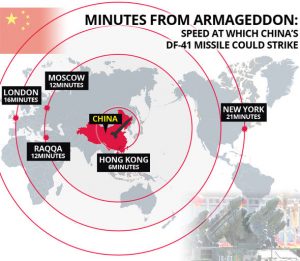
Σχήμα 4:Infographic-502284 βαλλιστικό σύστημα ασφάλειας την Κίνας φτάνει ως τη Δύση
Ένα ερώτημα που τίθεται είναι το πώς θα αντιδράσουν οι δυτικές δυνάμεις, στον ‘δαίμων της Σαγκάης’ και στην αυξανόμενη επιρροή της Κίνας στον κόσμο, όταν ήδη νιώθουν την καυτή ανάσα του ασιατικού δράκου, να απειλεί την πρωτοκαθεδρία τους στον κόσμο; Επιχειρούν με κυρώσεις να τον κάμψουν. Επίσης επιδιώκουν με μια ξέφρενη και δαπανηρή κούρσα εξοπλισμών να τον εξαντλήσουν.
Ο Οργανισμός Συνεργασίας της Σαγκάης: Από το «πνεύμα της Σαγκάης» στο πνεύμα του «λευκού τίγρη»(;)
Το ‘πνεύμα’ ή ‘δαίμων’ της Σαγκάης, όπως φαντάζει για τη Δύση ο Οργανισμός Συνεργασίας της Σαγκάης, για την Ανατολή είναι αναγκαία συνθήκη, για την επιβίωσή της και εκφράζει, ως ένα βαθμό το ένστικτο της αυτοσυντήρησης. Κατά τον κλασικό ορισμό του Κλαούζεβιτς ο πόλεμος «είναι μια πράξη βίας προορισμένη στο να καταναγκάσει τον αντίπαλο να υλοποιήσει τη θέλησή μας», όπου η φυσική βία είναι το μέσο, ενώ ο σκοπός είναι η επιβολή της θέλησής μας στον εχθρό. «Στους άγριους υπερισχύουν οι προθέσεις που εμπνέονται από το συναίσθημα. Στους πολιτισμένους εκείνες που υπαγορεύονται από τη διάνοια». «Ακόμη και τα πιο πολιτισμένα έθνη μπορούν να παραφέρονται εξαιτίας ενός θηριώδους μίσους»[108] εξαιτίας του αιμοβόρου ενστίκτου του τίγρη, για το θήραμα ή αυτόν που βλέπει για αντίπαλο και νιώθει ότι τον απειλεί.
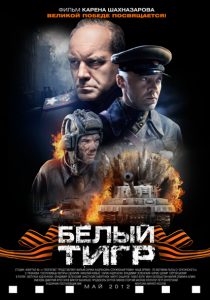
Πηγή: https://polemikestainies.files.wordpress.com/2013/11/bely_tigr_poster.jpg?w=210&h=300
Ο «Λευκός τίγρης»(Белый Тигр)[109] είναι ένα βραβευμένο αλληγορικό πολεμικό δράμα του σύγχρονου ρωσικού κινηματογράφου του 2012, που προτάθηκε από την ίδια τη Ρωσία, για το Όσκαρ καλύτερης ξένης ταινίας. Η ταινία εκτυλίσσεται λίγο πριν τη λήξη του Β΄ Παγκοσμίου Πολέμου. Αφορά ένα γερμανικό λευκό άρμα, που είναι αήττητο και έχει πάρει μυθικές διαστάσεις στα δύο αντίπαλα στρατόπεδα, αφενός για τις ασύλληπτες καταστροφές που προκαλεί στο εχθρικό στρατόπεδο και αφετέρου, δεν έχει γίνει γνωστό, αν υπάρχει πραγματικά ή είναι αποκύημα της φαντασίας.
Ύστερα από μια επίθεση του ‘λευκού τίγρη’ βρίσκεται ένας Ρώσος μέλος ενός πληρώματος ενός άρματος, με καθολικά εγκαύματα στο 90% του σώματός του και επιζεί, ως από θαύμα. Αναρρώνει ραγδαία, μένοντας κυριολεκτικά αλώβητος, χωρίς κανένα εμφανές σημάδι. Αλλά δεν θυμάται τίποτα, από την προηγούμενη του ζωή. Του δίνουν το όνομα «Ναϊντιόνωβ» (Найдёнов), «αυτός που έχει βρεθεί μέσα» στο τανκ. Παράλληλα ανακαλύπτει όπως αποδεικνύεται, ότι έχει αναπτύξει ένα ιδιαίτερο διαισθητικό χάρισμα και αλάνθαστο. Να καταλαβαίνει πότε θα επιτεθεί ο ‘λευκός τίγρης’, αφού νιώθει και ακούει, με την υπεραναπτυγμένη του αίσθηση τα πληγωμένα τανκς, θύματα του τίγρη. Ο ήρωας της ταινίας θεωρεί χρέος τιμής, να νικήσει τον τίγρη.
Αντιθέτως, για τους Γερμανούς, ο Λευκός τίγρης θεωρείται αήττητος, γιατί αντιπροσωπεύει την ψυχή του γερμανικού έθνους. Ο τίγρης μπορεί να υποστεί βλάβες, αλλά επειδή είναι πνεύμα δεν μπορεί να καταστραφεί. Υποχωρεί και καραδοκεί, μέχρι την επόμενη απρόσμενη επίθεση. Κατά την άνευ όρων παράδοση του Βερολίνου, εν μέσω πανηγυρισμών, με την μάλλον κωμική σκηνή, να κερνάνε οι νικητές τους ηττημένους, ένα πλούσιο γεύμα και παγωτό φράουλα προφανώς θέλοντας να υπενθυμίσουν ότι δεν θέλησαν την ταπείνωση και την εξόντωση του εχθρού δίνοντας της ιδιαίτερη έμφαση ως διαμετρικά αντίθετη εικόνα από τις θηριωδίες των ναζί. Αναδεικνύεται έτσι η ανωτερότητα του πολιτισμικού τους προτύπου, το οποίο τους έφερε δικαιωματικά και τη νίκη. Το καλό νίκησε το κακό. Στο μεταξύ ο Ναϊντιόνωφ βρίσκεται και πάλι μέσα σε ένα τανκ και ετοιμάζεται, γιατί μπορεί ο πόλεμος να τελείωσε, αλλά ο τίγρης μπορεί να ξαναεμφανιστεί και πρέπει να είναι έτοιμος, όπως τονίζει με αφοπλιστική φυσικότητα. Η ταινία τελειώνει, με μια σκηνή, μπροστά στο τζάκι, και τον διάλογο του γερασμένου Χίτλερ, με έναν σκιώδη άνδρα (μπορεί αμυδρά να παραπέμπει και στον Στάλιν) ή σε έναν μελλοντικό ή εν δυνάμει εχθρό, που δεν αποκαλύφθηκε ακόμη. Ο Χίτλερ ούτε λίγο ούτε πολύ κάνοντας τον απολογισμό του λέει ότι η Γερμανία, απλώς πραγματοποίησε τους δύο κρυφούς πόθους των Ευρωπαίων: δηλαδή την εξόντωση των Εβραίων και την επίθεση στους Ρώσους. Δηλαδή την εξαφάνιση του διαφορετικού. Και καταλήγει ο Χίτλερ λέγοντας μεταξύ άλλων ότι η Γη γυρίζει κι όσο γυρίζει, θα υπάρχουν μάχες, γιατί ο πόλεμος είναι η ίδια η ζωή, το σημείο εκκίνησης. Το προφανές ρωσικό μήνυμα προς τη Δύση και τους αντιπάλους της από αυτή την ταινία φαίνεται να είναι ότι είμαστε σε εγρήγορση και θα είμαστε και πάλι νικητές, εάν προκληθούμε εκ νέου.
Ο Σουν Τσου ισχυριζόταν,2.500 χρόνια πριν στην Τέχνη του πολέμου ότι «το αποκορύφωμα της στρατηγικής ικανότητας είναι το να υποτάξεις τον εχθρό χωρίς να δώσεις μάχη».[110] Ίσως γι αυτό η Κίνα δεν βιάζεται αλλά δραστηριοποιείται έντονα σ’ ολόκληρο τον πλανήτη και συγκεντρώνει αργά και σταθερά ότι πλουτοπαραγωγικές πηγές μπορεί, ενώ παράλληλα διασφαλίζει κομβικά σημεία και περάσματα στη θάλασσα και στη στεριά τυλίγοντας στον μεταξωτό ιστό της τον κόσμο. Παράλληλα κινείται αθόρυβα, χωρίς να κινεί υποψίες και να ερεθίζει την σινοφοβία. Από την άλλη, δεν αποκλείεται να ακολουθεί μια άλλη διδαχή του Σουν Τσου και να προσποιείται κατωτερότητα, ώστε να ενθαρρύνει την αλαζονεία των αντιπάλων της.
Ο ‘λευκός τίγρης’, συνεπώς, αντιπροσωπεύει τον φόβο απέναντι στο διαφορετικό και γι αυτό επιτίθεται ενστικτωδώς. Η Δύση υπερασπίζεται με κυρώσεις και ανάπτυξη στρατιωτικών δυνάμεων την ισχύ της ανά τον κόσμο. Οι δε αναδυόμενες και διψασμένες για οικονομική ανάπτυξη ευρασιατικές δυνάμεις, με κυριότερες την Ρωσία και την Κίνα, «βλέπουν» ως απειλή τη Δύση ζουν, υπό το κράτος του φόβου της περικύκλωσης και της προληπτικής πρώτης επίθεσης. Έχοντας δε πολλές από ‘καεί’ από το καπιταλιστικό δυτικό μοντέλο, ενώ το πρότυπο του υπαρκτού σοσιαλισμού κατέρρευσε σαν χάρτινος τίγρης. Επομένως έχουν αναπτύξει «αντισώματα», και ίσως περιμένουν όπως ο ήρωας της ταινίας, ο Ναντιόνωφ την επόμενη αναμέτρηση. Εάν έτσι έχουν τα πράγματα τότε επιστρέφουμε πάλι στην κεντρική ιδέα που εκφράζει ο ‘λευκός τίγρης’ στην ταινία που αντικατοπτρίζει την αμοιβαία φοβία των αντίπαλων συνασπισμών δυνάμεων στην έντονη πολικότητα, που αναπτύσσεται.
Στο εκρηκτικό μείγμα προστίθεται ένας επιπλέον ανησυχητικός παράγοντας. Οι νέοι ηγέτες, που εμφανίζονται στο πολιτικό προσκήνιο έχουν το δυναμισμό της νεότητας, για δράση και δυναμική αντίδραση στις προκλήσεις, αλλά δεν έχουν ζήσει, σε συνθήκες πραγματικού πολέμου. Ίσως, εκεί έγκειται και η διαφορετική στάση, που τήρησε ο πατέρας Μπους, από τον υιό του, όπου ο μεγαλύτερος έφτασε 240 χλμ, από τα τείχη της Βαγδάτης ενώ ο νεότερος δεν δίστασε να τα διαβεί.[111] Δεν αποκλείεται σ’ αυτό να έγκειται και το γεγονός ότι ο Πρώτος Παγκόσμιος Πόλεμος έφερε σύντομα τον Δεύτερο. Αντίθετα, ένας από τους λόγους που στην περίοδο του Ψυχρού Πολέμου, παρά τον κίνδυνο ενός πυρηνικού πολέμου και την έντονη ιδεολογική αντιπαλότητα, υπήρξε μια ειρηνική συνύπαρξη μεταξύ των δύο αντίπαλων στρατοπέδων. Ο ‘λευκός τίγρης’ αποσύρεται στην ταινία για να οργανώσει αναλόγως είτε την άμυνα είτε την επίθεσή του. Το πάλαι ποτέ ανατολικό μπλοκ πιθανών ανασυντάσσεται κι εκείνο σε μία νέα μορφή, με όχημα τον Οργανισμό Συνεργασίας της Σαγκάης που του δίνει την απαραίτητη ισχύ εν τη ενώσει. Ενώ ταυτόχρονα η κάθε μεγάλη δύναμη αναπτύσσει ανάλογα το στρατηγικό πλεονέκτημα που κρίνει ότι την εξυπηρετεί εντός και εκτός του Οργανισμού. Η Ρωσία εξοπλίζεται διαθέτοντας το πυρηνικό αντίβαρο που μπορεί να αντιπαρατεθεί αποτελεσματικά στην αμερικανική απειλή. Η Κίνα, από την άλλη πλευρά, επεκτείνεται προκαλώντας δέος με το μέγεθος της τρομακτικής δικτύωσής της εμπλέκοντας όλο και περισσότερους παίκτες και οικονομικούς παράγοντες στα σχέδιά της. Οι ΗΠΑ πληρώνουν ακριβά το κόστος της πρωτοκαθεδρίας στον κόσμο με την εμπλοκή τους σε μια σειρά πολέμων και αντιπαραθέσεων σχεδόν σ’ όλο τον κόσμο, αλλά παραμένουν ακόμη ο ‘λευκός τίγρης’ που δεν εγκαταλείπει ποτέ το πεδίο της μάχης.
Συμπεράσματα
Στην Ασία τα μεγέθη είναι εξαιρετικά μεγάλα –μεγάλη έκταση και υπερπληθυσμός- ενώ διαθέτει ευρύτερη ποικιλομορφία και αποτελεί σταυροδρόμι πολιτισμών. Ο Παναγιώτης Κονδύλης έγραφε προφητικά, από το 1992 ότι: «η παγκόσμια κατάσταση αντικαθρεφτίζεται σε κάθε περιφέρεια του πλανήτη μέσα στους συσχετισμούς που προκύπτουν από την εκεί παρουσία των πλανητικών Δυνάμεων καθώς και από τις συναφείς δράσεις και αντιδράσεις των τοπικών Δυνάμεων. Το αποτέλεσμα είναι ότι, με δεδομένη μια σχετικά μεγάλη πυκνότητα της πλανητικής πολιτικής, δεν υπάρχει πια σε περιφερειακό επίπεδο διεθνής πολιτική δίχως πλανητικές επόψεις και επιπλοκές. Όπως οι πλανητικές Δυνάμεις δεν μπορούν να δεχθούν την αυτάρκεια περιφερειακών υποθέσεων και περιφερειακών αξιώσεων, έτσι και οι περιφερειακές Δυνάμεις, εφ’ όσον δεν έχουν μετατραπεί σε εξάρτημα μιας πλανητικής Δύναμης, επιδιώκουν από την πλευρά τους να εκμεταλλευτούν προς όφελός τους τις υφιστάμενες σχέσεις μεταξύ των πλανητικών Δυνάμεων, επιτείνοντας έτσι ηθελημένα ή αθέλητα την υπαγωγή της περιφερειακής πολιτικής στην πλανητική».[112] Σήμερα, περισσότερο από ποτέ στη σύγχρονη πλανητική εποχή, οι αποστάσεις μειώνονται πρακτικά και αυξάνονται γεωπολιτικά οι απαιτήσεις κυριαρχίας και ασφάλειας. Υφίσταται ένας έντονος ανταγωνισμός μεταξύ των παλαιών παικτών και των νέων, που αναδύονται, αλλά και άλλων, που πέφτουν σε παρακμή. Οι διαφαινόμενες φιλοδοξίες είναι μεγάλες όπως και οι προκλήσεις που δημιουργούνται.
Ο χώρος της Ευρασιατικής ‘νήσου’ είναι το πεδίο έρευνας αυτής της μελέτης, και η Γεωγραφία έχει σημασία όσο ποτέ![113] Κατά την προφητεία του Μακίντερ ‘όποιος ελέγχει την Ευρασία ελέγχει τον κόσμο’ και ο κατακερματισμός της διασφαλίζει, ότι προς το παρόν δεν εμφανίζεται ένας και μοναδικός παίκτης της περιοχής. Ωστόσο, πολλές δυνάμεις διαγκωνίζονται για τον έλεγχό της. Όλες οι μεγάλες δυνάμεις βιάζονται στο να προλάβουν ποιος θα θέσει πρώτος τους κανόνες του παιχνιδιού στον 21ο αιώνα. «Αν δεν είναι οι ΗΠΑ τότε θα είναι η Κίνα» δήλωσε ευθαρσώς ο τέως Πρόεδρος των ΗΠΑ Μπαράκ Ομπάμα. Μια πρωτοκαθεδρία της Κίνας στη διεθνή σκηνή αποτελεί αναμφίβολα ένα εφιαλτικό σενάριο, για την πάλαι ποτέ μοναδική υπερδύναμη, που νιώθει ήδη την καυτή ανάσα του κινεζικού δράκου, να απειλεί τα ‘κεκτημένα’ της. Η Pax Sinica, όμως αποτελεί πονοκέφαλο και για άλλους παίκτες, που τρομάζουν από την μεγάλη οικονομική ανάπτυξη της Κίνας και την εξάπλωση της επιρροής της σ’ όλο τον κόσμο.
Ο Οργανισμός Συνεργασίας της Σαγκάης δεν αποτελεί βέβαια μια συγκροτημένη ακόμη απειλή για τον ‘λευκό τίγρη. Μπορεί όμως να ‘κατασκευαστεί’ ως το αντίπαλο δέος, όταν ατονήσει ο ισλαμικός κίνδυνος. Το ‘πνεύμα της Σαγκάης’ είναι ο Ναϊντιόνωφ και το πνεύμα του παλιού υπαρκτού σοσιαλισμού που απέκτησε ‘αντισώματα’ και προετοιμάζεται να αμυνθεί, καθώς διαβάζει τη ‘Μεγάλη Σκακιέρα’ του Μπρεζίνσκι και αναγνωρίζει ότι αποτελεί στόχο. Κίνα και Ρωσία συνεργάζονται αναγκαστικά, όπως γίνεται συνήθως στη διπλωματία, όταν κανένας παίκτης δεν είναι αρκετά δυνατός να κυριαρχήσει έναντι των άλλων παικτών. Η Κίνα με τα τεράστια μεγέθη της οικονομικής της ανάπτυξης στην πραγματικότητα ‘ζαλίζει’, όλους τους άλλους παίκτες της Ευρασίας.
Η Ρωσία αναγνωρίζει τις αδυναμίες της και επιδιώκει έξυπνες συμμαχίες ως ασπίδα προστασίας, ώστε να κερδίσει χρόνο. Ο δημογραφικός παράγοντας των αραιοκατοικημένων ρωσικών εκτάσεων στην Άπω Ανατολή, όπου συναντιέται με τον πολυπληθή κινεζικό γίγαντα, σίγουρα δεν περνά απαρατήρητος, από την ρωσική στρατηγική. Παράλληλα, στην ιστορίας της η Ρωσία μεγαλούργησε, όταν ήταν κοντά με τη Δύση και μπορούσαν να συνεργαστούν ακόμη κι όταν βρισκόταν σε διαμετρικά αντίθετα συστήματα διακυβέρνησης. Αντιθέτως, η Ρωσία διέρρηξε τις σχέσεις της με την Κίνα ακόμη κι όταν μοιράζονταν το ίδιο ιδεολογικό πρότυπο. Επομένως, ο Οργανισμός της Σαγκάης, που μοιραία εξαρτάται από τις σχέσεις των δυο μεγάλων κρατών μελών του, αφορά μάλλον συνεργασία ανάγκης των μεγάλων παικτών. Η Κίνα από την πλευρά της κερδίζει συνεχώς έδαφος στην παγκόσμια σκηνή και χρειάζεται χρόνο καθώς εκτιμά, ότι έχει τις δυνατότητες να εξελιχθεί, ως αδιαμφισβήτητη πρώτη υπερδύναμη στον κόσμο, επειδή, θα έχει το συγκριτικό πλεονέκτημα, σε όλους τους τομείς και δουλεύει μεθοδικά γι αυτό. Στο πλαίσιο αυτό το πνεύμα της Σαγκάης προς το παρόν είναι η άμυνα των πρωταγωνιστών του.
Ο Οργανισμός θα υφίσταται όσο τον χρειάζονται οι εμπνευστές του. Προς το παρόν έχουν κοινά συμφέροντα και εχθρούς έχουν όμως και πολλά να μοιράσουν στο εγγύς μέλλον, σε βαθμό που δεν αποκλείεται από συν-πρωταγωνιστές να εξελιχθούν σε αντ-αγωνιστές. Ίσως συνεργαστούν για ένα διάστημα, μέχρι η Κίνα να ολοκληρώσει τα μεγαλεπίβολα μεταξωτά της σχέδια. Ωστόσο, παραμένει ζητούμενο γιατί να της δώσουν χρόνο οι άσπονδοι φίλοι της.
Απειλούνται τα δυτικά δημοκρατικά πρότυπα, από το ‘πνεύμα της Σαγκάης’; Η απάντηση είναι όχι, αν η Δύση υπερασπιστεί επιτέλους την ταυτότητά της και το κράτος δικαίου, που την έκανε ελκυστική δύναμη και παράδειγμα προς μίμηση και τρόπο ζωής, που όλοι οι λαοί ήθελαν να ζήσουν. Αν υπάρξει αμοιβαία κατανόηση των ιδιαιτεροτήτων κάθε πλευράς και αποφασιστεί η διπλωματία, ως αποκλειστική λύση επίλυσης των διαφορών. Η Δύση και ιδιαίτερα οι ΗΠΑ με όχημα τον εκδημοκρατισμό και οι ανατολικές χώρες, όπως η Κίνα με τον απολυταρχισμό προσπαθούν η μεν Δύση να διεισδύσει στην Ανατολή η δε Ανατολή να συγκρατήσει τις δυνάμεις της. Οι αντίρροπες δυναμικές που αναπτύσσονται, οι νέες πλουτοπαραγωγικές πηγές που ανακαλύπτονται και η αλματώδης τεχνολογική ανάπτυξη δημιουργούν νέες συνθήκες στο σύγχρονο παγκοσμιοποιημένο περιβάλλον, που προς το παρόν δεν μπορεί να ελεγχθεί απόλυτα, με αποτέλεσμα σύγχρονα όπλα, αλλά και επιστημονικά επιτεύγματα να πέφτουν στα χέρια απρόβλεπτων παικτών, όπως είναι οι κατά καιρούς τρομοκρατικές ομάδες ή μικρότεροι φανατικοί παίκτες, που εκμεταλλευόμενοι διάφορες οικονομίες κλίμακας, αξιοποιώντας κατάλληλα τα νέα δεδομένα και ενισχύοντας την θέση τους στην παγκόσμια σκηνή. Την Κίνα τη συμφέρει να τα έχει καλά με όλους, ώστε να μην ξυπνάει την σινοφοβία ή το δέος απέναντι σε μια πανίσχυρη αναδυόμενη υπερδύναμη. Επομένως, προς το παρόν πιθανόν να αφήνει αυτόν τον ρόλο στη Ρωσία, που έχει το ανάλογο ηγεμονικό παρελθόν, αλλά ακόμα και το στρατιωτικό –πυρηνικό πλεονέκτημα.
Με βάση το σενάριο της αλληγορικής ταινίας, ο ‘λευκός τίγρης’ ήταν ο διακαής ανομολόγητος πόθος των ευρωπαϊκών λαών να εξοντώσουν τους Εβραίους και να επιτεθούν στους Ρώσους. Από την άλλη πλευρά αντιστρόφως είναι σαν το είδωλο στον καθρέφτη του Ναϊντιόνωφ – του αγνού ρώσου ήρωα στρατιώτη- που έζησε από θαύμα αποκτώντας όμως διαισθητικές ικανότητες, να αντιλαμβάνεται τα εχθρικά τάνκς και να είναι πάντα σε ετοιμότητα να τον αντιμετωπίσει, αφού έχει μάθει πως σκέφτεται και αντιλαμβάνεται τις κινήσεις του εχθρού. Ο ίδιος εξελίσσεται σε ένα μάλλον μηχανιστικό μοντέλο-ανθρώπου.
Το ζητούμενο είναι ένα νέο σύστημα ισορροπίας δυνάμεων όπου θα συμμετέχουν όλοι οι μεγάλοι παίκτες, χωρίς αποκλεισμούς ενώ οι μικρότεροι θα παίζουν τον δικό τους ιδιαίτερο ενδιάμεσο ρόλο. Αντικειμενικός σκοπός είναι η σταθερότητα και η μετριοπάθεια που θα έλεγε ο Κισσιντζερ[114] που θα προκύψει μέσα από το τραπέζι των διαπραγματεύσεων, κατά προτίμηση, χωρίς να έχει μεσολαβήσει πόλεμος, γιατί τότε ίσως δεν θα υπάρχει κανείς να διαπραγματευτεί και τίποτα για να γίνει αντικείμενο διαπραγμάτευσης.
Βιβλιογραφία
Επίσημα Κείμενα
УКАЗ Президента Российской Федерации О Стратегии национальой безопасности Россиской Федерации (Στρατηγική Εθνικής Ασφαλείας της Ρωσίας για το 2016 : Η Ρωσία στον σύγχρονο κόσμο σελ.3) http://rg.ru/2015/12/31/nac-bezopasnost-site-dok.html, http://gr.rbth.com/news/2016/01/01/rosia-oi-proteraiotites-tis-exoterikis-politikis-to-2016_556841, http://www.ieee.es/Galerias/fichero/OtrasPublicaciones/Internacional/2016/Russian-National-Security-Strategy-31Dec2015.pdf
Charter of the Collective Security Treaty Organization http://www.ieee.es/Galerias/fichero/Varios/2002_Carta_de_la_OTSC.pdf
Δελτίο ΝΑΤΟ, Ο επερχόμενος ρόλος της Ασίας http://www.nato.int/docu/review/2009/Asia/rise_china_geopolitical/GR/index.htm
Moscow Declaration of Heads of Members States of Shanghai Cooperation Organization’, May 2003, available at: www.sectsco.org/html/00015.html,
Rashid Alimov: SCO’s Fifteenth Spring http://rus.sectsco.org/news/20160204/62728.html (2016/2/4)
Press release on the results of the Shanghai Cooperation Organisation Heads of State Council Meeting http://eng.sectsco.org/news/20170609/289274.html
Βιβλία και άρθρα
—-, Re-Examining the Collective Security Treaty Organization, Analysis by Stratfor, August 6, 2012 https://www.stratfor.com/analysis/re-examining-collective-security-treaty-organization
Ambrosio Thomas, “Catching the Shanghai Spirit: How the Shanghai Cooperation Organization Promotes Authoritarian Norms in Central Asia” – Europe-Asia Studies: Volume 60, issue 8, 2008 https://www.researchgate.net/publication/238397924_Catching_the_’Shanghai_Spirit’_How_the_Shanghai_Cooperation_Organization_Promotes_Authoritarian_Norms_in_Central_Asia?enrichId=rgreq-5216ba83-8a50-4c3a-b2d4-6b251d4d7db1&enrichSource=Y292ZXJQYWdlOzIzODM5NzkyNDtBUzo5OTIyODM3NDI3NDA3OUAxNDAwNjY5Mjk2NzQ5&el=1_x_2
Aris Stephen , Eurasian Regionalism: The Shanghai Cooperation Organisation, Palgrave macmillan, 2011
Aris Stephen, “The Shanghai Cooperation Organization: Tackling the three evils’. A Regional Response to Non-traditional Security or an Anti-Western Bloc?” in Europe-Asia Studies, Volume 61, Issue 3, 2009 http://www.tandfonline.com.sci-hub.cc/doi/abs/10.1080/09668130902753309
Aris Stephen, A new model of Asian regionalism: Does the Shanghai Cooperation Organisation have more potential than ASEAN? Cambridge Review of International Affairs, Volume 22, Issue 3, 2009 http://www.tandfonline.com/doi/full/10.1080/09557570903104040
Ayres Alyssa, Economic Relations With India, Council on Foreign Relations, March 15, 2015 http://www.cfr.org/india/economic-relations-india/p37661
Bailes J.K Alyson, Dunay Pal, Guang Pan and Troitskiy Mikhail, “The Shanghai Cooperation Organization” SIPRI Policy Paper No.17 May 2007
Bartolozzi Paolo « για τα γεγονότα στην Κιρκιζία» http://www.europarl.europa.eu/sides/getDoc.do?pubRef=-//EP//TEXT+IM-PRESS+20100409STO72408+0+DOC+XML+V0//EL
Brezinski Zbigniew, Η Μεγάλη Σκακιέρα: Η αμερικανική υπεροχή και οι γεωστρατηγικές της επιταγές, Αθήνα: Εκδόσεις Λιβάνη, 1997
Cohen Ariel, “The Dragon Looks West: China and the Shanghai Cooperation Organization” The Heritage Foundation, September 7, 2006 http://s3.amazonaws.com/thf_media/2006/pdf/hl961.pdf
Denoon David, China, The United States, And the Future of Central Asia-US-China Relations, Volume I, by New York University, 2015
Engdahl F. William, “Iran Links to Eurasia with Persian Canal”, 7.4.2017 http://journal-neo.org/2016/04/07/iran-links-to-eurasia-with-persian-canal/
Fredholm Michael (Ed.), The Shanghai Cooperation Organization and Eurasian Geopolitics: New Directions, Perspectives and Challenges, Stockholm International Program for Central Asian Studies (SIPCAS), Chapter 12, NIAS Press, 2012.
Gabuev Alexander, “Taming the Dragon: How Can Russia Benefit From China’s Financial Ambitions in the SCO?” http://carnegie.ru/2015/03/19/taming-dragon-how-can-russia-benefit-from-china-s-financial-ambitions-in-sco/i4sd
Germanovich Gene, “The Shanghai Cooperation Organization: A Threat to America Interst in Central Asia?”, Central Asia- Caucasus Institute Silk Road Studies Program, Volume 6, No.1, 2008, p.19-38
Εσκομπάρ Πέπε, Κίνα: Στρατηγική μεγάλης πνοής, εφ. Ρήξη φ.113 http://ardin-rixi.gr/archives/181068
Heilbroner Robert L., Οι φιλόσοφοι του οικονομικού κόσμου: Η ζωή και οι ιδέες τους, Αθήνα: Εκδόσεις Κριτική, 2000.
Kaplan Robert, «Η επερχόμενη αναρχία στην Ευρασία: Οι κίνδυνοι της κινεζικής και της ρωσικής αδυναμίας» στο Foreign Affairs (The Hellenic Edition), τ.40, Ιούνιος/ Ιούλιος 2016, σελ.116-131
Καφαντάρης Τάσος «Η αρρώστια του καπιταλισμού», εφ. Το Βήμα, Κυριακή 21.2.2016 http://www.tovima.gr/science/article/?aid=777982
Kizekova Alica, “The Shanghai Cooperation Organization and Regional Chessboards”, Russian Analytical Digest : CSTO and SCO No.152 21.7.2014 http://e-collection.library.ethz.ch/eserv/eth:8857/eth-8857-01.pdf?pid=eth:8857&dsID=eth-8857-01.pdf
Kissinger Henry, Διπλωματία, Αθήνα: Εκδόσεις Λιβάνη, 1995
Klausewitz Karl von, Περί του Πολέμου, Θεσσαλονίκη: Εκδόσεις Βάνιας 1999.
Κονδύλης Παναγιώτης, Πλανητική πολιτική μετά τον Ψυχρό Πόλεμο, Αθήνα: Εκδόσεις Το Ποντίκι, 1992
Kuhn Thomas, Η δομή των επιστημονικών επαναστάσεων, Αθήνα: Εκδόσεις Σύγχρονα Θέματα, χ.χ.
Λιούντρη Χτιστιάννα, «Η εσωτερική διάσταση του Νέου Δρόμου του Μεταξιού (Μέρος Ι) http://www.liberal.gr/arthro/31446/amyna–diplomatia/2016/i-esoteriki-diastasi-tou-neou-dromou-tou-metaxiou.html και « η Εξωτερική διάσταση του Νέου Δρόμου του Μεταξιού» (Μέρος ΙΙ), http://www.liberal.gr/arthro/31546/amyna–diplomatia/2016/i-exoteriki-diastasi-tou-neou-dromou-tou-metaxiou-meros-II.html
Lowenthal Abraham F. και Bitar Sergio, « Προς την δημοκρατία: Μαθήματα από τις επιτυχημένες μεταβάσεις» Foreign Affairs (the Hellenic edition), τ.40, Ιούνιος/ Ιούλιος 2016, σελ.87-101
Lukin Alexander, “The Shanghai Cooperation Organization: What next?”, Russia In Global Affairs, Vol.5, No3, July-Sept. 2007
Μαλκίδης Θεοφάνης, «Οικονομία εξωτερική πολιτική και εσωτερικές πολιτικές εξελίξεις στη σύγχρονη Ρωσία», Αγορά Χωρίς Σύνορα, Τόμος 14, Τεύχος 1, 2008: 68-87
Massey, D. & Allen, J. (επιμ.), Geography Matters!, Η Γεωγραφία έχει σημασία! Πάτρα: Ελληνικό Ανοικτό Πανεπιστήμιο, 2001
Menon Rajan, Asia in the 21st Century: “Strategic Realignments Amidst a Changing Balance of Power”, 21.1.2016. https://www.carnegiecouncil.org/publications/articles_papers_reports/755
Pantucci Raffaello, “Looking West: China and Central Asia”, 18.3.2015 http://chinaincentralasia.com/2015/04/16/looking-west-china-and-central-asia/
Παπαδόπουλος Γιάννης, «Τα όρια του κινεζικού γραφειογρατικού υπερκαπιταλισμού», Μακεδονία, 26.8.2015 http://marketnews.gr/article/286243/ta_oria_tou_kinezikou_grafeiokratikou_yperkapitalismou
Pehrson Christopher J., “String of Pearls: Meeting the Challenge of China’s Rising Power Across the Asian Littoral”, July 2006 http://www.isn.ethz.ch/Digital-Library/Publications/Detail/?lang=en&id=27007
Peters Ole and Adamou Alexander “The evolutionary advantage of cooperation”, 6.11.2015 http://arxiv.org/pdf/1506.03414.pdf
Piekos William, “The Risks and Rewards of SCO Expansion”, Council on Foreign Relations, 8.7.2015 http://www.cfr.org/international-organizations-and-alliances/risks-rewards-sco-expansion/p36761
Samuelson Paul – William Nordhaus, Οικονομική, Τόμος Α΄, Αθήνα: Εκδόσεις Παπαζήση, 2000
Σουν Τσου, Η τέχνη του πολέμου, Αθήνα: Εκδόσεις Δίαυλος, 2015
Φίλης Κωνσταντίνος, «Διδάγματα από την πρόσφατη κρίση στον Καύκασο», Αγορά Χωρίς Σύνορα, Τόμος 14, Τεύχος 1, 2008, σελ.4-13
Χάντιγκτον Σάμιουελ Π., Η Σύγκρουση των Πολιτισμών: και ο ανασχηματισμός της Παγκόσμιας Τάξης, Αθήνα: Εκδόσεις Terzo Βooks, 2001
Thompson Mark R., “Whatever Happened to “Asian Values”?” Journal of Democrasy, Vol.12 No.4, 2001,p.p. 154-165.
Tonchev Plamen, ‘Pakistan at Fifty-Five: From Jinnah to Musharraf’, European Institute for Asian Studies, http://citeseerx.ist.psu.edu/viewdoc/download;jsessionid=7B7EEA1C58741ACEA56090B0B9DF7418?doi=10.1.1.201.5158&rep=rep1&type=pdf
Tonchev Plamen, “From Vision to Action: Some Practical Aspects of One Belt One Road Projects in” Παρουσίαση, Asia IIER (ΙΔΟΣ), Μάρτιος 2015
Τσακίρης Θεόδωρος, « Ο Ψυχρός Πόλεμος που δεν τελείωσε: Προϊστορία, χρονικό και γεωστρατηγικός απολογισμός του ρωσο-γεωργιανού πολέμου», Αγορά Χωρίς Σύνορα, Τόμος 14, Νο. 1, σελ. 14-42
Romanowski Alina L., Testimony on the President’s FY16 Budget for Europe and Eurasia” http://www.state.gov/p/eur/rls/rm/2015/jun/243914.htm
Vatanka Alex, «Η επιλογή του Μπακού: Πως το Ιράν και η Ρωσία ερωτοτροπούν με το Αζερμπαϊτζάν» http://www.foreignaffairs.gr/articles/70928/alex-vatanka/i-epilogi-toy-mpakoy
Weinstein Adam, “Russian Phoenix: The Collective Security Treaty Organization”, The Whitehead Journal of Diplomacy and International Relations, Νο.167, Winter/Spring 2007, pp.167-180.
Weitz Richard, “The Collective Security Treaty Organization: Past Struggles and Future Prospects, Washington in Russian analytical digest: CSTO and SCO No.152 21.7.2014 http://e-collection.library.ethz.ch/eserv/eth:8857/eth-8857-01.pdf?pid=eth:8857&dsID=eth-8857-01.pdf
Yang Cheng, “The Shanghai Spirit and SCO Mechanisms: Beyond Geopolitics, in Michael Fredholm (ed.), The Shanghai Cooperation Organization and Eurasian Geopolitics: New Directions, Perspectives and Challenges, Stockholm International Program for Central Asian Studies (SIPCAS), NIAS Press, Chapter 12.
Ying Fu, «Πως βλέπει η Κίνα την Ρωσία: Το Πεκίνο και η Μόσχα είναι κοντά, αλλά όχι σύμμαχοι», Foreign Affairs (the Hellenic Edition), Τεύχος 40, Ιούνιος/ Ιούλιος 2016 σελ.102-115
Επίκαιρη αρθρογραφία
«Αλλαγή παιχνιδιού: Η Κίνα εκδίδει τίτλους αγοράς πετρελαίου σε Γουάν με ρήτρα χρυσού», http://infognomonpolitics.blogspot.gr/2017/09/blog-post_151.html
«Αποχαιρετώντας το Ουζμπεκιστάν του Καρίμοφ», http://www.efsyn.gr/arthro/apohairetontas-oyzmpekistan-toy-karimof
«China in Favor of Strengthening Cooperation Between SCO, Turkey», https://sputniknews.com/politics/20160615/1041345639/china-strenthening-cooperation-sco-turkey.html
«Εγκαινιάστηκε ο αγωγός αερίου Τουκμενιστάν Κίνας», http://www.naftemporiki.gr/finance/story/222009
«Επιβεβαιώθηκε και επισήμως ο θάνατος του Ουζμπέκου Προέδρου Καρίμοφ», http://www.naftemporiki.gr/story/1143252/epibebaiothike-kai-episimos-o-thanatos-tou-proedrou-tou-ouzmpekistan-karimof
«Επίσημη ρωσική προσφορά στην Ινδία για S-400», http://www.defence-point.gr/news/?p=150764
«Ερντογάν: «Να μας πει η ΕΕ αν μας θέλει», http://infognomonpolitics.blogspot.gr/2016/10/blog-post_30.html
«India, Pakistan become full members of SCO», http://indianexpress.com/article/india/india-pakistan-become-full-members-of-sco-shanghai-cooperation-organisation-summit-astana-4696286/
«Η θέση της Τουρκίας είναι στην Ασία, δήλωσε ο Σαρκοζί: ετοιμάζει νέα Ευρωπαϊκή Συνθήκη» http://mignatiou.com/2016/09/i-thesi-tis-tourkias-ine-stin-asia-dilose-o-sarkozi-etimazi-nea-evropaiki-sinthiki/
«Η μυστική διπλωματία «έσπασε» τον πάγο Ρωσίας- Τουρκίας», http://www.cnn.gr/news/kosmos/story/42182/h-mystiki-diplomatia-espase-ton-pago-rosias-toyrkias
«Η Ρωσία προσκαλεί το Ιράν στον Οργανισμό Συνεργασίας της Σαγκάης» http://www.defence-point.gr/news/?p=154798
«Κίνα η πρώτη παγκόσμια οικονομία έως το 2014», http://www.capital.gr/story/2103149
Μπλοφάρει ο Ερντογάν με το Σύμφωνο της Σαγκάης; http://www.capital.gr/story/1718331
Λιουμπώφ Λιούλκο «Μια αντι-ΝΑΤΟική συμμαχία;» από τη ΡΗΞΗ φ.114 http://ardin-rixi.gr/archives/186580
«Οι G-7 «εξορίζουν» τη Ρωσία από τους G-8» http://gr.euronews.com/2014/03/25/russia-cold-shouldered-by-g7-nations-over-annexation-of-crimea/
«Κλιμάκωση στο Κασμίρ ανάμεσα σε Ινδία και Πακιστάν», http://www.defence-point.gr/news/?p=161901
«Οι οκτώ πυλώνες της επιτυχίας της Κίνας», http://www.tovima.gr/opinions/article/?aid=292383
«Παγκόσμιος συναγερμός για το νέο υπερόπλο της Κίνας: Μπορεί να καταστρέψει την Αθήνα σε μισή ώρα!», http://www.newsbomb.gr/bomb-tv/diethnh/story/690168/pagkosmios-synagermos-gia-to-neo-yperoplo-tis-kinas-mporei-na-katastrepsei-tin-athina-se-misi-ora
«Ουκρανία: Δύο χρόνια μετά το «Μαϊντάν» η οικονομία τους…», http://www.defence-point.gr/news/?p=150459
«Pakistan cannot influence Russian’s strategic partnership with India-expert», http://rbth.com/international/2016/05/24/pakistan-cannot-influence-russias-strategic-partnership-with-india-exper_596865
Παπανδρόπουλος Αθανάσιος , «Ο Ερντογάν, τα σχολεία και η επέλαση του ισλαμισμού» http://www.euro2day.gr/specials/opinions/article/1396793/o-erntogan-ta-sholeia-kai-h-epelash-toy.html
«Πρόωρες εκλογές στο Καζακστάν» http://www.dw.com/el/%CF%80%CF%81%CF%8C%CF%89%CF%81%CE%B5%CF%82-%CE%B5%CE%BA%CE%BB%CE%BF%CE%B3%CE%AD%CF%82-%CF%83%CF%84%CE%BF-%CE%BA%CE%B1%CE%B6%CE%B1%CE%BA%CF%83%CF%84%CE%AC%CE%BD/a-19130409
PwC: Ανοδική η πορεία των επενδύσεων σε Ασία Ειρηνικό http://www.tovima.gr/finance/article/?aid=649562
«Russia, China and India Building Multipolar World” That Neo- Cons Don’t Get http://sputniknews.com/politics/20160420/1038330821/russia-asia-partnership.html?utm_source=https%3A%2F%2Ft.co%2FUwmWm6dELn&utm_medium=short_url&utm_content=bemt&utm_campaign=URL_shortening
«Shanghai Five offer Turkey full membership», http://www.dailysabah.com/diplomacy/2016/06/30/shanghai-five-offer-turkey-full-membership
«Στη δημοσιότητα το κείμενο της συμφωνίας 12 χωρών του Ειρηνικού (TPP)» http://mignatiou.com/2015/11/sti-dimosiotita-to-kimeno-tis-simfonias-12-choron-tou-irinikou-ttp/
Στυλιανού Αντώνης «Το Ευρωπαϊκό κεκτημένο» εφημερίδα ΣΗΜΕΡΙΝΗ (13-2-2014) http://www.sigmalive.com/simerini/analiseis/100525/to-europaiko-kektimeno
«Tashkent “blocks Soviet Tashkent ‘blocks Soviet-era cars’ during SCO summit», http://www.bbc.com/news/blogs-news-from-elsewhere-36606870
«Το εμπόριο Ρωσίας –Κίνας παραμένει ισχυρό», http://gr.rbth.com/opinion/2015/10/12/to-emporio-rosias-kinas-paramenei-ishyro_481943
TTIP: Χάρτα απορύθμισης και κατάλυσης της δημοκρατίας http://tvxs.gr/news/kosmos/sxoleio-ston-kamba
Turkey stops Kurdish children’s tv channel ‘terrorism’ http://www.dw.com/en/turkey-stops-kurdish-childrens-tv-channel-citing-terrorism/a-35928513
Φαλτάιτς Άννα, «Γιατί η Τουρκία πυροδοτεί αστάθεια στην περιοχή» http://www.euro2day.gr/specials/topics/article/1437982/giati-h-toyrkia-pyrodotei-astatheia-sth-periohh.html
[1] «Οργανισμό Συνεργασίας της Σαγκάης» (Shanghai Cooperation Organization-SCO), (Шанхайская организация сотрудничества-ШОС). Εκτείνεται από τη Βαλτική Θάλασσα ως τον Ειρηνικό Ωκεανό καλύπτοντας σχεδόν ολόκληρη την «Ευρασιατική νήσο».
[2] Kuhn Thomas, Η δομή των επιστημονικών επαναστάσεων, εκδ. Σύγχρονα Θέματα, Αθήνα, χ.χ.
[3] Από τη μία η ισχύουσα αρχιτεκτονική μετά τον Β΄Παγκόσμιο Πόλεμο με τη διευθέτηση των Διεθνών Συνθηκών, Θεσμών και Οργανισμών για έναν διπολικό σύστημα διακυβέρνησης. Σε συνδυασμό με την προσπάθεια των ΗΠΑ από το 1991 να επιβάλλουν την πρωτοκαθεδρία τους και ένα μονοπολικό σύστημα που βρίσκεται σε εξέλιξη. Από την άλλη οι αναδυόμενες δυνάμεις της Ανατολής που διεκδικούν το μερίδιό τους στη διαδικασία λήψης αποφάσεων στη διεθνή σκηνή στο σύγχρονο παγκοσμιοποιημένο περιβάλλον επιδιώκοντας ένα πλουραλιστικό μοντέλο διακυβέρνησης. Βλ.Kuhn Thomas, Η δομή των επιστημονικών επαναστάσεων,op.cit.
[4] http://rus.sectsco.org/news/20160204/62728.html
[5] Στη ρωσική γλώσσα λέγεται «Леший», που είναι και ο τίτλος του δεύτερου θεατρικού έργου του Άντον Τσέχωφ (1889) που αποτελεί το πρωτόλειο έργου του «Ο θείος Βάνιας» (1889). Στα ελληνικά έχει μεταφραστεί συνήθως, ως «ο δαίμων του δάσους» ή το «Στοιχειό του δάσους».
[6] Δηλαδή ο νέος τρόπος ανάπτυξης και λειτουργίας περιφερειακών οργανισμών όπως ο Οργανισμός Συνεργασίας της Σαγκάης, με όχημα την αρχή της μη παρέμβασης και η ανοχή στα αυταρχικά καθεστώτα των κρατών μελών τους ως προς τον εκδημοκρατισμό τους.
[7] Ο «λευκός τίγρης» είναι σύγχρονη ρωσική πολεμική ταινία που αναβιώνει το μύθο του γερμανικού λευκού άρματος θρύλου κατά τον Β΄ Παγκόσμιο Πόλεμο. Στην ταινία μεταφέρεται αλληγορικά ο διακαής πόθος των ευρωπαϊκών λαών μετουσιωμένος στο «πνεύμα του λευκού τίγρη» ενάντια σε Εβραίους και Ρώσους και άρα η εξόντωση του διαφορετικού, όπου γίνονται οι σχετικές αναφορές.
[8] Samuelson A. Paul, Nordhaus D. William, Οικονομική, Αθήνα: Εκδόσεις Παπαζήση, 2000, τόμος Α’ σελ. 649, Heilbroner Robert L., Οι φιλόσοφοι του οικονομικού κόσμου: Η ζωή και οι ιδέες τους, Αθήνα: Εκδόσεις Κριτική, 2000, σελ.55-56
[9] Όπου συνδέεται η Οικονομία ακόμη και με τη Βιολογία.Βλ. – Ole Peters and Alexander Adamou, “The Evolutionary Advantage of Cooperation” 11.6.2015, http://arxiv.org/pdf/1506.03414.pdf
[10] Τάσος Καφαντάρης, «Η αρρώστια του καπιταλισμού», Το Βήμα, 21.2.2016 http://www.tovima.gr/science/article/?aid=777982
[11] Χτιστιάννας Λιούντρη, «Η εσωτερική διάσταση του Νέου Δρόμου του Μεταξιού (Μέρος Ι) http://www.liberal.gr/arthro/31446/amyna–diplomatia/2016/i-esoteriki-diastasi-tou-neou-dromou-tou-metaxiou.html και « η Εξωτερική διάσταση του Νέου Δρόμου του Μεταξιού» (Μέρος ΙΙ), http://www.liberal.gr/arthro/31546/amyna–diplomatia/2016/i-exoteriki-diastasi-tou-neou-dromou-tou-metaxiou-meros-II.html
[12] Πέπε Εσκομπάρ, «Κίνα: Στρατηγική μεγάλης πνοής», Ρήξη, φ.113 http://ardin-rixi.gr/archives/181068
[13] PwC, «Ανοδική η πορεία των επενδύσεων σε Ασία Ειρηνικό» http://www.tovima.gr/finance/article/?aid=649562
[14] УКАЗ Президента Российской Федерации О Стратегии национальой безопасности Россиской Федерации (Στρατηγική Εθνικής Ασφαλείας της Ρωσίας για το 2016 : Η Ρωσία στον σύγχρονο κόσμο σελ.3) http://rg.ru/2015/12/31/nac-bezopasnost-site-dok.html, http://gr.rbth.com/news/2016/01/01/rosia-oi-proteraiotites-tis-exoterikis-politikis-to-2016_556841, http://www.ieee.es/Galerias/fichero/OtrasPublicaciones/Internacional/2016/Russian-National-Security-Strategy-31Dec2015.pdf
[15] Στρατηγική Εθνικής Ασφαλείας της Ρωσίας για το 2016 op.cit.
[16] Zbigniew Brezinski, Η Μεγάλη Σκακιέρα: Η αμερικανική υπεροχή και οι γεωστρατηγικές της επιταγές, Αθήνα: Εκδ. Λιβάνη, 1997
[17] http://cosmoidioglossia.blogspot.gr/2014/09/21-11-2014-11-2001.html
[18] Press release on the results of the Shanghai Cooperation Organisation Heads of State Council Meeting http://eng.sectsco.org/news/20170609/289274.html
[19] India, Pakistan become full members of SCO http://indianexpress.com/article/india/india-pakistan-become-full-members-of-sco-shanghai-cooperation-organisation-summit-astana-4696286/
[20] Έτσι, αίρεται η μερική άρση του απομονωτισμού του Ιράν από τη διεθνή σκηνή και η επιστροφή του στην ενεργό δράση μετά την άρση των κυρώσεων που του είχαν επιβληθεί για το πυρηνικό του πρόγραμμα.
[21] http://www.cnn.gr/reportaz/video/5444/koritsia-poloyntai-gia-nyfes-stin-kina
[22] Το εμπόριο Ρωσίας –Κίνας παραμένει ισχυρό http://gr.rbth.com/opinion/2015/10/12/to-emporio-rosias-kinas-paramenei-ishyro_481943
[23] Aris Stephen, “A New Model of Asian regionalism: Does the Shanghai Cooperation Organisation Have More Potential than ASEAN?” Cambridge Review of International Affairs, Vol. 22, No 3, 2009 http://www.tandfonline.com/doi/full/10.1080/09557570903104040
[24] Treaty on Deepening Military Trust in Border Regions
[25] Aris Stephen, Eurasian Regionalism: The Shanghai Cooperation Organisation, Basingstoke: Palgrave Macmillan, 2011, p.3
[26] Samuel Huntington, Η Σύγκρουση των Πολιτισμών: και ο ανασχηματισμός της Παγκόσμιας Τάξης, Αθήνα: Terzo Βooks, 2001.
[27] Ambrosio Thomas, “Catching the “Shanghai Spirit”: How the Shanghai Cooperation Organization Promotes Authoritarian Norms in Central Asia” https://www.researchgate.net/publication/238397924_Catching_the_’Shanghai_Spirit’_How_the_Shanghai_Cooperation_Organization_Promotes_Authoritarian_Norms_in_Central_Asia?enrichId=rgreq-5216ba83-8a50-4c3a-b2d4-6b251d4d7db1&enrichSource=Y292ZXJQYWdlOzIzODM5NzkyNDtBUzo5OTIyODM3NDI3NDA3OUAxNDAwNjY5Mjk2NzQ5&el=1_x_2
[28] Aris Stephen, “A New Model of Asian Regionalism: Does the Shanghai Cooperation Organization Have more potential than ASEAN?”, Cambidge Review of International Affairs, op.cit., pp.1-2
[29] Όπως το αγγλικό BBC, για τη Σύνοδο της Τασκένδης το 2016 , με το παροιμιώδες φλεγματικό του ύφους, για την απαγόρευση των παλαιού σοβιετικού τύπου αυτοκινήτων, κατά τη διάρκεια της Συνόδου. Tashkent ‘blocks Soviet-era cars’ during SCO summit http://www.bbc.com/news/blogs-news-from-elsewhere-36606870
[30] Moscow Declaration of Heads of Members States of Shanghai Cooperation Organization’, May 2003, www.sectsco.org/html/00015.html, Κάτι που για τον δυτικό τρόπο σκέψης φαντάζει μάλλον αδιανόητο, εάν σκεφτεί κανείς ότι στήριξε στο απώτερο παρελθόν ολόκληρη την αποικιοκρατική του πολιτική πάνω στην «ανωτερότητα» του δυτικού πολιτισμού και στην ανάγκη ΄εκπολιτισμού΄ των ΄άγριων΄ (βάρβαρων) φυλών του κόσμου.
[31] Χάρτης του Οργανισμού, (Charter of the Shanghai Cooperation Organization) https://www.sectsco.org/EN123/shows.asp?id=69
[32] Lukin Alexander, “The Shanghai Cooperation Organization: What next?”, Russia In Global Affairs, Vol.5, No 3, 2007, pp.140-141
[33] Cohen Ariel, “The Dragon Looks West: China and the Shanghai Cooperation Organization”, The Heritage Lectures by The Heritage Foundation, No 961, 3.8.2006, p.8
[34] http://news.bbc.co.uk/2/hi/business/8102216.stm
[35] Germanovich Gene, ‘The Shanghai Cooperation Organization: A Treat to America Interest in Central Asia?’, Central Asia-Caucausus Institute Silk Road Studies Program, Vol.6,No.1, 2008, p.36
[36] Αργότερα προστέθηκε και η Νότια Αφρική και έχει πια την ονομασία, από τα ακρωνύμια των κρατών μελών, BRICS http://www.kathimerini.gr/857033/article/oikonomia/die8nhs-oikonomia/oi-brics-kai-h-prospa8eia-apodesmeyshs-apo-toys-pistwtikoys-organismoys-ths-dyshs
[37] Alyssa Ayres, “Economic Relations With India, Council on Foreign Relations, 15.3.2015 http://www.cfr.org/india/economic-relations-india/p37661
[38] Βλ. για την επίσημη ρωσική προσφορά στην Ινδία για S-400 http://www.defence-point.gr/news/?p=150764
[39] India and Pakistan to join SCO , Is Iran next? After 15 years, the group is set to expand this summer http://thediplomat.com/2016/05/india-and-pakistan-to-join-sco-is-iran-next/
[40] William Piekos, “The Risks and Rewards of SCO Expansion”, Council on Foreign Relations, 8.7. 2015 http://www.cfr.org/international-organizations-and-alliances/risks-rewards-sco-expansion/p36761
[41] SCO 15th anniversary summit http://en.kremlin.ru/events/president/news/52257
[42] Η Ρωσία προσκαλεί το Ιράν στον Οργανισμό Συνεργασίας της Σαγκάης http://www.defence-point.gr/news/?p=154798
[43] China in Favor of Strengthening Cooperation Between SCO, Turkey https://sputniknews.com/politics/20160615/1041345639/china-strenthening-cooperation-sco-turkey.html
[44] Shanghai Five offer Turkey full membership http://www.dailysabah.com/diplomacy/2016/06/30/shanghai-five-offer-turkey-full-membership
[45] Οι σχέσεις Ρωσίας Τουρκίας είχαν διαταραχθεί με την κατάρριψη ρωσικού μαχητικού αεροσκάφους από τουρκικό στο έδαφος της Συρίας.
[46] Αν πιστέψουμε το δημοσίευμα της εφημερίδας Hurriyet που αναπαρήγαγε το CNN Greece με τίτλο «Η μυστική διπλωματία ‘έσπασε’ τον πάγο Ρωσίας-Τουρκίας όπου αποδίδονται λεπτομερώς οι αγωνιώδεις προσπάθειες για την επαναπροσέγγιση των δύο χωρών. http://www.cnn.gr/news/kosmos/story/42182/h-mystiki-diplomatia-espase-ton-pago-rosias-toyrkias
[47] «Ο επερχόμενος ρόλος της Ασίας», Δελτίο ΝΑΤΟ, http://www.nato.int/docu/review/2009/Asia/rise_china_geopolitical/GR/index.htm
[48] Denoon David, China, The United States, And the Future of Central Asia-US-China Relations, Volume I, New York: New York University Press, 2015
[49] Στη δημοσιότητα το κείμενο της συμφωνίας 12 χωρών του Ειρηνικού (TPP) http://mignatiou.com/2015/11/sti-dimosiotita-to-kimeno-tis-simfonias-12-choron-tou-irinikou-ttp/
[50] Cohen Ariel, “The Dragon Looks west: China and the Shanghai Cooperation Organization” The Heritage Foundation, 7.9. 2006 http://s3.amazonaws.com/thf_media/2006/pdf/hl961.pdf
[51] “Russia, China and India Building Multipolar World. That Neo- Cons Don’t Get” http://sputniknews.com/politics/20160420/1038330821/russia-asia-partnership.html?utm_source=https%3A%2F%2Ft.co%2FUwmWm6dELn&utm_medium=short_url&utm_content=bemt&utm_campaign=URL_shortening
[52] Christopher J. Pehrson, String of Pearls: Meeting the Challenge of China’s Rising Power Across the Asian Littoral, July 2006 http://www.isn.ethz.ch/Digital-Library/Publications/Detail/?lang=en&id=27007
[53] Χριστιάννα Λιούντρη, «Η εξωτερική διάσταση του Νέου Δρόμου του Μεταξιού (Μέρος ΙΙ)», http://www.liberal.gr/arthro/31546/amyna–diplomatia/2016/i-exoteriki-diastasi-tou-neou-dromou-tou-metaxiou-meros-II.html
[54] Ying Fu, «Πως βλέπει η Κίνα την Ρωσία: Το Πεκίνο και η Μόσχα είναι κοντά, αλλά όχι σύμμαχοι» Foreign Affairs (the Hellenic Edition), Τεύχος.40, Ιούνιος/Ιούλιος 2016 σελ.102-115.
[55] Παγκόσμιος συναγερμός για το νέο υπερόπλο της Κίνας: Μπορεί να καταστρέψει την Αθήνα σε μισή ώρα! http://www.newsbomb.gr/bomb-tv/diethnh/story/690168/pagkosmios-synagermos-gia-to-neo-yperoplo-tis-kinas-mporei-na-katastrepsei-tin-athina-se-misi-ora
[56] Tonchev Plamen, From Vision to Action: Some Practical Aspects of One Belt One Road Projects in Asia IIER (ΙΔΟΣ), Παρουσίαση, Μάρτιος 2015
[57] Rajan Menon, “Asia in the 21st Century: Strategic Realignments amidst a Changing Balance of Power”, https://www.carnegiecouncil.org/publications/articles_papers_reports/755
[58] Stephen Aris, “The Shanghai Cooperation Organization: Tackling the three evils’. A Regional Response to Non-traditional Security or an Anti-Western Bloc?” Europe-Asia Studies, Vol.61, No 3, 2009,pp. 466
[59] The Shanghai Convention on Combating Terrorism, Separatism and Extremism http://www.sectsco.org/EN123/show.asp?id=68
[60]Alexander Gabuev, “Taming the Dragon: How Can Russia Benefit From China’s Financial Ambitions in the SCO?” http://carnegie.ru/2015/03/19/taming-dragon-how-can-russia-benefit-from-china-s-financial-ambitions-in-sco/i4sd
[61] Bailes J.K Alyson, Dunay Pal, Guang Pan and Troitskiy Mikhail, “The Shanghai Cooperation Organization” SIPRI Policy Paper No.17 May 2007, p.10
[62] Collective Security Treaty Organization (CSTO)-Οργανισμός Συνθήκης Συλλογικής Ασφάλειας, Eurasian Economic Community (EurAsEC) – Ευρασιατική Οικονομική Κοινότητα και Custom Union Commision (CIC)-Επιτροπή Τελωνειακής Ένωσης.
[63] Τσακίρης Θεόδωρος, « Ο Ψυχρός Πόλεμος που δεν τελείωσε: Προϊστορία, χρονικό και γεωστρατηγικός απολογισμός του ρωσο-γεωργιανού πολέμου», Αγορά Χωρίς Σύνορα, Τόμος 14 Τεύχος 1, 2008: σελ.14-42 και σελ.30-31
[64] Φίλης Κωνσταντίνος, «Διδάγματα από την πρόσφατη κρίση στον Καύκασο», Αγορά Χωρίς Σύνορα, Τόμος 14 Τεύχος 1, 2008, σελ.12
[65] http://sputniknews.com/russia/20160415/1038100591/us-humiliated-baltic-su-24s.html?utm_source=https%3A%2F%2Ft.co%2FbaJkvxNxdh&utm_medium=short_url&utm_content=bc9b&utm_campaign=URL_shortening
[66] Kaplan Robert, «Η επερχόμενη αναρχία στην Ευρασία: Οι κίνδυνοι της κινεζικής και της ρωσικής αδυναμίας» στο Foreign Affars (The Hellenic Edition), Τεύχος 40, Ιούνιος/ Ιούλιος 2016, σελ.116-131
[67] Raffaello Pantucci, “Looking West: China and Central Asia” http://chinaincentralasia.com/2015/04/16/looking-west-china-and-central-asia/ March 18, 2015
[68] Kaplan Robert, «Η επερχόμενη αναρχία στην Ευρασία: Οι κίνδυνοι της κινεζικής και της ρωσικής αδυναμίας», Foreign Affairs (The Hellenic Edition), Τεύχος 40, Ιούνιος/ Ιούλιος 2016, σελ.116-131
[69] http://www.defence-point.gr/news/?p=128610
[70] Ying Fu, «Πως βλέπει η Κίνα την Ρωσία: Το Πεκίνο και η Μόσχα είναι κοντά, αλλά όχι σύμμαχοι» Foreign Affairs (the Hellenic Edition), Τεύχος 40, Ιούνιος/ Ιούλιος 2016 σελ.102-115
[71] Yang Cheng, “The Shanghai Spirit and SCO Mechanisms: Beyond Geopolitics”, in Michael Fredholm (ed.) The Shanghai Cooperation Orgnanization and Eurasian Geopolitcs: New Directions, Perspectives and Challenges, Stockholm International Program for Central Asian Studies (SIPCAS), Stockholm, NIAS Press, 2012 Chapter 12, p.200
[72] «Μπλοφάρει ο Ερντογάν με το Σύμφωνο της Σαγκάης;» http://www.capital.gr/story/1718331
[73] Η Ευρασιατική Οικονομική Ένωση είναι μια οικονομική ένωση κρατών διάδοχος της Ευρασιατικής Οικονομικής Κοινότητας και αποτελεί βασικό πυλώνα της ρωσικής υψηλής στρατηγικής πολιτικής.
[74] Ενδεικτική είναι η πρωτοβουλία του Τούρκου Προέδρου να μετατρέψει υποχρεωτικά αρκετά δημόσια σχολεία σε θεολογικές σχολές με στόχο να ανατραφεί μία γενιά θρησκευτικής νεολαίας. Αθανάσιος Χ. Παπανδρόπουλος , «Ο Ερντογάν, τα σχολεία και η επέλαση του ισλαμισμού» http://www.euro2day.gr/specials/opinions/article/1396793/o-erntogan-ta-sholeia-kai-h-epelash-toy.html
[75] Και την βάναυση μεταχείριση που επιφύλαξε στους αντιπάλους και τις μαζικές εκκαθαρίσεις στη διοίκηση του κράτους. http://www.dw.com/en/turkey-stops-kurdish-childrens-tv-channel-citing-terrorism/a-35928513
[76] http://mignatiou.com/2016/09/i-thesi-tis-tourkias-ine-stin-asia-dilose-o-sarkozi-etimazi-nea-evropaiki-sinthiki/
[77] http://infognomonpolitics.blogspot.gr/2016/10/blog-post_30.html
[78] Tonchev Plamen, ‘Pakistan at Fifty-Five: From Jinnah to Musharraf’ European Institute for Asian Studies, http://citeseerx.ist.psu.edu/viewdoc/download;jsessionid=7B7EEA1C58741ACEA56090B0B9DF7418?doi=10.1.1.201.5158&rep=rep1&type=pdf
[79] Για την κλιμάκωση στο Κασμίρ ανάμεσα σε Ινδία και Πακιστάν βλ. http://www.defence-point.gr/news/?p=161901
[80] Pakistan cannot influence Russian’s strategic partnership with India-expert http://rbth.com/international/2016/05/24/pakistan-cannot-influence-russias-strategic-partnership-with-india-exper_596865
[81] Λιουμπώφ Λιούλκο «Μια αντι-ΝΑΤΟική συμμαχία;» Ρήξη, φ.114, http://ardin-rixi.gr/archives/186580
[82] Alex Vatanka, «Η επιλογή του Μπακού: Πως το Ιράν και η Ρωσία ερωτοτροπούν με το Αζερμπαϊτζάν» http://www.foreignaffairs.gr/articles/70928/alex-vatanka/i-epilogi-toy-mpakoy
[83] William F. Engdahl, “Iran Links to Eurasia with Persian Canal” http://journal-neo.org/2016/04/07/iran-links-to-eurasia-with-persian-canal/
[84] Τα άλλα κριτήρια είναι ότι γίνονται δεκτές μόνο χώρες από την ευρωπαϊκή και την ασιατική ήπειρο, να έχει διπλωματικές σχέσεις με όλα τα ιδρυτικά κράτη μέλη του Οργανισμού, να έχουν ήδη την ιδιότητα του «παρατηρητή» ή «Εταίρου Διαλόγου» στον Οργανισμό και να έχουν θετική σχέση στον τομέα της οικονομικής και πολιτιστικής συνεργασίας και να μην βρίσκονται σε εμπόλεμη κατάσταση με κάποιο κράτος μέλος του Οργανισμού. Yang Cheng, “The Shanghai Spirit and SCO Mechanisms: Beyond Geopolitics”, in Michael Fredholm (ed.) The Shanghai Cooperation Orgnanization and Eurasian Geopolitcs: New Directions, Perspectives and Challenges, Stockholm International Program for Central Asian Studies (SIPCAS), Stockholm, NIAS Press, 2012 Chapter 12, p.212
[85] Adam Weinstein, “Russian Phoenix: The Collective Security Treaty Organization”, The Whitehead Journal of Diplomacy and International Relations, No.167, Winter/Spring 2007, p.174
[86] “Re-Examining the Collective Security Treaty Organization”, Analysis by Stratfor, 6.8.2012 https://www.stratfor.com/analysis/re-examining-collective-security-treaty-organization
[87] Richard Weitz, “The Collective Security Treaty Organization: Past Struggles and Future Prospects”, Russian Analytical Digest: CSTO and SCO No.152 21.7.2014, p.4
[88] Charter of the Collective Security Treaty Organization http://www.ieee.es/Galerias/fichero/Varios/2002_Carta_de_la_OTSC.pdf
[89]Ο Οργανισμός Συνεργασίας της Σαγκάης είναι ένας νέου τύπου οργανισμός. http://www.sectsco.org/EN123/show.asp?id=577
[90] Thomas Ambrosio, “Catching the Shanghai Spirit: How the Shanghai Cooperation Organization Promotes Authoritarian Norms in Central Asia” Europe-Asia Studies,: Vol. 60, No 8, 2008 https://www.researchgate.net/publication/238397924_Catching_the_’Shanghai_Spirit’_How_the_Shanghai_Cooperation_Organization_Promotes_Authoritarian_Norms_in_Central_Asia?enrichId=rgreq-5216ba83-8a50-4c3a-b2d4-6b251d4d7db1&enrichSource=Y292ZXJQYWdlOzIzODM5NzkyNDtBUzo5OTIyODM3NDI3NDA3OUAxNDAwNjY5Mjk2NzQ5&el=1_x_2
[91] «Σας ζητώ να μην κάνετε ερωτήσεις με αυτόν τον ανεύθυνο τρόπο, είμαστε ανοικτοί σε καλοπροαίρετες προτάσεις αλλά απορρίπτουμε αβάσιμες κατηγορίες» κατέληξε ο κινέζος ΥΠΕΞ http://www.tovima.gr/world/article/?aid=804556
[92]Οι οκτώ πυλώνες της επιτυχίας της Κίνας http://www.tovima.gr/opinions/article/?aid=292383
[93] http://www.tovima.gr/world/article/?aid=766393
[94] Mark R. Thompson, “Whatever Happened to “Asian Values”?” https://www.researchgate.net/publication/236774844_Whatever_Happened_to_Asian_Values
[95]Δεν αποκλείεται όμως, αυτό που δεν κατάφεραν οι εξωτερικές πιέσεις να έρθει, ως φυσικό γεγονός και να το καταφέρει η βιολογία και ο πανδαμάτωρ χρόνος, καθώς οι μεγάλης ηλικίας ηγέτες δύσκολα, θα μπορέσουν να αντικατασταθούν. Αυτό έχει αποδείξει η ιστορία αυταρχικών καθεστώτων, όπου ο χαρισματικός ηγέτης είναι συνήθως και αναντικατάστατος.Τυχόν αποσταθεροποίηση ενός καθεστώτος πιθανόν να λειτουργήσει, ως ντόμινο και για τις γειτονικές χώρες, αλλά αυτό μόνο σε μελλοντικό χρόνο μπορεί να αποδειχθεί. Εξαίρεση που μάλλον επιβεβαιώνει τον κανόνα αποτελεί η ομαλή μετάβαση της εξουσίας στην Κιρκιζία.
[96] «Επιβεβαιώθηκε και επισήμως ο θάνατος του Ουζμπέκου Προέδρου Καρίμοφ», http://www.naftemporiki.gr/story/1143252/epibebaiothike-kai-episimos-o-thanatos-tou-proedrou-tou-ouzmpekistan-karimof
[97] http://www.tovima.gr/opinions/article/?aid=292383
[98] Τα δραματικά γεγονότα της Ουκρανίας και οι συνέπειές τους συνδέονται, με κάθε «χρωματιστή επανάσταση», που τυχόν εμφανίζεται στην Ευρασία, όπως στην Κιρκιζία, ή τη Γεωργία. Επομένως, κάθε τέτοιου είδους εξέγερση αντιμετωπίζεται, όχι μόνο με καχυποψία, αλλά και, ως μέσο ανάσχεσης της δυναμικής πορείας ενός κράτους, προς την ανάπτυξη και την ευημερία. Κι αν για τη Δύση η μη επέμβαση στα εσωτερικά των χωρών θεωρείται «απαράδεκτη» (“not acceptable”), για τους παίκτες στην περιοχή έχει αρνητικό αντίκτυπο, αλλά για διαμετρικά αντίθετους λόγους.
[99] Φαλτάιτς Άννα, «Γιατί η Τουρκία πυροδοτεί αστάθεια στην περιοχή» http://www.euro2day.gr/specials/topics/article/1437982/giati-h-toyrkia-pyrodotei-astatheia-sth-periohh.html
[100] Kizekova Alica, “The Shanghai Cooperation Organization and Regional Chessboards” Prague, in Russian analytical digest: CSTO and SCO, No.152 21 July 2014, p.4
[101] Ο Paolo Bartolozzi για τα γεγονότα στην http://www.europarl.europa.eu/sides/getDoc.do?pubRef=-//EP//TEXT+IM-PRESS+20100409STO72408+0+DOC+XML+V0//EL
[102] Yang Cheng, The Shanghai Spirit and SCO Mechanisms, p.217 (ό.π.)
[103] http://www.naftemporiki.gr/printStory/259176
[104]“in supporting sovereignty and independence, security and stability, governance and human rights, and economic development across the five Central Asian countries, and the potentially transformational effects of regional economic cooperation. U.S. assistance will create economic growth programs, particularly in Tajikistan and Kyrgyz Republic, to increase job opportunities and expand trade. In the Kyrgyz Republic we also will continue efforts to consolidate its democracy and border programs to counter transnational crime, narcotrafficking, terrorism and extremism
Alina L. Romanowski, Testimony on the President’s FY16 Budget for Europe and Eurasia” http://www.state.gov/p/eur/rls/rm/2015/jun/243914.htm
[105] Lowenthal Abraham F. και Bitar Sergio, « Προς την δημοκρατία: Μαθήματα από τις επιτυχημένες μεταβάσεις» στο Foreign Affairs (the Hellenic edition), τ.40, Ιούνιος/ Ιούλιος 2016, σελ.87-101
[106] Μαλκίδης Θεοφάνης, «Οικονομία εξωτερική πολιτική και εσωτερικές πολιτικές εξελίξεις στη σύγχρονη Ρωσία», Αγορά Χωρίς Σύνορα, Τόμος 14 (1), 2008: 68-87
[107] Η Αμερική στην περιοχή Ασίας- Ειρηνικού http://www.capital.gr/story/3028479
[108] Karl von Klausewitz, Περί του Πολέμου, εκδ. Βάνιας,Θεσσαλονίκη 1999, σ.31-33
[109]https://ru.wikipedia.org/wiki/%D0%91%D0%B5%D0%BB%D1%8B%D0%B9_%D1%82%D0%B8%D0%B3%D1%80_%28%D1%84%D0%B8%D0%BB%D1%8C%D0%BC%29
[110] Σουν Τσου, Η τέχνη του πολέμου, εφ. Αγορά, 2015, σελ. 10
[111] 25 χρόνια από την «Καταιγίδα της Ερήμου» Η αρχή του εφιάλτη σε απευθείας μετάδοση http://news247.gr/eidiseis/afieromata/25-xronia-apo-thn-kataigida-ths-erhmoy-h-arxh-toy-efialth-se-ap-eytheias-metadosh.3864646.html
[112] Παναγιώτης Κονδύλης, Πλανητική πολιτική μετά τον Ψυχρό Πόλεμο, Αθήνα: Το Ποντίκι, 1992, σελ.13
[113] Massey, D. & Allen, J. (επιμ.) 1984. Geography Matters!, Η Γεωγραφία έχει σημασία! Πάτρα: ΕΑΠ, 2001
[114] Kissinger Henry, Διπλωματία, εκδ. Λιβάνη, Αθήνα, 1995, σελ.25


 by
 RICK BAUM



 Author:

 του Δημήτρη Μακροδημόπουλου.
 by
 Europol headquarters in The Hague, Netherlands. (Image source: OSeveno/Wikimedia Commons)
 Number of terror or terrorist attacks in the EU since 2007 (Data: EU Terrorism Situation and Trend Reports; chart D. Godefridi)
 People killed by terror attacks in the EU since 2007 (Data: EU Terrorism Situation and Trend Reports; chart D. Godefridi)
 Terror attacks and people killed by terror attacks in the EU since 2007 (Data: EU Terrorism Situation and Trend Reports; chart D. Godefridi)
 του ΠΑΝΤΕΛΗ ΣΑΒΒΙΔΗ.
 Αλλά στο «Όχι» αυτό συναίνεσε και συμπαρατάχτηκε στη μάχη ακόμη και ο κύριος, και θανατηφόρος, αντίπαλος της τότε πολιτικής τάξης, το ΚΚΕ και οι κάθε μορφής κομμουνιστές. Και αυτό υπογραμμίζει την πολλαπλασιαστική σημασία της ενότητας ενός αποφασισμένου λαού.
 Αποφασιστικότητα δεν φαίνεται να υπάρχει. Η ενότητα έχει διαρραγεί και το χάσμα μεγάλωσε με την κρίση. Οι πολιτικοί μας δεν θέλουν να βάλουν στο νου τους το ενδεχόμενο μιας αποτροπής (η πραγματικότητα, όμως, δεν ξορκίζεται με μάγια) και η στρατιωτική ανισορροπία είναι σε βάρος μας.
 ή εκσυγχρονισμό οπλικών συστημάτων. Το ερώτημα που ανακύπτει εδώ είναι πρώτον ποιος αποφασίζει και δεύτερον τι θα γίνει αν συμβεί κάτι απρόβλεπτο και καταστροφικό για την ακεραιότητα της χώρας.
 October 27, 2017 11.06am BST