Μπορεί οι ισπανικές Αρχές και οι δημοσιογράφοι να αναζητούν τον πρόεδρο –ή πρώην πρόεδρο– της Καταλονίας Κάρλες Πουτζδεμόν στις Βρυξέλλες, αλλά το γεγονός έχει μικρή σημασία. Γεγονότα σαν και αυτά που ενεργοποίησε ο Πουτζδεμόν ανήκουν στην ιστορία. Όσοι δεν το βλέπουν θα πρέπει να σταθούν προσεκτικά σε ό,τι διήγειρε το καταλανικό δημοψήφισμα και τη διακήρυξη της καταλανικής ανεξαρτησίας, έστω κι αν έγινε από το 51% των αντιπροσώπων του καταλανικού Κοινοβουλίου.
Το κουτί της Πανδώρας άνοιξε στην Ευρώπη. Σωρεία ανάλογων κινημάτων θα αρχίσουν να εκδηλώνονται με μεγαλύτερη ένταση, και δεν αποκλείεται να δούμε τη «Διεθνή των αποσχιστών».
Η καταλανική υπόθεση αυτή καθεαυτήν δεν θα προχωρήσει. Δεν είναι άλλωστε καθόλου σίγουρο πως οι Καταλανοί ηγέτες ήθελαν να αποσχιστούν ή να αποκτήσουν ένα χαρτί πίεσης προς την ισπανική κυβέρνηση για να διαπραγματευτούν λιγότερους φόρους και περισσότερη αυτονομία στην οικονομική διαχείριση της περιοχής τους. Η κεντρική ισπανική κυβέρνηση διαθέτει και τη δύναμη και την εξωτερική νομιμοποίηση, ακόμη και σε επίπεδο Ευρωπαϊκής Ένωσης, να επιβάλλει την πολιτική της. Αλλά η Ευρώπη βρίσκεται σε μια τρομερή αντίφαση που θα αποδιοργανώσει ακόμη περισσότερο τους ήδη χαλαρούς δεσμούς της. Μάλλον ένας νέος παράγοντας προστέθηκε στην αναζήτηση της μαθηματικής εξίσωσης που θα δώσει το γράφημα της νέας Ευρώπης. Τι θα γίνει με τα αποσχιστικά κινήματα;
Η ελληνική κυβέρνηση επέδειξε αργά αντανακλαστικά. Η δυναμική των αποσχιστικών κινημάτων δεν ελέγχεται αλλά την Ελλάδα δεν την εξυπηρετεί αυτή η εξέλιξη, για τους ίδιους λόγους που δεν υποστήριξε και την ανεξαρτησία του Κοσσυφοπεδίου. Η δήθεν διεθνιστική λογική μιας παρωχημένης Αριστεράς δεν μπορεί να υπερισχύσει του εθνικού συμφέροντος.
Όταν οι Μπολσεβίκοι ήρθαν στην εξουσία και δημιούργησαν στρατό, η πρώτη ονομασία που του έδωσαν ήταν «Κόκκινος Στρατός των Εργατών και των Αγροτών». Η ονομασία του παρέπεμπε σε μια διεθνιστική λογική από την οποία, υποτίθεται, εμφορούνταν. Αλλά το διάταγμα με το οποίο αναγγελλόταν η ίδρυσή του είχε προμετωπίδα τη φράση «Η σοσιαλιστική πατρίδα κινδυνεύει», ώστε, παράλληλα με τα διεθνιστικά αντανακλαστικά των Μπολσεβίκων, να ικανοποιούνται και να αφυπνίζονται και τα πατριωτικά αισθήματα του ρωσικού λαού.
Περιθώρια για χαλαρή αντιμετώπιση των προβλημάτων δεν υπάρχουν. Και χαλαρή αντιμετώπιση είναι η κομματική τους προσέγγιση.
Όπως θα φανεί πολύ σύντομα, καθώς θα αρχίσει να αχνοφαίνεται η νέα παγκόσμια ανακατάταξη, η Ελλάδα αντιμετωπίζει υπαρξιακή απειλή. Χρειάζεται να βρεθούν και να αναλάβουν τη ηνία της συνετοί και σώφρονες ηγέτες.
Ίσως θεωρηθούν υπερβολικές οι επισημάνσεις αυτές για την καταλανική αφύπνιση, αλλά ας θυμηθούμε πως δεν πέρασαν έξι χρόνια από το Συνέδριο της Ιεράς Συμμαχίας στη Βιέννη και τη δήλωσή της ότι θα πατάξει οποιαδήποτε εθνική εξέγερση, και ξέσπασε η Ελληνική Επανάσταση. Η Ισπανία θα αποτελέσει ένα σύγχρονο πρότυπο.
Η Καταλονία είναι το πρώτο σημαντικό αποσχιστικό κίνημα στη Δυτική Ευρώπη μετά το Μάαστριχτ, αλλά δεν θα είναι το τελευταίο. Η απάντηση της Ισπανίας και της ΕΕ στην Καταλονία θα δώσει τον τόνο για τον τρόπο με τον οποίο η ΕΕ θα ανταποκριθεί σε αποσχιστικά ή αυτονομιστικά κινήματα σε μέρη όπως η Σκωτία, η βόρεια Ιταλία ή άλλες περιοχές με αδρανή εθνικισμό που μπορεί, όμως, να ενεργοποιηθεί.
Η ΕΕ δεν μπορεί παρά να υποστηρίξει μια κυβέρνηση που θα καταστείλει ένα κίνημα εθνικής αυτοδιάθεσης στην ευρωπαϊκή ήπειρο. Οι περισσότερες –αν όχι όλες– χώρες της ΕΕ θα υποστηρίξουν τη χρήση βίας, δεδομένου ότι καμία χώρα δεν θέλει να αμφισβητηθεί η εδαφική της ακεραιότητα. Η ΕΕ όμως βρίσκεται σε μια αντίφαση σε σχέση με τις ιδρυτικές και καταστατικές της αρχές.
Οικοδομήθηκε για την οικονομική ευημερία και σχεδιάστηκε για να εξασφαλίσει την ειρήνη στα έθνη της Ευρώπης. Εάν δεν μπορεί να εγγυηθεί κανένα από τα δύο, θα γίνει αγνώριστη.
Σε ό,τι αφορά την Ισπανία, δεν είναι ένα από κλασικά έθνη κράτη. Όταν ο Φερδινάνδος Β΄ της Αραγονίας και η Ισαβέλλα της Καστίλης παντρεύτηκαν (1469), η εξουσία τους δεν ήταν απόλυτη. Ήταν μια συμφωνία μεταξύ των μοναρχών και των περιφερειών. Οι φόροι θα μπορούσαν να πηγαίνουν στο στέμμα, αλλά το στέμμα με τη σειρά του σεβάστηκε την αυτονομία των περιφερειών του. Οι παίκτες συχνά άλλαζαν, αλλά η Ισπανία αποτελούσε πάντα μια μεγάλη συμφωνία μεταξύ των διαφόρων περιφερειών και των ξεχωριστών λαών, όχι ένα κράτος με συνεκτική εθνική οντότητα.
Η συμφωνία δεν κράτησε για πάντα, ειδικά στην Καταλονία. Τον 17ο αιώνα η ισπανική μοναρχία προσπάθησε να πάρει περισσότερα χρήματα από την Καταλονία, επειδή η Καστίλη επιβάρυνε πολύ το φορολογικό βάρος και επειδή το ισπανικό στέμμα χρειαζόταν χρήματα για τους πολέμους. Το αποτέλεσμα ήταν η καταλανική εξέγερση του 1640-1652.
Το 1932 η Καταλονία προσπάθησε για άλλη μια φορά να πετύχει μεγαλύτερη αυτονομία, αλλά συνετρίβη από τον Ισπανό δικτάτορα Φρανθίσκο Φράνκο μετά τον ισπανικό εμφύλιο πόλεμο του 1936-1939. Το ισπανικό σύνταγμα του 1978 έδωσε για άλλη μια φορά αυτονομία στην Καταλονία, αναγνωρίζοντας ότι η Ισπανία δεν θα μπορούσε να ελπίζει σε νομιμοποίηση από όλους όσους εξουσίαζε αν δεν σεβόταν την ποικιλομορφία των περιφερειών της. Αρχικά αυτό φάνηκε να λειτουργεί αρκετά καλά, αλλά η οικονομική κρίση του 2008 έπληξε ιδιαίτερα την Ισπανία.
Η Καταλονία επιθυμεί μεγαλύτερο έλεγχο της οικονομίας της, και λιγότερα από τα φορολογικά της έσοδα να προορίζονται για την κεντρική κυβέρνηση.
Υπάρχουν απτά δείγματα διεθνών εξελίξεων που μπορεί να φανούν χρήσιμα για άλλες χώρες και λαούς που αντιμετωπίζουν τις δικές τους περιφέρειες ως αποικίες.
Όταν έχεις ανοικτά ζητήματα σαν και αυτά της Ελλάδας, δεν συγκαταλέγεις τη Βοιωτία σε ευνοϊκούς νόμους για να ικανοποιήσεις μια δράκα κρατικοδίαιτων συνδαιτημόνων της εκάστοτε εξουσίας, ούτε καταργείς αυτοδιοικητικούς θεσμούς που άντεξαν στο πέρασμα του χρόνου και κράτησαν συνεκτική την ελληνική κοινωνία.
Οι καμπάνες ήχησαν. Κανείς δεν δικαιούται να πει ότι δεν γνώριζε. Μια νέα πολιτική, ριζικά διαφορετική από τη σημερινή, είναι αναγκαία για την Ελλάδα.
Catalonia is vying to become Europe’s newest nation-state, but this is a battle Catalonia ultimately can’t win. On Oct. 27, Catalan lawmakers voted to declare independence—barely. Only 51.8% of members in the Catalan parliament supported the declaration. That means even Catalans themselves are divided over whether Catalonia should secede from Spain.
Spain has threatened to do whatever is necessary to maintain the rule of law in Catalonia, and it has both the will and the means to follow through on that threat. Catalonia also has very little international support it can depend on. Even so, the Catalan revolt of 2017 will have ramifications in Spain and in Europe that will be felt for generations to come.
For many observers outside of Europe, the Catalan issue came out of left field. Sure, the Catalan government said it would hold an independence referendum, but it held a similar referendum in 2014 and nothing came of that. Surely, all the Catalan government wanted was a bargaining chip it could use in its negotiations with the Spanish government over taxes and other issues related to the region’s political autonomy. Catalonia has more to gain economically by remaining a part of Spain, so why would it want to embark on the arduous and violent process that usually accompanies declarations of independence?
But no one should be surprised that Catalan independence has become a major issue—it has been for many centuries now. It is a product of Spain’s geography and Catalonia’s unique history. The geography of Spain is immensely diverse. The northwest is rainy and faces the Atlantic. The center has historically been dry and poor. The northeast—where Catalonia is located—is fertile and faces the Mediterranean. The south has its own unique climate and spent many centuries under Muslim rule. These realities helped create unique cultures and political economies that have proven remarkably resilient over centuries, despite best efforts to subsume them under Spanish nationhood.
The Catalan declaration also came out of Catalonia’s history. There has been a uniquely Catalan political consciousness since the Middle Ages. When Ferdinand II of Aragon and Isabella of Castile married, their rule was not absolute. It was a bargain between the monarchs and the regions comprising their dominions, many with their own constitutions. Taxes might well have flowed to the crown, but the crown in turn respected the autonomy of its regional subjects. The players often changed, but “Spain” was always a grand bargain between disparate regions and distinct peoples, not a coherent national entity.
Greater Autonomy
The grand bargain did not always hold, especially in Catalonia. Catalonia has periodically sued for greater autonomy and even independence. In the 17th century, for instance, the Spanish monarchy tried to extract more money out of Catalonia because Castile was carrying too great a share of the tax burden and because the Spanish crown needed money to pay for its wars. The result was the Catalan revolt of 1640–1652. In 1932, Catalonia once more tried to seize greater autonomy, only to be crushed by Spanish dictator Francisco Franco after the Spanish Civil War of 1936–1939. The 1978 Spanish constitution once again returned autonomy to Catalonia, recognizing that Spain could not hope to claim legitimacy among all the people it aimed to rule if it did not also respect the diversity of those very people in the first place.
At first, this seemed to work sufficiently well. But over time, the same issues that for centuries had divided Catalonia from the rest of the country began to crop up again. Even as Spain’s economy grew after 1978, Catalonia remained significantly richer than the rest of the country. Today, the region’s gross domestic product accounts for 20% of Spain’s GDP, and its GDP per capita is higher than the EU-27 average. The 2008 financial crisis hit Spain particularly hard. Youth unemployment spiked to over 50% in 2014 and remains around 40% today. Overall unemployment has been declining but is still over 16%. Catalonia wants more control over its economy and less of its tax revenue going to the central government. And it began reinstituting cultural markers such as teaching the Catalan language in schools. The grand bargain that was reached in 1978 has failed to hold up in a post-2008 world.
Pandora’s Box
This explains why Spain has reacted with such force to the Catalan regional government’s moves—even though only 42% of Catalans showed up for the vote, not exactly a ringing endorsement for the separatists. Catalonia is just one of 19 autonomous communities in Spain. Basque Country, with its own language and unique culture, has also been vying for independence, and as recently as the 1990s, Basque separatists carried out terrorist attacks in Spain in support of their cause. If Spain does not crush Catalonia’s independence movement now, it could open a Pandora’s box, with other regions demanding more autonomy or even separation, and Spain can’t allow this to happen. Madrid, therefore, needs to assert direct control over Catalonia; anything less would give the appearance of Spain abdicating its responsibility to its people and its constitution.
Both sides have been hurling accusations of illegal conduct at each other. The Spanish constitution is silent on the issue of independence referendums, but the Spanish government and Spain’s Constitutional Court view the Catalan regional government’s activities as illegal. The Catalan government viewed the violent Spanish response to the vote as illegal. The Catalan government also thinks what it is doing is in keeping with the spirit of the European Union, founded as it was on the idea of national self-determination. The situation has progressed to the point that the legalities and illegalities are irrelevant. The rule of law exists only in a political community in which all, or at least the vast majority, accept it. When there is a fundamental disagreement about what the law is and who gets to enforce it, the stability that law imposes breaks down, and life goes back to being nasty, brutish, and short, with victories determined not by persuasive argument but by monopoly of force.
This is where things get complicated for the European Union. On the one hand, the EU remains steadfastly in support of its member state, Spain. But Spain will now have to use force to maintain its writ in Catalonia. That will put the EU in a lose-lose situation: It can either support a member state using force to quell a political rebellion that seeks the very thing the EU was designed to protect—national self-determination—or it can support the right to self-rule for the people of Catalonia but, in so doing, completely undermine the position of the Spanish government.
Eighteenth-century Irish statesman Edmund Burke famously said that Spain is “a great whale stranded on the shores of Europe”—as if, at the end of the day, there was something fundamentally un-European about Spain. That may have been true back then, but the 2017 Catalan revolt shows that Burke’s view of Spain no longer holds. Spain will now be a model for Europe. Catalonia is the first major secessionist movement to take concrete steps toward achieving independence in post-Maastricht Western Europe, but it won’t be the last. How Spain and the EU respond to Catalonia will set the tone for how the EU will respond to separatist or autonomy movements in places like Scotland, northern Italy, or other regions with dormant nationalism that may bubble to the surface.
2017 will be the year that the EU supports a government in putting down a movement for national self-determination on the European continent. Most, if not all, EU countries will support the use of force this time, since no country wants its own territorial integrity challenged. But condoning the use of force in this context takes the EU to a dangerous place. The EU was built around economic prosperity and was designed to ensure peace for Europe’s nations. If the EU can guarantee neither of those things, it will become irrelevant or unrecognizable. Slowly but surely, Europe is returning to history—and the suppression of Catalonia is a recurring chapter in that history.
« Merkel muss weg ! » (Merkel doit partir !), lit-on souvent depuis quelque temps sur les murs d’Allemagne. Des tags qui reflètent la colère et le désamour croissants d’une partie de la population allemande pour sa chancelière fraîchement réélue. Car si son parti, la CDU, vient d’enregistrer un si piètre résultat aux élections fédérales, Angela Merkel y est bien pour quelque chose.
Sur le baromètre qui mesure la cote de popularité des acteurs de la politique allemande, Angela Merkel, tenante du titre depuis des années, s’est fait doubler par Wolfgang Schäuble, ex-ministre des Finances et depuis quelques jours président du Bundestag, le Parlement allemand. Ce vétéran très respecté de la vie politique outre-Rhin est pour les Allemands un garant de cette continuité à laquelle ils aspirent tant. Grâce à lui, disent les sondés, les caisses de l’État sont pleines et l’économie allemande se porte bien. Angela Merkel, qui depuis sa première élection en 2005 monopolisait la première place dans le cœur de ses administrés, glisse maintenant en seconde position. Sa cote baisse de 2 à 1,6 point. C’est beaucoup. Si une grande partie de la population allemande fait toujours confiance à sa capacité de mener à bien les négociations de coalition et d’assurer la stabilité de son pays, les mécontents sont de plus en plus nombreux.
Une politique trop à gauche
Le 24 septembre, plus de deux millions de fidèles électeurs ont déserté le camp de la CDU/CSU pour aller voter ailleurs. Aucun parti n’a perdu autant d’électeurs. Près de 1,4 million d’entre eux ont préféré le FDP, le petit parti libéral et 1 million ont choisi l’AfD. En votant pour le nouveau parti d’extrême droite, ces électeurs chrétiens-démocrates ont protesté contre la politique menée par leur chancelière, tout particulièrement sur la question des migrants. Les barons de la CSU, l’aile bavaroise et conservatrice de la CDU, en veulent à Angela Merkel d’avoir mené une politique trop à gauche et exigent que l’on serre les rangs sur le flanc droit de l’Union pour ramener au bercail ces brebis égarées.
À gauche comme à droite, on reproche à la chancelière son manque de vision politique. D’être une gestionnaire qui se targue d’avancer « un pas après l’autre », mais qui fait si souvent le dos rond au lieu de s’attaquer aux problèmes que traverse son pays. Comme dans cet éditorial de la Süddeutsche Zeitung, le grand journal de centre gauche basé à Munich : « La chancelière dit que le gouvernement doit régler les problèmes auxquels sont confrontés les citoyens. C’est la meilleure recette contre le populisme de droite. C’est exact. Mais qui gouverne ce pays depuis 12 ans ? Et pourquoi les problèmes n’ont-ils pas été réglés depuis longtemps ? L’analyse de Merkel est donc aussi un aveu des graves erreurs qu’elle a commises. Les élections furent pour la chancelière un rendez-vous avec la réalité. »
Pas d’héritier en vue
Le vent est-il donc en train de tourner pour Angela Merkel ? Son pouvoir, qui, il y a quelques mois encore, paraissait infaillible, est-il en train de s’éroder ? Celle que l’on croyait indéboulonnable est ressortie très fragilisée des élections législatives. Dans les couloirs du pouvoir à Berlin, les rumeurs et les spéculations vont bon train. Les noms de ceux qui susceptibles d’assurer sa succession circulent. Angela Merkel a fait le vide autour d’elle. Elle n’a pas pris soin d’assurer sa relève. Pas de dauphin évident en vue. Mais de nouveaux visages se profilent.
Tel Jens Spahn, 37 ans, secrétaire d’État au ministère des Finances. Ce jeune chrétien-démocrate rue depuis un moment déjà dans les brancards. Sur la gestion de la crise des réfugiés, il s’est opposé ouvertement à la chancelière. On murmure à Berlin qu’il convoite la chancellerie dans quatre ans. Il se donne du mal pour se démarquer et affiche des positions à droite de la CDU. Le soir de l’élection du jeune conservateur Sebastien Kurz en Autriche, Jens Spahn poste sur Twitter une photo qui en dit long : Jens Spahn pose en compagnie du vainqueur autrichien qui, plus que tout autre Européen de l’Ouest, a tenu tête à Angela Merkel sur la question des réfugiés. Le message de Jens Spahn est clair : la politique anti-ouverture des frontières de Sebastien Kurz est responsable de sa victoire. Alors, pourquoi ne pas faire de même en Allemagne et neutraliser l’AfD par la même occasion ?
Le comble est que cette photo a été postée alors que, parallèlement aux élections autrichiennes, les sociaux-démocrates battaient la CDU dans le Land de Basse-Saxe. Pendant qu’Angela Merkel panse de nouvelles plaies, Jens Spahn fait la fête à Vienne. Le message ne saurait être plus limpide : si elle veut conserver le pouvoir, la CDU doit donner enfin un grand coup de volant à droite. Mais la question des réfugiés n’en a pas fini de déchirer la CDU.
Certains, à Berlin, se demandent même si Angela Merkel arrivera au bout de son mandat ou si elle sera obligée de passer la main à mi-parcours. Des spéculations qui ne semblent pas inquiéter outre mesure la chancelière, tout occupée en ce moment à composer une coalition capable de gouverner durant les quatre prochaines années.
Έναν νέο όρο εισήγαγε ο εκπρόσωπος του ΝΑΤΟ κατά τη διάρκεια του πολέμου στη Γιουγκοσλαβία Τζέιμι Σι στο Συμπόσιο της Θεσσαλονίκης που οργανώνεται κάθε χρόνο από το Δίκτυο Ναβαρίνο και την Πολιτιστική Εταιρία Επιχειρηματιών Βορείου Ελλάδος.
Τον όρο frenemy. Κάτι, δηλαδή, σαν φιλεχθρός. Φίλος και εχθρός μαζί.
Από την ομιλία του Τζέιμι Σι διεγνώσθη κάποια χαλάρωση της ΝΑΤΟϊκής στάσης απέναντι στη Μόσχα και δεν θα πρέπει να αποτελέσει έκπληξη αν το επόμενο διάστημα δούμε σχετική προσέγγιση τόσο με τις ΗΠΑ και το ΝΑΤΟ όσο και με την Ευρώπη.
Στο ίδιο κλίμα κινήθηκε σε συνέντευξή του στην Καθημερινή και ο πρέσβης Βλαντιμίρ Τζιζόφ, μόνιμος αντιπρόσωπος της Ρωσικής Ομοσπονδίας στις Βρυξέλλες ο οποίος δήλωσε πως η χώρα του δεν επιθυμεί τη διάλυση της ΕΕ.
Η ρωσική οικονομία διέρχεται δύσκολη περίοδο που επιδεινώθηκε από το Δυτικό εμπάργκο. Πριν από δύο χρόνια, όταν η Μόσχα επενέβαινε στη συριακή κρίση στον ίδιο χώρο, Ρωσίδα αναλύτρια απέδωσε τη ρωσική επέμβαση, μεταξύ άλλων, και στην προσπάθεια της Μόσχας να επανέλθει στο διεθνές παιχνίδι διαπραγματευόμενη τα κέρδη της στη Μέση Ανατολή. Φαίνεται πως η ώρα αυτή έχει φτάσει.
Η επάνοδος της Ρωσίας ως διεθνή παίκτη, μετά μάλιστα από την υποτιμητική δήλωση Ομπάμα ότι είναι μια φθίνουσα περιφερειακή δύναμη, είναι από τις προτεραιότητες του Ρώσου προέδρου. Η Ρωσία επενδύει στη σχέση με την Ευρώπη.
Ενοχλήθηκε, βεβαίως, πολύ από την αθέτηση της –προφορικής, όπως φαίνεται– συμφωνίας Γκορμπατσόφ – πατέρα Μπους ότι το ΝΑΤΟ δεν θα πλησιάσει στη ρωσική αυλή, αλλά ο ΝΑΤΟϊκός εκπρόσωπος είχε μια διαφορετική εξήγηση για τη συγκατάνευση της Μόσχας στην ενοποίηση της Γερμανίας.
Η Ρωσία θεωρούσε πως η γερμανική ενοποίηση θα ήταν προς το συμφέρον της Μόσχας.
Στην προσπάθειά της να ανταποδώσει τη ΝΑΤΟϊκή προσέγγιση στο λεγόμενο στη ρωσική διάλεκτο εγγύς εξωτερικό, η Μόσχα δεν έχει την ίδια δυνατότητα. Γι’ αυτό περιορίζεται στην υπονόμευση Δυτικών θεσμών και πολιτικών. Αυτό επιχείρησε, στο βαθμό που μπόρεσε να το κάνει, και στα Βαλκάνια. Η Σερβία και τα Σκόπια του Γκρούεφσκι ήταν δύο χώρες με τις οποίες επιχείρησε να αναπτύξει πολιτική, αλλά η γειτονική μας χώρα με την αλλαγή κυβέρνησης στρέφει το ενδιαφέρον της, τώρα, προς τη Δύση. Αλλά και ο Γκρούεφκσι ξεκίνησε ως Δυτικός και κατέληξε στην αγκαλιά της Μόσχας. Όπως και ο Ντόντικ της Ρεπούμπλικα Σρέμπτσκα, στη Βοσνία, όπως και ο Ερντογάν. Για να περιοριστούμε στα Βαλκάνια, οι χώρες φαίνεται να στρέφονται προς τη Δύση αλλά διατηρούν και ένα παράθυρο ανοικτό προς τη Ρωσία. Η αδυναμία της Ρωσίας είναι ότι δεν έχει διάθεση για ιδεολογική σταυροφορία, ούτε και τη δυνατότητα για χρηματοδοτήσεις. Και το χειρότερο, δεν έχει να εξαγάγει ένα συνεκτικό μοντέλο.
Η απουσία ενός νέου πειστικού αφηγήματος είναι πρόβλημα για τον Πούτιν και στο εσωτερικό. Η ρωσική κοινωνία δεν μπορεί να χειραγωγείται με έναν αυταρχισμό στο όνομα της καταστροφής και υπονόμευσης της χώρας από τους ολιγάρχες. Το αφήγημα αυτό εξάντλησε τις δυνατότητές του. Και η νέα πρόταση δεν έχει ακόμη διατυπωθεί.
Αδυναμία παρέμβασης δείχνουν και οι ΗΠΑ. Όσο για την ΕΕ, βρίσκεται σε μια ασθενή κατάσταση εδώ και χρόνια.
Μια τέτοια υποχώρηση των μεγάλων παικτών αφήνει περιθώρια για τους περιφερειακώς δρώντες. Η Τουρκία είναι μία από αυτές τις δυνάμεις. Δεν αποκλείεται να επιχειρήσει να κλιμακώσει το παιχνίδι της στα Βαλκάνια, και κυρίως με την Αλβανία, της οποίας ο πρωθυπουργός δείχνει ευεπίφορος στα ερντογανικά κελεύσματα. Μην αποκλείουμε ορισμένες από τις προκλητικές κινήσεις του Ράμα προς την μειονότητα και την Ελλάδα να είναι τουρκικής εμπνεύσεως.
Key Takeaway: Iraq and Iran rejected a Kurdish ceasefire offer and launched a new phase of their military campaign against Iraqi Kurdistan. Iraqi forces and Iran’s proxies are prepared for new military operations to seize Iraqi Kurdistan’s border crossings if Kurdish forces do not relinquish them. Iranian proxy leaders are coordinating with Iraqi Security Forces (ISF) commanders and may even direct the military operation, if it occurs. It will begin at the Fishkhabur crossing between Iraqi Kurdistan and Syria, where Iran’s proxies including the Badr Organization and Asa’ib Ahl al Haq are deployed. Negotiations are underway after Prime Minister Abadi set a deadline for the handover of the crossings on October 28th, but there has been no sign of a Kurdish withdrawal. Kurdistan Regional Government President Masoud Barzani announced he will not seek an extension of his term past November 1st in a letter to the Kurdish Parliament on October 29th.
Iraqi forces and Iran’s proxies are prepared to launch operations to seize Iraqi Kurdistan’s border crossings if Iraq’s Kurds do not surrender them to federal control. Prime Minister Haider al Abadi gave Iraq’s Kurds until 1:00 on October 28th to allow a “joint technical committee” to assume control of the border crossings. Negotiations are underway between the Iraqi government and Kurdish forces. Abadi is prepared to take the crossings by force if negotiations fail. Abadi rejected a previous Kurdish offer for a full ceasefire and return to political negotiations while en route to Tehran on October 26th, reiterating his demand for the full cancellation of the Kurdish referendum outcome and the handover of all border crossings and airports to federal control. His subsequent focus on border crossings likely indicates he is continuing to proceed in stages to compel Iraqi Kurdistan to accept his demands, and that he has Iranian support for a military offensive along the border.
Iraqi forces and Iran’s proxies set conditions from October 24th – 27th for operations to seize the border crossings, starting with the border crossing with Syria at Fishkhabur. The combined forces deployed on two axes from the Rabia border crossing and Zumar district south of Rabia. Iran’s proxies on this front include forces from three brigades of the Badr Organization as well as units from Asai’b Ahl al Haq and Katai’b Sayyid al Shuhada. Iranian proxy leaders are coordinating with Iraqi Security Forces (ISF) commanders and may even direct the military operation.
Badr Organization leader Hadi al Ameri, Kitai’b Hezbollah and Popular Mobilization Committee leader Abu Mehdi al Muhandis, and Iraqi Security Forces Joint Operations Command deputy leader General Yarallah discuss military operations against Iraqi Kurdistan on October 27th.
Abadi also secured Turkish support for continued operations against Iraqi Kurdistan during a visit to Ankara on October 26th. Abadi and Turkish Prime Minister Recep Tayyip Erdogan also agreed to create a new Iraqi-Turkish border crossing northeast of Fishkhabur, presumably after Iraqi forces and Iran’s proxies seize the area from Iraq’s Kurds.
Internal disruption in Iraqi Kurdistan could preclude a peaceful handover of the crossings. Kurdistan Regional Government President Masoud Barzani announced he will not seek an extension of his term past November 1st in a letter to the Kurdish Parliament on October 29th. He recommended that his presidential powers be divided between the Kurdish government, parliament and judiciary while he “[continues] to serve Kurdistan as a Peshmerga.” Early reports indicate that pro-Barzani supporters stormed the parliament in Arbil while it met to discuss Barzani’s resignation. It is unclear how the political situation in Kurdistan will affect the ongoing negotiations for the surrender of Kurdistan’s border crossings. Escalating intra-Kurdish tensions could preclude a peaceful handover to the Iraqi government and Iran’s proxies.
The U.S. is refusing to acknowledge Iran’s role in the military campaign against Iraqi Kurdistan. U.S. officials have legitimized Iran’s power play in Iraq by denying the role of Iran’s proxies in Abadi’s operations, beginning in Kirkuk. Abadi declared his intent to disarm Iran’s proxies in interviews with Western press on October 25th in an effort to reaffirm his alignment with the U.S. Rhetoric and action differ. An unnamed, senior U.S. official stated on October 27th that Abadi has not yet asserted his authorities over Iran’s proxies. Iran’s proxies are gaining further leverage over Abadi. The U.S. must begin to separate rather than tolerate the intertwinement of ISF and Iranian proxies.
IMF First Deputy Managing Director David Lipton
Munich, Germany
October 23, 2017
October 23, 2017
Good afternoon. Thank you for the kind introduction.
I am always happy to visit Germany—a country that provides an important voice in the international community for responsible economic policies.
I would like to set the stage for your discussions today with an overview of the global economy—recent positive developments and some perspectives on longer-term trends that we need to address. I’ll point toward some practical solutions where I can—and will—highlight some looming issues that require more attention.
The bottom line is that the global recovery is strengthening. That provides an environment of opportunity to address key policy issues that can help support stronger and more sustainable growth—and foster the financial stability essential to the health of the global economy.
The IMF has just released its latest World Economic Outlook, which we update on a quarterly basis. It forecasts 3.6 percent global growth this year and 3.7 percent next year. That is well above the 3.2 percent we saw in 2016.
This is good, but not enough. Before talking about what’s missing, let’s review the progress.
Consumption and Investment
The sources of strength this time include both consumption and investment. The strengthening of investment is important, because many companies have been reticent about making physical investments since the Global Financial Crisis. Investment, which is very import intensive, is contributing to an acceleration of trade, which is a way of spreading the beneficial effects of recovery across the global economy. For the first time in several years, trade is growing faster than GDP. That is most welcome.
Another important development: the recovery has become more broad-based. The advanced economies are finally all growing, led by the euro area and Japan. This, too, we haven’t seen since the crisis. We also have stronger growth across many emerging market countries, especially China, emerging Europe, and Russia.
We see Germany growing at 2 percent this year, and moderating to 1.8 percent in 2018. The U.S. is also growing—at a little over two percent. But we’ve reduced that forecast a bit because of uncertainty about the fiscal stimulus under discussion in Washington. We also have downgraded the UK forecast.
The countries contributing to the recovery add up to about 75 percent of the world, measured by GDP. Not bad. But that also leads us to what is absent.
The 25 percent of the world that is not growing represents a broad swath, in fact a large number of the developing countries. This includes some emerging market countries and the commodity exporters, especially oil-rich countries. In fact, some 46 countries are experiencing falling GDP growth in per capita terms.
Many countries are still adjusting to the sharp fall of commodities prices in 2015. This is especially the case in sub-Saharan Africa, where several countries are trying to return to growth. But they are a long way from the rapid expansion in the years of the commodities boom. This is one of the important policy challenges I referred to a moment ago.
This gap between the countries that are partaking of the recovery and those that are not tells us that this recovery is simply not strong enough. That, broadly speaking, is because many countries have not yet taken the policy steps needed to return to growth.
It also important to point out that, in terms of the benefits of the recovery, there are also disparities within many of the countries that are growing. For example, across the advanced economies, real wage growth has remained low and many people have lost ground since 2008.
Some of that stems from the lingering impact of the global crisis. Some can be blamed on technological change and trade. Whatever the cause, we have witnessed an increase in inequality that has helped breed populist resentment against globalization, migration, and change in general.
Continuing Challenges
This brings me back to the environment of opportunity—and the challenges we face. Walter Baghehot, the 19th century British journalist, said, and I paraphrase: often, the worst decisions are made in good times. That is because the best decisions often come when we are forced to act, i.e. in bad times.
It is perhaps inevitable that policymakers may be less inclined to act at the present moment. Relief over recovery may lead to complacency. But they must act, for this recovery to be sustained.
One of the overriding challenges we face is the normalization of monetary policy from the unconventional monetary policies undertaken by several major central banks after the global crisis. We are comfortable with the accommodative stance where it remains in effect. And the first steps toward normalization by the Federal Reserve have proceeded smoothly.
But we cannot ignore the risk this process poses for a financial system accustomed to historically low interest rates.
We have also just published our Global Financial Stability Report, which analyzes market trends and risks. Most importantly, the report points to a global financial system that has become more resilient. The major banks and insurers have increased their capital and liquidity buffers, and addressed many issues from the global crisis. Emerging markets have benefited from low-cost capital flows over the past year and can borrow to spur growth.
That said, the report highlights growing vulnerabilities, for example those stemming from low rates, which make countries and investors more susceptible to unexpected shocks. A sudden shift in market sentiment or a geopolitical event could carry considerable weight.
The pursuit of higher yield has left many investors exposed to potential credit, maturity and liquidity risks. Volatility is extremely low across asset classes and countries, fueling investor complacency. These are issues that many market participants have expressed concern about.
Rising Debt
In addition, debt is increasing across the globe. In the G20 countries, private sector leverage is higher than before the financial crisis. And we are witnessing a rapid increase in the indebtedness of low-income countries, where non-traditional sovereign lenders like China, Russia and Saudi Arabia have been very active. These lenders operate outside the Paris Club of sovereign lenders, which may complicate and delay the of resolution of problem loans.
It is the responsibility of central bankers and other policymakers to address financial and debt vulnerabilities before they become more acute and more expensive to act upon.
I just mentioned progress on bank legacy issues from the global crisis. Without a more sustained effort to deal with this unfinished business, risks will remain higher and growth harder to support. This certainly applies to the euro zone, where the work of cleaning up bank balance sheets and improving cost efficiency must continue, in parallel with the effort to complete the banking union.
But this is not just a matter for the private sector. Governments also must still deal with crisis legacies. These issues include emerging market debt, fiscal consolidation in many countries, and, as I just said, the euro area banking architecture.
There are also broader structural issues that the crisis brought to the fore: demographic change and migration, infrastructure gaps, labor and product market regulation, and educational shortcomings.
The IMF has not been shy about expressing its views on these issues. So, instead of revisiting a well-worn path, I would like to focus on the predicament of emerging market and developing countries.
Emerging markets have been the high-flyers of the global economy for decades, seeking rapid growth to catch up with the advanced economies. That should be possible by investing, acquiring technology, better educating workers, and thus boosting productivity. The end result of that trend would be a convergence of living standards.
But right now, convergence does not look like a foregone conclusion. We project that over the next five years the emerging markets and developing countries will grow about 1.5 percentage points faster in per capita terms than the advanced economies.
In aggregate, this sounds good. Catching up by 1 ½ percentage points a year. But then you must consider that a small group of very large economies are catching up very fast. China, India and a few others grow rapidly enough to catch up by 4 to 5 points per year. In fact, the rest—about 43 countries—are growing more slowly than advanced economies, so they won’t be gaining ground on the advanced economies: They risk falling further behind.
That is why our message is to take advantage of this recovery, to repair the roof when the sun is shining. Continuing reforms — reforms that will be easier to pursue while the global economy is in recovery mode — can restart and accelerate convergence.
Technological Transformations
Now, I’d like to introduce another set of looming changes that will undoubtedly affect our economies in a future that in one sense is already upon us. They are technological innovations that have the potential to be both disruptive and transformative.
Let me briefly outline three issues that we at the IMF are beginning to grapple with in our analytical work.
First is what is being called the Future of Work; specifically, the ways in which automation and artificial intelligence are affecting the factory floor and the very process of industrialization. This process is well underway. I know, for example, that the Japanese company Softbank has put together a $100 billion Vision Fund to help seed innovations in this area.
But we really do not understand how this process will play out—and that includes in the realm of macroeconomics. Will it substitute for workers, putting large numbers of people out of work? Or will it enable and equip workers to be more effective, creating an array of new businesses and employment opportunities, as occurred with the advance of IT?
We particularly need to consider how this transformation will affect the developing world. Will it allow low-income countries to speed up the process of industrialization, or even leapfrog development stages other countries had to go through, all to the advantage of their young and rapidly growing work forces? Or will technological advances actually reduce the need for lower-skilled workers, closing off a route to development first forged by the emerging markets a generation ago?
The second issue is one you all are facing: cyber-threats. I recently was told by an executive with a major bank that his institution is attacked once every ten seconds by hackers. In the U.S., we just experienced the wholesale looting of credit information from Equifax. This one incident affects hundreds of millions of people—and the threat will only become more dangerous.
The international community is paying close attention to this issue. The G7 has done quite a bit of work already, and the Financial Stability Board is also leading an effort.
One thing to consider is whether the answer to the cyber-threat is the decentralized, private-sector response that we have relied on so far. Or, whether information technology is a global public good, and the time has come for governments to consider a coordinated response.
Of course, the field of cyber-security is far from the IMF’s core expertise. But we are prepared to help come to grip with the macroeconomic implications of the issue.
Digital Finance
All of which leads us directly to the third area of change: the broader universe of digital finance, which you will be discussing this afternoon. This is playing out right now before our eyes in the online payments platforms like PayPal and China’s Ali-Pay. In only a few years, many people in China’s cities have stopped using cash altogether. In East Africa, the online banking pioneered by M-Pesa has benefited millions of people who previously lived outside the financial system.
These success stories show how Fintech can be a force for inclusion and development.
But Fintech also presents a serious challenge to traditional banking models. And as online platforms develop lending and investment products, effectively acting like banks, every regulator and supervisor must be concerned with whether the current regulatory framework is adequately encompassing these businesses. Here, too, work is underway, with Fintech firms interacting with regulatory authorities on a range of possible solutions.
But we are still talking about a business that fits broadly within our frame of reference for financial services. A case can be made that next level of this digital transformation—the emergence of crypto-currencies, and new transaction and settlement technologies—is moving well beyond familiar boundaries.
The so-called distributed ledger technology is dispensing with the backroom and moving to instantaneous transactions outside the reach of governments—and that includes the scope of monetary policy. We now see central bankers starting to talk about issuing their own virtual currencies and considering ways of regulating the bitcoins and others.
Here, too, the implications are enormous. National regulators and international standard-setters need to move quickly to define a regulatory setting that can address the issues that will emerge almost before we know it. At the same time, we cannot “throw out the baby with the bathwater” by imposing a regime that stifles innovation.
The Fund has just begun to address these issues within its mandate. Like cyber-threats, there is a great deal of work to do to understand the potential macroeconomic impact. But, here, we first have to define the playing field.
Conclusion
In conclusion, I’ve covered a lot of ground in a very short time—global recovery, income convergence, technological change. Some are issues we can get our arms around. But we are just beginning to gain purchase on the others.
Each will influence the fortunes of the global economy—on our watch and further down the road. It is our responsibility to face up to the opportunities and challenges with the tools at our disposal, or to invent the new toolkits that can make a difference. Thank you very much.
Martin Luther left behind a rich legacy of protest and reform. But the global church still isn’t over the fractures he helped create.
Pope Francis greets the Lutheran Archbishop of Uppsala, Antje Jackelén, during his 2016 visit to Sweden.Max Rossi / Reuters / Katie Martin / The Atlantic
nailed his famous “95 Theses” to the door of a German church, decrying the Catholic Church’s abusive sale of indulgences, or reprieves from punishment for sins. The monk’s dramatic declaration set in motion years of theological sparring and bloody wars. It also led to the flowering of Protestantism and its many distinct denominational traditions, including the Evangelical Lutheran Church in America, over which Eaton presides as bishop.
The thing is, “that was not good for the church,” Eaton said, referring to the global body of Christian believers. The New Testament calls for followers of Jesus to be “completely one.”By Luther’s time, Christianity had been split from East to West as the Orthodox and Roman Catholic Churches parted ways. Within those traditions, dissidents had already formed a number of prominent sects. The Protestant Reformation catalyzed further breakdown.
“In the 16th century, we were killing each other over these issues,” Eaton said. Five centuries later, the ELCA and other churches around the world are marking Luther’s big moment. But “we are not celebrating the 500th anniversary of the Reformation,” Eaton said. “We are observing it.”
Efforts to create Christian unity, or ecumenism, often carry this note of historical sadness. Prejudices borne of past violence are difficult to overcome. For more than a century following Luther, Christian reformers and their political allies across Europe battled with the Catholic Church-aligned Holy Roman Empire. Catholics slaughtered Protestants; Protestants slaughtered Catholics; and both persecuted groups like the Anabaptists, who championed adult rather than infant baptism. Most traditions did not develop their distinctiveness by accident; many religious leaders staked their lives on their particular interpretation of the Bible. (“I cannot and will not recant anything, since to act against one’s conscience is neither safe nor right,” Luther famously told the Holy Roman Emperor Charles V in the face of excommunication and death.)
While relations among Christians are far more peaceful today than they were 500 years ago, the tension between theological particularity and yearning for universal fellowship is still just as complicated. As global Christianity evolves, the tension is likely to increase.
Especially over the last century or so, Christian groups have made significant attempts to repair the conflicts among them. In the mid-19th century, the Evangelical Alliance sought to unite Protestant groups to oppose child labor and poor factory working conditions, a unity they described as “a new thing in church history.” In 1910, a missionary conference in Edinburgh laid the groundwork for what later became the World Council of Churches, which united many Eastern Orthodox, Anglican, and mainline Protestant churches for the first time.
But until recently, the rifts of the Reformation were insurmountable. “The idea that Catholics and Protestants would get together to cooperate on anything is just almost unimaginable before the 1960s,” said Mark Noll, a historian at Notre Dame University. “In my lifetime, there has been a sea change in Protestant-Catholic relations, opening up an unimaginable array of cooperation.”
“We also look silly to the rest of the world, I think, if we’re all fighting with each other.”
A number of scholars I spoke with cited as a turning point the Second Vatican Council, which declared “restoration of unity among all Christians” one of its “principal concerns.” In 1999, the Lutheran World Federation and the Catholic Church even reached a consensus on the basics of the doctrine of justification—how people get to heaven—which had been a key dividing point during the 16th-century Reformation.
This sense of fellowship, if not full unity, has carried through to the Reformation festivities. Last October, Pope Francis met with Lutherans in Sweden to express longing “for this wound in the body of Christ to be healed,” hoping that one day, Lutherans and Catholics can once again share the celebration of the Eucharist, or the consecration of bread and wine as Jesus’s body and blood. Most remarkably, their joint declaration acknowledged that “the Reformation helped give greater centrality to sacred Scripture in the Church’s life”—a stunning sentiment for a pope to express in a country where Catholic convents were banned until the 1970s.
And yet, this atmosphere of optimistic dialogue papers over significant divisions. Lutherans don’t agree with the Catholic Church on the authority of the pope or the way their churches should be governed by bishops. They themselves are not unified: The Lutheran World Federation, which represented Lutherans at the conference in Sweden, doesn’t actually speak for all Lutheran denominations. Prominent groups with more than 1 million members, such as the Lutheran Church-Missouri Synod in the United States, remain separate from even those who share a denominational name.
“It’s kind of a scandal, and it’s also a point of sorrow, because it divides the family,” said Eaton, whose more liberal denomination, the ELCA, is part of the Lutheran World Federation. “We also look silly to the rest of the world, I think, if we’re all fighting with each other.” Yet Samuel Nafzger, a former LCMS leader, wrote in a 2009 paper that doctrinal differences matter—and they’re best resolved directly, “not by ignoring them or by agreeing to disagree.”
“Some Eastern Orthodox clergy … believe ecumenism is the work of the devil.”
Some within the Catholic Church are also skeptical of Pope Francis’s aggressive outreach to Christians of other traditions. “I think he’s tried to follow a cautious line in relationships with other Christian groups,” said Father Russell McDougall, the rector of Tantur Ecumenical Institute in Jerusalem, “because he realizes that if he gets too far ahead of his flock, he’ll lose them.” While the pope has worked on reaching out to Protestants, his ecumenical energy has more often been directed toward Eastern Orthodox churches, which deserve “special consideration” based on their close heritage with the Roman Catholic Church, according to Vatican II documents. There, too, some are skeptical. In Israel and elsewhere, for example, “some Eastern Orthodox clergy … believe ecumenism is the work of the devil,” said McDougall.
The goal of ecumenical dialogue can be hazy. Tantur was opened by Notre Dame in the 1970s in the wake of Vatican II to “assist the search for Christian unity and interchurch harmony.” And yet, McDougall said, some in the Catholic Church still think “ecumenism means, ‘Enter into dialogue with others to show them Catholicism.’” He believes that, more than ever before, “Christians now … recognize that our own narratives that we tell our congregations for catechistic purposes have been simplistic.” But living out that recognition can be rocky. “There still is a reluctance on the part of some Christians to pray with other Christians at all,” McDougall said. “The Eucharist is still a tender point … For the most part, Catholics don’t invite Protestants to communion in their churches, and the Orthodox don’t invite anyone.”
Even when leaders of different Christian traditions find theological agreement, “the churches don’t really know what to do with the results,” said Father Frans Bouwen, a member of a Catholic order called the Missionaries of Africa, or White Fathers, who run Saint Anne’s Basilica in Jerusalem. In his years overseeing a journal on ecumenism, Proche-Orient Chrétien, Bouwen has found that theologians and top Church leaders have more energy for ecumenical work than local religious leaders. “This is in some way disappointing,” he said. “The priests say, ‘We have done the work, but the churches do nothing.’”
Ecumenical efforts may find most difficulty in the parts of the world where Christianity is changing and growing most quickly. Bouwen said ecumenism is low on the list of priorities for missionaries who work on evangelization in Africa, where Catholicism has seen its greatest rate of expansion over the last couple of decades. Younger churches, including the Pentecostal and evangelical congregations that have seen similar success in Africa in recent years, are often underrepresented in ecumenical movements, Bouwen added: They don’t carry the same history of intra-Christian conflict and don’t necessarily view ecumenical problems in the same way as more established churches. Plus, he said, they’re busy evangelizing their particular brand of Christianity.
Meanwhile, Christian denominational families continue to fracture. The United Methodist Church, which claims 12 million members around the world, and the Anglican Communion, which claims 85 million, have both experienced bitter conflicts in recent years over LGBT issues. These divisions have been driven in part by the different orientations of relatively progressive American churches and their relatively conservative counterparts in Africa and other parts of the global South.
While these disagreements have led to painful splits—both denominations face the possibility of schism in the coming years—they also suggest that a growing number of Christians are organizing themselves based on ideological convictions, rather than a shared confessional tradition. “As a lot of denominational traditions are experiencing pressure and even fracture,” said Noll, “so also [is] interdenominational cooperation amongst like-minded people growing in leaps and bounds.”
Some of the ecumenical reformers of the 1970s and ’80s imagined they’d see full Christian communion in their lifetimes, Bouwen told me; he himself was part of that generation. Clearly, that has not come to pass. He’s a bit more jaded than he was as a student in Rome during the heady years of Vatican II; he’s spent too much time in Jerusalem, where, he said, “unity is a scandal.” Despite himself, though, he still holds out hope that the church can become whole again.
“Ecumenism is a microbe,” he said. “You either have it or you don’t have it. And if you have it, you can’t get rid of it.”
EMMA GREEN is a staff writer at The Atlantic, where she covers politics, policy, and religion.
Σύμφωνα με την εγκυκλοπαίδεια WIKIPEDIA «μια κοινωνική κατοικία, στη Γαλλία, είναι μια κατοικία προορισμένη, ύστερα από μια δημόσια ή ιδιωτική πρωτοβουλία, για άτομα των λαϊκών στρωμάτων και της μεσαίας τάξης των οποίων το εισόδημα δεν υπερβαίνει ορισμένα όρια. Ο όρος καλύπτει τόσο την κατασκευή κατοικιών όσο και την πληρότητα και τη διαχείριση αυτής της στεγαστικής κληρονομιάς. Συμμετέχει στην δημόσια στεγαστική πολιτική και των πολιτικών κοινωνικής οικονομίας που διέπουν τη χορήγησή της. Η κοινωνική κατοικία είναι ένας συμβιβασμός μεταξύ ενός προπομπού του «φορντισμού», που σχεδιάστηκε από τα τέλη του 19ου αιώνα, για να ηρεμήσει τις αντιπαλότητες στους κόλπους των εργαζομένων και την υλοποίηση του δημοκρατικού σχεδίου για την παροχή από το νόμο των προϋποθέσεων για την μεγαλύτερη ισότητα μεταξύ όλων των πολιτών. Οι κοινωνικές κατοικίες αντιπροσωπεύουν το 19% του συνόλου των γαλλικών κατοικιών». Και τις διαχειρίζονται συνήθως οι Δήμοι.
Από τον παραπάνω ορισμό ας συγκρατήσουμε ότι :
@ η κοινωνική κατοικία προορίζεται για τα χαμηλά και μεσαία κοινωνικά στρώματα. Δεν είναι για τους πλούσιους Γάλλους.
@ η κοινωνική κατοικία συμβάλλει στην μεγαλύτερη ισότητα μεταξύ των πολιτών,
@ η κοινωνική κατοικία εντάσσεται στη δημόσια στεγαστική πολιτική.
Ας δούμε τώρα πώς καταστρατήγησαν νόμιμα τα χαμηλά ενοίκια (δηλαδή τα επιδοτούμενα από το γαλλικό κοινωνικό σύνολο για αυτούς που τα έχουν πραγματικά ανάγκη) της κοινωνικής κατοικίας που κατέχουν ένα ζευγάρι και μια μεμονωμένη δημοτική σύμβουλος του Δήμου των Παρισίων. Και οι τρεις τους νυν επώνυμα στελέχη του κόμματος «Ανυπότακτη Γαλλία» του Jean-Luc Mélenchon, συνοδοιπόρου του κόμματος «Πλεύση Ελευθερίας», του «Plan B in Europe» (όπως δείχνει η σχετική φωτογραφία), και πρώην φίλου του πρωθυπουργού μας. Ποιος δεν θυμάται το εκστομισθέν τότε ειρωνικό «κοσμητικό επίθετο» «Ολαντρεού» μπροστά στο «δάσος» μικροφώνων και καμερών στο Παρίσι;
Σύμφωνα με το δημοσίευμα και τη παρακάτω φωτογραφία (Sipa) του δημοσιογράφου Alexis Boisselier της ηλεκτρονικής έκδοσης της εφημερίδας Le journal de dimanche στις 27-10-2017, τα «Μέλη της Ανυπότακτης Γαλλίας η Raquel Garrido (εκ δεξιών), ο Alexis Corbière και η Danielle Simonnet (εξ αριστερών) παρόλο ότι διαθέτουνσημαντικά εισοδήματα, διαμένουν μέσα σε κοινωνικές κατοικίες. Αν και είναι ηθικά κατακριτέοι,
δεν παραβιάζουν ωστόσο τον νόμο». Γιατί είναι κατακριτέοι ; Διότι όπως θα δούμε παρακάτω δεν ανήκουν πλέον στα χαμηλά και μεσαία στρώματα ούτε υπηρετούν έτσι στην πράξη την ισότητα, όπως λέει ο παραπάνω ορισμός της «κοινωνικής κατοικίας» αλλά και διότι οι εν λόγω «ανυπότακτοι Γάλλοι επαναστάτες» υποτίθεται ότι εξ ορισμού είναι οι υπέρμαχοι του ανέργου ή του χαμηλόμισθου εργάτη για τον οποίο εφευρέθηκε από τον 19ο αιώνα η φτηνότερη «κοινωνική κατοικία» σε σχέση με την αγοραία.
Οι παραπάνω πολιτικοί που ζουν σήμερα σε κοινωνικές κατοικίες τροφοδοτούν τα πρωτοσέλιδα των γαλλικών εφημερίδων και προκαλούν τη λαϊκή οργή. Στο όνομα της ηθικής που καθημερινά πιπιλίζουν στα αφτιά της «εργατικής τάξης», οφείλουν να εγκαταλείψουν πάραυτα τα φτηνά νοικιασμένα διαμέρισμά τους για να τα νοικιάσουν οι πραγματικά μη έχοντες ενοικιαστές. Να πάψουν να επωφελούνται από τις πολλές αδυναμίες της ισχύουσας νομοθεσίας για την «κοινωνική στέγαση» και νομίμως να τα καταλαμβάνουν. Πολύ περισσότερο δε όταν η Raquel Garrido (εκπρόσωπος της «Ανυπότακτης Γαλλίας» και χρονογράφος στο κανάλι C8) και ο Alexis Corbière (βουλευτής) είναι ζευγάρι με μηνιαίους μισθούς των 7.000 ευρώ ο καθένας ή 14.000 οι δυο τους ή 168.000 ευρώ το χρόνο, σύμφωνα με δημοσίευμα του δημοσιογράφου Thomas Liabot στις 26-10-2017 στην ηλεκτρονική έκδοση της Le journal de dimanche. Μένουν σε διαμέρισμα 80m2 στο 12ο Διαμέρισμα του Παρισιού με ενοίκιο 1.200 ευρώ το μήνα το οποίο θεωρείται ως «κοινωνική κατοικία» και το οποίο αντιστοιχεί σε ετήσιο οικογενειακό εισόδημα που δεν θα πρέπει να υπερβαίνει τα 64.417 ευρώ. Οι ίδιοι βέβαια λένε ότι όταν νοίκιασαν το διαμέρισμά τους το 2003, αυτό δεν θεωρείτο τότε ως κοινωνική κατοικία (HLM), είχε ελεύθερο ενοίκιο και άρα δεν προϋπέθετε ανώτατο πλαφόν οικογενειακού εισοδήματος.
Ας θυμηθούμε όμως ότι η Raquel Garrido, ως δικηγόρος που είναι, απασχόλησε πρόσφατα τον γαλλικό τύπο διότι «ξέχασε» να πληρώσει τις ασφαλιστικές εισφορές της 32.215 ευρώ για 6 χρόνια στο Εθνικό Ταμείο Νομικών, όπως είχα γράψει στις Ανιχνεύσεις στις 10-10-2017 http://www.anixneuseis.gr/?p=176810. Κι ας κόπτονται δημαγωγικά οι Μελανσονιστές για τις «χαμηλές» συντάξεις των Γάλλων. Απορώ πώς θα παρέχονται υψηλές συντάξεις από τα Ταμεία, αν δεν πληρώνουμε ανάλογα υψηλές ασφαλιστικές εισφορές; Με επαναστατική γυμναστική μήπως ή με δανεικά εξωτερικού ;
Ιδίου τύπου νόμιμα νοικιασμένου διαμερίσματος του 20ουΔιαμερίσματος του Παρισιού είναι επίσης και αυτό που καταλαμβάνει με τον συμβίο της η παραπάνω Dianielle Simonnet, δημοτική σύμβουλος του Δήμου Παρισίων από το 2003, συμπράττουσα με το κόμμα της «Ανυπότακτης Γαλλία». Πληρώνει δηλαδή ένα ενοίκιο ύψους 1.300 ευρώ, δηλαδή 30% έως 40%κάτω από την τιμή αγοράς για ένα διαμέρισμα 83τμ. Το αξιοσημείωτο δε είναι ότι το 2013, το μέσο μαζικής ενημέρωσης Médiapart είχε αποκαλύψει ότι 5 αντιδήμαρχοιτου Παρισιού ζούσαν σε κοινωνικές κατοικίες και η Δήμαρχος Anne Hidalgo τους ζήτησε να τα εγκαταλείψουν αμέσως και να μην επαναληφθεί αυτή η πρακτική από αιρετούς, γιατί προκαλείται η κοινή γνώμη. Όμως η Danielle Simonnet δήλωσε σχετικά στην εφημερίδα Le Parisien : «Δεν θέλω να μείνω σε ιδιωτικό διαμέρισμα, να πλουτίσω έναν ιδιώτη ιδιοκτήτη και να συμμετάσχω στην κερδοσκοπία των ακινήτων» ! Και τούτο παρόλο ότι το ζεύγος Alexis Corbiere και Raquel Garrido, δήλωσαν ότι θα αλλάξουν διαμέρισμα σύντομα. Μια κατάσταση δηλαδή που προκαλεί κριτική. Ο JérômeDubus, δημοτικός σύμβουλος του 17ου διαμερίσματος του Παρισιού, είναι αγανακτισμένος και δηλώνει : «Βλέπω ότι η κα Simonnet, η οποία μας δίνει μαθήματα ηθικής στο Δημοτικό Συμβούλιο του Παρισιού πρωί, μεσημέρι και βράδυ, αναφορικά με τη διαφάνεια που πρέπει να υπάρχει στη διαχείριση της κοινωνικής κατοικίας, διαθέτει μια ηθική μεταβλητής Γεωμετρίας».
Israel receives its first two fifth-generation F-35 Joint Strike Fighters, Nevatim Air Force Base, December 12, 2016, photo via US Embassy Flickr
BESA Center Perspectives Paper No. 629, October 29, 2017
EXECUTIVE SUMMARY: The F-35 Joint Strike Fighter aircraft is about to become fully operational in the Israel Air Force. An intelligence-gathering machine in a league of its own, the F-35 can evade the various enemy radar systems deployed in the northern arena. It will play a key role in Israel’s quest to stop Iran and its proxies from creating a threatening military outpost in Syria, and will also help Israel guard against Hezbollah’s heavily armed fortress in Lebanon. The new platform will also boost Israel’s long-range capabilities.
The F-35 Joint Strike Fighter jet is poised to become a key tool to help Israel stop Iran and its proxies from creating a threatening military outpost in Syria. It will also play a leading role vis-à-vis Hezbollah’s heavily armed fortress in Lebanon.
The Lockheed Martin-produced aircraft, which is due to become fully operational in December of this year, brings with it a number of new capabilities that ideally suit Israel’s requirements in terms of monitoring and, when necessary, striking Iranian-Hezbollah-Syrian military targets in Syria and Lebanon. The aircraft is well suited for the mission of selectively targeting the ongoing Iranian-Hezbollah weapons trafficking program.
The F-35 is an intelligence-gathering machine in a league of its own. It is able to deploy a range of sensors to gather detailed information on events on the ground. It can fuse unprecedented quantities of intelligence automatically, then share it with other aircraft and with the Israel Air Force’s (IAF) ground control stations.
This intelligence can then be sent to Israel’s Military Intelligence Directorate for further analysis and for the creation of a large databank of targets.
This will provide Israel with a significantly enhanced picture of the activities of Iran, Hezbollah, and the Assad regime throughout the northern arena. It will also give Israel a strong starting position in the event of an escalation of the security situation, since these targets can be struck in the future.
In mid-October, an Assad regime SA-5 surface-to-air missile battery detected and fired upon Israeli jets, which were reportedly on an intelligence-gathering mission over Lebanon. That incident is an indication of a growing Iranian-Assad-Hezbollah determination to harass Israel’s intelligence operations.
But the F-35, with its stealth capabilities, should be able to evade enemy radar detection, making such crucial missions smoother.
Israeli F-35s could be sent to gather intelligence in contested air space filled with hostile radar systems and avoid detection.
IAF officials say they are also working on getting the F-35 to communicate effectively with the older, fourth-generation F-16s and F-15s. In combat situations, the F-35s would be able to spearhead operations, moving first into contested battle zones, striking enemy targets before being detected, and sending back valuable data to the fourth-generation aircraft.
Such capabilities will be critical going forward, as both Syria and Lebanon have become filled with a variety of surface-to-air missile systems. Several different types of missile batteries are in the possession of Hezbollah and the Assad regime.
In recent years, Russia has also stationed its advanced S-300 and S-400 batteries in Syria.
The F-35’s value in this increasingly complex and challenging environment is clear. It becomes even more pronounced when examining Israel’s need to improve its long-range strike capabilities in the event of a conflict with Iran. The F-35 has unique long-range capabilities.
By 2024, Israel will have two full squadrons of F-35 A jets – a total of 50 aircraft. The last 17 of these jets were purchased by Israel in August of this year.
The Planning and Organization Department within the IAF is in the midst of intensive preparations aimed at integrating the F-35 into daily operations.
The IAF expects the new aircraft to affect the way the rest of the air force operates and to boost Israeli capabilities across the board. The IDF’s ground forces, too, could experience its benefits. The F-35’s data could be relayed quickly to units on the ground, improving their lethality and battle space awareness.
For now, the IAF is continuing to gather vast quantities of intelligence and engage in low-profile action against the radical Shi’ite axis to the north – but it is also planning for the possibility of open conflict. If such conflict unfolds, the IAF will unleash waves of heavy firepower never before seen in the region’s military history. The F-35’s unique awareness of its combat environment will let it take a leading role in such operations.
Yaakov Lappin is a Research Associate at the Begin-Sadat Center for Strategic Studies. He specializes in Israel’s defense establishment, military affairs, and the Middle Eastern strategic environment.
BESA Center Perspectives Papers are published through the generosity of the Greg Rosshandler Family
Τα τελευταία χρόνια επανέρχεται στη δημόσια συζήτηση το θέμα του εορτασμού της 28ης Οκτωβρίου 1940, δηλαδή της αρχής του πολέμου και της εισόδου μας σε αυτόν. Επισημαίνεται συνήθως ότι οι υπόλοιποι λαοί της Ευρώπης εορτάζουν το τέλος του Β΄ Παγκοσμίου Πολέμου τον Μάιο του 1945. Κατ’ επέκταση προτείνεται ότι θα ήταν ίσως καλύτερο να γίνουμε «φυσιολογικοί» και να εορτάζουμε μαζί με τους άλλους τον Μάιο. Το όλο θέμα διανθίζεται και με τον εορτασμό της 25ης Μαρτίου που επίσης συνιστά την αρχή και όχι την ολοκλήρωση της ελληνικής Επαναστάσεως. Προφανώς, παραβλέπεται ότι και άλλοι λαοί εορτάζουν το ξεκίνημα μιας επαναστάσεως, όπως οι Γάλλοι την κατάληψη της Βαστίλλης την 14η Ιούλιου.
Πίσω από τις απόψεις περί του μάλλον άκαιρου εορτασμού της 28ης Οκτωβρίου, βρίσκεται η προσπάθεια να αποδομηθούν αυτά που θεωρούνται «καταστατικοί μύθοι» του ελληνικού έθνους. Η ιστορία είναι παλιά: μύθος το Ζάλογγο, υπό αμφισβήτηση η εθνική συνείδηση των Σουλιωτών επειδή πολλοί από αυτούς μιλούσαν αρβανίτικα, μύθος και η 25η Μαρτίου ως ορισμένη από τη Φιλική Εταιρεία ημέρα ενάρξεως της Επαναστάσεως στην κυρίως Ελλάδα. Η χρονική απόσταση διευκολύνει τέτοιους ισχυρισμούς. Κάτι που καθιερώθηκε ως εθνική εορτή το 1838, ενόσω ζούσαν όλοι οι αγωνιστές του 1821, αμφισβητείται με άνεση σχεδόν δύο αιώνες μετά.
Υπ’ αυτό το πρίσμα, η 28η Οκτωβρίου ενοχλεί διότι τα έχει όλα:
• Τονίζει μία κορυφαία ιστορική στιγμή του ελληνικού λαού στην οποία συμμετείχαν όλοι. Την απόφαση του δικτάτορα Μεταξά αποδέχθηκαν οι πάντες περιλαμβανομένου και του εγκλείστου στις φυλακές αρχηγού του ΚΚΕ Ζαχαριάδη.
• Σηματοδοτεί την πρώτη θριαμβική νίκη εις βάρος του άξονα.
• Αναδεικνύει τη βαθιά αγάπη για την πατρίδα ως τον βασικό παράγοντα που ενέπνευσε τους πολεμιστές και τους οδήγησε στη νίκη.
• Δημιουργεί ένα ηρωικό πάνθεον που αγγίζει κάθε σπίτι διότι το συγκροτούν οι παππούδες μας, οι Ελληνες της διπλανής πόρτας.
• Φωτίζει τη συλλογική πορεία του ελληνικού λαού, την επιβίωση και συνέχειά του.
Η 28η Οκτωβρίου κυρίως ενοχλεί διότι δεν μπορεί να προσπεραστεί ως μία κατασκευασμένη επέτειος, ένας εκ των υστέρων επινοημένος μύθος. Ο χρόνος δεν έχει αμβλύνει τη μνήμη. Ο εορτασμός της δεν ήταν απόφαση άνωθεν. Η 28η Οκτωβρίου κατέκτησε τη θέση της δίπλα στην 25η Μαρτίου εν μέσω της μαύρης Κατοχής. Ηδη, από την πρώτη επέτειο του ΟΧΙ, χιλιάδες λαού σκέπασαν το μνημείο του Αγνώστου Στρατιώτη με λουλούδια. Τα επόμενα δύο χρόνια, το 1942 και 1943, οι Ελληνες τίμησαν την επέτειο με αίμα συγκρουόμενοι με τους κατακτητές όταν έβγαιναν με τις σημαίες στους δρόμους και κατέθεταν στεφάνια στη μνήμη των νεκρών αδελφών. Ο λαός επέβαλε τον εορτασμό της 28ης Οκτωβρίου. Το κράτος ακολούθησε.
Παλαιότερα, το συγκεκαλυμμένο επιχείρημα κατά της 28ης Οκτωβρίου ήταν να μην εορτάζουμε κάτι που ήταν στενά συνδεδεμένο με το ΟΧΙ που είχε πει ένας δικτάτορας. Σταδιακά το επιχείρημα ατόνησε. Η 28η Οκτωβρίου όμως συνέχισε να ενοχλεί. Δεν προτάσσει το άτομο έναντι του συνόλου, ούτε εγκωμιάζει ατελεύτητα κοινωνικά δικαιώματα. Αντιθέτως, συγκροτεί συλλογική μνήμη μέσα από τον πατριωτισμό και την εθνική συνείδηση.
Το νέο εφεύρημα για την αμφισβήτηση της 28ης Οκτωβρίου είναι η ανάγκη του εορτασμού του τέλους του πολέμου μαζί με τους υπόλοιπους Ευρωπαίους. Η απάντηση είναι απλή. Αλλες ημερομηνίες είναι αφορμές για αργίες και διακοπές. Δεν είναι ενοποιητικός σταθμός της κοινωνίας και του λαού μας. Η 28η Οκτωβρίου είναι η πρώτη νίκη των συμμάχων κατά του Αξονα. Και είναι η δική μας νίκη.
* Ο κ. Αγγελος Μ. Συρίγος είναι αναπληρωτής καθηγητής Διεθνούς Δικαίου και Εξωτερικής Πολιτικής στο Πάντειο Πανεπιστήμιο.
Με το βλέμμα στη χρονιά που έρχεται και «καυτά» ζητήματα όπως οι πόλεμοι, η τρομοκρατία, το προσφυγικό, ο εθνικισμός, οι οικονομικές αλλαγές και οι απίστευτες τεχνολογικές εξελίξεις, να απασχολούν όλο τον πλανήτη πραγματοποιήθηκε πριν από λίγες μέρες το 6ο Διεθνές Συμπόσιο Θεσσαλονίκης με θέμα «Ο κόσμος το 2018. Ανάμεσα στο φως της τεχνολογικής εξέλιξης και στο σκότος των συγκρούσεων».
Στο Συμπόσιο που διοργάνωσε η Πολιτιστική Εταιρεία Επιχειρηματιών Βορείου Ελλάδος σε συνεργασία με το Δίκτυο Ναυαρίνο, στο κινηματοθέατρο Ολύμπιον, δεκαπέντε εξέχουσες προσωπικότητες έριξαν φως, μεταξύ άλλων, στην πολιτική ατζέντα του Τούρκου προέδρου Ρετζέπ Ταγίπ Ερντογάν, τον Ισλαμισμό, το Brexit, πώς θα είναι τεχνολογικά ο κόσμος το 2050 και πού θα κινηθεί η οικονομία σε ευρωπαϊκό και παγκόσμιο επίπεδο.
«Σκυλί που γαυγίζει δεν δαγκώνει»
«Μην ακούτε τι λέει ο Ερντογάν: σκυλί που γαυγίζει δεν δαγκώνει» είπε μιλώντας στο Συμπόσιο ο Wolfango Piccoli συμπρόεδρος του Teneo Intelligence, που σπούδασε και εργάστηκε αρκετά χρόνια στην Τουρκία. Εξάλλου, ο στρατός δεν έχει ανακάμψει ακόμη από τις διώξεις, τόνισε. Μέχρι τώρα έχει εκδιωχθεί το 42% των αεροπόρων και 58% του ναυτικού και ουσιαστικά τα αεροπλάνα είναι διπλάσια από τον αριθμό των εκπαιδευμένων πιλότων.
Στιγμιότυπο από το 6ο Διεθνές Συμπόσιο Θεσσαλονίκης
Ο δε στρατός είναι μπλεγμένος σε πολλά μέτωπα. «Οι διορισμοί στα ανώτατα κλιμάκια γίνονται με πολιτικά κριτήρια» πρόσθεσε. Πρόβλημα, θεωρεί ο Piccoli, το ό,τι για όλα αποφασίζει ένας άνθρωπος. «Η Τουρκία κυβερνάται με προεδρικά διατάγματα» σημείωσε, ενώ όπως είπε «Ο Ερντογάν έδιωξε όσους είχε γύρω του. Τον περιτριγυρίζουν δευτεροκλασάτοι κόλακες.»
Αν υπάρχει κίνδυνος από την Τουρκία, αυτός δεν είναι η στρατιωτική απειλή αλλά «η εκμετάλλευση του θέματος των προσφύγων και η κινητοποίηση των Τούρκων της διασποράς».
Όσον αφορά τον Γκιουλέν, εκτίμησε πως «δεν είναι σίγουρο ότι ο Ερντογάν θέλει την έκδοσή του διότι τον χρησιμοποιεί για να πιέζει τις ΗΠΑ. Το ΝΑΤΟ χρειάζεται Τουρκία και αντιστρόφως. Είναι δύο εταίροι δύσκολοι. Το πρόβλημα θα φανεί σε δύο χρόνια όταν μια νέα γενιά αξιωματικών, που θα είναι πιο συντηρητικοί, θα πάει στις Βρυξέλλες και θα έχει πιο σκληρή γραμμή.»
«Ανίκανες οι κυβερνήσεις που βάζουν υψηλούς φόρους για να αντιμετωπίσουν την κρίση»
Εξαιρετικά ενδιαφέρουσα ήταν η τοποθέτηση του υπουργού Οικονομικών της Κύπρου Χάρη Γεωργιάδη που χαρακτήρισε «ανίκανες» τις κυβερνήσεις που βάζουν υψηλούς φόρους για να αντιμετωπίσουν την οικονομική κρίση στην Ευρωζώνη. Είναι ευνόητο ότι και η Ελλάδα συγκαταλέγεται σ αυτές. «Η αύξηση φόρων κατά τη διάρκεια μιας ύφεσης απλώς επιδεινώνει την κατάσταση» είπε.
Σε κάθε περίπτωση «το να αναβάλλεις δύσκολες αλλά αναγκαίες αποφάσεις στην οικονομική πολιτική είναι μια καταστροφική συνταγή» είπε.
Οι συνεχώς αυξανόμενες δημόσιες δαπάνες και τα υπερβολικά ελλείμματα δεν οδηγούν σ’ ένα βιώσιμο μονοπάτι για την οικονομική ανάκαμψη και ανάπτυξη, αλλά αντίθετα «δημιουργούν ένα δυσβάσταχτο φορτίο για τις παραγωγικές δυνάμεις της κοινωνίας και εν τέλει θέτουν σε κίνδυνο την κοινωνική συνοχή, ενώ σημείωσε πως ένας ισορροπημένος ισολογισμός δεν σημαίνει λιτότητα, αλλά αποτελεί απλώς εφαρμογή της λογικής.» πρόσθεσε.
Ο υπουργός Οικονομικών της Κύπρου Χάρης Γεωργιάδης
Εξάλλου, ο λαϊκισμός ποτέ δεν είχε προσφέρει ανάπτυξη. Ο λαϊκισμός αυξάνεται και πρέπει να αντιδράσουμε υποστηρίζοντας την ανοικτή αγορά, είπε ο Χάρης Γεωργιάδης που θεωρεί ότι η κυπριακή οικονομία βγήκε από την κρίση διότι η χώρα βγήκε στις διεθνείς αγορές και γίνονται επενδύσεις.
«Δεν μπορούμε το ίδιο φάρμακο που δώσαμε στην Κύπρο να δοθεί και στην Ελλάδα. Τα βασικά στοιχεία ( η κυβέρνηση δεν δαπανά χρήματα που δεν έχει) είναι κοινά σε όλη την Ευρώπη. Η οικονομία πρέπει να αποκτήσει χαρακτηριστικά ευελιξίας και εξωστρέφειας.»
Σε ερώτηση αν οι κύπριοι θεωρούν την Ελλάδα υπεύθυνη για την κρίση που περνούν ο υπουργός είπε πως δεν πιστεύει ότι υπάρχει γενική δυσφορία κατά της Ελλάδας.
Και πως δεν πρέπει να ρίχνουμε την ευθύνη μας σε άλλους υπονοώντας την κριτική που γίνεται προς τη Γερμανία. Είπε, ακόμη πως δεν υπήρξε μετάδοση κρίσης από την Κύπρο λόγω του μικρού μεγέθους της οικονομίας της.
«Το NATO δεν θέλει αντιπαλότητα με τη Ρωσία»
Προσκεκλημένος στο Συμπόσιο ήταν και ο Jamie Shea, αναπληρωτής βοηθός Γενικού Γραμματέα για τις Αναδυόμενες Προκλήσεις Ασφάλειας στον Οργανισμό Βορειοατλαντικού Συμφώνου. Ο Shea που ήταν εκπρόσωπος του ΝΑΤΟ κατά τον πόλεμο της Γιουγκοσλαβίας, τόνισε πως η Συμμαχία δεν θέλει να έχει αντιπαλότητα με τη Ρωσία και την αντιμετωπίζει με έναν νέο όρο, ως frenemy δηλαδή «φιλεχθρό». Χαρακτήρισε αναγκαία τη συνεργασία με την ΕΕ σε ένα είδος στρατιωτικής Συνθήκης Σέγκεν. Να μπορούν, δηλαδή, οι μονάδες της Συμμαχίας να μετακινούνται εύκολα και γρήγορα. Παλιά, είπε, όλα τα κράτη είχαν την ευθύνη των υποδομών που χρειάζονται. Τώρα οι υποδομές (π.χ. λιμάνια) είναι ιδιωτικές. Χρειάζεται άλλου είδους προσέγγιση.
Ο James Shea ζήτησε από τις ΗΠΑ να ξεκαθαρίσουν πόσες δυνάμεις είναι διατεθειμένες να διαθέσουν. Υπάρχουν μόνο 30.000 αμερικανικές δυνάμεις σήμερα σε σχέση με τις 270.000 την περίοδο του Ψυχρού Πολέμου.
O James Shea (φωτ.: NATO)
Παράλληλα, μίλησε εκτενώς για τον υβριδικό πόλεμο και αναρωτήθηκε εάν το ΝΑΤΟ θα μπορούσε να χάσει έναν πόλεμο με προπαγάνδα και ψευδείς ειδήσεις. Η απάντηση που έδωσε ήταν, μάλλον, αρνητική αφού είπε πως ακόμη και στην Κριμαία οι Ρώσοι δεν κέρδισαν με υβριδικό πόλεμο αλλά χρειάστηκε και η στρατιωτική παρουσία τους.
Θεώρησε απαραίτητη τη μεταρρύθμιση στο ΝΑΤΟ για να είναι πιο καλά δικτυωμένο, πιο πολιτικό και να αποτελεί ένα συνδυασμό στρατιωτικής δράσης με πολιτική και διπλωματική πρωτοβουλία. «Πρέπει να έχουμε και άλλες επιλογές. Για αυτό είναι απαραίτητη η συνεργασία ΝΑΤΟ-ΕΕ.
«Η Ελλάδα πρέπει να βγει από την Ευρωζώνη»
Την πάγια θέση της ότι η Ελλάδα πρέπει να βγει από την Ευρωζώνη επανέλαβε η Joan Hoey, Περιφερειακή Διευθύντρια Ευρώπης του Economist. Είπε πως στην Ελλάδα μειώθηκε το ΑΕΠ πάνω από 25%, ενώ οι επενδύσεις 65%. «Η Ελλάδα έχει το χαμηλότερο ποσοστό ικανοποίησης από ΑΕΠ από όλες τις χώρες του ΟΟΣΑ» πρόσθεσε.
Από την άλλη, το αφήγημα της ανάπτυξης είναι μάλλον υπερβολικό, είπε, «παρόλο που η Ελλάδα επωφελήθηκε, φέτος, από την ανάπτυξη της Ευρωζώνης κατά 2,2%.» Ο τουρισμός ήταν ο κλάδος που έσωσε την οικονομία ενώ πάνε καλά και οι εξαγωγές εμπορευμάτων.
Δυσοίωνες οι προβλέψεις της Περιφερειακής Διευθύντριας Ευρώπης του Economist (φωτ.: dw.com)
Η Hoey εξέφρασε το φόβο ότι το 1,8% ανάπτυξης το Β’ εξάμηνο του 2017 δεν θα επιτευχθεί και χαρακτήρισε φιλόδοξο το να πιστεύουμε ότι η αξιολόγηση θα γίνει έως τα Χριστούγεννα. «Δεν είναι σίγουρο ότι το πρόγραμμα θα υλοποιηθεί έως τον Αύγουστο του 2018» είπε η ομιλήτρια. «Θα υπάρξουν νέοι όροι. Ο Τσακαλώτος θέλει να βγει από το πρόγραμμα χωρίς άλλους όρους. Τι σημαίνει αυτό; Ότι η χώρα θα δανείζεται με υψηλά επιτόκια.» προέβλεψε.
Σύμφωνα με την Hoey, η Ελλάδα θα βρίσκεται υπό έλεγχο μέχρι να αποπληρώσει το 75% των χρεών της!
Ολοκληρώνοντας την τοποθέτησή της είπε ότι η Ελλάδα «χρειάζεται να υποτιμήσει το νόμισμά της για να γίνει ανταγωνιστική και αυτό δεν μπορεί να επιτευχθεί εντός της Ευρωζώνης.»
Τι γίνεται σήμερα με τον ISIS και τον ισλαμισμό
Η Alia Brahimi συνδιευθύντρια του Legatus Strategic Intelligence and Advisory είπε ότι ο ISIS δημιουργήθηκε από την αποτυχία της Αλ Κάιντα στο Ιράκ.
Τι συμβαίνει τώρα: ο ISIS διαλύεται. Επιταχύνονται οι διαιρέσεις.
Ο τοπικός στρατός προσπαθεί να μεταδώσει το ρόλο του σε παγκόσμια κινήματα. Η αλ Κάιντα ακολουθεί την τακτική της αποεδαφοποίησης και περιμένει από τον γιο του Οσάμα Μπιν Λάντεν, Χάμσα Μπιν Λάντεν να αναλάβει ηγετικό ρόλο.
Από την πλευρά της η Emma Sky, πρώτη κυβερνήτης του Κιρκούκ είπε ότι αποδείχθηκε λανθασμένη η υπόθεση ότι ο Σαντάμ κατείχε όπλα μαζικής καταστροφής. «Δεν έπρεπε να γίνει ο πόλεμος» τόνισε.
Ο James Renton από το Edge Hill University είπε ότι στις ισλαμικές χώρες αναπτύσσεται ο ισλαμισμός επειδή δεν υπάρχει αντιπολίτευση. «Πρέπει η ΕΕ να είναι ανοικτή στο Ισλάμ» τόνισε, προσθέτοντας ότι η Ευρώπη δεν θέλει να συζητήσει την ισλαμοφοβία.
*Όλες οι φωτογραφίες είναι από την ιστοσελίδα του Δικτύου Ναυαρίνου (www.navarinonetwork.org).
Former CIA case officer Robert Baer, seen on CNN in 2015.
Oh, for the good old days ― when the CIA regularly assisted military coups d’états in foreign democracies.
Several former spooks appearing on CNN Friday night to discuss the attempted military coup in Turkey had more than a few pointers for the seemingly amateurish military officers leading the takeover efforts. And at least one contributor seemed more disappointed in their performance than relieved that the coup has thus far failed to topple a democratically elected government.
Leading the pack was Robert Baer, a veteran former CIA officer and author ― and, apparently, a former coup participant.
Baer told CNN anchor Anderson Cooper that the Turkish coup was “not professionally done.”
“I have been involved in coups before,” he said. “They should have taken CNN Turk and closed it down the first minutes, the radio station, social media, the internet. Even if they didn’t arrest [Turkish President Recep Tayyip] Erdogan, they should have taken care of all of that right at the beginning.”
Baer also revealed that he had discussed the possibility of a coup with Turkish military officers in the past few months.
“I’ve been speculating with Turkish officers a couple months ago about a coup and they said, ‘Absolutely not,’” he said. “And clearly they’re not involved, so there’s limited support for this.”
Baer went on to acknowledge that the prospects of the coup’s success were bleak, but he argued that it could still prevail.
“If the Turkish army, these elements, want to go to war with the people, it would mean civil war,” Baer concluded. “And right now, it doesn’t look like it, but you know tomorrow is another day. And certainly people in the Turkish military aren’t certain ― or the government.”
“With coups, as with military operations, the plans never survive the first part of the operation,” Woolsey said. “You have to be flexible enough to change your tactics as you’re going through. And it doesn’t sound like these coup plotters had that kind of flexibility.”
The thing about these coups ― and we are certainly not encouraging it; we are discouraging it ― but history shows that if you are going to execute these coups, you have to really mean it.Retired Army Gen. Wesley Clark
Woolsey, who said he spent six months in Turkey last year, went on to imply that the coup need not change the U.S.’ close relationship with the country.
“I think there’s one thing ― this is not a happy situation and things may turn very sour ― but there is one positive aspect at least, that I’d be willing to share,” he said. “Turkey is a prosperous and progressive place with its workforce.”
“We need [Turkey] and we need to work with it and we need to have it work with us,” he concluded.
Retired Army Gen. Wesley Clark, a former leader of NATO’s presence in Europe, appeared on CNN in the same segment as Woolsey. (Turkey is a member of NATO.)
While Clark shared the criticism of the coup’s tactics, he was more careful to clarify that he was not supportive of military insurrections.
“The thing about these coups ― and we are certainly not encouraging it; we are discouraging it ― but history shows that if you are going to execute these coups, you have to really mean it,” Clark said.
Fighting between pro-coup army officers and the civilians and security forces supportive of the government has resulted in the deaths of at least 265 people, according to The New York Times.
By Saturday morning, the coup appeared to be in its last throes. Coup soldiers occupying major bridges in Istanbul surrendered to forces loyal to Erdogan, while the government detained thousands of troops implicated in the attempted takeover.
Erdogan returned triumphantly to Istanbul, the country’s largest city, on Saturday and his resumption of complete control of the country appears imminent.
The commentary of the former CIA officials about the Turkish coup is particularly notable because of the CIA’s long history of facilitating coups in foreign countries with an eye toward advancing U.S. geopolitical or financial interests. This was especially true during the Cold War, when the U.S. toppled numerous foreign governments around the world that it perceived to be too sympathetic to the Soviet Union.
CNN
Former CIA director on CNN in February, 2015.
The CIA is believed to have been at least passively complicit in a number of Turkish military coups since 1960. The U.S. military and intelligence agencies worked closely with Turkey’s national security establishment, sometimes called the “deep state” due to its hidden influence over Turkish politics, as part of the United States’ Cold War-era alliance with the country.
The U.S. has historically also been a partner in the Turkish military operations against Kurdish separatists in the southeastern part of the country ― operations that have routinely drawn criticism from human rights groups. For example, the U.S. helped Turkey find and capture Kurdish rebel leader Abdullah Ocalan in 1999.
Notwithstanding some of the ambivalent-sounding commentary of former CIA officers, the Obama administration has been unequivocal in its support of the democratically elected Turkish government.
“The President and Secretary [of State] agreed that all parties in Turkey should support the democratically-elected government of Turkey, show restraint, and avoid any violence or bloodshed,” the White House said in a statement late on Friday.


 (Φωτ.: EPA / Alberto Estevez)
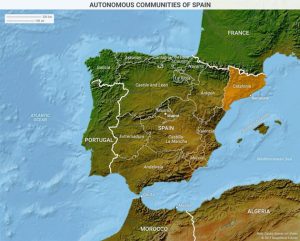 By Jacob L. Shapiro October 30, 2017


 Jennifer Cafarella with Omer Kassim





 Του Αλκη Καλλιαντζίδη Οικονομολόγου
 κοινωνική κατοικία είναι ένας συμβιβασμός μεταξύ ενός προπομπού του «φορντισμού», που σχεδιάστηκε από τα τέλη του 19ου αιώνα, για να ηρεμήσει τις αντιπαλότητες στους κόλπους των εργαζομένων και την υλοποίηση του δημοκρατικού σχεδίου για την παροχή από το νόμο των προϋποθέσεων για την μεγαλύτερη ισότητα μεταξύ όλων των πολιτών. Οι κοινωνικές κατοικίες αντιπροσωπεύουν το 19% του συνόλου των γαλλικών κατοικιών». Και τις διαχειρίζονται συνήθως οι Δήμοι.
 ζευγάρι και μια μεμονωμένη δημοτική σύμβουλος του Δήμου των Παρισίων. Και οι τρεις τους νυν επώνυμα στελέχη του κόμματος «Ανυπότακτη Γαλλία» του Jean-Luc Mélenchon, συνοδοιπόρου του κόμματος «Πλεύση Ελευθερίας», του «Plan B in Europe» (όπως δείχνει η σχετική φωτογραφία), και πρώην φίλου του πρωθυπουργού μας. Ποιος δεν θυμάται το εκστομισθέν τότε ειρωνικό «κοσμητικό επίθετο» «Ολαντρεού» μπροστά στο «δάσος» μικροφώνων και καμερών στο Παρίσι;

 του Παρισιού ζούσαν σε κοινωνικές κατοικίες και η Δήμαρχος Anne Hidalgo τους ζήτησε να τα εγκαταλείψουν αμέσως και να μην επαναληφθεί αυτή η πρακτική από αιρετούς, γιατί προκαλείται η κοινή γνώμη. Όμως η Danielle Simonnet δήλωσε σχετικά στην εφημερίδα Le Parisien : «Δεν θέλω να μείνω σε ιδιωτικό διαμέρισμα, να πλουτίσω έναν ιδιώτη ιδιοκτήτη και να συμμετάσχω στην κερδοσκοπία των ακινήτων» ! Και τούτο παρόλο ότι το ζεύγος Alexis Corbiere και Raquel Garrido, δήλωσαν ότι θα αλλάξουν διαμέρισμα σύντομα. Μια κατάσταση δηλαδή που προκαλεί
 κριτική. Ο Jérôme Dubus, δημοτικός σύμβουλος του 17ου διαμερίσματος του Παρισιού, είναι αγανακτισμένος και δηλώνει : «Βλέπω ότι η κα Simonnet, η οποία μας δίνει μαθήματα ηθικής στο Δημοτικό Συμβούλιο του Παρισιού πρωί, μεσημέρι και βράδυ, αναφορικά με τη διαφάνεια που πρέπει να υπάρχει στη διαχείριση της κοινωνικής κατοικίας, διαθέτει μια ηθική μεταβλητής Γεωμετρίας».


 “I have been involved in coups before,” a former CIA officer said.