Αρχική Blog Σελίδα 2876

Quelle lecture géopolitique de la crise grecque ?

0

Par Georges PREVELAKIS, Pierre VERLUISE, le 7 janvier 2018  Imprimer l'article  lecture optimisée  Télécharger l'article au format PDF

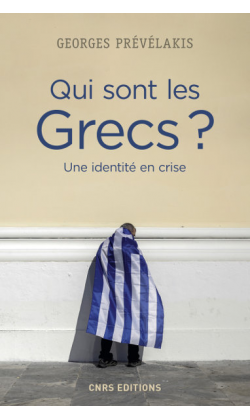
Georges Prévélakis, professeur à l’université Panthéon-Sorbonne (Paris I) est l’auteur de “Qui sont les Grecs ? Une identité en crise”, Paris, CNRS éditions, 2017, 184 p. Il est membre du laboratoire Géographie-cités et membre associé du CERI (Sciences Po), spécialiste de la géopolitique des Balkans et des diasporas. Pierre Verluise, docteur en géopolitique de l’université Paris IV Sorbonne est le fondateur du Diploweb.com.

Pourquoi la relation entre la Grèce et l’Occident est-elle ambivalente ? Comment cette relation est-elle devenue une rente, particulièrement depuis l’entrée de la Grèce dans le Communauté économique européenne (1981) puis dans la zone euro (2001) ? Dans ce sytème, quelles sont les véritables fonctions des élites politiques grecques ? Le Professeur Georges Prévalakis répond de manière solidement argumentée aux questions de Pierre Verluise.

Pierre Verluise (P. V.) : Pourquoi la relation entre la Grèce et l’Occident est-elle ambivalente ?

Georges Prévélakis (G. P. ) : Il faut chercher l’explication dans le processus de création de la Grèce moderne.

A la fin du XVIIIème siècle et au début du XXème siècle, les sociétés européennes ont subi une profonde transformation politique et idéologique. Leurs élites se sont tournées vers l’antiquité, à la recherche d’une utopie historique capable de légitimer la rupture avec le passé qu’elles préconisaient. Parmi les différents nationalismes qui se sont consolidés pendant cette période en exploitant la référence hellénique, le nationalisme allemand occupe une place particulière. Au-delà d’un modèle politique, il a trouvé dans l’antiquité grecque un précédent géopolitique : de même que l’Allemagne avant son unification en 1871, la Grèce de l’antiquité était un ensemble de cités unies par la culture. C’est pour cette raison que la relation gréco-allemande est tellement passionnelle. La France napoléonienne s’est tournée par contre vers l’antiquité romaine.

Le néoclassicisme, mouvement artistique et architectural, a apporté une expression sensible à ces diverses représentations géo-historiques. Les grandes villes européennes et nord-américaines ont vu se multiplier les monuments conçus selon les règles élaborées par l’archéologie.

En même temps, dans l’Empire Ottoman, l’élite chrétienne orthodoxe (les Rums), était hellénophone ou employait le grec de l’Eglise comme langue véhiculaire, et avait développé des relations commerciales avec l’Europe. Sous l’influence idéologique européenne, les marchands rums ont commencé à développer une identité nationale. Ce fut le début d’une mutation identitaire qui a transformé une partie importante des Rums en Grecs « modernes ».

En 1821 éclata au sud des Balkans l’insurrection, que l’on connait aujourd’hui en tant que « Révolution grecque ». Cet événement a été perçu par l’Europe comme une chance inespérée pour réaliser une construction néoclassique à l’échelle d’un Etat et, qui plus est, sur la base de la géographie mentale des guerres du Péloponnèse (territoires autour d’Athènes et Sparte).

La contradiction entre une image imposée par les besoins identitaires occidentaux et la réalité du terrain est à l’origine de l’ambivalence de la relation entre la Grèce et l’Occident.

Ce rêve européen supposait d’idéaliser ceux qui devaient l’incarner, les “Grecs”. Les Rums, anciens schismatiques méprisés en tant que serviteurs du Grand Turc, sont devenus, aux yeux de l’Occident, les nobles descendants des Grecs de l’antiquité soumis à la “barbarie turque”. Pourtant ni le changement du regard occidental, ni la construction d’institutions étatiques selon le modèle occidental n’ont suffi à transformer complètement les réalités sociales et culturelles héritées du long passé impérial, byzantin et ottoman.

La contradiction entre une image imposée par les besoins identitaires occidentaux et la réalité du terrain est à l’origine de l’ambivalence de la relation entre la Grèce et l’Occident. Chaque fois que la Grèce donne des signes encourageants, l’ancienne idéalisation revient. Pourtant, la réalité dément tôt ou tard l’exagération des images. Le désenchantement conduit à des ressentiments ou même à l’hostilité, comme si les Grecs trahissaient les attentes de l’Occident.

Il s’agit d’un processus qui se répète de manière cyclique. Beaucoup de Philhellènes (amis des Grecs) de la Révolution grecque sont devenus des Mishellènes (ceux qui haïssent les Grecs) après avoir rencontré les “vrais Grecs”. Plus récemment, au lendemain de la dictature des colonels (1967-1974) l’Europe a idéalisé la Grèce de Constantin Karamanlis, qui a présidé le rétablissement de la démocratie en 1974, et d’Andréas Papandréou, dont l’élection triomphale en 1981 a marqué la fin de l’hégémonie politique des conservateurs, pour découvrir par la suite son visage balkanique pendant les années des guerres en Yougoslavie.

Le dernier épisode concerne évidemment la crise économique, amorcée cinq ans après les triomphalismes qui ont suivi l’organisation des Jeux olympiques d’Athènes de 2004. Quand la crise a joué son rôle révélateur, l’admiration pour l’“européanisation” grecque et ses taux de croissances élevés, s’est muée en mépris, parfois même en haine, comme si les Grecs étaient les seuls responsables d’une gestion économique et politique connue et tolérée par les institutions européennes.

L’Occident a du mal à percevoir les Grecs tels qu’ils sont, c’est à dire un peuple avec ses qualités et ses défauts. Cette difficulté de perception objective, conjuguée à l’importance de l’influence occidentale, se trouve à la source de bien de problèmes de la Grèce depuis le XIXème siècle. La crise actuelle ne constitue pas une exception à cette règle.
Quelle lecture géopolitique de la crise grecque ?
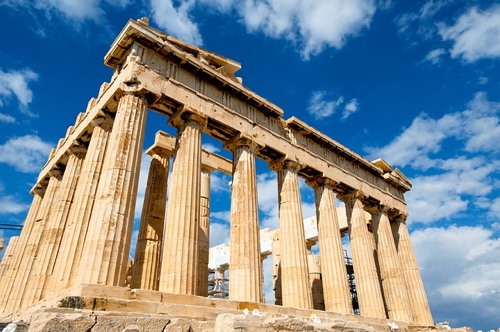
Grèce, Athènes, le Parthénon : une représentation classique de la Grèce transformée en ressource géopolitique ?

P. V. : Comment cette relation entre la Grèce et l’Occident est-elle devenue une rente, particulièrement depuis l’entrée dans le Communauté économique européenne (1981) puis dans la zone euro (2001) ?

G. P. : On imagine l’Empire ottoman comme une “prison de peuples”, comme si les nations y étaient déjà présentes et prêtes à surgir sur la scène de l’histoire une fois libérées de la domination impériale. Si cela était vrai, l’indépendance grecque, suivie des autres indépendances balkaniques, aurait été un simple retour à la normale, donc sans conflits et tensions. Or, comme on sait, le démembrement de l’Empire ottoman a conduit à un processus de terribles conflits, désigné d’ailleurs comme balkanisation.

L’explication de ces contradictions se trouve dans le fait que ce processus de balkanisation, loin d’être une normalisation, consistait au contraire en une transformation de fond en comble des espaces, des sociétés, des identités. La logique géopolitique impériale, qui régissait sociétés et territoires, devait être remplacée par la nouvelle logique westphalienne. Les sociétés balkaniques ont dû accomplir en quelques décennies le parcours que les sociétés occidentales ont mis de siècles à achever, en passant, elles aussi, par des terribles crises, comme la Guerre de Trente Ans (1618-1648).

La Grèce a été pionnière dans ce processus balkanique. Un morceau de l’espace ottoman a été découpé « à la hache » selon une géographie historique imaginée qui n’avait aucun rapport avec les réalités du terrain. Le premier territoire de la Grèce correspondait grosso modo à une ellipse dont les deux centres étaient, sans surprise, Athènes et Sparte. Ce nouvel Etat s’est vite avéré ingouvernable. Une administration étrangère a été importée de Bavière pour remplacer le pouvoir éclaté des notables autochtones par une structure centralisée. Une armée mercenaire a accompagné le roi et les administrateurs bavarois afin de mater les révoltes des “bandits” c’est à dire des anciens “combattants de la liberté” contre les Ottomans.

Pourtant, la logique de rente a des effets pervers puisqu’elle détourne les énergies de la création de richesses, renforce la centralisation partisane et encourage la corruption.

Un tel régime, fondé sur la violence, même légitime, ne pouvait pas être viable à la longue. Ainsi, le pouvoir central a créé un type de rapports entre le centre et la périphérie, dont l’évolution a conduit au clientélisme d’aujourd’hui. A travers ce système, il distribuait des privilèges, monétaires ou autres, à la périphérie. Comment trouver les moyens pour cette distribution ? La réponse est souvent venue de l’extérieur. L’importance de la thématique grecque imposait aux Occidentaux des efforts pour sauver la Grèce de l’implosion en lui apportant protection, soutien et financements. Ainsi s’est établie la tradition de la rente. Le système politique grec a rapidement appris à chercher, voire à revendiquer, la rente de l’Occident.

Pourtant, la logique de rente a des effets pervers puisqu’elle détourne les énergies de la création de richesses, renforce la centralisation partisane et encourage la corruption. En apportant une rente “philosophique”, justifiée par l’image idéalisée de la Grèce, l’Occident a souvent contribué à éloigner la Grèce de l’évolution voulue et espérée. En découvrant les effets sans en comprendre les causes, les Occidentaux se fâchaient avec les Grecs, sans réaliser que c’était leur propre influence qui avait provoqué les problèmes. L’ambivalence de la relation entre la Grèce et l’Occident est ainsi étroitement liée à la rente.

Toutes les périodes de l’histoire de la Grèce moderne n’ont toutefois pas été dominées par la logique rentière.

Ce fut le cas au lendemain de la Deuxième Guerre mondiale, lorsque le pays a bénéficié de très importants financements des Etats-Unis, qui étaient soucieux d’empêcher l’extension du bloc communiste au sud des Balkans. Cette “rente géopolitique”, qui a duré jusque dans les années 1950, a fait entrer la Grèce dans une période de croissance, désignée comme le “miracle économique grec” qui s’est poursuivie malgré les conséquences de la crise pétrolière de 1973, et s’est doublée, dans les années 1970, d’une modernisation institutionnelle et politique.

Ces réussites n’étaient néanmoins pas suffisantes pour justifier l’adhésion de la Grèce à la Communauté économique européenne (CEE), du fait notamment des problèmes structurels persistants de l’économie. L’entrée de la Grèce dans le club européen dès 1981 a été motivée avant tout par l’argument néoclassique. La construction européenne avait en effet toujours besoin de la symbolique grecque.

On a considéré que l’aide économique européenne permettrait à la Grèce d’accélérer sa modernisation et de rattraper ses retards. Perçues par les Grecs comme une nouvelle forme de rente, les diverses subventions qui ont irrigué l’économie grecque ont toutefois été utilisées par le système politique en place pour consolider son pouvoir. L’entrée de la Grèce dans l’Eurozone (2001) a amplifié cette la logique, dès lors que la Grèce a pu emprunter facilement et à des taux très avantageux sur les marchés internationaux de capitaux.

La longue période de stabilité politique (1981-2009), rare dans l’histoire de la Grèce, est due à l’abondance de la rente qui a alimenté une société de consommation, sans rapport avec la production de richesses. Derrière l’apparence de prospérité, se cachait la déformation de toutes les structures économiques et sociales. Gérée par l’administration centrale, la rente a renforcé une centralisation déjà excessive. La population a appris à mépriser l’effort et à considérer comme acquis des avantages qui n’avaient pas été mérités. L’économie grecque s’est introvertie : il suffisait d’entretenir ses relations avec les partis au pouvoir pour s’assurer la réussite économique. Le double déficit (budgétaire et commercial) qui se gonflait année après année, était couvert par les subventions et surtout par l’emprunt. On ne s’inquiétait pas du gonflement de la dette, puisque les Européens le toléraient.

Ainsi l’entrée de la Grèce dans la CEE et l’Eurozone a réactivé des anciens réflexes rentiers que les décennies précédentes avaient plus ou moins réussi à maitriser.

P. V. : Dans ce sytème, quelles sont les véritables fonctions des élites politiques grecques ?

G. P. : On peut considérer que les élites politiques ont fonctionné comme une articulation entre un Occident rêvant de l’ “européanisation” de la Grèce et une population qui y résistait. En obtenant la rente de l’étranger, en la distribuant et en imposant une certaine occidentalisation, plus ou moins profonde, ces élites profitaient du rôle de médiation pour servir leurs propres intérêts. Cette image est certes trop schématique. Pendant certaines périodes, les élites politiques ont abandonné ce rôle parasitaire en se concentrant aux efforts pour faire avancer la modernisation du pays.

Après 1981, une partie des élites politiques grecques a misé à nouveau sur la rente pour alimenter le système clientéliste. Cela leur a permis d’exercer une “concurrence déloyale” face à des opposants qui prônaient la voie de l’autonomie et d’un développement économique fondé sur les avantages comparatifs du pays. La rente est ainsi devenue un facteur de “sélection naturelle” négative des élites politiques, dont les éléments sains se sont retrouvés largement marginalisés. L’image désolante de la classe politique grecque au lendemain de la crise n’est donc pas l’expression d’une mauvaise qualité inhérente aux hommes et femmes politiques grecs, mais le résultat de cette forme de sélection. A quelques exceptions près, après trois décennies de domination de la rente et du clientélisme, les meilleurs avaient été éliminés de la scène politique.

La crise de 2009 a mis fin à l’abondance de la rente. Le système politique a été ébranlé. Les citoyens grecs ont découvert avec colère que leurs élites politiques n’étaient plus capables de capter la rente et de la distribuer. Ils se sont sentis trahis.

La gauche radicale, SYRIZA, a promis le retour au paradis de la rente : on obligerait les « banquiers européens » à payer sans poser de conditions et l’Allemagne fédérale à dédommager la Grèce pour l’occupation nazie pendant la Deuxième Guerre mondiale, ou on irait chercher de l’argent chez les Russes en leur proposant une alliance, etc. Se présentant comme force de renouveau face à un système politique vieilli et usé, ce parti a en fait prôné la régression à la logique rentière. Son échec à remplir ses promesses quand il est arrivé au pouvoir explique sa chute dans les sondages.

P. V. : Dans ce contexte, quels sont les rôles de la diaspora grecque, de la marine marchande et des réseaux ecclésiastiques ?

G. P. : La Grèce est une des manifestations d’une importante tradition géopolitique et géoculturelle, difficile à définir mais réelle. On utilise le terme de néo-hellénisme pour la désigner, en ayant conscience de ses limites. Cette tradition est composée d’éléments comme la continuité linguistique, étroitement associée à l’Eglise orthodoxe, la maritimité, la territorialité locale (tradition de la Polis), les réseaux diasporiques, ou encore certaines formes de vie familiale.

Contrairement aux récits de l’historiographie nationaliste, le néohellénisme était à l’aise au sein de l’Empire ottoman. Pourtant, une certaine perspicacité ou intuition de certains de ses membres leur a montré au début du XIXème siècle que l’avenir ne se trouvait pas dans le monde des empires mais dans la modernité, représentée par l’Etat-Nation organisé selon la territorialité westphalienne. Le rôle de la thématique grecque en Europe a joué aussi, comme nous venons de voir, un rôle important dans la décision d’accepter une mutation géopolitique et géoculturelle profonde. Le néohellénisme s’est ainsi habillé avec des vêtements empruntés à l’Europe. Il en a adopté la modernité, même s’il n’y a jamais été vraiment à l’aise. L’Etat grec, malgré ses réussites, n’a pas été à la hauteur des attentes de ses élites fondatrices. Il constitue aujourd’hui un acteur européen marginal, humilié, dépendant, piégé dans une relation malsaine avec l’Occident.

Cette Grèce est le visage le plus connu du néohellénisme, mais pas l’unique. Les structures prémodernes, celles qui lui permettaient de réussir dans les espaces impériaux, n’ont pas disparu. Leur résilience est une des causes de certains blocages de la modernisation. Ainsi, par exemple, la force du lien familial explique les difficultés pour imposer la méritocratie dans l’administration publique. En échange, les liens familiaux ont joué un rôle fondamental pour diminuer le choc social de la crise.

La diaspora, la marine marchande et les réseaux ecclésiastiques sont étroitement liés à la persistance des structures prémodernes. L’Etat grec, comme tout Etat national, a été hostile à la diaspora. Son objectif était de rassembler tous les Grecs au sein de son territoire. Il perçoit la marine marchande comme un acteur trop indépendant de lui, puisque les armateurs peuvent se déplacer sans entrave. Enfin, l’Etat grec a créé sa propre Eglise orthodoxe « nationale » ce qui est contraire aux règles de l’Eglise orthodoxe pour éviter l’influence religieuse du Patriarcat de Constantinople et échapper ainsi à son contrôle.

Ces visages extra-étatiques du néohellénisme ont survécu malgré les persécutions et les difficultés. La diaspora, détruite dans ses foyers traditionnels, a été reconstituée aux Etats-Unis, en Europe et en Australie. La marine marchande a réussi à renouveler sa flotte après les destructions de la Deuxième Guerre mondiale et constitue aujourd’hui la première force dans son domaine sur le plan international. Enfin, le Patriarcat de Constantinople a pu se maintenir à Istanbul en dépit de la politique kemaliste, hostile à toute forme de présence “grecque” sur le territoire turc, et constitue aujourd’hui une institution très respectée par la communauté internationale.

Les évolutions des dernières décennies comme la mondialisation, l’affaiblissement du rôle et de la fonction de la territorialité “westphalienne”, le développement explosif des communications etc., créent des conditions qui favorisent les formes prémodernes du néohellénisme. Les diasporas deviennent à nouveau des acteurs importants de la vie économique et politique globale. La mer se révèle comme le principal enjeu économique, politique et environnemental des décennies qui viennent. Le talent des armateurs grecs leur permettra de profiter de cette nouvelle donne. Enfin, le rôle des réseaux ecclésiastiques orthodoxes hellénophones ou, plus généralement, sous influence hellénique, est très important en Afrique, en Asie et en Amérique. Ils sont sous l’influence spirituelle des patriarcats hellénophones de Constantinople et d’Alexandrie. Ce monde orthodoxe, indépendant de l’Etat grec, est un acteur important de la géopolitique religieuse. Acceptés beaucoup plus favorablement que les autres Européens, les Grecs, à travers leurs réseaux religieux peuvent jouer un rôle de médiation entre l’Europe et les peuples anciennement colonisés.

Il faut donc cesser de percevoir la présence grecque, européenne et globale, uniquement sous le prisme de l’Etat-Nation. Ses formes à la fois prémodernes et post-modernes sont peu visibles mais au moins aussi importantes que la Grèce stricto sensu.

P. V. : Comment imaginez-vous les perspectives géopolitiques de la Grèce d’ici 2020 ?

G. P. : Le territoire grec fait partie d’un grand carrefour composé des Balkans et de l’Anatolie, entre lesquels se situent les ensembles maritimes de la mer Noire, des détroits turcs et de la mer Egée. Ce carrefour liait dans le passé les deux grands foyers économiques de l’Eurasie, le foyer européen et le foyer indo-chinois. Jusqu’au XVIIIème siècle, malgré l’importance croissante des relations entre l’Europe et l’Amérique, le centre de gravité de l’économie mondiale se trouvait encore à l’est du carrefour ottoman. La situation a changé radicalement pendant les deux siècles qui ont suivi. Cette situation change à nouveau par le déplacement du centre de gravité de l’économie mondiale vers l’est. Donc, le carrefour balkano-anatolien est en train de regagner sa centralité. Cette nouvelle réalité a déjà commencé à influencer la géoéconomie et la géopolitique grecque. Le port du Pirée est passé sous contrôle chinois. La réactivation de ce carrefour et la place cruciale du territoire grec en son sein conditionnera la géopolitique grecque dans les prochaines décennies.

La Grèce se trouve en crise, face à un environnement géopolitique instable et fluide.

Pourtant, à plus courte échéance, les facteurs de l’environnement géopolitique qui exerceront une influence sur la Grèce viennent d’autres élements :

1. La stabilité interne de la Turquie et ses orientations géopolitiques.
La vague de déstabilisation qui a évolué d’est en ouest au Moyen-Orient touche maintenant la Turquie. Il paraît difficile de prévoir si la politique de plus en plus autoritaire du Président Recep Tayyip Erdogan réussira à maitriser les tendances centrifuges et les menaces pour l’intégrité territoriale de son pays. Une déstabilisation éventuelle de la Turquie aurait comme conséquence possible un flot massif de réfugiés à partir du littoral anatolien vers les îles grecques. La question kurde peut aussi transformer la Grèce en otage des relations entre la Turquie et l’Occident. L’imprévisibilité de la situation turque pèsera lourdement sur la géopolitique grecque.

2. La relation entre l’Union européenne et les Etats-Unis.
La Grèce dépend économiquement et institutionnellement de l’Union européenne. Il ne faut pourtant pas sous-estimer ses liens avec les Etats-Unis. La défense grecque est garantie par les Etats-Unis, qui disposent d’une importante base en Crète. La diaspora grecque-américaine ainsi que différents réseaux, culturels et autres, lient étroitement la Grèce aux Etats-Unis. Une éventuelle dégradation des relations entre l’Union européenne et les Etats-Unis mettra la politique grecque devant des graves dilemmes.

3. Les ambitions russes.
La russophilie est fortement enracinée en Grèce. La confession orthodoxe commune, l’admiration pour Vladimir Poutine ainsi que le souvenir de l’Union soviétique fédèrent un ensemble hétéroclite de partisans, issus des deux extrêmes de l’échiquier politique, sur lequel peut miser l’influence russe.

4. La situation balkanique.
Les problèmes issus de la décomposition de la Yougoslavie (1991-1992) n’ont été résolus qu’en surface. Plusieurs défis existent encore et menacent la stabilité de la région. La Grèce est particulièrement exposée aux enjeux albanais et à leurs répercussions en Macédoine.

5. Finalement, last but not least, la Grèce est fortement influencée par l’évolution de l’Union européenne. Une Union européenne à deux vitesses renforcerait en l’institutionnalisant la marginalisation que connait la Grèce du fait de la crise économique.

Il est très difficile de prévoir l’évolution de ces facteurs et encore plus la manière dont ils peuvent se combiner. La Grèce se trouve face à un environnement géopolitique instable et fluide.

La situation politique intérieure grecque est naturellement d’importance cruciale. Les prochaines élections législatives sont normalement prévues à l’automne 2019. Les sondages prévoient que SYRIZA en sortira fortement affaibli et n’aura plus les sièges nécessaires pour former un gouvernement, même avec ses partenaires actuels de la droite souverainiste. Deux scénarios se dessinent :
. une nette victoire de la Nouvelle Démocratie (centre-droit), suffisante pour la restructuration de la vie politique sur des nouvelles bases ;
. une situation confuse, sans majorité, qui conduirait à un véritable saut dans l’inconnu.

La Grèce entre ainsi dans une période très critique. Soit elle arrivera à sortir renouvelée de la crise, ce qui lui permettra de gérer à son profit les différents défis géopolitiques pour renforcer son rôle européen et international ; soit elle va être entrainée dans une instabilité politique qui l’exposera à tous les dangers.

Malgré ses problèmes, la Grèce constitue un pôle de stabilité dans une région difficile. Une éventuelle déstabilisation grecque dans les années 2020 aurait de lourdes conséquences pour l’Union européenne. En même temps, l’importance de son territoire, en tant que carrefour énergétique mais surtout comme probable noeud de la route de la soie, rend sa maîtrise et sa gestion dans le cadre européen un enjeu crucial à long terme. Du côté européen, une connaissance de la politique grecque et néohellénique, débarrassée des idées reçues et des stéréotypes, s’impose.

L’Union européenne a aussi intérêt à exploiter les ressources néohelléniques réticulaires et globales (diaspora, marine marchande et réseaux ecclésiastiques) pour sa connexion et son dialogue avec les nouveaux grands foyers économiques et géopolitiques. Un re-équilibrage des représentations géopolitiques, à même de rendre visibles les aspects les moins connus du néohellénisme, est indispensable.

Copyright Janvier 2018-Prévélakis-Verluise/Diploweb.com


Plus

. Georges Prévélakis, “Qui sont les Grecs ? Une identité en crise”, Paris, CNRS éditions, 2017, 184 p.
PNG - 117.5 ko
Georges Prévélakis, “Qui sont les Grecs ? Une identité en crise”, Paris, CNRS éditions
Un livre recommandé par le Diploweb.com

4e de couverture

La Grèce constitue une énigme pour l’Occident. À chaque fois qu’on a pensé que le peuple grec était définitivement sur la voix de la modernisation, la situation s’est dégradée, comme depuis 2010. Jamais la confiance en l’avenir de la Grèce n’a été aussi basse, jamais on ne s’est autant interrogé sur l’identité grecque.

C’est pendant de tels moments de crise que se révèle l’ambivalence de la relation entre la Grèce et l’Occident. On passe de l’admiration béate pour le « berceau de la démocratie » au mépris, parfois même à la colère. Ce décalage entre représentation et réalité est la source de la plupart des problèmes grecs, internes et externes. En sept ans, la crise a montré qu’elle ne peut pas être résolue par des simples approches économiques, sans une révision des idées reçues, sans la prise en compte de structures et de comportements enracinés dans l’histoire et la géographie.

En dévoilant les atouts d’un « néohellénisme » disposant d’importants réseaux diasporiques, maritimes et religieux, ce livre échappe à une historiographie romantique et indique les ressources de la Grèce face à une Europe en train de redéfinir sa relation avec « les Autres ».

Le livre de Georges Prévélakis, “Qui sont les Grecs ? Une identité en crise” sur le site de CNRS éditions

https://www.diploweb.com/Quelle-lecture-geopolitique-de-la-crise-grecque.html
La « gouvernance de Schengen » à la suite des crises migratoires. D’une réforme à l’autre : quoi de neuf ?

0

Par Pierre BERTHELET, le 14 janvier 2018

Pierre Berthelet, docteur en droit, spécialisé en droit de l’UE et chercheur en sécurité à l’Université Laval (Québec). Ancien conseiller ministériel, il est membre de l’Association française du droit de la sécurité et de la défense (AFSD), membre du Conseil d’administration de l’Institut national des hautes études de la Sécurité et de la Justice (INHESJ), et chercheur associé au CREOGN. Il est l’auteur de plusieurs ouvrages et il est fondateur du site securiteinterieure.fr

Quelles ont été les conséquences des crises migratoires de 2011 et 2015 sur la libre circulation dans l’espace Schengen ? De façon documentée et avec une grande clarté, Pierre Berthelet explique leurs conséquences. Un document de référence, illustré de trois cartes et un graphique. Bonus vidéo en pied de page : le Recteur Gérard-François Dumont répond aux questions du Diploweb à propos des relations entre migrations et géopolitique.

«  L’ESPACE SCHENGEN est l’une des réussites les plus appréciées de l’intégration européenne, et le prix de sa désintégration serait considérable.Nous […] devons mettre fin à l’actuelle mosaïque de décisions unilatérales, pour la remplacer par une approche européenne coordonnée en matière de réintroduction temporaire des contrôles aux frontières, encadrée par les règles de Schengen ». Ces propos [1] tenus le 4 mars 2016 par le premier vice-président de la Commission européenne, Frans Timmermans, soulignent l’importance des deux réformes successives de la gouvernance de Schengen, l’une entreprise en 2011 et l’autre en 2017, destinées à mettre un terme au rétablissement des contrôles aux frontières intérieures à l’espace européen de libre circulation.

La première crise migratoire, celle de début 2011, a débouché sur une première réforme dite de la « gouvernance de Schengen », menée sous l’égide de la procéduralisation (I). L’objectif était, en cas d’afflux massif de migrants, de permettre le rétablissement par un Etat membre, des contrôles aux frontières (intérieures à l’espace Schengen), tout en encadrant ce rétablissement par une procédure complexe. La méfiance entre les Etats membres est dès lors régulée par cette procédure complexe, à l’image de mariés qui, ne se faisant pas confiance, optent en faveur d’un contrat destiné à régir scrupuleusement chaque cas de figure.

Les conséquences de la crise de 2015 s’inscrivent dans la même perspective. La Commission européenne, désireuse d’obtenir la levée de tous les contrôles aux frontières, entend « revenir à l’esprit de Schengen » [2]. Force est de constater, si l’on en juge la situation actuelle, que, dans les faits, cet esprit a changé, car les circonstances politiques au sein de l’Union, et géopolitique ont évolué. La crise de 2011 et surtout celle de 2015 ont laissé des traces profondes dans la relation entre les Etats membres, marquées par davantage de méfiance entre eux (II). L’idée d’un espace européen totalement décloisonné, tel qu’il existait il y a une décennie, s’éloigne. L’enjeu actuel consiste avant tout à réguler cette méfiance. Deux axes sont privilégiés : une sécurisation accrue des frontières extérieures au moyen de projets actuellement en cours de déploiement, dont le Corps européen de garde-frontières et le système « entrée-sortie » qui vise à comptabiliser le nombre de voyageurs entrant et sortant des frontières, aux fins de lutte contre l’immigration clandestine notamment (phénomène des « overstayers »). Le deuxième axe a trait à une nouvelle réforme gouvernance de Schengen initiée en 2017 (III). La crise migratoire a aggravé la crise conjugale, mais le couple préférant demeurer soudé, le contrat de mariage est revu. Comme la méfiance s’est accrue, la version révisée du contrat est encore plus complexe, de manière à prendre en compte, dans ses stipulations, les moindres détails et faire ainsi qu’une éventuelle crise migratoire ne dégénère pas en nouvelle crise conjugale.

I. La réforme de 2011, la procéduralisation comme moyen de rétablir la confiance

Pour comprendre les termes du débat relatif aux deux crises successives de l’espace Schengen, il faut se souvenir que cet espace tire son origine de deux traités fondateurs : un traité signé en 1985 prévoyant la suppression des contrôles aux frontières, et une convention complémentaire, dite d’application de l’accord de Schengen adoptée quant à elle en 1990. Cette convention prévoit aussi une limite à l’espace de libre circulation en envisageant une clause dérogatoire en parallèle : un État peut rétablir, en cas de trouble à l’ordre public, les contrôles aux frontières avec les autres pays membres de cet espace. Avec l’intégration programmée du dispositif Schengen au sein de l’Union par le traité d’Amsterdam de 1997, une partie de l’acquis de Schengen a été codifié au sein du « code frontières Schengen ». Ce code de 2006 [3] affirme le principe de la libre circulation sous réserve de l’usage de la clause de sauvegarde (ci-après « procédure temporaire »).

Toutefois, l’emploi de cette clause de sauvegarde générale est étroitement contrôlé par la Commission européenne qui, au regard des dispositions du code, s’assure que les conditions sont remplies, en l’occurrence que la gravité de la menace à l’ordre public est de nature à justifier le rétablissement des frontières intérieures à l’espace Schengen, la proportionnalité des contrôles effectués et leur durée (bien que renouvelable, le recours à cette clause est limitée dans le temps). La crise migratoire de 2011 conduit à une révision du dispositif existant.

À la suite du Printemps arabe, 23 000 migrants ont débarqué venant de Tunisie sur l’île de Lampedusa, presque à mi-chemin de la route maritime vers la Sicile (Italie du Sud). Face à l’afflux et de migrants, l’Italie, débordée par le nombre, a trouvé comme solution la délivrance de titres de séjour permettant à leurs détenteurs de quitter la péninsule pour se rendre dans le pays de l’espace Schengen de leur choix « dans l’espoir, assez mal caché, que les citoyens tunisiens décident d’exploiter la libre-circulation de l’espace Schengen pour rejoindre d’autres pays, notamment la France » [4].

Confrontée à la hausse subite de migrants clandestins à Menton, le ministre de l’Intérieur français de l’époque, Claude Guéant, a menacé, en mars 2011, de recourir à la clause de sauvegarde, comme le prévoit le code frontières Schengen. Le contentieux bilatéral franco-italien d’avril 2011 sur la responsabilité de l’Italie dans l’entrée illégale de migrants tunisiens sur le territoire français via la frontière de Vintimille s’est soldé par la décision, en juin 2011, des chefs d’État et de gouvernement réunis en Conseil européen, de procéder à une réforme de la gouvernance de Schengen sur deux axes : 1. le renforcement des frontières extérieures de l’espace Schengen ; 2. la révision des modalités de la clause de sauvegarde.

Répondant à leur invitation, la Commission européenne a présenté en septembre 2011 une « réforme de la gouvernance de Schengen » comprenant, pour ce qui est du premier un volet, une révision du mécanisme d’évaluation mutuelle et, pour ce qui est du deuxième, une révision du code frontières Schengen pour permettre l’usage de la clause de sauvegarde en cas d’afflux massif de migrants.

Concernant le premier volet, le mécanisme d’évaluation mutuelle a fait l’objet d’un important toilettage. Ce mécanisme, figurant parmi les mesures insérées dans la convention d’application Schengen, n’avait pas été révisé au moment de l’intégration effective de Schengen dans l’Union en 1999. Il reposait dès lors toujours sur un mode intergouvernemental. La réforme de 2011 vise à remédier à cette situation notamment en intégrant dans l’équipe des experts évaluateurs de la Commission européenne.

La montée générale de l’euroscepticisme au sein de la plupart des pays du continent conduit à un poids plus grand des États au sein de la construction européenne.

Concernant le deuxième volet, le code frontières Schengen a effectivement été révisé pour envisager, à côté de la procédure générale (c’est-à-dire la « procédure temporaire »), une procédure spécifique (ci-après « procédure exceptionnelle ») permettant la « réintroduction temporaire du contrôle aux frontières intérieures en cas de circonstances exceptionnelles mettant en péril le fonctionnement global de l’espace sans contrôle aux frontières intérieures ». Concrètement, lorsque la pression migratoire est telle que la surveillance des frontières extérieure de l’UE se révèle défaillante, générant un afflux massif, un autre État membre peut rétablir des contrôles aux frontières intérieures à l’espace Schengen. Pour autant, il existe une obligation de concertation. À l’origine, la Commission européenne souhaitait s’arroger le droit d’autoriser cet État à réinstaurer ses contrôles. Préférant une « gouvernance politique » à une gouvernance bureaucratique, le Conseil de l’UE (Conseil des ministres) a choisi d’être l’enceinte où se déroule une telle concertation. Le rétablissement des contrôles aux frontières reste très encadré au sein de cette « procédure exceptionnelle », puisque d’abord, il a lieu en cas « de manquements graves persistants liés au contrôle aux frontières extérieures » de la part d’un État. Ensuite, il s’agit d’une mesure prise en dernier recours. Enfin, l’État concerné doit rendre compte régulièrement des conséquences de cette réintroduction.

Une telle réforme est significative des transformations que rencontre l’Union européenne. La montée générale de l’euroscepticisme au sein de la plupart des pays du continent conduit à un poids plus grand des États au sein de la construction européenne. En parallèle, cet accroissement s’accompagne d’une perte d’influence de la Commission européenne. L’espace vacant est occupé par le Conseil de l’UE (ainsi que le Conseil européen et le Parlement européen au demeurant). La crise de 2015 est l’occasion pour la Commission de retourner à la situation antérieure à la crise de 2011. Force est de constater que ce souhait de « revenir à l’esprit de Schengen » se révèle pieux au regard du bilan de la réforme de 2017.

II. La crise de 2015 ou l’aggravation de la méfiance entre les Etats membres

La crise migratoire se caractérise par son intensité (figures 1 & 2, ci-après). D’après le Haut Commissariat des Nations unies pour les réfugiés (UNHCR ou HCR dans l’espace francophone) [5], prèsd’un million de personnes ont voulu rejoindre l’Europe au cours de l’année 2015. Les franchissements ont été enregistrés essentiellement à la frontière gréco-turque, déjà sous pression les années précédentes. La remontée des migrants le long de la route dite « des Balkans », s’est réalisée sans coordination, voire dans le plus grand désordre. Le dispositif décentralisé de la gouvernance politique, mis en place par la réforme approuvée finalement en 2013, n’a pas fonctionné. Schengen s’est trouvé sous le feu croisé de visions politiques nationales divergentes [6]. La gestion de la crise migratoire s’est caractérisée par des divergences de vues entre les pays de l’Ouest (Allemagne, Autriche) désireux d’accueillir une partie des migrants, du moins dans un premier temps, générant un facteur « pull » (c’est-à-dire d’attraction de ces migrants vers le continent européen) supplémentaire, et les pays de l’Est (hostile à l’accueil des migrants). La crise migratoire était perçue traditionnellement sous l’angle d’un contentieux Nord-Sud (les pays du Nord accusant ceux du Sud de ne pas surveiller leurs frontières et, à l’inverse, ceux du Sud fustigeant l’égoïsme de ceux du Nord et réclamant davantage de solidarité). Si ce clivage n’a pas complément disparu, il a été mis en second plan au regard du contentieux entre les pays de l’Ouest et ceux de l’Est (groupe de Visegrád), notamment sur le sort des migrants « relocalisés », c’est-à-dire les demandeurs d’asile destinés à être répartis sur le territoire de l’Union selon des quotas définis par le Conseil de l’UE.

Figure 1

La « gouvernance de Schengen » à la suite des crises migratoires. D'une réforme à l'autre : quoi de neuf ?
Carte. Détections de passages illégaux aux frontières extérieures de l’Union européenne en 2015
Cliquer sur la vignette pour agrandir la carte. Source : Frontex, Rapport d’analyse du risque pour l’année 2016

Figure 2

PNG - 328.1 ko
Carte. Détections de passages illégaux de la frontière extérieure de l’Union européenne au deuxième trimestre 2015
Cliquer sur la vignette pour agrandir la carte. Source : Frontex, Rapport trimestriel de risque, deuxième trimestriel 2015.

La gestion de crise, ou plutôt cette méta-crise [7], en ce qu’elle affecte non seulement les frontières de l’Union, mais aussi le système européen des réfugiés et qu’elle a lieu peu de temps après la crise politique générée à la suite du vote sur le Brexit, se caractérise par la volonté, pour les pays situés sur la route des Balkans, d’empêcher la venue des migrants sur leur territoire. Elle se traduit par une série de décisions nationales unilatérales de rétablissement des contrôles aux frontières prises dans la plus grande pagaille, le Conseil de l’UE ayant mal joué son rôle d’enceinte de concertation.

Les pays de transit, confronté à des problématiques sanitaires et de maintien d’ordre public, ont vu leurs capacités d’accueil rapidement dépassées. Le gouvernement hongrois, soucieux de fermer cette route, a lancé dans l’urgence au cours de l’été 2015, la construction d’une clôture de 4 mètres de haut sur plus de 175 kilomètres. Après avoir mené une politique d’accueil, l’Autriche et l’Allemagne ont décidé en septembre 2015, de réinstaurer les contrôles à leurs frontières respectives, à l’instar des autres pays de cette route qui se sont efforcés progressivement d’endiguer le flux de migrants. Finalement, la route a été déclarée officiellement fermée en mars 2016 par les différents États membres et pays tiers se situant sur cette « route des Balkans », ceci même si les effets se sont fait ressentir surtout l’année suivante (figure 3).

Figure 3

PNG - 110.6 ko
Graphique. Evolution de la pression migratoire dans les Balkans occidentaux de 2009 à 2017
Cliquer sur la vignette pour agrandir le graphique. Source : Frontex, Rapport Western Balkans Risk Analysis Network Quarterly Report – WB Q2 2017

Un rapport de l’Assemblée nationale [8] datant du mois de mai 2016 dresse un constat sévère de la gestion de la crise par l’Union. D’abord, cette crise a été mal anticipée. Ensuite, la réponse européenne a été basée essentiellement sur la mise en place de hotspots, c’est-à-dire sur la création de centres de crise au sein des pays dont les frontières extérieures sont soumis à une pression considérable (la Grèce et l’Italie), et sur l’instauration d’un plan de relocalisation intra-européenne [9] des migrants susceptibles, selon toute vraisemblance, de recevoir le statut de réfugié.

Or, les États membres ont tardé à mettre en place ces deux mesures. Dans un rapport de suivi, la Commission européenne a souligné les lenteurs, si bien que ces mesures destinées à soulager les États membres de première ligne n’ont pas permis de gérer efficacement la crise de 2015. Enfin, comme le signale le rapport, la Commission aurait dû se montrer plus stricte dans le respect du droit en ouvrant des procédures d’infraction, conformément aux traités européens, à l’égard des États qui ne respectent pas les règles prévues dans le code frontières Schengen : « cette absence de réaction de la Commission européenne a d’ailleurs contribué à rendre de plus en plus fragile la confiance mutuelle des États membres dans la solidité de la zone Schengen » écrit-il.

La crise de 2015 a entrainé un rétablissement des contrôles aux frontières intérieures à l’espace Schengen, effectué simultanément par plusieurs États.

De surcroît, les mesures prises par ces pays se trouvant sur la route migratoire ont généré des tensions avec leurs voisins. Ainsi, la fermeture par la Hongrie de sa frontière sud a conduit à une charge supplémentaire pour la Serbie dont les capacités d’accueil étaient saturées. Comme l’indique le même rapport, « la crise migratoire constitue néanmoins la principale explication des réactions unilatérales en chaîne qui donnent corps aux menaces pesant sur la survie de l’espace Schengen ». Quant à la Commission européenne, elle a jugé justifiée la réintroduction des contrôles aux frontières, car conforme à cette nouvelle « procédure exceptionnelle » figurant dans le code et permettant le rétablissement de ces contrôles en cas d’afflux massif. Constatant cet afflux et la défaillance persistante dans le contrôles aux frontières extérieures, elle a donc présenté au Conseil de l’UE une décision destinée à avaliser ceux-ci. La multiplication de ces contrôles a néanmoins posé la question de la pérennité de l’espace Schengen comme un espace sans frontières intérieures. Un défi se pose dès lors, en l’occurrence mettre un terme au cloisonnement de cet espace.

III. La réforme de 2017, une procéduralisation accrue dans l’espoir de donner à nouveau confiance

La crise de 2015 a entrainé un rétablissement des contrôles aux frontières intérieures à l’espace Schengen, effectué simultanément par plusieurs États. Un rapport de la Commission européenne [10] fait observer que depuis septembre 2015, les contrôles aux frontières intérieures ont été réintroduits et prolongés près de 50 fois (entre 2006 et 2015, leur chiffre s’élevait à 36). La généralisation comme l’extension de ces procédures de réintroduction « temporaire » (procédure générale) et « exceptionnelle » (procédure spécifique créée en 2013), dans le temps pose question quant à la pérennité de l’espace Schengen.

À en croire ce rapport, la situation générale s’est malgré tout considérablement améliorée depuis le début de la crise migratoire. La prolongation des contrôles est donc résiduelle. Surtout, les contrôles sont légaux puisqu’ils suivent les procédures « temporaire » et « exceptionnelle » prévues par le code frontières Schengen mis à jour [11]. Le Conseil de l’UE accepte cette prolongation au profit des États qui le désirent (il s’agit en l’occurrence de l’Autriche, de l’Allemagne, du Danemark, de la Suède et la de Norvège), au motif qu’un risque de migration secondaire demeure : les migrants présents en Grèce, ou dans certains États membres, peuvent vouloir se déplacer en nombre dans un autre pays de l’Union.

Cette crainte justifie donc les prolongations successives accordées tout au long de 2016 et de 2017 à ces États de faire usage de leur clause de sauvegarde au titre de ces procédures « temporaire » et « exceptionnelle ». En outre, de telles mesures sont circonscrites dans l’espace : elles ne concernent pas la totalité des frontières, mais seulement certains tronçons vulnérables à la pression migratoire. La réforme de la gouvernance de Schengen engagée en septembre 2017 [12] (et actuellement en cours de négociation) ne serait dès lors qu’un ajustement : il s’agirait de permettre de nouvelles prolongations, le temps de la résorption du phénomène de migration secondaire. Le code frontières Schengen ne permettant qu’un nombre limité de renouvellement, une nouvelle réforme est donc nécessaire pour procéder à de ultimes prolongations dans le respect du droit.

Cette lecture de la situation de la Commission européenne pour qui Schengen est, selon elle, un « cadre solide et résilient » est optimiste. Un parallèle avec la situation française sur l’état d’urgence s’impose : l’impossibilité de prolonger en France, cet état qui, par définition, est temporaire, a conduit le parlement à approuver une loi destinée à fondre dans le droit commun des mesures prises dans le cadre de cette procédure de l’état d’urgence. Le risque de normalisation de l’exceptionnel [13] se retrouve dans cette réforme de la « gouvernance de Schengen ». La « procédure temporaire » est revue de manière à allonger les délais relatifs au rétablissement des contrôles aux frontières intérieures à l’espace européen de libre circulation. Ces contrôles peuvent s’étaler sur plusieurs années en combinant les deux procédures, temporaire et exceptionnelle, et en ajoutant la toute nouvelle procédure instituée par la réforme initiée en septembre 2017.

Concrètement, la durée maximale des contrôles menés conformément à la « procédure temporaire » est portée de 6 mois à 1 an, la durée de renouvellement de 30 jours à 6 mois, et la durée totale de la réintroduction du contrôle aux frontières intérieures, de 6 mois à un an (c’est-à-dire en comprenant toutes les périodes renouvelables). Mais la réforme va plus loin, en créant cette nouvelle procédure, une procédure dite « en cas de menace grave supérieure à un an ». Une telle procédure prend la suite de la « procédure temporaire » dans l’hypothèse, comme c’est le cas en France, où la durée des contrôles aux frontières menés au nom de la lutte antiterroriste tend à dépasser les délais maximaux prévus par cette « procédure temporaire ». Pour respecter la légalité, le code frontière Schengen est modifié pour établir cette nouvelle procédure permettant une durée des contrôles de six mois, avec trois prolongations possibles.

La première pierre d’achoppement a trait à l’obligation, dans le cadre de la « procédure temporaire », pour l’Etat désireux de rétablir les contrôles, de présenter une analyse de risque. La deuxième pierre d’achoppement concerne les modalités de « procédure en cas de menace grave supérieure à un an ».

Néanmoins, la réforme fait débat. La première pierre d’achoppement a trait à l’obligation, dans le cadre de la « procédure temporaire », pour l’Etat désireux de rétablir les contrôles, de présenter une analyse de risque. Cette analyse fait partie des éléments discutés par la Commission européenne et les autres Etats membres, ceux-ci pouvant, au demeurant, bénéficier des vues de Frontex et d’Europol. Pour l’heure cette expertise des agences est contestée par certains Etats membres (les ressources de Frontex étant limitées, la priorité est, à leurs yeux, la surveillance des frontières extérieures et non la régulation des mouvements migratoires secondaires). En toile de fond, le risque est pour eux, en cas de divergence entre leur propre analyse et celles agences, de se retrouver en porte-à-faux avec la Commission et les autres Etats membres. Ce qui relève en principe d’une prérogative souveraine (le rétablissement des contrôles en cas « procédure temporaire ») menace de se transformer en négociation politique entre Etats membres, fondée sur des arbitrages menés à partir d’expertises contradictoires.

La deuxième pierre d’achoppement concerne les modalités de « procédure en cas de menace grave supérieure à un an ». Désireuse de ne pas réitérer les mêmes erreurs commises dans le cadre de sa proposition de 2011 concernant la « procédure exceptionnelle », la Commission européenne a suggéré d’emblée la mise en place d’une gouvernance politique. Autrement dit, cette « procédure en cas de menace grave supérieure à un an » est pilotée par le Conseil de l’UE. Juridiquement, le Conseil émet une recommandation, c’est-à-dire un texte non contraignant, mais cette appellation est quelque peu trompeuse : s’il n’est pas question d’obliger l’Etat membre concerné à prolonger ses contrôles, cette recommandation serait une condition nécessaire pour qu’il puisse les maintenir s’il le souhaite : c’est donc de facto un pouvoir d’autorisation qui serait donné au Conseil. Cette autorisation qui ne dit pas son nom est par conséquent, un point de crispation pour certains Etats membres qui l’appréhendent comme une atteinte à leur souveraineté.

Figure 4

PNG - 342.5 ko
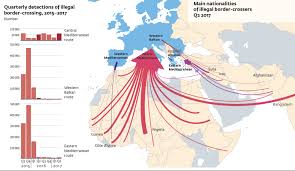
Carte. Principales nationalités des passages de frontières illégaux au deuxième semestre 2017
Cliquer sur la vignette pour agrandir la carte. Source : Frontex, Rapport trimestriel de risque, deuxième trimestre 2017

*

La multiplication des procédures institutionnelles établies au gré de ces deux crises migratoires (« procédure temporaire », « procédure exceptionnelle », « procédure en cas de menace grave supérieure à un an », sans oublier la procédure de vulnérabilité des frontières et la procédure d’intervention d’office du Corps européen de garde-frontières prévues par le règlement éponyme de 2016 etc.) est destinée à faire en sorte que la situation de mésentente politique et de paralysie institutionnelle connues lors de la crise de 2015 ne soit pas revécue. L’un des facteurs de la mauvaise gestion de cette crise avait trait à une bureaucratie lourde issue de la réforme de 2011. L’avenir dira si, au moment où la pression migratoire se maintient aux frontières extérieures de l’UE (figure 4), ce mouvement correspondant à des procédures plus nombreuses et plus perfectionnées sera facteur d’une gestion plus efficace de la crise ou, à l’inverse, de nouvelle paralysie de la réaction de l’Union, ceci alors même que, lors de la crise migratoire aiguë de 2015, la volonté politique commune avait fait défaut au sein du Conseil de l’UE et que la Commission européenne avait répugné à faire usage des prérogatives dont elle dispose en matière d’infraction.

Copyright Janvier 2018-Berthelet/Diploweb.com

Σε αναζήτηση στρατηγικής κατεύθυνσης

0

  05/01/2018 

    Η Βορειοατλαντική Συμμαχία, στο λυκαυγές της τρίτης δεκαετίας του 21ου αιώνα, βρίσκεται αντιμέτωπη με σειρά πολυεπίπεδων προκλήσεων. Παράλληλα, παρατηρείται σημαντική στρατηγική απόκλιση στο εσωτερικό της Συμμαχίας, η οποία συνίσταται στις διαφορετικές προτεραιότητες των ευρωατλαντικών εταίρων. Η σταδιακή μετατόπιση του αμερικανικού κέντρου βάρους προς τον Ειρηνικό, σε συνδυασμό με τη συναλλακτική θεώρηση των διεθνών σχέσεων και συμμαχιών, απότοκο του αναδυόμενου δόγματος Τραμπ για την εξωτερική πολιτική, διαμορφώνουν νέα δεδομένα.
Η ενθάρρυνση πολιτικών στη λογική κόστους – οφέλους ελαχιστοποιεί την επίτευξη πολιτικής συναίνεσης για βασικούς στρατηγικούς στόχους της Συμμαχίας, με αποτέλεσμα η συνοχή του ΝΑΤΟ να κλονίζεται, γεγονός που κατέστη φανερό από την έλλειψη βούλησης των κρατών-μελών να προχωρήσουν στην επικαιροποίηση του νατοϊκού στρατηγικού δόγματος στη Σύνοδο των Βρυξελλών το 2017.
Το ανωτέρω δόγμα, το οποίο ισχύει από το 2010, τροποποιήθηκε στις Συνόδους της Ουαλίας και της Βαρσοβίας το 2014 και το 2016 αντίστοιχα, αλλά οι αλλαγές και οι τροποποιήσεις παρουσιάζονται αποσπασματικά και απουσιάζει ένα συνεκτικό στρατηγικό όραμα της Συμμαχίας που θα την καθιστά εκ νέου σημείο αναφοράς σε παγκόσμιο επίπεδο και θα επιτρέψει στο ΝΑΤΟ να ανταποκριθεί με σαφή και αποφασιστικό τρόπο στις προκλήσεις της επόμενης δεκαετίας. Η Σύνοδος των Βρυξελλών αποτέλεσε μια προσπάθεια γεφύρωσης των στρατηγικών αποκλίσεων των ευρωατλαντικών εταίρων με αμφιλεγόμενα αποτελέσματα.
Τα ερωτήματα που προκύπτουν πλέον τίθενται επιτακτικά: Προς ποια στρατηγική κατεύθυνση οδηγείται το ΝΑΤΟ στο προσεχές μέλλον; Ποια θα είναι η προτεινόμενη προσαρμοστική στρατηγική για τη βέλτιστη ανταπόκριση του ΝΑΤΟ στις νέες προκλήσεις;
Αναφορικά με το πρώτο ερώτημα, η διατήρηση της συνοχής του ευρωατλαντικού δεσμού αποτελεί το κύριο ζητούμενο και τη βασική προϋπόθεση επίτευξης των συμφωνημένων στόχων. Ομολογουμένως το ζήτημα της συνεισφοράς των περισσότερων ευρωπαϊκών κρατών αναφορικά με την ανάπτυξη δυνατοτήτων και η επίτευξη του ορόσημου του 2% του ΑΕΠ αποτελούν την ικανή και αναγκαία συνθήκη για την ανανέωση της δέσμευσης των ΗΠΑ ως προς την ευρωπαϊκή ασφάλεια. Παράλληλα, οι Ηνωμένες Πολιτείες επιβάλλεται να επενδύσουν εκ νέου στις διεθνείς τους συμμαχίες.
Ως προς το δεύτερο ερώτημα, η διαφορετική φύση των απειλών που αντιμετωπίζει η Συμμαχία έχει δημιουργήσει αδιαμφισβήτητα μια διαίρεση μεταξύ της Ανατολικής Πτέρυγας και της Νότιας Πτέρυγας του ΝΑΤΟ, η οποία υπονομεύει εν τοις πράγμασι τη συνολική στρατηγική του αναφορικά με τη συλλογική ασφάλεια. Στο πλαίσιο της γεφύρωσης των διαφορών προωθείται de facto η περιφερειοποίηση του ΝΑΤΟ.
Αν και η προώθηση της περιφερειοποίησης αντίκειται επί της ουσίας στην ιστορική στρατηγική αποστολή της Συμμαχίας, η οποία άπτεται της συλλογικής ασφάλειας, ενώ ελλοχεύει ο κίνδυνος περαιτέρω απόκλισης, εντούτοις η χρησιμοποίηση, μέσω μιας συνεκτικής προσέγγισης, των διαφορετικών εργαλείων που διαθέτει η Συμμαχία, για τη διαχείριση κρίσεων και την αντιμετώπιση διαφορετικών απειλών και κινδύνων, δύναται να αποτελέσει τη στρατηγική επιλογή εσωτερικής προσαρμογής του ΝΑΤΟ, για την ανταπόκριση της Συμμαχίας εν συνόλω στις αναδυόμενες προκλήσεις.
Ως εκ τούτου, η Νότια Πτέρυγα του ΝΑΤΟ δύναται να χρησιμοποιήσει εργαλεία από το Allied Command Transformation, ενώ η Ανατολική Πτέρυγα από την εργαλειοθήκη του Allied Command Operations. Επιπρόσθετα, ιδιαιτέρως σημαντική αναμένεται η συμβολή του Framework Nations Concept, όπου ένα κράτος αναλαμβάνει τον ηγετικό ρόλο του παρόχου του πλαισίου στο οποίο τα υπόλοιπα κράτη-μέλη συμμετέχουν και συντρέχουν ανάλογα με τα μέσα και τις δυνατότητες που διαθέτουν. Εκ προοιμίου, η συμβολή των ΗΠΑ και των τριών μεγάλων ευρωπαϊκών κρατών, Ηνωμένου Βασιλείου, Γερμανίας και Γαλλίας, θα αποβεί καταλυτική για την ευόδωση μιας τέτοιας προσπάθειας.
Ο Κωνσταντίνος Θ. Λαμπρόπουλος είναι ειδικός επιστήμονας Αμυνας και Ασφάλειας, Geneva Centre for Security Policy, εξωτερικός συνεργάτης ΕΛΙΑΜΕΠ και ΚΕΜΕΑ.
“Τα Νέα”

Erdogan says Turkey will crush Kurdish militia in Afrin

0

ISTANBUL (Reuters) – President Tayyip Erdogan said on Saturday that Turkey’s military incursion in northern Syria’s Idlib province would crush Kurdish militia forces that control the neighboring region of Afrin.

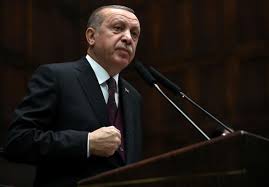
Turkish President Tayyip Erdogan addresses members of parliament from his ruling AK Party (AKP) during a meeting at the Turkish parliament in Ankara, Turkey, January 9, 2018. REUTERS/Umit Bektas

The Kurdish YPG militia said Turkish forces inside Syria fired shells into Afrin on Saturday, but no one was wounded.

Turkish troops entered Idlib three months ago after an agreement with Russia and Iran for the three countries to try to reduce fighting between pro-Syrian government forces and rebel fighters in the largest remaining insurgent-held part of Syria.

But the few observation posts which the Turkish army says it has established are close to the dividing line between Arab rebel-held land and the Kurdish-controlled region of Afrin.

“If the terrorists in Afrin don’t surrender we will tear them down,” Erdogan told a congress of his ruling AK Party in the eastern Turkish city of Elazig.

The Kurdish YPG militia said Turkish forces stationed in Syria shelled several Kurdish villages in the Afrin region on Saturday, without causing casualties.

Rojhat Roj, the YPG spokesman in Afrin, told Reuters the shelling was carried out by Turkish forces in Dar Taizaah and Qalat Seman – areas where he said Turkish forces had deployed as part of the agreement with Russia and Iran.

“From our side, there is no shelling at present,” he added.

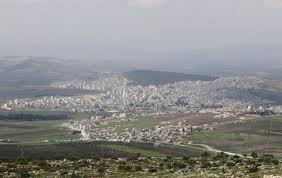
FILE PHOTO – A general view shows the Kurdish city of Afrin, in Aleppo’s countryside March 18, 2015. REUTERS/Mahmoud Hebbo

Erdogan has said the Kurdish YPG militia is trying to establish a “terror corridor” on Turkey’s southern border, linking Afrin with a large Kurdish-controlled area to the east.

In 2016 Turkey launched its Euphrates Shield military offensive in northern Syria to push back Islamic State from the border and drive a wedge between the Kurdish controlled regions.

“With the Euphrates Shield operation we cut the terror corridor right in the middle. We hit them one night suddenly. With the İdlib operation, we are collapsing the western wing,” Erdogan said, referring to Afrin.

He also said Turkey could drive YPG forces out of Manbij. The mainly Arab town lies west of the Euphrates, and Turkey has long demanded that Kurdish fighters pull back east of the river.

“In Manbij, if they break the promises, we will take the matter in our own hands until there are no terrorists left. They will see what we’ll do in about a week,” Erdogan said.

Turkey was a major supporter of rebels fighting to overthrow Syria’s President Bashar al-Assad, but is alarmed by the strength of Kurdish forces – which Ankara says are linked to Kurdish militants fighting in southeast Turkey.

It has criticized the United States for arming YPG and Arab fighters in the Syrian Democratic Forces, which drove Islamic State out of Raqqa and other parts of Syria.

“The U.S. sent 4,900 trucks of weapons in Syria. We know this. This is not what allies do,” Erdogan said. “We know they sent 2,000 planes full of weapons.”

Reporting by Irem Koca in Istanbul and Tom Perry in Beirut; Writing by Dominic Evans; Editing by Alexander Smith

https://www.reuters.com/article/us-mideast-crisis-syria-turkey/erdogan-says-turkey-will-crush-kurdish-militia-in-afrin-idUSKBN1F20G4

Το σύνθετο εκκλησιαστικό ζήτημα

2

του ΠΑΝΤΕΛΗ ΣΑΒΒΙΔΗ.

Εκτός από τα εσωτερικά προβλήματα σε σχέση με την ονομασία των Σκοπίων (διάσταση στο θέμα της σύνθετης ονομασίας), εκτός από τα εσωτερικά προβλήματα σε σχέση με τη διαδήλωση κατά της σύνθετης ονομασίας με τον όρο Μακεδονία (δεν συμφωνούν όλοι), υπάρχει και ένα άλλο ζήτημα που θα δοκιμάσει τις διακρατικές και εκκλησιαστικές σχέσεις στα Βαλκάνια.

Είναι το θέμα της σχισματικής Εκκλησίας των Σκοπίων, το οποίο παρ’ όλα όσα λέγονται ότι αποτελεί εκκλησιαστική διαμάχη, στην ουσία του έχει υπόβαθρο πολιτικό.

Ουσιαστικά τείνει να αναβιώσει η παλαιά διαμάχη Πατριαρχείου-Εξαρχίας, τηρουμένων των αναλογιών.

Εκατόν σαράντα χρόνια, φέτος, από τη Συμφωνία του Αγίου Στεφάνου και τη δημιουργία της Μεγάλης Βουλγαρίας, οκτώ χρόνια μετά τη ίδρυση της βουλγαρικής Εξαρχίας, μια νέα διάσταση διαφαίνεται πίσω από το διπλωματικό προσκήνιο.

Ο Οικουμενικός Πατριάρχης δεν μπόρεσε να κρύψει τη δυσαρέσκειά του προς τον Πατριάρχη Βουλγαρίας για τη μη πρόβλεψη στο πρόγραμμα επίσκεψης του τελευταίου στην Κωνσταντινούπολη για τα εγκαίνια του περίλαμπρου ναού του Αγίου Στεφάνου και συνάντησης μαζί του στην έδρα του Οικουμενικού Θρόνου. Το γεγονός δεν ήταν καθόλου τυχαίο.

Η Συνθήκη του Αγίου Στεφάνου και τα όρια που προσδιόριζε για το βουλγαρικό κράτος θεωρείται αφετηρία στη φαντασιακή αντίληψη των Βουλγάρων για την έκταση της κρατικής τους υπόστασης. Και η επιτυχία εκείνης της συνθήκης στάθηκε δυνατή με τη βοήθεια της Ρωσίας.

Ήταν, και πάλι, η δυσαρέσκεια της Δύσης από την νέα τάξη πραγμάτων που διαμόρφωνε η Συνθήκη του Αγίου Στεφάνου που την ανέτρεψε, τον ίδιο χρόνο, με τη Συνθήκη του Βερολίνου. Ευτύχημα για τον ελληνισμό.

Για να έρθουμε στις ημέρες μας, η μεταψυχροπολεμική Βουλγαρία, από εποχής Ζίβκοφ ακόμη, δήλωσε πως εγκατέλειψε το επεκτατικό της όνειρο. Αυτό επαναλαμβάνεται συχνά μετά την ένταξη της γειτονικής χώρας στην Ευρωπαϊκή Ένωση, και πολλοί λόγοι –μεταξύ των οποίων η διπλωματική αβροφροσύνη χωρών μελών της Ένωσης αλλά και η αναγκαστική υποβάθμιση επικίνδυνων ζητημάτων σε ένα περιβάλλον που περικλείει άλλους, μεγαλύτερους κινδύνους– επέβαλαν την αποσιώπησή του. Το υπόβαθρο όμως μιας δύσκολης βαλκανικής ιστορικής συμπόρευσης υπάρχει. Η διαχείρισή του επιβάλλεται να είναι προσεκτική και διπλωματική. Δεν υπάρχει κανένας λόγος να δημιουργηθεί μια νέα εστία διάστασης, πολύ περισσότερο τώρα. Αντιθέτως, χρειάζεται περισσότερη κατανόηση. Έστω και αν η προσπάθεια της Σόφιας να προσεταιριστεί τα Σκόπια γίνεται επικίνδυνη.

Αυτό το κλίμα και αυτή η αναγκαιότητα, όμως, δεν μπορεί να καλύψει το γεγονός ότι η σχισματική Εκκλησία των Σκοπίων ζήτησε από το Βουλγαρικό Πατριαρχείο να την δεχθεί στους κόλπους του ως Αυτοκέφαλη Εκκλησία. Και το Πατριαρχείο της Βουλγαρίας δέχθηκε, καταρχήν, την πρόταση, την οποία και θα συζητήσει. Εκκλησιαστικοί κύκλοι θεωρούν πως το αίτημα της (υπο κρατικήν προστασίαν ευρισκομένης) Σκοπιανής Εκκλησίας δεν θα γίνει εύκολα δεκτό από τη Βουλγαρική, αλλά αυτό απομένει να αποδειχθεί.

Όποιος πιστεύει πως τα εκκλησιαστικά ζητήματα δεν έχουν πολιτικό και εθνικό υπόβαθρο, απλώς αγνοεί την πραγματικότητα.

Αν υπάρξουν προβλήματα και δισταγμοί της Βουλγαρικής Εκκλησίας να κάνει δεκτό το αίτημα της αυτοαποκαλούμενης «Μακεδονικής», θα έχει βάλει το χεράκι του και το Πατριαρχείο της Μόσχας το οποίο ασκεί επιρροή στο Βουλγαρικό. Διότι η αποδοχή της πρότασης ανοίγει τον ασκό του Αιόλου για ανάλογη συμπεριφορά Εκκλησιών που η Μόσχα δεν θα ήθελε να αντιμετωπίσει. Ωστόσο, το πρόβλημα είναι υπαρκτό και αναμένουμε να δούμε την εξέλιξή του.

Το ζήτημα, βεβαίως, είναι ευρύτερο και έχει να κάνει με την πολιτική της Ρωσίας στα Βαλκάνια. Δεν υπάρχει καμιά αμφιβολία για την αγαθή σχέση της Ρωσικής Εκκλησίας με το Κρεμλίνο και την αξιοποίησή της στην πολιτική ήπιας ισχύος που ασκεί η Μόσχα.

Τα αποτελέσματα είναι εμφανή και έχουν δημιουργήσει ένα κλίμα σχετικής πόλωσης και με το Οικουμενικό Πατριαρχείο.

Ας μη λησμονούμε τη Σύνοδο της Κρήτης και τη στάση που τήρησαν και η Μόσχα και το Βουλγαρικό Πατριαρχείο. Και το ερώτημα είναι, πού οδηγούμαστε;

Η Εκκλησία, βεβαίως, και το Οικουμενικό Πατριαρχείο ειδικότερα, φέρει στην συμπεριφορά της τη βυζαντινή παράδοση και δεν υπάρχει αμφιβολία πως οι χειρισμοί της θα είναι πιο ευέλικτοι, ευφυείς και αποτελεσματικοί από τους χειρισμούς των κυβερνήσεων για ανάλογα πολιτικά ζητήματα. Αλλά αυτό κάνει πιο περίπλοκο το πρόβλημα. Το εκκλησιαστικό ζήτημα και η εκκλησιαστική διπλωματία προστίθενται στο σύνθετο βαλκανικό περιβάλλον.

Η ελληνική εξωτερική πολιτική αντιμετωπίζει μια πολλαπλότητα και μια συνθετότητα ζητημάτων τα οποία ξεφεύγουν από τις παραδοσιακές αναγνώσεις της. Και δεν είναι καθόλου σίγουρο κατά πόσο το υπουργείο Εξωτερικών μπορεί να επιδείξει τα ανάλογα, άμεσα, αντανακλαστικά στην αντιμετώπισή τους.

Οι γραμμικότητες, όμως, έχουν τελειώσει. Άλλες πολιτικές δυνάμεις λόγω αγκυλώσεων και άλλες λόγω υπερβολικής αποδομητικής αντίληψης δεν έχουν καταφέρει να αναζητήσουν, και να βρουν, ποιο είναι το συμφέρον της χώρας και του λαού με μια ορθή ανάγνωση των αλλαγών στην περιοχή, των δυνάμεων που θα τις επηρεάσουν και του δέοντος γενέσθαι από πλευράς ελληνικής εξωτερικής πολιτικής.

Και, όπως γνωρίζουμε από τη θεωρία της εξέλιξης, όποιος δεν μπορεί να προσαρμοστεί, εκλείπει. Βεβαίως οι κοινωνίες δεν εξαφανίζονται, αλλά οι πολιτειακές τους υποστάσεις πιέζονται.

RE-IMAGINING THE WORLD: REFLECTIONS ON THE FUTURE OF WORLD ORDER

0

JANUARY 9, 2018

In Washington and other friendly capitals, there is increasing concern about the state of liberal world order. There is a sense that the rules and institutions that have governed international affairs since 1945,and especially since the end of the Cold War, are fraying. Two major forces are challenging the system. First, the balance of power is shifting: a system once dominated by the United States is seen as giving way to other rising powers, namely China, who seek a greater say in world affairs. Second, and perhaps more ominously, the norms, values, institutions, and practices that have long shaped this global order are believed to be losing their attractive power and very legitimacy. On both fronts, the perceived change in attitude, position, and power of the United States is recognized as crucial. The unexpected and disruptive presidency of Donald J. Trump is understood as both cause, symptom, and acceleration of national and domestic trends challenging international relations.

What are we to make of these concerns? How should we think about the issues surrounding the so-called liberal order, and the concept of world order in general?

While the term is widely used, it is worth noting that such a thing as world order does not exist in nature, but largely in our heads: It is a heuristic, based on perspective. In other words, world order is a highly stylized, simplistic, and collective lens to view and make sense of extraordinarily complex and often crosscutting, contradictory global phenomena, as well as map out ambitions and aims. Heuristics by their nature are imperfect, provisional, and miss important details. Capturing something as diffuse and evolving as a world order is especially challenging. It requires incorporating the interests and interactions of scores of states and institutions – each with their own complex politics and histories – while recognizing powerful and equally complex cultural, technological, ideological, and economic forces, both local and global – shaping the world around us.

The term world order is also sneakily evaluative. When assessing a world order, one should ask: Who does any purported order serve, and to what end? The century after the Congress of Vienna, which ended the bloody Napoleonic wars and delivered, at least in relative terms, political stability, economic growth, and peace to Europe, is often identified as an exemplar for how to organize international relations. The same century, however, was marked by tragedy and humiliation for the two most populous countries in the world, the great civilizations of China and India, to say nothing of the horrors perpetuated upon Africa. There is little nostalgia for the Vienna system outside of Europe. The same could be said within Europe: The 1713 Treaty of Utrecht is, to this day, understood far differently in Barcelona than it is in Vienna or London. Needless to say, not everyone has benefited equally from the postwar liberal order nor do they possess the same desire to defend it.

It is also important to ask what the goal of any past or proposed order might be. Stability or dynamism? Wealth or security? Hegemony or multilateralism? Also, how likely is world order to achieve the stated goals? The first half of the 20th century suffered a collapse of the international system and unspeakable violence and chaos. The same period also witnessed unprecedented and widespread improvements in technology, medicine, public health, nutrition, education, and literacy, as well as extraordinary decreases in infant mortality and increases in life expectancy. History is full of such grim ironies: It was the Black Death whose thinning of the population brought wage increases and new prosperity to those that managed to survive. History often unfolds in ways immune to our best-laid plans, for better and worse. Conceptions of world order often prove impotent in the face of more powerful historical forces.

This is not to dismiss the concept of world order, either as a heuristic or as a goal of policy — quite the contrary. Complexity is not an excuse to throw our hands up in the air or engage in ad hoc, reactive analysis. Intellectually, thinking about world order is a way to surface our assumptions about international relations and explore and better understand what forces drive the outcomes in the world we care most about. Debates about world order allows us to generate better questions and organize discussions about difficult policy choices in a more intelligent, less reactive and ad-hoc way. The grand strategy a leader or a state pursues will be dictated in large part by their understanding of the rules and incentives of the international system.

Furthermore, regardless of whatever oversimplifications are involved in any discussion of the so-called liberal order, it is hard to quibble with the positive outcomes that marked international affairs since 1945. Seven broad trends stand out. First, the global economy generated unprecedented wealth. Second, while uneven, states generally became more responsive to the needs of their citizens than they had in centuries past. Third, states became more committed to and developed institutional capabilities for the purpose of confronting transnational problems and dealing with the tragedy of the commons. Fourth, tolerance, both as a norm and as a state policy, became increasingly important (if still inconsistently and unevenly applied) in countries that became part of the liberal order. Fifth, on most measures of wellbeing, from literacy to diet to various personal freedoms, there have been massive and widespread improvements. Sixth, great power wars of conquest, the scourge of humanity throughout history, largely disappeared. Seventh, the United States exercised extraordinary influence on world affairs and derived great political and material benefits from global arrangements. While not discounting the many negative outcomes and worrisome trends of the last eight decades, from a historical standpoint, this is an extraordinary record, well worth the United States preserving and building upon.

How much of this positive outcome was the result of a thought out, constructed, shared vision of world order, or instead deeper historical forces or mere coincidence?

Policymakers and academics debate this question fiercely. Perhaps one way of evaluating this question is to explore well-designed, rigorous counterfactual analysis about the past: What would the world look like today if the United States had not committed itself to nurturing a liberal world order in the postwar world? What if another worldview, with different assumptions and policy prescriptions – say, offshore balancing, neorealism, or restraint – had held sway amongst U.S. policymakers? What would have been the consequences if the United States had not devoted political capital to the international economic order, to developing global institutions, to advocating certain norms and political practices around the world? What if it had relied on traditional balance of power politics, embraced spheres of influences, and employed alliances in their more traditional sense – as temporary and threat-specific, as opposed to institutionalizing and making them permanent? What if it had adopted a more hands-off approach to transnational issues such as nuclear proliferation, international monetary relations, or human rights? Would the world be more or less dangerous, more or less stable, more or less prosperous? Even though these questions can’t be answered with certainty, and different people will have divergent answers, this type of analysis allows for a more sophisticated, contextual discussion about world order than is often the case when various “isms” and theoretical approaches slug it out. It should also allow us to move beyond overly simplistic binaries; i.e. one can support a robust, U.S. led liberal order and still be opposed to poorly thought out wars in the Middle East.

Another important issues surrounds how threatened the current order actually is. Deeply embedded institutions and practices may be more resilient than we understand. That said, as any historian knows, few things last forever. As a heuristic, world order tends to be static, immobile, timeless lens, while the actual world it is trying to explain is dynamic, complex, and ever changing. Those very qualities that make a world order successful may provide the seeds of its eventual change and transformation. This brings up an important point in any discussions and debates about any future order: We should avoid simplistic nostalgia. This requires a delicate balance in our analysis. The past can tell us much about the future, but it can also blind us to what may be new in the world. We should ask ourselves what forces, actors, trends, institutions, and people will matter most, and how, why, and in what ways – and not assume the answers will be the same as they were in the past.

Which World Order?

Much of the lament over world order derives from a fear that an international system that has structured world politics successfully for over 70 years is dissolving. But what precisely is the history of this liberal world order we fear losing?

There is a common, if overly simplified, narrative. During and in the immediate aftermath of World War II, the story goes, wise statesmen constructed an U.S.-led world order that generated both security and prosperity for the United States and its friends. The security order was fashioned around containing the Soviet Union through integrated alliances and vigorous but prudent military competition. The economic prosperity was created by building a liberal trading system, buttressed by international institutions – including the General Agreements on Tariffs and Trade, the World Bank, and the International Monetary Fund – and enhanced by regional arrangements like the European Community (then Union). The United Nations provided a place for states to discuss their grievances and to advocate practices such as observing human rights, and democratic elections spread throughout the world. The great virtues of this system were demonstrated when the United States prevailed in the Cold War, the Soviet Union disappeared, and liberal capitalism spread throughout the globe in the 1990s and 2000s. The causes for the weakening of this order are disputed: Some blame a decade and a half of foolish U.S. led wars in the Middle East, while others point to the natural rise of new powers challenging the system. But few doubt that there is and was a liberal world order and that it is weakening.

The truth of the post-1945 international system is, of course, far messier. National reconstruction and development, not interdependence and globalism, was its early focus. Trade as a percentage of world GDP in 1962 was a little more than half what it was in 1913. Human rights and democratization were not pursued with vigor. International institutions like the International Monetary Fund and the United Nations were weak if not largely irrelevant. Trade, investment, and capital flows were managed, not free, until the early 1970s, when the so-called Bretton Woods system came crashing down. What many refer to as the liberal trading order emerged from its ruins, and was actually a mish mash of ad hoc reactions to the global economic crisis, frightful currency volatility, and massive increases in money flows outside of the reach or regulation of any state or institution. Inflation, slow growth, bad debts, and spikes in resource prices marked this transition, and venerated institutions such as the G-7 summits and the move to further European monetary integration were frantic efforts to coordinate a response. The pressures for human rights and democratization largely emerged outside of states and the United Nations, driven by nongovernmental organizations and public opinion.

On the security side, not a year went by during the Cold War when the NATO alliance could not be described as “in crisis.” Similar uncertainty often marked America’s presence in East Asia. Containment, the concept supposedly shaping U.S. military policy in the postwar period, meant dramatically different things to different people, including its author, George Kennan, who began disavowing the strategy within years of recommending it. An observer from Mars to Earth in 1979 could be forgiven for not being able to identify a vibrant liberal international order led by a vigorous, purposeful United States. Other historical forces, from decolonization to globalization to Islamism threatened to overtake or to undermine whatever stability this order purported to provide.

This is not to deny the existence of a liberal world order.  Rather, it is to acknowledge its complexity and changes over time. We should be clear on which world order we are seeking to emulate. Do we long for the state-centric postwar stability of fixed exchange rates, geopolitical and ideological competition, relatively limited migration, capital controls, non-inference in other state’s affairs, and trade restrictions of the four decades of the postwar period?  Or do we miss the wild swings of economic, and political chaos of the middle period? The world we live in now – dynamic, highly globalized with massive (and often destabilizing) movements of money, trade, data, people, and ideas, where the state’s authority is increasingly challenged – is a much different one than the postwar order “wise men” envisioned.

Where is the Action?

To think about world order is to embrace certain assumptions about how the world works. World order is often a state-centric view, one in which politics and policy are critical – if not the most important – variables shaping outcomes in the world. Those who care about world order often believe strategy and statecraft matters enormously. Can those assumptions, however, blind us to other important dynamics in the international system?

Politics, policy, and statecraft, while the most immediate and transparent causal variables in international affairs, may not matter the most in the long term. Over time, deep structural forces, such as demographics, technology, economic forces (both macro and micro), geography, and climate will determine many of the most important aspects of world politics. In the medium term, our culture and society will be crucial, providing us our beliefs, our norms and attitudes, our sense of who we are – individually and collectively – and what matters most in our lives. These are, of course, overly simplistic ways of thinking of both the past and the future. And policy and statecraft can influence culture, economics, and demographics, and vice-versa, though often in unexpected and unusual ways. Thinking about world order forces one to think about how these causal forces – short, medium, and long-term – interact. It also challenges us to reflect on where, how, and when policy and statecraft are essential and when it is far less important that we think.

Consider the fate of three nations in the second half of the 19th century: France, Prussia/Germany, and the United States. While culture and economics were important, Prussia/Germany pulled ahead of France largely because, for several decades after 1850, the strategies and statecraft of Chancellor Otto von Bismarck were far superior to those of Napoleon III and his successors. Politics and policy were critical variables shaping Germany’s rise and Europe’s political order. At the same time, however, the United States became the most powerful nation in the world, despite having weak policy institutions and little interest in statecraft. The rise of the United States was driven by powerful geographic, demographic, and economic forces, as well as an increasing collective sense of civic purpose. The grand strategies of Benjamin Harrison and Chester Arthur were not, alas, the key variables.

One crude way to think about this today is to ask, how much do President Donald Trump’s tweets affect and shape the things people care about the most in the long-term: where and how they live, marry, pray, educate their children, what they do for a living, etc.? If his tweets and ensuing policies lead to war or a nuclear exchange, the answer would be – quite a lot. Absent such a catastrophe, however, odds are that other powerful if often hidden and unexamined forces will be more important in shaping the world around us. Perhaps the answer lies somewhere in between. Over time, Trump’s policies, and the trends they represent, will have a cumulative effect on America’s role in the world. That world, however, is being shaped and structured by a multitude of forces, many beyond the control of even the world’s most powerful state. Regardless of the answer, wrestling with these sorts of questions forces us to be more precise about what matters and why as we think about international relations.

The Problems of Plenty?

Thinking about world order requires us to measure things: what counts for power and influence in the international system? In the past, these calculations were relatively straightforward. War determined outcomes that mattered most to states within the international system. The states that could build the most tanks and ships and mobilize their economies to field the largest armies for the longest period of time were the most powerful. Crude metrics, such as land mass, population, and steel and coal production, determined who were the great powers that shape the order. Powers rose and fell based on relative shifts in these metrics, with the results often manifested on the battlefield.

The virtual disappearance fully mobilized, great power war of conquest generates questions about what matters and how to measure what matters in any future order. What counts for power when the types of all consuming, murderous conflagrations of the past have receded into historical memory? Where have the great power wars gone, and is their absence temporary? What made them go away? Will other kinds of conflict and competition – equally consequential – eventually take their place? We know the influence of the nuclear revolution – the awesome power of the bomb makes invading other nuclear-armed states a bad bet. If nuclear weapons disappeared tomorrow, however, would the threat of full-scale great power wars of conquest return? In the past, invasions were often driven by the desire for highly valued land and resources, needed to feed expanding populations. With land cheap, food plentiful, population growth flat, conquest and occupation expensive, and wealth generated by ideas and innovation, not wheat fields and coal mines, will conquest appear any more appealing? In such a world, what will be the most prized tools of power, who is most likely to possess them, and how will we measure these endowments?

Thinking about these questions requires both humility and imagination. If coal mines and train lines won’t matter as much in the future, what will? What impact will extraordinary new technologies – robotics, the internet of things, artificial intelligence, biogenetics, nanotechnology, quantum computing – have on how we think about power and influence? How will the way people live and work affect world order?

Ultimately, decisions about world order, strategy, and statecraft are related to the states within the system and the people who are members of that political community. What do they want – from their states, the world, their lives? Imagine the motivations of a fictional,  “average” Chinese citizen in 2025 or 2030.  Picture a 55 year old man, who has witnessed dizzying, unprecedented, disorienting change in his life, living in an anonymous high-rise in a mega-city with his wife, working remotely and engaging most people virtually (as does his wife), possessing material abundance unimagined by his ancestors but with no siblings and few if any cousins. Perhaps he has one child (studying or living abroad), no religious affiliation, is proud of China’s history, but skeptical of his government’s ideology. Imagine tens if not hundreds of millions of not dissimilar people. Collectively, what might such a notional population want from its nation and the world? Is this a demographic more likely to be war-like or peaceful than, say, his predecessors in a much different demographic, economic, and ideological landscape of Europe in the early 20th century? With an older population, unwilling to risk a narrow base of productive young people needed to fund their social welfare in war or conflict, China in ten or fifteen years might become what I call a “Grandpa Simpson” nation – cranky, ornery, but risk adverse.  Again, this question is impossible to answer but this kind of re-imaging is what is necessary when thinking about world order.

The question of counting and measurement brings up another issue as we think about world order and the grand strategies of particular states. On questions of security, intelligence, and prosperity, many of our analytical models, to say nothing of our common assumptions, focus on scarcity. Wealth, security, information – all are assumed to be scarce, driving fierce competition to acquire these sparse assets. Wise policy, it is assumed, seeks to aggressively maximize and accumulate these rare items: you can never have enough wealth, security, and information.

At least some of the most pressing global challenges any world order will face are less problems of scarcity, but overabundance. Climate change, the proliferation of dangerous technologies, financial and economic volatility, information wars, and pandemics – we might think of these as the “problems of plenty.” In other words, these challenges, which often spill over borders, are the result of too much of something: too much economic productivity, too much information and innovation, too free a movement of ideas, people, and money. One might even apply this to the security circumstances of the United States: Has a great power ever had to worry less about being invaded and conquered in human history? Might this abundance of security, this freedom of choice, lead to dangerous temptations abroad?

All these arguments are obviously debatable. It is worth thinking about, however, whether or not this category of challenges – the “problems of plenty – are much different than those that faced states in the past. The tools and models that helped us understand the forces that shaped world order in the past – too little land or access to resources, too little security, too little information – may need to be re-imagined to understand that abundance presents as many challenges as scarcity.

Whither the United States?

What will be the role of the United States in either maintaining, enhancing, replacing, or abandoning the current international system? This is a question of fundamental importance, and the Trump administration’s turn away from the liberal order the United States helped create, even if it builds upon earlier trends, is deeply unsettling to many.

The United States, since its founding, has often been ambivalent about both the idea of and participation in world order. Balance of power politics – the linchpin of many previous orders – was often understood by American thinkers and leaders as the corrupt practice of European monarchies and empires. When the United States did achieve great power capabilities in the late 19th century, it took a half century for it to fully recognize and – if at times reluctantly – embrace its role as the key player. The United States enjoyed extraordinary growth in the late 19th and early 20th century behind high tariffs and erratic monetary practices, and despite being the largest, most dynamic economy in the world, contributed little in the way of public goods. Its participation in the liberal world order it helped build was often far more tenuous and ambivalent than we recall. The post-World War II domestic political consensus around America’s role in the world order can be overstated. Presidents Eisenhower, Kennedy, Johnson, and Nixon, for example, all sought to reduce America’s security commitment to Europe, while President Carter wanted to remove American troops from South Korea. In the end however, the United States overcame its own ambivalence.

While there were costs and troubling mistakes, ultimately both U.S. leaders and citizens recognized that the United States benefited enormously from engaging the world, especially in its leading role in pursuing strategies and statecraft that advanced its own interests while also promoting global peace and stability. Put another way, leading the world was understood as putting America first. That understanding, however, appears to be unraveling. This is not merely a result of the recent Presidential election. The forces within American society – that seek to disengage from the world, to abandon the U.S.-led international – have grown considerably in the last two decades, hearkening back to deep roots in U.S. history. The timing of this shift is especially unfortunate, as both the underpinnings of the current world order – the balance of power and its legitimacy – are under threat from multiple sources.

The question, however, is the character and magnitude of this change in attitude. Does it reflect a mild correction or irreversible shift? One especially elusive but important factor for those worried about the United States and its role in the world is leadership.  Are there individuals who can lay out a compelling vision to explain why thinking about and shaping any future world order is in America’s self-interest? To be successful, such a vision must build upon more than stylized, simple stories from the past, and be grounded in the complex, ever-shifting realities the people of the United States are experiencing.

In Search of Imagination

Thinking about world order requires as much an imaginative sensibility as a scientific one.  As John Bew wisely pointed out, “It is a work of abstract art never complete.”

Sovereign states, controlling territory, managing their economies, monopolizing the means of violence with military power on behalf of a national citizenry, and fiercely competing with other sovereign states over scarce resources, are seen as the linchpin of past and current international system. Yet one senses that on all the categories most frequently looked at when assessing world order – the reach and effectiveness of the modern state, the definitions of sovereignty and conceptions of identity, the nature and measurement of power and influence, the role of war and conquest, the emergence of transformative technologies, shifting demographics, the structure of both national and global economies, and the nature of scarcity versus abundance – are shifting before our eyes. This should not surprise us.I In historical terms, a state-centered world order is relatively recent.

These changes, however, make the task of thinking about world order no less important.  Clearly, we are at a precarious moment. If the United States exits the world stage, or remains in a desultory manner, without thought or conviction, the dangers to America’s interest may be profound.

History teaches us that different versions of order emerge from different nations and civilizations at different times. The United States risks an alternative order, one inimical to its interests, taking hold. World orders can collapse and be replaced by new ones with alarming speed. The United States could find itself on the outside looking in.

There is another threat, however, that is more likely, more prosaic, but just as dangerous – the absence of any legitimate order. While the factors and forces that go into creating a sustainable order are changing, history is clear one thing. The absence of an order, where international political life is seen only through a transactional lens, where global exchanges are understood as zero sum, where alliances and trust are discounted, where no overarching set of rules or principles or institutions are available to help powers navigate the dangers of international political life, is a recipe for disorder, misfortune, and even war. A well-constructed world order that combines legitimacy, recognition of changed circumstances, and a balance of power does not guarantee peace and prosperity. The absence of such an arrangement, however, virtually guarantees tragedy, both for the United States and for the world.

 Francis J. Gavin is the Giovanni Agnelli Distinguished Professor and the inaugural director of the Henry A. Kissinger Center for Global Affairs at SAIS-Johns Hopkins University. He is also the Chairman of the Board of Editors of theTexas National Security Review.

Re-Imagining the World: Reflections on the Future of World Order

At Rome ‘Club Med’ summit, Greece gets a line on TAP gas to Italy

0

By Kostis Geropoulos
Energy & Russian Affairs Editor, New Europe

Italian Premier Paolo Gentiloni (R) welcomes Greek Prime Minister Alexis Tsipras at Chigi Palace in Rome, Italy, January 10, 2018.

But East Med exports from Cyprus, Israel still pipe dream for now.

As heads of state and government of Cyprus, France, Greece, Italy, Malta, Portugal and Spain, or so-called “Club Med,’ convened in Rome on January 10 for the fourth Summit of the Southern European Union countries, Cyprus President Nicos Anastasiades reportedly discussed energy issues with French President Emmanuel Macron and Italian Prime Minister Paolo Gentiloni. Currently, Italian energy major ENI and France’s Total are drilling for natural gas in Cyprus’ exclusive economic zone (EEZ). Also in Rome, Greek Prime Minister Alexis Tsipras and Gentiloni reportedly discussed energy cooperation. Greece and Italy are cooperating to bring Caspian gas to Europe via the Trans Adriatic Pipeline.

Connecting with the Trans Anatolian Pipeline (TANAP) at the Greek-Turkish border, TAP will cross Northern Greece, Albania and the Adriatic Sea before coming ashore in Southern Italy to connect to the Italian natural gas network.

The chairman of the Institute of Energy of South East Europe, Costis Stambolis, told New Europe in an interview that “the prevailing issue is TAP and progress made and how is the gas going to enter the Italian system”.

Greece and Italy will also be energy partners if Russian gas monopoly Gazprom proceeds with plans to construct the second branch of the Turkish Stream gas pipeline to Europe. “Turkish Stream is moving ahead, but it’s premature to talk about taking gas quantities to Europe via Greece as long as the United States is toughening its stance concerning further sanctions against Russia and one of the first projects to be impacted would be new pipelines bringing gas from Russia through Greece to Italy,” Stambolis said.

Regarding plans to bring gas from the recently discovered East Mediterranean gas fields to Europe and boosting EU energy security, the IENE chairman said, “There has been very little progress over the last few months on these issues. The impression that I have is that there have been a lot of talks but very little progress. We don’t have any signed agreements, we don’t have any concrete by Cyprus of how it’s going this gas out from Aphrodite or anywhere else, we don’t have any plans from Cyprus on how its going to bring gas into mainland Cyprus to use for local industry and power generation”.

Turning to plans to construct the Eastern Mediterranean (EastMed) natural gas pipeline, directly connecting East Med resources to Greece via Cyprus and Crete, Stambolis said the impression in the market is unless Israel makes up some further decisions on how its going to use the gas from the Leviathan gas field, then the whole issue is in limbo. “Somebody has to break the eggs and that’s Israel. Israel has to take some concrete steps to decide what to do with the second phase of Leviathan. But even the first phase, I understand they have not completed all agreements. So as long as this issue is unresolved, it affects all other issues, especially Cyprus,” he told New Europe.

“Cyprus has several options. One option is to take the gas to Egypt. Another option is to take the gas to Israel because it’s not far. The deposits are not far from each other. Not only that but there are specific proposals tabled by companies operating in Israel to take some of the gas from Cyprus. I understand that Cyprus has not yet responded favourably on this,” he said. “And then on the background we always have this plan of a liquefied natural gas (LNG) plant on mainland Cyprus provided we get more gas from the fields that they are now prospecting. So everything is still open,” Stambolis concluded.

follow on twitter @energyinsider

https://www.neweurope.eu/article/rome-club-med-summit-greece-gets-line-tap-gas-italy/

The Moment of Truth for the Secular Bond Bull Market Has Arrived

0

ESSAY 1 Featuring Jeffrey Gundlach

By John Mauldin

“The moment of truth has arrived for [the] secular bond bull market! [Bonds] need to start rallying effective immediately or obituaries need to be written.”

—Jeffrey Gundlach

“Jeffrey started his career as a nearly broke rock and roll drummer, now he goes under the nickname the Bond King. What he says and does literally moves markets”

—Bethany McLean

Welcome to the first installment of this five-part series on the individuals and ideas informing my worldview as of late. My goal with this series is to highlight the ideas which have been deeply influential on me, and share with you what I’ve learned.

I mentioned in my email to you yesterday that this series will start with a bang, and the following fact certainly hit me like a ton of bricks: Anyone who started investing after 1981 has never experienced a bear market in Treasuries. The vast majority of today’s investors have only ever invested when Treasury yields are falling.

Sources: St Louis Fed

The secular decline in bond yields is one of the most definable trends in financial markets, and also one of the most important. As you know, US Treasury yields are the bellwether for global interest rates. Almost every market and asset class in the world is affected by them.

At every opportunity, I like to point out that interest rates are the cost of money. Unfortunately, at 68, I’m old enough to remember when the cost of money was high.

In the early 1980s, I took out a business loan with an 18% interest rate. The repayments were no fun, but I was one of the lucky ones who could actually afford to borrow money at that time. Those rates created an insurmountable hurdle for most entrepreneurs, and banks were not willing to lend like they are today.

In the 36 years since then, the cost of money has fallen sharply—and demand for it has skyrocketed. Today’s US financial infrastructure is addicted to “easy money.”

  • Government: Low interest rates have enabled the Federal government to increase their total debt by 113% since 2008, yet interest payments have risen by only 5%.
  • Corporations: Corporations have borrowed huge amounts of debt to fund stock buybacks and increases in their dividends. Today, nonfinancial corporate debt is 79% higher than it was in 2008.
  • Households: The New York Fed’s latest quarterly report on household debt showed that US households have a total of $12.96 trillion in debt outstanding. That’s $280 billion higher than the previous all-time peak in Q3 2008.

The US economy has become heavily reliant on easy money, which leads to the question, “what would happen if interest rates increased substantially?”

One famed investor who has explored this question is “Bond King” Jeffrey Gundlach. The man needs no introduction, but I’ll give him one anyway. Jeffrey is the CEO of DoubleLine Capital, where he manages $116 billion—and has a stellar track record. Jeffrey has outperformed 92% of his peers over the last five years. His flagship DoubleLine Total Return Bond Fund (DBLTX) has also outperformed its benchmark by a wide margin over the same period.

Although Jeffrey manages one of the world’s largest bond funds, he is an independent thinker who has courage and conviction in his beliefs—maybe because he comes out of left field. Jeffrey holds degrees in mathematics and philosophy from Dartmouth College and was once the lead for a new-wave rock band, back when Paul Volcker had me paying 18% interest on that loan.

Jeffrey has had an ultra-successful investment career and has been spot-on with market timing, especially in 2017. He has called the direction of Treasuries and the US dollar, to almost the exact tick.

However, by far his biggest call, possibly in his entire career, is that the secular bond bull market is over, and that the US 10-year Treasury yield will hit 6% by 2020.

I want to dissect Jeffrey’s thought process behind this call. Let’s look at the three reasons why he believes the secular bond bull market is over and that we are headed into a period of rising interest rates.

Growth is good, but not for bonds

In a December interview with CNBC, Jeffrey commented on the recent economic growth numbers:

We’ve had 2% real [GDP growth] for three quarters in a row. GDP NOW at the Atlanta Fed is around 3% for the [Fourth] quarter. It seems to me that interest rates should continue to rise as we move into 2018, because bonds don’t like economic growth.

For the first time since 2007, not one of the 45 economies included in the OECD Expansion Contraction Growth Indicator is contracting. The below chart from a recent presentation Jeffrey gave shows this.

Sources: DoubleLine Funds

By this measure, the global economy is in a synchronized upswing for the first time in a decade—and the short-term outlook is positive. Leading economic indicators in all major regions are flashing green. In the US and Europe, the purchasing managers indices (PMIs) are at multi-year highs. This is good news for everything, except bond prices.

Higher economic growth means more demand for credit, which drives up its cost. In this case, the cost is interest rates. This relationship between economic growth and interest rates is why, over time, bond yields track nominal GDP growth.

The below chart from the recent presentation by Jeffrey shows that when the 7-year moving average of nominal GDP growth is higher than the US 10-year Treasury yield, yields should rise. The current setup suggests that bond yields should now be rising.

Sources: DoubleLine Funds

I have my doubts about the sustainability of growth in the US because of the rising debt burden and anemic growth in productivity and the working age population. With these headwinds, I believe it will be almost impossible to achieve sustained growth, like what we experienced in the 1990s. However, I concede that growth could continue to rise over the next 2–3 years.

Along with rising economic growth, Jeffrey sees the return of inflation as the second “building-block” to higher bond yields.

An arch enemy returns to the fray

In his December webcast, Jeffrey gave his thoughts on the current inflation numbers:

If [inflation] continues to rise, the Fed would have ample reason to follow through on its indicated three rate hikes in 2018.

Despite the best efforts of central banks, inflation has remained largely absent from the US and other advanced economies over the past decade. In 2015, the US CPI annualized at just 0.11%. Finally, it appears that bonds’ arch enemy may be making a comeback.

Inflation, as measured by the CPI, is on track for its highest annual growth rate since 2011. It is also at multi-year highs in Europe, the UK, and Japan. Longtime readers know I have been a critic of the CPI, for a host of reasons I won’t go into now.

The indicator I use to get a broader, real-time measure of inflation is the New York Fed’s Underlying Inflation Gauge (UIG). This gauge captures sustained movements in inflation from information contained in a broad set of price, real activity, and financial data. In December, the UIG hit its highest level since August 2006, as the below chart shows.

Sources: New York Federal Reserve

We know that inflation erodes purchasing power. Therefore, if it continues to rise, bond yields will have to move higher to meet investor expectations. Remember, when the 10-year Treasury yielded 15% in 1981, inflation was running at 11%.

Since 1960, the average spread between the 10-year Treasury and the CPI is 2.4%. Today, it is just 0.15%. It’s likely to widen as investors’ inflation expectations increase.

Furthermore, at their December meeting, the Fed hinted that they are willing to let inflation run a little over their 2% target. Although they upgraded GDP growth, their forecast for three hikes in 2017 remained unchanged. Given that Janet Yellen once said, “To me, a wise policy is occasionally to let inflation rise even when inflation is running above target,” this is no surprise.

The last building block to higher bond yields, which Jeffrey has identified, is the coming tidal wave of supply in the bond market.

Price is a function of supply and demand

Jeffrey provided insight into how the supply and demand dynamics of the bond market are going to change in his December webcast:

One thing that has helped rates stay low is the lack of [bond] supply. For the last three years, there was negative net supply of bonds from the G3 central banks, and that’s about to change with quantitative tightening. There is a lot of bond supply coming.

The third reason Jeffrey believes the secular bond bull market is over is the coming tsunami of supply about to hit the bond market.

By purchasing a huge amount of sovereign bonds through quantitative easing (QE), central banks have suppressed bond yields over the past decade. For example, demand for sovereign bonds exceeded issuance by around $250 trillion in 2017, thanks to QE by the G3 central banks.

With the Fed now reducing the size of their balance sheet by $30 billion per month, and the European Central Bank scaling back bond purchases by $20 billion per month, this dynamic is going to change, radically. There will be a shift from a $250 billion net demand in 2017, to a $550 billion net supply in 2018. As the below chart shows, that is quite a large swing.

Sources: DoubleLine Funds

There will be an additional $800 billion in sovereign bond supply in 2018, compared to 2017. Econ 101 tells us that this will push bond yields up. But central banks stepping off the gas is not the only trend that is going to contribute to a glut of supply in the bond market. We also have higher budget deficits to factor in.

According to the Congressional Research Service, mandatory Federal spending is set to increase $1.56 trillion by 2026. To pay for this additional spending, more bonds will be issued.

For me, the increasing supply of bonds is the most compelling reason for the end of the secular bond bull market. I have no doubt that quantitative tightening will cause interest rates to rise. Plus, increases in mandatory Federal spending are baked in the cake.

Along with providing reasons why he thinks the secular bond bull market is over, Jeffrey has given insight into how he thinks it will happen. One of his favorite anecdotes about how he sees it playing out is a famous dialogue from Ernest Hemingway’s 1926 novel, The Sun Also Rises.

“How did you go bankrupt?” Bill asked.

“Two ways,” Mike said. “Gradually and then suddenly.”

In other words, interest rates will rise gradually over several years, and then everyone will notice, suddenly.

If Jeffrey is correct, and the secular bond bull market is over, the entire financial infrastructure will change.

For starters, how will the governments, corporations, and households who have become dependent on cheap money, react? In 2008, we saw forced deleveraging in action—and it wasn’t pretty.

What will happen to global stock markets if interest rates continue to rise? As Warren Buffett said in a recent interview, “Measured against interest rates, stocks actually are on the cheap side compared to historic valuations. But the risk always is that interest rates go up, and that brings stocks down.”

Now, a world with a 6% yield on the 10-year Treasury is hard to imagine. Saying that, if you had told me when I took out that business loan in the early 1980s that in 30 years, the 10-year yield would be less than 2%, I would have called you crazy.

Jeffrey thinks that we are headed into a much tougher environment because “the Central Bank balance sheets will stop growing at the beginning of 2018, [and] the liquidity that’s helped drive the market is going to reverse. That is not favorable for risk markets.” As such, Jeffrey and his team at DoubleLine have been de-risking their portfolios and have cautioned investors to do the same.

However, the Bond King is not bearish on everything. Jeffrey made a big multi-year call on emerging markets earlier this year and just came out with his top trade idea for 2018: add commodities to your portfolio.

Getting back to Jeffrey’s call on the end of the secular bond bull market, given its wide-ranging implications, it might be the biggest call of his investment career.

Where interest rates go from here will change how we invest and how society functions. I don’t think that’s an exaggeration given the amount of debt in the system and the expectations that the era of easy money will continue, indefinitely.

Because of this, I want to get Jeffrey’s most up-to-date thoughts on how it may play out, and what he believes the implications will be for investors and the economy. That’s why I’ve asked him to give a keynote speech at my Strategic Investment Conference in San Diego, next March.

Jeffrey is a truly independent thinker who is never afraid to make bold, out-of-consensus calls. That’s why I know when he takes the stage at the SIC, he will provide insight into much more than the secular bond bull market. I’m really excited to welcome Jeffrey back to the SIC, and I hope you can be there with me to experience it, first-hand. If you would like to learn more about attending the SIC 2018, and about the other speakers who will be there, you can do so here.

I’ll admit I was somewhat skeptical when you claimed it was the “best conference,” but after last year, I couldn’t praise the SIC enough to my colleagues. (I think they actually got tired of me talking about it.) As a principle, I try NOT to attend the same events but rather experience new and different forums. However, I couldn’t resist returning for the SIC and have once again talked the ears off my fellow traders on the desk.

—Danny A. (past SIC attendee)

That wraps up the first part of this series. In the next installment, you’ll get my thoughts on George Gilder and his new theory of economics.

Now I want to hear from you

If you have a moment, I’d like to get your thoughts and questions regarding Jeffrey’s call that the secular bond bull market is over.

If you have any questions or comments about Jeffrey’s big call, or this five-part series, you can post them in the comment section below.

Your wondering where yields go from here analyst,

John Mauldin
John Mauldin
Chairman
Mauldin Economics

The Declining Cost of Distance Is Going to Change Everything

0

ESSAY 3 Featuring Karen Harris

By John Mauldin

“It’s hard to be a pioneer. But you can’t expect universal approval when you’re doing something completely different.” – Karen Harris

“By 2025, we see the US and other technologically advanced countries at the forefront of defining a new post-urban economy. Spatial economics will give rise to new markets, more innovative businesses, new lifestyles and different career opportunities.”

– Karen Harris

In the past few years, automation and the effect that it’s having on the workforce has become a hot topic of conversation.

Almost daily, in the WSJ or on Bloomberg, you’ll see an article about automation and how it’s negatively impacting employment. At the same time, major research institutions like McKinsey, Brookings, and Pew are releasing studies on the topic.

Findings from these studies all draw the same conclusion: 30–40% of US jobs will be lost to automation over the next 20 years. When I see multiple forecasts, which arrive at the same conclusion, I get a little nervous.

When the consensus expects one thing to happen, quite often the exact opposite ends up occurring. Here are two reminders of just how wrong the consensus can be.

Sources: The Economist, Forbes

  • March 1999: Oil was at $12, and the consensus said it was headed lower. As we know now, that was pretty much the bottom for oil prices.
  • November 2007: Nokia had a 37% market share, and its stock price was $39. Today, it has less than 2% of the market, and its stock price is below $5.

Needless to say, investors who allocated capital according to these prevailing thoughts would have been on the wrong side of two seismic shifts.

While automation and technology are having a massive effect on employment, when I see everyone falling into line with the consensus, my “inner-contrarian” alarm bells go off. When this happens, it tells me that I should seek out independent and unique perspectives.

Someone who offers exactly that is Karen Harris. I would wager you have never heard of Karen. If not, it’s my delight to introduce you to her and her ideas.

Karen Harris is the Managing Director of Bain & Company’s Macro Trends Group. Karen and her team at Macro Trends focus on developing insights about global macroeconomic and social trends. They also work with institutional clients to embed macro strategy into their investment and business decisions.

I am featuring Karen in this five-part series because of her pioneering work on the declining cost of distance–a topic which fits hand in glove with automation, and has profound implications for investors and entrepreneurs.

Before we proceed, I want to let you in on a secret: Karen’s work on spatial economics and the declining cost of distance made me rethink my thoughts on the US economy, and how society will function in the future.

The declining cost of distance may be the one of the overarching trends that shapes the economy and financial markets in the coming decades. When I say this is one of the most critical concepts to grasp going forward, I mean it.

Today, I’m going to take you through this concept, and show you what it means for us. Let’s dive straight in.

The key driver of where you live and work is changing rapidly

Macro Trend’s report, titled: Spatial Economics: The Declining Cost of Distance, opens with this thought:

“For centuries, the cost of distance has determined where businesses produce and sell, where employers locate jobs and where families choose to live, work, shop and play.”

While not widely recognized, the cost of distance—that is, the cost of moving information, people, and goods—is a key driver of business and individual decision-making.

For example, the cost of moving goods is the reason why companies like Amazon strategically place their warehouses near major transportation routes. On an individual level, the cost of moving oneself is the reason you would ideally live near your workplace.

The need to minimize the cost of distance has caused businesses and individuals to cluster around urban areas. This trend began during the Industrial Revolution 250 years ago, when millions of people moved to cities to work in factories. As Karen notes “Cities are dense urban hubs that minimize the cost of moving raw materials, labor and finished goods.”

To date, the cost of distance has remained a critical calculation for businesses and individuals regarding where to operate and live.

Which leads to the question: How would the world change if the cost of distance fell dramatically and greatly reduced the importance of location? Well, thanks to technology and automation, we’re starting to find out.

Technology is enabling a post-urban world

From the Macro Trends report:

“The catalyst for this historic shift [are] new technologies that have pushed the cost of distance to the tipping point. Robotics, 3-D printing, delivery drones, logistics technology and autonomous vehicles are giving rise to new products and services that sharply erode the cost of moving people, goods and information.”

Let’s look at how technology is reducing the cost of moving information, goods, and people:

  • Information: Compare the cost of sending information via an email to sending it by postal letter. Or the cost of making a long-distance phone call today versus two decades ago.
  • Goods: Data from The World Bank show that the cost of transporting goods by air and ocean freight has dropped substantially over the past 40 years. Going forward, autonomous vehicles and delivery drones are expected to reduce the cost of transporting goods by a further 75%, according to Macro Trends.
  • People: The rise of online communication channels and computer systems has enabled many individuals to work from remote areas, so they no longer have to travel to an office.

Technology is creating a post-urban world in which physical location will not be the primary driver of where people live. This is the biggest shift in how economies function since the Industrial Revolution, when the population of London and other English cities doubled in just 50 years.

The declining cost of distance will allow millions of individuals to reassess where they live. At the same time, constraints on businesses such as scale and density will be reduced, creating new opportunities for businesses, investors, and entrepreneurs.

Think about where you would live if you could work from anywhere. Or, what would happen to urban economies and real estate prices if millions of people decided to leave? These are just two factors to consider on how the declining cost of distance is a complete game changer.

Let’s run through some of the implications.

How businesses will change when distance doesn’t matter

From the Macro Trends report:

“As the cost of distance declines, companies will be able to deliver economic output at smaller scale. Advances in technology already are beginning to lower costs in manufacturing and service, allowing both to be profitable at reduced scale.”

The declining cost of distance will allow businesses to operate at a smaller scale, which will disrupt the tight constraints that most operate under, today. Let’s use the average Apple store as an example of how this is going to completely change the economic landscape.

Today, a 6,000–8,000 square-foot Apple store requires a population of roughly two million people within its target radius to be profitable. This required population density is a huge barrier to entry, making small operations completely unviable. But I have good news, automation is changing that.

According to research from Macro Trends “with service robotics, an Apple store will potentially be able to thrive in a population center with 200,000 inhabitants instead of 2 million.”

Automation is also changing the business model of casual dining outlets like McDonalds and Burger King. As the following chart from Macro Trends shows, with the help of automation, these outlets will be able to reduce their break-even costs by 30%, annually.

Now, here’s why the declining cost of distance fascinates me—and why it offers a unique perspective on the link between automation and employment.

On the surface, automation is bad for jobs. For example, Macro Trends estimate that by employing service robots, casual dining outlets could reduce staff from 25 to 8 people. However, as automation will enable businesses to operate at a smaller scale and scope, it may create jobs net-net. Hear me out.

While automation will reduce the number of people working at each location, by lowering operating costs, automation will make smaller scale and scope locations economically viable. In effect, the volume of stores would increase, while the number of people working at each location would fall.

For the first time ever, large retailers and dining chains will be able to operate in smaller, less dense markets. The large retail stores and restaurant chains that I have the pick of here in Dallas, may open locations in the much smaller neighboring cities of Allen and Katy.

As I mentioned above, when there is a strong consensus on a topic, it almost always pays to seek out an independent view. While automation will render some jobs obsolete in the coming decades, I believe it will also create a lot of opportunities. Karen and Macro Trends’s groundbreaking research into the declining cost of distance has convinced me of that.

Along with changing how businesses operate, the declining cost of distance will also alter where individuals choose to live and how they work.

How does low-cost, rural living with a city wage sound?

From the Macro Trends report:

“Individuals may opt to live further from city centers, as advances in transportation and connectivity allow them the abundant space of a rural town combined with many of the employment options, goods and services once available only in cities.”

According to the US Census Bureau, the percentage of the US population that lived within 10 miles of a city center declined by 2.2% between 2000 and 2010. That might not seem much, but it represents almost 6 million people—more than double the population of Chicago.

While the declining cost of distance is only beginning to gather pace, it is likely one of the reasons for this move away from cities.

As more businesses open locations in less dense, rural areas, these areas will become more attractive places to live. A 2016 Macro Trends poll shows that an increasing number of people want to live in rural areas.

However, a greater variety of amenities is only the start of how the declining cost of distance is going to transform rural areas… and possibly cities, too.

Virtual communication tools and computer systems are giving people who live in rural areas access to many of the same employment opportunities that city dwellers have.

As opportunities to telecommute (work remotely) increase, fewer people will need to travel to work. Already, 37% of US workers say they work remotely or have done so in the past. That’s a four-fold increase since 1995.

This trend toward working remotely is actually very close to my heart, it’s how Mauldin Economics operates. Since my partners and I founded the company back in 2012, we have been a “virtual business.” Although we have over 40 members of staff, no more than three of us are in the same location. Right now, my team lives in a wide range of locations: from Dallas to Dublin, Ireland, and Vermont to Vilnius, Lithuania.

While we operate across several time zones and live in vastly different locations, thanks to online communications tools and shared computer networks, we operate as if we were all under the one roof. At the same time, the absence of an office greatly reduces overhead costs. Best of all, each one of us gets to work from wherever we please.

Take my friend and colleague Jared Dillian, for example. When Jared was working at Lehman Brothers in New York, there was no escaping the ultra-high cost of living. Today, Jared is able to work from his beachfront home in South Carolina. Geographic arbitrage.

Karen and the Macro Trends team believe this trend of de-urbanization is accelerating:

“The declining cost of distance has the potential to trigger a major lifestyle shift away from city centers, similar in scope and impact to the US suburban exodus between 1950 and 1980. Based on that scenario, we would expect the move out of US urban centers between 2010 and 2025 to rise to about 6% of the population per decade, or up to 24 million people in total by 2025.”

As the following chart from Macro Trends shows, its base case is that a further 10 million people will move out of urban areas by 2025.

A move of this magnitude would have massive implications for the economy and the employment landscape.

For example, a mass exodus to rural areas could create a boom in the construction industry, akin to what took place in the 1950s. Conversely, urban real-estate prices, which are notoriously high across the globe, could plummet as demand falls.

Still, there are a lot of unknowns. Would millions of Americans switching from urban to rural living ignite a baby boom and cure our demographic problems? It’s certainly not out of the question. After all, birthrates are substantially higher in rural areas. Plus, families could dramatically reduce their cost of living by moving out of cities, allowing them to feed more mouths.

This is just the tip of the iceberg. I have many more questions I want answered about the declining cost of distance.

For example, what are the opportunities and risks for investors, and how will the reduction in the scale and scope of businesses in advanced economies affect emerging markets?

Karen will address these questions and provide other insights from her team’s work at Bain, when she delivers what promises to be an enthralling speech at my Strategic Investment Conference in San Diego, next March.

Yet, Karen is only one of the brilliant minds that you’ll get exposed to and have the chance to meet at the SIC. It’s going to be an intellectually thrilling event, and I hope you can be there with me to experience it firsthand. To learn more about attending the SIC 2018, and about the other speakers who will be there, I encourage you to click here.

I attended my first conference this year and loved it! I am a small investment manager just starting out, so I was looking to gain some perspective on how to protect my portfolio and profit from likely events that will be occurring in the future.

—Matthew (past SIC attendee)

That concludes the third part of this series. In the next installment, I share my thoughts on Lacy Hunt’s “big idea” that fiscal and monetary policy have become incapable of generating growth.

Before you go…

I want to get your thoughts and questions regarding Karen and her insights into the declining cost of distance.

You can post any questions or comments about Karen and her team’s work, or about the other essays in this five-part series, in the comment section below.

Your memorized at how technology is changing the entire world analyst,

John Mauldin
John Mauldin
Chairman
Mauldin Economics

The Man Who Is Laying the Foundations for a New Economics

0

ESSAY 2 Featuring George Gilder

By John Mauldin

Flawed from its foundation, economics has failed to improve much with time. As it both ossified into an academic establishment and mutated into mathematics, [it] became an illusion of determinism in a world of human actions. Economists became preoccupied with mechanical models of markets and uninterested in the willful people who inhabit them.

—George Gilder

Knowledge and Power is one of the most fascinating examinations of how wealth is created in a very long time. It makes the moral dimension of entrepreneurship more visible in this age of decreasing confidence in the virtues of wealth creation. Gilder’s ideas are new, yet so compelling that they simply cannot be ignored.

—Reverend Johannes Jacobse

One of the most important concepts that my mentors have drilled into my head is this simple statement: Ideas have consequences. As a corollary to that, bad ideas have bad consequences.

Let me offer a somewhat controversial statement: Economics is populated by a lot of bad ideas. Many of which have come to be accepted as the correct interpretation of how the economy functions, and thus have become the basis for economic and monetary policy.

The chief bad idea in economics today is that most economists regard the discipline as a “pure science.” Economists have succumbed to what I call physics envy: They want their less-than-precise discipline to be considered a hard science, too. Unfortunately, economics—which concerns itself with unpredictable human behavior—is fundamentally incompatible with science.

Hard science, like physics, has rules you can’t break. The law of gravity makes for very specific physical behavior that can be mathematically modeled. Economists want us to believe that their own models are as reliable as the law of gravity. But the real world is a complex, dynamic, out-of-balance mess that doesn’t fit inside anyone’s model. You can’t model a system that is as chaotic and unpredictable as an economy in an Excel spreadsheet or even in the latest and greatest statistical software.

You may say, this is all well and good, but it’s just economic theory. How does that matter to my investment portfolio? The direct answer is that these models drive the policies of central banks and determines the price of money. And the price of money is fundamental to the prices of all our assets.

Further, using models to determine policy has damaged the economy in many ways, including:

  • Dysfunctional and counterproductive tax/regulatory/entitlement/trade policies
  • Private-sector credit growth encouraged by central bank mismanagement, and
  • A massive expansion of Federal Government power and spending

Worse again, these models are all backward looking and measure only that which has already happened. But the economy, and its millions of economic actors, are forward looking, striving to create and do things which have never happened before. Yet another reason why the models we rely on are incompatible with how the economy functions.

This is why I believe it is time for a new economics. An economics which focuses not on mechanistic models, but on the creations and innovations which have driven economic progress since the beginning of time.

The brave man who has taken on the task of crafting a new economics is my good friend George Gilder. For those who don’t know, George wrote the seminal work Wealth and Poverty, back in the early ’80s, selling over one million copies and influencing a generation. He was Ronald Reagan’s most-quoted living author.

He has written many books since then, but Knowledge and Power is, in my opinion, the most important. I did not simply read this book, I thought through it, as the core premise is truly pivotal for my own thought process.

In Knowledge and Power, George attempts with some success to turn economics on its ear. His great insights are that entrepreneurial creations are the keys to understanding economic progress, and that accumulated knowledge is wealth.

Now, entrepreneurial creativity and innovations are not going to make it into any models that economists can concoct. Because we simply do not have the tools to model that kind of complexity. Let’s dive into George’s theory of “an economics of disorder and surprise that could measure the contributions of entrepreneurs,” and extrapolate out what it means for us.

Identifying the key driver of economic progress

In Knowledge and Power, George lays the groundwork for a new economics:

Capitalism is not chiefly an incentive system but an information system. The key to economic growth is not acquisition of things by the pursuit of monetary rewards, but the expansion of wealth through learning and discovery. The economy grows by accumulating surprising knowledge through the conduct of the falsifiable experiments of free enterprises.

Conventional economics holds that it is incentives—carrots and sticks—which drive individual economic actors to do what they do, and thus leads to economic growth. Although incentives are important, they are not the main driver of growth. The Neanderthal in his cave had the same incentive to eat and access to the same raw materials as we do today. Yet, our economy is vastly more advanced, why?

George says that it is accumulated knowledge, brought about by entrepreneurial efforts, that creates growth and prosperity. I agree. Whether it’s the discovery of penicillin, the creation of the automobile or the printing press, all the “things” which make our lives better and create wealth originate in the mind of the entrepreneur.

Thus, the economy is driven not by “centralized” institutions wielding rewards and punishments, but by an ever-growing pool of knowledge. This knowledge, in a real sense, is the source of wealth: wealth that is ultimately distributed throughout an economy.

But here’s a crucial point: Entrepreneurial creations—the source of wealth—are unpredictable and always come as a surprise. George often quotes former Princeton economist Albert Hirshman on this: “Creativity always comes as a surprise to us. If it didn’t, we would not need it; we could plan it.”

So, if we recognize that entrepreneurial creations are the key driver of growth, but that economic models cannot measure or predict these “surprises,” then we must recognize that traditional economics is useless at measuring the true wealth of the economy.

Thankfully, George has a better way to measure the contributions of entrepreneurs and demonstrate how economics works in the real world.

The foundation of the internet, and a new economics

With traditional economics incapable of measuring how an economy grows, George has applied the principals of information theory to create a new economics:

[A] new economics—the information theory of capitalism—is already at work. Concealed behind an elaborate apparatus, the theory drives the most powerful machines and networks of the era. Information theory treats human creations as transmissions through a channel—whether a wire or the world—in the face of noise, and gauges the outcomes by their surprise. Now it is ready to transform economics as it has already transformed the world.

Developed in 1948 by Claude Shannon, information theory is the basis for all telecommunications and the internet. At its core, it is complex and mathematical, but its implications for economics can be expressed by how it defines information.

The fundamental principal of information theory is that all information is surprise; only surprise qualifies as information. Sound familiar? George recognized the tie between entrepreneurial surprise and information theory: “Claude Shannon defined information as surprise, and Albert Hirshman defined entrepreneurship as surprise. Here we have a crucial tie between the economy and information theory. For the first time, it became possible to create an economics that could capture the surprising creativity of entrepreneurs.

Let’s flesh out how George applies the principals of information theory to economics. At its root, information theory is about distinguishing signal from noise. In technology, a signal goes down a telephone line or through a fiber-optic cable. The challenge is to sort out the actual signal from the noise that accompanies it.

Since communications can be business ideas, information theory is applicable to anything transmitted over time and space—including entrepreneurial creations. In the economy, the entrepreneur has to distinguish amidst the noise, a signal that a particular good or service is needed. But if some force—a government or central bank—distorts the signal by adding “noise to the line,” the entrepreneur could have difficulty interpreting the signal.

It is vitally important that the entrepreneur be able to separate the “signal from the noise,” as processed information leads to knowledge. And as we established above, knowledge is wealth. If the signal cannot be separated from the noise, then no new wealth can be created.

Admittedly, it took me a while to take in the full effects of George’s information theory of economics. I really had to think through the core ideas, and the more I did, the more “a-ha” moments I got.

George lays the groundwork for an economics which places entrepreneurial creativity—the creator of prosperity—at the heart of the economy. It is an economics that appreciates the powerful connection between chaos and creativity, between the disorder and surprise which engender growth. This recognition is the first step toward changing the policies that govern our nation and affect entrepreneurs and investors.

While the information theory of economics is concerned with the forces that create growth, it is also focused on those which hinder it.

Can low-entropy carriers make America entrepreneurial again?

While the information theory of economics recognizes that entrepreneurial creations drive economic growth, it places equal importance on the environment in which they operate:

One fundamental principal of information theory distills that the transmission of a high-entropy, surprising product requires a low-entropy, unsurprising channel largely free of interference.

Another concept George borrows from information theory is entropy, which is defined as “a measure of surprise, disorder, noise, and complexity.” I think of entropy as a spectrum:

  • The low end: Predictable and stable carriers. In technology, a fiber-optic cable is an example of a low-entropy carrier: a system which is largely free of interference and doesn’t cause distortions of the all-important signal it is carrying.
  • The high end: Surprising and unexpected signals. In economics, new creations and inventions by entrepreneurs are examples of high-entropy signals: these signals are disorderly, always come as a surprise, and inject new knowledge into the system.

While “high entropy” signals create knowledge and drive economic growth, they cannot do so without the existence of a “low-entropy” environment or channel.

For example, the success of a radio or internet signal depends on the existence of a low-entropy channel that does not change substantially during the course of communication. If there is “noise on the line,” then the communication may be distorted.

Likewise, the entrepreneur needs low-entropy “channels” to turn the idea in his mind into a product or service. George defines these predictable carriers as “The rule of law, the maintenance of order, the defense of property rights, the reliability and restraint of regulation, the transparency of accounts, the stability of money, and a level of taxation commensurate with a predictable role of government.”

For me, this is the most important part of George’s new economics. The entrepreneur must know that if his product or service succeeds at the market, it won’t be regulated out of existence. And the profits will not be taxed away. If he doesn’t have that assurance, the likelihood of turning his idea into a product or service is greatly diminished. That results in less entrepreneurial creations, which means less knowledge and wealth in the economy.

I would argue, as George does, that the business environment in the US has moved away from being a “low entropy” carrier in the past few decades. The tens of thousands of pages in The Code of Federal Regulations and Tax Code speak to that.

In order for innovation to thrive, and living standards to rise over the coming decades, we must return to a “low-entropy” legal, regulatory, tax, and monetary policy. Too much noisy interference from governments and central banks distorts market signals. They also increase the hassles of doing business, which stifles innovation and discourages entrepreneurship. Ultimately, this makes the country less wealthy and prosperous.

Identifying both the drivers and destroyers of economic growth is what George does so well with his information theory of economics. It has changed how I think about the economy, and what policies we should pursue going forward.

My hope is that President Trump will read Knowledge and Power and give a copy to all cabinet members—as Ronald Reagan did with Wealth and Poverty. Maybe I’m too optimistic, but if we began basing economic and monetary policy on George’s information theory of economics, I believe there would be a complete revitalization of the American entrepreneurial spirit.

If this can happen, I have great hope for the future. That’s because knowledge and wealth originate in the minds of entrepreneurs. As George once said to me, “An economy is a noosphere, and it can be transformed as rapidly as human minds and knowledge can change.”

I often say that every great thinker has one “big idea.” George’s information theory of economics certainly qualifies as one of those. You’ve likely heard me mention how important exposing yourself to these big, powerful ideas is. Well, that’s exactly what I aim to do with my Strategic Investment Conference. I have invited George to speak at the SIC 2018 in San Diego, this coming March.

What a great conference it was this year: great organization and amazing speakers! I was really enthusiastic about it when I came back to the office and now I think my other colleagues want to go as well next year.”

—Herman G. (past SIC attendee)

George is well versed in several areas, so I’m sure we will get into many intense discussions on topics ranging from technology to finance to economics. Yet, George is only one of the speakers that attendees will get to hear and meet. I really hope you can be there to experience it in person, with me. If you’re ready to learn more about the SIC 2018, and the other speakers who will be there, you can do so, here.

That does it for the second installment in this five-part series. Next, you’ll get my insights into Karen Harris’ pioneering work into the declining cost of distance, and the life changing effects this trend is going to have on our lives.

What do you think?

I’d like to get your thoughts and questions regarding George’s theory for a new economics.

You can post any questions or comments about George’s information theory of economics, or this five-part series, below. I’m looking forward to hearing from you.

Your hoping Washington adopts this new economics analyst,

John Mauldin
John Mauldin
Chairman
Mauldin Economics

Έντιμο συμβιβασμό κάνουν οι ηττημένοι. Τα σοβαρά κράτη διαπραγματεύονται  

2
Η ιστορία έχει αποδείξει ότι, για να αποτραπεί μια οδυνηρή ήττα απαιτείται συνδυασμός χαρισματικής ηγεσίας, κατάλληλης τακτικής, πατριωτισμός, αλλά κυρίως αυτό που είναι γνωστό ως ηθικό ή θέληση, που είναι τα βασικά συστατικά, με τα οποία θα αντιμετωπίσει ο λαός τον αντίπαλο, όσο ισχυρός και δόλιος είναι.

Το κέντρο βάρους της ελληνικής κοινωνίας στην αντιπαλότητα με την ονοματολογία του κρατιδίου στα βόρεια σύνορά μας, είναι η θέληση για συνέχιση του αγώνα για την αποφυγή οικειοποίησης της ιστορίας μας από αλλοεθνείς κατοίκους στην περιοχή της Μακεδονίας. Είναι το κέντρο όλης της δύναμης από την οποία εξαρτώνται τα πάντα. Έχουμε μάθει πολύ καλά στην εξέλιξη της εικοσιπενταετούς διαμάχης ότι το μικρό εξαρτάται πάντα από το μεγάλο, το δευτερεύον από το σημαντικό και το συμπτωματικό από το ουσιώδες. Άραγε μας έγινε μάθημα; Είναι χαρακτηριστικό διότι, είναι η ικανότητα από την οποία αντλούνται δυνάμεις ώστε να υπάρχει ελευθερία δράσης ή θέλησης για τη συνέχιση του αγώνα.

Ενώ ο ορισμός του κέντρου βάρους είναι αρκετά σαφής, η υπεράσπισή του είναι δύσκολη υπόθεση. Διότι σε μια εθνική υπόθεση, το κέντρο βάρους διαμορφώνεται καταλυτικά από το πρόσωπο του ηγέτη και από τη κοινή γνώμη. Και επειδή σήμερα, έχουμε δυσκολία στην ανεύρεση του καταλλήλου ηγέτη, για αυτό το λόγο, όλα τα πολιτικά κόμματα πρέπει να δείξουν εθνική συναίνεση.

Από την πλευρά των «αντιπάλων», η πίεση θα ασκηθεί επαναλαμβανόμενα με επιμονή προς την ίδια κατεύθυνση. Είναι ξεκάθαρες οι προθέσεις τους, αποκαλύφθηκαν πλέον ότι κτυπούν το κέντρο βάρους της ελληνικής κοινωνίας με μεθόδους προπαγάνδας για να επηρεάσουν την κοινωνική συνοχή, που αφού την κατακερματίσουν επενδύουν στον φόβο του ελληνικού λαού, που σκοπό έχουν να τον μετατρέψουν σε άβουλα πλάσματα ώστε να τον ελέγχουν.

Όπως το κυνηγητό των μαγισσών έτσι και η ονοματολογία του τεχνητού, κατά τα άλλα κρατιδίου, στα βόρεια σύνορά μας παρουσιάζει μια εντυπωσιακή συμπεριφορά των δήθεν μύθων που είναι μελαγχολικά δείγματα της υστερίας που σε μια εποχή έκλυσης των ηθών και του πατριωτισμού μπορεί να αποκλείσει από τη πολιτική ζωή και το πνεύμα και το ήθος αλλά κυρίως τα γεωπολιτικά ερείσματα. Δηλαδή μια συμπεριφορά που προσπαθεί να ασκήσει συναισθηματική απήχηση στον πληθυσμό των χωρών, επειδή δεν αντιλαμβάνονται τα γεωπολιτικά επιχειρήματα.

Το ερώτημα είναι, αν χρειάζεται στην εθνική μας πολιτική ασφαλείας την παρουσία αυτού του κράτους, ως κράτος μαξιλάρι (Buffer state). Το σίγουρο είναι ότι οι ΗΠΑ και οι Δυτικοί επιθυμούν διακαώς την είσοδο του κρατιδίου στο ΝΑΤΟ και την ΕΕ με οποιοδήποτε όνομα, με σκοπό να αναχαιτιστεί η Ρωσική επιρροή. Το επίσης σίγουρο είναι ότι αυτή η Κεντροβαλκανική Δημοκρατία με πρωτεύουσα τα Σκόπια, δεν έχει καμιά ιστορική σχέση με τη Μακεδονία. Ο λόγος τους δεν είναι μυστηριώδης. Η μπούρδα του «Μακεδονισμού» είναι το μόνο συναίσθημα με πάνδημο απήχηση. Εξ άλλου είναι φανερό ότι μόνο ένας μύθος δεν χρειάζεται συζήτηση. Και αυτός ο μύθος συντηρείται στη Σλαβική Δημοκρατία μετά το Δεύτερο Παγκόσμιο Πόλεμο.

Ο ρόλος των πολιτικών μας ταγών, σε αυτό το κορυφαίο σημείο της «επίθεσης», είναι να μετατρέψουν τους ανθρώπους της κοινωνίας που ηγούνται σε ενιαία ομάδα με σκοπό να αντιμετωπίσει με γενναιότητα τις εχθρικές επιθέσεις όσο σκληρές και αν είναι, να υπομείνει τις αναγκαστικές δοκιμασίες και να αποτρέψει την απογοήτευση. Αυτή είναι μεταφορικά και η κεντρική ουσία της κοινωνικής συνοχής.

Διαφορετικοί άνθρωποι με ανόμοια κοινωνικοοικονομικά υπόβαθρα με ποικίλο μορφωτικό επίπεδο, αναμένεται να συστήσουν όχι μια συλλογή ατόμων, αλλά μια ομάδα μέσα στην οποία ο καθένας αγωνίζεται για την επιβίωση του συνόλου της κοινωνίας. Το σύνολο της κοινωνίας που λαμβάνει μέρος σε αυτή τη διαμάχη διαμορφώνει τον κοινωνικό χαρακτήρα αυτού του πολέμου, αφού κανείς δεν μπορεί να αρνηθεί σε ένα έθνος το δικαίωμα να αγωνιστεί με όλες τις δυνάμεις του για το συμφέρον του.

Ας αναλογιστούμε πρώτα, σε ποιο βαθμό η εν λόγω συζήτηση περί της ύπαρξης του κρατιδίου στα βόρεια σύνορά μας που μας αναστατώνει, είναι εμποτισμένη με θέματα εξουσίας, με πολιτική, με δικαιοσύνη, με ηθική, και με ευθύνη. Στη συνέχεια με νηφαλιότητα μπορούμε να εξετάσουμε τις πτυχές σύμφωνα με τις παραδοσιακές ανησυχίες με τη διεθνή ασφάλεια.

Ελπίζω να μπορέσουμε να «θεωρητικοποιήσουμε την ασφάλεια» και να δημιουργηθεί μια συζήτηση ανάμεσα σε ρεαλισμό και κριτική ορθολογιστικής προσεγγίσεως σε τέτοια σημαντικά θέματα.

*Ο κ. Δημήτρης Τσαϊλάς είναι Υποναύρχος ε.α. ΠΝ.

liberal.gr

Αυτό δεν είναι νομοσχέδιο. Είναι έγκλημα για ειδικό δικαστήριο  

1

Μας έχουν πρήξει τα ΜΜΕ με την επωδό ότι αντιδρούν οι βουλευτές της κυβέρνησης στα μέτρα που περιορίζουν την απεργία, που δίνουν στους δανειστές τις 14 μεγάλες επιχειρήσεις του κράτους, που ανοίγουν το δρόμο σε αθρόους πλειστηριασμούς, που… που…που… Τρίχες! Οι άνθρωποι τα ξέρουν όλα αυτά εδώ και 6 μήνες τουλάχιστον. Και θα ξεπουλούσαν τα πάντα για μια καρέκλα εξουσίας. Το κάνουν ήδη ακατάπαυστα. Το «μασάζ» από υπουργούς είναι άλλο ένα θέατρο για τα μάτια του κόσμου.

Το σημαντικότερο: Ψηφίζουν τα πάντα χωρίς πρόβλημα, γιατί μέσα από «τα πάντα» του επίκαιρου πολυνομοσχέδιου, χτίζουν τους νέους τριτοκοσμικούς ψηφοφόρους τους από την πολυπληθή τάξη των φοροφυγάδων. Τους οποίους επιδοτούν αγρίως! Αλλά, γι αυτό, αναλυτικά πιο κάτω.

Όλα όσα καλούνται να ψηφίσουν τώρα οι κυβερνητικοί βουλευτές είναι προαπαιτούμενα του μνημονίου που φόρτωσαν στο λαό το καλοκαίρι του 2015, σαν αποτέλεσμα του καταστροφικού πρώτου εξαμήνου, κι αυτό δεν πρέπει να σταματήσουμε να το επαναλαμβάνουμε κάθε μέρα. Δεν απαιτούνταν τέτοια πράγματα από τα δύο πρώτα μνημόνια που έληγαν το 2015. Τελεία και παύλα.

Ήταν η ευκαιρία που παρουσιάστηκε στους απ’ έξω για να βάλουν χέρι στον ελληνικό πλούτο ες αεί! Τους τον έδωσε αυτή η κυβέρνηση! Και μόνο γι αυτό θα πρέπει να στηθούν μια μέρα ειδικά δικαστήρια.

Οι δήθεν σημερινοί επαναστάτες βουλευτές έχουν πλήρη γνώση των προαπαιτούμενων που καλούνται να ψηφίσουν τώρα, ήδη από το καλοκαίρι, που όλα τα ΜΜΕ και η κυβέρνηση προανήγγειλαν το τέλος της δεύτερης αξιολόγησης και την αρχή της τρίτης. Με λεπτομερέστατη καταγραφή των νέων μέτρων! Τηλεόραση, ραδιόφωνο, εφημερίδες, διαδίκτυο βοούν επί 6 μήνες!

Πέρα από αυτό, οι δήθεν επαναστάτες βουλευτές έχουν αποδείξει εδώ και τρία χρόνια περίτρανα (ήδη από τον Φεβρουάριο του 2015 που ψήφισαν το δεύτερο μνημόνιο, κάτι που ξεχνάνε όλοι) ότι δεν υπάρχει τίποτε που δεν θα ψηφίσουν όπως το ζητάνε οι δανειστές της χώρας ή οποιοσδήποτε άλλος από τον οποίο προσδοκούν κάποια στήριξη ή τον φοβούνται.

Μουζάλας: Να είμαστε κι ευχαριστημένοι!

Τρανά παραδείγματα των πιο πάνω είναι η επίσπευση λύσης για τα Σκόπια και το Κυπριακό μετά την επίσκεψη Τσίπρα στον Τράμπ και η κατάπτυστη στάση απέναντι στους 8 Τούρκους αξιωματικούς, υπό τις απειλές του Έρντοαν.

Με αποκορύφωμα την τουρκική δήλωση του υπουργού Μουζάλα, χτες, που σε αντίθεση με την απόφαση του Άρειου Πάγου, όρθωσε ότι έχει ενδείξεις πως οι 8 ικέτες είναι πραξικοπηματίες! Στη γραμμή Έρντοαν! Στέλνοντας σε κράτηση, μέσω του παράλληλου συστήματος Δικαιοσύνης που στηρίζει ο ΣΥΡΙΖΑ, αυτόν που το δικαστήριο απελευθέρωσε! Κατά παράβαση του νόμου που απαγορεύει τη σύλληψη ΑΠΕΛΕΥΘΕΡΩΜΕΝΟΥ ή ΕΛΕΥΘΕΡΟΥ ανθρώπου που έχει ζητήσει διεθνή προστασία! Κοινώς, άσυλο. Αλλά, γι αυτό το παράλληλο σύστημα θα πούμε άλλη μέρα.

Αυτός ο άνθρωπος, που αποτελεί ντροπή για τον ελληνικό λαό και για κάθε κράτος δικαίου είναι ο ίδιος που δεν παραιτείται όταν πεθαίνει με την πολιτική του παιδιά και πεινασμένους στα στρατόπεδα συγκέντρωσης που έχει στήσει, αλλά δηλώνει χτες κι ευχαριστημένος που δεν έχουν πέσει επιδημίες και που δεν έχουν πεθάνει περισσότεροι εκεί! Και μας καλεί να είμαστε κι εμείς ευχαριστημένοι! Τέτοια τομάρια δε γίναμε ακόμα κ Μουζάλα. Και ένα νεκρό παιδί είναι όνειδος.

700.000 ψηφαλάκια από τα επιδόματα τέκνων…

Είναι, όμως, άξιος συνοδοιπόρος της κας Φωτίου, που δήλωσε χτες ότι οι προηγούμενες κυβερνήσεις «αυθαιρετούσαν» που έδιναν επίδομα στις πολύτεκνες οικογένειες, που είναι λίγες! Ότι ήταν ντροπή! Για την κ Φωτίου αυτό ήταν «εφεύρημα» των προηγούμενων κυβερνήσεων! Ενώ η κ Φωτίου και η κυβέρνησή της έκατσαν και μέτρησαν τα ψηφαλάκια και είδαν ότι δεν κερδίζουν τίποτε από τους 15.000 πολύτεκνους!

Και μετρώντας είδε η κυβέρνηση και η κα Φωτίου ότι όσοι έχουν ένα και δυο παιδιά είναι 700.000 ψηφαλάκια. Κι αποφάσισαν να …κόψουν τα επιδόματα από τους πολύτεκνους, που αποδεδειγμένα τα έχουν ανάγκη, για να ψηφοθηρήσουν με 700.000, από τους οποίους πολλοί απλώς παριστάνουν τους φτωχούς!

Γιατί, η φάμπρικα με όλα τα επιδόματα έχει στηθεί ακριβώς για ψηφοθηρία για έναν απλό λόγο: Ότι όλοι όσοι φοροδιαφεύγουν, που είναι πάνω από 1 εκατομμύριο σ αυτή την τριτοκοσμική χώρα, ΔΗΛΩΝΟΥΝ το ελάχιστο που απαιτεί η εφορία, αφού δεν υπάρχει ελεγκτικός μηχανισμός να τους τσιμπήσει! Και μ αυτή την αυθαιρεσία, δε φτάνει που βγάζουν ένα σωρό μαύρα κάθε χρόνο, παίρνουν και όλα τα … κοινωνικά επιδόματα και μερίσματα της τριτοκοσμικής κυβέρνησης. Που τα κλέβει από τις τσέπες και τη φορολογία αυτών που δεν μπορούν να κρύψουν τίποτε ή δεν είναι κλέφτες κατ επάγγελμα!!

Αυτός ο ψηφοθηρικός είναι και ο λόγος, άλλωστε, που η κυβέρνηση δεν κυνηγάει τη μεγάλη φοροδιαφυγή των πολιτών. Τους έχει πελάτες. Από τη μία τους αφήνει στο απυρόβλητο, από την άλλη τους μπουκώνει στα επιδόματα και από την τρίτη τους αφήνει να τονώνουν τη μαύρη οικονομία. Από την οποία ζει η «άσπρη». Όπως σε όλο τον τρίτο κόσμο!

Και οι πολύτεκνοι ας πάνε να κουρεύονται! Ποιος τους είπε να γεννοβολάνε; Ας μείνουν με δυο παιδιά να παίρνουν και το επίδομα! Έτσι κα Φωτίου;

Έγκλημα για ειδικό δικαστήριο

Οι δήθεν επαναστάτες τυχοδιώκτες της καρέκλας για τι ακριβώς μαζεύτηκαν χτες προς ενημέρωση από τους υπουργούς; Έτσι κι αλλιώς ό,τι και να τους φέρουν θα το ψηφίσουν! Δεν ξέρουν ότι καλούνται τη Δευτέρα να δυσκολέψουν ακόμα πιο πολύ την κήρυξη απεργίας, να περικόψουν τις φοροαπαλλαγές, να δυσκολέψουν τη ζωή σε φουρνάρηδες, μικροεπαγγελματίες, επιτηδευματίες, καθηγητές και να ψηφίσουν ένα έγκλημα για το οποίο μια μέρα πρέπει να περάσουν ειδικό δικαστήριο; Την παράδοση, δηλαδή, της ελληνικής περιουσίας για «αξιοποίηση» από τους ξένους, σε ένα όργανο που ορίζεται από τους δανειστές και εξουσιάζεται απ αυτούς και όχι από το ελληνικό κράτος.

Είναι έγκλημα διαχρονικό, που το ανίκανο ελληνικό κράτος δεν κατάφερε να πλουτίζει απ αυτόν αντί να απαξιώνει αυτό τον πλούτο. Με μια διαχρονική πελατειακή και ωχαδερφίστικη πολιτική. Αλλά, δεν βρέθηκε ποτέ κυβέρνηση που να τον παραδώσει κι όλας από την κυριαρχία του στην κυριαρχία ξένων. Δεν είναι απλώς έγκλημα. Είναι προδοσία.

Και για να ξέρουμε για τι μιλάμε, περνάνε στη διαχείριση των ξένων:

1. ΟΑΣΑ Α.Ε. και οι θυγατρικές του (ΟΣΥ Α.Ε.- ΣΤΑΣΥ Α.Ε.)
2. ΟAKA
3. ΕΛΤΑ ΑΕ
4. Ε.Υ.Α.Θ. Α.Ε.
5. Ε.ΥΔ.Α.Π. Α.Ε.
6. Δ.Ε.Η.
7. Διεθνής Αερολιμένας Αθηνών ΑΕ
8. Ελληνικές Αλυκές ΑΕ
9. ΕΤΒΑ ΒΙΠΕ ΑΕ
10. Ανώνυμη Εταιρεία Διώρυγας Κορίνθου (ΑΕΔΙΚ)
11. Οργανισμός Κεντρικών Αγορών και Αλιείας ΑΕ (Ο.Κ.Α.Α. ΑΕ)
12. Κεντρική Αγορά Θεσσαλονίκης (Κ.Α.Θ. ΑΕ)
13. ΔΕΘ -HELEXPO ΑΕ
14. Καταστήματα Αφορολογήτων Ειδών ΑΕ

Αυτοί που θα ψηφίσουν τη Δευτέρα δεν είναι βουλευτές που εκφράζουν την πλειοψηφία του ελληνικού λαού. Είναι εγκληματίες. Με αστείες δικαιολογίες. Και η κοινοβουλευτική δημοκρατία έχει χρέος να τους αντιμετωπίσει σαν τέτοιους στο μέλλον.

Γ. Παπαδόπουλος- Τετράδης