Η συνεχιζόμενη απειλητική συμπεριφορά της Τουρκίας φέρνει μια σύνθετη πραγματικότητα στο φως. Στην Τουρκία λόγω των στρατιωτικών εμπλοκών στο Αφρίν της Συρίας, όπου η κατάσταση δεν είναι ευνοϊκή γι’ αυτούς, άρχισαν να εκπαιδεύονται για αντιπαραθέσεις με τις συμβατικές ένοπλες δυνάμεις τους, με σκοπό να αντιμετωπίζουν καταδρομικές ενέργειες σε μεγάλη κλίμακα, με κύριο εργαλείο τους την ταχύτητα αντιδράσεως, την αυξανόμενη ποσότητα προκλητικών ενεργειών, την ένταση, και την ακρίβεια των επιχειρήσεων.
Και αυτά επειδή φοβούνται πως θα αντιμετωπίσουν την πιθανή εκμετάλλευση της καταστάσεως αδυναμίας του μετώπου στο Αιγαίο και την Κύπρο από Ελληνικής πλευράς.
Οι ‘γκρίζες ζώνες’ στην επιχειρησιακή σχεδίαση των Ενόπλων Δυνάμεων
Ωστόσο, η περιγραφόμενη ποιοτική αναβάθμιση προκλήσεων εγείρει διάφορα ζητήματα στην επιχειρησιακή σχεδίαση των Ενόπλων Δυνάμεων , μεταξύ των οποίων:
1.Χρήση των περιοχών όπου υφίστανται νομικές ατέλειες ισορροπώντας μεταξύ σφύρας και άκμονος, προκειμένου να υπερασπιστεί την ικανότητά τους να συνεχίσουν τη δρομολόγηση προκλήσεων στην Ελλάδα και την Κύπρο.
2. Προσπάθεια του εχθρού να αφομοιώσει τις απαιτήσεις του στον διεθνή παράγοντα -με αυτόν τον τρόπο- στην προοπτική που να καθιστά δύσκολο για τις Ελληνικές αντιπροσωπείες να λειτουργήσουν αποτελεσματικά, προκειμένου να αποτρέψουν τη δρομολόγηση και την καταπολέμηση των δυνατοτήτων τους.
3.Αυξανόμενη χρήση του υβριδικού πολέμου, προκειμένου να ελαχιστοποιηθεί η ελευθερία της λειτουργίας των Ελληνικών Ενόπλων Δυνάμεων στον υψηλότερο δυνατό βαθμό με σκοπό να αποτρέψουν τις Τουρκικές διεκδικήσεις.
Αυτές είναι οι σημαντικές προκλήσεις, που απαιτούν μια περιεκτική, διεπιστημονική απόκριση της ασφάλειας, στην οποία το στρατιωτικό στοιχείο είναι μόνο ένας από τους πολλούς μηχανισμούς αντιμετώπισης.
Ο λόγος τώρα στο ΚΥΣΕΑ
Κάθε ένα από αυτά τα αναφερθέντα ζητήματα απαιτεί συζητήσεις σε βάθος από το ΚΥΣΕΑ που θα πρέπει να συγκληθεί πριν και όχι κατά τη διάρκεια ή μετά τις συγκρούσεις μπροστά από μια εξεταστική επιτροπή. Μία υπεύθυνη ηγεσία χρειάζεται να επιλέξει τη σωστή και κατάλληλη χρονική στιγμή για αποφάσεις, και να μην αφήσουμε ανεξέλεγκτη την κλιμάκωση που θα υπαγορεύει το χρονοδιάγραμμα και η διεξαγωγή των επιχειρήσεων.
Αν η Ελλάδα είναι μοιραίο να συρθεί σε μια σύγκρουση, θα πρέπει να προετοιμαστούμε με σύνεση και επιμέλεια, σε αντίθεση με τη μέχρι τώρα συμπεριφορά μας.
Η σκλήρυνση της τουρκικής στάσης σε Κύπρο και Αιγαίο δεν (θα έπρεπε να) αποτελεί κεραυνό εν αιθρία. Είναι εξαιρετικά σημαντικό –και καθόλου εύκολο- να προσπαθεί κανείς να κατανοεί τους στρατηγικούς στόχους, σχεδιασμούς και ανησυχίες ασφαλείας της άλλης πλευράς και ει δυνατόν να προβλέπει τις επόμενες κινήσεις της. Η σχετικά περιορισμένη κατανόηση της εσωτερικής πολιτικής κατάστασης και της τουρκικής στρατηγικής σκέψης δυστυχώς δεν μας επιτρέπει να επιδιδόμαστε σε τέτοιους είδους διανοητικές ασκήσεις με υψηλά ποσοστά επιτυχίας.
Η Τουρκία έχει εμπλακεί σε μια δυνητικά επικίνδυνη περιπέτεια με τη στρατιωτική εισβολή της στη Συρία και το σχετικά πρόσφατο παρελθόν στην ευρύτερη περιοχή έχει δείξει ότι η εμπλοκή είναι κατά κανόνα πολύ απλούστερη υπόθεση από την απεμπλοκή. Το συριακό/κουρδικό διακύβευμα για την Τουρκία είναι –τουλάχιστον αυτή είναι η τουρκική αντίληψη- ουσιαστικά υπαρξιακής φύσης και η Άγκυρα είναι διατεθειμένη να αγνοήσει τις θέσεις της Ουάσιγκτον στο Συριακό, διακινδυνεύοντας μια σημαντική περαιτέρω επιδείνωση των αμερικανο-τουρκικών σχέσεων.
Στην Ανατολική Μεσόγειο η Τουρκία θεωρεί ότι ‘παίζει το τελευταίο της χαρτί’, καθώς αν δεν αντιδράσει στις υλοποιούμενες και σχεδιαζόμενες διερευνητικές γεωτρήσεις κινδυνεύει με σημαντική αποδυνάμωση των διεκδικήσεών της, ιδιαίτερα σε περίπτωση που τα αποτελέσματα των γεωτρήσεων είναι θετικά (όπως άλλωστε φαίνεται από τις πρώτες ενδείξεις). Η Τουρκία θεωρεί ότι κινδυνεύει να βρεθεί εκτός νυμφώνα, τόσο όσον αφορά στις διεκδικήσεις επί της Κυπριακής ΑΟΖ, όσο και σχετικά με τη μελλοντική εκμετάλλευση υδρογονανθράκων.
Επιλέγει δε τον ‘αδύναμο κρίκο’, την Ιταλία, καθώς με τις ΗΠΑ και τη Γαλλία τέτοιες κινήσεις είναι βέβαιο ότι θα προκαλούσαν πολύ εντονότερες αντιδράσεις. Δεν μπορεί επίσης να αποκλειστεί το ενδεχόμενο πραγματοποίησης διερευνητικών γεωτρήσεων από τα ειδικά πλοία που η Τουρκία έχει αποκτήσει, σε σημείο της κυπριακής ΑΟΖ και χρονική στιγμή που θα επιλέξει η Άγκυρα.
Το τρίπτυχο των τουρκικών κινήσεων συμπληρώνεται από τα περιστατικά των Ιμίων, και ιδιαίτερα το σημερινό. Φοβούμενη ότι Αθήνα και Λευκωσία θα προσπαθήσουν να εκμεταλλευτούν την τουρκική εμπλοκή στο Αφρίν για να δημιουργήσουν τετελεσμένα (;), στέλνει μηνύματα και προβαίνει σε ενέργειες για να αποτρέψει μια τέτοια εξέλιξη. Μόνο που αυτοί οι όλο και συχνότεροι λεονταρισμοί της γειτονικής χώρας είναι αποτέλεσμα αυξανόμενης νευρικότητας και αποτελούν σημάδια μάλλον ανασφάλειας παρά αυτοπεποίθησης και ισχύος. Σε συνδυασμό με τα υψηλού ρίσκου παίγνια εξωτερικής πολιτικής που παίζει ο κ. Ερντογάν σε άλλα μέτωπα και την ανάγκη του να αναζητήσει πολιτικά ερείσματα στο εθνικιστικό άκρο του πολιτικού εκκρεμούς στο εσωτερικό της χώρας του, οι τουρκικές κινήσεις στο Αιγαίο και την Ανατολική Μεσόγειο εγκυμονούν καθόλου αμελητέους κινδύνους κλιμάκωσης λόγω σφάλματος ή ατυχήματος.
Πλοίο της τουρκικής ακτοφυλακής εμβόλισε, χθες το βράδυ, πλοίο της ελληνικής ακτοφυλακής, προκαλώντας του ζημιές. Το περιστατικό κρίνεται άκρως σοβαρό, καθώς, πριν από λίγο ο τούρκος πρόεδρος Ταγίπ Ερντογάν δήλωσε στην τουρκική Εθνοσυνέλευση: «Προειδοποιούμε όσους περνούν τη γραμμή στην Κύπρο και τη θάλασσα του Αιγαίου να μην κάνουν το λάθος βήμα»!
Η δήλωση Ερντογάν έρχεται ως συνέχεια της δήλωσης του Τούρκου αρχηγού ΓΕΕΘΑ το Σάββατο ότι η χώρα του μπορεί να διεξάγει, ταυτόχρονα, πόλεμο σε Συρία και Αιγαίο.
Το σχέδιο αυτό παλαιότερα ήταν γνωστό ως σχέδιο 2,5 πολέμων. Η Τουρκία υπονοούσε πως ετοιμαζόταν να διεξάγει πόλεμο με τη Συρία, την Ελλάδα, και τους Κούρδους στο εσωτερικό. Το πεδίο έχει μεταβληθεί σε ορισμένες παραμέτρους του, και προφανώς με τη μεταβολή των παραμέτρων αυτών προσαρμόστηκαν και τα τουρκικά σχέδια.
Βρίσκεται, λοιπόν, σε εξέλιξη μια τουρκική επιχείρηση στηριγμένη σε ένα σχέδιο το οποίο ετοιμάστηκε χρόνια πριν. Δεν χρειάζεται πολλή σκέψη για να γίνει αντιληπτό πώς θα αντιδράσει η Αθήνα, καθώς η μόνιμη ελληνική επωδός είναι ψυχραιμία.
Εδώ που βρίσκονται τα πράγματα ίσως να μην υπάρχουν πολλά περιθώρια επιλογών. Ο υπουργός Εξωτερικών, για λόγους άγνωστους, άνοιξε όλα τα μέτωπα της ελληνικής εξωτερικής πολιτικής (Σκόπια, Αλβανία, Κύπρος, Τουρκία) και είναι άγνωστο αν η ελληνική διπλωματία μπορεί να ανταπεξέλθει στις απαιτήσεις τους.
Η χώρα βρίσκεται ήδη σε μακρά προεκλογική περίοδο, ανοίγοντας διχαστικά μέτωπα και στο εσωτερικό τα οποία μπορεί να οδηγήσουν σε ακραίες καταστάσεις.
Υπενθυμίζεται ότι όποτε η Τουρκία επεδίωξε επιθετική ενέργεια κατά της Ελλάδας το έκανε σε στιγμές εσωτερικού διχασμού (1974) ή κυβερνητικής αβεβαιότητας (Ίμια). Το έκανε, επίσης, σε στιγμές που είχε τη συναίνεση της διεθνούς κοινότητας. Είναι το μόνο στοιχείο το οποίο δεν διαθέτει αυτήν τη στιγμή, καθόσον τόσο από πλευράς συσχετισμού δυνάμεων όσο και από πλευράς ελληνικής ομοψυχίας οι συνθήκες την ευνοούν. Έχει απομονωθεί όμως διεθνώς, καθώς ο Ερντογάν ήρθε σε ρήξη με όλους –τουλάχιστον τους Δυτικούς– συμμάχους της χώρας του.
Τα ανοιχτά μέτωπα της Τουρκίας στη Συρία, η σύγκρουσή της με τους Κούρδους στο Αφρίν –η οποία προκάλεσε το θάνατο σημαντικού αριθμού Τούρκων στρατιωτών–, οι κακές σχέσεις με τις ΗΠΑ και οι προβληματικές σχέσεις της με τη Ρωσία, παρά τα αντιθέτως διαδιδόμενα, δεν ευνοούν ένα ακόμη μέτωπο στα δυτικά, με την Ελλάδα. Ωστόσο κανείς δεν μπορεί να προβλέψει τον ασταθή χαρακτήρα του Τούρκου προέδρου, ο οποίος βρίσκεται σε προσωπικά και πολιτικά αδιέξοδα.
Στη Συρία ο Ερντογάν δίνει τη μάχη του μέλλοντός του. Μια νίκη του στη συριακή κόλαση θα του δώσει παράταση ζωής. Μια ήττα του θα τον οδηγήσει στην καταστροφή.
Τα πράγματα δεν είναι καθόλου ευνοϊκά γι αυτόν. Το Γενικό Επιτελείο ανακοίνωσε χθες ότι 31 Τούρκοι σκοτώθηκαν στη Συρία και πολλοί άλλοι τραυματίστηκαν, αλλά η αντιπολίτευση πιστεύει πως οι νεκροί είναι πολλοί περισσότεροι.
Το πιθανότερο είναι η επιχείρηση «Κλάδος Ελαίας» στο Αφρίν να μην εξελιχθεί καλά, και τα φέρετρα στην Τουρκία να πολλαπλασιαστούν. Τότε, μια λαϊκή κατακραυγή και μια στρατιωτική δυσαρέσκεια θα ανάγκαζαν τον Ερντογάν να υποχωρήσει. Μια στρατιωτική ήττα, όμως, στην εθνικιστική Τουρκία δεν γίνεται εύκολα αποδεκτή. Το μέλλον του Ερντογάν προδιαγράφεται δυσοίωνο.
Ενδεχομένως ο Τούρκος πρόεδρος να ελπίζει ότι μια υποχώρηση από τη Συρία μπορεί να εξισορροπηθεί από μια τακτική νίκη επί μιας φοβισμένης Ελλάδας. Και αυτή η νίκη θα μπορούσε να επιτευχθεί με την παγίωση των τουρκικών θέσεων γύρω από τα Ίμια.
Εκεί λοιπόν εστιάζεται το τουρκικό ενδιαφέρον, και εκεί δεν αποκλείεται μια στρατιωτική κλιμάκωση. Περιμένουμε να δούμε τα σχέδια της Αθήνας για την υπεράσπιση της κυριαρχίας επί ελληνικού εδάφους. Εκτός και αν κάτι διαφορετικό έχει συμφωνηθεί τη νύχτα των Ιμίων το οποίο δεν γνωρίζουμε.
Γι’ αυτό θα πρέπει οι πρωταγωνιστές της νύχτας των Ιμίων, οι κ.κ. Σημίτης και Πάγκαλος, να ενημερώσουν τον ελληνικό λαό αν και τι συμφώνησαν.
Και αν δεν το κάνουν οι ίδιοι, το υπουργείο Εξωτερικών να κάνει γνωστό στον ελληνικό λαό τι συμβαίνει με τα Ίμια. Ποιο είναι το σημερινό καθεστώς των Ιμίων. Τι ακριβώς σημαίνει, και αν ισχύει στο διηνεκές το no flags, no ships, no troops.
Για να αποφύγει ο Ερντογάν μια οδυνηρή ήττα στο Αφρίν με πολλούς νεκρούς, έχει συγκροτήσει αντάρτικη ομάδα ισλαμιστών από τα υπολείμματα του Ελεύθερου Συριακού Στρατού (ούτε ελεύθερος ήταν, ούτε συριακός, ούτε στρατός) και διάφορες τρομοκρατικές ομάδες με βασικό πυρήνα την αλ Νούσρα ώστε να πολεμήσουν αυτοί στην πρώτη γραμμή του μετώπου και να ακολουθήσει ο τουρκικός στρατός. Η ομάδα που συγκρότησε είναι η «Μεραρχία Χάμτζα», την οποία χρησιμοποίησε και παλαιότερα στις επιχειρήσεις στο Ιντλίμπ. Είχε εκπαιδευτεί και εξοπλιστεί από τις Ηνωμένες Πολιτείες και την Τουρκία ως μέρος του συριακού προγράμματος εκπαίδευσης και εξοπλισμού στη Βορειοδυτική Συρία.
Για να καταλάβει κανείς τη σύνθεσή της να σημειώσουμε πως η «Μεραρχία Ιντλίμπ» αποτελείται από πέντε ομάδες του «Ελεύθερου Συριακού Στρατού» που εδρεύουν στην πόλη Μάρε, επαρχία του κυβερνείου του Βόρειου Χαλεπιού, την ταξιαρχία Hamza, την ταξιαρχία Dhi Qar, τη Βόρεια Βροντερή Ταξιαρχία, την Ταξιαρχία Αντίστασης της Μάρε και την Ταξιαρχία Ειδικών Επιχειρήσεων. Όλος ο τζιχαντιστικός ανθός.
Τόσο ο συριακός στρατός και οι Κούρδοι όσο και οι άλλες δυνάμεις που βρίσκονται στη Συρία και το Αφρίν καταγράφουν τους βομβαρδισμούς στους οποίους προβαίνει ο τουρκικός στρατός εναντίον αμάχων, νοσοκομείων και κέντρων παροχής βοήθειας.
Δεν αποκλείεται μετά τις στρατιωτικές εξελίξεις ο Ερντογάν να αντιμετωπίσει και άλλου είδους διεθνείς κατηγορίες.
Ο Τούρκος πρόεδρος προσπαθεί να συντηρήσει και τα ανοικτά διπλωματικά μέτωπα της Ελλάδας στα Βαλκάνια, τόσο με τα Σκόπια όσο και με την Αλβανία, και πιθανώς αυτός να είναι ο λόγος που ο Έλληνας ΥΠΕΞ επιχειρεί αγώνα δρόμου να τα κλείσει. Αλλά η αντιμετώπιση χρόνιων προβλημάτων μέσα σε κλίμα άγχους και νευρικότητας δεν θα οδηγήσει σε λύσεις που θα εκτονώσουν την κατάσταση. Αντιθέτως, θα την περιπλέξουν.
Υπάρχει και μία ακόμη παράμετρος που αφορά στην τουρκική πολιτική: οι τουρκοαμερικανικές σχέσεις. Βρίσκονται στο χειρότερο σημείο τους, με τους Αμερικανούς να καταβάλλουν προσπάθειες να εκθέσουν τον Ερντογάν χωρίς να δημιουργήσουν μακροπρόθεσμη βλάβη στις σχέσεις τους με την Άγκυρα.
Όλα αυτά, σε συνδυασμό με προσωπικά προβλήματα που αντιμετωπίζει, μπορεί να οδηγήσουν τον Ερντογάν να ανοίξει τον ασκό του Αιόλου. Γι’ αυτό χρειάζεται προσοχή.
Πάντως, για να έχουμε και μια εικόνα του προβλήματος Τουρκία, ας μην έχουν την εντύπωση στην Αθήνα πως η έκλειψη του Ερντογάν θα λύσει τα προβλήματα. Η αντιπολίτευση είναι πολύ χειρότερη. Ορισμένες από τις νευρικές κινήσεις του Ερντογάν οφείλονται στην κριτική που του ασκεί η αντιπολίτευση ότι δεν είναι και τόσο σκληρός με την Ελλάδα.
File Photo: Ο υπουργός Εθνικής Άμυνας, Πάνος Καμμένος (Δ), ο Αρχηγός ΓΕΝ, Αντιναύαρχος Νικόλαος Τσούνης ΠΝ, ο Κυβερνήτης και το πλήρωμα της Κ/Φ “ΝΙΚΗΦΟΡΟΣ”, πραγματοποίησαν ρίψη στεφάνου στον τόπο θυσίας των τριών ηρώων Ελλήνων Αξιωματικών του Πολεμικού Ναυτικού, Παναγιώτη Βλαχάκου, Χριστόδουλου Καραθανάση, Έκτορα Γιαλοψού, στο θαλάσσιο χώρο των Ιμίων. ΑΠΕ- ΜΠΕ, ΓΡΑΦΕΙΟ ΤΥΠΟΥ ΥΠΕΘΑ, STR FEBRUARY 13, 2018
Περικυκλωμένα από σκάφη του τουρκικού Λιμενικού βρίσκονται τα Ίμια, και η αποτύπωση των κινήσεων των τουρκικών σκαφών αποκαλύπτει ότι ο αποκλεισμός των βραχονησίδων όταν επιχείρησε ο υπουργός άμυνας Π. Καμμένος να προσεγγίσει με σκάφος του Πολεμικού Ναυτικού προκειμένου να ρίξει στεφάνι στην μνήμη των τριών νεκρών του 1996, δεν ήταν συγκυριακός.
Με το βλέμμα στραμμένο φυσικά στην κρίση την οποία προκαλεί η Τουρκία στην Κυπραίικη ΑΟΖ, δεν πρέπει να υποβαθμίζεται η προσπάθεια για δημιουργία τετελεσμένων στο Αιγαίο.
Η Τουρκία έχει επιβάλει το καθεστώς αμφισβήτησης των δυο βραχονησίδων και το επιβεβαιώνει καθημερινά εμπράκτως. Δεν είναι μόνο το επεισόδιο με τον κ. Καμμένο, αλλά είναι συνεχείς οι καταγγελίες των ψαράδων της Καλύμνου που αδυνατούν να προσεγγίσουν στην περιοχή, καθώς παρενοχλούνται από τα σκάφη του τουρκικού Λιμενικού και υποχρεώνονται τελικά να απομακρυνθούν από την περιοχή που αποτελεί ελληνικό έδαφος και από τα ελληνικά χωρικά ύδατα.
Είναι ενδεικτική της έκτασης του προβλήματος και της προσπάθειας της Τουρκίας για εμπέδωση της αμφισβήτησης της ελληνικής κυριαρχίας στην περιοχή, η καταγραφή (μέσω των στοιχείων της εφαρμογής Marine Traffic) της εικόνας που παρουσίαζε το μεσημέρι της Δευτέρας η περιοχή γύρω από τα Ίμια, οπού τρία σκάφη του τουρκικού λιμενικού ουσιαστικά κινούνταν διαρκώς γύρω από τις βραχονησίδες, δημιουργώντας ένα αδιαπέραστο πλαίσιο, ενώ προκαλεί εντύπωση το γεγονός ότι τα τουρκικά σκάφη κινούνταν παράνομα εντός των ελληνικών χωρικών υδάτων ακόμη και δυτικά των Ιμίων.
Τα τουρκικά σκάφη επίσης με τις κινήσεις τους αποκόπτουν τις δυο ελληνικές βραχονησίδες τόσο από την Καλολιμνο όσο και από την Ψέριμο.
Στην πρώτη εικόνα εμφανίζονται τα τρία σκάφη TCSG 101, TCSG 61, TCSG UMUT σε διάταξη γύρω από τα Ίμια.
Στην δεύτερη εικόνα εμφανίζεται το ίχνος του πλου του σκάφους του Λιμενικού με στοιχεία TCSG UMUT το τελευταίο εικοσιτετράωρο.
Στην τρίτη εικόνα αποτυπώνεται το ίχνος του σκάφους TCSG 61 και στην τέταρτη εικόνα το ίχνος του τρίτου σκάφους TCSG 101.
Αυτή πλέον είναι η καθημερινή εικόνα γύρω από τα Ίμια, που σιωπηρά η Τουρκία επιβάλλει καθεστώς «γκρίζας ζώνης».
Οι οιωνοί δεν είναι καλοί. Η αποτρεπτική ικανότητα της χώρας μας έχει μειωθεί, όταν ο τουρκικός στρατός εξοπλίζεται συνεχώς και έχει ήδη μεγάλη εμπειρία στη διεξαγωγή στρατιωτικών επιχειρήσεων. «Υπό αυτές τις συνθήκες η πιθανότητα ενός θερμού επισοδείου αυξάνεται», εκτιμά ο Μάνος Καραγιάννης, αναπληρωτής καθηγητής στη Διεθνή Ασφάλεια στο King’s College London.
«Η Τουρκία αυτονομείται σταδιακά από τη Δύση, αλλάζει και μαζί της θα αλλάξει ολόκληρη η περιοχή», σημειώνει για την κρίση στις σχέσεις Άγκυρας- ΗΠΑ, με αφορμή την επίθεση στους Κούρδους. Και κρούει τον κώδωνα του κινδύνου όχι μόνο για την ολοένα και μεγαλύτερη ανατροπή της στρατιωτικής ισορροπίας στο Αιγαίο, αλλά και για το γεγονός ότι «στην ηγεσία του υπουργείου Εθνικής Άμυνας βρίσκονται άνθρωποι με μηδαμινή εμπειρία στη διαχείριση κρίσεων».
Μιλά για ένα ξεπερασμένο σύστημα εθνικής ασφάλειας και την ανάγκη να οικοδομήσουμε ένα καινούργιο, καταργώντας το απαρχαιωμένο ΚΥΣΕΑ, επανιδρύοντας την ΕΥΠ και ενισχύοντας Πολεμικό Ναυτικό και Πολεμική Αεροπορία. Πολλώ δε μάλλον όταν η Άγκυρα ακολουθεί πλέον το δόγμα των 2,5 πολέμων. Δηλαδή να μπορεί να επιχειρεί ταυτόχρονα εναντίον δύο γειτονικών χωρών, αλλά και των Κούρδων ανατροπών στο εσωτερικό της.
Συνέντευξη στον Γιώργο Φιντικάκη
– Για κίνδυνο να καταρρεύσουν εντελώς οι αμερικανο-τουρκικές σχέσεις, που βρίσκονται σε πολύ κρίσιμο σημείο, έκανε σήμερα λόγο ο Τούρκος ΥΠΕΞ Μ.Τσαβούσογλου. Έχει ξαναγίνει ποτέ σύμμαχος των ΗΠΑ στο ΝΑΤΟ να συμπεριφέρεται έτσι;
Η δική μου εκτίμηση είναι ότι συνεχιζόμενη κρίση στις σχέσεις των δύο χωρών προκύπτει από την σταδιακή αυτονόμηση της Τουρκίας από τη Δύση.
Αυτό οφείλεται κυρίως σε δύο παράγοντες. Πρώτον, το τουρκικό καθεστώς πιστεύει ακράδαντα ότι το πραξικόπημα οργανώθηκε κρυφά από αμερικανικές υπηρεσίες.
Δεύτερον, η αμερικανική υποστήριξη στους Κούρδους της Συρίας και του Ιράκ προκαλεί δομική ανασφάλεια στην τουρκική ηγεσία. Το Κουρδικό έχει γίνει το «Παλαιστινιακό Πρόβλημα» της Τουρκίας με ότι αυτό συνεπάγεται.
Η Τουρκία αλλάζει και μαζί της θα αλλάξει ολόκληρη η περιοχή!
– Είναι προφανές ότι ο Erdogan επιδιώκει ένα νέο γεωπολιτικό ρόλο για τη Τουρκία στη περιοχή. Μέχρι που όμως μπορεί να το τραβήξει;
Νομίζω ότι το καθεστώς Erdogan έχει υπερεκτιμήσει της δυνατότητες της Τουρκίας να παίξει το ρόλο της περιφερειακής δύναμης στη Μέση Ανατολή.
Η τουρκική εξωτερική πολιτική στη Συρία έχει αποτύχει και η Άγκυρα δίνει μάχη οπισθοφυλακών για να περιορίσει τον κουρδικό παράγοντα.
Αυτό που με προβληματίζει περισσότερο, όμως, είναι η στάση της Ρωσίας. Η στρατιωτική ενίσχυση της Τουρκίας με υπερσύγχρονα οπλικά συστήματα υπονομεύει σημαντικά την ελληνική ασφάλεια.
– Σε συνδυασμό και με τον επεκτατισμό του Erdogan, φοβάστε ότι είναι θέμα χρόνου ένα θερμό επεισόδιο στο Αιγαίο;
Δυστυχώς τα πράγματα δεν φαίνονται καλά για την ελληνική πλευρά. Η χώρα μας έχει υποστεί μια μεγάλη οικονομική καταστροφή, συρρικνώνεται δημογραφικά και τελεί υπό ένα καθεστώς ιδιότυπης απομόνωσης από την υπόλοιπη Ευρώπη.
Υπό αυτές τις συνθήκες, η πιθανότητα ενός θερμού επεισοδίου αυξάνεται.
Το γεγονός ότι στην πολιτική ηγεσία του υπουργείου Εθνικής Άμυνας βρίσκονται άνθρωποι με μηδαμινή εμπειρία στη διαχείριση κρίσεων σίγουρα συνιστά πρόβλημα για τη χώρα μας.
– Το ρωτώ γιατί προ ημερών ο αρχηγός των τουρκικών Ενόπλων Δυνάμεων Hulusi Akar, είπε ότι παράλληλα με τις επιχειρήσεις στη Συρία «έχουμε τη δύναμη για στρατιωτική επιχείρηση στο Αιγαίο»…
Στην πραγματικότητα πρόκειται για επαναφορά του «Δόγματος των 2 1/2 πολέμων», δηλαδή να μπορεί ο τουρκικός στρατός να επιχειρεί ταυτόχρονα εναντίον δύο γειτονικών χωρών και των Κούρδων ανταρτών στο εσωτερικό της χώρας.
Δεν μπορεί να ξέρει κανείς βέβαια τώρα αν αυτό είναι εφικτό.
Το μόνο σίγουρο είναι ότι ο τουρκικός στρατός εξοπλίζεται συνεχώς και έχει μεγάλη εμπειρία στη διεξαγωγή στρατιωτικών επιχειρήσεων.
– Το ερώτημα είναι αν αυτή η έξαρση της τουρκικής επιθετικότητας βρίσκει την Ελλάδα αδύνατη, όχι μόνο σε στρατιωτικό επίπεδο, αλλά και σε πολιτικό, διπλωματικό;
Γνωρίζω καλά ότι οι περισσότεροι Έλληνες διπλωμάτες και αξιωματικοί κάνουν ότι μπορούν για την προστασία των εθνικών συμφερόντων.
Δεν φτάνει όμως δυστυχώς αυτό. Η χώρα μας έχει απολέσει σημαντική ισχύ στο περιφερειακό σύστημα ασφαλείας. Αν δεν ανακάμψει σύντομα η οικονομία, η Ελλάδα δεν θα μπορέσει να αποτρέψει δυσάρεστες εξελίξεις στο διπλωματικό τομέα.
Γι’ αυτό είναι πολύ σημαντικό να κλείσει το μέτωπο του Σκοπιανού με το μικρότερο δυνατό κόστος. Η προπαγάνδα των Σκοπίων μας προσβάλλει όλους, αλλά αντικειμενικά αν το δει κανείς δεν συνιστά μεγάλη απειλή για την ελληνική ασφάλεια.
– Στο μεταξύ για τρίτη συνεχιζόμενη ημέρα χθες, συνεχίστηκε η ένταση στην κυπριακή ΑΟΖ, όπου τουρκικά σκάφη παρεμπόδισαν το γεωτρύπανο της ιταλικής ΕΝΙ, επικαλούμενα στρατιωτικά γυμνάσια. Οι Ιταλοί εμφανίζονται ενοχλημένοι. Που μπορεί να φτάσει όλο αυτό;
Αν συνεχιστεί η τουρκική επιθετικότητα στην κυπριακή ΑΟΖ ίσως προκληθεί μία, έστω μικρή, διπλωματική κρίση στις σχέσεις της Τουρκίας με τη γειτονική χώρα.
Η Ιταλία βρίσκεται σε προεκλογική περίοδο και το θέμα μπορεί να πάρει διαστάσεις γιατί η ΕΝΙ θεωρείται ο εθνικός πρωταθλητής της ιταλικής ενεργειακής βιομηχανίας.
– Πιστεύετε ότι χρήζει άμεσης ενίσχυσης η αποτρεπτική μας ικανότητα; Και δεν εννοώ μόνο σε επίπεδο στρατιωτικού εξοπλισμού, αλλά συνολικά. Χρήζει για παράδειγμα αναδιάρθρωσης η ΕΥΠ, προκειμένου να εκσυγχρονιστεί άμεσα και να εστιάσει αλλού;
Δυστυχώς η οικονομική κρίση έχει μειώσει την αποτρεπτική ικανότητα της Ελλάδας. Αυτή είναι η πικρή αλήθεια, ότι και να λέμε προς τα έξω.
Είναι επιτακτική ανάγκη να οικοδομήσουμε ένα νέα σύστημα εθνικής ασφάλειας, που θα περιλαμβάνει τη σύσταση του Συμβουλίου Εθνικής Ασφάλειας με ταυτόχρονη κατάργηση του απαρχαιωμένου ΚΥΣΕΑ.
Παράλληλα πρέπει να γίνει επανίδρυση της Εθνικής Υπηρεσίας Πληροφοριών, διότι δεν ανταποκρίνεται πλέον στις ανάγκες της εποχής.
Τέλος, πρέπει να ενισχυθεί με διαφανείς διαδικασίες το Πολεμικό Ναυτικό με μεγάλες μονάδες επιφανείας και η Πολεμική Αεροπορία με αεροσκάφη 5ης γενιάς. Η Τουρκία του Erdogan συνιστά ζωτική απειλή για την ελληνική ασφάλεια. Είναι εθνικό θέμα και δεν χωράει μικροπολιτικές αντιπαραθέσεις.
Ο Ρώσος πρόεδρος, Βλαντιμίρ Πούτιν, παρακολουθεί τελετή κατάθεσης στεφάνου στο Βόλγκογκραντ, στην Ρωσία, στις 2 Φεβρουαρίου 2018. ALEXEI DRUZHININ / KREMLIN VIA REUTERS.
Περίληψη:
Η Ρωσία επιβίωσε της διπλής πρόκλησης της συντριβής των τιμών του πετρελαίου και των Δυτικών κυρώσεων, χάρη σε μια οικονομική στρατηγική με τρεις αιχμές. Πρώτον, εστιάστηκε πάνω από όλα στην μακροοικονομική σταθερότητα, διατηρώντας τα επίπεδα του χρέους και του πληθωρισμού χαμηλά. Δεύτερον, πρόλαβε την λαϊκή δυσαρέσκεια εξασφαλίζοντας χαμηλή ανεργία και σταθερές συντάξεις. Τρίτον, επέτρεψε στον ιδιωτικό τομέα να προχωρήσει, αλλά μόνο εκεί που δεν ερχόταν σε αντίθεση με πολιτικούς στόχους.
Ο CHRIS MILLER είναι επίκουρος καθηγητής στη Νομική και Διπλωματική Σχολή Fletcher και συγγραφέας του βιβλίου με τίτλο Putinomics: Power and Money in Resurgent Russia.
«Ο Πούτιν κοιτάζει την ρωσική οικονομία να καταρρέει μαζί με το κύρος του», έγραφε ένας τίτλος στο [περιοδικό] Time στα τέλη του 2014 [1]. Ωστόσο, τρία χρόνια πέρασαν από τότε που η τιμή του πετρελαίου κατέρρευσε το 2014, μειώνοντας κατά το ήμισυ την αξία του εμπορεύματος που κάποτε χρηματοδοτούσε το ήμισυ του κυβερνητικού προϋπολογισμού. Την ίδια χρονιά, η Δύση επέβαλε σκληρές οικονομικές κυρώσεις στις τράπεζες, τις επιχειρήσεις ενέργειας και στον τομέα της άμυνας της Ρωσίας [2], αποκόβοντας τις μεγαλύτερες ρωσικές επιχειρήσεις από τις διεθνείς κεφαλαιαγορές και τον υψηλής τεχνολογίας εξοπλισμό γεώτρησης πετρελαίου. Πολλοί αναλυτές -τόσο στην Ρωσία όσο και στο εξωτερικό- πίστευαν ότι η οικονομική κρίση θα μπορούσε να απειλήσει την παραμονή του Βλαντιμίρ Πούτιν στην εξουσία. Δεν φαίνεται κάτι τέτοιο τώρα.
Ο Ρώσος πρόεδρος, Βλαντιμίρ Πούτιν, παρακολουθεί τελετή κατάθεσης στεφάνου στο Βόλγκογκραντ, στην Ρωσία, στις 2 Φεβρουαρίου 2018. ALEXEI DRUZHININ / KREMLIN VIA REUTERS
—————————————————————————-
Σήμερα, η οικονομία της Ρωσίας έχει σταθεροποιηθεί, ο πληθωρισμός βρίσκεται σε ιστορικά χαμηλά επίπεδα, ο προϋπολογισμός είναι σχεδόν εξισορροπημένος και ο Πούτιν οδεύει προς την επανεκλογή του, στις 18 Μαρτίου [3], κάτι που θα τον τοποθετήσει για τέταρτη θητεία ως πρόεδρο. Ο Πούτιν πρόσφατα ξεπέρασε τον σοβιετικό ηγέτη Λεονίντ Μπρέζνιεφ ως ο μακροβιότερος Ρώσος ηγέτης από την εποχή του Ιωσήφ Στάλιν. Η οικονομική σταθερότητα έχει υπογραμμίσει μια δημοτικότητα που κυμαίνεται γύρω στο 80%. Τα Putinomics έδωσαν την δυνατότητα στον πρόεδρο της Ρωσίας να επιβιώσει από επανειλημμένες οικονομικές και πολιτικές αναταραχές. Πώς το έκανε;
Η Ρωσία επιβίωσε της διπλής πρόκλησης της συντριβής των τιμών του πετρελαίου και των Δυτικών κυρώσεων, χάρη σε μια οικονομική στρατηγική με τρεις αιχμές. Πρώτον, εστιάστηκε πάνω από όλα στην μακροοικονομική σταθερότητα –διατηρώντας τα επίπεδα του χρέους και του πληθωρισμού χαμηλά. Δεύτερον, πρόλαβε την λαϊκή δυσαρέσκεια εξασφαλίζοντας χαμηλή ανεργία και σταθερές συντάξεις, ακόμη και εις βάρος των υψηλότερων εισοδημάτων ή της οικονομικής ανάπτυξης. Τρίτον, επέτρεψε στον ιδιωτικό τομέα να βελτιώσει την αποτελεσματικότητά του, αλλά μόνο εκεί που δεν ερχόταν σε αντίθεση με πολιτικούς στόχους. Η στρατηγική αυτή δεν θα κάνει την Ρωσία πλούσια, αλλά κράτησε την χώρα σταθερή και την κυρίαρχη ελίτ στην εξουσία.
Τούτου λεχθέντος, ο Πούτιν έχει πραγματικά μια οικονομική στρατηγική; Μια συνήθης εξήγηση της μακράς βιωσιμότητας του Πούτιν [στην εξουσία] είναι ότι επιβιώνει επειδή τα έσοδα της Ρωσίας από το πετρέλαιο κρατούν την χώρα στην επιφάνεια. Η οικονομία της Ρωσίας είναι περισσότερο γνωστή για την διαφθορά απ’ όσο για την ικανή οικονομική διαχείριση. Αλλά το Κρεμλίνο θα μπορούσε να υιοθετήσει διαφορετικές οικονομικές πολιτικές -και μερικές από τις εναλλακτικές θα καθιστούσαν πιο δύσκολο για τον Πούτιν να διατηρήσει την εξουσία του. Μπορεί επίσης να είχαν κάνει τους Ρώσους χειρότερα. Δείτε πώς έμοιαζε η Ρωσία το 1999, όταν ο Πούτιν έγινε για πρώτη φορά πρόεδρος: Μια χώρα μέσου εισοδήματος στην οποία τα έσοδα από πετρέλαιο αποτελούσαν ένα σημαντικό μερίδιο του ΑΕΠ. Μια χώρα υπό την ηγεσία ενός νεαρού αντισυνταγματάρχη αποφασισμένου να χρησιμοποιήσει τις υπηρεσίες ασφαλείας για να ενισχύσει την δύναμή του. Ένας πρόεδρος που διεκδίκησε τον μανδύα της δημοκρατικής νομιμοποίησης εν μέρει με βάση την ικανότητά του να αναγκάζει τις μεγάλες επιχειρήσεις και τους ολιγάρχες να ακολουθούν τους κανόνες του, με μέσα είτε δίκαια είτε άδικα.
Αυτό θα μπορούσε να περιγράψει καλά την τσαβιστική Βενεζουέλα, που εξακολουθεί να κυβερνάται από ένα αυταρχικό καθεστώς, που εξακολουθεί να εξαρτάται από τα πτωτικά έσοδα από το πετρέλαιο, και εξακολουθεί να παραλείπει να οικοδομήσει μια οικονομία βασισμένη σε κανόνες και όχι σε πολιτική φαντασία. Η διαφορά είναι ότι οι τσαβιστές δαπάνησαν απερίσκεπτα κατά την διάρκεια της απογείωσης [των τιμών] του πετρελαίου ενώ προήδρευσαν μια κακή διαχείριση που προκάλεσε την κατάρρευση της παραγωγής πετρελαίου και, τώρα, οδυνηρές ελλείψεις καταναλωτικών αγαθών που δημιουργήθηκαν από κακώς σχεδιασμένους ελέγχους των τιμών. Σύμφωνα με εκτιμήσεις της Παγκόσμιας Τράπεζας, η Βενεζουέλα ήταν σε κατά κεφαλήν βάση πλουσιότερη από την Ρωσία το 1999. Δεν είναι πια.
Σίγουρα κανείς δεν μπορούσε λογικά να αναμένει από την Ρωσία να καταλήξει σαν την Βενεζουέλα σήμερα; Όντως, το 1999, ορισμένοι παρατηρητές πίστευαν ότι η Βενεζουέλα ήταν σε καλύτερη θέση για να ευημερήσει. Εκείνη την εποχή, οι οργανισμοί αξιολόγησης πιστοληπτικής ικανότητας έκριναν ότι είναι ασφαλέστερο να δανείζουν στην κυβέρνηση της Βενεζουέλας παρά στην Ρωσία. Τα οικονομικά προβλήματα που συσχετίζουμε τώρα με την Βενεζουέλα -ελλείψεις καταναλωτικών αγαθών, ανεξέλεγκτος πληθωρισμός και στρατιωτικές επιτάξεις τροφίμων- ήταν η ιστορία του εικοστού αιώνα της Ρωσίας. Δεν υπήρχε κανένας λόγος το 1999 να πιστεύεται ότι αυτή η λυπηρή ιστορία δεν θα συνέχιζε στον εικοστό πρώτο αιώνα. Σήμερα, όμως, λίγοι άνθρωποι συγκρίνουν την Ρωσία με την Βενεζουέλα. Αυτό οφείλεται στο γεγονός ότι οι αντισυνταγματάρχες των δύο χωρών είχαν πολύ διαφορετικές στρατηγικές.
Η ικανότητα του Κρεμλίνου να συγκεντρώνει και να διανέμει πόρους εξηγεί το γιατί η ρωσική ελίτ έχει διατηρήσει την εξουσία για σχεδόν δύο δεκαετίες και το πώς έχει αναπτύξει ισχύ στο εξωτερικό με κάποια επιτυχία. Πολλές δικτατορίες που τροφοδοτούνται με πετρέλαιο σπαταλούν τα πετρελαϊκά έσοδά τους σε Ferrari και τσάντες Fendi. Οι επιδεικτικοί ολιγάρχες της Ρωσίας έχουν σίγουρα πάρει το μερίδιό τους από βρετανικές ποδοσφαιρικές ομάδες και γιοτ των εκατό εκατομμυρίων δολαρίων εξοπλισμένα με συστήματα πυραυλικής άμυνας. Αλλά, αντίθετα με την δική της σπατάλη της δεκαετίας του 1990, η Ρωσία κατά την διάρκεια της δεκαετίας του 2000 εξοικονόμησε εκατοντάδες δισεκατομμύρια δολάρια όσο κράτησαν τα καλά χρόνια, συσσωρεύοντας πόρους σε αποθεματικά κεφάλαια για χρήση όταν μειωθούν οι τιμές του πετρελαίου. Εάν η οικονομική πολιτική του Κρεμλίνου ήταν τόσο απλοϊκή όσο απεικονίζεται συχνά -όπως μια σειρά κλοπών και λαθών, λαδωμένων από τα πετρελαϊκά έσοδα- οι κυβερνώντες του δεν θα κρατούσαν ακόμα την εξουσία, πόσω μάλλον όταν διεξάγουν δύο πολέμους στο εξωτερικό.
Ο στόχος του Κρεμλίνου στην οικονομική πολιτική δεν ήταν να μεγιστοποιήσει το ΑΕΠ ή τα εισοδήματα των νοικοκυριών. Κάτι τέτοιο θα απαιτούσε ένα πολύ διαφορετικό σύνολο πολιτικών. Αλλά για τους στόχους του Κρεμλίνου να διατηρηθεί η εξουσία εγχωρίως και να διατηρηθεί η ευελιξία ανάπτυξης [δυνάμεων] στο εξωτερικό, η τριπλή στρατηγική των Putinomics -μακροοικονομική σταθερότητα, σταθερότητα της αγοράς εργασίας και περιορισμός του κρατικού ελέγχου σε στρατηγικά σημαντικούς τομείς- έχει λειτουργήσει.
Ξεκινήστε με τη μακροοικονομική σταθερότητα. Η Ρωσία είναι μια σχετικά σπάνια κλεπτοκρατία που παίρνει υψηλούς βαθμούς από το ΔΝΤ για την οικονομική της διαχείριση. Γιατί; Από την αρχή της θητείας του Πούτιν στην εξουσία, ο ίδιος και η ρωσική ελίτ γενικότερα έχουν δώσει προτεραιότητα στην εξόφληση του χρέους, διατηρώντας τα ελλείμματα χαμηλά, και μειώνοντας τον πληθωρισμό. Έχοντας ζήσει τις καταστροφικές οικονομικές βουτιές το 1991 και το 1998, οι ηγέτες της Ρωσίας γνωρίζουν ότι οι δημοσιονομικές κρίσεις και οι αθετήσεις χρέους μπορούν να καταστρέψουν την δημοτικότητα ενός προέδρου και ακόμη και να ανατρέψουν ένα καθεστώς, όπως ανακάλυψαν αμφότεροι οι Μπόρις Γέλτσιν και Μιχαήλ Γκορμπατσόφ.
Όταν ο Πούτιν πήρε για πρώτη φορά την εξουσία, αφιέρωσε μεγάλο μέρος των πετρελαϊκών κερδών της Ρωσίας για να αποπληρώσει το εξωτερικό χρέος της χώρας πριν από το χρονοδιάγραμμα. Κατά την τρέχουσα κρίση, η Ρωσία έχει μειώσει τις δαπάνες για τις κοινωνικές υπηρεσίες για να εξασφαλίσει ότι ο προϋπολογισμός παραμένει κοντά στην ισορροπία. Το 2014, τα κέρδη από πετρέλαιο και φυσικό αέριο αποτελούσαν το ήμισυ περίπου του κρατικού προϋπολογισμού της Ρωσίας. Σήμερα, το πετρέλαιο διαπραγματεύεται στο ήμισυ του επιπέδου του 2014, αλλά χάρη στις σκληρές δημοσιονομικές περικοπές, το έλλειμμα της Ρωσίας είναι περίπου το 1% του ΑΕΠ -πολύ χαμηλότερο από ό, τι στις περισσότερες Δυτικές χώρες. Ο Πούτιν έχει υποστηρίξει την Κεντρική Τράπεζα της Ρωσίας καθώς αύξησε τα επιτόκια, κάτι που περιόρισε τον πληθωρισμό, αλλά έχει επίσης καταπνίξει την ανάπτυξη. Η λογική του Κρεμλίνου είναι ότι οι Ρώσοι θέλουν την οικονομική σταθερότητα πάνω από όλα. Οι ελίτ της Ρωσίας, εν τω μεταξύ, γνωρίζουν ότι χρειάζονται σταθερότητα για να διατηρήσουν την λαβή τους στην εξουσία. Για να διασφαλιστεί η μακροοικονομική σταθερότητα, το Κρεμλίνο έχει εφαρμόσει ένα σκληρό πρόγραμμα λιτότητας από το 2014, αλλά έχουν υπάρξει λίγες διαμαρτυρίες.
Ο δεύτερος άξονας της οικονομικής στρατηγικής του Πούτιν ήταν να εξασφαλίσει τις θέσεις εργασίας και τις συντάξεις, ακόμη και εις βάρος των μισθών και της αποδοτικότητας. Κατά την διάρκεια του οικονομικού σοκ της δεκαετίας του 1990, οι ρωσικοί μισθοί και οι κρατικές συντάξεις συχνά δεν πληρώνονταν, προκαλώντας διαμαρτυρίες και κατάρρευση της δημοτικότητας του προέδρου Boris Yeltsin. Όταν η πρόσφατη κρίση χτύπησε, το Κρεμλίνο επέλεξε μια στρατηγική για περικοπές μισθών αντί να επιτρέψει ανεργία. Σκεφτείτε την διαφορά στις περισσότερες Δυτικές χώρες. Μετά την κατάρρευση του 2008, η ανεργία αυξήθηκε στις Ηνωμένες Πολιτείες, αλλά οι άνθρωποι που δεν απολύθηκαν [4] δεν υπέστησαν τεράστιες περικοπές μισθών. Στην Ρωσία, αντίθετα, η ανεργία αυξήθηκε κατά μόλις μια ποσοστιαία μονάδα. Αλλά το 2015, οι μισθοί μειώθηκαν κατά σχεδόν 10%. Οι ιδιοκτήτες επιχειρήσεων, οι οποίοι ελέγχουν τις επιχειρήσεις τους μόνο με την συγκατάθεση του Κρεμλίνου, έλαβαν το μήνυμα. Οι περικοπές των μισθών ήταν ανεκτές, αλλά δεν ήταν [ανεκτό] το κλείσιμο εργοστασίων ή οι μαζικές απολύσεις.
Αυτό απέχει πολύ από μια αποτελεσματική πολιτική, δεδομένου ότι πολλοί Ρώσοι εξακολουθούν να εργάζονται σε εργοστάσια της σοβιετικής εποχής που βρίσκονται σε παρακμή και δεν έχουν καμία ελπίδα αναβίωσης. Από οικονομική άποψη, θα ήταν προτιμότερο να μεταφερθούν αυτοί οι εργαζόμενοι σε πιο παραγωγικές επιχειρήσεις. Αλλά αυτό είναι πολιτικά αδύνατο λόγω των απολύσεων που θα απαιτούσε. Οι περισσότεροι τομείς της ρωσικής οικονομίας αντιμετωπίζουν πολιτική πίεση για να απασχολούν εργαζόμενους που δεν είναι απαραίτητοι, ακόμη και αν δεν τους πληρώνουν πολύ. Αυτό ταιριάζει με τον πολιτικό υπολογισμό του Κρεμλίνου: Οι Ρώσοι συνήθως δεν διαμαρτύρονται για περικοπές μισθών, αλλά οι απολύσεις και το κλείσιμο εργοστασίων θα τους κατεβάσουν στους δρόμους. Η κοινωνική πολιτική διέπεται από την ίδια λογική. Στο παρελθόν, οι Ρώσοι συνταξιούχοι διαδήλωναν για να διαμαρτυρηθούν εναντίον των περικοπών των συντάξεων. Επομένως, η κυβέρνηση υποβαθμίζει την υγεία και την εκπαίδευση, αλλά διατηρεί τις συντάξεις σταθερές –μια απόδειξη ότι το Κρεμλίνο εκτιμά την συνεισφορά των συντάξεων στην πολιτική σταθερότητα περισσότερο από ό, τι λυπάται για τον βαθμό στον οποίο η κακή σχολική εκπαίδευση υποβαθμίζει τη μεσοπρόθεσμη ανάπτυξη.
Ο τρίτος άξονας των Putinomics είναι να αφήσει τις ιδιωτικές επιχειρήσεις να λειτουργούν ελεύθερα μόνο όταν δεν θέτουν σε κίνδυνο την πολιτική στρατηγική του Κρεμλίνου. Ο ευρύς ρόλος που διαδραματίζουν οι κυριαρχούμενες από ολιγάρχες κρατικές εταιρείες σε ορισμένους βασικούς τομείς δικαιολογείται εν μέρει από την βούλησή τους να υποστηρίζουν το Κρεμλίνο στην διαχείριση του πληθυσμού διατηρώντας την ανεργία χαμηλά, τα μέσα μαζικής ενημέρωσης υπάκουα και την αντιπολίτευση περιθωριοποιημένη. Η ενεργειακή βιομηχανία, για παράδειγμα, είναι ζωτικής σημασίας για τα οικονομικά της κυβέρνησης, επομένως οι ιδιωτικές επιχειρήσεις είτε έχουν απαλλοτριωθεί είτε είναι πλήρως εξαρτημένες από το κράτος. Οι επιχειρήσεις σιδήρου και χάλυβα είναι λιγότερο σημαντικές, αλλά και αυτές πρέπει να αποφεύγουν τις μαζικές απολύσεις. Οι επιχειρήσεις του τομέα υπηρεσιών, όπως τα σούπερ μάρκετ, δεν έχουν τέτοιο πολιτικό ρόλο. «Όταν πρόκειται για την πολιτική», εξήγησε ο μεγιστάνας των σούπερ μάρκετ Sergei Galitsky, «κάθομαι στον καναπέ και παίρνω ποπ κορν -ή μερικές πέφτω κάτω και κουλουριάζομαι για να μην με πυροβολήσουν». Τα αφεντικά των εταιρειών ενέργειας δεν έχουν την πολυτέλεια να αγνοούν την πολιτική. Συνήθως είναι αυτοί που πυροβολούν. Λαμβάνοντας υπόψη αυτούς τους πολιτικούς περιορισμούς, πόσες ελπίδες έχει ο ιδιωτικός τομέας της Ρωσίας για βελτίωση της αποτελεσματικότητας ή για την τόνωση της οικονομικής ανάπτυξης; Κάποιες, αλλά όχι πολλές. Και αυτό, επίσης, ταιριάζει με την λογική του Κρεμλίνου. Η ανάπτυξη είναι καλή, αλλά η διατήρηση της εξουσίας είναι καλύτερη.
A giant Turkish flag is displayed in Anıtkabir, the mausoleum of Mustafa Kemal Atatürk, in Ankara, Turkey, December 2017.
OVERVIEW
A new CAP study finds broad consensus among Turks about the dimensions of Turkish national identity and the nation’s relationship to the rest of the world.
Introduction and summary
Despite sharp disagreements within the Turkish public about the overall direction of the country and its political leadership, a comprehensive new public opinion study by the Center for American Progress finds broad consensus among Turks about the dimensions of Turkish national self-perception and the nation’s relationship to the rest of the world.
In the aftermath of the attempted military coup against the government in 2016, Turks remain deeply divided about the leadership, agenda, and vision of Turkish President Recep Tayyip Erdoğan. Roughly half the Turkish population expresses displeasure with the current state of the nation’s economy and with Erdoğan’s overall tenure, as well as disapproves of the government’s response to the attempted coup. Roughly half the population feels the opposite.
At the same time, Erdoğan and his Justice and Development Party (AKP) clearly benefit from—and, arguably, have helped stoke—rising nationalist sentiment among much of the Turkish population. Compared with the more secular nationalism seen under Mustafa Kemal Atatürk’s presidency and earlier governments, this new nationalism is assertively Muslim; fiercely independent; distrusting of outsiders; and skeptical of other nations and global elites, which it perceives to hold Turkey back. Of course, Turkish nationalist thought has long focused on independence from foreign influence, and Turkish national identity has always been grounded in Islam. But religious rhetoric and symbolism, along with a prickly obsession with national sovereignty, have been elevated in the present nationalist wave, with individual attitudes often shaped by party affiliation. This nationalist wave is further characterized by deep, cross-party skepticism and distrust toward Syrian refugees, the United States, and Europe.
Balancing these more isolationist—or, at least, go-it-alone beliefs—many Turks also express deep pride in their country’s democratic reforms over the years and say that they are committed to democratic values and an open Turkey with freedom of worship and speech for all. The precise meaning of this support for democracy, and what it means for people of different political stripes, deserves further study. But CAP’s research finds that rhetorical support for democracy is a notable part of contemporary Turkish self-perceptions.
This mix of seemingly contradictory beliefs among Turks—simultaneously suspicious and inward-looking and open and pro-democratic—combined with sharp divisions over President Erdoğan, suggest that Turkish politics will remain unsettled and increasingly agitated in the years to come. Competing visions of Turkish nationalism may produce highly contentious and combative politics until new norms and leadership receive widespread public support. Whichever leader or party most successfully embodies and articulates this new nationalist spirit that combines Islam with self-determination and democracy could be well-positioned for success going forward.
The findings in this report are based on a 2,453-sample national poll in Turkey, conducted by the polling firm Metropoll from November 2 to November 12, 2017, using stratified sampling and weighting methods in 28 provinces. These provinces are based on the 26 regions of Turkey’s Nomenclature of Territorial Units for Statistics system. The survey was conducted using face-to-face questioning with a margin error of 1.98 percent at the 95 percent level of confidence. Metropoll was selected after a competitive search due to the company’s regular polling and historical data on similar issues.
The report first assesses the overall context for Turkish politics today. It then explores in detail Turkish beliefs about national identity and the most important values and ideas currently shaping the nation.
Turkey is sharply divided along political lines
Examining the larger political and economic context, Turks are deeply divided along partisan and ideological lines regarding the overall direction of the country, the economy, and President Erdoğan’s job performance. A plurality of survey respondents—45 percent—say that the direction of Turkey is heading “for the worse,” compared with about one-third—34 percent—who believe that the direction is heading “for the better,” and another 17 percent who say that the direction is heading neither for the worse nor for the better.
Background on political parties
Justice and Development Party (AKP)
The AKP is Turkey’s ruling religious conservative political party and currently holds 316 of the 550 seats in Parliament.1 Formed in 2001 by a moderate faction of the Islamist Virtue Party led by former President Abdullah Gül, current President Erdoğan, and former parliamentary speaker and Deputy Prime Minister Bülent Arınç, the AKP enjoys the support of Turkey’s conservative, religious lower and middle classes as well as much of the commercial class. Its electoral base is the rural Anatolian heartland and the Black Sea coastline; it is the only Turkish party that is competitive nationwide. In majority-Kurdish southeastern Turkey, it runs second to the Peoples’ Democratic Party (HDP) in most constituencies.
Since its founding, the AKP has been led by President Erdoğan, who won the presidency with 52 percent of the vote in August 2014.2 Traditionally, Erdoğan’s election as president would have led him to step back from active politics; until recent constitutional changes—pushed by Erdoğan—presidents were supposed to sever all connections with their previous party and have traditionally refrained from political campaigning and electioneering. Instead, Erdoğan hand-picked then-Foreign Minister Ahmet Davutoğlu as his successor as prime minister and head of the AKP but remained the de facto leader of the party, campaigning vigorously on behalf of the AKP. Since then, President Erdoğan has continued to dominate Turkish politics, picking the current prime minister, Binali Yıldırım, and pushing through a nationwide referendum to vastly bolster the powers of the presidency. Erdoğan survived a bloody attempted military coup—including an assassination attempt—in July 2016 and has used the ensuing state of emergency to root out dissent and jail political opponents and alleged coup plotters.3 The AKP is today fully dominated by Erdoğan and his family and inner circle.
Republican People’s Party (CHP)
The CHP is Turkey’s main opposition party; it is center-left, secular, and strongest in western Turkey, particularly along the Aegean coast and in the cities of Edirne and İzmir. The party’s base is composed of highly educated and wealthy Turks; urban liberals; Alevis, a Muslim sect regarded as a somewhat distinct religious and cultural minority in Turkey4; the remnants of the old bureaucratic elite; and socialists. Led by Chairman Kemal Kılıçdaroğlu, the CHP has sought to emulate the social democratic parties of Europe, with limited success. The CHP is the party of modern Turkey’s founder, Mustafa Kemal Atatürk, and remains closely associated with the old secular elite, which has been sidelined in the more than 15 years of AKP rule. The CHP has softened on questions of religion in the public sphere in recent years but remains staunchly devoted to secularism at the state level. It is today generally seen as more open to the West, committed to membership in the European Union (EU) and a close relationship with the United States. It strongly opposes Erdoğan’s strengthened presidency and has pledged to return Turkey to a parliamentary system if it is in a position to do so.
Nationalist Movement Party (MHP)
The MHP is Turkey’s far-right nationalist party and has a traditional, nationalist constituency similar to that of the AKP, though it generally abstains from the more religiously tinged politics and rhetoric of the AKP. The MHP opposes EU accession and is ambivalent toward the United States. The MHP is often described as ultranationalist and is deeply hostile to any form of Kurdish autonomy. It was once renowned for its commitment to the Turkic populations of the former Soviet Union, but that focus has ebbed considerably in recent years.5 The MHP emphasizes issues of national sovereignty in foreign policy. According to party leader, Devlet Bahçeli, the MHP wants two separate states in Cyprus—the Greek-Cypriot-dominated Republic of Cyprus in the south and the Turkish Republic of Northern Cyprus in the north—a long-term point of tension with Europe and an intentional roadblock to EU membership.
The MHP also disagrees with the AKP’s open-door policy for Syrian refugees. Bahçeli said as early as 2012 that “Incoming refugees are now up to a point that Turkey cannot handle it [anymore].”6 The refugee situation has dramatically worsened since then. Bahçeli and his party have called for a stricter policy at the border and, with the CHP, argue that as many refugees as possible should return to Syria. The AKP has also called for the repatriation of Syrian refugees but has done so within the context of proposed safe zones inside Syria—a proposal that the opposition parties oppose. Since losing dozens of seats in the November 2015 general election, the MHP has been split between a dissident wing opposed to Bahçeli’s leadership and the remainder of the old party under Bahçeli.7The dissidents are seen as more critical of the AKP and President Erdoğan and oppose the new presidential system, while Bahçeli has been a sometime ally of Erdoğan, including helping push through the change to a presidential system; the party’s rank and file are divided on these questions, according to polling. Dissident Meral Akşener, thwarted in her effort to replace Bahçeli as the MHP leader, has now founded a new party—the İYİ Party—which translates to the “Good Party.”
People’s Democratic Party (HDP)
The HDP is a minority rights-focused party that draws its support primarily from the Kurdish southeast of Turkey, though it also attracts some Alevis and Turkish liberal votes in urban areas. The HDP passed the 10 percent voting threshold for representation in Parliament in the June 2015 and November 2015 general elections—the first time a mainly-Kurdish party had done so.8 Its professed goal is to make Turkish democracy more inclusive, and the party stresses human rights for minorities, an end to restrictions on freedom of expression, and vast improvements in Turkey’s justice system.
The HDP has pushed for greater inclusion of female candidates on its party list—including moving to a system in which the party has male and female co-chairs—and has advocated for minority rights, including for the Turkish LGBT community.9 The HDP emphasizes the importance of government transparency, and its leaders claim that they want to end some of the AKP government’s more opaque measures, such as the presidential discretionary fund. The HDP’s ultimate goal is to create a federal system in Turkey, including greater autonomy for local and provincial governments as well as the popular election of governors. These shifts would allow Kurds greater control over language, taxation, education, and policing. The resumption of the Kurdistan Workers’ Party conflict in Turkey, as well as the HDP’s opposition to President Erdoğan, has led to politically motivated charges against and imprisonment of many HDP parliamentarians, including the party’s co-chairs, and their expulsion from Parliament.10
The İYİ Party
The İYİ Party is a nationalist, conservative party founded by MHP dissidents, led by former Interior Minister Meral Akşener. The party was founded in October 2017 and is still in the process of elaborating its electoral platform, but so far, it has emphasized its secular and nationalist credentials and hewn closely to the legacy of Atatürk. The party seeks to present itself as a right-wing alternative to the AKP, likely in an effort to peel off more secular nationalist Turks from the religious conservative base of the AKP. Some observers believe that the party represents a more profound threat to the AKP’s rule than the established opposition, due to its potential to split the otherwise dominant right wing of Turkish politics, but polls have also shown the party drawing more votes from the CHP and the MHP than from the AKP.
As Figure 1 shows, these perceptions are almost entirely correlated with political affiliation. AKP voters surveyed are far more positive about the country’s direction than are voters from the main opposition Republican People’s Party (CHP), voters of the far-right Nationalist Movement Party (MHP), and voters from the leftist Peoples’ Democratic Party (HDP). Political affiliation was determined by self-reported vote in the last general election, on November 1, 2015; this is the standard marker of party affiliation used throughout the report.
Sixty-three percent of AKP voters say Turkey’s direction is heading “for the better” and only 17 percent say it is heading “for the worse.” In contrast, 77 percent of CHP voters, 60 percent of MHP voters, and 83 percent of HDP voters say Turkey’s direction is heading “for the worse.”
These partisan divisions on the direction of the country matter much more than other demographic trends in Turkey. The survey finds little difference, for example, in perceptions of Turkey’s direction by gender, age, or education. Yet beliefs that things are getting worse in Turkey do grow steadily as household income increases.
Moving to the economy, these same partisan divisions emerge across numerous indicators. Overall, 46 percent of respondents say that their family’s living standards have “worsened” in the past year, compared with 27 percent who say they have “improved” and 25 percent who have experienced no change in living standards. Examining beliefs by party, 50 percent of AKP voters say their family’s living standards have improved, with 23 percent saying they have worsened.
On the other hand, 71 percent of CHP voters, 59 percent of MHP voters, and 81 percent of HDP voters surveyed report that their family’s living standards have worsened over the past year. Older voters report higher levels of worsening living standards than do younger ones, but patterns are fairly stable across other demographic lines such as education and income.
When asked, “How well, or how poorly, do you think our economy is managed these days?” a majority of respondents, 53 percent, believe that the economy is managed poorly, with only 37 percent saying that it is managed well. Again, voters of the president’s party overwhelmingly believe that the economy is managed well, at 68 percent, while voters of the opposition parties express divergent opinions. Ninety percent of CHP voters, 73 percent of MHP voters, and 89 percent of HDP voters believe the economy is managed poorly.
Questions about the prospects for Turkey’s economic future produce similar cleavages along party lines. Overall, 42 percent of respondents feel that the economic situation in Turkey will be worse one year from now, with 35 percent believing it will be better. As seen in Figure 3, 63 percent of AKP voters express optimism regarding the economy over the next year, compared with the 76 percent of CHP voters, 52 percent of MHP voters, and 81 percent of HDP voters who express pessimism.
The source of these divisions among Turks is abundantly clear when examining specific reactions to President Erdoğan. In terms of overall favorability, half of survey respondents rate Erdoğan favorably—33 percent very favorable and 17 percent somewhat favorable—while 45 percent rate him unfavorably, with 25 percent responded very unfavorable and 20 percent somewhat unfavorable. Continuing the patterns seen elsewhere, nearly 9 in 10 AKP voters, or 87 percent, hold favorable views of the president, while similar shares of CHP voters—86 percent—and 84 percent of HDP voters hold unfavorable views of him. Seventy-two percent of MHP voters rate him unfavorably as well.
The patterns are virtually identical when assessing public attitudes about President Erdoğan’s job performance while in office: More than 90 percent of the president’s party voters approve of his presidential duties, while 87 percent of CHP voters, 65 percent of MHP voters, and 86 percent of HDP voters disapprove. The survey reveals more interesting trends on Erdoğan’s job approval in other demographics, with men and higher-educated Turks more disapproving of his tenure than are women and lower-educated Turks.
Despite these stark internal divisions about President Erdoğan, the AKP retains a strong position ahead of the 2019 Turkish general elections. In a question asking people about their vote intention, the survey finds that if the election were held next Sunday, the AKP would capture 49 percent of the overall vote—with undecided voters distributed proportionally—and the CHP would get 24 percent. This is virtually identical to what these parties received in two of the past three parliamentary elections—in the CHP’s case, in each of the past three elections. None of the other minor parties currently would pass the 10 percent threshold for seats, thus further strengthening the AKP’s position. The MHP and the HDP both currently poll at about 9 percent, with Meral Akşener’s new party pulling around 7 percent of the vote.
The splintered nature of the opposition in Turkey gives the AKP a marked advantage in the upcoming elections. Barring consolidation of parties or strategic voting for a main opposition force, the president and his party will remain in a solid position for victory in 2019.
No unity of opinion on the government’s response to the 2016 coup attempt
As with other political and economic issues today, this study finds stark disagreement over the government’s response to the coup attempt—and the motivations behind the clampdown in the attempt’s aftermath.
When asked, “Do you approve of the government’s response to the attempted coup?” roughly half of the Turkish public—49 percent—responded “yes,” with almost 4 in 10, or 39 percent, saying “no” and the remainder offering either no assessment or ambivalence. Approval of the government’s response is heavily split by party leaning, with 80 percent of AKP voters approving of the response and 70 percent of CHP voters, 51 percent of MHP voters, and 81 percent of HDP voters reporting that they do not approve of the government’s response. Educational divides exist on this question, with a majority—53 percent—of Turks with a secondary school education or lower approving of the response, compared with slight pluralities of high school graduates and college-educated Turks disapproving. It is worth noting that many of the AKP and MHP voters who expressed disapproval of the coup response said in response to a further question that they felt the government “had not done enough in response to the attempted coup.”
Patterns are virtually identical on a question related to the force of the response to the attempted coup. The survey asked, “As you may know, there have been recent crackdowns on journalists, intellectuals, and other activists by the Turkish government. In general, do you think these actions by the government are appropriate or inappropriate?” Respondents were split in half: 44 percent say these crackdowns were appropriate and 44 percent say they were inappropriate, with the remainder not offering an opinion.
Seventy-eight percent of AKP voters believe the crackdowns on journalists, intellectuals, and other activists are appropriate, while 85 percent of CHP voters, 59 percent of MHP voters, and 83 percent of HDP voters view them as inappropriate. Reactions to the crackdowns were not divided by other demographic indicators.
Echoing these findings, Turks diverge on the perceived rationale motivating the government’s continuing crackdowns. We asked respondents whether they think the primary reason for the government’s actions against journalists, intellectuals, and activists is “because the Turkish government believes these people are a threat to the Turkish state and its people,” or if it is “because the government is trying to eliminate and intimidate critical voices.” By a 42 percent-to-39 percent margin, Turks overall believe that the actions are based on a legitimate threat rather than an attempt to get rid of critics.
Although overall responses fall expectedly along party lines, with AKP voters more supportive of the government’s stated rationale and opponents more in line with the notion that its motivations are based on a desire to intimidate others, there is notable dissent within each group from their respective party lines. For example, nearly one-fifth of AKP voters, or 18 percent, believe the government’s crackdowns are designed to eliminate critics rather than to deal with legitimate threats to the state—a higher percentage of dissent against the government than is evident from AKP members on other questions. At the same time, more than one-quarter of CHP voters—27 percent—and one-third of MHP voters, or 35 percent, believe the government is acting in response to real threats to Turkey and its people.
It is possible that these findings among AKP voters do not represent dissent against the government’s approach, but rather indicate that AKP voters believe that the government is trying to eliminate critics and that these voters do not have an issue with that approach. On the other hand, the data show a consistent one-fifth to one-third of AKP voters with less enthusiastic support for Erdoğan and AKP policies across different lines of questioning—perhaps hinting at genuine dissent and potential vulnerability from a center-right challenge. These trends among AKP voters require more examination and research to understand fully.
Higher-educated and higher-income Turks are much more likely than lower-educated and lower-income Turks to view the crackdowns as an attempt to eliminate and intimidate critical voices. By a 45 percent-to-36 percent margin, the lowest educated bloc of Turks says that the government is cracking down because of real threats to the Turkish state, while college-educated Turks—by a 34 percent-to-44 percent margin—believe that the government is cracking down because it wants to eliminate critics.
Summary of attitudes about Turkish identity
How important is this to your conception of what it means to be a Turk? Ranked by percent reporting “very important”
A belief in strong families
68 percent very important; 90 percent very/somewhat important
Speaking the Turkish language
68 very important; 89 percent very/somewhat important.
Being Muslim
67 percent very important; 91 percent very/somewhat important.
Supporting the Turkish military
65 percent very important; 90 percent very/somewhat important.
Being a citizen of Turkey/holding a Turkish passport
61 percent very important; 87 percent very/somewhat important.
Being born in Turkey
59 percent very important; 86 percent very/somewhat important.
Supporting democratic values
59 percent very important; 86 percent very/somewhat important.
Being open and tolerant of different religious and ethnic groups
55 percent very important; 87 percent very/somewhat important.
Taking pride in the Ottoman Empire
53 percent very important; 79 percent very/somewhat important.
Supporting kinfolk outside of Turkey
49 percent very important; 82 percent very/somewhat important.
Believing Turkey is better than other nations
47 percent very important; 75 percent very/somewhat important.
Supporting the current government
34 percent very important; 58 percent very/somewhat important.
What does it mean to be a Turk?
The heart of this study involves questions around Turkish identity and how the public views the most essential elements of Turkey’s national self-image. Study participants were asked, “Thinking about your own life, how important would you say the concept of ‘being a Turk’ is to you?”
An overwhelming 86 percent of respondents say that being a Turk is important to them, including 56 percent of them saying that being a Turk is very important to them. The notion of being a Turk is considered very important to a majority of all party members—with the exception of HDP voters. Sixty-one percent of AKP voters surveyed, 54 percent of CHP voters, and 73 percent of MHP voters report that being a Turk is very important to them, compared with only 14 percent of HDP voters. This 14 percent figure might represent HDP’s ethnically Turkish voters. Majorities of men and women, as well as majorities of all age and education groups, feel that being a Turk is very important to them.
In terms of the components of Turkish identity, the survey finds an interesting distribution of ideas that make up this national self-perception. As seen in the text box above, the study presented respondents with a series of ideas and concepts and asked them how important each item was to their conception of “what it means to be a Turk.”
Looking at the most intense responses—those receiving a rating of “very important”—a hierarchy of national identity emerges. A number of items directly related to citizenship rank in the top tier of most important concepts for being a Turk: “speaking the Turkish language,” with 68 percent saying “very important”; “supporting the Turkish military,” with 65 percent responding “very important”; “being a citizen/holding a Turkish passport,” with 61 percent responding “very important”; and “being born in Turkey,” with 59 percent saying “very important.” “A belief in strong families,” with 68 percent responding “very important,” and “being Muslim,” with 67 percent saying “very important” also rank high.
A second category of important concepts centers on beliefs about democracy and historical memory. “Supporting democratic values,” with 59 percent responding “very important”; “being open and tolerant of different religious and ethnic groups,” with 55 percent of respondents answering “very important”; and “taking pride in the Ottoman Empire,” with 53 percent responding “very important,” make up an important set of principles underlying a Turkish commitment to democracy, reform, and secularism. The rough equivalence of support for “pride in the Ottoman Empire” and other key indicators of “Turkishness” suggests the revival of Ottoman history is no longer a phenomenon confined to the religious right, as was largely the case in Turkey’s Republican era.
Notably, national chauvinism and backing of the current government receive much lower levels of intensity in terms of their importance to Turkish self-perception. Less than half of Turks—47 percent—say that “believing Turkey is better than other nations” is very important to their conception of what it means to be a Turk, and only about one-third, or 34 percent, of Turks believe that “supporting the current government” is a very important component of national identity.
This 34 percent is mostly the hardcore base of AKP and Erdoğan supporters. Of course, there are big partisan divides on the importance of supporting the government to Turkish self-perception, with AKP voters in favor and opposition party members largely opposed. One interesting note on this question is the plurality of MHP voters, with 23 percent responding “very important” and 47 percent responding “very/somewhat important,” who agree that support for the current government is important to being “Turkish”—a striking figure for a party not included in the government.
Additionally, while it should not necessarily be attributed to ethnic chauvinism, there does appear to be considerable sentimental pan-Turkism, visible in the 49 percent of respondents who feel it is very important—and 82 percent responding very or somewhat important—to support Turkish people and kin living outside of Turkey.
Summary of attitudes about Turkish nationalism
List of all 11 agree/disagree statements ranked by total agreement
Turkey should produce its own military and industrial goods and avoid relying on other countries.
58 percent strongly agree; 88 percent total agree.
Global economic and political elites have too much power over Turkey and should be resisted.
48 percent strongly agree; 84 percent total agree.
Islam plays a central role in my own life and is essential to my understanding of Turkish identity.
51 percent strongly agree; 80 percent total agree.
Turkey spends too much time and money caring for refugees from other countries and should focus more on its own citizens.
49 percent strongly agree; 78 percent total agree.
Turkey is a natural leader for the Muslim world.
41 percent strongly agree; 72 percent total agree.
Democratic rights such as a free press, free speech, and the right to speak one’s views are vital and should not be sacrificed for any reason.
49 percent strongly agree; 70 percent total agree.
Turkey should be a secular state that respects the rights of people from all religious backgrounds to practice their faiths with no official state religion.
38 percent strongly agree; 70 percent total agree.
A strong leader like Erdoğan is necessary to protect Turkey’s interests, and he should be free to do what is necessary to keep the country safe and prosperous.
32 percent strongly agree; 55 percent total agree.
The political reforms that Atatürk first brought to Turkey are under assault.
30 percent strongly agree; 54 percent total agree.
Turkey under Erdoğan is fulfilling Atatürk’s ideal of a strong and independent nation.
26 percent strongly agree; 51 percent total agree.
Immigrants and refugees in Turkey have much to contribute to Turkish society and deserve our support.
23 percent strongly; 49 percent total agree.
Consensus elements of a new Turkish nationalism
For a nation with such deep partisan cleavages in opinion about the direction of Turkey and its government, the study finds strong consensus across party lines about Turkey’s overall identity and its relationship to the outside world. This harmony of attitudes reflects a new nationalist spirit grounded deeply in Islam and opposition to Western nations and non-Turkish citizens. It favors Turkish military and economic self-sufficiency and is strongly committed to democratic values, though Turkish voters’ ideas of what constitutes democratic values may vary across the political spectrum.
Centrality of Islam to Turkish identity
As seen in the previous sections, “being Muslim” emerges as a critical component of what it means to be a Turk in the minds of many Turkish citizens. A follow-up to this assessment finds that 80 percent of respondents agree with the statement that “Islam plays a central role in my life and is essential to my understanding of Turkish identity,” with only 15 percent disagreeing.
Although people across party lines agree with the centrality of Islam to Turkish national self-perception, the intensity of agreement is noticeably higher among both AKP and MHP voters. More than 6 in 10 AKP voters, or 63 percent, and MHP—62 percent—strongly agree with this statement, compared with less than 40 percent of CHP voters and less than 30 percent of HDP voters.
In terms of Turkey’s larger role in the region, Turks are pretty much in agreement that the nation should play a bigger international role. Seventy-two percent agree that “Turkey is a natural leader for the Muslim world,” with about one-fifth—22 percent—disagreeing. Support for the idea that Turkey is a natural leader in the Muslim world is strongest among conservative and nationalist parties, with 54 percent of AKP voters and 44 percent of MHP voters strongly agreeing with this statement. Notably, 27 percent of CHP voters—usually regarded as more supportive of a traditional, restrained Turkish regional policy—strongly agreed with this notion, and a majority of CHP voters agree to some degree.
Skepticism toward the West and outsiders
Turks across party and demographic lines express profound dislike of the United States and Europe. Only 10 percent of Turks overall hold a favorable view of the United States, with 83 percent expressing an unfavorable opinion of the United State.s HDP voters, college-educated Turks, and higher-income Turks are the only groups with favorability toward the United States at 15 percent or higher. Favorability toward “the American people” is barely higher, with just 18 percent of Turks expressing favorable opinions of Americans. Attitudes toward Europe are equally tough among Turks: Only 21 percent of Turks overall hold favorable opinions of Europe, with favorability rising slightly with age, education, and income levels.
Other major nations, religious groups, and institutions also receive low favorability ratings, including Germany at 18 percent, NATO at 24 percent, Christians at 25 percent, Jews at 16 percent, and Syrian refugees at 15 percent. Although Turks are more unfavorable than favorable in their attitudes toward Russia in this survey, it is notable that at 28 percent, Russia receives the highest favorability of any non-Turkish nation or group tested in this research.
Furthermore, Turks overwhelmingly agree that the government does too much to help refugees. Asked whether they agree or disagree with the statement that “Turkey spends too much time and money caring for refugees from other countries and should focus more on its citizens,” 78 percent say they agree, with only 17 percent disagreeing. Overwhelming majorities of voters from all of the major and minor parties agree that Turkey should stop spending as much time and money on refugees and more on Turks themselves.
At the same time, harsh positions on assistance for refugees are balanced by more moderate beliefs about the role of immigrants and refugees in Turkish life. By a slight plurality margin, 49 percent of Turks agree that “immigrants and refugees have much to contribute to Turkish society and deserve our support,” compared with 45 percent who disagree with this statement. Opinions on the relative contributions of immigrants and refugees are divided equally across major partisan and demographic lines.
Anti-globalism and the desire for national self-determination
Complementing the consistent disdain for the West and other nations, Turks across the board express strong agreement with the following statement: “Global and political elites have too much power over Turkey and should be resisted.” Eighty-four percent of Turks overall agree either strongly or somewhat with this anti-globalist or nativist perspective. Strong majorities of every partisan and demographic group examined in this research agree with this statement, suggesting genuine consensus of public opinion in opposition to global elites.
Given the antipathy to global economic and political elites, it is not surprising that Turks are also in broad agreement with the notion that “Turkey should produce its own military and industrial goods and avoid relying on other countries.” Eighty-eight percent of Turks agree with this statement, including strong majorities of every partisan and demographic group analyzed.
On the larger issue of Turkey’s relationship to other nations, a majority—55 percent—believes that “Turkey is better off making its own decisions and avoiding entanglements with other nations,” while 37 percent believe that “Turkey is better off working cooperatively with other nations to address common challenges and needs.”
Majorities of AKP voters—70 percent—and MHP voters, at 58 percent, prefer the more go-it-alone position. Meanwhile, majorities of CHP voters, at 53 percent, and HDP voters—59 percent—favor cooperation with other nations. Support for cooperation with other nations rises with education and income levels. How this attitude interacts with the strong AKP and MHP belief that Turkey is a natural leader for the Muslim world—shared by many in the CHP as well—deserves further study.
On the specific issue of Turkey’s relationship to the United States, the survey finds similar patterns in public attitudes. A plurality of Turks—46 percent—say the government should do more to confront the United States, while 37 percent want the government to do more to maintain an alliance with the United States, even if the two countries do not always agree. As expected, given other nationalist tendencies and general hostility toward the U.S., majorities of AKP voters—56 percent—and MHP voters, at 51 percent, want Turkey to do more to confront the U.S., while pluralities of CHP voters—49 percent—and HDP voters—48 percent—want the government to do more to maintain the Turkey-U.S. alliance.
Commitment to democratic values and secularism
Despite deep divisions about the government’s response to the attempted coup and the subsequent crackdown, the survey finds unity of opinion about the importance of democratic norms and commitment to diversity of views and religious practice.
Seventy-nine percent of Turks overall agree that “democratic rights such as a free press, free speech, and the right to speak one’s views are vital and should not be sacrificed for any reason,” with only 14 percent of the public disagreeing. Support for democratic norms crosses all party and demographic lines in Turkey.
Likewise, 70 percent of Turks overall agree with the idea that “Turkey should be a secular state that respects the rights of people from all religious backgrounds to practice their faiths with no official state religion.” Support for pluralism and religious tolerance crosses all party lines, but there are stronger pockets of disagreement with secularism among AKP voters—34 percent disagree with the statement—and MHP voters, with 26 percent disagreeing with the statement.
Despite recent events and acrimony surrounding the coup attempt, Turks remain united in a fundamental commitment to democracy and the individual rights that accompany a free and pluralistic society. Public divisions are based on attitudes about the government’s ability to uphold these principles and rights, not on the values themselves.
Dissension about Erdoğan’s position as leader of a new Turkish nationalism
Although the survey finds strong, broad consensus around a number of critical themes underlying what could be an emerging new nationalist spirit in the Turkish public, there is little agreement about President Erdoğan’s position as the leader or embodiment of this nationalism.
In terms of his dominant hold on power, a slight majority of Turks—55 percent—agree with the idea that “a strong leader like Erdoğan is necessary to protect Turkey’s interests, and he should be free to do what is necessary to keep the country safe and prosperous.” But these opinions are sharply divided along party lines. While 86 percent of AKP voters agree that a strong leader such as Erdoğan is needed, 70 percent of CHP voters, 54 percent of MHP voters, and 73 percent of HDP voters disagree with this notion. Agreement with this strong leader concept goes up with age and goes down with education and income.
Erdoğan’s actions clearly influence public perceptions about his relative position in Turkey’s revered history. A majority of respondents—54 percent—agree that “the political reforms that Atatürk first brought to Turkey are under assault,” while 51 percent of Turks agree that “Turkey under Erdoğan is fulfilling Atatürk’s ideal of a strong and independent nation.”
Partisan splits are noticeable on these two measures. Eighty-six percent of CHP voters agree that Atatürk’s political reforms are under assault, compared with 60 percent of AKP voters who disagree. Conversely, 80 percent of AKP voters agree that Erdoğan is fulfilling Atatürk’s ideal of a strong and independent nation, compared with 74 percent of CHP voters who disagree with this idea.
As seen throughout this report, consensus among much of the Turkish population about the ideas and beliefs that underlie a new nationalism falls apart entirely when filtered through a partisan lens. Simply put, if Turks back Erdoğan and the AKP, they feel they are doing what is necessary to uphold Turkish national identity. If Turks are opposed to the president and his party, they feel they are failing to represent proper Turkish nationalism.
Conclusion
This study of contemporary Turkish opinion provides a rich and compelling overview of the attitudes most likely to shape Turkey’s political future over the next few years. The study finds that Turks are quite united in their commitment to a set of nationalist ideals: the importance of Islam to Turkish identity; skepticism and distrust toward the West and other perceived outside groups; disdain for global elites; the desire for more economic and military self-determination and might; and a strong belief in Turkey’s democratic values and history.
Some of these ideas have been central to Turkish nationalist thought for generations; Islam, for example, has always suffused Turkish culture and has had political proponents. But the transfer of religious rhetoric and symbolism from the cultural or private realm to the center of the public sphere stands in stark relief to Atatürk’s original republican vision. Likewise, Turkish republican thought was always fiercely independent but was also traditionally animated by a desire to bring Turkey in line with Western norms. There have also always been political constituencies skeptical of Turkey’s place in the West or attempts to emulate global trends and desirous of a parallel model. But the current centrality of anti-Western thought and the widespread desire to go it alone is remarkable. Only time will tell if this is a durable shift or a passing current driven by domestic, regional, and global dynamics.
Turks are also clear that President Erdoğan and the current government do not fully represent and embody this new nationalist sentiment. On just about every measure related to the president, half of Turks back him and his positions and half oppose him and his actions. Given the structural barriers to unified opposition to AKP rule in the near term, particularly with the 10 percent threshold for party representation in Parliament, it is likely that Erdoğan and his party will keep their hold on power for the time being until and unless his opponents and their supporters can get behind a more centralized challenge to his conception of Turkish nationalism.
Based on this study’s findings, the authors expect Turkish politics to remain highly turbulent and antagonistic to the West through the next elections. Turks know what they believe about themselves and the world around them. Yet they are divided on who or what party can best manifest this new nationalism and carry out their desire for policies that respect Turkey’s past and help build greater independence and strength on the world stage.
About the authors
John Halpin is a senior fellow at the Center for American Progress and the co-director of the Progressive Studies Program, an interdisciplinary project studying public opinion, political ideology, and demographic change.
Michael Werz is a senior fellow at the Center, where his work as member of the National Security and International Policy team focuses on the nexus of climate change; migration; and security and emerging democracies, especially Turkey and Mexico.
Alan Makovsky is a senior fellow for National Security and International Policy at the Center. From 2001 to 2013, he served as a senior professional staff member on the Committee on Foreign Affairs in the U.S. House of Representatives, where he covered the Middle East, Turkey, and other related issues.
Max Hoffman is the associate director of National Security and International Policy at the Center, focusing on Turkey and the Kurdish regions.
Acknowledgments
The Center for American Progress would like to thank the Istanbul Policy Center-Sabancı University-Stiftung Mercator Initiative for its continued support of its research on Turkey, Europe, and their relationships with the world, as well as the Heinrich Böll Foundation North America and the Heinrich Böll Stiftung European Union for their support of this project. The Center is also grateful to Metropoll Strategic and Social Research Center for its excellent conduct of the nationwide poll. The authors would like to thank Meghan Miller, Steve Bonitatibus, Shanée Simhoni, Erin Whalen, and Chester Hawkins for the excellent editorial and art assistance with this report.
See, for example, F. Stephen Larrabee and Ian O. Lesser, Turkish Foreign Policy in an Age of Uncertainty (Santa Monica, CA: RAND Corporation, 2003), pp. 41–42, 123–5. ↩
Η επιδίωξη κατάκτησης και νομής της εξουσίας από πολλούς και πολλές παγκοσμίως είναι γνωστές, όπως και η συχνή σύνδεσή τους με τον χρηματισμό και την αλαζονεία. Η τελευταία δεν αφορά μόνο την αυταρχική διακυβέρνηση αλλά και τον Δονζουανισμό των αρσενικών πολιτικών. Για τους θηλυκούς δεν έχουμε πολλές μαρτυρίες. Αντίθετα τελευταία παρατηρούμε έκρηξη καταγγελιών για «σεξουαλική παρενόχληση» από επώνυμες γυναίκες του καλλιτεχνικού κόσμου των ΗΠΑ αλλά και του γαλαξία της Πολιτικής της οποίας η αλαζονεία φαίνεται να παίρνει (από τις αιωρούμενες και αναπόδεικτες κατηγορίες) και την μορφή των ερωτοτροπιών ή του δονζουανισμού.
ότι όταν οι πολιτικοί αδυνατούν να προτείνουν λύσεις, συχνά επώδυνες για τους εκλογείς τους για τα χρονίζοντα προβλήματα της χώρας τους, αλληλοκαρφώνονται, προκειμένου να αποδείξουν (;) ότι οι αντίπαλοι είναι χειρότεροι από τους ίδιους. Πάμπολλα παραδείγματα χρηματισμού είδαν το φως της δημοσιότητας παγκοσμίως και διαχρονικά, ώστε το φαινόμενο αυτό να θεωρείται πλέον μια ρουτίνα από τους εκλογείς. Και να διατυπώνεται το σχετικό ερώτημα : ε και ;
Τελευταία όμως συγκλονίστηκε η γαλλική κοινή γνώμη, από διαρροές στα ΜΜΕ, όχι για χρηματισμό αλλά για παμπάλαια (πριν 20 χρόνια) «σεξουαλική παρενόχληση» μιας εγγονής του François Mitterrand, της Pascale Mitterrand, από τον υπουργό οικολογικής μετάβασης και αλληλεγγύης Nicolas Hulot (αριστερά) και για «βιασμό» το
2009 της Sophie Spatz, που στην πραγματικότητα λέγεται Olga Patterson, από τον υφυπουργό οικονομικών, αρμόδιο για τον προϋπολογισμό Gérald Darmanin (δεξιά). Μέχρι τη στιγμή που γράφονται αυτές οι γραμμές, καμία κατηγορία δεν έχει απαγγελθεί από τις αρμόδιες γαλλικές δικαστικές αρχές εναντίον των εν λόγω υπουργών. Για αυτό και χαίρουν ακόμα της υποστήριξης του προέδρου, του πρωθυπουργού και των υπουργών της κυβέρνησης. Αν υπάρξει δικαστική κατηγορία, τότε εγκαταλείπουν αυτόματα τον κυβερνητικό τους θώκο. Αυτός είναι ο χρυσός κανόνας για όλους τους υπουργούς από τότε που πήρε την εξουσία ο Μακρόν. Ας συγκρατήσουμε μέχρι στιγμής ότι μετά το κύμα καταγγελιών γυναικών καλλιτεχνών για σεξουαλική βία ή παρενόχληση στον αμερικανικό Χόλυγουντ, από «μόδα» ή καθαρή συγκυριακήσύμπτωση διέρρευσαν στα γαλλικά ΜΜΕ (τα οποία φυσικά τις αξιοποίησαν δεόντως) αντίστοιχες καταγγελίες, όχι ενάντια σε διάσημους γάλλους παραγωγούς ή σκηνοθέτες (όπως έγινε στις ΗΠΑ με την περίπτωση του Harvey Weinstein), αλλά εναντίον των εν λόγω πολιτικών.
Ας σκιαγραφήσουμε την κάθε μια περίπτωση των «εγκαλουμένων».
Nicolas Hulot. Το γαλλικό περιοδικό Ebdo μαζί με την «παθούσα» διαρρέουν από την Πέμπτη και πιο πριν, δηλαδή μια μέρα πριν την κυκλοφορία του που είναι η περασμένη Παρασκευή 9 Φεβρουαρίου 2018, ότι η Pascale Mitterrand είχε καταθέσει μήνυση το 2008 εναντίον του Hulot για σεξουαλική βία. Φυσικά τα αδηφάγα για σεξ και αίμα ΜΜΕ «περιποιήθηκαν» τον Nicolas Hulot, ο οποίος με βάση το πόθεν έσχες του είναι φέτος ο πλουσιότερος υπουργός. Βούτυρο δηλαδή στη φέτα των αντιπάλων του. Αναγκάστηκε να βγει στις 8-2-2018 στο κανάλι BFMTV και στο ραδιόφωνο RMC για να υπερασπιστεί τον εαυτό του, να αναλάβει «την πρωτοβουλία των κινήσεων» και «να καταγγείλει τις φρικιαστικές φήμες», όπως μετέδωσαν ο Le Monde.fr μαζί με το Γαλλικό Πρακτορείο Ειδήσεων (AFP) και το Reuters στις 09.02.2018. Η αρμόδια εισαγγελέας του Saint-Maloεπιβεβαίωσε την Πέμπτη το βράδυ ότι όντως κατατέθηκε μήνυση για «ένα γεγονός βιασμού» το 2008, αλλά απορρίφθηκε (μπήκε στο αρχείο) για πράξεις που χρονολογούνται από το 1997! Όπως καταλαβαίνετε, μετά από όλα αυτά έγινε ένας χαμός. Ο Μακρόν, ο Πρωθυπουργός και υπουργοί συμπαραστάθηκαν τον Nicolas Hulot, πρώην τηλεοπτικό παρουσιαστή (της επιτυχημένης εκπομπής « Ushuaïa ») για θέματα οικολογίας και προστασίας του περιβάλλοντος. Οπότε η Pascale Mitterrand αναγκάστηκε, μέσω του δικηγόρου της Michel Dufranc να εκδώσει σχετικό δελτίο τύπου στις 9-2-2018 και να εκφράσει τη λύπη της για την δημοσιότητα που πήρε το θέμα δίχως τη δική της ευθύνη.
Gérald Darmanin. Όπως αναφέρει στις 3-2-2018 ο Hervé Gattegno στην ηλεκτρονική έκδοση της εφημερίδας Le journal de dimanche, η ενάγουσα OlgaPatterson κατηγόρησε τον Darmanin (τότε νεαρού στελέχους του πρώην κεντροδεξιού κόμματος UMP που δεν είχε ακόμη εκλεγεί) ότι «σε αντάλλαγμα μιας παρέμβασής του για να σβήσει το ποινικό της μητρώο, την υποχρέωσε να του δοθεί σεξουαλικά» το 2009. Σύμφωνα με τις πληροφορίες της ηλεκτρονικής έκδοσης LE MONDE στις 27-01-2018, η εισαγγελία του Παρισιού ξανάνοιξε την έρευνα για κατηγορία βιασμού εναντίον του 35χρονου Gerald Darmanin, κάτι που ο εγκαλούμενος αμφισβητεί κατηγορηματικά. Η απόφαση αυτή προκλήθηκε από μια νέα επιστολή που έστειλε η παραπάνω 46χρονη καταγγέλλουσα τον Ιανουάριο, κατηγορώντας τον Darmanin ότι την βίασε, όταν του ζήτησε να την βοηθήσει στην δικαστική της υπόθεση. Σύμφωνα όμως με τον δικηγόρο του υπουργού, MathiasChicheportich, αυτές οι κατηγορίες «δεν αντικατοπτρίζουν παρά μόνο την πρόθεση να τον βλάψουν». Τον Ιούνιο του 2017, ο Darmanin είχε ήδη καταθέσει μήνυση εναντίον της καταγγέλλουσας για συκοφαντική δυσφήμιση. Στις 15 Ιανουαρίου 2018, ο ίδιος ο υπουργός αποκάλυψε ότι είχε υποβληθεί σε προκαταρκτική έρευνα την άνοιξη του 2017 μετά από μια επιστολή που τον κατηγορούσε για το παραπάνω αδίκημα, δηλαδή για «κατάχρηση αδυναμίας, κατάχρηση εξουσίας και βιασμό». Η έρευνα αυτή είχε κλείσει αρχικά τον Ιούλιο του 2017, επειδή η καταγγέλλουσα δεν ανταποκρίθηκε στην κλήτευση των ανακριτών που επιθυμούσαν να την ακούσουν. Και που έχει ήδη καταδικαστεί το 2005 για εκβίαση πρώην Συντρόφου της, σύμφωνα με το δημοσίευμα του Hervé Gattegno στις 3-02-2018 στην ηλεκτρονική έκδοση της Le journal de dimanche.
Πάντως ερωτηθείς ο Darmanin τον Ιανουάριο του 2018 για τη φήμη που έχει του «μεγάλου Δονζουάν» («dragueur lourd»), ο υφυπουργός παραδέχθηκε ότι «υπήρξε επιπόλαιος», «ότι έστειλε SMS λίγο βαριά» και «θέρισε θύελλες», σύμφωνα πάντα με το παραπάνω ίδιο δημοσίευμα του LE MONDE.
Προσοχή λοιπόν στις κακές παρέες, στον δονζουανισμό και στα πονηρά SMS των πολιτικών. Γίνονται ο μεντιατικός εφιάλτης τους μια μέρα, έστω κι αν αποδοθούν αθώοι από τη δικαιοσύνη.
US President Donald J. Trump (R) and President of Turkey Recep Tayyip Erdogan (L) deliver joint statements in the Roosevelt Room of the White House in Washington, DC, USA, 16 May 2017. Trump and Erdogan face the issue of working out cooperation in the fight against terrorism as Turkey objects to the US arming of Kurdish forces in Syria. EPA, MICHAEL REYNOLDS FEBRUARY 12, 2018
Η εβδομάδα που έρχεται είναι πάρα πολύ κρίσιμη, για το μέλλον των σχέσεων, μεταξύ των Ηνωμένων Πολιτειών και της Τουρκίας. Το απολυταρχικό καθεστώς του Ταγίπ Ερντογάν, στη γειτονική χώρα, έχει οδηγήσει πραγματικά στα άκρα την πολύ στενή για δεκαετίες σχέση μεταξύ των δυο χωρών, λόγω της υβριστικής σε κάποιες περιπτώσεις, ρητορικής του, έναντι της Ουάσιγκτον, της στρατηγικής που εφαρμόζει στην ευρύτερη περιοχή, αλλά και του παιχνιδιού που ανοικτά παίζει πλέον με τη Ρωσία.
Μέσα στην εβδομάδα που ξεκινά σήμερα, ο Αμερικανός Υπουργός Εξωτερικών Ρέξ Τίλλερσον, θα βρεθεί στην Άγκυρα, για επαφές υψηλού επιπέδου, και ο Υπουργός Άμυνας των ΗΠΑ, Στρατηγός, Τζέημς Μάτις, θα συναντηθεί στις Βρυξέλλες, με τον Τούρκο ομόλογό του. Ήδη ήταν στην τουρκική πρωτεύουσα, χθες και προχθές, και ο Σύμβουλος Εθνικής Ασφάλειας του Προέδρου Τράμπ, Στρατηγός ΜακΜάστερ. Αυτό είναι το σκηνικό.
Μια διπλωματική εκστρατεία των ΗΠΑ στην Τουρκία του Ερντογάν, που καλύπτει όλο το φάσμα εξωτερικής πολιτικής και ασφάλειας σε πολύ υψηλό επίπεδο. Στέητ Ντιπάρτμεντ, Πεντάγωνο, και Λευκός Οίκος. Μόνο ο ίδιος ο Αμερικανός Πρόεδρος λείπει.
Τα ερωτήματα λοιπόν είναι δύο: Πρώτον, το γιατί. Και, Δεύτερον, το αποτέλεσμα. Οι απαντήσεις σε αυτά τα δυο ερωτήματα συνδέονται άρρηκτα. Εδώ και μήνες έχουν γραφτεί χιλιάδες γραμμές, εκατοντάδες αναλύσεις, και έχουν ακουστεί άπειρα σχόλια, για τη σχέση της Ουάσιγκτον και της Άγκυρας, που στη συντριπτική τους πλειοψηφία, θα μπορούσε να τα εντάξει κανείς στον αστερισμό της θρυλικής ταινίας γουέστερν, High Noon, η μεγάλη μονομαχία, που στο τέλος της ένας εκ των δυο μονομάχων πέφτει νεκρός. Είναι όμως έτσι στην περίπτωση της Τουρκίας με τις Ηνωμένες Πολιτείες;
Ας δούμε τα γεγονότα και όχι την εικόνα. Ο Ερντογάν εδώ και μήνες περνά γενεές δεκατέσσερις, όπου σταθεί και όπου βρεθεί, την Αμερική και την εξωτερική της πολιτική. Πήγε στην Ουάσιγκτον, όπου τα έκανε γυαλιά καρφιά με τους μπράβους του. Έγινε δεκτός από τον Αμερικανό Πρόεδρο, στο Λευκό Οίκο, και στο δια ταύτα δεν υπήρξε καμία ουσιαστική επίπτωση η τιμωρία. Μια φασαρία ολίγων ημερών και μετά σιγή ασυρμάτου. Οι πιο στενοί σύμμαχοι της Ουάσιγκτον, στη Συρία, με καθοριστικό ρόλο στη επιτυχία εναντίον του Ισλαμικού Κράτους, οι Κούρδοι του YPG, σφάζονται εδώ και εβδομάδες από τις ένοπλες δυνάμεις της Τουρκίας με την αποκαλούμενη επιχείρηση εισβολής, «Κλάδος Ελιάς», εάν υπάρχει Θεός. Και ποιες οι επιπτώσεις – κινήσεις της Ουάσιγκτον; Επικλήσεις για αυτοσυγκράτηση και άλλα λόγια να αγαπιόμαστε.
Και μιας και βρισκόμαστε στο θέμα των Κούρδων, το έχουν ξεχάσει πολλοί, αλλά την ίδια τύχη είχαν και οι Κούρδοι στο Βόρειο Ιράκ, με το δημοψήφισμα, για το οποίο η Αμερική τους κρέμασε στα μανταλάκια, αλλά και με το σφυροκόπημα που σε τακτά χρονικά διαστήματα, δέχονται από την τουρκική αεροπορία.
Και να περάσουμε στο μεγάλο εχθρό της Ουάσιγκτον στην ευρύτερη περιοχή, το Ιράν. Ο Τούρκος Πρόεδρος είναι όχι μόνο προνομιακός συνομιλητής της Τεχεράνης, αλλά στηρίζει και τα σχέδια της, τα οποία βρίσκονται σε απευθείας αντιπαράθεση με το στρατηγικό σχεδιασμό των ΗΠΑ για την περιοχή. Η επιθετική στάση της Τουρκίας και η υπονόμευση του πλέον στενού συμμάχου των ΗΠΑ στην περιοχή, του Ισραήλ, περνάει και αυτή στο ντούκου που λένε στη διάλεκτο του πεζοδρομίου.
Για τη Ρωσία, τι να πούμε; Τη διαδρομή Άγκυρα-Μόσχα, ο Ερντογάν κοντεύει να το κάνει …Ομόνοια-Πατήσια. Και εάν δεν μιλήσει με το Βλαδίμηρο, τουλάχιστον μια φορά την εβδομάδα στο τηλέφωνο, θα πέσει σε κατάθλιψη. Και επειδή έχω το κακό συνήθειο να μην ξεχνάω, θυμάμαι ακόμα, παρά το γεγονός ότι έχουν παρέλθει αρκετά χρόνια, την ψυχρολουσία που είχα υποστεί ως ανταποκριτής στην αίθουσα ενημέρωσης τύπου, του Στέητ Ντιπάρτμεντ, από τον τότε εκπρόσωπο, Νίκολας Μπέρνς, για την αγορά του αντιαεροπορικού συστήματος S-300, από τη Λευκωσία. Μιλάμε για ξύλο. Σήμερα, με την Τουρκία του Σουλτάνου Ερντογάν και τους S-400, δεν βλέπω την ίδια κατακραυγή από το Φόγγυ Μπότομ.
Οι τσαμπουκάδες στο Αιγαίο και την Κυπριακή ΑΟΖ, στην εποχή που όπως διατείνονται όπου σταθούν και όπου βρεθούν, Αμερικανοί αξιωματούχοι, οι σχέσεις των ΗΠΑ με την Ελλάδα, είναι οι καλύτερες από ποτέ, περνάνε στο ντούκου. Βέβαια, για να είμαι δίκαιος, εδώ υπάρχει και κάτι συμπληρωματικό. Βλέπε Κουφοντίνα, και ψήφο Ελλάδας και Κύπρου, στη Γενική Συνέλευση του ΟΗΕ, για αναγνώριση της Ιερουσαλήμ, ως πρωτεύουσας του Ισραήλ. Αλλά και σε αυτό, η Τουρκία πρωτοστάτης του ψηφίσματος καταδίκης της Ουάσιγκτον, για να μην ξεχνιόμαστε. Αυτά λοιπόν για να έχουμε την εικόνα.
Και τώρα για να έρθουμε στο δια ταύτα της εβδομάδας που μπαίνει και σε αυτούς που προβλέπουν Αρμαγεδώνα. Θα γίνω δυσάρεστος, αλλά άνθρακας ο θησαυρός. Ότι και να ειπωθεί για το παρασκήνιο των σημαντικών συζητήσεων στην Άγκυρα και τις Βρυξέλλες, ότι και να γίνει πίσω από κλειστές πόρτες, η πραγματικότητα δεν αλλάζει. Τίλλερσον, ΜακΜάστερ, και Μάτις, είναι σε μια αποστολή αυτού που στην Αμερική, αποκαλείται “Charm Offensive”, επιχείρηση φλερτ και κατευνασμού της Τουρκίας, για να το πούμε με απλά λόγια.
Προς όλους λοιπόν που κάνουν την επιθυμία τους γεγονός, μια πικρή αλήθεια. Η Τουρκία είναι μια τεράστια χώρα, με ένα από τα πλέον στρατηγικά οικόπεδα στον πλανήτη. Έναν τεράστιο πληθυσμό, και μάλιστα στην πλειοψηφία του πολύ νέο στην ηλικία. Με μια τεράστια οικονομία, που παρά τα σοβαρά προβλήματά της, ακριβώς επειδή είναι τεράστια, και δεν έκανε το ατόπημα, παρά το τι λέει, να μπει στην τραγωδία της Ευρωπαϊκής Ένωσης και του Ευρώ, μπορεί να σταθεί στα πόδια της. Με μια αμυντική βιομηχανία που αναπτύσσεται ραγδαία και με αξιοσημείωτη τεχνολογική πρόοδο. Ας αφήσουν λοιπόν κατά μέρος κάποιοι τις βαρύγδουπες δηλώσεις, περί τραγωδίας της Τουρκίας, στη Συρία, περί επερχόμενης κατάρρευσης στο εσωτερικό, και όλα αυτά που όλοι μας ευχόμαστε, αλλά κινούνται στη σφαίρα της ουτοπίας.
Για την Τουρκία τέτοιου είδους απώλειες σε επίπεδο ανθρώπινων απωλειών, αλλά και άψυχου υλικού είναι peanuts (φιστίκια) που λένε οι Αμερικάνοι. Δυστυχώς ο παίκτης Τουρκία είναι πολύ μεγάλος, και παίζει στο κεντρικό τραπέζι της παγκόσμιας σκακιέρας, που διαμορφώνει τη νέα πραγματικότητα στο χώρο της διεθνούς ασφάλειας.
Αυτό το γνωρίζουν πολύ καλά τα υψηλά στελέχη της ομάδας εθνικής ασφάλειας της κυβέρνησης των ΗΠΑ, που θα συναντήσουν τη τουρκική ηγεσία μέσα στην εβδομάδα.
Και κάτι ακόμη πιο σημαντικό. Και οι τρείς, Τίλλερσον, ΜακΜάστερ, Μάτις, προέρχονται από μια γενιά του κατεστημένου των ΗΠΑ στο χώρο των αμερικανικών ενόπλων δυνάμεων, και των επιχειρήσεων, που έχει γαλουχηθεί στην υπέρτατη σημασία της Τουρκίας. Αυτό είναι στο DNA τους, και δύσκολα αλλάζει. Αυτές, δυστυχώς, είναι οι απαντήσεις στο γιατί και στο ποιο το αποτέλεσμα, στο σήριαλ ΗΠΑ-Τουρκία.
Όσο για εμάς εδώ στην Ελλάδα, την ίδια στιγμή που η Τουρκία παίζει στο Champions League, κάποιοι επιμελώς φροντίζουν να διχάζουν τη χώρα, να παζαρεύουν το εθνικό συμφέρον, και μάλιστα σε μια στιγμή που οι κίνδυνοι για την εθνική ασφάλεια είναι παραπάνω από υπαρκτοί και διογκούμενοι.
Μακάρι να διαψευστούν όλα αυτά που υποστηρίζω, και το απολυταρχικό καθεστώς του Σουλτάνου στην Τουρκία, να προκαλέσει τη σύγκρουση με την Ουάσιγκτον, αλλά δυστυχώς τα γεγονότα και η ιστορία δείχνουν μια διαφορετική πραγματικότητα. Και πέρα από το Ισραήλ, που έχει τα δικά του προβλήματα, δεν έχουν άλλη επιλογή στην ευρύτερη περιοχή. Η Ελλάδα, όπως είναι σήμερα, σίγουρα, παρά τις φανφάρες, δυστυχώς, δεν αποτελεί αξιόπιστη εναλλακτική. Οπότε προς μεγάλη απογοήτευση αυτών που διαβλέπουν και επιθυμούν τη μονομαχία μέχρι θανάτου, όπως λέει και ο σοφός λαός, «κρατάει χρόνια αυτή η κολόνια».
Ο Δημήτρης Απόκης, είναι Διεθνολόγος και Δημοσιογράφος, Απόφοιτος του The Paul H. Nitze, School of Advanced International Studies, The Johns Hopkins University και Μέλος του The International Institute of Strategic Studies.
President and AK Party Chairman Recep Tayyip Erdoğan delivered a speech at the AK Party’s İstanbul Branch Consultation and Assessment Meeting. PHOTO: Turkish Presidency FEBRUARY 12, 2018
Η άκρατη επιθετικότητα της Τουρκίας στην κυπριακή ΑΟΖ ήταν αναμενόμενη. Όποιοι στον ελληνικό χώρο δεν το έβλεπαν, δεν ήταν μόνο αφελείς, αλλά αποδεικνύονται και επικίνδυνοι. Διότι ο ισλαμοεθνικιστής πρόεδρος της Τουρκίας, Ταγίπ Ερντογάν δεν είναι αυτός που νομίζουν πως είναι. Ο ηγέτης της Τουρκίας είναι αυτός που ο ίδιος νομίζει πως είναι… Ένας απολυταρχικός πολιτικός που πιστεύει ως μπορεί να καταπατεί το Διεθνές Δίκαιο και να μην υπολογίζει κανένα. Διότι ουδείς τον ενοχλεί όταν παραβιάζει τις παγκόσμιες αρχές και τους διεθνείς κανόνες. Αυτό είναι το μεγάλο πρόβλημα.
Είχα την ευκαιρία να συζητήσω το μείζον αυτό ζήτημα, με ανώτερο παράγοντα της ελληνικής κυβέρνησης, ο οποίος ανέμενε ότι μετά τις προεδρικές εκλογές στην Κύπρο θα άρχιζαν τα πανηγύρια στην ανατολική Μεσόγειο. Διότι οι Τούρκοι πάντα δρουν και αντιδρούν επί σχεδίων που έχουν εκπονήσει εδώ και πολλά χρόνια. Δεν τα αλλάζουν όπως κάνουν οι δικοί μας, στην Αθήνα και τη Λευκωσία, όπου ο κάθε πολιτικός θεωρεί πως μπορεί να τα κάνει καλύτερα από τους προηγούμενους κυβερνώντες. Αυτός είναι και ο λόγος που οι Τούρκοι κερδίζουν πόντο με πόντο στα θέματα που στοχεύουν, ενώ εμείς χάνουμε σε όλα τα επίπεδα.
Οι προκλήσεις στην κυπριακή ΑΟΖ υλοποιούνται, λοιπόν, βάση σχεδίου. Και το σχέδιο αυτό αφορά βασικά τον εξαναγκασμό της κυπριακής πολιτικής ηγεσίας να υπογράψει συμφωνία για το Κυπριακό που δεν θα επηρεάσει τα στρατηγικά συμφέροντα της Άγκυρας.
Οι Τούρκοι επιδιώκουν τον έλεγχο όλης της Κύπρου και θα προσπαθήσουν να το πετύχουν με την υπογραφή των Κυπρίων ηγετών. Φοβάμαι ότι θα βρεθούμε ενώπιον πολύ δυσάρεστων γεγονότων, διότι η σημερινή Τουρκία ελέγχεται από απρόβλεπτους και ακραίους ηγέτες. Ο κ. Ερντογάν δεν ακούει κανένα. Αυτή τη στιγμή, εκτός του προέδρου της Ρωσίας Βλαντιμίρ Πούτιν, δεν υπάρχει άλλος ηγέτης στον κόσμο, που θα μπορούσε να τον επηρεάσει.
Ο πρόεδρος της Αμερικής Ντόναλντ Τραμπ βρίσκεται ήδη σε πορεία ευθείας σύγκρουσης μαζί του και εάν οι συνομιλίες του επικεφαλής του Συμβουλίου Εθνικής Ασφάλειας, στρατηγού ΜακΜάστερ, χθες και προχθές, δεν είχαν αποτέλεσμα, θα ακούσουμε τα …νέα σύντομα.
Μέσα σ’ αυτό το σκηνικό, ποιος θα σπεύσει να ρίξει νερό στη φωτιά που αναμένεται να ανάψει ο Ερντογάν; Φοβάμαι πως κανένας…
Στο θέμα της ενέργειας, όλες οι κυπριακές κυβερνήσεις πολιτεύθηκαν με σύνεση. Υπέγραψαν καλές συμφωνίες με τους μεγαλύτερους ενεργειακούς κολοσσούς στον κόσμο, ευελπιστώντας περισσότερο στην προστασία τους όταν θα έφτανε η ώρα των πραγματικών αποτελεσμάτων. Έδωσαν τα καλύτερα οικόπεδα στην EXXON, την ENI, την TOTAL και σε άλλες μεγάλες εταιρείες.
Η αλήθεια είναι ότι μέχρι σήμερα οι κυβερνήσεις των ΗΠΑ, της Ιταλίας και της Γαλλίας, προστάτευσαν τις επενδύσεις των ιδιωτικών εταιρειών.
Με προβλημάτισε η στάση της ιταλικής κυβέρνησης, την Παρασκευή. Είχα μείνει με την εντύπωση ότι δεν θα επέτρεπε τον τυχοδιωκτισμό της Τουρκίας. Δυστυχώς, και ενώ έχουν περάσει δύο μέρες τη στιγμή που γράφονται αυτές οι γραμμές από την τουρκική απρόκλητη και απαράδεκτη παρέμβαση, η Ρώμη σιωπά. Ας ελπίσουμε ότι με το ξημέρωμα θα ακούσουμε την αντίδρασή της. Η πολιτική ηγεσία στη Λευκωσία, και κάποιοι στην Αθήνα εκτός του Νίκου Κοτζιά, τα κάνουν -με το συμπάθιο- απάνω τους όταν βρυχάται ο Ερντογάν. Και το πρώτο που ακούει κανείς από αυτούς τους περίεργους είναι «η ανάγκη να συνθηκολογήσουμε με την Τουρκία», επειδή -όπως ισχυρίζονται- έτσι θα ηρεμήσει το θηρίο.
Μα πόση αφέλεια Θεέ μου τους κυριαρχεί; Δεν μπορούν να αντιληφθούν ότι την επιθετικότητα του κ. Ερντογάν θρέφει η δική μας υποχωρητικότητα. Δεν υποστηρίζει κανείς ότι πρέπει να πάμε σε πόλεμο με τους Τούρκους. Αυτή η «επιλογή» είναι αυτοκτονική για εμάς, αλλά και γι’ αυτούς. Αλλά, δεν γίνεται να αφήνονται αναπάντητες οι προκλήσεις του. Οι σοβαρές κυβερνήσεις κάνουν τα κουμάντα τους. Η Ελλάδα και η Κύπρος έχουν γίνει «χαλί» για τους Αμερικανούς και γενικά τους Δυτικούς. Ότι ζητήσουν παίρνουν. Δεν χρειάζεται να απαιτήσουν, απλά να το ζητήσουν. Τρέχουμε να τους εξυπηρετήσουμε. Ας ζητήσουμε και εμείς καμιά φορά έστω και μία διευκόλυνση και βοήθεια.
Δεν είναι επιλογή η λύση των προβλημάτων προς όφελος της Τουρκίας επειδή ο Ερντογάν είναι νταής και νταβατζής ταυτόχρονα. Η Αθήνα και η Λευκωσία πρέπει να αντισταθούν, αλλά την ίδια στιγμή δεν πρέπει να εμπλακούν σε πολεμική αναμέτρηση. Με το ξημέρωμα, ο πρωθυπουργός Αλέξης Τσίπρας και ο Πρόεδρος Νίκος Αναστασιάδης πρέπει να ζητήσουν να μιλήσουν με τους Αμερικανούς, που έχουν συμφέροντα λόγω της συμμετοχής στο ενεργειακό παιγνίδι της Exxon, να επικοινωνήσουν με τους ηγέτες της Γαλλίας και της ΕΝΙ και με τους άχρηστους γραφειοκράτες των Βρυξελλών. Η Τουρκία έχει στήσει «πολεμικό χορό» εναντίον της Ελλάδας και της Κύπρου και όσοι έχουν «λόγο» στη Μεσόγειο, συμπεριλαμβανομένων του Ισραήλ και της Αιγύπτου, πρέπει να μας βοηθήσουν, διότι προστατεύουν τα δικά τους συμφέροντα…
Kate Beckinsale, Lysette Anthony and Gwyneth Paltrow are among more than 50 women who have come forward with allegations ranging from rape to sexual harassment by movie mogul Harvey Weinstein.
Together, the claims build up a picture of one of the most powerful men in the industry exerting pressure on younger women at the start of their careers, often in hotel rooms and offices.
He has admitted his behaviour has “caused a lot of pain” but has described many of the allegations against him as “patently false”.
His spokesperson has said “any allegations of non-consensual sex are unequivocally denied” and there were “never any acts of retaliation” against women who turned him down.
Image copyrightGETTY IMAGESImage caption(L-R) Gwyneth Paltrow, Angelina Jolie, Cara Delevingne, Lea Seydoux, Rosanna Arquette, Mira Sorvino
Here are some of those who have made allegations against him.
He asked to grope her breasts and then asked her to expose herself to him, she alleges. She suffered physical repercussions as her flights were cancelled and she was left stranded in Italy after she turned him down on one occasion, she adds.
“I was so ashamed of what happened,” Sciorra told the New Yorker. “And I fought. I fought. But still I was like, Why did I open that door?”
Mimi Haleyi
Image copyrightAFP
Former production worker Mimi Haleyi alleges that she was raped by Weinstein when he forcibly performed oral sex on her in 2006 in his New York apartment.
“I told him ‘no, no, no’. But he insisted,” Ms Haleyi told a press conference in New York.
Dominique Huett
Image copyrightAFP
The actress, who also alleges she was raped by Weinstein when he performed oral sex on her without her consent, has filed a negligence case against The Weinstein Company.
It is thought to be the first civil case against the company regarding the recent allegations against the movie mogul.
She also alleges that, when back in Los Angeles following the Baftas, Weinstein asked her to meet him at a Beverly Hills Hotel where he said an assistant would be present.
Malthe says she then asked her to engage in a threesome with him and another woman.
Brit Marling
Image copyrightGETTY IMAGES
The actress and co-creator of Netflix drama The OA has accused Weinstein of luring her to his hotel room and suggesting they take a shower together.
In an essay for The Atlantic Marling said she was asked to meet him in a hotel bar and describes “thinking that perhaps my entire life was about to change for the better”.
A female assistant then told her the meeting had been moved to his suite. Marling says her guard went up immediately and she describes having felt “terror in the pit of my stomach” when she was left alone with him.
“I, too, was asked if I wanted a massage, champagne, strawberries,” she wrote. “I, too, sat in that chair paralyzed by mounting fear when he suggested we shower together. What could I do? How not to offend this man, this gatekeeper, who could anoint or destroy me?”
The actress says that, after realising “it was clear that there was only one direction he wanted this encounter to go in, and that was sex or some version of an erotic exchange”, she managed to get out of the room.
The 35-year-old says she “later sat in [her] hotel room alone and wept.”
Salma Hayek
Image copyrightAFP/GETTYImage captionHayek said Weinstein threatened to kill her
Writing in the New York Times, she said she repeatedly refused his sexual advances.
Hayek said Weinstein once told her: “I will kill you, don’t think I can’t.”
In response, a spokeswoman for Weinstein disputed the account and said “all of the sexual allegations as portrayed by Salma are not accurate”.
She went on to accuse him of threatening to shut production of Frida down unless she filmed a nude sex scene with another actress.
The Oscar-winning biopic of Mexican artist Frida Kahlo was released in 2002.
Lupita Nyong’o
Image copyrightREUTERS
The Oscar-winning star of 12 Years a Slave accuses Harvey Weinstein of luring her to his bedroom under false pretences when she was a drama student.
In a New York Times article, the 34-year-old says she was invited to his family home in Connecticut, apparently to watch a film, shortly after they first met in 2011.
She says he led her into his bedroom and offered her a massage. “I panicked a little and thought quickly to offer to give him one instead,” she writes.
“Before long he said he wanted to take off his pants,” Nyong’o continues. “I told him not to do that and informed him that it would make me extremely uncomfortable.”
The actress says she rebuffed a subsequent advance and that Weinstein admitted he had treated her badly when they met again in 2013.
Lena Headey
Image copyrightGETTY IMAGES
Game of Thrones actress Headey describes an encounter with Harvey Weinstein that left her in tears and feeling “completely powerless”.
In a series of Twitter posts, she describes sharing a lift with Weinstein after he invited her to his room to show her a script.
“I’m not interested in anything other than work, please don’t think I got in here with you for any other reason,” she recalls telling him.
Headey says the Hollywood mogul was “furious” and walked her back to the lift, holding her “tightly” by the arm. She goes on to say he told her not to tell anyone about their alleged encounter.
Lysette Anthony
Image copyrightPA
British actress Lysette Anthony says he attacked her at her London home in the late 1980s.
Lysette Anthony told The Sunday Times she had reported an attack by Weinstein to the Metropolitan Police in London.
The actress, who stars in the British TV soap Hollyoaks, says she met the producer when she starred in 1982 sci-fi film Krull and the alleged assault came a few years later.
It was a “pathetic, revolting” attack, she says, that left her “disgusted and embarrassed”.
The Metropolitan Police said it had been passed an allegation of sexual assault but did not give details.
Kate Beckinsale
Image copyrightGETTY IMAGES
The actress says she was first called to meet Harvey Weinstein at the Savoy Hotel when she was 17.
She was surprised to be sent to hotel room not a meeting room, where he greeted her in his bathrobe.
“I was incredibly naive and young and it did not cross my mind that this older, unattractive man would expect me to have any sexual interest in him.
“After declining alcohol and announcing that I had school in the morning I left, uneasy but unscathed. A few years later he asked me if he had tried anything with me in that first meeting. I realised he couldn’t remember if he had assaulted me or not.”
She says she said “no to him professionally many times over the years” which she says “undoubtedly harmed my career and was never something I felt supported by anyone other than my family”.
Cara Delevingne
Image copyrightGETTY IMAGES
In an Instagram post, Delevingne writes how uncomfortable she felt during an encounter with Weinstein in a hotel room and describes what allegedly happened when she told him she wanted to leave.
“He walked me to the door and stood in front of it and tried to kiss me on the lips. I stopped him and managed to get out of the room,” she says.
“I still got the part for the film and always thought that he gave it to me because of what happened. Since then I felt awful that I did the movie. I felt like I didn’t deserve the part. I was so hesitant about speaking out. I didn’t want to hurt his family.”
Lea Seydoux
Image copyrightGETTY IMAGES
The French actress Lea Seydoux has written an article detailing her experience with Weinstein who she met at a fashion show.
“We were talking on the sofa when he suddenly jumped on me and tried to kiss me.
“I had to defend myself. He’s big and fat, so I had to be forceful to resist him. I left his room, thoroughly disgusted.
“I wasn’t afraid of him, though. Because I knew what kind of man he was all along.”
Gwyneth Paltrow
Image copyrightGETTY IMAGESImage captionGwyneth Paltrow with Harvey Weinstein in 2002
In a statement to the New York Times, Paltrow says after Weinstein cast her in the leading role of Jane Austen adaptation Emma in 1996, she was summoned to his hotel suite.
It was here that she says, as a 22-year-old, he placed his hands on her and suggested massages.
“I was a kid, I was signed up, I was petrified,” she told the newspaper.
She says she told her then-boyfriend Brad Pitt about the incident, who confronted the producer.
“I thought he [Weinstein] was going to fire me,” she says.
Angelina Jolie
Image copyrightGETTY IMAGESImage captionAngelina Jolie with Gillian Anderson at the premiere of Playing by Heart in 1998
Jolie says she was propositioned by Weinstein in a hotel room during the release of Playing by Heart in 1998.
Jolie says in an email to the New York Times: “I had a bad experience with Harvey Weinstein in my youth, and as a result, chose never to work with him again and warn others when they did.
“This behaviour towards women in any field, any country is unacceptable.”
Ashley Judd
Image copyrightGETTY IMAGES
Ashley Judd told the New York Times she had been invited to meet Weinstein at a hotel for what she expected to be a business breakfast meeting.
Instead, she says he had her sent up to his room where he appeared in a bathrobe and asked if he could give her a massage. She adds that when she refused, he asked her if she could watch him shower.
“I said no, a lot of ways, a lot of times, and he always came back at me with some new ask,” she says. “It was all this bargaining, this coercive bargaining.”
Rose McGowan
Image copyrightGETTY IMAGES
The New York Times reports that in 1997 Weinstein reached “a previously undisclosed settlement with Rose McGowan” after an alleged episode in a hotel room during the Sundance Film Festival.
The $100,000 (£84,000) settlement was “not to be construed as an admission” by the movie producer, but intended to “avoid litigation and buy peace,” according to the legal document, which was reviewed by The Times.
At the time McGowan was 23 and had just appeared in Scream.
In an interview with the Hollywood Reporter she called on the Weinstein board to resign immediately, asking “for other men to stop other men when they are being disgusting”.
“Men in Hollywood need to change ASAP,” she said. “Hollywood’s power is dying because society has changed and grown, and yet Hollywood male behaviour has not.”
Image copyrightREX/SHUTTERSTOCKImage captionHarvey Weinstein and Heather Graham at a film party in 1999
The Boogie Nights actress told Variety she was once propositioned by Weinstein in the early 2000s when she met him to discuss being cast in one of his movies.
She alleges he tried to force himself on her and told her his wife would have been fine with it.
“He could sleep with whomever he wanted when he was out of town. I walked out of the meeting feeling uneasy.
“There was no explicit mention that to star in one of those films I had to sleep with him, but the subtext was there.”
Zoe Brock
Media captionModel Zoe Brock tells Radio 4’s Today that she was one of Harvey Weinstein’s victims
Model and actress Zoe Brock says she was brought back to Weinstein’s hotel room under false pretences in the south of France in 1997.
He emerged naked from another part of the suite and asked for a massage, she told BBC Radio 4’s Today programme.
“I did not want to do that and he asked if he could give me a massage… I didn’t know what to do and I felt that letting him maybe touch me a little bit might placate him enough to get me out of there somehow.”
Before long, she “bolted” into the bathroom. He banged on the door with his fists before eventually retreating, putting on a dressing gown and starting to cry.
Asia Argento
Image copyrightGETTY IMAGESImage captionAsia Argento at the 70th annual Cannes Film Festival
Italian actress and director Asia Argento’s first dealing with Weinstein’s company Miramax was when she appeared in their crime drama B Monkey.
She says she was left alone with him in a hotel room on the French Riviera after being told she was going to a Miramax party.
Argento says she reluctantly agreed to give him a massage but he then raped her.
Weinstein “terrified me, and he was so big”, she said. “It wouldn’t stop. It was a nightmare.”
“I know he has crushed a lot of people before. That’s why this story – in my case, it’s 20 years old, some of them are old – has never come out.”
Argento has not spoken out until now, saying she feared it would ruin her career to do so.
Lucia Stoller
Stoller, now called Lucia Evans, encountered Weinstein in 2004 in a New York club when she was an aspiring actress.
She says she was forced into a sexual act by the producer after going to his office for a casting meeting.
“The type of control he exerted, it was very real,” she told The New Yorker. “Even just his presence was intimidating.”
Mira Sorvino
Image copyrightGETTY IMAGESImage captionMira Sorvino was photographed at a Weinstein Company party in January 2017
Mira Sorvino appeared in several of Weinstein’s films and told The New Yorker he had sexually harassed her and tried to pressure her into having a physical relationship.
She was in a hotel room with him at the Toronto International Film Festival in 1995 while promoting Mighty Aphrodite, for which she later won an Oscar.
“He started massaging my shoulders, which made me very uncomfortable, and then tried to get more physical, sort of chasing me around.”
Weeks later, she alleges he turned up to her apartment under the guise of having marketing ideas for the film.
“I opened the door terrified, brandishing my 20-pound Chihuahua mix in front of me, as though that would do any good.”
She told Weinstein her new boyfriend was on the way round, after which he apparently became dejected and left.
Louisette Geiss
Image copyrightCBS NEWSImage captionLouisette Geiss holding a press conference on Tuesday
The actress and producer came forward to say she was attacked by Weinstein at the Sundance Film Festival in 2008.
He invited her to his office in a hotel for a meeting about a script she had written.
Half an hour into the meeting, he went to the bathroom and emerged wearing only a robe that was open at the front.
She says he insisted on continuing to listen to her pitch in his hot tub, then asked her to watch him masturbate. When she told him she was leaving, he grabbed her arm, pulled her into the bathroom and told her he could green-light her script – if she watched him.
“I was on the verge of tears but I pulled it together and quickly exited,” she said.
Rosanna Arquette
Image copyrightGETTY IMAGES
The actress says she rejected Weinstein’s advances and that she believes her acting career suffered as a result.
She told the New York Times in the early 1990s Weinstein had asked her to stop by the Beverly Hills Hotel to pick up a script for a role.
She was directed to his room where he was in a bathrobe and asked her for a massage.
When she refused she says he grabbed her hand and pulled it toward his crotch.
More voices
The first allegations made against Weinstein in the New York Times article were mainly from young women hoping to break into the film industry as well as the actresses Ashley Judd and Rose McGowan.
Model Ambra Battilana Gutierrez has also said she was groped by Weinstein and later went to New York police, in 2015, saying the producer assaulted her. She then met Weinstein wearing a wire, and an excerpt of that recording was published in the New Yorker.
TV anchor Lauren Sivan alleges Weinstein cornered her in an empty basement area of a New York restaurant in 2007 and masturbated in front of her.
And other workers at the Weinstein film company told the New Yorker about their experiences, including Emily Nestor who was a temporary front desk assistant who said she had had to refuse his advances “at least a dozen times”.
Actress Claire Forlani has said that “nothing happened” between her and Weinstein – but only because she “escaped five times”.
“All I remember was I ducked, dived and ultimately got out of there without getting slobbered over,” she wrote on Twitter. “Well, just a bit.”
She said that massage had been “suggested” and that Weinstein had told her “all the actresses who had slept with him and what he had done for them”.
In an interview with Canadian TV, actress Lauren Holly said the producer had showered and used the toilet in front of her after inviting her to his hotel room in the late 1990s.
Holly then says Weinstein approached her naked and requested a massage, at which point she “pushed him and ran”.
Lisa Rose, a former office assistant with Weinstein’s Miramax story, told the BBCshe had been warned about her employer before she started working for him.
Rose remembered being in a room alone with him and feeling “really frightened”. “He didn’t touch me,” she said. “He said nasty things but he didn’t touch me.”
She told the Financial Times she signed a non-disclosure agreement in 1998 after making the accusations.
Perkins said he asked her to give him massages and tried to pull her into bed, but she “was made to feel ashamed for disclosing his behaviour”.
Weinstein’s spokeswoman Sallie Hofmeister issued a statement on 10 October in response to the allegations of sexual harassment and assault.
“Any allegations of non-consensual sex are unequivocally denied by Mr Weinstein,” she said. “Mr Weinstein has further confirmed that there were never any acts of retaliation against any women for refusing his advances.
“Mr Weinstein obviously can’t speak to anonymous allegations, but with respect to any women who have made allegations on the record, Mr Weinstein believes that all of these relationships were consensual. Mr Weinstein has begun counselling, has listened to the community and is pursuing a better path.”
Key Takeaway: America’s adversaries in Syria are using military force to undermine U.S. forces and their partners. The Russian and Iranian military coalition backing Syrian President Bashar al-Assad coordinated a major attack against the U.S.-led Anti-ISIS Coalition in Eastern Syria. The U.S. responded tactically by striking its attackers in self defense, stopping the offensive. But this tactical success demonstrates that U.S. strategy in Syria is failing. Russia and Iran seek ways to capitalize on U.S. failures and act to constrain, disrupt, and ultimately expel the U.S. from Syria and the Middle East. Turkey, meanwhile, has invaded Syria to challenge Kurdish forces, some of which the U.S. backs. The U.S. risks losing the gains it has made fighting ISIS to Russia and Iran.
Russia and Iran intentionally attacked U.S. and partnered forces in Eastern Syria. Several hundred pro-Syrian regime fighters launched a “coordinated attack” against the Syrian Democratic Forces (SDF) – the main U.S. pattern in Syria – in Eastern Deir ez-Zour province on February 7. The U.S. has long had its own military personnel in the base. The U.S. responded with successful force protection strikes.
Russia, Iran, and the Syrian regime planned the operation in advance. They began preparing the attack weeks in advance and aimed to increase Iranian presence east of the Euphrates River in order to seize valuable oil and gas fields. Russia and Iran have for months sought to reintegrate by force critical areas in Eastern Syria held by the SDF – including Ar-Raqqa City as well as key oil and natural gas fields in Eastern Syria – back into the Assad regime. The oil and gas fields are critical for stabilizing the Syrian economy and the Assad regime. They also provide a source of revenue for these Russian and Iranian efforts.
Russia used proxy partners and official messaging to obfuscate its involvement, using a hybrid warfare technique common in Ukraine. Russian private military contractors and Lebanese Hezbollah participated in the attack. Russian officers maintained continuous communication with U.S. military officials through the deconfliction hotline during the attack in order to obfuscate Russia’s direct role in the incident. Russia both supported the attack and simultaneously gave the impression of genuine efforts to prevent the attack in order to confuse senior U.S. decision makers.
The Russo-Iranian Coalition’s and U.S. Anti-ISIS Coalition’s “conflicting and overlapping objectives cannot be overcome through deconfliction but rather stand to drive future direct confrontation…along the Euphrates River Valley.”
“The Russo-Iranian Coalition will likely intensify its efforts to constrain and block the U.S. Anti-ISIS Coalition in Eastern Syria. Pro-regime forces will likely launch new cross-river operations to deny key oil fields and population centers to the SDF along the Euphrates River Valley.”
Pro-regime forces’ “intent is likely to block the U.S. if possible but to set conditions for the Syrian regime return to the province after the defeat of ISIS…The pro-regime coalition’s short-term tactical goals are to continue to reclaim ISIS-held oil and gas infrastructure in southeastern Syria and to expand the regime’s outreach to anti-ISIS tribes.”
“Russia and Iran enable pro-regime forces to conduct offensive operations to seize key oil fields from ISIS in Deir ez Zour Province…Russia and Iran position themselves to contest American operations if necessary.”
“Iran will continue supporting operations to bolster the presence of pro-regime forces in Deir ez Zour Province in Eastern Syria.”


 Η συνεχιζόμενη απειλητική συμπεριφορά της Τουρκίας φέρνει μια σύνθετη πραγματικότητα στο φως. Στην Τουρκία λόγω των στρατιωτικών εμπλοκών στο Αφρίν της Συρίας, όπου η κατάσταση δεν είναι ευνοϊκή γι’ αυτούς, άρχισαν να εκπαιδεύονται για αντιπαραθέσεις με τις συμβατικές ένοπλες δυνάμεις τους, με σκοπό να αντιμετωπίζουν καταδρομικές ενέργειες σε μεγάλη κλίμακα, με κύριο εργαλείο τους την ταχύτητα αντιδράσεως, την αυξανόμενη ποσότητα προκλητικών ενεργειών, την ένταση, και την ακρίβεια των επιχειρήσεων.


 Θάνος Π. Ντόκος, Γενικός Διευθυντής στο ΕΛΙΑΜΕΠ
 (Φωτ.: sputniknews.com)


 Η δική μου εκτίμηση είναι ότι συνεχιζόμενη κρίση στις σχέσεις των δύο χωρών προκύπτει από την σταδιακή αυτονόμηση της Τουρκίας από τη Δύση.


 διακυβέρνηση αλλά και τον Δονζουανισμό των αρσενικών πολιτικών. Για τους θηλυκούς δεν έχουμε πολλές μαρτυρίες. Αντίθετα τελευταία παρατηρούμε έκρηξη καταγγελιών για «σεξουαλική παρενόχληση» από επώνυμες γυναίκες του καλλιτεχνικού κόσμου των ΗΠΑ αλλά και του γαλαξία της Πολιτικής της οποίας η αλαζονεία φαίνεται να παίρνει (από τις αιωρούμενες και αναπόδεικτες κατηγορίες) και την μορφή των ερωτοτροπιών ή του δονζουανισμού.
 Τελευταία όμως συγκλονίστηκε η γαλλική κοινή γνώμη, από διαρροές στα ΜΜΕ, όχι για χρηματισμό αλλά για παμπάλαια (πριν 20 χρόνια) «σεξουαλική παρενόχληση» μιας εγγονής του François Mitterrand, της Pascale Mitterrand, από τον υπουργό οικολογικής μετάβασης και αλληλεγγύης Nicolas Hulot (αριστερά) και για «βιασμό» το

 δηλαδή μια μέρα πριν την κυκλοφορία του που είναι η περασμένη Παρασκευή 9 Φεβρουαρίου 2018, ότι η Pascale Mitterrand είχε καταθέσει μήνυση το 2008 εναντίον του Hulot για σεξουαλική βία. Φυσικά τα αδηφάγα για σεξ και αίμα ΜΜΕ «περιποιήθηκαν» τον Nicolas Hulot, ο οποίος με βάση το πόθεν έσχες του είναι φέτος ο πλουσιότερος υπουργός. Βούτυρο δηλαδή στη φέτα των αντιπάλων του. Αναγκάστηκε να βγει στις 8-2-2018 στο κανάλι BFMTV και στο ραδιόφωνο RMC για να υπερασπιστεί τον εαυτό του, να αναλάβει «την πρωτοβουλία των κινήσεων» και «να καταγγείλει τις φρικιαστικές φήμες», όπως μετέδωσαν ο Le Monde.fr μαζί με το Γαλλικό Πρακτορείο Ειδήσεων (AFP) και το Reuters στις 09.02.2018. Η αρμόδια εισαγγελέας του Saint-Malo επιβεβαίωσε την Πέμπτη το βράδυ ότι όντως κατατέθηκε μήνυση για «ένα γεγονός βιασμού» το 2008, αλλά απορρίφθηκε (μπήκε στο αρχείο) για πράξεις που
 χρονολογούνται από το 1997! Όπως καταλαβαίνετε, μετά από όλα αυτά έγινε ένας χαμός. Ο Μακρόν, ο Πρωθυπουργός και υπουργοί συμπαραστάθηκαν τον Nicolas Hulot, πρώην τηλεοπτικό παρουσιαστή (της επιτυχημένης εκπομπής « Ushuaïa ») για θέματα οικολογίας και προστασίας του περιβάλλοντος. Οπότε η Pascale Mitterrand αναγκάστηκε, μέσω του δικηγόρου της Michel Dufranc να εκδώσει σχετικό δελτίο τύπου στις 9-2-2018 και να εκφράσει τη λύπη της για την δημοσιότητα που πήρε το θέμα δίχως τη δική της ευθύνη.
 journal de dimanche, η ενάγουσα Olga Patterson κατηγόρησε τον Darmanin (τότε νεαρού στελέχους του πρώην κεντροδεξιού κόμματος UMP που δεν είχε ακόμη εκλεγεί) ότι «σε αντάλλαγμα μιας παρέμβασής του για να σβήσει το ποινικό της μητρώο, την υποχρέωσε να του δοθεί σεξουαλικά» το 2009. Σύμφωνα με τις πληροφορίες της ηλεκτρονικής έκδοσης LE MONDE στις 27-01-2018, η εισαγγελία του Παρισιού ξανάνοιξε την έρευνα για κατηγορία βιασμού εναντίον του 35χρονου Gerald Darmanin, κάτι που ο εγκαλούμενος αμφισβητεί κατηγορηματικά. Η απόφαση αυτή προκλήθηκε από μια νέα επιστολή που έστειλε η παραπάνω 46χρονη καταγγέλλουσα τον Ιανουάριο, κατηγορώντας τον Darmanin ότι την βίασε, όταν του ζήτησε να την βοηθήσει στην δικαστική της υπόθεση. Σύμφωνα όμως με τον δικηγόρο του υπουργού, Mathias Chicheportich, αυτές οι κατηγορίες «δεν αντικατοπτρίζουν παρά μόνο την πρόθεση να τον βλάψουν». Τον Ιούνιο του 2017, ο Darmanin είχε ήδη καταθέσει μήνυση εναντίον της καταγγέλλουσας για συκοφαντική δυσφήμιση. Στις 15 Ιανουαρίου 2018, ο ίδιος ο υπουργός αποκάλυψε ότι είχε υποβληθεί σε προκαταρκτική έρευνα την άνοιξη του 2017 μετά από μια επιστολή που τον κατηγορούσε για το παραπάνω αδίκημα, δηλαδή για «κατάχρηση αδυναμίας, κατάχρηση εξουσίας και βιασμό». Η έρευνα αυτή είχε κλείσει αρχικά τον Ιούλιο του 2017, επειδή η καταγγέλλουσα δεν ανταποκρίθηκε στην κλήτευση των ανακριτών που επιθυμούσαν να την ακούσουν. Και που έχει ήδη καταδικαστεί το 2005 για εκβίαση πρώην Συντρόφου της, σύμφωνα με το δημοσίευμα του Hervé Gattegno στις 3-02-2018 στην ηλεκτρονική έκδοση της Le journal de dimanche.
 Του Δημήτρη Γ. Απόκη*





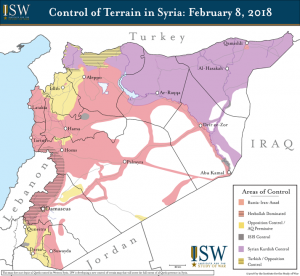 By: Matti Suomenaro and the ISW Syria Team