Αρχική Blog Σελίδα 2854

The US Is Drifting Toward War With a NATO Ally

0
 It’s not too late to stem Turkey’s turn toward Russia — and defuse a World War I-style conflict.

While the White House is distracted by internal turmoil, a crisis is brewing in Syria. The Turkish Armed Forces (TSK) and its proxy force, the Free Syrian Army (FSA), recently invaded the city of Afrin to rid it of “terrorists,” destabilizing the de facto autonomous Kurdish region and endangering U.S. policy. Last Tuesday, in order to defend an allied Kurd-dominated militia, and in the wake of reports that Assad may once more be using chemical weapons, the U.S.-led coalition killed over 100 Syrian regime soldiers. Over the weekend, the Israeli Air Force downed an Iranian drone launched from a Syrian base, which led to a broader skirmish that brought down an Israeli F-16 and destroyed nearly half of the Syrian regime’s air defenses.

With a complex system of alliances, a major World War I-style conflict is on the horizon, one that has the potential to spread across the Middle East. With the near-demise of ISIS, buffering territory is dwindling, and thus the prospect of a conflagration is increasing. Meanwhile, the existential struggle taking place in the White House means that this Administration either cannot, or will not, give international and national security the attention it deserves.

Operation Olive Branch, Turkey’s latest offensive in Afrin, is a tangible sign of its drift from NATO and its increasing alignment with Russia. With the Kremlin’s blessing, the TSK is now battling the U.S.-led coalition’s allied Syrian ground forces. When the operation continues to Manjib, as Erdoğan repeatedly insists it will, the TSK could come face-to-face with American troops. The few hundred U.S. Special Operations soldiers stationed in Manjib have vowed that America will stay and support its allies. Given the deterioration in relations between the U.S. and Turkey, it is imaginable that for the first time, war could break out between two NATO member states.

American support for Kurdish forces is only one of several critical factors that has strained U.S.-Turkish relations. After the botched coup of 2016, Turkey purged its entire staff of NATOrepresentatives, nearly 400 military officials. In July 2017, the Turkish state-run news organization, Anadolu, revealed the location of 10 U.S. bases in northern Syria, endangering American troops and undermining their operations. In late August 2017, Turkish-backed forces fired at U.S. troops in northern Syria. In December 2017, Turkey finalized the purchase of the S-400 missile-defense system from Russia. Ankara has also objected to NATO member-state access to key Turkish bases such as İncirlik.

These and other actions show Turkey’s increasing alignment with Russia’s anti-NATO campaign. Russia is attempting to enlist Turkey in its grander strategy of “unwinding the U.S.-led global order,” with a particular focus on disrupting NATO. The Kremlin’s campaign to win hearts and minds in Turkey, complete with anti-NATO propaganda concerning the attempted coup of 2016, appears to be working. Polls show that both anti-Americanism and pro-Russian sentiment are on the rise in Turkey.

It is still possible to salvage the relationship between Turkey and the West, and to distance Turkey from its Russian benefactor. The U.S. has leverage over Turkey, especially with respect to the Kurdish issue, as Russia is so far ignoring Erdoğan’s demand to shut out the Kurds from its own Syrian peace efforts. President Trump could simultaneously alleviate Turkish concerns while securing American interests by engaging in careful diplomacy with Turkey. Future U.S. concessions with respect to allied Kurdish ground forces in Syria should be conditioned on Turkey’s willingness to (1) halt delivery of its $2.5 billion purchase from Russia of the S-400 system; and (2) cease coordinating military drills with Russia.

If Erdoğan agrees to stipulations that distance Turkey from Russia, the U.S. should explore cooperating with the Turkish-backed FSA and decoupling the Kurdish YPG (People’s Protection Units) from the Syrian Democratic Forces (SDF). Coordinating the deployment of FSA and Arab fighters in the SDFnear the Turkish border would likely placate Erdoğan, but still leave room for the U.S. to continue supporting the YPG in areas where Turkish national security is not at risk.

Putin’s unchecked courtship of Erdoğan increases the risks associated with any military response to Assad’s war crimes, continued Turkish aggression, or Iranian entrenchment in Syria. The U.S. and NATO should take Turkey to task for any actions that are detrimental to NATO’s mutual defense goals.  Concurrently, Turkey must be lured away from Russia before it is too late. The delicate carrot-and-stick balance that must be struck with Turkey to solidify its fidelity to NATO interests requires highly-skilled diplomacy. The ineptitude of the current Administration means Congress must take the lead. It must do so immediately, lest we end up in an international armed conflict that we are ill-equipped to handle.


The authors explore these developments more deeply in Turkey’s Eastern Pivot: A Challenge for NATO and a Threat to U.S.National Security, published in January by the Center for Ethics and the Rule of Law at the University of Pennsylvania. 

Η Επιχείρηση ‘’Κλάδος Ελαίας’’ της Τουρκίας στην Συρία.

0

 Του Ανδρέα Ματζάκου*

Η Τουρκία με την επιχείρηση ‘’Κλάδος Ελαίας’’ που ξεκίνησε στις 20 Ιανουαρίου, εισέβαλε στο συριακό έδαφος, για την δημιουργία μιας ζώνης ασφαλείας πλάτους 30 χλμ στα σύνορα της με την Συρία. Διακηρυγμένος επίσημος αντικειμενικός σκοπός, η απώθηση των κουρδικών δυνάμεων της στρατιωτικής πτέρυγας (Peoples Protection Units – YPG) του Κόμματος της Δημοκρατικής Ενώσεως (PYD) από τα σύνορα με την Τουρκία, στόχος που ακόμα και αν επιτευχθεί, δεν φαίνεται να λύνει το βασικό πρόβλημα ασφαλείας που η Τουρκία αισθάνεται από μια πιθανή δημιουργία αυτόνομου κουρδικού κράτους στα νώτα της.

ΕΙΣΑΓΩΓΗ

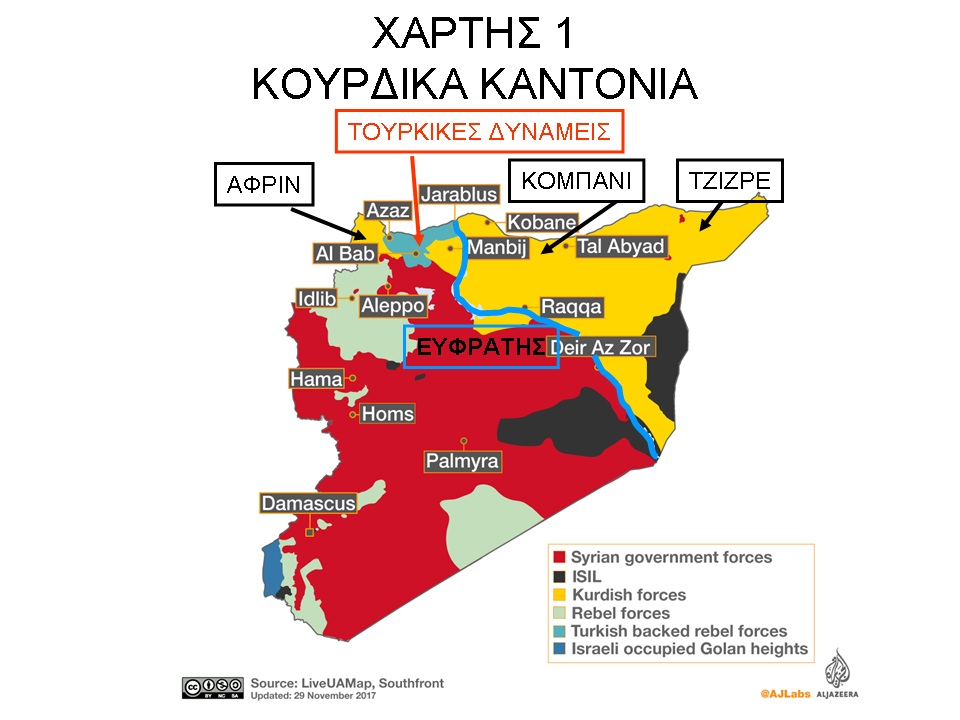
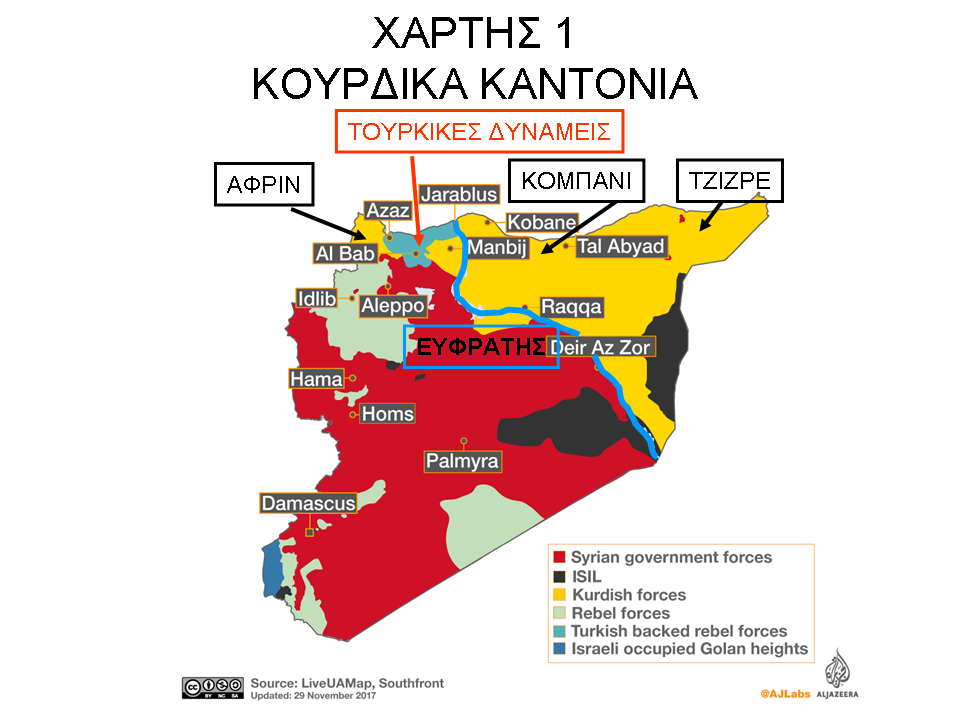
Η επιχείρηση ‘’Κλάδος Ελαίας’’ των Τουρκικών Ενόπλων Δυνάμεων (ΤΕΔ) εντός του συριακού εδάφους, είναι συνέχεια της επιχειρήσεως ‘’Ασπίδα του Ευφράτη’’, η οποία ολοκληρώθηκε τον Μάρτιο του 2017. Η συγκεκριμένη επιχείρηση, υπό το πρόσχημα της καταπολεμήσεως των τρομοκρατών του λεγομένου Ισλαμικού Κράτους (ΙΚ), στην ουσία δημιούργησε μια σφήνα μεταξύ των τριών κουρδικών καντονιών στα σύνορα της με την Συρία, ώστε να απαγορεύσει συνένωση τους. Από τότε οι τουρκικές δυνάμεις δεν εγκατέλειψαν το έδαφος της Συρίας, αλλά παραμένουν στην ανατολική πλευρά του κανονιού του Αφρίν. (Βλέπε Χάρτη 1 – Κουρδικά Καντόνια)


Όμως ο ‘’Κλάδος Ελαίας’’ δημιουργεί ερωτήματα όπως, η δημιουργία ζώνης ασφαλείας κατά μήκος των συνόρων της Τουρκίας με την Συρία στο καντόνι του Αφρίν, θα δώσει τέλος στον κίνδυνο που αισθάνεται η Τουρκία από μια πιθανή δημιουργία αυτόνομου κουρδικού κράτους εντός της Συρίας; Ποίοι θα μπορούσαν να είναι οι στρατιωτικοί αντικειμενικοί σκοποί μιας τέτοιας επιχειρήσεως; Ποια μπορεί να είναι η κατάληξη της επιχειρήσεως;

Η θέση του άρθρου είναι ότι η Τουρκία, με την επιχείρηση αυτή, εισήλθε σ’ έναν κύκλο πολεμικής αντιπαραθέσεως με τους Κούρδους της Συρίας, ο οποίος δεν μπορεί να αποτρέψει την οριστική δημιουργία ανεξαρτήτου κουρδικού κράτους εντός της Συρίας. Πλέον αυτού, όχι μόνο δεν φαίνεται εύκολος ο τερματισμός της επιχειρήσεως, αλλά η εξέλιξη της εξαρτάται ευθέως από τα συμφέροντα και άλλων δρώντων που συμμετέχουν ή επηρεάζονται από τον πόλεμο στη Συρία.  Στην αρχή του άρθρου θα αναφερθούν λίγα στοιχεία για άλλους βασικούς δρώντες που επηρεάζουν την εξέλιξη της επιχειρήσεως, θα αναλυθούν ο πολιτικός αλλά και οι στρατιωτικοί αντικειμενικοί σκοποί, τα μέσα που διαθέτει η Τουρκία για την επίτευξη των σκοπών της και το άρθρο θα κλείσει με περιγραφή 3 πιθανών σεναρίων για την κατάληξη της επιχειρήσεως.

ΑΛΛΟΙ ΒΑΣΙΚΟΙ ΔΡΩΝΤΕΣ

Οι ΗΠΑ διατηρούν δυνάμεις ανατολικώς του Ευφράτη ποταμού, οι οποίες και θα παραμείνουν στην Συρία μέχρι να βρεθεί πολιτική λύση στην κρίση, προκειμένου κατά κύριο λόγο να ελεγχθεί η επιρροή του Ιράν στην περιοχή. [1]

Η Ρωσία ελέγχει το δυτικό τμήμα της Συρίας και τον εναέριο χώρο πάνω από το καντόνι του Αφρίν με τις πυροβολαρχίες των S-400 που έχει αναπτύξει στην αεροπορική βάση Khmeimim. Συνεπώς Εγγύς Αεροπορική Υποστήριξη της χερσαίας επιχειρήσεως από την τουρκική αεροπορία, δεν θα ήταν δυνατή χωρίς την άδεια της Ρωσίας.[2]

Το καθεστώς Ασαντ αντιμετωπίζει την Τουρκία ως δύναμη εισβολής στην Συρία και δεν θέλει να αισθάνεται την Τουρκία ως προστάτιδα των Σουνιτών Μουσουλμάνων που αποτελούν και την πλειοψηφία του πληθυσμού της Συρίας.

ΠΟΛΙΤΙΚΟΣ ΣΚΟΠΟΣ ΤΗΣ ΕΠΙΧΕΙΡΗΣΕΩΣ

Ο εκπεφρασμένος πολιτικός σκοπός δια στόματος του πρωθυπουργού της Τουρκίας Γιλντιρίμ, είναι η δημιουργία μιας ζώνης ασφαλείας πλάτους 30 Χλμ, κατά μήκος των τουρκο-συριακών συνόρων στο κουρδικό καντόνι του Αφρίν.[3] Όμως, όπως φαίνεται και στον Χάρτη 1, η επιχείρηση στο καντόνι του Αφρίν, δεν επηρεάζει τις κουρδικές δυνάμεις των άλλων δυο καντονίων του Κομπάνι και του Τζίζρε. Πλέον αυτού, οι ΗΠΑ έχουν εγκαταστήσει βάσεις σ’ αυτά τα δυο καντόνια, μέσω των οποίων αμερικανικό προσωπικό εξόπλισε και εκπαίδευσε τις Κουρδο-αραβικές μονάδες πολιτοφυλάκων  (Syrian Democratic Forces –SDF), οι οποίες και απελευθέρωσαν την Ράκκα με την υποστήριξη των ΗΠΑ. [4] Συνεπώς δεν μπορεί να επιτευχθεί αποφασιστικό αποτέλεσμα με μόνη την κατάληψη του Αφρίν.

Η αδυναμία αυτή επιτεύξεως ενός αποφασιστικού αποτελέσματος έναντι του κινδύνου δημιουργίας ανεξαρτήτου κουρδικού κράτους εντός της Συρίας, εκτιμάται ότι οδήγησε τον Πρόεδρο Ερντογκάν να δηλώσει ότι ‘’μετά το Αφρίν, οι τουρκικές δυνάμεις θα προχωρήσουν για κατάληψη της Manbij’’.[5] Στην Manbij όμως συνυπάρχουν αμερικανικές δυνάμεις και SDF, οπότε οποιαδήποτε ενέργεια κατά των εκεί κουρδικών δυνάμεων, θα φέρουν αντιμέτωπες τουρκικές και αμερικανικές δυνάμεις.[6]

ΣΤΡΑΤΙΩΤΙΚΟΙ ΑΝΤΙΚΕΙΜΕΝΙΚΟΙ ΣΚΟΠΟΙ ΕΠΙΧΕΙΡΗΣΕΩΣ

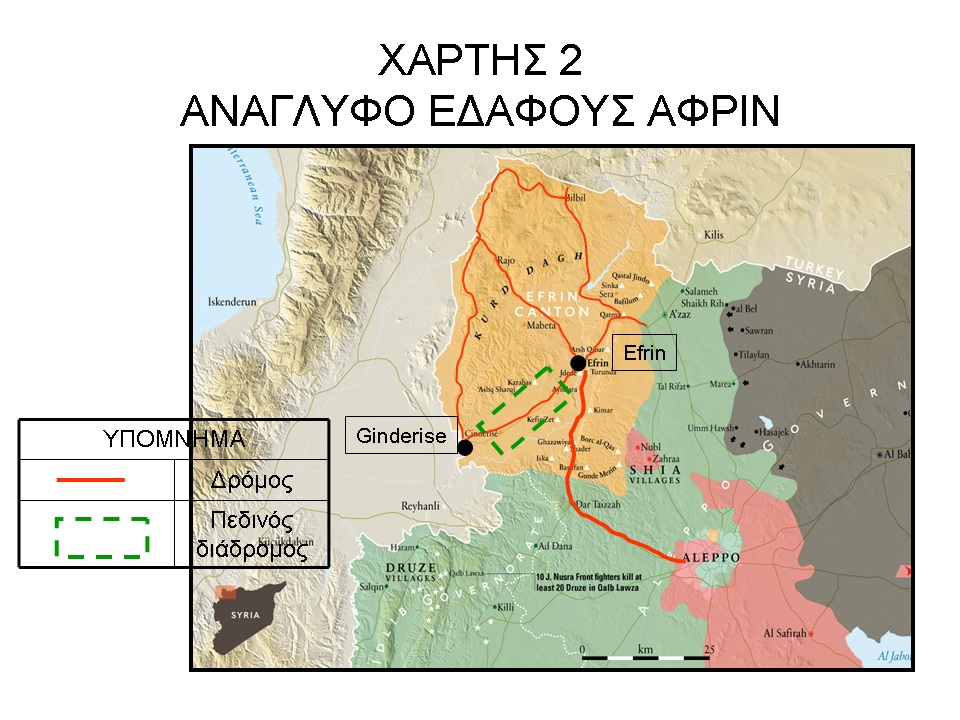
Από την μελέτη της μορφολογίας του εδάφους του καντονιού του Αφρίν, για την εξασφάλιση ζώνης πλάτους 30 Χλμ, πρέπει οι τουρκικές δυνάμεις να καταλάβουν σε πρώτο χρόνο το ορεινό έδαφος αμέσως μετά τα σύνορα, την οροσειρά Kurd Dagh δηλαδή και, στη συνέχεια και την πόλη του Αφρίν. Ο βασικός οδικός άξονας που οδηγεί αμέσως στο Αφρίν είναι κατά μήκος του μοναδικού πεδινού εδάφους, στα ανατολικά του καντονιού από το χωριό Ginderise, στο Αφρίν, (Βλέπε Χάρτη 2- Ανάγλυφο Εδάφους Αφρίν).

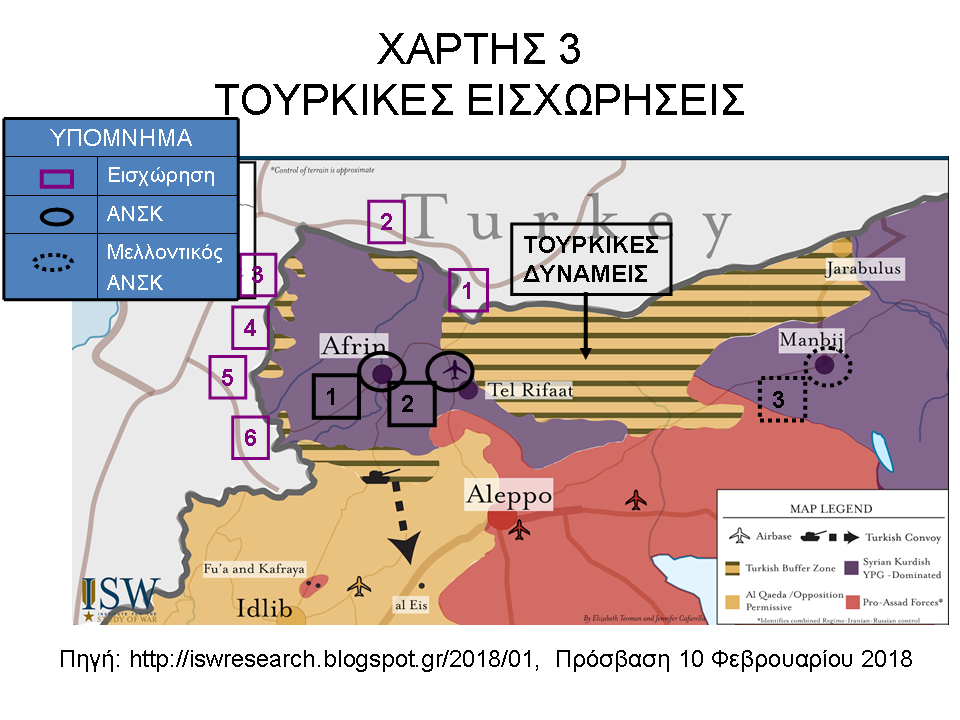
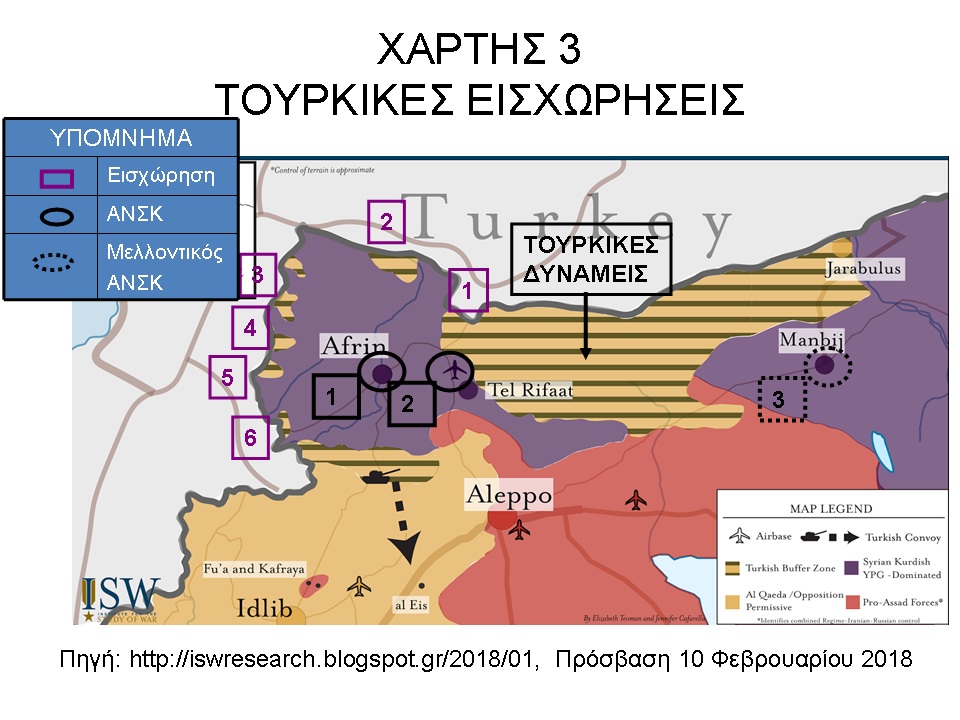
Γι’ αυτό και στην συγκεκριμένη περιοχή δημιουργήθηκε η εισχώρηση 6.

(Βλέπε Χάρτη 3 -Τουρκικές Εισχωρήσεις, με μωβ αρίθμηση οι εισχωρήσεις).


Ως κύριοι Αντικειμενικοί Σκοποί  (ΑΝΣΚ) της επιχειρήσεως εκτιμάται ότι πρέπει να αποτελούν η πόλη του Αφρίν (ΑΝΣΚ 1) και η αεροπορική βάση Menagh βορείως της πόλεως Tel Rifaat (ΑΝΣΚ 2). Εάν η Τουρκία υλοποιήσει την απειλή της και προχωρήσει κατά της πόλεως Manbij, τότε αυτή μπορεί να είναι ένας ακόμη αντικειμενικός σκοπός (ΑΝΣΚ 3), σε δεύτερη φάση.

Η αποστολή αυτή απαιτεί διαφορετικά είδη δυνάμεων και εξοπλισμού, κάτι που καθιστά το συνολικό έργο αρκετά δύσκολο. Η ανάγκη καταλήψεως των ορεινών όγκων, αλλά και για την διασπορά των δυνάμεων των αμυνομένων, οι τουρκικές δυνάμεις επιτίθενται ταυτοχρόνως για δημιουργία εισχωρήσεων σε έξι διαφορετικές περιοχές στην δυτική πλευρά του καντονιού (Βλέπε Χάρτη 3 -Τουρκικές Εισχωρήσεις).


ΜΕΣΑ ΓΙΑ ΤΗΝ ΕΠΙΤΕΥΞΗ ΤΟΥ ΣΚΟΠΟΥ ΤΟΥ ΠΟΛΕΜΟΥ

Την επιχείρηση έχει αναλάβει να φέρει εις πέρας η 2α τουρκική Στρατιά που εδρεύει στην Μαλάτεια και έχει άμεση εμπλοκή στον αγώνα κατά του ΡΚΚ στην νοτιανατολική Τουρκία. [7] Τις δυνάμεις της 2ας Στρατιάς υποστηρίζει η τουρκική πολεμική αεροπορία με καθημερινές εξόδους, ενώ ως πεζικό χρησιμοποιούνται και μονάδες αντιφρονούντων Συρίων, γνωστών ως Free Syrian Army (FSA). Οι κουρδικές δυνάμεις που υπερασπίζονται το καντόνι Αφρίν υπολογίζονται σε 10.000[8] και έχουν οργανώσει την ορεινή γραμμή για άμυνα περιοχής, με εκσκαφή ορυγμάτων και τούνελ που αφ’ ενός μεν καθυστερούν την προέλαση των επιτιθεμένων, αφ’ ετέρου απαιτούν την εμπλοκή τμημάτων πεζικού για την κατάληψη τους.[9] Ακόμη δυσκολότερη και χρονοβόρα θα είναι η κατάληψη κατοικημένων τόπων, η οποία θα απαιτήσει εκκαθάριση οικοδομικών τετραγώνων και εξουδετέρωση παγιδεύσεων και εκρηκτικών μηχανισμών που χρησιμοποιούν οι αμυνόμενοι σε τέτοιες περιπτώσεις.[10]

Η επιχείρηση εξελίσσεται με αργό ρυθμό για τις επιτιθέμενες τουρκικές δυνάμεις και μετά από 4 εβδομάδες επιχειρήσεων, οι ΤΕΔ είχαν επιτύχει εισχωρήσεις μόνο λίγων χιλιομέτρων. Την επιχείρηση δυσκολεύουν οι πολλές βροχές που δέχεται η συγκεκριμένη περιοχή τον χειμώνα που καθιστούν το έδαφος λασπώδες και οι συχνές ομίχλες.[11]

ΕΚΤΙΜΗΣΗ

Με βάση την παρούσα ανάλυση, τα πιθανότερα σενάρια για την εξέλιξη της εμπλοκής της Τουρκίας στο καντόνι του Αφρίν, εκτιμάται ότι έχουν ως εξής:

Σενάριο Α:

Η Τουρκία επιτυγχάνει την κατάληψη του Αφρίν και συνενώνει τις δυνάμεις της με αυτές που βρίσκονται μεταξύ των πόλεων Tel Rifaat και Jarabulus και ενισχύει την παρουσία της στην Συρία.

Σενάριο Β:

Η Τουρκία αποτυγχάνει να καταλάβει το Αφρίν σε εύλογο χρόνο, οι δυνάμεις της παραμένουν αγκιστρωμένες σε όση έκταση κατέχουν και υφίστανται ανταρτοπόλεμο από τις κουρδικές δυνάμεις.

Σενάριο Γ:

Οι δυνάμεις του Ασαντ αναλαμβάνουν να βοηθήσουν το YPG και αναλαμβάνουν την άμυνα του Αφρίν, οπότε αυξάνεται η πιθανότητα Συρία και Τουρκία να έρθουν σε απ’ ευθείας αντιπαράθεση.

Πιο πιθανό σενάριο θεωρείται το Β και μετά το Γ, καθότι μια τέτοια εξέλιξη, πιθανώς και με την βοήθεια της Ρωσίας, θα έφερνε την Τουρκία στο τραπέζι των διαπραγματεύσεων πολύ συντομότερα από ότι αν η Τουρκία επιτύχει στο Αφρίν και δει να διανοίγεται η προοπτική για συνέχιση της επιθέσεως της προς Manbij.

ΕΠΙΛΟΓΟΣ

Η Τουρκία γνωρίζει ότι ανέλαβε μια επιχείρηση η οποία ακόμη και εάν επιτύχει τους ΑΝΣΚ εντός του καντονιού του Αφρίν, δεν θα επιφέρει το αποτέλεσμα που θα ήθελε, δηλαδή την εξασφάλιση της μη δημιουργίας ανεξαρτήτου κουρδικού κράτους στα νώτα της, αφού:

– Δεν μπορεί να επέμβει ανατολικώς του Ευφράτη ποταμού, στα δυο άλλα κουρδικά καντόνια στα οποία σταθμεύουν αμερικανικές δυνάμεις.

– Δεν έχει δυνατότητα να ανατρέψει την απόφαση των ΗΠΑ για δημιουργία μιας δυνάμεως για την προστασία των συνόρων (Border Security Force – BSF) αποτελουμένη κατά μεγάλο μέρος από μαχητές της SDF, όπως ανακοινώθηκε από την συμμαχία στις 14 Ιανουαρίου 2018. [12]

Και τότε γεννάται το ερώτημα, γιατί ανέλαβε την επιχείρηση; Διότι χωρίς να είχε αντιδράσει, οι ΗΠΑ θα συνέχιζαν την εμβάθυνση της συμμαχίας τους με του Κούρδους, τους οποίους δεν ήθελε με κανένα τρόπο να δει να μετατρέπονται σε πληρεξούσιοι των ΗΠΑ στην Συρία και συνεπώς να έχουν περισσότερες πιθανότητες επιβολής της ατζέντας τους. Μια πιθανή εκκαθάριση του Αφρίν από τις SDF, πιθανόν να χαλαρώσει την συμμαχία YPG-ΗΠΑ, ενώ θα αναβαθμίσει την διαπραγματευτική ικανότητα της Τουρκίας στις διαβουλεύσεις για το μελλοντικό καθεστώς της Συρίας.

ΠΗΓΕΣ

ΑΡΘΡΑ

Ανδρέας Ματζάκος, ‘’Οι Αμερικανικές Βάσεις στην Συρία’’, 12 Ιουνίου 2017, Διαθέσιμο στο  http://www.idis.gr/?p=4525, (Πρόσβαση 12 Φεβρουαρίου 2018)

ΔΙΑΔΙΚΤΥΟ

https://www.theguardian.com/us-news/2018/jan/17/us-military-syria-isis-iran-assad-tillerson, (Πρόσβαση 10 Φεβρουαρίου 2018)

http://www.bbc.com/news/world-europe-34976537, (Πρόσβαση 15 Φεβρουαρίου 2018)

https://www.dailysabah.com/war-on-terror/2018/01/21/turkeys-afrin-operation-to-create-30-km-deep-safe-zone-pm-yildirim-says, (Πρόσβαση 9 Φεβρουαρίου 2018)

http://www.hurriyetdailynews.com/turkish-military-operation-into-afrin-begins-manbij-to-follow-erdogan, (Πρόσβαση 9 Φεβρουαρίου 2018)

https://www.haaretz.com/middle-east-news/turkey/erdogan-says-u-s-should-leave-syria-s-manbij-1.5792084, (Πρόσβαση 12 Φεβρουαρίου 2018)

https://southfront.org/military-analysis-the-turkish-2nd-army-invasion-force-for-syria, (Πρόσβαση 15 Φεβρουαρίου 2018)

https://www.al-monitor.com/pulse/originals/2018/01/turkey-syria-olive-branch-continuing-under-fog.html, (Πρόσβαση 15 Φεβρουαρίου 2018)

http://www.hurriyetdailynews.com/turkish-army-clears-ypg-tunnels-bunkers-in-syrias-afrin, , (Πρόσβαση 15 Φεβρουαρίου 2018)

https://www.al-monitor.com/pulse/originals/2018/01/turkey-syria-does-erdogan-want-to-settle-in-afrin.html,  (Πρόσβαση 15 Φεβρουαρίου 2018)

http://www.aljazeera.com/news/2018/02/assad-quietly-aids-ypg-turkey-180211100213138.html, (Πρόσβαση 15 Φεβρουαρίου 2018)

http://www.hurriyetdailynews.com/border-security-force-to-be-stationed-at-borders-with-turkey-iraq-us-led-coalition-125724, (Πρόσβαση 12 Φεβρουαρίου 2018)

EDITOR: SOFIA TZAMARELOY Intelligence Research Team Coordinator.

* Ο Ανδρέας Ματζάκος είναι Απόστρατος Αξκος του ΣΞ και κατέχει MSc στις Διεθνείς Σχέσεις και Στρατηγικές Σπουδές. Είναι δόκιμος ερευνητής στον Τομέα Αμυντικών Θεμάτων του ΙΔΙΣ.

[1] Την στρατηγική των ΗΠΑ για την Συρία ανεκοίνωσε στις 17 Ιανουαρίου ο Rex Tillerson, μιλώντας στο πανεπιστήμιο του Stanford. https://www.theguardian.com/us-news/2018/jan/17/us-military-syria-isis-iran-assad-tillerson, (Πρόσβαση 10 Φεβρουαρίου 2018)

[2] Μετά την κατάρριψη του ρωσικού Su-24  από τουρκικά F-16 τον Νοέμβριο του 2015, η Ρωσία ανέπτυξε πυροβολαρχίες αντιαεροπορικών βλημάτων S-400  για την προστασία της αεροπορικής της βάσεως στο Khmeimim, κοντά στην Λαττάκεια. http://www.bbc.com/news/world-europe-34976537, (Πρόσβαση 15 Φεβρουαρίου 2018)

[3] https://www.dailysabah.com/war-on-terror/2018/01/21/turkeys-afrin-operation-to-create-30-km-deep-safe-zone-pm-yildirim-says, (Πρόσβαση 9 Φεβρουαρίου 2018)

[4] Το θέμα των αμερικανικών βάσεων στην Συρία έχει αναλυθεί στο άρθρο ‘’Οι Αμερικανικές Βάσεις στην Συρία’’, 12 Ιουνίου 2017, Διαθέσιμο στο  http://www.idis.gr/?p=4525, (Πρόσβαση 12 Φεβρουαρίου 2018)

[5] Στις 20 Ιανουαρίου ο Πρόεδρος Ερντογκάν, μιλώντας σε συνέδριο του κόμματος του στην Κιουτάχεια, δήλωσε: ‘’ Ο επόμενος στόχος στρατιωτικής επιχειρήσεως θα είναι η Manbij. Θα καθαρίσουμε όλο το έδαφος μέχρι τα σύνορα με το Ιράκ, βήμα-βήμα, από αυτό τον βρομερό τρόμο που πολιορκεί την χώρα μας’’ http://www.hurriyetdailynews.com/turkish-military-operation-into-afrin-begins-manbij-to-follow-erdogan, (Πρόσβαση 9 Φεβρουαρίου 2018)

[6] Στις 6 Φεβρουαρίου ο Πρόεδρος Ερντογκάν, μιλώντας σε συνέδριο του κόμματος του κάλεσε τις ΗΠΑ να αποσυρθούν από την Manbij, γιατί όπως είπε, ‘’Η Τουρκία σκοπεύει να παραδώσει την πόλη στους πραγματικούς ιδιοκτήτες της.’’ https://www.haaretz.com/middle-east-news/turkey/erdogan-says-u-s-should-leave-syria-s-manbij-1.5792084, (Πρόσβαση 12 Φεβρουαρίου 2018)

[7] Η Στρατιά αυτή διαθέτει 3 Ταξιαρχίες Καταδρομών, 1 Ορεινών Καταδρομών, 5 Μηχανοκίνητου Πεζικού και 2 Τεθωρακισμένων. https://southfront.org/military-analysis-the-turkish-2nd-army-invasion-force-for-syria, (Πρόσβαση 15 Φεβρουαρίου 2018)

[8] Οι κουρδικές δυνάμεις του YPG που παρέμειναν στο Αφρίν, υπολογίζονται σε 8 με 10.000 https://www.al-monitor.com/pulse/originals/2018/01/turkey-syria-olive-branch-continuing-under-fog.html, (Πρόσβαση 15 Φεβρουαρίου 2018)

[9] http://www.hurriyetdailynews.com/turkish-army-clears-ypg-tunnels-bunkers-in-syrias-afrin, (Πρόσβαση 15 Φεβρουαρίου 2018)

[10] Στο καντόνι του Αφρίν υπάρχουν 7 πόλεις και 365 χωριά, με συνολικό πληθυσμό 400.000 κατοίκων, χωρίς να υπολογίζονται οι πρόσφυγες που κατέφυγαν στο καντόνι κατά την διάρκεια του επταετούς πολέμου. https://www.al-monitor.com/pulse/originals/2018/01/turkey-syria-does-erdogan-want-to-settle-in-afrin.html,  (Πρόσβαση 15 Φεβρουαρίου 2018)

[11] http://www.aljazeera.com/news/2018/02/assad-quietly-aids-ypg-turkey-180211100213138.html, (Πρόσβαση 15 Φεβρουαρίου 2018)

[12] Η ανακοίνωση αυτή επετάχυνε και την ανάληψη της επιχειρήσεως ‘’Κλάδος Ελαίας’’ από την Τουρκία, αφού η δύναμη αυτή μετά την εκπαίδευση της, θα ανελάμβανε την ασφάλεια σε όλο το μήκος των Τουρκο-συριακών συνόρων. http://www.hurriyetdailynews.com/border-security-force-to-be-stationed-at-borders-with-turkey-iraq-us-led-coalition-125724, (Πρόσβαση 12 Φεβρουαρίου 2018)

Το μετέωρο βήμα του Ερντογάν στο Αφρίν

0

Του Κώστα Ράπτη

Ο Τούρκος πρόεδρος Ταγίπ Ερντογάν ακούγεται οργισμένος. Τόσο οργισμένος, όσο μόνο ένας εξαπατημένος άνθρωπος μπορεί να ακουστεί. Αλλά βρίσκεται όντως σε μία κατάσταση όπου για μεγάλο διάστημα πατά σε δύο βάρκες και τώρα κινδυνεύει να αδειαστεί και από τις δύο.

Από τη μία χρησιμοποιεί τα ανοίγματά του προς τη Ρωσία, προκειμένου να εκβιάσει την ανταπόκριση του παραδοσιακού υπερατλαντικού του συμμάχου στις ανησυχίες του. Από την άλλη, οχυρώνεται πίσω από την συμμετοχή της Τουρκίας στο ΝΑΤΟ για να αποτολμήσει, όπως και τον Νοέμβριο 2015, προκλήσεις που υπό άλλες συνθήκες θα έβρισκαν απηνή απάντηση από τους Ρώσους προστάτες της Δαμασκού.

Συμπληρώθηκε ένας μήνας πολιορκίας του αυτονομημένου κουρδικού “καντονιού” του Αφρίν στη βορειοδυτική Συρία από τις τουρκικές ένοπλες δυνάμεις και τους ισλαμιστές συμπολεμιστές τους, του λεγόμενου “Ελεύθερου Συριακού Στρατού”. Το εγχείρημα, αποτελεί στην πραγματικότητα ένα μήνυμα προς τις ΗΠΑ, χωρίς ωστόσο να διακινδυνεύει άμεση εμπλοκή με τις αμερικανικές δυνάμεις που έχουν αναπτυχθεί στα συμπαγέστερο κουρδοκρατούμενα εδάφη της βορειοανατολικής Συρίας. Και πάντως, δεν θα ήταν ποτέ εφικτό χωρίς την ανοχή της Μόσχας και, σε μικρότερο βαθμό, της ίδιας της Δαμασκού και της Τεχεράνης.

Ο Ταγίπ Ερντογάν διεξάγει την “αντιτρομοκρατική”, όπως την ονομάζει, επιχείρησή του στη συριακή επικράτεια (χωρίς αυτό πάντως να την καθιστά λιγότερο παράνομη), προεξοφλώντας ότι δεν θα την παρεμποδίσει η ρωσική αεροπορία ή η συριακή αεράμυνα – και αυτό πράγματι συνέβη. Για την κυβέρνηση του Μπασάρ αλ Άσαντ μεγαλύτερη απειλή μεσοπρόθεσμα συνιστά η ανάπτυξη αμερικανικών δυνάμεων στο πλευρό ενός αυτονομημένου γηγενούς στοιχείου, παρά η εισβολή του τουρκικού στρατού. Τουλάχιστον μέχρις ενός σημείου, διότι είναι γνωστή σε όλους λ.χ. η πολιτική τουρκοποίησης (μεταφορά πληθυσμού, επέκταση των τουρκικών δημόσιων υπηρεσιών, ίδρυση τεμενών) που εφαρμόζει η Άγκυρα στην συριακή πόλη αλ-Μπαμπ την οποία κατέχει από τον Δεκέμβριο 2016, οπότε την κατέλαβε στο πλαίσιο της επιχείρησης “Ασπίδα του Ευφράτη”.

Στον βαθμό πάντως που ο “αμερικανικός κίνδυνος” προέχει, το σφυροκόπημα του Αφρίν από τις τουρκικές δυνάμεις, ήταν για τη συριακή κυβέρνηση και τους συμμάχους της ένα “χρήσιμο μάθημα” που έπρεπε να διδαχτεί η κουρδική πλευρά, όσο την ίδια ώρα η ρωσική διπλωματία αναλάμβανε μεσολαβητικές προσπάθειες για την επανυπαγωγή του αυτονομημένου καντονιού στην δικαιοδοσία της Δαμασκού.

Ένα μήνα μετά την έναρξη της επιχείρησης “Κλάδος Ελαίας” οι μεν επιχειρησιακές επιδόσεις της Τουρκίας κάθε άλλο παρά εντυπωσιακές αποδείχθηκαν, οι δε αντοχές των Κούρδων υπερασπιστών του Αφρίν σταδιακά μειώνονται. Είναι το σημείο στο οποίο η συριακή κυβέρνηση αρχίζει να διευκολύνει τη διέλευση μέσα από τα εδάφη που ελέγχει Κούρδων μαχητών από άλλες περιοχές που έσπευδαν για την ενίσχυση του Αφρίν. Και είναι το σημείο που γίνεται λόγος για διαπραγμάτευση ανάμεσα στην κουρδική πολιτοφυλακή του YPG και τη Δαμασκό για ανάπτυξη συριακών κυβερνητικών δυνάμεων στο Αφρίν.

 Οι πληροφορίες ότι η διαπραγμάτευση αυτή ευοδώθηκε τη Δευτέρα προκάλεσαν οργισμένες αντιδράσεις από την πλευρά της Άγκυρας που διαμήνυσε ότι η επιχείρηση “Κλάδος Ελαίας” θα συνεχιστεί (με το ρίσκο μετατροπής της “αντιτρομοκρατικής επιχείρησης” σε αναμέτρηση με έναν κρατικό στρατό που υπερασπίζεται την επικράτειά του), ενώ ο  Ταγίπ Ερντογάν είχε τηλεφωνικές συνομιλίες με τους ομολόγους του της Ρωσίας και του Ιράν.

Σύντομα ο Τούρκος πρόεδρος είχε τη δυνατότητα να ισχυρισθεί ότι συνάντησε τη συμφωνία των συνομιλητών του και ότι η σχεδιαζόμενη ανάπτυξη συριακού στρατού στο Αφρίν τερματίσθηκε. Από την πλευρά του το Κρεμλίνο είχε τη χαρά να ανακοινώσει ότι η Ρωσία, η Τουρκία και το Ιράν προχωρούν απρόσκοπτα στη διαδικασία, της οποίας είναι συνανάδοχοι, για μία πολιτική επίλυση της συριακής κρίσης, και μάλιστα με τριμερή συνάντηση κορυφής σε δεκαπέντε μέρες.

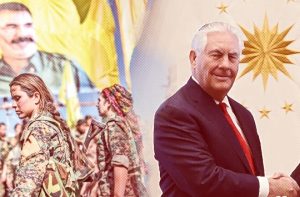
Την πολυπλοκότητα της κατάστασης εικονογραφεί πάντως το ότι λίγα 24ωρα νωρίτερα η τουρκική πολιτική ηγεσία είχε δεχθεί τον επικεφαλής του State Department Ρεξ  Τίλερσον για να διαπραγματευτεί μαζί του την επανεκκίνηση των τουρκο-αμερικανικών σχέσεων, αρχής γενομένης από μία κοινή επιχείρηση για την απομάκρυνση των Κούρδων μαχητών από την πόλη Μάνμπιτζ, δυτικά του Ευφράτη, υποτιθέμενο επόμενο στόχο της επιχείρησης “Κλάδος Ελαίας” μετά το Αφρίν. Μάλιστα, η Τουρκία έσπευδε να ανακοινώσει την αναβολή της επιχείρησης εναντίον του Μάνμπιτζ, για να καταδείξει στους επίδοξους υπερασπιστές των Κούρδων του Αφρίν, τον βαθμό αποκατάστασης των σχέσεών της με τη Ουάσιγκτον.

Το χαμόγελο του Ερντογάν πάντως προοριζόταν να παγώσει ένα 24ωρο μετά, όταν έγινε γνωστή η αποστολή στο Αφρίν φιλοκυβερνητικών πολιτοφυλάκων της Συρίας. Είναι το σημείο στο οποίο ο Τούρκος πρόεδρος δικαιούνταν να νιώθει εξαπατημένος, εφόσον οι εν λόγω πολιτοφύλακες (κατά κύριο λόγο σιίτες) λειτουργούν συμπληρωματικά προς τον συριακό κυβερνητικό στρατό και έχουν την ενθάρρυνση και στήριξη του Ιράν. Μόνο εκκρεμές ερώτημα είναι το αν η Ρωσία είχε γνώση του συγκεκριμένου ελιγμού ή αυτός επιχειρήθηκε ερήμην της, ως μία απάντηση της Δαμασκού και της Τεχεράνης στην ελαστικότητα με την οποία για ευρύτερους λόγους αντιμετωπίζει η Μόσχα τους τουρκικούς εκβιασμούς.

Με αυτή την έννοια, τίποτε δεν εικονογραφεί καλύτερα τις περιπλοκές και τις αντιφάσεις της περιοχής από το γεγονός ότι η ίδια κουρδική οργάνωση που στην βορειοδυτική Συρία δείχνει να αναζητά την ιρανική προστασία, στην βορειοανατολική Συρία ενσωματώνει Αμερικανούς πεζοναύτες που σκοπεύουν να παραμείνουν επ’ αόριστον στην περιοχή για να ανασχέσουν την επιρροή του Ιράν.

Στις κοινές δηλώσεις με τον επισκεπτόμενο την Τουρκία πρόεδρο της πΓΔΜ ο Ταγίπ Ερντογάν δήλωσε πάντως ότι η “υπόθεση θεωρείται λήξασα” εφόσον τουρκικά πυρά πυροβολικού παρεμπόδισαν την είσοδο των σιιτών πολιτοφυλάκων στο Αφρίν και τους κράτησαν σε απόσταση 10 χιλιομέτρων από το κέντρο της πόλης. Πρόσθεσε, μάλιστα, για να επιβεβαιώσει ότι οι συνεννοήσεις του με Ρωσία και Ιράν παραμένουν σε ισχύ, ότι συχνά πολιτοφυλακές αυτού του είδους παίρνουν δικές τους, λανθασμένες πρωτοβουλίες.

Μένει να φανεί αν η πραγματικότητα θα το επιβεβαιώσει. Ωστόσο, ούτε η Δαμασκός ούτε οι σύμμαχοί της έχουν λόγους να επιτρέψουν την πτώση του Αφρίν. Το διπλό παιχνίδι θα συνεχιστεί από όλους τους εμπλεκόμενους.

capital.gr

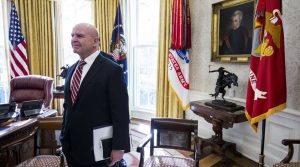
«Υπό απόλυση» και ο Στρατηγός Μακμάστερ από τον Τραμπ σύμφωνα με το “Politico”

0

Οι σχέσεις τους απέχουν από το να είναι ιδανικές, λένε όσοι γνωρίζουν τι συμβαίνει μεταξύ του προέδρου και του συμβούλου Εθνικής Ασφάλειας των ΗΠΑ – Αφορμή το σχόλιο για την εμπλοκή της Ρωσίας στις εκλογές – Ο Τραμπ προωθεί τον πρώην πρεσβευτή των ΗΠΑ στον ΟΗΕ Τζον Μπόλτον ως αντικαταστάτη του

Καθώς στα τέλη Νοεμβρίου του 2017, είχε κορυφωθεί η φημολογία για το ενδεχόμενο απόλυσης του Αμερικανού υπουργού Εξωτερικών Ρεξ Τίλερσον, ο πρόεδρος Τραμπ κι ο Προσωπάρχης του Λευκού Οίκου Τζον Κέλι, εξέταζαν το ενδεχόμενο αποπομπής του Συμβούλου Εθνικής Ασφάλειας των ΗΠΑ, Χέρμπερτ Ρέιμοντ Μακμάστερ, σύμφωνα με το “Politico.”
Ο Μακμάστερ διαδέχθηκε τον Μάικλ Φλιν, ο οποίος αποτέλεσε την πρώτη επιλογή του Τραμπ για την θέση του συμβούλου εθνικής ασφάλειας, ενώ παραιτήθηκε τον περασμένο Φεβρουάριο, μέσα στον πρώτο μήνα άσκησης των καθηκόντων του, όταν αποδείχθηκε ότι παραπλάνησε τον Αμερικανό αντιπρόεδρο Μάικ Πενς, σχετικά με τις προεκλογικές επικοινωνίες που είχε με τον πρώην πρεσβευτή της Ρωσίας στις ΗΠΑ, Σεργκέι Κίσλιακ. Ο Μακμάστερ από την πλευρά του, φέρεται να μην ταίριαξε ποτέ με τον πρόεδρο Τραμπ, σύμφωνα με έξι αξιωματούχους του Λευκού Οίκου. Ο ίδιος, περιγράφεται ως ιδιαίτερα πειθαρχικός και συγκεντρωμένος στα καθήκοντά του, ενώ έχει συγκρουστεί πολλές φορές με τον πρόεδρο Τραμπ που έχει προτίμηση στις σύντομες συζητήσεις, αλλά και στη συχνή εναλλαγή των θεμάτων της συζήτησης.
Το προβληματικό επίπεδο των σχέσεων μεταξύ του Τραμπ και του Μακμάστερ ήρθε στο φως της δημοσιότητας μέσα στο Σαββατοκύριακο, όταν ο Αμερικανός πρόεδρος επέπληξε τον σύμβουλο εθνικής ασφάλειας για την δήλωση που έκανε στην Διάσκεψη Άμυνας του Μονάχου, σύμφωνα με την οποία, οι αποδείξεις για την εμπλοκή της Ρωσίας στις προεδρικές εκλογές του 2016, ήταν “αδιάσειστες.”
“Ο στρατηγός Μακμάστερ ξέχασε να πει ότι τα αποτελέσματα των εκλογών του 2016, δεν επηρεάστηκαν ή άλλαξαν από τους Ρώσους και ότι η μόνη συνωμοσία ήταν μεταξύ της Ρωσίας και της Διεφθαρμένης Χίλαρι, της Εθνικής Επιτροπής του Δημοκρατικού Κόμματος (DNC) και των Δημοκρατικών. Θυμηθείτε το Βρώμικο Ντοσιέ, το Ουράνιο, τις Ομιλίες, τα Ηλεκτρονικά Μηνύματα, αλλά και την Εταιρία του Ποντέστα!” Έγραψε χαρακτηριστικά ο Τραμπ στο Twitter.
Το μήνυμα αυτό του Τραμπ στο Twitter, σηματοδότησε την πρώτη δημοσιοποίηση διαφωνίας του με τον Μακμάστερ, καθώς μέχρι το Σαββατοκύριακο οι διαφωνίες τους, ήταν γνωστές μόνο εντός του Λευκού Οίκου. “Σίγουρα όχι μόνο οι σχέσεις τους απέχουν από το να είναι ιδανικές, ενώ αυτό είναι αντιφατικό με τον ρόλο του Συμβούλου Εθνικής Ασφάλειας των ΗΠΑ,” ο οποίος τυπικά, έχει μία στενή προσωπική σχέση με τον πρόεδρο, δήλωσε χαρακτηριστικά ο Ντέιβιντ Ροθκόπφ, συγγραφέας του βιβλίου “Κυβερνώντας τον Κόσμο,” μία ιστορία του Συμβουλίου Εθνικής Ασφάλειας.
Ο Μακμάστερ δεν είναι σε καμία περίπτωση ο μοναδικός από τους συμβούλους του Τραμπ, που έχει δημόσια διαφωνήσει μαζί του ή για τον οποίο, ο πρόεδρος έχει σκεφτεί να τον απαλλάξει από τα καθήκοντά του, χωρίς να έχει προχωρήσει σε κάποια ενέργεια. “Ο πρόεδρος αυτός, εκφράζει τις σκέψεις δημόσια στο Twitter, αλλά και στους φίλους του, οι οποίοι με την σειρά τους μιλούν στα ΜΜΕ,” δήλωσε ο Πίτερ Φίβερ καθηγητής Πολιτικών Επιστημών (Duke University) ο οποίος και υπηρέτησε στο Συμβούλιο Εθνικής Ασφάλειας των ΗΠΑ, την περίοδο της προεδρίας του Τζορτζ Μπους Τζούνιορ. “Οι περισσότεροι πρόεδροι είναι ουσιαστικά επιφυλακτικοί για τα θέματα που πρέπει να δημοσιοποιούν,” σχολίασε ο ίδιος.
Τον περασμένο Νοέμβριο, ο πρόεδρος Τραμπ κι ένας στενός κύκλος υψηλόβαθμων συνεργατών του, συμπεριλαμβανομένου και του Κέλι συμμετείχαν στις συζητήσεις για το μέλλον του Μακμάστερ στον Λευκό Οίκο, ενώ αποφάσισαν ότι θα έπρεπε να παραμείνει στα καθήκοντά του. Από την άλλη μεριά, στην περίπτωση που είχαν αποφασίσει την αποχώρησή του, θα έπρεπε να ψάξουν για τον τρίτο σύμβουλο εθνικής ασφάλειας, μέσα σ’ έναν χρόνο. Επίσης, δεν θα ήταν καθόλου εύκολη μία συμφωνία μεταξύ του Τραμπ και του Κέλι για το πρόσωπο θα αναλάμβανε τα καθήκοντα του Μακμάστερ, σύμφωνα με υψηλόβαθμο αξιωματούχο της αμερικανικής κυβέρνησης.
Από την πλευρά του, ο Τραμπ φαίνεται να προωθούσε τον πρώην πρεσβευτή των ΗΠΑ στον ΟΗΕ Τζον Μπόλτον ως αντικαταστάτη του Μακμάστερ. Οι επισκέψεις του Μπόλτον στο Οβάλ Γραφείο σταμάτησαν με την ανάληψη των καθηκόντων του Κέλι, το περασμένο καλοκαίρι. Σύμφωνα με δύο αξιωματούχους του Λευκού Οίκου, ο Προσωπάρχης του Λευκού Οίκου ήταν αντίθετος στο ενδεχόμενο αντικατάστασης του Μακμάστερ από τον Μπόλτον.
Τις συζητήσεις για το ενδεχόμενο της αντικατάστασης του Μακμάστερ είχε δημοσιοποιήσει το “Politico” για πρώτη φορά, ενώ αυτές αντανακλούσαν την ταραχώδη σχέση του με τον πρόεδρο Τραμπ, από την στιγμή της ανάληψης των καθηκόντων του, πριν από έναν χρόνο. Ο Τραμπ εκνευρίζεται συνεχώς από τον γρήγορο ρυθμό του λόγου του, στις διάφορες ενημερώσεις, τον οποίο και παρομοιάζει με τα πυρά πολυβόλου όπλου. Στην διάρκεια μιας μακράς ενημέρωσης, ο πρόεδρος στράφηκε επιδεικτικά προς τον στρατηγό και είπε στους συμμετέχοντες “Κοιτάξτε τον. Είναι τόσο σοβαρός!”
“Το ζήτημα είναι η σοβαρότητα του Μακμάστερ, καθώς είναι ξεκάθαρος με τις θέσεις του, ενώ περιγράφει μία κατάσταση όπως ακριβώς είναι εκφράζοντας την άποψή του,” δήλωσε ο Τομ Ρικς αρθρογράφος σε μια νέα ηλεκτρονική σελίδα για τους βετεράνους των αμερικανικών ενόπλων δυνάμεων (Task&Purpose), ενώ ο ίδιος, είναι συγγραφέας έξι βιβλίων για στρατιωτικά θέματα.
Το Συμβούλιο Εθνικής Ασφάλειας των ΗΠΑ εργάζεται καλύτερα, όταν ο πρόεδρος και ο σύμβουλος εθνικής ασφάλειας βρίσκονται κοντά σε προσωπικό επίπεδο, σύμφωνα με την άποψη του Ρόθκοπφ, που επικαλέστηκε την σχέση του Τζίμι Κάρτερ Ζβίγκνιου Μπρεζίνσκι και την σχέση του πρώην προέδρου Μπους Τζούνιορ με τον Μπρεντ Σκόουκροφτ.
Από την άλλη μεριά, ο Μακμάστερ δεν έχει αυτού του είδους την σχέση με τον Τραμπ, σύμφωνα με την άποψη αρκετών αξιωματούχων του Εθνικού Συμβουλίου Ασφάλειας των ΗΠΑ. Ο Μακμάστερ έχει πει στους πιο στενούς συνεργάτες του, ότι δεν μπορεί να επικοινωνήσει με τον πρόεδρο, ζητώντας τις συμβουλές τους, για το πώς μπορεί να βελτιώσει την επικοινωνία του με τον Τραμπ. Τουλάχιστον ένας αξιωματούχος τον παρότρυνε ν’ απλοποιήσει και να συντομεύσει τις ενημερώσεις του, ενώ να μειώσει και τον αριθμό των διαθέσιμων επιλογών που παρουσιάζει στον Τραμπ, όταν πρόκειται για την λήψη κρίσιμων αποφάσεων.
Η κατάσταση είναι πιο δύσκολη για τον Μακμάστερ, καθώς οι σχέσεις του είναι προβληματικές και με τον Κέλι, ο οποίος σε αμυντικά θέματα ζητάει την άποψη του υπουργού Άμυνας Τζιμ Μάτις. Ο Μακμάστερ έχει αρκετές φορές συνταχθεί με τις απόψεις των πιο συντηρητικών μελών του συμβουλίου εθνικής ασφάλειας, σε αντίθεση με τις θέσεις του Μάτις και του Κέλι.
Στο ζήτημα που έχει προκληθεί γύρω από την εμπλοκή της Ρωσίας στις προεδρικές εκλογές του 2016, ο Μακμάστερ συντάχθηκε προσεχτικά με την άποψη της κοινότητας των αμερικανικών υπηρεσιών πληροφοριών, παρά τις πιέσεις του προέδρου Τραμπ, που υποστηρίζει ότι δεν υπήρξε συνωμοσία μεταξύ της προεκλογικής εκστρατείας του και των Ρώσων, αλλά και ότι η Μόσχα δεν επηρέασε αποφασιστικά το αποτέλεσμα των προεδρικών εκλογών.
Πριν από έναν χρόνο, όταν ο Μακμάστερ αποδέχθηκε την θέση του Συμβούλου Εθνικής Ασφάλειας των ΗΠΑ, έκανε μία απροσδόκητη στροφή στην στρατιωτική του καριέρα, ενώ δεν ήταν ούτε η πρώτη, αλλά και ούτε η δεύτερη επιλογή του Τραμπ για την θέση αυτή.
“Για τον Μακμάστερ, ήταν μια απροσδόκητη περίοδος στην καριέρα του,” δήλωσε χαρακτηριστικά ο Ρικς. Ο Σύμβουλος Εθνικής Ασφάλειας των ΗΠΑ έχει πει στους συνεργάτες του ότι είναι ενδεχόμενο να συνταξιοδοτηθεί, ενώ μπορεί έχει κι άλλες επαγγελματικές εξελίξεις. “Με το να γίνει ο στρατηγός των ενόπλων δυνάμεων που ξέρει καλύτερα ο Τραμπ, ο Μακμάστερ εξελίσσεται στον πιο ισχυρό υποψήφιο για να γίνει ο επόμενος αρχηγός του Γενικού Επιτελείου Στρατού. Έτσι, νομίζω πως η στρατηγική του είναι να κρατήσει χαμηλούς τους τόνους για να διατηρήσει την θέση του, μέχρι το άνοιγμα μιας θέσης στην ηγεσία του στρατού. Θα πρόκειται για μία ουσιαστική εξέλιξη στην στρατιωτική καριέρα του, η οποία έχει πολλές φορές εκτεθεί σε κίνδυνο,” επεσήμανε ο Ρικς.
Πρόσφατα έχουν δημοσιευτεί πληροφορίες στην Ουάσινγκτον σχετικά και με το ενδεχόμενο απαλλαγής του Κέλι από τα καθήκοντά του, εξαιτίας των διαφωνιών του με τον πρόεδρο Τραμπ στους χειρισμούς υποθέσεων του Λευκού Οίκου. Παράλληλα, τα μέτρα ελέγχου στις επικοινωνίες και επαφές του προέδρου που επέβαλε ο Κέλι, έχουν προκαλέσει την δυσαρέσκεια αρκετών εξωτερικών συμβούλων κι ανθρώπων που ήθελαν να εκμεταλλευτούν για τους δικούς τους λόγους, το πλαίσιο επικοινωνίας τους με τον πρόεδρο Τραμπ.

Πηγή: “Politico”, Πρώτο Θέμα

Hard decision in Afrin: Will the U.S. choose Turkey over Syria’s Kurds?

0

by Gokcan Aydogan    

 Turkey’s historical hatred towards the Kurds

Since the foundation of modern Turkey in 1923 with Ataturk as president, the Turkish Government has insisted that only Turks live in the country. Since then, the most significant non-Turkish minority, the Kurds (14.5 million), have practically had to make the choice of either renouncing their identity or calling themselves “Mountain Turks”. Whenever the Kurds renounced this situation of systematic erasure, either peacefully or with arms, the Turkish Republic declared them to be “undermining the Republic.” Today they are simply called terrorists.

Just two years after the foundation of the Turkish state, in 1925, an uprising for an independent Kurdistan was led by a religious leader called Shaikh Said. It was put down quickly. While Said and 36 of his followers were executed, they still paved the way for the large-scale Kurdish revolts that shook the country in the southeastern provinces of Ararat and Dersim in 1930 and 1937 respectively. These uprisings were too, met with the iron fist of the state.

In the aftermath of the Dersim rebellion of 1937, The British consul at Trabzon – the diplomatic post closest to Dersim – spoke of brutal and indiscriminate violence and made an explicit comparison with the Armenian massacres of 1915. “Thousands of Kurds,” he wrote, “including women and children, were slain; others, mostly children, were thrown into the Euphrates River. Thousands of others in less hostile areas, who had first been deprived of their cattle and other belongings, were deported to provinces in Central Anatolia.”

Kurds have accused the government’s successive attempts of suppressing their identity, through such means as the banning of the Kurdish language in society, education, print and media, as efforts to deny their existence. Ataturk believed the unity and stability of a country lay in unitary political identity, relegating cultural and ethnic distinctions to the private sphere. “Happy is he who calls himself a Turk” the adage of the state used to go, and if you did not want to, then you would have to keep that to yourself.

However, many Kurds did not relinquish their identities and language, which only led to the deepening of their legacy of resistance. Today, in Turkey this has been embodied to many Kurds within the Kurdistan Workers’ Party (PKK), which was formed in 1978 to advocate for Kurdish self-determination.

A large-scale armed conflict between Turkey’s armed forces and the Kurdistan Workers’ Party (PKK) occurred throughout the 1980s and 1990s, leaving over 35,000 dead. Things only started to get worse before they seemed to slightly get better.

Recent moves by the Turkish government, after almost 100 years of insurgency, have provided Kurds with limited rights and freedoms, particularly in regards to the Kurdish language, education, and media.

However, Kurdish politicians and activists still face pressure.

The government has arrested 11 Peoples’ Democratic Party (HDP) deputies, including the party’s co-chairs Selahattin Demirtas and Figen Yuksekdag, 1473 members of HDP and Democratic Regions Party (DBP) and also has seized the administration of 63 municipalities since a failed coup attempt on July 15, 2016. The HDP and DBP are criminalized, precisely because they are seen as being “pro-Kurdish.” Although Erdogan has branded himself as a reformer, the Kemalist roots of the Turkish state are still fully intact.

And so it is no surprise then why Turkey’s President Erdogan has his eyes set on Syria’s Kurds. Erdogan takes Ataturk’s view to its logical conclusion:  there can not be an autonomous Kurdistan in Turkey and never one close to Turkey’s border. He fears that the successful political experiment in northern Syria could help embolden the cause of Kurds within Turkey.

Kurdish renaissance

In northern Syria, also known as Rojava, the People’s Protection Units (YPG) came to life in 2011. The Kurdish YPG allied with Arab, Assyrian, Turkmen, Christian, Armenian and Yazidi populations in order to form the Syrian Democratic Forces (SDF). The SDF is the alliance that, with the support of the U.S. but against the will of Ankara, has been fighting against the Islamic State with considerable success. It was the SDF, for example, which dislodged IS from its symbolic capital in Raqqa.

Afrin, one of the three autonomous cantons in Rojava, has been under control of the Democratic Union Party (PYD) and the YPG since 2012. It lies on the border with Turkey like other two cantons of Rojava. Erdogan and the ruling establishment of the Turkish republic find this troubling.

The current situation

On January 20th, Erdogan announced an offensive against Afrin. He claimed to be attacking after the United States made explicit that they will train fighters to set up a border force that could help neutralize a threat by IS. Many of those fighters, the United States promised, would include their Kurdish partners on the ground. This infuriated Erdogan.

But Erdogan had already planned an attack on Afrin months prior, and said so explicitly. The plan was in the making for months, the border-force, depending on who you ask, was either a trigger to speed up the process or a convenient excuse.

Now, it is the third week of indiscriminate artillery attacks and aerial strikes in Afrin, which have already caused a huge number of civilian deaths. There are two military characteristics of the attacks on Afrin. The first is an aerial campaign waged by the Turkish Air Force. The second is a ground invasion by the Turkish Armed forces, which is being aided by the jihadist wing of the Free Syrian Army (FSA). On Sunday, January 21st, Turkish ground troops entered Afrin with, in their own words, 25000 fighters from the ‘Free Syrian Army’ trained by Ankara.

Turkey calls it ‘Operation Olive Branch’, which claims to seek the “liberation” of the Kurdish enclave “from terrorists”. Notwithstanding the name of the operation though, in its third week Turkey’s offensive into Afrin has led to civilian deaths, torture, the destruction of historical heritage, video footage of a mutilated fighter of the Women’s Protection Units (YPJ) and various propaganda videos released by FSA militants calling for a “Jihad” in Afrin and death to the “atheist Kurdish pigs”.

Erdogan hoped the offensive would be brief. Turkey’s Army and allied Free Syrian Army (FSA) militias, however, have struggled thus far to gain military ground in Afrin. So, it is possible that Operation Olive Branch will take longer than expected, that is, if it does not fail entirely.

Expandability of freedom of expression

Erdogan has criticized opponents of the military intervention, particularly inside the country, as ‘traitors and terror sympathizers’.

Turkey’s authorities have cautioned all dissidents not to protest, a warning which is especially directed against members of the opposition party, HDP.

As the authorities put it themselves, if people turned up to demonstrations, then the security forces will act “immediately” and “severely”.

Turkey has also ordered the arrest of 31 people, including the co-leader of HDP over opposition to the military’s offensive in Syria.

Since the launch of Operation Olive Branch, more than 600 people have been detained for protests or social media posts against the offensive.

The world is watching

Even though the YPG has contributed the most to virtually eliminating the IS in Syria, the international reaction against the operation in Afrin is rather chilling.

The European Union is absolutely silent because of its arms deals with Erdogan, investments in Turkey and the refugee deal. The refugee deal entails that Turkey take in most of the refugees in our current global refugee crisis, in exchange for aid, and influence on the region. Turkey, in other words, uses its refugee population as leverage against Europe.

And as for Russia, it has already made a secret agreement with Turkey in Syria:

Turkey can take its course in Afrin and the surrounding areas in exchange for Moscow and Damascus winning the power to suppress the opposition against Assad in southern Syria successfully.

The airspace of Afrin is under the control of Russia.

Idlib is under the control of Jihadist groups that are supported by Turkey.

Thus, Erdogan is exchanging his jihadist groups’ last stronghold with an operation to attack Afrin.

And the U.S.? Reasons behind the silence

The Kurds themselves have asked the US-led coalition to take action against Turkey’s Afrin offensive.

But the U.S wonders why it should.

Washington does not need the YPG as it did before. The Islamic State in Syria has almost been defeated. Washington also does not want to spoil its already tense relations with Ankara. Most importantly though, Washington wants to see the SDF being taught a lesson for ideological reasons.

The political system of Rojava can be followed in its constitution, the “Charter of the Social Contract”. The constitution provides that all residents shall enjoy the fundamental right of gender equality and freedom of religion. It also provides for property rights.

Abdullah Ocalan, the Kurdistan Workers’ Party (PKK) leader imprisoned in Turkey’s Imrali, has been taken up as the iconic leader in Rojava whose ideas shaped the region’s society and politics. In prison, Ocalan wrote about social ecology, direct democracy, and libertarian municipalism, a confederation of local citizens’ assemblies. In March 2005, Ocalan issued his “Declaration of Democratic Confederalism in Kurdistan” calling upon citizens “to create municipal assemblies, which he called ‘democracy without the state”.

Ocalan envisioned these assemblies as forming a confederation, united for the purposes of self-defence and enshrined with the values of anti-capitalism, environmentalism, gender equality, and ethnic, cultural, and religious pluralism.

The U.S. has not openly confronted the ideology behind the most efficient force in the fight against the Islamic State. And partially because they felt that they have not had to, insofar as Syrian Kurds made up a vast majority of those fighting against IS.

However, the U.S also never hid its discomfort and confusion.

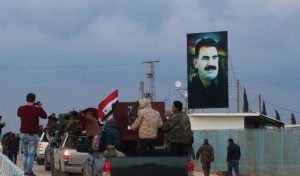
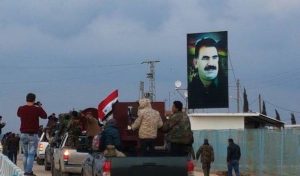
When the SDF defeated IS, the Syrian Democratic Forces celebrated with a huge banner of Abdullah Ocalan. The United States went on record to publicly condemn this act. “The coalition does not approve of the display of divisive symbols and imagery at a time in which we remain focused on the defeat of Daesh (IS) in Syria” coalition spokesperson Colonel Ryan Dillon, said in response to the act. The U.S embassy in Turkey was more straightforward, “he should not be celebrated” they wrote in a statement.

Uncomfortable the United States may have been, but they never had an opportunity to intervene.

By staying silent on Turkey’s Afrin attacks, the United States has seized a unique opportunity to take a stand against the ideology of Rojava. By that, they indirectly give the SDF a message which can be understood as something along the lines of the following: “we appreciate your efforts in the fight against IS; however, there is one thing we hate more than radical Islamism, and it is socialism. So, either abandon your leader and ideology or we “might” forget that we are allies.”

Turkey’s offensive against the Kurds in Afrin has not been condemned. The statement by the U.S. State Department, on the contrary, states: “We continue to support Turkey, our ally within NATO and an important partner in the fight against the Islamic State.”

Afrin is just the beginning

According to the latest reports, Erdogan no longer wants to limit the so-called “Operation Olive Branch” just within the confines of Afrin and its surrounding areas. Rather, Erdogan wants to strip all land controlled by the Kurds in Syria.

Inconveniently, American bases of the anti-IS coalition stand in his way. Indeed, it is still plausible and not a fantasy, that troops from Turkey and the U.S., both NATO allies, could come face to face. The question is how Washington would respond if Turkey advances towards territory it claims to be protecting.

Soon, the U.S. will have a difficult choice to make. Either it will have to stand with an out of control dictator, or it will have to “tolerate” the socialist SDF, which proposes the only reliable social program for establishing peace in Syria and arguably the broader Middle East.

http://theregion.org/article/12849-hard-decision-in-afrin-will-the-u-s-choose-turkey-over-syria-039-s-kurds

Hediye Yusuf : Il n’a jamais été question de céder Afrin au régime

0

PAR 

  • 20 FÉVR. 2018


Déclaration d’Hediye Yusuf, co-présidente de l’Assemblée de la Fédération démocratique du Nord de la Syrie pour le Centre d’Information de la Résistance d’Afrin

EXCLUSIVE/IC Afrin Resistance – Afrin, 19.02.2018

« Jusqu’à maintenant, l’État syrien garde le silence sur l’occupation de son territoire. Avant cette présente situation, la Turquie occupait déjà le territoire syrien à Jarablus, Bab et Ezaz. Contre cette occupation, l’État syrien n’avait fait que de très lâches déclarations. L’État syrien n’a pas joué son rôle en tant qu’État puisqu’il n’a pas défendu ses frontières contre l’occupation. C’est également le cas pour l’accord entre la Turquie, la Russie, le régime [syrien] et l’Iran concernant Afrin. La Turquie s’est avancée vers Afrin avec la volonté d’occuper la région. Le plan de la Turquie était d’occuper Afrin dans les 3 heures. C’est ce que la Turquie avait annoncé, ce qu’Erdogan avait annoncé. D’abord ils avaient dit trois heures, puis ils ont dit trois jours, puis une semaine. Tout le monde regardait et gardait le silence. L’état syrien est resté silencieux aussi.

Le plan de base était l’occupation d’Afrin. Mais ce qui s’est passé à la place c’est que les gens d’Afrin ont entrepris une résistance historique. Le peuple d’Afrin s’est soulevé contre l’occupation. Aujourd’hui, les habitants d’Afrin résistent depuis trente-et-un jours. Ils n’ont pas permis que le projet d’occupation atteigne son objectif. La population ainsi que les combattants des YPG, YPJ et FDS ont fait preuve d’une résistance historique contre les attaques de l’occupant. Avec cela, la résistance a déjoué les plans [de la Turquie] et a fait échouer leur tentative d’occupation. Cette résistance continue toujours.

Contre ces événements, l’État syrien est resté silencieux. Contre les attaques d’occupation contre son territoire [la région d’Afrin], il est resté silencieux. Comme nous l’avons déjà dit, la Fédération démocratique du Nord de la Syrie fait partie d’une Syrie unie. Nous avions donc précisé que la Fédération est une fédération géographique et que le Nord de la Syrie fait partie de la Syrie.

Par conséquent, notre position a toujours été la suivante : s’il existe une possibilité de dialogue qui aide à ouvrir la voie à une solution démocratique en Syrie, nous l’utiliserons et l’appuierons. Sur la base d’un système fédéral comme nous l’avons mis en place au nord de la Syrie, nous pensons que le nord de la Syrie jouera un rôle important dans le processus de solution démocratique pour la Syrie. Nous sommes ouverts au dialogue avec le régime [syrien]. La base de tout dialogue est d’atteindre l’objectif d’une solution démocratique. Par conséquent, nous avions déjà fait ces déclarations auparavant. Maintenant, il y a la situation actuelle :
la résistance d’Afrin est une résistance historique. C’est la résistance du siècle. Elle a attiré l’attention du public et contrecarre les plans qui avaient été faits auparavant. En même temps, tous les habitants de Syrie connaissent la réalité de l’occupation.

Ainsi, il y a maintenant une discussion en cours entre les forces militaires, partant du principe que le régime syrien en tant qu’État devrait jouer son rôle en empêchant l’occupation de son sol. Si ces discussions existantes apportent des résultats, alors l’armée syrienne devrait maintenir son rôle en tant qu’État et protéger l’espace aérien à l’intérieur de ses frontières. Mais ce ne sont que des discussions. Si l’on arrive à un accord militaire, les YPG feront une déclaration officielle. Tant que le YPG n’effectuent pas de déclaration officielle, nous ne pouvons rien dire sur l’existence d’un accord.

En dehors de cela, dans le cadre de cette résistance et sur un terrain politique, il n’y a pas de dialogue avec le régime syrien. Pour l’avenir du Nord de la Syrie et comme nous l’avons déjà dit, nous sommes prêts pour des discussions. Mais à l’heure actuelle, une telle discussion n’est pas en cours. Il n’a jamais été question, par exemple, comme cela a été dit, de céder Afrin au régime. Ces affirmations sont fausses et n’ont jamais été un sujet de discussion. Ce qui existe actuellement, c’est un dialogue pour parvenir à un accord militaire, afin de contrecarrer les projets d’occupation de l’État turc. C’est de cela dont il s’agit ».

Traduit vers le français par Rojinfo

Source : https://icafrinresist.wordpress.com/2018/02/20/statement-of-hediye-yusuf-co-chair-of-the-council-of-the-federation-of-northern-syria-given-to-infocenter-afrin-resistance/#more-639

Pour être informés de la situation militaire et politique à Afrin, aller sur le site du Centre d’information de la Résistance d’Afrin : https://icafrinresist.wordpress.com/

Η Αφρίν μπορεί να γίνει ο «τάφος» του Ερντογάν: Θα μεταφέρει τη σύγκρουση στην κυπριακή ΑΟΖ;

0

Του ΜΙΧΑΛΗ ΙΓΝΑΤΙΟΥ

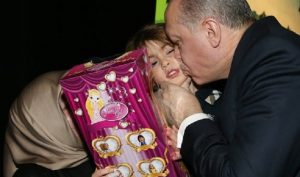
Ο πρόεδρος της Τουρκίας,Ταγίπ Ερντογάν φιλά, παρά τη θέλησή του, ένα κοριτσάκι. Φωτογραφία Τουρκική Προεδρία FEBRUARY 21, 2018

Χωρίς αμφιβολία, ο Ταγίπ Ερντογάν βρίσκεται σε εξαιρετικά δύσκολη θέση. Μπορεί να κομπάζει για την «υπερδύναμη» Τουρκία και το «μεγάλο τουρκικό Έθνος», ως να είναι ηγέτης μίας υπερδύναμης, αλλά η πραγματικότητα είναι πολύ διαφορετική.

Τα πράγματα έχουν «βρωμίσει» πολύ στη Συρία μετά τη συμφωνία του προέδρου Άσαντ με τους Κούρδους του YPG, η οποία τελικά είναι πραγματική. Στην Αφρίν, οι τουρκικές δυνάμεις δεν νικούν τους Κούρδους αντάρτες. Και αυτό αποτελεί μείζον πρόβλημα για την ισλαμική Τουρκία. Διότι η συριακή αυτή πόλη, που από τη μία στιγμή στην άλλη έγινε πασίγνωστη σε όλο τον κόσμο, μπορεί να γίνει ο (πολιτικός) «τάφος» του κ. Ερντογάν.

Όσο καθυστερεί η επιχείρηση, τόσο θα πολλαπλασιάζονται οι πονοκέφαλοι, διότι η Άνοιξη θα φέρει μαζί της και την «Εαρινή Επίθεση» των ανταρτών του PKK, τους οποίους η Τουρκία κατηγορεί ως «τρομοκράτες». Άραγε, από πότε αποτελεί τρομοκρατία η αγάπη και η πάλη για την Πατρίδα;

Έχοντας δύο ανοικτά μέτωπα, δύο μεγάλες πληγές, μέσα στην Τουρκία, και στα σύνορα του με τη Συρία, ο κ. Ερντογάν δεν μπορεί να κοιμάται ήσυχος τα βράδια. Και όποιος τον παρακολουθεί όταν μιλά στους κόλακες, που του συγκεντρώνουν οι κομματάρχες του AKP, καταλαβαίνει εύκολα πως βρίσκεται υπό έντονη πίεση.

Δείχνει το φόβο που τον διακατέχει αν πάει κάτι στραβά, και ας μην ξεχνάμε πως έχει κλείσει χιλιάδες Τούρκους πολίτες στα μπουντρούμια των τουρκικών φυλακών, που ψάχνουν για εκδίκηση. Αν αλλάξουν ποτέ τα πράγματα ποια θα είναι η τύχη του Ερντογάν, της οικογένειάς του και όσων έγιναν πλούσιοι στο όνομα του. Μα αυτή που καταλαβαίνει ο καθένας.

Σιγά-σιγά η παγκόσμια κοινότητα αντιλαμβάνεται πως ο σημερινός πρόεδρος της Τουρκίας είναι ένας διεθνής ταραξίας. Δημιουργεί προβλήματα στις γειτονικές χώρες, αλλά ενοχλεί και τον ελέφαντα, την Αμερική. Την ίδια στιγμή αντιστρατεύεται τα αμερικανικά συμφέροντα προχωρώντας σε στρατηγικές συμφωνίες με τους εχθρούς των ΗΠΑ: Τη Ρωσία και το Ιράν.

Για τους Αμερικανούς, όσοι συνεργάζονται με αυτές τις δύο χώρες, είναι «αναθεματισμένοι». Για πολλούς λόγους, που δεν είναι της παρούσης. Και το ερώτημα είναι επαναλαμβανόμενο: Γιατί του επιτρέπουν οι Αμερικανοί να θέτει σε κίνδυνο τη στρατηγική τους πολιτική στη Μέση Ανατολή, αλλά και στην Αφρική, όπου αναμειγνύεται εσχάτως ο κ. Ερντογάν. Γιατί δεν τον σταματούν;

Οι πληροφορίες που κυκλοφορούν αναφέρουν ότι η αμερικανική υπερδύναμη κάνει την τελευταία προσπάθεια για να ξαναφέρει στο μαντρί τον Ταγίπ Ερντογάν. Δύσκολος στόχος με δεδομένη τη στάση του έναντι των Αμερικανών. Δεν κρύβει ότι τους συχαίνεται και δεν θέλει άλλες παρτίδες μαζί τους. Αλλά γνωρίζει ότι οι Αμερικανοί γραφειοκράτες είναι ανόητοι και δεν υπάρχει περίπτωση να αλλάξουν άποψη, ότι και να διαπράξει. Ακόμα και αν τους διώξει επίσημα και δημόσια. Διότι από ένα αυταρχικό άνθρωπο, κανείς πρέπει να περιμένει τα πάντα.

Η Τουρκία και η Αμερική μπορεί να βρεθούν αντιμέτωπες στη Συρία, αν και ο υπουργός Εξωτερικών των ΗΠΑ, Ρεξ Τίλερσον υποσχέθηκε ότι απ’ εδώ και πέρα θα συνεργάζονται παντού. Ως γνωστόν οι υποσχέσεις δίνονται για να μην …τηρούνται.

Το άλλο μέτωπο είναι η κυπριακή ΑΟΖ. Οι πληροφορίες που διαθέτουμε αναφέρουν ότι η EXXONMOBIL είναι αποφασισμένη να προχωρήσει στους σχεδιασμούς της και να τηρήσει όλες τις συμφωνίες της με την Κυπριακή Δημοκρατία.

ΕΡΩΤΗΜΑ: Θα στείλει η Τουρκία τα πολεμικά της πλοία και στο οικόπεδο της αμερικανικής πετρελαϊκής εταιρείας; Μα φυσικά όχι. Αυτό διαβεβαίωσε ο κ. Ερντογάν τον κ. Τίλερσον, την περασμένη Πέμπτη στην Άγκυρα. Τον πιστεύουν οι Αμερικανοί; είναι το επόμενο ερώτημα. Κρατούν μικρό καλάθι στην Ουάσιγκτον, είναι η αλήθεια. Αλλά, την προηγούμενη φορά, όταν «τρυπούσε» στο οικόπεδο 12 η αμερικανική εταιρεία Noble και παρουσιάστηκαν δειλά τα τουρκικά πλοία, πήραν δρόμο στο δευτερόλεπτο.

Έχουμε γράψει πολλές φορές ότι ο Ερντογάν είναι ένας απρόβλεπτος ηγέτης. Και εξαιρετικά επικίνδυνος. Είναι στη φάση που δεν ακούει και δεν υπολογίζει κανένα. Η συνταγή είναι καταστροφική. Αυτό που δεν έχει καταλάβει είναι πως στην Αφρίν δεν παίζεται η ασφάλεια της Τουρκίας, αλλά τα συμφέροντα της Αμερικής και της Ρωσίας.

Πηγή: Η Αφρίν μπορεί να γίνει ο «τάφος» του Ερντογάν: Θα μεταφέρει τη σύγκρουση στην κυπριακή ΑΟΖ; http://mignatiou.com/2018/02/i-afrin-bori-na-gini-o-tafos-tou-erntogan-tha-metaferi-ti-sigkrousi-stin-kipriaki-aoz/

Τι, ακριβώς, συμβαίνει στο Αφρίν. Ποια είναι η νέα πραγματικότητα που διαμορφώνεται και τι σημαίνει.

1

του ΠΑΝΤΕΛΗ ΣΑΒΒΙΔΗ.

Παρόλο που, χθές, ο Ταγίπ Ερντογάν επιχείρησε να δημιουργήσει μια σύγχυση, δεν υπάρχει καμιά αμφιβολία ότι οι «Λαϊκές Δυνάμεις» του Άσσαντ αλλά και ο επίσημος συριακός στρατός έχουν εισέλθει στο Αφρίν, ύστερα από συνεννόηση με τις κουρδικές δυνάμεις του YPG, τις «Δυνάμεις Προστασίας του Λαού», στις οποίες η πλειονότητα είναι Κούρδοι..

Την είδηση επιβεβαίωσαν πολλές κουρδικές πηγές αλλά ο Ταγίπ Ερντογάν επιμένει πως πρόκειται για ορισμένους τρομοκράτες που μπήκαν μόνοι στον θύλακο του Αφρίν και θα «πληρώσουν» την κίνηση που έκαναν.

Οι συριακές δυνάμεις έχουν διασπαρεί στο Αφρίν αλλά οι Τούρκοι ισχυρίζονται πως υποχώρησαν μετά το βομβαρδισμό τους από την τουρκική αεροπορία και το πυροβολικό.

Πράγματι, οι Τούρκοι βομβάρδισαν τις δυνάμεις των Σύρων όταν έμπαιναν στο Αφρίν αλλά δεν πέτυχαν να τις αποτρέψουν από το στόχο τους. Ο Ερντογάν επιμένει πως το ζήτημα θα διευθετηθεί  από τις συναντήσεις που θα έχει με τον ρώσο Πρόεδρο Πούτιν και τον Ιρανό Πρόεδρο Ρουχανί. Φαίνεται, όμως, πως το πράσινο φως για την είσοδο στο Αφρίν δόθηκε από τους συμμάχους του Άσσαντ. Αλλοιώς, ο Σύρος πρόεδρος δεν θα αποτολμούσε την κίνηση. Εξαρτάται απολύτως από τη Ρωσία, πρωτίστως, και το Ιράν.

Η επαφή μεταξύ των κουρδικών δυνάμεων και των δυνάμεων του Άσσαντ υπήρχε εδώ και ημέρες αλλά δεν δημοσιοποιήθηκε. Κουρδικά μέσα ενημέρωσης υποστήριξαν, επίσης, πως οι σύριοι επέτρεψαν την μετακίνηση κουρδικών δυνάμεων προς το Αφρίν, από τις ανατολικές περιφέρειες που κατέχουν οι Κούρδοι μέσω των εδαφών που ελέγχουν οι συριακές κυβερνητικές δυνάμεις.

Οι Κούρδοι κάλεσαν τις κυβερνητικές δυνάμεις να εισέλθουν στο Αφρίν και να υποστηρίξουν τα σύνορα της χώρας απέναντι στην επιτιθέμενη Τουρκία.. Οι Κούρδοι δεν αρνούνται ότι το Αφρίν, και οι άλλες περιοχές που κατέχουν, αποτελούν έδαφος της Συρίας. Επειδή, όμως, έχουν εγκαταστήσει σ αυτές τοπικές διοικήσεις οι οποίες λειτουργούν αποτελεσματικά, επιθυμούν η κατάσταση να παραμείνει έτσι μέχρι να υπάρξει τελική συμφωνία για το μέλλον της Συρίας.

Εκείνο το οποίο ανησύχησε τους Κούρδους και αναγκάστηκαν να ζητήσουν τη βοήθεια των  συριακών κυβερνητικών δυνάμεων είναι οι τουρκικοί αεροπορικοί βομβαρδισμοί. Οι Τούρκοι βομβάρδισαν υποδομές που έχουν δημιουργήσει στην περιοχή οι Κούρδοι, κτήρια δημόσιων υπηρεσιών, σχολεία και αποθήκες νερού. Η Τουρκία κατηγορήθηκε, μάλιστα, ότι χρησιμοποίησε χημικά στους βομβαρδισμούς στους οποίους προέβη.

Σύμφωνα με πληροφορίες, αρκετές από τις δυνάμεις που πρόσκεινται στο Άσσαντ εισήλθαν στο Αφρίν τις τελευταίες ημέρες, και όχι μόνο χθές, με στολές παραλλαγής για να αποφευχθεί η τουρκική στρατιωτική αντίδραση. Πέρασαν, επίσης, και πολλά βαρέα όπλα.

Κατά τις ίδιες πληροφορίες οι συριακές δυνάμεις ζήτησαν από τους Κούρδους να υψώσουν σε καίρια σημεία τη συριακή σημαία, πράγμα που έγινε. Σύριοι Κούρδοι και Συριακές δυνάμεις που πρόσκεινται στον Άσσαντ υπερασπίζονται, πλέον, από κοινού την Συρία από την επιθετικότητα της Τουρκίας. Τα υπόλοιπα θα διευθετηθούν αργότερα.

Ωστόσο, ο τούρκος πρόεδρος εξακολουθεί να υποστηρίζει ότι θα διευθετήσει το θέμα με τη Ρωσία και το Ιράν.

Πάντως, η είσοδος των Συριακών Δυνάμεων στο Αφρίν χαροποίησε τους άραβες σύριους και, φέρνει σε δύσκολη θέση του σύριους Κούρδους οι οποίοι είχαν εγκαταστήσει στο θύλακο μια μορφή συνομοσπονδίας με τις άλλες εθνότητες, της οποίας τα αποτελέσματα ήταν θετικά. Αυτές τις δομές και αυτές τις υποδομές θέλησαν οι Κούρδοι να υπερασπίσουν απέναντι στην επιθετικότητα της Τουρκίας, κυρίως, απέναντι στους αεροπορικούς βομβαρδισμούς.

Σημασία, όμως, έχει πως ο Άσσαντ και οι υποστηρικτές του έχουν δηλώσει, επανειλημμένως, πως η Συρία είναι μία και μετά την ήττα του ISIS και των τρομοκρατών που απειλούν το καθεστώς του, οι συριακές δυνάμεις θα επιχειρήσουν να ανακτήσουν τις περιοχές που ελέγχουν οι Κούρδοι.. Το Αφρίν, είναι μια τέτοια περιοχή η οποία απομονώθηκε από τις άλλες δύο (Κομπάνι, Κάμισλο) της βόρειας Συρίας που, επίσης, βρίσκονται υπο τον κουρδικό έλεγχο.

Όπως είναι γνωστό, το 2016 ο Ερντογάν ξεκίνησε την επιχείρηση «Ασπίδα του Ευφράτη» με σκοπό, δήθεν, να πολεμήσει κατά του ISIS αλλά στην ουσία να επιτεθεί κατά των κουρδικών δυνάμεων που επετύγχαναν συνεχείς νίκες στο βορρά της Συρίας, η οποία συνορεύει με την Τουρκία.

Οι τουρκικές δυνάμεις παρεισέφρησαν σε συριακές περιοχές και διέκοψαν την κουρδική συνέχεια, τον «τρομοκρατικό διάδρομο» όπως τον αποκαλεί ο Ερντογάν, τον κουρδιό διάδρομο κατ άλλους.

Η τουρκική επίθεση στο Αφρίν, το οποίο είναι απομονωμένο από τις άλλες κουρδικές περιοχές, δεν ήρθε ως κεραυνός εν αιθρία. Η Τουρκία επανειλημμένως απειλούσε ότι θα επιτεθεί. Δεν το τολμούσε, όμως, διότι στο Αφρίν υπήρχαν ρωσικές δυνάμεις. Ο Ερντογάν κατάφερε να πείσει τον Πούτιν να αποσύρει τις δυνάμεις του και πήρε την άδεια από τον ρώσο πρόεδρο να επιτεθεί. Δυστυχώς στην τουρκική ενέργεια συναίνεσε το σύνολο της διεθνούς κοινότητας.

Η επίθεση άρχισε στις 20 Ιανουαρίου με τον Ερντογάν να δηλώνει πως σε τρείς ημέρες θα πολιορκούσε την πόλη του Αφρίν.  Έχει περάσει πάνω από ένας μήνας και οι Τούρκοι βρίσκονται, ακόμη, στην προσπάθεια.

Έχουν, μάλιστα, σημαντικές στρατιωτικές απώλειες αν και ο τουρκικός στρατός δεν βρίσκεται στην πρώτη γραμμή της εισβολής.

Στη Συρία, η Τουρκία υποστηρίζει τις καιροσκοπικές δυνάμεις του, ούτως αποκαλούμενου, «Ελεύθερου Συριακού Στρατού», μιας συμμαχίας ισλαμιστών που αντιτίθεται στον Άσσαντ.

Με τη συνεργασία αυτών των δυνάμεων, που είναι, επίσης, σε διαρκή αντιπαράθεση με τους Κούρδους και τη στρατολόγηση τζιχαντιστών που βρίσκονται στην Τουρκία και γνωρίζουν την περιοχή, η Τουρκία επιχείρησε να εισβάλει στο Αφρίν αλλά, μέχρι στιγμής ανεπιτυχώς.

Τα πράγματα για την Τουρκία γίνονται, πλέον, δυσκολότερα μετά την είσοδο των δυνάμεων του Άσσαντ διότι και δεν έχει  καμιά διεθνή νομιμοποίηση και θα αντιμετωπίσει έναν στρατό (τον συριακό) ο οποίος παρά τη μακρόχρονη μάχη που δίνει και παρά τις απώλειές του διαθέτει εξοπλισμό που μπορεί να φέρει σε δύσκολη θέση τον τουρκικό στρατό.

Αλλά, το πρόβλημα του Ερντογάν θα είναι άλλο. Όπως επισημάνθηκε παραπάνω, ο Άσσαντ δεν θα τολμούσε να στείλει δυνάμεις του στο Αφρίν χωρίς την έγκριση της Ρωσίας. Για τον τούρκο πρόεδρο μπαίνει το ερώτημα γιατί ο ρώσος ομόλογός του επέτρεψε στις δυνάμεις του Άσσαντ να εισέλθουν στο Αφρίν και να υπερασπίσουν την πόλη στην οποία κυριαρχούν οι Κούρδοι. Η αίσθηση του Ερντογάν ότι γίνεται μπαλάκι του πίνγκ-πόγκ μεταξύ ΗΠΑ και Ρωσίας θα είναι έντονη. Στην προκειμένη περίπτωση, μεγάλο μέρος των παραστρατιωτικών δυνάμεων που εισήλθαν στον θύλακο του Αφρίν είναι σιίτες, που σημαίνει ότι επηρεάζονται από το Ιράν. Ένα νέο μέτωπο της Τουρκίας με το Ιράν δεν πρέπει να αποκλείεται.

Αλλά και για τους Κούρδους τα πράγματα είναι δύσκολα. Και δεν αποκλείεται να βιώσουν  μια νέα διεθνή προδοσία, σαν και αυτές που γνωρίζουν από την ιστορία τους.

Προς όνειδος της ανθρωπότητας, καμιά δύναμη δεν εκδήλωσε την αντίθεσή της στην τουρκική προληπτική εισβολή στο Αφρίν. Όλες οι διεθνείς δυνάμεις αποδέχθηκαν την τουρκική προκλητικότητα.

Οι Ηνωμένες Πολιτείες οι οποίες ωφελήθηκαν τα μέγιστα από τη συνεργασία τους με τους Κούρδους για την καταπολέμηση του Ισλαμικού Κράτους  κρατούν μια αιδήμονα σιωπή. Το Ισλαμικό Κράτος νικήθηκε και οι Κούρδοι δεν είναι, πλέον, χρήσιμοι για τους αμερικανούς.  Για τη Ρωσία, οι Συριακές Δημοκρατικές Δυνάμεις και το YPG θα πρέπει να εγκαταλειφθούν στο μέτρο που έχουν ισχυρές σχέσεις με τις Ηνωμένες Πολιτείες. Από την υποστηριζόμενη από την Τουρκία αντιπολίτευση της Συρίας, οι Κούρδοι είναι αντικείμενο φθόνου και περιφρόνησης.

Οι Κούρδοι αναγκάστηκαν να καλέσουν τις δυνάμεις του Άσσαντ  να υποστηρίξουν την κοινή πατρίδα αλλά, τώρα, όπως όλα δείχνουν θα πρέπει να έρθουν σε διαπραγματεύσεις μαζί τους.

Οι Σύριοι πέτυχαν με τη βοήθεια της Τουρκίας αυτό που θα ήταν αμφίβολο αν θα επιτύγχαναν  σε μια αντιπαράθεση με τους Κούρδους για να ελέγξουν  τις περιοχές τους.

Turkey shells pro-Assad militias entering Afrin to aid Kurdish rebels

0

ARTICLE SUMMARY
Turkish President Recep Tayyip Erdogan’s warnings fail to deter groups loyal to Damascus from entering the region where Turkey is fighting Kurdish forces, risking a new front line in the spiraling Syrian conflict.

Turkey opened fire on hundreds of fighters loyal to Syrian President Bashar al-Assad. The fighters arrived in the Kurdish-controlled Syrian province of Afrin on Feb. 20, news reports said, as Damascus disregarded Ankara’s warnings against coming to the aid of the Syrian Kurdish militia fighting a Turkish military assault.

The confrontation came just hours after Turkish President Recep Tayyip Erdogan said he had prevented any such incursion by Syrian government forces after speaking to Russian President Vladimir Putin and Iranian President Hassan Rouhani, Syria’s benefactors, and that Turkish troops and their allies in the Free Syrian Army (FSA) would besiege the provincial capital in a matter of days.

Later, Erdogan said that the groups, which he described as “Shiite militias in a few pickup trucks,” had acted independently and that Turkish artillery fire had repulsed the fighters. CNN Turk cited unidentified sources as saying the pro-Assad militias would not attempt such a show of force during daylight hours. Other reports could not confirm the militias had turned back.

“In my calls with Mr. Putin and Mr. Rouhani, we had already reached agreement on this,” Erdogan said at a televised news conference. “Unfortunately, terrorist groups like these sometimes make missteps according to their own decisions. It is not possible for us to allow this. They will pay a heavy price for this.”

The foray threatens to pit adversarial neighbors Turkey and Syria in outright conflict in a country already fractured by seven years of war that has ensnared regional powers, as well as the United States and Russia.

Last month, Turkey invaded Afrin, in an operation it dubbed Olive Branch, to repulse the Kurdish People’s Protection Units (YPG) from its border and block it from consolidating territorial gains and the political autonomy it has carved out in northern Syria since 2011.

Kurds being supported by Shiite militias is but the latest twist in Syria’s complex maze of alliances.

Ankara said the YPG is an extension of the Kurdistan Workers Party, which it deems a terrorist organization for taking up arms against the Turkish state in 1984 at a cost of more than 40,000 lives. An autonomous Kurdish entity on its borders would pose the gravest of security threats, Turkey said.

Assad agreed to send forces to the YPG’s aid in Afrin, Syrian state news agency SANA said on Feb. 19, after the Kurds had appealed for help to protect the border. Syria has repeatedly blasted the Turkish incursion as a violation of its territorial sovereignty, even if the Kurds administer Afrin outside of Damascus’ control.

In response, Turkey warned Assad that his war-town country could face dismemberment.

The Kurds being supported by Shiite militias is but the latest twist in Syria’s complex maze of alliances. Much to Turkey’s ire, the YPG has fought with the United States to expel the Islamic State from much of Syria. Yet it has at times cooperated with pro-Assad forces and enjoys strong historical links with Moscow, which built a military facility in Afrin to train Kurdish forces before withdrawing ahead of Turkey’s entry.

US Secretary of State Rex Tillerson visited Ankara last week to rescue battered ties between the NATO partners, severely tested by the Pentagon’s support of the YPG since 2014. Clashing objectives in Syria even had Turkey warning that its forces could come into contact with US soldiers.

Tillerson spent three hours huddled with Erdogan on Feb. 15 in what was “a productive and open conversation,” a State Department official said. The US-Turkish detente unnerved both the YPG, worried about flagging US support, and Moscow, which has exploited the rift with Washington to pull Turkey into its orb, Posta newspaper reported.

But Aaron Stein, a senior fellow at the Atlantic Council in Washington, noted that the YPG had been in talks with the Syrian government on working together in Afrin well before Tillerson’s visit.

“This isn’t the US zone of influence in Syria; this is the Russian and Turkish zone. This is their mess to deal with. … The Americans don’t really have a vote,” Stein told Al-Monitor.

“The Syrian regime has decided to send in official militias who will make life extremely difficult for Turkey and, I think, for the Russians too,” he said, because it could undermine Turkish support for de-escalating fighting in neighboring Idlib province, the largest anti-Assad bastion left in Syria, an arrangement brokered by Moscow.

Earlier on Feb. 20, Erdogan said plans by Assad to send fighters to Afrin “were halted in a serious sense … after the talks” with Putin. In their telephone call, Erdogan warned Putin that “serious consequences” would emerge should Assad deploy forces to Afrin, Hurriyet reported.

“Operation Olive Branch will continue with determination. If the regime enters Afrin, it will be taking a risk and serious consequences will occur,” the newspaper quoted Erdogan as telling Putin. In response, Putin told Erdogan, “We remain committed to the agreement we reached,” Hurriyet said.

Turkey’s push into Afrin relies on the consent of Russia, which controls Syrian airspace and allows Turkish jets to provide air cover to soldiers and the FSA faction helping it battle the YPG. When Moscow restricted access to the skies above Afrin earlier this month, Turkey suffered its heaviest losses in the monthlong campaign.

Erdogan said on Feb. 20 that 32 Turkish soldiers and 715 “terrorists” have been killed in Afrin. The Britain-based Syrian Observatory for Human Rights puts the death toll at 205 FSA fighters and 39 Turkish soldiers, as well as at least 219 YPG members. It has also documented 112 civilian deaths.

Ayla Jean Yackley is a freelance journalist who has covered Turkey for nearly two decades. She previously worked as a correspondent for Reuters and Bloomberg News and writes mainly about politics and the economy, with a focus on minority and human rights. Her reporting has also taken her to Iraq, Iran, Syria, Afghanistan, Russia, Germany and Cyprus. You can follow her on Twitter: @aylajean

Read more: http://www.al-monitor.com/pulse/originals/2018/02/turkey-shells-pro-assad-militias-afrin-kurdish-rebels-syria.html#ixzz57j9cvJAf

Is Greek-Turkish Territorial Dispute a Pre-Messianic Payback From Temple Times?

0

But wait for Me—says Hashem— For the day when I arise as an accuser; When I decide to gather nations, To bring kingdoms together, To pour out My indignation on them, All My blazing anger. Indeed, by the fire of My passion All the earth shall be consumed. Zephaniah 3:8 (The Israel Bible™)

A historic conflict between two ancient nations is heating up as several Turkish politicians threaten to invade Greece and blows have actually been exchanged. One rabbi notes that the Biblical identities of these nations is still relevant and old debts from long-ago sins are still part of the political equation.

A video last week captured what appeared to be an attempt on Turkey’s part to provoke an outbreak of conflict with Greece when a Turkish Navy patrol boat rammed a Greek coast guard vessel.

Greece did not take too kindly to the event.  “If there is another act of Turkish aggression on Greek territory, there will be a response and there is no other way for us,” said Greek government spokesman Dimitris Tzanakopoulos said in a statement to the press.

This incident comes after a spate of Turkish violations of Greek airspace, most notably two weeks ago when there wee 138 violations in a single day. It even took on the tone of a bar fight when Yigit Bulut, one of Turkish President Recep Tayyip Erdogan’s chief advisers, issued a direct threat to Greece on Turkish television after the ramming.

Bulut said that Greece would “feel the anger of Turkey, worse than that in Afrin,” referring to a region in Syria where Turkish troops are currently fighting Kurdish forces.

“The things we have done so far [pale in comparison to the] even greater attempts and attacks [we are planning for] the coming days, inshallah [Allah willing],” Bulut said in a follow-up to comments he made earlier in the month to the press.

“We will break the arms and legs of any officers, of the prime minister or of any minister who dares to step onto Imia in the Aegean,” Bulut said, referring to Greek islands Turkey is aggressively claiming as theirs.

Balut’s reference to the Greek Islands is an apparent threat that Turkey is prepared to repeat previous military campaigns against Greece and Greek nationals. In 1974, Turkey invaded a part of Cyprus and and expelled more than 200,000 Greeks from their homes. Turkey claims territory on several Greek Aegean islands and has the world’s largest fleet of landing craft standing ready.

Rabbi Lazer Brody, an American-born Hasidic rabbi and teacher, believes that this territorial dispute is part of an end-of-days judgement that will go badly for Greece.

“The Talmud said that when it comes time for the redemption, Hashem will call in the markers from the nations that have sinned against Israel,” Rabbi Brody told Breaking Israel News.

In Greece’s case, its ancient empire conquered of Israel during the Second Temple period, and as Hellenistic idol-worshippers, the Greeks stood in direct opposition to the Jews. The Jews suffered horribly under the Greek rule, and Antiochus IV desecrated the Holy Temple in 168 BCE, leading to the Maccabean Revolt.

“Greece and Italy are still the same,” Rabbi Brody emphasized. “Even though the present day countries seem far removed from their past incarnations, they still have the same spiritual root and many of the Biblical conflicts are still being played out today.”

Dr Efrat Aviv, a specialist in Turkey and lecturer in the department of Middle Eastern Studies at Bar Ilan University, believes that this current growing dispute between Greece and Turkey is merely a result of current geopolitical factors. .

“There are clear geopolitical goals in this conflict, and Turkey has an interest in asserting its identity as an economic and military power in the region,” Dr. Aviv told Breaking Israel News. “Though the border disputes have their roots in the Ottoman Empire, Erdogan is establishing his place as a modern leader.”

Dr. Aviv admitted that the ancient identities still have relevance in modern politics. She referenced an anecdote about a Turkish student touring Greece. When asked where he was from, his answer ‘Istanbul’ was received with open antagonism and the Greeks corrected him, referring to the city by its ancient name of Constantinople.

“The city became an Islamic center over 500 years ago, but until then, it was the center of Greek culture and Christianity,” Dr. Aviv said. “This is still powerfully rooted in the people’s minds. The conflict is modern but the ancient motivations are still relevant.”

Rabbi Brody noted that the city of Istanbul is the subject of a prophecy concerning the War of Gog and Magog. In 2014, Rabbi Brody was the first to publicize a prophecy attributed to Rabbi Elijah of Vilna, the preeminent Torah scholar of the 18th century known as the Vilna Gaon who was well known for his contributions in understanding the Messianic process. The Vilna Gaon’s statement was transmitted orally and kept secret until it was recently revealed by his descendant, Rabbi Moshe Shternbuch, a respected rabbi in the Orthodox Jewish community.

The prophecy stated, “When you hear that the Russians have captured the city of Crimea, you should know that the times of the Messiah have started, that his steps are being heard. And when you hear that the Russians have reached the city of Constantinople [today’s Istanbul], you should put on your Shabbat clothes and don’t take them off, because it means that the Messiah is about to come any minute.”

“Of course a conflict between Greece and Turkey will focus on Istanbul,” Rabbi Brody said. “It always has. And now that Russia is involved, everything is in place.”

Dr. Aviv was skeptical but intrigued by the prophecy.

“Of course, a rabbinic teaching of this nature is not something to consider as a factual statement or a basis for understanding the conflict,” Dr. Aviv said. “But in this particular case, it is logical to consider that a regional conflict between Greece and Turkey involving Russia and arriving at Istanbul is actually very close to materializing.”

Read more at https://www.breakingisraelnews.com/103031/greek-turkish-territorial-dispute-pre-messianic-payback-temple-times/#M4wbKOUko4iazUY4.99

Could natural gas in the Mediterranean spark the third Lebanese war?

0

“Lebanon will not hesitate to avail itself of its inherent right to self-defence if an armed attack occurs against the economic activities carried out in its maritime areas.”

BY ODED ERAN 

FEBRUARY 18, 2018 09:47

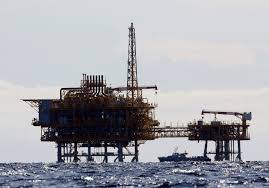
 An offshore natural gas rig in the Mediterranean Sea. (photo credit: GUSTAV NACARINO / REUTERS)

Speaking about border issues between Israel and Lebanon at the Institute for National Security Studies (INSS) annual conference (January 31, 2018), Defense Minister Avigdor Liberman said that the Lebanese government had issued a tender for natural gas exploration in the Mediterranean, and that by all criteria Block 9, which was awarded to a number of well-known international companies, belonged to Israel.

Liberman called Lebanon’s move a provocation and a serious mistake. His words sparked a fiery response from Hezbollah leader Hassan Nasrallah, and the media in both Israel and Lebanon reported that the organization was threatening to attack Israel’s drilling rigs in the Mediterranean.

Conflicts over maritime borders are not unique to Lebanon and Israel, and as in this case, many of them derive from competition over economic resources – whether fishing zones or oil and natural gas fields.

The United Nations Convention on the Law of the Sea grants a state exclusive economic rights over an area stretching 200 nautical miles from its coast (Exclusive Economic Zone). Israel began drilling in its economic waters more than twenty years ago, and since 2003 natural gas has flowed from the sea into Israel.

The big breakthrough in this area, and with it the eruption of the conflict, came in December 2010, when a consortium of companies announced the discovery of the gas in the Leviathan field. That same month Israel and Cyprus signed an agreement on delineation of the maritime border between them (since the distance between the two countries is less than 400 nautical miles), although in the summer of 2010 Lebanon had already rushed to register documents with the UN delimiting its maritime border with Israel.

In June 2011 Lebanon again turned to the UN, expressing its opposition to the agreement between Israel and Cyprus “that violates [according to Lebanon] the sovereign and economic rights of Lebanon and could imperil international peace and security, particularly if one of these States [presumably referring to Israel and Cyprus] should decide unilaterally to exercise sovereign authority over the region that Lebanon considers an inalienable part of its exclusive economic zone.” Israel replied on July 12, 2011, attaching the coordinates to delineate its maritime border with Lebanon. The gaps between the Lebanese and Israeli claims create a disputed area of 850 sq. km.

In late 2011, Israel, out of a willingness to compromise, began to look for diplomatic ways to resolve the developing dispute. In inter-ministerial consultations, the decision was taken not to grant new licenses for the area under dispute in order to facilitate a compromise solution.

INSS map of gas pipelines and fields in the Middle East (INSS)INSS map of gas pipelines and fields in the Middle East (INSS)

It was decided not to use UNIFIL as a channel for discussion between Israel and Lebanon, since the mandate of the Force does not refer to the maritime border, and Israel prefers to avoid UN mediation. The Israel interest in mediation led to several contacts by third parties, and ultimately American mediation was the preferred option.

In February 2012, State Department Special Envoy for Middle East Peace Frederic Hof, who was heavily involved in developments in Syria in the framework of the Arab Spring, undertook the task of mediation. Israel reiterated to him its willingness to resolve the dispute by reaching a compromise in direct talks with representatives of the Lebanese government.

In April 2012, at separate meetings in London (in view of the Lebanese refusal to participate in a joint meeting), Hof submitted a proposed compromise involving division of the disputed area. On May 2, 2013, then-Minister of Foreign Affairs Avigdor Liberman approved the American proposal, even though it granted Lebanon a larger share of the area.

To this day no official response from Lebanon has been received, although according to reports of US diplomats in contact with the Lebanese government, they discussed inter alia depositing the proposal with the UN. From this it appears that the proposal was acceptable to the Lebanese government.

A year after the submission of the original American proposal, the new American mediator proposed additional ideas. While not clear whether they were his or the Lebanese government’s, they completely distorted the original proposal.

The guiding line for these ideas was the creation of a buffer zone between Israel and Lebanon outside the area claimed by Lebanon. Apart from the fact that this idea was completely unacceptable, it could also cause serious economic damage to both countries by preventing exploration and agreed exploitation of gas in the disputed area (pooling of exploration and development efforts in cross border areas is called “unitization”).

In spite of the failure of US mediation, Israel continued to refrain from issuing tenders for the disputed area. However, in March 2013 the Lebanese Ministry of Energy published a map of the maritime economic zone divided into “blocks,” jargon for areas that are the subject of tenders.

The map showed that the Lebanese government completely ignored the Israeli position and the proposed American compromise, and that in three blocks, 8, 9, and 10, and particularly in block 9, there was clear penetration of the area claimed by Israel. After years of delays in approval of the tender process in Lebanon, largely due to the presidential and government crisis in the country, activity was now renewed.

On February 2, 2017, Israel complained to the UN about Lebanon’s intention to grant licenses and declared its intention to defend its rights. It also expressed “openness to dialogue and cooperation with neighboring and relevant states regarding the delimitation of the northern limit of its territorial sea and exclusive economic zone.”

Following reports by the Lebanese Oil Authority, on December 21, 2017, Israel again complained to the UN Secretary General about the granting of licenses in Block 9 to a consortium comprising the French company Total, the Italian ENI, and the Russian Novatek, without Israel’s consent, entirely contrary to Israel’s position and its call for dialogue and cooperation. Israel also announced that it would not permit any non-consensual, unauthorized economic activity, and expressed its regret that the Lebanese government was ignoring its call for dialogue.

Israel reminded all involved third parties, i.e., apart from Lebanon itself, that any activity “that would violate Israel’s sovereign rights or otherwise involve them in non-consensual or unauthorized economic activity in this maritime area…would expose them to significant liability.” On February 9, 2018, Total announced that it and its partners are aware of the conflict and therefore would not operate within 25 km of the disputed area.

On January 26, 2018, Lebanon replied with its own letter, which completely rejected all Israel’s claims and announced: “The Republic of Lebanon will not hesitate to avail itself of its inherent right to self-defence if an armed attack occurs against the economic activities carried out in its maritime areas. It will not hesitate neither to take all appropriate measures against Israel or its private concessionaires, including Energean Oil & Gas, should they decide to take advantage of their activities in the so-called Israeli blocks 13 and Alon D, where the Karish field is located, to exploit the natural resources of the Lebanese seabed by way of directional drilling.”

Energean, which is registered in Greece, won the Karish and Tanin drilling rights in late 2016, following a ruling by the Supreme Court regarding dilution of the holdings of Delek and Noble Energy.

In addition to the verbal escalation, the Lebanese turned to various institutions in France, including legal ones, hoping to conduct a public campaign to prove their case in the conflict with Israel.

Lebanon had already contacted a former French president with a proposal for French mediation between Lebanon and Israel, but nothing was done. Acting Assistant of the US Secretary of State for Middle East Affairs David Satterfield recently visited Israel and Lebanon, in preparation for the visit by Secretary of State Rex Tillerson, and it was reported that he raised the subject of gas.

The US effort was necessary due to the increasing harshness of the threats, particularly from the Lebanese side, and the danger of descending into armed conflict, where both winner and loser would pay a heavy price.

The charged situation highlights a number of issues. The first is the sense of power felt by Hezbollah, which played an important role in preserving the Assad regime and its recovery after it lost considerable territory to the various opposition forces.

Although Hezbollah’s intervention exacted a heavy price in human life, its position in Lebanon has not weakened, and the general elections in Lebanon in May 2018 will likely strengthen its political status.

Iran’s growing influence in the region following the nuclear deal (JCPOA) is also perceived as an achievement for Hezbollah, while Iran’s gradually increasing foothold in Syria, which has made it a significant player in shaping that country’s future, naturally impacts on its junior partner and proxy, Hezbollah.

The strongly worded Lebanese letter of last month is reminiscent of the tone of threats adopted for many years by the Hezbollah leader Hassan Nasrallah on the subject of natural gas in the Mediterranean, but which had so far not accompanied the dialogue – albeit indirect – between Lebanon and Israel.

Israel’s decision to reinforce the border fence with Lebanon and in certain sections to build a wall (without changing the course of the Blue Line) was met with threatening language from the Lebanese government.

On the other hand, senior Israeli security personnel who have spoken recently about Syria and Lebanon, including at the INSS annual conference, have clarified that if there is another military campaign, Israel will exact a heavy price for all attempts to attack its civilian population, and it will not permit fighting to continue for several weeks, as happened in summer 2006.

The verbal exchanges, the violent rhetoric of the Lebanese government, and Lebanon’s disregard for Israeli attempts to resolve the matter of the maritime border justify external involvement to prevent further deterioration.

The security events between Israel and Syria of February 10, 2018 do not relate to the issue directly, but they will complicate efforts toward a compromise.

While Israel would welcome American efforts to calm the situation, it is harder to predict the Lebanese reaction. Competition between rival political forces in Lebanon has always taken precedence over the national interest and caused much damage, including economic.

Had the Lebanese government accepted the US compromise proposed in 2012, the Lebanese economy would have received a significant boost, and in turn would have benefited other regional economies. The American administration can minimize the risk of armed conflict by bringing Lebanon back to the idea of talking to Israel – even indirectly – about a fair compromise that would suit Lebanon.

This article first appeared in INSS Insight No. 1022, February 14, 2018.

http://www.jpost.com/Opinion/Could-natural-gas-in-the-Mediterranean-spark-the-Third-Lebanese-War-542911

Why did Syrian Kurdish officials allow Assad loyalists to enter Afrin? An explainer

0

by The Region    

 Assad and Kurdish forces have negotiated a deal that will allow for Assad loyalists to enter Afrin and battle against the military forces of Turkey, and allied FSA groups. Whereas Russia tried to obstruct such a deal from taking place, it was finalised anyway.

what catalysed it?

Isolation

On January 20th, The Turkish armed forces and affiliated rebel groups operating under the banner of the “Free Syrian Army” began attacking the Kurdish-held enclave of Afrin, a relatively peaceful area in northwest Syria.  Prior to the attack, Afrin was under the protection of Russian forces, who withdrew when Turkey and Turkish backed FSA forces launched their attack. Kurdish officials believe that an agreement between Turkey and Russia provided the green light for the attack.

For the people of Afrin, It was never a question of if Turkey would attack the enclave in Northwestern Syria, but only a question of when.

The Democratic Autonomous Administration of Afrin had already engaged in often minor, intermittent clashes with Turkish forces on the border for years. And for the past few months, as Erdogan was warning of a potential “Operation Euphrates Sword” that would aim to expel the Syrian Kurdish PYD group from Afrin, Syrian Kurds began to raise the alarm.

Ankara claims that the Womens’ Protection Units (YPJ), Peoples’ protection Units (YPG) and the Democratic Union Party (PYD) are all a Syrian extension of the Kurdistan Workers Party (PKK), which has been waging an insurgency in Turkey for decades. The PYD, which governs the majority Kurdish area of Afrin, claims to be organizationally separate.

Erdogan then, in his words, launched his attack on Afrin to prevent what he calls a “terror corridor” from being formed along the Turkey/Syria border. The YPG forces, on the other hand, have insisted that while they have no intention to attack Turkey, they will defend Afrin with all that they have got. And of course, they reject any insinuation that they are a terror group, a claim only recognised by the Turkish Government.

For weeks now, authorities in Afrin have been demanding protection from NATO’s second largest army.

The International community, has thus far, responded with silence. Aside from a very tame statement of condemnation (which was later retracted) by President Macron of France, the very international coalition which supported the Kurdish Peoples’ Protection Units (YPG), and Women’s Protection Units (YPJ) in the fight against the so-called Islamic State (IS), did nothing to prevent an escalation of violence.

Neither did the United States nor European countries want to risk their relationship with a NATO member, and whereas the United Kingdom’s Boris Johnson expressedfull solidarity with Turkey, Germany continued to maintain its lucrative arms dealswith Ankara.

In other words, the U.S, European powers, and Russia did nothing to prevent Turkey and Turkish backed FSA forces to attack Afrin. With nowhere left to go, the International community left Afrin to the mercy of whoever was willing to protect them in this state of existential abandonment.

In such circumstances, why instead of calling for reinforcements, would the Kurds of Afrin ask Assad for help?

Geography and War  

Afrin has not only lost moral and material support from its former tactical allies, it has also been kept in a state of geographic isolation in the theatre of the Syrian civil war.

Afrin which lies in the north-west of Syria is surrounded by hostile forces. To the north lies the Turkish State. To the south, Assad loyalists and the Syrian Arab Army are stationed. In the East and West, Turkish backed FSA forces have been preparing to attack the enclave for years, under the command of Ankara, which insists that the Islamic State and the YPG are two faces of the same coin (nevermind the fact that the latter has sacrificed so much to ensure the defeat of ISIS).
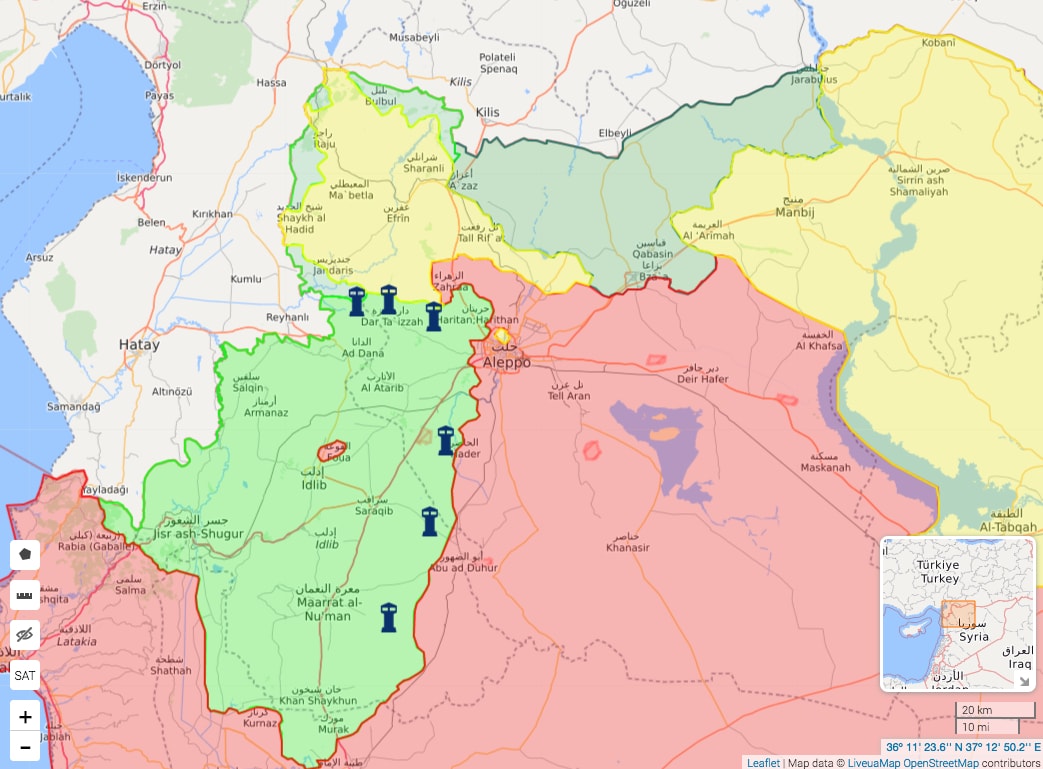

In other words, even though the Syrian Democratic Forces (SDF), of which the YPG is a leading member, controls most of Northern Syria (after having expelled IS), they are unable to send reinforcements because they are blocked by Turkish backed rebels. If they did decide to do so, the reinforcements would have to come through Assad territory.

This state of affairs was constructed with forethought by military officials in Ankara.

In 2016, Erdogan launched Operation Euphrates Shield. Its expressed aim was to attack both the YPJ/YPG and ISIS. In reality, it sought to prevent an advance by the Syrian Democratic Forces from linking Afrin with the rest of territory held by Kurds.

Operation Euphrates Shield was not about defeating IS, it was about ensuring that Afrin would stay geographically distant from the rest of the territory held by Kurdish forces in Northern Syria. Keeping Afrin isolated, in turn, was a way for Erdogan to have leverage over Syrian Kurdish forces.

Turkey has not only backed rebels that hold Euphrates Sheild territory, it has also supported rebels from Idlib, which attack Afrin from the other side. Idlib is virtually under the governance of Jihadist groups. But Turkey has influence over the rebels there as well, which have been enlisted in the battle against Afrin.

The geography of the Syrian battlefield, in other words, has further compelled the YPG to demand that the Syrian government do what it can to prevent Turkey and Turkish backed FSA forces from invading their territory.

What is the relationship between the Syrian Kurds and other groups on the Syrian battlefield? 

The Kurdish forces of Syria have mainly gained their territory in their battle against the most immediate threat to the peoples’ of Northern Syria, the so-called Islamic State.

Much of Northern Syria, which was previously held by the Islamic State, is now under the control of the Syrian Democratic Forces — a coalition of the Kurdish YPG with other rebel groups in the region. But it wasn’t always like this.

In 2012, Assad repositioned his forces away from Northern Syria in order to fight in the strongholds of the Free Syrian Army. Whereas critics of the PYD have insinuated that this was an agreement between Assad’s government and the Kurds, there is no evidence of such an agreement taking place.

This left a power vacuum in the North. Kurdish forces immediately seized the opportunity to administer control over areas largely inhabited by Kurds. They instituted a system of direct democracy called democratic confederalism and began to demand a decentralized Syria as a path forward for the war-torn country. Areas that fell under their control included Afrin — which was one of the first cities to rise up against Assad — Kobane and Qamishlo.

But then the Islamic State emerged as a coalition of increasingly hard-line former rebels began to radicalize. They attempted to attack Kobane, the capital of the democratic confederalist project.

The Kurds, fighting under the YPG banner, resisted the Islamic State for days.

The United States, feeling that the Kurds could be a reliable partner in the battle against IS, aided in the defence of Kobane.

From then on, the YPG, and an assortment of rebel groups in Syria have been the leading force against IS in Northern Syria. Every territory captured by the YPG was brought under the Democratic Federation of Northern Syria, a political body that seeks to forge a decentralized, multi-ethnic polity.

Being in this position has also meant that Syrian Kurdish forces have developed rivalries against the two other warring sides, the decentralized Free Syrian Army brigades and the Syrian Government.  Since the beginning of the civil war, the YPG have held a position of neutrality. This has meant that depending on the circumstance, FSA forces and the Syrian government were either harsh foes or tactical allies.

Indeed, this has even translated into deadly clashes with both, over the course of the civil war. In 2014 for example, the YPG entered into a tactical alliance with FSA brigades in the fight against IS, under an operation entitled Euphrates Volcano. Many of those very same groups are now within the Syrian Democratic Forces, a coalition of forces that helped expel IS from Northern Syria, and continue to fight against IS in the province of Deir Ez-Zor. These FSA battalions also constitute the anti-Ankara wing of the Free Syrian Army.

In that very same year, however, the YPG also fought against other battalions of the FSA in Aleppo. Its foes included various FSA outfits like Fatah Halab, Ahrar AlSham, and the Mountain Hawks Brigade.

The same complicated relationship can be seen with the Syrian Government. Take the two months of June and July of 2015 as an emblematic example. In June 2015, the YPG and Syrian government loyalists clashed in the city of Qamishli, according to a report by ARA news. In July 2016, AFP reported that in Hasakah, Syrian Government forces entered into a short-lived tactical alliance to fight encroaching IS forces in Hasakeh

Are Syrian Kurdish forces and the Syrian Government in an alliance? No. But backed into a corner, Kurdish officials felt compelled to make this decision out of desperate circumstances. Just as they did in Hasakah against IS.

Historically, how have Syrian Kurds related to the Syrian Government? 

On a brief historical note, Syrian Kurds were often the subjects of some of the most brutal measures taken by the Assad dynasty to forcefully Arabize Syria. In the 1962 census conducted in the province of Jazira, around 120,000 Kurds were stripped of their citizenship. Those that became categorized as foreigners lost property rights, found it difficult to find work, and participate in politics.

In the 1980’s, after the Kurdistan Workers Party’ decided to launch an armed struggle for Kurdish self-determination against the Turkish State, they were given sanctuary by Hafez Assad, who had a dispute over Euphrates water with Ankara. Allowing Kurdish Guerrillas into Syria, however, opened up space for a politicization of Syria’s Kurds, who began to idolize PKK co-founder, Abdullah Ocalan. And whereas it has been commonplace to state, as Amberin Zaman recently has in an NY Times op-ed, that the PKK was also put to use “as a distraction for his own restless Kurdish population.”, this explanation both infantilizes and fails to account for the support that Syria’s Kurds have for Ocalan today.

In fact, despite the tactical and non-confrontational attitude that Ocalan had with Damascus, the PKK constructed a deep affinity between Kurds in Syria and Kurds in Turkey. And it did so by politicizing the Kurdish identity in Syria.  This all laid the groundwork for the deep discontent that would begin to simmer after Hafez Al-Assad resolved the water dispute, in return for giving up Ocalan – a decision that would end up with the arrest of the PKK leader, and solitary confinement in Imrali Prison. An unforgivable sin for those who considered themselves followers of Ocalan.

In a Human Rights Watch report, released in 2009 (two years before the Syrian uprising”), interviews with 30 Kurdish activists affiliated with the PYD highlighted not only the discontent that Kurdish activists have had with the Assad Government, but the consequences they faced for advocating for Kurdish rights.

“12 said that security forces tortured them,” the report said, “the most common torture method is beating and kicking on all parts of the body, especially beating on the soles of the feet” the report said.

All of this is to mention that any tactical agreement that has been made with the Syrian Government happened out of circumstances of war, and not, like some of the PYD’s critics seem to insist, due to a secret affinity that the PYD has with the Syrian Government.

So are Syrian Kurdish forces and the Syrian Government allies now?

As of recent, never have relations been worst between the two forces. The agreement for the Syrian Government to enter Afrin and aid in the resistance against the Turkish assault is purely tactical.

In September 2017, representatives in the Assad government began to raise more explicit denunciations against the gains made by Syrian Democratic forces. On the first of September, Assad exclaimed in a speech that territorial claims in Syria were “not up to debate or discussion ever!”, and to underscore his point, he insisted that “the national identity of Syria exists but its essence is Arabism.” Two weeks later, on the 16th of September, Assad aide Bouthaina Shaaban told al Manar TV that the long-term interests of the Syrian Government were to establish control over territory held by Syrian Kurds.

“Whether it’s the Syrian Democratic Forces, or Daesh, or any illegitimate foreign force in the country .. we will fight and work against them so our land is freed completely from any aggressor,” she said.

“I’m not saying this will happen tomorrow .. but this is the strategic intent” she concluded.

In December 2017, Assad summed up the Damascus position to Russian Deputy Prime Minister Dmitry Olgeovich Rogozin.

“Any who collaborate with a foreign power to fight the Syrian Army are traitors,” Assad said referring to the Kurds of Northern Syria, “It’s as simple as that”.

The PYD, similarly, has also insisted that it would defend its territory from Assad if forced to. In Sheikh Maqsoud, an area governed by Syrian Kurds in Aleppo, Souad Hassan, a senior Kurdish politician said that Al-Assad’s forces would never enter their city.

“We won’t give up Sheikh Maqsoud unless they kill us all” she was quoted as saying by Reuters.

Ilham Ahmad, former co-president of the Syrian Democratic Council, also told Arab tribes in Raqqa that the Syrian government would not be allowed to return to Raqqa either.

“The Syrian regime now has its own efforts and sends letters to our brothers in these areas. They say that they are coming back,” Ahmed told the tribal leaders, “On the contrary, the regime used tanks and planes against our people, bombed their homes and destroyed what they owned. We tell them that you are not fit to return and control our areas”.

Similar statements have also been made about Deir Ez-Zor and Tabqa

Once again, geographically isolated with no material and moral support, Afrin was compelled to cut this deal with the Assad Government.

So what’s next? 

What is next is the most important question. If Assad aide Bouthaina Shaaban was telling the truth, and she often does, then the strategic intent of the Assad Government is to retake land from the Syrian Democratic Forces and the YPG.

If that is the case, then what is next could very well be another front in an already complex war, if not a negotiation on unequal terms.

Either way, the future for Afrin is bleak. Had Afrin not been abandoned in the first place, this would have never happened.

To NATO countries, Turkey comes first. To the United States, with IS mostly being defeated, the Kurds are of no use anymore. To Russia, the Syrian Democratic Forces and the YPG ought to be abandoned insofar as they have strong relations with the United States. To the Turkish-backed Syrian opposition, the Kurds are an object of envy and contempt.

Afrin was forced into this predicament because it is alone.

Only negotiations between Kurdish officials and Damascus will prevent this tragedy to get unthinkably worst.