Αρχική Blog Σελίδα 2846

Είναι η Τουρκία “σκύλος που γαυγίζει” ή μία πραγματική απειλή; Η ηρεμία πριν τη θύελλα…

0

Του ΜΙΧΑΛΗ ΙΓΝΑΤΙΟΥ

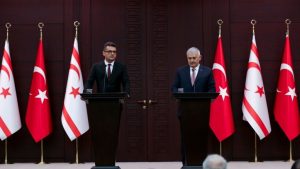
Ο Τούρκος Πρωθυπουργός Μπιναλί Γιλντιρίμ με τον παράνομο ψευτο-“πρωθυπουργό” Τουφάν Ερχουρμάν. Φωτογραφία Γραφείο του Πρωθυπουργού της Τουρκίας.

Η επανάληψη των τουρκικών απειλών και των εκβιαστικών δηλώσεων εναντίον της Ελλάδας και της Κύπρου, στο ανώτατο μάλιστα επίπεδο, πρέπει να μας ανησυχεί. «Είναι λόγος μέγιστης ανησυχίας», μου έλεγε βετεράνος διπλωμάτης, ο οποίος σε μεγάλη ηλικία πια, και με ενεργό ρόλο στα διπλωματικά δρώμενα, πρόσθεσε πως δεν θυμάται τέτοια και τόση επιθετικότητα ούτε κατά τη διάρκεια της αμερικανοκίνητης τουρκικής εισβολής εναντίον της Κύπρου, τον Ιούλιο του 1974.

Οι Τούρκοι κυβερνητικοί αξιωματούχοι συναγωνίζονται και ανταγωνίζονται ποιος θα εκτοξεύσει τη χειρότερη απειλή. Ο πρωθυπουργός της Τουρκίας Μπιναλί Γιλντιρίμ με τη θρασύτητα που τον χαρακτηρίζει μίλησε για «προκλητικές δραστηριότητες στην Ανατολική Μεσόγειο» αναφερόμενος στις νόμιμες έρευνες της Κυπριακής Δημοκρατίας μέσα στην Αποκλειστική Οικονομική της Ζώνη.

«Θα έχουν την απάντησή τους», απείλησε το τσιράκι του Ταγίπ Ερντογάν έχοντας δίπλα του τον παράνομο ψευτο-«πρωθυπουργό» των κατεχομένων, Τουφάν Ερχουρμάν μετά τη συνάντησή τους στην Άγκυρα.

«Αυτές οι δραστηριότητες -συνέχισε- μπορούν να γίνουν μόνο όταν υπάρξει μια λύση μόνιμη, βιώσιμη με ένα σχήμα ενός κράτους δικοινοτικού», εννοώντας προφανώς μία φιλοτουρκική λύση, όπως αυτή που προνοούσε το ρατσιστικό σχέδιο του Κόφι Ανάν, ή οι προτάσεις του φιλότουρκου Νορβηγού Έσπεν Μπαρθ Έιντε, ο οποίος λειτουργούσε ως εντολοδόχος της Άγκυρας και της ισλαμικής κυβέρνησής της, αντί ως ανεξάρτητος μεσολαβητής του ΟΗΕ, ως όφειλε…

Ακολούθησε ένας άλλος φανατικός ισλαμιστής, ο Γιγίτ Μπουλούτ, σύμβουλος του προέδρου της Τουρκίας. Μιλώντας σε εκπομπή της τουρκικής κρατικής τηλεόρασης TRT, είπε τα εξής εξωφρενικά: «Όχι ο 6ος στόλος, ο 66ος στόλος να έρθει, εμάς τίποτα δεν μπορεί να μας σταματήσει. Ας βγει, ας κοπιάσει, εμάς ούτε ο 6ος, ούτε ο 66ος στόλος, μπορεί να μας γονατίσει. Αυτό να μην το ξεχνάει κανείς. Αυτός ο λαός όταν ορθώνει το ανάστημά του, και το έχει κάνει ήδη, όταν λοιπόν το κάνει, καμία δύναμη, ούτε και παγκόσμια δεν μπορεί να τον λυγίσει. Και το λέω ως κομμάτι του τουρκικού λαού και ως κομμάτι του ισλαμικού έθνους”.

Θα μπορούσαμε να χαρακτηρίσουμε τις δηλώσεις του κ. Γιλντιρίμ και του κ. Μπουλούτ ως παραλήρημα και να τελειώναμε. Ή ως κουβέντες παραφρόνων που δεν έχουν μέτρο. Ακόμα και ως κουβέντες που τις παίρνει ο άνεμος… Δεν έχουν έτσι τα πράγματα και πρέπει να τις αναλύσουμε με ψυχραιμία, ως πραγματικές απειλές, τις οποίες οι Τούρκοι αξιωματούχοι εννοούν μέχρι και το τελευταίο γράμμα.

Η Τουρκία έχει σχέδιο και δεν πρέπει να βαυκαλιζόμαστε με θεωρίες όπως να μην φοβόμαστε τον σκύλο που γαυγίζει και τα τοιαύτα. Σε τούτη την περίπτωση, οι Τούρκοι και γαυγίζουν και πρέπει να τους δίνουμε σημασία, διότι οι δηλώσεις τους έχουν μία σταθερότητα ως προς τις απειλές και δείχνουν να κτίζουν πάνω σε μία τακτική εκφοβισμού.

Ποιος ανέμενε, π.χ., ότι οι Ιταλοί θα υποχωρούσαν και θα αποχωρούσαν μόλις εμφανίστηκαν τα τουρκικά πλοία στην κυπριακή ΑΟΖ; Δεν λέω… Η Ιταλία δεν είναι καμιά υπερδύναμη. Αλλά δεν σεβάστηκε τις συμφωνίες που υπέγραψε και έδειξε πως είναι μία ασήμαντη χώρα. Οπότε, ο καθένας δικαιούται να εκφράζει φόβους ότι η επιθετικότητα της Τουρκίας θα μπορούσε να ανάγκαζε σε υποχώρηση και τους Γάλλους, αλλά και τους Αμερικανούς.

Όχι επειδή φοβούνται την Τουρκία, αλλά για ένα άλλο πολύ σημαντικό λόγο: Γνωρίζουν πως ο Ταγίπ Ερντογάν είναι απρόβλεπτος και επικίνδυνος. Δεν του κοστίζει να επιτεθεί, και το πιστεύω ειλικρινά.

Όμως, και επειδή οι Αμερικανοί της ExxonMobil, δεν υποχώρησαν σε κανένα μέρος του πλανήτη όταν βρέθηκαν ενώπιον απειλών, τείνω να καταλήξω στο συμπέρασμα, διαβάζοντας και τις σχετικές ανακοινώσεις, ότι αντί να συγκρουστούν στη Συρία οι τουρκικές και οι αμερικανικές δυνάμεις, αυτό θα μπορούσε να συμβεί στην κυπριακή ΑΟΖ.

Θα έχει ενδιαφέρον, λοιπόν, το σκηνικό εάν οι Τούρκοι και οι Αμερικανοί βρεθούν στη δυσάρεστη θέση να προστατεύσουν τα στρατηγικά τους συμφέροντα στη Μεσόγειο.

Αντιλαμβάνομαι πως ο ενεργειακός κολοσσός ExxonMobil δεν θα αλλάξει τα σχέδια του, και θα υλοποιήσει τις δεσμεύσεις του, όπως προβλέπονται από τη συμφωνία με την Κυπριακή Δημοκρατία. Και καταλαβαίνω επίσης ότι αυτό θα το πράξει με κάθε θυσία. Σίγουρα ακούγονται όμορφα στ’ αυτιά μας αυτά τα λόγια.

Από την άλλη, θα μπορούσαμε να υποθέσουμε ότι και οι Τούρκοι θα υλοποιήσουν τις απειλές τους… Με τα παραπάνω δεδομένα -και παραφράζοντας τις φράσεις κλισέ που χρησιμοποιούσαν οι παλιοί συνάδελφοι- θα μπορούσα να γράψω ότι τα τύμπανα πολέμου κτυπούν στη Μεσόγειο.

Διότι οι Αμερικανοί δεν έχουν να δείξουν συμπεριφορές δειλίας, ούτε ποτέ οπισθοχώρησαν, όποιος και αν βρισκόταν απέναντι τους. Είναι μία κουβέντα τα λόγια, και άλλη κουβέντα οι πράξεις.

Η Αμερική διαθέτει ένα ριψοκίνδυνο Πρόεδρο, τον Ντόναλντ Τραμπ, ο οποίος δεν μπορώ να φανταστώ ότι θα υποχωρήσει μπροστά στις απειλές του Ερντογάν και των «κλώνων» του.

Τείνω περισσότερο να αποδεχθώ την άποψη αρκετών στην Αμερική, πως ο Αμερικανός πλανητάρχης επέδειξε μεγάλη υπομονή στις ανάρμοστες αντιαμερικανικές πράξεις του προέδρου της Τουρκίας -και αυτή είναι μία πρωτόγνωρη συμπεριφορά για τον κ. Τραμπ, ο οποίος μας έχει συνηθίσει να μην σηκώνει μύγα στο σπαθί του. Τι θα συμβεί όταν βρεθούν αντιμέτωπα τα πλοία της αμερικανικής εταιρείας με τα πολεμικά καράβια των Τούρκων ένας Θεός ξέρει. Αισθάνομαι, πάντως, πως χαμένοι δεν θα είναι οι Αμερικανοί…

Πηγή: Είναι η Τουρκία “σκύλος που γαυγίζει” ή μία πραγματική απειλή; Η ηρεμία πριν τη θύελλα… http://hellasjournal.com/2018/03/ine-i-tourkia-skylos-pou-gavgizi-i-mia-pragmatiki-apili-i-iremia-prin-ti-thyella/

Stop Pretending America and Turkey Are Allies

0
Doug Bandow  

Washington officials routinely call Turkey a vital ally, yet Turkish president Recep Tayyip Erdoğan and his government have threatened U.S. forces cooperating with Kurdish militias in northern Syria. After American military spokesmen warned that U.S. troops would defend themselves, Erdoğan promised the famed “Ottoman slap.” Alas, doing so probably would increase his popularity with Turkey’s highly anti-American public.

While no one quite believes the two governments will come to blows, U.S. policymakers are deluded or lying when they assert America’s and Turkey’s unity of purpose. After visiting Ankara, Secretary of State Rex Tillerson declared: “We’re going to act together from this point forward. We’re going to lock arms. We’re going to work through the issues that are causing difficulties for us and we’re going to resolve them.”

However, the threat of open conflict between the two governments is real, and demonstrates the extent to which they have diverged. The differences continue to grow with every new day and military operation. Rather than sacrificing American values and interests, Washington should drop its fantasy expectations and establish a more realistic relationship with Erdoğan.

Successive administrations have been denied Turkey’s evident estrangement. Ankara remains in NATO and the U.S. Air Force remains at Incirlik Air Base, but little else binds the two governments together. The relationship is but a ghost from the past.

The Cold War is over, and Russia isn’t going to attack Turkey—or any other NATO member for that matter. Indeed, after tumultuous relations with Moscow over the shootdown of a Russian aircraft, Erdoğan has steadily improved ties to Vladimir Putin. Ankara even is purchasing S-400 antiaircraft missiles from Moscow, undermining alliance efforts to improve interoperability among members. It would be foolish to assume that Turkey would live up to its alliance commitments if Russia ended up at war with America or Europe.

Moreover, Ankara has actively thwarted U.S. objectives in Syria. Focused on ousting the Assad regime, for years Erdoğan’s government allowed Islamic State personnel and materiel to cross the Turkish border. There even were credible accusations that Erdoğan’s son was involved in the illicit oil trade with ISIS. Only after the group staged terrorist attacks in Turkey did Ankara take a more actively adversarial role, and even then it prioritized countering growing Kurdish influence over opposing the “caliphate.”

In launching the ironically named Operation Olive Branch against Kurdish military forces that were allied with Washington against the Islamic State, Turkey wrecked Trump administration plans to create a Kurdish “border security force” to police Syria’s north. A cavalcade of Turkish officials lamented their lack of trust in Washington, and threatened to attack American personnel stationed alongside Kurdish forces. U.S. officials whined that Ankara’s policy was not “helpful,” as if that were the Erdoğan government’s objective.

Turkish foreign policy has also turned hostile elsewhere. Under Erdoğan, Turkey’s relations with Israel turned sharply negative. And the Turkish leader once promoted rapprochement with Greece, and some observers hoped for a similar approach to Cyprus, which Ankara invaded in 1974, occupying more than a third of the island to create an ethnic Turkish state. But the Erdoğan government has increased tensions with Athens over nearby Greek islands that it covets, and declined to make concessions to end the Cypriot standoff.

Erdoğan’s interest in joining the European Union, assuming it ever was real, has ebbed; with Syria’s collapse, he turned refugees into a weapon of extortion against Europe. He shifted from protecting the liberty of Islamic faithful in public to pushing Islamism on the public in a region where Islamist extremism is a threat. After seeking to end the Kurdish conflict at home, he helped reignite the fighting, which continues to ravage Kurdish areas in Turkey. He blockaded Iraqi Kurds after their independence referendum last fall and, most recently, launched military multiple operations against Syrian Kurds.

Finally, slowly at first but rapidly after the failed coup in July 2016, Erdoğan constructed an electoral dictatorship. He began his premiership as an ally of liberals seeking to eliminate Atatürk’s authoritarian trappings dating back to creation of the Turkish republic. Kemalism enshrined nationalism and secularism, and was ruthlessly backed by the military.

However, Erdoğan long ago tossed aside concern for anyone’s rights but his own. Freedom House judges Turkey to be unfree. Ankara leads the world in imprisonment of journalists, with more than seventy in jail. The State Department published a seventy-five-page report on the government’s human-rights abuses, including unlawful killings, torture, lack of due process, mass imprisonment, infringement of free expression, inadequate protection of civilians in military operations, prison overcrowding and more.

Of the state of emergency, which remains nearly two years after the attempted putsch, observed Amnesty International, “Dissent was ruthlessly suppressed, with journalists, political activists and human-rights defenders among those targeted.” Most recently, the government jailed critics of military operations against the Kurds; at least thirty activists were arrested for their comments on social media, which were termed “propaganda for armed terrorist organizations.” Academics, opposition politicians and schoolchildren also have been targeted for the mildest of criticism of the man who would be sultan.

Torture continued as security forces enjoyed impunity. More than fifty thousand people were detained, many on the most ludicrous grounds, such as possession of a U.S. dollar bill, supposedly a sign of membership in the alleged conspiracy operated by Muslim cleric Fethullah Gülen. Others were arrested for having an account at a public bank owned by the Gülen organization. Among those detained were Taner Kılıç and İdil Eser, the chair and director, respectively, of Amnesty International Turkey. Erdoğan essentially admitted that American pastor Andrew Brunson had been arrested in an effort to force a trade for Gülen, who resides in Pennsylvania. Europeans have been detained for similar purposes.

Observed Hugh Williamson of Human Rights Watch, “Everywhere you look, checks and balances that protect human rights and rule of law in Turkey are being eroded.” Some 140,000 people have lost their jobs, private as well as public, and many have been made unemployable. Numerous critics have had their passports seized, turning Turkey into an open-air prison. Abuses continue to worsen.

Erdoğan took his brutal tactics to America, personally unleashing his security detail on peaceful protesters near the Turkish embassy in Washington. Protected by diplomatic immunity, his thugs injured several demonstrators, some seriously. Far from being apologetic, Erdoğan blamed the Trump administration for allowing people to criticize him.

Tillerson acknowledged that bilateral relations were “in a bit of crisis.” Actually, more than “a bit.” Despite conciliatory language between Tillerson and Turkish foreign minister Mevlüt Çavuşoğlu, and an agreement for a dialogue over policy differences long evident, neither values nor interests continue to hold the countries together.

The electoral calendar makes conciliation even less likely. Erdoğan’s ruling Justice and Development Party has lost public support of late, and therefore entered into an alliance with the Nationalist Movement Party for next year’s parliamentary contest. The latter is secular, but even more committed to a brutally aggressive foreign policy. Erdoğan can ill afford to make concessions to America, which already is hated at home.

Amanda Sloat of the Brookings Institution advocated fixing the bilateral relationship “before it’s too late.” But it is already too late. Better for the nations to separate, with Ankara leaving NATO. Then the two governments could forge a more practical and transactional relationship, focused on areas of cooperation. There would be no lectures on human rights, fantasies about shared objectives and complaints about the failure to agree. Just an effort by the two governments to work together when possible, despite their many differences.

Turkey no longer is an ally. The bilateral relationship never was vital. It barely survives today. There’s no need for Ankara and Washington to be adversaries. But everyone concerned would benefit if the two governments dropped the pretense of friendship that now camouflages their vast differences.

Doug Bandow is a senior fellow at the Cato Institute. A former special assistant to President Ronald Reagan, he is author of Foreign Follies: America’s New Global Empire.

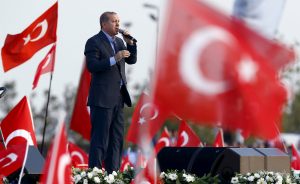
Image: Turkey’s President Tayyip Erdogan makes his speech during a rally against recent Kurdish militant attacks on Turkish security forces in Istanbul, Turkey, September 20, 2015. Turkish President Tayyip Erdogan and Prime Minister Ahmet Davutoglu attended the rally with the slogan “millions of people with a single voice against terror” at central Istanbul. REUTERS/Murad Sezer ​

http://nationalinterest.org/blog/the-skeptics/stop-pretending-america-turkey-are-allies-24764?page=show

Αντισυνταγματάρχης Ειδικών Δυνάμεων γράφει για τον Έβρο αλήθειες που θα σοκάρουν το ΓΕΣ!

2

Γράφει ο Νικόλαος Σκιαδάς Ανχης ε.α Ειδικών Δυνάμεων  militaire.gr

07/03/2018 | 10:51

Καλύτερα να μασάς πολύ, παρά να μιλάς πολύ. Ο λαός είναι πάντα σοφός, και δια μέσω λαϊκών ρήσεων προειδοποιεί για τις εξελίξεις όσους λένε και υπόσχονται πολλά. Είναι αρκετός καιρός τώρα που στελέχη του Στρατού μας αλλά και οι εν αποστρατεία (Αξκοί, Υπξκοί), παλιοί και νέοι, όποτε συνευρίσκονται λένε το ανέκδοτο της ημέρας, δυστυχώς, βγαλμένο από την καθημερινότητα του στρατού μας και την αβάσταχτη ελαφρότητα της ηγεσίας του, πολιτικής και στρατιωτικής.

Ενώ τα προηγούμενα χρόνια τα ανέκδοτα ξεκινούσαν συνήθως με τον Τοτό, τώρα ξεκινάνε με τον «Κατακαημμένο» ή το Στρατό. Βέβαια η ανώτατη ηγεσία είναι υπερήφανη πολύ και σκέφτεται να κάνει και διαγωνισμό στρατιωτικού περπατήματος και μουσικής -αντίστοιχης αίγλης των καλλιστείων και Eurovision– μετά την πετυχημένη πασαρέλα στο ΓΕΣ στελεχών, στρατιωτών, εντυπωσιακών ηλεκτρονικών προβολών και τοπικών αγροτικών προϊόντων από Σχηματισμούς όλης της χώρας που ειλικρινά βοήθησε τα μάλα σε επιχειρησιακή ετοιμότητα και βελτίωση των ικανοτήτων μάχης.

Εγώ διάβαζα καθημερινά σε τουρκικά έντυπα τις συνεχείς παραιτήσεις στελεχών πληροφοριών της ΜΙΤ και καθαιρέσεις ανωτάτων στελεχών της από τον σουλτάνο Ερντογάν, επειδή δεν κατάφεραν να ανακαλύψουν ότι αιχμή του δόρατος στη Ρόδο και το Καστελόριζο είχαμε το μελεκούνι, που δεν είναι πυραυλικό σύστημα αλλά λιχουδιά με μέλι, σησάμι, αμύγδαλα, κανέλα και πορτοκάλι, ενώ στη Θράκη οι λαγγίτες και τα μικίκια δεν ήταν οχυρωματικά έργα και συστήματα εγκαίρου προειδοποίησης, αλλά γλυκά για να «συγχωρεθούν» τα αγαπημένα τους πρόσωπα, και έλεγα δεν είναι δυνατόν, αυτοί δεν είναι τόσο παλαβοί, μάλλον εκπονούν παλαβό σχέδιο που ο κοινός ανθρώπινος νους δεν μπορεί να το συλλάβει!!!

Και καλά όλα αυτά … τις συνεχείς ατάκες που λέγονταν στις πρωινές αναφορές Λόχων που καμιά φορά η έκφραση κάποιου παραπόνου στρατιώτη στρίμωχνε λιγάκι … πάνε αυτά τώρα, αφού τώρα με άνεση λένε «να το πεις στον Αρχηγό που θα ‘ρθει πάλι σε 2 ημέρες» ενώ ταυτόχρονα σε κάποια άλλη μονάδα ο δεκανέας αλλαγής αισθανόταν περήφανος για το έργο του γιατί όσες φορές έβλεπε τους σκοπούς αυτός …. τόσες τους έβλεπε και ο Αρχηγός. Και μπορεί κάποιοι να έλεγαν «ζούμε μέρες που ο Αρχηγός είναι Λοχίας και όχι τις μέρες τις σωστές, που ο Λοχίας ήταν Αρχηγός», αλλά εγώ ήμουν πάντα αισιόδοξος. Πάντα πιστεύω ότι με κάποιο τρόπο θα ισορροπήσει η φύση και θα επανέλθουμε σε μια κανονικότητα. Δεν πτοούμουν δηλαδή ούτε από την ανισόρροπη απόφαση για το κλείσιμο όλων των Κέντρων.

Ούτε με ενόχλησε τόσο πολύ που η πισίνα του ΚΕΕΔ που χρειάστηκε τόσα χρήματα, χρόνο και αγώνα για να φτιαχτεί για την εκπαίδευση των δυτών μάχης, θα γίνει – μάλλον – χώρος για «ιαματικά ποδόλουτρα» μεταναστών παρανόμων, νομίμων ή υπό νομιμοποίηση ….κάτι δηλ. σαν ΚΑΑΥ Μεταναστών!!! Γιατί είμαι σίγουρος ότι τα στελέχη των Ειδικών Δυνάμεων, που δίνουν πολύ περισσότερα από τον εαυτό τους και την ψυχή τους και στερούν τόσα πολλά από οικογένειες και οικείους, όσο πιο πολύ τα αδικεί και τα παραμελεί η ηγεσία τόσο πιο πολύ πεισμώνουν και θα ανέβουν ακόμα πιο ψηλά γιατί ξέρουν να μην λυγίζουν στον εχθρό ακόμα και αν αυτός είναι καμιά φορά πολύ πιο … εγγύς, από όσο περίμεναν. Και καλά όλα τα βίντεο και οι κόντρα ανακοινώσεις καθημερινά για επισκέψεις και τελετές και δώσε οι φωτογραφίες και τα βίντεο από το Γραφείο Εκπροσώπου Τύπου του ΓΕΣ. Μα καλά, τώρα που οι γονείς και συγγενείς των συλληφθέντων δηλώνανε σε όλα τα τηλεοπτικά δίκτυα ότι δεν είχαν «επίσημη ενημέρωση» και ενημερώνονταν από τα κανάλια και τα sites, τι πρέπει να κάνεις λατρεμένε μου γκαντέμη που επένδυσες στο όνειρο και την φαντασία και πιάστηκες απροετοίμαστος να διαχειριστείς την στυγνή πραγματικότητα; Μήπως να βάλεις φούστα Σουλιώτισσας και να φέρεις 2 γυροβολιές και μ’ ένα πήδο όλο χάρη, από την οροφή του δοξασμένου βασιλείου του Πενταγώνου να νοιώσεις την μαγεία της ελεύθερης πτώσης;

Όχι, φυσικά!!! Οφείλουμε να συστήσουμε ψυχραιμία σε όλους τούτες τις δύσκολες ώρες. Και αφού συσκεφθεί για άπειρες ώρες η ηγεσία σύσσωμη, και διαπιστώσει ότι δεν υπάρχει πρόβλημα που η ηγεσία ζει σε κλίμα ευφορίας λες και η χρήση φαρμακευτικής κάνναβης έχει ξεκινήσει πιλοτικά μ’ αυτούς, αφού δουν ξεκάθαρα ότι οι υπόλοιποι της ηγεσίας που διοικεί στην περιοχή του Έβρου δεν πειράζει που δεν ήταν τσιτωμένοι την περίοδο αυτή λες και τους πέτυχε βολή πολυβόλου Botox στο κορμί όλο, αφού δεν ενοχλεί που η «εμφάνιση» των 2 συλληφθέντων στελεχών δεν αντανακλούσε περίσσεια εκπαίδευσης αλλά έλλειμμα γνώσεων, εκπαίδευσης, εκτίμησης και εκτέλεσης τυποποιημένων ενεργειών αντιμετώπισης ΟΧΙ ΤΥΧΑΙΩΝ αλλά στατιστικώς ΑΠΟΛΥΤΩΣ ΠΙΘΑΝΩΝ ΕΠΕΙΣΟΔΙΩΝ στην περιοχή του Έβρου, όχι μόνο από τους πρωταγωνιστές αλλά και από τους ασκούντες διοίκηση στην περιοχή, πιστεύω ότι σύντομα θα δούμε την εξής επική ανακοίνωση «Μετά από διεξοδική, αναλυτική και επιτόπια έρευνα του συμβάντος στην περιοχή του Έβρου, από σύσσωμη την ηγεσία, διαπιστώθηκε ότι την αποκλειστική ευθύνη φέρει ο μάγειρας παρασκευής του συσσιτίου που έλαβαν τα 2 στελέχη το οποίο έφερε περίσσεια καρυκεύματος μ’ αποτέλεσμα να προβούν σε λάθος ενέργειες. Εδόθησαν σαφείς οδηγίες τρόπου παρασκευής συσσιτίου και ορίσθηκε βοηθός μάγειρας που θα προβαίνει σε έλεγχο αλατότητας και διασποράς τρίμματος πιπεροσπορίων συσσιτίου πριν την διάθεση αυτού εις τους τραπεζοκόμους.» Και τώρα που το καλοσκέφτομαι, δεν βλέπω κινητικότητα για το Πάσχα. Πότε ωρέ ηγέτες και επιτελείς περιμένετε να δοθούν οι οδηγίες για τα αρνιά και τα κρασιά και τα γλέντια; Αφήστε τις βολές και την εκπαίδευση και ασχοληθείτε με την προετοιμασία των κόκκινων αυγών. Πότε θα ξεκινήσουν οι δοκιμές τσουγκρίσματος; Tην τελευταία στιγμή; Θέλετε να πάθουμε καμιά νίλα και να αργήσει η προμήθεια των αυγών όπως των πυρομαχικών αρμάτων παλαιότερα και να ‘χουμε ντέρτια και καημούς; Πριν το πόλεμο είναι πάντα τα γλέντια ωρέ, γιατί αν γίνει πόλεμος ή κάνα «θερμό επεισόδιο» θα έχουμε άλλα γλέντια, που δεν μπορείτε να σκεφθείτε ωρέ…!!!

ΕΞΟΔΕΙΟΣ ΕΥΧΗ: Αχ, καλέ μου Χριστούλη, κάνε σε παρακαλώ πολύ την επερχόμενη Ανάσταση λίγο από το φως Σου να πάει σ’ όλους αυτούς που τόσο τυφλά, και με τόσο υστεροβουλία μας εκθέτουν καθημερινά και αφού θέλουν να υπηρετήσουν την εξωστρέφεια στείλε τους στο σύμπαν το εξώτερο, να βρουν τους εξωγήινους με τους οποίους έχουν ίδιο τρόπο σκέψης, για να γλυτώσει η πατρίδα μας αλλά και ο πλανήτης Γη.

Ο πάντα αισιόδοξος,

Νικόλαος Σκιαδάς, Ανχης ε.α Ειδικών Δυνάμεων

https://www.militaire.gr/antisyntagmatarchis-eidikon-dynameon-grafei-gia-ton-evro-alitheies-poy-tha-sokaroyn-ges/

Μην πυροβολείτε τους υδρογονάνθρακες

0

Γράφει ο Αντώνιος Φώσκολος.Αντώνιος Φώσκολος slpress.gr

Καλλιεργούνται ανησυχίες για τις επιβλαβείς περιβαλλοντικές συνέπειες από την εξόρυξη υδρογονανθράκων στην Ελλάδα. Η παγκόσμια ωστόσο, κλιματική ιστορία των τελευταίων 500 εκατομμυρίων ετών διαψεύδουν τις ανησυχίες.

Το βήμα το περιμέναμε 25 χρόνια για να μπει η Ελλάδα στον δρόμο της ανάπτυξης, της καταπολέμησης της ανεργίας και της οικονομικής ανάκαμψης. To «Ελντοράντο» (ελληνικός ενεργειακός πλούτος), το οποίο ο υπουργός Ενέργειας κ. Σταθάκης δήλωσε πως δεν πιστεύει, έρχεται όταν το ψάχνουμε. Και οι εκάστοτε υπουργοί Ενέργειας δεν χρειάζονται χρόνια για να υπογράψουν τις σχετικές συμβάσεις.

Παράδειγμα το μπλόκ 10 που σχετίζεται με τα κοιτάσματα υδρογονανθράκων στον κόλπο της Κυπαρισσίας. Ελπίζω να μην έχουμε την ίδια αργοπορία και με τους αναδόχους των θαλασσίων οικοπέδων νοτιοδυτικά και δυτικά της Κρήτης (νομός Χανίων).

Η αναφορά του υπουργού Ενέργειας στο fracking, δηλαδή τον θρυμματισμό των πετρωμάτων είναι ατυχής. Δεν γνωρίζω ποιους έχει συμβούλους, πάντως όχι επιστήμονες. Fracking δεν γίνεται ποτέ για παραγωγή υδρογονανθράκων από συμβατικά αποθέματα. Δηλαδή, όπως αυτά, για τα οποία δόθηκε η άδεια εκμετάλλευσης και για τα οποία στο μέλλον θα δοθούν και άλλες παρόμοιες άδειες εκμετάλλευσης. Το fracking γίνεται μόνο όταν πάμε για εκμεταλλεύσεις σχιστολιθικού φυσικού αερίου η σχιστολιθικού πετρελαίου. Με απλά λόγια, όταν δεν έχουμε ταμιευτήρες. Στην Ελλάδα δεν θα κάνουμε ποτέ fracking, διότι τα συμβατικά αποθέματα υδρογονανθράκων εκτιμάται ότι είναι πάρα πολύ μεγάλα.

Αξιοσημείωτη είναι και η στάση των περιβαλλοντολόγων, ιδιαίτερα τους δύο βουλευτών του ΣΥΡΙΖΑ. Αφορά την ιδέα ότι την κλιματική αλλαγή την προκαλεί η χρήση υδρογονανθράκων. Όπως γνωρίζουμε, η γη δημιουργήθηκε πριν 4,5 δισεκατομμύρια χρόνια. Κατά την διάρκεια της ζωής της είχε αμέτρητες κλιματικές αλλαγές. Δεν θα ασχοληθώ με τις κλιματικές αλλαγές κατά την διάρκεια  του Φανεροζωικού Αιώνα, ήτοι τις κλιματικές αλλαγές που έγιναν τα τελευταία 500 εκατομμύρια χρόνια, διότι δεν μου το επιτρέπει ο χώρος.

Εικόνα 1

Στην εικόνα 1  παρουσιάζω την διαχρονική συγκέντρωση του CO2 στην ατμόσφαιρα και βλέπουμε ότι τα τελευταία χρόνια έχουμε τις χαμηλότερες συγκεντρώσεις (400 ppm ήτοι 0,04%). Παλιά είχαμε δεκαπλάσιες (4000 ppm ήτοι 0.4%). Διερωτώμαι αν καταστράφηκε η ζωή στον πλανήτη Γη με την συγκέντρωση των 4000 ppm. Και πως είχαμε 4000 ppm όταν δεν χρησιμοποιούσαμε υδρογονάνθρακες;

Εικόνα 2

Στην εικόνα 2 παρουσιάζω τις διακυμάνσεις των θερμοκρασιών κατά τον Φανεροζωικό Αιώνα. Σε αυτή την εικόνα παρατηρούμε την διάρκεια των πάγων στο Βόρειο και Νότιο Πόλο που δεν έχει σχέση με τις γήινες θερμοκρασίες, όπως επίσης την διάρκειά τους και τις διακυμάνσεις τους.

Εικόνα 3

Ξεκινώ, όμως, από το Τεταρτογενές δηλαδή πριν 2 εκατομμύρια χρόνια για να δούμε τις κλιματικές διακυμάνσεις. Σε αυτό το διάστημα έγιναν πάνω από 100 κλιματικές αλλαγές, όταν δεν υπήρχε άνθρωπος στην Γη και δεν κάναμε χρήση των υδρογονανθράκων (εικόνα 3). Και προχωρώ στην εικόνα 4 που δείχνει την κλιματική αλλαγή των τελευταίων 120.000 ετών.

Εικόνα 4

Κατά την Εέμιο Περίοδο και για 10.000 χρόνια είχαμε μια μέση γήινη θερμοκρασία 2,5 βαθμούς Κελσίου πάνω από την σημερινή μέση γήινη θερμοκρασία που είναι 15,3 βαθμοί Κελσίου. Δηλαδή η μέση γήινη θερμοκρασία ήτανε 17,8 βαθμοί. Γιατί; Κάνανε χρήση υδρογονανθράκων; Από ποιους; Ο σημερινός Homo Sapiens εμφανίστηκε πριν 70.000 χρόνια. Και να σκεφθεί κανείς ότι κατ’ αυτήν την περίοδο ούτε οι πάγοι εξαφανίστηκαν από τον Βόρειο και Νότιο Πόλο, ούτε εξαφανίστηκαν οι λευκές αρκούδες και οι πιγκουίνοι.

Και μπαίνουμε να εξετάσουμε τις κλιματικές αλλαγές των τελευταίων 11.000 ετών. Δηλαδή από το Ολόκαινο μέχρι σήμερα (εικόνα 5). Πριν 11.000 χρόνια για κάποιο ανεξήγητο λόγο, η μέση θερμοκρασία της Γης ανεβαίνει απότομα κατά 4 βαθμούς Κελσίου, ήτοι από 11 στους 15 Κελσίου. Αυτή η μέση γήινη θερμοκρασία των 15 βαθμών παραμένει μέχρι το 8.000 π.Χ.

Μπορεί κάποιος περιβαλλοντολόγος να μας εξηγήσει γιατί ανέβηκε η θερμοκρασία, όταν ούτε τότε κάναμε χρήση των υδρογονανθράκων. Και να μας εξηγήσει γιατί οι αρκούδες δεν εξαφανίστηκαν και γιατί δεν έλιωσαν οι πάγοι  του Βορείου και Νοτίου Πόλου;

Εικόνα 5

Μεταξύ 8.000 π.Χ. και 4.000 π.Χ. η μέση γήινη θερμοκρασία ανέβηκε ακόμα παραπάνω κατά ένα βαθμό. Γιατί; Πώς το εξηγούν οι περιβαλλοντολόγοι; Εν συνεχεία η θερμοκρασία πέφτει. Κατόπιν, μεταξύ 500 π.Χ. και 300 μ.Χ. (περίοδος ακμής των Αθηνών, περίοδος Μεγάλου Αλεξάνδρου, γέννησης του Χριστού, Ρωμαϊκή ακμή), η θερμοκρασία ανεβαίνει πάλι ένα βαθμό Κελσίου. Δηλαδή, η μέση θερμοκρασία της Γης φθάνει τους 16 βαθμούς, ενώ σήμερα είναι 15,3 βαθμούς.

Αυτή η περίοδος αποκαλείται και το Ελληνορωμαϊκό Μέγιστο. Πάλι κάποιος περιβαλλοντολόγος πρέπει να μας εξηγήσει γιατί οι αρκούδες δεν εξαφανίστηκαν από τον Βόρειο Πόλο και γιατί δεν έλιωσαν οι πάγοι  του Βορείου και Νοτίου Πόλου. Μεταξύ  300 μ.Χ. και 800 μ.Χ. ξαναπέφτει η θερμοκρασία για να ξανανέβει μεταξύ 800 μ.Χ. και 1300 μ.Χ., όπου έχουμε το Μεσαιωνικό μέγιστο. Τότε έγινε και ο εποικισμός της Γροιλανδίας από τους Δανούς οι οποίοι καλλιεργούσαν σιτηρά. Κλιματική αλλαγή χωρίς την χρήση υδρογονανθράκων;

Εν συνεχεία έχουμε την Μικρή Παγετώδη περίοδο μεταξύ 1300 μ.Χ. και 1800 μ.Χ. Δηλαδή, πάλι έπεσε η θερμοκρασία και εν συνεχεία πάλι άνοδος της θερμοκρασίας με κορύφωση το 1821 (Ελληνική Επανάσταση), όπου είχαμε ρεκόρ συγκεντρώσεων διοξειδίου του άνθρακα στην ατμόσφαιρα (440 ppm όταν σήμερα έχουμε 408 ppm) και πολύ μεγάλη άνοδος της θερμοκρασίας (εικόνα 6).

Εικόνα 6

Μετά, πάλι έχουμε πτώση της θερμοκρασίας μέχρι το 1915 και εν συνεχεία πάλι άνοδο της θερμοκρασίας με κορύφωση το 1940. Το 1932 είχαμε το παγκόσμιο οικονομικό κραχ λόγω ξηρασίας. Από το 1940 μέχρι το 1975 πέφτουν οι θερμοκρασίες και έρχονται δριμύτατοι χειμώνες. Και τίθεται το ερώτημα: πώς έγιναν όλες αυτές οι κλιματικές αλλαγές, χωρίς την χρήση υδρογονανθράκων; Η ημερήσια παραγωγή πετρελαίου το 1950 ήταν 5 εκατομμύρια βαρέλια.

Είναι δυνατόν μια απειροελάχιστη αλλαγή της συγκέντρωσης του διοξειδίου του άνθρακα της ατμόσφαιρας (από 0,0350% που θεωρείται η κανονική περιεκτικότητα στα 0.0400%, ήτοι μια αλλαγή της τάξης των 0.005%) να καταστρέψει τον πλανήτη Γη; Αλλαγή στην σύνθεση της ατμόσφαιρας στο τρίτο δεκαδικό ψηφίο! Πέντε χιλιοστά τοις εκατό!

Μας λένε ότι όταν οι πάγοι στον Βόρειο και Νότιο πόλο λιώσουν, η στάθμη της θάλασσας θα ανεβεί. Όταν το νερό παγώνει, όμως, διαστέλλεται η συστέλλεται; Και όταν οι πάγοι λιώσουν η στάθμη της θάλασσας θα ανεβεί ή θα κατεβεί; Οι περιβαλλοντολόγοι λένε ότι θα ανεβεί. Έχουν ανατρέψει και την επιστήμη. Από το 1988 έλεγαν ότι η στάθμη της θάλασσας θα ανεβεί 7 μέτρα σε 100 χρόνια. Μέχρι σήμερα ανέβηκε 11 χιλιοστά στα 30 χρόνια.

Συνέχεια στο slpress.gr

Kurdistan: If or When?

0

Thedayafter.gr

Introduction 

Kurds, the largest stateless ethnic group in the World, estimated around 35 million, are living half of them in Tukey and most of the rest in Iran, Iraq, Syria and European countries as their diaspora.  Either we evaluate Kurds’ land in the aftermath of the demise of Ottoman Empire in 1914 or in 2017 in the curtail drop of Cold War’s it has always been a site of great-power competition. A fatal embracement of West and Russia civilizations along with a Christians and Muslims co-existence challenge ending up repeatedly in defining successive history times of World Order.  From 1514 with the battle of Caldiran and Sunni Ottoman’s legitimacy prevail, as defenders of the faith of Islam, towards Ismail’s Safavid Shiite dynasty to 1847 with the destruction of the Emirate of Bohtan, the last autonomous Kurdish principality, the Sunni Kurdish tribesmen it was accepted to be the key to security in the marchlands of Eastern Anatolia. (1)

In the 1920, Talcott Williams, Dean of Columbia University School of Journalism, was wondering in his article “The American Idea in the Near East”: “Shall the United States accept a mandatory for the entire Turkish Empire or a trusteeship for Constantinople, and for Central and Eastern Asia Minor, and the elevated plateau of “Armenia” in which Kurds, still primitive in their rude culture, are in majority one-half of this area?” (2) He concludes: “For the US to become unselfish trustee of humanity and civilization in raising the people and territory of the entire Ottoman Empire to security, self-government, self-rule, mutual respect and peace were the happiest harvest that could grow from the red furrows of war watered by the blood and the lives of 10,000,000 men shed in the past five years. This once done the World would have before it lasting peace”. (3)

The post-Ottoman Empire, dominant with Turkish, Iraqi, Syrian and Iranian national formations have conceived the Kurds as severe threat to their national unity and sovereignty and established formal and secret alliances to deal with their respective Kurdish issues. Paradoxically, it is more appropriate nowadays to say that – rather than the Kurds- it is these Turkish, Arab, and Iranian nation-state formations that are the problems in need of solution. (4). In the last two decades the status quo that marginalized the Kurds in the Middle East since the end of WWI has been gradually falling apart. (5) In Iraq either referring to them as the Kurdistan region of Iraq or “Northern Iraq” for those unwilling to recognize the constitutional reality, the Kurds now exist as a discrete unit, with the capability to engage in partnership with neighbors inside and outside Iraq and with the ability to self-determine, to a degree not previously seen their future. (6)

But who are really the Kurds, how do they change and in what direction? How do young Kurds identify themselves nowadays? Which identity is predominant to the Kurds in Kurdistan: national, tribal, Islamic or local? Do they feel Iraqis and if not, what are the reasons that don’t allow them to become an independent state in the modern World? Do these reasons remain still strong enough to forbid Kurdistan formation in 21th century as well? What are other great and regional nations’ stances towards Kurds?

Indeed, the spectre of Sykes-Pycot re-emerged and the idea of a domino effect through the different Kurdish regions made redrawing the map of the Middle East a real possibility. An existing federal entity in Iraq, nascent self-rule in Syria, renewal of activity by the PKK in Turkey and by Kurdish political entities in Iran the last years were all signs that Kurds are moving towards achieving additional rights from their respective governments. (7)

Is Kurdistan going to be soon the 194th nation of UN in this World or is only a World Order dream never to be materialized? What interests forbid 35 million of humans to have their own country based on their will in this 21th promising for global human rights prevalence century? Is it their fault or others’ power to blame for? How much Russia, Israel, Turkey and US take responsibility for this Westphalia Treaty’s deadlock? Is oil the reason above all that hinders an independent state for Kurds? Finally, how much Syria uprising changed the regional balance and how much Kurds youth may institute a crucial factor in the tittering of the global and regional balance towards or against an independent Kurdistan in 21th century?

The above wonders are some of the quests that this research will try to seek for ending with the most likely and most productive way ahead for Kurds based on a peaceful, stable and decent Middle East in 21th century.

The Kurds

Mehrdad Izady believes that the Kurds can be traced back more than 50,000 years. From the 5th century BC to the 6th century AD would be “the homogenizations and consolidation of modern Kurdish national identity”. The Kurdish population occupies the territorial limits of the Zagros Mountains, inhospitable area that has provided a geographical “buffer” from the political interests of the Great Empires of the past leaving the cultural space in the Kurdish language and culture to evolve. (8) The nationalization of identity, territory and sovereignty in the late 19th and early 20th centuries reconfigured and fueled up power struggles among the former subject of Ottoman Empire inhabiting Anatolia and Mesopotamia. As Hisyar Ozsoy, from The university of Michigan-Flint argues: “It was true that the Kurds have fought many rebellions in the last two centuries, yet this is due neither the nature of their “rebellious culture” nor the Kurds’ having “no friends but the mountains. Rebellions have served as costly means of cultural and political survival to find themselves within the labyrinths of modern power in the Middle East”. (9)

In Iraq, Kurds suffered an internecine conflict between their two major political parties, they control a landlocked territory, and the neighbor they depend on most as an outlet to the World, Turkey fears that the Iraqi’s Kurds experiment with self-rule would inspire its own Kurdish minority. (10) No matter this, Kurds have made it clear since a long time that they would stay committed to the new Iraq only if it is federal and democratic and only if treated them as full partners, not as a minority to be kept pacified in a semiautonomous region. (11)

Kurdish Nationalism in Iraq

Ethnie, derived by Greek term ethnos, is defined by six dimensions such as a homeland, common myths of ancestry, shared memories, shared culture and measure of solidarity, at least among the elites. All the previous may be considered in relation to the Kurds generally and in modern Iraqi Kurdistan specifically. (12) According to Hobsbawn “Proto-nationalism” describes an ethnic group’s development towards nationalism. (13) For Hugh Seton-Watson “A nation exists when a significant number of people in a community consider themselves to form a nation, or behave as if they form one.” (14) Anderson argues that “historically speaking the possibility for the communities to imagine themselves as a nation only occurred when three fundamental cultural conceptions” of fraternity, power and time collapsed during the rise of capitalism in the late 18thcentury”. (15) Lastly, Smith points out that “the decline of cosmic religions and monarchies happened at the points when new conceptions of time and “print capitalism” made it possible to imagine nations moving through linear time”. (16)

There is no universal theory of nationalism. It seems that the theoretical explanation for the origins and development of nations that best fits the Kurdish case is that proposed by Anthony Smith and the historical ethno-symbolist school of thought.(17) Smith rightly judges nation-formation to be a long-term process subject to a great variety of influences: political, economic, social and emotional as conditions in respective communities evolve and the elites are continually called upon to adjust their means and goals accordingly to maintain their power and to keep the populace thinking towards nationhood.(18) Several factors have played a role in consolidating a sense of Kurdish national identity. These include national, territorial, political and linguistic factors. Nationalism with its concepts such as common culture, shared history, common myth, traditions, national essence, the flag, the national anthem, language, spirit of people a folklore, all imaginary creations that provide a group with a sense of “togetherness” have been present for at least half a century in Kurdish people giving to them the most effective answer to their identity. (19) Today, professional civic and ethnic allegiances proliferate involving especially educated youth. Tribal affiliations and religious loyalties no longer exercise a major influence in post-1990 Iraqi Kurdistan.

On 10 August 1920 under Article 64 of the Treaty of Sevres signed by the Constantinople (Ottoman) Government and by Allied powers the Kurds would be granted independence within a year. Only Greece ratified the Treaty and the provision for Kurdish autonomy never became reality. The Treaty of Sevres redrew the political map of the Middle East largely in accordance with the European interests. There were several concerns, such as fears over the Soviet Union’s undue influence over newly formed states and Britain’s concerns that there was no obvious choice of a Kurdish leader who could be counted on to put national concerns above tribal interests that kept Kurdish independence an elusive dream. (20) Nevertheless, from Ottoman Aghas to British Sheiks in 1920s and through the two main currents of ideologies in the 1930s and 40s communist with socialist ideas and pan-Arab nationalism that formed secular urban strata by 1960s, Kurdistan Democratic Party (KDP) emerged and managed to reach the agreement of 11 March 1970 that provided in its 13 articles full recognition of Kurdish nationality; autonomy with four years; a Kurdish Vice-president of the Republic; five Kurdish Ministers in the Cabinet; Kurdish official language as Arabic; formation of Kurdish political parties; integration of the peshmerga Kurdish fighters into border guard and Army units; and a census and plebiscite to determine the status of Kirkuk. (21) Ba’th regime chose the imposition of hegemonic power over the state and 1970s till 1990s were marked by Kurds persecution, regimes atrocities like Anfal campaign (1987-8) and use of chemical weapons in Halabja on 16 March 1988 along with Kurdish political split. After 1992 a great transformation in Kurds political culture took place due to the decline of Ba’th hegemony and the disappearance of its dominant authoritative apparatus. Kurdistanism meaning the promotion of Kurdistan in its civic and traditional ethnic conceptions prevailed and the new generation views themselves nowadays as Kurdistani rather than Iraqi.

Nationalism for the Kurds can be regarded as a state-seeking and nation-building movement, especially in the past 1990-era. (22)  Although Iraqi Kurdistan it is not impossible to consider it as state or stately “entity” because it possesses the attributes of: population, territory, governmental and administrative institutions and significant informal and formal international relations it still lacks a formal standing army; it is not recognized by the UN and it doesn’t collect taxes from its citizens. (23) The political and administrative experience of the last three decades have made it clear that Iraqi Kurdistan is institutionalized politically as a de facto Kurdish state. Findings indicate that the Kurdish Regional Government (KRG) does not at present posses a broad-based democratic culture of fully developed civil society. This leaves unanswered the questions about the prospects for the emergence of a de juro Kurdish political state in the future. (24) One cannot help but notice that the Kurds have been entering a new era of nation-building since the 1990s. (25) In the post-1990s era Kurdish children have been brought up without having to learn Arabic history or language. For the Kurds in Kurdistan and elsewhere independence become the ultimate dream. In recent years the KRG has appeared to carry more political weight with the US and the international community than ever before. (26)

Kurd Youth

Universities have played a central role in political, social and cultural movements around the world in the last two centuries. Youthful social movements have impacted governments and have been known to change the course of history. In the Kurdistan region there are 17 public and private universities nowadays. Young educated generation of the post-1990s in Iraqi Kurdistan come predominantly from the major cities, are mostly from the middle class and tend to live in extended families. Their parents have high levels of illiteracy compared to international standards. The Kurdish family is still male-oriented, but it is hoped that with movement towards civic and democratic values, the status of women in society at large will rise and women will be more empowered to contribute in the family setting and overall to help Iraqi’s Kurdistani productivity. According to Mahir A. Asiz and his study in the three largest Kurds’ universities students in the 18-25 age group it is Kurdistanism rather than Iraqiness which is the focus of national aspirations. (27) Kurds new generation’s conception of national identity and its attitude towards Iraq are different from those of their parents and grandparents. They were never taught or educated in the Arab Iraqi school system; hence they lack the knowledge of Arabic or even extensive knowledge in Iraqi’s geography and history. They did not witness the important political development of Iraq that enabled Iraqi Kurdistan to be self-government.

96,8% of Kurdish youth identify themselves as “Kurdistani”(73,1%), “Kurds”(17,3%), “Kurdistanis but not Iraqis”(5,1%) while rest “more Iraqi than Kurds” (2,2%) and “Iraqi not Kurd” (0,89%). Those that they don’t consider themselves Kurds are expected to be Turkmen, Chaldo-Assyrian or Arabs. (28) The national, territorial and linguistic factors are most crucial in consolidating Kurdish national identity than political, economic and educational that follow. (29) 88,89% feel very proud to be a Kurd or Kurdistani and 87,33% not very proud (7,78%), not at all proud (3,56%), while regarding the strength of Pride as an Iraqi feel not Iraqi (76,00%). (30) 84,2% does not belong to any tribe. It appears that overall the tribe and tribal affiliation is not as salient in the minds of the young educated strata as it might have been for past generations. (31) 81% strongly disagreed that Islam is a vital factor for Kurdish unity while another surprising finding is that the further away from the city you go, the less you are likely to feel Islam is the key to unity (32) 62% make use of Internet, 19,3%TV, 12% Newspaper, 1,3 Radio and 5,3% all the above. (33)

Petro-Politcs

Vast reserves of crude oil and natural gas lie beneath Kurds territory. It is not secret that 95% of Iraq’s national income comes from oil. (34) Since the establishment of the Kingdom of Iraq in 1921 up to 90s the Kurds never controlled their economy. In the 1990s KRG started receiving 13% of the oil revenues garnered from the Oil-for-Food Programme under UN Security resolution 986. The stability of the Kurdistan region has allowed it to achieve a higher level of development than other regions in Iraq. In 2005 the Sunni-Shiite street war erupted and no matter the ‘surge” of US troops in 2007 the Kurds began exploiting their most prominent asset: the vast reserves of crude oil and natural gas. ExxonMobil, Chevron, Total, and Gazprom have signed exploration contracts with KRG giving a whopping vote of confidence in the latter’s nascent economy. The region has attracted medium-sized companies from around the world, including US ones, such as Hunt Oil, HKN, Marathon Oil, Murphy Oil and Hess. (35) Kurds faced soon the reality that the only way to get their product to market is to send it through an existing pipeline that runs outside the Kurdish region’s boundaries from the city of Kirkuk to the Turkish Mediterranean port of Ceyhan (36). Turkey urgently needs access to Iraqi’s energy resources to fulfill its regional policies. (37) KDPs leader Barzani offered Turkey powerful incentives to turn away from Baghdad: a possible regular flow of 1 million barrels of oil a day through a set of direct pipelines, a stable Sunni Kurdish buffer on Turkey’s southeastern border against Shiite-dominated Iraq’s government and the KRG’s help in blocking Kurdish rebels from expanding more into Kurdish areas of Syria.

As latest events showed Kirkuk seems the pearl to acquire for all regional and international players. Historian Juan Cole in 2007 urged caution ‘the Kurds are trying to annex oil-rich Kirkuk province to their Kurdistan provincial confederacy. Turkmens and Arabs do not want to be annexed. Turkey does not want to see it annexed.” (38) Though federal Bagdad government has retaken the oil fields that the last three years were handled by KRG with rumors the Kurdish faction of PUK party led by Talabani family proposed jointly governing Kirkuk with Bagdad, still all export infrastructure from the city goes through Kurdish-controlled territory. (39) Meanwhile Turkey though supports the KDP, it doesn’t want it to become strong enough to assert independence, thereby encouraging Kurdish groups across the Middle east – including Turkey to follow suit. (40) If Barzani and the KRG back away from declaring independence Turkey could resume its support. Iran as reported strongly backs Iraq’s operations in Kirkuk. Given the possibility that Iran-backed militias will be able to hold their ground in Kirkuk after the Kurdish withdrawal many Kurds fear that Iran will be able to capitalize on the territorial shifts. (41) US were caught between Arbil and Bagdad. They try to appease both sides, drawing on the deep security and economic relationships it has with each. When it comes to choosing, the US back Bagdad deepening the sense of betrayal the Kurds feel towards the US. The fact is as the fight against the Islamic State moved away from Kurdish-controlled area, the US has less need for the Kurdish peshmerga. (42)

Syria Kurds

In July 2012, Kurdish political parties took control of most Kurdish towns and regions in the north of Syria. The idea that systematic abuses of human rights could not be sustained in the present climate without international intervention in some form convinced the Kurdish people and parties in Syria to take greater risks to achieve higher aims. 33SK Most Kurdish sources put the number of them up to 3 million or around 15% of the total pre-war Syrian population of 22 million. Until after the start of the Syrian uprising in 2011 there were more than 300,000 Kurds in Syria who were completely stateless and denied rights with Syrian citizenship as a result of a one-day census that was conducted back in 1962 in the predominantly Kurdish province of Hasaka. The census after the collapse of Syria’s union with Egypt in 1958 was based on the ‘Arabization’ of Syria. That artificial demographic change, and the denial of the Kurdish existence in Syria defined their relations with the Ba’th Party Syria state. (43) These despair stateless Syrian Kurds either ajanib or maktumiinbecame subjects of severe exploitation that played important role in the Syria uprising in a time when Kurdish parties movement was amid a crisis but Kurdish national consciousness at its higher level.(44)

In 1927 Kurdish intellectuals, leaders of tribes, skeikhs and rebel fighters from Turkey, Syria and Iraq established the Xoybun League to unify their political efforts and turn their struggle towards so as to liberate the Kurds from Turkish “claws”. (45) After a revolt in Ararat the French and the British, under the pressure from Turkey, imposed heavy restrictions on those involved in Xoybun. (46) In 1957 after the rise of the left in Syrian national politics Kurds established their first political party Partiya Demokrat a Kurd li Syriye. Many others followed all characterized as illegal, causing factionalism due to diverse reasons such as internal party dynamics, personalities of the leadership as well as external factors such as the intrigues of the Syrian security services, involvement of Kurdish parties of other areas of Kurdistan and diaspora, or changes in international relations. (47) The evidence suggests that the fragmented state of the Kurdish political body is not a deliberate or conscious strategy of the parties; nonetheless only a factionalized body could have survived the political environment in Syria. (48) In Syria without mountains and with divisions between Kurdish areas, there were few options available. (49) Both the passive and the more confrontational approaches of the different parties towards the regime contributed to incapacating the Kurdish national movement and prevented effective social mobilization with political objectives. No matter their limited freedom of operating they were the ones in the absence of any other traditional forms of nationalist leadership or organization that have stepped in to promote, maintain, reproduce and organize Kurdish cultural identity through decades.

The change of Syrian Kurds towards their political parties was due to four primary factors: the withdrawal of intellectuals from the party ranks, the development and availability of information technologies, the growth of generational differences within Kurdish society and the rise in popular consciousness amongst the Syrian Kurds.(50) With attention focused on Syria’s major cities and its campaign against the Sunni Arab rebel opposition forces in these areas the regime did little to prevent the Kurdish regions. (51) The Kurds found themselves caught between the regime and the Arab opposition with little option but to entrench in the Kurdish regions developing both political (Supreme Kurdish Committee, SKC) and defensive mechanisms with the mediation of Iraqi Kurds and its KDP leader Barzani in an unprecedented way since 1957. As Syria instability goes on, the Syria opposition remains in general divided and Kurds concertation focuses on unity and on securing and managing Kurdish regions by all parties and organizations within the Kurdish bloc, unresolved fault lines are left within Kurdish political movement and between Kurdish and Arab opposition groupings. (52)

The Others 

Russia…

The Ottoman Empire has long served as a barrier to Russia’s southern competition. The notion that imperial Russia could hold appeal for Muslim tribesmen has always been difficult to comprehend for Europeans. That Russia could command fear and demand respect was understandable but what of positive value could Russia offer? There was limited projection only in a unidimensional projection of military and diplomatic power excluding Baku’s oil industry impact on migration patterns in Iran, wider influences of socialist movements in the Caucasus and more challenging Russia’s relationship with Kurds. (53) When the new force in Ottoman politics the Committee of Union and Progress tried to impose centralization by subduing and displacing the tribal elites in 1908 the Kurds had an alternative by applying in Northern Iran for Russian subject status and a path to civilization through Russia. (54) Russia’s interest dated back as early as 1787 and Catherine the Great who had commissioned the publication of Kurdish grammar. Russia’s interest was threefold. First, Kurd’s existence in southern Caucasus, second Britain, France and Germany were all jockeying for advantage in the area and third because Kurds represented the flip side to the Armenian Question and the latter’s possible empowerment after Ottomans Empire “failed state” danger.

Whereas the Great powers of Europe were distant and unreliable, Russia was nearby and could wield its power to liberate Kurds. “It will be easiest for us to do this inside Iran. If we succeed in doing this, then I will quickly raise a rebellion in Turkish Kurdistan. Then the Kurds will ask the Russian emperor to take them under his patronage and secure their independence” as Abdurrezak Kurdish leader argued (55). Russia’s proximity guaranteed that it would continue to exert influence over the future of the Kurds. Soviet Union took up sponsorship of Turkish and Iranian Kurdish organizations in the 1920s. In the 1940s Kurds under Soviet tutelage formed the Kurdish Republic of Mahabad. In the mid-1940s when the short lived Kurdish republic of Mahabad in Northern Iran was destroyed Mula Mustafa Barzani with 2000 fighters fled to Soviet Azerbaijan where offered political asylum. In 1957 his refugees having undergone training in Tashkent formed a Commando Brigade and secretly deployed in the Kurdish-populated areas of Iraq. (56). In mid 1960s, a series of armed clashes between Kurds and Iraqi troops began breaking out in the Kurdish-populated territories of Northern Iraq. Not only the clashes evolved into open guerilla warfare, but they also spilled into the neighboring Turkey, Iran and Syria. Some historians maintain the Soviet Union was one of the masterminds behind that clashes. (57) That popular movements of liberation throughout non-Western world aligned to Soviet Union suggests that the Kurdish patriot and Russophile Abdurrezzak perhaps should be seen not as a quixotic figure from the terminal age of empire but instead perhaps as a prototype of a new kind of actor in the global politics of the later 20th century. (58)

            Israel

Recently, a group of Israeli experts published the results of research based on genetic analysis, which claimed that most of the Jews are distant ethnic relatives of the Kurds. The scientists believe that Jews and Kurds descended from a common ancestral population that inhabited the border regions of modern Iraq and Turkey. (59) Some estimates have the total number of Kurdish Jews in Iraq by the mid-20th century at 40,000-50,000. (60) Almost the whole of Jewish community of Iraq (120,000) one of the oldest in the Diaspora was evacuated in 1950 under the Operation Ali Baba via neutral Cyprus following the so called Palestinian War or the Israeli War for Independence of 1948-49 as Jews had become subjects of brutal persecution by the Arab government. As Israel’s primary information source, Kurdish Jews always shaped Israel’s policies on Kurds. Probably nowhere in the world is the Kurdish ethno-political factor subject to such scrutiny and political planning as in Israel. (61)

The national security strategy of the Jewish State has traditionally been based on two essential tenets. “Determinism” assuming the support to Israel by a leading superpower and “Peripheral Strategy” of security cooperation with the non-Arab regional powers. The Kurds have always been featured in Zionist thinkers’ plans on the Middle East.  (62) Israel had covertly established quite close contacts with the leaders of the Kurdish movement. It kept military advisers at the head-quarters of the Iraqi Kurdish leader Mula Mustafa Barzani from 1965 to 1975, training the insurgents and supplying them with light arms, artillery and anti-aircraft guns. The US also took part in that campaign. (63) Israel’s support to the Kurds was perceived as threatening the very sovereignty and territorial integrity of the Iraqi state. For Iraq this support was no less an attempt to establish a “second Israel” in the Northern Iraq. (64) In 1982 Israel Minister of Foreign Affairs Oded Yinon in his article “A strategy for Israel in Nineteen Eighties” wrote: “Iraq rich in oil on the one hand and internally torn on the other hand is guaranteed as a candidate for Israel’s targets. Its dissolution is more important than that of Syria. In Iraq, a division into provinces along ethnic/religious lines in Syria during Ottoman times is possible. So, three (or more) states will exist around the three major cities: Basra, Baghdad and Mosul, and Shite areas in the south will separate from the Sunni and Kurdish North.” (65) The significance of the Kurdish factor in Israel’s global geo-strategy in the near and middle East never was diminished. (66)

Turkey 

“It has coal on the Black Sea, oil fields on the Persian Gulf, unused grain fields up to 200 million bushels, the great copper area France is seizing, the world’s current supply of opium, liquorice and the finer tobaccos, a natural silk area, land and rainfall suited to cotton in Mesopotamia and to wool in Asia Minor and the Sothern plain. Added the shortest railroad line to India and the best marine frontage of any land on the Black Sea, the Mediterranean, the Persian Gulf and the Red Sea, with river navigation all told 2000 miles” Talcott Williams, Dean of Columbia University School of Journalism was writing back in 1920 before Turkey Republic foundation (67) When established in 1923, Turkish Kurds made up some 18% of the population where characterized as “Mountain Turks’. (68) “The Turk is the sole effendi (master) and owner of this country. Those who are not of pure Turkish blood have only one right in this country. The right to be servants, the right to be slaves” Mahmut Bozkurt, Turkish Minister of Interior in Agri in 1930. While Armenians were genocided and Greeks were dealt with population exchanges the Kurdish geography resulted into a “zone of “exception’ where the state produced and exercised its sovereignty by means of martial laws, emergency state rules, compulsory resettlement, destruction of villages, regimes of torture, exiles, executions, extra-judicial killings, and even genocides as in the case of Dersim. (69). Kurds soon resurfaced in the political scene in the 1960s mostly part of Turkish left and the Kurdistan Worker’s Party (PKK) became the political agent to lead Kurdish struggles after the military coup in 1980 by initiating a guerilla warfare to establish a unified, independent and socialist Kurdistan. (70)

Following PKK’s leader Abdullah Ocalan imprisonment in 1999 and EU grant of Turkey of candidacy status Turkish governments passed some constitutional and legal reforms between 2001 and 2004. Over the last two decades PKK transformed by shifting from revolution to democracy, from separation into integration, from targeting state power to organizing (in) the (civil) society – all of which are happening in the context of a worldwide ideological shift away from ideology/class and toward culture-/identity-based political imaginaries. (71) The negotiations and reforms so far indicate that Turkey may accommodate some Kurdish cultural demands in the form of individuals rights, but it is extremely uncompromising when it comes to collective rights and redistribution of political sovereignty which constitute the crux of the conflict for many Kurds. (72) While ruling AKP achieved its goal to marginalize the Kemalists and gradually destroy military tutelage over civilian politics the Kurds expectations that EU process would also open a democratic space to accommodate their cultural and political demands did not materialize. (73). Currently, the Kurds are the only organized popular resistance movement in Turkey to challenge or limit the AKP’s increasing authoritarianism. (74)

Before Turkish Prime Minister Recep Tayyip Erdogan’s government was reelected in July 2007 he made a calculated decision to shift his foreign-policy away from his NATO allies in Europe where EU membership has stalled and cast his glance eastwards with the intention of establishing himself as the region’s preeminent leader and positioning Turkey as the indispensable link between West and East. He had seen a new World Order taking shape and felt obliged to ride this wave of popular revolution and revolutionary change. (75) While Turkey and Syria have managed to avoid direct armed conflict, the two sides engaged in was by other means, such as safe harbor to refugees fleeing Syria as well as Free Syrian Army, the consequences of which will shape the region’s structure, borders, and balance of power for years to come. (76) Turkey cannot fulfill its desire to become the regional power unless it makes peace with the Kurds at home. (77) A genuine peace is needed and not “technical approaches” which can only be built by transforming the political ontology of the Turkish nation-state. (78) Otherwise, it should be prepared for other options that the Kurds may develop out of dislocating developments in the Middle East. (79)

According to Hiltermann, MIT Centre for International Studies: “The Turkish state is aware that it has lost the battle with Kurds. And Kurds are also aware of this, that’s why they are constantly raising the bar with their demands” (80) The question is how far Turkish leaders will go – whether they will be prepared to abandon their Plan A, reinforcing a unified Iraq, for plan B, linking up with entities estranged from Baghdad, such as the Kurds and the largely Sunni provinces in northern Iraq, at the risk of breaking up Iraq. (81) “The rhetoric in Ankara has changed. Officials no longer refer to Iraq’s unity as a sine qua non; now it is a “preference”.

US

On the 4th July 2007 Bush Administration again warned sovereign Turkey against a cross-border operation against PKK bases in Iraqi Kurdistan. The sentiment of Kurds in the street was described as: “The United States’ apathy is overwhelming. Common sense common justice has been rare with American leaders regarding their relationship with Turkey…” Rauf Naqshbandi sent a letter to President Bush, a letter meant for Turkey’s Prime minister Recep Tayyip Erdogan: ‘A free and independent Kurdistan is imminent for it is the will and determination of the Kurdish nation. It will be beneficial to you and your people; therefore, I ask you not to tolerate it but rather to welcome it wholeheartedly. (82) PKK leader Abdullah Ocalan stated as well from his jail: “If you focus on Turkish nationalism and extremism, the Kurds will react in a same way and separation will be soon a fact. To lose Kurds means to lose Turks. That is why the Republic should be democratized. The Kurds are too strong. They have mountains, cities and villages. They will be able to defend themselves. The connection between the Kurds and Iran dates back before the birth of Jesus Christ.” (83)

In 2007, in an interview with BBC, PKK leader Murat Karayalan revealed: “US and Britain came to Iraq to establish a democratic system, but this scared the Iranians, so they negotiated with us and offered many things to attack the coalition. But we told them the Iranians that the US and Britain were going to solve the Kurdish problem and we will not be with them. The same year, US Government Accountability Office (GAO) issued a report on “Integrated Strategic Plan needed to Help restore Iraq’s Oil and Electricity Sectors’ leaving no doubt as to intentions that was the US designed hydrocarbon law of Iraq would benefit US loyal servants, the Kurdish parties that run the local KRG along US allies Britain and Israel. According to assessment by infowars: “The new law would transfer ownership of the majority of Iraq’s oil from the Iraqi government and hand it to multinational oil companies linked mostly with US though the British would have a slice of the action. Many Iraqis now realizing what experts have been saying since 2003: that the invasion of Iraq was about oil and Israel, and not about America’s security”. Israel Haaretz issued a report one week later under the heading “US checking possibility of pumping oil from Northern Iraq to Haifa, via Jordan”. (84)

In August 2007, America-Kurdish Friendship League (AKFL) was formed. New Jersey rep. Pete Hoekstra opened with his declaration: “There has been a long and solid friendship between the Kurdish and America people based on the belief in fundamental principles such as democracy, freedom, and acceptance of different religions. AKFL represents an important step in building a stronger relationship between our two countries… The US and the West have a golden opportunity to embrace 50 million Kurds who are secular Muslims. The AKFL will seek to promote peace and democracy in the Middle East as well as religious tolerance and friendship among Arabs, Jews, Kurds, Persians and Turks” (85)

Exactly as civilization has in the past agreed upon religious liberty, representative institutions and the abolition of serfdom, so soldiery is no longer the necessary of possible concomitant of a stable social order. Every man and every woman, every statesman and voter the world over, is aware that it is no possible to govern by force when Egyptian fellahs throw themselves against machines guns. (86) “Kurds have a history of misread British intentions, much as the misunderstand Israel’s motives. Which explains in some measure why British official Sir Mark Sykes dubbed them “the simplest and most gullible of mortals”. (87)

The End 

It is clear that what underlies Kurdish national identity is a “sense of place’ rather than a “sense of tribe and blood”.(88) Control over a given territory is a key claim of nationalism.

The Kurd’s future, like the fate of other minorities groups around the world, would come to be determined by their efforts to reclaim their ethnic identity through various demands – initially for minority recognition and rights, later for autonomous zones, and now for independence, something that seemed wholly implausible before the invasion of Iraq and the Arab uprisings. (89)

Kurdish youth when it comes to national identification there is little doubt who they think they are. They are Kurds, Kurdistani, or Kurdistanyeti, first and foremost. It was the events of the 1990s that coalesced to ripen a sense of Kurdistani identity that currently defines the character of Kurdish society – and this, it seems evident, is now irreversible. (90)

As one proclamation from 1898 put it: “Oh, Kurds! Our century is the century of science. The time of performing heroic deeds in the mountains has passed, all nations now study in schools, and thanks to education they are seizing their right to freedom from usurpers”. (91) Like many Muslim intellectuals around the world in that era they saw education as the key to security and advancement. This education seems to have become at last a reality in the 21th century.

As Kurdistan enters into and interacts with the international community and bright Kurdish students and scholars go abroad to study, there will be more intermingling, intermarriage and the embracing of democratic ideas. It is believed that Kurdistan is on the path to democratic and civic-minded methods and procedures that will enable it to be a “beacon of light on the way to peace’. (92)

Modern nationalism for the Kurds since 1990s may be regarded as a state-seeking and nation-building movement. It is clear, Iraqi Kurdistan is institutionalized politically – not in a fully self-sufficient independent manner as a UN-recognized State, but as a de facto Kurdish state. It does not at possess a broad-based democratic culture or fully developed civil society. This leaves for many unanswered the questions about the prospects for the emergence of a de jure Kurdish political state in the future. (93) Apart an unprecedented building boom in Iraq Kurds are now articulating a once-unthinkable notion: that the day will break free from the rest of Iraq is nigh. (96)

The Kurds in Syria having achieved such significant political advances, albeit without the resources of the state and in uncertain position, will not easily relinquish the degree of control that they have obtained during the Syrian uprising (94) On the state level, the more general pursuit of human rights, pluralism, and democracy within Syria state remains a priority, but one which the majority of Kurds believe cannot be achieved through existing opposition alliances or through centralized political unit. (95)

International powers have regarded the pursuit of Kurdish interests as an obstacle to preserving the status quo in the Middle East. Certainly, the Kurds have historically been used as pawns in inter-state politics and rivalries between Syria, Turkey, Iraq and Iran. (97) Anti-Kurdish propaganda campaigns linked Kurdish nationalism to Zionism and Western imperialism, portraying Kurds as traitors and separatists. (98)

In 20th century changing economic relations combined with European influence are transforming intercommunal relations and subtly but palpably eroding the traditional order. (99) West challenged the norms and began to undermine the status quo in three ways. Integration of Eastern Anatolia into the global economy, the arrival of West businessmen and capital and growing number of Christian missionaries and social organization through schools and institutions. (100) Nowadays the fruits of that starting point seems to have matured ready to be collected by anyone.

“Only en masse can the Kurds constitute a serious force” Sergei Dmitrievich Sazonov, Russia Foreign Minister. 1880 uprising of Kurds in Iran was characterized by Near Eastern scholar Vladimir F.Minorskii premature since the Kurds “still lacked unifying cultural fundaments” prone to “unruly and wild movements”. He urged that his government undertake deep social and cultural reforms to transform Kurds into a more stable and reliable social element. (101) The meeting point from both sides seems to have reached along with other interested remaining only to see who they will shake their hands first.

Russia’s appeal to the Kurdish chief was mentioned dual – as a gateway for Kurds to European enlightenment and as a vehicle to the restoration of the elite’s local supremacy. (102) If Abdurrezzak and the Kurds brought Anatolia to a state of chaos, it would be a “victory for the Russian government and a disaster of our state” Ottoman Interior ministry officials (103). In a manifesto Abdurrezzak wrote called Kurds to support Russians who would drive out from Kurdistan the “Rumi”, or “Romans”, a term Kurds used derisively to refer to the Ottoman Turkish successors to the Eastern Roman (Byzantine) Empire. (105) Little seem to have changed since then.

“United Kurdistan” is a sufficiently Utopian conception, such an attempt might well begin with an Armenian massacre and bring Russian intervention in its train” British missionaries mentioned in 1914. (104) The former happened right afterwards the latter remains to be seen.

For Turkey the risks of throwing its support behind Iraq’s Kurds would be enormous. A disintegrating Iraq would strengthen Iran’s quest for regional dominance and an independent Iraqi Kurdistan would further empower Turkey’s own Kurdish minority. Turkey urgently needs access to Iraq’s energy resources. Most likely, in the end, the Kurds will remain stuck in Iraq, but more and more on their own terms. (106)

If the Arab Spring was a stone dropped in the waters of Middle East politics, the waves it created, passing through Syria, now lap upon the shores of Turkey’s domestic politics, creating uncertainty even more than conflict. “What’s interesting is that Kurds know what they want, but nobody knows what the government will do. Because the government itself doesn’t know it either”. (107)

From 1918 to 1923 British colonial officers had no clear policy or approach toward the Kurds or the Mesopotamian region. This was due the inconsistency between the India Office and the Foreign Office. (108)

A single successful example furnished by Turkey of an Asia people raised to self-government would give hope to the subject lands of all the earth. (109) Where other nations would need armies to keep order, our (US) flag would need only a police. (110)

Four new principles the American people have given in the political organization of society – a successful federal system of rule, the indispensable association of taxation and representation, a uniform civil status for all citizens and a colonial government administrated with a view to the development, autonomy and ultimate equality in self-rule of the dependency without distinction of race. (111)

In the 16th century it became clear that religion could not be imposed by authority, in the 17th and 18th representative government became inevitable, in the 19th chattel slavery was abolished in a decade and in the 20th it has ceased to be possible to govern any land or any people from without. What about 21th century and Kurds?

Business cannot go on as usual in 21th century World Order. WWI failed to prevent WWII and WWIII should not take place in humanity’s history. The will of 35 million stateless people should prevail putting human rights above any artificial social structures and their foundations.

There is plenty of space in this World for an order that will bring democracy and liberty the core values of the most developed societies into geographical areas that still considered tribal wrongly though interconnected and functioning fully already in all 21th dimensions.


Citation

  1. Reynolds, Michael A. “Abdurrezzak Bedirhan: Ottoman Kurd and Russophile in the Twilight of Empire”, Kritika: Exploration in Russian and European history 12, 2 (Spring:2011), 415.
  2. Talcott, Williams, “The American idea in the Near East”, Kurdish Life, No61 (Winter 2007), 1.
  3. Talcott, “The American idea in the Near East”, 2.
  4. Ozsoy, Hisyar, “Introduction: the Kurds’ Ordeal with Turkey in a Transforming Middle East” Dialectical Anthropology, Vol 37, No.1 (Mar2013), 104.
  1. Ozsoy, “Introduction: the Kurds’ Ordeal with Turkey in a Transforming Middle East”, 104.
  2. Aziz, Mahir A. The Kurds of Iraq. London-New York: I.B.Tauris, 2011,2015, xxvii.
  1. Allsop, Harriet. The Kurds of Syria. London-New York: I.B.Tauris, 2016, 217.
  2. Aziz, The Kurds of Iraq, 47
  3. Ozsoy, “Introduction: the Kurds’ Ordeal with Turkey in a Transforming Middle East”, 103.
  4. Hiltermann, Joost R., “Revenge of the Kurds: “Breaking Away from Baghdad”, Foreign Affairs, Vol91, No6 (Nov/Dec 2012), 17.
  5. Hiltermann, “Revenge of the Kurds: “Breaking Away from Baghdad”, 18.
  6. Aziz, The Kurds of Iraq, 30.
  7. Aziz, The Kurds of Iraq, 39.
  8. Aziz, The Kurds of Iraq, 40.
  9. Aziz, The Kurds of Iraq, 41.
  10. Aziz, The Kurds of Iraq, 41.
  11. Aziz, The Kurds of Iraq, 43.
  12. Aziz, The Kurds of Iraq, 43.
  13. Aziz, The Kurds of Iraq, 4.
  14. Aziz, The Kurds of Iraq, 61.
  15. Aziz, The Kurds of Iraq, 72.
  16. Aziz, The Kurds of Iraq, 25.
  17. Aziz, The Kurds of Iraq, 23.
  18. Aziz, The Kurds of Iraq, 162.
  19. Aziz, The Kurds of Iraq, 81.
  20. Aziz, The Kurds of Iraq, 92.
  21. Aziz, The Kurds of Iraq, 95
  22. Aziz, The Kurds of Iraq, 118.
  23. Aziz, The Kurds of Iraq, 123.
  24. Aziz, The Kurds of Iraq, 129.
  25. Aziz, The Kurds of Iraq, 138.
  26. Aziz, The Kurds of Iraq, 144.
  27. Aziz, The Kurds of Iraq, 153.
  28. “Dancing on the Head of a Pin”, Kurdish Life, No.63 (Summer 2007), 8.
  29. Hiltermann, “Revenge of the Kurds: “Breaking Away from Baghdad”, 19.
  30. Hiltermann, “Revenge of the Kurds: “Breaking Away from Baghdad”, 20.
  31. Hiltermann, “Revenge of the Kurds: “Breaking Away from Baghdad”, 22.
  32. “Dancing on the Head of a Pin”, Kurdish Life, No.63 (Summer 2007), 9.
  33. “Kirkuk: Asking the Next Big Questions”, Stratfor Worldview, October 17,2017,2.
  34. “Kirkuk: Asking the Next Big Questions”, 5.
  35. “Kirkuk: Asking the Next Big Questions”, 5.
  36. “Kirkuk: Asking the Next Big Questions”, 4.
  37. Allsop, The Kurds of Syria, 28.
  38. Allsop, The Kurds of Syria, 176.
  39. Allsop, The Kurds of Syria, 54.
  40. Allsop, The Kurds of Syria, 55.
  41. Allsop, The Kurds of Syria, 81.
  42. Allsop, The Kurds of Syria, 88.
  43. Allsop, The Kurds of Syria, 92.
  44. Allsop, The Kurds of Syria, 183.
  45. Allsop, The Kurds of Syria, 217.
  46. Allsop, The Kurds of Syria, 230.
  47. Reynolds, “Abdurrezzak Bedirhan: Ottoman Kurd and Russophile in the Twilight of Empire”, 412.
  48. Reynolds, “Abdurrezzak Bedirhan: Ottoman Kurd and Russophile in the Twilight of Empire”, 426.
  49. Reynolds, “Abdurrezzak Bedirhan: Ottoman Kurd and Russophile in the Twilight of Empire”, 435.
  50. Mamikonian Sargis, “Israel and the Kurds (1949-1990)”, Iran & the Caucasus, Vol.9,No.2(2005), 390.
  51. Mamikonian “Israel and the Kurds (1949-1990)”, 389.
  52. Reynolds, “Abdurrezzak Bedirhan: Ottoman Kurd and Russophile in the Twilight of Empire”, 450.
  53. Mamikonian “Israel and the Kurds (1949-1990)”, 381.
  54. Mamikonian “Israel and the Kurds (1949-1990)”, 385.
  55. Mamikonian “Israel and the Kurds (1949-1990)”, 389.
  56. Mamikonian “Israel and the Kurds (1949-1990)”, 391.
  57. Mamikonian “Israel and the Kurds (1949-1990)”, 395.
  58. Mamikonian “Israel and the Kurds (1949-1990)”, 394.
  59. Mamikonian “Israel and the Kurds (1949-1990)”, 397.
  60. Mamikonian “Israel and the Kurds (1949-1990)”, 399.
  61. Talcott, “The American idea in the Near East”, 1.
  62. Egin, Orey, “The Game Changer: Syria, Iran, and the Kurdish Independence”, World Affairs, Vol. 176, No.1 (May/Jun2013), 66.
  63. Ozsoy, “Introduction: the Kurds’ Ordeal with Turkey in a Transforming Middle East”, 106.
  64. Ozsoy, “Introduction: the Kurds’ Ordeal with Turkey in a Transforming Middle East”, 106.
  65. Ozsoy, “Introduction: the Kurds’ Ordeal with Turkey in a Transforming Middle East”, 106.
  66. Ozsoy, “Introduction: the Kurds’ Ordeal with Turkey in a Transforming Middle East”, 107.
  67. Ozsoy, “Introduction: the Kurds’ Ordeal with Turkey in a Transforming Middle East”, 108.
  68. Ozsoy, “Introduction: the Kurds’ Ordeal with Turkey in a Transforming Middle East”, 108.
  69. Egin, “The Game Changer: Syria, Iran, and the Kurdish Independence”, 64.
  70. Egin, “The Game Changer: Syria, Iran, and the Kurdish Independence”, 65.
  71. Ozsoy, “Introduction: the Kurds’ Ordeal with Turkey in a Transforming Middle East”, 110.
  72. Ozsoy, “Introduction: the Kurds’ Ordeal with Turkey in a Transforming Middle East”, 111.
  73. Ozsoy, “Introduction: the Kurds’ Ordeal with Turkey in a Transforming Middle East”, 110.
  74. Egin, “The Game Changer: Syria, Iran, and the Kurdish Independence”, 72.
  75. Hiltermann, “Revenge of the Kurds: “Breaking Away from Baghdad”, 22.
  76. “Dancing on the Head of a Pin”, 1.
  77. “Dancing on the Head of a Pin”, 1.
  78. “Dancing on the Head of a Pin”, 8.
  79. “Dancing on the Head of a Pin”, 6.
  80. Talcott, “The American idea in the Near East”, 3.
  81. “Dancing on the Head of a Pin”, 3.
  82. Aziz, The Kurds of Iraq, 45.
  83. Egin, “The Game Changer: Syria, Iran, and the Kurdish Independence”, 66.
  84. Aziz, The Kurds of Iraq, 157.
  85. Reynolds, “Abdurrezzak Bedirhan: Ottoman Kurd and Russophile in the Twilight of Empire”, 421.
  86. Aziz, The Kurds of Iraq, 163.
  87. Aziz, The Kurds of Iraq, 162.
  88. Allsop, The Kurds of Syria, 222.
  89. Allsop, The Kurds of Syria, 228.
  90. Hiltermann, “Revenge of the Kurds: “Breaking Away from Baghdad”, 16
  91. Allsop, The Kurds of Syria, 19,216.
  92. Allsop, The Kurds of Syria, 98.
  93. Reynolds, “Abdurrezzak Bedirhan: Ottoman Kurd and Russophile in the Twilight of Empire”, 416.
  94. Reynolds, “Abdurrezzak Bedirhan: Ottoman Kurd and Russophile in the Twilight of Empire”, 417.
  95. Reynolds, “Abdurrezzak Bedirhan: Ottoman Kurd and Russophile in the Twilight of Empire”, 433.
  96. Reynolds, “Abdurrezzak Bedirhan: Ottoman Kurd and Russophile in the Twilight of Empire”, 437.
  97. Reynolds, “Abdurrezzak Bedirhan: Ottoman Kurd and Russophile in the Twilight of Empire”, 439.
  98. Reynolds, “Abdurrezzak Bedirhan: Ottoman Kurd and Russophile in the Twilight of Empire”, 442.
  99. Reynolds, “Abdurrezzak Bedirhan: Ottoman Kurd and Russophile in the Twilight of Empire”, 446.
  100. Hiltermann, “Revenge of the Kurds: “Breaking Away from Baghdad”, 22.
  101. Egin, “The Game Changer: Syria, Iran, and the Kurdish Independence”, 72.
  102. Aziz, The Kurds of Iraq, 60.
  103. Talcott, “The American idea in the Near East”, 2.
  104. Talcott, “The American idea in the Near East”, 4.
  105. Talcott, “The American idea in the Near East”, 1.

Bibliography

Allsop, Harriet. The Kurds of Syria. London-New York: I.B.Tauris, 2016.

Altug, Seda, “The Syrian uprising and Turkey’s ordeal with the Kurds”, Dialectical Anthropology, Vol 37, No.1 (Mar2013), 123-130.

Aziz, Mahir A. The Kurds of Iraq. London-New York: I.B.Tauris, 2011,2015.

Egin, Orey, “The Game Changer: Syria, Iran, and the Kurdish Independence”, World Affairs, Vol. 176, No.1 (May/Jun2013), 64-72.

Hiltermann, Joost R., “Revenge of the Kurds: “Breaking Away from Baghdad”, Foreign Affairs, Vol91, No6 (Nov/Dec 2012), 16-22.

Mamikonian Sargis, “Israel and the Kurds (1949-1990)”, Iran & the Caucasus, Vol.9,No.2(2005), 381-399.

Ozsoy, Hisyar, “Introduction: the Kurds’ Ordeal with Turkey in a Transforming Middle East Dialectical Anthropology”, Vol 37, No.1 (Mar2013), 103-111.

Reynolds, Michael A. “Abdurrezzak Bedirhan: Ottoman Kurd and Russophile in the Twilight of Empire”, Kritika:Exploration in Russian and European history 12, 2 (Spring:2011), 411-50.

Talcott, Williams, “The American idea in the Near East”, Kurdish Life, No61 (Winter 2007), 1-5

“Dancing on the Head of a Pin”, Kurdish Life, No.63 (Summer 2007), 1-10.

“Kirkuk: Asking the Next Big Questions”, Stratfor Worldview, October 17,2017, https://worldview.stratfor.com/article/kirkuk-asking-next-big-questions

http://thedayaftergr.blogspot.gr/2018/03/kurdistan-if-or-when.html

Europe ‘cherry-picks’ which jailed Turkey journalists to help

0
Turkish president Recep Tayyip Edogan has imprisoned several hundred journalists – not all of their cases are championed equally by the EU (Photo: akparti.org.tr)

It is getting increasingly clear that European institutions are ‘cherry-picking’ the imprisoned journalists in Turkey for whom they want to protest.

There are several groups of jailed journalists – and European reaction differs depending on which category you fall in.

  • US-based Fethullah Gulen. The Turkish government accuses him of being behind the failed coup of 2016 (Photo: gulenmovement.com)

If you are European or Turkish-origin European journalist, the reaction is of epic proportions, followed by open (or secret) meetings with Turkish president Recep Tayyip Erdogan to ensure their release.

Foreign ministers and even former prime ministers are involved in these dirty deals. This form of ‘hostage-taking’ has generally paid off.

The reaction for leftist, liberal or secular journalists is at a lower pitch, but still noteworthy.

There are no European ministers’ visits to Turkey to get them freed but, nevertheless, European institutions make a lot noise.

The European Court of Human Rights (ECHR), the last resort for justice in Turkey, take their cases as a matter of priority.

Deniz Yucel and the French journalist Loup Bureau are good examples for the first category.

Yucel should have never been imprisoned in the first place and it is very good that he is free at last.

However, German media reported that it took two secret meetings between German foreign minister Sigmar Gabriel and Erdogan to set him free.

We do not yet exactly know what the final ‘price tag’ was for his freedom.

The Altan brothers and Sahin Alpay fall in the second category.

The Turkish Constitutional Court recently ruled that Mehmet Altan and Alpay should be released. However, in an unprecedented disrespect for the highest judicial authority and blatant breach of the constitution, local courts refused to implement the ruling.

Altan and Alpay are respected, left-leaning liberals. Their cases were taken by the ECHR as a matter of priority.

Noone cares?

There is a third group nobody cares about and they are my colleagues from Zaman, the so-called ‘Gulenist’ journalists.

The other group in this class is the Kurdish reporters.

Erdogan squarely blames the Gulen movement as the sole perpetrator for the failed coup attempt of 2016 without convincing proof (most in Brussels believe that Gulenists were involved, but it was not Gulen who ordered the coup).

Despite the lack of compelling evidence, the European institutions are careful not to anger Erdogan, meticulously omitting references to the movement in their reports and statements.

At the beginning of February, the ECHR refused the application of Mustafa Unal, Zaman’s former Ankara bureau chief.

Unal has been in jail for the past 19 months and the evidence presented in the indictment comprises nothing but his articles.

Unal is being tried in the same case with Alpay, and exactly with the same indictment, full of the same charges. Yet the court decided to take up Alpay’s application while rejecting Unal’s.

Vincent Berger, Unal’s French lawyer in Paris, told me recently he was shocked and the court decision was “a real shame and a clear discrimination”.

Most disturbing of all, Berger said, the decision was a dangerous message to Ankara – implying that the government could do whatever it wants with this group of journalists.

The ECHR has still not responded my question about why the court took two different decisions in the same case. In a further blow, the ECHR has also rejected an application from Zaman, which was asking its damages to be compensated.

The European Parliament, the most outspoken critic among the EU institutions, adopted a resolution in early February condemning Erdogan’s despotic drift.

While being quite vocal on media freedom, the report mentioned only Cumhuriyet daily whose four reporters are still behind bars.

According to the Stockholm Centre for Freedom, an NGO created by exiled Turkish journalists, out of 205 imprisoned journalists, 124 of them are either from Zaman or Gulen-affiliated media outlets.

Yet, there was not a single reference to this in the European parliament’s report.

My colleagues are discriminated against badly enough by Turkish authorities.

They do not deserve to be further discriminated against by the European institutions.

Selcuk Gultasli was Brussels bureau chief of the Turkish newspaper Zaman. Zaman was closed by decree of the Turkish government in July 2016.

https://euobserver.com/opinion/141194

The growing nuclear threat

0

Pantelis Ikonomou, a former IAEA nuclear inspector, writes: 
peacefare.net

The United States and Russia are building up their nuclear capabilities in an actio – reactio mode. The other seven nuclear weapon states are following quietly. A globe without nukes is becoming utopian.  The spiral of fear moves steadily faster and higher. The risk of a catastrophic derailing of global peace grows.  Accident or miscalculation will not ultimately matter.  We all know it is going to be tragic.  The two big powers know it much best. Yet, the spiral continues.  Moscow and Washington think that the opponent will give up first. As in the 1980s, when Reagan with his gigantic and extremely expensive Star Wars plans drove the Soviet Union to collapse.

No-one should be surprised. The nuclear escalation game started some time ago.  In October 2016, a month before President Trump’s election, Russian President Putin suspended two nuclear agreements with the US and terminated a third one, all related to nuclear disarmament and bilateral cooperation in nuclear science and technology. The agreements had been valid since 2000 and were considered exemplars of the effort by the two strongest opponents of the Cold War towards a peaceful rapprochement.

What happened and why the change? Despite Putin’s explanation, ‘‘a consequence of the Crimea sanctions,’’ many saw his nuclear decisions as an attempt to strengthen his position in anticipation of Donald Trump winning the US presidential elections. Since Trump had already expressed surprisingly irrational nuclear positions, Putin wanted to take the initiative. Shortly after Trump’s election, both presidents announced in December 2016, as if in pre-agreement, that their countries would pursue expansion and modernization of their nuclear arsenals.

The US president has continued his aggressive pro-nuclear policy, encouraging friendly States to develop nuclear weapons, showing disrespect to the UN’s responsible global watchdog (the International Atomic Energy Agency), and degrading the Iran deal (JCPOA). In December 2017 president Trump announced the National Security Strategy and in the beginning of February 2018 the Pentagon presented the Nuclear Posture Review. Both documents stated that in upcoming years US nuclear capability will be strengthened and its nuclear arsenal modernized. Reason given: deterrence of Russia.

It did not take long for Moscow to reply. Russia cancelled talks with the ‘’unfriendly’’ US on strategic stability, set for March 6 and 7 in Vienna. A few days earlier the US ‘’snubbed’’ a meeting with Russia in Geneva on cybersecurity. Then last Thursday Putin in a highly impressive and nuclear-heavy State of the Nation Address announced an array of new Russian nuclear weapon systems ‘‘ready for operation.’’ They included difficult to detect ICBMs carrying multidirectional nuclear warheads capable of reaching the US over the South Pole, underwater long distance torpedoes loaded with the strongest ever nuclear warhead, and ultrasonic missiles. Furthermore, nuclear mini reactors would power Mars satellites ‘‘under development’’ aimed to outsmart enemy defense systems.

As a nuclear Safeguards inspector, I carried out stringent inspections to prevent nuclear proliferation for many years in states like Libya, South Africa, Cuba, Brazil, Argentina and many others. These missions were performed in accordance with the countries’ Non Proliferation Treaty (NPT) commitments, including their binding obligation to undergo rigorous international inspections.

How can I understand your rationale for what the speechless world is now witnessing? You are the world leaders and main initiators of the NPT regime and are now consciously revitalizing a nuclear race, 28 years after the end of the Cold War!This is contrary to your international undertaking under the NPT (Article VI) “… to cessation of the nuclear arms race at an early date and to nuclear disarmament …”.

Can you not recognize the high risk of jeopardizing the integrity of the non-proliferation architecture? Do you not see the imminent risk of uncontrolled nuclear proliferation by aspiring candidates in the  Middle East and in North East Asia? Is North Korea not enough? Can you not assess the growing nuclear threat to humanity?

PS: Here is the video that accompanied Putin’s claims of new nuclear weapons systems:

Η Τουρκία έχει ξεκινήσει «υβριδικό πόλεμο» εναντίον της Ελλάδας

2

Τρίτη 06 Μαρτίου 2018 liberal.gr

Η Άγκυρα κατόρθωσε να ενισχύσει το φοβικό σύνδρομο της Ελλάδας με την σοκαριστική εικόνα των δύο Ελλήνων στρατιωτικών να καλύπτουν τα πρόσωπά τους σαν κοινοί εγκληματίες, λέει στο Liberal ο Μάνος Καραγιάννης, αναπληρωτής καθηγητής Διεθνούς Ασφάλειας στο King’s College London.

Και εξηγεί ότι η Τουρκία του Erdogan έχει ξεκινήσει έναν «υβριδικό πόλεμο» εναντίον της Ελλάδας, όπου ο εμβολισμός του πλοίου στα Ίμια εμφανίζεται ως «ατύχημα», η παραλίγο σύγκρουση με το ιταλικό γεωτρύπανο στην κυπριακή ΑΟΖ «οφείλεται στην κακοκαιρία» και η σύλληψη των στρατιωτικών στο γεγονός ότι «εισήλθαν σε τουρκικό έδαφος».

Επισημαίνει την επείγουσα ανάγκη να συγκροτήσουμε άμεσα μια νέα πολυδιάστατη στρατηγική, που να ξεκινά από ένα πιο επιθετικό στρατιωτικό δόγμα και να φτάνει μέχρι τη σύναψη συμμαχιών με χώρες της Αν. Μεσογείου που μοιράζονται την ίδια ανησυχία με εμάς για την αναθεωρητική πολιτική της Άγκυρας, καθώς και τον προσεταιρισμό τμήματος της τουρκικής κοινωνίας, που αντιδρά στον αυταρχισμό του Erdogan.

«Πρέπει επιτέλους να αλλάξουμε τον τρόπο που βλέπουμε τη γειτονική χώρα! Η Τουρκία συμπεριφέρεται επιθετικά όχι γιατί νιώθει αδυναμία, αλλά ακριβώς το αντίθετο. Αισθάνεται για διάφορους λόγους μεγάλη αυτοπεποίθηση. Στα μάτια του Erdogan η Ελλάδα δεν είναι παρά μια μικρή χρεοκοπημένη χώρα που έχει απωλέσει ένα σημαντικό κομμάτι της ισχύος της», τονίζει με νόημα ο κ. Καραγιάννης.

Συνέντευξη στοn Γιώργο Φιντικάκη

– Συμμερίζεστε την άποψη ότι η Τουρκία ασκεί πλέον εναντίον της Ελλάδας στο Αιγαίο, έναν «υβριδικό πόλεμο;

Ναι είμαι από αυτούς που το υποστηρίζουν. Η Τουρκία του Erdogan έχει ξεκινήσει έναν υβριδικό πόλεμο εναντίον της Ελλάδας.
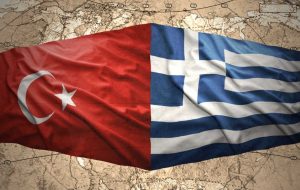
Ο υβριδικός πόλεμος είναι μια στρατηγική που περιλαμβάνει όχι τόσο συμβατικές στρατιωτικές επιχειρήσεις, αλλά παραπληροφόρηση, κυβερνοπόλεμο, υποδαύλιση εθνοτικών εντάσεων και χρησιμοποίηση του διεθνούς δικαίου ως πολιτικού όπλου (Lawfare).

Τα τελευταία χρόνια υπάρχει στη Δύση μια δημόσια συζήτηση για τις νέες μορφές πολέμου που δυστυχώς φτάνει με μεγάλη καθυστέρηση στην Ελλάδα. Η τουρκική ηγεσία φαίνεται να έχει εξάγει χρήσιμα συμπεράσματα από τον υβριδικό πόλεμο της Ρωσίας στην Ουκρανία. Τα επεισόδια που έχουν συμβεί το τελευταίο διάστημα επιτρέπουν στην Άγκυρα να προβεί, όπως ορίζει το δόγμα του υβριδικού πολέμου, σε αληθοφανή άρνηση (plausible deniability): Ο εμβολισμός του πλοίου στα Ίμια ήταν «ατύχημα», η παραλίγο σύγκρουση με το ιταλικό γεωτρύπανο στην κυπριακή ΑΟΖ «οφείλεται στην κακοκαιρία», οι Έλληνες στρατιωτικοί «εισήλθαν σε τουρκικό έδαφος». Με αυτόν τον τρόπο η Άγκυρα ασκεί μεγάλη πίεση χωρίς να διακινδυνεύει έναν πόλεμο εναντίον της Ελλάδας.

– Πόσο έτοιμοι είμαστε στην Ελλάδα για να αντιμετωπίσουμε τον τουρκικό υβριδικό πόλεμο;

Η δική μου εκτίμηση είναι ότι η Τουρκία έχει κατορθώσει να έχει την πρωτοβουλία κινήσεων και να αιφνιδιάζει συνεχώς την ελληνική πλευρά. Πρέπει επιτέλους να αλλάξουμε τον τρόπο που βλέπουμε τη γειτονική χώρα! Η Τουρκία συμπεριφέρεται επιθετικά όχι γιατί νιώθει αδυναμία, αλλά ακριβώς το αντίθετο. Η τουρκική ηγεσία αισθάνεται, για διάφορους λόγους, μεγάλη αυτοπεποίθηση. Για αυτό τον λόγο ανοίγει μέτωπα ταυτόχρονα στο Αιγαίο, την Κύπρο και τη Συρία. Στα μάτια του Erdogan η Ελλάδα είναι μια μικρή χρεοκοπημένη χώρα που έχει απωλέσει ένα σημαντικό κομμάτι της ισχύος της. Στον τουρκικό υβριδικό πόλεμο η Ελλάδα πρέπει να απαντήσει με μια νέα πολυδιάστατη στρατηγική.

– Τι μπορεί να περιλαμβάνει αυτή η νέα στρατηγική που προτείνετε;

Καταρχήν πρέπει να επικαιροποιηθεί το στρατιωτικό μας δόγμα και να γίνει πιο επιθετικό. Οι ελληνικές ένοπλες δυνάμεις πρέπει να περάσουν στην εποχή του δικτυοκεντρικού πολέμου (Network-Centric Warfare) για να αποκτήσουν επιχειρησιακή υπεροχή έναντι του αντιπάλου. Αυτό συνεπάγεται μεγάλες οικονομικές θυσίες. Δεν φτάνει όμως μόνο αυτό.

Πρέπει να δημιουργήσουμε ισχυρές συμμαχίες με χώρες που μοιράζονται την ίδια ανησυχία με εμάς για την αναθεωρητική πολιτική της Άγκυρας στην ευρύτερη περιοχή της Ανατολικής Μεσογείου. Ταυτόχρονα, πρέπει να χτίσουμε γέφυρες με ένα κομμάτι της τουρκικής κοινωνίας που αντιστέκεται στον αυταρχισμό του Erdogan. Η σύγκρουση με την Τουρκία δεν είναι μια νομοτελειακή εξέλιξη, εφόσον αντιδράσουμε εγκαίρως και έξυπνα!

– Φοβάστε ότι η Τουρκία μπορεί να καθυστερήσει με διάφορα προσχήματα (π.χ. τις φωτογραφίες που βρέθηκαν πάνω τους) την επιστροφή στην Ελλάδα των δύο ελλήνων στρατιωτών; Το ρωτώ γιατί στο παρελθόν, παρόμοια περιστατικά είχαν επιλυθεί από τις τοπικές στρατιωτικές αρχές…

Οι πραγματικές προθέσεις της Άγκυρας θα αποκαλυφθούν πολύ σύντομα. Για να είμαι ειλικρινής, δεν είμαι αισιόδοξος. Σε κάθε περίπτωση, όμως, η σύλληψη των δύο Ελλήνων στρατιωτικών πρέπει να μας προβληματίσει πολύ! Υπάρχουν μερικά σημαντικά ερωτήματα που πρέπει να απαντηθούν σε στρατηγικό επίπεδο. Ποιο είναι τελικά το επίπεδο ετοιμότητας των ελληνικών ενόπλων δυνάμεων; Τι πρέπει να γίνει για να βελτιωθεί η επιχειρησιακή ετοιμότητα και μαχητικότητα των ενόπλων δυνάμεων;

– Υπάρχει περίπτωση να επιχειρήσει η Τουρκία να συνδέσει το γεγονός με την επιστροφή από την Ελλάδα των 8 τούρκων στρατιωτικών;

Στη φάση αυτή είναι όλα πιθανά. Πιστεύω ότι ο Erdogan νιώθει βαθύτατα προσβεβλημένος από τη στάση της ελληνικής κυβέρνησης στο ζήτημα των οκτώ Τούρκων αξιωματικών. Αυτό σημαίνει ότι θα κάνει ότι μπορεί για να ασκήσει πίεση στην ελληνική πλευρά να τους παραδώσει. Κάτι τέτοιο βέβαια θα είχε καταστροφικές συνέπειες για την αξιοπιστία της Ελλάδας και ένα μεγάλο κομμάτι της ελληνικής κοινωνίας θα το βίωνε ως εθνική ταπείνωση.

– Διανύουμε περίοδο όπου η Άγκυρα δεν χάνει ευκαιρία να κλιμακώσει την ένταση. Υπό αυτή την έννοια, η δίκη των δύο ελλήνων στρατιωτικών δεν επιβαρύνει περαιτέρω το κλίμα;

Ναι επιβαρύνει το κλίμα, αλλά το σημαντικότερο είναι ότι κατόρθωσε η Άγκυρα να ενισχύσει το φοβικό σύνδρομο που διακατέχει την Ελλάδα. Ασχέτως το τι πραγματικά συνέβη, η όλη διαχείριση της υπόθεσης από την τουρκική πλευρά υποδηλώνει πρόθεση να ταπεινωθεί ο ελληνικός στρατός. Η εικόνα των δύο στρατιωτικών να καλύπτουν τα πρόσωπα τους σαν κοινοί εγκληματίες είναι πραγματικά σοκαριστική. Η ελληνική κυβέρνηση δεν έχει κάνει καλή επικοινωνιακή διαχείριση της υπόθεσης. Ακόμα και το γεγονός ότι έχουν πάει οι γονείς των δύο στρατιωτικών στην Τουρκία περνάει λάθος μήνυμα στην άλλη πλευρά! Δεν θέλω όμως να επεκταθώ σε αυτό το θέμα γιατί αντιλαμβάνομαι την αγωνία των οικογενειών.

– Όλα δείχνουν ότι οι επόμενοι μήνες θα είναι θερμοί. Η Τουρκία δεν φαίνεται διατεθειμένη να αφήσει τις ξένες εταιρείες, όπως κι αν αυτές λέγονται, να κάνουν έρευνες στη Κύπρο, παρά μόνο αν η Λευκωσία δεχθεί τη συνεκμετάλλευση του φυσικού της πλούτου, πριν την επίλυση του Κυπριακού. Επομένως;

Όλα θα εξαρτηθούν από τις προθέσεις των ΗΠΑ και της Γαλλίας γιατί το ζήτημα έχει αποκτήσει και στρατιωτική διάσταση. Εκτιμώ ότι οι Τούρκοι θα κάνουνε πίσω όταν οι αμερικανικές και γαλλικές εταιρείες ξεκινήσουν τις έρευνες. Εξάλλου, η Άγκυρα έχει περάσει ήδη επιτυχημένα το μήνυμα ότι ένα κομμάτι της κυπριακής ΑΟΖ συνιστά αμφισβητούμενη θαλάσσια περιοχή. Υπό αυτές τις συνθήκες είναι αστείο να μιλάμε για επίλυση του Κυπριακού. Η Τουρκία έχει αλλάξει και είναι καιρός να το συνειδητοποιήσουμε!

Η εθνική ασφάλεια και άμυνα δεν μπορεί να είναι πεδίο κομματικών αντιπαραθέσεων. Ας παραδειγματιστούμε επιτέλους από άλλες χώρες. Το διακύβευμα είναι τεράστιο και αφορά την επιβίωση του Ελληνισμού.

http://www.liberal.gr/arthro/193483/apopsi/sunenteuxeis/manos-karagiannis-i-tourkia-echei-xekinisei-isonubridiko-polemosin-enantion-tis-elladas.html

Αυτό που συμβαίνει είναι, ήδη, πόλεμος. Το θέμα είναι πως τον αντιμετωπίζουμε.

21

του ΠΑΝΤΕΛΗ ΣΑΒΒΙΔΗ.

Αν αντιπαρέλθουμε τα σχόλια αυτόκλητων υπερασπιστών των Ενόπλων Δυνάμεων που συνιστούν στα Μέσα Ενημέρωσης σιγήν ιχθύος στην κρίση που προέκυψε με την Τουρκία, θα επισημαίναμε πως ό,τι έχει διατυπωθεί μέχρι σήμερα, από δημοσιογραφικής απόψεως, είναι εξαιρετικά προσεκτικό και στην κατεύθυνση διαμόρφωσης ενός κλίματος ομοψυχίας.

Αν κάποιος προσπαθεί να διασπάσει αυτό το κλίμα ομοψυχίας, αυτός θα πρέπει να αναζητηθεί σε εκείνους που, εν κρυπτώ,  επεξεργάζονται σχέδια ακραίου διχασμού ενόψει της επερχόμενης, αργά ή γρήγορα, εκλογικής αναμέτρησης.

Η αιχμαλωσία των δύο Ελλήνων στρατιωτικών, έχει πολλαπλούς στόχους. Μπορεί να μην ήταν ένα γεγονός στοχευμένο στους δύο συγκεκριμένους στρατιωτικούς αλλά, ως σκέψη να συλληφθούν άνδρες των ελληνικών ενόπλων δυνάμεων, υπήρξε. Δεν ήταν ένα γεγονός που προέκυψε εν αιθρία. Δεν σκέφθηκαν, ξαφνικά, οι Τούρκοι πως τους συγκεκριμένους στρατιωτικούς  θα έπρεπε να τους συλλάβουν.

Αυτό και φαινόταν το προηγούμενο διάστημα και γράφηκε στα Μέσα Ενημέρωσης. Τίτλοι του είδους: «Οι τούρκοι κάτι ετοιμάζουν στον Έβρο» ήταν συνηθισμένοι. Και το ερώτημα είναι: οι πολιτικοί και οι στρατηγοί δεν το αντελήφθησαν; Και αν το αντελήφθησαν δεν έδωσαν συγκεκριμένες αυστηρές οδηγίες να αποφευχθούν συμπεριφορές «κανονικότητας» σαν και αυτή που οδήγησε τους δύο στρατιωτικούς στα χέρια των Τούρκων;

Δεν θέλουμε να πιστέψουμε πως δεν μπόρεσαν να διαγνώσουν ούτε αυτό οι στρατηγοί.

Ο χειρισμός της υπόθεσης χρειάζεται, βεβαίως, ομοψυχία, πνεύμα ενότητας, αλλά από ένα σημείο και μετά και αποφασιστικότητα.

Η τακτική που φαίνεται να ακολουθείται είναι ακριβώς αυτή που δεν έχει καμιά αποτελεσματικότητα σε χώρες όπως η Τουρκία.

Η απόλυτη σιωπή των Μέσων Ενημέρωσης δεν εξυπηρετεί. Μια ψύχραιμη προσέγγιση που θα επισημαίνει διαστάσεις του προβλήματος που, ενδεχομένως, να μην έχουν γίνει αντιληπτές από την πολιτική και στρατιωτική ηγεσία, είναι αναγκαία.

Μακάρι αυτό να μην ίσχυε. Μακάρι να ήταν μια υπερφίαλη διατύπωση και όσα γράφονται και λέγονται δημοσίως, να ήσαν γνωστά και να είχαν αναλυθεί στα στρατιωτικά και πολιτικά επιτελεία. Ανησυχούμε, όμως, πως αυτό δεν είναι αλήθεια. Πως η προσέγγιση των ελληνοτουρκικών είναι πολύ επιφανειακή.

Ως ελληνική πολιτεία  δεν γνωρίζουμε τους γείτονές μας. Έχουν αλλάξει πολύ από αυτό που ως κοινωνία και πολιτικό καθεστώς ήταν παλιά και δεν έχουμε τα εργαλεία που χρειάζονται για να αντιληφθούμε τι θέλουν, πως κινούνται και τι εν τέλει επιδιώκουν.

Αντί, λοιπόν, στα πανεπιστήμια να δημιουργούσαμε έδρες μελέτης των γειτόνων μας σε όλους τους τομείς, ο υπουργός παιδείας αναλώνει τις δυνάμεις του σε πανεπιστημιακά σχήματα που θα οδηγούσαν στον έλεγχο των ΑΕΙ από το κόμμα του. Διότι, σήμερα, θεωρεί ότι δεν τα ελέγχει.

Και στο υπουργείο Άμυνας και στο Υπουργείο Εξωτερικών αυτοσχεδιάζουν χωρίς να γνωρίζουν σε βάθος το αντικείμενο με το οποίο ασχολούνται.

Στα έτη της ευμάρειας το είχαμε ρίξει στην αδιαφορία και σε έναν άκρατο καταναλωτισμό. Δεν μας ενδιέφερε τίποτε παρά η καλοπέρασή μας. Δημιουργήσαμε ένα κλίμα στην κοινωνία και μια νοοτροπία που δεν αντήλλασε ούτε τον καφέ της παραλίας με κάποια σκέψη ότι κάτι μπορεί στο μέλλον να μην πάει καλά και μήπως έπρεπε να πάρουμε τα μέτρα μας. Στην περίοδο της κρίσης θεωρούσαμε πως επρόκειτο για έναν εφιάλτη ο οποίος, μόλις ξυπνήσουμε, θα περάσει.

Ο εφιάλτης συνεχίζεται, η κρίση είναι παρούσα και τώρα, εκτός από την οικονομική μας κατάσταση και το αξιακό μας σύστημα, απειλεί και την ακεραιότητά μας ως χώρας.

Και ενώ ασχολούμασταν με τα οικονομικά και κοινωνικά μας προβλήματα με τρόπο, μάλιστα, διχαστικό, το διεθνές περιβάλλον γύρο μας άλλαζε. Και άλλαζε ραγδαία. Όποιος τολμούσε να το επισημάνει θεωρούνταν πολεμοχαρής.

Σήμερα φθάσαμε στο σημείο να βρισκόμαστε σε πόλεμο με την Τουρκία. Ναι, σε πόλεμο. Όχι τον κλασικό πόλεμο που κηρύσσεται και οι δύο αντίπαλοί παρατάσσουν τις δυνάμεις τους. Όχι. Τέτοιος ελληνοτουρκικός πόλεμος δεν θα γίνει. Το είδος του πολέμου στον οποίο βρισκόμαστε είναι διαφορετικό. Και την πρωτοβουλία των κινήσεων, την έχει η Τουρκία. Αυτή αποφασίζει τι πόλεμο θέλει με την Ελλάδα. Και αυτή τον επιβάλλει.

Το είδος αυτό του πολέμου λέγεται υβριδικός πόλεμος. Και τα αποτελέσματά του είναι ορατά.

Η έμπρακτη αμφισβήτηση της τουρκικής άποψης για τα Ίμια, η επαναφορά, δηλαδή, αυτού που συμφωνήθηκε τη νύχτα της κρίσης του 1996, η επαναφορά του status quo ante, η άσκηση, δηλαδή, της ελληνικής κυριαρχίας επι των νησιών, είχε ως αποτέλεσμα την εκδίωξη του σκάφους του λιμενικού σώματος από την τουρκική ακταιωρό.

Βγαίνει ο, πλέον, αναρμόδιος για τέτοιου είδους δηλώσεις, ο υπουργός εξωτερικών του οποίου η δουλειά είναι να ασκεί διπλωματία, και λέει πως την επόμενη φορά η ελληνική αντίδραση δεν θα είναι ειρηνική. Επόμενες φορές υπήρξαν αλλά δυναμική, ελληνική αντίδραση, δεν διαφαίνεται. Ο καθένας πρέπει να περιοριστεί στο ρόλο του και να μετράει τα λόγια του. Η αξιοπιστία των αξιωματούχων του ελληνικού κράτους έχει φθάσει στο ναδίρ. Δεν θέλω να σχολιάσω την αντίδραση της Αθήνας στην τελευταία δήλωση του συμβούλου του τούρκου προέδρου ότι αν η Ελλάδα πατήσει στα Ίμια η Τουρκία θα τα υπερασπιστεί μέχρι θανάτου.  Η Τουρκία θεωρεί τα Ίμια τουρκικά.

Προκλήσεις στο πλαίσιο του υβριδικού πολέμου της Τουρκίας κατά της Ελλάδας είναι και τα τετελεσμένα που προσπαθεί να δημιουργήσει στην κυπριακή ΑΟΖ, όπως και η σύλληψη των δύο στρατιωτικών.

Με την καλά μελετημένη σύλληψη η Τουρκία έχει πετύχει αρκετούς στόχους:

-Κρατά την Ελλάδα σε ομηρία, τη στιγμή μάλιστα που δεν αποκλείεται μια περαιτέρω ένταση στις ελληνοτουρκικές σχέσεις με αφορμή την άφιξη του γεωτρύπανου της αμερικανικής Exxon.

-Ασκεί ένα είδος ψυχολογικού πολέμου. Στο είδος αυτού του πολέμου η αξιοποίηση των Μέσων Ενημέρωσης του αντιπάλου περιλαμβάνεται στο σχετικό σχεδιασμό. Έχω την εντύπωση πως το παιχνίδι αυτό το οποίο επεδίωκαν οι τουρκικοί σχεδιασμοί δεν το έπαιξαν, ακουσίως, βεβαίως,  τα ελληνικά ΜΜΕ. Ας σιωπήσουν οι αυτόκλητοι υπερασπιστές των Ενόπλων Δυνάμεων.

-Επιχείρησε να διασύρει κατά τρόπο, εντελώς, απαράδεκτο τις Ελληνικές  Ένοπλες Δυνάμεις. Η Τουρκία, διαχρονικώς,  έχει έναν συγκεκριμένο τρόπο συμπεριφοράς. Δεν αλλάζει. Και ο περιορισμός της ή η αλλαγή της συμπεριφοράς της δεν γίνεται με τον τρόπο που επιχειρεί η Ελλάδα. Δεν γίνεται με την επίκληση του Διεθνούς Δικαίου ή της Ευρωπαϊκής της πορείας. Γίνεται με την δύναμη.  Και δεν υπονοούμε τον πόλεμο.

Οι θρασείς είναι και δειλοί όταν αντιληφθούν τις συνέπειες που θα έχει η θρασύτητά τους. Η ελληνική δύναμη που θα μπορούσε να τους αντιπαρατεθεί, είναι η ισχυρή αποτρεπτική ικανότητα των Ενόπλων Δυνάμεων. Αυτή η δύναμη δεν υπάρχει. Διότι αν υπήρχε θα είχε αποτελέσματα. Η αποτροπή, συνδυάζεται και με την αναγκαία επίδειξη κάποιας αποφασιστικότητας.  Η θεωρητική διαφορά ισχύος, αυτήν τη στιγμή,  μεταξύ των δύο κρατών δεν είναι τέτοια που να δικαιολογεί τον βαθμό των τουρκικών προκλήσεων.

Το συγκριτικό πλεονέκτημα της Τουρκίας είναι η αποφασιστικότητά της και η αίσθησή της ότι έχει να κάνει με έναν ευνουχισμένο αντίπαλο.

Προκύπτει, βεβαίως, το ερώτημα, τι θα μπορούσε να κάνει η Ελλάδα, στο πλαίσιο ενός υβριδικού πολέμου.

Προφανώς, οι εν ενεργεία στρατηγοί θα το γνωρίζουν καλύτερα, αλλά κάποιοι συνάδελφοί τους αναρωτιούνται, δημοσίως,  που είναι οι ειδικές δυνάμεις της χώρας; Θα μπορούσαν να είχαν προβεί σε καταδρομική επιχείρηση που θα απέδιδε κάτι το ισοδύναμο με αυτό που έχουν πετύχει οι Τούρκοι με τη σύλληψη των δύο στρατιωτικών;

Και τέλος, η διπλωματία. Πολλά λόγια για τη διπλωματία και τη συμμετοχή της χώρας στους διεθνείς και περιφερειακούς οργανισμούς. Βεβαίως, όλα χρειάζονται και δεν αμφισβητεί κανείς τη συμμετοχή αυτή. Αλλά πρέπει να σχετικοποιήσουμε την αποτελεσματικότητά της.

Σε τι βοήθησε στο συγκεκριμένο ζήτημα της άμεσης τουρκικής απειλής η συμμετοχή της χώρας στην Ε.Ε. και το ΝΑΤΟ; Σε τίποτε. Κανείς δεν πρόκειται να βοηθήσει όταν διακυβεύεται η εδαφική σου ακεραιότητα και ανεξαρτησία. Θα υπερασπιστείς μόνος την παρουσία σου. Γι αυτό καμιά διπλωματία δεν μπορεί να λειτουργήσει χωρίς ισχυρές ένοπλες δυνάμεις.

Το ελληνικό πρόσωπο θα είναι φιλειρηνικό και οι διεθνείς ενέργειες θα ασκούνται στο πλαίσιο της διπλωματίας. Αλλά, με την προϋπόθεση ότι η χώρα διαθέτει ισχυρό στρατό. Χωρίς αυτόν, καμιά οικονομική ανάπτυξη και κανένα πολιτισμικό πρότυπο δεν μπορεί να προβληθεί.


Η νέα κανονικότητα και η ανάγκη για Hγέτη

11

Το σύνηθες ερώτημα που ακούγεται ανά την Ελλάδα είναι: γιατί δεν έχουμε πολιτικούς ηγέτες που να εμπνέουν και να εκφράζουν μεγάλες ιδέες; Ουσιαστικά υπονοείται ότι κάπου πρέπει να υπάρχει μία πεφωτισμένη ηγεσία που θα έλθει και θα τα αλλάξει-διορθώσει όλα. Η απάντηση είναι απλή: Η πολιτική ηγεσία αντανακλά αυτό που είναι ο λαός, ή ορθότερα, αυτό που θέλει ο λαός. Δεν μπορεί να προκύψει πεφωτισμένη ηγεσία από έναν λαό που δεν ψηφίζει με υψηλόφρονα κριτήρια.

Ένα από τα πράγματα που έχουμε επιτύχει ύστερα από χρόνια επίσημης ανεξαρτησίας είναι ότι η πολιτική ηγεσία δεν μας προκύπτει, αλλά εκλέγεται. Παρά τα φημολογούμενα (και συχνά βάσιμα) περί εκλεκτικών προτιμήσεων κάποιων πρεσβειών προς Έλληνες πολιτικούς ηγέτες, οι εκλογείς δεν πιέζονται από κάποιον Αμερικανό, Γερμανό ή Ρώσο κατά την επιλογή του τοπικού βουλευτή τους.

Δεν είναι τυχαίο ότι, τουλάχιστον στη νεότερη ελληνική ιστορία, κατά τη χρονική στιγμή που ξεσπούν οι σοβαρές κρίσεις, οι πολιτικές μας ηγεσίες είναι κατώτερες των περιστάσεων. Έχουν εκλεγεί για άλλο σκοπό, κατά κανόνα για την ικανοποίηση των μικροκομματικών, απολύτως ωφελιμιστικών σε ατομικό επίπεδο προσδοκιών των ψηφοφόρων: για το διορισμό (διαχρονικό αίτημα), για την μείωση των φόρων (επίσης διαχρονικό με πλέον εμβληματική την περίοδο Θεόδωρου Δηλιγιάννη πριν το 1897), για την τοποθέτηση του δημοσίου υπαλλήλου σε καλύτερη υπηρεσία, για τη μετάθεση του στρατευμένου, για να γυρίσει το παιδί από τον πολυετή πόλεμο (βλ. 1920), για το σβήσιμο της κλήσεως κ.λ.π.

Κατώτερες των περιστάσεων

Οι δε κρίσεις γίνονται πιο σοβαρές λόγω του ότι οι ανεπαρκείς ηγεσίες επιχειρούν να ανταποκριθούν, συνήθως λαϊκίζοντας. Ενδεικτικώς μπορούμε να θυμηθούμε την περίπτωση του Δημητρίου Ράλλη με τη συνέχιση του πολέμου το 1897 που κατέληξε σε συνθηκολόγηση. Το οίκαδε των Βασιλοφρόνων το 1920 που αντικαταστάθηκε με υπερδιπλασιασμό του στρατού μας στη Μικρά Ασία. Την εκδίκηση μετά το 1945 (σε συνδυασμό με τις συνθήκες εμφυλίου πολέμου). Και σ’ αυτά τα χρόνια την κατάργηση της μνημονιακής μιζέριας με ένα άρθρο, ένα νόμο.

Ενώ κατά τη στιγμή της κρίσεως δεν υπάρχουν ικανές πολιτικές ηγεσίες, αυτές εμφανίζονται μετά από κάποιο χρονικό διάστημα και κατά κανόνα ωθούν τη χώρα πολύ πέραν των θεωρητικών της δυνατοτήτων. Πλέον χαρακτηριστικά παραδείγματα αποτελούν ο Ελευθέριος Βενιζέλος 12 χρόνια μετά την ατιμωτική ήττα του 1897 και ο Καραμανλής έξι χρόνια μετά το τέλος του εμφυλίου και ακολούθως μετά την κυπριακή τραγωδία.

Η εμφάνιση σοβαρών ηγεσιών μετά την κρίση είναι ευεξήγητη. Οι ηγέτες εμφανίζονται όταν τους αναζητά ο λαός. Για την ακρίβεια εμφανίζονται, επειδή ακριβώς τους αναζητά ο λαός. Τί πιθανότητες είχε να εκλεγεί πριν το 2010 ένα άτομο με ηγετικές ικανότητες που θα μπορούσε να βάλει σε τάξη τα δημοσιονομικά πράγματα της χώρας; Μηδενικές. Σήμερα, όμως, αρχίζουμε να αντιλαμβανόμαστε ότι η λύση στα προβλήματά μας δεν μπορεί να έλθει δια νομοθετικών πρωτοβουλιών αλλά μόνον μέσα από σκληρή δουλειά.

Η νέα κανονικότητα

Ποιός θα είναι αυτός ο πολιτικός ηγέτης; Η ιστορική εμπειρία δείχνει ότι δεν προκύπτει εκ παρθενογενέσεως. Προέρχεται από το υπάρχον πολιτικό σύστημα και έχει αφήσει αξιομνημόνευτο αποτύπωμα σοβαρότητας στη δουλειά του. Οι λοιποί ανεπαρκείς πολιτικοί αντιδρούν με την αντίληψη του μεσογειακού δάσους που καίγεται από τις φλόγες: θεωρούν ότι θα αναγεννηθούν (όπως και το μεσογειακό δάσος).

Στην πραγματικότητα το δάσος που θα ξαναβγεί, θα είναι εντελώς διαφορετικό από το παλαιό. Θα είναι ένα νέο δάσος. Όπως συμβαίνει και με τις πυρκαγιές, κάποια λίγα δένδρα (δηλαδή κάποιοι πολιτικοί) από το παλαιό δάσος θα επιβιώσουν. Τα υπόλοιπα, όμως, θα εξαφανισθούν για πάντα.

Έχοντας αυτές τις ιστορικές εμπειρίες υπ’ όψιν, η αποτυχία της κυβερνήσεως ΣΥΡΙΖΑ-ΑΝΕΛ μας φέρνει πιο κοντά στην αντιμετώπιση της πραγματικότητας. Είναι ενδεικτικό ότι μετά από τόσα χρόνια εξακολουθούμε να λέμε ότι περνάμε κρίση. Η κρίση υπονοεί ότι βρισκόμαστε για ένα σχετικώς σύντομο χρονικό διάστημα σε μία εξαιρετική και δύσκολη φάση που έχει διαταράξει την ομαλή μας πορεία.

Αυτό, όμως, που ζούμε δεν είναι πλέον κρίση. Είναι η νέα μας κανονικότητα, στην οποία θα ζούμε τα επόμενα πολλά χρόνια. Όσο πιο γρήγορα το συνειδητοποιήσουμε, τόσο πιο γρήγορα θα προβάλλει η απαίτηση για σοβαρή λύση των προβλημάτων μας. Τόσο πιο γρήγορα θα αναζητήσουμε το κάτι διαφορετικό στην πολιτική μας ηγεσία. Ακόμη και οι σωτήρες χρειάζονται κάποιον να τους καλέσει.

Η νέα κανονικότητα και η ανάγκη για Hγέτη

Ιταλικές εκλογές: O θρίαμβος του αντισυστημισμού

0

Γιάννης Μαστρογεωργίου5 ΜΑΡΤΙΟΥ 2018, 13:26  protagon.gr

Η στήριξη περισσότερων από τους μισούς ψηφοφόρους στο Κίνημα Πέντε Αστέρων και τη Λέγκα επαναφέρει τον απομονωτισμό στην ιταλική πολιτική σκηνή. Σε συνδυασμό με την εύθραυστη οικονομία οι Βρυξέλλες θα έχουν τεράστιο ζήτημα με τη Ρώμη, ανεξαρτήτως κυβέρνησης

Υπάρχουν δύο σημαντικά άμεσα συμπεράσματα από τις ιταλικές εκλογές #ItalianElection2018. Το ένα είναι το εκλογικό αποτέλεσμα: ένα κοινοβούλιο χωρίς πλειοψηφία. Το άλλο είναι το πολιτικό μήνυμα: θρίαμβος του αντισυστημικού μετώπου.

Ας ξεκινήσουμε με την εκλογική αριθμητική. Είναι ενδιαφέρον και προβληματικό μαζί το αποτέλεσμα. Κανένα από τα τρία μπλοκ (Κέντρο-Δεξιά, Κεντροαριστερά, Κίνημα 5 Αστέρων) δεν θα μπορέσει να εξασφαλίσει την πλειοψηφία. Θα χρειαστούμε κάποια μορφή μεγάλου συνασπισμού, ο οποίος, κατά κάποιον τρόπο, είναι αυτό που πάντα περιμέναμε.

Υπάρχουν τρεις επιλογές:

1. Κέντρο-Δεξιά πλειοψηφία με κάποια στήριξη από την Κεντροαριστερά

2. Κυβέρνηση του κινήματος των Πέντε Αστέρων με κάποια στήριξη από την Κεντροαριστερά

3. Κίνημα Πέντε Αστέρων και η Λέγκα.

Αυτή τη στιγμή όλα φαίνονται αρκετά απίθανα. Όμως, αυτοί οι υπολογισμοί δεν θα πρέπει να μας αποσπούν από το κύριο πολιτικό μήνυμα των εκλογών, που ήταν ο θρίαμβος του ανισυστημισμού, του ίδιου κλίματος που θριάμβευσε στο Brexit και στην εκλογή Τράμπ.

Περισσότεροι από τους μισούς ψηφοφόρους υποστήριξαν το Κίνημα των Πέντε Αστέρων και τη Λέγκα. Αυτά τα κόμματα ήταν πολύ επιφυλακτικά έως και αρνητικά σχετικά με το Ευρώ, επικριτικά απέναντι στην ιταλική μεταναστευτική πολιτική, την πολυπολιτισμική κοινωνία, αλλά και στο άνοιγμα των συνόρων χωρίς προϋποθέσεις, κάτι που το βρίσκουμε και σε άλλες χώρες.

Απόψεις δηλαδή, που επαναφέρουν τον απομονωτισμό στην ιταλική πολιτική σκηνή.

Η ιταλική οικονομία είναι εύθραυστη. Η ΕΕ θα έχει να αντιμετωπίσει ένα τεράστιο ζήτημα με την Ιταλία. Όποια και αν είναι η κυβέρνηση, οι Ιταλοί θα ζητήσουν υψηλότερες δαπάνες / χαμηλότερους φόρους, κάτι που είναι αδύνατο να συμβιβαστεί με τους δημοσιονομικούς κανόνες της ζώνης του Ευρώ.

Αυτή η νέα πολιτική πραγματικότητα στην Ιταλία δεν θα αλλάξει με την προκήρυξη νέων εκλογών. Το κίνημα των Πέντε Αστέρων εδώ και χρόνια έχει αύξουσα πορεία ενώ και η Λέγκα  κατέχει πλέον δεσπόζουσα θέση στην Κεντροδεξιά.

Η Λέγκα και το Κίνημα των Πέντε Αστέρων πανηγυρίζουν, αλλά το δύσκολο κομμάτι ξεκινά τώρα. Έχουν θριαμβεύσει σε μια φανταστική πλατφόρμα μη ρεαλιστικών υποσχέσεων (ενιαίο φόρο – flat tax, καθολικό βασικό εισόδημα). Εάν αναλάβουν την κυβέρνηση θα είναι αναπόφευκτη η γρήγορη απογοήτευση.

Τι θα συμβεί όταν η πραγματικότητα αρχίζει να δείχνει τα δόντια της; Θα αντιταχθούν τα αντισυστημικά κόμματα στην ΕΕ ή θα αποκηρύξουν τις υποσχέσεις τους επειδή η έξοδος από το Ευρώ είναι υπερβολικά επικίνδυνη; Είναι πολύ νωρίς για να πούμε με σιγουριά τι θα γίνει _ αλλά αν κρίνουμε από την Ελλάδα, η απάντηση είναι εύκολη.

Ιταλικές εκλογές: O θρίαμβος του αντισυστημισμού

Δύο νησίδες και δύο άνδρες

3

 Κώστας Γιαννακίδης5 ΜΑΡΤΙΟΥ 2018, 19:13  protagon.gr

Για ποιο λόγο η χώρα υστερεί δραματικά στους διπλωματικούς στίβους; Είναι η διεθνής συγκυρία ή η ανεπάρκεια των ανθρώπων που χειρίζονται αυτά τα θέματα; Aυτή τη στιγμή ο κ. Τσίπρας έχει θέμα με δύο νησίδες και δύο άνδρες σε σχέση με αυτά που παρέλαβε…

Παλιά, στον Ελληνικό Στρατό υπήρχε ένα έντυπο που δεν ήθελες να ακουμπήσεις, πόσω μάλλον να υπογράψεις. Ήταν το 108. Αν είχε την υπογραφή σου, ήσουν υπεύθυνος για το υλικό που περιγραφόταν λεπτομερώς. Με 108 μπορούσες να χρεωθείς το όπλο σου, ένα αυτοκίνητο, άρμα μάχης, τάγμα ολόκληρο. Για δεκαετίες δε, η έκφραση «το χρεώθηκα με 108», χρησιμοποιούνταν για να καταδείξει το μέγεθος της δέσμευσης που αναλαμβάνει κάποιος.

Που λέτε, το πρώτο πράγμα που χρεώνεται με 108 ένας νέος Πρωθυπουργός είναι τα 131.957 τετραγωνικά χιλιόμετρα της ελληνικής επικράτειας. Αν παραδώσει περισσότερα, γίνεται άγαλμα έξω από τη Βουλή. Αν, όμως, παραδώσει λιγότερα, έχει πρόβλημα.

Δεν είμαι σίγουρος αν ο Αλέξης Τσίπρας δύναται αυτή τη στιγμή να ισχυριστεί ότι έχει ακριβώς μέχρι και το τελευταίο μέτρο που παρέλαβε. Διότι στα Ιμια δεν μπορεί ούτε να πατήσει ελληνικό πόδι, ούτε καν να προσεγγίσει ο υπουργός Εθνικής Αμυνας. Ναι, αλλά τα Ιμια θεωρούνται εδώ και είκοσι χρόνια «γκρίζες ζώνες». Σωστό. Ωστόσο, από το 1996 ως σήμερα, η Τουρκία δεν είχε διανοηθεί να ανακοινώσει ότι όποιος ανέβει στα νησιά θα βρεθεί με σπασμένα πόδια. Μέχρι πρόσφατα η Αγκυρα θεωρούσε τα Ιμια νησίδες αμφισβητούμενης κυριότητας. Τώρα τα θεωρεί τουρκικό έδαφος.

Βέβαια η Ελλάδα είναι χώρα «μεγάλης διπλωματικής χωρητικότητας», όπως λέει και ο υπουργός Εξωτερικών, μεταφράζοντας κατά βούληση το «diplomatic capacity». Θα περίμενε, λοιπόν, κανείς την επίδειξη αντίστοιχης διπλωματικής ισχύος. Και όμως, οι Τούρκοι κυκλοφορούν σαν σκυλόψαρα στο Αιγαίο και στην Ανατολική Μεσόγειο, παρεμποδίζοντας τις έρευνες για τα ενεργειακά κοιτάσματα. Και η Ελλάς, της μεγάλης διπλωματικής χωρητικότητας ούτε καν συζητάει τα περί ανακήρυξης ΑΟΖ, επιμένοντας στα, μάλλον παρωχημένα, της υφαλοκρηπίδας.

Αλλά και στο μείζον εθνικό θέμα του Κυπριακού, τι πέτυχε η χώρα υπό την διπλωματική ηγεσία των Τσίπρα-Κοτζιά; Μπλόκαρε την επίλυση, απαιτώντας άμεση αποχώρηση των τουρκικών στρατευμάτων, μη αποδεχόμενη τη σταδιακή. Και τελικά αυτή η στάση οδήγησε στο ναυάγιο της διαδικασίας, εδραιώνοντας την παραμονή των τουρκικών στρατευμάτων στο νησί…

Στο Μακεδονικό πέτυχαν κάτι καλύτερο; Προς το παρόν πήγαμε να γίνουμε μπίλιες μεταξύ μας για να κατέβουν κάτι πινακίδες στα Σκόπια, χωρίς την παραμικρή κουβέντα για αλλαγή στο Σύνταγμά τους.

Πέρασαν πέντε ημέρες από τότε που δύο άνδρες του Ελληνικού Στρατού δεν επέστρεψαν στη μονάδα τους. Τους είδαμε με χειροπέδες και σκεπασμένα κεφάλια λες και πρόκειται για εγκληματίες του κοινού ποινικού δικαίου. Η κυβέρνηση είπε ότι ακολουθούνται τυπικές διαδικασίες για την επιστροφή τους. Τελικά, βρίσκονται σε φυλακή υψίστης ασφαλείας και, ενδεχομένως, αντιμέτωποι με την κατηγορία της κατασκοπίας. Τι διάολο συνέβη εδώ; Παραπλανήθηκαν ή, απλώς, δεν ξέρουν τι τους γίνεται; Και γιατί κρύβονται, από τα φώτα της υπόθεσης, ο Πρωθυπουργός και ο υπουργός Εθνικής Αμυνας;

Ασφαλώς οι δύο προσωπικότητες που χειρίζονται την Αμυνα και τη Διπλωματία της χώρας, ο Πάνος Καμμένος και ο Νίκος Κοτζιάς, φέρουν μερίδιο ευθύνης για την υστέρηση στους διπλωματικούς στίβους. Ισως αυτό να ήταν αναπόφευκτο, δεδομένης της ιδιοσυγκρασίας και της επάρκειας των ανδρών. Και φυσικά ευθύνεται περισσότερο ο πολιτικός τους προϊστάμενος. Ο κ. Τσίπρας έχει μεγάλο πρόβλημα τώρα. Αν ανοίξει το συρτάρι του και δει το 108 που υπέγραψε όταν ανέλαβε καθήκοντα, αυτή τη στιγμή που μιλάμε, έχει θέμα με δύο νησάκια και του λείπουν δύο στρατιωτικοί.

Δύο νησίδες και δύο άνδρες