Αρχική Blog Σελίδα 2838

«Είναι η Τουρκία ανόητε»…

0

Γράφει ο Θοδωρής Καρναβάς slpress.gr

Θοδωρής Καρναβάς

Όπου στον Τύπο γίνεται λόγος για την τουρκική επιθετικότητα, επαναλαμβάνεται σχεδόν πάντα η μόνιμη επωδός: Ο Ερντογάν και ο νεοοθωμανισμός του ευθύνονται. Η θέση αυτή, βεβαίως, ανταποκρίνεται στη σημερινή έξαρση, στα διακηρυγμένα, εφαρμοζόμενα σχέδια και στις αλλεπάλληλες εμπρηστικές δηλώσεις της τουρκικής ηγεσίας. Παρά ταύτα, αποσιωπά ότι η Τουρκία ως κράτος είναι η ρίζα της επιθετικότητας.

Είναι η άποψη αυτή λαθεμένη, γιατί υπονοεί ότι πριν από τον Ερντογάν η Τουρκία υπήρξε μια χώρα εντός του Διεθνούς Δικαίου, ή ότι έστω η επιθετικότητα και παραβατικότητά της ήταν πολύ πιο ήπιες. Και γιατί, ακόμα χειρότερα, υπονοεί ότι μια Τουρκία χωρίς τον Ερντογάν θα μπορούσε να γίνει και πάλι ένας καλός γείτονας. Ουδέν αναληθέστερο αυτών.

Η επιθετικότητα της Τουρκίας υπάρχει όσο υπάρχει το κράτος αυτό με οποιαδήποτε μορφή, ή ως Οθωμανική Αυτοκρατορία ή ως Τουρκική Δημοκρατία από το 1923 και μετά. Άλλοτε η επιθετικότητα είναι σε έξαρση και άλλοτε σε ύφεση, ανάλογα και με την εσωτερική κατάσταση της χώρας και τις διεθνείς συγκυρίες. Είναι, όμως, πάντα εκεί, να μας υπενθυμίζει τον εγγενή χαρακτήρα του τουρκικού κράτους. Κοινό διαχρονικό γνώρισμα από την εποχή των σουλτάνων έως την εποχή του κεμαλισμού και τώρα του νεοοθωμανισμού υπήρξε πάντα η καταπίεση των λαών στο εσωτερικό της χώρας και η τάση για επεκτατικότητα έναντι των γειτόνων της.

Επανάληψη της ιστορίας

Αναρίθμητα τα παραδείγματα μόνο τα τελευταία 100 χρόνια, ως συνέχεια της προγενέστερης Τουρκοκρατίας: Στο εσωτερικό, γενοκτονίες, εκτοπίσεις, διωγμοί και καταπίεση Αρμενίων, Αράβων, Ελλήνων, Κούρδων, Αλεβιτών και άλλων. Προπυλακισμοί, δολοφονίες, φυλακίσεις αντιφρονούντων σε λευκά κελιά και φίμωση του Τύπου.

Στο εξωτερικό, πάρανομες εισβολές, κατοχές και εποικισμοί σε Αλεξανδρέττα, Ιράκ, Συρία, Κύπρο, Κουρδιστάν. Διαρκής επιθετικότητα-παραβατικότητα σε Αιγαίο και ανατολική Μεσόγειο. Ένα κράτος δυνάστης στο εσωτερικό για τους λαούς του και τρομοκράτης στο εξωτερικό για τους γείτονές του. Το τουρκικό καθεστώς είναι επεκτατικό εξωτερικά για τον ίδιο λόγο που είναι αυταρχικό εσωτερικά.

Η Τουρκία, ως ετερογενές, πολυεθνικό κράτος, δεν έχει αναφορά ούτε στο έθνος-κράτος της νεωτερικής Δύσης, ούτε σε νεότερη πολιτική συγκρότηση μακραίωνων εθνών (Έλληνες, Κινέζοι), ούτε σε μια πολυεθνική ένωση κατά τις σύγχρονες ομοσπονδίες. Συνολικά, δεν έχει αναφορά σε βασικές αρχές οικειοθελούς πολιτικής συγκρότησης με βάση το Δίκαιο. Οι όποιοι εσωτερικοί θεσμοί του κράτους δικαίου (Δικαιοσύνη κλπ) στην πράξη δεν είναι παρά διακοσμητικοί.

Αντιθέτως, η Τουρκία, ως κράτος και ιδεολογία, είναι το διαχρονικό αποτέλεσμα βίαιου εκτουρκισμού του κράματος εθνοτήτων της Μικράς Ασίας από μια ολιγάριθμη άρχουσα τάξη. Ταυτόχρονα, η ελίτ αυτή επιτίθεται διαρκώς στα όμορα κράτη με στόχο την κατάκτησή τους. Ειδικά η εξωτερική επέκταση είναι για το ίδιο το τουρκικό καθεστώς, όπως και για κάθε αυταρχικό καθεστώς, βασικός παράγοντας αναπαραγωγής και επιβεβαίωσης της ισχύος του.

Μέσα από την κατάκτηση μεγενθύνεται οικονομικά και δυναμώνει γεωπολιτικά. Και διότι όσο επεκτείνεται στα όμορα έθνη τόσο ισχυροποιείται εσωτερικά, επειδή ενσπείρει το φόβο, που είναι συνεκτικά αναγκαίος, ελλείψει άλλων ενοποιητικών στοιχείων. Συνεπώς, είναι για την ίδια την τουρκική ελίτ ζήτημα επιβίωσης η επίδειξη πυγμής και η καταστολή εσωτερικά, όπως και ο επεκτατισμός εξωτερικά.

Απατηλή η προσδοκία μεταμόρφωσης της Τουρκίας

Τις τελευταίες δεκαετίες, με αφορμή την περιώνυμη τουρκική υποψηφιότητα ένταξης στην ΕΕ, μεγάλες προσδοκίες καλλιεργήθηκαν για την «εξημέρωση του θηρίου». Η ανάσχεση της επιθετικότητας της Τουρκίας και η συμμόρφωσή της με το Διεθνές Δίκαιο θα ακολουθούσε τον εκδημοκρατισμό της στο πλαίσιο της αναμενόμενης ευθυγράμμισής της με το λεγόμενο ευρωπαϊκό κεκτημένο. Η προοπτική αυτή πλέον εξαφανίστηκε και κανείς δεν συζητά για αυτό, όπως ήταν εξάλλου λογικά αναμενόμενο.

Η προσδοκία αυτή αγνοούσε τη βασική ιστορική εμπειρία ότι ο επεκτατισμός και ο μη σεβασμός του Διεθνούς Δικαίου δεν είναι κατ’ ανάγκη ασύμβατα με τα δημοκρατικά καθεστώτα, τουλάχιστον τα δυτικά-αστικά, των τελευταίων 200 χρόνων. Επιπλέον, η προσδοκία αυτή αγνοούσε το γεγονός ότι η ΕΕ ήταν πάντα περισσότερο χώρος άσκησης πολιτικής ισχύος και απλών διακηρύξεων παρά απονομής δικαίου και εφαρμογής αρχών. Οι πάμπολλες αποκλίσεις του ευρωπαϊκού κεκτημένου το αποδείχνουν.

Όμως, ακόμα κι αν υπήρχε θεωρητική βάση για την παραπάνω προσδοκία, αυτή δε θα μπορούσε ποτέ να δικαιολογηθεί για την Τουρκία. Θα αρκούσε μόνο η πρόσφατη δήλωση του υπουργού Εξωτερικών Τσαβούσογλου αναφορικά με τα κριτήρια ένταξης στην ΕΕ: «Στην ουσία θα καταργήσουμε το κράτος μας, αν εφαρμόσουμε όλα όσα μας ζητούν για ανθρώπινα δικαιώματα και δημοκρατικούς θεσμούς». Με άλλα λόγια, το τουρκικό καθεστώς δεν θα διακινδύνευε ποτέ το θεμέλιο λίθο της ύπαρξής του: την αυταρχική δεσποτεία και τον επεκτατισμό του.

Ο διαμελισμός της Τουρκίας θα απελευθέρωνε και θα οδηγούσε σε ανεξάρτητη πολιτική συγκρότηση των διαφορετικών εθνοτήτων της, που με τη σειρά της θα οδηγούσε σε ομαλές σχέσεις με τα γειτονικά τους κράτη. Αυτό είναι πιθανόν μακροπρόθεσμα, όπως δείχνουν οι εξελίξεις στο Κουρδικό. Προφανώς, όμως, δεν ανήκει στη σφαίρα του εγγύς μέλλοντος και δεν εξυπηρετεί τις άμεσες ανάγκες της Ελλάδας.

Ένας επικίνδυνος μύθος

Η άποψη ότι η Τουρκία είναι επιθετική λόγω της εκάστοτε ηγεσίας της και κυρίως ότι μπορεί να αλλάξει δεν είναι σημερινή. Κάποτε έλεγαν ότι έφταιγε το κεμαλικό-στρατιωτικό κατεστημένο, όπως τώρα λένε ότι φταίνε οι νεοοθωμανοί. Είναι ένας ακόμα μύθος ισχυρής μερίδας της μεταπολιτευτικής ελληνικής ελίτ. Μιας ελίτ που έχει συστηματικά εγκαταλείψει εδώ και χρόνια τον ρόλο της πρωτοπορίας σε κάθε προσπάθεια προόδου και προστασίας της πατρίδας, προκειμένου να πρακτορεύσει εξωχώρια συμφέροντα και κατ’ αυτό τον τρόπο να μακροημερεύσει.

Πρόκειται για μύθο επικίνδυνο, διότι μας εθίζει στην ιδέα ότι η τουρκική απειλή μπορεί να είναι παροδική. Ως αποτέλεσμα, αδυνατούμε να δούμε τις πραγματικές διαστάσεις και το βάθος της απειλής και να προβούμε σε σχεδιασμό και υλοποίηση ικανής αποτροπής. Είναι ώρα να συνειδητοποιήσουμε ότι μυθεύματα που ματαιώνουν την αποτροπή εξέθρεψαν διαχρονικά την τουρκική επιθετικότητα. Είναι τώρα η ώρα ο μύθος αυτός να καταρριφθεί. Και να αναληφθούν άμεσα πολυεπίπεδες πρωτοβουλίες αποτροπής.

“Είναι η Τουρκία ανόητε”…

Η Δύση, οι Έλληνες και η εξ ανατολών νεοναζιστική απειλή

0
Με την εισβολή και κατοχή της Συριακής πόλης Αφρίν το τουρκικό κράτος έθεσε σε εφαρμογή μια ναζιστικού τύπου πολιτική για την εθνική εκκαθάριση και εκδίωξη των κουρδικών κοινοτήτων από όλο το μήκος των συνόρων με την Συρία και μέχρι τον Ευφράτη ποταμό. Στο εσωτερικό η Τουρκία έχει ήδη καταστρέψει αρκετές κουρδικές πόλεις, ενώ σε άλλες κουρδικές περιοχές έχει εγκαταστήσει σουνίτες Άραβες και άλλους φιλικούς στο κράτος μουσουλμανικούς πληθυσμούς.

Αυτή η πολιτική βίας, εκτοπισμών και εθνοκάθαρσης, γνωστή στο τουρκικό κράτος από τις αρχές του 20ου αιώνα, στοχεύει στην αλλοίωση των δημογραφικών ισορροπιών στις κουρδικές περιφέρειες, στην αποσάθρωση της κοινωνικής βάσης που υποστηρίζει πολιτικά το φιλοκουρδικό HDP και στην πλήρη περιθωριοποίησή του. Έτσι το τουρκικό κράτος, αν τελικώς επιτύχει, θα έχει ξεφορτωθεί το μεγαλύτερο και ισχυρότερο αντισυστημικό κίνημα που γεννήθηκε και γαλουχήθηκε στα σπλάχνα της κοινωνίας τα τελευταία χρόνια και αμφισβητεί την τουρκική κρατική ιδεολογία και πολιτική, διεκδικώντας τον αληθινό εκδημοκρατισμό της Τουρκίας.

Η συμμαχία Ισλαμιστών, Κεμαλιστών και ακροδεξιών ακολουθεί μια ενιαία αντικουρδική πολιτική στο εσωτερικό της χώρας αλλά και σε όλη τη Μέση Ανατολή. Στρατηγική επιδίωξη του τουρκικού κράτους είναι η ακύρωση της κουρδικής αυτονομίας στα δυτικά του Ευφράτη και η αποτροπή ανάδειξης νέου φιλοδυτικού γεωπολιτικού παίκτη στην περιοχή που θα μπορούσε να αντικαταστήσει την Τουρκία.

Η δεύτερη επιδίωξη σχετίζεται άμεσα με την πρώτη και αφορά στη διατήρηση του τουρκικού μονοπωλιακού ελέγχου επί των εδαφών μεταφοράς φυσικού αερίου και πετρελαίου από την Μέση Ανατολή και την Κασπία στις δυτικές αγορές. Είναι γνωστό ότι η Τουρκία επιδιώκει να μετατραπεί σε κέντρο διαμετακόμισης ενέργειας. Οι διοικητικές ελίτ της Άγκυρας θεωρούν πως αν καταφέρουν κάτι τέτοιο θα αποκτήσουν τεράστια επιρροή επί των μεγάλων δυτικών κρατών. Έτσι πιστεύουν πως ενισχύονται οι σχεδιασμοί τους να καταστεί η Τουρκία παγκόσμια δύναμη και ισότιμος παίκτης και συνομιλητής με τα μεγάλα κράτη. Η Άγκυρα πιστεύει πως η προοπτική δημιουργίας μιας αυτόνομης κουρδικής ζώνης από το Ιράκ μέχρι την Μεσόγειο, ακυρώνει τους μεγαλοϊδεατικούς σχεδιασμούς της.

Αντίθετα, όσο και αν ακούγεται παράδοξο, αν η Τουρκία καταφέρει να εκδιώξει τους Κούρδους και να μπλοκάρει την έξοδό τους στη Μεσόγειο, τότε πιθανώς δεν θα ήταν αντίθετη στη δημιουργία ενός ανίσχυρου, ελεγχόμενου από την ίδια και γεωγραφικά εγκλωβισμένου κουρδικού κράτους σε βάθος χρόνου. Ένα τέτοιο κρατίδιο θα λειτουργούσε ως βαλβίδα αποσυμφόρησης της κουρδικής πίεσης και στο εσωτερικό της Τουρκίας. Ένα «μικρό πλην έντιμο Κουρδιστάν» στα εδάφη του βορείου Ιράκ και της βορειοανατολικής Συρίας, που θα απορροφούσε τους Κούρδους πρόσφυγες από την Τουρκία και την βορειοδυτική Συρία, θα ήταν πιθανώς χρήσιμο για την τουρκική πολιτική. Μια νέα ιστορικού τύπου «ανταλλαγή πληθυσμών» μεταξύ Τουρκίας και μικρού Κουρδιστάν θα ωφελούσε την Άγκυρα. Πρόκειται για ένα υπαρκτό εναλλακτικό σενάριο στη σκέψη των Τούρκων ιθυνόντων, αν άλλοι, πιο ριζοσπαστικοί σχεδιασμοί ναυαγήσουν.

Πέραν της σοβαρής ανθρωπιστικής διάστασης, η εκπλήρωση των τουρκικών κρατικών σχεδιασμών και επιδιώξεων θα συνιστούσε ιστορικού χαρακτήρα ανατροπή που θα έθετε σε τεράστιο κίνδυνο τα συμφέροντα Ε.Ε και Η.Π.Α. Ο δυτικός κόσμος δεν έχει κανένα συμφέρον να παραδώσει τα κλειδιά της ενεργειακής του ασφάλειας και την εύρυθμη λειτουργία των βιομηχανικών του υποδομών σε ένα κράτος όπως η Τουρκία. Είναι γνωστό ότι η Άγκυρα δεν διστάζει να χρησιμοποιεί ακόμα και τους πρόσφυγες ως μοχλό πίεσης και να αλλάζει στρατόπεδα και συμμαχίες κατά το δοκούν. Έτσι εύκολα μπορεί να σκεφτεί κανείς πως θα μπορούσε η Τουρκία να εκβιάζει τον δυτικό κόσμο αν ελέγχει τις ροές ενέργειας. Κάτι τέτοιο θα συνιστούσε καθαρή αυτοκτονία για τις δυτικές οικονομίες και τα συμφέροντα. Η Ελλάδα, αλλά και αυτό που αποκαλούμε Δύση γενικότερα, είναι αντιμέτωπες με μια ναζιστικού τύπου κλιμακούμενη πρόκληση εξ ανατολών. Το τουρκικό πρόβλημα όμως δεν επιλύεται με επιπλέον χρηματοδοτήσεις στην Άγκυρα, με χαμόγελα και ευχολόγια περί συμμαχιών…

Ο κ. Νίκος Κ. Μιχαηλίδης είναι διδάκτορας του πανεπιστημίου Πρίνστον.

“Το Βήμα”

Turkey Threatens New Attacks in Syria and Iraq

0

By Elizabeth Teoman with Jennifer Cafarella

Key Takeaway: Turkish President Recep Tayyip Erdogan has threatened to conduct military operations across six locations in eastern Syria and Iraq following the Syrian Kurdish withdrawal from Afrin City in northwest Syria. Russia and Iran seek to use Turkey to undermine the U.S. and may encourage Turkey to prioritize operations in areas that would put American forces at risk, disrupt U.S. supply lines, and constrain U.S. military operations, creating further opportunities for the Islamic State of Iraq and al Sham (ISIS) to resurge in southeastern Syria.

The Syrian Kurdish People’s Protection Units (YPG) ceded Afrin City to Turkey on March 18, 2018. Syrian Kurdish YPG forces and tens of thousands of Kurdish civilians withdrew to the towns of Tel Rifaat, Nubul, and Zahra before Turkish Armed Forces (TSK) and Turkish-backed rebels arrived in the city center. The YPG announced a transition from conventional fighting to a guerilla campaign against Turkey and its partner forces in Afrin. ISW assessed previously that Turkey’s Operation Olive Branch pursued five operational objectives: secure the Syrian-Turkish border, isolate Afrin city, seize the Mennagh airbase, secure ground lines of communication, and establish a new forward line of troops (FLOT) to serve as a future “de-escalation” line with pro-Bashar al Assad regime forces including Russia. The YPG decision to withdraw from Afrin City allowed Turkey to take direct control, which may not have been a necessary outcome for Erdogan. Turkey is now working to establish a new forward line of troops with pro-regime forces and deployed an additional “observer position” on the front line west of Aleppo City in Anadan. It is unclear whether Erdogan intends to capture the Mennagh airbase, north of Tel Rifaat. The TSK could outfit Mennagh as a rotary wing airbase to support counter-insurgency operations in Afrin moving forward.

Erdogan threatened on March 19 to conduct additional military operations at six possible locations in Syria and Iraq. He stated that Turkish forces may attack Kurdish forces in Syria’s Manbij, Kobani, Tel Abyad, Ras al Ayn and Qamishli in addition to Iraq’s Sinjar areas. He may calculate the YPG is vulnerable in Eastern Syria due to its attrition fighting Turkey and its commitment to waging an insurgency in Afrin. Turkish Foreign Minister Mevlut Cavusoglu previously announced the Government of Iraq had agreed to conduct joint operations against the Kurdistan Workers’ Party (PKK) in northern Iraq on March 8. Cavusoglu claimed operations would begin after Iraq’s elections scheduled for May 12.

Erdogan may have acquired Russian and Iranian support for further military operations during a tripartite meeting in Astana, Kazakhstan on March 16. Russia and Iran seek to use Turkey to undermine the U.S. and may encourage Turkey to conduct operations in areas that would make U.S. forces vulnerable. A Turkish operation in Sinjar, Iraq could disrupt the U.S. and YPG supply line into northern Syria through the Fishkhabour Border Crossing. Turkey likely needs Iran’s approval to conduct an operation in Sinjar. Iranian proxy forces are heavily deployed along the Syrian-Iraqi border north of Sinjar. A Turkish operation in Syria against Manbij or Kobani would put U.S. forces directly at risk. Operations farther east threaten to destabilize U.S. rear areas and could force a contraction of U.S. forces to a smaller footprint, creating opportunity for ISIS to resurge in southeastern Syria. Turkey, Russia, and Iran may finalize an agreement during a tripartite presidential summit in Istanbul scheduled for April 4. American officials will reportedly meet with a visiting Turkish delegation in the coming days as part of discussions focused on resolving bilateral disputes, including in Syria. The working group will likely continue prioritizing the future of Manbij, which lies east of Afrin on the banks of the Euphrates River. The YPG-dominated Syrian Democratic Forces currently control Manbij with support from U.S. forces.

http://iswresearch.blogspot.gr/2018/03/turkey-threatens-new-attacks-in-syria.html?utm_source=Turkey+Threatens+New+Attacks+in+Syria+and+Iraq&utm_campaign=Turkey+Threatens+New+Attacks+in+Syria+and+Iraq&utm_medium=email

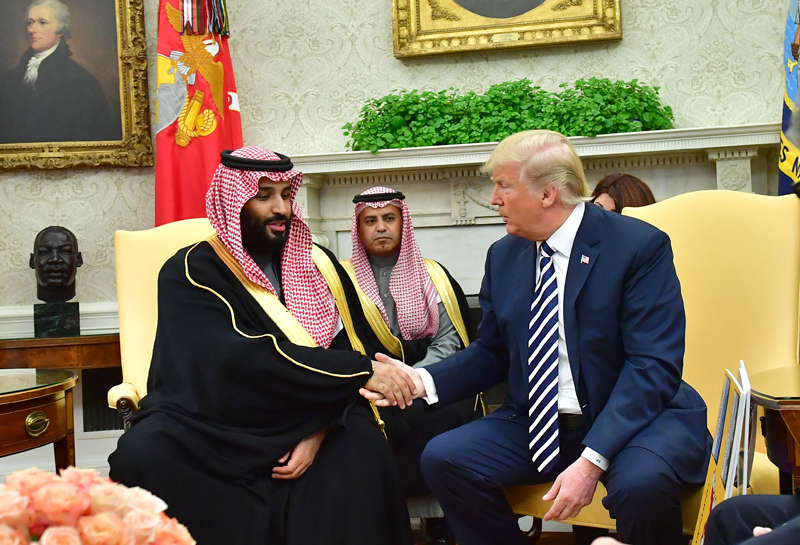
What the Saudi Prince’s Visit Really Means

0

It’s the mysterious department behind China’s growing influence across the globe. And it’s getting bigger

0

‘Magic wand’ used to extend China’s reach abroad gets enhanced role at time of growing international concern over state’s covert influence

 
PUBLISHED : Wednesday, 21 March, 2018, 3:02pm
UPDATED : Wednesday, 21 March, 2018, 4:37pm

The document was later published by the official Xinhua news agency on Wednesday afternoon.

The United Front Work Department, which has fallen under the scrutiny of Western governments in recent months, will now oversee the country’s ethnic and religious issues as well as overseas Chinese affairs.

This is part of a sweeping party restructuring that will see a further fusion between the party and the state.

It aims at increasing efficiency and strengthening the party’s control on all aspects of life in China.

The document also proposed upgrades to four party leading groups – responsible for reform, cybersecurity, finance and the economy, and foreign affairs.

The leading groups are the de facto decision-making bodies in Chinese politics and the upgrade is designed to further institutionalise the party’s political power.

The elevation of the UFW, once hailed by Xi Jinping as a “magic weapon” for the party to project its influence and wield its soft power, came at a time when democracies from Australia to the United States are increasingly suspicious of tacit Chinese state influences on their soil.

“The party used to lead the United Front behind a veil,” a government source, who declined to be named, told the Post.

“Under the new structure, it will no longer hide behind various government agencies.”

Under the new line-up, the State Ethnic Affairs Commission will report to the United Front Work Department, while the State Administration of Religious Affairs and the Overseas Chinese Affairs Office will be absorbed into the department as two internal bureaus, according to the document dated March 19.

At the same time, the Chinese Communist Party will also upgrade four “leading groups” headed by Xi into “commissions”.

The move will enhance the president’s control over the relevant fields.

The State Computer Network and Information Security Management Centre, the office in charge of China’s “Great Firewall”, will be moved under the central commission on internet security, from the control of the Ministry of Industry and Information Technology.

The central leading group responsible for protecting China’s maritime interests, meanwhile, will be merged into Central Commission of Foreign Affairs Works – a move that highlights the importance of maritime issues on the leadership’s agenda.

In addition, the Chinese Communist Party will set up a new “Rule-by-Law Commission” and an auditing commission. A new leading group on education will be set up as well.

The Publicity Department of the Central Committee, the propaganda arm of the party, will have a direct control over all publishing and movies, according to the document.

http://www.scmp.com/news/china/policies-politics/article/2138196/its-mysterious-department-behind-chinas-growing?utm_source=emarsys&utm_medium=email&utm_content=20180321&utm_campaign=scmp_china&aid=190131336&sc_src=email_2186967&sc_llid=9648&sc_lid=150041819&sc_uid=SkpGPjvNwp&utm_source=emarsys&utm_medium=email

Turkey’s Middle East Aspirations Beyond Afrin

0

By Xander Snyder  Mar 21, 2018

The central question in Turkey’s invasion of Afrin has been whether it is a limited operation that will stop in northwestern Syria, or the first stage of what will become deeper Turkish involvement in the Middle East. Given that Turkey is intent on clearing the threat from its border, and that Kurdish forces extend far beyond the northwestern enclave of Afrin, there’s little reason to think that Turkey will stop after subduing Afrin.

There is, however, another threat that is forcing Turkey to take foreign military action: Iran. One of Turkey’s greatest historical adversaries, Iran has emerged from the Syria conflict in a relatively powerful position. One aspect of its qualified success has been the ability of the Bashar Assad regime, with Iran’s backing, to hold onto power and reconquer much of the territory it had lost in the civil war. Turkey sees a pro-Iran, Assad-led Syria on its border as a direct threat, which is why it looked the other way earlier in the war when Islamic State recruits crossed the border from Turkey to fight Assad.

In response to Iran’s strong presence in Syria, Turkey wants to put pressure on Iran much closer to Iran’s own borders, in Iraq. Though Kurdish militias there do exist, Turkey is nevertheless using the presence of the Kurdish PKK in Iraq’s Sinjar province as a justification for intervention in Iraq. Iran, after all, has been able to significantly increase its degree of influence in Iraq in the past four years, a worrying trend for Turkey. Even as Turkish President Recep Tayyip Erdogan threatens to launch a surprise invasion of Sinjar, Turkey has already begun establishing a greater military force in Iraq, with reports of Turkish soldiers parachuting into the village of Soran and reinforcing its presence in Sidakan.

A Turkish presence in Iraq does three things. First, it threatens Iran close to home, just as a pro-Iran Syria threatens Turkey, without risking direct confrontation. Second, it aims to counter the threat of pro-Iran militias in Iraq with additional firepower. Finally, it places Turkish troops on both sides of Kurdish-controlled Syria, which could set Turkey up for a two-sided offensive against the rest of the land held by the Syrian Kurdish YPG militia along Turkey’s southern border.

Shrinking Window of Opportunity

In Syria, with Iran’s financial and military assistance and Russia’s air support, Assad has been able to turn the tide and, for now, looks to be on the winning side of the war. If Turkey is to prevent the development of a strong, pro-Iran Syria, it needs to act. But as Assad continues to retake territory throughout the country, Turkey’s window of opportunity is closing.

Turkey’s shrinking timetable is why Erdogan – despite his incessant, mostly empty public pronouncements of forthcoming military action – must at this point be taken seriously when he threatens to assault Manbij, which is just east of the territory in Syria controlled by Turkey, and Sinjar in Iraq. Despite some token resistance from fleeing YPG forces, Afrin has fallen and is in Turkish hands. (Turkey has employed both its own army and Turkish proxies in its invasion of Afrin.) Most of its population has fled, clearing the way for the Turkish strategy to repopulate its border regions in Syria with Turkey-friendly, Sunni neighbors.

Turkey’s acquisition of Afrin, combined with the territory acquired in its 2016 invasion of northern Syria and territory held by Turkish proxies in Idlib, gives it near-contiguous control of the northwest of Syria with no adversary threatening its rear. Assad could deploy forces to the north to block Turkey’s advance, but this would require splitting his forces while he continues to struggle with rebels in key cities in central and southern Syria, such as Damascus and Homs.

With Afrin taken, the path to Manbij and greater control of its border with Syria is almost wide open for Turkey. Except, of course, for one major complication: the U.S. presence in northern Syria and its alliance with Kurdish militias.

Impasse in U.S.-Turkey Relations

Though the U.S. effectively greenlighted Turkey’s invasion of Afrin, it made clear that it would not withdraw its support from the Manbij-based Kurds. This is exactly what Turkey is demanding from the U.S.; Turkey sees no difference between Kurdish forces in Afrin and those in Manbij. For its part, the U.S. remains concerned about a resurgent Islamic State, which it was able to contain in part through its military cooperation with the YPG. This is no idle threat – while Kurdish forces were diverted from anti-IS operations to Afrin to combat Turkey, IS has been re-emerging and is again gaining control of territory.

This is the fundamental impasse in U.S.-Turkish relations. The U.S. needs a ground force to fight IS, and so far groups consisting primarily of Syrian Kurdish militias have been the only ones willing to follow U.S. orders. Yet it is those same Syrian Kurdish militias that Turkey feels it must eliminate to extinguish the threat along its border.

One of two things can happen: Either Turkey and the U.S. reach an agreement regarding Manbij and the Kurds, or they don’t. If they do, there will be some form of U.S. withdrawal from Syrian Kurdish territories. Turkey would enter provinces formerly occupied by the U.S. and its allies, with the blessing of the U.S., in exchange for agreeing to cooperate with the U.S. in its war against IS. In other words, another Kurdish group would be sold out by a former ally.

Such an arrangement would pose its own challenges to the United States. Unlike the Kurds, Turkey will be willing to cooperate with the U.S. only when it does not require subsuming its own interests in the process. And as the quagmire in northern Syria demonstrates, the U.S. and Turkey no longer find themselves consistently on the same side of the table. Turkey has also repeatedly shown itself willing to work with jihadists who would be distinctly unpalatable allies to the United States. Further, there is the risk that Turkey, harnessing the legacy of its Ottoman past to identify itself as the rightful heir to the caliphate, could even find ways to cooperate with IS or other such groups in an attempt to coalesce the disenfranchised Sunni Arab majority in Syria to further challenge Iran’s position there and in Iraq.

The other potential outcome, that Turkey and the U.S. do not reach agreement resulting in a withdrawal of U.S. forces from northern Syria, would severely constrain Turkey’s military option there. Though Turkey’s military is strong enough to defeat Kurdish militias in Afrin, it is not about to risk a conflagration with the United States. In this case, Turkey would be forced to pursue a near-term solution with Russia and Iran that allows it to cordon off the Kurdish corridor spanning northern Syria and Iraq, even if it is not through direct application of force. The proxy war would continue, but Turkey’s objective would still be the same: splitting off the U.S. from the Syrian Kurds and imposing Turkish, or at least pro-Turkish, control of the area.

Turkey would be extremely bitter about this eventuality, especially if Iran continues to improve its position in Syria, but it would probably not immediately break relations with the United States. After all, despite its ability to reach pragmatic tactical solutions with Russia, Turkish power has historically threatened Russia and will continue to do so as it grows stronger, making Russia a long-term adversary to Turkey. This was the strategic calculation that drove U.S.-Turkish cooperation during the Cold War, and it does not yet appear that Turkey is strong enough to take on Russian military power alone. In other words, if Turkey could not depend on the U.S., neither could it depend on Russia, which will force Turkey to balance cautiously between the two for the time being rather than sever relations with the U.S. outright. Even so, Turkey would not forget the slight. It would continue to accelerate the development of its domestic weapons industry so that it would no longer need to depend on the West’s protection from Russia.

Turkey’s invasion of Afrin represented a turning point in the Syrian war and its implications for the Middle East. Now that Turkey has conquered Afrin, U.S.-Turkish relations have reached a critical moment. Whether the U.S. and Turkey find a way to cooperate in northern Syria or not will substantially alter the regional balance of power, which in turn will shape how the major powers involved in the conflict – Russia, Iran, Turkey and the U.S. – craft their Middle Eastern strategy as well as their strategies in relation to one another. U.S.-Turkish relations, and the role that northern Syria plays in them, therefore have global implications spanning far beyond the region itself.

The post Turkey’s Middle East Aspirations Beyond Afrin appeared first on Geopolitical Futures.


Judy Asks: Is Social Media Above the Law?  

0

Adam BalcerForeign policy project manager at WiseEuropa

The current problem with Facebook is substantially more serious than collecting data that were harvested and exploited for political gain to help Donald Trump become president. A few days ago, UN investigators said the use of Facebook played a “determining role” in stirring up hatred against Rohingya Muslims in Myanmar in the summer of 2017. According to the most conservative estimates, the number of Rohingya killed in the massacres has surpassed 10,000, including at least 1,000 children under the age of five. The response of Facebook to the UN criticism sounds Orwellian: “Of course, there is always more we can do and we will continue to work with local experts to help keep our community safe.”

It is worth noting that in the autumn of 2017 Rohingya activists began complaining that the company was censoring their posts about the brutal military campaign against their conationals. Moreover, Facebook designated a Rohingya insurgent group a “dangerous organization” and ordered moderators to delete any content “by or praising” it. At the same time, Facebook did nothing with an official page of Myanmar’s military (with more than 2.5 million followers), which UN human rights officials accused of conducting a “textbook example of ethnic cleansing.” Ashin Wirathu, an ultranationalist Buddhist monk, a main hate-preacher and a very active Facebook user, also enjoys a “freedom of speech” with negligible restrictions from the company.

UN Myanmar investigator Yanghee Lee seems to be shockingly right when she said, “I’m afraid that Facebook has now turned into a beast, and not what it originally intended.”

Katherine CharletDirector of the Technology and International Affairs Program at the Carnegie Endowment for International Peace

Whether social media is “above the law” is not the right question. The data in the Cambridge Analytica case appears to have been first obtained in a manner in line with Facebook policies by an individual that then shared the data inappropriately with other parties, who in turn used it inappropriately. Beyond the question of what was legal is the question of responsible and appropriate stewardship of data. Social media companies should do more on two key areas.

First, raising a higher bar for data use. In this case, around 270,000 people downloaded an app and gave consent to its developer to access their information. But in doing so, data on their friends—around 50 million people—was also shared. Social media companies must better help users understand and make decisions about such sharing, or shift toward an opt-in approach versus and opt-out approach. They also need to set higher bars to prevent apps from accessing excess data beyond what they legitimately need.

Second, better enforcing the proper use of data. In 2015, Facebook instructed the individuals and companies that misused the data to destroy it and says it received certification that this happened. But Facebook did not at the time alert compromised users or independently verify that the data was destroyed. Social media companies need to view data protection as a core responsibility, not through a liability lens, and find better ways to enforce the policies that protect their users.

Cathryn Clüver AshbrookExecutive director of the Future of Diplomacy Project in the Belfer Center for Science and International Affairs at the Harvard Kennedy School

No—or not for much longer. Facebook and others were designed to evade the long arm of the law. For years, Facebook actively eluded U.S. laws, including the 1996 Communications Decency Act and the 2002 Bipartisan Campaign Reform Act, neither of which anticipated the advent of social media. It has kept regulators at bay in part because of their lack of technical sophistication to understand its evolution into an algorithm-based, data-harvesting system. Facebook claimed to be neither an advertiser, nor a media organization, but simply a “platform”—an internet “Switzerland.” But it preyed on its users’ vulnerabilities, changing its terms of service and extracting data while we were sleeping.

With unconstrained tentacles, Facebook became the internet to millions of people around the world with far-reaching effects, including on the Rohingya genocide. Now, arguably too late, lawmakers are wising up. Zuckerberg’s preferred self-regulation won’t stand. Facebook is already losing money. Congress needs to pass the Honest Ads Act this year. Other action will follow. But U.S. and EU regulators must be wary—this area of the law will need constant updating to regulate while not harming Western competitive capacities in tech vis-à-vis the Chinese. Are today’s regulators up to that task? Highly uncertain.

John KornblumSenior counselor at Noerr LLP and former U.S. ambassador to Germany

Of course not. But social media represents a new dimension of public information and media influence that goes beyond the bounds of current media and intellectual property law. And it won’t get much better for quite some time.

The opportunities for expression and influence, legal and illegal, offered by digital media are far from having been exhausted. As political debates in Europe and the United States demonstrate, democracies are having a hard time even finding a vocabulary to describe what is going on. Authoritarian states are using technology to control digital information. Criminals are adept at finding new means of stealing and cheating over the web. Calls for new laws, treaties, and conventions will generate many activities but few results.

What is needed right now is an effort to define an umbrella of goals, principles, and values which should guide net behavior. Something like a digital Helsinki Final Act. Such a project would take years to complete, if ever. But without such a dialogue, order can never been achieved. Chaos will result.

Denis MacShaneFormer UK minister for Europe

Social media has been above the law and is still above the law, but bit by bit democracy and the rule of law are catching up. The raid on Cambridge Analytica’s offices will produce huge amounts of, well, “data” about how this outfit obtained the private details of millions of social media users and then sold them to political organizations to win elections or referendums.

In Europe, the different authorities responsible for tax are finally getting to grips with the massive earnings of Apple and Amazon, which so far have escaped paying the taxes that other firms selling goods or services to the public have to face.

One cannot blame the GAFA firms—Google, Apple, Facebook, and Amazon—for seeking to minimize tax or subsidizing think tanks and policy shapers in order to keep being so profitable.

But the law is now catching up. Too many high streets in town centers have been undermined as online orders change consumer patterns. The treatment of workers in Amazon warehouses is redolent of nineteenth century relentless factory labor, with permanent supervision and workers utterly exhausted at the end of a shift.

Privacy and citizens’ control of data is now entering European law. The GAFA belief that social media was above the law—and above social or fiscal responsibility—is over.

Jonas Parello-PlesnerSenior fellow at the Hudson Institute

No, social media isn’t above the law. The real question is what laws apply. There is both a question of data and privacy and another about election rules and social media. The Cambridge Analytica scandal highlights both.

During the outcry over Snowden’s revelations in 2013, I was surprised by the seeming lack of awareness about the massive “surveillance” already happening in private companies. We give away our personal information every second on Google, Amazon, Facebook, Uber and a plethora of other apps. The uncomfortable truth for most of us, currently incensed by Cambridge Analytica’s exploitation of Facebook profiles, is that we voluntarily share our social media personalities. The answer lies in tougher enforcement on genuine data breaches. The EU stands ready with its new General Data Protection Regulation (GDPR), which can pass heavy fines. The other solution is individual: share less.

On elections worldwide, Cambridge Analytica’s business practices, exposed by Channel 4, are plainly unethical and probably illegal. The larger question is how to safeguard democratic processes around elections from foreign interference and shady emotion-led pollsters. Regulation seems needed. Just as political advertisements were regulated on broadcast, they need to be on social media too. Russian sponsored ads on Facebook during the American elections in 2016 underlines the necessity.

Gianni RiottaMember of the Council on Foreign Relations

It indeed was, until the 2016 American presidential campaign when then president Obama made the fateful decision not to divulge the intelligence about Russia meddling in the U.S. debate. Then Russiagate surfaced, Mr. Mueller got involved, the Internet Research Agency in St. Petersburg became world famous and its leaders were indicted—and Cambridge Analytica and Facebook realized how easy it could be for Big Tech to became the next bogeyman after Big Oil and Big Tobacco.

Facebook is now being investigated by federal agencies in America, by state authorities in Massachusetts and Connecticut, and in the UK. In May, Europe will unleash a new set of digital privacy rules that are so strict it’s already being criticized. The honeymoon is over. Big Tech will be regulated and tamed like Standard Oil or AT&T. The next problem is: Will the new, stern laws prune too much and dry up the energy, creativity, and ingenuity that the web has spurred? Can Bad Data pass through a credibility sieve without censoring Good Data?

Joseph VerbovszkyStrategic analyst at RUAG Schweiz AG

No, social media is not above the law. Net neutrality, for example, is made possible by the law. Likewise, in cases of potential censorship, it is usually states that impose regulations on social media. Germany, for example, requires Facebook to remove certain forms of hate speech.

The more interesting question may be how social media relates to political power. Social media platforms are systems of knowledge. They compile information that is much more comprehensive than many government databases. In the political sphere, knowledge is power. It enables influence and even the control of populations. What we may be seeing is the politicization of social media. This can become dangerous because in a confrontation between state power and social media, one will likely subordinate the other.

http://carnegieeurope.eu/strategiceurope/?fa=75852&utm_source=rssemail&utm_medium=email&mkt_tok=eyJpIjoiWWpRMll6UTBPR1V5TnpSaSIsInQiOiJscEp3c0JyVUM0WVFkbDdWQ0Z5YmVQWWdYVUpIOWd4XC91K1BaYXJBOEdyd2gwUUd6aTUyTXZpeHdYcFF6dmZIbTI0TDF1OVNCcFNndzBONm92YnlRam5rMGw2K05KVGRwK1lRa0U4cWNBYU16akZPSHBLWGVMZGNqUWZwb0p0aHkifQ%3D%3D

The Strategic Implications of Effective Population Defense Against Ballistic Missiles

0

By March 21, 2018

 BESA Center Perspectives Paper No. 776, March 21, 2018

EXECUTIVE SUMMARY: Israel was the clear victor in the 2014 Gaza War. That Israel’s war aims were achieved by a defensive rather than offensive strategy does not diminish the magnitude of its success.

Before the 20th century, wars were often confined to distant battlefields. The advent of air power brought wars to home fronts. A new strategy for winning wars not by Clausewitzian decisive battles but by the use of airpower against home fronts was first offered by Giulio Douhet in 1921. His writing influenced military thinking between the two world wars and led to the establishment of strategic air forces in the UK and the US whose contribution to ending World War II is still controversial.

Missile power joined air power in terrorizing home fronts as soon as Nazi Germany perfected its V1 cruise missiles and V2 ballistic missiles in 1944, though the impact of those spectacular weapons on the course of WWII is judged today to have been insignificant.

Following the war, ballistic missiles graduated into nuclear ICBMs. Today ballistic missiles are perceived as adjuncts to the nuclear issue. Their non-nuclear capability to complement or replace conventional air power has been largely trivialized. The Iranian nuclear deal (the Joint Comprehensive Plan of Action, or the JCPOA), which excludes ballistic missiles, is a case in point.

Yet conventional ballistic missiles played a strategic role in the Middle East wars of the late 20th and early 21st centuries. The two most prominent examples were Saddam Hussein’s use of extended-range, conventionally armed Scud missiles against Iran in 1988 and against Israel and Saudi Arabia in 1991. In the first instance, the end of the Iran-Iraq war was attributed by many observers to the devastating effects of the Iraqi missiles on Iran’s major cities. While the total number of casualties was miniscule in proportion to battlefield casualties, the costs in damages, dislocation, and trauma may have reached intolerable levels. In the second instance, Saddam Hussein’s conventional missiles threatened to wreck the US-led coalition, which in turn might have stopped the war against him.

Rockets – in essence small, short-range, unguided ballistic missiles – have featured in Middle Eastern conflicts for almost half a century. Rockets have been extensively used against populations in the Syrian and Yemeni civil wars. Palestinian rockets fired from secure bases across international borders have been terrorizing Israeli population centers since late 1968 with significant destabilizing results.

With no effective defense save sheltering, Israeli responses were offensive, seeking to dissuade and deter. Thus, the 1982 Lebanon War came in response to incessant Palestine Liberation Organization rocket attacks on northern Israel. In the next decade, Hezbollah rocket attacks on the northern Israeli towns of Nahariya and Kiryat Shmoneh triggered massive Israeli retaliation on southern Lebanon in 1992 and again in 1996. Hezbollah rocket fire in July 2006 triggered a massive Israeli air offensive against Lebanon followed by a ground invasion. Similarly, escalating Palestinian rocket fire from Gaza on the Israeli southern and central districts brought Israeli air and ground retaliatory attacks, with real consequences to Palestinian civilians. With its population centers exposed to rocket attacks and with diplomacy achieving only shaky, short-lived cease fires, Israel had no other response option except escalation.

The need for an alternative, non-escalatory strategy became obvious to Israeli planners in the mid-1990s. Defense against rockets is a demanding technical challenge due to the short timelines involved. Hence the first attempt to devise active rocket defense revolved around speed-of-light directed energy weapons (i.e., high-powered lasers). The inherent limitations of this technology doomed the effort, and Israel reverted to more conventional interceptor missile technology. The result was the “Iron Dome” short-range missile defense system, which has been deployed since mid-2011.

The Middle East is a cockpit of wars, making it a veritable proving ground for weapons, tactics, and strategies. The introduction of Iron Dome to the battlefield provided an opportunity to evaluate the strategic implications of population defense against rocket fire in limited wars. From Israel’s perspective, population defense exceeded expectations. If the purpose of the Palestinian rockets was to wage an attritional war against Israel’s population in order to gain political concessions, the successful defense of that population inverted the attritional equation and forced the aggressors, rather than the defenders, to seek a ceasefire with no tangible political gains.

However, overseas critics challenged this conclusion on two counts: first, that Iron Dome was less successful than claimed; and second, that the success was qualified and temporary. The first claim was made by scientists Dr. Ted Postol, a nuclear scientist from MIT, and Mr. Richard Lloyd, a missile warhead expert. Based on open-source, two-dimensional images, the two concluded that Iron Dome’s score was poorer than claimed, although their estimates diverged considerably between 5% (Postol’s) and 40% (Lloyd’s).

In contrast, Israelis were unanimous in their confidence that Iron Dome worked as advertised. This was supported by Israel’s Treasury information on damage claims and payments, which showed a steep decline compared to previous rocket attacks in 2006 and 2012. On a more personal note, the author, who, during the 2014 war, commuted every weekday to his Tel Aviv office, never saw any rocket hit the city or its suburbs, though more than 130 rockets targeted it. Similar testimonies abounded in Israel’s media. The critics’ claim of marginal success fails to explain this reported tranquility.

Other critics accept the success of Israel’s population defense but argue that it was both strategically qualified and volatile. Such arguments were made mainly, but not exclusively, by Elizabeth M. Bartels in her recent article in The Strategy Bridge. Bartels make three arguments in support of her claim: first, that the casualty imbalance brought about by Iron Dome’s successful defense of Israel’s population came at a strategic cost; second, that the success is destined to be short-lived; and third, that it denied Israel a decisive military victory. These arguments will be addressed sequentially.

The Iron Dome reduced Israeli civilian deaths and enhanced the effectiveness of Israel’s population defense during the 2014 Gaza War. Of the five Israeli civilians killed by Palestinian fire, only two deaths were caused by rockets. The toll among Palestinian civilians is in dispute but in any case, it constituted a sizable proportion of the total death toll of more than 2,000 persons. Bartels argues that this disparity in the death toll between Gaza and Israel, accentuated by the success of Iron Dome, carried a strategic cost to Israel. In her words, “Palestinians suffered while Israelis remained relatively safe.”

While this argument does not offer specific suggestions on how this cost might have been mitigated, some options can be envisaged. Other than giving in to Hamas demands, two possibilities come to mind: either allow an increase in the Israeli death toll by foregoing defense, or decrease the Palestinian death toll by foregoing offense. The first option is a non-starter: no democratic government would intentionally expose its citizens to the risk of death if defense is feasible. The second option may sound tempting to uninvolved observers:  after all, since its citizens were relatively safe, Israel could theoretically afford to passively absorb Palestinian rocket fire without retaliating. Similar suggestions have been made by other observers.

In real life, this too is non-starter. The economic, political, and social impact of high-intensity rocket fire on population centers is not limited to the number of civilian deaths; it has wider implications. The reduction in the number of fatalities does not reduce the terror itself. Life stops whenever an alarm is sounded, and the constant threat disrupts the economy and traumatizes the population. Fortunately for Israel (and the Palestinians), the 2014 Gaza War happened during the annual school recess. Had it taken place during the school year, the rocket threat would have closed all schools and other educational institutions, compelled the labor force to stay at home, and essentially shut down the economy.

A prolonged passivity would sway public opinion towards a more aggressive policy and precipitate a political crisis. Neither Israel nor any other country can sustain rocket attacks against its citizens indefinitely, even when casualties are relatively light. Prolonged passive sustainment might have mitigated the strategic cost of casualty imbalance but at a higher overall strategic cost.

In more general terms, the “casualty imbalance” argument misses the wider strategic implications of successful population defense. The clash of arms between Israel and the Palestinians in the summer of 2014 had some attributes of a full-scale war in which both sides had explicit political goals. Israel’s declared objective was a return to the previous ceasefire situation and the cessation of rocket attacks from Gaza. The declared war aims of Hamas, as elucidated at the time by then-Hamas leader Ismail Haniya, were the unconditional lifting of the “siege” on Gaza including open borders and the construction of a Hamas-controlled international airport and seaport – in short, the unconditional recognition of Hamas sovereignty in Gaza without any obligation to make peace with Israel.

After 53 days of fighting, albeit with some temporary lulls, Hamas opted instead for what turned out to be an unconditional ceasefire without gaining anything substantial in return. Thus, and without escalating the fighting beyond what was strictly necessary to block the Palestinian tunnel threat, Israel achieved both its immediate war objective and a significant long-term strategic gain: blunting Palestinian rocket terror, thereby broadcasting a strong deterrent message to Israel’s foes in the region.

This result was the product of a successful population defense. With the rocket fire largely neutralized by Iron Dome, the attritional equation was overturned and it was Hamas who could not sustain Israel’s counter actions any longer.

Bartels argues that this achievement is destined to be temporary, because “adversaries will adapt and learn how to circumvent the system.” This is a generic argument that is hardly specific to Iron Dome but applicable to any innovative weapon system or, in fact, any new commercial venture. The competition will always strive to adapt and circumvent anything that threatens its own weapons or commercial gains. The argument of advantage volatility is often cited by opponents of missile defense, who believe missile defense is particularly prone to countermeasures – in fact, there is a rich literature on how aggressors can deploy so-called “cheap and simple” countermeasures that are likely to circumvent the most sophisticated missile defense system.

This is a fallacy. Nothing in the art of countermeasures is simple or cheap. Moreover, the defenders are at least as adaptive as the aggressors, and often even more so. In the case of Iron Dome, the Palestinians have been trying to circumvent it ever since its first operational debut in April 2011, with no discernable success to date. Doubtless they will continue to try, and Israel’s defenders will continue to improve their defenses. This is another manifestation of the eternal race between offense and defense, where the advantage lies with the side that holds the technological high ground.

Lastly, the question of whether or not Iron Dome denied Israel a decisive military victory needs to be addressed. Such opinions were indeed aired by retired Israeli officers, probably echoing the disappointment of some serving IDF officers at their government’s refusal to endorse a full-scale assault into, and reoccupation of, the Gaza Strip with the aim of crushing the Palestinian armed forces. Similar opinions were voiced by numerous Israeli analysts and lawmakers. Most critics attributed the reluctance of the Israeli government to hesitant leadership. Some ascribed it to the lulling effects of effective population defense, which gave the government the leeway to avoid a counterproductive policy.

In fact, the architects of Israel’s missile defense aimed to achieve exactly such leeway, providing the political leadership with a non-escalatory option. In the 2014 Gaza War, it was Israeli government policy neither to seek a final showdown with Hamas nor to reoccupy the Gaza Strip. The former might have brought to power an even more radical, ISIS-like Palestinian faction; the latter would have embroiled Israel in years of protracted urban guerilla war in the dense population centers of Gaza. A high number of casualties from Palestinian rockets would have forced the government to revert to an escalatory option, with its inevitable human toll for both Israelis and Palestinians. Effective population defense allowed Israel to practice restraint and see the fighting to a successful end.

Combatants at war have mutually exclusive objectives, and the winner is the side that gains its objectives or prevents the other side from gaining theirs. From this perspective, Israel clearly won the 2014 Gaza War. The key factor was successful population defense. That Israel’s war aims were achieved by a defensive rather than offensive strategy does not diminish its success.

In the history of warfare, defensive victories such as Gettysburg or the Battle of Britain have had major strategic implications no less than offensive victories. Limited wars between asymmetric opponents tend to target the resilience of populations rather than the capabilities of armed forces. One of the most important lessons from the 2014 Gaza War is that effective population defense can level the playing field and bring back a degree of symmetry to the balance of power between the contenders.

View PDF

This is an edited version of an article that appeared in The Strategy Bridgeon February 21, 2018.

Uzi Rubin was founding Director of the Israel Missile Defense Organization, which managed the Arrow program. He is now a senior research associate at the Begin-Sadat Center for Strategic Studies.

BESA Center Perspectives Papers are published through the generosity of the Greg Rosshandler Family


Uzi Rubin
Uzi Rubin

Uzi Rubin was founding Director of the Israel Missile Defense Organization, which managed the Arrow program. He is now a senior research associate at the Begin-Sadat Center for Strategic Studies. Email: [email protected]

“Army Of Islam”: Erdogan’s Plot Against Israel

0

Mar 21, 2018


This article is co-written by Alon Ben-Meir and Arbana Xharra. Arbana Xharra authored a series of investigative reports on religious extremists and Turkey’s Islamic agenda operating in the Balkans. She has won numerous awards for her reporting, and was a 2015 recipient of the International Women of Courage Award from the US State Department.

To listen to an audio version of this article, click here.

Less than a month ago, in advance of the summit of the Organization of Islamic Cooperation (OIC) in Istanbul, the Turkish daily Yeni Şafak, which is considered one of the mouthpieces of Erdogan and his ruling Justice and Development Party (AKP), published an article entitled “A Call for Urgent Action.” The same article was also published on the newspaper’s website with the more explicit title, “What if an Army of Islam was Formed Against Israel?” The article openly called on the 57 member states of the OIC to form a joint “Army of Islam” to simultaneously attack Israel from the east, west, north, and south. According to Israel’s Shin Bet, the source of the article appears to be the Turkish company SADAT, which among other sinister plots is aiding Hamas with funds and military gear to create a “Palestinian” army to join in the fight against Israel.

The creation of an Army of Islam
The idea of creating an “Army of Islam” to destroy Israel was accompanied by an interactive map providing formation of military forces for a joint Muslim attack on Israel. It also provides details on military forces based in various locations and the role they can play to execute their scheme.

Yeni Şafak further explained that “If the member states of the OIC unite militarily, they will form the world’s largest and most comprehensive army. The number of active soldiers would be at least 5,206,100, while the defense budget would reach approximately $175 billion.”

This article provided additional details of the scandalous plan, stating that “It is expected that 250,000 soldiers will participate in the first of a possible operation. Land, air and naval bases of member states located in the most critical regions will be used. Joint bases will be constructed in a short period of time… It is possible for 500 tanks and armored vehicles, 100 planes and 500 attack helicopters and 50 ships to mobilize quickly.”

Regardless of how absurd and troubling this suicidal plan may seem, Erdogan did not disavow the report. In fact, he has reiterated on several occasions his ambition to resurrect the Ottoman Empire, in which context he wants to create the “Army of Islam.”

Resurrecting the Ottoman Empire
The Ottoman Empire he speaks of is the same that committed genocide against more than one million Armenians in the wake of the Ottomans’ defeat at the end of World War I. No one should dismiss Erdogan’s yet hidden illusion to commit genocide against the Jews in Israel. Erdogan is dangerous because he is insane enough not only to think in these incomprehensible terms, but to act on them on numerous fronts, as he is now doing.

In recent years, Erdogan has been busy establishing military bases in Qatar and Somalia, and most recently reached an agreement with the Sudan to acquire a Sudanese island in the Red Sea to be used as forward military base. Meanwhile, he is throwing his brash and bearish weight on the Caucasus and former Soviet states such as Afghanistan, Azerbaijan, and others to follow his dictates. He has repeatedly threatened to invade Greek islands in the Mediterranean, not to mention his recent incursion into Syria for the express purpose of establishing a permanent presence in the country under the guise of fighting Kurdish terrorism.

Recently, at the commemoration ceremony marking the 100th anniversary of the death of Ottoman Sultan Abdulhamid II at the Yildiz palace in Istanbul, Erdogan stated that “The Republic of Turkey, just like our previous states that are a continuation of one another, is also a continuation of the Ottomans.”

Declaring that Europe will be Muslim
Erdogan further stated, according to Bloomberg, that ‘Too many Turks, misled by the West, have cut the country off from its Ottoman roots.’ “History isn’t just a nation’s past, it’s the compass for its future.”

MP Alparslan Kavaklıoğlu, a member of the ruling AKP and the head of the parliament’s Security and Intelligence Commission, recently stated: “The Muslim population will outnumber the Christian population in Europe. This… has increased the nationalistic, xenophobic and anti-Islam rhetoric there. Hence, marginal, small parties have started to get large numbers of votes… But there is no remedy for it. Europe will be Muslim. We will be effective there, Allah willing. I am sure of that.” [emphasis added]

Making Turkey the leading Islamist state
To promote the revival of the Ottoman Empire and his ambition to become the leader of the Muslim world, Erdogan exploits Islam as the common cause around which all Muslim states can rally. He uses religion to prevent questioning either his motive or the nature of his mission, as he can portray that as if it were all ordained by God. No one should be surprised if Erdogan soon announces that Sharia law is the law of the land. He exploits Islam for personal and political gain, uses Islamic symbols and precepts to indoctrinate the public, and promotes Islamic studies in schools to cultivate a new generation of devout Muslims loyal to him.

Although Erdogan still pretends to govern an Islamic democracy, the truth is that Turkey in no way resembles a democracy under his dictatorial reign. He is steadily making Turkey an Islamist state that stands by and supports Islamic extremist groups such Hamas and the likes of ISIS.

US and EU must stop Erdogan from blackmailing the West
Since the publication of this outrageous plan, not a single US or EU official has condemned it. The US and the EU must demand that Erdogan disassociate himself from the ideas reported by Yeni Şafak and reject it in the strongest terms. Moreover, the US should put Erdogan on notice that further promulgation of his Ottoman revivalist ideology will be dealt with as a threat to the US’ and EU’s strategic interests and will bear severe consequences.

No one, especially the US and EU, should dismiss Erdogan’s outrageous anti-Western scheme, which poses a major security threat. It’s time for the EU to permanently and publicly close the door to Turkey’s prospective EU membership.

No American administration should allow Turkey to threaten the destruction of one of its closest allies—Israel—which should have a chilling effect not only on every Israeli, but also on every close ally.

No leader who is silent about the creation of an Islamic Army should be trusted and treated as a legitimate head of state but must be dealt with as a traitor who is inviting disaster onto his country and people.

No country that cozies up to and buys weapons from the West’s enemy—Russia—and buys oil from the Islamic State should remain a member of NATO.

And no head of state who has dismantled every democratic pillar in his country and is transforming it into an extremist Islamic state can be a trusted as an ally – especially one who is interfering in the domestic affairs of many countries and undermining the international order.

Indeed, how many more sinister steps can Erdogan take before the EU and the US recognize that he is a threat against western strategic interests? He must be stopped from blackmailing the West while destroying the country that was envisioned by its founder Mustafa Kemal Atatürk.

https://mailchi.mp/alonben-meir/182nuf29e3?e=64160f4630

“Η εγκατάλειψη των Κούρδων από τη Δύση είναι ένα σοβαρό πολιτικό λάθος”»

0
Portrait de Kendal Nezan, président de l’Institut kurde de Paris.

Η ιστοσελίδα gate.ahram.org.eg (20.3.18) αναφέρεται στη συνάντηση που πραγματοποίησε χθες το πρωί ο Πρόεδρος της Αιγύπτου, Abdul-Fattah El-Sissi, με τον Έλληνα ΥΠΕΞ, κ. Νίκο Κοτζιά, παρουσία του Αιγυπτίου ΥΠΕΞ, Sameh Shoukry και του Πρέσβη της Ελλάδος στο Κάιρο. Σύμφωνα με τον εκπρόσωπο της Αιγυπτιακής Προεδρίας, Πρέσβη Bassam Rady, ο Πρόεδρος El-Sissi εξέφρασε την εκτίμηση της Αιγύπτου για τις υποστηρικτικές θέσεις του λαού και της ηγεσίας της Ελλάδας προς την Αίγυπτο, ιδίως μετά την επανάσταση της 30ής Ιουνίου 2013. Ο Αιγύπτιος Πρόεδρος τόνισε το ενδιαφέρον του για την ενίσχυση των σχέσεων Ελλάδας- Αιγύπτου, εξαίροντας την ανάπτυξη που έχει σημειωθεί σε αυτές σε πολλούς τομείς. Εξήρε επίσης και τη συνεργασία στο πλαίσιο του τριμερούς μηχανισμού με την Κύπρο, ιδιαίτερα στον τομέα της ενέργειας στην Ανατολική Μεσόγειο, κάτι που συμβάλλει στην επίτευξη των συμφερόντων των δύο χωρών και λαών. Όπως επισημαίνεται στο δημοσίευμα, ο κ. Κοτζιάς από την πλευρά του τόνισε το ενδιαφέρον της Ελλάδας να αναπτύξει τις ιστορικού χαρακτήρα σχέσεις της με την Αίγυπτο, υπό το πρίσμα του βάρους και του κεντρικού ρόλου της Αιγύπτου στην περιοχή, καθώς και του βασικού της ρόλου για την καταπολέμηση της τρομοκρατίας και της εξτρεμιστικής σκέψης. Εξέφρασε επίσης την εκτίμηση και τον θαυμασμό του για τα επιτεύγματα και την πρόοδο της Αιγύπτου στην εδραίωση της ασφάλειας και της σταθερότητας, καθώς και για το ποιοτικό άλμα της χώρας στους τομείς των υποδομών και των μεγάλων έργων, που αντικατοπτρίζουν τις μεγάλες προσπάθειες που έχουν καταβληθεί τα τελευταία χρόνια. Ο κ. Κοτζιάς εξέφρασε επίσης την εκτίμησή του για τον μηχανισμό τριμερούς συνεργασίας Ελλάδας, Κύπρου και Αιγύπτου, επισημαίνοντας ότι αποτελεί υπόδειγμα επιτυχούς συντονισμού και συνεργασίας για την υλοποίηση κοινών έργων, που θα συμβάλουν στην οικονομική και κοινωνική ανάπτυξη των [τριών] χωρών. Κατά τη διάρκεια της συνάντησης, συζητήθηκαν μια σειρά από θέματα που αφορούν τις διμερείς σχέσεις και εξετάσθηκαν τρόποι ενίσχυσης της διμερούς συνεργασίας στους τομείς της οικονομίας, του εμπορίου και των επενδύσεων. Συζητήθηκαν επίσης οι τελευταίες εξελίξεις στην περιοχή, οι τρόποι αντιμετώπισης της τρομοκρατίας και οι προσπάθειες επίλυσης των υφιστάμενων κρίσεων στην περιοχή.

Ο Πρόεδρος El-Sissi τόνισε ότι η περιοχή χρειάζεται σήμερα κάθε από κοινού ειλικρινή προσπάθεια για κατευνασμό και διευθέτηση της αστάθειας, πρόσθεσε δε ότι θα συνεχιστούν οι αιγυπτιακές προσπάθειες για την εξεύρεση πολιτικών λύσεων στις κρίσεις στην περιοχή, στο πλαίσιο της σταθερής θέσης της Αιγύπτου, η οποία
υποστηρίζει την κυριαρχία των κρατών επί των εδαφών τους, ώστε να εδραιώσουν τους εθνικούς τους θεσμούς, να αποκαταστήσουν τη σταθερότητα στην περιοχή και να παρέχουν ασφάλεια στους λαούς τους, επιμένοντας στα ειρηνικά μέσα επίλυσης των διαφορών, σύμφωνα με τους κανόνες του διεθνούς δικαίου.

Gas and Gunboats Around Cyprus

0

Cyprus—surrounded by Greece, Turkey, Syria, Lebanon, Israel, and Egypt—is located at the center of a geostrategic region. On and off, gas exploration activities and rights to underwater resources off the island’s shores have been a bone of contention between the Republic of Cyprus, Northern Cyprus, and Turkey for decades. The most recent standoff—about of fierce rhetoric coupled with naval activities—illustrates the renewed risk of a military mishap or miscalculation. More than ever before, diplomacy should prevail over saber rattling.

Pierini is a visiting scholar at Carnegie Europe, where his research focuses on developments in the Middle East and Turkey from a European perspective.

Marc Pierini

Visiting Scholar
Carnegie Europe

And there are many players involved: the Republic of Cyprus, the so-called Turkish Republic of Northern Cyprus (recognized only by Turkey), Turkey itself, and a cohort of countries and companies interested in energy exploration, including Israel, Egypt, the United States, the EU, and Russian gas operators. This list itself makes for a problematic choreography.

Gas exploration around Cyprus lies at the intersection of two major litigations. One is the division of the island since the Turkish military occupation in 1974 and the failure, so far, to negotiate a comprehensive settlement under the aegis of the UN. The other is the definition of the exclusive economic zone (EEZ), itself a two-pronged issue because Turkey is challenging part of Cyprus’ rights and because the south and the north of the island have different views on the exercise of rights within the island’s EEZ.

In normal times, these differences would only trigger muscular diplomatic discussions, involving cohorts of legal experts and a massive use of contradictory maps. In an earlier life, I was part of such jousts.

At other times, fierce statements and the occasional use of gunboat diplomacy took over. For example, in the summer of 2011, when the Republic of Cyprus announced the start of exploratory drilling in disputed coastal waters, Ankara warned that “Turkey’s frigates, gunboats, and its air force will constantly monitor developments in the area” and that the drilling operations amounted to “madness.”

In the best of times, the leaders of both Cypriot communities seemed to agree that exploration and exploitation of the island’s gas resources should be a “federal-level issue.” One major difference remains to this date: the Republic of Cyprus argues that the entire island would benefit from these resources once an agreement on the island’s reunification has been reached, while the Northern Cypriots argue that energy issues should formally be part of the settlement negotiations. The only hopeful point is that both sides agree on the federal nature of energy issues in the scenario that an agreement to reunify Cyprus is reached. However, energy resources have not become an incentive to forge ahead with a comprehensive settlement.

The latest flare-up in February is one of the negative episodes in the Cyprus gas saga—not unusual in itself but perhaps more risky than average. It started with the announcement that the Italian energy giant ENI would send a drilling platform—called Saipem 12000—to zones that are contested by Turkey. This operation is part of a larger drilling campaign launched by the Republic of Cyprus involving global energy firms such as French-owned Total and American Exxon, in addition to ENI.

Predictably, Ankara’s reaction—in itself, also not new—was couched in strong language by the Turkish foreign minister: “We find it unacceptable that the Greek Cypriot side persists in acting as though it were the sole owner of the island. … We have expressed our concerns, our outrage, and our indignation numerous times. … Everyone should understand that we are prepared to take all necessary measures to that end.”

After Turkish warships forced ENI’s drilling rig out of the area, diplomatic statements escalated further. While Cypriot President Nicos Anastasiades pleaded for moderation, the EU institutions reacted in an equally predictable way, with both European Council President Donald Tusk and European Commission President Jean-Claude Juncker squarely siding with the Republic of Cyprus. Turkish President Recep Tayyip Erdoğan, for his part, issued warnings similar to those used in 2011, when he was prime minister. Back to square one.

This time though, there are two major complicating factors. One is linked to gas markets, the other to Turkey’s internal politics. Both make the issue vastly more complicated than it ever was before.

Looking at gas exploration in the Eastern Mediterranean, the area is rife with drilling operations and plans about exports to regional consumers, as well as the EU. Competing countries and entities are at play: gas has been discovered in Egyptian, Israeli, and Cypriot waters so far. Various schemes are under consideration to export gas to Europe via Turkey or directly through Greece. Research by Lebanon and Turkey is also in preparation. Russia remains a powerful energy operator in the region, both with Lebanon and Egypt, in the context of an overall energy strategy based on retaining the maximum control on gas supplies to Western Europe.

Many of these plans have not reached an operational stage yet, especially since global gas prices are low and the investments needed are gigantic. But given the potential size of available resources, one can expect major political battles in a region already rife with conflicts—and which is one of the main theaters where Moscow is keen to illustrate its return as a major world power.

Turkey’s internal politics also make the situation more sensitive than before. Presidential and legislative elections are looming—they will be held simultaneously in November 2019, if not sooner—and President Erdoğan is not fully assured to carry the presidential vote and to see his party retain a substantial majority in parliament. For this reason, the ruling Justice and Development Party (AKP) has entered a coalition deal with the nationalist party (the MHP). This in turn has triggered a much fiercer nationalist narrative and is pushing back the likelihood of a comprehensive Cyprus settlement (which would entail a withdrawal of Turkish troops from the island).

There are strong reasons for diplomacy to prevail over saber rattling, before the latter turns belligerent. Hopefully, Moscow and Ankara will also see things this way.

Photo: Saipem 12000 by gCaptain.com is licensed under a Creative Commons Attribution-ShareAlike 3.0 Unported License.

http://carnegieeurope.eu/strategiceurope/?fa=75838&utm_source=rssemail&utm_medium=email&mkt_tok=eyJpIjoiTWpKbE5tUXhZV0ppTXpNeSIsInQiOiJSRERsb21KbjdabHVRRk5xRlZrZG5cLzZFNzZIaDhPd2FsOTB0SXN6bytFY2tHY0tPcXNSXC9EM1wvanM1eVF6eG1Dano5TmViOGRsU2QreWg5OWdaQkN5eTExcmQ4TGVFeEg3QndqYzlIMFBVQ01qR2xKTytyTGI5bGMzY2R5dXhEWCJ9

Δημογραφία και μετανάστευση αφελληνίζουν την Ελλάδα

3

του Αναστάσιου Λαυρέντζου*

Στα τέλη του 2017 δημοσιεύτηκαν από την Ελληνική Στατιστική Αρχή τα στοιχεία τα οποία αποτυπώνουν τη δημογραφική εξέλιξη του ελληνικού πληθυσμού κατά την προηγούμενη χρονιά. Σύμφωνα με αυτά:

  • Το 2016 ο πληθυσμός της Ελλάδας υπέστη περαιτέρω φυσική μείωση κατά 25.887 άτομα, αφού για έβδομη συνεχή χρονιά οι θάνατοι (118.785) ξεπέρασαν τις γεννήσεις (92.898).
  • Η καθαρή μετανάστευση υπολογίστηκε στα +10.332 άτομα, αφού οι εισερχόμενοι μετανάστες (στην πλειονότητά τους αλλοδαποί) ήταν 116.867, ενώ οι εξερχόμενοι μετανάστες (στην πλειονότητά τους Έλληνες) ήταν 106.535.
  • Ο δείκτης γήρανσης του ελληνικού πληθυσμού (αριθμός ατόμων με ηλικία άνω των 65 προς τον αριθμό παιδιών 0-14 ετών) αυξήθηκε για μια ακόμη χρονιά, φθάνοντας το 149,2. Δηλαδή πρακτικά στην Ελλάδα για κάθε 100 παιδιά υπάρχουν 149 άτομα τρίτης ηλικίας!!!

Τα παραπάνω στοιχεία, αν και αφορούν μόνο μια χρονιά, είναι συνταρακτικά!  Για να το καταλάβουμε όμως καλύτερα αυτό, πρέπει να δούμε τις εξελίξεις σε ευρύτερη προοπτική.

Ο ελληνικός πληθυσμός σε δημογραφικό κατήφορο…

Το πρώτο που πρέπει να επισημάνουμε είναι ότι η παρατηρούμενη «υπεροχή» των θανάτων έναντι των γεννήσεων δεν είναι ένα φαινόμενο προσωρινό. Είναι η συνέπεια της υπογεννητικότητας του ελληνικού πληθυσμού, ο οποίος μετά το 1980 γεννά λιγότερα από δύο παιδιά ανά γυναίκα, δηλαδή λιγότερα από αυτά που χρειάζεται για να αναπληρώσει τη φυσική του φθορά. Η κατάσταση αυτή επιδεινώνεται βεβαίως από την οικονομική κρίση (μετά το 2010), η οποία συμπιέζει περαιτέρω τη γεννητικότητα και δημιουργεί ένα  μεταναστευτικό ρεύμα Ελλήνων προς το εξωτερικό…  Για περισσότερες λοιπόν από δύο δεκαετίες, ο ελληνικός πληθυσμός έχει εισέλθει σε πορεία συνεχούς αριθμητικής συρρίκνωσης και γήρανσης. Σχετικά είναι χαρακτηριστικό ότι το 2015 ο νόμιμος πληθυσμός της Ελλάδας (συμπεριλαμβανομένων δηλαδή και των νόμιμων αλλοδαπών) ήταν με βάση στοιχεία του ΟΗΕ ήδη ο 6ος πιο γηρασμένος στον κόσμο (!), ενώ σύμφωνα με τις δημογραφικές προβολές της Eurostat αναμένεται ότι έως το 2050 δεν θα ξεπερνά τα εννέα (9) εκατομμύρια, εκ των οποίων τα τρία (3) θα είναι άνω των 65 ετών!!…

Φεύγουν οι Έλληνες, έρχονται οι αλλοδαποί…

Οι μεταναστευτικές ροές στην τρέχουσα φάση εμφανίζονται ισοσκελισμένες, ωστόσο πίσω από αυτή την ισορροπία των αριθμών θα πρέπει κανείς να αντιληφθεί τις ποιοτικές διαφορές: Αυτοί που (συνεχίζουν να) φεύγουν είναι νέοι μορφωμένοι Έλληνες, οι οποίοι αναζητούν μια δυναμική πορεία στο εξωτερικό, ενώ αυτοί που (συνεχίζουν να) έρχονται είναι αλλοδαποί, οι οποίοι κατά κανόνα έχουν χαμηλό μορφωτικό επίπεδο, υψηλό ρυθμό γεννήσεων και – σε αντίθεση με ό,τι συνέβη στη δεκαετία του 1990 – δεν προέρχονται πια από όμορες χώρες, αλλά από χώρες πολύ μακρινές προς την Ελλάδα, την οποία αυτή τη φορά δεν έχουν καν ως προορισμό τους…

Πίνακας: Η Δημογραφική έκρηξη χωρών της Ασίας και της Αφρικής

(Στοιχεία και εκτιμήσεις ΟΗΕ – UN World Population prospects – The 2012 revision)

Χώρα Πληθυσμός 1950 (εκατομμύρια) Πληθυσμός 2010 (εκατομμύρια) Πληθυσμός 2040 (εκατομμύρια)
Πακιστάν 38 174 255
Νιγηρία 38 160 351
Μπαγκλαντές 38 149 196
Αιθιοπία 18 83 164
Αίγυπτος 22 81 113
Αλγερία 9 35 52
ΣΥΝΟΛΑ 163 680 1131
 

Σχόλιο: Η δημογραφική γιγάντωση χωρών του τρίτου κόσμου είναι αρκετή από μόνη της για να μας καταδείξει το μέγεθος των αναμενόμενων μεταναστευτικών ροών. Φυσικά στα αίτια αυτών των ροών θα πρέπει κανείς να συμπεριλάβει τη φτώχεια, την εγγενή πολιτική αστάθεια αυτών των χωρών και τις εξωτερικές επεμβάσεις. Από ένα σημείο και μετά, σημαντικό ρόλο θα παίξουν και οι κλιματικές αλλαγές, οι οποίες θα δημιουργήσουν τους λεγόμενους κλιματικούς πρόσφυγες. Ο πίνακας  προέρχεται από το βιβλίο «Σιωπηρή Άλωση – Το δημογραφικό και το μεταναστευτικό πρόβλημα της Ελλάδας», σελ. 81.

 Αντικατάσταση Πληθυσμού…
Τα παραπάνω μας δείχνουν ότι στην Ελλάδα συντελείται σήμερα μια αντικατάσταση πληθυσμού: Από τη μια πλευρά ο ελληνικός πληθυσμός λιγοστεύει και γερνά διαρκώς, ενώ από την άλλη πλευρά (θα) καταφτάνουν και (θα) εγκαθίστανται στη χώρα μετανάστες προερχόμενοι από χώρες της Ασίας και της Αφρικής…  Όλα αυτά μάλιστα γίνονται υπό συνθήκες εσωτερικής κατάρρευσης – οικονομικής και κοινωνικής – και σε ένα γεωπολιτικό περιβάλλον ιδιαίτερα ρευστό, γεμάτο ανατροπές και απειλές… Βρισκόμαστε λοιπόν προ ιστορικής σημασίας εξελίξεων, οι οποίες δεν μεταβάλλουν απλώς το σκηνικό, αλλά για πρώτη φορά αλλάζουν ραγδαία την πληθυσμιακή υπόσταση και άρα την ίδια τη φυσιογνωμία της χώρας.

Οι παραπάνω εξελίξεις εγείρουν προφανώς τεράστια ζητήματα για το μέλλον: Αν ο ελληνικός πληθυσμός δεν αυξήσει σημαντικά τη γεννητικότητά του, θα παραμείνει εγκλωβισμένος σε μια πορεία εκμηδένισης. Παράλληλα θα αρχίσει να αντιμετωπίζει σύντομα σοβαρά προβλήματα: Π.χ. θα είναι αδύνατον να έχει βιώσιμο σύστημα κοινωνικής ασφάλισης (ακόμη κι αν δεν υπήρχαν τα σημερινά οικονομικά προβλήματα)˙ θα είναι πολύ δύσκολο να έχει θετικούς ρυθμούς οικονομικής ανάπτυξης, αφού η ζήτηση θα μειώνεται συνεχώς˙ δεν θα μπορεί να έχει επαρκείς ένοπλες δυνάμεις, αφού κάθε κλάση στρατευσίμων είναι (ήδη εδώ και πολλά χρόνια!) μικρότερη από την προηγούμενη, θα του λείπει η δυναμική που χαρακτηρίζει τους νέους ανθρώπους…

Κάποιοι αντιτείνουν ότι το δημογραφικό πρόβλημα θα λυθεί από την έλευση ξένων μεταναστών. Όσοι όμως το ισχυρίζονται αυτό, μιλούν τουλάχιστον επιπόλαια – αν δεν εκκινούν από ιδιοτελείς προθέσεις – διότι παραβλέπουν τα δεδομένα: το δημογραφικό πρόβλημα της Ελλάδας είναι τόσο μεγάλο, ώστε να είναι αδύνατον να καλυφθεί από τις μεταναστευτικές ροές χωρίς σε δύο περίπου δεκαετίες να μιλάμε για μια άλλη χώρα! Αυτό που λέμε δηλαδή, είναι ότι η κοινωνία η οποία διαμορφώνεται από τις δύο παραπάνω διεργασίες πολύ δύσκολα θα είναι μια κοινωνία συνεκτική και βιώσιμη. Διότι δεν είναι τόσο απλό να αναπληρώσεις τα δύο εκατομμύρια νεανικού πληθυσμού που θα σου λείπουν στο μέσον του αιώνα με άτομα που θα  προέρχονται από το Πακιστάν, το Αφγανιστάν, το Μπαγκλαντές ή από χώρες της Αφρικής, δηλαδή από περιοχές πολιτισμικά πολύ μακρινές από την Ελλάδα… Πολύ περισσότερο δε, όταν η πολιτιστική και η θρησκευτική διαφοροποίηση αυτών των πληθυσμών θα τους καθιστά μη ενσωματώσιμες μειονότητες που θα αμφισβητούν de facto τη φυσιογνωμία της χώρας και θα μπορούν να μετατραπούν σε μοχλό εσωτερικής της υπονόμευσης από ξένες δυνάμεις…

Ανάγκη για μια εθνική πληθυσμιακή στρατηγική

Για όλους τους παραπάνω λόγους είναι ανάγκη να συνειδητοποιηθεί άμεσα η σοβαρότητα των πληθυσμιακών εξελίξεων. Αυτό σημαίνει ότι το πολιτικό σύστημα οφείλει  –  παρά τις ανεπάρκειές του –  να εκπονήσει μια σαφή δημογραφική και μεταναστευτική στρατηγική, της οποίας οι βασικοί άξονες πρέπει να είναι:

  • η αύξηση της γεννητικότητας του ελληνικού πληθυσμού,
  • η συγκράτηση ή και η επιστροφή του πολύτιμου ανθρώπινου δυναμικού των νέων Ελλήνων που λόγω κρίσης έφυγαν από τη χώρα ,
  • ο προσδιορισμός πόσων αλλά και ποιών μεταναστών μπορούν να γίνουν δεκτοί στην ελληνική κοινωνία και η δημιουργία μηχανισμών ενσωμάτωσής τους σε αυτή.

Οι παραπάνω σχεδιασμοί θα πρέπει βεβαίως να συμβαδίσουν με ένα σχέδιο συνολικής παραγωγικής ανασύνταξης της χώρας, το οποίο αποτελεί και την προϋπόθεση για τον απεγκλωβισμό της από τη σημερινή κατάσταση. Για την ώρα πάντως και αυτό το σχέδιο παραμένει ένα ζητούμενο, οκτώ χρόνια μετά την οικονομική χρεοκοπία, και ενώ η χώρα βαδίζει σιωπηρά προς τη βαθύτερη και τελική της χρεοκοπία, τη δημογραφική…


*Ο Αναστάσιος Λαυρέντζος κατέχει διπλώματα μεταπτυχιακής ειδίκευσης (MSc) στα Οικονομικά Μαθηματικά (Οικονομικό Παν/μιο Αθηνών) και στη Θεωρητική Φυσική (Παν/μιο Κρήτης). Έχει πτυχίο Φυσικής (Παν/μιο Αθηνών).

Έχει εργαστεί ως διευθυντικό στέλεχος στον τομέα Διαχείρισης Κινδύνων σε μεγάλους ελληνικούς χρηματοπιστωτικούς οργανισμούς και στο πλαίσιο αυτό έχει επισκεφτεί πολλές βαλκανικές χώρες (Τουρκία, Βουλγαρία, Ρουμανία, Σερβία).

Συνεργάζεται με διεθνείς ελεγκτικούς οίκους ως συμβουλος επιχειρήσεων και διδάσκει Διαχείριση Κινδύνων στο Οικονομικό Παν/μιο Αθηνών.

Έχει γράψει τα βιβλία: «Η Θράκη στο μεταίχμιο» και «Σιωπηρή Άλωση – Το Δημογραφικό και το Μεταναστευτικό πρόβλημα της Ελλάδας».