Αρχική Blog Σελίδα 2793

Trump Warns NATO Allies to Spend More on Defense, or Else

0
The New York Times.
President Trump met with Prime Minister Mark Rutte of the Netherlands on Monday in the Oval Office. In letters sent last month, Mr. Trump demanded that NATO allies spend more on their own defense.CreditDoug Mills/The New York Times

WASHINGTON — President Trump has written sharply worded letters to the leaders of several NATO allies — including Germany, Belgium, Norway and Canada — taking them to task for spending too little on their own defense and warning that the United States is losing patience with what he said was their failure to meet security obligations shared by the alliance.

The letters, sent in June, are the latest sign of acrimony between Mr. Trump and American allies as he heads to a NATO summit meeting next week in Brussels that will be a closely watched test of the president’s commitment to the alliance. Mr. Trump has repeatedly questioned its value and has claimed that its members are taking advantage of the United States.

Mr. Trump’s criticism raised the prospect of another confrontation involving the president and American allies after a blowup by Mr. Trump at the Group of 7 gathering last month in Quebec, and increased concerns that far from projecting solidarity in the face of threats from Russia, the meeting will highlight divisions within the alliance. Such a result could play into the hands of President Vladimir V. Putin of Russia, who is to meet with Mr. Trump in Helsinki, Finland, after the NATO meeting, and whose primary goal is sowing divisions within the alliance.

In his letters, the president hinted that after more than a year of public and private complaints that allies have not done enough to share the burden of collective defense, he may be considering a response, including adjusting the United States’ military presence around the world.

“As we discussed during your visit in April, there is growing frustration in the United States that some allies have not stepped up as promised,” Mr. Trump wrote to Chancellor Angela Merkel of Germany in a particularly pointed letter, according to someone who saw it and shared excerpts with The New York Times. “The United States continues to devote more resources to the defense of Europe when the Continent’s economy, including Germany’s, are doing well and security challenges abound. This is no longer sustainable for us.”

“Growing frustration,” Mr. Trump wrote, “is not confined to our executive branch. The United States Congress is concerned, as well.”

The president’s complaint is that many NATO allies are not living up to the commitment they made at their Wales summit meeting in 2014 to spend 2 percent of their gross domestic product on national defense. American presidents have long complained about the lack of burden-sharing by NATO member countries, but Mr. Trump has taken that criticism much further, claiming that some of the United States’ closest allies are essentially deadbeats who have failed to pay debts to the organization, a fundamental misunderstanding of how it functions.

The Trump administration has already reportedly been analyzing a large-scale withdrawal of American forces from Germany, after Mr. Trump expressed surprise that 35,000 active-duty troops are stationed there and complained that NATO countries were not contributing enough to the alliance.

In the letter, Mr. Trump told Ms. Merkel that Germany also deserves blame for the failure of other NATO countries to spend enough: “Continued German underspending on defense undermines the security of the alliance and provides validation for other allies that also do not plan to meet their military spending commitments, because others see you as a role model.”

In language that is echoed in his letters to the leaders of other countries — including Prime Minister Justin Trudeau of Canada, Prime Minister Erna Solberg of Norway and Prime Minister Charles Michel of Belgium — Mr. Trump said he understands the “domestic political pressure” brought to bear by opponents of boosting military expenditures, noting that he has expended “considerable political capital to increase our own military spending.”

“It will, however, become increasingly difficult to justify to American citizens why some countries do not share NATO’s collective security burden while American soldiers continue to sacrifice their lives overseas or come home gravely wounded,” Mr. Trump wrote to Ms. Merkel.

Image
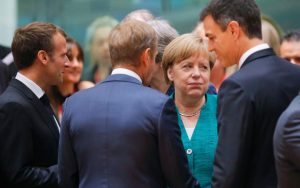
“As we discussed during your visit in April, there is growing frustration in the United States that some allies have not stepped up as promised,” Mr. Trump wrote to Chancellor Angela Merkel of Germany.CreditClemens Bilan/Epa-Efe, via Rex, via Shutterstock

Mr. Michel reacted tartly last week to the letter, telling reporters at a European Union summit meeting in Brussels that he was “not very impressed” by it, according to a report by Deutsche Welle.

Mr. Trump has long complained about the alliance and routinely grouses that the United States is treated shabbily by multilateral organizations of which it is a member, be it the World Trade Organization or the North Atlantic alliance. But in Europe, the letters to NATO allies have been greeted with some degree of alarm because of their suggestion that Mr. Trump is prepared to impose consequences on the allies — as he has done in an escalating tariff fight with European trading partners — if they do not do what he is asking.

“Trump still seems to think that NATO is like a club that you owe dues to, or some sort of protection racket where the U.S. is doing all the work protecting all these deadbeat Europeans while they’re sitting around on vacation, and now he is suggesting there are consequences,” said Derek Chollet, a former Defense Department official who is the executive vice president for security and defense policy at the German Marshall Fund of the United States.

“Europeans have been watching Donald Trump begin to implement his rhetoric on trade in ways that are very combative,” he said, “and they’re starting to contemplate whether he would do this regarding security issues, as well.”

Mr. Trump’s letter to Mr. Trudeau was reported last month by iPolitics in Canada, and the existence of others was reported last week by Foreign Policy. It was not clear precisely how many Mr. Trump wrote, and the White House would not comment on presidential correspondence. But two diplomatic sources said they believed at least a dozen were sent, including to Italy, Luxembourg, the Netherlands, Portugal and Spain.

A White House official, speaking on the condition of anonymity because the official was not authorized to discuss the matter, said that Mr. Trump is committed to the NATO alliance and expects allies to shoulder “their fair share of our common defense burden, and to do more in areas that most affect them.”

John R. Bolton, Mr. Trump’s national security adviser, said Sunday that it was NATO members who refused to spend more on defense — not the president — who were responsible for undercutting the alliance.

“The president wants a strong NATO,” Mr. Bolton said in an interview on CBS’s “Face the Nation.” “If you think Russia’s a threat, ask yourself this question: Why is Germany spending less than 1.2 percent of its G.N.P.? When people talk about undermining the NATO alliance, you should look at those who are carrying out steps that make NATO less effective militarily.”

But for diplomats hoping fervently to avoid another high-profile summit meeting collapse with Mr. Trump as the instigator, the letters were concerning.

“Europeans, like many folks in our Defense Department, think that there are many good things that could come out of this summit if only they can keep it from going off the rails,” Mr. Chollet said. “They are hoping to survive without irreparable damage, and so the fact that you have all these storm clouds surrounding NATO and Trump is really worrisome.”

Mr. Trump’s disparagement of Europe and the alliance has become almost routine, leaving some veteran diplomats aghast. Last week, Jim Melville, the United States ambassador to Estonia, told friends and colleagues that he would resign at the end of this month after more than 30 years in the Foreign Service, in part because of the president’s language.

“For the President to say the E.U. was ‘set up to take advantage of the United States, to attack our piggy bank,’ or that ‘NATO is as bad as NAFTA’ is not only factually wrong, but proves to me that it’s time to go,” Mr. Melville wrote in a Facebook post. He was referring to remarks about Europe that the president made during a rally last week in Fargo, N.D., and comments about NATO that he is reported to have made privately during the Group of 7 gathering.

Still, the president is not alone in demanding more robust military spending by NATO allies.

Jim Mattis, the secretary of defense, wrote to Gavin Williamson, the British defense minister, last month saying he was “concerned” that the United Kingdom’s military strength was “at risk of erosion” if it did not increase spending, and warned that France could eclipse Britain as the United States’ “partner of choice” if it did not invest more. A United States official confirmed the contents of Mr. Mattis’s letter, first reported by The Sun.

An earlier version of a photo caption with this article misstated the country of which Mark Rutte is the prime minister. It is the Netherlands, not Denmark.

Eric Schmitt contributed reporting.

https://www.nytimes.com/2018/07/02/world/europe/trump-nato.html?emc=edit_mbe_20180703&nl=morning-briefing-europe&nlid=19194320180703&te=1

Special Report: Turkey’s Elections Gave Erdoğan the Mandate to Begin a Strategic Geographic Surge and to Abandon Alliances and Agreements

0

Founded in 1972. Formerly Defense & Foreign Affairs Daily

Volume XXXVI, No. 36                  Monday, July 2, 2018   

© 2018 Global Information System/ISSA. 
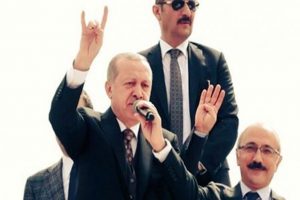
 
Turkish Pres. Erdoğan, on the campaign trail in June 2018, uses the ultra-nationalist “Wolf” salute, while Deputy Prime Minister Litfi Elvan uses the Muslim Brotherhood salute.  

Analysis, By Yossef Bodansky, Senior Editor, GIS/Defense & Foreign Affairs. “Democracy,” Turkish Pres. Reçep Tayyip Erdoğan has repeatedly told his acolytes, “is like a tram. You get off once you have reached your destination.”

On June 24, 2018, Erdoğan and his AKP (Adalet ve Kalkinma Partisi: Justice and Development Party) won the crucial presidential and parliamentary elections in Turkey. Most important, Erdoğan received a mandate to implement the transformation of Turkey into a Presidential Republic which would give him — Erdoğan — unprecedented powers until 2023, and, in all likelihood if he remained alive, even until 2028.

The coming transformation of Erdoğan’s new-old Turkey should be expected to have a major impact on the greater Middle East, greater Central Asia, and Europe. The outcome of the elections reflects accurately the popular trends in Turkey, given that the voter turnout was extremely high even for the politically active Turks. Voter turnout in the presidential election was 86.82 percent and the turnout in the parliamentary election was 87 percent.

The outcome of the presidential election was predictable. It accurately reflected the polarization of the population within Turkey. Erdoğan won 52.6 percent of the votes in most of Turkey: the areas inhabited by what Erdoğan calls “the Black Turks”. Chief rival Muharrem İnce, the Kemalist social-democrat candidate, won 30.6 percent of the votes mostly from “the White Turks” in the country’s western-most urban areas and from the urban-economic élite of Tunceli (the economic capital of Turkish Kurdistan).

The currently-imprisoned Kurdish leader, Selahattin Demirtaş, won 8.4 percent of the votes, all in Turkish Kurdistan. The rest of the votes went to minor, fringe candidates, none of whom carried even a single voting district.

Five parties crossed the 10 percent threshold and entered parliament. They compose three distinct alliances which were cemented and signed before the parliamentary election. Because of Turkey’s complex districting procedures, the numbers of seats each party is allocated in Turkey’s 600-member Grand National Assembly (Türkiye Büyük Millet Meclisi) does not reflect accurately the number of popular votes received.

The parties and their showings are:

* AKP — 42.6 percent and 295 MPs. The Justice and Development Party, Erdoğan’s party, is an Islamist-chauvinist conservative party whose ideology is based on the teachings of the Muslim Brothers.

* CHP — 22.6 percent and 146 MPs. The Republican People’s Party, İnce’s party, is a Kemalist social-democratic party but with a strong nationalist-chauvinist streak.

* HDP — 11.7 percent and 67 MPs. The Democratic Party of the Peoples, Demirtas’ party, is the Kurdish party which has recently won support from other oppressed minorities, mainly the Alavis and Armenians.

* MHP — 11.1 percent and 49 MPs. The Nationalist Movement Party is a conservative party which supports Westernized-secularist domestic policy and economy, pan-Turkic ultra-nationalist foreign policy, and outright hostility toward the EU.

* IYI — 10 percent and 43 MPs. The IYI is a new (established in October 2017) party which focuses on nationalist, liberal, and secularist political policies for Turkey. The party is an amalgam of the survivors of Turkey’s Westernized-liberal social and political movements which were suppressed by Erdoğan.

The three political blocs are:

* The People’s Alliance that is comprised of the AKP and the MHP for a total of 344 MPs.

* The Nation’s Alliance that is comprised of the CHP and the IYI for a total of 189 MPs.

* The Kurdish HDP with 67 MPs.

Thus, while Erdoğan’s AKP does not have the absolute majority of 301 MPs it sought (they have 295), the People’s Alliance has a comfortable majority to push their policies. Moreover, the Kurdish MPs threatened to boycott Parliament until Demirtaş and several other Kurdish leaders (including elected MPs) were released from jail. AKP leaders have already proposed to leaders of other parties a new law according to which all parliamentary seats which are vacant due to boycott be seized by the parliamentary leadership and be distributed among the other parties in accordance with their relative strength in parliament. The AKP is most interested in such an arrangement because it would give them about 30 additional seats and propel them over the magic 300 seats to absolute majority.

*

For Erdoğan, winning the elections amounted to a mandate to single-handedly lead Turkey into implementing his vision for regaining the long-lost Glory of the Caliphate-Empire. The elections are the beginning of a global-historical ascent of Turkey under his leadership. “The people have given us a mandate to govern,” he declared once the initial results were announced, and the new process would be implemented “rapidly”. “I will make Turkey a superpower,” Erdoğan declared. His initial goal was to make Turkey a “top 10” world power.

Regionally, Erdoğan specified, Turkey would “act more decisively” against “terrorist organizations”, would continue to “liberate Syrian lands”, and commit to actively helping the Palestinian cause. On election day, June 24, 2018, the editorial of the pro-Erdoğan Yeni Şafak elaborated on Erdoğan’s view of the region. “As Turkey heads to the polls … the Middle East holds it breath in anticipation of the results that promise to shape the future of the region. The oppressed people of Palestine, Syria, Iraq, and Libya, who look to Turkey as a beacon of hope in a region rocked by turmoil and instability, hope that the … elections will tip the balance in favor of the disenfranchised people of the Middle East.”

Erdoğan’s soul-mate, Ibrahim Karagül, the editor of Yeni Şafak, analyzed the long-term meaning of the elections. Erdoğan’s victory, he wrote on June 25, 2018, “paved the way for the giant steps to be taken from now on and revealed once more that there is no other option for this country but to advance and grow”. Erdoğan would now lead Turkey’s “great transformation, the first power buildup after the Ottoman Empire”, Karagül stressed. “This is Turkey’s victory. This is the victory of a millennium-old history.”

The outcome of Erdoğan’s electoral victory is a global event with widespread ramifications.

“This joy [of Erdoğan’s victory] was felt not only in Turkey, in this country’s cities, villages and streets, but in the depths of Skopje, Sarajevo, Baku, Crimea, Africa, and in the cities and hearts of the people of Far East Asia. It was felt in Arab streets, in the hopes of those who are stateless. Because if Anatolia rises, the region will rise — they knew this, and we knew this. … There is now going to be a geography-building Turkey that expands out to the region, the world.”

On June 27, 2018, Karagül elaborated on the historic significance of Erdoğan’s new powers. Under Erdoğan, Turkey “positioned itself in the center-most part of the global domain and activated great changes and big steps.”

Turkey no longer considers itself a part of any alliance or agreement.

Turkey “took the decision to exist on its own without being under the patronage of any power, any country, any alliance’s protection, without taking refuge in any protection shield, to lift the history-maker will that has prevailed on these lands for a millennium back up on its feet, and to give prominence to the future-oriented local resistance and mind. From now on Turkey itself is a protection shield. It is an axis in itself. It is a power chain in itself. It is a claim, a plan, the future in itself. It is a huge umbrella for Anatolia, as well the entire region. It is going to build such a political mind, such a political identity, such a resistance center will build the geography and unite the entire region.” This assertive ascent to global prominence, Karagül stressed, “is one that carries the continuity of the Seljuks, the Ottomans, and the Turkish Republic to the future”.

Karagül emphasized that granting Erdoğan unprecedented powers through the elections was the key to the future of Turkey as a leading great power. “The era of ‘strong leaders’ has started [and] countries like Turkey, the US, Russia, and China are producing strong leaders and history-maker personalities,” Karagül explained. “In this aspect, President Reçep Tayyip Erdoğan is one of the leaders of our millennium-old political history; he is the ‘Great Traveler,’ the ‘Great Leader.’ Under his leadership, Turkey is again a history-maker country, the country of the new rising era after the 20th Century. This country is now one that produces claims, power and discourse from the depths of Africa to the middle of Asia, from the Balkans to the Far East.” Erdoğan’s Turkey “can no longer be slowed down, prevented or stopped. This is what will be deemed as the third great rising period of our political history. … Get ready, we are now going to march with bigger steps!”

*

The victory of Erdoğan is essentially the affirmation of his popular mandate for charting a new and assertive course for an Islamist-chauvinist Turkey. This is the primary outcome of the profound transformation of Turkish society which has been going on sİnce Erdoğan and the AKP came to power back in 2002. By Summer 2018, Turkish historian Dr Can Erimtan points out, Erdoğan represented a popular base which “is large and fully convİnced of the fact that the current systemic change is on the right track and that the return of Islam to Turkish public life was long overdue”.

Indeed, Erdoğan increasingly emphasizes the rôle of Turkey as the spearhead of Islam. When, in early June 2018, Austrian Chancellor Sebastian Kurz announced the expulsion of mainly Turkish Islamist imams and the closing down of their mosques, Erdoğan reacted with fury in the name of Islam. “These measures taken by the Austrian Prime Minister are, I fear, leading the world towards a war between the cross and the crescent,” Erdoğan declared in Istanbul on June 10, 2018. “They say they’re going to kick our religious men out of Austria. Do you think we will not react if you do such a thing? That means we’re going to have to do something.”

As he had done beforehand, Ibrahim Karagül articulated Erdoğan’s goals most succinctly and accurately.

On June 20, 2018, Karagül explained that since Turkey was “one of the central countries of the global power domain,” she no longer needed affiliation with alliances or acceptance of conventional policies. Erdoğan’s Turkey was going to chart its own assertive course. “We are going to see a Turkey that destroys terrorism at its source, not one that tries to defeat it internally. We are going to see a country that directs its operation capability abroad, not a country that is subjected to operations; we are going to have a country that defends itself abroad, at the source of the threat, not inside the country or at its borders,” Karagül argued. With the elections there would begin a new era of greatness for Turkey.

“June 24 is going to be the date that this country, that the will in this country which has made history since the Seljuks, the political gene that rebuilt the Seljuk-Ottoman-Republic durability retakes action and the date that the final stage of the change targeting this this is completed. … Therefore, support this new great rise. Join Anatolia’s ‘Third’ great history-maker will and march. Do not forget, when we march, the Balkans are going to march, the Caucasus is going to march, Mesopotamia is going to march, the entire region is going to march. When we march, history is going to change once more, the region is going to be built once more, the Seljuks, the Ottoman, the Turkish Republic is going to march once more. This is the way it has been for a millennium — it is going to be the same once more.”

It was impossible to understate the significance of the unfolding changes in Turkey, Karagül emphasized. “This is a[n] historical reckoning, it is a civilization reckoning, a power reckoning. It is one of the greatest tests of our millennia-old history; it is a straight path that separates the right from the wrong.” Erdoğan’s Turkey is about to impose a new global order in which “there is no longer the East or West for us. There is no North or South. There is no Europe or Asia. They all exist, but we are at the center, and so are our region, our plans, our claims, our memory, our ideals, our ebullience and struggle.”

The essence of the new ascent of Turkey is the revival of its glorious heritage. “Pres. Reçep Tayyip Erdoğan’s march is a Seljuk march, an Ottoman march, a march of the Republic and the march of the future Turkey. Its foes know that this is the way it is as much as its allies do,” Karagül wrote on June 20, 2018. In a follow-up article on June 23, he stressed the centrality of the elections to the awakening of Turkey’s new power and glory. The elections are “the call of the country, the century!” The elections “are going to decide about how we are going to continue the tradition of the Seljuks, Ottomans and Turkish Republic, the continuity of states for another century and the centuries to come, how we are going to reflect that political gene onto the entire region, and how we are going to confront the threats heaped up on our border like in Canakkale [Gallipoli]. … We are in the last stage of the march of the century that we have been sustaining for 15 years. We are tasked with moving this country forward, preparing the pledges that were left for us for the next step. This historical debt is on our shoulders. We are in the final stage of realizing the promise we shouldered like the oaths of our martyrs and future generations.”

After the elections, Karagül asserted, the world would have to cope with a new and powerful “Turkey Axis” of global significance. “Turkey is going to be discussed globally, not locally. The world is going to witness a surprising rise of power.” In this new era, Turkey was going to challenge the prominence of the current great powers. “We are not going to spend the 21st Century seeking their approval. We carried that strong political gene to this century, we are now going to march with that. We are now the Seljuks, the Ottomans, the Turkish Republic, we are all of these. This is how the world will know us, this is how it has to accept us. We are the continuation of these three states, these three legacies; we are the founding generation of that future.”

In his June 20 article, Karagül stressed that the implementation of Turkey’s assent to a global rôle was already manifested in the Turkey’s posture and operations in the Middle East. Turkey’s military operations were the foundations upon which the forthcoming surge of Turkey would be built. As such, these operations were “no different than the defense of Jerusalem, the defense of Medina, the defense of Canakkale [Gallipoli], and the War of Independence. It might seem exaggerated to some, but when we take into consideration the region, the world and Turkey’s future, it is exactly like this. Because, unless we lay these foundations today, unless we decide for that powerful Turkey, if we turn into the playground of certain groups, those regions will not be able to be defended again. The decision we make today will lay the foundations of this defense.”

On June 23, 2018, Karagül explained that Turkey had already escalated its cross-border military operations, and that there would be a marked escalation after the elections. “We struck with the Euphrates Shield Operation, we hit with the Afrin operation, and recently, we are striking again with the multinational intervention front with the Qandil operation. We are going to continue after the June 24 elections. The entire anti-Turkey front between Iran and the Mediterranean is going to be collapsed; the multinational scenario positioned in those areas is going to blow up in their faces.”

Simply put, the war against, and the suppression of, the Kurds would escalate. Indeed, on June 20, 2018, Karagül put Turkey’s anti-Kurdish regional operations in a wider context. Emboldened by the outcome of the elections, Turkey was going to unilaterally remake the entire region adjacent to its borders. “Now, regardless of which country or organization is in that zone spanning the Iranian border and the Mediterranean, it is clear that we have no other choice than to be in that zone. That entire zone above the Mosul-Aleppo line is a security area for Turkey. It cannot be left unstable in any way. If it is going to remain unstable, Turkey must take control over it. The regional and global conjuncture will give this void to Turkey.”

Karagül was confident, and so must be Erdoğan, that the great powers would not be able to prevent Turkey’s regional and global ascent.

Indeed, these are not idle boasts.

The alliance between the AKP and the MHP is based on their joint commitment to expanding the assertive ascent of Turkey and the spread of pan-Turkism worldwide. The entire nationalist-chauvinist camp — both Islamists and secularists — was motivated by the urgent imperative to restore Turkey’s historic glory and might. This means surging way beyond the recent escalation of Turkish military operations from the Idlib enclave, through Manbij, to eastern Syria and northern Iraq all the way to the gates of Qandil near the Iranian border. Ultimately, Erdoğan sees himself restoring the Sunni-Ottoman hegemony over the entire greater Middle East including the Holy Shrines in Mecca, Medina and Jerusalem.

Most important to comprehending Ankara’s convictions and intent was the essence of Erdoğan’s recent dealing with King Abdullah II of Jordan. Since the Istanbul Islamic Summit in December 2017, Erdoğan had been cajoling the Jordanian monarch, ostensibly in order to help him withstand the spreading Islamist riots throughout Jordan.

The Islamist-driven socio-economic challenge to King Abdullah II is not new. Widespread demonstrations started already in 2013-14 as Jordanian economy began to sink, unemployment surged, and the huge numbers of Syrian refugees radicalized the susceptible population of northern Jordan.

Amman sought to redress the Islamist challenge by highlighting the historic rôle, and Islamic legitimacy, of the Hashemites as the true Sharifs of Mecca. (This move constitutes a profound challenge to the legitimacy of the House of al-Saud as the Custodians of the Holy Shrines.) Back in June 2015, the King presented the Hashemite Flag, which is redolent with strong Islamic symbolism and religious meaning, to the Jordan Armed Forces-Arab Army. “The Hashemite Flag’s colors and motifs combine elements of history, legitimacy, religion, and Arabism found in the Hashemite family and the Great Arab Revolt,” explained the Decree issued by the Royal Court. Indeed, the Banner was first hoisted by Al-Sharif Abu Nami in 1515 during the liberation of Mecca and Medina that established the Hashemites as the historic Sharifs of Mecca. The Banner was also hoisted by Prince Abdullah in 1920, as he led the Arab Forces to Maan during the Great Arab Revolt.

In June 2017, King Abdullah II ordered that the Hashemite flag be raised at the main entrance of the Royal Court instead of the Jordanian Flag.

However, starting in Spring 2018, popular discontent has been rising in Jordan and Islamist-inspired calls for the establishment of an Islamic State (which means the toppling of the Hashemite monarchy) multiplied. Throughout, Erdoğan reached out to King Abdullah II in several telephone conversations, the last being in June 2018. Erdoğan calls for the Hashemites to reassert their religious heritage and demand their historic rights as the Sharifs of Mecca and the rulers of the Hijaz, then ask for Turkish protection and accept ruling under Turkish suzerainty.

Erdoğan in effect argues for restoration of the relationship which existed between 1517, when the Ottomans captured the Mamluk territories, and the Great Arab Revolt of 1920 and the formal collapse of the Ottoman Caliphate in 1923. Erdoğan emphasized to King Abdullah II that such a demand would state in no uncertain terms the Islamic legitimacy of the Hashemites and make it difficult for any Islamist movement affiliated with the Muslim Brothers to challenge them. In reality, Erdoğan wants to use the Hashemites as the instrument to destabilize and undermine the House of al-Saud as part of Turkey’s ascent as the regional and all-Islamic leader.

For his part, King Abdullah II prefers to accept the lavish financial support offered by Saudi Arabia and the Gulf States. But Erdoğan would not stop or be dissuaded.

Throughout the entire election campaign, Erdoğan attended several hundred rallies where he addressed huge crowds. In all of them, he repeatedly gestured to the crowds with his right hand. His hand-message proves far more important than anything he said.

As he was waving, Erdoğan shifted between the Rabia/Rabaa and the Wolf salutes. The Rabia/Rabaa is the salute gesture of the Muslim Brothers, particularly since their demonstrations in Egypt starting 2013.

In May 2017, the AKP adopted the gesture as a new article in its bylaws as part of the AKP’s undeclared affiliation with the Muslim Brothers. The Wolf salute is a reference to the Bozkurt — the grey wolf of the steppes — which is the symbol of pan-Turkism. The gesture was originally introduced by the Grey Wolves (the underground paramilitary wing of the MHP) in the mid-1960s as a defiant hand signal identifying their members.

Thus, by publicly and frequently shifting between the Rabia/Rabaa and the Wolf salutes, Erdoğan left no doubt as to the core character and objectives of his new Turkey.

Erdoğan’s Turkey will strive to dominate the “Hub of Islam” coveted by the Muslim Brothers, and the vast Turkic lands of the greater Central Asia, Xinjiang, and eastern Siberia. Erdoğan is convinced the electoral victory of June 24, 2018, gave him the mandate to surge.

Incoming Mexican Pres. Andrés Manuel López
Obrador Strikes Immediate Conciliatory Note With US

Analysis. From GIS/Defense & Foreign Affairs, Mexico. Mexico’s new President, former Mexico City Mayor Andrés Manuel López Obrador (Movimiento Regeneración Nacional: MORENA), 64, struck an immediately conciliatory tone with US Pres. Donald Trump, when he claimed victory in the July 1, 2018, election on July 2, 2018, and Pres. Trump immediately congratulated President-elect López Obrador on his win. The mutual gestures relieved concerns that an unmanageable confrontation would immediately result from the election of the populist left-wing politician. President-elect López Obrador was due to be sworn into office on December 1, 2018.

Sr López Obrador’s anticipated victory was a profound upset to traditional Mexican politics, and MORENA was set to take office in coalition with the left-wing Partido del Trabajo (PT) and conservative Partido Encuentro Social (PES). With 66 percent of the votes counted by 14.00 hrs on July 2, 2018, the MORENA-led coalition candidate had taken 53.3 percent of the vote, compared with his nearest rival, Ricardo Anaya (Partido Acción Nacional: PAN, PRD, MC) on 22.5 percent, José Antonio Meade (Partido Revolucionario Institucional: PRI, PVEM, NA) with 16 percent, Jaime Rodríguez Calderón (independent) with 5.3 percent, and Margarita Zavala (independent; wife of former Pres. Felipe Calderón) with 0.1 percent. The extent of Sr López Obrador’s win highlighted the extent to which Sr Meade’s once all-powerful PRI — the party of outgoing Pres. Enrique Peña Nieto, who was ineligible to run for a second term — had fallen in public prestige.

Despite public focus on Sr López Obrador’s differences with US Pres. Trump, the reality was that the new President’s preoccupation would have to be on delivering on promises to contain public sector corruption, ending narco-trafficking and other large-scale criminal enterprises, constraining illegal — largely transit — immigration from Central America, and in reinvigorating investment. All of these, however, have some relationship to Mexico’s participation in the North American Free Trade Agreement (NAFTA) which both Sr López Obrador and Pres. Trump wish to modify. What has been significant has been the reality that Sr López Obrador has sensed that the Trump rhetoric on NAFTA has been to create a negotiating position for the Treaty’s re-drafting — perceived in both Mexico and the US as long overdue — whereas the approach of the Canadian Government, the third party to NAFTA, has been to regard Pres. Trump’s rhetoric as the end of negotiation.

Polling late on July 2, 2018, indicated that MORENA allies would take between 56 and 70 seats in the 128-member Senate and between 256 and 291 spots in the 500-seat lower house, the Cámara de Diputados. Forecasts at the same time indicated gubernatorial wins for allies of MORENA in at least four of eight state races on the ballot plus for the head of government in Mexico City. The central state of Guanajuato was expected to go to a candidate of the conservative Partido Acción Nacional (PAN). Overall, Sr López Obrador’s election platform was vague but conciliatory, indicating a program favoring the commercial sector, and with few specifics on immigration, foreign policy, or national security.


Germany’s Angela Merkel prevents the breakup of her government with immigration deal

0
The New York Times.
Chaos for Merkel as minister offers to resign over immigration

In light of the immigration debate that has ripped Europe, Germany’s interior minister, Horst Seehofer, offered his resignation late on July 1. 

July 2 at 5:30 PM

 Chancellor Angela Merkel avoided the breakup of her government on Monday, emerging from an immigration fight with her coalition intact but fragile.

A clash that lasted weeks ended in an uneasy truce when Merkel and her party, the Christian Democrats (CDU), reached a compromise on immigration policy with partner Christian Social Union (CSU). Interior Minister and CSU leader Horst Seehofer backed off his threat to resign and potentially bring down the government. A hard-line stance on immigration and criticism of Merkel’s decision to welcome nearly a million migrants in 2015 have been part of the CSU’s political strategy ahead of regional elections in the fall.

The text, released in simple bullet points to be further negotiated in the days ahead, was a testament to how far Merkel and the German government have come from the “Willkommenskultur” (“welcoming culture”) she preached in 2015.

The deal proposes new screening at the Germany-Austria border to “prevent asylum seekers whose asylum procedures are the responsibility of other E.U. countries from entering the country.” A network of “transit centers” will serve as processing points from which ineligible migrants would then be sent back to relevant countries, but only if those countries consent. If those countries do not agree, Germany’s rejected migrants would be sent to Austria, “on the basis of an agreement.”

Merkel was widely seen here as handling the rebellion well. “She will prove to be a stable lighthouse in a tumultuous sea,” said Nils Diederich, a political science professor at the Free University Berlin.

But the internal turbulence has preoccupied Merkel at a time when Germany is reckoning with far bigger international challenges, especially the growing transatlantic acrimony between Berlin and the Trump administration.


German ChancellorAngela Merkel leaves the Bundestag (lower house of parliament) in Berlin after a parliamentary group meeting of the conservative CDU/CSU union, on July 2, 2018. (Omer Messinger/AFP/Getty Images)

And the problems within her government are unlikely to go away: Relations between Merkel’s CDU and its Bavarian sister have been badly strained, and the CSU is riven by competing factions. That will make it difficult for her to return Germany to the relatively stable state for which it had long been known during her nearly 13-year tenure.

Merkel hailed the compromise as one that “preserves the spirit of partnership in the European Union and at the same time is a decisive step towards organizing and controlling secondary migration.”

Seehofer said: “I am glad that this agreement has been reached. It has once again become clear that it is worth fighting for a conviction. And what follows now is a very sustainable and clear agreement for the future.”

It was not immediately clear the extent to which Austria’s right-wing government, which has opposed Europe’s migration wave, was consulted in these discussions.

The compromise also needs approval by Merkel’s other coalition partner: Germany’s Social Democratic Party (SDP), which might chafe at the notion of migrant centers or camps along the border but which also stands to lose in any new elections that might be triggered by rejecting the compromise. The CDU, the CSU and the SDP began meeting after Merkel and Seehofer finished their negotiations.

Diederich noted that the CSU’s motivation in precipitating the crisis likely stemmed from its interest in fending off the far-right, anti-immigrant Alternative for Germany (AfD) in October’s elections. “What’s happening now has nothing to do with content,” Diederich said. “It’s solely aimed at the upcoming Bavarian state elections.”

That strategy hasn’t been successful, according to recent polls in Bavaria, which show a 1.9 percent drop in support for the CDU/CSU coalition, compared with a 2.4 percent rise in support for the AfD.

By Monday morning, there were already signs of regret from some CSU officials. Markus Söder, the Bavarian state premier — as well as Seehofer’s rival in the party — told reporters he was “very surprised” about Seehofer’s offer to step down. “One thing is very clear: The stability of the government is not a question for us,” he told German news services Monday. “One can reach a lot within a government, but not outside of it.”

The real victor of the fight could well be the AfD. Its leaders framed the standoff as a confirmation of its criticism of the political establishment. The party’s harsh anti-migrant stances, once banished to the fringes of public discourse, have entered the conservative mainstream.

“It’s a process of self-delegitimization that’s going on among the establishment,” said Michael Koss, a political scientist at Ludwig-Maximilians-University Munich, referring to the spat inside the coalition. “The AfD always claimed from the outside that the establishment politicians were only out for their own good, and currently I have to say I agree.”

The AfD wasted no time attacking Seehofer’s dramatics Monday morning. “Horst Seehofer and the CSU have been staging a miserable and slimy theater,” Alice Weidel, the AfD’s leader, posted on Facebook. “The back and forth and the resignation from the resignation of the interior minister were merely staged.” She then declared: “The AfD is the only power that can bring this asylum chaos under control.”

In fact, the number of asylum seekers in Germany has fallen dramatically to pre-2015 levels, thanks in part to Merkel’s more restrictive policies in recent years.

Whether the AfD can continue to capitalize on the coalition’s fissures remains to be seen, but what seems most certain is that in trying to gain back voters from the AfD and challenge Merkel, Seehofer miscalculated.

Merkel, who has been Germany’s chancellor since 2005, has often thwarted opponents by assuming their positions. But on migration — although some on the political left have criticized her for making too many concessions — she has refused to call the 2015 influx a mistake or to adopt the anti-migrant rhetoric of her more hard-line allies.

“She’s in the final phase of her political career. She aims to be remembered as a great European, or the honorable grandchild of Helmut Kohl,” said Werner Weidenfeld, a German political scientist. “That’s why this political debate has a different dimension.”

Political opponents wondered aloud how long the truce would endure.

“How often have #Merkel and #Seehofer said they’ve found a ‘good compromise’ that then resulted in an escalation just a few hours / days / weeks later?” tweeted Katrin Göring-Eckardt, the leader of the Green Party. “It’s exhausting. It doesn’t solve any problems, it just creates new ones.”

Griff Witte in Washington contributed to this report.

https://www.washingtonpost.com/world/europe/germanys-angela-merkel-may-have-won-fight-over-migration-but-her-coalition-is-in-doubt/2018/07/02/d4e02b60-7da2-11e8-a63f-7b5d2aba7ac5_story.html?noredirect=on&utm_term=.e949ce55c902

Merkel, to Survive, Agrees to Border Camps for Migrants

0

The New York Times

Chancellor Angela Merkel of Germany leaving a meeting of the Christian Democratic Union in Berlin early Monday. “We share a common goal in migration policy,” the party said in a statement. “We want to order, control and limit migration to Germany.”CreditOmer Messinger/Agence France-Presse — Getty Images

BERLIN — Chancellor Angela Merkel, who staked her legacy on welcoming hundreds of thousands of migrants into Germany, agreed on Monday to build border camps for asylum seekers and to tighten the border with Austria in a political deal to save her government.

It was a spectacular turnabout for a leader who has been seen as the standard-bearer of the liberal European order but who has come under intense pressure at home from the far right and from conservatives in her governing coalition over her migration policy.

Although the move to appease the conservatives exposed her growing political weakness, Ms. Merkel will limp on as chancellor. For how long is unclear. The nationalism and anti-migrant sentiment that has challenged multilateralism elsewhere in Europe is taking root — fast — in mainstream German politics.

Ms. Merkel agreed to the latest policy after an insurrection over migration policy led by her interior minister, Horst Seehofer, threatened to bring down her coalition.

Mr. Seehofer demanded that Germany block migrants at the border if they have no papers, or have already registered in another European country.

Ms. Merkel, who supports free movement across Europe’s borders, has been opposed to any moves effectively resurrecting border controls until Monday night, when she made the deal to stay in power.

Migration to Europe Is Down Sharply. So Is It Still a ‘Crisis’?

Despite the claims of far-right leaders, the number of undocumented migrants arriving each year is back to pre-crisis levels — and has been for some time.

The new policy is subject to the approval of the Social Democrats, the third party in Ms. Merkel’s coalition.

It would establish camps, called “transit centers,” at points along the border. Newly arriving migrants would be screened in the centers, and any determined to have already applied for asylum elsewhere in the European Union would be turned back.

Under Ms. Merkel, Germany has been a bulwark against the rise of the far right in Europe and the increasing turn against migrants. Even as neighboring countries turned away those fleeing war and strife in the Middle East, she has welcomed more than a million since 2015, and lobbied for a collective European solution.

Comparing the migrant crisis to a challenge on the same scale as Germany’s postwar reconstruction and reunification, she appealed to fellow Germans that they were up to the challenge.

“We can manage,” she said famously in 2015, inspiring many to donate food, clothes and their time to help.

Since then the number of new migrants has dropped to a fraction of what it was three years ago. But the good will has been eroding as Germany has struggled to absorb those already in the country.

Image
Horst Seehofer, the German interior minister and the leader of the Bavarian party Christian Social Union, was to meet the chancellor in Berlin on Monday in a last-ditch effort to reach an agreement.CreditChristof Stache/Agence France-Presse — Getty Images

An ascendant far right has relentlessly pushed the narrative that the migrant crisis is continuing and that crime is up.

It is actually at a 25-year low but a series of high-profile assaults in Germany involving migrants, including the rape and killing of a 19-year-old German student and the terrorist attack on a Christmas market that killed 12 people, has helped to turn public sentiment.

Anti-migrant feelings helped lead to the rise of a far-right political party, the Alternative for Germany, or AfD, which has put Germany’s more mainstream parties under pressure to change.

Ms. Merkel has been unable to stem the changing tide, with cascading implications for politics in Germany and Europe.

“Her political capital is depleted,” said Thomas Kleine-Brockhoff, director of the Berlin office of the German Marshall Fund. “We are well into the final chapter of the Merkel era.”

“Under her continued leadership, Germany will be largely immobilized at home and in Europe,” Mr. Kleine-Brockhoff added, a dramatic change for a country that has been Europe’s political and economic anchor. “But the promise of Merkel was stability, not immobility.”

Migrants Are on the Rise Around the World, and Myths About Them Are Shaping Attitudes

Immigrants have often delivered economic benefits to the countries taking them in, but they have also upended the politics of the industrialized world — where the native-born often exaggerate their numbers and their needs.

As the chancellor faces domestic challenges, she is also confronted by pressures from the Trump administration.

Over the past month, President Trump wrote sharply worded letters to Ms. Merkel and the leaders of several other NATO allies, criticizing them for spending too little on their own defense.

In his letter to Ms. Merkel, Mr. Trump said that Germany was to blame for other countries’ failure to spend enough, “because others see you as a role model.”

German postwar politics has been built around stability and consensus. Ms. Merkel governed in that tradition and became closely associated with it. She is one of only three chancellors who have run the country since 1982. And she has fended off many political opponents during her 13 years as chancellor.

When Ms. Merkel first took office in 2005, it was a different world. A year after 10 formerly Communist eastern European countries joined the European Union, the Continent was still rife with idealism. Ms. Merkel, a pastor’s daughter and trained scientist who had grown up in Communist East Germany, was not only the first woman but the first easterner to lead her reunified country.

She steered Germany through a period of power and prosperity even as economic and political fires broke out abroad. Once in a while she veered from her calm-bordering-on-boring protocol; there were even times when she made radical decisions.
Journalists waited outside the headquarters of the Christian Democratic Union in Berlin on Sunday as its leaders held marathon talks.CreditOmer Messinger/Agence France-Presse — Getty Images

She announced the end of nuclear power production after the Fukushima reactor disaster in Japan. She was determined to keep Greece inside the eurozone, even at the cost of painful austerity policies.

In last September’s election, Ms. Merkel’s conservatives recorded their worst postwar result. It took two tries, negotiations with six other parties, nearly six months and a lot of concessions to political rivals to form a government.

In the vote, the AfD emerged as the third-strongest force in the German Parliament and the main opposition party.

Its rise has helped shrink the support base of the once mighty Social Democrats, and opened a rift in Ms. Merkel’s Christian Democratic Union, or C.D.U., between those who stand by the chancellor’s liberal worldview and those who want her gone and yearn for a more traditional conservatism.

Above all, the AfD’s rise has sharply shifted the powerful and already very conservative state of Bavaria to the right. Mr. Seehofer’s tough stand on migrants is seen in part as a bid to protect his party’s right flank.

Even now, diminished and fighting political rebellions, Ms. Merkel made it clear on Monday that she is determined to battle on for those values that for many years made her one of the most popular politicians at home and abroad. But she also tried to put the best face on her concession.

“The security of our country begins on our borders,” the chancellor told reporters after meeting for several hours with the leaders of her party and those of Mr. Seehofer’s Bavarian conservatives.

She described the measure as simultaneously a national action to secure Germany’s borders, but in cooperation with the European Union partner countries that the refugees are coming from.

But Mr. Kleine-Brockhoff saw it differently.

“What looks like a power struggle surrounding Ms. Merkel, behind this is actually a conflict about the integrity of the European project,” he said. “The four freedoms of the E.U. can no longer be enforced. We can’t agree on freedom of movement of refugees and immigrants; the whole system has ceased to function.”

Follow Katrin Bennhold and Melissa Eddy on Twitter: @kbennhold and @meddynyt.

Christopher F. Schuetze contributed reporting from Berlin, and Julie Hirschfeld Davis from Washington.

A version of this article appears in print on , on Page A1 of the New York edition with the headline: Facing Revolt, Merkel Allows Border Camps.
https://www.nytimes.com/2018/07/02/world/europe/angela-merkel-migration-coalition.html?emc=edit_na_20180702&nl=breaking-news&nlid=191943ing-news&ref=headline

Photos From the Nationwide “Families Belong Together” Marches

0

ALAN TAYLOR The Atlantic JULy 1, 2018

Across the country yesterday, hundreds of thousands of people took to the streets in small towns and big cities to march and voice their opposition to the Trump administration’s immigration policies. Demonstrators in more than 700 locations called for the swift reunification of immigrant families separated by border agencies, and an end to the policies that cause so many separations. Collected here, photos from Indianapolis, Boston, Denver, Los Angeles, Chicago, Salt Lake City, Philadelphia, Washington, D.C., and more.

 
  • Immigration activists march toward the U.S. Capitol to protest the Trump Administration’s immigration policy in Washington, D.C., on June 30, 2018. 

    Joshua Roberts / Reuters

  • A woman attends a protest outside the Metropolitan Detention Center, after marching to decry Trump administration immigration and refugee policies on June 30, 2018, in Los Angeles, California. 

    David McNew / Getty

  • An aerial view of the demonstrators at “Families Belong Together—Freedom for Immigrants March Los Angeles” at Los Angeles City Hall on June 30, 2018, in Los Angeles, California. 

    Emma McIntyre / Getty for Families Belong Together LA

  • Walden Paige, of Marshalltown, Iowa, center, looks on during a rally to protest the Trump administration’s immigration policies on June 30, 2018, outside the Marshall County Courthouse in Marshalltown. 

    Charlie Neibergall / AP

  • Young children hold hands during a rally to protest the Trump administration’s immigration policies outside the Marshall County Courthouse in Marshalltown, Iowa, on June 30, 2018. 

    Charlie Neibergall / AP

  • Jonathan Reed of Silver Spring, Maryland, holds up a sign as he stands in a spray of water from a fire truck during rally by immigration activists to protest against the Trump Administration’s immigration policy outside the White House in Washington, D.C., on June 30, 2018. 

    Joshua Roberts / Reuters

  • Activists march to protest the Trump administration’s approach to illegal border crossings and separation of children from immigrant parents, on June 30, 2018, in Washington, D.C. 

    Alex Brandon / AP

  • Immigration activists gather during a rally outside the White House on June 30, 2018. 

    Joshua Roberts / Reuters

  • Activists march past the White House to protest the Trump administration’s immigration policies on June 30, 2018. 

    Alex Brandon / AP

  • An activist places a sign on the doors of the Department of Justice during a protest march on June 30, 2018, in Washington, D.C. 

    Alex Brandon / AP

  • Outside the U.S Embassy in Mexico City, Mexico, demonstrators take part in a protest against U.S. President Donald Trump administration’s immigration policies on June 30, 2018. 

    Daniel Becerril / Reuters

  • Outside the U.S Embassy in Mexico City, Mexico, demonstrators protest against U.S. immigration policies on June 30, 2018. 

    Daniel Becerril / Reuters

  • In Portland, Maine, about 2,000 people protest Trump administration immigration policies outside City Hall on June 30, 2018. 

    David Sharp / AP

  • A woman takes part in a protest against U.S. immigration policies separating migrant families in Chicago on June 30, 2018. 

    Jim Young / AFP / Getty

  • Demonstrators protest against Immigration and Customs Enforcement (ICE) and the Trump administration’s immigration policies on June 30, 2018, in Chicago, Illinois. 

    Joshua Lott / Getty

  • Demonstrators protest against Trump administration immigration policies at Daley Plaza in Chicago, Illinois, on June 30, 2018. 

    Joshua Lott / Getty

  • A woman takes part in a protest against the US immigration policies separating migrant families in Chicago on June 30, 2018. 

    Jim Young / AFP / Getty

  • Protesters rally against President Trump’s immigrant family separation policies in Philadelphia, Pennsylvania, on June 30, 2018. 

    Dominick Reuter / AFP / Getty

  • Protesters gather near a U.S. Customs and Border Protection station to speak out against immigration policy in McAllen, Texas, on June 30, 2018. 

    Eric Gay / AP

  • Homeland Security police officers watch over protesters at the Paso Del Norte port of entry, an international bridge connecting Juarez, Mexico in downtown El Paso, Texas, on June 30, 2018. 

    Julio-César Chávez / Reuters

  • Demonstrators rally against the Trump administration’s immigration policies outside of the Texas Capitol in Austin, Texas, on June 30, 2018. 

    Tamir Kalifa / Getty

  • A sign lampoons U.S. first lady Melania Trump’s “I don’t really care, do u?” jacket worn on a recent border visit, as protesters approach the international bridge, during a protest march in downtown El Paso, Texas, on June 30, 2018. 

    Julio-César Chávez / Reuters

  • In Salt Lake City, Utah, activists hold signs during a rally to protest the Trump administration’s immigration policies on June 30, 2018. 

    Rick Bowmer / AP

  • Demonstrators carry signs during the “Families Belong Together” rally in Boston, Massachusetts, on June 30, 2018. 

    Brian Snyder / Reuters

  • A crowd gathers on Boston Common during the “Rally Against Separation” in Boston, Massachusetts, on June 30, 2018. 

    Winslow Townson / AP

  • In Indianapolis, Indiana, an activist holds a sign during a protest of the Trump administration’s approach to illegal border crossings and separation of children from immigrant parents at the Statehouse, on June 30, 2018. 

    Darron Cummings / AP

  • In downtown Denver, Colorado, Brenda Villa, left, comforts her 11-year-old daughter, Kathryn, after speaking during an immigration rally and protest in Civic Center Park on June 30, 2018. The protest was one of hundreds staged nationwide that has brought liberal activists, parents and first-time protesters—motivated by accounts of children separated from their parents at the US-Mexico border—to press President Donald Trump to reunite families quickly. 

    David Zalubowski / AP

  • Protesters wave placards during an immigration rally and protest in Civic Center Park on June 30, 2018, in downtown Denver. 

    David Zalubowski / AP

  • Demonstrators cross the Brooklyn Bridge during a march against the separation of immigrant families, on June 30, 2018 in New York. 

    Eduardo Munoz Alvarez / AFP / Getty

  • Activists hold protest signs during a rally against the Trump administration’s immigration policies on June 30, 2018, in New York City. 

    Kevin Hagen / AP

  • Demonstrators participate in “Keep Families Together” march to protest Trump administration’s immigration policies in Manhattan, New York, on June 30, 2018. 

    Shannon Stapleton / Reuters
  • https://www.theatlantic.com/photo/2018/07/photos-from-the-nationwide-families-belong-together-marches/564251/

Το πραγματικό κινεζικό μοντέλο

0

Δεν είναι αυτό που νομίζετε ότι είναι

Περίληψη:

Τι ακριβώς είναι το μοντέλο της Κίνας; Είναι σαφές ότι η οικονομία της Κίνας έχει αναπτυχθεί παρά την απόφασή της να αποκρούσει την δημοκρατία Δυτικού τύπου, αλλά μήπως αυτό σημαίνει ότι ο αυταρχισμός ήταν υπεύθυνος για την καπιταλιστική επιτυχία της χώρας; Η απάντηση είναι αρκετά πιο πολύπλοκη.

Η YUEN YUEN ANG είναι αναπληρώτρια καθηγήτρια Πολιτικής Επιστήμης στο Πανεπιστήμιο του Michigan και η συγγραφέας του βιβλίου με τίτλο How China Escaped the Poverty Trap. [1]

Το 2016, ο πολιτικός του Νότιου Σουδάν, Anthony Kpandu [2], ηγήθηκε μιας αντιπροσωπείας στην Κίνα. Αυτό που είδε εκεί τον εντυπωσίασε βαθιά: Σύγχρονα βιομηχανικά πάρκα, τρένα υψηλής ταχύτητας, αστραφτερή υποδομή, εκθαμβωτικοί ορίζοντες. «Ήταν υπέροχο», ενθουσιάστηκε. «Δεν μπορείς να το πιστέψεις, αλλά είναι εκεί. Δεν έχω δει ποτέ κάτι τέτοιο».

Τέτοιες αντιδράσεις συμβάλλουν στον αυξανόμενο φόβο στην Δύση ότι οι αναπτυσσόμενες χώρες βρίσκουν το λεγόμενο «πρότυπο της Κίνας» πιο ελκυστικό από την φιλελεύθερη δημοκρατία. Η κινεζική ηγεσία έχει επιδεινώσει ακούσια τους φόβους αυτούς. Στο 19ο Συνέδριο του Κόμματος το 2017, ο Κινέζος πρόεδρος Xi Jinping δήλωσε με βεβαιότητα ότι άλλα κράτη θα πρέπει να μάθουν από την «κινεζική λύση για την αντιμετώπιση των προβλημάτων που αντιμετωπίζει η ανθρωπότητα». Σε ένα άρθρο γνώμης στην εφημερίδα The Wall Street Journal [3], ο δημοσιογράφος Richard McGregor έγραψε ότι ο Xi προωθεί την ιδέα ότι τα «αυταρχικά πολιτικά συστήματα δεν είναι μόνο νομιμοποιημένα αλλά μπορούν να ξεπεράσουν τις Δυτικές δημοκρατίες». Ο πραγματικός στόχος του Πεκίνου, προειδοποίησε, «είναι να ενθαρρύνει την εξάπλωση του αυταρχισμού» [4].

02072018-1.jpg

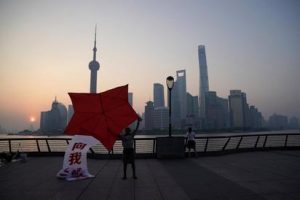
Η οικονομική περιοχή της Σαγκάης, τον Ιούλιο του 2017 ALY SONG / REUTERS
———————————————————————————

Ωστόσο, παρ’ όλο τον πανικό και την παράνοια για την εξέλιξη αυτή, μερικά βασικά ερωτήματα παραμένουν αναπάντητα. Τι ακριβώς είναι το μοντέλο της Κίνας; Είναι σαφές ότι η οικονομία της Κίνας έχει αναπτυχθεί παρά την απόφασή της να αποκρούσει την δημοκρατία Δυτικού τύπου, αλλά μήπως αυτό σημαίνει ότι ο αυταρχισμός ήταν υπεύθυνος για την καπιταλιστική επιτυχία της χώρας;

Στην πραγματικότητα, διάφορες περιοχές της Κίνας έχουν ακολουθήσει πολλές διαφορετικές διαδρομές προς την οικονομική και κοινωνική ανάπτυξη τις τελευταίες δεκαετίες. Το μοντέλο της Κίνας αλλάζει ανάλογα με το πού και πότε το βλέπει κάποιος. Πιο σημαντικό, είναι ανακριβές -και μάλιστα παραπλανητικό- να εξομοιώνεται το μοντέλο της Κίνας με τον συμβατικό αυταρχισμό. Όπως έχω υποστηρίξει σε αυτό το περιοδικό [5], το πολιτικό θεμέλιο της οικονομικής επιτυχίας της Κίνας από τότε που ο Κινέζος ηγέτης Deng Xiaoping άνοιξε τις αγορές το 1978 δεν ήταν η απολυταρχία, αλλά η απολυταρχία με δημοκρατικά χαρακτηριστικά. Με το να μεταρρυθμίσει την γραφειοκρατία της Κίνας, ο Ντενγκ εισήγαγε δημοκρατικά χαρακτηριστικά, ειδικά την λογοδοσία, τον ανταγωνισμό και μερικά όρια στην εξουσία, στο μονοκομματικό σύστημα της χώρας. Η εμπειρία της Κίνας στην εποχή των μεταρρυθμίσεων δείχνει ότι ακόμη και μια μερική έγχυση δημοκρατικών ποιοτήτων σε ένα αυταρχικό σύστημα μπορεί να απελευθερώσει τεράστια πρωτοβουλία και προσαρμοστική ικανότητα. Οι Δυτικές δημοκρατίες δεν χρειάζεται να φοβούνται το μοντέλο της Κίνας. Αντ’ αυτού, θα πρέπει να ανησυχούν για την γενικευμένη παρερμηνεία αυτού του μοντέλου από την Δύση, τον αναπτυσσόμενο κόσμο και τις πολιτικές ελίτ της ίδιας της Κίνας.

ΚΑΘΟΡΙΖΟΝΤΑΣ ΤΟ ΚΙΝΕΖΙΚΟ ΜΟΝΤΕΛΟ

Σήμερα, φαίνεται ότι ο καθένας έχει μια άποψη για το μοντέλο της Κίνας. Στα μέσα μαζικής ενημέρωσης στην Δύση, είναι απλώς αυταρχικός καπιταλισμός -μονοκομματική διακυβέρνηση σε συνδυασμό με εκτεταμένη κρατική ιδιοκτησία και έλεγχο της οικονομίας. Πολλοί ειδικοί απηχούν παραλλαγές αυτής της ερμηνείας. Ο McGregor ορίζει το σύστημα της Κίνας ως «κόμμα λενινιστικού στυλ με μια γραφειοκρατική κουλτούρα αιώνων». Ο οικονομολόγος Barry Eichengreen [6] το αποδίδει ως «ισχυρός πολιτικός έλεγχος».

Αλλά άλλοι διαφωνούν. Ο αναλυτής Joshua Cooper Ramo [7] δημιούργησε τον όρο «η Συναίνεση του Πεκίνου» για να περιγράψει ένα μοντέλο ανάπτυξης με βάση την καινοτομία, όπου η οικονομική επιτυχία μετράται «όχι από την αύξηση του ΑΕΠ αλλά από την βιωσιμότητα και την ισότητα» (μια έκπληξη για τον οποιονδήποτε γνωρίζει το σοβαρό πρόβλημα ανισότητας της Κίνας). Ο Κινέζος σχολιαστής Zhang Weiwei, από την άλλη πλευρά, λέει ότι οι «υπερ»-συνθήκες –«ένας υπερ-μεγάλος πληθυσμός, ένα υπερμέγεθες έδαφος, μια υπερ-μεγάλη ιστορία και ένας υπερπλούσιος πολιτισμός»- έχουν δημιουργήσει ένα μοντέλο που χαρακτηρίζεται από μια μικτή οικονομία, σταδιακές μεταρρυθμίσεις και ένα φωτισμένο κράτος. Ο θεωρητικός Daniel Bell [8], εν τω μεταξύ, περιγράφει την Κίνα ως αξιοκρατία, όπου οι αξιωματούχοι επιλέγονται ανάλογα με την ικανότητά τους και όχι από πολυκομματικές εκλογές.

Όλες αυτές οι ερμηνείες είναι εν μέρει σωστές, αλλά καμία από αυτές δεν είναι πλήρης. Η Κίνα είναι μια τεράστια χώρα που έχει αλλάξει ραγδαία τις τελευταίες τέσσερις δεκαετίες. Ως αποτέλεσμα, υπάρχουν πολλά και μερικές φορές αντιφατικά μοντέλα της Κίνας ανάλογα με το πού και πότε κοιτάζει κάποιος.

Δείτε, για παράδειγμα, έναν από τους πιο ευημερούντες νομούς της επαρχίας Zhejiang (στο βιβλίο μου [9], χρησιμοποιώ το ψευδώνυμο «Ευλογημένη Κομητεία» για να εξασφαλίσω την ανωνυμία). Μεταξύ του 1978 και του 1993, όταν ο ιδιωτικός καπιταλισμός εξακολουθούσε να είναι απαγορευμένος, ο νομός αυτός βασιζόταν σε συλλογικές (κολλεκτιβιστικές) επιχειρήσεις, οι οποίες ανήκαν στις κυβερνήσεις των χωριών και των δήμων. Παρά την έλλειψη επίσημων δικαιωμάτων ιδιωτικής ιδιοκτησίας, η βιομηχανική παραγωγή αυξήθηκε 33 φορές κατά την διάρκεια εκείνης της περιόδου καθώς οι συλλογικές οικονομικές μονάδες είχαν την δυνατότητα να διακρατούν πλήρως τα κέρδη. Όταν εξετάζεται μεμονωμένα, αυτό το στιγμιότυπο καταδεικνύει ότι οι σταδιακές μεταρρυθμίσεις στα όρια μιας ελεγχόμενης οικονομίας ήταν αρκετές για να τροφοδοτήσουν την ανάπτυξη.

Αλλά η ιστορία δεν τελειώνει εδώ. Μεταξύ του 1993 και του 1995, καθώς το Πεκίνο απελευθέρωσε περαιτέρω τις αγορές, η κυβέρνηση του νομού ιδιωτικοποίησε μαζικά τις συλλογικές επιχειρήσεις. Αν και η έλλειψη δικαιωμάτων ιδιωτικής ιδιοκτησίας δεν είχε εμποδίσει την απογείωση της βιομηχανικής παραγωγής, είχε εμποδίσει την επέκταση των επιχειρήσεων. Με το να διευκολύνουν τις ιδιωτικοποιήσεις και να αποφύγουν τις άμεσες παρεμβάσεις στην οικονομία, οι τοπικοί αξιωματούχοι υποστήριξαν την εμφάνιση της πρώτης γενιάς ιδιωτών επιχειρηματιών του νομού, αρκετοί από τους οποίους εξελίχθηκαν για να καταστούν παγκοσμίως ανταγωνιστικοί εταιρικοί τιτάνες. Αυτό το δεύτερο στιγμιότυπο επικυρώνει την «Συναίνεση της Ουάσινγκτον», [10] την πεποίθηση ότι τα δικαιώματα ιδιωτικής ιδιοκτησίας και μια περιορισμένη κυβέρνηση είναι οι απαραίτητες προϋποθέσεις για την οικονομική ανάπτυξη.

Προχωρώντας στην πρώτη δεκαετία αυτού του αιώνα, καθώς οι τοπικές βιομηχανίες άνθισαν, ο νομός έγινε συμφορημένος και χαοτικός. Αυτό οδήγησε τις ιδιωτικές επιχειρήσεις στο να ζητήσουν κυβερνητική παρέμβαση για τον συντονισμό της χωροθέτησης των διαφόρων βιομηχανιών και για την παροχή πολεοδομικού σχεδιασμού. Για να γίνει αυτό, η τοπική ηγεσία έπρεπε να μεταφέρει εργοστάσια και κατοίκους, μερικές φορές μέσω εξαναγκασμού. Αλλά αυτό το ισχυρό βήμα δημιούργησε μια νέα επιχειρηματική περιοχή στην καρδιά του νομού, όπου οι εταιρείες θα μπορούσαν να συγκεντρωθούν. Αυτή η κίνηση τόνωσε την διάδοση υπηρεσιών όπως η οικονομική διαχείριση και το μάρκετινγκ που βοήθησαν τις βιομηχανίες να αναβαθμιστούν. Επίσης, βελτίωσε σημαντικά τις συγκοινωνίες και την ποιότητα της οικιστικής ζωής. Τέτοια εκτεταμένα μέτρα πήγαν την ευημερία του νομού σε ένα νέο επίπεδο, όχι απλώς με την αύξηση της παραγωγής αλλά με τη μετατροπή της δομής της οικονομίας. Αυτό το τρίτο στιγμιότυπο από το 2000 έως το 2010 παρέχει αποδείξεις για την θεωρία ότι η βαριά κρατική παρέμβαση και ο σχεδιασμός μπορούν να ωθήσουν την οικονομική ανάπτυξη.

Σε μια μικρή περιοχή της Κίνας με πληθυσμό μικρότερο του ενός εκατομμυρίου ανθρώπων, είναι δυνατόν να παρατηρηθούν τρία ριζικά διαφορετικά μοντέλα ανάπτυξης, καθένα από τα οποία διαδραμάτισε σημαντικό ρόλο στον οικονομικό και κοινωνικό μετασχηματισμό της περιοχής.

ΔΙΕΥΘΥΝΟΜΕΝΟΣ ΑΥΤΟΣΧΕΔΙΑΣΜΟΣ

Οι περισσότερες εξηγήσεις για το μοντέλο της Κίνας υπογραμμίζουν τις ιδιότητες που επικρατούσαν μόνο σε ορισμένες περιοχές και σε συγκεκριμένα χρονικά σημεία. Αυτό όμως δεν σημαίνει ότι δεν υπάρχει κανένα μοντέλο της Κίνας. Από το 1978, το πιο συνεπές χαρακτηριστικό της ανάπτυξης της Κίνας ήταν το σύστημα διακυβέρνησης που επέτρεψε την διαρκή αλλαγή, συχνά με απροσδόκητους τρόπους.

Αυτό το προσαρμοστικό σύστημα, που κληροδοτήθηκε από τον Ντενγκ, είναι αυτό που ονομάζω ως «κατευθυνόμενος αυτοσχεδιασμός». Τρεις καταστροφικές δεκαετίες υπό την δικτατορία του Μάο Τσε Τουνγκ δίδαξαν τους μεταρρυθμιστές που ανέλαβαν [την διακυβέρνηση], τα όρια και τους κινδύνους του ελέγχου από την κορυφή προς τα κάτω. Αν και ο Deng απέρριψε την Δυτικού τύπου δημοκρατία, ήταν επίσης αποφασισμένος να αφαιρέσει ιδεολογικά δεσμά και να απελευθερώσει την πρωτοβουλία «από κάτω προς τα πάνω» μέσα στην απέραντη γραφειοκρατία της Κίνας.

Υπό τον Deng, το Πεκίνο έγινε διευθυντής, όχι δικτάτορας. Αντί να προσπαθήσουν να κατευθύνουν την πορεία τους προς την ταχεία εκβιομηχάνιση και ανάπτυξη, οι μεταρρυθμιστές εστίασαν στην δημιουργία των κατάλληλων συνθηκών για τους χαμηλότερου επιπέδου αξιωματούχους για να ξεκινήσουν [εκείνοι] την ανάπτυξη στις δικές τους κοινότητες χρησιμοποιώντας τοπικούς πόρους. Αυτό συνεπάγεται κάτι περισσότερο από απλή αποκέντρωση. Το να επιτραπεί απλώς στις τοπικές κοινότητες να κάνουν ό, τι θέλουν, θα είχε τροφοδοτήσει το χάος. Το Πεκίνο είχε εμπλακεί ιδιαίτερα βάζοντας όρια, ξεκινώντας μεταρρυθμίσεις σε όλους τους τομείς πολιτικής που αλληλοσυμπληρώνονταν, και ορίζοντας τα κριτήρια της γραφειοκρατικής επιτυχίας. Αργότερα άρχισε επίσης να παρεμβαίνει για την εξισορρόπηση των πλούσιων και των φτωχών περιφερειών, με το να ενθαρρύνει την μεταφορά βιομηχανιών και κεφαλαίου εγχωρίως.

Αν και η κινεζική ηγεσία δεν χορήγησε επίσημα πολιτικά δικαιώματα στην κοινωνία των πολιτών, οι αλλαγές αυτές απελευθέρωσαν την τεράστια δημόσια υπηρεσία της Κίνας, η οποία είναι τόσο πολυπληθής όσο μια μεσαία χώρα, ώστε να αναλάβει πρωτοβουλία και να καινοτομήσει. Σε αυτό το περιβάλλον, οι περιφέρειες της Κίνας αυτοσχεδίαζαν συλλογικά μια μεγάλη ποικιλία μοντέλων ανάπτυξης που προσαρμόστηκαν στις τοπικές συνθήκες και ανάγκες.

Μόλις αποκαλύφθηκε η πλήρης εικόνα, κατέστη σαφές ότι δεν ήταν απλώς η μονοκομματική διακυβέρνηση και η κρατική ιδιοκτησία που τροφοδότησαν την δραματική οικονομική άνοδο της Κίνας. Βεβαίως, το Πεκίνο έχει κυμανθεί μπρoς-πίσω στο βαρόμετρο του ελέγχου τις τελευταίες δεκαετίες, και ο Xi ασκεί τώρα περισσότερο έλεγχο [11] από τους προκατόχους του. Ωστόσο, η εμπειρία έχει δείξει ότι η επιβολή στενής πολιτικής εποπτείας και το να βασίζεται κανείς στις εντολές «από πάνω προς τα κάτω» συνήθως έχουν αποτύχει για το Πεκίνο. Για παράδειγμα, σε μια προσπάθεια διάσωσης των πτωτικών τιμών των μετοχών το 2015, η διοίκηση του Xi παράθεσε μια σειρά από εντολές, όπως να κάνει τις κρατικές τράπεζες να δεσμευθούν να αγοράσουν μετοχές και να μην τις πουλήσουν. Τελικά, οι προσπάθειες αυτές όχι μόνο απέτυχαν, αλλά ξόδεψαν και δισεκατομμύρια δολάρια. Για τις κυβερνητικές ελίτ, αυτό ήταν μια νέα υπενθύμιση ότι οι αγορές μπορούν να καθοδηγηθούν, αλλά δεν μπορούν να ελεγχθούν με ακρίβεια.

ΤΟ ΑΛΗΘΙΝΟ ΚΙΝΕΖΙΚΟ ΜΟΝΤΕΛΟ

Οι επισκέπτες που εντυπωσιάζονται από τις αστραφτερές υποδομές και τον αυξανόμενο πλούτο των κορυφαίων πόλεων της Κίνας ενδέχεται να μπουν στον πειρασμό να καταλήξουν στο συμπέρασμα ότι αυτή η ευημερία είναι το αποτέλεσμα του αυταρχισμού. Αλλά από τότε που το Κινεζικό Κομμουνιστικό Κόμμα ανέλαβε την εξουσία το 1949, η μονοκομματική διακυβέρνηση συνέπεσε με την αξιοθρήνητη αποτυχία όσο και με την δραματική επιτυχία. Η προσπάθεια του Μάο να φτάσει την βιομηχανική παραγωγή του Ηνωμένου Βασιλείου μέσα σε επτά χρόνια, κορυφώθηκε στον μεγαλύτερο λιμό από ανθρώπινες αιτίες: 30 εκατομμύρια αγρότες πέθαναν από πείνα μέσα σε τρία χρόνια.

Είναι σημαντικό να σημειωθεί ότι ακόμη και οι Κινέζοι νομοθέτες δεν μπορούν να καταλήξουν σε μια συναίνεση σχετικά με το μοντέλο της Κίνας. Στο Πεκίνο, οι ελίτ εξακολουθούν να συζητούν αν ήταν ο μαοϊσμός ή ο ντενγκισμός, ο κεντρικός σχεδιασμός ή η αποκέντρωση, οι δημόσιες επενδύσεις ή τα ιδιωτικά κεφάλαια, που διαδραμάτισαν τον μεγαλύτερο ρόλο στην ανάπτυξη της Κίνας -και ποια θα έπρεπε να είναι η σωστή ισορροπία για να συνεχιστεί η πορεία προς τα εμπρός. Παρά την παρότρυνση προς άλλες χώρες να μάθουν από την «κινεζική σοφία» και την «λύση της Κίνας», ο Xi ποτέ δεν διευκρινίζει το τι σημαίνει αυτό. Δεν αποτελεί έκπληξη το γεγονός ότι οι προσπάθειες της Κίνας να μοιραστεί διδάγματα από την ανάπτυξή της με άλλες χώρες συχνά περιορίζονται στην επίδειξη περιοχών-μοντέλων, στην επίκληση του Κομφουκιανισμού ή στην ιδεαλιστική απεικόνιση του κόμματος ως «αξιοκρατικού».

Υπάρχουν σίγουρα πολύτιμα διδάγματα από την ανάπτυξη της Κίνας -η χώρα πέτυχε μια άνευ προηγουμένου διάρκεια βιώσιμης οικονομικής ανάπτυξης, και στην πορεία ήρε εκατοντάδες εκατομμύρια ανθρώπους από την φτώχεια. Αλλά είναι ζωτικής σημασίας το να αντλήσουμε τα σωστά μαθήματα. Η απολυταρχία από μόνη της δεν ήταν το κλειδί για την εντυπωσιακή ανάπτυξη της Κίνας. Αντιθέτως, ήταν η εισαγωγή κάποιων δημοκρατικών ποιοτήτων μέσω γραφειοκρατικών μεταρρυθμίσεων και η προθυμία του Πεκίνου να επιτρέψει και να κατευθύνει τον τοπικό αυτοσχεδιασμό που επέτρεψε τον οικονομικό δυναμισμό του έθνους. Αντί να βασίζεται σε εντολές «από τα πάνω προς τα κάτω», η χώρα αξιοποίησε τοπικές γνώσεις και πόρους, προώθησε την ποικιλομορφία και ώθησε τους ανθρώπους να συνεισφέρουν τις ιδέες και τις προσπάθειές τους. Αυτά τα χαρακτηριστικά πρέπει να είναι οικεία σε οποιαδήποτε δημοκρατία˙ η Κίνα απλώς τα ενσωμάτωσε στην μονοκομματική διακυβέρνηση.

Copyright © 2018 by the Council on Foreign Relations, Inc.
All rights reserved.

Στα αγγλικά: https://www.foreignaffairs.com/articles/asia/2018-06-29/real-china-model

Σύνδεσμοι:
[1] https://www.amazon.com/Escaped-Poverty-Cornell-Studies-Political/dp/1501…
[2] https://qz.com/1119447/china-is-training-africas-next-generation-of-lead…
[3] https://www.wsj.com/articles/xi-jinpings-ideological-ambitions-1519950245
[4] https://www.foreignaffairs.com/articles/china/2007-07-01/return-authorit…
[5] https://www.foreignaffairs.com/articles/asia/2018-04-16/autocracy-chines…
[6] https://www.neweurope.eu/article/china-future-democracy/
[7] https://www.foreignaffairs.com/reviews/capsule-review/2016-04-14/seventh…
[8] https://www.ft.com/content/6105bd40-15a4-11e5-8e6a-00144feabdc0
[9] https://www.foreignaffairs.com/reviews/capsule-review/2017-12-15/how-chi…
[10] https://www.foreignaffairs.com/articles/2011-02-16/post-washington-conse…
[11] https://www.foreignaffairs.com/articles/china/2018-04-17/chinas-new-revo…

Μπορείτε να ακολουθείτε το «Foreign Affairs, The Hellenic Edition» στο TWITTER στην διεύθυνση www.twitter.com/foreigngr αλλά και στο FACEBOOK, στην διεύθυνση www.facebook.com/ForeignAffairs.gr και στο linkedin στην διεύθυνση https://www.linkedin.com/company/foreign-affairs-the-hellenic-edition

Τουρκία, η επόμενη μέρα μετά τις εκλογές

0

Σάββας Καλεντερίδης

Οι εκλογές τελείωσαν και ήδη ο Ερντογάν είναι απασχολημένος με την κατανομή της εξουσίας, δηλαδή με τη συγκρότηση της νέας κυβέρνησης χωρίς πρωθυπουργό, της οποίας απόλυτος άρχων θα είναι ο ίδιος. Και όταν λέμε κατανομή της εξουσίας, εννοούμε το μοίρασμά της με το Κόμμα Εθνικιστικής Δράσης (MHP), το οποίο μπορεί να υπερηφανεύεται ότι ήταν στην κυριολεξία το σωσίβιο του Ερντογάν, αφού χωρίς το 11% που πήρε το MHP, τα ποσοστά του Ερντογάν στην κάλπη για την εκλογή προέδρου θα ήταν όσα και του κόμματός του, δηλαδή 42%. Και με τέτοιο ποσοστό, ο μόνος δρόμος που έμενε για τον Ερντογάν ήταν η φυλακή – αν προλάβαινε να μπει. Γιατί να μην ξεχνάμε ότι την επόμενη των εκλογών θα ήταν χωρίς βουλευτική ασυλία, άρα εύκολος στόχος για όλους εκείνους που έστειλε στις φυλακές.

Θα αναρωτηθεί κανείς γιατί τα αναφέρουμε αυτά, αφού η πορεία των εξελίξεων ήταν άλλη.

Μα τα αναφέρουμε γιατί αυτά επικαλούνται τα στελέχη του MHP, οι Γκρίζοι Λύκοι και οι Αρπερενλέρ* του Μουχσίν Γιαζιτζίογλου, τους οποίους ευχαρίστησε από το μπαλκόνι ο Ερντογάν λίγες ώρες μετά την ανακήρυξή του σε νικητή των εκλογών.

Και τα επικαλούνται αυτά για να αποσπάσουν μερίδιο εξουσίας και μάλιστα σε τομείς της… ειδικότητάς τους, όπως εσωτερική ασφάλεια, εθνική ασφάλεια και άμυνα, όπου οι μηχανισμοί ελέγχουν το λαθρεμπόριο ηρωίνης και όπλων.

Και για να μη θεωρηθεί ότι τα γραφόμενά μας έχουν δόση υπερβολής, ας δούμε τι είπε ο μέχρι προχθές αντιπρόεδρος του MHP, Σεφέρ Αϊτζάν, αμέσως μετά τις εκλογές:

«Από τούδε και στο εξής, το MHP θα είναι αυτό που θα καθορίζει την πολιτική στη βουλή. Ό,τι λέμε εμείς, αυτό θα γίνεται. Σήμερα το MHP έχει ρόλο κλειδί στη Βουλή και το MHP είναι αυτό που έσωσε τον Ερντογάν, αλλά και το Κόμμα Δικαιοσύνης και Ανάπτυξης, όπως επίσης την ίδια τη Βουλή και την πατρίδα. Αυτό να το ξέρουν καλά».

Μπορεί λίγο μετά τη δήλωση αυτή να καθαιρέθηκε από τη θέση του αντιπροέδρου του κόμματος, όμως τα όσα είπε θα πρέπει να θεωρείται βέβαιο ότι αποτελούν θέση και διαπραγματευτικό χαρτί του MHP, απλώς αυτά δεν έπρεπε να ειπωθούν δημόσια.

Εδώ λοιπόν ήλθε η σειρά να εξαχθούν ορισμένα συμπεράσματα.

Το γεγονός ότι ο Ερντογάν ευχαρίστησε δημοσίως τους Γκρίζους Λύκους του MHP και τους Αρπερενλέρ, αποτελεί στην ουσία ομολογία ότι αυτοί οι παρακρατικοί-παραστρατιωτικοί μηχανισμοί τον έσωσαν, και από τη δήλωση του καθαιρεθέντος αντιπροέδρου συνάγεται ότι τώρα περιμένουν την ανταμοιβή τους στην πίτα της εξουσίας αλλά και στο θέμα της ασυλίας, για να συνεχίσουν την δράση τους.

Τι σημαίνουν όλα αυτά σε επίπεδο πολιτικών προτεραιοτήτων;

Πρώτον, σε επίπεδο εσωτερικής πολιτικής, ότι ο Ερντογάν θα ακολουθήσει σκληρή εθνικιστική πολιτική στο Κουρδικό, κάτι που φάνηκε από δηλώσεις που έκανε την Παρασκευή στα εγκαίνια τζαμιού στην Ακαδημία Στρατοχωροφυλακής και Ακτοφυλακής, όπου τόνισε ότι «θα πατάξουμε και θα κατανικήσουμε την τρομοκρατία και θα φέρουμε ασφάλεια και ειρήνη στη χώρα».

Δεύτερον, επειδή το Κουρδικό επεκτείνεται πέρα από τα σύνορα της Τουρκίας, αυτή η σκληρή πολιτική θα επηρεάσει και τις προτεραιότητες της τουρκικής εξωτερικής πολιτικής, όπως τόνισε ο Ερντογάν το βράδυ το εκλογών, όπου είπε ότι «θα συνεχίσουμε να απελευθερώνουμε εδάφη στη Β. Συρία», ενώ στα εγκαίνια του παραπάνω τζαμιού, απευθυνόμενος στις ειδικές δυνάμεις της Στρατοχωροφυλακής, είπε ότι «Στην πραγματικότητα, είδαμε τις επιτυχίες σας στην Τζαραμπλούζ και στο Αφρίν. Το επόμενο διάστημα ο πιο μεγάλος αγώνας που θα δώσουμε, θα είναι εναντίον της τρομοκρατίας».

Όμως αυτή η προτεραιότητα του Ερντογάν σημαίνει επιχειρήσεις εκτός συνόρων, άρα τριβές στις σχέσεις της με τις ΗΠΑ ή με τη Ρωσία.

Τρίτον, επειδή οι εξελίξεις στην Αν. Μεσόγειο τρέχουν και τα οικόπεδα της Κυπριακής ΑΟΖ είναι έτοιμα να φιλοξενήσουν γεωτρύπανα των ΗΠΑ και της Γαλλίας, είναι εξαιρετικά πιθανό να επιδιωχθεί άλλη μια απόπειρα «επίλυσης» του Κυπριακού, για να μην φθάσουμε σε Αθήνα, Λευκωσία, Ουάσινγκτον και Παρίσι στο σημείο να ψάχνουμε τι θα κάνουμε με το τουρκικό πλοίο-εξέδρα, όταν αυτό αρχίσει να κάνει γεωτρήσεις στην κυπριακή ΑΟΖ ή σε περιοχή που η Ελλάδα θεωρεί ελληνική υφαλοκρηπίδα.

Σε αυτήν την περίπτωση, θα πρέπει να θεωρείται κανείς εξαιρετικά φιλόδοξος για να περιμένει μια λύση που θα θίγει έστω κατ’ ελάχιστον τα τουρκικά συμφέροντα. Θυμίζουμε ότι το MHP, στο προεκλογικό του σποτ, παρουσίαζε ολόκληρη την Κύπρο κατακόκκινη και πάνω από αυτήν το υπό ναυπήγηση ελικοπτεροφόρο του τουρκικού πολεμικού ναυτικού.

Εν κατακλείδι, ο Ερντογάν έχει σφιχταγκαλιαστεί με τους Γκρίζους Λύκους και τους Αρπερενλέρ, που σημαίνει ότι νεκρανασταίνεται το βαθύ κράτος, απλά τώρα θα είναι υπό τον σχετικό έλεγχό του, και αυτή η κατάσταση θα επηρεάσει την εσωτερική αλλά και την εξωτερική πολιτική της Τουρκίας στην Κύπρο, το Αιγαίο και τη Θράκη.

Ας το έχουμε υπ’ όψιν μας σε Αθήνα και Λευκωσία.

_____
* Alperen Ocakları, προηγούμενη ονομασία Nizam-ı Âlem Ocakları. Οργάνωση νεολαίας του Κόμματος της Μεγάλης Ενότητας (Büyük Birlik Partisi, BBP) που ίδρυσε ο Μουχσίν Γιαζιτζίογλου, πρώην πρόεδρος των Γκρίζων Λύκων, που αποκόπηκε από το MHP. Ο Γιαζιτζίογλου είχε κατηγορηθεί για δολοφονίες αριστερών και αλεβιτών τη δεκαετία του 1970 και έμεινε στη φυλακή για 7,5 χρόνια. Οι Εστίες Nizam-ı Âlem ιδρύθηκαν το 1992, άνοιξαν γραφεία σε όλη την Τουρκία και με τα μέλη τους ήταν πρωταγωνιστές στις διαδηλώσεις αλλά και τη στρατολόγηση νέων, με σκοπό την αποστολή τους στη Βοσνία Ερζεγοβίνη και την Τσετσενία, για να πολεμήσουν στο πλευρό των μουσουλμάνων. Το 2007 εκδόθηκε το περιοδικό Genç Alperen, από το οποίο και το όνομά τους. Οι δολοφονίες του ιερέα Σαντόρο και του Χραντ Ντινκ έγιναν από άτομα του μηχανισμού των Αρπερενλέρ

pontos-news.gr

Η απόφαση των ΗΠΑ για κυρώσεις στην Τουρκία είναι δεδομένη και ενημερώθηκε ο Ερντογάν

0

Το κτίριο του Λευκού Οίκου Φωτογραφία HellasJournal.Com Η αμερικανική κυβέρνηση αποφάσισε τελεσίδικα σε ανώτατο επίπεδο ότι σεβόμενη τους νόμους των ΗΠΑ, θα επιβάλει κυρώσεις στην Τουρκία και την Ινδία εάν προχωρήσουν στην απόκτηση του ρωσικού πυραυλικού συστήματος S-400, έγινε γνωστό από διπλωματικές πηγές στην Ουάσιγκτον.

Σε ότι αφορά την Τουρκία, η θέση είναι επίσημη και εκφράστηκε δημόσια από τον υφυπουργό Εξωτερικών Γουές Μίτσελ στην πρόσφατη κατάθεσή του στη Γερουσία. Η προειδοποίηση προς την Άγκυρα του Αμερικανού αξιωματούχου δεν χωρούσε καμία αμφιβολία ότι η κυβέρνηση του κ. Τραμπ θα πράξει αυτό που απαιτούν οι αμερικανικοί νόμοι.

Για την απόφαση έχει ενημερωθεί και ο πρόεδρος της Τουρκίας Ταγίπ Ερντογάν. Αναφορικά με την Ινδία, πληροφορίες αναφέρουν ότι ο υπουργός Εξωτερικών Μαικ Πομπέο τηλεφώνησε στον Ινδό ομόλογό του, Sushma Swaraj, στον οποίο φέρεται να είπε ότι η αμερικανική κυβέρνηση είναι υποχρεωμένη να σεβαστεί τους νόμους του κράτους και να επιβάλει κυρώσεις εάν προχωρήσουν στην παραλαβή των S-400.

Η αμερικανική απόφαση είναι δεδομένη τόνισαν οι πηγές, παρά το γεγονός ότι συνεχίζονται οι διαβουλεύσεις της Ουάσιγκτον με την Άγκυρα και το Νέο Δελχί για να αλλάξουν οι αποφάσεις της Τουρκίας και της Ινδίας. Οι πηγές ανέφεραν ότι ήδη η τουρκική κυβέρνηση κατέθεσε πρόταση στους Αμερικανούς που αφορά τον τρόπο χρήσης του ρωσικού συστήματος όταν εγκατασταθεί στην Τουρκία, με τρόπο που δεν θα επηρεάζεται καμία χώρα-μέλος του ΝΑΤΟ. Παρ’ όλα αυτά η Ουάσιγκτον κατηγορηματικά απορρίπτει κάθε συναλλαγή και ζητά από την Τουρκία να σεβαστεί τις υποχρεώσεις της έναντι των Ηνωμένων Πολιτειών και της Δυτικής Συμμαχίας. Το θέμα των S-400 συζήτησαν  με την πρόεδρο Ταγίπ Ερντογάν και οι γερουσιαστές Λίντσεϊ Γκράχαμ και Τζιν Σαχίν, που επισκέφθηκαν την Τουρκία για να συναντήσουν τον φυλακισμένο πάστορα Αντριου Μπράνσον και τη σύζυγό του.

Η συνάντηση έγινε σε φυλακές της Σμύρνης. Σύμφωνα με πληροφορίες οι Αμερικανοί νομοθέτες εξήγησαν στον Τούρκο πρόεδρο ότι η Γερουσία και η Βουλή δεν αποδέχονται την αγορά των S-400 και ότι οι αμερικανικοί νόμοι προβλέπουν αυστηρές κυρώσεις. Επίσης του ανακοίνωσαν ότι οι πρωτοβουλίες στο Κογκρέσο στοχεύουν και στην απελευθέρωση του πάστορα Μπράνσον και των άλλων Αμερικανών υπηκόων, όπως και των διπλωματικών υπαλλήλων της Αμερικής που φυλακίστηκαν από το καθεστώς του κ. Ερντογάν.

Συζητήθηκε και το ζήτημα των μαχητικών F-35 και τονίστηκε ότι όλα τα θέματα σχετίζονται μεταξύ τους. Εάν η Τουρκία δεν απελευθερώσει τους Αμερικανούς υπηκόους και εάν δεν ακυρώσει την αγορά των S-400, τα F-35 θα παραμείνουν σε αμερικανικό έδαφος. Ενώ οι δύο γερουσιαστές τόνισαν την ανάγκη συνέχισης της καλής συνεργασίας με την Τουρκία, φέρονται να είπαν ότι οι πρωτοβουλίες πλέον είναι στα χέρια του κ. Ερντογάν, ο οποίος γνωρίζει τι πρέπει να κάνει. Σημειώθηκε ότι δεν γίνονται εκπτώσεις στα αμερικανικά αιτήματα. Σύμφωνα με πληροφορίες, ο κ. Γκράχαμ και η κ. Σαχίν δεν έφυγαν ενθαρρυμένοι από τη συνάντησή τους με τον κ. Ερντογάν, ο οποίος δεν φαίνεται να αλλάζει τις θέσεις του. Για το θέμα του πάστορα απάντησε ότι είναι θέμα που αφορά την τουρκική Δικαιοσύνη.

Ο κ. Μπράνσον κατηγορείται ότι συμμετείχε στο πραξικόπημα της 15ης Ιουλίου 2016 και ότι βοηθούσε τους αντάρτες του PKK, τους οποίους η Τουρκία χαρακτηρίζει «τρομοκράτες». Το κατηγορητήριο εναντίον του πάστορα είναι βαρύτατο και εάν καταδικαστεί θα παραμείνει για πολλά χρόνια στις τουρκικές φυλακές.

Οι δύο γερουσιαστές, θεωρούνται αυτή τη στιγμή οι πιο σκληροί αντίπαλοι του κ. Ερντογάν στην Αμερική. Μαζί με τους συναδέλφους του, Τζέιμς Λάνκφορντ και Thom Tillis, βρίσκονται πίσω απ’ όλες τις τροπολογίες που συνδέουν τη βελτίωση των σχέσεων των ΗΠΑ με την Τουρκία, με την απελευθέρωση του πάστορα και των άλλων Αμερικανών πολιτών και την ακύρωση της παραγγελίας των S-400.

Οι γερουσιαστές πήγαν στην Τουρκία, χωρίς να ανακοινώσουν το ταξίδι τους, σε μία προσπάθεια να δημοσιοποιήσουν περαιτέρω την εκστρατεία τους για την αποφυλάκιση του Μπράνσον και των υπολοίπων πολιτών των ΗΠΑ. Όταν έφτασαν στην Τουρκία πληροφορήθηκαν ότι ο κ. Ερντογάν εξέφρασε την επιθυμία να τους συναντήσει στα γραφεία του κόμματός του, στην Άγκυρα, όπως και έγινε.

Η συνάντηση έγινε σε ευγενικό και εποικοδομητικό κλίμα και ο πρόεδρος της Τουρκίας φέρεται να παραπονέθηκε για την πολεμική εναντίον του από την πλειοψηφία των βουλευτών και των γερουσιαστών. Σε μια σειρά από tweets μετά τη συνάντηση, ο κ. Γκράχαμ αναφέρθηκε στις διαφορές απόψεων μεταξύ της Τουρκίας και των ΗΠΑ σε πολλά θέματα που προκαλούν ένταση. Αναγνώρισε βέβαια τη σημασία της ύπαρξης μιας στρατηγικής εταιρικής σχέσης με την Τουρκία και σημείωσε ότι όταν πρόκειται για τις διμερείς σχέσεις “η αποτυχία δεν αποτελεί επιλογή”.

Ανέφερε επίσης ότι η συνάντηση έγινε σε κλίμα σεβασμού και ειλικρίνειας και συζητήθηκε και η αγορά των ρωσικών συστημάτων αντιπυραυλικής άμυνας, όπως και η αγορά των F-35 από την Λόκχιντ Μάρτιν.

https://hellasjournal.com

Και με τον Πούτιν, και με τους Ευρωπαίους ο Μπορίσοφ: Διπλό παιχνίδι για τους αγωγούς

0


Του Νίκου Μελέτη

Διπλό παιγνίδι από τη Σόφια στο θέμα των αγωγών, καθώς ενώ ο κ. Μπορίσοφ από κοινού με τον Αλ. Τσίπρα και τον Γιούνκερ χαιρέτιζαν την συμφωνία για τον κάθετο διασυνδετήριο αγωγό που θα περιορίζει την εξάρτηση από το ρωσικό φυσικό αέριο, λίγες εβδομάδες πριν ο Βούλγαρος πρωθυπουργός ζητούσε από τον πρόεδρο Πούτιν την αναθέρμανση του σχεδίου μεταφοράς ρωσικού φυσικού αερίου με επέκταση προς την Βουλγαρία της δεύτερης γραμμής του Turkish Stream που ήδη κατασκευάζεται και καταλήγει στο ευρωπαϊκό έδαφος της Τουρκίας και αρχικά επρόκειτο να επεκταθεί στην Ελλάδα.

Ήδη την περασμένη Παρασκευή μάλιστα ο CEO της Gazprom Αλεξέι Μίλλερ ανακοίνωσε ότι η δεύτερη γραμμή του Turkish Stream μπορεί να κατευθυνθεί στη Βουλγαρία, τη Σερβία και την Ουγγαρία. Στη Σύνοδο Κορυφής της Ε.Ε. οι πρωθυπουργοί Ελλάδας και Βουλγαρίας Αλ. Τσίπρας και Μπ. Μπορίσοφ παρουσία του Ζ. Κ. Γιούνκερ, υπέγραψαν κοινή δήλωση στήριξης του διασυνδετήριου αγωγού που θα συνδέει τις δυο χώρες IGB, επισημαίνοντας ότι «συμφωνήσαμε οι εργασίες κατασκευής να ξεκινήσουν πριν το τέλος του 2018. Στόχος, ο αγωγός να είναι πλήρως λειτουργικός εντός του 2020». Στη Σόφια, στο περιθώριο της Συνόδου για την διασυνδεσιμότητα στην Ανατολική Ευρώπη (CESEC), υπογράφτηκαν δυο σημαντικές συμφωνίες παρουσία της υπουργού Ενέργειας της Βουλγαρίας Τεμενούσκα Πέτκοβα, του Επιτρόπου Ενέργειας της Ε.Ε. Μιγκέλ Κανιέτε και του υπουργού Περιβάλλοντος και Ενέργειας Γιώργου Σταθάκη, που σφραγίζουν την έναρξη του έργου: *

Οι κοινοπραξίες των αγωγών ΤΑΡ και IGB υπέγραψαν συμφωνία συνεργασίας για τη μεταφορά φυσικού αερίου. * Η Bulgarian Energy Holding και η Ευρωπαϊκή Τράπεζα Επενδύσεων υπέγραψαν συμφωνία για τη χρηματοδότηση της κατασκευής του IGB και άλλων έργων. Ο Γ. Σταθάκης δήλωσε ότι ο «αγωγός IGB αποτελεί αναπόσπαστο τμήμα του οράματός μας για ενοποιημένη αγορά φυσικού αερίου στα Βαλκάνια» και επεσήμανε «τη μεγάλη σημασία του έργου για την ενίσχυση της ασφάλειας εφοδιασμού και τη διασφάλιση ανταγωνιστικών τιμών μέσω της λειτουργίας διαφοροποιημένων πηγών και οδεύσεων, συμβάλλοντας στη μεγαλύτερη ενοποίηση των ενεργειακών αγορών».

Ο IGB αποτελεί κομβικό έργο και για την αμερικανική στρατηγική μείωσης της ενεργειακής εξάρτησης των Βαλκανίων και της Ευρώπης από το ρωσικό φυσικό αέριο. Στις 30 Μαΐου στη Μόσχα ο Μπορίσοφ συναντήθηκε με τον Πούτιν, με κεντρικό θέμα την ενεργειακή συνεργασία των δυο χωρών. Ο πρόεδρος της Ρωσίας Βλαντιμίρ Πούτιν ανέφερε ότι συζητούν με την Τουρκία την κατεύθυνση που θα έχει ο αγωγός φυσικού αερίου Turkish Stream που θα φτάσει μέχρι την Ευρώπη και επεσήμανε ότι η Βουλγαρία είναι μια από τις εναλλακτικές λύσεις για τον αγωγό φυσικού αερίου. Ο Βούλγαρος πρωθυπουργός Μπ. Μπορίσοφ εξέφρασε την ετοιμότητα να φιλοξενήσει η χώρα του τον δεύτερο αγωγό του Turkish Stream. Ο Μπ. Μπορίσοφ έσπευσε να ανακοινώσει ότι η δεύτερη γραμμή του Turkish Stream που θα μεταφέρει ρωσικό φυσικό αέριο στη Νοτιοανατολική Ευρώπη μέσω της Τουρκίας θα κατευθυνθεί στην Βουλγαρία. Η γραμμή αυτή σε συνδυασμό με την δεύτερη γραμμή του Nord Stream II που θα μεταφέρει φυσικό αέριο απευθείας από την Ρωσία στη Γερμανία (που έχει προκαλέσει εντονότατες αντιδράσεις από την Ουάσιγκτον και από τις Βαλτικές και ανατολικοευρωπαϊκές χώρες), είναι μέρος του σχεδιασμού της Ρωσίας να συνεχίσει να ελέγχει την τροφοδότηση με σχετικά φθηνότερη ενέργεια την ευρωπαϊκή αγορά ,παρακάμπτοντας την Ουκρανία.

Η Gazprom καλύπτει το 34% των αναγκών της Ευρώπης σε φυσικό αέριο και με τους αγωγούς αυτούς επιδιώκει να διατηρήσει την ισχυρή, σχεδόν μονοπωλιακή θέση που κατέχει στην αγορά ενέργειας σε πολλές ευρωπαϊκές χώρες. Ο εκπρόσωπος του Κρεμλίνου, Ντ. Πεσκόφ είχε σπεύσει να διευκρινίσει ότι η Ρωσία και η Βουλγαρία έδειξαν ενδιαφέρον για την ανάπτυξη του Turkish Stream προς την Βουλγαρία αλλά δεν υπήρξε συγκεκριμένη συμφωνία στη διάρκεια της συνάντησης Πούτιν -Μπορίσοφ.

Ο εκπρόσωπος του Κρεμλίνου εξήγησε ότι δεν μπορεί να προχωρήσει αυτό το σχέδιο, εάν δεν έχουν εξασφαλισθεί προηγουμένως εγγυήσεις από την Ευρωπαϊκή Επιτροπή αν και όπως είπε η Σόφια και Μόσχα θα συνεχίζουν να εργάζονται για το σχέδιο αυτό.

Η δήλωση αυτή αναφέρονταν στην αρνητική εμπειρία από το σχέδιο του αγωγού South Stream που θα κατευθύνονταν στην Βουλγαρία, έργο που δεν έγινε λόγω κυρίως των πολιτικών εμποδίων που αντιμετώπισε. Τον Δεκέμβριο του 2014 ο πρόεδρος Πούτιν ανακοίνωσε ότι η Ρωσία εγκαταλείπει το σχέδιο South Stream μετά τις αντιρρήσεις και τα εμπόδια που είχε ορθώσει η Κομισιόν και ταυτόχρονα είχε ανακοινώσει το έργο του μικρότερου αγωγού Turkish Stream που θα κατέληγε στην Τουρκία και θα έφθανε στα σύνορα με την Ελλάδα. Το μήκος του υποθαλάσσιου αγωγού είναι 930 χιλιόμετρα και συνεχίζει για άλλα 180 χλμ. στο ευρωπαϊκό έδαφος της Τουρκίας.

Το ένα σκέλος του αγωγού θα μεταφέρει φυσικό αέριο για την Τουρκία και το άλλο για την Νότια και Νοτιοανατολική Ευρώπη με την δυνατότητα του κάθε αγωγού σε 17,75 δισεκατομμύρια κυβικά μέτρα φυσικού τον χρόνο και η πρώτη παράδοση φυσικού αερίου στην Τουρκία έχει προγραμματισθεί για το 2019. Την περασμένη Παρασκευή το μεγάλο αφεντικό της Gazprom ο CEO Αλεξέι Μίλλερ δήλωσε ότι η δεύτερη γραμμή του Turkish Stream μπορεί να μεταφέρει φυσικό αέριο μέσω των διασυνδετήριων συνδέσμων μεταξύ της Βουλγαρίας της Σερβίας και της Ουγγαρίας μέχρι το 2020. Η επέκταση του αγωγού Turkish Stream μπορεί να περάσει από το έδαφος της Βουλγαρίας της Σερβίας και της Ουγγαρίας είπε ο κ. Μίλλερ προσθέτοντας ότι η ανάπτυξη των δικτύων διασύνδεσης μεταφοράς φυσικού αερίου μεταξύ των τριών χωρών είναι σε απόλυτη συμφωνία με την τρέχουσα ευρωπαϊκή ενεργειακή νομοθεσία», αν και επανέλαβε ότι ένα τέτοιο έργο έχει ως προϋπόθεση να δοθούν οι αναγκαίες εγγυήσεις και διασφαλίσεις από την Κομισιόν.

Η Βουλγαρία ήδη ξεκίνησε διαγωνισμό για την κατασκευή αγωγού με την Τουρκία σε μια προσπάθεια να πείσει την Ρωσία να στρέψει προς το Βουλγαρικό έδαφος την δεύτερη γραμμή του Turkish Stream και όχι προς την χώρα μας, όπως ήταν ο αρχικός σχεδιασμός.
https://hellasjournal.com

«Δεν έχει την παραμικρή ιδέα τι ακριβώς κάνει»

1
PAUL KRUGMAN / THE NEW YORK TIMES

Η φημισμένη εταιρεία κατασκευής μοτοσικλετών Harley-Davidson έγινε είδηση αυτήν την εβδομάδα, όταν ανακοίνωσε ότι θα μεταφέρει εκτός ΗΠΑ τμήμα της παραγωγής της, εξαιτίας του κλιμακούμενου εμπορικού πολέμου μεταξύ ΗΠΑ και Ε.Ε. Και ο Ντόναλντ Τραμπ «έβγαλε» είδηση όταν επιτέθηκε στην εταιρεία «στην οποία έχω φανεί πολύ καλός», κατηγορώντας την πως «έχει παραδοθεί» στην Ευρώπη.

Οπότε την απείλησε με τιμωρία: «Θα φορολογηθεί όπως ποτέ πριν». Η περίπτωση της Harley-Davidson αποτελεί πρώιμο παράδειγμα των κινήτρων που έχει δημιουργήσει ο επικείμενος εμπορικός πόλεμος του Τραμπ, ο οποίος θα πλήξει πολύ περισσότερες αμερικανικές εταιρείες και εργάτες απ’ όσους φαίνεται να πιστεύουν ο Αμερικανός πρόεδρος και οι σύμβουλοί του. Πρόκειται περί ένδειξης των υστερικών αντιδράσεων που μπορούμε να περιμένουμε ότι θα αντιμετωπίσουν ο Τραμπ και οι σύμβουλοί του, καθώς αρχίζει να γίνεται αντιληπτός ο αρνητικός αντίκτυπος
των πράξεών τους.

Υστερία την οποία οι άλλες χώρες θα θεωρήσουν ασφαλώς ένδειξη θεμελιώδους αδυναμίας του Αμερικανού προέδρου. Οσα λένε οι υποτιθέμενοι ειδικοί του Τραμπ σχετικά με την υπόθεση, επιβεβαιώνουν εκ νέου ότι ουδείς στην κυβέρνηση Τραμπ δεν έχει την παραμικρή ιδέα τι ακριβώς κάνει. Οσον αφορά στον εμπορικό πόλεμο: Μέχρι τώρα είμαστε μάρτυρες των πρώτων αψιμαχιών σε μια υπόθεση που μπορεί να λαμβάνει μεγάλες διαστάσεις. Σε κάθε περίπτωση, όμως, όσα έχουν ήδη συμβεί δεν είναι αμελητέα. Οι ΗΠΑ έχουν επιβάλει υψηλούς δασμούς στις εισαγωγές χάλυβα και αλουμινίου, προκαλώντας άνοδο των τιμών τους στο εσωτερικό της χώρας. Οι εμπορικοί μας εταίροι, ιδιαίτερα η Ευρωπαϊκή Ενωση, έχουν ανακοινώσει ότι θα ανταποκριθούν με δασμούς σε επιλεγμένα αμερικανικά προϊόντα.

Η Harley είναι μία από τις εταιρείες που υφίστανται τις συνέπειες των δασμών των ΗΠΑ και των αντιποίνων από τους εμπορικούς εταίρους τους. Πληρώνει πιο ακριβά για να αποκτήσει πρώτες ύλες και είναι αντιμέτωπη με δασμούς στις μοτοσικλέτες που εξάγει. Δεδομένων αυτών των πιέσεων που δέχεται από διάφορες κατευθύνσεις, είναι κατανοητή η απόφαση της διοίκησης να μεταφέρει την παραγωγή στο εξωτερικό, δηλαδή σε μέρη που ο χάλυβας είναι φθηνός και οι πωλήσεις στην Ευρώπη δεν θα υπόκεινται σε δασμούς.

Αν και το σκεπτικό της Harley είναι κατανοητό σε όλους, φαίνεται πως δεν είναι στον Αμερικανό πρόεδρο. Επειδή «φλέρταρε» με τα στελέχη της εταιρείας και εφάρμοσε μια φορολογική μεταρρύθμιση που συμφέρει τις επιχειρήσεις, ο κ. Τραμπ θεώρησε πως η Harley είναι υποχρεωμένη στον Λευκό Οίκο και δεν έχει το δικαίωμα να αντιδρά στις πολιτικές επιλογές του. Και νομίζει, επίσης, πως μπορεί να τιμωρεί τις εταιρείες που τον δυσαρεστούν. Είναι πολύ πιθανόν ο κ. Τραμπ να καταφέρει να εκφοβίσει τη Harley-Davidson, με αποτέλεσμα η διοίκηση να μη μεταφέρει, τελικά, κάποιες από τις μονάδες παραγωγής εκτός ΗΠΑ. Προς το παρόν, όμως, κάτι τέτοιο δεν έχει γίνει αντιληπτό. Μόνον κάποιες εκατοντάδες θέσεις εργασίες διακυβεύονται στην περίπτωση της Harley. Πολύ περισσότερες θέσεις εργασίας, περίπου 10 εκατ., εξαρτώνται από τις εξαγωγές των ΗΠΑ και κινδυνεύουν να χαθούν από την εμπορική πολιτική που ασκεί σήμερα ο Λευκός Οίκος. Ακόμη και ο εκφοβισμός του Ντόναλντ Τραμπ μέσω μηνυμάτων στο Twitter δεν μπορεί να συγκρατήσει τις επιπτώσεις της πολιτικής του.

Τι συμβουλές δίνουν οι οικονομικοί σύμβουλοι του Λευκού Οίκου στον Αμερικανό πρόεδρο; Ποιοι οικονομολόγοι; Δεν έχουν μείνει και πολλοί στην κυβέρνηση. Ο Κέβιν Χάσετ, πρόεδρος του Συμβουλίου Οικονομικών Συμβούλων, ισχυρίζεται πως η κίνηση της Harley δεν έχει αρνητικό αντίκτυπο στην οικονομία, διότι υπερκαλύπτεται από την επιστροφή της παραγωγής των αμερικανικών εταιρειών, χάριν της μειώσεως της φορολογίας. Αυτό θα ήταν ωραίο αν ήταν αληθινό. Δεν παρατηρείται, όμως, μεγάλη επιστροφή της παραγωγής από το εξωτερικό. Γίνονται κάποιες κινήσεις για τον επαναπατρισμό κεφαλαίων αλλά όχι της παραγωγής.

kathimerini.gr

Erdogan’s Victory Could Actually Improve U.S.-Turkish Relations

0

on June 28, 2018 at 10:00 AM

Turkey’s decisive election results and shaky geopolitical situation could make it more amenable to addressing U.S. concerns about Russian weapons sales, Iranian adventurism, and other key security issues.

At first glance, the June 24 electoral sweep by Turkish president Recep Tayyip Erdogan’s coalition did not go over well in the United States. In response to his renewed grasp on the executive branch and parliament, many observers expressed regrets that the West-leaning opposition did not garner more votes, along with suspicions of ballot-box stuffing and angst over what he might do with broader presidential powers under the amended constitution. Yet as Turkey moves on from its contentious election cycle in the coming weeks, the results may augur a better midterm future for Washington’s stormy relationship with Ankara.

The most important plus for U.S. policymakers is that the decisive voting results will presumably spare Turkey a protracted period of post-election turmoil—an advantage that should not be underestimated given the imposing agenda of unresolved bilateral issues, the tumultuous state of Turkey’s neighbors, and the increasing pressure Russia has been bringing to bear on Ankara. Dramatic scenarios such as presidential runoff elections and parliamentary coalition negotiations would likely have postponed any progress on crucial foreign policy initiatives and promoted political histrionics aimed at the United States, further fraying the bilateral relationship. A stable Turkish government is invariably a better U.S. partner, at least in terms of near-term strategic interests in a war-torn Middle East.

Furthermore, the political price that Erdogan had to pay to secure victory could make him more amenable to compromise on certain issues. His Justice and Development Party (AKP) was so threatened in the run-up to election day that it had to form a coalition with the Nationalist Action Party (MHP) just to secure a majority, and his 52 percent presidential win was only marginally better than his performance in 2014. Meanwhile, one of his most bitter opponents—the Peoples’ Democratic Party (HDP), seen by many Turks as the political wing of the insurgent Kurdistan Workers Party (PKK)—handily vaulted the 10 percent national vote hurdle required to enter parliament. This mixed result could compel him to work with more actors inside and outside Turkey, including the United States—though it should be noted that this “more moderate after elections” formula has not always applied to him.

Whatever Erdogan’s post-election tack, Washington is in good position to take advantage of a more stable Turkey, having played its cards well with Ankara of late. Earlier this month, officials reached an agreement on the Manbij area of Syria involving U.S.-Turkish military cooperation and withdrawal of the Democratic Union Party (PYD), a Syrian Kurdish group linked to the PKK. Erdogan has also made clear that he wants U.S. troops to remain in northeast Syria to help contain various perceived threats there, from the PYD and Islamic State remnants to Iranian elements and their Assad regime allies. In addition, Washington allowed the transfer of Turkey’s first F-35 fighter aircraft despite congressional threats to halt such sales due to Ankara’s purchase of Russian S-400 air defense systems. These accommodations indirectly supported Erdogan’s campaign pitch that only he could protect the homeland. And through all this, President Trump has maintained a seemingly good relationship with him.

No one knows where Erdogan might take Turkey now, and he is a difficult partner under any circumstances. But in economic and military terms, Turkey is one of the strongest, most stable states in the Middle East, and a partner that has cooperated with the West on issues ranging from Afghanistan and Ukraine to Syrian refugees and NATO defenses against Iranian missiles. Most Turks remain Western-oriented, and their government has largely acted as a status quo power that shares U.S. concerns over Russian and Iranian expansionism. If the Trump administration is serious about the priorities expressed in the National Security Strategy it released last December—namely, focusing on competition with hostile states—it needs strong allies like Turkey, even when they come with major domestic baggage on human rights and other issues.

Turkish contacts and media close to Erdogan appear open to a closer relationship, but Washington will reasonably expect him to take substantive steps toward resolving several problems, and sooner rather than later. These include the S-400 purchase—in addition to congressional ire about a NATO member buying weapons from Moscow, placing the S-400 in Turkish hands with Russian technical support may allow the Kremlin to soak up vital intelligence on Turkey’s F-35s, potentially compromising F-35 fleets and their supporting systems in other countries. Senior Turkish officials do not seem fully aware of these consequences, but they will have to work rapidly with the Trump administration to limit the damage from any congressional sanctions. Ankara should also reconsider its provocative legal action against individuals such as American pastor Andrew Brunson and Turkish employees of the U.S. diplomatic mission.

Even if Turkey takes these steps, its worrisome human rights record, administrative tilting of campaign processes in favor of Erdogan’s faction, and accused electoral irregularities will continue to roil the bilateral relationship. Although President Trump appears to have no qualms about engaging with illiberal leaders, much of his administration, Congress, public opinion, and U.S. allies expect Turkey to behave as a liberal democratic NATO ally, and they may decide to challenge bilateral cooperation if it does not.

Yet the elections made clear that Erdogan will remain Turkey’s leader for the foreseeable future, so Washington should reach out to him on those issues that require imminent action to avoid dire regional consequences. Given the turmoil to Turkey’s south (from Iraq and Syria to Yemen) and north (in the Caucasus and Ukraine), the two nations need each other.

James Jeffrey is the Philip Solondz Distinguished Fellow at The Washington Institute and former U.S. ambassador to Turkey.

Originally Posted on June 27, 2018

©2018 The Washington Institute for Near East Policy. Reprinted with permission.

https://breakingenergy.com/2018/06/28/erdogans-victory-could-actually-improve-u-s-turkish-relations/?utm_source=Breaking+Energy+Newsletters+Master+List&utm_campaign=bfb277b937-MAILCHIMP_BD_DAILY&utm_medium=email&utm_term=0_88392479a3-bfb277b937-411614933

Ο ΚΑΤΑΚΕΡΜΑΤΙΣΜΟΣ ΤΗΣ ΕΥΡΩΠΗΣ

4

του Δημήτρη Μακροδημόπουλου

Η εστίαση της τελευταίας Συνόδου   Κορυφής στο προσφυγικό ανέδειξε τρία ζητήματα:

Πρώτον, επιβεβαίωσε τον χαρακτηρισμό της ΕΕ ως «γερμανικής», αφού με αφορμή ένα εσωτερικό πρόβλημα της Γερμανίας, δηλαδή την επιβίωση του κυβερνητικού συνασπισμού κομμάτων, αναταράσσεται ολόκληρη η ΕΕ με πρωτοβουλία του Βερολίνου.

Διότι προέταξε στη Σύνοδο Κορυφής το μεταναστευτικό, ένα πρόβλημα που διχάζει τα κράτη μέλη παραμερίζοντας θέματα που ενισχύουν την ενότητα στο ευρωπαϊκό οικοδόμημα, όπως οι προτάσεις του Γάλλου προέδρου Εμανουέλ Μακρόν για την αναδιάρθρωση της Ευρωζώνης και της ίδιας της Ε.Ε.. Μάλιστα, το γεγονός ότι η γερμανίδα καγκελάριος επιδίωξε στη σύνοδο διμερείς συμφωνίες στο μεταναστευτικό, για να καταλήξει στη τριμερή Πολιτική Συμφωνία με την Ελλάδα και την Ισπανία για την επιστροφή προσφύγων από τη Γερμανία στις δύο χώρες, δημιούργησε εύλογες απορίες για τις επιδιώξεις της.

Προσβλέπει δηλαδή σε μια ενοποιημένη Ευρώπη ή σε μια κατακερματισμένη που επιτρέπει να προωθούνται τα συμφέροντά της με κάθε τρόπο ακόμη και με τον κατακερματισμό της ευρωπαϊκής ενότητας κάθε φορά;

Δεύτερον, αποδείχθηκε για άλλη μια φορά ότι η Ελλάδα σύρεται απροσχημάτιστα από τη βούληση της Γερμανίας.

Προσποιείται η Αθήνα ότι μπορεί να αντεπεξέλθει στο πρόσθετο βάρος του προσφυγικού που αναλαμβάνει με την Πολιτική Συμφωνία χάριν της αποκλιμάκωσης της κυβερνητικής κρίσης στη Γερμανία, ενώ το σύνολο σχεδόν των προσφύγων στα νησιά του Αιγαίου ή στην ενδοχώρα διαβιεί κάτω από απάνθρωπες συνθήκες, για προφανή ανταλλάγματα: Την ενίσχυση της προεκλογικής θέσης της κυβέρνησης και μόνον αυτή.

Τρίτον,  η Σύνοδος Κορυφής ανέδειξε την αδυναμία της Ευρώπης να παρέμβει επ’ ωφελεία της τις διεθνείς εξελίξεις. Διότι η μοναδική λύση αντιμετώπισης του προσφυγικού είναι η επίλυση του προβλήματος στις πηγές του και όχι η διαχείρισή του στις ευρωπαϊκές χώρες ή και εκτός Ευρώπης. Αντίθετα, η Ευρώπη με τις στρατιωτικές επεμβάσεις έχει προκαλέσει και ενδυναμώσει τις προσφυγικές ροές  που σήμερα αδυνατεί να ελέγξει. Γιατί αδυνατεί; Διότι δεν καθορίζει τις εξελίξεις αλλά σύρεται από τα συμφέροντα της Ουάσινγκτον η οποία δεν επηρεάζεται από τις προσφυγικές ροές λόγω της γεωγραφικής της θέσης. Αν η ΕΕ μπορούσε να ελέγξει τις εξελίξεις θα καθόριζε και το όριό τους.

Αυτή η εσωστρέφεια της Ευρώπης και η εχθρότητα  που αναπτύσσεται προς τους πρόσφυγες αποτελεί σύμπτωμα της συνεχιζόμενης παρακμής της.  Οι κοινωνίες που εκτοξεύτηκαν στην παγκόσμια πρωτοπορία μεταπολεμικά ήσαν οι ανοικτές κοινωνίες, όπως οι ΗΠΑ, η Νέα Ζηλανδία, η Αυστραλία, ο Καναδάς και όχι αυτές που τεμαχίζουν τον κόσμο με φράχτες.

Διότι, πρόσθετα, σύμφωνα με δήλωση του εκπροσώπου του Διεθνούς Οργανισμού Μετανάστευσης Τζόελ Μίλμαν το 2016, «χωρίς μετανάστευση το εργατικό δυναμικό της Δυτικής Ευρώπης θα μειωθεί κατά 50 εκατομμύρια μέχρι το 2050, ενώ ακόμη και με το σημερινό επίπεδο εισροών θα υπάρξει μείωση πάνω από 30  εκατομμύρια». Ας μη ξεχνάμε ότι κατά τον πρώτο διεθνή αποικιοκρατικό καταμερισμό της εργασίας (18ος – 19ος αι.), στον οποίο έπαιρναν μέρος η Ευρώπη, η Αφρική και η Αμερική, η Αφρική έδινε τη φτηνή εργατική δύναμη, τους δούλους, η Αμερική –χάρη στη δουλειά των δούλων-τις φτηνές πρώτες ύλες και τα φτηνά αγροτικά προϊόντα, και η Ευρώπη τα προϊόντα της μεταποίησης. Έτσι κυριάρχησε η Ευρώπη. Σήμερα, όλα αυτά εξέλιπαν. Γιαυτό οι ευρωπαϊκοί λαοί δεν θα πρέπει να φαντασιώνονται το παρελθόν ως παρόν.

Κυρίως όμως οι τελευταίες εξελίξεις στη Συρία και αλλού απέδειξαν ότι δεν μπορεί να ηγείται της Ευρώπης η Γερμανία, μια χώρα αδύναμη στρατιωτικά, γεγονός που περιθωριοποιεί την Ευρώπη και διπλωματικά. Διότι η οικονομική ισχύς μόνη της δεν αρκεί για να κατοχυρώσει τον παγκόσμιο ρόλο μιας χώρας ή μιας ένωσης κρατών ώστε να αποτρέπει δυσμενείς εξελίξεις. Σε αυτή τη διαπίστωση συνηγορούν και τα συμπεράσματα από την ουκρανική κρίση.

Τα ευρωπαϊκά κράτη με προεξάρχουσα τη Γερμανία πειθάρχησαν στις κυρώσεις που αξίωσαν οι ΗΠΑ εναντίον της Ρωσίας, παρότι αυτές στρέφονταν κατά των ευρωπαϊκών συμφερόντων. Η Γερμανία αντί να αντλήσει ισχύ από την πολιτική ένωση των ευρωπαϊκών κρατών προσπαθεί να ηγεμονεύσει σε βάρος τους. Μια ήπειρος, όπως η Ευρώπη, σε ύφεση χάριν των συμφερόντων μιας χώρας ή μιας ολιγομελούς ομάδας χωρών, είναι επόμενο να συμπαρασύρει και την ηγεμονεύουσα χώρα αφού η συνολική διαπραγματευτική της ισχύς σε παγκόσμιο επίπεδο θα απομειούται.

Η Ευρώπη ήκμασε με τη βία και τον πόλεμο με την επιβολή της αποικιοκρατίας και υποβαθμίστηκε στο παγκόσμιο γίγνεσθαι μέσω της βίας των δύο Παγκοσμίων πολέμων. Επομένως η ισχύς αναπότρεπτα θα πρέπει να αποτελέσει συστατικό στοιχείο της ευρωπαϊκής ολοκλήρωσης. Πώς όμως θα επιτευχθεί όταν η Ευρώπη παραμένει υπό τη στρατιωτική σκέπη του ΝΑΤΟ;

Όμως, η απάνθρωπη αντιμετώπιση των προσφύγων πρόσφατα με την άρνηση κρατών να εγκρίνουν τον ελλιμενισμό πλοίων που μετέφεραν πρόσφυγες και μετανάστες ή η κατασκευή φραχτών στον «βαλκανικό διάδρομο» και τόσα άλλα, αποκαλύπτουν την υποκριτική επίκληση των ανθρωπίνων δικαιωμάτων και την πολιτισμική παρακμή της Ευρώπης. Γιατί;

Όπως έγραφε η Χάνα Άρεντ με αφορμή τους πρόσφυγες: «Η έννοια των δικαιωμάτων του ανθρώπου βασισμένη στην υποτιθέμενη ύπαρξη κάποιου ανθρώπινου όντος καθεαυτό, κατέρρευσε σε κομμάτια μόλις εκείνοι που τη διακήρυσσαν βρέθηκαν για πρώτη φορά αντιμέτωποι με ανθρώπους που είχαν πραγματικά χάσει κάθε άλλη συγκεκριμένη ιδιότητα και δεσμό εκτός από το γεγονός ότι ήταν άνθρωποι ….Το παράδοξο εδώ είναι ότι ακριβώς η φιγούρα που θα έπρεπε κατ’ εξοχήν να ενσαρκώνει τα δικαιώματα του ανθρώπου, ο πρόσφυγας συνιστά αντίθετα τη ριζική κρίση αυτής της έννοιας».


Μακροδημόπουλος  Δημήτρης

Αλεξ/πολη –  κιν. 6947-771412

30-6-2018