Αρχική Blog Σελίδα 2791

Ο ορίζοντας είναι σκοτεινός

8

του ΠΑΝΤΕΛΗ ΣΑΒΒΙΔΗ

Ο ορίζοντας είναι σκοτεινός. Τα δύσκολα είναι μπροστά. Κάτι περισσότερο και καλύτερο περιμέναμε μετά από οκτώ χρόνια βαθύτατης αξιακής κρίσης. Αντιθέτως, αυτό που είδαμε κατά τη συζήτηση στη Bουλή είναι μια υποχώρηση του πολιτικού βίου, ακόμη, και από το προ-κρισιακό επίπεδο. Το γιατί θέλει διερεύνηση.

Τα πολιτικά κόμματα πάντοτε επιδίωκαν, αυτός είναι, άλλωστε, και ο στόχος τους, την εξουσία. Αλλά να ανάγεται η κατάκτηση και διατήρησή της σε κάτι το απόλυτο, πέραν κάθε πολιτικής και κοινωνικής αξίας και δέσμευσης, ίσως, είναι πρωτόγνωρο στο νεότερο πολιτικό βίο. Ακόμη, όμως, και αν, όπως ενδεχομένως ισχυριστούν αρκετοί, αποτελούσε φαινόμενο του πρόσφατου παρελθόντος αναμέναμε κάτι διαφορετικό ως λαός, μετά την τεράστια ταλαιπωρία που υποστήκαμε και συνεχίζουμε να υφιστάμεθα, λόγω της κρίσης.

Η αυτοαποκαλούμενη κυβερνώσα Aριστερά, περιμέναμε να παρουσιάσει το δικό της τρόπο διοίκησης και δημόσιου λόγου. Αυτό που βλέπουμε είναι χειρότερο από το προηγούμενο. Και ευλόγως, οι πολίτες αναρωτιούνται: είναι αυτό Aριστερά;

Μετά την «kolotuba» του 2015, την οποία τιμήσαμε προχθές δεόντως, φαντάζομαι στην πρωθυπουργική οικία με τα κλάματα της κ. Μπαζιάνα, η κυβέρνηση του ΣΥΡΙΖΑ υπέγραψε ένα τρίτο, και ίσως το σκληρότερο, μνημόνιο. Τώρα επιχειρεί να διαχειριστεί τις επιπτώσεις του στη δυνατότητα του λαού να επιβιώσει. Και, κυρίως, των συνταξιούχων. Θα περάσουν αρκετά χρόνια μέχρι οι άνεργοι της χώρας, που ανέρχονται σε υψηλό διψήφιο ποσοστό χωρίς να περιλαμβάνονται σ’ αυτούς όσοι έφυγαν στο εξωτερικό, να βρουν εργασία και να μπορέσουν να συντηρηθούν. Οι συντάξεις, οι οποίες περικόπηκαν γενναία, αποτελούν ένα μέσο επιβίωσης ολόκληρης της οικογένειας.

Η εύκολη νεοφιλελεύθερη αξίωση για περικοπή τους δεν λαμβάνει υπόψη της τον παράγοντα άνθρωπος και, κυρίως, την επιδείνωση των κοινωνικών αντιδράσεων. Μέχρι σήμερα, επετεύχθη μια χαοτική ισορροπία. Περιμένουμε κάτι που θα οδηγήσει προς τα εμπρός, όχι πίσω. Χρειάζεται, όμως, πολιτική. Όχι αλχημείες.

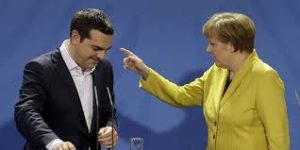
Η τυφλή προσκόλληση του Τσίπρα στο άρμα της Μέρκελ για ορισμένα αργύρια είναι επικίνδυνη. Ενέχει κινδύνους που πρέπει να αξιολογηθούν.

Το Προσφυγικό είναι ένα σοβαρό ζήτημα με ανθρωπιστικές διαστάσεις. Δεν μπορεί, όμως, σε ευρωπαϊκό επίπεδο να αντιμετωπιστεί μόνο από δύο χώρες: την Ελλάδα και την Ιταλία. Οι άλλοι Ευρωπαίοι δείχνουν απρόθυμοι να βοηθήσουν στην αντιμετώπισή του. Ιδίως, οι χώρες της Κεντρικής Ευρώπης, οι χώρες του Βίζεγκραντ, όπως ονομάστηκαν. Και, βεβαίως, στην απροθυμία τους αυτή ενισχύονται, πλέον, και από τη γερμανική κυβέρνηση μετά τη συμφωνία της Μέρκελ με τον Ζεεχόφερ, τον υπουργό των Εσωτερικών.

Οι κεντροευρωπαϊκές χώρες, στις συναντήσεις τους καταλήγουν στο κοινό συμφέρον και στην υλοποίηση της πολιτικής που θα το πετύχει. Σε αντίθεση με τις ανάλογες συναντήσεις στα Βαλκάνια. Οι πολυμερείς συνεννοήσεις στα Βαλκάνια ήταν, πάντοτε, δύσκολο, έως αδύνατο να επιτευχθούν. Σε αντίθεση με τις διμερείς. Αυτή ήταν και μια από τις ουσιαστικές διαφορές του Ελευθερίου Βενιζέλου που πρότεινε και υλοποίησε τις διμερείς συμφωνίες, σε αντίθεση με τον υπουργό του των Εξωτερικών Ανδρέα Μιχαλακόπουλο που επεδίωκε τις πολυμερείς. Η ιστορία δικαίωσε, μάλλον, τον Βενιζέλο.

Τις διμερείς συνεννοήσεις επεδίωξε και η κ. Μέρκελ και κατάφερε, από ό,τι δείχνουν μέχρι στιγμής τα πράγματα, να πείσει τον Τσίπρα να δέχεται η Ελλάδα πίσω όσους πρόσφυγες δεν θέλει η Γερμανία.

Η χώρα μετατρέπεται σε αποθήκη ψυχών. Αυτή είναι η πολιτική της κυβέρνησης;

Αλλά, το πιο επικίνδυνο είναι άλλο. Η προσκόλληση στο γερμανικό άρμα –πέραν των ευρωπαϊκών υποχρεώσεων– φέρνει, αν δεν έφερε ήδη, τη χώρα αντιμέτωπη με τις ΗΠΑ. Η σύγκρουση Ουάσιγκτον- Βερολίνου είναι, πια, ανοικτή. Σ’ αυτήν τη σύγκρουση η ελληνική κυβέρνηση φαίνεται να τοποθετείται.

Σύμφωνα με ορισμένους διπλωμάτες, η άποψη των οποίων λαμβάνεται υπόψη, η δημόσια αντιπαράθεση Μέρκελ-Ζεεχόφερ δεν έχει να κάνει μόνο με το Προσφυγικό. Εάν αναζητηθούν θα βρεθούν ίχνη υποκίνησής της από την υπερδύναμη. Το Προσφυγικό μπορεί να αποτέλεσε το πρόσχημα για να ταρακουνηθεί η Μέρκελ και να πάρει το μήνυμα.

Όταν η αμερικανική κυβέρνηση φτάνει στο σημείο, διά του προέδρου της, να εκδηλώνει, δημοσίως, τη δυσαρέσκειά της για την πολιτική της Γερμανίας, κάτι πολύ έντονο υποβόσκει. Οι ΗΠΑ δεν το έχουν κάνει τόσο έντονα και με τόση σαφήνεια ούτε για την Τουρκία και τον Ερντογάν ο οποίος δημιουργεί σωρεία προβλημάτων. Στις διεθνείς σχέσεις η τακτική της λεμονόκουπας είναι συνηθισμένη.

Ο Τσίπρας, ό,τι ήταν να πετύχει το πέτυχε. Και στην οικονομία και στην εξωτερική πολιτική. Αποτελεί, πλέον, βαρίδι για τις ΗΠΑ. Δεν μπορεί να εμφανιστεί δημοσίως, μετά και τη συμφωνία για το Μακεδονικό.

Ας μην εκπλαγούμε αν δούμε κινήσεις προς την κατεύθυνση απαξίωσης και απομάκρυνσής του με τις εκλογές. Τα μέσα που έχουν οι ισχυρές δυνάμεις για να πετύχουν το στόχο τους είναι πολλά.

Τέλος, δύσκολη περίοδο και κλυδωνισμούς περνά και η Ευρωπαϊκή Ένωση που θα δοκιμαστεί στα χέρια της σημερινής γερμανικής ηγεσίας. Ουσιαστικά, η άλλοτε φέρελπις Ένωση έχει μετατραπεί σε μια γερμανική Ευρώπη. Σέρνεται από το Βερολίνο. Δεν είναι η Ένωση που επιθυμούσαν, και επεδίωξαν, οι λαοί της Ευρώπης. Η παρότρυνση του Τραμπ προς τον Μακρόν να εγκαταλείψει το σκάφος και η δημόσια ανακοίνωση του θέματος από τον Γάλλο πρόεδρο δείχνει και μια δυσαρέσκεια του Παρισιού απέναντι στο Βερολίνο. Ας θυμηθούμε ότι πριν την ευρωπαϊκή προσπάθεια για ενοποίηση, στην ήπειρο λειτουργούσαν δύο μεγάλοι άξονες συμφερόντων: Παρίσι- Βελιγράδι- Αθήνα και Βερολίνο- Σόφια- Άγκυρα.

Είναι νωρίς, ακόμη, αλλά ας τα έχουμε όλα αυτά υπόψη.

The Macedonian-Greek Conflict

0

NOTE: “Anixnefseis” don’t agree with the views expressed in the article. Publish it to let readers know what really believe in the neighboring country about their origin and their identity.

The age long conflict between Greeks and Macedonians

The Macedonian-Greek conflict is a very complex issue. Lots of books have been written about Macedonia, but many of them simply serve to justify the aspirations, propaganda, and the partition of Macedonia of 1913, by the neighboring countries such as Greece. These sources are, therefore, biased. The Greek pages about Macedonia rely strictly on their very own Greek propaganda sources, which naturally makes them biased. In order to find the real truth about Macedonia, one has to rely on the independent and neutral sources when looking into history. This page is such case, which browses historical independent and neutral facts, to show the truth about Macedonia against the century-old Greek propaganda.

Macedonia seceded from Yugoslavia and became a sovereign state by a popular referendum held in September 1991 when the majority of voters chose independence. Greece immediately demanded from the international community not to recognize the country under its name Macedonia.

Greece alleges that:

  1. The Macedonians should not be recognized as Macedonians because the Macedonians have been of Greek nationality since 2000 BC.
  2. Those Macedonians whose language belongs to the Slavic family of languages, must not call themselves Macedonians because 4000 years ago, the Macedonians spoke Greek and still speak nothing but Greek.
  3. Macedonia has no right to call itself by this name because Macedonia has always been and still is a region of Greece.

The Macedonians affirm that:

  1. The ancient Macedonians were a distinct European people, conscious and proud of their nationality, their customs, their language, and their name. The same applies to the modern Macedonians today.
  2. The ancient Macedonians regarded the ancient Greeks as neighbors, not as kinsmen. The Greeks treated the Macedonians as foreigners (“barbarians”) whose native language was Macedonian, not Greek.
  3. Macedonia was never a region of Greece. On the contrary, ancient Greece was subjected to Macedonia. In 1913, modern Greece and her Balkan allies partitioned Macedonia. If today a portion of Macedonia belongs to Greece, it is by virtue of an illegal partition of the whole and occupation of a part of Macedonia.

These assertions will be shown to be true in the eyes of history proving the absurdity of Greek allegations against the people of Macedonia.

ANCIENT MACEDONIA AND GREECE

In the course of the second pre-Christian millennium, the ancient Greeks descended in several migratory waves from the interior of the Balkans to Greece. Some passed across the plain of Thessaly on their way south, while others went south through Epirus. More recent scholars point to Asia Minor as the original Greek homeland. There is no evidence that the ancient Greeks ever settled prehistoric Macedonia. Archeological evidence shows that ancient Macedonia lay beyond the cultural and ethnic borders of the Bronze Age Mycenaean Greek Civilization, which ends at the border of northern Thessaly (1400 – 1100 BC). The prehistoric Macedonians show a remarkable continuation of existing material culture.

Ancient Macedonia was home to many tribes. The ancient Macedonian tribes emerged from the Brygians or Phrygians. Some of the Brygians left Macedonia and migrated to Asia Minor where they changed their name to Phrygians and established a powerful Phrygian kingdom (Herodotus). When the Macedonian army under Alexander the Great will enter Phrygia centuries later, Philotas spoke of the connections between the Phrygians and the Macedonians, by calling the Macedonians “Phrygians” (Curtius).

Greek migrants settled few coastal areas of Macedonia, Thrace, and Illyria after they exhausted the possibilities of settlement in Asia Minor, Italy, France, Spain and Scythia (Ukraine and Russia). However, they did not consider Macedonia especially attractive for permanent settlement. Neither did the Macedonians welcome them as open-heartedly as did the Italians and Scythians. By the middle of the fourth century BC, the Greek settlers were expelled from Macedonia and their cities, including Aristotle’s native Stragira, razed to the ground by the Macedonian kingPhilip II (360-336). Aristotle died in exile in Greece.

The ancient Macedonians regarded the Greeks as potentially dangerous neighbors, never as kinsmen. The Greeks stereotyped the Macedonians as “barbarians” and treated them in the same bigoted manner in which they treated all non-Greeks. Herodotus, the Father of History, relates how the Macedonian king Alexander I(498-454 BC), a Philhellene (that is “a friend of the Greeks” and logically a non-Greek), wanted to take a part in the Olympic games. The Greek athletes protested, saying they would not run with a barbarian. Historian Thucydidis also calls the Macedonians barbarians, and so did Thracymachus who called Archelaus a barbarian who enslaved Greeks. Demosthenes, the great Athenian statesman and orator, spoke of Philip II as:

“… not only no Greek, nor related to the Greeks, but not even a barbarian from any place that can be named with honors, but a pestilent knave from Macedonia, whence it was never yet possible to buy a decent slave.”[Third Philippic, 31]

The Macedonian “barbarian” defeated Greece at the battle of Chaeronea in August 338 BC and appointed himself “Commander of the Greeks”. This battle had established Macedonian hegemony over Greece and this date is commonly taken as the end of Greek history and the beginning of the Macedonian era. Greece did not regain its independence until 1827 AD.

In 335 BC, Philip’s son Alexander campaigned toward the Danube, to secure Macedonia’s northern frontier. On rumors of his death, a revolt broke out in Greece with the support of leading Athenians. Alexander marched south covering 240 miles in two weeks. When the revolt continued he sacked Thebes, killing 6,000 people and enslaving the survivors. Only the temples and the house of the poet Pindar were spared.

The Ancient Macedonian Language

The Macedonians spoke their own native language which was unrecognizable by the Greeks. The very label barbarian literally means a person who does not speak Greek. Though Alexander spoke also Greek, loved Homer, and respected his tutor Aristotle, there is much evidence that he hated the Greeks of his day, just like his father Philip II. Philip had razed to the ground the Greek cities on Macedonian territory (including all 32 Greek cities in Chalcidice) and enslaved their inhabitants. Alexander the Great thoroughly destroyed Thebes. His Asian empire has not once been described as “Greek”, but is correctly called Macedonian for he won it with an army of 35,000 Macedonians and only 7,600 Greeks, and similar numbers of Thracians and Illyrians who were all forced to fight with their Macedonian overlords. The overwhelming number of Greeks however, 50,000 in total (Curtius), had however, distinguished themselves on the side of the Persians and fought fiercely till the end against the Macedonians. For instance, at the battle of Granicus there were 20,000 Greeks, out of which the Macedonians killed 18,000 and the 2,000 survivors were sent in chains to Macedonia (Arrian, Curtius). Arrian specifically speaks of the “old racial rivalry” between Macedonians and Greeks that characterized this battle. At the battle of Issus, there were 30,000 Greeks on the side of the Persians to fight Alexander, and their survivors also fought at Gaugamela along with the Albanians and the Persians, against the Macedonians.

The question of the use of the ancient Macedonian language was raised by Alexander himself during the trial of Philotas, one of his generals accused of treason. This is what Alexander has said to Philotas:

“The Macedonians are about to pass judgement upon you; I wish to know weather you will use their native tongue in addressing them.” Philotas replied: “Besides the Macedonians there are many present who, I think, will more easily understand what I shell say if I use the same language which you have employed.” Than said the king: “Do you not see how Philotas loathes even the language of his fatherland? For he alone disdains to learn it. But let him by all means speak in whatever way he desires, provided that you remember that he holds out customs in as much abhorrence as our language” (Curtius).

The trial of Philotas took place in Asia before a multiethnic public, which has understood Greek as it was then a common language, like English today. But Alexander spoke Macedonian with his Macedonians (the language he accuses Philotas of loathing) and used Greek in addressing the west Asians. Like Carthagenian, Illyrian, and Thracian, ancient Macedonian was not recorded in writing. However, on the bases of about a hundred glosses, Macedonian words noted and explained by Greek writers, some place names from Macedonia, and a few names of individuals, most scholars believe that ancient Macedonian was a separate Indo-European language. Evidence from phonology indicates that the ancient Macedonian language was distinct from ancient Greek.

THE ROMAN OCCUPATION

Both Macedonia and Greece were annexed by the Romans after the battle of Pydna in 168 BC. It is significant that the Greeks again fought against the Macedonians during the Macedonian Wars, on the side of the Romans. The Macedonians were asked to evacuate from the whole of Greece and withdrew to Macedonia by the Romans, and the Greek fought against the Macedonian army and its king Philip V until their final defeat (Polybius, Livy). After the end of the Macedonian kingdom, Latin was the official language in Roman Macedonia from 168 BC until the demise of Roman rule at the end of the sixth century AD.

SLAV SETTLEMENTS IN MACEDONIA, GREECE, THRACE, AND ILLYRIA

In the 6th  century, the Slavs penetrated Illyria, Thrace, Macedonia, and Greece. The Slavs settled lands as far as Peloponnesus and the Aegean islands, and some of the Slavic tribes in Greece remained unconquered for centuries. During the following centuries, the Slavs mixed with the original Macedonians, Greeks, Thracians, and Illyrians, and thus laid the foundations to the modern nations of the Balkans, and their modern languages.

Today’s modern Macedonian language has both ancient Macedonian and Slavic background. How much modern Macedonian is based upon ancient Macedonian is impossible to say since we do not have many ancient Macedonian words that have survived, except about 150 glosses. Yet, ancient Macedonian words are still present in modern Macedonian. Alexander’s infantry peshatairoi literally means “armed walking men” in modern Macedonian (peshatari). Hammond says that the ancient Macedonians called their commander tchelniku, which again means in modern Macedonian “somebody who leads” (chelniku). The Macedonian prodromoi, were the openers in the battles of Alexander the Great. Today in modern Macedonian this means “somebody who penetrates” (prodir), etc. Many ancient Macedonian names are still present among today’s Macedonians, and many ancient Macedonian customs have the ancients have described have survived as well among today’s Macedonians. The memory of Philip II and Alexander the Great echoes in the Macedonian folklore.

The modern Macedonian language was systemized in the middle of the ninth century by SS Cyril and Methodius, the two Macedonian brothers from the largest Macedonian city of Salonica. This language has functioned as the principal literary, liturgical, and colloquial language of Macedonia ever since. This period of the Macedonian history set the foundations for the development of the modern Macedonian nation and in the centuries after the coming of the Slavs, the Macedonians continue to exist in Byzantine sources as nation. Macedonia resisted the settlement attacks by the Armenian and Syrian dynasties, who held power in New Rome (Byzantium), and by the nomadic Bulgarians. From 1014 to 1204, Macedonia was part of the multi-cultural Byzantine Empire. In the next two centuries, the Macedonians fought foreign invaders, adventurers, and bandits who failed to dominate their land, apart from the Serbs and the Bulgarians who briefly held it. In the fifteenth century, the Ottoman Turks succeeded in conquering all of Macedonia, Greece, and the rest of the Balkans, and enforced their 500-year old rule.

MACEDONIA IN THE 19th CENTURY

Greek, Serbian, and Bulgarian Independence

In 1827, the European powers intervened on behalf of the Greek rebels and forced the Turks to grant them independence. The same powers, established the first modern Greek state, chose Prince Otto of Bavaria to be the “King of the Hellenes”, and sent him to Athens. Serbia freed herself also from the Turkish rule, while Russia declared war on Turkey to help Bulgaria gain its independence.

San Stefano and Berlin Conferences

The war between Russia and Turkey ended on March 3, 1878, with the peace settlement of San Stefano. The Turks had to agree to the formation of the new Bulgarian state, to also include all of Macedonia but the city of Salonika. Russia was hoping that greater Bulgaria with Macedonia would give her the strategic exit on the Aegean Sea, but she encountered fierce resistance from Austria-Hungary and England that saw their interests on the Balkans endangered. On July 13, 1878 with the Berlin Conference, they forced Russia to give up her dream and the San Stefano agreement was revised. Macedonia was returned to the Ottoman Empire. From this moment, Macedonia became a battleground where the interests not only of the Balkan states, but also of the Great Powers, collide.

The Macedonian and Greek Orthodox Churches

The Ohrid Archiepiscopy was founded as a separate church in 995 to care for the religious needs of the Orthodox Macedonians. However, under the influence of the Greek Orthodox church, the Turkish sultan abolished the Macedonian church in 1767. The Greek Orthodox church was now able to enforce its religious teachings in Greek as the only Orthodox church to exist in the Balkans. Greece hoped to spread her influence and propaganda through the newly opened Greek schools, with a goal to Hellenize the population of Macedonia. But as their influence grew bigger, so did the resistance of the Macedonians. On March 7, 1851, the residents of Enidje-Vardar (today in Greece) signed a petition, for replacement of the teachings in Greek with Macedonian. In 1859, in Kukush was formed the resistance movement against the Hellenization that quickly spread to Voden (Edessa), Kostur (Kastoria), Lerin (Florina), and the rest of southern Macedonia.

Balkan and Neutral Statistics on the Population of Macedonia

Adding to the Greek influence, the Bulgarians opened their schools in Macedonia in 1871, and the Serbs followed shortly after. This is the beginning of the so-called “Macedonian Question”. The new independent Balkan states used those schools to propagate how the Macedonians do not exist, and how Macedonia was populated only by Greeks, Bulgarians, and Serbs. Ethnographers, historians, and writers begun writing books in favor of this or that propaganda. Many of them did not even visit Macedonia, while those who did already had a written scenario. Their presence there was only a simple formality. The Turkish statistics made the picture more confusing as the Turks registered the people based on religion, not on ethnic background.  Table 1 gives an excellent proof of those Balkan speculations surrounding Macedonia:

Balkan views Greek

Nikolaides

1899

Bulgarian

Kenchov

1900

Serbian

Gopchevich

1886

Macedonian Slavs 454,000 – –
Serbs – 400 1,540,000
Bulgarians – 1,037,000 –
Greeks 656,300 214,000 201,000
Turks and others 576,600 610,365 397,020

Table 1. Greek, Bulgarian, and Serbian Statistics of Macedonia’s population

It is more than obvious that all the views coming from the Macedonia’s neighbors which sharply contradict eachother, are biased. They all claim their people in Macedonia to justify their well-planned aspirations. It is important to note that both the Bulgarian and Serbian views agree that the Greeks in Macedonia represent only a small minority of 10%. The Greek ethnographer Nikolaides, on the other hand, claims three times bigger number than his colleagues in Belgrade and Sofia. However, the most important about Nikolaides is that he recognizes the Macedonian Slavs as a separate nation, separate from the Bulgarians and the Serbs, to be part of population of Macedonia. And although he tries hard to lower the numbers of those Macedonian Slavs, he still comes up with a convincing proof of their existence.

This is the time when many European slavists, ethnographers, and historians, are also attracted to visit Macedonia and conduct their own investigations. Therefore, to find the unbiased population numbers in Macedonia, we have to rely on neutral and independent statistics:

Neutral views German

Dr. K. Ostreich

1905

Austrian

K. Gersin

1903

English

Andrew Rousos

Macedonian Slavs 1,500,000 1,182,036 1,150,000
Serbs – – –
Bulgarians – – –
Greeks 200,000 228,702 300,000
Turks and others 550,000 627,915 400,000

Table 2. Independent and Neutral European Statistics of Macedonia’s Population

Although the Macedonians are referred as “Macedonian Slavs”, the main point of the statistics is the fact that they are recognized as distinct nation with cultural and historical right over their country Macedonia in which they are overwhelming majority. The reluctance to refer to them for what they are (simply as Macedonians), is explained by the overemphasizing of the contemporary Greek vs. Slavic (Serb and Bulgarian) rivalry over Macedonia in which the westerners desired to make the note that the Macedonians were more “Slavs” then “Greeks” – thus resulting in the use of the term “Macedonian Slavs” to distinguish them from all but still indicate their closer relation to their northern then southern neighbors, as interestingly was the case with the ancient Macedonians and their closer relations with the Thracians and Illyrians then with the ancient Greeks.

Yet the term “Macedonian Slavs” is erroneous since the Macedonians, although conscious of their ancient Macedonian roots and Slav admixture, did not specifically call themselves “Macedonians Slavs”, but Macedonians as the documents over the last 2,500 years show. The same “Macedonian Slavs” mistake was again repeated by some western media, as the Albanian terrorists attacked Macedonia in March of 2001, and again it was done deliberately.  This deliberate bias is again there, unfortunately because of the political situation and the western media’s inclination towards the goals of the Albanian terrorism for “Greater Albania”.  As at the beginning of the 20th century, the Macedonians showed their outrage at the beginning of the 21st century of this racial insult and publicly instead that their nationality be respected. Not only the Macedonians all over the world vigorously accused the western media for racial bias, but also did various western independent and non-government organizations. That referring to the Macedonians as “Macedonian Slavs” was a mistake was publicly acknowledged by BBC which apologized and withdrew its reporter Paul Wood precisely for his bias reporting, and since continued to rightfully refer to the Macedonians for what they have always been – Macedonians.

From the two above tables one can easily notice that the number of Greeks in Macedonia according to the neutral authors also aligns with the numbers given by the Serb and Bulgarian authors. This is a proof that the Greeks before the partition of Macedonia, were indeed a small minority, only 10% from the total population. This fact certainly does not give them the copyright of the name Macedonia. Dr. Ostreich, Gersin, and Roussos, are only a few of the many neutral authors to prove the groundless speculations of the Balkan counties. They proved that Macedonia belongs to a separate nation, which proves that the Bulgarians and the Serbs have than simply substituted the numbers of the Macedonians for theirs. Another Austrian, Karl Hron explained why that is unjustified:

“According to my own studies on the Serb-Bulgarian conflict I came to the conclusion that the Macedonians looking at their history and language are a separate nation, which means they are not Serbs nor Bulgarians, but the descendants of those Slavs who populated the Balkan peninsula long before the Serb and Bulgarian invasions, and who later did not mix with any of those other two nations…” and:

“… the Macedonian language according to its own laws in the development of the voices, and its own grammatical rules, forms one separate language”.

There were even Greek and Bulgarian writers to support what Karl Hron has written. One such example is the Bulgarian slavist and ethnographer P. Draganov, who in his studies of 1887-1894 and 1903, proved the existence of the Macedonians and the Macedonian language as a distinct language. Here is what Henry Brailsford had said about the Macedonians in “Macedonia: its Races and their Future“.

“Are the Macedonians Serbs or Bulgars? The question is constantly asked and dogmatically answered in Belgrade and Sofia. But the lesson of history is obviously that there is no answer at all. They are not Serbs, for their blood can hardly be purely Slavonic… On the other hand, they can hardly be Bulgarians… They are very probably very much what they were before either a Bulgarian or a Serbian Empire existed – a Slav people derived from various stocks, who invaded the peninsula at different periods.”

At the time of the emergence of the so-called Macedonian question, and the aspirations of the Macedonian neighbors for occupation of the country, the famous Macedonian Gjorgi Pulevski wrote in 1875:

“People who originate from one and the same race, speak the same language, live together in harmony, and have the same customs, songs and mentality, constitute a nation, and the place where they live is their homeland. In this way, the Macedonians are a nation and their homeland is Macedonia” and,

“I am not Bulgarian, nor Greek, nor Tzintzar, I am pure Macedonian as were Philip and Alexander the Macedonian and Aristotle Philosopher”

Pulevski was right back in 1875.  He was conscious and aware that the Macedonians were a distinct nation, a fact that the documents of the last 25 centuries clearly show.

Macedonian Uprisings

The Macedonians will first start an organized resistance in the XIX century, to free their land from the 500 year old Turkish yoke. The uprisings in Kresna and Razlog (1878 – 1879), although unsuccessful, gained sympathies of many intellectuals in Europe. Among them was W.E. Gladstone who wrote:

“… Next to the Ottoman government nothing can be more deplorable and blameworthy than jealousies between Greek and Slav and plans by the states already existing for appropriating other territory. Why not Macedonia for the Macedonians as well as Bulgaria for the Bulgarians and Serbia for the Serbians.”

Gladstone was three times elected Prime Minister of England (1868 -1874; 1880 – 1885 and 1893 – 1894). He supported the Macedonian nation in its quest for freedom. Perhaps Macedonia would have gained its independence had this man been once again elected Prime Minister during the big Ilinden Uprising on August 2, 1903. Left without any support, the uprising was crushed by the Turks, followed by the massacre on the innocent Macedonian population.

THE PARTITION OF MACEDONIA AND ITS CONSEQUENCES

On October 8, 1912, the First Balkan War begun. Montenegro, Serbia, Bulgaria, and Greece attacked the European positions of the Ottoman Empire. More than 100,000 Macedonians also took active part and contributed in driving the Turks out of Macedonia. Turkey capitulated soon, but Macedonia did not free itself. The victorious Balkan kingdoms convened in Bucharest in August 1913 to divide the spoils. The partition of Macedonia is best illustrated with the following maps:

Macedonia within Turkey before 1912 and its partition in 1913 among Greece, Serbia, Bulgaria, and Albania

Greece was awarded Aegean Macedonia and renamed it to “Northern Greece”; Bulgaria annexed Pirin Macedonia and abolished the Macedonian name, and Serbia took over Vardar Macedonia and renamed it to “Southern Serbia”.The same year, N. Pasich of Serbia and E. Venizelos of Greece agreed on the newly formed Greek-Serbian (later Yugoslavian) border, so that there would be “only Serbs to the North and only Greeks to the South”, and no “Macedonians” on either side. Thus, the politics to assimilate the Macedonians of Aegean Macedonia had already begun.

The Greek Atrocities in Aegean Macedonia

  1. On June 21, 22, and 23, 1913, the Greek army completely burned to the ground the city of Kukush (today Kilkis), known for its resistance against Hellenism in the XIX century and the birthplace of Gotse Delchev.
  2. Between June 29 and 25, 39 villages in the Kukush area were also burned down.
  3. On June 23 and 24, the city of Serres (today Serrai) was set on fire where 4000 houses perished. In the Serres gymnasium the Greeks murdered about 200 people.
  4. During these days the larger portion of Strumica was also destroyed by the Greek army.
  5. Between June 23 and 30, many villages in the Drama and Serres districts were burned down.
  6. From June 27 to July 6 all Macedonian quarts of Salonika were set on fire.

The Carnegie Commission composed of members from USA, Germany, Russia, France, Austria, and England, witnessed the Greek atrocities when visited Aegean Macedonia. Their final conclusion was that the Greek army has burned to the ground 170 villages with over 17,000 houses.

Since 1913, official Greece has been trying to banish native Macedonian names of villages, towns, cities, rivers, and lakes in Aegean Macedonia. For example, the little stream which issues from Mount Olympus and flows into the Aegean Sea is labeled Mavroneri (“black water”) on the maps made by Greek cartographers after 1913. However, the same river appears as Crna Reka, a native Macedonian name meaning “black river” on the maps made before 1913. Kukush has been dropped for Kilkis and Serres for Serai, together with at least 300 other places all over Macedonia.

Forced Change of the Ethnic Structure of Aegean Macedonia

The presence of the Macedonians in Aegean Macedonia could not allow Greece to claim that land to be Greek and only Greek. Since it was proven that they resisted the Hellenization, Greece decided to drive them out of Macedonia. Greece made agreements with Bulgaria (signed 10/27/19), and Turkey (1/30/23 in Lausanne), for exchange of population. This provided for the Macedonians of Aegean to leave for Bulgaria, while the Greeks in Bulgaria and Turkey settled in the Aegean part of Macedonia. These measures changed the ethnic character of the Aegean Macedonia. According to the “Great Greek Encyclopedia”, there were 1,221,849 newcomers against 80,000 “slavophones”. The “Ethnic Map of Greek Macedonia Showing the Ratio Between Various Ethnic Elements in 1912 and 1926,” claims there were 119,000 “bulgarisants” in 1912, and 77,000 in 1926. The Greek ethnic map of Aegean Macedonia was submitted to the League of the nations by the Greek government. The League of the Nations had not visited Aegean Macedonia and did not participate at all in conducting this statistics. Greece here refers to the Macedonians as “bulgarisants”, which means “those who pretend to be Bulgarians” and obviously non-Bulgarians. However, Greece uses many other names in falsifying the identity of the Macedonians. Slavophones, Slav Macedonians, Makedoslavs, Slav Greeks, and Bulgarisants, are only some of the names that prove Greece’s unpreparess in this mean falsification of the Macedonian people and language. There are also other Greek sources that contradict the previous numbers of the Macedonians in Greece. The Athenian newspaper, “Message d’ Aten” wrote on February 15, 1913, that the number of “Bulgar-echarhists” was 199,590 contradicting with those 119,000 of the “Ethnic Map of Greek Macedonia”.

How many Macedonians remained in Greece?

When the Bulgarian and Serbian views are added, the confusion gets only bigger. According to the Bulgarian Rumenov, in 1928 there were total of 206,435 “Bulgarians”, while the Serb Bora Milojevich claimed 250,000 “Slavs” in Aegean Macedonia. Belgrade’s “Politika” in its 6164 issue of June 24, 1925 gave three times greater numbers for the Macedonians in Greece than official Athens:

“The Greek government must not complain that we are pointing to the fact that the Macedonian population of West Macedonia – 250,000 – 300,000 – is the most unfortunate national and linguistic minority in the world, not only because their personal safety in endangered, but also because they have no church nor school in their own language, and they had them during the Turkish rule.”

The speculations with the real number of Macedonians is obvious again. Their true number remains disputable in the Balkan documents, same as it was the case before the partition of 1912. Unfortunately, the Greek government would not allow anybody, including neutral observers to conduct statistical studies. Forced to leave, the Macedonians emigrated in large numbers to Australia, Canada, and the USA. As a result, there are about 300,000 Macedonians that presently live in Australia. In the city of Toronto, Canada, there are about 100,000. The present Macedonian colonies in these counties are represented mostly by the descendants of those Aegean Macedonians who settled there in the 1920’s.

According to the “Ethnic Map of Greek Macedonia Showing the Ratio Between Various Ethnic Elements in 1912 and 1926”, only 42,000 left their homes. If we take the statistical tables of the Balkan and neutral sources above, by 1913 in the whole of Macedonia lived around 1,250,000 Macedonians. In the Aegean part (51%) which Greece took after 1913, half of the Macedonian nation remained under Greek rule – that would be 625,000 people. If up to 1926 42,000 out of these 625,000 left, in the Greek part of Macedonian thereafter remained 583,000 Macedonians.

Recognition of the Macedonian Language by Greece

After World War I and under the international law, Greece signed the agreement to provide education in the languages of the minorities that remained in its borders. As a result, Sakerlarou Press in Athens printed a primer in the Macedonian language called “Abecedar” in 1924. It was intended for the Macedonian children in the soon to be opened new schools and it was a clear recognition of the existence of the Macedonians in Greece. The Greek government, however, later changed its position and the primer never reached the schools.

The Macedonian Language Forbidden in Greece

The Englishmen B. Hild who traveled through Aegean Macedonia in 1928 has recorded that the Greeks are chasing not only the alive Macedonians, to whom they sometimes refer to as “bulgarophones” and sometimes as “slavophones”, but also the graves of dead Macedonians, by destroying all non-Greek signs on the crosses. The use of the Macedonian language was forbidden and punishable when dictator Metaxis gained power in Greece. Between 1936 and 1940, some 5,250 Macedonians were persecuted for speaking their native language. The official order of the National Garde in Nered (Polipotamos):

“All residents from two to fifty years of age are forbidden to use any other language but Greek. I direct special attention to the youth. Anyone to break this law will be punished.”

But as the facts point out, the Macedonians were not wiped out from Aegean Macedonia in spite of the many assimilation attempts by the Greek government. One such fact is the ethnic map of Europe in The Times Atlas of World History, where the Macedonians presented as separate nationality cover the territory of complete Macedonia, including Aegean Macedonia in Greece.

Here is another map, part of a larger Balkan map and made by German ethnographers, first published after World War I, which proves that the ethnic Macedonians are the majority in Aegean Macedonia while the Greeks consist only a small minority.

The Macedonians on this map (Mazedonier in German, and presented in green with stripes), populate the largest area of Aegean Macedonia, including the cities of Kostur (Kastoria), Lerin (Florina), Voden (Edessa), Ber (Veroia), and Salonika (Thessaloniki), the largest Macedonian city. This map is yet another clear proof that the Macedonians do exist as large minority in Greece. It is also very important to note, that southernmost river in Macedonia which many ethnographers consider to be Macedonia’s border with Greece, is labeled on this map with the native Macedonian name Wistritza (Bistrica). However, Greek maps that date after the partition of Macedonia, have changed this name with the Greek Aliakmon. Another examples on wiping off the native Macedonian names from this map, would also be the second largest city in Aegean Macedonia, Serres which Greece changed to Serrai later, the river Mesta which was changed to Nestos, or the lake Beschik which today appears as Volvi.

The CIA Ethnic Map of Balkans and Macedonia is yet another proof that the ethnic Macedonians today represent a big national minority in northern Greece or Aegean Macedonia. According to this CIA source, the Macedonians live in all parts of Macedonia: today’s Republic of Macedonia, Pirin Macedonia in Bulgaria, and Aegean Macedonia in Greece.

Macedonians Oppressed in Greece

Following are several documents regarding the oppression of the Macedonians in Aegean Macedonia before the World War II. They appeared in “Rizospastis”, a newspaper published by the Greek Communist Party (KKE).

April 15, 1934

Serres (Serrai). The town square was covered with leaflets with revolutionary proclamations calling upon the soldiers to straggle for a solution to their problems and against the beastly reign of terror. Officers imprisoned the soldiers who read the leaflets… The most barbarous methods were used against us Macedonians, soldiers of the 6th Heavy Artillery Regiment. The majority of us are illiterate, we do not know Greek and therefore we frequently do not understand their orders. The officers tried to teach us to read and write, but their efforts were abandoned too soon and were performed so improperly than none of us learned anything.

June 6, 1934

Voden (Edessa). Here, in Voden, and in our whole district, in the heart of Macedonia, here where we Macedonians do not know any other language but our own Macedonian, various agents of the Greek capitalism fore us to speak Greek. Consequently, they threaten us constantly with expulsion to Bulgaria, they call us Komitajis, expropriate our fields which we have drenched with our sweet just to produce a piece of bread. In addition, they deprive us of the freedom which our fathers won after many years of struggle in which they gave their lives for the liberation of Macedonia. We live under the yoke of Greek capitalism, literally as slaves. In the elementary schools, the young children who speak their own language are beaten every day. Particularly here in Voden, the henchman and fascist Georgiadis beats the children if they speak their Macedonian tongue.

June 8, 1934

Lerin (Florina). It has been some time now that the whole bourgeois press launched a campaign against the Macedonian people. It represents a part of the fascist and military measures which the Government of Tsaldaris carries out in its orientation towards an increasingly brutal oppression of the people’s masses in Macedonia. The Chief of the Security Forces here, Karamaunas, whenever he meets us on the streets threatens us with the words: “You are Bulgarians and if by any chance I discover any sort of organized movement, I will beat you without mercy and than I will deport you.” We Macedonians should rise with greater courage and by means of increased activities should reject this campaign because it brings us an even more brutal oppression, starvation, misery, and war.

MACEDONIA AND GREECE AFTER WORLD WAR II

The end of World War II brought both joy and sadness to the Macedonian people. Joy because the Macedonians were finally recognized as a distinct people with their own nationality, language, and culture in Yugoslavia. The Republic of Macedonia was not anymore “Southern Serbia” but an integral part of federal Yugoslavia. The possible unification of all three parts of Macedonia failed however as Great Britain intervened and blocked that idea, afraid that the Macedonian unification will endanger her interests on the Balkan peninsula.

The Greek Civil War

During the Greek Civil War that followed World War II, the Macedonians of Aegean Macedonia fought on the side of the Greek Communist Party (KKE) who promised them their rights after the war. After two years of KKE’s success in the civil war, the United States decided to side up against them, afraid that Greece would become another communist country. With the military support that came from the United States and Great Britain, the communists lost the war, and the Macedonians once again did not get their human rights.

The Yugoslav – Greek Relations

In the years following the war, Yugoslavia urged Greece many times to recognize the Macedonian minority in Aegean Macedonia. The Greek paper “Elefteros Tipos” wrote that in September of 1986 the Prime-Minister Papandreu in the talks with Yugoslav presidency member Stane Dolanc has agreed to recognize the Macedonian language as one of the official languages in Yugoslavia. As a result of those talks, on March 16, 1988, the Greek Prime-Minister Papandreu and the Foreign Affairs’ Karolos Papulias, even agreed to recognize the Macedonian language in Greece. However, the bankers affair “Koskotas” emerged, the PASOK government fell, and the documents were never signed. Greece continued to refer to the Macedonians as “Slavophones” who speak an idiom.

THE MACEDONIAN – GREEK RELATIONS

When the Republic of Macedonia seceded from Yugoslavia and became independent in 1991, Greece urged the world not to recognize Macedonia under that name because Macedonia’s Constitution “threatens the security and integrity of Greece”. What Greece is referring to is the Article 49 of the Constitution of the Republic of Macedonia which states:

“The Republic of Macedonia cares for the statue and rights of those persons belonging to the Macedonian people in neighboring countries, as well as Macedonian ex-parties, assists their cultural development and promotes links with them.”

Athens sees Article 49 to be a direct threat for the security of Greece because Macedonia cares for the people in Greece who consider themselves Macedonians? How can a country of two million be a danger to Greece’s ten million? Furthermore, Greece has also similar article in her Constitution, as any other country in the world, to care for her minorities in the neighboring countries. Should Albania, Bulgaria, and Turkey, urge the world not to recognize Greece because of her Constitution to care for her minorities in these neighboring countries? What Greece is doing is against the international law. Greece demands that Macedonia change its Constitution because there are “no Macedonian people” in Greece but this will be proven to be a lie once again, when Human Rights Watch / Helsinki, visited Aegean Macedonia in 1994.

Violation of the Human Rights of the Macedonians in Greece

The 80-page human rights violation report on Greece entitled “Denying Ethnic Identity – Macedonians of Greece” was published in May 1994. After visiting Aegean Macedonia, The Human Rights Watch/Helsinki concluded:

“Although ethnic Macedonians in northern Greece make up large minority with their own language and culture, their internationally recognized human rights and even their existence are vigorously denied by the Greek government. Free expression is restricted; several Macedonians have been persecuted and convicted for their peaceful expression of their views. Moreover, ethnic Macedonians are discriminated against by the government’s failure to permit the teaching of the Macedonian language. And ethnic Macedonians, particularly rights activists, are harassed by the government – followed and threatened by the security forces – and subjected to economic and social pressure resulting from this harassment. All of these actions have led to a marked climate of fear in which a large number of ethnic Macedonians are reluctant to assert their Macedonian identity or to express their views openly. Ultimately, the government is pursuing every avenue to deny the Macedonians of Greece their ethnic identity.”

The Helsinki Watch has, therefore, proven that there is nothing wrong with the Constitution of the Republic of Macedonia. The Macedonians indeed exist in Greece as a large minority and, therefore, Macedonia has the full right to care for them. Helsinki Watch found the Greek government guilty for oppressing the Macedonian minority and demanded they be given their basic human rights to which they are entitled to. Another human rights organization, Amnesty International, also urged the Greek government to respect the human rights of the ethnic Macedonians. The European Union has furthermore recognized the Macedonian language as one of the languages spoken within the EU borders. The Republic of Macedonia is not a member of the European Union, but Aegean Macedonia in Greece, is within those borders.

The Greek Embargo

Greece slapped a trade embargo on Macedonia because of the refusal of the Macedonian President Gligorov to rename the country, nation, and language, and change the constitution.The embargo had devastating impact on Macedonia’s economy. Macedonia was cut-off from the port of Salonika and became landlocked because of the UN embargo on Yugoslavia to the north, and the Greek embargo to the south. Greece said it will remove the embargo only if Macedonia satisfies her demands. This blackmail was not acceptable to the Republic of Macedonia which considered the embargo illegal. At the same time, Greece withdrew from the Greek – Macedonian talks, monitored by the UN as a mediator, and blocked any acceptance of Macedonia in the international institutions by using its power to veto new members.

CONCLUSION

The claims put forward by Greece that the ancient Macedonians were Greeks, that their native language was Greek, and that Macedonia had always been a region of Greece are all false. The historical truth is that Greece was inhabited by ancient Greeks, Macedonia by ancient Macedonians. Today, it is the modern Greeks and the modern Macedonians to occupy those lands. It is a total absurdity to hear the Greeks of today to claim they are the Macedonians, the Greek Macedonians, the only and true Macedonians. How can they be “the only and true Macedonians”, when today’s Greek population of Aegean Macedonia immigrated there just 80 years ago joining that small Greek minority of 10%? How can they overlook the atrocities they committed on the people who than, as centuries before, proudly called themselves Macedonians? What about the statistics and maps made by neutral and independent ethnographers, slavists, and writers, to prove the existence of the Macedonian nation? And finally, what about the ethnic Macedonians whose discrimination by the official Greek government was witnessed by the independent Human Rights Watch / Helsinki and Amnesty International in 1994?

The existence of the Macedonian nation and the ethnic Macedonian minority in Greece can not be questioned. There is, however, a great deal of irony surrounding the issue. In spite of the truth about Macedonia and the Macedonians, many Western countries have not yet recognized the Republic of Macedonia under its constitutional name but under the reference “Former Yugoslav Republic of Macedonia”. This includes the United States which after the recognition, did not send an ambassador to Skopje for more than a year. Interestingly enough, this “freeze” coincides with the visit of the most powerful representatives of the Greek-American lobby to President Clinton in the White House, behind closed doors, and in the presence of Clinton’s adviser George Stefanopoulos, who himself, is a Greek-American.

How it is possible that the Western countries have chosen to follow “democratic” Greece where lies prevail over the truth? The European Court found the Greek embargo illegal and put Greece on trial, but did nothing to stop it while it was so harmful to the Macedonian economy. They never cared about the rights of the Macedonians in Greece while the Macedonians of the Aegean are still facing daily oppression and persecution. Finally, they still play that game for the Macedonia’s name, the way Greece wants them to. Yes, this is yet anotherproof that interests are stronger than the truth. Greece is a member of the European Union, NATO, an important ally that occupies a very strategic position. On the other hand, all other countries that do not belong to those organizations have recognized Macedonia under its constitutional name. Russia and China are among those countries. The question now is if the West is willing to risk losing Greece for the small landlocked Macedonia? But by standing silent on the issue, they are taking an active role in Greece’s politics.

Yet, on every atlas (like National Geographic), encyclopedia (like Britannica), newspaper (like New York Times), and TV media (like CNN), Macedonia is referred simply as Macedonia. Even the US Secretary of State Warren Christopher, and Defense Secretary William Perry, speak of Macedonians and refer to Macedonia as Macedonia. Matthew Nimitz, the US mediator in the Greek – Macedonian talks has said that “the country has an Constitutional name – Republic of Macedonia” and that besides the opposing of Greece, Macedonia was admitted at UN under the reference “former Yugoslav Republic of Macedonia”, but that is “only a reference and not name”. The truth about Macedonia slowly but surely is coming to the top, working towards a final end to the century-old shadow of Greek lies and propaganda. That is until the change of the Balkan policies and interests might push it all back to where it started. But regardless of everything, the Macedonians continue to exits on every part of divided Macedonia – the Republic of Macedonia, and the Macedonian parts which are today held by Greece and Bulgaria. They have survived as Macedonians for almost 3,000 years and nobody by renaming them will change the fact that they are and will remain Macedonians.

BIBLIOGRAPHY

  1. Karl Hron. Das Volksthum der Slaven Makedoniens. Wien, 1890.
  2. P. Draganov. Makedonski Slavjanski Sbornik. St. Petersburg, 1894.
  3. Spiridon Gopchevich. Makedonien und Altserbien. Wien, 1899
  4. Dr. Cleonthes Nikolaides. Macedonien, die gesschichtliche Entwickelung der makedonischen Frage in Alterthum und in die neuren Zeit. Berlin, 1899.
  5. Newspaper The Times, London. Saturaday, February 6, 1897 edition.
  6. K. Gersin. Macedonian und das Turkische Problem. Wien, 1903.
  7. Dr. K. Ostreich. Die Bevolkerung von Makedonien. Leipzig, 1905.
  8. Dr. Karl Peucher. Statistische Angaben. Die Volker Macedoniens und Altserbiens. 1905.
  9. Henry N. Brailsford. Macedonia, its Races and their Future. London, Metheuen and Co, first published in 1906.
  10. Volker und Sprachenkarte der Balkan – Halbinsel vor den Krigen 1912-18. Bibliographisches Institut, Leipzig.
  11. Newspaper Message d’ Aten. Athens, February 15, 1913.
  12. Carnegie Endowment for International Peace Report of the International Commision to Inquire the Causes and Conduct of the Balkan Wars. Washington, 1914.
  13. R.G.D. Laffan. The Serbs. New York, 1917.
  14. League of the Nations. Ethnic Map of Greek Macedonia Showing the Ratio Between Various Ethnic Elements in 1912 and 1926. Lausanne, 1926.
  15. Newspaper Politika. Edition 6369. Belgrade, January 5, 1926.
  16. Andrew Roussos. The British Foreign Office and Macedonian National Identity 1918 – 1941.
  17. Newspaper Rizospastis, ar.195 (7132), 4/12/34, p.3 and ar.89 (7026), 6/10/34, p.3 and ar.87, (7024), 6/8/34, p.1.
  18. Dr. Vladimir Rumenov. Makedonski pregled. Sofia, 1941
  19. Elisabeth Barker. Macedonia – Its Place in Balkan Power Politics. London, 1950.
  20. Spoljnopoliticka Dokumentacija No 36. Belgrade, 1951.
  21. Lazar Moysov. Macedonians in Aegean Macedonia. Skopje, 1953.
  22. Hammond Incorporated. The Times Atlas of World History. Maplewood NJ, 1989. Copyright Times Books Limited, London.
  23. Stoyan Prebicevich. Macedonia, Its People and History. The Pennsylvania State University Press, 1982.
  24. Jacques Bacid, Ph.D. Macedonia Through the Ages. Columbia University, 1983.
  25. Quantis Curtius Rufus. History of Alexander the Great of Macedon, VI. Harmondsworth, 1984.
  26. Rand McNally and Co. Inc. The Random House Encyclopedia Random House, New York, 1990.
  27. Jackson J. Spielvogel. Western CivilizationThe Pennsylvania State University, West Publishing Company, 1991.
  28. Human Rights Watch / Helsinki. Denying Ethnic Identity – Macedonians of Greece, New York, 1994.
  29. Newspaper Elefteros Tipos. Athens, September 20, 1994.
  30. The Constitution of the Republic of Macedonia.

http://www.historyofmacedonia.org/MacedonianGreekConflict/conflict.html

The 12 Coolest Neighborhoods Around the World

0

, I know the difference between expensive travel and the truly luxurious  Opinions expressed by Forbes Contributors are their own.

We all know that the best way to really know a city isn’t to go to the central square or major museums, or even the most tourist-trodden neighborhoods. What’s more interesting is discovering the up-and-coming neighborhoods where local creatives are settling in and setting up shop.

It’s especially important in cities where overtourism is becoming a problem, such as Barcelona and Amsterdam. Sure, walk down La Rambla or explore the inner canal belt, but then get out into the places where local life is really happening.

I asked some of my favorite travel experts for their tips on the best neighborhoods to explore right now. Here’s what’s on their radar.

Paula Mourenza for Culinary Backstreets

Sants, Barcelona

Barcelona: Sants

Earlier this year, the influential food travel and publishing company Culinary Backstreets declared 2018 the year of the neighborhood. Cofounder Ansel Mullins singles out Sants in Barcelona as one of his favorites. “Most locals know the Sants area as a place they pass through on their way to Barcelona’s main train station, but to us it represents something much deeper: a neighborhood where we can still experience the city’s original soul—culinary and otherwise,” wrote their local correspondent. “While other parts of Barcelona, especially its historic center, have had to contend with the effects of the city’s growing popularity, Sants has somehow managed to stay under the radar, allowing it to keep much of its traditional charm and way of life, while also being an inviting area for new ventures to give it a go. This is a place where you can still find old bodegas with wooden casks filled with bulk wine for sale, homey vermuterias where locals gather to chat over seafood tapas and family-run restaurants…. There’s a wonderful mix of traditional spots that have been around for generations and new restaurants and tapas bars opened up by innovative young chefs escaping high rents in the center of town.”

Forest City Washington

The Yards in Washington

Washington, D.C.: Navy Yard

“The Navy Yard area is the fastest growing neighborhood in Washington D.C., and it is slated to develop 3 million square feet for residential and office buildings, pedestrian space and retail and dining for 2030—as well as its first hotel, the Thompson,” says Melissa Biggs Bradley, the founder of Indagare. “With its waterfront location, industrial infrastructure and historic roots (it was established in 1799), the Navy Yard—or “the Yards”—has a cool factor that most other D.C. neighborhoods lack.” While the main attraction is still the Nationals’ baseball park, which hosts not only games but also popular events like a craft beer festival, the restaurant scene is gaining a strong following. Top tables include the microbrewery Blue Jacket, the upscale Italian Osteria Morini, the internationally focused Chloe and the highly inventive Ice Cream Jubilee,which offers grown-up flavors like honey lemon lavender and gin & tonic sorbet.

Black Tomato

IJ Hallen in Amsterdam Noord

Amsterdam: Amsterdam Noord

“Just 15 minutes by ferry from the city’s central station, Amsterdam Noord is a neighborhood on the rise, and rightfully so,” says Tom Marchant, the founder of Black Tomato. “Set amid old trams and multicolored shipping containers is NDSM, a hub for independent art galleries and lively watering holes. This provides serious visual endorphins and is an Instagrammers’ heaven.” Hotel Faralda, which has three rooms with “serious Wes Anderson vibes” suspended in a towering crane, is a quirky landmark in the NDSM community. And IJ Hallen is renowned as one of Europe’s largest and most unique flea markets.

Therese Mueller

Getsemani, Cartagena

Cartagena: Getsemani

Most tourists stay within the walls of the old city, but Biggs Bradley recommends this neighborhood just outside the walls. “It offers an authentic look at what life in the city is really like for locals,” she says. “Anchored by the Plaza Trinidad, a lively public square, Gestemani is not yet fully gentrified, and it is inhabited by families that have lived in the same house for multiple generations. Thus, there’s a very strong local culture and identity here.” Recent years have brought some stylish new additions, including cool cafes like Café del Mural, bars like Demente, tiny restaurants like Caffé Lunático, Malagana, and La Cocina de Pepina.

Ann Abel

Maboneng, Johannesburg

Johannesburg: Maboneng

“A no-go zone until the end of Apartheid in 1994, Johannesburg’s Maboneng has since transformed into a lively urban area with blossoming art and culinary scenes,” says Biggs Bradley. The compact neighborhood is known for cultural attractions like the Museum of African Design, Arts on Main—a complex that was previously a series of dilapidated buildings and now has many cool galleries—restaurants and boutiques. The culinary offerings are widely diverse, with restaurants that specialize in everything from Ethiopian cuisine to health food. “One of the best spots for a meal is Che Argentine Grill, which offers delicious specialties like empanadas and a live tango band on weeknights.”

Ann Abel

Plekhanov, Tbilisi

Tbilisi: Plekhanov

We can also call 2018 the year of Georgia. The former Soviet republic has become among the trendiest places to visit, and the capital of Tbilisi is always the first and last stop. The old town is charming, but both Mullins and Jonny Bealby of Wild Frontiers are more excited about Plekhanov. “It’s an area where native Tbilisians traditionally live, renowned for its old-style houses with beautiful doorways,” says Bealby. “It recently became more fashionable when the main avenue, Agmashenebeli, was renovated and especially when the Fabrika space opened. Once a Soviet sewing factory, this multifunctional space now houses cafes, bars, studios, shops and a hostel. This area is a mixture of young creatives and tourists, and there’s live music most evenings.” 

Wikipedia Commons

Casco Viejo, Panama City

Panama City: Casco Viejo

“In the 1990s, Casco Viejo was one of the city’s most dangerous neighborhoods, overrun by gangs, full of violence and turf wars,” notes Biggs Bradley. Now a staircase in the boutique American Trade Hotel has wallpaper that shows some of the original graffiti that was found in the abandoned buildings. “The fact that gritty gang slogans are today used as decoration in a designer hotel goes to show just how far Casco Viejo has come. The neighborhood buzzes with restoration and new openings, as the developers tackle building after colonial building.” Some can’t-miss addresses: Donde José, a chef’s table restaurant that’s one of the most upscale in the city; Fonda La Sexta, a pioneering restaurant that employs low-income women chefs; La Concordia, a new hotel with a great rooftop bar for sunset drinks; and Karavan, a one-stop shop for Panamanian-made gifts.

Trip by Skyscanner

Binh Tay market in Saigon’s District 5

Saigon: District 5

“Most visitors to Saigon spend their time in Districts 1 and 2,” explains Andrea Ross of Wild Frontiers. “However, to get away from the crowds and have a more local experience, we like to head to District 5. Here you’ll find Saigon’s Chinatown, as well as unique temples like Phuoc An Hoi Quan Pagoda, a colorful Taoist temple frequented by locals. The Binh Tay market is a local marvel, selling everything from fresh goods to car radios. At night the streets come alive with bars and restaurants offering live music. It feels like a throwback to old Saigon, and is a fun way to escape the more manicured central districts.”

Manteau Stam for Culinary Backstreets

Keramikos, Athens

Athens: Keramikos

This district is another favorite of Culinary Backstreets. Their Athens correspondent wrote, “Just a ten-minute walk from Athens’ buzzing historic center, the laidback Keramikos neighborhood seems to live in a magical world of its own,” writes their correspondent. “It’s a place where old and new, Greece’s storied past and often turbulent present, tradition and forward-looking creativity all coexist happily together. At the weekly street market, the neighborhood comes alive in a riot of sights, smells and flavors…. In recent years Keramikos’s low rents and old-time feel have lured creative young Athenians to the area, where they have opened inventive restaurants, bars and cafés along with galleries and theaters. Joining Keramikos’s rich trove of existing old-school establishments, these new spots have helped create one of the Athens’ most exciting dining and cultural scenes.”

Black Tomato

Seongsu-dong, Seoul

Seoul: Seongsu-dong

Marchant calls this neighborhood the “Brooklyn of Seoul, a buzzy hive for all things creative. The graffiti-adorned industrial warehouses have been revived as trendy hotspots, appealing to hipsters, photographers and foodies alike. House of Collections, an art group based in Seoul and New York City, has helped Seongsu-dong establish a thriving arts scene.” The most recent exhibition, Blowing Romance in Water Garden, was an Instagram hit. There are also eccentric and sustainability-focused eateries like Daelim Warehouse and Café Onion.

Adam Alexander Photography Courtesy of Choose Chicago

Pilsen, Chicago

Chicago: Pilsen

“Featuring streets lined with hip galleries and walls decorated with colorful murals dating from the 1970s, the Pilsen neighborhood on Chicago’s Lower West Side is a nest of cutting-edge culture and art,” says Biggs Bradley. “It’s been fostered by successive waves of Eastern European and Mexican immigrants, in addition to local artists and students, who have molded this fascinating area over the past century and a half. At the National Museum of Mexican Art, the 10,000-piece collection showcases the work of Mexican and Mexican-American artists. And there are a growing number of performance venues, art studios and trendy bars like the popular Punch House.

Black Tomato

Kalk Bay, Cape Town

Cape Town: Kalk Bay

“A seaside haven slightly removed from the bustle of Cape Town, the former fishing village Kalk Bay is attracting more than just the local surfer community” says Marchant. “Blanketed with quaint cafes, rustic fishing boats and colorful storefronts, this vibrant harbor neighborhood is recently the talk of the city. Olympia Café, a standby for locals, is an ideal launching pad for a day of False Bay coastline exploration. An intricate origami installation created by Kalk Bay local Sanae Sawada decorates the walls of the iconic café, which is just steps from the charming seal-invaded wharf.”

Follow me on Instagram: @abeltotravel

https://www.forbes.com/sites/civicnation/2018/06/21/this-is-your-superpower-celebrating-and-supporting-students-who-beat-the-odds/#4467985c446d

João Ferreira do Amaral*: Ναι στην Ευρωπαϊκή Ενωση αλλά διαζύγιο από το Ευρώ

0

[Ο διαπρεπής Πορτογάλος οικονομολόγος, υποστηρίζει, σε συνέντευξή του στον Λωράν Οταβί της Φιγκαρό, ότι το ισχυρό νόμισμα-ευρώ- και ο συγκεντρωτισμός των Βρυξελλών υπονομεύουν όχι μόνο την οικονομία αλλά και την ίδια τη Δημοκρατία στις χώρες με αδύναμη οικονομία. Μια οικονομική κρίση στην Πορτογαλία είναι πολύ πιθανή στο μέλλον, με ακόμα χειρότερες επιπτώσεις. Ε.Δ.Ν.] 
Laurent OTTAVI – Τα γαλλικά μέσα ενημέρωσης επικεντρώθηκαν στις συνέπειες των πολιτικών λιτότητας στην Ελλάδα ή στην Ισπανία. Επικεντρώνονται σήμερα στην Ιταλία, λόγω της νίκης των λαϊκιστών. Στην Πορτογαλία, ωστόσο, σημειώθηκε εντυπωσιακή μαζική αντίδραση το 2012 ενάντια στην επιδιωκόμενη οικονομική πολιτική. Ποια ήταν το εύρος της πολιτικής λιτότητας που εφαρμόστηκε στην Πορτογαλία και ποιες ήταν οι συνέπειές της; Μπορούμε να συγκρίνουμε τη λαϊκή αντίδραση με αυτή του κινήματος Αγανακτισμένων στην Ισπανία;

João FERREIRA DO AMARAL – Οι συνέπειες του προγράμματος λιτότητας στην Πορτογαλία ήταν εξαιρετικά αρνητικές. Η ανεργία πέρασε από 12% το 2010 στο 16,4% το 2013. Η απασχόληση μειώθηκε κατά 7,4% την ίδια περίοδο και, εάν οι συνέπειες για την ανεργία δεν ήταν ισχυρότερες, αυτό οφείλεται στην  τεράστια αύξηση της μετανάστευσης. Η σωρευτική μείωση του ΑΕΠ το 2011, το 2012 και το 2013 είναι 6,8%. Οι συνέπειες για τις επενδύσεις ήταν ακόμη χειρότερες. Ο ακαθάριστος σχηματισμός παγίου κεφαλαίου μειώθηκε κατά 31% κατά την ίδια περίοδο. Το κοινωνικό κόστος ήταν επίσης σημαντικό. Η μείωση των δημοσίων δαπανών πραγματοποιήθηκε ειδικά στις κοινωνικές δαπάνες. Τα επιδόματα ανεργίας και τα ελάχιστα εισοδήματα έχουν μειωθεί. Όλα αυτά έχουν οδηγήσει σε σημαντική αύξηση κατά 10,6% του αριθμού των ατόμων που κινδυνεύουν από φτώχεια και κοινωνικό αποκλεισμό.

Η λαϊκή αντίδραση ήταν μερικές φορές μαζική όπως στη διαδήλωση του 2012, μια από τις μεγαλύτερες που καταγράφηκαν στην Πορτογαλία. Εξέφραζε την αντίθεση στην πρόθεση της κυβέρνησης να αυξήσει τις κοινωνικές εισφορές που καταβάλλουν οι εργαζόμενοι για να αντισταθμιστεί η μείωση των δαπανών που καταβάλλουν οι εργοδότες. Η διαδήλωση ήταν τόσο εντυπωσιακή ώστε η κυβέρνηση υποχώρησε. Ωστόσο, δεν υπήρξαν άλλα σημαντικά πολιτικά αποτελέσματα βραχυπρόθεσμα, τουλάχιστον συγκρίσιμα με το κίνημα των Αγανακτισμένων.

  • Το 2013, ένα χρόνο μετά από αυτό το μαζικό γεγονός, το βιβλίο σας, το οποίο συνιστούσε επιστροφή στο εσκούδο, ήταν μεταξύ των καλύτερων πωλήσεων στην Πορτογαλία. Ποιο ήταν τότε το πλαίσιο; Πιστεύετε ότι υπήρχε και εξακολουθεί να υπάρχει πλειοψηφία των Πορτογάλων υπέρ της αποχώρησης από τη ζώνη του ευρώ;

-Ο οικονομικός απολογισμός της Πορτογαλίας από τη δημιουργία του ευρώ είναι απογοητευτικός σε όλους τους τομείς. Από το 1999 μέχρι την έναρξη της κρίσης, η εθνική οικονομία έμεινε σχεδόν στάσιμη. Πρόκειται για τις χειρότερες επιδόσεις ολόκληρης της Ένωσης, με εξαίρεση την Ιταλία. Το χρέος ολόκληρης της οικονομίας εκτοξεύθηκε σε πρωτοφανή επίπεδα. Το δημόσιο χρέος έχει επίσης αυξηθεί, αν και με βραδύτερο ρυθμό.

Περισσότερο από απογοήτευση, το πρόγραμμα λιτότητας που επέβαλε η τρόικα (ΔΝΤ, Ευρωπαϊκή Επιτροπή, ΕΚΤ) δημιούργησε ένα πραγματικό σοκ. Η επίσημη προπαγάνδα το παρουσίασε ως κάτι που θα επέτρεπε μια οικονομική επανεκκίνηση της χώρας. Ωστόσο, κατέστη σαφές σε όλους ότι η ευρωζώνη δεν προσέφερε λύσεις για τις χρεωμένες χώρες, ότι η Πορτογαλία ασφυκτιούσε από την Τρόικα και τους οργανισμούς αξιολόγησης και ότι η Γερμανία επέβαλε τους κανόνες της σε άλλες χώρες μέλη.

Το σοκ αφορούσε επίσης τη δημοκρατία. Οι αρχές αποφάσισαν να μην διεξαχθεί δημοψήφισμα. Αυτή η επιλογή ήταν ένα τρομερό πλήγμα στις σχέσεις μεταξύ της Πορτογαλίας και της Ευρωπαϊκής Ένωσης. Δεν νομίζω, ωστόσο, ότι σήμερα υπάρχει πλειοψηφία στους ψηφοφόρους υπέρ της εξόδου από το ευρώ. Θα περιοριστώ στο γεγονός ότι τα πράγματα εξελίσσονται προς το καλύτερο: το ενιαίο νόμισμα έχει πολύ λιγότερη υποστήριξη από ό, τι πριν από την κρίση και, για πρώτη φορά, ορισμένα αριστερά κόμματα στην Πορτογαλία θέτουν θέμα εξόδου από το ευρώ.

  • Ήσασταν εναντίον της εισόδου της Πορτογαλίας στη ζώνη του ευρώ και σήμερα υποστηρίζετε την επιστροφή στο εσκούδο. Γιατί το ευρώ αποτελεί πρόβλημα για την Πορτογαλία;

-Η δομή της πορτογαλικής οικονομίας δεν είναι αρκετά ισχυρή ώστε να λειτουργεί με τον έντονο ανταγωνισμό που δημιουργεί το ευρώ. Δεν μπορεί να συγκλίνει με τα επίπεδα των χωρών υψηλού εισοδήματος. Η ένταξη στη ζώνη του ευρώ σημαίνει για την Πορτογαλία οικονομικές αποκλίσεις από τις «χώρες του Βορρά» και τη διατήρησή της σε κατάσταση περιφερειακής οικονομίας. Το ποσοστό των ανταλλάξιμων αγαθών στη συνολική παραγωγή μειώνεται σταθερά από την κρίση, κυρίως λόγω της υπερβολικής αξίας του ενιαίου νομίσματος. Επιπλέον, οι κανόνες της «Συνθήκης Σταθερότητας, Συντονισμού και Διακυβέρνησης», καθορίζουν για την Πορτογαλία την υποχρέωση να μειώσει το δημόσιο χρέος της, κάτι που πολύ απλά δεν είναι εφικτό διότι απαιτεί ένα πλεόνασμα προϋπολογισμού σε πρωτοφανείς διαστάσεις.

Δεδομένου ότι η χώρα δεν διαθέτει πλέον το χρηματικό όπλο για τη χρηματοδότηση του ελλείμματος σε εθνικό επίπεδο, έχει μπει σε ασφυκτική εξάρτηση από τους οργανισμούς αξιολόγησης, γεγονός που θα βαρύνει την εξέλιξη της πορτογαλικής οικονομίας για δεκαετίες. Το ευρώ, όπως βλέπουμε εδώ, αποδυναμώνει τα εθνικά κράτη – τα οποία εξαρτώνται από τις χρηματοπιστωτικές αγορές – και, κατά συνέπεια, τις δημοκρατίες. Αυτή είναι ασφαλώς μία από τις σημαντικότερες αιτίες  ανόδου του ευρωσκεπτικισμού στις χώρες της ζώνης του ευρώ. Ήταν κάτι που δεν είχε κατανοηθεί κατά τη διάρκεια του Μάαστριχτ.

Μια άλλη επιβλαβής συνέπεια του ευρώ ήταν ο μόνιμος συγκεντρωτισμός της εξουσίας στα ευρωπαϊκά θεσμικά όργανα. Ο υπερβολικός συγκεντρωτισμός της πολιτικής εξουσίας, όπως μας διδάσκει η ιστορία, είναι η πιο συχνή αιτία κατάρρευσης μιας πολιτικής δομής που καλύπτει πολύ μεγάλη έκταση.

Το μέλλον δεν είναι καθόλου ενθαρρυντικό. Είναι σχεδόν βέβαιο ότι μια νέα κρίση θα πλήξει την Πορτογαλία και, λόγω του σημερινού χρέους, θα έχει ίσως χειρότερες από την προηγούμενη συνέπειες για την οικονομία της χώρας.

  • Παρά το ευρώ θέλετε να διατηρήσετε τη χώρα σας στην ΕΕ ή είναι αναγκαία κατά την άποψή σας, εκτός από την εγκατάλειψη του ενιαίου νομίσματος, η ανασυγκρότηση της Ευρώπης σε κυρίαρχα έθνη και η αντιμετώπιση του ελεύθερο εμπόριο;

-Θέλω την Πορτογαλία να εγκαταλείψει την ευρωζώνη, χωρίς να εγκαταλείψει την Ένωση. Νομίζω ότι το ευρωπαϊκό θεσμικό μοντέλο πριν από τη Συνθήκη του Μάαστριχτ ήταν ελκυστικό. Το πρόβλημα ήταν η μετάλλαξή του σε Ευρωπαϊκή Ένωση, που θεωρήθηκε ως ομοσπονδιακό σχέδιο το οποίο τώρα δυσκολεύεται υπερβολικά να διαχειριστεί. Η προέλευση των περισσότερων προβλημάτων στην Ένωση βρίσκεται στο ενιαίο νόμισμα, το οποίο θεωρείται ως βάση για την πραγματοποίηση των «Ηνωμένων Πολιτειών της Ευρώπης». Το σχέδιο του ευρώ είναι αυστηρά πολιτικό και έχει ως αποστολή να επιτύχει την ομοσπονδιακή ουτοπία. Η οικονομία δυστυχώς τέθηκε στην υπηρεσία του, χωρίς κανείς να κερδίσει από αυτό.

  • Το 2013, η οικονομική κατάσταση ήταν πολύ δύσκολη. Από τότε, μιλάμε για μια ανάκαμψη στην Πορτογαλία την οποία βλέπουμε στην επιτυχία της πολιτικής της ζήτησης που ακολουθήθηκε. Υπάρχει πραγματική οικονομική ανάκαμψη ή είναι ψευδαίσθηση; Δεν μπορεί η πολιτική ζήτησης να συνδυάζεται με το ευρώ;

-Η τρέχουσα οικονομική ανάκαμψη της πορτογαλικής οικονομίας δεν αποτελεί ψευδαίσθηση. Είναι πραγματική, αλλά θα μπορούσε να ήταν πολύ πριν, ακόμα και το 2011, εάν η τρόικα είχε δείξει νοημοσύνη.

Ωστόσο, είναι επίσης αλήθεια ότι η ανάκαμψη αυτή έχει τα όριά της. Πρώτον, επειδή δεν υπάρχει σημαντική σύγκλιση με τη μέση ανάπτυξη των χωρών της Ευρωπαϊκής Ένωσης. Δεύτερον, επειδή χρειαζόμαστε περισσότερες επενδύσεις στους τομείς των εμπορεύσιμων αγαθών και αυτό απαιτεί πολύ μικρότερο ανταγωνισμό. Τρίτον, ανέφερα τον πολύ πιθανό κίνδυνο μιας νέας γενικής χρηματοπιστωτικής κρίσης που θα είχε πολύ σημαντικές αρνητικές επιπτώσεις στην Πορτογαλία. Τέταρτον, η Πορτογαλία πάσχει από έλλειψη επενδύσεων σε ανθρώπινο κεφάλαιο, η οποία μπορεί να μειώσει το χάσμα μεταξύ του εργατικού μας δυναμικού και των άλλων ευρωπαϊκών χωρών όσον αφορά τα προσόντα.

  • Η Πορτογαλία είναι μέρος των “χωρών του Νότου”. Στην Ελλάδα, για παράδειγμα, ήρθε στην εξουσία ο Αλέξης Τσίπρας. Υπάρχει πολιτική αναδιοργάνωση στην Πορτογαλία λόγω της κρίσης του ευρώ ή είναι πολιτικά μπλοκαρισμένη η χώρα;

-Τα πολιτικά κόμματα στην Πορτογαλία είναι σχετικά σταθερά. Αυτό πιθανόν να συνεχιστεί μέχρι τη νέα γενική κρίση. Καινούρια κόμματα αναμφίβολα θα γεννηθούν με αυτή την ευκαιρία, πιο επικριτικά για τη ζώνη του ευρώ και για τα ευρωπαϊκά θεσμικά όργανα εν γένει.

  • Πώς θα υλοποιηθούν οι ιδέες σας; Η Πορτογαλία είναι μια χώρα που οικονομικά μετρά ελάχιστα στην Ευρωπαϊκή Ένωση, σε σύγκριση με τη Γαλλία και τη Γερμανία. Είναι δυνατόν να βγεί μονομερώς από το ευρώ μια χώρα σαν τη δική σας ή είναι απαραίτητη η υποστήριξη των “μεγάλων” χωρών;

-Ο καλύτερος τρόπος εξόδου από το ευρώ θα ήταν να εγκαταλείψουμε επίσημα τη ζώνη, αλλά να έχουμε τη δυνατότητα να χρησιμοποιούμε ένα εθνικό νόμισμα παράλληλα με το ενιαίο νόμισμα. Αυτή η δυνατότητα θα πρέπει να συμπεριληφθεί στη Συνθήκη της Λισαβόνας, αν και θα έπρεπε ήδη να συμπεριληφθεί στη Συνθήκη του Μάαστριχτ. Εάν αυτό δεν είναι δυνατό, θα πρέπει να εξετάσουμε το ενδεχόμενο να εγκαταλείψουμε τη ζώνη του ευρώ με τη συμφωνία των άλλων κρατών μελών και των ευρωπαϊκών θεσμικών οργάνων. Η λύση είναι πιο επικίνδυνη, διότι θα δημιουργούσε πανικό. Επιμένω στην ανάγκη υποστήριξης από τα ευρωπαϊκά θεσμικά όργανα, κυρίως από την Ευρωπαϊκή Κεντρική Τράπεζα, για την ελαχιστοποίηση του πανικού που δημιουργείται με τον τρόπο αυτό. Θα αποδεικνύαμε στους πιστωτές ότι είναι απαραίτητο η Πορτογαλία να σημειώσει ισχυρή ανάπτυξη, στηριζόμενη στα εμπορεύσιμα αγαθά, για να πληρώνει τα χρέη της, και ότι αυτό απαιτεί έξοδο από το ευρώ, ο μόνος τρόπος για να πετύχουμε υψηλά ποσοστά ανάπτυξης. Η εγκατάλειψη του ευρώ μονομερώς είναι βέβαια ένα θεωρητικά δυνατό σενάριο, αλλά δεν το συστήσω. Για να ευοδωθεί η επιλογή που προτείνω, πρέπει να επιμείνουμε στην Πορτογαλία, όπως και σε άλλες ευρωπαϊκές χώρες, ότι η αποχώρηση από το ευρώ δεν σημαίνει αποχώρηση από την Ευρωπαϊκή Ένωση.

*Ο Ζοάο Φερέιρα ντο Αμαράλ ήταν από το 1999 υπέρμαχος της νομισματικής εθνικής κυριαρχίας, δηλ. της διατήρησης του εσκούδο και το βιβλίο του ‘’Γιατί πρέπει να βγούμε από το Ευρώ;’’  ήταν πρώτο σε πωλήσεις στην Πορτογαλία το 2013.

Μετάφραση: Ευάγγελος Νιάνιος

Πηγή: http://www.lefigaro.fr/vox/economie/2018/06/29/31007-20180629ARTFIG00335-entretien-avec-joao-ferreria-do-amaral-l-economiste-portugais-qui-prone-la-sortie-de-l-euro.php

Ο Ερντογάν θέλει την Ανατολική Μεσόγειο «τουρκική λίμνη»

0

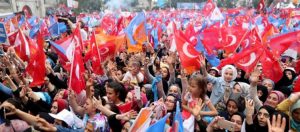
Supporters of Turkish President Recep Tayyip Erdogan hold Turkish and AK Party flags during an election campaign rally of Justice and Development Party (AK Party) in Istanbul, EPA, ERDEM SAHIN

Του Σταύρου Λυγερού

Η ίδια η ζωή έχει αποδείξει πως τα διαβήματα διαμαρτυρίας δεν αποτρέπουν τις τουρκικές επεκτατικές πιέσεις. Το μόνο που προσφέρουν στην Αθήνα είναι ένα φύλλο συκής. Τα γεγονότα αποδεικνύουν πως η χρόνια προσπάθεια της ελληνικής διπλωματίας να κατευνάσει τον τουρκικό επεκτατισμό έχει αποτύχει. Η Άγκυρα προωθεί τις διεκδικήσεις της με πράξεις που δημιουργούν μικρότερα ή μεγαλύτερα πολιτικά τετελεσμένα. Τα τελευταία χρόνια προωθεί συστηματικά μία στρατηγική αεροναυτικής κυριαρχίας στην Ανατολική Μεσόγειο.

Οι Τούρκοι καλλιεργούν το ελληνικό φοβικό σύνδρομο, μεταξύ των άλλων και με τη συνεχή και έντονη αεροναυτική παρουσία τους στην περιοχή. Θέλουν να καταστήσουν σαφές ότι έχουν θέσει υπό τον απόλυτο έλεγχό τους τη θαλάσσια περιοχή που ορίζεται από τη γραμμή Ρόδος-Κρήτη και την Κύπρο. Γι’ αυτό και σ’ αυτή την περιοχή πραγματοποιούν συχνά αεροναυτικές ασκήσεις και ακόμα συχνότερα τη δεσμεύουν με την έκδοση Navtex, οι οποίες εγκλωβίζουν ελληνικά νησιά, κυρίως το Καστελόριζο, και αμφισβητούν ελληνικά δικαιώματα.

Η Αθήνα έχει εδώ και χρόνια ανταποκριθεί στο άνοιγμα του Ισραήλ, με αποτέλεσμα να έχουν εδραιωθεί τα δύο γεωπολιτικά τρίγωνα Ελλάδα-Κύπρος-Ισραήλ και Ελλάδα-Κύπρος-Αίγυπτος, ενώ στο παιχνίδι έχει μπει και η Ιορδανία. Έστω και με αυτό τον ελλειπτικό τρόπο, η Ελλάδα ξαναείδε τον εαυτό της ως χώρα της Ανατολικής Μεσογείου.

Μετά την τουρκική εισβολή του 1974, στην Αθήνα κυριάρχησε το δόγμα «η Κύπρος είναι μακριά», με αποτέλεσμα η Ελλάδα ουσιαστικά να αποσυρθεί από την Ανατολική Μεσόγειο. Αυτό το δόγμα-υπεκφυγή έχει εμποτίσει γενιές Ελλαδιτών πολιτικών και διπλωματών, με αποτέλεσμα να κυριαρχήσει για δεκαετίες η μονοδιάστατη αντίληψη για την εθνική ασφάλεια που συρρικνώνει το ελληνικό ενδιαφέρον αποκλειστικά στο Αιγαίο. Η στρατηγική αυτή αναδίπλωση βόλεψε την Άγκυρα. Της άφησε ελεύθερο το πεδίο στην Ανατολική Μεσόγειο.

Το δόγμα του Ενιαίου Αμυντικού Χώρου

Μία προσπάθεια να αντιστραφεί η διάχυτη αυτή αντίληψη έγινε μετά το 1993 από την κυβέρνηση Ανδρέα Παπανδρέου με το δόγμα του Ενιαίου Αμυντικού Χώρου, σε συνδυασμό με την προμήθεια του ρωσικού αντιαεροπορικού συστήματος S-300. Τότε, η Ελλάδα άρχισε να εδραιώνει μια αεροναυτική παρουσία στην Ανατολική Μεσόγειο.

Η διαδοχή του Ανδρέα Παπανδρέου από τον Κώστα Σημίτη τυπικά δεν οδήγησε σε αλλαγή πολιτικής, αλλά στην πράξη αφυδάτωσε το εν λόγω δόγμα. Όταν, μάλιστα, λόγω και των ασφυκτικών πιέσεων της Δύση (και του Ισραήλ) οι S-300, αντί να εγκατασταθούν στην Κύπρο, αποθηκεύθηκαν στην Κρήτη, ο Ενιαίος Αμυντικός Χώρος έμεινε ουσιαστικά στα χαρτιά.

Τα τελευταία χρόνια η πυκνή αεροναυτική παρουσία των Τούρκων στην Ανατολική Μεσόγειο έχει σκοπό όχι μόνο τον έλεγχο της θαλάσσιας οδού που ενώνει την Κύπρο με την Ελλάδα, αλλά και την προβολή αβάσιμων διεκδικήσεων. Η απόφαση της Άγκυρας να μονιμοποιήσει και να πυκνώσει την αεροναυτική παρουσία της εντάσσεται στην ευρύτερη νεοοθωμανική στρατηγική. Βασική συνιστώσα αυτής της στρατηγικής, έτσι όπως σε ανύποπτο χρόνο την έχει εκθέσει ο Νταβούτογλου, είναι η μετατροπή της Τουρκίας σε μεγάλη ναυτική δύναμη, με κυρίαρχη παρουσία σ’ όλη την Ανατολική Μεσόγειο.

Έξω από το Σούνιο

Για να κλιμακώσει τη ναυτική πίεσή της στο Αιγαίο, η Τουρκία στέλνει συστηματικά πολεμικά σκάφη της να κάνουν επίδειξη σημαίας σχεδόν έξω από το Σούνιο. Ο Νταβούτογλου είχε δηλώσει ότι οι επί τούτου συχνές διελεύσεις τουρκικών πολεμικών πλοίων και στην καρδιά του δυτικού Αιγαίου οφείλονται στην ψυχολογική ανάγκη των Τούρκων να δείχνουν ότι το Αιγαίο δεν είναι ελληνική θάλασσα! Είχε προσθέσει, μάλιστα, ότι εφεξής θα βλέπουμε «περισσότερες φιλικές τουρκικές σημαίες στο Αιγαίο»! (αρχές Μαρτίου του 2011). Με άλλα λόγια, είχε επιβεβαιώσει την αποφασιστικότητα της Τουρκίας να έχει ναυτική παρουσία ακόμα και στην καρδιά της Ελλάδας.

Στο ίδιο πλαίσιο εγγράφεται και η προσπάθεια της Άγκυρας να ακυρώσει εμπράκτως ελληνικά πεδία βολής στο Αιγαίο και να επιβάλει δικά της. Στο πλαίσιο αυτό συνηθίζει να δεσμεύει περιοχές για αεροναυτικές ασκήσεις στο ελληνικό πεδίο βολής της Άνδρου. Το εν λόγω πεδίο βολής, όπως και εκείνο στην Ψάθουρα, χρονολογούνται από τις αρχές της δεκαετίας του 1950 και λειτουργούν σαν προσταυτευτική ζώνη για τα πολεοδομικά συγκροτήματα της Αθήνας και της Θεσσαλονίκης.

Η Τουρκία έχει ζητήσει την κατάργηση των πεδίων βολής με το επιχείρημα ότι καλύπτουν και τμήμα του διεθνούς εναέριου χώρου. Όταν, όμως, της ζητήθηκε να καταργήσει κι αυτή την απαγορευμένη περιοχή έξω από τα Δαρδανέλια, υπαναχώρησε. Επανήλθε, ωστόσο, και έχει πια καταφέρει να αχρηστεύσει ουσιαστικά το πεδίο βολής της Άνδρου, ενώ οι Τούρκοι έχουν de facto δημιουργήσει δικό τους πεδίο βολής στο θαλάσσιο τρίγωνο Άθως-Σαμοθράκη-Λήμνος.

Παρουσία και στο τόξο Ιόνιο-Κρήτη

Η Τουρκία, όμως, έχει επεκτείνει τη ναυτική παρουσία της και στα δυτικά της Ελλάδας. Ας σημειωθεί ότι έχει εκσυγχρονίσει τη ναυτική βάση στην Αυλώνα της Αλβανίας, βάζοντας γερά πόδι ένα βήμα από την Κέρκυρα. Είναι αξιοσημείωτο ότι τουρκικά πολεμικά σκάφη πλέουν και στο Ιόνιο και δυτικά και νότια της Κρήτης, πραγματοποιώντας ενίοτε και ασκήσεις με πραγματικά πυρά.

Η εξέλιξη αυτή τα τελευταία χρόνια σηματοδοτεί μια νέα, χωρίς προηγούμενο, εποχή στον ελληνοτουρκικό ναυτικό ανταγωνισμό. Επιβεβαιώνεται ότι η Άγκυρα είναι αποφασισμένη να λειτουργήσει σαν περιφερειακή δύναμη και συγκεκριμένα να επιδείξει τη ναυτική ισχύ της σ’ όλη την Ανατολική Μεσόγειο. Το πράττει ήδη με έντονο τρόπο στην κυπριακή ΑΟΖ.

Οι ισχυρές ενδείξεις ότι υπάρχουν μεγάλα ενεργειακά κοιτάσματα και νοτίως και ανατολικώς της Κρήτης, ενισχύουν την στρατηγική επιλογή της Άγκυρας να επιβάλει άτυπο πλην ουσιαστικό ναυτικό αποκλεισμό της Ελλάδας από τον θαλάσσιο χώρο μεταξύ Κρήτης και Κύπρου. Η τουρκική εφημερίδα Σαμπάχ, μάλιστα, είχε γράψει χαρακτηριστικά: «Ας μην ξεχνάμε, άλλωστε, ότι κάποτε τη Μεσόγειο την αποκαλούσαν «τουρκική λίμνη»»!

https://www.apopseis.com/o-erntogan-theli-tin-anatoliki-mesogio-tourkiki-limni/

Macedonian government rated most transparent in the Western Balkans

0

Macedonian government rated most transparent in the Western Balkans

By bne IntelliNews July 4, 2018

The Macedonian government is the most open and transparent in the Western Balkans region, a survey published by Skopje-based foundation Metamorphosis indicated on July 4.

The Regional Openness Index was created within the framework of the regional network Action SEE, which is a Western Balkans citizens organizations’ initiative. The last survey on the openness, accountability and transparency of institutions in Albania, Bosnia & Herzegovina, Kosovo, Macedonia, Montenegro and Serbia was conducted in the period from December 2017 until the end of February 2018. This is the second such survey.

The survey showed that the openness index of the Macedonian government was 75.61%, considerably up from 52.34% a year earlier.

The Social Democrat-led government under Prime Minister Zoran Zaev came on power at the end of May 2017, following a deep political crisis in the country, ending the 10-year rule of the conservative VMRO-DPMNE.

The openness index measures the level of openness of the Western Balkan governments towards citizens and society, and was created in order to define to what extent the citizens of the region receive convenient and understandable information from the government institutions. The first measurement was conducted from December 2016 until February 2017.

Only Macedonia registered an improvement on the index while the indices of the other five countries in the Western Balkans showed a declining tendency.

Macedonia is followed by Montenegro, whose openness index fell to 68.94% from 81.8%. Serbia is on the third place with an index of 56.66% slightly down from 58.97% in the previous survey.

Albania is fourth with an openness index of 54.92% compared to 57.94% a year earlier. Bosnia’s index dropped significantly to 45.9% from 60.66%.

Kosovo is ranked on the last place with an index of 41.29%, falling sharply from 60.82%.

“There is great progress also in all ministries of the Macedonian government,” minister without portfolio Robert Popovski said in a government statement issued after the announcement of the results of the survey.

The index also measures the openness of the ministries, with Macedonia now in third place, behind Montenegro and Serbia.

According to the minister, the Macedonian government is strongly committed to pursue transparent, accountable and responsible governance and will strive to achieve even better results in the next survey, which will be conducted at the beginning of next year.

http://www.intellinews.com/macedonian-government-rated-most-transparent-in-the-western-balkans-144604/

Difference Between Nationality and Citizenship

0

Nationality and citizenship are one of the most misconstrued terms, in the world. For a layman, the term nationality works as a substitute for citizenship and vice versa. But in reality, the difference between nationality and citizenship is quite evident, that we cannot ignore it. The nationality of a person, reveals his/her place of birth, i.e. from where he/she belongs. It defines the belongingness of a person to a particular nation.

On the contrary, citizenship is granted to an individual by the government of the country, when he/she complies with the legal formalities. It is the status of being a citizen of a country. So, have a glance at this article if you want to know more about these terms thoroughly.

Content: Nationality Vs Citizenship

  1. Comparison Chart
  2. Definition
  3. Key Differences
  4. Conclusion

Comparison Chart

BASIS FOR COMPARISON NATIONALITY CITIZENSHIP
Meaning Nationality is the individual membership that shows a person’s relationship with the state. Citizenship is the political status, which states that the person is recognized as a citizen of the country.
Concept Ethnic or racial. Legal or juristic.
Represents The place or country where the individual has taken birth. Individual is registered as a citizen by the government of the country.
Ways Birth and Inheritance Birth, Inheritance, Marriage, Naturalization, etc.
Can it be changed? No Yes
Can it be reversed? It is innate. It can be reversed.
Can it be possible to have nationality/citizenship of multiple countries? No, a person can be national of only one country. Yes, a person can become a citizen of more than one country.

Definition of Nationality

Nationality is the legal status, which represents the country from which an individual belongs. An individual’s nationality denotes, the country where he/she is born and are the legal citizen. The status is acquired by birth, inheritance or naturalization. On the basis of constitutional provisions, every state sets the criteria which determine who can be the nationals of the country. It provides the country, rights over the person. Further, it provides the person, protection of the nation from other nations.

Based on international conventions, every sovereign state is entitled to determine its nationals, as per nationality law. One has the right enter or return to the country; they came from.

Definition of Citizenship

Citizenship is a status acquired by becoming a registered member of the state by law. Any person can become a member of the state by satisfying the legal requirements of the respective country. In simple terms, the virtue of being the citizen of the country is called citizenship.

By inheritance, marriage, birth, naturalization are the ways to become a recognized citizen of the country. Every state grants some legal rights and privileges to its citizens, and they are also bound to follow the rules and regulations framed by the government of the respective country.

Once the person becomes a citizen of the state, he has the right to vote, work, reside, pay taxes and take an active part in the country. Every person is a citizen of the country where he/she is born, but to become a citizen of some other country, one needs to apply for it.

Key Differences Between Nationality and Citizenship

The differences between nationality and citizenship can be drawn clearly on the following grounds:

  1. The status arising out of the fact that a person is the origin of a particular nation is called Nationality. Citizenship is the political status that can be obtained by meeting the legal requirements set by the government of the state.
  2. The nationality is an ethnic or racial concept. On the other hand, citizenship is a legal or juristic concept.
  3. The nationality of a person indicates his/her place or country of birth while the citizenship of a person shows that the individual is registered as a citizen by the government of the respective country.
  4. A person can become a national of a country by birth or by inheritance. As against this, there are a variety of ways through which an individual can become the citizen of a country, i.e. by birth, inheritance, marriage, naturalization or registration.
  5. The nationality of a person cannot be changed. However, his citizenship can be changed.
  6. The nationality of a person cannot be taken back, once acquired while the citizenship of a person can be taken back.
  7. A person cannot be a national of more than one country. In contrast, a person can possess citizenship of more than one country at a time.

Conclusion

Nationality, as the name suggests, is something in connection with the nation, which a person obtains by birth and is innate. On the other hand, citizenship is a bit different, which requires a person to fulfill the legal formalities to become a recognized member of the state. Further, nationality is a subject of international dealings while citizenship is a matter of country’s internal political life.

To acquire full citizenship, nationality is an essential condition but not the only condition to be fulfilled. It allows a person full civil and social rights along with political rights. The person who are national but they are not granted full rights of the country are known as a second-class citizen.

Difference Between Nationality and Citizenship

Η καταιγίδα πλησιάζει

6
ΑΛΕΞΗΣ ΠΑΠΑΧΕΛΑΣ
 

Πολλοί νόμιζαν πως το τσουνάμι του λαϊκισμού και του εθνικισμού πέρασε από την Ευρώπη και την άφησε σχετικά ανέπαφη. Η αισιοδοξία τους ήταν πρόωρη. Μπορεί η Λεπέν να ηττήθηκε στη Γαλλία, αλλά ο Μακρόν δεν έχει ακόμη εδραιωθεί πολιτικά και σε καμία περίπτωση δεν διαθέτει ηγεμονία. Η Μέρκελ φθίνει προκαλώντας ανησυχία, γιατί στο τέλος της ημέρας ήταν το ανάχωμα της κοινής λογικής και της μετριοπάθειας. Οι δυνάμεις που προτείνουν ακραίες λύσεις στο μεταναστευτικό, αλλά και σε άλλα ζητήματα, κερδίζουν συνεχώς έδαφος, από την Ουγγαρία έως την Ιταλία. Οι πολίτες απαιτούν καθαρές προτάσεις και ηγέτες που δεν μασάνε τα λόγια τους.

Τρέφουν την αυταπάτη ότι με το στυλ αυτό ηγεσίας θα βρεθούν λύσεις στα αδιέξοδά τους. Το αντισυστημικό ρεύμα ήταν, τελικά, πολύ πιο βαθύ και διαρκές από ό,τι εκτιμούσαν όσοι θεωρούσαν ότι η Ευρώπη μπορεί και απορροφά όλους τους κραδασμούς.

Δεν είναι όμως μόνο η Ευρώπη που κλονίζεται. Στην άλλη όχθη του Ατλαντικού ο πρόεδρος Τραμπ αμφισβητεί, στα λόγια αλλά και στην πράξη, την παγκόσμια τάξη πραγμάτων που επέβαλαν οι ΗΠΑ και η Δύση μετά τον Β΄ Παγκόσμιο Πόλεμο. Στήνει καβγά με τον Καναδά, τον πιο κοντινό και παλιό σύμμαχο των ΗΠΑ. Χαρακτηρίζει την Ε.Ε. περισσότερο επικίνδυνη από την Κίνα και πιέζει τον Μακρόν να σκεφθεί να την εγκαταλείψει. Θέλει να αποδυναμώσει το ΝΑΤΟ και να διαλύσει τον Παγκόσμιο Οργανισμό Εμπορίου, βασικούς δηλαδή πυλώνες του μεταπολεμικού στάτους κβο. Κανείς δεν ξέρει αν πίσω από όλα αυτά υπάρχει κάποιο σχέδιο. Μετά μία περίοδο εφησυχασμού, οι υπόλοιποι ηγέτες της Δύσης πρέπει να αναρωτηθούν ποιος εκφράζει την πραγματική πολιτική των ΗΠΑ, ο Τραμπ ή ό,τι έχει απομείνει από το αμερικανικό βαθύ κράτος.

Η Ιστορία διδάσκει ότι όποτε μία υπερδύναμη μικραίνει ή απομακρύνεται από τον ρόλο της, για δικούς της λόγους, κάτι κακό συμβαίνει. Μπορεί να είναι ένας πόλεμος ή μία μεγάλη οικονομική κρίση. Πάντοτε, πάντως, κάτι κακό και μεγάλο συμβαίνει.

Είναι δύσκολο να δει κανείς πού θα μας βγάλουν όλη αυτή η αβεβαιότητα και οι τεκτονικές αλλαγές που συντελούνται. Για εμάς, πάντως, που βλέπαμε πάντοτε την Ευρώπη σαν ασφαλές λιμάνι που μας προστατεύει από ενδογενείς και εξωγενείς περιπέτειες, τα σύννεφα στον ορίζοντα προκαλούν δικαιολογημένη ανησυχία. Γιατί όλοι νιώθουμε ότι, όπου να ’ναι, θα ξεσπάσουν καταιγίδες και απρόβλεπτα μπουρίνια και μέσα στο ίδιο το «λιμάνι».

kathimerini.gr

Κύριο Θέμα: «Μακεδονικό» ἤ «Σκοπιανό» ζήτημα;

1

Ἄρθρο γιὰ τὸ ἐθνικό μας θέμα

Μητροπολίτου Ναυπάκτου καί Ἁγίου Βλασίου Ἱεροθέου

Στήν συζήτηση πού ἔγινε καί γίνεται αὐτόν τόν καιρό στήν Ἑλλάδα καί στά Σκόπια γιά τήν ἐπίλυση τοῦ θέματος τῆς ὀνομασίας τῆς «γείτονος χώρας», ὅπως ἔλεγαν οἱ περισσότεροι, ἐτέθησαν πολλά ζητήματα, τά ὁποῖα δέν εἶναι σκοπός τοῦ ἄρθρου αὐτοῦ. Ἐτέθησαν, δηλαδή θέματα ἱστορικά, ἰδεολογικά, ἐθνικά, κοινωνικά, πολιτικά, πολιτιστικά, κομματικά, ἐμπορικά κ.ἄ.

Δέν εἶναι πρόθεσή μου νά ἀσχοληθῶ μέ ὅλα αὐτά τά ζητήματα. Ἁπλῶς θέλω νά ἐνημερώσω τούς ἀναγνῶστες ὅτι ὑπηρέτησα ὡς Ἱεροκήρυξ στήν Ἱερά Μητρόπολη Ἐδέσσης, Πέλλης καί Ἀλμωπίας γιά 18 χρόνια (1969-1987), μαζί μέ τόν τότε Ἱεροκήρυκα π. Ἰωήλ Φραγκάκο καί σημερινό Μητροπολίτη Ἐδέσσης, Πέλλης καί Ἀλμωπίας, καί γνωρίζω πολλές πτυχές τοῦ σοβαροῦ καί εὐαίσθητου αὐτοῦ θέματος.

Ὁ μακαριστός Γέροντάς μου Μητροπολίτης Ἐδέσσης, Πέλλης καί Ἀλμωπίας κυρός Καλλίνικος πέρασε μέσα ἀπό πολλές μαρτυρικές δοκιμασίες ἀπό τούς Σκοπιανούς καί φιλοσκοπιανούς, τούς «Σλαβομακεδόνες», ὅπως τούς ἔλεγαν τότε, οἱ ὁποῖες δοκιμασίες τόν ἐξαγίασαν κυριολεκτικά.

Ἀφήνω πρός τό παρόν αὐτό τό θέμα καί θά θίξω μόνον μερικά ἄλλα ζητήματα πού παρατήρησα κατά τήν πορεία τῶν συζητήσεων.

1. Ρωμανία καί Ἐθνικά Κράτη

Θά σημειωθοῦν μερικές ἱστορικές ἀπόψεις, ὅπως μᾶς τίς δίδαξε ὁ π. Ἰωάννης Ρωμανίδης, ὕστερα ἀπό ἔρευνα πού ἔκανε στίς πηγές σχετικά μέ τήν Ρωμηοσύνη.

Οἱ Φράγκοι πού ἤθελαν νά διασπάσουν τήν Ρωμαϊκή Αὐτοκρατορία, μᾶς ἀποκάλεσαν ἀπό Ρωμαίους Γραικούς τόν 8ο αἰώνα καί ἀργότερα τόν 19ο αἰώνα διέσπασαν τά Βαλκάνια γιά τήν μή ἐπανασύσταση τῆς Ρωμαϊκῆς Αὐτοκρατορίας (Βυζάντιο).

Εἶναι χαρακτηριστικό ὅτι ὁ Μέγας Ἀθανάσιος τόν 4ο αἰώνα σέ ἐπιστολή του, ἀναφερόμενος στίς ἀποφάσεις τῆς Α΄ Οἰκουμενικῆς Συνόδου, γράφει ὅτι συμφώνησε μέ αὐτές τίς ἀποφάσεις «πᾶσα ἡ οἰκουμένη», δηλαδή ἡ τότε Ρωμαϊκή Αὐτοκρατορία, καί ὅσοι κατοικοῦν στίς Ἐπαρχίες της, ἤτοι «κατά τήν Δαλματίαν καί Δαρδανίαν καί Μακεδονίαν, Ἠπείρους τε καί Ἑλλάδα καί Κρήτην καί τάς ἄλλας νήσους, Σικελίαν τε καί Κύπρον καί Παμφυλίαν, Λυκίαν τε καί Ἰσαυρίαν καί πᾶσαν τε τήν Αἴγυπτον καί τοῖς Λιβίοις καί πλεῖστοι τῶν ἐν τῇ Ἀραβίᾳ ταύτην ἐπέγνωσαν».

Ἀπό ὅλες τίς ἱστορικές μαρτυρίες γνωρίζουμε ὅτι ἡ Κύπρος, ἡ Ἑλλάδα, ἡ Ἤπειρος, ἡ Θράκη, ὁλόκληρη ἡ Μακεδονία ἦταν Ἐπαρχίες (Θέματα) τῆς Ρωμαϊκῆς Αὐτοκρατορίας, ἀλλά εἶχαν Ὀρθόδοξη πίστη, ἀνῆκαν στό Οἰκουμενικό Πατριαρχεῖο, εἶχαν Ἑλληνική παράδοση καί πολιτισμό καί οἱ κάτοικοί τους ἦταν δίγλωσσοι.

Οἱ Τοῦρκοι μέχρι τόν 19ο αἰώνα ὀνόμαζαν Ρούμελη ὁλόκληρη τήν Μακεδονία, τήν Ἤπειρο, ὅλες τίς ἐκτάσεις ἀπό τό Βελιγράδι ὡς τήν Πελοπόννησο, δηλαδή ὅλο τό Εὐρωπαϊκό μέρος τῆς Ὀθωμανικῆς Αὐτοκρατορίας. Ἑπομένως, μέχρι τόν 19ο αἰώνα ἐπικράτησε ἡ Ρωμηοσύνη μέ τήν ἑνιαία πίστη, τήν Ἑλληνορθόδοξη παράδοση (μουσική, ἁγιογραφία κλπ.), παρά τίς γλωσσικές διαφορές.

Ἐπειδή ὑπηρέτησα στήν Ἱερά Μητρόπολη Ἐδέσσης, Πέλλης καί Ἀλμωπίας καί διάβασα ὅλους τούς Κώδικες μέ τά Πρακτικά τῆς Δημογεροντίας τῶν Βοδενῶν, πού διασώζονται στό παλαιό Ἀρχεῖο τῆς Ἱερᾶς Μητροπόλεως, βρῆκα ὅτι στήν Μητρόπολη Βοδενῶν (Ἐδέσσης) μέ τήν Ὀρθόδοξη παράδοση καί τήν Ἑλληνική αὐτοσυνειδησία της ὑπαγόταν καί ἡ Γευγελῆ, καί μάλιστα ὁ τότε Μητροπολίτης, κατά τήν διάρκεια τῆς Τουρκοκρατίας, ἄφησε τήν ἕδρα του καί πῆγε νά ἑορτάση τό Πάσχα ἐκεῖ, προφανῶς γιατί ὑπῆρχε ἀνάγκη.

Ἐπίσης, διάβαζα γιά τήν ἡρωική δράση καί στάση τῶν Ἐπισκόπων, τῶν Δημογερόντων καί τῶν κατοίκων τῆς περιοχῆς νά ἀνήκουν στό Οἰκουμενικό Πατριαρχεῖο καί ἀντιδροῦσαν μέ ὅλες τίς δυνάμεις τους σέ ὅλες τίς ἐθνικιστικές προπαγάνδες.

Ἡ διάσπαση τῆς Ρωμηοσύνης τῶν Βαλκανίων σέ Κράτη καί τῆς Μακεδονίας ἔγινε τόν 19ο καί 20ό αἰώνα κάτω ἀπό τήν ἐπίδραση τοῦ δυτικοῦ διαφωτισμοῦ καί τῆς πολιτικῆς τῶν δυτικῶν δυνάμεων, τῆς Ρωσίας καί τῆς Σερβίας, καί ἀντέδρασε τό Οἰκουμενικό Πατριαρχεῖο, μέ τήν Σύνοδο τοῦ 1872, πού ἀποφάσισε ἐναντίον τοῦ ἐθνοφυλετισμοῦ.

Ὁπότε, εἶναι φανερόν ὅτι ὅλοι οἱ ἄλλοι λαοί γράφουν τήν ἱστορία τους μέ ἱστορική ἀκρίβεια καί ἐμεῖς δυστυχῶς ὑποχρεωνόμαστε νά τήν περιγράψουμε μέ ψευδῆ ὀνόματα. Αὐτό εἶναι τό μεγάλο πρόβλημα τῶν ἡμερῶν μας.

2. Ἔλλειμμα δημοκρατικῆς διαδικασίας

Τό θέμα αὐτό, ἐκτός ἀπό ἱστορικό, εἶναι καί πολιτικό. Γιά μένα συνιστᾶ ἔλλειμμα δημοκρατικῆς διαδικασίας καί ἔλλειμμα πολιτικῆς διαχειρίσεως ὁ τρόπος μέ τόν ὁποῖο ἡ ὑπεύθυνη Κυβέρνηση ἀντιμετώπισε τό θέμα αὐτό.

Νά θυμίσω ὅτι τό 1992 χαράχθηκε ἡ ἐθνική γραμμή ἀντιμετώπισης τοῦ θέματος, ὕστερα δύο Συμβούλια Πολιτικῶν Ἀρχηγῶν ὑπό τόν Πρόεδρο τῆς Δημοκρατίας. Ἀκόμη καί τό 2008 καθορίσθηκαν «οἱ κόκκινες γραμμές» γιά τό θέμα αὐτό ἀπό τήν τότε Κυβέρνηση καί τήν ἀξιωματική ἀντιπολίτευση, ἡ σύνθετη ὀνομασία μέ γεωγραφικό προσδιορισμό ἔναντι ὅλων, παρά τίς ὀξύτατες πολιτικές διαφωνίες πού εἶχαν μεταξύ τους σέ ἄλλα ἐσωτερικά ζητήματα.

Ὅμως, στήν παροῦσα φάση, οἱ διπλωματικές συζητήσεις γίνονταν ἐν ἀγνοία τῶν ἄλλων Κομμάτων, καί μάλιστα τά κόμματα βρίσκονταν σέ κατάσταση ἔντονης ἀντιπαράθεσης πού δέν δημιουργοῦσαν τό μίνιμουμ ἐθνικῆς συναίνεσης. Ἐπίσης, δέν ὑπῆρχε ἑνιαία κυβερνητική γραμμή, δέν συζητήθηκε τό θέμα στήν Κοινοβουλευτική ὁμάδα τῆς Κυβερνητικῆς παράταξης. Οὔτε συζητήθηκε στήν Βουλή, παρά μόνον ἐμμέσως ὕστερα ἀπό πρόταση δυσπιστίας ἐναντίον τῆς Κυβερνήσεως. Δέν ἔγινε κάποιο δημοψήφισμα γιά νά ἀκουσθῆ ἡ γνώμη τοῦ λαοῦ κλπ. Ἀγνοήθηκαν δέ καί οἱ διαμαρτυρίες τοῦ λαοῦ μέ τίς μεγάλες κινητοποιήσεις. Ἀντίθετα, ὅλα αὐτά προβλέφθησαν νά γίνουν στό γειτονικό Κράτος καί ὕστερα νά ἀποφασίση ἡ Ἑλλάδα.

Αὐτό εἶναι ἀπρεπές, ἐκτός καί ἄν οἱ ὑπεύθυνοι διαχειριστές ἐκ μέρους τῆς Πατρίδας μας ἐνήργησαν κατά τέτοιο τρόπο ὥστε καί οἱ ἔξωθεν ἐνδιαφερόμενες δυνάμεις νά ἱκανοποιηθοῦν καί τό Κράτος τῆς «Βορείου Μακεδονίας» νά στηριχθῆ γιά νά μή διαλυθῆ, καί νά ψηφίση τελικά τήν συμφωνία ἡ ἑπόμενη Ἑλληνική Κυβέρνηση ἤ νά τήν καταψηφίση, ἄν ἐν τῷ μεταξύ οἱ Σκοπιανοί δέν τηρήσουν ὅλα τά σημεῖα τῆς συμφωνίας αὐτῆς.

Ἐν πάσῃ περιπτώσει τό νά μή ὑπάρχη συνεννόηση τῶν Πολιτικῶν Κομμάτων στά Ἐθνικά θέματα, ἄν καί ὑπῆρχαν οἱ δυνατότητες καί οἱ δεσμεύσεις νά τεθοῦν οἱ «κόκκινες γραμμές», καί ἀντίθετα νά ἀντιμετωπίζονται μικροκομματικά, τό νά μή λαμβάνεται ἡ γνώμη τοῦ λαοῦ, εἶναι, κατά τήν ἄποψή μου, ἔλλειμμα δημοκρατικῆς διαδικασίας καί πολιτικοῦ διαλόγου.

3. Ἡ «Βόρεια» καί ἡ «Νότια» Μακεδονία

Τελικά ἐπελέγη νά ὀνομασθῆ ἡ «πρώην Γιουγκοσλαβική Δημοκρατία τῆς Μακεδονίας» σέ «Βόρεια Μακεδονία». Θεωρήθηκε ὅτι αὐτή εἶναι ἡ καλύτερη λύση καί γιά τήν Ἑλλάδα.

Ὅμως, ὁ ὅρος «Βόρεια Μακεδονία» συνειρμικά ὁδηγεῖ τήν σκέψη στήν «Νότια Μακεδονία», ἀφοῦ δέν ὑπάρχει προσδιορισμός Βόρεια ἄν δέν ὑπάρξη Νότια. Ἐπίσης, τό Βόρειο καί τό Νότιο παραπέμπει σέ ἕνα ἑνιαῖο λαό μέ κοινή γλώσσα, κοινή παράδοση, ἑνιαῖο πολιτισμό, ὅπως Βόρεια καί Νότια Κορέα, παρά τό ὅτι εἶναι χωρισμένα Κράτη. Στήν Πατρίδα μας γίνεται λόγος γιά Βόρεια Ἑλλάδα καί Νότια Ἑλλάδα, Βόρεια Πελοπόννησο καί Νότια Πελοπόννησο κλπ. καί ὄχι Βόρεια καί Νότια Μακεδονία.

Τελικά, ἀφοῦ προσδιορίσθηκε ἡ «Βόρεια Μακεδονία», ποιά εἶναι ἡ «Νότια Μακεδονία» καί ποιά εἶναι ἡ σχέση μεταξύ τῆς «Βόρειας Μακεδονίας» τῶν Σκοπίων καί τῆς Μακεδονίας πού ἀνήκει στήν Ἑλλάδα; Ἐφ’ ὅσον μέ τήν συμφωνία αὐτή ὑπάρχει «Βόρεια Μακεδονία», τότε πῶς μπορεῖ νά διευκρινισθῆ γιά τό ποιά περιοχή τῆς Ἑλλάδος θά χαρακτηρισθῆ ὡς «Νότια Μακεδονία» καί ποιά θά εἶναι ἡ σχέση μεταξύ τους;

Νομίζω ὅτι καί ὁ ὅρος «Βόρεια Μακεδονία» μέ τήν νοούμενη καί μή χαρακτηριζόμενη, πρός τό παρόν, «Νότια Μακεδονία» ὑπονοεῖ τούς ἰσχυρισμούς τῶν Σκοπιανῶν, πού τούς ἄκουγα πολλά χρόνια πρίν, ἀπό τούς «Σλαβομακεδόνες», ὅτι οἱ Ἕλληνες κατέκτησαν τήν Μακεδονία καί ὑποδούλωσαν τούς «Μακεδόνες», οἱ ὁποῖοι πρέπει κάποτε νά ἀπελευθερωθοῦν!

Θυμᾶμαι, τήν δεκαετία τοῦ 1970 καί 1980, στήν Ἀριδαία Ἀλμωπίας μερικοί αὐτοχαρακτηριζόμενοι ὡς «Μακεδόνες» θεωροῦσαν ὅτι εἶναι ὑπόδουλοι στούς Ἕλληνες καί πολεμοῦσαν κάθε ἑλληνικό στοιχεῖο, καί μεταξύ αὐτῶν καί τόν Γέροντά μου Μητροπολίτη Καλλίνικο.

Τελικά, οἱ κάτοικοι τῆς Ἑλληνικῆς Μακεδονίας θά εἶναι «Νότιοι Μακεδόνες»; Καί ὅσοι δῆθεν «Σλαβομακεδόνες» κατοικοῦν στήν Ἑλληνική Μακεδονία, θά θεωροῦνται ὑπόδουλοι στούς Ἕλληνες; Ἤ ἀμφότεροι θά ἀγωνισθοῦν γιά νά ἑνώσουν τήν Βόρεια καί Νότια Μακεδονία σέ ἕνα «ἐλεύθερο Κράτος»;

Αὐτά εἶναι ζητήματα σοβαρά καί δέν μποροῦν νά ἀντιμετωπίζονται ἐπιπόλαια.

4. Κράτος, Ἐθνικότητα καί Ἰθαγένεια

Ἀπό ὅσους ἀσχολήθηκαν μέ τό θέμα αὐτό, ἄλλοι ὁμιλοῦσαν γιά «Μακεδονικό ζήτημα» καί ἄλλοι γιά «Σκοπιανό ζήτημα». Αὐτή ἡ διαφορά δέν εἶναι λεκτική, ἀλλά ἐννοιολογικά σημαντική.

Τό ἐρώτημα πού τίθεται εἶναι: Τί προσπαθοῦσαν νά κάνουν ἐπιχειρηματολογώντας; Νά ἀπαντήσουν στό τί σημαίνει ὁ ὅρος Μακεδονία καί Μακεδόνες ἤ στό τί εἶναι οἱ κάτοικοι τῆς περιοχῆς τῶν Σκοπίων; Τελικά, εἶναι ἀπό πλευρᾶς ἱστορίας ὑπαρξιακό θέμα τῶν Μακεδόνων ἤ τῶν Σκοπιανῶν; Ποιοί τέλος πάντων ἔχουν πρόβλημα ἐθνικό καί πρέπει νά τό ἐπιβεβαιώσουν ἤ νά τό ἀπορρίψουν;

Τό ὅτι ἡ πλειοψηφία τῶν Σκοπιανῶν πανηγύρισε ὅτι ἡ Ἑλλάδα τούς ἔδωσε τήν «μακεδονική γλώσσα» καί τήν «μακεδονική ἐθνότητα», καί οἱ ὑπεύθυνοι τῆς ἑλληνικῆς πολιτείας ἔλεγαν ὅτι δέν δώσαμε ἐθνικότητα, ἀλλά ἰθαγένεια, δείχνει ὅτι εἶναι θέμα ὑπαρξιακό. Φαίνεται ὅτι ὑπάρχει σύγχυση μεταξύ ἐθνικότητας καί ἰθαγένειας-ὑπηκοότητας.

Ὅπως ἔχει παρατηρήσει ὁ Δημήτριος Γάτης, ἐνῶ στήν ἀγγλική ἔκδοση τοῦ κειμένου τῆς συμφωνίας τό «Nationality Macedonia», ἀντιστοιχεῖ μέ τό «Ἐθνικότητα Μακεδονική», ἐν τούτοις στήν ἑλληνική γλώσσα μεταφράσθηκε σέ «ἰθαγένεια Μακεδονική», πού ἀντιστοιχεῖ στόν ἀγγλικό ὅρο «Citizen/Citizenship». Ἔτσι στό ἀγγλικό κείμενο στό σημεῖο αὐτό γράφεται: «Nationality Macedonia/Citizen of Republic of North Macedonia», ἐνῶ στήν ἑλληνική μετάφραση γράφεται: «Ἰθαγένεια Μακεδονική/ Πολίτης τῆς Δημοκρατίας τῆς Βόρειας Μακεδονίας».

Ἔτσι, στήν συμφωνία αὐτή, πού ὑπεγράφη μεταξύ τῶν Ὑπουργῶν τῶν Ἐξωτερικῶν τῶν δύο Κρατῶν, ὑπάρχει σύγχυση μεταξύ Ἐθνικότητας καί  Ἰθαγένειας δηλαδή ὑπάρχε μιά πρωτοτυπία, ὡς πρός τό ὄνομα τοῦ Κράτους καί τό ὄνομα τῶν πολιτῶν του.

Γιά τό θέμα αὐτό κάνει εὔστοχες παρατηρήσεις ὁ Ἄγγελος Συρίγος, ἀναπληρωτής καθηγητής Διεθνοῦς Δικαίου καί Ἐξωτερικῆς Πολιτικῆς στό Πάντειο Πανεπιστήμιο, σέ πρόσφατο ἄρθρο του (Καθημερινή 24 Ἰουνίου 2018) μέ τίτλο «Νοτιοαφρικανοί, Νοτιοσουδανοί, Μακεδόνες». Γράφει ὅτι ἡ ΠΓΔΜ θά εἶναι «τό πέμπτο Κράτος τοῦ ΟΗΕ μέ γεωγραφικό προσδιορισμό στό ὄνομά του». Τά ἄλλα τέσσερα Κράτη εἶναι ἡ Νότιος Ἀφρική, ἡ Κεντροαφρικανική Δημοκρατία, τό Ἀνατολικό Τιμόρ καί τό Νότιο Σουδάν.

Στά τέσσερα αὐτά Κράτη «τό ὄνομα τοῦ Κράτους ταυτίζεται μέ τό ὄνομα τῶν πολιτῶν τῆς Χώρας», δηλαδή γράφεται: «ὁ λαός τῆς Νότιας Ἀφρικῆς», «ὁ Κεντροαφρικανικός λαός», «ὁ λαός τοῦ Νοτίου Σουδάν», «ὁ λαός τοῦ Ἀνατολικοῦ Τιμόρ». Ἀντίθετα, μέ τήν συμφωνία τῶν δύο Ὑπουργῶν Ἐξωτερικῶν, ἐνῶ ἡ ΠΓΔΜ «θά ὀνομάζεται Βόρεια Μακεδονία», «οἱ κάτοικοί της δέν θά λέγονται “Βορειομακεδόνες”, ἀλλά “Μακεδόνες” μέ παῦλα “πολίτες τῆς Βόρειας Μακεδονίας”». Καί φυσικά θά ἐπικρατήση τό πρῶτο. Ἔτσι, θά εἶναι τό μόνο Κράτος στόν ΟΗΕ μέ αὐτήν τήν διαφοροποίηση μεταξύ ὀνόματος τοῦ Κράτους καί ὀνόματος τῶν πολιτῶν του.

Στό ἐπιχείρημα μερικῶν ὅτι ὑπάρχει τό δικαίωμα τοῦ αὐτοπροσδιορισμοῦ κάθε λαοῦ, στό ὁποῖο δέν μποροῦμε νά παρέμβουμε, ὁ καθηγητής παρατηρεῖ ὅτι «τό ὄνομα τῶν πολιτῶν τοῦ Κράτους, –ἡ ἰθαγένεια/ὑπηκοότητα– δέν ἀποτελεῖ δικαίωμα αὐτοπροσδιορισμοῦ. Εἶναι ὁ νομικός δεσμός μέ τό Κράτος». Αὐτό σημαίνει ὅτι ἀφοῦ ἐπελέγη νά ὀνομασθῆ τό γειτονικό Κράτος «Βόρεια Μακεδονία», ἡ ἰθαγένεια-ὑπηκοότητα θά ἔπρεπε νά χαρακτηρίζεται ὡς «Βορειομακεδονική», πού δείχνει τήν σχέση τοῦ πολίτη μέ τό Κράτος καί ὄχι νά ἔχη ἕνα ὄνομα πού προσδιορίζεται «βάσει τῆς εὐρύτερης γεωγραφικῆς περιφέρειας, στήν ὁποία κατοικεῖ».

Μάλιστα χρησιμοποιεῖ καί ἕνα ἐπιχείρημα. «Οἱ ἐναπομείναντες Ἕλληνες τῆς Κωνσταντινουπόλεως ἤ τῆς Ἴμβρου, ὅσο καί νά θέλουν νά αὐτοπροσδιορισθοῦν, Τοῦρκοι πολίτες θά εἶναι. Ἐκεῖ πού ὑπάρχει δικαίωμα αὐτοπροσδιορισμοῦ εἶναι ὡς πρός τήν ἐθνοτική τους ταυτότητα. Εἶναι Τοῦρκοι πολίτες ἑλληνικῆς καταγωγῆς (ἤ Ἕλληνες ὡς πρός τήν ἐθνότητα)».

5. Διαφωτισμός καί Ἀριστερά

Κατά τήν πρόσφατη συζήτηση πού ἔγινε γιά τό θέμα αὐτό, διατυπώθηκε ἡ ἄποψη ὅτι οἱ ἀριστεροί πολιτικοί εἶναι ἀπαλλαγμένοι ἀπό τόν ἐθνικισμό, τόν ὁποῖο φορτώνουν στούς ἀντιπάλους τους, καί γι’ αὐτό εἶναι ἐλεύθεροι, ἐπηρεασμένοι ἀπό τίς ἀρχές τοῦ διαφωτισμοῦ καί τοῦ ὑπερεθνικισμοῦ.

Τό θέμα εἶναι ὅτι ὁ διαφωτισμός συνδέεται μέ τόν ἐθνικισμό. Μέ τήν ἐμφάνιση τοῦ διαφωτισμοῦ στήν Εὐρώπη ἀφυπνίσθηκαν οἱ ἐθνικισμοί καί πραγματοποιήθηκε ἡ δημιουργία μικρῶν Κρατῶν γιά νά ἐλέγχονται οἱ καταστάσεις καί νά κυριαρχοῦν οἱ τοπικές παραδόσεις. Ἡ διάσπαση τῶν Βαλκανίων σέ πολλές ἐθνικότητες καί σέ πολλά μικρά Κράτη ἦταν ἀπόρροια τῶν ἰδεῶν τοῦ διαφωτισμοῦ.

Ὁ Μέγας Ναπολέων μέ τό ἐπιτελεῖο του, καί οἱ τότε Εὐρωπαϊκές δυνάμεις, ἐπηρεασμένες ἀπό τόν διαφωτισμό καί τόν ρομαντισμό θέλησαν νά διασπάσουν τήν πολυεθνική Ρωμανία, τήν δυναμική Ρωμηοσύνη, καθώς ἐπίσης ἔκαναν τά πάντα γιά νά ἀποτρέψουν στό μέλλον τήν ἀνασύσταση τῆς Χριστιανικῆς Ρωμαϊκῆς Αὐτοκρατορίας (Βυζάντιο) μέ τήν ἑνότητα ὅλων τῶν λαοτήτων σέ μιά ἑνιαία Αὐτοκρατορία. Ἡ Χριστιανική Ρωμανία ἦταν διαιρεμένη σέ «θέματα» μέ ἑνότητα πολιτιστική, ἐκκλησιαστική, παρά τήν διαφορά τῶν γλωσσῶν, ἐνῶ οἱ ἀρχές τοῦ διαφωτισμοῦ τήν διέσπασαν.

Ὅμως, σπάνια ἀκούγονται τά σχετικά μέ τήν πολιτιστική ἑνότητα τῆς Χριστιανικῆς Ρωμανίας (Βυζάντιο), παρά τήν γλωσσική διαφορετικότητα, καθώς ἐπίσης σπάνια ἀκούγεται ὅτι ὁ διαφωτισμός χαρακτηρίζεται ἀπό τόν ἐθνικισμό καί δυστυχῶς οἱ ἀριστεροί θεωροῦνται δῆθεν τέκνα τοῦ διαφωτισμοῦ, καί παράλληλα εἶναι διεθνιστές.

Ὕστερα ἀπό τά ἀνωτέρω διερωτῶμαι: Τό θέμα αὐτό εἶναι «Μακεδονικό» ἤ «Σκοπιανό»; Ὑπάρχει «Βόρεια Μακεδονία» χωρίς «Νότια Μακεδονία»; Ὑπάρχει «Βόρεια ἐλεύθερη Μακεδονία» καί «Νότια ὑπόδουλη Μακεδονία»; Συνδέεται ὁ διαφωτισμός μέ τόν διεθνισμό ἤ συνδέεται ὁ διαφωτισμός μέ τόν νεοφιλελεύθερο ἐθνικισμό;

Μέσα στήν θλίψη τῶν ἡμερῶν αὐτῶν καί τήν ἀδράνεια πολλῶν ἤ τήν πενία ἑνός συγκροτημένου λόγου, παρέδωσα ὅλη τήν μέριμνά μου καί τήν ἐλπίδα μου στόν Θεό, τόν «ὑπερασπιστή» τῆς ζωῆς μας, τόν ἄρχοντα τῆς εἰρήνης, τόν Κύριο τοῦ οὐρανοῦ καί τῆς γῆς.

Ἰούνιος 2018

The China-US Confrontation: A Russian View

0

By July 4, 2018

BESA Center Perspectives Paper No. 882, July 4, 2018

EXECUTIVE SUMMARY: China and the US have different geopolitical imperatives, so tensions are bound to increase between the two powers. Russia’s position in the nascent confrontation will be important to watch, as it is simultaneously under pressure from the West and in the shadow of Chinese economic strength. Russia will likely see US-China competition as providing an opportunity to improve its own geopolitical position.

China, which is poised to become a powerful player in international politics thanks to its economic rise and concurrent military development, has strategic imperatives that clash with those of the US. Beijing needs to secure its procurement of oil and gas resources, which are currently most available through the Malakka Strait. In an age of US naval dominance, the Chinese imperative is to redirect its economy’s dependence – as well as its supply routes – elsewhere.

That is the central motivation behind the almost trillion dollar Belt and Road Initiative, which is intended to reconnect the Asia-Pacific with Europe through Russia, the Middle East, and Central Asia. At the same time, Beijing has a growing ambition to thwart US naval dominance off Chinese shores. With these factors involved, mutual suspicion between Beijing and Washington is bound to increase over the next years and decades.

Analysts have proposed various foreign policy scenarios about the likelihood of a coming showdown between the two powers. However, most of those analyses – some of which are very good – neglect the Russian position. That country, which stretches from the Baltic to the Pacific and is ensconced between the West and China, is poised to play a pivotal role in a possible US-China confrontation due to its geography and military and economic capabilities.

Moscow believes the US-China conflict might enable it to advance the Russian geopolitical agenda, which has been much constrained by the Europeans and the Americans over the past three decades.

The current crisis between Russia and the West is the product of many fundamental geopolitical differences in both the former Soviet space and elsewhere. Relations are thus likely to remain stalled well into the future barring large concessions by one of the sides. The successful western expansion into what was always considered the “Russian backyard” halted Moscow’s projection of power and diminished its reach into the north of Eurasia – between fast-developing China, Japan, and other Asian countries and the technologically modern European landmass.

Russia claims that its western borders are now vulnerable because NATO and the EU are marching eastward. In fact, Russia has far more vulnerable territories, such as the North Caucasus and porous Central Asia.

In some respects, the Russians are simply spending too much of their national energies on problems with the West. Costly military modernization and the support for separatist regimes in Moldova, Ukraine, and Georgia weigh heavily on the Russian budget.

Russians can rightly question why their country is spending so much on the former Soviet space when Russia’s current borders are more in Asia. Why is the country investing so much in unsuccessfully disrupting Western influence in many parts of the former Soviet space? This point is doubly strong when one looks at a map of Russia, with its vast tracts of uncultivated and largely unpopulated Siberian lands.

Today, Europe is a source of technological progress, as are Japan and China. Never in Russian history has there been such opportunity to develop Siberia and transform it into a power base of the world economy.

Russia’s geographical position is unique and will remain so for another several decades, as the ice cap in the Arctic Ocean is set to diminish significantly. The Arctic Ocean will be transformed into an ocean of commercial highways, giving Russia a historic opportunity to become a sea power.

Chinese and Japanese human and technological resources in the Russian far east, and European resources in the Russian west, can transform it into a land of opportunity.

Russia’s geographical position should be kept in mind when analyzing Moscow’s position vis-à-vis the China-US competition. However, apart from the purely economic and geographical pull that the developed Asia-Pacific has on Russia’s eastern provinces, the Russian political elite sees the nascent US-China confrontation as offering a chance to enhance its weakening geopolitical position throughout the former Soviet space. Russians are right to think that both Washington and Beijing will dearly need Russian support, and this logic is driving Moscow’s noncommittal approach towards Beijing and Washington. As a matter of cold-blooded international affairs, Russia wishes to position itself such that the US and China are strongly competing with one another to win its favor.

In allying itself with China, Russia would expect to increase its influence in Central Asia, where Chinese power has grown exponentially since the break-up of the Soviet Union in 1991. Although Moscow has never voiced official concerns about this matter, that is not to deny the existence of such concerns within the Russian political elite.

However, if Moscow chooses the US side, the American concessions could be more significant than the Chinese. Ukraine and the South Caucasus would be the biggest prizes, while NATO expansion into the Russian “backyard” would be stalled. The Middle East might be another sticking point where Moscow gets fundamental concessions – for example in Syria, should that conflict continue.

Beyond grand strategic thinking, this decision will also be a civilizational choice for the Russians molded in the perennial debate about whether the country is European, Asiatic, or Eurasian (a mixture of the two). Geography inexorably pulls Russia towards the east, but culture pulls it towards the west. While decisions of this nature are usually expected to be based on geopolitical calculations, cultural affinity also plays a role.

Tied into the cultural aspect is the Russians’ fear that they (like the rest of the world) do not know how the world would look under Chinese leadership. The US might represent a threat to Russia, but it is still a “known” for the Russian political elite. A China-led Eurasia could be more challenging for the Russians considering the extent to which Russian frontiers and provinces are open to large Chinese segments of population.

The Russian approach to the nascent US-China confrontation is likely to be opportunistic. Its choice between them will be based on which side offers more to help Moscow resolve its problems across the former Soviet space.

View PDF

Emil Avdaliani teaches history and international relations at Tbilisi State University and Ilia State University. He has worked for various international consulting companies and currently publishes articles focused on military and political developments across the former Soviet space.

BESA Center Perspectives Papers are published through the generosity of the Greg Rosshandler Family.

“Turkish gov’t takes a page from the Gulenist playbook in Washington lobbying” – 3

0

Jul 02 2018

This is the third piece in a series on Turkish government and Turkish-American lobbying in the United States. In the first two pieces, I discussed how both the Turkish government and its former ally turned enemy, the Gulen Movement, are courting the Trump administration, and particularly Vice President Mike Pence, through Trump-connected lobbyists.

In 2017, both sides spent considerable sums on lobbying. The Gulen-connected Alliance for Shared Values spent at least $310,500 on three lobbying firms. Unsurprisingly, the Turkish government outspent their rivals, directly shelling out at least $4.4 million. Turkish government ministries spent an additional $348,000. Twenty-thousand of that was spent by Arsay Media, which is funded in part by a “grant” from the Turkish Ministry of the Economy according to its website , to arrange a press trip for prominent media outlets to Turkey. Halkbank, the Turkish state-owned bank that was the subject of a Iran sanctions violation case here in the US , spent $531,250.

The Turkish government also spent an unknown amount to hire Andrew C. Hruska of the law firm King and Spalding, “to prepare and present a proposal to the U.S. Department of Justice for cooperation between the governments of the United States and Turkey regarding the handling of a U.S. legal matter.” Interestingly, King and Spalding also represent the Gulen-movement connect Bank Asya in 2013. Circumstantial evidence suggests that the Halkbank case most likely “legal matter” Hruska was hired to work on. In another connection between Turkey and the current US administration, Trump supporter, lawyer, and former mayor of New York Rudy Giuliani, was hired by the central defendant in the case, Reza Zarrab.

An even stranger expenditure came from a shadowy group based in Istanbul called the Knowledge Economy Association (KEA), which paid the Monte Advisory Group $100,000 for one and a half months of work. According the filing “sole and managing member” of the Monte Advisory Group is Douglas Baker the son of James Baker. The elder Baker held a number of powerful positions in late 20th century Republican White Houses, including serving as Secretary of State under George H.W. Bush. According a Daily Beast investigation last year , there is little indication that either the Knowledge Economy Association or the Monte Advisory Group exist, besides the FARA filings outlining their business relationship. The filing indicates that at least one member of the KEA was a representative of the Turkish government. According to the Daily Beast, the founding president of the KEA, Davut Kavranoğlu, became scientific advisor to Turkey’s President after leaving the KEA. Monte also liaised with the incoming Trump administration, according to the Daily Beast, though the contract was signed prior to the election.

In 2018, the Turkish government is poised to spend at least $4.2 million on lobbying, a figure that does not include the King and Spalding contract, which is still in effect, or social media fee from one of the firms it hired, Mercury Public Affairs. The Turkish-American Business Council (TAIK) also paid Mercury $1,290.00. Mercury has been probed by special counsel Robert Mueller for failing to register as a foreign agent after being hired by Paul Manafort to lobby for a group with ties to the Ukrainian President. In addition, the Turkish Exporters Association has signed a contract with the ad and consultancy group Ketchum for an unknown amount. Contrast these figures with the lobbying expenditures of the Gulen-connected Alliance for Shared Values, who in the first quarter of this year paid lobbyists less than $20,000 .

To see a full accounting of Turkish government and Gulenist lobbying expenditures in 2017 and projected for 2018, click here.

The multi-million dollar question is whether all these expenditures have bought either the Turkish government or the Gulen movement the policy results they have been seeking. Analysts and sources with experience dealing with both Turkish and Gulenist lobbyists have mixed opinions.

The Turkish government appears to making some small inroads, likely thanks to its much improved strategy. Selim Sazak, analyst and doctoral candidate at Brown University, told Ahval that after the missteps with Michael Flynn, Turkey has significantly improved its lobbying strategy and choice of partners. He cites the fact that charges were dropped against a number of the Turkish President’s bodyguards , who were charged with assaulting protesters in Sheridan Circle in Washington, DC during President Erdogan’s visit last year, as evidence that Turkey has some clout with this administration.

Robert Amsterdam, who has been engaged by Turkey to specifically lobby against the reach of the Gulen Movement in the United States told Ahval that “certainly Turkey feels that under Obama that they were never heard,” but that parts of the current administration he could not name are more receptive to his overtures.

Steven A. Cook, a senior fellow at the Council on Foreign Relations, has also noted that the Turkish government’s talking points have made inroads, particularly after the election on June 24. President Erdogan was reelected and his party, the AKP, and their allies, the MHP, won a combined majority in parliament in a vote that was held under conditions that were neither free nor fair. However, some political insiders and analysts who are not Turkey specialists have continued to toot the elections as democratic. Cook attributes this to Turkey taking a page from the Gulenist playbook. “It strikes me that the Turkish government’s effort to influence the debate in Washington is similar to how the Gulen movement went about it,” Cook told Avhal.  “Instead of Hizmet-related groups with innocuous sounding names, however, you have the Turkish Heritage Organization, Turkish American National Steering Committee, MUSIAD and others who cultivate elites and in the process advance the Turkish government’s message. Turkey watchers knew who the Gulen groups were and they know who the government-affiliated groups are, but people who do not follow Turkey might be fooled into believing that they are actually dealing with independent organizations.”

Vice President Pence, a major target of Turkey lobbying from all sides, may also be open to the point of view of the Turkish government on certain issues, even if the case of Pastor Andrew Brunson looms large. Brunson lived and presided over a congregation in the Turkish city of Izmir for decades. After the coup attempt, he was accused of being a member of the Gulen Movement and has been imprisoned for more than a year and a half. Pence, like Brunson, is a devoted Evangelical Christian and Pence has publicly advocated for Brunson’s release .

Amanda Sloat, senior fellow in the Center on the United States and Europe at Brookings, believes that Brunson’s continued imprisonment doesn’t preclude the possibility of Pence continuing to listen to and work with the Turkish government. “While there is certainly frustration about the continued imprisonment of Brunson – which Pence and Trump have raised directly with Erdogan and senior Turkish officials, I believe there is also recognition of other interests with Turkey on which the US must continue to engage,” Dr. Sloat told Ahval.

On the other hand, Turkey has suffered some big losses in the past year and a half. The media trip facilitated through Arsay Media was a disaster, as instead of getting a sit down with President Erdogan as promised, journalists were subjected to a presentation by the famously unhinged (now former) mayor of Ankara . ATC/TAIK’s conference last year was apparently an awkward affair, as its then president insisted in addressing his involvement in the Flynn scandal. This year’s conference was delayed six months as TAIK was concerned about possible low attendance and the fact that US defence contractors are refraining from seeking new investments in Turkey.

In the Halkbank sanctions evasion case, Reza Zarrab’s testified that the Turkish government, including President Erdogan, approved the scheme to exchange gold for Iranian energy products. His testimony secured Halkbank manager Mehmet Hakan Atilla a sentence of 32 months in jail and more indictments against others involved in the scheme could be forthcoming. It is also likely that Halkbank will face some of the largest fines ever levied against a foreign bank by the United States.

An analyst, who is familiar with the Congressional Turkey Caucus, spoke to Ahval on the condition of anonymity because he was not authorized to comment by his employer. He told Ahval that staffers of the members of the Caucus feel that Turkey has basically given up countering the negative narratives surrounding its government, for example not bothering to try to counter the extremely negative reputation it earned in many circles after the assault on protestors by members of Erdogan’s entourage. He also noted that Congress is moving toward sanctions on Turkey due to a number of human rights issues.

Just last week the Senate voted in favor of blocking the transfer of 100 F-35 jets that Turkey had purchased from Lockheed Martin. Aaron Stein, a Senior Fellow at the Atlantic Council, told Ahval that Turkey has not been able to recover its reputation. “Congress is angry about the imprisonment of Americans and Brunson has become a very serious issue on the Hill. Honestly, the shift in congressional mood started right after the fight at Sheridan Circle. The fight interjected Turkish domestic politics into the backyard of the American Congress and people reacted very, very negatively,” Stein told Ahval.

It is also unlikely that the Turkish government will achieve one of its primary goals, the extradition of the Fethullah Gulen, the leader of the Gulen Movement who currently lives in Pennsylvania. Joshua Hendrick, a professor at Loyola University in Maryland and an expert on the Gulen Movement, told Ahval that he doesn’t see the US ever extraditing Gulen. “The burden of proof for extradition treaties is tremendously high, and the proof [of his involvement in the 2016 coup attempt] is still circumstantial.” Other respected analysts of Turkey and U.S. officials briefed on the situation agree with this conclusion.

The next part in this series will examine how effective the Gulenist Lobby has been in countering the Turkish government narrative.

https://ahvalnews.com/us-turkey/turkish-govt-takes-page-gulenist-playbook-washington-lobbying-3

6 US “Allies” That Are Russia’s Newest Partners

0

Russia has mastered the art of making new partnerships among nations that in the 20th and much of the 21st century were and in some cases still are traditional American allies. As the long dead realities of the Cold War era become dramatically re-shaped by the age of multipolarity and increased interconnectivity between global regions, it is helpful to look at some of the countries with whom Russia is a close partner or healthy friend in spite of their past or even presently close relations with Washington.

1. Turkey 

For centuries, Russo-Turkish wars dominated the landscape of multiple global regions including Black Sea coasts and hinterlands as well as the Balkan region. But in the 1920s, the arrival of Ataturk and his Grand National Assembly of Turkey looked to establish healthy ties with the equally fledgling Soviet state.

Turkey was still in the midst of its own civil crisis when USSR founder Lenin and Republic of Turkey founder Ataturk signed an historic Friendship Treaty in Moscow which put to rest centuries of Russo-Turkish antagonism. Indeed, so friendly was Ataturk’s relationship with the USSR that when former World War era triumvir Enver Pasha attempted to lead a Turkic revolt against the USSR in central Asia, the so-called Basmachi movement, Ataturk continued to renounce Enver Pasha and maintained good ties with Moscow.

Yet however strong the friendship between Lenin’s USSR and Ataturk’s Turkey was in the 1920s, by the end of the 1930s relations showed signs of frost and by 1952, Turkey had joined NATO and become a close ally of the United States.

Against this background, it seems almost surreal that the shooting down of a Russian Sukhoi Su-24 in 2015 by “Turkish forces” would perversely be the gateway to a historic rapprochement. Indeed at the time, the downing of the Russian jet became the catalyst for a severe downgrading of relations. But by 2016, facts had begun to emerge that the order to shot at the plane came not from legitimate Turkish forces. Furthermore, it was found that those responsible for the downing were not legitimate Turkish soldiers. Instead, the Fethullah Terror Organisation (FETO) had ordered the attack in an attempt to destroy any possibility for future Russo-Turkish cooperation.

When in 2016, FETO agents in the armed forces set their sights not on Russia but on the legitimate government of Turkey, it was Russian intelligence that warned President Erdogan of the attempted coup which allowed him to re-group patriotic Turks who eventually saw off the FETO provocation.

Since then, Russia and Turkey have not only re-established healthy ties but have embarked on a uniquely meaningful partnership given the long history of hostility between the two nations which dates back to before the founding of the USA. This has been the case in spite of the brutal assassination of Russia’s Ambassador to Turkey Andrey Karlov by a FETO agent in late 2016.

Today, Russia is a major supplier of energy to Turkey while both countries work on the Turk Stream pipeline which will bring Russian gas into southern Europe. Likewise, Russia has begun construction on Turkey’s first ever nuclear power plant which will be on line in approximately two years.

In Syria, Turkey and Russia along with Iran work in the Astana format to bring a negotiated settlement to the conflict while both countries have resolved many of their initial differences over each side’s penultimate aim in the conflict. With Turkey insistent that it will complete its purchase of the Russian made S-400 missile defence system in spite of the threat of US sanctions as a consequence, officials in Ankara have suggested that if this means the US will renege on the deal to physically deliver F-35 fighter jets to Turkey, Russia’s Su-57 fifth generation fighters could be an attractive alternative.

As the US continues to needlessly antagonise Turkey on multiple fronts, Russia’s already healthy partnership with Turkey is set only to expand as Erdogan and Putin have developed a relationship based on trust, transparency and pragmatism which is more than can be said of Ankara’s current state of relations with Washington.

2. Israel 

While Israel is often correctly described as America’s closest ally, the fact of the matter is that Russian relations with Tel Aviv are incredibly strong and growing stronger. In an age where Tel Aviv and its lobbyists abroad accuse multiple European societies of being antisemitic whilst even some political factions in the US are accused of the same, Russia is uniquely immune to this accusation. The fact of the matter is that while social cohesion in the US and Europe appears to be undermined due to a combination of radical liberalism, mass migration and economic decline, Russia’s historically multi-ethnic and multi-religious state continues to function without major incident. Russian and Israeli information conduits have not allowed this to go unnoticed.

But beyond this soft power victory for Russia in the eyes of Tel Aviv’s leaders, Russia has actively courted Israel on the basis of the fact that many Russian Jews now live there and also on the basis of Russia’s strategy of anti-ideological/anti-sectarian balancing of Middle Eastern interests.

While Russia remains partners with Syria, Palestine and Iran, Russia is equally a partner of Israel. Today, Moscow and Tel Aviv are on the same page regarding a withdrawal of Iranian and Hezbollah troops from Syria. While both sides reached this point of agreement in different ways and for different reasons, President Putin’s government has shown a willingness to work with any partner in the region on a case-by-case basis and Israel is no exception, not least because Vladimir Putin and Benjamin Netanyahu share a good personal relationship.

Furthermore, it must be noted that at a time when Russia and Israel continue to cooperate ever more economically and in terms of regional security dialogue – in spite of the fact that Israel is often more western in its mentality than most geographically western regimes, Tel Aviv has never joined the US, EU, Canada and Australia in anti-Russian sanctions nor in accusing Russia of playing a negative role in the world. Instead, Tel Aviv has officially adopted the 9th of May as a celebration of the Soviet and allied victory over fascism in 1945 at a time when western leaders shamefully boycott events commemorating the victory against Hitler’s fascist empire.

Before one thinks that this partnership has come at the expense of Russia’s older Syrian ally, one must forgo such zero-sum dogmas and look objectively at what the Russo-Israeli partnership has accomplished for Syria. Russian diplomats have persuaded Tel Aviv to agree to tacitly accept the legitimacy of the Arab Nationalist Syrian President Bashar al-Assad so long as Russia helps to facilitate an orderly Iranian and Hezbollah withdrawal from the Arab Republic. While this agreement is a compromise on both sides (as one could expect), one must realise that after decades of trying to undermine Ba’athist Syria, because of Russia and onlybecause of Russia, Israel is now in a position to agree to cease attacking its Syrian foe for the fist time in decades. Such an agreement could scarcely have been struck by any other mediator. In the fraught context of the Middle East, this is as close to a win-win as one could hope for and moreover, it is one that could preserve Syria’s government which after all was the primary objective of Damascus in defending against a multilateral hybrid war against its sovereignty that has raged since 2011.

3. Saudi Arabia

Saudi Arabia remains America’s closest ally in the Arab world but under the de-facto leadership of Crown Prince Muhammad bin Salman, Riyadh is rapidly engaging in attempts to expand the petro-Kingdom’s geo-economic portfolio. This has resulted in excellent relations with both China and Russia.

Rather than working against Saudi Arabia in a race to the bottom in respect of energy prices, in 2016 Moscow decided to begin working with Saudi Arabia to stabilise oil prices in a highly competitive global market. The result has been the formation of the OPEC+ format where Russia and Saudi Arabia are now the de-facto trendsetters in the global price of oil. As Russia’s economy is more diverse than that of Saudi Arabia, Russia is in effect the king-maker in the OPEC+ format that Riyadh is keen to formalise in a would-be “Super-OPEC” cartel.

Additionally, Saudi Arabia has courted Russian expertise in the services of developing the new mega-city NEOM, while Riyadh is simultaneously working with Russia on deals that would see Russian companies build Saudi Arabia’s first nuclear power station. Additionally, Riyadh continues to express interest in the purchase of Russia’s S-400 missile systems.

In the 1970s, OPEC’s ability to manipulate the price of oil could bring down major economies and likewise, OPEC’s cooperation could ease economic tensions. Today, a similar power is jointly in the hands of Saudi Arabia and its Russian superpower partner. In spite of Washington’s close ties with multiple Saudi officials – the era of Muhammad bin Salman is also the dawning of a golden era in Russo-Saudi relations.

4. Pakistan 

Pakistan’s close relationship with the United States has never been an easy one. In 1977, the US backed General Muhammad Zia-ul-Haq led a coup against the democratically elected Prime Minister Zulfikar Ali Bhutto, thus ushering in a 1980s decade that Pakistanis remain divided about in terms of Zia’s legacy to the country. In 1999, a similar anti-democratic coup took place when General Pervez Musharraf took power.

The recent Musharraf era remains a major talking point in this year’s Pakistani General Election as the surging PTI opposition party in particular has highlighted the grave suffering that Pakistanis have endured due to Musharraf’s unwavering support for George W. Bush’s so-called “war on terror”.

While Pakistan exposed itself to multiple terrorist attacks during the course of America’s ongoing struggle to subdue Afghanistan, today under Donald Trump, rather than thanking Pakistan for doing everything Washington said during the “war on terror”, Trump has instead cut over $200 billion worth of funds to Pakistan and has worked to “greylist” Islamabad through the Financial Action Task Force (FATF).

Throughout this process, Pakistan has intensified its always strong relationship with China. The Sino-Pakistan partnership looks to elevate the material condition of the Pakistani people while helping to provide sustainable models for internal development that the US never bothered to offer even during the Bush-Musharraf years.

But while Pakistan’s very visible partnership with China continues to dominate headlines, Pakistan is simultaneously engaged in a new positive relationship with Russia. Below is a lengthy discussion from geopolitical expert Andrew Korybko charting the evolution of Russo-Pakistan relations in the modern era.

As a strategically located south Asia power that now increasingly shares similar goals to Moscow in respect of Afghanistan, it was inevitable that an impetus for more intensified positive relations would develop. With Moscow’s seemingly ‘long gone’ Soviet era partner India rapidly becoming America’s key partner in a wider anti-China campaign in the region, Russia now has all the more incentive to expand its relations with Pakistan.

5. South Korea

Unlike Turkey and Pakistan but very much like Saudi Arabia and Israel, South Korea retains very healthy relations with the United States. However, the economic realities of the 21st century have seen the Trump administration accuse South Korea of “dumping” goods on US shores while Washington’s tariff barrage has not been any friendlier to South Korea than it has to traditional Asian rivals of the United States. With Seoul making a formal complaint to the World Trade Organisation regarding Trump’s protectionist onslaught, the north east Asian industrial powerhouse is looking for and rapidly attaining new export markets including both China and Russia.

South Korea was the first country to embrace Russian President Putin’s proposals for tripartite economic cooperation between the two Korean states and Russia. This proposal was made in the autumn of 2017 during the nadir of the US-DPRK nuclear war of words. Nevertheless, South Korean President Moon Jae-in remained fully supportive of Putin’s proposals.

Less than a year later and Russia is already in talks with South Korea to help construct modern road, rail and gas pipeline links between Russian territory and South Korea via the DPRK. Russia’s role in the Korean peace process has been vital and President Moon’s recent endorsement of the future Russia-Korean Economic Corridor during his recent trip to Moscow confirms that so far as Seoul is concerned, a new era of peace through prosperity on the Korean peninsula requires vital Russian participation which President Putin has been happy to offer. For Moscow and Seoul peace and prosperity are indelibly linked, while Russia’s historically good relations with Pyongyang are seen as beneficial to a new reality wherein Moscow’s relations with Seoul are likewise exceptionally strong.

6. The Philippines 

The election of Philippine President Rodrigo Duterte in 2016 was a watershed in Manila’s relations with the wider world. Upon winning the election, Duterte forsook what he called “the colonial mentality” and warmly embraced new partnerships with China and Russia. Duterte has praised Russia’s forthright dealings with The Philippines over security issues. Indeed, Duterte was meeting with President Putin in 2017 when the Daesh aligned Maute group laid siege to the Mindanao city of Marawi.

Understanding Duterte’s sense of urgency, Russia  offered The Philippines free arms shipments to help the country to better fight terrorism and maintain social order. Duterte’s 2017 trip to Moscow was crucial for helping to establish a new era of Russo-Philippine relations that can and should lead to a free trade agreement between ASEAN member The Philippines and the de-facto Russian led Eurasian Economic Union.

While the two countries do not have a long history of relations, Russia has proved it is a reliable multipolar partner for Duterte’s manifold war on Takfiri terrorism, political extremist terrorism and narco-terrorism.

Conclusion 

Russia’s ability to build new partnerships is objectively an impressive diplomatic feat. Crucially though, it must be remembered that during this same period, Russia has remained close to traditional Cold War allies while mending fences with partnerships that were lost in the midst of or just after the Cold War. Russia is a country that is a partner with both Vietnam and China, Egypt and Turkey, Syria, Israel and Palestine, Iran and Saudi Arabia, Pakistan and to a more limited degree than in the Cold War, with India, The Philippines and Cambodia, Mozambique and South Africa and many others.

In short, Russia’s new partnerships have not come at the expense of traditional ones unless such a partner has already sought to re-align itself in the 21st century (India for example). In this sense, Russia has not actively pushed any partner away but has worked intensely on building new win-win partnerships across unlikely corridors of an ever more interconnected world.

https://www.eurasiafuture.com/2018/07/03/6-us-allies-that-are-russias-newest-partners/