Αρχική Blog Σελίδα 2767

THE INTERNATIONAL CRIMINAL COURT IS NO THREAT TO AMERICA, BUT JOHN BOLTON IS

0
NEWSWEEK

On September 10, National Security Adviser John Bolton stood before the Federalist Society to make a “major annoucement on U.S. policy” toward an organization that “unacceptably threatens American sovereignty and U.S. national security interests.”

“This administration,” he pledged, “will fight back to protect American constitutionalism, our sovereignty and our citizens.”

The source of this terrible threat? The International Criminal Court.

The International Criminal Court is an unlikely adversary for the most powerful nation in the world. The international organization, which is housed in The Hague, Netherlands, has 123 state parties from every region of the world. Its members include most of the United States’s most important allies. It carries on a tradition inaugurated after World War II, when 24 of the most important leaders of the Third Reich were prosecuted at Nuremberg for their crimes before an international tribunal. Like the Nuremberg tribunals, which were convened and led by the United States, the court’s aim is to bring those who commit the worst atrocities to justice when their own countries cannot or will not do so. It has proceeded cautiously and slowly in carrying out this mission—since opening its doors in 2002, the court has issued verdicts in six cases: eight convictions, and two acquittals.

So what provoked the administration’s attack on this seemingly mild international organization? Bolton has long seen the world as engaged in a bitter contest between the “globalists,” who are dedicated to “belittling our popular sovereignty and constitutionalism, and restricting both our domestic and our international policy flexibility and power,” and the “Americanists,” who work to defend American values and institutions against the onslaught. The globalists had the upper hand for a time, but now he sees an opportunity for the Americanists to seize back control.

That International Criminal Court fulfilled his worst fears, he argued, by initiating a preliminary investigation of U.S. treatment of detainees in Afghanistan—including, it is alleged, torture and inhumane treatment. In his speech, he outlined a litany of complaints against the “illegitimate” court.

Bolton argued that the court threatens American sovereignty by claiming “unfettered discretion to investigate, charge and prosecute individuals.” But the prosecutor’s discretion is not unfettered. She has jurisdiction to investigate the allegations because Afghanistan signed and ratified the Rome Statute—and has thus accepted jurisdiction over activities that take place within its territory. Bolton’s claim is tantamount to arguing that if a U.S. citizen were to travel abroad and break the law, it would be a violation of American sovereignty for that person to be held to account.

Pushing his case a step further, Bolton argued that “The next obvious step is to claim complete, universal jurisdiction: the ability to prosecute anyone, anywhere for vague crimes identified by The Hague’s bureaucrats.” No such proposal is on the table—or has ever been on the table.

Taking a different tack, Bolton then argued the court was ineffective and was “superfluous, given that domestic U.S. judicial system already holds American citizens to the highest legal and ethical standards.” What he does not acknowledge is that the U.S. could avoid the court’s attentions by simply opening a genuine investigation of its own. Under Article 17 of the Rome Statute, a case is inadmissible if it is “being investigated or prosecuted by a State which has jurisdiction over it, unless the State is unwilling or unable genuinely to carry out the investigation or prosecution.”

In an ironic twist, Bolton has pulled out the tools of American power developed to enforce international law—what I have elsewhere called tools of “outcasting ”—to instead undermine it. And he promised to not simply go after the court itself, but to target its personnel, too: “We will ban its judges and prosecutors from entering the United States. We will sanction their funds in the U.S. financial system, and, we will prosecute them in the U.S. criminal system.”

That’s right: lawyers and judges who are simply doing their jobs will be personally targeted for retribution. What’s more, the Trump administration will go after private companies and states that assist an investigation of Americans—potentially putting the U.S. government at odds not only with U.S. companies but with important allies, as well.

Instead of strengthening American sovereignty and leadership in the world, the administration policy announced by Bolton is only likely to erode it. With the exception of a small number of autocratic states, most states are unlikely to be willing to go along with the unprecedented efforts to sanction personnel of an international organization doing their jobs in good faith.

The world will see this new policy for what it is: an outrageous attack on the institutions of global cooperation, and a worrisome sign that a United States led by President Trump cannot be counted on to lead the fight for global justice, but instead poses a terrible threat to it.

Oona Hathaway is professor of law at Yale Law School and co-author of The Internationalists. 

The views expressed in this article are the author’s own.

https://www.newsweek.com/international-criminal-court-no-threat-america-john-bolton-opinion-1115820?spMailingID=4103701&spUserID=MjAwODQ2NjQzNDES1&spJobID=1110658647&spReportId=MTExMDY1ODY0NwS2

Why Idlib Matters

0

By George Friedman Sept. 12, 2018 Geopolitical Future

Sometimes the smallest and most obscure places generate the most concern among major powers.

The province of Idlib is in the northwestern part of Syria, near the Mediterranean Sea and the border with Turkey. Ordinarily, the world ought to have little interest in who controls it. But in geopolitics, sometimes the smallest and most obscure places generate the most concern among major powers – and Idlib is doing just that. The future of the province may itself not be a global issue, but it has become the site of a showdown among Russia, Turkey, Iran, the United States and Syria, with the Kurds thrown in for good measure, forcing them to reconsider who their allies and enemies are. This is a story of great power politics and thus the global balance of power. Idlib is just backdrop.

Right now, Idlib is controlled by forces hostile to the Syrian government. It’s increasingly clear that the government has all but won the civil war that has been raging since the Arab Spring. At the time, President Bashar Assad seemed destined to fall. Of course, he did not fall, his survival owed in part to the inability of his enemies to form a united front. They hated and distrusted Assad, but they equally hated and distrusted each other. This was the bedrock of the government’s power for nearly 50 years. Idlib is one of the last remaining rebel holdouts, a piece of territory standing in Assad’s path to victory. The forces arrayed there face nothing less than destruction.

This would pose a problem for Turkey, which supports some of the groups there now. Losing the province would open a route into Turkey that Syrian forces could exploit. To be clear, Assad’s retaking Idlib is not an existential threat to the Turkish state. But the Turks are generally hostile to the Syrian government, and though they could tolerate Assad’s undisputed power, they see no reason to make his life any easier by surrendering Idlib.

There is, of course, always another explanation. Turkey’s military boasts nearly a million soldiers, but only some of them are well trained and well equipped. Had these soldiers been deployed to Idlib, the situation might look different. But they weren’t. In 2016, the military staged a failed coup against the Turkish government, which has spent the intervening years tightening its control over the armed forces. Committing main forces to a foreign conflict, then, was not an ideal course of action. It was better for Ankara to regain control of the military while deploying a limited contingent to Syria and trying to figure out its foreign policy. This explains why Turkey aided the Syrians and fought some Syrian Kurdish groups but recused itself from the broader conflict.

Pure Geopolitical Terms

Russia intervened in Syria, too, following the debacle in Ukraine, where an anti-Russian government emerged in a crucial buffer state. Russia had no obvious strategic interest in Syria, and the attempts to divine some were dubious at best. Baffled onlookers posited that Russia wanted to control oil pipelines and place a major naval force in Syria. But Russia has plenty of oil of its own; what it needs are higher oil prices. Russia’s dream is to have a naval force in the Mediterranean, but that dream could easily become a nightmare, since any force it placed in the Mediterranean would have to be supplied through the Bosporus, which the Turks could block at will.

The real reason Russia intervened in Syria was to show its own public that it could act like a great power. Saving Assad, a staunch Russian ally, was secondary but still important, hence why Russia was compelled to support the attack on Idlib. The obvious problem is that it would bring Russia into conflict with Turkey, with which it is only sometimes allied.

In pure geopolitical terms, a Russian alliance with Turkey would benefit Russia, which could place a fleet in the Mediterranean, stabilize the Caucasus and put the United States into a worse position than it once was. Supporting an assault on Idlib, then, would appear to be irrational for the Russians. The Turks have been increasingly hostile to the United States, which has just placed tariffs on Turkey, partly over the detention of an American, partly over Turkey’s purchase of Russian S-400 missile systems and partly to signal to Ankara that the U.S. has run out of patience. This was the perfect moment to block the Syrians and pick up major points from the Turks.

Part of the problem was Iran. Iranian power has expanded into Yemen, Lebanon and Syria. In Syria, Iranian and Hezbollah troops helped organize Assad’s forces and even participated in the fighting. As the Syrian army improved, fighting as it was alongside seasoned soldiers from Iran and Hezbollah, Russian ground forces that had never been all that plentiful anyway became moot. Russian air power was always a welcome addition to Assad’s arsenal, but Russian participation in a ground offensive on Idlib is unnecessary. The Iranians, wanting to play the role of dominant ally, would be happy to lend a hand. This would leave Russia isolated in a place it really didn’t want to be – stuck between Iran and Israel, which had become increasingly hostile to Iranian expansion and attacked its positions in Syria accordingly.

All this was in the backs of the minds of the leaders of Russia, Iran and Turkey, who met Friday to discuss the situation in Idlib. Iran and Russia supported an attack. Turkey did not. This immediately tested the limits of Russia-Turkey relations. Russia was proposing to put Assad’s forces on the Turkish border – not just a threat to Turkey but an embarrassing threat. With this move, Russia set back hopes for a long-lasting alliance with Turkey.

Russia probably thought that an alliance was a pipe dream anyway, one that the Turks might block at any moment. In any case, its control over the outcome in Syria, once considerable, is now negligible. The Syrian government really wants Idlib. The Iranian government really wants to be Assad’s best and most reliable ally. Opposing the attack would not necessarily have stopped it. It would have only isolated Russia. So it sided with Syria.

More Like Before

Then there is the United States, which has been relatively quiet until now, save for small detachments to the Syrian opposition and Kurdish militias. The U.S. has since moved more but still minor forces to the area. This raises the stakes for Russia, which would be careful to avoid American casualties, the U.S. response to which would be inevitable and would likely come in the air, given Washington’s air superiority. Russian President Vladimir Putin is still playing to his domestic audience and can’t afford a defeat. Iran is in no position to challenge U.S. air power a thousand miles away, and in any case has to worry about Israel. The United States’ decision to throw itself into the mix – implicitly with airstrikes, explicitly to counter chemical attacks – changes the entire dynamic.

If I am right in assuming Russia is losing control over the situation, engaging the U.S. on any level in Idlib is not something it wants. Nor is it something Iran wants. Assad may want it, and he may be able to do it by himself, but he also understands that the U.S. is bad at counterinsurgency but good at blowing things up. The Iranians and Russians need to think this through.

In the meantime, just as Russia moves from being an ally of Turkey to a threat, the U.S. shifts back to its old role as guarantor of Turkey’s national security. Turkey did not want to send its own forces into combat with an attack on Idlib. Given its air force, the U.S. has the option of engaging without massive forces on the ground. So suddenly the possibility of a realignment with Turkey opens up. Russia didn’t want to attack Idlib but seemed to be forced into it, and now really doesn’t want to do it, which hurts its credibility, especially with Assad. And Iran is considering whether to advise Syrian troops it controls to be heroic and go into the potential cauldron.

All this for one province most people have never heard of, let alone cared about, before. It’s not clear what will happen. I suspect the Russians will exert just enough influence to postpone or cancel the assault. Turkey will bargain as it does so well, forestalling any entente with the U.S. The Iranians will try to use this to turn Syria from Russia, but Assad is too shrewd to give himself to anyone irrevocably. Of course, I could be surprised to see the Russians lead the charge in Idlib and even more surprised to leave troops they have put in harm’s way wide open to a massive enemy assault. But the strategic realignment is most interesting because it leaves the world looking more like it did before anyone mentioned Idlib.

«Τα γαλλικά αριστερά κόμματα αποδίδουν στον Mélenchon {αριστερό εθνικισμό} στο ζήτημα του προσφυγικού-μεταναστευτικού»

1

Του ‘Αλκη Καλλιαντζίδη, Οικονομολόγου [email protected], www.kalkis.eu

Αυτό μετέδωσε ο Abel Mestre στις 3-09-2018 στον ηλεκτρονικό LE MONDE υπό τον τίτλο «Μετανάστευση: Η Ανυπότακτη Γαλλία, αμήχανη, στέλνει διφορούμενα μηνύματα» και υπότιτλο «Οι Ανυπότακτοι υπερασπίζονται μια παράδοση υποδοχής, αλλά υιοθετούν και θέσεις ευρωσκεπτικιστών που συνδέονται με τα εθνικά σύνορα».

Καλά καταλάβατε.

Εννέα μήνες περίπου πριν τις επόμενες κρίσιμες ευρωεκλογές που θα γίνουν τον Μάιο του 2019, όλες οι πρόσφατες εκλογικές επιτυχίες της άκρας δεξιάς (στη Σουηδία είχαμε τα τελευταία αποτελέσματα) στην Ευρωπαϊκή Ένωση τείνουν να μας επιβάλουν μια μονο-θεματική προεκλογική ατζέντα, το προσφυγικό-μεταναστευτικό ζήτημα, τόσο προσφερόμενο στον ακροδεξιό-ξενοφοβικό-ευρωσκεπτικιστικό Λαϊκισμό. Ίσως αυτός ο Λαϊκισμός, που πέρα από την ύψωση εθνικών φρουρίων στην Ευρώπη των λευκών χριστιανών, δεν έχει τίποτα να προτείνει για την ενδυνάμωση της δύσκολης


ευρωπαϊκής ολοκλήρωσης την οποία αρμέγει οικονομικά, να συνιστά την «θεία δίκη» για τον«αριστερίστικο Λαϊκισμό» (τύπου Τσίπρα ή Jean-Luc Mélenchon) που όλα τα θεωρούσε εύκολα να αλλάξουν προς το συμφέρον των ευρωπαίων εργαζομένων και οικονομικά ανήμπορων, ως δήθεν αριστερή ανατρεπτική πρωτοπορία. Και οι μεν (οι ακροαριστεροί) και οι δε (οι ακροδεξιοί) απευθύνονται σε ένα εκλογικό σώμα «θυμωμένων πολιτών», που τα βγάζουν δύσκολα πέρα στη ζωή τους, συνήθως δίχως γνώση και κρίση. Όλοι θυμόμαστε τους σήμερα εξαφανισμένους «αγανακτισμένους της πλατείας Συντάγματος» που είχαν στο πλευρό τους το 2010 τον Σύριζα, τη Χρυσή Αυγή και τις Λοιπές αντιευρωπαϊκές δυνάμεις  με συνθήματα για το «επονείδιστο χρέος και τους τοκογλύφους» που δήθεν θα έσβηναν με «έναν νόμο και ένα άρθρο», για «τους δεν πληρώνω» (που τους τα παίρνει από τους λογαριασμούς τους σήμερα η ΑΔΑΕ) και για την «έξοδό μας από το ευρώ». Τι έγινε από όλα αυτά τα φούμαρα; Τίποτα απολύτως. Οι ΣΥΡΙΖΑΝΕΛ προσγειώθηκαν στην σκληρή πραγματικότητα ευτυχώς. Ο  Jean-Luc Mélenchon, από την πλευρά του, δεν μπόρεσε βέβαια να κατακτήσει την γαλλική εξουσία, όπως ο πρώην Σύντροφός του Αλέξης Τσίπρας τον οποίο σήμερα καταχερίζει ως «Υποταγμένο». Όμως και αυτός, αναφερόμενος στο προσφυγικό, απευθύνεται σε εκείνους τους Γάλλους που ονομάζει «οι θυμωμένοι αλλά όχι φασισταριά» («fâchés mais pas fachos»),  ένα κομμάτι δηλαδή ενός ριζοσπαστικοποιημένου εκλογικού σώματος που ο  Mélenchon προσπαθεί να παραπλανήσει, όπως αναφέρει ο Abel Mestre στο παραπάνω δημοσίευμά του.

Είναι ένα πολύ ευαίσθητο θέμα το προσφυγικό. Το ζήτημα των «μεταναστευτικών κυμάτων» είναι δυνητικά εύφλεκτο για την «Ανυπότακτη Γαλλία», του κόμματος του Mélenchon, εν όψει των ευρωεκλογών. Η γραμμή  που θέλει να κρατήσει το κόμμα του μπορεί να είναι επικίνδυνη, αφού  ταυτόχρονα έχει έναν αριστερόστροφο λόγο, υπερασπίζεται όμως παράλληλα και τα εθνικά σύνορα και τον ευρωσκεπτικισμό. Οι «Ανυπότακτοι»  το γνωρίζουν και προχωρούν με προσοχή στο θέμα. Ειδικά μετά τις δηλώσεις της Sahra  Wagenknecht του γερμανικού αριστερού κόμματος Die Linke, φιλικού προς την «Ανυπότακτη Γαλλία». Αυτής που στις 4 Σεπτεμβρίου 2018 ίδρυσε το κίνημά της Aufstehen («Όρθιοι») πολλαπλασιάζοντας τις δηλώσεις που είναι εχθρικές προς τη μετανάστευση, γεγονός που δυσχεραίνει ακόμη περισσότερο την γραμμή του Mélenchon. Πολλοί στο κόμμα του κρύβονται πίσω από «τα προβλήματα μετάφρασης»  για να αποφύγουν να εκφραστούν σχετικά, κλωτσούν στο περιθώριο το τενεκεδάκι του προσφυγικού, υπενθυμίζοντας μόνο την αντίθεση της «Ανυπότακτης Γαλλίας»  στην γαλλική Εθνοσυνέλευση αναφορικά με το ψηφισθέν νομοσχέδιο για το άσυλο και την μετανάστευση. Διαβάστε τι είπαν ορισμένοι κοινοβουλευτικοί του εν λόγω κόμματος.

Τα μεταναστευτικά ρεύματα θα πιέσουν τους γαλλικούς μισθούς

«Όταν οι πρόσφυγες είναι εδώ, πρέπει να τους υποδεχτούμε, εκτιμά η Mathilde Panot, βουλευτής του Val-de-Marne. Πρέπει όμως να διασφαλίσουμε ότι ζουν με αξιοπρέπεια στο σπίτι τους». Η Charlotte Girard για τις ευρωεκλογές, δηλώνει : «Το να λέμε ότι τα μεταναστευτικά κύματα μπορούν να πιέσουν τους μισθούς και να ωφελήσουν έτσι τους εργοδότες δεν είναι μια σκέψη εντελώς παράλογη. Εξάλλου, η εργοδοτική οργάνωση Medef (Mouvement des Entreprises de France) υποστηρίζει την υποδοχή των μεταναστών». Κάτι στο οποίο ορισμένα στελέχη της «Ανυπότακτης Γαλλίας», όπως η Clémentine Autain ή ο Eric Coquerel, προσθέτουν : «Για να αποφευχθεί αυτό το γεγονός, οφείλουμε να νομιμοποιήσουμε αυτούς που δεν έχουν χαρτιά».

Για να αποσαφηνίσει τη θέση του και να καθησυχάσει τα μέλη του, ο Jean-Luc Mélenchon αισθάνθηκε υποχρεωμένος να αναφερθεί στο θέμα της μετανάστευσης κατά τη διάρκεια της ομιλίας του, στις 25 Αυγούστου 2018 στη Μασσαλία, κατά τη διάρκεια του καλοκαιρινού φεστιβάλ  του κόμματός του . «Είναι ένα θέμα που φαίνεται να είναι λεπτό για εμάς. Όμως δεν είναι καθόλου, έτσι ξεκίνησε  την ομιλία του μπροστά στα μέλη του. Ναι, υπάρχουν μεταναστευτικά κύματα, ναι, μπορούν να δημιουργήσουν πολλά προβλήματα στις κοινωνίες υποδοχής όταν κάποιοι έχουν την ευκαιρία να μειώσουν τους μισθούς, όπως στη Γερμανία. Εμείς λέμε: ντροπή σε όσους οργανώνουν τη μετανάστευση μέσω των συμφωνιών ελεύθερων συναλλαγών και στη συνέχεια τις χρησιμοποιούν  για να ασκήσουν πίεση στους μισθούς και στα κοινωνικά κεκτημένα»! Και συνέχισε, απευθυνόμενος στους ευρωπαίους ηγέτες: «Η στάση σας είναι παράλογη. Δεν είναι λογική. Βασίζεστε στον φόβο μιας εισβολής που δεν υπάρχει». Τι είναι το πλοίο  Aquarius ; Είναι 191 άνθρωποι που σώθηκαν από πνιγμό. Λέμε: μπράβο στο Aquarius! Συγχαρητήρια στο Aquarius ! Η υποστήριξη για όσους βρίσκονται σε κίνδυνο αποτελεί καθήκον για εμάς!, είπε ο Jean-Luc Mélenchon.

Οι «Ανυπότακτοι»  όμως βρίσκονται σε μια άβολη θέση. Προασπίζουν, όπως συνηθίζεται στην αριστερά, την υποδοχή των προσφύγων, την καταδίκη της ευρωπαϊκής ακροδεξιάς και τη νομιμοποίηση των εργαζομένων χωρίς χαρτιά. Αλλά ταυτόχρονα υιοθετούν  και ευρωσκεπτικιστικές θέσεις. Πιστεύουν δηλαδή ότι είναι απαραίτητο να βασιζόμαστε στα εθνικά σύνορα. Μάλιστα δανείζονται λέξεις από το λεξιλογικό πεδίο της σκληρής δεξιάς, όπως «μοντιαλιστής» (« mondialiste » ), δηλαδή φίλος της παγκοσμιοποίησης. Ωστόσο, αυτή η «πατριωτική» γραμμή είναι ένας πολιτικά επικίνδυνος τρόπος που θα μπορούσε να αποξενώσει οριστικά ένα μέρος του φυσικού εκλογικού σώματος της «Ανυπότακτης Γαλλίας».

Αριστερός εθνικισμός

Ένα πράγμα είναι βέβαιο. Αυτή η ασάφεια σχετικά με το θέμα της μετανάστευσης προσφέρει ένα ισχυρό επιχείρημα στους αντιπάλους του στα αριστερά πριν από τις ευρωεκλογές. Οι Γάλλοι οικολόγοι «Europe Ecologie-Les Verts» και το νέο κόμμα «Génération.s» του Benoît Hamon, προβάλουν ήδη τα επιχειρήματά τους ενάντια στον «αριστερό εθνικισμό» τον οποίο αποδίδουν στον  Mélenchon. Ο Hamon, ο οποίος θέλει να θέσει το θέμα των μεταναστών στην καρδιά της προεκλογικής εκστρατείας, είναι ευτυχής που μπορεί να ξεπεράσει τον πρώην σύντροφό του στην αριστερή πτέρυγα του Σοσιαλιστικού Κόμματος (PS).

Ο αρχηγός του «Νέου Αντικαπιταλιστικού Κόμματος» (NPA), Olivier Besancenot, από την πλευρά του, έγραψε σχετικά σε ένα  Twit του : «Δεν είναι οι μετανάστες που ασκούν πίεση στους μισθούς, αλλά το ποσοστό κέρδους που οι καπιταλιστές αποκομίζουν από την εργασία των μισθωτών, γάλλων ή μεταναστών, στη Γαλλία και σε όλο τον κόσμο. Διεθνιστικοί χαιρετισμοί». Κάτι που οδήγησε σε μια ευρεία συζήτηση – με αναφορές σε τσιτάτα από το Κεφάλαιο του Καρλ Μαρξ ως επιχειρηματολογία – μεταξύ της «Ανυπότακτης Γαλλίας» και ενός μεγάλου μέρους της άκρας αριστεράς η οποία καταδικάζει τις θέσεις του Mélenchon.

Ας επανέλθω στον «ακροδεξιό αντιμεταναστευτικό Λαϊκισμό» ο οποίος ενσαρκώνεται σήμερα ηγετικά από τον Ούγγρο πρωθυπουργό Victor Urban ο οποίος, στη χθεσινή του ομιλία στο ευρωκοινοβούλιο, έκανε τον υπερασπιστή της «χριστιανικής φύσης της Ευρώπης, του έθνους, της οικογένειας, του αγώνα κατά της μετανάστευσης». Όμως αυτή δακρύβρεκτη τοποθέτησή του δεν ήταν αρκετή για να αποφύγει σήμερα την ψήφο παραπομπής της χώρας του στη διαδικασία «του άρθρου 7» από τα δυο τρίτα των ευρωβουλευτών. Αυτή η συμβολική ψήφος σηματοδοτεί τη «συστημική» απειλή για τις αξίες της Ευρωπαϊκής Ένωσης που εκπροσωπείται από την Ουγγαρία του Βίκτορ Ορμπάν και ζητεί την έναρξη της τιμωρίας της για παραβιάσεις του Κράτους Δικαίου. Για τις ίδιες παραβιάσεις κατηγορείται, ως γνωστόν, και η Πολωνία.

Συμπερασματικά : ο αριστερο-δεξιός εθνικισμός απευθύνεται στο θυμικό των θυμωμένων ευρωπαίων για άγρα ψήφων. Όχι για να λύσει συγκεκριμένα κοινωνικά προβλήματα που τους κατατρύχουν.

Το Σκοπιανό φέρνει εκλογές τον Μάιο

0
ΒΑΣΙΛΗΣ ΝΕΔΟΣ Καθμερινή

Το… προσδόκιμο ζωής της κυβέρνησης και την άμεση διασύνδεσή του με τη συμφωνία των Πρεσπών επικυρώνουν ουσιαστικά οι τελευταίες εξελίξεις εντός και εκτός Ελλάδος. Οι χθεσινές δηλώσεις του υπουργού Εθνικής Αμυνας για τη διακοπή της συνεργασίας των ΑΝΕΛ με τον ΣΥΡΙΖΑ τη στιγμή που η συμφωνία των Πρεσπών κατατεθεί προς ψήφιση στη Βουλή, σε συνδυασμό με την πρωθυπουργική τοποθέτηση την περασμένη Κυριακή στη Θεσσαλονίκη, όπου ο Αλ. Τσίπρας πρακτικά μετέθεσε τις αποφάσεις για τη συνεργασία με το κόμμα του Π. Καμμένου στον Φεβρουάριο του 2019, οριοθετούν και τις πολιτικές εξελίξεις. Εφόσον, τελικά, η συμφωνία κατατεθεί προς έγκριση από τη Βουλή των Ελλήνων τον Φεβρουάριο ή τον Μάρτιο του 2019, η απόσυρση των ΑΝΕΛ από την πλειοψηφία θα αναγκάσει τον ΣΥΡΙΖΑ να προχωρήσει ως μονοκομματική κυβέρνηση μειοψηφίας και να οδηγήσει τη χώρα σε τετραπλές εκλογές τον Μάιο της επόμενης χρονιάς. Ο κ. Τσίπρας παρέπεμψε, βέβαια, στον Οκτώβριο του 2019, ωστόσο είναι σαφές ότι η επιμήκυνση του κυβερνητικού βίου για έξι μήνες μετά την ψήφιση της συμφωνίας των Πρεσπών με μειοψηφικό κοινοβουλευτικό σχήμα είναι μάλλον αδύνατη.

Παράλληλα, ο σταδιακός περιορισμός των θριαμβευτικών δηλώσεων που χρησιμοποιεί ο πρωθυπουργός της ΠΓΔΜ Ζόραν Ζάεφ υποδηλώνει την ύπαρξη ενός διαύλου ανάμεσα στον ίδιο και στον κ. Τσίπρα, με σκοπό την εξισορρόπηση και στο εσωτερικό της Ελλάδας. Οι επανειλημμένες δηλώσεις του κ. Ζάεφ περί διασφάλισης της «μακεδονικής» γλώσσας και «μακεδονικής» ταυτότητας βοηθούν μεν τη σλαβομακεδονική κυβέρνηση να προωθήσει το «ναι» στη συμφωνία, ταυτόχρονα όμως έχουν πολιτικές παρενέργειες στην Ελλάδα. Ο κ. Τσίπρας, πάντως, φαίνεται πεπεισμένος ότι η συμφωνία των Πρεσπών ενισχύει το προφίλ του ως αξιόπιστου για τη Δύση ηγέτη, ο οποίος φέρνει αποτελέσματα παρά τις αντιξοότητες. Η συγκεκριμένη αντίληψη ήταν διάχυτη και κατά τη χθεσινή ομιλία του στο Στρασβούργο, όταν αναφέρθηκε στην πολιτική που ακολουθεί η κυβέρνησή του στα Βαλκάνια, αλλά και στην ευρύτερη περιοχή.

«Μετά 26 χρόνια καταστροφικής κυριαρχίας του εθνικισμού, καταφέραμε με τον πρωθυπουργό της ΠΓΔΜ, κ. Ζάεφ, να γυρίσουμε σελίδα και να φτάσουμε σε μια αμοιβαίως αποδεκτή συμφωνία», είπε ο κ. Τσίπρας. Μάλιστα, περιέγραψε τη συμφωνία των Πρεσπών ως ένα κείμενο «που μπορεί να αποτελέσει πρότυπο επίλυσης διαφορών στην περιοχή μας». Με ιδιαίτερα θερμά λόγια για την επίτευξη της συμφωνίας των Πρεσπών από την κυβέρνηση μίλησε ο αντιπρόεδρος της Ευρωπαϊκής Επιτροπής, Βάλντις Ντομπρόβσκις. Κατά την παρέμβασή του στη χθεσινή συζήτηση στο Ευρωπαϊκό Κοινοβούλιο, ο κ. Ντομπρόβσκις είπε: «Αποτίω φόρο τιμής στο θάρρος του Τσίπρα και των συνεργατών του για να ξεπεραστεί το αδιέξοδο με την ΠΓΔΜ».

Η απόφαση του κ. Τσίπρα να προχωρήσει μέχρι το τέλος και την έγκριση της συμφωνίας των Πρεσπών εντός του υφιστάμενου χρονοδιαγράμματος και παρά την ουσιαστικά ανακοινωθείσα διάλυση του κυβερνητικού συνασπισμού, προκύπτει αφενός από τις δηλώσεις στενών συνεργατών του, όπως ο πρόεδρος της Βουλής Ν. Βούτσης, αφετέρου από μια σειρά αποφάσεων οι οποίες υποδηλώνουν ότι υπάρχει ο σχετικός σχεδιασμός. Το πλέον πρόσφατο παράδειγμα εντοπίζεται στον ανασχηματισμό και στην τοποθέτηση του Μ. Μπόλαρη στη θέση του υφυπουργού Εξωτερικών και αμέσως μετά στην προεδρία του ελληνικού μέρους της Μεικτής Επιτροπής Εμπειρογνωμόνων Αθήνας και Σκοπίων για την εξάλειψη του αλυτρωτισμού στα σχολικά βιβλία. Ο κ. Μπόλαρης αποτελούσε έναν από τους επικριτές της συμφωνίας των Πρεσπών και στην κυβέρνηση εκτιμάται η αντίληψή του για την ατμόσφαιρα στη Βόρεια Ελλάδα. Χθες δήλωσε (ρ/σ 24/7) ότι «θα έπρεπε να λέγονται Σλαβομακεδόνες και η γλώσσα τους να είναι η σλαβομακεδονική. Εγιναν διαπραγματεύσεις, προέκυψε συμβιβασμός που κατοχυρώνει κρίσιμα για εμάς ζητήματα».

Καθημερινή

Τι εννοεί ο Ταγίπ Ερντογάν όταν ομιλεί για τα “παιγνίδια” των ΗΠΑ, της Γαλλίας και του Ισραήλ;

1

SEPTEMBER 12, 2018  Του ΜΙΧΑΛΗ ΙΓΝΑΤΙΟΥ Hellas Journal

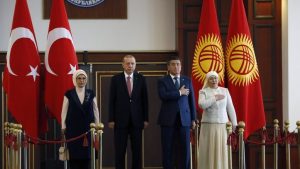
Ο πρόεδρος της Τουρκίας Ταγίπ Ερντογάν με τη σύζυγό του Εμινέ, και το προεδρικό ζεύγος του Κιργιστάν. Φωτογραφία via Twitter, @RT_Erdogan

Την Δευτέρα, ο ισλαμιστής πρόεδρος της Τουρκίας, Ταγίπ Ερντογάν, έκανε κάποιες σημαντικές δηλώσεις, στις οποίες λίγοι έδωσαν σημασία. Οι πάντες ήταν αφοσιωμένοι στους εσωτερικούς κομματικούς καυγάδες, που κυριαρχούν στην Ελλάδα, ως η χώρα να είναι ο ομφαλός της γης. Βεβαίως δεν είναι…

Τι είπε ο κ. Ερντογάν ενόψει του καυτού φθινοπώρου στην κυπριακή ΑΟΖ και γενικότερα στην Ανατολική Μεσόγειο;

Πρώτον: Η Τουρκία κάνει τις δικές της αξιολογήσεις στην Ανατολική Μεσόγειο. (Στο κείμενο του Κώστα Βενιζέλου που δημοσιεύουμε σήμερα θα δείτε τους σχεδιασμούς της Τουρκίας για τον «Πορθητή», που έχει το όνομα αλλά όχι τη χάρη).

Δεύτερον: Γίνεται λόγος, υποστήριξε, για αποθέματα 2-3 τρισεκατομμυρίων δολαρίων (στην Ανατολική Μεσόγειο). Όπως πάντα υπερβολικός, αν και τα νούμερα αυτά ακούστηκαν και παλαιότερα…

Τρίτον: Οι ΗΠΑ, το Ισραήλ και η Γαλλία παίζουν τα παιχνίδια τους στην περιοχή, χωρίς να λέει ότι έχουν στρατηγικά συμφέροντα στην περιοχή.

Τέταρτον: Η Ρωσία έχει το θέμα της άσκησής της (στη Μεσόγειο), είπε. Η Μόσχα, συνέχισε, έχει πέντε βάσεις στη Συρία στη δυτική πλευρά. Επιπλέον έχει πλοία στη Μεσόγειο. Η άσκηση που θα κάνουν με τη Κίνα είναι πολύ μεγάλη, δήλωσε ο ισλαμιστής ηγέτης της Τουρκίας.

Μέσα σε τέσσερις φράσεις έμπλεξε μία υπερδύναμη (τις ΗΠΑ), δύο εν δυνάμει υπερδυνάμεις (τη Ρωσία και την Κίνα), και δύο ισχυρές χώρες (το Ισραήλ και τη Γαλλία), στο χορό της ενέργειας στην Ανατολική Μεσόγειο και συγκεκριμένα στην κυπριακή ΑΟΖ.

Ας πάρουμε τους ισχυρισμούς του ένα προς ένα:

Η Τουρκία δεν έχει κανένα δικαίωμα στα ενεργειακά αποθέματα της Μεσογείου και σίγουρα κάποια στιγμή θα το καταλάβει και θα το χωνέψει. Και αυτό, διότι η αμερικανική Exxon Mobil και η γαλλική TOTAL, δεν είναι ΕΝΙ που το έβαλε στα πόδια. Αν τα ενεργειακά αποθέματα αγγίζουν τα 2-3 τρις, όπως ισχυρίζεται ο κ. Ερντογάν, τότε και οι ισορροπίες θα αλλάξουν και η χώρα του θα μείνει εκτός, διότι είναι ο υπ’ αριθμό ένα ταραξίας στην περιοχή. Εάν συνεχίσει να τηρεί την ίδια στάση, όπως και σήμερα, γιατί όσες δυνάμεις έχουν πραγματικά συμφέροντα, όπως η Ουάσιγκτον, το Παρίσι και το Τελ Αβίβ, να επιθυμούν την οποιαδήποτε σχέση με τη χώρα του.

Ο ισχυρισμός του ότι η Αμερική, το Ισραήλ και η Γαλλία «παίζουν τα παιγνίδια τους» στην Ανατολική Μεσόγειο, δεν είναι αβάσιμος. Αλλά δεν παίζουν παιγνίδια με τον τρόπο που το ταραγμένο του μυαλό τα εννοεί.

Το Ισραήλ έχει τα δικά του αποθέματα, και οι Αμερικανοί και οι Γάλλοι αγόρασαν οικόπεδα στην κυπριακή ΑΟΖ και τον Οκτώβριο ξεκινούν γεωτρήσεις. Και βεβαίως, με τις μέχρι στιγμής πληροφορίες που έχουμε στη διάθεσή μας, θα προφυλάξουν τις επενδύσεις τους.

Η αναφορά του στη Ρωσία και τη Κίνα, έγινε εκ του πονηρού. Δεν έχουν κανένα δικαίωμα αυτές οι δύο χώρες στην κυπριακή ΑΟΖ και ούτε πέφτει λόγος στη Μόσχα και το Πεκίνο για τις αποφάσεις της Κυπριακής Δημοκρατίας. Έγινε ο διαγωνισμός και δεν ενδιαφέρθηκαν. Οπότε, δεν υπάρχει περίπτωση, ούτε στο πλαίσιο της όποιας άσκησης γίνει, να εμπλακούν σε ενέργειες εναντίον της Κύπρου, της Exxon Mobil και της TOTAL.

Ο ρωσικός στόλος βρίσκεται στην περιοχή μόνο για να προστατεύσει τον Άσαντ και τα συμφέροντα της Μόσχας. Ας σταθούμε, όμως, στον ισχυρισμό του, για τα δήθεν παιγνίδια των Αμερικανών, των Ισραηλινών και των Γάλλων. Ο κ. Ερντογάν υπονοεί ότι έχουν σχηματίσει ένα μέτωπο εκμετάλλευσης των ενεργειακών κοιτασμάτων με τρόπο που είναι εχθρικός, αν θέλετε, προς την Τουρκία.

Προετοιμάζει, δηλαδή, το έδαφος για προβοκάτσια, διότι δεν θα έλεγα ότι μπορεί να αντιπαρατεθεί στα ίσια με τις ΗΠΑ, το Ισραήλ και τη Γαλλία. Άλλωστε, η «δοξασμένη» τουρκική αεροπορία, το έβαλε στα …πόδια όταν τα ισραηλινά μαχητικά πέταξαν επανειλημμένα πάνω από την Καρπασία.

Ο Ερντογάν βρίσκεται σε κατάσταση σύγχυσης. Ξαφνικά, λόγω των διαφωνιών του με τη Μόσχα και τη Τεχεράνη για τον εμφύλιο της Συρίας, βρέθηκε στον …ωκεανό, χωρίς να μπορεί να αποφασίσει με ποιόν θα συνταχθεί και ποιον θα πουλήσει.

-Εάν προτιμήσει τους Αμερικανούς πρέπει να ταπεινωθεί, αλλά οι σχέσεις δεν θα γίνουν ποτέ όπως ήταν τις παλιές καλές εποχές, όταν η Τουρκία εκμεταλλευόταν την Αμερική, όπως τόνισε πρόσφατα ο κ. Τραμπ.

Στην περίπτωση αυτή θα πρέπει να είναι έτοιμος να αντιμετωπίσει την οργή του Βλ. Πούτιν, ο οποίος -ως γνωστόν- είναι άφιλος. Είναι το μεγαλύτερο του «προσόν».

-Εάν επιλέξει του Ρώσους, θα αντιμετωπίσει το χάος και την «κόλαση». Καμία αμφιβολία περί αυτού. Ο πρόεδρος της Τουρκίας βρέθηκε στο σταυροδρόμι με δική του ευθύνη. Οι σοβαροί αναλυτές πιστεύουν ότι όποιο μονοπάτι και να επιλέξει, θα είναι γεμάτο αγκάθια…

Πηγή: Τι εννοεί ο Ταγίπ Ερντογάν όταν ομιλεί για τα “παιγνίδια” των ΗΠΑ, της Γαλλίας και του Ισραήλ; https://hellasjournal.com/2018/09/ti-ennoei-o-tagip-erntogan-otan-omilei-gia-ta-quot-paignidia-quot-ton-ipa-tis-gallias-kai-toy-israil/

Trump’s Psyche and the Threat of Force by MELVIN GOODMAN

0

Photo Source David Shankbone

The frightening letter from a senior official in the Trump administration that appeared in the New York Times begs questions about the possibility of additional “misguided impulses” from the President that cannot be blocked.  Unfortunately, there is a terrible precedent from the Nixon administration in 1973 during the October War, when President Richard M. Nixon was incapacitated and national security adviser Henry A. Kissinger recklessly and unnecessarily upgraded the nuclear alert to Defense Condition III.

Let’s review the bidding: the month of October occasioned the surprise Egyptian-Syrian attack against Israel as well as increasing evidence that President Nixon had obstructed justice in his effort to hide the crimes of Watergate.  Nixon was preoccupied with the threat of impeachment, according to both Kissinger and the president’s military aide, General Alexander Haig.

In his memoirs, Kissinger maintained that he needed to send a significant military signal to the Soviet Union because of a “threatening” note from Soviet General Secretary Leonid Brezhnev during the late stages of the war.  In fact, the note was neither a threat nor an ultimatum, and was similar to Brezhnev’s note to the Johnson administration during the Six-Day War of 1967.  In 1967 and 1973, the Soviets were restrained and trying to get an end to the fighting, particularly in view of Israeli violations of a cease-fire that Washington and Moscow had orchestrated.

Moreover, there was no intelligence information in 1973 that indicated the Soviets were prepared to intervene militarily in the Middle East.  The Soviet airlift to Egypt had stopped, and the evidence of nuclear materials on Soviet naval ships coming through the Dardanelles to the Mediterranean Sea was based on an erratic naval collection system that typically and inaccurately recorded radiation from Soviet ships.  The Soviet airborne divisions were not on alert, and Moscow had never introduced its airborne forces into noncontiguous areas.

Nevertheless, Kissinger called an National Security Council meeting on October 24, 1973 that ultimately declared DefConIII.  The National Security Act of 1947, however, stipulates that only the president or the vice president may chair an NSC meeting.  This meeting was held close to midnight, and General Haig refused to awaken President Nixon, who seemed to be too distraught to participate in high-stakes foreign policy decision making.  (A new vice president had been named—Gerald Ford—to replace Spiro Agnew, but he had not been confirmed and therefore could not attend an NSC meeting.)

If neither the president nor the vice president is available, the 1947 Act stipulates that the president has to authorize in writing who will be in charge.  There is no record of such a letter in 1973.  Kissinger ran the meeting in his capacity then as Secretary of State and National Security Adviser, and he was the only one present who believed the Soviets were prepared to intervene and that a heightened military alert was called for.

The other key participants (Secretary of Defense James Schlesinger, CIA Director William Colby, and Chairman of the Joint Chiefs Admiral Thomas Moorer) were opposed.

Kissinger’s reckless use of a nuclear alert during the October War was typical of his diplomatic jujitsu in other Third World imbroglios.  He wanted to threaten the Soviets over a Cuban affair in 1970, but Nixon overruled him.  Kissinger wanted a “showdown” with the Soviets over the Indian-Pakistan War in 1971, but Nixon again ignored him.  Kissinger’s unnecessary Christmas bombing of North Vietnam was unconscionable.

Kissinger conducted a costly crew rescue in Southeast Asia in 1975 in order to create “credibility” for a new president, Gerald Ford.  We were fortunate in 1973 because the Soviets showed restraint.

So let’s fast forward to 2018.  We have a president who is “impetuous, adversarial, petty, and ineffective,” according to a senior official in his administration.  We also have a president who is facing a serious threat to his leadership that could very well lead to impeachment.  And we have a national security adviser, John Bolton, who is more impetuous and adversarial than any of his recent predecessors.  So far our general officers in the Trump administration have been the “adults in the room,” but can we count on a chief of staff and the Secretary of Defense to block the reckless actions of a president of the United States who believes that the use of military force may be the only solution to his political crisis.

More articles by:

Melvin A. Goodman is a senior fellow at the Center for International Policy and a professor of government at Johns Hopkins University.  A former CIA analyst, Goodman is the author of Failure of Intelligence: The Decline and Fall of the CIA and National Insecurity: The Cost of American Militarism. and A Whistleblower at the CIA. His forthcoming book is American Carnage: Donald Trump’s War on Intelligence” (City Lights Publishers, 2019).  Goodman is the national security columnist for counterpunch.org.

Trump’s Psyche and the Threat of Force

Smoke and Mirrors: A Macedonian Spy Mystery

0

Did Macedonia’s Intelligence Agency stage a deadly shootout to distract from a corruption scandal? On the third anniversary of the Kumanovo incident, BIRN sifts through the evidence.

Benjamin Arifi Kumanovo, Skopje, Pristina

Like many roads in ethnically mixed parts of Macedonia, Tode Mendol in the northern town of Kumanovo has two unofficial names. Ethnic Albanians call it “the Street of Brave Men”. To everyone else, it is “the Wild Street”.

In the early hours of May 9, 2015, it became a warzone.

“The shooting started while we were praying,” recalled Eljesa Mahmudi, imam of the New Mosque serving the street’s mostly Albanian community. “We had no idea what was happening.”

Around the corner on Pero Ilievski Street, an explosion awoke Ramadan Baftiu, a part-time taxi driver. The narrow cul de sac was swarming with police armed with Kalashnikovs.

“I barricaded myself in the basement for around 14 hours while everything happened just outside,” he said.

Over the next two days, units of Macedonia’s anti-terrorist police laid siege to 39 ethnic Albanian gunmen holed up in three rented houses on Pero Ilievski.

Wearing military fatigues and bulletproof vests, they burst into the home of Nezir Murtezi, a pensioner who lived two doors from one of the houses under attack.

“The police shot from my terrace, from my living room, from my hall,” he said. “They went at it with everything they had.”

It turned out that 31 of the besieged gunmen were from across the border in Kosovo, veterans of war with Serbia in the late 1990s. They returned fire with sniper rifles, AK-47s and machine guns.

The battle devastated the neighbourhood. Explosions turned houses to rubble and incinerated cars. Armoured vehicles crushed walls.

By 9 pm on May 10, 2015, when the last of the gunmen had surrendered, police casualties stood at eight dead and 37 injured. Ten of the gunmen, including the group’s leaders, were killed in the fighting, police later said.

Nikola Gruevski, then Prime Minister, addressed the nation on live television. Grim-faced, he said police had thwarted a “terrorist group” that had snuck across the border, planning “massive killing” at police stations, shopping malls and sports events.

“One thing is certain,” he said. “Their aim was to destabilise Macedonia.”

Three years later, with a new government in Skopje, there is anything but certainty about the motives of the gunmen.

In early November 2017, the Skopje Criminal Court sentenced 33 men to a combined 745 years in prison on terrorism charges. Seven got life sentences while others received jail terms ranging from 12 to 40 years. Four men were acquitted.

But the trial did little to answer a burning question on many people’s lips: who ordered the gunmen to go to Kumanovo in the first place? Who was behind it all?

Nor did the trial quell calls for an international inquiry into the incident at a politically sensitive time for Macedonia as it seeks NATO membership and EU accession talks, both blocked by neighbouring Greece over a long-running bilateral name dispute.

Prosecutors had insisted the group acted on its own, bent on killing in the name of greater rights for ethnic Albanians in Macedonia. They had been under surveillance before attempts to arrest them turned into a bloodbath, they said.

All the defendants had denied the terrorism charges, saying they acted in self-defence after police started attacking them. Some said they had been victims of a politically motivated set-up, lured to Kumanovo by Macedonian authorities where a trap awaited.

“The conflict in Kumanovo was completely organised by the Macedonian Intelligence Agency”

– A senior intelligence officer at Macedonia’s spy agency

Even before the trial, speculation had swirled that the authorities may have orchestrated a showdown in Kumanovo — or at least tolerated the group’s plan to act there — to stoke ethnic tensions and distract from a corruption crisis engulfing the government of the day led by Gruevski and his VMRO DPMNE party.

Among the conspiracy theorists was Zoran Zaev, then leader of the opposition Social Democrats, SDSM, and today prime minister. He told journalists a few days after the shootout: “There are strong indications that this case is a scenario orchestrated by the power holders.”

On the third anniversary of the incident, the Balkan Investigative Reporting Network, BIRN, can reveal exclusive comments from a senior officer of the Intelligence Agency that contradict the official account of how the gunmen came to be at Kumanovo.

BIRN has been unable to independently verify the source’s information — and his version of events is strenuously denied by VMRO DPMNE leaders including Macedonian President Gjorge Ivanov.

But taken together with court testimony, snippets of wiretapped conversations and forensic clues that some of the gunmen may have been summarily executed, his unconfirmed claims evoke a drama worthy of a spy thriller.

According to the officer, who spoke on condition of anonymity, the fighters in Kumanovo were recruited and armed with help from the Intelligence Agency, which gave them safe passage to Kumanovo before police forces pounced.

“The conflict in Kumanovo was completely organised by the Macedonian Intelligence Agency,” the officer told BIRN. “It was a badly organised scenario that went even worse on the ground.”

BIRN put the claims, which are not substantiated with hard proof, to the Intelligence Agency. President Ivanov, who oversees the agency and heads the national Security Council, personally responded.

Ivanov denied that the agency or the president’s cabinet had staged an incident in Kumanovo and called such accusations “a desperate attempt to mislead the news with false news and build a negative perception of the institutions”.

Zaev, whose SDSM-led government came to power in May, ending 10 years of rule by Gruevski’s VMRO DPMNE party, has said he favours a retrial. If that happens, the authorities have indicated they may request outside help to remove all remaining doubts about the case.

A destroyed car lies on a street in Kumanovo shortly after the standoff. Photo: Amir Idrizi

Convenient timing?

As residents cleared debris after the shootout — broken glass, twisted metal, charred bricks — it was impossible not to recall the dark days of 2001.

The area around Kumanovo had been at the heart of a 10-month conflict in 2001 between state security forces and ethnic Albanian guerrillas of the now-disbanded National Liberation Army, NLA.

A NATO-brokered peace deal helped Macedonia dodge all-out civil war, addressing many of the grievances that had fuelled the insurgency, including a lack of political representation for ethnic Albanians who make up at least a quarter of Macedonia’s 2.1 million people.

The 2001 peace deal made Albanian an official language in municipalities where ethnic Albanians make up at least a quarter of the population. It also guaranteed ethnic Albanians proportional representation in government and state institutions.

Countdown to Kumanovo

February 9, 2015 – The government of Prime Minister Nikola Gruevski is engulfed in a corruption scandal as the opposition begins releasing leaked wiretaps that it says incriminate Gruevski and close associates.

April 4, 2015 – Former police general Stojance Angelov tells protesters he has information that “someone” paid two million euros to ethnic Albanian “criminals” to impersonate a now-disbanded insurgent group and provoke inter-ethnic conflict in the Kumanovo region.

April 10, 2015 – Government headquarters in Skopje is attacked by a grenade. Nobody is hurt.

April 11, 2015 – Someone calling himself “Commandant Kushtrimi” takes responsibility for the grenade attack and warns of more bombings unless ethnic Albanians are given equal rights in Macedonia.

April 21, 2015 – Forty masked gunmen cross the border from Kosovo and storm a police station in the village of Goshince, making off with a large supply of guns and ammunition.

April 26, 2015 – Mirsad Ndrecaj, a former fighter from Kosovo’s war with Serbia, claims responsibility for the Goshince heist.

April 27, 2015 – The ruling VMRO DPMNE party announces it will change the date of its party congress scheduled to take place in Kumanovo on May 9-10, bringing the event forward to May 2-3. Local media cite security concerns.

April 30, 2015 – Opposition leader Zoran Zaev calls for a massive protest on May 17. Some 100,000 people are expected to attend. “This time we won’t go home until the government falls,” he says.

May 3, 2015 – An explosion goes off at the headquarters of the largest ethnic Albanian party and partner in government in Tetovo. Nobody is killed.

May 5, 2015 – The first of many big protests rock Skopje as public fury grows over the wiretap scandal, leading to clashes with police

May 9, 2015 – Shortly before dawn, gunfire and explosions rock an ethnic Albanian neighbourhood in Kumanovo as anti-terrorist police battle 39 gunmen holed up in three houses. It is the beginning of a deadly two-day shootout. Even before the dust settles, critics accuse the government of staging the incident to divert attention from the wiretap scandal.

Bullet casings lie scattered on the ground in Kumanovo. Photo: Amir Idrizi

In Kumanovo, where 20,000 ethnic Albanians account for almost half of the town’s residents, calm had reigned ever since. The events of May 9 and 10 raised the spectre of renewed ethnic strife.

They also raised a question: why now?

In his speech to the nation after the shootout, Gruevski appealed to “those who criticise the opposition or the government to stop, because now we need unity”.

Some critics found it all too convenient for the government.

Gruevski had been mired in scandal since February 2015, when then opposition leader Zaev started releasing what he called information “bombs” — batches of covert recordings that he said proved the government was behind the illegal surveillance of 20,000 people.

The opposition claimed the leaked wiretaps implicated top officials in crimes including election fraud, abuse of power and covering up murder, which the government denied, saying the recordings were fabricated by foreign agents.

The wiretap scandal sparked furious protests and demands for Gruevski’s resignation. Critics wondered if the Kumanovo incident could have been a set-up to defuse efforts to oust him.

Gruevski has denied all allegations, insisting the wiretaps were doctored recordings released as part of a plot to destabilise the country by unnamed “foreign secret services” in collaboration with his political opponents in Macedonia.

One of the wiretaps, released on May 15, 2015, is purportedly of a conversation between Gruevski’s cabinet chief, Martin Protugjer, and Interior Minister Gordana Jankuloska, in which they apparently toy with the idea of inciting a conflict.

“Why don’t we make a war [with ethnic Albanians]?” Protugjer says to Jankuloska.

“We could smash them in an hour!” Jankuloska replies.

A few days after the shootout, Jankuloska stepped down. So did Saso Mijalkov, secret police chief and Gruevski’s cousin. Both said their resignations had nothing to do with Kumanovo but were to help end the political crisis consuming the country, which they blamed on the opposition.

Gruevski would himself go on to resign, in January 2016, as agreed in an EU-mediated deal to end the crisis caused by the wiretap scandal. In June 2017, he and close associates were indicted for election fraud and other alleged crimes.

If Kumanovo was a ruse to deflect criticism from the government, it had clearly not worked.

BIRN was unable to contact Gruevski for comment but the VMRO DPMNE, responded to BIRN’s questions with a statement in November 2017.

“The accusations of the then opposition are completely false and were part of their black campaign led by media under their control for a longer period,” VMRO DPMNE spokesman Ivo Kotevski wrote in an email. “Such allegations were part of well-prepared propaganda against the party, just to reduce confidence in it.

“After all, neither then nor today, half a year since the SDSM came to power, has there been any evidence at all that would support an assertion that our party representatives were involved in orchestrating the event in Kumanovo.”

Goran Mitevski, director of Macedonia’s Counterintelligence Agency between 1999 and 2001, told BIRN in November 2017 that he had heard unconfirmed reports that the incident “was organised by high state officials”.

The Counterintelligence Agency is a separate entity from the Intelligence Agency.

Asked what the government would have stood to gain from staging such an incident, he speculated it might have been looking for an excuse to declare a state of emergency amid calls for early elections.

“But to prove all this, there needs to be an international investigation with the involvement of foreign experts or agents from the neighbourhood or from other foreign countries,” he said.

Inside one of the houses in Kumanovo where gunmen were holed up. Photo: Amir Idrizi

Forewarnings

Even as bullets ricocheted off walls in Kumanovo, sceptics found reasons to be suspicious.

Within hours of the siege, social media lit up with reminders of a speech made five weeks earlier by a former police general named Stojance Angelov. Little noticed at the time, it now seemed prescient.

The retired police general is the leader of a small opposition party called Dignity. On April 4, 2015, he had addressed anti-government protesters in Skopje.

“Someone in our country has prepared a monstrous plan to cause an inter-ethnic conflict,” Angelov bellowed from the podium, without explaining who the “someone” was.

“I have information that somebody gave two million euros to some Albanians who have nothing to do with the NLA, to some criminals from the Lipkovo region [near Kumanovo]. Their job will be to pretend to be NLA, and kill some police officers or soldiers, and cause an inter-ethnic conflict.”

In November 2017, Angelov told BIRN his information had come from “people who worked for state security and other services” and that he cross-checked it with other intelligence sources.

The plan was to pay criminals to recruit — “as collateral damage” — a group of gullible and ideologically driven ethnic Albanians to launch attacks in Macedonia, ostensibly to defend ethnic Albanians from state oppression, he said he was told.

“I said at the time that people close to the power holders were the instigators of this bloody act,” he said. “I believe that no one wanted to see this tragic outcome, but I believe that in the moment they lost control.”

“Someone in our country has prepared a monstrous plan to cause an inter-ethnic conflict”

– Former police general Stojance Angelov

Six days after Angelov’s speech, somebody threw a grenade outside government headquarters in Skopje. Nobody was hurt and damage was minimal.

Someone calling himself “Commandant Kushtrimi” took responsibility in an email to media that bore the NLA logo and, bizarrely, the forged signature of the governor of the European Bank.

Kushtrimi threatened further attacks until all Albanians had equal rights with Macedonians.

On May 3, 2015, a bomb went off in the northeast city of Tetovo at the headquarters of the Democratic Union for Integration, DUI, the largest ethnic Albanian party and a junior partner in the government. Nobody was killed or injured and no one claimed responsibility for the attack.

But it was on April 21, 2015 that supposed NLA fighters really made their mark.

Police announced that 40 masked gunmen wearing NLA badges had crossed from Kosovo and stormed a police station in the village of Goshince, in the Lipkovo district near the border.

They tied up and beat four policemen, before making off with the four-person outpost’s remarkably large arsenal of guns and munitions, including dozens of machine guns.

The DUI warned ethnic Macedonians not to fall for what it called a “provocation”.

Macedonian news agency Zhurnal quoted the former commandant of the NLA in Lipkovo as saying the secret service had staged the Goshince incident to incite ethnic strife and rally Macedonians behind the government.

“The government has paid some people to create a problem up there to manipulate public opinion,” he was quoted as saying.

In July 2017, the senior intelligence officer told BIRN the Intelligence Agency had encouraged the attackers to come to Goshince and steal the weapons, though he offered no proof.

Five days after the Goshince attack, a man named Mirsad Ndrecaj, subsequently identified as the late leader of the Kumanovo gunmen, posted a message on Facebook taking responsibility for the heist.

“The NLA has always hit the target, where our enemies hurt the most,” he wrote. “We don’t want war, but when this is imposed on us, we will always be there protecting our beloved Albanian nation.”

Authorities later confirmed that weapons seized in Goshince were used in Kumanovo. In addition to guns recovered in Pero Ilievski Street, police found 65 machine guns and eight rounds of ammunition from the same haul buried in woods near the town.

A day after the Goshince attack, the VMRO DPMNE announced it would change the date of its quadrennial congress, at which Gruevski was running unopposed for a fourth term as party president. The event had been scheduled to take place in Kumanovo on May 9-10 but was brought forward to May 2-3.

Asked about the change of dates, VMRO DPMNE spokesman Kotevski told BIRN the party rescheduled the congress in response to the escalating political crisis that it blamed on the opposition, “in order to bring the full attention and focus of the party’s leadership onto the political crisis”.

He said: “The party didn’t have any information about the group and their intentions to enter Kumanovo.”

A wall pockmarked by machine gun fire shows the ferocity of the firefight in Kumanovo. Photo: Amir Idrizi

Secret meeting

Ndrecaj, the leader of the gunmen, was a former fighter of the Kosovo Liberation Army during the conflict with Serbia. He was from the western Kosovo city of Gjakova/Djakovica.

About a month after he was declared dead in Kumanovo, media in Kosovo published leaked recordings purportedly of phone calls between Ndrecaj and a man later identified in court as an ethnic Albanian agent working for Macedonia’s Intelligence Agency.

The spy’s name was Shenasi Memedi.

“I sent you a message but that number of yours is not working,” Memedi says in one recording, apparently made soon after the Goshince hostage drama. “I saw the reaction yesterday evening.”

Ndrecaj: “Which one?”

Memedi: “The one you wrote on Facebook. That the NLA took over the station.”

Ndrecaj: “And? Did you like it?”

Memedi: “Very good, very good.”

BIRN was unable to contact Memedi, but the senior intelligence source claimed he was involved in planning the operation in Kumanovo.

The senior intelligence officer identified another man as the “mastermind”: Sinisha Aleksovski, an agent in the Intelligence Agency who also sits on President Ivanov’s cabinet as his security advisor.

“Everything was under the command of Sinisha Aleksovski, the president’s counsellor for security, and Shenasi Memedi on the ground,” he said.

Contacted by BIRN, Aleksovski declined to comment.

In a television interview in May 2017, Prime Minister Zaev also linked Aleksovski to the Kumanovo incident.

“Many structures are involved,” he said. “One is Sinisha Aleksovski. We heard a conversation between him and a person called ‘NATO Commander’ Mirsad Ndrecaj from Kosovo, a famous criminal and bandit who worked in these areas: Kosovo, Serbia, Presevo, Kumanovo, Tetovo region, Skopje — and they had communication.

“Why did they need to be in communication at all? There are serious indications for Sinisa Aleksovski. I think he is the head of the intelligence service that was with Gjorge Ivanov, but there are other indications of involvement of even higher structures.”

President Ivanov, who comes from the ranks of the VMRO DPMNE and has been head of state since 2009, denied that he or his cabinet had anything to do with what happened in Kumanovo.

“Neither I as president nor my cabinet were involved in any way in the Kumanovo case,” he told BIRN in his written response to questions put to the Intelligence Agency. “The president is only a user of the information coming from the Intelligence Agency and other security services.”

“Neither I as president nor my cabinet were involved in any way in the Kumanovo case”

– Macedonian President Gjorge Ivanov

Ivanov continued: “From the generation of false news, next I expect them to associate me with the assassination of [US President John F] Kennedy. Point out at least one fact, not rumours, speculation and lies, but a fact that connects the Cabinet of the President with your allegations.

“I want to inform the public, but also to send a message to all generators of false news: we will not sit with folded hands.”

Although Macedonia is a parliamentary democracy and the president’s powers are limited, Ivanov is commander-in-chief of the armed forces and head of the national Security Council. He also appoints the director of the Intelligence Agency.

Critics see Ivanov as a close partisan of his VMRO DPMNE party. In March 2017, he sparked outrage by refusing to grant a mandate to Zaev after the SDSM won enough seats to form a government in alliance with ethnic Albanian parties. In May 2017, Ivanov finally relented.

The phone recordings published in Kosovo and picked up by Macedonian media allude to a meeting in Pristina, apparently between intelligence officer Memedi and group leader Ndrecaj.

Memedi: “Tomorrow I will be in Ferizaj [in southern Kosovo], with my wife, daughter and sons. I thought if you are in Pristina, or where are you?”

Ndrecaj: “We are in Pristina.”

Memedi: “I will call you tomorrow then, and we’ll meet somewhere for a coffee.”

Ndrecaj: “Okay, we will meet in Pristina.”

Memedi: “Say hi to Beg [Rizaj, another leader killed in Kumanovo].”

Ndrecaj: “He says hi back.”

In court, several defendants described at least one meeting in Pristina between Ndrecaj and the spy, Memedi.

They said the purpose was specifically to prepare for Kumanovo, and that a meeting was captured on video. One of the alleged gunmen, Andi Krasniqi, spoke of a recording three hours and 17 minutes long.

No such video has emerged.

“He [Ndrecaj] met Shenasi Memedi and another guy, Macedonian,” Krasniqi told the court. “I don’t know his name, but I know he is from the secret service.”

Nasuf Bekiri, another defendant, said co-leader Beg Rizaj was also at the meeting.

“That tape exists and will come out,” he said. “They planned the project, where they should enter, what they should do.”

BIRN asked the Intelligence Agency if its officers had met with members of the group in the run-up to the shootout. President Ivanov responded, saying: “Your question is to the wrong address.”

He wrote: “Point the question to officials of international organisations and foreign embassies, state organs and political officials who have had constant communication with the leaders of the group.

“Question them about the threats of assassination, extortion, blackmail, physical violence and why they didn’t report the events, the contacts and the nature of the conversations to the Agency of Intelligence and Ministry of Interior. There are many.”

Former Counterintelligence Agency director Mitevski said there was no way the gunmen could have made it to Tode Mendol Street in Kumanovo with all their weapons without the collusion of the Intelligence Agency.

“When I say that there had to be support of the secret service, I mean that they had the chance to take action near the Kosovo border or in some other open space where civilian casualties would be eliminated,” he said.

“According to the prosecution’s information, the group was followed by a drone entering Macedonia from Kosovo. The conclusion is that the secret service had secure information about the time and place the group would enter Macedonia.”

Beg Rizaj, left, and Mirsad Ndrecaj, alleged leaders of the Kumanovo gunmen, pose for a picture posted on Facebook.

Shots to the forehead

Without video proof and assuming the meeting happened as described, the only people who could confirm what was discussed were Memedi, the two leaders of the group and the unidentified second spy mentioned by the gunman Krasniqi.

Memedi was excused from testifying in court on the grounds of state secrecy after his boss, Intelligence Agency Director Zoran Ivanov, sent a letter to the court. Mirsad Ndrecaj and Beg Rizaj are both dead.

Mystery surrounds their deaths too. Court testimony and forensic evidence suggest they may not have been killed in the fighting as reported.

Two days after the shootout, Macedonia’s foreign ministry said in a letter to the Kosovo embassy in Skopje, seen by BIRN, that Ndrecaj and Rizaj were captured alive, along with a man named Arben Rexhaj who was later counted among the dead. The ministry subsequently called this a mistake.

Forensic reports shown to BIRN by a defence lawyer indicate that Rizaj and Rexhaj were both killed by a single bullet to the forehead.

The reports give no idea of the distance the bullets flew before impact.

“In my experience, the estimated distance is always written,” defence lawyer Naser Raufi said. “This is the first report I’ve seen without it.”

“This closeness occurs only when someone is executed”

– Defence lawyer Naser Raufi

Aleksandar Stankov, director of the Institute of Forensic Medicine in Skopje, which made the reports, disagreed that such information should have been included by default — though he said it was easy enough to calculate if required.

“The distance of the shooting is not mentioned in the protocol, but the prosecution or lawyers could ask for this information,” he said. “They could have called us and asked for additional answers.”

Based on the reports and photographs, defence lawyer Raufi said it was likely the leaders were shot at close range.

“This kind of similarity can only be achieved from a very near distance, for example one metre,” he said.

“There is no possibility that this happened during fighting, as the prosecution asserts. The indictment says the fighters, or the executed leaders, were not face-to-face with the police at any moment of the battle. This closeness occurs only when someone is executed.”

Defendant Andi Krasniqi said in court that Ndrecaj and Rizaj were both alive as the last of the group surrendered at around 9 pm.

Another alleged gunmen, Rufki Dogani, said he saw them alive in a police station after the shootout.

An Albanian flag hangs among the debris of a heavily damaged building. Photo: Amir Idrizi

Conspiracy theories

Perhaps not surprisingly, relatives of the accused gunmen see them as heroes who went to Macedonia to fight for the rights of marginalised ethnic Albanians, only to be betrayed by the authorities who enticed them there.

Fadil Elshani, the father of defendant Bajram Elshani, came to Skopje in July 2017 to attend the trial.

“Our sons came for patriotic reasons,” he said. “If they came here for terrorism, they would have killed children, old men or women.”

Ylber Ndrecaj, the brother of the group’s leader, Mirsad, spoke to BIRN in Pristina after an event commemorating the two-year anniversary of the siege.

“They didn’t go there on their own,” he said. “This case was approved by many politicians from Macedonia. And I’m telling you this based on very secure sources, not just rumours.”

Ethnic Albanians are not the only ones who think the siege was somehow orchestrated by Macedonian officials. Many non-Albanian residents of Kumanovo are cynical too.

“They are people who got money to come to Kumanovo and provoke incidents, with the intention of causing a war in Macedonia,” said one man in Skopje’s main square.

Even the father of one of the police injured in the shootout believed the conspiracy theories. “Everything was made up by politicians,” he told BIRN, declining to be identified. “Eight policemen got killed for nothing.”

Since the siege, destroyed homes have been rebuilt with red brick, thanks to a government compensation fund.

One still stands in ruins, on the corner of Tode Mendol and Pero Ilievski. It belongs to Irfan Lutfiu, a barber who was sentenced to 14 years in prison for joining the group after they came to Kumanovo. Some hope to leave it untouched as a reminder of the carnage.

“It was so terrifying,” said Imam Eljesa Mahmudi. “We’ll never forget what happened. This was a scenario that somebody prepared … Thanks to Allah there were no civilian casualties.”

Many people in Kumanovo and across the country now pin their hopes on an international investigation to settle once and for all what led to the shootout. In September 2017, Interior Minister Oliver Spasovski said he would ask for such an enquiry.

“This would help the public find out the truth in a proper way,” he said. “It would be a procedure in which all citizens can believe”.

Benjamin Arifi is a Macedonian television journalist working as a news editor for TV SHENJA in Skopje. This article was produced as part of the Balkan Fellowship for Journalistic Excellence, supported by the ERSTE Foundation and Open Society Foundations, in cooperation with the Balkan Investigative Reporting Network.

http://www.balkaninsight.com/en/article/smoke-and-mirrors-a-macedonian-spy-mystery-05-08-2018

 

Στα πρόθυρα της πιο κρίσιμης μάχης: Οι τζιχαντιστές του Ίντλιμπ απειλούν τον Ερντογάν

0
Iranian President Hassan Rouhani with his Turkish counterpart Recep Tayyip Erdogan during a trilateral meeting between Iran, Russia, and Turkey in Tehran, Iran, 07 September 2018. TURKISH PRESIDENTIAL OFFICE HANDOUT
Του ΣΕΝΕΡ ΛΕΒΕΝΤ
Συνεργασία με τις ΑΠΟΨΕΙΣ και την HELLAS JOURNAL

Υπάρχει ένα μήνυμα προς τον Ρετζέπ Ταγγίπ Έρντογαν από το Ίντλιμπ, πάνω στο οποίο είναι στραμμένα τα μάτια του κόσμου. Από τους τζιχαντιστές. Λένε το εξής: «Αν μας πουλήσεις στο Ίντλιμπ, μέσα σε δύο ώρες θα είμαστε στο Ρεϊχανλί!»
Πού είναι το Ρεϊχανλί; Στην Τουρκία. Μια πόλη με πληθυσμό περίπου ενενήντα χιλιάδες στην επαρχία της Αλεξανδρέττας που βρίσκεται στην περιοχή της Μεσογείου. Ακριβώς στα σύνορα της Συρίας. Η Αλεξανδρέττα ανήκε στην Συρία κάποτε. Αργότερα, το 1939, προσαρτήθηκε εκ μέρους της Τουρκίας.

Ο πόλεμος της Συρίας, που διαρκεί επτά χρόνια, μετατράπηκε σε σκηνή ενός από τους πιο αιματηρούς πολέμους της ιστορίας. Επιτέθηκαν στην Συρία σχεδόν όλα τα δυτικά κράτη με την δικαιολογία ότι θα ανατρέψουν το δικτατορικό καθεστώς Άσσαντ. Ουσιαστικά τα επιτιθέμενα κράτη δεν νοιάζονται για την δημοκρατία στην Συρία και τα ανθρώπινα δικαιώματα που καταπατούνται. Η δικτατορία του Άσσαντ αποτέλεσε μόνο μια πρόφαση. Άλλωστε αν είχαν μιαν τέτοια έγνοια για την δημοκρατία, μήπως δεν θα έπρεπε πρώτα να επιτίθεντο στην Σαουδική Αραβία όπου καταπατούνται κατάφορα τα ανθρώπινα δικαιώματα; Κοιτάξτε, όμως, την εξής ειρωνεία της ιστορίας.
Η Σαουδική Αραβία και το Κατάρ, που δεν έχουν καμία σχέση με την δημοκρατία, έτρεξαν να φέρουν δημοκρατία στην Συρία! Μέσα σε σύντομο χρονικό διάστημα μετέτρεψαν την Συρία σε κόλαση τα κοπάδια των δολοφόνων, τα οποία τροφοδοτούνται με όπλα και χρήματα από το εξωτερικό ως «αντικαθεστωτικοί» και αποκαλούνται «τζιχαντιστές». Δεν έμεινε πέτρα όρθια. Εκατοντάδες άνθρωποι σφαγιάστηκαν και δολοφονήθηκαν.
  • Χιλιάδες γυναίκες βιάστηκαν και πουλήθηκαν στα γυναικοπάζαρα για μερικές εκατοντάδες δολάρια. Στην Ράκκα και στο Χαλέπι έγιναν μάχες παρόμοιες με εκείνην του Στάλινγκραντ. Στο τέλος υπήρξαν περίπου ένα εκατομμύριο νεκροί όπως στο Ιράκ. Τέσσερα εκατομμύρια πρόσφυγες. Οι θάλασσες, που καταπίνουν τους μετανάστες οι οποίοι διαφεύγουν από τον πόλεμο με σαπιοκάραβα, ποτέ στην ιστορία δεν είδαν τόσα πολλά θύματα.
Με την είσοδο της Ρωσίας στον πόλεμο το 2015 στο πλευρό του καθεστώτος της Συρίας άλλαξε η ροή του πολέμου. Η Συρία άρχισε να ανακαταλαμβάνει τα εδάφη που είχε χάσει. Σε αυτό το στάδιο, ο Πούτιν ακολούθησε μια πολύ πονηρή πολιτική. Γνωρίζοντας ότι η Τουρκία υποστηρίζει τους τζιχαντιστές και μάλιστα ότι ο Ταγγίπ Έρντογαν ενεργεί ως διοικητής τους, συμμάχησε με την Τουρκία παίρνοντας στο πλευρό τους και το Ιράν.
Ούτως ή άλλως, η Τουρκία, η οποία δολοφόνησε τον Ρώσο πρέσβη στην Άγκυρα και κατέρριψε ένα ρωσικό επιβατικό αεροπλάνο, δεν είχε και πολύ λόγο και ήταν δεμένα τα χέρια της μπροστά στην Ρωσία. Χάρις στην στρατηγική που ακολούθησε, ο Πούτιν έπεισε την Τουρκία να αποσυρθούν οι τζιχαντιστές από την Ράκκα και το Χαλέπι και να μετακινηθούν στο Ίντλιμπ. Αυτό διευκόλυνε την ανακατάληψη των μεγάλων πόλεων από τα χέρια του Ισλαμικού Κράτους. Όμως, θα ερχόταν η ώρα που θα ανακαταλάμβανε και το Ίντλιμπ η Συρία. Και ιδού που ήρθε εκείνη η μέρα.
Ο Ταγίπ Έρντογαν, που πρόδωσε τον Άσσαντ τον οποίο αποκαλούσε «αδελφέ μου» και θάφτηκε στον βάλτο της Συρίας, τώρα δεν ξέρει πώς θα βγει μέσα από αυτό τον βάλτο. Είναι στριμωγμένος όσο ποτέ άλλοτε. Χρεοκόπησε και η οικονομία και η πολιτική. Από την μια είναι η Αμερική με την οποία καβγαδίζει και από την άλλη η Ρωσία την οποία δεν μπορεί να δυσαρεστήσει. Έστω και αν έκανε μια κίνηση για να καταφύγει εκ νέου στην Ευρωπαϊκή Ένωση, δεν φαίνεται εύκολο αυτό. Δεν είναι και πολύ εύκολο για τις ευρωπαϊκές κυβερνήσεις να σταθούν στο πλευρό ενός φασίστα δικτάτορα στην Τουρκία.
  • Επιπλέον, όλοι πλέον γνωρίζουν ότι ο Έρντογαν συνεργάστηκε με τους λαφυραγωγούς του Ισλαμικού Κράτους. Χθες διάβασα τις παραδοχές ενός διοικητή του Ισλαμικού Κράτους. «Πάντα ήταν δίπλα μας ο Ερντογαν», λέει ο άνθρωπος. Μήπως η Ευρώπη ακόμα δεν βλέπει ότι τρομοκράτες του ισλαμικού Κράτους διενήργησαν βομβιστικές επιθέσεις σε πολλές πόλεις της; Ίσως το βλέπει, αλλά έχει διαπράξει και η Ευρώπη πολλές αμαρτίες στην κόλαση της Συρίας. Εξευτελίστηκε και αυτή σε τούτο τον βάλτο στον οποίο σύρθηκε τυφλά. Δέχτηκε επιδρομές από τρομοκράτες και ρεύματα μεταναστών. Προσέλαβε τον Έρντογαν ως μαντρόσκυλό της για να μην αφήσει τους μετανάστες να πλησιάσουν στις πόρτες της και τον πλήρωσε ως αντάλλαγμα. Και ακόμα τον πληρώνει.
Το Ίντλιμπ μήπως είναι τώρα η τελευταία σκηνή του πολέμου της Συρίας; Η Τουρκία είναι αυτή που πονάει πιο πολύ γι’ αυτό.
Ο Ταγγίπ Έρντογαν.
Κατά την τελευταία σύνοδο κορυφής στην Τεχεράνη, ο Έρντογαν προσπάθησε να πείσει την Ρωσία και το Ιράν για κατάπαυση του πυρός. Αλλά δεν τα κατάφερε.
Η Ρωσία και το Ιράν δεν πείστηκαν με κενές υποσχέσεις. Ο Έρντογαν τους πρότεινε αυτή την φορά να αφοπλίσει τους ένοπλους τζιχαντιστές. Δέχτηκαν. Αλλά τα γεγονότα δείχνουν ότι αυτό δεν έγινε και ότι διεξάγεται μάλιστα και μεταφορά περισσότερων όπλων από την Τουρκία στους τζιχαντιστές στο Ίντλιμπ. Και τελικά αυτοί οι τζιχαντιστές απειλούν τον Έρντογαν λέγοντας: «Αν μας πουλήσεις στο Ίντλιμπ, μέσα σε δύο ώρες θα είμαστε στο Ρεϊχανλί».
  • Αναμφίβολα ο Έρντογαν θερίζει ό,τι έχει σπείρει. Αν διαφύγουν στην Τουρκία οι τζιχαντιστές από το Ίντλιμπ, αυτό θα σημαίνει μεγάλη συμφορά για τον Έρντογαν. Σημαίνει ότι, μετά την Συρία, θα συρθεί σε εμφύλιο πόλεμο η Τουρκία! Πώς ο Έρντογαν θα αποκρούσει αυτό το τέρας το οποίο ο ίδιος έθρεψε και μεγάλωσε;
Αυτές οι εξελίξεις στην Τουρκία, θα επηρεάσουν πολύ βεβαίως και εμάς στην Κύπρο που έχουμε οργανικούς δεσμούς μαζί της. Πρέπει να κοιτάμε το Κυπριακό μέσα από τον φακό της Μέσης Ανατολής. Και πιο πολύ μέσα από τον φακό της Τουρκίας. Θέλοντας και μη η Τουρκία σύντομα θα αποχωρήσει από την Συρία. Από την Κύπρο;

Η Σουηδία δεν εξαιρείται

1

Οι σουηδικές εκλογές δείχνουν ότι η ισχυρή ακροδεξιά είναι το νέο κανονικό της Ευρώπης

Περίληψη:

Αν και οι Σουηδοί Δημοκράτες απέτυχαν στους άμεσους στόχους τους, οι ισχυρές επιδόσεις τους στις δεύτερες συνεχόμενες εκλογές, τους επιβεβαίωσαν ως σημαντικό παράγοντα στην σουηδική πολιτική.

Ο IVAR EKMAN είναι ο παρουσιαστής της εκπομπής Konflikt στο Radio Sweden.

Καθώς τα εκλογικά αποτελέσματα της Σουηδίας βγήκαν γύρω στα μεσάνυχτα της Κυριακής, σχεδόν όλα τα μεγάλα κόμματα της χώρας αισθάνονταν νικητές. Οι κυβερνώντες Σοσιαλδημοκράτες ήταν ευχαριστημένοι απλώς και μόνο επειδή δεν κατέρρευσαν εντελώς, όπως έκαναν οι ομόλογοί τους [1] στην Ολλανδία και την Γερμανία. Αν και το 28,4% των ψήφων [που απέσπασαν] ήταν σχεδόν τρεις εκατοστιαίες μονάδες κάτω από το αποτέλεσμα του 2014, παρέμειναν το πρώτο κόμμα στην χώρα. Ο σημερινός εταίρος του συνασπισμού τους, οι Πράσινοι, ανακουφίστηκαν που δεν έμειναν έξω από το κοινοβούλιο. Και οι κεντροδεξιοί Μετριοπαθείς, παρά το ποσοστό τους που μειώθηκε από 23,3% σε 19,8%, ήταν ευχαριστημένοι επειδή παρέμειναν το δεύτερο μεγαλύτερο κόμμα της Σουηδίας.

11092018-2.jpg

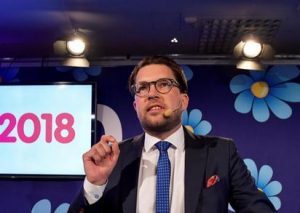
Ο ηγέτης των Σουηδών Δημοκρατών, Jimmie Akesson, τη νύχτα των εκλογών στην Στοκχόλμη, τον Σεπτέμβριο του 2018. TT NEWS AGENCY / REUTERS
————————————————————-

Αντίθετα, οι ακροδεξιοί Σουηδοί Δημοκράτες, των οποίων το ποσοστό αυξήθηκε κατά 4,7 ποσοστιαίες μονάδες από τις τελευταίες εκλογές, γιόρτασε ελάχιστα. Το κόμμα, το οποίο είχε μια εθνικιστική, αντι-μεταναστευτική πλατφόρμα, πλησίασε το ένα πέμπτο των ψήφων: 17,6%, από 12,9% το 2014. Αυτό ήταν πολύ λιγότερο από το 20-30% που ήλπιζε ο ηγέτης του κόμματος, Jimmie Akesson. Το αποτέλεσμα, αν και απογοητευτικό, εξακολουθεί να αφήνει τους Σοσιαλδημοκράτες σε ισχυρή διαπραγματευτική θέση, καθώς αμφότερα τα βασικά μπλοκ της χώρας, το ένα υπό την ηγεσία των Σοσιαλδημοκρατών και το άλλο υπό τους Μετριοπαθείς, πέτυχαν περίπου το 40% των ψήφων, χωρίς να έχουν μια πλειοψηφία που χρειάζεται για να σχηματίσει κυβέρνηση.

Αν και οι Σουηδοί Δημοκράτες απέτυχαν στους άμεσους στόχους τους, οι ισχυρές επιδόσεις τους στις δεύτερες συνεχόμενες εκλογές, τους επιβεβαίωσαν ως σημαντικό παράγοντα στην σουηδική πολιτική [2]. Πώς προέκυψε η λαϊκιστική δεξιά στην Σουηδία και τι λέει για το μέλλον της χώρας;

ΟΧΙ ΤΟΣΟ ΞΕΧΩΡΙΣΤΗ

Είναι εύκολο να ειπωθεί μια αρκετά ειλικρινής ιστορία για τους Σουηδούς Δημοκράτες, η οποία αποδίδει τις επιτυχίες τους στις αποτυχίες της γενναιόδωρης προσφυγικής και μεταναστευτικής πολιτικής της Σουηδίας. Σύμφωνα με αυτή την ερμηνεία, στην δεκαετία του 1970, η Σουηδία -τότε σχετικά ομοιογενής χώρα με ισχυρή πίστη στο διεθνές δίκαιο και τα ανθρώπινα δικαιώματα- άρχισε να επιτρέπει σε αυξανόμενο αριθμό ανθρώπων από μακρινές χώρες να έρχονται, κυρίως ως πρόσφυγες. Μετανάστες από χώρες όπως το Αφγανιστάν, η Χιλή, το Ιράν, το Ιράκ, η Σομαλία και η Τουρκία ξεκίνησαν, σιγά-σιγά αλλά σίγουρα, να αλλάζουν τα δημογραφικά στοιχεία της χώρας με τρόπους που έκαναν ορισμένους Σουηδούς να αισθάνονται άβολα [3].

Αυτό το σταθερό ρεύμα μεταναστών μετατράπηκε σε πραγματική πλημμύρα το 2015, όταν περισσότεροι από 160.000 άνθρωποι, οι περισσότεροι Σύροι, ζήτησαν άσυλο στην Σουηδία -περισσότεροι κατά κεφαλήν από ό, τι σε οποιαδήποτε άλλη ευρωπαϊκή χώρα. Σε αυτό το σημείο, πολλοί Σουηδοί αποφάσισαν ότι έπρεπε να μπει ένα φρένο. Για χρόνια, οι Σουηδοί Δημοκράτες μιλούσαν για τα προβλήματα από τη μετανάστευση: Τις προκλήσεις της ένταξης των νεοεισερχόμενων σε μια ιδιαίτερα οργανωμένη αγορά εργασίας˙ τις όλο εγκλήματα, γεμάτες από μετανάστες γειτονιές που έχουν ξεφυτρώσει σε μεγάλες πόλεις της Σουηδίας˙ και, όπως το βλέπουν, την ασυμβατότητα του Ισλάμ με την κοσμική, Δυτική κουλτούρα της Σουηδίας. Το αν το κόμμα είναι πραγματικά καλά εξοπλισμένο για να χειριστεί αυτές τις πραγματικές και αντιληπτές προκλήσεις αποτελεί ένα ανοιχτό ερώτημα, αλλά σε μια εκστρατεία που κυριαρχείται από τη μετανάστευση και συναφή θέματα, όπως το έγκλημα, πολλοί ψηφοφόροι είδαν τους Σουηδούς Δημοκράτες ως ευκαιρία.

Αλλά αν ιδωθεί η Σουηδία από μια διεθνή προοπτική, αυτή η ανάλυση αλλάζει. Οποιοσδήποτε έχει ακόμη και ένα φευγαλέο ενδιαφέρον για την παγκόσμια πολιτική, καταφέρνει να δει το κύμα του λαϊκισμού και του αντιμεταναστευτικού κλίματος [4] που ξεχύνεται σε όλη την Ευρώπη και τις Ηνωμένες Πολιτείες κατά την τελευταία δεκαετία. Σε αυτό που μοιάζει σχεδόν με πολιτικό φυσικό νόμο, σχεδόν όλες οι Δυτικές χώρες έχουν σήμερα περίπου το 20% του πληθυσμού τους που ψηφίζει, για τον έναν ή τον άλλο λόγο, να μην τους αρέσουν οι μετανάστες. Το μόνο που συνέβη την Κυριακή ήταν ότι η Σουηδία μπήκε στο κλαμπ.

Από αυτή την άποψη, η μεταναστευτική κρίση του 2015 έχει να κάνει πολύ λιγότερο με την Σουηδία. Σε όλες τις Δυτικές δημοκρατίες, ο πραγματικός αριθμός μεταναστών σε μια χώρα φαίνεται να διαδραματίζει μικρό ρόλο στον προσδιορισμό της λαϊκής στάσης απέναντι στη μετανάστευση. Η Ουγγαρία δεν έχει σχεδόν καθόλου μετανάστες, ωστόσο, έχει εκλέξει και επανεκλέξει τον αντι-μεταναστευτικό λαϊκιστή Βίκτορ Όρμπαν ως πρωθυπουργό. Οι Ηνωμένες Πολιτείες έχουν μακρά ιστορία μεγάλης κλίμακας μετανάστευσης, σημαντικό πληθυσμό πρόσφατων μεταναστών και γενικά θετικές στάσεις απέναντι σε αυτούς, ωστόσο εξέλεξε τον πρόεδρο Donald Trump το 2016 σε μια εθνικιστική πλατφόρμα. Η Σουηδία έχει αλλάξει γρήγορα από μια σχετικά ομοιογενή κοινωνία σε μια πολύ ποικιλόμορφη, αλλά σύμφωνα με τις πιο βασικές μετρήσεις της κοινωνικής ευημερίας, όπως η αύξηση του ΑΕΠ πάνω από τον μέσο όρο του ΟΟΣΑ και η θέση μέσα στις δέκα πρώτες θέσεις του Παγκόσμιου Δείκτη Ευτυχίας, εξακολουθεί να τα πηγαίνει αρκετά καλά. Ωστόσο, οι Σουηδοί Δημοκράτες βρήκαν ένα εκλογικό σώμα -περίπου το ένα πέμπτο του πληθυσμού.

ΕΝΑΣ ΑΜΕΡΙΚΑΝΟΣ, ΕΝΑΣ ΔΑΝΟΣ ΚΙ ΕΝΑΣ ΓΕΡΜΑΝΟΣ ΜΠΑΙΝΟΥΝ ΣΕ ΕΝΑ ΜΠΑΡ…

Το αποτέλεσμα της Κυριακής σχεδόν σίγουρα θα καταστήσει δύσκολο τον σχηματισμό κυβέρνησης. Το παλιό σουηδικό σύστημα του αριστερού και του δεξιού μπλοκ έχει καταστεί αδύνατο, αφήνοντας την χώρα με τρεις επιλογές: Το γερμανικό, το δανικό και το αμερικανικό μοντέλο.

Το γερμανικό μοντέλο, βασισμένο στους επαναλαμβανόμενους μεγάλους συνασπισμούς των Γερμανών Χριστιανοδημοκρατών με τους Σοσιαλδημοκράτες, θα απαιτούσε έναν ευρύ αριστερο-δεξιό συνασπισμό στον οποίο οι Σοσιαλδημοκράτες της Σουηδίας θα συνεργάζονται με τους Μετριοπαθείς, μαζί με μικρότερα κεντρώα κόμματα όπως οι Φιλελεύθεροι, οι Πράσινοι, οι Χριστιανοδημοκράτες και το Κεντρώο Κόμμα. Αυτό θα δημιουργούσε μια βιώσιμη κεντρώα κυβέρνηση, αλλά θα άνοιγε επίσης χώρο για τα κόμματα της αντιπολίτευσης ώστε να αναπτυχθούν στις πλευρές του συνασπισμού: Το Αριστερό Κόμμα στα αριστερά και οι Σουηδοί Δημοκράτες στην εθνικιστική δεξιά.

11092018-3.jpg

Ο γραμματέας του Κόμματος των Μετριοπαθών, Gunnar Strommer, σε συνέντευξη Τύπου στην Στοκχόλμη, Σεπτέμβριος 2018. TT NEWS AGENCY / REUTERS
——————————————————————–

Στο μοντέλο της Δανίας, βασισμένο στον de facto συνασπισμό της κεντροδεξιάς του Venstre με το δεξιό λαϊκιστικό Κόμμα του Δανικού Λαού, ένα συντηρητικό μπλοκ υπό την ηγεσία των Μετριοπαθών θα δημιουργούσε μια κυβέρνηση με την βοήθεια των Σουηδών Δημοκρατών. Αυτό θα πόλωνε την σουηδική πολιτική κατά μήκος ενός ανανεωμένου άξονα αριστεράς-δεξιάς, με τον εθνικισμό να γίνεται η ιδεολογική βάση της δεξιάς. Το αποτέλεσμα αυτό φαίνεται απίθανο τώρα, αφού όλα τα κεντροδεξιά κόμματα δήλωσαν ότι δεν θα διαπραγματευτούν με τους Σουηδούς Δημοκράτες, αλλά θα μπορούσαν να αλλάξουν γνώμη καθώς θα μακραίνουν οι διαπραγματεύσεις.

Στο μοντέλο των ΗΠΑ, οι Σοσιαλδημοκράτες θα προσπαθούσαν να διασπάσουν το κεντροδεξιό μπλοκ, απομακρύνοντας τα μικρότερα, πιο κεντρώα κόμματα, παρόμοια με το πώς οι Δημοκρατικοί προσπάθησαν να απομακρύνουν από το 2016 τους μετριοπαθείς, κεντροδεξιούς Ρεπουμπλικανούς ψηφοφόρους. Αυτό θα άφηνε την Σουηδία με ένα ευρύ κεντρο-αριστερό μπλοκ απέναντι σε ένα σαφώς συντηρητικό, εθνικιστικό μπλοκ.

Ακόμα κι αν οι Σουηδοί Δημοκράτες εισέλθουν σε ένα συνασπισμό, η οποιαδήποτε κυβέρνηση σχεδόν σίγουρα θα αφήσει άθικτα τα βασικά στοιχεία της σουηδικής πολιτικής -ειδικά όταν πρόκειται για την οικονομία και την εθνική ασφάλεια. Η ΕΕ, η ανεξάρτητη κεντρική τράπεζα της Σουηδίας, η βιομηχανική βάση που βασίζεται στις εξαγωγές της χώρας και η στενή συνεργασία της με το ΝΑΤΟ αποτελούν πραγματικές εγγυήσεις γι’ αυτό. Αλλά οι πτυχές της πολιτικής που επηρεάζονται περισσότερο από τα θέματα ταυτότητας –η κουλτούρα, ο νόμος και η τάξη, τα μέσα μαζικής ενημέρωσης και κυρίως η μετανάστευση- θα μπορούσαν να υποστούν αλλαγές, τουλάχιστον μακροπρόθεσμα. Από το 2015, η Σουηδία έχει ήδη μετατοπιστεί ταχύτατα, από το να προωθεί μια από τις πιο ανοιχτές πολιτικές μετανάστευσης της ΕΕ στην υιοθέτηση μιας από τις πιο περιοριστικές. Οι εκλογές της Κυριακής έφεραν στην επιφάνεια μακροχρόνιες συγκρούσεις για την ταυτότητα, και με τόσο μεγάλη αβεβαιότητα στην ατμόσφαιρα, η Σουηδία -μια χώρα που κάποτε πρωτοστάτησε στην δημιουργία του κράτους πρόνοιας- θα μπορούσε πάλι να γίνει πρωτοπόρος, αυτή την φορά για κάτι ριζικά διαφορετικό.

Copyright © 2018 by the Council on Foreign Relations, Inc.
All rights reserved.

Στα αγγλικά: https://www.foreignaffairs.com/articles/sweden/2018-09-10/swedish-unexce…

Σύνδεσμοι:
[1] https://www.foreignaffairs.com/articles/germany/2017-09-25/future-german…
[2] https://www.foreignaffairs.com/articles/sweden/2014-09-18/end-swedish-ex…
[3] https://www.foreignaffairs.com/reviews/review-essay/2018-08-13/good-fenc…
[4] https://www.foreignaffairs.com/articles/united-states/2016-10-17/populis…

Μπορείτε να ακολουθείτε το «Foreign Affairs, The Hellenic Edition» στο TWITTER στην διεύθυνση www.twitter.com/foreigngr αλλά και στο FACEBOOK, στην διεύθυνση www.facebook.com/ForeignAffairs.gr και στο linkedin στην διεύθυνση https://www.linkedin.com/company/foreign-affairs-the-hellenic-edition

ΓΕΡΜΑΝΙΑ: Η Αριστερά κατά της ανεξέλεγκτης μετανάστευσης!

3

Σάρα Βάγκενκνεχτ

Κείμενο του Sebastian Seibt

[Aπό πού και ως πού είναι Λαϊκισμός* να λες όχι στο άνοιγμα των συνόρων στους μετανάστες; Λέγοντας ναι στην παροχή ασύλου στους διωκόμενους και όχι στην αθρόα μετανάστευση η Σάρα Βάγκενκνεχτ, η νέα ηγέτις της Αριστεράς στη Γερμανία, συνεπής στην ιδεολογία της, δεν θέλει να παίξει το παιχνίδι των Γερμανών βιομηχάνων που αναζητούν φθηνά εργατικά χέρια. Φαίνεται ότι ο λαϊκισμός – ως συνώνυμος του νεοφασισμού και του αυταρχισμού – είναι η μομφή που απευθύνεται σε κάθε καλοπροαίρετη προσπάθεια που χαλάει την ‘’ατζέντα’’ της Νέας Τάξης Πραγμάτων. E.Δ.N.]

Με το αριστερό κίνημα “Εμπρός” [συμμαχία του Linke , των Πράσινων και των σοσιαλδημοκρατών του SPD] η Σάρα Βάγκενκνεχτ θέλει να ανακτήσει το λαϊκό εκλογικό σώμα στη Γερμανία. Για να γίνει αυτό, δεν διστάζει να δανειστεί από τη ρητορική της άκρας δεξιάς Alternative für Deutschland.

Η Σάρα Βαγκενκνέχτ θέλει να μιλήσει στους “απογοητευμένους, Γερμανούς, που αισθάνονται παραμελημένοι  ή δεν ακούγονται από τα παραδοσιακά κόμματα”. Αυτή η μορφή του ριζοσπαστικού αριστερού κόμματος Die Linke ίδρυσε, την Τρίτη 4 Σεπτεμβρίου, το κίνημα “Aufstehen” (Ορθιοι), το οποίο γρήγορα καταλογογραφήθηκε στη Γαλλία ως γερμανική έκδοση της Ανυπότακτης Γαλλίας του Μελανσόν.

Η ίδια φιλοδοξία να ενώσει το λαό της αριστεράς, η ίδια επιθυμία να κερδίσει και πάλι τη λαϊκή ψήφο, ίδιες και οι λαϊκιστικές πινελιές: η σύγκριση είναι, πράγματι, σαγηνευτική. Αλλά η Σάρα Βάγκενκνεχτ δεν διστάζει να δανειστεί την αντι-μεταναστευτική ρητορική των ακροδεξιών λαϊκιστών της Alternative für Deutschland (AfD), ενώ ο Ζαν- Λυκ Μελανσόν ανέκαθεν παρουσιάστηκε ως ο πρώτος αντίπαλος του Εθνικού Συναγερμού ( πρώην Εθνικό Μέτωπο).

Αυτή η 49χρονη γυναίκα, που γεννήθηκε στη Ιένα της πρώην Ανατολικής Γερμανίας, έχει επανειλημμένα επικρίνει την πολιτική μετανάστευσης της Ανγκελα Μέρκελ, έχει αντιταχθεί στην «οικονομική μετανάστευση» και επιτίθεται τακτικά στην ‘’καλή αριστερά συνείδηση για την υποδοχή” προσφύγων. “Αυτό είναι τόσο τακτικός υπολογισμός όσο και διακηρυγμένη ιδεολογική θέση”, λέει ο Eκαρτ Ζέσε, ειδικός στον πολιτικό ριζοσπαστισμό στο Πανεπιστήμιο του Σέμνιτζ.

Αυτή η πολιτικός, η οποία έχει καλή πρόσβαση στα μέσα μαζικής ενημέρωσης με τα κομψά ρούχα της και το στυλ του αυστηρού καθηγητή, επιδιώκει, βέβαια, να ΄΄ψαρεύει’’ στα εδάφη της AfD, των οποίων οι αντι-μεταναστευτικές θέσεις βρίσκουν απήχηση σε μια Γερμανία όπου η πολιτική μετανάστευσης της κυβέρνησης αμφισβητείται όλο και περισσότερο. Αλλά η Σάρα Βάγκενκνεχτ “αδιαφορούσε πάντα για τον κοσμοπολιτισμό που δείχνει ένα μέρος της αριστεράς και υπερασπίζεται έναν εθνικισμό που δίνει προτεραιότητα στην υπεράσπιση των συμφερόντων των Γερμανών”, συνοψίζει τον Eκαρτ Ζέσε.

Για αυτόν τον εμπειρογνώμονα, δεν υπάρχει τίποτα περίεργο σχετικά με αυτή τη στάση. “Υπήρξε πάντα ένα κίνημα στο πλαίσιο της Die Linke που, σε θέματα όπως η μετανάστευση, έχει ιδέες που είναι κοντά στην ΑfD, ιδιαίτερα μεταξύ εκείνων που προέρχονται από την πρώην ΛΔΓ, όπως η Σάρα Βαγκενκνέχτ” θυμίζει. “Για αυτήν, οι Πράσινοι αντιπροσωπεύουν τον κύριο πολιτικό εχθρό”, προσθέτει ο Eκαρτ Ζέσε. Τους επικρίνει, σύμφωνα με τον ίδιο, για μια κοινωνική και πολιτική χαλαρότητα που απέχει πολύ από τις ανησυχίες των εργατικών τάξεων.

Η νέα ηγέτις του κινήματος “Εμπρός” θα είναι επομένως η αριστερή λαϊκιστική εναλλακτική λύση στους λαϊκιστές της AfD. Αλλά η Σάρα Βάγκενκνεχτ μόνο λαϊκίστρια δεν είναι, κατά την ομόφωνη άποψη των Γερμανών πολιτικών σχολιαστών. Αποφεύγει τα πλήθη, χαμογελάει σπάνια μπροστά στις κάμερες και αισθάνεται πολύ άνετα όταν μιλάει με πανεπιστημιακούς για τα όρια του καπιταλισμού. «Είναι μια συνεσταλμένη διανοούμενη», γράφει η εβδομαδιαία Die Zeit, ενώ η Frankfurter Allgemeine Zeitung σημειώνει ότι «οι φίλοι της την χαρακτηρίζουν ντροπαλή, ενώ οι αντίπαλοί της λένε ότι είναι αυτιστική».

 Γκαίτε, αυτός ο μαρξιστής!

Αποπνέει πάντα μια εικόνα διανοούμενης, την οποία αγαπά να καλλιεργεί. Η Σάρα Βάγκενκνεχτ αναφέρει ότι η πολιτική της στράτευση χρονολογείται από την εφηβεία της όταν ανακάλυψε τον Γκαίτε, που γενικά θεωρείται ρομαντικός και όχι στρατευμένος συγγραφέας. Αλλά γι ‘αυτήν, το αγαπημένο της βιβλίο, ο “Φάουστ” είναι “αντικαπιταλιστικό έργο από την αρχή ως το τέλος”. Συνέχισε με τα συγγράμματα των φιλοσόφων Καντ και Χέγκελ πριν ασχοληθεί με τη σκέψη του Καρλ Μαρξ.

Το 1989, λίγο πριν την πτώση του Τείχους του Βερολίνου, πέρασε από τη θεωρία στην πρακτική δράση με την ένταξή της στο ενοποιημένο Σοσιαλιστικό Κόμμα της Γερμανίας (SED), το οποίο ήταν επικεφαλής της Λαϊκής Δημοκρατίας της Γερμανίας (ΛΔΓ). Είναι 21 ετών κατά την επανένωση του 1990 και ο αντικαπιταλισμός έχει ριζώσει για καλά μέσα της. Για να ολοκληρώσει την πολιτική της κατάρτιση, σπούδασε οικονομικά και έγραψε μια διατριβή για την κριτική του Καρλ Μαρξ στο έργο του Χέγκελ, που δημοσιεύτηκε το 1997.

Πολιτικά, είναι φυσικό να ενταχθεί στο Κόμμα Δημοκρατικού Σοσιαλισμού (PDS), διάδοχος του SED. Όταν το PDS γίνεται Die Linke το 2007, υπό την ηγεσία του Oσκαρ Λαφονταίν, η Σάρα Βάγκενκνεχτ ακολουθεί αυτόν τον παλιό οδοιπόρο της γερμανικής αριστεράς, ο οποίος τελικά θα γίνει σύζυγός της.

Παρά τη δηλωμένη φιλοδοξία της, από τις αρχές του 2010, να αναλάβει την ηγεσία του κόμματος, ποτέ δεν τα κατάφερνε. Κατηγορείται για τον ριζοσπαστισμό και την έλλειψη χαρισμάτων. Για μερικούς, το κίνημα “Εμπρός” είναι για τη Βάγκενκνεχτ ένας τρόπος να χειραφετηθεί από ένα κόμμα από το οποίο αισθάνεται ότι δεν έχει τίποτα πλέον να περιμένει. Αλλά για τον Εκαρτ Ζέσε, “διακινδυνεύει  ένα στοίχημα”: σε περίπτωση αποτυχίας, μετά τις ερωτοτροπίες με τις παραδοσιακές θέσεις της άκρας δεξιάς, κινδυνεύει να χάσει “οποιαδήποτε επιρροή στο Die Linke”.

Αποσπάσματα λόγων της Σάρας Βάγκενκνεχτ

“Δεν είναι χωρίς λόγο ότι η Ομοσπονδία Γερμανικών Βιομηχανιών εδώ και χρόνια αγωνίζεται για έναν νόμο περί μετανάστευσης. Η μετανάστευση των εργαζομένων οδηγεί σε αυξημένο ανταγωνισμό για θέσεις εργασίας, ιδίως στον τομέα των χαμηλών μισθών. ”

«Είμαστε υπέρ του δικαιώματος ασύλου και το υπερασπιζόμαστε. Πρέπει να υπάρχουν ανοικτά σύνορα για τους διωκόμενους. Αλλά το άνοιγμα των συνόρων για όλους δεν είναι ρεαλιστικό. Η απώλεια ελέγχου, η οποία έλαβε χώρα το φθινόπωρο του 2015, άλλαξε τη χώρα αυτή και όχι προς το καλύτερο. Αυτό δεν πρέπει να συμβεί ξανά.

.. Η θέση μου είναι ότι περισσότερη μετανάστευση σημαίνει όλο και περισσότερος ανταγωνισμός για θέσεις εργασίας, ειδικά στον τομέα των χαμηλών μισθών. Ούτε κάνουμε τον κόσμο δικαιότερο με την προώθηση της μετανάστευσης. Αντίθετα, φτωχαίνει ακόμη περισσότερο τις φτωχές χώρες. Επειδή είναι πάντα η μεσαία τάξη που μεταναστεύει, οι φτωχότεροι δεν είναι καν σε θέση να το κάνουν. Γι’ αυτό πρέπει να βοηθήσουμε στις χώρες προέλευσης.

… / … υπερασπίστηκα πάντα το δικαίωμα ασύλου, το οποίο υπονομεύθηκε τα τελευταία χρόνια. Είμαι πεπεισμένη ότι οι διωκόμενοι άνθρωποι χρειάζονται προστασία – αλλά το πρόβλημα της παγκόσμιας φτώχειας δεν μπορεί να λυθεί με τη μετανάστευση χωρίς σύνορα. Αντίθετα, πρέπει να κάνουμε ό, τι είναι δυνατόν, ώστε η Γερμανία και η Ευρώπη να μην συνεχίσουν να καταστρέφουν τις προοπτικές της ζωής στις φτωχές χώρες. Οι άνθρωποι χρειάζονται μια προοπτική στην πατρίδα τους.

… / … Σύνορα ανοιχτά σε όλους, είναι αφελές. Προπαντός δεν είναι αριστερή πολιτική“, ανέφερε, εξηγώντας ότι τα δισεκατομμύρια που δαπανήθηκαν από την κυβέρνηση για υποδοχή των αιτούντων άσυλο το 2015” θα μπορούσαν να βοηθήσουν πολλούς πιο άπορους στη Γερμανία “… Ο αριθμός των κοινωνικών κατοικιών δεν είναι απεριόριστος.

*Το “ Χρηστικό Λεξικό της Νεοελληνικής Γλώσσας’’ της Ακαδημίας Αθηνών, ορίζει τον λαϊκισμό ως «πολιτική πρακτική παραπλάνησης του λαού καθώς και παροχής διευκολύνσεων με στόχο την καθοδήγηση και χειραγώγησή του»

Μετάφραση: Ευάγγελος Δ. Νιάνιος

Πηγή: https://www.france24.com/fr/20180904-sahra-wagenknecht-linke-gauche-allemagne-politique-immigration-xenophobie


Περίεργο σκηνικό

6
 ΑΛΕΞΗΣ ΠΑΠΑΧΕΛΑΣ “Καθημερινή”
 

K​​άτι μου λέει ότι αυτές οι εκλογές μπορεί να μοιάζουν λίγο με τις πρώτες εκλογές του 2012. Αν θυμάστε, τότε το πολιτικό και μιντιακό κατεστημένο της χώρας σοκαρίστηκε από την άνοδο των αντισυστημικών κομμάτων, του ΣΥΡΙΖΑ, της Χρυσής Αυγής και των ΑΝΕΛ. Λίγοι είχαν αντιληφθεί την τεράστια απονομιμοποίηση του συστήματος διακυβέρνησης της χώρας, που οφειλόταν στο γεγονός ότι μεγάλο κομμάτι του πληθυσμού φτώχυνε απότομα και φαινομενικά ανεξήγητα. Πρώτη, δε, φορά μπορούσε να βρει απαντήσεις στο Διαδίκτυο, στα μέσα κοινωνικής δικτύωσης, στα after κανάλια και σε άλλα εναλλακτικά μέσα ενημέρωσης. Ο Πάνος Καμμένος ήταν ο μετρ της σχετικής συνταγής από την πλευρά της φουρνιάς εκείνης των αντισυστημικών πολιτικών, καθώς είχε υιοθετήσει πολύ αποτελεσματικά τη «συνταγή Τραμπ» αρκετά νωρίτερα από τον Τραμπ.

Σήμερα έχουμε ένα πολύ περίεργο σκηνικό. Οι περισσότεροι αντισυστημικοί έγιναν στα μάτια μιας μερίδας της κοινής γνώμης πολύ συστημικοί. Μπορεί να προσπαθούν να διατηρήσουν το ακραίο στυλ τους, αλλά η εξουσία, οι συμβιβασμοί και οι μη εξαργυρωμένες υποσχέσεις έχουν πλέον συσσωρευθεί. Είναι δύσκολο να πει κανείς πόσοι είναι οι συμπολίτες μας οι οποίοι δεν… άλλαξαν μετά το ακριβό φροντιστήριο της διακυβέρνησης ΣΥΡΙΖΑ-ΑΝΕΛ και παραμένουν πιστοί στους αντιμνημονιακούς μύθους και δαίμονες, και που πιστεύουν ότι υπάρχει ακόμη κάποιος άλλος δρόμος.

Ακούω γύρω μου νέα παιδιά αλλά και κουρασμένους ανθρώπους που δεν βλέπουν φως να μιλούν για τον Βελόπουλο, τη Ζωή κ.ά. Ισως τώρα να έχουμε μάθει να πιάνουμε κάπως καλύτερα τον σφυγμό έξω από το άμεσο περιβάλλον μας. Μπορεί. Η απόγνωση πάντως φαίνεται να εξωθεί μερικούς ανθρώπους σε νέα, πιo αυθεντικά –κατά την άποψή τους– μορφώματα. Και επειδή όλα εξηγούνται, καλό είναι να έχουμε υπόψη πως μια τεράστια μερίδα του κόσμου ενημερώνεται από sites και blogs, κανάλια και άλλες πηγές, που είναι βέβαιο ότι τα ονόματά τους δεν θα σας θυμίζουν τίποτα.

Σε όλα αυτά, να προσθέσουμε ότι οι αντισυστημικοί άνεμοι της άκρατης παλαβομάρας και ακρότητας πνέουν ανεξέλεγκτοι στην Αμερική και στην Ευρώπη. Εμείς ήμασταν μπροστά, αλλά σε λίγο θα μοιάζουμε «γατάκια» μπροστά τους.

Οι επόμενες εκλογές θα αφορούν, προφανώς, τα δύο μεγάλα κόμματα και όλα δείχνουν ότι το προβάδισμα της Ν.Δ. δεν είναι αναστρέψιμο. Ενδέχεται όμως να έχουμε ταυτόχρονα και μία looney Βουλή, με κόμματα και πρόσωπα που θα την κάνουν, ας το πω ευγενικά, απρόβλεπτη…

Έντυπη

When the Beach Is Out of Reach—Coastal Access Becomes a Growing Concern

0

A sailboat passing by Seal Harbor Beach on Mount Desert Island. TIMOTHY B. CLARK   

Connecting state and local government leaders

As Americans crowd toward the coasts, states and municipalities are caught in passionate battles about public access, while lawsuits seem headed for the U.S. Supreme Court.

NORTHEAST HARBOR — Maine, it is said, has more coastline than any other state. Measured along the twists and turns of countless coves and inlets, the coast stretches 3,478 miles, a few more than California’s—and over 5,000 miles if one counts the shorelines of numerous coastal islands.

But Maine does not grant the public ready access to all that shoreline, unlike most of the 31 states with coastal waters, a count that includes those bordering the Great Lakes.

Therein lies a growing controversy.

Coastal access is also a big issue in other states, whether or not their laws grant public access. In California, along the beautiful Pacific beaches, and in Indiana, along the shores of Lake Michigan, wealthy private owners have tried to keep the public away from beaches abutting their property. In both these states, legal disputes about property rights seem headed for the U.S. Supreme Court.

In Maine, clammers and wormers are among those demanding better access, not to mention sunbathers and beach recreationists. So fraught is the issue that a bill granting people who dig for clams and marine worms the right to harvest in the mudflats of Acadia National Park passed the U.S. House of Representatives this past March.

And the Maine Supreme Court is about to rule on the oddball topic of whether seaweed is a plant or a variety of fish, a definition crucial under state law to determining who can harvest it. Indeed the seaweed controversy is contentious enough to have attracted detailed coveragein The Washington Post last month.

While Maine state government under Gov. Paul LePage has been less interested than it used to be in preserving land for public access, local governments are constantly trying to figure out what can be done.

A public access trail recently opened by Maine Coast Heritage Trust on Great Cranberry Island. (Timothy B. Clark)

And a conservation group, the Maine Coast Heritage Trust, on Aug. 1 unveiled an ambitious capital campaign, aiming to raise $125 million for what it called the largest coastal conservation effort in Maine’s history. It will finance a wide variety of projects, with an emphasis on improving public access to the Maine coast and  conserving habitats threatened by climate change and development. MCHT president Tiim Glidden said that $90 million had already been pledged before the campaign was announced.

Local Struggles

Blue Hill is a hard-working harbor full of lobster boats and surrounded by commercial establishments, including several popular restaurants. But city fathers worry that the public doesn’t have enough access to its shoreline, and so they are pressing to buy a 3.5 acre lot including 900 feet of shorefront.

Residents voted 97-86 in a July 26 meeting against appropriating $458,000 of town funds to make the purchase. But two of the three selectmen want to keep the option open and to schedule a referendum on the purchase in November, according to a report in the Bangor Daily News. The paper quoted selectwoman Ellen Best as saying, “Access to the shore has become more and more limited. It’s a problem increasingly spoken about among towns on the coast of Maine. The need for coast access is something that is very important to me for the future of this town.”

In Cape Elizabeth, just south of Portland, controversy has also been teeming for years about access to a strip of land that runs in front of a neighborhood of expensive homes. The shorefront owners vigorously resisted a proposal to create a walking path in front of their properties along a “paper street” outlined in decades-old city plans but never developed. Shouting matches and lawsuits have marked the dispute, and 600 people last year signed a petition to preserve access to the waterfront. Just this month, the shoreside homeowners’ lawsuit seemed to be settled when they agreed to pay the town $500,000 to purchase land elsewhere in exchange for dropping its claim to the walking path.

Kennebunkport, once frequently in the national news as the summer home of the Bush presidents and their families, has also had a long-running dispute about public access to its three-mile sandy Goose Rocks Beach. There, and in Wells and Old Orchard, whose beaches are important to tourist and recreational economies, there is “a growing sense of exclusivity,” said Orlando E. Delogu, a retired University of Maine Law School professor who has recently published a book titled “Maine’s Beaches are Public Property.”

Kennebunkport has not managed to overcome a Colonial Ordinance of 1647 that grants upland property owners title to land down to the low-tide mark, but it has pressed its case for public access with enough determination to persuade a majority of property owners along Goose Rocks Beach to allow public access.

The 1647 ordinance was adopted by the colony of Massachusetts, which at the time included what is now Maine, and it has remained stubbornly valid in the eyes of the courts ever since. The intertidal zone—the area between tide and low tide—has thus been private except for three activities the colonial government deemed essential: fishing, fowling and navigation.

Numerous court cases have sought to establish public rights to the Maine shores. A detailed and lucid primer on these efforts and their results was published, in its third edition two years ago, by the Maine Sea Grant College Program of the state Department of Agriculture, Conservation and Forestry and the Wells National Estuarine Research Reserve.

It harks back to a key case in 1989 about access to Moody Beach, a mile-long stretch of sand in the town of Wells. About 100 homes adjoin the beach, and some of their owners sued to prevent walking, swimming, sunbathing or using the beach in front of their homes. The Superior Court ruled against the homeowners, and they appealed to Maine’s Supreme Judicial Court. At the same time, the Maine legislature enacted a law giving the public the “right to use intertidal land for recreation.” Eventually, the state’s high court invalidated the law, ruling that the public has no rights to intertidal zones except for fishing, fowling and navigation. Delogu’s 267-page book makes the case that the court’s ruling was in error.

The surge of litigation on coastal access stems, of course, from the growth of population, wealth and tourism along the shores of the Pine Tree State. Paul Dest, who has worked on shoreside access for decades and is now director of the Wells National Estuarine Research Reserve, harks wistfully back to earlier times. “Back 30 or 40 years ago, you could just go to these places,” he said in an interview with Route Fifty. “The coast was less developed. No one was going to kick you off, and there was no home there. Sure, you could camp on the beach. And families along the coast didn’t mind clamming. So I think there is less access, even though there is more publicly owned land”—the result of state and local purchases over the years.

Issues of Commerce

Beaches in southern Maine, and beautiful Sand Beach in Acadia National Park, are of obvious importance to the state’s tourism appeal. But they comprise just a tiny fraction of the Maine’s rocky coastline.

So growing exclusivity along the coastline is of concern also to many people who depend on access to the water for their livelihoods, and to local officials who represent them. That concern is on display in Blue Hill and elsewhere along the coast. Increasingly, leaders of the 130 towns that line the coast are looking for outside help to preserve access for local workers, said Maine Coast Heritage Trust president Tim Glidden in a recent interview. The trust is working closely with these officials, stepping in when needed to buy up small parcels of land that are traditional access points but have come up for sale by their private owners. Some of the towns have no publicly owned access points, Glidden said, even for traditional purposes like boat launching.

The Trust, started by the Rockefeller family nearly 50 years ago, has been gradually increasing its work on public access. Its original focus was on pure conservation. That struck some as elitist—”so I don’t have to look at some tacky house on a pristine island when I sail by on my boat,” as one trust board member put it. There’s still a lot of conservation work that doesn’t involve public access, including many easements given by private donors, but Glidden confirmed that access is now one of three key goals his organization is pursuing.

Public ownership of the coastline amounts to only 6.5 percent of the total, according to the Trust’s estimate. The Citizen’s Guide to Ocean and Coastal Law put it at 12 percent, but that’s an estimate that would include easements that don’t necessarily offer public access.

Diminishing access is one of three “big threats” foreseen by the Trust, said Glidden.

Another is climate change that is threatening coastal ecologies including the resiliency of marshes. The Trust is working to counter that threat by, for example, buying upland property that will allow the marshes to migrate to higher points as the sea rises.

The third threat is also linked to climate change: As East Coast cities like Washington and New York become increasingly hot and humid, Maine could see an influx of people seeking relief over the next 10 to 30 years, Glidden believes. People want to be close to the coast, he observes, and the Trust wants to be vigilant about land use decisions that would threaten it.

In the complex battles about seashore access, the work of clammers and wormers are front and center. On Mount Desert Island, their livelihood was threatened for a time by National Park Service officials who didn’t want to give them access to mudflats in the park. The issue was hot enough to catch the attention of Maine’s small congressional delegation, and in March a bill passed the House of Representatives that would require the Park Service “to allow for the traditional harvesting of the marine organisms in or near the park according to the laws of the State of Maine.” But the bill has not advanced in the Senate.

The Mount Desert Island coast as seen from Great Cranberry Island. (Timothy B. Clark)

Seaweed harvesters, especially those who use boats to harvest rockweed that grows in the intertidal zone, are also making news. With seaweed an increasingly viable industry, harvesters “feel beleaguered by 30,000 upland owners who are saying, ‘Get the hell off my property,” said Delogu in an interview.

Maine’s Supreme Court is now pondering the tricky question of whether rockweed is a plant, like a tree, that can be claimed as private property by the upland owner or is more like a clam or worm available for harvesting from the sea in boats that don’t need to trespass across private lands to reach their catch. The dispute captured the attention not only of The Washington Post but also that of journalist Ben Golfarb, who wrote a deeply researched and entertaining piece on the controversy in the May issue of Hakai Magazine. HIs article is titled “A Fish Called Rockweed: In Maine, a strange legal debate is raging over rights to the state’s most important seaweed.”

Glidden’s organization sides with the plant argument, and has filed a brief with the Court arguing that unchecked harvesting of rockweed threatens breeding grounds for various marine species. A judicial ruling is expected any day.

Politics and Trends

Coastal access is provoking passionate fights across the country.

Delogu is excited by the Indiana Supreme Court’s February ruling that land along Lake Michigan’s shoreline belongs to the public, which rejected upland owners’ claims that they have the right to limit access to beaches abutting their properties. Delogu sees it as part of a national trend toward greater public rights. But the case may raise constitutional issues about the power of states to appropriate private property. U.S. Supreme Court Justice Elena Kagan in early August approved the upland owners’ request for an extension to petition for review until Oct. 5.

And a California case raising similar issues may also soon reach the Supreme Court. It involves a determined effort by technology billionaire Vinod Kohsla to ban surfers and other beachgoers from beaches in front of property he owns. He bought an entire beach coast village not far south of San Francisco to help prove his point. Kohsla’s effort could upend California’s Coastal Law and its Coastal Commission, according to a long piece in the Sept. 2 edition of The New York Times. In February, he petitioned the Court to rule on his case, reported the Times, “citing the First Amendment and also the Fifth (the takings clause) and the 14th (his right to due process).”

The justices are now pondering whether to take the case.

Maine was once seen as farsighted in coastal preservation and access matters. Its Land for Maine’s Future program, enacted in 1987, has raised tens of millions of dollars for preservation efforts along the coast and also at important inland sites. The public approved the first, $35 million bond issue for the program in 1987, and has voted five times since then to replenish its funding.

But the last vote came in 2012, soon after Gov. Paul LePage assumed office, and since then, he has stymied efforts to provide more funding. For his part, LePage has been largely critical of conservation groups, saying they essentially raise local landowners’ property taxes by taking land off the tax rolls when it is put into trust.

LePage is retiring at the end of this year, and advocates of the Land for Maine’s Future program hope it will fare better in the next administration. And Delogu says the political climate is bound to improve for his beach access campaign, “with a new governor, a new attorney general, and a new legislature…almost certainly more amenable to receiving the cases we would bring.”

Timothy B. Clark is Editor at Large at Government Executive’s Route Fifty.

https://www.routefifty.com/management/2018/09/coastal-access-issues-maine/151100/