Οι διαβουλεύσεις με σκοπό μία συμφωνία μεταξύ Βελιγραδίου και Πρίστινας για εδαφικές διευθετήσεις, οι οποίες να προσδίδουν εθνική ομοιογένεια στην περιοχή, έχουν προκαλέσει αντιφατικές αντιδράσεις. Αν και θα πρόκειται για αλλαγή συνόρων, η οποία θα προκύψει κατόπιν συμφωνίας των ενδιαφερομένων κρατών, είναι πολλοί αυτοί που θεωρούν ότι εάν, έστω και έτσι, σπάσει η αρχή του απαραβίαστου των συνόρων θα προκληθεί ντόμινο ή τουλάχιστον θα εγερθούν ζητήματα, τα οποία θα αποσταθεροποιήσουν τα Βαλκάνια.
Η περιοχή έχει από το παρελθόν της βγάλει κακό όνομα. Παραπέμπει σε εθνοτικές συγκρούσεις, εθνικούς ανταγωνισμούς και αστάθεια. Η πραγματικότητα, ωστόσο, είναι διαφορετική. Από τους Βαλκανικούς Πολέμους στις αρχές του 20ου αιώνος και τη συνθήκη του Βουκουρεστίου το 1913, η οποία οριστικοποίησε τα σύνορα, έως τη δεκαετία του 1990, στη Βαλκανική επικράτησε σταθερότητα. Το συνοριακό καθεστώς άντεξε δύο παγκοσμίους πολέμους και βεβαίως το κλίμα του Ψυχρού Πολέμου για μεγάλο διάστημα πάγωσε, ή τουλάχιστον έθεσε σε δεύτερη μοίρα, τις όποιες εθνικές αντιπαλότητες και ανταγωνισμούς.
Η μείζονος σημασίας γεωπολιτική αλλαγή στη δεκαετία του 1990 ήταν η διάλυση της Γιουγκοσλαβίας, η οποία τις προηγούμενες δεκαετίες δέσποζε στον ηπειρωτικό κορμό της Χερσονήσου του Αίμου. Η διάλυση προέκυψε ως παράγωγο της κατάρρευσης των καθεστώτων του λεγόμενου υπαρκτού σοσιαλισμού, αλλά και ως αποτέλεσμα της επιδίωξης των Δυτικών να θέσουν υπό τον γεωπολιτικό έλεγχό τους τις χώρες της Ανατολικής Ευρώπης και βεβαίως των Βαλκανίων.
Η προσπάθεια του καθεστώτος Μιλόσεβιτς, μέσα από τη διάλυση της Γιουγκοσλαβίας, να οικοδομήσει τη Μεγάλη Σερβία τον έφερε σε αντίθεση με τη Δύση και πλησίον της Ρωσίας. Παρότι γονατισμένη και σχεδόν εξαρτημένη από τη Δύση, η Ρωσία του Μπόρις Γέλτσιν αντιμετωπιζόταν και από τους Αμερικανούς και από τους Ευρωπαίους ως δυνητικός γεωπολιτικός αντίπαλος. Αυτός ήταν ο λόγος, που το ΝΑΤΟ έφτιαξε με τη συνθήκη του Ντέιτον το εγγενώς ασταθές κράτος της Βοσνίας-Ερζογοβίνης και βομβάρδισε τη Σερβία για να επιτύχει την απόσχιση και ανεξαρτητοποίηση του Κοσσυφοπεδίου.
Επιδίωξη της ισορροπίας
Έτσι, ενώ στην πρώτη φάση στη Γιουγκοσλαβία συγκρούσθηκαν οι Σέρβοι, οι Κροάτες και οι Μουσουλμάνοι της Βοσνίας, στη δεύτερη φάση συγκρούσθηκαν Σέρβοι με Αλβανούς. Η απόσχιση και ανεξαρτητοποίηση του Κοσσυφοπεδίου πυροδότησε περαιτέρω τον αλβανικό εθνικισμό, όπως φάνηκε καθαρά όταν οι Αλβανοί της ΠΓΔΜ επιχείρησαν το 2001 να επαναλάβουν το εγχείρημα του Κοσσυφοπεδίου, με σκοπό προοπτικά να συμπεριληφθούν όλοι οι αλβανικοί πληθυσμοί σε ένα κράτος, στη Μεγάλη Αλβανία.
Στην περίπτωση της ΠΓΔΜ η Δύση έβαλε φρένο στον αλβανικό εθνικισμό-μεγαλοϊδεατισμό. Όπως δεν ήθελε τη μεγάλη σερβική κοινότητα της Βοσνίας να ενσωματωθεί στη Σερβία, έτσι και απέτρεψε την απόσχιση των αλβανικών περιοχών από την ΠΓΔΜ. Φαίνεται, ωστόσο, πως δεν έχει αντίρρηση να πραγματοποιηθούν μεταξύ Βελιγραδίου και Πρίστινας εδαφικές διευθετήσεις και κάποια ανταλλαγή πληθυσμών, προκειμένου να επιλυθεί η σημερινή εκκρεμότητα και να οριστικοποιηθεί ένα συνοριακό καθεστώς αποδεκτό και από τις δύο πλευρές.
Οι ΗΠΑ του προέδρου Τραμπ ευνοούν τα εθνικά κράτη και κατ’΄επέκτασιν κατά το δυνατόν την εθνική ομοιογένεια. Στη συγκεκριμένη περίπτωση φαίνεται πως επιδιώκουν μία ισορροπία μεταξύ του σερβικού και του αλβανικού στοιχείου. Ελπίζουν πως μία τέτοια εξέλιξη θα διευκολύνει την απεξάρτηση της Σερβίας από τη ρωσική επιρροή και την προσέλκυσή της στις δυτικές δομές.
Μόνο με κοινή απόφαση
Ωστόσο, πέραν των επιδιώξεων των εξωτερικών παραγόντων, πρέπει να λάβουμε υπόψη ότι στην Πρίστινα, το σύνολο της αντιπολίτευσης τάσσεται απέναντι σε ένα ενδεχόμενο συνοριακών αλλαγών. Σε επιστολή προς την επικεφαλής της ευρωπαϊκής διπλωματίας Φεντερίκα Μογκερίνι, η αντιπολίτευση στο Κόσοβο εκτιμά πως «τέτοια σχέδια όχι μόνο θα αποσταθεροποιήσουν την περιοχή με αλυσιδωτές αντιδράσεις (…), αλλά θα είναι επίσης αδύνατο να εφαρμοσθούν και θα προκαλέσουν περισσότερες συγκρούσεις στην περιοχή μας που είναι τώρα παγωμένες».
Ακόμα και στον κυβερνητικό συνασπισμό, η αντίθεση σε οποιαδήποτε ανταλλαγή εδαφών είναι επίσης ισχυρή. Ο πρωθυπουργός του Κοσόβου Ραμούς Χαραντινάι μάλιστα προειδοποίησε ότι υπάρχει κίνδυνος να οδηγήσει «στον πόλεμο». Πάντως, με δεδομένο ότι οι όποιες αλλαγές στο συνοριακό καθεστώς θα πραγματοποιηθούν με κοινή απόφαση των δύο πλευρών και όχι με εκβιασμούς και επιβολή, η Ελλάδα δεν έχει κανένα λόγο να είναι αντίθετη.
Συμφωνίες, οι οποίες παράγουν σταθερότητα ευνοούν και τη χώρα μας, η οποία, παρά τα προβλήματά της, είναι η μόνη ισχυρή στα Βαλκάνια. Για να μην υπάρξουν, μάλιστα, προβλήματα, θα μπορούσε η όποια συμφωνία μεταξύ Βελιγραδίου και Πρίστινας να προσλάβει έναν ευρύτερο χαρακτήρα: με τη συνυπογραφή όλων των κρατών της Βαλκανικής, η συνθήκη να εγγυηθεί συνολικά το συνοριακό καθεστώς στην περιοχή.
EXECUTIVE SUMMARY: The prospect of a long-term truce between Israel and Hamas brings with it both risks and opportunities. While it remains far from clear that such an arrangement is even feasible, Israel is giving Egyptian mediation efforts a chance.
At present, the Israel-Hamas truce is based on the minimal formula of ‘quiet for quiet.’ Many obstacles stand in the way of efforts to broaden this arrangement.
As time passes, this minimalist formula, in place since the end of Operation Protective Edge in 2014, faces a growing risk of collapsing into a new war.
The truce has already been punctured by five major escalation rounds since May of this year alone, in which Hamas and other armed radical forces in Gaza terrorized southern Israeli areas by firing over 600 rockets and mortars.
The Israel Air Force responded by launching extensive waves of air strikes, hitting hundreds of high-value Hamas military assets in Gaza. Targets included Hamas naval attack tunnels, rocket manufacturing factories, battalion headquarters, command posts, urban warfare training camps, and other enemy assets that Hamas invested considerable time and money into creating.
These rounds of fighting appear to be the result of a calculated campaign by Hamas leader Yihya Sinwar to escalate the situation to the brink of war, but to hold back from tumbling into the abyss.
Sinwar’s campaign of calculated brinksmanship began in March with a series of mass infiltration efforts and border rioting incidents, and continued into armed exchanges with Israel in recent months.
Sinwar’s strategic goal is to pressure the Israeli government into agreeing to demands to ease security restrictions around Gaza by widening the ceasefire understandings. This, Sinwar appears to believe, will prevent an economic-humanitarian meltdown in Gaza that would threaten the viability of his regime.
A broader ceasefire, Hamas hopes, would allow international investment to pour into Gaza, as well as lead to the opening of border crossings, economic and infrastructure projects, the construction of a seaport, and the improvement of purchasing power for Gazans.
Hamas prioritizes the needs of its armed wing over that of its civilian population, and cynically diverts funds and materials towards its military force build-up program. But it is highly concerned about the prospect of an economic crash that could lead to a popular uprising against it by Gazans. Hence, it is looking for a way to end its regional isolation so that outside elements can come in and rescue the faltering Gazan economy.
As part of this same effort, Sinwar tried to reach a reconciliation with his internal Palestinian foe, the Palestinian Authority (PA), by offering it a deal by which the PA would rule Gaza politically and act as a conduit for international funds, while Hamas would maintain its military wing and enjoy a monopoly of arms.
The offer was rejected out of hand by PA President Mahmoud Abbas, who described it as “the Hezbollah model.” Abbas also insists that Hamas disband its military wing if internal Palestinian reconciliation is ever to occur.
The Ramallah-Gaza impasse, and the PA’s own sanctions against Gaza, in place to punish Hamas for splitting away from Ramallah’s rule, is one of the main reasons that all efforts to expand the Israel-Hamas ceasefire have failed so far.
With the PA avenue blocked, Hamas turned to the riskier tactic of controlled escalation against Israel.
Hamas’s negotiation tactics have alternated between talks and mortar shells, but its short-term goal remains the same: to open up Gaza to the world while holding onto the terrorist army it has built.
The intended audience for Hamas’s moves is not only Israel and the PA, but also Egypt. Cairo holds the keys to the Rafah crossing between Gaza and Sinai, a crossing Hamas would like to see opened for good. Egypt, for its part, does not wish to see a new armed conflict erupt in Gaza, a development Cairo would view as a destabilizing and destructive regional event, despite Egypt’s inherent hostility towards Hamas.
Hamas, aware that all the regional actors would prefer to see war avoided, has been signaling to Israel, Egypt, and the PA that it is prepared to go to war, if necessary, to avoid the scenario of a domestic uprising due to an economic crash.
Hamas’s regional isolation is not a new problem for it. It became acute when Egypt’s Muslim Brotherhood government, a natural ideological ally of Hamas, and which Hamas had hoped would become its regional power sponsor, was replaced by the anti-Hamas administration of Egyptian President Al-Sisi in 2013. While Iran has offered some assistance, this is a far cry from the kind of outside support Hamas had hoped to enjoy, and Hamas’s willingness to collaborate with Tehran has earned it the ire of Sunni powers.
Hamas’s efforts to break its isolation was a major factor behind the outbreak of the 2014 conflict with Israel. Today, the very same factor could spur a new war.
Raising the stakes further, Hamas has in recent months introduced a new ‘tit-for-tat’ principle, obligating it to fire projectiles at Israel every time the IDF operates against terrorist activity in Gaza. This principle is designed to protect Hamas’s public image and defend it against accusations by other armed Gazan organizations who have suggested that Hamas has become a pushover in its dealings with Israel.
These factors have all combined to place Hamas and Israel on the verge of a new war. Yet despite Hamas’s radical Islamist ideology, its leadership is keen to preserve its rule in Gaza, and it is aware that a new war with Israel would jeopardize that.
Sinwar seems to recognize the futility of any new war with Israel at this juncture, particularly in light of the effectiveness of Israel’s Iron Dome air defenses and new anti-tunnel technology. The new counter-measures are supposed to entirely eliminate the threat of cross-border tunnels by the end of this year.
At the same time, Hamas’s rocket and mortar shell production efforts have been intensifying over the past year. Gaza is crisscrossed with a maze of internal combat tunnels, and Hamas’s battalions are well equipped for intensive asymmetrical urban warfare. Hamas is also working on new attack capabilities, likely in the form of drones, and new sea-based attack cells. This means that Hamas’s force build-up program is changing direction, but not stopping. Hamas has become adept at domestically producing its own arms due to its difficulties in smuggling in weapons from Sinai.
Israel too has its reasons for wishing to avoid a major Gaza conflict at this stage. One reason is that a full-scale conflict would mean fewer resources would be at Israel’s disposal against the bigger and significantly more dangerous threats that are developing in other arenas.
The Gaza Strip is the least stable arena in Israel’s environment, but it is only one of five active arenas, and it is not the most threatening. The Lebanese and Syrian arenas to the north constitute significantly higher threat levels. Lebanon is run by Hezbollah, the most powerful enemy actor in Israel’s environment. Hezbollah’s firepower capabilities exceed those of most state armies in the world.
In Syria, Iran has been pursuing major efforts to set up attack bases against Israel and flood the country with Shiite militias under Tehran’s command.
According to international reports, Israel regularly deploys precise air power and high-quality intelligence to stall Iran’s takeover of Syria, but the situation remains explosive and unpredictable.
While the IDF was designed to fight on multiple fronts simultaneously and emerge with clear victories, it seems fair to assume that the Israeli defense establishment would prefer to focus its resources on the more dangerous northern fronts, and prioritize those over Gaza if possible.
Stopping Iran’s takeover of Syria is Israel’s foremost immediate goal, and a Gaza conflict now would serve as a distraction from the more dangerous threat developing to the north.
In addition, it seems unlikely that Israel would be able to find viable substitute rulers to replace Hamas in Gaza. That means that containing and deterring Hamas, so long as this is possible, is preferable to any full-scale conflict involving ground forces moving into one of the world’s most heavily armed and dense urban warfare environments. Such a conflict would only become absolutely necessary if Sinwar chooses the option of war.
Thus, while the IDF is now fully prepared to decisively defeat Hamas, Israel has chosen the option of containment and deterrence instead.
As a result of these factors, Egypt’s active mediation efforts in Gaza serve Israel’s interests.
The chances of a broad truce arrangement remain low, but a limited ceasefire that is still firmer than the current unstable set-up might be within reach.
photo: Yahya Sinwar, Palestinian terrorist released in Shalit deal, now head of Hamas, photo via Israellycool
Yaakov Lappin is a Research Associate at the Begin-Sadat Center for Strategic Studies. He specializes in Israel’s defense establishment, military affairs, and the Middle Eastern strategic environment.
BESA Center Perspectives Papers are published through the generosity of the Greg Rosshandler Family
Η Διεθνής Έκθεση Θεσσαλονίκης που κλείνει αύριο Κυριακή τις πύλες της πήγε καλά, οι άνθρωποί της είναι ευχαριστημένοι, αλλά δεν μπορώ να σας πω με ποια κριτήρια καταλήγουν στις εκτιμήσεις τους.
Ο δήμαρχος Γιάννης Μπουτάρης ζήτησε, άλλη μια φορά, να μην έρχονται πολιτικοί αρχηγοί στα εγκαίνια, αλλά μάλλον κάνει λάθος. Η Έκθεση έχει χάσει τον παλιό χαρακτήρα της, αλλά πάντοτε ήταν μια πολιτικοοικονομκή εκδήλωση. Καθιερώθηκε από το βήμα της να διατυπώνονται οι βασικές κατευθυντήριες γραμμές των κομμάτων και η κοινωνία να διαδηλώνει τα θέλω της. Μπορεί οι διαδηλώσεις να μην συμβαδίζουν με την ηρεμία που θέλει η οικονομία, αλλά η ΔΕΘ ποτέ δεν ήταν ένα αυστηρά οικονομικό γεγονός, αν και υπήρξε ως τέτοιο.
Στο περίπτερο των ΗΠΑ, που ήταν η τιμώμενη χώρα, συνέρρευσε κόσμος και η κυβέρνηση θα είναι τουλάχιστον ικανοποιημένη από την αντιπροσωπεία που ήρθε από την Ουάσινγκτον.
Ενοχλήθηκαν βεβαίως από τις διαδηλώσεις και –όπως είπε ο Καμμένος– από τα συνθήματα που ακούστηκαν, αλλά ευτυχώς λειτούργησαν τα χημικά που έφεραν μαζί τους οι ΜΑΤατζήδες από την Αθήνα που έδειραν κόσμο και πέταξαν με περισσή ευκολία τα δακρυγόνα τους. Το ξύλο και τα δακρυγόνα, όταν προέρχονται από την «Αριστερά» είναι δικαιολογημένα. Εκείνο που δεν δικαιολογείται είναι να αμφισβητείται η εξουσία της, για την υπεράσπιση της οποίας ανακαλύφθηκε, όψιμα, ακόμη και ο Ανδρέας Παπανδρέου στον οποίο η ΣΥΡΙΖΑία –κάποτε «ανανεωτική»– Αριστερά καταλόγιζε όλα τα δεινά της χώρας. Η εξουσία είναι γλυκιά και για την κατάκτησή της δικαιολογούνται τα πάντα.
Λίγο η ρευστότητα στην περιοχή, λίγο οι λανθασμένες κινήσεις του Ερντογάν, έχουν βάλει τις ελληνοαμερικανικές σχέσεις σε ερωτικό αστερισμό και αυτό είναι θετικό για την Ελλάδα η οποία δέχεται την τουρκική πίεση χωρίς να μπορεί να αντιδράσει επαρκώς.
Η επαύριον της Διεθνούς Έκθεσης εισάγει τη χώρα στην τελική ευθεία της εκλογικής αναμέτρησης.
Ο Πάνος Καμμένος στη συνέντευξη που έδωσε την Τρίτη στη Θεσσαλονίκη, στο πλαίσιο της ΔΕΘ, απαντούσε στερεότυπα στην ερώτηση για τη θέση του στο Σκοπιανό: «Σε τέτοια ζητήματα εξωτερικής πολιτικής αποφασίζει ο λαός με δημοψήφισμα ή εκλογές».
Με δεδομένο ότι ο πρωθυπουργός έχει αποκλείσει το δημοψήφισμα ο Π. Καμμένος φαντάστηκε πως οι παριστάμενοι δημοσιογράφοι θα αντιλαμβάνονταν ότι θα πάμε συντομότερα σε εκλογές.
Στα Σκόπια διενεργείται δημοψήφισμα στις 30 Σεπτεμβρίου και στη συνέχεια η Συμφωνία θα πρέπει να περάσει από τη Βουλή. Μόλις εγκριθεί από την σκοπιανή Βουλή και γίνουν οι απαραίτητες συνταγματικές αλλαγές, θα έρθει και στην ελληνική. Είναι μάλλον η στιγμή που ο Π. Καμμένος και οι ΑΝΕΛ θα εγκαταλείψουν τον ΣΥΡΙΖΑ και την εξουσία. Μια κυβέρνηση χωρίς πλειοψηφία στη Βουλή θα είναι δύσκολο να αντέξει, έστω και αν κανείς δεν ζητήσει εκλογές. Συνεπώς ως την άνοιξη θα ανοίξουν οι κάλπες, πιθανότατα μαζί με τις αυτοδιοικητικές και τις ευρωεκλογές. Η πρόταση αυτή έχει κάποιο όφελος για την κυβέρνηση, η οποία προσδοκά ότι μπορεί μέρος των ψηφοφόρων να εκδηλώσει τη δυσαρέσκειά του απέναντί της στις άλλες δύο, και όχι στη βουλευτική κάλπη.
Σε ό,τι αφορά τώρα το δημοψήφισμα στα Σκόπια, όσοι περιμένουν να μην υπερψηφιστεί η Συμφωνία, καλλιεργούν φρούδες ελπίδες.
Ακόμη και όσοι διαφωνούν και δεν θέλουν να την ψηφίσουν, το πολύ να μην προσέλθουν στις κάλπες. Η δυναμική είναι σαρωτική υπέρ του «Ναι» στη Συμφωνία. Το ερώτημα δε του δημοψηφίσματος, διατυπώθηκε κατά βαλκανικό τρόπο: «Είστε υπέρ της ένταξης στην ΕΕ και στο ΝΑΤΟ με αποδοχή της Συμφωνίας ανάμεσα στη “Δημοκρατία της Μακεδονίας” και την Ελλάδα;». Άντε να πεις όχι.
Ακόμη και η εθνικιστική αντιπολίτευση του VMRO δεν ζητά από τους φίλους της να καταψηφίσουν τη συμφωνία, αλλά να ψηφίσουν κατά συνείδηση. Οι Αλβανοί είναι αναφανδόν υπέρ, το ίδιο και το κυβερνών σοσιαλδημοκρατικό κόμμα. Άρα, το ζήτημα που έχει ενδιαφέρον είναι το ποσοστό προσέλευσης στις κάλπες.
Το γεγονός δείχνει πως σε κοινωνίες του είδους των Σκοπίων, αν πέσει επάνω τους η διεθνής κοινότητα με το βαρύ πυροβολικό της, επιβάλλει και τη «δημοκρατική» βούλησή της. Δεν αποκλείεται το ίδιο σκηνικό να βιώσουν και οι Κύπριοι με την ανάληψη μίας ακόμη προσπάθειας επίλυσης του Κυπριακού.
Για να επανέλθουμε στα Σκόπια, ο Έλληνας πρωθυπουργός εξέφρασε κατά τη διάρκεια της εβδομάδας που πέρασε τη δυσαρέσκειά του για όσα λέει στις ομιλίες του ο Ζόραν Ζάεφ. Υποτίθεται πως εκείνο που αναγνώρισε με τη συμφωνία η Ελλάδα είναι μακεδονική ταυτότητα και γλώσσα και όχι εθνότητα, όπως ισχυρίστηκε σε μια από τις ομιλίες του ο σκοπιανός πρωθυπουργός. Αν ο Αλ. Τσίπρας ρωτούσε επιμελείς συνεργάτες του, θα του έλεγαν πως η αναγνώριση γλώσσας και ταυτότητας είναι τα δύο βασικά χαρακτηριστικά που οδηγούν στην αναγνώριση εθνότητας.
Η Ελλάδα έτσι θα είναι μία από τις χώρες που θα αναγνωρίσει ότι υπάρχει ξεχωριστά μακεδονική εθνότητα, και αυτό θα αποβεί, διαχρονικά, μέγα σφάλμα.
Η σύγχρονη εκδοχή του «Μακεδονικού» ανακινήθηκε από την επιθυμία του Τίτο να προσαρτήσει τη Μακεδονία κατά τη διάρκεια του Εμφυλίου.
Ο Τίτο είχε πει στον απεσταλμένο του ΚΚΕ Ανδρέα Τζήμα: «Εάν κυριαρχήσει σε σας η αντίδραση, η Μακεδονία πρέπει να περιέλθει στους κόλπους της Γιουγκοσλαβίας. Αν όμως εφαρμόσετε σωστή πολιτική στο Μακεδονικό Ζήτημα και έχετε την εξουσία στα χέρια σας, τότε για μας θα είναι καλύτερα […]» (Ιάκωβος Μιχαηλίδης, ****Καθημερινή**, 15/2/2009).
Η κυβέρνηση προφανώς επιχειρεί την προσαρμογή στη ρήση του Γιουγκοσλάβου ηγέτη. Ο Τίτο δικαιώνεται.
Cinquante-huit eurodéputés du PPE ont refusé de sanctionner les entorses de Budapest aux valeurs européennes. Les identifier réserve quelques surprises.
Où sont les amis d’Orbán au sein de la droite européenne ? Le Premier ministre hongrois peut désormais les compter puisque 58 députés du PPE sur les 204 suffrages exprimés au sein du groupe ont refusé de déclencher, mercredi au Parlement, la procédure de sanction de l’article 7 à son encontre. Budapest a indiqué que la Hongrieengagerait un recours devant la justice européenne contre ce vote parlementaire.
Rappelons que ce vote ne portait pas sur la politique migratoire hongroise, mais sur bien d’autres griefs (voir le rapport Sargentini) comme les atteintes à l’État de droit, à la liberté de la presse, à la liberté académique, aux droits fondamentaux des Roms, des réfugiés politiques et des demandeurs d’asile, sans compter les soupçons de corruption liés aux fonds européens… Bref, autant de principes inscrits dans les traités européens, acceptés par les États membres et qui les obligent. Il ne fallait donc pas confondre le débat légitime sur la réforme en cours de l’asile et l’immigration avec les violations des droits fondamentaux des textes européens.
Le malaise de certains eurodéputés de la droite provenait notamment de la crainte d’une instrumentalisation des principes contre les options politiques d’un dirigeant. Orbán a tout de même été largement lâché. Le PPE, sa famille d’origine, a contribué à enclencher la procédure de sanction par 118 voix pour, 58 contre et 28 absentions.
Mais le plus intéressant est l’analyse des votes par pays au sein du PPE. Naturellement, Orbán a pu compter sur le soutien unanime des 12 eurodéputés de son propre parti, le Fidesz. Puis, ce sont les Croates et les Slovènes qui ont formé les rangs derrière lui à raison de 4 votes sur 5 dans ces deux petites délégations. Sur les Slovaques du PPE, 4 sur 6 ont voté contre la sanction. Chez les 7 Bulgares du PPE, 5 ont soutenu Orbán.
Sebastian Kurz sanctionne Viktor Orbán
Surprise, le chancelier Kurz – qu’on dit pourtant proche de la ligne Orbán – a fait voter ses troupes contre la Hongrie. Les 5 députés de sa formation, Österreichische Volkspartei, ont suivi sa consigne donnée la veille au soir. Comment interpréter ce lâchage du pays voisin ? Pour certains, c’est le signe que Kurz a « pris la dimension de son rôle de président intérimaire de l’Union européenne » et que, à ce titre, il ne pouvait plus longtemps fermer les yeux sur les libertés prises par Orbán avec l’État de droit sans affaiblir lui-même sa présidence de l’UE. Sebastian Kurz, même s’il est un anti-migrant convaincu, ne peut cependant pas imposer son agenda aux 28 États qu’ils représentent et animent pendant six mois. Il se doit de parvenir à des solutions consensuelles.
On pourrait croire, a priori, que les soutiens d’Orbán sont principalement à l’Est. C’est plus compliqué que cela, car le paysage politique national vient perturber cette lecture simpliste. En effet, en Pologne, la droite conservatrice ou modérée représentée par deux partis adhérents au PPE, le PSL (parti paysan polonais) et la plate-forme civique (PO) de Donald Tusk, est opposée au parti majoritaire, le PiS, actuellement au gouvernement. Comme Orbán revendique son alliance avec Kaczynski, l’homme fort du PiS, les élus du PSL (4) et du PO (18) se démarquent logiquement de Viktor Orbán sur le principe du « les amis de mes ennemis sont mes ennemis ». Mais le PSL préfère l’abstention (3 sur 4). En Roumanie, le PNL (Partidul Naţional Liberal) n’est pas non plus sur les thèses d’Orbán puisqu’un seul eurodéputé roumain du PNL a voté contre le déclenchement de la procédure de sanction.
Berlusconi, le meilleur allié d’Orbán à l’Est
À l’ouest, c’est en Italie, chez Forza Italia, qu’Orbán compte le plus de soutiens. Sur les 15 députés de la formation de Silvio Berlusconi, 11 ont refusé de déclencher la sanction (le président du Parlement, Antonio Tajani, ne prend pas part au vote). C’est assez curieux, car cette collusion ne fera que conforter l’OPA actuellement menée par Matteo Salvini, le leader de la Ligue, sur les restes de Forza Italia. Mais peut-être est-ce le but, au final ? L’après-Berlusconi de ce parti ne serait qu’une glissade vers la Ligue… Chez les Espagnols du Parti populaire, les remparts anti-Orbán sont plus solides : on ne compte que 3 votes sur 17 en faveur du leader hongrois.
Les Allemands, eux, ont démontré à la faveur de ce vote que, décidément, rien ne va plus entre la CSU et la CDU. Mis à part Manfred Weber, le président du groupe CSU, les 4 eurodéputés bavarois ont soutenu Orbán. La CDU, quant à elle, a fait bloc autour de la ligne Merkel contre le leader hongrois. Les Scandinaves comme les trois États baltes ont unanimement tourné le dos à Viktor Orbán, comme la Belgique ou les Pays-Bas.
La confusion des élus LR
Ce sont les eurodéputés français LR qui apparaissent les plus confus. Laurent Wauquiez, à Paris, avait tranché en faveur d’un soutien à Orbán, mais sa consigne… n’a pas été transmise au groupe, à Strasbourg ! Brice Hortefeux a repris les choses en main plusieurs jours plus tard, mais… lui-même a finalement changé d’avis le jour du vote en décidant de s’abstenir. Un scénario chaplinesque !
Résultat : sur les 20 eurodéputés français, les votes se sont répartis entre 9 approbations de la sanction, 3 votes en faveur d’Orbán et 6 abstentions. Les anti-Orbán sont conduits par Françoise Grossetête, vice-présidente du groupe PPE, Anne Sander, Alain Cadec, Michel Dantin, Marc Joulaud. À noter qu’Alain Lamassoure, Jérôme Lavrilleux, Élisabeth Morin-Chartier, Tokia Saïfi, en rupture avec la ligne Wauquiez, ne sont plus adhérents des Républicains mais toujours affiliés au groupe PPE. Les quatre ont voté en faveur de la sanction.
Les 3 votes contre la sanction sont le fait de Nadine Morano, de Franck Proust (chef de la délégation française) et d’Angélique Delahaye. Parmi les abstentionnistes, on trouve Michèle Alliot-Marie, Arnaud Danjean, Rachida Dati, Geoffroy Didier, Philippe Juvin et Brice Hortefeux comme évoqué plus haut. Deux autres – Renaud Muselier et Maurice Ponga – n’ont pas pris part au vote.
Viktor Orbán a tenté de convaincre les eurodéputés de ne pas voter contre « le peuple hongrois ». Il n’a pas convaincu les deux tiers de l’hémicycle, y compris au sein du PPE, le groupe auquel son propre parti appartient.
[Η γερμανική Ευρωπαϊκή Ενωση μέσω του διαπλεκόμενου με τον διαβόητο Σόρος Ευρωκοινοβουλίου – τα παιχνίδια του οποίου στην Ουγγαρία ματαιώθηκαν – και με τη βιομηχανία της προσοδοφόρου ‘’φιλανθρωπίας’’ των ΜΚΟ, απειλεί, μετά την πρόσφατη απόφαση, την Ουγγαρία, κράτος-μέλος της ΕΕ, με στέρηση του δικαιώματος ψήφου στους κόλπους της. Το Ευρωκοινοβούλιο αναγορεύθηκε σε πολιτικό δικαστήριο, κάθισε στο εδώλιο του κατηγορουμένου τον πρωθυπουργό μιας κυρίαρχης χώρας και του έδωσε μόλις έξι λεπτά(!) για να απολογηθεί. (Σε αντιδιαστολή, δεν τσιγκουνεύτηκε καθόλου το χρόνο στον ευρωπαϊστή κ. Τσίπρα – τελευταία μετάλλαξη – να αναπτύξει το όραμά του για την Ευρώπη!…) Η κατηγορία τύποις μεν αντιδημοκρατικά μέτρα – πριν πέντε μήνες επανεκλέχτηκε με 49%! – , ουσία δε η υπεράσπιση της ταυτότητας της χώρας με την άρνηση του κ. Ορμπαν να επιτρέψει να κατακλυσθεί η χώρα του από παράνομους μετανάστες. Είναι και εκείνη η διαρκής υπόμνησή του για το χριστιανικό παρελθόν της Ευρώπης, που όταν την ακούει το κογκλάβιο των Βρυξελών ανεβάζει πίεση. Και για τα καθ’ ημάς, σ’ αυτή την αλλοίωση της ταυτότητας της χώρας είχαν την ευκαιρία να ομονοήσουν άλλη μια φορά ο ηγέτης της ‘’συμβατής’’ Αριστεράς κ. Τσίπρας και ο φιλόδοξος κ. Μητσοτάκης, ομογάλακτοι αδελφοί, τέκνα των ‘’Φώτων’’ όπως το έπραξαν και στην πατρίδα μας… Το κείμενο που ακολουθεί είναι του Ζουλιέν Ωμπέρ, Γάλλου βουλευτή του κόμματος Οι Ρεπουμπλικανοί. Ε. Δ.Ν. ]
Οι ευρωβουλευτές επέλεξαν να ανοίξουν μια κρίση την Τετάρτη 12 Σεπτεμβρίου, εγκρίνοντας ένα ψήφισμα που ενεργοποιεί τη λεγόμενη διαδικασία του άρθρου 7 κατά της Ουγγαρίας. Διαπιστώνοντας απειλή κατά του κράτους Δικαίου στη χώρα που διοικείται από τον Βίκτορ Ορμπαν, οι ευρωβουλευτές ψήφισαν (με 448 ψήφους υπέρ και 197 – με πλειοψηφία των δύο τρίτων) να εγκαινιάσουν τη μακρά διαδικασία στο τέλος της οποίας είναι θεωρητικά δυνατό να χάσει ένα Κράτος το δικαίωμά του να ψηφίζει στην Ενωση.
Λέμε «θεωρητικά» διότι, στην πραγματικότητα, η Πολωνία, σύμμαχος της Ουγγαρίας, μπορεί να αντιταχθεί στην ολοκλήρωση της διαδικασίας. Αυτή η υπόθεση κυρώσεων, που παρουσιάστηκε εσφαλμένα ως αγώνας του καλού κατά του Κακού, μοιάζει περισσότερο με πολιτική κίνηση εν όψει των ευρωεκλογών παρά οτιδήποτε άλλο. Με ενορχήστρωση των ευρωπαϊκών “αξιών”, τις οποίες επικαλείται ο καθένας χωρίς να προσπαθεί ποτέ να τις κατονομάσει.
Αυτή η διαδικασία φαίνεται και νομικά περίεργη: η λήψη μιας τέτοιας απόφασης με βάση μια «απειλή» και όχι γεγονότα, δεν μπορεί παρά να ανοίξει την πόρτα σε πολλές ερμηνείες, ακόμη και σε υστεροβουλίες. Ο χρόνος ομιλίας που δόθηκε στον Βίκτορ Ορμπαν να υπερασπιστεί τον εαυτό του μπορεί επίσης να φαίνεται πολύ περιορισμένος σε σχέση με την ταπείνωση που υπέστη.
Πάνω απ ‘όλα, αυτή η περίπτωση αποκαλύπτει τις αμφισημίες του σημερινού ημι-ομοσπονδιακού οικοδομήματος: είτε μας αρέσει είτε όχι, ο Βίκτωρ Ορμπαν εκλέχθηκε από τον ουγγρικό λαό. Παρά το γεγονός ότι ορισμένες από τις πολιτικές του επιδέχονται κριτική – κυρίως η στάση του απέναντι στα μέσα ενημέρωσης και τους δικαστές – η Ουγγαρία παραμένει κυρίαρχη χώρα. Το πραγματικό ερώτημα λοιπόν δεν είναι να συζητήσουμε για το κράτος δικαίου στην Ουγγαρία αλλά να γνωρίζουμε ποιος νομιμοποιείται να επιβάλει κυρώσεις στις δημόσιες πολιτικές μιας δημοκρατικά εκλεγμένης κυβέρνησης ενός κυρίαρχου κράτους, εφόσον οι αποφάσεις της Ουγγαρίας δεν θέτουν σε κίνδυνο την ειρήνη στην Ευρώπη.
Το ερώτημα είναι ακόμη πιο θεμιτό, δεδομένου ότι παρόμοια μέτρα που ελήφθησαν κατά της Πολωνίας στα τέλη του 2017 δεν πέτυχαν ουσιαστικές αλλαγές ούτε ως προς την ουσία ούτε στη μορφή, καθώς η κυβέρνηση δεν έχει αποδυναμωθεί εσωτερικά. Εγκρίνοντας αυτό το ψήφισμα, η Ευρωπαϊκή Δεξιά επικυρώνει τον κώδικα ανάλυσης του Εμμανουέλ Μακρόν που επιδιώκει να δημιουργήσει έναν διαχωρισμό μεταξύ των αποκαλούμενων εθνικιστών και των ευγενών προοδευτικών. Η ανάλυση των ψήφων δείχνει επίσης ότι η παγίδα λειτούργησε: διασπάστηκαν εκατέρωθεν μιας γραμμής Ανατολής / Δύσης, μεταξύ εκείνων που κατανοούν την σκληρότητα του Ορμπαν στο θέμα της μετανάστευσης και εκείνων που αισθάνονται πιο απομακρυσμένοι από αυτές τις προβληματικές.
Το Ευρωπαϊκό Κοινοβούλιο στην περίπτωση αυτή θεωρεί ότι είναι δικαστής. Ένας πολιτικός δικαστής. Όλα αυτά μπορούν τελικά να οδηγήσουν στον κατακερματισμό του ευρωπαϊκού οικοδομήματος, επειδή κανένα κυρίαρχο κράτος δεν θα δεχτεί ένα τέτοιο καθεστώς για μεγάλο χρονικό διάστημα. Δυστυχώς, αν θέλουμε να οικοδομήσουμε την Ευρώπη χωρίς ορισμένες από τις ενδιαφερόμενες χώρες, τότε θα πρέπει να αποδεχτούμε την πολιτική συρρίκνωση της ΕΕ.
Συνεπώς, πρέπει να προτείνουμε επειγόντως έναν άλλο τρόπο με τις χώρες της Ανατολικής και Νότιας Ευρώπης, κατανοώντας ότι ο περίφημος «εθνικισμός» δεν είναι τίποτε άλλο από την επιστροφή των συνόρων μπροστά σε ένα πρωτοφανές κύμα μετανάστευσης που απειλεί τη σταθερότητα των Ευρωπαϊκών κοινωνιών. Οι “ευγενείς φεντεραλιστές” καταπατούν το δικαίωμα των λαών για αυτοδιάθεση και ο αποκαλούμενος μακρονικός προοδευτισμός κινδυνεύει να επιταχύνει την διάλυση της ΕΕ.
Γνωρίζω ότι έχετε ήδη κάνει την κρίση σας, γνωρίζω ότι η έκθεση θα ψηφιστεί από την πλειοψηφία σας και γνωρίζω ότι η γνώμη σας δεν θα αλλάξει με την παρέμβασή μου. Ωστόσο, ήρθα εδώ μπροστά σας επειδή δεν πρόκειται να κρίνετε μια κυβέρνηση αλλά μια χώρα και έναν λαό. Θα κρίνετε μια Ουγγαρία που είναι μέρος της οικογένειας των χριστιανικών λαών της Ευρώπης 1000 χρόνια τώρα. Μια Ουγγαρία που με το μόχθο της και όταν ήταν απαραίτητο, με το αίμα της, έλαβε μέρος στη συγγραφή της τεράστιας ευρωπαϊκής μας ιστορίας. Μια Ουγγαρία που επαναστάτησε και πήρε τα όπλα ενάντια στον μεγαλύτερο στρατό της εποχής του, τον Σοβιετικό στρατό, υπέστη ένα μεγάλο μαρτύριο για ελευθερία και δημοκρατία και, όταν ήταν απαραίτητο, άνοιξε τα σύνορά της στους συντρόφους της στην ατυχία της Ανατολικής Γερμανίας.
Η Ουγγαρία αγωνίστηκε για ελευθερία και δημοκρατία της. Στέκομαι εδώ και βλέπω ότι όσοι κατηγορούν την Ουγγαρία είναι αυτοί που έχουν κληρονομήσει τη δημοκρατία, οι οποίοι ποτέ δεν χρειάστηκε να αναλάβουν προσωπική ευθύνη στο όνομα της ελευθερίας και είναι εκείνοι που σήμερα θέλουν να καταδικάσουν τους Ούγγρους μαχητές της ελευθερίας, δημοκράτες και αντι-κομμουνιστές.
Αγαπητοί βουλευτές,
Βρίσκομαι σήμερα εδώ και υπερασπίζομαι την πατρίδα μου, διότι για τους Ούγγρους, η ελευθερία και η δημοκρατία, η ανεξαρτησία και η Ευρώπη είναι θέματα τιμής. Αυτός είναι ο λόγος για τον οποίο σας δηλώνω ότι η έκθεση ενώπιον σας περιμένει την τιμή της Ουγγαρίας και του ουγγρικού λαού. Οι αποφάσεις που αφορούν στην Ουγγαρία λαμβάνονται από τους Ούγγρους κατά τις κοινοβουλευτικές εκλογές. Δεν θα βεβαιώσετε τίποτε λιγότερο από το ότι ο ουγγρικός λαός δεν είναι αξιόπιστος για να καθορίσει τα δικά του συμφέροντα.
Πιστεύετε ότι γνωρίζετε καλύτερα από τους Ούγγρους τι είναι καλό για αυτούς.
Αυτός είναι ο λόγος που πρέπει να πω ότι η έκθεση συνιστά ασέβεια προς τους Ούγγρους, είναι απόδειξη ότι χρησιμοποιείτε δυο μέτρα και δυο σταθμά, ότι κάνετε κατάχρηση εξουσίας, ότι υπερβαίνεται τις αρμοδιότητές σας και η μέθοδος αποδοχής παραβιάζει τη συμφωνία μας.
Αγαπητοί βουλευτές,
Για εμάς στην Ουγγαρία η δημοκρατία και η ελευθερία δεν είναι πολιτικά αλλά ηθικά ζητήματα και εσείς είστε στο σημείο να εκφράσετε την ηθική κρίση της πλειοψηφίας σας και να κολλήσετε μια ετικέτα σε μια χώρα και έναν λαό.
Λαμβάνετε μεγάλη ευθύνη για τη λήψη, για πρώτη φορά στην ιστορία της Ευρωπαϊκής Ένωσης, της απόφασης να αποκλείσετε έναν ευρωπαϊκό λαό από τη λήψη αποφάσεων στην Ευρώπη.
Θα στερούσατε την Ουγγαρία από την εκπροσώπηση των δικών της συμφερόντων στην ευρωπαϊκή οικογένεια στην οποία ανήκει.
Έχουμε και θα έχουμε συζητήσεις.
Έχουμε διαφορετικές αντιλήψεις για τον χριστιανικό χαρακτήρα της Ευρώπης, το ρόλο των εθνών και των εθνικών πολιτισμών.
Βλέπουμε διαφορετικά την αρχή και την αποστολή της οικογένειας και η αντίθεση μας είναι μετωπική στο ζήτημα της μετανάστευσης.
Αν θέλουμε πραγματικά την ενότητα στην ποικιλομορφία μας, τότε οι διαφορές δεν μπορούν να χρησιμεύσουν ως πρόσχημα για τον στιγματισμό μιας χώρας και τον αποκλεισμό της από τη λήψη κοινών αποφάσεων.
Ποτέ δεν θα μειωνόμασταν εκείνους που δεν συμφωνούν μαζί μας.
Κύριε Πρόεδρε,
Θέλουν να αποκλείσουν μια χώρα που επίσης παρείχε σαφή απάντηση στις ευρωπαϊκές εκλογές. Το 2009, το 56% και το 2014, το 52% ψήφισαν υπέρ μας.
Κυρίες και κύριοι βουλευτές,
Είμαστε το πιο επιτυχημένο κόμμα σε αυτό το Ευρωπαϊκό Κοινοβούλιο. Οι σοσιαλιστές και οι φιλελεύθεροι αντίπαλοί μας, φυσικά, δεν είναι ενθουσιασμένοι με την επιτυχία μας, αλλά το να εκδικούνται τους Ούγγρους επειδή δεν τους έδωσαν την πλειοψηφία δεν δείχνει ούτε σεβασμό, ούτε είναι ευρωπαϊκό. Επιπλέον, η έκθεση αυτή γράφτηκε από άτομα που δεν είχαν σαφή εικόνα για ορισμένα βασικά γεγονότα. Όπως αναγνωρίζει η έκθεση, ακύρωσαν την αποστολή αντιπροσωπείας στην Ουγγαρία, δηλαδή ότι θα αποφασίσετε χωρίς σωστή και οφειλόμενη διερεύνηση των πραγματικών περιστατικών.
Η έκθεση περιέχει 37 σοβαρά πραγματικά σφάλματα και κάθε βουλευτής έλαβε χθες ένα έγγραφο 108 σελίδων από εμάς.
Αγαπητοί βουλευτές,
Η Ένωσή μας διατηρείται ενωμένη από το γεγονός ότι οι συζητήσεις μας πλαισιώνονται από κανόνες, εγώ ο ίδιος για λογαριασμό της Ουγγαρίας συνήψα συμφωνίες και έκανα συμβιβασμούς με την Επιτροπή, σχετικά με το δίκαιο των μέσων ενημέρωσης, το νομικό σύστημα, ακόμη και σε ορισμένα σημεία του συντάγματός μας.
Αυτή η έκθεση καταπατεί τις συμφωνίες προηγούμενων ετών. Αλλά αν μπορείτε να κάνετε κάτι τέτοιο, τότε γιατί να κάνουμε συμφωνίες με οποιοδήποτε ευρωπαϊκό θεσμικό όργανο; Αυτό που κάνετε είναι ένα σκληρό χτύπημα για την Ένωση και τον εποικοδομητικό διάλογο.
Αγαπητοί βουλευτές,
Κάθε έθνος και κράτος μέλος έχει το δικαίωμα να καθορίσει πώς να οργανώσει τη ζωή του στη χώρα του. Εμείς υπερασπιζόμαστε τα σύνορά μας και μόνο εμείς θα αποφασίσουμε με ποιον θα ζήσουμε. Δημιουργήσαμε ένα φράγμα και σταματήσαμε εκατοντάδες χιλιάδες μετανάστες. Υπερασπιστήκαμε την Ουγγαρία και υπερασπιστήκαμε την Ευρώπη.
Σήμερα είναι η πρώτη φορά στην ιστορία της Ευρωπαϊκής Ένωσης, μια κοινότητα καταδικάζει τους συνοριοφύλακές της.
Κύριε Πρόεδρε,
Ας μιλήσουμε ειλικρινά. Θέλουν να καταδικάσουν την Ουγγαρία επειδή οι Ούγγροι αποφάσισαν ότι η πατρίδα μας δεν θα γίνει χώρα μετανάστευσης. Με τον οφειλόμενο σεβασμό, αλλά με τη μέγιστη αποφασιστικότητα, απορρίπτω τις απειλές των δυνάμεων υπέρ της μετανάστευσης, τον εκβιασμό τους και την δυσφήμισή τους κατά της Ουγγαρίας και των Ούγγρων, όλα βασισμένα σε ψέματα.
Σας ενημερώνουμε με σεβασμό, ανεξάρτητα από την απόφαση που θα πάρετε, ότι η Ουγγαρία δεν υποκύπτει στον εκβιασμό, η Ουγγαρία θα υπερασπιστεί τα σύνορά της, θα σταματήσει την παράνομη μετανάστευση και θα υπερασπιστεί τα δικαιώματά της, αν χρειαστεί, και εναντίον σας.
Εμείς οι Ούγγροι είμαστε έτοιμοι για τις ευρωπαϊκές εκλογές του επόμενου έτους, όπου τελικά οι άνθρωποι θα μπορέσουν να αποφασίσουν για το μέλλον της Ευρώπης και θα μπορέσουν να επαναφέρουν τη δημοκρατία στην ευρωπαϊκή πολιτική.
Polarization. Conspiracy theories. Attacks on the free press. An obsession with loyalty. Recent events in the United States follow a pattern Europeans know all too well.
Editor’s Note: This article is part of a series that attempts to answer the question: Is democracy dying?
On december 31, 1999, we threw a party. It was the end of one millennium and the start of a new one; people very much wanted to celebrate, preferably somewhere exotic. Our party fulfilled that criterion. We held it at Chobielin, the manor house in northwest Poland that my husband and his parents had purchased a decade earlier, when it was a mildewed ruin. We had restored the house, very slowly. It was not exactly finished in 1999, but it did have a new roof. It also had a large, freshly painted, and completely unfurnished salon—perfect for a party.
The guests were various: journalist friends from London and Berlin, a few diplomats based in Warsaw, two friends who flew in from New York. But most of them were Poles, friends of ours and colleagues of my husband, who was then a deputy foreign minister in the Polish government. A handful of youngish Polish journalists came too—none then particularly famous—along with a few civil servants and one or two members of the government.
You could have lumped the majority of them, roughly, in the general category of what Poles call the right—the conservatives, the anti-Communists. But at that moment in history, you might also have called most of my guests liberals—free-market liberals, or classical liberals—or maybe Thatcherites. Even those who might have been less definite about economics certainly believed in democracy, in the rule of law, and in a Poland that was a member of nato and on its way to joining the European Union—an integrated part of modern Europe. In the 1990s, that was what being “on the right” meant.
As parties go, it was a little scrappy. There was no such thing as catering in rural Poland in the 1990s, so my mother-in-law and I made vats of beef stew and roasted beets. There were no hotels, either, so our 100-odd guests stayed in local farmhouses or with friends in the nearby town. I kept a list of who was staying where, but nevertheless, a couple of people wound up sleeping on a sofa in our basement. The music—mixtapes, made in an era before Spotify—created the only serious cultural divide of the evening: The songs that my American friends remembered from college were not the same as the songs that the Poles remembered from college, so it was hard to get everybody to dance at the same time. At one point I went upstairs, learned that Boris Yeltsin had resigned, wrote a brief column for a British newspaper, then went back downstairs and had another glass of wine. At about three in the morning, one of the wackier Polish guests pulled a small pistol out of her handbag and shot blanks into the air out of sheer exuberance.
It was that kind of party. It lasted all night, continued into “brunch” the following afternoon, and was infused with the optimism I remember from that time. We had rebuilt our house. Our friends were rebuilding the country. I have a particularly clear memory of a walk in the snow—maybe it was the day before the party, maybe the day after—with a bilingual group, everybody chattering at once, English and Polish mingling and echoing through the birch forest. At that moment, when Poland was on the cusp of joining the West, it felt as if we were all on the same team. We agreed about democracy, about the road to prosperity, about the way things were going.
That moment has passed. Nearly two decades later, I would now cross the street to avoid some of the people who were at my New Year’s Eve party. They, in turn, would not only refuse to enter my house, they would be embarrassed to admit they had ever been there. In fact, about half the people who were at that party would no longer speak to the other half. The estrangements are political, not personal. Poland is now one of the most polarized societies in Europe, and we have found ourselves on opposite sides of a profound divide, one that runs through not only what used to be the Polish right but also the old Hungarian right, the Italian right, and, with some differences, the British right and the American right, too.
Some of my New Year’s Eve guests continued, as my husband and I did, to support the pro-European, pro-rule-of-law, pro-market center-right—remaining in political parties that aligned, more or less, with European Christian Democrats, with the liberal parties of Germany and the Netherlands, and with the Republican Party of John McCain. Some now consider themselves center-left. But others wound up in a different place, supporting a nativist party called Law and Justice—a party that has moved dramatically away from the positions it held when it first briefly ran the government, from 2005 to 2007, and when it occupied the presidency (not the same thing in Poland), from 2005 to 2010.
Since then, Law and Justice has embraced a new set of ideas, not just xenophobic and deeply suspicious of the rest of Europe but also openly authoritarian. After the party won a slim parliamentary majority in 2015, its leaders violated the constitution by appointing new judges to the constitutional court. Later, it used a similarly unconstitutional playbook to attempt to pack the Polish Supreme Court. It took over the state public broadcaster, Telewizja Polska; fired popular presenters; and began running unabashed propaganda, sprinkled with easily disprovable lies, at taxpayers’ expense. The government earned international notoriety when it adopted a law curtailing public debate about the Holocaust. Although the law was eventually changed under American pressure, it enjoyed broad support by Law and Justice’s ideological base—the journalists, writers, and thinkers, including some of my party guests, who believe anti-Polish forces seek to blame Poland for Auschwitz.
These kinds of views make it difficult for me and some of my New Year’s guests to speak about anything at all. I have not, for example, had a single conversation with a woman who was once one of my closest friends, the godmother of one of my children—let’s call her Marta—since a hysterical phone call in April 2010, a couple of days after a plane carrying the then-president crashed near Smolensk, in Russia. In the intervening years, Marta has grown close to Jarosław Kaczyński, the leader of Law and Justice and the late president’s twin brother. She regularly hosts lunches for him at her apartment and discusses whom he should appoint to his cabinet. I tried to see her recently in Warsaw, but she refused. “What would we talk about?” she texted me, and then went silent.
Another of my guests—the one who shot the pistol in the air—eventually separated from her British husband. She now appears to spend her days as a full-time internet troll, fanatically promoting a whole range of conspiracy theories, many of them virulently anti-Semitic. She tweets about Jewish responsibility for the Holocaust; she once posted an image of an English medieval painting depicting a boy supposedly crucified by Jews, with the commentary “And they were surprised that they were expelled.” She follows and amplifies the leading lights of the American “alt-right,” whose language she repeats.
I happen to know that both of these women are estranged from their children because of their political views. But that, too, is typical—this line of division runs through families as well as groups of friends. We have a neighbor near Chobielin whose parents listen to a progovernment, Catholic-conspiratorial radio stationcalled Radio Maryja. They repeat its mantras, make its enemies their enemies. “I’ve lost my mother,” my neighbor told me. “She lives in another world.”
To be clear about my interests and biases here, I should explain that some of this conspiratorial thinking is focused on me. My husband was the Polish defense minister for a year and a half, in a coalition government led by Law and Justice during its first, brief experience of power; later, he broke with that party and was for seven years the foreign minister in another coalition government, this one led by the center-right party Civic Platform; in 2015 he didn’t run for office. As a journalist and his American-born wife, I have always attracted some press interest. But after Law and Justice won that year, I was featured on the covers of two pro-regime magazines, wSieci and Do Rzeczy—former friends of ours work at both—as the clandestine Jewish coordinator of the international press and the secret director of its negative coverage of Poland. Similar stories have appearedon Telewizja Polska’s evening news.
Eventually, they stopped writing about me: Negative international press coverage of Poland has grown much too widespread for a single person, even a single Jewish person, to coordinate all by herself. Though naturally the theme recurs on social media from time to time.
In a famous journal he kept from 1935 to 1944, the Romanian writer Mihail Sebastian chronicled an even more extreme shift in his own country. Like me, Sebastian was Jewish; like me, most of his friends were on the political right. In his journal, he described how, one by one, they were drawn to fascist ideology, like a flock of moths to an inescapable flame. He recounted the arrogance and confidence they acquired as they moved away from identifying themselves as Europeans—admirers of Proust, travelers to Paris—and instead began to call themselves blood-and-soil Romanians. He listened as they veered into conspiratorial thinking or became casually cruel. People he had known for years insulted him to his face and then acted as if nothing had happened. “Is friendship possible,” he wondered in 1937, “with people who have in common a whole series of alien ideas and feelings—so alien that I have only to walk in the door and they suddenly fall silent in shame and embarrassment?”
This is not 1937. Nevertheless, a parallel transformation is taking place in my own time, in the Europe that I inhabit and in Poland, a country whose citizenship I have acquired. And it is taking place without the excuse of an economic crisis of the kind Europe suffered in the 1930s. Poland’s economy has been the most consistently successful in Europe over the past quarter century. Even after the global financial collapse in 2008, the country saw no recession. What’s more, the refugee wave that has hit other European countries has not been felt here at all. There are no migrant camps, and there is no Islamist terrorism, or terrorism of any kind.
More important, though the people I am writing about here, the nativist ideologues, are perhaps not all as successful as they would like to be (about which more in a minute), they are not poor and rural, they are not in any sense victims of the political transition, and they are not an impoverished underclass. On the contrary, they are educated, they speak foreign languages, and they travel abroad—just like Sebastian’s friends in the 1930s.
What has caused this transformation? Were some of our friends always closet authoritarians? Or have the people with whom we clinked glasses in the first minutes of the new millennium somehow changed over the subsequent two decades? My answer is a complicated one, because I think the explanation is universal. Given the right conditions, any society can turn against democracy. Indeed, if history is anything to go by, all societies eventually will.
Beforei continue, here’s a parenthesis, and a reminder: All of this has happened before. Profound political shifts—events that suddenly split families and friends, cut across social classes, and dramatically rearrange alliances—do not happen every day in Europe, but neither are they unknown. Not nearly enough attention has been paid in recent years to a late-19th-century French controversy that prefigured many of the debates of the 20th century, and has some clear echoes in the present.
The Dreyfus affair was triggered in 1894, when a traitor was discovered in the French army: Somebody had been passing information to Germany, which had defeated France a quarter century earlier and occupied Alsace-Lorraine. French military intelligence investigated and claimed that it had found the culprit. Captain Alfred Dreyfus was an Alsatian, spoke with a German accent, and was a Jew—and therefore, in the eyes of some, not a real Frenchman. As it would turn out, he was also innocent. But French army investigators created fake evidence and gave false testimony; as a result, Dreyfus was court-martialed, found guilty, and sent into solitary confinement on Devil’s Island, off the coast of French Guiana.
The ensuing controversy divided French society along now-familiar lines. Those who maintained Dreyfus’s guilt were the alt-right—or the Law and Justice Party, or the National Front—of their time. They pushed a conspiracy theory. They were backed up by screaming headlines in France’s right-wing yellow press, the 19th-century version of a far-right trolling operation. Their leaders lied to uphold the honor of the army; adherents clung to their belief in Dreyfus’s guilt—and their absolute loyalty to the nation—even when this fakery was revealed.
Dreyfus was not a spy. To prove the unprovable, the anti-Dreyfusards had to disparage evidence, law, and even rational thought. Science itself was suspect, both because it was modern and universal and because it came into conflict with the emotional cult of ancestry and place. “In every scientific work,” wrote one anti-Dreyfusard, there is something “precarious” and “contingent.”
The Dreyfusards, meanwhile, argued that some principles are higher than national honor, and that it mattered whether Dreyfus was guilty or not. Above all, they argued, the French state had an obligation to treat all citizens equally, whatever their religion. They too were patriots, but of a different sort. They conceived of the nation not as an ethnic clan but as the embodiment of a set of ideals: justice, honesty, the neutrality of the courts. This was a more cerebral vision, more abstract and harder to grasp, but not without an appeal of its own.
Those two visions of the nation split France right down the middle. Tempers flared. Quarrels broke out in the dining rooms of Paris. Family members stopped speaking to one another, sometimes for more than a generation. The divide continued to be felt in 20th-century politics, in the different ideologies of Vichy France and the resistance. It persists today, in the struggle between Marine Le Pen’s “France for the French” nationalism and Emmanuel Macron’s broader vision of a France that stands for a set of abstract values: justice, honesty, and the neutrality of courts, as well as globalization and integration.
From my point of view, the Dreyfus affair is most interesting because it was sparked by a single cause célèbre. Just one court case—one disputed trial—plunged an entire country into an angry debate, creating unresolvable divisions between people who had previously not known that they disagreed with one another. But this shows that vastly different understandings of what is meant by “France” were already there, waiting to be discovered. Two decades ago, different understandings of “Poland” must already have been present too, just waiting to be exacerbated by chance, circumstance, and personal ambition.
Perhaps this is unsurprising. All of these debates, whether in 1890s France or 1990s Poland, have at their core a series of important questions: Who gets to define a nation? And who, therefore, gets to rule a nation? For a long time, we have imagined that these questions were settled—but why should they ever be?
Monarchy,tyranny, oligarchy, democracy—thesewere all familiar to Aristotle more than 2,000 years ago. But the illiberal one-party state, now found all over the world—think of China, Venezuela, Zimbabwe—was first developed by Lenin, in Russia, starting in 1917. In the political-science textbooks of the future, the Soviet Union’s founder will surely be remembered not for his Marxist beliefs, but as the inventor of this enduring form of political organization. It is the model that many of the world’s budding autocrats use today.
Unlike Marxism, the Leninist one-party state is not a philosophy. It is a mechanism for holding power. It works because it clearly defines who gets to be the elite—the political elite, the cultural elite, the financial elite. In monarchies such as prerevolutionary France and Russia, the right to rule was granted to the aristocracy, which defined itself by rigid codes of breeding and etiquette. In modern Western democracies, the right to rule is granted, at least in theory, by different forms of competition: campaigning and voting, meritocratic tests that determine access to higher education and the civil service, free markets. Old-fashioned social hierarchies are usually part of the mix, but in modern Britain, America, Germany, France, and until recently Poland, we have assumed that competition is the most just and efficient way to distribute power. The best-run businesses should make the most money. The most appealing and competent politicians should rule. The contests between them should take place on an even playing field, to ensure a fair outcome.
Lenin’s one-party state was based on different values. It overthrew the aristocratic order. But it did not put a competitive model in place. The Bolshevik one-party state was not merely undemocratic; it was also anticompetitive and antimeritocratic. Places in universities, civil-service jobs, and roles in government and industry did not go to the most industrious or the most capable. Instead, they went to the most loyal. People advanced because they were willing to conform to the rules of party membership. Though those rules were different at different times, they were consistent in certain ways. They usually excluded the former ruling elite and their children, as well as suspicious ethnic groups. They favored the children of the working class. Above all, they favored people who loudly professed belief in the creed, who attended party meetings, who participated in public displays of enthusiasm. Unlike an ordinary oligarchy, the one-party state allows for upward mobility: True believers can advance. As Hannah Arendt wrote back in the 1940s, the worst kind of one-party state “invariably replaces all first-rate talents, regardless of their sympathies, with those crackpots and fools whose lack of intelligence and creativity is still the best guarantee of their loyalty.”
Lenin’s one-party system also reflected his disdain for the idea of a neutral state, of apolitical civil servants and an objective media. He wrote that freedom of the press “is a deception.” He mocked freedom of assembly as a “hollow phrase.” As for parliamentary democracy itself, that was no more than “a machine for the suppression of the working class.” In the Bolshevik imagination, the press could be free, and public institutions could be fair, only once they were controlled by the working class—via the party.
This mockery of the competitive institutions of “bourgeois democracy” and capitalism has long had a right-wing version, too. Hitler’s Germany is the example usually given. But there are many others. Apartheid South Africa was a de facto one-party state that corrupted its press and its judiciary to eliminate blacks from political life and promote the interests of Afrikaners, white South Africans descended mainly from Dutch settlers, who were not succeeding in the capitalist economy created by the British empire.
In Europe, two such illiberal parties are now in power: Law and Justice, in Poland, and Viktor Orbán’s Fidesz party, in Hungary. Others, in Austria and Italy, are part of government coalitions or enjoy wide support. These parties tolerate the existence of political opponents. But they use every means possible, legal and illegal, to reduce their opponents’ ability to function and to curtail competition in politics and economics. They dislike foreign investment and criticize privatization, unless it is designed to benefit their supporters. They undermine meritocracy. Like Donald Trump, they mock the notions of neutrality and professionalism, whether in journalists or civil servants. They discourage businesses from advertising in “opposition”—by which they mean illegitimate—media.
Illustration: Mike McQuade; Dundanim / ShutterstockNotably, one of the Law and Justice government’s first acts, in early 2016, was to change the civil-service law, making it easier to fire professionals and hire party hacks. The Polish foreign service also wants to drop its requirement that diplomats know two foreign languages, a bar that was too high for favored candidates to meet.* The government fired heads of Polish state companies. Previously, the people in these roles had had at least some government or business experience. Now these jobs are largely filled by Law and Justice Party members, as well as their friends and relatives. Typical is Janina Goss, an old friend of Kaczyński’s from whom the former prime minister once borrowed a large sum of money, apparently to pay for a medical treatment for his mother. Goss, an avid maker of jams and preserves, is now on the board of directors of Polska Grupa Energetyczna, the largest power company in Poland, an employer of 40,000 people.
You can call this sort of thing by many names: nepotism, state capture. But if you so choose, you can also describe it in positive terms: It represents the end of the hateful notions of meritocracy and competition, principles that, by definition, never benefited the less successful. A rigged and uncompetitive system sounds bad if you want to live in a society run by the talented. But if that isn’t your primary interest, then what’s wrong with it?
If you believe, as my old friends now believe, that Poland will be better off if it is ruled by people who deserve to rule—because they loudly proclaim a certain kind of patriotism, because they are loyal to the party leader, or because they are, echoing the words of Kaczyński himself, a “better sort of Pole”—then a one-party state is actually more fair than a competitive democracy. Why should different parties be allowed to compete on an even playing field if only one of them has the moral right to form the government? Why should businesses be allowed to compete in a free market if only some of them are loyal to the party and therefore deserving of wealth?
This impulse is reinforced, in Poland as well as in Hungary and many other formerly Communist countries, by the widespread feeling that the rules of competition are flawed because the reforms of the 1990s were unfair. Specifically, they allowed too many former Communists to recycle their political power into economic power.
But this argument, which felt so important a quarter century ago, seems thin and superficial now. Since at least 2005, Poland has been led solely by presidents and prime ministers whose political biographies began in the anti-Communist Solidarity movement. And there is no powerful ex-Communist business monopoly in Poland either—at least not at the national level, where plenty of people have made money without special political connections. Poignantly, the most prominent former Communist in Polish politics right now is Stanisław Piotrowicz, a Law and Justice member of parliament who is, perhaps unsurprisingly, a great enemy of judicial independence.
Nevertheless, this argument about the continuing influence of Communism retains an appeal for the right-wing political intellectuals of my generation. For some of them, it seems to explain their personal failures, or just their bad luck. Not everybody who was a dissident in the 1970s got to become the prime minister, or a best-selling writer, or a respected public intellectual, after 1989. And for many this is a source of burning resentment. If you are someone who believes that you deserve to rule, then your motivation to attack the elite, pack the courts, and warp the press to achieve your ambitions is strong. Resentment, envy, and above all the belief that the “system” is unfair—these are important sentiments among the intellectuals of the Polish right.
This is not to say that the illiberal state lacks a genuine appeal. But it is also good for some of its proponents personally—so much so that picking apart personal and political motives is extremely difficult. That’s what I learned from the story of Jacek Kurski, the director of Polish state television and the chief ideologist of the Polish illiberal state. He started out in the same place, at the same time, as his brother, Jarosław Kurski, who edits the largest and most influential liberal Polish newspaper. They are two sides of the same coin.
To understand the kurski brothers, it’s important to understand where they came from: the port city of Gdańsk, on the Baltic Sea, where shipyard cranes loom like giant storks over Hanseatic street facades. The Kurskis came of age there in the early 1980s, when Gdańsk was both the hub of anti-Communist activity in Poland and a shabby backwater, a place where intrigue and boredom were measured out in equal doses.
At that particular moment, in that particular place, the Kurski brothers stood out. Senator Bogdan Borusewicz, one of the most important underground trade-union activists from the time, told me that their school was widely known to be “zrewoltowane”—in revolt against the Communist system. Jarosław represented his class in the school parliament and was part of a group that read conservative history and literature. Jacek, slightly younger, was less interested in the intellectual battle against Communism, and thought of himself as an activist and a radical. In the immediate wake of martial law, both brothers went to marches, shouted slogans, waved banners. Both worked first on the illegal school newspaper and then on Solidarność, the illegal opposition newspaper of Solidarity, the trade union in Gdańsk.
In October 1989, Jarosław went to work as the press secretary to Lech Wałęsa, the leader of Solidarity, who, after the election of Poland’s first non-Communist government, felt out of sorts and ignored; in the chaos created by revolutionary economic reforms and rapid political change, there was no obvious role for him. Eventually, in late 1990, Wałęsa ran for president and won, by galvanizing people who already resented the compromises that had accompanied the negotiated collapse of Communism in Poland (the decision not to jail or punish former Communists, for example). The experience made Jarosław realize that he didn’t like politics, especially not the politics of resentment: “I saw what doing politics was really about … awful intrigues, searching for dirt, smear campaigns.” That was also his first encounter with Kaczyński, “a master of that. In his political thinking, there is no such thing as an accident … If something happened, it was the machination of an outsider. Conspiracy is his favorite word.” (Unlike Jarosław, Jacek would not speak with me. A mutual friend gave me his private cellphone number; I texted, and then called a couple of times and left messages. I called again and someone cackled when I stated my name, repeated it loudly, and said, “Of course, of course”—naturally the chairman of Polish television would return my call. But he never did.)
Eventually Jarosław quit and joined Gazeta Wyborcza, the newspaper founded at the time of Poland’s first partially free elections, in 1989. In the new Poland, he could help build something, create a free press, he told me, and that was enough for him. Jacek went in precisely the opposite direction. “You are an idiot,” he told his brother when he learned he had quit working for Wałęsa. Although he was still in high school, Jacek was already interested in a political career himself, and even suggested that he take over his brother’s job, on the grounds that no one would notice. He was—in his brother’s description—always “fascinated” by the Kaczyński brothers, by the plots, the schemes, the conspiracies. Although he was on the right, he was not particularly interested in the trappings of Polish conservatism, in the books or the debates that had captivated his brother. A friend of both brothers told me she didn’t think Jacek had any real political philosophy at all. “Is he a conservative? I don’t think so, at least not in the strict definition of conservatism. He’s a person who wants to be on top.” And from the late 1980s onward, that was where he aimed to be.
The complete story of what Jacek did next would require more than a single magazine article to describe. He eventually turned against Wałęsa, perhaps because Wałęsa didn’t give him the job he thought he deserved. He married and divorced; he sued his brother’s newspaper several times, and the newspaper sued him back. He co-authored a fiery book and made a conspiratorial film about the secret forces lined up against the Polish right. He was a member, at different times, of different parties or factions, sometimes quite marginal and sometimes more centrist. He became a member of the European Parliament. He came to specialize in so-called black PR. Famously, he helped torpedo the presidential campaign of Donald Tusk (who eventually became prime minister), in part by spreading the rumor that Tusk had a grandfather who had voluntarily joined the Wehrmacht, the Nazi army. Asked about this invention, Jacek reportedly told a small group of journalists that of course it wasn’t true, but “Ciemny lud to kupi”—which, roughly translated, means “The ignorant peasants will buy it.” Borusewicz describes him as “without scruples.”
Jacek did not win the popular acclaim he thought a teenage Solidarity activist was entitled to. And this was a huge disappointment. Jarosław says of his brother: “All of his life, he believed that he is owed a great career … that he will be prime minister, that he is predestined to do something great. Yet fate dictated that he failed over and over again … He concluded that this was a great injustice.” And of course, Jarosław was successful, a member of the establishment.
In 2015, Kaczyński plucked Jacek out of the relative obscurity of fringe politics and made him the director of state television. Since his arrival at Telewizja Polska, the younger Kurski has changed the station beyond recognition, firing the best-known journalists and radically reorienting its politics. Although the station is funded by taxpayers, the news broadcasts no longer make any pretense of objectivity or neutrality. In April of this year, for example, the station made an advertisement for itself. It showed a clip from a press conference; the leader of the opposition party, Grzegorz Schetyna, is asked what his party achieved during its eight years in government, from 2007 to 2015. Schetyna pauses and frowns; the video slows down and then ends. It’s as if he had nothing to say.
In reality, Schetyna spoke for several minutes and listed a number of achievements, from the mass construction of roads to rural investments to advances in foreign policy. But this manipulated clip was deemed such a success that for several days, it remained pinned to the top of Telewizja Polska’s Twitter feed. Under Law and Justice, state television doesn’t just produce regime propaganda; it celebrates the fact that it is doing so. It doesn’t just twist and contort information; it glories in deceit.
Jacek—deprived of respect for so many years—is finally having his revenge. He is right where he thinks he should be: at the center of attention, the radical throwing figurative Molotov cocktails into the crowd. The illiberal one-party state suits him perfectly. And if Communism isn’t really available anymore as a genuine enemy for him and his colleagues to fight, then new enemies will have to be found.
Fromorwell to koestler, the European writers of the 20th century were obsessed with the idea of the Big Lie. The vast ideological constructs that were Communism and fascism, the posters demanding fealty to the Party or the Leader, the Brownshirts and Blackshirts marching in formation, the torch-lit parades, the terror police—these Big Lies were so absurd and inhuman, they required prolonged violence to impose and the threat of violence to maintain. They required forced education, total control of all culture, the politicization of journalism, sports, literature, and the arts.
By contrast, the polarizing political movements of 21st-century Europe demand much less of their adherents. They don’t require belief in a full-blown ideology, and thus they don’t require violence or terror police. They don’t force people to believe that black is white, war is peace, and state farms have achieved 1,000 percent of their planned production. Most of them don’t deploy propaganda that conflicts with everyday reality. And yet all of them depend, if not on a Big Lie, then on what the historian Timothy Snyder once told me should be called the Medium-Size Lie, or perhaps a clutch of Medium-Size Lies. To put it differently, all of them encourage their followers to engage, at least part of the time, with an alternative reality. Sometimes that alternative reality has developed organically; more often, it’s been carefully formulated, with the help of modern marketing techniques, audience segmentation, and social-media campaigns.
Americans are of course familiar with the ways a lie can increase polarization and inflame xenophobia: Donald Trump entered American politics on the back of birtherism, the false premise that President Barack Obama was not born in America—a conspiracy theory whose power was seriously underestimated at the time, and that paved the way for other lies, from “Mexican rapists” to “Pizzagate.” But in Poland, and in Hungary too, we now have examples of what happens when a Medium-Size Lie—a conspiracy theory—is propagated first by a political party as the central plank of its election campaign, and then by a ruling party, with the full force of a modern, centralized state apparatus behind it.
In Hungary, the lie is unoriginal: It is the belief, shared by the Russian government and the American alt-right, in the superhuman powers of George Soros, the Hungarian Jewish billionaire who is supposedly plotting to bring down the nation through the deliberate importation of migrants, even though no such migrants exist in Hungary.
In Poland, at least the lie is sui generis. It is the Smolensk conspiracy theory: the belief that a nefarious plot brought down the president’s plane in April 2010. The story has special force in Poland because the crash had eerie historical echoes. The president who died, Lech Kaczyński, was on his way to an event commemorating the massacre in Katyn, the place where Stalin murdered more than 21,000 Poles—a big chunk of the country’s elite—in 1940. Dozens of senior military figures and politicians were also on board, many of them friends of mine. My husband reckons that he knew everybody on the plane, including the flight attendants.
A huge wave of emotion followed the accident. A kind of hysteria, something like the madness that took hold in the United States after 9/11, engulfed the nation. Television announcers wore black mourning ties; friends gathered at our Warsaw apartment to talk about history repeating itself in that dark, damp Russian forest. At first the tragedy seemed to unify the country. After all, politicians from every major party had been on the plane, and huge funerals were held in many cities. Even Vladimir Putin, then the Russian prime minister, seemed moved. He went to Smolensk to meet Tusk, then the Polish prime minister, on the evening of the crash. The next day, one of Russia’s most-watched television channels broadcast Katyn, an emotional and very anti-Soviet Polish film, directed by Andrzej Wajda, the country’s greatest director. Nothing like it has ever been shown so widely in Russia, before or since.
But the crash did not bring people together. Nor did the investigation into its cause.
Teams of Polish experts were on the ground that same day. They did their best to identify bodies, many of which were nothing but ash. They examined the wreckage. Once the black box was found, they began to transcribe the cockpit tape. The truth, as it began to emerge, was not comforting to the Law and Justice Party or to its leader, the dead president’s twin brother. The plane had taken off late; the president was likely in a hurry to land, because he wanted to use the trip to launch his reelection campaign. There was thick fog in Smolensk, which did not have a real airport, just a landing strip in the forest; the pilots considered diverting the plane, which would have meant a drive of several hours to the ceremony. After the president had a brief phone call with his brother, his advisers apparently pressed the pilots to land. Some of them, against protocol, walked in and out of the cockpit during the flight. Also against protocol, the chief of the air force came and sat beside the pilots. “Zmieścisz się śmiało”—“You’ll make it, be bold,” he said. Seconds later, the plane collided with the tops of some birch trees, rolled over, and hit the ground.
Initially, Jarosław Kaczyński seems to have believed that the crash was an accident. “It’s your fault and the fault of the tabloids,” he told my husband, then the foreign minister, who informed him of the crash. By that, he meant that it was the government’s fault because, intimidated by populist journalism, it had refused to buy new airplanes. But as the investigation unfolded, its findings were not to his liking. There was nothing wrong with the plane.
Perhaps, like so many people who rely on conspiracy theories to make sense of random tragedies, Kaczyński simply couldn’t accept that his beloved brother had died pointlessly; perhaps he could not accept the even more difficult fact that the evidence suggested Lech and his team had pressured the pilots to land, thus causing the crash. Or perhaps, like Donald Trump, he saw how a conspiracy theory could help him attain power.
Much as Trump used birtherism and the fabricated threat of immigrant crime to motivate his core supporters, Kaczyński has used the Smolensk tragedy to galvanize his followers, and convince them not to trust the government or the media. Sometimes he has implied that the Russian government downed the plane. At other times, he has blamed the former ruling party, now the largest opposition party, for his brother’s death: “You destroyed him, you murdered him, you are scum!” he once shouted in parliament.
None of his accusations can be proved, however. Perhaps to distance himself somewhat from the lies that needed to be told, he gave the job of promoting the conspiracy theory to one of his oldest and strangest comrades. Antoni Macierewicz is a member of Kaczyński’s generation, a longtime anti-Communist, though one with some weird friends and habits. His odd stare and his obsessions—he has said that he finds the Protocols of the Elders of Zion to be a plausible document—even led the Law and Justice Party to make an election promise in 2015: Macierewicz would definitely not be the defense minister.
But as soon as the party won, Kaczyński broke that promise and appointed Macierewicz. Immediately, Macierewicz began to institutionalize the Smolensk lie. He created a new investigation commission composed of cranks, among them an ethnomusicologist, a retired pilot, a psychologist, a Russian economist, and other people with no knowledge of air crashes. The previous official report was removed from a government website. Police entered the homes of the aviation experts who had testified during the original investigation, interrogated them, and confiscated their computers. When Macierewicz went to Washington, D.C., to meet his American counterparts at the Pentagon, the first thing he did was ask whether U.S. intelligence had any secret information on Smolensk. I’m told that the reaction was widespread concern about the minister’s mental state.
When, some weeks after the election, European institutions and human-rights groups began responding to the actions of the Law and Justice government, they focused on the undermining of the courts and public media. They didn’t focus on the institutionalization of the Smolensk conspiracy theory, which was, frankly, just too weird for outsiders to understand. And yet the decision to put a fantasy at the heart of government policy really was the source of the authoritarian actions that followed.
Although the Macierewicz commission has never produced a credible alternate explanation for the crash, the Smolensk lie laid the moral groundwork for other lies. Those who could accept this elaborate theory, with no evidence whatsoever, could accept anything. They could accept, for example, the broken promise not to put Macierewicz in the government. They could accept—even though Law and Justice is supposedly a “patriotic” and anti-Russian party—Macierewicz’s decisions to fire many of the country’s highest military commanders, to cancel weapons contracts, to promote people with odd Russian links, to raid a natofacility in Warsaw in the middle of the night. The lie also gave the foot soldiers of the far right an ideological basis for tolerating other offenses. Whatever mistakes the party might make, whatever laws it might break, at least the “truth” about Smolensk would finally be told.
The Smolensk conspiracy theory, like the Hungarian migration conspiracy theory, served another purpose: For a younger generation that no longer remembered Communism, and a society where former Communists had largely disappeared from politics, it offered a new reason to distrust the politicians, businesspeople, and intellectuals who had emerged from the struggles of the 1990s and now led the country. More to the point, it offered a means of defining a new and better elite. There was no need for competition, or for exams, or for a résumé bristling with achievements. Anyone who professes belief in the Smolensk lie is by definition a true patriot—and, incidentally, might well qualify for a government job.
Theemotional appeal ofa conspiracy theory is in its simplicity. It explains away complex phenomena, accounts for chance and accidents, offers the believer the satisfying sense of having special, privileged access to the truth. But—once again—separating the appeal of conspiracy from the ways it affects the careers of those who promote it is very difficult. For those who become the one-party state’s gatekeepers, for those who repeat and promote the official conspiracy theories, acceptance of these simple explanations also brings another reward: power.
Mária Schmidt wasn’t at my New Year’s Eve party, but I’ve known her for a long time. She invited me to the opening of the Terror Háza—the House of Terror museum—in Budapest in 2002, and I’ve been more or less in communication with her ever since. The museum, which she directs, explores the history of totalitarianism in Hungary and, when it opened, was one of the most innovative new museums in the eastern half of Europe.
From its opening day, it has also had harsh critics. Many visitors didn’t like the first room, which has a panel of televisions on one wall broadcasting Nazi propaganda, and a panel of televisions on the opposite wall broadcasting Communist propaganda. In 2002, it was still a shock to see the two regimes compared, though perhaps it is less so now. Others felt that the museum gave insufficient weight and space to the crimes of fascism, though Communists ran Hungary for far longer than the fascists did, so there is more to show. I liked the fact that the museum showed ordinary Hungarians collaborating with both regimes, which I thought might help Hungary understand its responsibility for its own politics, and avoid the narrow nationalist trap of blaming problems on outsiders.
Mike McQuadeYet this is precisely the narrow nationalist trap into which Hungary has now fallen. Hungary’s belated reckoning with its Communist past—putting up museums, holding memorial services, naming perpetrators—did not, as I thought it would, help cement respect for the rule of law, for restraints on the state, for pluralism. On the contrary, 16 years after the Terror Háza’s opening, Hungary’s ruling party respects no restraints of any kind. It has gone much further than Law and Justice in politicizing the state media and destroying the private media, achieving the latter by issuing threats and blocking access to advertising. It has created a new business elite that is loyal to Orbán. One Hungarian businessman who preferred not to be named told me that soon after Orbán first took over the government, regime cronies demanded that the businessman sell them his company at a low price; when he refused, they arranged for “tax inspections” and other forms of harassment, as well as a campaign of intimidation that forced him to hire bodyguards. Eventually he sold his Hungarian property and left the country.
Like the Polish government, the Hungarian state promotes a Medium-Size Lie: It pumps out propaganda blaming Hungary’s problems on nonexistent Muslim migrants, the European Union, and, as noted, George Soros. Schmidt—a historian, scholar, and museum curator—is one of the primary authors of that lie. She periodically publishes long, angry blog posts fulminating against Soros; against Budapest’s Central European University, originally founded with his money; and against “left intellectuals,” by which she seems to mostly mean liberal democrats, from the center-left to the center-right.
Ironies and paradoxes in her life story are plentiful. Schmidt is a prime beneficiary of Hungary’s supposedly tainted transition; her late husband made a fortune in the post-Communist real-estate market, thanks to which she lives in a spectacular house in the Buda hills. Although she has led a publicity campaign designed to undermine Central European University, her son is a graduate. And although she knows very well what happened in her country in the 1940s, she followed, step by step, the Communist Party playbook when she took overFigyelő, a respected Hungarian magazine: She pushed out the independent reporters and replaced them with reliably progovernment writers.
Figyelő remains “private property.” But it’s not hard to see who supports the magazine. An issue that featured an attack on Hungarian NGOs—the cover visually equated them with the Islamic State—also included a dozen pages of government-paid advertisements, for the Hungarian National Bank, the treasury, the state anti-Soros campaign. This is a modern reinvention of the progovernment, one-party-state press, complete with the same sneering, cynical tone that the Communist publications once used.
Schmidt agreed to speak with me—after calling me “arrogant and ignorant”—only if I would listen to her objections to an article I’d just written for The Washington Post. With this invitation, I flew to Budapest. Unsurprisingly, what I’d hoped for—an interesting conversation—proved impossible. Schmidt speaks excellent English, but she told me that she wanted to use a translator. She produced a rather terrified young man who, judging by the transcripts, left out chunks of what she said. And though she has known me for nearly two decades, she plunked a tape recorder on the table, in what I took to be a sign of distrust.
She then proceeded to repeat the same arguments that had appeared in her blog posts. As her main bit of evidence that George Soros “owns” the Democratic Party in the United States, she cited an episode of Saturday Night Live. As proof that the U.S. is “a hard-core ideologically based colonizing power,” she cited a speech Barack Obama gave in which he mentioned that a Hungarian foundation had proposed building a statue to honor Bálint Hóman, the man who wrote Hungary’s anti-Jewish laws in the ’30s and ’40s. She repeated her claim that immigration poses a dire threat to Hungary, and became annoyed when I asked, several times, where all the immigrants were. “They’re in Germany,” she finally snapped, asserting that the Germans will eventually force Hungary to take “these people back.”
Schmidt embodies what the Bulgarian writer Ivan Krastev recently described as the desire of many eastern and central Europeans to “shake off the colonial dependency implicit in the very project of Westernization,” to rid themselves of the humiliation of having been imitators, followers of the West rather than founders. Schmidt told me that the Western media, presumably myself included, “talk down from above to those below like it used to be with colonies.” Western talk of Hungarian anti-Semitism, corruption, and authoritarianism is “colonialism.” Yet despite being dedicated to the uniqueness of Hungary and the promotion of “Hungarianness,” she has borrowed much of her ideology wholesale from Breitbart News, right down to the caricatured description of American universities and the sneering jokes about “transsexual bathrooms.” She has even invited Steve Bannon and Milo Yiannopoulos to Budapest.
Listening to her, I became convinced that there was never a moment when Schmidt’s views “changed.” She never turned against liberal democracy, because she never believed in it, or at least she never thought it was all that important. For her, the antidote to Communism is not democracy but an anti-Dreyfusard vision of national sovereignty. And if national sovereignty takes the form of a state whose elite is defined not according to its talent but according to its “patriotism”—meaning, in practice, its willingness to toe Orbán’s line—then she’s fine with that.
Her cynicism is profound. Soros’s support for Syrian refugees cannot be philanthropy; it must come from a deep desire to destroy Hungary. Angela Merkel’s refugee policy could not derive from a desire to help people either. “I think it is just bullshit,” Schmidt said. “I would say she wanted to prove that Germans, this time, are the good people. And they can lecture everybody on humanism and morality. It doesn’t matter for the Germans what they can lecture the rest of the world on; they just have to lecture someone.”
It’s clear that the Medium-Size Lie is working for Orbán—just as it has for Donald Trump—if only because it focuses the world’s attention on his rhetoric rather than his actions. Schmidt and I spent most of our unpleasant two-hour conversation arguing about nonsensical questions: Does George Soros own the Democratic Party? Are nonexistent immigrants, who don’t want to live in Hungary anyway, a threat to the nation? We spent no time at all discussing Russia’s influence in Hungary, which is now very strong. We did not talk about corruption, or the myriad ways (documented by the Financial Times and others) that Orbán’s friends have benefited from European subsidies and legislative sleight of hand. (A ruling party that has politicized its courts and suppressed the media is a party that finds it much easier to steal.)
Nor, in the end, did I learn much about Schmidt herself. Others in Budapest believe she is motivated by her own drive for wealth and power. Zsuzsanna Szelényi, a member of parliament who used to belong to Fidesz, Orbán’s party, but is now an independent, was one of several people who told me that “nobody can be rich in Hungary without having some relation to the prime minister.” Thanks to Orbán, Schmidt oversees the museum and a couple of historical institutes, giving her a unique ability to shape how Hungarians remember their history, which she relishes. Maybe she really believes that Hungary is facing a dire, existential threat in the form of George Soros and some invisible Syrians. Or maybe she’s just as cynical about her own side as she is about her opponents, and it’s all an elaborate game.
What happened after I interviewed her provides a clue: Without my permission, Schmidt published on her blog a heavily edited transcript, which was confusingly presented as her interview of me. The transcript also appeared on the Hungarian government’s official website, in English. (Try to imagine the White House publishing the transcript of a conversation between, say, the head of the Smithsonian Institution and a foreign critic of Trump and you’ll understand how strange this is.) But, of course, the interview was not conducted for my benefit. It was a performance, designed to prove to other Hungarians that Schmidt is loyal to the regime and willing to defend it. Which she is.
Notlong ago, at a fish restaurant in an ugly square on a beautiful night in Athens, I described my 1999 New Year’s Eve party to a Greek political scientist. Quietly, he laughed at me. Or rather, he laughed with me; he didn’t mean to be rude. But this thing I was calling polarization was nothing new. “The post-1989 liberal moment—this was the exception,” Stathis Kalyvas told me. Polarization is normal. More to the point, I would add, skepticism about liberal democracy is also normal. And the appeal of authoritarianism is eternal.
Kalyvas is, among other things, the author of several well-known books about civil wars, including Greece’s civil war, in the 1940s, one of many moments in European history when radically divergent political groups took up arms and started to kill one another. But civil war and civil peace are relative terms in Greece at the best of times. We were speaking just as some Greek intellectuals were having a centrist moment. It was suddenly fashionable to be “liberal,” lots of people in Athens told me, by which they meant neither Communist nor authoritarian, neither far-left, like the Syriza ruling party, nor far-right, like its nationalist coalition partner, the Independent Greeks. Cutting-edge young people were calling themselves “neo-liberal,” adopting a term that had been anathema only a few years earlier.
But even the most optimistic centrists were not convinced that this change would last. “We survived the left-wing populists,” several people told me gloomily, “and now we are bracing for the right-wing populists.” A nasty argument had long been brewing about the name and status of Macedonia, the ex–Yugoslav republic neighboring Greece; soon after I left, the Greek government expelled some Russian diplomats for trying to foment anti-Macedonia hysteria in the northern part of the country. Whatever equilibrium your nation reaches, there is always someone, at home or abroad, who has reasons to upset it.
It’s a useful reminder. Americans, with our powerful founding story, our unusual reverence for our Constitution, our relative geographic isolation, and our two centuries of economic success, have long been convinced that liberal democracy, once achieved, cannot be altered. American history is told as a tale of progress, always forward and upward, with the Civil War as a kind of blip in the middle, an obstacle that was overcome. In Greece, history feels not linear but circular. There is liberal democracy and then there is oligarchy. Then there is liberal democracy again. Then there is foreign subversion, then there is an attempted Communist coup, then there is civil war, and then there is dictatorship. And so on, since the time of the Athenian republic.
History feels circular in other parts of Europe too. The divide that has shattered Poland is strikingly similar to the divide that split France in the wake of the Dreyfus affair. The language used by the European radical right—the demand for “revolution” against “elites,” the dreams of “cleansing” violence and an apocalyptic cultural clash—is eerily similar to the language once used by the European radical left. The presence of dissatisfied, discontented intellectuals—people who feel that the rules aren’t fair and that the wrong people have influence—isn’t even uniquely European. Moisés Naím, the Venezuelan writer, visited Warsaw a few months after the Law and Justice Party came to power. He asked me to describe the new Polish leaders: What were they like, as people? I gave him some adjectives—angry, vengeful, resentful. “They sound just like Chavistas,” he told me.
In truth, the argument about who gets to rule is never over, particularly in an era when people have rejected aristocracy, and no longer believe that leadership is inherited at birth or that the ruling class is endorsed by God. Some of us, in Europe and North America, have settled on the idea that various forms of democratic and economic competition are the fairest alternative to inherited or ordained power.
But we should not have been surprised—I should not have been surprised—when the principles of meritocracy and competition were challenged. Democracy and free markets can produce unsatisfying outcomes, after all, especially when badly regulated, or when nobody trusts the regulators, or when people are entering the contest from very different starting points. Sooner or later, the losers of the competition were always going to challenge the value of the competition itself.
More to the point, the principles of competition, even when they encourage talent and create upward mobility, don’t necessarily answer deeper questions about national identity, or satisfy the human desire to belong to a moral community. The authoritarian state, or even the semi-authoritarian state—the one-party state, the illiberal state—offers that promise: that the nation will be ruled by the best people, the deserving people, the members of the party, the believers in the Medium-Size Lie. It may be that democracy has to be bent or business corrupted or court systems wrecked in order to achieve that state. But if you believe that you are one of those deserving people, you will do it.
* This article originally stated that the Polish foreign service had already dropped its requirement that diplomats know two foreign languages.
This article appears in the October 2018 print edition with the headline “A Warning From Europe.”
Editor’s Note: This article is part of a series that attempts to answer the question: Is democracy dying?
For the past two years, the secretary-general of the United Nations, António Guterres, has watched as President Donald Trump upends American foreign policy, engaging in trade wars while simultaneously disengaging from international agreements and alliances. And now Guterres has reached a verdict: The United States, once the guarantor of global stability, is losing its ability to influence world events.
“I think that the soft power of the United States … is being reduced at the present moment,” Guterres told me in an interview. This, he suggested, is dangerous because there “is no way to solve most of the problems in the world without” America.
We were sitting in his New York office, beside an array of windows overlooking Four Freedoms Park—an homage to Franklin Roosevelt’s vision of what the United States and its allies were fighting to preserve and promote during World War II. It was Roosevelt who spearheaded the effort to construct the United Nations from the ruins of that war more than seven decades ago. “The United States is today involved in a number of conflicts of different natures—in relation to trade, in relation to other situations—and indeed that means that the … attraction of American society that was a dominant factor in international relations just a few decades ago is today less clear,” Guterres said.
This is happening at the same time as the world itself is “in pieces,” moving since the end of the Cold War from an American-led order to an order led by multiple powers that has yet to be defined, he told me. “It’s inevitable that mono-state leadership of the international order will be more and more put into question,” said Guterres, who had just returned from a marker of this transitional period: a summit in Beijing on China’s deepening ties with Africa. “Both the United States and the rest of the world need to be able to adapt to this new situation,” he said.
Guterres did not directly criticize Donald Trump or even mention the U.S. president by name, even when pressed for his views on America’s disruptive foreign policy. The secretary-general has managed to maintain a workmanlike relationship with the U.S. government on issues like internal United Nations reform despite the Trump administration’s exit from the Paris climate agreement and the UN’s cultural and human-rights organizations; its withdrawal of funding for the UN agency that supports Palestinian refugees; and its broaderhostility to international institutions on the grounds of putting America first. (Ahead of meeting the secretary-general, I’d watched U.S. Ambassador to the UN Nikki Haley declare during a speech in Washington, D.C., that the Trump administration would be “defunding those things that are not helpful to us,” including the office of the UN high commissioner for human rights. The departing human-rights chief Zeid Ra’ad al-Hussein, an unsparing critic of xenophobic, populist nationalism, had recently accused Trump of aimlessly driving humanity in a bus “careening down a mountain road with steep cliffs on either side.”)
Under normal circumstances, Guterres—the former prime minister of Portugal, a nato ally and fellow democracy—would be a natural partner for the United States at the United Nations. But these are not normal circumstances. Guterres is serving as secretary-general “at the very moment when the United States, despite its long-running ambivalence about the United Nations at least since the 1970s, is no longer really willing to be the anchor for the international system,” said Stewart Patrick of the Council on Foreign Relations.
So Guterres has a “simple” strategy to keep Washington engaged: “It is to affirm the things we believe in, not in confrontation against, but as such,” he told me. “I’m not a multilateralist against anybody. I’m a multilateralist because I believe in a multilateral order … I consider climate change as the biggest threat [to the world]. That has nothing to do with who is or is not the head of a country or another … [With] climate change, if you do not act decisively in the next few years, you might have irreversibly dramatic impacts on the planet. And we are losing the race. Climate change is running faster than we are.”
Nevertheless, Guterres’s blunt assessment of American clout contradicts Trump’s core narrative: that he is making America great again and earning respect once more overseas—by, for example, launching one trade war with China and threatening several more, or pulling the United States out of the Iran nuclear deal.
Asked whether he is worried about a severe disruption like the United States withdrawing entirely from the United Nations, the secretary-general gave an answer that was noteworthy less for what he said than for what he didn’t say: that such a scenario was unthinkable.
“I will do everything possible to avoid it,” he responded.
The secretary-general is facing another upheaval that extends far beyond America. And it’s one to which his own biography makes him acutely sensitive: Guterres was in his 20s, and a leader in the fledgling Socialist Party, when Portugal overthrew its dictatorship in the Carnation Revolution of 1974; he was an active participant in the struggle to consolidate democracy that followed, organizing demonstrations in Lisbon against communist factions intent on rolling back the revolution. “This,” he said, “is probably the central fact in my life.”
A central fact in the world right now, according to Guterres, is that not only are the democratic advances he and others secured in the late 20th century in jeopardy, but so too is something even more profound: the very values of the Enlightenment. We’re witnessing a “reemergence of irrationality,” said the secretary-general, who before assuming the office in 2017 served as the UN high commissioner for refugees during the worst refugee crisis since the Second World War, and is now seeking to broker a “global compact” for managing migration flows. (The Trump administration has withdrawn from the negotiations.) “The Enlightenment is the primacy of reason, it is tolerance, and now we see the emergence of xenophobic instincts, of ethnic and religious fundamentalisms. Obviously all these put into question the cohesion of societies, and the cohesion of societies is a fundamental tool for democracy.”
Guterres said it’s “an exaggeration” to describe American democracy as “flawed,” like one recent study of democracy around the world did, while notably not highlighting as evidence the nation’s political leaders: “The U.S. has, independently of what happens in the political establishment, a fantastically vibrant civil society, a fantastically vibrant press.”
There is, however, a backlash under way against two recent waves of democratization, he added. First came the end of authoritarian rule in several southern European and Latin American countries in the 1970s and ’80s. Then came the collapse of the Soviet Union and the democratic transitions of Russia and many of its satellites in the 1990s, when Guterres was prime minister of Portugal: “The human-rights agenda was gaining ground, and democracy was becoming the dominant form of political organization in the world.”
Yet Francis Fukuyama was wrong to proclaim the post–Cold War period the “end of history,” noted Guterres, who is the first former head of government to serve as UN secretary-general. “History was frozen by the Cold War,” but then, sometime after the turn of the 21st century, “it came back.” The inequities of globalization diminished public confidence in national political establishments, which “undermined the moral authority of democracies in the world” and also reduced trust in international organizations and cooperation. Repressed nationalism resurfaced, as the “national sovereignty” agenda overtook those of democracy and human rights. Politics in many countries grew more polarized and ideological, with parties focusing on whipping up their bases rather than fighting for centrist voters like they used to. Hollowed-out, authoritarian-inflected forms of democracy gained traction.
Liberal democracy, it turned out, is “not inevitable,” Guterres said. It must be nurtured.
Guterres is in the perhaps impossible position of leading something called the United Nations at a time when, in his own view, the world is fracturing. And as he tells it, it’s not just dysfunctional democracies and xenophobic nationalism that made it this way. The culprits also include shifting power dynamics and resurgent great-power conflict in a world organized neither by the bipolar competition of the Cold War nor by the singular leadership that the United States exercised after the collapse of the Soviet Union. “We live in a … chaotic world,” he said, in which “impunity and unpredictability” have become “the name of the game.”
In the case of the Syrian war, for instance, “you have the involvement of the superpowers. You have several regional actors, be it Turkey, be it Iran, be it Saudi Arabia, Qatar. You have terrorist groups. And then you have all kinds of Syrian movements,” observed Guterres, who days earlier had appealed to the Syrian government and its Russian patron to not perpetrate an expected bloodbath in the last rebel-held stronghold of Idlib. “It’s very difficult to put the puzzle together, and it makes peace much more difficult to achieve. First it makes prevention more complex, because we have more actors and the risks of conflict increase. And then it makes conflict resolution even more difficult, because of all the contradictory interests of these … actors.”
It was enough to make him seem nostalgic for the comparative order of the Cold War. During the Cold War, “there were conflicts, and there were many wars by proxy. But when things would get really dangerous, usually the two superpowers would calm things down,” Guterres continued. He recalled how, in the post–Cold War period, “there was a capacity [of] the United States … to have a very strong influence in solving problems”—such as when the Clinton administration mobilized the UN Security Council to dispatch a peacekeeping force to the former Portuguese colony of East Timor after a vote for independence from Indonesia sparked violence. “The moment the president of the United States decided that an intervention was necessary, everything happened,” he marveled. “Now”—Guterres paused, shaking his hands in frustration—“this kind of thing no longer exists.”
“The fact that the world [is moving to] a multipolar situation”—with several preeminent powers organizing the international system—“is probably good,” he added. “But it would be an illusion to think that multipolarity is a solution of peace and security problems. We can never forget that Europe before the First World War was multipolar, but in the absence of multilateral governance mechanisms” the continent plunged into war.
Kevin Rudd, the former Australian prime minister and onetime aspirant for Guterres’s job, once told me that we tend to take modern international institutions like the United Nations for granted. But order in international relations, he said, has historically been the exception, not the rule. Three previous efforts in Europe to construct interstate order after devastating conflict—the Westphalian peace in 1648 after the Eighty Years’ and Thirty Years’ wars, the Concert of Europe in 1815 after the French Revolutionary and Napoleonic wars, and the League of Nations in 1920 after World War I—all decayed over decades and ultimately devolved into Hobbesian disorder.
Rudd had observed that “the jury is still out on the fourth,” which might never have come into existence had two catastrophic world wars not compelled the world to embark on the most ambitious order-building project in human history. I asked Guterres if he agreed that the jury is still out, as the person presiding over the most prominent component of the fourth order.
“Yes, of course,” Guterres told me. “The future is unpredictable.” Yet he also pointed out that the League of Nations, which failed to do anything about the depredations of Nazi Germany, fascist Italy, and imperial Japan, didn’t have some of the powerful instruments that the United Nations has, such as the Security Council. (The League was also missing the United States, which didn’t join because of isolationist opposition in the Senate even though the American president, Woodrow Wilson, had come up with the idea for the organization.)
Still, Guterres acknowledged that “the Security Council doesn’t correspond anymore” to today’s international power dynamics, and that there is currently a “serious confrontational environment” among the Council’s permanent, veto-wielding members: the United States, China, Russia, the United Kingdom, and France. Those powers have struggled—and in many cases failed—to take meaningful collective action on almost all the pressing issues of the day: the suspected genocide against Rohingya Muslims in Myanmar, Russia’s seizure of Crimea, the disaster in Syria. (Security Council sanctions against North Korea for its nuclear and missile tests, orchestrated by the Trump administration, are an exception.)
“With a Security Council [as] divided as this one, it’s difficult to adopt sanctions or to adopt tough measures against whatever regime in the world, even if [those sanctions and tough measures] are fully justified,” Guterres admitted.
“The systems for states to act collectively at higher levels in pursuit of solutions are decomposing,” al-Hussein wrote last month, just before he stepped down as UN human-rights chief—a sentiment Guterres did not dispute when I read that line to him. Al-Hussein went on: “If we do not change course quickly, we will inevitably encounter an incident where that first domino is tipped—triggering a sequence of unstoppable events that will mark the end of our time on this tiny planet.”
One of the lessons Rudd draws from history is that an international system only endures when the states central to creating it remain invested in its future. Nowadays, however, the states present at the creation of the current order are locked in confrontation. Guterres has expressed alarm about the “rebirth of the Cold War” between Russia and the United States, this time without the safeguards that were previously in place to tamp down tensions and avert nuclear war. During a recent visit to Washington, D.C., a Chinese scholar and former government official told me the U.S. government appeared to be shifting “away from 40 years of engagement with China” and that the burning question is whether American leaders are “looking for a fight or a deal.” If the former, the scholar cautioned, there would be “no capitulation” from China. “If the storm’s coming, we better make sure [our] ship’s solid,” the scholar said. The French president has spoken of the challenge of keeping Trump’s America in the “community of nations.”
“If you end up with weak global institutions, together with rising great-power rivalry, then that points us strategically in the direction of a more fragile global order than we’ve had before,” Rudd had told me shortly before I met the secretary-general.
As we wrapped up our interview, Guterres took me to his dining room and pointed to framed pictures on the wall of the temple-tomb of the ancient king Antiochus I, a spectacular expanse of cracked, disembodied heads of statues and assorted rubble rising from the earth. “It’s here,” he said, “to show how the world is in pieces.”
The Islamic Revolutionary Guard Corps (IRGC) in Iran claimed credit for a missile attack on Kurdish opposition groups in Koya in northern Iraq. The attack on Saturday killed a dozen and wounded numerous others. It was the first time Iranian forces had used this kind of precision missile attack deep inside Iraq.
The brazen daylight missile attack is a message from Tehran to the region that it can do what it wants, not only in neighboring Iraq but throughout the Middle East. In the last year, Iranian missiles and Iranian-supported groups using Tehran’s technical advisors have targeted Saudi Arabia from Yemen and Israel from Syria. As Washington seeks to pressure Iran, the missile threat is a clear indication that Tehran is flexing its muscles in the face of sanctions.
The IRGC attempted a decapitation strike against the Kurdish KDP-I, an opposition group that has a headquarters in Koya. Numerous senior leaders were present, and a missile crashed into the building where they were meeting. This was a precise and unprecedented strike. Although Iran has targeted Kurdish groups before in Iraq and has fired missiles at other opposition groups, the missiles used in this attack were precise and showcased Iranian intelligence operations and know-how.
The missile attack on Koya should not be seen as an isolated Iran regime attack on an opposition group. Iran has been fighting Kurdish opposition for years, and in Iran, there have been increasing clashes. But the missile strike was an escalation and should be seen in the context of the Iranian-backed Houthis using ballistic missiles to target Riyadh, flying some 900 km from their launch point. Iranian forces from Syria have also targeted and tested Israel’s defenses. They flew a drone into Israeli airspace in February and fired a salvo of missiles in May. Recent satellite images show missile production facilities in northern Syria. Reports also indicate that Iran has transferred missiles to the Hashd al-Shaabi, or Shia militias, in Iraq. Moreover, Iran has armed Hezbollah with missiles for years and also supplied Hamas with technical support.
The big picture then is an Iranian missile threat throughout the region. The National Defense Authorization Act signed by US President Donald Trump in August included passages about Iran’s ballistic missile threat. Congress had looked deeply into how Iran’s missile program threatens the region. During a June speech at the Foundation for the Defense of Democracies US Under Secretary of the Treasury for terrorism and financial intelligence, Sigal Mandelker said that “Iran must end its proliferation of ballistic missiles.”
US allies in the region have missile defense technology to confront the Iranian threat. Israel has a layered system of missile defense included Iron Dome, David’s Sling and the Arrow program, while Saudi Arabia has used Patriot missile batteries to stop the Houthi missiles. This has proven effective. It is also why the IRGC decided to test out its missiles by targeting defenseless Kurdish groups in northern Iraq.
The IRGC’s strike on the Kurds is a message to Washington and to Israel. It shows how the IRGC operates across borders and across with the region, seeing Iran’s policy in Yemen, Iraq, Syria, and Lebanon as linked into one larger program. The IRGC is also the group responsible for working with various proxies and Shia militias across the region. The US administration’s response to the missile attack in Iraq will reveal whether Washington takes this new front in northern Iraq seriously and whether the discussions about stopping Iran’s activities see Iraq as a frontier to confront these missile threats, or whether Iraq will continue to be an area that Iran can operate freely in.
Seth Frantzman is The Jerusalem Post’s op-ed editor, a Writing Fellow at the Middle East Forum, and a founder of the Middle East Center for Reporting and Analysis.
Πρόσφατα με απόφαση του Υπουργού Εξωτερικών κ. Νίκου Κοτζιά συνήλθε το Εθνικό Συμβούλιο Εξωτερικής Πολιτικής (ΕΣΕΠ) με θέμα τη σύσταση Συμβουλίου Εθνικής Ασφάλειας, το οποίο προφανώς θα αντικαταστήσει το ΚΥΣΕΑ.
Σύμφωνα με την ΠΥΣ 5/2015 στο σημερινό ΚΥΣΕΑ συμμετέχουν με δικαίωμα ψήφου ο πρωθυπουργός ως πρόεδρος και οι υπουργοί Άμυνας, Εξωτερικών, Εμπορικής Ναυτιλίας και Νησιωτικής Πολιτικής, ο αναπληρωτής υπουργός Εσωτερικών και Διοικητικής Ανασυγκρότησης, αρμόδιος για θέματα Δημόσιας Τάξης και Προστασίας του Πολίτη, και ο Α/ΓΕΕΘΑ. Η υφιστάμενη σύνθεσή του είναι προφανώς προσαρμοσμένη στην αντιμετώπιση της τουρκικής απειλής, ενώ το όργανο αυτό αποφασίζει σύμφωνα με την ΠΥΣ 31/2000 για όλα τα ζητήματα εξωτερικής πολιτικής και άμυνας.
Το δεύτερο που κρίνεται σκόπιμο να επισημανθεί είναι πως το ΚΥΣΕΑ είναι όργανο λήψης αποφάσεων με ψηφοφορία.
Στο προς ίδρυση Συμβούλιο Εθνικής Ασφάλειας θα συμμετέχουν, σύμφωνα με πληροφορίες, ο πρωθυπουργός, οι υπουργοί Εξωτερικών, Άμυνας και Προστασίας του Πολίτη κι ο σύμβουλος Εθνικής Ασφάλειας του πρωθυπουργού, ένας νέος θεσμός με αρμοδιότητα την προετοιμασία και παρουσίαση των εισηγήσεων σε θέματα εθνικής στρατηγικής και διαχείρισης κρίσεων ενώπιον του Συμβουλίου. Πέρα αυτών θα συμμετέχουν ανάλογα με την ατζέντα κι άλλοι υπουργοί όπως υπουργός Οικονομικών αλλά και κρατικοί λειτουργοί όπως ο Α/ΓΕΕΘΑ, ο διοικητής της ΕΥΠ κ.α.
Οι αλλαγές που επιχειρούνται σε σχέση με το σημερινό ΚΥΣΕΑ κινούνται στη σωστή κατεύθυνση, τόσο σε ότι αφορά στη σύνθεση όσο και στο ρόλο του νέου οργάνου να έχει συμβουλευτικό προς τον πρωθυπουργό χαρακτήρα κι όχι να λειτουργεί ως όργανο λήψης αποφάσεων δια ψηφοφορίας, κάτι που προφανώς ποτέ δεν εφαρμόστηκε. Ο τελικά υπεύθυνος για την χάραξη και εφαρμογή της πολιτικής δεν μπορεί, με βάση το Σύνταγμα, να είναι άλλος από τον πρωθυπουργό της χώρας, ο οποίος άλλωστε έχει και την εξουσία επιλογής των μελών του υπουργικού συμβουλίου (εξίσωση εξουσίας και ευθύνης), στο οποίο ο ίδιος προεδρεύει. Και, βέβαια, όταν υπάρχει διαφωνία μεταξύ του πρωθυπουργού και ενός υπουργού, ο τελευταίος παραιτείται ή παύεται και αντικαθίσταται με άλλον της επιλογής και πάλι του πρωθυπουργού.
Η δυσκολία του εγχειρήματος πλέον έγκειται στην παρουσίαση ενός πλήρους θεσμικού πλαισίου μέσα από το οποίο θα καθοριστούν τα όργανα-ρόλοι καθώς επίσης και οι διεργασίες-διαδικασίες διαμόρφωσης των εισηγήσεων αλλά και του συντονισμού στη συνέχεια όλων φορέων στην υλοποίηση της τελικής απόφασης του πρωθυπουργού.
Είναι ξεκάθαρο πως απαιτείται ένα μεγάλο επιτελείο υποστήριξης του Συμβούλου Εθνικής Ασφάλειας.
Η ομάδα (project team) που θα ασχοληθεί με το ζήτημα της παρουσίασης ενός αποτελεσματικού μοντέλου λειτουργίας του Συμβουλίου Εθνικής Ασφάλειας, θα πρέπει να περιλαμβάνει πολιτικούς, διπλωμάτες, διεθνολόγους, συνταγματολόγους και ενδεχομένως κάποιους άλλους, με επικεφαλής έναν ικανό-έμπειρο project manager, ο οποίος θα ακολουθήσει συγκεκριμένη μεθοδολογία για να καταλήξει σε ένα λειτουργικό και αποτελεσματικό θεσμικό πλαίσιο. Αλλιώς είναι βέβαιο πως θα καταλήξουμε σε ένα αναποτελεσματικό και πάλι «ΚΥΣΕΑ» που σύντομα θα απαξιωθεί όπως το υφιστάμενο.
Γιώργος Χατζηθεοφάνους
Υποστράτηγος ε.α.-Οικονομολόγος
Συγγραφέας του βιβλίου «Εθνική Στρατηγική-Πρόταση για ένα νέο Θεσμικό Πλαίσιο» των Εκδόσεων «Ι.ΣΙΔΕΡΗ»
Τα επί τόπου γεγονότα, συμπεριλαμβανομένης της δήμευσης παλαιστινιακής γης από το Ισραήλ, της κατεδάφισης σπιτιών Παλαιστινίων και της οικοδόμησης εβραϊκών οικισμών, ενισχύουν την παλαιστινιακή έλλειψη εμπιστοσύνης. Και ο Τραμπ έχει κάνει περισσότερες ζημιές στην προοπτική της ειρήνης στους 20 μήνες της διοίκησής του από ό, τι έκανε Αμερικανός πρόεδρος επί 70 χρόνια στο παρελθόν.
Ο KHALIL SHIKAKI είναι διευθυντής στο Palestinian Center for Policy and Survey Research (PSR) στην Ραμάλα.
Έχουν περάσει 25 χρόνια από τότε που οι Συμφωνίες του Όσλο οραματίστηκαν μια λύση δύο κρατών για την σύγκρουση μεταξύ Ισραήλ και Παλαιστίνης, αλλά οι θεμελιώδεις προκλήσεις [1] για τους Παλαιστινίους παραμένουν οι ίδιες. Το Όσλο απαίτησε όχι μόνο οι Παλαιστίνιοι να συμφιλιωθούν με τεράστια θυσίες αλλά και ότι θα εμπιστευθούν τους Ισραηλινούς ότι θα κάνουν το ίδιο. Επιπλέον, οι απαιτήσεις για θυσίες δεν ήταν καθόλου ίσες. Οι Παλαιστίνιοι έπρεπε να εγκαταλείψουν για πάντα τις διεκδικήσεις τους στο 78% της πατρίδας τους, ενώ πολύ λιγότερα ζητήθηκαν από τους Ισραηλινούς Εβραίους, οι οποίοι θα έπρεπε να εγκαταλείψουν την απαίτηση για μόνο το 22% των δικών τους.
Όπου οι συμφωνίες του Όσλο ήταν επιτυχείς, οφειλόταν κυρίως στην τολμηρή ηγεσία του Yasir Arafat [2], του [τότε] προέδρου της Οργάνωσης για την Απελευθέρωση της Παλαιστίνης (PLO), και του πρωθυπουργού του Ισραήλ, Yitzhak Rabin. Αυτοί οι ηγέτες ήταν πρόθυμοι να υπογράψουν επιστολές αμοιβαίας αναγνώρισης στις τελευταίες στιγμές πριν υπογράψουν τις συμφωνίες, οι οποίες έφεραν μια μεγάλη πλειοψηφία Παλαιστινίων στην ιδέα της αποποίησης των εδαφικών απαιτήσεων για την επιδίωξη της ειρήνης.
Παλαιστίνιος διαδηλωτής χειρονομεί καθώς ένας Ισραηλινός συνοριακός αστυνομικός ρίχνει μια ηχοβομβίδα κατά την διάρκεια διαμαρτυρίας εναντίον των ισραηλινών εποικισμών, στο χωριό Ras Karkar, κοντά στην Ραμάλα, στην κατεχόμενη Δυτική Όχθη, τον Αύγουστο του 2018. MOHAMAD TOROKMAN / REUTERS
——————————————————————-
Από τότε, η αδυσώπητη οικοδόμηση οικισμών του Ισραήλ στα κατεχόμενα παλαιστινιακά εδάφη -την καρδιά ενός μελλοντικού παλαιστινιακού κράτους- απέδειξε στους Παλαιστινίους ότι η άλλη πλευρά δεν είναι πρόθυμη να τηρήσει την συμφωνία. Μια από τις μεγαλύτερες αποτυχίες του Όσλο ήταν η ανικανότητά του να σταματήσει την κατασκευή ισραηλινών οικισμών, αναγκάζοντας τους Παλαιστίνιους να αμφιβάλουν εάν έχουν έναν βιώσιμο εταίρο για την ειρήνη.
ΤΟ ΕΛΛΕΙΜΜΑ ΕΜΠΙΣΤΟΣΥΝΗΣ
Λίγο μετά την υπογραφή των συμφωνιών του Όσλο, στις 13 Σεπτεμβρίου 1993, και για πολλά χρόνια μετά, η παλαιστινιακή υποστήριξη για την λύση των δύο κρατών ήταν πολύ υψηλή, φτάνοντας στο 80%. Η συμφωνία και η ειρηνευτική διαδικασία που ξεκίνησε, άλλαξαν το ψυχολογικό περιβάλλον στην Παλαιστίνη. Παράλληλα με την εμπιστοσύνη στην διπλωματία, δημιούργησε κοινή αισιοδοξία και μείωσε την ελκυστικότητα της βίας και της μαχητικότητας, παρέχοντας παράλληλα νομιμοποίηση και δημόσια υποστήριξη στη νεοσυσταθείσα Παλαιστινιακή Αρχή (ΠΑ), στον ηγέτη της, τον Αραφάτ, και στο ηγετικό κόμμα, Fatah.
Είκοσι πέντε χρόνια αργότερα, όλα αυτά έχουν διαλυθεί. Η στήριξη για την λύση των δύο κρατών βρίσκεται στο χαμηλότερο επίπεδο από την εποχή του Όσλο, με μόνο το 43% των Παλαιστινίων να λένε ότι θα την αποδεχτούν. Περισσότερο από το ήμισυ των πολιτών θεωρεί την ΠΑ ως επιβάρυνση για τον παλαιστινιακό λαό και η μεγάλη πλειοψηφία, που κυμαίνεται από 60% έως 70% το 2018, απαιτεί την παραίτηση του προέδρου της Παλαιστινιακής Αρχής, Μαχμούντ Αμπάς [3]. Η δημόσια στήριξη προς την Χαμάς, τη μεγαλύτερη ισλαμική φατρία στην Παλαιστίνη, ανέρχεται σε περίπου το ένα τρίτο, σε σύγκριση με το 40% περίπου για την Fatah, την επικρατούσα εθνικιστική φατρία. Η εμπιστοσύνη στην διπλωματία έχει καταρρεύσει: Μόνο το 25% των Παλαιστινίων πιστεύει ότι ένα παλαιστινιακό κράτος θα αναδυθεί τα επόμενα πέντε χρόνια. Η βία είναι όλο και πιο δημοφιλής, ιδίως μεταξύ των νέων και, πολλές φορές κατά την διάρκεια των τριών τελευταίων ετών, την υποστήριξε η πλειοψηφία των πολιτών.
Δεν είναι συμπτωματικό ότι, κατά την διάρκεια της ίδιας περιόδου, η κατασκευή ισραηλινών οικισμών στην κατεχόμενη Παλαιστίνη συνεχίστηκε αμείωτη. Το μέγεθος της επιχείρησης εποικισμού σήμερα είναι τέσσερις φορές υψηλότερο από ό, τι όταν υπογράφηκε το Όσλο: Έχει αυξηθεί από περίπου 100.000 σπίτια το 1993 σε πάνω από 400.000 (χωρίς να συμπεριλαμβάνεται η Ανατολική Ιερουσαλήμ ή η Λωρίδα της Γάζας) σήμερα. Τα τελευταία χρόνια, το 55% έως 65% των Παλαιστινίων δήλωσαν ότι πιστεύουν ότι η κατασκευή των οικισμών έχει επεκταθεί τόσο πολύ ώστε η λύση των δύο κρατών δεν είναι πλέον πρακτική ή εφικτή. Κατά μέσο όρο, τα τρία τέταρτα των ατόμων που καταλήγουν σε αυτό το συμπέρασμα στρέφονται στο να είναι αντίθετοι στην λύση των δύο κρατών, ενώ ένα παρόμοιο ποσοστό εκείνων που πιστεύουν ότι η λύση των δύο κρατών είναι ακόμα εφικτή παραμένουν υπέρ αυτής. Με άλλα λόγια, η στήριξη για την λύση των δύο κρατών συνδέεται στενά με τις αντιλήψεις για το πόσο είναι εφικτή, και οι οικισμοί την καθιστούν απίθανο.
Η μείωση της υποστήριξης για την λύση των δύο κρατών μεταξύ των Ισραηλινών Εβραίων είναι παράλληλη με αυτή των Παλαιστινίων, και το επίπεδο της δημόσιας υποστήριξης για αυτήν -το 43%- είναι ταυτόσημο με εκείνο των Παλαιστινίων. Από την ισραηλινή εβραϊκή πλευρά, η στήριξη συνδέεται επίσης με τις αντιλήψεις για το πόσο είναι εφικτή. Σήμερα, σχεδόν οι μισοί Ισραηλινοί Εβραίοι πιστεύουν ότι η επέκταση των οικισμών καθιστά την λύση των δύο κρατών άσκοπη. Ωστόσο, αυτό δεν ισοδυναμεί με συναίνεση μεταξύ των Ισραηλινών Εβραίων ότι οι οικισμοί είναι καταστροφικοί για την ειρήνευση, διότι σε αντίθεση με τους περισσότερους Παλαιστίνιους, δεν βλέπουν αναγκαστικά την λύση των δύο κρατών ως την μοναδική οδό για την ειρήνη. Πολλοί Ισραηλινοί Εβραίοι βλέπουν την παλαιστινιακή αυτοδιοίκηση, μια ελαφρώς τροποποιημένη έκδοση του status quo, ως αποδεκτή λύση.
Καμία άλλη εξέλιξη στις ισραηλινο-παλαιστινιακές σχέσεις –ούτε οι πάνω από 10.000 θάνατοι Παλαιστινίων στα χέρια του ισραηλινού στρατού από την εποχή του Όσλο, ούτε οι αποτυχίες των Παλαιστινίων στην ηγεσία, την οικοδόμηση κράτους και την διακυβέρνηση, ούτε η άνοδος της Χαμάς και της ισραηλινής δεξιάς πτέρυγας, ούτε η αδιαφορία της διεθνούς κοινότητας, ούτε η ισραηλινή ανασυγκρότηση της Δυτικής Όχθης στην δεύτερη ιντιφάντα, ούτε η επανεκλογή του Νετανιάχου και η εκλογή του Αμερικανού προέδρου Ντόναλντ Τραμπ- δεν έκανε τόση ζημιά σε αυτή την θεμελιώδη έννοια της απόσχισης και της αμοιβαίας αναγνώρισης όσο η συνέχιση της εγκατάστασης των οικισμών. Ενώ πολλές από αυτές τις άλλες εξελίξεις θα μπορούσαν τελικά να αντιστραφούν ή να ξεπεραστούν, οι οικισμοί είναι δύσκολο να κατεδαφιστούν και γι’ αυτό θα μπορούσαν να καταστρέψουν μόνιμα την προοπτική της παλαιστινιο-ισραηλινής ειρήνης.
Η παλαιστινιακή κοινή γνώμη δεν αποτελεί εμπόδιο στην ειρήνη με τη μορφή λύσης δύο κρατών. Ούτε και η ισραηλινή κοινή γνώμη. Μια διεξαχθείσα από κοινού παλαιστινιακή-ισραηλινή έρευνα παρέχει στοιχεία ότι υπάρχει ευρεία υποστήριξη για την λύση των δύο κρατών όταν το κοινό την θεωρεί εφικτή και όταν κάθε πλευρά έχει λόγο να εμπιστευθεί την άλλη. Από την παλαιστινιακή πλευρά, η ισχυρή και αξιόπιστη ηγεσία, η δημοκρατία και η χρηστή διακυβέρνηση είναι επίσης αποτελεσματικά μέσα για την οικοδόμηση υποστήριξης. Οι διαβεβαιώσεις ότι το μελλοντικό τους κράτος θα είναι δημοκρατικό μπορεί να κάνει πολλά για να πείσει την σκεπτικιστική παλαιστινιακή νεολαία να εγκαταλείψει τις απαιτήσεις για μια λύση ενός κράτους και να υποστηρίξει αντ’ αυτού ένα αποτέλεσμα δύο κρατών. Οι χειρονομίες που αποδεικνύουν τον αμοιβαίο σεβασμό, όπως η ισραηλινή αναγνώριση της Παλαιστινιακής Nakba (Καταστροφή) του 1948 ή η απολογία για τα δεινά των Παλαιστινίων προσφύγων από τότε, θα μπορούσαν να προχωρήσουν πολύ προς την δημιουργία των κινήτρων που απαιτεί η ειρήνη.
Αλλά τα επί τόπου γεγονότα, συμπεριλαμβανομένης της δήμευσης παλαιστινιακής γης από το Ισραήλ, της κατεδάφισης σπιτιών Παλαιστινίων και της οικοδόμησης εβραϊκών οικισμών, ενισχύουν την παλαιστινιακή έλλειψη εμπιστοσύνης. Αυτές οι πρακτικές κάνουν μια συντριπτική πλειοψηφία των Παλαιστινίων –80% ή περισσότερο- να πιστεύουν ότι η μακροπρόθεσμη φιλοδοξία του Ισραήλ είναι να μην κάνει ειρήνη αλλά να προσαρτήσει την παλαιστινιακή γη, αποβάλλοντας τελικά τους Παλαιστίνιους ή τουλάχιστον στερώντας τους τα αστικά και πολιτικά τους δικαιώματα. Οι περισσότεροι Παλαιστίνιοι δεν πιστεύουν ότι έχουν έναν Ισραηλινό εταίρο για την ειρήνη, γεγονός που τους καθιστά προφανώς απρόθυμους να στηρίξουν μια ειρηνευτική διαδικασία που θα τους υποχρέωνε να κάνουν τεράστιες θυσίες.
ΤΟ ΕΛΛΕΙΜΜΑ ΗΓΕΣΙΑΣ
Αυτά τα εμπόδια προς την λύση των δύο κρατών είναι σοβαρά και η υπέρβασή τους απαιτεί ισχυρή και αξιόπιστη ηγεσία στο Ισραήλ, την Παλαιστίνη και τις Ηνωμένες Πολιτείες. Δυστυχώς, και οι τρεις ηγέτες αποτυγχάνουν άθλια. Με την δημόσια αμφισβήτηση του εθνικού χαρακτήρα και του βασικού αφηγήματος του Ισραήλ, ο Αμπάς περιπλέκει το έργο της ηγεσίας από την άλλη πλευρά. Αρνούμενος να συμφιλιωθεί με την Χαμάς, εμβαθύνει τις διαιρέσεις στο στρατόπεδο του, και με την παγίωση του αυταρχισμού στο καθεστώς του, μειώνει την εσωτερική του νομιμοποίηση. Ο Νετανιάχου είναι χειρότερος. Με το να επεκτείνει τους οικισμούς, να ευνοεί ακροδεξιές πολιτικές θέσεις και [κυβερνητικούς] εταίρους του έναντι των πιο μετριοπαθών, και με το να προωθεί νομοθεσία που καταστρέφει την λεπτή ισορροπία μεταξύ των εβραϊκών και των δημοκρατικών χαρακτήρων του Ισραήλ, τροφοδοτεί τους χειρότερους φόβους των Παλαιστινίων. Πέρα από όλα αυτά, μέσω της εμπρηστικής διαχείρισης των δύο πιο ευαίσθητων ζητημάτων που βρίσκονται υπό διαπραγμάτευση -την Ιερουσαλήμ και τους πρόσφυγες- ο Τραμπ έχει κάνει περισσότερες ζημιές στην προοπτική της ειρήνης στους 20 μήνες της διοίκησής του από ό, τι έκανε Αμερικανός πρόεδρος επί 70 χρόνια στο παρελθόν.
Οι περιφερειακές πολιτικές επίσης δεν βοηθούν. Ο Αμπάς θεωρεί τον εαυτό του όλο και πιο απομονωμένο, έχοντας χάσει την άνευ όρων στήριξη των παραδοσιακών Σουνιτών Αράβων εταίρων του, οι οποίοι έχουν εμπλακεί σε έναν αγώνα για περιφερειακή κυριαρχία και χρειάζονται την υποστήριξη του Netanyahu και του Trump. Οι μη αραβικές περιφερειακές δυνάμεις, όπως το Ιράν και η Τουρκία, εισέρχονται για να καλύψουν το κενό, αλλά ο Αμπάς δεν είναι έτοιμος να τους εμπιστευτεί ακόμα. Αυτές οι δυνάμεις ενδέχεται να μην είναι σε θέση να παράσχουν την απαραίτητη οικονομική και πολιτική υποστήριξη για να κρατήσουν ζωντανή την Παλαιστινιακή Αρχή και είναι πιο στενά ευθυγραμμισμένες με το κόμμα που είναι αντίπαλο του Αμπάς, την Χαμάς, παρά με την Φατάχ.
Μέσα από το πρίσμα της κοινής γνώμης, η λύση των δύο κρατών σαφώς δεν είναι νεκρή. Εάν οι Παλαιστίνιοι είχαν λόγο να πιστέψουν ότι είναι εφικτή μια τέτοια λύση και να εμπιστευθούν τις προθέσεις της άλλης πλευράς, η κοινή γνώμη υπέρ της θα μπορούσε να αυξηθεί και να αξιοποιηθεί από έναν ισχυρό, ικανό ηγέτη. Αλλά παρεμβαίνουν άλλες δυναμικές. Βραχυπρόθεσμα, φταίει η κακή εγχώρια ηγεσία και στις δύο πλευρές. Μακροπρόθεσμα, η κατάσχεση παλαιστινιακής γης από το Ισραήλ, η κατεδάφιση σπιτιών Παλαιστινίων και η εγκατάσταση οικισμών στα παλαιστινιακά εδάφη παραμένουν οι πιο επικίνδυνες απειλές για μια λύση δύο κρατών. Υπ’ αυτές τις συνθήκες, είναι αφελές για τους Παλαιστίνιους να ελπίζουν στην σωτηρία με τη μορφή της μετατόπισης της περιφερειακής δυναμικής ή της διεθνούς υποστήριξης. Αν μη τι άλλο, αυτοί οι παράγοντες είναι πιθανόν να έχουν το αντίθετο αποτέλεσμα -να κάνουν την ειρήνη με τη μορφή μιας λύσης δύο κρατών μια ακόμη πιο μακρινή δυνατότητα από ό, τι είναι ήδη.
Χωρίς την στήριξη των περιφερειακών εταίρων ή της διεθνούς κοινότητας, οι Παλαιστίνιοι θα πρέπει να επικεντρωθούν στην εγχώρια εθνική συμφιλίωση και την επανένωση της Δυτικής Όχθης και της Λωρίδας της Γάζας, που θα ακολουθηθούν σύντομα από εθνικές εκλογές, οι οποίες θα μπορούσαν να συμβάλουν στην παροχή μιας ισχυρής και νόμιμη ηγεσίας, ενός πολιτικού συστήματος με περισσότερη λογοδοσία και, πιο σημαντικό, λόγους για ελπίδα -όλα καθοριστικά συστατικά στον αγώνα για την δημιουργία ενός ανεξάρτητου Παλαιστινιακού κράτους. Στο Ισραήλ, μόνο ένας κυβερνητικός συνασπισμός που είναι ελεύθερος από την εξάρτηση της υποστήριξης των εποίκων και των ακραίων εθνικών-θρησκευτικών ομάδων, θα είναι σε θέση να προστατεύσει τις μελλοντικές προοπτικές μιας λύσης δύο κρατών.
«Ξέρουμε πως οι σύμβουλοί σας τείνουν να υποτιμούν επικίνδυνα τις δυνατότητες και τις προθέσεις των Ρώσων»
«Ρωσικές πυραυλοφόρες ναυτικές και αεροπορικές δυνάμεις είναι τώρα αναπτυγμένες για να αντιμετωπίσουν όποιον επιχειρήσει να παρέμβειστην επιχείρηση των συριακών και ρωσικών δυνάμεων για την εκκαθάριση του Ιντλίμπ από τρομοκράτες.»
[Η σημασία του πιο κάτω υπομνήματος, προσώπων εκπαιδευμένων και με μακρά πείρα στην συλλογή πληροφοριών και που ασφαλώς διατηρούν σχέσεις και επαφές με πηγές ασφαλούς πληροφόρησης, ενισχύεται και από το γεγονός της προβολής του από γνωστό όργανο των ρωσικών θέσεων.]
Παρουσίαση: Μιχαήλ Στυλιανού
Βετεράνοι των Μυστικών Υπηρεσιών Υπέρ της Σωφροσύνης
Δευτέρα ,10 Σεπτεμβρίου 2018
Υπόμνημα για τον Πρόεδρο
Θέμα: Η Μόσχα Έχει Αγριέψει στην Συρία
Κύριε Πρόεδρε,
Ανησυχούμε ότι μπορεί να μην είστε επαρκώς ενημερωμένος για την έξαρση των εχθροπραξιών στην Βόρειο-Δυτική Συρία, όπου συριακές ένοπλες δυνάμεις με ρωσική υποστήριξη έχουν εξαπολύσει μιαν ολοκληρωτική εκστρατεία για να ανακαταλάβουν την λυμαινόμενη από την αλ-Νούσρα/αλ Κάϊντα/Ισλαμικό Κράτος επαρχία Ιντλίμπ. Οι Σύροι θα επιτύχουν σχεδόν κατά βεβαιότητα, όπως το 2016 στο Χαλέπι. Όπως και στο Χαλέπι, θα γίνει απερίγραπτη σφαγή, εκτός αν κάποιος πει στους αντάρτες ότι η υπόθεσή τους είναι χαμένη.
Αυτός ο κάποιος είστε Εσείς .Οι Ισραηλινοί, οι Σαουδάραβες και άλλοι, που θέλουν τον χαμό να συνεχιστεί, εξωθούν τους αντικυβερνητικούς , βεβαιώνοντάς τους ότι εσείς, κ. Πρόεδρε, θα χρησιμοποιήσετε αμερικανικές δυνάμεις για να τους προστατέψετε στο Ιντλίμπ και ίσως ότι θα πέσει η κόλαση πάνω στην Δαμασκό. Πιστεύουμε πως οι σημαντικότεροι σύμβουλοί σας ενθαρρύνουν τους αντιμαχόμενους την συριακή κυβέρνηση να σκέφτονται έτσι και ότι οι σημαντικότεροι επιτελείς σας καυχώνται για την πρόσφατη πολιτική σας στροφή από την αποχώρηση του αμερικανικού στρατού από την Συρία στον πόλεμο χωρίς τέλος.
Μεγάλη Διαφορά Αυτή την Φορά
Ρωσικές ναυτικές και αεροπορικές μονάδες εξοπλισμένες με πυραύλους σε αριθμούς χωρίς προηγούμενο είναι τώρα ανεπτυγμένες για να αντιμετωπίσουν όποιους θα επιχειρούσαν να επέμβουνε σε συριακές και ρωσικές δυνάμεις που προσπαθούν να εκκαθαρίσουν το Ιντλίμπ από τους τρομοκράτες. Υποθέτουμε πως θα έχετε ενημερωθεί γι’ αυτό –τουλάχιστον σε κάποιο βαθμό. Ακόμη σημαντικότερο: Ξέρουμε πως οι σύμβουλοί σας τείνουν να υποτιμούν επικίνδυνα τις ρωσικές ικανότητες και προθέσεις.
Δεν θα θέλαμε να ξαφνιαστείτε όταν οι Ρώσοι αρχίσουν να εκτοξεύουν τους πυραύλους τους. Η προοπτική άμεσων ρώσο-αμερικανικών εχθροπραξιών στην Συρία είναι όσο ποτέ άλλοτε επικείμενη. Δεν είμαστε βέβαιοι ότι έχετε επίγνωση αυτού.
Η κατάσταση είναι ακόμη πιο αστάθμητη επειδή οι Ρώσοι ηγέτες δεν είναι βέβαιοι για το ποιος παίρνει τις αποφάσεις στην Ουάσιγκτον. Δεν είναι αυτή η πρώτη φορά που ο Πρόεδρος Πούτιν συνάντησε τέτοιαν αβεβαιότητα (ίδε σύντομο Προσάρτημα κατωτέρω). Αυτή, ωστόσο, είναι η πρώτη φορά που ρωσικές δυνάμεις έχουν αναπτυχθεί σε τέτοιους αριθμούς στην περιοχή για να δώσουν μάχη. Τα ενδεχόμενα είναι πολύ απειλητικά.
Ελπίζουμε ότι ο Τζων Μπόλτον (σύμβουλος εθνικής ασφάλειας) σας έδωσε ακριβή περιγραφή του δριμύτατου διαλόγου με τον Ρώσο ομόλογό του στην Γενεύη προ δύο εβδομάδων. Κατά την άποψή μας, είναι σίγουρο ότι το Κρεμλίνο είναι αβέβαιο εάν ο Μπόλτον μιλάει πιστά εξ ονόματός σας, ή μιλάει ο ίδιος ΑΝΤΙ ΓΙΑ ΣΑΣ.
Ο καλύτερος τρόπος να βεβαιώσετε τον κ. Πούτιν ότι έχετε τον έλεγχο της αμερικανικής πολιτικής απέναντι στην Συρία θα ήταν να βρείτε την ευκαιρία να τοποθετηθείτε δημόσια, ξεκαθαρίζοντας τις προθέσεις σας. Εάν θέλετε ευρύτερο πόλεμο, ο Μπόλτον σας έχει βάλει στον σωστό δρόμο.
Εάν επιθυμείτε την ύφεση της κρίσης, ίσως θα θέλατε να εξετάσετε αυτό που μπορεί να αποκληθεί μια προληπτική παύση πυρός. Με αυτό εννοούμε μια δημόσια δέσμευση των Προέδρων ΗΠΑ και Ρωσίας να ενισχύσουν τις διαδικασίες αποκλεισμού μιας σύρραξης μεταξύ αμερικανικών και ρωσικών δυνάμεων. Πιστεύουμε ότι, υπό τις παρούσες συνθήκες, αυτό το ασυνήθιστο μέτρο, είναι τώρα απαραίτητο για να αποφευχθεί ένας ευρύτερος πόλεμος.
Για την Διοικούσα Επιτροπή των ΒΜΥΣ, υπογράφουν:
(Ακολουθούν 18 υπογραφές Βετεράνων υψηλόβαθμων αξιωματούχων των αμερικανικών μυστικών υπηρεσιών και κυβερνητικών συμβούλων. Γνωστότεροι στην Ελλάδα είναι οι διεθνούς φήμης RayMcGovern, άλλοτε επιφορτισμένος με την καθημερινή απόρρητη προεδρική ενημέρωση, ο παλαίμαχος της CIA, ιστορικός, συγγραφέας και μαχητής της αλήθειας PhillipGiraldi,και οι ελληνικής καταγωγής JamesYatras, δημοσιολόγος, πρώην πρεσβευτής και σύμβουλος επιτροπής του Κογκρέσου επί διεθνών υποθέσεων και ο γνωστός μας από τις αποκαλύψεις βασανισμών και την φυλάκισή του,JohnKyriakou.)
Προσάρτημα:
12 Σεπτ.2016: Τίθεται σε εφαρμογή περιορισμένη εκεχειρία. Προβλέπει μεταξύ άλλων διαχωρισμό των «μετριοπαθών» ανταρτών από τους άλλους. Ο Υπουργός Εξωτερικών Τζων Κέρυ έχει δηλώσει ότι είχε επεξεργαστεί μεθόδους για την επίτευξη του διαχωρισμοί, αλλά αυτό δεν συνέβη. Οι προβλέψεις περιλάμβαναν την ασφαλή διοχέτευση βοήθειας στο Χαλέπι.
17 Σεπτ.2016: Η αμερικανική αεροπορία βομβαρδίζει γνωστά θέσεις του συριακού στρατού, σκοτώνοντας 64 έως 84 Σύρους οπλίτες και τραυματίζοντας άλλους εκατό –απόδειξη ικανή να πείσει τους Ρώσους ότι το Πεντάγωνο ήταν αποφασισμένο να δυναμιτίσει την συνεργασία με την Ρωσία.
26 Σεπτ.2016: Μπορούμε να υποθέσουμε ότι αυτά που ο Λαβρώφ είπε κατ’ ιδίαν στον Πρόεδρο Πούτιν δεν απέχουν από τις ξεκάθαρες δηλώσεις του στην ρωσική τηλεόραση NTV στις 26 Σεπτεμβρίου. (Λίγες μέρες νωρίτερα, ανώτεροι αξιωματούχοι του Πενταγώνου, με δημόσιες δηλώσεις στα όρια της απειθαρχίας, είχαν επιδείξει απροκάλυπτο σκεπτικισμό για βασικά σημεία της συμφωνίας Κέρυ-Λαβρώφ – όπως την ανταλλαγή μυστικών πληροφοριών με τους Ρώσους, που ήταν θεμελιώδες στοιχείο της συμφωνία που ενέκριναν οι Πρόεδροι Ομπάμα και Πούτιν.) Και ιδού τι δήλωσε ο Λαβρώφ στις 26 Σεπτεμβρίου στην τηλεόραση:
« Ο Καλός φίλος μου Τζων Κέρυ δέχεται σφοδρές επικρίσεις από την αμερικανική στρατιωτική μηχανή. Παρά το γεγονός ότι, όπως πάντα, έδιναν διαβεβαιώσεις ότι ο Αμερικανός Πρόεδρος και Αρχιστράτηγο Βάρακ Ομπάμα τον υποστήριζε στις επαφές του με την Ρωσία (αυτό το επιβεβαίωσε στην συνάντησή του με τον Πρόεδρο Βλαντιμίρ Πούτιν), προφανώς οι στρατιωτικοί δεν ακούνε τον αρχιστράτηγό τους»
Ο Λαβρώφ προχώρησε πέραν της απλής ρητορικής. Συγκεκριμένα επέκρινε τον Αρχηγό του Γενικού Επιτελείου Τζόζεφ Στάνφορντ ότι αντιτάχθηκε στην ανταλλαγή πληροφοριών με την Ρωσία «μετά την ολοκλήρωση της συμφωνίας και τις απευθείας διαταγές των Προέδρων Ομπάμα και Πούτιν για το μοίρασμα των μυστικών πληροφοριών. . . Με τέτοιους εταίρους είναι δύσκολο να δουλέψεις,»
27 Οκτ. 2016: Ομιλία Πούτιν στην Λέσχη Βαλντάϊ Διεθνών Συζητήσεων
Ο Ρώσος Πρόεδρος αναφέρθηκε στην «πυρετική» κατάσταση των διεθνών σχέσεων και εκδήλωσε θλίψη: «Οι προσωπικές μου συμφωνίες με τον Πρόεδρο των Ηνωμένων Πολιτειών δεν παρήγαγαν αποτελέσματα.» Διαμαρτυρήθηκε για το το γεγονός ότι «άνθρωποι στην Ουάσιγκτον είναι έτοιμοι να κάνουν τα πάντα για να εμποδίσουν αυτές τις συμφωνίες να εφαρμοστούν στην πράξη.» Και αναφερόμενος στην Συρία, κατέκρινε την έλλειψη «ενός κοινού μετώπου εναντίον της τρομοκρατίας, μετά από τόσο μακρές διαπραγματεύσεις, τεράστια προσπάθεια και δύσκολους συμβιβασμούς.»
Το στρατιωτικό-πολιτικό τοπίο στην Ευρώπη και στη Μεσόγειο αλλάζει αναφέρει σε ανάλυσή του το Strategic Culture Foundation.
Όπως αναφέρει το Strategic Culture Foundation το ΝΑΤΟ δεν είναι τόσο ενοποιημένο όσο ήταν κάποτε, και η συμμετοχή της Τουρκίας έχει καταστεί καταστεί περισσότερο τυπική παρά πραγματική.
Μια φιλο-αμερικανική ομάδα αποτελούμενη από τη Μεγάλη Βρετανία, την Πολωνία και τα κράτη της Βαλτικής προέκυψε ως μέρος μιας Βορειοατλαντικής Συμμαχίας που διαιρείται από τις διαφορές και την ανοιχτή διχοτόμηση για τη χρηματοδοτική συνεισφορά 2%, ένα διάταγμα το οποίο αγνοείται σε μεγάλο βαθμό, μαζί με τα άλλα τμήματα που αποδυναμώνουν το μπλοκ. Εμφανίζονται και άλλες ομάδες που έχουν επίσης κοινά συμφέροντα ασφαλείας.
Ένα νέο σύμφωνο, ένα αραβικό ΝΑΤΟ που συμμάχησε με τις Ηνωμένες Πολιτείες, σύντομα θα υλοποιηθεί στη Μέση Ανατολή.
Οι αλλαγές έρχονται, αλλά είναι δύσκολο να προβλεφθούν καθώς όλα βρίσκονται σε κατάσταση ροής.
«Οι Ηνωμένες Πολιτείες ενδιαφέρονται να αυξήσουν τη χρήση στρατιωτικών βάσεων και λιμανιών στην Ελλάδα”, δήλωσε ο στρατηγός Joseph Dunford, των ΗΠΑ, στις 4 Σεπτεμβρίου κατά τη διάρκεια της επίσκεψής του στην Αθήνα.
«Αν κοιτάξετε τη γεωγραφία και κοιτάξετε τις τρέχουσες επιχειρήσεις στη Λιβύη και εξετάζετε τις τρέχουσες επιχειρήσεις στη Συρία, εξετάζετε πιθανές άλλες επιχειρήσεις στην ανατολική Μεσόγειο, τη γεωγραφία της Ελλάδας και οι ευκαιρίες εδώ είναι αρκετά σημαντικές» πρόσθεσε.
Σύμφωνα με τους Military Times, «έχουν εντοπιστεί συγκεκριμένες βάσεις, αλλά ο Ανώτατος Συμμαχικός Διοικητής της Ευρώπης, Curtis Scaparrotti, αξιολογεί διάφορες επιλογές για αυξημένη εκπαίδευση πτήσεων των ΗΠΑ, λιμενικές εγκαταστάσεις για επισκευές πλοίων στο μέλλον και πρόσθετες πολυμερείς ασκήσεις».
Ο Αμερικανός Υπουργός Εμπορίου Wilbur Ross ήρθε στην Ελλάδα αμέσως μετά την επίσκεψη του CJCS για να συμμετάσχει στην ετήσια Διεθνή Έκθεση Θεσσαλονίκης.
Οι σχέσεις της Ουάσινγκτον με την Άγκυρα εξακολουθούν να επιδεινώνονται.
Η ιδέα της εξώθησης της Τουρκίας εκτός ΝΑΤΟ συζητείται στα πιο διάσημα αμερικανικά μέσα ενημέρωσης.
Ο στρατηγός Dunford δεν συμπεριέλαβε την Τουρκία στη διαδρομή του, όπως οι κορυφαίοι στρατιωτικοί αξιωματούχοι των ΗΠΑ θα έπρεπε κανονικά να κάνουν για να διατηρήσουν ισορροπία στη σχέση τους με την Αθήνα και την Άγκυρα.
Αυτό είναι ένα σαφές μήνυμα προς την Τουρκία.
Αναφέρθηκε το Μάιο του 2018 ότι ο αμερικανικός στρατός είχε αρχίσει να εκτελεί πτήσεις αεροσκαφών τύπου MQ-9 από τη στρατιωτική βάση της Λάρισας στην Ελλάδα.
Τον ίδιο μήνα, το αεροπλανοφόρο USS Harry S. Truman ήταν ένα από τα αμερικανικά πλοία που έφτασαν στην Ελλάδα.
Η ελληνική ναυτική βάση του κόλπου της Σούδας χρησιμοποιείται για την υποστήριξη των αμερικανικών επιχειρήσεων στη Συρία.
Ο Αμερικανός Πρεσβευτής στην Ελλάδα Geoffrey Pyatt ανέφερε συχνά τη στρατηγική σημασία των λιμανιών της Αλεξανδρούπολης και της Θεσσαλονίκης.
Η Ουάσινγκτον ενδιαφέρεται να βοηθήσει την ελληνική στρατιωτική συμπεριφορά με αποτελεσματικότερες επιχειρήσεις στο Αιγαίο και τη Μεσόγειο.
Η Ελλάδα είναι ένα κρίσιμο στοιχείο για την αντιμετώπιση των προκλήσεων της Ανατολικής Μεσογείου, του Μαγκρέμπ, των Βαλκανίων και της περιοχής του Ευξείνου Πόντου.
Δεν υπάρχει αμφιβολία ότι η διαμάχη της Άγκυρας με την Κύπρο και το Ισραήλ σχετικά με τα δικαιώματα γεώτρησης στη Μεσόγειο ήταν επίσης στην ατζέντα των συνομιλιών κατά τη διάρκεια της επίσκεψης του στρατηγού Dunford, αν και δεν δόθηκαν σχόλια στα μέσα ενημέρωσης σχετικά με αυτό το ζήτημα.
Η Ελλάδα θέλει να μετατρέψει την Αλεξανδρούπολη σε κόμβο για το φυσικό αέριο που εξάγεται από το Ισραήλ και την Κύπρο στην Ευρώπη.
Το κατά προσέγγιση μήκος του αγωγού είναι μεταξύ 1.300 και 2.000 χιλιομέτρων και θα ξεκινά από το Ισραήλ και θα διασχίζει τα εδάφη της Κύπρου, της Κρήτης στην Ελλάδα για να καταλήξει τελικά στην Ιταλία.
Ο αγωγός θα έχει επίσης σιδηροδρομική σύνδεση με τη Βουλγαρία.
Μια πλωτή μονάδα λήψης, αποθήκευσης και επαναεριοποίησης ΥΦΑ (LNG) θα αποτελέσει μέρος αυτού του έργου, ώστε να καταστεί δυνατή η μεταφορά των προμηθειών υγραερίου στις ΗΠΑ.
Η προγραμματισμένη διαδρομή του αγωγού EastMed, ένα έργο που υποστηρίζεται από την ΕΕ, θα παρακάμψει την Τουρκία, παρά το αυξημένο κόστος.
Η Άγκυρα δύσκολα θα μείνει αδρανής να παρακολουθεί αυτή τη σειρά των γεγονότων.
Η Τουρκία ισχυρίζεται ότι μέρος της αποκλειστικής οικονομικής ζώνης της Κύπρου βρίσκεται υπό τουρκική δικαιοδοσία.
Σύμφωνα με τον Πρόεδρο της Τουρκίας Erdogan, η «Ανατολική Μεσόγειος αντιμετωπίζει απειλή για την ασφάλεια στην περίπτωση που η Κύπρος θα συνεχίσει τις μονομερείς της επιχειρήσεις εξόρυξης πετρελαίου και φυσικού αερίου στην περιοχή».
Οι χώρες που εμπλέκονται στο έργο ενδέχεται να χρειαστούν προστασία και βοήθεια από τις ΗΠΑ.
Για τις ΗΠΑ, η ενίσχυση των σχέσεών της με την Ελλάδα σημαίνει επέκταση της υποστήριξης για την αναδυόμενη Συμμαχία της Ανατολικής Μεσογείου Ελλάδας-Ισραήλ-Κύπρου (EMA), η οποία καθοδηγείται από την ανακάλυψη υδρογονανθράκων στα ισραηλινά και κυπριακά ύδατα και από την αντίθεσή της στην Τουρκία.
Όπως έλεγε ο Πρέσβης Pyatt, «οι Αμερικανοί επιστρέφουν με πραγματικά μεγάλο ρυθμό στην Ελλάδα».
Πριν από ένα χρόνο οι ΗΠΑ άνοιξαν την πρώτη τους μόνιμη στρατιωτική βάση στο Ισραήλ, η οποία διευθύνεται από την Ευρωπαϊκή Διοίκηση των ΗΠΑ (EUCOM).
Επισήμως η πρωταρχική αποστολή της μονάδας αεροπορικής άμυνας που βρίσκεται μέσα στην αεροπορική βάση του Μασαμπίμ της ισραηλινής Πολεμικής Αεροπορίας, δυτικά των πόλεων Ντιμώνα και Γερουχάμ, είναι να ανιχνεύσει και να προειδοποιήσει για πιθανή επίθεση βαλλιστικών πυραύλων από το Ιράν.
Αυτό αποτελεί μέρος μιας ευρύτερης διαδικασίας, καθώς αναδύεται μια νέα στρατιωτική συμμαχία με τη δική της υποδομή.
Το 2015, η Ελλάδα και το Ισραήλ υπέγραψαν συμφωνία στρατιωτικής συνεργασίας. Διμερείς και τριμερείς στρατιωτικές ασκήσεις, όπως η Nobel Dina, μια πολυεθνική κοινή αεροπορική και θαλάσσια άσκηση που διεξάγεται στο πλαίσιο της σύμπραξης της Ελλάδας, του Ισραήλ και των Ηνωμένων Πολιτειών.
Τον Μάρτιο του 2014, το Ισραήλ άνοιξε ένα νέο στρατιωτικό γραφείο αποστολής στην Ελλάδα για να σημάνει αυτή τη στενότερη σχέση.
Το Ισραήλ έχει ισχυρή άμυνα και στρατιωτική σχέση με την Κύπρο.
Τα τρία έθνη έχουν βαθύτερους στρατιωτικούς δεσμούς, σύμφωνα με τη δήλωση που εξέδωσαν κατά την πρώτη τριμερή σύνοδο κορυφής για την άμυνα το 2017.
Τόσο η Ελλάδα όσο και η Κύπρος είναι μέλη της ΕΕ και το Ισραήλ χρειάζεται συμμάχους μέσα στο μπλοκ.
Η Ελλάδα αντιτάχθηκε στην απόφαση της ΕΕ να μπλοκάρει την αγορά προϊόντων από τους οικισμούς του Ισραήλ.
Τον Μάιο του 2018, οι ηγέτες των τριών συναφών χωρών της Ανατολικής Μεσογείου πραγματοποίησαν κοινή επίσκεψη στην Ουάσινγκτον.
Η Αλβανία, ο γείτονας της Ελλάδας, προσφέρθηκε προσφάτως να δημιουργήσει μια στρατιωτική βάση των ΗΠΑ στο έδαφός της.
Η υπουργός Άμυνας της Αλβανίας, Olta Xhacka, έκανε την πρόταση τον Απρίλιο του 2018 κατά την επίσκεψή της στην Ουάσινγκτον.
Από όλα τα μέλη της αναδυόμενης συμμαχίας, μόνο το Ισραήλ δεν είναι μέλος του ΝΑΤΟ, αλλά είναι ένας ενισχυμένος εταίρος και μέλος του Mediterranean Dialogue.
Αυτό που έχουμε στην πραγματικότητα είναι μια νέα συμμαχία εντός της συμμαχίας, η οποία ιδρύθηκε ανεπίσημα για να αντιμετωπίσει την Τουρκία, ένα πλήρες μέλος του ΝΑΤΟ.
Κάτω από αυτές τις συνθήκες, θα ήταν φυσικό μόνο για την Άγκυρα να απομακρυνθεί από το ΝΑΤΟ για να κινηθεί προς τη Ρωσία, το Ιράν, την Κίνα και ίσως, την Ευρασιατική Ένωση.
Η συμμαχία των ΗΠΑ και των τριών χωρών της Ανατολικής Μεσογείου έχει αναδειχτεί ως μια πολιτική και στρατιωτική «μικροδέσμη», μια δύναμη που πρέπει να ληφθεί υπόψη σε μια εποχή που το ΝΑΤΟ αντιμετωπίζει σοβαρές προκλήσεις για την ενότητά του και το μέλλον της ΕΕ είναι υπό αμφισβήτηση.
Οι δύο μεγάλες οντότητες που συγκεντρώνουν έθνη που μοιράζονται τις ίδιες «αξίες» ή την επιθυμία να καταπολεμήσουν την Κίνα ή τη Ρωσία, δίνουν τη θέση τους σε μικρότερες ομάδες χωρών που επιδιώκουν κοινά περιφερειακά συμφέροντα υπονομεύοντας έτσι την ίδια την έννοια του γνωστού ως «Ενωμένη Δύση».


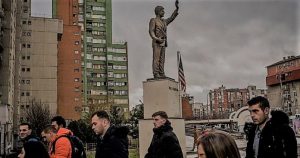


 του ΠΑΝΤΕΛΗ ΣΑΒΒΙΔΗ

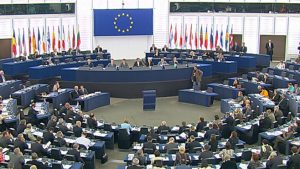 [Η γερμανική Ευρωπαϊκή Ενωση μέσω του διαπλεκόμενου με τον διαβόητο Σόρος Ευρωκοινοβουλίου – τα παιχνίδια του οποίου στην Ουγγαρία ματαιώθηκαν – και με τη βιομηχανία της προσοδοφόρου ‘’φιλανθρωπίας’’ των ΜΚΟ, απειλεί, μετά την πρόσφατη απόφαση, την Ουγγαρία, κράτος-μέλος της ΕΕ, με στέρηση του δικαιώματος ψήφου στους κόλπους της. Το Ευρωκοινοβούλιο αναγορεύθηκε σε πολιτικό δικαστήριο, κάθισε στο εδώλιο του κατηγορουμένου τον πρωθυπουργό μιας κυρίαρχης χώρας και του έδωσε μόλις έξι λεπτά(!) για να απολογηθεί. (Σε αντιδιαστολή, δεν τσιγκουνεύτηκε καθόλου το χρόνο στον ευρωπαϊστή κ. Τσίπρα – τελευταία μετάλλαξη – να αναπτύξει το όραμά του για την Ευρώπη!…) Η κατηγορία τύποις μεν αντιδημοκρατικά μέτρα – πριν πέντε μήνες επανεκλέχτηκε με 49%! – , ουσία δε η υπεράσπιση της ταυτότητας της χώρας με την άρνηση του κ. Ορμπαν να επιτρέψει να κατακλυσθεί η χώρα του από παράνομους μετανάστες. Είναι και εκείνη η διαρκής υπόμνησή του για το χριστιανικό παρελθόν της Ευρώπης, που όταν την ακούει το κογκλάβιο των Βρυξελών ανεβάζει πίεση. Και για τα καθ’ ημάς, σ’ αυτή την αλλοίωση της ταυτότητας της χώρας είχαν την ευκαιρία να ομονοήσουν άλλη μια φορά ο ηγέτης της ‘’συμβατής’’ Αριστεράς κ. Τσίπρας και ο φιλόδοξος κ. Μητσοτάκης, ομογάλακτοι αδελφοί, τέκνα των ‘’Φώτων’’ όπως το έπραξαν και στην πατρίδα μας… Το κείμενο που ακολουθεί είναι του Ζουλιέν Ωμπέρ, Γάλλου βουλευτή του κόμματος Οι Ρεπουμπλικανοί. Ε. Δ.Ν. ]
 The Atlantic




 του Γιώργου Χατζηθεοφάνους, Υποστρατήγου ε.α.*
 Γιατί οι ισραηλινοί εποικισμοί αποτελούν το μεγαλύτερο εμπόδιο προς την ειρήνη

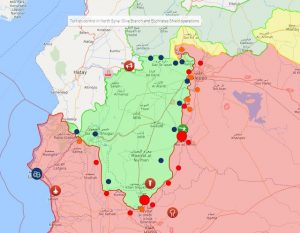 Σε περίπτωση επίθεσης στην Συρία