23/11/2018
Just as hybrid threats exploit the synergy of diverse actors and activities, so should our hybrid defences. Since 2016, NATO and the European Union have identified countering hybrid threats as a priority for cooperation. The new European Centre of Excellence for Countering Hybrid Threats (Hybrid COE) in the Finnish capital Helsinki plays a unique role in facilitating this cooperation.
Hybrid threats are diverse and ever-changing, and the tools used range from fake social media profiles to sophisticated cyber attacks, all the way to overt use of military force and everything in between. Hybrid influencing tools can be employed individually or in combination, depending on the nature of the target and the desired outcome. As a necessary consequence, countering hybrid threats must be an equally dynamic and adaptive activity, striving to keep abreast of variations of hybrid influencing and to predict where the emphasis will be next and which new tools may be employed.

The “little green men” played a visible and central role in Russia’s illegal annexation of Crimea in March 2014, demonstrating how military force could be used in the Euro-Atlantic area below the legal threshold of war. © Moldnova.eu
For example, in the aftermath of the last US presidential elections, the focus of countering hybrid threats was on strategic communication, disinformation and hampering the election process. Before that, much of the focus was dedicated to the “little green men” who played such a visible and central role in Russia’s illegal annexation of Crimea. Another refocusing took place after the nerve agent attacks in Salisbury, putting the issue of threats involving chemical, biological, radiological and nuclear agents at the top of the agenda. We have not yet seen all faces of hybrid influencing and the only certainty is that new ones will be coming along.
Hybrid threats need to be pre-empted by both “passive” elements, such as increased resilience against shock or surprise, and more active ones including robust measures to prepare and protect the functions and structures that are most likely to be targeted by hybrid attacks. For these purposes, the importance of sufficient civil preparedness arrangements, a free press, an educated public and an effective legal framework cannot be overstated.
It is vital to achieve a working definition of what hybrid threats are, taking into account the many different actors that need to cooperate with each other. At the national level, Finland’s comprehensive security model consists of a myriad of different authorities and agencies that together give the necessary scope and spread to measures for countering hybrid threats. At inter- and supranational levels, actors include entities like the NATO civilian and military staffs and the EU institutions, in particular the European Commission services and the European External Action Service (EEAS). For these to pull in the same direction, a common understanding is needed of the hybrid threats for which regular engagement within and between the relevant EU and NATO structures is essential to advance this goal.
At the same time, conceptual work must not get in the way of actually preparing for and countering these threats. A common understanding of hybrid threats does not mean a watertight definition, which probably would be outdated the next day or could affect the nature of activities to counter hybrid threats. Not only are hybrid threats diverse, they are tailor-made to exploit specific vulnerabilities of specific targets. This means that each country has to have its own understanding of the kind of hybrid threats that can be directed against it. This is achieved by thoroughly familiarising oneself with one’s own vulnerabilities, not through a universal definition of a non-universal concept.
National vulnerabilities can have effects that reach beyond borders. Examples of this could be global positioning systems, transport systems or interconnected electric grids, where an attack against a vulnerable node in one country would inevitably have consequences on other countries where such vulnerabilities did not exist. A hybrid attack exploiting a national vulnerability may therefore require not only sovereign action but also common planning and a common response. Although the element of response is absent, this logic is captured in the European Programme for Critical Infrastructure Protection, which is designed to identify and protect critical infrastructure that, “in case of fault, incident or attack, could seriously impact both the country where it is hosted and at least one other European Member State.”
EU and NATO measures to counter hybrid threats
In 2016, the European Commission and the EEAS developed a joint framework on countering hybrid threats, containing 22 actions for member states and the institutions that set out ways to recognise hybrid threats, improve awareness thereof, and take steps to build resilience. Although the actions are by no means exhaustive, the framework established a clear ambition to make countering hybrid threats an EU priority. The most tangible effects were the establishment of a Hybrid Fusion Cell as part of the EU Intelligence and Situation Centre, and a European Centre of Excellence for Countering Hybrid Threats in Helsinki.
Hybrid threats also rose to the top of NATO’s agenda following the appearance of “little green men” in Crimea in 2014, which created an acute awareness of how military force could be used in the Euro-Atlantic area below the legal threshold of war. NATO was quick to adopt a strategy to counter hybrid threats based on a horizontal “all-of-NATO” approach. Similarly to the European Union, NATO has created a capability to monitor and analyse hybrid threats, based in the intelligence community and cooperating with other NATO authorities. Furthermore, NATO has established counter hybrid support teams that can be sent in support of the authorities of a stricken nation.

A common understanding is needed of the hybrid threats which require regular engagement within and between the relevant EU and NATO structures. At the same time, each country has to assess its own vulnerabilities so as to understand the kind of hybrid threats that can be directed against it. © Hybrid COE
A joint declaration was signed by NATO Secretary General Jens Stoltenberg and European Commission and Council Presidents Jean-Claude Juncker and Donald Tusk in Warsaw in July 2016, which set out a “common set of proposals” with 74 concrete actions, many of which focus on hybrid threats, building resilience in cyber security, and strategic communications. A second joint declaration agreed in Brussels in July 2018 provided an additional focus on military mobility, counter-terrorism and resilience to risks posed by chemical, biological, radiological and nuclear agents.
In addition to giving NATO-EU cooperation a long-awaited platform of common interest, countering hybrid threats has led to some other important new developments in the European Union. The European Commission and the EEAS have set up an inter-service group for countering hybrid threats that meets regularly at different levels. This group – designed to ensure common awareness of events and processes throughout European institutions relevant to countering hybrid threats – is a promising first step towards a comprehensive model for security-related challenges. Ideally, it could lead to a more solid platform for civil and economic preparedness, cyber security and other inherently multi-sectoral issues.
Furthermore, the European Council Friends of the Presidency Group for Countering Hybrid Threats (FoP) has been awarded an extended and significantly broadened mandate, stretching through the next four presidencies until June 2020. Whereas the initial FoP mandate from 2017 was very limited, the new one calls for an overview of ongoing EU efforts on countering hybrid threats, so as to spot shortfalls, avoid duplication, and support political decision making across Council bodies. By the end of the new mandate, the FoP could even become a permanent body responsible for maintaining cross-sectoral awareness and – similarly to NATO’s Civil Emergency Planning Committee – supporting member states’ civil preparedness and thereby their resilience against hybrid threats.
One key field where cooperation between the European Union and NATO should be intensified is training and exercises. Multi-faceted, complex exercises that test the ability to respond to hybrid threats below the threshold of war would be a particularly ideal area for the two organisations to explore their strengths and weaknesses, and perhaps discover complementarities. In September, an informal meeting of the North Atlantic Council (NAC) with the EU Political and Security Committee (PSC) included a hybrid scenario-based discussion facilitated by the Hybrid COE. This initiative should become a recurring element of future NAC-PSC deliberations, and other joint meetings as appropriate.
Joint exercises could also be designed to link up functional counterparts in EU and NATO institutional structures around a mutually relevant hybrid threat scenario, supported by the COE. Furthermore, the NATO School in Oberammergau and the European Security and Defence College could open up their training courses for selected EU and NATO staff respectively.
The Hybrid COE – one year on
One of the most concrete outcomes of the efforts to counter hybrid threats is the Hybrid COE in Helsinki, which reached its initial operational capability in September 2017. Now that the Centre has completed its first full year of existence, there is an opportunity to have a look at what it has achieved and what direction it should take next.

The European Centre of Excellence for Countering Hybrid Threats was officially inaugurated in the Finnish capital Helsinki in October 2017. It is neither an EU nor a NATO body but a freestanding legal entity. © NATO
Since April 2017, the number of participating countries has doubled from the initial nine to 18, with several more showing increased interest to join. The Centre has developed a concept for its three Communities of Interest (COI). Three COIs with their networking, analysis, training and exercise activities have succeeded in promoting both situational awareness, resilience and response capabilities in participating countries. The COI on Hybrid Influencing is Ied by the United Kingdom, the sub-COI on Non-state Actors by Sweden, and the COI on Vulnerabilities and Resilience by Finland. This past summer, they convened networks to share best practices on issues such as legal resilience, maritime and harbour safety, energy networks, drones and election interference. A fourth COI on Strategy and Defence, led by Germany and manned in August, will address strategic understanding of hybrid warfare.
As we have seen, countering hybrid threats has quickly become a central vehicle for strengthened cooperation between NATO and the European Union, based first and foremost on mutual interest. Because the Centre is neither an EU nor a NATO body but a freestanding legal entity, the Hybrid COE has been able to play a unique role in facilitating and strengthening this cooperation.
The Centre continues to support EU and NATO staffs working on hybrid threats. Both staffs have participated in its activities, including workshops, seminars and exercises aimed at enhancing the understanding of hybrid threats. And representatives of both organisations are present at the Centre’s Steering Board meetings.
In March, the Centre hosted a retreat which aimed to specify possible concrete actions in all key areas of interaction and formulate recommendations for further enhancing EU-NATO cooperation. Discussions focused on improving early warning and situational awareness, strategic communication and messaging, crisis response, resilience, cyber defence and energy security. Such retreats may become an annual event.
In April, the Hybrid COE convened a regional seminar to exchange best practices in countering hybrid threats among Nordic and Baltic nations, in cooperation with NATO’s Special Operations Forces Headquarters. One conclusion was the need to develop whole-of-government and whole-of-society responses to counter hybrid threats. Regional cooperation serves this endeavour and the Centre and NATO will work together on similar seminars in other regions.
In May, within the scope of assessing the implications of hybrid threats on capability development, the Centre facilitated a scenario-based workshop on “Harbour Protection under Hybrid Threat Conditions”, organised by the European Union and attended by both EU and NATO staff. This workshop was the outcome of a hybrid threats tabletop exercise conducted in 2016.

In May 2018, the European Defence Agency and the Hybrid Centre of Excellence jointly organized a workshop to look at how to mitigate hybrid threats against European harbours and improve their resilience. © Bundeswehr
All participating countries contribute significantly to the efforts of the Centre. Four countries have taken lead roles in the Centre’s Communities of Interest, and six of them also support the Centre by seconding staff to the Secretariat in Helsinki. One concrete example of national contribution is the Comprehensive Security Training Event, organised by the Centre in cooperation with Finnish Defense Forces. This one-week event is targeted at NATO member states and selected partner countries to support them in developing comprehensive approaches or fusion doctrines to counter hybrid threats. The Finnish comprehensive security model is at the core, but it will be discussed in the context of other national and institutional experiences in comprehensive security.
Although much has been achieved, there is still so much to do. We should be able to move on from describing the threats to countering them. In the field of training and exercising, there is a demand for tabletop exercises and scenario-based discussions that can be played jointly or as individual national exercises. Participating states should trust and support each other in identifying national vulnerabilities and build resilience jointly. The Romanian and Finnish EU Presidencies in 2019 will provide further opportunities to promote cooperation on countering hybrid threats. The common understanding of hybrid threats is by necessity a living thing that requires constant attention, research and dissemination. And, as long as there are member states of NATO or the European Union that have not yet joined the Centre, there is room to grow.
Axel Hagelstam is Counsellor for Civil Preparedness at the Mission of Finland to NATO and Finnish representative to NATO’s Civil Emergency Planning Committee.
Kirsti Narinen is Director for International Relations at the European Centre of Excellence for Countering Hybrid Threats in Helsinki.
The views and opinions are those of the authors and do not necessarily reflect the official views of the Finnish MFA or the COE.
What is published in NATO Review does not necessarily represent the official position or policy of member governments, or of NATO.
 Του Κωνσταντίνου Λουκόπουλου* Παρασκευή 23 Νοεμβρίου 2018 liberal.gr
 Σε άρθρο μου στις Ανιχνεύσεις στις 21-05-2018
 εκλογικού του σώματος, εξ ου και η πολλοστή του νίκη. Σήμερα η ερντογανική εξουσία οφείλει να προσγειωθεί στην σκληρή πραγματικότητα. Απλά είναι συγκεντρωμένη στα χέρια του και στα χέρια του οικονομολόγου γαμπρού του, Νο 2 της εξουσίας, Berat Albayrak, τον οποίο η δημοσιογράφος του ηλεκτρονικού Le Monde Marie Jégo χαρακτήρισε στις 19-11-2018, ως «τον πασά της τουρκικής οικονομίας» (le pacha de l’économie turque) που προώθησε ο πεθερός του ως επικεφαλή του Υπουργείου Οικονομικών, δηλαδή στην κάσα του τουρκικού κράτους.
 Στις αρχές της δεκαετίας του 2000 ο Berat Albayrak συναντήθηκε με την Esra, την μεγαλύτερη κόρη του προέδρου. Και οι δύο φοιτητές στις Ηνωμένες Πολιτείες, εκείνη στην κοινωνιολογία στο Πανεπιστήμιο της Ιντιάνα, εκείνος στα χρηματοοικονομικά
 στο Πανεπιστήμιο Pace στη Νέα Υόρκη. Ο Μπεράτ ήταν γνωστός στην οικογένεια Ερντογάν. Ο πατέρας του, Sadik Albayrak, ένας θεωρητικός του εθνικιστικού θρησκευτικού κινήματος, στάθηκε δίπλα στον Ερντογάν μόλις εισήλθε στην πολιτική. Το φλερτ των δύο νέων εγκρίθηκε από τους πατεράδες τους.
 συμπεριλαμβανομένων πολλών αρχηγών κρατών. Αφού ολοκλήρωσε το πτυχίο του MBA, ο νεαρός άνδρας, ξεκίνησε μια επαγγελματική καριέρα στον όμιλο Çalik Holding τα τελευταία χρόνια, έναν όμιλο που δραστηριοποιείται στους τομείς της ενέργειας, των κατασκευών και των μέσων μαζικής ενημέρωσης. Ανέλαβε δε την
 ηγεσία του το 2007, σε ηλικία 29 ετών! Θα διαχειριστεί κυρίως την απόκτηση της καθημερινής εφημερίδας Sabah τον Απρίλιο του 2008, η οποία είναι σήμερα η ναυαρχίδα της ισλαμικής συντηρητικής εξουσίας. Εκτιμώμενη σε περισσότερα από 1 δισεκατομμύριο δολάρια, η αγορά της χρηματοδοτήθηκε με δάνειο από τις
 κρατικές τράπεζες της Halkbank (στην οποία οι ΗΠΑ απειλούν να επιβάλουν πρόστιμα δις δολαρίων για παραβίαση του ιρανικού εμπάργκο) και της Vakifbank, και από μια άλλη ομάδα μέσων
 ενημέρωσης του Qatar.
 κύριου αντιπολιτευτικού Ρεπουπλικανικού κόμματος CHP, τον κατηγόρησε τον Δεκέμβριο του 2017 ότι «παρακολούθησε ένα σχολείο στο Cemaat», την
 θρησκευτική κοινότητα του ιερέα Fethullah Gülen, πρώην συμμάχου του Ερντογάν, που έγινε ο χειρότερος εχθρός του, από τότε που κατηγορείται για υποκίνηση του αποτυχημένου πραξικοπήματος στις 15 Ιουλίου 2016. Ο Berat πράγματι έκανε τις δευτεροβάθμιες σπουδές του σε ένα ίδρυμα με διαχείριση της κοινότητας Gülen, το οποίο όμως έκλεισε λίγο μετά την απόπειρα πραξικοπήματος. «Αν δεν ήταν ο γαμπρός, θα σάπιζε στη φυλακή όπως όλοι εκείνοι που κρίθηκαν μετά το πραξικόπημα για το ότι ανήκαν στο κίνημα Gülen», δήλωσε ο βουλευτής. Η απάντηση του Berat: «Ήμουν σε ένα κοινοτικό ίδρυμα, αλλά δεν ήμουν ποτέ υπό την επιρροή του».
 Με τον Suleyman Soylu, τον σημερινό υπουργό Εσωτερικών, η σχέση του βρίσκεται στα τάρταρα. Όπως μαρτυρεί το πισώπλατο χτύπημα που δόθηκε από τον Υπουργό Εσωτερικών στον Υπουργό Οικονομικών, όταν συναντήθηκαν σε επίσημη τελετή στο μαυσωλείο του Ατατούρκ, την Πέμπτη 2 Αυγούστου 2018. Τα μέσα ενημέρωσης έχουν κάνει καυτά σχόλια. «Το τελευταίο επεισόδιο στον αγώνα για τη διαδοχή», έγραψε η αντιπολιτευόμενη εφημερίδα Evrensel.
 απαραίτητες πιστώσεις για να καλύψει το έλλειμμα του ισοζυγίου τρεχουσών συναλλαγών και να αναχρηματοδοτήσει το χρέος της Τουρκίας. Το κοράνι του πεθερού δεν μετράει. Στα τέλη Ιουλίου, η Τράπεζα της Κίνας κατέληξε να χορηγήσει δάνειο ύψους 3,6 δισ. δολαρίων. Σε έναν πιστό σύμμαχο, ο Εμίρης του Κατάρ, ο Cheikh Tamim Ben Hamad Al Thani, υπόσχεται επενδύσεις ύψους 15
 δισεκατομμυρίων δολαρίων και προσφέρει το προσωπικό του αεροπλάνο στον φίλο του Ερντογάν. Ο εμίρης έγινε δεκτός λίγο αργότερα στο προεδρικό μέγαρο στην Άγκυρα για δείπνο για τρεις, με τον Ερντογάν και τον γαμπρό του.
 «εργαστεί μέρα-νύχτα». Κάποιοι το πιστεύουν. Όπως η Güler Sabanci π.χ., επώνυμη επιχειρηματίας του ομίλου Sabanci και μέλος του Tüsiad (το τουρκικό ισοδύναμου του Συνδέσμου Βιομηχάνων Ελλάδας ΣΕΒ), η οποία δηλώνει : «Η εμπιστοσύνη στο πρόσωπό του είναι πλήρης», ανέφερε κατά την παρουσίαση του οικονομικού προγράμματος του Υπουργού στις 10 Αυγούστου. Το πρόγραμμα, μια σειρά από ευσεβείς πόθους, δεν έπεισε όλους. Ειδικά επειδή η πολύ-αναμενόμενη παρουσίασή του άργησε να έρθει. Ο πεθερός επέλεξε την ίδια περίοδο να απευθυνθεί στο έθνος από το Rize (περιοχή της Μαύρης Θάλασσας), με μια ομιλία αντάξια ενός ιμάμη : «Έχουν το δολάριο, έχουμε τον Θεό!». Δηλαδή ο Νο 2 της εξουσίας είναι αναγκασμένος να παραδέρνει μεταξύ αντιφατικών καταστάσεων. Αντιμέτωπος με τους επενδυτές, υποστηρίζει την νομισματική ορθοδοξία, η οποία όμως δεν τον εμποδίζει να προσχωρεί στην άποψη του πεθερού του, δηλαδή ότι τα επιτόκια είναι μια αμαρτία καταδικασμένη από την ισλαμική πίστη! Εξ ου και η διαφορά που διαπιστώνεται μεταξύ των λόγων και των έργων. Ο έλεγχος των δημόσιων δαπανών δεν ανακοινώνεται, ενώ δίδονται υποσχέσεις φοροαπαλλαγών. Αυτή η τάση είναι πιθανό να αυξηθεί καθώς πλησιάζουν οι δημοτικές εκλογές του Μαρτίου του 2019, σε μια εποχή όπου η τουρκική οικονομία
 αναμένεται να έχει αύξηση μόνο 0,4% (έναντι 3,5% αναμενόμενης για το 2018) από το ΔΝΤ στο οποίο εικάζω ότι τελικά θα καταλήξει, παρά τους λεονταρισμούς του Ερντογάν.
 ΕΛΕΥΘΕΡΙΟΣ ΤΖΙΟΛΑΣ
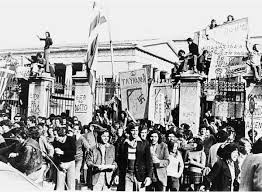 να πω ότι στο κείμενο διακήρυξης της, η Σ.Ε. του Πολυτεχνείου ξεκαθάριζε το περιεχόμενο της Εξέγερσης ως Πολιτικό Αγώνα, υψηλότερου επιπέδου, μέσα από διαλεκτική κλιμάκωση μιας πορείας αγώνων σε επίπεδο πανεπιστημιακών σχολών. Το σημείο αυτό είναι κρίσιμο. Λέει η Σ.Ε. : ‘’Οι φοιτητές από όλες τις Σχολές στη διάρκεια του φοιτητικού κινήματος, συνειδητοποιήσαμε, πως τα προβλήματά μας, σχετικά με τον εκδημοκρατισμό της Παιδείας και τη λειτουργία του Εκπαιδευτικού συστήματος, δεν λύνονται χωρίς την αλλαγή της συγκεκριμένης πολιτικής κατάστασης. Αρχίζοντας έτσι πολιτικό αγώνα οι φοιτητές και οι Έλληνες εργαζόμενοι, που κλείστηκαν στο Πολυτεχνείο, ξεκαθαρίζουν τις θέσεις τους και καλούν τον Ελληνικό Λαό να συσπειρωθεί γύρω τους και να αγωνισθεί μαζί τους ως την τελική νίκη. 1ο. Πρωταρχική προϋπόθεση για την επίλυση όλων των λαϊκών προβλημάτων θεωρούμε την άμεση παύση του τυραννικού καθεστώτος της χούντας και την παράλληλη εγκαθίδρυση της Λαϊκής Κυριαρχίας. 2ο. Η εγκαθίδρυση της λαϊκής κυριαρχίας συνδέεται αναπόσπαστα με την Εθνική Ανεξαρτησία από τα ξένα συμφέροντα, που χρόνια στήριζαν την τυραννία στη χώρα μας….’’.
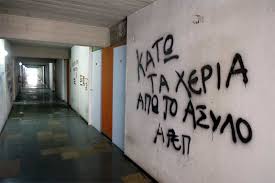 Κανένα νόημα δεν έχει η οποιαδήποτε συζήτηση και ο οποιοδήποτε τύπος ή περιεχόμενο για το Πανεπιστήμιο, αν αυτό δεν μπορεί να λειτουργήσει. Δεν μπορεί να λειτουργήσει, όχι λόγω κακών ρυθμίσεων, λόγω ανεπάρκειας πόρων, λόγω διδακτικών κενών, – πράγματα που στις μέρες μας ισχύουν -, αλλά λόγω της εγκατάστασης ενός εσωτερικού περιβάλλοντος, μιας κατάστασης ανομίας και αυθαιρεσιών που καταστρέφουν και ακυρώνουν στην πράξη οποιαδήποτε δυνατότητα και πραγματική δραστηριότητα πανεπιστημιακού χαρακτήρα.
 υπακοή και η πειθάρχηση έχει άλλα μέσα και αποτελεσματικότερες μεθόδους. Συμβολικά θα μπορούσε να παραμείνει ως θεσμός, εκφράζοντας μια χροιά αφοσίωσης της πανεπιστημιακής κοινότητας στην έννοια της ελευθερίας των ιδεών και της αναζήτησης της επιστημονικής αλήθειας.
 Οφείλω, ωστόσο, να υπογραμμίσω ότι αποτελεί ανησυχητικό χαρακτηριστικό του επιπέδου παρέμβασης και δράσης συνολικότερα της κοινωνίας και των θεσμών της, το γεγονός ότι η ίδια με τις δυνάμεις της, τις οργανώσεις της, τους θεσμούς της, σε συνθήκες δημοκρατίας με ελευθερία δράσης και κινητοποίησης, δεν έχει κατορθώσει να συντονισθεί, να συμπαραταχθεί ενεργητικά και να αντιμετωπίσει ριζικά το φαινόμενο αυτό, αλλά και ευρύτερα τα φαινόμενα βίας που προσλαμβάνουν χαρακτηριστικά ”τρομοκρατίας χαμηλής έντασης”. Και δεν εννοώ μόνο την κυβέρνηση και τον Υπουργό Παιδείας που αντί να αναλάβει τις ευθύνες του, τις μεταθέτει στο ”ρωμαλέο φοιτητικό κίνημα”, που από άλλη θέση και σε συνέργια με άλλους έπραξε αναλόγως, για να το αποδιαρθρώσει. Ούτε, επίσης, τον ”ψευτοπροοδευτισμό” από πανεπιστημιακούς καριερίστες που αντί για στάση αρχών καιροσκοπούν υιοθετώντας την υπεκφυγή, την ανοχή ή/και το φλερτ απέναντι σε παρόμοια φαινόμενα.
 Διαφωτισμού και στο λυκαυγές της βιομηχανικής επανάστασης δεν μπορούσε παρά να δεχτεί τους κλυδωνισμούς από τις σεισμικές ακολουθίες της τεχνολογικής έκρηξης, της παγκοσμιοποίησης και της κοινωνίας της γνώσης. Το νέο πανεπιστήμιο δεν είχε βέβαια παντού τα ίδια ιδεολογικά και μορφολογικά χαρακτηριστικά. Διακρίνουμε τέσσερις (4) ιδεατούς τύπους :
 Ανήκουν, επίσης, η ακαδημαϊκή ελευθερία, το δικαίωμα, δηλαδή της ακαδημαϊκής κοινότητας να επιλέγει το αντικείμενο και τη μεθοδολογία της έρευνας (και της διδασκαλίας), χωρίς έξωθεν παρεμβάσεις από το κράτος ή την εκκλησία, ελευθερία την οποία θωρακίζει η αυτοτέλεια στη διαχείριση των Πανεπιστημίων. Ανήκει τέλος ο δημόσιος χαρακτήρας του Πανεπιστημίου, υπό την έννοια της εκ μέρους του προσφοράς υπηρεσίας στην Επιστήμη, στο Έθνος, την Πολιτεία και το Κοινωνικό σύνολο. Η επιρροή της γερμανικής σχολής στην ιδρυτική και θεσμοποιητική πραγματικότητα των Ελληνικών Πανεπιστημίων, με πρώτο το Καποδιστριακό Πανεπιστήμιο Αθηνών, είναι φανερή και ισχυρή.
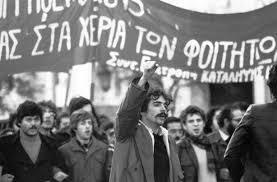 σύμφωνα με την υποκειμενική μας εκτίμηση την χρονική περίοδο και το γεγονός – σταθμό που κλείνει την προηγούμενη και προαναγγέλλει την νέα, επόμενη περίοδο. Η υποκειμενική εκτίμηση δεν είναι επαρκής για τον ορισμό των ιστορικών περιόδων. Ιδιαίτερα στη Χώρα μας, μόνο μεγάλα, καθοριστικά γεγονότα σε επίπεδο Εθνικό (επαναστάσεις, εθνικές ολοκληρώσεις, ή εθνικές καταστροφές), ή σε επίπεδο Πολιτειακό (δικτατορίες, δημοκρατίες) ορίζουν τους ιστορικούς κύκλους της.
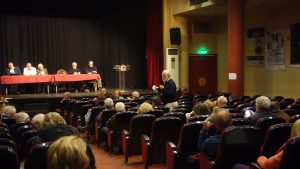 Αποτελεί ιδιαίτερο, μεγάλο και σύνθετο, θέμα η συγκρότηση, οι στόχοι και η δράση, καθώς και οι μεταπτώσεις και οι εξελίξεις του φοιτητικού κινήματος, και μολονότι το θεωρώ ένα πολύ σοβαρό κεφάλαιο, το οποίο δεν έχει εξετασθεί με την αντικειμενικότητα, την ειλικρίνεια και την υπευθυνότητα που απαιτείται, θα προτιμήσω να μην κινηθώ ιστορικά περί αυτό και τα τότε πανεπιστημιακά δρώμενα αλλά να μετακινηθώ, να σταθώ στο παρόν, προσβλέποντας και στο μέλλον, πιστεύοντας ότι έτσι μπορεί να φανώ περισσότερο χρήσιμος. Σας μεταφέρω, λοιπόν, εδώ, τη ματιά και την αδρή τοποθέτηση ενός πολιτικοποιημένου ανθρώπου της παραγωγής και της κοινωνικής συμμετοχής.
 Δεν νομίζω ότι θα ήταν υπερβολικό αν έλεγα, με σκοπό να αναγνωρίσουμε το κοινό έδαφος κίνησης και, κυρίως, για να προχωρήσουμε προς το επίδικο, ότι μετά και τον πρόσφατο ν. 4485/17 που κατά κάποιο τρόπο αντικατέστησε τον ν. 4009/11 (τον γνωστό ως ”νόμο Διαμαντοπούλου), σε γενικές γραμμές, το πλαίσιο των Πανεπιστημίων εξακολουθεί να ορίζεται από τον ν. 1268/82.
 Η σύζευξη της παραγωγής επιστημονικής γνώσης με την παραγωγή πραγμάτων, σε συνάρτηση και με τη σημασία της επιστημονικής γνώσης στις σχέσεις ισχύος, μετατρέπουν το Πανεπιστήμιο σε προνομιακό χώρο της τεχνοεπιστήμης. Η πρωτύτερη αυτονομία της Ανώτατης Εκπαίδευσης από την παραγωγή έχει αναπόδραστα, και ιδιαίτερα μετά την δεκαετία του ΄70, οριστικά ξεπεραστεί.
 Στο σημείο αυτό έχει αναδειχθεί τα τελευταία χρόνια ένα δίπολο αντιπαράθεσης, όχι μόνο στο εσωτερικό του πανεπιστημιακού κόσμου, αλλά και ευρύτερα σχετικά με τον τύπο του σύγχρονου Πανεπιστημίου : μεταξύ αυτού που αποκαλείται ”Επιχειρηματικό Πανεπιστήμιο”, ή ”Πανεπιστήμιο της Αγοράς”, από τη μία πλευρά, και αυτού που ονομάζεται ”Αυτόνομο Πανεπιστήμιο”, ή ”Ελεύθερο Πανεπιστήμιο” , από την άλλη. Η πρώτη σηματοδοτεί την στενή, αποκλειστική προσαρμογή του πανεπιστημίου στους στόχους και στην υπηρεσία της αγοράς και των επιχειρήσεων, με ταυτόχρονο μετασχηματισμό του ιδίου σ΄ ένα εξαρτημένο επιχειρηματικό κέντρο, όπου εφαρμόζοντας σχέσεις αγοράς (προϊόντος – πελάτη), το έχουν μετατρέψει σε Κέντρο τρέχουσας επιστημονο-τεχνικής κατάρτισης. Η δεύτερη σηματοδοτεί, κατά την άποψη των υποστηρικτών της, την προσήλωση σ΄ ένα πανεπιστήμιο υψηλών ιδεωδών, με σκοποθεσία σχετικά ανεξάρτητη από την τρέχουσα οικονομική, καπιταλιστική πραγματικότητα και σε περιπτώσεις σε ανατρεπτική αντίθεση με αυτήν.
 αλλά και την πραγματική συσχέτιση με την παραγωγή, την οικονομία και τις κοινωνικές τους σχέσεις. Και ούτε μπορεί να εξελιχθεί θετικά οποιοδήποτε εγχείρημα εν κενώ, πολύ δε περισσότερο σε τοπίο παραγωγικής υστέρησης και αναπτυξιακής καχεξίας.
 Θα θεωρούσα σοβαρό έλλειμμα, αν έστω συνοπτικά, δεν ανέφερα ορισμένα βασικά τυπολογικά στοιχεία για το νέο, σύγχρονο Πανεπιστήμιο στη Χώρα μου.
 Γονίδια και Γονιδιακά προϊόντα, η Ψηφιακή Οικονομία, η Τεχνητή Νοημoσύνη, η Ρομποτική, το Διαδίκτυο Αντικειμένων, η Αυτοεκπαίδευση μηχανών, τα Κοινωνικά Δίκτυα μπορούν να αποτελέσουν προνομιακά, δυναμικά πεδία, όπου η Ελληνική ιδιοφυία και το ταλέντο μπορούν να διαπρέψουν, όπως βεβαιώνουν οι επιτυχίες και η αναγνώριση των Ελλήνων επιστημόνων σ΄ όλες τις αναπτυγμένες χώρες σ΄ αυτούς τους τομείς, αλλά και τα αξιοζήλευτα ερευνητικά επιτεύγματα εδώ, στη Χώρα μας. [ Και για να δείξω ανάγλυφα τη σχέση αυτών των Επιστημών με τα θέματα εθνικής κυριαρχίας και ισχύος, θα δώσω μόνο ένα –δύο ρεαλιστικά, εφαρμόσιμα παράδειγμα. Σκεφθείτε τη σημασία της εγκατάστασης σε κάποιο νησί του Αιγαίου ή στη Θράκη ενός Data Center, με δεδομένο ότι σε όλη τη γεωγραφική περιοχή νότια και νοτιοανατολικά της Κοπεγχάγης, δηλαδή για την Κεντρική, Νότια, Ανατολική Ευρώπη και όλη τη Μεσόγειο δεν υπάρχει τέτοια κρίσιμη δομή – οργανισμός για το σύνολο των ψηφιακών επικοινωνιών και τηρούμενων δεδομένων σ΄ αυτό τον τεράστιο χώρο. Σκεφθείτε ακόμα την εγκατάσταση ενός κλάδου –τμήματος της Google στο Αγαθονήσι, απέναντι από την Τουρκία, ή την παραγωγική λειτουργία ενός τμήματος του ηλεκτρικού αυτοκίνητου της Tesla ή της Genaral Motors στη Χώρα…] ( * ).
 Κλείνοντας, θεωρώ ότι παρά το βαρύ κλίμα και τις επιπτώσεις της τελευταίας 8ετίας της κρίσης, έχουμε τις δυνάμεις και τη συνείδηση για μια Νέα Αρχή. Μια Νέα Αρχή και στο Πανεπιστήμιο. Αρκεί να κινητοποιήσουμε παντού, με συνέπεια και με διάρκεια τα θετικά, δημιουργικά μας στοιχεία ως Έθνος και Κοινωνία, με Σχέδιο, Ενότητα και Προσπάθεια.
 Της Karine Bechet-Golovko
 Δυστυχώς,δεν μπόρεσα να παραβρεθώ στην εκδήλωση με ομιλητές τον Μαρίνο Σιζόπουλο και τον Γιώργο Χατζηθεοφάνους και συντονιστή το συνάδελφο Σταύρο Τζήμα για το φάκελλο της Κύπρου. Εξαιρετικά ενδιαφέρον πάνελ.
 November 13, 2018 5:12 PM


 του Μάριου Ευθυμιόπουλου*. 21 Νοεμβρίου 2018, 10:58 πμ