Αρχική Blog Σελίδα 2737

Προς προεπαναστατική κατάσταση στη Γαλλία

1

Tου Δημήτρη Κωνσταντακόπουλου 

Η κρίση στη Γαλλία έχει φτάσει τώρα ή πλησιάζει σε αυτό που τυπικά αποκαλείται προεπαναστατική κατάσταση.

Το γεγονός επιβεβαιώνει εν νέου τη διαπίστωση ότι βρισκόμαστε σε μια κρίση βάθους ανάλογου αυτής που γνωρίσαμε τη δεκαετία του 1930 και επομένως ικανή να παράγει φαινόμενα επαναστάσεων, πολέμων, ολοκληρωτισμών και άλλα ανάλογης έντασης και βάθους.

Η κρίση της ΕΕ μπορεί να οδηγήσει είτε στο άνοιγμα της Ευρώπης προς μια ριζικά καλύτερη ευρωπαϊκή τάξη πραγμάτων, είτε προς τη διάλυση της ΕΕ στην κατεύθυνση διαφόρων ανήμπορων και αλληλοανταγωνιζόμενων κρατών, υποχείριων του διεθνούς χρηματιστικού κεφαλαίου, των Αμερικανών και του ΝΑΤΟ.

‘Οπως και η προηγούμενη κρίση, έτσι και αυτή είναι ανοιχτή προς διάφορες λύσεις, είτε αριστερές προοδευτικές, είτε ακροδεξιές, με τη μεγάλη οπωσδήποτε σχετικότητα που έχουν πλέον, λόγω της παραμορφωτικής χρήσης τους, αυτοί οι όροι.

Η Γαλλία, που δεν ανήκει ακριβώς ούτε στον προνομιούχο Βορρά της ηπείρου, ούτε στον καταστρεφόμενο Νότο της, αλλά και είναι η μητέρα των μεγάλων επαναστατικών και δημοκρατικών παραδόσεων της Ευρώπης, ενδέχεται να αποτελέσει το αποφασιστικό κλειδί για το που θα οδηγηθεί όλη η ήπειρος.

Αυτό θα εξαρτηθεί από την ποιότητα της ηγεσίας του γαλλικού λαϊκού κινήματος και της γαλλικής Αριστεράς, αλλά και από τη συγκρότηση ενός ευρωπαϊκού πολιτικού υποκειμένου, μιας “Διεθνούς” της (πραγματικής) Αριστεράς, προσπάθεια που δέχτηκε, προτού καλά-καλά ξεκινήσει, τρομερό πλήγμα με την συνθηκολόγηση και πολιτικο-ιδεολογική αποσύνθεση του ΣΥΡΙΖΑ, λόγω του διεθνούς ρόλου-συμβόλου που έπαιξε αυτό το κόμμα από το 2011 έως το 2015.

Μια αξιοσημείωτη  διαφορά βέβαια με τη δεκαετία του 1930 είναι η δυνατότητα της χρηματιστικής ολιγαρχίας ή ομάδων της να χρησιμοποιούν τα προϊόντα της τρομακτικής επιστημονικής και τεχνολογικής επανάστασης και τα social media και να επηρεάζουν, ή ακόμα και να παράγουν πολιτικά γεγονότα ή,ακόμα, και εικονικές πολιτικές πραγματικότητες. Την είδαμε στη δράση της Cambridge Analytica και σε διάφορες εξεγέρσεις και εκλογικές αναμετρήσεις. Αλλά και οι δυνατότητες όλων των μηχανισμών της Αυτοκρατορίας έχουν διευρυνθεί πάρα πολύ, λόγω της επιβολής ενός Καπιταλισμού της Παρακολούθησης. Τα είδαμε όλα αυτά και στο ελληνικό παράδειγμα, με τη δυνατότητα της Αυτοκρατορίας να ελέγξει και να χειραγωγήσει εν τέλει, με τον ένα ή τον άλλο τρόπο, την ηγεσία του ΣΥΡΙΖΑ και να τη χρησιμοποιήσει για τους σκοπούς της.

Μόνο ένα υψηλοτάτου διανοητικού και ηθικού επιπέδου, συλλογικό και διεθνές πολιτικό εργαλείο, θα μπορούσε να ηγηθεί του αγώνα για μια κοινωνική, οικολογική και ανεξάρτητη Ευρώπη, απαραίτητη για τη συγκρότηση ενός πολυπολικού κόσμου, μεταβατικού σταδίου προς ένα περισσότερο από αναγκαίο, για την ίδια την επιβίωση της ανθρωπότητας, νέο πολιτισμό.


Για τους Γαλλόφωνους αναγνώστες μας παραπέμπουμε στα σχετικά με τη Γαλλία δημοσιεύματα στο www.defenddemocracy.press

Διαβάστε επίσης

Τα δύο σενάρια που θα κρίνουν τις σχέσεις της Τουρκίας με τις ΗΠΑ: Ή είσαι φίλος ή εχθρός…

0

Του ΜΙΧΑΛΗ ΙΓΝΑΤΙΟΥ

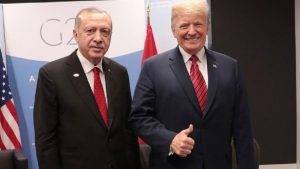
Οι πρόεδροι των Ηνωμένων Πολιτειών και της Τουρκίας, Ντόναλντ Τραμπ και Ταγίπ Ερντογάν, στην Αργεντινή. Φωτογραφία Τουρκική Προεδρία

DECEMBER 3, 2018

Η απόρρητη έκθεση του αμερικανικού Πενταγώνου προς το Κογκρέσο, ως υποχρέωση από τον σχετικό νόμο για τον αμυντικό προϋπολογισμό, αποκάλυψε ένα άλλο τρόπο σκέψης των στρατηγών και του πολιτικού προσωπικού του υπουργείου Άμυνας των Ηνωμένων Πολιτειών για την Τουρκία.

Τον περασμένο Ιούλιο η άποψη του Πενταγώνου ήταν ότι άσχετα από τα προβλήματα που δημιουργεί ο Τούρκος πρόεδρος Ταγίπ Ερντογάν, δεν πρέπει να οδηγηθούν οι σχέσεις σε οριστική ρήξη, ακόμα και αν κρατούσε φυλακισμένο τον Πάστορα Μπράνσον, ακόμα και αν είχε παραγγείλει το ρωσικό αντιπυραυλικό σύστημα S-400. Στην έκθεση, που παραμένει άκρως απόρρητη -κυκλοφόρησε μόνο μία δισέλιδη περίληψη- το Πεντάγωνο δείχνει να αποδέχεται το «μοιραίο», ότι η απόκτηση των ρωσικών S-400 από την Τουρκία σημαίνει και κρίση με απρόβλεπτες καταστάσεις.

Λόγω του σχετικού νόμου για τις κυρώσεις (CAATSA) που σχεδιάστηκε για εχθρικές χώρες, όπως η Ρωσία, το Ιράν και η Βόρεια Κορέα -οι δύο πρώτες αποτελούν στρατηγικούς εταίρους της Τουρκίας- οι Ηνωμένες Πολιτείες είναι υποχρεωμένες να απαντήσουν ισχυρά στην περίπτωση που ο κ. Ερντογάν δεν ακυρώσει την παραγγελία των S-400.

Χαρακτηριστικά ειπώθηκε στο «Έθνος της Κυριακής» ότι τα πράγματα έχουν ξεκαθαρίσει και οι αποφάσεις έχουν ληφθεί σε ανώτατο επίπεδο. Τα σενάρια είναι δύο και έχουν ενημερωθεί σχετικά οι τουρκικές αρχές, οι οποίες, όμως, αρνούνται να συμμορφωθούν. Αντίθετα είναι αμετάπειστοι οι Τούρκοι και σε μερικές περιπτώσεις το πολιτικό προσωπικό φέρεται με αγένεια στους Αμερικανούς αξιωματούχους, σε αντίθεση με τους στρατιωτικούς που συνεργάζονται ακόμα απόλυτα με τους συναδέλφους τους των ΗΠΑ.

Το πρώτο σενάριο είναι το καλύτερο για την Άγκυρα και αφορά την ακύρωση της αγοράς των S-400. Στην περίπτωση αυτή οι Αμερικανοί θα «χρυσώσουν» την Τουρκία, διότι έχουν αποφασίσει ότι θα κάνουν τα αδύνατα δυνατά για να μην την «κλέψει» η Ρωσία. Θα τους παραχωρήσουν σε χαμηλές τιμές τους Πάτριοτς και άλλα αντιπυραυλικά συστήματα, θα παραλάβουν τα μαχητικά F-35 και θα συνεχίσουν να είναι μέλη της οκταμελούς ομάδας που συμμετέχουν στην παραγωγή του αμερικανικού υπερόπλου.

Οι αναλυτές δεν μπορούν να αντιληφθούν, όσο και να προσπαθούν, το «μεγαλείο» της σκέψης του κ. Ερντογάν, ο οποίος θα μπορούσε να αναδειχθεί από τη μία στιγμή στην άλλη σε ένα εκ των δύο πιο σημαντικών συμμάχων της Ουάσιγκτον.

Η άλλη χώρα-σύμμαχος, που θα διατηρεί πάντα τα πρωτεία, είναι το Ισραήλ. Οι αναλυτές δεν μπορούν να καταλάβουν γιατί δεν εγκαταλείπει τη Μόσχα και τη Τεχεράνη για χάρη της μόνης υπερδύναμης. Ποικίλουν οι απαντήσεις με πιο πειστική ότι νοιώθει ως ίσος προς ίσους όταν συνευρίσκεται με τους προέδρους της Ρωσίας και του Ιράν. Επίσης πιστεύει ότι η θέση της χώρας του δεν είναι με τη Δύση. Είναι μία νέα θεωρία αυτή, που κυκλοφορεί ευρύτατα στην Ουάσιγκτον. Ότι, δηλαδή, ο κ. Ερντογάν έχει προ καιρού «χαιρετίσει» τους δυτικούς της συμμάχους. Απλά θα πάρει χρόνο στη Δύση να το συνειδητοποιήσει και να το αποδεχθεί.

Το δεύτερο σενάριο είναι το χειρότερο για την Τουρκία, και αφορά βασικά την άρνησή της να ακυρώσει την αγορά των S-400. Αν η υπόθεση της φυλάκισης του Πάστορα Μπράνσον προκάλεσε χάος στην τουρκική οικονομία, η ρήξη με αφορμή τους S-400 θα είναι «κόλαση», πιστεύουν οι αναλυτές, οι οποίοι υποστηρίζουν την άποψη τους με στοιχεία. Η οργή του Ντόναλντ Τραμπ δεν θα εκφραστεί μόνο με καταστρεπτικά μηνύματα στο Twitter, που όπως αποδείχθηκε το καλοκαίρι έχουν την ισχύ να οδηγήσουν σε κατάρρευση μία οικονομία. Θα επιβάλει κυρώσεις βάση του σχετικού νόμου CAATSA (“Countering America’s Adversaries Through Sanctions Act”, Public Law 115-44), ο οποίος αντιμετωπίζει έτσι τους εχθρούς της Αμερικής.

Οι κυρώσεις είναι σκληρές και καταστρεπτικές. Ακόμα και η Ρωσία, η οποία θεωρείται πια μία ισχυρή χώρα, σε μερικούς τομείς έχει δεινοπαθήσει. Η πρόβλεψη των αναλυτών είναι ότι η τουρκική οικονομία, αυτή τη φορά, θα καταρρεύσει. Αυτό που έχει τονιστεί -και στην τελευταία συνάντησή τους ο υπουργός Εξωτερικών Πομπέο εξήγησε λεπτομερειακά τις επιπτώσεις στον Μεβλούτ Τσαβούσογλου- είναι ότι δεν υπάρχει μέση λύση, άρα δεν «παίζει» το τρίτο σενάριο, να αποδεχθούν δηλαδή οι Αμερικανοί την εγκατάσταση των S-400 και να δώσουν και τα μαχητικά F-35, και τους «Πάτριοτς» και άλλα αντιπυραυλικά συστήματα.

Όπως αναφέρει η έκθεση του Πενταγώνου: Το ρωσικό σύστημα S-400 σχεδιάστηκε για να καταρρίπτει τα αεροσκάφη των ΗΠΑ και του δυτικού συνασπισμού σε μεγαλύτερες κλίμακες και υψόμετρα από τα παλαιότερα συστήματα. Οι Αμερικανοί αξιωματούχοι ανησυχούν -και αυτή η ανησυχία εκφράζεται στην έκθεση- ότι η ευαίσθητη τεχνολογία των F-35 που σχεδιάστηκε για να αποφύγει ένα τέτοιο σύστημα (σ.σ.: τα S-400) θα μπορούσε να διακυβευτεί και να χρησιμοποιηθεί για τη βελτίωση του ρωσικού συστήματος αεράμυνας εάν η Τουρκία αποκτήσει και τα δύο συστήματα.

Οι Αμερικανοί αξιωματούχοι εκφράζουν και ένα άλλο φόβο, κάτι που έκαναν γνωστό και στον κ. Τσαβούσογλου: Υπάρχει έλλειψη εμπιστοσύνης στα υψηλά κλιμάκια και δεν αποκλείουν να έχουν μοιραστεί οι Τούρκοι με τους Ρώσους και τους Ιρανούς απόρρητα μυστικά της Δυτικής Συμμαχίας.

Η έκθεση του Πενταγώνου είναι αποκαλυπτική και για τον τρόπο σκέψης των «γερακιών» της κυβέρνησης του Ντόναλντ Τραμπ. Το δόγμα «όποιος δεν είναι μαζί μας είναι εχθρός μας» αφορά όλους και υλοποιείται. Από την έκθεση, τέλος, πηγάζει το συμπέρασμα ότι οι Αμερικανοί θα συνεχίσουν την προσπάθεια για να επανέλθει η Τουρκία στο δυτικό μαντρί μέχρι τον Ιούλιο του 2019. Τότε θα αρχίσει η υλοποίηση του σχεδίου εγκατάστασης των S-400 στην Τουρκία…

Πηγή: Τα δύο σενάρια που θα κρίνουν τις σχέσεις της Τουρκίας με τις ΗΠΑ: Ή είσαι φίλος ή εχθρός… https://hellasjournal.com/2018/12/ta-dyo-senaria-poy-tha-krinoyn-tis-scheseis-tis-toyrkias-me-tis-ipa-i-eisai-filos-i-echthros/

Scientists discover deep-sea microbes that consume hydrocarbons to survive

0

Deep-sea microbes could be used to clean-up the environment, and even help combat climate change

Scientists discover deep-sea microbes that consume hydrocarbons to survive and grow
Sea floor of the Guaymas Basin. Image by Brett Baker/University of Texas at Austin

Scientists from the University of Texas have discovered nearly two dozen new types of deep-sea microbes, many of which gobble hydrocarbons like methane and butane, as well as sulphur, to survive.

The finding suggests that these microbes could already be helping to protect the environment by lowering the concentration of harmful greenhouse gases in the atmosphere.

Scientists believe these microbes could possibly assist in cleaning up oil spills in future.

The new deep-sea microbes were discovered in the deep-sea sediments in the Guaymas Basin in the Gulf of California. Guaymas Basin is a young, active seafloor-spreading centre characterised by high water column productivity and fast sedimentation rates. Hydrothermal activity at this site has led to accumulation of massive layers of organic-rich sediments.

The team collected sediment samples from 2,000 metres below the surface, where temperature was around 200 degrees Celsius due to volcanic activity. Samples were collected using the Alvin – the submersible that has earlier found the Titanic in the ocean.

From the samples collected, researchers recovered 551 genomes, of which 22 represented new unique lineages. Five genomes even represented completely new phyla.

“Beneath the ocean floor huge reservoirs of hydrocarbon gases – including methane, propane, butane and others – exist now, and these microbes prevent greenhouse gases from being released into the atmosphere,” said assistant professor Brett Baker, who is also the lead investigator of the study.

“We think that this is probably just the tip of the iceberg in terms of diversity in the Guaymas Basin,” he added.

This study represents the largest-ever genomic sampling of sediments collected from Guaymas Basin. Researchers are now carrying out more DNA sequencing to discover new species of microbes in the area.

They are also collecting new samples from the areas of basin that were been studied before.

The study was co-authored by professor Andreas Teske at the University of North Carolina and Nina Dombrowski, former postdoctoral researcher from the University of Texas.

The findings of the study are published in journal Nature Communications.

https://www.v3.co.uk/v3-uk/news/3067200/scientists-discover-deep-sea-microbes-that-consume-hydrocarbons-to-survive-and-grow

Greek origins of Adrianoupolis in Northern Epirus – Findings are leaving Albanians and Italians Speechless  Αγγλικά

0

Four hundred years of prehistory that we didn’t “know” till today, the Albanian archeology professor, head of Albanian archeologists excavations in Adrianoupolis, Northern Epirus.

His words are of special importance, because, before the current interview of the Albanian archeologist, the recognition of the greek identity of “Adrianoupolis” in Northern Epirus and the indisputable proofs about the advanced greek civilization, there were theprevious years before that, from the partnership of the albanianarchaeological institute with the italian university of Macerata and later with the university of Gjirokaster, merciless claims aiming to bury the 400 years of preexisting ancient greek civilization at the plain of Deropolis in Northern Epirus and seek to baptize it and “to speak only Roman”.

The Italians with the full support of Albania and reapeatedly having meetings of “scientists” in Gjirokaster, wanted to remove the ancient greek civilization period, to make an archaeological park of roman civilization in Deropolis, aiming to consolidate and the wider area to be officially named, “Roman”. Luckily, back then they were stopped by the strong reaction of the municipal authorities of Lower Deropolis.

This is what the Albanians want for obvious reasons, that accept anything roman, while they baptize whatever is greek, “Illyrian”, so albanian. And then, excavations brought in light at the Northeastern part of the ancient theatre greek magnificent buildings that belonged to VI – V BC. century.

In the light of these things, back then in 2010, Italian scientists were forced to admit for the first time that there was a Greek civilization in the region, but … “insignificant”!

Adrianoupolis, the 400 years of prehistory that “we didn’t know”till today, – says the Albanianarcheology professor, head of Albanian archaeologists at the excavations in Adrianoupolis – Northern Epirus.

This is the historical truth and the conclusion Albanian archaeologist Dimiter Kondi ended up in. Recent excavations carried out by him in the plain of Deropolis in the Drinos valley, have brought to light archaeological finds showing the traces of the Hellenistic period earlier than that of Rome, which gave his name (Adrianos) in the region. These are the real results of the archaeological research mission carried out by the Italian-Albanian team, by an italian University headed by Professor Roberto Perna, thealbanian Institute of Archeology, headed by the archaeologist Professor Dimiter Kondi and students of the University of Tirana and University “Eqerem Kambej” of Gjirokaster.

Professor Dimiter Kondi says,

“The aim of this mission was to extend the excavation of this archaeological site and to train/educate students, which endured from August 4 to September 4, 2013. The excavation focused on the ancient theatre and its scene, while research continued also in the previous excavation at the Roman temple “, – says Professor Kondi. According to him, in the excavations, there were found several new ancient everyday use objects made of ceramic, metal and copper, as well as a large number of coins, several amphoras and ancient lamps.

Additionally, we conducted an archaeological survey to find out if Adrianoupolis was built in a free zone or over a preexisting former city. After the researh, there is no doubt that before Adrianoupolis was built, there was another civilization. The ceramic and archaeological findings of this settlement belong to the 3rd – 2nd century BC and dates back to the Roman period of Adrianoupolis built in the 2nd century AD. All the archaeological findings found in the ancient theater and the Roman Agora date back to the Roman Adrianoupolis.

There is no doubt that the “Roman civilization of Adrianoupolis” was built on a developed Greek civilization, “concludes the Albanianarcheologist Dimiter Kondi.
Πηγή: Himara.gr | Ειδήσεις απ’ την Βόρειο Ήπειρο

Northern Epirotes, 600 years “Giaours”

0

The exhausted in every sense of the word Northern Epirotes, some times are called “Albanians”, some times “Minority”, other times “Grekos” or “Gawur”. Without anyone taking into consideration the opinion Northern Epirotes have for themselves. Nevertheless, they have no intention to consistently confirm their origin using arguments every time they have to encounter this. After all, they are not starring in an entertaining show or a brazilian soap opera…..

That repeating meaningless subject about questioning if they are Greeks or not, now is over. And yes, they do feel bitter, they want you to accept them without the need of all these historical facts (unknown to most of you) that you want to hear until you are convinced, and, finally, them to manage to make you call them “Greeks”.

Them being Greeks, noone ever again should question it. They have proven it with their own blood and you should all accept it. “Right”, “Left”, “Communists”, “Liberals”, “Anarchists” and so on. All those who suffer from the “national prejudice” syndrome, should know that Northern Epirotes are neither extreme nor non-Greeks. This “allergy” of yours conflict with what the Albanian co-residents of theirs call them, “Gawur”, “filthy Greeks”, “bastards”, considering them as something alien to the newly established albanian national environment.

In addition, you should be aware of the fact that for their Greek mother language and Christian faith, they were led massively to Hoxha’s prisons. All these that for some of you sound like fairytales or distant facts, for these people, called “Gawur”, are everyday reality.

Now if you don’t want to accept the truth, that is an issue of your own….

What if they continue to leave their own blood on these lands they live in, still, that doesn’t concern you. And indeed, if you continue to live in your own ignorance, honorably as other “half brothers”, we ask you to write us off once and for all. Either you will accept as the way we are or you will reject us, treating us in the end as people of a very distant country.

Official Greece filled you with a vague abhorrence for anything national, by saying that if you follow it you’ll become fascists. Official Greece “aborted” us an unwanted fetus from its history, to build on our bodies a “bridge” of good neighboring.

Official Greece is promising to us “minority” prosperity with members of the parliament and sidekicks, and today is silent, without asking as if we are in the position to earn our living and live free at our fathers’ land.

What you there consider as slavery, we here consider it as the greatest freedom.

So think about it, the yardstick of the types of freedom provided here.

Greece wronged us and still does, just like it does to you. It decreased us in number, since it grants rights to all those that live in Greek territory. It made us hate Northern Epirus, having no hope here anymore. Pray to every “smart” leader.

Yes, 106 years now Greece sold us out, probably assuming we are incapable of living officially close to it. It seems Greece sees these souls that have such great love about it, that still see it as an unfulfilled dream, as worthless….

For official Greece the Northern Epirotes became its nightmare. That is why it banishes them in every legitimate or not legitimate way. That is why it allows alien forces to torture them.

But know that, Northern Epirus and its Greeks, may one day become a new vast national graveyard, that will haunt the days of all the ecumenical Hellenism….

With brotherly love

Independent Northern Epirot
Πηγή: Himara.gr | Ειδήσεις απ’ την Βόρειο Ήπειρο

Complexity Economics Shows Us Why Laissez-Faire Economics Always Fails

0
Markets are a type of ecosystem that is complex, adaptive, and subject to the same evolutionary forces as nature.
By Eric Liu and Nick Hanauer 

During 2007 and 2008, giant financial institutions were obliterated, the net worth of most Americans collapsed, and most of the world’s economies were brought to their knees.

At the same time, this has been an era of radical economic inequality, at levels not seen since 1929. Over the last three decades, an unprecedented consolidation and concentration of earning power and wealth has made the top 1 percent of Americans immensely richer while middleclass Americans have been increasingly impoverished.

To most Americans and certainly most economists and policymakers, these two phenomena seem unrelated. In fact, traditional economic theory and contemporary American economic policy does not seem to admit the possibility that they are connected in any way.

And yet they are—deeply. We aim to show that a modern understanding of economies as complex, adaptive, interconnected systems forces us to conclude that radical inequality and radical economic dislocation are causally linked: one brings and amplifies the other.

If we want a high-growth society with broadly shared prosperity, and if we want to avoid dislocations like the one we have just gone through, we need to change our theory of action foundationally. We need to stop thinking about the economy as a perfect, self-correcting machine and start thinking of it as a garden.

Traditional economic theory is rooted in a 19th- and 20th-century understanding of science and mathematics. At the simplest level, traditional theory assumes economies are linear systems filled with rational actors who seek to optimize their situation. Outputs reflect a sum of inputs, the system is closed, and if big change comes it comes as an external shock. The system’s default state is equilibrium. The prevailing metaphor is a machine.

But this is not how economies are. It never has been. As anyone can see and feel today, economies behave in ways that are non-linear and irrational, and often violently so. These often-violent changes are not external shocks but emergent properties—the inevitable result—of the way economies behave.

The traditional approach, in short, completely misunderstands human behavior and natural economic forces. The problem is that the traditional model is not an academic curiosity; it is the basis for an ideological story about the economy and government’s role—and that story has fueled policymaking and morphed into a selfishness-justifying conventional wisdom.

Even today, the debate between free marketeers and Keynesians unfolds on the terms of the market fundamentalists: government stimulus efforts are usually justified as a way to restore equilibrium, and defended as regrettable deviations from government’s naturally minimalist role.

Fortunately, as we’ve described above, it is now possible to understand and describe economic systems as complex systems like gardens. And it is now reasonable to assert that economic systems are not merely similar to ecosystems; they are ecosystems, driven by the same types of evolutionary forces as ecosystems. Eric Beinhocker’s The Origin of Wealth is the most lucid survey available of this new complexity economics.

The story Beinhocker tells is simple, and not unlike the story Darwin tells. In an economy, as in any ecosystem, innovation is the result of evolutionary and competitive pressures. Within any given competitive environment—or what’s called a “fitness landscape”—individuals and groups cooperate to compete, to find solutions to problems and strategies for cooperation spread and multiply. Throughout, minor initial advantages get amplified and locked in— as do disadvantages. Whether you are predator or prey, spore or seed, the opportunity to thrive compounds and then concentrates. It bunches. It never stays evenly spread.

Like a garden, the economy consists of an environment and interdependent elements—sun, soil, seed, water. But far more than a garden, the economy also contains the expectations and interpretations all the agents have about what all the other agents want and expect. And that invisible web of human expectations becomes, in an everamplifying spiral, both cause and effect of external circumstances. Thus the housing-led financial crisis. Complexity scientists describe it in terms of “feedback loops.” Financier George Soros has described it as “reflexivity.” What I think you think about what I want creates storms of behavior that change what is.

Traditional economics holds that the economy is an equilibrium system; that things tend, over time, to even out and return to “normal.” Complexity economics shows that the economy, like a garden, is never in perfect balance or stasis and is always both growing and shrinking. And like an untended garden, an economy left entirely to itself tends toward unhealthy imbalances. This is a very different starting point, and it leads to very different conclusions about what the government should do about the economy.

Einstein said, “Make everything as simple as possible, but not too simple.” The problem with traditional economics is that it has made things too simple and then compounded the error by treating the oversimplification as gospel. The bedrock assumption of traditional economic theory and conventional economic wisdom is that markets are perfectly efficient and therefore self-correcting. This “efficient market hypothesis,” born of the machineage obsession with the physics of perfect mechanisms, is hard to square with intuition and reality—harder for laypeople than for economic experts. And yet, like a dead hand on the wheel, the efficient market hypothesis still drives everything in economic policymaking.

Consider that if markets are perfectly efficient then it must be true that:

–The market is always right.

–Markets distribute goods, services, and benefits rationally and efficiently.

–Market outcomes are inherently moral because they perfectly reflect talent and merit and so the rich deserve to be rich and the poor deserve to be poor.

–Any attempt to control market outcomes is inefficient and thus immoral.

–Any non-market activity is inherently suboptimal.

–If you can make money doing something not illegal, you should do it.

–As long as there is a willing buyer and seller, every transaction is moral.

–Any government solution, absent a total market failure, is a bad solution.

But, of course, markets properly understood are not actually efficient. So-called balances between supply and demand, while representing a fair approximation, do not in fact really exist. And because humans are not rational, calculating, and selfish, their behavior in market settings is inherently imperfect, unpredictable, and inefficient. Laypeople know this far better than experts.

Markets are a type of ecosystem that is complex, adaptive, and subject to the same evolutionary forces as nature. As in nature, evolution makes markets an unparalleled way of effectively solving human problems. But evolution is purpose-agnostic. If the market is oriented toward producing junk and calling it good GDP, market evolution will produce ever more marketable junk. As complex adaptive systems, markets are not like machines at all but like gardens. This means, then, that the following must be true:

–The market is often wrong.

–Markets distribute goods, services, and benefits in ways that often are irrational, semi-blind, and overdependent on chance.

–Market outcomes are not necessarily moral—and are sometimes immoral—because they reflect a dynamic blend of earned merit and the very unearned compounding of early advantage or disadvantage.

–If well-tended, markets produce great results but if untended, they destroy themselves.

–Markets, like gardens, require constant seeding, feeding, and weeding by government and citizens.

–More, they require judgments about what kind of growth is beneficial. Just because dandelions, like hedge funds, grow easily and quickly, doesn’t mean we should let them take over. Just because you can make money doing something doesn’t mean it is good for the society.

–In a democracy we have not only the ability but also the essential obligation to shape markets—through moral choices and government action—to create outcomes good for our communities.

You might think that this shift in metaphors and models is merely academic. Consider the following. In 2010, after the worst of the financial crisis had subsided but still soon enough for recollections to be vivid and honest, a group of Western central bankers and economists got together to assess what went wrong. To one participant in the meeting, who was not a banker but had studied the nature of economies in great depth, one thing became strikingly, shockingly clear. Governments had failed to anticipate the scope and speed of the meltdown because their model of the economy was fantastically detached from reality.

For instance, the standard model used by many central banks and treasuries, called a dynamic stochastic general equilibrium model, did not include banks. Why? Because in a perfectly efficient market, banks are mere pass-throughs, invisibly shuffling money around. How many consumers did this model take into account in its assumptions about the economy? Millions? Hundreds of thousands? No, just one. One perfectly average or “representative” consumer operating perfectly rationally in the marketplace. Facing a crisis precipitated by the contagion of homeowner exuberance,fueled by the pathological recklessness of bond traders and bankers, abetted by inattentive government watchdogs, and leading to the deepest recession since the Great Depression, the Fed and other Western central banks found themselves fighting a crisis their models said could not happen.

This is an indictment not only of central bankers and the economics profession; nor merely of the Republicans whose doctrine abetted such intellectual malpractice; it is also an indictment of the Democrats who, bearing responsibility for making government work, allowed such a dreamland view of the world to drive government action in the national economy. They did so because over the course of 20 years they too had become believers in the efficient market hypothesis. Where housing and banking were concerned, there arose a faith-based economy: faith in rational individuals, faith in ever-rising housing values, and faith that you would not be the one left standing when the music stopped.

We are not, to be emphatically clear, anti-market. In fact, we are avid capitalists. Markets have an overwhelming benefit to human societies, and that is their unmatched ability to solve human problems. A modern understanding of economies sees them as complex adaptive systems subject to evolutionary forces. Those forces enable competition for the ability to survive and succeed as a consequence of the degree to which problems for customers are solved. Understood thus, wealth in a society is simply the sum of the problems it has managed to solve for its citizens. Eric Beinhocker calls this “information.” As Beinhocker notes, less developed “poor” societies have very few solutions available. Limited housing solutions. Limited medical solutions. Limited nutrition and recreation solutions. Limited information. Contrast this with a modern Western superstore with hundreds of thousands of SKUs, each representing a unique solution to a unique problem.

But markets are agnostic to what kind of problems they solve and for whom. Whether a market produces more solutions for human medical challenges or more solutions for human warfare—or whether it invents problems like bad breath for which more solutions are needed—is wholly a consequence of the construction of that market, and that construction will always be human made, either by accident or by design. Markets are meant to be servants, not masters.

As we write, the Chinese government is making massive, determined, strategic investments in their renewable energy industry. They’ve decided that it’s better for the world’s largest population and second-largest economy to be green than not—and they are shaping the market with that goal in mind. By doing so they both reduce global warming and secure economic advantage in the future. We are captive, meanwhile, to a market fundamentalism that calls into question the right of government to act at all—thus ceding strategic advantage to our most serious global rival and putting America in a position to be poorer, weaker, and dirtier down the road. Even if there hadn’t been a housing collapse, the fact that our innovative energies were going into building homes we didn’t need and then securitizing the mortgages for those homes says we are way off track.

Now, it might be noted that for decades, through administrations of both parties, our nation did have a massive strategic goal of promoting homeownership—and that what we got for all that goal-setting was a housing-led economic collapse. But setting a goal doesn’t mean then going to sleep; it requires constant, vigilant involvement to see whether the goal is the right goal and whether the means of reaching the goal come at too great a cost. Homeownership is a sound goal. That doesn’t mean homeownership by any means necessary is a sound policy. Pushing people into mortgages they couldn’t truly afford and then opening a casino with those mortgages as the chips was not the only way to increase homeownership. What government failed to do during the housing boom was to garden—to weed out the speculative, the predatory, the fraudulent.

Conventional wisdom says that government shouldn’t try to pick winners in the marketplace, and that such efforts are doomed to failure. Picking winners may be a fool’s errand, but choosing the game we play is a strategic imperative. Gardeners don’t make plants grow but they do create conditions where plants can thrive and they do make judgments about what should and shouldn’t be in the garden. These concentration decisions, to invest in alternative energy or not, to invest in biosciences or not, to invest in computational and network infrastructure or not, are essential choices a nation must make.

This is not picking winners; it’s picking games. Public sector leaders, with the counsel and cooperation of private sector experts, can and must choose a game to invest in and then let the evolutionary pressures of market competition determine who wins within that game. DARPA (the Defense Advanced Research Projects Agency), NIST (the National Institute of Standards and Technology), NIH (National Institutes of Health), and other effective government entities pick games. They issue grand challenges. They catalyze the formation of markets, and use public capital to leverage private capital. To refuse to make such game-level choices is to refuse to have a strategy, and is as dangerous in economic life as it would be in military operations. A nation can’t “drift” to leadership. A strong public hand is needed to point the market’s hidden hand in a particular direction.

Markets as Machines vs. Markets as Gardens

Understanding economics in this new way can revolutionize our approach and our politics. The shift from mechanistic models to complex ecological ones is not one of degree but of kind. It is the shift from a tradition that prizes fixity and predictability to a mindset that is premised on evolution. Compare two frames in capsule form:

Machine view: Markets are efficient, thus sacrosanct
Garden view: Markets are effective, if well tended

In the traditional view, markets are sacred because they are said to be the most efficient allocators of resources and wealth. Complexity science shows that markets are often quite inefficient—and that there is nothing sacred about today’s man-made economic arrangements. But complexity science also shows that markets are the most effective force for producing innovation, the source of all wealth creation. The question, then, is how to deploy that force to benefit the greatest number.

Machine view: Regulation destroys markets
Garden view: Markets need fertilizing and weeding, or else are destroyed

Traditionalists say any government interference distorts the “natural” and efficient allocation that markets want to achieve. Complexity economists show that markets, like gardens, get overrun by weeds or exhaust their nutrients (education, infrastructure, etc.) if left alone, and then die—and that the only way for markets to deliver broadbased wealth is for government to tend them: enforcing rules that curb anti-social behavior, promote pro-social behavior, and thus keep markets functioning.

Machine view: Income inequality reflects unequal effort and ability
Garden view: Inequality is what markets naturally create and compound, and requires correction

Traditionalists assert, in essence, that income inequality is the result of the rich being smarter and harder working than the poor. This justifies government neglect in theface of inequality. The markets-as-garden view would not deny that smarts and diligence are unequally distributed. But in their view, income inequality has much more to do with the inexorable nature of complex adaptive systems like markets to result in self-reinforcing concentrations of advantage and disadvantage. This necessitates government action to counter the unfairness and counterproductive effects of concentration.

Machine view: Wealth is created through competition and by the pursuit of narrow self-interest
Garden view: Wealth is created through trust and cooperation

Where traditionalists put individual selfishness on a moral pedestal, complexity economists show that norms of unchecked selfishness kill the one thing that determines whether a society can generate (let alone fairly allocate) wealth and opportunity: trust. Trust creates cooperation, and cooperation is what creates win-win outcomes. Hightrust networks thrive; low-trust ones fail. And when greed and self-interest are glorified above all, high-trust networks become low-trust. See: Afghanistan.

Machine view: Wealth = individuals accumulating money
Garden view: Wealth = society creating solutions

One of the simple and damning limitations of traditional economics is that it can’t really explain how wealth gets generated. It simply assumes wealth. And it treats money as the sole measure of wealth. Complexity economics, by contrast, says that wealth is solutions: knowledge applied to solve problems. Wealth is created when new ideas— inventing a wheel, say, or curing cancer—emerge from a competitive, evolutionary environment. In the same way, the greatness of a garden comes not just in the sheer volume but also in the diversity and usefulness of the plants it contains.

In other words, money accumulation by the rich is not the same as wealth creation by a society. If we are serious about creating wealth, our focus should not be on taking care of the rich so that their money trickles down; it should be on making sure everyone has a fair chance—in education, health, social capital, access to financial capital— to create new information and ideas. Innovation arises from a fertile environment that allows individual genius to bloom and that amplifies individual genius, through cooperation, to benefit society. Extreme concentration of wealth without modern precedent that has undermined equality of opportunity and thus limited our overall economic potential.

ERIC LIU, NICK HANAUER

Eric Liu, Nick Hanauer
Eric Liu is the founder of Citizen University and a former White House speechwriter and deputy domestic policy adviser to President Bill Clinton. Nick Hanauer is an entrepreneur and venture capitalist. Twitter: @EricPLiu and @NickHanauer

Illustration credit: Elliot Gerard. To see more artwork from Elliot, follow him on Instagram and Twitter @elliotgerard

gardens(c) 2011 by Eric Liu and Nick Hanauer. Excerpted from The Gardens of Democracy by permission of Sasquatch Books.

Complexity Economics Shows Us Why Laissez-Faire Economics Always Fails

Photos of the Paris “Yellow Vest” Riots

0


 BARIOULET / AFP) (Photo credit should read LUCAS BARIOULET/AFP/Getty Images)

ALAN TAYLOR The Atlantic.

A third weekend of protest in Paris, France,  turned violent on Saturday, as thousands of “yellow vests” (gilets jaunes) battled with riot police, burned cars, and damaged property. The protest movement began largely focused on anger toward rising fuel taxes, but has grown into a wider anti-government movement.  Paris police reported that 133 people were injured in the riots, and more than 400 were arrested.

  
  • Demonstrators gather at the the Arc de Triomphe on the Champs-Élysées avenue in Paris during a protest of “yellow vests” on December 1, 2018. 

    Lucas Barioulet / AFP / Getty

  • A view shows protesters wearing yellow vests, a symbol of a French drivers’ protest against higher diesel taxes, during clashes at the Place de l’Etoile in Paris on December 1, 2018. 

    Stephane Mahe / Reuters

  • Riot police officers covered with yellow paint secure the Arc de Triomphe area during the “yellow vest” protest on December 1, 2018, in Paris. 

    Aurelien Meunier / Getty

  • Tear gas fills the air as a protester wearing a yellow vest, a symbol of a French drivers’ protest against higher diesel taxes, demonstrates near the Place de l’Etoile on December 1, 2018. 

    Stephane Mahe / Reuters

  • Protesters clash with riot police at the Place de l’Etoile on December 1, 2018. 

    Etienne De Malglaive / Getty

    • Riot police officers stand in position during clashes with demonstrators during a protest on the Champs-Élysées in Paris on December 1, 2018. 

      Lucas Barioulet / AFP / Getty

    • Protesters wearing yellow vests stand near a burning car during clashes near the Place de l’Etoile on December 1, 2018. 

      Stephane Mahe / Reuters

    • Hooded demonstrators smash a car during a demonstration on December 1, 2018, in Paris. 

      Thibault Camus / AP

    • A protester takes a selfie in front of a burning vehicle as “yellow vests” protest on December 1, 2018. 

      Geoffroy Van Der Hasselt / AFP / Getty

    • Police officers push back “yellow vest” protesters with tear gas and firehoses in Paris on December 1, 2018. 


      • An injured woman sits on the ground near the Arc de Triomphe as police officers push back “yellow vest” protesters in Paris on December 1, 2018.

        Elyxandro Cegarra / Anadolu Agency / Getty

      • Smoke rises during a protest by “yellow vest” protesters near the Arc de Triomphe on December 1, 2018. 

        Elyxandro Cegarra / Anadolu Agency / Getty

      • A vandalized statue of Marianne, a symbol of France, seen inside the Arc de Triomphe, as “yellow vest” protesters clashed with riot police on December 1, 2018. 

        Elyxandro Cegarra / Anadolu Agency / Getty

      • The slogan “The yellow vests will triumph” is seen scrawled on the Arc de Triomphe as protesters demonstrate at the Place de l’Etoile on December 1, 2018. 

        Stephane Mahe / Reuters

      • Protesters pull down the grating of the Tuileries Gardens next to the Rue de Rivoli, in central Paris, during a demonstration against rising oil prices and living costs, on December 1, 2018. 

        AFP / Getty

      • A demonstrator leaves as police use water cannons to evacuate the Place de l’Etoile on December 1, 2018. 

        Kamil Zihnioglu / AP

      • Demonstrators walk past a broken shop window during a protest on the Champs-Élysées avenue in Paris on December 1, 2018. 

        Geoffroy Van Der Hasselt / AFP / Getty

      • Riot police officers stand outside the La Belle Armée restaurant, which was ransacked during a protest by “yellow vests” on December 1, 2018. 

        Geoffroy Van Der Hasselt / AFP / Getty

      • A resident looks at flames from her window during a demonstration by “yellow vests” at the Bastille in Paris on December 1, 2018. 

        Zakaria Abdelkafi / AFP / Getty

      • Cars burn during a demonstration by the “yellow vests” on Kléber Avenue on December 1, 2018, in Paris. 

        Chesnot / Getty

          • French police forces secure Trocadéro Place near the Eiffel Tower during a demonstration on December 1, 2018. 

            Stephane Mahe / Reuters

          • A man walks past a damaged bank cash machine of Société Générale on Kléber Avenue after clashes with protesters on December 2, 2018, in Paris. 

            Chesnot / Getty

          • A man takes a picture of burned cars on Kléber Avenue after clashes with “yellow vest” protesters on December 2, 2018, in Paris. 

            Chesnot / Getty
          • Workers clean the Arc de Triomphe in Paris on December 2, 2018, a day after clashes during a protest by “yellow vests” (gilets jaunes) against rising oil prices and living costs. 

            Geoffroy Van Der Hasselt / AFP / Getty
        https://www.theatlantic.com/photo/2018/12/photos-of-the-paris-yellow-vest-riots/577159/

Κριμαία: μια περιοχή με έντονο άρωμα Ελλάδας.

0

Του Παντελή Σαββίδη (Απο τη “Μακεδονία της Κυριακής ” 02.12. 18)
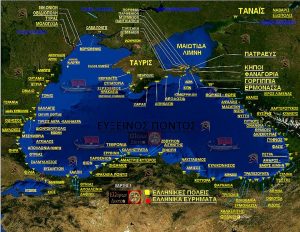
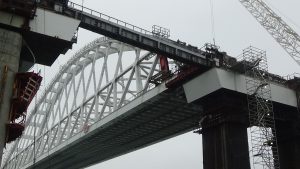
Το ναυτικό επεισόδιο στη γέφυρα του Κέρτς προκάλεσε το παγκόσμιο ενδιαφέρον.  Ποια είναι η περιοχή και η σημασία της και γιατί διαγκωνίζονται Μόσχα και Κίεβο;

Η περιοχή απασχολεί και θα συνεχίσει να απασχολεί τη διεθνή κοινότητα και γι αυτό έχει ενδιαφέρον να προσεγγίσουμε τα όσα συνέβησαν και να αναδείξουμε τον αναδυόμενο γεωπολιτικό της ρόλο.

Για την Ελλάδα έχει ιδιαίτερη σημασία, καθώς, ζούσαν και συνεχίζουν να ζουν αρκετοί Έλληνες στην καταγωγή ενώ ορισμένοι επιχειρηματίες από την Ελλάδα, δείχνουν και επενδυτικό ενδιαφέρον. Με το Πανεπιστήμιο, δε, της πρωτεύουσας Συμφερούπολης, συνεργάζεται το Αριστοτέλειο Πανεπιστήμιο Θεσσαλονίκης. Το ίδιο το κέρτς όπου συνέβη το επεισόδιο είναι το αρχαίο Παντικάπαιον.

Πρόκειται για την Ταυρική χερσόνησο των αρχαίων Ελλήνων. Την ονόμασαν έτσι  γιατί, σύμφωνα με τον Ηρόδοτο, την όργωσε ο Ηρακλής με ένα γιγάντιο ταύρο.  Εδώ, κατέληξε η Ιφιγένεια και εδώ ήρθε ο Ορέστης, κυνηγημένος από τις Ερινύες, να βρει την αδελφή του.

Η Ταυρίδα ήταν μια μακρινή χώρα αλλά οι Έλληνες δεν είχαν ακούσει πρώτη φορά γι αυτήν όταν παίζονταν η τραγωδία του Ευριπίδη (περίπου το 414 π.Χ.). Τριακόσια χρόνια νωρίτερα, κατά τον 7ο π.Χ. αιώνα, πολιτικές, οικονομικές και κοινωνικές συνθήκες προκάλεσαν τον Δεύτερο Αποικισμό και οι Μιλήσιοι έφθασαν στην Ταυρική. Δημιούργησαν αξιόλογες αποικίες ονόματα των οποίων σώζονται μέχρι σήμερα. (Παντικάπαιο, Νυμφαίο, Θεοδοσία, Χερσόνησος, κοντά στη σημερινή Σεβαστούπολη κλπ ).  Κυρίως, όμως, σώζεται το ελληνικό πνεύμα, παρά το γεγονός ότι από την Ταυρική (Κριμαία σήμερα) πέρασαν και κατοίκησαν πολλοί λαοί.

Η Κριμαία, με λίγα λόγια, είναι οικεία στους Έλληνες. Το κλίμα είναι φιλελληνικό.  Οι κάτοικοι, έχουν συνείδηση της αρχαίας ελληνικής παρουσίας στην περιοχή τους. Και τη θεωρούν μέρος της ιστορίας και της παράδοσής τους. Ακόμη και σήμερα ζουν στην περιοχή περί τους 3000 Έλληνες κατά τις επίσημες στατιστικές αλλά, μάλλον είναι, αρκετά, περισσότεροι.

Η Κριμαία, το 1783 πέρασε στη ρωσίδα αυτοκράτειρα Αικατερίνη Β! τη Μεγάλη.  Και εδώ, η Ρωσία έχασε το 1856 τον Κριμαϊκό πόλεμο, όταν αναγκάστηκε να αντιμετωπίσει τις συνδυασμένες  δυνάμεις  της Αγγλίας, της Γαλλίας και της Οθωμανικής Αυτοκρατορίας.

Όταν μετά το θάνατο του Στάλιν, ανέλαβε την ηγεσία του ΚΚΣΕ ο Ουκρανός Νικήτα  Χρουτσώφ, θεώρησε καλό να δωρίσει την περιοχή στην πατρίδα του, την Ουκρανία, το 1954. Το γεγονός δεν είχε ιδιαίτερη σημασία στο πλαίσιο της Σοβιετικής Ένωσης, αλλά, όταν κατέρρευσε η αυτοκρατορία, το πρόβλημα βγήκε στην επιφάνεια.

Σε διεθνοπολιτικό επίπεδο οι Ρώσοι δεν αναγνωρίζουν αυτήν την παραχώρηση. Το 1992 το Ανώτατο Συμβούλιο της Ρωσικής Ομοσπονδίας θεώρησε ότι το ψήφισμα του Ανωτάτου Σοβιέτ  σχετικά με τη μεταφορά της Κριμαίας από τη Ρωσία στην Ουκρανία δεν έχει νομική ισχύ.

Στη Σεβαστούπολη, βρισκόταν- και συνεχίζει να βρίσκεται ο ρωσικός στόλος.

Το άγαλμα του Λένιν και δεξιά το κυβερνείο της Κριμαίας στη Συμφερόπολη.

Η Ρωσία και η ίδια η Σεβαστούπολη θεωρούν ότι είναι ομοσπονδιακή πόλη της Ρωσικής Συνομοσπονδίας, ενώ η Ουκρανία ότι είναι πόλη δική της  με ειδικό καθεστώς. Το καθεστώς της, ούτως ή άλλως, είναι ειδικό αφού η πόλη έχει μια αυτονομία και σε σχέση με την υπόλοιπη Κριμαία.

Η Σεβαστούπολη, ήδη από το 1948, διαχωρίστηκε από την περιοχή της Κριμαίας και υπήχθη απευθείας στις ρωσικές αρχές με διάταγμα του Προεδρείου του Ανώτατου Σοβιέτ της  Ρωσικής Σοβιετικής Ομοσπονδιακής Σοσιαλιστικής Δημοκρατίας.

Η Κριμαία είναι μια περιοχή με σημαντική γεωπολιτική αξία. Και το 65% των κατοίκων της είναι ρωσόφωνοι.

Τα γεγονότα της Ουκρανίας, στην πλατεία Μεϊντάν, και οι εξελίξεις που τα ακολούθησαν δεν άφησαν ανεπηρέαστους ούτε τους Ρώσους, ούτε τους κατοίκους της Κριμαίας.

Την άνοιξη του 2014 με κινήσεις αστραπή, ρωσικές δυνάμεις  κατέλαβαν καίρια σημεία της περιοχής. Ακολούθησε δημοψήφισμα στο οποίο ψήφισε το 86,3% των ψηφοφόρων και απεφάνθησαν κατά  96,77% υπέρ της ένωσης με τη Ρωσία. Η Κριμαία, σήμερα, είναι μέρος της Ρωσικής Ομοσπονδίας αλλά, αυτό το αναγνωρίζει μόνο η Μόσχα και, φυσικά, η τοπική κυβέρνηση της Κριμαίας. Όπως, σημειώσαμε, έχει και την έγκριση του 96,77% των κατοίκων.

Η Δύση αντέδρασε, δεν αναγνωρίζει όσα έχουν συμβεί και επέβαλε στη Ρωσία- και στην Κριμαία- κυρώσεις.

Οι κυρώσεις αυτές, χωρίς αμφιβολία, έχουν επιπτώσεις στη ρωσική οικονομία αλλά δεν άφησαν ανεπηρέαστες και τις οικονομίες  των ευρωπαϊκών χωρών.

Η Δύση μιλά για βίαιη προσάρτηση της περιοχής από τη Ρωσία. Στη Ρωσία και στην Κριμαία, μιλούν για επανένωση, διότι, όπως σημειώσαμε παραπάνω, η περιοχή ανήκε, ως το 1954, στη Ρωσία.

Σεργκέι Αξιόνωφ. Πρόεδρος Κριμαίας

Σ αυτήν, λοιπόν, την περιοχή, της κυβέρνησης της οποίας ηγείται ο Σεργκέι Αξιόνωφ, γίνονται κάθε χρόνο συναντήσεις και για να σπάσει ο ασφυκτικός κλοιός της απομόνωσης και για να σταλεί μήνυμα ότι η περιοχή είναι ανοικτή και προσφέρεται για διεθνείς πολιτικές και οικονομικές συνεργασίες. Τις έχει μεγάλη ανάγκη.

Ενώ η απόσταση Θεσσαλονίκη Συμφερούπολη (πρωτεύουσα της Κριμαίας) είναι, αεροπορικώς δύομιση ώρες περίπου, σήμερα, λόγω των κυρώσεων, χρειάζεται ολόκληρη ημέρα για να φθάσει κανείς. Η επικοινωνία γίνεται, αναγκαστικά, μέσω Μόσχας.

Οι συναντήσεις γίνονται με μεγαλοπρέπεια στο κτήριο όπου υπογράφηκε η γνωστή Συμφωνία της Γιάλτας, το Φεβρουάριο του 1945, μεταξύ Ρούσβελτ, Τσώρτσιλ και Στάλιν και μοιράστηκε ο τότε  γνωστός κόσμος. Τη Συμφωνία της Γιάλτας τη σεβάστηκαν οι Σύμμαχοι, τουλάχιστον μέχρι την κατάρρευση των Κομμουνιστικών Καθεστώτων.

Το ξενοδοχείο Λεβαδιά. Η ντάτσα του Λάμπρου Κατσώνη. Εδώ υπογράφηκε η Συμφωνία της Γιάλτας.
Οι πρωταγωνιστές της Συμφωνίας

Το κτήριο όπου υπογράφηκε η Συμφωνία έχει και μια ελληνική διάσταση. Στα τέλη του 18ου αιώνα, εγκαταστάθηκε σε κτήμα που του δώρισε η Αικατερίνη η Μεγάλ,η ο Έλληνας συνταγματάρχης του Ρωσικού Αυτοκρατορικού Ναυτικού Λάμπρος Κατσώνης μετά τα Ορλωφικά. Το βάπτισε με το όνομα της γενέτειράς του, της βοιωτικής πόλης Λιβαδειά.  Η ντάτσα του Κατσώνη απαλλοτριώθηκε από τη σοβιετική επανάσταση και μετατράπηκε σε ξενοδοχείο με την ίδια επωνυμία, Λιβαδειά.  Σήμερα, φέρει, επίσης, το ίδιο όνομα και λειτουργεί και πάλι ως ξενοδοχείο.

Ορισμένοι πιστεύουν πως η Συμφωνία της Γιάλτας ισχύει, ακόμη, και σήμερα. Αλλά, μάλλον, δεν έχουν δίκαιο.

Υποτίθεται ότι στη συνάντηση που έγινε τις ημέρες της διάλυσης της ΕΣΣΔ και των συμμάχων τους (Δεκέμβριος 1989), μεταξύ Μπούς του πρεσβύτερου και Γκορμπατσώφ, δόθηκε η διαβεβαίωση από αμερικανικής πλευράς ότι η Δύση δεν θα επεδίωκε να μπει στην αυλή της Ρωσίας μέσω του ΝΑΤΟ.

Όπως αποδείχθηκε, η διαβεβαίωση, αν πράγματι δόθηκε, δεν ίσχυσε. Σύμφωνα με υψηλόβαθμο ΝΑΤΟϊκό που μίλησε στη Θεσσαλονίκη η διαβεβαίωση ζητήθηκε για να συναινέσει ο Γκορμπατσώφ στην ένωση των δύο Γερμανιών αλλά, επισήμανε πως η γερμανική ενοποίηση συνέφερε, κυρίως, τη Ρωσία.

Η Ρωσία έχει μια διαρκή αγωνία από την περικύκλωσή της από τις δυτικές δυνάμεις. Και οι κινήσεις της και στην Κριμαία, όπου φαίνεται να ήσαν υπολογισμένες, και στην Ανατολική ρωσόφωνη Ουκρανία, όπου υπάρχει αποσχιστικό κίνημα από το Κίεβο, έχουν ως βάση τη διαμόρφωση μιας buffer zone μεταξύ του μητροπολιτικού χώρου της και  της Δύσης.

Ο Παναγιώτης Λαφαζάνης στη συνάντηση των Φίλων της Κριμαίας.

Η Ουκρανία, είχε πάντα έναν διχασμό. Οι δυτικές περιοχές της ήταν στραμμένες προς την Ευρώπη και οι κάτοικοί τους είναι, κυρίως, καθολικοί ενώ οι ανατολικές είναι ρωσόφωνες, ορθόδοξες και περισσότερο προσανατολισμένες στη Μόσχα.
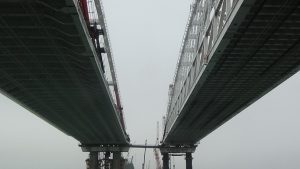
Το ρωσικό παιχνίδι στην περιοχή δεν είναι εύκολο διότι η Μόσχα, ενώ βρίσκεται σε σκληρή αντιπαράθεση με το Κίεβο, δεν έχει λόγους να διακόψει εντελώς τις σχέσεις της. Ο ευρωπαϊκός, δυτικός προσανατολισμός της Ρωσίας περνά, από την Ουκρανία.

Η γλώσσα των δύο λαών (Ουκρανών και Ρώσων) μπορεί να μην είναι, απολύτως,  ίδια αλλά τα κοινά στοιχεία τους είναι πολλά. Ρώσοι και Ουκρανοί αντιλαμβάνονται πολύ καλά ο ένας τον άλλο όταν μιλούν τις γλώσσες τους.

Το ρήγμα στην Κριμαία, μεταξύ των κατοίκων της περιοχής και των Ουκρανών επήλθε αλλά, η εξάρτηση από το Κίεβο είναι, ακόμη, υπαρκτή.

Υποδομές κοινής ωφέλειας και γραφειοκρατικές διαδικασίες διεκπεραιώνονται  στο Κίεβο ή σε άλλες ουκρανικές πόλεις. Δεν έλειψαν, βεβαίως, στην αποκορύφωση της κρίσης, και οι εκβιασμοί.

Les gilets jaunes renvoient aux problèmes de cohésion sociale liés aux inégalités

0

Nicolas Frémeaux est docteur en économie, il vient de publier Les nouveaux héritiers (Seuil). Spécialiste des questions d’inégalités, il estime que le mouvement des gilets jaunes révèle un problème de pédagogie, de progressivité de l’impôt et d’affectation de ses recettes. Entretien.

Comment analysez-vous la colère des gilets jaunes ? 

Nicolas Frémeaux : Ce qui est complexe et intéressant, c’est qu’il y a plusieurs éléments. Le premier est que cette colère se base sur un problème de pédagogie du gouvernement notamment sur la transition écologique et sur le système fiscal en général. C’est une tendance qui est assez longue : dès que l’on prend des mesures fiscales, que l’on crée un nouvel impôt, celui-ci est rarement mis dans un contexte plus général, d’une explication de son utilité… On va seulement se concentrer sur des aspects techniques alors que la fiscalité est avant tout un choix de société. Sans pédagogie, notamment sur les taxes environnementales, il est difficile de faire adhérer les contribuables.

L’autre élément, c’est le ressenti de la population. Il y a un problème, soulevé par ce mouvement des gilets jaunes, qui est l’impression de payer toujours plus d’impôts, de payer pour les autres et de ne pas en voir la couleur. On pourrait dire que ce n’est que du ressenti et les gens se trompent et ne comprennent pas : c’est ce côté un peu méprisant qu’on a entendu par rapport à ce mouvement. Or ce ressenti colle avec la réalité. Il est peut-être parfois exagéré mais vous avez un système qui est de moins en moins progressif. C’est une tendance assez longue, elle ne date pas du gouvernement mais disons qu’il l’a accentuée notamment avec les réformes récentes du début du quinquennat : la suppression de l’ISF, le prélèvement forfaitaire unique… Cela a contribué surtout à alléger l’impôt au sein du haut de la distribution, des cadeaux fiscaux ont été faits à ce niveau-là sauf que de l’autre côté, les gens ont l’impression que leurs impôts augmentent. Ce qui est vrai : vous avez une augmentation de la CSG, certes la taxe d’habitation compense mais pas tout à fait. Vous avez ce poids des impôts indirects qui est très important en France : la TVA, tout le monde la paie. Les taxes sur le carburant, sur le tabac, vous les payez proportionnellement quel que soit votre revenu. Il y a un sentiment, justifié, d’une inégalité devant l’impôt. Les gens ont l’impression de payer pour les autres. C’est assez vrai. En France, on a une rupture de plus en plus forte, du principe « à revenu égal impôt égal ».  Aujourd’hui, si vous touchez des revenus du capital ou du travail, vous ne payez pas le même impôt. Vous payez plus si vous touchez du salaire. Ce côté injuste a été renforcé par le gouvernement. Ces deux éléments-là font que l’on a aujourd’hui une défiance vis-à-vis de l’impôt qui est assez importante mais qui s’inscrit dans une tendance plus longue.

Il y a quatre ans vous avez écrit : « Après un déclin en 2008-2009, les inégalités de revenus ont aujourd’hui retrouvé voire dépassé leur niveau d’avant la crise. Cette situation s’inscrit dans une tendance plus longue, née au cours des années 1980 dans les pays développés. » Ces quatre dernières années, le pouvoir politique n’a pas tenu compte de cela, il n’a pas réagi… Est-ce ce résultat que l’on retrouve aujourd’hui dans la rue ? 

N. F. : Il y a eu une réduction de la progressivité de l’impôt. Tout le monde paie beaucoup d’impôts en France car il y a un haut niveau de dépenses publiques. Mais ce que l’on observe, c’est que la progressivité ne va que jusqu’à un certain point. Le niveau de prélèvements obligatoires (en pourcentage des revenus avant impôts) est d’environ 30 % dans le bas de la distribution des revenus. Quand vous allez vers les classes moyennes et supérieures, ce taux va augmenter puis descendre fortement au sein du très haut de la distribution. Cela concerne peu de monde mais pour des montants d’impôts importants et les derniers gouvernements n’ont pas corrigé cela. Emmanuel Macron n’a pas la volonté de le faire (avec la suppression de l’ISF et moindre taxation des revenus financiers), mais même François Hollande avec sa taxe à 75 % qui était vraiment limitée, se concentrait uniquement sur les salaires et touchait peu de gens. Cela n’a rien changé et peu rapporté : c’était vraiment une rustine. Et il faut vraiment, si vous voulez avoir cette progressivité-là et faire diminuer les inégalités de revenus, taxer les revenus du capital au moins au même niveau que les revenus du travail. Ce qui est fait aujourd’hui, c’est de justifier une moindre taxation du capital par cette théorie du ruissèlement : « Il faut ménager ces gens-là parce que c’est eux qui investissent ». Le problème aujourd’hui est que si vous gagnez 100 000 euros en salaire ou 100 000 euros en dividendes, on vous taxe plus sur votre salaire, comme si vous le méritiez moins que quelqu’un rémunéré en dividendes, qui a par ailleurs peut-être hérité de ces actions-là. Les gouvernements récents n’ont pas contribué à réduire ce niveau d’inégalités. Attention en France, il n’y a pas non plus d’explosion des inégalités comme aux États-Unis, car le système socio-fiscal a pour l’instant joué son rôle. Les réformes récentes pourraient changer la donne.

C’est dangereux ?

N. F. : C’est dangereux car les gens se montent les uns contre les autres. Il y aussi une défiance vis-à-vis des services publics qui sont fournis, une défiance vis-à-vis des politiques en général. C’est difficile de faire adhérer les citoyens à un bien commun, des principes communs s’ils ont l’impression de payer pour les autres et de voir leurs destinées sociales si déconnectées. Ces questions d’impôts renvoient aux problèmes de cohésion sociale liés aux inégalités. Ce sont des questions complexes.

Les Français ont l’impression également de ne pas voir comment sont utilisés les impôts. Il y a à nouveau un manque de pédagogie mais aussi une réalité qui est que dans certaines zones, notamment les zones rurales et les petites villes, il y a un éloignement des service publics. Les gens paient et voient les écoles fermer, les hôpitaux… Là aussi ce n’est pas que du ressenti. Vous avez aussi un sentiment d’inégalité dans l’accès aux services publics, l’impression que tout va vers les grandes villes, les zones urbaines.

Il existe de facto un lien entre les gilets jaunes et votre livre. Vous écrivez que le mérite et l’effort ne récompensent plus autant alors que l’héritage progresse. Cela questionne le modèle. Les gilets jaunes ne peuvent généralement pas compter sur un héritage ou du patrimoine… D’où cette rancœur contre  « les riches »…

N. F. : Il peut y avoir des effets économiques des inégalités mais également des effets sur la cohésion. Si on prend en compte, en plus, le coté immérité, le fait que certains héritent et d’autres pas, cela ajoute encore une couche. Si en plus, vous avez l’impression que les inégalités ne sont pas méritées, vous allez les accepter encore moins. Ce qui peut entraîner des réponses violentes si vous avez l’impression que les gens en haut de la distribution, en plus, n’ont pas fait d’efforts ou font moins d’efforts que vous.

Le paradoxe pour la question d’héritage est qu’il n’y a pas de demande de hausse de la fiscalité des successions ni même de sa progressivité. Il y a une volonté de protéger la famille derrière. C’est le paradoxe que j’essaie de montrer dans mon livre : on devrait avoir une sorte de rejet de l’héritage et une volonté de davantage taxer. Hors aujourd’hui vous n’avez pas non plus cette volonté-là. On n’a pas envie de taxer l’héritage mais ce n’est pas juste les politiques qui sont déconnectés, ce sont aussi les populations qui n’ont pas envie et qui sont prêtes à tolérer ces inégalités-là au motif de valeurs familiales ou morales. Elles dénoncent ces inégalités tout en les tolérant. Le rapport des Français aux inégalités, comme dans beaucoup de pays, est assez complexe car il y a derrière des questions de valeurs.

L’héritage, c’est l’impôt le plus paradoxal. On va défendre, mettre la famille en avant, quitte à avoir une société de rentiers où peu de familles concentrent et se transmettent la plus grande partie des richesses. Il est donc nécessaire de comprendre comment on en est arrivé là, ce qui est loin d’être simple.

Propos recueillis par Aurélie Marcireau 

Photo : Des gilets jaunes devant l’Arc de triomphe, le 24 novembre 2018 à Paris © FRANCOIS GUILLOT/AFP

https://www.nouveau-magazine-litteraire.com/%C3%A9conomie-politique-soci%C3%A9t%C3%A9/les-gilets-jaunes-renvoient-aux-probl%C3%A8mes-de-coh%C3%A9sion-sociale-li%C3%A9s-aux

EXCLUSIF. Des Gilets jaunes lancent un appel : “Nous voulons être les porte-parole d’une colère constructive”

0

23h30 , le 1 décembre 2018 Le Journal de Dimanche

Un collectif de Gilets jaunes qui condamne “toutes les formes de violence” propose dans le JDD au gouvernement une “porte de sortie”, en précisant une série de revendications.

Gilets jaunes, samedi à Marseille.
Gilets jaunes, samedi à Marseille. (Reuters)

Alors que Paris était samedi le théâtre de scènes de guérilla urbaine, à l’occasion de la troisième grande mobilisation des Gilets jaunes, un collectif interpelle le gouvernement pour trouver une issue à cette mobilisation. Dans les colonnes du JDD, les “porte-parole des Gilets jaunes libres”, se qualifiant de “citoyens engagés qui constitue une représentation honnête de la France qui souffre et se sent délaissée”, lancent un “appel à tous les citoyens qui ne souhaitent plus seulement approuver, encourager ou soutenir les Gilets jaunes libres, mais participer avec eux au mouvement engagé, d’en devenir les référents locaux et départementaux”.

Ils se tiennent “à la disposition du Premier ministre” pour être reçus

Dans ce collectif ne figurent pas les porte-parole nommés cette semaine et qui ont été déjà reçus par François de Rugy ou Edouard Philippe. Il s’agit d’autres représentants, restés à l’écart de cette première structuration du mouvement, y compris les personnes les plus médiatiques comme Jacline Mouraud ou le Toulousain Benjamin Cauchy. “Les Gilets jaunes sont des millions, nul n’a le monopole de leur expression ni de leur représentation”, écrivent ces personnes. Qui entendent “préciser” leurs revendications. “Nous demandons l’ouverture d’états généraux de la fiscalité ; d’une conférence sociale nationale ; d’assises ‘territoires et mobilité’ qui prendront la forme de débats régionaux ; l’organisation de référendums réguliers sur les grandes orientations sociales et sociétales du pays ; l’adoption du scrutin proportionnel pour les élections législatives, afin que la population soit mieux représentée au Parlement”, énumèrent-ils notamment.

“Soucieux du respect des institutions et du dialogue social, nous condamnons toutes les formes de violence. Mais nous estimons que le gouvernement ne doit pas répondre à la colère par l’orgueil d’une politique sans issue”, préviennent-ils, avant de souhaiter “un accord rapide afin que l’économie du pays puisse retrouver sa vigueur, avant la période des fêtes de fin d’année”. Ainsi, “nous nous tenons à la disposition du Premier ministre pour un premier rendez-vous”, écrivent-ils.

Les porte-parole des Gilets jaunes libres (GiletsJaunesLibres) : 

Benjamin Cauchy (Occitanie), Jacline Mouraud (Bretagne), Cédric Guémy (Île-de-France), membres fondateurs ; Chantal Perrotin (Auvergne-Rhône-Alpes), Cédric Delaire (Hauts-de-France), David Tan (Pays de la Loire), Christophe Chalençon (Provence-Alpes-Côte d’Azur), Ghjuvan-Andria Culioli, David Roig (Un espoir pour la Corse), Damien Molin (Nouvelle-Aquitaine).

L’Ukraine entre guerre et paix

0
par Igor Delanoë Le Monde Diplomatique.
Vendredi 30 novembre 2018.Donald Trump a brusquement annulé sa rencontre avec Vladimir Poutine, prévue en marge du G20 qui s’est ouvert ce jeudi en Argentine, après que la Russie a intercepté dimanche trois navires militaires ukrainiens et capturé 24 marins en mer Noire. Moscou réactive ainsi un conflit au statut incertain, malgré les accords de Minsk signés en février 2015. « Les chances de succès de Minsk 2 restent limitées, dans la mesure où aucun des belligérants n’a atteint ses objectifs », analysait alors Igor Delanoë.

De Maïdan à Minsk, un pays en déroute

L’Ukraine entre guerre et paix

La chute du chaudron de Debaltsevo ruine les espoirs de reconquête militaire contre les insurgés du Donbass. Après un an de déconfiture, les dirigeants ukrainiens ont dû accepter de nouveaux accords à Minsk. Mais la perspective d’une solution politique durable, s’appuyant sur le respect des minorités et un dialogue avec Moscou, semble lointaine.

Près de seize heures de négociation ont été nécessaires aux représentants du « format Normandie (1) » — le président François Hollande, la chancelière allemande Angela Merkel, le president ukrainien Petro Porochenko et le président russe Vladimir Poutine — réunis le 12 février dans la capitale biélorusse pour parvenir à un compromis. Comportant treize points ainsi qu’une note additionnelle, les accords de Minsk 2 restent similaires sur le fond à ceux de Minsk 1, signés le 5 septembre 2014 par les responsables de la Russie, de l’Ukraine et des républiques autoproclamées (2).

Les Européens ont peiné à renouer avec la Russie un dialogue trop longtemps négligé. Les difficultés d’aujourd’hui prennent racine dans une absence prolongée de coordination face aux problèmes posés par les pays de leur « voisinage partagé » (Arménie, Azerbaïdjan, Biélorussie, Géorgie, Moldavie, Ukraine), que la crise ukrainienne n’a fait qu’approfondir. En mai 2009, l’Union européenne a lancé son partenariat oriental à l’initiative de la Pologne et de la Suède, deux Etats qui entretiennent des relations historiquement épineuses avec la Russie.

Ce partenariat devait aboutir à terme à l’établissement d’une zone de libre-échange dès la fin 2015 (3) en excluant tout autre accord avec Moscou, qui partage pourtant avec ces Etats un système de normes et des relations commerciales vitales (4). Face à cette initiative, le Kremlin a mis en avant l’Union économique eurasiatique, dont l’Ukraine devait être l’élément-clé (5). La Russie s’inquiète de ce que des pays avec lesquels elle a vécu une histoire commune se rapprochent sur le plan stratégique de l’Organisation du traité de l’Atlantique nord (OTAN) et se fondent économiquement dans le moule de l’Union européenne. C’est pourquoi elle a revendiqué dans le même temps une « zone d’intérêts privilégiés » que les Européens et les Etats-Unis ont refusé de lui reconnaître. Voisin oriental de l’Union européenne et « étranger proche » de la Russie, l’Ukraine s’est trouvée soumise à un écartèlement géopolitique qui a réveillé ses polarités territoriales est-ouest.

Sous la pression d’une débâcle

Cette lutte pour l’influence a fait le lit d’une crise dont l’emballement a conduit à la guerre dans le Donbass. Les marches de l’escalade sont aujourd’hui difficiles à redescendre. Si Européens et Américains gardent en tête le coup de force de l’annexion de la Crimée du 16 mars 2014 — qui a déclenché la première vague de sanctions—, Moscou considère que le point de non-retour remonte au changement de régime du 23 février 2014. Deux jours auparavant, grâce à la médiation des Européens et en présence d’un représentant de la Russie, un document de sortie de crise avait été conclu entre M. Viktor Ianoukovitch et les chefs de l’opposition ukrainienne. Prévoyant notamment un retour à un régime parlementaire ainsi qu’une élection présidentielle anticipée, l’accord est cosigné par les ministres des affaires étrangères allemand et polonais, MM.Frank-Walter Steinmeier et Radoslav Sikorski. Toutefois, dès le lendemain, M. Ianoukovitch se réfugie en Russie ; et le 23 février, c’est M. Alexandre Tourchinov, le président de la Rada (Parlement ukrainien), qui est nommé président par intérim. La Russie reproche aux garants européens de l’accord du 21 février non seulement d’avoir renoncé à sa mise en œuvre, mais également d’avoir cautionné un coup d’Etat.

La crise connaît un tournant décisif le 17 juillet suivant lorsqu’un avion civil de la Malaysia Airlines est abattu au-dessus du Donbass : ce drame déclenche une nouvelle vague de sanctions touchant cette fois l’économie de la Russie. En août, les renforts de « volontaires » et l’assistance russe sauvent les séparatistes du Donbass d’une débâcle militaire qui semblait inévitable. Le succès de la contre-offensive menée ensuite par les insurgés des républiques populaires de Donetsk (DNR) et de Lougansk (LNR) conduit les parties à se réunir dans la capitale biélorusse et à adopter, le 5 septembre 2014, les premiers accords de Minsk. Mais les hostilités n’étaient que refroidies, aucun des camps n’ayant obtenu satisfaction : une zone abritant cinq millions d’Ukrainiens échappait à l’autorité de Kiev, et les territoires rebelles n’avaient pas d’avenir économique faute d’accès au port de Marioupol, sur la mer d’Azov, ou de maîtrise du nœud ferroviaire de Debaltsevo, situé à mi-chemin de Donetsk et de Lougansk (6). L’absence de réel contrôle des accords a permis la reprise des combats, qui se sont intensifiés autour de ces points névralgiques, ainsi que sur l’aéroport de Donetsk.

Minsk 2 est le produit des craintes européennes tant d’un conflit majeur sur le continent que de l’effondrement militaire, politique et économique au bord duquel se trouve l’Ukraine. Sous la pression de la débâcle promise à Debaltsevo, où étaient encerclés entre six mille et huit mille soldats ukrainiens au moment des négociations, le président Porochenko avait le choix entre continuer de perdre la guerre ou signer le document. Dans les heures qui ont suivi, le Fonds monétaire international (FMI) débloquait une nouvelle aide de 17,5 milliards de dollars. Pour la Russie, Minsk 2 a été l’occasion de voir reconnue la fracture de l’Ukraine le long de la ligne de cessez-le-feu et d’apparaître comme le seul acteur capable de faire accepter un compromis aux insurgés. En pouvant modifier en permanence l’équilibre des forces sur le terrain et en obtenant un statut spécial pour les régions orientales, Moscou s’assure de garder un pied dans la porte pour éviter que l’Ukraine ne rejoigne l’OTAN, comme dans les « conflits gelés » de Transnistrie et de Géorgie (lire « De la Transnistrie au Donbass, l’histoire bégaie »).

L’objectif premier des accords reste d’imposer — dans le plus grand scepticisme— un arrêt des combats. Il ne pourra durer qu’avec le retrait de l’artillerie lourde. La distance de recul doit être mesurée à partir de la ligne de front du 10 février 2015 pour l’armée ukrainienne et de celle du 19 septembre pour les insurgés. La vérification de la réalité du cessez-le-feu et du retrait des armes lourdes doit être assurée par les observateurs de l’Organisation pour la sécurité et la coopération en Europe (OSCE), dont les effectifs passent de deux cent cinquante à trois cent cinquante personnes. Les chances de succès de Minsk 2 restent limitées, dans la mesure où aucun des belligérants n’a atteint ses objectifs : Kiev n’est pas parvenu à réinstaurer sa souveraineté sur les territoires aux mains des séparatistes ; les insurgés n’ont pas réussi à consolider une emprise territoriale suffisante, pouvant correspondre aux oblasts de Donetsk et de Lougansk, nécessaire à l’appui de leurs revendications indépendantistes. D’où la crainte, les accords à peine signés, de nouveaux combats de forte intensité autour de Marioupol.

Les accords pèchent en outre par des dispositions difficiles à mettre en œuvre concrètement sur le terrain et par la faiblesse des mécanismes de contrôle. Le prix du sang est impossible à oublier chez les soldats qui se sont battus depuis septembre pour défendre ou prendre moins de mille kilomètres carrés. La durabilité du cessez-le-feu constitue d’autant plus une inconnue qu’aucune zone démilitarisée n’est prévue par le document. Celui-ci ne contient pas non plus de mesures en faveur du déploiement d’une force d’interposition, dont la composition aurait conduit à un nouveau sujet de dissension entre Russes, Ukrainiens, séparatistes et Européens. Le retrait des unités étrangères, des mercenaires et des « groupes illégaux » du territoire ukrainien reste très difficile à mettre en œuvre, et n’est assorti d’aucun calendrier. Comment un observateur de l’OSCE parviendra-t-il à distinguer un insurgé de Donetsk d’un « volontaire » russe, les deux étant parfaitement russophones ? En outre, les bataillons au sein desquels servent des miliciens croates, polonais ou baltes, dont certains sont financés par des oligarques, opèrent sur le terrain avec l’armée ukrainienne, mais n’obéissent que très imparfaitement à Kiev.

Minsk 2 risque par ailleurs d’être difficile à faire accepter par la Rada, où les députés ukrainiens ont jusqu’au 14 mars pour adopter une résolution sur la délimitation des territoires du Donbass concernés par un statut spécial. Une telle résolution avait été votée le 16 septembre 2014, mais elle n’a jamais été mise en œuvre. Dans le cadre d’une décentralisation qui accorderait à ces territoires une forme d’autonomie linguistique, économique et sécuritaire, ce statut permettrait la création de forces de police qui leur seraient propres. Sur ce point, le dialogue politique s’annonce difficile, aussi bien entre les belligérants qu’au sein du gouvernement ukrainien, où les plus bellicistes, notamment le premier ministre Arseni Iatseniouk et le ministre de l’intérieur Arsen Avakov, appellent encore à une victoire complète sur les séparatistes. Dès la signature de Minsk 2, nombre de voix à Kiev se sont élevées pour critiquer le document, en particulier celles du chef du parti d’extrême droite Praviy Sektor (« Secteur droit »), M. Dmytro Iaroch, qui a déclaré ne pas reconnaître les accords, et celle du ministre des affaires étrangères, M. Pavlo Klimkin, qui a affirmé que l’Ukraine n’était en aucun cas dans l’obligation de mener une réforme constitutionnelle ni de concéder une plus grande autonomie au Donbass. En outre, alors que M. Porochenko a rappelé dès l’adoption de Minsk 2 que la fédéralisation de l’Ukraine n’était pas à l’ordre du jour, les insurgés continuent de leur côté à revendiquer l’indépendance.

La question gazière en embuscade

Aux difficultés d’ordre politique viennent s’ajouter les défis économiques. L’Ukraine s’est engagée à prendre à sa charge la reconstruction des zones détruites par les combats et à rétablir le versement des prestations sociales interrompu à l’initiative de M. Porochenko en novembre 2014. Après une récession de 8,2 % en 2014 et avec près de 25 % d’inflation, l’Ukraine aura le plus grand mal à assumer ce fardeau.

Si le document principal des accords de Minsk 2 reproduit donc nombre des imperfections de Minsk 1, la déclaration commune (7)qui l’accompagne laisse entrevoir quelques points positifs. La Russie, l’Union européenne et l’Ukraine s’engagent à travailler sur la question gazière, qui ne manquera pas de se poser à nouveau dès le 1er avril 2015 et l’expiration du « paquet d’hiver (8) ». Le sauvetage économique pourrait alors devenir un terrain de rapprochement. Par ailleurs, les Européens semblent prendre en compte les préoccupations russes nées de la signature des accords de libre-échange entre l’Union européenne et l’Ukraine. La reconnaissance, dans les points additionnels de Minsk 2, de l’autodétermination linguistique d’une partie du Donbass et du droit de ces territoires à développer une coopération avec la Russie témoigne également de la construction timide d’une solution politique.

Le cessez-le-feu pourra s’installer si les bataillons ukrainistes les plus radicaux évitent les provocations et si Moscou parvient à refréner la tentation des séparatistes de pousser leur avantage sur le terrain. Le respect des aspects politiques des accords engage surtout Kiev. L’Union européenne pourrait faire pression sur la Rada pour aider le président Porochenko à mettre en marche un difficile processus qui risque de le placer en porte-à-faux au regard de ses promesses électorales et vis-à-vis d’une partie de son gouvernement. Absent des négociations et aujourd’hui tenté par la surenchère, Washington dispose de leviers sur le Parlement ukrainien, notamment à travers le premier ministre Iatseniouk, et pourrait contribuer à la mise en œuvre des accords. Ces puissances seront encouragées par la résolution 2202 du Conseil de sécurité de l’Organisation des Nations unies, présentée par la Russie et adoptée à l’unanimité le 17 février. Demandant la pleine application des accords de Minsk, ce texte réaffirme son attachement au « plein respect de la souveraineté et de l’intégrité territoriale de l’Ukraine ».Une façon discrète d’entériner de facto l’annexion de la Crimée.

Igor Delanoë

Docteur en histoire, enseignant au Collège universitaire français de Saint-Pétersbourg.

(1) En référence à la rencontre diplomatique qui s’est tenue le 6 juin 2014 entre les quatre dirigeants en marge des commémorations du débarquement de Normandie.

(2) Cet accord a été complété par un mémorandum signé le 19 septembre 2014 par les mêmes parties.

(3) La mise en place d’une zone de libre-échange entre l’Ukraine et l’Union européenne est prévue pour le 31 décembre 2015.

(4) Lire Julien Vercueil, « Aux racines économiques du conflit ukrainien », Le Monde diplomatique, juillet 2014.

(5) Lire Jean Radvanyi, « Moscou entre jeux d’influence et démonstration de force », Le Monde diplomatique, mai 2014.

(6) Lire Laurent Geslin et Sébastien Gobert, « Veillée d’armes au Donbass », Le Monde diplomatique, décembre 2014.

(7) Annexe II de la résolution 2202 du Conseil de sécurité de l’Organisation des Nations unies (ONU).

(8) Signé fin octobre 2014, cet accord court du 1er novembre 2014 au 31 mars 2015. L’Ukraine paie sa consommation en avance pour le mois suivant, et s’engage à rembourser à la Russie environ 3 milliards de dollars d’arriérés de dette.

https://www.monde-diplomatique.fr/2015/03/DELANOE/52698

Ο Τραμπ, ο Μαρξ και τα ιστορικά ατυχήματα

0
  • του Gideon Rachman  Δημοσιεύθηκε: 29 Νοεμβρίου 2018 Financial Times/euro2day.gr

Η κλιμάκωση των γεωπολιτικών εντάσεων ανάμεσα στην Κίνα και τις ΗΠΑ κάνει πιο δύσκολη την επίλυση της εμπορικής διαμάχης. Ο απρόβλεπτος Τραμπ και η έριδα στο εσωτερικό της Ουάσιγκτον. Τι μας διδάσκει η ιστορία.

Είσαι μαρξιστής, ρεαλιστής ή κάποιος που πιστεύει ότι η ιστορία καθορίζεται από σειρά ατυχημάτων; Κάθε σχολή σκέψης οδηγεί σε ένα διαφορετικό τρόπο ανάλυσης της κρίσης των σχέσεων των ΗΠΑ με την Κίνα.

Ένας εμπορικός πόλεμος μεταξύ των δύο μεγαλύτερων οικονομιών του κόσμου είναι ήδη σε εξέλιξη και οι συζητήσεις για έναν νέο Ψυχρό Πόλεμο είναι συχνές τόσο στην Ουάσιγκτον όσο και στο Πεκίνο. Οι δύο χώρες είχαν μια παγερή και αντιπαραγωγική συνάντηση στο πλαίσιο της ΟΣΑΕ (Οικονομική Συνεργασία Ασίας-Ειρηνικού). Αλλά στο τέλος του μήνα, ο Ντόναλντ Τραμπ και ο Σι Τζινπίνγκ, οι πρόεδροι των ΗΠΑ και της Κίνας, θα συναντηθούν στη σύσκεψη της G20 στην Αργεντινή για καθοριστικές συνομιλίες, οι οποίες θα μπορούσαν να οδηγήσουν σε νέα συμφωνία στο εμπόριο ή σε περαιτέρω κλιμάκωση των εντάσεων.

Ένας μαρξιστής μπορεί να αναμένει ότι τα επιχειρηματικά ένστικτα θα επικρατήσουν και ότι ως εκ τούτου θα υπάρξει μια ανακωχή στον εμπορικό πόλεμο ανάμεσα στις ΗΠΑ και στην Κίνα. Ένας οπαδός της «ρεαλιστικής» θεωρίας των διεθνών σχέσεων θα υπέθετε ότι μια καθιερωμένη παγκόσμια δύναμη όπως οι ΗΠΑ και μια ανερχόμενη όπως η Κίνα, είναι αναπόφευκτο να συγκρουστούν και συνεπώς θα συνεχίσουν να αυξάνονται οι οικονομικές και γεωπολιτικές εντάσεις. Και κάποιος που πιστεύει ότι η ιστορία διαμορφώνεται μέσα από ατυχήματα, θα σας πει ότι καμία θεωρία δεν μπορεί να εξηγήσει πως θα εξελιχθούν τα πράγματα, καθώς αυτό εξαρτάται από απρόβλεπτα ανθρώπινα όντα.

Ένα σημάδι ότι είναι πιθανές διάφορες εκβάσεις είναι οι εσωτερικές έριδες που έχουν ξεσπάσει μεταξύ αντιμαχόμενων στρατοπέδων στην κυβέρνηση Τραμπ και οι λιγότερο εμφανείς ενδείξεις εντάσεων στο Πεκίνο, καθώς η κινεζική κυβέρνηση προσπαθεί να βρει έναν τρόπο να καθησυχάσει τον κ. Τραμπ.

Στην Ουάσιγκτον υπάρχει ένα πανίσχυρο στρατόπεδο «γερακιών» που πιέζουν ενεργά για μια μακροχρόνια αντιπαράθεση με την Κίνα. Στον τομέα της οικονομικής πολιτικής περιλαμβάνει τον Πίτερ Ναβάρο, τον σύμβουλο του Λευκού Οίκου σε εμπορικά θέματα και τον Ρόμπερτ Λάιτχιζερ, τον ειδικό εκπρόσωπο των ΗΠΑ σε θέματα εξωτερικού εμπορίου. Στον τομέα της εξωτερικής πολιτικής, περιλαμβάνει τον Τζον Μπόλτον, τον σύμβουλο του προέδρου σε θέματα εθνικής ασφάλειας και τον αντιπρόεδρο Μάικ Πενς, ο οποίος έδωσε πρόσφατα μια άκρως επιθετική ομιλία για την Κίνα.

Απέναντι τους έχουν τα «περιστέρια», με επικεφαλής τον υπουργό Οικονομικών, Στίβεν Μνούτσιν και τον Λάρι Κάντλοου, σύμβουλο του Λευκού Οίκου σε οικονομικά θέματα. Τα «περιστέρια» θέλουν την άμεση επίλυση των εμπορικών εντάσεων, ενώ τα «γεράκια» γνωρίζουν πως ο κ. Τραμπ είναι τόσο η μεγαλύτερη ελπίδα τους όσο και η μεγαλύτερη πολιτική τους αδυναμία. Έχει ήδη φτάσει την αντιπαράθεση με την Κίνα πιο μακριά από οποιονδήποτε άλλο Αμερικανό πρόεδρο, επιβάλλοντας δασμούς σχεδόν σε όλες τις κινεζικές εξαγωγές στις ΗΠΑ και αυξάνοντας τις αμερικανικές ναυτικές περιπολίες σε αμφισβητούμενα θαλάσσια ύδατα στον Ειρηνικό.

Αλλά ο κ. Τραμπ έχει πολλές μεταπτώσεις και έχει μια αδυναμία στο να κλείνει ντιλ με αυταρχικούς ηγέτες. Ορισμένοι από τους συμβούλους του δυσκολεύονται ακόμα να ξεχάσουν τη συνάντηση του Ιουνίου στη Σιγκαπούρη με τον Βορειοκορεάτη δικτάτορα, Κιμ Γιονγκ Ουν, όταν ο κ. Τραμπ έβαλε ξαφνικά τέλος στις απειλές και δεσμεύτηκε να κάνει διάλογο. Από τότε, ο Αμερικανός πρόεδρος έχει γράψει στο Twitter μέχρι και για την «αγάπη» του για τον κ. Κιμ.

Δυστυχώς για τα «γεράκια», ο κ. Τραμπ έχει εδώ και καιρό τονίσει πως έχει σε μεγάλη εκτίμηση τον κ. Σι. Έχει επίσης εμφανίσει μια ανησυχητική τάση να φαντάζεται σημαντικά βήματα προόδου. Για παράδειγμα, ο πρόεδρος ισχυρίστηκε πρόσφατα ότι η Κίνα εγκατέλειψε τη βιομηχανική της πολιτική, γνωστή και ως «Made in China 2025», γιατί ο ίδιος προσωπικά θεωρούσε ότι είναι «πολύ προσβλητική». Αλλά δεν υπάρχουν στοιχεία για μια τέτοια μεταστροφή της Κίνας.

Η ανησυχία των «γερακιών» εκφράστηκε από τον κ. Ναβάρο σε πρόσφατη ομιλία στην Ουάσιγκτον, στην οποία κατηγόρησε τους «παγκόσμιους δισεκατομμυριούχους» ότι δρουν σαν λομπίστες της Κίνας. Λίγες ημέρες αργότερα, τον διέψευσε ευθέως ο κ. Κάντλοου, συνάδελφος του στον Λευκό Οίκο, ο οποίος επισήμανε ότι τα σχόλια του κ. Ναβάρο είναι «εκτός τόπου».

Μαζί με την εμπορική διαμάχη έχουν αυξηθεί και οι γεωπολιτικές εντάσεις. Αμερικανοί στρατιωτικοί αναλυτές φοβούνται ότι το πρόγραμμα της Κίνας για την κατασκευή στρατιωτικών βάσεων στη Νότια Κινεζική Θάλασσα έχει αλλάξει την ισορροπία δυνάμεων στην περιοχή. Ο ναύαρχος Φιλ Ντέιβινστον, επικεφαλής των αμερικανικών δυνάμεων στην περιοχή του Ειρηνικού, δήλωσε πρόσφατα στο Κογκρέσο ότι η «Κίνα είναι πλέον σε θέση να ελέγξει τη Νότια Κινεζική Θάλασσα σε όλα τα σενάρια εκτός από εκείνο του πολέμου με τις ΗΠΑ».

Για να δείξει ότι οι ΗΠΑ δεν έχουν αποδεχθεί την κινεζική κυριαρχία σε αυτά τα θαλάσσια ύδατα, οι ΗΠΑ έχουν αυξήσει τις ναυτικές περιπολίες, με πολεμικά πλοία των δύο δυνάμεων να φτάνουν πρόσφατα πολύ κοντά σε μια σύγκρουση. Ορισμένα «γεράκια» της Ουάσιγκτον θέλουν επίσης οι ΗΠΑ να πείσουν τους συμμάχους τους – συγκεκριμένα την Ιαπωνία και την Νότια Κορέα – να επιτρέψουν την παράταξη αμερικανικών πυρηνικών πυραύλων μικρού βεληνεκούς στην περιοχή. Στη θεωρία, αυτό θα είχε στόχο την αποτροπή της Βόρειας Κορέας. Στην πραγματικότητα το μήνυμα θα απευθυνόταν στην Κίνα.

Οι στρατιωτικές αυτές εντάσεις καθιστούν τη διαμάχη ΗΠΑ-Κίνας πολύ πιο δύσκολο να επιλυθεί από ότι τις εμπορικές διαφωνίες της κυβέρνησης Τραμπ με το Μεξικό και τον Καναδά, που δεν αποτελούν στρατηγικούς αντιπάλους των ΗΠΑ.

Είναι αυτή η γεωπολιτική διαμάχη – και όχι η οικονομία – που με κάνει να σκέφτομαι ότι η «ρεαλιστική» αποτίμηση της κόντρας των ΗΠΑ με την Κίνα συγκεντρώνει τις περισσότερες πιθανότητες να δικαιωθεί. Οπότε ακόμα και αν στη σύσκεψη της G20 ο κ. Τραμπ συμφωνήσει να αναβάλλει τα σχέδια του για νέους δασμούς στα κινεζικά προϊόντα, μια εμπορική ανακωχή μπορεί να μην κρατήσει πολύ, δεδομένης αυτής της κλιμακούμενης γεωπολιτικής αντιπαλότητας των δύο υπερδυνάμεων.

Αλλά η προσωπικότητα και οι παρορμήσεις του Αμερικανού προέδρου καθιστούν επισφαλή κάθε πρόβλεψη.

Αν υπήρξε ποτέ μια ομιλούσα, βαδίζουσα ενσάρκωση της «θεωρίας των ατυχημάτων» στην ιστορία, αυτή είναι ο κ. Τραμπ.

Copyright The Financial Times Limited 2017. All rights reserved.