File Photo: Riot police vans take up positions on Place Trocadero near the Eiffel Tower, during clashes with protesters wearing yellow vests (gilets jaunes) as well as radical elements (far left, and far right) and looters, in Paris, France, 01 December 2018. EPA, ETIENNE LAURENT
DECEMBER 5, 2018
H εξέγερση των «κίτρινων γιλέκων» είναι η γαλλική εκδοχή των «αγανακτισμένων» της πλατείας Συντάγματος. Μόνο που αυτοί κάτι φαίνεται να παίρνουν…Και η υπόθεση θα έχει συνέχεια.
Η «κίτρινη» έκρηξη οργής ήταν μια μαζική απάντηση στην μισητή πολιτική της διαρκούς λιτότητας και της φορομπηχτικής επιδρομής που επιβάλλεται στο πλαίσιο διατεταγμένης αποστολής από αντιδημοφιλείς ηγέτες, εντολοδόχους των Βρυξελλών και της Καγκελαρίας.
Ξέσπασε ως αυθόρμητη λαική αντίδραση γι αυτό και δεν έχει σαφές πολιτικό χρώμα. Συμμετέχουν πολίτες όλων των ηλικιών και όλων των κοινωνικών τάξεων, από αριστεριστές μέχρι εθνικιστές και από φοιτητές μέχρι συντηρητικοί μεσοαστοί που βλέπουν την ζωή τους να γκρεμίζεται. Το πλήθος λοιπόν, μπορεί να είναι πολύχρωμο, αλλά το μήνυμα του «κίτρινου γιλέκου» που φορούν είναι ενιαίο και σαφές: «Αφήστε μας μόνους μας να ορίζουμε το αύριο, έξω από τους κανόνες και τα ασφυκτικά πρωτόκολλα «προσαρμογής» που επιβάλλουν τα διεθνή κέντρα αποφάσεων, με προεξάρχον για την Ευρώπη το γερμανικό διευθυντήριο.
Αν το αναλύσει κανείς ψύχραιμα και χωρίς πολιτικές προκαταλήψεις, θα διαπιστώσει ότι πρόκειται για ένα μήνυμα εθνικής αφύπνισης ευρωπαικών λαών. Που έρχεται σε ευθεία αντίθεση με την ηγεμονική πολιτική καθυπόταξης η οποία επιβάλλεται από το Βερολίνο μέσω του «ιερατείου» των Βρυξελλών.
Οχι με panzer, όπως στο παρελθόν, αλλά με μέσα στυγνού οικονομικού εκβιασμού. Το πολιτικό προσωπικό της Ευρώπης, με κάποιες εξαιρέσεις που ευτυχώς πληθαίνουν, όπως ο Σαλβίνι στην Ιταλία, η Λεπέν στη Γαλλία καθώς και οι Ούγγροι, Πολωνοί και Τσέχοι συντηρητικοί, απέδειξε ότι δεν μπορεί να αντιμετωπίσει αυτή την νεότερη έκφανση του γερμανικού ιμπεριαλισμού.
Παρέδωσε τα όπλα γρήγορα και εμφάνισε την προοπτική μιας «Γερμανικής Ευρώπης» ως τον αναγκαστικό μονόδρομο ευημερίας των ευρωπαικών λαών.
Στην παγίωση αυτής της μοιρολατρικής αντίληψης συνέβαλε ασφαλώς και η συστηματική πλύση εγκεφάλου από στρατευμένα μέσα ενημέρωσης που αποθεώνουν νεοφιλελεύθερες πρακτικές οικονομικής «ανάπτυξης», μαζί με τις «αξίες» της πολυφυλετικής συνύπαρξης και της πολυπολιτισμικής παγκοσμιοποίησης.
Το πρώτο χαστούκι στο κυρίαρχο δόγμα «πολιτικής ορθότητας» ήρθε με την απρόσμενη για το παγκόσμιο σύστημα εκλογή του Προέδρου Τράμπ στις ΗΠΑ. Σήμερα έρχεται η σειρά της Ευρώπης. Και όπου δεν υπάρχουν ηγέτες ικανοί να αναλάβουν το βάρος, αναλαμβάνουν δράση οι λαοί.
Οι Γάλλοι «αγανακτισμένοι» φαίνονται εξαιρετικά αποφασισμένοι. Και δεν σκόρπισαν με τα πρώτα δακρυγόνα του δικού τους… «Παπουτσή». Πιθανότατα δε οι μαζικές τους συγκεντρώσεις να αποτελέσουν τη σπίθα για μία γενικότερη εξέγερση στην «κατεχόμενη» Ευρώπη. Ας το βλέπουν και κάποιοι εδώ που έχουν σπεύσει να ποντάρουν τα ρέστα τους στην εύνοια του γερμανικού παράγοντα…
Επί εβδομήντα και πλέον χρόνια το Κράτος των Σκοπίων διδάσκει τον επιθετικό αλυτρωτισμό του σε βάρος της Ελλάδος σε όλα τα σχετικά διδακτικά βιβλία όλων των εκπαιδευτικών βαθμίδων. Είναι το επίσημο κρατικό ιδεολόγημα του «Μακεδονισμού» με το οποίο έχουν γαλουχηθεί όλες οι γενεές των πολιτών του από το 1944 μέχρι σήμερα. Κλειδί είναι το όνομα Μακεδονία. «Είναι το όχημα του αλυτρωτισμού σε βάρος της Ελλάδας» δήλωσε ο Ανδρέας Γ. Παπανδρέου πριν 26 χρόνια. Αυτή η συστηματική διδαχή του «Μακεδονισμού» επί 75 χρόνια, με απαγορευμένο κάθε αντίλογο είναι ο κώδικας για να κατανοήσει κανείς τους ηγέτες και τους Σλάβους πολίτες των Σκοπίων
Στις 30 Σεπτεμβρίου 2018 δημοσιεύθηκε στα Σκόπια η είδηση ότι η κυβέρνηση Ζάεφ αποσύρει ήδη 22 σχολικά εγχειρίδια από τα οποία θα αφαιρέσει τις σχετικές επιθετικές αναφορές. Παραμένει, όμως, άγνωστο αν τούτο εφαρμόσθηκε ήδη.
΄Ολα τα σχολικά βιβλία των Σκοπίων διδάσκουν μέχρι και σήμερα ότι δήθεν: * Οι αρχαίοι Μακεδόνες δεν ήσαν ΄Ελληνες. * Τον Μακεδονικό Αγώνα 1903-1908 διεξήγαγαν κατά των Ελλήνων οι Μακεδόνες και όχι οι Βούλγαροι κομιτατζήδες.* Υπό τους Οθωμανούς υπήρχε μια (ανύπαρκτη στα οθωμανικά Αρχεία) «Ενιαία Μακεδονία» την οποία στους Βαλκανικούς Πολέμους 1912-1913 κατέκτησαν και διεμέλισαν οι κατακτητές της ΄Ελληνες, Βούλγαροι και Σέρβοι..* Η Βαρντάρσκα Μακεντόνια «απελευθερώθηκε από τον ζυγό των Σέρβων χάρις στους αγώνες των Μακεδόνων» και το 1991 ανακηρύχθηκε ανεξάρτητη «Δημοκρατία της Μακεδονίας», «η οποία είναι το μοναδικό ελεύθερο τμήμα της Ενιαίας Μακεδονίας και έχει το καθήκον να μεριμνά για τους υπόδουλους Μακεδόνες των γειτονικών της Κρατών».* «Το 52% της Ενιαίας Μακεδονίας είναι η Εγκέϊτσκα (Αιγαιατική) Μακεντόνια την οποία η Ελλάδα το 1923 αποίκισε με ΄Ελληνες πρόσφυγες της Ανατολής και νόθευσε την εθνική ομοιογένεια των Μακεδόνων». * «Οι Αιγαιάτες Μακεδόνες πολέμησαν για να απελευθερώσουν την Εγκέϊτσκα Μακεντόνια το 1941-1944 κατά την Κατοχή και το 1944-1949 κατά τον Ελληνικό Εμφύλιο. Όταν ηττήθηκαν, κατέφυγαν στην ελεύθερη Μητέρα Μακεδονία που τους χορήγησε πολεμική σύνταξη για την συμμετοχή τους στον Εθνικοαπελευθερωτικό Αγώνα ενάντια στους ΄Ελληνες κατακτητές».* «Στην Εγκέϊτσκα Μακεντόνια μέχρι σήμερα ζουν ακόμη άλλοι 250.000 Αιγαιάτες Μακεδόνες στους οποίους η Ελλάδα δεν αναγνωρίζει αλλά υποχρεούται να αναγνωρίσει ως εθνική μακεδονική μειονότητα».
Τα επιθετικά μυθεύματα των Σκοπίων τεκμηρίωσε αδιάσειστα και δημοσίευσε η Εταιρεία Μακεδονικών Σπουδών στην μελέτη της «Μακεδονισμός». Η αγγλική της έκδοση “Macedonism” επεδόθη σε όλες τις αντιπροσωπείες των κρατών μελών του ΝΑΤΟ, που είχαν συνέλθει τον Απρίλιο 2008 σε Σύνοδο Κορυφής στο Βουκουρέστι και είχαν ήδη προαποφασίσει να εντάξουν στη Συμμαχία τα Σκόπια με το όνομα «Δημοκρατία της Μακεδονίας». Ωστόσο, όταν διάβασε την μελέτη “Macedonism”, η Σύνοδος Κορυφής απεφάσισε ομόφωνα, χωρίς κανένα βέτο της Ελλάδος, ότι προϋπόθεση της εντάξεως είναι η προηγουμένη συμφωνία Αθηνών-Σκοπίων. Αυτήν την ομόφωνη απόφαση επαναλαμβάνει σταθερά κάθε έξη μήνες όλα τα επόμενα εννέα χρόνια κάθε Σύνοδος Κορυφής του ΝΑΤΟ και, επίσης, της Ε.Ε.
Η Εταιρεία Μακεδονικών Σπουδών έχει αποδελτιώσει και μετέφρασε στα ελληνικά και στα αγγλικά όσα επίδικα διδάσκουν στα Σκόπια περί τα 25 σχετικά σχολικά βιβλία και παρέδωσε την σχετική μελέτη στον υπουργό των Εξωτερικών Ν.Κοτζιά. Με αυτήν την ισόβια διδασκαλία το ολοκληρωτικό καθεστώς του «Μακεδονισμού» μετέβαλε σε ναρκοπέδιο την χώρα του και τις προοπτικές της. Ενδεικτικά δημοσιεύονται σε ελληνική μετάφραση εδώ αυτούσια τα ακόλουθα αποσπάσματα βιβλίων που διδάσκουν ακόμη σήμερα τα εξής:
«Έτσι στις 30 Ιουνίου 1913 ξεκινά ο Β΄ Βαλκανικός Πόλεμος. Η Βουλγαρία ηττήθηκε και η Μακεδονία στις 30.VII.1913 με τη Συνθήκη του Βουκουρεστίου διαιρέθηκε σε τέσσερα τμήματα μεταξύ των εμπολέμων: της Σερβίας (Μακεδονία του Βαρδάρη), της Ελλάδας (Μακεδονία του Αιγαίου), της Βουλγαρίας (Μακεδονία του Πιρίν) ενώ ένα μικρό τμήμα παραχωρήθηκε στο νεοσύστατο κράτος της Αλβανίας. Με την πράξη αυτή διασπάσθηκε η ενότητα της Μακεδονίας γεγονός που επιβεβαίωσε και η Συνθήκη Ειρήνης των Βερσαλλιών το 1919».
«Η σύναψη της τετραμερούς Βαλκανικής Συμμαχίας εξέφρασε τις κατακτητικές διαθέσεις της βουλγαρικής, σερβικής και ελληνικής μπουρζουαζίας εις βάρος της Μακεδονίας. Στον Α΄ Βαλκανικό Πόλεμο “οι απελευθερωτές” έσπευσαν να αρπάξουν όσο το δυνατόν μεγαλύτερο τμήμα της Μακεδονίας αλλά, επειδή ήρθαν σε σύγκρουση για τη διανομή, οδηγήθηκαν στο Β΄ Βαλκανικό Πόλεμο. Η Βαλκανική Συμμαχία είχε κατακτητικό χαρακτήρα ως προς τη Μακεδονία Θεωρούσε ότι η τουρκική κυριαρχία πρέπει να αντικατασταθεί από τη σερβική, τη βουλγαρική και την ελληνική εξουσία και η εθνική ακεραιότητα της Μακεδονίας να διασπασθεί.»[1]
«Στον Α΄ Παγκόσμιο Πόλεμο παρόμοια ήταν και η κατάσταση στη Μακεδονία του Αιγαίου όπου επιστρατεύθηκαν περίπου 20.000 Μακεδόνες από τον ελληνικό στρατό. Χωρίς καμία στρατιωτική προετοιμασία τους οδήγησαν απευθείας στην πρώτη γραμμή του μετώπου. Έτσι οι επιστρατευθέντες Μακεδόνες σε διάφορους στρατούς ήταν αναγκασμένοι να πολεμήσουν ο ένας εναντίον του άλλου»
»Ο Α΄ Παγκόσμιος Πόλεμος είχε πολύ σοβαρές και εκτεταμένες συνέπειες για τη Μακεδονία, την οικονομική της ανάπτυξη και το εθνικοαπελευθερωτικό της κίνημα. Πολλές πόλεις και πολλά χωριά υπέστησαν τρομερές καταστροφές.»[2]
«Χάρη σε αρχαιολογικές έρευνες ανακαλύφθηκαν υπολείμματα αρχαίων πόλεων όπως οι Αιγές, η Πέλλα, το Δίον κ.ά. καθώς επίσης η πολύ σημαντική νεκρόπολη στο Τρεμπένιστε (6ος αι. π.Χ.), η νεκρόπολη στη Σίνδο της Θεσσαλονίκης, οι βασιλικοί τάφοι στο Κούτλες (Βεργίνα) κ.ά. Η ανασκαφή των βασιλικών τάφων αποδεικνύει ότι στη Μακεδονία είχε αναπτυχθεί ένας ξεχωριστός αρχιτεκτονικός τύπος νεκροταφείου που δεν συναντάται καθόλου στην Ελλάδα και στις γειτονικές χώρες.» [3]
«Η σημερινή επικράτεια της γεωγραφικής ενότητας της Μακεδονίας στο παρελθόν κατοικούνταν από διάφορες φυλές. Μεταξύ αυτών, ασφαλώς τον σημαντικό ρόλο στην αρχαιότητα είχαν οι αρχαίοι Μακεδόνες Οι αρχαίοι Μακεδόνες διέφεραν από τους Έλληνες τόσο ως προς τη γλώσσα, όσο και ως προς τα έθιμα, τη θρησκεία, την κοινωνική ζωή και την πολιτειακή οργάνωση.
»Η έννοια Ελληνισμός είναι ένας τεχνητός και κατασκευασμένος όρος στην ιστοριογραφία του 19ου αιώνα για να χαρακτηρίσει μία μακρά περίοδο στα ιστορικά και πολιτιστικά δρώμενα των μη ελληνικών λαών από την εποχή των μεγάλων κατακτήσεων του Αλεξάνδρου Γ’ του Μακεδόνα (334-323 π.Χ.) μέχρι το 30 π.Χ. όταν και καταλύθηκε η τελευταία μακεδονική δυναστεία. Σε αυτό το πλαίσιο, η ονομασία δόθηκε από την ελληνική λέξη Ελληνισμός.
»Ο όρος Ελληνισμός θα έπρεπε να δίδει την έμφαση σε κάθε τι ελληνικό στην Ιστορία και τον πολιτισμό των μη ελληνικών λαών. Ωστόσο, με τις μεγάλες κατακτήσεις του Αλεξάνδρου Γ’ του Μακεδόνα στην πραγματικότητα αναμίχθηκαν ο μακεδονικός και ο ελληνικός πολιτισμός με τους αρχαίους πολιτισμούς της Ανατολής. Ως εκ τούτου ο νέος πολιτισμός, που προέκυψε από τις μεταξύ τους αλληλεπιδράσεις και τις αναμίξεις, αναφέρεται στην ιστοριογραφία ως ελληνιστικός πολιτισμός ή μακεδονο-ελληνιστικός σε αντίθεση με τον ελληνικό και τον μακεδονικό πολιτισμό. Παρόλα αυτά, ο όρος θα μπορούσε να αντικατασταθεί με τον όρο αλεξανδρισμός (aleksandrizam) ή μακεδονισμός (makedonizam).»[4]
Ν.Ι.Μέρτζος
[1]Blaže Ristovski, Šukri Rahimi, Simo Mladenovski, Todor Čepreganov, Stojan Kiselinovski, Istorija za vtora godina gimnazisko obrazovanje, Skopje, 2014.
Εγχειρίδιο Ιστορίας της Β΄ Γυμνασίου, Σκόπια 2006, επανέκδοση 2014. Σελ. 177-8
[2]Blaže Ristovski, Šukri Rahimi, Simo Mladenovski, Todor Čepreganov, Stojan Kiselinovski,
Istorija za treta godina gimnazisko obrazovanje, Skopje, 2015.
Για το ποια είναι και τι ζητούν από την κυβέρνηση Μακρόν τα διάσημα πλέον παγκοσμίως γαλλικά «Κίτρινα Γιλέκα» έγραψα ενημερωτικά στις Ανιχνεύσεις στις 17-11-2018 : http://www.anixneuseis.gr/?p=198156 . Ήδη διαβάσαμε για κίτρινα γιλέκα και στο Βέλγιο, την Ολλανδία, τη Βουλγαρία και δεν ξέρω ακόμα σε ποιες άλλες χώρες, αν η «ασθένεια» αποδειχθεί μεταδοτική… Όλοι είδαμε στις οθόνες μας ή στα κοινωνικά δίκτυα, που είναι τόσο μοδάτα πλέον, τις βίαιες σκηνές και τις καταστροφικές ταραχές ενάντια σε ιστορικά μνημεία, κλεμμένα εμπορικά καταστήματα ποτών και αυτοκίνητα που διέπραξαν, στο Παρίσι κι όχι μόνο, από κοινού Γάλλοι μπαχαλάκηδες («υπέρδεξιοί» και «υπέραριστεροί», όπως τους αποκαλούν) που θα τους ζήλευαν και οι δικοί μας διαχρονικοί εξαρχειώτες. Αμαυρώνοντας έτσι τα «Κίτρινα Γιλέκα» τα οποία φαίνεται ότι δεν είναι πια ενιαία. Εμφανίστηκαν και τα αυτοαποκαλούμενα«Ελεύθερα Κίτρινα Γιλέκα», τα οποία ως μετριοπαθέστερα των πρώτων, εξέφρασαν αρχικά την επιθυμία τους να πάνε και να συζητήσουν σήμερα Τρίτη 4-12-2018 με την κυβέρνηση. Όμως ανακάλεσαν τελικά, διότι κάποιοι κρυπτόμενοι συναγωνιστέςτους, «Ηρακλείς» , έφτασαν στο σημείο να απειλήσουν ακόμα και τη ζωή τους, σύμφωνα με το δημοσίευμα του Arnaud Focraud στην ηλεκτρονική έκδοση Le journal de dimanche στις 3-12-2018 με τίτλο : Τα «ελεύθερα κίτρινα γιλέκα» απειλούνται με θάνατο πριν συναντηθούν με τον Edouard Philippe (τον πρωθυπουργό της Γαλλίας). Πρόκειται συγκεκριμένα για την Jacline Mouraud και τον Benjamin Cauchy, δυο από τα ιδρυτικά στελέχη του κινήματος των «Κίτρινων Γιλέκων» που σήμερα αμφισβητούνται και απειλούνται με θάνατο, όπως δήλωσαν στο κανάλι BFMTV.
Προσωπικά δεν εκπλήσσομαι από αυτήν την εξέλιξη, αφού από τότε που ξέσπασε αυτή η κρίση διάβασα και είδα δεκάδες τηλεοπτικά ρεπορτάζ στα γαλλικά κανάλια France24, ARTE, TV5, FRANCE2 ανθρώπους των «Κίτρινων Γιλέκων» να ισχυρίζονται ότι δεν έχουν αρχηγό και ηγετική ομάδα, δεν έχουν εκπροσώπους, δεν υπάγονται σε κόμματα και συνδικαλιστικές οργανώσεις, δεν υπακούουν παρά μόνο σε μια «οριζοντιότητα» (horizontalité) ισοτιμίας μεταξύ τους. Κι άρα κανείς δεν νομιμοποιείται να τους εκπροσωπεί σε συζητήσεις και διαπραγματεύσεις με την κυβέρνηση, με τα κόμματα, τα συνδικάτα και τα ΜΜΕ ! Μόνο που οι Γάλλοι μπαχαλάκηδες το περασμένο Σάββατο δεν πήραν την άδειά τους για να βεβηλώσουν την «Αψίδα του Θριάμβου» (δημοσιοποιώντας δικό τους σχετικό οπτικοακουστικό υλικό καταστροφής στα κοινωνικά δίκτυα) και να γράψουν επί αυτής, μεταξύ άλλων, το οριζοντιοποιημένο σύνθημά τους «Τα κίτρινα γιλέκα θα θριαμβεύσουν», όπως φαίνεται στη διπλανή φωτογραφία.
Κι εδώ βρίσκεται σήμερα το μείζον θεσμικό, πολιτικό, κοινωνικό και οικονομικό πρόβλημα της Γαλλίας.
Ολόκληρο το πολιτικό, συνδικαλιστικό και μιντιακό σύστημα της χώρας απορρίπτεται από τα «Κίτρινα Γιλέκα», δίχως να έχουν κάποια συγκεκριμένη κατεύθυνση ! Απλά κάποιοι από αυτούς είπαν ότι «θα κατέβουν στις ευρωεκλογές». Και ζητούν σημαντική αύξηση του διαθέσιμου εισοδήματός τους για να μπορούν να καλύπτουν τα έξοδα τους. Μείωση, ακόμη και πλήρηκατάργηση των φόρων με ταυτόχρονη αύξηση όλων των παρεχόμενων σήμερα κοινωνικών υπηρεσιών (Gileconomics δηλαδή), ιδιαίτερα στη γαλλική επαρχία! Να καταργηθεί η Γερουσία, να διαλυθεί το κοινοβούλιο, να ψηφιστεί η απλή αναλογική και να παραιτηθεί ο αλαζόνας Μακρόν, ο πρόεδρος των πλουσίων που κατάργησε τον «Φόρο Μεγάλης Περιουσίας» τον οποίο ζητούν να επαναφέρει.
Κι έτσι φτάσαμε στην σημερινή εξέλιξη κατά την οποία η κυβέρνηση ανέστειλε για 6 μήνες την νέα αύξηση του φόρουεπί των καυσίμων που προβλεπόταν για την 1η Ιανουαρίου 2019. Πάγωμα για ένα εξάμηνο του τιμολογίου του ηλεκτρικού ρεύματος και του φυσικού αερίου, ελαστικότητα στον τεχνικό έλεγχο των αυτοκινήτων. Υποσχόμενη επίσης αύξηση 3% στον κατώτατο μισθό. Το συνολικό κόστος το υπολόγισε το κανάλι France2 στα 2 δις ευρώ. Η υποχώρηση αυτή της κυβέρνησης, την οποία ανακοίνωσε την Τρίτη ο πρωθυπουργός, χαιρετίστηκε από ορισμένους των κίτρινων γιλέκων. Αυτή ήταν εξάλλου μια από τις προϋποθέσεις που είχαν προβάλει οι εκπρόσωποί τους προτού ξεκινήσει ο όποιος διάλογος. Αλλά η απάντηση πολλών άλλων από αυτούς ήταν με μία λέξη: «Ανεπαρκής». Ζητούν όλα τα παραπάνω για αυτό και κάλεσαν εκ νέου τους φίλους τους να διαδηλώσουν στο Παρίσι το επόμενο Σάββατο. Τις τάξεις τους πυκνώνουν και μαθητές λυκείων, ενώ και οι αγρότες ζεσταίνουντα τρακτέρ τους.
Στη συζήτηση που ακολούθησε στη γαλλική Εθνοσυνέλευση σήμερα όλα τα αντιπολιτευόμενα κόμματα μίλησαν για «ήττα της κυβέρνησης» την οποία κάλεσαν να αυξήσει το διαθέσιμο εισόδημα των Γάλλων, να διαλύσει τη Βουλή και να γίνουν νέες εκλογές για να μιλήσει ο Λαός (το κόμμα του Μελανσόν), να ψηφιστεί η απλή αναλογική (το κόμμα της Λεπέν), να γίνει δημοψήφισμα (το κόμμα των Ρεπουμπλικάνων), να υιοθετηθεί η πρόταξη εξόδου από την κρίση (οι σοσιαλιστές).
«Τώρα οι Γάλλοι δεν θέλουν ψίχουλα, θέλουν ολόκληρη την μπαγκέτα», όπως δήλωσε μαξιμαλιστικά στο κανάλι BFMTV ο Christophe Chalençon, μια άλλη μορφή αυτής της συλλογικής ομάδας των κίτρινων γιλέκων της περιοχής του Vaucluse.
Λίγοι βέβαια Γάλλοι (αφού το 65 με 80% είναι φιλικά προσκείμενοι προς τα Κίτρινα Γιλέκα) προβληματίζονται για την υπερχρέωση της χώρας τους η οποία μόνο τα τελευταία 10 χρόνια (προεδρίες Σαρκοζύ και Ολάντ) αυξήθηκε κατά 35% (δηλαδή πάνω από 700 δις ευρώ). Είναι φαίνεται η οικονομία τους «θωρακισμένη», όπως «ήταν» η ελληνική επί Κώστα Καραμανλή που μοίρασε αφειδώς αυξήσειςμισθών και συντάξεων και θέσεις εργασίας στο δημόσιο με δανεικά ! Σήμερα το χρέος τους αγγίζει τα 2,31 τρις ευρώ ή το 100% του γαλλικού ΑΕΠ, σε μια οικονομία που βαδίζει αναπτυξιακά με βήμα σημειωτόν.
Εκπλήσσομαι για το πόσο μοιάζουμε, τηρουμένων των αναλογιών βέβαια, με τους Γάλλους οι οποίοι πιστεύουν ακραδάντως ότι «λεφτά υπάρχουν» στη Γαλλία και ότι πρέπει να τα «πάρουν από τους έχοντες και κατέχοντες». Πριν λιγότερο από 2 χρόνια, στο πρόσωπο του Μακρόν αναζήτησαν (κατά 65% στο 2ο γύρο των προεδρικών εκλογών) τον νέο και μεγάλο «μεταρρυθμιστή» από τον οποίο του ζήτησαν περίπου «να τα αλλάξει όλα», αλά Γ.Α.Π., εννοώντας βέβαια ότι οι αναγκαίες αλλαγές να αφορούν τους άλλους Γάλλους κι όχι τους ίδιους φυσικά.
Πάντως δικαίως ή αδίκως το ακαθόριστο πολιτικά κίνημα των Κίτρινων Γιλέκων φαίνεται να έχει βάθος για αυτό και μάλλον θα έχει διάρκεια. Η κυβέρνηση του Μακρόν είναι πολύ στριμωγμένη, ο ίδιος αποφεύγει μέχρι στιγμής να βγει μπροστά, η δημοτικότητά του βρίσκεται στα τάρταρα και ακούει να του φωνάζουν το σύνθημα «Macron demission». Μακρόν παραιτήσου.
‘Η θα ενδώσει στις πιέσεις των Κίτρινων Γιλέκων, κατατασσόμενος στο «παλιό πολιτικό σύστημα των προκατόχων του». ‘Η δεν «θα αλλάξει πορεία», όπως λέει, έστω κι αν παίξει το ίδιο το πολιτικό του παρόν και μέλλον.
Special Representative for Syria Engagement Ambassador James Jeffrey briefs the media on the results of the Syria Small Group in Washington, D.C., on December 3, 2018. Photo: US DoS video
ERBIL, Kurdistan Region — US Special Representative for Syria Engagement James Jeffrey urged other countries to share a larger burden in facilitating the conditions for peace in Syria, while floating the idea of the United Nations enforcing a no-fly zone for parts of Syria.
“Remember we were present not in northern Iraq but over northern Iraq in Operation Northern Watch for 13 years. That can be a UN force,” he said on Tuesday, referring to the joint US-UK-Turkey no-fly zone in the late 1990s that protected Kurdish areas from the air force of Saddam Hussein.
Jeffrey briefed reporters in Washington, D.C., after meeting with the “small group” for Syria — an informal group of European states – Germany, France, and Britain – and Middle Eastern states – Saudi Arabia, Jordan, and Egypt.
He said a “UN force” or others could play a role in such an endeavor.
“That can be a UN force. Under 2254 there is language on a UN-managed and operated ceasefire. That can be partner forces. That can be other countries’ forces,” he said.
The US presence in Syria is without a direct UN mandate. Washington argues that its presence was necessitated to protect the sovereignty of Iraq when ISIS threatened to overrun the country in 2014.
Washington has maintained that its presence in Syria is solely to defeat ISIS, but Jeffrey indicated that if needed the presence could be through various aforementioned options.
“When we say we’re going to be present not forever in Syria but present until our conditions – enduring defeat of ISIL, as was said earlier, the withdrawal of all Iranian-commanded forces from the entirety of Syria, and an irreversible political process,” he said.
The US-led international anti-ISIS coalition has primarily been supporting the Syrian Democratic Forces (SDF) in clearing operations in the Hajin pocket. The area is in eastern Deir ez-Zor province near where the Euphrates crosses into Iraq.
“They are involved in a very, very tough battle. This is not an organization that has been totally destroyed. We think that we’ll be able to finish the job in the months ahead, but there’s very heavy fighting there…” Jeffrey said.
He acknowledged the Syrian regime has been conducting “limited” operations against ISIS in southwest Syria.
“So apart from that there hasn’t been much military activity,” Jeffrey detailed.
He dismissed the Russian argument that the United States is playing the “Kurdish card.” The mostly-Kurdish Peoples’ Protection Units (YPG) has formed the backbone of the SDF.
“Russia is playing a dangerous game accusing us of playing a dangerous game. We are totally committed to defeating Daesh along the Euphrates,” he said.
The head of the Syrian opposition High Negotiations Committee (HNC) Nasr al-Hariri also attended.
Jeffrey is not satisfied with the progress of the Astana talks for Syria by Turkey, Russia, and Iran.
“But they did not take any significant action on the constitutional committee,” he said.
After ending the Obama Administration’s covert operations to overthrow Assad, the Trump Administration Washington would like to see a new UN-backed Syrian constitution and free and fair elections.
“That will be the key point where we see whether we are going to have the political process moving forward under the UN, facilitated perhaps by the Astana guarantors putting pressure on Damascus, or whether we’re going to be in another stalemate…” Jeffrey said.
The Syrian conflict began in 2011. Estimates have put the death toll around 400,000.
The discovery of brain structures that apparently mark time has raised a larger question: What is time, anyway?
Illustration by Gizem Vural
In June of 2007, Albert Tsao, a nineteen-year-old native of Silver Spring, Maryland, was working in Trondheim, Norway, at the Kavli Institute for Systems Neuroscience. Tsao was a summer intern in the lab of May-Britt and Edvard Moser, married researchers who were well known in neurobiology circles for discovering “grid cells”—neurons that, by tracking our position, create a navigational map in the brain. Grid cells are located in an area of the brain called the medial entorhinal cortex. Tsao was curious about the relatively uncharted region next door—the lateral entorhinal cortex, or L.E.C. After implanting tiny electrodes in the L.E.C.s of some rats, he set them foraging for bits of chocolate cereal in a series of boxes, some black, some white. He recorded the electrical spikes buzzing from individual neurons, hoping to spot a pattern. When no clear signal emerged, he put the data aside.
Time passed. Tsao became a Ph.D. student in the Trondheim lab; in 2014, the Mosers shared half a Nobel Prize. In 2015, just before he graduated, Tsao decided to take another look at his L.E.C. data. Eight years earlier, when he had examined the neurons’ individual behaviors, they had seemed to fire in unstable patterns that made no sense. This time, he conducted a different kind of statistical analysis, focussing on their combined firing patterns. When he looked at that data, he developed a hunch that the neurons were involved in representing the passage of time.
To test this idea, Tsao’s colleagues in the Moser lab conducted more experiments, putting the rats through twelve sessions in the black-or-white boxes. By the time that the new experiments were complete, Tsao had moved back to the United States, and, from there, he ran the statistical analysis again. Surveying the L.E.C’s collective-firing activity in the course of all the foraging expeditions, it seemed as though the brain region had kept track of each excursion separately. Tsao then analyzed another data set, this one from an experiment in which the rats ran a continuous loop around a figure-eight-shaped maze. In that case, the L.E.C. didn’t separate the different runs—the activations were piled on top of each other. Within each individual trial, however, the neurons seemed to mark the animal’s progress at different points along the loop.
Tsao, who is tall, long-haired, and soft-spoken, is now a postdoc at Stanford. When I met him, earlier this fall, in Palo Alto, he scribbled explanatory diagrams for me on a copy of a paper he had published in Nature, in September, with the Mosers and a few other collaborators. In it, the researchers argue that the neurons in the L.E.C. are creating “timestamps” that record the order of unfolding events. The fact that the cells’ firing patterns change depending on what the animal is experiencing suggests that the L.E.C. isn’t measuring time like a wristwatch. Instead, Tsao said, “It’s encoding ongoing experience.”
We take for granted our ability to conjure recollections of past events—to answer questions such as “What did you do last weekend?” But exactly how the cerebral cortex records the what, where, and when of our memories is something neuroscientists have long sought to understand. It’s now believed that grid cells help encode the locations of events in our memory. In a video call, May-Britt Moser explained how the L.E.C. network might do the same for the arrangement of events in time. (The Mosers still run their lab together, but they divorced in 2016.) In the moment, the researchers speculated, the rats could discriminate between one foraging expedition and the next, and so the L.E.C. generated separate “timestamps” for each one. By contrast, the laps around the figure-eight track were “so similar that it’s difficult to separate these sequences from each other,” Moser said. As a result, the “timestamps” were overlapping and indistinguishable. Take the same route to work every day, and the trips may blur in your mind.
Tsao and the Mosers think that the L.E.C.’s time-coding system might underlie our subjective perception of time. (When you’re busy and engrossed, time zips by; when you’re bored, it inches along.) Their theory is that neurons in the hippocampus—the center of memory formation in the brain—rely on inputs from the location- and time-encoding networks in the lateral and medial entorhinal cortex. “The same cells, we imagine, get information both about space and about time,” Edvard Moser said, via Skype. Once the two inputs “are mixed together,” a memory acquires a where and a when.
In recent years, a thriving neuroscientific subfield has emerged around the discovery of other kinds of “internal clocks” in the hippocampal system. “Time cells” identified by researchers at Boston University, in 2011, seem to mark the ticks of a neural “clock” as seconds elapse; in October, biologists at Northwestern University announced that they had found a set of neurons in the medial entorhinal cortex that “turn on like a clock when an animal is waiting.” (Their press release was titled, “Yes, Your Pet Can Tell Time.”) Tsao’s analysis, too, uncovered a few L.E.C. neurons that display timer-like firing patterns. Some cells slowed over the course of each trial in the box experiment, like music boxes winding down; others waned in the course of the entire twelve-trial experiment, which lasted more than an hour. Various “neural timekeepers” have been studied in other brain areas, too.
Yet a lively debate also exists around the question of what these kinds of cells are actually tracking. György Buzsáki, a neuroscientist at New York University, is highly regarded for his work decoding the “neural syntax” that allows ensembles of spiking neurons to encode information. A native Hungarian who favors heavy-duty Harry Potter-style glasses, Buzsáki has spent the last several years thinking, writing, and speaking about the puzzles presented by time, space, and the brain. The fact that experimenters have observed neural activity correlating with measurements of time, Buzsáki points out, doesn’t necessarily mean they’ve found a brain mechanism for computing or marking it, because all neural activity unfolds in time. Proving that a group of neurons has the function of monitoring time, or even marking the order of events, would require showing that other parts of the brain read and use its temporal signal.
To most of us, it seems self-evident that our brains must have something like a “sense” of time—a system for tracking the passage of time, analogous to the visual system, which detects changes in the visible world. Yet our heads contain no temporal “sensors”—and “neurons in the brain have no access to human-constructed instruments, so they have no clue about time,” Buzsáki noted when we spoke last month. Whatever our neurons are measuring, it’s not the tick of an actual clock. Moreover, he argued, both time and clocks are cultural constructions—inventions that modern societies have inherited from their predecessors. Some indigenous tribes experience “time” very differently. The Amondawa people of the Amazon, Buzsáki said, think in terms of “change”—when tribe members cross life thresholds, such as menstruation or marriage, they are given different names—but have no words for months or years and don’t know how old they are.
Speaking with Buzsáki, I found myself wondering what my brain was actually sensing when I seem to feel time flowing, second by second, minute by minute. “It has to be measuring something else, such as change or speed or acceleration, for which we do have sensors,” Buzsáki told me. If that’s the case, then “time” isn’t an absolute thing that our brains can “track” or “measure”; it’s more like an organizational system for making sense of change in the world around us and coördinating our lives.
“Of course time is change,” Edvard Moser agreed. Another way to describe his lab’s analyses of the L.E.C. would be to say that it uncovered changing sequences of activity during episodes of experience. “We call it ‘episodic time’ to emphasize that this is not ‘clock time,’ ” he said. “I still do think we have to call it something. It doesn’t really help us a lot to call it ‘rates of change.’ ”
The Trondheim group believes that the L.E.C.’s temporal signal is distributed across thousands of neurons, which express time on scales ranging from tens of seconds to more than an hour. Neuroscientists have various strategies for trying to pin down the specific functions of such neurons, and, via Skype, the Mosers outlined a few of them. One approach is to block the activity of a rat’s L.E.C., then study how well the animal performs a task that requires remembering a sequence of events. Examining Alzheimer’s patients could also yield clues: the entorhinal cortex is among the first brain regions affected, and problems with navigation are a hallmark of the disease. Researchers could investigate whether people with Alzheimer’s also have trouble remembering the order of events. These sorts of investigations could help establish whether other areas of the brain actually rely on the “timestamps” generated by the L.E.C.
In many ways, however, new findings in the neuroscience of time only underscore how little we know about time more broadly. We feel that we know what time is—that familiar, invisible, ceaseless flow. But the nature of time is an enigma, flummoxing thinkers across the disciplines and the millennia. The paradox that Augustine noted in the fourth century—“What, then, is time? If no one asks me, I know. If I wish to explain it to one that asks, I know not”—still holds true today.
The gilets-jaunes movement, which takes its name from the yellow safety vests that French drivers are required to keep in their cars, has led to protests in Paris and throughout France.
Photograph by Bruno Arbesu / REA / Redux
This weekend, the third consecutive Saturday of increasingly violent protest by the gilets jaunes—an amorphous mass of activists that emerged in response to an increase in fuel taxes—left France charred, smashed, defaced, and generally stunned. In Marseille, an eighty-year-old woman died after being hit by a tear-gas cannister while trying to close the shutters to her apartment. In Le Puy-en-Velay, in Auvergne, protesters set the prefecture on fire. In Paris, mingling with professional vandals, they trashed some of the city’s most famous, heavily touristed areas—the Tuileries, Opera, the Champs-Élysées. As they torched cars and broke windows, Parisians holed up in their apartments, unsure whether their neighborhoods would be the next to burn. Most unthinkably, the marchers breached the Arc de Triomphe, spray-painting the monument with slogans such as “Macron Démission” (“Macron Resignation”), referring to the French President, Emmanuel Macron. The images were immediately iconic: Napoleon’s marble head lying in a stairwell, a statue of a Marianne-like warrior with a crater in her skull. The symbolic effect was akin to someone punching the Statue of Liberty in the face.
Macron had vowed to “stay the course without ceding to demagogy.” But the gilets jaunes have provoked a surprise crisis that will likely define his Presidency. As they persist, he is increasingly desperate to appease them, even at a loss of revenues and face. On Tuesday, Édouard Philippe, the Prime Minister, announced a raft of conciliatory measures, including a six-month suspension of gas taxes, a promise to make sure that electricity prices don’t go up over the winter, and a “national debate” on issues of taxation and expenditure. “No tax is worth endangering the unity of the nation,” he said. It is not clear that a tax freeze can restore it.
The gilets jaunes take their name from the yellow safety vests that French drivers are required to keep in their cars. The group is a complicated phenomenon, first of all because it has no defined leader. The movement began in protest of Macron’s economic policies, particularly the increase in fuel taxes (four euro cents on the litre for unleaded gas, seven euro cents for diesel) that was introduced, in January, to help curb carbon emissions. Along with the hike in taxes, the price of gas has risen dramatically, meaning that French drivers, this fall, found themselves paying as much as 1.59 euros per litre (six dollars per gallon), an increase of seventeen per cent since this time last year for users of unleaded gas, and twenty-three per cent for diesel. For many households, particularly in rural and suburban areas that are ill-served by public transportation, the added expense has been brutal. It has also inflamed social resentment, the sense that the ruling classes and their wealthy urban supporters take the rest of the country for fools, “milking cows” for the rich to grow ever fatter off of. In a homemade Facebook video that has been viewed more than six million times, Jacline Mouraud, an accordionist from Brittany who has become a de facto spokesperson for the movement, vented her frustration with an exasperated, folksy refrain: “Mais qu’est-ce que vous faites avec le pognon des français?” (“But what are you doing with French people’s money”). In addition to the gas tax, she objected to new rules for car inspections and the transformation of the countryside into a “forest of radars.” Many of the group’s early actions consisted simply of blocking traffic on roads and at roundabouts.
If the gilets jaunes started as a drivers’ movement, it has mutated quickly into something more diffuse and more volatile. In La Réunion, the French island near Madagascar, protests have been sufficiently intense that Macron was forced to activate troops. Like Macron’s own party, which he founded only months before running for President, the gilets jaunes confound traditional political divisions and have appeared seemingly out of nowhere. Its adherents are old and young, male and female (even if women were conspicuously underrepresented among the rampaging crowds in Paris), apolitical and activist, nonviolent and nihilistic. Facebook is its incubator. Supporters congregate on pages organized by region, whose tone and content vary according to their administrator. “Good evening everyone,” wrote one member of the group for the Nord-Pas-de-Calais region. “I have an idea to make some little videos. I’ll explain the principle: in front of the camera, we respond to the phrase, ‘I’m a gilet jaune for . . . ’ and each person is free to say his reasons, his demands. The idea is to give you back the floor, which has been confiscated by officeholders, by the media.” Disinformation abounds: the professional vandals were sent by Macron, the French constitution was invalidated in 2017.
According to some polls, around eighty per cent of French people are sympathetic to the gilets jaunes. When the questions are worded more precisely, the number drops to around forty-five per cent, roughly the same proportion of the electorate that supported the extreme-left leader Jean-Luc Mélenchon (19.5%) and the extreme-right leader Marine Le Pen (21.3%) in the first round of the 2017 Presidential race. Interestingly, the gilets jaunes have been able to amass support without putting particularly impressive numbers of people on the streets. Even as physical participation in the movement has declined—from almost three hundred thousand people to a hundred a sixty-six thousand in the course of three weekends—its power has increased. (Can there ever be fewer of a thing online?) A fourth Saturday of disruption is planned for this weekend.
The gas tax has inflamed social resentment, a sense that the ruling classes and their wealthy urban supporters take the rest of the country for fools.
Photograph by Sebastien Ortola / REA / Redux
The gilets jaunes have attracted hangers-on from across the ideological spectrum. The beauty of the movement, for Macron’s political opponents, is that it can be whatever they want to say it is. Mélenchon tweeted, “France isn’t a startup. You can’t boss around 65 million French people. Public order isn’t possible without social justice.” He called for the dissolution of the Parliament, as did Le Pen, who compared Macron to “a stubborn boy, who refuses to listen to what the people tell him.” Both Mélenchon and Le Pen are trying to glom a long-term objective—the establishment of a voting system that would make it easier for extremist parties like theirs to gain seats in Parliament—onto the gilets-jaunes agenda. After Saturday’s disorder, Benoît Hamon, of the decimated Socialist Party, tweeted, “By his unjust politics and his deafness to the anger of the French people, Emmanuel Macron has sown chaos. He must without delay open a national dialogue with the gilets jaunes, the unions, the NGOs about purchasing power, the redistribution of wealth, and the ecological transition.” So far, the gilets jaunes have greeted these overtures with, at best, indifference. “To all of you, you are no longer needed,” one of them told a reporter, of the entire political establishment. Last week, Philippe, the Prime Minister, invited eight representatives of the gilets jaunes to meet with him at Matignon, his official residence. Amid internal schisms and death threats, only two of them showed up. One left immediately, because Philippe refused to broadcast the meeting on live television. The one who stayed demanded anonymity.
The railroad-workers’ strike, which attempted to bring France to a standstill in the course of thirty-six days this spring, was supposed to make or break Macron. It was railroad employees, after all, who helped to humiliate the center-right government of Jacques Chirac, in 1995, forcing it to drop a plan to reduce their considerable benefits. No one had really been tempted to try again since. But Macron took up the challenge with determination, if not relish, his technocratic and “jupiterian” tendencies converging upon a clear message: I know what to do and I’m not afraid to tell you to do it. “The world isn’t like it used to be,” he told one protester. In the end, his steely management of the situation forestalled real crisis. The strike petered out and the reforms passed relatively easily, with members of the Assemblée Nationale approving them by a margin of four hundred and fifty-four to eighty. For Macron, Le Figarodeclared, “this political victory against a fortress long deemed unassailable changes everything.” He had beat “the street,” that formidable but fickle French institution.
The European Parliamentary elections are coming up in May. Macron knows that they are referendum not only on him but also on the values of globalism, centrism, and environmentalism, of which he has positioned himself as an international defender. One of the garbled but loud messages of the gilets-jaunesmovement may be that it isn’t the street that Macron has to master, it’s the information highway. Macron successfully fended off hackers’ attempts to discredit his campaign on the eve of the Presidential election, but it’s hard not to wonder whether Facebook populism is finally coming for France.
The company’s top coders seem like two halves of a single mind.
Illustration by David Plunkert
One day in March of 2000, six of Google’s best engineers gathered in a makeshift war room. The company was in the midst of an unprecedented emergency. In October, its core systems, which crawled the Web to build an “index” of it, had stopped working. Although users could still type in queries at google.com, the results they received were five months out of date. More was at stake than the engineers realized. Google’s co-founders, Larry Page and Sergey Brin, were negotiating a deal to power a search engine for Yahoo, and they’d promised to deliver an index ten times bigger than the one they had at the time—one capable of keeping up with the World Wide Web, which had doubled in size the previous year. If they failed, google.com would remain a time capsule, the Yahoo deal would likely collapse, and the company would risk burning through its funding into oblivion.
In a conference room by a set of stairs, the engineers laid doors across sawhorses and set up their computers. Craig Silverstein, a twenty-seven-year-old with a small frame and a high voice, sat by the far wall. Silverstein was Google’s first employee: he’d joined the company when its offices were in Brin’s living room and had rewritten much of its code himself. After four days and nights, he and a Romanian systems engineer named Bogdan Cocosel had got nowhere. “None of the analysis we were doing made any sense,” Silverstein recalled. “Everything was broken, and we didn’t know why.”
Silverstein had barely registered the presence, over his left shoulder, of Sanjay Ghemawat, a quiet thirty-three-year-old M.I.T. graduate with thick eyebrows and black hair graying at the temples. Sanjay had joined the company only a few months earlier, in December. He’d followed a colleague of his—a rangy, energetic thirty-one-year-old named Jeff Dean—from Digital Equipment Corporation. Jeff had left D.E.C. ten months before Sanjay. They were unusually close, and preferred to write code jointly. In the war room, Jeff rolled his chair over to Sanjay’s desk, leaving his own empty. Sanjay worked the keyboard while Jeff reclined beside him, correcting and cajoling like a producer in a news anchor’s ear.
Jeff and Sanjay began poring over the stalled index. They discovered that some words were missing—they’d search for “mailbox” and get no results—and that others were listed out of order. For days, they looked for flaws in the code, immersing themselves in its logic. Section by section, everything checked out. They couldn’t find the bug.
Programmers sometimes conceptualize their software as a structure of layers ranging from the user interface, at the top, down through increasingly fundamental strata. To venture into the bottom of this structure, where the software meets the hardware, is to turn away from the Platonic order of code and toward the elemental universe of electricity and silicon on which it depends. On their fifth day in the war room, Jeff and Sanjay began to suspect that the problem they were looking for was not logical but physical. They converted the jumbled index file to its rawest form of representation: binary code. They wanted to see what their machines were seeing.
On Sanjay’s monitor, a thick column of 1s and 0s appeared, each row representing an indexed word. Sanjay pointed: a digit that should have been a 0 was a 1. When Jeff and Sanjay put all the missorted words together, they saw a pattern—the same sort of glitch in every word. Their machines’ memory chips had somehow been corrupted.
Sanjay looked at Jeff. For months, Google had been experiencing an increasing number of hardware failures. The problem was that, as Google grew, its computing infrastructure also expanded. Computer hardware rarely failed, until you had enough of it—then it failed all the time. Wires wore down, hard drives fell apart, motherboards overheated. Many machines never worked in the first place; some would unaccountably grow slower. Strange environmental factors came into play. When a supernova explodes, the blast wave creates high-energy particles that scatter in every direction; scientists believe there is a minute chance that one of the errant particles, known as a cosmic ray, can hit a computer chip on Earth, flipping a 0 to a 1. The world’s most robust computer systems, at nasa, financial firms, and the like, used special hardware that could tolerate single bit-flips. But Google, which was still operating like a startup, bought cheaper computers that lacked that feature. The company had reached an inflection point. Its computing cluster had grown so big that even unlikely hardware failures were inevitable.
Together, Jeff and Sanjay wrote code to compensate for the offending machines. Shortly afterward, the new index was completed, and the war room disbanded. Silverstein was flummoxed. He was a good debugger; the key to finding bugs was getting to the bottom of things. Jeff and Sanjay had gone deeper.
Until the March index debacle, Google’s systems had been rooted in code that its founders had written in grad school, at Stanford. Page and Brin weren’t professional software engineers. They were academics conducting an experiment in search technology. When their Web crawler crashed, there was no informative diagnostic message—just the phrase “Whoa, horsey!” Early employees referred to BigFiles, a piece of software that Page and Brin had written, as BugFiles. Their all-important indexing code took days to finish, and if it encountered a problem it had to re-start from the beginning. In the parlance of Silicon Valley, Google wasn’t “scalable.”
We say that we “search the Web,” but we don’t, really; our search engines traverse an index of the Web—a map. When Google was still called BackRub, in 1996, its map was small enough to fit on computers installed in Page’s dorm room. In March of 2000, there was no supercomputer big enough to process it. The only way that Google could keep up was by buying consumer machines and wiring them together into a fleet. Because half the cost of these computers was in parts that Google considered junk—floppy drives, metal chassis—the company would order raw motherboards and hard drives and sandwich them together. Google had fifteen hundred of these devices stacked in towers six feet high, in a building in Santa Clara, California; because of hardware glitches, only twelve hundred worked. Failures, which occurred seemingly at random, kept breaking the system. To survive, Google would have to unite its computers into a seamless, resilient whole.
Side by side, Jeff and Sanjay took charge of this effort. Wayne Rosing, who had worked at Apple on the precursor to the Macintosh, joined Google in November, 2000, to run its hundred-person engineering team. “They were the leaders,” he said. Working ninety-hour weeks, they wrote code so that a single hard drive could fail without bringing down the entire system. They added checkpoints to the crawling process so that it could be re-started midstream. By developing new encoding and compression schemes, they effectively doubled the system’s capacity. They were relentless optimizers. When a car goes around a turn, more ground must be covered by the outside wheels; likewise, the outer edge of a spinning hard disk moves faster than the inner one. Google had moved the most frequently accessed data to the outside, so that bits could flow faster under the read-head, but had left the inner half empty; Jeff and Sanjay used the space to store preprocessed data for common search queries. Over four days in 2001, they proved that Google’s index could be stored using fast random-access memory instead of relatively slow hard drives; the discovery reshaped the company’s economics. Page and Brin knew that users would flock to a service that delivered answers instantly. The problem was that speed required computing power, and computing power cost money. Jeff and Sanjay threaded the needle with software.
Alan Eustace became the head of the engineering team after Rosing left, in 2005. “To solve problems at scale, paradoxically, you have to know the smallest details,” Eustace said. Jeff and Sanjay understood computers at the level of bits. Jeff once circulated a list of “Latency Numbers Every Programmer Should Know.” In fact, it’s a list of numbers that almost no programmer knows: that an L1 cache reference usually takes half a nanosecond, or that reading one megabyte sequentially from memory takes two hundred and fifty microseconds. These numbers are hardwired into Jeff’s and Sanjay’s brains. As they helped spearhead several rewritings of Google’s core software, the system’s capacity scaled by orders of magnitude. Meanwhile, in the company’s vast data centers technicians now walked in serpentine routes, following software-generated instructions to replace hard drives, power supplies, and memory sticks. Even as its parts wore out and died, the system thrived.
Today, Google’s engineers exist in a Great Chain of Being that begins at Level 1. At the bottom are the I.T. support staff. Level 2s are fresh out of college; Level 3s often have master’s degrees. Getting to Level 4 takes several years, or a Ph.D. Most progression stops at Level 5. Level 6 engineers—the top ten per cent—are so capable that they could be said to be the reason a project succeeds; Level 7s are Level 6s with a long track record. Principal Engineers, the Level 8s, are associated with a major product or piece of infrastructure. Distinguished Engineers, the Level 9s, are spoken of with reverence. To become a Google Fellow, a Level 10, is to win an honor that will follow you for life. Google Fellows are usually the world’s leading experts in their fields. Jeff and Sanjay are Google Senior Fellows—the company’s first and only Level 11s.
The Google campus, set beside a highway a few minutes from downtown Mountain View, is a series of squat, unattractive buildings with tinted windows. One Monday last summer, after a morning of programming together, Jeff and Sanjay went to lunch at a campus cafeteria called Big Table, which was named for a system they’d helped develop, in 2005, for treating numberless computers as though they were a single database. Sanjay, who is tall and thin, wore an ancient maroon Henley, gray pants, and small wire-frame glasses. He spied a table outside and walked briskly to claim it, cranking open the umbrella and taking a seat in the shade. He moved another chair into the sun for Jeff, who arrived a minute later, broad-shouldered in a short-sleeved shirt and wearing stylish sneakers.
Like a couple, Jeff and Sanjay tell stories together by contributing pieces of the total picture. They began reminiscing about their early projects.
“Behold, as I transform this normal woman into a sexualized prop.”
“We were writing things by hand,” Sanjay said. His glasses darkened in the sun. “We’d rewrite it, and it was, like, ‘Oh, that seems near to what we wrote last month.’ ”
“Or a slightly different pass in our indexingdata,” Jeff added.
“Or slightly different,” Sanjay said. “And that’s how we figure out—”
“This is the essence,” Jeff said.
“—this is the common pattern,” Sanjay said, finishing their thought.
Jeff took a bite of the pizza he’d got. He has the fingers of a deckhand, knobby and leathery; Sanjay, who looks almost delicate in comparison, wondered how they ended up as a pair. “I don’t quite know how we decided that it would be better,” he said.
“We’ve been doing it since before Google,” Jeff said.
“But I don’t know why we decided it was better to do it in front of one computer instead of two,” Sanjay said.
“I would walk from my D.E.C. research lab two blocks away to his D.E.C. research lab,” Jeff said. “There was a gelato store in the middle.”
“So it’s the gelato store!” Sanjay said, delighted.
Sanjay, who is unmarried, joins Jeff, his two daughters, and his wife, Heidi, on vacations. Jeff’s daughters call him Uncle Sanjay, and the five of them often have dinner on Fridays. Sanjay and Victoria, Jeff’s eldest, have taken to baking. “I’ve seen his daughters grow up,” Sanjay said, proudly. After the Google I.P.O., in 2004, they moved into houses that are four miles apart. Sanjay lives in a modest three-bedroom in Old Mountain View; Jeff designed his house, near downtown Palo Alto, himself, installing a trampoline in the basement. While working on the house, he discovered that although he liked designing spaces, he didn’t have patience for what he calls the “Sanjay-oriented aspects” of architecture: the details of beams, bolts, and loads that keep the grand design from falling apart.
“I don’t know why more people don’t do it,” Sanjay said, of programming with a partner.
“You need to find someone that you’re gonna pair-program with who’s compatible with your way of thinking, so that the two of you together are a complementary force,” Jeff said.
They pushed back from the table and set out in search of soft-serve, strolling through Big Table and its drifting Googlers. Of the two, Jeff is more eager to expound, and while they walked he shared his soft-serve strategy. “I do the squish. I think the pushing-up approach adds stability,” he said. Sanjay, pleased and intent, swirled a chocolate-and-vanilla mix into his cone.
In his book “Collaborative Circles: Friendship Dynamics and Creative Work,” from 2001, the sociologist Michael P. Farrell made a study of close creative groups—the French Impressionists, Sigmund Freud and his contemporaries. “Most of the fragile insights that laid the foundation of a new vision emerged not when the whole group was together, and not when members worked alone, but when they collaborated and responded to one another in pairs,” he wrote. It took Monet and Renoir, working side by side in the summer of 1869, to develop the style that became Impressionism; during the six-year collaboration that gave rise to Cubism, Pablo Picasso and Georges Braque would often sign only the backs of their canvases, to obscure which of them had completed each painting. (“A canvas was not finished until both of us felt it was,” Picasso later recalled.) In “Powers of Two: Finding the Essence of Innovation in Creative Pairs,” the writer Joshua Wolf Shenk quotes from a 1971 interview in which John Lennon explained that either he or Paul McCartney would “write the good bit, the part that was easy, like ‘I read the news today’ or whatever it was.” One of them would get stuck until the other arrived—then, Lennon said, “I would sing half, and he would be inspired to write the next bit and vice versa.” Everyone falls into creative ruts, but two people rarely do so at the same time.
In the “theory building” phase of a new science or art, it’s important to explore widely without getting caught in dead ends. François Jacob, who, with Jacques Monod, pioneered the study of gene regulation, noted that by the mid-twentieth century most research in the growing field of molecular biology was the result of twosomes. “Two are better than one for dreaming up theories and constructing models,” Jacob wrote. “For with two minds working on a problem, ideas fly thicker and faster. They are bounced from partner to partner. They are grafted onto each other, like branches on a tree. And in the process, illusions are sooner nipped in the bud.” In the past thirty-five years, about half of the Nobel Prizes in Physiology or Medicine have gone to scientific partnerships.
After years of sharing their working lives, duos sometimes develop a private language, the way twins do. They imitate each other’s clothing and habits. A sense of humor osmoses from one to the other. Apportioning credit between them becomes impossible. But partnerships of this intensity are unusual in software development. Although developers sometimes talk about “pair programming”—two programmers sharing a single computer, one “driving” and the other “navigating”—they usually conceive of such partnerships in terms of redundancy, as though the pair were co-pilots on the same flight. Jeff and Sanjay, by contrast, sometimes seem to be two halves of a single mind. Some of their best-known papers have as many as a dozen co-authors. Still, Bill Coughran, one of their managers, recalled, “They were so prolific and so effective working as a pair that we often built teams around them.”
In 1966, researchers at the System Development Corporation discovered thatthe best programmers were more than ten times as effective as the worst. The existence of the so-called “10x programmer” has been controversial ever since. The idea venerates the individual, when software projects are often vast and collective. In programming, few achievements exist in isolation. Even so—and perhaps ironically—many coders see the work done by Jeff and Sanjay, together, as proof that the 10x programmer exists.
Jeff was born in Hawaii, in July of 1968. His father, Andy, was a tropical-disease researcher; his mother, Virginia Lee, was a medical anthropologist who spoke half a dozen languages. For fun, father and son programmed an IMSAI 8080 kit computer. They soldered upgrades onto the machine, learning every part of it.
Jeff and his parents moved often. At thirteen, he skipped the last three months of eighth grade to help them at a refugee camp in western Somalia. Later, in high school, he started writing a data-collection program for epidemiologists called Epi Info; it became a standard tool for field work and, eventually, hundreds of thousands of copies were distributed, in more than a dozen languages. (A Web site maintained by the Centers for Disease Control and Prevention, “The Epi Info Story,” includes a picture of Jeff at his high-school graduation.) Heidi, whom Jeff met in college, at the University of Minnesota, learned of the program’s significance only years later. “He didn’t brag about any of that stuff,” she said. “You had to pull it out of him.” Their first date was at a women’s basketball game; Jeff was in a gopher costume, cheerleading.
Jeff’s Ph.D. focussed on compilers, the software that turns code written by people into machine-language instructions optimized for computers. “In terms of sexiness, compilers are pretty much as boring as it gets,” Alan Eustace said; on the other hand, they get you “very close to the machine.” Describing Jeff, Sanjay twirled his index finger around his temple. “He has a model going on as you’re writing code,” he said. “ ‘What is the performance of this code going to be?’ He’ll think about all the corner cases almost semi-automatically.”
Sanjay didn’t touch a computer until he went to Cornell, at the age of seventeen. He was born in West Lafayette, Indiana, in 1966, but grew up in Kota, an industrial city in northern India. His father, Mahipal, was a botany professor; his mother, Shanta, took care of Sanjay and his two older siblings. They were a bookish family: his uncle, Ashok Mehta, remembers buying a copy of “The Day of the Jackal,” by Frederick Forsyth, its binding badly worn, and watching the Ghemawat children read the broken book together, passing pages along as they finished. Sanjay’s brother, Pankaj, became the youngest faculty member ever awarded tenure at Harvard Business School. (He is now a professor at N.Y.U. Stern.) Pankaj went to the same school as Sanjay and had a reputation as a Renaissance man. “I kind of lived in the shadow of my brother,” Sanjay said. As an adult, he retains a talent for self-effacement. In 2016, when he was inducted into the American Academy of Arts and Sciences, he didn’t tell his parents; their neighbor had to give them the news.
In graduate school, at M.I.T., Sanjay found a tight-knit group of friends. Still, he never dated, and does so only “very, very infrequently” now. He says that he didn’t decide not to have a family—it just unfolded that way. His close friends have learned not to bother him about it, and his parents long ago accepted that their son would be a bachelor. Perhaps because he’s so private, an air of mystery surrounds him at Google. He is known for being quiet but profound—someone who thinks deeply and with unusual clarity. On his desk, he keeps a stack of Mead composition notebooks going back nearly twenty years, filled with tidy lists and diagrams. He writes in pen and in cursive. He rarely references an old notebook, but writes in order to think. At M.I.T., his graduate adviser was Barbara Liskov, an influential computer scientist who studied, among other things, the management of complex code bases. In her view, the best code is like a good piece of writing. It needs a carefully realized structure; every word should do work. Programming this way requires empathy with readers. It also means seeing code not just as a means to an end but as an artifact in itself. “The thing I think he is best at is designing systems,” Craig Silverstein said. “If you’re just looking at a file of code Sanjay wrote, it’s beautiful in the way that a well-proportioned sculpture is beautiful.”
At Google, Jeff is far better known. There are Jeff Dean memes, modelled on the ones about Chuck Norris. (“Chuck Norris counted to infinity . . . twice”; “Jeff Dean’s résumé lists the things he hasn’t done—it’s shorter that way.”) But, for those who know them both, Sanjay is an equal talent. “Jeff is great at coming up with wild new ideas and prototyping things,” Wilson Hsieh, their longtime colleague, said. “Sanjay was the one who built things to last.” In life, Jeff is more outgoing, Sanjay more introverted. In code, it’s the reverse. Jeff’s programming is dazzling—he can quickly outline startling ideas—but, because it’s done quickly, in a spirit of discovery, it can leave readers behind. Sanjay’s code is social.
“Some people,” Silverstein said, “their code’s too loose. One screen of code has very little information on it. You’re always scrolling back and forth to figure out what’s going on.” Others write code that’s too dense: “You look at it, you’re, like, ‘Ugh. I’m not looking forward to reading this.’ Sanjay has somehow split the middle. You look at his code and you’re, like, ‘O.K., I can figure this out,’ and, still, you get a lot on a single page.” Silverstein continued, “Whenever I want to add new functionality to Sanjay’s code, it seems like the hooks are already there. I feel like Salieri. I understand the greatness. I don’t understand how it’s done.”
On a Monday morning this spring, Jeff and Sanjay stood in the kitchenette of Building 40, home to much of Google’s artificial-intelligence division. Behind them, a whiteboard was filled with matrix algebra; a paper about unsupervised adversarial networks lay on a table. Jeff, wearing a faded T-shirt and jeans, looked like a reformed beach bum; Sanjay wore a sweater and gray pants. The bright windows revealed a stand of tall pines and, beyond it, a field. Wherever Jeff works at Google, espresso machines follow. On the kitchenette’s counter, a three-foot-wide La Marzocco hummed. “We’re running late,” Sanjay said, over a coffee grinder. It was eight-thirty-two.
After cappuccinos, they walked to their computers. Jeff rolled a chair from his own desk, which was messy, to Sanjay’s, which was spotless. He rested a foot on a filing cabinet, leaning back, while Sanjay surveyed the screen in front of them. There were four windows open: on the left, a Web browser and a terminal, for running analysis tools; on the right, two documents in the text editor Emacs, one a combination to-do list and notebook, the other filled with colorful code. One of Sanjay’s composition notebooks lay beside the computer.
Ο αγωγός East Med. Από το Ισραήλ μέσω Κύπρου και Ελλάδας στην Ιταλία και την υπόλοιπη Ευρώπη. Photo via basilicata24.it
Η ανακοίνωση του Ισραήλ για την ανάγκη κατασκευής του αγωγού East Med, που θα μεταφέρει φυσικό αέριο από το Ισραήλ στην Ευρώπη, μέσω της Κύπρου, της Ελλάδας και της Ιταλίας, θορύβησε την Τουρκία. Ήταν αναμενόμενο… Και ο λόγος είναι απλός: Η κατοχική δύναμη συνειδητοποίησε ότι το Εβραϊκό Κράτος απέκλειε τη χρήση του τουρκικού εδάφους για τη μεταφορά του αερίου της Μεσογείου στην Ευρώπη.
Ο πρόεδρος της Τουρκίας, Ταγίπ Ερντογάν ήταν βέβαιος ότι το Ισραήλ και η Κύπρος, εφόσον οι ποσότητες είναι μεγάλες βέβαια, και το φυσικό αέριο ποιοτικό, θα επέλεγαν τη χώρα του για να το μεταφέρουν στην Ευρώπη. Θα την καθιστούσαν έτσι, ως το μέρος από το οποίο θα μεταφέρονταν οι μεγαλύτερες ποσότητες αερίου στην Ευρώπη.
Ως γνωστό, το τουρκικό έδαφος χρησιμοποιεί και η Ρωσία. Μετά την αρχική ανακοίνωση, η Τουρκία προκάλεσε πολλές συζητήσεις και με υπόγειο τρόπο. Οι αξιωματούχοι της, σε συνομιλίες με παράγοντες της Ευρώπης και της Αμερικής, έθεσαν το ζήτημα, αλλά δεν εισακούστηκαν, διότι πρόκειται για μία επιχειρηματική απόφαση κάποιων χωρών, υπό την ηγεσία του Ισραήλ.
Ο κ. Ερντογάν το συζήτησε και με τον πρόεδρο της Ρωσίας, Βλαντιμίρ Πούτιν, η χώρα του οποίου υποτίθεται επηρεάζεται από την απόφαση του Μπέντζαμιν Νετανιάχου.
Όταν τα ισραηλινά μέσα μαζικής ενημέρωσης ξεκίνησαν να γράφουν ότι η συμφωνία θα υπογραφεί στην επόμενη τριμερή συνάντηση των ηγετών της Ελλάδας, της Κύπρου και του Ισραήλ, που θα γίνει στο Τελ Αβίβ, κινητοποιήθηκαν οι γνωστοί «υποκινητές» της κοινής γνώμης στην Κύπρο, για να σπείρουν τον πανικό. Έγραψαν πολλά και διάφορα, που θα χάσετε το χρόνο σας για να τα διαβάσετε. Το βασικό συμπέρασμα τους είναι ότι η επιλογή της Τουρκίας είναι η καλύτερη και πιο οικονομική, χωρίς να λαμβάνουν υπόψη ότι οι χώρες της Μεσογείου θα παραδώσουν το «κουμπί» που θα κλείνει και θα ανοίγει τη ροή του φυσικού αερίου στην Τουρκία! Ακόμα και αν ήταν η καλύτερη λύση, όπως ισχυρίζονται, στην πραγματικότητα δεν είναι. Διότι τα οικονομικά ενός αγωγού εξαρτώνται από το κόστος που θα επιβάλει η χώρα, μέσω της οποίας θα περάσει.
Αλλά, το πιο μεγάλο κόστος είναι η ασφάλεια, και στην Τουρκία ο αγωγός δεν θα είναι ασφαλής. Σκεφτείτε ακόμα πόσες χιλιάδες θέσεις εργασίας θα χάσουν το Ισραήλ, η Κύπρος, η Ελλάδα και η Ιταλία, και θα τις κερδίσει η Τουρκία… Αλλά, σκεφτείτε και το άλλο: Κάθε φορά που ο κάθε Ερντογάν θα νευριάζει με τους Ισραηλινούς ή τους Ελληνοκύπριους, θα ασκεί εκβιασμό.
Άρα -και τα πολλά λόγια δεν χρειάζονται- ο αγωγός δεν μπορεί να περάσει από την Τουρκία. Αντιλαμβανόμαστε ότι ο Πρόεδρος της Κυπριακής Δημοκρατίας δέχεται άθλια επίθεση από τους πρώην συμμάχους του, από την εποχή του φιλοτουρκικού σχεδίου Ανάν, οι οποίοι του ασκούν πραγματικό εκβιασμό για να υπογράψει μία συμφωνία με την Τουρκία, η οποία θα παραδώσει την Κύπρο στη σφαίρα επιρροής της κατοχικής δύναμης.
Στο πλαίσιο αυτό, τον πιέζουν να ανακοινώσει δημόσια ότι δεν συμφωνεί με την κατασκευή του αγωγού East Med, το κόστος του οποίου θα καλύψει στην πλειοψηφία του το Ισραήλ. Δεν πρέπει να υποκύψει σε αυτόν τον εκβιασμό, διότι θα διαλύσει όσα σωστά έπραξε όλα αυτά τα χρόνια επιλέγοντας τη συνεργασία με το Εβραϊκό Κράτος. Ο κ. Αναστασιάδης γνωρίζει πολύ περισσότερα από εμάς -χωρίς αμφιβολία. Άρα γνωρίζει και ποιο είναι το συμφέρον της Κύπρου: όσο μακριά από την Τουρκία, τόσο το καλύτερο για τον Κυπριακό Ελληνισμό…
Russia needs a lever to negotiate an end to sanctions, and the Kerch Strait could be just the ticket.
Having been in Europe for some weeks, I’ve heard several people whose opinions I respect say two things since the incident in the Kerch Strait: that the Ukrainian government is faltering and that Russia is going to make a play for the Black Sea. Any one of these people could be dismissed. All of them should not. That so many are talking this way means either they have fallen prey to a disinformation campaign of enormous size, or a new sense of reality is emerging in the region. It seems to me that one or both of possibilities need to be taken seriously. Opposing Interests
Strategic depth is the basis of Russia’s national security, and it has been since the days of Napoleon. It was strategic depth, provided by buffer states, that enabled the country to absorb, weaken and destroy invading forces first from France and then twice more from Germany. For Europe – and its current security guarantor, the United States – the strategic depth Russia needs is a threat because it puts Russian forces deep in the European Peninsula. What Russia and what Europe need for their security are mutually exclusive.
Since the fall of the Soviet Union, one set of buffer states, the Baltics, has joined NATO. Belarus has remained militarily neutral, insofar as there are no major Russian or European or American forces there. Ukraine, meanwhile, has shifted sides several times, most recently in 2014 when a pro-Western government replaced a pro-Russian government. The fear of a Russian invasion was real, but it overestimated Russian capabilities. By the same token, Moscow’s fear that the U.S. would arm Ukraine against it failed to materialize. The result was a vast buffer zone in which a relatively small number of Russian forces operated in the east, and Russia, entitled by treaty to a major naval base in Crimea, took control of the entire region. The effect was a fairly stable balance. The Russians maintained forces in the east that could not pose a military threat to Ukraine. And though the United States later began to amass forces in Poland and Romania, thus blocking the North European Plain and the southern Caucasus and creating a presence in the Black Sea, none of these forces posed a strategic threat to Russia.
At the time of the Euromaidan revolution in 2014, I expected Russia to try to destabilize Ukraine through covert means. That didn’t happen, in part because Russian intelligence lacked the ability to block regime change and was unlikely to be effective in Kiev for a while. But another reason was that Moscow thought the new government in Kiev would disintegrate because of its own internal tensions and ineptitude. From the Russian point of view, any action Moscow could take might provoke Washington – too great a risk given the relative power of the U.S. and the threat of sanctions. Russia got its buffer without paying the costs of occupation. The United States and Europe had their buffer, too. Ukraine was an issue, but it wasn’t a threat.
Sure enough, the Ukrainian government has never quite gelled into a highly effective entity. The coming elections are an opportunity for more fragmentation. But it is not clear that Russia is benefiting from Kiev’s struggles. What it needs is a complete collapse in Ukraine that would allow it to move unopposed or even welcomed to the frontiers of Romania and near Poland. That kind of political collapse, in which a vast area loses all structure and coherence, is rare. The more likely outcome of a failure in Kiev would be the emergence of regional powers. Some of them might welcome the Russians, but many more would have local bosses eager to keep their newfound power. Rather than handing Ukraine to Russia on a platter, a collapse would create an even more complex environment for Moscow. Other Possibilities
The Kerch affair is unlikely to break the Ukrainian government, if in fact it was Russia’s attempt to do so. It has given Kiev an excuse to institute martial law, thereby concentrating more power in the president’s hand and making that power easier to exert. One possibility in all this is that Ukraine initiated the Kerch Strait crisis. But the Germans and Hungarians have condemned Russia in the wake of the incident, and they flirt too much with Moscow to take Kiev’s side without some facts.
That brings us to another rumor, that Russia plans to assert naval and air power in the Black Sea. On the surface, it makes sense. The U.S. is refurbishing an air base in Romania. Turkey, is ill-prepared to resist the Russians. It is also unlikely to negate the nearly century-old Bosporus treaty by allowing major U.S. naval units into the Bosporus. If the Russians make a move, they must do so before the U.S. has its air power in place and before Turkey finds its balance.
The Kerch affair could have been only a Russian initiative. Why? Start with the fact that prices for West Texas Intermediate oil are just over $50 a barrel, $30 dollars below where they were a short while ago, and well below the prices Russia needs to sustain its economy. On its own, the price of oil would be a problem for Moscow. Coupled with Western sanctions, it is ruinous. President Vladimir Putin is in a tight spot, reports of unrest are circulating, and he has to achieve something significant. Russia needs a lever, aside from appearing powerful, that it can use to negotiate an end to sanctions. One of the signs of its weakness is that it doesn’t have one. But Moscow – emerging from chaos in Ukraine, potential panic from eastern Europe, and a lack of U.S. force in the time and place of its choosing – may see the Kerch Strait as the lever it’s looking for.
The events in the Kerch Strait might – might – trigger a broader crisis. Kiev is incapable of a military response, since the U.S. has not provided it the requisite weapons, giving factions in Ukraine a chance to drive the government to the wall. The Black Sea, moreover, is one of the worst places for the U.S. to confront Russia, in terms of geography and resources. As Russia increases its presence there – a presence facilitated by its naval base at the Crimean port of Sevastopol – to defend the Kerch Strait (officially), and the U.S. does not make a decisive move, it could shake Ukraine to the core. But a fight in Ukraine is out of the question, not only for military reasons but also because the chaos in Kiev would be an internal political matter, not the result of any overt Russian action.
All of this comes from a basic read of geopolitics and the tenor of concerns in the region among people who tend to be rational but overanxious. Still, Russia seems to have seized the Ukrainian boats for no good reason, and Russia typically has good reasons for doing things.
Αρκετοί παράγοντες κινδύνου καθιστούν ορισμένες χώρες πιο ευάλωτες από άλλες στις συνέπειες της κλιματικής αλλαγής. Τρεις ξεχωρίζουν ειδικότερα: Ένα υψηλό επίπεδο εξάρτησης από την γεωργία, μια πρόσφατη ιστορία συγκρούσεων, και πολιτικοί θεσμοί που εφαρμόζουν διακρίσεις.
Ο JOSHUA BUSBY είναι αναπληρωτής καθηγητής Δημοσίων Υποθέσεων του Πανεπιστημίου του Τέξας στο Όστιν.
Η NINA VON UEXKULL είναι επίκουρη καθηγήτρια στο Τμήμα Έρευνας Ειρήνης και Συγκρούσεων στο Πανεπιστήμιο της Ουψάλα και αναπληρώτρια ερευνητής στο Peace Research Institute Oslo.
Οι πυρκαγιές στις δυτικές Ηνωμένες Πολιτείες και οι τυφώνες στην ανατολική ακτή συγκέντρωσαν την προσοχή των μέσων ενημέρωσης αυτό το καλοκαίρι και το φθινόπωρο. Ωστόσο, όλο το 2018, τα καιρικά φαινόμενα είχαν καταστροφικές ανθρωπιστικές συνέπειες στις αναπτυσσόμενες χώρες που επηρέασαν εκατομμύρια ανθρώπους, από τις τεράστιες πλημμύρες στο ινδικό κρατίδιο Κεράλα μέχρι την έντονη ξηρασία στο Αφγανιστάν.
Κατά την τελευταία δεκαετία, οι ακαδημαϊκοί και οι υπεύθυνοι χάραξης πολιτικής συζητούσαν ζωηρά το ζήτημα εάν η αλλαγή του κλίματος [1] αποτελεί απειλή για την ασφάλεια, με ιδιαίτερη έμφαση στο αν προκαλεί εσωτερικές συγκρούσεις. Οι συνδέσεις είναι σύνθετες, αφήνοντας τους υπεύθυνους χάραξης πολιτικής να μιλούν αόριστα για την κλιματική αλλαγή ως «πολλαπλασιαστή απειλής» όταν συνδυάζεται με άλλες δυνάμεις. Αλλά λέγοντας ότι η κλιματική αλλαγή αποτελεί απειλή, ο πολλαπλασιαστής δεν είναι καθόλου χρήσιμος αν δεν γνωρίζουμε κάτι σχετικά με τα χαρακτηριστικά που καθιστούν τις χώρες πιο πιθανό να βιώσουν αστάθεια.
Μια γυναίκα και το παιδί της σε μια περιοχή που επλήγη από ξηρασία στην Σομαλιλάνδη, τον Απρίλιο του 2016. FEISAL OMAR / REUTERS
—————————————————————————-
Στην πραγματικότητα, αρκετοί παράγοντες κινδύνου καθιστούν ορισμένες χώρες πιο ευάλωτες από άλλες στις συνέπειες της κλιματικής αλλαγής. Τρεις ξεχωρίζουν ειδικότερα: Ένα υψηλό επίπεδο εξάρτησης από την γεωργία, μια πρόσφατη ιστορία συγκρούσεων, και πολιτικοί θεσμοί που εφαρμόζουν διακρίσεις. Σύμφωνα με έρευνες, σε χώρες που εμφανίζουν ορισμένους ή όλους αυτούς τους παράγοντες κινδύνου, τα ακραία κλιματικά φαινόμενα είναι ιδιαίτερα πιθανό να οδηγήσουν σε καταστροφικά αποτελέσματα, συμπεριλαμβανομένης της βίας [2], των επισιτιστικών κρίσεων [3] και της μεγάλης κλίμακας μετατόπισης πληθυσμών.
Χρησιμοποιήσαμε αυτούς τους παράγοντες για να προσδιορίσουμε τις χώρες που κινδυνεύουν περισσότερο από την αστάθεια που συνδέεται με το κλίμα και τις ανθρωπιστικές κρίσεις τα επόμενα χρόνια. Με αυτόν τον τρόπο, ελπίζουμε να παρέχουμε έγκαιρη προειδοποίηση στους υπεύθυνους χάραξης πολιτικής σχετικά με το πού είναι πιθανό οι κλιματικές επιπτώσεις να αποδειχθούν πιο αποσταθεροποιητικές βραχυπρόθεσμα, και πού χρειάζονται οι προσπάθειες ελαχιστοποίησης των επιπτώσεών τους.
ΠΟΙΕΣ ΧΩΡΕΣ ΚΙΝΔΥΝΕΥΟΥΝ;
Ο παρακάτω χάρτης δείχνει τις χώρες που θεωρούμε ότι αντιμετωπίζουν σοβαρό κίνδυνο αστάθειας που προκαλείται από το κλίμα. Ένας μεγάλος αριθμός χωρών -20 συνολικά- συνδυάζει τους δύο πρώτους παράγοντες κινδύνου, την εξάρτηση από την γεωργία και ένα πρόσφατο ιστορικό συγκρούσεων. Οι χώρες που αντιμετωπίζουν αυτούς τους δύο παράγοντες κινδύνου εμφανίζονται με πορτοκαλί χρώμα. Άλλες εννέα χώρες (Αγκόλα, Λαϊκή Δημοκρατία του Κονγκό, Μυανμάρ, Πακιστάν, Ρουάντα, Νότιο Σουδάν, Σουδάν, Ουγκάντα και Υεμένη) έχουν τους δύο πρώτους παράγοντες, καθώς και υψηλά επίπεδα εθνικού πολιτικού αποκλεισμού. Αυτές οι χώρες εμφανίζονται με κόκκινο χρώμα.
Γιατί είναι τόσο σημαντικοί αυτοί οι συγκεκριμένοι παράγοντες κινδύνου; Η υψηλή εξάρτηση από την γεωργία σημαίνει ότι ένα ιδιαίτερα μεγάλο ποσοστό των μέσων διαβίωσης των πολιτών συνδέεται αυτήν. Δεδομένου ότι οι κλιματικές κρίσεις όπως η ξηρασία ή οι πλημμύρες τείνουν να διαταράσσουν την γεωργία, συχνά μεταφράζουν, σε χώρες που εξαρτώνται από αυτήν, ευρείες μειώσεις εισοδήματος και υψηλά επίπεδα επισιτιστικής ανασφάλειας [3]. Το μειωμένο γεωργικό εισόδημα καθιστά πιο ελκυστικές εναλλακτικές πηγές εσόδων, όπως η ανταρτική δραστηριότητα. Και οι κυβερνήσεις στις χώρες αυτές τείνουν να αποσπούν ένα σημαντικό μέρος των εσόδων τους από την γεωργία, κυρίως από φόρους επί των εξαγωγών. Χρησιμοποιώντας δεδομένα από την Διεθνή Οργάνωση Εργασίας [4], ορίσαμε μια χώρα ως ότι έχει «υψηλό» επίπεδο γεωργικής εξάρτησης εάν τουλάχιστον το 40% του πληθυσμού της εργάζεται στην γεωργία -ένα όριο που καλύπτουν 66 χώρες. Σε ορισμένες χώρες όπως το Μαλάουι και η Σομαλία, το 80% του εργατικού δυναμικού απασχολείται στην γεωργία.
Ο δεύτερος παράγοντας κινδύνου, η πρόσφατη βία, μπορεί επίσης να συνδυαστεί με κλιματολογικές διαταραχές για την πρόκληση κρίσεων: Πάνω από το 40% [3] των χωρών που βίωσαν κρίση τροφίμων το 2017 επιβαρύνθηκαν από αυτό το διπλό βάρος. Πιο σημαντικό είναι ότι μια πρόσφατη σύγκρουση είναι ίσως ο καλύτερος παράγοντας πρόβλεψης ότι μια χώρα θα έχει περισσότερες συγκρούσεις στο μέλλον [5], καθώς αυτές οι χώρες είναι πιθανό να εξακολουθούν να έχουν ηγέτες και ομάδες που μπορούν να έχουν πρόσβαση σε όπλα και να κινητοποιούν ανθρώπους για να πολεμήσουν. Χρησιμοποιήσαμε δεδομένα από το Uppsala Conflict Data Program [6] για να εντοπίσουμε τις περισσότερες από 40 χώρες που είχαν καταγράψει συγκρούσεις (καθορισμένες ως συγκρούσεις στις οποίες το κράτος ήταν ένα από τα αντιμαχόμενα μέρη) κατά τα πέντε έτη πριν από το 2018.
Ο τρίτος παράγοντας, οι πολιτικοί θεσμοί που εισάγουν διακρίσεις -αυτοί που περιθωριοποιούν ορισμένες κοινωνικές ομάδες ή τις αποκλείουν από την εξουσία- αυξάνει τον κίνδυνο αστάθειας και ανθρωπιστικής κατάστασης έκτακτης ανάγκης με το να καθιστά τις κυβερνήσεις λιγότερο ανταποκρινόμενες σε τμήματα του πληθυσμού τους. Για παράδειγμα, σε περίπτωση έλλειψης τροφίμων, οι περιθωριοποιημένες ομάδες στις χώρες αυτές είναι λιγότερο πιθανό από άλλες να λάβουν κυβερνητική βοήθεια, αυξάνοντας την πιθανότητα ανθρωπιστικής κρίσης και δημιουργώντας παράπονα εναντίον του κράτους.
Η πολιτική επιστήμων Judith M. Bretthauer ορίζει [7] τον «υψηλό» πολιτικό αποκλεισμό (“high” political exclusion) ως ότι συμβαίνει σε χώρες όπου τουλάχιστον το 20% του πληθυσμού αποκλείεται επισήμως από την πολιτική εξουσία. Χρησιμοποιώντας τα κριτήρια και τις πληροφορίες από το σύνολο δεδομένων της Ethnic Power Relations [8] (EPR), υπολογίσαμε ότι 35 χώρες διαθέτουν σήμερα θεσμούς που εισάγουν διακρίσεις. Εννέα από αυτές τις χώρες, που επισημαίνονται στον χάρτη, είχαν επίσης υψηλή γεωργική εξάρτηση και πρόσφατο ιστορικό συγκρούσεων. (Τουλάχιστον δύο ακόμη χώρες, το Καμερούν και η Αιθιοπία, είχαν υψηλά επίπεδα διακρίσεων που δεν καταγράφηκαν από το σύνολο δεδομένων της EPR).
ΧΑΡΤΟΓΡΑΦΩΝΤΑΣ ΞΗΡΑΣΙΕΣ
Οι χώρες που αντιμετωπίζουν τους τρεις προαναφερθέντες παράγοντες κινδύνου θα αγωνιστούν για να αντιμετωπίσουν τις κλιματικές κρίσεις. Και ένα από τα σοβαρότερα από αυτά τα σοκ -ειδικά σε χώρες που εξαρτώνται από την γεωργία- είναι πιθανόν να είναι η ξηρασία και η έλλειψη νερού. Με το να εξετάσουμε το ποιες από τις χώρες που ενσωματώνουν υψηλό ρίσκο είτε αντιμετωπίζουν σήμερα έλλειμμα νερού είτε αναμένεται να αντιμετωπίσουν στο εγγύς μέλλον, μπορούμε να εντοπίσουμε όχι μόνο τις χώρες που είναι πιο ευάλωτες στις επιπτώσεις της αλλαγής του κλίματος στο μέλλον, αλλά κι εκείνες που απειλούνται ήδη από σοβαρές κλιματικές κρίσεις.
Παρόλο που τα ελλείμματα υδάτων είναι δύσκολο να μετρηθούν σε παγκόσμιο επίπεδο, μια προσέγγιση είναι η μοντελοποίηση των υδατικών ισοζυγιών συνδυάζοντας βροχοπτώσεις, θερμοκρασία, γεωγραφία, ρυθμούς εξάτμισης και άλλους παράγοντες για την εκτίμηση των ανωμαλιών των υδάτων, όπου οι ποσότητες των επιφανειακών υδάτων θα είναι υψηλότερες ή χαμηλότερες από τις κανονικές. Η συμβουλευτική εταιρεία ISciences [9] έχει αναπτύξει ένα πρότυπο μοντέλο δείκτη ασφάλειας υδάτων [10] (Water Security Indicator Model, WSIM), ο οποίος χρησιμοποιεί τόσο ιστορικά δεδομένα όσο και προβλέψεις για την παραγωγή ενός σύνθετου δείκτη πλεονασμάτων και ελλειμμάτων νερού. Κατόπιν αιτήματός μας, η ISciences συγκέντρωσε τα υποεθνικά δεδομένα της και ταξινόμησε όλες τις χώρες του κόσμου τόσο από το μερίδιο του πληθυσμού τους όσο και από το ποσοστό της επικράτειάς τους που παρουσίασε έλλειμμα νερού μεταξύ Οκτωβρίου 2017 και Σεπτεμβρίου 2018, όπως και μια παρόμοια λίστα που περιέχει προβολές υδάτινων ελλειμμάτων μέχρι τον Ιούνιο του 2019. Η εταιρεία προσδιόρισε χώρες που υπέφεραν από δεκαετές έλλειμμα, ή αλλιώς ξηρασία αρκετά σπάνια για να εμφανιστεί κατά μέσο όρο μια φορά κάθε δέκα χρόνια, και εκείνες με ένα πιο ακραίο έλλειμμα 30 ετών, που εμφανίζεται κατά μέσο όρο μια φορά κάθε 30 χρόνια.
Εξετάσαμε το 25% των χωρών με τα χειρότερα ελλείμματα νερού σύμφωνα με τα δεδομένα της ISciences και τα συγκρίναμε με την δική μας λίστα των 20 χωρών σε κίνδυνο. Στον παρακάτω χάρτη, οι χώρες που βρίσκονται σε κίνδυνο χωρίς ελλείψεις νερού εμφανίζονται με ανοιχτό μπλε χρώμα. Αυτές που εμφανίζονται στο κορυφαίο 25% των ιστορικών ή προβαλλόμενων λιστών της ISciences για ξηρασία ανά δεκαετία εμφανίζονται με μεσαίο μπλε, ενώ εκείνες που εμφανίζονται στο κορυφαίο 25% για τις ανά 30ετία ξηρασίες εμφανίζονται με σκούρο μπλε χρώμα.
Μεταξύ των χωρών με υψηλή γεωργική εξάρτηση και πρόσφατη ιστορία συγκρούσεων, λίγες ξεχώρισαν στα ιστορικά δεδομένα της ISciences για την δωδεκάμηνη περίοδο από τον Οκτώβριο του 2017 έως το Σεπτέμβριο του 2018. Στο Αφγανιστάν το 64% του πληθυσμού είχε εκτεθεί σε τριάντα χρόνια ξηρασίας˙ στην Υεμένη, ο αριθμός ήταν 43%, και στην Σομαλία 34%. Ωστόσο, η εξέταση μόνο ενός μεριδίου του πληθυσμού θα μπορούσε να κρύψει τα προβλήματα σε λιγότερο πυκνοκατοικημένες αγροτικές περιοχές. Το 80% της επικράτειας του Αφγανιστάν και το 38% της επικράτειας της Λαϊκής Δημοκρατίας του Κονγκό είχαν υποστεί ξηρασία δεκαετίας, ενώ το 36% του εδάφους του Σουδάν υπέστη ξηρασία 30ετίας. Η Ινδία δεν ανήκε στο ανώτερο 25% των κρατών με βάση το εκτεθειμένο μερίδιο του πληθυσμού ή των εδαφών, αλλά περίπου 95 εκατομμύρια Ινδοί, ή το 7,2% του πληθυσμού, υπέστησαν μια ξηρασία 30ετίας το περασμένο έτος.
Οι προβολές της ISciences δείχνουν ότι η Σομαλία, το Σουδάν και η Υεμένη θα συνεχίσουν να αντιμετωπίζουν ελλείμματα νερού μέχρι τον Ιούνιο του 2019. Αλλά επιπλέον έξι χώρες που δεν συμπεριλαμβάνονται στα κορυφαία 25% για ελλείμματα δεκαετίας ή 30 ετίας στην λίστα της περιόδου 2017-2018 –το Τσαντ, το Καμερούν, η Κεντροαφρικανική Δημοκρατία, η Αιθιοπία, το Μάλι και ο Νίγηρας- αναμένεται να φτάσουν στο κορυφαίο τεταρτημόριο μέχρι τον Ιούνιο του 2019.
ΠΟΥ ΠΑΜΕ ΣΤΟ ΕΞΗΣ;
[Πολλά] υποσχόμενες προσπάθειες βρίσκονται σε εξέλιξη για την περαιτέρω αύξηση της ικανότητάς μας να προβλέπουμε πολιτικές βιαιοπραγίες και επισιτιστικές κρίσεις. Η Παγκόσμια Τράπεζα ξεκίνησε πρόσφατα έναν πιλότο [11] του μηχανισμού δράσης της για την καταπολέμηση των λιμών (Famine Action Mechanism), ο οποίος προσπαθεί να προβλέψει τις περιοχές [που θα εμφανιστεί] λιμός χρησιμοποιώντας μηχανική μάθηση. Και το σύστημα έγκαιρης προειδοποίησης για την βία (Violence Early-Warning System, ViEWS) στο Πανεπιστήμιο της Ουψάλα [12] αναπτύσσει υποεθνικές προβλέψεις συγκρούσεων για την Αφρική. Πριν αυτά τα συστήματα αγγίξουν την πλήρη αξιοποίηση των δυνατοτήτων τους, η λίστα μας μπορεί να βοηθήσει στον εντοπισμό των χωρών που ενδέχεται να αποτελέσουν καυτά σημεία κλιματικής αστάθειας και ανθρωπιστικών κρίσεων.
Τι θα πρέπει να κάνουν οι υπεύθυνοι χάραξης πολιτικής με αυτές τις πληροφορίες; Στις χώρες που υποφέρουν από βία μεγάλης κλίμακας, όπως η Υεμένη ή το Νότιο Σουδάν, η βασική προτεραιότητα πρέπει να είναι η αποκλιμάκωση των ένοπλων συγκρούσεων. Ωστόσο, οι χώρες στις οποίες έχει σταματήσει η βία μπορούν να επωφεληθούν από την οικοδόμηση των ικανοτήτων τους για την ανίχνευση και αντιμετώπιση κρίσεων και την βελτίωση των ευκαιριών απασχόλησης [13]. Εδώ, μπορούν να βοηθήσουν τα είδη παρεμβάσεων που έχουν αναπτύξει οι ειδικοί της πολιτικής τροφίμων για την πρόληψη λιμών -συμπεριλαμβανομένης της στήριξης των τροφίμων και του εισοδήματος, και της ασφάλισης των καλλιεργειών. Όταν μια μεγάλη ξηρασία χτύπησε την Αιθιοπία το 2015, η κυβέρνησή της μπόρεσε να χρησιμοποιήσει παρόμοιες πολιτικές [14] για να αποφύγει τον λιμό, αν και ακόμη και αυτή η επιτυχία δεν την προστάτεψε πλήρως [15] από διαμαρτυρίες. Και δεδομένης της ιδιαίτερης ευαισθησίας της γεωργίας στις κλιματικές αλλαγές, οι κυβερνήσεις και οι διεθνείς οργανισμοί πρέπει να εξετάσουν επειγόντως τον τρόπο με τον οποίο μπορούν να προσαρμοστούν οι γεωργικές πρακτικές για να ανταποκριθούν στις αλλαγές αυτές και να αποτρέψουν μεγάλες μειώσεις στις αποδόσεις των καλλιεργειών.
Οι παράγοντες κινδύνου που εντοπίζουμε δεν είναι, φυσικά, οι μόνες συνθήκες που μπορούν να συμβάλουν στην αστάθεια και τις ανθρωπιστικές κρίσεις. Αλλά η αμείωτη κλιματική αλλαγή [1] είναι πιθανό να ενισχύσει τις προκλήσεις αυτών των χωρών υψηλού κινδύνου τις επόμενες δεκαετίες. Θα δουν πιο ακραίες συνέπειες, και οι ήδη εύθραυστες κυβερνήσεις τους θα καταστούν ακόμη πιο σκληρά πιεσμένες για να διαχειριστούν την βία και να θρέψουν τους πληθυσμούς τους. Η κατανόηση του πού είναι πιθανότερο να προκύψει η αστάθεια είναι ένα σημαντικό πρώτο βήμα στην μείωση του κινδύνου.
Ενα ακόμη βήμα για αναβάθμιση της συνεργασίας πέρα από τον αμυντικό τομέα με τη συνάντηση της Ουάσιγκτον. Ο ρόλος της συμφωνίας με τα Σκόπια και η γεώτρηση της ExxonMobil
Η επανάκαμψη του 6ου Στόλου τόσο στην Ανατολική Μεσόγειο όσο και στο Αιγαίο έχei συμπαρασύρει, τις αυξημένες ευθύνες του ελληνικού Πολεμικού Ναυτικού
Η διεξαγωγή του 1ου Στρατηγικού Διαλόγου Ηνωμένων Πολιτειών – Ελλάδος στις 13 Δεκεμβρίου στην Ουάσιγκτον αναμένεται να αποτελέσει άλλο έναν κρίκο στην αλυσίδα της ραγδαίας αναβάθμισης των ελληνοαμερικανικών σχέσεων την τελευταία τριετία επί κυβερνήσεως Τσίπρα. Μετά την εντυπωσιακή παρουσία των Αμερικανών στην εφετινή ΔΕΘ, το βλέμμα των Ηνωμένων Πολιτειών έχει στραφεί σε μια διεύρυνση και εμβάθυνση της επαφής με την Αθήνα, ιδιαίτερα στον οικονομικό τομέα – κάτι το οποίο πιστοποίησε η έλευση στη συμπρωτεύουσα του αμερικανού υπουργού Εμπορίου Γουίλμπουρ Ρος. Τα θέματα ασφαλείας και άμυνας είναι αυτά που έχουν ανεβάσει την Ελλάδα ψηλά στους σχεδιασμούς που γίνονται πέραν του Ατλαντικού.
Τρία πρόσωπα αναμένεται να είναι αυτά που θα ηγηθούν της ελληνικής αποστολής στην αμερικανική πρωτεύουσα. Ο αναπληρωτής υπουργός Εξωτερικών Γιώργος Κατρούγκαλος (συναντήθηκε την περασμένη Τρίτη στην Αθήνα με την Ελίζαμπεθ Νιούμαν, βοηθό υπουργό Εθνικής Ασφαλείας ), ο οποίος και θα έχει τετ-α-τετ συνάντηση με τον αμερικανό υπουργό Εξωτερικών Μάικ Πομπέο. Ο επικεφαλής του διπλωματικού γραφείου του Πρωθυπουργού, Βαγγέλης Καλπαδάκης, που μετά την ανάληψη από τον Αλέξη Τσίπρα του υπουργείου Εξωτερικών έχει αναβαθμισμένο ρόλο, ενώ οι ξένες πρεσβείες των Αθηνών τον θεωρούν κομβικό συνομιλητή. Τέλος, στις Ηνωμένες Πολιτείες θα βρεθεί λογικά και ο Α/ΓΕΕΘΑ ναύαρχος Ευάγγελος Αποστολάκης που διατηρεί άριστους διαύλους επικοινωνίας με τον αμερικανό Α/ΓΕΕΘΑ στρατηγό Τζόζεφ Ντάνφορντ.
Το νέο σχήμα του Στρατηγικού Διαλόγου, που ομοιάζει αρκετά με το σχήμα συνεργασίας που η Ουάσιγκτον έχει επιλέξει τα τελευταία χρόνια για τις σχέσεις της με την Ινδία, θεωρείται πιο συμπεριληπτικό από το μέχρι σήμερα σχήμα της Συμβουλευτικής Επιτροπής Υψηλού Επιπέδου, που επί χρόνια ήταν το τακτικό φόρουμ συνεργασίας, αλλά είχε αποκλειστικό αντικείμενο τα θέματα άμυνας. Από την άποψη αυτή, οι πέντε τομείς στους οποίους αναμένεται να επικεντρωθούν οι συζητήσεις είναι η άμυνα, οι οικονομικές/εμπορικές σχέσεις, η ενέργεια, η ασφάλεια και οι περιφερειακές εξελίξεις. Ο σκοπός θα είναι να εξεταστούν πρακτικοί τρόποι για προώθηση στενότερης συνεργασίας και για τον λόγο αυτόν θα γίνουν συζητήσεις μεταξύ τεχνοκρατών των δύο πλευρών. Είναι πολύ πιθανό να υπογραφεί και Κοινή Δήλωση στην οποία θα καταγράφονται οι βασικοί άξονες της συνεργασίας.
Με οδηγό την αμυντική συνεργασία
Η αμερικανική πλευρά εκτιμά πολύ την εμβάθυνση της αμυντικής συνεργασίας με την Ελλάδα. Αυτή η «νέα σχέση» βοηθά πολύ στο να… πωλήσει κάποιος τη χώρα στα κέντρα λήψης αποφάσεων στην Ουάσιγκτον. Με δεδομένο ότι οι διαμορφωτές της εξωτερικής πολιτικής των Ηνωμένων Πολιτειών θεωρούν την Ανατολική Μεσόγειο ως «στρατηγικό χώρο» – κομβικός είναι στο σημείο αυτό ο ρόλος του βοηθού υπουργού για θέματα Ευρώπης και Ευρασίας Γουές Μίτσελ – η συγκεκριμένη παράμετρος θα αποτελέσει μια σταθερά των διμερών σχέσεων την επόμενη περίοδο. Και πέραν αυτού όμως, η απόφαση των ΗΠΑ να επενδύσουν στην Ελλάδα, πολιτικά και οικονομικά, πρέπει να θεωρείται δεδομένη. Αυτή η επιδίωξη έχει καταστεί σαφής τόσο στη σημερινή κυβέρνηση όσο και στην αξιωματική αντιπολίτευση.
Οι Αμερικανοί εκτιμούν ότι η Ελλάδα είναι ένα από τα ελάχιστα κράτη-μέλη στο ΝΑΤΟ που πιάνουν το όριο του 2% του ΑΕΠ στις αμυντικές δαπάνες, αλλά περισσότερο από αυτό αναδεικνύουν τη θέληση της χώρας να συνδράμει επιχειρησιακά στους αμερικανικούς αμυντικούς σχεδιασμούς. Η επανάκαμψη του 6ου Στόλου τόσο στην Ανατολική Μεσόγειο όσο και στο Αιγαίο έχει συμπαρασύρει τις αυξημένες ευθύνες του ελληνικού Πολεμικού Ναυτικού. Οι συνεκπαιδεύσεις είναι συνεχείς, ενώ το Πολεμικό Ναυτικό συνεισφέρει πολύ στην παροχή ενημέρωσης και εικόνας για τις κινήσεις ρωσικών ή και κινεζικών σκαφών στην ευρύτερη περιοχή. Επιπλέον, η συνεργασία σε επίπεδο Πολεμικής Αεροπορίας διευρύνεται συνεχώς, όπως και σε επίπεδο Ειδικών Δυνάμεων.
Δεν πρέπει επίσης να διαφεύγει της προσοχής η παροχή αμερικανικού αμυντικού υλικού στη χώρα μας. Σε αυτό το πλαίσιο αναμένεται η παραλαβή μέσα στο πρώτο τρίμηνο του 2019 του μεγαλύτερου αριθμού από τα συνολικά 70 ελικόπτερα OH – 58D Kiowa Warrior που θα ενταχθούν στη δύναμη της Αεροπορίας Στρατού. Η αμερικανική πλευρά θέλει να ενισχύσει τη δυνατότητα «προβολή ισχύος» της Ελλάδος προς την Ανατολική Μεσόγειο, αλλά παράλληλα να συμβάλει, μέσα από συνεργατικά σχήματα, στην τόνωση της ελληνικής αμυντικής βιομηχανίας. Από την πλευρά τους, οι έλληνες στρατιωτικοί επιτελείς θα ήθελαν να προχωρήσει η προμήθεια Αυτόνομων Αμφίβιων Οχημάτων για τις δυνάμεις πεζοναυτών, ενώ το μείζον θέμα – αν και οι συζητήσεις επ’ αυτού βρίσκονται ακόμη σε νηπιακό στάδιο – είναι η μελλοντική συμπαραγωγή σε ελληνικά ναυπηγεία (π.χ. Ελευσίνα) πολεμικών πλοίων.
Η αναβάθμιση φέρνει και… ευθύνες
Μπορεί η Ελλάδα να εντάσσεται σε μία σειρά κρατών που για την Ουάσιγκτον έχουν αυξημένο στρατηγικό ενδιαφέρον, αλλά ο αναβαθμισμένος ρόλος συνεπάγεται και ευθύνες. Η επίλυση της εκκρεμότητας του ονοματολογικού με την πΓΔΜ έχει εκτιμηθεί σφόδρα στην Ουάσιγκτον, καθώς η Ελλάδα θεωρείται ότι μπορεί να συμβάλει στην καθοδήγηση χωρών της περιοχής προς το ΝΑΤΟ και αργότερα την ΕΕ.
Δεν υπάρχει αμφιβολία ότι οι Αμερικανοί έχουν πλέον στρέψει πολύ μεγάλο μέρος της ενέργειάς τους προς την Ανατολική Μεσόγειο. Η περιοχή κρίνεται μείζονος σημασίας για την ασφάλεια του Ισραήλ, αλλά και για την αντιμετώπιση απειλών, όπως η τρομοκρατία και φυσικά το Ιράν. Αυτός είναι ο λόγος που οι ΗΠΑ είναι έτοιμες να συμμετάσχουν με ευέλικτο τρόπο στην τριμερή συνεργασία Ελλάδας – Κύπρου – Ισραήλ, με τον Γουές Μίτσελ να δίνει κατά πάσα πιθανότητα το παρόν στην τριμερή Σύνοδο Κορυφής στην Ιερουσαλήμ.
Η γεώτρηση της ExxonMobil στην κυπριακή ΑΟΖ σημαίνει ότι η Ουάσιγκτον παρακολουθεί στενά όσα συμβαίνουν. Ανθρωποι που γνωρίζουν το παρασκήνιο της ενέργειας διεθνώς ισχυρίζονται ότι όταν η ExxonMobil είναι παρούσα, τότε είναι παρούσα η ίδια η αμερικανική κυβέρνηση. Τα αποτελέσματα της γεώτρησης δεν θα είναι γνωστά πριν από τα τέλη Ιανουαρίου. Αν όμως είναι θετικά, όπως πολλοί προεξοφλούν, τότε είναι πιθανό να υπάρξει ταχύτατη κινητικότητα για επίλυση του Κυπριακού.
Αυτό σημαίνει ότι στην εξίσωση θα πρέπει με κάποιον τρόπο να συμπεριληφθεί ο απρόβλεπτος παράγοντας «Τουρκία». Η Αγκυρα ασκεί μια μάλλον ενοχλητική πολιτική για τα δυτικά συμφέροντα στην περιοχή, αλλά το τελευταίο διάστημα επιδιώκεται αποκατάσταση των σχέσεων με την Ουάσιγκτον. Ωστόσο, παραμένει άγνωστο τι θα συμβεί με την παράδοση των αεροσκαφών F-35 στην Τουρκία σε περίπτωση που η τελευταία επιμείνει στην αγορά του ρωσικού αντιπυραυλικού συστήματος S-400. Σύμφωνα με όσα περιλαμβάνονται στην έκθεση του αμερικανικού Πενταγώνου που παραδόθηκε πρόσφατα στο Κογκρέσο, στοιχεία της οποίας δημοσίευσε το Bloomberg, θα μπορούσε η Τουρκία να αποβληθεί από το πρόγραμμα αν δεν αλλάξει στάση.
Η αμερικανική πλευρά εκφράζει ικανοποίηση για την «έξυπνη» διαχείριση της Τουρκίας εκ μέρους της Αθήνας και αναμφίβολα ο ρόλος της γείτονος στην ευρύτερη περιφέρεια θα συζητηθεί στο πλαίσιο του Στρατηγικού Διαλόγου. Σύμφωνα με πληροφορίες, ο πρωθυπουργός Αλέξης Τσίπρας εξετάζει σοβαρά το ενδεχόμενο επίσκεψης στην Κωνσταντινούπολη εντός του Ιανουαρίου ώστε να συναντηθεί με τον Ερντογάν. Η γραφειοκρατία του υπουργείου Εξωτερικών εκφράζει επιφυλάξεις για την επίσκεψη, αλλά μια πιθανή επανέναρξη των συνομιλιών για το Κυπριακό συνιστά σοβαρό λόγο κάποιας προσυνεννόησης, από τη στιγμή που στο παρασκήνιο έχουν αρχίσει να συζητούνται διάφορα σενάρια. Επίσης ο κ. Κατρούγκαλος αναμένεται να έχει συνάντηση με τον Μεβλούτ Τσαβούσογλου στο περιθώριο της συνάντησης των υπουργών Εξωτερικών του ΝΑΤΟ στις 4-5 Δεκεμβρίου στις Βρυξέλλες.
Σύμφωνα με το διεθνές δίκαιο, συνήθως δεν μπορεί να υπάρξει δίκη μεταξύ κρατών χωρίς τη συναίνεσή τους. Οταν η Ελλάδα προσέφυγε στο Διεθνές Δικαστήριο της Χάγης το 1976 σχετικά με την οριοθέτηση των θαλάσσιων συνόρων στο Αιγαίο, το Δικαστήριο δεν εξέτασε το αίτημα, επειδή δεν υπήρχε η συγκατάθεση της τουρκικής πλευράς.
Με σκοπό την αποτροπή παρόμοιων καταστάσεων τα τελευταία χρόνια, πολλές διεθνείς συμφωνίες περιέχουν όρους που επιτρέπουν τις μονομερείς προσφυγές. Π.χ. η Διεθνής Σύμβαση των Ηνωμένων Εθνών για το Δίκαιο της Θάλασσας (UNCLOS), που θεωρείται ως Σύνταγμα της Θάλασσας, προβλέπει διάφορα συστήματα για την επίλυση των διαφορών. Μεταξύ αυτών, το πιο σημαντικό και συνηθισμένο σύστημα είναι το διαιτητικό δικαστήριο (UNCLOS αρ. 287.1.γ), το οποίο χρησιμοποιήθηκε και για το ζήτημα της Νότιας Σινικής Θάλασσας.
Το 2016 το Ανατολικό Τιμόρ χρησιμοποίησε για πρώτη φορά στην οριοθέτηση των θαλάσσιων συνόρων με την Αυστραλία τις υποχρεωτικές διαδικασίες για διαιτησία που ορίζονται από την UNCLOS. Σε τέτοιες περιπτώσεις η διαιτητική επιτροπή αποτελείται από πέντε μέλη που επιλέγονται από τα εμπλεκόμενα κράτη και παρέχουν συμβουλές για την επίλυση του σχετικού ζητήματος. Το 2018 οι δύο χώρες έφτασαν σε συμφωνία για την οριοθέτηση των συνόρων βάσει των προτάσεων της επιτροπής αυτής.
Εκτός από την ενεργό συμμετοχή των κρατών στις διαδικασίες της συνδιαλλαγής, η επιτυχία αυτή οφείλεται και σε δύο πλεονεκτήματα της διαιτησίας τα οποία διαφέρουν από τις δικαστικές διαδικασίες. Πρώτον, με αυτό το σύστημα μπορούμε να λύσουμε εξ ολοκλήρου τα σχετικά προβλήματα λαμβάνοντας υπόψη όχι μόνο νομικούς αλλά και άλλους παράγοντες. Στην περίπτωση της οριοθέτησης της θάλασσας του Ανατολικού Τιμόρ, ένα από τα σημαντικότερα ζητήματα ήταν σε ποια χώρα ανήκει το κοίτασμα του φυσικού αερίου (Greater Sunrise Fields), το οποίο βρίσκεται στα όρια των δύο κρατών, και με ποιον τρόπο μπορεί να γίνει η εκμετάλλευσή του. Η απλή οριοθέτηση βάσει του διεθνούς δικαίου δεν θα ικανοποιούσε πλήρως τις δύο χώρες, για αυτό ήταν αναγκαία μια πιο αποτελεσματική λύση η οποία θα γινόταν αμοιβαίως αποδεκτή. Πράγματι, η διμερής συμφωνία περιελάμβανε όχι μόνο την οριοθέτηση αλλά και άλλα θέματα, όπως την αναλογία κατανομής των εσόδων από την εκμετάλλευση του κοιτάσματος.
Δεύτερον, σ’ αυτό το σύστημα, εκτός από τα εμπλεκόμενα κράτη και τη διαιτητική επιτροπή, μπορούν να συμμετάσχουν στις διαπραγματεύσεις και ιδιωτικοί φορείς εφόσον αυτό καταστεί αναγκαίο, με πρωτοβουλία της διαιτητικής επιτροπής. Στην περίπτωση του Ανατολικού Τιμόρ συμμετείχαν στις διαπραγματεύσεις και οι εταιρείες που εκμεταλλεύονταν το κοίτασμα του φυσικού αερίου.
Οσο μαθαίνω για τις διαφορές Ελλάδας – Τουρκίας στο Αιγαίο, τόσο περισσότερο αντιλαμβάνομαι πως το ζήτημα αυτό περιέχει περίπλοκους ιστορικούς και γεωγραφικούς παράγοντες. Σε μια τέτοια περίπτωση η διαιτησία θα μπορούσε να είναι χρήσιμη για μια εξ ολοκλήρου λύση του προβλήματος. Είναι γεγονός ότι δεν μπορούμε να κάνουμε χρήση των διατάξεων της UNCLOS με την Τουρκία, η οποία δεν αποτελεί μέλος της σύμβασης. Ομως εάν συμφωνούν οι δύο πλευρές, πιστεύω ότι είναι δυνατόν να βρεθεί μια λύση χρησιμοποιώντας περίπου παρόμοιες διαδικασίες με αυτές που προβλέπει η UNCLOS. Η διαιτησία θα αποτελούσε μια χρήσιμη επιλογή όταν οι διμερείς διαπραγματεύσεις δεν προχωρούν και είναι αδύνατο να βρεθεί μια κοινή πορεία προς τη λύση.
Ως ειδικός για το δίκαιο της θάλασσας, προερχόμενος από την Ιαπωνία, η οποία τηρεί φιλικές σχέσεις τόσο με την Ελλάδα όσο και με την Τουρκία, ελπίζω ειλικρινά οι δύο χώρες, παρά τις πολλές διαφορές τους, να βρουν μια λύση στην οριοθέτηση των θαλάσσιων συνόρων τους με ειρηνικό τρόπο.
* Ο κ. Μακότο Σέτα είναι αναπληρωτής καθηγητής Δικαίου της Θάλασσας στο Πανεπιστήμιο της Γιοκοχάμα.


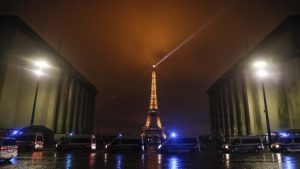 Του ΓΙΩΡΓΟΥ ΧΑΡΒΑΛΙΑ
 του Νίκου Μέρτζου.
 Του Αλκη Καλλιαντζίδη, Οικονομολόγου
 Γιλέκα» έγραψα ενημερωτικά στις Ανιχνεύσεις στις 17-11-2018 :
 τους, «Ηρακλείς» , έφτασαν στο σημείο να απειλήσουν ακόμα και τη ζωή τους, σύμφωνα με το δημοσίευμα του Arnaud Focraud στην ηλεκτρονική έκδοση Le journal de dimanche στις 3-12-2018 με τίτλο : Τα «ελεύθερα κίτρινα γιλέκα» απειλούνται με θάνατο πριν συναντηθούν με τον Edouard Philippe (τον πρωθυπουργό της Γαλλίας). Πρόκειται συγκεκριμένα για την Jacline Mouraud και τον Benjamin Cauchy, δυο από τα ιδρυτικά στελέχη του κινήματος των «Κίτρινων Γιλέκων» που σήμερα αμφισβητούνται και απειλούνται με θάνατο, όπως δήλωσαν στο κανάλι BFMTV.
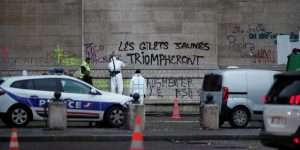 Προσωπικά δεν εκπλήσσομαι από αυτήν την εξέλιξη, αφού από τότε που ξέσπασε αυτή η κρίση διάβασα και είδα δεκάδες τηλεοπτικά ρεπορτάζ στα γαλλικά κανάλια France24, ARTE, TV5, FRANCE2 ανθρώπους των «Κίτρινων Γιλέκων» να ισχυρίζονται ότι δεν έχουν αρχηγό και ηγετική ομάδα, δεν έχουν εκπροσώπους, δεν υπάγονται σε κόμματα και συνδικαλιστικές οργανώσεις, δεν υπακούουν παρά μόνο σε μια «οριζοντιότητα» (horizontalité) ισοτιμίας μεταξύ τους. Κι άρα κανείς δεν νομιμοποιείται να τους εκπροσωπεί σε συζητήσεις και διαπραγματεύσεις με την κυβέρνηση, με τα κόμματα, τα συνδικάτα και τα ΜΜΕ ! Μόνο που οι Γάλλοι μπαχαλάκηδες το περασμένο Σάββατο δεν πήραν την άδειά τους για να βεβηλώσουν την «Αψίδα του Θριάμβου» (δημοσιοποιώντας δικό τους σχετικό οπτικοακουστικό υλικό καταστροφής στα κοινωνικά δίκτυα) και να γράψουν επί αυτής, μεταξύ άλλων, το οριζοντιοποιημένο σύνθημά τους «Τα κίτρινα γιλέκα θα θριαμβεύσουν», όπως φαίνεται στη διπλανή φωτογραφία.
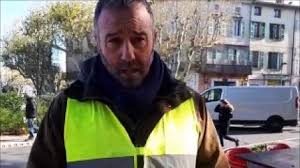 Στη συζήτηση που ακολούθησε στη γαλλική Εθνοσυνέλευση σήμερα όλα τα αντιπολιτευόμενα κόμματα μίλησαν για «ήττα της κυβέρνησης» την οποία κάλεσαν να αυξήσει το διαθέσιμο εισόδημα των Γάλλων, να διαλύσει τη Βουλή και να γίνουν νέες εκλογές για να μιλήσει ο Λαός (το κόμμα του Μελανσόν), να ψηφιστεί η απλή αναλογική (το κόμμα της Λεπέν), να γίνει δημοψήφισμα (το κόμμα των Ρεπουμπλικάνων), να υιοθετηθεί η πρόταξη εξόδου από την κρίση (οι σοσιαλιστές).
 By


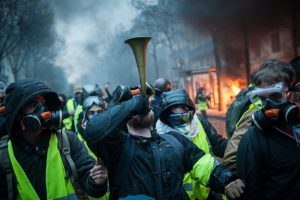


 Του ΜΙΧΑΛΗ ΙΓΝΑΤΙΟΥ

 By George Friedman December 4, 2018
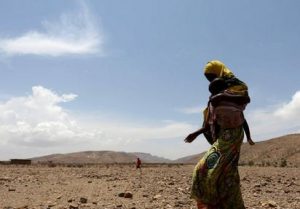 Ποιες χώρες κινδυνεύουν περισσότερο;


 Αθανασόπουλος Άγγελος Αλ.
 ΜΑΚΟΤΟ ΣΕΤΑ*