Αρχική Blog Σελίδα 2733

Ένα σημείωμα για τον ελληνο-αμερικανικό Στρατηγικό Διάλογο

0

Του Μιλτιάδη Σαρηγιαννίδη* Τετάρτη 12 Δεκεμβρίου 2018 liberal.gr

Ο διάλογος αποτελεί μια συνηθισμένη μορφή διμερούς επικοινωνίας μεταξύ δύο κρατών στην οποία δεν εμπλέκονται υψηλά ιστάμενοι αξιωματούχοι, δεν υπάρχει δεσμευτική ατζέντα και συνήθως προετοιμάζεται το επίσημο πλαίσιο για την επίλυση διαφορών υπό τη μορφή διαπραγματεύσεων. Αντίθετα, ο Στρατηγικός Διάλογος είναι το αποτέλεσμα της επιλογής δύο χωρών να αναβαθμίσουν τις σχέσεις τους και να διαμορφώσουν ένα ευέλικτο θεσμικό σχήμα σε υψηλό επίπεδο αντιπροσώπευσης για την εναρμόνιση της εξωτερικής πολιτικής τους και την αποτελεσματική συνεργασία πάνω σε σημαντικά ζητήματα κοινού ενδιαφέροντος.

Οι ΗΠΑ χρησιμοποιούν εδώ και αρκετά χρόνια αυτό το διπλωματικό εργαλείο, ενισχύοντας τις διμερείς σχέσεις τους με χώρες που αποτελούν κρίσιμους εταίρους σε περιοχές στρατηγικού ενδιαφέροντος για τις ίδιες. Έτσι λοιπόν, έχουν αναβαθμίσει τις διμερείς σχέσεις τους προωθώντας τον Στρατηγικό Διάλογο με αρκετές χώρες, ενώ συμμετέχουν και σε τριμερείς Στρατηγικούς Διάλογους, γεγονός που υποδηλώνει την επιτυχία των σχετικών διπλωματικών πρωτοβουλιών.

Μέχρι πρόσφατα, η Ελλάδα βρισκόταν έξω από το πλέγμα του Στρατηγικού Διαλόγου, καθώς για αρκετά χρόνια οι ΗΠΑ είχαν επιλέξει να αναβαθμίσουν τις σχέσεις τους στην περιοχή με την Αίγυπτο, το Ισραήλ και την Τουρκία. Ωστόσο, η διπλωματική διελκυστίνδα που έχει επιλέξει να στήσει το καθεστώς Ερντογάν με την πολιτική προσέγγισης της Ρωσίας, αναγκάζει τις ΗΠΑ να ενεργήσουν με τρόπο, ώστε να υποβαθμίσουν τη σχέση τους με την Τουρκία, χωρίς όμως να την διαρρήξουν. Με άλλα λόγια, η αναβάθμιση των σχέσεων με την Ελλάδα με την εκκίνηση του Στρατηγικού Διαλόγου αποσκοπεί, ανάμεσα σε άλλα, και στην ελεγχόμενη άσκηση πίεσης στην Τουρκία προκειμένου να μειωθούν τα περιθώρια των διπλωματικών ελιγμών της που πλήττουν τα αμερικανικά συμφέροντα και κοστίζουν στην σταθερότητα και την ασφάλεια στην περιοχή.

Φυσικά, ο Στρατηγικός Διάλογος Ελλάδας-ΗΠΑ δεν περιορίζεται στην προσπάθεια αντιστάθμισης των τουρκικών διπλωματικών πρωτοβουλιών, αλλά υπηρετεί τη συνολική στρατηγική αντίληψη των ΗΠΑ στην περιοχή. Άλλωστε, ήδη στην κοινή συνέντευξη τύπου κατά την επίσημη επίσκεψη του έλληνα Πρωθυπουργού στην Ουάσιγκτον τον Οκτώβριο του 2017 φάνηκε η προθυμία και των δύο πλευρών, με επισπεύδουσες τις ΗΠΑ, για την αναβάθμιση των διμερών σχέσεων και της συνεργασίας στο επίπεδο του Στρατηγικού Διαλόγου. Για τις ΗΠΑ η ασφάλεια, η ενέργεια και η περιφερειακή συνεργασία στη Νοτιοανατολική Ευρώπη και την Ανατολική Μεσόγειο αποτελούν προτεραιότητες και επιλογές υψηλής πολιτικής. Η Ελλάδα προσφέρει το θεμέλιο για να δημιουργηθεί μια βαλκανική ζώνη ανάσχεσης της ρωσικής επιρροής και παράλληλα αποτελεί γεωγραφική και πολιτισμική γέφυρα στη Μέση Ανατολή.

Στην πρώτη περίπτωση, η οικονομική διείσδυση ρωσικών επενδυτικών σχημάτων ειδικά στη Βόρεια Ελλάδα ενεργοποίησε με αρκετή καθυστέρηση τα αμερικανικά αντανακλαστικά, ενώ η πολιτική επιρροή της Ρωσίας σε περιοχές των Δυτικών Βαλκανίων και ο αποσταθεροποιητικός ρόλος της στην εσωτερική πολιτική σκηνή χωρών, όπως η πΓΔΜ, ανάγκασε τις ΗΠΑ να αναζητήσουν και να ενισχύσουν τον σταθεροποιητικό ρόλο της Ελλάδας. Μέσα σε αυτό το σχήμα θα πρέπει να ιδωθεί και η ασυνήθιστη κίνηση του ελληνικού ΥΠΕΞ με την κλιμάκωση της διπλωματικής κρίσης με τη Ρωσία το περασμένο καλοκαίρι και την απέλαση ρώσων διπλωματών.

Στη δεύτερη περίπτωση, η Ελλάδα διαθέτει τις επιχειρησιακές δυνατότητες για την εμπέδωση της ασφάλειας στην Ανατολική Μεσόγειο, ενώ την τελευταία δεκαετία εξελίσσεται σε σημαντικό ενεργειακό κόμβο που μπορεί να συμβάλει στην ενεργειακή απεξάρτηση της Ευρώπης από το ρωσικό φυσικό αέριο με τη μεταφορά φυσικού αερίου από το Αζερμπαϊτζάν και την Ανατολική Μεσόγειο. Επιπλέον, η Ελλάδα διατηρεί παραδοσιακά πολύ καλές σχέσεις με τα αραβικά κράτη, γεγονός που αποτελεί ένα συγκριτικό πλεονέκτημα για το οποίο εύλογα ενδιαφέρεται η αμερικανική εξωτερική πολιτική. Σε κάθε περίπτωση, η Ελλάδα έχει αναπτύξει μέσα από την εντατική διεξαγωγή πολυμερούς διπλωματίας ένα δίκτυο με χώρες των Βαλκανίων και της Ανατολικής Μεσογείου, ορισμένες από τις οποίες δεν συμμετέχουν στο ΝΑΤΟ και την ΕΕ. Είτε πρόκειται για μια αμιγώς ελληνική πολιτική επιλογή, είτε οφείλεται στην ενθάρρυνση και την ενίσχυση των ΗΠΑ, η ουσία είναι πως η έναρξη του Στρατηγικού Διαλόγου ανάμεσα σε Ελλάδα και ΗΠΑ αναμένεται να κεφαλαιοποιήσει τη σχέση μας με τη Βουλγαρία, τη Ρουμανία και τη Σερβία, και από την άλλη με την Αίγυπτο, το Ισραήλ και την Κύπρο.

Οι ΗΠΑ επιδιώκουν να μονοπωλήσουν την ασφάλεια και την ενέργεια στην περιοχή και προφανώς είναι πρόθυμες να ενισχύσουν ακόμη και περιφερειακά πολυμερή σχήματα, ώστε να μην ανατραπούν οι υφιστάμενες ισορροπίες. Επιπλέον, πρέπει να σημειωθεί ότι το ενδιαφέρον της αμερικανικής εξωτερικής πολιτικής δεν εντοπίζεται μόνο στην ανάσχεση της ρωσικής επιρροής, αλλά και στην ναρκοθέτηση του λεγόμενου Δρόμου του Μεταξιού. Οι ΗΠΑ επιθυμούν να κρατήσουν μακριά από την Ανατολική Μεσόγειο και τα Βαλκάνια την Κίνα, και η θεσμική συνεργασία με κυβερνήσεις σε αυτές τις περιοχές είναι μια σημαντική γεωπολιτική προτεραιότητα. Μάλιστα, αν στη συνολική εικόνα προσθέσουμε και το γεγονός ότι η Κίνα και η Ρωσία διαμορφώνουν μια κοινή ατζέντα για την ασφάλεια και την ενέργεια μέσα από τον Οργανισμό Συνεργασίας της Σανγκάη, στον εταιρικό διάλογο της οποίας συμμετέχει και η Τουρκία, γίνεται κατανοητό ότι ο Στρατηγικός Διάλογος των ΗΠΑ με την Ελλάδα, αλλά και την Αίγυπτο και το Ισραήλ θα μπορούσε να εξελιχθεί σε ένα μονιμότερο φόρουμ για να αντιμετωπιστούν οι σινορωσικές διπλωματικές και θεσμικές πρωτοβουλίες.

Στην παρούσα φάση, η Ελλάδα προσέρχεται στο τραπέζι του πρώτου Στρατηγικού Διαλόγου με αναβαθμισμένο ρόλο, κυρίως εξαιτίας του τουρκικού αναθεωρητισμού και της κρίσης που έχει προκαλέσει ο τούρκος Πρόεδρος στις αμερικανοτουρκικές σχέσεις. Είναι λοιπόν σημαντικό να καταφέρει να αποσπάσει δεσμεύσεις που αφορούν σε αμερικανικές επενδύσεις και εξοπλιστικά προγράμματα που λαμβάνουν υπόψη τις παρούσες οικονομικές συνθήκες και τις επιχειρησιακές ανάγκες των ενόπλων δυνάμεων. Το αποτέλεσμα θα φανεί στο Μνημόνιο Συνεννόησης (MoU) που θα λογικά θα υπογραφεί από τις δύο πλευρές και θα εγκαινιάζει τη συνεργασία σε κρίσιμους τομείς όπως η ασφάλεια, η ενέργεια, και οι οικονομικές σχέσεις και το εμπόριο. Και φυσικά η συνεργασία θα κριθεί σε ένα χρόνο από τώρα, στην επόμενη συνάντηση σε επίπεδο Στρατηγικού Διαλόγου, στην Αθήνα.

* Ο κ. Μιλτιάδης Σαρηγιαννίδης είναι Επίκουρος Καθηγητής Δημοσίου Διεθνούς Δικαίου, Νομική Σχολή ΑΠΘ.

liberal.gr

«Οι αυλικοί καίνε στα δύσκολα τους πολιτικούς τους πάτρωνες : η περίπτωση του François Fillon»

2

Του Αλκη Καλλιαντζίδη, Οικονομολόγου, [email protected]  www.kalkis.eu

Μέσα στον ορυμαγδό των καταστροφικών διαδηλώσεων στο Παρίσι, και αλλού, που διενήργησαν οι άνθρωποι των «κίτρινων γιλέκων» με τους παρεισφρήσαντες Γάλλους ακρο αριστερο δεξιούς μπαχαλάκηδες, ποιος να ασχοληθεί με το πολιτικάντικο κολλητιλίκη, που τόσο συχνά οδηγεί στην ενοχλητική για όλους τους λαούς κακοδιαχείριση και στην εύνοια ημετέρων και συγγενών αλλά και στην αυτοκαταστροφή των ίδιων των πολιτικών από τις αυλές τους. Παρά ταύτα όμως οι πολιτικοί, ανά τον κόσμο και διαχρονικά, δεν βάζουν μυαλό. Χτίζουν τις «αυλές» τους. Για αυτό και την πατάνε, όπως ο συμπαθέστατος προς εμέ  François Fillon, ο οποίος από αδιαμφισβήτητο φαβορί για την γαλλική προεδρία το 2017 εξωπετάχθηκε από την πολιτική κακήν κακώς και τώρα τον έκαψε δικονομικά και ο φίλος του

   AFP / PHILIPPE LOPEZ

εκδότης Marc Ladreit de Lacharrière. Τουλάχιστο αυτό γράφει η είδηση στις 11-12-2018 του ηλεκτρονικού Le Monde, αναρτώντας και τη διπλανή φωτογραφία. «Ο επιχειρηματίας φίλος του François Fillon παραδέχτηκε ότι είχε αμείψει υπερβολικά, και εικονικά, τη σύζυγο του πρώην πρωθυπουργού ενώ βρισκόταν ακόμα στην εξουσία».

Κι όμως ο  François Fillon ηρνείτο κατηγορηματικά το 2017, όταν ξέσπασε το σκάνδαλο νεποτισμού για τη σύζυγο (Penelope gate) και τα παιδιά του, ότι πράγματι είχε ευνοήσει τα μέλη της οικογενείας του με καταβληθέντα εισοδήματα τα οποία δεν αντιστοιχούσαν παρά μόνο σε «εικονική απασχόλησή» τους. Βλέπε σχετικά άρθρα μου στις Ανιχνεύσεις στις  1-3-2017 http://www.anixneuseis.gr/?p=163556 και στις 24-3-2017

http://www.anixneuseis.gr/?p=164941. Μιλούσε για : τα «μεροληπτικά» μέσα μαζικής ενημέρωσης, για την μεθοδευμένη από τον Ολαντισμό πολιτική του δολοφονία, «ένα σκοτεινό γραφείο» στο προεδρικό μέγαρο το οποίο κάνει διαρροές στον τύπο εναντίον του, για την αργομισθία της συζύγου του ότι δεν ήταν παρά μια πρακτική που την εφαρμόζει το ένα τρίτο των κοινοβουλευτικών ανδρών και γυναικών της Γαλλίας. Και έρχεται λοιπόν χθες το δικαστήριο να τον διαψεύσει αφού η είδηση λέει ότι ο  Marc Ladreit de Lacharrière καταδικάστηκε την Τρίτη 11 Δεκεμβρίου 2018 με ποινή φυλάκισης οκτώ μηνών με αναστολή και πρόστιμο ύψους 375.000 ευρώ για κατάχρηση της φιλίας που είχε με τον François Fillon.

Ποιος είναι ο Marc Ladreit de Lacharrière και πώς έκαψε τον φίλο του

Ιδιοκτήτης του «περιοδικού των δύο κόσμων» (Revue des deux mondes) που παραδέχτηκε την υπερβολική αμοιβή (με καθαρό μισθό 3.500 ευρώ μηνιαίως) και την εικονική απασχόληση της Penelope Fillon το 2012 και το 2014. Και ότι ήταν ο François Fillon που του ζήτησε να προσλάβει τη σύζυγό του, όταν ήταν ακόμα πρωθυπουργός της Γαλλίας. Μάλιστα για να μην καταγραφεί στο ποινικό του μητρώο Νο 2 η παραπάνω ποινή, «παραδέχθηκε την ενοχή του» προηγουμένως ο 78χρονος επιχειρηματίας, ενώ  οι δικηγόροι του αρνήθηκαν να σχολιάσουν την απόφαση του δικαστηρίου.

Εντούτοις, κατά τη φάση της ανάκρισης ο Lacharrière θεωρήθηκε από τους ανακριτές ύποπτος για προσφορά εικονικής εργασίας στην κ. Fillon, όμως εκείνος τότε είχε αρνηθεί  τον πλασματικό χαρακτήρα της δουλειάς. Μπροστά στον κίνδυνο όμως η δικαστική ποινή σε βάρος του να είναι βαρύτερη και να καταχωρηθεί στο ποινικό του μητρώο, «έδωσε» ουσιαστικά τον φίλο του François Fillon,  αναγνωρίζοντας έτσι την βασιμότητα των κατηγοριών εναντίον του τελευταίου. Γεγονός που αποδυναμώνει την υπερασπιστική γραμμή του François Fillon και στις άλλες υποθέσεις νεποτισμού που τον βαρύνουν για τη σύζυγο και τα παιδιά του (τους οποίους είχε προσλάβει ως βοηθούς του πολιτικού του γραφείου με λεφτά των Γάλλων φορολογουμένων, δίχως πραγματικά να εργάζονται σε αυτό), και ο οποίος από την αρχή αυτής της υπόθεσης αμφισβητούσε την πλασματικότητα των θέσεων εργασίας της οικογενείας του.

Τι είχαν δηλώσει οι άλλοι εμπλεκόμενοι κατά την ανάκριση ;

Η Πηνελόπη Φιγιόν, η οποία παραδέχτηκε ότι δεν επισκέφθηκε ποτέ τις εγκαταστάσεις της Revue des deux mondes, δήλωσε ότι «έγραψε διάφορα σημειώματα  ανάγνωσης, εκ των οποίων μόνο δύο δημοσιεύθηκαν στο εν λόγω περιοδικό με το ψευδώνυμο Pauline Camille». Όσο για τη συμβουλευτική αποστολή στο περιοδικό που της είχε ανατεθεί, είπε στους ανακριτές – οι οποίοι εξέφρασαν την έκπληξή τους ότι δεν είχε συναντήσει ποτέ ούτε τον διευθυντή, ούτε τους υπαλλήλους, ούτε  τους αρθρογράφους – ότι ήταν «απογοητευμένη που δεν αναζήτησαν περισσότερο τις υπηρεσίες της» και  ότι θεωρεί το μισθό της «γενναιόδωρο» !

«Είναι λάθος να προσποιούμαστε ότι όλοι δεν ήξεραν ότι η γυναίκα μου ήταν κοινοβουλευτικός συνεργάτης μου. Αρκετοί μάρτυρες επιβεβαιώνουν την πραγματικότητα αυτής της δουλειάς της, κάτι που αντιστοιχεί από κάθε άποψη στις δηλώσεις της συζύγου μου ενώπιον των ανακριτών. Είναι εξίσου ψευδές να ισχυριστεί κανείς ότι η δουλειά της στην Revue des deux mondes δεν είχε καμία σχέση με την πραγματικότητα», δήλωσε ψευδώς ο François Fillon στους δικαστές.

«Σε καμία στιγμή (…) δεν είχα το παραμικρό ίχνος αυτού που θα μπορούσε να μοιάζει με ένα έργο λογοτεχνικού συμβούλου», είχε διαβεβαιώσει ο διευθυντής του εν λόγω περιοδικού τότε, Michel Crépu, στην σατυρική εφημερίδα Canard enchaîné.

Τι κρίμα που οι πολιτικοί δουλεύουν τόσο πολύ με γνώμονα τις αυλές τους και το κολλητιλίκη και ύστερα διασύρονται και αυτοκαταστρέφονται.

Αν δεν είχε συμβεί το σκάνδαλο Penelope gate, πιθανόν να μην είχε εκλεγεί ποτέ ο Μακρόν στη γαλλική προεδρία. Όπως και αν δεν είχε συμβεί πρωτύτερα το σκάνδαλο του Ντομινίκ Στροσκάν (το μεγάλο φαβορί των σοσιαλιστών), δεν θα είχε εκλεγεί πρόεδρος ο François Hollande.

Αν δεν είχε συμβεί το περασμένο καλοκαίρι το σκάνδαλο του  26χρονου σωματοφύλακά του Μακρόν, Alexendre Benella, πιθανόν να μην είχε αρχίσει η ραγδαία δημοσκοπική κατρακύλα του σημερινού Γάλλου προέδρου, ο οποίος διακήρυξε ως αρχή του την υποδειγματικότητα (exemplarité)

http://www.anixneuseis.gr/?p=193313.

Το Μαξίμου ακούει ;


Ο κυκλοθυμικός «άνθρωπος των δασμών»

0
PAUL KRUGMAN / THE NEW YORK TIMES

Πρόκειται να ξεσπάσει ολοκληρωτικός εμπορικός πόλεμος ανάμεσα στις ΗΠΑ και την Κίνα και πιθανώς και με τον υπόλοιπο κόσμο; Ουδείς γνωρίζει, επειδή όλα εξαρτώνται από τα καπρίτσια ενός ανθρώπου. Και αυτός ο «Ανθρωπος των Δασμών» είναι κυκλοθυμικός και ασταθής, ενώ αγνοεί σημαντικά ζητήματα.

Γιατί το λέω αυτό; Αν μη τι άλλο από το 2016 και μετά, με τις προεδρικές εκλογές στις ΗΠΑ και το δημοψήφισμα για την έξοδο της Βρετανίας από την Ευρωπαϊκή Ενωση, πολλή συζήτηση γίνεται για μία γενικευμένη δυσαρέσκεια έναντι της παγκοσμιοποίησης.

Ομως, τα τελευταία δύο χρόνια έγινε φανερό πως αυτή η αναδίπλωση είναι πιο περιορισμένη και επιφανειακή. Πού τελικά βρίσκεται αυτή η μεγάλη βάση, που στηρίζει τον Ντόναλντ Τραμπ όταν επιβάλλει δασμούς και αποσύρεται από διεθνείς συμφωνίες; Οι μεγάλες επιχειρήσεις απεχθάνονται την προοπτική ενός εμπορικού πολέμου και όποτε αυτή φαίνεται να έρχεται πιο κοντά, οι μετοχές τους υποχωρούν.

Εν τω μεταξύ, το ποσοστό των Αμερικανών που πιστεύουν ότι το διεθνές εμπόριο κάνει καλό στην οικονομία, φθάνει σε επίπεδα-ρεκόρ. Ακόμα δε και εκείνοι που ασκούν κριτική στο εμπόριο, μάλλον κινούνται από την πολιτική τους τοποθέτηση υπέρ του Τραμπ και όχι επειδή το πιστεύουν βαθιά. Οι αυτοχαρακτηριζόμενοι ως Ρεπουμπλικανοί ψηφοφόροι κατά τη διάρκεια της προεκλογικής εκστρατείας του 2016 αρχικά είχαν δεχθεί την άποψη ότι οι εμπορικές συμφωνίες είναι επωφελείς, μετά τις θεώρησαν βλαβερές και έπειτα επανήλθαν στην πρώτη τους θέση, όταν ο Ντόναλντ Τραμπ έδειξε ότι ναι μεν διαπραγματεύεται συμφωνίες, αλλά είναι oι δικές του.

Συνεπακόλουθα, εάν δεν υπάρχει ισχυρή εκλογική βάση υπέρ του προστατευτισμού, τότε γιατί παραπαίουμε στα πρόθυρα ενός εμπορικού πολέμου; Ας όψεται η αμερικανική νομοθεσία. Τη δεκαετία του 1930 θεσπίστηκε νέο σύστημα, όπου η εκτελεστική εξουσία διαπραγματευόταν με άλλες χώρες τις εμπορικές συμφωνίες, και η νομοθετική, δηλαδή το Κογκρέσο, απλά υπερψήφιζε ή καταψήφιζε. Μετά, το αμερικανικό μοντέλο χρησιμοποιήθηκε ως πρότυπο των παγκόσμιων διαπραγματεύσεων με κατάληξη τη δημιουργία του Παγκόσμιου Οργανισμού Εμπορίου. Ωστόσο, οι εμπνευστές του αμερικανικού μοντέλου αντιλήφθηκαν ότι δεν μπορεί αυτό να είναι τόσο άκαμπτο, γιατί διατρέχει τον κίνδυνο να διαλυθεί υπό μεγάλη πίεση. Εξ ου και δόθηκε η δυνατότητα στην εκτελεστική εξουσία υπό δεδομένες συνθήκες να επιβάλει δασμούς χωρίς να υπάρχει νέα νομοθεσία. Δηλαδή, ο νόμος δίνει στον πρόεδρο μεγάλη ελευθερία κινήσεων στο θέμα του εμπορίου, προσπαθώντας να περιορίσει την καταστροφική επιρροή από διεφθαρμένα μέλη του Κογκρέσου. Δυστυχώς, δεν είχε γίνει πρόβλεψη για την περίπτωση ενός διεφθαρμένου και ανεύθυνου προέδρου. Ο Ντόναλντ Τραμπ μάλλον είναι ο μόνος μέσα στην κυβέρνηση που έχει επιδιώξει τον εμπορικό πόλεμο. Δυστυχώς έχει και την απόλυτη εξουσία επί του διεθνούς εμπορίου.

Ας είμαστε ειλικρινείς. Η Κίνα δεν παίζει σωστά στο πεδίο της διεθνούς οικονομίας. Ακολουθεί λάθος δρόμο, ειδικά όσον αφορά την προστασία της πνευματικής ιδιοκτησίας, αφού στην πραγματικότητα οι Κινέζοι κλέβουν από τις αμερικανικές εταιρείες τεχνολογία. Και σε αυτό πρέπει να κρατήσουμε σκληρή στάση στο εμπόριο, αλλά σε συντονισμό και συνεργασία με άλλα κράτη, που υποφέρουν και αυτά από την πολιτική της Κίνας. Αυτή η σκληρή στάση πρέπει να έχει σαφή στόχο. Ο τελευταίος που θα θέλαμε να κάνει «σκληρό παιχνίδι» εδώ, θα ήταν κάποιος ο οποίος αγνοεί τα πάντα από εμπορική πολιτική, κατευθύνει την επιθετικότητά του παντού και δεν μπορεί να κάνει έναν πραγματικό απολογισμό για το τι ειπώθηκε σε μία συνάντηση. Δυστυχώς, ένα τέτοιο πρόσωπο έχει την εξουσία στα χέρια του τώρα, και δεν είναι εύκολο να πει κανείς πως θα μπορέσει να συγκρατηθεί. Αρα το μέλλον του παγκόσμιου εμπορίου εξαρτάται σε μεγάλο βαθμό από τις νοητικές λειτουργίες του κ. Τραμπ και αυτό δεν είναι καθησυχαστικό.

“Καθημερινή”

Russia in Review: Russia Poised to Escalate Ukraine Campaign

0

Russia in Review is a weekly intelligence summary (INTSUM) produced by the Institute for the Study of War (ISW). This ISW INTSUM series sheds light on key trends and developments related to the Russian government’s objectives and its efforts to secure them. Receive future Russia in Review INTSUM products via-email by signing up for the ISW mailing list.

Special Topic Update: Russia Poised to Escalate Ukraine Campaign

Author: Catherine Harris and Mason Clark with the ISW Research Team

Key Takeaway: Russia will likely escalate militarily against Ukraine imminently. Russia is setting military conditions to prepare its forces for open conflict with Ukraine. Russia is already creating the pretext to escalate by circulating the false narrative that Ukraine and the West are preparing imminent attacks, including a chemical weapons attack, in Eastern Ukraine. Russia may fabricate evidence of a chemical weapons attack – or may itself conduct a chemical weapons attack — near Russia-backed areas of Ukraine to create chaos, justify the overt involvement of the Russian Armed Forces, and set conditions for future military operations. NATO’s inaction following Russia’s escalation in the Sea of Azov is likely emboldening Putin to continue challenging the West in Ukraine. NATO must reassess the threat that Russia poses to European security and the rules-based international order and respond decisively to deter an increasingly likely Russian military escalation in Ukraine itself. 

Russia is taking overt steps towards open conflict with Ukraine. Russia has been waging a covert war against Ukraine using proxy separatist forces in eastern Ukraine since 2014. The Russian military is now preparing its forces for direct military involvement. The Kremlin is reinforcing ground, naval, and air elements in its Southern Military District – the command likely responsible for managing its ongoing war in Ukraine. Moscow may calculate that the international community will not meaningfully respond if the visibility of its role in the war now increases.

  • Ground: Russia reportedly transferred an additional mechanized regiment to the 150th Motor Rifle Division (MRD) on December 2.[1] The 150th MRD is a uniquely tank-heavy unit subordinate to the 8th Combined-Arms Army located 20-30 kilometers from the Russian-Ukrainian border. ISW previously assessed that the 150th MRD could support a ground advance by Russia along the northern coast of the Sea of Azov if the Kremlin launched a large-scale offensive against Ukraine. The Kremlin has also increased the number of armored vehicles along the Russian-Ukrainian border. Ukrainian Armed Forces Commander General Viktor Muzhenko has publicly warned of a significant buildup of Russian T-62M Main Battle Tanks along the Russian-Ukrainian border that had occurred by October 2018. ISW had previously warned about this mobilization in September 2018.
  • Air: Russia is likely integrating additional airmobile units into existing units in the Southern Military District (SMD). SMD Commander Colonel General Aleksandr Dvornikov announced earlier this year that new airmobile units would begin training with naval infantry in the Black Sea Fleet and Caspian Flotilla beginning in December 2018.[2] It is not yet clear if these units have begun their training missions.
  • Sea: Russia is also bolstering the capabilities of its Black Sea Fleet. Russia added a new corvette equipped with cruise missiles to the Black Sea Fleet on December 7.[3] Russia is expected to add four additional warships including patrol boats and minesweepers to the Black Sea Fleet by the start of 2019.[4] Russia also conducted naval and missile drills involving two submarines and Pantsir Surface-to-Air Missile Systems (SAMS) in the Black Sea and Crimean Peninsula on December 5.

Russia may also be preparing its Central Military District to support the Southern Military District in a conflict. Russia began snap preparations for its “Center-2019” military exercise on December 1.[5] These exercises will not take place until September 2019.[6] This early start to the exercises is atypical and may signal preparation for open conflict with Ukraine under the auspices of military exercises. Russia has previously used military exercises as cover to prepare for offensive operations. The initial phase of the Center-2019 exercise includes “moving from peace to wartime posture” and moving supplies and field hospitals to aid potential casualties in combat. Russian units conducted these exercises in the Volga region northeast of the Southern Military District.[7] Russia may intend to use resources in the Central Military District to support the Southern Military District in rear areas. Alternatively, Russia may be attempting to deter a Ukrainian military response to Russia’s escalation against Ukraine in the Sea of Azov on November 24-25. Russia may however calculate that conditions are set such that Russia should escalate now.

Russia may be preparing to fabricate or launch a chemical weapons attack in Ukraine in order to create a false pretext to escalate against Ukraine. Russia is currently flooding the information space with multiple narratives to alarm the local population in Ukraine and frame the West as the aggressor likely in order to set conditions for a future escalation by Russia. One Kremlin narrative claims that Western personnel are preparing to conduct a chemical weapons attack in territory currently controlled by Russia-backed separatists.[8] A spokesperson from the Russia-backed separatist region of the Donetsk People’s Republic (DNR) claims that the Ukrainian Armed Forces will launch an assault on Mariupol on December 14. These false narratives may represent efforts by Russia to create a false justification for anticipated overt military involvement. This fabrication would be consistent with recent Russian provocations in Syria. Russia and the Syrian regime fabricated a chemical weapons attack in Syria on November 24. Russia responded to this fabricated chemical weapons attack with Russian airstrikes. The U.S. condemned Russia and the Assad regime for this fabrication but did not meaningfully respond. The Kremlin may therefore calculate that it can use the same play in Ukraine at this time.

Putin may seek to create a military distraction for Poroshenko’s government in order to disrupt an upcoming meeting that will formally announce the autocephalous status of the Ukrainian Orthodox church on December 15 in Kyiv. Ukraine’s recent autocephaly represents a loss of social influence that Russia formerly held over Ukraine. Putin may be attempting to cause widespread hysteria before the meeting in order to menace Ukraine and undermine its efforts to distance Ukraine from Russia. Russia may also seek to circulate these narratives to frame Ukraine as the aggressor ahead of a vote at the UN General Assembly to formally condemn Russian militarization of Crimea, the Sea of Azov, and the Black Sea on December 17. Russia is nonetheless demonstrating that it is preparing to engage Ukraine in open conflict.

Russia likely perceives the lack of a unified NATO response to Moscow’s aggression in the Sea of Azov as an opportunity to escalate against Ukraine and elsewhere in the future. NATO failed to agree on a unified course of action in response to Russia’s escalation in the Kerch Strait during a foreign ministerial meeting on December 4-5. Moreover, NATO member-states are signaling different degrees of concern over overt Russian escalation. None of the responses are likely sufficient to deter Putin, whereas the disagreement itself will likely embolden him.

  • United States: The U.S. has demonstrated the strongest response to Russia’s aggression, though it is likely insufficient to deter further offensive action by Russia in Ukraine. U.S. Commander of EUCOM and Supreme Allied Commander Europe (SACEUR) General Scaparrotti will meet with Russian Chief of the General Staff Valery Gerasimov in Azerbaijan on December 12.[9] The U.S. is attempting to constrain Russia and prevent it from making future illegal claims to other bodies of water. The U.S. is preparing the option of sending a warship, likely from the 6th Fleet, to the Black Sea in coordination with Turkey in a likely effort to deter Russia from expanding its aggression into the Black Sea. The United States also conducted a freedom of navigation exercise in the Sea of Japan near the Russia-claimed Kuril Islands on December 5 in a move that U.S. officials called a direct challenge to Russian naval activity in the Pacific theater. This U.S. maneuver follows Russia’s announcement that it will pass legislation requiring foreign ships to notify the Kremlin before traversing the Northern Sea Route in 2019.[10] The U.S. with allies also conducted a flight over Ukraine under the Open Skies Treaty to reaffirm support for Ukraine and European nations on December 6.
  • European Union: The EU will likely fail to pass additional sanctions on Russia. The UK called for the EU to enact “appropriate sanctions” in response to Russian aggression, though this effort will be unsuccessful. France and Germany have signaled their unwillingness to impose further sanctions on Russia and their preference to pursue a diplomatic solution to the escalation. French officials are furthermore currently distracted by large-scale protests in France that may be partially fueled by Russian disinformation.[11]
  • Turkey: Ankara is attempting to demonstrate Turkish resolve in the Black Sea. Turkey is currently conducting live-fire exercises in the southeastern portion of the Black Sea from December 10-14 and recently announced recurring small-scale exercises in the Dardanelles Strait throughout December.[12]

Russia will continue to divert attention away from Russia’s escalating pattern to undermine a stronger NATO response. Putin will likely use a mixture of incentives and pressures on Turkish President Recep Tayyip Erdogan to increase the likelihood that Erdogan will not meaningfully challenge a future escalation by Russia against Ukraine. Russia likely already initiated this effort in the Syrian theater. Russia conducted airstrikes within hundreds of meters of a Turkish military position in Western Aleppo Province, Syria under the false pretext of retaliating against anti-Assad forces for using chemical weapons on November 26. Russia may have intended to use this set of airstrikes to test international reactions to a fabricated chemical weapons attack; to compel Turkey to back down in the Black Sea; and to divert international attention away from its military escalation against Ukraine and toward an alleged chemical weapons attack in Syria. The Kremlin will also likely use subversive methods to fuel protests in France and possibly other NATO member-states in order to create distractions and divert resources away from a future escalation by Russia.

The U.S. and NATO must be increasingly prepared for an emboldened Russia to escalate in multiple theaters. Russia has previously demonstrated its ability to simultaneously escalate its various malign campaigns against the West in multiple theaters. Russia likely feels more emboldened to do so at this time following NATO’s inaction. NATO must therefore be prepared for Russia to escalate in Ukraine but also in other theaters, such as Syria. ISW has repeatedly warned that Russia, Assad, and Iran are setting military conditions to ultimately expel the U.S.-led coalition from Eastern Syria. Russia may accelerate both of these efforts simultaneously in a most dangerous scenario. NATO must prioritize deterring an increasingly aggressive Russia in order to maintain the resolve of the NATO alliance and uphold the rules-based international order.

—
[1] Daria Mikhalina, [“A new regiment Formed As part of the 150th Motorized Rifle Division Near Rostov”,] TV Zvezda, December 2, 2018, https://tvzvezda(.)ru/news/forces/content/201812021804-73o7.htm
[2] [“Shoigu Stated Strategic Exercises “Tsentr-2019” Will Be Held in September”,] Rambler, December 4, 2018,
https://news.rambler((.))ru/army/41371557-shoygu-anonsiroval-ucheniya-tsentr-2019/
[3] “Russia deploys Latest Cruise Missile Corvette in Occupied Crimea – Media,” Unian, December 10, 2018,
https://www.unian(.)info/politics/10370526-russia-deploys-latest-cruise-missile-corvette-in-occupied-crimea-media.html
[4] “Russia’s Black Sea Fleet to Get Four New Warships,”TASS, December 3, 2018, http://tass(.)com/defense/1033966
[5] Central MD Troops to Start Tarining for Tsentr 2018 CPX on December 1,” Russian MOD, November 30, 2018, http://eng.mil(.)ru/en/news_page/country/more.htm?id=12206225@egNews
[6] [“Shoigu Announced Strategic Exercises “Center” in 2019”,] MKRU, December 4, 2018, https://www.mk(.)ru/politics/2018/12/04/shoygu-anonsiroval-provedenie-v-2019-godu-strategicheskikh-ucheniy-centr.html
[7] [“The Second Army in the Volga Region Received a Rapid Deployment Hospital”,] RIA, July 6, 2018, https://ria(.)ru/20180706/1524084441.html
[8] “Kremlin’s Persistent Claim of “Expected Chemical Attack by Ukraine Armed Forces in Donbas” Worrying -MP,” Unian, December 10, 2018, https://www.unian.info/politics/10370694-kremlin-s-persistent-claim-of-expected-chemical-attack-by-ukraine-armed-forces-in-donbas-worrying-mp.html
[9] “President Ilham Aliyev Received a Delegation Led by the Commander-in-Chief of the NATO Joint Armed Forces in Europe”, Azer Tas, November 12, 2018, https://azertag(.)az/ru/xeber/Prezident_Ilham_Aliev_prinyal_delegaciyu_vo_glave_s_glavnokomanduyushchim_Obedinennymi_vooruzhennymi_silami_NATO_v_Evrope-1223411
[10] “Russia Will Restrict Foreign Warships in Arctic Ocean, Defense Official Syas”, Moscow Times, November 30, 2018, https://themoscowtimes.com/news/russia-will-restrict-foreign-warships-in-arctic-ocean-defense-official-says-63672
[11] “France Opens Probe Into Possible Russian Interference Behind “Yellow Vest” Protests – Media, Unian, December 9, 2018, https://www.unian(.)info/world/10369785-france-opens-probe-into-possible-russian-interference-behind-yellow-vest-protests-media.html
[12] “Gunnery Exercise, Between 10-12 DEC 18,” Turkish Naval Forces Office of Navigation, Hydrography and Oceanography, http://www.shodb.gov(.)tr/shodb_esas/index.php/en/safety-of-navigation/navigational-warnings/all-stations/20-all-stations/samsun-navtex-station/1712-turnhos-n-w-1252-18, “Firing Exercises, between 11-14 DEC 18” Turkish Naval Forces Office of Navigation, Hydrography and Oceanography, http://www.shodb.gov(.)tr/shodb_esas/index.php/en/safety-of-navigation/navigational-warnings/all-stations/20-all-stations/samsun-navtex-station/1719-turnhos-n-w-1256-18

Americans Are Increasingly Critical of Israel

0

New polling shows that the U.S. public’s views on Israel’s policies are shifting.

WASHINGTON, DC – MARCH 5: (AFP OUT) U.S.  
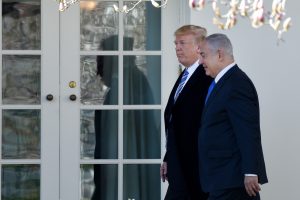
U.S. President Donald Trump and Israel’s Prime Minister Benjamin Netanyahu walk outside the Oval Office of the White House on March 5. (Olivier Douliery-Pool/Getty Images)

The firing of Professor Marc Lamont Hill as a CNN contributor after his speech at a United Nations event commemorating the International Day of Solidarity with the Palestinian People has generated considerable debate about free speech that goes beyond the case itself—what is legitimate criticism of Israel, and what constitutes anti-Semitism. A recent University of Maryland public-opinion poll indicates that many aspects of Hill’s views are widely shared among the American public—and that these views are not reflective of anti-Semitic attitudes, or even of hostility toward Israel as such. On these issues, there is a gap between the mainstream media and U.S. politicians on the one hand, and the American public on the other.

While many issues were raised about Hill, the part of his speech that received the most criticism was his call for a “free Palestine from the river to the sea,” which was seen by some as calling for the end of Israel. Hill himself clarified almost immediately that “my reference to ‘river to the sea’ was not a call to destroy anything or anyone. It was a call for justice, both in Israel and in the West Bank/Gaza.” In an op-ed he penned later, he acknowledged that the language he chose may have contributed to the misperception that he was advocating violence against Jewish people—and apologized for that. ould in effect threaten Israel’s status as a Jewish-majority state, as Arabs might soon outnumber Jews on that territory. In fact, this solution has considerable support among the American public, as revealed in a University of Maryland Critical Issues Poll, fielded by Nielson Scarborough, which was conducted in September and October among a nationally representative sample of 2,352 Americans, with a 2 percent margin of error. When asked what outcome they want U.S. President Donald Trump’s administration to seek in mediating the Israeli-Palestinian conflict, Americans are split between one state with equal citizenship and two states coexisting side by side: 35 percent say they want a one-state solution outright, while 36 percent advocate a two-state solution, 11 percent support maintaining the occupation, and 8 percent back annexation without equal citizenship. Among those between 18 and 34 years old, support for one state climbs to 42 percent.

Furthermore, most of those who advocate a two-state solution tend to choose one state with equal citizenship if the two-state solution were no longer possible; the last time the survey asked this question, in November 2017, 55 percent of two-state solution backers said they would switch to one state in such circumstances. Bolstering this result is Americans’ views on the Jewishness and democracy of Israel: If the two-state solution were no longer possible, 64 percent of Americans would choose the democracy of Israel, even if it meant that Israel would cease to be a politically Jewish state, over the Jewishness of Israel, if the latter meant that Palestinians would not be fully equal.

When one considers that many Israelis and Palestinians, as well as many Middle East experts, already believe that a two-state solution is no longer possible, especially given the large expansion of Israeli settlements in the West Bank, it’s not hard to see why more people would be drawn to a one-state solution—or see the advocacy for two states as legitimizing the unjust status quo through the promise of something unattainable.

Second, while most Americans have probably never heard of the Boycott, Divestment, Sanctions (BDS) movement that Hill backs, our poll shows that a large number of Americans support imposing sanctions or more serious measures if Israeli settlements in the West Bank continue to expand: 40 percent of Americans support such measures, including a majority of Democrats (56 percent). This comes as senators, including Democrats, are proposing, despite continued ACLU opposition, to delegitimize and criminalize voluntary boycotts of Israel or settlements through the Israel Anti-Boycott Act, while not differentiating between Israeli settlements in the West Bank from those in Israel proper.

Third, there is a growing sense that the Israeli government has “too much influence” on U.S. politics and policies: 38 percent of all Americans (including 55 percent of Democrats, and 44 percent of those under 35 years old), say the Israeli government has too much influence on the U.S. government, compared with 9 percent who say it has “too little influence” and 48 percent who say it has “about the right level of influence.” While the number of Jewish participants in the sample (115) is too small to generalize with confidence, it is notable that their views fall along the same lines of the national trend: 37 percent say Israel has too much influence, 54 percent say it has the right level, and 7 percent say it has too little influence.

These results indicate neither a rise in anti-Semitism nor even a rise in hostility toward Israel as such. As analysis of previous polls has shown, many who espouse these opinions base them on a principled worldview that emphasizes human rights and international law.

Keep in mind that, in a polarized America with deep political antagonism, it’s hardly surprising that Americans would have sharply divided views on Israelis and Palestinians. What many read as a rising anti-Israeli sentiment among Democrats is mischaracterized; it reflects anger toward Israeli policies—and increasingly, with the values projected by the current Israeli government.

On the question of whether Americans want the Trump administration to lean toward Israel, toward the Palestinians, or toward neither side, there is a vast difference between Republicans and Democrats in the new poll: While a majority of Republicans want Washington to lean toward Israel outright (57 percent), a substantial majority of Democrats (82 percent) want it to lean toward neither side, with 8 percent wanting it to lean toward the Palestinians and 7 percent toward Israel. Still, it’s inaccurate to label the Democrats’ even-handedness as “anti-Israel.”

Americans Are Increasingly Critical of Israel

Η Επανάσταση

0

Του Δημήτρη Κωνσταντακόπουλου 11.12.2018

Αντιμέτωπος με έναν σχεδόν επαναστατικό αναβρασμό, που όμοιό του δεν έχει γνωρίσει η Γαλλία εδώ και μισό αιώνα, ο Εμανουέλ Μακρόν προσπάθησε να καλμάρει το κλίμα κάνοντας ορισμένες μικρές οικονομικές παραχωρήσεις, σχετικά με τον κατώτερο μισθό, τη φορολόγηση των συντάξεων και των υπερωριών και τις ασφαλιστικές εισφορές. Αυξάνει λίγο τον κατώτερο ατομικό μισθό, όχι σε βάρος των εργοδοτών, αλλά σε βάρος εμμέσως του κοινωνικού μισθού, μέσω περικοπής των εισφορών στα ασφαλιστικά ταμεία. Και αρνείται πάντα τη φορολόγηση του πλούτου και την επιβάρυνση των επιχειρήσεων.

Μόνο που ο Γάλλος Πρόεδρος είναι μονίμως πίσω από την πραγματικότητα, όπως στην εποχή της ήταν και η Μαρία Αντουανέτα. Κάνει οικονομικές παραχωρήσεις όταν η εξέγερση έχει ήδη πάει πιο πέρα, θέτοντας όλο και περισσότερο θέμα γενικής οικονομικής πολιτικής και πολιτικού καθεστώτος.

Βέβαια, έστω και μικρές, οι παραχωρήσεις είναι ταυτόχρονα πολύ μεγάλες. Είκοσι χρόνια παλεύουν τα συνδικάτα και δεν πετυχαίνουν τίποτα. Είναι, μετά την κατάργηση του φόρου στα καύσιμα, η δεύτερη νίκη των Κίτρινων Γιλέκων σε έναν μήνα, απέναντι σε έναν Πρόεδρο που δεν έκανε μέχρι τώρα ούτε μισό πόντο πίσω και ήταν αδιάλλακτος στην επιβολή των «Μεταρρυθμίσεων», όπως ονομάζεται διεθνώς στην εποχή μας, ο κανιβαλισμός του δημόσιου τομέα και του κοινωνικού κράτους.

Γράφουμε αυτό το άρθρο την επαύριο αυτών των ανακοινώσεων και δεν μπορούμε να είμαστε σίγουροι για τη συνέχεια των γεγονότων. Από τις πρώτες αντιδράσεις που έχουμε υπόψιν μας, η πλειοψηφία των Γάλλων δεν έχει πεισθεί από τον Μακρόν, παραμένει όμως διχασμένη για το αν πρέπει ή όχι να συνεχιστούν οι κινητοποιήσεις, που έχουν ήδη λάβει μορφή γενικής επαναστατικής εξέγερσης.

Στα μπλόκα των δρόμων επικρατεί τώρα ατμόσφαιρα γιορτής και ευδαιμονίας, που θυμίζει, τηρουμένων των αναλογιών, τη μαζική χαρά, ευδαιμονία θα ήταν καλύτερα να πούμε, του πληθυσμού που σημάδεψε την επανάσταση του Μάη του 1968 (ή σε έναν βαθμό και την εκλογική νίκη του Φρανσουά Μιτεράν το 1981). Τηρουμένων των αναλογιών, οι επαναστάσεις είναι, για τις κοινωνίες, ό,τι ο ρομαντικός έρωτας για τους ανθρώπους.

Αντίθετα, στα Υπουργεία και στις έδρες των κομμάτων, επικρατεί ατμόσφαιρα «τέλους βασιλείας» με τους Υπουργούς και τους συνεργάτες τους να μαζεύουν φακέλους και τυχόν επιβαρυντικά στοιχεία.

Πανικόβλητες από την εξέλιξη των πραγμάτων, οι κορυφές της πραγματικής εξουσίας φαίνεται να είναι ακόμα διχασμένες ανάμεσα σε αυτούς που σπρώχνουν τον Μακρόν στην εκτεταμένη χρήση αστυνομικής ή και στρατιωτικής βίας, με χρήση ακόμα και πρωτοφανών μυστικών παραλυτικών υπερόπλων, που έχει αναπτύξει και διαθέτει φαίνεται στα οπλοστάσιά της η γαλλική αστυνομία, σε μια επανάληψη του δικτατορικού προηγούμενου του Ναπολέοντα Γ’ και σε όσους σπρώχνουν τον Πρόεδρο στην έξοδο.

Καθώς γράφουμε αυτό το άρθρο, την επαύριο των ανακοινώσεων, δεν είμαστε σε θέση να προβλέψουμε τον άμεσο αντίχτυπό τους, αν δηλαδή θα οδηγήσουν σε υποχώρηση των κινητοποιήσεων ή θα αποδειχθούν «πολύ λίγο, πολύ αργά».

Ότι όμως κι από τα δύο κι αν γίνει, η κρίση δεν έχει τελειώσει. Τώρα αρχίζει και έχει ακόμα πολλά στάδια και φάσεις να διαβεί. Ανεξάρτητα από την άμεση και μεσοπρόθεσμη συνέχεια, μπορούμε ήδη να πούμε με σιγουριά ότι τίποτα δεν θα είναι πια ίδιο στη Γαλλία, στην Ευρώπη και στον κόσμο.

Ήδη άλλωστε, η αιματοβαμμένη δικτατορία του Σίσι στην Αίγυπτο απαγόρευσε την πώληση στη χώρα κίτρινων γιλέκων, ενώ αυτά έκαναν την εμφάνισή τους όχι μόνο στο Βέλγιο και την Ολλανδία, αλλά ακόμα και στο Ιράκ και την Μπουρκίνα Φάσο!

Επιβεβαιώνοντας τον κομβικό ρόλο της για τη σύγχρονη Ευρώπη, η χώρα του Βολταίρου, του Καρτέσιου και του Ροβεσπιέρου, εγκαινιάζει τώρα την αρχή ενός πολέμου των Τάξεων στην Ευρώπη, μέσα στο ίδιο το κέντρο του δυτικού Καπιταλισμού, του συστήματος δηλαδή που παραμένει κυρίαρχο στον Πλανήτη και, εξελισσόμενο από Νεοφιλελεύθερο σε Ολοκληρωτικό, απειλεί την ανθρωπότητα με κοινωνικό, πολεμικό και κοινωνικό Ολοκαύτωμα.

Είναι ένας πόλεμος του Λαού εναντίον της όλο και πιο παγκοσμιοποιημένης Ολιγαρχίας του Χρήματος και των συνοδοιπόρων της, των πολιτικών και των κοινωνικών στηριγμάτων τους σε κάθε χώρα, η τελική έκβαση του οποίου θα έχει αποφασιστική σημασία για το μέλλον, αν όχι για την επιβίωση της ανθρωπότητας.

ΥΓ: ΥΓ. Είχαμε τελειώσει αυτό το άρθρο, όταν πληροφορηθήκαμε την “τρομοκρατική επίθεση” στο Στρασβούργο της Γαλλίας. Φυσικά, πολύ λίγα είναι ακόμα γνωστά και οποιοδήποτε σχόλιο είναι πρόωρο. ‘Εχουμε πάντως διαπιστώσει εμπειρικά από προηγούμενες περιπτώσεις στη Γαλλία, το Βέλγιο και τη Βρετανία, ότι υπάρχει μια πολύ παράξενη σύμπτωση ανάμεσα στα χτυπήματα των “τρομοκρατών” και εξελισσόμενες, κρίσιμες πολιτικές συγκυρίες…

AFRICOM: A Neocolonial Occupation Force?

0


Photo Source Blleininger | CC BY 2.0

Amid the George HW Bush imperial death-orgy, the endless saga of Midtown Mussolini’s daily news cycle, the seemingly unprecedented political upsurge in France, and countless other show-stopping news stories, you likely missed three very sad, yet revealing, incidents out of the Sahel region of West-Central Africa.

First, on November 18th, a massive offensive against a Nigerian military base by a faction of the Boko Haram terror group known as the Islamic State West Africa (ISWAP) killed upwards of 100 soldiers. The surprise attack came at a time when Nigerian President Muhammadu Buhari, who famously (and repeatedly) has declared victory against Boko Haram and terrorism, has faced a crisis of legitimacy, falling approval ratings, and an impending election in early 2019.

Just days later, on November 22nd, while most Americans were gathering with family and eating turkey on Thanksgiving, a contingent of about 50 armed militants kidnapped at least 15 girls in Niger, just outside a town in the Diffa region, near the border with Nigeria. While Boko Haram did not officially claim responsibility, many have attributed the action to the terror group, or one of its factions, given their propensity to use kidnappings for propaganda and fundraising.

And on the very same day, also in Diffa near the Niger-Nigeria border, suspected Boko Haram militants killed seven employees of Foraco, a French well drilling and mining company.

This spate of deadly, and rather brazen, attacks on civilians along the Niger-Nigeria border paints a troubling picture of the continued instability of the region, and give the lie to the idea that counter-terrorism operations, ongoing for a number of years now, have put Boko Haram and other terror groups on the back foot.

This reality is undoubtedly a political liability for Nigerian President Buhari who was elected on the promise of stamping out terrorism and bringing stability and the rule of law to Nigeria. Of course, a number of uncomfortable questions can and should be asked of Buhari, his top military commanders, and other bureaucrats in his administration.

But perhaps the more salient questions should be posed, not to Nigeria’s government, but to the US Government itself, and specifically its African Command (AFRICOM). For it is Washington, not Abuja, that has poured billions of dollars into counter-terrorism and surveillance in the Sahel and West Africa. Considering the laundry list of attacks and killings, one could naturally ask the question: What exactly is the US doing over there, if not counter-terrorism?

Nigeria, Niger, and AFRICOM

These most recent incidents paint a worrying portrait of the on-the-ground reality in the region where terror groups not only continue to exist, but seemingly are thriving. Lucrative trade in illicit goods, drugs, human trafficking, and more has continued to line the pockets of these militant organizations. But the very fact that these killings are continuing calls into question the efficacy of, and agenda behind, the US AFRICOM force.

As the Washington Post reported back in 2013, the US has chosen Agadez, Niger as the site of a massive new drone facility that will act as a “strategic foothold” in West Africa, specifically with regard to the stated mission of surveillance of terrorist networks. And the US has been flying drones from the facility for more than five years.

However, as The Intercept’s Nick Turse has reported, what was originally intended to be a relatively small facility hosting a few US drones and military advisers has ballooned into a more than $100 million investment that will be one of the US’s most costly foreign military construction projects. And instead of simply housing a handful of Predator drones, the facility will be the base for MQ-9 Reaper drones before the end of next year. Naturally, it’s unclear just how many drones are already flying out of the facility, though knowledgeable observers assume a significant number already are.

This base, which will act as a hub of the broader AFRICOM drone surveillance network sprawling over much of the African continent, is just a short flight from where these latest horrific incidents have taken place. And yet, it seems the US either was unable or unwilling to do anything to stop them. Even with the most advanced surveillance and communications equipment, somehow groups of dozens or hundreds of fighters are moving into towns conducting mass kidnappings, pillage, and worse all under the nose of Washington.

And beyond the Agadez base, the US has a military presence in both Niger and Nigeria, with both countries routinely hosting US soldiers and military advisers, often with the specific intent of assisting local forces in the fight against Boko Haram and other terrorist groups. An ambush attack against 4 US soldiers in Niger has recently brought the issue into the headlines as Washington considers reducing the number of ground operations its soldiers directly participate in.

It should also be noted that the US operates a number of other clandestine surveillance hubs throughout the continent, at least one of which is in relatively close proximity to the area where the attacks took place. As the Washington Post’s Craig Whitlock reported in 2012:

“A key hub of the U.S. spying network can be found in Ouagadougou, the…capital of Burkina Faso… Under a classified surveillance program code-named Creek Sand, dozens of U.S. personnel and contractors have come to Ouagadougou in recent years to establish a small air base on the military side of the international airport. The unarmed U.S. spy planes fly hundreds of miles north to Mali, Mauritania and the Sahara.”

Moreover, AFRICOM leads annual, large-scale military exercises throughout the region, as well as focusing on broad strategic initiatives that embed US military forces into the military command structures of these countries.

A Little History

It should be noted that the US has been involved in the Sahel region going back to the early years of the George W. Bush administration, even before the establishment of AFRICOM, which was later greatly expanded by the Obama administration.

After 9/11, the United States began to grow its military footprint on the African continent under the guise of a ‘War on Terror’, selling this notion to a United States gripped with fear of terrorism. With programs such as the Pan-Sahel Initiative, later broadened into the Trans-Saharan Counterterrorism Initiative, Washington managed to provide military and financial assistance to compliant countries in North Africa – a policy whose practical application meant that the US military became the dominant force in the Sahel region, supplying the human and material resources for which the governments of the region were starved. Naturally, this meant an implicit subservience to US military command.

And with the establishment of AFRICOM, these relationships were further cemented such that today we see annual, massive military exercises such as Exercise Flintlock which brings together numerous African countries under the auspices of US military leadership. While this year marked the first time that the more than 20 nations’ militaries were led by African forces, it remains US military at the head of the table.

Any guesses where Flintlock 2018 took place? That’s right, Niger.

It’s the Resources, Stupid

President Obama was not the architect of AFRICOM, which was established in 2007 under Bush, but he was perhaps its greatest champion, greatly expanding its scope and funding.

Obama grandly proclaimed in 2014:

“Today’s principal threat no longer comes from a centralized Al Qaeda leadership. Instead, it comes from decentralized Al Qaeda affiliates and extremists, many with agendas focused in the countries where they operate…We need a strategy that matches this diffuse threat; one that expands our reach without sending forces that stretch our military thin, or stir up local resentments.”

As with all things Obama, the truth and disinformation so seamlessly blend together that it can be difficult to parse one from the other. While no doubt there is truth in what he stated, the underlying subtext is much more interesting to consider. For while Obama and his cohorts would endlessly wax poetic about security and stability, the true mission of AFRICOM is neocolonial in nature.

Yes, it must be said that in fact AFRICOM is an occupying force that in no way functions to guarantee the security of African people (see Libya, among others), but rather to guarantee the free flow of resources out of Africa and into the Global North, particularly former colonial powers like France and Britain, and of course the US.

In case there’s any doubt, consider the following statements from Vice-Admiral Robert Moeller, military deputy to former commander of AFRICOM General William ‘Kip’ Ward, who told an AFRICOM conference in 2008 that AFRICOM’s goal was “protecting the free flow of natural resources from Africa to the global market.” Furthermore, Moeller wrote in 2010, “Let there be no mistake. AFRICOM’s job is to protect American lives and promote American interests.”

So, if we strip away the flowery rhetoric about stability and security, both, of course, vital to resource extraction and export, it becomes clear that it is, in fact, natural resources that drive the US strategic interest in Africa, along with countering the growing Chinese footprint on the continent.

The last decade has seen major oil discoveries throughout the Lake Chad Basin which have transformed how the states of West Africa view their economic future. At the heart of the basin is Lake Chad, surrounded by the countries of Nigeria, Chad, Cameroon and Niger.  According to a 2010 assessment from the U.S. Geological Survey (USGS), the Chad Basin has “estimated mean volumes of 2.32 billion barrels of oil, 14.65 trillion cubic feet of natural gas and 391 million barrels of natural gas liquids.”  The potential size of these resources has attracted the attention of political and business leaders, both in the region and internationally.

Those oil reserves have gained the attention of each of the Lake Chad littoral states, and led to something of a scramble among them to siphon off as much oil from their neighbors as possible. Of course, it’s not only oil and gas that are of interest, especially since the US has become a net exporter of oil.

But for France, the former colonial power in the region, which still maintains a large military presence in the Sahel under the auspices of Operation Barkhane, oil remains an essential priority in Africa.

As a top oil executive in Chad told Nigerian daily This Day that, “Currently, oil from Lake Chad being drilled by the Republic of Chad is…shipped through tankers to the international refineries at the Port of Le Havre in France.”

And in Niger, a country rich in mineral deposits such as uranium which are vital to France’s vast nuclear energy sector, France remains the dominant economic player. As Think Africa Press reported in 2014:

“France currently sources over 75 percent of its electricity from nuclear energy and is dependent on Niger for much of its immediate and future uranium supply. This dependence could grow even further when production at the recently-discovered Imouraren uranium deposit is up and running in 2015. The mine is set to produce 5,000 tonnes of uranium per year and would help make Niger the second-largest uranium producer in the world. Areva, which is 87 percent owned by the French state and holds a majority share in three out of the four uranium mining companies operating in Niger, is funding the new mine.”

And oh, by the way, Niger’s president Mahamadou Issoufou is a former employee of Areva, the French company that dominates the uranium trade in Africa.

Perhaps then we should return our thinking to the recent attack that killed seven employees of the French drilling company Foraco. Was this part of the broader efforts by French capitalists to continue extracting uranium and/or other minerals for shipment back to the “mother country”? One has to wonder, considering Foraco does not confine itself solely to drilling wells for water.

Is the US surveillance architecture so brittle and inept that it simply missed the movement of hundreds of members of the very organizations Washington is allegedly fighting in the region? Is it simply that the US is unable to effectively spy on this area until its massive Agadez base is complete? Is it that these terror groups have grown in sophistication such that they are able to elude the most advanced military and spying capabilities in the world?

The answers to these questions might take some time to fully emerge. But what we do know is that US military in Africa is effectively an occupation and resource extraction force that uses local militaries as proxies for its own agenda. The terror groups operating in the region have made untold millions and committed countless atrocities right under the noses of the purportedly benevolent American military forces.

So, if counter-terrorism is really what the US is interested in in the Sahel and West Africa, then the AFRICOM mission is an abject failure. Of course, seen as a neocolonial occupying force utilizing both hard and soft power to entrench US hegemony and guarantee the free flow of resources from Africa, it is a rousing success.


More articles by:

Eric Draitser is the founder of StopImperialism.org and host ofCounterPunch Radio. He is an independent geopolitical analyst based in New York City. You can reach him at [email protected].

Geopolitical Stakes Are Huge On This Tiny Island

0

The specter of a rumored U.S. military buildup in Cyprus that would draw a major Russian response now adds to the ongoing Greek Cypriot-Turkish conflict over the island and the oil and gas riches it promises.

Ever since the massive hydrocarbon discovery in Cyprus’ exclusive economic zone (EEZ) in 2011 by American company Noble Energy the island has been the center of a geopolitical game that doesn’t stop with rife tensions between Turkey and the Greek Cypriots.

And now this game is drawing nearer to its climax, with much at stake.

Cyprus–an island in the eastern part of the Mediterranean Sea—is divided into the Greek-dominated Republic of Cyprus in the south and the Turkish-controlled north. Since 2004, the Republic of Cyprus has been a member of the European Union, and the northern ‘entity’ remains recognized solely by Turkey.

But it is the EEZ—the exclusive economic zone—where this geopolitical game of chess is being played out.

(Click to enlarge)

Generally, Turkey doesn’t accept the jurisdiction of Cyprus over the EEZ, and particularly the process of bidding on and awarding concession for offshore oil and gas drilling. Every attempt by Nicosia to invite international companies to explore offshore has been met with a strong reaction from Turkey, which is constantly looking for geopolitical leverage in this battle.

From the Turkish perspective, the Greek Cypriots persist “in ignoring the equal and inalienable rights and interests of the Turkish Cypriot side on natural resources of the island”.

Indeed, everything in correlation with oil and gas on Cyprus has a specific political weight and is highly sensitive.

Fiona Mullen, Director of Sapienta Economics in Nicosia, told Oilprice.com that even though Turkey and the Turkish Cypriots “argue that a Greek Cypriot-only government should not be recognized because the Republic of Cyprus constitution provides for power-sharing, over time UN resolutions and other case law have favored the Greek Cypriots,” which form the internationally recognized government.

“More generally, you hear countries like the U.S. supporting the Republic of Cyprus’ right to explore and exploit its hydrocarbons–but they always add that it should be equitably shared in the context of a solution to the Cyprus problem,” Mullen said.

Enter Exxon …

Amid the verbal war between Cyprus and Turkey, and maritime maneuverings that suggests it could go beyond verbal at any time—U.S. oil major ExxonMobil has started drilling an exploration well offshore Cyprus in the EEZ.

Launched two weeks ago, tensions are at a new high. And everyone from Israel, Qatar, Egypt, Turkey, Greece, the United States and all of Europe—and beyond—have a keen interest in what happens next.

At question most immediately is Block 10, of which Exxon is the operator with partner Qatar Petroleum. The partners were awarded the exploration license in December 2016, as a part of the country’s third licensing round. As expected, Turkey has sharply protested against the move, accusing foreign companies of contributing to the destabilization of the region.

“This is a breaking point. Everyone should know that we will not yield even an inch of our rights and interests at sea,” Turkish media quoted Binali Yildirim, the speaker of Turkey’s Grand National Assembly, as saying.

Turkish accusations were met with a response from Washington that was less than desirable, even if it did mention sharing.

When Exxon started drilling two weeks ago, U.S. Assistant Secretary of State for Energy Resources Francis Fannon said “we certainly were happy to see U.S. company involvement and continued opportunities here… we reiterated the U.S. long-standing position of recognizing Cyprus’ rights to develop its resource wealth in its EEZ… we believe that resource wealth should be shared with all communities on the island equitably in the context of a comprehensive settlement.”

Despite some recent showdowns on the sea, with Cypriots carefully watching Turkish seismic vessels that Ankara claims the Greeks have been “harassing”, Mullen doesn’t believe that Turkey will try to halt Exxon’s drilling—for now.

But exploration is different than production …

“It looks as though Turkey will not try to disrupt Exxon’s, partly because it’s Exxon and partly because Block 10 is not in the area claimed by Turkey as its continental shelf and not in the areas that the Turkish Cypriots have licensed. However, Turkey has said several times that it will not allow production of hydrocarbons. So, if the Cyprus problem remains unresolved, and we reach production stage, this is the point of maximum risk of an offshore conflict…” Mullen told Oilprice.com.

Earlier in November, Ankara announced its own oil and gas plans in areas licensed by the Turkish Cypriots to Turkish Petroleum. It’s in Ankara interest to allow Exxon’s exploration to find what it will find because any luck here will assist Turkey in its own exploration efforts.

Nor is Exxon the only player in this intricate game. Two other oil majors—French Total SA and Italy Eni—have announced a joint bid to explore offshore Cyprus in Block 7—despite warnings from Turkey over claims to this area.

Block 7 activities—if the November 26 exploration permit is approved by the Cypriot Energy Ministry—will be a much bigger bone of contention with Turkey.

From the Turkish standpoint, Block 7 “remains within the outer limits of Turkey’s continental shelf in the Eastern Mediterranean”.

“The reckless behavior of Greece — supported by European states — acting together with the Greek Cypriot administration is a danger and above all a threat to themselves. We will use our rights under international law and conventions to the end. And we are determined to put in their place anyone who wants to stop us. Profiteering is wrong. Profiteering in international relations is much worse,” Turkish President Recep Tayyip Erdogan warned.

These, according to the Greek Foreign Ministry, are “Turkish provocations” that will “undermine regional stability at a critical juncture […]”.

From an economic point of view, the stakes are enormous in Cyprus’ EEZ. There are studies and research that confirm impressive hydrocarbon potential here, but everyone’s still waiting for the “vein of gold” to be revealed. So a lot is riding on Exxon.

According to Mullen, the jury is still out, but “back in 2016, the government mentioned that it could earn $500-$600m per year from Aphrodite, which is around 4-4.5 tcf. This would be equivalent to around 10% of annual government revenue”.

“Aphrodite gas is still stuck in the ground because the price is not right for the companies, so at the moment this is all hypothetical. There are high hopes in Cyprus that Block 10 will yield a big find,” Mullen added.

Still stuck in the ground or not, what makes Aphrodite so mouth-watering is its location—very close to Israel’s Leviathan gas field, the discovery of which was a game-changer for Israel. According to the US Geological Survey, an estimated 122 trillion cubic feet of recoverable natural gas lie, along with 1.7 billion barrels of recoverable oil under the Levant Basin seabed.

(Click to enlarge)

If Exxon’s exploration hits that “vein of gold”, the oil giant has said it is prepared to build and LNG plant to sweeten the deal. That would mean multiple revenues streams for Cyprus, and a nice lineup of jobs, too.

The stakes become even higher, according to Mullen, when you consider that Cyprus would “also get the related boost of becoming a regional energy hub”—something she equates with a much higher level of geopolitical risk.

Rumblings from Russia won’t help, either.

On December 5, Moscow warned Cyprus not to allow the U.S. military to deploy on the island in a move the Russian Foreign Ministry described as “anti-Russian plans”. Moscow claims that Washington is considering setting up forward operating bases for its troops in Cyprus, citing “various sources”, Reuters reported.

While Washington has responded to the Russian statement, Cyprus—a bastion of Russian businessmen—would be a key location for countering Russia. And massive oil and gas exploration operations would be the ticket in.

By Damir Kaletovic for Oilprice.com

DAMIR KALETOVIC

Damir Kaletovic is an award-winning investigative journalist, documentary filmmaker and expert on Southeastern Europe whose work appears on behalf of Divergente Research.

Crimea Annexation 2.0

0

The events in and around the Kerch Strait over the last five days are a stark reminder of two things: the central role of Ukraine in the relations between Russia and the West, and the misleading notion of a “frozen conflict.”

It has become apparent how quickly a new cycle of confrontation and violence can erupt in and around conflict zones. The tension in the Azov Sea had built up in recent months but failed to gain the international attention it deserved and escalated dramatically this week. Individual EU member states (such as Germany and France), the EU, and international organizations (including NATO and the UN), have been scrambling to find an appropriate response; one that would stop Russia from escalating the situation further while also demonstrating support for Ukraine.

Gwendolyn Sasse
Sasse is a nonresident senior fellow at Carnegie Europe. Her research focuses on Eastern Europe and the former Soviet Union, EU enlargement, and comparative democratization.

The legal situation is clear-cut: Russia has once again broken international law—this time, by blocking the access of Ukrainian ships to the Sea of Azov. Over twenty Ukrainian soldiers were captured, at least three were injured, and the first have appeared in a Russian court in Crimea. Moreover, Russian troops have concentrated and moved in close vicinity of the border with Ukraine.

Thus, Russia has gone beyond the annexation of territory in Crimea and is now claiming the Kerch Strait as national waters. By doing so, Russia is violating at least two legal foundations regulating the access to the Azov Sea through the Kerch Strait: the UN Convention on the Law of the Sea and a 2003 bilateral Ukrainian-Russian agreement in which both countries assured each other unhindered access to the Azov Sea. Similar to the annexation of Crimea 2014, Western powers have been confined to watching the events from the sidelines without finding an effective response—so far.

The first reactions were high-level diplomatic talks and emergency meetings at the level of the EU, NATO, and the United Nations, coupled with calls for moderation and deescalation addressed to both Russia and Ukraine. These are sensible first steps in a volatile setting and, contrary to some of the commentary in the Western media, do not equate with misjudging where the aggression originated.

The Normandy Format would be the most suitable framework within which to conduct talks. This group of four—Ukraine, Russia, Germany, and France—was set up to oversee the implementation of the Minsk Agreement in eastern Ukraine.

Despite not having fulfilled the expectations on the Minsk Agreement, the Normandy Format has remained the only functioning communication channel at the level of heads of state and government. Russian President Vladimir Putin has so far apparently ruled out negotiations in this format on the latest events. Instead, he has talked on the phone to German Chancellor Angela Merkel.

Other options on the table are new EU sanctions and military support through a NATO presence in the Azov Sea. The EU Foreign Affairs Council on December 10 is likely to consider new targeted sanctions against individuals close to Putin. This would be the easiest way to show that the EU does not carry on as if nothing has happened.

Even if no agreement materializes, at least the consensus inside the EU on maintaining the existing sanctions regime, which has appeared weak at times, is likely to be strengthened.

Demonstrating military support of Ukraine and sending NATO ships to the Azov Sea would most likely have a more immediate effect on the situation on the ground. It could help to deescalate by changing the balance of power, but there is also a risk of further escalation.

Extreme crisis situations inadvertently also reveal a lot about underlying perceptions and biases. The fact that Ukraine enacted martial law (in force since Wednesday, for thirty days) upon the initiative of Poroshenko has attracted significantly less attention in Western reporting and policymakers’ reactions. This is symptomatic of the widespread hesitation when it comes to critically engaging with Ukraine while it confronts Russia over the annexation of Crimea, the war in eastern Ukraine, and now in the Azov Sea, where the country sees its access to the ports of Mariupol and Berdyansk blocked.

A discussion of the implications of martial law in Ukraine does not have to distract from Russia’s role in Ukraine from 2014 up till now. On the contrary, the two things are inextricably linked, and not addressing one or the other would be the wrong approach.

Even with parliament’s revisions to the presidential decree that reduced the time period from sixty to thirty days, limited its applicability to 10 regions in the south-east, and adjusted its scope, it remains an exceptional measure that freezes Ukrainian politics, enhances the role of the president, and potentially disrupts the everyday life of Ukrainian citizens.

The president’s initiative is a means to bring the severity of the events to the level of international attention. In particular, in its original version, his decree was also linked to political calculations, as it allowed for the possibility to postpone the presidential elections in March 2019—where, judging by opinion polls, his chances are currently slim. His image as a war president managing an extreme situation as best as anyone could is his best bet at staying in power. From now on, Ukrainian domestic politics will be shaped even more by the rhetoric of war.

The situation in the Azov Sea remains highly volatile, even though both Russia and Ukraine ultimately cannot have an interest in a full-out war. A Western response is necessary to this latest breach of international law by Russia. It is most likely to come in the form of further offers to negotiate and targeted additional EU sanctions. But these are short-term measures that don’t amount to a long-term strategy on how to deal with the conflict between Ukraine and Russia.

Gwendolyn Sasse is a non-resident senior fellow at Carnegie Europe and the Director of the Centre for East European and International Studies (ZOiS), Berlin.

https://carnegieeurope.eu/strategiceurope/77828?utm_source=rssemail&utm_medium=email&mkt_tok=eyJpIjoiTm1KbU1qTXpZemxrWkRRNSIsInQiOiJJRG5BczR5dTlaQm1OSUd1bytYWGV6TUZ0TVNTekNLZHRrV3lZcjRSbWd2Q29EbTBQc1JxdVRcL0F5MlA4RkE0OXphT3o1blM4a2tTRGN6cWswUVMxWUdhdTVqaUVKbXE3NTB2RklkbnJHRjE1c1pORXNiNEdISTlpcUpHWDJzTUQifQ%3D%3D

Russia’s Gas Strategy Gets Help From Turkey

0

It was November 19 in Istanbul.

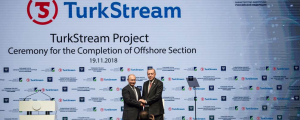
There, Russian President Vladimir Putin and Turkish President Recep Tayyip Erdoğan held a ceremony marking the completion of the first underwater segment of the Turkish Stream gas pipeline, linking Russia to Turkey’s European shores. The project is a vivid illustration of Moscow’s strategy to strengthen its position in supplying gas to Europe while reducing its reliance on the Ukrainian transit corridor.

For Ankara, the project is a symbol of Turkey’s independent decisionmaking and of the country’s significance in the wider region. Seen from Ankara, Turkish Stream serves a political purpose. It celebrates the blossoming friendship between Turkey and Russia and confirms Ankara’s ambition to be part of the solution to major international issues—in this case, securing the gas needs for a large part of the EU.

Marc Pierini

Pierini is a visiting scholar at Carnegie Europe, where his research focuses on developments in the Middle East and Turkey from a European perspective.

However, Turkish Stream will also increase Ankara’s dependence on Moscow for its energy needs.

The project’s second meaning is that Turkey is contributing to an essential element of Russia’s multi-pronged, long-term strategy of remaining Europe’s major gas supplier, while creating a “third gas corridor” in addition to the Ukrainian and Baltic Sea supply routes. This strategy is unfolding on several fronts: in Ukraine; in the Baltic Sea; and through future extensions of Turkish Stream to southern and central Europe (toward Bulgaria, Serbia, Hungary, Slovakia, and to Greece and Italy.)

This Russian strategy has raised continuous opposition from the United States.

It is worth noting that Turkish Stream is not part of the EU’s Energy Union plans since it does not contribute to diversification of supplies. In fact, it will rather reinforce Russia’s market predominance in both Turkey and the EU.

In Ukraine, the multi-pipeline network channeling Russian gas to Western Europe will remain a vital link. But reducing its use could inflict massive losses in terms of transit costs for authorities in Kiev, which is part of Russia’s strategy in Ukraine.

Much will depend on negotiations for the extension of the Russia-Ukraine commercial agreement, which will end in 2019. To help alleviate Kiev’s concerns, Germany has made the continuation of transit via Ukraine an ingredient of a final agreement on Nord Stream 2, the latter being the subject of controversies within the EU.

The Russian strategy is in no way limited to selling Russian gas on the European continent. It extends much further afield in the wider Eastern Mediterranean region.

Egypt is a case in point.

Following the massive discoveries in the so-called Zohr field to the north and east of the Nile River delta, Russia bought a 30 percent stake from the Italian energy group ENI in 2016 with the consent of the Italian government, which Moscow has had a long and close relationship with. The official reason for the sale was the need for ENI to spread the risk of its Egyptian operation.

Similarly, offshore gas discoveries in Lebanese waters have attracted Russian interest— although drilling off Lebanon is largely dominated by France’s TOTAL and Italy’s ENI, who have a 40 percent share each. Russia’s NOVATEK has bought a 20 percent stake.

Russia has also made moves to control both the oil and gas sector in Syria, despite the ongoing war. The actual effect of these recent maneuvers will very much depend on the final political arrangement expected to end the almost eight-year-old civil war. Many of Syria’s oil and gas fields are located north and east of the Euphrates River, currently outside the control of regime forces. In addition, for reasons linked to the ongoing naval military activities, no offshore exploration has yet taken place in Syrian waters.

In Iraq, Russia is involved in pipeline deals in the Kurdistan regionthrough a number of oil and gas companies, although the actual exports would have to take place through Turkish territory or possibly even through Syria in the distant future.

Such an ambitious Russia strategy is justified by Europe’s gas market fundamentals.

A stronger demand for gas in Europe is good for Russia. According to Oxford Energy, gas demand in Europe (Turkey and non-EU Eastern Europe included, except Serbia) has started rising again for three consecutive years—in 2015, 2016, and 2017—to reach a level of 548 billion cubic meters (bcm), due to continued economic recovery, the impacts of climate change, and the increased use of gas by the power sector. The trend seems to be continuing in 2018.

According to the Finnish Institute for International Affairs, Russia took advantage of several factors: economic recovery and decreasing gas production in the EU, lower Russian selling prices, and the current limited availability of non-Russian liquefied natural gas (LNG) on the European market.

In addition, preexisting disputes between the EU and Russia (including an antitrust investigation against Gazprom, and a Russian complaint at the WTO) have been resolved, signaling that commercial interests on both sides have prevailed, despite a less-than-optimal political climate.

In such an environment, Russia is in a strong position to keep dominating gas supplies to the EU, which amounted to 40 percent of extra-EU imports in 2016—although new developments could upset the current situation, such as a rapid development of LNG exports to Europe from other sources. LNG imports amounted to only 14 percent of total extra-EU gas imports in 2017, with the main supplies coming from Qatar (41 percent), Nigeria (19 percent), and Algeria (17 percent).

In this wider context, and seen from Brussels, Turkish Stream—with a final projected capacity to deliver 31.5 bcm/y, of which 15.75 bcm/y would go to Europe —is a relatively small component of the wider gas supply chain to the EU. In fact, it would represent just over 6 percent of the EU’s imports at 2017 levels.

Yet, seen from Moscow, the pipeline is potentially a significant addition to Russia’s capabilities to export gas to Europe (Turkey included). Assuming that Turkish Stream’s second phase will be completed and operational, it would represent between 16 and 19 percent of Russian sales to the EU and Turkey (at 2017 levels and all other factors remaining unchanged).

In that sense, the ceremony on November 19 in Istanbul was more than just another photo opportunity. It was a symbol of the success of Russia’s objectives in the wider Western European area, with Turkey’s help. Together with Russia’s S-400 missile deal with Turkey, it was a symbol of how efficiently Moscow has been using Ankara’s relative diplomatic isolation to its advantage. For Ankara, this was another way of telling the world: Turkey matters.

https://carnegieeurope.eu/strategiceurope/77855?utm_source=rssemail&utm_medium=email&mkt_tok=eyJpIjoiTm1KbU1qTXpZemxrWkRRNSIsInQiOiJJRG5BczR5dTlaQm1OSUd1bytYWGV6TUZ0TVNTekNLZHRrV3lZcjRSbWd2Q29EbTBQc1JxdVRcL0F5MlA4RkE0OXphT3o1blM4a2tTRGN6cWswUVMxWUdhdTVqaUVKbXE3NTB2RklkbnJHRjE1c1pORXNiNEdISTlpcUpHWDJzTUQifQ%3D%3D

Energy resources in the East Mediterranean and Turkey

0

Şahap Kavcıoğlu  04 December 2018 Yeni Safak
There are many topics written and discussed on the last period of the Ottoman Empire. One of these is that after World War I, borders were drawn based on oil regions, and the oil regions left within the borders were eliminated on the maps. Intense operations were launched during former Energy and Natural Resources Minister Berat Albayrak’s time in office to clarify this matter, which has been argued over for years.

Explorations in the Black Sea and Mediterranean have been accelerated greatly to increase production operations through oil and natural gas explorations on the ground and in the sea in efforts to reveal new sources of demand and develop our existing reserves to meet the daily increasing demand for oil and natural gas.

The first move in this respect is the launch of reserve exploration works with the 90-percent domestically produced seismic surveying ships Oruç Reis and Barbaros Hayreddin Paşa.

Following the analyses of the seismic surveying ships, deep sea drills in the opens of Alanya was started with Turkey’s first drilling ship Fatih. Drilling is planned in locations most likely to have reserves, both in Cyprus and Turkey’s territorial waters. These operations conducted using our own drilling ship, our own engineers and local equipment are really a new era in Turkey’s energy history.

The Mediterranean is an important region in terms of developing alternative resources. The Eastern Mediterranean is an important and serious alternative for natural gas energy resources. Turkey has accelerated its oil and natural gas exploration operations in this region under the responsibility of the Turkish Petroleum Cooperation (TPAO). As Turkey, we have a very large coastal line in this area which has gained prominence, especially in recent years.

Starting from Turkey, the Mediterranean’s borders are surrounded with the coasts of Syria, Lebanon, Israel, Palestine, Egypt, Libya, Tunisia, Italy, Slovenia, Croatia, Bosnia-Herzegovina, Montenegro, Albania, and Greece.

The energy regions in the Eastern Mediterranean are composed of the region between the island of Cyprus and Israel called the Leviathan reserves, the region between Egypt and the island of Cyprus called the Nile Delta reserves, the region in the southeast of the island of Crete called the Herodotus reserves and the surrounding of the island of Cyprus.

The 1.763 billion barrels of oil in the Nile Delta is stated to be 223 trillion square feet natural gas and 6 billion barrels liquefied gas. The Leviathan region is said to potentially have 1.689 billion barrels of oil and 122 trillion square feet natural gas. The region belonging to Lebanon is estimated to have approximately 708 billion square meters of natural gas. While in the field referred to as Aphrodite, a natural gas channel with an average reserve of 198 billion square meters was found.

This gas requires a minimum investment between $5 billion and $16 billion to reach consumer markets. The cheapest method is to transfer the gas to Turkey through a pipeline, and from here to the end market (approximately 4.8 billion dollars).

Considering the likely reserve amounts, the importance of the Eastern Mediterranean and how it is an energy-political focus region of the world becomes clear.

There are efforts to form a new political balance in the Eastern Mediterranean. Other than the continental shelf agreement it signed with the Turkish Republic of Northern Cyprus (TRNC), Turkey has not signed any continental shelf or Exclusive Economic Zone agreement. It advocates that the restrictions in this regard need to be determined with the participation of all relevant parties and with agreements suitable to the equity principle of international law.

Israel, Greece and the Greek Administration of South Cyprus are taking joint action in the Eastern Mediterranean in cooperation in the fields of energy and security. The EU is closely interested in the island of Cyprus, which is in a key point capable of controlling the East Mediterranean, and is following a joint strategy with the Greek administration. The diplomatic, military and economic relations between Israel, South Cyprus and Greece are rapidly developing.

The TRNC announced a total of seven oil and natural gas exploration fields in the north and south of Cyprus, and assigned these to the TPAO. Hence, Turkey’s most problematic region in the Eastern Mediterranean is toward the west of Cyprus. The legal problems concerning the restrictions to be made here will directly impact the East Mediterranean basin in terms of politics, economy and security.

The major investment projects in the recent period are the STAR Refinery, Trans-Anatolia Natural Gas Pipeline (TANAP), and TurkStream. The realization of these projects, using local and national means in oil and natural gas exploration works, will allow access to the reserves that have been long dreamed of.

In the context of operations targeted in terms of reducing foreign dependency in energy and securing demand, Turkey will continue to take steps to both increase its efficiency in its own territorial waters, and to contribute to its national income through the reserves that are likely to be found.

https://www.yenisafak.com/en/columns/sahapkavcioglu/energy-resources-in-the-east-mediterranean-and-turkey-2046796

Ραγισμένη Ευρώπη

0

Γιατί η ΕΕ είναι κολλημένη σε μια διαρκή κρίση

Η συγκέντρωση [ευρωπαϊκής] εξουσίας στα χέρια της Μέρκελ και οι διαρθρωτικές αντιφάσεις της πολυεθνικής ένωσης της ΕΕ, παρείχαν την τελική ώθηση που ήταν απαραίτητη για να επιτύχει η εκστρατεία υπέρ του Brexit στο βρετανικό δημοψήφισμα για την ΕΕ.

Η HELEN THOMPSON είναι καθηγήτρια Πολιτικής Οικονομίας στο Πανεπιστήμιο του Cambridge.

Η Ευρωπαϊκή Ένωση αγωνιζόταν πάντα να διευθετήσει τις δημοκρατικές πολιτικές των μελών της. Το πρόβλημα έγινε σοβαρό το 1999, με την δημιουργία της νομισματικής ένωσης χωρίς μια πολιτική και φορολογική ένωση που να την συνοδεύουν. Στην συνέχεια, ξεκινώντας το 2011, η κρίση του χρέους της ευρωζώνης μετέτρεψε αυτό που ήταν ένα πραγματικό αλλά διαχειρίσιμο ζήτημα, σε μια δύσκολη κατάσταση, από την οποία η ΕΕ δεν έχει ξεκάθαρη διέξοδο. Κολλημένη σε μια μη λειτουργική νομισματική ένωση, η ΕΕ δεν μπορεί ούτε να διευθετήσει την δημοκρατία στα κράτη-μέλη της ούτε να την καταστείλει. Το αποτέλεσμα είναι πιθανό να είναι η συνέχιση του μοτίβου της τελευταίας δεκαετίας: Από κρίση σε κρίση χωρίς βιώσιμη λύση.

ΟΙ ΑΡΡΩΣΤΟΙ ΑΝΘΡΩΠΟΙ ΤΗΣ ΕΥΡΩΠΗΣ

Η αντιπαράθεση [1] μεταξύ της ιταλικής κυβέρνησης και των Αρχών της ευρωζώνης σχετικά με το μέγεθος του ελλείμματος του ιταλικού προϋπολογισμού είναι το τελευταίο παράδειγμα της ανικανότητας της ΕΕ να ταιριάξει με την δημοκρατία [2]. Και τα δύο κόμματα στην ιταλική κυβέρνηση συνασπισμού, η Lega και το Κίνημα των Πέντε Αστέρων, έκαναν υποσχέσεις για φόρους και δαπάνες κατά την διάρκεια των γενικών εκλογών πέρυσι. Αλλά δεν μπορούν να τις εφαρμόσουν, δεδομένου ότι αυτό θα σήμαινε μεγαλύτερα ελλείμματα. Αυτό θα αθετούσε τις δεσμεύσεις που ανέλαβε η προηγούμενη κυβέρνηση προς την Ευρωπαϊκή Επιτροπή, και [θα καταστρατηγούσε] τους δημοσιονομικούς κανόνες που κατοχυρώνονται στις συνθήκες που δημιούργησαν την ευρωζώνη. Η Ιταλία εξαρτάται σε μεγάλο βαθμό από την Ευρωπαϊκή Κεντρική Τράπεζα (ΕΚΤ) για την χρηματοδότηση του δανεισμού της, οπότε δεν μπορεί απλώς να αψηφήσει την ΕΕ.

11122018-1.jpg

Ο Macron και η Merkel στην Σύνοδο Κορυφής του ΝΑΤΟ στις Βρυξέλλες, τον Ιούλιο του 2018. KEVIN LAMARQUE / REUTERS
—————————————————————

Ωστόσο, η πλειοψηφία των Ιταλών ψηφοφόρων δεν θα δεχτεί εύκολα τον ευρωπαϊκό έλεγχο επί της ιταλικής πολιτικής. Πράγματι, ήταν μόλις μετά το 2011 που ξεκίνησε η θεαματική άνοδος του Κινήματος των Πέντε Αστέρων, όταν η ΕΚΤ και η Γερμανίδα καγκελάριος Άνγκελα Μέρκελ ώθησαν τον Ιταλό πρόεδρο Giorgio Napolitano να απολύσει τον απείθαρχο Ιταλό πρωθυπουργό Σίλβιο Μπερλουσκόνι και να διορίσει μια τεχνοκρατική κυβέρνηση. Σήμερα, η ιταλική κυβέρνηση πιστεύει ότι όσο περισσότερο αντιστέκεται στην ΕΕ, τόσες περισσότερες ψήφους θα κερδίσει στις εκλογές του επόμενου Μαΐου για το Ευρωπαϊκό Κοινοβούλιο.

Παρά τις εμφανείς διαρθρωτικές αδυναμίες του ευρώ, τα κράτη-μέλη του δεν μπορούν να συμφωνήσουν για το τι είναι λάθος με αυτό -πόσω μάλλον για το πώς θα μπορούσε να διορθωθεί. Ο Γάλλος πρόεδρος, Εμμανουέλ Μακρόν, παρουσίασε τις προτάσεις του για τη μεταρρύθμιση της ευρωζώνης ως μια πρακτική ανάγκη για να εξοπλίσει το μπλοκ για την επόμενη κρίση. Αλλά στην πεποίθησή του ότι οι λύσεις του είναι αναπόφευκτες, υποθέτει λανθασμένα ότι υπάρχει συναίνεση για το τι χρειάζεται να γίνει σωστά.

Πέρα από ορισμένα τεχνικά ερωτήματα σχετικά με την τραπεζική ένωση, η αναμόρφωση του ευρώ είναι ένα πολιτικό ζήτημα [3], και κάθε αλλαγή θα πρέπει να νομιμοποιείται δημοκρατικά από τις χώρες που θα φέρουν το βάρος της μεταρρύθμισης. Για παράδειγμα, ο Macron επιθυμεί έναν ουσιαστικό προϋπολογισμό της ευρωζώνης, ο οποίος θα πρέπει να χρηματοδοτηθεί από τους φορολογούμενους της βόρειας και της κεντρικής Ευρώπης. Αλλά αυτές οι χώρες δεν συμφωνούν. Αρκετές από αυτές σχημάτισαν μια συμμαχία νωρίτερα φέτος, τη Νέα Χανσεατική Ένωση (New Hanseatic League), η οποία περιλαμβάνει την Εσθονία, την Φινλανδία, την Ιρλανδία, την Λετονία, την Λιθουανία και την Ολλανδία (και, για θέματα που δεν αφορούν το ευρώ, την Δανία και την Σουηδία). Επιθυμούν αυστηρότερους και καλύτερα επιβαλλόμενους ελέγχους στους εθνικούς προϋπολογισμούς, οι οποίοι θα περιόριζαν τις χώρες της νότιας Ευρώπης και πιθανώς και την Γαλλία. Η σύγκρουση δεν θα επιλυθεί έως ότου η μια ή η άλλη πλευρά εξηγήσει στα εθνικά εκλογικά της σώματα ότι όσο η ευρωζώνη περιλαμβάνει χώρες με αποκλίνουσες οικονομίες, ένα σύνολο μελών θα πρέπει να φέρει μεγαλύτερο πολιτικό βάρος από όσο τα άλλα [μέλη]. Ανίκανο να αντιμετωπίσει το πρόβλημα, το Eurogroup των εθνικών υπουργών Οικονομικών επινόησε προσωρινά ένα ακόμα παραμύθι [4] νωρίτερα αυτή την εβδομάδα.

Η ΕΥΡΩΠΗ ΔΕΝ ΛΕΙΤΟΥΡΓΕΙ

Τα προβλήματα της ευρωζώνης είναι διαρθρωτικά. [Η ευρωζώνη] αποτελεί τμήμα μιας πολυεθνικής ΕΕ που είναι μια αποτελεσματική εργασιακή ένωση χάρη στην ελεύθερη κυκλοφορία [ανθρώπων στο εσωτερικό της]. Και το οικονομικό της κέντρο, στο Λονδίνο, βρίσκεται έξω από αυτήν. Η πορεία προς τη μεγαλύτερη ρήξη της ΕΕ, το Brexit, ξεκίνησε από τα προβλήματα που αυτά τα δομικά λάθη δημιούργησαν στην πρώτη κυβέρνηση του Βρετανού πρωθυπουργού, David Cameron. Μόλις άρχισε η κρίση της ευρωζώνης το 2011, οι οικονομικές μοίρες μεγάλου μέρους της ευρωζώνης απόκλιναν από εκείνη του Ηνωμένου Βασιλείου χάρη στις διαφορές της νομισματικής πολιτικής μεταξύ της ΕΚΤ και της Τράπεζας της Αγγλίας. Η συντηρητική προσέγγιση της ΕΚΤ ώθησε την ευρωζώνη σε ύφεση, ενώ η Τράπεζα της Αγγλίας βοήθησε την βρετανική οικονομία να εδραιώσει την ανάκαμψή της από την οικονομική κρίση. Το Ηνωμένο Βασίλειο έγινε τότε ο προορισμός για ανθρώπους που δεν μπορούσαν να βρουν δουλειά στις χώρες της νότιας Ευρώπης, όπου η ανεργία παρέμεινε ψηλή. Η βρετανική δημοκρατική πολιτική έπρεπε να απορροφήσει τις συνέπειες. Το αποτέλεσμα ήταν ένα δημοψήφισμα για την ΕΕ που στράφηκε σε μεγάλο βαθμό στο ζήτημα της μετανάστευσης.

Οι διαρθρωτικές ανισορροπίες της ΕΕ έχουν επιδεινωθεί από τον τρόπο με τον οποίο η κρίση της ευρωζώνης μετατόπισε την πολιτική ισχύ μέσα στην ΕΕ. Τα κράτη-μέλη της ΕΕ που δεν ήταν μέλη της ευρωζώνης δεν μπόρεσαν να διαμορφώσουν την απάντηση στη μεγαλύτερη υπαρξιακή κρίση που αντιμετώπισε ποτέ η ΕΕ. Επιπλέον, η θέση της Γερμανίας ως κύριου δανειστή για την διάσωση άλλων κρατών-μελών της ευρωζώνης -και το γεγονός ότι η ΕΚΤ εδώ και καιρό απέχει από το να προβεί σε μεγάλες αγορές ομολόγων λόγω του φόβου μιας αντίδρασης της γερμανικής κυβέρνησης και του ομοσπονδιακού συνταγματικού δικαστηρίου της Γερμανίας- αύξησε δραματικά την γερμανική επιρροή εντός της ΕΕ. Για αρκετά χρόνια στα μέσα αυτής της δεκαετίας, η ευρωπαϊκή πολιτική φαινόταν να είναι θέμα αναμονής μέχρι η Μέρκελ να αποφασίσει τι πρέπει να κάνει. Θα αποβάλει την Ελλάδα από το ευρώ; Θα καλωσορίζει τους μετανάστες και τους πρόσφυγες ή θα διαπραγματευθεί με τον πρόεδρο Ρετζέπ Ταγίπ Ερντογάν για να τους κρατήσει στην Τουρκία; Θα κάνει παραχωρήσεις στο Ηνωμένο Βασίλειο για να αποτρέψει ένα πιθανό Brexit;

Μαζί, αυτά τα δύο γεγονότα -η συγκέντρωση εξουσίας στα χέρια της Μέρκελ και οι διαρθρωτικές αντιφάσεις της πολυεθνικής ένωσης της ΕΕ- παρείχαν την τελική ώθηση που ήταν απαραίτητη για να επιτύχει η εκστρατεία υπέρ της «εξόδου» [από την ΕΕ] στο βρετανικό δημοψήφισμα για την ΕΕ. Οι δύσμοιρες προσπάθειες του Cameron για την επαναδιαπραγμάτευση της θέσης του Ηνωμένου Βασιλείου στην ΕΕ πριν από την εκστρατεία του δημοψηφίσματος επεδίωκαν την ανάκτηση ορισμένων πτυχών της βρετανικής κυριαρχίας ενώ [η χώρα] θα παρέμενε στο εσωτερικό της ένωσης. Ο Κάμερον επένδυσε τις ελπίδες του στην επιρροή της Μέρκελ. Όμως, η ΕΕ ήταν ανίκανη να αντιμετωπίσει τα εσωτερικά προβλήματα του Ηνωμένου Βασιλείου και αυτό που ο Cameron μπόρεσε να προσφέρει στο βρετανικό κοινό ήταν μια τέλεια επίδειξη των ορίων της βρετανικής πολιτικής ισχύος στο εσωτερικό της ένωσης. Ο Κάμερον ζήτησε από τη Μέρκελ να αποφασίσει πώς θα ήθελε η ΕΕ να είναι η σχέση της με το Ηνωμένο Βασίλειο. Ωστόσο, η ΕΕ δεν μπόρεσε να ανταποκριθεί στο ρίσκο μιας βρετανικής απόσχισης, δεδομένου ότι, στην πράξη, δεν ήταν σε θέση να μειώσει την ανεργία στη νότια Ευρώπη και, από συνταγματική άποψη, δεν μπορούσε να επιτρέψει στο Ηνωμένο Βασίλειο να θέσει οποιαδήποτε όρια στους βάσει συνθηκών κανόνες που διασφαλίζουν την ελεύθερη κυκλοφορία για όλους τους πολίτες της ΕΕ.

Τώρα, το Brexit έχει διχάσει εκ νέου την ΕΕ. Παρότι η ΕΕ παρέμεινε ενωμένη απέναντι στο ίδιο το Brexit, η προοπτική της αποχώρησης του Ηνωμένου Βασιλείου συνέβαλε στην δημιουργία της Νέας Χανσεατικής Συμμαχίας με το να ωθήσει τις χώρες που προηγουμένως συμμάχησαν με το Λονδίνο για την ρύθμιση της ενιαίας αγοράς, σε συμμαχία με τα δύο υπόλοιπα εκτός ευρώ κράτη της Βόρειας Ευρώπης, την Δανία και την Σουηδία. Αυτή η νέα ομάδα μόνο πρόσθεσε στις πολιτικές δυσκολίες της ευρωζώνης. Όταν ο Macron ανέλαβε καθήκοντα το 2017, αυτό που φαινόταν να έχει σημασία στην πολιτική της ευρωζώνης ήταν τι παραχωρήσεις θα μπορούσε να κάνει η γερμανική κυβέρνηση προκειμένου να αποκατασταθεί μια γαλλο-γερμανική εταιρική σχέση. Τώρα, όμως, η ευρωζώνη έχει άλλον έναν καλά οργανωμένο παίκτη [με δικαίωμα] βέτο στη Νέα Χανσεατική Ένωση. Η Γαλλία αντέδρασε στην εμφάνιση της ομάδας κάνοντας ξεκάθαρο [5] αυτό που συνήθως υπήρχε χωρίς να ειπωθεί: Την μακρόχρονη γαλλική υπόθεση ότι η ΕΕ στηρίζεται σε μια ιεραρχία στην οποία η Γαλλία και η Γερμανία αναλαμβάνουν ηγετικό ρόλο και οι άλλες χώρες αποφεύγουν να κάνουν συμμαχίες που μπορεί να μπουν στο δρόμο τους. Ωστόσο, η ΕΕ έχει επενδύσει ρητορικά στην ιδέα της ευρωπαϊκής ενότητας, οπότε οι κυβερνήσεις θα το βρουν δύσκολο να εξηγήσουν στα εκλογικά τους σώματα το γιατί πρέπει να υποταχθούν στην Γαλλία.

Ένας τρόπος με τον οποίο η ευρωζώνη θα μπορούσε να θέσει τέρμα στις αέναες κρίσεις της θα ήταν να διαμορφώσει μια φορολογική ένωση που θα ήταν σε θέση να ανταποκριθεί στις δημοκρατικές πολιτικές. Ωστόσο, δεν υπάρχει επαρκής δημόσια υποστήριξη εντός της ΕΕ για την περαιτέρω απώλεια κυριαρχίας επί των εθνικών προϋπολογισμών και την κατανομή του χρέους που θα απαιτούσε μια τέτοια ένωση. Επιπλέον, η κρίση της ευρωζώνης έδειξε ότι η ΕΕ είναι τώρα πολιτικά ανίκανη να προβεί σε αλλαγές που απαιτούν την αναθεώρηση των συνθηκών της. Ως απάντηση σε κρίσεις, τα θεσμικά όργανα της ΕΕ χρειάστηκε να λάβουν ad hoc [κατά περίπτωση] μέτρα έκτακτης ανάγκης. Το κυριότερο παράδειγμα είναι το πρόγραμμα ποσοτικής χαλάρωσης της ΕΚΤ, το οποίο αποδείχθηκε ζωτικής σημασίας για την υποστήριξη των χρεωμένων χωρών της νότιας Ευρώπης. Το πρόγραμμα άφησε την ΕΚΤ σε μια δυσάρεστη κατάσταση, καθώς οι νέες εξουσίες της δεν έχουν νομιμοποιηθεί από τις εθνικές κυβερνήσεις. Όταν η συνήθης προμελετημένη πολιτική δεν μπορεί να προσαρμοστεί στις μεταβαλλόμενες συνθήκες, οι αυτοσχέδιες αντιδράσεις αντικατοπτρίζουν αδιακρίτως την τρέχουσα κατανομή της εξουσίας και αποφεύγουν την δημοκρατική λογοδοσία, πυροδοτώντας περαιτέρω δυσαρέσκεια μεταξύ των εκλογέων των ασθενέστερων κρατών.

11122018-2.jpg

Η Γερμανίδα καγκελάριος Άνγκελα Μέρκελ και ο Ιταλός πρωθυπουργός Giuseppe Conte σε συνέντευξη Τύπου στο Βερολίνο, τον Ιούνιο του 2018. HANNIBAL HANSCHKE / REUTERS
————————————————————–

Αλλά ούτε η ΕΕ μπορεί να κάνει το αντίθετο –να επιστρέψει κάποιες εξουσίες στις εθνικές κυβερνήσεις για να αποκαταστήσει εκεί την δημοκρατική ικανότητα για απαντήσεις [στα ζητούμενα των εθνικών κοινωνιών]. Κάτι τέτοιο θα απαιτούσε ακριβώς τις αλλαγές στις συνθήκες που είναι πολύ δύσκολες χωρίς μια πολιτική συναίνεση που δεν υπάρχει. Επιπλέον, η ΕΕ έχει ήδη διαρκέσει αρκετά για να υπονομεύσει την δημοκρατική νομιμοποίηση των εθνικών κρατών-μελών της, ιδίως όταν οι εκλογές των χωρών αποκλείουν τους πολίτες της ΕΕ που δεν κατέχουν την εθνική ιθαγένεια, αλλά κατά τα άλλα είναι ελεύθεροι να ζουν και να εργάζονται εκεί. Το αναπόφευκτο συμπέρασμα είναι ότι η Ευρωπαϊκή Ένωση είναι παγιδευμένη. Στην παρούσα κατάστασή της, δεν μπορεί να ανταποκριθεί επαρκώς στις δημοκρατικές πολιτικές, διότι οι θεσπισμένοι κανόνες της πρέπει να επιβληθούν ανεξάρτητα από την απόφαση των εθνικών εκλογέων. Αλλά οι άνθρωποι φυσικά αναμένουν ότι οι εθνικοί πολιτικοί θα πρέπει να έχουν τον τελευταίο λόγο σε σχέση με τους αξιωματούχους της ΕΕ. Δεδομένου ότι η ΕΕ δεν μπορεί να κινηθεί αποφασιστικά προς μια στενότερη ένωση ή αποφασιστικά προς την αντίθετη κατεύθυνση, κάθε προσπάθεια επίλυσης των θεμελιωδών αντιθέσεών της θα καταλήξει μόνο στην διάσπασή της.

Copyright © 2018 by the Council on Foreign Relations, Inc.
All rights reserved.

Στα αγγλικά: https://www.foreignaffairs.com/articles/europe/2018-12-10/broken-europe

Σύνδεσμοι:
[1] https://www.foreignaffairs.com/articles/italy/2018-11-02/italys-dangerou…
[2] https://www.nytimes.com/2018/03/08/opinion/italy-europe-election.html
[3] https://www.foreignaffairs.com/articles/europe/2018-01-11/how-eurozone-m…
[4] https://www.ft.com/content/ebfdd09a-f791-11e8-af46-2022a0b02a6c
[5] https://www.ft.com/content/12199bb8-f11d-11e8-ae55-df4bf40f9d0d

Μπορείτε να ακολουθείτε το «Foreign Affairs, The Hellenic Edition» στο TWITTER στην διεύθυνση www.twitter.com/foreigngr αλλά και στο FACEBOOK, στην διεύθυνση www.facebook.com/ForeignAffairs.gr και στο linkedin στην διεύθυνση https://www.linkedin.com/company/foreign-affairs-the-hellenic-edition