US President Donald Trump (r) and his Turkish counterpart Recep Tayyip Erdogan. (AP/Evan Vucci, File)
“This most recent embrace of Turkey as a strategic partner in this ‘new’ U.S. policy should raise serious alarm bells in Israel and in the pro-Israel community,” Abraham Foxman said.
Two prominent American Jewish leaders expressed strong concern on Monday over U.S. President Donald Trump’s declaration of faith in Turkish President Recep Tayyip Erdogan as part of his sudden decision to withdraw the 2,000 troops presently assisting Kurdish and Arab allies in Syria.
“This most recent embrace of Turkey as a strategic partner in this ‘new’ U.S. policy — relating to ISIS, Syria, the Kurds — should raise serious alarm bells in Israel and in the pro-Israel community,” Abraham Foxman, the national director emeritus of the Anti-Defamation League (ADL), told The Algemeiner on Monday.
Rabbi Abraham Cooper — associate dean of the Los Angeles-based Simon Wiesenthal Center — meanwhile asked whether anyone could “seriously believe that Erdogan will block the land corridor Iran is creating across Syria into Lebanon,” one of the more serious long-term issues in Israel’s northern security theater.
“It’s difficult to fathom what it was that Erdogan promised Trump, and that is part of the existential challenge facing Israel,” Cooper told The Algemeiner.
Trump’s confidence that Erdogan will “eradicate” what remains of ISIS marks another dramatic turnaround in the U.S. president’s turbulent relations with foreign leaders. Just in August, amidst a dispute over an American pastor, Andrew Brunson, who was imprisoned in Turkey, Trump declared a steep rise in steel and aluminum import tariffs on Turkey, along with sanctions against Turkish officials. In response, Erdogan urged a mass boycott in Turkey of the U.S. electronics products, including Apple’s iPhone.
Turkey mocks Trump’s ‘comic’ stance
More recently, Turkey accused Trump of adopting a “comic” stance toward the murder in October of the Saudi journalist Jamal Khashoggi at Saudi Arabia’s consulate in Istanbul. However, in a sign that Trump was changing his attitude toward Erdogan’s Islamist government, Turkish presidential spokesman Ibrahim Kalin claimed on Monday that the U.S. president had agreed to pay an official visit to Turkey during 2019.
Both Foxman and Cooper were in agreement that Trump’s new alignment with Erdogan should be regarded with alarm by the American Jewish community, especially as the Turkish president’s frequent anti-Semitic outbursts are increasingly echoed by other senior Turkish officials — such as Foreign Minister Mesut Cavusoglu, who on Monday invoked the historic “blood libel” in slamming Israeli Prime Minister Benjamin Netanyahu as a “baby-killer.”
“This administration has frequently condemned anti-Semitic and harsh anti-Israel rhetoric from Washington or the U.N. — but sadly remains silent in face of the anti-Israel and anti-Semitic hatred spewed forth by Erdogan,” Foxman said.
In his most recent barb aimed at the Jewish state, Erdogan on Monday lambasted Netanyahu as “cruel,” adding that Israel had to “account” for “its crimes against humanity, massacres and destruction.”
Netanyahu responded by excoriating the Turkish strongman as an “anti-Semitic dictator whose army massacres women and children in Kurdish villages, inside and outside Turkey.”
Said Cooper: “Anyone who uses Jew-hatred as a cornerstone of his own political worldview is nothing short of a disaster for the Jewish people, not just for Israel.”
US ‘coziness’ with Erdogan ‘a continuing irritant’
Trump’s “coziness” with Erdogan, Foxman remarked, “has been a continuing irritant to Israel and American Jewish and non-Jewish supporters of Israel.”
The cause of that distrust was rooted in Erdogan’s “harsh anti-Israel positions, his anti-Semitic rhetoric, his alliances with Israel’s enemies, antagonism to Israel’s friends, and his anti-democratic behavior,” Foxman asserted.
Cooper emphasized that Erdogan’s Islamist-inflected anti-Semitism was nevertheless not the only trend visible in the Muslim world. He cited both Azerbaijan — a close ally of Israel with a 96%-Muslim majority population — and the Kurdish nation in the Middle East as positive examples of an alternative path to Erdogan.
Cooper lauded the Kurds as an “absolutely fantastic people, and natural allies of the Jewish people.”
He continued, “If there is one nation that has a worse neighborhood than the Israelis’, it’s the Kurds. They are in Iraq, Iran, Turkey and Syria — every conceivable flashpoint in the Middle East.”
Cooper argued that the predicament now facing the Kurds was “shameful, because if the Kurds were to be empowered to pursue their own national destiny, the Middle East would be a much more stable place.”
“Whatever machinations go on, the Kurds always seem to be at the bottom of the pile,” Cooper concluded. “And it’s an outrage.”
Turkey’s foreign minister said Tuesday the U.S. had agreed to complete its previously established “roadmap” to remove all Kurdish militia fighters from the Northern Syrian town of Manbij before U.S. forces clear out.
Last week, Turkish President Recep Erdogan threatened to attack Manbij to “cleanse” it of the Kurdish YPG, whom he called terrorists — a move the Pentagon has called “unacceptable.”
U.S. President Donald Trump abruptly announced last week that he would be recalling all U.S. forces from Syria.
Turkish and US flags are seen during a ceremony as their duty period finished on September 15, 2015 at the Patriot missiles deployment in Gaziantep, Turkey.
President Donald Trump’s administration may have just handed Turkey’s President Recep Erdogan another win.
Less than a week after Trump’s abrupt decision to withdraw all U.S. troops from Syria, Turkey’s foreign minister said Tuesday the U.S.has agreed to complete its previously established “roadmap” to remove all Kurdish militia fighters from the Northern Syrian town of Manbij before U.S. forces clear out.
Ankara has been waiting for this guarantee for a while, complaining since its agreement in June that Washington was dragging its feet on the deal. The U.S. has been supporting the Syria-based Kurdish People’s Protection Unit (YPG) as part of the Syrian Democratic Forces fighting the Islamic State (IS), but the Turks view those fighting Kurds as linked to a Kurdish terrorist group that’s carried out a decades-long insurgency against the Turkish state.
Last week, Erdogan threatened to attack Manbij to “cleanse” it of the YPG, whom he called terrorists — a move the Pentagon has called “unacceptable.” The U.S. withdrawal is reportedly expected to begin within weeks.
At the time of this publication, the Pentagon had not yet responded to a CNBC request for comment sent Tuesday.
Turkey also plans to cross east of the Euphrates River in Northern Syria “as soon as possible,” Turkish Foreign Minister Mevlut Cavusoglu reportedly told local media Tuesday, without elaborating. Manbij is west of the Euphrates, but Kurdish forces control a wide swath of land on the eastern side of the river.
With the impending departure of U.S. troops from Syria, Turkey will have vast sway to push out Kurdish forces, who now say the feel they are being abandoned by their American partners. Turkish troops have amassed along the Syrian-Turkish border and Turkish-backed Syrian rebels are grouping around Manbij. The Kurds have reportedly begun digging ditches and trenches in anticipation of the offensive, prompting Turkish Defense Minister Hulusi Akar to say Thursday, “they will be buried in their ditches when the time comes.”
Security experts fear that in turning their focus toward fighting the Turks, the YPG will have to divert resources and attention from the fight against IS, which Pentagon officials say is far from won. Ankara has so far held back on its threatened offensive due to the U.S. troop presence.
“A Turkish incursion would force many YPG fighters to shift their efforts away from fighting IS, risking a reversal of recent progress,” Turkey expert Soner Cagaptay and former Senate Foreign Relations Committee member Dana Stroul wrote in a brief for The Washington Institute for Near East Policy.
And with U.S. forces absent and unable to keep their local coalition focused on finishing the fight, “counterterrorism in east Syria would effectively be outsourced to Turkey and its local partners, or even to the Assad regime and its backers,” they wrote.
‘IS 2.0’
Turkey, an adversary of the Assad regime, has vowed to take on the IS fight from the U.S. and prevent the extremist group from regaining territory, with a spokesman for Erdogan saying Monday, “As part of the global coalition to defeat ISIS, we would like to express again that we will not allow such a thing to happen on Syrian soil, Iraqi soil or Turkish soil.”
The “Manbij roadmap” is expected to see all Kurdish militia forces moved out of Manbij and local Arab councils established to run the town currently under YPG control. Human rights groups and some Arabs in Syria’s north have accused the YPG of kidnapping, torture and ethnic cleansing against non-Kurdish groups. Meanwhile, many Kurds have expressed a willingness to accept Syrian President Bashar Assad’s return to power over the northern areas they hold in order to repel Turkey, which backs rebels fighting Assad.
ISIS not the only terrorist organization: Turkish foreign minister
This “Assad option,” Stroul and Cagaptay wrote, “would ensure renewed Sunni Arab support for violent extremist groups, likely leading to ‘IS 2.0.'” Yet continued YPG control in the east is “not sustainable either,” they added, due to tensions between the Kurds and majority-Arab communities in Northern Syria in addition to Turkey’s border security concerns.
In what may be yet another positive stateside development for Ankara, its foreign minister said Tuesday that Turkish executive Hakan Atilla, sentenced in the U.S. for violating Iran sanctions, may be returned to Turkey. The executive’s employer, Turkey’s Halkbank, has been under threat of potential U.S. Treasury fines as a result, but a recent warming in relations between the two NATO allies is increasing chances that the lender will get a pass.
Ankara and Washington have seen significant turbulence in their relationship over the past year amid disagreements over Syria, the Turkish detention of an American pastor, relations with Russia, Iran sanctions and trade tariff threats.
In modern societies, surely. People with wealth and political and social power want to protect and expand their interests, and this requires command over the means of communication that will allow these privileges to be sustained and grow. The growth of inequality enlarges the need and ability to dominate the flow of information and inculcate proper values.
The PM is concerned with the question of how ideological power and material power intersect and reinforce one another and assumes interrelations between state, corporate capitalism and the corporate media. How does academia factor into the equation, with regard to the dialectic between ideology and power?
Academia is an important institutional segment of information and ideology production and dissemination. As such, it has always been controlled by and in service to elite interests. But because of its functions in teaching and research it is granted a degree of independence beyond that accorded workers in profit-making and governmental bodies. However this independence is limited by fund-raising imperatives and the pressures to conform to conventional wisdom. As the propaganda model departs from the conventional wisdom that the mainstream media (MSM) are not a part of the power structure but are independent servants of the general public, not the elite, the PM will not be favored by the general run of academics. Some hard evidence on this point was provided by Andrew Mullen in a 2010 study which reviewed the performance of ten communications and media journals in Europe and North America for the years 1988 through 2007, and found that only 79 of 3,053 articles (2.6 percent) even mentioned the PM, a majority of these only citing it without discussion.
Would you characterize the PM as being grounded in a democratic approach specifically oriented toward public relevance?
Yes. It assumes that high relevance will attach to a model that shows the MSM to be an arm of the elite, and on crucial issues to be serving elite interests rather than those of the general public. On some of these issues, such as “free trade” agreements (really investor-rights-expansion agreements) polls have regularly showed the public hostile but the MSM dependably supportive of such agreements in accord with elite preferences. The PM helps explain why.
The PM was originally designed to focus on elite, agenda-setting newspapers in the United States. How useful is the model in terms of studying patterns of media performance in non-US countries?
It should be useful where basic structural conditions fit the model, as that of the United States does. That is, where they have a dominantly private ownership economy, a mainly commercial media depending heavily on advertising, and substantial inequality. Global trends have tended to strengthen the necessary conditions, and the model has been shown to hold quite well in Britain, Germany and other countries.
How does the model position television and the internet in relation to social and political change?
TV was well entrenched in 1988, and its development was perfectly compatible with the workings of the PM (perhaps most notable was the importance of advertising as the funding source). The growth of the internet seemed to hold forth the promise of a more democratic media, but as it has evolved a remarkable and rapid concentration of effective platforms has come into existence, with Google and Facebook on top, capturing a very large fraction of advertising revenue and patronage by the general public (see Jonathan Taplin, 2017). These are not news organizations, and how their monopoly power will eventually work out as regards the journalism function is unclear, but they are very much advertising based, and they have already shown great deference to the wishes of power entities like the CIA, NSA, FBI and State Department. Thus, the likelihood that they will serve the public interest as a democratic force seems extremely slim.
In what ways can media foster indifference and how does this serve power?
They can foster indifference by systematically failing to provide information and perspectives that address the public’s concerns and ultimately showing the public that they are not on the public’s side and that what the public may want is not attainable. The MSM do a better job of amusing and otherwise entertaining than dealing credibly with substantive issues. This will help leave the status quo unthreatened.
How is fear used to achieve ideological hegemony, in your view? It focuses attention on an approved target, diverting the public from real problems that the elite is not prepared to address. Back in 1904, Thorstein Veblen featured the value of a warlike policy in “directing the popular interest to other, nobler, institutionally less hazardous matters than the unequal distribution of wealth and of creature comforts.”
What does the PM have to say about the media coverage of Trump’s election campaign and first months as President?
The MSM clearly favored Hillary Clinton, but many of the elite were pleased with Trump’s anti-regulatory and tax “reform” plans. They also gave Trump a great deal of free media space because his demagoguery resonated with large numbers and playing him up raised media audience sizes. Since the election the MSM have been much more hostile to him and have teamed with the Democrats in creating a Russo-phobia environment, in good part to squelch any attempt on his part to soften policy on confronting Russia and keeping the war party happy and profitable. This all fits nicely into the PM framework.
How would you reply to a critic who suggests that the PM’s explanatory filters are simply an arbitrary list of possible causes for the declawing of media?
The filters are all tied to institutions and processes that experience and evidence show decisively influence media choices, and that are embodied in the five named elements of the PM.
If “flak” requires conscious activity, how can it be considered a “filter”?
Media decisions entail conscious activity, so that the conscious effort of protesters to influence those decisions does not seem incompatible with filtering.
So, do you think the PM is still a useful tool to analyze the media in the 21st century?
Yes, certainly in the short and medium term, with the commercial media and the power of advertising increasing in strength almost everywhere. The longer-term outlook is hazier with the threat of nuclear and climate-based disaster, the growth of inequality and the possibility of severe social disruption and greater centralization of political power, militarism, and a new era and new forms of fascism.
Jeffery Klaehn holds a PhD in Communication from the University of Amsterdam and a PhD in Sociology from the University of Strathclyde. More information about his research can be found at: https://uva.academia.edu/JefferyKlaehn
Joan Pedro-Carañana, Saint Louis University-Madrid Campus. PhD. in communication, social change and development. Joan has been active in a variety of social movements and is interested in the role of media, education and culture in the transformation of societies.
Dr. Matthew Alford‘s research focuses on the relationship between Hollywood, political institutions, and propaganda in the West. His own documentary feature film, The Writer with No Hands was premiered in the Future Cult Classics strand at Hot Docs, Toronto and went on to receive three festival wins, eight further nominations, and distribution via international television platforms. He is based at the University of Bath.
Yigal Godler is currently an assistant professor at the University of Groningen, Netherlands and publishes on such subjects as journalistic fact-finding and the intellectual culture of the social sciences.
United States Deputy Secretary of Defense Patrick Shanahan, who will take over for ousted Secretary of Defense James Mattis in January, has significant ties to the U.S.-Turkey arms trade— a concerning move as U.S. President Donald Trump supports Turkish president Recep Tayyip Erdogan’s threats against Northeast Syria.
“I am pleased to announce that our very talented Deputy Secretary of Defense, Patrick Shanahan, will assume the title of Acting Secretary of Defense starting January 1, 2019. Patrick has a long list of accomplishments while serving as Deputy, & previously Boeing,” Trump wrote on Twitter Sunday morning.
Shanahan joined Boeing in 1986, and worked there for over 30 years. He had no previous government experience when appointed Deputy Secretary of Defense. According to his official Department of Defense biography, he held notable roles “as vice president and general manager of the 787 Dreamliner, leading the program during a critical development period; as vice president and general manager of Boeing Missile Defense Systems, overseeing the Ground-based Midcourse Defense system, Airborne Laser and Advanced Tactical Laser; and as vice president and general manager of Boeing Rotorcraft Systems, overseeing the Apache, Chinook and Osprey.” His final role with Boeing, before leaving for the Department of Defense, was as the company’s senior vice president for supply chains and operations.
Shanahan’s role overseeing Boeing Rotorcraft Systems is the most directly connected to Turkey’s war against Kurds. The U.S. first announced the possible sale of CH-47F Chinook helicopters to Turkey in 2009, as part of a sale valued at $1.2 billion. The Defense Security Cooperation Agency (DSCA) noted the primary contractor would be Boeing Company of Ridley Park, Pennsylvania— a program that Shanahan had overseen.
Boeing’s Turkey backgrounder reported that “in 2016, the governments of Turkey and the United States finalized the sale of 11 CH-47F Chinook helicopters through government-to-government channels. The initial order included 6 CH-47F Chinooks, which Boeing delivered in 2016 with the final delivery taking place in November 2016. The country also ordered 5 more Chinooks, bringing its total to 11 to be delivered through 2019.”
The DSCA notice said that Turkey would use the helicopters to “meet current and future requirements for troop movement, medical evacuation, aircraft recovery, parachute drop, search and rescue, disaster relief, fire-fighting, and heavy construction….[and to] strengthen its homeland defense, deter regional threats, and improve humanitarian and disaster mobilization and response.”
Human rights organizations— and the U.S. State Department itself— have noted the role of U.S.-made military equipment in Turkish atrocities for decades. The vast majority of planes and helicopters used by the Turkish Air Force are of U.S. origin. A 1995 State Department document, entitled Report on Human Rights in Turkey and the Situation in Cyprus, noted that U.S.-origin helicopters are “ubiquitous” in Turkey, and that there was little doubt they had been used to transport security forces perpetrating torture, arbitrary detentions, and enforced disappearances during the early 1990s.
Shanahan’s oversight of Boeing’s international supply chains has more indirect links to Turkish war crimes. A key supplier and partner of Boeing in Turkey is Turkish Aerospace Industries (TAI)— Turkey’s state-run military and commercial aerospace company. TAI produces parts of several Boeing aircraft, as well as components of other Western-made aircraft that Turkey purchases— like the F-16s used to bomb Afrin, Shingal, and Makhmour this year alone. Boeing finds TAI valuable as a part of their supply chain, stating that “in April 2018, TAI was recognized as “Supplier of the Year” for its contributions to Boeing’s success by sharing risk and supporting longterm relationships that promote and advance the company’s strategic objectives.” The award was given less than a year after Shanahan left the supply chains and operations role at the company to assume his role as Deputy Secretary of Defense.
Trump claimed that he had discussed “expanded trade” during a bilateral phone call with Erdogan in a Tweet posted just thirteen minutes after the announcement of Shanahan’s appointment, and the U.S. announced a $3.5 billion sale of Patriot missiles to Turkey earlier this week. The choice of a Secretary of Defense with Shanahan’s background at this juncture suggests that the Trump administration plans to escalate American military support for Turkey— even as Turkish officials threaten to commit massacres in Northern Syria.
The United States has long been Turkey’s largest arms supplier, and Turkey is one of the top 10 buyers of U.S. military equipment globally. Turkey also receives significant military aid through programs like the Section 1206 Train and Equip Authority, which supports foreign military forces in counterterrorism operations and military and stability operations in which the United States participates, and the International Military Education and Training program, which trains foreign forces.
But the upheaval did in fact create a new Arab order—just not the one most people expected. Although the Arab uprisings did not result in successful new democracies, they did reshape regional relations. The traditional great powers—Egypt, Iraq, and Syria—are now barely functional states. Wealthy and repressive Gulf countries—Qatar, Saudi Arabia, and the United Arab Emirates—are thriving. The proliferation of failed and weakened states has created new opportunities for competition and intervention, favoring new actors and new capabilities. Regional dynamics are no longer determined by formal alliances and conventional conflicts between major states. Instead, power operates through influence peddling and proxy warfare.
Stay informed.
In-depth analysis delivered weekly.
In almost every Arab state today, foreign policy is driven by a potent mixture of perceived threats and opportunities. Fears of resurgent domestic uprisings, Iranian power, and U.S. abandonment exist alongside aspirations to take advantage of weakened states and international disarray—a dynamic that draws regional powers into destructive proxy conflicts, which sow chaos throughout the region. Any vision of the region finding a workable balance of power is a mirage: the new order is fundamentally one of disorder.
The catalog of despair in the Middle East today is difficult to fathom. The Syrian civil war has become one of the greatest human catastrophes in history, killing at least half a million civilians and displacing more than ten million. Iraq has made remarkable progress in defeating the Islamic State, or ISIS, but that success has come at a great cost to those who live in the liberated areas. The civil war in Yemenhas resulted in the largest outbreak of cholera in human history and left 8.4 million people on the brink of starvation. Libya remains a catastrophically failed state.
Even states that avoided collapse are struggling. Egypt is still suffering from the consequences of its 2013 military coup, as stifling repression prevents political progress, suppresses tourism, fuels insurgency, and drives popular discontent. Bahrain continues to simmer after 2011’s bloody sectarian crackdown, with no solutions on offer beyond repression of the political opposition. Relatively successful states, such as Jordan, Morocco, and Tunisia, are grappling with massive economic problems, discontented youth, and unstable neighbors. In almost every country, the economic and political problems that drove the region toward popular uprising in 2011 are more intense today than they were seven years ago.
Meanwhile, there is no shortage of flash points in the region. The U.S. withdrawal from the nuclear agreement with Iran has reopened the prospect of an American or Israeli military strike leading to war. The boycott of Qatar, led by Saudi Arabia and the United Arab Emirates, has divided the Gulf Cooperation Council, the most successful Arab international organization. In Syria, Israel’s increasingly frequent air strikes, Turkey’s cross-border operations, and Iran’s entrenched presence are pushing the civil war in new directions even as the armed opposition to the Assad regime fades. The stalemated war in Yemen defies containment, with missiles launched by the Houthi rebels targeting Saudi Arabia, Saudi air strikes causing widespread civilian deaths, and the United Arab Emirates establishing naval bases across the Horn of Africa to help enforce the Saudi-led blockade and to protect its new presence in the country’s south. Meanwhile, recurrent violence in Gaza and the death spiral of the two-state solution threaten to return the Palestinian territories to the center of international attention.
Amid all of this, the United States, under President Donald Trump, has enthusiastically aligned itself with an axis of like-minded states: Egypt, Israel, Saudi Arabia, and the United Arab Emirates. But this attempt to restore something that resembles the pre-2011 order is far shakier than it appears. In the Middle East today, the proliferation of failed states, unresolved crises of governance, and crosscutting lines of competition undermine every exercise of power. When states attempt to assert control at home or influence abroad, they only exacerbate their own insecurity. The Trump administration’s decision to double down on support for autocratic regimes while ignoring the profound structural changes that stand in the way of restoring the old order will neither produce stability nor advance U.S. interests.
THE CHANGING BALANCE
There is nothing new about cross-border politics in the Middle East, but the structure and dynamics of the region today are quite different than they were in earlier periods. The 1950s and 1960s were defined by what the scholar Malcolm Kerr famously called “the Arab Cold War.” Under President Gamal Abdel Nasser, Egypt competed with Western-backed regimes and the conservative forces of Saudi Arabia in conflicts that ranged from direct military intervention in Yemen to proxy struggles over domestic politics in Jordan, Lebanon, and Syria. Meanwhile, pan-Arabism—the belief in a shared Arab nation—established the terms for both cooperation and competition among the region’s leaders on a platform of anticolonialism, Arab unity, and hostility toward Israel.
Conventional accounts of Middle Eastern history view the 1970s as the end of these cross-border ideological wars. With the death of Nasser and the sudden advent of massive oil wealth, states became more interested in regime survival than grand ideological causes. During this period, countries developed stronger national security apparatus, which blocked domestic uprisings. And as states became more internally secure, there were fewer opportunities for proxy interventions. (Lebanon, to its eternal misfortune, was the exception to this rule, and its civil war, which lasted from 1975 to 1990, became the primary arena for proxy conflicts.) Even the 1979 Iranian Revolution, which introduced a new form of cross-border popular mobilization among Islamists, who were inspired by the successful overthrow of a U.S.-backed despot, failed to regenerate those same proxy-war dynamics. Instead, the Arab regimes united against a shared enemy and doubled down on their repression of Islamist challengers at home.
Contrary to the standard story, however, that era of hard states had been fading for some time before the 2011 eruption. In the 1990s, globalization began to introduce fundamental challenges to the traditional Middle Eastern order. New international economic orthodoxies pushed states to cut social welfare spending and public employment. The large Arab states saw poverty grow and their infrastructure decay. Even the wealthy oil states found themselves at the mercy of global economic forces, such as the 2008 financial crisis and fluctuations in oil prices. At the same time, satellite television, smartphones, social media, and other new technologies undermined regimes that had become dependent on controlling the flow of information and the expression of opinion. And after 2001, the global war on terrorism, the demons unleashed by the U.S. occupation of Iraq, and the collapse of the Israeli-Palestinian peace process undermined the foundations of regional cooperation. By 2010, little justification remained for the Arab order beyond containing Iran and stifling democratic change.
The 2011 Arab uprisings did not come out of nowhere.
The 2011 Arab uprisings did not come out of nowhere; they were the culmination of structural changes that had been developing for a long time. Popular frustration with countries’ stagnant economies and lack of political freedoms had been mounting for at least a decade. The region’s political space had become unified through satellite television, the Internet, and other transnational networks, which allowed protests to spread rapidly from Tunisia to Egypt and then across the entire region. These simultaneous uprisings revealed a great deal about the internal strength of the Arab states: some easily adapted, others barely made it through, and the rest collapsed.
Although the impact of the uprisings on domestic politics was obvious, observers paid less attention to how the fallout fundamentally altered the regional balance of power. Traditional powers such as Egypt and Syria were consumed by domestic conflicts, which left them unable to project power abroad. The wealthy Gulf states, on the other hand, were almost ideally suited to the region’s new structural realities. Money, media empires, and a central position in robust transnational networks such as the Muslim Brotherhood (Qatar) or international business (the United Arab Emirates) have allowed them to exercise soft power. Despite their small size, these countries have extremely well-equipped and well-trained militaries, supplemented by well-compensated mercenaries. This has enabled them to project far more hard power into arenas such as Libya and Yemen than the traditional Arab powers ever could. Most important, these regimes exercise near-total control over their populations, which means that they can dismiss external meddling in ways that larger, less wealthy, and less repressive states cannot. This is true even when they turn on one another. The year-long effort by Saudi Arabia and the United Arab Emirates to destabilize Qatar by cutting off diplomatic relations, sowing misinformation, and instituting an economic and trade embargo has mostly failed because Qatar has the financial resources and the repressive capacity to quell potential domestic challenges.
POWER TO THE PROXIES
In this new regional order, power itself operates in a different way. The uprisings created new fears about regime survival, even among the most successful players. At the same time, failed states and civil wars have presented countries with new opportunities to expand their influence. The unification of the Arab political space through the intense experience of the uprisings made states view every event in the region as both an index of power and a potential threat: no state could afford to opt out. Whether out of a desire to spread power or a defensive interest in preventing rivals from doing the same, almost every regime has found itself drawn into civil wars and other power games.
A Houthi fighter secures a rally to denounce the Saudi-led coalition’s offensive on the Red Coast areas, in Sanaa, Yemen, June 2018
If Tunisia and Egypt demonstrated the risks of popular uprisings to leaders who had grown too confident in their ability to prevent challenges to their rule, Libya offered the first template for taking advantage of these upheavals. When the Arab uprisings reached Libya, three Gulf states—Qatar, Saudi Arabia, and the United Arab Emirates—along with Turkey, leaped at the opportunity to move against the despised Libyan leader Muammar al-Qaddafi. The Gulf countries used their media empires to bring attention to Libya’s atrocities (while ignoring simultaneous violence in Bahrain). And they passed an Arab League resolution to help push the United States and the United Nations into supporting a humanitarian intervention. They also funneled huge quantities of weapons and money to their preferred local militias fighting the regime.
These indirect interventions had long-lasting, negative effects. Qatar and the United Arab Emirates both supported the opposition to Qaddafi, but they backed different local proxies. After the regime fell, those forces retained both their weapons and their external patrons, thus impeding the consolidation of a functional Libyan state and enabling the country’s subsequent descent into civil war. Even today, Egyptian and Emirati military support for the commander Khalifa Haftar’s Operation Dignity, whose forces control much of eastern Libya, is accelerating and intensifying the fighting.
But the devastating fallout of external involvement was not immediately apparent. In the heady days of 2011, the Gulf states and Turkey (like the United States) viewed their intervention in Libya as a success story: they realized the benefits of supporting local proxies and learned that they could secure U.S., European, and UN support for interventions against their rivals. With their eyes opened to new possibilities, they saw the popular uprising against Syria’s President Bashar al-Assad as an opportunity to pry Syria away from Iran and revise the regional balance of power decisively in their favor. When it became apparent in early 2012 that they could not replicate their success in Libya by gaining UN Security Council support for an intervention against Assad, the Gulf states and Turkey instead moved to arm the Syrian insurgency. Even if this failed to bring down Assad, they saw an opportunity to bloody an Iranian ally and take the fight to the turf of a key rival.
This external support to the Syrian rebels produced catastrophic results, accelerating the violence without offering any plausible road to resolution. Although the Assad regime bears the most responsibility for the conflict’s systematic atrocities and brutality, the external backers of the insurgency also helped intensify the war despite the obvious costs. The structure of the region’s new politics dictated failure. Each time the rebels made inroads, competing external actors—Iran, Hezbollah, and Russia—intervened on the side of Assad. Each advance generated an inevitable countermove, which only escalated the level of human suffering. In one of the most decisive examples of this dynamic, in 2015, after radical externally backed insurgent groups gained ground in northern Syria, Russia brutally intervened in Aleppo.
The competing forces in Syria did not prove equally skilled at proxy warfare. The forces backing Assad focused like a laser on supporting the regime. The Iranians, in particular, have mastered the art of sponsoring local militias, often with the direct guidance and support of the Islamic Revolutionary Guard Corps. Qatar, Saudi Arabia, and Turkey, on the other hand, viewed one another as rivals as much as allies, and their competitive and uncoordinated efforts consistently backfired. (The United Arab Emirates took a back seat in Syria.)
Although the United States attempted to force cooperation among the Qatari-, Saudi-, and Turkish-backed factions, it failed to overcome the infighting among their sponsors or to impose a coherent strategy. These problems were magnified by the privatization of the flow of arms and money to insurgent groups in the decisive days of late 2012 and early 2013, as Salafi networks in the Gulf poured money into the insurgency. This generated even more tension and pulled the insurgency’s center of gravity toward the jihadist end of the spectrum. As the war ground on, the Gulf states and Turkey shifted their support to increasingly radical Islamist coalitions in the search for effective fighters. ISIS emerged from this environment, not as a proxy of any state but as an insurgent force that was well adapted to what Syria had become.
After years of attempting to simultaneously arm, restrain, and shape the opposition from a distance, the United States ultimately intervened in Syria to fight not Assad but ISIS. This intervention succeeded on its own terms, destroying ISIS as a state-like entity in both Iraq and Syria. At the same time, the campaign’s limited scope and mandate prevented the United States from becoming entrapped in a wider conflict with Assad and Russia. But the complexities of managing even this limited intervention against ISIS proved daunting and generated unintended new commitments. The last several years have been characterized by U.S. and Russian efforts to manage their competition in Syria. Meanwhile, the Iranian- and Russian-backed regime has relentlessly recaptured territory from the steeply declining, externally backed insurgency.
But even the collapse of ISIS and the Assad regime’s significant territorial gains have not brought the conflict closer to a conclusion. Syria’s failed state continues to exercise a magnetic pull on other countries in the region. The campaign against ISIS, for example, ultimately led to greater Turkish involvement. In 2015, in desperate need of local proxies to fight ISIS, the United States settled on the Kurdish-dominated People’s Protection Units, or ypg, which it armed, along with other militias, under the banner of the Syrian Democratic Forces, or sdf. The success of these forces triggered Turkish fears of Kurdish separatism, which in 2017 led Turkey to undertake its own escalating military interventions in several key areas in northern Syria. At the same time, Israel began increasing its air strikes against Iranian and Hezbollah targets across Syria. Both the opposition to the regime and the campaign against ISIS now seem to be winding down, but the Syrian war is more internationalized than ever.
Every Arab regime today lives under the condition of profound perceived insecurity.
Although Syria is the most cataclysmic case, the regional powers have created enormous human and political damage elsewhere, too, in their quest for influence and prestige. Their efforts have even destabilized countries that were not embroiled in civil war. The worst example of this is Egypt. In 2013, Saudi Arabia and the United Arab Emirates backed General Abdel Fattah el-Sisi’s military coup, which overthrew Mohamed Morsi, the democratically elected president who was a member of the Muslim Brotherhood and supported by Qatar. But despite tens of billions of dollars in Gulf aid, Sisi’s brutally repressive regime has failed to restore normalcy or stability in Egypt. Even in Tunisia, which has been relatively successful, competition between Qatar and the United Arab Emirates has driven instability. The large-scale injection of foreign cash and political support for local allies has polluted the country’s nascent democratic politics.
SECURITY DILEMMAS EVERYWHERE
These turbulent regional dynamics are the product of classic “security dilemmas”: when states attempt to increase their own security, they trigger countermeasures that leave them even less secure than they were before. Every Arab regime today lives under the condition of profound perceived insecurity. For all their bravado, they are terrified of another outbreak of popular protests. And the rapid proliferation of protests in 2011 convinced states that an uprising anywhere in the region could ignite one at home. When economic protests rocked Jordan this past May, Qatar, Saudi Arabia, and the United Arab Emirates immediately renewed economic assistance to Amman in order to stem the unrest.
But when states attempt to repress potential challengers by exerting greater control over their societies, they typically only make the situation worse. The harder they crack down, the more anger and resentment they generate and the more possibilities for democratic inclusion they foreclose. This dynamic can be seen most clearly in Egypt, where Sisi has expanded his anti-Islamist campaign to include secular activists, journalists, and academics. As a result, he has alienated increasingly large segments of the coalition that supported the coup.
These domestic security dilemmas explain otherwise inexplicable foreign policy decisions. Consider Saudi Arabia’s new crown prince, Mohammed bin Salman. After quickly consolidating power, the crown prince, also known as MBS, made dramatic shifts in domestic policy. He introduced social reforms, such as allowing women to drive and opening movie theaters. At the same time, he cracked down on women’s rights activists, arrested and intimidated a significant swath of the country’s elites, and sidelined key parts of the religious establishment. But MBS’ remarkably successful power consolidation at home should not be viewed in isolation from his disastrous and hyperaggressive interventions abroad. Even before his domestic power grab, he decided to intervene in Yemen’s civil war, assuming that a quick victory there would mobilize support at home. Instead, Saudi forces became trapped in a devastating quagmire. Likewise, the 2017 blockade and boycott of Qatar was expected to both establish Saudi dominance of the Gulf Cooperation Council and undercut any domestic challenge from the Muslim Brotherhood. Instead, it backfired: Qatar proved more resilient than most people expected. The blockade also undermined relations with Washington, damaged attempts to contain Iran, and weakened the Gulf Cooperation Council, perhaps fatally. In both Yemen and Qatar, Saudi Arabia has found itself trapped, unable to escalate enough to win but also unable to back down for fear of the domestic political consequences.
A man walks to a house that was damaged during an airstrike carried out by the Saudi-led coalition in Faj Attan village, Sanaa, Yemen, May 2015,
The competition between the Arab countries and Iran provides another example of the security dilemma at work. Although Arab fears of Iranian expansionism are grounded in reality, those anxieties have always been far out of proportion to actual Iranian power. Perversely, however, the more that Arab states do to confront Iran, the stronger it becomes. In Yemen, the Emirati and Saudi campaign has turned what was originally a minor Iranian foothold into a stronger strategic alliance with the Houthi rebels and led to greater penetration by Iranian-backed proxies. In Syria, the insurgency backed by the Gulf countries and Turkey has given Iran a much more commanding role in the country. And in Lebanon, the bizarre spectacle of the Saudi government holding Lebanese Prime Minister Saad Hariri hostage in Riyadh for several weeks triggered a domestic political crisis that ultimately weakened the pro-Saudi Sunni coalition in the Lebanese parliament.
But these new dynamics are not merely the result of interstate competition; they are also the product of weak and fragile states, which generate their own security dilemmas by creating power vacuums. Even if a regional power does not immediately view a power vacuum as a good opportunity to expand its own influence, it fears that its rivals will. And once a state gets involved, it believes that reducing support for its local proxies will only strengthen the proxies of its regional rivals. That fear makes de-escalation intensely difficult in the civil wars in Libya, Syria, and Yemen. Even if actors recognize that their interventions have failed, they are trapped by the competitive logic of the security dilemma—unable to win yet unable to leave.
THE NEW NORMAL
In a region so saturated with security dilemmas, no amount of reassurance from the United States can ever be enough. The unprecedented volume of U.S. arms sales to Saudi Arabia and the United Arab Emirates over the last five years (which was approved by the Obama administration to garner support for the Iran nuclear deal) has not left either of those countries any more secure. Even as Washington has given up any talk of democratization or human rights compliance, autocracies have not had an easier time resolving their internal challenges. The U.S. withdrawal from the Iran nuclear deal has only increased fears among the Arab Gulf states of an increasingly powerful Iran. Washington’s one-sided support for Israel amid violence in Gaza has deepened that country’s international isolation and hastened the likelihood of another conflict. And although the United States has brought the Sunni Gulf states into increasingly open alignment with Israel, this effort has been undermined by the Emirati and Saudi clash with Qatar.
Even with a U.S. president who takes a hard line on Iran and seems to have no problem with autocratic rule, the Arab regimes no longer see the United States as a reliable guarantor of regime survival or their foreign policy interests. In this new environment, it makes sense for even close U.S. allies to build relationships with China, Russia, and the EU—as Egypt, Saudi Arabia, Turkey, the United Arab Emirates, and even Jordan are now doing. Such efforts are a rational hedge against the unpredictability of the United States, but they could easily escalate into something more through the same security-dilemma dynamics that have unsettled all other dimensions of regional politics.
The Trump administration has struggled to manage these new realities. Trump’s sudden policy changes and the wildly incoherent messaging that is coming from different parts of the U.S. government are confusing allies and adversaries alike. Saudi Arabia and the United Arab Emirates may like Trump’s harder line on Iran and his support for the war in Yemen, but other policies, such as Washington’s pressure on them to end the blockade of Qatar, its demands for them to increase oil production, and the signals of its intention to pull out of Syria, have generated new frustrations.
Still, Trump’s chaotic administration should not distract from the deeper structural realities, which would have presented a challenge to any U.S. president. The United States no longer has the power or the standing to impose a regional order on its own terms. In all likelihood, U.S. hegemony in the Middle East will never be restored because the region has fundamentally changed. Moving beyond the wars and political failures that followed the Arab uprisings will not be easy. The damage is too deep.
Κατά καιρούς αναφέρεται στον δημόσιο λόγο ότι η επόμενη κυβέρνηση μπορεί να αποδεσμευθεί από τη συμφωνία των Πρεσπών με μία απλή καταγγελία. Κατ’ αρχήν η συμφωνία παράγει ήδη αποτελέσματα και χωρίς την κύρωσή της. Αμέσως μετά την υπογραφή της η Ελλάδα δέχθηκε να επανεκκινήσει η διαδικασία εντάξεως της ΠΓΔΜ στο ΝΑΤΟ. Αφ’ ης στιγμής η Βουλή των Σκοπίων προχωρήσει στις συνταγματικές αλλαγές, το ΝΑΤΟ θα συντάξει το πρωτόκολλο εντάξεως της γειτονικής χώρας στη Συμμαχία.
Το έγγραφο αυτό αποτελεί ξεχωριστό διεθνές κείμενο από το κείμενο των Πρεσπών. Θα έλθει στη ελληνική Βουλή προς κύρωση ανεξαρτήτως της πορείας της συμφωνίας των Πρεσπών. Επειδή η αίτηση για ένταξη έχει υποβληθεί με το προσωρινό όνομα ΠΓΔΜ, η Ελλάδα βαρύνεται από την ενδιάμεση συμφωνία (και μία σχετική καταδίκη στο Διεθνές Δικαστήριο) να κυρώσει το Πρωτόκολλο (ανεξαρτήτως του τι θα πράξει με τη συμφωνία των Πρεσπών).
Ως προς το θέμα της καταγγελίας, λύσεως ή τέλος πάντων «απαλλαγής» από τη συμφωνία των Πρεσπών, αφού αυτή κυρωθεί, τα πράγματα είναι (επώδυνα) προβληματικά. Το θέμα ρυθμίζεται από τη Σύμβαση της Βιέννης για το Δίκαιο των Συνθηκών (1969) που δεσμεύει τόσο την Ελλάδα όσο και την ΠΓΔΜ. Εκεί περιλαμβάνονται οι εξής δυνατότητες: (α) ακύρωση, (β) καταγγελία και (γ) λήξη/αναστολή εφαρμογής μιας συνθήκης σε περίπτωση ουσιώδους παραβιάσεως των όρων της.
Η Σύμβαση της Βιέννης ορίζει περιοριστικά τους όρους υπό τους οποίους επιτρέπεται η ακύρωση μιας συμφωνίας. Πρέπει να επικαλεσθούμε πλάνη, απάτη, δωροδοκία, εξαναγκασμό με απειλή ή χρήση βίας και άλλα ανάλογα κατά την υπογραφή της συμφωνίας… Δεν προκύπτει ότι κάτι τέτοιο ίσχυσε, οπότε η πιθανότητα να χαρακτηρισθεί η συμφωνία άκυρη, δεν έχει βάσεις.
Δεύτερη πιθανότητα που πρέπει να εξετασθεί είναι αυτή της καταγγελίας. Η συμφωνία των Πρεσπών αναφέρει στο άρθρο 20 ότι οι διατάξεις της «θα παραμείνουν σε ισχύ για αόριστο χρονικό διάστημα και είναι αμετάκλητες. Δεν επιτρέπεται καμία τροποποίηση της παρούσας συμφωνίας που περιέχεται στο άρθρο 1 (3) και στο άρθρο 1 (4)». Επομένως, κατ’ αρχήν προκύπτει ότι τα δύο κράτη θέλησαν να είναι αμετάκλητες οι διατάξεις της συμφωνίας. Επιπλέον, οι επίμαχες διατάξεις για το όνομα «Βόρεια Μακεδονία», για την υπηκοότητα του κράτους που ορίσθηκε ως «μακεδονική/πολίτης της Βόρειας Μακεδονίας» και για την αναγνώριση «μακεδονικής» γλώσσας, περιβάλλονται με ιδιαίτερο κύρος και δεν τροποποιούνται. Στην περίπτωση αυτή εφαρμόζεται το άρθρο 56 της Συμβάσεως της Βιέννης που ορίζει ρητώς ότι συνθήκη που δεν περιέχει διάταξη για καταγγελία «δεν δύναται να καταγγελθή ή να λυθή διά αποχωρήσεως».
Μοναδική εξαίρεση είναι να θεωρηθεί η φύση της συνθήκης των Πρεσπών τέτοια, που να δικαιολογεί την καταγγελία. Πρόκειται για δύσκολο εγχείρημα. Στο διεθνές δίκαιο αναφέρονται οι κατηγορίες των συνθηκών που δικαιολογούν την καταγγελία. Δεν προκύπτει με σαφήνεια ότι η συμφωνία των Πρεσπών θα μπορούσε να υπάγεται σε κάποια από αυτές.
Στην πραγματικότητα, μετά την κύρωση της συμφωνίας θα ισχύει ο γενικός κανόνας του διεθνούς δικαίου που ορίζει ότι «τα συμπεφωνημένα πρέπει να τηρούνται».
Τέλος, υπάρχει η δυνατότητα λήξεως ή αναστολής εφαρμογής της συνθήκης σε περίπτωση ουσιώδους παραβιάσεως των όρων της (άρθρο 60). Η Ελλάδα καλείται να παρακολουθεί προσεκτικά την εφαρμογή της συμφωνίας. Εάν διαπιστώσει ουσιώδη παραβίαση, θα μπορεί να κινηθεί για να απαλλαγεί από τη συμφωνία. Δεν είναι κάτι απλό.
Η συμφωνία των Πρεσπών αποτελεί συνέχεια και ολοκλήρωση της ενδιάμεσης συμφωνίας του 1995. Επιδιώκει να επιλύσει μία διεθνή διαφορά, όπως την ορίζουν τα Ψηφίσματα 817 και 845 του Συμβουλίου Ασφαλείας. Για αυτόν άλλωστε τον λόγο τη συνυπέγραψε ως μάρτυρας ο εκπρόσωπος του ΟΗΕ Μάθιου Νίμιτς. Σε περίπτωση κυρώσεώς της και από την Ελλάδα, λήγει η ενδιάμεση συμφωνία και παύει η εκκρεμότητα γύρω από το όνομα της γειτονικής μας χώρας. Με την επιφύλαξη της ρωσικής στάσεως, το Συμβούλιο Ασφαλείας κανονικά θα πρέπει να αποφασίσει ότι έληξε η διεθνής διαφορά. Τα Σκόπια θα χρησιμοποιούν το όνομα «Βόρεια Μακεδονία».
Σε περίπτωση όμως «απαλλαγής» για οποιονδήποτε λόγο από τη συμφωνία των Πρεσπών, θα λήξει αντιστοίχως και η υποχρέωσή τους να χρησιμοποιούν το συγκεκριμένο όνομα. Επιπλέον το κεκτημένο του σημερινού προσωρινού ονόματος ΠΓΔΜ θα έχει χαθεί. Τα Σκόπια θα προχωρήσουν σε νέα συνταγματική αλλαγή, θα επιστρέψουν στο όνομα «Δημοκρατία της Μακεδονίας» και θα ενημερώσουν απλώς τους διεθνείς οργανισμούς για την αλλαγή. Αρκεί μία απλή ανακοίνωση. Οι συνέπειες απεμπλοκής θα είναι πιθανότατα πολύ πιο σοβαρές από την κατάσταση που θα έχει διαμορφωθεί. Το συμπέρασμα είναι πως, για να αποφευχθούν τα χειρότερα, το καλύτερο είναι να μην κυρώσει η Ελλάδα τη συμφωνία.
* Ο κ. Αγγελος Μ. Συρίγος είναι αναπληρωτής καθηγητής Διεθνούς Δικαίου και Εξωτερικής Πολιτικής στο Πάντειο Πανεπιστήμιο.
Η Ουάσιγκτον ποτέ δεν θα νικήσει το Πεκίνο στο δικό του παιχνίδι. Οι Ηνωμένες Πολιτείες πρέπει να διαφοροποιηθούν από την Κίνα, παραμένοντας αληθινές στα θεμελιώδη ιδεώδη τους. Μόνο υποστηρίζοντας την δημοκρατία, τα ανθρώπινα δικαιώματα και την οικονομική ελευθερία, οι ΗΠΑ μπορούν να υπερκεράσουν την Κίνα και να πείσουν τους αφρικανικούς πληθυσμούς ότι είναι ο καλύτερος σύμμαχός τους.
Ο GRANT T. HARRIS είναι διευθύνων σύμβουλος της Harris Africa Partners. Διετέλεσε Ειδικός Βοηθός του Προέδρου και Ανώτερος Διευθυντής Αφρικανικών Υποθέσεων στον Λευκό Οίκο από το 2011 έως το 2015.
Την περασμένη εβδομάδα, σε μια ομιλία του [1] στο Heritage Foundation, ο Σύμβουλος Εθνικής Ασφάλειας των ΗΠΑ, John Bolton, ανακοίνωσε μια νέα στρατηγική των ΗΠΑ για την Αφρική. Ο Μπόλτον θέλει να προωθήσει το εμπόριο και τις επενδύσεις των ΗΠΑ, να καταστείλει την τρομοκρατία και τις συγκρούσεις, και να εξασφαλίσει ότι η αμερικανική βοήθεια δαπανάται καλά. Στο επίκεντρό της, όμως, η στρατηγική αφορά την αντιστάθμιση της Κίνας. Ο Μπόλτον επιτέθηκε στο Πεκίνο για τις «αρπακτικές» πρακτικές του στην Αφρική και ορκίστηκε για μια αποφασιστική απάντηση.
Κινέζοι και Νιγηριανοί εργάτες σε ένα εργοτάξιο στο Niamey του Νίγηρα, τον Φεβρουάριο του 2016. JOE PENNEY / REUTERS
————————————————————————–
Η διοίκηση έχει δίκιο να ανησυχεί για την επιθετική διπλωματία του Πεκίνου στην Αφρική και η ομιλία του Μπόλτον έδωσε ένα ευπρόσδεκτο όραμα μετά από δύο χρόνια αδιάφορης πολιτικής των ΗΠΑ ως προς την ήπειρο. Αλλά η νέα στρατηγική είναι άστοχη. Ενώ η διοίκηση Trump επικεντρώνεται στην εμπορική απειλή από την Κίνα, το Πεκίνο επενδύει σε μακροπρόθεσμες σχέσεις, όχι μόνο στο εμπόριο και τις υποδομές. Οι Ηνωμένες Πολιτείες πρέπει να προσφέρουν στις αφρικανικές χώρες μια συναρπαστική εναλλακτική λύση εάν πρόκειται να αντισταθμίσουν την Κίνα.
Η ΠΡΟΚΛΗΣΗ ΤΗΣ ΚΙΝΑΣ
Οι Ηνωμένες Πολιτείες έχουν δίκιο να ανησυχούν για τις κινεζικές επενδύσεις στην Αφρική. Σύμφωνα με την εταιρεία συμβούλων McKinsey, περισσότερες από 10.000 κινεζικές εταιρείες δραστηριοποιούνται τώρα στην ήπειρο, κερδίζοντας περίπου 180 δισεκατομμύρια δολάρια το χρόνο. Αν και οι Ηνωμένες Πολιτείες εξακολουθούν να έχουν περισσότερα αποθέματα άμεσων ξένων επενδύσεων στην Αφρική, οι κινεζικές επενδύσεις στην περιοχή αναπτύσσονται γρήγορα. Υπερδιπλασιάστηκαν το 2016 και μόνο. Το 2009, η Κίνα ξεπέρασε τις Ηνωμένες Πολιτείες για να γίνει ο μεγαλύτερος εμπορικός εταίρος της Αφρικής.
Όπως επισήμανε ο Μπόλτον, μέρος της στρατηγικής του Πεκίνου ήταν να προσφέρει μεγάλα δάνεια με αδιαφανείς όρους στις αφρικανικές χώρες, κάτι που προσέδωσε στην Κίνα μόχλευση έναντι των εθνικών κυβερνήσεων. Ωστόσο, η διοίκηση του Trump κάνει λάθος με το να απορρίψει την κινεζική εμπορική δραστηριότητα ως τελείως κακή: Σε πολλές περιπτώσεις, οι κινεζικές επενδύσεις παρακινούν την ανάπτυξη παρέχοντας κεφάλαια και απαιτούμενες υποδομές. Σύμφωνα με την Αφρικανική Τράπεζα Ανάπτυξης, τα αφρικανικά κράτη πρέπει να επενδύουν ετησίως από 68 δισεκατομμύρια δολάρια μέχρι 108 δισεκατομμύρια δολάρια σε υποδομές για την τόνωση της ανάπτυξης και έχουν ανάγκη να δημιουργήσουν αρκετές θέσεις εργασίας για τον αναπτυσσόμενο πληθυσμό τους. Είναι επομένως κατανοητό ότι οι ηγέτες της Αφρικής χαιρετίζουν το ενδιαφέρον και τις βαθιές τσέπες του Πεκίνου.
Από τη μεριά της, η διοίκηση Τραμπ ήταν εν πολλοίς ανερμάτιστη όσον αφορά την πολιτική της Αφρικής. Έχει ασχοληθεί ελάχιστα με τους ηγέτες της Αφρικής. Ήταν αργή στο να διορίσει ανθρώπους σε θέσεις που σχετίζονται με την Αφρική. Και οι προϋπολογισμοί του Λευκού Οίκου έχουν επιδιώξει σημαντικές περικοπές στους οργανισμούς που ασκούν την αμερικανική πολιτική στην ήπειρο. Παρ’ όλα αυτά, το φάντασμα των κινεζικών επενδύσεων να παραγκωνίζουν τις αμερικανικές επιχειρήσεις είχε αποτέλεσμα. Τον Οκτώβριο, ο πρόεδρος των ΗΠΑ, Ντόναλντ Τραμπ, υπέγραψε διακομματική νομοθεσία, δημιουργώντας μια νέα υπηρεσία αναπτυξιακής χρηματοδότησης με 60 δισεκατομμύρια δολάρια για την υποστήριξη των αμερικανικών εταιρειών στην Αφρική και αλλού. Αυτή η νέα υπηρεσία είναι βέβαιο ότι θα αποτελέσει μια από τις μεγαλύτερες κληρονομιές της διοίκησης του Trump.
Όσο σημαντικό για τις Ηνωμένες Πολιτείες κι αν είναι να επενδύσουν στην Αφρική, [άλλο τόσο] η Ουάσινγκτον δεν πρέπει να βλέπει την δραστηριότητα της Κίνας ως απλώς οικονομική. Το Πεκίνο εμβαθύνει επίσης τους πολιτικούς, πολιτιστικούς και στρατιωτικούς δεσμούς με τις αφρικανικές χώρες. Το Κινεζικό Κομμουνιστικό Κόμμα πραγματοποιεί τακτικές ανταλλαγές με πολυάριθμα αφρικανικά πολιτικά κόμματα. Η Κίνα φιλοξενεί πλέον περισσότερους φοιτητές [2] από την Αφρική από ό, τι οι Ηνωμένες Πολιτείες, λειτουργεί περίπου 50 ινστιτούτα [3] για να διδάσκει τον κινεζικό πολιτισμό στην Αφρική και επενδύει δισεκατομμύρια δολάρια για την επέκταση των κρατικών κινεζικών ειδησεογραφικών μέσων στις αφρικανικές αγορές. Η Κίνα επίσης πωλεί περισσότερα όπλα στις αφρικανικές χώρες από ό, τι συνήθιζε, συνεργάζεται στενότερα με τις αφρικανικές κυβερνήσεις για στρατιωτική εκπαίδευση και ασκήσεις, και συμβάλλει περισσότερο στις ειρηνευτικές αποστολές. Ο Μπόλτον έδωσε έμφαση στη νέα στρατιωτική βάση της Κίνας στο Τζιμπουτί, η οποία βρίσκεται λίγα μίλια από την σημαντικότερη στρατιωτική βάση των ΗΠΑ στην Αφρική, αλλά αγνοεί την ευρύτερη στρατηγική της Κίνας για την οικοδόμηση των σχέσεων -και την επιρροή που τις συνοδεύει.
Επειδή έχει αντιληφθεί τόσο στενά τις σχέσεις ΗΠΑ-Αφρικής, η διοίκηση του Trump απέτυχε να προσφέρει μια συναρπαστική εναλλακτική λύση στην Κίνα. Η διοίκηση έχει καταστήσει σαφές ότι αντιτίθεται στην τρομοκρατία, στις αναποτελεσματικές αποστολές βοήθειας και διατήρησης της ειρήνης, και στην επιρροή της Κίνας και της Ρωσίας. Αυτές είναι λογικές θέσεις, αλλά προστίθενται σε ένα κοντόφθαλμο και αντιδραστικό όραμα, ανάρμοστο για τις Ηνωμένες Πολιτείες. Αφού αποφάσισε σε τι είναι αντίθετη, η διοίκηση του Trump πρέπει να αποφασίσει σε τι είναι υπέρ.
Οι προηγούμενες διοικήσεις και των δύο κομμάτων υπερέβησαν το στενό συμφέρον τους όσον αφορά την Αφρική με το να επιδιώκουν την ενίσχυση των δημοκρατικών θεσμών, την υπεράσπιση των ανθρωπίνων δικαιωμάτων, την καταπολέμηση των ασθενειών και την υποστήριξη ελπιδοφόρων νέων ηγετών. Αλλά αυτή την φορά, ακόμη και οι θετικές πτυχές της νέας στρατηγικής του Μπόλτον, όπως η δέσμευση για την εμβάθυνση των εμπορικών και επενδυτικών δεσμών, είναι σαφώς το μέσο για έναν στόχο: Τον ανταγωνισμό με την Κίνα.
Η τοποθέτηση των σχέσεων με την Αφρική σε ένα πλαίσιο «Ηνωμένων Πολιτειών εναντίον Κίνας» είναι λάθος. Θα αποξενώσει το αφρικανικό κοινό με το να υπονοήσει ότι αποτελούν απλά πιόνια σε μια αντιπαλότητα μεγάλων δυνάμεων. Αυτή η αντίληψη έχει μαστίσει τις σχέσεις της Δύσης με την Αφρική εδώ και δεκαετίες˙ η ενσωμάτωσή της στην πολιτική των ΗΠΑ θα ήταν καταστροφική. Αν και οι ισχυρισμοί της Κίνας για αμοιβαίο σεβασμό, συνεργασία τύπου «win-win» είναι τετριμμένοι και συχνά λανθασμένοι, θα αντηχήσουν περισσότερο από το μήνυμα της διοίκησης του Trump: «Νοιαζόμαστε για εσάς γιατί μισούμε το Πεκίνο».
Ακόμα χειρότερα, φαίνεται ότι υπάρχει ελάχιστη ουσία πίσω από την ρητορική της διοίκησης. Η επίτευξη ακόμη και των περιορισμένων στόχων της διοίκησης Trump θα απαιτήσει περισσότερα από όσα η διοίκηση φαίνεται να είναι διατεθειμένη να προσφέρει, τα οποία περιορίζονται σε δυνητικές εμπορικές συμφωνίες και σε μια εκκολαπτόμενη πρωτοβουλία για την υποστήριξη των επενδύσεων των ΗΠΑ στην Αφρική. Είναι επίσης δύσκολο να ληφθεί σοβαρά υπόψη η διοίκηση του Trump, δεδομένου ότι μέχρι στιγμής έχει φτωχές επιδόσεις στην Αφρική. Για να αναφερθούμε μόνο σε λίγα λάθη, ο Trump ανέβαλε ένα εμβληματικό πρόγραμμα ανταλλαγής για νέους Αφρικανούς ηγέτες, σύμφωνα με πληροφορίες αναφέρθηκε στα αφρικανικά έθνη ως χώρες «shithole», απείλησε με μαζικές περικοπές για προγράμματα αφορώντα την υγεία και άλλα προγράμματα βοήθειας, και άφησε χωρίς στελέχωση πρεσβείες-κλειδιά. Παρόλο που το αυξανόμενο ενδιαφέρον της Κίνας για την Αφρική προηγείται κατά πολύ αυτής της διοίκησης, οι πολιτικές της διοίκησης Trump έχουν υποσκάψει τους δεσμούς των ΗΠΑ και έχουν παραχωρήσει χώρο για μεγαλύτερη κινεζική (και ρωσική) εμπλοκή. Η νέα στρατηγική των ΗΠΑ για την Αφρική δεν έχει καμία ελπίδα επιτυχίας εκτός εάν η Ουάσιγκτον διορθώσει την βλάβη που έχει ήδη κάνει.
ΑΦΡΙΚΑΝΙΚΑ ΟΝΕΙΡΑ
Οι Ηνωμένες Πολιτείες θα πρέπει να παρακινηθούν να εμπλακούν με τα αφρικανικά κράτη για τον ίδιο λόγο που το κάνει η Κίνα: Η οικονομική και πολιτική επιρροή της Αφρικής αναπτύσσεται γρήγορα. Η ήπειρος μπορεί να υπερηφανεύεται για έναν νεαρό πληθυσμό, ο οποίος, μέχρι το 2050, θα αποτελέσει το ένα τέταρτο του παγκόσμιου πληθυσμού και εργατικού δυναμικού. Στηριγμένες από κάποιες από τις ταχύτερα αναπτυσσόμενες οικονομίες του κόσμου, οι ετήσιες καταναλωτικές και επιχειρηματικές δαπάνες της Αφρικής αναμένεται να ανέλθουν σε 6,7 τρισεκατομμύρια δολάρια μέχρι το 2030. Μακροπρόθεσμα, η οικονομική ανταγωνιστικότητα των ΗΠΑ θα εξαρτάται όλο και περισσότερο από την ικανότητα των αμερικανικών επιχειρήσεων να πετυχαίνουν στην Αφρική, και στους Αφρικανούς καταναλωτές να ενδιαφέρονται να αγοράσουν αμερικανικά αγαθά και υπηρεσίες.
Τα αφρικανικά κράτη είναι επίσης πολύτιμοι πολιτικοί εταίροι. Μπορούν να βοηθήσουν τις Ηνωμένες Πολιτείες να διακόψουν τις ροές μετρητών σε τρομοκρατικές ομάδες, να σταματήσουν την διάδοση των πυρηνικών όπλων και να επιβάλουν κυρώσεις κατά της Βόρειας Κορέας, η οποία διατηρεί οικονομικούς δεσμούς με περίπου 25 αφρικανικά κράτη. Η Κίνα χρησιμοποιεί ήδη τους δεσμούς της με τις αφρικανικές κυβερνήσεις για να υποστηρίξει τους στόχους της εξωτερικής πολιτικής της, συμπεριλαμβανομένης της απομόνωσης της Ταϊβάν και της καταψήφισης ψηφισμάτων των Ηνωμένων Εθνών που επικρίνουν τις επιδόσεις του Πεκίνου στα ανθρώπινα δικαιώματα.
Η νέα υπηρεσία αναπτυξιακής χρηματοδότησης είναι μια εξαιρετική πρώτη κίνηση, αλλά η Ουάσιγκτον ποτέ δεν θα νικήσει το Πεκίνο στο δικό του παιχνίδι: Μια ολομέτωπη εμπορική, πολιτική και πολιτιστική εκστρατεία που καθοδηγείται από το κράτος. Οι Ηνωμένες Πολιτείες πρέπει να διαφοροποιηθούν από την Κίνα, παραμένοντας αληθινές στα θεμελιώδη ιδεώδη τους. Μόνο υποστηρίζοντας την δημοκρατία, τα ανθρώπινα δικαιώματα και την οικονομική ελευθερία, οι Ηνωμένες Πολιτείες μπορούν να υπερκεράσουν την Κίνα και να πείσουν τα αφρικανικά κοινά ότι οι Ηνωμένες Πολιτείες είναι ο καλύτερος σύμμαχος. Όχι μόνο αξίζει να προστατεύονται αυτές οι αξίες αφ’ εαυτές˙ έχουν σημασία και για τον οικονομικό ανταγωνισμό, καθώς ο τρόπος με τον οποίο κυβερνώνται οι χώρες διαμορφώνει τις οικονομίες τους -και η Κίνα εργάζεται να χειραγωγήσει το σύστημα. Το σταμάτημα της ανόδου της Κίνας στην Αφρική θα χρειαστεί μια πολύ πιο φιλόδοξη αμερικανική στρατηγική των ΗΠΑ από αυτής που προσέφερε η διοίκηση Trump.
With U.S. President Richard Nixon’s opening to China, Washington made its biggest and most optimistic bet yet. Both Nixon and Henry Kissinger, his national security adviser, assumed that rapprochement would drive a wedge between Beijing and Moscow and, in time, alter China’s conception of its own interests as it drew closer to the United States. In the fall of 1967, Nixon wrote in this magazine, “The world cannot be safe until China changes. Thus our aim, to the extent that we can influence events, should be to induce change.” Ever since, the assumption that deepening commercial, diplomatic, and cultural ties would transform China’s internal development and external behavior has been a bedrock of U.S. strategy. Even those in U.S. policy circles who were skeptical of China’s intentions still shared the underlying belief that U.S. power and hegemony could readily mold China to the United States’ liking.
Nearly half a century since Nixon’s first steps toward rapprochement, the record is increasingly clear that Washington once again put too much faith in its power to shape China’s trajectory. All sides of the policy debate erred: free traders and financiers who foresaw inevitable and increasing openness in China, integrationists who argued that Beijing’s ambitions would be tamed by greater interaction with the international community, and hawks who believed that China’s power would be abated by perpetual American primacy.
Did America Get China Wrong?
Neither carrots nor sticks have swayed China as predicted. Diplomatic and commercial engagement have not brought political and economic openness. Neither U.S. military power nor regional balancing has stopped Beijing from seeking to displace core components of the U.S.-led system. And the liberal international order has failed to lure or bind China as powerfully as expected. China has instead pursued its own course, belying a range of American expectations in the process.
That reality warrants a clear-eyed rethinking of the United States’ approach to China. There are plenty of risks that come with such a reassessment; defenders of the current framework will warn against destabilizing the bilateral relationship or inviting a new Cold War. But building a stronger and more sustainable approach to, and relationship with, Beijing requires honesty about how many fundamental assumptions have turned out wrong. Across the ideological spectrum, we in the U.S. foreign policy community have remained deeply invested in expectations about China—about its approach to economics, domestic politics, security, and global order—even as evidence against them has accumulated. The policies built on such expectations have failed to change China in the ways we intended or hoped.
THE POWER OF THE MARKET
Greater commercial interaction with China was supposed to bring gradual but steady liberalization of the Chinese economy. U.S. President George H. W. Bush’s 1990 National Security Strategy described enhanced ties with the world as “crucial to China’s prospects for regaining the path of economic reform.” This argument predominated for decades. It drove U.S. decisions to grant China most-favored-nation trading status in the 1990s, to support its accession to the World Trade Organization in 2001, to establish a high-level economic dialogue in 2006, and to negotiate a bilateral investment treaty under U.S. President Barack Obama.
Trade in goods between the United States and China exploded from less than $8 billion in 1986 to over $578 billion in 2016: more than a 30-fold increase, adjusting for inflation. Since the early years of this century, however, China’s economic liberalization has stalled. Contrary to Western expectations, Beijing has doubled down on its state capitalist model even as it has gotten richer. Rather than becoming a force for greater openness, consistent growth has served to legitimize the Chinese Communist Party and its state-led economic model.
Trade in goods between the United States and China exploded from less than $8 billion in 1986 to over $578 billion in 2016.
U.S. officials believed that debt, inefficiency, and the demands of a more advanced economy would necessitate further reforms. And Chinese officials recognized the problems with their approach; in 2007, Premier Wen Jiabao called the Chinese economy “unstable, unbalanced, uncoordinated, and unsustainable.” But rather than opening the country up to greater competition, the Chinese Communist Party, intent on maintaining control of the economy, is instead consolidating state-owned enterprises and pursuing industrial policies (notably its “Made in China 2025” plan) that aim to promote national technology champions in critical sectors, including aerospace, biomedicine, and robotics. And despite repeated promises, Beijing has resisted pressure from Washington and elsewhere to level the playing field for foreign companies. It has restricted market access and forced non-Chinese firms to sign on to joint ventures and share technology, while funneling investment and subsidies to state-backed domestic players.
Until recently, U.S. policymakers and executives mostly acquiesced to such discrimination; the potential commercial benefits were so large that they considered it unwise to upend the relationship with protectionism or sanctions. Instead, they fought tooth and nail for small, incremental concessions. But now, what were once seen as merely the short-term frustrations of doing business with China have come to seem more harmful and permanent. The American Chamber of Commerce reported last year that eight in ten U.S. companies felt less welcome in China than in years prior, and more than 60 percent had little or no confidence that China would open its markets further over the next three years. Cooperative and voluntary mechanisms to pry open China’s economy have by and large failed, including the Trump administration’s newly launched Comprehensive Economic Dialogue.
Boom town: Shanghai’s financial district, November 2013.
THE IMPERATIVE OF LIBERALIZATION
Growth was supposed to bring not just further economic opening but also political liberalization. Development would spark a virtuous cycle, the thinking went, with a burgeoning Chinese middle class demanding new rights and pragmatic officials embracing legal reforms that would be necessary for further progress. This evolution seemed especially certain after the collapse of the Soviet Union and democratic transitions in South Korea and Taiwan. “No nation on Earth has discovered a way to import the world’s goods and services while stopping foreign ideas at the border,” George H. W. Bush proclaimed. U.S. policy aimed to facilitate this process by sharing technology, furthering trade and investment, promoting people-to-people exchanges, and admitting hundreds of thousands of Chinese students to American universities.
In China, communications technologies have strengthened the hand of the state.
The crackdown on pro-democracy protesters in Tiananmen Square in 1989 dimmed hopes for the emergence of electoral democracy in China. Yet many experts and policymakers in the United States still expected the Chinese government to permit greater press freedoms and allow for a stronger civil society, while gradually embracing more political competition both within the Communist Party and at local levels. They believed that the information technology revolution of the 1990s would encourage such trends by further exposing Chinese citizens to the world and enhancing the economic incentives for openness. As U.S. President Bill Clinton put it, “Without the full freedom to think, question, to create, China will be at a distinct disadvantage, competing with fully open societies in the information age where the greatest source of national wealth is what resides in the human mind.” Leaders in Beijing would come to realize that only by granting individual freedoms could China thrive in a high-tech future.
But the fear that greater openness would threaten both domestic stability and the regime’s survival drove China’s leaders to look for an alternative approach. They took both the shock of Tiananmen Square and the dissolution of the Soviet Union as evidence of the dangers of democratization and political competition. So rather than embracing positive cycles of openness, Beijing responded to the forces of globalization by putting up walls and tightening state control, constricting, rather than reinforcing, the free flow of people, ideas, and commerce. Additional stresses on the regime in this century—including an economic slowdown, endemic corruption in the government and the military, and ominous examples of popular uprisings elsewhere in the world—have spurred more authoritarianism, not less.
Indeed, events of the last decade have dashed even modest hopes for political liberalization. In 2013, an internal Communist Party memo known as Document No. 9 explicitly warned against “Western constitutional democracy” and other “universal values” as stalking-horses meant to weaken, destabilize, and even break up China. This guidance demonstrated the widening gap between U.S. and Chinese expectations for the country’s political future. As Orville Schell, a leading American expert on China, put it: “China is sliding ineluctably backward into a political climate more reminiscent of Mao Zedong in the 1970s than Deng Xiaoping in the 1980s.” Today, an ongoing crackdown on journalists, religious leaders, academics, social activists, and human rights lawyers shows no sign of abating—more than 300 lawyers, legal assistants, and activists were detained in 2015 alone.
Rather than devolving power to the Chinese people, as many in the West predicted, communications technologies have strengthened the hand of the state, helping China’s authorities control information flows and monitor citizens’ behavior. Censorship, detentions, and a new cybersecurity law that grants broad government control over the Internet in China have stymied political activity inside China’s “Great Firewall.” China’s twenty-first-century authoritarianism now includes plans to launch a “social credit system,” fusing big data and artificial intelligence to reward and punish Chinese citizens on the basis of their political, commercial, social, and online activity. Facial recognition software, combined with the ubiquity of surveillance cameras across China, has even made it possible for the state to physically locate people within minutes.
Security cameras in front of the Great Hall of the People in Tiananmen Square, Beijing, November 2013.
THE DETERRENT OF PRIMACY
A combination of U.S. diplomacy and U.S. military power—carrots and sticks—was supposed to persuade Beijing that it was neither possible nor necessary to challenge the U.S.-led security order in Asia. Washington “strongly promot[ed] China’s participation in regional security mechanisms to reassure its neighbors and assuage its own security concerns,” as the Clinton administration’s 1995 National Security Strategy put it, buttressed by military-to-military relations and other confidence-building measures. These modes of engagement were coupled with a “hedge”—enhanced U.S. military power in the region, supported by capable allies and partners. The effect, the thinking went, would be to allay military competition in Asia and further limit China’s desire to alter the regional order. Beijing would settle for military sufficiency, building armed forces for narrow regional contingencies while devoting most of its resources to domestic needs.
The logic was not simply that China would be focused on its self-described “strategic window of opportunity” for development at home, with plenty of economic and social challenges occupying the attention of China’s senior leaders. American policymakers and academics also assumed that China had learned a valuable lesson from the Soviet Union about the crippling costs of getting into an arms race with the United States. Washington could thus not only deter Chinese aggression but also—to use the Pentagon’s term of art—“dissuade” China from even trying to compete. Zalmay Khalilzad, an official in the Reagan and both Bush administrations, argued that a dominant United States could “convince the Chinese leadership that a challenge would be difficult to prepare and extremely risky to pursue.” Moreover, it was unclear whether China could challenge U.S. primacy even if it wanted to. Into the late 1990s, the People’s Liberation Army (PLA) was considered decades behind the United States’ military and those of its allies.
Against this backdrop, U.S. officials took considerable care not to stumble into a confrontation with China. The political scientist Joseph Nye explained the thinking when he led the Pentagon’s Asia office during the Clinton administration: “If we treated China as an enemy, we were guaranteeing an enemy in the future. If we treated China as a friend, we could not guarantee friendship, but we could at least keep open the possibility of more benign outcomes.” Soon-to-be Secretary of State Colin Powell told Congress at his confirmation hearing in January 2001, “China is not an enemy, and our challenge is to keep it that way.”
Even as it began investing more of its newfound wealth in military power, the Chinese government sought to put Washington at ease, signaling continued adherence to the cautious, moderate foreign policy path set out by Deng. In 2005, the senior Communist Party official Zheng Bijian wrote in this magazine that China would never seek regional hegemony and remained committed to “a peaceful rise.” In 2011, after a lively debate among China’s leaders about whether it was time to shift gears, State Councilor Dai Bingguo assured the world that “peaceful development is a strategic choice China has made.” Starting in 2002, the U.S. Defense Department had been producing a congressionally mandated annual report on China’s military, but the consensus among senior U.S. officials was that China remained a distant and manageable challenge.
For Beijing, the United States’ alliances and military presence in Asia posed unacceptable threats to China’s interests.
That view, however, underestimated just how simultaneously insecure and ambitious China’s leadership really was. For Beijing, the United States’ alliances and military presence in Asia posed unacceptable threats to China’s interests in Taiwan, on the Korean Peninsula, and in the East China and South China Seas. In the words of the Peking University professor Wang Jisi, “It is strongly believed in China that . . . Washington will attempt to prevent the emerging powers, in particular China, from achieving their goals and enhancing their stature.” So China started to chip away at the U.S.-led security order in Asia, developing the capabilities to deny the U.S. military access to the region and driving wedges between Washington and its allies.
Ultimately, neither U.S. military power nor American diplomatic engagement has dissuaded China from trying to build a world-class military of its own. High-tech displays of American power in Iraq and elsewhere only accelerated efforts to modernize the PLA. Chinese President Xi Jinping has launched military reforms that will make Chinese forces more lethal and more capable of projecting military power well beyond China’s shores. With its third aircraft carrier reportedly under construction, advanced new military installations in the South China Sea, and its first overseas military base in Djibouti, China is on the path to becoming a military peer the likes of which the United States has not seen since the Soviet Union. China’s leaders no longer repeat Deng’s dictum that, to thrive, China will “hide [its] capabilities and bide [its] time.” Xi declared in October 2017 that “the Chinese nation has gone from standing up, to becoming rich, to becoming strong.”
THE CONSTRAINTS OF ORDER
At the end of World War II, the United States built institutions and rules that helped structure global politics and the regional dynamics in Asia. Widely accepted norms, such as the freedom of commerce and navigation, the peaceful resolution of disputes, and international cooperation on global challenges, superseded nineteenth-century spheres of influence. As a leading beneficiary of this liberal international order, the thinking went, Beijing would have a considerable stake in the order’s preservation and come to see its continuation as essential to China’s own progress. U.S. policy aimed to encourage Beijing’s involvement by welcoming China into leading institutions and working with it on global governance and regional security.
As China joined multilateral institutions, U.S. policymakers hoped that it would learn to play by the rules and soon begin to contribute to their upkeep. In the George W. Bush administration, Deputy Secretary of State Robert Zoellick memorably called on Beijing to become “a responsible stakeholder” in the international system. From Washington’s perspective, with greater power came greater obligation, especially since China had profited so handsomely from the system. As Obama emphasized, “We expect China to help uphold the very rules that have made them successful.”
In certain venues, China appeared to be steadily, if unevenly, taking on this responsibility. It joined the Asia-Pacific Economic Cooperation organization in 1991, acceded to the Nuclear Nonproliferation Treaty in 1992, joined the World Trade Organization in 2001, and took part in major diplomatic efforts, including the six-party talks and the P5+1 negotiations to deal with nuclear weapons programs in North Korea and Iran, respectively. It also became a major contributor to UN counterpiracy and peacekeeping operations.
Yet Beijing remained threatened by other central elements of the U.S.-led order—and has increasingly sought to displace them. That has been especially true of what it sees as uninvited violations of national sovereignty by the United States and its partners, whether in the form of economic sanctions or military action. Liberal norms regarding the international community’s right or responsibility to intervene to protect people from human rights violations, for example, have run headlong into China’s paramount priority of defending its authoritarian system from foreign interference. With a few notable exceptions, China has been busy watering down multilateral sanctions, shielding regimes from Western opprobrium, and making common cause with Russia to block the UN Security Council from authorizing interventionist actions. A number of nondemocratic governments—in Sudan, Syria, Venezuela, Zimbabwe, and elsewhere—have benefited from such obstruction.
China has also set out to build its own set of regional and international institutions—with the United States on the outside looking in—rather than deepening its commitment to the existing ones. It has launched the Asian Infrastructure Investment Bank, the New Development Bank (along with Brazil, Russia, India, and South Africa), and, most notably, the Belt and Road Initiative, Xi’s grandiose vision for building land and maritime routes to connect China to much of the world. These institutions and programs have given China agenda-setting and convening power of its own, while often departing from the standards and values upheld by existing international institutions. Beijing explicitly differentiates its approach to development by noting that, unlike the United States and European powers, it does not demand that countries accept governance reforms as a condition of receiving aid.
The assumptions driving U.S. China policy look increasingly tenuous.
In its own region, meanwhile, Beijing has set out to change the security balance, incrementally altering the status quo with steps just small enough to avoid provoking a military response from the United States. In the South China Sea, one of the world’s most important waterways, China has deftly used coast guard vessels, legal warfare, and economic coercion to advance its sovereignty claims. In some cases, it has simply seized contested territory or militarized artificial islands. While Beijing has occasionally shown restraint and tactical caution, the overall approach indicates its desire to create a modern maritime sphere of influence.
In the summer of 2016, China ignored a landmark ruling by a tribunal under the UN Convention on the Law of the Sea, which held that China’s expansive claims in the South China Sea were illegal under international law. U.S. officials wrongly assumed that some combination of pressure, shame, and its own desire for a rules-based maritime order would cause Beijing, over time, to accept the judgment. Instead, China has rejected it outright. Speaking to a security forum in Aspen, Colorado, a year after the ruling, in July 2017, a senior analyst from the CIA concluded that the experience had taught China’s leaders “that they can defy international law and get away with it.” Countries in the region, swayed by both their economic dependence on China and growing concerns about the United States’ commitment to Asia, have failed to push back against Chinese assertiveness as much as U.S. policymakers expected they would.
TAKING STOCK
As the assumptions driving U.S. China policy have started to look increasingly tenuous, and the gap between American expectations and Chinese realities has grown, Washington has been largely focused elsewhere. Since 2001, the fight against jihadist terrorism has consumed the U.S. national security apparatus, diverting attention from the changes in Asia at exactly the time China was making enormous military, diplomatic, and commercial strides. U.S. President George W. Bush initially referred to China as a “strategic competitor”; in the wake of the September 11 attacks, however, his 2002 National Security Strategy declared, “The world’s great powers find ourselves on the same side—united by common dangers of terrorist violence and chaos.” During the Obama administration, there was an effort to “pivot,” or “rebalance,” strategic attention to Asia. But at the end of Obama’s time in office, budgets and personnel remained focused on other regions—there were, for example, three times as many National Security Council staffers working on the Middle East as on all of East and Southeast Asia.
This strategic distraction has given China the opportunity to press its advantages, further motivated by the increasingly prominent view in China that the United States (along with the West more broadly) is in inexorable and rapid decline. Chinese officials see a United States that has been hobbled for years by the global financial crisis, its costly war efforts in Afghanistan and Iraq, and deepening dysfunction in Washington. Xi has called on China to become “a global leader in terms of comprehensive national strength and international influence” by midcentury. He touts China’s development model as a “new option for other countries.”
Washington now faces its most dynamic and formidable competitor in modern history. Getting this challenge right will require doing away with the hopeful thinking that has long characterized the United States’ approach to China. The Trump administration’s first National Security Strategy took a step in the right direction by interrogating past assumptions in U.S. strategy. But many of Donald Trump’s policies—a narrow focus on bilateral trade deficits, the abandonment of multilateral trade deals, the questioning of the value of alliances, and the downgrading of human rights and diplomacy—have put Washington at risk of adopting an approach that is confrontational without being competitive; Beijing, meanwhile, has managed to be increasingly competitive without being confrontational.
The starting point for a better approach is a new degree of humility about the United States’ ability to change China. Neither seeking to isolate and weaken it nor trying to transform it for the better should be the lodestar of U.S. strategy in Asia. Washington should instead focus more on its own power and behavior, and the power and behavior of its allies and partners. Basing policy on a more realistic set of assumptions about China would better advance U.S. interests and put the bilateral relationship on a more sustainable footing. Getting there will take work, but the first step is relatively straightforward: acknowledging just how much our policy has fallen short of our aspirations.
One month after Russia attacked three Ukrainian navy ships in the Kerch Strait, Ukraine’s navy chief said his country was prepared to defend its sovereignty from its bigger neighbor and exert its freedom to navigate in the body of water.
“There’s a war going on, initiated by Russia…and this war is raging at the sea too, since 2014. Whether we want and don’t want to lay low at bases and offices; we have to fulfill our duties regarding the protection of our sovereign interests. And the sovereign interests of Ukraine apply to the Kerch Strait as well,” Vice Admiral Andriy Tarasov, chief of Ukraine’s naval staff, told theKyiv Post.
“If we face an act of aggression, we will be ready to have different rules, particularly regarding the use of weapons, if we are forced to do so, and if we are fully entitled by international and Ukrainian law,” Tarasov continued.
Russia and Ukraine have been in conflict ever since a pro-Western social movement ousted the country’s former pro-Russian President Viktor Yanukovych in 2014. Since then, Moscow has propped up pro-Russian separatists in the part of eastern Ukraine known as Donbass, and annexed the Crimean peninsula from Ukraine, a move that was not recognized by the rest of the international community.
A Russian Federal Security Service patrol boat on duty in the Kerch Strait on December 5.SERGEI MALGAVKO/TASS/GETTY IMAGES
The conflict came to a head on November 25, when Russia attacked the three Ukrainian navy vessels. The incident took place as the Ukrainian ships were attempting to enter the Sea of Azov from the Black Sea via the Kerch Strait. The strait connects mainland Russia from the Russian-occupied Crimean peninsula.
According to article 123 of the United Nations Convention on the Law of the Sea, both Ukraine and Russia are required to share use of the Strait as well as the other waters surrounding their two countries.
Russia has been working to make it increasingly difficult for Ukraine to use the ports surrounding the Crimean peninsula, and the recent attack is considered part of that strategy. About 24 Ukrainian sailors were detained in the skirmish, and they have yet to be released.
Nevertheless, Tarasov expressed his conviction that Ukraine’s navy must continue to operate in the area.
Other officials in Ukraine argued that the country needs the international community to continue to pressure Russia to allow freedom of navigation in the waters.
“Our ships were navigating sea routes where freedom of navigation is guaranteed by international maritime law. This is not an opinion but an indisputable fact. The only ‘crime’ to have taken place was that perpetrated by Russian forces, which fired on and then seized Ukrainian ships and their crews in open waters,” Ukraine’s minister of foreign affairs Pavlo Klimkin wrote in an op-ed for Politico Europe.
“It is our firm belief that the highly volatile and dangerous situation in the Sea of Azov and Kerch Strait can only be deescalated through solidarity among countries with a shared respect for international law,” Klimkin continued.
Βαρύ πλήγμα για τις ΗΠΑ και τους συμμάχους η αποχώρηση του Τζιμ Μάτις. Γιατί είχε ρόλο-κλειδί στην αμερικανική κυβέρνηση. Η δύσκολη σχέση με τον Τραμπ και η απόφαση που ξεχείλισε το ποτήρι.
Δημοσιεύθηκε: 22 Δεκεμβρίου 2018
Και δεν έμεινε κανένας.
Η άποψη ότι ο Τζιμ Μάτις, ο απερχόμενος υπουργός Άμυνας των ΗΠΑ, ήταν ο τελευταίος από τον «άξονα των ενηλίκων» του Ντόναλντ Τραμπ, απέχει ελάχιστα από την πραγματικότητα.
Σε όλο τον πλανήτη, οι σύμμαχοι, αλλά και οι αντίπαλοι της Αμερικής, αντιμετώπιζαν τον κ. Μάτις ως δικλείδα ασφαλείας. Όσο παρορμητικός και αν ήταν ο επικεφαλής του, ο κ. Μάτις βρισκόταν πάντα εκεί για να συγκρατήσει τα ένστικτά του. Τα τελευταία δύο χρόνια γύριζε ακούραστα όλον τον κόσμο για να καθησυχάσει τους εταίρους της Αμερικής πως δεν έχει αλλάξει κάτι ριζικά. Κάποιες φορές τον πίστευαν.
Τώρα αποχωρεί. Θα γίνει μέλος μιας μεγάλης -και όχι τόσο περίβλεπτης- λίστας εν ενεργεία και πρώην στρατηγών και διπλωματών που περιστοίχιζαν τον Αμερικανό πρόεδρο στην αρχή της θητείας του.
Από την αρχή ο κ. Μάτις αντιμετωπιζόταν ως αναντικατάστατος. Ήταν σχεδόν ο μόνος από τους σημαντικούς υπουργούς της κυβέρνησης Τραμπ που αρνήθηκε να πλέξει δημοσίως το εγκώμιο του προέδρου και που ήταν ευρέως γνωστό πως είχε πει κατ’ ιδίαν κάποιες σκληρές αλήθειες στον κ. Τραμπ.
Στην πρώτη του χρονιά, ο κ. Τραμπ άκουγε σε γενικές γραμμές τις συμβουλές του. Χωρίς τον κ. Μάτις, ο κ. Τραμπ θα ήταν ακόμα πιο απαξιωτικός απέναντι στο ΝΑΤΟ. Θα είχε επίσης πιθανότατα καταργήσει τις στρατιωτικές ασκήσεις των ΗΠΑ με τη Νότια Κορέα, θα είχε αποσύρει τις ΗΠΑ από το Αφγανιστάν και θα είχε ανακοινώσει νωρίτερα την αμερικανική αποχώρηση από τη Συρία.
Στην αρχή ο κ. Τραμπ αγαπούσε την αύρα του πρώην στρατηγού του σώματος των πεζοναυτών: περιέγραφε τον «Τρελό Σκύλο» Μάτις σαν να ήταν ο τέλειος άνθρωπος για τη θέση. Το πρόβλημα ήταν πως ο κ. Μάτις δεν επιβεβαίωσε το παρατσούκλι του. Όποτε ο κ. Τραμπ είχε μια θεότρελη ιδέα, ο υπουργός Άμυνας του ήταν εκεί για να τη μετριάσει.
Θα ήταν λάθος να θεωρήσουμε την αποχώρηση του ως κάτι αντίστοιχο με αυτή των υπολοίπων. Είναι πολύ πιο σοβαρή. Ο Ρεξ Τίλερσον, ο πρώην υπουργός Εξωτερικών, απολύθηκε. Ο Χ.Ρ. Μακμάστερ, ο πρώην σύμβουλος εθνικής ασφάλειας, απαλλάχθηκε των καθηκόντων του. Και ο στρατηγός Τζον Κέλι, ο απερχόμενος επιτελάρχης του Λευκού Οίκου, βρισκόταν στα «μαχαίρια» με τον απείθαρχο πρόεδρό του από την πρώτη ημέρα. Η ασφάλεια που προσέφερε στον πλανήτη η παρουσία τους δεν συγκρίνεται με αυτήν που προσέφερε ο κ. Μάτις.
Η παραίτηση του ήταν αναμενόμενη και ταυτόχρονα σοκαριστική. Οι στρατιωτικοί δεν παραιτούνται. Η μόνη δυνατή σύγκριση θα ήταν αν ο πρώην στρατηγός Κόλιν Πάουελ είχε παραιτηθεί από υπουργός Εξωτερικών του Τζορτζ Μπους πριν τον πόλεμο του Ιράκ. Δεν το έκανε. Οι στρατιωτικοί ακολουθούν εντολές. Αν οι συμβουλές τους αγνοούνται, στρώνονται στη δουλειά. Ο κ. Μάτις το κατάπινε αυτό για δύο ολόκληρα χρόνια. Οι φίλοι του πίστευαν ότι έπρεπε να είχε παραιτηθεί τον Οκτώβριο, όταν ο κ. Τραμπ διέταξε τον αμερικανικό στρατό να υπερασπιστεί τα σύνορα των ΗΠΑ με το Μεξικό από μια υποτιθέμενη εισβολή μεταναστών από την Κεντρική Αμερική.
Για πρώτη φορά, ο κ. Μάτις δέχθηκε σφοδρές επικρίσεις όταν συμφώνησε πειθήνια να ακολουθήσει τη διαταγή αυτή. Η κίνηση, η οποία ήταν ένας κλασσικός θεατρινισμός του κ. Τραμπ ενόψει τον ενδιάμεσων εκλογών, παραβίαζε τα όρια μεταξύ στρατιωτικών και πολιτικών αρμοδιοτήτων.
Αλλά το τελικό χτύπημα ήταν το «τιτίβισμα» του κ. Τραμπ την Τετάρτη για την αποχώρηση των ΗΠΑ από τη Συρία. Πήγαινε κόντρα στις εκκλήσεις του κ. Μάτις και σχεδόν όλων των υπολοίπων. Επιπλέον, ο ισχυρισμός του κ. Τραμπ ότι νίκησε το ISIS διαψεύδεται από τα γεγονότα. Σε ορισμένα σημεία της Συρίας και της ευρύτερης Μέσης Ανατολής, η τρομοκρατική οργάνωση έχει επανεμφανιστεί.
Τι γίνεται τώρα; Ανεξάρτητα από το ποιος θα αντικαταστήσει τον κ. Μάτις, ο πλανήτης έχει χάσει μια πολύτιμη βοήθεια , όπως στα τηλεπαιχνίδια. Μπορεί να πάρει τηλέφωνο διάφορους φίλους, οι οποίοι θα τον καταλάβουν. Μπορεί επίσης να ρωτήσει το κοινό (η αντίδραση θα είναι η ίδια). Αλλά γνωρίζει πως οι στρατιωτικοί δεν παραιτούνται στην αμερικανική πολιτική.
Το γεγονός ότι ο κ. Μάτις δεν μπορούσε να αντέξει πλέον τη δουλειά του αποτελεί ένα ορόσημο για μια κυβέρνηση η οποία χάνει τάχιστα όποια αξιοπιστία της είχε μείνει.
Copyright The Financial Times Limited 2017. All rights reserved.
Πώς θα επηρεάσει τα αμερικανικά συμφέροντα η απόφαση απόσυρσης των δυνάμεων από τη Συρία. Οι σχέσεις με τους Κούρδους και την Τουρκία και η στάση Ρωσίας-Ιράν. Τι σημαίνει για την αξιοπιστία των ΗΠΑ ως «συμμάχου».
Δημοσιεύθηκε: 23 Δεκεμβρίου 2018 – 08:09
Οι ΗΠΑ αποφάσισαν να αποσύρουν τις δυνάμεις τους από τη Συρία. Στις 18 Δεκεμβρίου, ο Αμερικανός πρόεδρος Ντόναλντ Τραμπ φέρεται να έλαβε την απόφαση παρά τις αντιρρήσεις του υπουργείου Άμυνας και του υπουργείου Εξωτερικών που έλεγαν πως οι Αμερικανοί στρατιώτες πρέπει να παραμείνουν στη χώρα (σ.σ.: οι διαφωνίες με τον αμερικανό πρόεδρο ως προς τις πολιτικές του για τη Συρία και αλλού, οδήγησαν τελικά στην παραίτηση του Τζιμ Μάτις από την θέση του υπουργού Άμυνας, προκαλώντας έντονες αντιδράσεις στις ΗΠΑ, αλλά και ανησυχία στους συμμάχους).
Η επιλογή του Τραμπ φαίνεται τελική, όμως δεν είναι η πρώτη φορά που εξέτασε το ενδεχόμενο μιας τέτοιας αποχώρησης. Στις αρχές του 2018, ο Τραμπ φέρεται να έδωσε εντολή στο Πεντάγωνο να ξεκινήσει τον σχεδιασμό μιας εξόδου, όμως πείστηκε περί του αντιθέτου από τους συμβούλους του. Αντί να προετοιμάσουν την αποχώρηση, οι ΗΠΑ διεύρυναν τους στόχους τους στη Συρία ώστε να περιλαμβάνουν μια επ’ αόριστον παραμονή και μια ανανεωμένη στρατηγική επικέντρωση στην αντιμετώπιση της Ιρανικής παρουσίας εκεί.
Τα καλά
Οι ΗΠΑ φαίνονται και πάλι να οδεύουν προς την έξοδο, κάτι που θα επηρέασε τα αμερικανικά συμφέροντα με πολλούς τρόπους. Στα θετικά, μια απόσυρση θα απελευθέρωνε περίπου 2.000 στρατιώτες –κυρίως από τις ομάδες ελίτ– για ανάπτυξη σε άλλα μέρη.
Επιπλέον, μια αποχώρηση θα μείωνε δραματικά τον κίνδυνο οι ΗΠΑ να βρεθούν σε μια επικίνδυνη, μη σχεδιασμένη σύγκρουση με οποιαδήποτε από τις πολλές δυνάμεις που ενεργούν στον συνωστισμένο πολεμικό χώρο της Συρίας. Το μεγαλύτερο θετικό στοιχείο, όμως, θα ήταν ένα πιο ξεκάθαρο μονοπάτι προς βελτιωμένες σχέσεις με την Τουρκία, που είναι κρίσιμος εταίρος για την αμερικανική στρατηγική ασφαλείας στη Μέση Ανατολή και στην Ευρώπη.
Η Άγκυρα ψάχνει για ευκαιρία να ξεκινήσει άμεση επιχείρηση κατά του YPG -μιας κουρδικής ομάδας ενόπλων που έχαιρε αμερικανικής στήριξης- όμως η παρουσία των ΗΠΑ έχει προστατεύσει το YPG από επιθέσεις από τις κυβερνήσεις της Τουρκίας και της Συρίας.
Τα κακά
Στον αντίποδα, μια αποχώρηση των ΗΠΑ και η πιθανή τουρκική επίθεση κατά θέσεων του YPG στη συνέχεια, θα έχει επιζήμια επίπτωση στην εκστρατεία κατά του Ισλαμικού κράτους. Το YPG είναι το μεγαλύτερο μέρος των Συριακών Δημοκρατικών Δυνάμεων (SDF), που βρίσκεται στην πρώτη γραμμή του πολέμου κατά του Ισλαμικού Κράτους στη ανατολική Συρία.
Το Ισλαμικό Κράτος έχει χάσει σημαντικό έδαφος, όμως η Οργάνωση κάθε άλλο παρά έχει ηττηθεί, και οι αμερικανικές μυστικές υπηρεσίες πιστεύουν πως περίπου 15.000 μαχητές παρέμεναν στη Συρία, τον Αύγουστο του 2018. Αν αποσπαστεί η προσοχή των Συριακών Δημοκρατικών Δυνάμεων από μια απόσυρση των αμερικανικών δυνάμεων και μια αντιπαράθεση με την Τουρκία, τότε το Ισλαμικό Κράτος θα αδράξει την ευκαιρία για να ανασυγκροτηθεί.
Η κυβέρνηση της Συρίας και οι βασικοί της σύμμαχοι, το Ιράν και η Ρωσία, επίσης θα χαιρέτισαν μια απόσυρση των ΗΠΑ από τη Συρία. Το Ιράν θα πανηγύριζε τη μειωμένη πίεση στην δική του παρουσία εκεί, ιδιαίτερα για τις ευάλωτες γραμμές προμήθειάς του στην ανατολική Συρία. Εν τω μεταξύ, η κυβέρνηση της Συρίας πιθανότατα θα επιχειρούσε να ανακτήσει τα εδάφη τα οποία θα εκκενώσουν οι ΗΠΑ, ασχέτως του αν αυτό θα σήμαινε άμεση σύγκρουση με τις Συριακές Δημοκρατικές Δυνάμεις. Μετά από μια αποχώρηση των ΗΠΑ, οι Συριακές Δημοκρατικές Δυνάμεις πιθανότατα θα επιχειρούσαν να καταλήξουν σε συμφωνία με τη Δαμασκό.
Τα άσχημα
Οι ΗΠΑ θα μπορούσαν να χάσουν την αξιοπιστία τους ως σύμμαχοι αν η Ουάσινγκτον ξαφνικά αποσυρθεί, αφήνοντας τους εταίρους των Συριακών Δημοκρατικών Δυνάμεων έκθετους σε επίθεση από τη Συρία ή την Τουρκία. Η Ουάσινγκτον έχει επενδύσει σημαντικούς πόρους και χρόνο για τη δημιουργία σχέσεων με τις Συριακές Δημοκρατικές Δυνάμεις και την παροχή στήριξης στην οργάνωση.
Επιπλέον, η Ουάσινγκτον έχει επανειλημμένα υποσχεθεί να μην εγκαταλείψει τους Κούρδουςσυμμάχους τηςστη Συρία. Αν οι ΗΠΑ επιλέξουν να κάνουν πίσω στην υπόσχεση αυτή, οι παρατηρητές στη Μέση Ανατολή και πέραν αυτής θα μπορούσαν να χάσουν την εμπιστοσύνη πως οι ΗΠΑ θα τηρήσουν τις δεσμεύσεις τους και ίσως αναζητήσουν εναλλακτικούς εταίρους.
Αν οι ΗΠΑ επιλέξουν να φύγουν από τη Συρία, τότε η Ρωσία, το Ιράν και άλλοι θα θελήσουν να καλύψουν το κενό που αφήνει η Ουάσινγκτον.


 December 25, 2018
 Turkey’s foreign minister said Tuesday the U.S. had agreed to complete its previously established “roadmap” to remove all Kurdish militia fighters from the Northern Syrian town of Manbij before U.S. forces clear out.
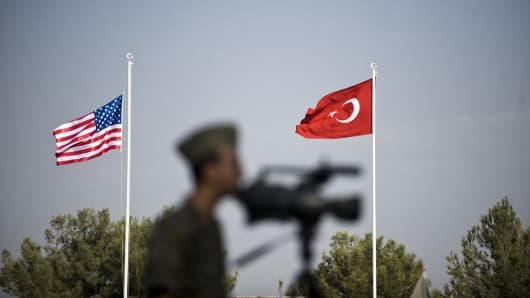
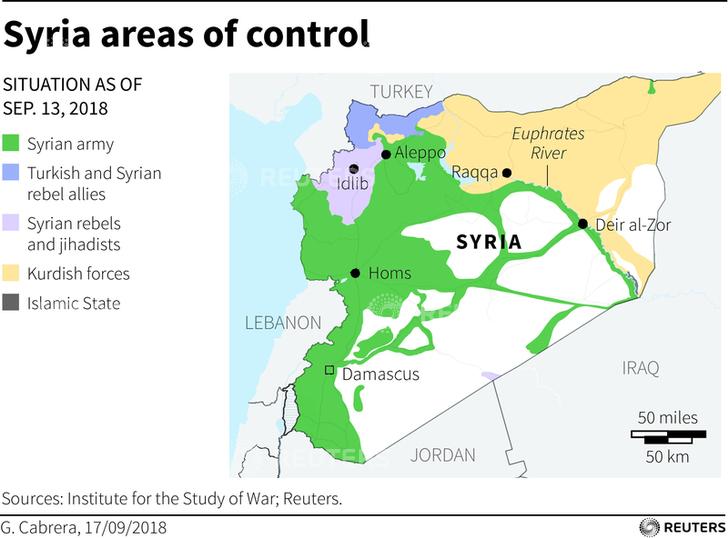


 Power and Violence in Today’s Middle East



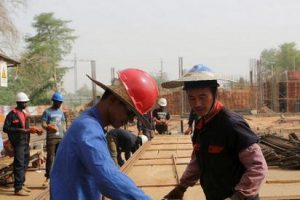 Ο λάθος δρόμος για την αντιστάθμιση της Κίνας

 By


 BY


 Του Edward Luce Financial Times/euro2day.gr
 STRATFOR/ euro2day.gr
